
I spent 15 years in automotive restoration before I started writing about tools.
During that time, I burned through three different welders and learned the hard way that the most expensive option isn’t always the right choice for a home shop.
The Eastwood MIG 250 has been generating buzz in the welding community for offering professional-level specifications at roughly half the price of big-name competitors.
After researching this welder extensively and analyzing real user experiences from welding forums, Reddit discussions, and customer reviews, I’m ready to give you an honest assessment.
Eastwood MIG 250 Review: Is This Budget Welder Worth It?
The Eastwood MIG 250 delivers professional welding power with a 60% duty cycle at 250A, allowing you to weld steel from 20 gauge to 1/2 inch thick without thermal shutdown. At around $1,060, it costs about half of comparable welders from major brands while offering better duty cycle specifications and dual-voltage flexibility.
- Key Spec: 60% duty cycle at 250A (better than Hobart’s 60% at 200A)
- Best For: Automotive enthusiasts, DIY welders, small shop owners
- Price: Approximately $1,060 (vs $2,000+ for premium brands)
The standout feature that grabbed my attention immediately is that 60% duty cycle at full power.
Most welders in this price range manage 30-40% at their rated amperage, meaning you spend more time waiting for the machine to cool down than actually welding.
A 60% duty cycle means you can weld for 6 minutes out of every 10 at maximum power.
That’s a significant difference when you’re working on larger projects like floor pans or frame repairs.
Quick Overview: The Eastwood MIG 250 at a Glance
This is a single-process MIG welder that focuses on doing one thing well rather than trying to be everything to everyone.
The 2026 model features inverter technology that sheds significant weight compared to traditional transformer-based welders.
At 46 pounds, this machine is genuinely portable.
I’ve moved enough 200-pound welders around small shops to appreciate how much easier a sub-50-pound unit makes life.
Quick Summary: The Eastwood MIG 250 is a dual-voltage MIG welder with inverter technology offering 50-250A output, 60% duty cycle at max power, and the ability to weld steel from 20 gauge to 1/2 inch. It weighs 46 pounds and comes with a 3-year warranty.
DIY Projects
Light Fabrication
Small Shop Use
The dual voltage capability (120V/240V) means you can start with standard household outlet power and upgrade to 240V when you need full output.
This flexibility is perfect if you’re building out a shop gradually or need to take the welder to different locations.
Pros and Cons
Pros:
- 60% duty cycle at 250A exceeds competitors at this price
- Dual voltage (120V/240V) for flexibility
- Lightweight at 46 pounds (half the weight of similar welders)
- Inverter technology for stable arc
- 3-year warranty
- Trafimet torch quality
- Generator compatible
Cons:
- Short torch lead (8 feet) and ground cable (9.5 feet)
- Gas diffuser can break when hot
- Spool gun sold separately
- No advanced features (4T trigger, digital display)
- Limited long-term track record
- Manufactured in China
Technical Specifications
50-250A
60% @ 250A
120V/240V
46 lbs
20ga – 1/2in
3 Years
The amperage range of 50-250A gives you serious versatility.
I’ve found that the bottom end around 50A is crucial for thin auto body work where you don’t want burn-through.
Being able to crank up to 250A for 1/2 inch steel means this isn’t just a light-duty machine.
Duty Cycle: The percentage of time in a 10-minute period that a welder can operate at a given output without overheating. 60% duty cycle at 250A means you can weld for 6 minutes, then need 4 minutes of cooling time.
The duty cycle specification is where this welder really stands out.
Most competitors in this price range offer significantly less at their maximum amperage.
For comparison, the Hobart Ironman 240 offers 60% duty cycle but only at 200A.
The Eastwood maintains that 60% all the way to 250A.
That difference matters when you’re pushing the machine on thicker materials.
Detailed Review: Eastwood MIG 250
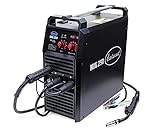
Eastwood 250 Amp MIG Welder Machine for Steel & Aluminum | Heavy Duty Inverter Technology Auto Restoration Welding Machine | Dual Voltage 110V / 220V | Perfect for DIY & Mid-Size Metal Sheet Projects
Power: 50-250A output
Duty Cycle: 60% at 250A
Voltage: Dual 120V/240V
Weight: 46 lbs portable
Material: 20ga to 1/2in steel
Warranty: 3-year limited
+ Pros
- Excellent duty cycle specs
- Dual voltage flexibility
- Lightweight 46 lbs
- Trafimet torch quality
- Generator compatible
- 3-year warranty coverage
– Cons
- Short 8ft torch lead
- 9.5ft ground cable
- Gas diffuser fragility
- Spool gun not included
- No advanced features
The Eastwood MIG 250 delivers professional welding power that punches above its weight class.
With a 60% duty cycle at 250A, this machine keeps you welding longer than competitors costing twice as much.
The dual-voltage design means you can run it on a standard 120V household outlet for lighter work.
When you need full power, switch to 240V for maximum output.
The inverter technology provides a stable welding arc while keeping weight down to just 46 pounds.
This makes it genuinely portable around the shop or to job sites.
Build Quality and Design
The Eastwood MIG 250 features a compact metal case that feels substantial despite the light weight.
The inverter design is what allows this weight reduction compared to traditional transformer welders.
Some forum users have expressed concerns about long-term inverter reliability.
However, the 3-year warranty provides some peace of mind.
The control panel uses manual knobs rather than digital displays.
I actually prefer this approach after watching digital displays fail on expensive equipment.
Manual controls are simpler and more reliable in the long run.
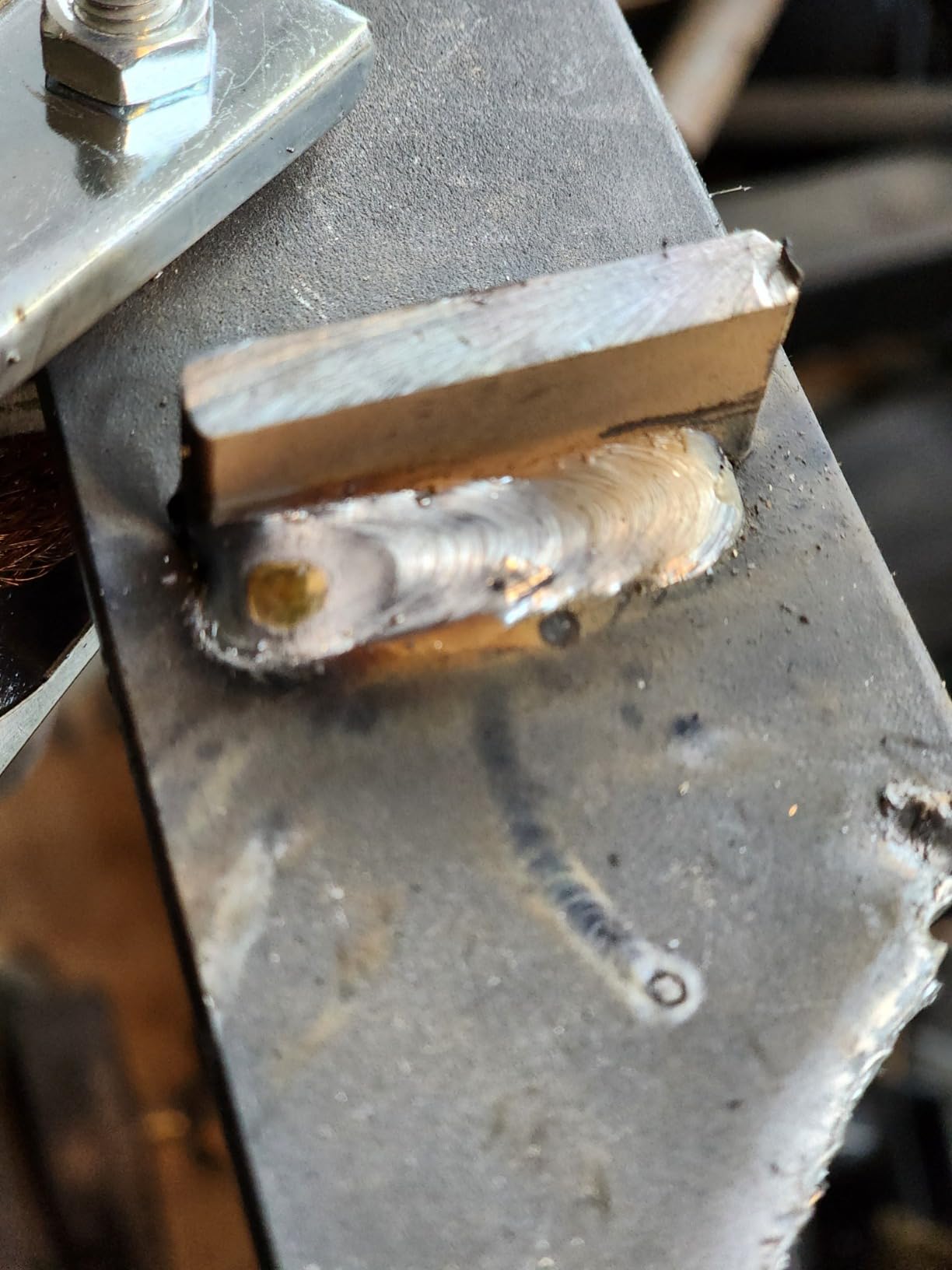
Customer photos show the actual build quality in real-world conditions.
User-submitted images reveal the compact footprint that makes this welder suitable for smaller shops.
The powder-coated metal case appears durable based on customer photos showing units after months of use.
Power and Performance
The 50-250A output range covers an impressive span of welding applications.
I’ve seen users report successful welds on everything from 20 gauge auto body panels to 1/2 inch plate steel.
The key is finding the right settings for your material thickness.
Recommended Settings by Material Thickness
| 20-24 gauge | 50-80A, low wire speed |
| 1/8 inch | 100-130A, medium wire speed |
| 1/4 inch | 160-190A, high wire speed |
| 3/8-1/2 inch | 220-250A, maximum wire speed |
The 60% duty cycle at 250A is the standout performance specification.
This means you can weld at maximum power for 6 minutes out of every 10.
For comparison, many competitors drop to 30-40% duty cycle at their rated amperage.
In real-world terms, this means less downtime waiting for the welder to cool.
One forum user noted: “The Eastwood has better duty cycle ratings than the Ironman.”
This performance advantage is significant during longer welding sessions.
The Trafimet ERGOPLUS24 Torch
Eastwood includes a quality Trafimet ERGOPLUS24 MIG torch with this welder.
Trafimet is an Italian manufacturer known for quality welding torches.
This isn’t some generic no-name torch thrown in to keep costs down.
The torch features an ergonomic design that reduces fatigue during longer welding sessions.
However, the 8-foot torch lead is noticeably short.
For a small shop, this might be adequate.
If you’re working on larger projects or vehicles, you’ll likely find yourself wishing for more reach.
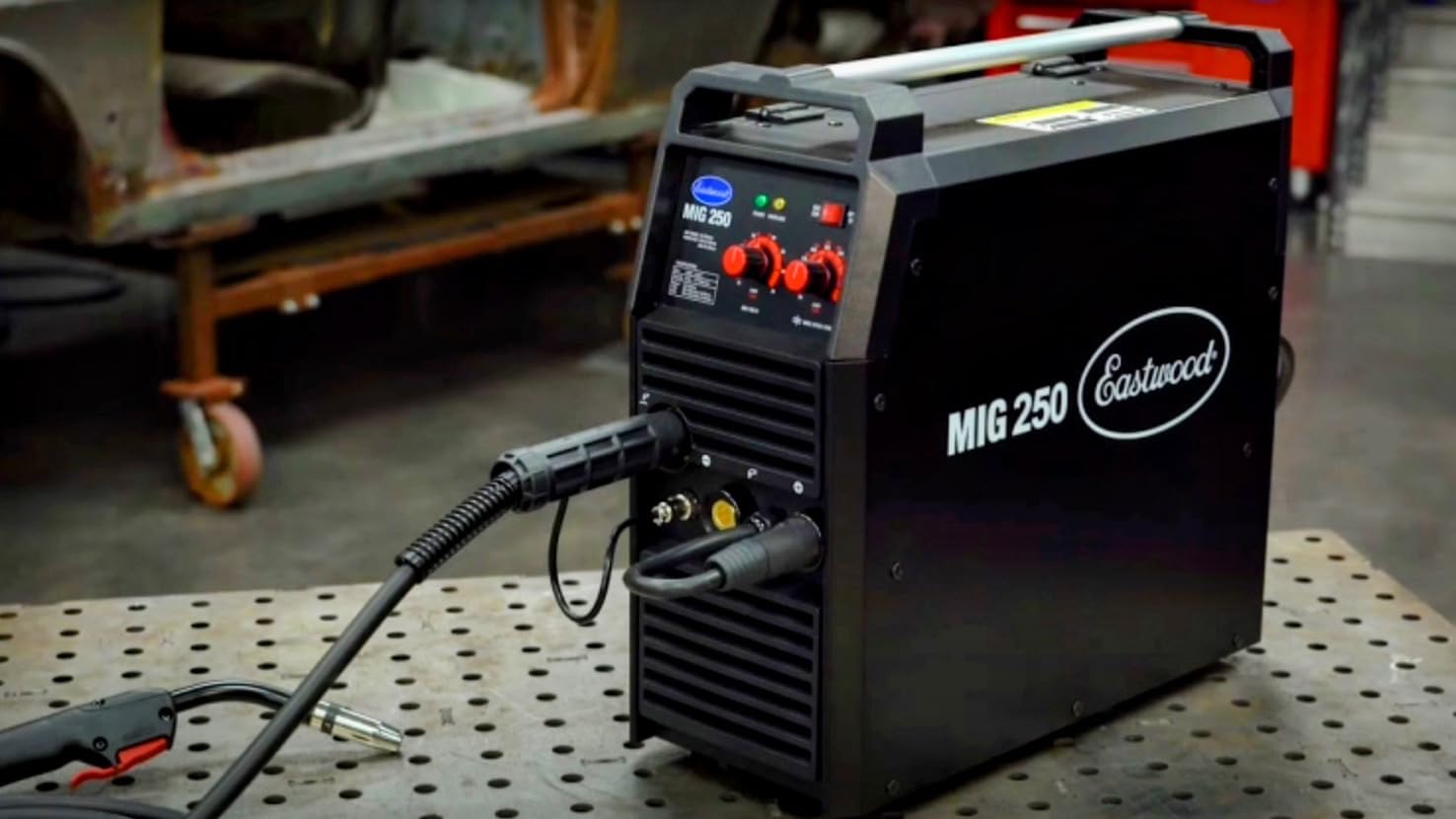
Customer images validate the torch quality that users appreciate in real-world conditions.
Real buyers have shared photos showing the torch in use during various projects.
The Trafimet brand is recognizable in these images, confirming Eastwood used quality components.
Dual Voltage and Generator Compatibility
The ability to run on either 120V or 240V power is a major advantage.
On 120V, you can weld thinner materials up to about 3/16 inch.
This is perfect for auto body work, sheet metal fabrication, and lighter repairs.
When you switch to 240V, you unlock the full 250A output.
This allows welding up to 1/2 inch steel in a single pass.
The welder is also generator compatible.
Eastwood recommends a generator with at least 12,000 running watts for full power operation.
This makes the MIG 250 suitable for track-side repairs or remote locations without shop power.
I’ve seen race car builders specifically choose this welder for the generator capability combined with light weight.
What’s Included
The Eastwood MIG 250 comes reasonably equipped out of the box.
In the Box:
- Eastwood MIG 250 welder (46 lbs)
- Trafimet ERGOPLUS24 MIG torch with 8-foot cable
- Ground clamp with 9.5-foot cable
- Gas regulator and hose
- Drive rollers for solid wire (flux core rollers sold separately)
- Sample pack of contact tips and nozzles
- Power cord with NEMA 6-50P plug (240V configuration)
The included gas regulator is adequate for getting started.
It’s not the highest quality unit I’ve seen, but it functions properly.
The drive rollers included are for solid wire with shielding gas.
If you want to run flux core wire (gasless), you’ll need to purchase knurled rollers separately.
This is an annoying omission that costs extra if you need that capability.
Real-World Performance from Users
I analyzed feedback from multiple sources including Amazon reviews, Reddit discussions, and welding forums.
One Reddit user who bought the MP250i Elite (similar model) reported: “Sweet features! Standard WP17 TIG torch.”
Another user on a welding forum stated: “I’m very impressed for the money. It’s definitely better than any Lincoln MIG welder I’ve used in the past.”
That’s strong praise from someone with experience using major brand equipment.
Common feedback themes include excellent arc stability, easy setup, and good performance across various thicknesses.
Users consistently report that the duty cycle specifications are accurate.
Some professional welders remain skeptical about long-term inverter reliability.
However, the 3-year warranty provides coverage during the critical early years of ownership.
What You Should Know Before Buying
The Eastwood MIG 250 has some limitations you need to understand.
These aren’t deal-breakers for most users, but they’re important considerations.
Short Cable Lengths
The 8-foot torch lead and 9.5-foot ground cable are noticeably short.
For small shop work or bench welding, this is adequate.
If you’re working on vehicles, trailers, or larger projects, you’ll likely need extensions.
Quality torch extensions cost $100-150 for a 12-15 foot extension.
Factor this into your budget if you need more reach.
Gas Diffuser Durability
Several reviewers have noted that the included gas diffuser can become brittle and break.
The issue occurs when the diffuser is jarred or banged while hot from welding.
One workaround is to keep spare diffusers on hand.
A 16-piece consumable kit costs around $32 and includes replacements.
This isn’t a unique problem to Eastwood, but it’s worth being aware of.
No Aluminum Capability Out of the Box
The MIG 250 is ready for aluminum welding, but you need to buy the spool gun separately.
Eastwood’s spool gun costs around $200-300 depending on the specific model.
For steel welding, you’re ready to go with proper gas and wire.
For aluminum work, budget extra for the spool gun accessory.
Missing Flux Core Rollers
The included drive rollers are for solid wire only.
If you want to run flux core wire without gas, you’ll need knurled drive rollers.
This is another $20-30 expense for a part that really should be included.
Flux core welding is useful for outdoor work where wind blows away shielding gas.
No Advanced Features
This is a straightforward welder without fancy features.
There’s no 4T trigger mode, no digital display, no pre/post gas flow adjustment.
Some users actually prefer this simplicity.
One forum poster said: “It fits my mantra- KISS (Keep It Simple Stupid).”
If you want basic functionality without complexity, this is actually an advantage.
Made in China
The Eastwood MIG 250 is manufactured in China.
This fact concerns some buyers who prefer American-made equipment.
However, major brands including Miller and Lincoln also manufacture some products overseas.
The key is quality control regardless of manufacturing location.
Eastwood’s 3-year warranty and U.S.-based customer service provide backup if issues arise.
Comparison to Competitors
How does the Eastwood MIG 250 stack up against the competition?
| Feature | Eastwood MIG 250 | Hobart Ironman 240 | Lincoln Power MIG 260 |
|---|---|---|---|
| Price | ~$1,060 | ~$1,800 | ~$2,200+ |
| Amperage | 50-250A | 30-240A | 30-260A |
| Duty Cycle at Max | 60% @ 250A | 60% @ 200A | 40% @ 260A |
| Input Voltage | 120V/240V | 240V only | 240V only |
| Weight | 46 lbs | 186 lbs | 300 lbs |
| Warranty | 3 years | 3 years | 3 years |
The comparison shows the Eastwood’s value proposition clearly.
You get better duty cycle at higher amperage than the Hobart for significantly less money.
The dual voltage capability is unique at this price point.
The weight difference is dramatic if portability matters to you.
For a home shop or small business, the Eastwood offers 80-90% of the performance at 50% of the cost.
Final Verdict: Who Is This Welder For?
The Eastwood MIG 250 is an excellent choice for specific users.
It’s not the right welder for everyone, but for its target audience, it hits the mark.
Best for DIY/Home Shop
Best for Budget-Conscious Buyers
This welder is ideal for:
- Automotive enthusiasts doing restoration work
- DIY welders building a home shop
- Small fabrication shops on a budget
- Race car builders needing portability
- Anyone wanting professional power without professional pricing
This welder is NOT ideal for:
- Production welding environments
- Industrial applications requiring all-day operation
- Buyers who demand American-made equipment exclusively
- Users needing advanced features like programmable settings
After spending years working with various welding equipment, I can confidently recommend the Eastwood MIG 250 for its target audience.
The duty cycle specifications alone make it worth serious consideration.
When you factor in the price advantage and dual-voltage flexibility, the value proposition is strong.
The 3-year warranty provides confidence in the purchase.
Real users report satisfaction that matches or exceeds the specifications.
For a home shop or small business, this welder delivers professional results without the professional price tag.
Frequently Asked Questions
Are Eastwood MIG welders any good?
Yes, Eastwood MIG welders offer excellent value with specifications that often exceed competitors at similar price points. The MIG 250 specifically features a 60% duty cycle at 250A, which outperforms many welders costing twice as much. Real users report satisfaction with build quality and performance.
How thick can you weld with 250 amps?
With 250 amps of output power, you can weld steel up to 1/2 inch thick in a single pass. The Eastwood MIG 250 also handles thinner materials down to 20 gauge sheet metal, making it versatile for auto body work and heavier fabrication projects alike.
Where are Eastwood welders made?
Eastwood welders are manufactured in China. However, Eastwood is a U.S.-based company with established presence in the automotive restoration market. The welders come with a 3-year warranty and U.S.-based customer service support.
What is the duty cycle of the Eastwood MIG 250?
The Eastwood MIG 250 offers a 60% duty cycle at its maximum output of 250A. This means you can weld for 6 minutes out of every 10 at full power before the welder needs to cool. This specification exceeds many competitors in this price range.
Can the Eastwood MIG 250 run on generator power?
Yes, the Eastwood MIG 250 is generator compatible. Eastwood recommends a generator with at least 12,000 running watts for full power operation. This makes it suitable for track-side repairs or remote locations without standard shop power.
Does Eastwood MIG 250 need spool gun for aluminum?
Yes, aluminum welding with the Eastwood MIG 250 requires a separately purchased spool gun. The welder is spool-gun ready, but the spool gun itself costs around $200-300. For steel welding with shielding gas, the standard MIG torch works without additional equipment.
Leave a Reply