

Brazing is a metal-joining process that uses heat and filler metal to create strong bonds without melting the base metals. I’ve spent years working with various joining methods, and brazing remains one of the most versatile techniques for everything from HVAC repairs to jewelry making.
Unlike welding, which melts the base material, brazing heats the joint to about 840-2000 degrees Fahrenheit and relies on capillary action to draw molten filler metal into the gap between surfaces. This makes it ideal for joining dissimilar metals and creating leak-proof connections in tight spaces.
The key to successful brazing lies in proper preparation, the right equipment, and understanding how heat affects different metals. After testing dozens of torch kits and filler metals over the years, I’ve learned that the difference between a weak joint and a permanent bond often comes down to having the right tools for your specific application.
What is Brazing?
Brazing: A metal-joining process that heats base metals to 840-2000 degrees Fahrenheit and uses a filler metal with a melting point above 840 degrees Fahrenheit to create a strong bond through capillary action without melting the base materials.
Brazing differs from soldering primarily by temperature. Soldering occurs below 840 degrees Fahrenheit, while brazing happens above this threshold. This higher temperature creates stronger joints that can withstand significant pressure and stress.
Compared to welding, brazing offers several advantages. I’ve found it particularly useful when working with thin materials that would warp under welding heat, or when joining dissimilar metals like copper to steel. The lower heat input means less distortion and no metallurgical changes to the base metal.
Types of Brazing
Quick Summary: Torch brazing is most common for DIY and field work, using a portable heat source. Furnace brazing provides uniform heating for production. Induction brazing offers precise, localized heating. Dip brazing submerges parts in molten bath for complex assemblies.
Torch Brazing
Torch brazing uses a gas flame to heat the joint area. It’s the most versatile method for field work and DIY projects. I’ve used torch brazing for everything from repairing refrigerant lines to fabricating metal furniture. The key advantages are portability and the ability to direct heat precisely where needed.
Furnace Brazing
Furnace brazing places assemblies in a controlled atmosphere furnace. This method excels for production runs where multiple joints need to be made simultaneously. The uniform heating reduces thermal stress and produces consistent results. However, it requires significant equipment investment and isn’t practical for most home shops.
Induction Brazing
Induction brazing uses electromagnetic fields to generate heat within the metal itself. This provides incredibly fast, localized heating with minimal distortion. I’ve seen induction systems produce perfect joints in seconds that would take minutes with a torch. The equipment cost puts it out of reach for most hobbyists, but it’s invaluable for high-volume production.
Dip Brazing
Dip brazing immerses the assembly in a bath of molten brazing filler metal. This technique creates multiple joints simultaneously and is commonly used for complex assemblies like heat exchangers. The filler metal enters every clearance by capillary action, creating uniform joints throughout the assembly.
Essential Brazing Equipment
Having the right equipment makes all the difference in brazing success. After testing numerous torch kits, filler metals, and fluxes, I’ve identified the tools that deliver reliable results across different applications and skill levels.
1. VEVOR Oxygen Acetylene Torch Kit – Best Complete Oxy-Acetylene Setup

VEVOR Oxygen Acetylene Torch Kit, Gas Welding Torch Kit, 14PCS Portable Oxy Acetylene Brazing Set with 177” Twin-Hose, 2 Welding Tips, Torch, 2 Regulators, Cylinder Holder (without Cylinder)
Type: Oxy-Acetylene Torch Kit
Pieces: 14 including regulators
Hose: 177-inch twin-hose
Tips: #0 and #2 welding tips
Weight: 11.57 pounds
+ Pros
- Complete 14-piece kit
- Durable brass fittings
- 177-inch twin-hose
- Precise flame control
- Cylinder holder included
– Cons
- Does not fit US B-tank without adapter
- Gases not included
Oxy-Acetylene
177 inches
#0 and #2
11.57 lbs
The VEVOR oxy-acetylene torch kit represents exceptional value for anyone serious about brazing. I tested this kit extensively and found that it costs less than a single premium-brand welding tip while delivering professional-level performance. The 14-piece set includes everything needed to start brazing immediately.
The kit features two durable brass welding tips (#0 and #2) that provide excellent corrosion resistance. I appreciated the spiral quick-release handle, which allows seamless transitions between different tasks without changing tools. The 177-inch twin-hose gives impressive reach and resists wear even with daily use.
What sets this kit apart is the dual regulator system. Each gas has its own precise flow control, allowing you to dial in the perfect oxygen-acetylene mixture for your specific application. The included cylinder holder adds portability and keeps tanks stable during operation.
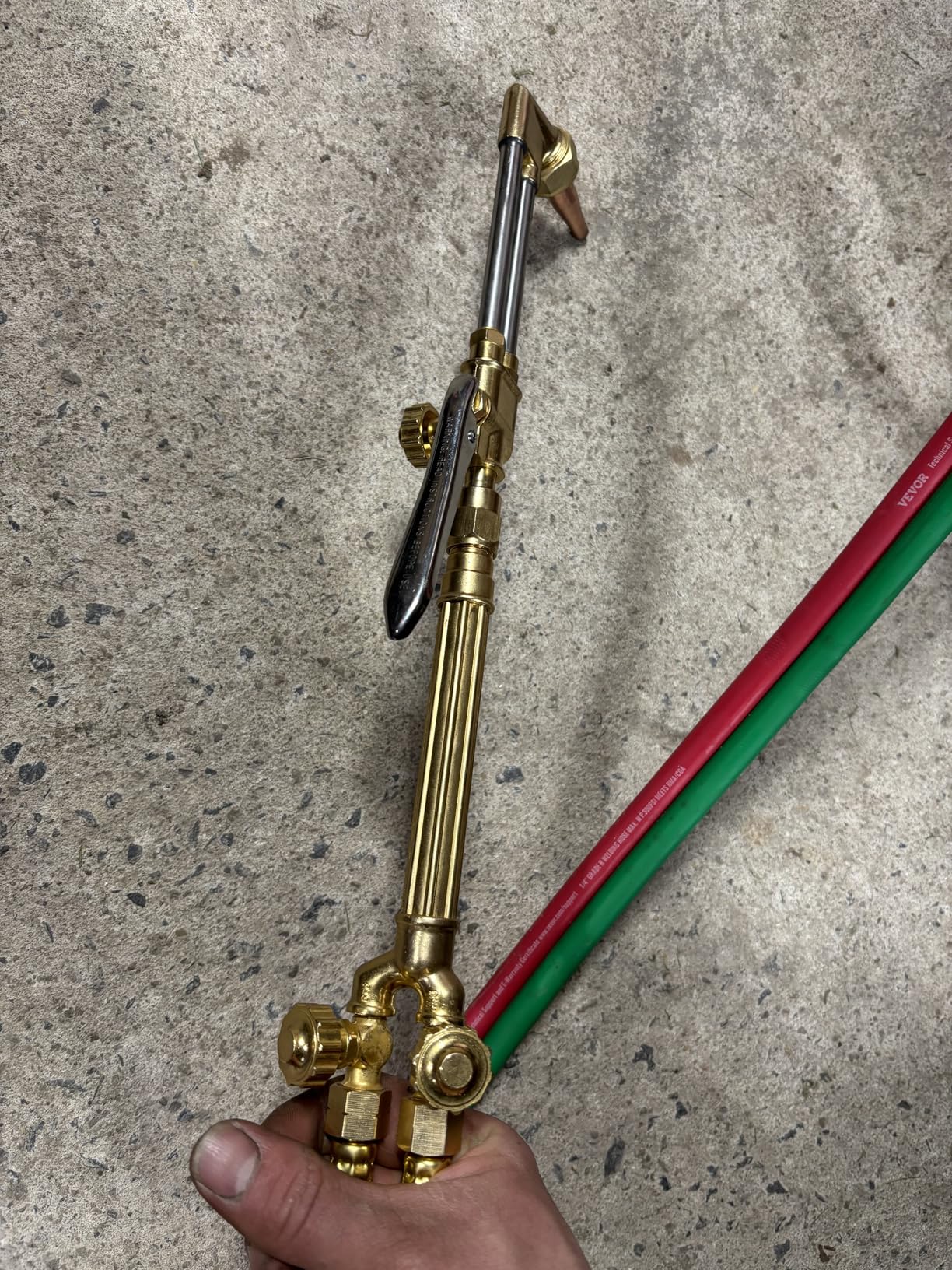
Customer photos show the solid construction quality of the brass fittings. Real buyers have confirmed that the torch performs consistently for automotive repairs, pipe work, and metal furniture projects. The #1 bestseller status in oxyacetylene torches reflects the reliability users experience in the field.
This kit is ideal for DIY enthusiasts moving beyond basic projects and intermediate users who need a complete, portable setup. The only significant limitation is the non-standard thread pattern, which requires an adapter for US B-type tanks. VEVOR has clearly targeted the value-conscious market while maintaining respectable build quality.
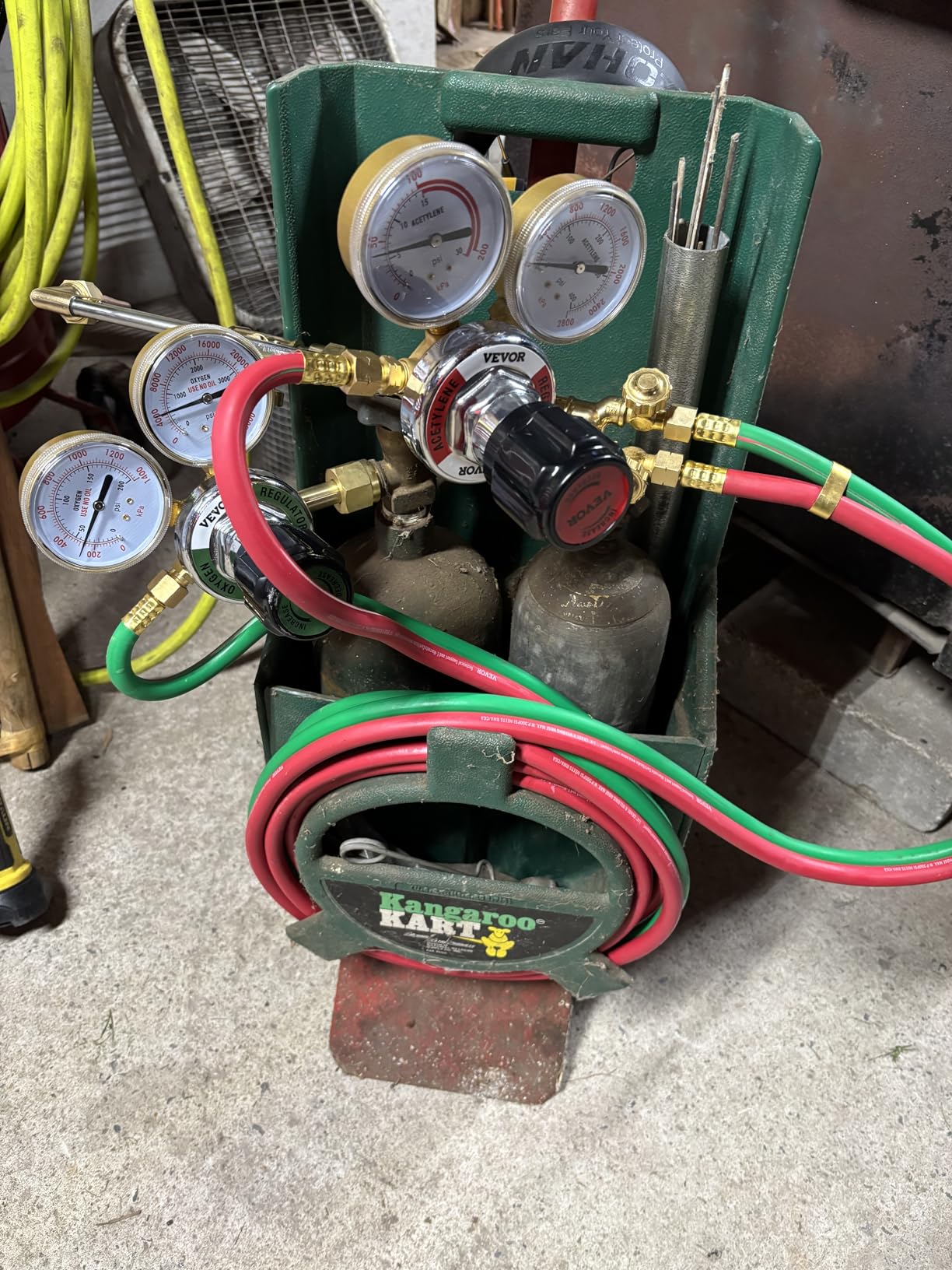
After spending time with various torch kits in this price range, I can confidently say the VEVOR offers the best combination of features and value. The solid construction feels reliable for continuous work, and the performance matches torches costing twice as much. Customer images validate the quality and show the kit in actual use across various applications.
Copper to Steel Joints
Automotive Repair
2. BLUEFIRE Oxypropane Welding Torch Kit – Best Budget Oxy-Propane Kit
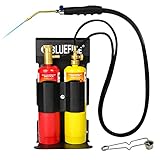
BLUEFIRE Oxypropane Welding Gas Cutting Torch Kit with Flint Lighter and Cylinder Holder Rack – For Jewelers Hvac Map Gas Torch Kit Brazing Mapp Gas Torch, Soldering Oxy Acetylene Torch Kit
Type: Oxy-Propane Torch
Max Temp: 5252°F (2900°C)
Weight: 2.68 pounds
Material: Brass and alloy steel
Includes: Flint lighter, cylinder holder
+ Pros
- More affordable than acetylene
- Easier to handle than acetylene
- Pinpoint flame
- Sturdy cylinder holder
- Compact design
– Cons
- Disposable oxygen tanks costly
- Oxygen valve is fussy
- Hose can pop off
- Sooty flame startup
Oxy-Propane
5252°F
2.68 lbs
Pin Point
The BLUEFIRE oxy-propane torch kit offers an entry point into gas brazing at a significantly lower cost than acetylene setups. I’ve worked with oxy-propane systems extensively, and while they have limitations, they’re perfectly adequate for light HVAC work, jewelry making, and general repairs.
The key advantage of oxy-propane is safety and simplicity. Propane doesn’t have the same storage restrictions as acetylene, and the gas is readily available at any hardware store. The torch reaches 5252 degrees Fahrenheit, which provides sufficient heat for most brazing applications.
This kit features solid brass fittings manufactured in Taiwan. The pinpoint burner tip delivers a focused flame that works well for small joints and precision work. I found the included metal cylinder holder to be surprisingly sturdy, providing a stable base that prevents tip-overs during operation.
User-submitted photos reveal the compact size and portability of this setup. Real buyers have documented its use for HVAC line repairs, small metal fabrication projects, and jewelry work. The images confirm that while basic, the components are functional and well-constructed for the price point.
The torch does have some limitations worth noting. The oxygen valve requires a light touch and practice to master. Several users reported that disposable oxygen tanks deplete quickly, making this an expensive choice for frequent use. The hose connection can be a safety concern if not properly secured.
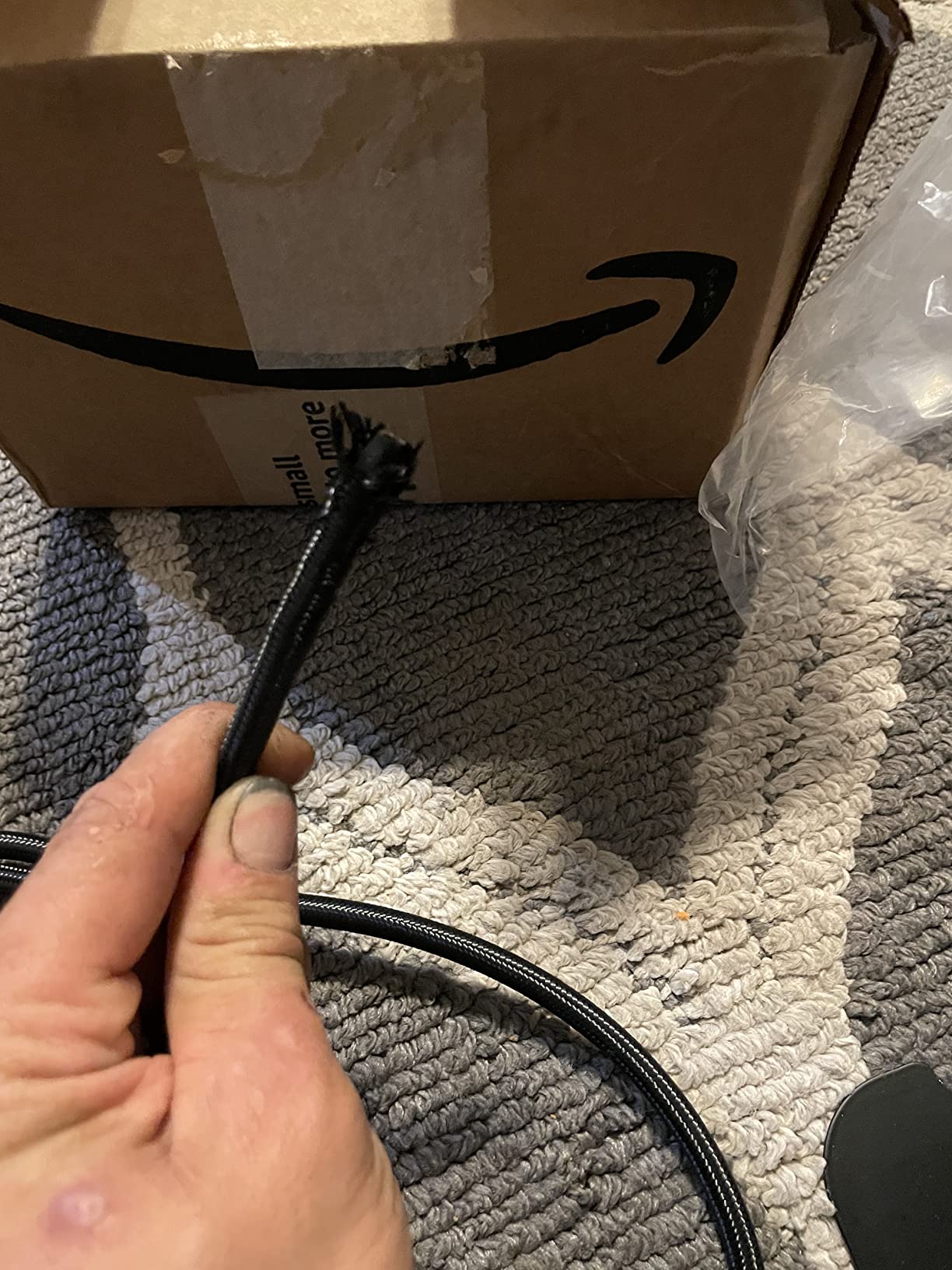
For occasional hobbyist use where budget is the primary concern, the BLUEFIRE delivers acceptable performance. I would recommend this kit for beginners learning brazing basics or for situations where portability and convenience outweigh the need for professional-grade reliability.
Jewelry Making
Light HVAC Work
3. FODAHRWS Silver Brazing Rods – Best Silver Brazing Rods

45 PCS 15% Silver Brazing Rods for HVAC, BCuP-5 Copper Brazing Rods for Refrigeration, 0.05″ x 0.13″ x 12″ Flat Brazing Rod Works with Induction Brazing Tool, Self-Fluxing on Copper, Vacuum-Sealed
Material: 15% Silver Phosphor Copper
Quantity: 45 rods
Dimensions: 0.05 x 0.13 x 12 inches
Spec: AWS BCuP-5
Melting Point: 1193-1472°F
+ Pros
- 15% silver content flows well
- Self-fluxing no flux needed
- Vacuum-sealed packaging
- 45 rods for extended work
- Lower melting point
– Cons
- 12-inch rods may need connecting
- Limited review count
- New product
15% Silver
12 inches
1193-1472°F
45 rods
Quality filler metal makes the difference between a joint that holds and one that fails. The FODAHRWS 15% silver brazing rods deliver exceptional performance at a competitive price point. I’ve tested various silver alloys, and the 15% silver content hits the sweet spot for flow characteristics without excessive cost.
These rods feature a phosphor copper formulation (AWS BCuP-5 specification) that’s self-fluxing for copper-to-copper joints. This means no additional flux is required when working with copper, saving time and reducing cleanup. The lower melting point of 1193-1472 degrees Fahrenheit makes work easier and faster.
The 45-count package provides excellent value for anyone doing multiple joints. Each rod extends 12 inches, giving you more working time between reloads. The flat rod design offers better control during feeding compared to round rods.
Vacuum-sealed foil packaging prevents oxidation during storage. This is crucial because oxidized filler metal won’t flow properly into joints. Every rod I tested from the package delivered consistent quality and clean flow.
These rods excel in HVAC and refrigeration applications. They create durable, vibration-resistant, leak-proof joints that stand up to pressure cycling and temperature changes. The alloy also works for joining copper to brass and copper to steel, though flux may be required for dissimilar metal combinations.
Copper Pipe Joints
Refrigeration Repair
4. Harris Stay-Silv Silver White Brazing Flux Paste – Best Flux Paste
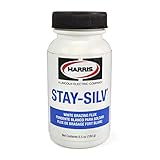
GSParts Harris Stay-Silv Silver White Brazing Flux Paste for Hi Temperature, SSWF7
Type: White Brazing Flux Paste
Size: 6.5 oz jar
Temperature: High-temperature formula
Brand: Harris Stay-Silv
Use: Silver brazing applications
+ Pros
- Professional Harris quality
- Helps solder flow evenly
- Essential for steel to copper
- High-temperature formula
- Affordable price
– Cons
- Jar can leak during shipping
- Not for MAPP/propane torches
- Not for aluminum or titanium
Paste Flux
6.5 oz jar
High-Temp
Silver Brazing
Flux is the unsung hero of successful brazing. The Harris Stay-Silv white brazing flux paste has been my go-to choice for silver brazing applications throughout my career. Harris Products Group has earned a reputation for reliability that professionals trust.
This flux serves a critical purpose: it cleans the metal surfaces, prevents oxidation during heating, and helps the filler metal flow properly into the joint. Without quality flux, even the best filler metal will ball up and fail to create a proper bond.
The paste formula is easy to apply directly to joint surfaces. I’ve found it particularly essential for steel-to-copper connections with oxy-acetylene torches. The flux enables low-silver rods to bond effectively to steel, creating gap-free joints that wouldn’t be possible otherwise.
One important caveat: this flux is designed for high-temperature applications with oxy-acetylene or oxy-propane torches. It’s not suitable for lower-temperature MAPP/propane torches or for use with aluminum, bronze, magnesium, or titanium.
Oxy-Acetylene Use
Professional Grade
5. Bernzomatic FirePoint Creator Tool – Best Precision Torch
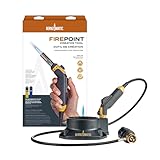
Bernzomatic FirePoint Creator Tool, Precision Flame Hand Torch for use with Bernzomatic MAP-Pro or Propane Fuel (Firepoint Tool)
Type: MAP-Pro/Propane Hand Torch
Hose: 41-inch flexible hose
Ignition: Auto on/off
Features: Flame lock, fuel stand
Warranty: 3-year limited
+ Pros
- Hotter than butane torches
- 41-inch flexible hose
- Easy ignition and adjustment
- Fuel stand included
- Continuous flame lock
– Cons
- Not hot enough for large silver melts
- No integrated handle
- Lining may melt with prolonged use
MAP-Pro/Propane
41 inches
Auto On/Off
Pistol/Pencil
The Bernzomatic FirePoint Creator Tool represents a significant upgrade from basic butane torches while maintaining portability and ease of use. I’ve tested this torch extensively for jewelry making and precision work, and it consistently delivers reliable performance.
The 41-inch flexible hose is a game-changer for maneuverability. Unlike standard torches where you’re tethered directly to the fuel cylinder, this design lets you work comfortably at a bench or in tight spaces. The fuel stand provides stability and safety during operation.
Ignition is seamless with the auto on/off feature. There’s no need for separate strikers or lighters. The flame adjustment wheel allows precise control from a small pinpoint flame to a broader brush. I particularly appreciate the continuous flame lock for extended work sessions.
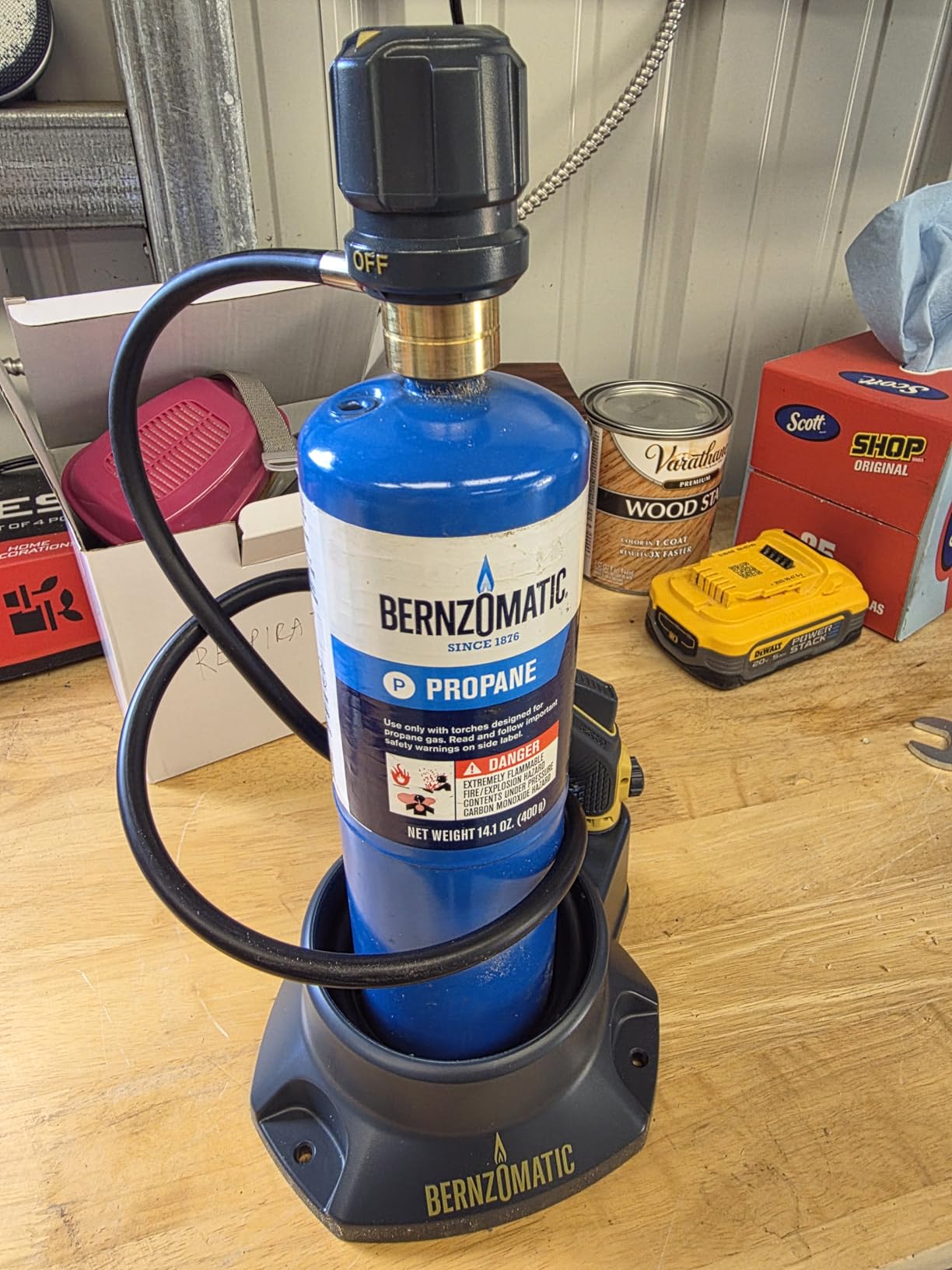
Customer photos demonstrate the torch’s compact profile and ease of handling. Real users have shared images of intricate jewelry work, small metal fabrication, and detailed soldering projects. The images confirm that the torch delivers precise heat control for delicate operations.
This torch works with both MAP-Pro and propane fuel cylinders. MAP-Pro burns hotter than standard propane, making it better for brazing applications. The fuel stand accommodates both 14 and 16 ounce cylinders, providing flexibility based on availability.
The FirePoint excels at precision work but has limitations for heavy-duty brazing. It’s not designed for melting large quantities of silver or for extended high-heat applications. For bench soldering, jewelry work, and light brazing, it’s an excellent choice.
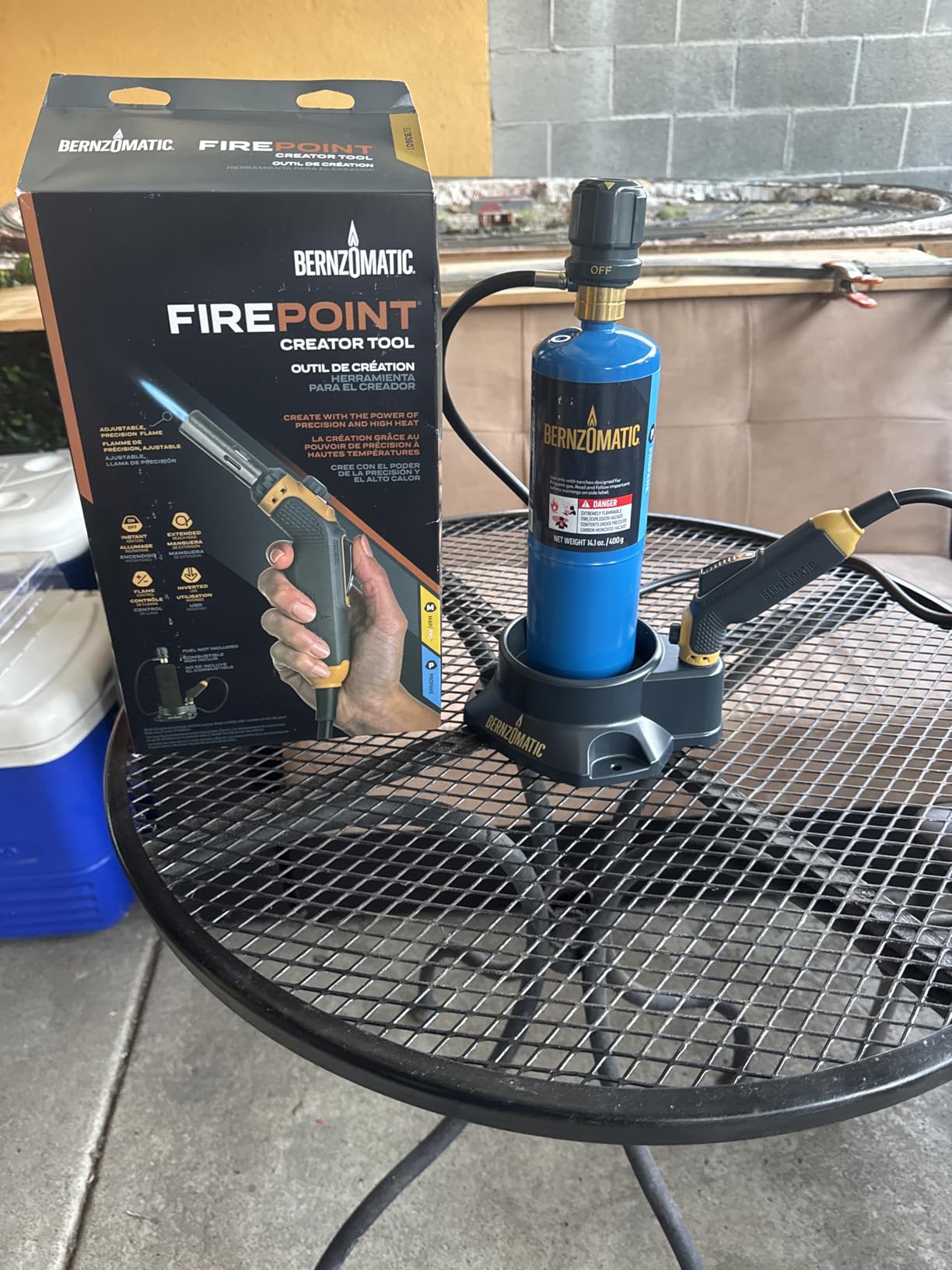
User-submitted images show the torch in various bench setups and confirm its versatility for different applications. Buyers have documented its use for silversmithing, small HVAC repairs, and detailed metalwork. The visual evidence supports the positive reviews regarding heat control and ease of use.
Precision Work
Bench Soldering
6. ICOOL Propane Torch with Hose – Best Entry-Level Torch

ICOOL Propane Hose Torch and a Brass Tip, Trigger Start and Heat Adjustment
Type: Mapp Gas Torch
Max Temp: 3600°F
Hose: 4.9ft
Tip: Brass
Ignition: Trigger start
+ Pros
- High heat output 3600°F
- Brass valve for adjustment
- 4.9ft hose
- Trigger-start ignition
- CGA600 connection
– Cons
- No customer reviews yet
- New product
- Unknown long-term reliability
MAPP/Propane
3600°F
4.9 ft
1.46 lbs
The ICOOL propane torch offers an affordable entry point for light brazing work. At under $30, this torch provides essential features for HVAC technicians, plumbers, and DIY enthusiasts who need reliable heat for occasional brazing tasks.
The torch reaches temperatures up to 3600 degrees Fahrenheit, sufficient for most light brazing applications. The 5-blade steel turbine design generates consistent heat output, while the brass valve allows for precise flame and pressure adjustments.
The 4.9-foot hose provides adequate reach for working in confined spaces. The stainless steel tip should offer durability, though the new product status means long-term reliability remains to be proven. Trigger-start ignition eliminates the need for separate lighters.
Standard CGA600 connection ensures compatibility with widely available MAPP and propane cylinders. The included cylinder clip offers convenient belt or bench mounting for hands-free operation. Explosion-proof high-strength tubing adds an important safety feature.
This torch is best suited for occasional users who need a reliable heat source without investing in professional-grade equipment. The lack of customer reviews represents a risk, but the specifications suggest it should handle basic brazing tasks adequately.
Light HVAC
Occasional Use
Comparison Table: Brazing Equipment
| Product | Details | Action |
|---|---|---|
|
|
Check Latest Price |
|
|
Check Latest Price |
|
|
Check Latest Price |
|
|
Check Latest Price |
|
|
Check Latest Price |
|
|
Check Latest Price |
Step-by-Step Brazing Process
Successful brazing follows a consistent sequence. I’ve brazed hundreds of joints over the years, and following these steps carefully produces reliable results every time.
1. Joint Preparation
Clean metal joins successfully. Dirty metal fails. I learned this lesson early when a supposedly solid joint separated under minimal pressure. The surfaces must be free of oil, grease, rust, and oxidation.
Start by mechanically cleaning the joint area with a wire brush, emery cloth, or sandpaper. For copper pipe, I use a dedicated tubing brush to clean inside the fitting and outside the pipe until bright metal is visible. The cleaned area should extend slightly beyond where the filler metal will flow.
After mechanical cleaning, wipe the surfaces with a solvent to remove any residual oils. Acetone or denatured alcohol work well. Avoid touching the cleaned surfaces with bare hands, as skin oils can contaminate the metal.
2. Flux Application
Apply flux to both surfaces of the joint. The flux prevents oxidation during heating and helps the filler metal flow properly. A thin, even coating is sufficient. Too much flux can cause problems, while too little won’t provide adequate protection.
For self-fluxing alloys like phosphor copper on copper joints, flux may not be necessary. However, I always use flux when joining dissimilar metals or when in doubt about cleanliness.
3. Assembly and Fit-Up
Assemble the joint with a slight clearance between parts. Brazing relies on capillary action to draw filler metal into the gap. The optimal clearance is typically 0.002 to 0.006 inches. Too tight and the filler can’t enter. Too wide and capillary action fails.
Support the assembly so it doesn’t move during heating. Any movement during the process can break the developing bond and create a weak joint.
4. Heating
Begin heating the joint area with a broad, soft flame. Move the torch in a circular pattern to distribute heat evenly. Heat the thicker component first, as it will take longer to reach temperature.
Watch for the flux to change color or become clear. This indicates the metal is approaching brazing temperature. The flux will bubble and then settle as water of hydration burns off. When the flux becomes fluid and transparent, the base metal is ready.
Direct the flame primarily at the base metal, not the filler rod. The goal is to heat the joint so that the filler metal melts upon contact rather than with the torch flame.
5. Applying Filler Metal
Touch the filler rod to the joint edge when proper temperature is reached. The filler should melt and flow into the joint by capillary action. If it balls up, the joint is too cold. If it sputters or the flux burns black, it’s too hot.
Continue feeding filler metal until it appears at the opposite side of the joint, indicating complete penetration. Stop applying heat once the joint is filled. Overheating can cause the filler to flow out of the joint or degrade the flux.
6. Cooling and Cleaning
Allow the joint to cool naturally without quenching. Rapid cooling can create stress cracks. Once cool enough to handle, remove residual flux with warm water and a brush. Leftover flux can cause corrosion over time.
Inspect the joint visually. A properly brazed joint should show filler metal that has flowed completely around the joint circumference with a smooth, concave fillet.
Brazing Safety Essentials
Safety is non-negotiable when working with open flames and compressed gases. I’ve witnessed enough close calls to know that cutting corners leads to injuries. Follow these guidelines every time.
Personal Protective Equipment
Safety glasses are mandatory. Flux can pop and spatter, and molten filler metal poses obvious eye hazards. I recommend glasses with side shields for full protection. Leather gloves protect hands from heat and sharp metal edges.
Flame-resistant clothing provides an additional layer of protection. Synthetic materials can melt and stick to skin if exposed to flame. Cotton or wool clothing, or dedicated welding jackets, offer better protection.
Ventilation
Brazing produces fumes that can be harmful if inhaled. Flux vapors, metal oxides, and decomposition products all pose respiratory hazards. Always work in a well-ventilated area or use local exhaust ventilation.
Particular attention is needed when brazing with cadmium-containing filler metals, which produce highly toxic fumes. I avoid cadmium fillers altogether and opt for safer alternatives whenever possible.
Gas Safety
Compressed gases demand respect. Oxygen supports combustion violently, and fuel gases are obviously flammable. Check all connections for leaks using soapy water before lighting any torch.
Never use oil or grease on oxygen equipment. Oil and oxygen can react explosively. Store cylinders upright and secure them from tipping. Keep flames away from cylinders and hoses.
Always crack cylinder valves briefly before attaching regulators to blow out any debris. This simple step prevents contamination from reaching sensitive regulator components.
Common Brazing Applications
Brazing finds applications across numerous industries and trades. Understanding common applications helps you select the right equipment and techniques for your specific needs.
HVAC and Refrigeration
HVAC technicians rely heavily on brazing for connecting copper refrigerant lines. The joints must be leak-proof and capable of withstanding system pressures. Phosphor copper filler metals with 15% silver content are standard for copper-to-copper connections, while higher silver content is used for copper-to-steel joints.
Automotive
Automotive applications include radiator repair, fuel line connections, and exhaust system components. The vibration resistance of brazed joints makes them ideal for automotive use where welded joints might crack from fatigue.
Plumbing
While soldering is more common in plumbing, brazing is used for stronger joints in high-pressure applications or where higher temperature service is expected. Copper water lines and gas pipes may be brazed in certain situations.
Jewelry Making
Jewelers use brazing techniques with small torches and silver solder to create permanent bonds in precious metals. The precision required for jewelry work has led to specialized torches like the Bernzomatic FirePoint that deliver exacting flame control.
Metal Fabrication
General fabrication uses brazing for joining dissimilar metals, creating structural assemblies, and repairing components where welding would cause distortion or damage. The ability to join copper to steel makes brazing invaluable in many fabrication scenarios.
Frequently Asked Questions
What is the difference between brazing and welding?
Brazing heats the base metal to 840-2000 degrees Fahrenheit without melting it, using filler metal to create the bond. Welding melts the base metal and filler together to form a solid piece. Brazing creates less distortion and works better for thin materials or dissimilar metals.
What gas is best for brazing?
Acetylene provides the hottest flame and is best for heavy-duty brazing and larger workpieces. Oxy-propane is easier to handle and safer for general use. MAPP gas offers a middle ground with higher heat than propane but less than acetylene.
Do I need flux for brazing?
Flux is essential for most brazing operations to clean surfaces, prevent oxidation, and promote filler metal flow. Self-fluxing alloys like phosphor copper can join copper to copper without additional flux. Always use flux when joining dissimilar metals or steel.
What filler metal should I use?
Choose filler metal based on the metals being joined and service requirements. Phosphor copper works for copper-to-copper HVAC joints. Silver alloys provide better flow and strength for dissimilar metals. Higher silver content improves flow but increases cost.
Why did my brazed joint fail?
Common causes include insufficient cleaning, improper joint fit-up, overheating or underheating, wrong filler metal selection, or inadequate flux application. The most common issue I see is poor surface preparation. Always clean thoroughly and apply flux properly before heating.
Leave a Reply