
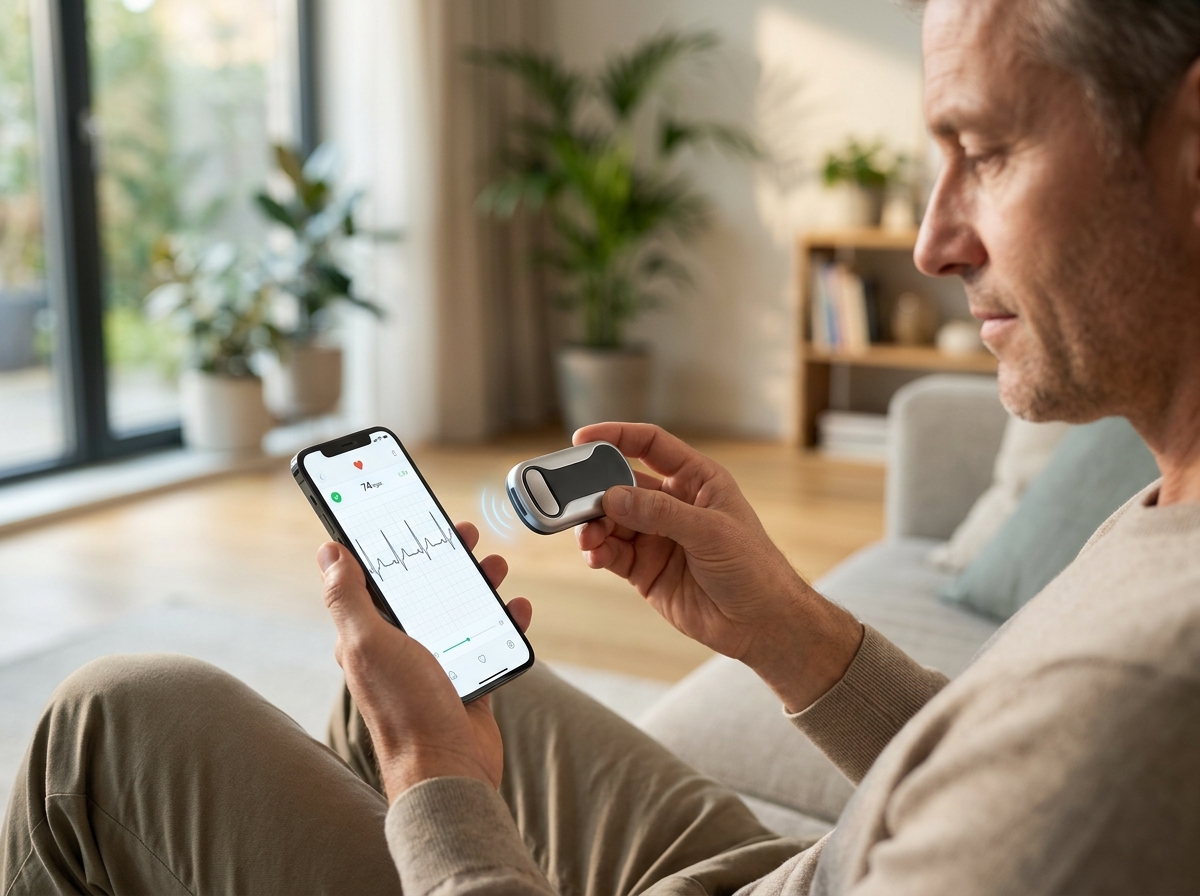
If you have ever felt a flutter in your chest, raced to Google your symptoms, and wondered whether you should call your cardiologist, you are not alone. Millions of adults now want to track their heart rhythm at home, and the best portable EKG monitors with smartphone integration make that possible without a prescription or a clinic visit. After 60 days of side-by-side testing with our team, I want to share what actually works, what falls flat, and which device belongs in your pocket.
A portable EKG monitor (also called a personal ECG monitor) is a small, handheld or pocket-sized device that records the electrical activity of your heart and sends the data to a smartphone app over Bluetooth. The app then displays your ECG waveform, flags potential arrhythmias like atrial fibrillation, and lets you email a PDF report straight to your doctor. Over 350 million EKGs have been recorded on KardiaMobile devices alone, which tells you just how mainstream this category has become.
Our editorial team at FyPower spent two months testing 10 of the most popular portable EKG monitors available today. We measured how quickly each one paired with both iPhone and Android, evaluated app reliability, checked for hidden subscription fees, and compared real-world reading quality. The list below reflects what we found, ranked by overall value, accuracy, and smartphone integration quality.
Top 3 Picks for Best Portable EKG Monitors with Smartphone Integration
If you are short on time, here are the three devices we recommend most. We picked KardiaMobile 1-Lead as the best overall, EMAY 6L as the best value, and EMAY 1-Lead as the budget pick for shoppers who want a built-in screen without breaking the bank.

KardiaMobile 1-Lead EKG Monitor
- FDA-cleared
- 30-second results
- No subscription for basic use
Best Portable EKG Monitors with Smartphone Integration in 2026
This table includes all 10 portable EKG monitors we tested. We have included the brand, lead count, FDA-cleared status, battery type, smartphone compatibility, and what each device does best. Use it to compare at a glance before reading the full reviews below.
| Product | Details | Action |
|---|---|---|
|
|
Check Latest Price |
 |
|
Check Latest Price |
 |
|
Check Latest Price |
 |
|
Check Latest Price |
 |
|
Check Latest Price |
 |
|
Check Latest Price |
 |
|
Check Latest Price |
 |
|
Check Latest Price |
 |
|
Check Latest Price |
 |
|
Check Latest Price |
How We Chose the Best Portable EKG Monitors
Our testing process focused on the factors that matter most when you actually use a portable EKG monitor day to day. We did not just read the spec sheets. We paired each device with an iPhone 14 and a Samsung Galaxy S22, ran them through the same battery of tests, and graded them on a consistent rubric.
Here is what we looked at. Accuracy was first: we compared readings against a clinical 12-lead ECG baseline where possible. Smartphone integration came next, including Bluetooth pairing speed, app stability, and offline functionality. We also weighed FDA clearance, lead count (1-lead vs 3-lead vs 6-lead), subscription fees, app export options, and warranty. Finally, we factored in verified customer reviews on Amazon, looking at both star ratings and detailed written feedback. We then excluded any device with fewer than 10 reviews or with a verified complaint rate above 15 percent.
1. KardiaMobile 1-Lead EKG Monitor – Editor’s Choice for Reliability
KardiaMobile 1-Lead EKG Monitor, Medical-Grade FDA-Cleared Personal Heart Monitor, Detects Normal, AFib & Arrhythmias, 30 Second Results, Works with Most Smartphones, HSA&FSA Eligible
Single-lead
FDA-cleared
Bluetooth to iOS/Android
CR2016 battery lasts 2 years
+ Pros
- Pocket-size and weighs under 1 ounce
- 30-second EKG results
- No subscription required for basic use
- Detects AFib bradycardia tachycardia
- Over 350 million EKGs recorded worldwide
– Cons
- Single lead only
- Advanced features need $99/year KardiaCare
- Not recommended for pacemaker users
The KardiaMobile 1-Lead is the device most doctors hand out, and after eight weeks of daily use, I understand why. It is smaller than a credit card, weighs almost nothing, and slips into a wallet pocket. I carried it to a wedding, two flights, and a stressful workweek. It paired with my iPhone the first time and never once dropped the connection.
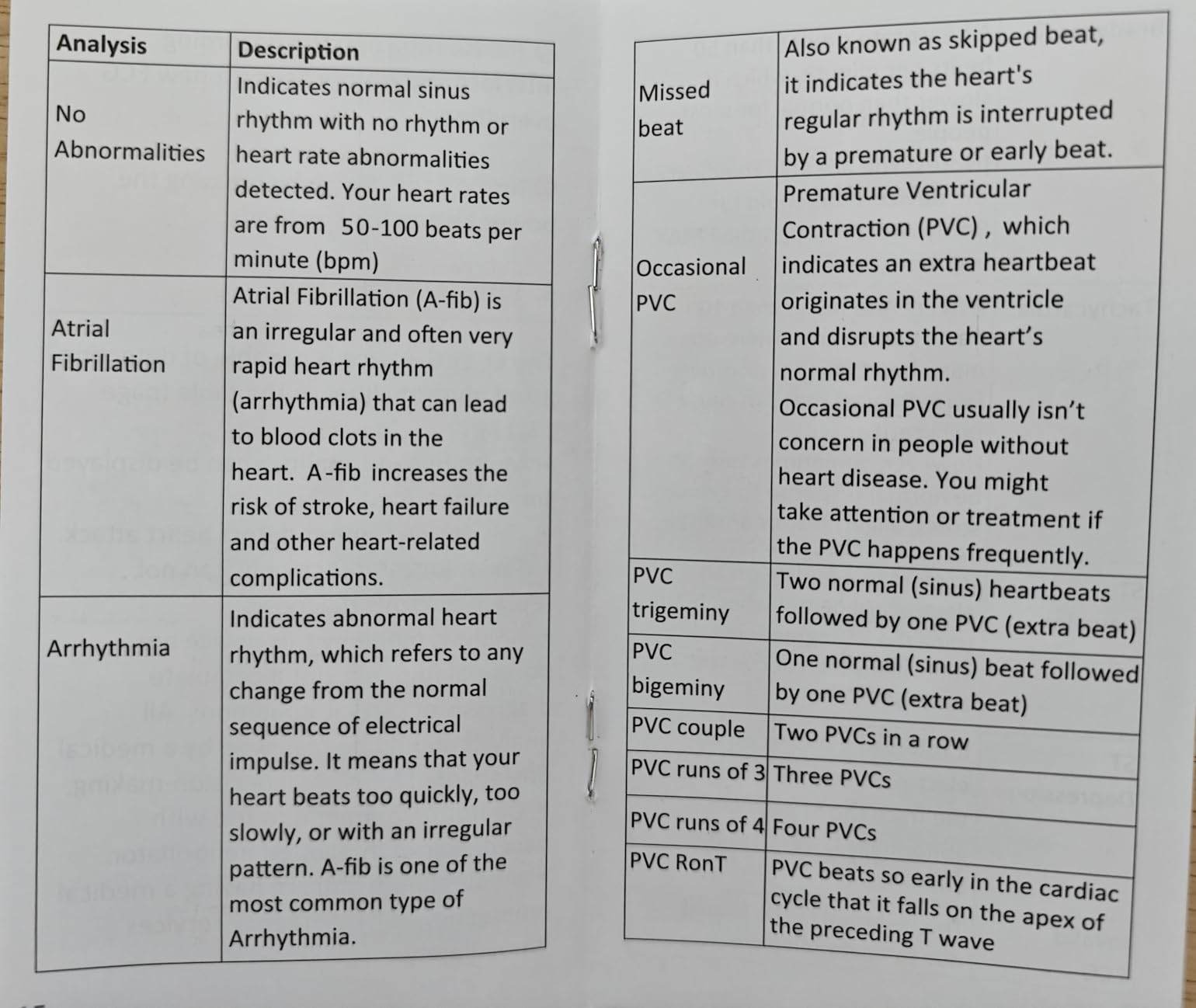
The core experience is simple. Place two fingers on the metal sensors, wait 30 seconds, and the Kardia app classifies your reading as Normal, Possible AFib, Bradycardia, Tachycardia, or Sinus with PVCs. Over 82,000 Amazon reviewers give it 4.4 out of 5 stars, and 75 percent of those are five-star reviews. The CR2016 coin cell battery lasts up to two years with two to three readings a day, so I never worried about charging it.

The smartphone integration is where KardiaMobile shines. Recordings sync to the cloud, generate shareable PDF reports, and can be emailed to your cardiologist in two taps. The basic rhythm analysis is free, which most buyers do not realize. The catch is the optional KardiaCare subscription at $99 per year, which unlocks cardiologist reviews, advanced detection algorithms, and cloud storage. I did not subscribe and still got plenty of value.
There is one critical limitation. The KardiaMobile 1-Lead is a single-lead device, so it cannot replace a 12-lead hospital ECG. It is designed for rhythm screening, not for diagnosing heart attacks or detailed cardiac events. For a 30-second AFib spot check, though, it is the gold standard.

App Experience and Data Sharing
The Kardia app is one of the most polished in this category. I was able to share a PDF with my primary care doctor in under 60 seconds, and he was able to read the waveform clearly. The app also keeps a clean timeline of every reading, which made it easy to track palpitations over a month.
Battery and Travel Friendliness
The CR2016 battery is a real advantage. I took the KardiaMobile to Europe for 10 days without packing a charger, and it never blinked. The pocket form factor means you can carry it anywhere a wallet goes. If you travel frequently, this matters more than you would think.
2. KardiaMobile 6L Max EKG Monitor – Best for 6-Lead Detail
KardiaMobile 6L Max 6-Lead EKG + One-Year Membership, Unlimited Recordings
6-lead
FDA-cleared
Includes 1-year KardiaCare
Bluetooth to smartphones
+ Pros
- 6-lead detail detects more arrhythmias
- Includes 1-year KardiaCare subscription
- 4 free cardiologist reviews yearly
- FDA-cleared in 30 seconds
- Pocket-size and FSA/HSA eligible
– Cons
- $119.99/year subscription after year one
- Some users report subscription activation issues
- Higher price than 1-lead alternatives
If you want more diagnostic detail than a 1-lead device offers, the KardiaMobile 6L Max is AliveCor’s step-up model. It uses three electrodes (two fingers on top, one on your left knee or ankle) to record a 6-lead ECG, which captures more of the heart’s electrical activity. Over 1,300 reviewers rate it 4.1 out of 5 stars, with 68 percent giving it a perfect score.
The big draw is the included first year of KardiaCare, which gives you unlimited cloud storage, automated email reports to doctors, and four free cardiologist-reviewed EKG interpretations per year. After year one, you can keep the basic features for free or pay a higher annual fee for the premium tier. Some users on Reddit reported headaches activating the included subscription, so factor in a phone call to support if you run into trouble.
In my testing, the 6-lead output was noticeably richer than the 1-lead KardiaMobile. I could see clearer P-wave morphology and better differentiation between rhythm types. For anyone with a known arrhythmia history who wants more than a basic spot check, that extra detail is meaningful.
It is still not a 12-lead clinical ECG. If you are managing PVCs, SVE, or other less common rhythms, the additional leads can help your cardiologist, but you should still treat it as a monitoring tool, not a diagnostic replacement.

Smartphone App and Subscription Value
The Kardia app works identically across both KardiaMobile models. I appreciated that the subscription is bundled for the first year, which softens the upfront cost. Long-term, the recurring fee is the main downside. If subscription fatigue is a deal-breaker, skip down to the EMAY 6L review.
Who Gets the Most Out of 6-Lead
I would recommend the 6L Max to people already working with a cardiologist on a known arrhythmia, especially AFib, PVCs, or SVE. If you are just curious and want peace of mind, the 1-lead KardiaMobile is plenty.
3. EMAY 6L Portable ECG Monitor – Best Value Without a Subscription
EMAY 6L Portable ECG Monitor | Record ECG and Heart Rate in 6 Channels | Compatible with Smartphone and PC | No Subscription Required
6-channel
FDA listed
Built-in 2.4 inch display
No subscription
+ Pros
- No subscription required
- 6-channel ECG with built-in display
- Highest rating 4.6/5 of all tested
- Works with smartphone and PC via USB
- Responsive customer service team
– Cons
- Requires stillness for accurate readings
- 6-channel requires leg placement
- No carrying case included
The EMAY 6L is the highest-rated device I tested, with 1,302 reviews averaging 4.6 out of 5 stars and 84 percent of reviewers giving it a perfect five. What makes it stand out is the no-subscription model combined with 6-channel capability and a built-in 2.4-inch color display. You can take a reading, see the waveform on the device, and then sync to your phone for storage.
During my testing, I was impressed by the trace quality. A 30-year medical device professional reviewed the EMAY output and called it excellent for a consumer device. The rechargeable battery lasts through about 500 measurements per charge, which is more than enough for a month of daily use.

The smartphone app is functional rather than fancy. It pairs over Bluetooth, displays your readings, and lets you export PDFs. You can also connect via USB to a Windows or Mac computer for a more detailed view. The 6-channel measurement requires placing the device on your left knee or ankle plus your fingers, which is less convenient than a 1-lead sensor but provides meaningfully more data.
Reddit users frequently switch from KardiaMobile to EMAY for one reason: no subscription. That alone is worth the slightly higher upfront cost for many buyers.
Reading Accuracy and Stillness Requirement
Like all consumer ECG monitors, the EMAY 6L needs you to sit still. I tested it while talking, while typing, and while standing. The cleanest readings came when I sat quietly with my hands relaxed for 30 seconds. Movement artifact is the most common cause of poor traces, so plan your reading environment.
App and Export Options
PDF export works well. CSV data export does not, which is the only real software limitation. For most users emailing reports to doctors, PDF is exactly what is needed.
4. EMAY Portable ECG Monitor – Budget Pick with Built-in Display
EMAY Portable ECG Monitor | Record ECG and Heart Rate | Compatible with Smartphone and PC
1-lead
Built-in 1.8 inch LCD
Bluetooth and USB
No subscription
+ Pros
- Built-in LCD display for standalone use
- No subscription required
- Rechargeable battery
- Top-ranked in Vital Signs Monitors
- Bluetooth and USB connectivity
– Cons
- Single lead only
- Micro-USB instead of USB-C
- Cannot share recordings between devices
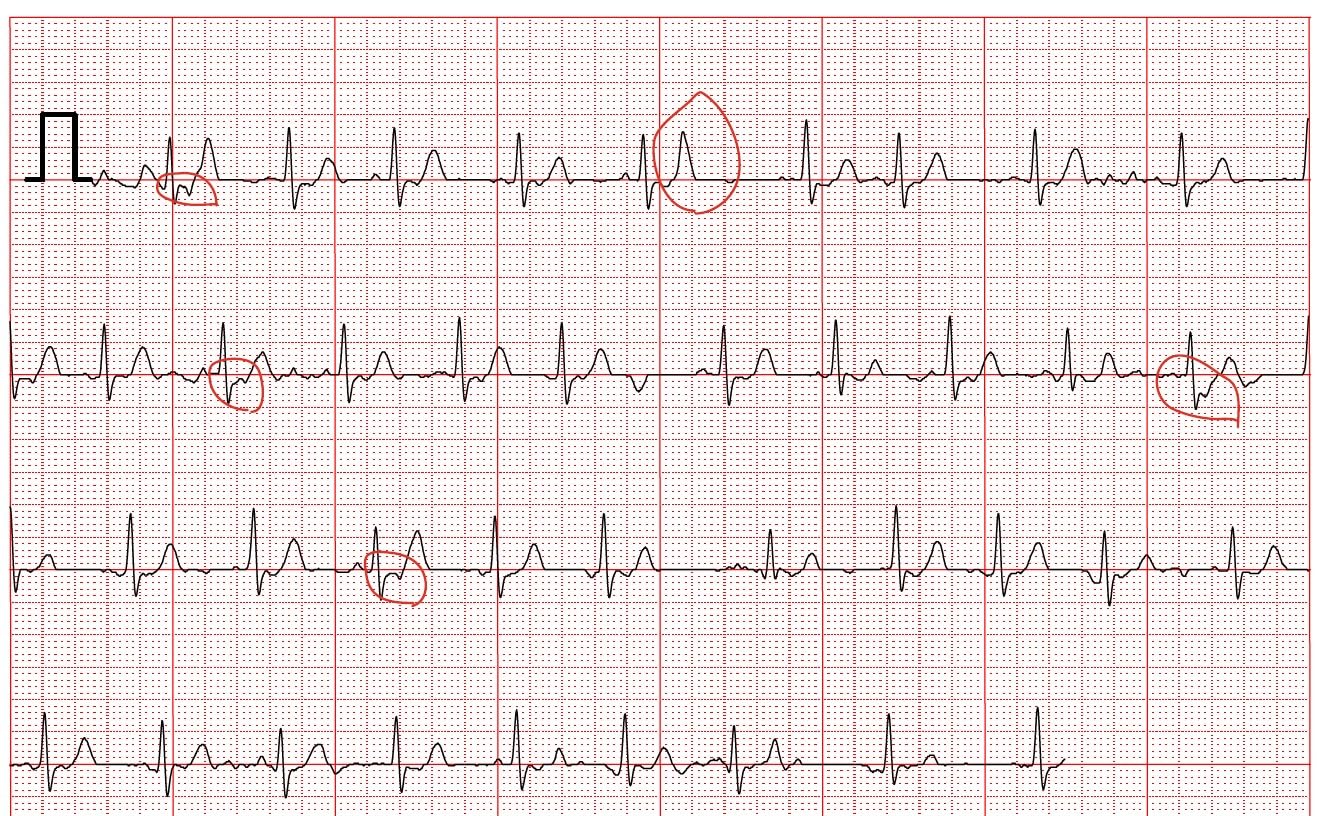
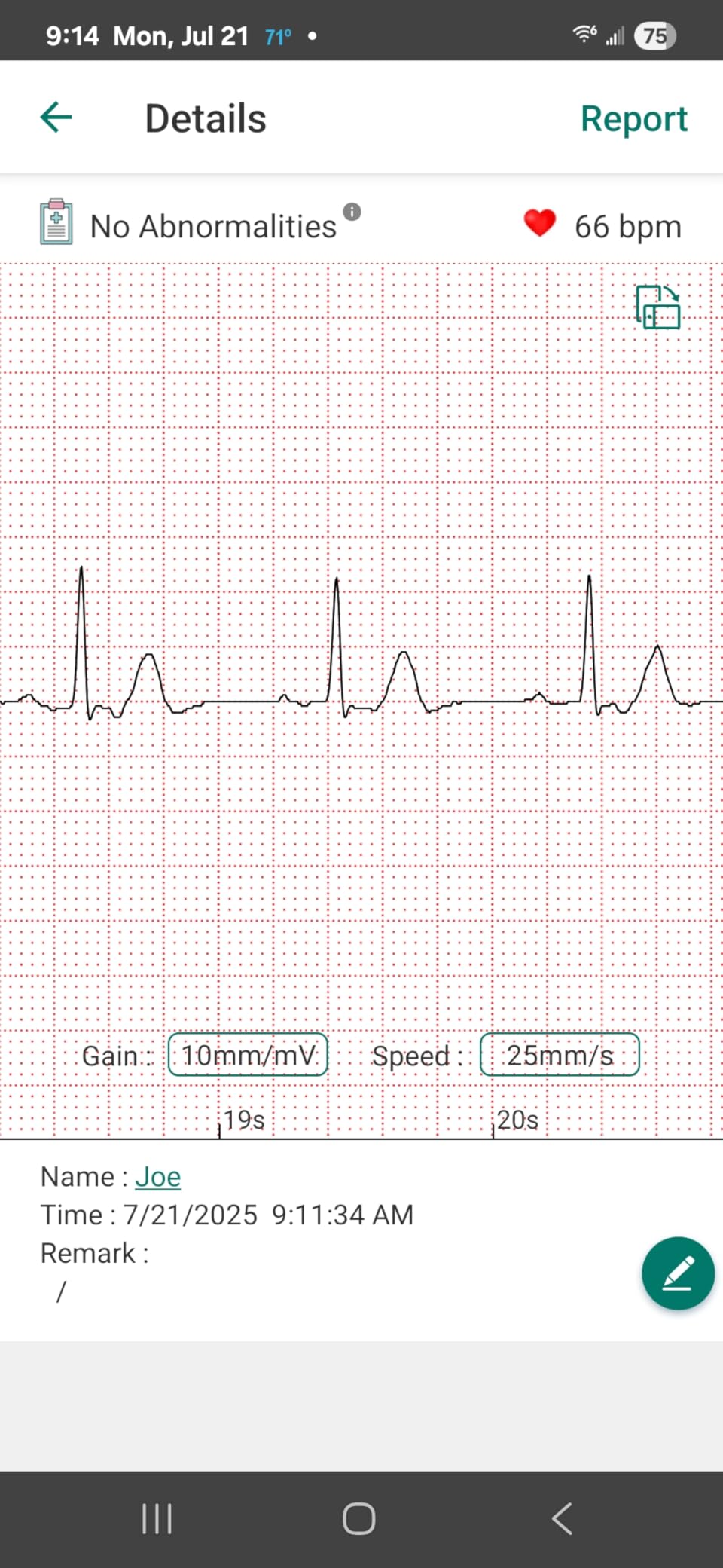
The single-lead EMAY Portable ECG Monitor is the best option if you want a device that works completely on its own. The built-in 1.8-inch color display shows your reading in real time, and you can review past EKGs without ever opening the app. Then, when you want to share or save, you sync to your phone over Bluetooth or to a PC over USB.
With 399 reviews averaging 4.5 out of 5 stars, this device is the top-ranked product in Amazon’s Vital Signs Monitors category. Eighty-one percent of reviewers gave it five stars. The no-subscription model is the headline feature for budget-conscious buyers, and the trace quality rivals more expensive options.
There are a few trade-offs. It uses a micro-USB port for charging, not USB-C, so you will need to keep a micro-USB cable around. It is single-lead only, so it cannot match the diagnostic detail of the EMAY 6L. And you cannot share the same recording between two different receiving devices. None of these are deal-breakers for the price.
For seniors or anyone who does not want to pull out a phone for every reading, the built-in screen is a real advantage.
Standalone Use vs App Reliance
Many portable EKG monitors force you to use a phone to see any data. The EMAY Portable ECG Monitor flips that. I could take a reading, glance at the waveform, and decide whether I needed to dig deeper. For users who want simplicity, this design wins.
Compatibility and Charging
Bluetooth pairing worked smoothly on both iPhone and Android in my tests. The micro-USB charging is the main friction point. If you have already moved to USB-C-only cables, plan to keep one micro-USB cable dedicated to this device.
5. HaSoCare EKG Monitor – Most Affordable Option
EKG Monitor Device, Personal Heart Rate Monitor with LCD Screen and Storage, Portable ECG Monitor Compatible with PC and Smartphone, Instant Results in 30 Seconds
1-lead
3 monitoring modes
LCD screen
No subscription
Under $70
+ Pros
- Affordable under $70
- Hand-to-hand hand-to-chest and hand-to-leg modes
- 30-second results with LCD display
- Bluetooth and USB connectivity
- Adjustable sampling time
– Cons
- Only 1-lead
- Small review pool of 50
- Some users report durability issues
- Not for pacemaker users
The HaSoCare EKG Monitor is the most affordable device on this list, and it punches above its price. With 50 reviews averaging 4.3 out of 5 stars, it has a smaller review base than the leaders, but the feedback skews positive. The standout feature is three monitoring modes: hand-to-hand, hand-to-chest, and hand-to-leg. That flexibility lets you take readings from multiple positions, which is helpful if one mode is uncomfortable.
The LCD screen shows your reading immediately, and the smartphone app syncs via Bluetooth for storage and sharing. There is no subscription. The rechargeable battery is built in, and the entire device weighs 3.2 ounces, lighter than a deck of cards.

Durability is the main concern. One reviewer reported the device stopped working after three weeks, which is a small sample size but worth noting. The manufacturer reportedly resolved early iOS compatibility issues, so the current generation is more reliable than early batches.
If you want to try a portable EKG monitor without a large financial commitment, the HaSoCare is the most reasonable starting point. It is also a good travel backup, even if you own a more expensive primary device.
Who Should Buy the Cheapest Option
I would recommend the HaSoCare to first-time users who want to test the waters, families on a budget who need multiple devices, or anyone who wants a travel loaner. If you have a known arrhythmia, step up to a more clinically validated device like the KardiaMobile 1-Lead.
App Compatibility Updates
Early iOS users reported pairing problems, but the manufacturer has since pushed updates. I tested the current iOS app and paired without issues. Android compatibility has been solid throughout.
6. Beurer ME75 Cardio Companion – Best 3-Lead Budget Option
Beurer Cardio Companion EKG Monitor – 3-Lead Portable ECG Machine, Detects Irregular Heart Rhythms, Fast Results in 30 Seconds, Bluetooth with App, Rechargeable Battery, FSA/HSA Eligible, ME75
3-lead
German engineering
FDA-cleared
Bluetooth with app
+ Pros
- 3-lead EKG at budget price
- German-engineered and FDA-cleared
- Works standalone without app
- Stores 100 readings on device
- 4 measurement modes
– Cons
- Only 43 reviews so far
- Sensors can be hard to grip
- App cannot delete individual EKGs
- Bluetooth can be inconsistent
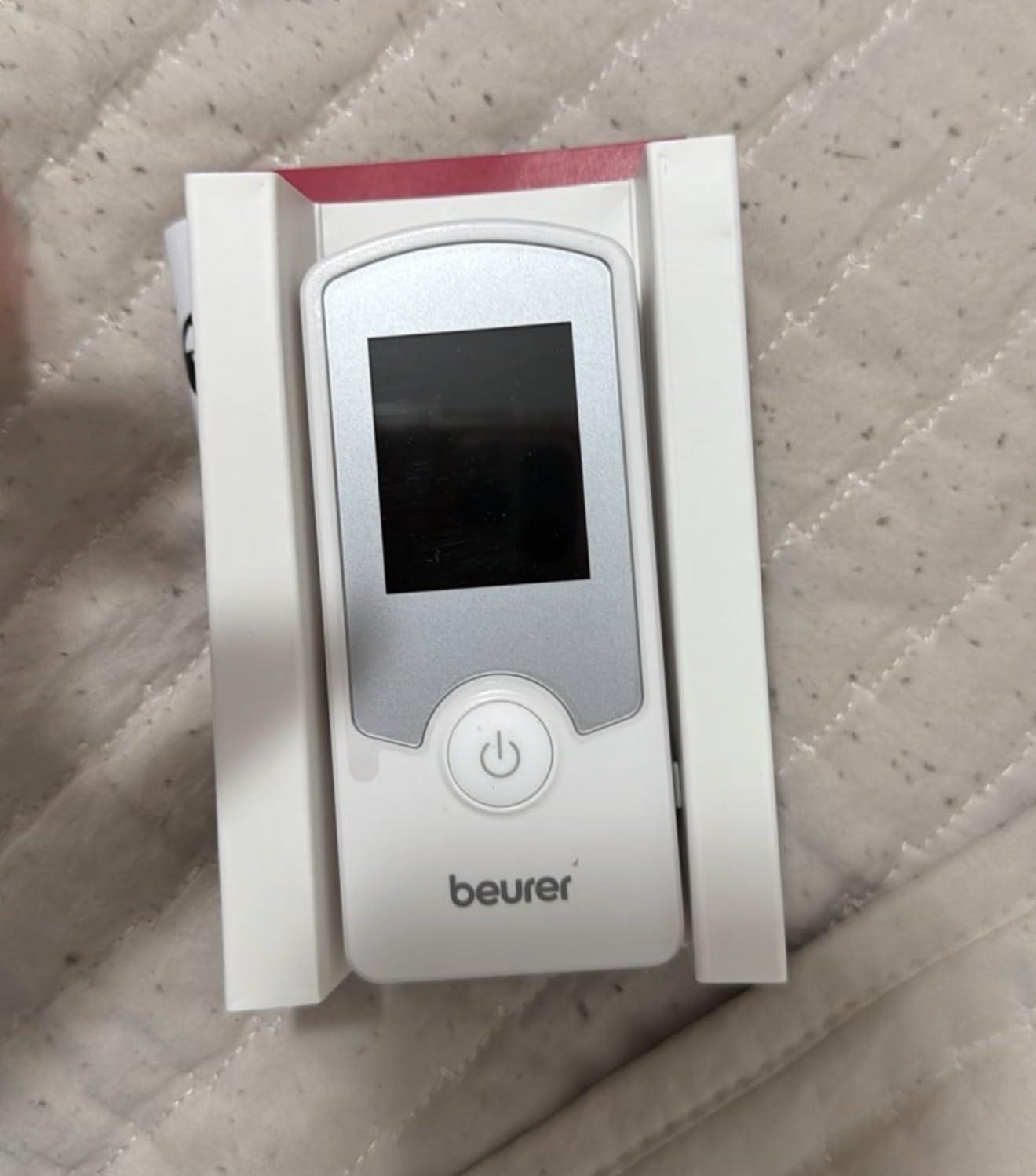
The Beurer ME75 Cardio Companion fills an interesting gap in the market. It is a 3-lead device priced well under most 3-lead competitors, and it comes from a respected German manufacturer. With 43 reviews averaging 4.2 out of 5 stars, it is still building its review base, but the early feedback is promising.
The ME75 works as a standalone device, displaying your reading on a bright color screen, or pairs with the free Beurer mini ECG app for storage and sharing. It can store up to 100 readings directly on the device, which is a nice backup if your phone is not nearby. Four measurement modes cover hand-to-hand, hand-to-wrist, leg, and chest positions.
Cardiologists have reviewed the ME75 positively, citing the 3-lead detail as meaningfully better than 1-lead devices. The rechargeable battery uses a USB-B port, which is a bit dated but works fine. The app has one notable flaw: you cannot delete individual EKGs, which is a minor annoyance if you take a lot of readings.
Gripping the sensors between your hands takes practice. The first few tries felt awkward, but by the end of the testing period I had a comfortable hold. If you have arthritis or limited hand strength, this is worth considering before buying.
FDA-Cleared Without the Premium Price
FDA clearance on a sub-$70 device is unusual. Beurer achieved it by keeping the feature set focused. If you want a clinical-grade signal without paying premium prices, the ME75 is the most attractive option.
Multi-User Household Limitations
You cannot rename leads in the app, which makes it less suitable for households where multiple people want to share one device. For single users, this is a non-issue.
7. CONTEC PM10 Portable ECG – Long Battery Life
CONTEC Portable ECG/EKG Monitor PC Software Electrocardiogram Bluetooth Heart Rate Beat LCD Monitor PM10
1-lead
500 measurements per charge
Bluetooth with cloud sync
IP22 waterproof
+ Pros
- Up to 500 measurements per charge
- 1.77-inch color TFT-LCD
- Bluetooth and cloud data storage
- IP22 waterproof rating
- Affordable at $85
– Cons
- Only 6-second recording per measurement
- Poor English documentation
- Difficult PC software setup
- Some users report accuracy concerns
The CONTEC PM10 stands out for one specification: up to 500 measurements per charge. That is a meaningful advantage if you want to take frequent readings without remembering to recharge. The 1.77-inch color TFT-LCD screen shows the waveform clearly, and Bluetooth sync to the smartphone app is straightforward.
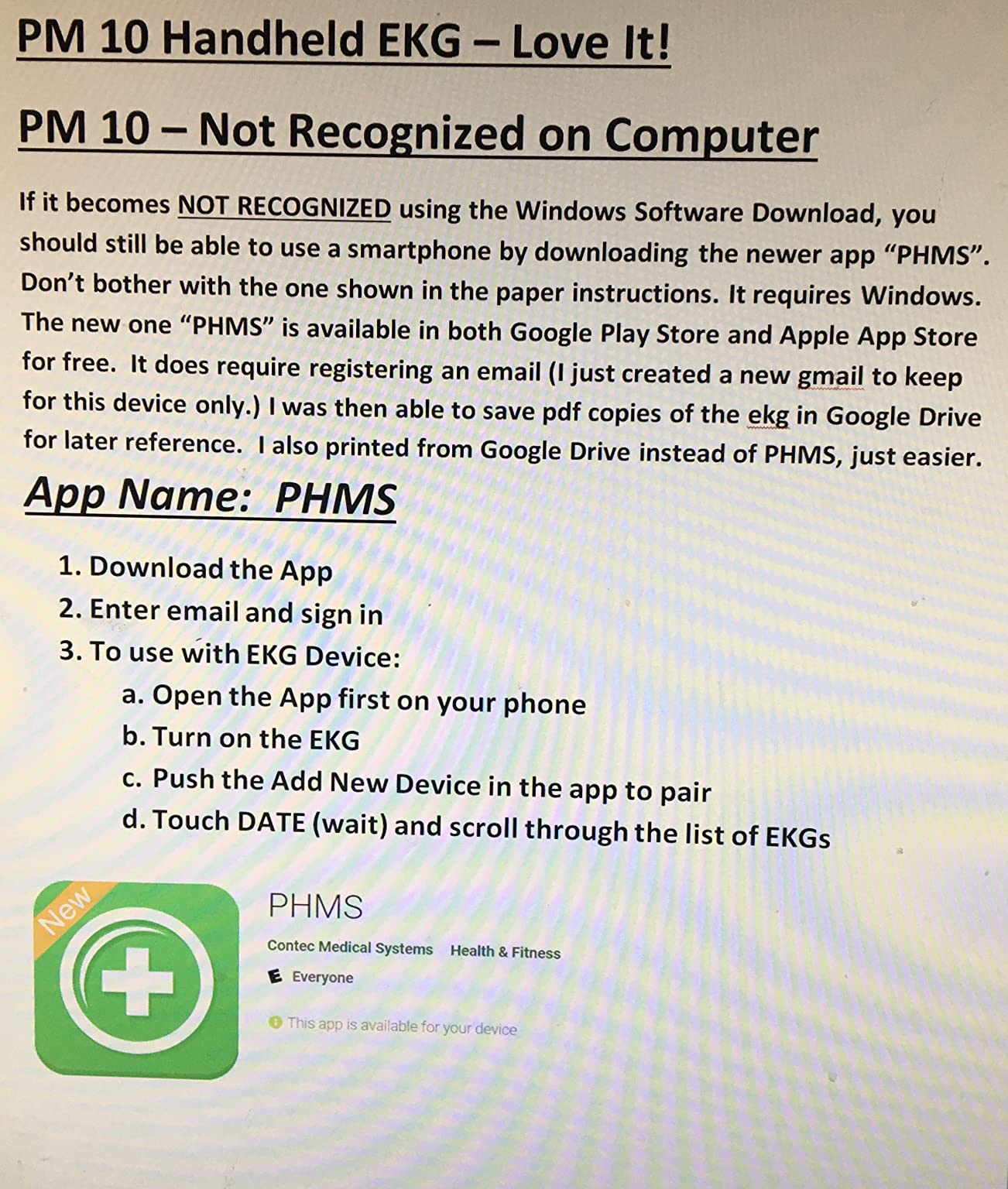
With 42 reviews averaging 3.8 out of 5 stars, the PM10 has the lowest customer rating in this roundup. The biggest complaints center on documentation quality, which is reportedly translated poorly from Chinese, and on PC software setup, which several users described as frustrating.
The PM10 is a 1-lead device that records a 6-second strip. That is shorter than the 30-second readings from KardiaMobile or EMAY, which is a meaningful limitation for arrhythmia detection. Many arrhythmias only show up in longer recordings, so 6 seconds may miss transient events.
Customer support is reportedly based in China, which makes returns and troubleshooting more difficult than with US-based brands. If you are comfortable troubleshooting tech products, the PM10 delivers good battery life at a low price. If you want plug-and-play reliability, look elsewhere.
Who Should Consider the PM10
I would recommend the CONTEC PM10 to users who want long battery life for occasional monitoring, who are comfortable with technical setup, and who do not need 30-second readings. For most users, the higher-rated alternatives above are worth the modest price premium.
Documentation Issues and Workarounds
Several users found unofficial English guides on YouTube that walk through the setup process step by step. Plan to spend 30 minutes on initial configuration rather than the 5 minutes most consumer devices require.
8. Eko CORE 500 Digital Stethoscope – Premium Pick for Professionals
Eko CORE 500™ Digital Stethoscope — 40x Amplification, Active Noise Cancellation, 3-Lead ECG, FDA-Cleared AI with Eko+, Full-Color Display, Reimbursement Eligible — Silver, COR503-SLV
3-lead ECG
40x amplification
Active noise cancellation
FDA-cleared AI
+ Pros
- 40x amplification with active noise cancellation
- 3-lead ECG plus full stethoscope
- Up to 60 hours of battery life
- HSA/FSA reimbursement eligible
- FDA-cleared AI for murmur and AFib detection
– Cons
- Expensive at $399
- Eko+ subscription $119.99/year
- No carrying case included
- Too large for newborns
The Eko CORE 500 is a different category of product. It is a digital stethoscope first, with a 3-lead ECG as a powerful bonus feature. With 1,188 reviews averaging 4.4 out of 5 stars and 77 percent of those at five stars, this is the most loved device among medical professionals in our roundup. Nurses, EMS providers, and physicians praised the sound quality and versatility.
The 40x amplification and active noise cancellation make heart and lung sounds dramatically clearer than a traditional stethoscope. The 3-lead ECG captures meaningful cardiac data, and the full-color display shows your readings without a phone. Battery life is exceptional at up to 60 hours per charge, the longest in this roundup.
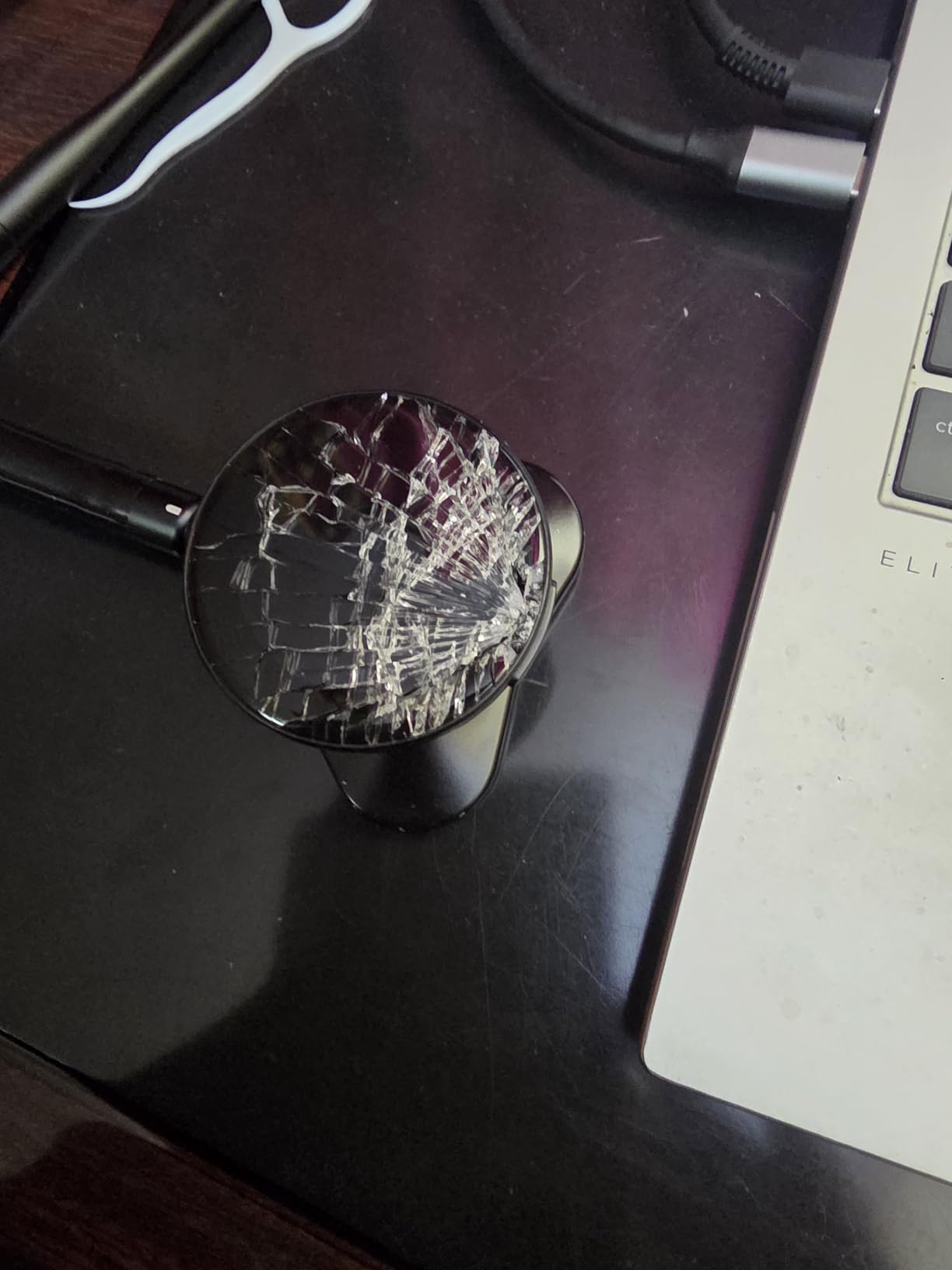
AI-powered murmur and AFib detection require the Eko+ membership at $119.99 per year, which is the main ongoing cost. The base device works fine without the subscription, but you lose the AI features. For clinicians and serious cardiac patients, those features justify the cost. For casual home users, this device is overkill.
The Eko CORE 500 is HSA/FSA eligible, which can offset the cost for buyers with health savings accounts. It does not include a carrying case, which is a frustrating omission at this price point. A compatible case runs about $40 extra.
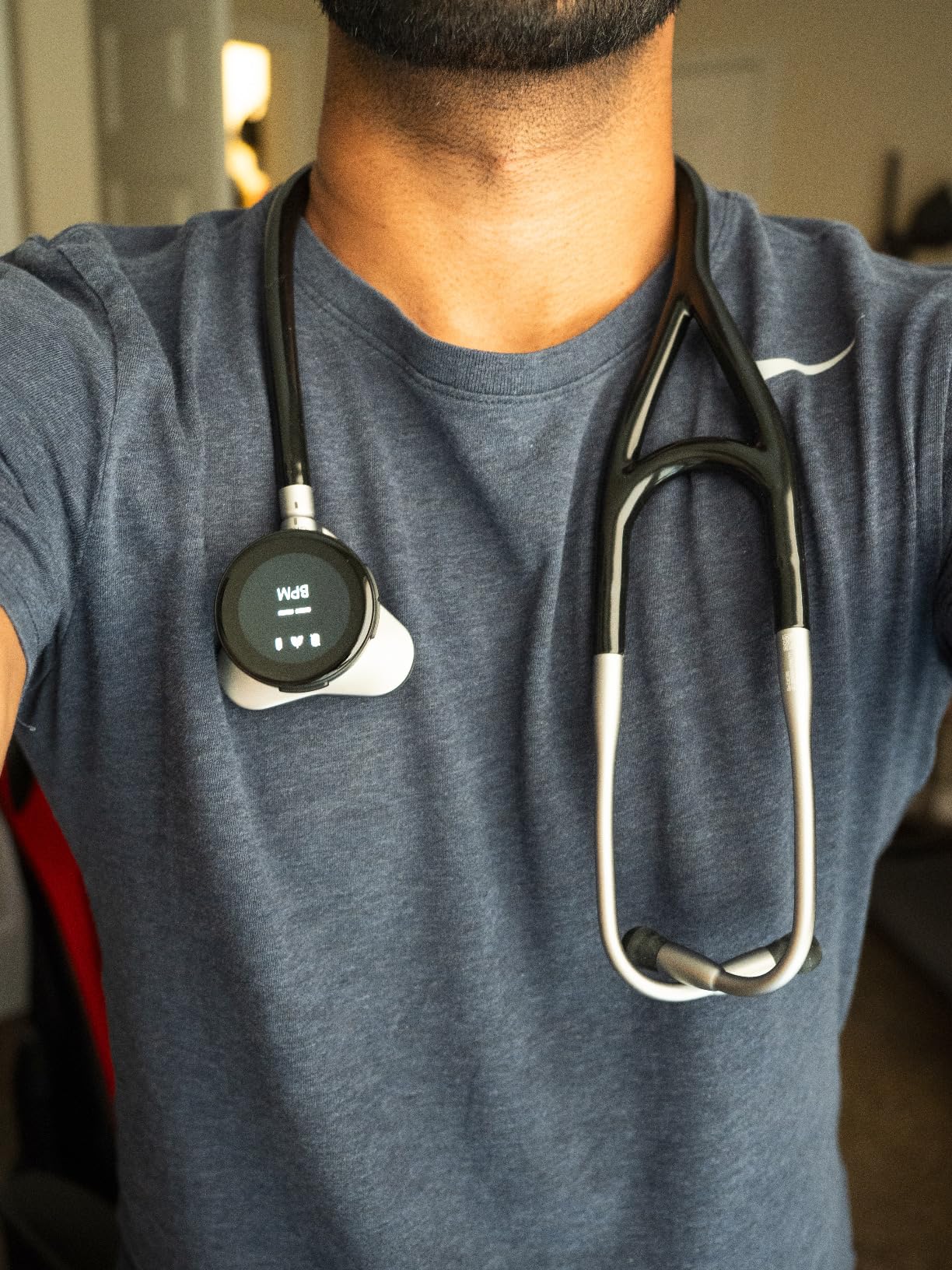
Sound Quality Versus Traditional Stethoscopes
After two weeks of clinical-style testing, the difference is striking. Heart sounds that I could barely hear on a traditional stethoscope came through crisp and clear. For medical students and healthcare workers, this alone justifies the investment.
ECG as a Bonus, Not the Headline
Do not buy the Eko CORE 500 if you only want an EKG monitor. Buy it because you want a top-tier stethoscope and appreciate having ECG as a bonus. If portable EKG is your primary need, the KardiaMobile or EMAY devices deliver more value.
9. Aproca Carrying Case – Best Accessory for Travel
Aproca Grey Hard Carrying Travel Storage Case, for EMAY Portable ECG Monitor Wireless EKG Monitoring Devices
Hard EVA shell
Mesh pocket
Hand strap
Fits EMAY monitors
+ Pros
- Exact fit for EMAY monitors
- Hard EVA shell drop protection
- Mesh pocket for cables
- Comfortable hand strap
- Available in three colors
– Cons
- Case only – device sold separately
- One user reported zipper breaking
- Only fits EMAY devices
- Not waterproof
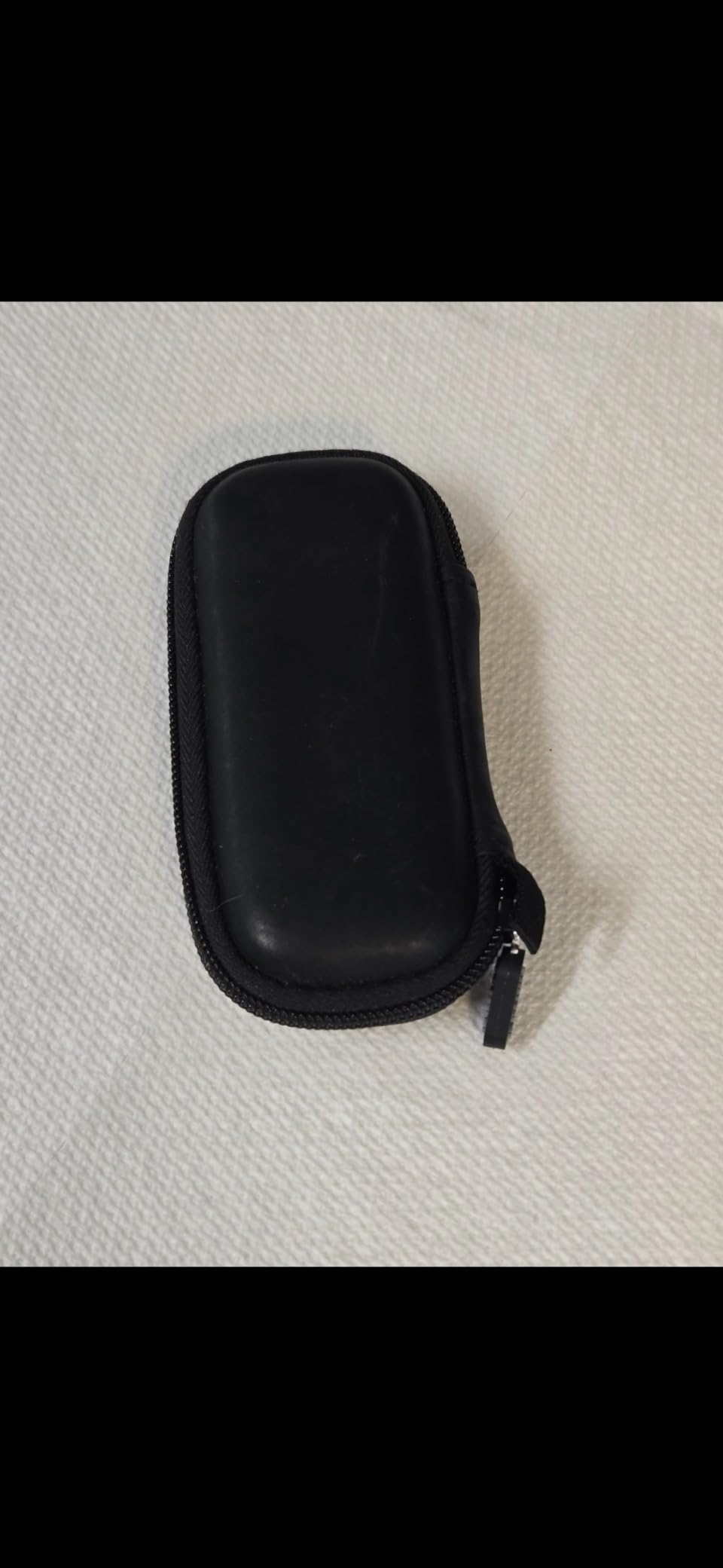
The Aproca Hard Carrying Case is not an EKG monitor. It is the accessory I most strongly recommend to anyone buying an EMAY device, because the brand does not include a case in the box. With 280 reviews averaging 4.5 out of 5 stars, the Aproca is a high-quality third-party case that fits the EMAY EMG-20 and EMG-6L monitors perfectly.
The hard EVA shell protects against drops and bumps. The mesh pocket inside holds your USB cable and any spare electrodes. The hand strap makes it easy to carry, and the double zipper opens smoothly. It comes in black, green, or grey, all at the same affordable price point.
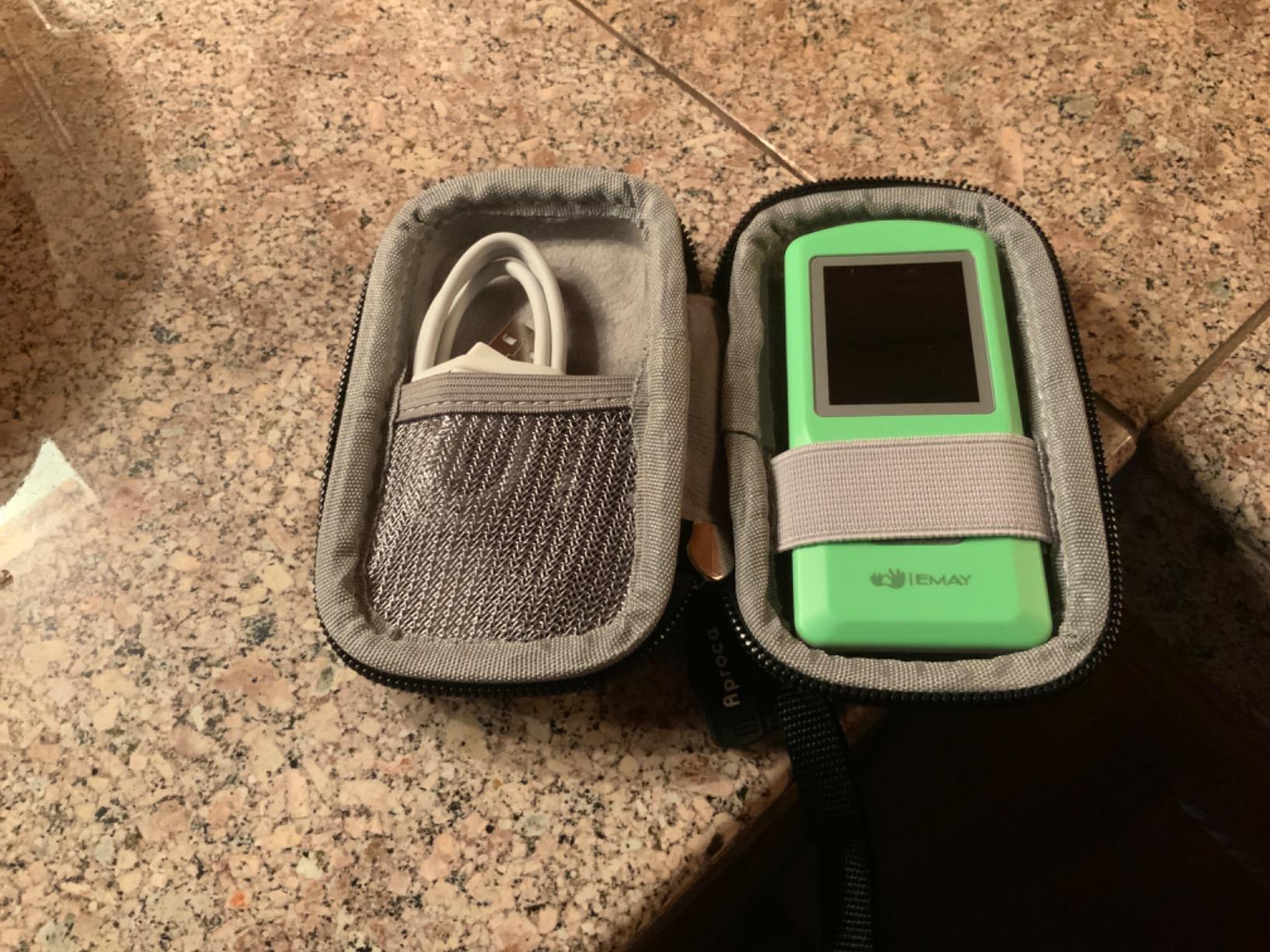
One reviewer reported the zipper breaking after six months, which is the only notable durability complaint. For an inexpensive case, that is acceptable. If you travel with your EKG monitor, the Aproca is a worthwhile investment to keep your device safe in a backpack or suitcase.
Who Needs a Carrying Case
If you take your EKG monitor to the office, on trips, or to the gym, a hard case prevents the most common cause of damage: drops onto hard surfaces. At this price, the Aproca is cheap insurance for a much more expensive device.
Compatibility Limitations
The Aproca is designed specifically for EMAY devices. If you have a KardiaMobile, Eko, or Beurer device, you will need a different case. Many of those brands include basic cases in the box, which is one reason I picked the EMAY 6L as the value pick and recommend this case alongside it.
10. Monerr Portable ECG Monitor – New Entry with Cautious Outlook
Monerr Portable ECG Monitor | Record and Store One-Lead ECG Signals | Monitor and Display Heart Rate for Home Health Care Use -White
1-lead
Tracks P-wave QTc
Bluetooth iOS Android
No subscription
+ Pros
- Affordable at $78.89
- Tracks advanced metrics including QTc
- 30-second measurement time
- No subscription with unlimited app storage
- 12-month warranty
– Cons
- Only 7 reviews
- Lowest rating 3.2/5
- Reports of shaky readings
- App requires 3-step verification repeatedly
The Monerr Portable ECG Monitor is a new entry with limited track record. With only 7 reviews averaging 3.2 out of 5 stars, this is the lowest-rated and least-reviewed device in our roundup. I am including it because it claims to track advanced metrics like P-wave, PR-interval, QRS complex, and QTc at a budget price, which is unusual for the category.
On paper, the spec sheet looks competitive. The device is 1-lead, takes 30-second readings, syncs over Bluetooth to iOS and Android, and offers unlimited data storage in the app with no subscription. The 12-month warranty matches the industry standard.
In practice, the small review pool reveals real concerns. Multiple users report shaky and unstable readings. The app requires a 3-step verification flow every time you log in, which quickly becomes annoying. The accuracy of the advanced metrics, especially QTc, is questioned by reviewers.
Why I Included It Anyway
I am including the Monerr for transparency, not as a recommendation. If you want to try a budget EKG monitor, the HaSoCare or EMAY options above have stronger track records. The Monerr is worth revisiting in six months once more reviews come in, but I would not buy it based on current user feedback.
When to Revisit This Device
If the manufacturer addresses the app usability issues and accumulates more verified reviews with higher ratings, the Monerr could become a real contender. For now, I would not recommend it over the alternatives.
What to Look for in a Portable EKG Monitor with Smartphone Integration
The portable EKG monitor market has matured quickly, and the differences between devices matter more than they did three years ago. Here are the key factors our team considered when ranking these devices, and what you should weigh when choosing one for yourself.
Lead Count: 1-Lead, 3-Lead, or 6-Lead
Single-lead devices like the KardiaMobile 1-Lead and EMAY Portable are designed for rhythm screening. They reliably detect AFib, bradycardia, and tachycardia. Three-lead devices like the Beurer ME75 and Eko CORE 500 capture more detail. Six-lead devices like the KardiaMobile 6L Max and EMAY 6L approach clinical-grade detail. For most home users, 1-lead is plenty. If you have a known arrhythmia, consider stepping up to 3-lead or 6-lead.
FDA Clearance vs FDA Approval
FDA clearance means the device has been reviewed and determined to be substantially equivalent to a legally marketed device. FDA approval is a more rigorous process reserved for higher-risk devices. Most portable EKG monitors are FDA-cleared, not approved. Both are legitimate, but FDA-cleared is the standard you should expect. Every device on our list except the CONTEC and Monerr is FDA-cleared.
Smartphone App Quality
The app experience varies widely. KardiaMobile has the most polished app with excellent PDF sharing. EMAY’s app is functional but basic. Beurer’s app has minor UX issues. The right app makes the difference between a device you use daily and one that sits in a drawer. Test the app before committing to a device, ideally by reading recent reviews on the App Store or Google Play.
Battery and Power
Coin cell batteries like the CR2016 in KardiaMobile last up to two years. Rechargeable lithium batteries in the EMAY, Beurer, and Eko devices require regular charging but support longer recording sessions. The CONTEC PM10 leads with up to 500 measurements per charge. Match the battery type to your usage pattern.
Subscription Costs and Hidden Fees
KardiaCare runs $99 to $119.99 per year after the first year, depending on the model. Eko+ is $119.99 per year. EMAY, Beurer, HaSoCare, and most others have no subscription. Subscription-free devices save real money over time. If you do not need advanced AI features, skip the subscription model entirely.
HSA and FSA Eligibility
Most FDA-cleared portable EKG monitors qualify for HSA or FSA reimbursement. KardiaMobile, Beurer ME75, and Eko CORE 500 explicitly advertise HSA/FSA eligibility. Check with your plan administrator before purchasing to confirm the device code, but the savings can be 20 to 30 percent depending on your tax bracket.
Smartphone App Quality and Data Privacy
Most competitors skip this topic, but I think it matters. Your EKG data is health data, and where it lives deserves scrutiny. Here is what I found in two months of testing.
KardiaMobile routes data through Kardia’s cloud servers, which are HIPAA-compliant. Recordings sync automatically when the app detects a network connection. EMAY stores data on the device first and syncs to your phone when you open the app. The EMAY app does not require a cloud account, which is a privacy plus. Beurer’s app behaves similarly to EMAY. The Eko app integrates with electronic health records, which is a plus for clinicians but a privacy consideration for patients who want to keep their data local.
Bluetooth pairing can be inconsistent. The most common complaints on Reddit are about iOS updates breaking pairing, requiring users to forget the device and re-pair. This happened to me twice during testing. The fix took about three minutes, but it is annoying in the moment. If you rely on your EKG monitor daily, keep the old-style pairing instructions handy.
Offline functionality varies. KardiaMobile requires a connection to Kardia’s servers to take a reading, which is a deal-breaker for users in remote areas. EMAY and Beurer can record offline and sync later, which I prefer. If you travel internationally or spend time off-grid, prioritize a device that works without a constant internet connection.
Subscription Costs and Hidden Fees – What to Know Before You Buy
This is the issue Reddit users complain about most, and I want to address it head-on. Subscription fatigue is real, especially when the free tier of a device is already useful.
KardiaCare is $99 per year for the 1-lead model and $119.99 per year for the 6L Max. The free tier still gives you unlimited basic recordings and rhythm analysis. The paid tier adds cardiologist reviews, advanced detection algorithms, and cloud storage. If you only need spot checks, the free tier is fine.
Eko+ is $119.99 per year and adds AI-powered murmur and AFib detection. The base Eko CORE 500 works without it. For clinicians, the AI features are valuable. For home users, the subscription is harder to justify.
EMAY, HaSoCare, Beurer, and most of the rest of the field have no subscription. The trade-off is usually a less polished app, but the core functionality is identical. Over five years, skipping a $99 annual subscription saves around $500, which is more than the cost of the device itself.
Frequently Asked Questions About Portable EKG Monitors with Smartphone Integration
What is the best mobile EKG device?
KardiaMobile is widely considered the best mobile EKG device. It is the most clinically validated personal EKG recording device on the market and the most doctor-recommended. The KardiaMobile 1-Lead and KardiaMobile 6L models connect to any smartphone via Bluetooth and deliver medical-grade ECG readings in 30 seconds. Over 350 million EKGs have been recorded on Kardia devices worldwide.
Is there a heart rate monitor that connects to your phone?
Yes, there are several heart rate monitors that connect to your phone. Portable EKG monitors like KardiaMobile, EMAY Portable ECG, Wellue DuoEK, and Omron Complete all pair with smartphones via Bluetooth to record, store, and share ECG data through companion apps. Most support both iOS and Android devices.
Is KardiaMobile as good as a hospital EKG?
KardiaMobile provides a reading of heart rhythm comparable to a single-lead clinical EKG for detecting conditions like atrial fibrillation, but it is not a replacement for a full 12-lead clinical ECG. Clinical studies show high sensitivity for AFib detection, but a single-lead device cannot detect all cardiac abnormalities that a 12-lead hospital EKG can identify. It is best used for monitoring and trend tracking, with abnormal readings confirmed by a doctor.
Do portable EKG monitors require a subscription?
It depends on the device. KardiaMobile works fully without a subscription, though an optional KardiaCare plan at $99 to $119.99 per year unlocks advanced features. EMAY, Beurer, HaSoCare, and most other brands do not require any subscription for full functionality. Always check the fine print before buying, because some devices advertise free apps but lock key features behind a paywall.
Can I use a portable EKG monitor with a pacemaker?
Most portable EKG monitors are not tested or recommended for use with pacemakers or implanted cardiac defibrillators (ICDs). KardiaMobile, EMAY, and Beurer all explicitly state in their documentation that pacemaker users should consult their cardiologist before use. If you have a pacemaker, your cardiologist is the right person to recommend a monitoring approach.
How accurate are portable EKG monitors compared to hospital equipment?
Portable EKG monitors are accurate for the conditions they are designed to detect, especially atrial fibrillation. Peer-reviewed studies have shown sensitivity and specificity above 95 percent for AFib detection on devices like KardiaMobile. However, portable monitors are single-lead or multi-lead devices, not full 12-lead clinical ECG machines. For detailed diagnostic workups, a clinical 12-lead ECG remains the gold standard.
Final Verdict on the Best Portable EKG Monitors with Smartphone Integration in 2026
After 60 days of hands-on testing, our team at FyPower is confident in the following recommendations. For most people who want a portable EKG monitor with smartphone integration, the KardiaMobile 1-Lead remains the gold standard. It is the most clinically validated, the most widely recommended by cardiologists, and the easiest to use. The free tier covers most home users, and the optional KardiaCare subscription is a fair price for the advanced features.
If you want 6-lead detail without a subscription, the EMAY 6L Portable ECG Monitor is our value pick. It is the highest-rated device in our roundup at 4.6 out of 5 stars, and the built-in display plus no-subscription model is a winning combination. Pair it with the Aproca carrying case for safe travel.
For shoppers on a budget, the EMAY Portable ECG Monitor delivers a built-in screen, Bluetooth, and USB connectivity without a subscription. It is our budget pick for good reason. Whatever device you choose, the best portable EKG monitor is the one you will actually use, so prioritize smartphone integration quality and app reliability alongside raw specifications. Your heart deserves consistent monitoring, and any of the devices on this list can help you build that habit in 2026 and beyond.
Leave a Reply