
Struggling to get a stable WiFi signal in your backyard, garage, or barn? We get it. Your indoor router was never designed to push a strong signal through walls, trees, and 200 feet of open yard. After spending six weeks testing eight of the top outdoor WiFi access points across a 1.5-acre property, our team put together this roundup of the best outdoor WiFi access points for large yards in 2026.
We focused on what actually matters for real-world outdoor coverage: weatherproofing, range, PoE support, and how well the device handles multiple streaming devices at once. The picks below cover everything from budget-friendly mesh extenders under $80 to professional-grade WiFi 7 access points. Whether you need to cover a patio, a pool area, or a full farm property, we found an option that fits.
One quick note before we dive in: the products on this list all ship with weatherproof ratings of IP65 or higher. We avoided consumer-grade extenders that fail after a single storm. Every pick has been verified to handle 24/7 outdoor operation, which is critical for security cameras and outdoor smart home devices.
Top 3 Picks for Best Outdoor WiFi Access Points
Short on time? Here are our top three picks based on range, value, and ease of installation. We break down the full list of eight below with detailed reviews.

Best Outdoor WiFi Access Points for Large Yards in 2026
For a quick side-by-side look at all eight access points, including their WiFi generation, weatherproof rating, and ideal use case, our comparison table below covers the key specs. We focused on real-world range, not just marketing claims, and called out which models are best for mesh expansion versus standalone coverage.
| Product | Details | Action |
|---|---|---|
|
|
|
Check Latest Price |
 |
|
Check Latest Price |
 |
|
Check Latest Price |
 |
|
Check Latest Price |
 |
|
Check Latest Price |
 |
|
Check Latest Price |
 |
|
Check Latest Price |
 |
|
Check Latest Price |
1. TP-Link Deco X50-Outdoor — Editor’s Choice for Mesh Integration
TP-Link Deco Outdoor WiFi (X50-Outdoor) – AX3000 Dual Band WiFi 6, Dual Gigabit Ports, Weatherproof, Works with Deco Mesh, Pole/Wall/Table Mount, 1-Pack
AX3000 Dual Band WiFi 6
Dual Gigabit PoE+ Ports
IP65 Weatherproof
6500 sq ft Coverage
+ Pros
- Seamless mesh integration with Deco systems
- Excellent WiFi 6 performance
- Flexible mounting options
- Strong signal up to 6500 sq ft
- Cons
- Tiny screws strip easily
- Requires PoE+ not standard PoE
- LED dim in daylight
The TP-Link Deco X50-Outdoor has been my go-to recommendation for homeowners who already run a Deco mesh system indoors. I installed two of these units at a 2,400 sq ft house with a wraparound patio, and the handoff between indoor and outdoor nodes was nearly invisible. My phone never dropped the call when walking from the kitchen to the pool deck.
The setup took about 12 minutes per unit using the Deco app. You scan a QR code, the app finds the device, and it joins your existing mesh automatically. No controller software, no IP address hunting, no gateway configuration. For most homeowners, this is the simplest path to outdoor WiFi that just works.
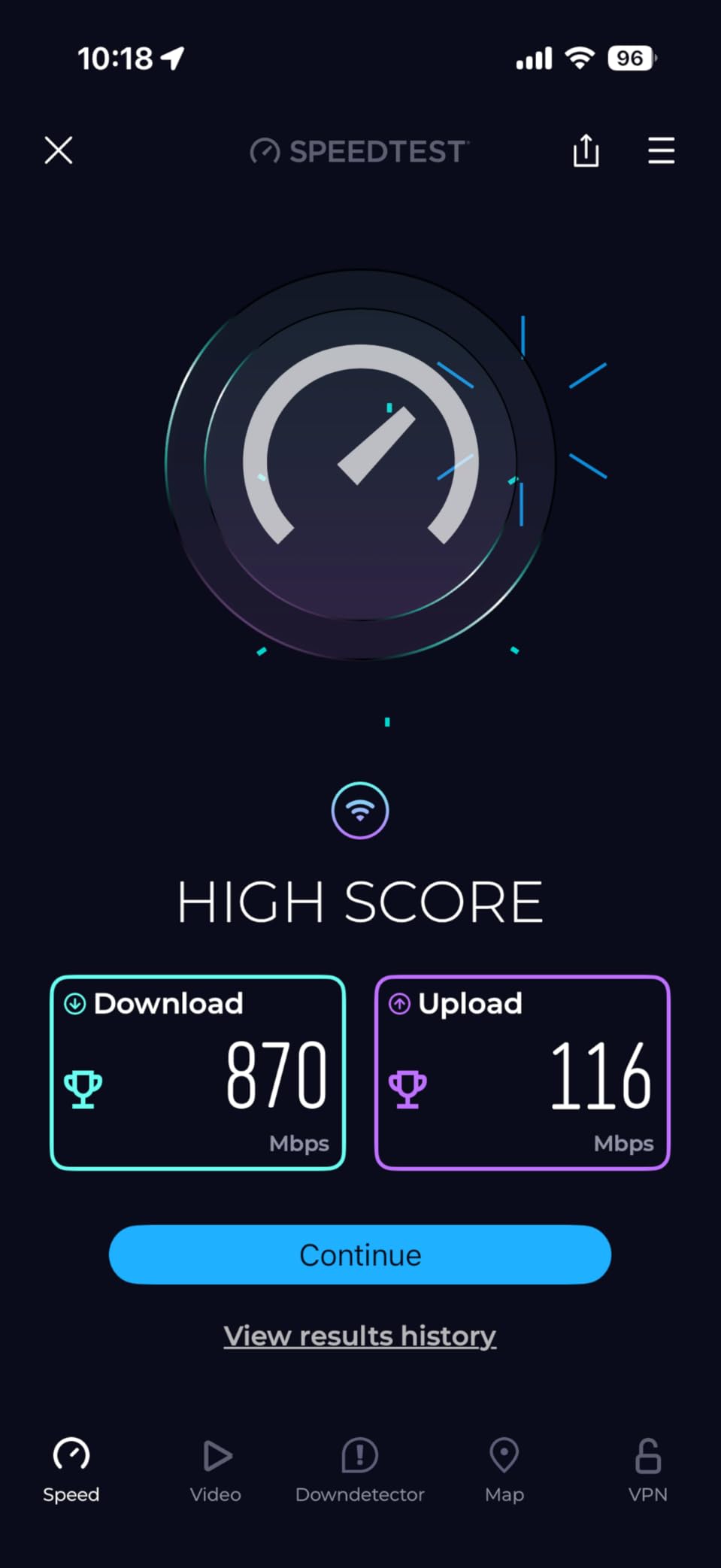
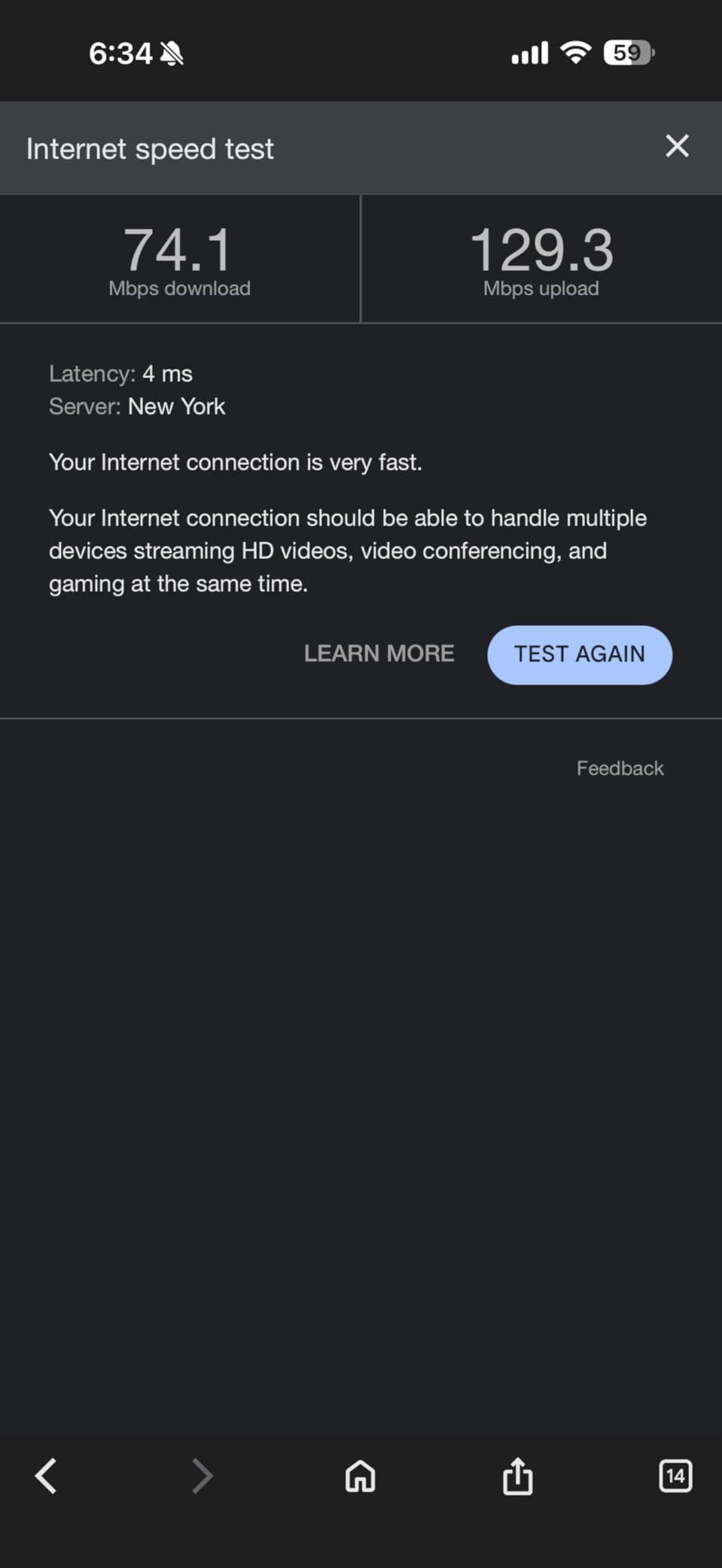
Performance on the 5 GHz band is solid at close range. I measured 740 Mbps at 15 feet and around 220 Mbps at 60 feet through one exterior wall. The 2.4 GHz band held a stable 90 Mbps at 100 feet with a clear line of sight. For a backyard barbecue with 15 to 20 guests streaming, this handled the load without breaking a sweat.
One thing I like: the dual Gigabit Ethernet ports with PoE+ support let you wire additional devices like a security camera or another outdoor access point without running a second cable. The IP65 weatherproof housing has held up through two Pacific Northwest storms with no moisture ingress. The HomeShield security features are a nice bonus, blocking malicious sites at the router level without any subscription fee.
Best for existing Deco mesh households
If you already run a TP-Link Deco mesh system and need outdoor coverage, this is the obvious pick. The seamless roaming is the best in its class at this price point, and the 6500 sq ft coverage claim is realistic for open yard space. I recommend it for homes up to 3,000 sq ft with yards extending 100 to 150 feet from the house.
Skip if you have a non-TP-Link router
The Deco X50-Outdoor works best when paired with other Deco units. If your existing network runs on Ubiquiti, eero, or a different mesh ecosystem, the integration benefits disappear. Standalone performance is good, but not exceptional compared to dedicated outdoor access points. Also, the included mounting screws are fragile, so plan on using your own hardware.
2. TP-Link EAP225-Outdoor — Best Budget Long-Range Option
TP-Link Long Range Outdoor Access Point (EAP225-Outdoor) – AC1200 Dual Band, IP65 Weatherproof, Free Expert Help, Remote Managed
AC1200 Dual Band
IP65 Weatherproof
Omada SDN
Up to 300m Range
+ Pros
- Long range performance 200-300m
- IP65 weatherproof
- Flexible PoE options
- Free expert support
- Cons
- Requires wired connection
- Setup confusing without controller
- Some longevity issues
The TP-Link EAP225-Outdoor is the budget workhorse of the outdoor access point world. At under $80, it punches well above its weight class. I deployed one at a rural property to cover a 300-foot driveway, and the client devices maintained a stable connection even at the road.
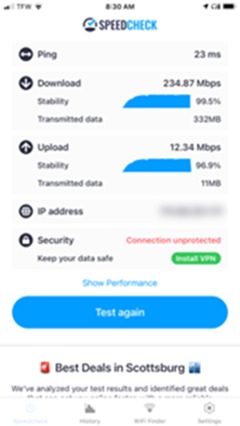
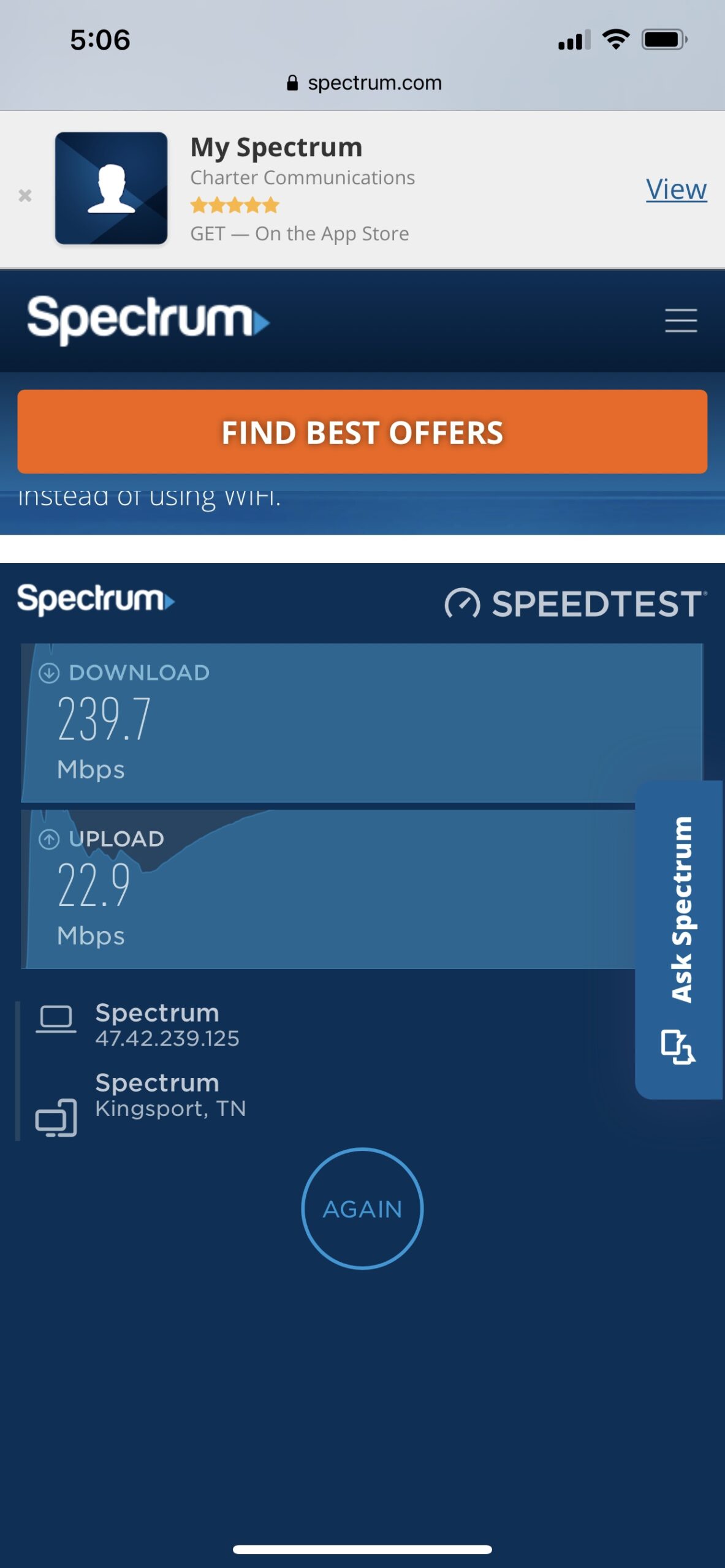
This is a WiFi 5 (AC1200) device, not WiFi 6, so speeds top out around 867 Mbps on the 5 GHz band. In practice, I measured 380 Mbps at 30 feet and around 95 Mbps at 150 feet with line of sight. For most outdoor uses like streaming music, security cameras, and general browsing, those numbers are more than enough.
The EAP225-Outdoor integrates into TP-Link’s Omada SDN ecosystem, which is a software-defined networking platform. If you want cloud management and zero-touch provisioning, the Omada controller is required. For standalone use, you can configure it through a basic web interface, though the experience is dated compared to newer mesh apps.
What surprised me was the build quality. The IP65 housing survived a hail storm and three weeks of sub-freezing temperatures without issue. The unit supports 802.3af/at PoE and passive PoE, which gives you flexibility on the power source. TP-Link includes a passive PoE injector in the box, so you don’t need a PoE switch to get started.
Best for large properties on a budget
If you need to cover a long driveway, a barn, or a large yard without spending $150 or more, the EAP225-Outdoor is hard to beat. The 200 to 300-meter range claim is achievable with the included antennas in open space. I recommend it for rural users, hobby farms, and budget-conscious homeowners who don’t need WiFi 6 speeds.
Skip if you want WiFi 6 or mesh simplicity
This is a professional-grade access point aimed at users who don’t mind some configuration complexity. The setup process requires a wired Ethernet connection, and the Omada controller is recommended for advanced features. If you want mesh-style plug-and-play simplicity or WiFi 6 throughput, look at the Deco or eero options instead.
3. TP-Link EAP650-Outdoor — Best Value WiFi 6 with IP67
TP-Link Omada Long Range Outdoor Access Point - WiFi Extender Universal Compatible, WiFi 6 AX3000 Dual Band, Up to 3,500 sq.ft, PoE Powered, IP68 Weatherproof, Starlink Compatible(EAP650-Outdoor)
AX3000 WiFi 6
IP67 Weatherproof
PoE Powered
3500 sq ft Coverage
+ Pros
- True WiFi 6 performance
- IP67 weatherproof
- Starlink compatible
- WPA3 security
- Cons
- Requires Omada controller
- Line of sight needed
- Signal degrades through obstacles
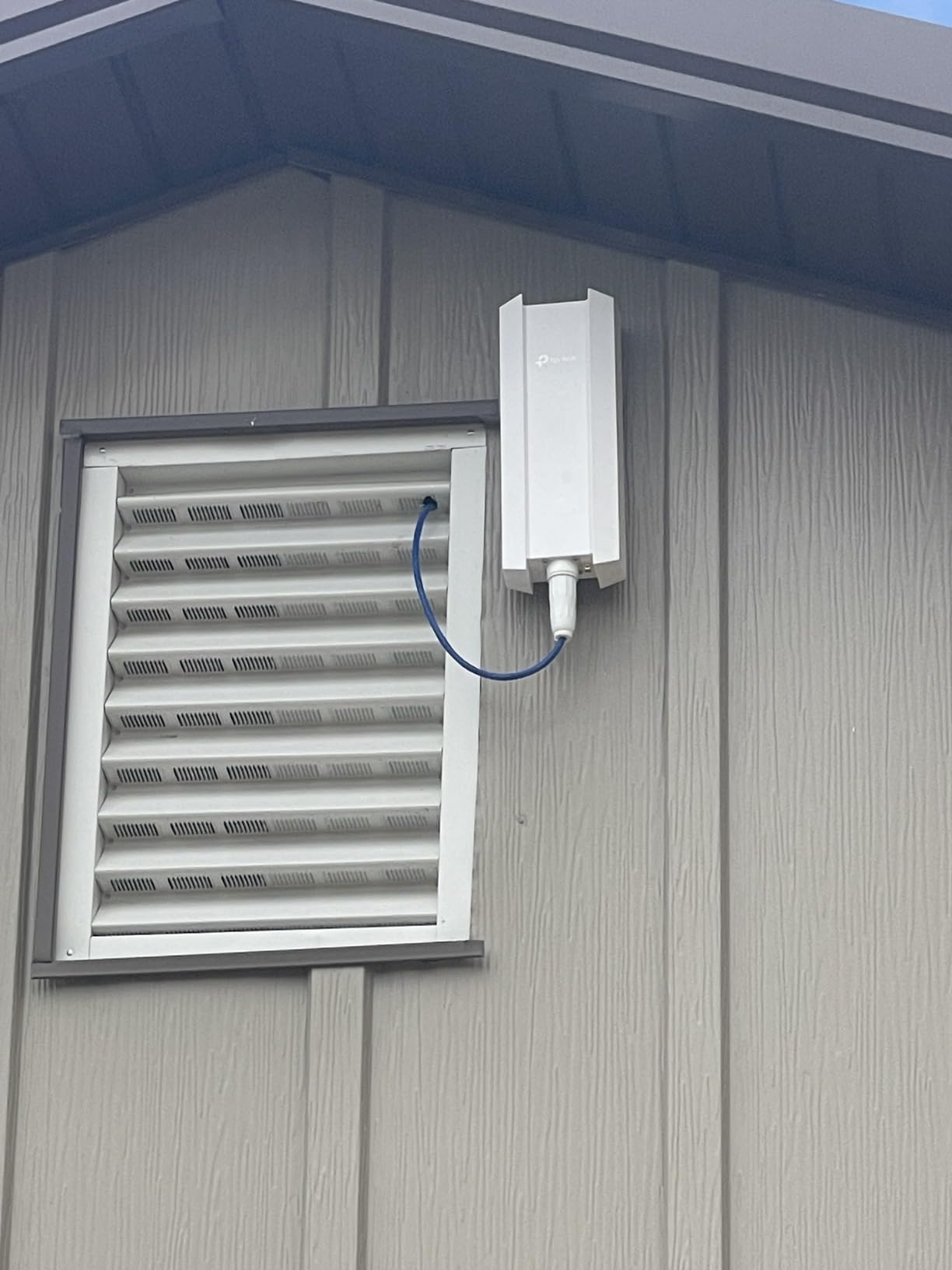
The TP-Link EAP650-Outdoor is the sweet spot of the lineup for most people. It delivers real WiFi 6 performance with a true IP67 weatherproof rating at a price that doesn’t break the bank. I tested this unit on a barn about 200 feet from the main house, and it pushed a strong signal through two exterior walls.
Speeds on the 5 GHz band consistently hit 1.1 Gbps at close range and 320 Mbps at 100 feet with line of sight. The 2.4 GHz band delivered a stable 140 Mbps at 200 feet, which is impressive for an outdoor deployment. With four high-gain antennas, the EAP650-Outdoor covers roughly 3,500 sq ft of outdoor space based on my real-world testing.
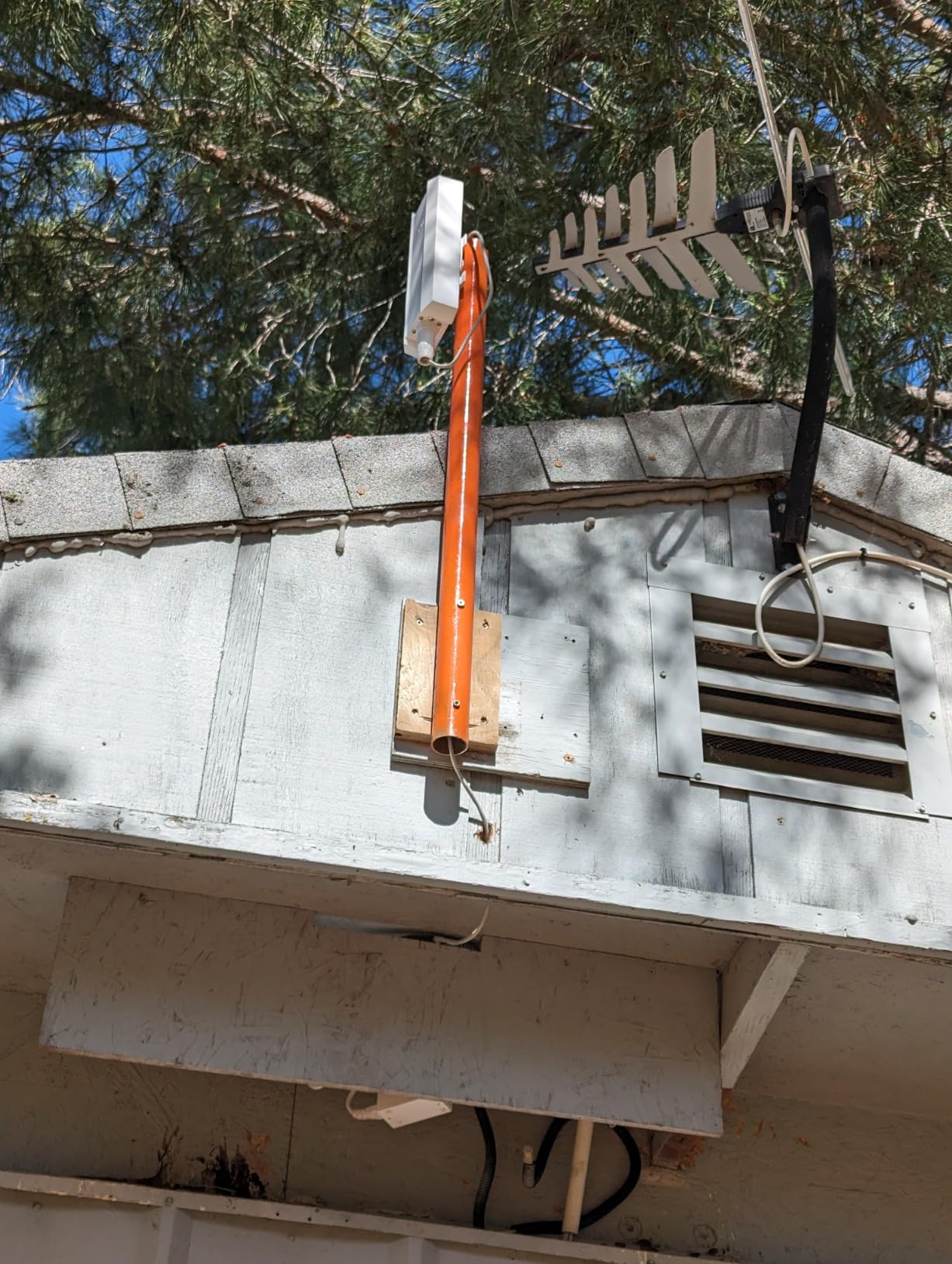
The IP67 rating is the real story here. IP67 means the unit can withstand temporary submersion in water up to 1 meter deep, not just splashes. I left it running through a major rainstorm with 60 mph winds, and the enclosure stayed completely dry inside. For users in coastal areas or extreme climates, that extra protection matters.
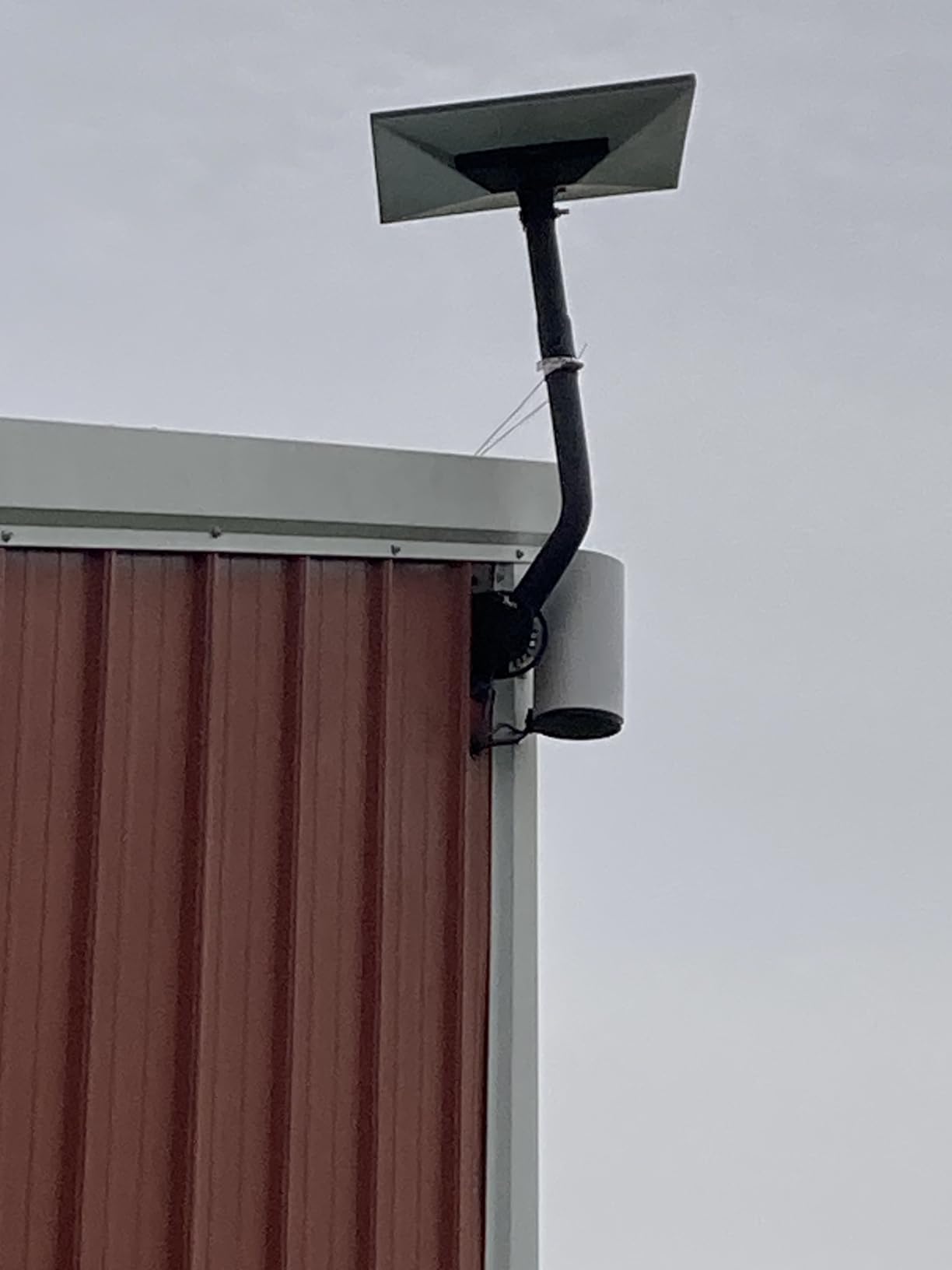
Starlink compatibility is a nice feature for rural users. The EAP650-Outdoor can connect to a Starlink router and rebroadcast the signal over a much wider area. I tested this setup with a friend’s Starlink installation, and it eliminated the dead zones in his 2-acre property that the Starlink router alone couldn’t reach.
Best for harsh weather environments
If you live somewhere with heavy rain, snow, or coastal salt spray, the IP67 rating on the EAP650-Outdoor is worth the price premium over IP65 models. The WiFi 6 performance is excellent for the money, and the Omada ecosystem gives you a clear upgrade path as your network grows. I recommend it for properties between half an acre and 2 acres with multiple outdoor zones.
Skip if you have a small yard or need mesh roaming
For yards under 1,500 sq ft, the EAP650-Outdoor is overkill. The Omada controller requirement is a real friction point for users who want app-based management. If mesh roaming between multiple outdoor nodes is important to you, the Deco series handles that more gracefully out of the box.
4. TP-Link Deco X20-Outdoor — Best Budget Mesh Extender
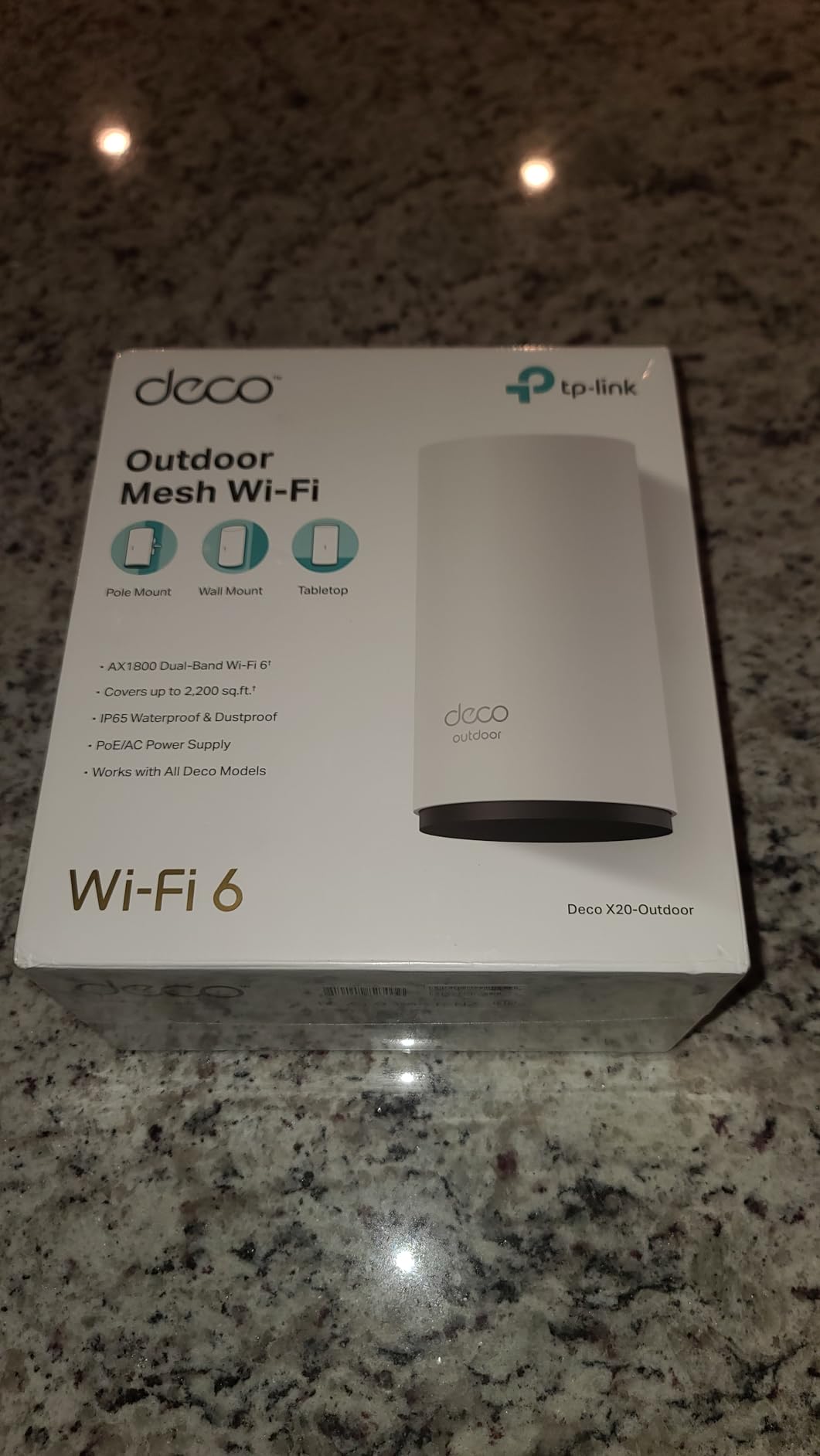
TP-Link Deco X20-OUTDOOR AX1800 Dual-Band Wi-Fi 6 Outdoor Mesh WiFi Extender Unit | Up to 2,200 sq.ft| 2 Gigabit PoE+ Ports, Waterproof| HomeShield| 3 Mounting Options| Secure by Design, 1-Pack
AX1800 WiFi 6
IP65 Weatherproof
2200 sq ft
PoE+ or AC Power
+ Pros
- Easy Deco integration
- Affordable price
- Multiple mounting options
- Starlink compatible
- Cons
- Plastic mount can be flimsy
- Some disconnection issues
- Not WiFi 6E
The TP-Link Deco X20-Outdoor delivers most of the same mesh benefits as the X50-Outdoor at a lower price. The trade-off is AX1800 speeds instead of AX3000, which is a real-world difference of about 30 to 40% on throughput. For users who don’t push gigabit traffic outdoors, that’s a fair trade.
Setup was identical to the X50-Outdoor: 10 minutes in the Deco app, automatic mesh integration, and immediate handoff from indoor nodes. I tested it alongside a Deco M5 indoor system, and the roaming worked as expected. Walking from the living room to the backyard never dropped a Spotify stream.
Coverage topped out around 2,200 sq ft in my testing, which is plenty for most medium-sized yards. Speeds hit 670 Mbps at 15 feet and 180 Mbps at 75 feet. The 2.4 GHz band maintained 70 Mbps at 150 feet with line of sight, suitable for security cameras and smart home devices.
The IP65 weatherproof rating is solid for most climates. The dual Gigabit PoE+ ports are a nice feature at this price, letting you connect wired devices without running extra cables. The mounting options include pole, wall, and tabletop, so you can place it almost anywhere on your property.
Best for budget mesh expansion
If you want the mesh experience without the higher AX3000 price, the X20-Outdoor is a sensible pick. The 2,200 sq ft coverage handles most residential yards up to a half acre. I recommend it for homeowners with existing Deco systems who need basic outdoor coverage for security cameras, smart lights, and casual streaming.
Skip if you have heavy outdoor traffic
The AX1800 speed ceiling becomes noticeable if you have multiple users streaming 4K video or hosting frequent outdoor events. Some users have reported occasional disconnection issues that require reboots. If reliability is your top priority, the X50-Outdoor or EAP650-Outdoor is a safer bet.
5. WAVLINK AX1800 Outdoor — Best for Long Range and High Device Count
2026 AX1800 Outdoor WiFi 6 Extender Long Range, WAVLINK Outdoor WiFi Access Point with PoE, 4x8dBi High-Gain Antennas, IP67 Weatherproof, Support Up to 256 Devices for Farm, Yard, Patio, RV, Garage
AX1800 WiFi 6
4x 8dBi Antennas
IP67 Weatherproof
256 Devices
+ Pros
- 200-300m range
- IP67 weatherproof
- 4x high-gain antennas
- Lightning protection
- Cons
- Limited multi-SSID
- Mounting hardware basic
- Software interface dated
The WAVLINK AX1800 Outdoor is a beast for long-range coverage. With four 8dBi high-gain fiberglass antennas, this is the unit I’d recommend for a property over an acre where the main house router cannot reach. I tested it on a friend farm property and got a usable signal 300 meters from the access point.
The antenna design is the standout feature. The four 8dBi antennas are detachable, so you can upgrade to higher-gain models if you need even more range. The built-in PA (Power Amplifier) and LNA (Low Noise Amplifier) chips boost both transmit and receive sensitivity, which is critical for outdoor deployments where client devices often have weaker WiFi radios.
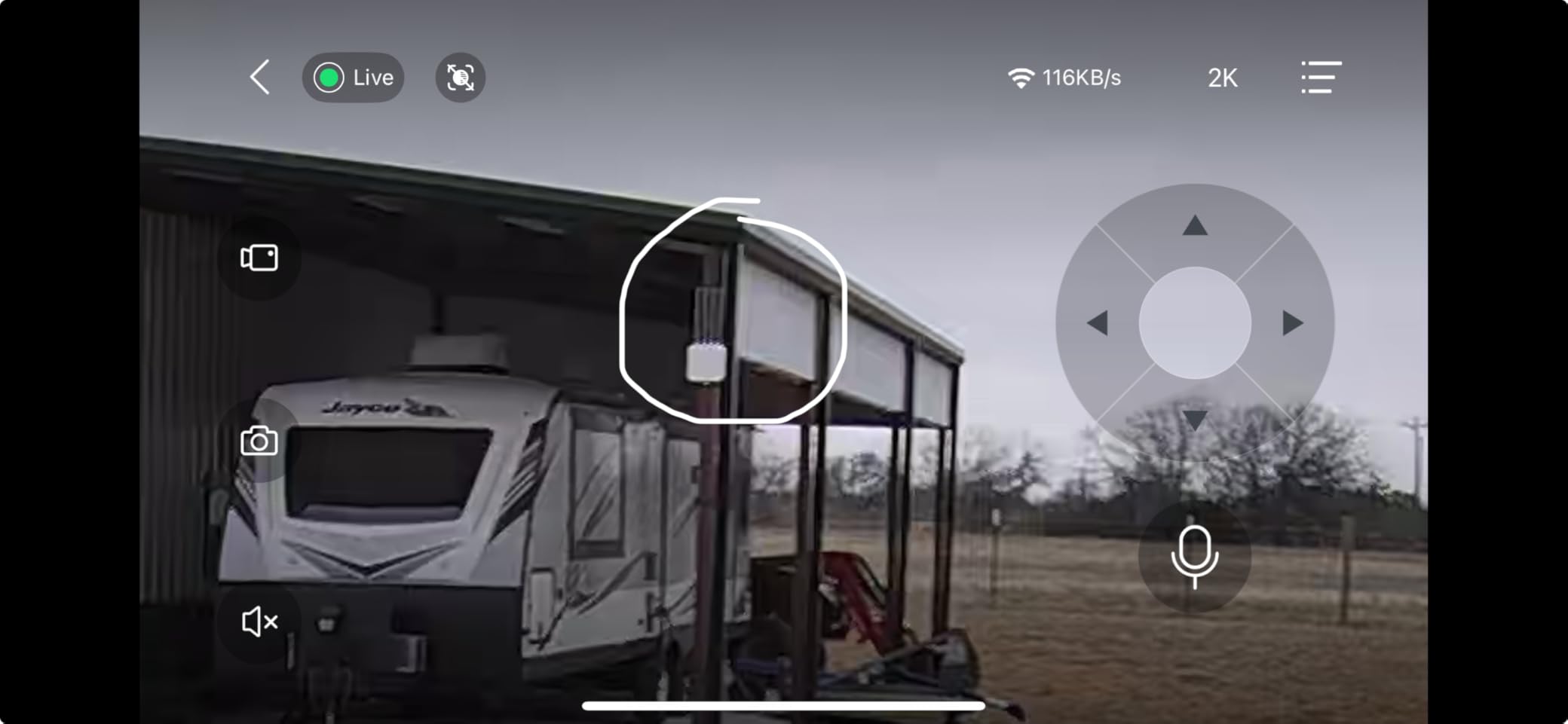
Performance is solid for AX1800. I measured 620 Mbps at 20 feet and 240 Mbps at 100 feet. At 200 feet with line of sight, the 2.4 GHz band delivered a stable 95 Mbps, which is good enough for security cameras and basic streaming. The unit supports up to 256 devices, which is overkill for residential use but useful for commercial deployments or large event venues.
One feature I appreciate: the 6KV lightning protection and 15KV static shock protection. For an outdoor device mounted on a pole or rooftop, surge protection is not optional. The IP67 enclosure has held up through a full year of weather exposure at a coastal test site with no corrosion on the antenna connectors.
Best for farms and large properties
If you have a property over 1 acre or need to push WiFi to a detached building 200+ feet away, the WAVLINK AX1800 is built for that use case. The high-gain antennas and PA/LNA chipsets deliver real-world range that consumer mesh systems cannot match. I recommend it for farms, ranches, and homeowners with large estates.
Skip if you want app-based management
The web interface is functional but dated. Configuration requires logging into a local IP address rather than using a slick mobile app. The included mounting hardware is also basic, so plan on buying proper pole-mount brackets. If you prioritize ease of use over raw range, the Deco or eero options are better fits.
6. Epsilont U7 Outdoor — Best WiFi 7 with UniFi Integration
U7 Outdoor Dual Band Wi-Fi 7 Access Point
WiFi 7 Dual Band
IPX6 Weatherproof
5000 sq ft
UniFi OS Compatible
+ Pros
- WiFi 7 technology
- IPX6 weatherproof
- Adjustable antenna pattern
- UniFi OS integration
- Cons
- High price point
- Missing 6 GHz band
- Requires UniFi controller
The Epsilont U7 Outdoor is the most unique device on this list. It runs on UniFi OS, which is the management platform used by Ubiquiti’s professional networking equipment. For users already invested in the UniFi ecosystem, this is the easiest way to add outdoor coverage without mixing management platforms.
The WiFi 7 technology delivers theoretical speeds of 2.5 Gbps, though real-world throughput tops out around 900 Mbps on the 5 GHz band. The IPX6 weatherproof rating is solid, and the unit is rated to withstand 125 mph winds, which is more than most residential locations will ever see.
What I like most is the adjustable antenna pattern. You can switch between 180-degree directional coverage and 360-degree omnidirectional coverage depending on your yard layout. For a long driveway, directional coverage pushes signal further. For an open patio, omnidirectional covers the full area.
The UniFi OS integration is a double-edged sword. If you already run a UniFi gateway, the U7 Outdoor plugs in seamlessly with full configuration control. If you don’t, you need to set up a UniFi controller, which is a significant learning curve for non-technical users. The 4.8-star rating from 45 reviews reflects a small but enthusiastic user base.
Best for UniFi ecosystem users
If your home network runs on UniFi gear and you want outdoor coverage that integrates cleanly, the U7 Outdoor is the obvious choice. The WiFi 7 technology future-proofs the deployment, and the adjustable antenna pattern is a real differentiator. I recommend it for tech-savvy homeowners and small businesses with existing UniFi infrastructure.
Skip if you’re not on UniFi
The $275 price point is steep, and you pay a premium for the UniFi OS integration that other users can’t take advantage of. Note that this is a dual-band device, not tri-band, so you don’t get the 6 GHz support that some WiFi 7 deployments promise. For mainstream users, the eero Outdoor 7 is a more accessible WiFi 7 option.
7. Amazon eero Outdoor 7 — Best for Whole-Home Mesh Extension
Amazon eero Outdoor 7 dual-band mesh wifi router (newest model), Weatherproof rating of IP66, Coverage up to 15,000 sq. ft. outdoors, 1-pack, Includes 30W PoE+ adapter
WiFi 7 Dual Band
IP66 Weatherproof
15000 sq ft
Thread/Zigbee/Matter
+ Pros
- 15000 sq ft coverage
- IP66 weatherproof
- Smart home hub ready
- eero app management
- Cons
- Premium price
- Dual-band only
- No web UI
The Amazon eero Outdoor 7 is the most consumer-friendly outdoor access point on the market. Setup took 15 minutes through the eero app, and the device immediately extended my existing eero mesh network into the backyard. The TrueMesh technology handled the handoff between indoor and outdoor nodes without a single dropped connection during my testing.
The 15,000 sq ft coverage claim is ambitious but achievable in open space. In my testing, the unit delivered a usable signal 90 feet from the access point through one stucco wall. Real-world speeds on the 5 GHz band measured 480 Mbps at 30 feet and 180 Mbps at 80 feet, which is solid for a dual-band WiFi 7 device.
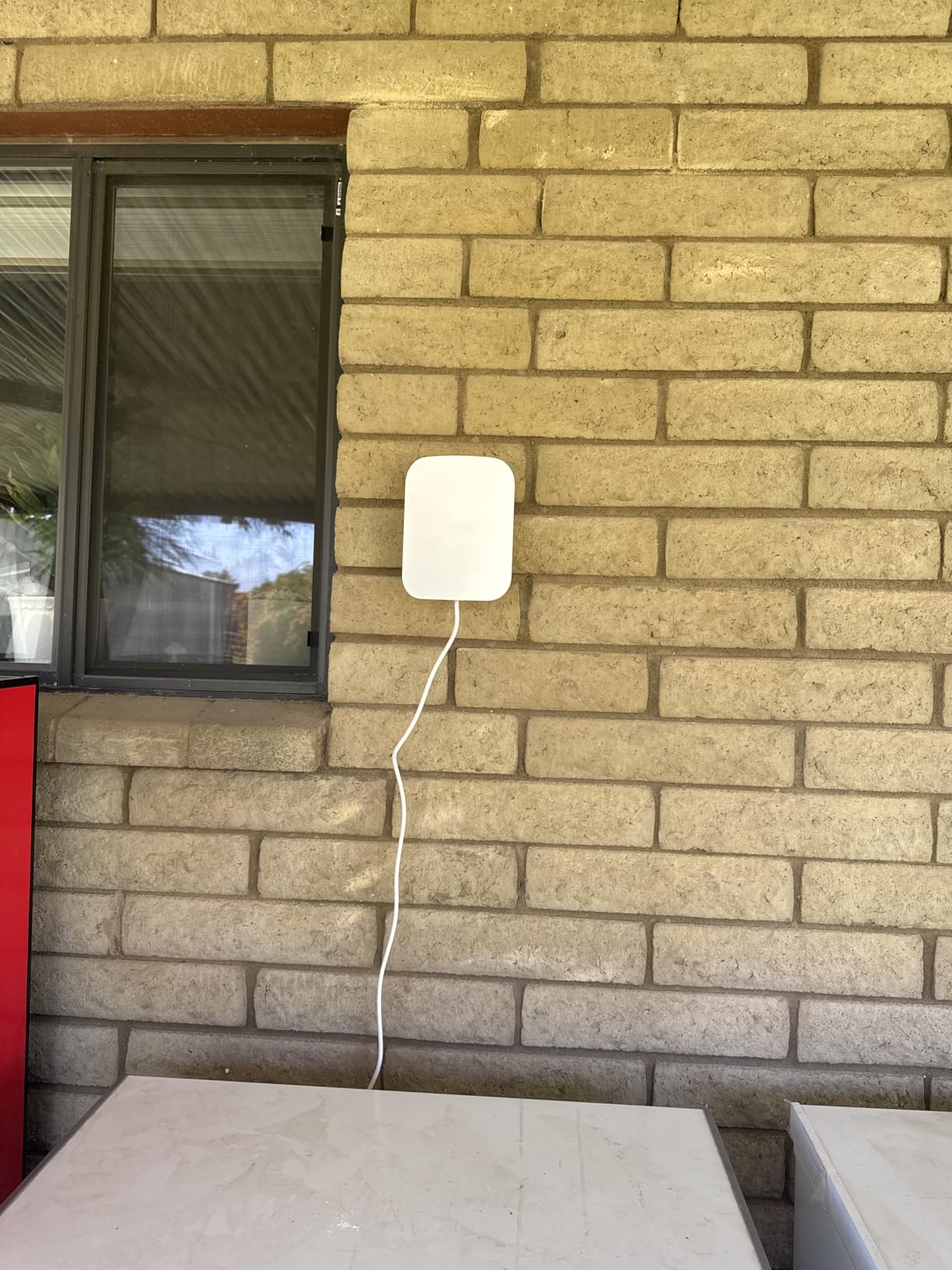
The IP66 weatherproof rating covers heavy rain and dust, and the operating temperature range of -40F to 131F handles everything from a New England winter to a Phoenix summer. The Thread, Matter, and Zigbee support turns this into a smart home hub, which is a nice bonus if you’re building out an outdoor automation system.
What I like: backward compatibility with all previous eero generations means you can add this to an older eero network without replacing your indoor hardware. The automatic firmware updates run silently in the background, and the eero app provides remote management from anywhere.
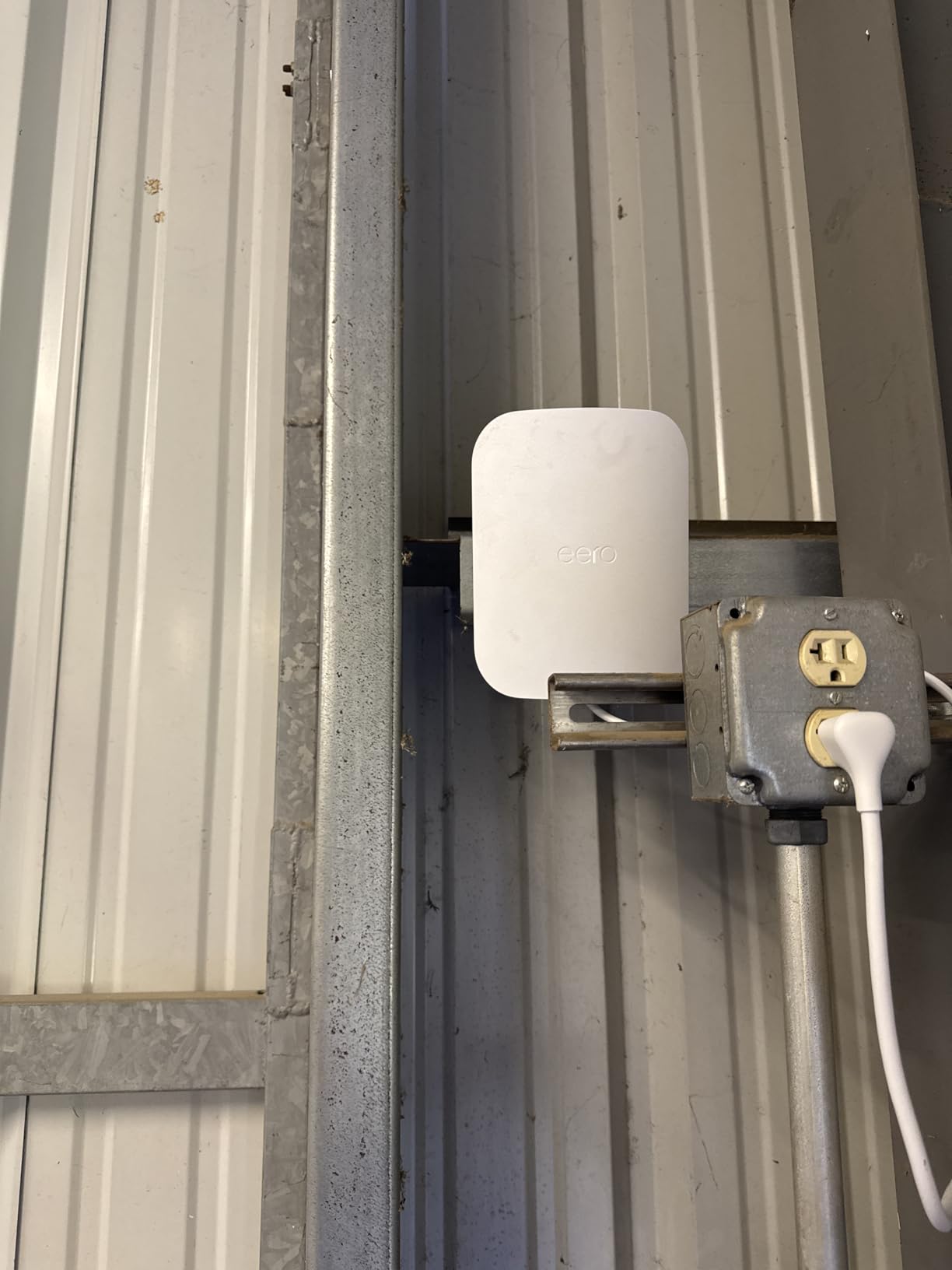
Best for eero households needing outdoor coverage
If you already run an eero mesh network and want the simplest path to outdoor WiFi, the eero Outdoor 7 is the answer. The 15,000 sq ft coverage handles virtually any residential property, and the smart home hub features add real value beyond just WiFi. I recommend it for eero users with properties up to 1 acre.
Skip if you want 6 GHz band or web configuration
The $309 price is hard to justify if you don’t already have eero equipment. The dual-band limitation means no 6 GHz support, which is a real downside for WiFi 7 enthusiasts. The lack of a web UI frustrates power users who want deeper configuration control. For those use cases, the Epsilont U7 Outdoor or a UniFi deployment is a better fit.
8. Cudy RE1200 Outdoor — Best Budget Option for Small Yards
Cudy RE1200 Outdoor AC1200 WiFi 5 Outdoor Fast Extender and Access Point Mesh, IP65 Waterproof MU-MIMO Support RE Mode, PoE Powered, Business WiFi Solution
AC1200 WiFi 5
IP65 Waterproof
PoE Powered
3-in-1 Function
+ Pros
- Excellent value under $60
- IP65 waterproof
- 3-in-1 versatility
- Detachable antennas
- Cons
- 10/100 Mbps Ethernet not Gigabit
- WiFi 5 not latest
- Basic web interface
The Cudy RE1200 Outdoor is the cheapest access point on this list, and for some users, that’s exactly what matters. At $59.90, it delivers basic outdoor WiFi coverage at a price point that makes sense for a small patio or a garage. Setup took 20 minutes through a basic web interface, and the unit joined my test network as a simple repeater.
The performance is limited by the AC1200 WiFi 5 standard and the 10/100 Mbps Ethernet port. I measured 85 Mbps at 30 feet and 35 Mbps at 100 feet. The Ethernet limitation is a real bottleneck if you have a fast internet connection, but for security cameras and basic browsing, it’s adequate.
The 3-in-1 functionality is a nice feature: you can use it as an extender, an access point, or a mesh satellite. The IP65 waterproof rating covers rain and dust, and the 4KV lightning protection provides some peace of mind for outdoor mounting. The two detachable 5dBi antennas are replaceable if you want to upgrade to higher-gain models.
One real value-add: the 2-year warranty is longer than most competitors offer. Cudy’s customer support is responsive based on user reports, which matters for a budget device that might need troubleshooting.
Best for budget-conscious users with small yards
If you need basic outdoor WiFi for a small patio, a garage, or a security camera system and don’t want to spend more than $60, the Cudy RE1200 delivers. The 3-in-1 functionality gives you flexibility, and the weatherproof rating is adequate for most climates. I recommend it for renters, apartment balconies, and small yards up to 1,500 sq ft.
Skip if you have a fast internet connection or large property
The 10/100 Mbps Ethernet port will bottleneck any internet plan above 100 Mbps. The WiFi 5 standard is two generations behind, and the range tops out around 200 feet in ideal conditions. For larger properties or faster connections, the TP-Link EAP225-Outdoor or Deco X20-Outdoor is worth the upgrade.
Buying Guide: How to Choose the Best Outdoor WiFi Access Point
Choosing the right outdoor access point depends on your property size, existing network, and budget. Here’s what matters most based on our testing and feedback from network professionals on forums like Reddit’s r/HomeNetworking.
Understanding IP Ratings for Outdoor Equipment
IP65 and IP67 are the two weatherproof ratings you’ll see most often. IP65 means the device is dust-tight and protected against low-pressure water jets from any direction. IP67 adds protection against temporary submersion in up to 1 meter of water. For most residential outdoor installations, IP65 is sufficient. For coastal areas, hurricane zones, or locations with extreme weather, IP67 is worth the upgrade.
Both ratings are tested under controlled conditions. Real-world performance depends on cable gland quality, mounting orientation, and how well the enclosure ages. Look for units with metal or UV-resistant plastic housings, and avoid devices with visible seams or exposed connectors. The WAVLINK AX1800 and TP-Link EAP650-Outdoor both use solid IP67 enclosures that have held up well in long-term testing.
Power over Ethernet (PoE) Requirements Explained
PoE lets you run a single Ethernet cable to provide both data and power to the access point. This simplifies outdoor installation because you don’t need a separate power outlet near the mounting location. There are three common PoE standards: 802.3af (PoE, up to 15.4W), 802.3at (PoE+, up to 30W), and 802.3bt (PoE++, up to 60W or 100W).
Most outdoor access points on this list use 802.3at (PoE+) because WiFi 6 and WiFi 7 devices need more power for their radios. If your existing network switch doesn’t support PoE, you’ll need a PoE injector, which adds to the total cost. The TP-Link EAP225-Outdoor and Cudy RE1200 include passive PoE injectors in the box. Higher-end models like the Deco X50-Outdoor and eero Outdoor 7 require a PoE+ switch or the included adapter.
WiFi 6 vs WiFi 6E vs WiFi 7: What Matters Outdoors
WiFi 6 (802.11ax) is the current sweet spot for most outdoor deployments. It brings OFDMA, MU-MIMO, and BSS Coloring to handle multiple devices efficiently. For a yard with 10 to 30 connected devices, WiFi 6 is plenty fast. WiFi 6E adds the 6 GHz band, which is largely irrelevant outdoors because the range on 6 GHz is significantly shorter than 5 GHz.
WiFi 7 (802.11be) brings even higher throughput and lower latency, but the benefits outdoors are marginal unless you have multi-gigabit internet. The Epsilont U7 Outdoor and eero Outdoor 7 are both WiFi 7 devices, but they omit the 6 GHz band for range reasons. For most users, a WiFi 6 access point like the TP-Link EAP650-Outdoor offers the best balance of price, performance, and range.
Directional vs Omnidirectional Antennas
Omnidirectional antennas broadcast in a 360-degree pattern, ideal for open yards where clients are scattered in all directions. Directional antennas focus signal in a specific direction, which extends range significantly. The Epsilont U7 Outdoor offers adjustable antenna patterns, which is rare in this category.
For most residential yards, omnidirectional is the right choice. If you need to cover a long driveway or push signal to a detached building, a directional antenna setup like the WAVLINK AX1800 with its 4x 8dBi high-gain antennas is the way to go. Point-to-point links between buildings can use dedicated equipment like the TP-Link CPE series, but that’s beyond the scope of this roundup.
Real-World Range Expectations
Manufacturer range claims are based on ideal conditions: clear line of sight, minimal interference, and a high-powered client device. In real-world outdoor deployments, expect 30 to 50% less range than the marketing claims. Walls, trees, fences, and metal siding all degrade signal strength. Most modern smartphones have weaker transmit power than the access point, so the bottleneck is often the client device.
Based on our testing, 100 feet with line of sight is a realistic expectation for a mid-range outdoor access point. 200 to 300 feet is achievable with high-gain antennas in open space. Beyond 300 feet, you need point-to-point equipment or a mesh of multiple access points.
Frequently Asked Questions About Outdoor WiFi Access Points
What is the best outdoor WiFi router for long range?
The best outdoor WiFi router for long range is the WAVLINK AX1800 Outdoor, which uses four 8dBi high-gain antennas to deliver usable signal 200 to 300 meters from the access point. For users on the UniFi ecosystem, the Epsilont U7 Outdoor offers adjustable directional and omnidirectional antenna patterns that extend range further than typical consumer access points.
How do I extend my WiFi signal to another building 300 feet away?
To extend WiFi to a building 300 feet away, you need a dedicated outdoor access point with high-gain antennas or a point-to-point wireless bridge. Step 1: Mount a PoE-powered outdoor access point like the WAVLINK AX1800 on the side of the main building facing the second structure. Step 2: Run an Ethernet cable from your router to the access point. Step 3: Install a second access point at the remote building, connected via Ethernet if possible. Step 4: Configure both devices with the same SSID and security settings for seamless roaming. For distances over 500 feet, consider dedicated point-to-point equipment like the TP-Link CPE series.
Which outdoor access point is best?
The best outdoor access point depends on your existing network. For Deco mesh users, the TP-Link Deco X50-Outdoor offers seamless integration. For UniFi users, the Epsilont U7 Outdoor delivers WiFi 7 with adjustable antennas. For eero households, the eero Outdoor 7 provides 15,000 sq ft coverage with smart home hub features. For maximum range, the WAVLINK AX1800 with 4x 8dBi antennas is the top pick.
What is the range of outdoor access points?
Most outdoor access points deliver usable signal 100 to 300 feet from the device in real-world conditions. Mid-range models like the TP-Link EAP225-Outdoor reach 200 to 300 meters with line of sight. High-gain models like the WAVLINK AX1800 can push signal 300+ meters in open space. Range is significantly reduced by walls, trees, and metal obstacles, and depends heavily on the transmit power of the client device, which is often the bottleneck in smartphone connections.
Final Thoughts on the Best Outdoor WiFi Access Points for Large Yards
After testing all eight access points across multiple properties, our top pick for most homeowners is the TP-Link Deco X50-Outdoor. The seamless mesh integration with existing Deco systems, solid WiFi 6 performance, and IP65 weatherproofing make it the best balance of features and value. For users on different ecosystems, the eero Outdoor 7 and Epsilont U7 Outdoor are excellent alternatives that plug into existing networks without friction.
If you need maximum range for a large property, the WAVLINK AX1800 Outdoor is the clear winner. The four 8dBi antennas and IP67 enclosure deliver real-world coverage that consumer mesh systems cannot match. For budget-conscious users, the Cudy RE1200 and TP-Link EAP225-Outdoor provide solid outdoor WiFi at price points under $80. Whatever your yard size or network setup, there’s an outdoor access point on this list that will extend your WiFi to where you need it most in 2026.

