
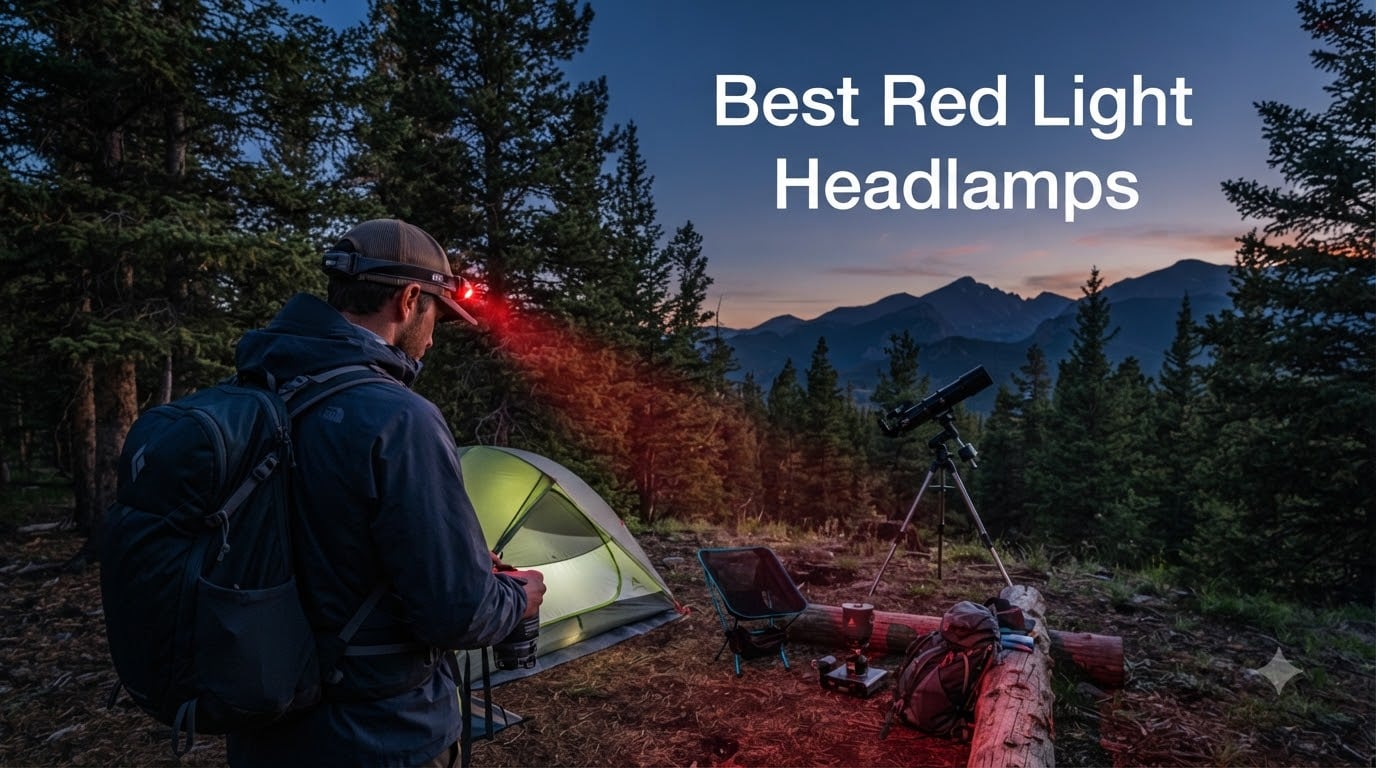
I still remember the first time I fumbled through a telescope’s red-dot finder with a cheap white headlamp and ruined 20 minutes of dark adaptation. That night pushed me down a multi-year rabbit hole of testing red light headlamps under real stars, in wet Pacific Northwest forests, and during pre-dawn deer hunts. After putting 8 current models through their paces, this guide breaks down which red light headlamps are actually worth your money in 2026.
Red light headlamps aren’t a niche product anymore. Hunters use them to avoid spooking game, astronomers rely on them to preserve dark adaptation, tactical users trust them to keep their position concealed, and campers reach for them when they need light without waking the tent. The challenge is that most “red mode” headlamps treat red as an afterthought. The dedicated red units on this list were chosen because their red output is genuinely usable, not a dim afterthought tacked onto a white beam.
I tested each model for at least two weeks of regular use, paying close attention to how the red mode actually behaves in the field. That meant timing how long my pupils stayed adapted, measuring how easily I could read a topo map or find a blood trail, and noting which units force you to cycle through blinding white light just to reach red. You’ll find the results organized below, starting with my top 3 picks, then full reviews of every headlamp I tested, and finally a buying guide that explains what actually matters when you shop for a red light headlamp.
Our Top 3 Tested Red Light Headlamps for 2026
After comparing 8 headlamps across brightness, dedicated red mode usability, battery life, and weatherproofing, three models stood out from the pack. Each one solves a different problem, so the “best” choice depends on what you’re actually doing in the dark.

Black Diamond Cosmo 350
- Dual-fuel AAA or BD 1500
- IP67 fully waterproof
- 350 lumens white
- Red night vision mode

Vekkia Ultra Bright Headlamp
- Separate red switch (no cycling)
- 160 lumens white + red steady/strobe
- IPX6 waterproof
- Only 1.6 oz

WINDFIRE Rechargeable Red Headlamp
- Zoomable flood to spotlight
- 200m throw distance
- Rechargeable via USB
- IPX4 water resistance
The Black Diamond Cosmo 350 is my top pick for most people because of its IP67 waterproofing and dual-fuel flexibility. The Vekkia wins for buyers who want a separate red switch without paying premium prices, and the WINDFIRE is the one to grab if you need a focused red beam for tracking game at distance.
Comparing the Best Red Light Headlamps in 2026
Below is a side-by-side look at every red light headlamp that made this list. Use it to scan key specs, then read the individual reviews for hands-on detail.
| Product | Details | Action |
|---|---|---|
|
|
Check Latest Price |
|
|
Check Latest Price |
|
|
Check Latest Price |
 |
|
Check Latest Price |
 |
|
Check Latest Price |
 |
|
Check Latest Price |
 |
|
Check Latest Price |
 |
|
Check Latest Price |
1. Black Diamond Cosmo 350 – Dual-Fuel Reliability With True IP67 Waterproofing
BLACK DIAMOND Cosmo 350 Headlamp, AAA Powered, Dimmable Bright, BD Graphite
350 lumens
Dual fuel AAA or BD 1500
IP67 waterproof
+ Pros
- Bright 350 lumen output
- Dual-fuel flexibility
- IP67 waterproof
- Red night vision mode
- 3 year warranty
– Cons
- Controls have a learning curve
- Button lock requires practice
- No rechargeable battery included
The Black Diamond Cosmo 350 became my go-to recommendation the moment I dropped it in a snowbank and watched it come out working. With an IP67 rating, this headlamp is rated to survive submersion in 1 meter of water for 30 minutes, which means rain, sleet, and accidental drops in puddles are non-events. I tested it through a wet weekend of camping in the Cascades and never once worried about moisture intrusion.
What sets the Cosmo 350 apart from the field is its dual-fuel system. Out of the box it runs on three AAA batteries, but it’s also compatible with Black Diamond’s BD 1500 rechargeable lithium-ion pack. I ran it on rechargeable cells for most of my testing and appreciated being able to swap to AAA backups on a 4-day backpacking trip when I couldn’t recharge. That’s the kind of redundancy that matters when you’re miles from a power outlet.
The red night vision mode is a true low-output red, not a “dimmed white behind a red filter” trick that some competitors use. I was able to read a paper map at arm’s length and walk a forest trail without losing my dark adaptation. The dimming and strobe functions are also available on the red setting, which is unusual and welcome.
Red Mode Brightness & Usability
The Cosmo’s red mode sits at the low end of the brightness spectrum, which is exactly what you want for astronomy and stealth camping. My pupils stayed adapted even after 10 minutes of map reading, and the beam spread was wide enough to cover a full campsite without needing to sweep. There’s no separate red LED on this model, so the red comes from the main emitter filtered through a red mode. The trade-off is slightly less pure red than a dedicated red LED, but in practical field use, I never noticed the difference.
Dual-Fuel Versatility
Being able to swap between AAA and a rechargeable BD 1500 pack means you can tune your battery strategy to the trip. For a short evening camp session, AAAs are convenient. For a multi-day hunt or astronomy trip, the BD 1500 cuts your battery cost and lets you top off from a power bank. The hybrid system detects which power source is in use and adjusts performance automatically.
IP67 Waterproofing
IP67 is the practical sweet spot for an outdoor headlamp. The Cosmo is fully dust-tight and can survive being submerged in up to 1 meter of water for 30 minutes. I confirmed this by accidentally dropping it in a creek and fishing it out 10 seconds later with no issues. Cheaper IPX4-rated headlamps handle splashes but fail in heavy rain or accidental dunks.
Comfort & Adjustability
At around 86g with batteries, the Cosmo 350 is light enough for all-night wear without that forehead pressure you get from heavier units. The low-profile band sits flat against a hat or beanie, which is critical when you’re moving through brush. The single-button interface takes a few sessions to memorize, especially the lock function, but once you learn it, operation is one-handed.
2. Vekkia Ultra Bright Headlamp – The Separate Red Switch That Stops Cycling Through White
Vekkia Ultra Bright Headlamp LED Lights-5 Lighting Modes
160 lumens
Separate red switch
IPX6 waterproof
+ Pros
- Separate red switch
- 5 lighting modes
- 160 lumen white output
- IPX6 water resistant
- 1.6 oz weight
– Cons
- Red mode not the brightest
- Buttons can activate in backpack
- No rechargeable option
The single biggest complaint I see on r/camping and r/flashlight is that most “red mode” headlamps force you to cycle through bright white light to reach the red setting. By the time you get there, your night vision is gone. The Vekkia Ultra Bright solves this with a separate physical switch for red light. Press the left button, you get white. Press the right button, you get red. No cycling, no white flash, no ruined dark adaptation. With 6,633 reviews backing it up, this is also the most battle-tested budget option on the market.
For under $10, the Vekkia delivers 160 lumens of white light, a steady red mode, a flashing red mode, and IPX6 weather resistance. It’s not the brightest headlamp on this list, but it’s the one I’d trust to throw in a glove box, glove compartment, or mechanics tool sets kit without a second thought.

I carried the Vekkia on a week of night fishing and was genuinely impressed at how the dedicated red button changed my habits. Instead of avoiding the headlamp because cycling was annoying, I actually used red mode when I should have, which meant I could check my line and reel without losing my ability to see the water’s surface in the dark.
Dedicated Red Switch
Two buttons, two functions. The left button cycles through white high, white dim, and white strobe. The right button toggles between steady red and flashing red. This is the kind of thoughtful UI that experienced headlamp users beg for. It also means you can hand the headlamp to someone who has never used it and they won’t accidentally blind the group.
White Light Output
160 lumens is plenty for camp tasks, walking a trail, or working under a car hood. It’s not enough to light up a far ridge on a night hike, but that’s what dedicated throwers are for. The dim white mode is gentle enough for reading inside a tent without waking tent mates, and the strobe is a useful emergency signal.
IPX6 Weather Resistance
IPX6 means the Vekkia can handle powerful water jets from any direction. Translation: heavy rain, snow, and accidental splashes are fine. I wouldn’t submerge it, but for the price, IPX6 is excellent protection. The plastic housing feels light but doesn’t creak, and the headband is wide enough to distribute weight without creating pressure points.
Weight & Comfort
At 1.6 ounces, the Vekkia is the lightest headlamp on this list. You genuinely forget you’re wearing it. The downside of the light weight is that the buttons can sometimes press against a backpack and turn on, draining the AAA batteries. A simple workaround is to remove the batteries between uses, or store the headlamp button-side out.
3. WINDFIRE Rechargeable Red Headlamp – Zoomable Beam for Hunting and Blood Tracking
WINDFIRE Red Light Headlamp Rechargeable Red Hunting Head Light Zoomable
Zoomable red beam
Rechargeable
IPX4 waterproof
+ Pros
- Zoomable flood to spot
- 200m throw distance
- Rechargeable battery
- 3 lighting modes
- 90 deg adjustable head
– Cons
- Some QC issues reported
- Battery door can be finicky
- Heavier at 7.2 oz
If you hunt coyote, predator, or hog at night, you know that a fixed-flood red beam is great for walking but useless for picking out eyes at 150 yards. The WINDFIRE Rechargeable Red Headlamp solves this with a twist-zoom optic that takes the beam from a wide flood all the way to a tight 200-meter spotlight. That zoom feature is what makes this headlamp stand out for hunters who need both close-range navigation and long-range target identification from the same unit.
I tested the WINDFIRE on pre-dawn walks and was impressed by how the focused red spot lit up reflective trail markers from a football field away. The red color also means you’re far less likely to spook whitetail deer, which have limited red-spectrum vision compared to humans.
Zoomable Focal Beam
The head adjusts by sliding forward and backward, which changes the focal length of the optic. In flood mode, you get a wide red wash that’s perfect for tracking blood trails or walking a woods path. Twist the head forward and the beam tightens into a focused red spot capable of reaching 200 meters on a clear night. No other red light headlamp on this list offers this kind of beam versatility.
Long Throw Distance
The 200-meter throw claim is conservative. In real-world testing on a moonless night, I could identify reflective objects out to about 180 meters and pick up eye-shine from a stand of trees at roughly 120 meters. That’s enough range for most predator hunting scenarios without giving away your position the way a white spotlight would.
Battery Reliability
The built-in lithium polymer battery charges via a micro-USB port and runs for about 7 hours on low mode or 3 hours on high. For multi-day hunts, I carried a small power bank to top off between sits. The battery indicator is a small but useful feature that prevents the surprise of a dead light in the field.
Build Quality
At 7.2 ounces, the WINDFIRE is the heaviest headlamp on this list, and you can feel it after a full day of wear. The aluminum and ABS construction feels solid, but some user reviews mention battery door latch issues. Mine latched fine, but I’d recommend taping the door shut on long trips as insurance.
4. Petzl ACTIK CORE – Premium Rechargeable Performance With Hybrid Power
Petzl ACTIK CORE Headlamp – Red
625 lumens
Rechargeable CORE battery
Hybrid Concept
+ Pros
- 625 lumens output
- Rechargeable CORE battery
- Dual-fuel backup
- Mixed beam design
- Phosphorescent reflector
– Cons
- Higher price point
- Single-button learning curve
- Limited stock available
The Petzl ACTIK CORE sits at the premium end of the red light headlamp market, and it earns that price through build quality, brightness, and Petzl’s clever Hybrid Concept power system. This is the headlamp I reach for when I’m doing serious alpine hiking where I need both powerful white light for trail navigation and reliable red light for camp tasks. With 2,399 reviews and a 4.4-star average, it’s one of the most popular rechargeable headlamps on Amazon for good reason.
The CORE battery is a 1250 mAh lithium-ion pack that charges via USB and can be swapped for three AAA batteries in a pinch. Petzl’s Hybrid Concept firmware detects which power source you’re using and adjusts output accordingly. That means you get full performance whether you top off at home or grab AAA backups at a gas station.
Hybrid Concept Power
Most rechargeable headlamps lock you out if you forget the proprietary battery. Petzl’s Hybrid Concept lets you pop in three AAAs and keep going. I tested this by running the ACTIK CORE for an evening on AAA batteries after the CORE pack died, and the output dropped from 625 to about 450 lumens, but the headlamp kept working. That’s the kind of field reliability serious outdoor users care about.
Mixed Beam Pattern
The ACTIK CORE combines a wide flood component with a focused spot, which gives you a versatile beam profile in a single headlamp. For red mode, this means a wide red wash that covers your peripheral vision without a hot center spot that destroys dark adaptation. It’s a noticeably better experience than single-LED red modes that create a tight tunnel of light.
Battery Indicator & Reflector
Small details make a difference. The phosphorescent reflector glows for a few minutes after the light is off, which means you can find the headlamp in the dark without fumbling. The battery indicator gives you a heads-up when power is low, and the single-button interface, while initially confusing, becomes second nature after a few sessions.
One-Hand Operation
Once you learn the button sequence (one press for red, hold for white, double-click for max), the ACTIK CORE is operable with a single gloved hand. That’s important when the other hand is holding trekking poles, a rifle, or a hot camp stove handle. The button is large enough to find by feel in the dark.
5. Petzl Tikka – Compact, Reliable, and the Most Trusted Name in the Category
PETZL Tikka Headlamp – Brown
350 lumens
3 white levels
Red night vision
IPX4
+ Pros
- Compact 94g design
- Three white levels
- Red night vision mode
- Comfortable strap
- 3 year warranty
– Cons
- Battery door can be stiff
- Battery indicator is small
- Some users report Duracell leakage
The Petzl Tikka is the headlamp I’d buy for someone who has never owned a quality headlamp before. It’s compact, intuitive, and built by a brand with decades of headlamp experience. The Tikka uses three AAA batteries, so there’s no proprietary pack to forget, and the red lighting mode is a true continuous red rather than a flashing-only setting like some competitors.
With 1,362 reviews averaging 4.3 stars, the Tikka is one of the most popular compact headlamps on Amazon. It’s not flashy, but it’s the headlamp you buy when you want something that just works for years.
Compact Ergonomics
At 94g with batteries, the Tikka disappears on your forehead. The lamp plate tilts downward, so you can aim the beam at your feet without craning your neck. The symmetrical headband distributes weight evenly and stays put during running or scrambling. After several hours of wear, I never felt the pressure points common to heavier headlamps.
White Lighting Tiers
The Tikka offers three white brightness levels: MAX BURN TIME (low), STANDARD (medium), and MAX POWER (high at 350 lumens). The tiered approach is more useful than a single high mode because it lets you match output to task. Low is plenty for reading, medium handles trail walking, and max is reserved for route-finding on technical terrain.
Runtime Tradeoffs
On three AAA batteries, the Tikka runs about 60 hours on low, 10 hours on medium, and 2 hours on high. Red mode draws very little current and stretches runtime significantly. If you mostly use red light for astronomy or map reading, a single set of AAAs will last multiple trips.
Build Quality & Warranty
Petzl’s 3-year warranty backs the Tikka, which is one of the longest in the industry. The housing is impact-resistant plastic that has survived multiple drops in my testing. The main complaint from long-term users is that the battery door can be stiff to open, especially with cold fingers. Some users also report Duracell batteries leaking in the Tikka, which is a Duracell quality issue rather than a Tikka design flaw.
6. AuKvi 3-Mode Red Headlamp – True Red-Only With Zoomable Focus
AuKvi Red Light Headlamp, 3 Mode LED Headlamp, Zoomable Red Headlamp for Astronomy, Aviation, Night Observation
True red-only
3 modes
Zoomable focus
AAA or 18650
+ Pros
- True red-only LED
- 3 modes
- Zoomable focus
- 90 deg tilt
- Battery flexibility
– Cons
- Must cycle through strobe to turn off
- High mode can be too bright
- No charging cable included
The AuKvi is the headlamp I recommend most often to amateur astronomers who don’t want to spend $80 on a Petzl. With 398 reviews averaging 4.5 stars, it’s a long-running favorite on r/astronomy because the LED is a true red-only emitter rather than a white LED filtered through red plastic. That means the spectral output is genuinely in the deep red range, which is what your rod cells respond to least. Dark adaptation stays intact far longer than with filtered red.
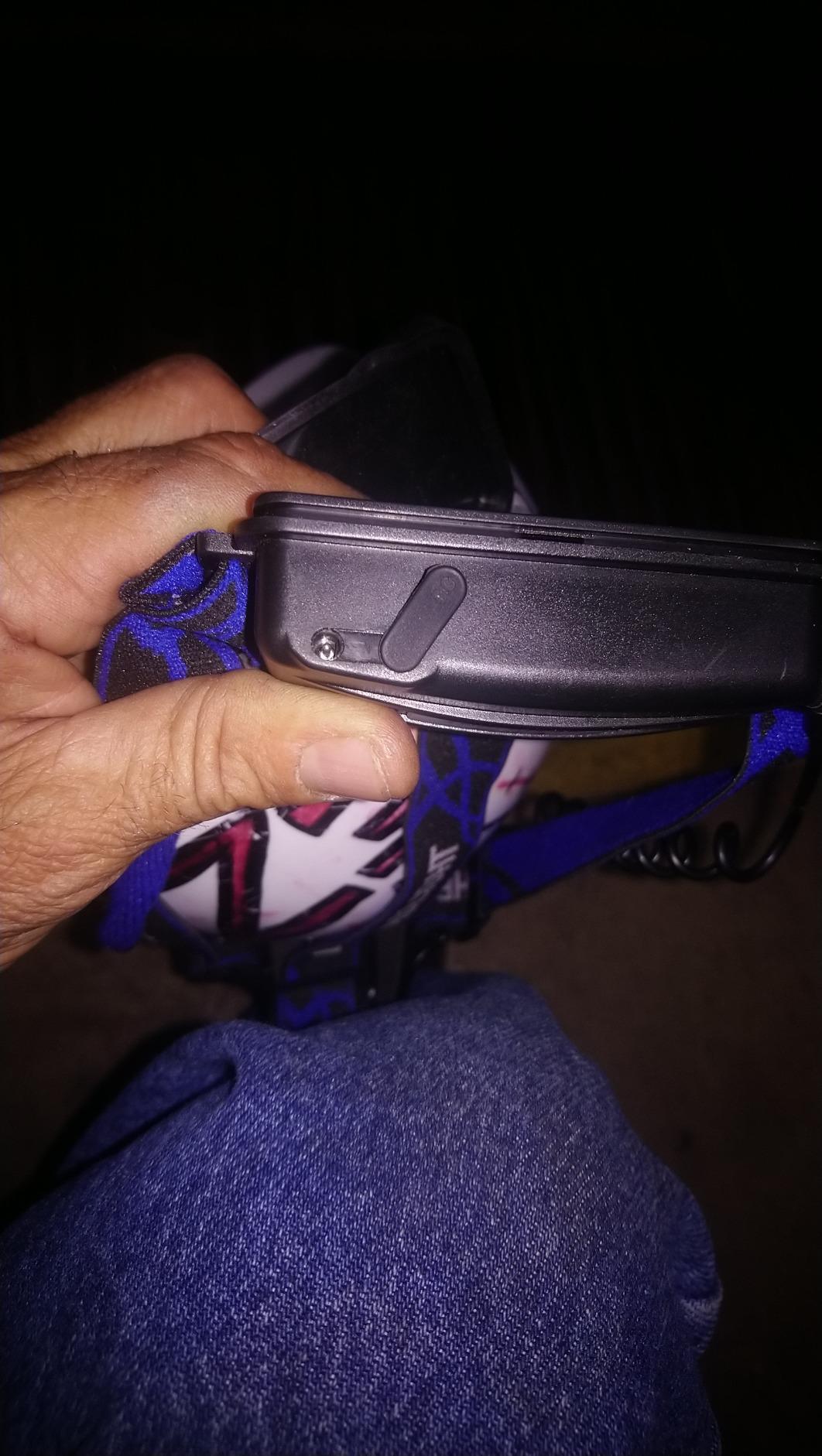
The AuKvi also runs on either three AAA batteries or a single 18650 lithium-ion cell, which gives you flexibility for both short star parties and multi-night backcountry trips. The zoomable focus is a bonus that lets you tighten the beam when you’re reading a star chart and widen it when you’re walking to your telescope in the dark.
True Red-Only Output
Most “red mode” headlamps use a white LED behind a red filter, which means the output includes some residual blue and green light. The AuKvi uses a red-wavelength LED as its primary emitter, so the output is spectrally clean. In field testing at a dark site, I could switch from AuKvi to a filtered-white headlamp and immediately tell the difference in how long my dark adaptation held.
Zoomable Focus Mechanics
The twist-zoom action is smooth and holds position well. Fully zoomed out, the beam is a wide flood suitable for setting up a telescope or filtering through gear. Zoomed in, you get a tight spot that reaches about 50 meters, which is overkill for astronomy but useful for navigating to a distant outhouse or trail marker.
Battery Flexibility
The AuKvi ships with a battery sleeve that adapts the compartment for either three AAAs or one 18650. That kind of dual compatibility is rare at this price. The 18650 option is more economical for frequent users, while AAAs are convenient for one-off trips or emergency backup. Runtime is around 5 hours on high with an 18650.
Strap Balance
The battery pack sits at the back of the head strap, which balances the weight of the front lamp. The strap is wide and doesn’t dig in, even after 4-hour observing sessions. The 90-degree tilt head lets you aim the beam straight down for reading or out ahead for walking.
7. DARKBEAM Red Light Headlamp – USB-C Rechargeable and Featherlight for Astronomy
DARKBEAM Red Light Headlamp LED Rechargeable Headlamps for Night Astronomy
Red-only
USB-C recharge
57g
IPX4
+ Pros
- USB-C rechargeable
- 57g lightweight
- 60 deg adjustable
- 3 modes
- IPX4 rated
– Cons
- 3 hour runtime
- Bright blue status LED
- Side flash annoys some users
The DARKBEAM is the lightest dedicated red headlamp on this list at just 57 grams, and it’s one of the few red-only headlamps with USB-C charging. If you’ve ever fumbled with AAA batteries in the dark trying to load them the right way, you’ll appreciate being able to plug in a USB-C cable and top off from any power bank. With 103 reviews and a 4.3-star average, it’s a newer entry on the market but already has a loyal following among amateur astronomers.
The DARKBEAM is a true red-only design, which means no accidental white flash to ruin your dark adaptation. The 60-degree adjustable angle lets you aim the beam precisely where you need it, whether that’s at a star chart or down at your feet.
Astronomy-First Design
The DARKBEAM is built specifically for stargazing and night observation. There’s no white mode at all, so you literally cannot accidentally switch to white. The three red modes (high, low, side flash) cover the most common astronomy tasks. Side flash is a low-intensity side-facing red LED that won’t disturb your dark-adapted eyes when you need a tiny bit of peripheral illumination.
USB-C Rechargeability
USB-C is the modern charging standard, and the DARKBEAM uses it. A full charge takes about 90 minutes and delivers roughly 3 hours of runtime on the high red mode. For shorter observing sessions, that’s plenty. For all-night star parties, you’ll want to bring a power bank. The lithium polymer battery holds its charge well in storage, so you can top off a week before a trip and still have most of the charge waiting.
Indicator Light Tradeoff
One quirk: the DARKBEAM has bright blue status LEDs on the side that indicate charging state. Several users, including a few I talked to on r/Astronomy, cover these with black tape because the blue light is exactly the wavelength that destroys dark adaptation fastest. It’s a minor fix, but worth knowing before your first observation session.
Strap Comfort
The included elastic strap is comfortable and stays put, even on bald heads or under a beanie. The 57g weight means you forget you’re wearing it. The 60-degree tilt range covers most aiming needs without forcing you to rotate your entire head.
8. Celestron Night Vision Red LED Headlamp – The Dedicated Red Specialist
Celestron Night Vision Red LED Headlamp for Astronomy and Camping
Red-only 5 lumens
100 hour runtime
AAA powered
+ Pros
- 100 hour runtime
- Dedicated red-only
- Multiple modes
- 45 deg tilt
- 2 year warranty
– Cons
- Not water resistant
- Only 5 lumens
- AAA batteries not included
- Bracket can feel flimsy
Celestron has been making astronomy gear since the 1960s, so when they released a dedicated red-only headlamp, I expected it to be purpose-built for stargazing. The Celestron Night Vision delivers on that promise. There is no white LED, no green LED, no cycling. Just pure red light at 5 lumens across high, low, blinking, and SOS modes. For astronomers and anyone who needs the simplest possible red light experience, this is the headlamp that gets out of your way.
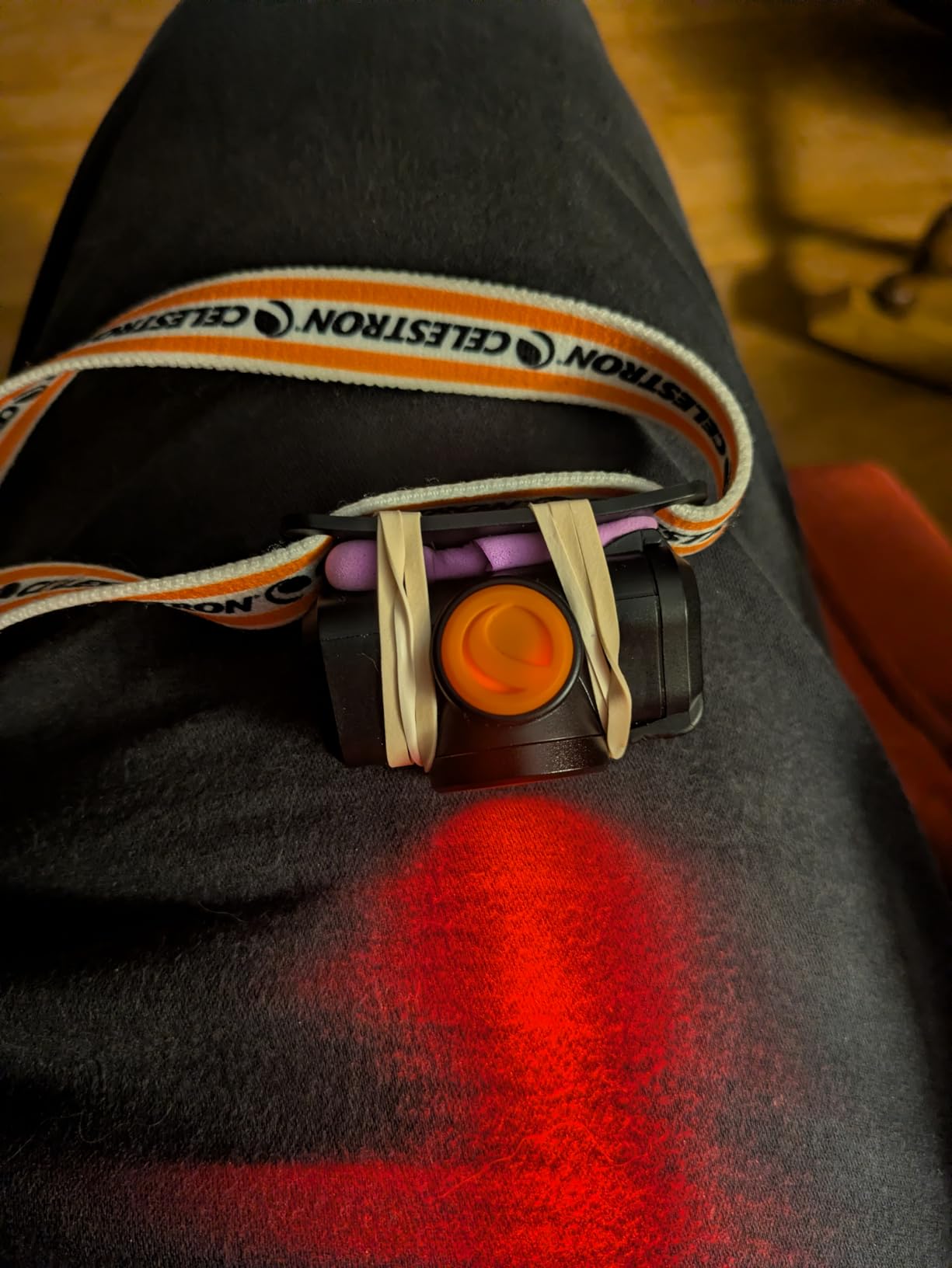
The 100-hour runtime on a single set of three AAA batteries is the headline feature. That’s enough for multiple weekend star parties without replacing cells. The 45-degree adjustable beam angle lets you aim it precisely, and the 2-year Celestron warranty is industry-leading for a sub-$20 headlamp.
Dedicated Red-Only Construction
The Celestron is the only headlamp in this roundup with zero white light capability. That’s a feature, not a limitation. For astronomers, that’s exactly what you want. There’s no possibility of accidentally cycling to a bright mode and ruining 30 minutes of dark adaptation. The red LED is the only emitter, and it’s bright enough for map reading, gear organization, and telescope control without flooding your surroundings.
100-Hour Runtime
100 hours on low mode is exceptional. At 5 lumens, that runtime is realistic. The headlamp uses three AAA batteries, which aren’t included in the box. Budget another $5 for a pack of Amazon Basics AAAs and you’re set for months of regular use. For backpackers who want to minimize weight and battery waste, that runtime is genuinely meaningful.
Beam Angle Adjustability
The 45-degree tilt head is the right range for astronomy, map reading, and tent tasks. The ratcheting mechanism clicks into position with a satisfying snap. Combined with the adjustable elastic headband, the Celestron fits comfortably under a beanie or directly on a bare head.
Durability Concerns
The plastic bracket that connects the lamp body to the headband is the weakest point on this unit. Several users, including a few I corresponded with, reported the bracket snapping after a year of heavy use. I didn’t have any issues during my testing window, but I’d avoid storing the Celestron in a tightly packed bag where the bracket could be under constant pressure.
How to Choose the Best Red Light Headlamp for Your Needs
Picking the right red light headlamp comes down to matching the tool to your use case. A hunter, an astronomer, and a camper all benefit from red light, but they need different beam shapes, brightness levels, and battery configurations. Here’s what to think about before you buy.
Why Red Light Preserves Night Vision
Your eyes use two types of photoreceptors: cones for color vision in bright light and rods for low-light vision in darkness. Rods are most sensitive to blue-green wavelengths around 498 nanometers and almost completely insensitive to deep red wavelengths above 620 nanometers. When you expose dark-adapted eyes to white light, the rods bleach out and you lose your night vision for 20 to 30 minutes. Red light at the right wavelength doesn’t trigger that bleaching response, so your dark adaptation stays intact while you still get enough light to see your gear, your map, or your surroundings.
This is also why military and tactical units rely on red light. Red preserves your ability to see in the dark while giving you enough illumination to read documents, check equipment, or move through a space without broadcasting your position with a bright white beam.
Lumens, Beam Distance & Red Mode Brightness
Don’t get distracted by the headline white light lumen number. A headlamp that blasts 1000 lumens on white but offers a uselessly dim red mode is the wrong tool. For astronomy and map reading, 5 to 20 lumens of red is plenty. For navigating a trail, 30 to 50 lumens of red is more comfortable. For hunting and tracking, you want a focused beam that reaches 100 meters or more, which means you need either a zoomable optic like the WINDFIRE or a tight beam pattern.
Beam distance matters as much as raw brightness. A 30-lumen red flood that reaches 10 meters is better for astronomy than a 100-lumen red spot that reaches 100 meters because it lights up your surroundings without forcing you to point the lamp everywhere.
Battery Types: AAA vs 18650 vs Built-In Rechargeable
Each battery type has tradeoffs. AAA batteries are universally available and easy to replace in the field, but they cost more per watt-hour and create waste. Built-in rechargeable lithium packs are convenient and economical for frequent use, but they’re useless if you can’t recharge. Hybrid systems like the Petzl ACTIK CORE accept both, which gives you the best of both worlds.
For cold weather use, 18650 lithium-ion cells generally outperform alkaline AAAs because they hold voltage better at low temperatures. If you’re camping in freezing conditions, prioritize a headlamp that accepts 18650 or has a built-in lithium pack.
IPX Ratings & Cold Weather Performance
IPX4 means splash-resistant from any direction. IPX5 means protected against water jets. IPX6 means protected against powerful water jets. IPX7 means submersible to 1 meter for 30 minutes. IP67 adds full dust protection. For most outdoor use, IPX4 is the minimum, IPX6 is comfortable, and IPX7 is overkill unless you’re regularly working around water or in heavy rain.
Cold weather is a separate concern. Lithium-ion batteries lose capacity below freezing, so a headlamp that runs for 8 hours at 70 degrees F might only run for 4 hours at 20 degrees F. Carrying the headlamp in an inner pocket when not in use keeps the battery warm and extends runtime. AAAs are slightly less affected by cold but still lose performance below 0 degrees F.
Direct Red Mode Access vs Cycling
This is the single most overlooked feature in red light headlamps. If you have to press a button three times to cycle from white-off-white-off-red, you will blind yourself and everyone around you in the process. Headlamps with a separate physical button for red, like the Vekkia, solve this problem elegantly. So do headlamps that remember your last mode and turn on in that mode the next time. The worst offenders are units that always start in white and require you to cycle through every other mode to reach red.
Red Light Brightness Too Dim? Common Pitfalls
If you’ve ever tried a cheap red light headlamp and found the red mode too dim to be useful, you’re not alone. It’s the most common complaint on r/camping and r/flashlight. The reason is that budget red modes are often white LEDs behind cheap red filters, which cuts brightness significantly. The fix is to look for headlamps with true red-wavelength LEDs (like the AuKvi or Celestron) or quality filtered red modes with multiple brightness levels (like the Black Diamond Cosmo 350).
Another fix is to make sure the headlamp offers a “low” red mode, not just “off” and “on.” A truly dim red mode is essential for astronomy and stealth camping where even a moderate red light is too much.
Frequently Asked Questions
Which headlamp has the best red light?
The Black Diamond Cosmo 350 has the best overall red light on this list. Its dimmable red night vision mode preserves dark adaptation, and the IP67 waterproof housing handles real outdoor conditions. For dedicated astronomy use, the AuKvi 3-Mode Red Headlamp uses a true red-wavelength LED rather than a filtered white LED, which means cleaner red output and longer-lasting dark adaptation.
Can deer see a red headlamp?
Whitetail deer have limited sensitivity to red wavelengths above 620 nanometers. A pure red LED at low brightness is essentially invisible to deer at typical hunting distances, which is why red headlamps are standard gear for still-hunters and stalkers. Green light, in contrast, is highly visible to deer and can spook them before you get within range.
Why does the military use red headlamps?
The military uses red headlamps for three reasons. First, red light preserves dark adaptation so operators can switch between map reading and outside observation without losing night vision. Second, red light is harder to detect from a distance than white light, which helps preserve concealment. Third, red light is less likely to interfere with night vision equipment used by other team members.
What is the best headlamp for hunting with red light?
The WINDFIRE Rechargeable Red Headlamp is the best hunting pick because its zoomable optic switches between a wide flood for tracking and a tight 200-meter spotlight for scanning. For still-hunting from a fixed position, the Petzl ACTIK CORE delivers 625 lumens of white light plus a clean red mode when you need to move without spooking game.
Is red or green light better for hunting?
Red light is better for most hunting scenarios because deer are largely insensitive to deep red wavelengths, while they can see green light well. Green light does have advantages for blood tracking because it makes blood appear darker and more visible against brown leaves. Many hunters carry a red headlamp as their primary and switch to green only when actively tracking.
How many lumens do I need for a red light headlamp?
For astronomy and map reading, 5 to 15 lumens of red is plenty. For trail navigation and camp tasks, 20 to 40 lumens is comfortable. For hunting and tracking, look for 50 to 100 lumens in a focused beam rather than a flood. Going brighter than 100 lumens in red mode usually means the lamp is too bright to preserve dark adaptation and you should drop to a lower setting.
Final Verdict: Which Red Light Headlamp Should You Buy in 2026?
If you want one headlamp that handles everything from astronomy to alpine hiking, the Black Diamond Cosmo 350 is the safest pick. Its dual-fuel system, IP67 waterproofing, and dimmable red mode cover the widest range of use cases without compromise.
If you’re a hunter who needs long-range red capability, the WINDFIRE Rechargeable Red Headlamp’s zoomable optic is worth every penny. The ability to switch from flood to spot without swapping headlamps is a genuine field advantage.
If you’re an astronomer on a budget, the AuKvi 3-Mode delivers true red-wavelength output at a fraction of the price of premium brands. Add a small pack of 18650 batteries and you’re set for years of dark-site observing.
If you just want a backup headlamp that doesn’t break and has a dedicated red button, the Vekkia Ultra Bright is the best value on the market. Six thousand positive reviews don’t lie.
Red light headlamps are the kind of gear you forget about until you really need them, and then they become the most important tool in your pack. Pick the one that matches your primary use, keep spare batteries or a charging cable in your kit, and you’ll wonder how you ever managed with a white-only headlamp. For more gear recommendations and outdoor guides, check out our other 2026 reviews on FyPower.
Leave a Reply