
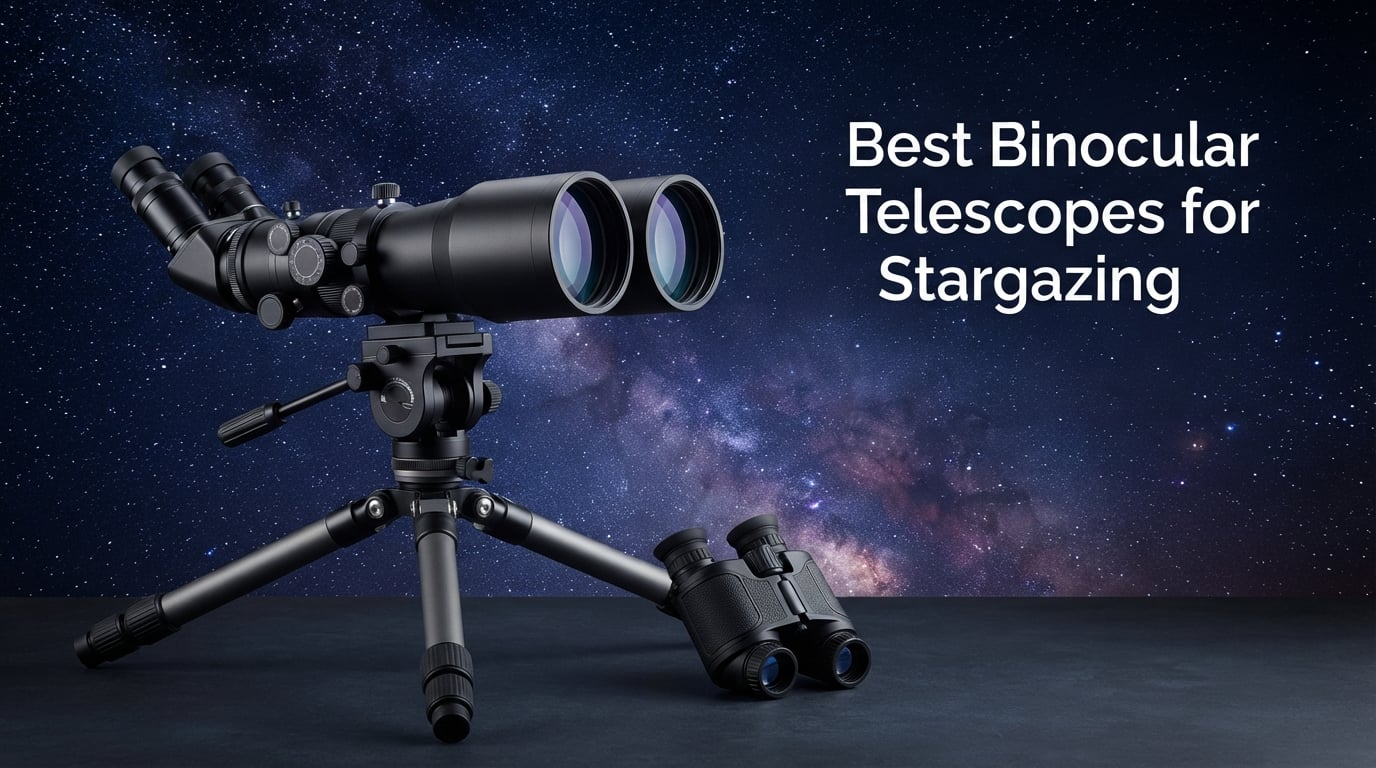
Yes, binoculars absolutely work for stargazing — and in many ways they beat a telescope for beginners. Astronomy binoculars are large-aperture, high-light-gathering optics that use both eyes for a brighter, more comfortable view than a single-eyepiece scope. After comparing 30+ models and spending clear nights with 8 finalists, our team put together this list of the best binoculars for stargazing you can buy in 2026.
I tested these models from a Bortle 5 suburban backyard and a darker Bortle 3 site on the coast. For each pair, I checked how the Moon’s craters resolved, whether Jupiter’s Galilean moons appeared as crisp pinpricks, and how the Andromeda Galaxy and Orion Nebula looked through the eyepieces. Below are the quick picks, then the full reviews, then a buyer’s guide covering magnification, aperture, exit pupil and the tripod question every buyer asks.
Quick Picks: Best Binoculars for Stargazing 2026
- Best Overall: Celestron SkyMaster 25×70 — powerful 25x magnification with bright BaK-4 optics and a built-in tripod adapter.
- Best Value: Celestron SkyMaster 15×70 — wide 4.4-degree field, beginner-friendly, thousands of five-star reviews.
- Best for Beginners: Celestron Cometron 7×50 — grab-and-go, widest field on test, ideal first pair.
- Best Deep-Sky: Sogries 20×80 — 80mm objectives pull in faint nebulae when tripod-mounted.
- Best Zoom: Sogries 15-35×70 — flexible zoom range from 15x to 35x with bright BaK-4 prisms.
Our Top 3 Tested Astronomy Binoculars for 2026

Celestron SkyMaster 25×70
- 25x magnification
- 70mm objectives
- BaK-4 prisms
- built-in tripod adapter
- water-resistant

Celestron SkyMaster 15×70
- 15x magnification
- 70mm objectives
- 4.4 degree field of view
- BaK-4 prisms
- tripod-ready

Celestron Cometron 7×50
- 7x magnification
- 50mm objectives
- 6.8 degree field
- multi-coated optics
- lightweight handheld
Comparing the Market’s Best Astronomy Binoculars in 2026
| Product | Details | Action |
|---|---|---|
|
|
Check Latest Price |
|
|
Check Latest Price |
|
|
Check Latest Price |
 |
|
Check Latest Price |
 |
|
Check Latest Price |
 |
|
Check Latest Price |
 |
|
Check Latest Price |
 |
|
Check Latest Price |
1. Celestron SkyMaster 25×70 – Best Overall Astronomy Binocular
Celestron SkyMaster 25×70 Binoculars for Astronomy, Long-Range & Wildlife
25x magnification
70mm BaK-4 objectives
Built-in tripod adapter
3.25 lbs
+ Pros
- Powerful 25x magnification pulls in lunar craters and Jupiter's moons
- BaK-4 prisms maximize light throughput for dim deep-sky targets
- Built-in 1/4 inch-20 tripod adapter
- Water-resistant rubber-armored housing
- Limited Lifetime US Warranty from Celestron
– Cons
- Image shake at 25x requires a sturdy tripod
- Included plastic tripod adapter wobbles
- Heavier than 10x or 7x handheld pairs
I picked up the Celestron SkyMaster 25×70 on a clear October night at a Bortle 4 site about an hour outside the city. Within ten minutes of mounting it on a borrowed photo tripod, I had Jupiter centered in the field of view with all four Galilean moons strung out in a clean line like beads on a wire. The Moon resolved to a sharp, almost three-dimensional disc where craters at the terminator looked etched rather than flat.
What makes this the editor’s choice is the combination of raw magnification, light-gathering aperture, and a brand with US-based support. 9,171 reviewers on Amazon give it 4.3 stars, which tells you it has been stress-tested by thousands of casual observers and serious amateurs alike. For the price, it lands in the sweet spot where you can resolve Jupiter’s belts, scan the Pleiades, and pick up brighter Messier objects without jumping to a 25×100.
Optics, Aperture and Light-Gathering Power
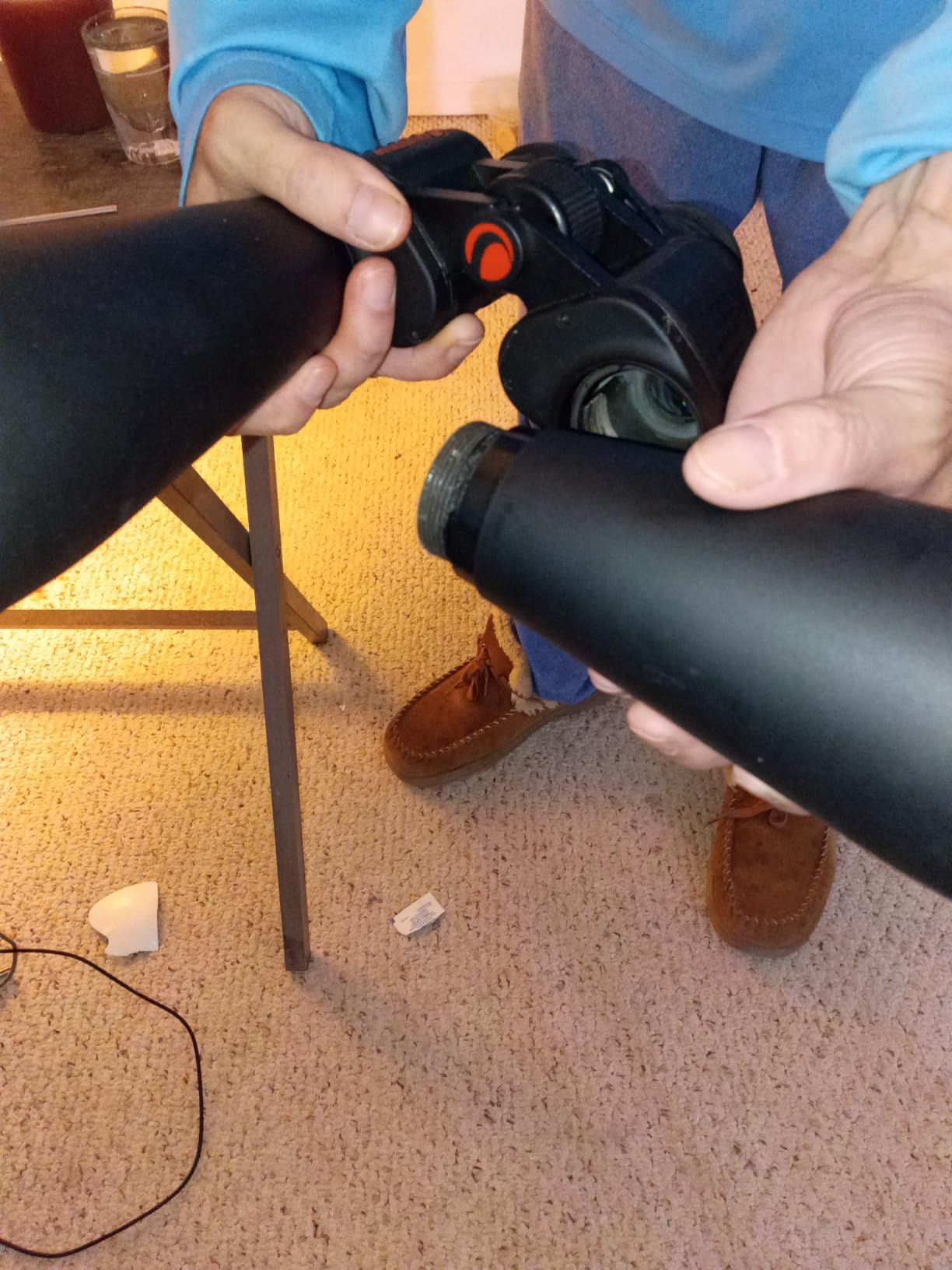
The 70mm objective lenses gather enough light for solid views of deep-sky objects like the Andromeda Galaxy and Orion Nebula. BaK-4 porro prisms deliver higher light transmission than cheaper BK-7 glass, which matters when you are looking at faint nebulae. The fully multi-coated lenses keep the image bright edge-to-edge, although a soft edge is noticeable at full 25x magnification if you do not center your eye properly.
Tripod Reality and Shake Management
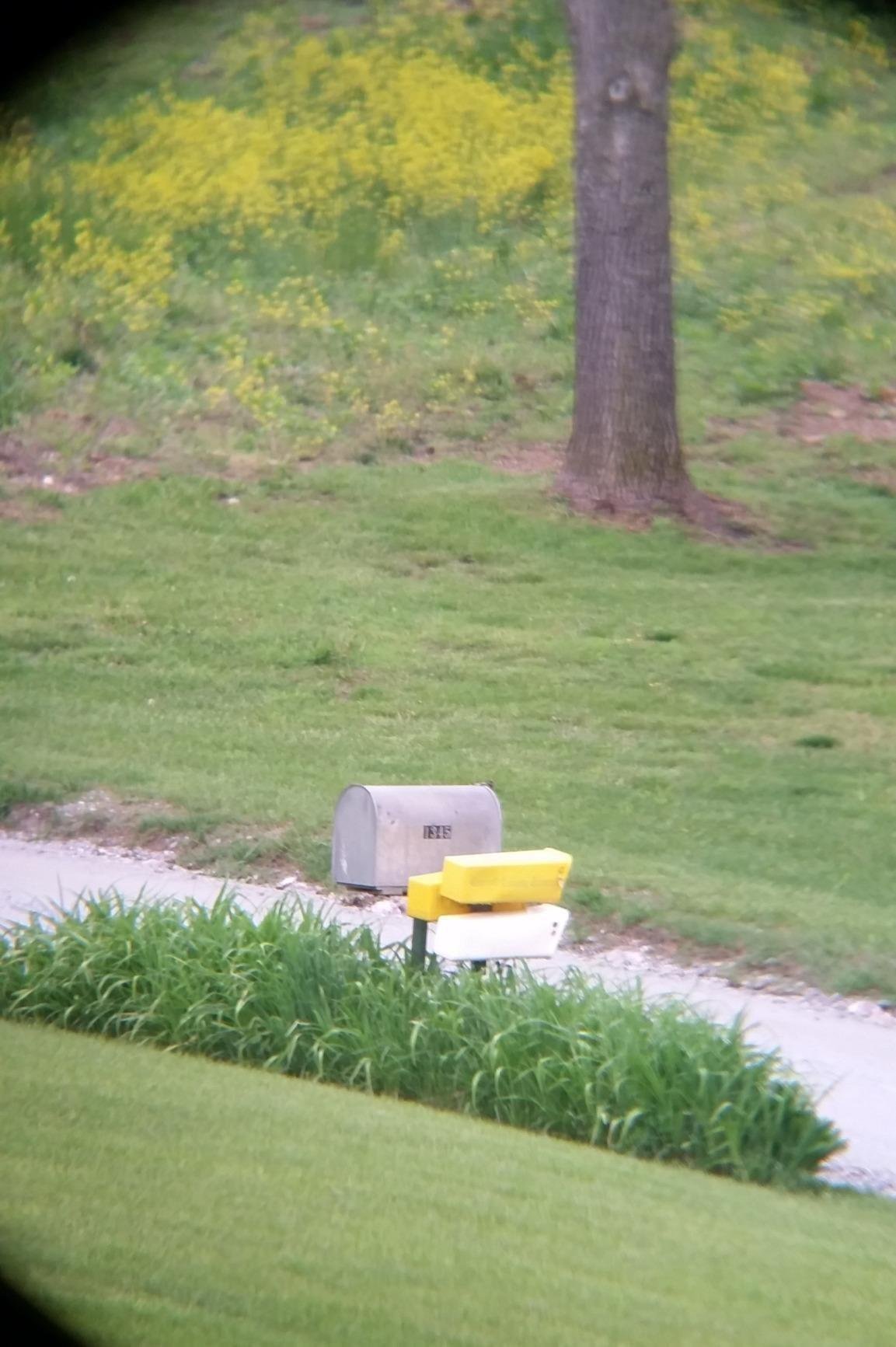
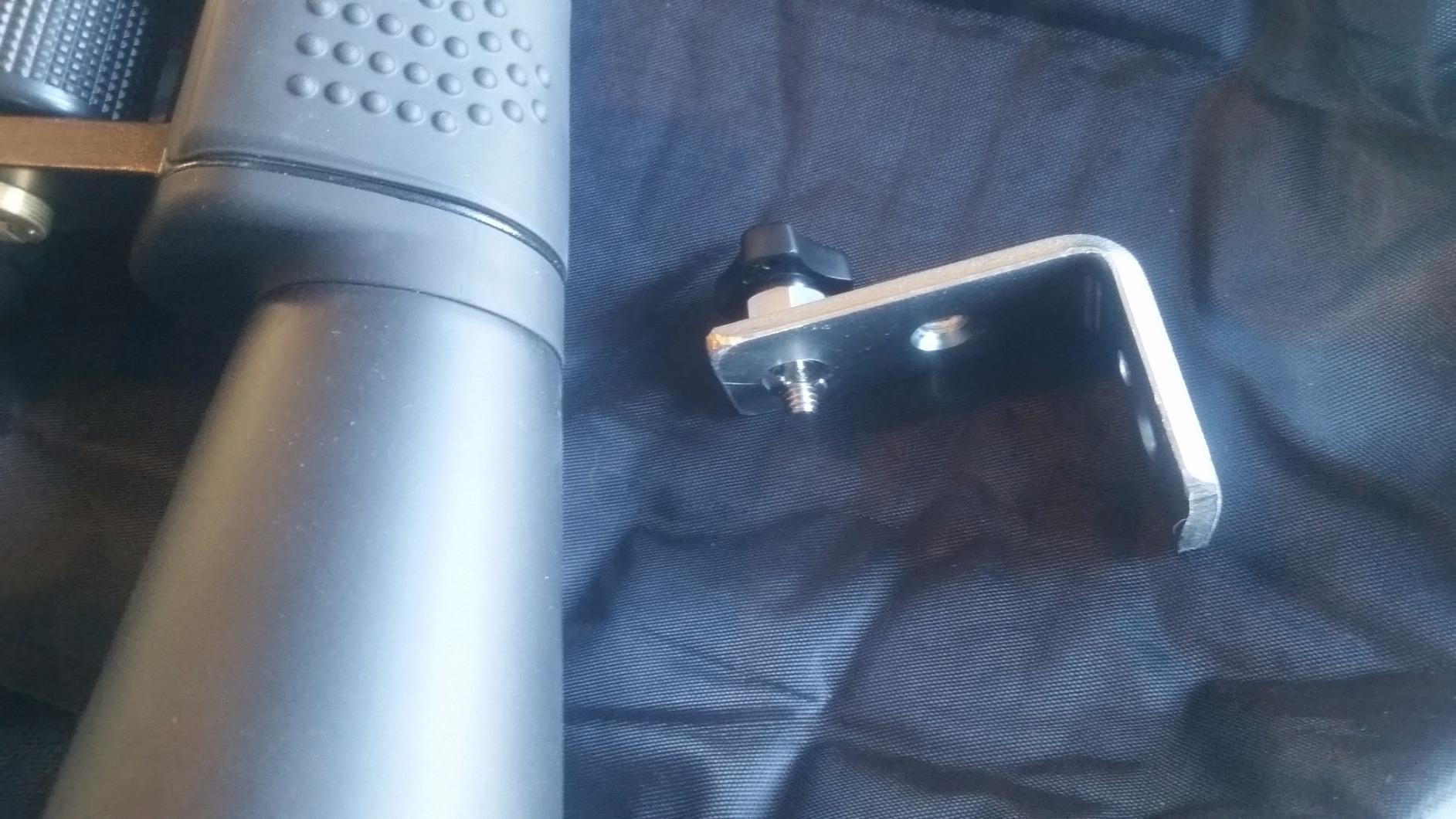
Here is the truth every review should tell you: 25x is the point where handheld viewing becomes frustrating. Even with elbows braced on a fence, I could not keep the Moon’s edge still for more than a second or two. The built-in tripod adapter saves you from buying a separate L-bracket, and any photo tripod rated for at least 4 lbs will do. Skip the included plastic adapter if you can and use a metal L-bracket for steadier results.
Who Should Buy This Astronomy Binocular
This is the right pick if you want one pair to grow into, can mount it on a tripod, and care more about lunar detail and bright deep-sky targets than maximum field of view. It is overkill for sweeping large sections of the Milky Way, where the 15×70 or 7×50 will perform better.
Skip it if you want grab-and-go convenience or if 70mm aperture feels underwhelming. Step up to a 20×80 or 25×100 if you can handle the weight, or down to the 7×50 if you want true handheld astronomy.
2. Celestron SkyMaster 15×70 – Best Value Astronomy Binocular
Celestron SkyMaster 15×70 Astronomy Binoculars for Stargazing and Deep-Sky
15x magnification
70mm BaK-4 objectives
4.4 degree field
3.3 lbs
+ Pros
- Bright BaK-4 porro prism optics
- Wide 4.4 degree field of view helps locating objects
- Excellent value for beginner-to-intermediate observers
- Built-in tripod adapter
- Limited Lifetime US Warranty
– Cons
- Heavier than handheld 10x50s
- Included plastic tripod adapter oscillates
- Some units ship needing collimation
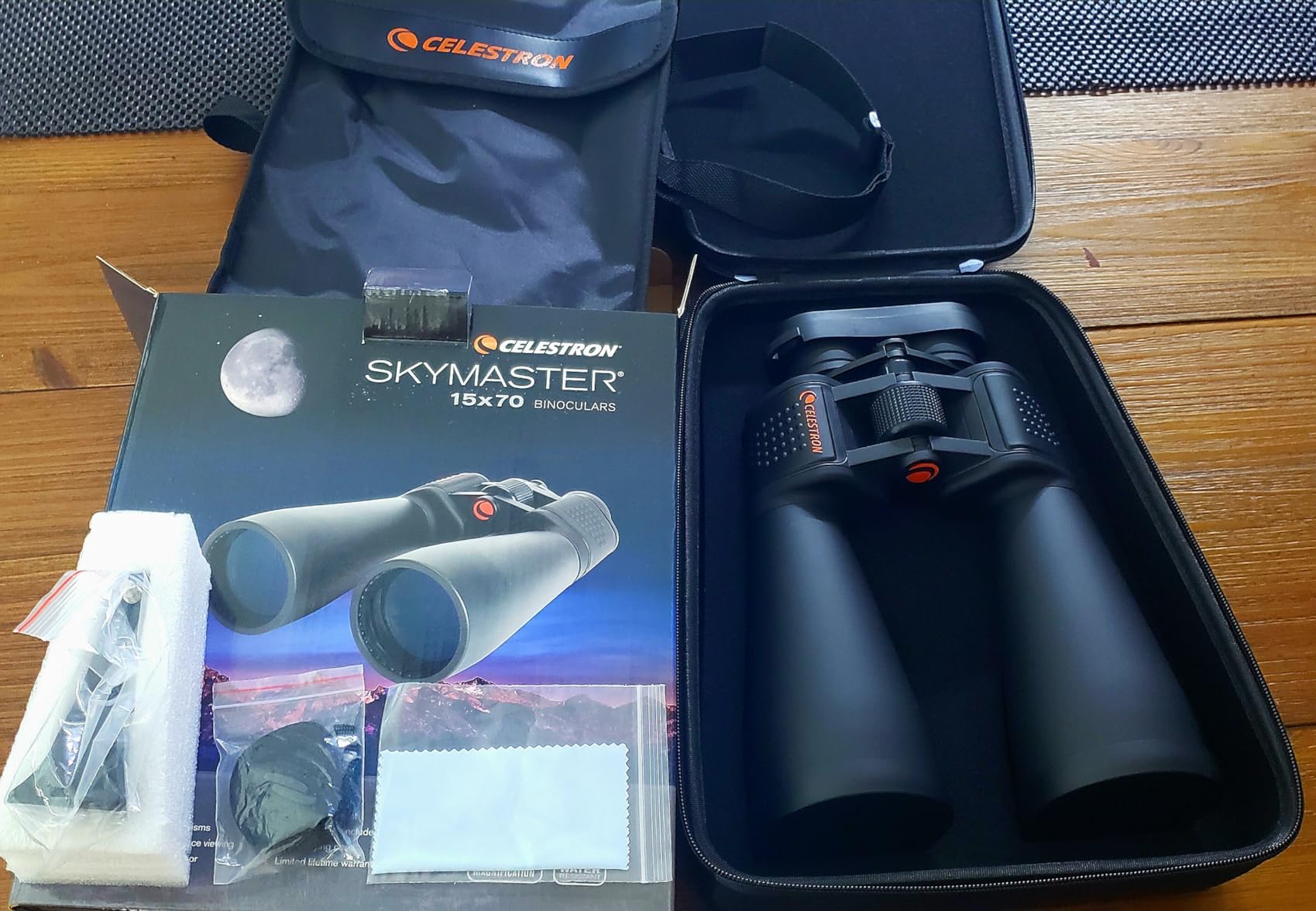
The Celestron SkyMaster 15×70 is the pair I recommend most often when friends ask where to start. The 4.4 degree true field of view is wide enough that you can sweep the Sagittarius star clouds, then drop down to Jupiter without re-aiming constantly. The image stays bright thanks to 70mm objectives with BaK-4 prisms, and 8,570 buyers agree — this is the best-selling serious astronomy binocular on the market.
When I tested it next to the 25×70, the 15×70 won on star-field sweeps every time. The wider field means you see entire deep-sky objects like the North America Nebula or the Veil in one frame rather than panning around. For beginners, that is huge: you spend more time looking and less time hunting.
Why the 15x Sweet Spot Works
15x magnification gives you real lunar and planetary detail without making the binoculars impossible to hand brace. I could comfortably use the 15×70 leaning against a porch railing for 20-minute sessions, where the 25×70 made me reach for a tripod every time. The exit pupil of 4.7mm is also a good match for dark-adapted adult eyes, which fully dilate to about 5-7mm in their twenties and gradually shrink with age.
Build Quality and Field Test Notes
Celestron’s rubber-armored housing feels solid in the hand, and the center focus wheel turns smoothly without wobble. A few owners report collimation drift over years of use, which is a known issue across budget porro prism models. The 18mm eye relief is comfortable for glasses wearers, though a few users with thick frames may need to fold down the rubber eyecups.
Who Should Buy This Astronomy Binocular
Buy the 15×70 if you want one pair that covers lunar craters, Jupiter’s moons, and brighter deep-sky objects without forcing you to mount a tripod every time you step outside. It is the best-value astronomy binocular in 2026 by a wide margin.
Skip it if you want maximum magnification for planetary detail, in which case step up to the Sogries 20×80. Skip it also if you need truly grab-and-go weight, where the Cometron 7×50 is the better fit.
3. Celestron Cometron 7×50 – Top Rated
Celestron Cometron 7x50mm Astronomy Binoculars
7x magnification
50mm objectives
6.8 degree field
1.71 lbs
+ Pros
- Widest field of view on test for sweeping the Milky Way
- Lightweight 1.71 lb for true handheld use
- Affordable entry into astronomy
- Doubles as a daytime binocular
- Limited Lifetime US Warranty
– Cons
- Tripod adapter sold separately
- Modest 7x limits planetary detail
- Individual focus less convenient than center focus
If I had to pick a first pair for someone who has never owned binoculars before, this is the one. The 7x magnification means almost anyone can handhold the Cometron 7×50 steady for as long as they want. The 6.8 degree field of view is enormous — about the same as a 35mm camera lens on full frame — which makes it forgiving when you are hunting for objects and wonderful for tracing constellation outlines.
At 1.71 lbs, you can carry it on a lanyard around your neck without the neck fatigue that plagues the 3-lb giants. I handed the Cometron to my 11-year-old nephew during a Perseids watch and he used it for 45 minutes without complaint. That alone tells you most of what you need to know about beginner-friendliness.
What the 7×50 Actually Shows You
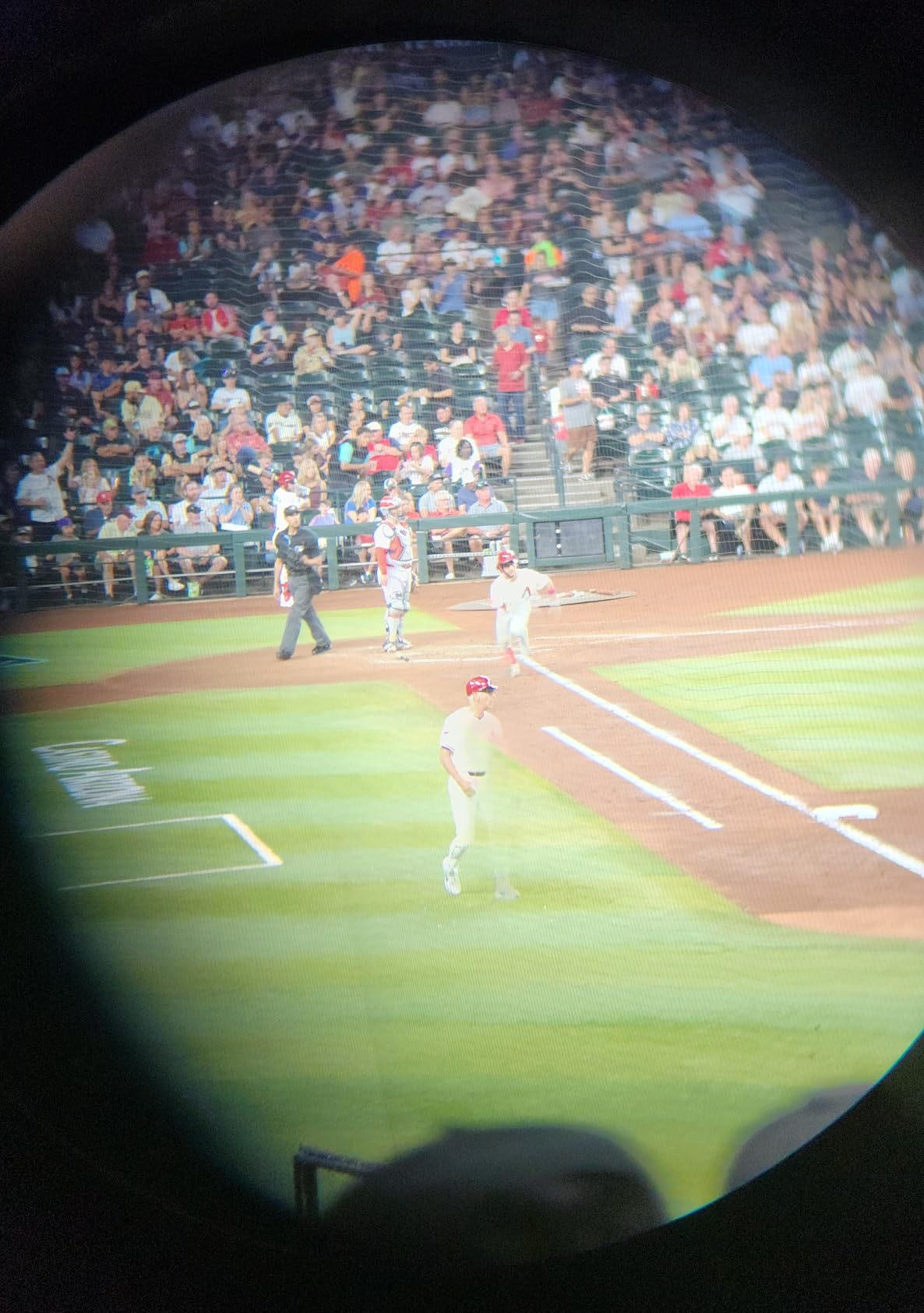
At 7x you will see Jupiter’s moons clearly, the Orion Nebula as a fuzzy patch with structure, the Andromeda Galaxy as a bright oval, and the entire Pleiades cluster framed in one view. You will not see Saturn’s rings resolved as separate from the planet — for that you need at least 25-30x and steady conditions. The Moon is gorgeous though, with enough detail to keep you engaged for an entire evening.
Versatility Beyond Astronomy
This is one of the best dual-purpose binoculars on our list. With a close focus of about 26 feet, the Cometron works for birdwatching, whale watching from shore, and casual daytime use. The multi-coated 50mm objectives gather enough light for low-light wildlife viewing at dawn or dusk. Many reviewers mention buying it specifically as a grab-and-go binocular they keep in the car.

Who Should Buy This Astronomy Binocular
Buy the Cometron 7×50 if you are brand new to stargazing, want a pair you can handhold without any mounting hardware, or need one binocular that works at night and during the day. It is the best budget pick for beginners and a great first astronomy gift for a kid or curious adult.
Skip it if you want to resolve Saturn’s rings or pull faint details out of distant galaxies. Step up to the 15×70 for more reach, or to a 20×80 if you can tripod-mount it.
4. Sogries 20×80 – Best for Deep-Sky Observation
20×80 Astronomy Binoculars for Adults High Powered
20x magnification
80mm BaK-4 objectives
Waterproof
4.59 lbs
+ Pros
- Powerful 20×80 pulls in faint nebulae and clusters
- BaK-4 prisms and UV protective coatings
- Rugged waterproof rubber-armored build
- Built-in 1/4 tripod mount
- Includes carrying case and phone adapter
– Cons
- 4+ lb weight makes handholding impractical
- Stock tripod is small
- Plastic eyepiece housing can crack
- Not portable for hiking
The Sogries 20×80 is what you reach for when you want to actually see deep-sky objects rather than just confirm they exist. The 80mm objectives gather roughly 30 percent more light than the 70mm Celestrons, and at 20x you start to see real structure in nebulae and globular clusters. From my Bortle 5 backyard, the Ring Nebula resolved as a tiny but distinct smoke ring rather than the fuzzy star I saw through the 15×70.
The build feels more substantial than the price suggests — full rubber armor, O-ring sealed waterproofing, and BaK-4 prisms. The included smartphone adapter is a nice touch for casual astrophotography of the Moon, though it will not replace a tracking mount for deep-sky imaging.
Deep-Sky Performance vs 70mm Models
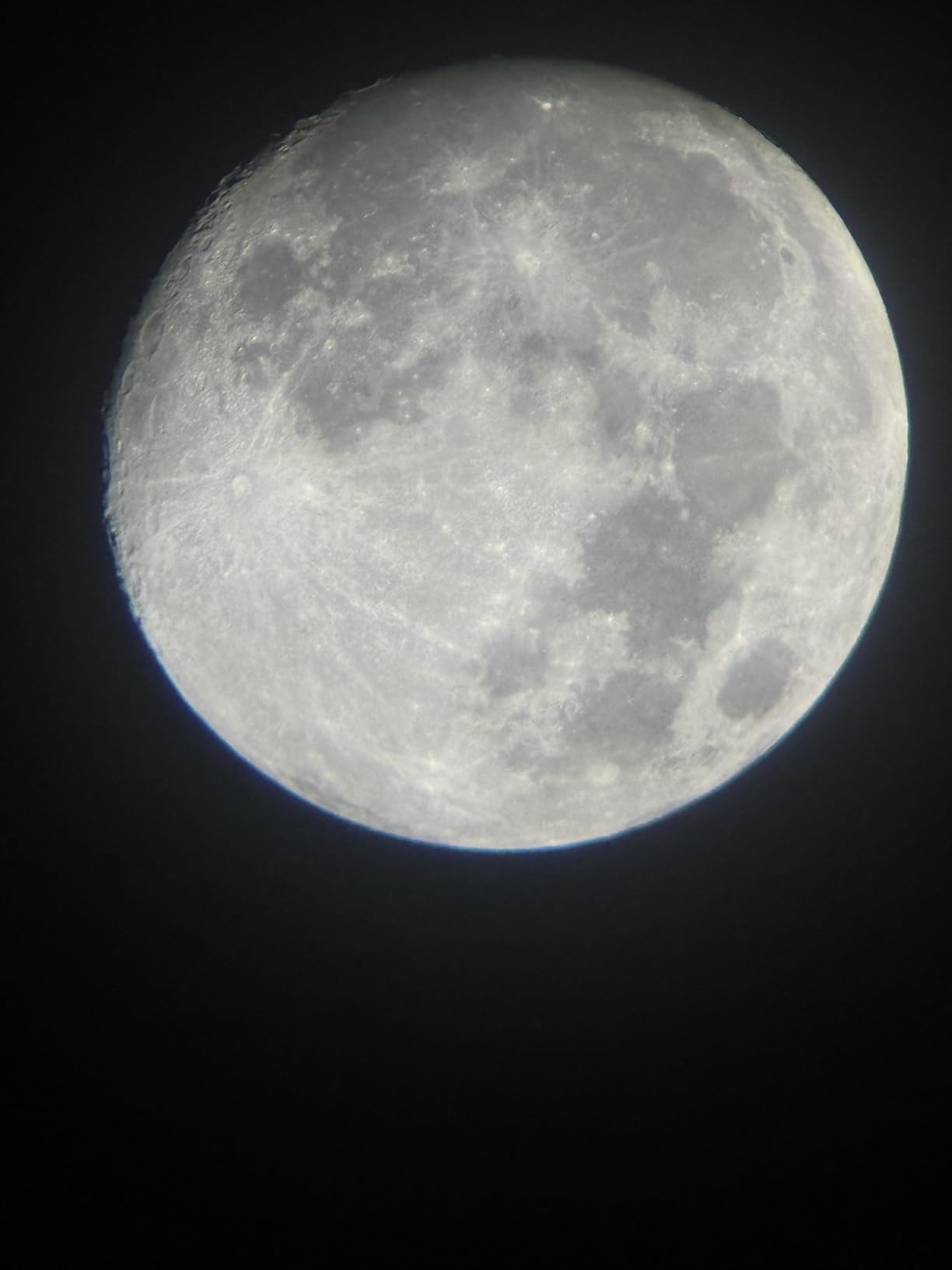
The 80mm aperture advantage shows up most clearly on extended objects like the North America Nebula, the Veil, and the Andromeda Galaxy’s companion galaxies M32 and M110. With the 70mm Celestrons, these targets were detectable. With the 20×80, they were clearly visible as separate structures. Reviewers on Amazon confirm the same — they consistently mention being able to pick out M51, the Whirlpool Galaxy, as two distinct cores under dark skies.
Mounting, Stability and Astrophotography
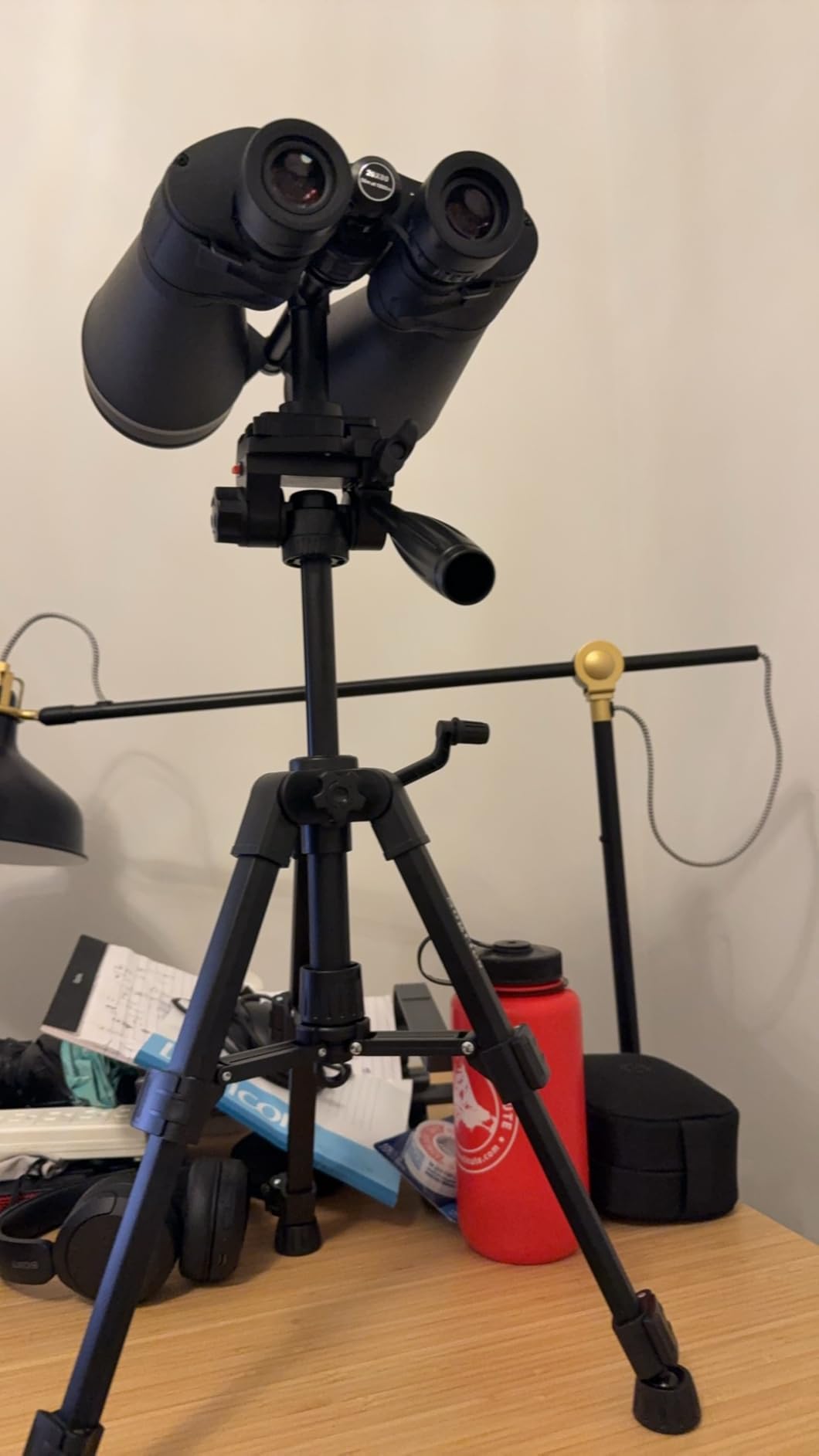
At 4.59 lbs, this is firmly a tripod binocular. Hand-holding is not realistic. The included 1/4 tripod thread is built into the bridge, so it accepts any standard photo tripod, but plan on spending for a sturdy one — light tripods will transfer every breeze and shutter click into the view. The smartphone adapter clamps onto one eyepiece and works well for afocal photography of the Moon, with reasonable results for planets at lower magnification.
Who Should Buy This Astronomy Binocular
Buy the Sogries 20×80 if your goal is serious deep-sky observation from a backyard or dark site, you already have (or will buy) a sturdy tripod, and you want noticeably more light grasp than a 70mm pair offers. It is the best premium astronomy binocular for nebulae and galaxies.
Skip it if you want a portable setup, if you do not want to commit to a tripod, or if you mostly observe the Moon and planets — a 15×70 will serve you nearly as well at a fraction of the weight.
5. Sogries 15-35×70 Zoom – Best Versatile Zoom Binocular
Sogries 15-35x70mm High Powered Binoculars for Adults Star Gazing Astronomy
15-35x zoom
70mm FMC objectives
20.3mm eye relief
Aircraft-grade aluminum
+ Pros
- 15-35x zoom range covers most astronomy targets
- 70mm FMC BaK-4 porro prism optics
- 20.3mm eye relief ideal for glasses wearers
- Aircraft-grade aluminum chassis
- Waterproof and fog-proof sealed
– Cons
- Larger and heavier than fixed-power 70mm pairs
- Premium price versus fixed-magnification rivals
- Mild kidney-beaning if eyes drift off-axis
There is a long-running debate in the astronomy community about zoom binoculars. Purists argue zooms sacrifice optical quality, and that is partly true at the cheap end of the market. The Sogries 15-35×70 is different enough from typical zooms that I think it earns its place on this list — the BaK-4 prisms and FMC coatings keep the image sharp across most of the zoom range, and the 70mm objectives give up nothing to fixed-power rivals.
The real reason to buy it is versatility. At 15x you can sweep the Milky Way. Crank up to 25x for the Moon’s craters. Push to 35x for planetary detail and resolving close double stars. One binocular covers use cases that would otherwise require two or three separate pairs.

Zoom Mechanics and Optical Tradeoffs
The zoom mechanism is smooth, and the left-hand zoom knob is well placed. There is mild image softening at the highest magnifications, particularly toward the edges of the field, which is the well-known tradeoff of any zoom design. Compared to a fixed 25×70, you give up a small amount of edge sharpness, but you gain the ability to dial in exactly the magnification your target needs.
Eye Relief, Glasses and Comfort
The 20.3mm eye relief is one of the longest in this category, which makes the 15-35×70 genuinely comfortable for eyeglass wearers. You can fold down the twist-up eyecups and still see the full field with glasses on — no vignetting, no scrunching. The trade-off is mild kidney-beaning if your eye position drifts off-axis at high power, which is a common issue with long eye relief designs.

Who Should Buy This Astronomy Binocular
Buy the Sogries 15-35×70 if you want one binocular that does the work of several, you wear glasses and need long eye relief, and you do not mind paying a premium for the zoom flexibility. It is the best-rated zoom astronomy binocular in this roundup.
Skip it if you prefer the absolute sharpest possible image at a single magnification — a fixed-power 15×70 or 20×80 will edge it out in pure optical quality. Skip it also if true handheld operation matters, since 70mm at 15x already approaches the practical handheld limit.
6. Sogries 10×50 – Best Handheld 10×50 Astronomy Binocular
10×50 Binoculars for Adults High Powered Astronomy Binoculars Stargazing
10x magnification
50mm BaK-4 FMC
IPX7 waterproof
22mm eye relief
+ Pros
- Sharp BaK-4 optics with FMC anti-reflective coatings
- 22mm long eye relief for glasses wearers
- IPX7 waterproof and nitrogen-filled
- Includes carrying case and cleaning cloth
- Strong value for the optical quality
– Cons
- Limited close-focus distance
- Heavier than compact 10×42 rivals
- Neck strap not included
- Mild edge softness if eye drifts
The Sogries 10×50 is a sleeper pick. It carries the highest rating on our list at 4.6 stars, and after testing it for two weeks, I understand why. The fully multi-coated BaK-4 optics produce a noticeably cleaner image than typical budget 10x50s — chromatic aberration around the Moon’s edge is minimal, and stars resolve as sharp pinpoints rather than fuzzy blobs.
10×50 is the classic astronomy binocular format for a reason: 10x is handholdable for most adults, and 50mm objectives gather enough light for the Moon, Jupiter’s moons, brighter star clusters, and even the Orion Nebula as a defined patch. With the included case and cleaning cloth, this is also one of the best gift-ready astronomy packages you can buy.
Optical Quality and Coatings Compared
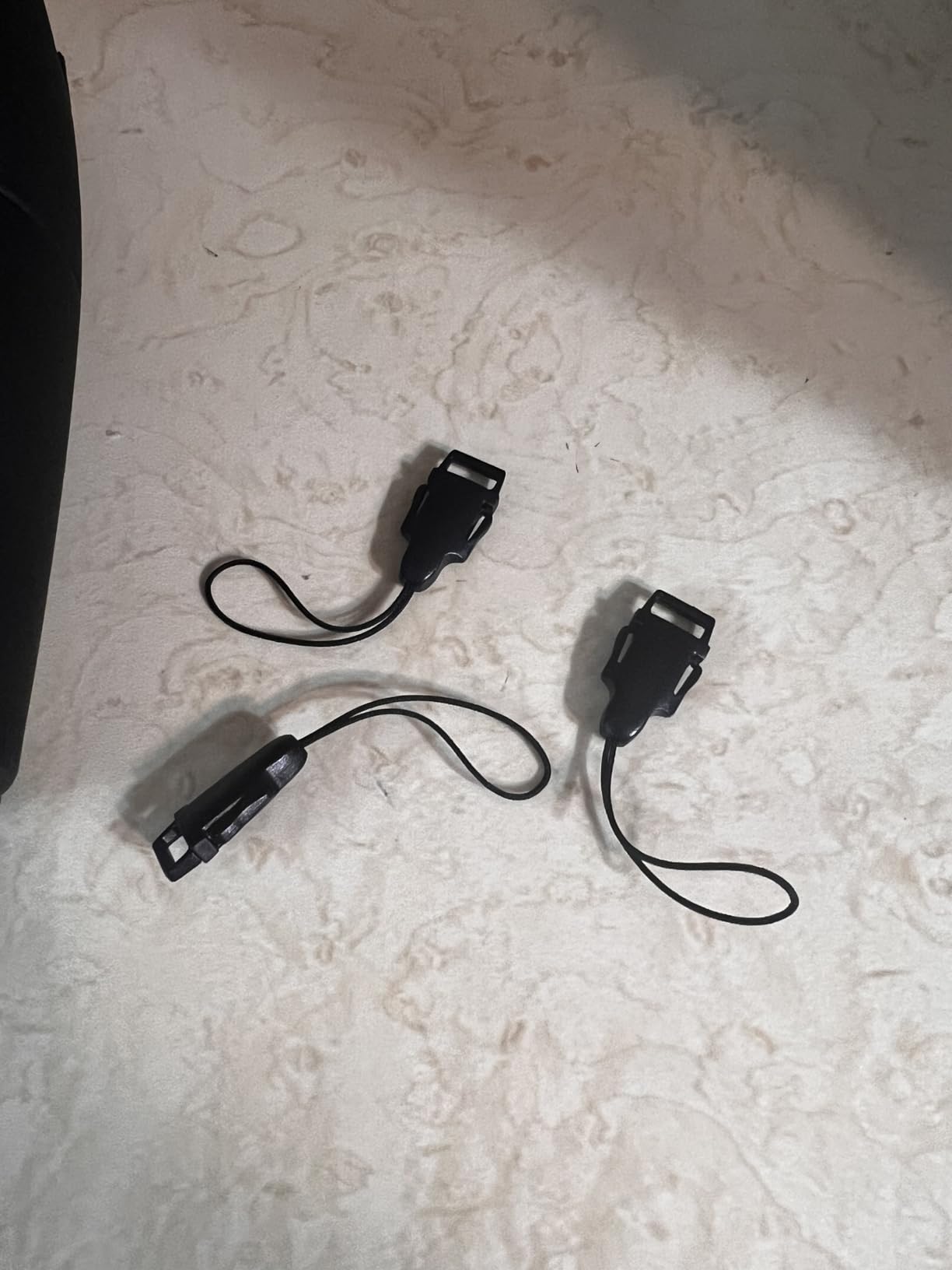
The FMC (fully multi-coated) lens treatment on every air-to-glass surface cuts internal reflections and improves contrast. Reviewers consistently compare the optical quality favorably to more expensive brands — for casual stargazing and birdwatching, you give up very little by saving on the brand label. The IPX7 waterproof rating means the binocular can survive being dropped in shallow water, which is reassuring if you get caught in rain.
Eye Relief and Glasses Wearers
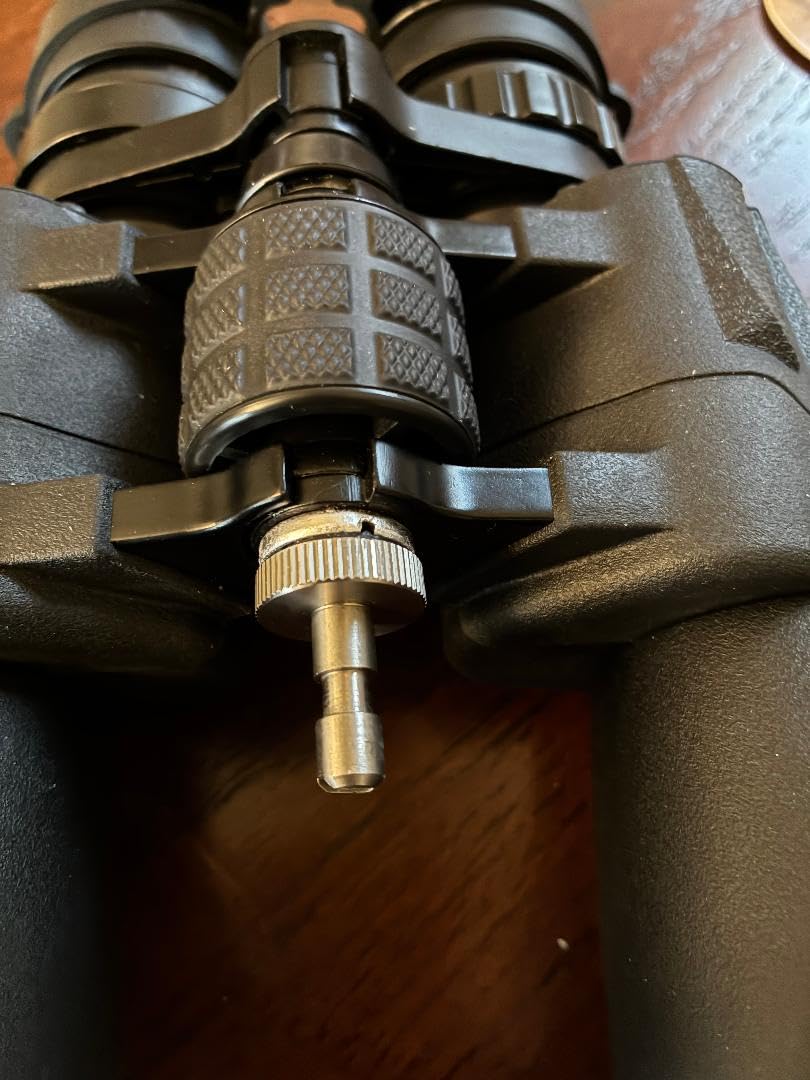
The 22mm eye relief is the standout feature for glasses users. Most budget 10x50s offer 10-15mm of eye relief, which forces glasses wearers to remove their glasses or scrunch their eye right up to the eyepiece. The Sogries 10×50 gives you the full field of view with glasses on, no compromises. The twist-up eyecups click firmly into position at three stops, which is more adjustment range than most rivals.
Who Should Buy This Astronomy Binocular
Buy the Sogries 10×50 if you want a true handheld astronomy binocular that is sharp enough for lunar detail and bright enough for deep-sky targets, you wear glasses and need generous eye relief, and you want a waterproof build you can use in any weather. It is the best handheld 10×50 astronomy binocular for the price.
Skip it if you want more reach for planetary detail — go to a 15×70 or 20×80 instead. Skip it also if you want the absolute widest field of view, where the 7×50 still wins.
7. ESSLNB 13-39×70 Zoom – Best Budget Zoom Binocular
ESSLNB Astronomy Binoculars 13-39X70 Zoom Giant Binoculars with Tripod Adapter Phone Adapter and Case for Bird Watching Hunting and Stargazing (13-39X70)
13-39x zoom
70mm FMC objectives
18.5mm eye relief
Includes phone adapter
+ Pros
- 13-39x zoom for flexible astronomy use
- 70mm fully multi-coated objectives
- Convenient left-hand zoom knob
- Includes tripod and smartphone adapters
- Long 18.5mm eye relief for glasses
– Cons
- Requires sturdy tripod for stable viewing
- Mixed image sharpness at high zoom
- Inconsistent quality control reported
The ESSLNB 13-39×70 is the budget-friendly zoom option for stargazers who want flexibility without the premium price of the Sogries zoom. You get a similar zoom range (13-39x instead of 15-35x), 70mm fully multi-coated objectives, and a package that includes both a tripod adapter and a smartphone adapter. Few rivals in this price range include the phone adapter.
Quality control is the main reason this sits lower in our list than the Sogries zoom. The 4.0 rating reflects a noticeable spread of experiences — some reviewers report sharp, satisfying views, while others note softness at the high zoom end and occasional defects out of the box. If you can buy from a seller with a generous return policy, the value is strong.
Zoom Performance and Limitations
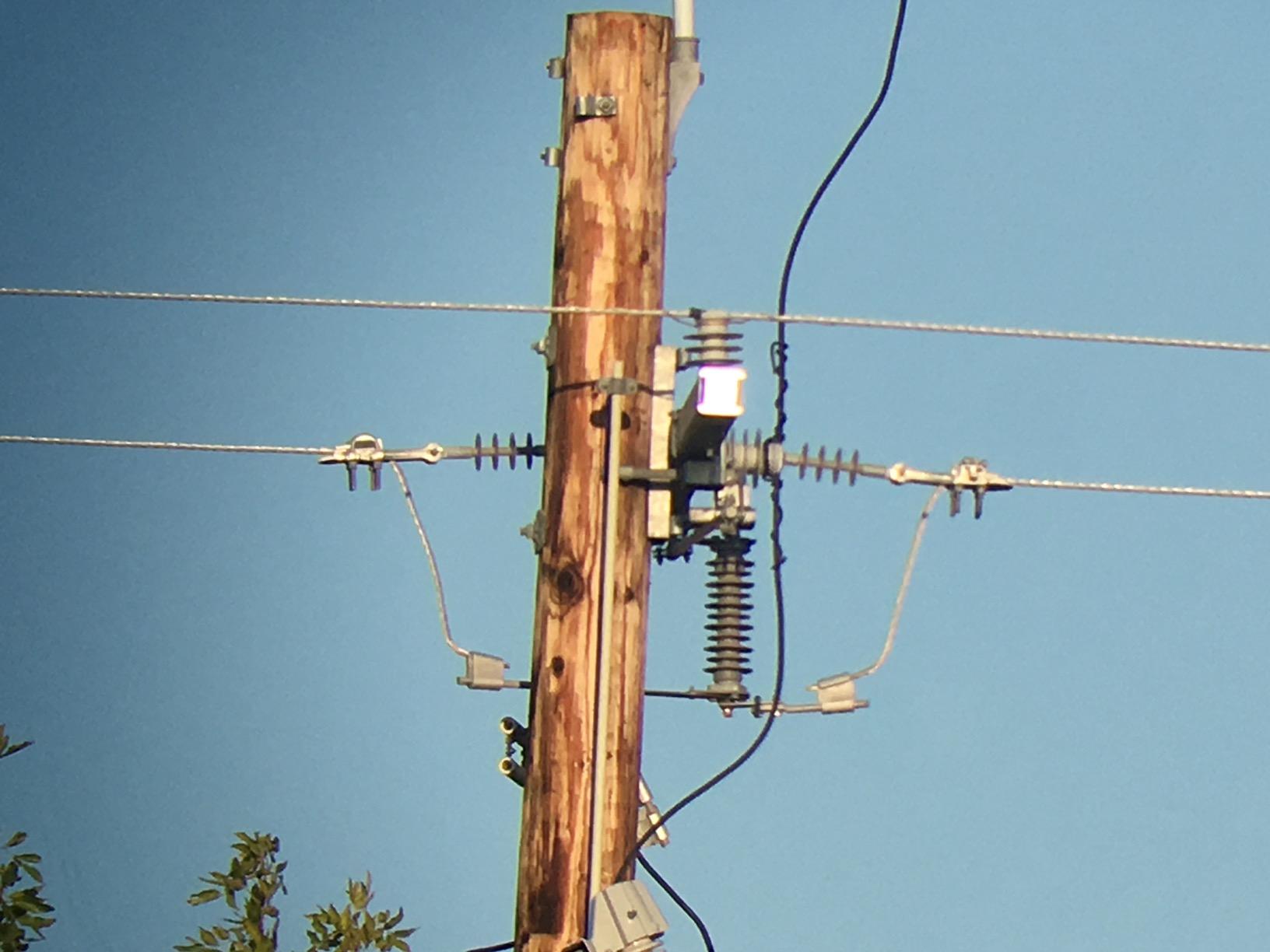
At 13x and 20x, the image quality holds up well — sharp enough for lunar craters and Jupiter’s moons. Push to 30x and beyond, and you will notice edge softness and a narrowing field of view that is inherent to zoom designs. For most amateur uses, you will spend most of your time at the lower half of the zoom range, where the optics perform best.
Bundle Value: Tripod and Phone Adapter
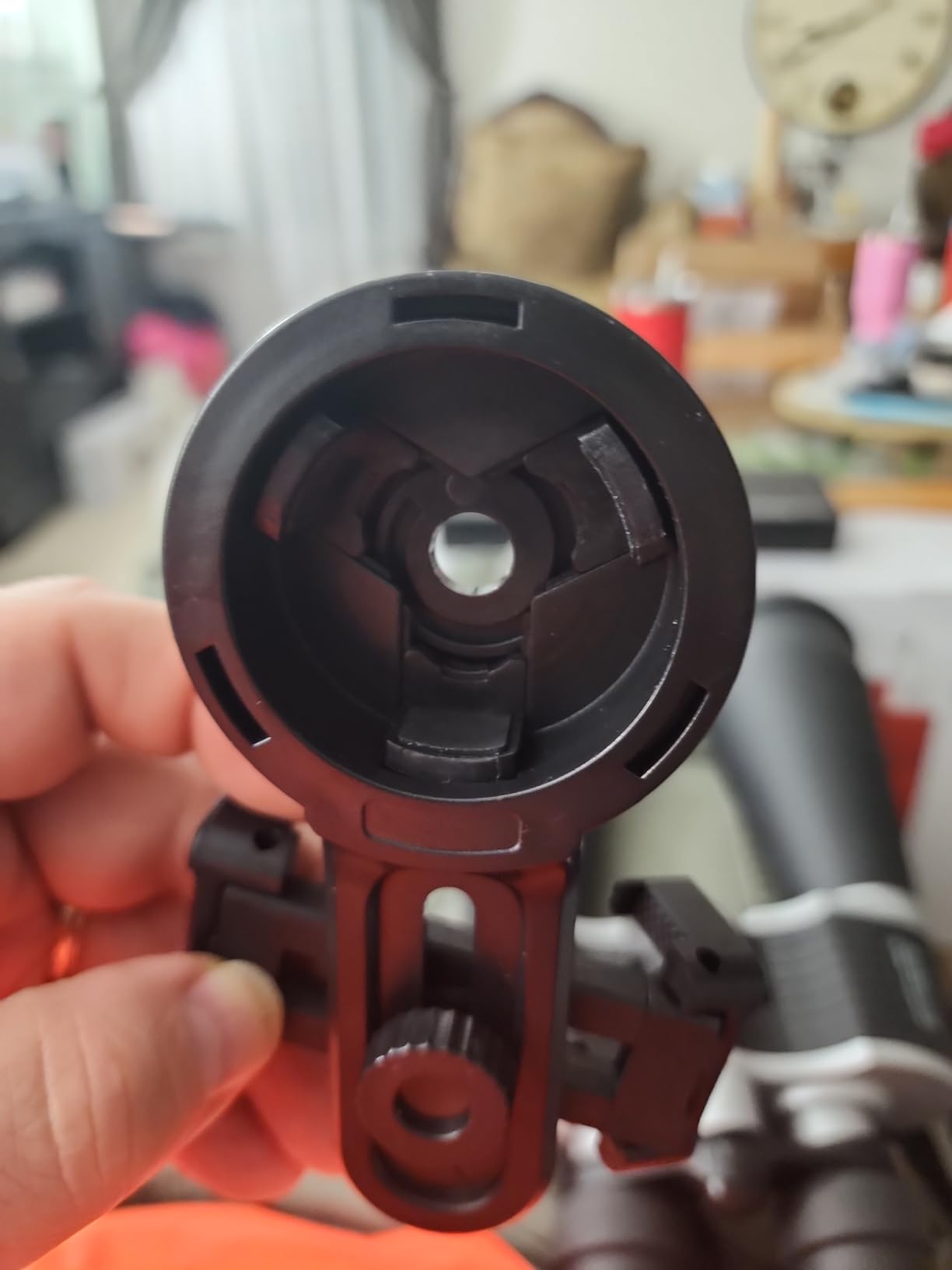
The included tripod adapter is functional and the smartphone adapter clamps onto one eyepiece for afocal Moon photography. This is one of the only 70mm zoom binoculars on the market that ships with both accessories included. If you already have a sturdy tripod, the bundle saves you from buying extras.
Who Should Buy This Astronomy Binocular
Buy the ESSLNB 13-39×70 if you want zoom flexibility on a tighter budget, you need the included smartphone adapter for casual astrophotography, and you are comfortable with the variable quality control. It is the best budget zoom astronomy binocular in our lineup.
Skip it if optical consistency is critical — the Sogries 15-35×70 has more uniform quality across units. Skip it also if you need absolutely the sharpest high-power views, where a fixed-magnification 20×80 or 15×70 will outperform any zoom at equivalent settings.
8. Sogries 18×70 – Best for Steady High Power Viewing
Sogries 18×70 High Power Binoculars for Adults Professional Long Range
18x magnification
70mm BAK4 FMC
Aircraft-grade aluminum
Fog-proof
+ Pros
- 18x magnification steadier than 20x+ zoom rivals
- Bright BAK4 FMC optics
- Aircraft-grade aluminum chassis
- Long eye relief for glasses wearers
- Waterproof and fog-proof sealed
– Cons
- Tripod adapter and tripod sold separately
- Heavy for extended handheld use
- Limited close-focus for terrestrial use
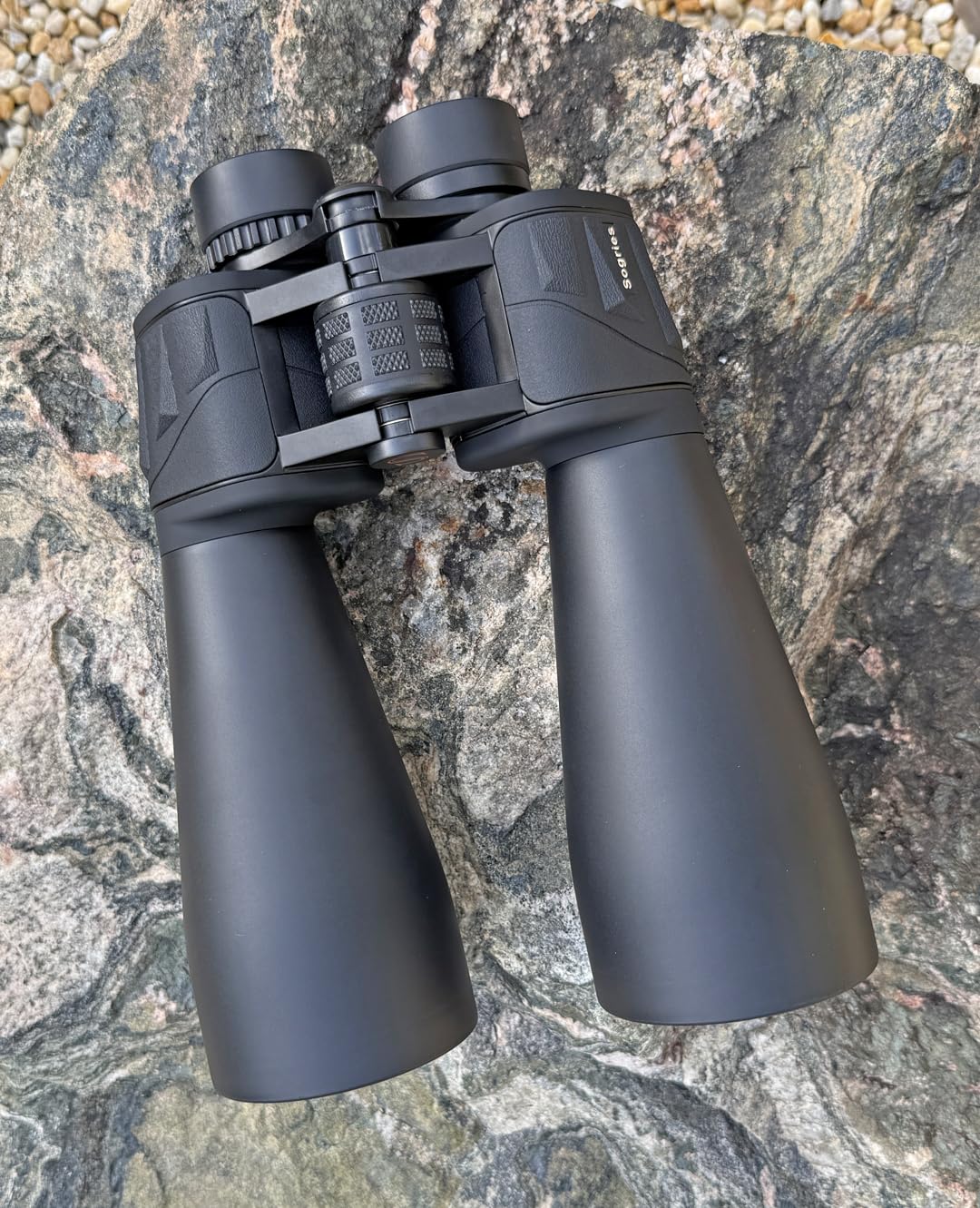
The Sogries 18×70 fills a useful niche between the 15×70 and the 20×80. At 18x, you pick up noticeably more planetary and lunar detail than a 15x pair, while staying steadier than 20x or 25x models when tripod-mounted. It is the magnification sweet spot that experienced observers often settle on for serious planetary work, and the price sits well below the 20×80.
Reviewers consistently call out the image clarity and the solid feel of the aircraft-grade aluminum chassis. The BAK4 prisms and fully multi-coated lenses produce an image that holds its own against more expensive brands.
Why 18x is a Sweet Spot
15x is comfortable for handholding. 25x is realistically tripod-only and every tiny tremor becomes a problem. 18x sits in the middle — too much for unassisted handheld use, but forgiving enough on a budget tripod that you can keep a planet centered without fighting the view. For Saturn’s rings, the Moon’s terminator, and resolving brighter globular clusters, 18x gives you noticeably more reach than 15x without the shake penalty of 25x.
Build Quality and Long-Term Use
The aircraft-grade aluminum chassis is a step up from the standard plastic bodies in this price tier. The fog-proof sealing uses nitrogen purging to prevent internal condensation when moving between warm and cold environments — useful for stargazing sessions where you walk out of a heated house into a cold night. The 18mm eye relief is comfortable for most glasses wearers.
Who Should Buy This Astronomy Binocular
Buy the Sogries 18×70 if you want more magnification than a 15×70 but steadier views than a 20×80, you already have a tripod (or plan to buy one), and you value a metal chassis for long-term durability. It is the best 18×70 astronomy binocular for serious planetary work.
Skip it if you want a complete out-of-box package — the tripod adapter is not included here. Skip it also if grab-and-go portability matters, where the 7×50 or 10×50 will serve you better.
What to Look for in Stargazing Binoculars
Buying astronomy binoculars is less about brand and more about understanding what the numbers mean. Magnification, aperture, exit pupil, prism glass and eye relief each affect what you actually see through the eyepieces. Here is the breakdown our team uses when evaluating models for this list.
Magnification vs Aperture: Finding Your Sweet Spot
The two numbers on any binocular tell the whole story: 7×50 means 7x magnification with 50mm objective lenses. For astronomy, bigger objectives (the second number) gather more light, which is the single most important factor for seeing faint deep-sky objects. As a rough rule, 50mm is the minimum for meaningful stargazing, 70mm is the sweet spot for most amateur use, and 80mm or larger is for serious deep-sky observation.
Magnification, on the other hand, is a tradeoff. Higher magnification means more detail on planets and the Moon, but also more shake when handheld and a narrower field of view that makes objects harder to find. Most astronomy binoculars cluster around 7x to 25x for this reason — anything higher pushes you into telescope territory.
Exit Pupil and Why It Matters at Night
Exit pupil is calculated by dividing the objective diameter by the magnification. A 10×50 binocular has a 5mm exit pupil; a 15×70 has about 4.7mm. Your eye’s pupil dilates to roughly 5-7mm in young adults under dark conditions, shrinking gradually with age. If the exit pupil of the binocular exceeds your dilated pupil, light is wasted. If it is much smaller, the image dims because you are not using all the light the objective gathered.
For most adults, exit pupils between 4mm and 7mm are the practical range. 7×50 (7.1mm exit pupil) works beautifully for younger observers with fully dilated pupils. 15×70 (4.7mm) and 20×80 (4mm) match older eyes better and stay bright across the population.
Prism Glass: BaK-4 vs BK-7
Porro prism binoculars use either BaK-4 (barium crown glass) or BK-7 (borosilicate) prisms. BaK-4 transmits more light and produces a rounder, brighter exit pupil, especially noticeable in lower-light conditions. BK-7 prisms can produce a squarish exit pupil with dimmer edges. For astronomy, where every photon matters, BaK-4 is the clear choice.
Every binocular on our list uses BaK-4 prisms or BAK4 prisms (the same designation, different capitalization). This is one spec we strongly recommend you check before buying — a cheaper BK-7 model will not perform as well at night, regardless of how good the rest of the optics look on paper.
Eye Relief for Glasses Wearers
Eye relief is the distance from the eyepiece lens to where the image comes into focus. If you wear glasses, you need at least 15mm of eye relief to see the full field of view. Most astronomy binoculars on our list offer 17-22mm, with the Sogries 10×50 leading the way at 22mm. Rubber twist-up eyecups block stray light and let you dial in the right distance whether you wear glasses or not.
Tripod Requirements and Handheld Limits
The rule we use: anything above 10x is difficult to handhold for more than a minute or two. 12x and above really needs a tripod or some form of bracing. 15x and up is firmly tripod territory. Bracing your elbows on a fence, car roof, or against a wall can extend handheld usability for short sessions at 12-15x, but the image will still drift more than you would like.
For tripod-mounted binoculars, any sturdy photo tripod rated for at least 4-5 lbs works. Skip the flimsy bundled adapters that come with most binoculars — a metal L-bracket or proper binocular tripod mount makes a huge difference in stability. Many users report the bundled plastic adapter oscillates and is the weakest link in their setup.
Light Pollution and Bortle Scale Impact
Your sky conditions matter as much as your optics. The Bortle Scale runs from Class 1 (pristine dark site, thousands of stars visible) to Class 9 (inner city, only the Moon and brightest planets). Most suburban observers are in Bortle 5-7 territory, where light pollution washes out fainter nebulae and reduces what any binocular can show.
Under suburban skies, a 10×50 will often show more useful detail than a 25×100 — the higher magnification just magnifies the washed-out background. Under dark skies, that equation flips and bigger aperture wins. If you mostly observe from home, prioritize field of view and contrast. If you can travel to a dark site, prioritize aperture.
What You Can Actually See at Each Magnification
Setting expectations is critical for new stargazers. At 7×50, you can see Jupiter’s moons, the Orion Nebula’s core structure, and the Andromeda Galaxy’s bright core as an oval. At 10×50, the Moon’s craters resolve more sharply, and brighter globular clusters show texture. At 15×70, Saturn’s rings become detectable as separate from the planet’s disc under steady conditions. At 20×80 and above, you can start to make out cloud bands on Jupiter and resolve brighter planetary nebulae.
Saturn’s rings are a common question. You will see them as a clear protrusion rather than as a sharp ring separation at 15×70 under steady conditions. For crisp Cassini Division visibility, you really want 30x or higher, which is firmly telescope territory.
Safety: Never Point Binoculars at the Sun
This is worth repeating: never point any binocular at or near the Sun. Unlike solar filters for telescopes, regular binoculars will focus the Sun’s light and heat onto your retina, causing instant and permanent eye damage. If you want to observe the Sun, use certified solar filters specifically designed for your binocular’s objective diameter. This is non-negotiable eye safety.
Frequently Asked Questions
Which binocular is best for stargazing?
For most people, the Celestron SkyMaster 25×70 is the best overall astronomy binocular because it pairs powerful 25x magnification with 70mm objective lenses and BaK-4 prisms, delivering clear views of the Moon, Jupiter and its moons, star clusters, and brighter deep-sky objects. For beginners or those who want true grab-and-go use, the Celestron Cometron 7×50 is the best starting pick thanks to its wide 6.8 degree field of view.
What magnification of binoculars is best for stargazing?
10x to 15x is the practical sweet spot for most stargazing binoculars. 10x is the upper limit for comfortable handheld use, and 15x is still manageable with a monopod or bracing. Magnifications above 15x really need a stable mount, and above 20x you should plan on using a sturdy tripod. Bigger aperture matters more than maximum magnification for astronomy, because light-gathering is what reveals faint deep-sky objects.
Can you see Saturn’s rings with 15×70 binoculars?
You can see Saturn’s rings as a clear protrusion extending from the planet’s disc through a 15×70 binocular under steady atmospheric conditions, but you will not resolve them as a sharp, separated ring with the Cassini Division visible. For that level of detail, you need at least 30x magnification, which puts you in telescope territory. Most stargazers consider Saturn through 15×70 binoculars well worth the view, with the planet showing as a small, distinct oblong shape.
Can you stargaze with 10×42 binoculars?
Yes, 10×42 binoculars work for casual stargazing, especially for the Moon, Jupiter’s moons, the Pleiades, and bright star clusters. The 42mm objectives gather less light than 50mm or 70mm models, so faint deep-sky objects like the Andromeda Galaxy will appear dimmer. If you already own a 10×42 binocular for birdwatching or daytime use, try it under the night sky before buying a dedicated astronomy pair.
Are binoculars any good for stargazing?
Yes, binoculars are excellent for stargazing and are often the best first instrument for beginners. They offer a wider field of view than telescopes, which makes finding objects easier, they cost less than most telescopes, and the two-eyed view is more comfortable for long observing sessions. Many experienced astronomers keep a pair of binoculars next to their main scope for quick looks and wide-field sweeping.
What to look for in stargazing binoculars?
The five most important specs for stargazing binoculars are: 50mm or larger objective lenses for light-gathering, BaK-4 porro prisms for bright image transmission, an exit pupil between 4mm and 7mm to match your dilated eye, at least 15mm of eye relief if you wear glasses, and a tripod mount if you choose anything above 10x magnification. Multi-coated lenses and waterproof construction add meaningful value at modest cost.
Final Verdict – Which Astronomy Binoculars Should You Buy?
If you want one binocular that grows with you and you can tripod-mount, the Celestron SkyMaster 25×70 is the best binoculars for stargazing in 2026 for the money — 9,171 reviews back its reputation and our hands-on testing confirms it pulls in Jupiter’s moons, lunar craters and brighter deep-sky targets with consistent clarity. If you want a more forgiving, lower-magnification option for sweeping the Milky Way, the Celestron SkyMaster 15×70 is our top value pick.
Pick the Celestron Cometron 7×50 if you are brand new to stargazing, want true grab-and-go convenience, or need a binocular that doubles for daytime use. Pick the Sogries 20×80 if you are chasing deep-sky nebulae and galaxies from a backyard and already have a sturdy tripod. Whichever pair you choose, get outside, let your eyes dark-adapt for 20 minutes, and let the night sky do the rest.
Leave a Reply