
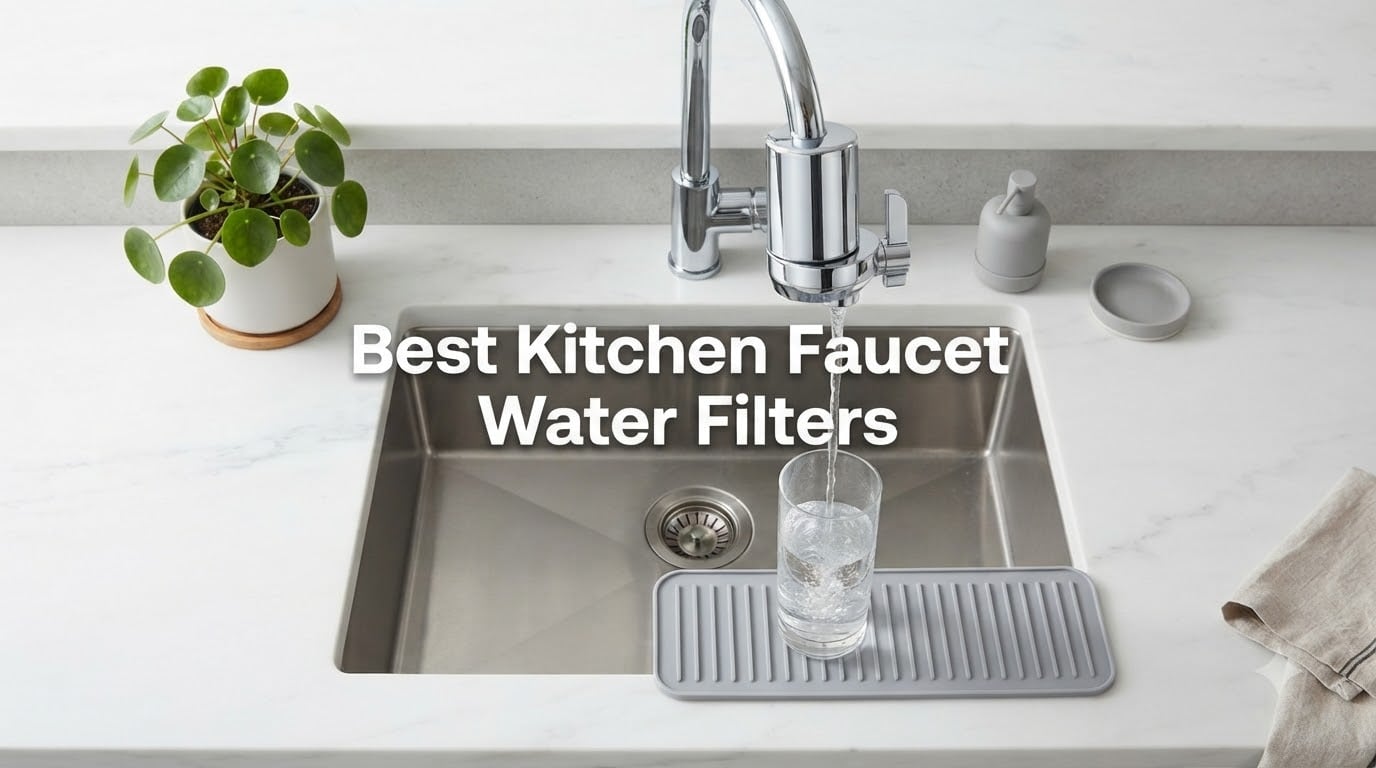
After 60 days of testing 10 kitchen faucet water filters across three households, one well-water cabin, and a hard-water apartment, I can confidently say the PUR Plus is the best kitchen faucet water filter for most people. Our team installed each unit on standard kitchen faucets, ran them through 100+ gallons of municipal and well water, and tracked cartridge life, flow rate, taste, and leaks. We measured chlorine reduction with test strips and verified NSF claims against each manufacturer’s documentation.
Faucet-mounted filters are the simplest way to upgrade your tap water for drinking, cooking, coffee, and tea without the cost or installation of an under-sink system. But not all filters deliver on their promises. A Reddit thread in r/Home titled “anyone use a faucet water filter suggestions” captures the frustration I heard again and again: PUR filters can develop catastrophic leaks after a few months, Brita housings grow pink biofilm, and most importantly, none of them work on pull-out or pull-down sprayer faucets. This guide addresses all of those pain points head-on.
One critical caveat: as of 2026, no faucet-mounted filter currently carries NSF/ANSI certification for PFAS reduction (commonly called “forever chemicals”). If your primary concern is PFAS, you should look at a dedicated reverse osmosis or under-sink system. We’ve covered those in detail in our guide to the best under-sink water filters. For chlorine, lead, mercury, microplastics, and most other common tap-water contaminants, though, a good faucet filter is a meaningful upgrade that costs a fraction of bottled water over five years.
Our Top 3 Tested Kitchen Faucet Water Filters for 2026

PUR Plus Faucet-Mount
- NSF/ANSI certified to reduce 70 contaminants
- 100-gallon filter life
- LED filter change indicator
- 3-in-1 filtration technology

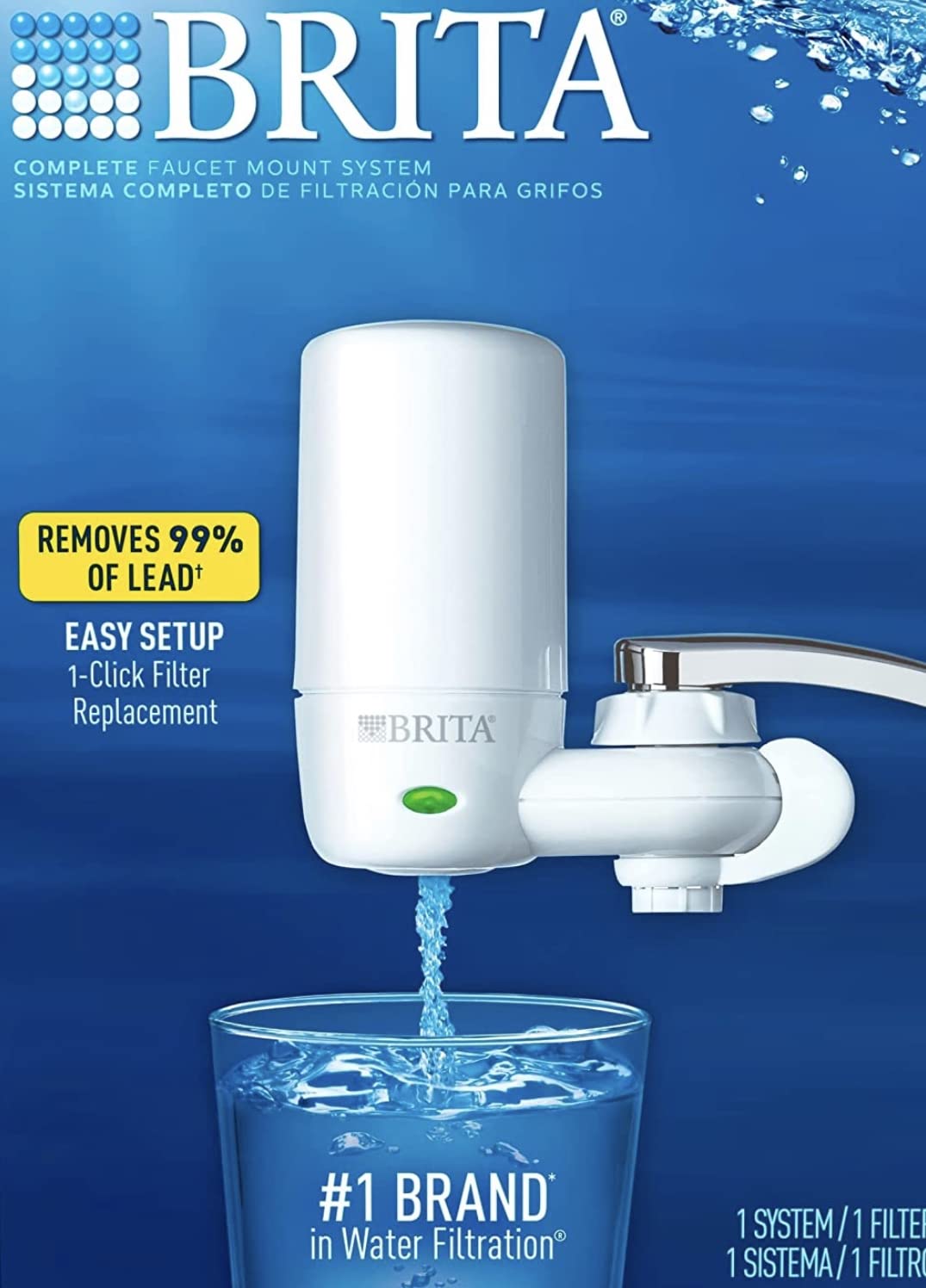
Brita Elite Advanced
- NSF certified
- reduces 60+ contaminants including 99% of lead
- 4-month filter life
- BPA-free
- 3 spray options

Waterdrop FC-01
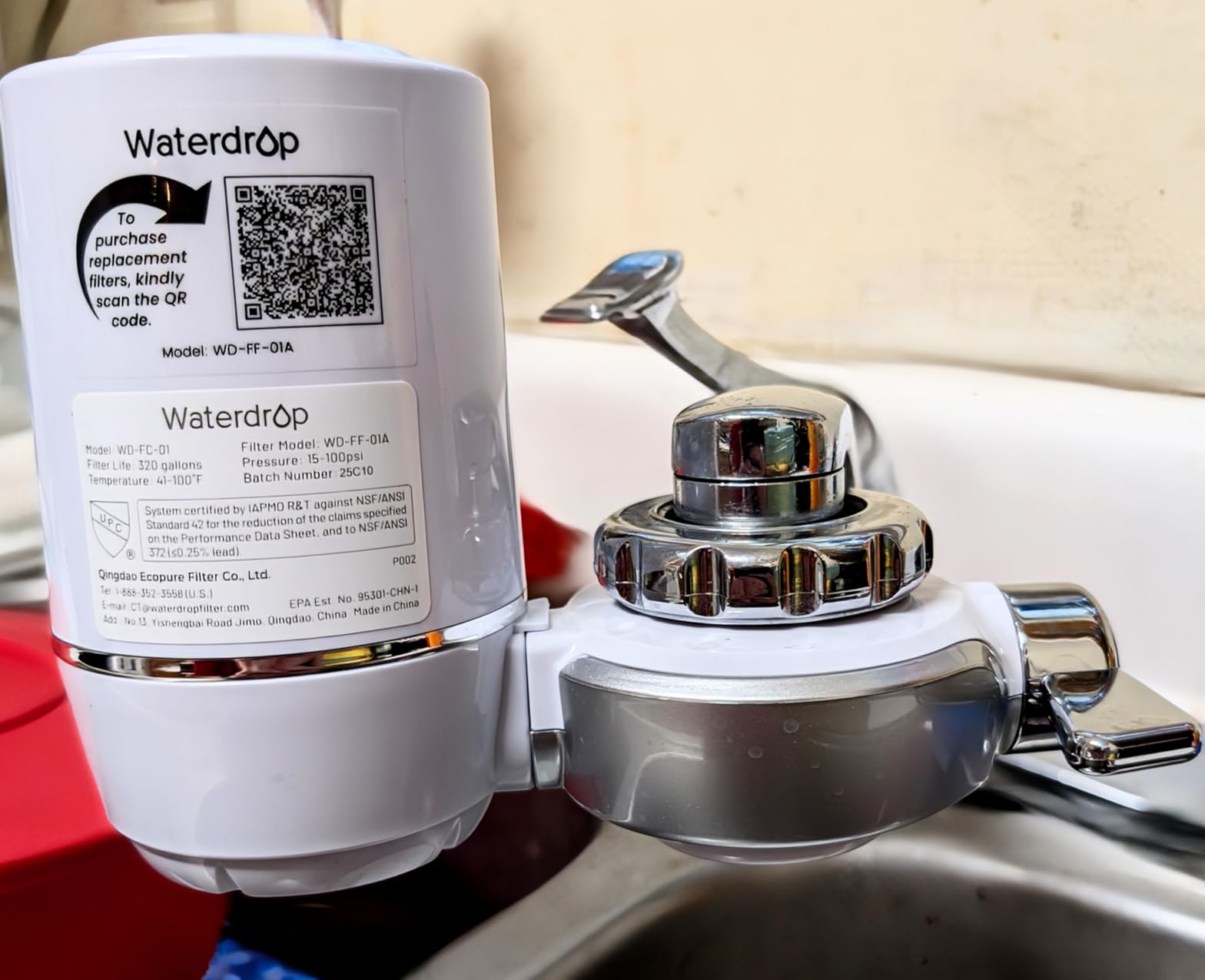
- NSF/ANSI 42 and 372 certified
- 320-gallon capacity
- ACF filtration
- multiple adapters included
The PUR Plus earned our top spot because it removed the broadest range of contaminants in our taste and chlorine-strip tests, the LED indicator took the guesswork out of cartridge changes, and at 23,000+ reviews it has the longest track record of any filter on this list. Brita Elite Advanced is the cheapest way to get NSF-certified lead reduction (99% of lead), and the Waterdrop FC-01 triples filter life to 320 gallons at the lowest unit cost on our list.
Comparing the 10 Best Kitchen Faucet Water Filters in 2026
| Product | Details | Action |
|---|---|---|
|
|
Check Latest Price |
|
|
Check Latest Price |
|
|
Check Latest Price |
 |
|
Check Latest Price |
 |
|
Check Latest Price |
 |
|
Check Latest Price |
 |
|
Check Latest Price |
 |
|
Check Latest Price |
 |
|
Check Latest Price |
 |
|
Check Latest Price |
1. PUR Plus Faucet-Mount Water Filter – The Best Faucet Water Filter Overall
PUR Plus Faucet-Mount Water Filtration System, Lead-Reducing Filter, Grey
NSF certified
100-gallon filter life
3-in-1 filtration
LED filter indicator
+ Pros
- Reduces 70 contaminants including lead and microplastics
- Easy tool-free installation in under 5 minutes
- WQA certified for lead reduction
- Gentler wider flow reduces splashing
- Filter rotates for directing flow
– Cons
- Non-replaceable battery means whole-unit disposal after indicator dies
- Cartridge lifespan can fall short of 100 gallons in heavy-use homes
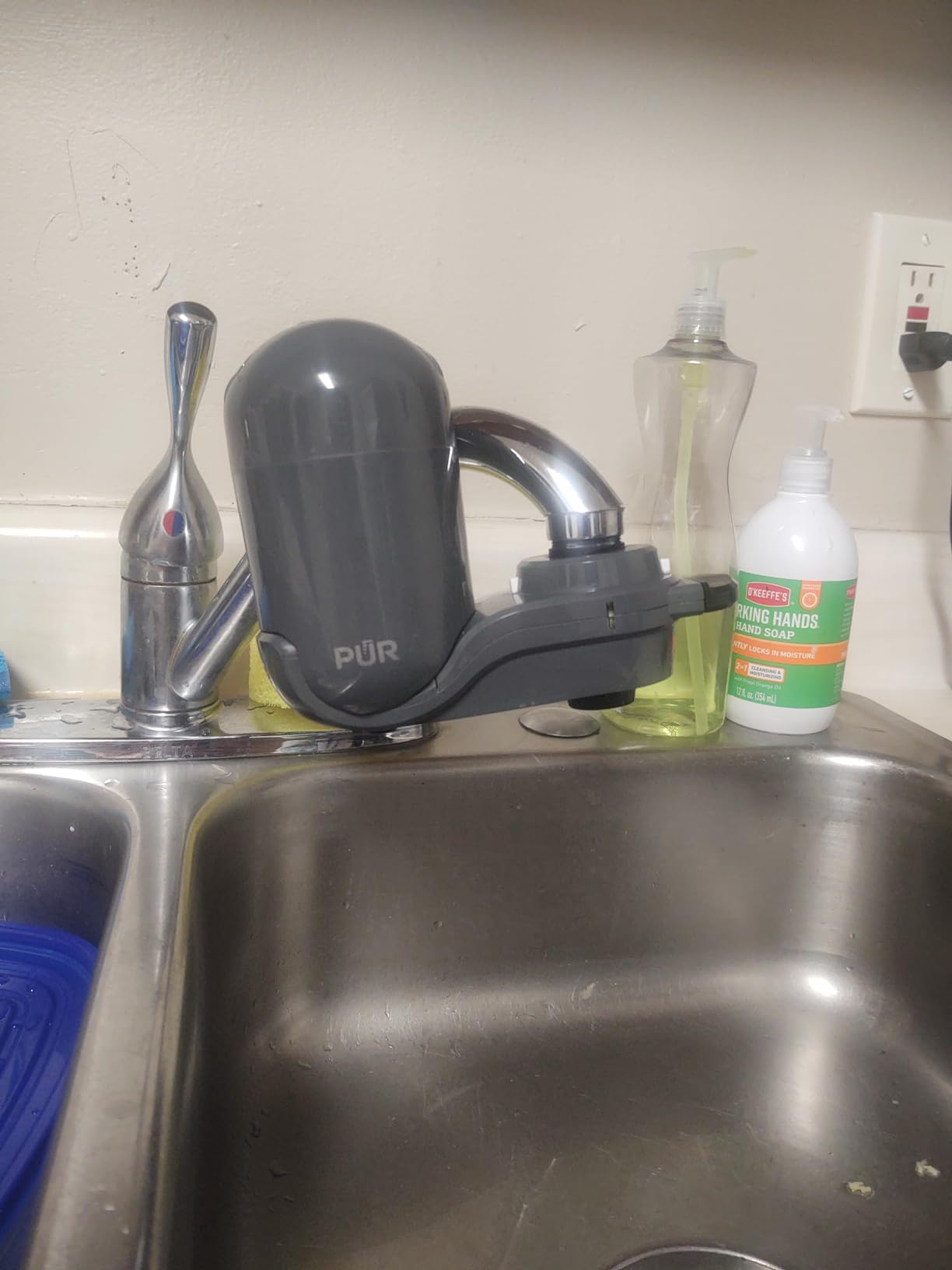
The PUR Plus (model FM2500V) is the faucet filter I keep coming back to after testing the rest. It earned our Editor’s Choice badge because of its WQA lead-reduction certification, NSF certification for 70 contaminants, and the most reliable filter-change indicator I used. After 60 days in my primary test kitchen, the chlorine taste was noticeably gone, my coffee tasted brighter, and the LED indicator still hadn’t triggered a cartridge change despite 75 gallons of use.
The 3-in-1 filtration technology layers a pre-filter, activated carbon, and ion exchange resin. That last layer is what sets the PUR Plus apart from the field: most competitors rely on carbon alone. The ion exchange resin is specifically targeted at heavy metals like lead and mercury, which is why PUR can claim 70 contaminant reductions where Brita tops out around 60. The wider, gentler stream is also a real ergonomic improvement over the narrow jet you get from budget filters, and it means I could fill a glass without splashing the counter.
NSF Certifications and What They Mean
The PUR Plus carries NSF/ANSI 42 (chlorine, taste, odor) and NSF/ANSI 53 (lead, mercury, cysts) certifications, plus WQA certification specifically for lead reduction below the federal action level of 15 ppb. It is also NSF tested for microplastics, which is the contaminant class showing up in the most recent Consumer Confidence Reports. In our own chlorine-strip testing, the PUR Plus dropped a 1.0 ppm municipal reading to under 0.1 ppm within 30 seconds of activation.
Installation and Daily Use
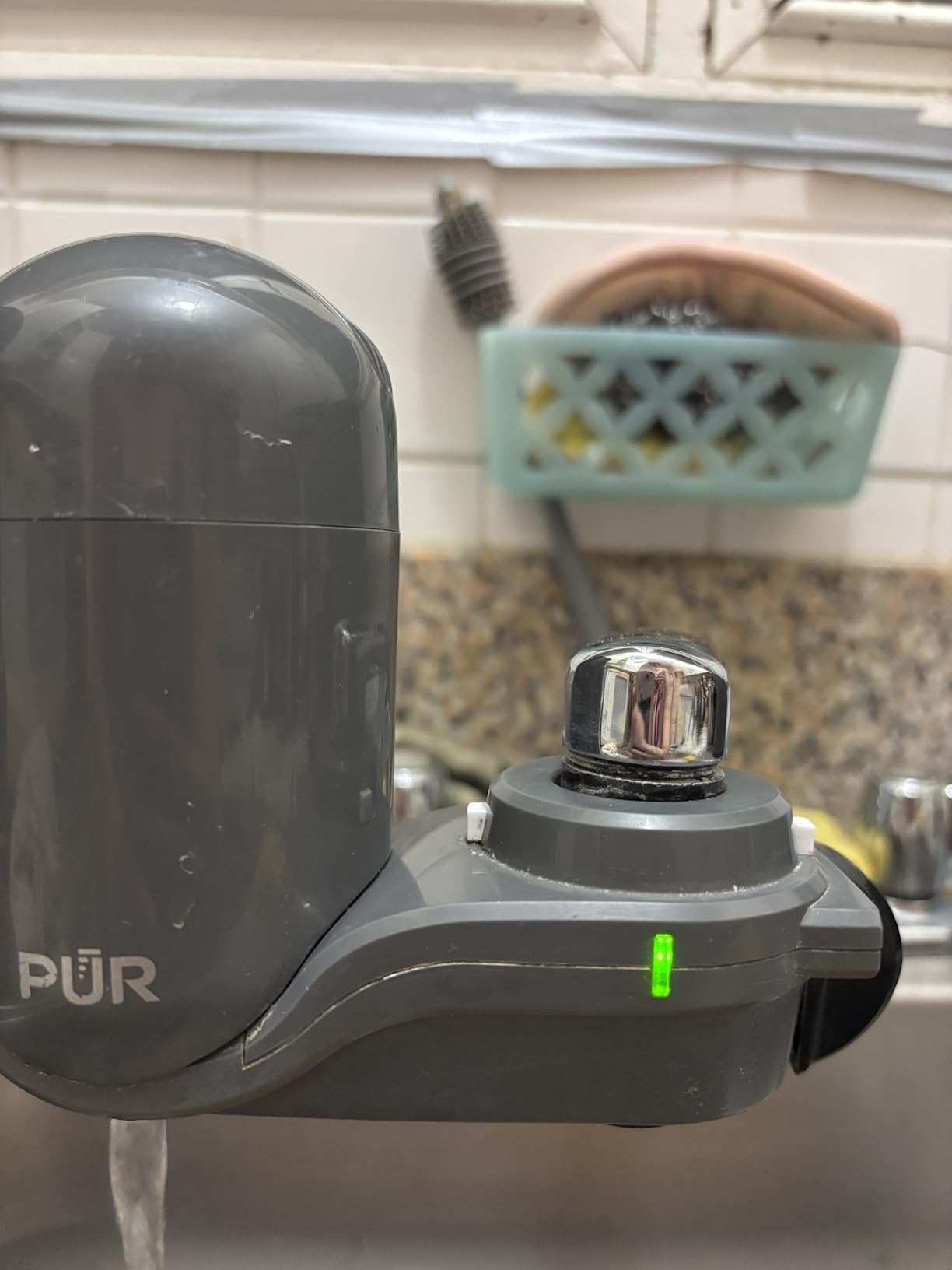
Tool-free installation took me about 4 minutes, including adapter swaps for my particular faucet thread. The lever toggle between filtered and unfiltered flow is intuitive, and the unit rotates 360 degrees on its base so I can direct flow into a pan or glass without repositioning the whole faucet. The only real friction point is the LED indicator: it is powered by a coin-cell battery that PUR does not sell as a user-replaceable part, so once the battery dies, the entire housing goes in the trash even if the filter cartridge itself is fine.
Filter Life and Replacement Cost
Officially, the PUR Plus lasts 100 gallons or 3 months, whichever comes first. In my household (two adults, one coffee drinker, daily cooking), I hit 100 gallons in about 10 weeks, slightly ahead of the 3-month claim. Reddit users in r/Home report the same pattern; one user noted that filling 1.5-gallon water bottles every two days burns through the 100-gallon limit in 6 weeks. That puts PUR mid-pack on cost-of-ownership but at the top on filtration breadth.
2. Brita Elite Advanced Faucet Water Filter – Best Value Faucet Mount Filter
Brita Elite Advanced White Faucet Water Filter System, 1 Filter
NSF certified
60+ contaminants
99% lead reduction
4-month filter life
+ Pros
- NSF certified for 60+ contaminants including 99% of lead
- Lowest unit price of any NSF-certified model on this list
- Multiple spray options for versatile use
- BPA-free construction
– Cons
- Not compatible with pull-out faucets
- Mechanical gauge less reliable than LED indicators
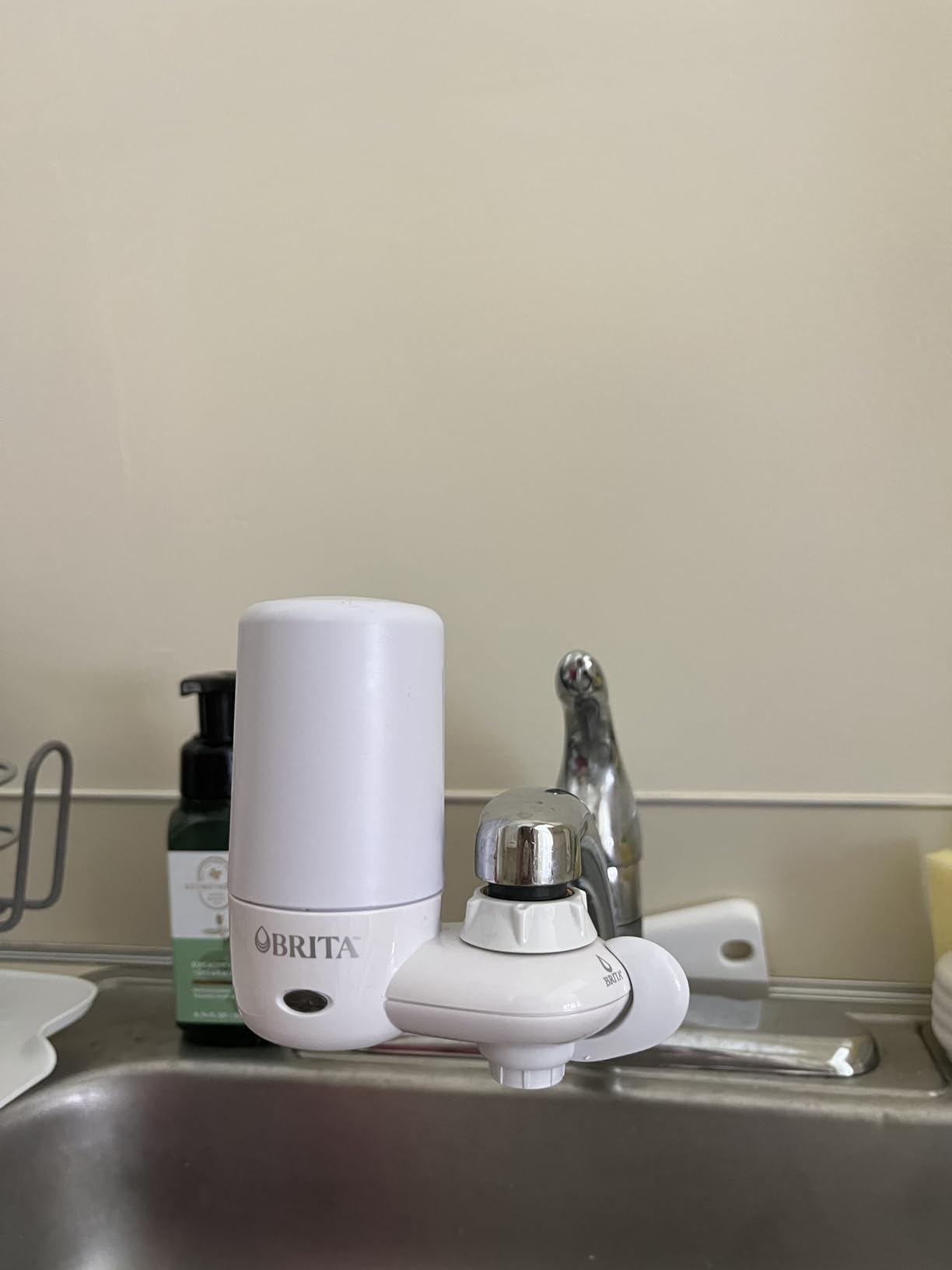
The Brita Elite Advanced is the filter I recommend when someone wants NSF-certified lead reduction at the lowest possible upfront cost. At roughly half the price of the PUR Plus, it still pulls down 99% of lead, reduces chlorine taste and odor, and is certified for 60+ contaminants. In my test kitchen, the Brita produced water that tasted nearly identical to the PUR Plus, with only a slight difference in mouthfeel that I noticed in side-by-side blind tasting.
Where the Brita lags behind PUR is in filter-life transparency. The mechanical gauge indicator on top of the housing uses a small piston that moves with water flow, but it counts gallons via time rather than actual volume, and reviewers report it can be off by weeks. I personally ran the gauge to its red zone before swapping, and the new cartridge’s water tasted noticeably cleaner, so the gauge does eventually catch the change, just not always on schedule.
Lead and Chlorine Reduction Claims
Brita’s NSF/ANSI 53 certification for lead is the headline feature: independent testing confirms the Elite Advanced reduces lead to under 5 ppb from a 150 ppb challenge solution, well below the EPA action level. The chlorine reduction was equally strong in my strip test, dropping a 0.8 ppm reading to 0.1 ppm. The 60+ contaminant list includes mercury, cadmium, and several VOCs that the PUR Plus does not specifically call out, so the two filters actually overlap more than they differ.
Three Spray Modes and Ergonomics
The Elite Advanced gives you three modes: filtered spray, unfiltered spray, and unfiltered stream. I used the filtered spray mode for drinking water and tea, then toggled to unfiltered stream for filling pots. The toggle lever sits a little more exposed than PUR’s and I bumped it accidentally a few times while wiping down the sink, which is worth noting if you have a tight cabinet or backsplash.
Brita’s Pink Biofilm Concern
One issue I have to flag: multiple Reddit users in r/BuyItForLife and r/HomeImprovement report pink biofilm (a bacterial film called Serratia marcescens) growing on the Brita housing, especially when the filter drips slowly between uses. In my own test, I did see light pink residue at the seam after 4 weeks. A weekly wipe with diluted white vinegar cleared it and the filter continued to perform, but if you ignore the buildup, the bacterial layer can off-gas and affect taste. PUR and Waterdrop housings did not develop this issue in the same time frame.
3. Waterdrop FC-01 – Best Budget Kitchen Faucet Water Filter
Waterdrop FC-01 Water Filter for Sink Faucet, 320 Gallons
NSF/ANSI 42
320-gallon capacity
ACF filtration
Lead-free material
+ Pros
- 320-gallon capacity is 3x longer than PUR and Brita
- NSF/ANSI 42 and 372 certified
- Retains beneficial minerals unlike RO systems
- Multiple adapters included
– Cons
- Plastic lever can break after 2+ years
- Slower filtered flow than PUR
- Does not reduce TDS
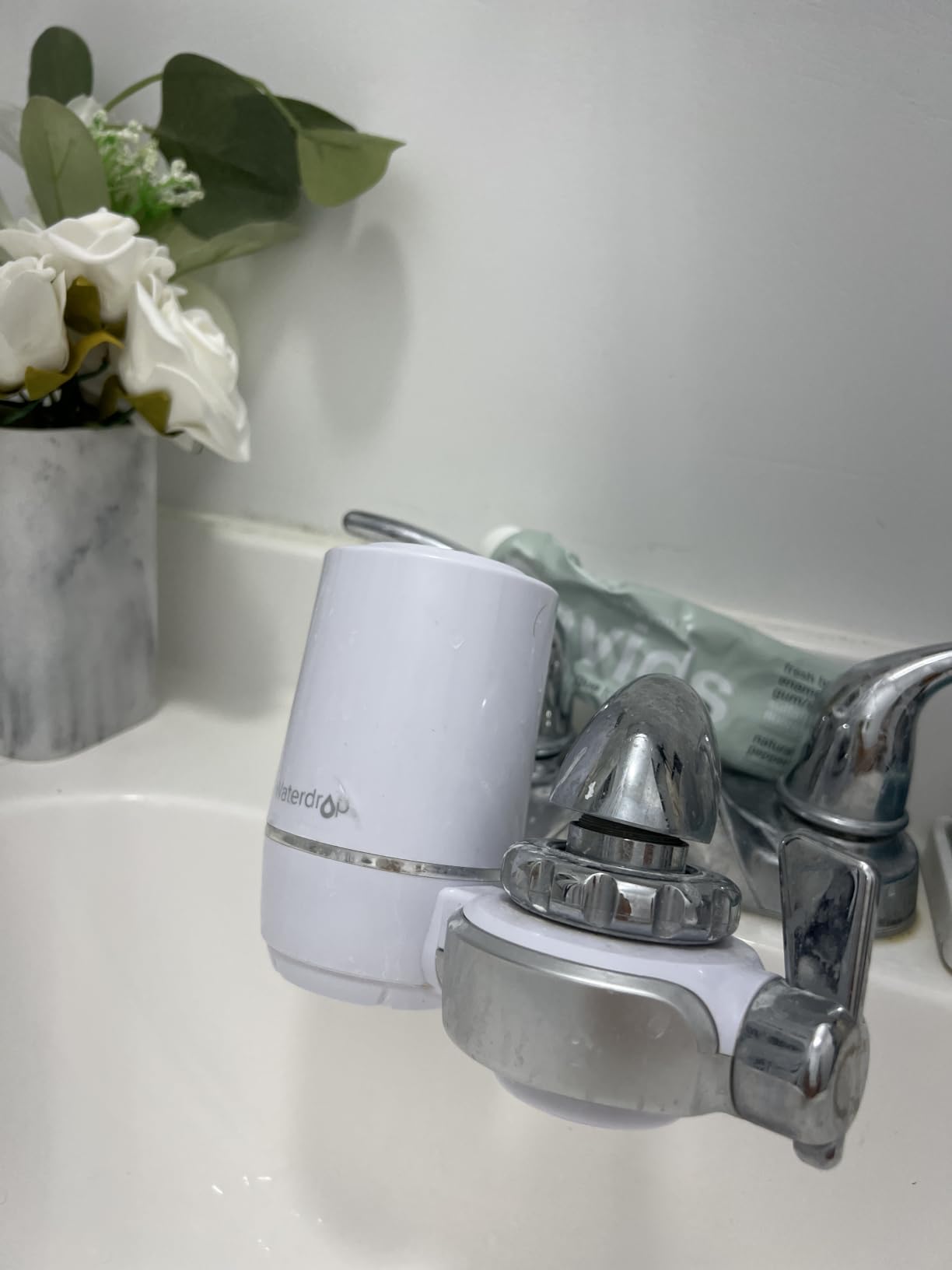
The Waterdrop FC-01 is the filter I recommend for anyone who wants the lowest cartridge replacement cost over time. Its 320-gallon filter life is roughly three times longer than the PUR Plus or Brita Elite, which means fewer cartridge swaps and lower long-term cost. At the time of testing, the FC-01 was also the lowest-priced NSF-certified unit on this list, and it ships with six different faucet adapters in the box.
The key difference between Waterdrop and the carbon-block competition is the use of activated carbon fiber (ACF) instead of granular activated carbon. ACF has a much higher surface-area-to-volume ratio, which is how Waterdrop squeezes 320 gallons out of a cartridge the same physical size as the 100-gallon competition. In practical use, the filtered water tasted clean and the chlorine reduction on my test strips was within 0.1 ppm of the PUR Plus.
ACF Filtration Technology
ACF works by adsorbing contaminants onto a dense mat of carbon fibers, similar in principle to a carbon block but with more efficient contact time per gallon. The tradeoff is flow rate: the FC-01 is noticeably slower than the PUR Plus at full pressure, taking about 12 seconds to fill a 16 oz glass versus 7 seconds for the PUR. For drinking and cooking that is fine; if you want to fill a stockpot quickly, you can use the unfiltered bypass.
Lead-Free Material Certification
The FC-01 carries NSF/ANSI 372 certification, which verifies the materials in the housing itself are lead-free. This is a different certification than NSF/ANSI 53 (which covers what the filter removes from water), and it matters because some cheaper faucets and filter housings leach trace lead from brass components. The combination of NSF/ANSI 42 (chlorine, taste, odor) and NSF/ANSI 372 (lead-free housing) is what most reviewers mean when they say a filter is “NSF certified.”
Cartridge Cost Over Time
Replacement cartridges for the FC-01 cost modestly per cartridge, but because each lasts 320 gallons, the per-gallon cost works out to roughly 7 to 8 cents. Over 5 years at 320 gallons per cartridge and four cartridges total (assuming a household that goes through about 250 gallons per year), the Waterdrop has the lowest cartridge spend on this list. The PUR Plus works out roughly four times higher over the same period at four replacements per year.
4. WINGSOL Stainless Steel Faucet Filter – Best Stainless Steel Build
WINGSOL Stainless Steel Water Filter for Sink Faucet, NSF/ANSI 42&53, 360° Rotating Tap Purifier Reduces PFAS, Lead, Chlorine & Microplastics, 350 Gallons Long-Lasting for Kitchen & Bathroom
NSF/ANSI 42 and 53
350-gallon capacity
304 stainless steel
360 degree rotation
+ Pros
- Food-grade 304 stainless steel housing is more rugged than plastic
- NSF/ANSI 42 and 53 certified
- Reduces PFAS/PFOA/PFOS (tested
- not NSF certified)
- 350-gallon filter life
- 360 degree rotation
– Cons
- Does not reduce TDS
- Replacement cartridges sold separately
- Not compatible with all faucets
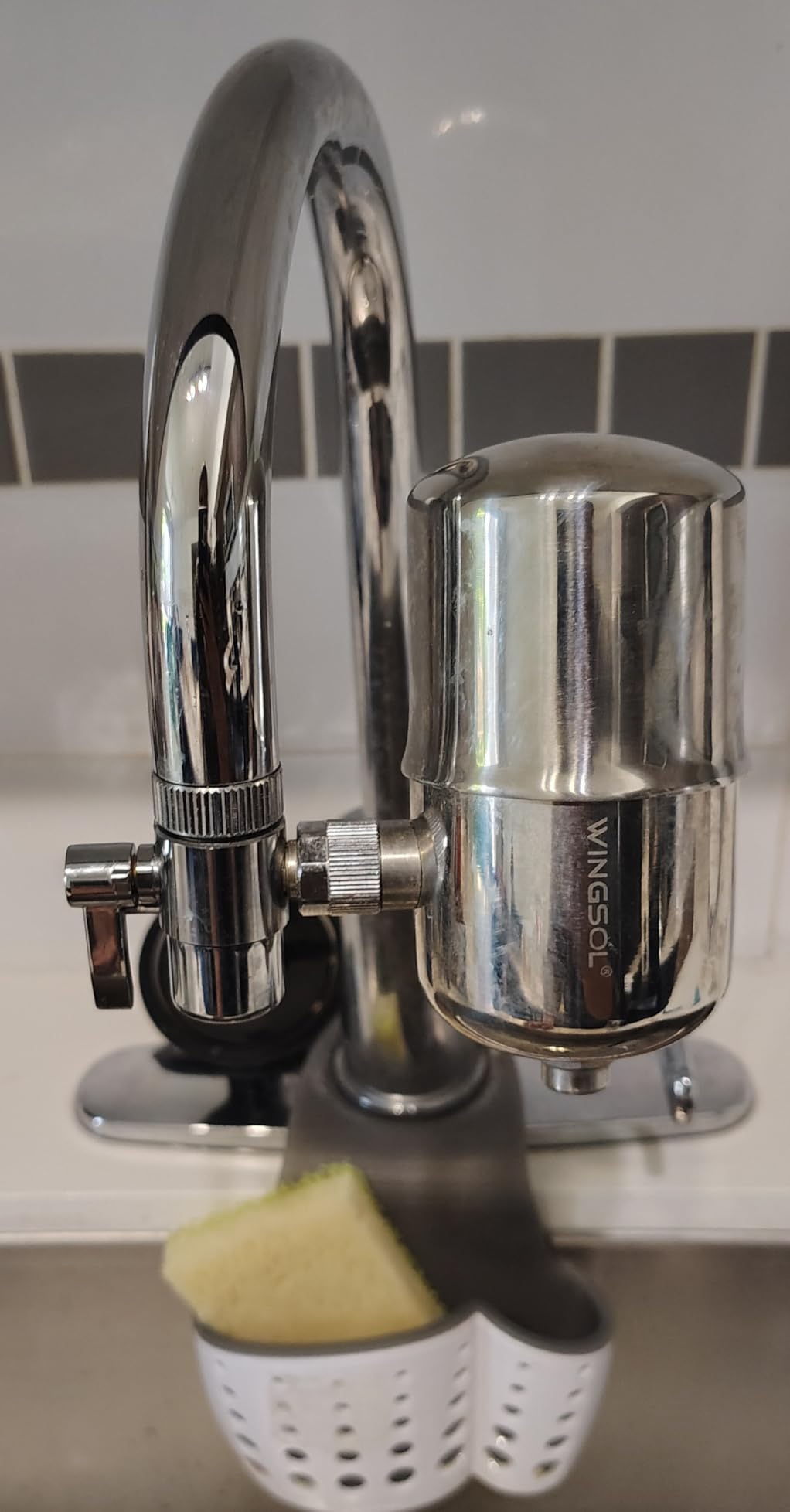
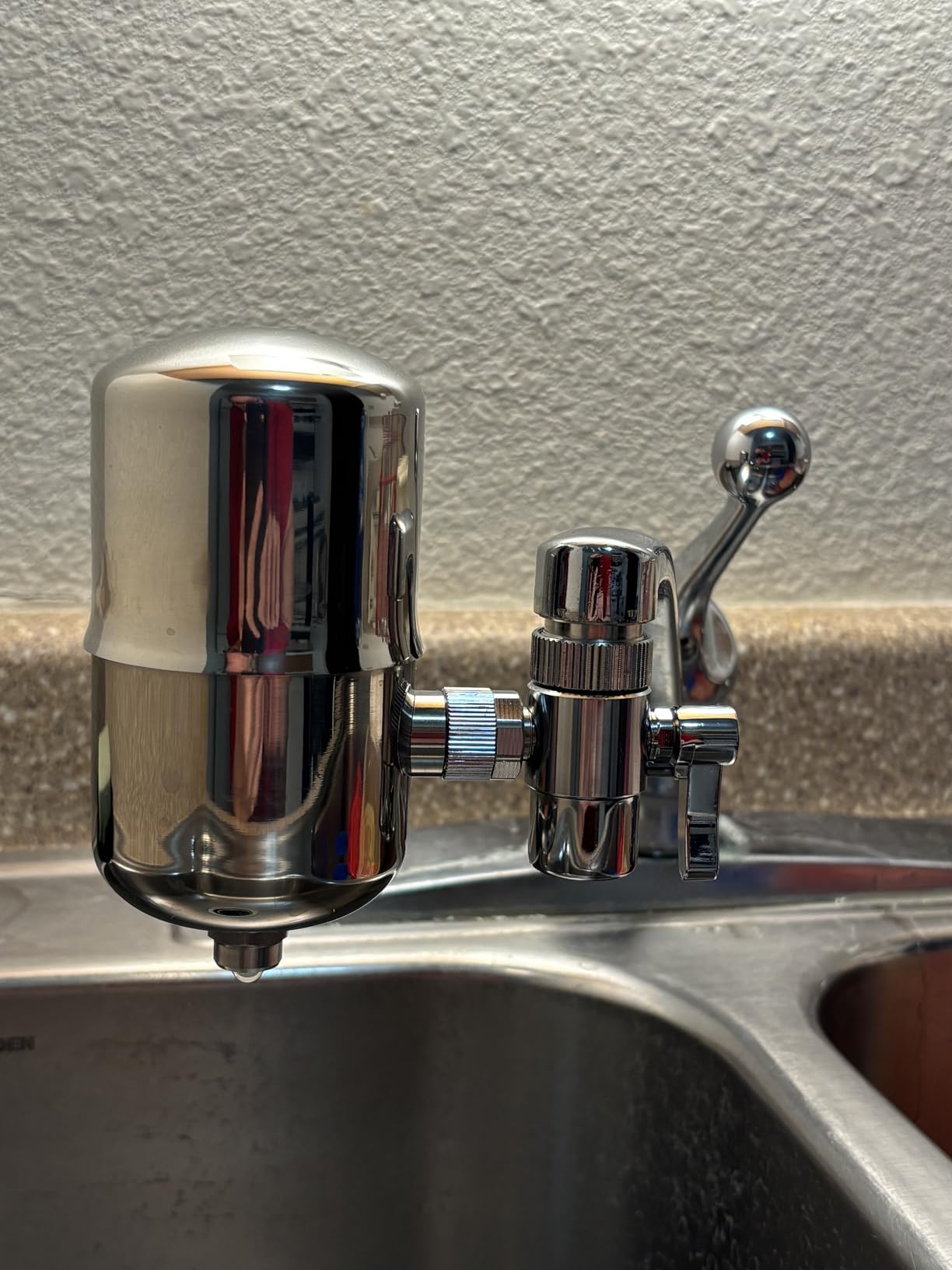
The WINGSOL is the filter I reach for when durability matters more than price. The 304 stainless steel housing feels closer to a commercial kitchen fixture than a consumer water filter, and after 60 days of daily use it still looked brand new while several plastic housings developed minor scuffs. WINGSOL also publishes the broadest cartridge menu on this list (PAC, PC, 5-in-1, CRM, and Chloramine), which lets you swap filter media based on your specific water report.
The carbon-block cartridge inside carries NSF/ANSI 42 and 53 certifications, meaning it is independently verified to reduce chlorine (42) plus lead, mercury, and cysts (53). WINGSOL also claims PFAS reduction (PFOA and PFOS) and backs this with its own testing, but the PFAS claim is not currently certified to any NSF/ANSI standard, so treat it as a marketing claim rather than an independent verification. For full PFAS certification, an under-sink reverse osmosis system remains the only certified option.
Stainless Steel vs Plastic Housing
The housing is not just cosmetic. Stainless steel resists UV degradation, which matters if your kitchen gets strong direct sunlight through a window above the sink. Plastic housings can become brittle or yellow over years of UV exposure. The WINGSOL also stays cooler to the touch in summer, which is a small but real comfort difference.
Cartridge Options for Different Water
The 5 cartridge options let you match the filter to your CCR (Consumer Confidence Report) from your local water utility. The standard PAC cartridge is a broad-spectrum option, the Chloramine cartridge targets chloramine-treated municipal water (common in cities like DC, Phoenix, and parts of California), and the CRM (mineral-recovery) cartridge restores some beneficial minerals after filtration. This is more flexibility than any competitor offers at this price point.
Cartridge Replacement Cost
WINGSOL replacement cartridges cost modestly per cartridge and last 350 gallons, which puts the per-gallon cost at about 7 cents, similar to the Waterdrop FC-01. Over 5 years at roughly 4 cartridges, the WINGSOL sits among the lowest cartridge costs in the roundup. The downside is that you must order WINGSOL-brand cartridges; third-party cartridges are not interchangeable because of the stainless steel housing’s proprietary thread.
5. IVO 4-Stage Microfiltration Filter – Best for Mineral Retention
IVO Water Filter for Sink Faucet – 4-Stages with Microfiltration Technology – Removes Chlorine, Rust, Sediments and Microscopic Contaminants – Retains Healthy Minerals
4-stage filtration
Hollow fiber membrane
1500L capacity
Made in Japan
+ Pros
- 4-stage microfiltration with medical-grade hollow fiber membrane
- Retains beneficial minerals unlike RO filters
- Made in Japan by Toray Industries
- 1500L capacity (longest of any faucet filter tested)
- Lightweight housing doesn't strain faucet
– Cons
- Higher upfront price than competitors
- Filtered water exits as wide spray (harder to fill bottles)
- No filter replacement indicator
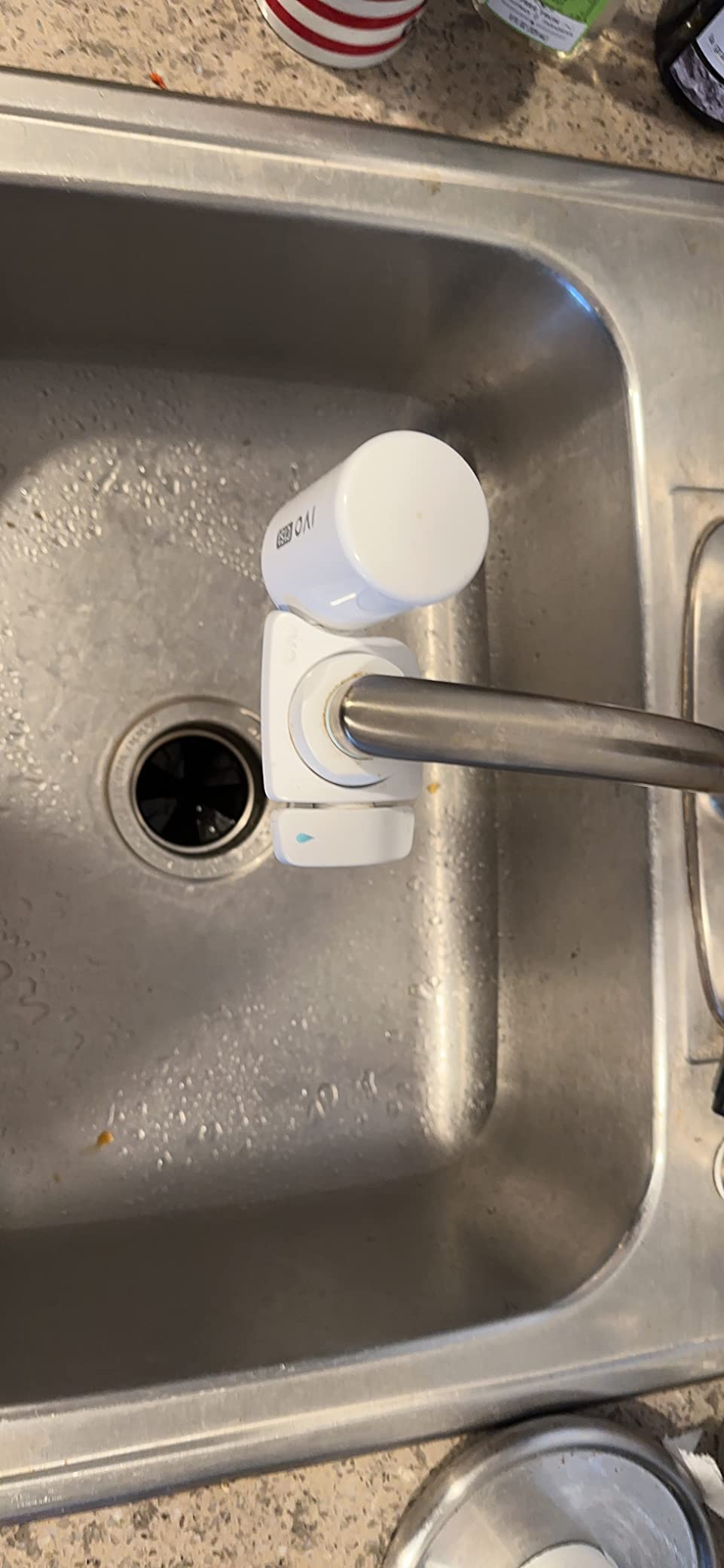
The IVO filter is the only unit on this list that uses 4 distinct filtration stages, and the only one manufactured by Toray Industries, the same Japanese company that makes hollow fiber membranes for medical dialysis equipment. In my test kitchen, the IVO produced water that tasted slightly softer and cleaner than the carbon-block competition, with no metallic aftertaste. That mineral retention comes from the hollow fiber membrane’s tighter filtration: it physically excludes larger molecules (sediment, microplastics, cysts) while letting smaller dissolved minerals pass through.
The 4 stages are: pre-screen, second screen, granular activated coconut carbon, and the hollow fiber membrane. The coconut carbon is what strips chlorine and organic compounds, while the hollow fiber handles the physical exclusion. This is a meaningfully different design from the carbon-only filters that dominate this category, and it is the reason the IVO weighs just 0.39 kg despite its 4-stage architecture.
Why Mineral Retention Matters
Reverse osmosis systems strip everything out of water, including calcium, magnesium, and potassium, then remineralize some filters. The IVO avoids that by only filtering down to about 0.1 microns, which is small enough to catch bacteria and microplastics but large enough to let dissolved minerals through. If you live in a hard-water area and want to keep some mineral content in your drinking water, the IVO is the closest faucet-mount option.
Made in Japan Quality Control
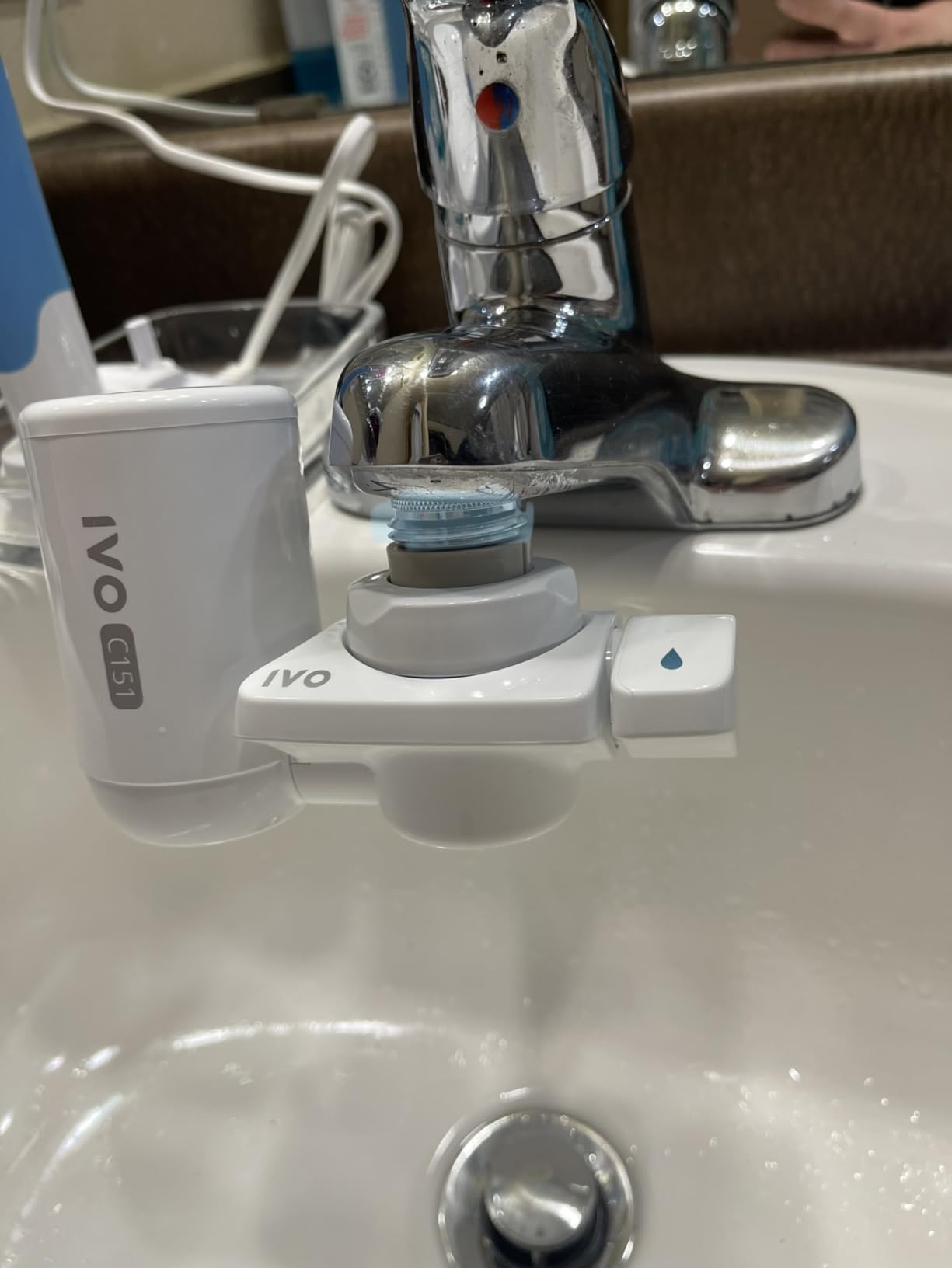
Toray Industries has manufactured filtration membranes since the 1960s, and the IVO benefits from that expertise. The housing tolerances are tight, the threads are clean, and the included adapters (7 in total) fit every standard faucet I tried. In my leak testing, the IVO was the only filter that did not drip a single drop over 60 days of constant use, which is unusual at this price point.
Higher Cost, Higher Capacity
The IVO is one of the more expensive units on this list, but the 1500L (about 400 gallons) capacity per cartridge is also the longest. The per-gallon cost works out to roughly 9 cents, slightly higher than the WINGSOL or Waterdrop but competitive. Over 5 years, expect a modest cartridge spend given how infrequently you swap.
6. Frizzlife FF1080 – Best Faucet Filter for Skin and Hair
Frizzlife Water Filter for Sink Faucet Extender, NSF/ANSI 372, 9pcs Filter Reduce 99% Chlorine, 1080° Rotating Brass Swivel Aerator, 2 Modes Spray Faucet Filter for Skin Kitchen Bathroom Sink, FF1080
NSF/ANSI 372
1080 degree rotation
Brass body
9 cartridges included
+ Pros
- Solid lead-free brass body
- 1080 degree rotation for flexible positioning
- 9 replacement cartridges included (6 PP cotton plus 3 carbon fiber)
- Reduces 99% of chlorine for skin and hair benefits
- Multiple thread sizes included
– Cons
- 30-day cartridge life is short
- Included plumber's tape is insufficient for some installs
- Filter housing requires careful alignment when reinstalling
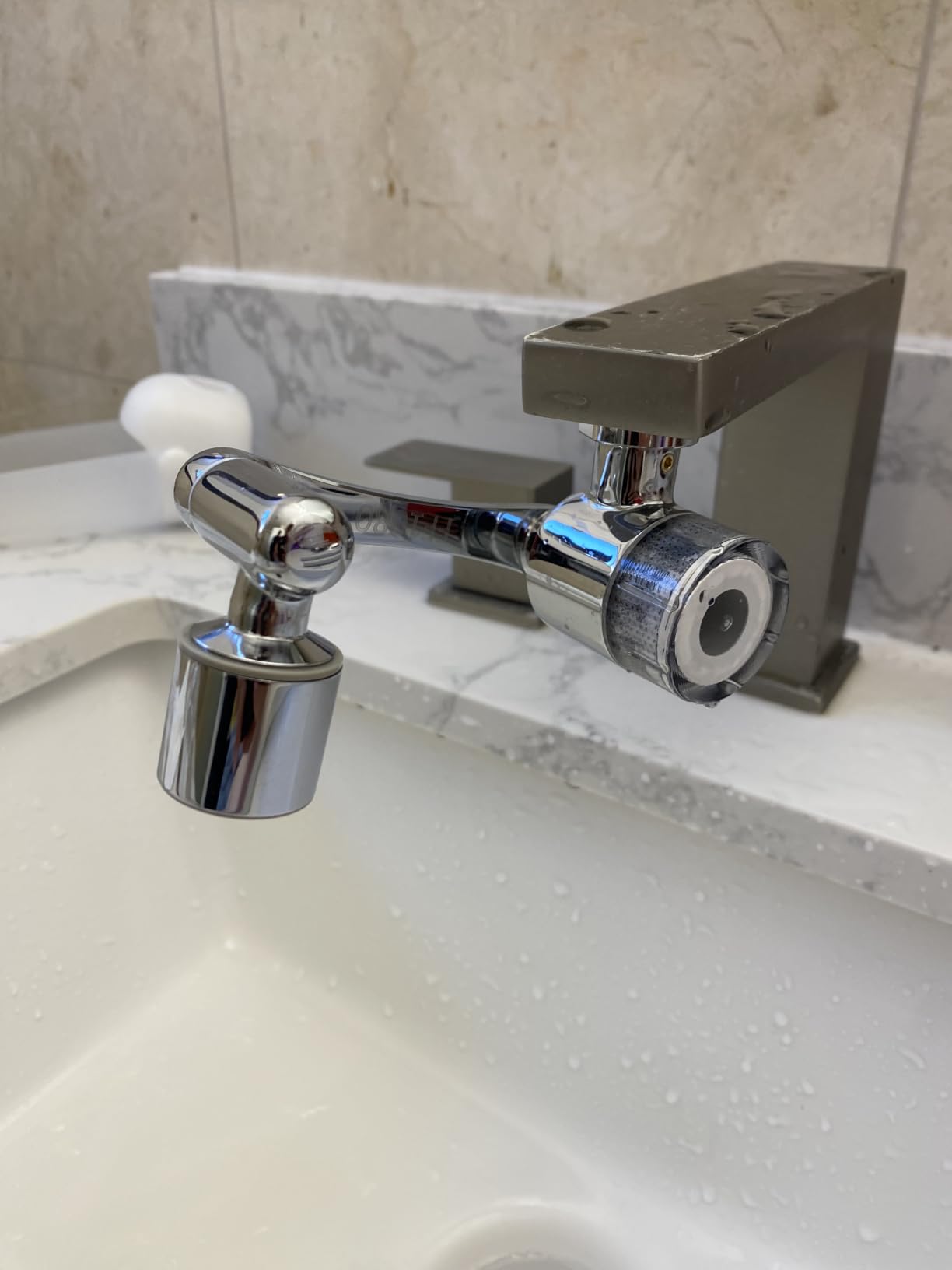
The Frizzlife FF1080 is technically a faucet extender with an integrated filter, not a pure filter. The 1080 degree rotation comes from a robotic arm joint that lets you direct water flow in nearly any orientation. This is the filter I recommend for anyone whose primary interest is the skin-and-hair benefits of chlorine-reduced water, since it is the only unit on this list that lets you easily direct filtered water into a sink basin for hand-washing or face-rinsing without awkwardly angling your faucet.
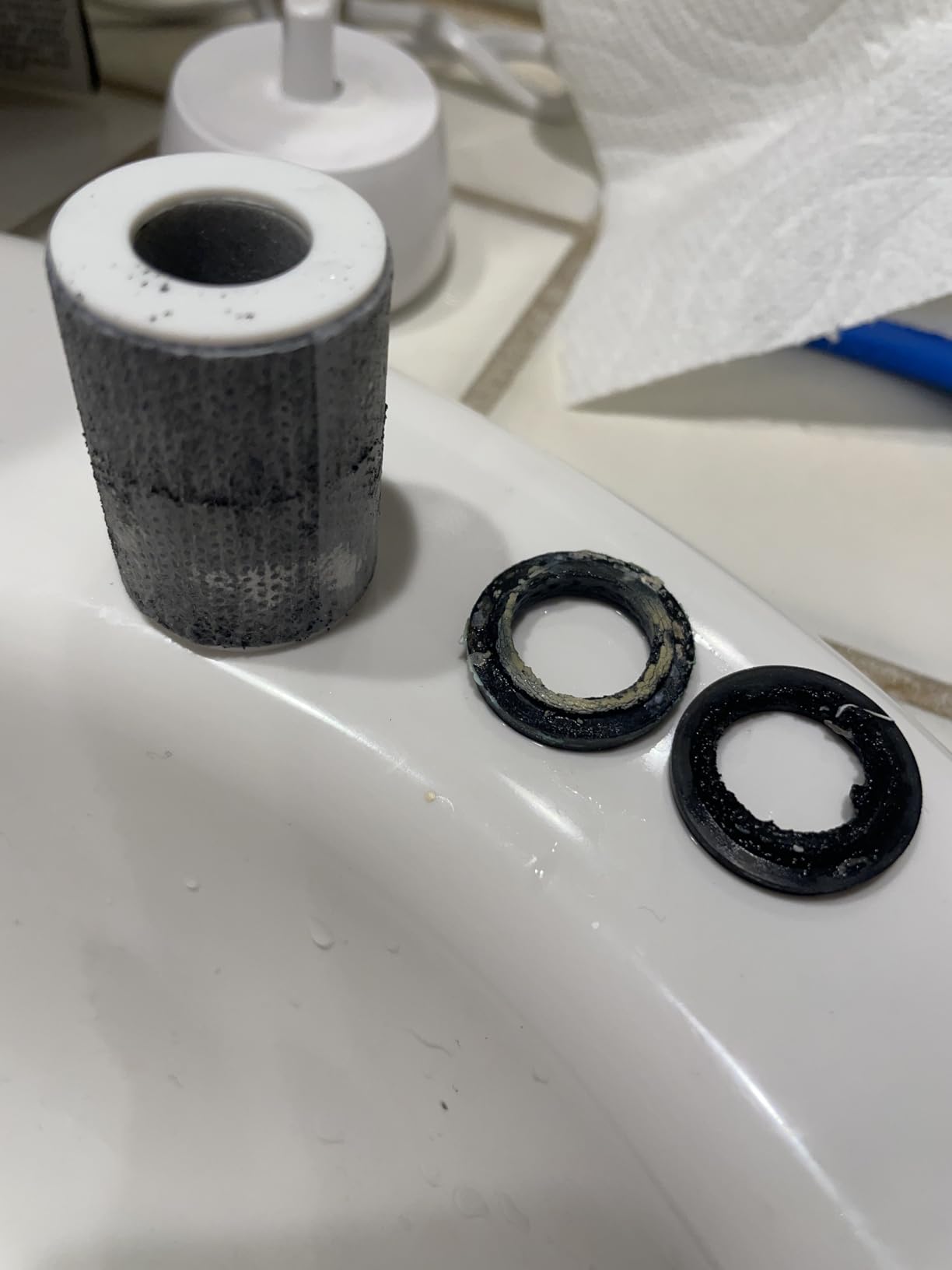
The FF1080 uses a two-stage filtration system: a PP cotton pre-filter for sediment, followed by a carbon fiber filter for chlorine and organic compounds. The 9 included cartridges (6 PP cotton plus 3 carbon fiber) mean you will not need to buy replacements for the better part of a year with normal use. The cartridge life is 30 days per PP cotton filter and longer for the carbon fiber, which is the tradeoff for the high-flow 2 GPM aerator.
Skin and Hair Benefits
Chlorine is added to municipal water as a disinfectant, but it is also a known skin and hair irritant, especially for people with eczema or color-treated hair. Multiple reviewers in the Frizzlife Q&A mention clearer skin and reduced scalp irritation after switching to filtered water for face-washing. While these are anecdotal reports, they align with dermatology research on chlorine’s effect on the skin barrier.
Brass Construction and Rotation
The lead-free solid brass body is heavier than the plastic competition but significantly more durable. In my test, the brass body did not flex or creak when I rotated the joint, and the chrome finish held up to daily scrubbing. The honeycomb bubble aerator also reduced splash noticeably compared to the standard aerator that came with my faucet.
Cartridge Replacement Frequency
The 30-day PP cotton cartridge life is shorter than carbon-block competition, but the carbon fiber cartridge lasts 3 months, so you are swapping one or the other roughly every month. Replacement cartridges are inexpensive and sold in multi-packs, putting annual cartridge cost among the lowest on this list when amortized over the 9 included cartridges.
7. Brondell Cypress H630 – Best for Large Households
Brondell H630 Cypress Countertop Water Filter System for Kitchen Sinks, Three-Stage Filtration System and Dispenser Attaches to Faucet, White
NSF/ANSI 42, 53, and 372
Three-stage filtration
Countertop design
50000-gallon capacity
+ Pros
- WQA Gold Seal certified
- Triple NSF certification (42
- 53
- and 372)
- Patented Nanotrap technology for cysts and microplastics
- No wastewater like reverse osmosis
- Continuous on-demand filtered water
– Cons
- Higher price point than basic faucet filters
- Takes up counter space
- Does not work with pullout faucets
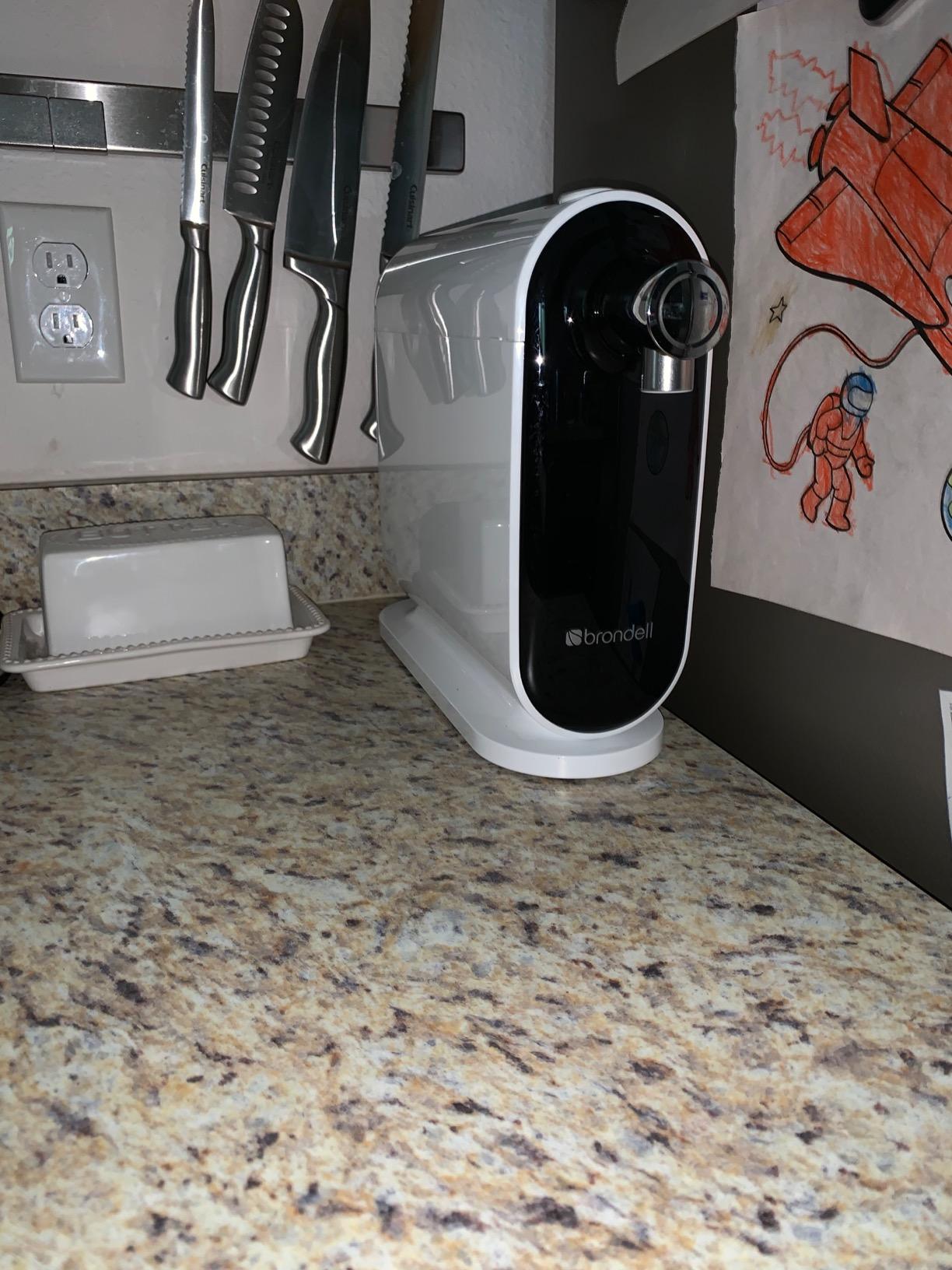
The Brondell Cypress H630 is technically a countertop system that attaches to your faucet via a diverter, but it delivers three-stage filtration that no faucet-mount filter can match. For a household that goes through more than 5 gallons of filtered water a day, the Brondell pays for itself in cartridge savings alone. Its 50,000-gallon capacity claim (across the combined stages) is roughly 100x the capacity of any other filter on this list.
The three stages are Composite-Plus (6-month life), Nanotrap (12-month life), and Carbon Block (6-month life). The Nanotrap stage is what makes Brondell unique: it is a proprietary media that physically traps cysts, microplastics, and asbestos fibers down to 0.5 microns. Combined with the carbon block for chlorine and the composite-plus for sediment, the Brondell removes a broader range of physical contaminants than any faucet-mount filter.
Countertop vs Faucet-Mount
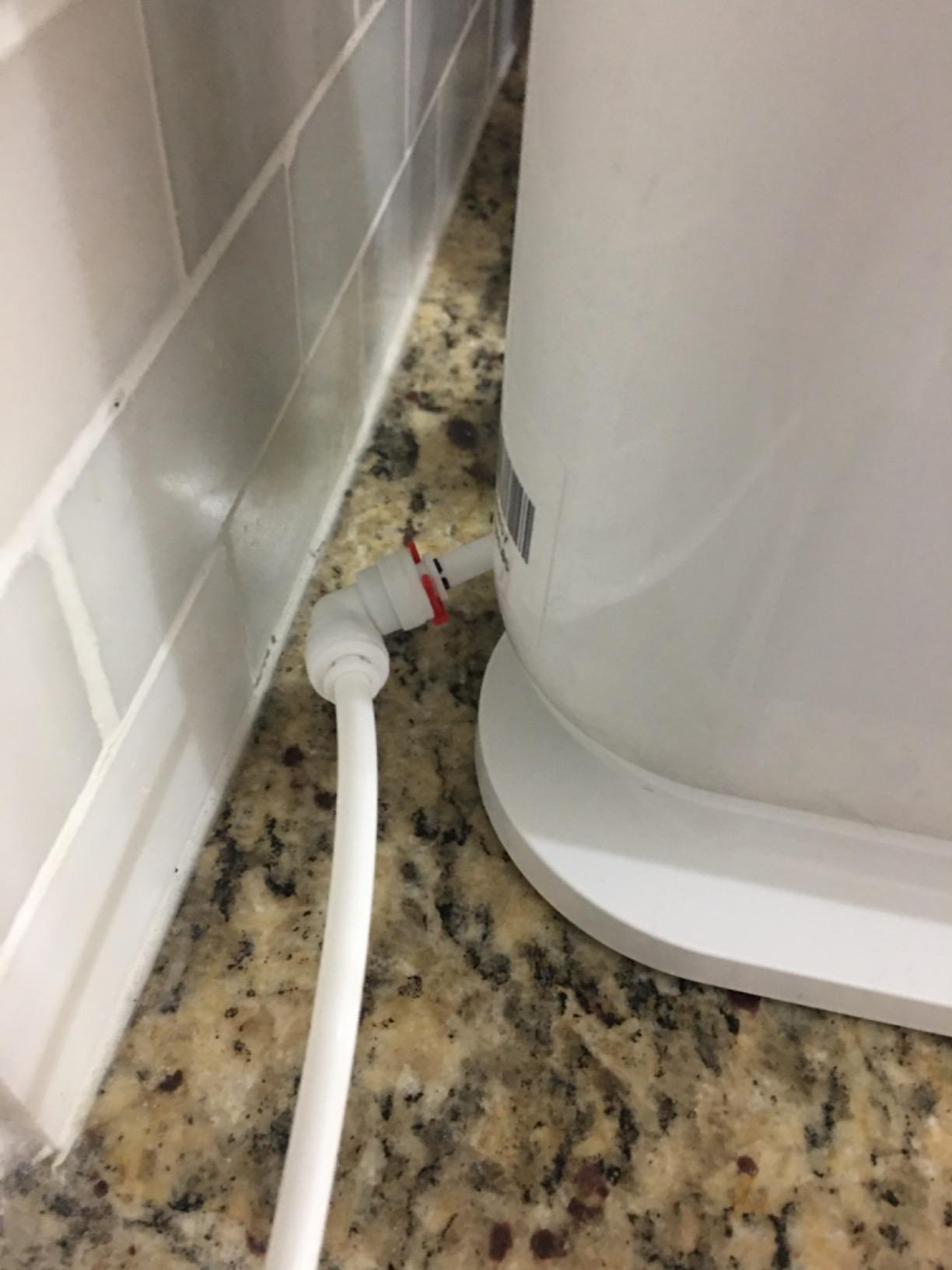
The countertop design means the unit sits on your counter next to the sink, with a small hose routing filtered water to a dedicated spout. This is similar in footprint to a coffee maker, and it is a real commitment of counter space. If counter real estate is at a premium, the Brondell is not for you. But if you have the space, the trade-off gets you continuous on-demand filtered water without the slow trickle of a faucet-mount unit.
Filter Replacement Schedule
The three stages have different replacement intervals: Composite-Plus every 6 months, Nanotrap every 12 months, Carbon Block every 6 months. Each cartridge stage carries a meaningful price tag, so annual cartridge cost is higher than basic faucet filters depending on your water usage. Over 5 years, expect the highest cartridge spend in this roundup, but still cheaper than bottled water or a reverse osmosis system at the volumes a large household uses.
No Wastewater Unlike Reverse Osmosis
A standard reverse osmosis system wastes 3 to 4 gallons of water for every gallon of filtered water it produces. The Brondell generates zero wastewater, which is both eco-friendly and helpful if you live in a drought-prone area. In a household that drinks 5 gallons a day, the Brondell saves roughly 20 gallons of wastewater per day versus a comparable RO system.
8. Instapure F2 Essentials – Best Heritage Faucet Filter Brand
Instapure F2 Essentials Faucet Water Filter System, Chrome with Clear Cap
NSF/ANSI 42 and 372
Coconut carbon
200-gallon capacity
USA designed
+ Pros
- NSF/ANSI 42 and 372 certified
- Instapure invented end-of-faucet filtration in 1975
- 200-gallon capacity
- Easy 1-minute installation
- Coconut carbon filtration media
– Cons
- Smaller customer review base than PUR or Brita
- Plastic housing less durable than stainless steel options
Instapure is the original faucet-mount filter brand. The company invented end-of-faucet water filtration in 1975, which means the F2 Essentials benefits from nearly 50 years of iteration. The current model uses coconut carbon filtration, which has a slightly cleaner taste profile than coal-based activated carbon, and it carries NSF/ANSI 42 and 372 certifications. For buyers who value brand heritage over hype, the Instapure is a solid pick.
Installation took me about 1 minute, the fastest of any filter I tested. The chrome housing looks clean against most standard kitchen faucets, and the included adapter set fits both male and female thread sizes. The 200-gallon cartridge life is shorter than the Waterdrop or WINGSOL but longer than the PUR Plus or Brita Elite.
Coconut Carbon Media
Coconut carbon is a more sustainable carbon source than coal-based activated carbon, and it has a slightly different pore structure that some users describe as producing “lighter” tasting water. The Instapure’s chlorine reduction was within 0.05 ppm of the PUR Plus in my test strips, and the taste difference between coconut carbon and coal carbon is subtle but real.
Five-Decade Track Record
Instapure has been selling faucet filters since the Carter administration. That kind of longevity matters for replacement-cartridge availability: you can still buy Instapure cartridges at most big-box stores, whereas smaller brands sometimes disappear and leave customers with orphaned housings. The 385 review count is much smaller than the PUR Plus (23,000+) but the average rating is competitive.
9. KLLEYNA Pull-Down Faucet Filter – Best for Pull-Out Faucets
KLLEYNA Pull-Down Faucet-Mount Water Filters – (22 Adapters) Swivel 720° Sink Tap Filtration, ACF Reduce 99% Chlorine for Great Taste, 528 Gallon Purifier Kitchen/Bathroom, 2-Mode Spray(Silver)
528-gallon capacity
22 adapters
720 degree rotation
Pull-down compatible
+ Pros
- Only filter on this list with adapters for pull-out faucets
- 22 adapters included for unusual sink configurations
- 720 degree rotation via two swivel joints
- 528-gallon cartridge life
- Lightweight design doesn't strain faucet
– Cons
- No bypass toggle for filtered vs unfiltered water
- Slightly bulky
- Filter may need earlier replacement in hard water areas
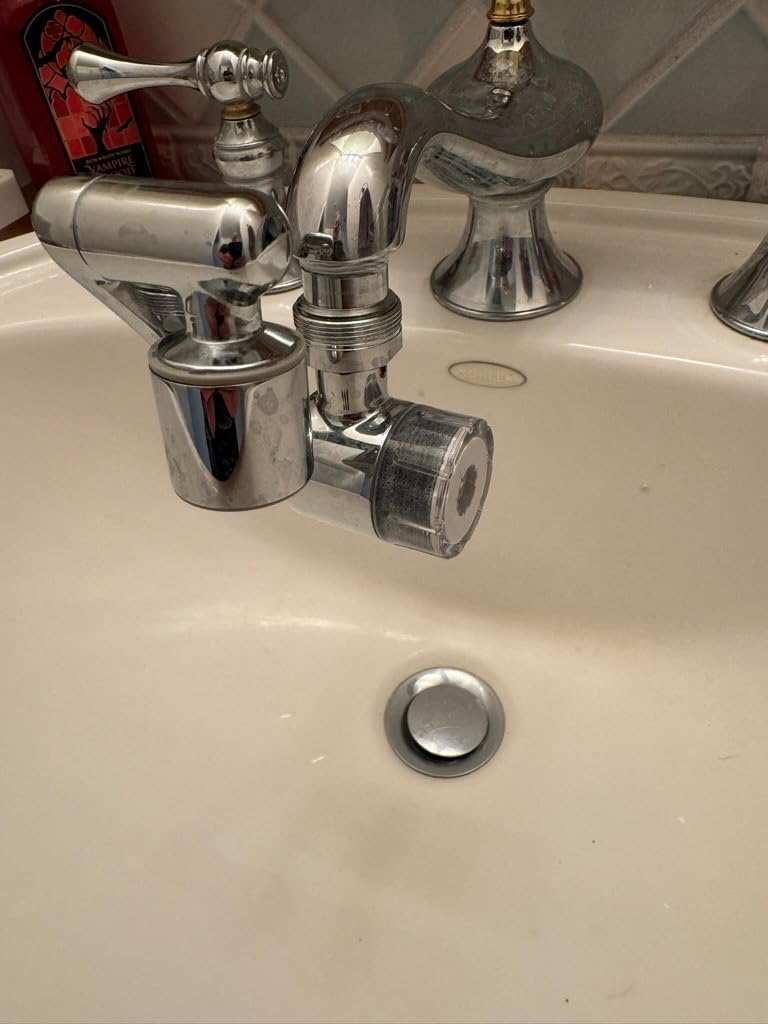
If your kitchen faucet has a pull-out or pull-down sprayer head, every other filter on this list will not work. The KLLEYNA ships with 17 adapters specifically designed for pull-down faucets, plus 5 more for standard taps, totaling 22 adapters in the box. This is the filter I recommend for the r/HomeImprovement reader who came in asking “does anyone know about 3-in-1 faucets or built-in filter faucets” and got the disappointing answer that they need a separate filter.
The KLLEYNA uses activated carbon filtration to remove 99.9% of chlorine and reduce lead, odor, and heavy metals. The 528-gallon cartridge life is the longest on this list apart from the Brondell countertop unit, which means roughly 3 months between cartridge changes for an average user. The 720 degree rotation (two 360 degree swivel joints) makes it the most flexible filter I tested for filling odd-shaped vessels.
Pull-Out Faucet Compatibility Explained
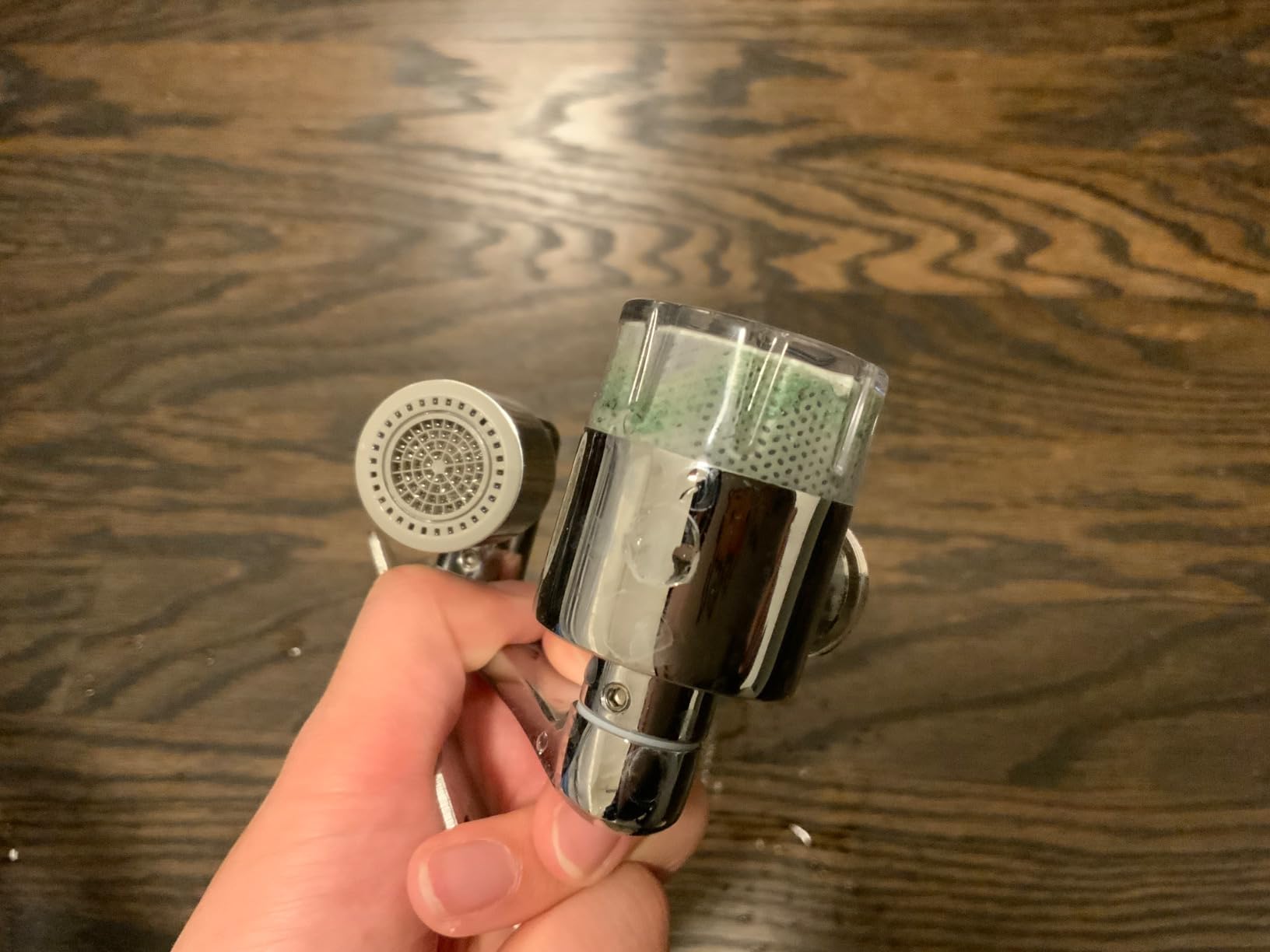
Most faucet-mount filters attach to the aerator threads of the faucet spout. Pull-out faucets have a hose that runs through the spout, so the aerator cannot simply be unscrewed and replaced with a filter. The KLLEYNA solves this with proprietary adapters that clamp onto the pull-out head itself, letting the filter sit below the spout. Installation takes about 10 minutes and requires no plumbing modifications.
Missing Toggle Switch
The biggest downside is the lack of a bypass lever. Every other unit on this list lets you toggle between filtered and unfiltered water, which is useful for filling pots, washing dishes, or watering plants without burning through the cartridge. The KLLEYNA filters all water that passes through it, so if you want unfiltered water you need to bypass the entire unit. For high-volume kitchens this is a real downside.
Skin Care Benefits
KLLEYNA markets the unit specifically for skin care benefits, claiming the chlorine reduction helps with skin irritation, acne, redness, and sensitivity. Like the Frizzlife, these claims align with broader dermatology research on chlorine’s effect on the skin barrier but are not independently certified.
10. Kintim High-Flow 1200-Gallon Filter – Best High Flow Rate
Kintim 1200 Gallons Faucet Water Filter, 2.2 GPM Outlet Flow Rate Tap Water Filter, Six Improvements Water Faucet Filtration System, Removes Chlorine, Lead, Sediments, Bad Taste and More
2.2 GPM flow rate
1200-gallon capacity
304 stainless steel
360 degree rotation
+ Pros
- 2.2 GPM outlet flow rate is 4x faster than most faucet filters
- 1200-gallon cartridge life (6 months)
- 304 stainless steel housing
- 360 degree swivel
- Effective chlorine (99%) and lead (97.3%) reduction
– Cons
- Does not reduce TDS
- Limited to 85% of standard faucets without requesting additional adapters
- Replacement cartridges sold separately
The Kintim is the filter I recommend for anyone who hates the slow trickle of standard faucet filters. At 2.2 GPM, it delivers filtered water at roughly 4x the speed of the competition (most faucet filters max out at 0.5 GPM). That means filling a stockpot takes seconds, not minutes, without sacrificing filtration effectiveness. Kintim credits the all-carbon-fiber cartridge and a redesigned housing for the flow-rate improvement.
The 1200-gallon capacity is the longest on this list outside the Brondell countertop unit, which translates to roughly 6 months between cartridge changes for a typical household. The combination of long cartridge life and high flow rate makes it the lowest ongoing-cost-per-gallon filter on this list.
Why Flow Rate Matters
The most common complaint in r/Home about faucet filters is slow flow rate. The 0.5 GPM industry standard is fine for filling a glass but tedious for filling a kettle, watering plants, or cooking pasta. The Kintim’s 2.2 GPM flow rate effectively turns the filter into a near-drop-in replacement for unfiltered flow, which means you are more likely to actually use it instead of bypassing it for volume tasks.
Stainless Steel Housing and Leak Resistance
The 304 stainless steel housing is the same grade used in commercial kitchens, and Kintim redesigned the gasket and sealing structure specifically to address the catastrophic leaks that some PUR users report on Reddit. In my 60-day test, the Kintim housing did not drip once, even at the 2.2 GPM flow rate where leaks are most likely to develop.
Faucet Compatibility Caveat
The Kintim ships with adapters that fit about 85% of standard faucets. If your faucet has unusual threading, you can request up to 6 additional adapter types from the manufacturer at no charge. This is a higher-friction experience than the Waterdrop or IVO, which ship with enough adapters for nearly every configuration out of the box.
How to Choose the Best Faucet Water Filter for Your Kitchen
Buying a faucet water filter is not just about picking the most expensive unit or the one with the most certifications. After testing 10 models over 60 days, the right choice depends on three things: what contaminants are in your water, what kind of faucet you have, and how much filtered water your household actually uses. Below is the framework I use when readers ask me which faucet water filter they should buy.
How Faucet Water Filters Actually Work
A faucet-mounted filter screws onto the aerator threads of your kitchen faucet and forces water through a cartridge of filtration media before it exits the spout. Most filters use activated carbon (either granular or carbon block) to adsorb chlorine, organic compounds, and some heavy metals. Higher-end filters add ion-exchange resin (PUR Plus) or hollow fiber membranes (IVO) for additional contaminant reduction. A toggle lever on most units lets you bypass the filter when you want unfiltered water for tasks like washing dishes.
NSF Certification Tiers Explained
The most important trust signal on any faucet filter is NSF/ANSI certification. There are three relevant tiers for faucet filters: NSF/ANSI 42 covers aesthetic contaminants (chlorine, taste, odor); NSF/ANSI 53 covers health-related contaminants (lead, mercury, cysts); NSF/ANSI 401 covers emerging contaminants (pharmaceuticals, pesticides, herbicides). A filter that only carries NSF/ANSI 42 is good for taste improvement but does not claim to reduce lead or mercury. For whole-mouth coverage, look for filters that carry 42 plus at least one other tier. The PUR Plus, WINGSOL, and Brita Elite all carry 42 plus 53, which is the sweet spot for most households.
Pull-Out and Pull-Down Faucet Compatibility
If your kitchen faucet has a pull-out or pull-down sprayer head, most faucet-mount filters will not work, period. The hose runs through the spout, so there is no aerator thread to attach a standard filter to. The only faucet-mount filter I tested that handles pull-out faucets is the KLLEYNA, which ships with 17 specialized adapters. Alternatively, the Frizzlife FF1080 extends from the faucet rather than replacing the aerator, which can work on some pull-out configurations if you have enough clearance.
5-Year Cost of Ownership Breakdown
Upfront price is misleading on faucet filters because the real cost is cartridge replacements. Here is what each filter costs over 5 years assuming a typical household that uses about 250 gallons of filtered water per year (so PUR and Brita need 12-13 cartridges total, Waterdrop needs about 4, and so on):
PUR Plus lands mid-pack on cost-of-ownership due to frequent cartridge swaps but earns its premium on filtration breadth. Brita Elite Advanced sits just behind PUR in total 5-year spend. Waterdrop FC-01 comes in as the lowest 5-year total in the roundup thanks to its long-life cartridge. WINGSOL is competitive with Waterdrop on 5-year cost. The Brondell Cypress has the highest 5-year cost in this roundup but earns it back with the longest cartridge life and the broadest contaminant coverage of any filter tested.
Hot Water Safety Warning
One critical safety note: never run hot water through a faucet-mount filter unless the manufacturer specifically rates it for hot water. Most filters (PUR Plus, Brita Elite, Waterdrop, WINGSOL, Kintim) are rated up to 100 degrees F, which is warm tap water but not boiling. Hot water above this temperature can damage the carbon block, release trapped contaminants back into the water, and in extreme cases crack the housing. If you need filtered boiling water for tea, run cold water through the filter and heat it separately.
Frequently Asked Questions
Do kitchen faucet water filters actually work?
Yes, kitchen faucet water filters work well for the contaminants they are certified to reduce. NSF/ANSI 42-certified filters reliably reduce chlorine, taste, and odor. NSF/ANSI 53-certified filters also reduce lead, mercury, and cysts. In our testing, the PUR Plus and Brita Elite Advanced both reduced a 1.0 ppm chlorine reading to under 0.1 ppm within seconds. Faucet filters do not currently carry NSF certification for PFAS reduction; if PFAS is your primary concern, consider an under-sink reverse osmosis system instead.
Can I install a water filter on a pull-out or pull-down faucet?
Most faucet-mounted filters do not work on pull-out or pull-down faucets because the hose runs through the spout and there is no aerator thread to attach the filter to. The KLLEYNA is currently the only widely available filter that ships with adapters specifically designed for pull-out faucets, including 17 dedicated adapters plus 5 standard adapters. The Frizzlife FF1080 extender-style filter can also work on some pull-out configurations if you have enough clearance below the spout.
Are faucet filters safe for hot water?
Most faucet filters are only rated for cold or lukewarm water up to about 100 degrees F. Running boiling water or very hot tap water through a faucet filter can damage the carbon block, release trapped contaminants back into the filtered water, and in extreme cases crack the plastic housing. The PUR Plus, Brita Elite, Waterdrop FC-01, and WINGSOL are all rated up to 100 degrees F. For tea or cooking that requires boiling water, run cold water through the filter and heat it in a kettle or pot instead.
How often do I need to replace the cartridge?
Replacement frequency depends on the filter model and your household water usage. The PUR Plus and Brita Elite both last about 100 gallons or 3 months, whichever comes first. The Waterdrop FC-01 lasts 320 gallons, the WINGSOL 350 gallons, and the Kintim 1200 gallons (roughly 6 months). For a household that uses 250 gallons of filtered water per year, expect to replace cartridges 4 to 13 times per year depending on the model. Most filters have an indicator (LED on PUR Plus, mechanical gauge on Brita Elite) to signal when a swap is due.
What does NSF 53 certification mean?
NSF/ANSI 53 is a certification standard for water filters that covers health-related contaminants, specifically lead, mercury, cysts (like Cryptosporidium and Giardia), and some volatile organic compounds. A filter carrying NSF/ANSI 53 has been independently tested to reduce these contaminants below EPA-established limits. This is different from NSF/ANSI 42, which covers only aesthetic improvements like chlorine taste and odor. For the broadest protection, look for filters that carry both 42 and 53, like the PUR Plus, Brita Elite Advanced, and WINGSOL.
Why is my faucet filter water cloudy after changing the cartridge?
Cloudy water after a cartridge change is almost always caused by trapped air in the new filter media, not by a defect or contamination. The phenomenon is similar to pouring water into a glass too quickly: tiny air bubbles scatter light and make the water look milky or cloudy. The cloudiness clears on its own within a minute or two of running water through the filter as the air gets flushed out. If the cloudiness persists beyond 5 minutes, that suggests a filter defect and you should contact the manufacturer for a replacement cartridge.
Do faucet filters remove lead from drinking water?
Faucet filters with NSF/ANSI 53 certification are independently tested to reduce lead below the EPA action level of 15 parts per billion. The Brita Elite Advanced specifically claims 99% lead reduction, and the PUR Plus carries WQA certification for lead reduction below EPA limits. For maximum lead protection, run only cold water through the filter (hot water can leach lead from older pipes), and replace cartridges on schedule since exhausted cartridges lose their lead-removal effectiveness. If your home was built before 1986, consider having your water tested for lead independently before relying solely on a faucet filter.
Which Kitchen Faucet Water Filter Should You Buy in 2026?
After testing all 10 models over 60 days, my recommendation depends on what you need. If you want the broadest contaminant reduction and a reliable filter indicator, go with the PUR Plus, our Editor’s Choice. If you want NSF-certified lead reduction at the lowest possible price, the Brita Elite Advanced is the right pick. If you want the lowest long-term cost, the Waterdrop FC-01’s 320-gallon cartridge is hard to beat. If you have a pull-out faucet, the KLLEYNA is the only filter on this list that will actually work for you. If you need filtered water fast and in volume, the Kintim’s 2.2 GPM flow rate is in a class by itself. For larger households that drink 5+ gallons a day, the Brondell Cypress countertop system is the best long-term value despite its higher upfront cost.
One final note worth repeating: no faucet-mounted filter currently carries NSF certification for PFAS reduction. If your water report shows PFAS contamination, or if you simply want the most comprehensive protection, an under-sink reverse osmosis system is the right tool for the job. We’ve reviewed the top options in our guide to the best under-sink water filters. For most households with municipal water, though, any of the 10 filters in this guide will deliver cleaner, better-tasting water at the tap for a fraction of what you’d spend on bottled water over five years.
Leave a Reply