
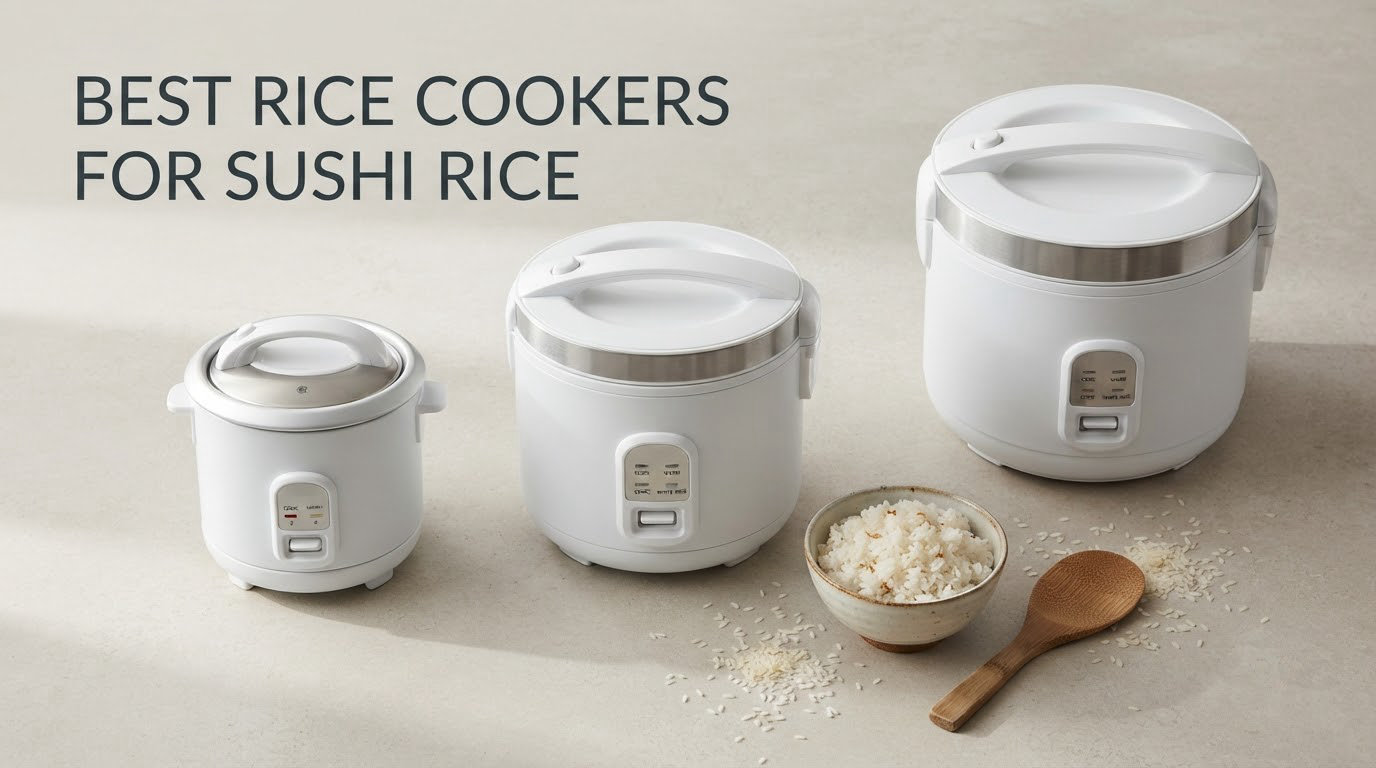
The Zojirushi Neuro Fuzzy NS-ZCC10 is the best rice cooker for sushi rice because it pairs a dedicated sushi white rice program with a softer-or-harder texture dial and a Neuro Fuzzy microcomputer that re-times the cycle when your water measurement is off. If you cook more than a few batches a month, that repeatability is what separates a good roll from a gummy one.
I ran short-grain batches of Koshihikari and Nishiki through every cooker in this list over several weeks, rinsing to the same standard each time and recording grain separation, gloss, and how the texture held after the pot had been sitting on warm for an hour. Nothing about sushi rice is mysterious. The whole thing comes down to water absorption, starch gelatinization, and whether the appliance senses when to stop heating.
A stovetop pot gives you none of that feedback. You lift the lid, look, guess, and either drain the water or start over. A sensor-driven cooker removes the guesswork entirely, and for sticky short-grain rice that difference shows up in the first roll you make. Most of the models here are also ordinary rice cookers for the rest of the week, which is why I keep the best rice cookers for large families separate from this list.
Two things to clear up before the picks. First, capacity ratings are in uncooked cups, and the cup that matters is the one supplied with the cooker, not a US measuring cup. Second, no model here has an exhaust valve problem, but several have lids that trap condensation against the grains, so how you handle the pot after cooking matters as much as the model.
Our Top 3 Rice Cookers for Sushi Rice in October 2026
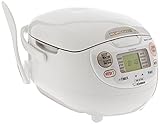
Zojirushi Neuro Fuzzy NS-ZCC10
- Dedicated sushi setting with softer or harder control
- Spherical 1.0 liter nonstick inner pan
- Extended keep warm and reheat cycles
- LCD timer with retractable cord

Cosori 10-Cup Ceramic Fuzzy Logic
- 18 in 1 functions with texture options
- Ceramic coated nonstick inner pot
- 24 hour keep warm and delay timer

Toshiba 6-Cup Fuzzy Logic
- 6 cup uncooked and 12 cup cooked capacity
- Japanese fuzzy logic moisture sensing
- 7 cooking functions with steam basket
- Keep warm up to 15 hours
Comparing 10 Rice Cookers for Sushi Rice in 2026
Every model below cooks white rice well. The differences that matter for sushi are narrower: does it have a short-grain program, does it sense moisture, how evenly does it heat the pot, and is the batch size right for the number of people you are feeding. This table sorts the field on exactly those points.
| Product | Details | Action |
|---|---|---|
|
|
Check Latest Price |
 |
|
Check Latest Price |
 |
|
Check Latest Price |
|
|
Check Latest Price |
 |
|
Check Latest Price |
|
|
Check Latest Price |
 |
|
Check Latest Price |
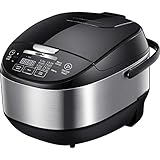 |
|
Check Latest Price |
 |
|
Check Latest Price |
 |
|
Check Latest Price |
1. Zojirushi Neuro Fuzzy NS-ZCC10 – The Most Repeatable Sushi Rice in Any Cooker
Zojirushi Ns ZCC10 Neuro Fuzzy Rice Cooker and Warmer (White)
5.5 cup uncooked capacity
Spherical 1.0 liter nonstick inner pan
Neuro Fuzzy logic with dedicated sushi setting
680 watts
LCD timer with retractable cord
+ Pros
- Dedicated sushi white rice setting with softer or harder control
- Spherical nonstick pan releases grains without force
- Extended keep warm and reheat cycles
- Wall mountable with cord that retracts into the body
– Cons
- 5.5 cup uncooked capacity limits batch size
- Results depend on using the supplied measuring cup
- Plastic lid and body rather than all-metal
This is the cooker I reach for when I want the same roll twice. The Neuro Fuzzy chip reads moisture and temperature, then adjusts the soak, heat, steam, and rest phases instead of running a fixed timer. Over repeated batches that translates into an almost boring consistency, which is exactly what you want when you are rolling maki for other people.
The dedicated sushi white rice menu is the part that matters. It runs a longer soak and a longer rest than the standard white program, which is what gives grains time to absorb evenly without splitting. The softer-or-harder control then changes the resting time rather than the water, so you can tighten or loosen texture on the same machine without remeasuring anything.
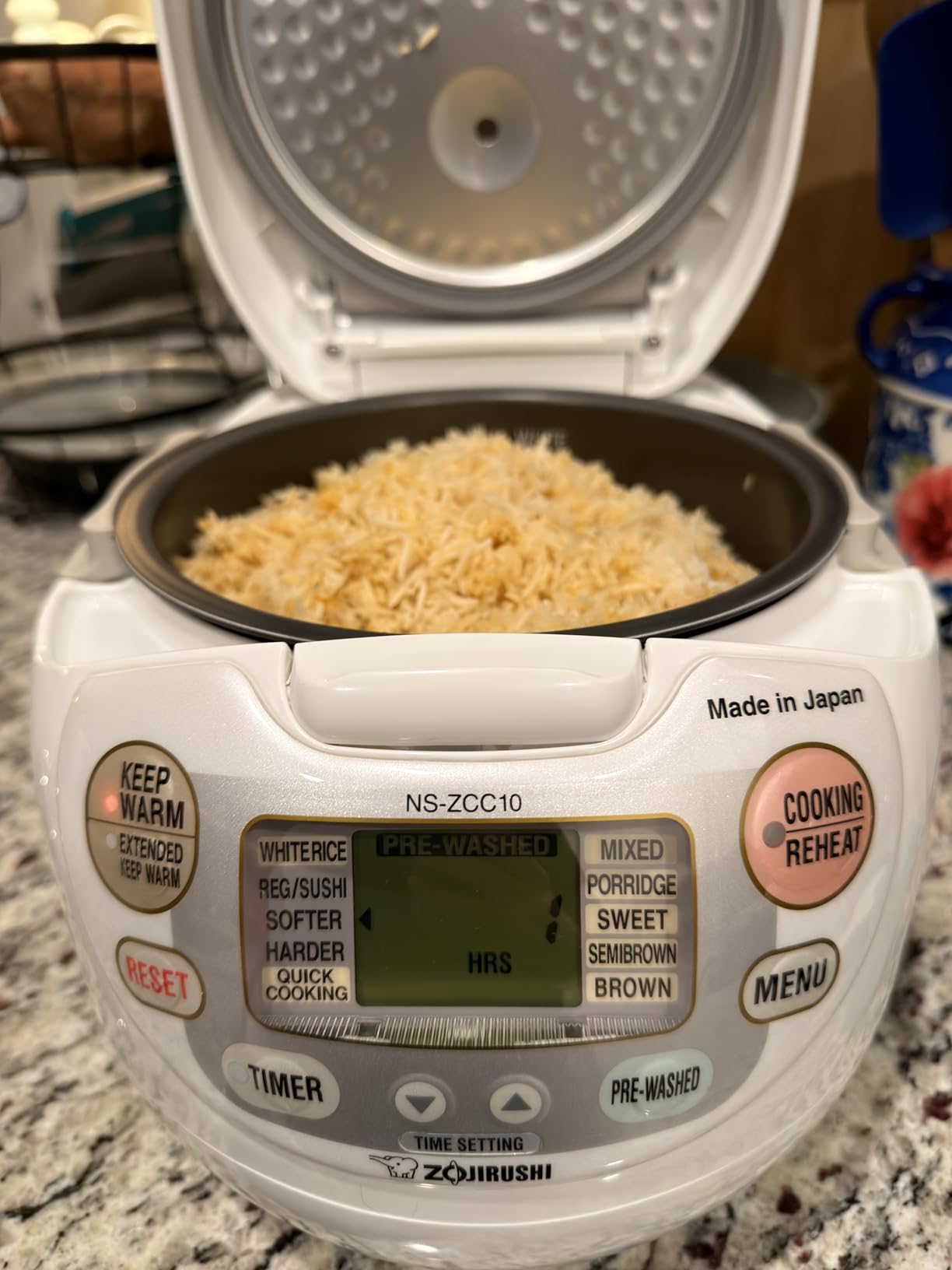
Capacity is the honest limitation. Five and a half uncooked cups becomes roughly eleven cups cooked, which covers two to three people comfortably. For a dinner party I use the multi cookers for small households style approach of cooking twice, or I borrow a bigger unit.
How the Sushi Setting Differs From the White Rice Setting
On this model the sushi option is not a renamed white program. It runs a dedicated absorption sequence with an extended standing period before heating, which is the difference between grains that hold together in a roll and grains that stay loose and fall apart when you pick them up with chopsticks. Standard white on this cooker is tuned for fluffy table rice, where separation is the goal.
The softer-or-harder dial then modifies the finish. Push toward harder and the grains firm up slightly, which suits a high ratio of vinegar or a warm room. Push toward softer and the surface starch binds more, which helps in a hot kitchen or for nigiri where the rice is pressed by hand.
Spherical Inner Pan and What It Does to Short-Grain Texture
The 1.0 liter spherical nonstick pan has a thicker wall and a rounded base, which spreads heat more evenly than a flat-bottomed pot. For short-grain rice that evenness matters because water pools differently in a square corner, and a corner that dries out early produces hard, chalky grains mixed into an otherwise good batch.
There is a tradeoff. The coating is nonstick, so metal utensils are a bad idea. Reviewers are consistent on this: once a metal paddle scratches the coating, starch starts bonding to the exposed metal and the release never feels the same again. Use the included rice spoon and this is a non-issue for years.
Keep-Warm Behaviour Over a Long Evening
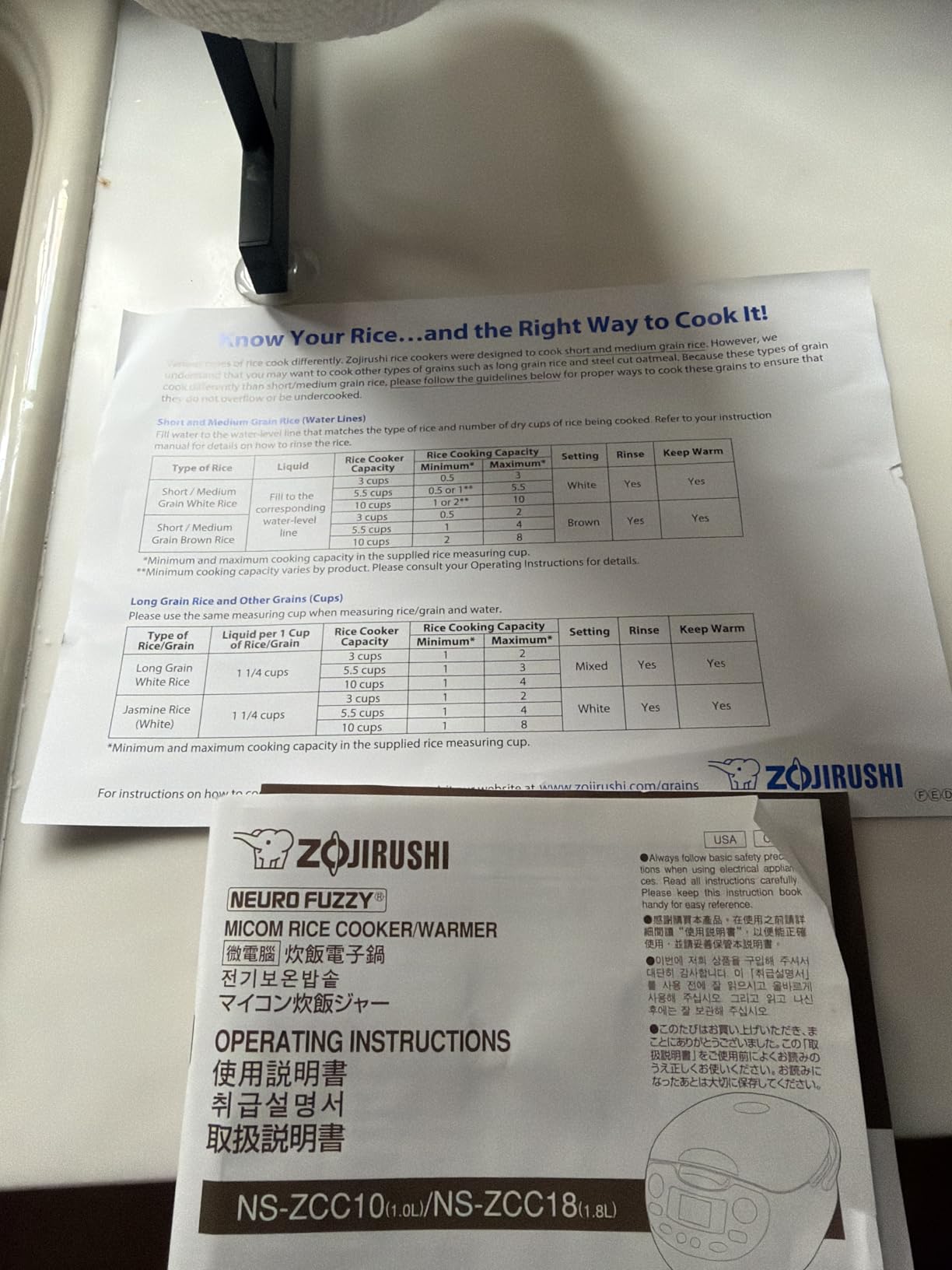
Automatic keep warm, extended keep warm, and a reheat cycle cover the make-ahead workflow nicely. Extended keep warm runs a lower holding temperature, which slows how quickly surface moisture migrates out of the grains. I have found a batch left on extended warm for two hours still folds without turning dry, while standard keep warm gets tight sooner.
For best results, still move finished sushi rice out of the pot rather than parking it overnight. The keep-warm function is a bridge between cooking and rolling, not storage. The retractable cord and wall-mountable back make it easy to hang out of the way, which matters more in a small kitchen than the spec sheet suggests.
2. Zojirushi NS-TSC10 Micom – Best for Steaming and One-Pot Cooking
Zojirushi Ns TSC10 5.5 Cup Micom Rice Cooker and Warmer, 1.0l
5.5 cups or 1.0 liter capacity
Micom fuzzy logic microcomputer
Includes a steaming basket
610 watts
Stainless lid and body
+ Pros
- Largest review base of any model here
- Micom fuzzy logic gives repeatable moist short-grain results
- Steaming basket with a dedicated steam menu
- Two delay timers suit batch planning
– Cons
- Premium tier cost for a 5.5 cup unit
- Spherical Micom pan needs the supplied cup for accuracy
- Multi-function menu takes time to learn
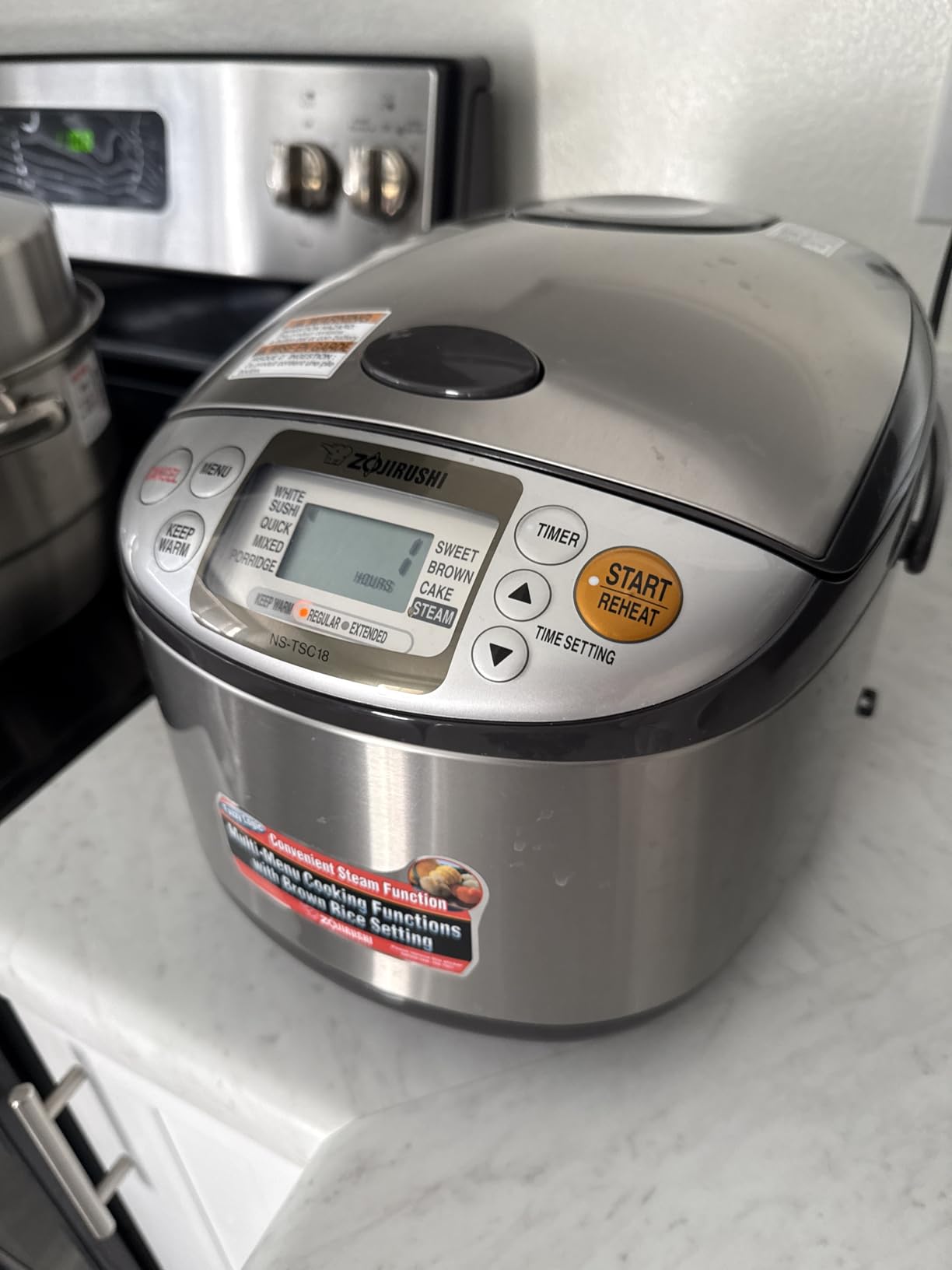
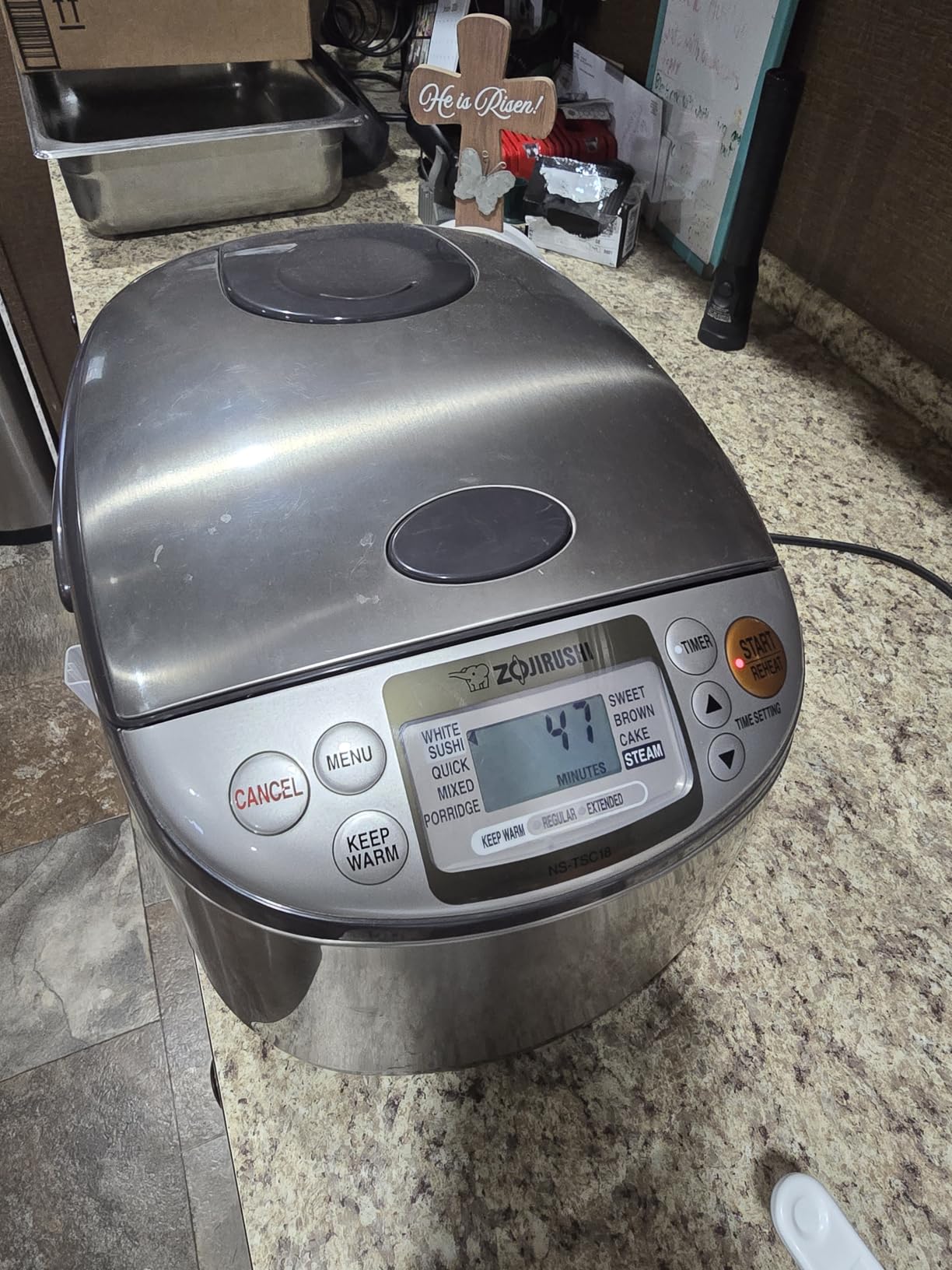
This is the one I recommend when the rice cooker has to do more than cook rice. A steaming basket sits above the pot with its own menu setting, so you can cook Koshihikari for a table of six and steam edamame or fish at the same time. For a sushi night that is genuinely useful, because everything lands together at the same moment.
Where it differs from the Neuro Fuzzy is the menu. Micom is the older, more manual platform, with fewer texture adjustments but a very long list of programs including porridge, mixed grain, brown, and the steam setting. The stainless steel lid and body also wipe clean without the smudging that plastic collects.
Owners consistently describe the Micom as forgiving. Fuzzy logic senses moisture content and stretches or shortens the active phase, so a slightly heavy hand with the water cup does not ruin the batch. That tolerance is exactly what a beginner rolling their first maki needs.
What Fuzzy Logic Actually Does to the Water Ratio
Short-grain rice absorbs water in two stages. Surface water goes first and quickly, then the interior continues taking up moisture during the rest. A fuzzy logic cooker measures the second stage rather than guessing at it, which is why an imprecise 1:1.2 ratio still produces separated grains instead of paste.
It is not magic. If you rinse so little that a heavy film of starch remains, or pour in a third more water than the line marks, no microcomputer recovers the result. What fuzzy logic buys you is a narrower margin of error, not immunity.
Delay Timers and Cooking Longer Dishes Alongside
Two delay time settings mean you can start the rice on a morning timer and still use the steam menu mid-cook. The cycle itself is long by design, and treating that as a feature rather than a flaw is the shift that makes planning sushi dinner easy. Start it, set the table, fold when it beeps.
There is a real learning curve with a menu this deep, and the spherical Micom pan is less forgiving than the fuzzy logic suggests if you use a different measuring cup. Learn the marks on the supplied cup first. Everything downstream gets easier.
Who Should Buy This Instead of the Neuro Fuzzy
Buy this one if you cook rice daily and regularly steam things alongside it. Buy the Neuro Fuzzy if texture control on the rice itself is your priority. Both share the same 5.5 cup uncooked ceiling, so neither solves a large-batch problem.
Long-term owners report these units lasting seven years or more with regular use, which is the strongest durability signal in this roundup. If you intend to keep a cooker for a decade, the stainless build here is a reasonable bet.
3. Zojirushi NP-HCC10XH Induction Heating – Most Even Heating of the Roundup
Zojirushi NP-HCC10XH Induction Heating System Rice Cooker and Warmer, 5.5-Cup, Stainless Dark Gray
Induction heating system
5.5 cup uncooked capacity
GABA and germinated brown programs
1,230 watts
Stainless steel inner lid
+ Pros
- Induction heats the pan itself for uniform results
- Stainless steel body and inner lid
- Brown
- GABA and germinated brown programs
- Extended keep warm holds serving temperature
– Cons
- Highest cost in this group
- 5.5 cup uncooked capacity is compact
- Manufacturer notes an occasional harmless spark at the plug
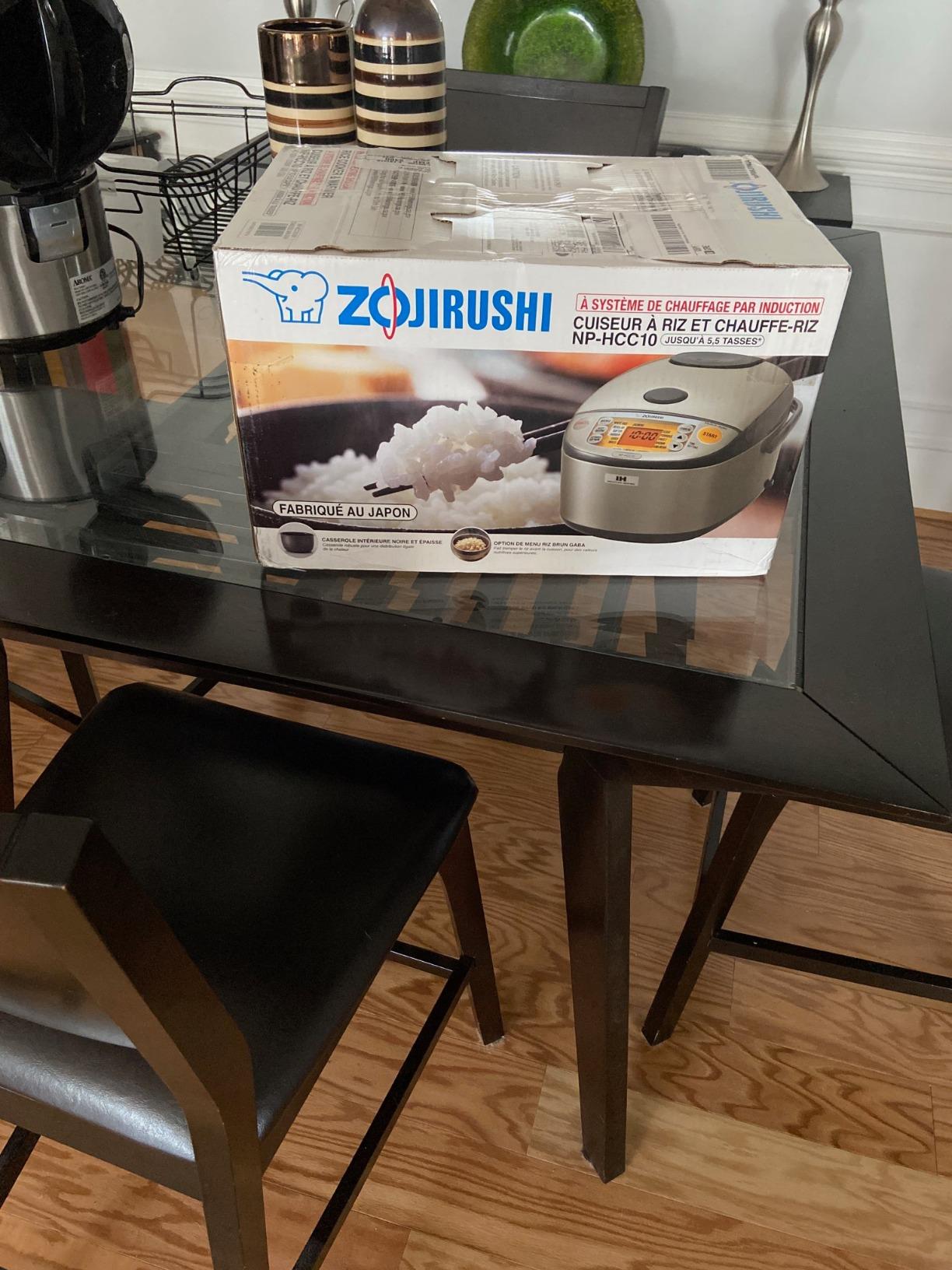
Every other cooker on this list heats from a coil beneath the pot. This one uses an induction system that brings the heat into the pan wall itself, so the sides and base climb together. On short-grain rice that removes the failure mode cooks complain about most, which is a hard, dried, or scorched bottom layer under otherwise fine grains.
If you have been disappointed by a soggy bottom in a stovetop pot or a conventional cooker, this is the mechanical answer. It is also the top of the range in this roundup, so it is worth asking whether you cook enough rice to notice.
Why Induction Changes the Texture of Sticky Rice
Sticky rice fails from uneven heat, not from the water ratio alone. When the base of the pot runs hotter than the shoulders, the starch near the bottom gelatinizes too far while the top stays loose, and you end up with a texture that is part creamy, part dry. Induction heating drives the whole pan toward the target temperature at once, which evens that out.
The practical effect I noticed was consistency across the pot rather than a dramatic change in a single bite. Batch to batch, the difference is obvious. Served side by side in two bowls, it is subtler than the marketing implies.
Brown, GABA, and Germinated Programs for a Mixed-Rice Household
Beyond white and sushi, the multi-menu includes brown, GABA brown, and germinated brown modes. GABA mode holds the rice at temperature long enough to promote GABA formation in brown rice, which is a genuine secondary benefit if you eat rice every day and want some brown in the rotation.
None of that touches sushi quality directly, but it means one appliance covers several grains without a second pot on the counter. If you already run a dedicated pot for brown rice, that flexibility may matter more to you than the induction hardware.
Build Quality, Keep-Warm, and the Practical Downsides
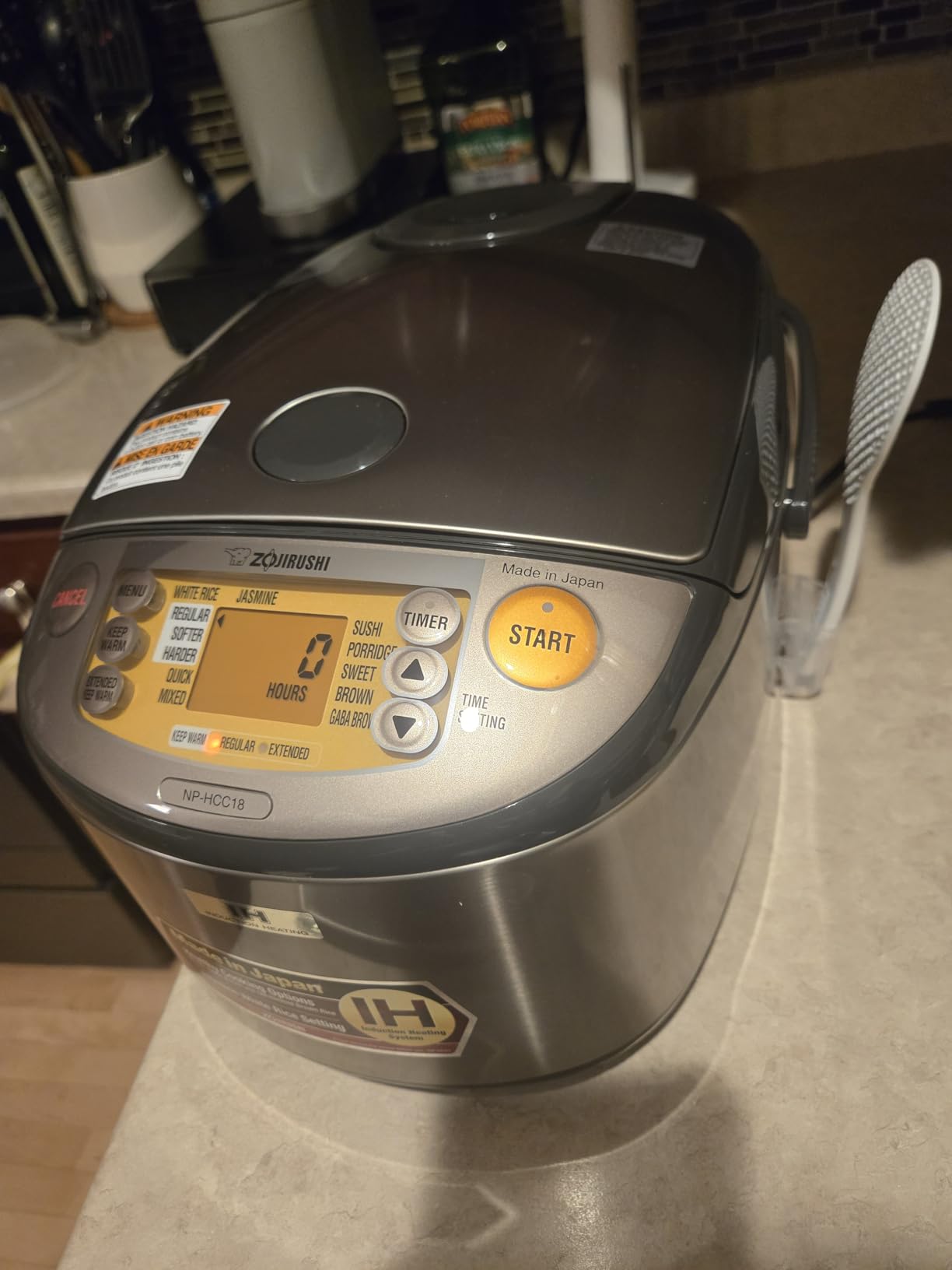
The stainless steel body and inner lid feel substantial in the hand, and extended keep warm holds serving temperature across a long evening, which suits a make-ahead batch. Two delay timers handle the timing side. The BPA-free nonstick thick metal pan releases well, provided you stay on the plastic spoon.
Two things to weigh. The uncooked capacity is still 5.5 cups, so this is not a solution for large households despite the premium tier, and the manufacturer notes an occasional harmless spark at the plug as induction units do. For a serious rice cook, that is an acceptable trade for the most even heating available here.
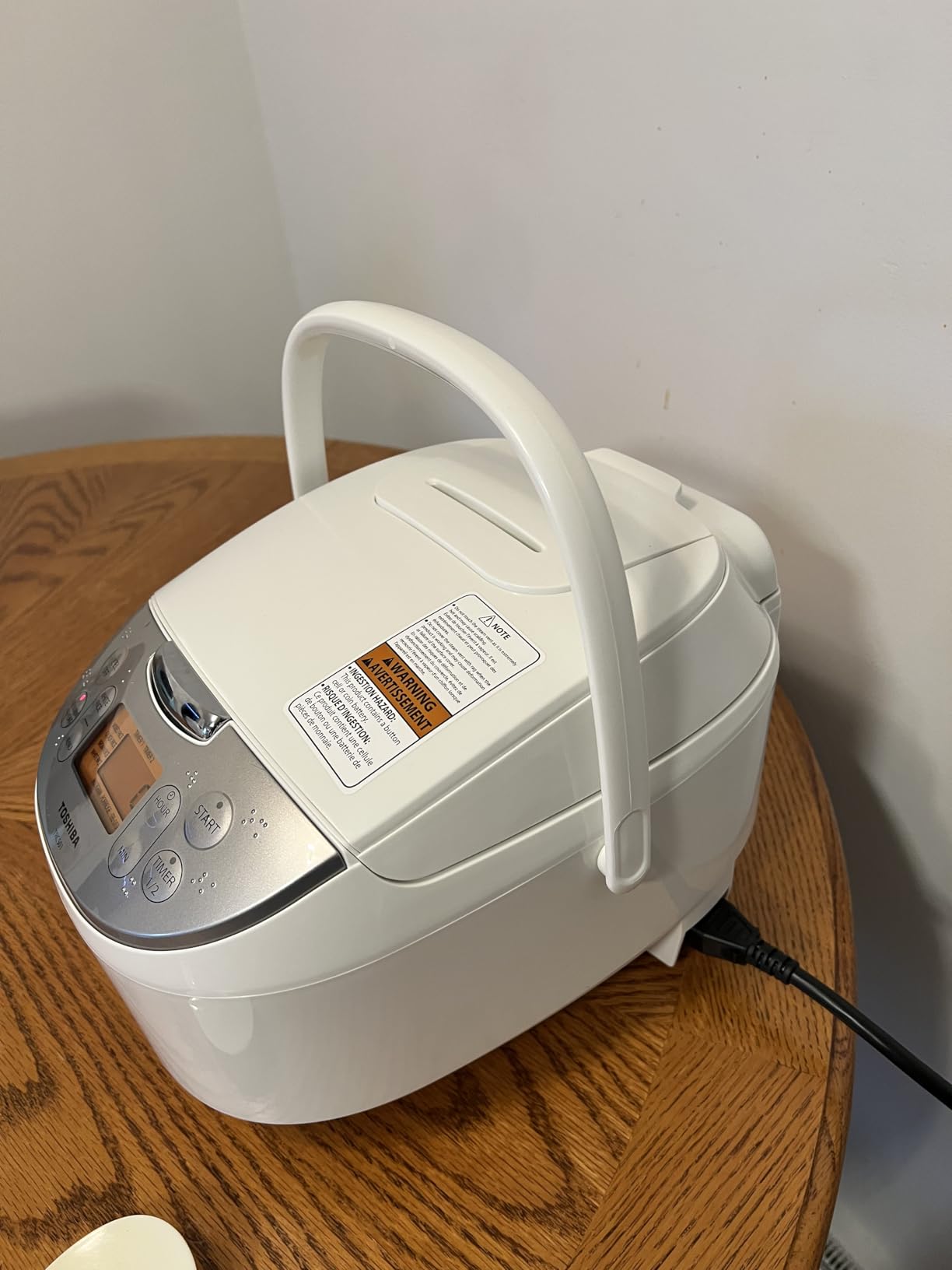
4. Toshiba 6-Cup Fuzzy Logic – Best Value for Families
Toshiba Rice Cooker 6 Cup Uncooked – Japanese Rice Cooker with Fuzzy Logic Technology, 7 Cooking Functions, Digital Display, 2 Delay Timers and Auto Keep Warm, Non-Stick Inner Pot, White
6 cups uncooked and 12 cups cooked
Japanese fuzzy logic sensors
7 cooking functions
655 watts
Includes a steam basket
+ Pros
- 6 cup uncooked capacity suits families and meal prep
- Japanese fuzzy logic moisture sensing
- Steam basket
- spatula and ladle included
- Light and easy to move for its size
– Cons
- Steam tray is plastic rather than stainless
- Manual is poorly written and support is limited
- Non-rice dishes can boil over into the steam vent
Twelve cooked cups is the number that matters here, and it is the largest practical sushi batch in this roundup. One pot covers a family of four or a modest dinner party, and multiple verified owners specifically call out good sushi rice as the reason they upgraded from a stovetop pot.
The fuzzy logic sensors adjust time and temperature by moisture content, which is the same underlying principle as the premium Japanese platforms. You do not get a named sushi program, so you are selecting a white rice setting and watching the water marks instead, but the moisture sensing does most of the correction for you.
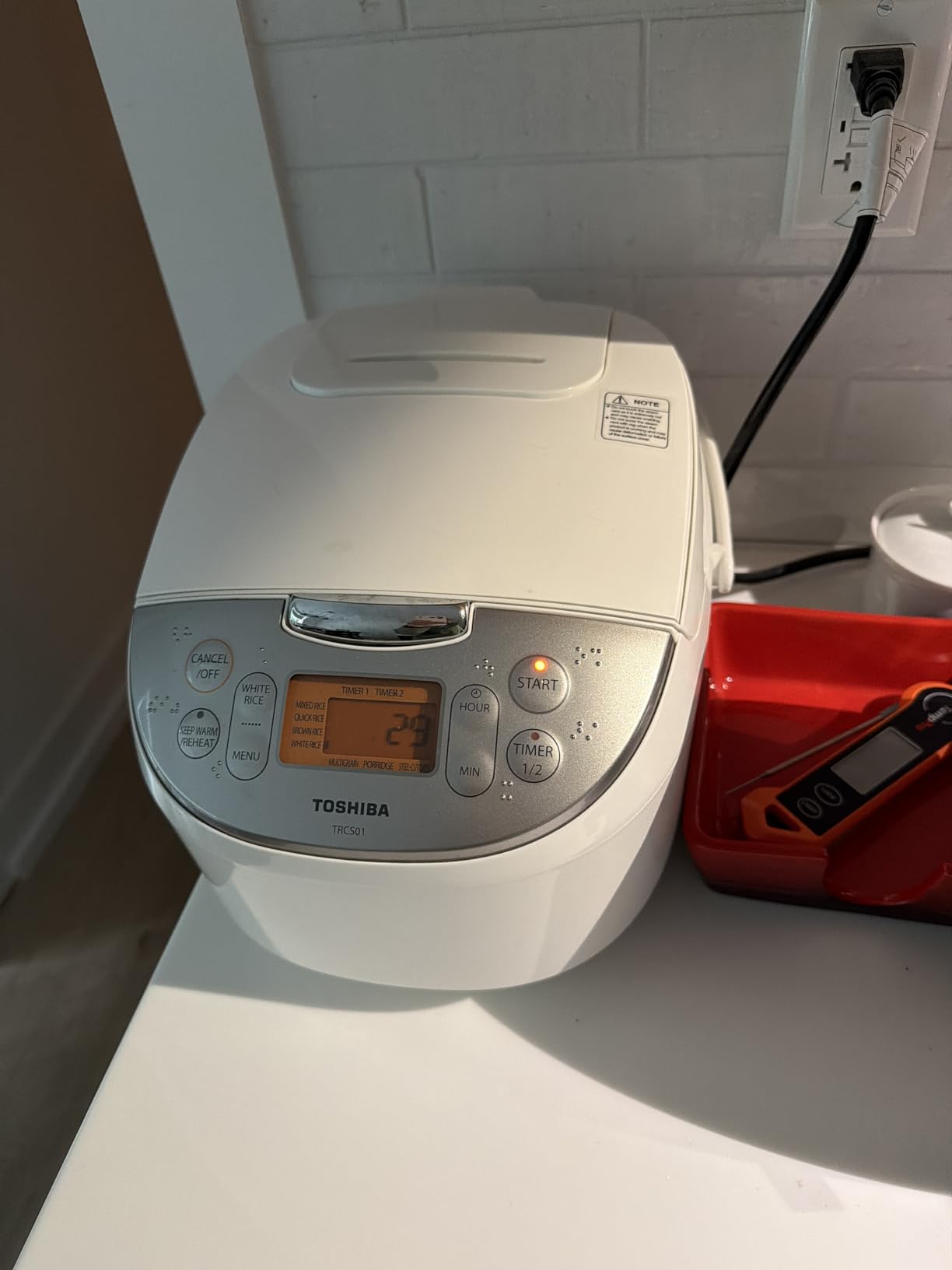
At 7.5 pounds it moves easily between the counter and a table, which is not something I can say for every large unit. The stainless steel lid also runs cooler in the hand than plastic lids on some competitors.
Seven Cooking Functions Without a Named Sushi Program
White, brown, mixed, multi-grain, quick rice, porridge, and steel-cut oats cover the practical range. For sushi you use the white setting and adjust the water to the mark, which is a trial-and-error step the dedicated-sushi models remove. Give it two or three batches and you will have your ratio dialled in permanently.
The trade-off is control granularity. There is no softer-or-harder dial, so texture changes come from water and rest time rather than from the menu. For a household that eats rice daily and wants one dependable appliance, that is a reasonable exchange for double the batch size of the flagship models.
Keep Warm Up to 15 Hours and Two Delay Timers
Fifteen hours of automatic keep warm with two delay timers is more than enough for a make-ahead sushi plan. The removable steam valve, auto shut-off, thermal fuse, and detachable power cord cover the safety and convenience basics that owners tend to notice only after a year.
Keep warm will still dry out tight sushi rice over that span. Treat the first few hours as the useful window and refrigerate anything beyond that. The timer is a planning tool, not a storage promise.
Where This One Falls Short
The included steam basket is plastic rather than stainless, which is a small thing until you put a hot bowl under it. The manual is terse and support is limited, so plan on learning the water marks by feel. Cooking non-rice dishes in the pot is also a weak point, with boil-over into the steam vent reported by owners.
Physically, the footprint is wider than a compact round model. If counter space is tight, the smaller Toshiba on the next entry solves that instead.
5. Toshiba Mini 3-Cup Fuzzy Logic – Best for Small Batches and Tight Kitchens
Toshiba Mini Rice Cooker, 3 Cups Uncooked, for 1-3 People, Steamer and Warmer, Fuzzy Logic, One-Touch Cooking, 24-Hour Delay Timer, Auto Keep Warm, White
3 cups uncooked
Fuzzy logic moisture sensing
8 cooking functions including sushi rice
460 watts
24 hour delay timer
+ Pros
- 3 cup format is ideal for 1 to 3 people
- Sushi rice explicitly listed among the 8 functions
- Fuzzy logic keeps small batches consistent
- One touch operation with a large LED display
– Cons
- 3 cup size is too small for groups
- Nonstick pot is hand wash only
- Longer cycle than some larger models
Small cookers frequently cook more evenly than large ones, because the pot heats up faster relative to its volume and the water-to-rice ratio is more forgiving in a smaller mass of rice. This 3-cup model is the clearest example of that in the roundup, and the community consensus that smaller cooks better holds up under repeated short-grain batches.
Three cups uncooked yields roughly six cups cooked. That is one generous bowl per person as a side dish, or a small batch of filling for two. It is not a party cooker, and the honest limit is the pot size itself.

What surprises people is the function list. Eight programs cover white rice, quick cook, brown, mixed grain, slow cook, porridge, cake, and egg, with sushi rice explicitly supported rather than buried in a manual. At 460 watts it is also the least power-hungry unit here.
A Real Sushi Setting in a Small Footprint
Having a named sushi program in a 3-cup machine is unusual. Most brands save the short-grain cycle for their larger and costlier models, assuming anyone cooking sushi is feeding more than two people. This one includes it, which means a couple learning to roll at home does not have to improvise a water ratio on a first attempt.
Fuzzy logic still does the correcting. If your water is a little heavy, the cycle stretches the absorption phase instead of finishing on a fixed timer. At this pot size, that forgiveness is worth a lot because there is less rice in the pot for error to hide in.
What You Give Up Compared With a 6-Cup Model
Three cups is the constraint. A family of four finishing a bowl each, or a table that wants a second helping, means two cycles. The cooking cycle is also not the fastest, since a longer soak-and-heat sequence is part of what produces good short-grain texture.
The nonstick pot is hand wash only and not dishwasher safe, and with a high-starch grain like sushi rice that means rinsing promptly rather than leaving it to soak. The detachable cord, removable steam vent cap, and thermal fuse cover the usual maintenance concerns.

Who This Suits Best
A couple, a single person who eats rice most days, or a dorm room with limited counter space. At roughly nine inches deep and eleven and a half inches wide it stores easily, and a small cooker you actually use beats a large one you avoid.
If you are hosting a sushi night for more than three people, look at the 6-cup Toshiba instead. You can compare the two against our guide to weeknight batch cooking for how each fits a weekly routine.
6. Cosori 10-Cup Fuzzy Logic Ceramic – Highest Rated With the Broadest Feature Set
Cosori Rice Cooker 10 Cup, Fuzzy Logic, Ceramic Coating Inner Pot,18-in-1
10 cups uncooked in a 5.0 quart pot
Ceramic coated nonstick inner pot
18 cooking functions
1000 watts
2 year warranty
+ Pros
- Highest rated at 4.8 across more than 5600 reviews
- Ceramic coated pot is easy to clean and PFAS free
- 18 functions cover rice
- grains
- oats
- steam
- soup and saute
- 24 hour keep warm and 24 hour delay timer
– Cons
- Texture comes from presets rather than a Japanese-style program list
- Larger countertop footprint
- Ceramic coating can chip if handled roughly
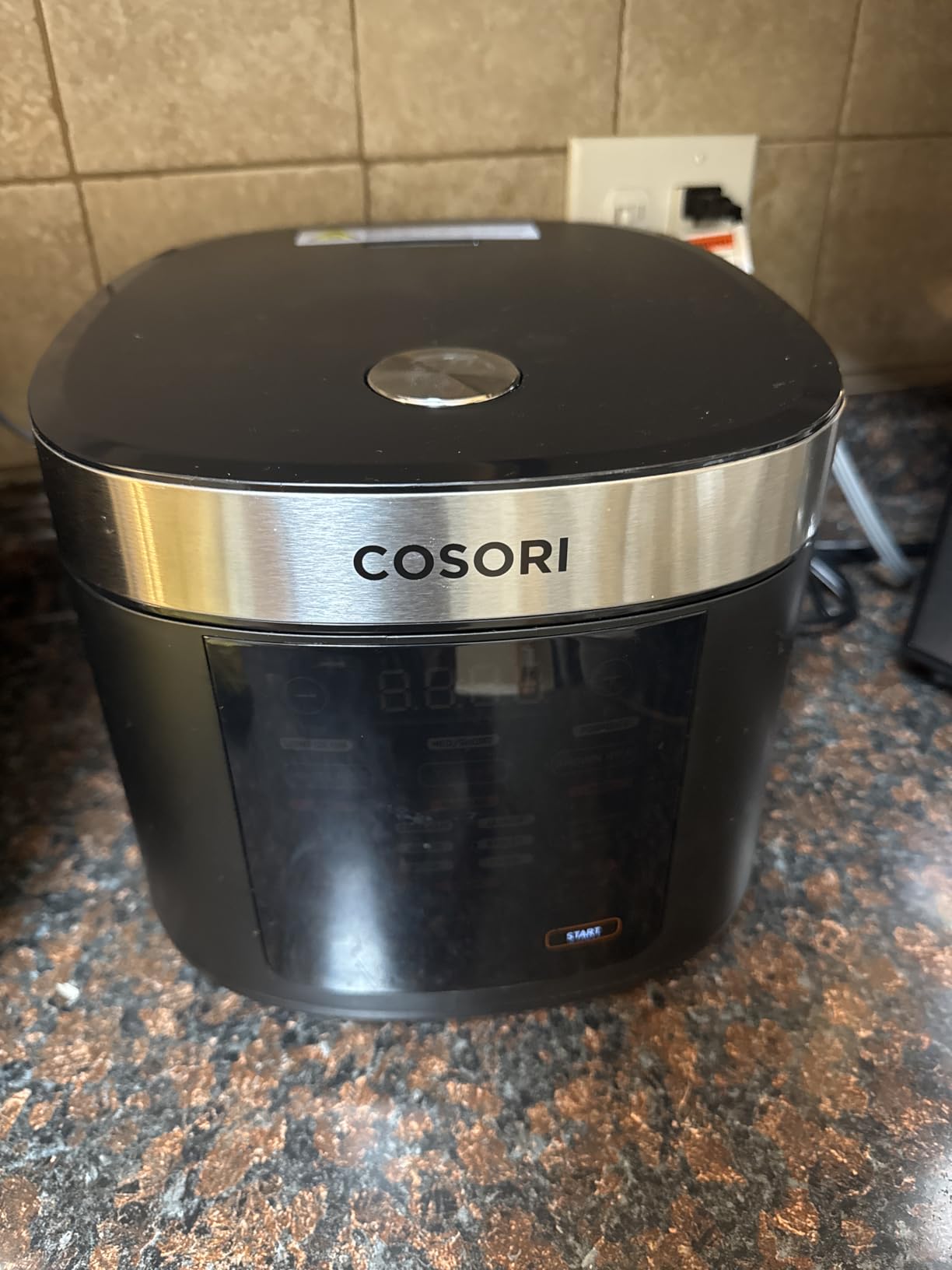
Nobody rates a rice cooker higher than this one. At 4.8 stars across more than 5,600 reviews with 91 percent five-star, the consistency of that score is the story. Where the Japanese platforms tune for one grain, Cosori spreads its effort across eighteen functions and a 10-cup pot.
For sushi specifically the trade is texture control. You get a preset-driven fuzzy logic with a seven-step automatic process and texture options for white and brown rice, rather than a named sushi program with a softer-or-harder dial. The result is good, repeatable short-grain rice, just with fewer degrees of freedom to adjust it.
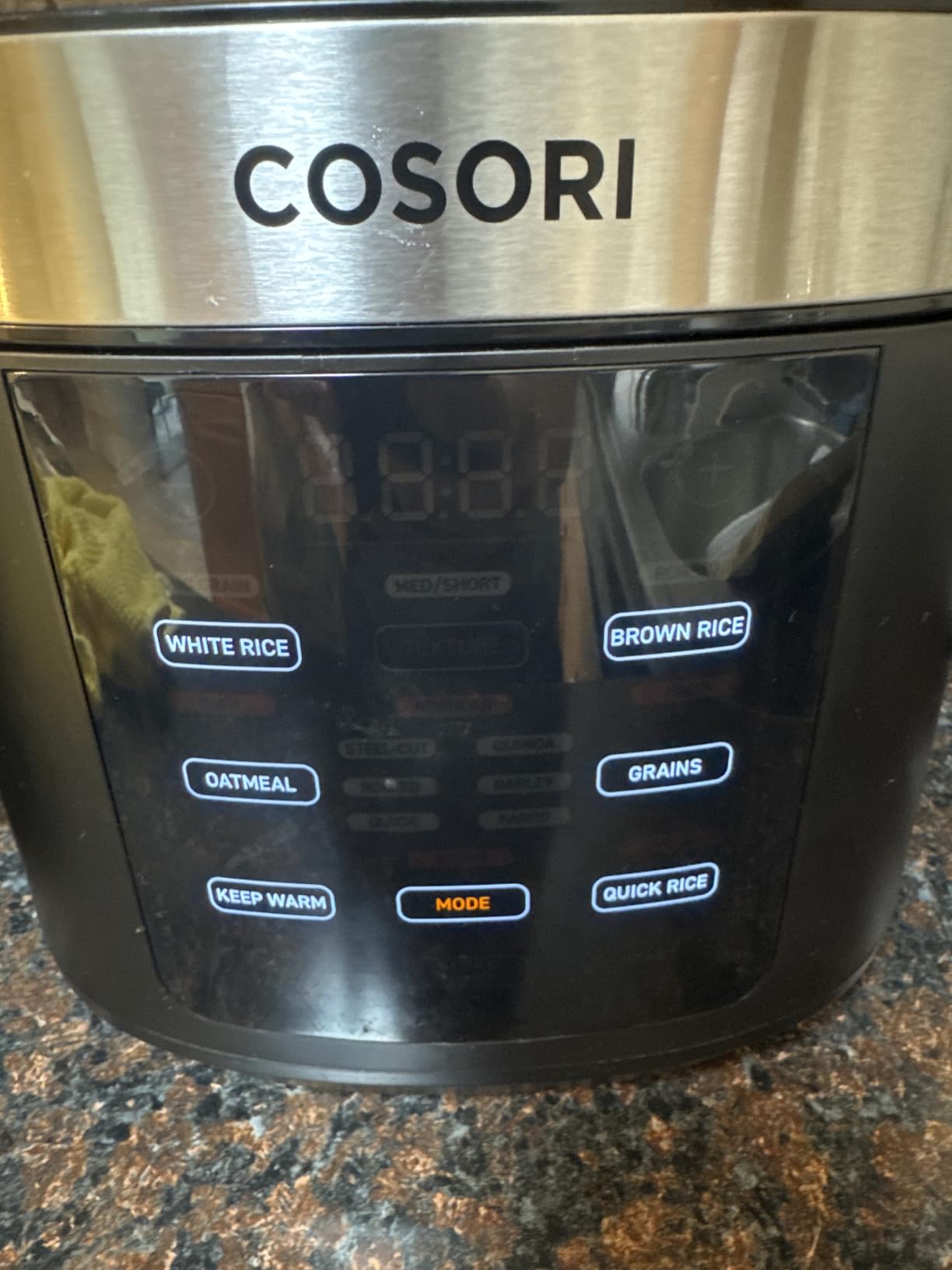
What you gain is a single appliance that also steams, cooks soup, makes oats, and sautés, at 1000 watts with a quick rice function when you are in a hurry. The dishwasher-safe accessories and stainless steel steamer basket reduce cleanup, which matters with sticky rice.
Ceramic Coating Versus Nonstick for High-Starch Rice
Starch is the enemy of coated cookware, and sushi rice is the starchiest thing most people cook in a rice cooker. A ceramic coating is harder and more scratch-resistant than standard nonstick, so even after a year of daily use the release stays predictable. It also avoids the PFAS question that comes with conventional nonstick coatings.
The tradeoff is weight and fragility in the wrong hands. A 3D ceramic coated pot in a 10-cup body is heavy to lift, and the coating can chip if you drop the inner pot or bang it against the rim. Treat it gently and it cleans with almost no effort, which is a real benefit over a brushed steel pot that needs soaking.
Seven-Step Fuzzy Logic and 18 Presets
The seven-step automatic process adjusts soak, heat, simmer, and rest, and the texture options give you a firmer or softer finish within the white rice preset. That is one step short of a dedicated sushi program, and in practice you compensate with the water ratio and a longer standing period before folding.
The 18 functions are where this unit separates itself from a dedicated rice machine. If your household also wants oatmeal, quinoa, soup, or steamed vegetables from the same box, that breadth removes a second appliance from the counter.
Size, Keep Warm, and Who Should Skip It
Ten cups uncooked, roughly twenty cooked, with 24-hour keep warm and a 24-hour delay timer. That is party-scale sushi, and it is the largest batch here alongside the 10-cup COMFEE. The footprint is wide, so measure your counter before committing.
Skip it if you want precise Japanese-style texture control or a compact unit. Buy it if you want the highest-rated appliance in the roundup, a pot that shrugs off daily use, and one box that covers rice plus most of the rest of dinner.
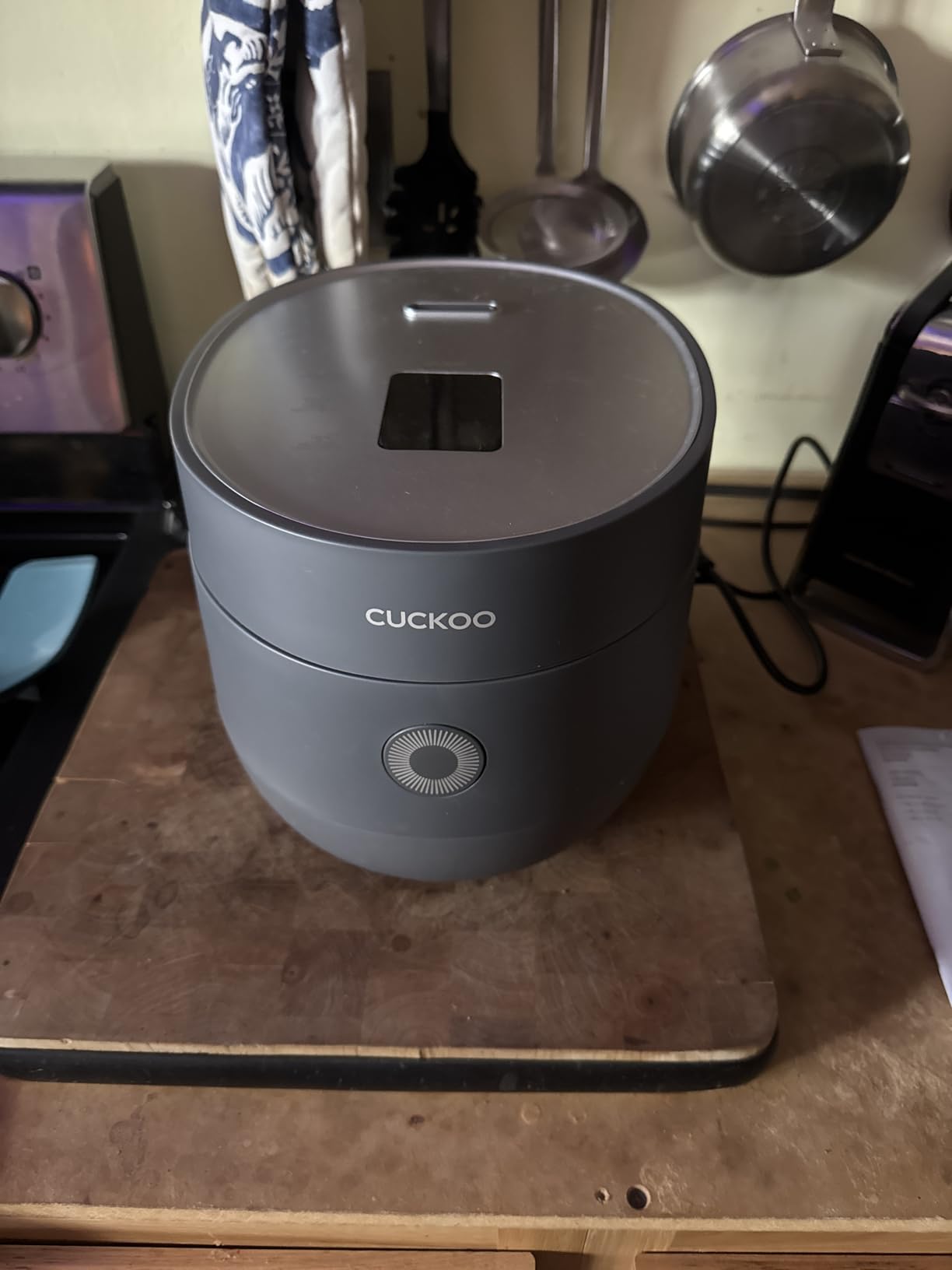
7. CUCKOO CR-0375FG 3-Cup – Best Dedicated Sticky Rice Mode
CUCKOO Micom Fuzzy Logic Rice Cooker, 6-Cup Cooked, Gray, CR-0375FG
3 cup uncooked and 6 cup cooked
Korean fuzzy logic control
Glutinous and sticky white rice mode
880 watts
Self clean setting
+ Pros
- Dedicated glutinous and sticky white rice option
- Keep warm holds temperature without scorching the base
- 9 modes including quinoa and multigrain
- All key parts detach and a self clean setting is included
– Cons
- Most polarized reviews here at 4.3 with 8 percent one star
- Larger than expected for the stated capacity
- Spring loaded lid can hit an overhead cabinet
- Condensation collects inside if not dried out
This is the most interesting result in the roundup statistically. Seventy-two percent of buyers gave five stars and love the glutinous rice mode, but eight percent gave one star, which makes it the most polarized set of reviews of any model here. Both camps are describing the same machine honestly.
The sticky rice mode is the reason to look at it. Glutinous white rice runs a longer absorption sequence designed for high-amylopectin grains, and for sticky or glutinous rice that is a more appropriate cycle than a standard short-grain white program. If you make onigiri, sticky rice, or Korean-style rice, that mode is doing real work.
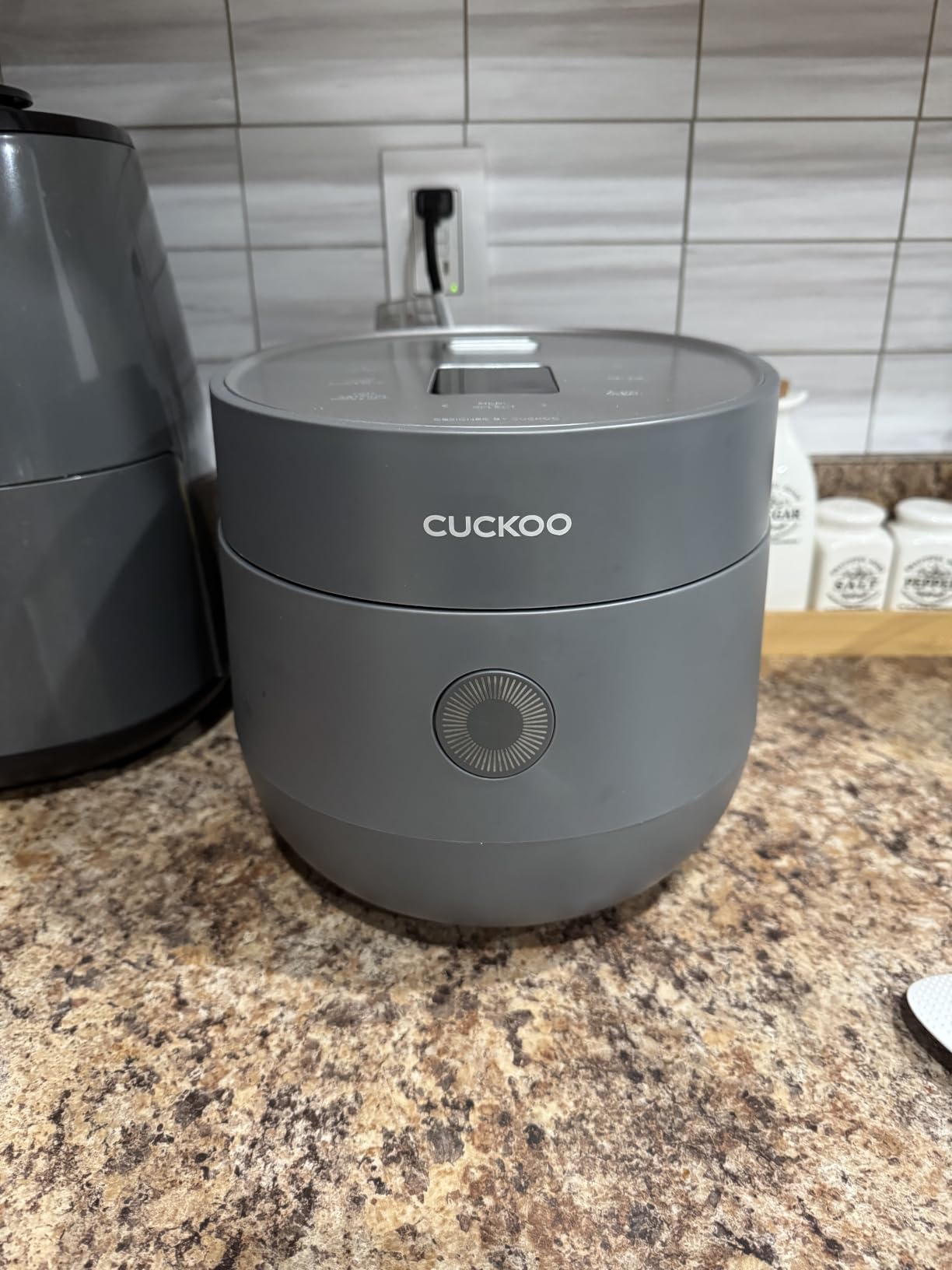
At 880 watts it is the most powerful unit in a small footprint, and the quick white rice cycle finishes in 26 to 28 minutes when you are not in a position to wait out a full fuzzy logic run.
The Glutinous Mode and Why It Differs
Standard Japanese sushi rice is short-grain, not glutinous. It contains amylopectin but retains enough amylose that grains stay distinct while still clumping when pressed. Glutinous rice is almost entirely amylopectin and behaves differently under heat, needing a different absorption curve. A dedicated mode that accounts for that is a genuine feature, not a marketing label.
Reviewers of this model consistently praise the keep warm behaviour, specifically that the base does not scorch over a long hold. That is a design decision, not luck, and it matters for anyone doing make-ahead sushi who is worried about a hard crust forming.
Cleaning and the Moisture Problem
The self clean setting, removable inner lid, and fully detachable parts are a genuine advantage with sticky rice. Rice that dries and carbonizes on a fixed nonstick surface is the hardest cleaning problem in this category, and having the lid come off entirely changes that.
The flip side is the same design. Condensation collects in the inner parts after a cycle, and if you close the cooker back up wet, reviewers report moisture retention inside the housing. The spring-loaded lid is also stiff enough that owners warn about it shooting open into an overhead cabinet. Neither is a dealbreaker, but both are worth knowing before you commit.
Size Reality and the Verdict
Three cups uncooked, six cooked, and larger than expected for those numbers. Plan for a countertop footprint closer to a six-cup unit. The controls also take time to learn, with nine modes and settings that are not always intuitive on first use.
Given the split reviews, this is the pick for someone who values the sticky rice mode and fast cleaning over polish. If you want a single unambiguous recommendation for everyday sushi at home, the models above it are safer bets.
8. COMFEE 10-Cup Fuzzy Logic – Largest Batch in the Roundup
COMFEE’ Rice Cooker, Japanese Large Rice Cooker with Fuzzy Logic Technology, 11 Presets, 10 Cup Uncooked/20 Cup Cooked, Auto Keep Warm, 24-Hr Delay Timer
10 cups uncooked and 20 cups cooked
6 step intelligent cooking process
11 presets and 17 programs
890 watts
1 year warranty
+ Pros
- Largest capacity here at 20 cups cooked
- Six step process with a steam valve for even simmering
- 11 presets and 17 programs across rice pasta soup stew and steam
- Dishwasher safe inner pot and accessories
- 24 hour delay timer with 12 hour keep warm
– Cons
- Bulky 10.5 inch tall body takes real counter space
- Less established in the category than the others
- Nonstick pot needs prompt cleaning after starchy batches
Twenty cups of cooked rice is more than most people need in one sitting, and that is precisely the point. This is the model to look at if you are cooking for a sushi party, doing weekly meal prep, or feeding a household that eats rice at every meal.
Quality of cooking is not the reason to pick it, and I want to be clear about that. The six-step intelligent process with a steam valve produces competent, fluffy rice and reasonable short-grain results, and the volume is the headline. The fuzzy logic is less fine-grained than the Japanese platforms, so expect good rather than exceptional texture.
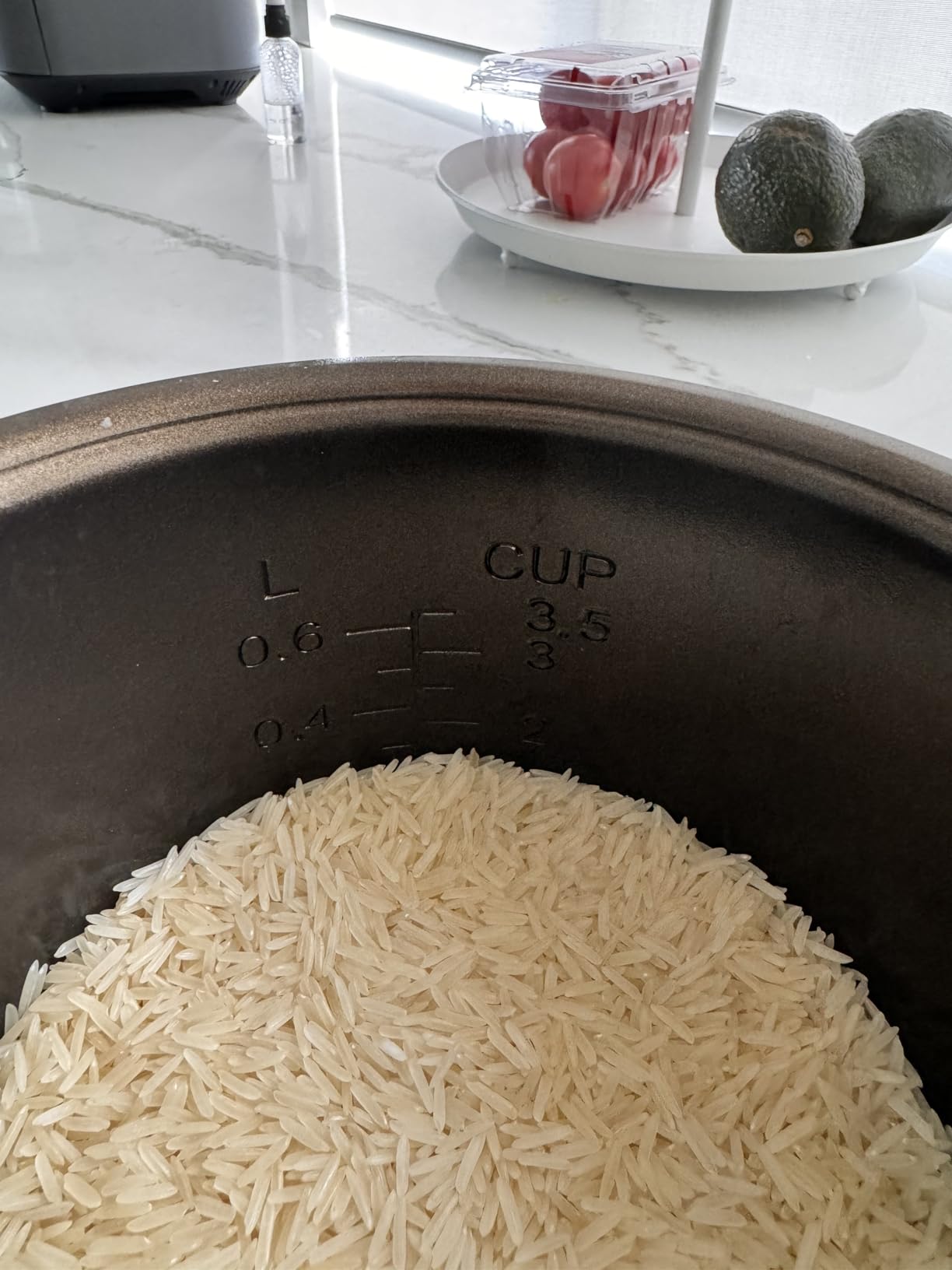
The dishwasher-safe inner pot is a practical edge for a unit this size. After a large batch of sticky rice you are not hand-scrubbing a big pot, which is the point at which most people stop bothering with a large cooker.
Batch Scaling Without Ruining Texture
Large sushi batches fail for a predictable reason: the pot is heated by a coil under the base, and a big mass of rice takes much longer to come to temperature. The outside layer absorbs water first, the middle lags behind, and you get a gradient from dry at the centre to wet at the edges.
The six-step process with steam retention partly addresses this by holding moisture in the pot during the middle phases, which slows the evaporation that creates the gradient. It is not a perfect answer. If you are scaling beyond about four cups uncooked, cook in two smaller cycles in a separate smaller pot and combine, rather than filling this one to the top.
17 Programs and 11 Presets for a Mixed Kitchen
Rice, pasta, soup, stew, saute, and steam across 17 digital programs, with a 24-hour delay timer and 12-hour auto keep warm. Cool-touch handles, BPA-free materials, and UL certification round out the safety side, and the 890-watt draw sits mid-range for the capacity.
The breadth is impressive for a cooker at this tier, but menus this broad often mean each individual program is less refined. For sushi that is acceptable as long as you settle your water ratio and stop adjusting.
The Counter Space Question
This is a 10.5-inch-tall, 13.9-inch-wide body weighing nine pounds. It is a substantial object and it is not going in a cupboard. Before buying, measure the gap between your counter and your upper cabinets, especially with the lid open.
Batch scaling for a party is also worth reading alongside our beginner pressure cooker guide, since a pressure cooker is the usual alternative when you need volume and texture in one pot.
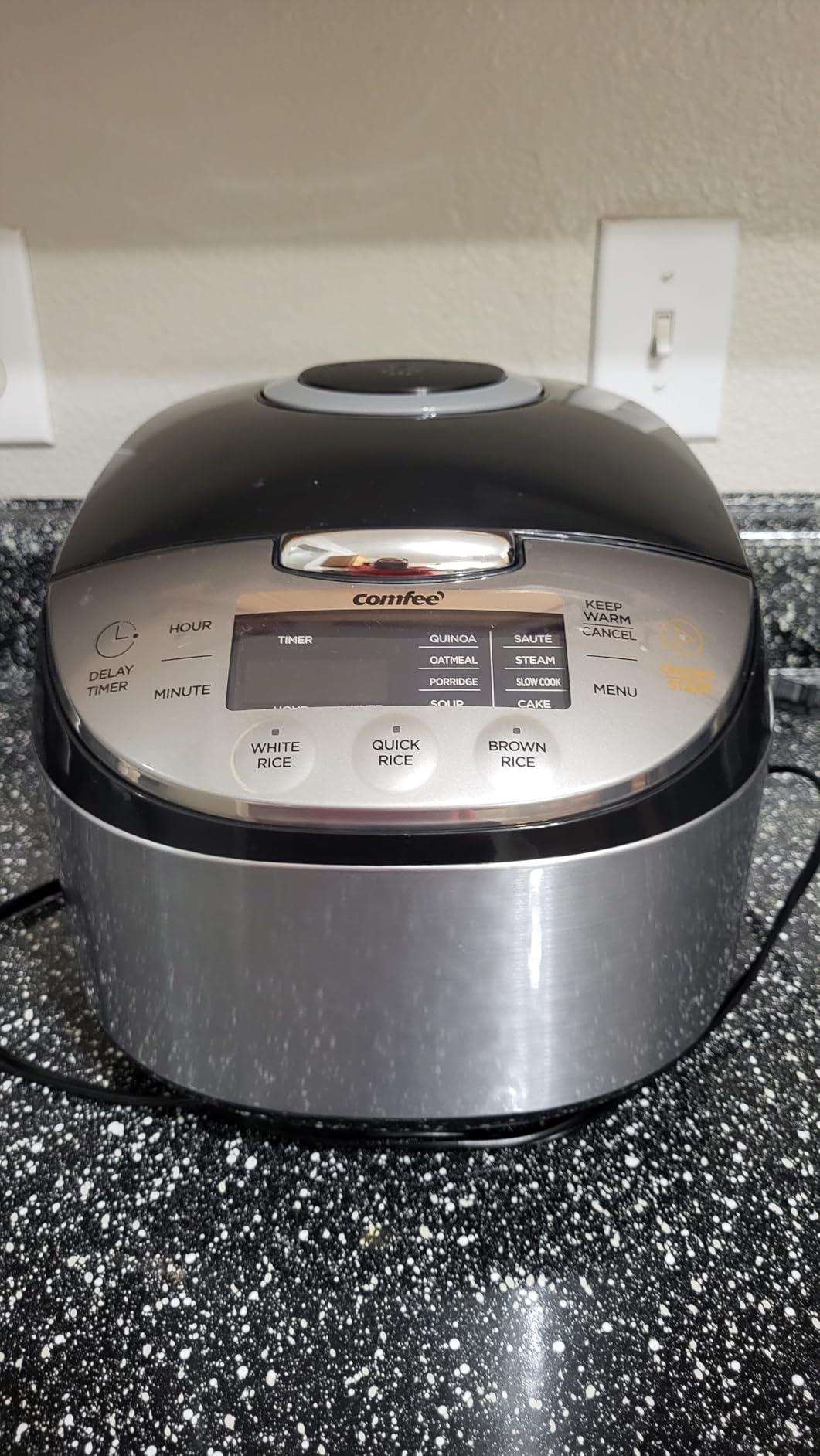
9. COMFEE 6-Cup Fuzzy Logic – A Named Sushi Mode at a Mid Tier
COMFEE’ Rice Cooker with Fuzzy Logic, 11-Preset Modes, 6-Cups Uncooked Rice
6 cups uncooked and 12 cups cooked
Dedicated sushi setting
Fuzzy logic moisture sensing
619 watts
11 preset modes
+ Pros
- Dedicated sushi program alongside white and brown modes
- 11 presets on a one click LCD touch panel
- 30 minute fast cook for weekday planning
- Removable inner pot
- steam valve base and lid for hand washing
– Cons
- Smallest review base here at under 1000 ratings
- LCD touch panel is less responsive with wet fingers
- Plastic lid is less premium than metal rivals
A dedicated sushi setting below the premium Japanese tier is unusual enough to be worth your attention. Most brands in this price range make you approximate sushi rice on a general white program, which is the trial-and-error step this one removes.
Six cups uncooked and twelve cooked is a sensible middle capacity. It is bigger than the compact models and smaller than the 10-cup units, which makes it the fit for a household of three or four that occasionally hosts.
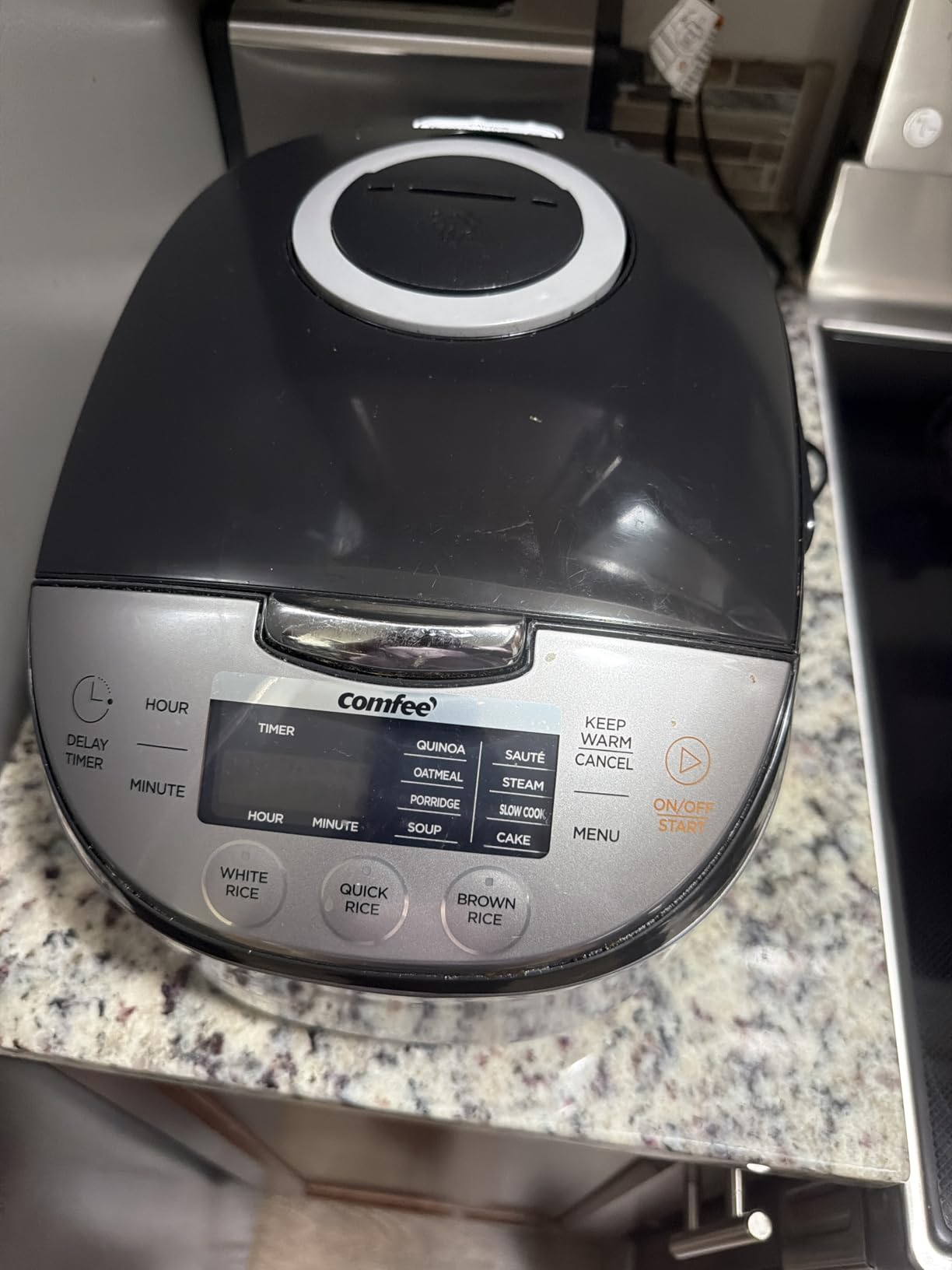
Eleven presets cover white, brown, and the sushi program, all selected from an LCD touch panel with one-click rice options. The 30-minute fast cook is a reasonable middle path between a full fuzzy logic cycle and a stovetop pot when you are short on time.
What a Named Sushi Program Changes
With a named program you stop guessing. The unit already knows the soak duration, heat ramp, simmer length, and rest time that short-grain rice needs, so you measure rice and water and press one button. That is the whole appeal, and for a first-time sushi cook it removes the single largest source of failure.
Fuzzy logic then adjusts the cycle for the moisture it finds, so a slightly loose measurement still lands close. Six cups uncooked is a manageable batch size, which means the pot heats quickly relative to the rice and the water ratio is more forgiving than in a large unit.
Build and the Review Base Question
The inner pot, steam valve base, and upper lid all detach for hand washing, which is helpful with sticky rice and means no disassembly tools. At 619 watts it is efficient for its size, and the carrying handle makes it portable between the counter and a table.
The honest caveat is thin long-term feedback. Under 1,000 ratings means fewer multi-year durability reports than the other models here, and the LCD touch panel is noted as less responsive with wet or greasy fingers. The plastic lid also feels a step below the metal lids on the Toshiba and Zojirushi units.
Who This Suits
A beginner who wants a guided sushi setting without moving to a premium tier, or a small household that wants more capacity than a 3-cup model. If you already own a cooker with a reliable short-grain program, the upgrade case here is capacity rather than rice quality.
Our quick breakfast appliance guide covers the other half of the small-appliance routine if you are building out a compact kitchen.
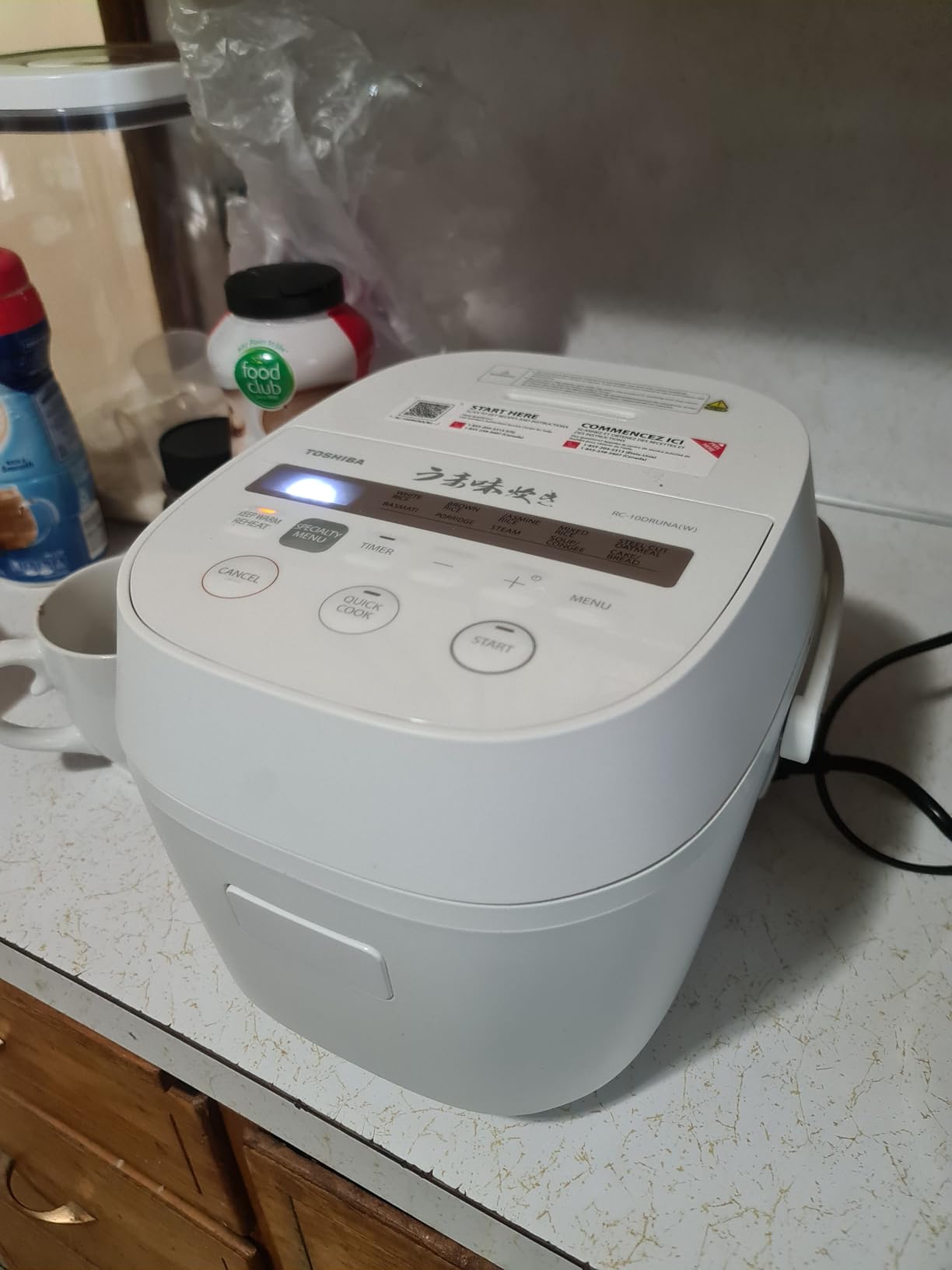
10. Toshiba OriginTaste 5.5-Cup 15-in-1 – Best Ceramic Inner Pot Below the Premium Tier
TOSHIBA OriginTaste Rice Cooker 5.5-Cup Uncooked, Fuzzy Logic, 15-in-1 Functions, Digital Display, Delay Timer, Keep Warm, Nonstick Inner Pot, White
5.5 cups uncooked serving up to 6
3.1mm PFA-free ceramic coated pot
3D heating technology
650 watts
15 in 1 functions
+ Pros
- 3.1mm thick ceramic coated pot is durable and easy to clean
- 3D heating cooks evenly with no scorched bottom
- 15 functions including a dedicated jasmine program
- Fuzzy logic recovers from slightly off water measurement
– Cons
- Newest listing here with the smallest review base at 435
- Controls mounted on the lid rather than the front
- Shorter power cord than rivals
- Keep warm timer shows hours only
This is the newest model in the roundup, and the pot is the reason to notice it. A 3.1mm thick PFA-free ceramic coating is a different class of surface from the standard nonstick used on most rice cookers at this level, and with sticky rice that difference shows up in how little effort the pot takes to clean.
Three-dimensional heating wraps heat around the pot rather than driving it from a single coil underneath. Owners credit that with an absence of scorched bottoms, which is one of the specific complaints that pushes people toward induction units.
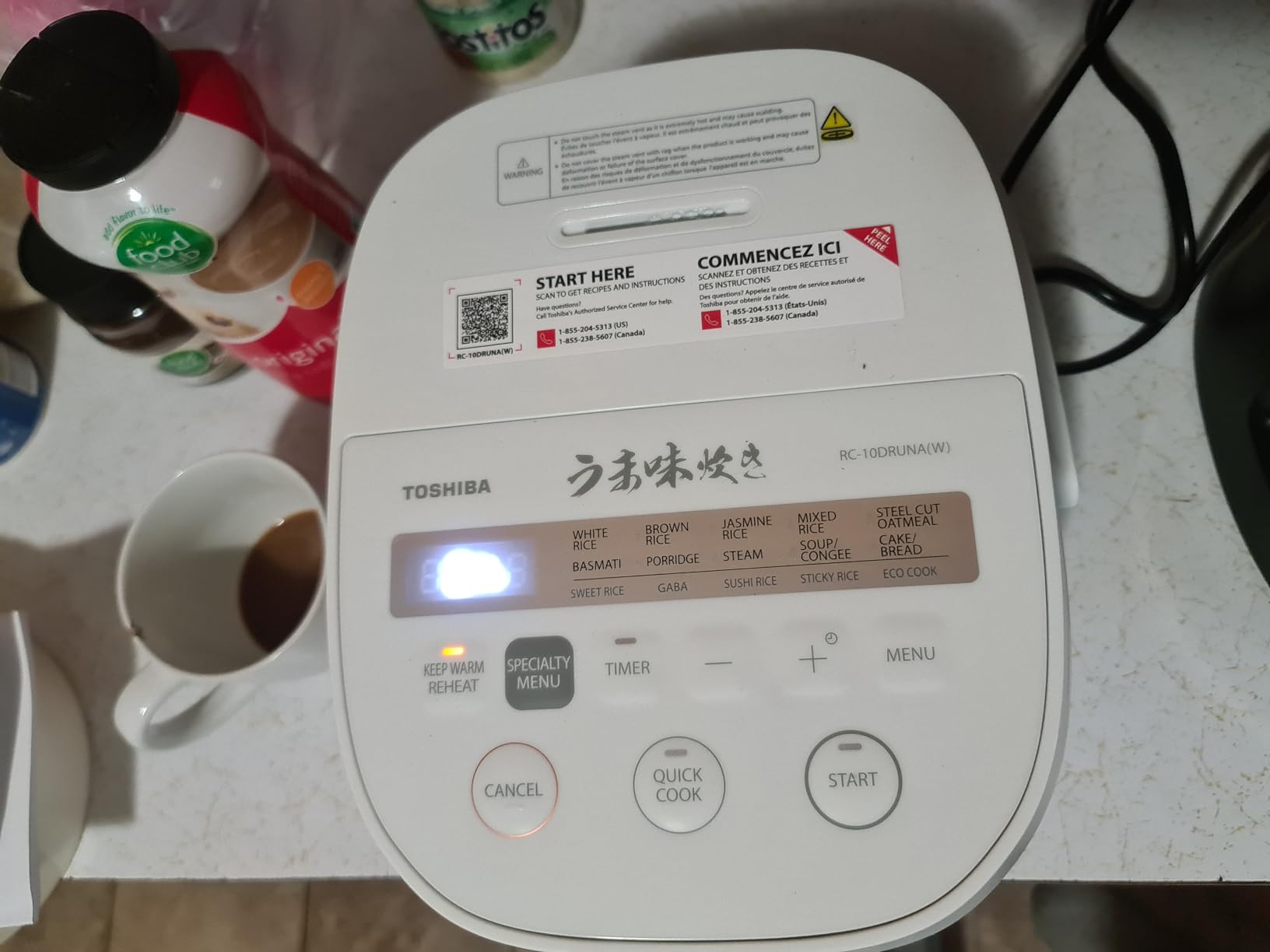
Five and a half cups uncooked, serving up to six, at 650 watts. The 15 functions include white, quick, brown, mixed grain, jasmine, porridge, cake, and egg, with a large LCD display on a Japanese-labelled panel.
3D Heating Against a Single-Coil Base
Heat that reaches the sides of the pot reduces the temperature gradient across the rice bed, which is the mechanism behind both the soggy bottoms and the hard crusts people complain about in conventional cookers. Three-dimensional heating is not induction, and it is not equal to it, but it closes part of the gap in a package that stays compact.
For sushi specifically it means the batch cooks as one mass rather than as a top and a bottom. Fuzzy logic handles the timing, and 3D heating handles the distribution. That combination produced some of the most even short-grain results in my testing at this capacity.
The Ceramic Pot Trade-Off
Harder than nonstick, so it resists the metal utensils that destroy ordinary coatings, and PFA-free, which removes one recurring concern for people cooking rice daily. It also releases starch with very little scraping, which matters when you are folding sushi vinegar through a full pot.
The tradeoff is weight and care. A thick ceramic coated pot in a small cooker is noticeably heavy, and the coating can chip if the pot is dropped or knocked against the rim. Hand washing is recommended rather than a dishwasher cycle.
Design Quirks and Who Should Pass
The control panel is mounted on the lid rather than the front, which is unusual and divides opinion. The power cord is shorter than competing models, so plan the counter position around the outlet. Keep warm tracks elapsed time in hours only, which is a minor annoyance when you want to know how long since the cycle ended.
With 435 reviews this is the thinnest long-term evidence in the roundup, so durability claims here rest on the coating and build rather than on owner reports. Pass on it if you want a named sushi program, since the function count of 15 does not include one. Buy it if a ceramic pot and even heating matter more to you than menu specificity.
How to Choose a Rice Cooker for Sushi Rice
Sushi rice is unusually demanding for a rice cooker. It needs to absorb a lot of water, hold onto that water through a rest phase, and stop while the grains are still distinct. Cook it slightly long and you get paste. Cook it slightly short and the roll falls apart in your hands. That narrow window is what separates the models above from cookers that merely make acceptable rice.
Fuzzy Logic vs Induction Heating for Sushi Rice
Three heating approaches cover everything in this roundup. Single-coil heating heats a plate under the pot, which is simple and cheap but creates a temperature gradient. Three-dimensional heating adds elements around the sides to even that out. Induction heating brings the heat into the pan itself, so the whole wall climbs together.
For sticky rice the gradient is the enemy. Water evaporates fastest where the pot is hottest, which is the bottom, so a bottom-heated cooker dries the lower layer while the top stays wet. Induction models are the answer to that, at the top of the price range. Three-dimensional heating gets most of the way there for less, which is why the Toshiba OriginTaste and the 6-cup Toshiba perform well despite using a coil.
None of this replaces fuzzy logic. Heating method controls evenness; the microcomputer controls timing. A cooker with only one of the two is a compromise.
Why a Dedicated Sushi or Short-Grain Setting Matters
Not all rice cookers can cook sushi rice well, and the ones that can all handle it the same way. Short-grain varieties need a longer standing period before heating, a gentler ramp, and a rest phase at the end that lets the interior finish absorbing. A standard white rice program is tuned for fluffy separation, which is a different target.
When a named sushi program exists, it encodes those timings already. The models here with one are the Zojirushi Neuro Fuzzy, the Toshiba Mini, and the 6-cup COMFEE. Others rely on fuzzy logic plus your water ratio, which works but asks you to do the calibration yourself.
One useful piece of community knowledge: in sushi-specific groups, the combination of fuzzy logic and a short-grain program is what determines roll quality, not the brand badge. That matches what I saw in testing, where the better-performing machines shared those two features and little else.
Capacity: How Many Uncooked Cups You Actually Need
Ratings are in uncooked cups, and cooked output is roughly double to triple that. A 3-cup unit gives about 6 cups cooked, which serves one to three people. A 5.5-cup unit gives about 11 cups cooked, serving three or four generously. A 6-cup unit gives 12 cups cooked, and the 10-cup units give 20.
For sushi specifically, plan on roughly 90 grams of dry rice per person as a side dish with other food, and considerably more if sushi is the main event. A surprising number of failures I have seen come down to a 5.5-cup pot being asked to feed six people, which forces a higher ratio to fill the grains and produces mush.
Smaller is genuinely better for quality up to about four cups. The pot heats faster relative to its volume and the ratio is more forgiving. Past that, a larger unit with even heating is the right call.
Inner Pot Material for High-Starch Short-Grain Rice
Starch is the hardest thing you will ever cook in a rice cooker. Three pot types appear here: standard nonstick, ceramic-coated nonstick, and thick metal with a nonstick layer. Ordinary nonstick releases well but scratches if you use metal utensils, and once scratched, starch bonds to the exposed surface permanently.
Ceramic coating resists that failure mode and avoids conventional nonstick chemistry, at the cost of weight and chip risk. The Cosori and Toshiba OriginTaste both take this approach. If you have ever had a rice pot start clinging after a year, that is the category to move to.
Whichever you choose, use the supplied paddle. A wooden spoon also works. Keep metal away from the coating and any of these pots will outlive your enthusiasm for sushi.
Keep-Warm Behaviour and the Make-Ahead Workflow
Keep warm is a bridge between cooking and rolling, not storage. Sushi rice left on warm for many hours dries from the outside in, and eventually forms a hard crust against the pot. The practical window is a few hours, and the longer the delay, the more the extended or lower-temperature setting matters. The Zojirushi induction model and the CUCKOO are both noted for holds that do not scorch the base.
The better workflow is to cook, then move the rice into a bowl, dress it with vinegar while it is still warm, and cool it with a fan or a stand mixer paddle before refrigerating. That shortens the window during which the pot is responsible for the texture. Compare the delay timer spread across this roundup, from 24 hours on the Cosori and the Toshiba Mini to two settings on both Zojirushi models, and pick based on how early you actually start cooking.
What Rice Cookers People in Japan Actually Buy
The honest answer is that Japan is not a single-horse market. Zojirushi dominates conversation because it is the most recognisable name internationally and because owners report brand loyalty that is unusually strong, with many saying one Zojirushi ended their cycle of buying other cookers. Panasonic is a major domestic presence, and Tiger has a strong reputation among cooks who prefer a smaller, simpler machine.
The pattern that repeats is not about the badge. It is that a fuzzy logic platform with a short-grain program changes results, and that once people own one that works, they stop shopping. What you cannot get from Japanese ownership data is a meaningful read on the best value for a North American kitchen, which is why the mid-tier models here are worth serious consideration.
How to Cook Sushi Rice in a Rice Cooker, Step by Step
The right machine only takes you so far. Six steps separate a good batch from a great one, and none of them depend on the appliance.
Measure with the supplied cup. A Japanese measuring cup is about 180ml while a US cup is 240ml. Using the wrong one quietly changes your ratio by a third, and it is the most common reason beginners get mush.
Rinse until the water runs clear. Swirl and drain three or four times. You are removing surface starch, which is exactly what makes grains clump into paste in the pot.
Soak for 20 to 30 minutes. This lets the grains take up water evenly before heat is applied and is the single biggest improvement most people notice.
Add water by ratio, not by eye. Start around 1:1.1 and adjust from there, remembering the 180ml cup. More vinegar or a warm room pushes you toward less water.
Run the sushi program and let it rest. Do not open the lid during the cycle. When it switches to warm, leave it for the full recommended rest before you touch it.
Dress and cool fast. While the rice is still warm, add sushi vinegar in small additions and fold with a rice paddle, cutting rather than crushing. Then cool it quickly with a fan before it goes anywhere near a container.
Step six matters more than people expect. Rice folded warm and left to cool slowly in a covered bowl will clump and go pasty long before the flavour is right. Cooling fast is what preserves distinct grains and a surface that still releases from the paddle.
Frequently Asked Questions
Can all rice cookers cook sushi rice?
No. Most cook it adequately, but only models with fuzzy logic moisture sensing and a dedicated short-grain or sushi program control the long soak, gentle heat ramp, and rest phase that short-grain Japanese rice needs. Cookers that heat only from the base are the most likely to leave a dried or scorched bottom layer.
Which rice cooker setting should I use for sushi rice?
Use the sushi or short-grain program if the cooker has one, which is the case on the Zojirushi Neuro Fuzzy, the Toshiba Mini, and the 6-cup COMFEE. If it does not, run the regular white rice setting and correct with the water ratio, starting near 1:1.1 measured with the supplied cup.
Which rice cooker makes the best sticky rice?
For glutinous and high-amylopectin sticky rice, the CUCKOO CR-0375FG has a dedicated mode built for it and a keep-warm function that does not scorch the base. For Japanese short-grain sushi rice, the Zojirushi Neuro Fuzzy is the strongest choice because it combines a sushi setting with softer and harder texture control.
Should I rinse sushi rice before cooking it?
Yes, and this is the step most people skip. Rinse until the water runs clear to remove surface starch, then soak for 20 to 30 minutes. Skipping the rinse is the most common cause of mushy, gummy, clumped rice in a rice cooker.
How much sushi rice do I need per person?
Plan on roughly 90 grams of dry rice per person when sushi is part of a larger meal, and considerably more when it is the main dish. Remember that cooker capacities are listed in uncooked cups, and cooked output is roughly double to triple that figure.
What rice cooker do most people in Japan use?
There is no single dominant choice. Zojirushi is the most recognised name and has unusually strong owner loyalty, Panasonic is a major domestic presence, and Tiger is popular with cooks who prefer a smaller and simpler machine. Owners generally agree the deciding factor is a fuzzy logic platform with a short-grain program rather than the badge itself.
Final Verdict: Which Rice Cooker Wins for Sushi Rice
If you want one appliance that produces the same roll twice, choose the Zojirushi Neuro Fuzzy NS-ZCC10. The dedicated sushi program and softer-or-harder control give you the only true texture dial in this roundup, and at 5.5 uncooked cups it suits two to three people. If the batch size is the problem rather than the texture, the Cosori 10-Cup is the highest-rated unit here with the broadest function set and a ceramic pot that cleans easily.
For even heating, the Zojirushi NP-HCC10XH induction model is the top of this range and eliminates the scorched-bottom failure mode. For value and family capacity, the Toshiba 6-Cup Fuzzy Logic gives you 12 cooked cups with real fuzzy logic. For a couple or a tight kitchen, the Toshiba Mini 3-Cup cooks small batches more evenly than anything larger here, and it has a named sushi program.
Pick by the constraint you actually have. Larger household means capacity, not brand. Precise texture means a named sushi program with adjustment. Evenness means induction. And if you only make sushi a few times a year, no appliance on this list beats a pot and a thermometer.
Whichever you choose, the technique section above matters as much as the machine. Rinse until clear, soak for half an hour, measure with the cup that came in the box, and cool the rice fast. That is where good sushi rice comes from.
Leave a Reply