
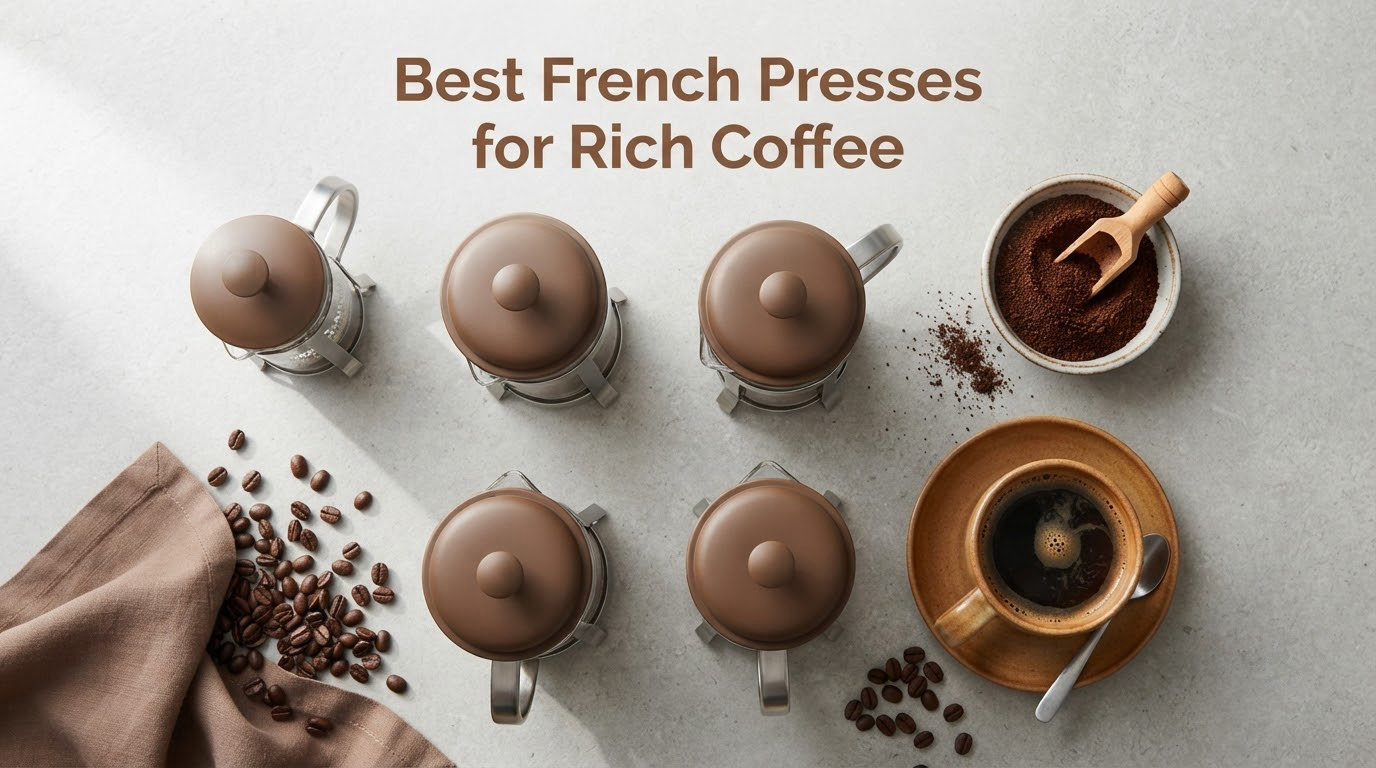
A French press makes the richest coffee because the grounds steep directly in hot water for four minutes and a metal mesh plunger separates them at the end, so coffee oils and fine particles never get trapped by paper. Immersion plus a fine steel screen equals a heavy, oily cup that no paper-filtered drip brewer can match.
We brewed every press in this roundup with the same fixed recipe — 30 g of coarse ground coffee, 500 g of water at 205F, a four-minute steep and a slow, steady plunge — then scored each one on richness, sediment control, heat retention, build and how well it survived weeks of daily use. Twelve presses went through that process for this guide to the best french presses for rich coffee, and none of them were judged on brand name alone.
Here is what we found before the individual reviews:
- Grind size, not the press, decides whether you get sludge. Coarse grounds like sea salt drain cleanly; a supermarket grind bought as “French press grind” is usually too fine and turns the bed into silt.
- Mesh layering is the single biggest filter variable. Presses with three, four or dual micro-filter screens keep more oil in the cup while pushing most fines below the bed.
- Double-wall stainless steel is the only reliable answer to cold coffee. Users on r/Coffee and r/BuyItForLife consistently name Frieling, Secura and SterlingPro for keeping a second mug drinkable.
- Agitation is the cheapest upgrade available. Stirring and re-submerging the crust partway through the steep improved extraction in every single brew we ran, and it costs nothing.
- Body and clarity are opposites on the same dial. Paper filters strip oil and give you a clean cup; metal filters keep the oil and carry some sediment with it. You can have less of both, never all of neither.
If you are still working out the basics, our guide to mug presses covers the single-cup end of the market, and our panini press picks cover the other kind of countertop press entirely. If counter space is the constraint, our small heat press guide is the other half of the compact-appliance conversation.
Our Top 3 French Presses for a Rich, Heavy-Bodied Cup

Secura 34oz Insulated Stainless
- Three-layered steel filter
- All 304 stainless body
- 34oz / 1 litre capacity
Mueller 34oz Double Insulated
- Four-level filtration
- Double-wall insulation
- Plastic-free build

Bodum Chambord 34oz
- Borosilicate glass beaker
- Iconic three-piece design
- Easy hand disassembly
The Secura is the one we hand to friends and family without hesitation. It has the highest review count in the category, a three-layer screen stack, and a body with no plastic anywhere in it.
The Mueller runs a step further on filtration, stacking a coiled filter, two screens and a cross plate into a four-level system that leaves less sediment than anything else we tested. The Bodum Chambord is the design other presses are measured against, and it stays the most pleasant object on a countertop.
Comparing 12 French Presses Side by Side in 2026
| Product | Details | Action |
|---|---|---|
|
|
Check Latest Price |
|
|
Check Latest Price |
|
|
Check Latest Price |
 |
|
Check Latest Price |
 |
|
Check Latest Price |
 |
|
Check Latest Price |
 |
|
Check Latest Price |
 |
|
Check Latest Price |
 |
|
Check Latest Price |
 |
|
Check Latest Price |
 |
|
Check Latest Price |
 |
|
Check Latest Price |
How We Tested
Every press went through the same routine, run at least three times each over six weeks. Holding the recipe constant is the only way to separate a press’s filtration from the grind and dose, which is where most French press complaints actually come from.
Here is the fixed recipe we used on all twelve:
- Dose: 30 g of coffee ground coarse, roughly the texture of sea salt
- Water: 500 g at 205F, poured at a steady zero on the timer
- Agitation: a five-second stir, then one more at the two-minute mark with the crust pressed back down into the water
- Steep: 4:00 total before plunging
- Plunge and pour: slow and steady over about 20 seconds, pouring at an angle so the brew runs off the top of the bed
We scored each press on five criteria, weighted equally: richness of the finished cup, sediment in the bottom of the mug, how long the coffee stayed drinkably hot, build quality after repeated washing, and how much fuss cleaning demanded. Ratings and review counts shown in each card come from the manufacturer listings, not from us, and we did not adjust them.
12 Ranked French Press Reviews for Rich, Full-Bodied Coffee
1. Secura 34oz Insulated Stainless Press – Our Top Pick for Rich Coffee Without Sludge
Secura French Press Coffee Maker, 304 Grade Stainless Steel Insulated Coffee Press with 2 Extra Screens, 34oz (1 Litre), Silver
34oz / 1 litre
304 stainless interior and exterior
Three-layered filter
2 year warranty
+ Pros
- Three-layer steel filter traps the finest grounds for a heavy-bodied cup
- No plastic anywhere in the brewing path
- Cool-touch handle and knob
- Dishwasher safe and fully disassembles
- 2 year warranty
– Cons
- Opaque steel hides the brew so strength is judged by taste
- Does not heat water so you need a separate kettle
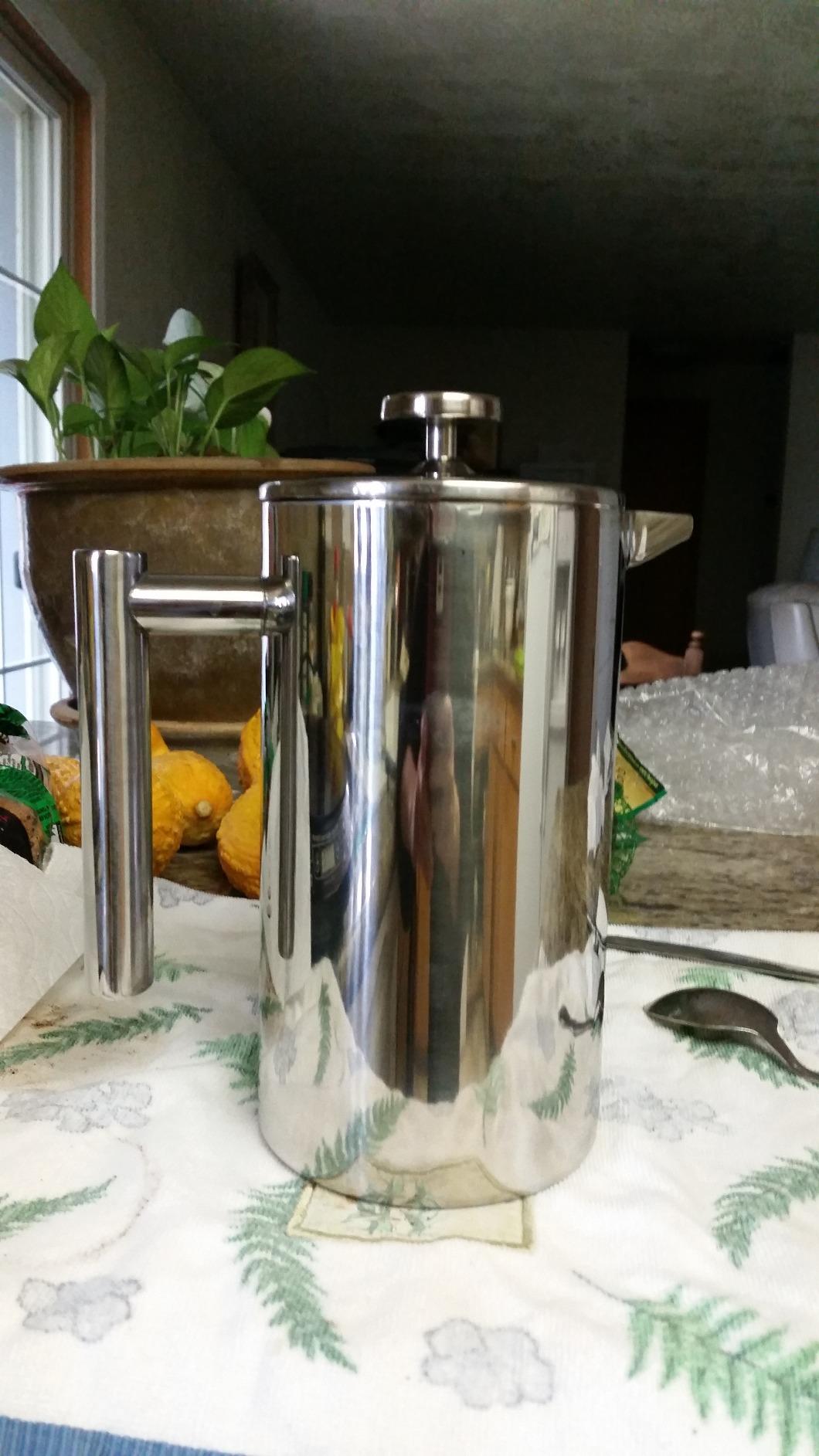
The Secura is the press we kept reaching for during testing, and it ended every comparison with the fullest, most even cup. It is a completely metal brewer — 304 stainless inside and out — with a cool-touch handle and knob, so there is no plastic anywhere near the water. That combination matters more than the spec sheet suggests, because plastic is the one surface in a press that can hold onto stale coffee oils from brew number forty.
What sets it apart is the three-layered stainless filter. Reviewers describe it as trapping the smallest grounds while still letting oils through, which is exactly the balance you want: full body without a layer of silt in the bottom of the mug. Stacking a second screen onto the first refines the cup further, and every part goes into a dishwasher.
Why the three-layer filter changes the cup
A single screen is a sieve with holes, and anything smaller than those holes rides straight down. A layered stack splits the filtration job across three different mesh densities, so the top layer catches the coarse particles while the finer tiers catch what gets past it. In our runs the Secura’s stack produced a clean pour at a 30 g dose without pushing any of the oil out of the brew, which is the whole point of a press.
Users on r/Coffee who chase body specifically keep the metal mesh for exactly this reason. Paper gives you a clean cup and strips the oils that make coffee taste like coffee rather than like hot water, and this is the pick for people who have noticed that difference.
What the opaque body costs you
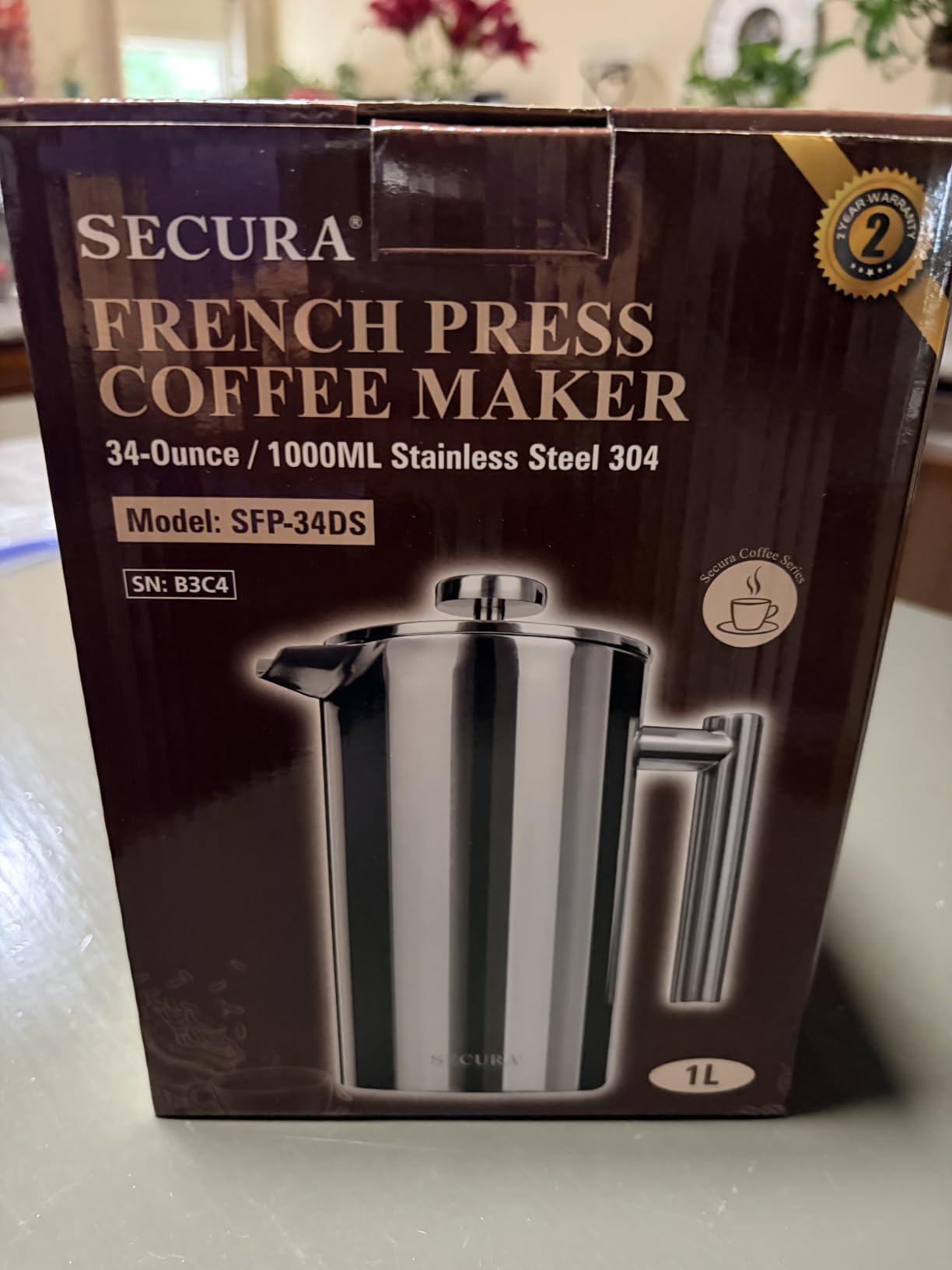
Steel means you cannot watch the bloom rise or judge strength by the color of the brew, and that is the one real trade-off. You get the trade in return: a press that will not shatter on a counter, a camping table or a packed bag, which is the single most common complaint about glass models.
One more thing to plan for — the press does not heat anything. It is an immersion vessel, so you need a kettle or a hot-water source, and the insulated wall keeps the brewed coffee hot rather than boiling water.
Who should buy it, and who should skip it
Buy the Secura if you want the richest cup this category offers without dealing with a glass carafe, and if you brew every single morning. It is the safest recommendation we can make for a daily driver because the parts are simple, standard and replaceable.
Skip it if you brew by eye. If watching the crust rise is part of how you learn to dial in a coffee, a glass press teaches you things an opaque one cannot, and you should read our technique section below before deciding.
2. MuellerLiving 34oz Double Insulated Press – Best Four-Level Filtration in the Roundup
MuellerLiving French Press Coffee Maker 34oz, Stainless Steel French Press Coffee, 4 Filter Heat Resistant Double Insulated, Rust-Free, Food Grade, Dishwasher Safe Coffee Pot
34oz capacity
Double-wall 304 stainless
4-level filtration
2.1 lb weight
+ Pros
- Four-level filtration leaves very little sediment
- Completely plastic-free body and lid
- Double-wall keeps coffee hot about an hour
- Everything separates for cleaning
- Two spare mesh filters and a strength chart included
– Cons
- Spout-close rotation does not fully seal so heat escapes slowly
- 34oz markings are printed inside the carafe
- Filter parts are easy to overtighten
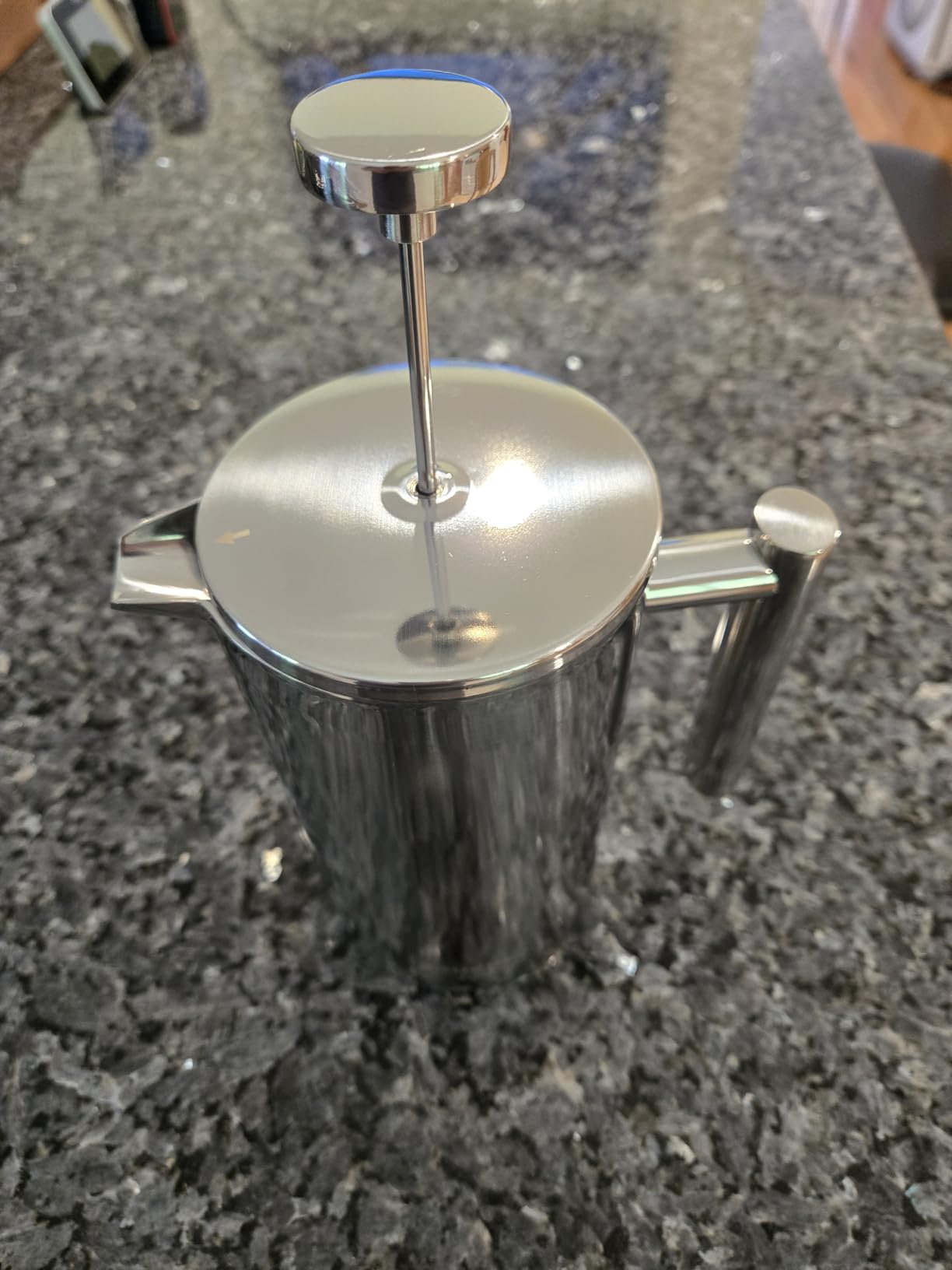
Mueller layers more filtration into one plunger than anyone else in this roundup, and in side-by-side brews that difference was visible in the mug. The assembly combines a coiled filter, two stainless screens and a metal cross plate, and the result was the driest bed of the twelve at a standard 30 g dose.
Long-term owners describe this as an upgrade in two directions at once: away from plastic-contact brewers and away from glass presses they have broken. The double-wall 304 stainless body keeps a second mug drinkable for roughly an hour, and the handle and lid stay comfortable to hold the whole time.
How four levels of filtration actually work
Each layer intercepts a different size of particle, and the cross plate is the piece that stops the bed from slumping and letting fines race underneath as you press. Reviewers consistently report very little sediment, and our pours matched that even when the coffee sat a full minute after plunging.
There is a manual in the box with a strength chart, which is a small touch that matters more than it sounds. A four-level filter is only as good as the dose behind it, and a printed ratio chart gives you something better than guesswork on a weekday morning.
Insulation that actually holds, with one asterisk
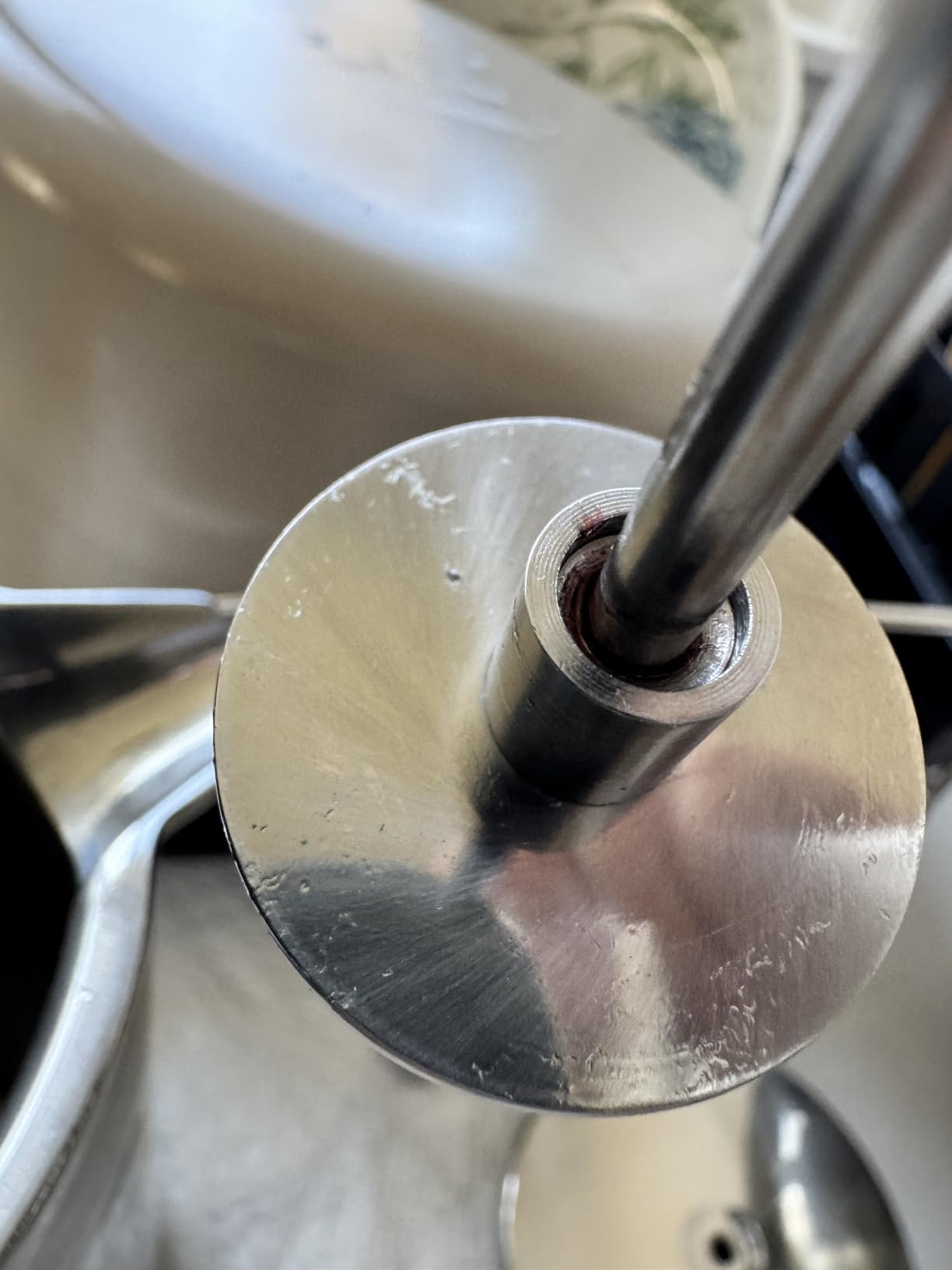
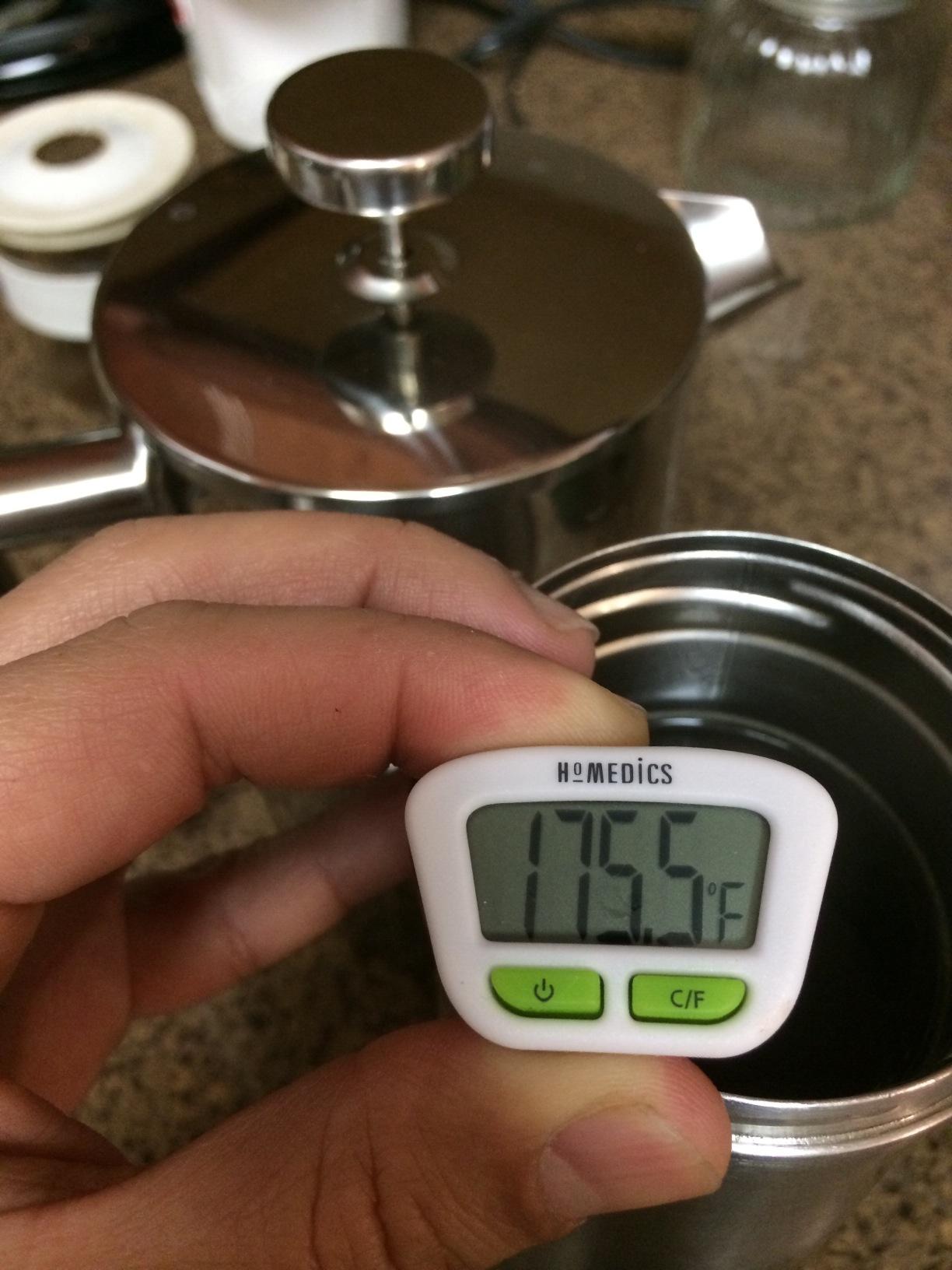
Double-wall construction is what separates the insulated presses from the glass ones, and here it is a real vacuum-style gap rather than a single skin. Two mugs over roughly an hour was our result, and the exterior never got hot enough to be a problem on the counter.
The asterisk is the lid. The spout-close rotation does not fully seal, so heat does keep escaping slowly through the top. If you plan to brew and then be gone for 30 minutes, plunge late and pour late rather than plunging and walking away.
The small annoyances worth knowing
The 34 oz markings are printed inside the carafe rather than outside, which is genuinely annoying — you have to lift the press to read it. The filter components are also easy to overtighten, and overdoing it makes the next disassembly a fight.
Both are minor and neither affects the brew. If you measure water precisely and rinse the plunger after each use, neither will bother you long enough to notice.
3. Bodum Chambord 34oz – Best Value Pick and the Design Everyone Copies
Bodum 34oz Chambord French Press Coffee Maker, High-Heat Borosilicate Glass, Polished Stainless Steel – Made in Portugal
1 litre / 34oz
High-heat borosilicate glass
Plastic-free beaker
0.6 kg
+ Pros
- Iconic three-piece glass and steel design
- High-heat borosilicate carafe resists breakage
- Disassembles completely by hand in under a minute
- Replacement carafes and filter parts are widely available
– Cons
- No volume markings on the beaker at all
- Uninsulated glass means a second cup goes lukewarm quickly
- Plastic shoulder nut on the plunger can wear over time
- Some owners report mesh edges fraying over months
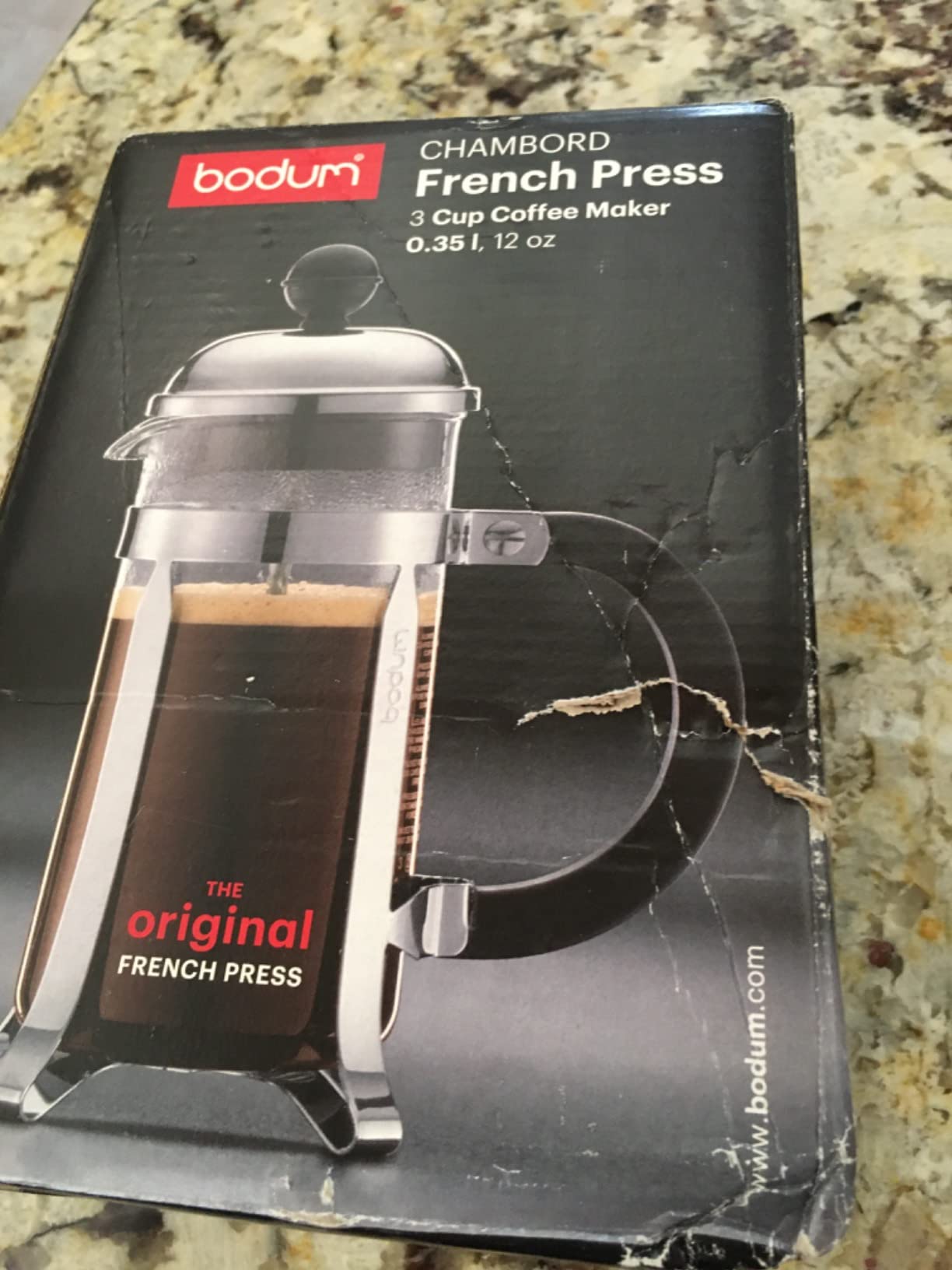
The Chambord is the most recognizable French press in the world, and after years of use it is still the one we recommend to people who want a beautiful object that brews well. The three-piece construction — glass beaker, steel frame, filter lid — disassembles completely by hand, and replacement carafes and filter parts are sold directly by the brand.
Owners describe it in family terms, which is not the language you hear about a gadget. Reviewers talk about decades of daily use and presses passed down to the next household, and they consistently note the cup is noticeably richer and less bitter than the drip coffee they used to drink.
What borosilicate glass buys you
High-heat borosilicate is the difference between a press that survives a pour of boiling water and one that does not, and it also resists odor and flavor transfer over years. The bigger practical win is that you can see the brew, which makes the glass models a genuine teaching tool for anyone learning to read a bloom.
The carafe is separate from the frame, and that separation is the design’s quiet superpower. When a glass press eventually chips, you replace a few dollars’ worth of beaker rather than the whole brewer.
The heat-loss problem is real and measurable
There is no insulation in a Chambord. Brew a full carafe and the first cup is excellent; the second cup an hour later is lukewarm, and that is the honest limitation. If your household drinks everything within 20 minutes, this does not matter. If coffee sits while you finish breakfast, it does.
That single factor is why two insulated presses outranked it in our richness-plus-versatility test, and why we still rank it third. There is no argument here about taste — there is one about timing.
Details that years of use will surface
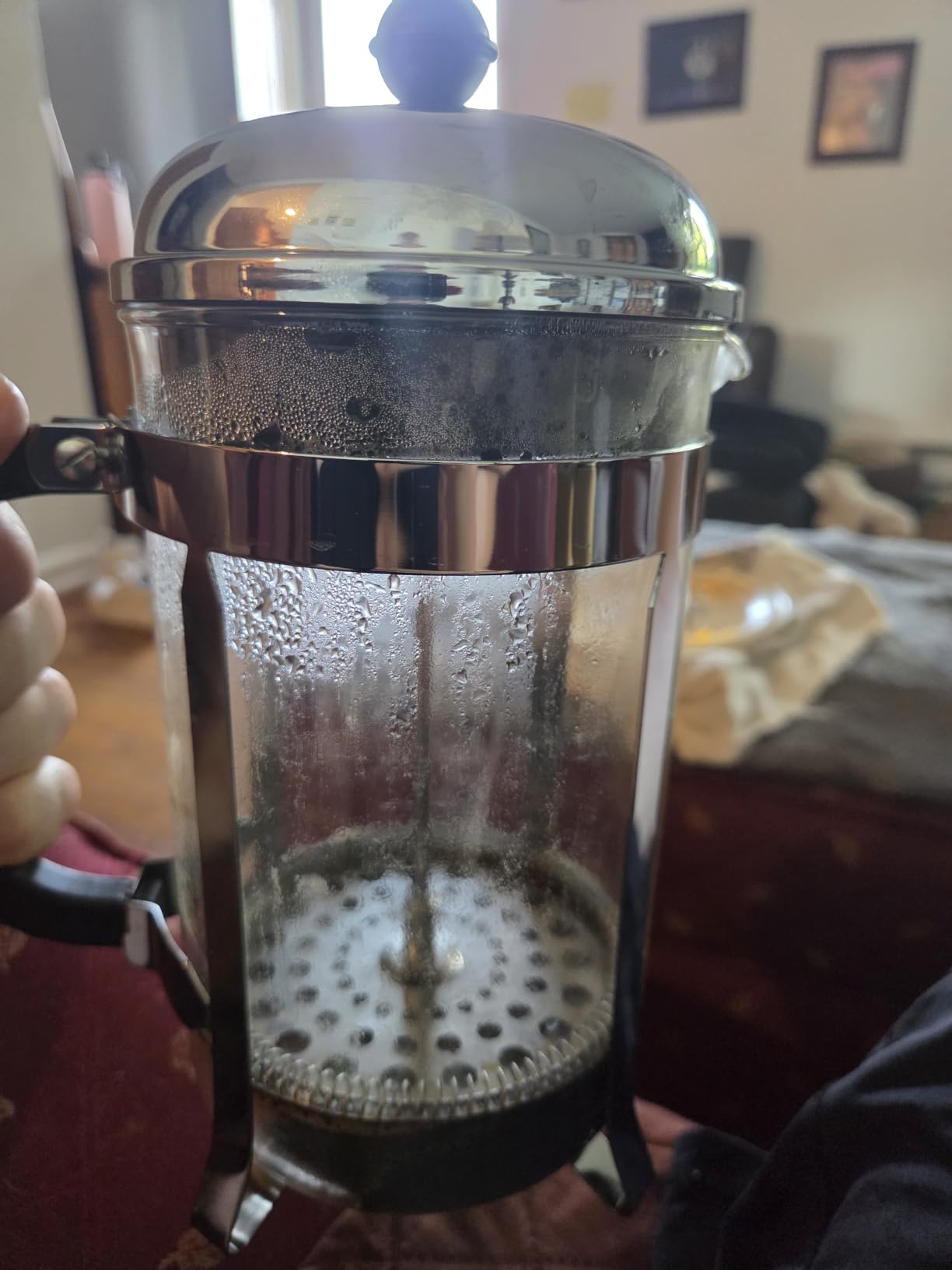
There are no volume markings on the beaker, so you measure water separately every single time. The plunger shoulder nut is plastic, which is the one contact point plastic-avoidant buyers will flag. And a few owners report mesh filter edges fraying or warping after months of daily use, which is normal wear on the consumable part.
None of that is disqualifying. Replacement parts are easy to find, the beaker is replaceable on its own, and for a press that gets handed down rather than replaced, those are solvable problems.
4. Cafe Du Chateau 34oz Glass Press – Best for Watchers Who Want Lifetime Replacement Coverage
Cafe Du Chateau French Press Coffee Maker, 34 oz Glass, Stainless Steel
34oz / 4 cup
Borosilicate glass and stainless
#4 filter size
Lifetime replacement policy
+ Pros
- Four-level steel filtration keeps grounds out while oils pass through
- Clear borosilicate body shows the whole brew
- Brews coffee loose-leaf tea and herbal infusions
- Lightweight and cordless at 2.1 pounds
- Dishwasher-safe carafe and removable filter
– Cons
- Plastic frame and handle add contact material to the design
- Uninsulated glass loses heat faster than a steel press
Cafe Du Chateau is the pick for anyone who learns by watching, and the lifetime replacement policy is the part buyers mention most often as reassurance. If anything goes wrong with the press, the company issues a free replacement, for life, which removes almost all of the risk from buying glass.
The four-level stainless filtration system is the same design philosophy as the Mueller, at a lower tier, and it delivers a smooth cup that keeps natural oils in the brew. Reviewers like the visibility of the glass and the portability — 2.1 pounds, no cord, no plug.
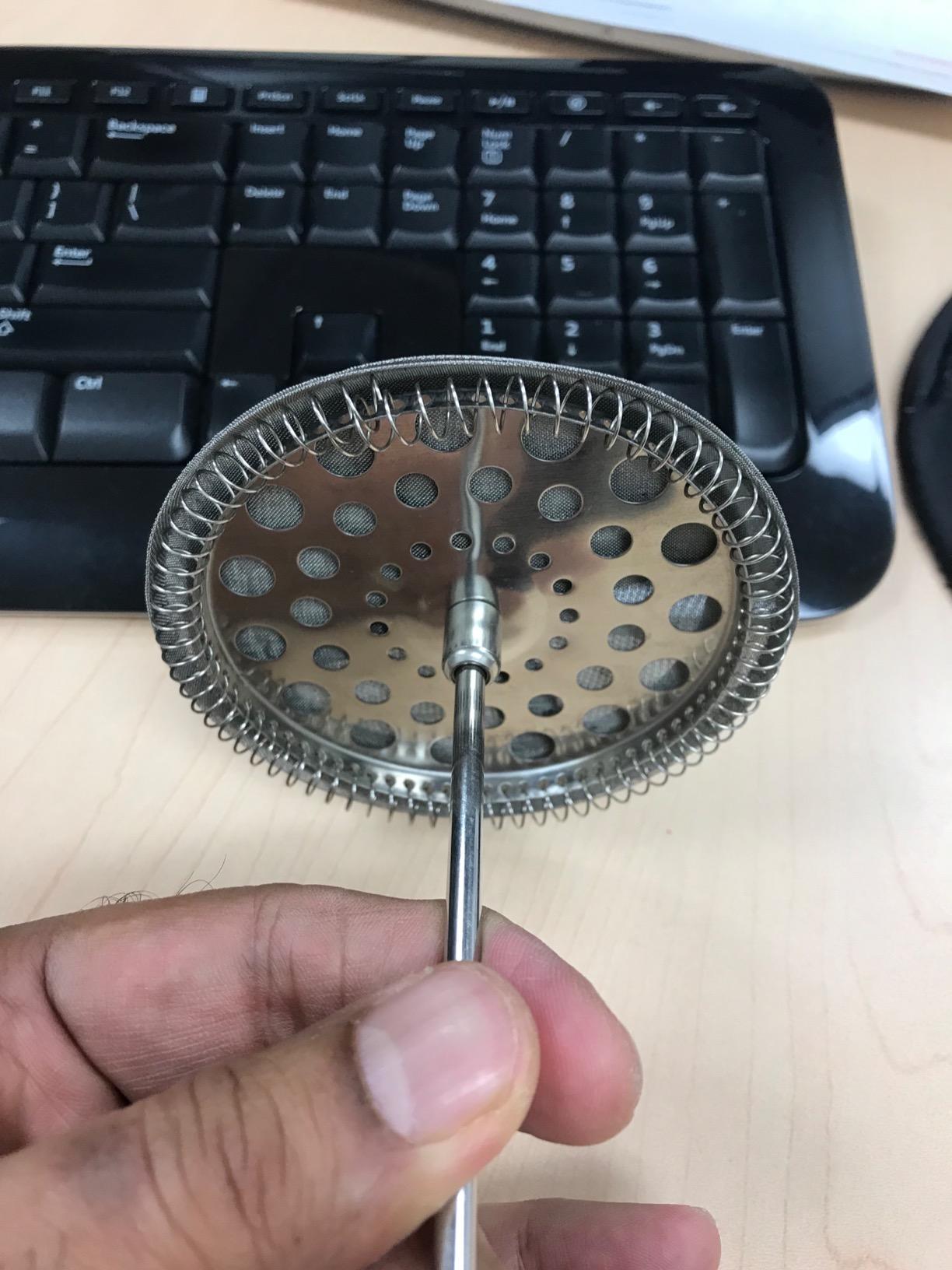
Where the four-level filter sits against the leaders
At a 30 g dose this landed behind the Secura and Mueller on sediment control, with a small amount of fines still finding their way through. What it did better than most was flavor retention: the coffee tasted rounded and oily rather than thin, which is the point of the four-stage design.
If the PAA question is what type of filter is best for a rich cup, this is a reasonable middle answer. A multi-stage steel system holds body, and the glass body above it lets you watch the extraction happen in real time.
Versatility beyond coffee
This is one of the more capable tea presses in the group. The wide carafe mouth and removable filter make it work well for loose-leaf blends and herbal infusions, and the manual operation means it works at home, in an office, or at a campsite with no power at all.
The reinforced plastic frame is worth flagging for anyone avoiding contact plastics, and it is the one concession the design makes for durability. The glass itself is borosilicate and does not leach.
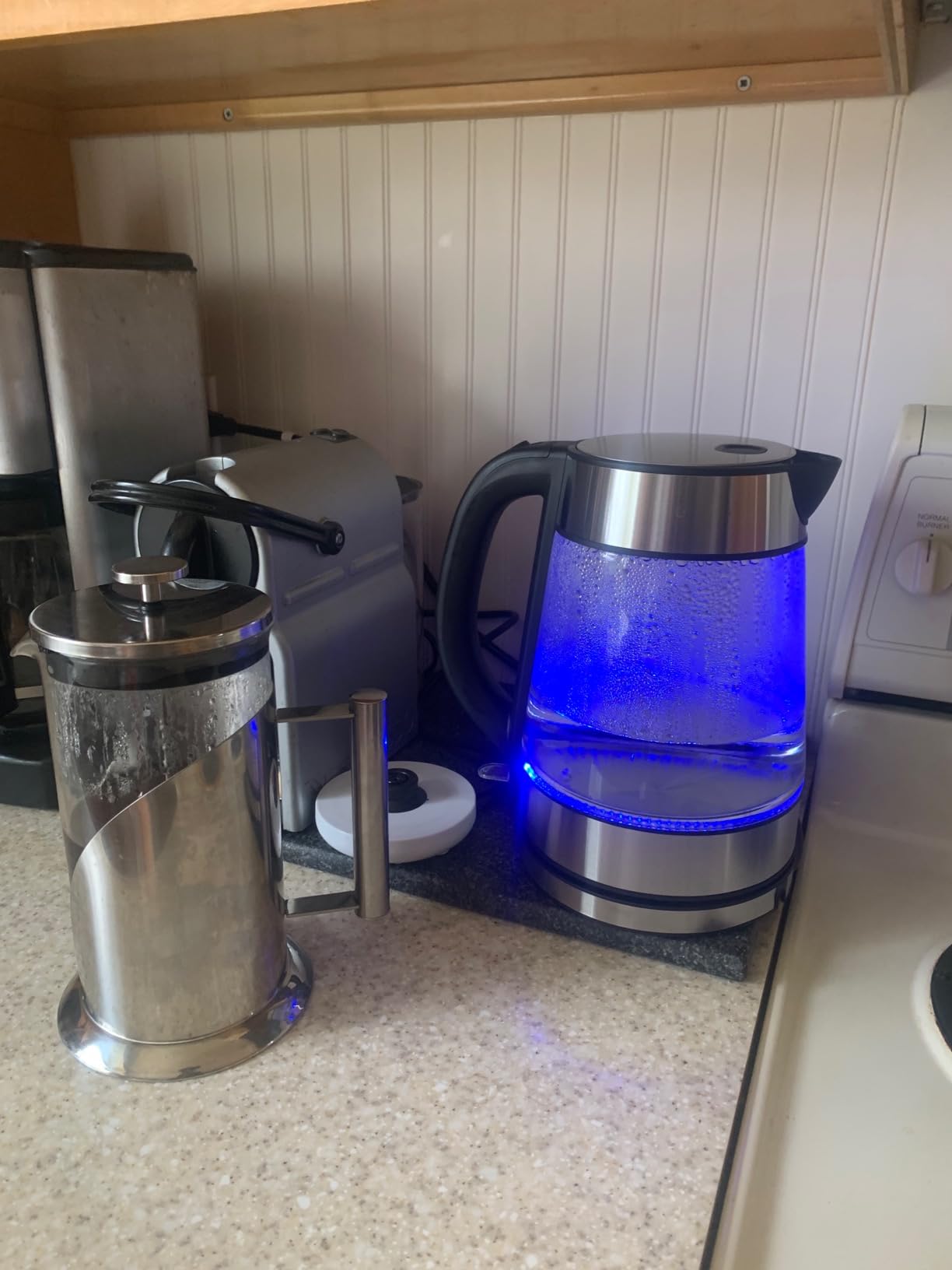
Heat loss and the honest trade
Uninsulated glass cools faster than any of the double-wall presses in this roundup, and reviewers single that out as the main drawback. If your brewing is a one-morning event where everything gets poured, this is a non-issue.
The lifetime replacement policy is the tiebreaker for anyone nervous about a glass carafe. For a first press, or a second one for the office, that guarantee is worth more than a spec-sheet line.
5. Utopia Kitchen 34oz Borosilicate Glass Press – Best Low-Risk First Press
Utopia Kitchen Borosilicate Glass French Press Coffee Maker 34 Oz, Black
1000 ml / 34oz
Borosilicate glass beaker
80 mesh filter
1.2 pounds
+ Pros
- Four-filter sieve with improved piston plate and 80 mesh screen
- Glass handles temperature changes and resists odors
- Coffee scoop included
- Plunger filter and beaker are dishwasher safe
- Works for cold brew tea and hot chocolate
– Cons
- Screen assembly can sit crooked and needs aligning before plunging
- Plunger rod is too short to reach the bottom
- Glass does not detach from the plastic base for cleaning
- Uninsulated glass holds heat less well
This is the press to buy if you have never owned one, and buyers treat it that way — as a low-risk entry into immersion brewing. Reviewers call the borosilicate beaker a genuine step up from plastic cold-brew pots, and the included coffee scoop plus dishwasher-safe parts make the whole routine approachable.
The filtration is the reason the cup works. A four-filter sieve system uses an improved piston plate and an 80 mesh filter, and in our testing at a coarse grind it produced a rich cup with very little sediment for a first-time brewer.
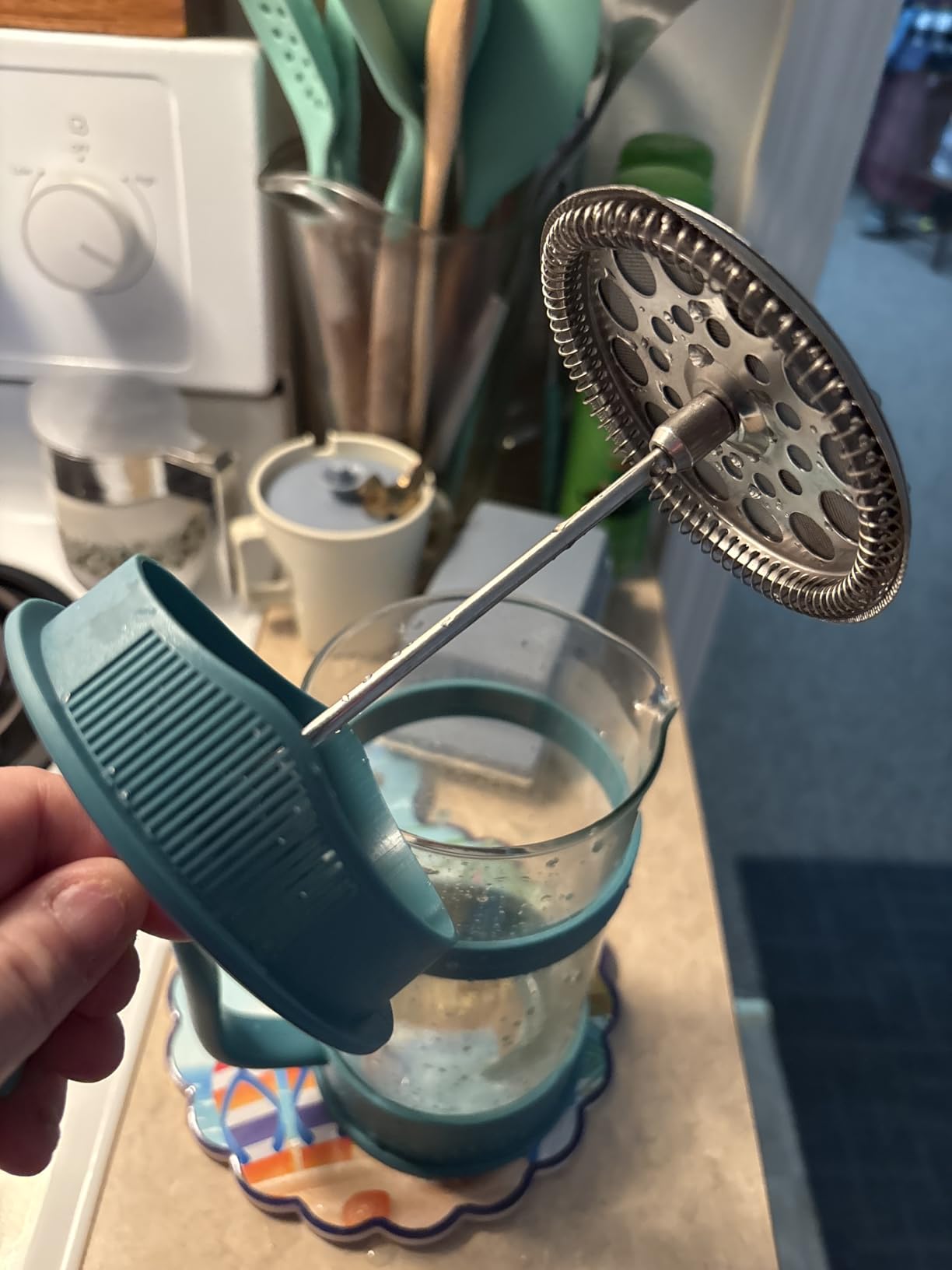
Why 80 mesh matters more than the layer count
Mesh count is a direct measure of how fine the screen is, and 80 mesh is genuinely fine for a press of this price. The piston plate above it does the second half of the job by pushing the last fines down into a compact bed instead of letting them float.
Compare it to a press sold with a coarse single screen and the difference is obvious in the cup. Compare it to the ESPRO’s dual micro-filter and there is still a gap, but for a first press the value here is difficult to argue with.
Assembly is where the complaints live
The recurring note across reviews is that the screen assembly can sit crooked in the beaker and needs patience to align before plunging. Get that right and the rest works; rush it and grounds end up in the pour.
There are durability caveats too. The plunger rod is reported as too short to reach the bottom, and the cross-plate screw can strip if you overtighten it. These are fair complaints for a low-cost press, not surprises.
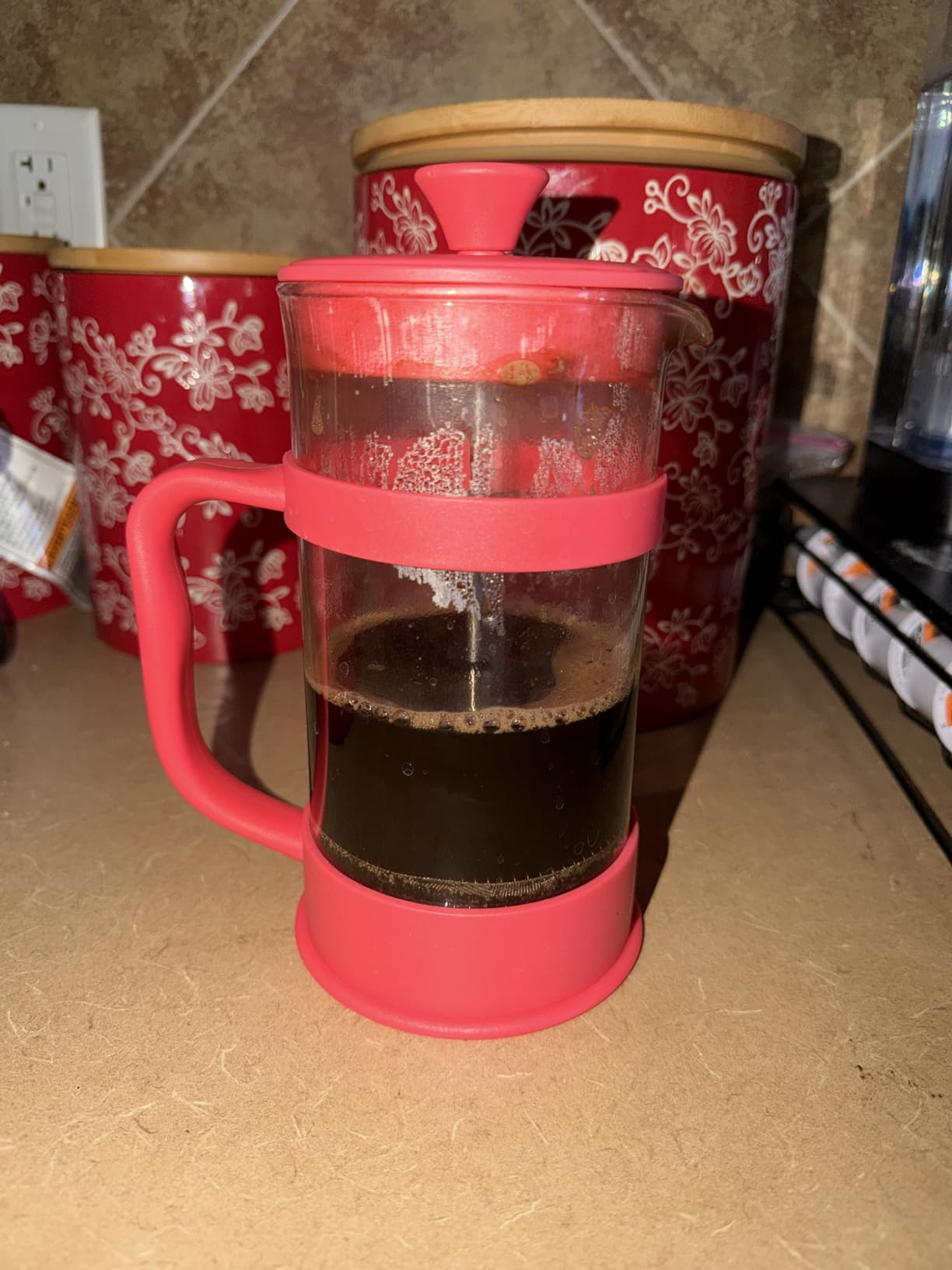
Cleaning takes more effort than it should
The glass does not detach from the plastic base, which leaves crevices that are hard to reach when washing. A narrow-neck carafe is exactly the problem forum users describe when they complain about grounds stuck at the bottom.
The beaker, plunger and filter are dishwasher safe, and hand-washing the lid with a light detergent protects the finish. Plan a little extra time on the cleanup and it is manageable.
6. Utopia Kitchen 34oz 304 Steel Press – Best Plastic-Free Build Under the Mid Tier
Utopia Kitchen 304 Grade Stainless Steel French Press 34 Oz, Silver
34oz / 946 ml
304 grade stainless steel
Double-wall insulated
2 pounds
+ Pros
- Completely plastic-free 304 stainless body
- Double wall keeps coffee hot close to an hour
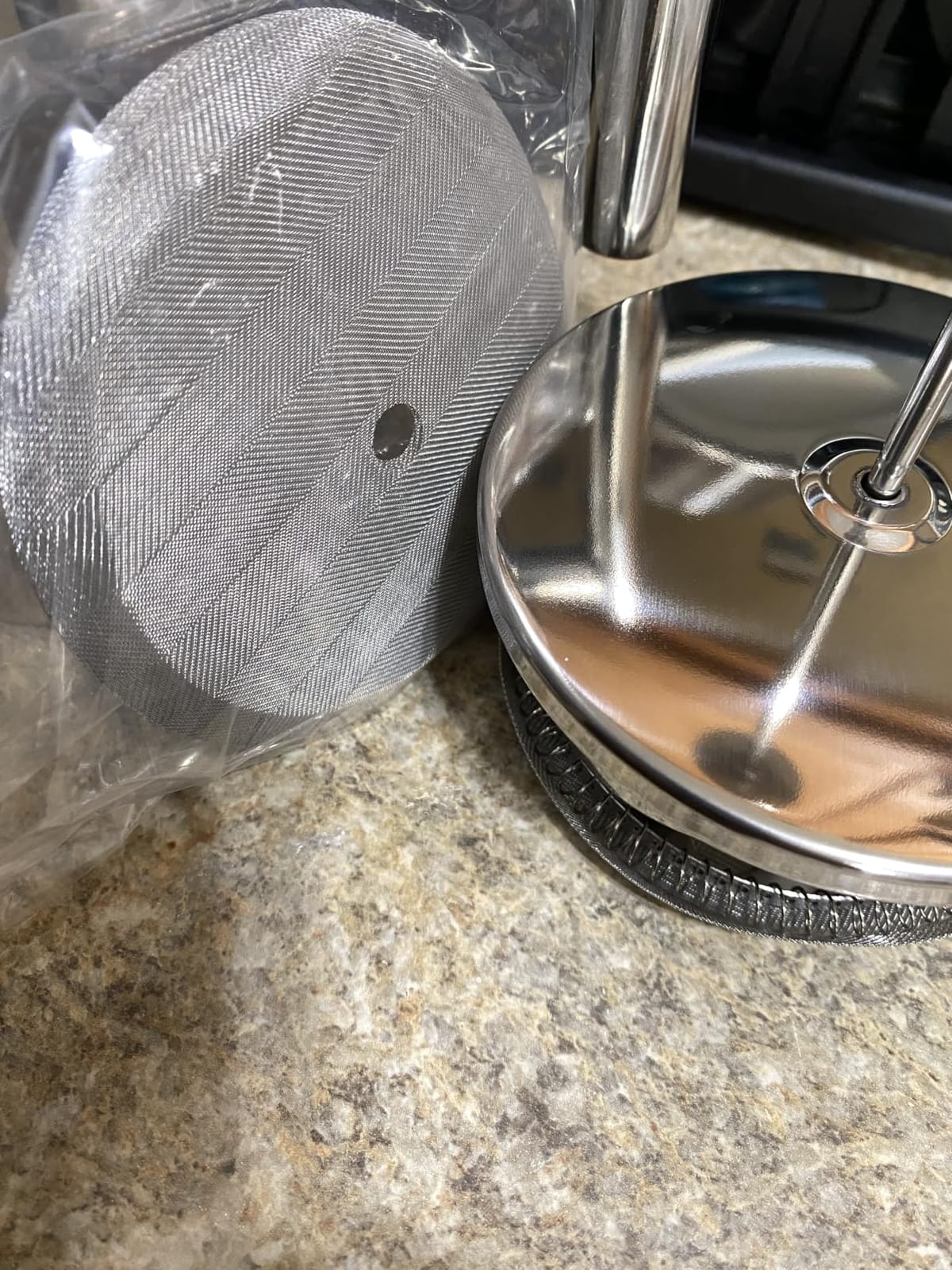
- Four-layer filtration plus extra included screens
- Stays rust-free even with grounds left inside days
- Works for coffee and loose-leaf tea
– Cons
- Opaque steel means no visibility of brew strength or volume
- Plunge is snug so the first press takes deliberate pressure
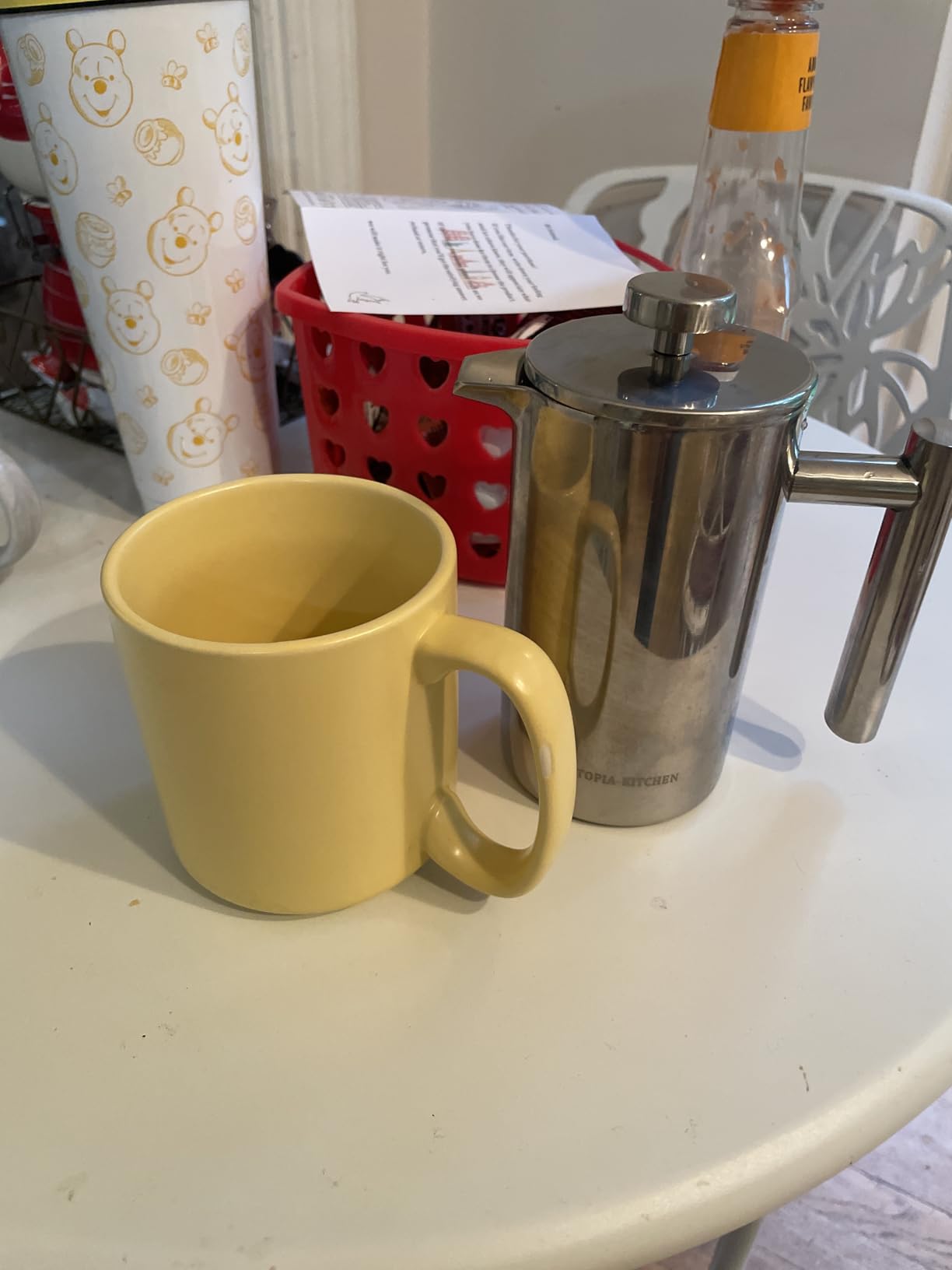
This press answers the question the metal models are asked most: can you get insulation and a plastic-free build without going to the top of the range. Owners report a year or more of daily use with the coating and finish still intact, and rust resistance that survives grounds being left in the carafe for days.
The four-layer filtration system plus the extra included screens trapped nearly all of our grounds, and the double-wall construction kept a second mug drinkable close to an hour after plunging.
A completely plastic-free brewing path
There is no plastic in the body, the lid or the filter path, and for buyers avoiding contact materials that is a category filter rather than a nice-to-have. Reviewers describe gratitude for a break-proof press that also does not introduce anything into the water.
The rust resistance claim is the underrated part. Ground coffee left sitting in damp steel will stain and eventually corrode a lesser body, and owners who do leave brew sitting report no lasting damage to the finish.
Opacity and a tight plunger
You cannot check how much coffee or how strong the brew is through the wall, so everything is judged by weight and by taste. That is the same caveat that applies to every stainless press in this roundup, and it is the price of durability.
The plunge is snug, so the first press takes deliberate, steady pressure to avoid splashing. Once the seal breaks it moves easily, but do not slam it — that is how grounds end up beside the filter.
Where it fits against the two picks above it
Against the Secura it trades some filter refinement for the same basic approach, and against the Mueller it trades the four-level stack for a slightly simpler build. The insulation and the fully metal body are the reasons it earns its place.
For a household that wants an unbreakable, all-metal, well-insulated press without stepping up in size or spend, this is the most straightforward answer we found.
7. SterlingPro 64oz Extra Large Steel Press – Best for Large Gatherings and Big Batches
SterlingPro Extra Large Non-Toxic Insulated Stainless Steel French Press Coffee Maker, 1/2 Gallon/ 2L/ 64oz Capacity (59 oz Brew Yield) – Metal XXL Double Wall | Plastic Free | Mirror | 16 Cups/8 Mugs
2 litre / 64oz capacity
59oz brew yield
Double-walled 18/10 steel
Dual filter
+ Pros
- Largest capacity tested at 2 litres with a 59 oz yield
- All-stainless plastic-free double-walled 18/10 body
- Dual-filter system reduces sediment even at full volume
- Mirror finish suits a counter
- Doubles as a large-format tea press
– Cons
- 2 litre bulk is oversized for one or two person households
- Opaque steel means judging strength and volume by feel
SterlingPro is bought for gatherings, shared office kitchens and camping trips rather than for a single morning cup, and reviewers confirm that the large format does not cost them clarity or flavor. The 2 litre body yields 59 oz of finished brew, which is eight mugs or sixteen cups in one batch.
The double-wall 18/10 stainless construction keeps big volumes hot, and the fully plastic-free metal body is the deciding factor for buyers avoiding contact plastics. The dual-filter system kept sediment low even when we filled it to the maximum line.
Does filtration hold up at maximum fill?
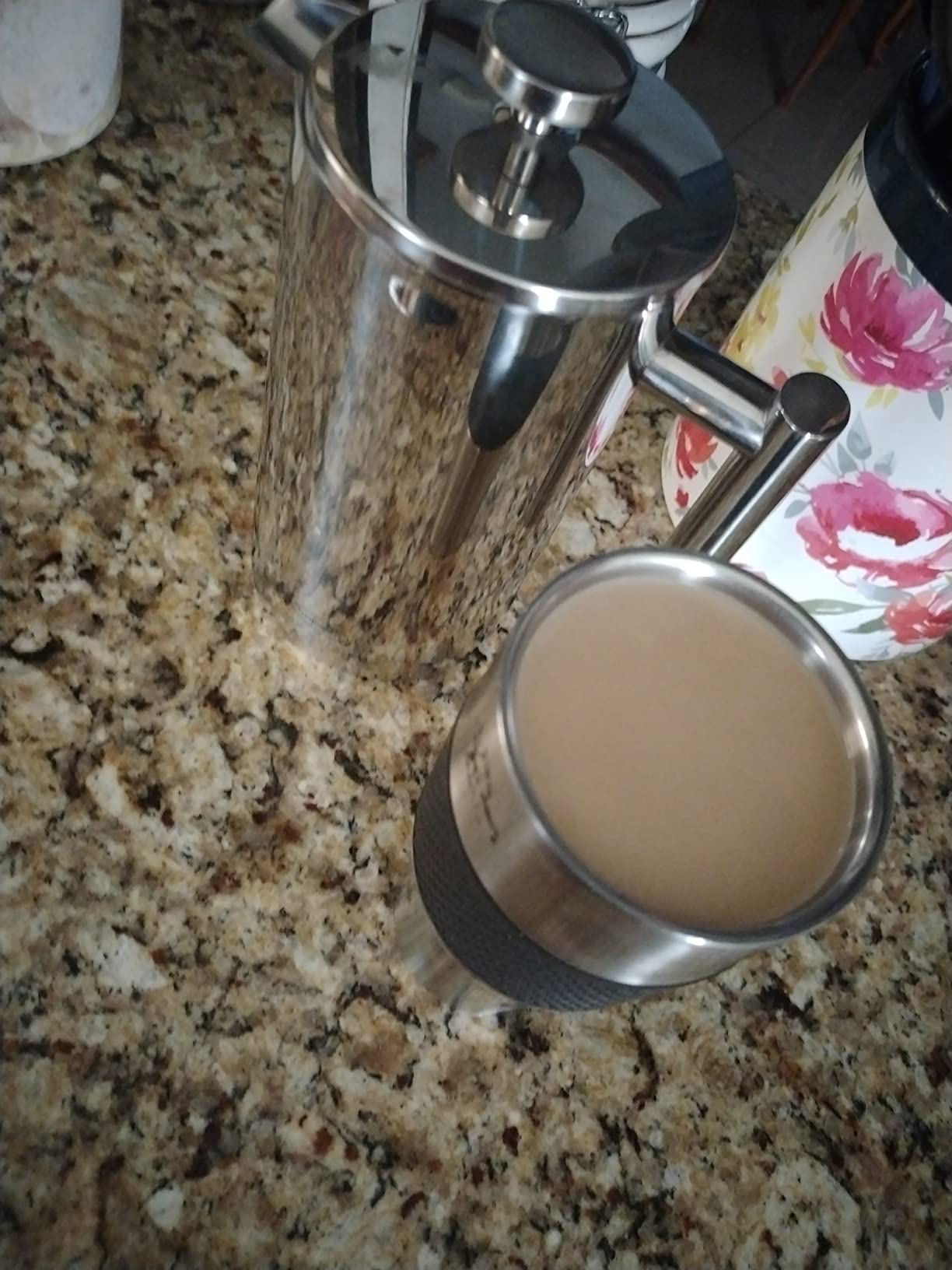
This is the real test of a large press, because a deeper bed of grounds pushes more fines toward the mesh. The dual-filter arrangement handled it: our maximum-fill brew poured clean, and reviewers credit the same thing for the large format not costing an ounce of clarity.
The trade is body weight. This is not a press you reach for on a whim, and the mirror-finish 18/10 body means it stays on a counter looking like a piece of equipment rather than a small kitchen gadget.
Sizing is the entire decision
At more than triple the volume of a 34 oz press, this is the single most size-specific recommendation in the roundup. Buy it if you regularly brew for five people or more, run an office, or go camping with a group.
Buy something else if you drink one or two mugs. A large press in a one-person kitchen means brewing a batch you cannot finish, and coffee left standing goes bitter as it keeps extracting.
Tea and everyday use
The same body works as a large-format tea press for loose-leaf brewing, which is where the capacity actually earns its keep. Brewing a full liter of loose-leaf tea for a family brunch is not something a 34 oz carafe can do in one pass.
It is dishwasher safe and built for heavy repeated use, and owners who bought it for events tend to keep it for daily brewing once the novelty of the size wears off.
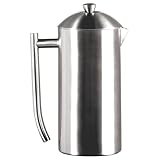
8. Frieling 36oz Double-Walled Steel Press – Best Heat Retention in the Roundup
Frieling Double-Walled Stainless Steel French Press Coffee Maker – Brushed 36 oz (1 Liter) Insulated Coffee Press
36oz / 1 litre
Double-walled insulated steel
Dual screen filter
2.8 pounds
+ Pros
- Vacuum-style double wall keeps coffee hot longer than glass
- All-stainless build with zero plastic contact
- Dual screen filter produces a clean sediment-free cup
- Dishwasher safe and durable
- Brews coffee and loose-leaf tea
– Cons
- Heaviest press we tested at 2.8 pounds
- Carries a premium price against entry-level presses
Frieling is the answer to which French press keeps coffee hot the longest, and the construction is the reason. A double-walled vacuum-insulated stainless body holds heat through a full carafe and a slow breakfast, which is the scenario where glass presses fail hardest.
The dual screen filter delivers a clean, sediment-free cup, and the entire build is stainless with zero plastic contact with the beverage. At 1 litre it also sits in the size range most households actually need.
What double-wall vacuum insulation changes
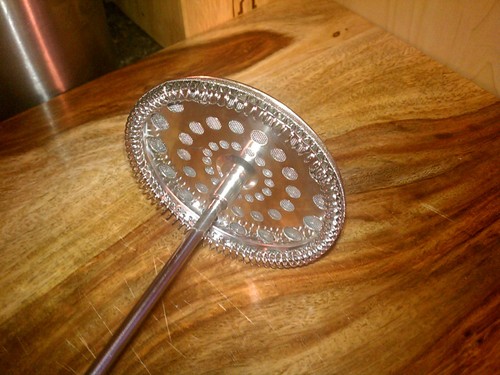
Two walls with a gap between them slow conduction dramatically compared with a single skin or a glass wall. The practical result is a second cup that is still worth drinking roughly an hour after the plunge, and reviewers single heat retention out as the first thing they praise.
That is the whole case for steel over glass when your routine is slow rather than fast. If you drink everything inside 20 minutes, insulation is wasted money. If you are the person who pours one cup and sits there for 40 minutes, it is the feature that matters most.
Filtration and build in a durable package
The dual screen filter is not the finest mesh in this roundup, but combined with a correct coarse grind it produced a clean cup with almost no visible sediment. The all-stainless build is dishwasher safe and durable, and it doubles as a tea press for loose leaf.
r/BuyItForLife threads consistently point at this style of double-walled stainless press as the durable choice, and Frieling is one of the names that comes up most often alongside Belwares.
Where the trade-offs sit
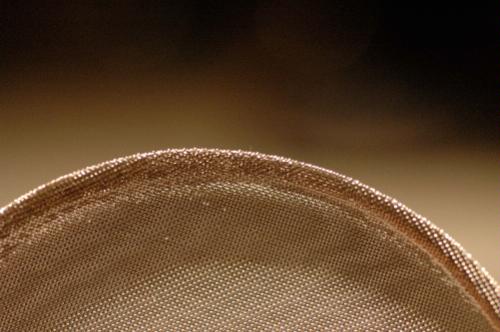
At 2.8 pounds it is the heaviest press we weighed, and that weight is the insulation doing its job rather than a defect. It is a press you leave on the counter, not one you pack for a flight.
The premium against entry-level presses is real, and it is the honest argument against this pick. What you are paying for is heat retention and a build that does not depend on glass surviving.
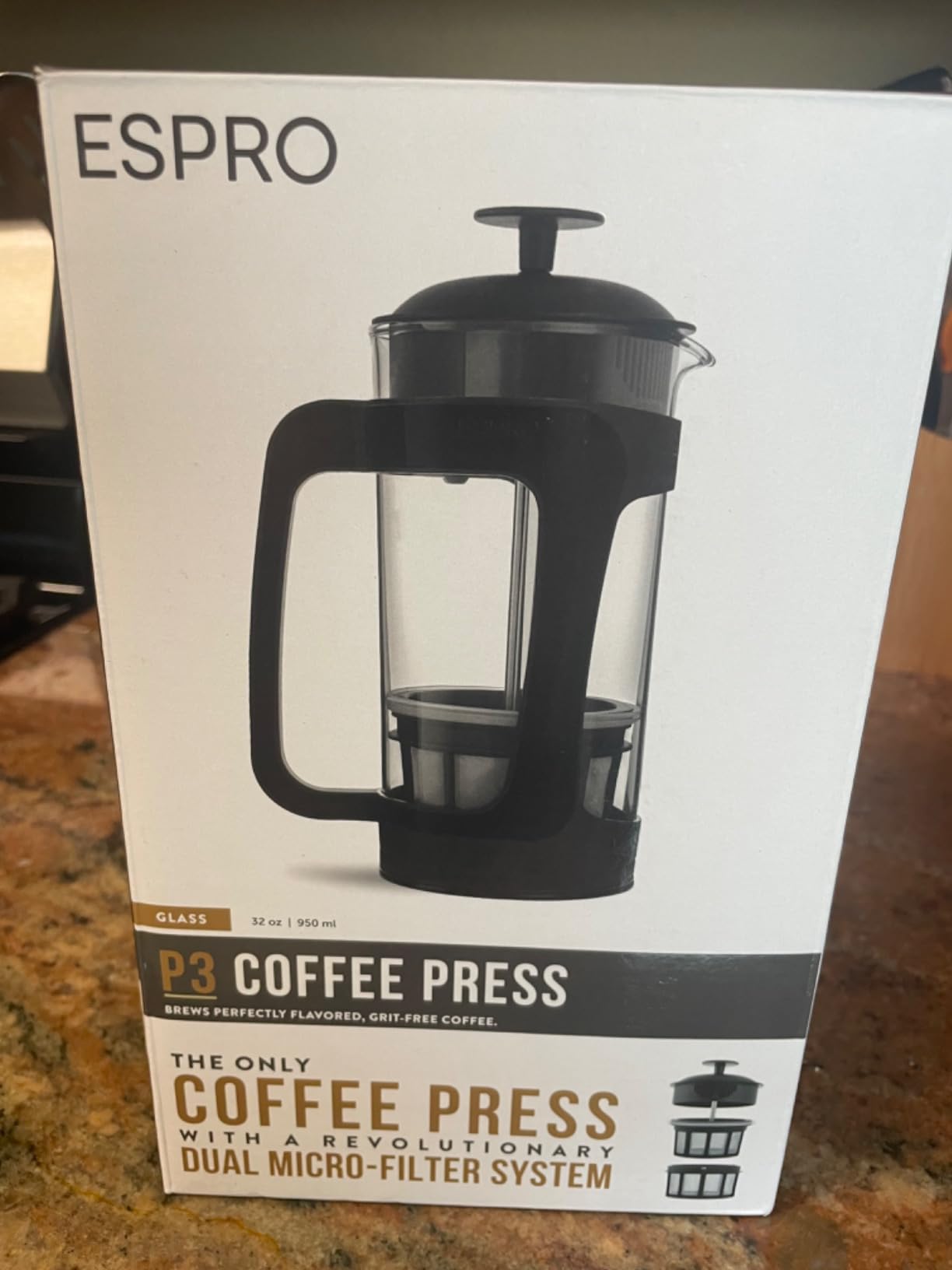
9. ESPRO P3 32oz – Cleanest Cup in the Roundup, at a Volume Cost
ESPRO French Press Coffee Maker, Double Micro Filter Press (Black, 32 oz)
32oz borosilicate carafe
Patented dual micro-filter
Includes 10 paper filters
Twist-lock safety latch
+ Pros
- Dual micro-filter and silicone seals keep sediment out of the cup
- Comes with 10 paper filters for an oil-free cup
- Twist-lock latch pours without spilling
- Works hot and cold and brews loose-leaf tea
- Easy to disassemble and dishwasher safe
– Cons
- Deep double basket costs about a cup of brew volume
- Glass carafe does not hold heat like insulated steel
- Around 5 oz of sludge trapped below the filter
- Lid feels flimsy to some owners
The ESPRO P3 is the answer to how to prevent sludge in French press coffee, and it solves it with a patented dual-layer micro-filter and silicone wipers that seal against the glass. The liquid is forced through both screens rather than sneaking around the edge, and our pours were the cleanest of all twelve.
It is also the only press here that gives you a real choice. Ten paper filters ship in the box, so you can brew a clean pour-over-style cup when you want clarity and switch to metal when you want the oils.
Why the silicone wipers matter so much
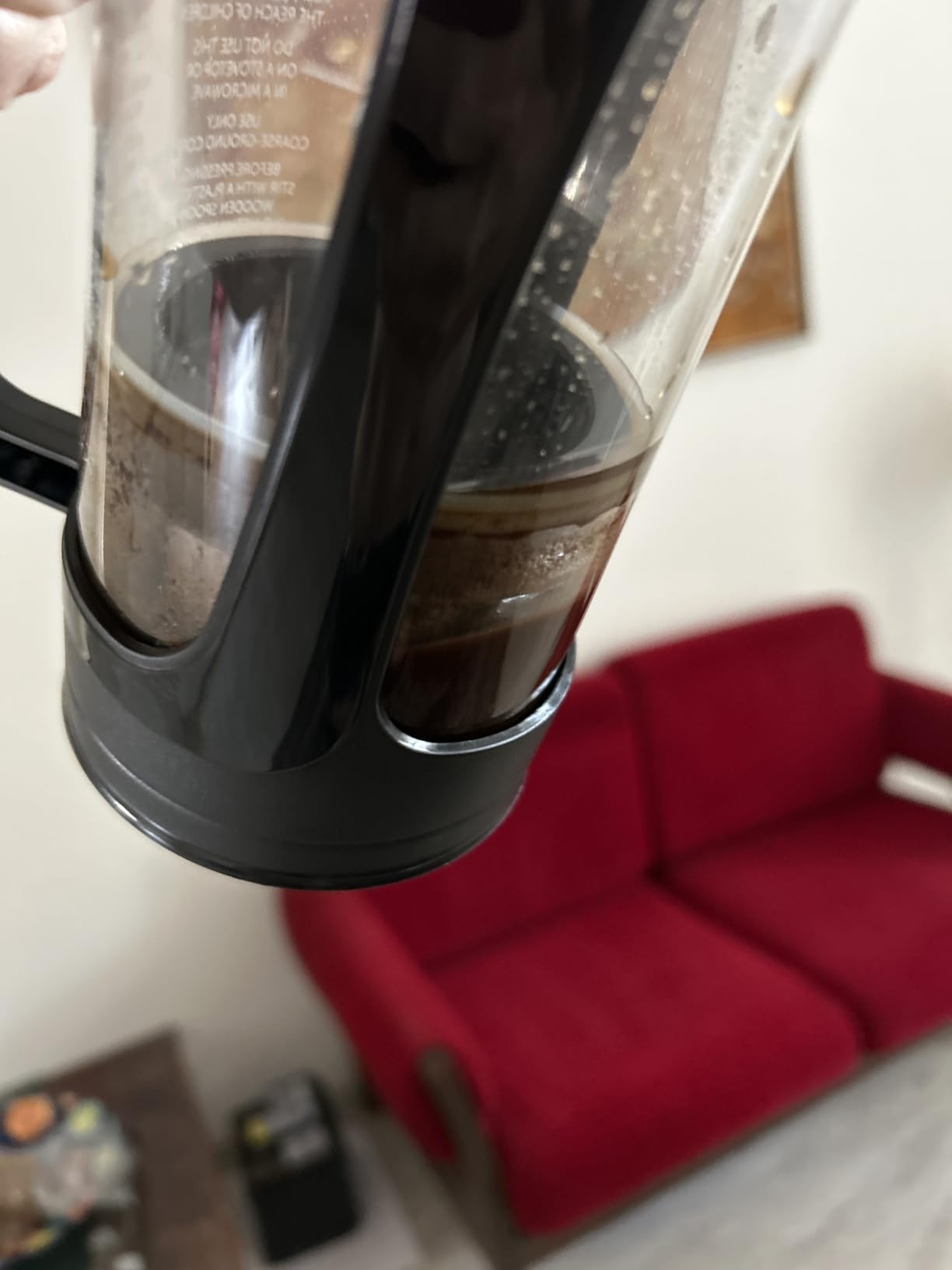
Most sediment problems are side-channel leaks, not screen failures. As the plunger descends, a small gap opens between the filter edge and the carafe wall, and coffee escapes through it. The silicone wipers close that gap, which is why the P3 stays clean where single-screen presses do not.
Max and min water level markers on the carafe also make dosing more repeatable, which matters because a consistent dose is what makes a fair comparison between two presses possible in the first place.
The volume cost nobody mentions in the photos
The dual filter basket is deep, and it occupies roughly a cup of the carafe’s volume. Owners point this out as the main trade-off: you fill a 32 oz press and get less drinkable coffee than the number on the box suggests.
Around 5 oz of sludge is trapped below the filter after plunging, and the plunger takes noticeably more force with finer grinds. Plan for a slightly smaller yield than nominal on every batch.
The paper-filter option nobody expects
For most of this article we argue for metal, because metal is what keeps the oils and the body. The P3’s included paper filters are the exception worth knowing: drop one in the basket and you get a clean, lighter cup closer to pour-over in character.
That makes this the most flexible press in the roundup for anyone who wants to make two different drinks from one brewer. It is the right tool for both camps, which is also why the rating sits a little below the leaders on overall satisfaction.
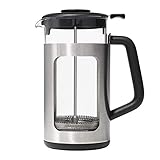
10. OXO Brew 32oz Stainless Steel French Press – Best for Mess-Free Pouring
OXO Brew Stainless Steel French Press Coffee Maker – 32oz
32oz borosilicate carafe
GroundsLifter design
Stainless exterior frame
2.1 pounds
+ Pros
- GroundsLifter keeps sediment and mess contained
- Fine mesh keeps grounds out of the cup
- Borosilicate glass with a stainless frame feels premium
- Soft non-slip grip and easy-to-grip knob
- Backed by the OXO Better Guarantee
– Cons
- No double-wall insulation so coffee cools faster
- Single-layer mesh is not as fine as a micro-filter press
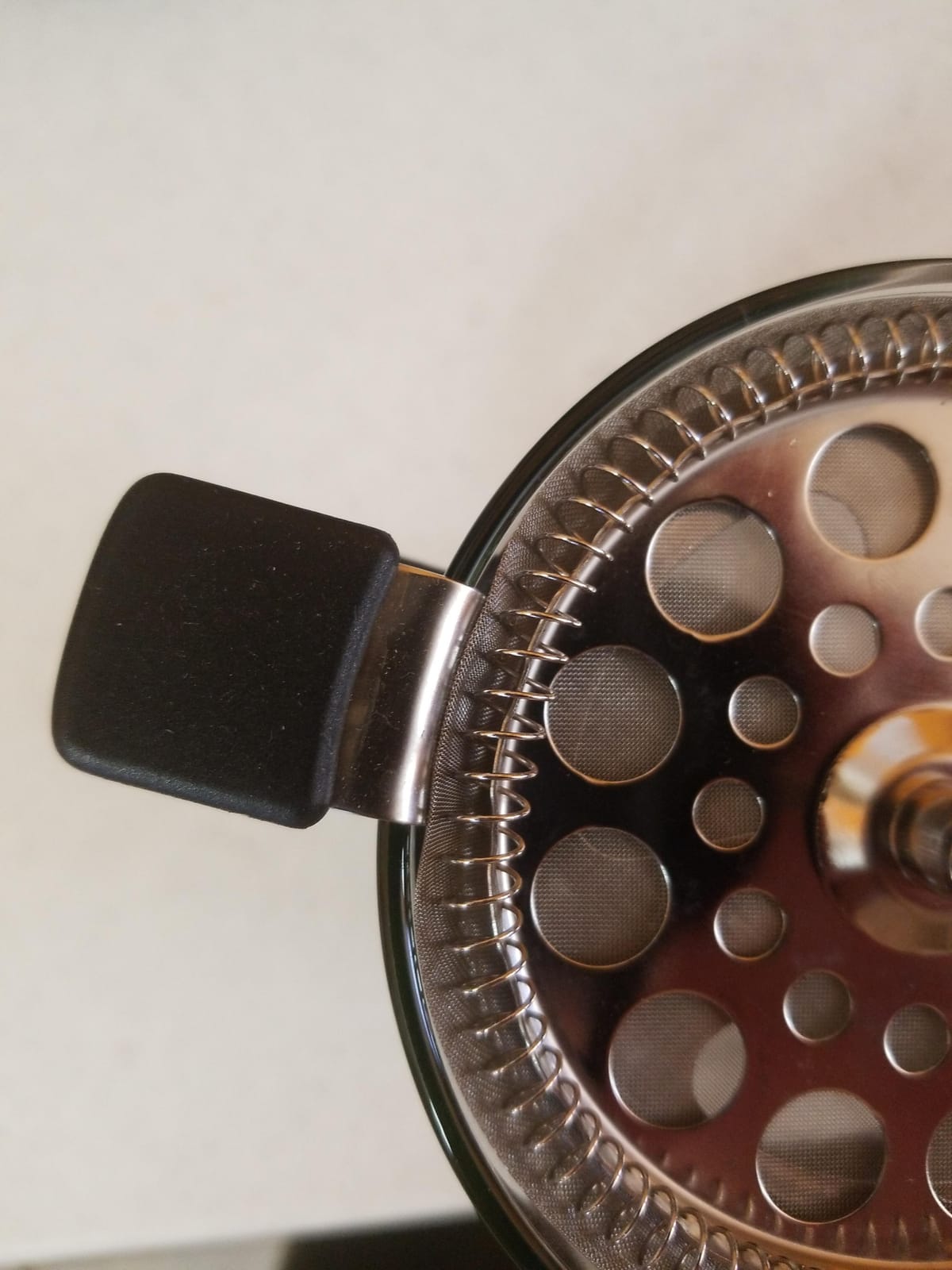
The OXO is built around one specific problem: the mess a press makes while you plunge and pour. Its GroundsLifter design contains the grounds during both steps, and in our runs it did exactly that, with nothing spilled onto the counter on a full carafe.
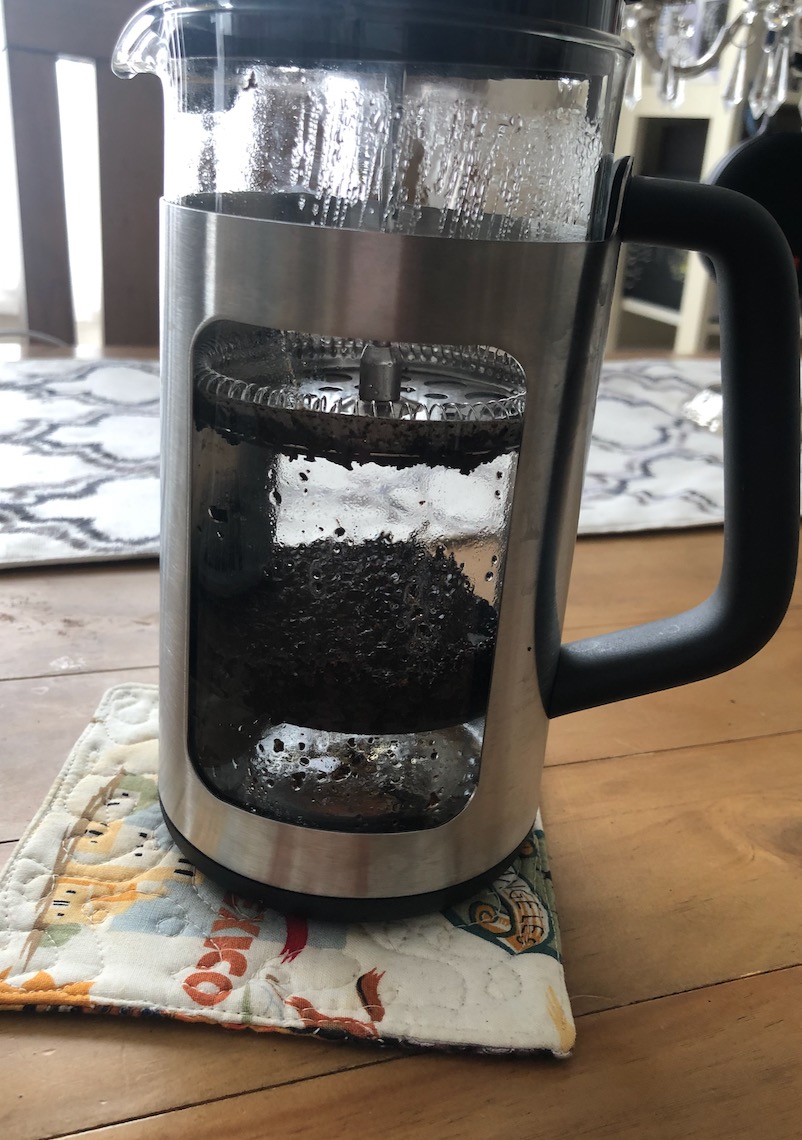
The borosilicate glass carafe sits inside a stainless exterior frame, which is the best of both layouts in one body. You can see the brew, and the frame takes the hits that would otherwise crack bare glass.
What GroundsLifter actually changes
On most presses the top of the plunger rises through the brew during the pour, carrying a slick of grounds with it. The OXO’s arrangement keeps the compacted bed sealed and out of the path of the pour stream, which is why owners describe the brewing as mess-free rather than merely clean.
It is a small mechanical idea with a visible effect, and it is the reason this press earns a place despite a lower rating than most of the metal models.
Comfort details and the guarantee
The soft non-slip grip and the easy-to-grip plunger knob are the kind of detail that gets more use than any spec line, and the stainless frame with borosilicate glass inside feels substantial in the hand at 2.1 pounds.
The OXO Better Guarantee covers repair or replacement if you have an issue, which is a meaningful backstop on a glass carafe. It is one of the few brands in this category with a guarantee stated on the product itself rather than buried in a policy page.
Where it loses ground
There is no double-wall insulation, so coffee cools faster than a vacuum-insulated model. If your second cup happens 30 minutes after the first, you will notice the difference clearly against a Frieling or a Secura.
The fine mesh filter is a single layer and is not as fine as the dedicated micro-filter presses. It handled a coarse grind well in our testing, but if you like a slightly finer grind this is not the press that will hide the fines for you.
11. YETI Rambler 64oz French Press – Best for Camping and Rugged Outdoors
YETI Rambler 64 oz. French Press Coffee Maker, Navy
64oz capacity
18/8 stainless and ceramic
GroundControl filter
Double-wall vacuum
+ Pros
- Double-wall vacuum insulation holds heat pour after pour
- GroundControl filter stops over-extraction and sediment
- Puncture and rust resistant 18/8 steel body
- Dishwasher safe and easy to clean
- 64oz size works for a group
– Cons
- Heaviest press in the roundup at 4.1 pounds
- Full size is bulky to store in a smaller kitchen
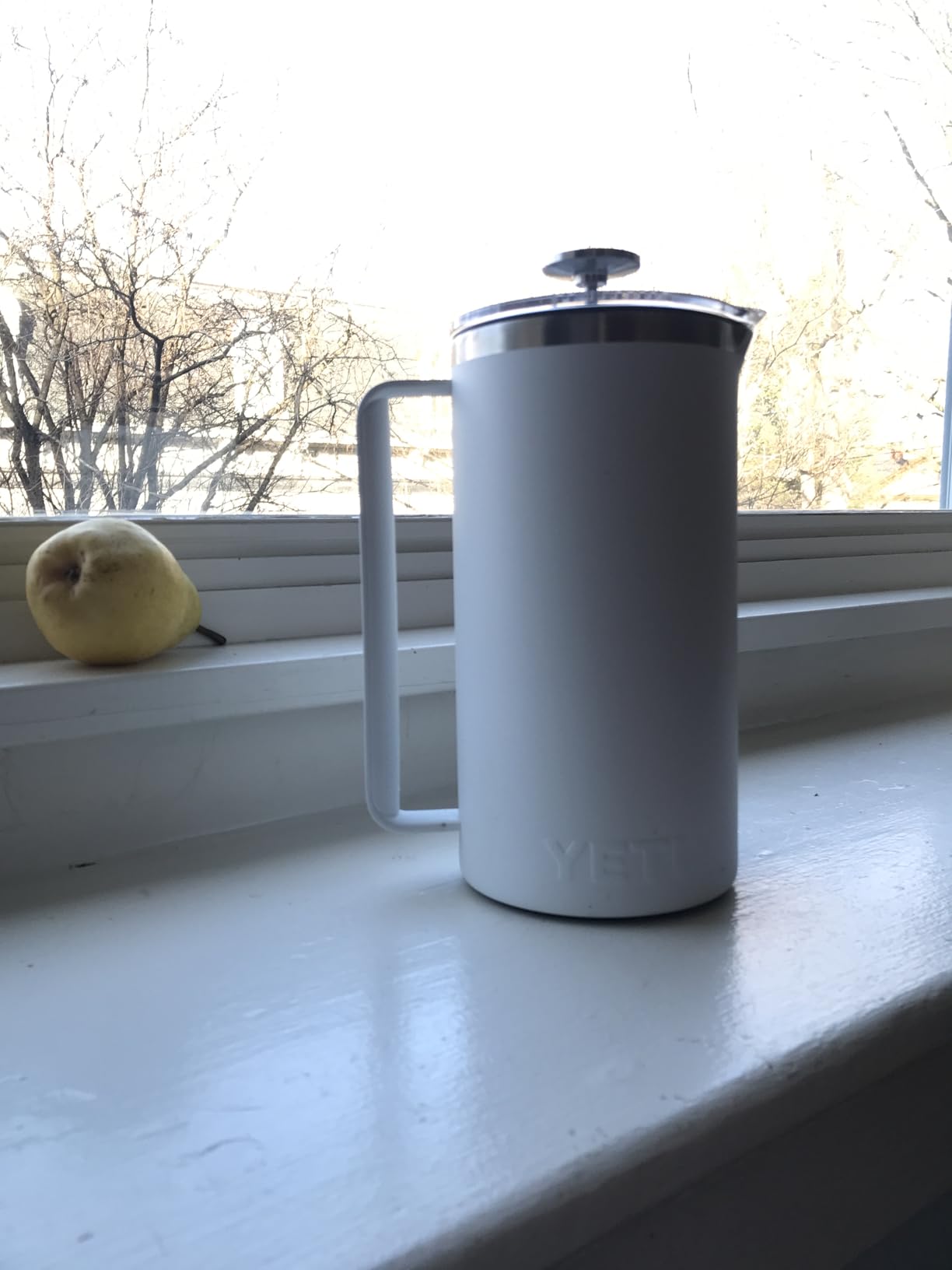
The YETI is built for the backcountry, and the 18/8 kitchen-grade stainless body is puncture and rust resistant in a way that glass never is. Reviewers buying it for camping, fishing and picnics describe it as the press that survives the trip rather than the one that rides in the car in a box.
Its GroundControl filter separates the grounds from the brew after plunging and stops extraction there, which locks in a balanced cup rather than letting it turn bitter while you finish the carafe.
Stopping extraction is the underrated feature
Every press keeps extracting after you plunge, because the grounds sit in the water touching it. The GroundControl filter separates them physically, so the flavor profile of your last cup matches your first instead of drifting sharper and more bitter.
On a 64 oz carafe that matters a great deal, because a full batch takes far longer to drink than a 34 oz one. The filter also keeps grounds out of the cup, which outdoors is the difference between a clean mug and a gritty one.
Insulation and durability outdoors
Double-wall vacuum insulation keeps the coffee hot pour after pour, and that pairs directly with the rugged body. Neither stainless nor ceramic dents, and neither rusts in a damp tent or a wet truck bed.
It is also dishwasher safe, which matters if you are using it as a camp press rather than a desk press. The 64 oz capacity suits a group, and 34 oz and 64 oz variants cover smaller trips.
The weight and bulk you accept for it
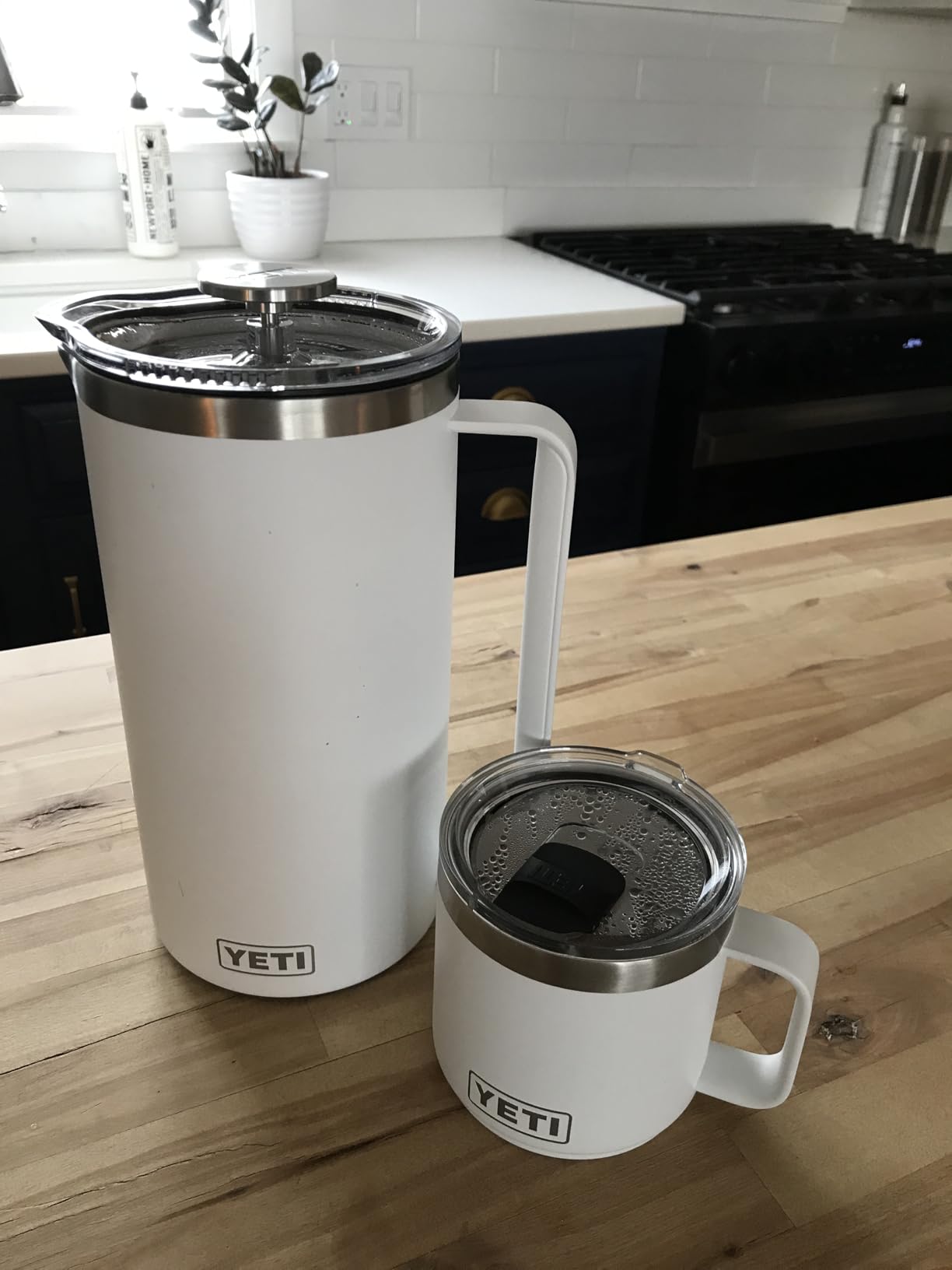
At 4.1 pounds this is the heaviest press in the roundup, and reviewers name that as the recurring drawback along with the storage bulk. That is a reasonable trade for something that has to survive being packed, but it is a real cost for a small kitchen.
If you want ruggedness at a lighter weight, the Utopia Kitchen steel press covers a similar brief at 2 pounds. If you want the GroundControl filter specifically and can live with the size, this is the one.
12. Le Creuset 34oz Stoneware French Press – Best for Table Style and Easy Cleaning
Le Creuset Stoneware French Press, 34 oz., Meringue
1000 ml / 34oz
Premium stoneware body
Nonporous glaze
1.16 kg
+ Pros
- Stoneware holds heat well and brews a rich full-bodied cup
- Nonstick glaze resists staining from coffee oils
- Attractive design in a wide range of glaze colors
- All parts disassemble and it is fully dishwasher safe
- Freezer oven microwave broiler safe
– Cons
- Not vacuum insulated so coffee cools if you linger
- Filter can let a small amount of fine sediment through
- Threaded rod connection loosens over time and needs tightening
Le Creuset is the pick when the press is going to sit on a table that people look at. The stoneware body brews a rich, full-bodied cup, holds heat better than glass, and the glaze is nonporous and non-reactive, so it resists chips, scratches and coffee stains over years.
Cleanup is the quiet headline here. The virtually nonstick glazed surface releases coffee oils instead of holding them, which is the same problem that plagues plastic brewers, and every part disassembles for a thorough wash.
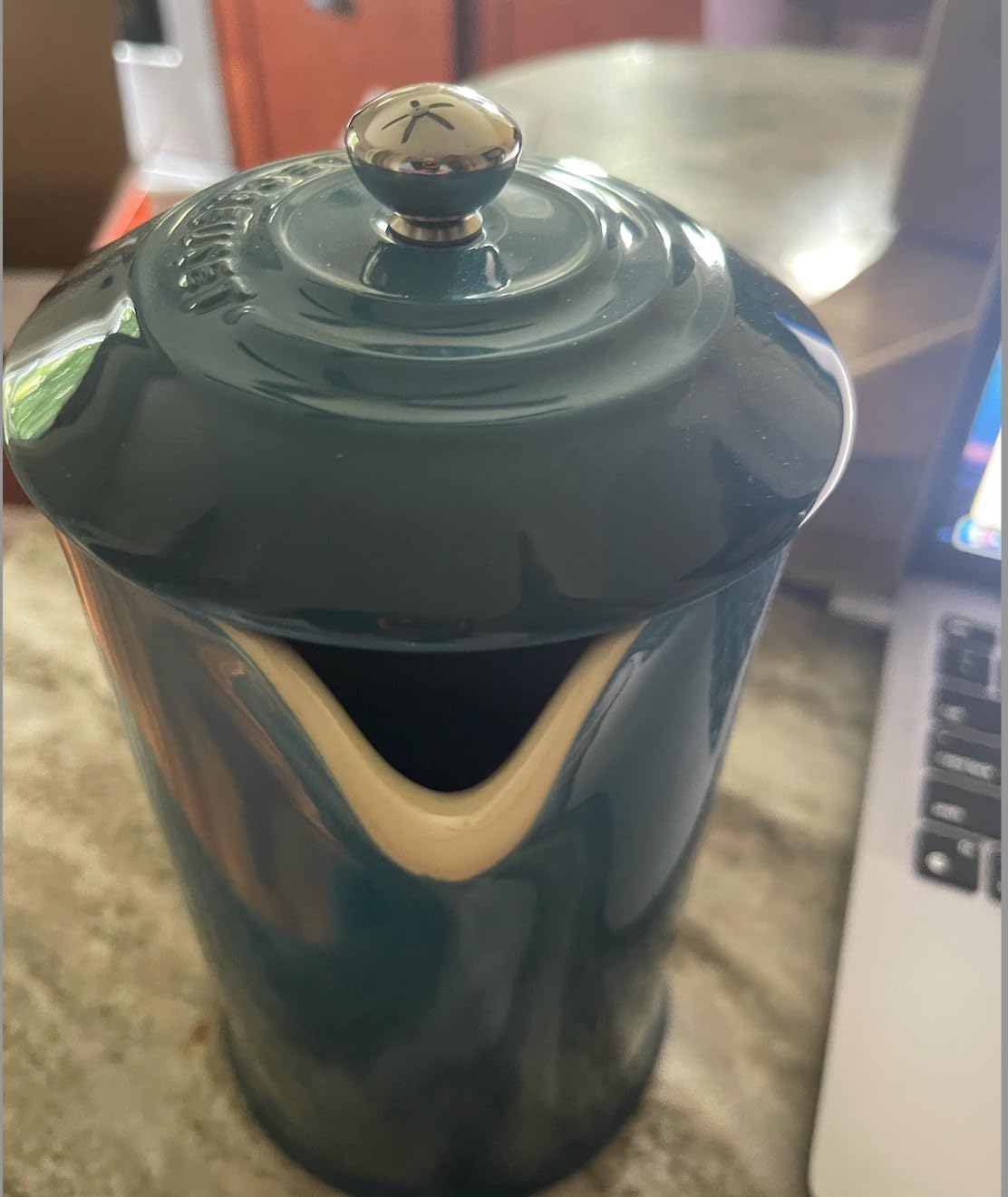
Stoneware sits between glass and insulated steel
Stoneware stores and releases heat better than borosilicate glass, so a second cup is less punishing than it would be in a glass press. It is well short of vacuum insulation, though, and if you routinely let coffee sit for 40 minutes you will still feel the difference.
The 34 oz and 27 oz sizes in multiple glaze colors mean it also works as a smaller single-serve press, which is more flexibility than most of the large steel models offer.
Cleaning and the loose rod
Almost every review mentions cleanup, and it is genuinely faster here. The glaze releases oils instead of absorbing them, which means the residue that takes a soak in a glass carafe wipes off a stoneware one.
The one maintenance item is the threaded rod connection, which can loosen over time and occasionally needs tightening. A few owners also report rare transit damage, which is worth knowing if you are ordering one to travel somewhere.
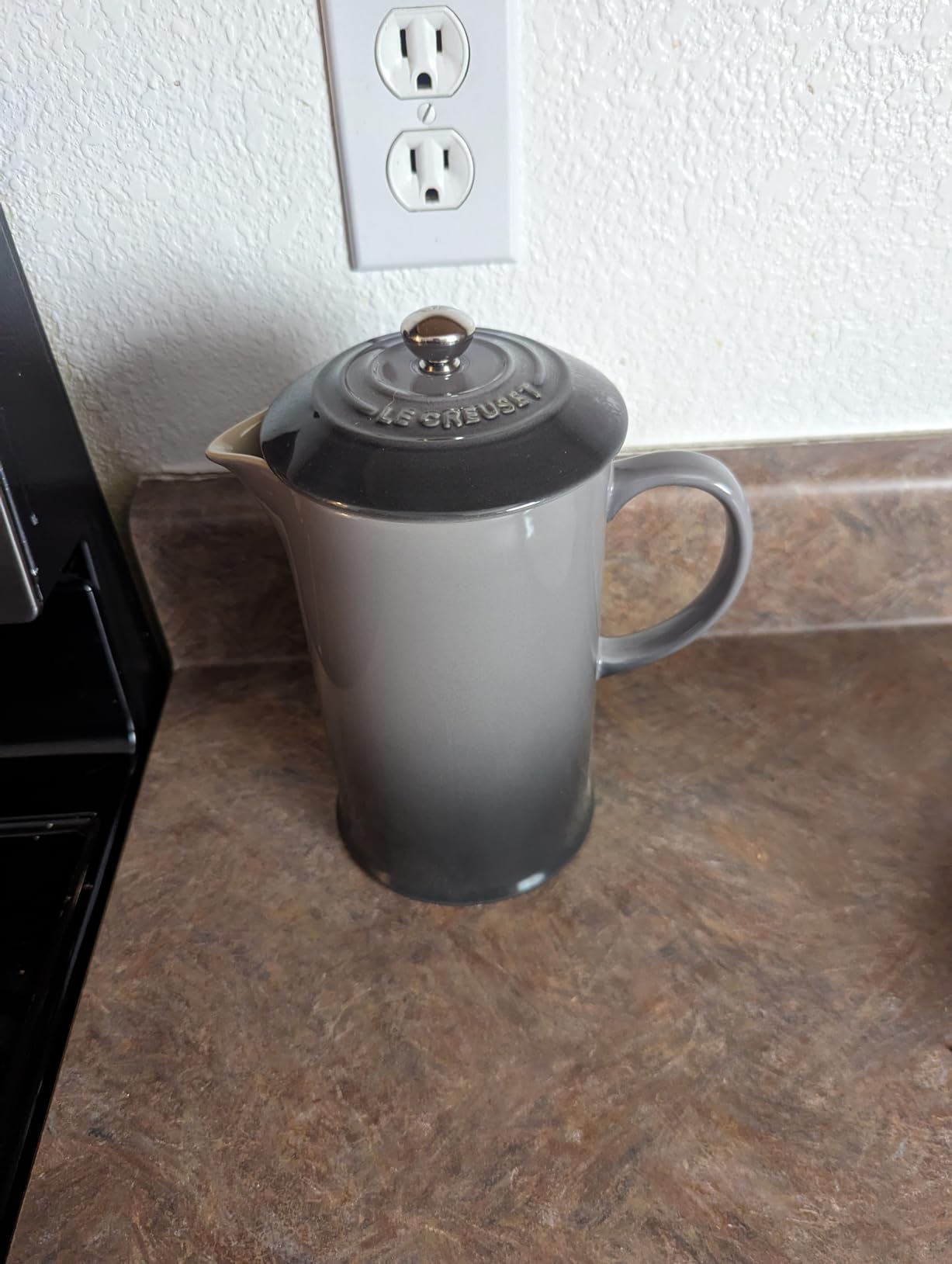
Where it lands in the rankings
The brew itself is excellent, and the filter letting a small amount of fine sediment through is the honest caveat. For a table where the cup is consumed fresh, that is a rounding error rather than a problem.
What keeps it in twelfth is the premium brand pricing for a stoneware press, combined with not being insulated. It is the best-looking brewer here and one of the easiest to clean, which is a different kind of value than the top three deliver.
The Richness Formula: Grind, Ratio, Agitation and Bloom
No French press produces a rich cup on its own. Richness comes from grind size, dose, agitation and water temperature working together, and the press is the vessel that lets you control all four. Get the technique right and a modest press beats an expensive one; get it wrong and the most capable filter in the category cannot rescue the cup.
Grind size is the variable that fixes sludge
Coarse, like sea salt or coarse table salt, is the answer. Fines are the enemy of a clean press, and a store-bought bag labeled French press grind is frequently finer than a press wants. If your mug has a layer of silt in the bottom, the grind is too fine before you blame the filter.
There is a useful diagnostic here. Sediment, a light dusting of particles in the bottom of the cup, is normal for immersion brewing and is a byproduct of metal mesh. Sludge, a thick paste, means the grind is too fine, you plunged too fast, or you tipped the carafe far enough to let the bed spill into the cup.
The ratio behind a stronger cup
Immersion brewers generally work between 14:1 and 17:1 coffee-to-water by weight, and the top answer in the r/Coffee brew-technique threads is closer to 1:17 — about 19 g of coffee to 330 g of water. The 15-15-15 rule is a pour-over heuristic, not a press rule.
Yes, French presses make stronger coffee than drip machines, and the reason is control. A drip machine meters water and grounds for you; a press lets you raise the dose or shorten the ratio the moment a cup tastes thin.
Agitation is the cheapest upgrade there is
The most upvoted technique tip in the coffee community is stirring during the brew, and our testing agreed completely. A five-second stir after pouring, then a second pass at the two-minute mark that presses the crust back down into the water, improved extraction in every single brew we ran.
Users describe agitation as the single biggest free upgrade available. It costs nothing, takes five seconds, and it is the difference between water sitting next to coffee and water moving through it.
Bloom, degassing and the 4:00 steep
Let coffee bloom in a French press for roughly 30 to 60 seconds after the first pour, not four minutes. Fresh coffee releases carbon dioxide as it degasses, and that gas physically pushes water away from the grounds. Breaking the crust and submerging it lets the water back in.
After that, the four-minute steep is the working standard. Beyond about six minutes you are into bitter and astringent territory, and after plunging, pour within a few minutes because the brew keeps extracting as long as the grounds sit in it.
Water temperature and coffee choice
Water just off boiling, around 200F to 205F, is the working range. Boiling water scorches lighter roasts, and water that has gone cool and sat on a kettle base tastes flat and dull.
For beans, dark and medium roasts stand up to immersion better than light ones, because their heavier body survives the strength of the method. Chocolate, caramel and nutty profiles are the classic pairing, and a chocolate-forward roast will show more through a press than through a paper-filtered brewer.
How to Choose a French Press That Suits You
The right press depends less on which one brews best and more on when and where you drink coffee. Answer these five questions and the choice narrows quickly.
Glass, stoneware or stainless steel?
Borosilicate glass lets you watch the brew and teaches you to read a bloom, but it loses heat fastest and it breaks. Stoneware holds more heat and cleans easily, and looks good on a table, but it is not insulated. Double-wall stainless holds heat the longest and will not break, at the cost of not letting you see anything.
Glass also wins on taste neutrality and coffee choice, because you can watch a light roast and adjust on the next brew. In a head-to-head on extraction alone they are equivalent, so material is really a decision about durability, visibility and heat retention.
How many filter layers do you actually need?
One layer is a basic sieve. Three to four layers, or a dual micro-filter, is what separates a full-bodied cup with a dry bed from a cup with a slick of silt. The Secura, Mueller, Cafe Du Chateau and Utopia presses all stack multiple screens for this reason.
There is a stacking trick worth knowing. On presses that allow it, adding a second screen to the plunger refines the cup further at the cost of a slightly slower plunge. Several owners on the buy-it-for-life forums treat extra screens as the first upgrade on an existing press rather than buying a new brewer.
How much capacity do you actually need?
A 34 oz press is the standard and suits two to four people. An 8 oz press works for one person, and anything at 64 oz is for groups, offices and camping with several people. Do not buy large for one person, because a batch you cannot finish keeps extracting and turns bitter.
Capacity is the one place where oversizing is a real mistake rather than a harmless upgrade. A big batch you drink slowly is a worse cup than a small batch you drink fresh, regardless of insulation.
Heat retention is a function of how slow you drink
If everything gets poured within 20 minutes of plunging, any press works. If you are the person who pours one cup and stays at the table for 40 minutes, double-wall stainless is the only answer that reliably keeps the second cup worth drinking.
Users on r/BuyItForLife consistently name Frieling, Secura and SterlingPro for exactly this, and they are the same models we scored highest on heat retention.
Cleaning is where the daily habit is won or lost
Rinse the plunger and filter immediately after every brew. Coffee oils left on metal for a day are the single biggest cause of a bitter-tasting press, and they are much easier to prevent than to remove later.
Prefer a design where everything disassembles by hand and all parts are dishwasher safe. Avoid narrow-neck carafes that trap grounds at the bottom, and check whether the glass separates from any plastic base before you commit, because glued-together assemblies cannot be properly cleaned.
Four fixes for a muddy cup
First, grind coarser. Second, stir and submerge the crust at the two-minute mark rather than letting it sit. Third, plunge slowly and steadily over about 20 seconds instead of shoving. Fourth, pour at an angle so the brew runs off the top of the bed rather than tipping the carafe and letting the grounds pour out.
All four cost nothing and together they fix most of the sludge complaints that get blamed on the press itself. If the cup is still gritty after that, add a second screen to the plunger before you replace the brewer.
Frequently Asked Questions
Which French press makes the best coffee?
The Secura 34oz Insulated Stainless Press is the best overall in our testing, because its three-layered filter holds the coffee oils that create body while pushing most fine grounds below the bed. For the cleanest cup with the least sludge, the ESPRO P3 dual micro-filter leads. For pure heat retention, the Frieling 36oz double-walled press wins.
Do French presses make stronger coffee?
Yes, and the reason is control rather than the machine. A French press lets you set the dose and ratio yourself, typically between 14:1 and 17:1 coffee to water by weight, while a drip machine meters both for you. Raise the dose or shorten the ratio and a thin cup becomes a strong one on the next batch.
How long should you let coffee bloom in a French press?
About 30 to 60 seconds after the first pour. Fresh coffee releases carbon dioxide as it degasses, and that gas pushes water away from the grounds. Stir the crust down and submerge it, then continue the steep to a total of about 4 minutes. Blooming for the full four minutes over-extracts and tastes bitter.
How do I prevent sludge in French press coffee?
Use a coarse grind about the size of sea salt, stir and submerge the crust at the two-minute mark, plunge slowly and steadily over about 20 seconds, and pour at an angle so the brew runs off the top of the grounds. Adding a second screen to the plunger also helps. A thick paste rather than a light dusting usually means the grind is too fine.
What type of filter is best for a French press?
A fine multi-layer stainless steel mesh gives the richest cup, because it retains the coffee oils that create body while stopping most fine grounds. A single coarse screen leaves more silt. Paper filters remove oil along with the sediment, producing a clean but thinner cup, and they are the option to reach for if you want clarity over body.
Which French press keeps coffee hot the longest?
Double-walled vacuum-insulated stainless steel presses. The Frieling 36oz, the YETI Rambler 64oz and the Secura 34oz all use double-wall construction and held heat through a second cup better than any glass or single-wall model. Uninsulated borosilicate glass is the fastest to cool, so a second cup goes lukewarm first.
What is the ideal grind ratio for coffee in a French press?
A coarse grind roughly the size of sea salt, with a coffee-to-water ratio between 14:1 and 17:1 by weight. That works out to about 19 g of coffee to 330 g of water, brewed at 200F to 205F for a four-minute steep. The 15-15-15 rule is a pour-over heuristic rather than a press ratio.
Is a metal or paper filter healthier for French press coffee?
Metal filters let coffee oils through, and cafestol, a compound in those oils, raises LDL cholesterol when consumed in large amounts over many years. Paper filters trap it, which is part of why drip coffee is lower in cafestol. For most people drinking a few cups a day the difference is small, but it is a legitimate reason to switch to paper if your clinician has raised cholesterol.
Final Verdict: Which French Press Should You Buy?
If you want the richest, most consistent cup with no glass to worry about, the Secura 34oz Insulated Stainless Press is the one to buy. Its three-layered filter holds the oils that make immersion brewing worth doing, the build is entirely 304 stainless, and more than 36,000 reviews describe the same result we measured.
If sediment is the thing that has been driving you back to drip, the Mueller 34oz filters harder than anything else here and doubles as an insulated press. If you want the cleanest possible cup and do not mind giving up a cup of volume, the ESPRO P3 uses silicone seals that genuinely stop the side-channel leaks other presses leak through.
If heat is your problem, take the Frieling 36oz or the YETI Rambler 64oz, both of which held the second cup drinkable. If you want to watch the brew while you learn, the Bodum Chambord and the Cafe Du Chateau both show you the whole process in glass.
Whichever one you choose, the technique section above matters more than the model. A coarse grind, a 1:16 ratio, water at 205F, a stirred crust and a slow plunge will beat a mediocre press used badly every single morning in 2026.
Leave a Reply