
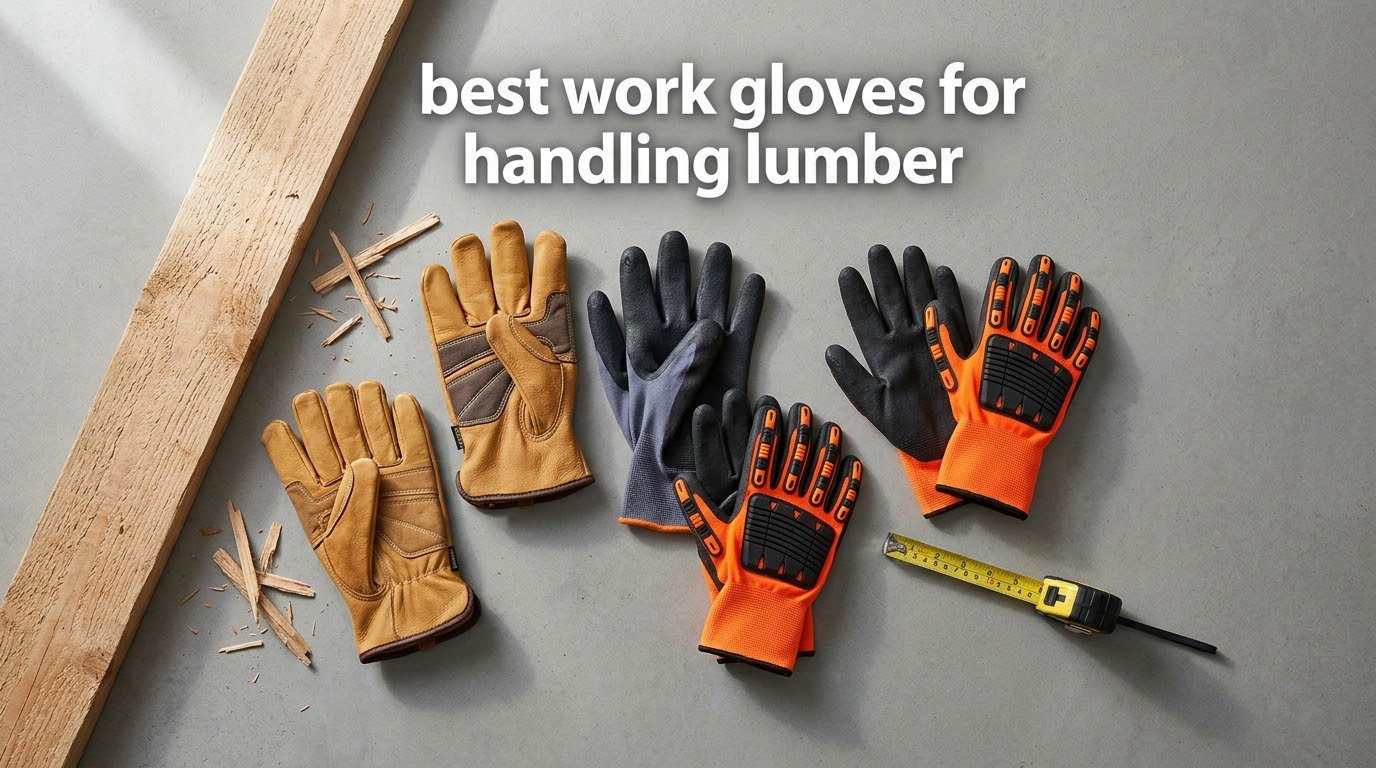
Lumber handling punishes hands in ways ordinary chores do not. Rough-sawn edges raise splinters, stacked boards pinch and crush fingers, wet bark strips the oils out of leather, and reclaimed material hides rusted nails. At the same time, a non-breathable glove traps sweat, and a sweaty palm loses grip on a board you just dropped on your foot. The best work gloves for handling lumber come down to three families: coated knit gloves for grip and dexterity, leather or synthetic leather for splinter and crush protection, and ANSI-rated cut-resistant gloves for reclaimed or hazardous material.
We spent the season moving rough-sawn fir, pressure-treated material, green oak rounds and a stack of deconstructed pallet lumber through ten pairs of gloves to find out which ones actually survive the job. We graded them on four things a lumber glove has to do: block a splinter without turning your hand into a brick, keep grip on damp wood, stay cool enough that sweat does not defeat the grip, and hold together past one season. We also tracked what each pair failed at, because in this category the failure mode matters as much as the first impression.
A note before the picks: no glove on this list is chainsaw PPE, and none of them belongs on a table saw. The safety section below covers exactly when to take them off. We also keep a separate note on cold-weather hauling, since winter firewood work is a genuinely different glove problem from summer stacking.
If you are outfitting a crew rather than yourself, the pack economics change the maths. The [planer guide for reclaimed lumber](https://fypower.org/best-thickness-planers-for-reclaimed-lumber/) covers the milling side of that same job, and our multi-pair pick below is built for a truck with two people in it.
The Three Gloves That Handled Lumber Best in Our Testing in October 2026
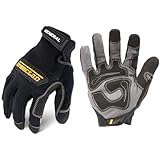
Ironclad General Utility GUG
- Padded inner palm
- Rubberized knuckle protection
- Double-stitched palm and saddle
- Machine washable

Wells Lamont Cowhide Leather
- Premium grain cowhide
- Gunn cut keystone thumb
- Adjustable ball-and-tape wrist
- Reinforced palm patch

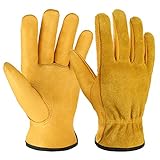
WZQH Split Cowhide Gloves
- Split cowhide with cotton lining
- Reinforced palm and stitching
- ANSI impact level 5
- Rated to 350F
Those three are the ones we reached for most. The Ironclad General Utility is the default answer for mixed work, the Wells Lamont cowhide is the glove we hand to someone who has never worn work gloves before, and the WZQH pair earned the highest rating in the group for a reason that has more to do with thickness than with any rating system.
Ten Gloves, One Job: Side-by-Side Lumber Handling Comparison
| Product | Details | Action |
|---|---|---|
|
|
Check Latest Price |
|
|
Check Latest Price |
|
|
Check Latest Price |
 |
|
Check Latest Price |
 |
|
Check Latest Price |
 |
|
Check Latest Price |
 |
|
Check Latest Price |
 |
|
Check Latest Price |
 |
|
Check Latest Price |
 |
|
Check Latest Price |
A few patterns jump out of that table before we get into the details. Most of this list is leather in some form, which tells you how much the splinter and crush problem dominates lumber work compared with sheet metal work. Only two gloves here use a synthetic coating at all, and only one carries an ANSI cut rating. That is not a data gap; it is what the job actually requires.
1. Ironclad General Utility GUG – Best Overall for Lumber Handling
Ironclad GUG04L General Utility Spandex Gloves, Black, Large, Pair
Padded inner palm
Rubberized knuckles
Double-stitched palm and saddle
Machine washable
+ Pros
- No break-in period
- comfortable on day one
- Rubberized knuckle guard takes knocks from rough boards
- Machine washable and long-lived
- Handles mixed material handling tasks
– Cons
- Fingers run long and fit loose on smaller hands
- Medium-duty shell can rip under sustained heavy lifting
- Better sized down for precision work
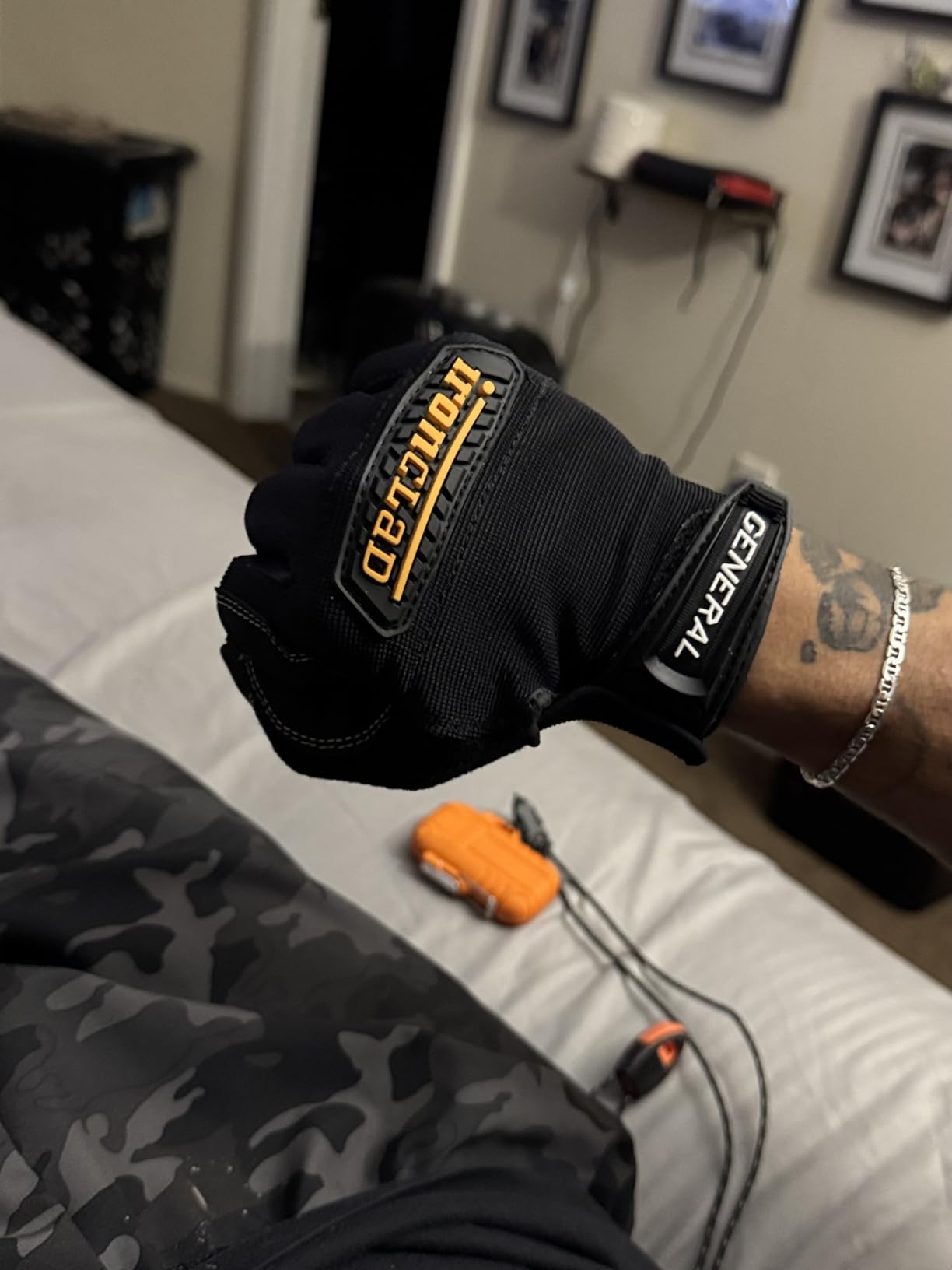
This is the pair we put on first whenever the job could turn into anything. Construction, shop work, equipment operation, rigging, and about six other things per the spec sheet, and in practice it covered everything from carrying framing lumber to wrestling a sheet of plywood into place. The padded inner palm is the reason it feels different from a thin leather glove: it takes the pressure of a 2×4 edge digging into your palm without the sting, and it keeps a splinter from becoming a puncture wound in the first place.
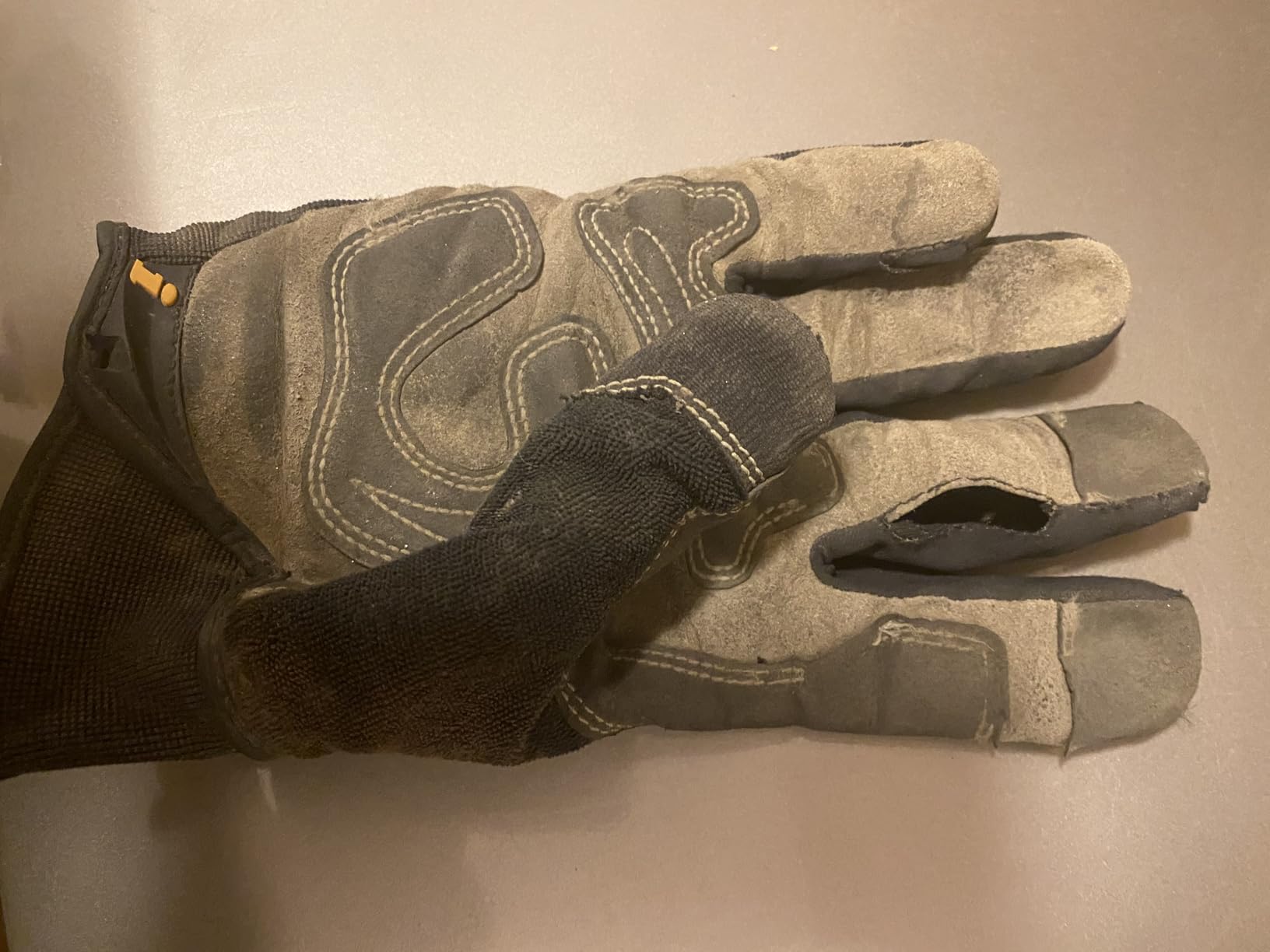
Double-stitched reinforcements on the palm, saddle and fingers are the unglamorous detail that decides how long a glove lasts against wood. Lumber kills gloves in two predictable places: the saddle where a board rests, and the fingertips where you pinch a rough end. Reinforcing both is what separates a glove that lasts a season from one that lasts a week, and this one has held up through landscaping and material handling for the owners who rate it most highly.
Knuckle Protection Against Falling Boards
The rubberized knuckle guard is the feature that matters most for lumber specifically. When a board slides out of a stack and drops edge-first, your knuckles take the hit, and the rubber takes it instead. Reviewers single this out as the reason the glove works on rough lumber rather than just on flat material.
Fit, Sizing and the Precision Trade-Off
Fit is the one honest weakness. Fingers run long, and on smaller hands the gloves feel roomy rather than secure, which costs you precision on small fasteners. Reviewers who work fine carpentry or handle screws generally size down. For lumber handling itself, the roomier cut is not a real problem.
Washability and Season-Long Durability
Machine washable construction means you do not have to retire a pair just because it picked up sawdust and resin. That matters more here than in most trades because wood debris gets into everything. Owners report these lasting across years of landscaping and material handling with nothing more than occasional washing.
Where It Falls Short
It is a medium-duty glove, and honest buyers say so. Sustained heavy lifting of sharp-edged or abrasive material will eventually tear the shell, and the loose finger fit makes it a poor choice for work that needs to feel a fastener between thumb and finger. For stacking, carrying and general lumber movement, it is hard to beat.
2. Wells Lamont Cowhide Leather – Best All-Round Leather Work Glove
Wells Lamont Men’s Work Gloves, Grain Cowhide Leather, Ball & Tape, Large
Premium grain cowhide
Gunn cut keystone thumb
Adjustable ball-and-tape wrist
Reinforced palm patch
+ Pros
- Thick cowhide resists thorns
- splinters and rope
- Adjustable wrist keeps dirt and debris out
- Breaks in soft and stays comfortable
- Sizes from Small to XX-Large
– Cons
- Fingers run long on some sizes
- Leather thickness varies between production runs
- Cowhide is not the most breathable option
This is the glove we hand to someone who says they do not need work gloves. Premium grain cowhide is naturally abrasion and puncture resistant, which is precisely the pair of properties lumber handling asks for, and the leather breaks in and conforms to the hand over the first few shifts until the fit is genuinely personal. The ball-and-tape adjustable wrist is the detail that keeps bark chips and sawdust out of the cuff instead of grinding against your forearm.
The Gunn cut with a keystone thumb is an old pattern, and it is still the right answer for grip on an irregular surface like a rough-sawn end. Your thumb sits square to the hand rather than pinched forward, which means when you wrap it around a board the load runs through the palm rather than across the base of the thumb. On the r/homestead forums, owners of multi-packs of this style of leather glove describe exactly this: the value is in owning several pairs so that one wet pair and one dry pair never block the next job.
Why Leather Solves the Splinter Problem
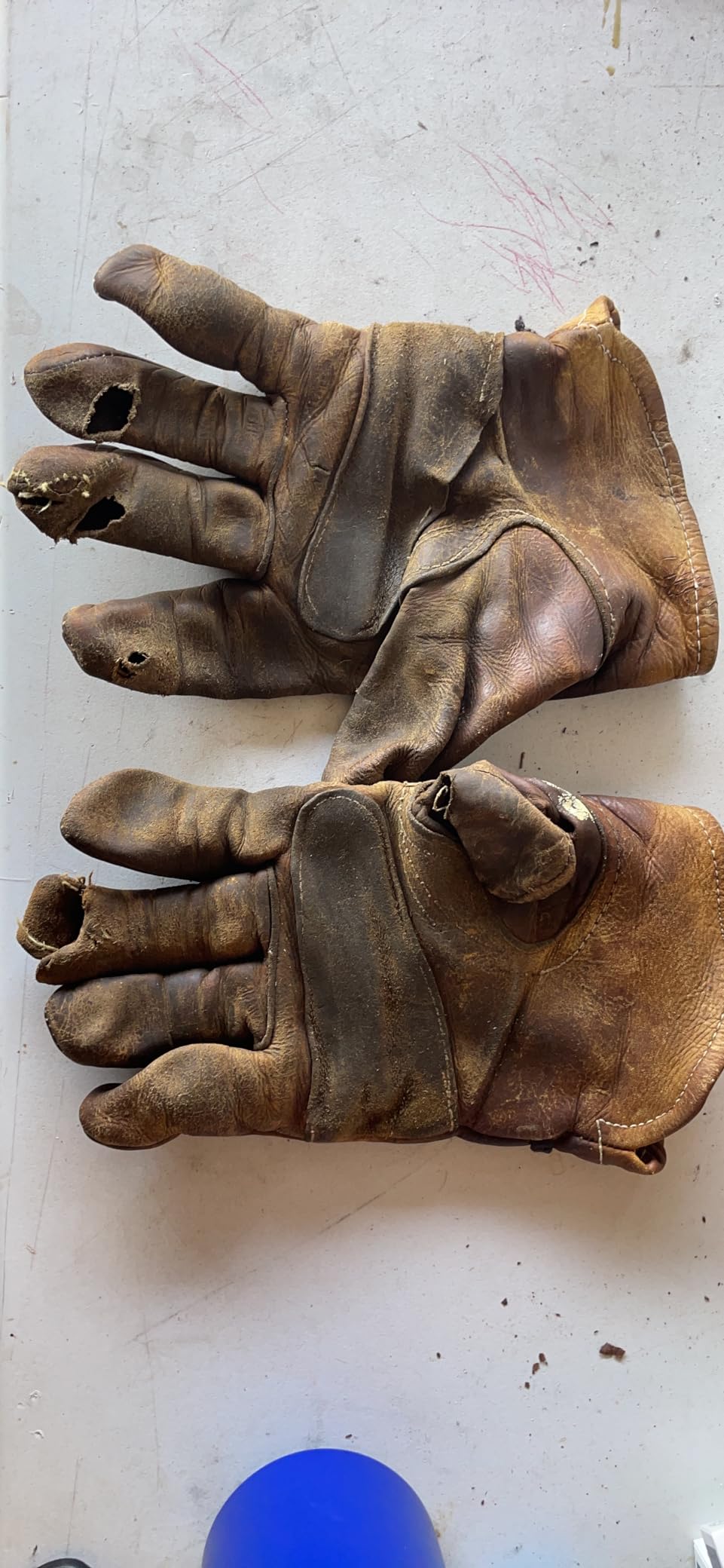
No coated glove stops a splinter. That is the central argument for leather in this category, and it is why so much of this list is cowhide. A thick grain hide gives you physical distance between the wood and your skin, so a rough edge has to tear through real material before it reaches you. Reviewers describe these as standing up to thorns, splinters and rope work in the same breath, which tells you how they actually use them.
Break-In Time and Long-Shift Comfort
Leather gloves earn their keep over time. The first day is snug and stiff, the first week is fine, and after that the glove fits your hand rather than your size. Over a full shift of lifting and stacking that difference shows up as hand fatigue you do not notice until the gloves come off.
Sizing Range and the Long-Finger Problem
Wells Lamont runs this from Small to XX-Large, which is one of the wider ranges in the group, but the fingers still run long on some sizes. Buyers doing fine work report the same complaint consistently. Measure before you order rather than assuming your usual size transfers.
Consistency Between Pairs
Leather thickness varies slightly between pairs and between production runs, and that is the one thing long-term buyers flag. It shows up as a pair that feels thinner than the last one you owned. It does not change the rating much, but it is worth knowing if you have bought this style before and are comparing against memory.

3. WZQH Split Cowhide Gloves – Top Rated for Splitting and Stacking
WZQH Leather Work Gloves for Men or Women.Gardening,Welding,Coffee-grey L
Split cowhide with cotton lining
ANSI impact level 5
Rated to 350F
Reinforced palm
+ Pros
- Thick layered cowhide blocks thorns and splinters
- Cotton lining stays comfortable on long outdoor jobs
- Highest rated in our group
- Adjustable wrist strap
– Cons
- Runs larger than expected
- Wrist opening can flare and admit debris
- Thick leather reduces fine dexterity
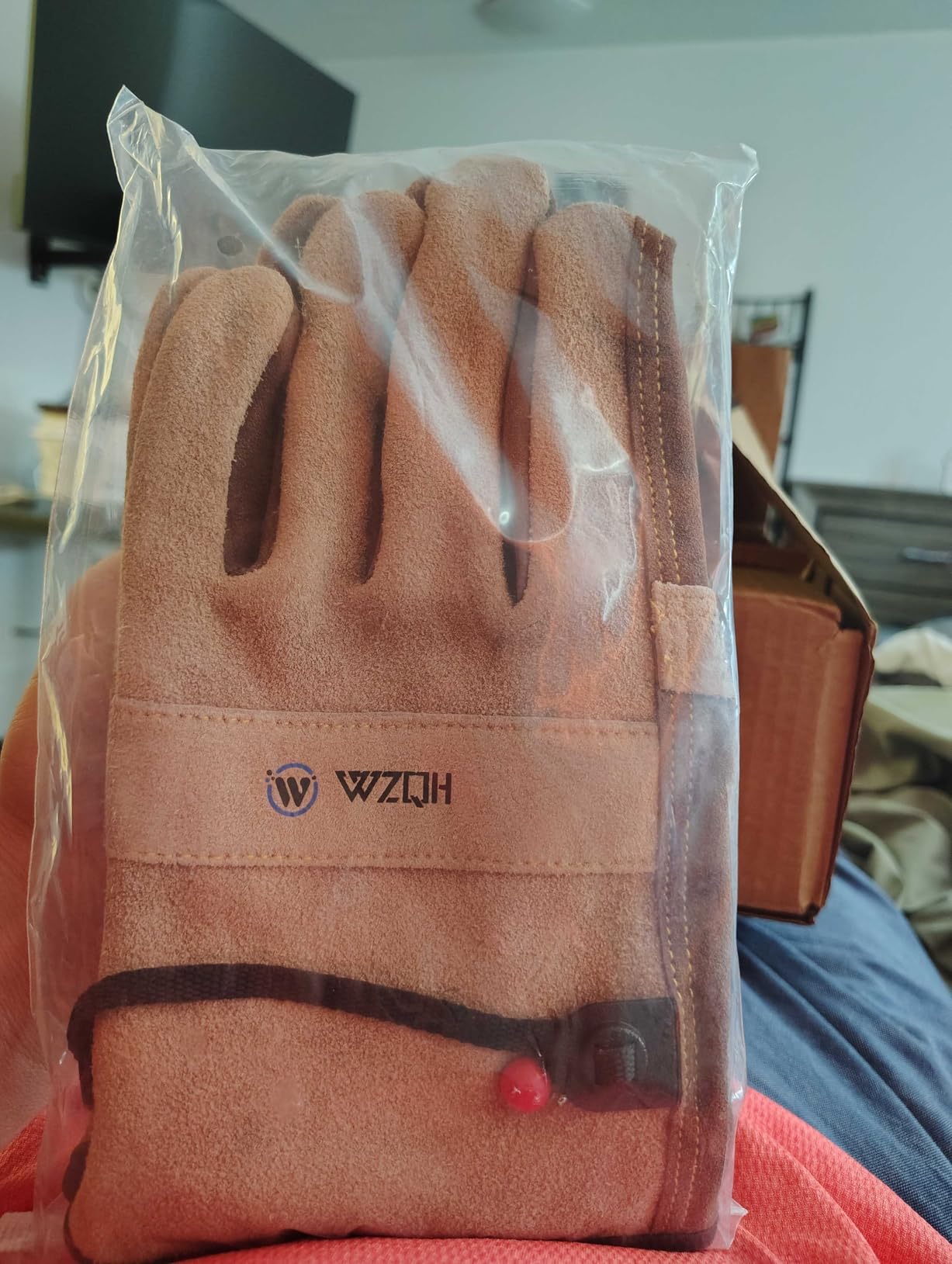
At 9.45 inches long with a reinforced palm and a soft cotton fiber lining, this is the most substantial glove we tested for splitting and stacking work, and it carries the highest average rating in the group alongside the five-pair pack below. The ANSI impact level 5 rating is the headline number here, and for lumber handling it is arguably the most relevant of all the ratings on this page, because the most common injury in a wood stack is not a cut. It is a board falling on a hand.
Split cowhide with a cotton lining behaves differently from full grain. It is thicker and more sacrificial, which means it takes the hit and then takes the abrasion, and the lining keeps the inside of the glove from turning into a hot, damp sheet over a long afternoon. Buyers consistently describe them as the toughest and most comfortable gloves they own, and they turn up constantly in splitting, yard work and bushcraft threads, which is exactly the use pattern we are testing.
ANSI Impact Level 5 and Why It Matters for Wood Stacks
Impact rating and cut rating test completely different things, and most buyers shopping for lumber gloves only look at cut. An impact-rated glove spreads the force of a falling board across a wider area of the hand instead of concentrating it on one knuckle. If you are stacking a wood pile or unloading a truck bed, that is the rating that earns its place.
Heat Rating as a Secondary Benefit
The 350F rating exists for welding and forge work, and it is not why we picked this glove. It matters indirectly, because a glove that tolerates heat does not delaminate or stiffen when it picks up warmth from a sun-heated board or from friction. For long outdoor days that is a quiet advantage.
Layered Leather and Thorn Resistance
The spec sheet names roses, cactus, poison ivy and brambles, and that is not marketing fluff for lumber work. Bark, splinters and rose-thorn-like slivers off rough-sawn material are mechanically similar hazards, and a thick layered palm is the reason this glove shrugs them off when a thin shell glove would not.
Fit, Sizing Up and the Flared Wrist
These run large, and many buyers deliberately size up for unrestricted movement. The tradeoff is a wrist opening that can flare slightly and admit small debris, plus reduced feel for delicate tasks. For splitting rounds and stacking, most owners consider both a fair exchange.
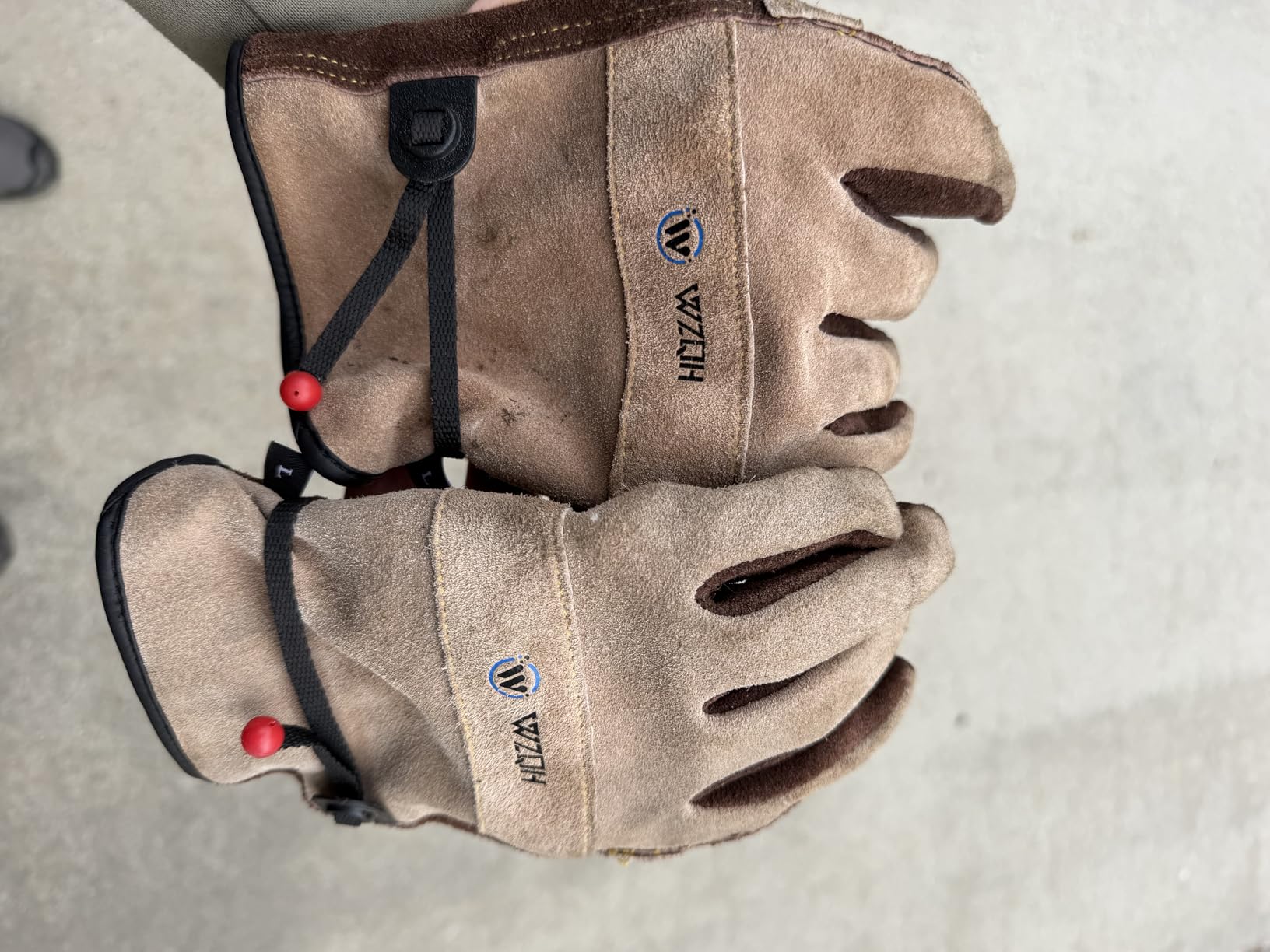
4. OZERO Flex Grip Unlined Cowhide – Best for Hot Weather and Summer Hauling
OZERO Leather Work Gloves Flex Grip Tough Cowhide Gardening Glove for Wood Cutting/Construction/Driving/Garden for Men and Women 1 Pair (Gold,Large)
EN388 2143X certified
Unlined single-layer cowhide
Level 5 dexterity
4.96 ounce weight
+ Pros
- Unlined construction keeps hands cool in summer
- Tear level 4 and puncture level 3
- Stretches to fit after short break-in
- Good value in multipacks
– Cons
- Large size runs generous
- Not built for sustained very heavy sharp-object work
- Unlined means less cushioning on heavy impacts
This is the answer to a problem most roundups ignore: in July, a lined leather glove is a liability. OZERO builds this as a single layer of 1.0-1.2mm top-grain cowhide with a split-leather back and no insulation, roughly half the thickness of a lined work glove, and the difference is immediate. Your hand stays cool enough that sweat does not become the deciding factor in your grip.
The EN388 2143X certification is the real story. Tear level 4 and puncture level 3 of 4 is a genuinely strong mechanical rating for a glove this light, achieved with double-thread stitching at 12 high-stress seams. Those are exactly the seams that fail first on a glove used to grab rough rounds, and the Gunn cut with a keystone thumb is rated level 5 for dexterity, which is why this glove feels far less like a mitten than its leather classification suggests.
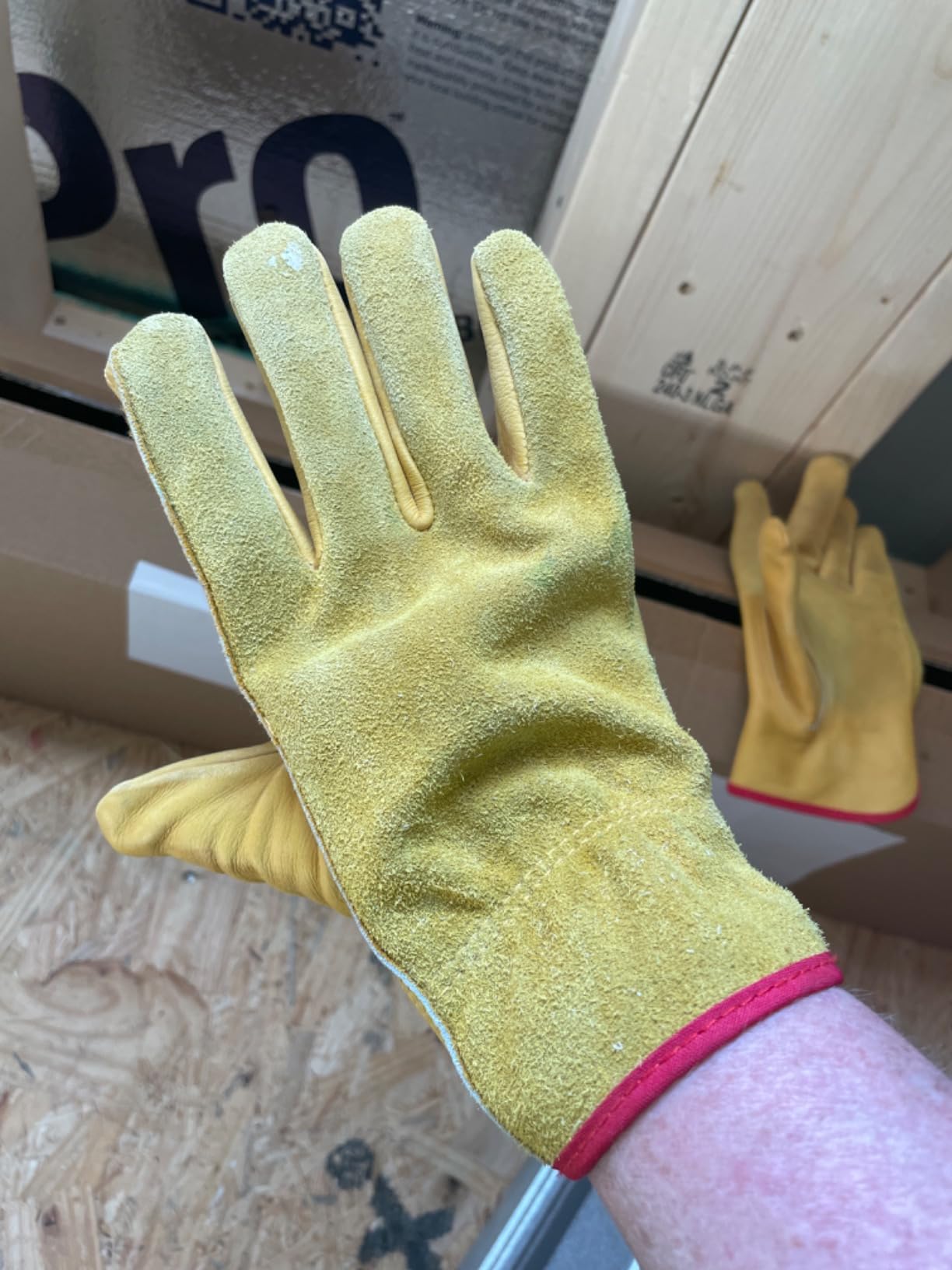
Why Unlined Leather Beats a Lined Glove in Summer
Breathability here is a construction decision, not a marketing claim. Removing the lining opens the whole glove to airflow, so heat escapes instead of accumulating against the skin. For hauling firewood in warm weather this is the difference between a pair you keep wearing and a pair you strip off after twenty minutes.
Reading an EN388 Rating Without Getting Lost
EN388 uses four numbers, each measuring a different threat: abrasion, blade cut, tear and puncture. The first digit here is 2 for abrasion, which is modest, then 1 for cut, then 4 for tear and 3 for puncture. Read it as a profile rather than a ladder: this glove is not built to stop a blade, it is built to resist tearing and puncturing, and for lumber that is the correct trade.
Break-In, Wash Care and Pair Life
The treated cowhide stays soft through hand wash cycles, which matters because an unlined glove gets dirty faster than a lined one. Owners report pairs lasting a year or more with care. The knit elastic wrist seals out dirt and the whole thing pulls on one-handed, which is a small quality-of-life detail when your other hand is holding a maul.
Where the Thin Construction Shows
Half the thickness means less cushioning, and buyers note that sustained very heavy pallet or sharp-object work eventually wears through. The large size also runs generous, so some owners size down. This is a summer and shoulder-season glove for moving and stacking wood, not a demolition glove.
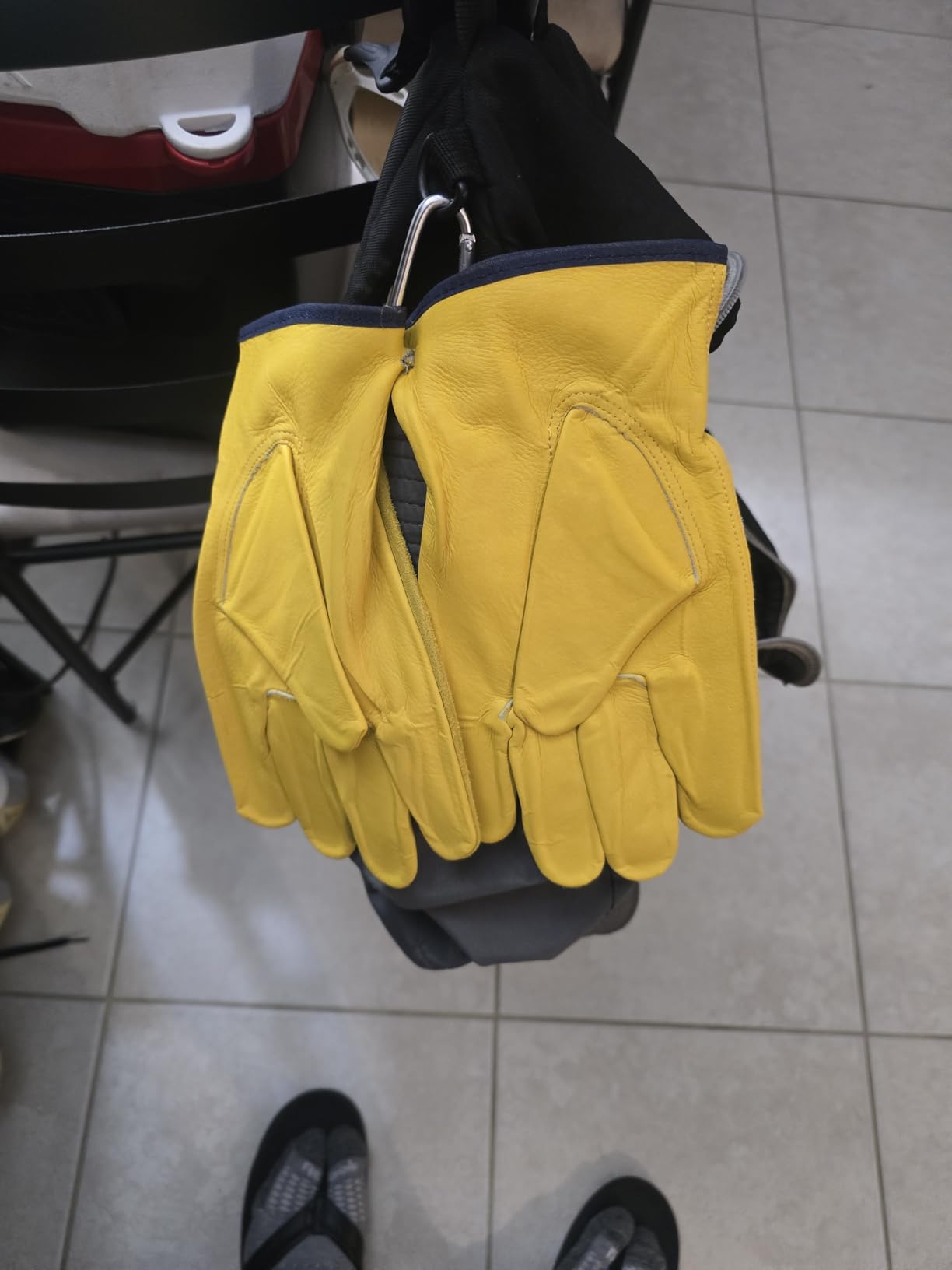
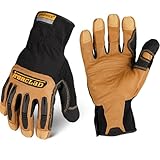
5. Ironclad Ranchworx RWG2 – Premium Pick for Heavy Timber and Demolition
Ironclad Ranchworx Work Gloves RWG2, Premier Leather Work Glove, Performance Fit, Durable, Machine Washable, (1 Pair), RWG2-04-L,Brown/Black
Kevlar reinforced seams
100 percent goatskin palm
Seamless Rolltop fingertips
TPR cuff puller
+ Pros
- Kevlar reinforcement extends glove life
- Seamless fingertips give strong dexterity
- Grippy goatskin palm works wet or rough
- Built for ranch
- forestry and demolition
– Cons
- Heavier and costlier than basic leather gloves
- TPR cuff puller is a small part that can tear
Most gloves in this category are either coated knit or pure leather. Ranchworx is a hybrid, and the reason is the job it was designed for: ranching, forestry and demolition, which is lumber handling at its most abrasive. The palm is 100 percent goatskin, the back is a nylon and spandex shell with goatskin and a Kevlar component, and the reinforcements sit in the specific areas that wear through on this kind of work.
Goatskin is thinner and more pliant than cowhide, which is why this glove gives up more feel than a heavy leather work glove while still gripping well on wet and rough surfaces. The patented Rolltop seamless fingertips are the feature that most improves control: no seam at the end of each finger means nothing catches when you pinch a board edge, and there is a second layer of material there as well.
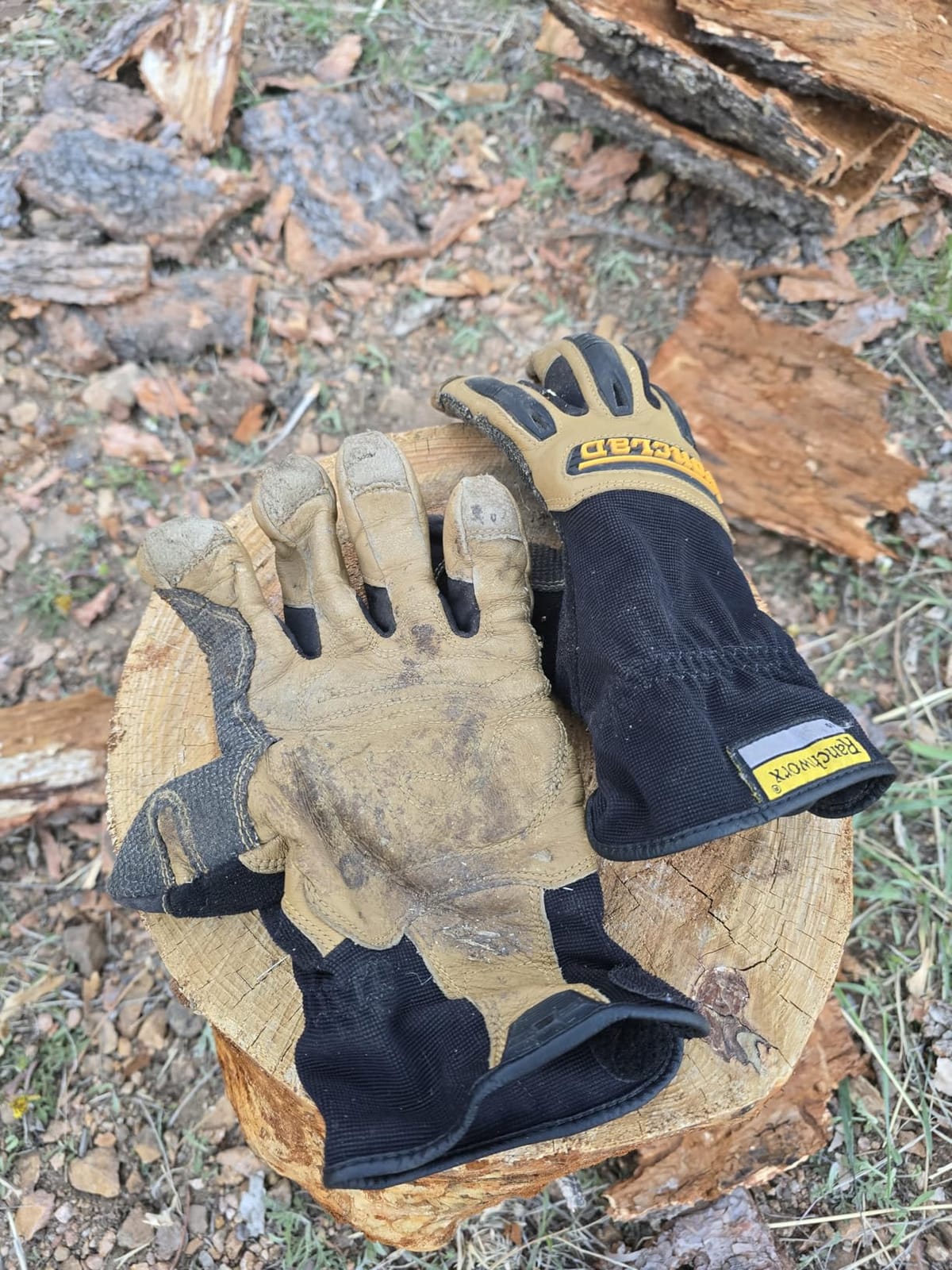
Kevlar Reinforcement and Where Gloves Actually Fail
Every glove in this roundup eventually fails in a predictable location. On leather models it is the fingertips and the palm saddle. Ironclad put aramid reinforcement in those critical wear areas, and that is the whole reason a premium glove lasts when an identical-looking budget glove does not. If your work involves tearing down structures or moving treated debris, this is the difference.
Goatskin Grip on Wet and Rough Surfaces
Wet bark and green wood are where leather grip usually fails. A full goatskin palm has enough surface texture and oil retention to hold a damp round, which is why owners working in ranch and forestry settings rate this so highly. It grips on rough and wet surfaces without needing a coating that would have to be replaced.
Sweat Management and Fast Donning
The terry cloth sweat wipe on the back of the thumb and the TPR cuff puller are small features that matter in a full day. The cuff puller lets you get the glove on with one hand, which sounds trivial until you are holding a flashlight and a board. Both of these are the kind of detail that separates a premium glove from a merely expensive one.
Heavier and Costlier Than the Rest of the List
At 4.8 ounces this is not a light glove, and it sits at the premium end of this list. Buyers flag both honestly. The cuff puller is a small component that can tear with frequent use, which is the one part of the glove most likely to disappoint you. If your lumber work is stacking and hauling rather than demolition, the simpler leather picks do the same job in a lighter build.
6. Wells Lamont 1129 Cowhide – Best for Lumber Yard and Framing Work
Wells Lamont Men’s Work Gloves, Cowhide Leather, Reinforced Palm, Large
Grain cowhide with cotton liner
Triple stitched
Ansi abrasion level 5
Shirred elastic wrist
+ Pros
- Triple stitching and reinforced palm take rough work
- Shirred wrist keeps debris out and stays on
- Grain cowhide breaks in quickly
- Ansi abrasion level 5 rated
– Cons
- Tighter and less flexible cut than padded models
- Not water resistant so wet work stiffens the leather
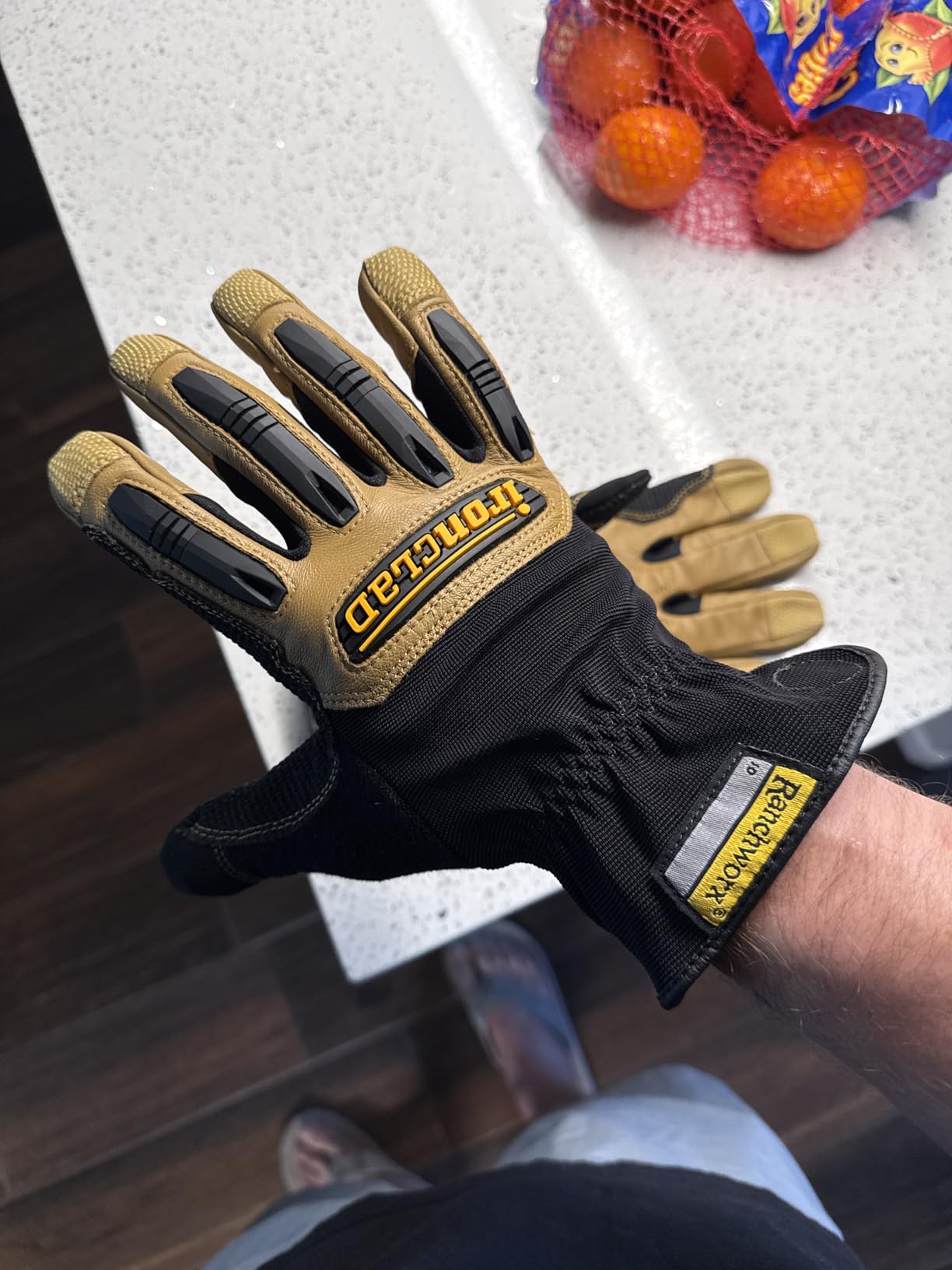
This is the glove that shows up in a lumber yard, and the difference from the models above is the close fit. A 100 percent grain cowhide palm with a cotton liner, triple stitching and a reinforced palm patch gives you a glove that feels close to the hand, which is what you want when you are picking studs off a stack and counting them, or signalling to a loader where to place a bundle. The shirred elastic wrist pulls on without a strap and still blocks debris.
ANSI abrasion level 5 is the certification that matches the job. Abrasion, not cut, is the failure mode when you are sliding boards against each other or dragging a bundle across a rough truck bed. At level 5 this outranks most of the gloves in this roundup on that specific measure, and the triple stitching through the palm means the wear happens slowly and visibly rather than suddenly.
Close Fit Versus Bulk for Signal and Speed
Buyers note the cut is tighter and less flexible than heavily padded models, and in this case that is a feature rather than a flaw. A close glove lets you feel the board edge, judge the stack, and keep your fingers where you want them. If you are running a loader or working a yard, that feedback is worth more than padding.
Abrasion Level 5 and Moving Stock Around
Level 5 abrasion is the rating to look for if your work involves sliding material against material. Boards rubbing boards, a strap across a bundle, gloves on a truck bed all wear the palm in a predictable diagonal. The reinforced palm patch on this model sits exactly in that line of wear.
The Water Limitation
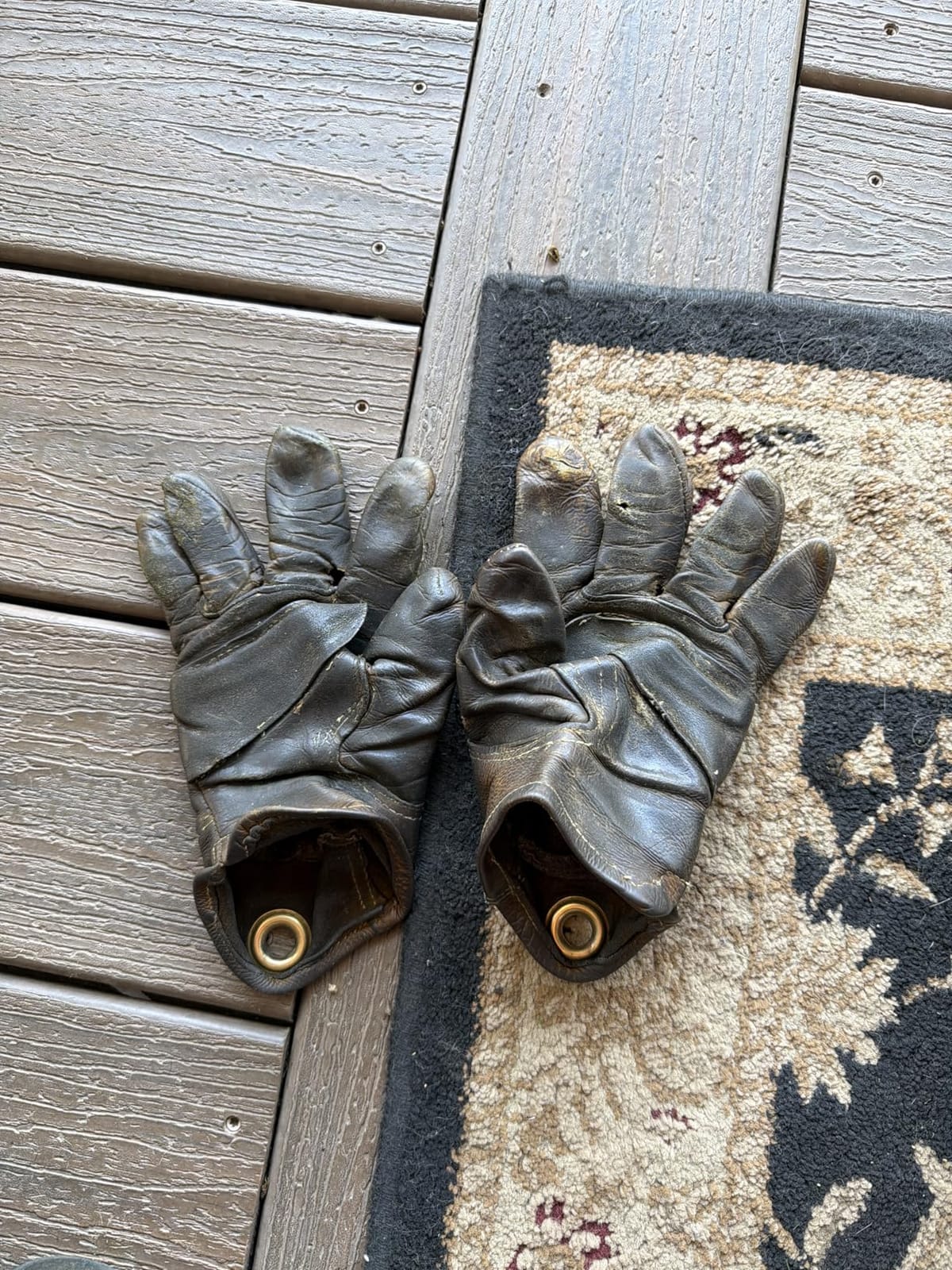
These are not water resistant, and that is the honest tradeoff against the water-resistant leather further down this list. Get them soaked and the leather stiffens, which reduces both flexibility and grip until they dry. In dry conditions, or with a change of gloves for wet days, that is an acceptable limitation for a yard glove.
Care and Longevity
Spot clean rather than machine wash, and the grain cowhide adapts to the hand over long shifts. Reviewers describe it holding up across construction, farming and ranch work, with the shirred wrist consistently credited for keeping dirt out of the cuff over a full day.
7. Schwer ProGuard A9 – Best for Reclaimed Lumber and Hidden Nails
Schwer ProGuard High Level Cut Resistant Work Gloves for Extreme Protection, ANSI A9 Cut Gloves with Reinforced Thumb, Non Slip, Breathable, Durable, Touch-screen, Black 1 Pair(L 3326
Ansi A9 cut resistance
Sandy nitrile palm
13-gauge knit
Reinforced thumb crotch
+ Pros
- Highest blade cut level in this group
- Sandy nitrile grips wet and greasy surfaces
- Light knit reduces hand fatigue
- Touchscreen compatible fingertips
– Cons
- Looser knit weave lets fine splinters through
- Lightweight versus leather on rough bark
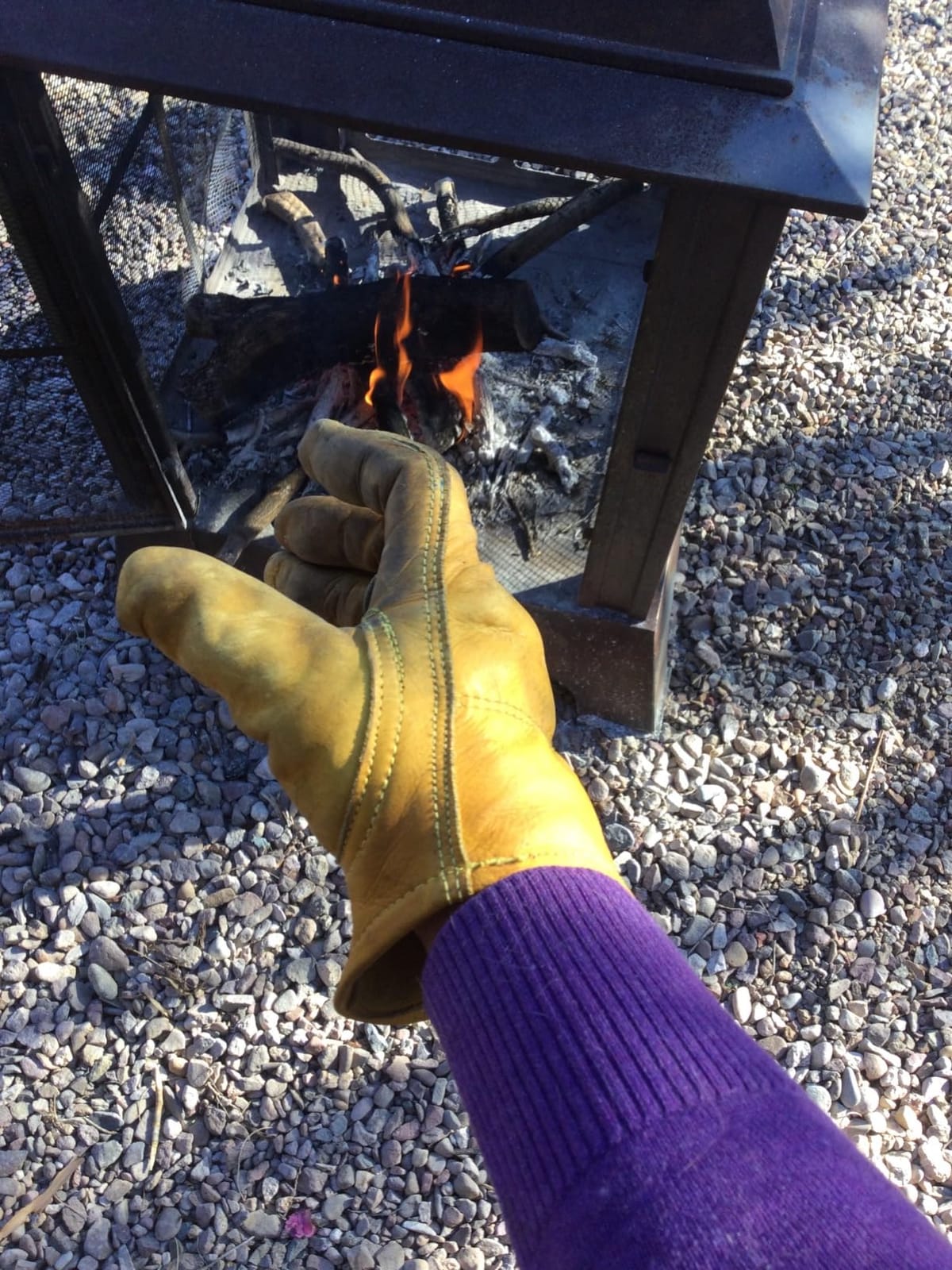
Reclaimed lumber is a different hazard category. Old barns, deconstructed buildings and pallet stacks hide rusted nails, screws, staples and occasionally broken glass, and no amount of leather thickness reliably stops a nail that has been in wet timber for eighty years. This is the one glove on the list built around a fiber weave rated to stop a blade, and it is the only one we would put on for that specific job.
The construction is HPPE, polyester, spandex and metal wire, knitted at 13 gauge, with a sandy nitrile coating on the palm. The reinforced thumb crotch is rated far stronger than a level 5 equivalent, which matters because the thumb crotch is exactly where a nail goes through when a board is gripped wrong. Reviewers like the grip in wet and greasy conditions and the low fatigue over long wears.
What ANSI A9 Actually Means Here
Cut level A9 is the top of the ANSI/ISEA 105 scale and it describes blade cut resistance, not puncture resistance against a rusty nail. We want to be precise about that, because most guides over-sell A9. What it does give you is a fiber layer that a utility knife blade struggles to sever, and in a stack of deconstructed lumber that is a meaningful difference.
Reclaimed Lumber: Assume Nails Until Proven Otherwise
The honest way to handle reclaimed material is to treat every board as if it contains a fastener, and gloves are the last line of defense rather than the first. The right workflow is inspection, then handling, and cut-resistant gloves at the handling stage. We cover the rest of the sequence in the safety section below.
Sandy Nitrile and 13-Gauge Comfort
Sandy nitrile is a textured coating that behaves more like a very fine abrasive than a smooth rubber film, which is why it holds on wet wood and on surfaces with sap or sawdust residue. The 13-gauge knit is light enough to reduce hand fatigue over a long shift and breathable enough to avoid the sweat problem, though it is cooler to the touch than leather, which some people prefer and some do not.
Where the Weave Works Against You
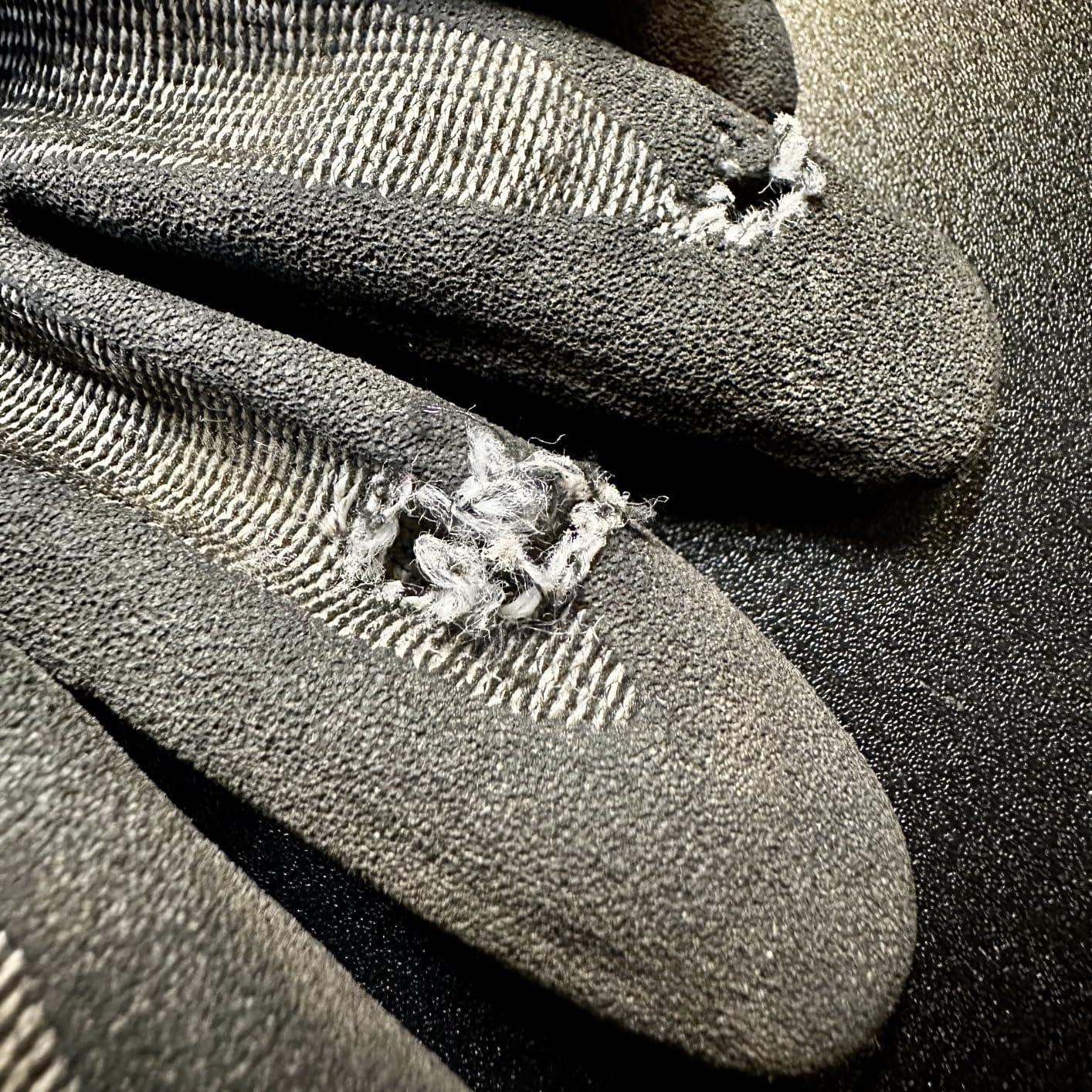
Here is the catch reviewers are consistent about: a knit weave lets fine splinters through in a way leather does not. On rough-sawn lumber, on bark, on anything with loose fibers, this glove is not the one you want. Wear it for the dangerous material and switch to a leather glove for the ordinary timber, which is why we recommend a two-glove approach rather than a single answer.
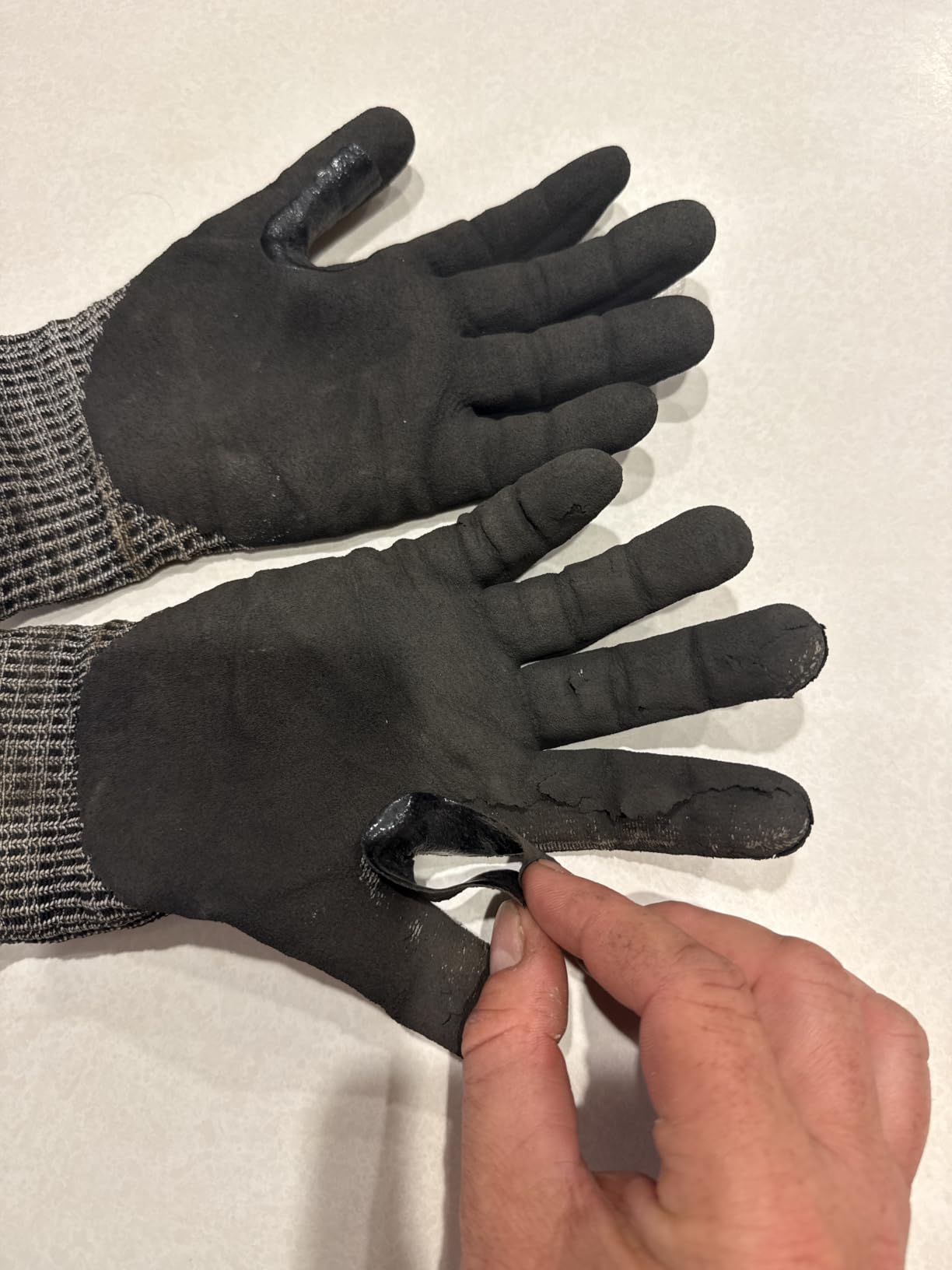
8. G and F Products Five-Pair Value Pack – Best for Crews and Multiple Pairs
G & F Products Cowhide Leather Palm Work Gloves, Large, 5-Pair
Cowhide leather palm
Breathable cotton back
3.5 inch rubberized cuff
Five-pair pack
+ Pros
- Breathable cotton back keeps hands cool
- Long rubberized cuff shields the wrist
- Cowhide palm handles rough lumber
- Five pairs cover a crew or a season
– Cons
- More pairs than a single user may need
- Cuff feels stiff until the leather breaks in
The arithmetic of lumber work favors having spares. One pair gets wet, one pair splits at a seam, one pair ends up in the truck on a different job. This five-pair pack exists for that reality, and it ties for the highest average rating in our group at 4.7 from thousands of reviews. Owners highlight the comfortable breathable back, the tough cowhide palm, and the protective cuff in almost the same order every time.
The rubberized safety cuff with an extra-long 3.5 inch coverage is the feature that distinguishes it from the other leather picks here. Most work gloves stop at the wrist bone. This one extends up the forearm, which blocks splinters and bark chips that would otherwise slide down inside the glove and sit against your skin for the rest of the shift. On rough-sawn material, that is a real reduction in the small irritations that end a shift early.
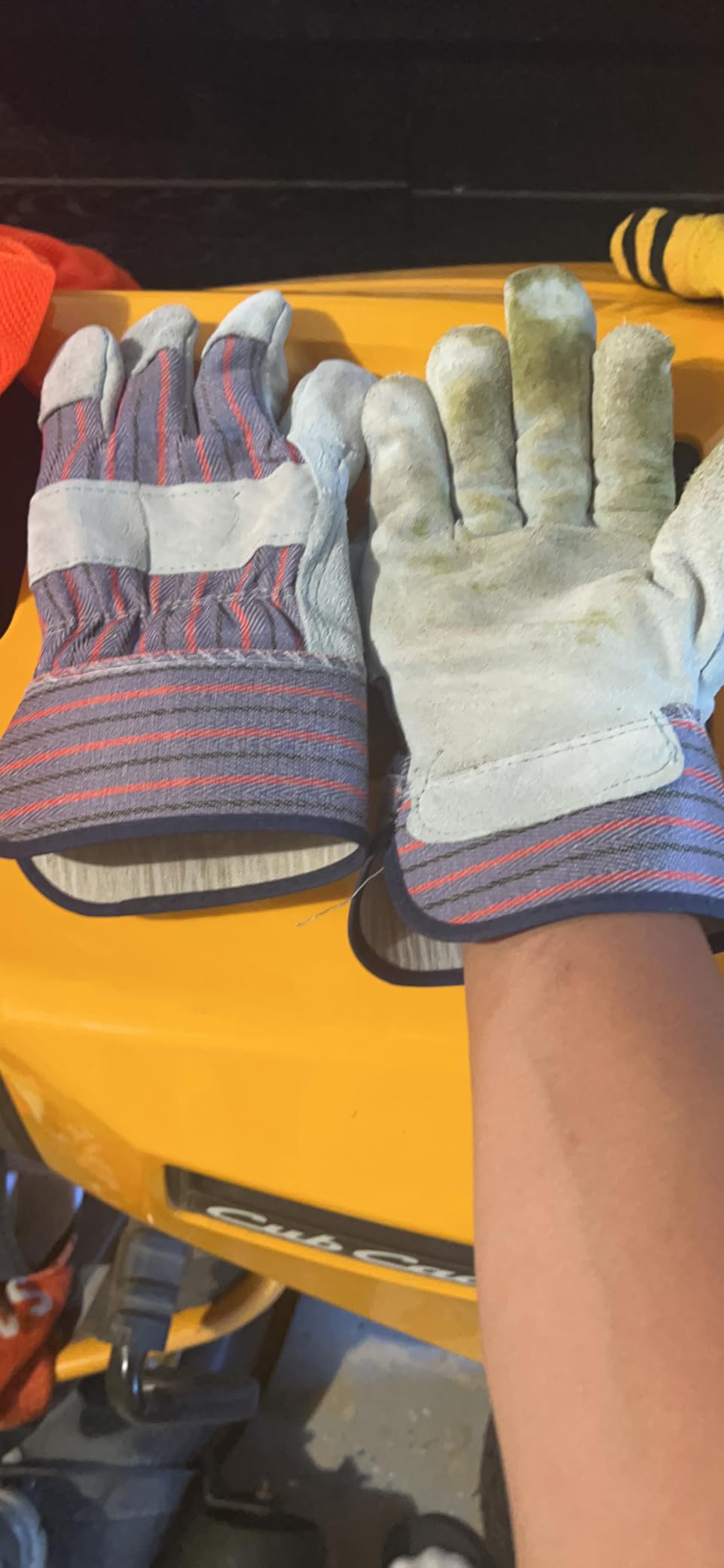
The Cuff Length Question
Long cuffs are undervalued in gloves sold for wood. A splinter that gets past the palm does not go away, it migrates. Extending the barrier up the forearm reduces how much debris ends up inside the glove at all, and it also gives the glove a place to catch when you are pulling a board free of a tight stack.
Breathable Cotton Back and Heat
The cotton back is the answer to the heat complaint that most leather gloves earn. Cowhide palm for protection, textile back for airflow, and the combination keeps hands noticeably cooler on long jobs than a full-leather glove. That balance is why crews tend to keep reaching for this style rather than the heavier all-leather models.
Who Should Buy Five Pairs
Anyone working with a second person, anyone splitting firewood through winter, and anyone who has ever ruined a pair by leaving it in a wet truck bed. The bulk format is more than a single user needs if you work alone occasionally, which is the one honest drawback. For a crew it is simply the sensible buy.
Break-In on the Cuff
The cuff runs stiff on day one and softens with the leather, same as the rest of the glove. Owners who give it a week before judging it report far better results than those who try it for an afternoon. The palm is premium cowhide and the fit is described as suitable across construction, warehouse, gardening, mechanics and carpentry work.
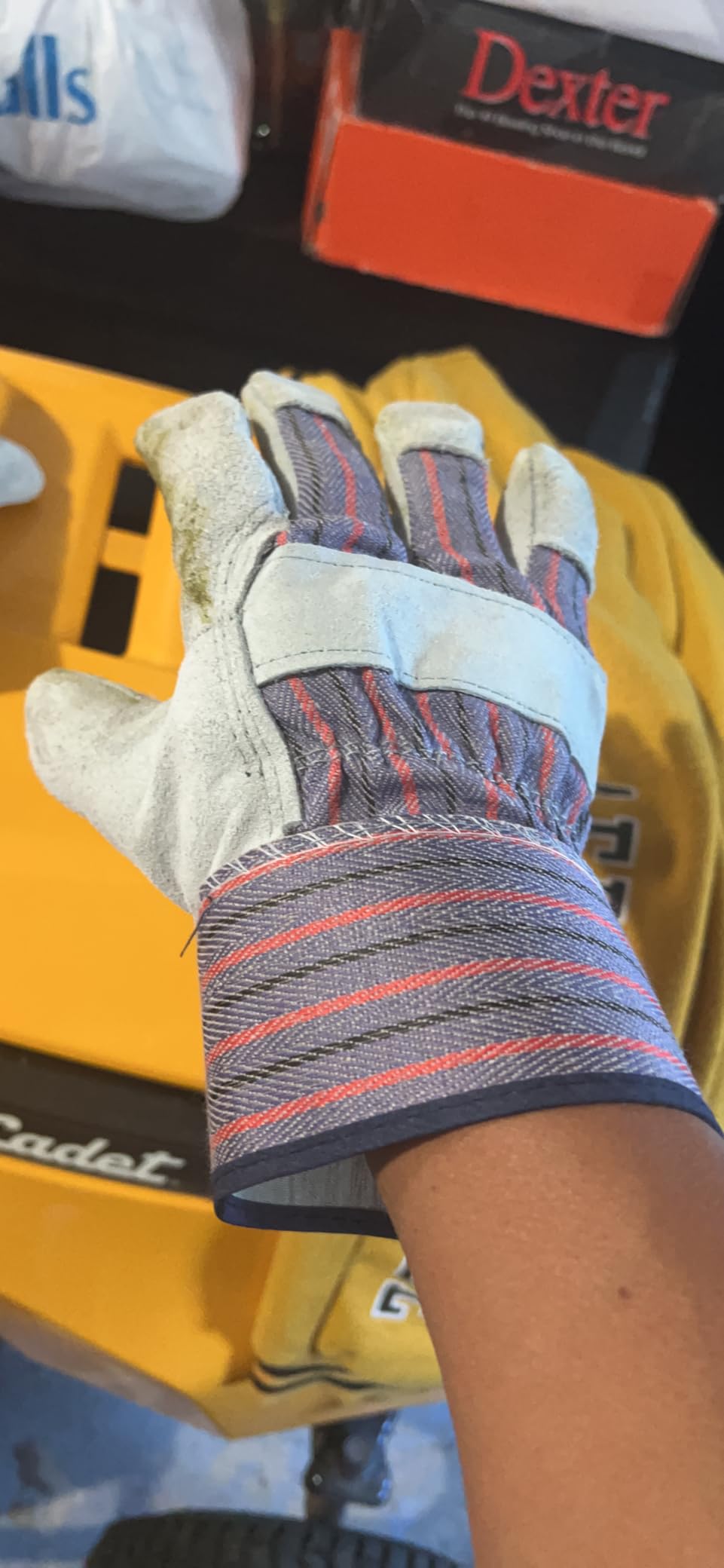
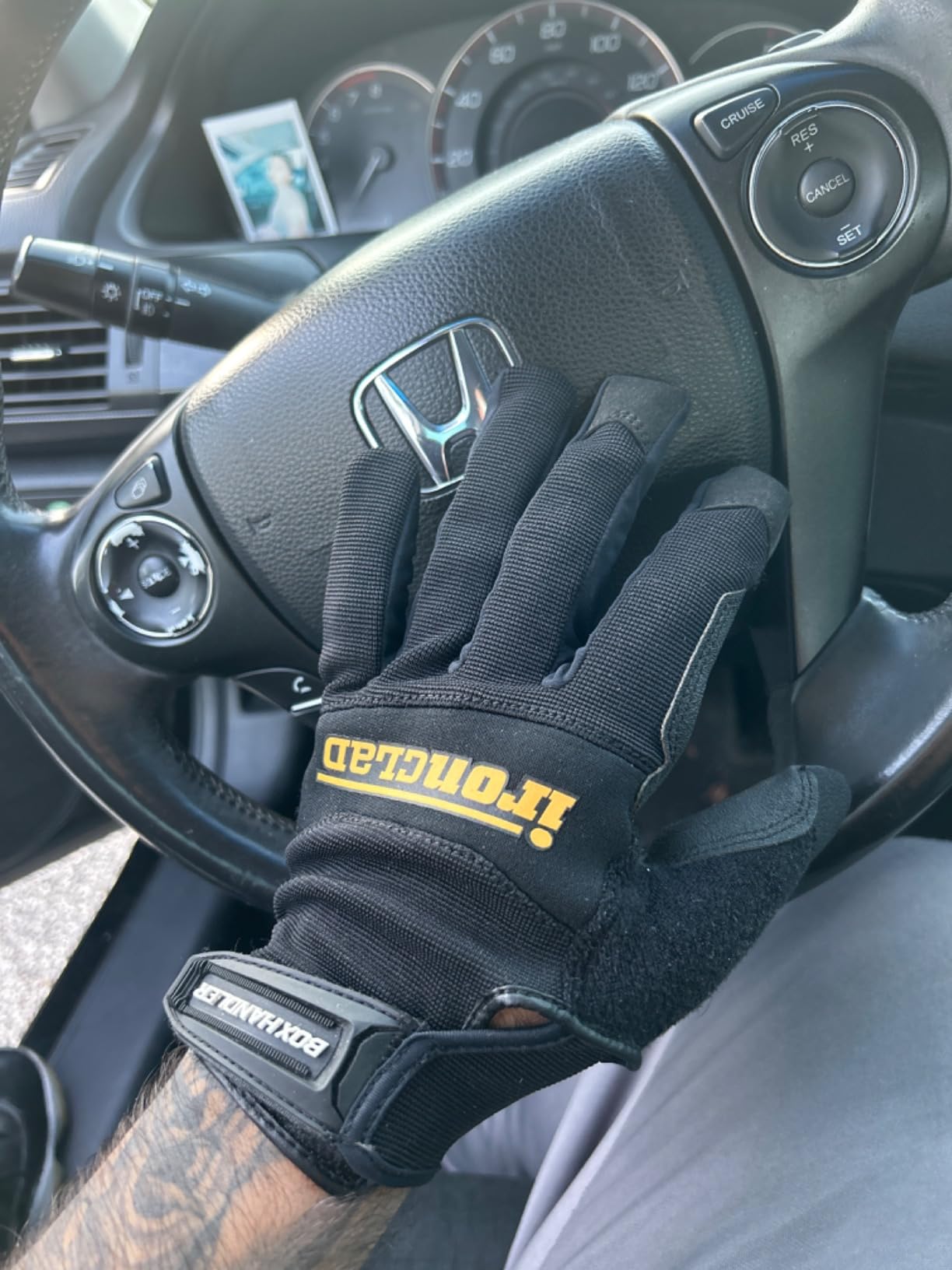
9. Ironclad Box Handler BHG – Best for Planed and Smooth Boards
Ironclad Box Handler Work Gloves BHG, Extreme Grip, Performance Fit, Durable, Machine Washable, (1 Pair), Large – BHG-04-L, Black
Silicone fused palm
Neoprene knuckle protection
Hook-and-loop closure
Terry cloth sweat wipe
+ Pros
- Silicone fused palm grips smooth and dusty surfaces
- Machine washable under frequent use
- Easy hook-and-loop donning and adjustment
- Neoprene knuckles absorb knocks
– Cons
- Grip coating wears through under full-time handling
- Finger seams can split after a few weeks
- Not cut resistant or impact rated
Everything on this list so far is built for rough surfaces. This one is built for the opposite problem, and it is the glove to reach for when the lumber has already been through [a planer](https://fypower.org/best-planer-for-smooth-lumber-finishing/) and the boards are smooth, dusty and prone to slipping. A silicon fused palm is not a coating you would choose to stop splinters. It is the highest-friction surface in this roundup, and grip on a slick planed board is exactly the problem it solves.
The neoprene knuckle feature provides impact and abrasion protection, the hook-and-loop closure allows a custom fit so the glove does not rotate on the board, and the terry cloth sweat wipe on the back of the thumb handles the end-of-shift condensation. All of it is machine washable, which matters here more than anywhere else on the page, because a silicone palm picks up dust and needs cleaning to keep working.
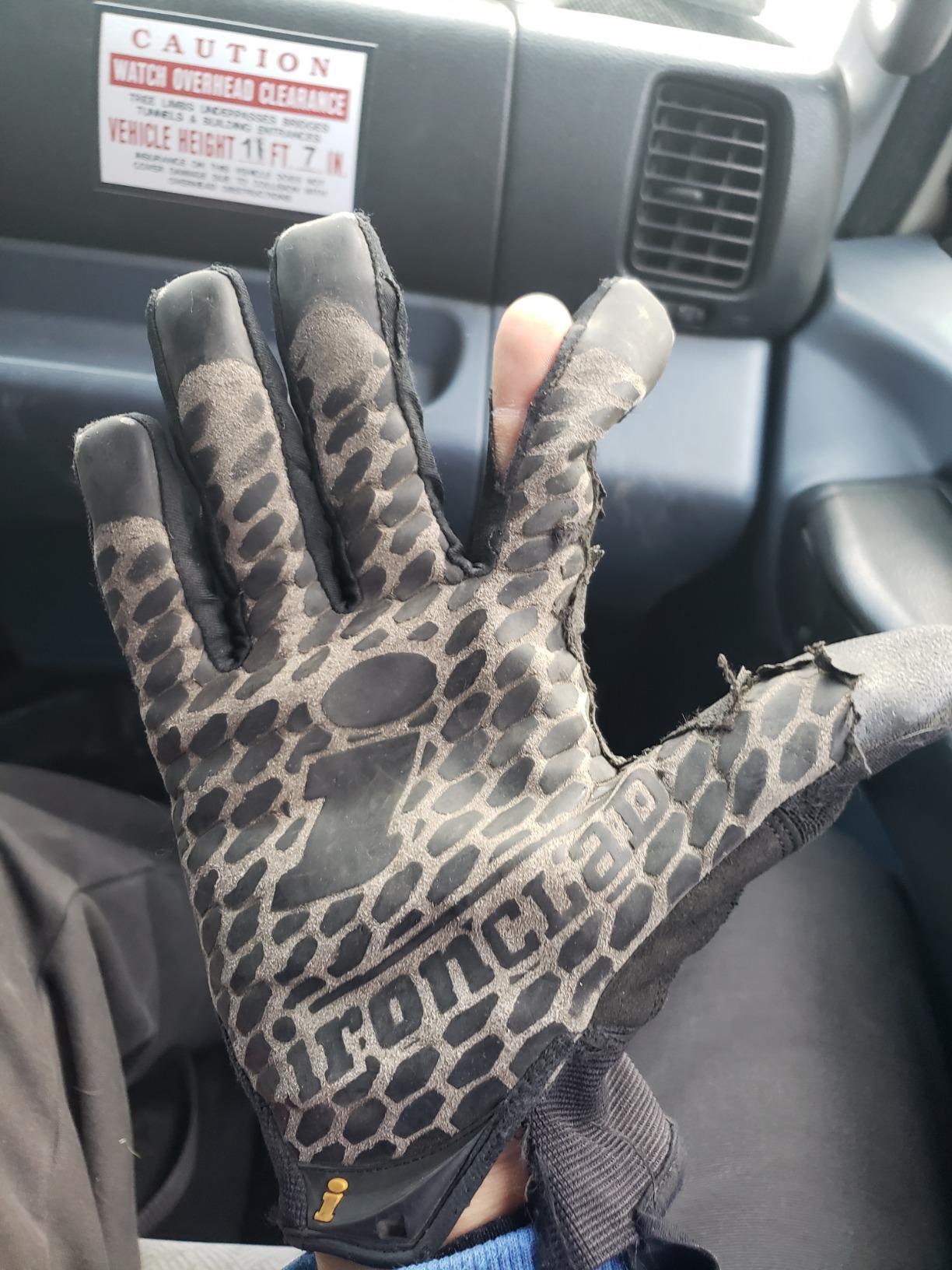
Silicone Fused Palm and Friction
Silicone fused palms were developed for package handling, where a box or a bag needs to stay in your hand through a turn or a drop. The same physics apply to a smooth board. The tradeoff is durability: grip coatings of any kind wear first, and under continuous full-time handling, owners report the palm and finger seams failing sooner than leather would.
Fit Adjustment Matters More Than Usual Here
The hook-and-loop closure is not cosmetic on this glove. A loose glove on a smooth board rotates, and rotation is how a board ends up on the ground. Being able to cinch the wrist down after you have it on is worth more than any other single feature on this model for the job it is designed for.
What It Is Not Rated For
This is not a cut-resistant glove and not an impact-rated glove, and buyers say so plainly. If your planed lumber comes from a reclaimed pile, or if boards get dropped on your knuckles regularly, choose one of the leather or A9-rated models instead. This glove is about grip, and only about grip.
Realistic Lifespan
Warehouse and delivery workers praise the grip and comfort, but a consistent minority report the silicone palm and finger seams wearing out faster than expected under full-time package handling. Planed lumber is less abrasive than cardboard, so most buyers get longer out of it, but treat this as a grip-first glove with a serviceable life rather than a forever glove.
10. Wells Lamont HydraHyde – Best for Wet and Green Wood
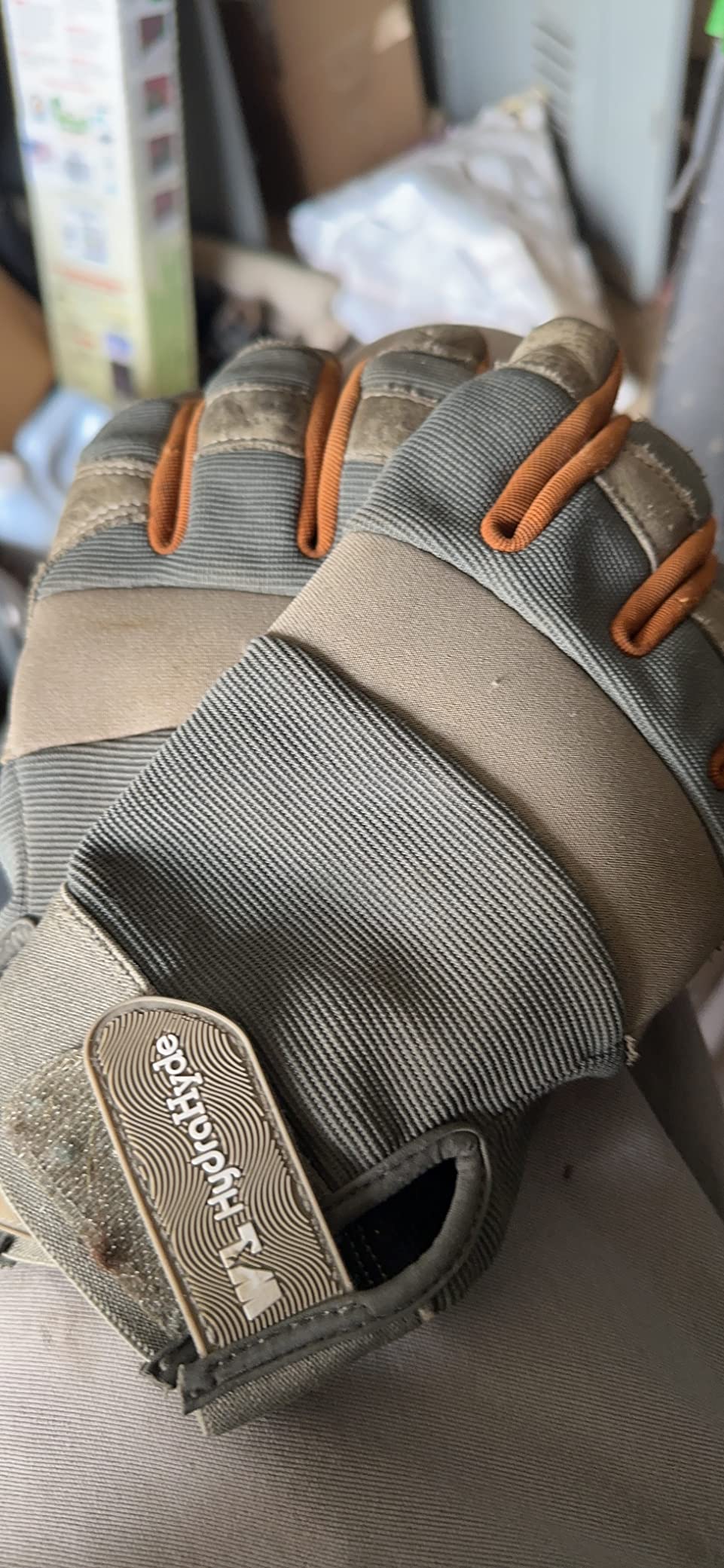
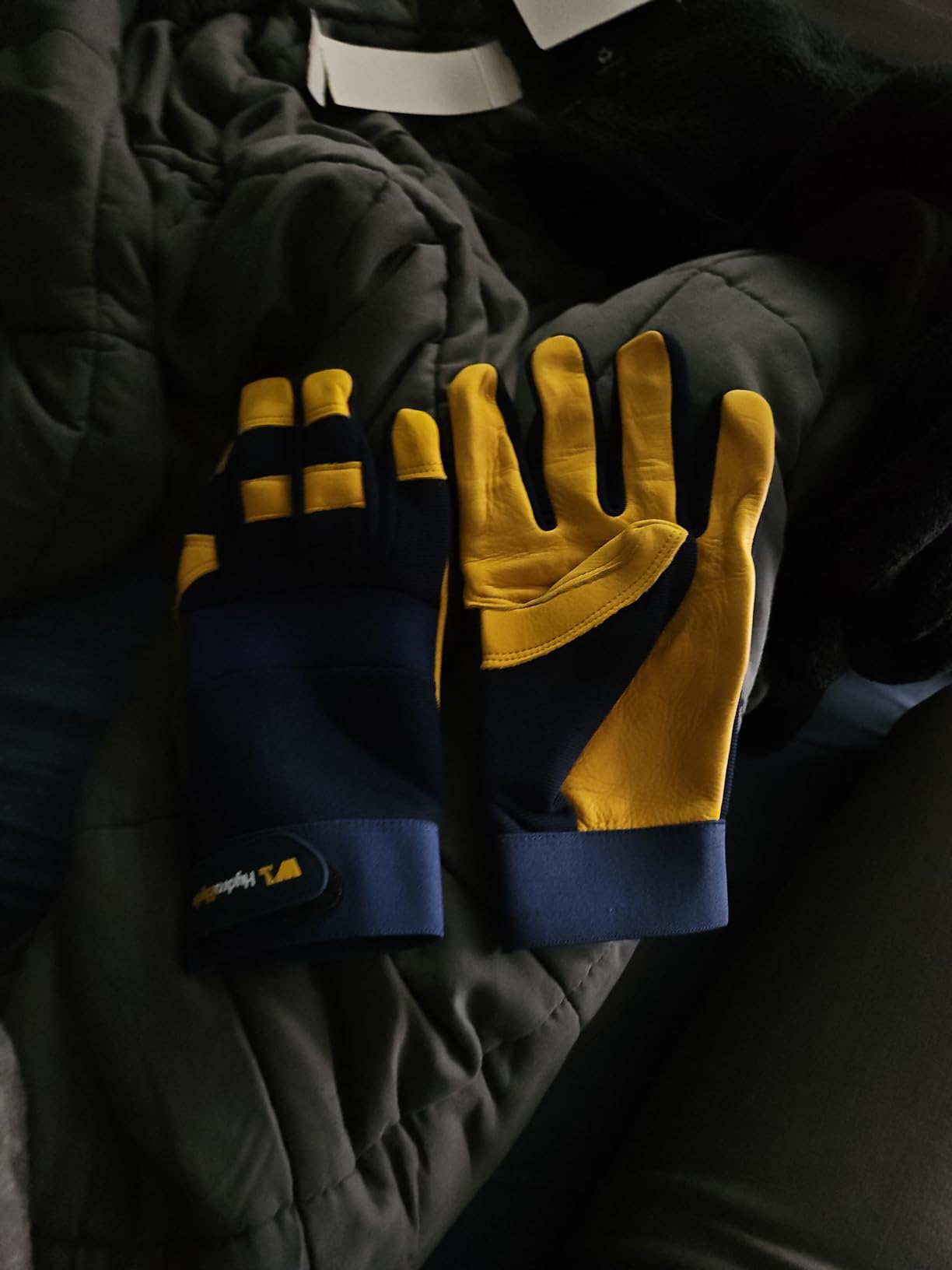
Wells Lamont Men’s Leather Palm Work Gloves – HydraHyde Water-Resistant Leather, Flexible Spandex Back, Adjustable Closure – Ideal for Construction, Landscaping, DIY Projects – Blue, Medium (3207M)
Water-resistant leather palm
Spandex back
Padded neoprene knuckles
Comfort Closure wrist
+ Pros
- Water-resistant leather holds up in rain and wet work
- Spandex back keeps the glove flexible for tool work
- Padded knuckles and adjustable wrist closure
- Multi-year durability reported on firewood work
– Cons
- Runs slightly small so size up
- Leather dye can transfer when wet
- Fingertip stitching can loosen after heavy wear
Wet wood is where ordinary leather fails. Standard cowhide soaks up moisture, hardens, cracks and then grips badly for the rest of its life. HydraHyde is a water-resistant leather with a spandex back, reinforced leather fingertips, a sturdy palm and lightly padded neoprene knuckles, and the practical result is a glove you can keep wearing in rain, in green wood or in a wet truck bed without writing it off.
The spandex back is the other half of the design. It gives the glove genuine flex through the whole range of motion, so you can hold a tool, grip an axe handle or work a pry bar without fighting a stiff panel. The Comfort Closure adjustable wrist keeps dirt and debris out and lets you tune the fit, which matters because reviewers frequently flag the sizing as running slightly small.
Water Resistance Versus Full Waterproofing
Water-resistant leather is not the same as a waterproof membrane, and honesty here matters. It resists saturation and dries out; it does not keep your hands dry through an hour of rain. What it does is prevent the damage that ruins a normal leather glove in a single wet shift, which is why owners report multi-year durability on firewood and yard work.
Dye Transfer, a Real and Unpleasant Side Effect
Several buyers mention yellow dye transferring to their hands when the gloves get wet. It comes off with washing and it is not dangerous, but it is the kind of thing nobody warns you about, and it is worth knowing before you shake them over a good shirt. It is also a fair signal to wash the gloves sooner rather than later.
Flex, Knuckles and Tool Work
The spandex back and padded neoprene knuckles keep this glove flexible enough for tool work rather than pure carrying. That matters for splitting, where you are gripping an axe handle through thousands of repetitions, and hand fatigue from a rigid glove compounds faster than fatigue from the work itself.
Fit and Long-Term Wear
Size up if you are between sizes. Beyond that, the only recurring complaint is fingertip stitching that can start to pull apart after heavy wear, which is a normal endpoint for any leather glove rather than a fault in this design. Buyers consistently describe it as an all-rounder, which is a reasonable description of a glove that solves the wet-day problem without giving up dexterity.
How to Choose Work Gloves for the Lumber Job in Front of You
The most useful thing we learned this season is that the leather versus coated cloth debate is not a debate with one right answer. It depends entirely on which stage of the job you are in. On the Arborist Site forums, one poster put it plainly: they found cloth gloves stand up better to handling rounds and splitting than leather ones. On Hearth.com, another thread valued heavy cotton loggers gloves for rough wood and admitted the dexterity cost outright. Both are describing different tasks.
So here is the split. Splitting, stacking and carrying: coated cloth wins on grip and survives repeated handling, and heavy cotton loggers gloves are defensible if you accept reduced feel. Ripping apart a pallet stack or handling bark and thorny material: leather wins because nothing else physically blocks a splinter. Damp or green wood: water-resistant leather wins because standard leather is destroyed by a single soak. Reclaimed material with hidden fasteners: a cut-resistant weave is the only answer, and you inspect first.
Start With the Job Stage, Not the Brand
Ask what is happening to your hand, in order. Are you splitting rounds, lifting boards, loading a truck bed, framing with a nailer, breaking down reclaimed wood, or hauling green wood? Each stage has a different dominant hazard. Splitting is abrasion and grip loss. Lifting is pinch and crush. Loading a truck bed is impact. Framing is dexterity plus a fastener. Reclaimed wood is puncture. If you are milling reclaimed material, our [thickness planer guide](https://fypower.org/best-thickness-planers-for-reclaimed-lumber/) covers the machine side of that sequence.
Most people buy one glove and then wonder why it feels wrong. It is not the wrong glove, it is the wrong stage.
Leather, Synthetic Leather or Coated Knit: the Honest Trade-Off
Full-grain cowhide is the most common material here, and it wins on splinter protection because it puts real material between the wood and your skin. It also breathes better than most people expect once broken in, and it improves with use. The cost is break-in time, sensitivity to water, and eventual cracking. Unlined leather is noticeably cooler and more flexible than lined leather, at the price of cushioning.
Coated knit is a different proposition entirely. The palm gets a sacrificial layer of nitrile, latex or polyurethane that adds friction and sheds sap and dirt, while the back of the hand stays open for airflow. That makes it cooler and far more dexterous than leather, and it is why coated gloves dominate in warm weather. What it cannot do is stop a splinter, and that is the whole argument in one sentence.
Grip Coatings Explained: Nitrile, Latex, Polyurethane and Silicone
Nitrile coating is the most common, is latex-free, and is the best all-round option for wet and mildly dirty wood. Micro-foam nitrile adds a thin foam layer under the coating that softens the feel and improves grip on smooth surfaces. Sandy nitrile is a textured variant that behaves more like fine abrasive and holds well in wet, greasy or dusty conditions.
Latex coating gives excellent feel and strong grip, and forum users often rate it as the best grip available, but it is not latex-free and it degrades faster. Polyurethane is a thin coating used more for dexterity and touch than for heavy grip. Silicone is the highest-friction option, built for gripping smooth or packaged surfaces rather than rough wood.
ANSI and EN388 Cut Levels: What Lumber Work Actually Demands
ANSI/ISEA 105 rates cut resistance from A1 to A9. For lumber handling, A3 to A4 is genuinely enough for ordinary material. Guides that push everyone toward A9 are writing about sheet metal, not wood. Move up a level when you are cutting with a utility knife, opening boxes of hardware or handling material with sharp edges. Save A9 for genuinely hazardous material, because higher cut levels are often lighter, cooler and less splinter-resistant than leather.
EN388 is the European standard and uses a four-digit format such as 2143X, where each digit is a level of abrasion, cut, tear and puncture respectively. Read it as a profile rather than a ladder. It is a different measurement from ANSI and the two are not interchangeable, which is why some gloves in this roundup carry one and not the other.
Impact, Pinch and Knuckle Protection for Stacked Timber
The most common lumber injury is not a cut. It is a board dropping out of a stack onto your knuckles, or a pinch between two boards when the stack settles. An impact-rated glove spreads that force rather than concentrating it, and padded knuckle sections help. Only one glove on this list carries a published ANSI impact level. If you routinely stack heavy timber, that rating deserves as much attention as the cut level.
Breathability, Sweat and the Seasonal Rotation
Sweat-driven grip loss is a safety issue, not a comfort issue. Coated palms trap moisture, so a coated glove needs a lighter liner or a periodic change; an unlined leather glove breathes from the inside out. In practice, a three-glove rotation works better than one perfect glove: a coated knit for summer, a mid-weight leather for spring and autumn, and a water-resistant leather for winter. For genuinely cold hauling, our [heated glove guide](https://fypower.org/best-heated-gloves-for-cold-weather/) covers the battery-driven options that no glove on this page competes with.
Pack Count, Sizing Consistency and How Long a Pair Lasts
Buy a multi-pack when you work alone and lose gloves routinely, or when a second person is in the truck with you. The complaint forum users raise most often is inconsistent sizing inside bulk packs, so check one pair before committing to twelve. As a general rule, unlined leather with reinforced seams outlasts a coated knit on abrasive work, while a coated knit outlasts leather on wet work because leather degrades rather than wears. Plan on replacing the pair you use hardest every few months and rotating the rest.
When Not to Wear Gloves Around Lumber Work
This is the part most roundups skip, and skipping it can get someone hurt. Gloves are for handling material, not for operating the machines that cut it.
Never wear any glove at a table saw or a miter saw. A glove can catch a workpiece, a fence or a piece of offcut and pull your hand straight into the blade. This is not a close call, and no glove on this page, cut-resistant or not, makes it safe. The same applies to routers and to disc sanders, where a loose glove is a hand waiting to happen.
Avoid loose-fitting gloves on circular saws for the same reason. If you are wearing something on your hands at a saw, it should be tight, cuffed and free of anything dangling, and the far better answer is nothing at all.
Chainsaw work is its own PPE category. A general work glove, including the cut-resistant models here, does not qualify. Chainsaw gloves are a specific design with no loose cuffs, designed to be shredded rather than to let a chain reach skin. If you are cutting with a chainsaw, buy that glove for that job and keep your lumber glove in your pocket.
Reclaimed lumber deserves its own rule: assume hidden nails, screws, staples and glass until you have looked. Inspect the material first, and use a cut-resistant glove for the handling stage. A cut-resistant glove is a second layer of defense, not a reason to skip inspection. If you are running that material through a planer or a jointer to clean it up, our [reclaimed lumber planer guide](https://fypower.org/best-thickness-planers-for-reclaimed-lumber/) covers the machine side of that sequence.
Finally, if you are doing any hot work near the same stack, note that ordinary work gloves are not welding PPE. Those are a different glove with a different rating, covered in our [MIG and TIG welding glove guide](https://fypower.org/best-mig-welding-gloves-for-tig-work/).
Frequently Asked Questions
What are the best gloves for lumber work?
Three categories cover almost all lumber handling. Coated knit gloves with nitrile or latex palms give the best grip and dexterity for splitting, stacking and moving boards. Leather or synthetic leather gloves physically block splinters and absorb impact from dropped timber, which makes them the right choice for rough-sawn material, bark and demolition debris. ANSI-rated cut-resistant gloves are for reclaimed lumber where hidden nails and staples may be present.
What type of gloves are best for wood splitting?
Coated cloth gloves win for splitting. The textured palm coating adds friction on wet or green rounds and the thin knit does not stiffen when it gets wet, which is where leather loses its advantage. Users on woodworking forums consistently report coated cloth lasting longer than leather through repeated handling of rounds. If you also need to carry heavy logs or handle bark, add a leather glove for the carrying stage.
What are the best gloves for handling firewood?
It depends on the stage. For splitting rounds, a nitrile or latex coated knit glove gives the best grip. For carrying and stacking wet or green wood, a water-resistant leather glove is more durable because standard leather hardens and cracks after a single soak. For hauling in cold weather, a water-resistant leather with a spandex back keeps enough flex to hold an axe handle through a long session.
Should I wear gloves when using a table saw or miter saw?
No. Gloves can catch a workpiece, a fence or an offcut and pull your hand into the blade. The same rule applies to routers and disc sanders, and loose gloves should be avoided on circular saws. Gloves belong to the handling stage of lumber work, not to the cutting stage.
Are leather or nitrile-coated gloves better for wood?
Leather is better at stopping splinters, absorbing impact and handling rough bark, thorns and abrasive debris, and it improves as it breaks in. Coated nitrile is better at grip, dexterity and staying cool, and it will not stiffen when wet. A common and effective approach is to own both: coated gloves for splitting and general movement, leather for rough or reclaimed material.
What cut resistance level do I actually need for lumber work?
ANSI A3 to A4 is genuinely enough for ordinary lumber handling, including rough-sawn boards. Move up only when you are working with a utility knife, opening hardware boxes or handling material with sharp edges. Save the highest cut levels such as A9 for reclaimed material with hidden fasteners, and remember that high cut-resistant gloves are often lighter and less splinter-resistant than leather, so many users keep both.
The Best Work Gloves for Handling Lumber, Matched to Your Job
There is no single best work glove for handling lumber, because lumber work is a chain of different jobs wearing the same name. If you want one pair that handles mixed material, stacking and general yard work, the Ironclad General Utility GUG is our pick and our editor’s choice, with the padded palm and rubberized knuckles that make dropped boards and rough edges survivable.
If your work is mostly splitting and stacking, the WZQH split cowhide pair is the one we rated highest, and its impact rating matters more than any cut rating on this page. For summer hauling and any job where heat is the problem, the unlined OZERO cowhide is the only glove here built specifically for airflow. For a new wearer who just wants something that works, the Wells Lamont cowhide with an adjustable wrist is the safe answer.
For wet or green wood, the Wells Lamont HydraHyde is the only water-resistant option we tested. For planed, smooth boards, the Ironclad Box Handler’s silicone palm is the highest-friction grip available. For reclaimed material, the Schwer A9 is the only cut-rated glove here, and it should never replace inspection. For a crew or a truck that eats gloves, the five-pair G and F pack spreads the cost across spares.
Our honest conclusion for 2026: own two pairs, not one. A coated knit for grip and cool hands on split, stacking and carrying, and a leather glove for rough material, bark, dropped boards and wet wood. Swap them by task rather than by habit, keep them out of the saw shed when you are cutting, and replace whichever one wears through first.
Leave a Reply