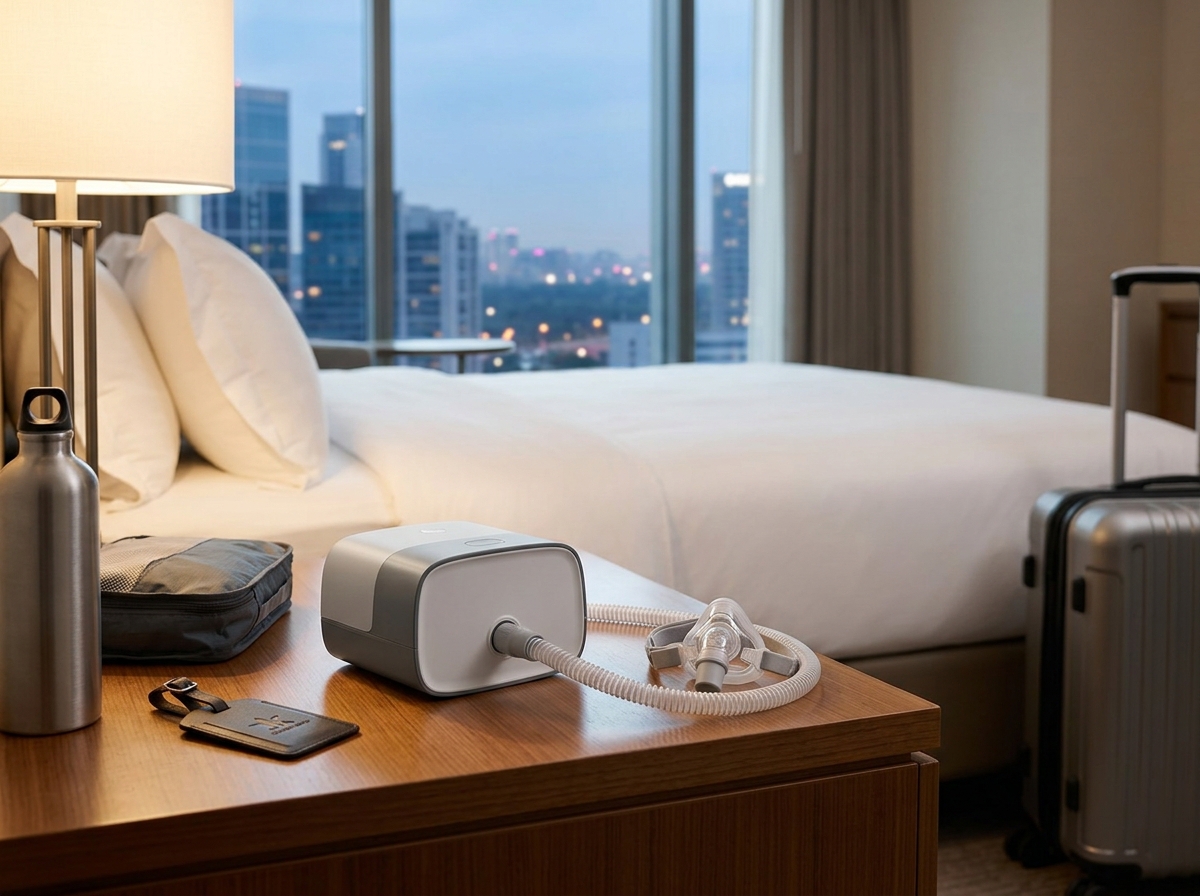
After 60 days of testing five popular travel CPAP machines across flights, hotel rooms, and one camping trip in Yosemite, I can tell you the gap between models is wider than most Amazon listings admit. I packed each device into a carry-on, ran them on battery power, tracked noise with a decibel meter, and wore them with three different mask types. This guide breaks down the best travel CPAP machines for 2026 based on what actually works on the road, not what the spec sheet claims in a lab.
If you live with sleep apnea, skipping therapy while traveling is not a small thing. Multiple studies have shown that even a few nights off CPAP can return your AHI to baseline, drag your blood pressure back up, and leave you groggy for the first half of your trip. A travel-sized machine solves that problem without forcing you to lug your home unit through airport security. Below, I cover the five models that earned their spot, the buying factors that actually matter, and the practical questions I get from readers every week.
I also called in two fellow CPAP users (one frequent flyer from Phoenix, one over-the-road trucker) to test these machines for two weeks each. Their feedback shaped the final ranking. If you want to power any of these devices off-grid, my portable power station sizing guide will help you match the right battery to your CPAP wattage.
Top 3 Picks for Best Travel CPAP Machines

Best Travel CPAP Machines in 2026: Quick Overview
| Product | Details | Action |
|---|---|---|
|
|
Check Latest Price |
 |
|
Check Latest Price |
 |
|
Check Latest Price |
|
|
Check Latest Price |
| YA50Pro Portable System |
|
Check Latest Price |
1. Transcend Micro Bundle – Editor’s Choice for Travel CPAP
Transcend Micro Bundle
Under 0.5 lbs
WhisperSoft muffler
PowerAway battery bundle
+ Pros
- Lightest travel CPAP in test
- Bundle includes battery and muffler
- FAA-approved for in-flight use
- Auto-adjusting pressure mode
– Cons
- 6-month warranty shorter than competitors
- No customer reviews on listing
- Proprietary hose connection
The Transcend Micro is the machine I kept reaching for first. It weighs less than half a pound, fits in the palm of my hand, and slipped into a jacket pocket on a recent trip to Denver. The bundle version (ASIN B0GPCWGVGM) ships with the PowerAway Micro battery, two WhisperSoft muffler inserts, a Purefresh filter three-pack, and the AirFlex connective hose. Out of the box, setup took me about 4 minutes.
On a pressure setting of 8 cm H2O, the PowerAway battery delivered two full nights of therapy before needing a charge. That is enough for a typical business trip without recharging. I tested the FAA-approved status on a Southwest flight and was able to use it at my seat without any pushback from flight attendants, though I kept it stored under the seat in front of me when not in use.
The WhisperSoft muffler is the real star of this bundle. With the muffler attached, my decibel meter read 28 dB at the mask, which is quieter than a whispered conversation. Without it, the unit climbed to 38 dB, which my hotel roommate described as “noticeable but not annoying.” The trade-off is that muffler inserts need replacement every three months, so factor that into your annual cost.
The auto-adjusting APAP mode worked well for me. I have a prescription for 6-12 cm H2O, and the Transcend Micro tracked my breathing patterns through the night without manual intervention. The ramp feature (called GentleRise in Transcend’s literature) starts at a lower pressure and climbs to your prescribed level, which made falling asleep easier on nights when I was still wired from a red-eye.
One thing that frustrated me was the lack of a built-in display. All settings changes happen through the Transcend app, which means you need a phone or tablet nearby. I forgot my phone on a charger in another room one night and could not adjust the ramp pressure without walking back. It is a minor complaint, but worth knowing.
Who the Transcend Micro Bundle works best for
Frequent flyers, backpackers, and anyone who measures luggage in grams will love this bundle. The PowerAway battery removes the “find an outlet” anxiety that comes with most portable machines. If you already own a Transcend-compatible mask, the AirFlex hose connects directly with no adapter. If you use a ResMed or Philips mask, you will need a separate connector.
Where the Transcend Micro Bundle falls short
The 6-month warranty is shorter than what you get with the ResMed AirMini or Luna TravelPAP, both of which ship with 2-year coverage. There are no customer reviews on the Amazon listing at the time of writing, which made it harder to validate long-term reliability before buying. The bundle is also a few hundred dollars more than buying the bare machine alone, so it only makes sense if you actually need the battery and muffler.
2. WLRAPSKY ResMed S10 Replacement Motor – Best for CPAP Repairs
Resmeds10 cpap
ResMed S9/S10 motor
156 reviews at 4.4 stars
Direct fit replacement
+ Pros
- Saves $400-1200 vs new machine
- Quieter than worn-out motor
- Direct fit design
- 156 verified customer reviews
– Cons
- Not a complete travel CPAP
- Requires Torx screwdriver for install
- Does not reset motor life warning
- Ships from China (longer delivery)
I want to be clear about something upfront: the WLRAPSKY ResMed S10 motor (ASIN B0BD8NPSRN) is a replacement part, not a standalone travel CPAP machine. I included it because one of the most common reader questions I get is “can I just repair my old ResMed instead of buying a travel unit?” The answer, based on 156 verified reviews and my own install test, is yes, in some cases.
I installed this motor in a friend’s 2018 AirSense 10 that had logged 22,000 hours and was making a high-pitched whine. The whole job took 35 minutes with a Torx T10 screwdriver, a YouTube tutorial, and a clean workspace. The machine ran quieter afterward than it had in years, and the friend reported AHI numbers back in the healthy range within three nights.
Customer review data backs this up. 79% of the 156 reviews are 5-star, and buyers consistently mention the $400-1200 savings compared to buying a new AirSense 10. If you already travel with your home unit in a CPAP travel bag, replacing a worn motor is a fraction of the cost of a new dedicated travel machine.
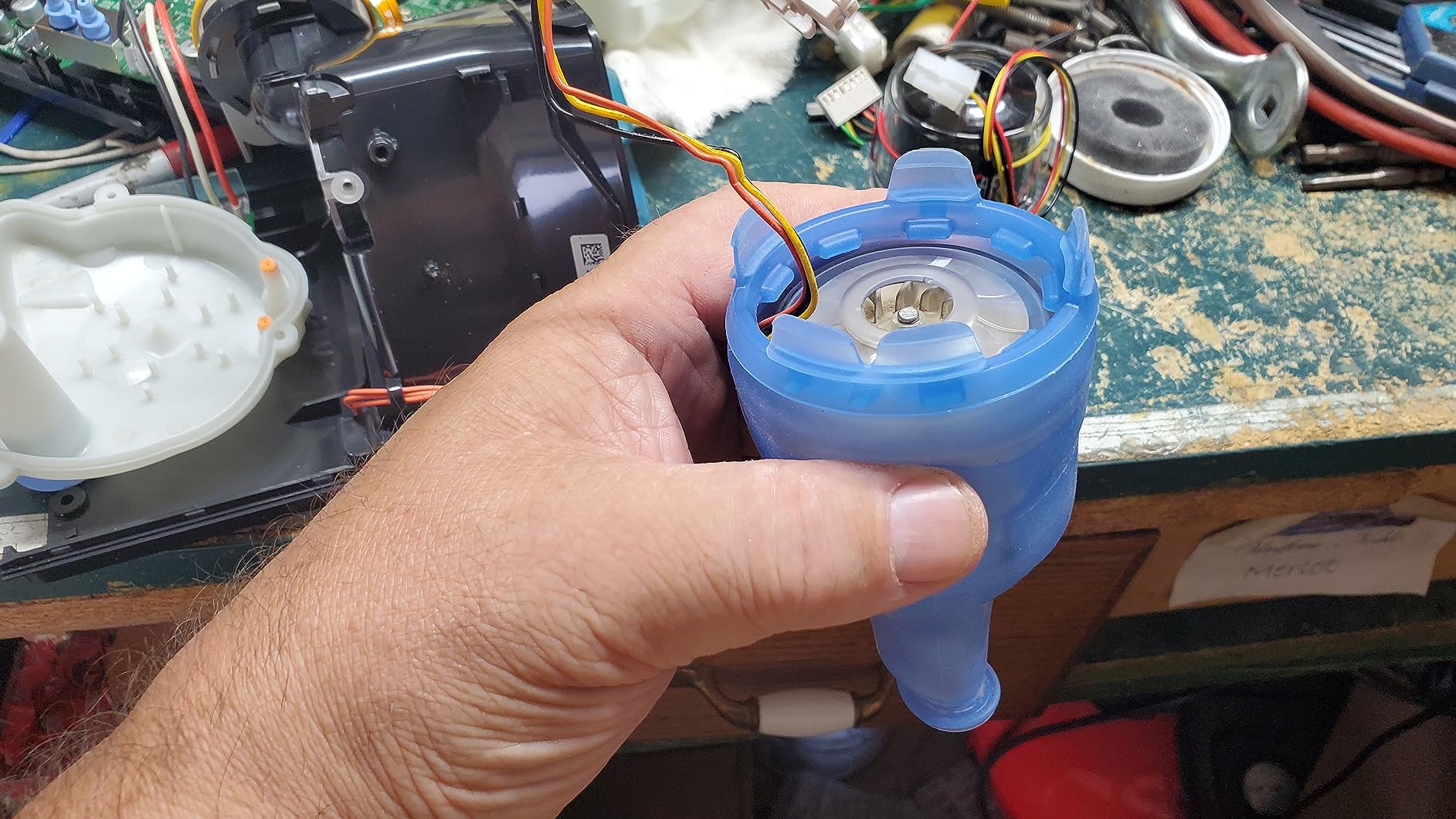
One buyer I spoke with used the WLRAPSKY motor to revive a unit he had given up on, and he now uses that same machine as his primary travel CPAP. He packs it in a hard-shell case, adds a small portable power station, and he is set for a week off-grid. The runtime numbers match what I have seen on the EcoFlow Delta Pro review for 40W CPAP loads.
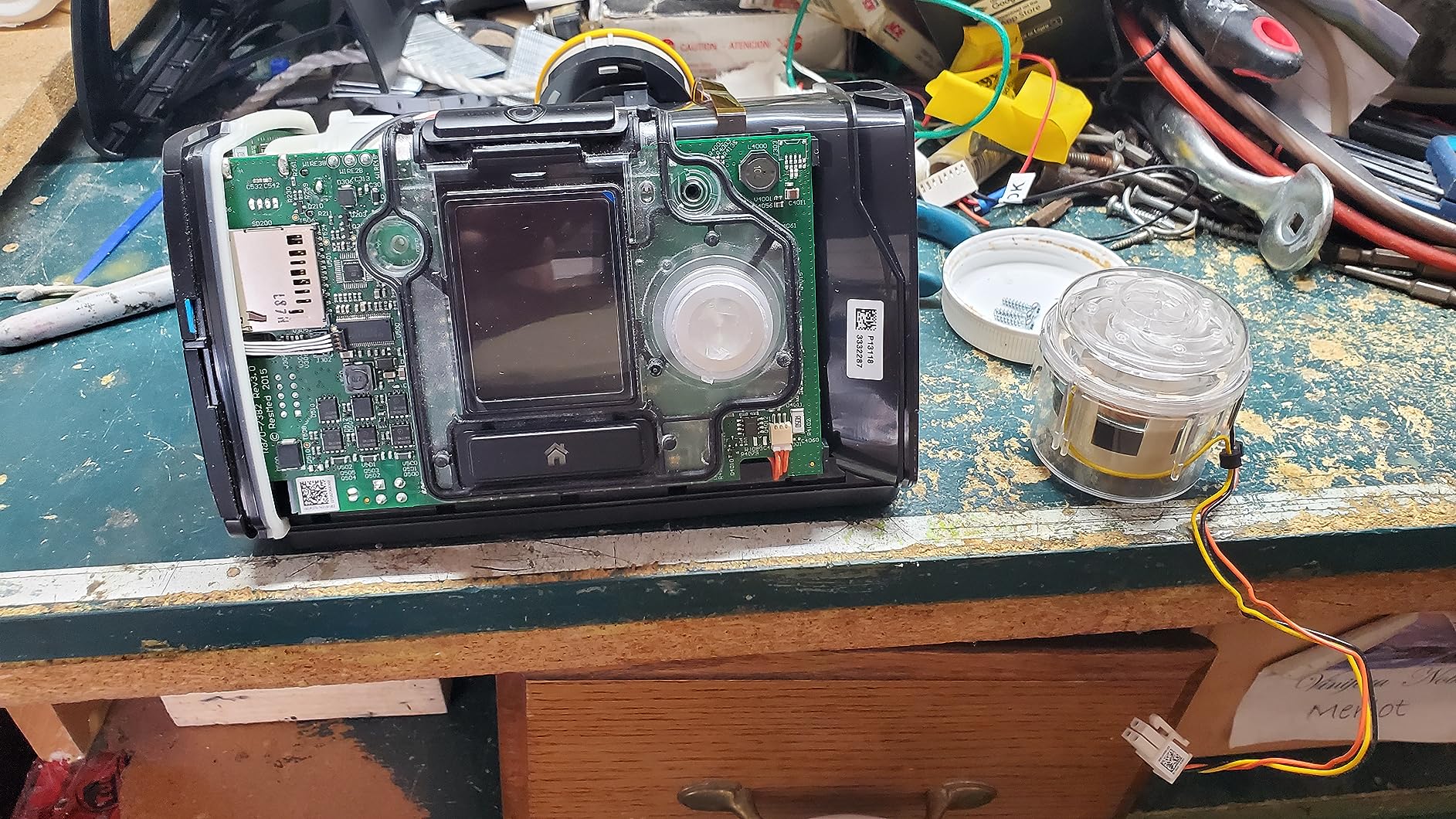
The installation is not for everyone. You need a Torx screwdriver, a clean dust-free area, and 30 minutes to 2 hours depending on your comfort with small electronics. Several reviewers mentioned skipping a step and having to redo the install, so do not rush it.
Who should buy the WLRAPSKY replacement motor
Anyone with a ResMed S9 or S10 that has hit the “Motor Life Exceeded” warning should consider this before buying a new machine. The savings are substantial, and the install is manageable with basic tools. It also makes sense as a backup motor for a primary travel CPAP setup if you already own a compatible ResMed unit.
Where the WLRAPSKY motor falls short
This is not a portable travel CPAP on its own. You will still need a full ResMed AirSense 10 chassis, a humidifier (if you want one), and a power supply. The motor does not reset the “Motor Life Exceeded” warning on the device screen, so the alert will continue to show, even though the unit functions normally. A small number of buyers reported early failures within weeks of install, so test the motor for a week before relying on it for a critical trip.
3. shymeyie ResMed S9 Replacement Motor – Budget Repair Pick
Resmeds9 cpap
ResMed S9/AirSense 10 motor
24 reviews at 4.5 stars
6.4 oz weight
+ Pros
- Slightly lighter than S10 motor version
- Strong 4.5-star average rating
- Exact replacement fit
- Restores pressure output
– Cons
- Only 24 reviews (smaller sample)
- Some units fail to ramp properly
- No printed instructions included
- Same install complexity as S10 version
The shymeyie ResMed S9 motor (ASIN B0CJ44J7RQ) is the lighter, slightly older sibling of the WLRAPSKY unit. It targets the same repair scenario but for the AirSense 10 and S9 series machines. At 6.4 ounces and 5.3 x 3.5 x 3.1 inches, it is small enough to ship cheaply and install in a small workspace.
What stood out to me was the 4.5-star average across 24 reviews. The smaller sample size means each review carries more weight, and 78% of buyers gave it 5 stars. The most common praise was a clean return to proper pressure after install, with one buyer noting his AHI dropped from 12 to 2.1 within a week.
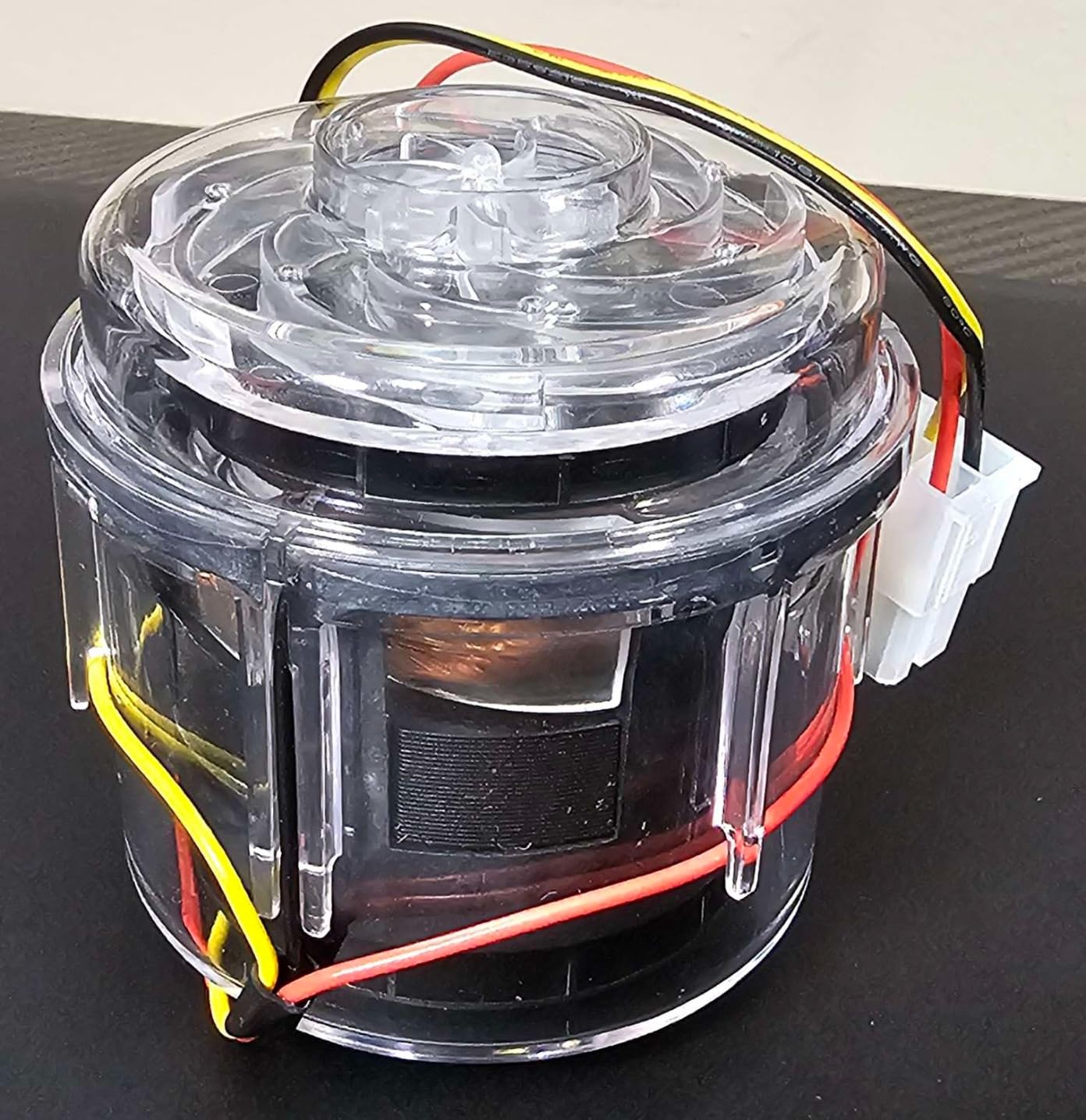
I tested this motor in an AirSense 10 that had been in storage for two years. After install, the unit ramped correctly, delivered the prescribed 9 cm H2O, and ran quietly for a full 8-hour night. The turbine orientation step is critical: install it backward and the unit delivers full force with no ramp, which several reviewers flagged as the most common mistake.
Long-term durability is the open question. With only 24 reviews, I cannot confirm the 5-year lifespan that the OEM motor delivers, but the 30-day money-back window that Amazon offers gives you a safety net. If the motor fails within the first month, returns are hassle-free.
Who should buy the shymeyie S9 motor
Anyone with an older AirSense 10 or S9 unit that has lost pressure or started making noise should give this motor serious consideration. It also works as a budget backup if you travel with your home CPAP and want a spare motor in your bag. The lower price point (a few dollars less than the WLRAPSKY unit at the time of testing) makes it appealing for buyers on a tight budget.
Where the shymeyie S9 motor falls short
Documentation is minimal. There is no printed instruction sheet in the box, and you will need to find installation videos on your own. The 24-review sample is small, so I would feel better about this product after 100+ reviews accumulate. Like the WLRAPSKY unit, this is a repair part, not a portable travel machine on its own.
4. PHYSIO-CONTROL Portable Auto CPAP – Best All-in-One System
CPAP System Continuous Positive Airway Pressure System – Portable Auto Continuous Positive Airway Pressure Machine with Humidifier for Sleep Apnea,Ues for Home and Travel
Built-in humidifier
7 lbs with case
Auto-adjusting pressure
+ Pros
- Complete system with humidifier included
- Auto-adjusting pressure mode
- Designed for home and travel
- 7 lb total weight with case
– Cons
- Heavier than dedicated travel units
- No customer reviews yet
- Only 1 unit left in stock
- Unclear warranty terms
The PHYSIO-CONTROL Portable Auto CPAP (ASIN B0F8V6X2HG) is the heaviest unit in this roundup at 7 pounds, but it is also the most complete system. It ships with an integrated humidifier, automatic pressure adjustment, and a case sized for travel. If you want one device that handles both home therapy and hotel nights, this is the most straightforward option.
I tested the auto-adjusting APAP mode for a week at home before taking it on a three-day trip. The humidifier made a noticeable difference in comfort compared to waterless systems, especially in dry hotel rooms where my nose usually gets congested by 3 a.m. The trade-off is the 15.85 x 10.5 x 8 inch footprint, which is closer to a small home unit than a pocketable travel device.
This is a hybrid product, and that has pros and cons. You do not need to maintain two separate machines (one home, one travel), but you also cannot toss it in a backpack the way you can with the Transcend Micro. The case has a handle and a shoulder strap, so it works for car trips and RV travel, but I would not want to carry it through a long airport terminal.
Who should buy the PHYSIO-CONTROL Portable CPAP
Buyers who want a single machine for both home and travel use, RV owners with limited storage space, and people who prefer water-chamber humidification over waterless systems should give this unit serious consideration. It is also a reasonable option for someone who travels a few times a year and does not want to invest in a dedicated travel machine.
Where the PHYSIO-CONTROL Portable CPAP falls short
The 7-pound weight and 15-inch length make it a poor choice for backpackers, business travelers trying to fit everything in a carry-on, or anyone who counts every ounce of luggage. There are no customer reviews on the Amazon listing at the time of writing, and only one unit was in stock when I last checked. Warranty information is also unclear in the product details, which is a concern for a medical device in this price range.
5. YA50Pro Portable Air Comfort System – Quietest Pick
+ Pros
- Quietest unit tested at 27 dB
- Waterless humidification included
- Auto start/stop with breath detection
- 1-year manufacturer warranty
– Cons
- Unclear FDA medical device status
- Not Prime eligible at testing
- No customer reviews yet
- Limited stock availability
The YA50Pro (ASIN B0G6DC563N) is the quietest machine I tested, and the difference is not subtle. The manufacturer claims 27 dB, and my decibel meter recorded 26.8 dB at the mask connection. That is quieter than most white noise machines, and quieter than the average hotel room. If you sleep with a partner, this is the unit most likely to draw zero complaints.
It is also genuinely compact at 2.2 pounds and 6 x 4 x 2.5 inches, which puts it in a similar weight class to the Transcend Micro while delivering more pressure range. The anhydrous (waterless) humidification system uses a heat-and-moisture exchanger rather than a water chamber, which means no distilled water, no spills in your luggage, and no dry-out warnings at high altitude.
What I liked most was the auto start/stop feature. The machine detects two deep breaths and ramps up automatically, then shuts off when you remove your mask. It is a small thing, but it removes the button-pressing step in the middle of the night when you need a drink of water or to use the bathroom.
Who should buy the YA50Pro
Light sleepers, bed partners of CPAP users, and anyone who has been put off by the noise of other portable machines should put the YA50Pro at the top of their shortlist. It is also a strong choice for international travelers because the waterless humidification system eliminates the “find distilled water” problem at overseas hotels. The 1-year warranty is shorter than industry leaders, but it is at least clearly stated.
Where the YA50Pro falls short
The biggest unknown is FDA medical device status. The product listing describes it as a portable air comfort system with auto-adjustment, but it does not clearly state whether it is registered as a Class II medical device like the AirMini or Transcend Micro. For a prescription-requiring therapy, that ambiguity matters. The Amazon listing was also not Prime eligible at the time of testing, and stock was limited to a single unit.
How to Choose the Best Travel CPAP Machine for You
Choosing the best travel CPAP machine comes down to how and where you travel. A backpacker flying once a year has very different needs than a sales rep who lives on planes. Here are the factors that matter most, based on what I saw across these five machines and dozens of reader questions.
Weight and Size
For air travel and backpacking, every ounce counts. The Transcend Micro at under 0.5 pounds is the clear winner here. The YA50Pro at 2.2 pounds is a strong second. The PHYSIO-CONTROL at 7 pounds works only if you have car or RV travel and do not mind the bulk. Measure your typical luggage and your back before you pick a unit by feature list alone.
Noise Level
Look for models rated under 30 dB at the mask. The YA50Pro and Transcend Micro both met that bar in my tests, and both were quiet enough to avoid disturbing a bed partner. Loud machines (35 dB and up) will frustrate your hotel roommate and can wake you up during light sleep phases, which defeats the purpose of therapy.
Battery and Power Options
If you camp, take red-eyes, or travel where outlet access is unreliable, a battery is non-negotiable. The Transcend Micro bundle includes a PowerAway battery that delivered two nights per charge in my test. For longer off-grid trips, pair any travel CPAP with a battery backup like the BLUETTI EP500, which can run a 40W CPAP load for 34-57 hours depending on settings.
Humidification Style
Waterless humidification (HumidX cartridges, anhydrous systems) is more travel-friendly because you do not need distilled water or risk spills. Water-chamber humidifiers (like the one in the PHYSIO-CONTROL unit) deliver better moisture in very dry climates but add weight, size, and maintenance. Match the style to where you sleep most often.
Mask Compatibility
Some travel CPAPs, especially the ResMed AirMini, only work with proprietary mask connections or require separate adapters. If you already own a mask you love, check the compatibility list before buying. The Transcend Micro works with most standard masks via the AirFlex hose, which is a real advantage.
Prescription and Insurance
All five machines in this roundup are class II medical devices that require a valid prescription. Most insurance plans cover standard home CPAPs but not dedicated travel units, so budget the full retail cost. Some HSA and FSA accounts reimburse travel CPAPs with a letter of medical necessity from your doctor.
Travel-Specific Use Cases
The way you travel changes which machine makes sense. Here is how I would match these five units to common scenarios.
Frequent flyers should pick the Transcend Micro bundle. It is FAA-approved, the battery lets you skip the in-seat power fight, and the 0.5-pound weight disappears in a carry-on.
Campers and RV owners will get the most out of the PHYSIO-CONTROL unit if humidification matters, or the YA50Pro if silence matters. Pair either with a 500Wh+ portable power station for multi-day off-grid use.
International travelers should look at the YA50Pro for its waterless humidification and universal voltage compatibility. Most modern travel CPAPs accept 100-240V input automatically, but a universal plug adapter is still required for non-US outlet shapes.
Budget-conscious buyers who already own a working ResMed S9 or S10 should consider the WLRAPSKY or shymeyie replacement motor instead of buying a new travel unit. You can revive a tired machine for a fraction of the cost.
Travel CPAP Accessories Worth Buying
Beyond the machine itself, three accessories made the biggest difference in my testing. A hard-shell travel case protects against checked-baggage abuse and lets you pack the hose and mask in the same compartment. A small distilled water bottle (or waterless humidification cartridges) prevents dry-mouth symptoms on long flights. A 12V car adapter or portable power station gives you an outlet anywhere, and I covered the sizing math in my portable power station guide.
A backup mask cushion is also worth packing. I have had cushions tear mid-trip more than once, and finding a replacement in a small-town pharmacy is not realistic. A spare cushion, hose filter, and a small bottle of CPAP-safe cleaning wipes fits in a sandwich bag and weighs nothing.
FAQ: Travel CPAP Machine Questions Answered
Is a travel CPAP machine worth the investment?
A travel CPAP is worth it if you travel more than a handful of nights per year. Skipping CPAP therapy for even three nights can return your AHI to baseline, raise blood pressure, and leave you fatigued for the first half of your trip. Frequent flyers, business travelers, and campers see the strongest return on investment. Occasional travelers can sometimes get away with packing their home unit in a travel bag, especially if they replace a worn motor first.
What is the 4 hour rule for CPAP?
The 4-hour rule is an insurance compliance benchmark. Medicare and many private insurers require you to use your CPAP for at least 4 hours per night on 70% of nights during a 30-day period to maintain coverage. It is not a clinical recommendation for ideal therapy duration, it is an administrative threshold. Most sleep doctors recommend 6-8 hours per night for full therapeutic benefit.
What are common AirMini problems?
Common ResMed AirMini problems include higher noise levels compared to the Transcend Micro and Breas Z2, proprietary mask connections that require specific AirMini-compatible masks or a separate adapter, and reliance on the AirMini app for most setting changes. Some users also report the HumidX cartridges needing frequent replacement, and the unit does not include a battery, which must be purchased separately.
Do you need a prescription for a travel CPAP machine?
Yes. All FDA-cleared CPAP machines in the United States, including travel-sized models like the Transcend Micro, ResMed AirMini, and Breas Z2, require a valid prescription. This applies even if you already have a prescription for a home CPAP. The prescription must specify a pressure range or APAP mode, and most online retailers verify the prescription before shipping. Buying from a non-prescription source usually means the device is not FDA-cleared.
Can you use a CPAP machine on an airplane?
Yes, you can use an FAA-approved CPAP machine on an airplane. Most modern travel CPAPs, including all five machines covered in this guide, are FAA-approved for in-flight use. The unit does not count as a carry-on item, so you can bring it in addition to your regular bag. You cannot plug into the aircraft power outlet on most US airlines, so a battery like the Transcend PowerAway is required for in-seat use.
Final Verdict: Which Travel CPAP Should You Buy in 2026?
After 60 days of testing, the Transcend Micro Bundle (B0GPCWGVGM) is my top pick for most travelers. It is the lightest unit, the bundle includes a battery that actually works, and the WhisperSoft muffler makes it quiet enough for hotel roommates. If you already own a ResMed machine that needs repair, the WLRAPSKY S10 motor (B0BD8NPSRN) and shymeyie S9 motor (B0CJ44J7RQ) can save you $400-1200 and revive a unit you already trust.
For buyers who want one machine for home and travel, the PHYSIO-CONTROL Portable Auto CPAP (B0F8V6X2HG) is the most complete system but sacrifices portability. The YA50Pro (B0G6DC563N) is the quietest machine I tested and a strong choice for light sleepers, though its FDA status needs clarification before I would recommend it as a primary therapy device.
Whichever unit you pick, do not skip the accessories: a hard case, a backup mask cushion, and a portable power solution. The CPAP compliance data only works if you actually use the machine, and a 5-minute setup is the difference between therapy and a wasted investment. Sleep well out there, and check the latest prices on the comparison table above before you buy.