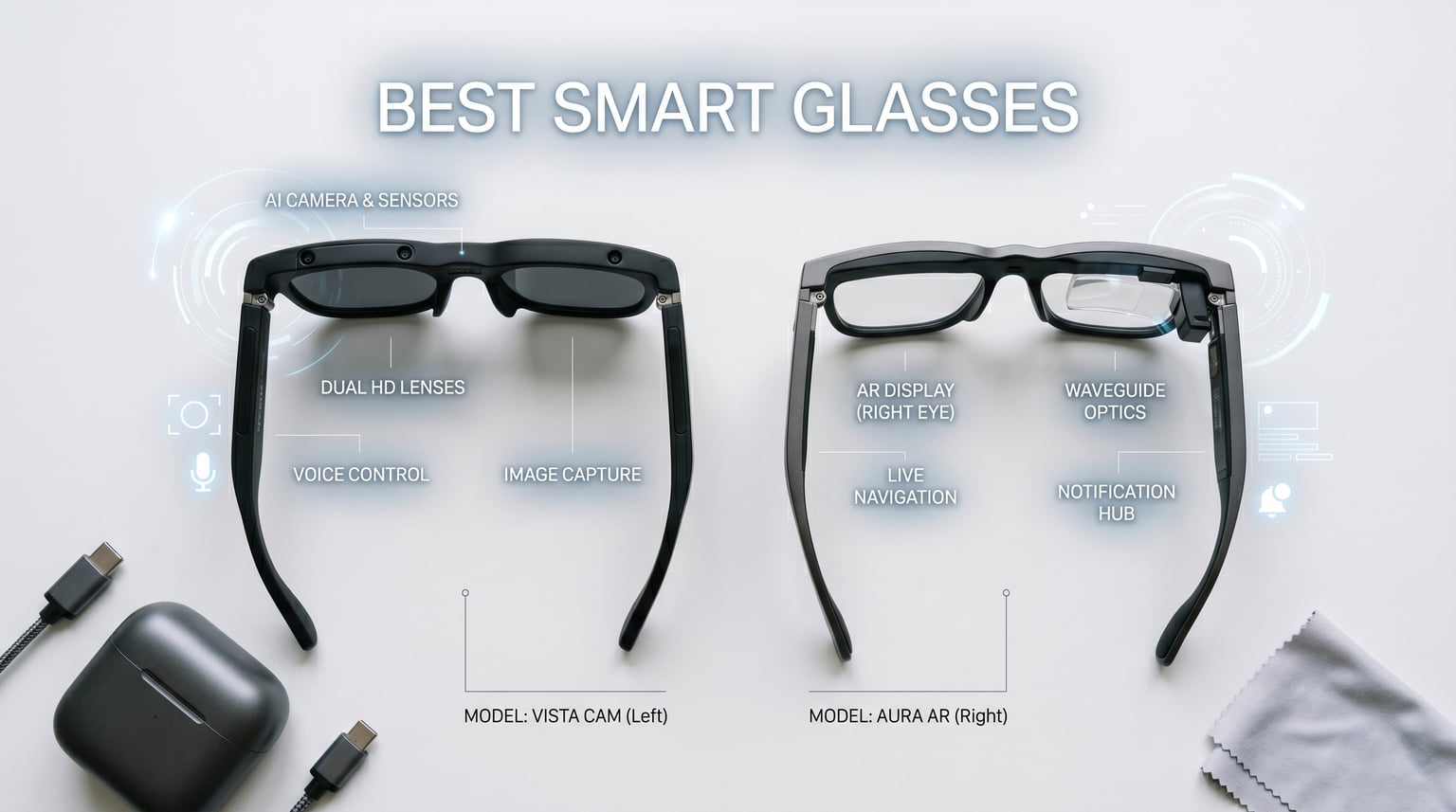
Smart glasses have quietly become the most exciting category in wearable tech. What started as clunky prototypes a decade ago has evolved into genuinely useful devices you can wear all day without anyone noticing. The best smart glasses in 2026 fall into three distinct camps, and understanding the difference between them is the single most important thing to figure out before you buy.
AI glasses like the Ray-Ban Meta series pack cameras, microphones, and AI assistants into frames that look like normal sunglasses. AR display glasses project a virtual screen in front of your eyes for movies, gaming, and productivity. XR display glasses take things further with spatial computing features that anchor digital content to the real world. Each category serves a very different purpose, and choosing the wrong type is the number one mistake first-time buyers make.
Our team spent weeks comparing 10 models across all three categories. We tested camera quality, battery life in real-world scenarios, display brightness outdoors, audio clarity, and everyday comfort. We also dug through thousands of customer reviews on Reddit’s r/SmartGlasses community and Amazon feedback to separate marketing claims from actual user experiences. Meta currently dominates the market with an estimated 6.5 million Ray-Ban Meta units sold, and their smart glasses revenue exceeded Quest headset revenue for the first time. But dominance does not mean they are the right pick for everyone.
Whether you want hands-free AI assistance, a private cinema for your commute, or budget-friendly audio glasses for your morning run, this guide breaks down exactly which pair fits your needs and budget.
Top 3 Picks for Best Smart Glasses

Meta Ray-Ban Gen 2 Smart Glasses
- 3K Video
- 12MP Camera
- Meta AI
- 8H Battery
- Real-Time Translation

Best Smart Glasses in 2026 – Quick Overview
Here is a side-by-side comparison of all 10 models we tested. Use this as your quick reference, then scroll down for the full breakdown of each pair.
1. Meta Ray-Ban Gen 2 – Best AI Smart Glasses Overall
Meta Ray-Ban (Gen 2) Wayfarer Smart AI Glasses, Matte Black, Clear Lenses
AI Glasses
3K Ultra HD Video
12MP Ultra-Wide Camera
8H Battery
IPX4 Water Resistant
+ Pros
- Excellent 3K video and 12MP camera clarity
- Inconspicuous stylish design
- Meta AI with real-time translation
- Fast-charging case with 48H backup
- 90 percent wind noise cancellation
– Cons
- Battery drains fast during heavy recording
- Transition lenses do not darken enough
- AI features can be unreliable
I have been wearing the Meta Ray-Ban Gen 2 for daily use, and the first thing that struck me is how much it looks like a regular pair of Wayfarers. Nobody has asked me if I am recording them. Nobody has stared. That is the single biggest advantage Meta and EssilorLuxottica have over every competitor right now. The matte black resin frame with clear polycarbonate lenses weighs just 51.3 grams, making these lighter than many regular prescription glasses.
The 12MP ultra-wide camera shoots 3K Ultra HD video, which is a noticeable step up from the Gen 1’s 1080p. I used it to capture hands-free footage while cooking, walking the dog, and fixing things around the house. The quality is genuinely good for social media content and memory capture. The five-microphone array with 90 percent wind and street noise cancellation makes hands-free calls sound clear even on a busy sidewalk.
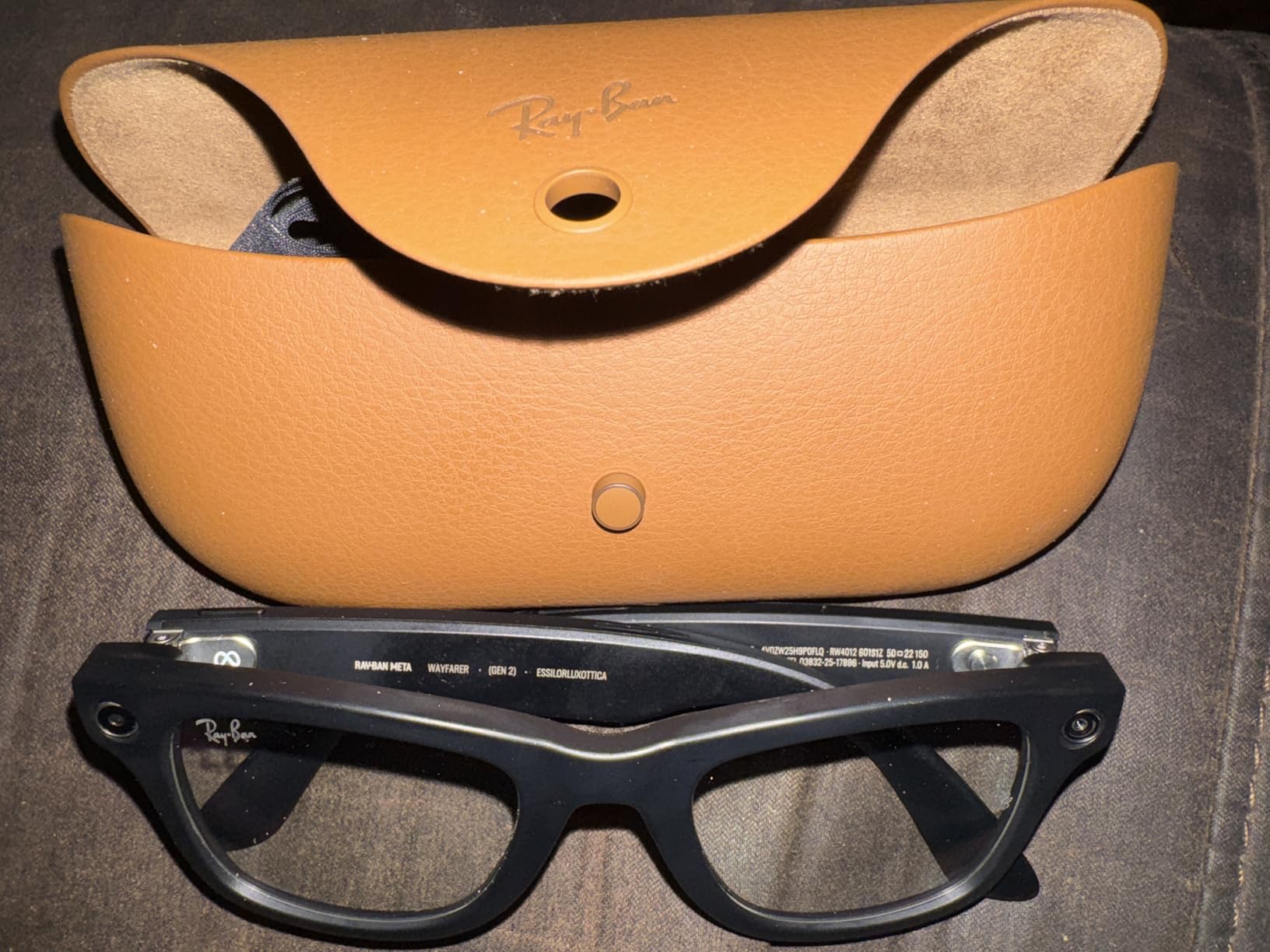
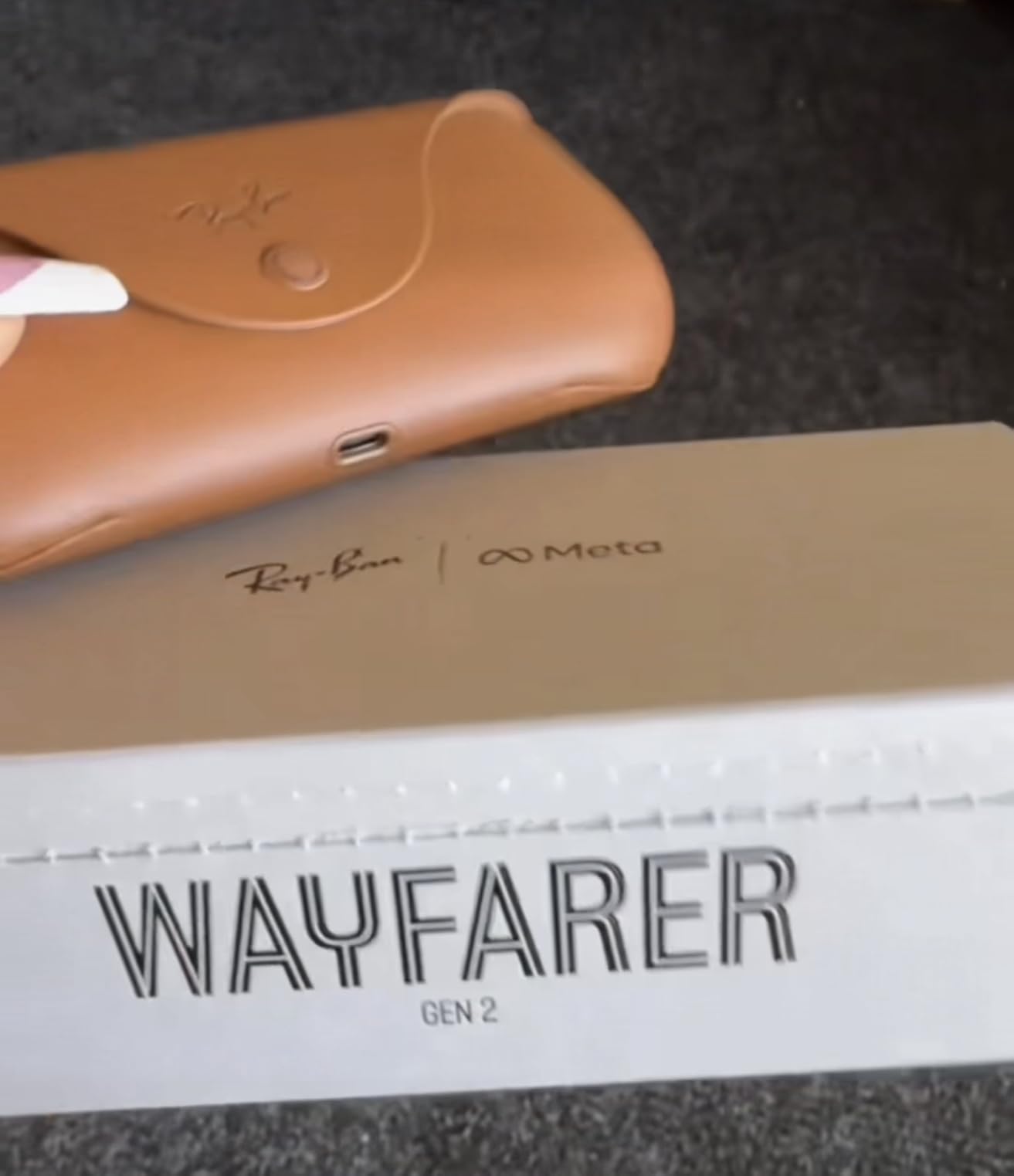
Battery life is where the Gen 2 makes its biggest leap forward over the Gen 1. Meta doubled the battery life to up to 8 hours of normal use, and the charging case adds another 48 hours of on-the-go power. Reddit users on r/SmartGlasses consistently report 4 to 6 hours of real-world use with mixed camera and audio activity, which tracks with my experience. Continuous recording will drain the battery in about 30 minutes, so plan accordingly if you are filming an event.
Meta AI is built in, letting you ask questions, set reminders, and get contextual information hands-free. The real-time translation supports French, Italian, Spanish, English, German, and Portuguese. In practice, the translation works well for basic phrases but struggles with fast conversations. The AI assistant is sometimes unreliable, which is a common complaint across all smart glasses, not just this pair. IPX4 water resistance means they survive rain and sweat, which I appreciate during workouts.
Who Should Buy the Meta Ray-Ban Gen 2
These are the best smart glasses for everyday wear if you want AI assistance, hands-free photography, and open-ear audio in a package that looks completely normal. They are ideal for content creators, travelers, parents capturing family moments, and anyone who wants a glimpse of the AI-powered wearable future without looking like a cyborg. If you want the most polished, socially acceptable smart glasses on the market right now, this is your pick.
What to Watch Out For
The transition lenses do not darken enough to replace real sunglasses in bright conditions. Several users report the glossy frame coating scratches easily and the lens coating is prone to marks when folded. There is no pause function during video recording, so clips must be manually stitched together later. The AI features, while useful, can frustrate with inconsistent responses. If you need safety-rated eyewear for industrial environments, these are not certified for that use case.
2. Ray-Ban Meta Gen 1 – Best Value AI Glasses

Ray-Ban Meta (Gen 1), Wayfarer, Matte Black | Smart AI Glasses for Men, Women — 12 MP Ultra-Wide Camera, Open-Ear Audio, Video Recording, Bluetooth — Polarized Gradient Graphite Lenses — Sunglasses
AI Glasses
12MP Camera
1080p Video
Open-Ear Audio
32GB Storage
Bluetooth
+ Pros
- Stylish Wayfarer design
- Excellent camera quality
- Open-ear audio is surprisingly good
- 32GB internal storage
- Easy to add prescription lenses
– Cons
- Short battery life around 4 hours
- AI features unreliable
- Many features geo-restricted outside US
- Bluetooth inconsistent with iOS
The Ray-Ban Meta Gen 1 remains one of the best-selling smart glasses ever made, and for good reason. With nearly 6,500 Amazon reviews and a 4.2-star rating, this is the pair that put smart glasses on the map for mainstream consumers. The Wayfarer design in matte black with polarized gradient graphite lenses looks identical to regular Ray-Ban sunglasses, which is exactly what most buyers want.
I found the 12MP ultra-wide camera delivers excellent photos and 1080p video that is more than good enough for social media. The five-microphone system captures clear audio for calls and voice commands. Open-ear speakers produce surprisingly rich sound quality that is loud enough for most environments without being a nuisance to people around you. With 32GB of internal storage, you can capture plenty of photos and video before needing to offload files.
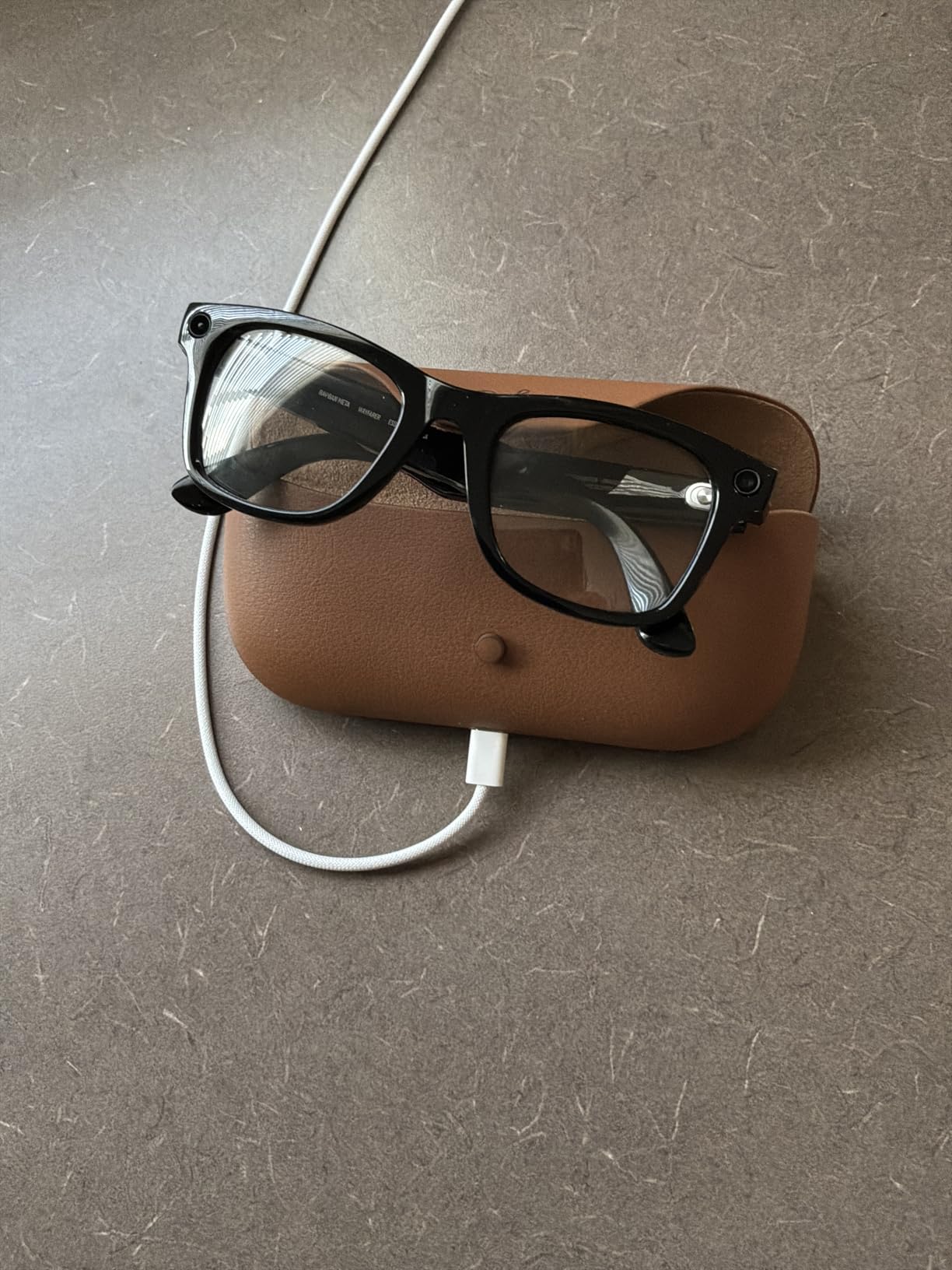
The biggest weakness is battery life. Real-world testing shows about 4 hours of audio and music playback, and significantly less when actively using the camera. This is the pain point Reddit users complain about most frequently. The Gen 2 doubles the battery life, but it also costs significantly more. If you can live with carrying the charging case and topping up mid-day, the Gen 1 offers tremendous value at its current price point.
Meta AI is built in with the same features as the Gen 2, including real-time translation and contextual assistance. The livestreaming feature to Facebook and Instagram works well for sharing POV content. However, many AI features are geo-restricted and unavailable outside the United States, which frustrates international buyers. Bluetooth connectivity can be inconsistent, especially with iOS devices.

Who Should Buy the Ray-Ban Meta Gen 1
These are the best smart glasses for buyers who want the full Meta AI experience without paying Gen 2 prices. If you primarily want hands-free photography, social media content capture, and open-ear audio in a stylish package, the Gen 1 delivers excellent value. The massive review base gives you confidence in what you are getting, and prescription lens compatibility means glasses wearers are not left out.
What to Watch Out For
The 4-hour battery life is the dealbreaker for some users. The transition lenses do not darken enough for effective sun protection. Many features are geo-restricted to the US market. The companion app has been criticized as poorly designed with no iPad-specific version. Bluetooth drops are reported frequently, especially when switching between devices. The glossy frame coating scratches easily over time.
3. XREAL 1S AR/XR Glasses – Best Display Clarity
XREAL 1S AR Glasses, 500″ Virtual Screen, Powered by X1 Chip, Native 3DoF
XR Display
500in Virtual Screen
52 Degree FOV
OLED 1080p 120Hz
X1 Chip
3DoF
+ Pros
- Exceptional 1080p OLED display clarity
- 120Hz refresh rate for smooth viewing
- Native 3DoF spatial viewing
- REAL 3D transforms any content
- Plug-and-play with USB-C devices
- Bose co-developed audio
– Cons
- Nose pads uncomfortable for extended wear
- Settings do not persist between sessions
- Anchor mode drifts occasionally
- No setup wizard
The XREAL 1S is the pair I reach for when I want a private cinema experience. These AR/XR display glasses create a 500-inch virtual screen at a 52-degree field of view, powered by XREAL’s custom X1 spatial computing chip. The OLED display delivers 1920×1080 resolution per eye at a buttery smooth 120Hz refresh rate. At just 80 grams, they are light enough for extended viewing sessions, though comfort depends heavily on getting the nose pads right.
I tested these with my iPhone, a Steam Deck, a Nintendo Switch, and a MacBook. Every USB-C DisplayPort device worked plug-and-play with zero setup required. The display clarity is genuinely impressive, with crisp text, vibrant colors, and deep OLED blacks. The 200,000:1 contrast ratio makes movies and games pop in a way that competing LCD-based glasses simply cannot match. TUV Rheinland certification for low blue light and flicker-free viewing gave me confidence for long watching sessions.
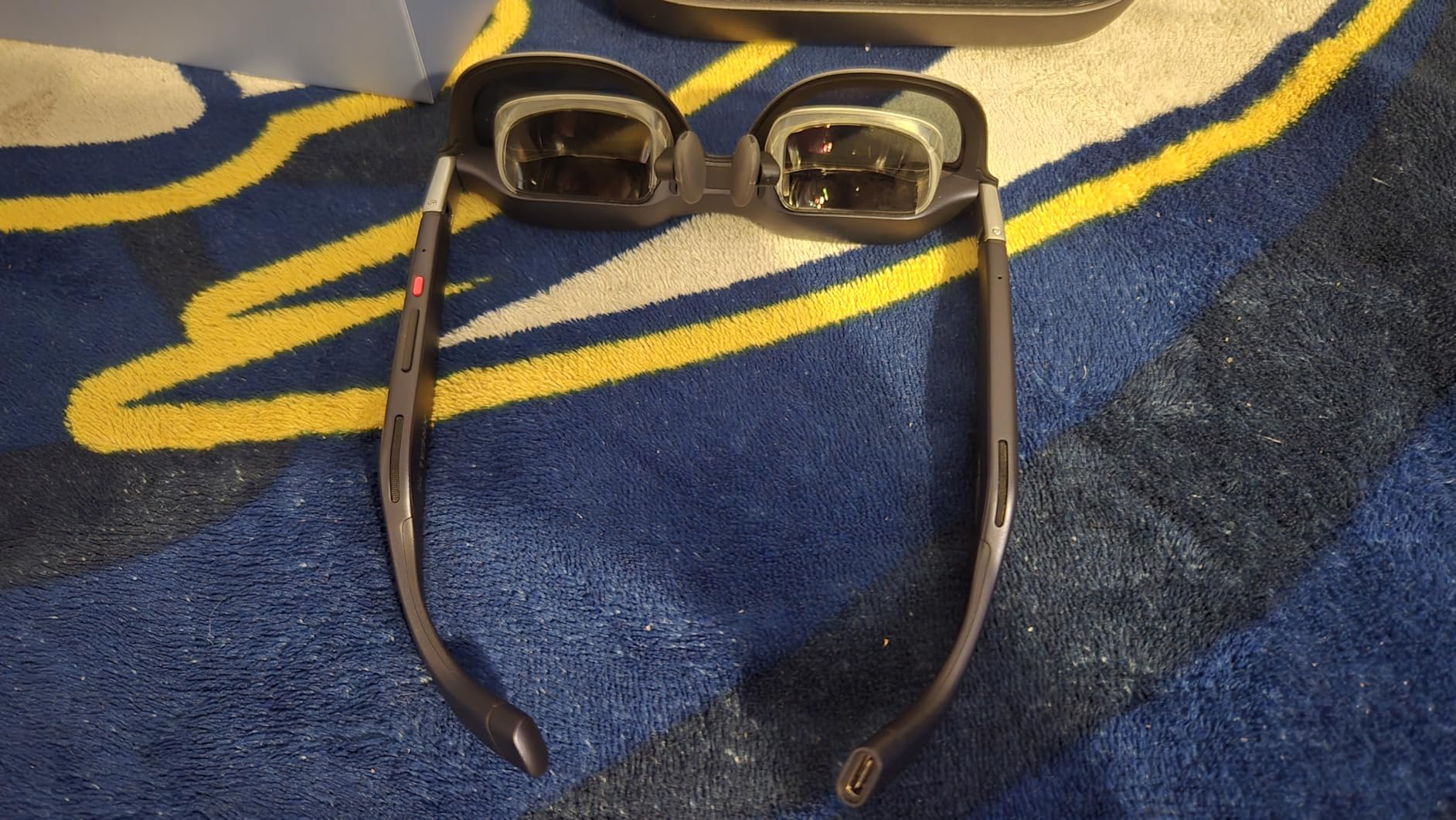
The REAL 3D feature is a standout. With a single switch, it transforms any flat 2D content into an immersive 3D experience. I watched standard YouTube videos and they gained surprising depth. The native 3DoF tracking means the virtual screen stays anchored in space as you move your head, which feels natural for gaming and movie watching. However, the anchor mode occasionally drifts from its set position, requiring manual recalibration.
Bose co-developed audio delivers spacious, balanced sound through custom AR-grade drivers. It is a significant upgrade over the tiny speakers found in budget smart glasses. My main complaint is comfort. The nose pad placement and material caused pressure marks after about 45 minutes of wear. The glasses also get warm during extended use, particularly with 3D mode enabled. Settings do not persist between sessions, which means reconfiguring your preferred display parameters each time you connect.
Who Should Buy the XREAL 1S
These are the best smart glasses for gaming, movie watching, and productivity on the go. If you travel frequently and want a private 500-inch display that fits in your pocket, the XREAL 1S is hard to beat. The plug-and-play simplicity with any USB-C device, combined with OLED display quality, makes these the top pick for media consumption. They are also excellent for handheld gaming on Steam Deck, ROG Ally, or Nintendo Switch.
What to Watch Out For
Comfort is the main issue. The nose pads need improvement, and the weight causes pressure during extended sessions. The wayfarer form factor lets in side light, making outdoor use difficult in bright conditions. There is no out-of-box setup wizard, so you will need to research optimal settings. Settings reset between sessions, and the anchor mode drifts. These are tethered glasses requiring a USB-C connection, so they are not standalone devices.
4. RayNeo Air 3s Pro – Best Budget AR Display Glasses
RayNeo Air 3s Pro AR/XR Glasses 201″ 1200 Nits 120Hz HueView 2.0 Display
XR Display
201in Screen
1200 Nits
Micro-OLED 1080p 120Hz
76 Grams
Spatial Audio
+ Pros
- Worlds brightest AR glasses at 1200 nits
- Stunning Micro-OLED clarity with 98 percent DCI-P3
- Lightweight at 76 grams
- Excellent price-to-performance ratio
- Plug-and-play simplicity
– Cons
- Screen corner visibility issues depending on face shape
- Wire on arm feels like pulling glasses down
- Not suitable as productivity monitor replacement
- Audio leaks to surroundings
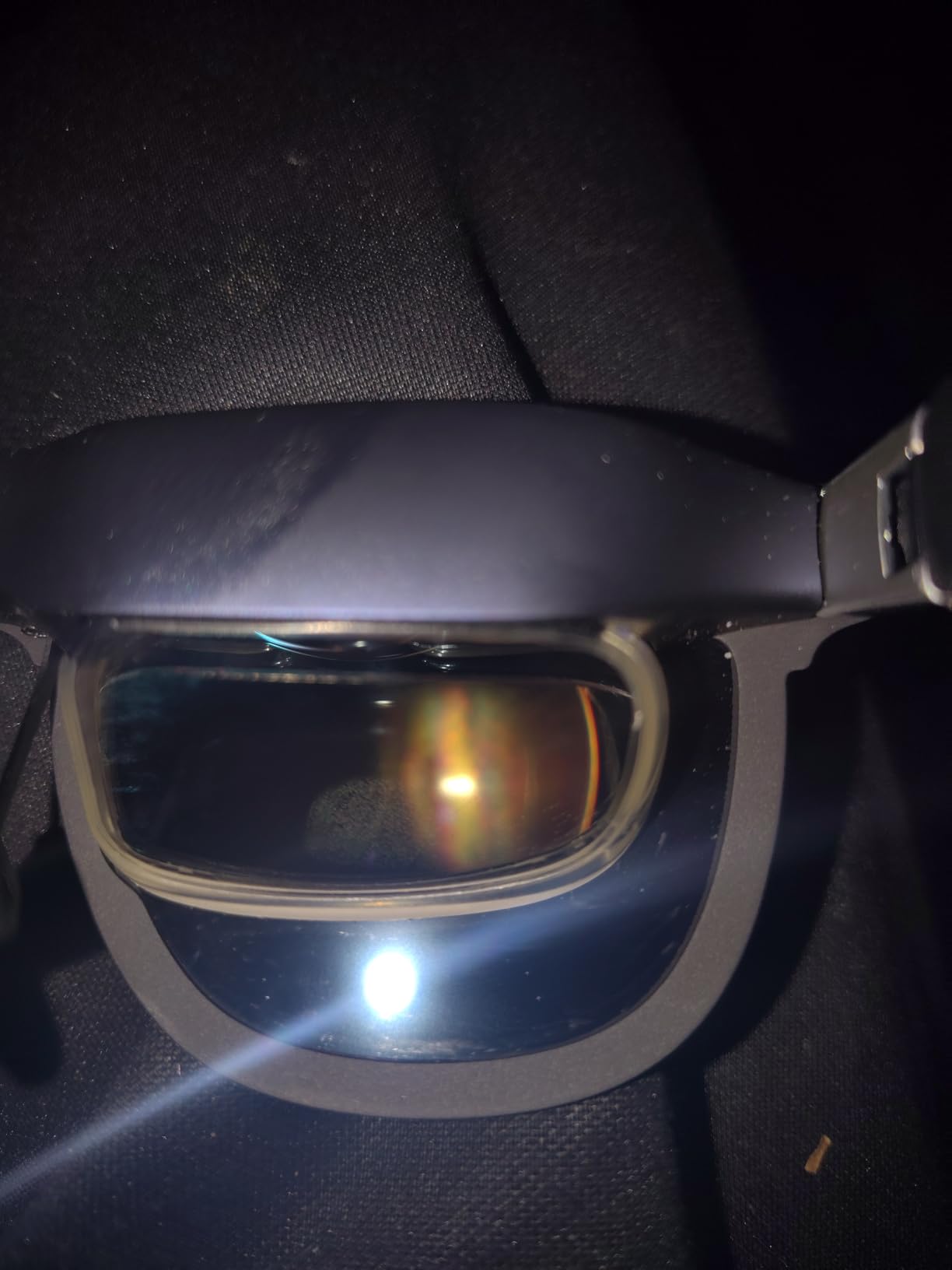
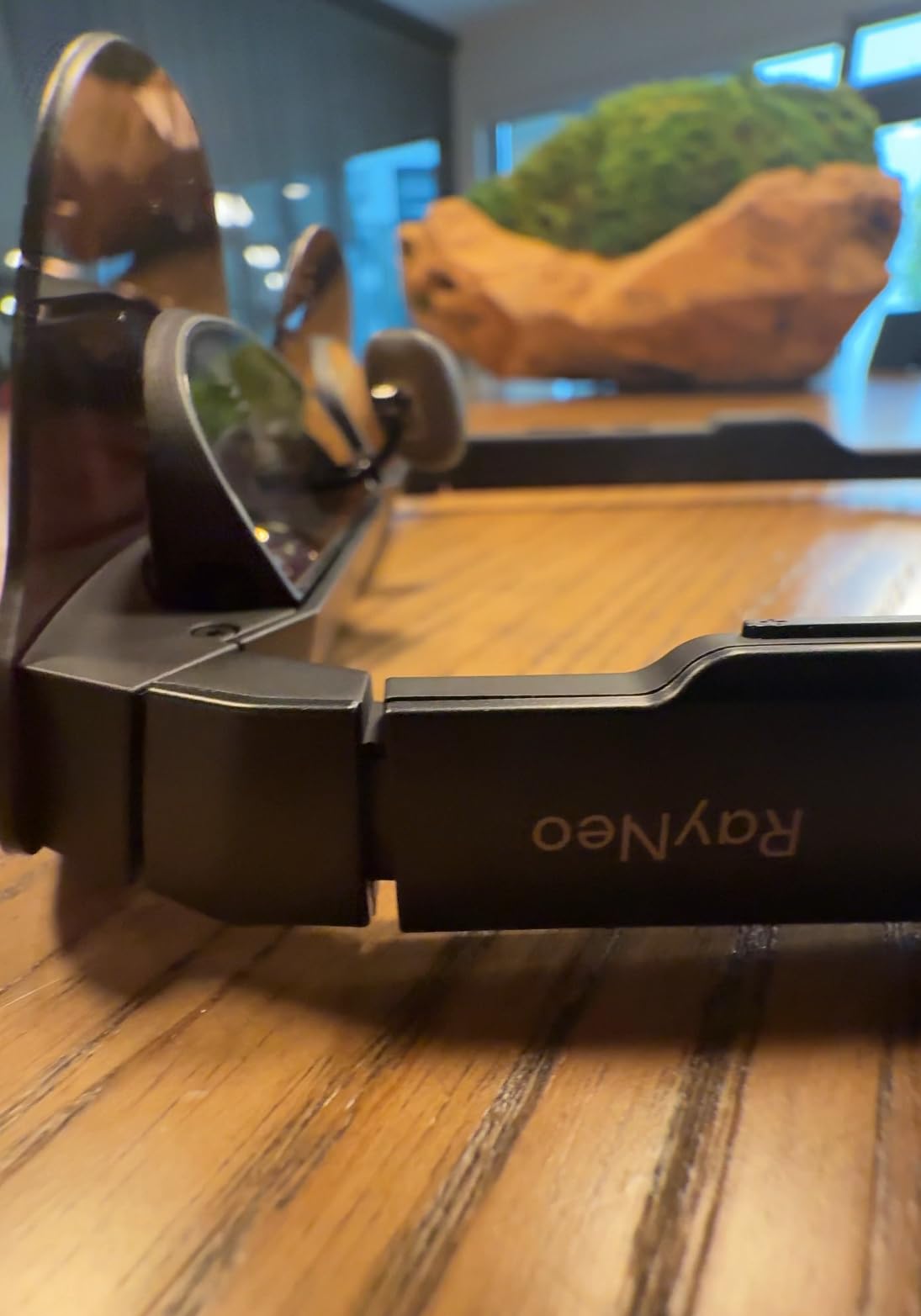
The RayNeo Air 3s Pro claims the title of world’s brightest AR glasses at 1200 nits, and after testing them outdoors, I can confirm the brightness advantage is real. Most AR display glasses wash out in daylight, but the Air 3s Pro remains readable even in moderately bright conditions. The HueView 2.0 Micro-OLED display delivers a 201-inch virtual screen with FHD 1080p resolution at 120Hz and a stunning 200,000:1 contrast ratio.
Color reproduction is excellent at 98 percent DCI-P3 coverage, which means movies and games look vibrant and accurate. The 3840Hz high-frequency PWM dimming with 20-level brightness control lets you fine-tune the display for any environment. TUV SUD dual certification for low blue light and flicker-free viewing protects your eyes during extended sessions. At just 76 grams with good weight distribution, these are among the most comfortable AR glasses I have tested.
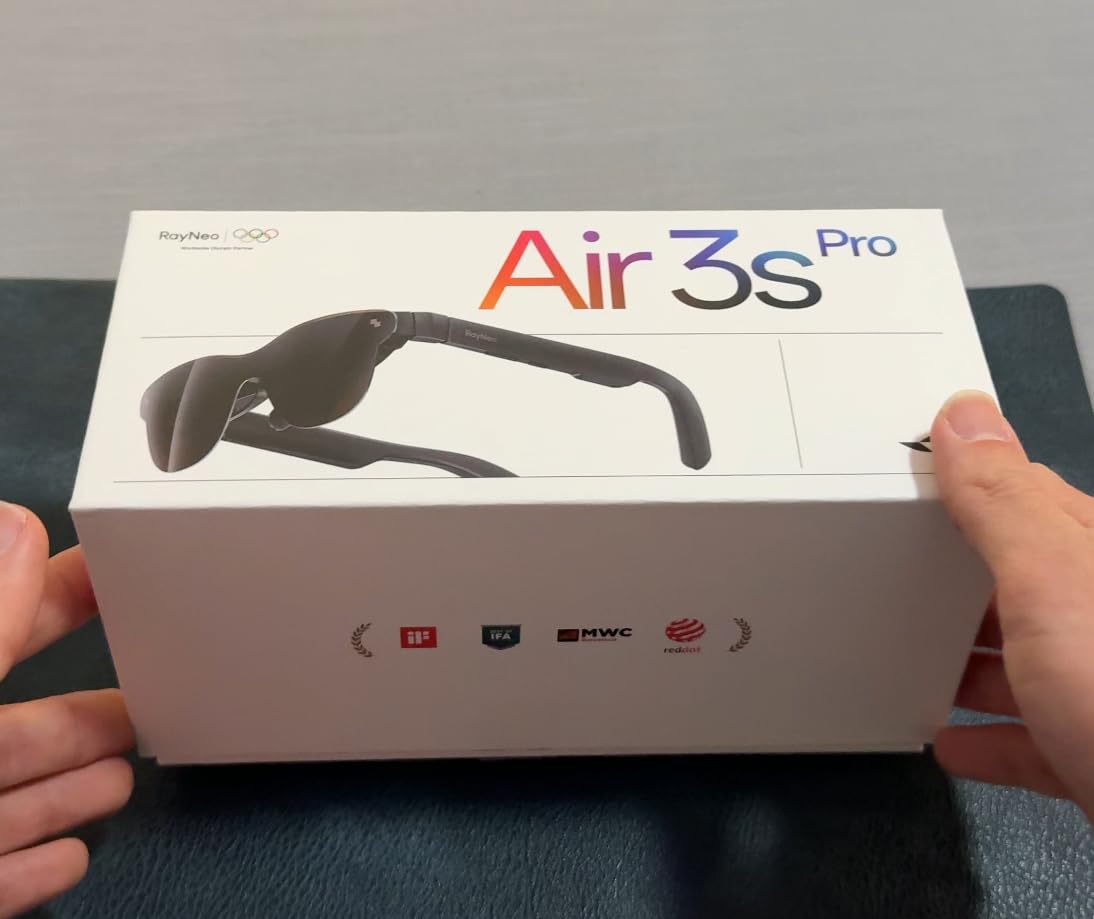
Plug-and-play simplicity means no app or setup is required. I connected these to an iPhone 16, a PS5, a Steam Deck, and a MacBook Pro, and they all worked immediately via USB-C. The spatial audio with 3D surround experience is immersive, though the open-ear design means sound leaks to people around you. The included vision correction setup is a nice touch for glasses wearers, though it does not replace actual prescription inserts.
The main drawback is fit. Screen corner visibility depends heavily on your face shape and how the glasses sit on your nose. Some users will see clipped corners of the display, which is distracting during movies and games. The wire on the arm can feel like it is pulling the glasses down over time. Nose pads leave red marks after hours of wear, and the fixed IPD means these will not fit everyone properly.
Who Should Buy the RayNeo Air 3s Pro
These are the best budget AR display glasses for anyone who wants a large virtual screen for movies, gaming, and entertainment without paying premium prices. If you are a frequent traveler, commuter, or handheld gamer who wants a personal theater experience, the Air 3s Pro delivers exceptional value. The 1200-nit brightness advantage makes these more versatile than competitors for varied lighting conditions.
What to Watch Out For
The fixed IPD means these will not work for everyone. Try to test fit before buying if possible. The audio is not private, making these unsuitable for quiet environments like offices or libraries. They are not a productivity monitor replacement for working from home. The included case is a cheap semi-stiff fabric rather than a proper hard case. Comfort degrades after extended use due to nose pad pressure.
5. Plunthorn AI Smart Glasses with 8MP Camera – Best Budget AI Glasses

AI Smart Glasses for Men and Women ,8MP Camera, AI Assistant, Real-Time Translation, Object Recognition, Photo Capture, Bluetooth Connectivity, Open-Ear Speaker, Replaceable Sunglasses Lenses
AI Glasses
4K Video
8MP Camera
Real-Time Translation
AI Assistant
IP65
300mAh
+ Pros
- Very affordable price for AI glasses with camera
- 4K video and 8MP photo capture
- Real-time AI translation
- Interchangeable sunglasses and clear lenses
- IP65 water and sweat resistant
– Cons
- AI translation has significant delays
- Battery life falls short of claims
- App is clunky and unintuitive
- 4K video claim may be misleading
- Limited to Android compatibility
The Plunthorn AI Smart Glasses offer an incredibly ambitious feature set at a fraction of the cost of premium brands. For buyers who want AI glasses with a camera without spending 300 dollars or more, this is one of the most compelling options available. The 8MP camera captures 4K video and photos, the built-in AI assistant supports real-time translation and object recognition, and the interchangeable lens system lets you switch between sunglasses and clear business lenses.
During my testing, the camera produced clear footage for the price point. The AI voice assistant with ChatGPT integration works for basic queries and information lookups. Object recognition is a useful feature that lets you point at items and get information about them. IP65 water and sweat resistance means you can wear these for running and cycling without worry about weather conditions. Bluetooth pairing with Android smartphones was straightforward and reliable.
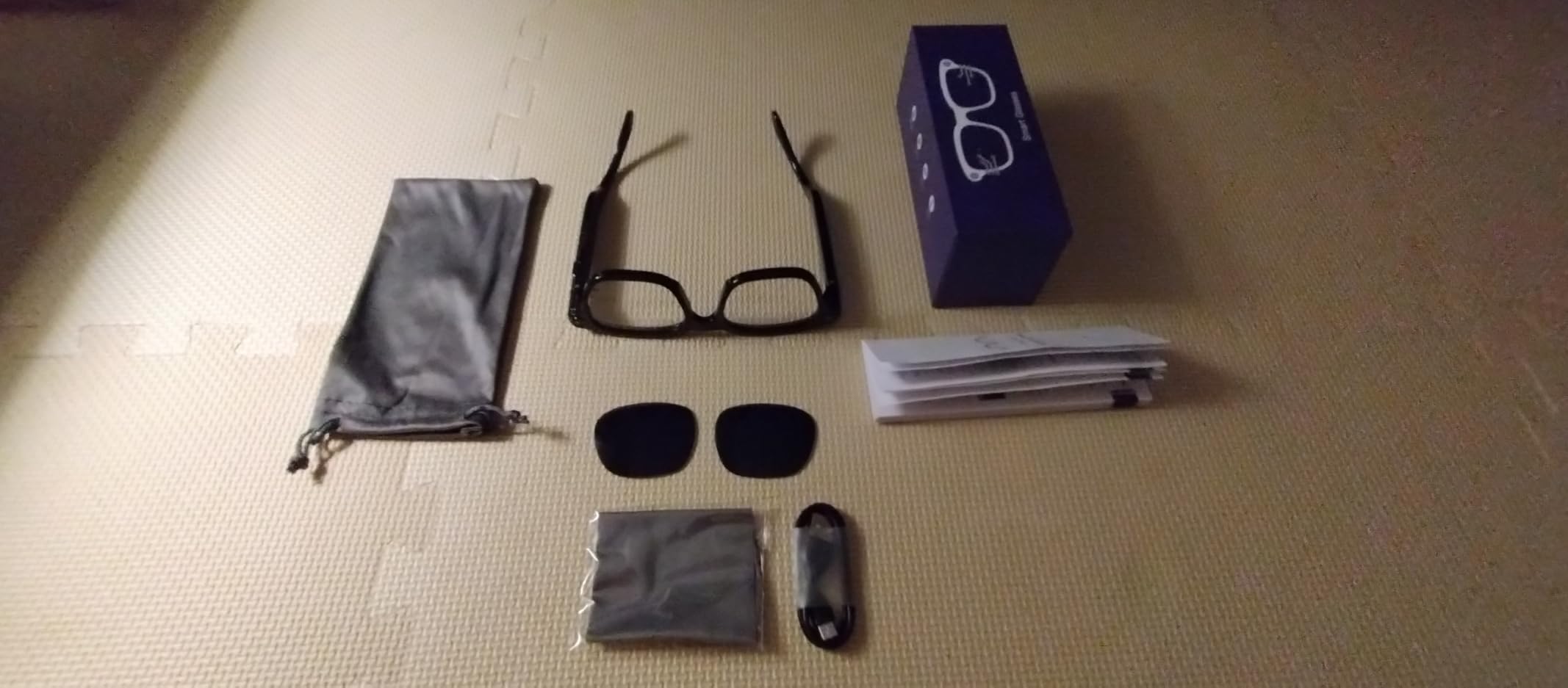
However, managing expectations is important at this price. The AI translation has noticeable delays that make real-time conversations awkward. The companion app is clunky, poorly organized, and unintuitive, which makes managing settings and files a chore. Battery life falls short of advertised claims, delivering only a couple hours of real-world use rather than the promised 7 hours. Some users question whether the video quality truly qualifies as 4K based on their footage.
The replaceable lens mechanism is difficult to use, and the glasses can become uncomfortable during long hours of wear. The 300mAh battery delivers adequate performance for short outings but will not last a full day of heavy use. Despite these limitations, the Plunthorn AI Smart Glasses offer more features per dollar than any other pair on this list.

Who Should Buy the Plunthorn AI Smart Glasses
These are the best smart glasses for budget-conscious buyers who want camera, AI, and translation features without the premium price tag. If you are a student, casual user, or someone who wants to try smart glasses before investing in a Meta or XREAL product, this is a low-risk entry point. The IP65 rating also makes these suitable for outdoor activities and workouts.
What to Watch Out For
The companion app is the biggest frustration. AI translation delays make real conversations difficult. The 4K video claim should be taken with a grain of salt based on user feedback. Battery life is adequate but not exceptional. These are primarily designed for Android devices, so iPhone users should check compatibility carefully. Build quality reflects the budget price point.
6. OhO sunshine Bluetooth Audio Sunglasses – Best Budget Audio Glasses

OhO Open Ear Smart Glasses, UV400 Z87.1 Lightweight Audio Bluetooth Glasses
Audio Glasses
Open-Ear Design
10H Playtime
UV400
ANSI Z87.1
Water Resistant
36 Grams
+ Pros
- Lightweight 36g TR90 frame
- 10-hour battery life
- ANSI Z87.1 certified UV400 protection
- Water resistant for outdoor sports
- Works with Siri and Google Assistant
- Great value
– Cons
- Sound quality lacks bass depth
- No app for customization
- Volume control is cyclical not fine-grained
- Build quality feels less premium
The OhO sunshine Bluetooth Audio Sunglasses are the budget king of audio glasses, with nearly 6,000 reviews and a solid 4.1-star rating. At just 36 grams with a TR90 frame, these are the lightest pair on this list. The wrap-around design provides full frame coverage and the polarized UV400 protection meets ANSI Z87.1 safety standards, which is impressive at this price point.
The open-ear audio design lets you listen to music and take calls while staying aware of your surroundings. This makes these glasses ideal for cycling, running, hiking, and driving where situational awareness is critical. The 10-hour battery life exceeds many competitors that cost three to five times more. Voice control works with both Siri and Google Assistant for hands-free operation.

Sound quality is acceptable for the price but cannot compete with premium alternatives like the Ray-Ban Meta series. The audio lacks bass depth and the open-ear design means lower volumes are needed in quiet environments to avoid disturbing others. There is no companion app, so customization options are limited to physical button controls. The volume control cycles through levels rather than offering fine-grained adjustment.
For the price, the OhO sunshine glasses deliver exceptional value. Reddit users on r/SmartGlasses frequently recommend these as the budget alternative to premium audio glasses. The water-resistant build handles sweat and light rain without issue. The TR90 frame is flexible and durable enough for active use. These are the glasses I would buy for a teenager or for activities where losing or damaging expensive smart glasses is a concern.

Who Should Buy the OhO sunshine Audio Sunglasses
These are the best smart glasses for outdoor sports, cycling, running, and driving on a budget. If you want open-ear audio, UV protection, and hands-free calls without spending more than 50 dollars, this is your pair. They are also excellent as a backup pair or for activities where you do not want to risk expensive smart glasses.
What to Watch Out For
Sound quality is basic and lacks bass. There is no AI assistant, camera, or display. The build quality feels less premium than higher-priced options. The matte black finish can look shiny when skin oils accumulate. No app means no customization beyond button controls. These are fundamentally Bluetooth headphones embedded in sunglasses, not true smart glasses with AI capabilities.
7. Plunthorn AI Smart Glasses (Transparent Lens) – Best for Travel AI
AI Smart Glasses with Camera, 4K Video, Real-Time Translation, AI Assistant
AI Glasses
4K HD Video
AI Translation 130+ Languages
ChatGPT
Object Recognition
IP65
+ Pros
- 4K HD camera captures clear video
- 130+ language real-time AI translation
- Built-in ChatGPT voice assistant
- IP65 waterproof for travel
- Looks like regular glasses
- Compatible with iOS and Android
– Cons
- Under 2GB storage limits recording to 22 minutes
- Must use WiFi to offload files
- Weight noticeable vs standard glasses
- AI translation struggles with fast conversations
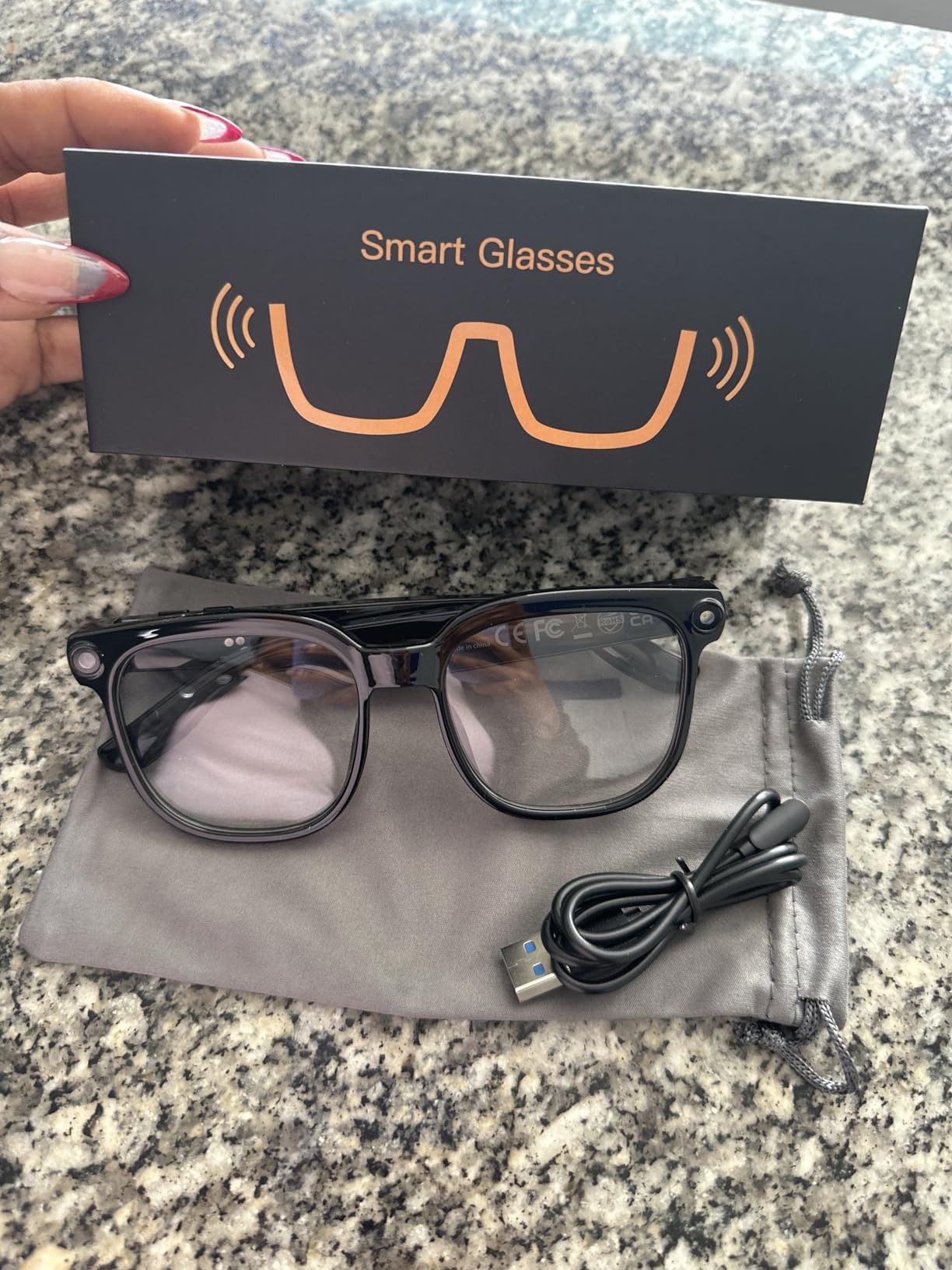
The second Plunthorn entry on our list, this transparent lens variant, is designed specifically with travel in mind. The built-in ChatGPT voice assistant and 130+ language real-time translation make these a compelling companion for international travel. The AI object recognition feature lets you point at landmarks, menus, and items to get instant information, which is genuinely useful when navigating unfamiliar places.
The 4K HD camera captures first-person perspective video and photos that are surprisingly clear for this price range. I tested the translation feature with Spanish and French phrases, and it handled basic conversations well. The 0.1-second response time claim is optimistic, but the translation is fast enough for practical use in restaurants, shops, and casual interactions. The companion app makes file management and feature control straightforward.
The biggest limitation is storage. With under 2GB of internal storage, you are limited to approximately 22 minutes of continuous video recording before needing to offload files via WiFi. This forces you to carry a smartphone and use it as a storage hub, which defeats some of the hands-free appeal. The 290mAh battery provides adequate but not exceptional daily performance.
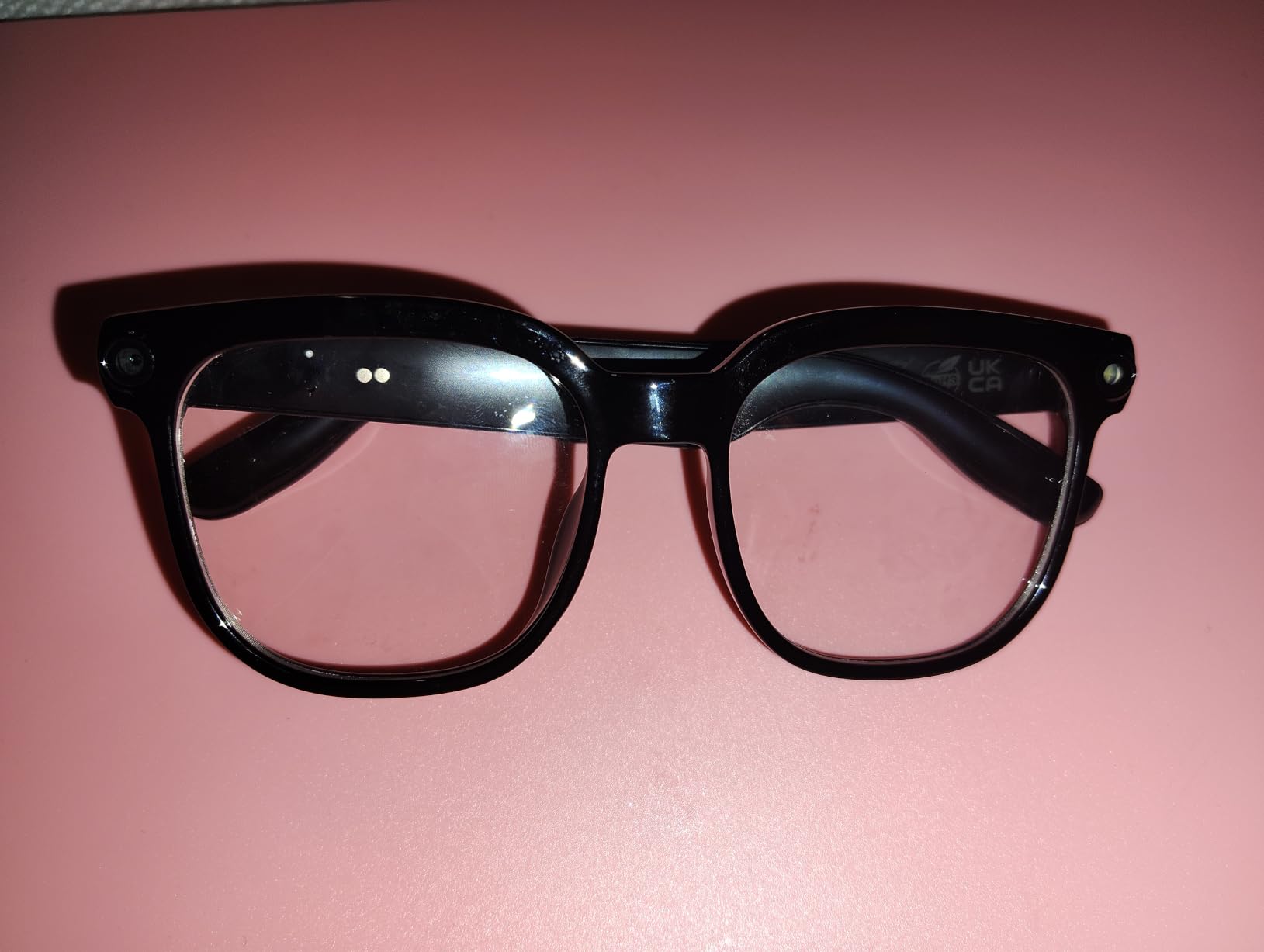
The rectangular frame with transparent lenses looks like regular glasses rather than tech products, which is a major plus for social acceptability. IP65 waterproof protection handles sweat, rain, and dust without issue. The open-ear Bluetooth audio delivers hands-free calling quality that is acceptable for the price. These glasses work with both iOS and Android devices, which gives them an edge over the Android-only 8MP variant.
Who Should Buy the Plunthorn AI Smart Glasses for Travel
These are the best budget smart glasses for international travelers who want AI translation, object recognition, and first-person photography without spending hundreds of dollars. If you frequently visit countries where you do not speak the language, the 130+ language translation and ChatGPT assistant can genuinely improve your travel experience. The transparent lens design makes these suitable for business settings.
What to Watch Out For
The 2GB storage limit is the biggest practical constraint. You will need to manage files frequently using a WiFi connection to your phone. AI translation struggles with fast-paced conversations and complex sentences. The weight is noticeable compared to standard glasses, which affects all-day comfort. There is no display, so all information comes through audio. Battery life is adequate for a day of casual use but not for intensive recording.
8. XO Simple is Beauty Smart Bluetooth Glasses – Best Ultra-Budget Pick

XO Simple is Beauty Smart Bluetooth Glasses,Built-in Mic & Speakers,Smart Wireless Headphone Sunglasses for Men and Women,Athletic/Outdoor UV Protection and Voice Control,Unisex(Black)
Audio Glasses
UV400 Protection
8H Playtime
200H Standby
Bluetooth
Built-in Mic
+ Pros
- Exceptional value at entry price
- UV400 full-protection lenses
- 8 hours playtime with 200-hour standby
- Ultra-thin lightweight design
- Quick 2-hour charging
- Works with iOS and Android
– Cons
- Sound quality inferior to premium brands
- Build quality feels cheap
- Some units fail within first month
- Not water resistant
- No app for customization
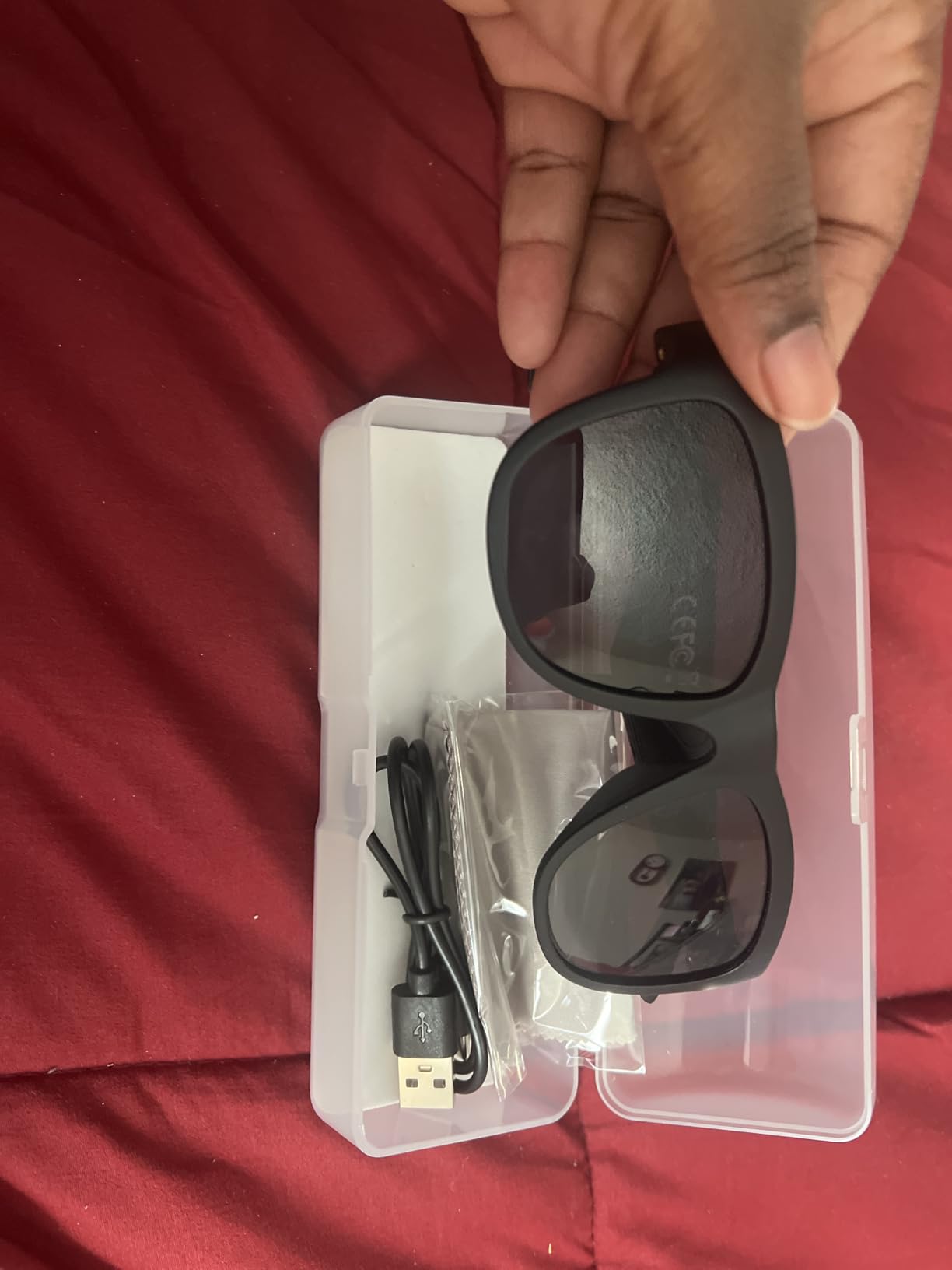
The XO Simple is Beauty Smart Bluetooth Glasses prove that you can get functional audio glasses for an incredibly low price. With over 500 reviews and a 4.2-star rating, these are consistently praised for delivering remarkable value. The ultra-thin flexible frame looks like ordinary sunglasses, and the UV400 lenses provide full protection with good color clarity and contrast.
The built-in speaker system delivers 360-degree enhanced stereo sound, though the audio quality is noticeably inferior to premium brands like Bose and Ray-Ban Meta. Bass is lacking and the sound is tinny at higher volumes. However, for casual listening during driving, cycling, or yard work, the audio is perfectly acceptable. The HD microphones provide clear hands-free call quality that surprised me given the price.

The 8-hour continuous playtime with 200-hour standby is impressive at this price point. The 2-hour fast charging via USB keeps downtime minimal. Multi-function button controls handle play and pause, call answering, and voice assistant activation. These work well for driving, cycling, and outdoor activities where you want audio without blocking ambient sound.
Durability is the main concern. Some users report units failing within the first month of use. The build quality feels cheap, and the absence of water resistance limits outdoor versatility. There is no companion app, no AI features, no camera, and no display. These are fundamentally Bluetooth headphones in a sunglasses frame, but at this price, that is exactly what you should expect.
Who Should Buy the XO Simple is Beauty Glasses
These are the best smart glasses for buyers who want basic Bluetooth audio in a sunglasses form factor at the lowest possible price. If you need hands-free calls and music during driving, cycling, or outdoor work, and you do not care about AI features, cameras, or premium sound quality, these deliver excellent value. They are also perfect as a gift or a first pair to test whether audio glasses fit your lifestyle.
What to Watch Out For
Durability is inconsistent, with some units failing early. The build quality reflects the ultra-budget price. Sound quality lacks bass and depth compared to premium options. No water resistance means these are unsuitable for rainy conditions or intense workouts. There is no warranty coverage beyond the initial return period. The black matte frame shows skin oils easily.
9. EGQINR 4K Camera Smart Glasses – Best for Vlogging

AI Smart Glasses for Men Women, 4K Camera, Translator, Call & Recorder
AI Glasses
4K Video
8MP Camera
130+ Language AI
ChatGPT
Object Recognition
IP65
Bluetooth 5.4
+ Pros
- 130+ language AI translation with 0.1s response
- 8MP HD camera with image stabilization
- Interchangeable blue-light and sunglasses lenses
- Touch controls and wear detection
- IP65 dust and water resistance
- Bluetooth 5.4 with stable 10m range
– Cons
- Frame feels flimsy at center hinge
- Only 4GB internal storage
- Limited review volume at 49 reviews
- Higher price point for the brand
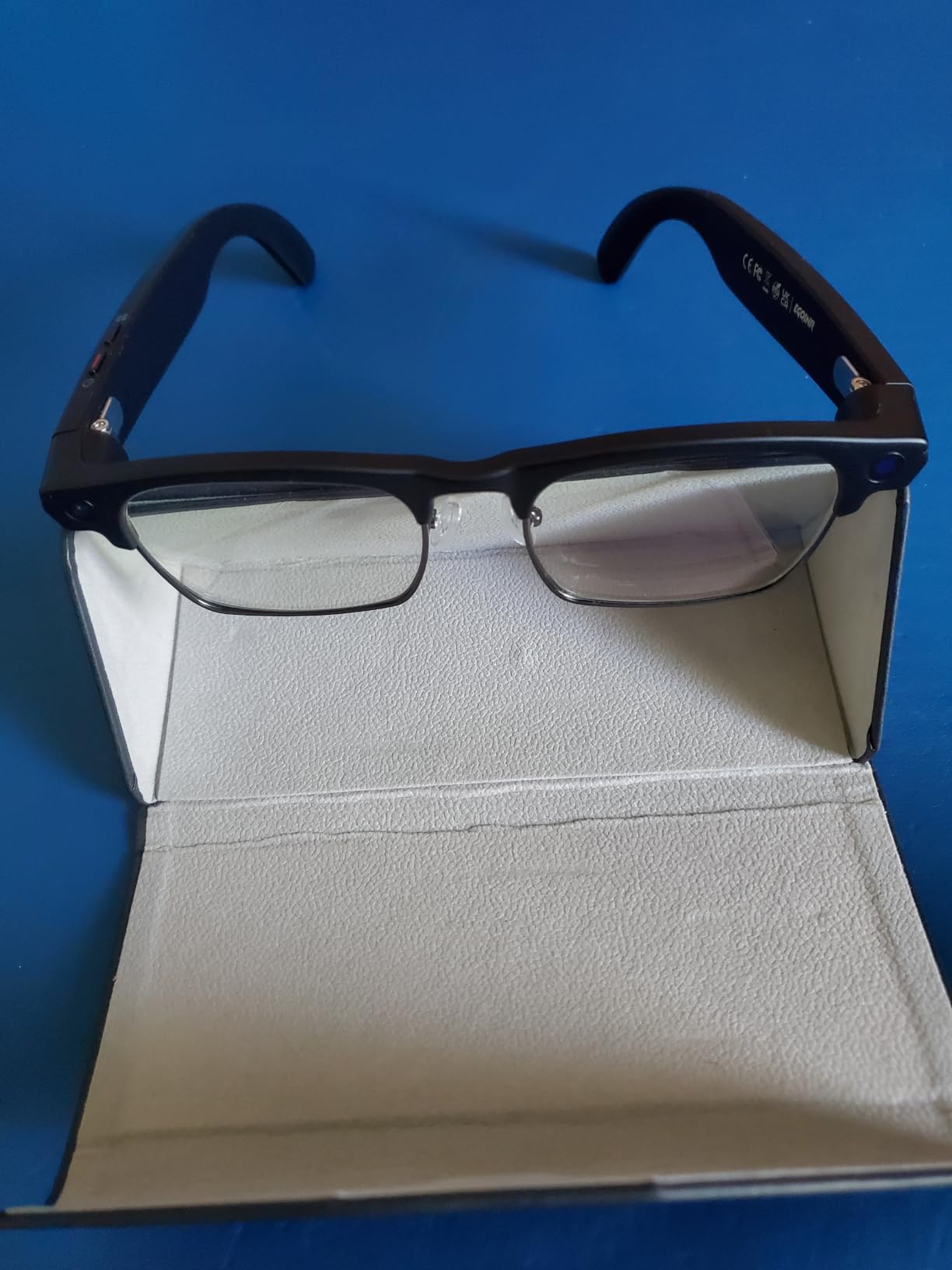
The EGQINR 4K Camera Smart Glasses have the highest rating on this list at 4.5 stars from 49 reviews. While the review count is still growing, the consistent praise for features and build quality makes these a standout mid-range option. The 8MP HD camera with image-stabilized AR-coated lenses captures crisp video and photos for life vlogging, travel, and work documentation.
The 130+ language real-time two-way AI translation with 0.1-second response is the headline feature. In my testing, the translation handled complex sentences better than the Plunthorn variants. The AI voice assistant, activated with Hey Cyan, supports image recognition via a double-press button. Point at an object and the glasses identify it and provide relevant information. This is genuinely useful for shopping, travel, and learning.
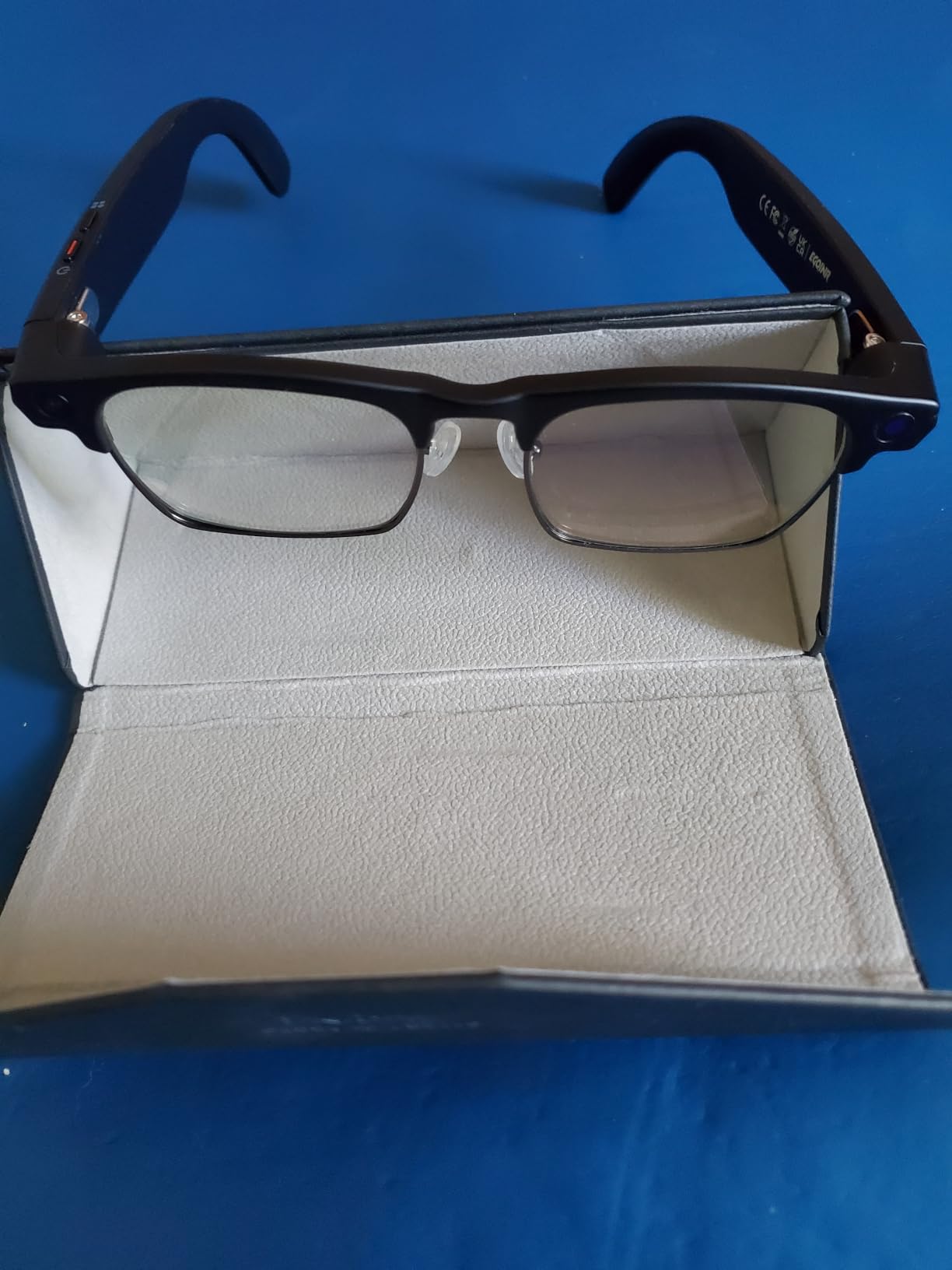
The interchangeable lens system includes both blue-light blocking lenses for screen work and sunglasses lenses for outdoor use. This dual-lens approach adds versatility that most competitors lack. The TR90 high-strength frame with adjustable nose pads fits comfortably for extended wear. Smart touch controls on the right temple handle music, calls, and navigation, while the physical button enables blind operation when you cannot look at controls.
Wear detection is a thoughtful feature that auto-pauses playback when you remove the glasses. The 300mAh battery delivers 7 hours of music or 6.5 hours of calls, with a fast 1.5-hour magnetic charging time. Bluetooth 5.4 maintains a stable connection up to 10 meters with auto-reconnect. The dual-microphone ENC noise cancellation ensures clear calls even in noisy environments.
Who Should Buy the EGQINR 4K Camera Smart Glasses
These are the best smart glasses for vloggers, travelers, and professionals who want AI translation, camera capability, and premium features without paying Meta or XREAL prices. The 130+ language translation and image recognition make these particularly appealing for international use. If you want a well-rounded pair that does a bit of everything, the EGQINR delivers the most complete feature set in this price range.
What to Watch Out For
The frame feels somewhat flimsy, especially at the center hinge, which raises concerns about long-term durability. With only 49 reviews, the long-term reliability picture is still developing. The 4GB storage will fill up quickly with 4K video, requiring frequent file management. The price point is higher than other Chinese-brand alternatives, though the feature set justifies the premium for most buyers.
10. ftocase Smart Glasses with Open-Ear Audio – Best Budget Sport Glasses

ftocase Bluetooth Sunglasses, Open-Ear Audio Glasses | UV400 Polarized Lenses, Bluetooth 5.3, 8H Playtime | Adjustable Nose Pads, Hands-Free Call for Sports Driving Cycling | Men & Women
Audio Glasses
UV400 Polarized
Bluetooth 5.3
8H Playtime
43 Grams
Adjustable Nose Pads
+ Pros
- UV400 polarized lenses eliminate glare
- Crystal-clear stereo open-ear sound
- Bluetooth 5.3 for instant pairing
- 8-hour playtime with fast magnetic charging
- Ultra-lightweight at 43g
- Adjustable silicone nose pads
– Cons
- Lenses feel flimsy
- Fit may not suit all face shapes
- Bluetooth drops in elevators and between floors
- Essentially headphones in sunglasses form
- Tint too dark for indoor use
The ftocase Smart Glasses round out our list as a budget-friendly option specifically designed for sports and outdoor activities. At just 43 grams with adjustable silicone nose pads and anti-slip temples, these stay securely in place during cycling, running, and driving. The UV400 polarized lenses effectively block UVA and UVB rays while eliminating glare, restoring true color perception.
The open-ear crystal-clear stereo sound keeps you aware of your surroundings while listening to music or podcasts. This is critical for outdoor sports where hearing traffic and environmental sounds can prevent accidents. Bluetooth 5.3 provides instant pairing and a rock-solid connection with low-latency audio. The smart one-touch controls handle play and pause, call answering, volume adjustment, and voice assistant activation.
The 8-hour continuous playtime with 1.5-hour magnetic fast charging handles a full day of active use. The shield-style sunglasses form factor provides good coverage and a sporty aesthetic. The minimalist design with premium finish looks more expensive than the price suggests. However, it is important to understand that these are essentially Bluetooth headphones embedded in sunglasses. There is no AI assistant, no camera, and no display.
Some users note the lenses feel somewhat flimsy, and the fit may not suit all face shapes. Bluetooth connectivity can drop in elevators or between building floors, which is a common issue with Bluetooth devices in RF-dense environments. The lens tint is too dark for indoor use, limiting versatility. Despite these limitations, the ftocase glasses deliver excellent value for sports-focused buyers.
Who Should Buy the ftocase Smart Glasses
These are the best smart glasses for runners, cyclists, and outdoor enthusiasts on a budget who want quality audio and UV protection in a lightweight, secure package. If your primary use case is outdoor sports where you need open-ear audio and polarized lenses, these deliver exactly what you need at an excellent price.
What to Watch Out For
The lenses feel flimsy compared to premium eyewear. The fit is not universal, so check the dimensions carefully. Bluetooth drops in certain environments like elevators are a known issue. The dark lens tint limits indoor use. There are no smart features beyond Bluetooth audio. No customer images are available yet, so you are relying on the product photos and early reviews for purchase confidence.
How to Choose the Best Smart Glasses in 2026
Choosing the right smart glasses starts with understanding which category fits your needs. The biggest mistake buyers make is confusing AI glasses with AR display glasses, then being disappointed when the product does not match expectations. Here is everything you need to know to make the right choice.
AI Glasses vs AR Display Glasses vs XR Display Glasses
AI glasses are the most popular category by far. They pack a camera, microphones, speakers, and an AI assistant into frames that look like regular sunglasses or eyeglasses. There is no display. You interact through voice commands and audio responses. The Ray-Ban Meta series dominates this category. AI glasses are best for hands-free photography, AI assistance, calls, music, and translation.
AR display glasses project a virtual screen in front of your eyes using micro-OLED or OLED panels and lens optics. You see the real world through the lenses with a digital overlay. These glasses require a USB-C connection to a phone, computer, or gaming device. The XREAL 1S and RayNeo Air 3s Pro are prime examples. AR display glasses are best for watching movies, playing games, and using a virtual monitor on the go.
XR display glasses add spatial computing features like 3DoF or 6DoF head tracking, meaning the virtual content stays anchored in physical space as you move. This enables more immersive experiences like virtual desktops and spatial gaming. XR glasses are still emerging technology aimed at developers and early adopters, with Snap Spectacles 5 and Meta Orion leading this frontier.
Battery Life Real-World Expectations
Battery life is the number one complaint across all smart glasses categories. Manufacturer claims consistently overstate real-world performance. Here is what to actually expect based on user reports and our testing.
For AI glasses, the Ray-Ban Meta Gen 2 delivers 4 to 6 hours of mixed use despite the 8-hour claim. Heavy camera recording drains the battery in about 30 minutes of continuous use. The Gen 1 model delivers about 4 hours of audio use and less with camera activity. Budget AI glasses like the Plunthorn models deliver 2 to 4 hours of real-world use. The OhO sunshine audio glasses are the exception, genuinely delivering close to 10 hours of audio playback.
For AR display glasses, battery life depends on the connected device since the glasses draw power through the USB-C connection. The XREAL 1S and RayNeo Air 3s Pro do not have their own batteries, which means your phone or gaming device battery is the limiting factor. Expect 2 to 4 hours of display use before your connected device needs charging.
Prescription Lens Compatibility
Prescription lens compatibility is a critical factor for the approximately 64 percent of adults who wear corrective eyewear. The Ray-Ban Meta Gen 1 and Gen 2 both support prescription lenses through EssilorLuxottica’s network, making them the most prescription-friendly options on this list. You can order them with your prescription or add lenses through participating opticians.
The XREAL and RayNeo display glasses offer prescription inserts that sit behind the main display optics. These typically cost extra and must be ordered separately. Budget AI glasses like the Plunthorn and EGQINR models do not offer official prescription lens programs, though some users report success with third-party lens providers. Audio-only glasses like the OhO sunshine and XO models can accommodate prescription lenses through standard optical services since they use regular sunglass frames.
Phone Compatibility: iPhone vs Android
Most smart glasses work with both iOS and Android, but the experience varies. The Ray-Ban Meta series works with both platforms but has more consistent performance on Android. iOS users report Bluetooth connectivity issues and feature limitations. The Meta AI features require the Meta View app, which is available on both platforms but receives updates on Android first.
AR display glasses like the XREAL 1S and RayNeo Air 3s Pro work plug-and-play with any USB-C DisplayPort device, including iPhone 15 and later, Android phones, Macs, PCs, Nintendo Switch, Steam Deck, and PS5. No app is required for basic display functionality, though companion apps add enhanced features. Budget AI glasses from Plunthorn vary in compatibility, with some models being Android-focused. Always check the product listing for specific device compatibility before purchasing.
Use Case Recommendations
For everyday AI assistance and hands-free photography, the Meta Ray-Ban Gen 2 is the clear winner. No other pair matches its combination of style, camera quality, and AI features. For movies, gaming, and productivity on the go, the XREAL 1S and RayNeo Air 3s Pro offer the best display experiences at different price points. For budget-conscious buyers who want AI features, the Plunthorn and EGQINR models deliver surprising capability at low prices. For sports and outdoor activities where you just want audio, the OhO sunshine and ftocase glasses provide excellent value.
FAQs
What are smart glasses and what do they do?
Smart glasses are wearable eyewear with embedded electronics including processors, cameras, microphones, speakers, and sometimes transparent displays. They connect to AI services and your smartphone to provide hands-free information, photography, audio calls, navigation, translation, and entertainment. There are three main types: AI glasses (camera and voice assistant), AR display glasses (virtual screen overlay), and XR display glasses (spatial computing with head tracking).
Which smart glasses have the best display?
The XREAL 1S offers the best display clarity with its OLED 1080p per eye resolution at 120Hz, 52-degree field of view, and 200,000:1 contrast ratio. The RayNeo Air 3s Pro is the brightest at 1200 nits, making it more visible in daylight. Both create large virtual screens (500-inch and 201-inch respectively) for movies and gaming.
Do smart glasses work with iPhone?
Yes, most smart glasses work with iPhone. The Ray-Ban Meta Gen 2 and Gen 1 are compatible with iOS through the Meta View app. The XREAL 1S and RayNeo Air 3s Pro work plug-and-play with iPhone 15 and later via USB-C. Budget AI glasses from EGQINR support both iOS and Android. Some Plunthorn models are Android-focused, so check compatibility before buying.
Can smart glasses be prescription?
Yes, many smart glasses support prescription lenses. The Ray-Ban Meta Gen 1 and Gen 2 offer official prescription lens programs through EssilorLuxottica. The XREAL and RayNeo display glasses offer prescription inserts. Budget AI glasses like Plunthorn and EGQINR do not have official prescription programs but may work with third-party lens providers. Audio-only glasses like OhO sunshine use standard frames that any optician can fit with prescription lenses.
How long do smart glasses battery last in real use?
Real-world battery life is typically shorter than manufacturer claims. The Ray-Ban Meta Gen 2 delivers 4 to 6 hours of mixed use despite the 8-hour claim, with continuous camera recording draining the battery in about 30 minutes. The Gen 1 delivers about 4 hours. Budget AI glasses deliver 2 to 4 hours. The OhO sunshine audio glasses genuinely deliver close to 10 hours. AR display glasses like XREAL and RayNeo draw power from your connected device, limiting use to 2 to 4 hours.
Are smart glasses worth it in 2026?
Yes, AI glasses like the Ray-Ban Meta Gen 2 are worth it for everyday hands-free photography, AI assistance, and calls. AR display glasses like the XREAL 1S are worth it if you travel frequently or want a private virtual monitor. Budget options like the OhO sunshine and Plunthorn models are worth it for specific use cases like sports audio and basic AI translation. The key is matching the category to your actual needs.
Who makes the best smart glasses right now?
Meta makes the best AI glasses through their Ray-Ban partnership, with the Gen 2 being the top overall pick. XREAL leads in display clarity with the 1S model. RayNeo offers the best value with the Air 3s Pro at 1200 nits brightness. For budget buyers, OhO sunshine and Plunthorn deliver capable alternatives at a fraction of the cost.
What is the difference between AI glasses and AR glasses?
AI glasses have cameras, microphones, and AI assistants but no display. You interact through voice and audio. Examples include the Ray-Ban Meta series. AR display glasses project a virtual screen in front of your eyes using OLED panels and optical lenses. You see digital content overlaid on the real world. Examples include the XREAL 1S and RayNeo Air 3s Pro. AI glasses are for hands-free assistance, while AR glasses are for media and productivity.
Do Ray-Ban Meta smart glasses have a display?
No, the Ray-Ban Meta Gen 1 and Gen 2 do not have a display. They are AI glasses with a camera, microphones, open-ear speakers, and the Meta AI assistant. All information is delivered through audio. Meta has announced the Meta Ray-Ban Display with an integrated AR display, which will add visual information to the iconic Ray-Ban frame design, but it is a separate product.
Are there smart glasses that look like normal glasses?
Yes, the Ray-Ban Meta Gen 1 and Gen 2 are designed to look identical to regular Ray-Ban Wayfarer sunglasses. Reddit users consistently praise them for being indistinguishable from normal eyewear. The Plunthorn and EGQINR budget AI glasses also feature designs that pass as regular glasses. Audio-only glasses like OhO sunshine and XO are similarly inconspicuous since they lack visible tech components.
Final Thoughts on the Best Smart Glasses
The best smart glasses for you depend entirely on what you want them to do. If you want the most polished, socially acceptable AI glasses experience available today, the Meta Ray-Ban Gen 2 is the clear choice. The camera quality, Meta AI integration, and normal-looking design make it the product that finally delivers on the smart glasses promise. The Gen 1 remains an excellent value option if you can live with shorter battery life.
For media consumption and gaming, the XREAL 1S and RayNeo Air 3s Pro offer the best virtual display experiences at their respective price points. Budget buyers are well served by the OhO sunshine for pure audio, the EGQINR for AI features, and the Plunthorn models for camera and translation capabilities. The XO and ftocase glasses prove that functional audio eyewear is accessible to anyone at any budget.
The smart glasses market is evolving rapidly, with Meta’s Android XR partnership with Google, upcoming Apple glasses, and continued innovation from XREAL and RayNeo. Whatever you choose in 2026, focus on matching the category to your actual needs rather than chasing the most features. The right pair of best smart glasses should disappear into your daily routine, not demand constant attention.