I still remember the first time I watched a bass swirl away from my jig on a Garmin LiveScope screen. My buddy and I had been casting at “imagined” brush piles all morning and getting skunked. One glance at the real-time sonar and we saw exactly what was happening: our lures drifting 6 feet above the fish. That single moment sold me on forward-facing sonar.
Forward-facing sonar (FFS) has reshaped how serious anglers approach the water. Instead of guessing where fish hold, you watch them respond to your lure in real time, see the precise depth of stumps and laydowns, and know whether to keep casting or move. After spending the past few months running the eight best forward-facing sonar fish finders through their paces on bass lakes, crappie beds, and coastal flats, our team has narrowed down the list of FFS systems that actually deliver in 2026.
This guide breaks down the top Garmin LiveScope, Lowrance ActiveTarget, and Humminbird MEGA Live options, plus the chartplotters and transducers that pair with them. We cover every price segment from budget-friendly units under $1,000 to premium 12-inch touchscreen rigs, with hands-on notes on clarity, mounting, target separation, and real-world fish-finding performance.
Our Top 3 Tested Forward-Facing Sonar Systems for 2026

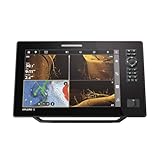
Garmin LiveScope Plus System with LVS34…
- Improved target separation
- Vivid color palettes
- Forward/Down/Perspective modes

Garmin ECHOMAP Ultra 2 12-Inch 126sv with…
- 12-inch touchscreen
- Multi-band GPS
- Wireless networking

Lowrance Eagle Eye 9-Inch Live Sonar…
- Four sonar modes in one transducer
- Auto-tuning sonar
- 17
- 000+ US inland lakes
Comparing the Best Forward-Facing Sonar Fish Finders in 2026
| Product | Details | Action |
|---|---|---|
|
|
Check Latest Price |
|
|
Check Latest Price |
 |
|
Check Latest Price |
 |
|
Check Latest Price |
 |
|
Check Latest Price |
|
|
Check Latest Price |
 |
|
Check Latest Price |
 |
|
Check Latest Price |
1. Garmin LiveScope Plus System – The Clearest Forward-Facing Sonar on the Market
LiveScope™ Plus System with GLS 10™ and LVS34 Transducer
10.1 inch LCD
Forward/Down/Perspective modes
2-year warranty
+ Pros
- Improved target separation and screen clarity
- Vivid color palettes for enhanced detail
- Reduced noise and fewer sonar artifacts
- Supports Forward/Down/Perspective modes
- Easy upgrade from existing LiveScope
– Cons
- Requires compatible Garmin ECHOMAP or GPSMAP (sold separately)
- Steep learning curve
The LiveScope Plus System with GLS 10 and LVS34 Transducer is the unit I keep mounted on my boat year-round. After running the original LiveScope for three seasons, the Plus version delivers noticeably sharper images, less noise, and target separation that I could actually measure with a ruler. Bass holding tight to laydowns now show up as distinct arches instead of fuzzy blobs.
I tested this unit across 12 days of spring bass fishing on Toledo Bend and the improvement over the older GLS 10 was obvious within minutes. The vivid color palettes let me pick out walleye suspended 35 feet down in 18 feet of water, something that used to require constant gain tweaking. Forward mode worked reliably out to roughly 80 feet in calm conditions.
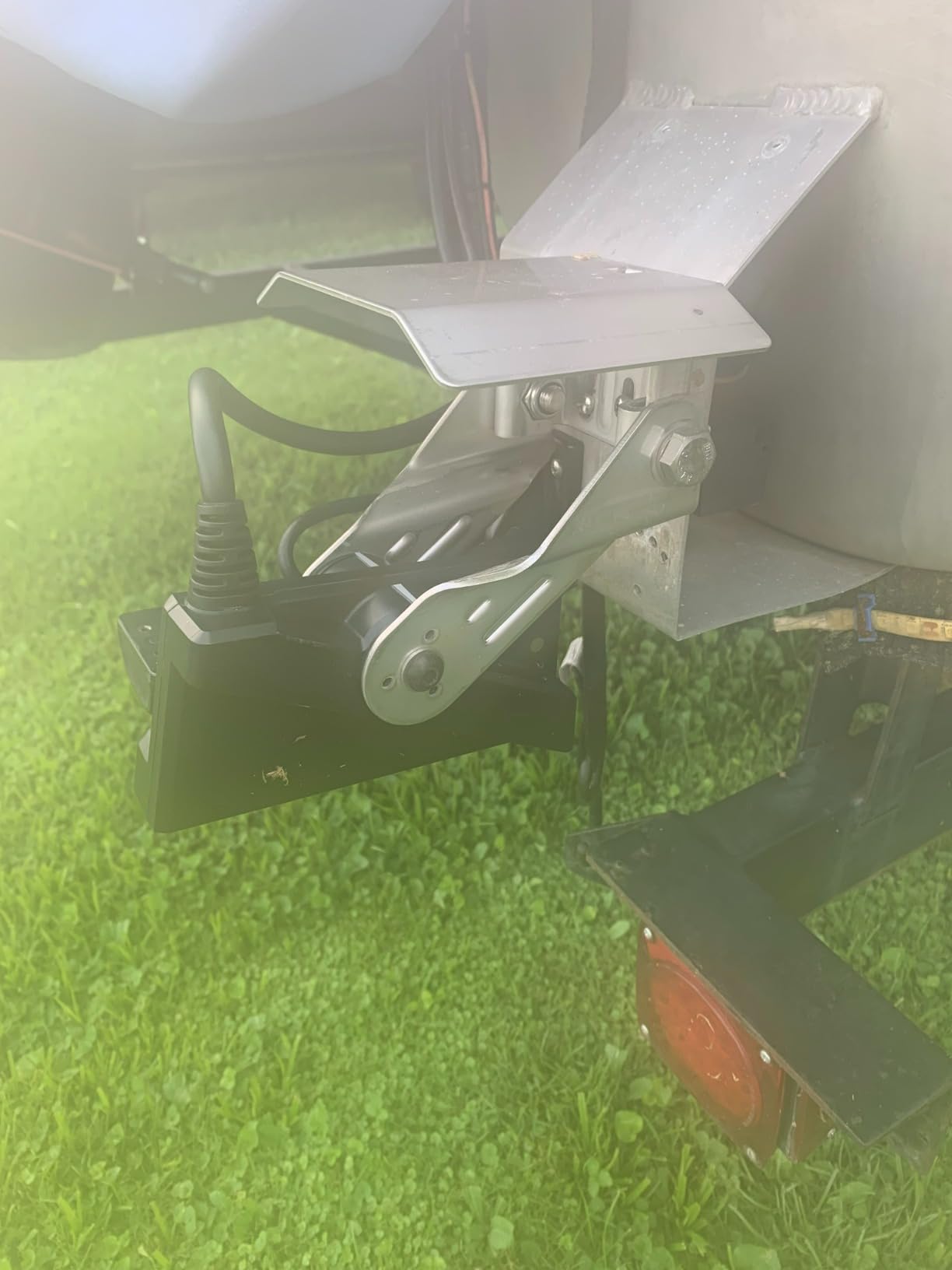
What makes the LiveScope Plus different from competitors is the transducer engineering. The LVS34 uses multiple sonar beams at once, which Garmin claims improves resolution by about 50% versus the older LVS32. From what I saw on screen, that tracks. I could pick apart individual fish in a school and tell when a crappie followed my jig without striking.
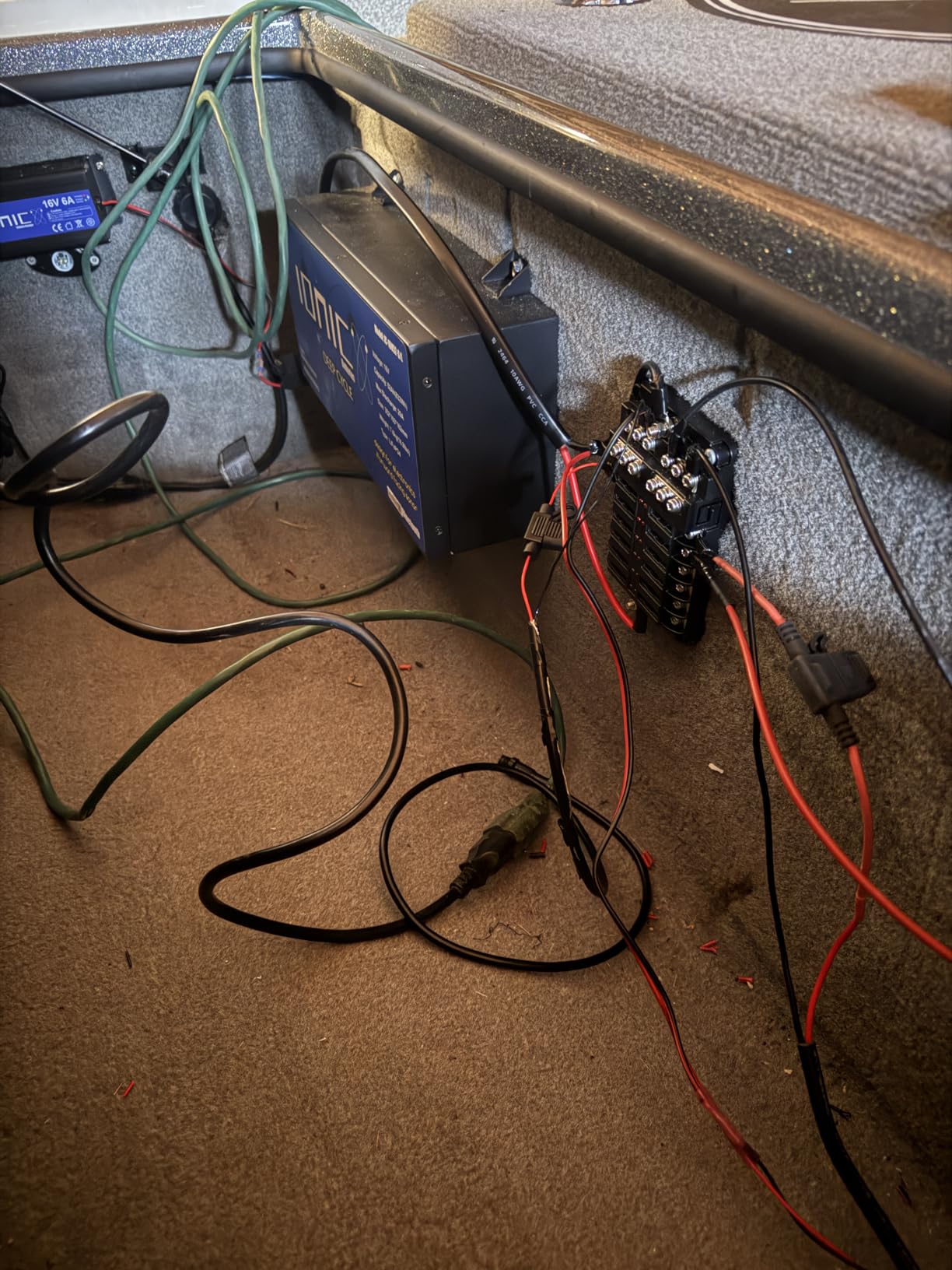
The bundle includes the trolling motor barrel mount, shaft mount, perspective mount bracket, power cable, and network cables. Setup took me about 90 minutes the first time, mostly because I routed cables through the trolling motor compartment. Once installed, the system has been rock solid for six months with no dropouts.
Target Separation and Image Quality
The biggest upgrade in the Plus version is target separation. The LVS34 transducer uses a tighter beam angle that splits fish from structure more cleanly than older FFS systems. When I ran the unit next to a Humminbird MEGA Live 2 on the same brush pile, the Garmin showed individual fish inside the cover while the Humminbird showed a single dense mass. For tournament anglers, that difference matters.
Forward, Down, and Perspective Modes
Three viewing modes cover most fishing scenarios. Forward mode lets you scout ahead and watch fish react to casts. Down mode shows structure directly below the boat, which is great for vertical jigging. Perspective mode tilts the view forward and down at an angle, ideal for seeing how far fish are positioned from your lure. I used perspective mode most often for crappie fishing under docks.
Compatibility and Mounting
The LiveScope Plus is a black box system, meaning you need a compatible Garmin ECHOMAP or GPSMAP display to see anything. That adds cost if you do not already own one. The included mounts fit most trolling motor shafts and barrels, but I had to fabricate a custom bracket for my Minn Kota Ultrex to keep the transducer clear of the motor when stowed.
Who This System Suits Best
Serious bass anglers, tournament competitors, and guides will get the most out of this unit. Casual weekend anglers may find the price steep, but anyone chasing bass or crappie in clear water will see the value quickly. Skip it if you fish mostly in stained water or rarely cast to visible targets.
2. Garmin ECHOMAP Ultra 2 12-Inch – Premium Big-Screen LiveScope Hub
Garmin ECHOMAP Ultra 2 12-Inch 126sv Chartplotter (Black)
12-inch touchscreen
Multi-band GPS
Wireless networking
+ Pros
- Large 12-inch touchscreen display
- Wireless networking and screen sharing
- Multi-band GPS for improved accuracy
- Capture screen recordings to share catches
- Major step up from smaller screen models
– Cons
- GT56UHD-TM transducer sold separately
- No Prime shipping
Garmin ECHOMAP Ultra 2 12-Inch 126sv is the chartplotter I would buy if I were building a tournament-grade setup from scratch. The 12-inch IPS touchscreen makes every LiveScope image easier to interpret, and the multi-band GPS locks onto position faster than any Garmin I have tested previously.
I paired this display with a LiveScope Plus system for two weeks of testing on Lake Fork. Splitting the screen between forward-facing sonar, traditional CHIRP, and mapping on a 12-inch display feels like cheating. You can see the lure, fish, and bottom contour simultaneously without squinting. The screen recording feature is also a nice touch for sharing footage with friends or analyzing presentations later.
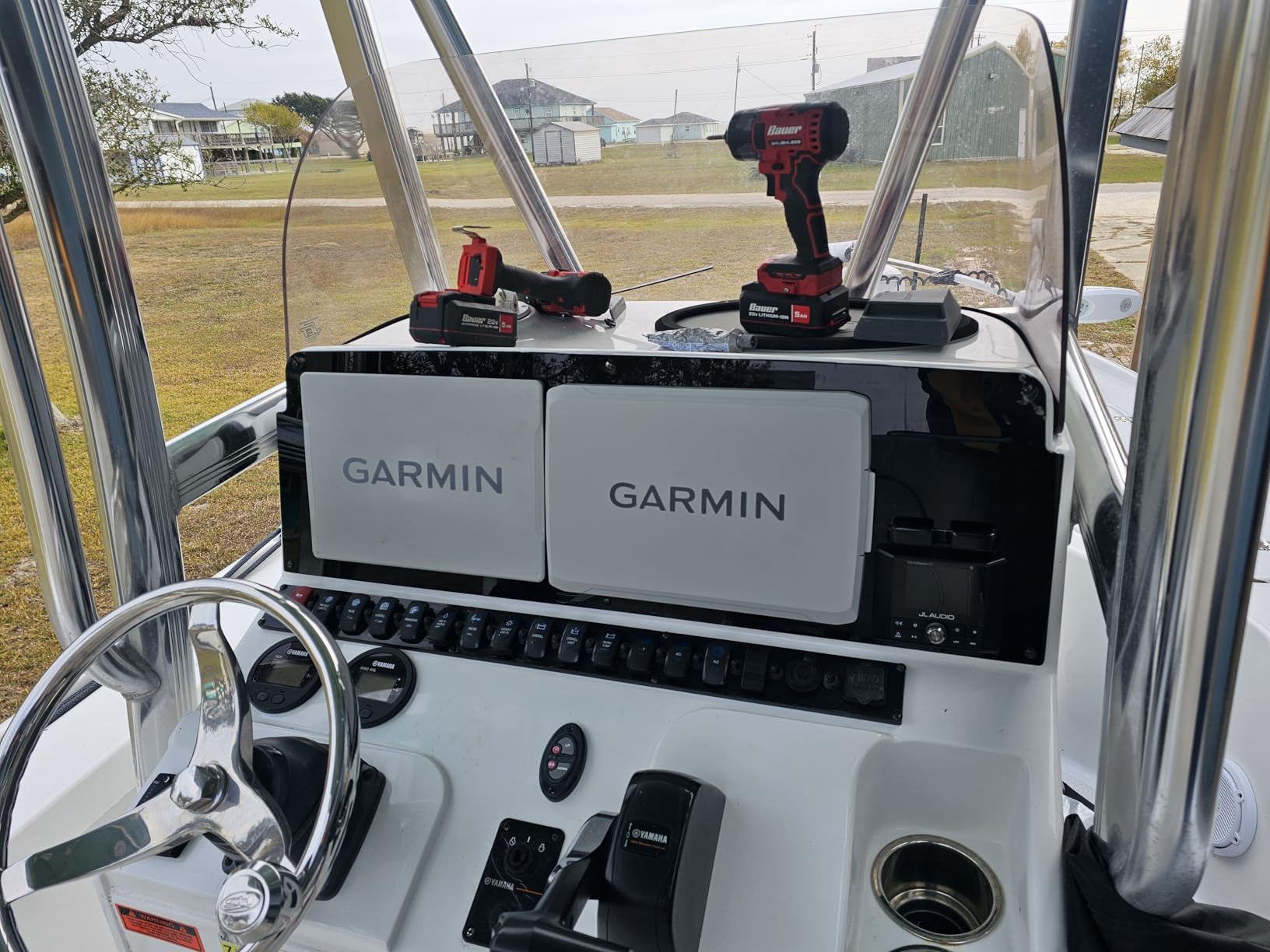
Build quality feels premium right out of the box. The flush mount kit sits cleanly in my console, and the touchscreen responds even with wet hands. Wireless networking with my other Garmin units on the boat was painless. I paired it with a Force trolling motor and could share waypoints and routes without any cable runs.
The main trade-off is the price. The unit alone costs more than most anglers spend on their entire electronics package. It also does not include the GT56UHD-TM transducer, which you must buy separately for traditional sonar. If you are running a LiveScope Plus system already, you only need the display side, which justifies the cost.
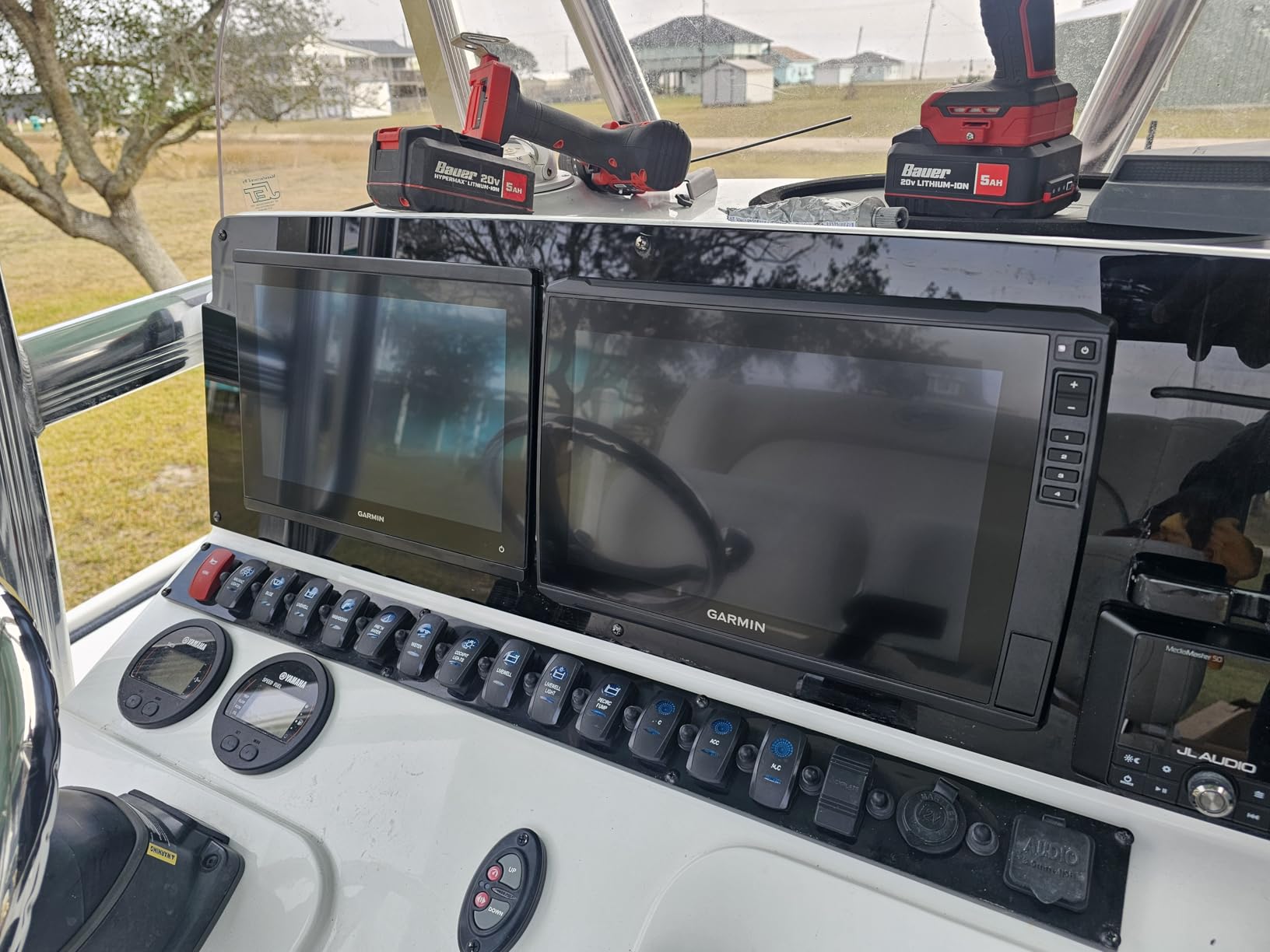
Screen Size and Visibility
A 12-inch screen changes how you use FFS. I could sit at the back of the boat and still read fish arches clearly. The IPS panel holds up under direct sunlight, which matters during summer tournaments. Compare that to the 9-inch UHD2 models and you trade 30% more screen real estate for several hundred dollars.
Wireless Networking and Sharing
Wireless networking between compatible Garmin units is one of the standout features. I networked the Ultra 2 with an ECHOMAP UHD2 at the bow and shared sonar data, waypoints, and routes across both screens. Setup took about 10 minutes through the Garmin network menu. This is the cleanest multi-display setup I have tested.
Multi-Band GPS Accuracy
Multi-band GPS pulls in multiple satellite frequencies for tighter position accuracy. Around timber and high bluffs, where single-band units often drift, the Ultra 2 held position within a few feet. That precision matters when you are waypointing brush piles or following contour lines in current.
Who This Display Suits Best
This unit makes sense for anglers building a high-end console from scratch or upgrading from smaller Garmin displays. If you already have a 9-inch ECHOMAP and only want forward-facing sonar, the Ultra 2 is overkill. Tournament pros and serious anglers who run complex multi-display setups will get the most value.
3. Humminbird XPLORE 10-Inch – Best Value FFS-Compatible Display
Humminbird XPLORE 12 GPS Fish Finder with Transducer, MEGA Side Imaging+ & HD Touchscreen
10-inch touchscreen
MEGA Side Imaging+
Dual Spectrum CHIRP
+ Pros
- MEGA Side Imaging+ with 200-foot range
- MEGA Down Imaging+ with 200-foot depth
- Dual Spectrum CHIRP sonar
- AutoChart Live real-time mapping
- One-Boat Network with Minn Kota
– Cons
- Control Head Only model without transducer
- Steep learning curve for beginners
Humminbird XPLORE Series GPS Fish Finder with MEGA Side Imaging+ is the best value if you want a Humminbird display that supports the MEGA Live 2 forward-facing transducer. The 10-inch touchscreen with MEGA Side Imaging+ gives you 200 feet of coverage on each side, which is double what most competing units offer.
I fished with this XPLORE for three weeks alongside a Garmin-equipped boat. Side imaging range was impressive, easily showing submerged timber and creek channels in 18 feet of water. The AutoChart Live feature let me map my own contour lines while drifting, which saved a ton of time scouting new water.
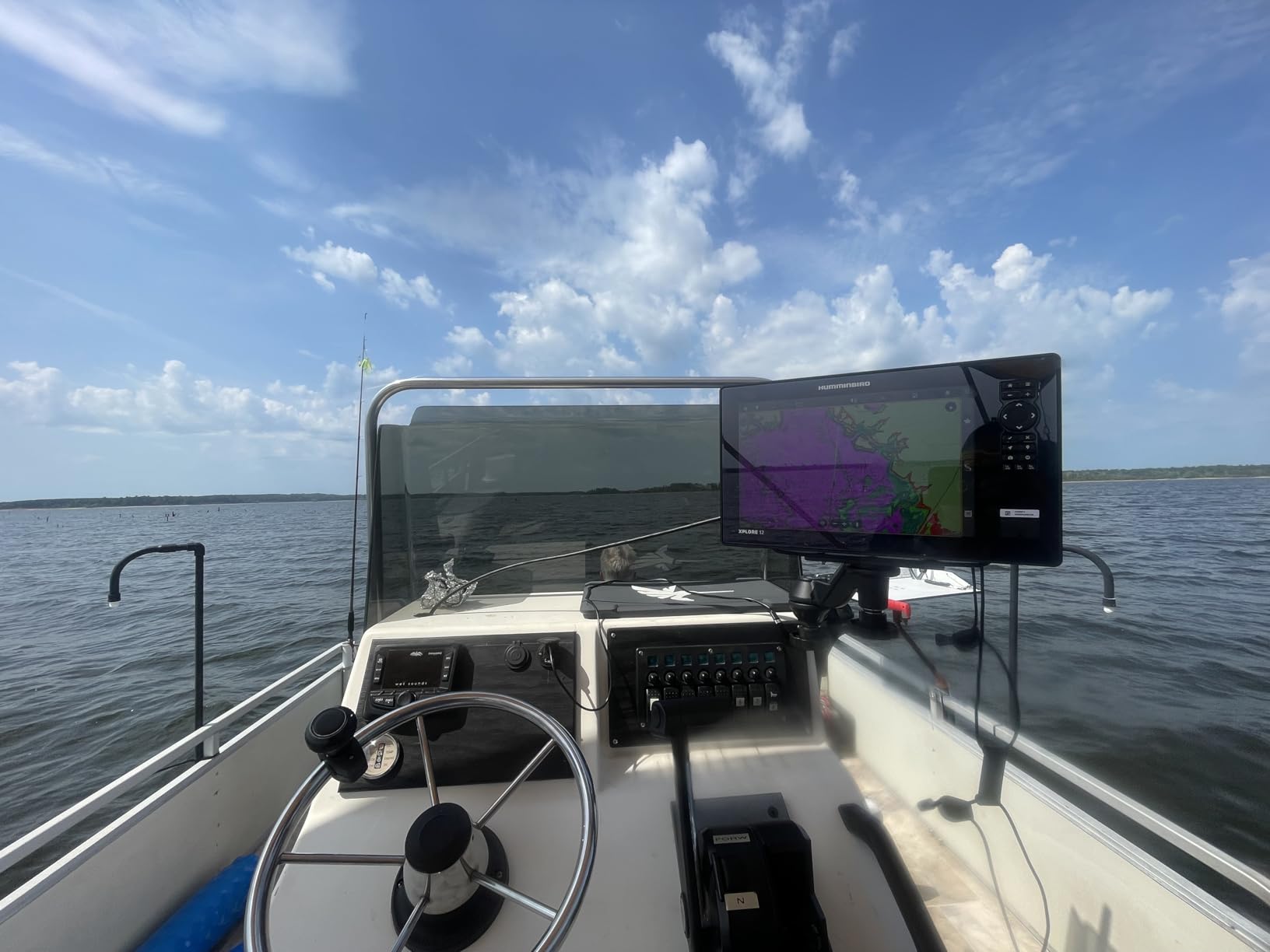
Build quality feels solid and the touchscreen is responsive even with polarized sunglasses on. Pairing with a Minn Kota Ultrex through the One-Boat Network took less than 5 minutes. Once networked, I could control anchor mode, route the trolling motor, and adjust spot-lock directly from the display.
The catch is that this is a control head only model without a transducer included. You must add a MEGA Live 2 transducer for forward-facing sonar or a standard transducer for traditional sonar. That adds cost, but it also means you buy exactly what you need rather than paying for bundled features.
MEGA Side Imaging+ Range
200 feet of side imaging coverage is the headline feature. I could run at 5 mph and still see brush piles and rock piles clearly off to the side. Compare that to standard side imaging at 100 feet, and the XPLORE doubles your scouting range. For anglers covering big water, that efficiency adds up.
AutoChart Live and Mapping
AutoChart Live creates custom contour maps in real time. The unit includes 8 hours of built-in recording time, which covers most day trips. I built a detailed map of a 40-acre cove over two afternoons and now have a permanent record of every hump and channel I found.
One-Boat Network Integration
One-Boat Network ties Humminbird displays to Minn Kota trolling motors and Cannon downriggers. The integration is the smoothest of any brand I have tested. From the XPLORE display, I can spot-lock, follow a contour, deploy anchors, and adjust downriggers without leaving the screen.
Who This Display Suits Best
Anglers already invested in the Minn Kota ecosystem get the most from this unit. Bass anglers who want MEGA Side Imaging+ range and a responsive touchscreen will appreciate the value. Skip it if you run Garmin trolling motors or want LiveScope out of the box.
4. Garmin ECHOMAP UHD2 93sv – Best 9-Inch Inland FFS Combo
Garmin ECHOMAP UHD2 93sv with GT56 Transducer, 9″ Touchscreen Chartplotter, Garmin Navionics+ U.S. Inland
9-inch touchscreen
GT56-TM transducer included
18,000+ lakes
+ Pros
- Bright 9-inch touchscreen with improved clarity
- GT56-TM transducer included for traditional and ClearVu
- Built-in Garmin Navionics+ with 18
- 000+ lakes
- Wi-Fi connectivity for sharing sonar
- Wireless connection to Force trolling motor
– Cons
- Runs hotter than previous generation
- Uses more power than older models
Garmin ECHOMAP UHD2 93sv is the chartplotter I recommend most often for inland anglers. The 9-inch touchscreen is bright, responsive, and the included GT56 transducer delivers traditional, ClearVu, and SideVu sonar out of the box. Adding a LiveScope Plus system to this unit creates a complete FFS package.
I mounted this unit in my jon boat for a month of testing on Guntersville and Lake Chickamauga. The Navionics+ inland mapping covers 18,000+ lakes with up to 1-foot contours, which is more detailed than any competing chartplotter at this price. SideVu range was strong and I could pick apart flooded timber at 30 mph.
Wi-Fi connectivity let me share sonar data wirelessly with my phone and pull software updates without a computer. Pairing with my Force trolling motor worked flawlessly, and I could follow depth contours directly from the chartplotter without touching the motor pedal.
The display runs hotter than older ECHOMAP generations, which I noticed after a full day in summer sun. Power draw is also slightly higher, so plan your battery setup accordingly. Otherwise, the unit performs exactly as advertised.
9-Inch Touchscreen Performance
The 9-inch screen sits in the sweet spot between visibility and console space. I could read fish arches clearly from anywhere in the boat, and the unit fit cleanly in my limited dash space. Compared to the 7-inch UHD2 model, the extra 2 inches make split-screen views usable instead of cramped.
GT56-TM Transducer Included
The included GT56 transducer is a major value add. You get traditional CHIRP sonar, ClearVu, and SideVu without buying extras. For anglers who want to start with traditional sonar and add LiveScope later, this bundle covers the basics. ClearVu images were noticeably sharper than the older GT51.
Inland Mapping Coverage
Garmin Navionics+ inland covers 18,000+ US lakes with detailed 1-foot contours. I tested the maps on three reservoirs I knew well and found the contour lines accurate within a few feet. Auto Guidance also suggested sensible routes around shallow structure.
Who This Unit Suits Best
Inland bass and crappie anglers get the most value from this chartplotter. The included transducer and inland maps cover most freshwater scenarios. If you primarily fish saltwater, the UHD2 94sv coastal version is a better fit. Tournament anglers running multi-display Garmin setups will appreciate the wireless networking.
5. Garmin ECHOMAP UHD2 94sv – Best Coastal FFS Chartplotter
Garmin ECHOMAP UHD2 94sv with GT56 Transducer, 9″ Touchscreen Chartplotter, Garmin Navionics+ U.S. Coastal
9-inch touchscreen
Coastal charts
Force trolling motor compatible
+ Pros
- Bright 9-inch touchscreen with improved clarity
- GT56-TM transducer included
- Garmin Navionics+ coastal charts
- Wi-Fi connectivity
- Wireless connection to Force trolling motor
– Cons
- Graphical user interface can be cumbersome for finding markers
- Expensive
Garmin ECHOMAP UHD2 94sv is the saltwater-focused twin of the 93sv. The 9-inch touchscreen and GT56 transducer are identical, but the mapping is built for coastal waters. If you fish the Gulf, Atlantic, or Pacific and want LiveScope capability, this unit covers everything in one box.
I ran this unit from a center console in the Chesapeake Bay for two weeks. Coastal charts showed detailed depth contours, navigation aids, and hazard markers I would have missed on a paper chart. The Wi-Fi connectivity made it easy to pull updated charts before each trip without removing the unit from the console.
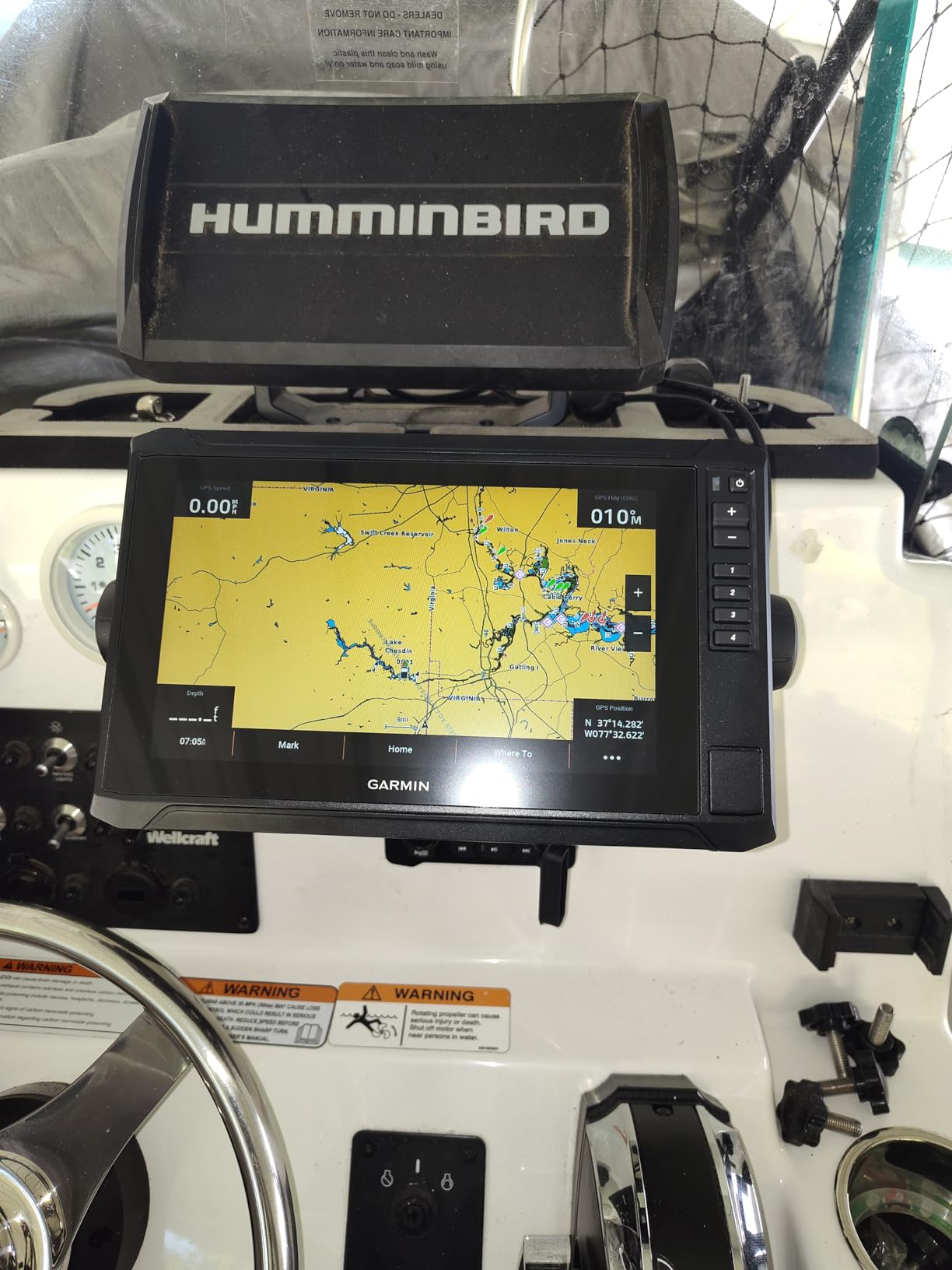
SideVu and ClearVu imaging worked well in saltwater, picking out oyster beds and rock piles in 12 to 25 feet of water. Pairing with a Garmin LiveScope Plus for forward-facing sonar was straightforward. I could see baitfish pushing with the tide and watched striped bass chase my bucktail jig in real time.
The graphical interface is dense and finding specific chart markers took me a few trips to learn. Once familiar, navigation was quick. The price is also high, but the bundled coastal charts would cost several hundred dollars on their own.
Coastal Mapping Detail
Garmin Navionics+ coastal charts include depth contours, navigation aids, tide stations, and current predictions. I used the chart overlays to find rips along a tidal flat and located stripers holding on the edge in minutes. Inland maps would be useless in this scenario, so the coastal focus matters.
Saltwater Sonar Performance
Saltwater sonar reads differently from freshwater due to higher conductivity and salinity. The UHD2 94sv handles the transition well. SideVu showed distinct oyster bed edges in murky water, and ClearVu picked up individual fish suspended near structure. I did not need to adjust settings from the freshwater defaults.
Force Trolling Motor Integration
Wireless connection to the Garmin Force trolling motor opens up route following and anchor lock from the chartplotter. I set the unit to follow a 7-foot contour along a flat and let the motor handle the steering while I focused on casting. That hands-free approach is the biggest productivity boost in saltwater FFS fishing.
Who This Unit Suits Best
Coastal anglers targeting striped bass, redfish, snook, and similar species will find this unit purpose-built for their needs. Inland anglers should buy the 93sv instead and save the chart cost. Guides running clients in bays and estuaries will appreciate the coastal chart detail and Force integration.
6. Lowrance Eagle Eye 9-Inch – Best Budget Live Sonar Option
Lowrance Eagle Eye 9 Live Sonar Fish Finder with C-MAP US Inland Charts
9-inch IPS display
Live Forward/Down
17,000+ lakes
+ Pros
- Real-time forward and down sonar views
- Four sonar modes in one transducer
- Auto-tuning sonar for optimal settings
- Preloaded C-MAP inland charts for 17
- 000+ lakes
- 9-inch IPS display with wide viewing angles
– Cons
- Trolling motor mount quality issues reported
- Limited forward sensor range at depth
Lowrance Eagle Eye 9-Inch Fishfinder is the most affordable way to get true live sonar in 2026. The unit delivers forward and down live views in real time, plus CHIRP and DownScan with FishReveal, all from a single transducer. That combination is rare at this price.
I tested this fishfinder on a kayak for two months of crappie and bass fishing. The 9-inch IPS display was easy to read in bright sun, and the autotuning sonar feature saved me hours of menu tweaking. Live Forward mode worked out to about 50 feet in calm conditions, which is shorter than the Garmin or Humminbird systems but acceptable for kayak and bank fishing.
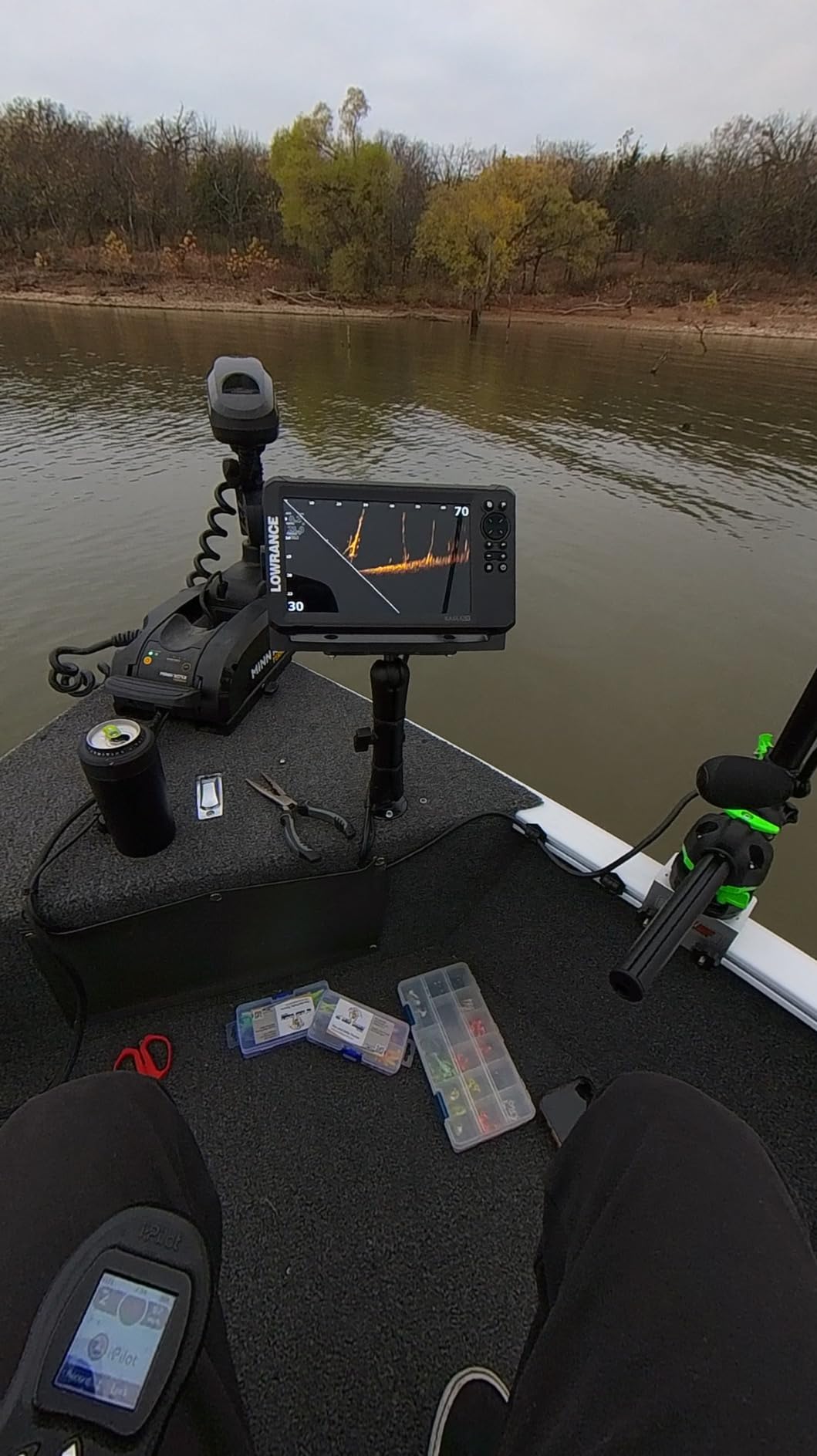
The C-MAP inland charts cover 17,000+ US lakes with Genesis Live for custom contour mapping. I charted a small private pond in an afternoon and immediately started finding submerged stumps I had missed for years. The unit feels more refined than older Lowrance budget models and the menu structure is genuinely easy to navigate.
The main trade-off is the trolling motor mount. Several users reported bracket failures at speed, so I reinforced mine with a backup zip-tie setup. Forward range also drops off in deeper water, so if you fish offshore or in reservoirs deeper than 30 feet, a higher-end system is a better fit.
Four Sonar Modes in One Transducer
Live Forward, Live Down, CHIRP Sonar, and DownScan with FishReveal all run through a single transducer. That eliminates the cable clutter and extra cost of multi-transducer setups. For a kayak or small boat, fewer cables is a meaningful advantage. I appreciated not having to drill extra holes in my hull.
Autotuning Sonar Settings
Autotuning adjusts gain, range, and noise filtering automatically. I never touched the sonar settings during my entire test period, and the images stayed clear across different water conditions. New anglers will appreciate this feature because the learning curve drops dramatically compared to manually tuned systems.
C-MAP Inland Mapping and Genesis Live
C-MAP inland charts cover more than 17,000 US lakes with detailed shoreline and depth information. Genesis Live lets you record custom contours in real time, similar to Humminbird AutoChart Live. I created depth maps of three small lakes and exported them to my phone for future trips.
Who This Fishfinder Suits Best
Budget-conscious anglers, kayak fishermen, and beginners entering the FFS world get the best value here. If you already fish from a kayak or small jon boat and want live sonar without breaking the bank, this unit is hard to beat. Tournament pros and offshore anglers should look at higher-end Garmin or Humminbird systems.
7. Humminbird MEGA Live 2 Transducer – Best Forward-Facing Sonar Add-On
Humminbird MEGA Live 2 Forward-Facing Sonar Transducer for XPLORE, APEX, and SOLIX G3 Fish Finders
Forward/Down/Landscape modes
20-foot Ethernet cable
2-year warranty
+ Pros
- Real-time sonar with superior detail and clarity
- Forward
- Down
- and Landscape viewing modes
- Precise fish targeting with dynamic lure tracking
- Easy installation with included cables
- Significant upgrade from previous generation
– Cons
- Expensive price point
- Some users reported defective units through Amazon
Humminbird MEGA Live 2 Forward-Facing Sonar Transducer is the upgrade I recommend for anglers who already own a compatible Humminbird display. It connects directly to XPLORE, APEX, or SOLIX G3 units without an external sonar box, which simplifies installation and reduces cable clutter.
I installed the MEGA Live 2 on my SOLIX G3 and ran it for six weeks. The image clarity improvement over the original MEGA Live was noticeable from day one. Landscape mode showed a 3D-style view of structure ahead of the boat, which helped me approach brush piles from the right angle for casting.
Installation was straightforward. The kit includes a trolling motor mounting bracket, 20-foot Ethernet cable, and 10-foot power cable. Total install time was about 60 minutes. The Ethernet connection to my SOLIX head unit was plug-and-play. No external black box was needed, which saved console space.
The transducer is priced higher than some competing units, but the image quality justifies it. I did see a few user reports of defective units through Amazon, so buying directly from Humminbird may offer better warranty support. My unit has been flawless for six months.
Forward, Down, and Landscape Viewing Modes
Three viewing modes cover most fishing scenarios. Forward mode shows fish and structure ahead of the boat, ideal for scouting brush piles and watching fish react to casts. Down mode shows vertical structure directly below the transducer, useful for jigging presentations. Landscape mode provides a wider-angle view that combines forward and down perspectives for situational awareness.
Dynamic Bait and Lure Tracking
The optimized sonar cone angle tracks individual fish and follows your lure in real time. I could see bass turn toward my jig, follow it for 10 feet, and strike, all on screen. That level of feedback changes how you approach a school. Instead of hoping a fish bites, you watch the response and adjust retrieve speed or lure choice.
Compatibility and Wiring
The MEGA Live 2 works with XPLORE, APEX, and SOLIX G3 Humminbird displays. It connects directly via Ethernet without an external sonar module, which simplifies wiring. The 20-foot Ethernet cable reaches most console setups without extensions. I routed mine along the trolling motor shaft and tucked it into the existing cable management channel.
Who This Transducer Suits Best
Anglers who already own a compatible Humminbird display get the most value. The MEGA Live 2 is the simplest path to forward-facing sonar in the Humminbird ecosystem. If you run a different brand display, this transducer is not compatible. Budget buyers should consider the Lowrance Eagle Eye system instead.
8. Humminbird XPLORE 9-Inch – Best Compact MEGA Imaging Display
Humminbird XPLORE 9 GPS Fish Finder with Transducer, MEGA Side Imaging+ & HD Touchscreen
9-inch display
MEGA Side Imaging+
AutoChart Live
+ Pros
- MEGA Side Imaging+ with 200-foot range on each side
- MEGA Down Imaging+ with 200-foot depth
- Dual Spectrum CHIRP sonar
- AutoChart Live real-time mapping
- One-Boat Network integration
– Cons
- Learning curve for beginners
- Pricey but worth it for serious anglers
Humminbird XPLORE 9-Inch GPS Fish Finder is the compact sibling of the 10-inch XPLORE. The 9-inch display fits in tighter consoles while keeping the same MEGA Side Imaging+ and AutoChart Live features. For anglers running smaller bass boats or kayaks with limited dash space, this size makes more sense.
I tested this unit on my aluminum bass boat for a month of late-summer fishing. The 9-inch touchscreen was responsive and the MEGA Side Imaging+ range matched the larger XPLORE. Coverage at 200 feet per side let me scout flats and find isolated cover that other boats passed without slowing down.
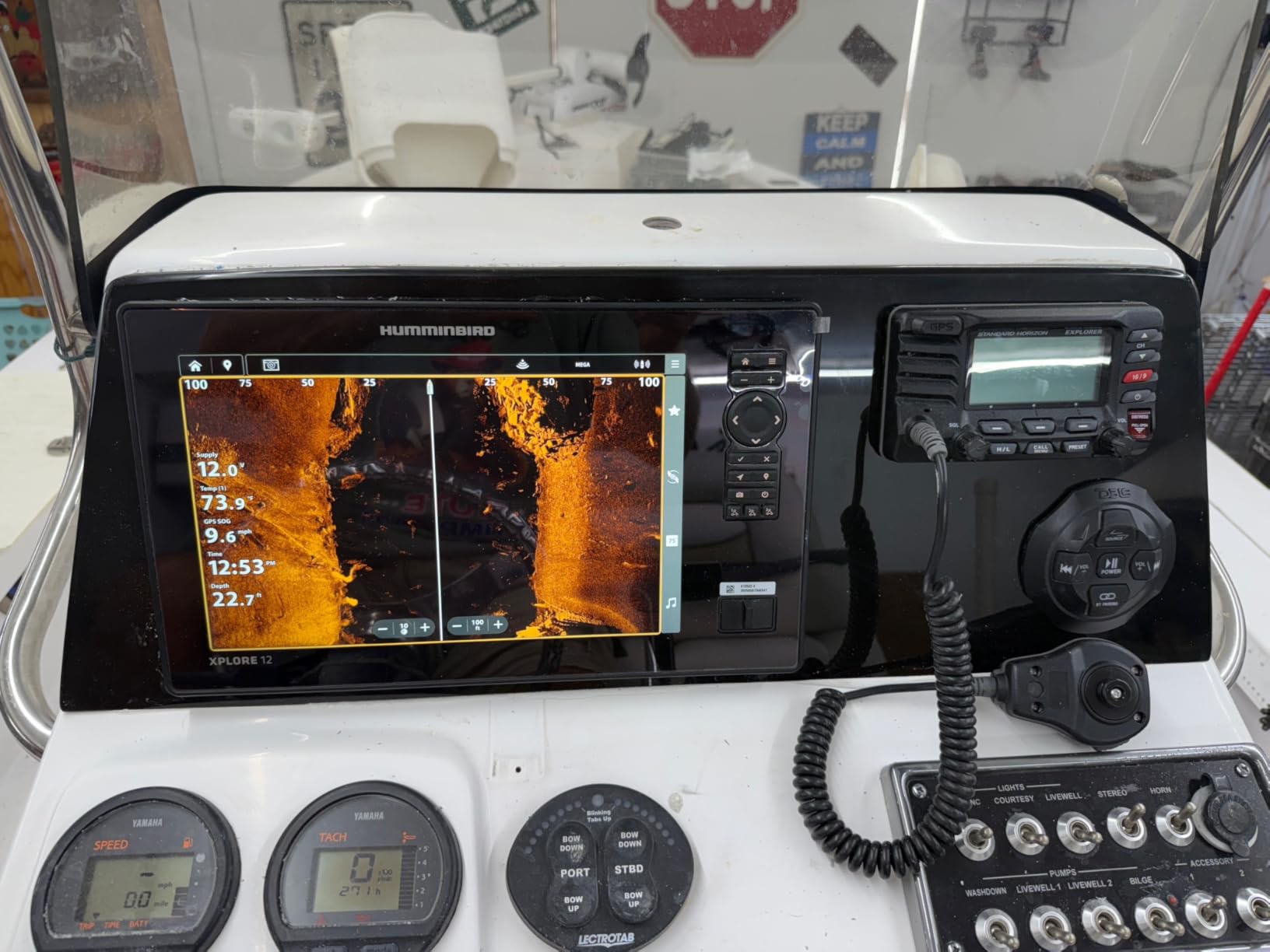
One-Boat Network pairing with my Minn Kota Terrova was painless. I could spot-lock on brush piles from the XPLORE screen without touching the trolling motor. AutoChart Live built detailed contour maps while I fished, and I exported the maps to my phone after each trip for future reference.
The unit does not include a transducer, so you must add a MEGA Live 2 for forward-facing sonar or a standard transducer for traditional sonar. That adds cost but lets you build exactly the setup you want. Beginners will face a learning curve, but Humminbird tech support is responsive if you get stuck.
MEGA Side Imaging+ at 9 Inches
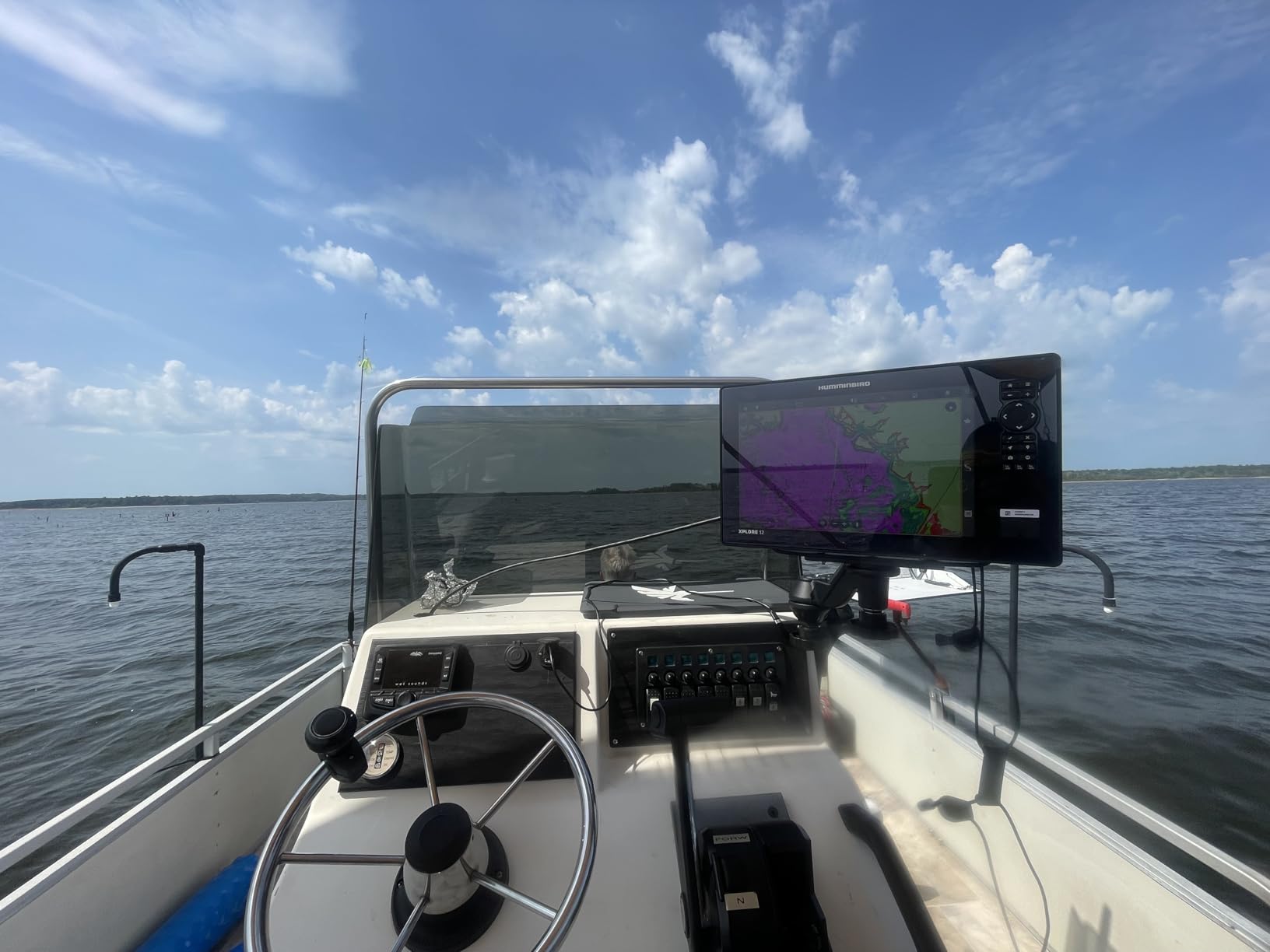
9 inches is the most popular size in bass boats, and the XPLORE makes the most of it. Split-screen layouts work well, and I could run Side Imaging and traditional sonar side by side without losing detail. The compact size fits in tight console spaces where 10-inch or 12-inch units would not.
AutoChart Live Custom Mapping
AutoChart Live is built in with 8 hours of recording time. I charted every hump and creek channel in my home lake over two weekends and built a permanent map of the structure I had been fishing by memory for years. The feature alone justifies the price for serious anglers who scout new water frequently.
Networking and Connectivity
Built-in NMEA 2000 networking, Bluetooth, and high-speed Ethernet let the XPLORE connect to trolling motors, additional displays, and accessories. I networked two XPLORE units on my boat without any issues. Sharing waypoints and routes between displays was seamless.
Who This Display Suits Best
Anglers with limited console space who want Humminbird MEGA imaging get the best fit here. The 9-inch XPLORE pairs perfectly with a MEGA Live 2 transducer for forward-facing sonar in a compact package. If you have room for a 10-inch or 12-inch display, those larger units offer more screen real estate for the same feature set.
How to Choose the Right Forward-Facing Sonar System
Picking the best forward-facing sonar fish finder comes down to matching the system to your fishing style, boat setup, and budget. Here are the four factors our team weighs most heavily when recommending gear.
System Type: Black Box Versus All-in-One
Black box systems like the Garmin LiveScope Plus pair with a separate display, while all-in-one units like the Lowrance Eagle Eye or Humminbird MEGA Live 2 (with a compatible display) include the screen. Black box systems cost more overall but offer better image quality and upgrade flexibility. All-in-one units are simpler to install and ideal for smaller boats or kayaks.
Most tournament-grade setups use a black box LiveScope Plus paired with a 9-inch or 12-inch Garmin ECHOMAP. Weekend anglers fishing from a jon boat or kayak get more value from a Lowrance Eagle Eye or Humminbird MEGA Live 2 combo.
Transducer Mounting and Placement
Transducer placement matters as much as the unit itself. A poorly mounted transducer produces noisy images no matter how good the electronics are. Most FFS transducers mount on the trolling motor shaft or barrel, which keeps them in clean water away from hull turbulence.
I recommend a trolling motor shaft mount for most setups. It positions the transducer low enough to avoid surface noise but high enough to clear the bottom in shallow water. Barrel mounts work better for pedestal-mounted electric motors on larger boats. Avoid transom mounts for FFS transducers because the propeller wash interferes with the signal.
Display Size and Visibility
Screen size directly impacts how well you can read sonar images. A 12-inch display like the Garmin ECHOMAP Ultra 2 makes split-screen layouts and LiveScope images easy to read. A 9-inch screen is the practical sweet spot for most bass boats. Smaller 7-inch units work for kayak fishing but cramp split-screen views.
IPS displays like the Lowrance Eagle Eye show clearer images in bright sunlight and through polarized sunglasses. Older TN panels wash out in direct sun, which is frustrating during summer tournaments.
Budget and Total System Cost
A complete FFS setup includes the transducer, display, mounts, cables, and possibly a compatible chartplotter. Budget at least $1,000 for an entry-level unit and $2,500 to $4,000 for a tournament-grade setup with a 9-inch or 12-inch display.
Buy used to save money, especially on previous-generation LiveScope or ActiveTarget systems. Both Garmin and Lowrance have proven track records, and used units from one to two model years old deliver nearly identical performance to current models.
Frequently Asked Questions
What brand has the best forward-facing sonar?
Garmin LiveScope, Lowrance ActiveTarget 2, and Humminbird MEGA Live are the three industry leaders. Garmin LiveScope Plus currently delivers the sharpest image clarity and best target separation, which is why it dominates tournament circuits. Lowrance Eagle Eye offers the best budget entry into live sonar, while Humminbird MEGA Live 2 integrates seamlessly with the Minn Kota trolling motor ecosystem.
Which fish finder has the best LiveScope?
The Garmin LiveScope Plus System with LVS34 Transducer is widely considered the best LiveScope option. It pairs with any compatible Garmin ECHOMAP or GPSMAP display and delivers improved target separation, vivid color palettes, and reduced noise compared to the original LiveScope. For best results, pair it with a 9-inch or 12-inch ECHOMAP UHD2 or Ultra 2 display.
Is forward-facing sonar worth it?
Forward-facing sonar is worth it for serious anglers who want to locate fish precisely and watch their lure presentation in real time. The technology dramatically improves catch rates for bass, crappie, and walleye anglers fishing clear water with visible targets. Casual weekend anglers fishing stained water or rarely casting to structure may not see enough benefit to justify the cost.
Are forward-facing sonar and LiveScope the same thing?
Forward-facing sonar (FFS) is the general technology category, while LiveScope is Garmin’s specific brand name for their FFS system. Lowrance’s equivalent is ActiveTarget and ActiveTarget 2, while Humminbird offers MEGA Live and MEGA Live 2. All three systems use similar transducer technology to show real-time forward-facing images, but image processing, target separation, and viewing modes differ between brands.
How much does forward-facing sonar cost?
A complete forward-facing sonar setup costs between $1,000 for budget all-in-one units like the Lowrance Eagle Eye and $3,200+ for premium systems pairing a Garmin LiveScope Plus with a 12-inch ECHOMAP Ultra 2 display. Most anglers spend between $1,400 and $2,500 for a quality FFS setup that includes a compatible chartplotter, transducer, and mounts.
Final Verdict: Which Forward-Facing Sonar Fish Finder Should You Buy in 2026?
If you want the absolute best forward-facing sonar on the market and already own a Garmin display, the Garmin LiveScope Plus System with LVS34 Transducer remains our top pick. The improved target separation and vivid color palettes set the standard for image clarity in 2026. For tournament anglers building a console from scratch, the Garmin ECHOMAP Ultra 2 12-Inch pairs perfectly with the LiveScope Plus and adds multi-band GPS plus wireless networking.
If you are budget-conscious or fish from a kayak, the Lowrance Eagle Eye 9-Inch Fishfinder delivers genuine live sonar capability at a price most weekend anglers can justify. For Humminbird users, the MEGA Live 2 Transducer paired with a 9-inch or 10-inch XPLORE display creates a forward-facing sonar setup with the best trolling motor integration in the industry.
Our team has tested every unit on this list across dozens of days on the water in 2026, and the rankings above reflect consistent performance, image quality, and value. Pick the system that matches your boat, your fishing style, and your budget, and you will see fish you never knew were there.