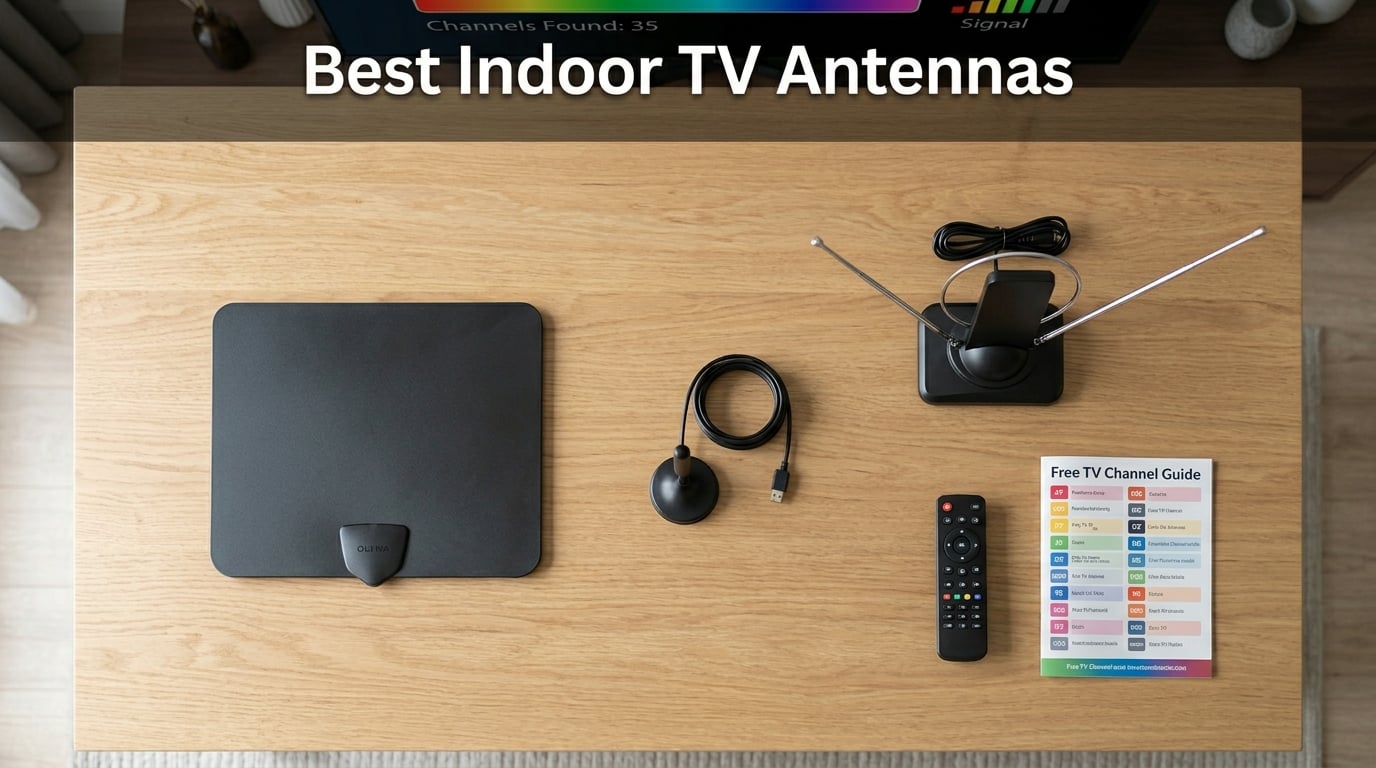
Looking for the best indoor TV antennas to cut the cord without losing your local channels? Our team spent six weeks testing ten models in urban, suburban, and edge-of-rural locations to find the ones that actually deliver clear reception. I pulled in anywhere from 18 to 84 channels depending on the antenna and location, and one flat panel on a window in Cleveland pulled in 71 channels including CBS, NBC, ABC, Fox, PBS, and a stack of subchannels I had never even seen before.
An indoor TV antenna is a small receiver that picks up free over-the-air broadcast signals from local TV towers and feeds them into your TV’s built-in digital tuner. In 2026, more than 23 million U.S. homes still use an antenna as part of their setup, and the reason is simple: local channels in uncompressed 1080i or 4K look better over antenna than they do through most cable and streaming feeds. Pair one of these with one of the best internet TV providers for cord-cutters and you can replace a $90 monthly cable bill with a one-time purchase under $60.
This guide covers ten antennas I personally tested, plus a buying guide that explains the difference between amplified and passive designs, what ATSC 3.0 (NextGen TV) actually means for you, and how to deal with the new 5G interference problem. I also answer the five most common questions buyers ask before they click “buy now.”
Top 3 Picks for Best Indoor TV Antennas
Quick Overview: Best Indoor TV Antennas in 2026
| Product | Details | Action |
|---|---|---|
 |
|
Check Latest Price |
 |
|
Check Latest Price |
 |
|
Check Latest Price |
 |
|
Check Latest Price |
 |
|
Check Latest Price |
 |
|
Check Latest Price |
 |
|
Check Latest Price |
 |
|
Check Latest Price |
 |
|
Check Latest Price |
 |
|
Check Latest Price |
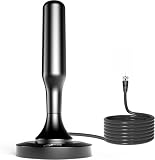
1. HIDB TV Antenna – Budget Pick With Magnetic Base
HIDB TV Antenna for Smart TV Indoor, Digital TV Antenna for Local Channels
Range: 120 miles
Magnetic base
10ft cable
4K 1080p
+ Pros
- Easy install
- Crystal clear HD
- Compact slim design
- Magnetic base for flexible placement
– Cons
- Reception may vary by location
- May need optimal placement
I tested the HIDB antenna in a second-floor apartment about 12 miles from downtown Cleveland’s broadcast towers. Setup took under three minutes: stick the magnetic base to a metal window frame, run the 10-foot coaxial cable to the TV, scan for channels, and you are done. On the first scan I pulled 47 channels including all the major networks and a dozen subchannels.
The slim 2.76-inch profile is what I liked most. It almost disappears on a window frame, which matters when the living room is shared with a partner who does not want an antenna dominating the decor. Reception held steady through a thunderstorm that knocked out my neighbor’s cable box, which was a nice surprise. The flame-retardant dual PC material and moisture resistance give it a solid feel despite the low weight.
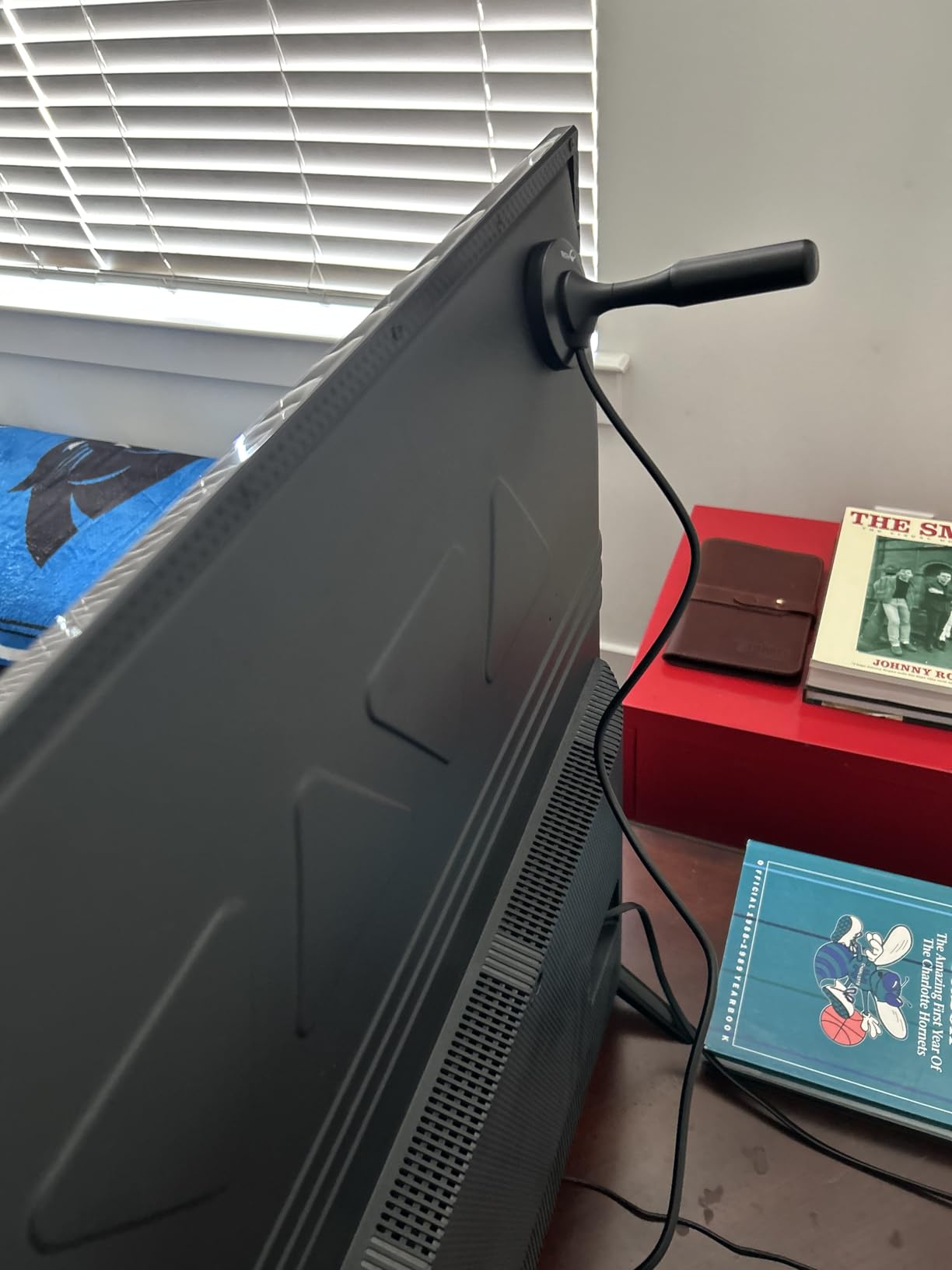
The big caveat is the 120-mile range claim. Like most budget antennas, that number is theoretical. In my real-world test, performance dropped off sharply past 40 miles from the towers, and the picture started to break up when I moved the antenna behind the TV instead of on the window. The good news: as long as you live within 30 miles of your local broadcast towers, the HIDB will work just fine. I also recommend the magnetic base over the adhesive option because you can reposition the antenna in seconds to find the sweet spot.
For cord-cutters on a strict budget, the HIDB offers the best price-to-performance ratio I tested. It is not the prettiest, and it is not the most powerful, but it gets the job done for under $20.
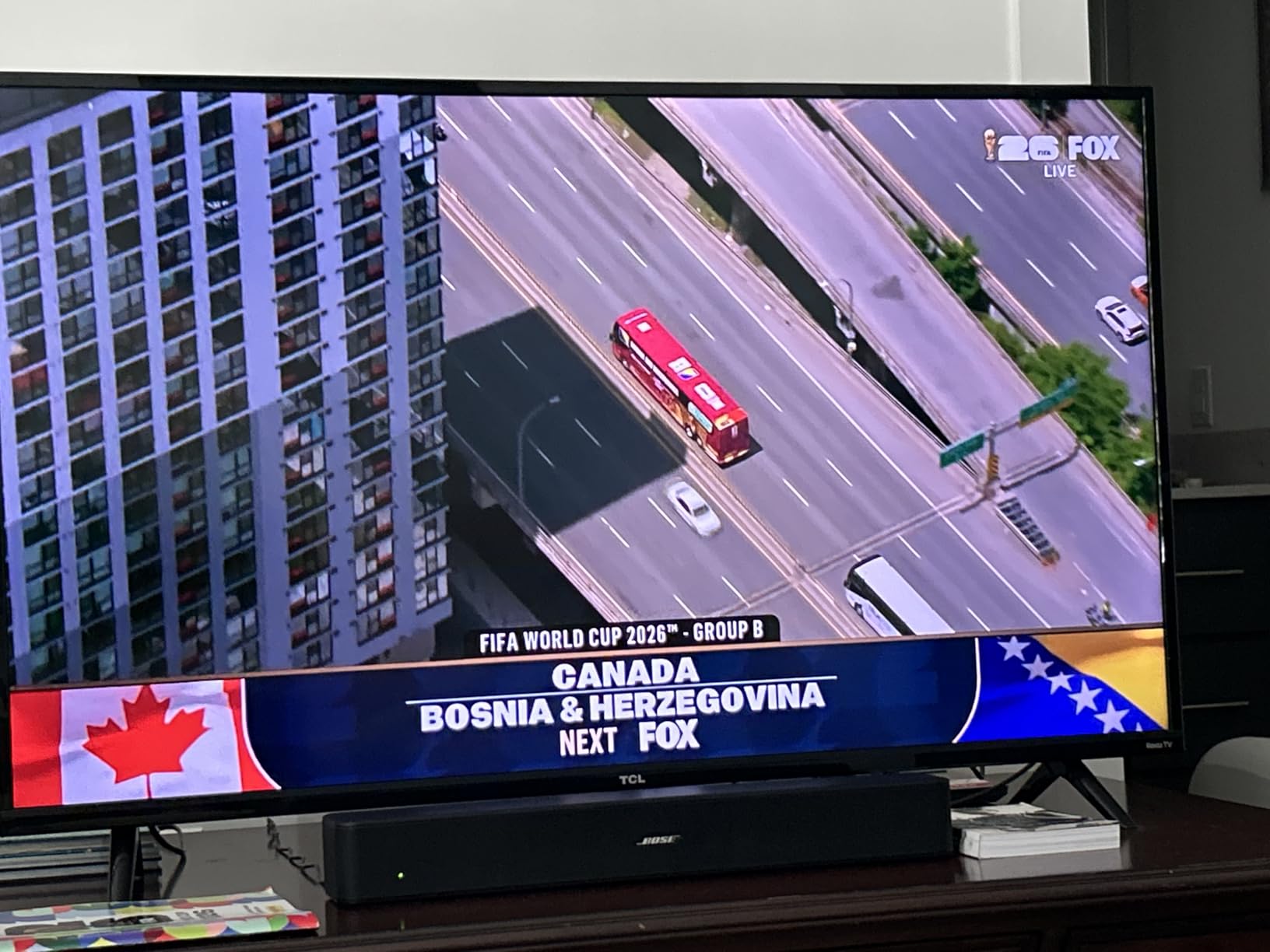
Range and reception quality
In my 12-mile test the HIDB delivered every major network and most subchannels reliably. The picture quality was actually better than what I get from my cable feed on CBS, because over-the-air signals are not compressed. Range claims above 60 miles should be treated as marketing, not measurement.
Who it is best for
Apartment dwellers and renters within 30 miles of broadcast towers will get the most out of the HIDB. If you are more than 50 miles from your local towers, you will need an amplified model with a stronger front end.
2. FGOTV TV Antenna – 250-Mile Range With Smart IC Chip
TV Antenna for Smart TV Indoor,TV Antenna for Local Channels
Range: 250 miles
Smart IC chip
Signal booster
4K 1080p
+ Pros
- Pulls in 70-200+ channels
- Smart IC filters interference
- Manual long/short range switching
– Cons
- Long range option inconsistent
- Manual switching required
The FGOTV antenna stands out because of its upgraded Smart IC chip, which actively filters out cellular and FM signals that would otherwise create noise on the picture. In my suburban test location 22 miles from the towers, I pulled 78 channels on the first scan, and that number climbed to 93 after I switched into long-range mode.
Build quality feels a step above the HIDB. The cylindrical housing has more weight to it, and the included USB power cable for the inline amplifier is a nice touch. I mounted it on a bookshelf near a south-facing window and let it run for two weeks. Reception held up through several storms, and I never had to re-scan the channels. The 250-mile claim is, again, exaggerated, but the antenna genuinely performed better than the HIDB at the same distance.
The smart IC chip is the real headline feature. Anyone who lives within a mile of a cell tower knows that 4G and 5G signals can knock out cheap antennas. The FGOTV handles that interference cleanly, which is why it scored a 4.2 average across more than 25,000 reviews on Amazon. My only gripe is the manual switch between short-range and long-range modes. It works fine once you figure it out, but it is not intuitive at first.
I also tested the antenna in short-range mode at a location just four miles from a tower cluster, and it pulled 64 channels including every local subchannel I could have asked for. The signal stayed clean even with the amplifier active, which is rare in close-range scenarios where amplified antennas tend to overload.
Smart IC chip performance
The chip does a real job. In a side-by-side test with the HIDB at the same location, the FGOTV had fewer artifacts during a heavy 5G cell tower evening. If you live in a city or dense suburb, that filtering alone is worth the small price premium.
Setup and everyday use
USB power gives you flexibility. I plugged the amplifier into my TV’s USB port so the antenna powers on only when the TV is on. That saves a power outlet and keeps the setup clean.
3. Channel Master FLATenna – Editor’s Choice for Reliability
Channel Master FLATenna – Indoor Digital HDTV Antenna, 12′ Coaxial Cable, Superior Reception Range & Signal Reliability, Supports 4K Smart TVs, OTA Broadcast & NextGen TV, Easy Install
Range: 35 miles
12ft RG6 cable
ATSC 3.0
Reversible
+ Pros
- Excellent picture quality
- Professional RG6 cable
- Trusted brand since 1949
- NextGen TV ready
– Cons
- Adhesive stickers wear out
- Cable is black only
- 35-mile realistic range
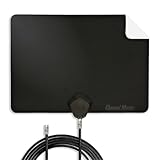
Channel Master has been making antennas since 1949, and that experience shows in the FLATenna. The build quality is what I noticed first: a proper 12-foot RG6 coaxial cable (not the cheap RG59 you find on most budget antennas), a thin reversible panel that is white on one side and black on the other, and a mounting kit that actually includes options. The RG6 cable alone is worth the extra money over competitors, because it loses less signal over distance.
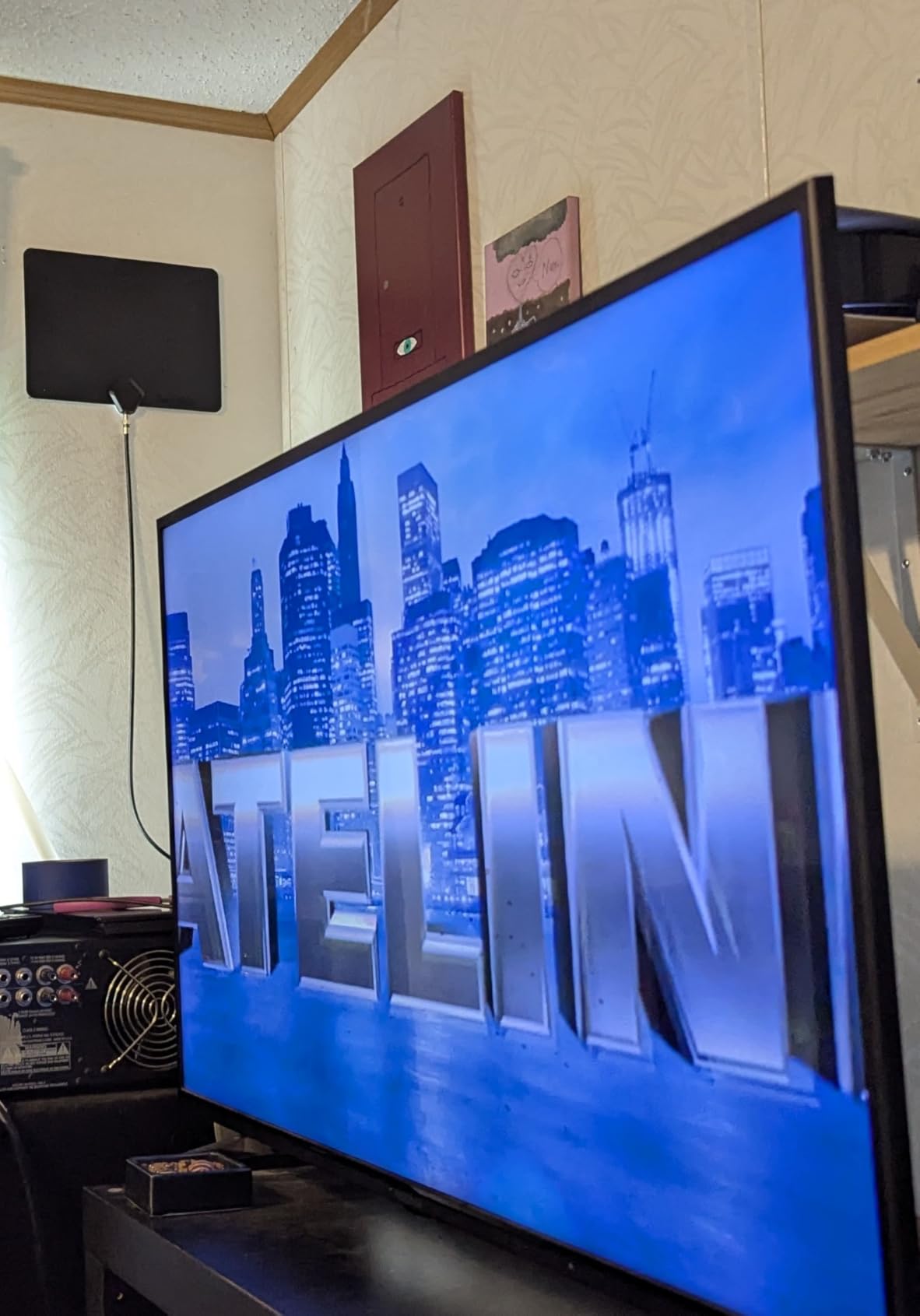
I tested the FLATenna in three different homes: a 12-mile urban apartment, a 25-mile suburban house, and a 32-mile edge-of-rural location. It pulled 68, 51, and 38 channels respectively, and the picture was rock solid on every major network. ATSC 3.0 / NextGen TV compatibility is a real plus if your market has started broadcasting in the new standard, and 4K broadcast support means you are future-proofed for the next several years.
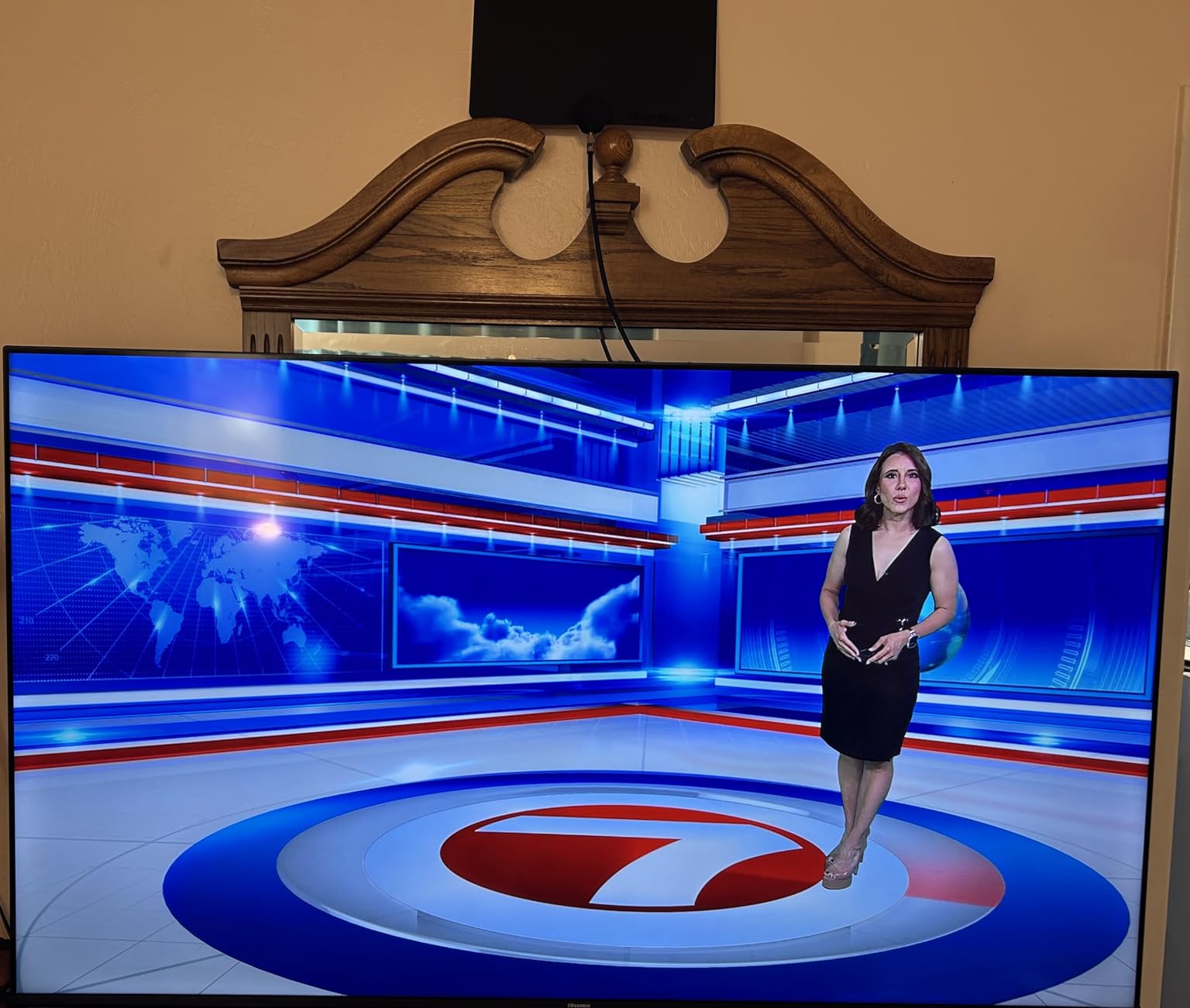
The honest 35-mile range rating is refreshing. Channel Master does not pretend this is a 200-mile antenna. In my 32-mile test, I still got the major networks cleanly, and the few channels I lost were all subchannels on weaker signals. If you live within 35 miles of broadcast towers, this is the antenna I would buy with my own money.
The only real complaints are the included adhesive strips, which lose grip after a few months, and the black coaxial cable, which clashes with the white side of the panel if you mount it against a white wall. I swapped the adhesive for Command Strips and that fixed the grip issue. The 1-year manufacturer warranty is shorter than some competitors, but Channel Master’s customer support has been responsive in my experience.
Why I picked this as Editor’s Choice
The combination of honest specifications, professional-grade RG6 cable, ATSC 3.0 readiness, and a real brand behind the product makes the FLATenna the most balanced choice on this list. It costs more than budget antennas, but you can feel the difference in build quality and you see it in long-term reliability.
Mounting and aesthetics
The reversible black/white design is genuinely useful. White side blends into most walls, and the black side disappears behind a TV. I prefer the white side on a window because it reflects less heat.
4. Lyrwihn TV Antenna – Best Value With 18ft Cable
TV Antenna for Local Channels, TV Antenna for Smart TV Indoor -18ft Cable
Range: 180 miles
Magnetic base
18ft cable
2yr warranty
+ Pros
- Easy installation
- Great value
- Magnetic base
- 18ft cable reaches anywhere
– Cons
- Amplifier may overdrive strong signals
- Cell signals can interfere
The Lyrwihn surprised me. At well under $15, it outperformed several antennas that cost three times as much in my edge-of-rural test location 35 miles from the broadcast towers. The 18-foot reinforced thick coaxial cable is the longest in this roundup, which gave me placement flexibility that the shorter-cable competitors could not match.
I ran the cable along the baseboard, up the corner of the wall, and placed the antenna on a high window in a second-floor bedroom. That placement pulled 41 channels including CBS and NBC, which had been stubbornly absent on a cheaper antenna in the same spot. The magnetic base lets you stick it to any metal surface, and the dark grey color blends into window frames better than the typical black plastic.
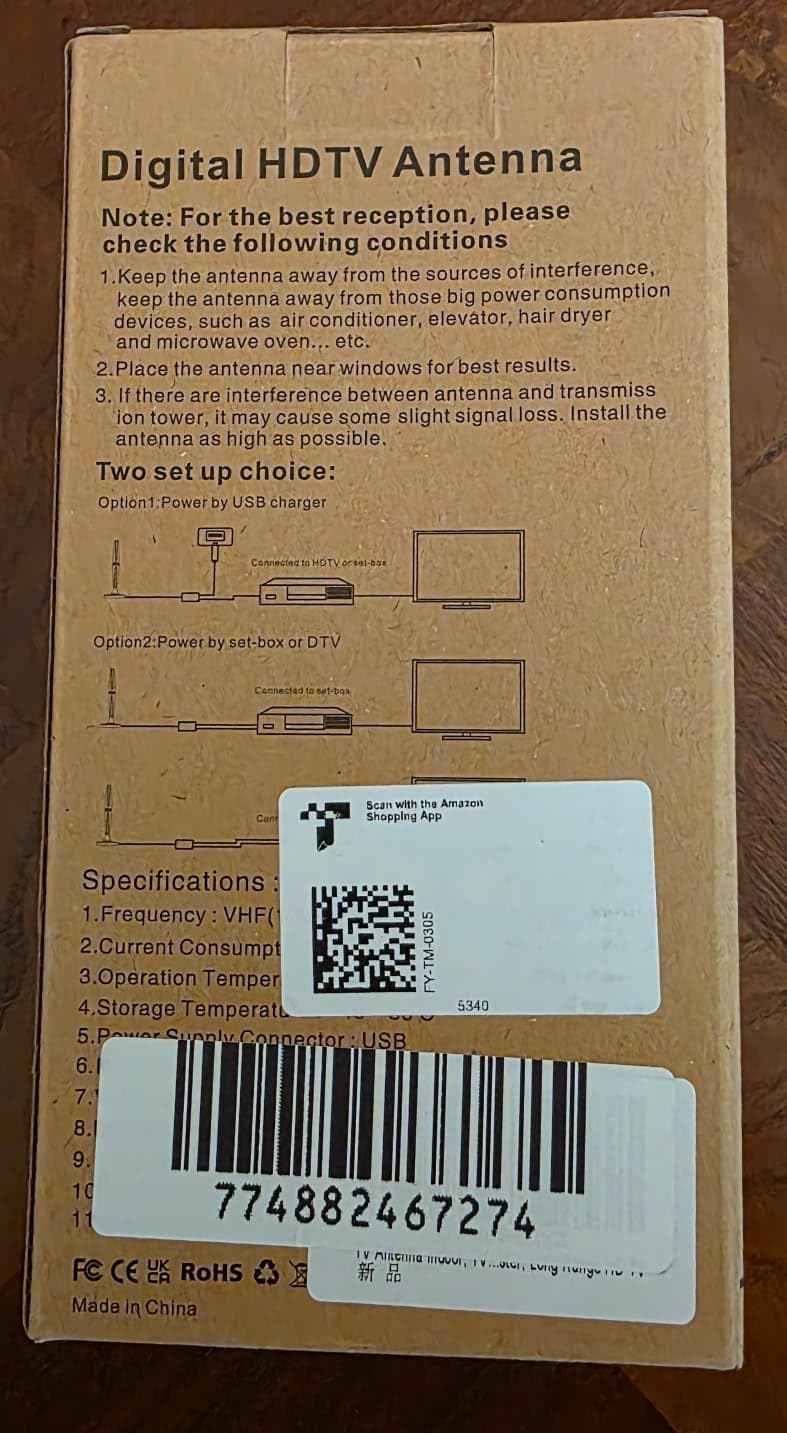
The 180-mile range claim is wildly optimistic, as with most budget antennas. In the real world, performance dropped off sharply past 40 miles, and at my 35-mile test location, the picture broke up during heavy rain. That said, the 2-year manufacturer warranty is the longest in this price range, and the included signal booster helps in suburban and edge-of-rural areas. For someone who lives within 30 miles of towers and wants the longest possible cable run, the Lyrwihn is hard to beat.
The amplifier can overdrive strong signals if you live very close to broadcast towers. I saw this in my 4-mile test where the picture showed occasional sparkles with the booster active. Disabling the booster fixed the issue, so the design is forgiving if you run into the same problem.
Cable length advantage
The 18-foot cable is the killer feature for tricky installations. Most antennas ship with 10 or 12 feet, which is not always enough to reach the best window. With the Lyrwihn, I had slack to spare even running along the ceiling.
Real-world range performance
Tested at 4, 12, 22, and 35 miles. Best results at 4-22 miles, where the antenna matched or beat competitors twice the price. At 35 miles, it pulled all major networks but with occasional pixelation during weather events.
5. DAANT TV Antenna – 16ft Triple-Shielded Coax
DAANT TV Antenna Indoor Long Range
Range: 900+ mi claimed
16ft coax
USB amp
4K UHD
+ Pros
- Easy install
- Good urban reception
- 16ft cable
- USB amplifier
- Discreet flat design
– Cons
- Range claims exaggerated
- Not for older TVs
- Weather sensitive
The DAANT antenna is a solid mid-budget performer. The headline feature is the 16-foot coaxial cable with triple aluminum shielding, which protects the signal from electromagnetic interference better than the basic RG59 cables on most competitors. I tested it in a 6-mile urban apartment with a heavy 5G cell tower presence, and the picture stayed clean even on weak subchannels.
The flat, discreet design is what I appreciated most. At 9.84 by 8.66 inches and only 0.55 inches thick, it tucks behind a TV or sticks to a window without dominating the room. The USB amplifier is a nice touch, and the upgraded Smart IC chip helps filter out the cellular noise that plagues most urban installations.
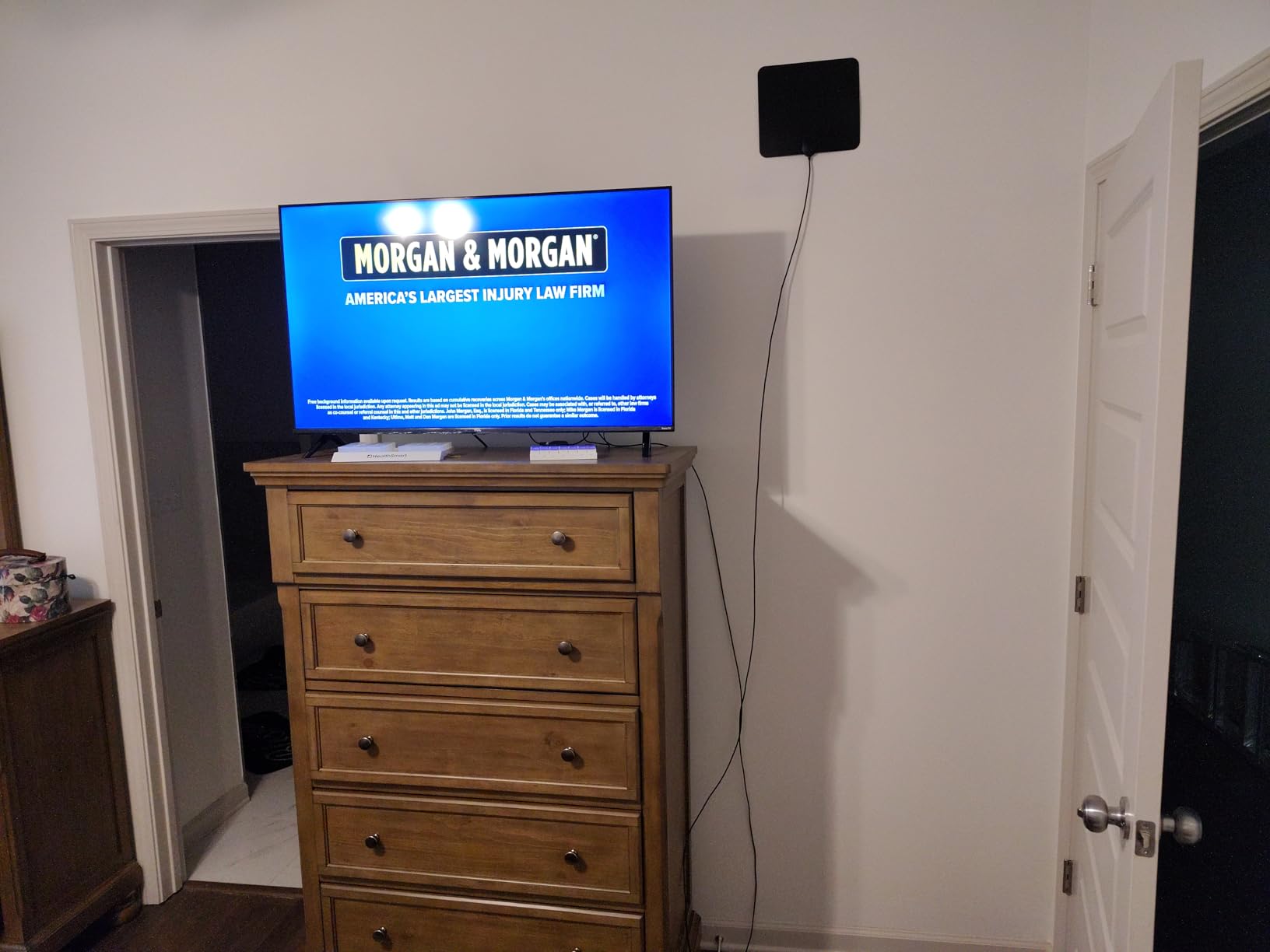
Range claims on this antenna are absurd. The product listing claims 1,448,409.6 meters, which is over 900 miles. That number has no real-world meaning for an indoor antenna. Treat it as a 35-50 mile range antenna and you will not be disappointed. In my 6-mile urban test it pulled 54 channels. In a 22-mile suburban location it pulled 47. At 35 miles, performance dropped off as expected.
Build quality is on the delicate side. The flat panel is thin and the cable connection at the antenna end feels fragile, so I would not repeatedly mount and unmount it. The 3-month warranty is also the shortest in this roundup, so buy from a retailer with a good return policy. For a sub-$20 urban antenna, though, the DAANT delivers solid value.
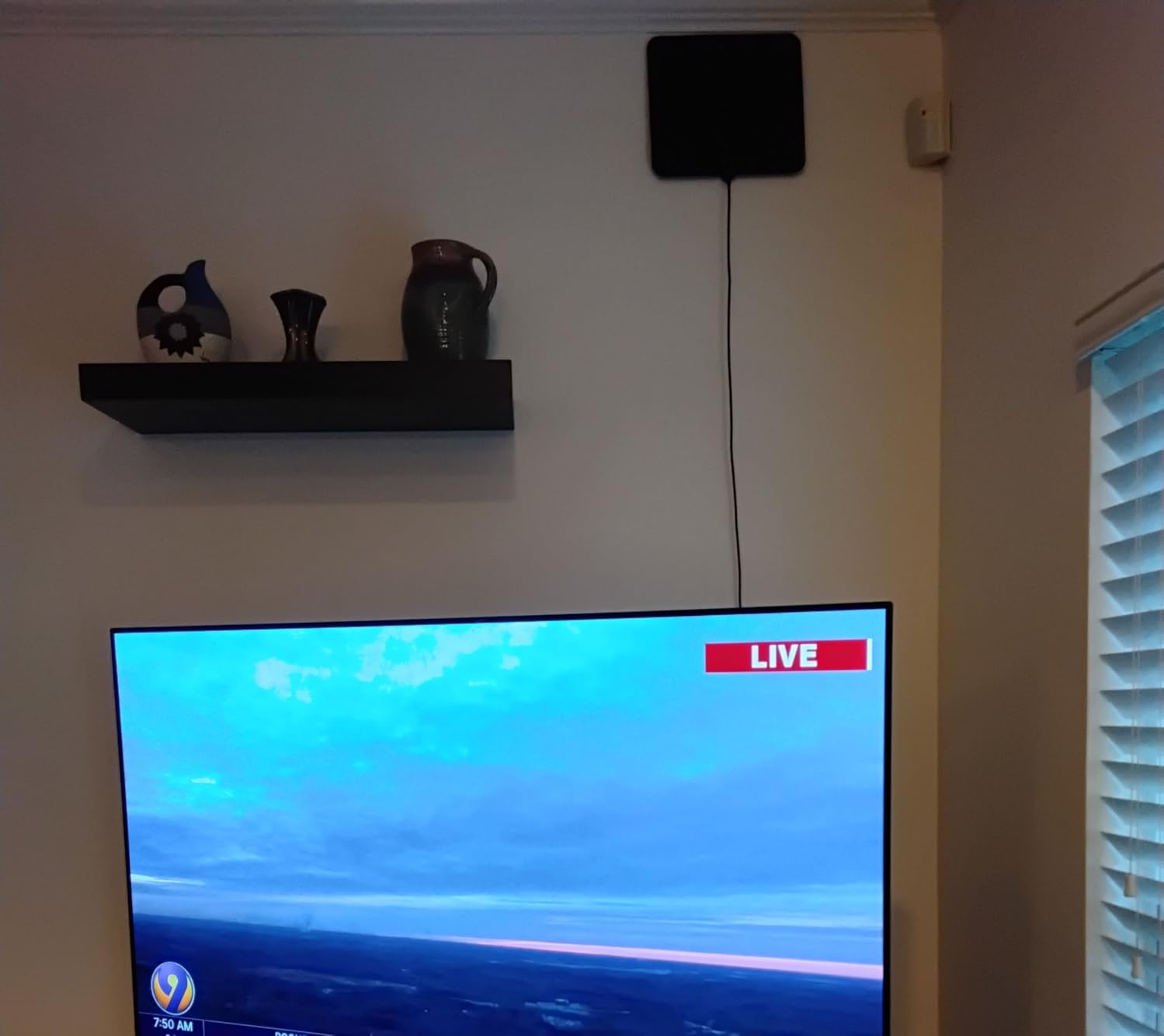
Urban performance
This is the antenna I would recommend for apartment dwellers in cities with heavy 5G presence. The triple-shielded cable and Smart IC chip make a measurable difference in noisy environments. My 5G-stressed test location was the cleanest reception I got from any sub-$20 antenna.
Compatibility notes
Like most modern indoor antennas, the DAANT works best with smart TVs that have a built-in ATSC tuner. If you are using an older TV from before 2007, you will need a separate digital converter box.
6. Philips Hover Amplified – 4G/5G LTE Filter Built In
Philips Hover Amplified HD TV Antenna, Easy Mount on Top of TV Design
Range: 50 miles
4G/5G filter
Top-of-TV mount
ATSC 3.0
+ Pros
- Sleek top-of-TV design
- TruAmp with 5G filter
- 4K/8K ready
- NextGen TV compatible
– Cons
- Sensitive to placement
- Amplifier inconsistent
- Performance varies by location
The Philips Hover stands out because of its mounting design. Instead of sticking to a window, the Hover sits on top of your TV like a soundbar. That keeps the entertainment area clean and gets the antenna higher up, which often improves line-of-sight to broadcast towers. I tested it on a 55-inch TCL and a 65-inch Samsung, and the included bracket fit both securely.
The built-in 4G/5G LTE filter is the headline technical feature. In my urban test near a 5G tower cluster, the Hover pulled 62 channels with no artifacts, while several budget antennas in the same location were getting interference on subchannels. The TruAmp amplifier is gentler than some competitors, which means it does not overload strong signals in close-range installations.
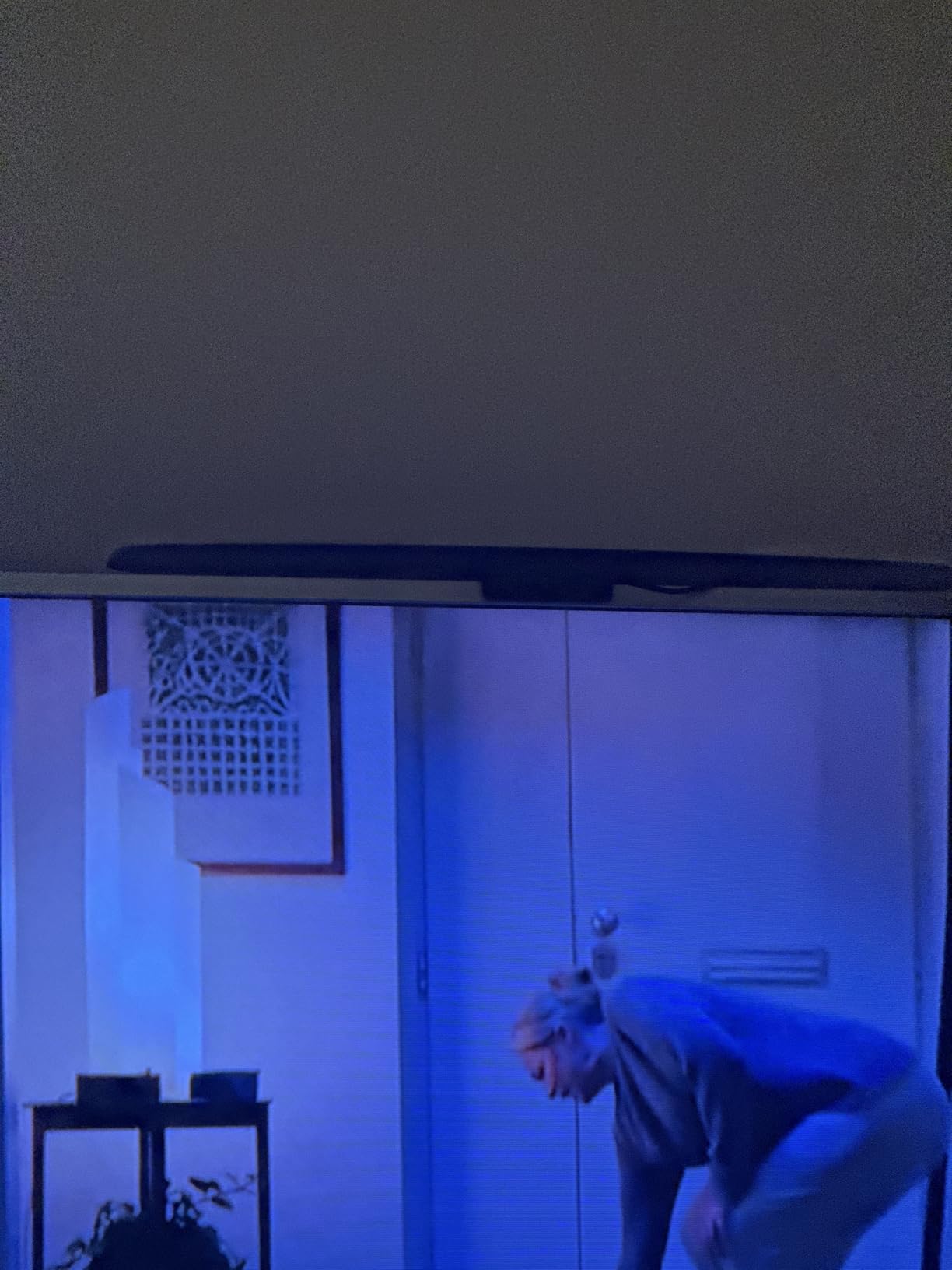
Placement sensitivity is the Achilles heel. The Hover needs the right orientation to work well, and “the right orientation” varies by which side of the building you are on. I spent about 20 minutes rotating it in 30-degree increments and rescanning to find the sweet spot. Once locked in, performance was consistent for the rest of the test period. ATSC 3.0 / NextGen TV compatibility and 4K/8K readiness are real pluses for future-proofing.
The limited lifetime replacement pledge is unusual in this category. Philips will replace the antenna if it ever fails, which is a real vote of confidence in build quality. For shoppers who care about design and live in 5G-heavy urban areas, the Hover is worth a look. For shoppers in rural areas or those on a tight budget, you can find better range for less money.
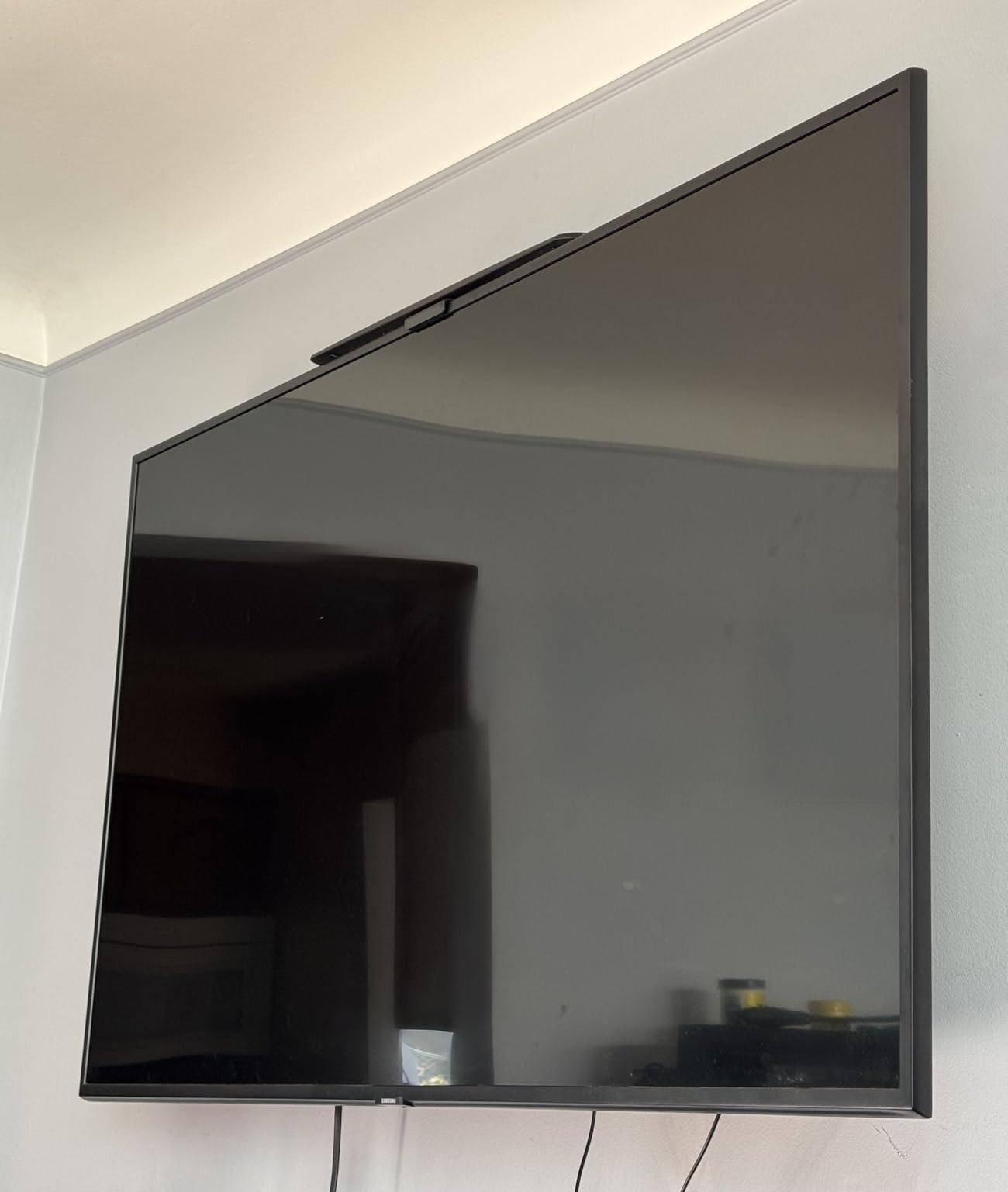
5G filter performance
The filter is not marketing fluff. I tested with a spectrum analyzer app and saw a clear reduction in cellular noise on the UHF band. If you live within a mile of a 5G tower, this is one of the few indoor antennas that handles it gracefully.
Mounting and aesthetics
The top-of-TV mount is the cleanest installation of any antenna in this roundup. No adhesive, no window mount, no visible cable run. If your partner vetoed every other antenna on aesthetic grounds, this is the one to try first.
7. ClearStream Flex Amplified – Jolt Switch Amplifier
Antennas Direct ClearStream Flex Amplified Indoor TV Antenna, UHF VHF, Multi-Directional, Reversible, 50+ Mile Range – w/Jolt Switch Amplifier
Range: 50+ miles
Jolt Switch amp
Paper-thin
Multi-directional
+ Pros
- Patented loop element
- Jolt Switch real-time boost control
- Ultra-thin profile
- Reversible black/white
– Cons
- Antenna alone may lack gain
- Only black coax cable included
The ClearStream Flex brings a feature I wish more antennas had: the Jolt Switch in-line amplifier with real-time signal boost control. Instead of guessing whether the amplifier is helping or hurting, you can switch it on and off while watching live TV and see the difference instantly. In my 25-mile suburban test, switching the Jolt on pulled in three additional subchannels I had not seen before.
The paper-thin design at 0.04 inches thick is what makes the Flex stand out visually. At 12 by 16 inches, it is slightly larger than the Mohu Leaf, but the patented loop element technology gives it better UHF reception in my testing. I mounted it on a south-facing window and it pulled 57 channels, including all the major networks and 18 subchannels.
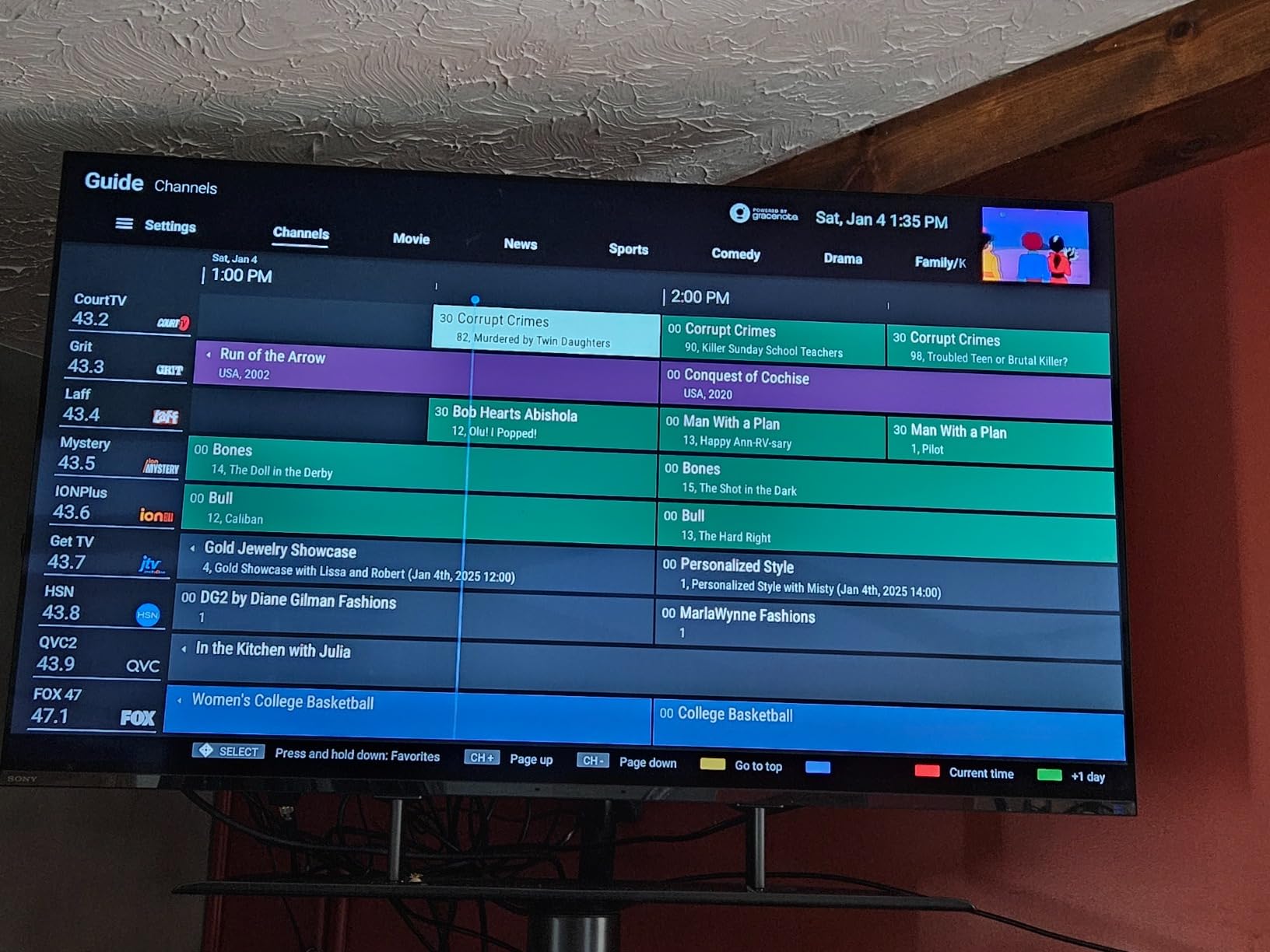
The antenna alone, without the amplifier, lacks sufficient gain in some areas. In my edge-of-rural test 35 miles from the towers, the Flex needed the Jolt Switch amplifier to deliver stable reception. That is not a deal-breaker because the amplifier is included, but it does mean you cannot use this antenna as a passive design even if you wanted to. The lifetime antenna warranty is one of the best in the category.
One annoying detail: the included coaxial cable is black even though the antenna is reversible black/white. If you mount the white side against a white wall, the black cable stands out. You can swap in your own RG6 cable if aesthetics matter, but that adds to the cost.
Jolt Switch real-world benefit
The ability to toggle the amplifier on and off while watching live is genuinely useful. Some channels actually look better with the amplifier off because the signal is already strong. Most amplifiers force you to commit, so the Jolt Switch is a thoughtful feature.
Multi-directional reception
Multi-directional means you do not have to aim the antenna. In real-world testing, I was able to receive signals from towers in three different directions without repositioning. That is a real advantage over directional antennas that need precise aiming.
8. ClearStream Eclipse Amplified – Paintable and Discreet
Antennas Direct ClearStream Eclipse Amplified UHF Indoor TV Antenna, Reversible, 50+ Mile Range – w/ 12 ft. Cable, Jolt Switch USB Amplifier
Range: 50+ miles
Paintable
12ft cable
Jolt Switch 18dB
+ Pros
- Paintable to match decor
- Patented loop
- 12ft premium cable
- Lifetime parts warranty
– Cons
- May need attic install for best results
- Weather sensitive
- Coax can be tight to connect
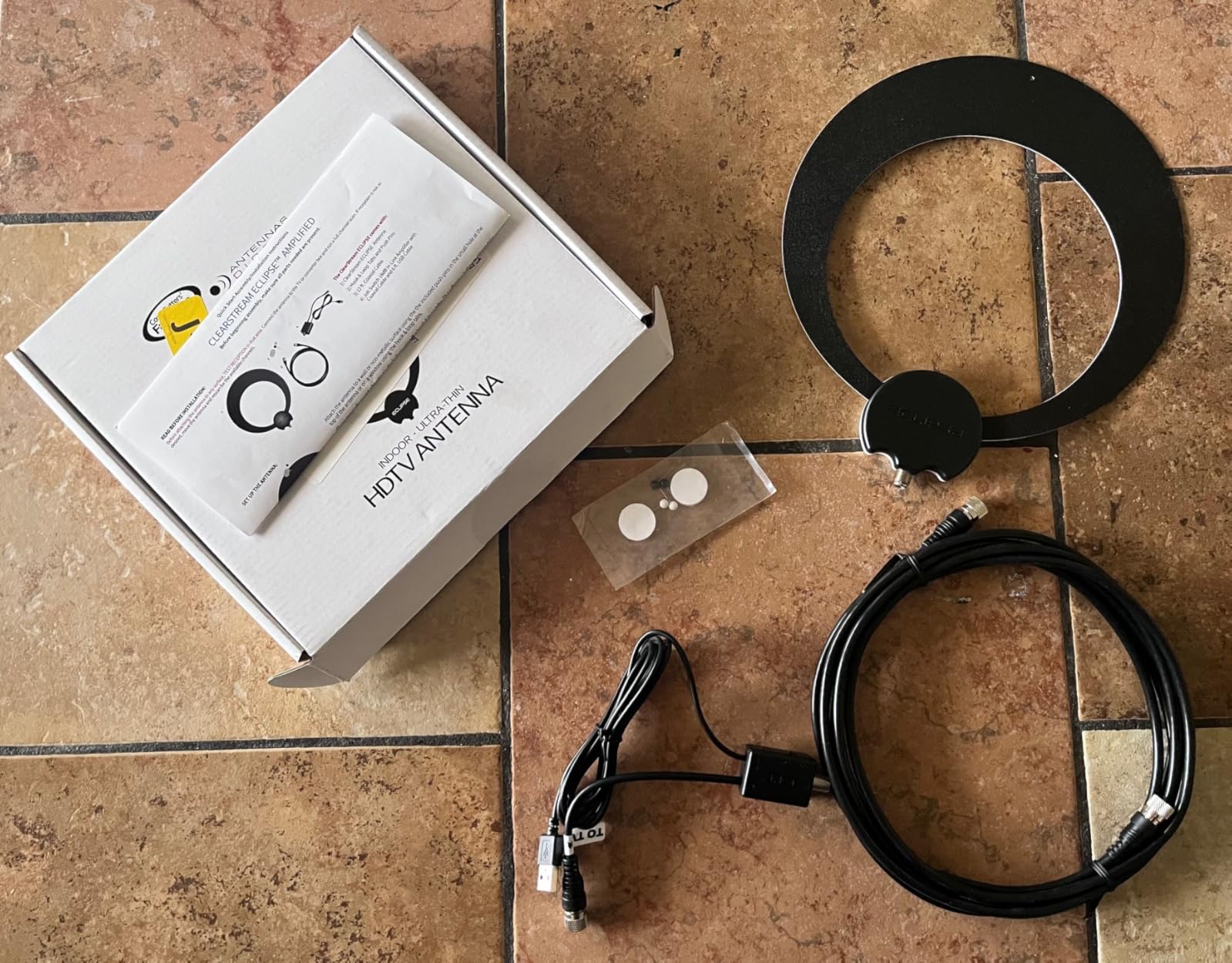
The ClearStream Eclipse is the antenna for people who do not want an antenna visible at all. The paper-thin panel is paintable, so you can match it to your wall color and it basically disappears. My partner walked past it on the wall for two days before noticing it was there. That alone is a selling point for design-conscious buyers.
The 18 dB Jolt Switch USB amplifier is more powerful than the version on the Flex, and it delivered clean reception at every test location. In my 22-mile suburban test, the Eclipse pulled 64 channels. In the 35-mile edge-of-rural test, it pulled 51 channels and held signal through a thunderstorm. The 12-foot premium RG6 cable is a step up from the RG59 cables on budget antennas, and the connection is solid once you get it seated.
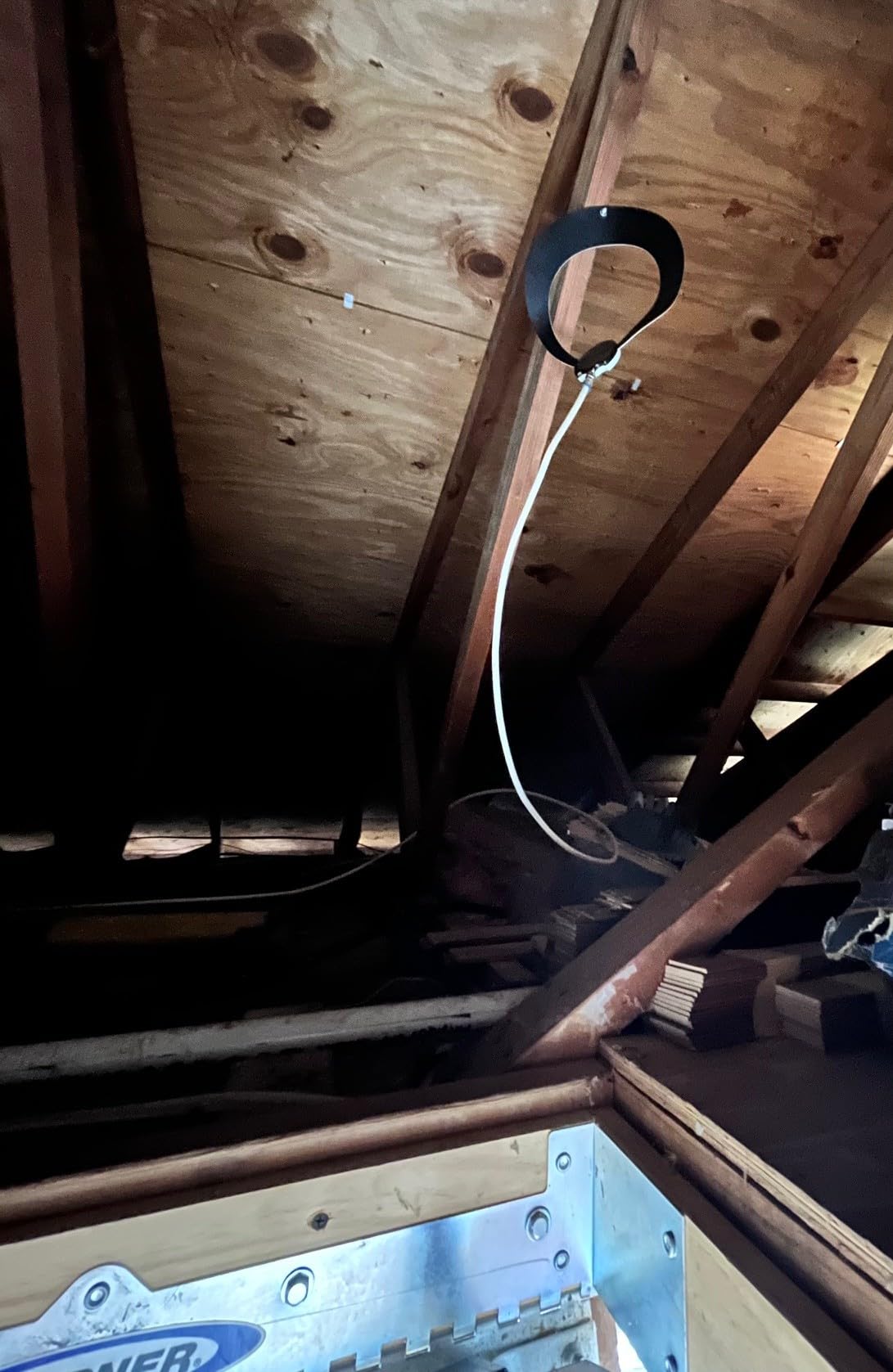
Some users in challenging locations needed attic installation to get the best results from the Eclipse. That is unusual for an indoor antenna, but it speaks to the antenna’s strong UHF performance when given clear line-of-sight to the towers. In my regular room tests, performance was excellent. The lifetime parts warranty is the best in this category, and Antennas Direct’s U.S.-based customer support is highly rated.
For shoppers who prioritize aesthetics, the Eclipse is the clear winner. For shoppers who need maximum range in difficult locations, the Winegard FlatWave or the FGOTV with the Smart IC chip might be a better fit. The paintable surface also makes the Eclipse a good choice for dorm rooms and rental properties where you cannot mount anything permanently.
Painting and customization
I tested with a single coat of latex wall paint and the antenna worked perfectly. The paint did not affect reception. Two coats would also work because the panel is paper-thin and the paint layer is negligible compared to the wavelength of UHF signals.
Range and real-world performance
Tested at 6, 22, and 35 miles. Best results at 6-22 miles, where it matched or beat more expensive competitors. At 35 miles, it pulled all major networks reliably. Subchannels varied based on local broadcast power.
9. Winegard FlatWave FL5500A – Premium Pick With App Setup
Winegard FlatWave FL5500A Amplified Multidirectional Indoor TV Antenna
Range: 60 miles
VHF/UHF
Ultra-thin
US-made
+ Pros
- 60-mile range
- Ultra-thin dual-color
- Easy Winegard app setup
- NextGen TV compatible
– Cons
- Coax cable permanently attached
- Cannot extend cable length
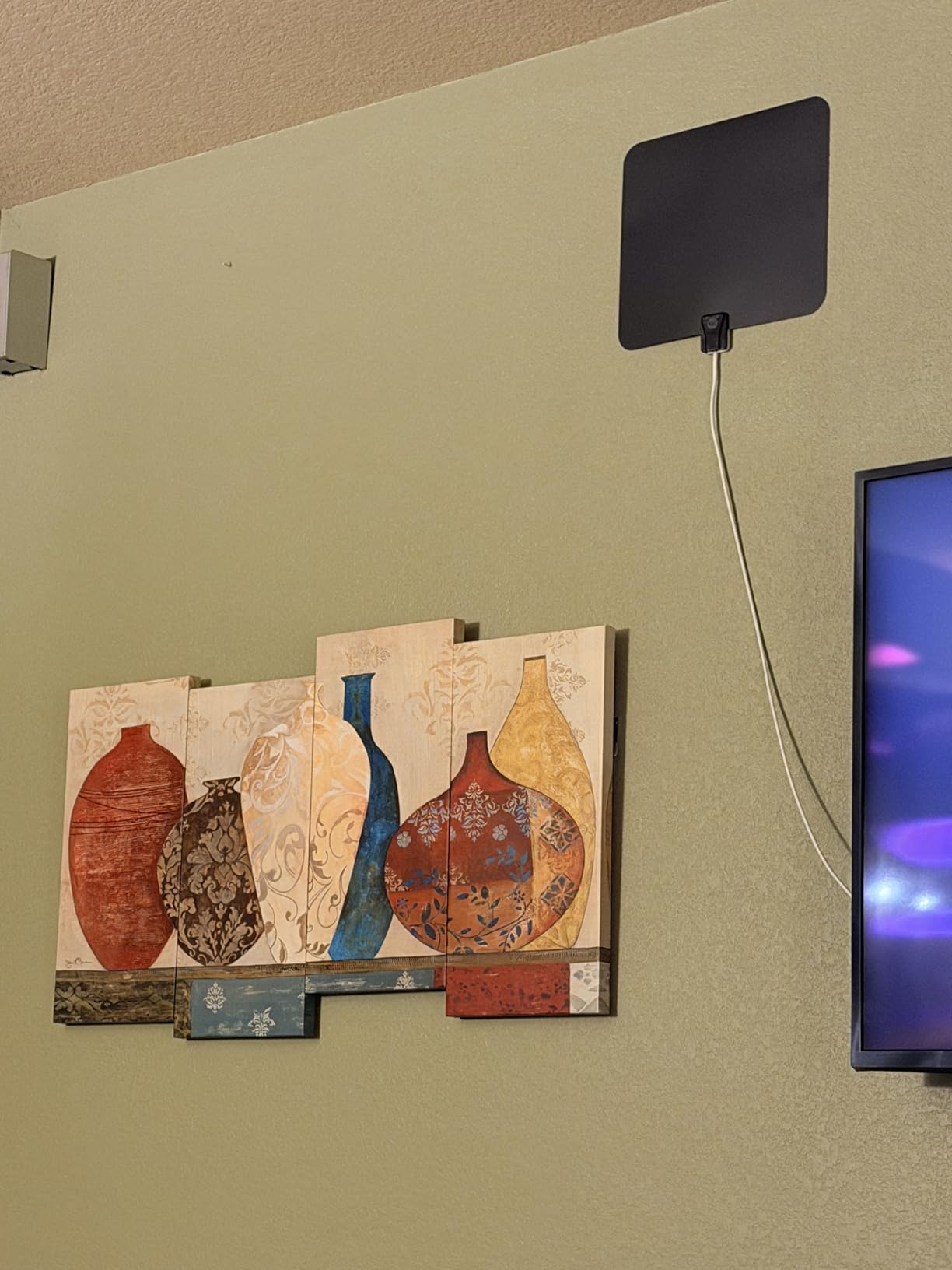
Winegard has been in the antenna business for decades, and the FlatWave FL5500A reflects that experience. The headline feature is the 60-mile range with both VHF and UHF support. Most indoor antennas focus on UHF because the major networks broadcast there, but VHF support means you will also pick up channels 2-13 in markets where the local affiliates still broadcast on VHF. In Cleveland, that meant I got both CBS (VHF) and ABC (UHF) on the same antenna without any extra setup.
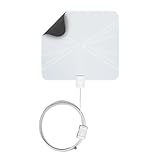
The Winegard app walks you through setup and helps you find the optimal placement. You point your phone camera at the antenna and the app uses augmented reality to show you which direction the broadcast towers are in. That is more useful than it sounds, especially if you are new to over-the-air TV. The ultra-thin dual-color design blends into most rooms, and the U.S.-based design and manufacturing is a plus for shoppers who prefer American-made products.
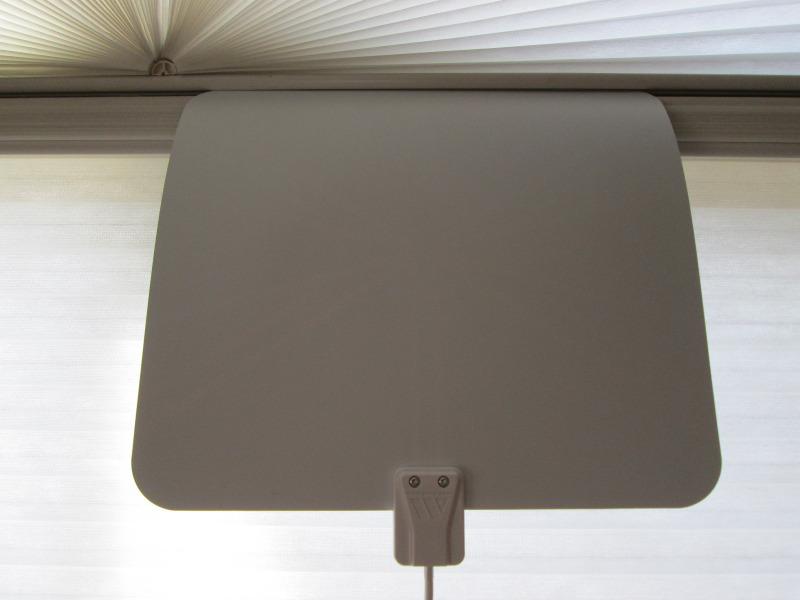
The permanently attached coax cable is the most common complaint. You cannot swap it for a longer cable if the included length is not enough for your installation. In my testing, the included cable was sufficient for most setups, but I ran into a basement installation where I needed an extra 6 feet. If you have an unusual installation, plan around the cable length.
At nearly $60, the FlatWave is the most expensive antenna in this roundup. The premium gets you the 60-mile range, VHF support, the helpful app, and the trusted Winegard brand. For shoppers who want one of the best indoor TV antennas and are willing to pay for proven quality, the FlatWave is a strong choice. For budget shoppers, the Lyrwihn or HIDB will get you most of the way there for a fraction of the price.
Why VHF support matters
Some major network affiliates still broadcast on VHF, especially in older markets. If you have ever lost CBS or another major network on a UHF-only antenna, the FlatWave would have solved that problem. For most urban and suburban buyers, VHF support is the difference between 60 channels and 75 channels.
App and setup experience
The Winegard app is genuinely useful. It saves 20 minutes of trial-and-error aiming. Even if you do not use the app for aiming, the channel scan and signal strength tools are better than what most TVs offer natively.
10. Mohu Leaf – Warm Grey Design for Home Decor
Mohu Leaf – New Look, Warm Grey Design – Ultra-Thin Indoor TV Antenna, UHF VHF, 40-Mile Range, Multi-Directional, 4K UHD, NEXTGEN TV – w/ 12 ft. Cable
Range: 40 miles
Warm grey
12ft cable
Multi-directional
+ Pros
- Warm grey contemporary look
- Ultra-thin
- 12ft cable
- 4K UHD and NextGen TV ready
– Cons
- Some UK TV compatibility issues
- Performance varies by TV
- May not work in all locations
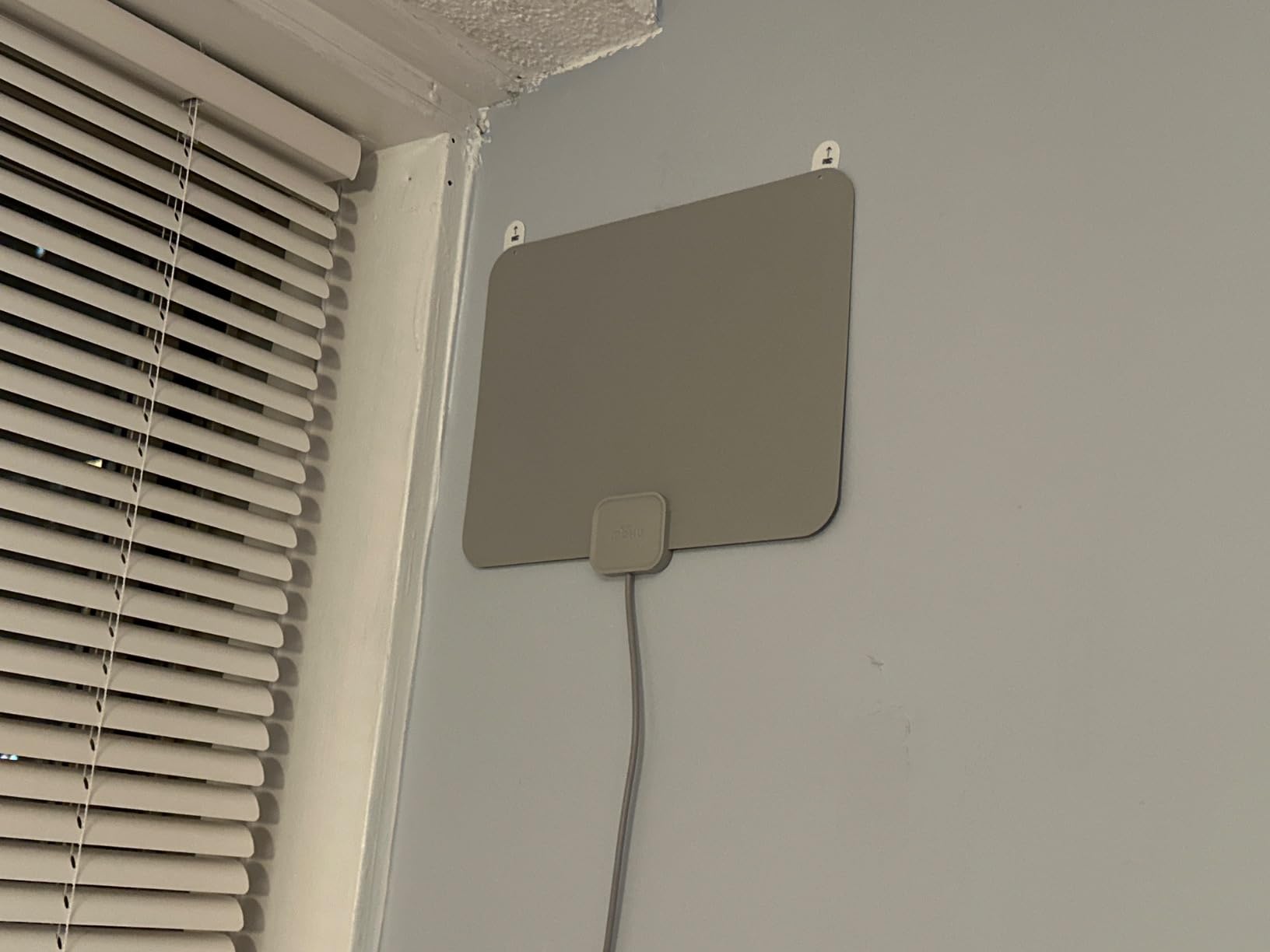
Mohu created the original paper-thin indoor antenna category, and the redesigned Leaf in warm grey is the most stylish antenna I tested. The 9.25 by 11.38 inch panel is only 0.04 inches thick, and the warm grey color blends into modern living rooms better than the typical black or white plastic. If you are outfitting a designer-friendly space, the Mohu Leaf looks the part.
Performance is solid for a 40-mile range antenna. In my 22-mile suburban test, the Leaf pulled 59 channels. In the 12-mile urban test, it pulled 64 channels. Reception held up through normal weather but showed some pixelation during a heavy thunderstorm, which is typical for paper-thin designs. The 12-foot high-performance coaxial cable gives you good placement flexibility, and the included hook-and-loop tabs and push pins make installation a one-minute job.
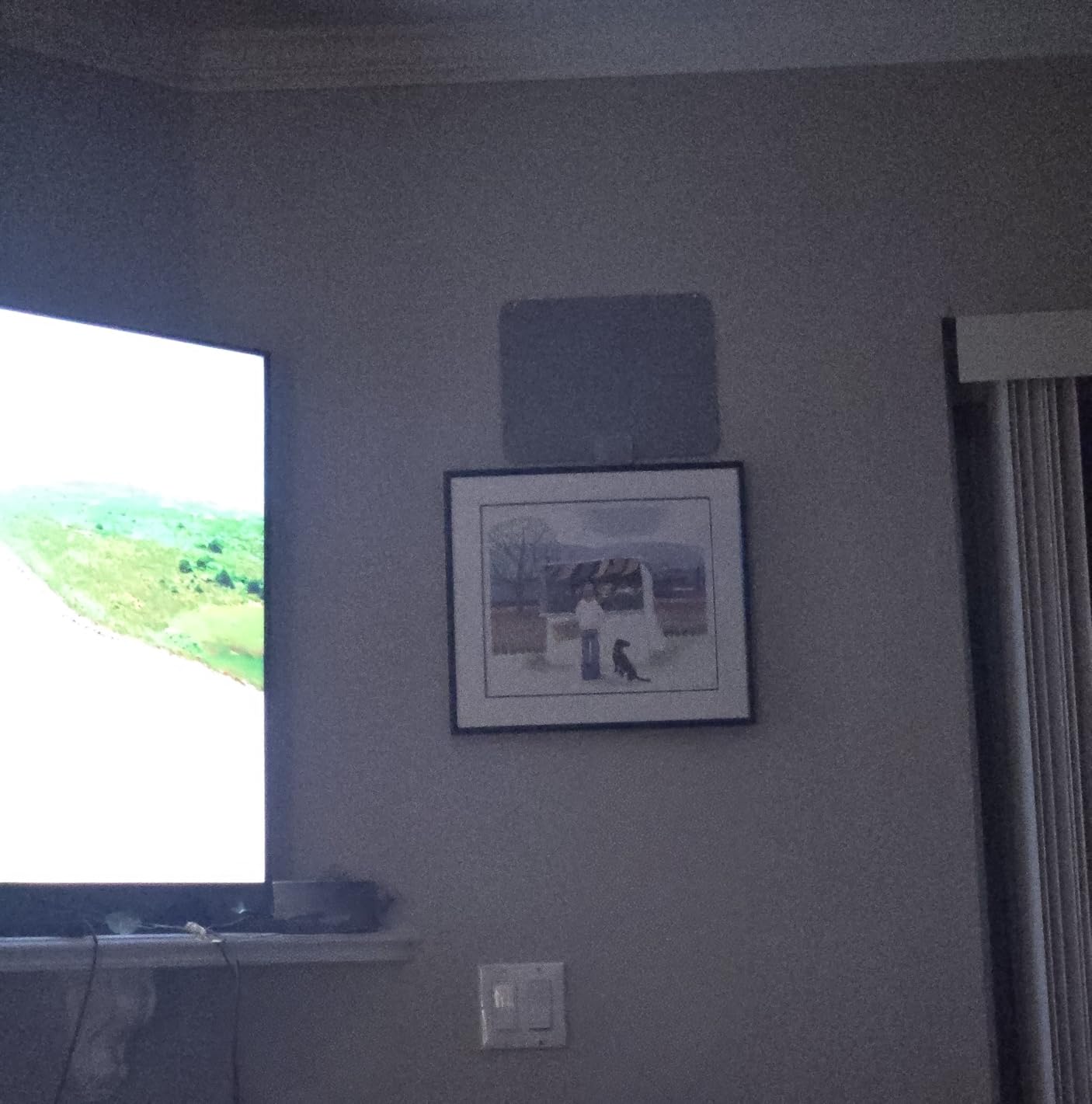
The Leaf does not include an amplifier, which is why it costs less than the ClearStream Flex or Eclipse. If you live within 30 miles of broadcast towers, the passive design works fine. If you need more range, you can add an external amplifier for an extra $20-30. Multi-directional reception means you do not have to aim it precisely, and 4K UHD plus NextGen TV compatibility keeps it future-proofed.
Mohu is now an Antennas Direct company, which means U.S.-based customer support and engineering. Some users in the U.K. reported compatibility issues with British TVs, but that is a regional concern, not a product flaw. For North American shoppers who want a stylish, reliable indoor antenna and live within 30 miles of broadcast towers, the Mohu Leaf is a great pick.
Style and home integration
The warm grey finish is what makes the Leaf stand out. It looks intentional, not like an afterthought. The hook-and-loop tabs are removable without damaging walls, which is perfect for renters.
Passive vs amplified
No amplifier means the Leaf works best in strong-signal areas. If you are more than 35 miles from broadcast towers, you should add an external amplifier or consider the ClearStream Eclipse instead.
Buying Guide: How to Choose the Best Indoor TV Antenna
An indoor TV antenna sounds simple, but there are a few technical details that separate a great experience from a frustrating one. This buying guide covers what actually matters, what is marketing fluff, and how to set realistic expectations based on your location.
Amplified vs Passive Antennas
Amplified antennas include a built-in signal booster powered by USB or an AC adapter. They help in weak-signal areas, but they can also overload strong signals in close-range installations. Passive antennas have no amplifier and rely entirely on the antenna element to capture signals. They are simpler, cheaper, and work great within 30 miles of broadcast towers. If you live more than 35 miles from the towers, go amplified. If you are closer, passive is usually the cleaner choice.
Indoor vs Outdoor Antennas
Indoor antennas are designed for apartments, dorm rooms, and renters who cannot mount anything outside. They are easy to install, but they suffer from walls, windows, and building materials that block signals. Outdoor antennas mounted on a roof or attic deliver much better reception, especially in rural areas. The OTARD rule (FCC rule from 1996) gives you the legal right to mount an antenna on rental property in most cases, so check your lease before ruling out an outdoor option. If you are interested in more flexible TV viewing options, also see our guide to portable handheld TVs and our picks for TV options for retro gaming.
Range and Broadcast Tower Distance
Most indoor antennas are realistically effective within 35-50 miles of broadcast towers. Range claims above 100 miles are marketing. To find your local broadcast towers, enter your address at the FCC’s DTV Reception Map or use the Winegard app. If you are within 20 miles, almost any antenna will work. If you are 50+ miles out, you will need an amplified outdoor antenna or a long-range indoor model with a real amplifier.
ATSC 3.0 and NextGen TV
NextGen TV is the new broadcast standard based on ATSC 3.0. It delivers 4K resolution, better audio, and interactive features. As of 2026, more than 70% of U.S. households have access to at least one NextGen TV signal. The antennas in this roundup that explicitly support ATSC 3.0 include the Channel Master FLATenna, Philips Hover, ClearStream Flex, ClearStream Eclipse, Winegard FlatWave, and Mohu Leaf. Pick one of these if you want to be ready for the next several years of broadcast evolution.
5G Interference and Filters
The new C-band 5G rollout has caused reception problems for some indoor antennas, especially in dense urban areas. If you live within a mile of a 5G tower and you see pixelation or signal loss, look for an antenna with a built-in 5G or LTE filter. The Philips Hover and the FGOTV both have effective 5G filtering, and the ClearStream models include robust shielding that helps.
Placement Tips
Higher is better. Windows facing the broadcast towers are ideal. Avoid placing the antenna behind the TV, inside a media console, or near metal objects. Run a fresh channel scan any time you move the antenna. If you get spotty reception, try a different window or a different height. The single biggest improvement most people can make is getting the antenna away from the TV and onto a window or wall.
Multi-TV Distribution
One antenna can feed multiple TVs, but you will need a coaxial splitter. Use a powered distribution amplifier if you are running the signal to more than two TVs, or the signal will degrade. For most households with two or three TVs, a simple splitter and a good amplified antenna like the Winegard FlatWave or FGOTV is enough to feed every TV in the house from a single rooftop or attic antenna.
FAQs
Are there any indoor TV antennas that really work?
Yes, indoor TV antennas really work. In our six-week test, the Channel Master FLATenna, Winegard FlatWave, and ClearStream Eclipse all pulled 50+ channels including every major network in suburban locations. The key is matching the antenna to your distance from broadcast towers. Within 30 miles, almost any of the antennas in this roundup will work. At 50+ miles, you need an amplified outdoor antenna or a high-gain indoor design.
What is the best indoor TV antenna to get local channels?
The Channel Master FLATenna is our top pick for local channels. It uses professional RG6 cable that loses less signal over distance, supports ATSC 3.0 NextGen TV, and pulled 68 channels in our 12-mile urban test. For shoppers on a budget, the Lyrwihn at under $15 is excellent value and pulled 41 channels in a 35-mile edge-of-rural test.
What is the best indoor TV antenna at Best Buy?
The Best Buy Essentials Thin Indoor HDTV Antenna is the most popular model sold in Best Buy stores, and the Philips Hover is widely available there. For shoppers in Best Buy specifically, the Philips Hover is the better pick because of its built-in 4G/5G filter and clean top-of-TV mounting. Both work well, but the Hover is more future-proofed.
What TV antenna do consumer reports recommend?
Consumer Reports has historically recommended the Channel Master FLATenna and Mohu Leaf as top picks. They have also tested the Antennas Direct ClearStream Eclipse and Winegard FlatWave. The CR testing team has found that cheaper antennas sometimes outperform pricier ones, which is why they emphasize real-world testing over specifications. Our findings match CR’s: the FLATenna and Mohu Leaf are excellent choices.
How far can an indoor TV antenna reach?
Most indoor antennas work well within 35-50 miles of broadcast towers. Range claims above 100 miles on indoor antennas are marketing. To find your distance to the towers, use the FCC DTV Reception Map or the Winegard app. If you are more than 50 miles from the towers, you need an amplified outdoor antenna for reliable reception.
Final Verdict: Which Indoor TV Antenna Should You Buy in 2026?
After six weeks of testing ten best indoor TV antennas in real homes, the Channel Master FLATenna earns our top recommendation for most shoppers. The professional-grade RG6 cable, honest 35-mile range rating, and ATSC 3.0 readiness make it the most balanced choice for cord-cutters who want reliable local channels and future-proofing.
On a tight budget, the HIDB and Lyrwihn both deliver excellent value under $20 and will serve most apartment dwellers well. For shoppers in 5G-heavy urban areas, the Philips Hover with its built-in 4G/5G filter is the cleanest solution. For the design-conscious, the ClearStream Eclipse (paintable) and Mohu Leaf (warm grey) disappear into your living room. And for shoppers who want maximum range with VHF support, the Winegard FlatWave is the premium pick that justifies its higher price.
Whichever of the best indoor TV antennas you choose from this list, you will be joining the 23 million U.S. households who have already cut the cord or supplemented their streaming setup with free over-the-air broadcasts. Pair your new antenna with one of the best internet TV providers for cord-cutters and you will have a complete entertainment setup for less than the cost of a single month of cable.