
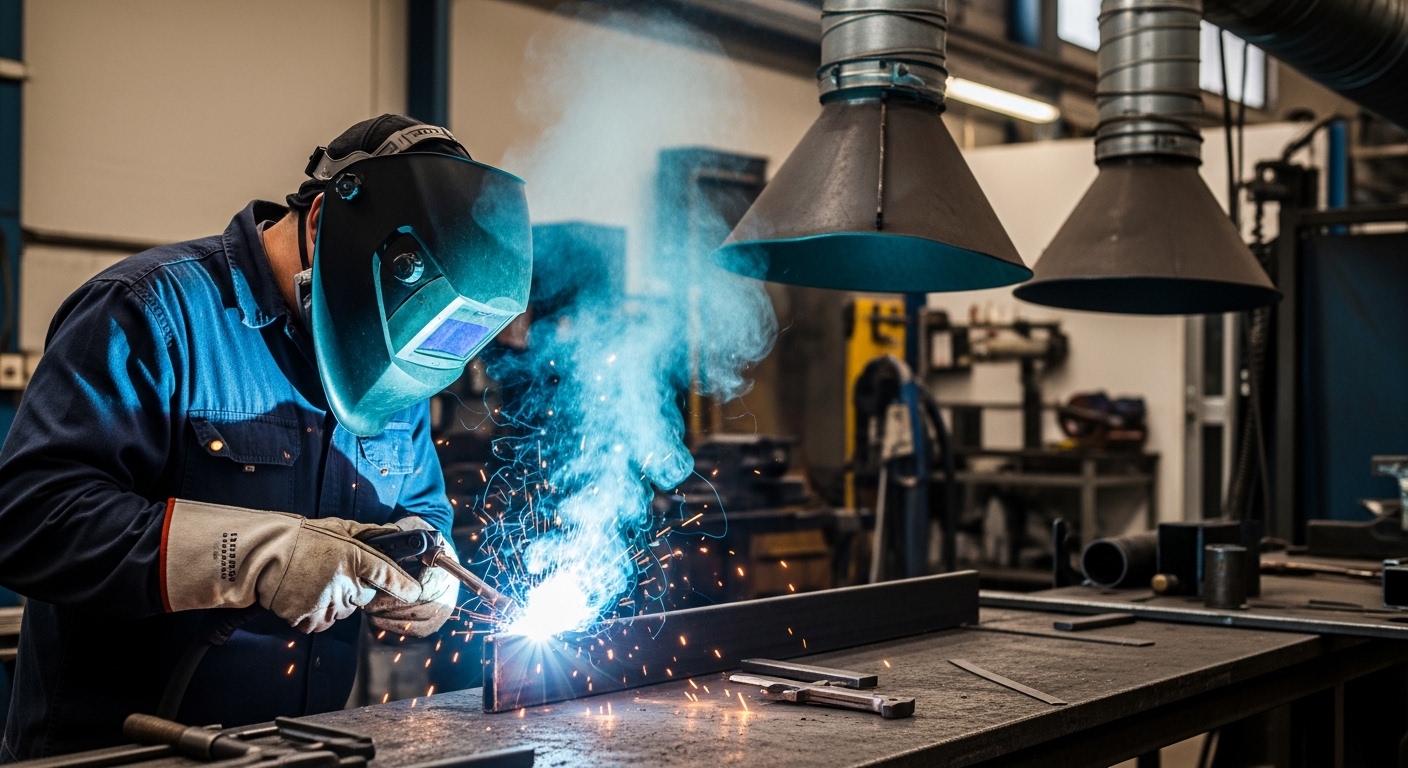
Metal fume fever is an occupational illness that sends thousands of welders and metal workers home sick each year. I’ve seen it happen too many times – a welder spends a day cutting galvanized steel without proper ventilation, wakes up feeling like they have the flu, and wonders what went wrong. The condition is preventable, but only if you understand what you’re dealing with.
Metal fume fever is an acute, self-limiting illness caused by inhaling metal oxide fumes, primarily zinc oxide, during welding or hot metalworking operations. Symptoms typically appear 4-12 hours after exposure and include fever, chills, metallic taste, nausea, and muscle aches. Most people recover completely within 24-48 hours with rest and supportive care.
According to NIOSH, approximately 30% of welders will experience metal fume fever at some point during their career. The condition indicates excessive exposure to welding fumes and should serve as a warning sign that your respiratory protection needs attention. Let me walk you through everything you need to know about this condition, from recognition to prevention.
What Is Metal Fume Fever?
Metal fume fever is an acute respiratory condition caused by inhaling freshly formed metal oxide fumes. When metals are heated to high temperatures during welding, cutting, or brazing, they vaporize and then condense into ultrafine particles – smaller than 1 micron in diameter. These particles are small enough to reach deep into your lungs, where they trigger an inflammatory response.
Metal Fume Fever: An acute, flu-like occupational illness caused by inhalation of metal oxide fumes, primarily zinc oxide, characterized by fever, chills, and myalgia that typically resolve within 24-48 hours after exposure ceases.
The condition has been known by many names over the years. You might hear it called “welder’s flu,” “Monday morning fever,” “brass founders’ ague,” “zinc shakes,” or “galvie flu.” These alternative names tell you something about who gets affected and when – the “Monday morning fever” name comes from the pattern where symptoms appear after workers return from weekend breaks, when their tolerance has decreased.
Here’s what happens in your body: When you inhale those ultrafine metal particles, they reach the alveoli (the tiny air sacs in your lungs). Your lung cells recognize these particles as foreign invaders and release cytokines – signaling proteins like tumor necrosis factor-alpha, interleukin-6, and interleukin-8. These cytokines trigger a systemic inflammatory response that causes fever, chills, and muscle aches throughout your body.
Think of it as your immune system overreacting to the metal particles. The response is self-limiting, meaning it will resolve on its own once exposure stops. But that doesn’t mean it’s harmless – repeated episodes may lead to more serious respiratory issues over time.
Symptoms of Metal Fume Fever
Symptoms of metal fume fever typically appear 4-12 hours after exposure, which is why many welders don’t connect their work earlier in the day with how they feel that night or the next morning. I’ve talked to welders who thought they had a bad case of the flu, only to realize after the third or fourth episode that it always happened after welding certain materials.
Quick Summary: Metal fume fever symptoms start 4-12 hours after exposure, peak around 24 hours, and usually resolve within 24-48 hours. The hallmark symptom is a metallic or sweet taste in your mouth during or immediately after welding – this is your early warning sign.
The symptoms follow a predictable pattern that helps distinguish metal fume fever from actual influenza or other illnesses:
Symptom Timeline
| During/Immediately After Exposure | Metallic or sweet taste in mouth, dry cough, throat irritation |
| 4-6 Hours Later | Mild fever, headache, thirst, nausea begins |
| 6-12 Hours Later | Fever peaks (100-104degF), chills, shaking, muscle aches |
| 12-24 Hours Later | Symptoms at peak, body aches, weakness, shortness of breath |
| 24-48 Hours Later | Symptoms gradually improve, full recovery typically |
The most distinctive symptom – and the one that should immediately make you think “metal fume fever” – is the metallic taste. It’s often described as tasting like you’re sucking on a penny or have a battery in your mouth. This symptom is unique to metal fume exposure and doesn’t occur with regular viral illnesses.
Other common symptoms include:
- Fever and chills: Temperature often reaches 102-104degF
- Headache: Typically dull and persistent
- Nausea and vomiting: More common with higher exposures
- Muscle aches (myalgia): Similar to flu-like body aches
- Joint pain (arthralgia): Stiffness and discomfort
- Dry cough: May produce minimal sputum
- Shortness of breath (dyspnea): Mild to moderate difficulty breathing
- Chest tightness: Feeling of pressure in the chest
- Extreme thirst: Dehydration from fever
- Weakness and fatigue: Can last even after fever resolves
What Causes Metal Fume Fever?
Metal fume fever is primarily caused by inhaling zinc oxide fumes, which are released when zinc-coated metals – like galvanized steel – are heated. Zinc is the most common culprit, accounting for about 90% of metal fume fever cases. But other metals can also cause similar symptoms, and some are far more dangerous than zinc.
Cadmium (Dangerous)
Magnesium
Copper
Manganese
The highest-risk activities include:
High-Risk Metalworking Operations
| Operation | Risk Level | Why It’s Risky |
|---|---|---|
| Welding galvanized steel | HIGH | Zinc coating vaporizes at welding temperatures |
| Cutting galvanized steel | HIGH | Thermal cutting produces concentrated fumes |
| Welding brass or bronze | MEDIUM | Contains zinc and copper |
| Oxy-acetylene cutting | MEDIUM | Produces more fumes than mechanical cutting |
| Soldering with zinc solder | LOW-MEDIUM | Lower temperatures but still produces fumes |
| Welding painted/coated metals | MEDIUM | Coatings may contain zinc or other metals |
The “Monday morning fever” phenomenon occurs because workers develop a temporary tolerance with repeated daily exposure. When you take the weekend off, your tolerance drops. Then Monday morning, when you’re back at the welder and exposed to fumes again, your body reacts more strongly. This pattern is actually a helpful diagnostic clue – if your “flu” symptoms reliably appear after returning from time off, metal fume fever should be high on your list of suspected causes.
Workplace factors that increase risk include:
- Poor ventilation: Working in enclosed spaces without adequate airflow
- No respiratory protection: Not wearing a respirator or wearing the wrong type
- Extended exposure time: Long welding sessions without breaks
- High-amperage welding: Produces more fumes than low-amperage work
- Working in the plume: Positioning your head directly in the fume stream
- DIY welding at home: Home welders often lack proper ventilation and training
How Is Metal Fume Fever Diagnosed?
Diagnosing metal fume fever starts with a thorough occupational history. Doctors need to know what you do for a living, what materials you work with, and whether your symptoms correlate with work activities. I’ve seen cases where welders didn’t mention their occupation to their doctor, leading to misdiagnosis and unnecessary treatment.
There’s no single definitive test for metal fume fever. Instead, doctors make the diagnosis based on:
- Occupational exposure history: Recent welding or metalworking exposure, especially to galvanized steel
- Characteristic symptom pattern: Symptoms appearing 4-12 hours after exposure, including the metallic taste
- Physical examination: Fever, rapid breathing, possibly wheezing
- Laboratory findings: Elevated white blood cell count (leukocytosis), sometimes with increased neutrophils
- Chest X-ray: Usually normal, which helps distinguish it from pneumonia or other lung conditions
The differential diagnosis – other conditions that could cause similar symptoms – includes:
Metal Fume Fever vs. Similar Conditions
| Condition | Key Differences |
|---|---|
| Viral Influenza | No metallic taste, runny nose common, symptoms don’t correlate with work exposure, may have positive flu test |
| COVID-19 | Loss of taste/smell (different from metallic taste), may have cough with sputum, no work correlation |
| Pneumonia | Chest X-ray shows infiltrates, productive cough, symptoms persist longer than 48 hours |
| Acute Bronchitis | Prominent cough with mucus, no fever pattern, longer duration |
| Cadmium Toxicity | Much more severe, can cause pulmonary edema, life-threatening, requires emergency care |
| Heat Exhaustion | No metallic taste, no cough, symptoms resolve with cooling |
If you seek medical care for possible metal fume fever, be sure to tell the doctor about your occupation and recent work activities. Mention any welding on galvanized steel specifically. This information can be the key to getting the right diagnosis and avoiding unnecessary tests or treatments.
Metal Fume Fever Treatment
The good news about metal fume fever is that it’s self-limiting – meaning it goes away on its own with supportive care. There’s no specific antidote or cure. Treatment focuses on symptom relief and removing the person from further exposure.
Immediate actions if you suspect metal fume fever:
- Stop exposure immediately: Get away from the welding area and into fresh air
- Remove contaminated clothing: Shower to remove any metal particles from your skin
- Hydrate: Drink plenty of fluids to replace what you’re losing through fever and sweating
- Rest: Your body needs energy to fight the inflammatory response
- Monitor symptoms: Watch for warning signs that might indicate something more serious
Home care for mild cases:
- Rest and sleep: Take it easy for 24-48 hours
- Fluids: Water, electrolyte drinks, clear broths
- Over-the-counter medications: Acetaminophen (Tylenol) or ibuprofen can help reduce fever and relieve muscle aches
- Comfort measures: Cool compresses for fever, light bedding
Medical treatment for more severe cases:
- Oxygen therapy: If oxygen levels are low
- IV fluids: For dehydration if you can’t keep liquids down
- Bronchodilators: If wheezing or bronchospasm is present
- Monitoring: Vital signs and oxygen levels checked regularly
The Milk Myth: Does Drinking Milk Help?
There’s a persistent myth in the welding community that drinking milk can prevent or treat metal fume fever. Let me be clear: this is not supported by medical evidence.
The theory behind the milk remedy is that calcium in milk might help bind heavy metals in the body. While there’s some truth to calcium’s ability to bind certain metals, drinking milk after exposure to metal fumes doesn’t significantly affect the course of metal fume fever. The inflammatory response has already been triggered by the time you drink the milk, and the milk can’t undo that process.
Important: Relying on milk as a preventive measure can give you a false sense of security and may delay proper medical treatment. The only effective prevention is avoiding exposure through proper ventilation and respiratory protection.
NIOSH and other authoritative medical sources do not recommend milk as a treatment for metal fume fever. If you’ve been exposed, get into fresh air, hydrate with water or electrolyte drinks, rest, and seek medical attention if symptoms are severe.
How to Prevent Metal Fume Fever
Preventing metal fume fever comes down to one fundamental principle: reduce your exposure to metal fumes. This is accomplished through a combination of engineering controls, administrative controls, and personal protective equipment (PPE). The hierarchy of controls puts engineering controls first because they’re the most effective – they remove the hazard at the source rather than relying on individual behavior.
Quick Summary: The most effective prevention strategy combines local exhaust ventilation to capture fumes at the source, proper respiratory protection (at minimum, an N95 respirator rated for metal fumes), and work practices that minimize your exposure. For galvanized steel welding, use a P100 respirator and ensure adequate ventilation.
Engineering Controls
Engineering controls are physical changes to your work environment that reduce fume exposure. They’re the most effective prevention method because they don’t rely on you remembering to use them correctly.
- Local exhaust ventilation (LEV): Captures fumes at the source before they reach your breathing zone. This includes fume extraction arms, portable fume extractors, and downdraft tables. Position the capture hood as close as possible to the welding point – ideally within 6-12 inches.
- General ventilation: Adequate air changes in the workspace. While better than nothing, general ventilation is much less effective than local exhaust because it doesn’t capture fumes at the source.
- Fume extraction systems: For permanent welding stations, installed systems that pull fumes away through ductwork. These can be expensive but are highly effective for high-production environments.
- Source capture guns: Some welding guns have built-in fume extraction that captures fumes right at the welding arc.
Respiratory Protection
When engineering controls alone aren’t sufficient, respiratory protection is essential. But not just any mask will do – you need the right respirator for the job.
Respirator Selection for Welding
| Respirator Type | Best For | Limitations |
|---|---|---|
| N95 Disposable | Light welding, good ventilation | Not for heavy fumes or oily mists, not reusable |
| P100 Half-Face | Most welding, including galvanized steel | Requires proper fit testing, cartridges need replacement |
| P100 Full-Face | High fume concentrations, eye protection needed | More expensive, can be uncomfortable for long periods |
| Powered Air-Purifying Respirator (PAPR) | Extended welding sessions, hot environments | Expensive ($500-$2000), requires maintenance |
| Supplied-Air Respirator | High-risk environments, confined spaces | Requires air supply, expensive, complex setup |
For most welding applications, especially when working with galvanized steel, a P100-rated half-face respirator is the minimum recommended protection. The “P100” rating means the filter is oil-proof and captures 99.97% of particles 0.3 microns and larger. Make sure your respirator is NIOSH-approved and properly fit-tested.
NIOSH Approved: The National Institute for Occupational Safety and Health tests and certifies respirators. Only use respirators that carry the NIOSH approval mark – this ensures the device has been proven to meet minimum performance standards.
Work Practice Controls
How you work matters as much as what equipment you use. These practices can significantly reduce your fume exposure:
- Position yourself upwind: Set up your work so the fumes blow away from you, not into your breathing zone
- Keep your head out of the plume: Position yourself so you’re not directly breathing the rising fumes
- Take breaks: Step away for fresh air regularly during long welding sessions
- Remove galvanized coating when possible: Grind off the zinc coating in a well-ventilated area before welding
- Use lower fume-generating processes when possible: Some welding processes produce fewer fumes than others
- Clean the weld area: Remove paints, coatings, and residues that can produce toxic fumes
Employer Responsibilities
If you’re an employer or safety manager, OSHA requires you to provide a safe workplace. This includes:
- Air monitoring: Assessing airborne concentrations of metal fumes
- Engineering controls: Installing and maintaining ventilation systems
- Respiratory protection program: If respirators are required, you need a written program including fit testing, training, and medical evaluations
- Hazard communication: Training workers about the hazards of metal fumes
- Medical surveillance: For workers with significant exposure, periodic health monitoring
OSHA’s permissible exposure limit (PEL) for welding fumes (not otherwise specified) is 5 mg/m3 as an 8-hour time-weighted average. However, specific metals have their own, often lower, limits. For example, the PEL for cadmium is 0.005 mg/m3 – 1000 times more restrictive than the general welding fume limit.
Is Metal Fume Fever Dangerous?
For most people, metal fume fever is unpleasant but not dangerous. It’s described in medical literature as “self-limiting” and “benign,” meaning it goes away on its own and doesn’t cause permanent harm. Symptoms typically resolve within 24-48 hours, and most people recover completely with no lasting effects.
However, there are important exceptions and potential complications to be aware of:
- Severe cases: Very high exposures can cause more serious symptoms including significant respiratory distress, dehydration, and in rare cases, acute lung injury
- Repeated episodes: While one episode is generally harmless, chronic, repeated exposure to welding fumes may contribute to long-term respiratory problems including chronic bronchitis and reduced lung function
- Cadmium exposure: This is the真正 danger. Cadmium fumes can cause much more serious illness, including chemical pneumonitis and potentially fatal pulmonary edema. If you’ve been welding cadmium-plated materials or working with cadmium-containing alloys, symptoms that seem like metal fume fever could actually be cadmium toxicity – a medical emergency
- Underlying health conditions: People with asthma, COPD, or other respiratory conditions may experience more severe symptoms
Can metal fume fever kill you? Deaths from pure metal fume fever (zinc oxide exposure) are extremely rare. However, deaths have occurred from more serious metal exposures – particularly cadmium – that may initially present with similar symptoms. If you’re unsure what metals you were exposed to, or if your symptoms are severe, seek medical evaluation.
When to See a Doctor
Mild cases of metal fume fever can often be managed at home with rest and fluids. But certain symptoms warrant immediate medical attention. Don’t try to tough it out if you experience:
Seek Emergency Care If:
- Difficulty breathing or shortness of breath at rest
- Chest pain or pressure
- Confusion or altered mental state
- Fever over 104degF that doesn’t respond to medication
- Severe vomiting or inability to keep fluids down
- Wheezing or significant respiratory distress
- Blue lips or fingernails (sign of low oxygen)
- Suspected exposure to cadmium or other highly toxic metals
You should also see a doctor if:
- Symptoms persist longer than 48 hours
- You have repeated episodes – this suggests your workplace exposure controls are inadequate
- You have underlying health conditions that might complicate recovery
- You’re unsure what metals you were exposed to
- You’re pregnant – metal exposures can affect the fetus
When you seek medical care, be sure to tell the doctor about your occupational exposure. Bring information about the materials you were working with if possible. This information can be crucial for accurate diagnosis and appropriate treatment.
Frequently Asked Questions
What are the symptoms of metal fume fever?
Symptoms include fever (100-104degF), chills, metallic taste in mouth, headache, nausea, muscle aches, dry cough, and shortness of breath. The distinctive metallic taste during or immediately after exposure is a key warning sign. Symptoms typically appear 4-12 hours after exposure and resolve within 24-48 hours.
How long does metal fume fever last?
Metal fume fever typically resolves within 24-48 hours after exposure ends. Symptoms peak around 12-24 hours after exposure begins, then gradually improve. Most people feel completely back to normal within two days. If symptoms persist longer, seek medical evaluation to rule out other conditions.
Should I go to the hospital for metal fume fever?
Mild cases can be treated at home with rest, fluids, and over-the-counter fever reducers. Seek emergency care if you have difficulty breathing, chest pain, confusion, fever over 104degF, severe dehydration, or if you suspect exposure to highly toxic metals like cadmium. When in doubt, err on the side of caution and seek medical attention.
How is metal fume fever treated?
There is no specific cure – treatment is supportive. Remove yourself from exposure immediately, hydrate with water or electrolyte drinks, rest, and use acetaminophen or ibuprofen for fever and body aches. Severe cases may require medical care including oxygen therapy, IV fluids, and monitoring. Drinking milk is not an effective treatment.
What causes metal fume fever?
Metal fume fever is caused by inhaling metal oxide fumes, primarily zinc oxide from welding or cutting galvanized steel. Other metals including copper, magnesium, and aluminum can also cause it. The condition occurs when freshly formed metal particles are inhaled, triggering an inflammatory response in the lungs that causes systemic flu-like symptoms.
Can metal fume fever kill you?
Deaths from typical metal fume fever (zinc oxide exposure) are extremely rare. The condition is generally self-limiting and resolves without permanent harm. However, exposures to more toxic metals like cadmium can be fatal and may present with similar initial symptoms. If you suspect cadmium exposure or experience severe respiratory distress, seek emergency care immediately.
What is Monday morning fever?
Monday morning fever is an alternative name for metal fume fever. It refers to the pattern where symptoms appear after workers return from weekends or time off. Workers develop temporary tolerance with daily exposure, which decreases during time away. When they return to work, they react more strongly to fumes, causing symptoms that feel like flu starting Monday night or Tuesday morning.
Medical Disclaimer
This content is for informational purposes only and does not constitute medical advice. Always consult with a qualified healthcare provider for diagnosis and treatment. If you experience severe symptoms such as difficulty breathing, chest pain, or high fever, seek immediate medical attention. In case of emergency, call 911 or your local emergency number. This article is based on information from NIOSH, CDC, OSHA, and peer-reviewed medical literature, but individual circumstances may vary.
References
- National Institute for Occupational Safety and Health (NIOSH). Welding Fumes. https://www.cdc.gov/niosh/topics/welding/
- StatPearls Publishing. Metal Fume Fever. NCBI Bookshelf. https://www.ncbi.nlm.nih.gov/books/NBK583199/
- Occupational Safety and Health Administration (OSHA). Welding, Cutting, and Brazing. https://www.osha.gov/welding-cutting-brazing
- Centers for Disease Control and Prevention (CDC). Metal Fume Fever. https://www.cdc.gov/
Leave a Reply