
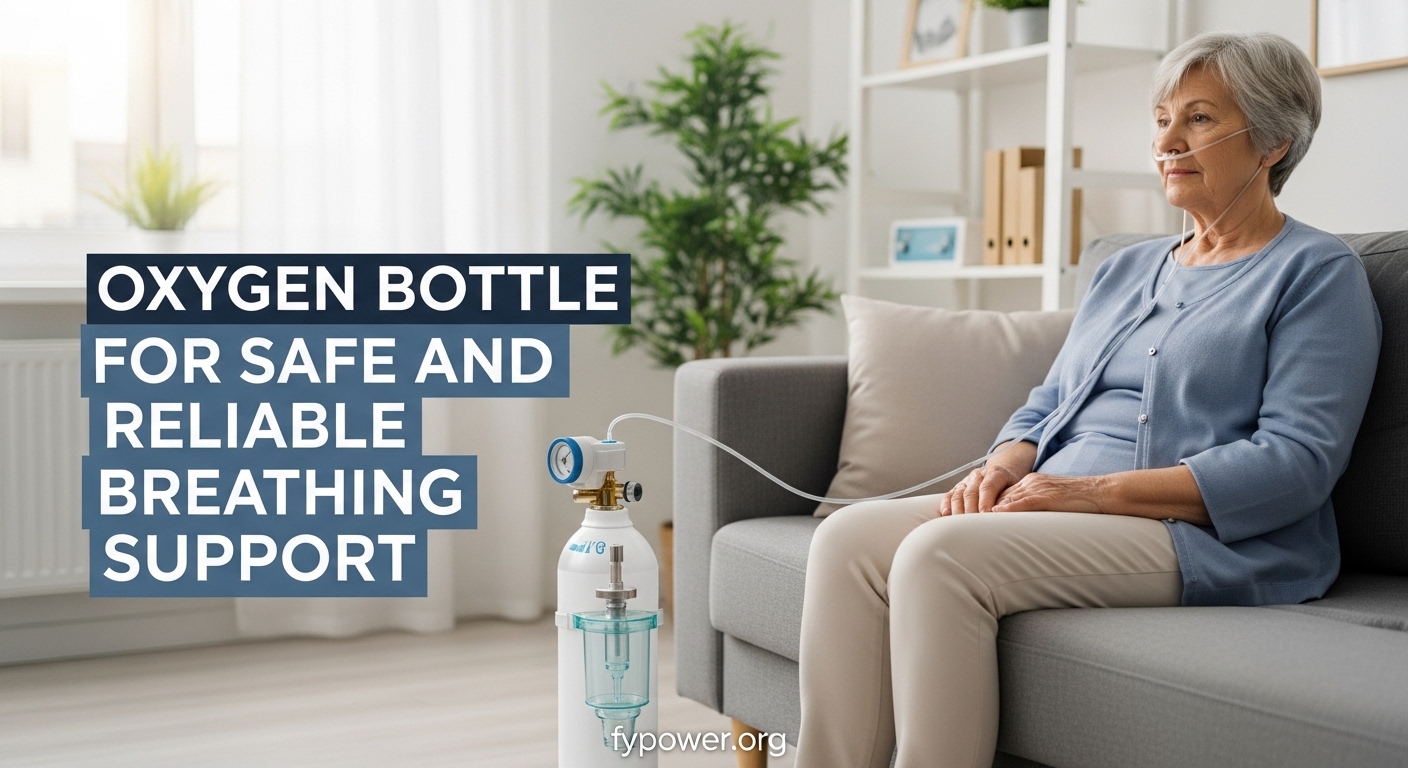
Struggling to breathe is one of the most frightening experiences anyone can face. When your lungs cannot provide enough oxygen on their own, medical oxygen becomes a lifeline that restores comfort and clarity.
An oxygen bottle (also called an oxygen cylinder or tank) is a pressurized storage container that holds medical-grade oxygen gas or liquid oxygen. These cylinders deliver supplemental oxygen to patients who cannot get enough oxygen naturally due to respiratory conditions like COPD, asthma, pneumonia, or lung disease. The oxygen is stored under high pressure and delivered through a regulator that controls the flow rate prescribed by your doctor.
Oxygen therapy has transformed from a hospital-only treatment to a practical home solution. Modern oxygen bottles come in various sizes, from portable units that fit in a shoulder bag to stationary tanks that provide weeks of continuous supply. Understanding your options helps you work with healthcare providers to choose the right system for your lifestyle and medical needs.
What Is an Oxygen Bottle?
An oxygen bottle is a medical device designed to store and deliver oxygen safely. These containers hold either compressed oxygen gas or liquid oxygen, both purified to medical grade standards exceeding 99% purity. The gas form is compressed to pressures between 2,000 and 2,200 PSI, while liquid oxygen is kept at temperatures below -297 degrees Fahrenheit.
People use oxygen bottles when their blood oxygen levels fall below the normal range of 75-100 mmHg. This can happen due to chronic conditions like COPD, acute illnesses like pneumonia, or temporary situations like high-altitude travel. A doctor determines your oxygen needs through arterial blood gas tests or pulse oximeter readings measuring your oxygen saturation percentage.
Quick Summary: Oxygen bottles store medical-grade oxygen for people whose lungs cannot extract enough from air. They come as compressed gas cylinders or liquid containers, with sizes ranging from portable units to large stationary tanks.
Terminology can be confusing because these devices go by multiple names. Oxygen bottles, oxygen cylinders, oxygen tanks, and oxygen containers all refer to the same equipment. The term “bottle” is more common in everyday conversation, while medical professionals typically say “cylinder” or “tank.”
Types of Oxygen Delivery Systems
Not all oxygen systems work the same way. Understanding the differences helps you choose the right option based on your lifestyle, oxygen needs, and budget.
Compressed Gas Oxygen Cylinders are the most traditional form. These metal tanks store oxygen gas under high pressure. They are reliable, require no electricity, and work anywhere. However, they are heavy and contain a limited supply that requires frequent refilling or replacement.
Liquid Oxygen Systems keep oxygen in liquid form at extremely cold temperatures. Liquid takes up less space than gas, so these containers hold much more oxygen in a smaller package. As oxygen is released, it warms and converts to gas for breathing. The main advantage is longer duration between refills, but liquid oxygen evaporates over time even when not in use.
Oxygen Concentrators are electronic devices that extract oxygen from room air. They filter out nitrogen and other gases, delivering concentrated oxygen (typically 85-95% pure). Concentrators never need refilling because they run continuously as long as they have power. Stationary home units are heavier but provide unlimited oxygen, while portable versions offer freedom with battery operation.
| Type | How It Works | Pros | Cons | Best For |
|---|---|---|---|---|
| Compressed Gas | Stores oxygen under pressure | Reliable, no power needed | Heavy, limited supply | Backup and travel |
| Liquid Oxygen | Super-cold liquid storage | High capacity, smaller size | Evaporates over time | Active users needing mobility |
| Oxygen Concentrator | Filters oxygen from air | Unlimited supply, no refills | Requires electricity | Home-based therapy |
| Portable Concentrator | Battery-powered filtering | Lightweight, FAA-approved | Expensive, limited battery | Frequent travelers |
Oxygen Cylinder Sizes Explained
Oxygen cylinders come in standardized sizes designated by letters. Each size has different capacities and typical durations at various flow rates.
M6 and M9 Cylinders are the smallest portable options, weighing under 5 pounds when full. An M6 cylinder holds about 164 liters of oxygen and lasts roughly 3 hours at 2 liters per minute (LPM). The slightly larger M9 holds 255 liters and lasts about 4.5 hours at the same flow rate. These are ideal for short trips or quick errands.
E Cylinder is the most common portable size. It contains 680 liters of oxygen and weighs about 8 pounds when empty (13 pounds full). At 2 LPM, an E cylinder lasts approximately 5.5 hours. Many active oxygen users keep multiple E cylinders to manage daily activities without interruption.
M and ME Cylinders are medium-sized tanks offering extended duration. The M cylinder holds 3,455 liters and can last over 28 hours at 2 LPM. The ME is slightly smaller but still provides substantial runtime. These work well for people who need oxygen throughout the day but want fewer refills.
H Cylinder is the large stationary tank often used as a home reservoir. With 6,900 liters of capacity, an H cylinder can provide nearly 58 hours of oxygen at 2 LPM. These are too heavy to move (about 130 pounds when full) and stay in one location, often serving as the primary supply with smaller portable tanks for outings.
| Size | Capacity (Liters) | Weight (Full) | Duration at 1 LPM | Duration at 2 LPM |
|---|---|---|---|---|
| M6 | 164 liters | ~4 lbs | ~6 hours | ~3 hours |
| M9 | 255 liters | ~5 lbs | ~9 hours | ~4.5 hours |
| E | 680 liters | ~13 lbs | ~11 hours | ~5.5 hours |
| M | 3,455 liters | ~30 lbs | ~57 hours | ~28 hours |
| H | 6,900 liters | ~130 lbs | ~115 hours | ~57 hours |
Flow Rate (LPM): Liters per minute measures how much oxygen you receive. Your doctor prescribes a specific flow rate based on your blood oxygen levels. Higher flow rates deplete cylinders faster, while lower rates extend duration.
Who Needs Oxygen Therapy?
Supplemental oxygen is prescribed when your body cannot maintain adequate oxygen levels on its own. This happens for various reasons, and understanding your condition helps you manage your treatment effectively.
Conditions Requiring Oxygen Therapy
COPD (Chronic Obstructive Pulmonary Disease) is the most common reason for long-term oxygen therapy. This progressive lung disease includes emphysema and chronic bronchitis. Damaged lung tissue cannot exchange oxygen efficiently, causing blood oxygen levels to drop. Many COPD patients use oxygen 24 hours a day, while others need it only during sleep or physical activity.
Pneumonia and Severe Infections can temporarily reduce lung function. When fluid fills the air sacs, oxygen transfer becomes difficult. Short-term oxygen therapy helps patients recover while antibiotics and other treatments fight the infection. Most people stop using oxygen once the infection clears.
Asthma typically does not require continuous oxygen, but severe attacks can dangerously lower oxygen levels. Emergency oxygen bottles provide critical support during acute exacerbations until bronchodilators take effect. Some asthma patients keep portable oxygen as a safety measure.
Sleep Apnea causes breathing interruptions during sleep. While CPAP machines are the primary treatment, some patients also need supplemental oxygen. Overnight oxygen use ensures blood oxygen stays in the safe range throughout the night, preventing strain on the heart and other organs.
Cystic Fibrosis is a genetic condition that produces thick mucus in the lungs. As the disease progresses, oxygen absorption decreases. Many adults with cystic fibrosis eventually require oxygen therapy, often starting with nighttime use and progressing to continuous use as lung function declines.
Pulmonary Fibrosis scars lung tissue, making it stiff and less efficient at oxygen transfer. This progressive condition often requires long-term oxygen therapy. Unlike COPD, pulmonary fibrosis typically worsens steadily, increasing oxygen needs over time.
Heart Failure can cause fluid to accumulate in the lungs, reducing oxygen absorption. Some heart failure patients benefit from oxygen therapy, especially during sleep or physical activity when the heart works harder. The oxygen reduces strain on the cardiovascular system.
Symptoms of Low Oxygen
Recognizing low oxygen levels helps you seek appropriate treatment. Common signs include shortness of breath even at rest, rapid breathing, confusion or difficulty concentrating, bluish tint to lips or fingernails, morning headaches, and fatigue that interferes with daily activities.
A pulse oximeter provides a quick oxygen saturation reading. Normal levels are 95-100%. Readings below 90% indicate hypoxemia (low blood oxygen) and warrant medical attention. Many people on oxygen therapy keep a pulse oximeter at home to monitor their levels throughout the day.
Oxygen Safety Guidelines
Oxygen itself is not flammable, but it accelerates combustion. Materials that normally burn slowly can ignite explosively in high-oxygen environments. Following safety protocols prevents accidents and protects everyone in your household.
WARNING: Oxygen safety is non-negotiable. Ignoring these rules puts your life and property at serious risk. Never compromise on oxygen safety protocols.
Fire Safety Rules
- No smoking, ever. This is the absolute most critical rule. Smoking while using oxygen can cause immediate, severe burns. Do not allow anyone to smoke in your home or car while oxygen is present. Post “No Smoking” signs at entrances.
- Stay away from open flames. Keep at least 10 feet from candles, fireplaces, gas stoves, and other ignition sources. Do not use oxygen near a lit barbecue grill or outdoor fire pit.
- Avoid spark-producing activities. Do not use electric razors, hair dryers, or spark-producing tools near your oxygen equipment. Static electricity from blankets or clothing can also create sparks.
- Use approved moisturizers only. Petroleum-based products like Vaseline are highly flammable with oxygen. Use only water-soluble moisturizers and lip balms.
- Install smoke detectors. Working smoke and carbon monoxide detectors provide early warning. Test them monthly and change batteries annually.
- Have a fire extinguisher nearby. Keep an ABC-rated fire extinguisher accessible. Know how to use it and ensure family members are trained as well.
- Create an emergency plan. Know how to evacuate quickly if a fire starts. Practice your escape route and keep oxygen equipment where you can grab it on the way out.
Storage and Handling
Store oxygen cylinders upright in a well-ventilated area, secured to prevent tipping. Never lay cylinders on their side. Keep them away from heat sources, direct sunlight, and temperatures above 125 degrees Fahrenheit. Do not store cylinders in confined spaces like closets or small cabinets.
Secure cylinders properly to prevent falls. A falling cylinder can damage the valve, causing high-pressure oxygen to escape with enough force to penetrate walls. Use cylinder stands, chains, or specialized carts designed for oxygen storage.
Check regularly for leaks using a soap solution on connections. Bubbles indicate a leak that needs immediate attention. Never use grease or oil on oxygen equipment fittings.
Tripping Hazards
Oxygen tubing creates tripping hazards, especially at night. Use tubing clips to secure the line along your baseboards or route it away from walking paths. Clear floor clutter and use nightlights to improve visibility. Some users find retractable reel systems helpful for managing excess tubing length.
Getting Oxygen Therapy
Obtaining medical oxygen requires a prescription and working with qualified suppliers. The process involves several steps from diagnosis to having equipment in your home.
Prescription Requirements
You cannot purchase medical-grade oxygen without a valid prescription. A doctor must evaluate your condition through pulmonary function tests, arterial blood gas measurements, or pulse oximetry. The prescription specifies your oxygen flow rate in liters per minute and when you need to use it (continuous, nighttime only, or as needed).
The prescription also indicates which delivery system is appropriate for your situation. Some doctors start with a concentrator and portable tanks, while others prefer liquid oxygen systems for active patients. Always follow your prescribed flow rate exactly.
Buying vs. Renting Equipment
Most oxygen users rent equipment rather than buying outright. Monthly rental fees typically range from $150 to $400 for concentrators, with additional costs for portable cylinders and refills. Rental agreements usually include maintenance, repairs, and 24-hour emergency support.
Purchasing makes sense for long-term users who want to avoid ongoing rental fees. Home concentrators cost $800 to $2,500, while portable concentrators range from $1,500 to $4,000. Remember that purchased equipment still requires periodic servicing and replacement parts.
Insurance coverage significantly affects this decision. Medicare, Medicaid, and most private insurers cover oxygen therapy as durable medical equipment (DME). However, they typically rent rather than purchase equipment on your behalf.
Insurance Coverage
Medicare Part B covers oxygen equipment and supplies if you have specific medical conditions and meet coverage criteria. You pay 20% of the Medicare-approved amount after meeting your Part B deductible. Medicare rental payments continue for 36 months, after which you own the equipment.
Private insurance coverage varies widely. Some plans require pre-authorization, while others have preferred supplier networks. Contact your insurance company before ordering equipment to understand your benefits, copays, and any documentation requirements.
Keep detailed records of all medical necessity documentation. Insurers may periodically request proof of continued oxygen need, especially for long-term therapy.
Finding Oxygen Suppliers
Medical supply companies specializing in durable medical equipment are the primary source for home oxygen. Look for suppliers accredited by The Joint Commission or with similar certifications. Your doctor or hospital discharge planner can recommend reliable local companies.
When choosing a supplier, consider their response time for emergencies, delivery area, hours of operation, and technical support quality. A good supplier provides thorough training on equipment use, offers 24/7 emergency support, and maintains reasonable delivery schedules for refills.
Using Oxygen Equipment at Home
Setting up and using oxygen equipment becomes routine quickly with proper training. Most suppliers provide in-home setup and instruction, but understanding the basics beforehand reduces anxiety.
Oxygen Delivery Methods
Nasal Cannula is the most common delivery method. This lightweight plastic tube splits into two prongs that fit into your nostrils, secured behind your ears with adjustable loops. Most people tolerate nasal cannulas well for extended periods. They are comfortable for eating and talking.
Oxygen Mask delivers higher oxygen concentrations for people who need more than 4-6 LPM. Masks cover your nose and mouth, secured with an elastic strap. They can feel confining and make speaking difficult, but they provide more precise oxygen delivery.
Oxygen Conserving Device is attached between the cylinder and cannula. It releases oxygen only when you inhale, extending cylinder life by 2-4 times. These devices are especially useful with portable tanks, allowing longer outings between refills.
Setting Up Your Oxygen System
- Position your equipment. Place stationary concentrators or tanks in a well-ventilated area away from heat sources. Ensure the equipment sits level and has adequate clearance for airflow.
- Attach the regulator. For compressed gas cylinders, hand-tighten the regulator to the valve. Never use tools that could damage the threads. Open the valve slowly with the wrench provided.
- Set the flow rate. Turn the flow meter dial to your prescribed LPM setting. Watch the ball float in the tube and adjust until it rests at the correct number.
- Connect your cannula or mask. Attach the tubing to the outlet port. Run the tubing along your baseboards or secure it with clips to prevent tripping.
- Test the flow. Place your hand in front of the cannula prongs to feel the oxygen. Check that the flow meter reading matches your prescription.
- Wear your device. Insert the nasal prongs facing upward (curved side down) and adjust the ear loops for comfort. Position the tubing behind your head to keep it out of your face.
Equipment Maintenance
Clean or replace nasal cannulas weekly, or more often if you notice buildup. Wash cannulas in warm soapy water, rinse thoroughly, and air dry completely. Masks should be cleaned daily. Never share oxygen delivery equipment between people.
Check cylinder pressure daily using the gauge. Order refills before tanks run completely empty. Keep at least one backup cylinder available for emergencies. For concentrators, clean or replace filters according to the manufacturer’s schedule.
Test your backup power supply monthly if you use a concentrator. Power outages can be dangerous for oxygen-dependent patients, so have a plan and emergency backup tanks ready.
Travel with Oxygen
Traveling while on oxygen requires extra planning but is entirely possible with preparation. Many oxygen users lead active, mobile lives with the right equipment and knowledge.
Air Travel with Oxygen
The FAA allows specific portable oxygen concentrators on aircraft. Approved models carry FAA certification clearly marked on the device. You must notify the airline at least 48 hours before flying and provide a doctor’s statement specifying your oxygen needs.
Compressed and liquid oxygen cylinders are generally prohibited on commercial flights. If you use these systems, you must arrange for oxygen delivery at your destination. Most airlines can help coordinate this service for a fee.
Bring extra batteries for portable concentrators. FAA rules require sufficient battery power for 150% of your flight duration, including connections. Keep prescriptions and equipment documentation accessible for security screening.
Car Travel
Secure oxygen cylinders upright in the vehicle, never laying them down. Use a seat belt or proper cylinder restraints. Open windows slightly for ventilation, and never leave oxygen equipment in a hot car. Heat can cause dangerous pressure increases or damage to concentrators.
Plan your route to identify refill stations along the way if you use cylinders. Map out medical supply companies that can provide refills in case of emergencies.
Cruises and Trains
Most cruise lines and Amtrak accommodate oxygen passengers with advance notice. Policies vary by company, so contact them directly before booking. Some cruise lines restrict the type of oxygen equipment allowed, while others require using their medical services.
Frequently Asked Questions
Do I need a prescription for medical oxygen?
Yes, medical-grade oxygen requires a valid prescription from a licensed healthcare provider. Your doctor must evaluate your condition and determine your oxygen needs through testing. Over-the-counter oxygen canisters sold for recreational use are not equivalent to prescribed medical oxygen therapy.
How long does an oxygen cylinder last?
Duration depends on cylinder size and flow rate. A small M6 portable tank lasts about 3 hours at 2 liters per minute, while a large E cylinder provides approximately 5.5 hours at the same flow rate. Higher flow rates deplete cylinders faster, and conserving devices can extend duration by 2-4 times.
What is the difference between an oxygen concentrator and an oxygen cylinder?
Oxygen concentrators are electric devices that filter oxygen from room air, providing an unlimited supply as long as they have power. Oxygen cylinders store a finite amount of compressed or liquid oxygen that must be refilled or replaced. Concentrators are ideal for home use, while cylinders offer portability and backup during power outages.
Is it safe to cook while using oxygen?
Cooking with oxygen requires precautions. Electric stoves are safest for oxygen users. If you have a gas stove, turn off your oxygen while cooking and stay at least 10 feet away from open flames. Never wear oxygen while reaching over burners or candles. Consider using a microwave or preparing meals that require minimal cooking.
How much does oxygen therapy cost per month?
Monthly costs vary based on equipment type and insurance coverage. Without insurance, expect to pay $150-400 monthly for concentrator rental plus $20-75 per cylinder refill. Medicare and most private insurers cover oxygen therapy as durable medical equipment, though you may have copays and deductibles. Contact your insurer for specific coverage details.
Can you travel with portable oxygen?
Yes, travel with oxygen is possible with planning. FAA-approved portable oxygen concentrators can be used on airplanes with advance notice. For car travel, secure cylinders upright and never leave equipment in hot vehicles. Cruise lines and trains accommodate oxygen passengers with prior notification. Always carry a copy of your prescription and allow extra time for security screening.
How do I check my oxygen levels at home?
A pulse oximeter is a small device that clips to your fingertip and measures your blood oxygen saturation level. Normal readings are 95-100%. Readings below 90% indicate low oxygen requiring medical attention. Pulse oximeters are available at pharmacies and medical supply stores. Keep a log of your readings to share with your doctor.
What are the side effects of oxygen therapy?
Most side effects are minor and manageable. Dry or bloody nose is common and can be relieved with humidifiers or saline spray. Skin irritation from cannulas occurs occasionally and responds to repositioning or different equipment. Oxygen toxicity is rare at prescribed therapeutic doses. Contact your doctor if you experience headaches, confusion, or breathing changes while using oxygen.
Conclusion
Oxygen therapy has evolved dramatically in 2026, offering patients more freedom and options than ever before. From lightweight portable concentrators to efficient liquid systems, modern oxygen equipment enables people with respiratory conditions to maintain active, fulfilling lives.
Understanding your oxygen options empowers you to make informed decisions with your healthcare team. The right system depends on your medical needs, lifestyle, and budget. Whether you choose compressed gas cylinders, liquid oxygen, or concentrator technology, following safety protocols ensures effective treatment without unnecessary risk.
Remember that oxygen therapy is a medical treatment requiring professional oversight. Work closely with your doctor and oxygen supplier to optimize your setup. With proper equipment, knowledge, and support, supplemental oxygen becomes not a limitation but a tool for living well on your own terms.
Leave a Reply