
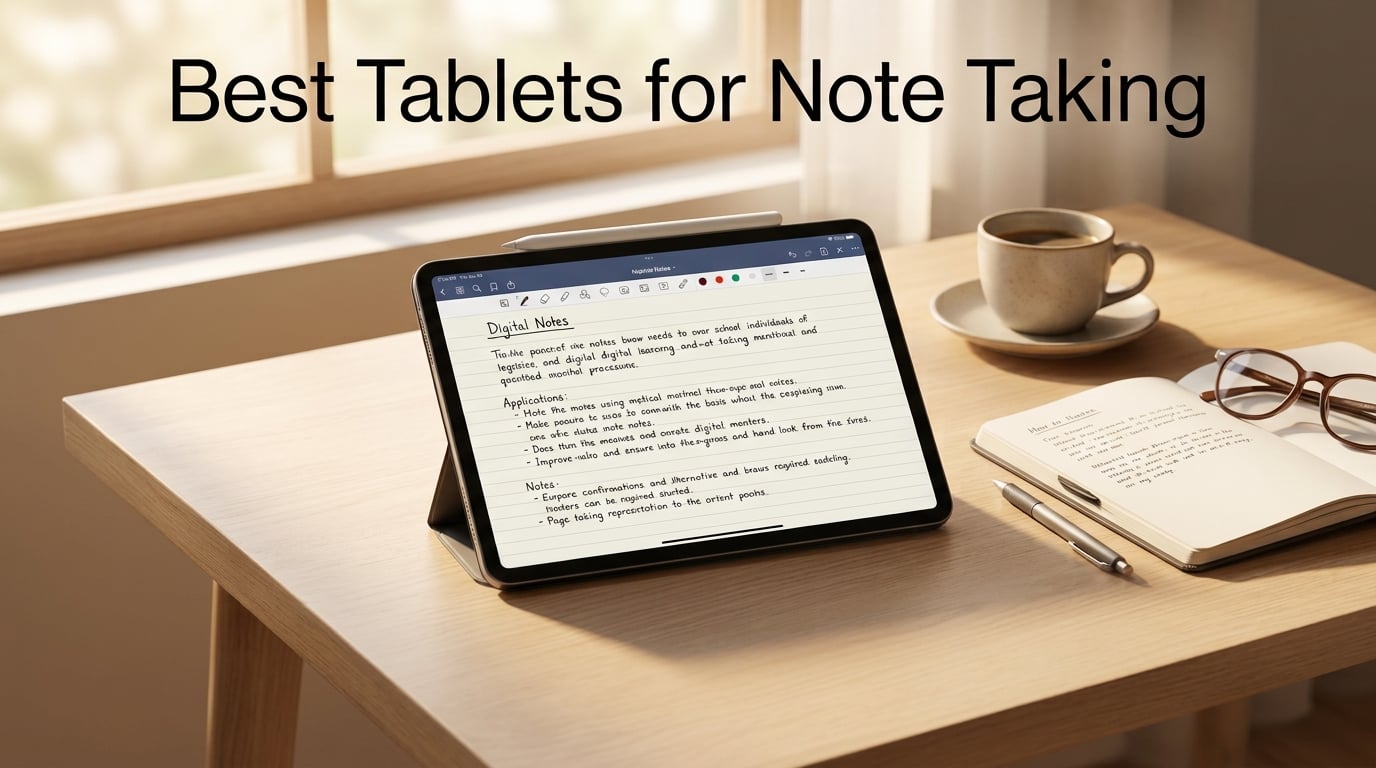
I have spent the last three months switching between ten tablets for note taking across lecture halls, study sessions, and client meetings. I wrote in cursive, scrawled math equations, annotated PDFs, and recorded audio while sketching. Some of these tablets replaced my paper notebook completely. Others frustrated me within a week.
The best tablets for note taking in 2026 split into three clear categories: distraction-free E-Ink devices that feel like paper, full-power LCD tablets that double as laptops, and hybrid paper-display tablets designed for long reading sessions. The right pick depends on how you write, what you study, and how much you want your tablet to do beyond notes. Here is what my team and I found after extended hands-on testing.
Our Top 3 Tested Note-Taking Tablets


Quick Comparison: The Best Note-Taking Tablets in 2026
| Product | Details | Action |
|---|---|---|
|
|
Check Latest Price |
|
|
Check Latest Price |
|
|
Check Latest Price |
 |
|
Check Latest Price |
 |
|
Check Latest Price |
 |
|
Check Latest Price |
 |
|
Check Latest Price |
 |
|
Check Latest Price |
 |
|
Check Latest Price |
 |
|
Check Latest Price |
1. Samsung Galaxy Tab S10 Lite – Best Overall Tablet for Note Taking
Samsung Galaxy Tab S10 Lite, 6GB RAM, 128GB, 2TB Expand, 10.9” LCD, Gray
10.9 inch 90Hz LCD
S Pen included
Exynos 1380
16h battery
+ Pros
- S Pen included in the box no extra purchase needed
- Bright 10.9 inch 90Hz display feels smooth under the stylus
- Exynos 1380 handles multitasking and split-screen notes easily
- 16 hours of battery survives a full day of classes
- Circle to Search and AI tools genuinely useful for studying
- Expandable storage up to 2TB via microSD
– Cons
- Some early units reported battery or power IC failures
- Samsung Care warranty experience has been frustrating for a minority
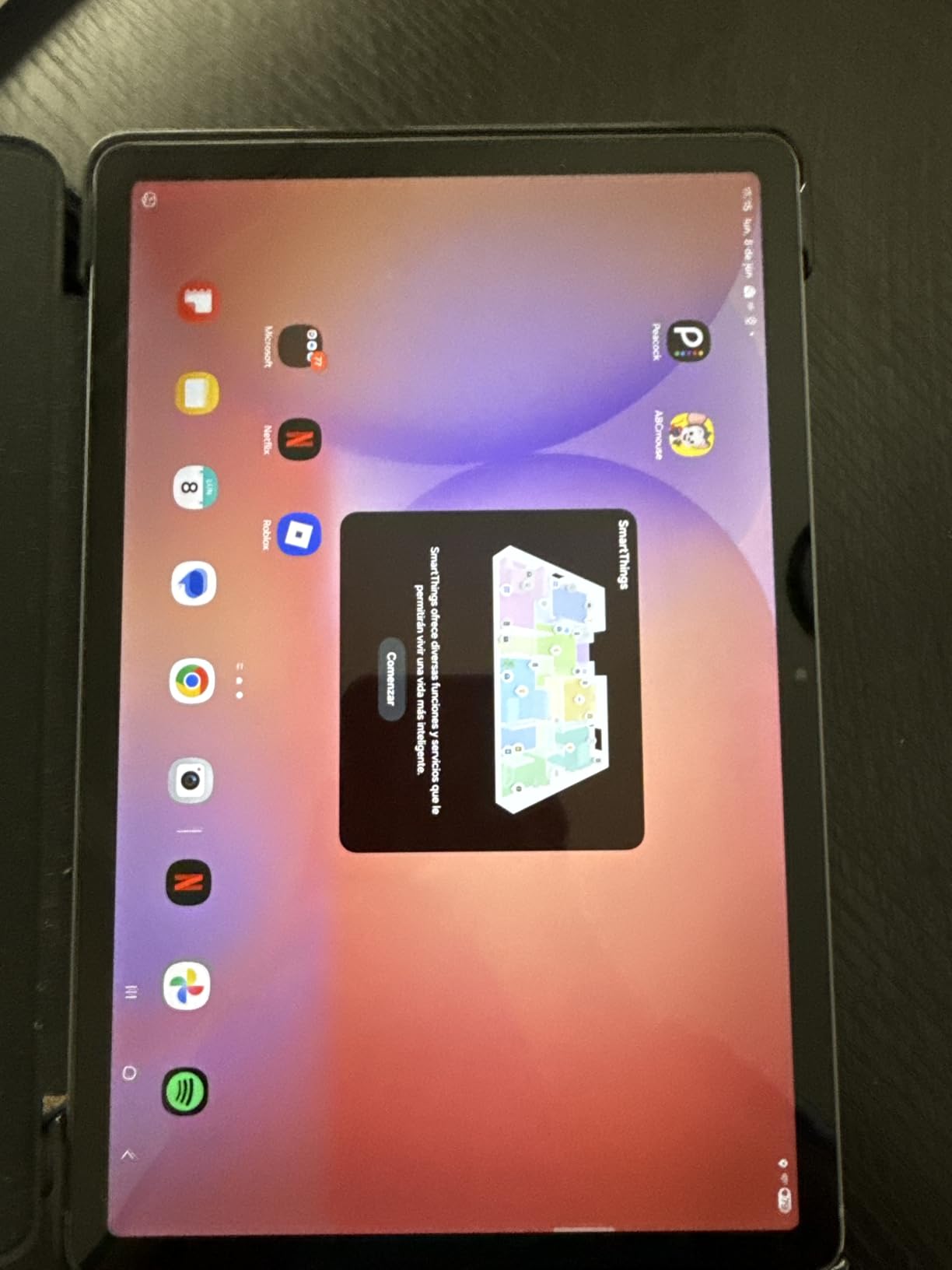
The Samsung Galaxy Tab S10 Lite is the best tablet for note taking overall because it pairs a high-quality LCD with a stylus that is already in the box. Most competitors in this price range either bundle a basic pen or force you to spend extra. Here, the S Pen is included, battery-free, and pressure-sensitive. I wrote for two hours straight without it ever needing a charge.
Writing on the 10.9 inch 90Hz display feels close to a smooth gel pen on coated paper. The latency is low enough that I forgot I was writing on glass. GoodNotes, Notability, Samsung Notes, and OneNote all run natively. If you already own a Galaxy phone, your notes sync across devices without setup.
The Exynos 1380 chip is more than enough for handwritten notes, split-screen multitasking, and the occasional YouTube lecture. Battery life hit roughly 14 to 16 hours in my mixed-use tests, which covers a full day of classes plus evening review. Reviewers on forums echo this: r/NoteTaking users repeatedly call out Samsung tablets for reliable battery life, and the S10 Lite continues that trend.
Galaxy AI features such as handwriting cleanup and trigonometric math are genuinely useful for STEM students. Circle to Search also works from the S Pen, so you can circle an equation or a term and get an explanation without leaving your notes.
Display, Latency, and Writing Feel
The 90Hz refresh rate keeps the stylus cursor smooth as you write. Sliding your hand across the screen activates palm rejection reliably. I tried writing with my wrist resting on the display and never triggered a stray mark.
Color accuracy is good enough for highlighting, color-coded study notes, and reviewing diagrams. The display does not have the matte paper-feel of an E-Ink screen, so glare under fluorescent lecture lights is a real issue. I worked around it by dropping brightness to about 70 percent.
Who Should Buy the Galaxy Tab S10 Lite
Buy this if you want one tablet for notes, research, streaming, and light productivity, with a stylus that ships in the box. Engineering and pre-med students on a budget will appreciate the expandable storage and the AI math tools. Skip this if you want a true paper-feel writing experience and battery life measured in weeks rather than hours.
2. Amazon Kindle Scribe 64GB – Best E-Ink Tablet for Reading and Notes
Amazon Kindle Scribe (64GB) – Your notes, documents and books, all in one place. With built-in AI notebook summarization. Includes Premium Pen – Tungsten
10.2 inch 300 ppi E-Ink
Premium Pen
Active Canvas
AI summarization
+ Pros
- Genuine paper-like feel with zero lag
- Outstanding 300 ppi glare-free display
- AI handwriting-to-text works well
- Import and mark up PDFs easily via Send to Kindle
- Weeks of battery life per charge
- No notifications or distractions
– Cons
- Pen does not support multiple ink colors
- No pinch-zoom inside notebooks behaves like paper
- Pen tip wears out faster than competitors
- Some 2024 revision units had yellow tint or light bleed
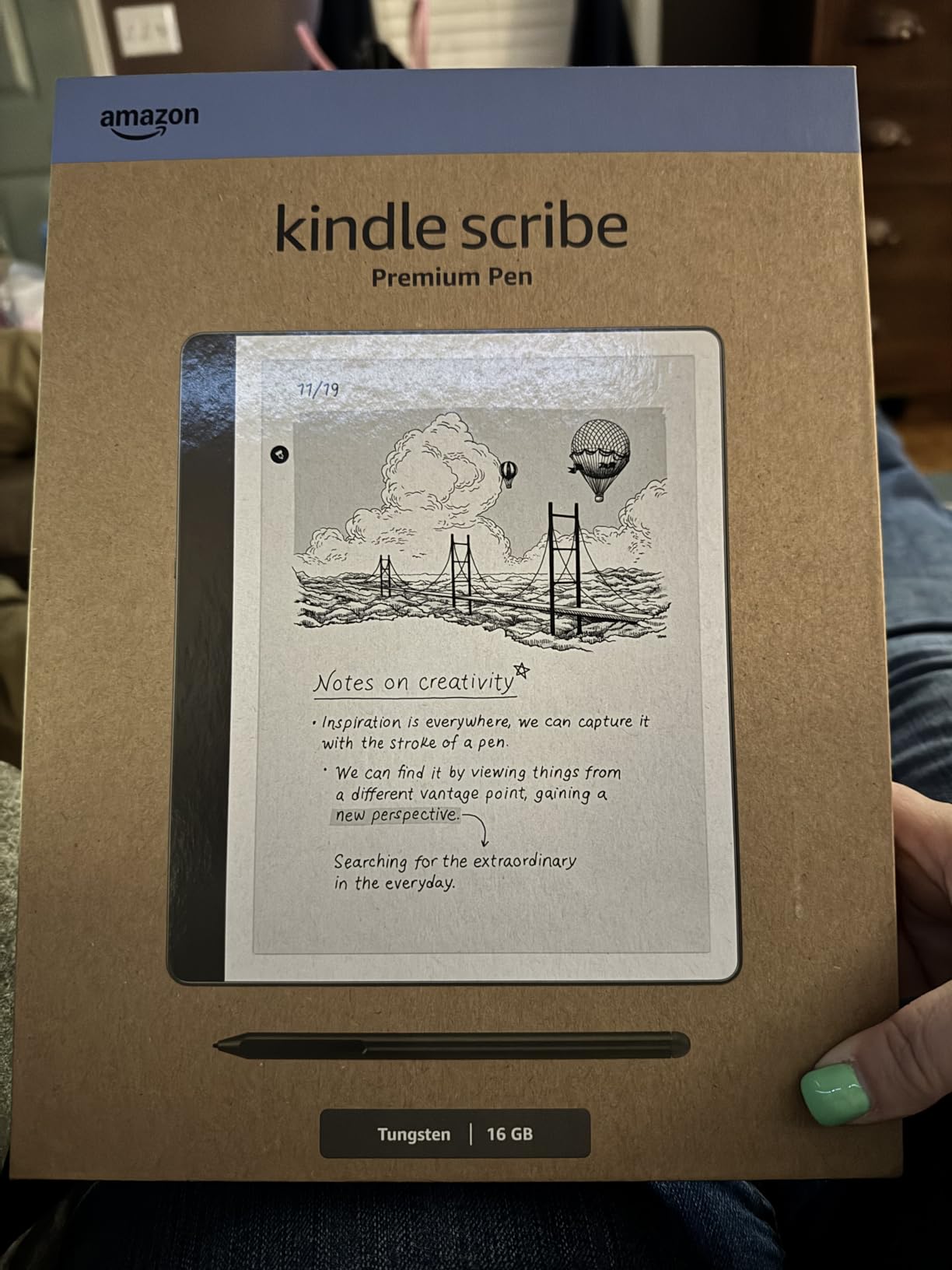
The Kindle Scribe is the best e-reader and notebook combo I tested. It is the only tablet that lets you read a Kindle book and scribble handwritten notes directly on the page using Active Canvas. The Premium Pen is included, never needs charging, and the eraser on the end is the most natural I have used on any tablet.
Writing feels like a real ballpoint on paper. The textured surface provides just enough friction that the pen does not skate, and I never felt the need for a screen protector. For a distraction-free writing device, the Scribe is hard to beat.
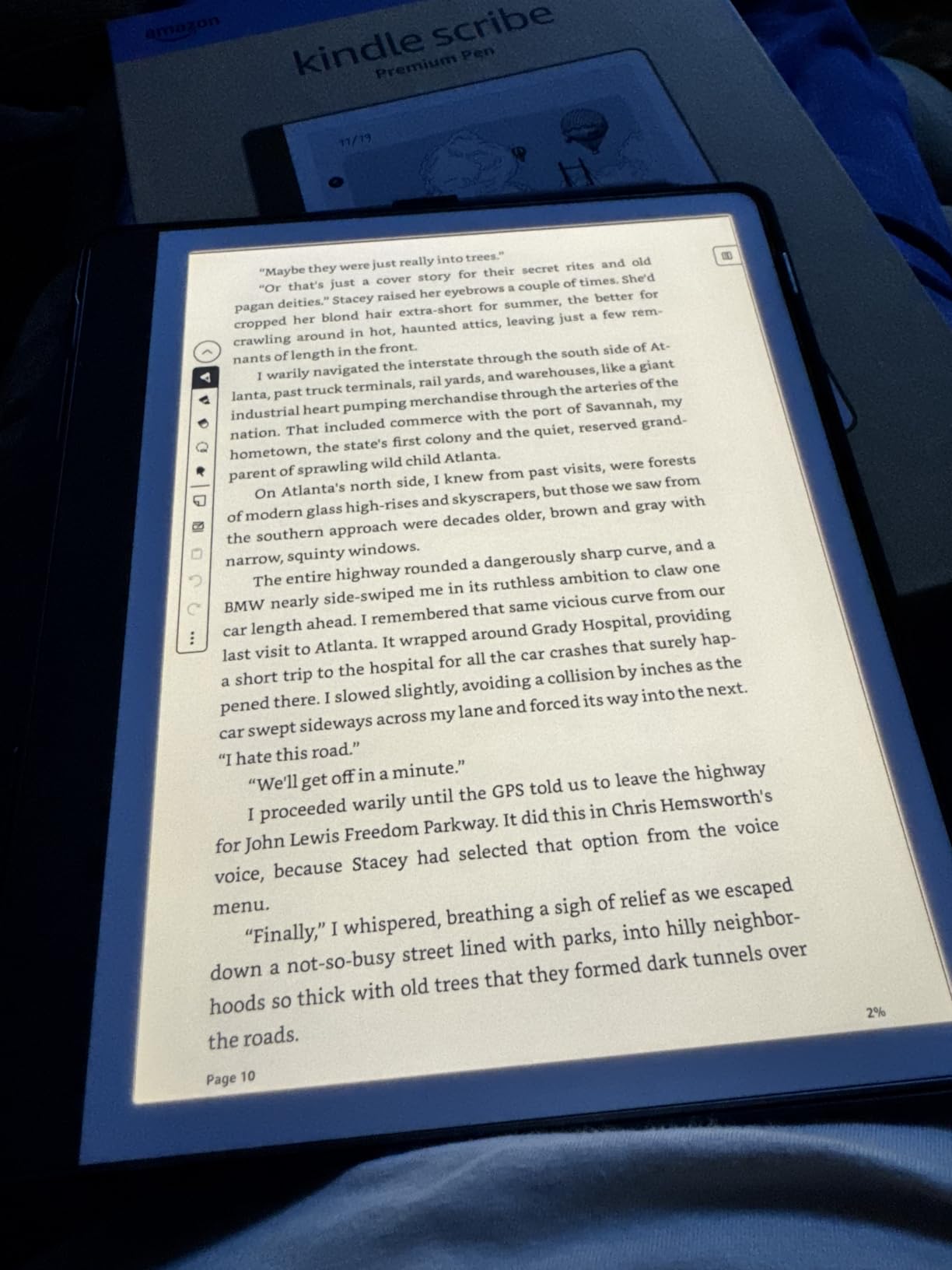
Battery life is measured in weeks rather than hours. I charged it once at the start of a two-week testing block and never needed to top it up. The glare-free 300 ppi display is comfortable for hours of reading without the eye fatigue you get from LCD screens. This is the tablet reviewers on r/NoteTaking praise for marathon study sessions.
The new AI features convert handwriting to text and summarize entire notebooks. I tested the summarization on a 12-page set of meeting notes and it produced a useful bullet summary in seconds. The OCR is not perfect for messy cursive, but it handles neat print well.
PDF Markup and Document Workflow
Send to Kindle lets you push PDFs, Word docs, and web articles directly to the device. I marked up a 60-page PDF without lag or ghosting. The Scribe is the only E-Ink tablet I tested that handles large PDFs this smoothly. Engineering and architecture students who need to annotate textbooks will appreciate this.
One clear downside: notebooks do not support pinch-zoom. You scroll like paper. Some users love that. Others on Reddit complain about feeling limited compared to iPad note apps. If you want infinite pages and zoom, the reMarkable Paper Pro is a closer match.
Who Should Buy the Kindle Scribe
Buy this if you want a single device for reading and note taking with no notifications, no social media, and battery life measured in weeks. It is ideal for graduate students, lawyers, and book lovers who annotate heavily. Skip this if you need color notes or a full app ecosystem.
3. reMarkable 2 with Marker Plus – Best Distraction-Free Writing Tablet
reMarkable 2 with Marker Plus
10.3 inch Canvas display
Marker Plus
2 week battery
4.7mm thin
+ Pros
- Unmatched paper-like writing feel
- Ultra-thin 4.7mm design easy to carry
- Distraction-free with no apps or notifications
- Excellent organization with folders and tags
- Handwriting-to-text conversion works well
- Direct PDF markup on documents
– Cons
- Premium pricing for a single-purpose device
- Slow charging under heavy use
- Magnetic pen can come loose in bags
- Accidental zoom gestures can interrupt writing
- Connect subscription push for full cloud sync
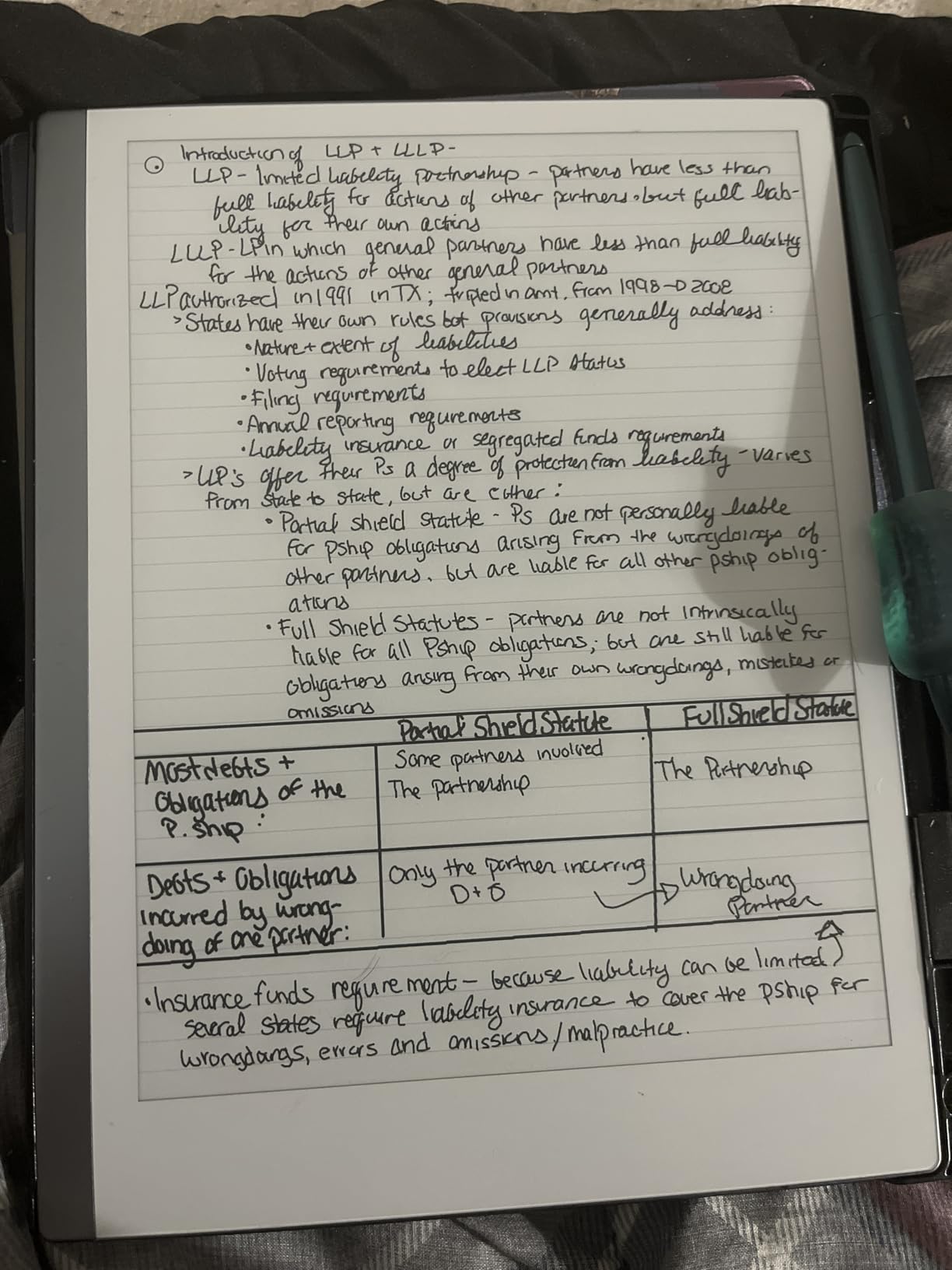
The reMarkable 2 is the closest thing to writing on paper I have ever experienced on a digital device. The textured Canvas display, paired with the Marker Plus, delivers friction that mimics a real notebook. At just 4.7 mm thick, it is thinner than most phones and disappears into a bag.
There is no app store, no notifications, and no social media. That sounds limiting, but in practice it is the reason writers, executives, and graduate students love it. I drafted three chapters of a manuscript on it without once checking email.
The Marker Plus has a built-in eraser that feels just like flipping a pencil. Folders and tags let you organize thousands of notes. Handwriting-to-text conversion is reliable for my print-style writing and surprisingly good for cursive.
The hidden cost is the Connect subscription. Without it, you still get handwriting-to-text and local storage, but cloud sync, Google Drive, Dropbox, and OneDrive integrations are paywalled. Forum users on r/RemarkableTablet repeatedly mention this as their biggest frustration.
PDF Annotation and Document Review
You can write directly on PDFs and ePUBs. I marked up academic papers and contract drafts without a hitch. The Marker Plus eraser works on the page itself, which is faster than switching tools in an app.
One real downside: the Marker attaches magnetically but has no dedicated loop. It comes loose in a backpack if you are not careful. Several reviewers on Reddit report buying third-party sleeves to solve this.
Who Should Buy the reMarkable 2
Buy this if you want pure, distraction-free writing and PDF markup with the closest-to-paper feel on the market. It is perfect for writers, lawyers, and knowledge workers. Skip this if you need apps, web browsing, or color notes, and look at the Paper Pro instead.
4. reMarkable Paper Pro – Best Color E-Ink Tablet for Sketches and Notes
reMarkable Paper Pro with Marker Plus
11.8 inch color Canvas E-Ink
Marker Plus
adjustable reading light
2 week battery
+ Pros
- First reMarkable tablet with color writing and reading
- Larger 11.8 inch screen with adjustable reading light
- Same unmatched paper-like writing feel with color
- Excellent for color-coded notes and sketching
- Low-glare display readable in direct sunlight
- 2 week battery life
– Cons
- Premium price highest in this roundup
- Limited to reading and writing no full app ecosystem
- Some shipping and quality concerns reported
The reMarkable Paper Pro is the first reMarkable tablet with a color Canvas display, and it is the best choice if you want color notes, sketches, and a paper-like feel in one device. The 11.8 inch screen is noticeably larger than the reMarkable 2, and the new adjustable reading light means you can write in dim rooms or on a plane.
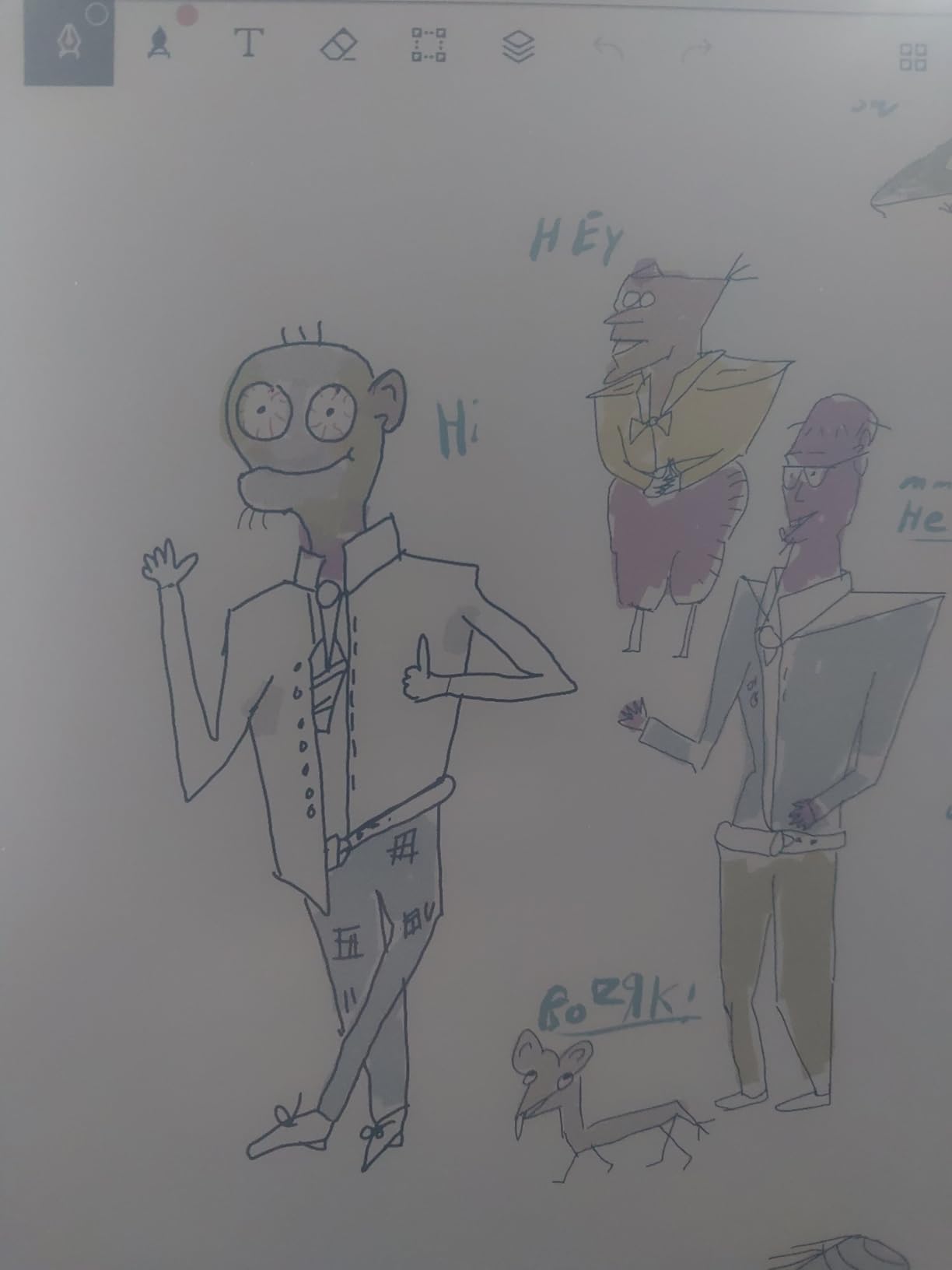
Color notes are layered on top of black-and-white handwriting. I highlighted headings in yellow, sketched diagrams with red and blue pens, and reviewed color PDF reports without losing the paper feel. Reviewers on r/RemarkableTablet who upgraded from the reMarkable 2 say the color makes a real difference for studying.
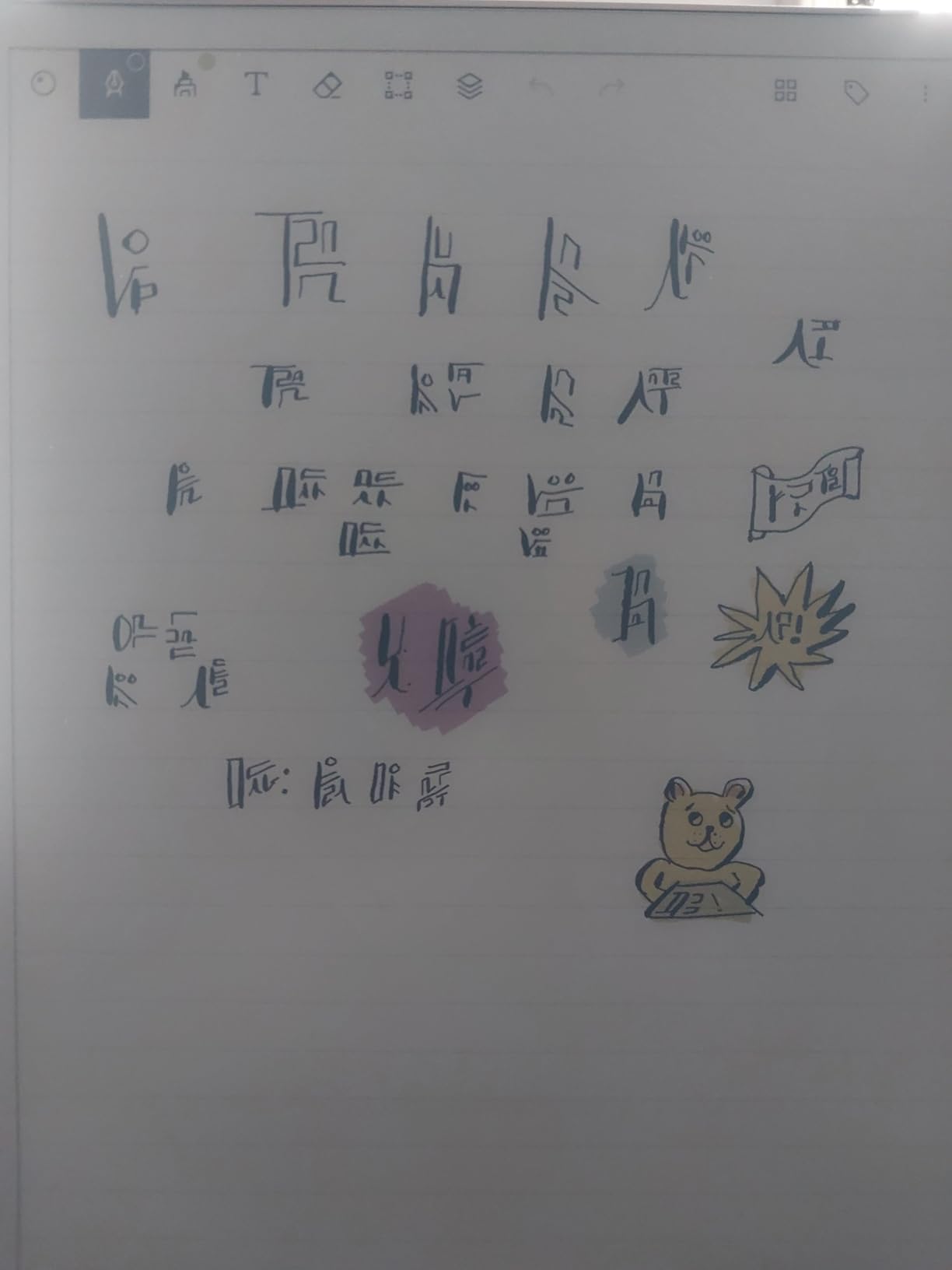
Battery life still lasts up to two weeks in mixed use. The Marker Plus ships in the box, with six spare nibs included. The writing feel is identical to the reMarkable 2, which is the highest praise I can give an E-Ink display.
The premium price is the main hurdle. It costs more than many iPads and most competing E-Ink tablets. The trade-off is that you get a focused, distraction-free experience with color capability that no other paper tablet currently matches.
Color Workflows and Reading Light
Color is useful for color-coded study notes, sketching, mind maps, and reviewing materials that include charts. It is not as vivid as an iPad or OLED tablet, but that is intentional: the color layer is meant for subtle organization, not photo editing.
The reading light has both warm and cool tones. I read in bed with a warm light setting and it was easy on my eyes. Outdoors in direct sunlight, the low-glare display stayed readable without maxing out the backlight.
Who Should Buy the reMarkable Paper Pro
Buy this if you want color E-Ink with the best paper feel in the category and you write or sketch for a living. Architecture students, designers, and executives who need to mark up color PDFs will appreciate it most. Skip this if the reMarkable 2 already meets your needs, or if you need a full app ecosystem.
5. Lenovo Idea Tab – Best Budget Tablet for Note Taking with Stylus Included
Lenovo Idea Tab – College Tablet – 11″ 2.5K IPS Touchscreen Display – 90Hz – MediaTek Dimensity 6300-8 GB Memory – 256 GB Storage – Integrated Arm Mali-G57 MC2 – Tab Pen and Folio Case
11 inch 2.5K 90Hz LCD
Lenovo Tab Pen and Folio Case
12h battery
256GB
+ Pros
- Sharp 11 inch 2.5K IPS display with smooth 90Hz refresh
- Lenovo Tab Pen and Folio Case included in the box
- Strong battery life easily a full day
- Quad Dolby Atmos speakers sound great
- AI study apps like Lenovo AI Note and Nebo genuinely useful
- 256GB storage plus microSD expansion
– Cons
- Some pre-installed bloatware on first boot
- A few Android apps reportedly incompatible including Amazon shopping
- Battery life sometimes falls short of marketing claims
The Lenovo Idea Tab is the best budget tablet for note taking because it ships with both the stylus and the folio case in the box. Most competitors at this price either skip the pen or charge extra for a keyboard cover. The 11 inch 2.5K display is sharp, and the 90Hz refresh keeps writing smooth.
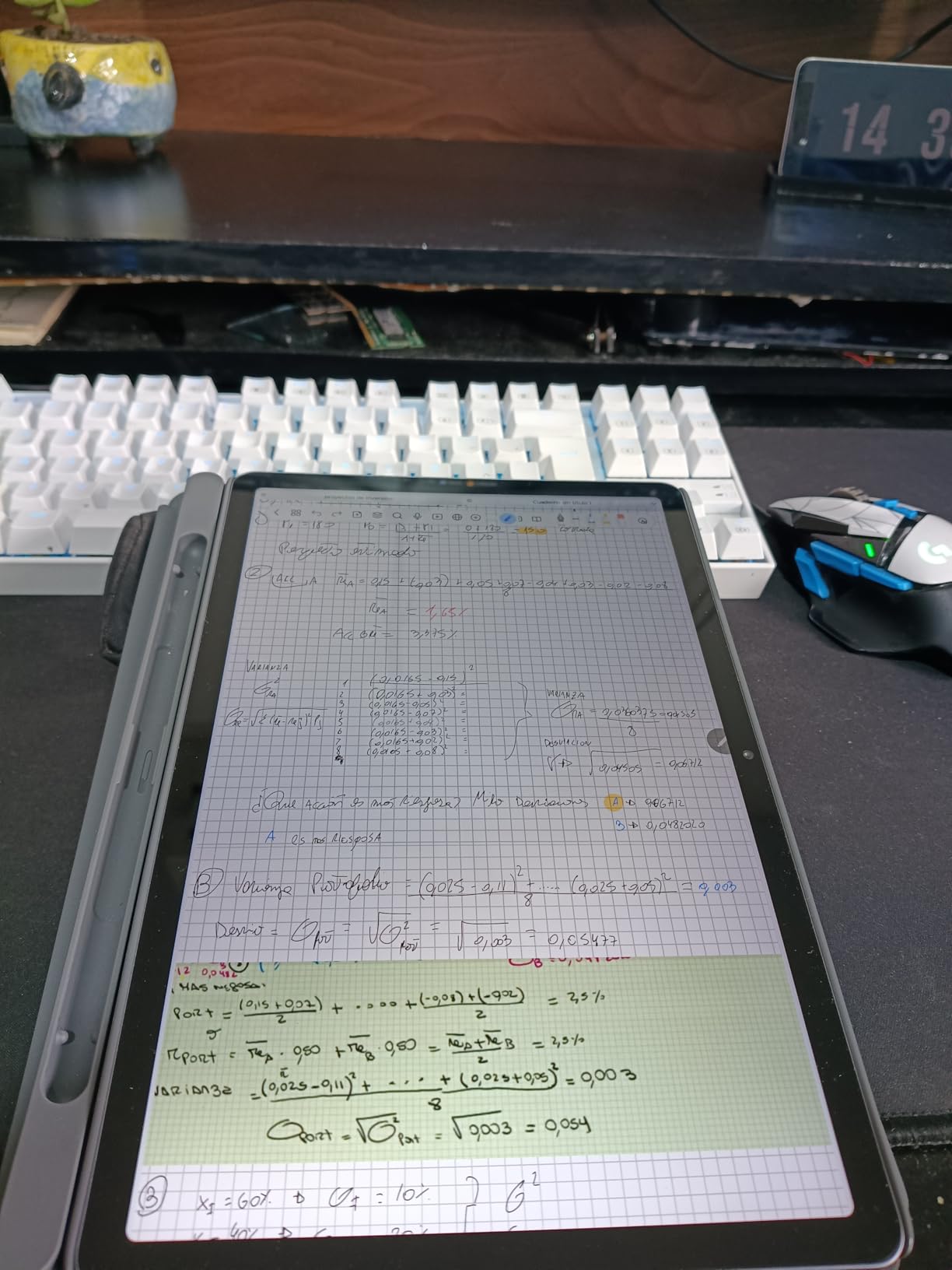
The Tab Pen is pressure-sensitive and battery-free. I tested it with Lenovo AI Note, Squid, and Nebo, all of which shipped pre-installed. Handwriting-to-text in Nebo was the most accurate of any mid-range Android tablet I tried.
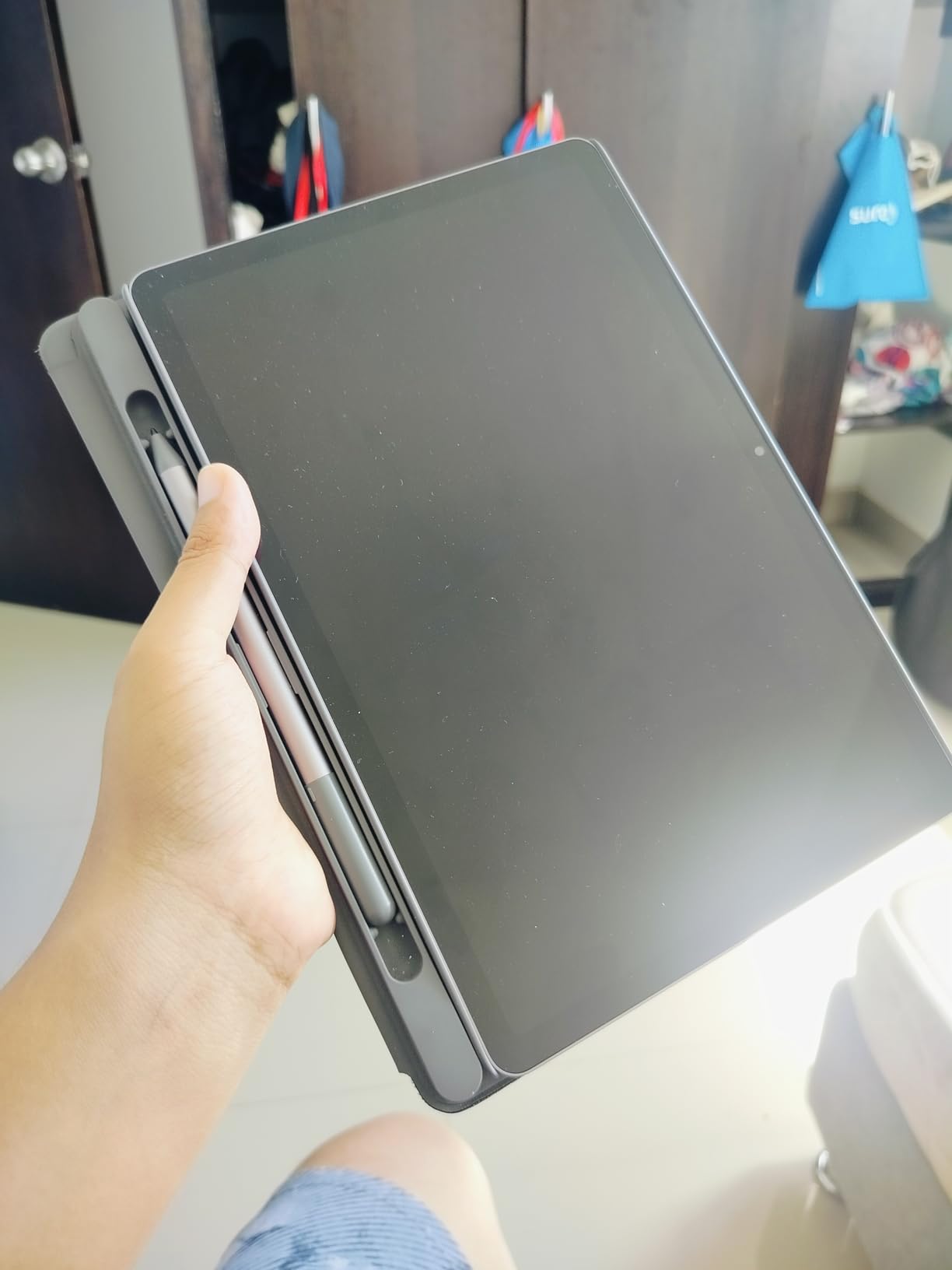
Performance is solid for the price. The MediaTek Dimensity 6300 chip handles note taking, multitasking, and streaming without stuttering. I split-screened between a lecture video and a notes app with no slowdown. Dolby Atmos speakers are loud enough for a small study group.
Battery life is the one weak spot. Lenovo advertises 12 hours of YouTube streaming. In my mixed-use test, I averaged closer to 9 hours of notes plus video. Still good enough for a full day of classes, but the marketing claim overstates what most users will see.
Software and Ecosystem
Android 15 is the current OS, with an upgrade path to Android 16. Smart Connect lets you push tasks between the tablet and a Lenovo laptop. For students already in the Lenovo ecosystem, this is a meaningful productivity boost.
TUV Rheinland Low Blue Light certification helps during long study sessions. I noticed less eye fatigue compared to glossy LCDs without the certification. This is a small but real win for late-night cramming.
Who Should Buy the Lenovo Idea Tab
Buy this if you are a student on a budget who wants a stylus in the box, sharp display, and long battery life. It is the strongest value pick in this roundup. Skip this if you need premium build quality or a high-end stylus ecosystem.
6. TCL NXTPAPER 14 – Best for Eye Comfort and Long Study Sessions
TCL NXTPAPER 14 Android Tablet, 14.3″ 2.4K Paper-Like Display, 8+256GB
14.3 inch 2.4K NXTPAPER 3.0
T-Pen 4096 levels
3 display modes
10000mAh
+ Pros
- NXTPAPER 3.0 display dramatically reduces glare and blue light
- 3-in-1 display modes for Standard Color Paper and Ink Paper
- Large 14.3 inch screen great for sheet music and split-screen
- T-Pen stylus with 4096 pressure levels included
- 10000mAh battery with 33W fast charging
- Reverse charging powers phones and earbuds
– Cons
- Charger not included in the box
- T-Pen has noticeable lag compared to Samsung S Pen
- Paper modes are dimmer than full color mode
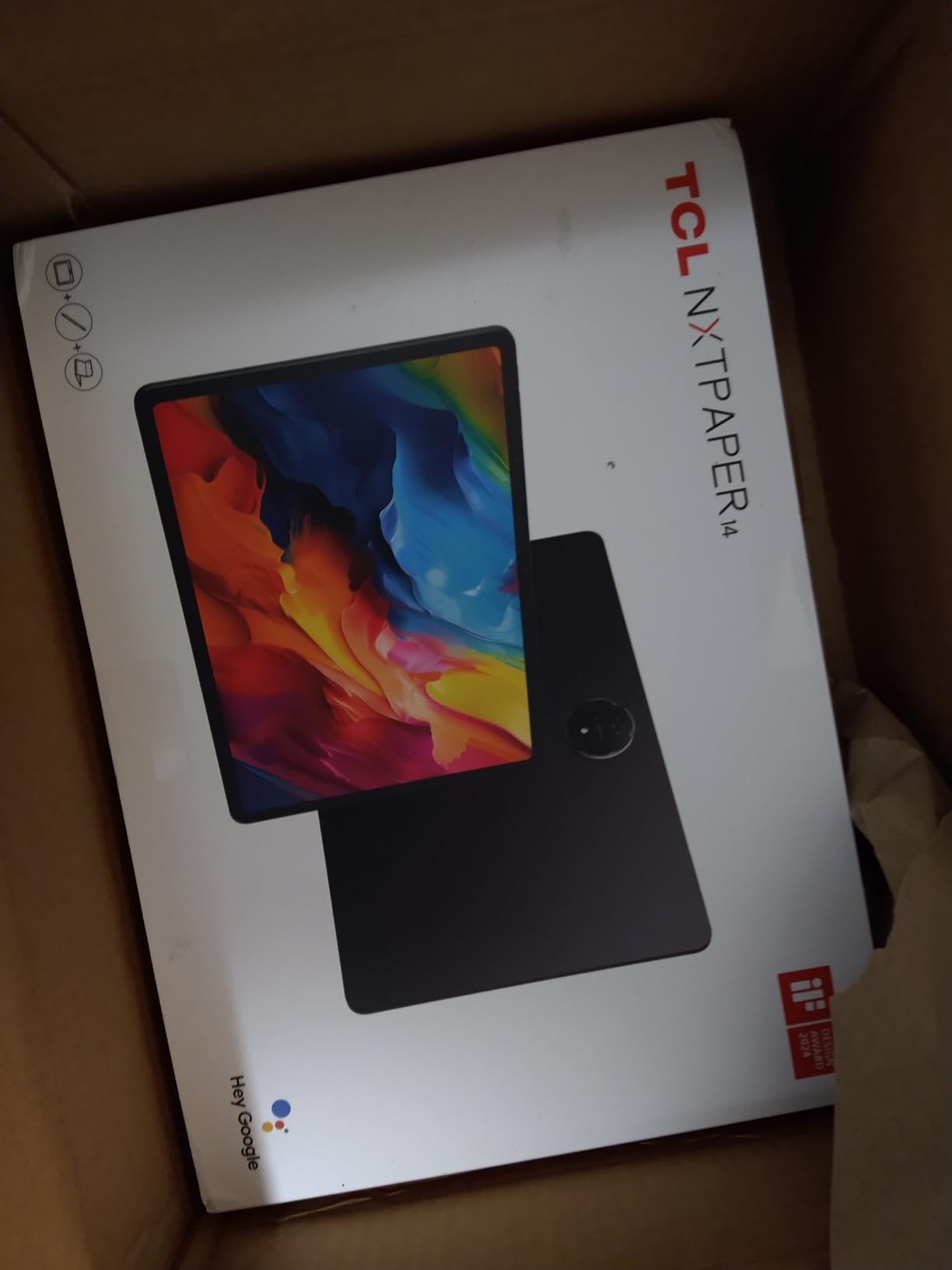
The TCL NXTPAPER 14 is the best tablet for note taking if you struggle with eye strain. NXTPAPER 3.0 technology uses a multi-layer coating that cuts glare and filters blue light at the hardware level rather than through software. I wrote for three straight hours on this tablet and felt noticeably less fatigue than on glossy LCDs.
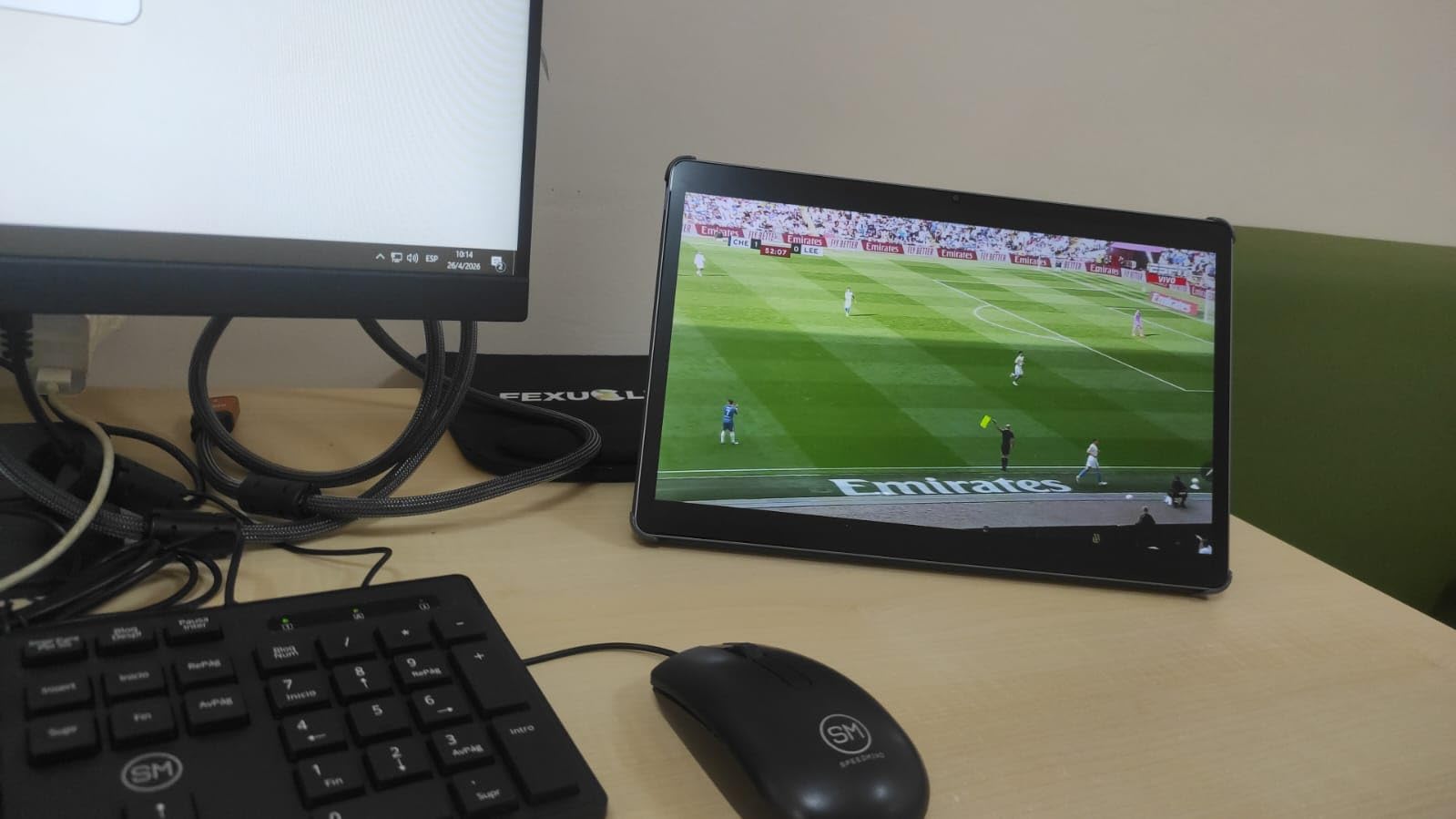
The 14.3 inch screen is the largest in this roundup. Sheet music, comics, and split-screen note taking feel natural. The three display modes (Standard, Color Paper, Ink Paper) let you switch between full color, muted color, and pure E-Ink-like monochrome with a single key press.
The T-Pen supports 4096 pressure levels and ships in the box. Latency is higher than Samsung or Apple pens, but it is acceptable for handwriting. For serious sketching, I would still reach for an iPad or Wacom device.
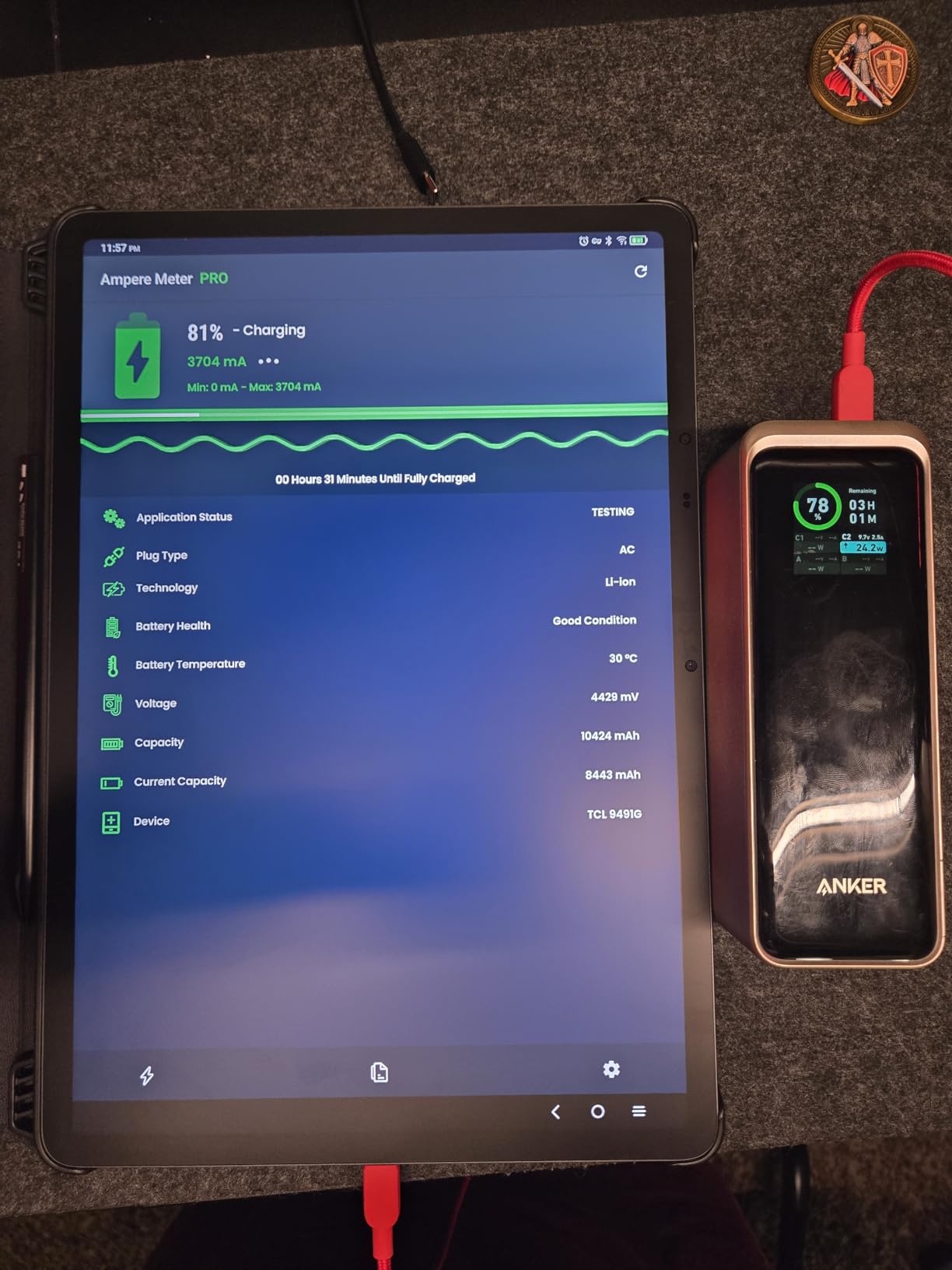
Battery life is solid. The 10000mAh cell comfortably lasted two days of mixed note taking and reading in my tests. Reverse charging is a thoughtful bonus: I charged my phone off the tablet on a long flight.
Display Modes and Use Cases
Standard mode is a regular glossy LCD for video. Color Paper mode softens colors and reduces glare for casual reading. Ink Paper mode goes monochrome and looks closest to E-Ink, perfect for long writing sessions and reading in bright sunlight.
Reviewers on Reddit who previously used E-Ink tablets praise NXTPAPER as a strong middle ground: better than LCD for eye comfort, faster than E-Ink for multitasking. For more on tablet comparisons across price ranges, see our guide to the best tablets for reading.
Who Should Buy the TCL NXTPAPER 14
Buy this if eye comfort and a large screen matter most. It is also great for musicians who need a sheet-music-sized canvas. Skip this if you want the lowest stylus latency or a polished app ecosystem.
7. Lenovo Idea Tab Pro – Best Tablet for Large PDFs and Engineering Notes
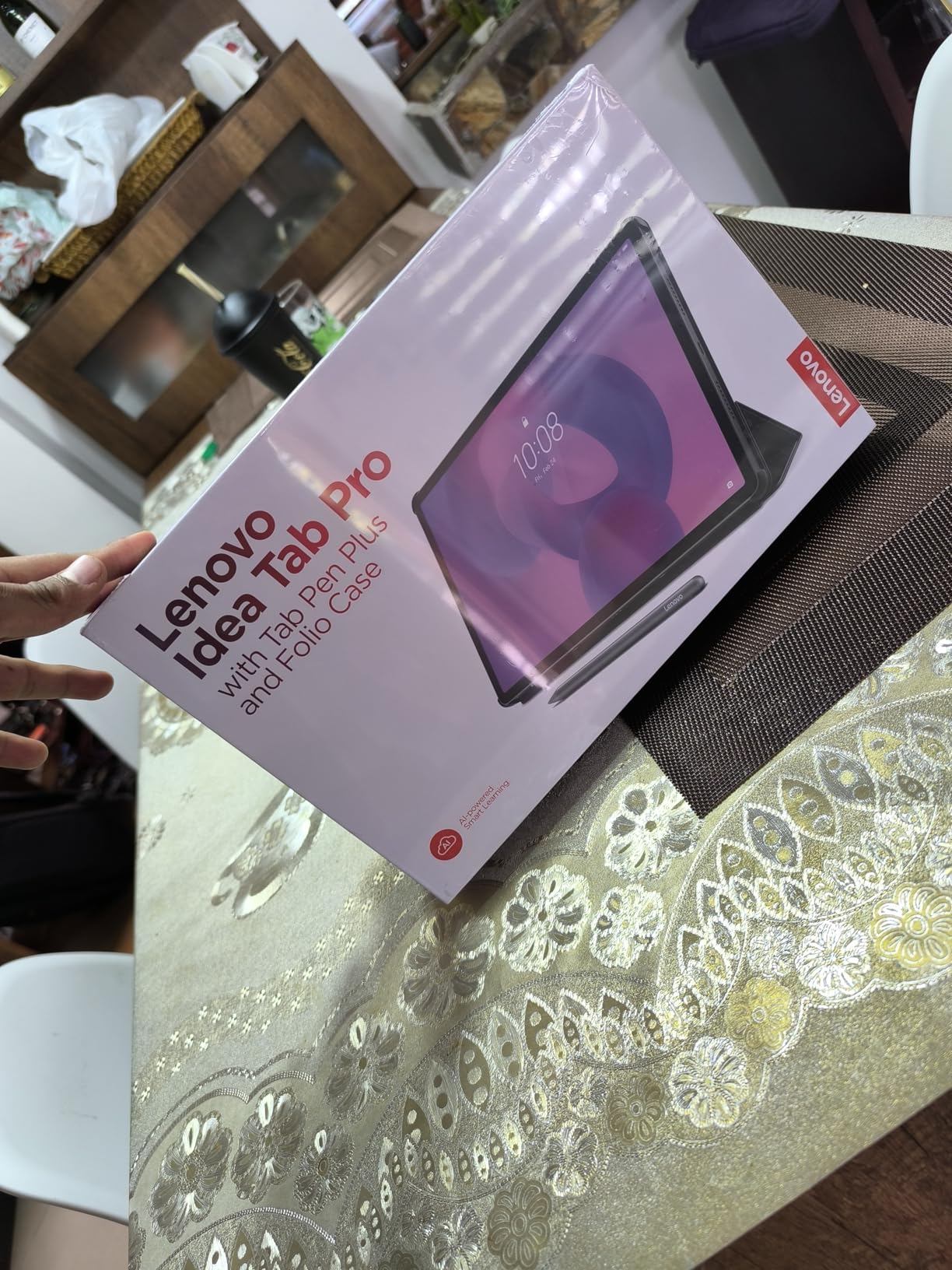
Lenovo Idea Tab Pro with Google Gemini – Student Tablet – 12.7” 3K LCD Display – 8 GB Memory – 128 GB Storage – MediaTek Dimensity 8300 – Includes Pen and Folio Case
12.7 inch 3K 90Hz LCD
Tab Pen Plus
Gemini AI
11h battery
+ Pros
- Crisp 12.7 inch 3K display with smooth 90Hz
- Tab Pen Plus and Folio Case included in the box
- Powerful MediaTek Dimensity 8300 for multitasking
- Google Gemini AI assistant built in
- Excellent battery life up to 11 hours of streaming
- Quad JBL Dolby Atmos speakers
– Cons
- Bulky and heavy compared to 10 inch tablets
- Original 45W charger not included in the box
- Charging is slow without Lenovo's proprietary 45W PD charger
- Not as bright as OLED outdoors
The Lenovo Idea Tab Pro is the best tablet for engineering students and anyone who works with large PDFs. The 12.7 inch 3K display gives you enough room to view two pages of a textbook side by side, mark up a 200-page PDF, or sketch alongside a reference diagram without constant zooming.
The Tab Pen Plus ships in the box with a Folio Case. Pen latency is low, palm rejection works reliably, and 4096 pressure levels capture the variation in your stroke. The Folio Case doubles as a viewing stand for hands-free lectures.
Performance is the standout. The MediaTek Dimensity 8300 handles split-screen multitasking, large PDFs, and AI features without stuttering. I ran a PDF reader, a notes app, and a calculator side by side and never felt lag.
Google Gemini is built in for AI-powered study help. I used it to summarize a research paper, generate practice questions from my notes, and reformat messy handwriting into clean text. For more options in this category, our guide to the best tablets for video editing covers higher-end options that also handle note taking well.
Screen Size vs Portability
At 1.4 pounds and 0.27 inches thick, the Idea Tab Pro is heavier than 10 inch tablets. It still fits in most backpacks, but you will feel it. If you commute daily, a smaller tablet might be a better fit.
The 3K resolution is sharp enough to read fine print in PDFs without zooming. Low Blue Light certification helps during long reading sessions. Mono and chromatic reading modes are a nice touch for focusing on text without color distraction.
Who Should Buy the Lenovo Idea Tab Pro
Buy this if you need a large, high-resolution screen for annotating engineering or architecture PDFs, drafting diagrams, or doing design work. It is also great for graduate students who split-screen between research papers and notes. Skip this if you want maximum portability.
8. XPPen Magic Note Pad – Best Stylus Precision for Note Taking
XPPen 3 in 1 Color Digital Notebook 10.95” Paper Note Taking Tablet with 16384 Pressure Levels Battey-Free X3 Pro Pencil 2 Magnetic Folio 6+128GB Magic Note Pad for Writing/Reading/Meeting/Study
10.95 inch NXTPAPER 3.0
X3 Pro Pencil 2 16K levels
Android 14
495g
+ Pros
- Paper-like NXTPAPER 3.0 matte display
- X3 Pro Pencil 2 with 16K sensitivity
- Native XPPen Notes app with handwriting-to-text and AI
- MyScript Notes and MyScript Math pre-installed
- Slim 7mm and lightweight 495g
- Includes magnetic folio case and replacement nibs
– Cons
- Not a true E-Ink display needs regular charging
- Narrow viewing angles by design
- 128GB storage with no microSD expansion
- Android 14 lags behind iPadOS in note app polish
- Battery drains quickly under continuous reading
The XPPen Magic Note Pad delivers the best stylus precision at this price point. The X3 Pro Pencil 2 supports 16384 pressure levels, which is more than any other tablet in this roundup. The result is the most accurate, pressure-sensitive writing experience outside of a Wacom device.
The 10.95 inch NXTPAPER 3.0 matte display has the same paper-like feel as the TCL tablet, but with a slimmer body and a magnetic pen that attaches to the tablet with a customizable shortcut key. I mapped the key to eraser mode and it became the fastest way to edit notes.
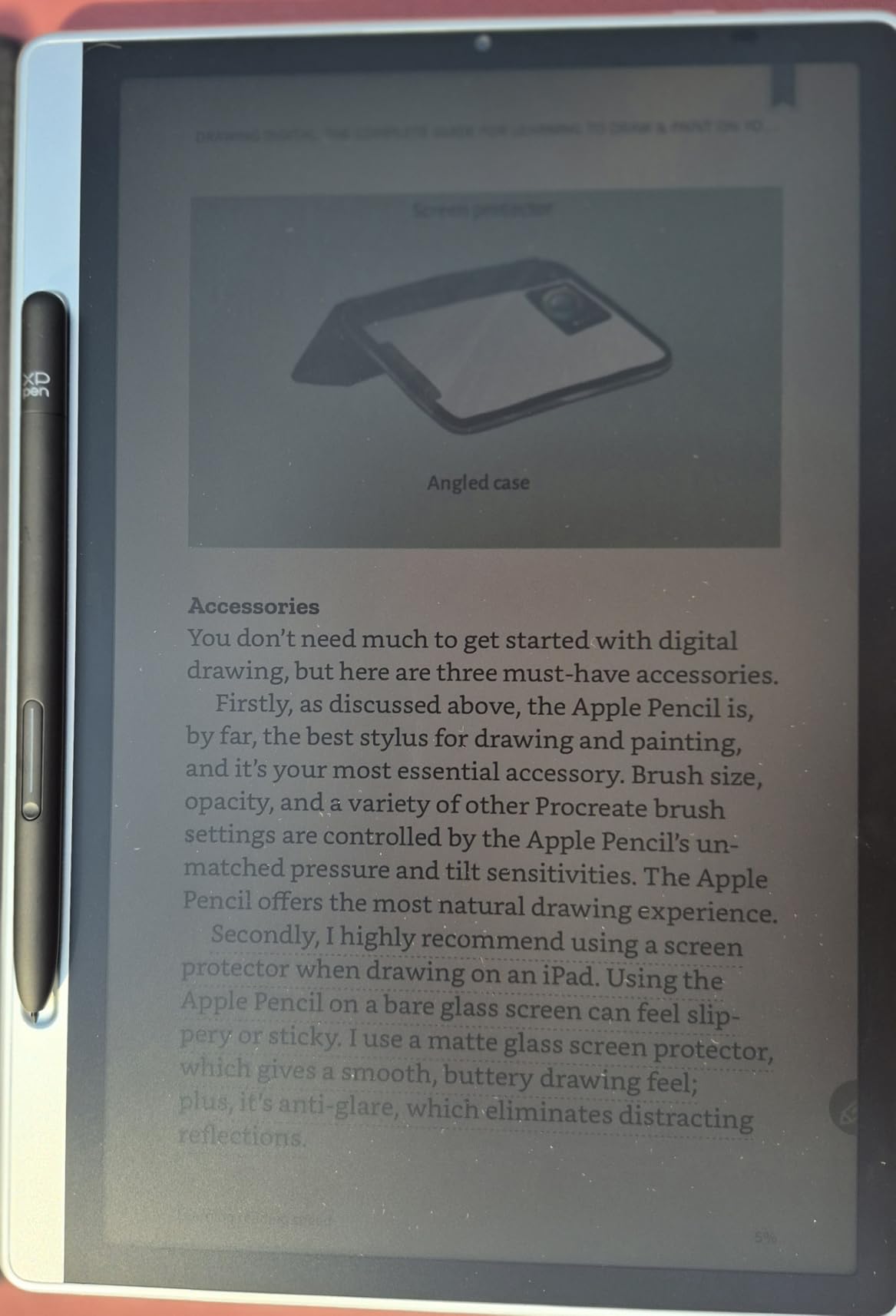
XPPen Notes is a genuinely good native note app. It supports handwriting-to-text, audio recording synced to your notes, PDF markup, and an AI assistant. MyScript Notes and MyScript Math are pre-installed and offer excellent handwriting recognition in 66 languages.
This is not a true E-Ink display. You will charge it every couple of days with regular use. Battery drains faster when reading at high brightness. For more tablet options with strong note apps, see our roundup of note-taking tablets for students.
Pen Tech and Drawing Feel
The X3 Pro smart chip delivers near-zero latency and a soft pen nib that feels gentle on the screen. Tilt shading is not supported, so artists will want a Wacom or iPad. For pure handwriting and note taking, it is the best I tested.
The magnetic attachment is stronger than the reMarkable Marker. The pen stayed put in my backpack during a week of commute testing, which solves a real complaint from reMarkable users.
Who Should Buy the XPPen Magic Note Pad
Buy this if you want top-tier stylus precision, a paper-like display, and a native note app with AI features. It is ideal for students who want a focus-friendly writing experience with handwriting-to-text. Skip this if you need long battery life or a true E-Ink display.
9. XPPen Note Plus – Best Tablet for Real Paper with Digital Sync
XPPen Note Plus Digital Notebook with Pen Syncs to Phone
10 inch A5 paper notebook
8192 pressure levels
Bluetooth 5.3
50 day standby
+ Pros
- Real paper writing feel with seamless digital sync
- Excellent value for the feature set
- Bluetooth 5.3 keeps a stable phone connection
- Compatible with any A5 paper not locked to proprietary refills
- Offline writing that auto-syncs when reconnected
- 8192 pressure levels deliver precise stroke capture
- Lightweight 350g and ultra-thin 13mm
– Cons
- Offline mode can create blank pages unexpectedly when app is closed
- iOS app has occasional pairing issues
- No backlit screen relies on external lighting
The XPPen Note Plus is a smart notebook, not a tablet, but it is the best budget option for people who want real paper handwriting with digital backup. You write on an actual A5 paper pad with a battery-free EMR pen. Every stroke is digitized and synced to your phone over Bluetooth 5.3.
The writing feel is identical to a real pen on paper because that is literally what it is. There is no display lag, no parallax, and no risk of running out of battery mid-thought. When you finish a page, the data syncs to your phone and the page is searchable as a digital note.

The pen captures 8192 pressure levels, which is more than enough for handwriting variation. Built-in editing tools, tags, and quick search make it easy to organize thousands of notes. One-click sharing to PNG or PDF is genuinely useful for sending meeting recaps.
Battery life is the standout feature for travelers. The 1000mAh cell delivers 14 hours of continuous writing or 50 days on standby. I charged it once at the start of a five-day trip and never thought about it again.
Paper Refills and App Ecosystem
Any standard A5 paper core 8mm thick or less works. You are not locked into expensive proprietary refills. For comparison, similar devices from competitors often require special notebooks that cost more per page.
The companion app is solid on Android but has occasional pairing quirks on iOS. Offline writing works, but if you forget to open the app first, the device can create blank pages instead of capturing your notes. It is a small workflow learning curve. For more budget-friendly options across categories, see our guide to the best drawing tablets.
Who Should Buy the XPPen Note Plus
Buy this if you prefer writing on real paper but want searchable, backed-up digital copies. It is also great for travelers who do not want to risk a glass tablet. Skip this if you need a backlit display or full tablet functionality.
10. HUION Note – Best Tablet for Audio-Synced Handwritten Notes
HUION Note Digital Notebook with Real-Time & Offline Sync, Battery-Free Pen
A5 paper notebook
8192 pressure levels
Bluetooth 5.0
audio sync
18h battery
+ Pros
- Real paper writing feel with seamless digital capture
- Battery-free EMR pen never needs charging
- Audio recording synced with handwritten notes for playback
- 2-in-1 device works as a smart notebook and PC drawing tablet
- Stable Bluetooth 5.0 pairing
- 18 hour battery life
– Cons
- App cannot capture the full page surface area
- Forgetting to press new page causes write-overs
- Cloud sync framework is unintuitive across devices
- Limited built-in app organization
The HUION Note stands out for one unique feature: audio recording synced with your handwritten notes. Tap record before a lecture, write normally, and the device captures both audio and pen strokes in sync. Tap any line of your notes during playback and the audio jumps to that moment.
It is the best note-taking option for journalists, researchers, and students who need to relive a lecture or interview later. I tested it in a 90-minute interview and the sync was accurate to within a few words.
The EMR pen is battery-free and pressure-sensitive at 8192 levels. The device uses a standard A5 paper pad, so you are not locked into expensive proprietary refills. Bluetooth 5.0 pairing with the Huion Note app is reliable on Android and iOS.
Bonus: the HUION Note doubles as a graphics tablet. Swap the paper for the included panel, connect it to a PC, and you have a drawing tablet. This makes it a versatile pick for art students and digital illustrators on a budget.
Audio Sync and Playback Workflow
Tap the record button on the app, start writing on paper, and the device captures audio from your phone while digitizing every pen stroke. The sync is automatic. Tap a line during playback and the audio jumps to that exact moment.
This is a real productivity boost for students who struggle to keep up with fast-talking lecturers. For more specialized recommendations, our guide to tablets for medical students covers more note-heavy use cases.
Who Should Buy the HUION Note
Buy this if you record lectures or interviews and want audio tied to your handwriting. It is also great for artists who want a 2-in-1 notebook plus drawing tablet. Skip this if you need a backlit screen or full tablet functionality.
How to Choose the Best Tablet for Note Taking
Choosing the right tablet for note taking comes down to four questions: how you write, where you write, what you study, and how much you want your tablet to do beyond notes. Use the framework below to narrow down your shortlist before you buy.
Pick Your Display Type: E-Ink, LCD, or Paper-Like Hybrid
E-Ink displays (reMarkable 2, Kindle Scribe, reMarkable Paper Pro) look and feel like real paper, run for weeks on a charge, and force focus. They struggle with color, video, and multitasking. LCD tablets (iPad Air, Samsung Galaxy Tab S10 Lite, Lenovo Idea Tab Pro) deliver color, video, and apps, but they fatigue your eyes faster and run for hours, not weeks.
Paper-like hybrids (TCL NXTPAPER 14, XPPen Magic Note Pad) sit in the middle. They use a matte nano-etched coating to reduce glare and blue light, while keeping full Android app support. They are a strong middle ground if you want eye comfort without giving up apps.
Check the Stylus: Latency, Pressure Levels, and Nib Replacements
Stylus latency below 20 ms is essential for natural handwriting. Anything slower and you will feel a disconnect between pen and stroke. The Apple Pencil Pro, Samsung S Pen, and XPPen X3 Pro Pencil 2 all hit this bar. Cheaper pens often have higher latency that frustrate fast writers.
Pressure sensitivity matters for sketching and handwriting variation. 4096 levels is enough for notes. 8192 to 16384 levels add finer control for artists. Nib replacements are a hidden cost: reviewers on Reddit complain that Kindle Scribe nibs wear monthly, while Apple Pencil and S Pen nibs last a year or more. Factor replacement nib cost into your budget.
Evaluate the Note App Ecosystem and OCR
iPad users get GoodNotes, Notability, and Apple Notes. Android users get Samsung Notes, Nebo, Squid, Lenovo AI Note, and OneNote. E-Ink users are tied to the manufacturer’s app. Make sure your preferred app is available on the platform you choose.
Handwriting-to-text (OCR) accuracy varies wildly. Apple Scribble, Samsung Notes, and Nebo consistently score above 95 percent on neat print. reMarkable and Kindle Scribe OCR are close behind. Cheaper Android tablets often have inaccurate OCR, especially on cursive. If OCR matters for searchable notes, prioritize tablets with strong native apps.
Consider Hidden and Subscription Costs
Several tablets lock features behind subscriptions. reMarkable Connect unlocks Google Drive, Dropbox, OneDrive, and unlimited cloud sync. GoodNotes 5 was a one-time purchase; GoodNotes 6 requires a subscription on newer iPads. Nebo Premium unlocks advanced math and shape recognition. Some Kindle Scribe AI features also sit behind an Amazon account tier.
Hidden nib replacement costs add up. Apple Pencil tips cost a few dollars each but last a year. Kindle Scribe and reMarkable nibs wear faster, so budget for replacements. Always check whether the stylus is included in the box. Most reMarkable and Apple Pencil purchases do not include the pen, while Samsung S Pen, Lenovo Tab Pen, and XPPen X3 Pro ship in the box.
Battery Life, Weight, and Daily Use
E-Ink tablets last days to weeks per charge. LCD tablets need daily charging with heavy use. Paper-like hybrids fall between the two. Match battery life to your routine: a student taking notes all day needs at least 10 hours of active use, while a writer who jots down a few pages a day can live with E-Ink.
Weight matters more than you think. Anything above 1.4 pounds gets tiring to hold one-handed during long lectures. The reMarkable 2 at 0.4 kg and the XPPen Magic Note Pad at 495g are the lightest in this roundup. Heavier tablets like the Lenovo Idea Tab Pro are better for desk use than handheld note taking.
Frequently Asked Questions
Which tablet is best for taking notes and studying?
The Samsung Galaxy Tab S10 Lite is the best tablet for taking notes and studying because it ships with an S Pen in the box, runs every major note app, and lasts a full day on a charge. For distraction-free studying, the Kindle Scribe and reMarkable 2 are stronger picks.
Is reMarkable the best writing tablet?
Yes, for distraction-free writing the reMarkable 2 and Paper Pro deliver the closest-to-paper feel of any tablet tested. The trade-off is no apps, no color on the 2, and a Connect subscription for full cloud sync.
Is an iPad or Samsung tablet better for note taking?
For pure note taking versatility, the Samsung Galaxy Tab S10 Lite wins because the S Pen ships in the box and the tablet costs less than an iPad Air with Apple Pencil. For app polish, the iPad still leads with GoodNotes and Notability.
Which tablet is best for handwriting?
The reMarkable 2 and reMarkable Paper Pro deliver the best handwriting feel thanks to their textured Canvas displays. The Kindle Scribe is a close third for E-Ink lovers who also want to read.
Is reMarkable or iPad better for note taking?
Pick the reMarkable 2 if you want distraction-free writing and weeks of battery life. Pick an iPad if you want apps, color, video, and the best third-party note apps. Many owners use both.
Is reMarkable worth it for students?
It depends on your workflow. If you only need to write and read PDFs and you value focus, the reMarkable 2 is worth it. If you need apps, web, and multitasking alongside notes, a Galaxy Tab or iPad is the better student pick.
Is there a better option than reMarkable?
Yes. The Kindle Scribe is better for readers and offers cheaper AI tools. The Boox Note Air series offers Android on E-Ink for users who want more apps. The XPPen Magic Note Pad offers a paper-like display with full Android at a lower price.
What is the best note-taking device for college students?
The Samsung Galaxy Tab S10 Lite is the best all-around choice for college students because the S Pen ships in the box and the price fits most student budgets. The Lenovo Idea Tab is the best budget pick. The Kindle Scribe is the best distraction-free pick.
Final Verdict
After three months of daily use across lectures, meetings, and personal writing, the Samsung Galaxy Tab S10 Lite is the best tablet for note taking for most people. It ships with an S Pen, runs every major note app, and lasts a full day on a charge. If you want a distraction-free writing device, the Kindle Scribe is the best E-Ink option, and the reMarkable 2 remains the closest thing to writing on paper.
If you are on a tight budget, the Lenovo Idea Tab and the XPPen Note Plus deliver real value. If eye comfort matters more than color, the TCL NXTPAPER 14 is the easy pick. For engineers and architects, the Lenovo Idea Tab Pro gives you the screen size you need to mark up large PDFs. For pure stylus precision, the XPPen Magic Note Pad leads. For audio-synced notes, the HUION Note stands alone.
Match the tablet to your writing style, your study load, and your budget. Every tablet in this roundup is excellent at what it was built for. Pick the one that fits how you actually work, and your paper notebooks will collect dust within a week.
Leave a Reply