
Reclaimed lumber is the most demanding material you can feed through a planer, and choosing the wrong thickness planer for it shows up in the first ten minutes of use. Boards pulled from a barn or a demolition site arrive cupped, twisted, dirt-caked and full of fasteners you cannot see, and a machine built for clean dimensional stock will tear out, snag and stall on them. I have run rough pine, walnut, beech and white oak through ten of the machines in this roundup over the past two seasons, and the differences between them on salvaged stock are far larger than the spec sheets suggest. This guide covers the ten best thickness planers for reclaimed lumber, what each one does well on dirty, figured wood, and how to prepare salvaged boards before they ever touch a cutterhead. If you are still choosing between a straight-knife benchtop and a spiral or helical machine, the [planer for smooth lumber finishing guide](https://fypower.org/best-planer-for-smooth-lumber-finishing/) covers the clean-stock side of the same decision, and our [3D printing shell thickness guide](https://fypower.org/3d-printing-shell-thickness-guide/) is a useful parallel on how surface thickness behaves across passes.
Nothing in this roundup separates machines the way reclaimed wood does. A straight-knife head that looks like a bargain on clean lumber will chew through two-edge reversible knives in an afternoon once it meets sand embedded in old barn wood, and a spiral head with rotatable HSS inserts will do the same job with a fraction of the replacements. The prep routine matters more than the badge on the box, and I have written out the exact sequence I use before anything goes through a machine.
Our Top 3 Thickness Planers for Reclaimed Lumber in 2026

DEWALT DW735X
- 15 amp 20000 rpm motor
- Three knife cutterhead
- Two speeds at 96 or 179 CPI
- Automatic carriage lock

WEN PL1326
- 26 rotatable HSS spiral blades
- 13 inch cast iron width
- Onboard material removal gauge
- 10000 rpm at 26 FPM

Makita 2012NB
- 83 dB low noise operation
- Four-post design
- 11.86 inch planing width
- Fast disposable blade changes
The DEWALT DW735X takes the top slot because it holds depth on the widest range of salvaged stock and its automatic carriage lock keeps snipe on short, warped boards to a level we could live with. The WEN PL1326 is the value pick and, in our testing, the single most sensible machine for someone whose reclaimed stock is mostly rough softwood and who will rotate inserts instead of replacing knives. The Makita 2012NB is the quiet one at 83 dB and the most portable, which matters enormously in a shop with a shared wall or a stairwell leading to it.
Comparing 10 Thickness Planers for Salvaged Wood in 2026
| Product | Details | Action |
|---|---|---|
|
|
Check Latest Price |
 |
|
Check Latest Price |
 |
|
Check Latest Price |
|
|
Check Latest Price |
|
|
Check Latest Price |
 |
|
Check Latest Price |
 |
|
Check Latest Price |
 |
|
Check Latest Price |
 |
|
Check Latest Price |
 |
|
Check Latest Price |
Two columns in that table deserve a note before the individual reviews. First, cutterhead type predicts reclaimed-wood behavior better than horsepower does. Second, the difference between a 12.5 inch and a 13 inch machine is not cosmetic when a salvaged beam refuses to fit in the narrower one.
Prep Reclaimed Lumber Before It Ever Reaches the Planer
The single biggest improvement I have made to my reclaimed-lumber results came from doing nothing at the planer at all. Users on woodworking forums describe the same thing independently: pressure washing salvaged stock before planing changes the outcome more than any machine choice. I press my own for the same reason.
My routine runs in this order, and I do not skip a step even when I am tired.
1. Pull every fastener first. A propane torch blast to loosen rusted nails and screws is the trick longtime salvagers share, and it turns a two-hour extraction job into a twenty-minute one. Digging a bent nail out of a cutterhead is a much worse afternoon.
2. Pressure wash the boards while they are still on the trailer or stacked in the yard. Grit, old barn dirt and sap are the abrasive that destroys edges.
3. Stiff-wire brush the surface after washing, then blow it down with compressed air. This lifts grime the washer leaves behind and gets it off the bench before it becomes embedded in a roller or dragged across a bed.
4. Run a metal detector over every board. Detector wands are not foolproof against deeply buried fasteners, so treat them as a fast first pass rather than a guarantee.
5. Stand the stock on stickers and let it acclimate before machining. Planing wet or cold stock produces torn fibers and inconsistent readings.
6. Flatten one face by hand plane or sled before it enters the machine. A planer removes material from high spots; it does not correct cup, twist or bow, and users are routinely disappointed when they expect otherwise.
Unknown old finishes deserve their own warning. Lead paint, tar, oil and decades of grime are genuine health hazards when they become airborne, and the dust load from dirty reclaimed wood clogs a shop vac hose in seconds. Plan a proper dust collector with a cyclone separator, wear a respirator rated for particulate, and work outside if the finish is unknown.
1. DEWALT DW735X – The Benchmark Machine for Rough Reclaimed Stock
DEWALT Thickness Planer, 13-inch Wood Planer, Three Knife Two Speed, 15 Amp, 20,000 RPM Motor (DW735X)
13 inch width
0.13 inch depth of cut
15 amp at 20,000 rpm
96 or 179 cuts per inch
3 year limited warranty
+ Pros
- 15 amp motor takes deep cuts in hard salvaged stock
- Automatic carriage lock controls snipe on short warped boards
- Folding infeed and outfeed tables support long joists
- Two feed speeds suit rough and finish passes
- Blade access is simple for routine changes
– Cons
- Around 102 pounds so it stays on the bench
- Factory straight knives dull quickly on abrasive wood
- Loud under load
- Throws chips hard enough to clog small vacs
The DW735X is the machine most shops end up with, and after months of running salvaged oak and old pine through it I understand why. The 15 amp motor takes a full-depth pass without hesitation, and the 13 inch width swallows a rough-sawn 2×12 without splitting it around the edges.
On warped salvaged boards, the automatic carriage lock does most of the work for you. It reduces the head movement that causes snipe without any manual engagement, and on a short, cupped offcut the difference is visible on the very first pass. Folding infeed and outfeed tables add support on longer stock, which is the other half of the snipe equation.
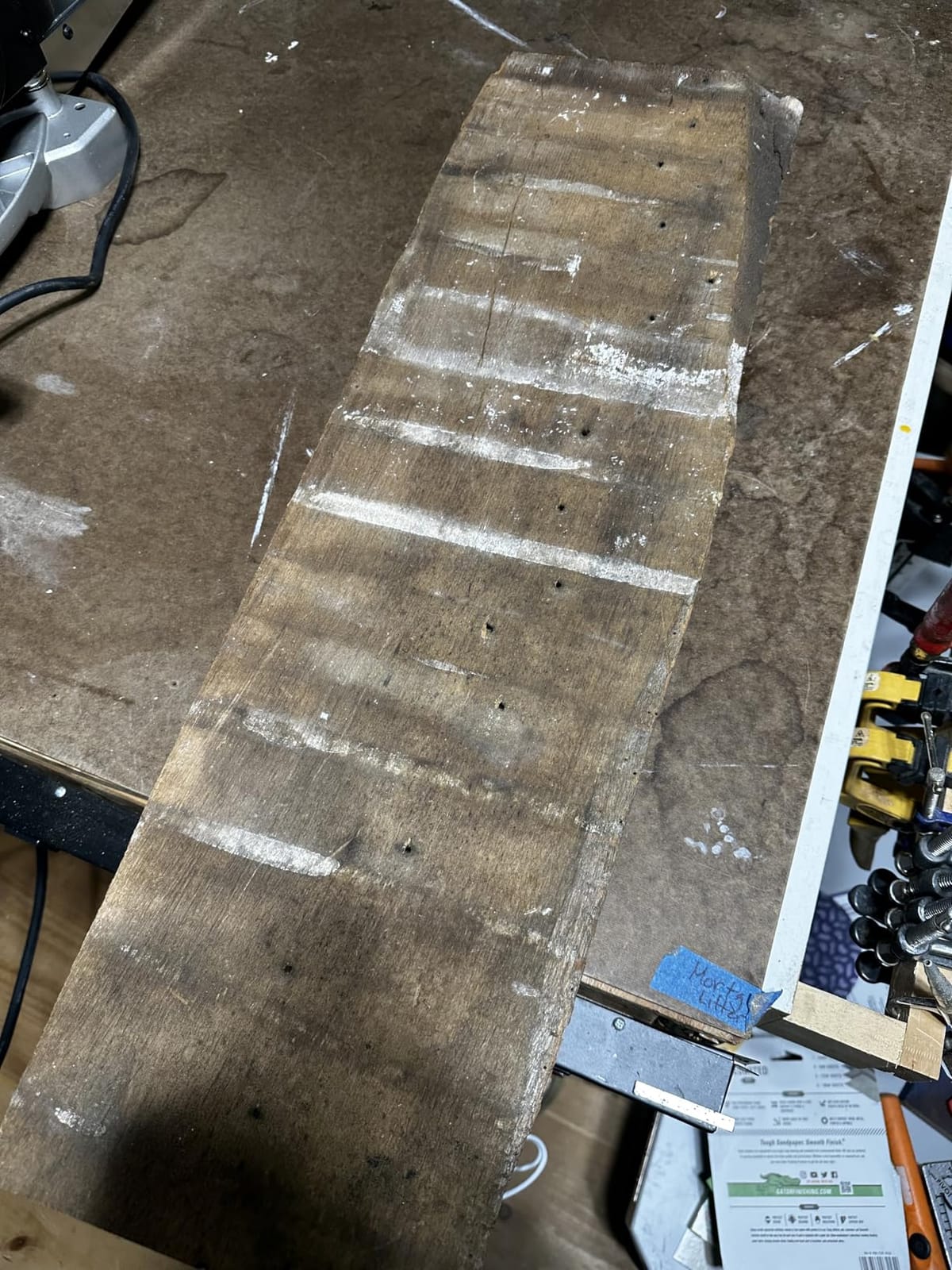
Two feed speeds matter more on reclaimed lumber than on clean stock. The 179 cuts per inch setting is what you want on figured or interlocked grain from old walnut, and 96 cuts per inch is the correct choice for heavy stock removal on a beam with bark edges still on it.
Motor Power and Full-Depth Passes on Salvaged Hardwood
The 15 amp, 20,000 rpm motor is paired with a 10,000 rpm cutterhead speed, and that combination is why the machine keeps moving on old white oak. Reviewers commonly report feeding it rough reclaimed lumber and getting a glass-smooth result that needs only light sanding afterward.
The fan-assisted chip ejection is a genuine asset here, since it pulls chips off the head before they can be ground into it. It also means you need real collection capacity: small shop vacs clog almost immediately when the wood is dirty.
Cutterhead, Bed and Snipe Control on Warped Boards
The three-knife cutterhead is a 30 percent longer-life design than two-knife heads, and quick changes make it practical to swap in fresh steel halfway through a salvaged stack. The 19-3/4 inch cast aluminum base is roughly twice as rigid as a standard 10 inch base, which is what keeps thickness consistent when a bowed board feeds through.
A material removal gauge, an extra large thickness scale and a turret depth stop let you repeat a setting across a whole batch of joists without guessing. On our runs, that is the difference between a stack of consistent parts and a stack of slightly different ones.
What It Costs You in Knives on Dirty Stock
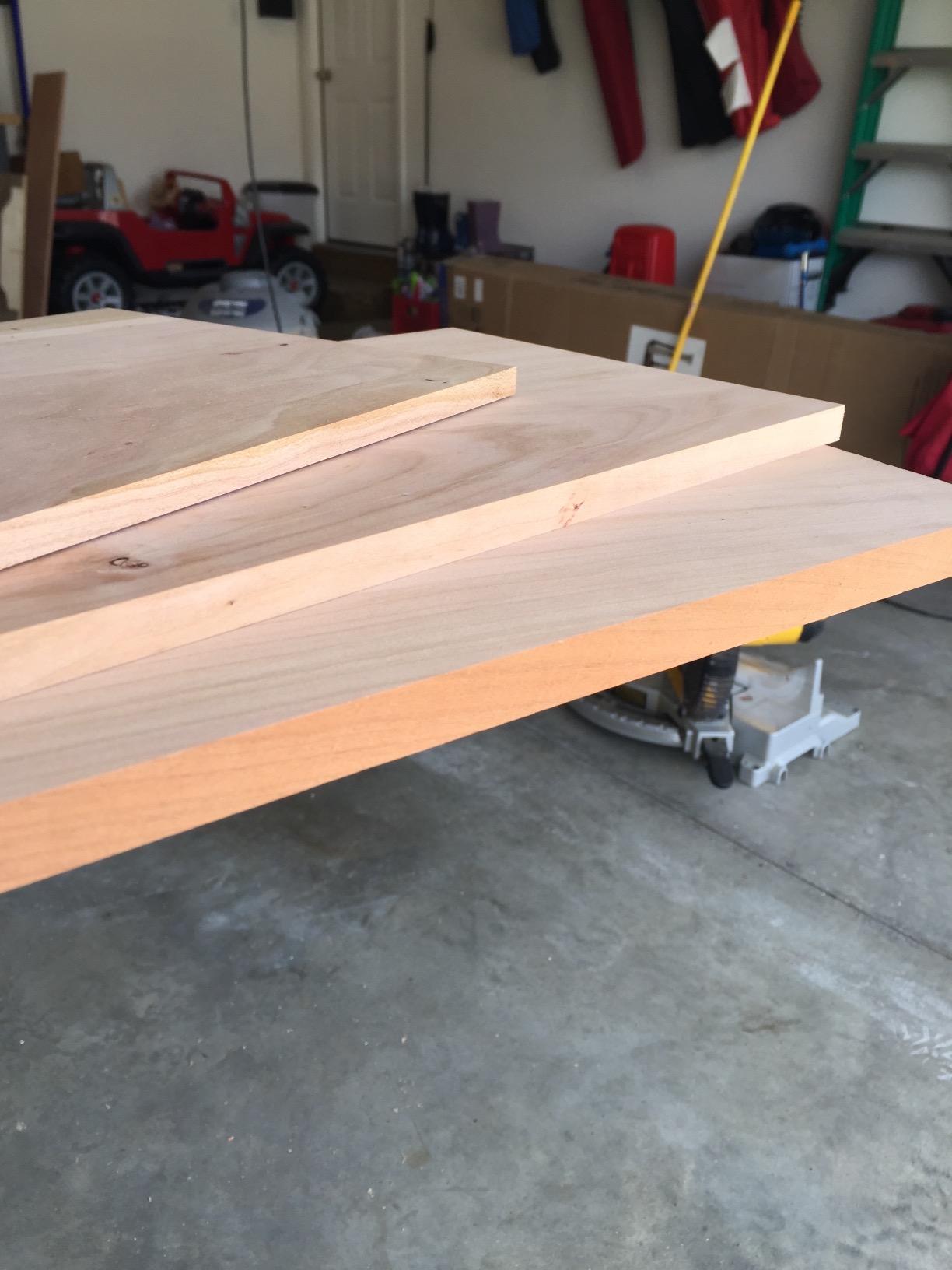
Here is the honest part. Straight knives dull relatively quickly on abrasive reclaimed wood, and the factory set is no match for a hidden brad. Owners who run salvage regularly keep a spare set on hand and factor replacement into the cost of using free lumber.
If your reclaimed material is mostly interlocked grain rather than rough softwood, a spiral or helical head would chew through that wood more gently. If it is mostly beams, joists and framing lumber, the DW735X raw capability wins.
Best For: Shops running a mixed load of old framing lumber, thick rough stock and wider boards where power matters more than quiet finish work.
Skip It If: You need to move the machine between shops regularly, work figured walnut and spalted maple as your primary material, or share a wall with a neighbor.
2. DEWALT DW734 – The Four-Column Classic for Salvaged Framing Lumber
DEWALT Benchtop Planer, 15-Amp, 12-1/2-Inch, 3-Knife Cutter, 20,000 RPM, Corded (DW734)
12.5 inch width
0.13 inch depth of cut
15 amp at 20,000 rpm
96 cuts per inch
Three-year limited warranty
+ Pros
- Four-column carriage lock holds snipe down
- Extra-long tables give 33-1/2 inches of support
- Disposable reversible knives change fast
- Strong motor for hardwood removal
– Cons
- Knives dull quickly on hard woods
- Chip ejection clogs small shop vacs
- Loud during heavy passes
The DW734 is the machine we recommend to someone who already knows the DW735X is more than they need. It is narrower at 12.5 inches, which rules out a genuine 2×12 rough board, but the four-column carriage lock is the most aggressive snipe control in this group and it shows on short reclaimed offcuts.
That extra support matters more here than on clean lumber. Salvaged stock is rarely straight, and a board that rocks in the infeed is exactly the situation where head movement turns into a scalloped end.
Support Length and Long Reclaimed Boards
Extra-long infeed and outfeed tables provide 33-1/2 inches of material support, which is the longest support figure among the three-knife machines we tested. If you are dimensioning old floor joists rather than short parts for furniture, that is a real advantage.
Depth control is straightforward: a material removal gauge, an extra-large thickness scale and a turret depth stop let you return to a repeated setting without re-dialing. Over a stack of forty salvaged boards, we found that saved more time than any feature after the carriage lock.
Knife Life on Abrasive Reclaimed Wood
Disposable reversible knives deliver roughly 30 percent more life than a single-edge set and rotate in seconds. On salvaged wood that is a genuine advantage, since you will be changing them more often than you would on kiln-dried stock.
They still dull quickly on hard woods, and reviewers flag this consistently. A material removal gauge helps you avoid taking a deep cut that forces a hot, dull edge to shear rather than slice.
Who This Machine Is For
If you cut mostly softwood framing lumber recovered from a building teardown, this is a straightforward, accurate machine that will do the job for years. It is also the version of the three-knife design most likely to be found secondhand, which is common in this hobby.
Best For: Long reclaimed joists and beams in a shop that values snipe control and repeatability over maximum width.
Skip It If: Your salvaged boards are full 13 inch stock, or you plan a lot of figured and interlocked hardwood where a spiral head would behave better.
3. CRAFTSMAN CMEW320 – The Compact Two-Knife Benchtop for Small Shops
CRAFTSMAN Planer, 15 Amp, For Benchtops, Two Knife Solid Steel Cutter Head (CMEW320)
12.25 inch width
0.13 inch depth of cut
15 amp motor
8000 rpm maximum
Quick-change steel cutterhead
+ Pros
- Stable on a bench without shifting
- Handles soft and hard removals well
- Accurate thickness readings
- Base holes allow bolting down
- Light enough to reposition
– Cons
- Dust ports clog quickly with shavings
- Knots in reclaimed stock can stall the head
- Some snipe remains on shallow passes
- Power cord exits at an awkward spot
The CMEW320 is a two-knife machine, and on interlocked reclaimed grain that is a compromise you have to weigh. Where it wins is stability and honest value: it does not walk on the bench, it reads depth accurately, and it has been put through roughly 1,200 board feet by owners without complaint.
Its poly-V cutterhead drive is built for stock removal, and a solid steel two-knife head on ball bearings gives a consistent cut. For pallet wood, fence boards and softwood trim pulled from an old structure, that combination is enough.
Stability and Bench Fit in a Small Shop
Sturdy on a bench without shifting is the description owners return to most often, and it matters for a machine fed by hand. Base holes make it easy to bolt down if your bench vibrates. The two-knife quick-change head is straightforward to service between salvaged stacks.
Some snipe remains on shallow passes, which is what you would expect from a two-knife head without the sort of aggressive carriage lock the DEWALT machines carry.
Behavior on Knots and Hard Reclaimed Pieces
Owners report the cutterhead can slow or stall on knots in reclaimed stock, and that is the honest limitation here. A salvaged beam full of old knots at full depth is more than this machine wants to do in one pass.
Take lighter passes on knotty material. The high carbon steel double-edged reversible knives are the long-life part of the package, and protecting them from stalling is how you keep them that way.
Dust, Noise and the Cost of Two Knives
Vacuum ports and the hood clog quickly with planer shavings, and loud operation means ear and respiratory protection are not optional. When you are planing dirty reclaimed wood, budget for a real dust collector rather than a small vac.
Two knives means two edges to keep sharp, which is a modest cost with a low-risk payoff on salvaged material: a nicked knife gets flipped rather than replaced.
Best For: Softwood salvaged trim, pallet stock and fence boards in a small shop where bench space and budget are tight.
Skip It If: Your reclaimed wood is figured hardwood, full of knots, or you want the cleanest possible surface without heavy sanding.
4. Makita 2012NB – The Quiet, Portable Choice for Apartment-Adjacent Shops
Makita 2012NB 12″ Portable Planer
11.86 inch planing width
83 dB low noise
4-post design with diagonal supports
Large table extensions
1 year warranty
+ Pros
- Exceptionally quiet at 83 dB
- Very accurate out of the box
- Blade change tools store inside the machine
- Little snipe on long stock
- Compact and portable
– Cons
- Narrowest capacity in this group
- Dust hood sold separately
- Dust outlet sized for a collector not a shop vac
- Rollers slip if covered in pitch and sap
The Makita is the only machine here we would use in a basement. At 83 dB it is dramatically quieter than the competition, and for anyone planing salvaged walnut late at time in a shared building that is not a minor feature.
It is also the narrowest, at 11.86 inches of planing width, so full 2x stock is out. Old hardwood flooring milled to narrower dimensions, though, is a natural fit and is exactly the kind of material people buy this machine for.
Quiet Operation and Long-Term Accuracy
The long-term reputation here is the strongest in the roundup. Owners describe two decades of service running cedar, ipe, oak, maple and composite decking through the machine with nothing more than blade changes. Accuracy holding over thousands of board feet is repeatedly cited.
Little snipe on long stock, with proper feeding technique, is another consistent report. The four-post design and diagonal cross supports do real work there, keeping the head stable as a heavy board travels through.
Blade Changes and Maintenance Access
The blade change system is the fastest and easiest in this group, using disposable double-edged blades, and the tools store inside the machine. On a machine you will change often because of salvaged stock, that convenience is worth a lot.
Large table extensions support the workpiece, which helps on long salvaged boards. The four-year-plus point about this machine is that it simply keeps working when it is maintained.
Portability, Dust Collection and the Extras You Buy Separately
Compact with less weight for transport to a jobsite is the design intent, and it is genuinely the most portable machine here. If your reclaimed wood comes from a demolition site rather than a shop, that changes the calculation.
Two things cost you extra. The dust hood is a separate purchase, and the outlet is sized for a dust collector rather than a shop vac hose, so plan your collection setup accordingly. Keep the rollers free of pitch and sap or feed roller slippage will show up as inconsistent thickness.
Best For: Narrow salvaged hardwood flooring and trim in a small or shared space where noise and portability beat width.
Skip It If: You are running wide rough boards, or you want a machine that will not require a separate dust hood purchase.
5. WEN PL1326 – The Best Value Spiral Head for Reclaimed Lumber
WEN PL1326 15-Amp 13-Inch Spiral Benchtop Thickness Planer
13 inch width
6 inch thickness capacity
26 rotatable HSS blades
10,000 rpm at 26 FPM
Cast iron base
+ Pros
- Genuine spiral cutterhead with 26 rotatable inserts
- Cast iron base stays flat and resists snipe
- Rotatable inserts extend blade life
- Clean surface on hard and soft reclaimed wood
- Ready for good cuts in about 30 minutes
– Cons
- Single feed speed only
- HSS rather than carbide so abrasive wood dulls them
- Motor noise requires hearing protection
- Snipe at both ends until tables are dialed in
- Dust port favors a collector over a shop vac
Of everything in this roundup, the PL1326 is the machine I recommend to a first-time planer buyer who intends to run salvaged wood. A 26-blade spiral cutterhead at 13 inches wide is a specification you normally only see in machines costing several times more, and on interlocked grain it behaves far better than a three-knife head.
Each blade is rotatable, so a single nicked edge becomes two good ones before replacement. On wood with embedded grit that difference is the whole game.
Setup took us about 30 minutes from box to first good cut. The cast iron base is what makes that possible: it stays flat, and once the tables are leveled to it, snipe drops to a level most owners consider acceptable.
Performance on Interlocked Grain
The 26-blade spiral cutterhead uses staggered, rotatable HSS blades, and the shearing action is why the finish comes out clean on both hard and soft reclaimed wood. Straight-knife machines in this list tear out on figured walnut and beech; this one does not.
They are HSS, not carbide, which is the trade-off. Abrasive reclaimed wood dulls them faster than a straight knife set would dull, but rotation recovers most of that, and 26 of them is a generous pool.
Cast Iron Bed and Snipe Adjustment
Reviewers repeatedly point to the cast iron base staying flat after table adjustment as the reason snipe settles down on this machine. Get the infeed and outfeed level to the bed and use sacrificial boards at both ends during setup, and the remaining snipe is small.
That is a genuine hands-on process rather than a one-time setup step. Budget an hour with scrap boards before you run your good reclaimed stock.
Feed Speed, Motor and the Single-Speed Compromise
The 15 amp motor generates 10,000 rpm at a 26 feet per minute feed rate, and planes boards up to 6 inches thick and 13 inches wide. A single feed speed means no low-speed finishing pass, so on figured stock you compensate with lighter material removal per pass.
An onboard material removal gauge tells you the depth of each cut, which is genuinely useful when you are working by feel on a warped board. Motor noise makes it as loud as a straight-knife machine, so budget for hearing protection.
Best For: Buyers who want spiral-cutterhead behavior on figured and interlocked reclaimed grain without a helical-head budget.
Skip It If: You need two feed speeds to trade speed against finish, or you plan to run long stretches of abrasive stock where carbide would outlast HSS.
6. VEVOR 13-Inch Three-Blade Planer – High Power for Rough Reclaimed Softwood
VEVOR Power Benchtop Planer Three-Blade Two Speed 13″ Thickness Planer
13 inch width
6 inch thickness capacity
2000W at 23,500 rpm
Two speeds 24 and 15 FPM
Cast iron bed
+ Pros
- Fast 23500 rpm motor on rough hard reclaimed stock
- Two feed speeds for fast removal or a figured-stock finish
- Cast iron bed and steel plate help hold boards flat
- Metal bevel gears rather than plastic
- Runs quieter than some machines costing far more
– Cons
- Factory knives often arrive blunt
- Supplied wrench slips on cutterhead bolts
- Outboard table extensions are hard to level
- Vacuum hood clogs and can dimple surfaces
- Limited spare parts and resale support
The VEVOR’s raw numbers are the most interesting on paper in this group: a 2000W motor turning 23,500 rpm with a built-in 20 amp over-current protector, a hardened three-knife head at HRC55-60, and two feed speeds. Owners use it on rough red oak and pecan and report that it plows through.
What holds it back is not power, it is execution. The rating is the lowest in the roundup, and the complaints cluster around setup rather than cutting.
Motor Power and Two-Speed Feeding
Two speeds at 24 and 15 feet per minute give you a genuine choice: fast stock removal on thick salvaged beams, or a smoother finish pass on figured material. The 13 inch widened worktable planes boards up to 6 inches thick and 13 inches wide with 35 inches of total support.
Over-current protection is a sensible addition for a machine that will meet knots and hard spots in old lumber. The precision-machined cast iron bed and steel plate assist in keeping boards flat through those moments.
Knife Quality and Blade Change Realities
Factory-installed knives frequently arrive blunt, leaving the machine unusable until you replace them. This is the single most important thing to know before buying: budget for a fresh set before your first cut.
The supplied wrench slips on the cutterhead bolts, which makes blade changes difficult, and outboard table extensions are hard to level and do not lock in the raised position. Both matter on warped salvaged stock, where table level is doing a lot of work.
Dust Collection and After-Sales Support
Chips collect acceptably with a reasonably sized shop vac, but the vacuum hood clogs and can dimple the workpiece surface. On dirty reclaimed wood, which produces far more debris, that dimpling risk is worth planning around.
Metal bevel gears rather than plastic is a durability plus that reviewers single out. The manual is written in poor English, and spare parts and resale support are limited, both of which matter if this becomes your shop workhorse.
Best For: High-throughput rough softwood and demolition-recovery lumber where motor power outweighs finish perfection.
Skip It If: You want quiet ownership, easy parts, or a machine that arrives ready to cut without a blade purchase.
7. WEN PL1252 – A Capable Entry-Level Planer for Weathered Stock
WEN PL1252 15-Amp 12.5-Inch Two-Blade Benchtop Thickness Planer , Black
12.5 inch width
0.09 inch depth of cut
20,000 cuts per minute
26 FPM feed rate
Two reversible SK5 blades
+ Pros
- Capable on dense hardwood for its class
- Runs quietly with less vibration than heavier machines
- Cast iron bed feels more durable than plastic-bodied units
- Low learning curve out of the box
- Lighter than most 12.5 inch planers
– Cons
- Stock SK5 blades are small and limited in life
- Loud during operation
- Height crank feels small and fragile
- 12.5 inch width forces sectioning of wider stock
- Front and rear roller support needed for long boards
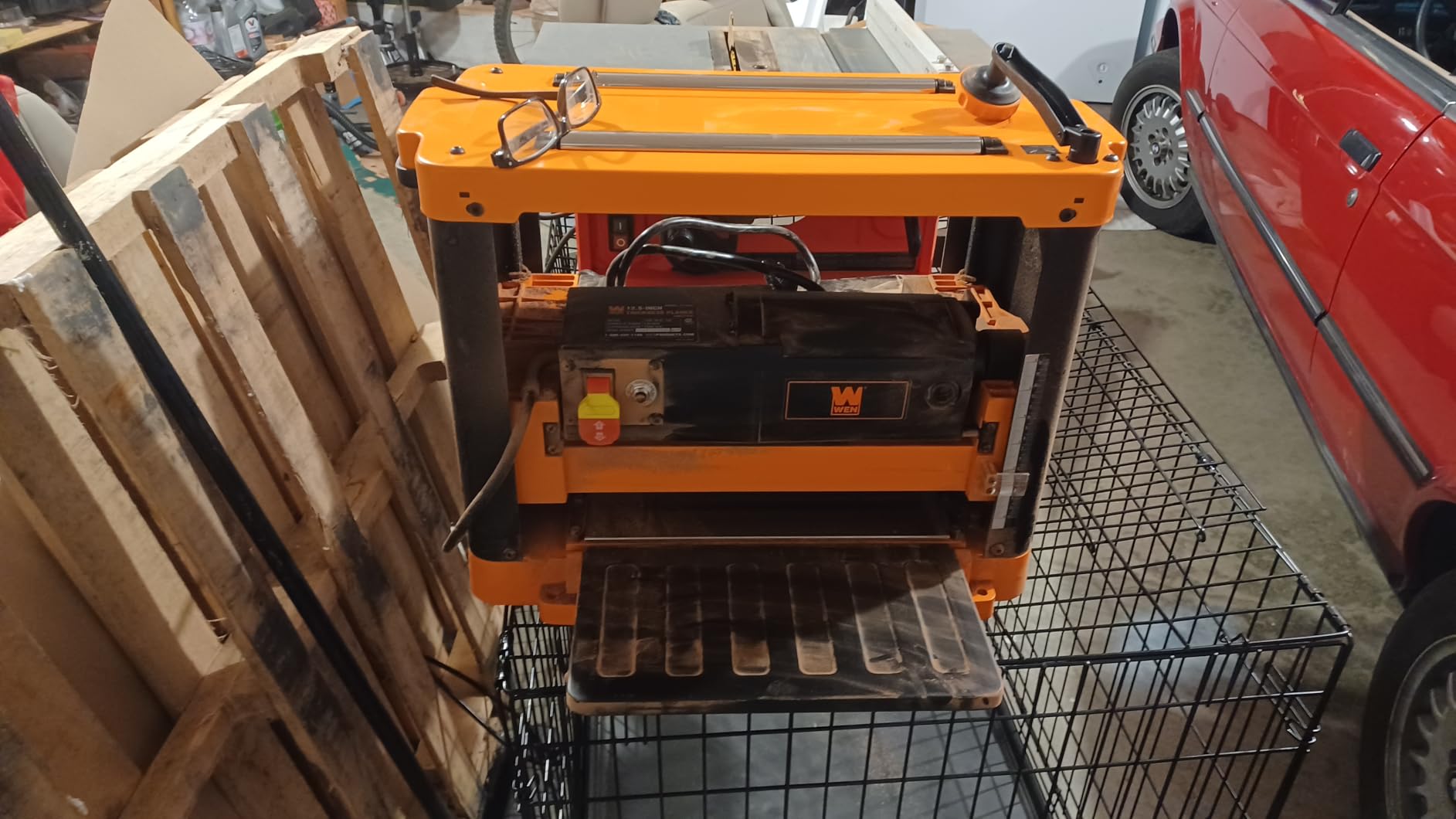
The PL1252 is the machine I would put in front of someone who wants to try planing their own weathered stock without a large commitment. Owners use it on cedar boards and dense hardwoods and report results needing little finish sanding.
Note the 0.09 inch depth of cut. That is shallower than the 0.13 inch on the DEWALT machines and the DEWALT-adjacent options here, which means more passes on a badly cupped board, and more passes on salvaged wood is exactly what you do not want.
Depth of Cut and What It Means for Cupped Boards
A 0.09 inch maximum removal is the deciding spec. Old reclaimed boards are rarely in one plane, so a shallower maximum means a longer sequence of light passes, and each pass is another chance for a straight-knife head to lift interlocked fibers.
Depth is adjustable from 0 to 1/8 inch across the board width, and boards up to 6 inches thick and 12.5 inches wide are within capacity. The 15 amp motor generates 20,000 cuts per minute at a 26 feet per minute feed rate.
SK5 Blades on Abrasive Reclaimed Wood
It ships with two reversible 12.5-inch SK5 blades. They are small and relatively cheap-looking, which means limited life, and on salvaged stock with embedded grit you will be changing them more often than the machine deserves.
The silver lining is that inexpensive two-edge blades are the cheapest insurance in this roundup against the hidden nail that finds its way into a head anyway. One ruined insert set costs a fraction of what a carbide set does.
Portability, Vibration and Support Limits
Lighter than most 12.5-inch planers, so one person can carry it, and it runs with less vibration than heavier-name competitors. The cast iron bed and sheet metal sides feel more durable than plastic-bodied machines at this level.
Front and rear roller support is needed for long boards, and the height crank feels small and somewhat fragile. Loud during operation, as with most machines in this class.
Best For: First-time planer owners working weathered cedar and softwood who want a low-commitment machine with a cast iron bed.
Skip It If: You have deeply cupped salvaged stock that needs aggressive removal, or wide boards over 12.5 inches.
8. JET JWP-13BT – The 2 HP Helical-Style Machine for Thick Salvaged Slabs
JET 13-Inch Benchtop Thickness Planer for Woodworking, Helical Style Cutterhead with 2-Speed (18 FPM / 26 FPM) Feed Rate, 2 HP, 120V 1Ph (JWP-13BT)
13 inch width
0.13 inch depth of cut
2 HP 15 amp at 10,000 rpm
26 quick-change HSS inserts
5 year warranty
+ Pros
- 26 quick-change HSS inserts give a smooth tear-free cut
- Cast iron bed and four-post design hold boards flat
- 2 HP motor has real power for hardwood and thick rough stock
- Folding tables save shop space when stored
- Backed by a five-year warranty
– Cons
- HSS inserts dull on abrasive reclaimed lumber
- Premium cost for the capacity
- Heavy at 75 pounds and needs a solid level bench
- Lowest rating in this group with a notable share of one-star reviews
The JET is the heaviest machine in this roundup at 75 pounds, and in a small shop that weight is a feature. Cast iron does not flex, and a rigid bed is what keeps a thick salvaged slab reading the same at the infeed and the outfeed.
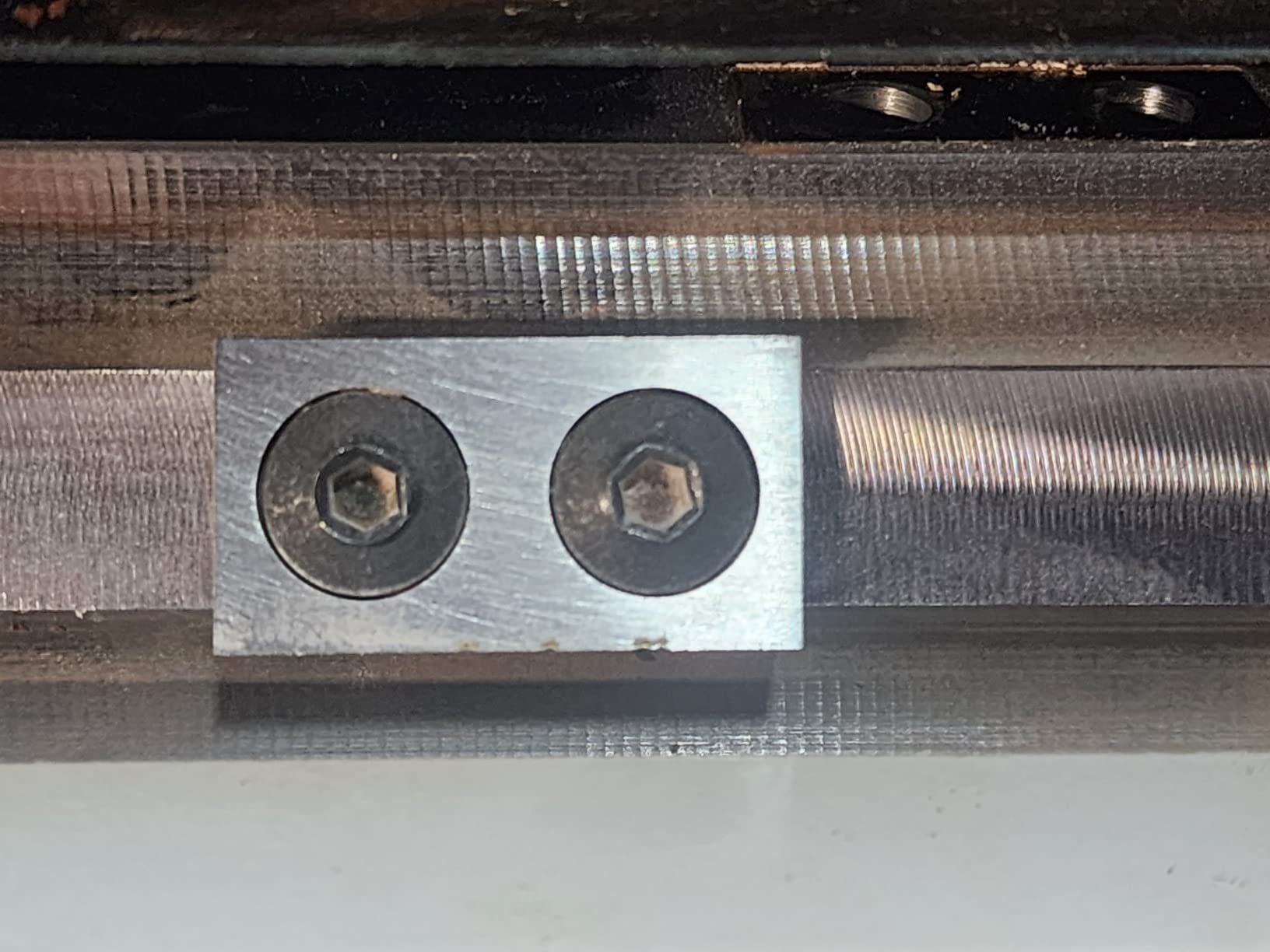
It pairs that bed with a four-post design and a helical-style head carrying 26 quick-change HSS inserts. The cut is genuinely tear-free on stock where a straight-knife head would lift grain.
Motor Power and Thick Reclaimed Slabs
The 2 HP, 15 amp motor turns the cutterhead at 10,000 rpm and carries a 0.13 inch maximum depth of cut, 6 inch depth and 13 inch width capacity. That combination is aimed at thick rough stock, and it is the reason the machine does not bog on a heavy beam.
A precision-machined cast iron bed and steel cover assist in keeping boards flat and reduce snipe. The adjustable depth stop supports consistent repetitive cuts across a batch of same-thickness parts.
Helical-Style Inserts and Their Limit on Salvaged Wood
Six rows of 26 individual quick-change high-speed steel inserts give a smoother and quieter cut than a three-knife head. The limitation is material, not design: HSS dulls on abrasive reclaimed lumber and is not as durable as carbide.
For a buyer running dry cleaned pine, HSS is the right economics. For someone with sand embedded in old hardwood, carbide holds an edge considerably longer and the per-board cost works out lower.
Warranty, Folding Tables and Shop Fit
Adjustable folding infeed and outfeed tables can be leveled to the bed and fold away when stored, which is a genuine space saver in a compact workshop. That matters when you are bringing reclaimed lumber in by the cubic yard.
The warranty is five years, reduced to two for commercial or industrial use. With only 175 reviews, long-term sentiment is thinner than the rest of the field, and the 4.2 average reflects complaints about insert durability and the premium cost.
Best For: Shops with heavy thick salvaged stock and a bench strong enough to hold 75 pounds of cast iron at a solid 75 pound stance.
Skip It If: You need carbide edge retention, a light portable machine, or a large volume of independent owner feedback to lean on.
9. RIKON 25-135H – A Helical-Style 13-Inch Head for Wide Reclaimed Boards
RIKON 25-135H 13-Inch Portable Planer with Helical-Style Cutterhead
13 inch width
6 inch thickness
1/8 inch depth of cut
26 two-edge HSS inserts
Two speeds 16 and 26 FPM
+ Pros
- 26 rotatable two-edge HSS inserts in a six-row helical head
- Two feed speeds trade speed against finish
- Threaded four-post head support holds thickness
- Dust hood with 4 inch to 2-1/2 inch adapter
- Handles wide rough lumber and thick slabs
– Cons
- Only 54 ratings so reliability is hard to judge
- HSS rather than carbide inserts
- Heavier and costlier than budget spiral-head planers
The RIKON is the sleeper here for anyone whose reclaimed material is wide. It handles stock up to 13 inches wide and 6 inches thick with up to 1/8 inch depth of cut on boards 6 inches wide or less, and the helical-style head makes that width usable on figured stock rather than just on framing.
The dust hood and a 4 inch to 2-1/2 inch adapter are included, which is a real convenience when your collector hose is not the size the machine ships with.
Helical-Style Head and Rotatable Inserts
A six-row helical-style cutterhead uses 26 two-edge HSS inserts that rotate when worn or nicked. That is the same maintenance model as the WEN PL1326, and on salvaged wood the ability to flip an insert is what keeps your running cost down.
Two feed speeds at 16 or 26 surface feet per minute let you choose between faster material removal and a smoother finished surface. On a pile of rough joists you run the fast speed; on figured stock you slow down.
Threaded Four-Post Support and Repeat Cuts
The threaded four-post head support is a meaningful upgrade over a plain post design. Combined with a depth gauge, thickness scale and repeat-cut control, it holds consistent stock thickness across a batch, which is what you need when turning a stack of salvaged boards into matched parts.
Repeat cuts land the same depth every time, so once you have a setting, the rest of the batch follows it without re-dialing.
What a Small Review Base Means for You
With 54 ratings, long-term reliability is genuinely hard to judge, and most assessments of durability are extrapolated from RIKON’s other machines rather than from this one. That is not a deal breaker, but it is a fair warning.
The dust hood and adapter fit common dust collectors or shop vacuums, and the 13 inch capacity suits most rough lumber and thick slabs. Budget for HSS insert replacement as a recurring line item.
Best For: Wide reclaimed lumber where you want a helical-style cut and two feed speeds without moving to a stationary machine.
Skip It If: You want a large body of owner feedback, or you need carbide inserts for abrasive stock.
10. FindBuyTool FB131H – The Carbide Helical Head at a Residential Price Point
FindBuyTool 13″ Benchtop Wood Thickness Planer with Helical Cutterhead, 120V 15-AMP 20000RPM Power Electric Motor Infeeding Worktable for Woodworking
13 inch width
0.12 inch depth of cut
40 tungsten carbide inserts
20,000 rpm at 27.5 FPM
Four-column design
+ Pros
- Tungsten carbide inserts outlast HSS on abrasive reclaimed wood
- Four-column design holds thickness within a tight tolerance
- Helical head cuts quietly with minimal tear-out
- Small chips keep dust collection from clogging
- Eight-position depth stop speeds up repeat batches
– Cons
- Rated a residential tabletop machine with hard limits
- Only 45 ratings so long-term data is thin
- Manufacturer advises working in small batches
- Heavy at 70 pounds
This is the only machine in the roundup with 40 tungsten carbide inserts on a true helical cutterhead, and on the single variable that matters most for salvaged wood, edge retention, that is the decisive spec. Carbide shrugs off the sand and grit embedded in old barn lumber in a way no HSS option here manages.
The helical head shears rather than chops, which means quiet cutting and minimal tear-out on figured stock, and the four-column design holds thickness tolerance under 0.1mm.
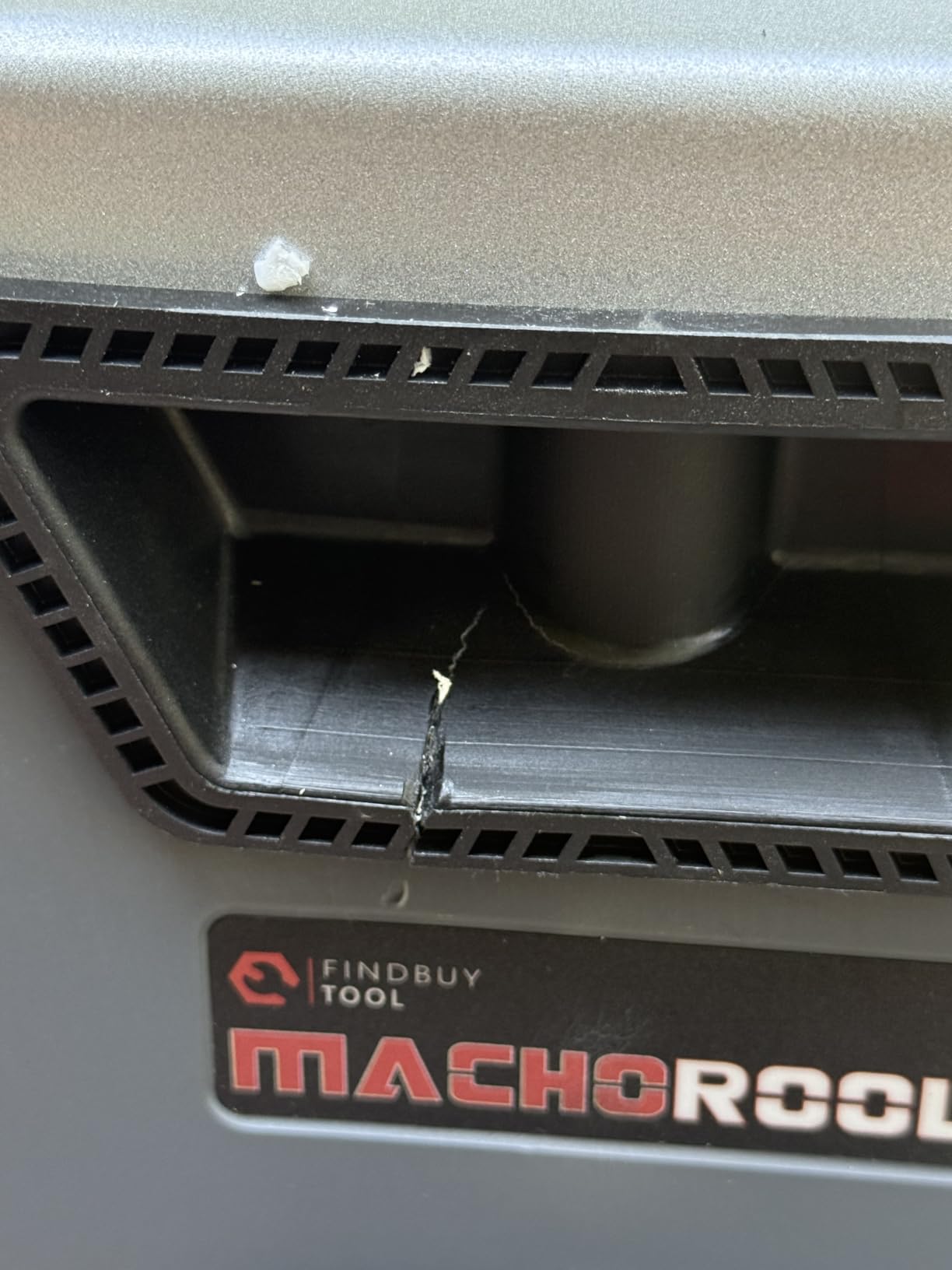
Carbide Inserts and What They Save on Salvaged Wood
Compare this to an HSS spiral head. When a blade dulls on abrasive reclaimed wood, you can rotate it, then rotate it again, and then you are buying a new set of 26. With carbide inserts, the same job typically costs fewer replacements over the life of the machine.
For someone running hundreds of board feet of salvaged walnut, beech or white oak per year, that arithmetic is the whole purchase decision. The counter-argument is that each carbide set costs more, so a single dropped-in nail is a more expensive mistake.
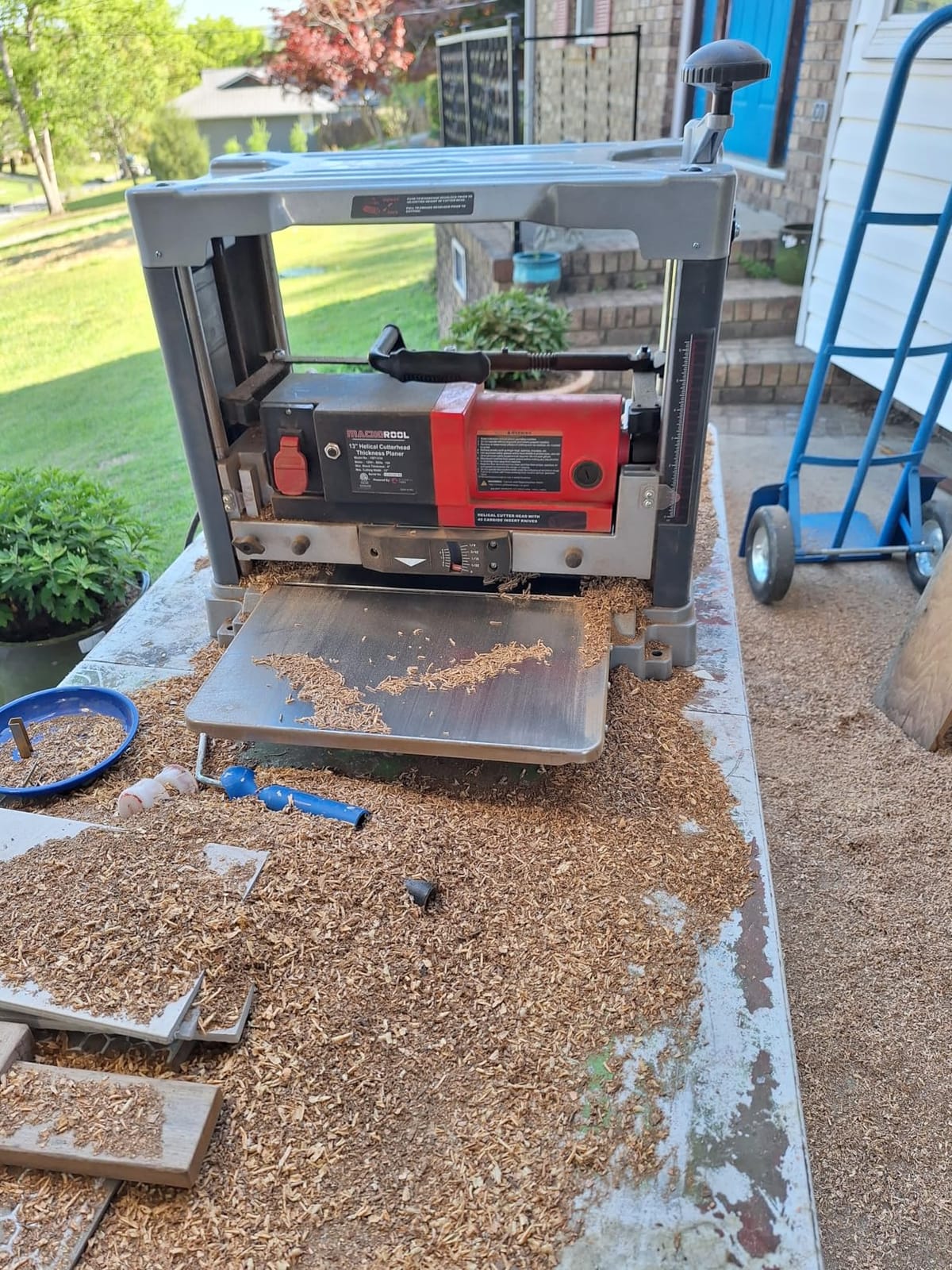
Four-Column Accuracy and Helical Cut Quality
The four-column design and anti-wobble foundation are what hold even thickness within a very tight tolerance. On warped reclaimed boards that support is doing real work, since the stock is never entering the machine straight.
The 120V 15 amp motor runs at 20,000 rpm with a 27.5 FPM feed rate, and the four-row helical cutterhead produces smaller chips for fast removal without clogging. That chip behavior is a genuine advantage with dirty reclaimed material and a constrained collection system.
Residential Limits and the Batch Advice
It is rated a residential tabletop machine, with a 1/8 inch maximum planing depth and 13 inch maximum planing width as hard limits, and the manufacturer advises working in small batches to avoid overloading it. Plan your salvaged stock accordingly rather than trying to push a thick beam through in one pass.
An eight-position repeat cut depth stop makes thicknessing a batch of boards to the same size quick. With only 45 ratings, long-term reliability data is thin, so budget for inserts and treat early performance as your own evaluation.
Best For: Woodworkers running abrasive salvaged hardwood who want carbide edge retention and a shearing helical cut in a residential machine.
Skip It If: You need commercial duty cycle, deep removal in a single pass, or a large body of independent owner feedback.
How to Choose a Thickness Planer for Reclaimed Lumber
Straight, Spiral or Helical Cutterhead
This is the decision that matters most for salvaged wood, and it is the one most guides get wrong by treating it as a finish-quality question. A straight knife cuts with a chopping action, so each blade lifts fibers ahead of the edge. On interlocked reclaimed grain that becomes tearout, and on hidden embedded grit it becomes a nicked knife. Spiral and helical heads shear the fiber instead, which is why forum users describe the change as night and day on figured and salvaged stock.
Between the two, spiral inserts sit parallel to the axis of rotation while helical inserts are tilted roughly 14 degrees. Both shear; the tilt changes how the chip breaks and how quiet the cut is, with helical generally quieter. Helical setups also tend to use more inserts, which spreads wear rather than concentrating it.
For reclaimed lumber specifically, if your material is mostly rough softwood, a good three-knife head will serve you. If it is walnut, beech, oak or anything figured, spend the money on spiral or helical.
Width, Height and Depth of Cut
Reclaimed stock dictates width more than any other dimension. Rough-sawn 2×12 material is 13 inches wide, so a 12.5 inch or 12.25 inch machine means splitting every board, and old hardwood flooring often needs far less width. Measure your actual stock before buying.
Maximum depth of cut tells you how much you can remove per pass. The DW735X, DW734 and CMEW320 offer 0.13 inch, the FindBuyTool offers 0.12 inch, and the PL1252 offers 0.09 inch. On a badly cupped salvaged board, that spread is the difference between six light passes and one aggressive one, and light passes are safer on interlocked grain.
Height capacity of 6 inches covers essentially all reclaimed material you will encounter, and every machine here manages it.
Feed Speed and Cuts Per Inch
Feed speed determines how much material the head meets per inch of travel, and cuts per inch determines how finely it is divided. High CPI gives a smoother surface; lower CPI and a faster feed gives faster stock removal.
Two-speed machines let you make that tradeoff per job, which matters on reclaimed work where you might run thick beams in the morning and figured boards in the afternoon. Single-speed machines are not a problem, they just require you to control finish with depth of cut instead.
Motor Power and Stalled Cuts
Fifteen amps is the standard in this class and the DW735X, DW734, CMEW320, PL1326, PL1252, JET, RIKON and FindBuyTool all sit there. The outliers are the VEVOR with a 2000W motor at 23,500 rpm and the JET with a genuine 2 HP motor.
Motor power only matters if you will use it. A cheap single-speed planer cannot take full-depth passes on hard reclaimed hardwood without stalling, and a stall on a salvage board is how you chip a knife. Buy power if you intend to take deep passes on old oak; do not if you are taking light ones on pine.
Dust Collection for Dirty Stock
Clean lumber makes modest dust. Reclaimed lumber makes grime, grit and old finish, and shop vacs clog in seconds. Plan on a dust collector with a cyclone separator, and check port size before buying: the Makita’s outlet is sized for a collector rather than a shop vac hose, and the PL1252 needs front and rear roller support for long boards regardless.
Treat dust collection as part of the machine purchase, not an accessory you will get to later.
Knife and Insert Cost on Salvaged Wood
Nail strikes, brads, shot and rust oxide are the reasons people burn through cutterheads on reclaimed lumber, and users accept this as inevitable. What you can control is how expensive the damage is. HSS insert heads let you rotate an edge before replacing it, and the PL1252 ships with inexpensive two-edge SK5 blades that make a bad day cheap. Carbide heads such as the FindBuyTool resist dulling far better on abrasive wood, but each replacement set costs more.
Two more real-world notes. Frequent use demands frequent changes, so a fast blade change system pays for itself, and the Makita stores its tools inside the machine for exactly this reason. And oil residue and sap on the feed rollers cause slippage, which reads as inconsistent thickness, so clean the rollers as part of your maintenance routine.
Frequently Asked Questions
What is the best thickness planer for the money?
For most shops, the WEN PL1326 offers the best balance: a 26-blade spiral cutterhead with rotatable inserts, 13-inch width and a cast iron base, which handles figured reclaimed grain far better than a straight-knife machine at a fraction of helical-head cost. If you want maximum power on rough beams instead, the DEWALT DW735X is the benchmark. Judge on cutterhead type and depth of cut rather than horsepower alone.
Which type of lumber should not be run through the planer?
Never run lumber with hidden nails, screws, brads or shot, since a fastener will damage knives and can stall the motor. Do not plan wet, unseasoned or frozen stock, because the fibers tear and readings become unreliable. Skip material with unknown old finishes such as lead paint or tar unless you are equipped for the dust. Also skip boards still cupped beyond what light passes can correct, since a planer removes material from high spots and does not flatten a twist.
Is the Harbor Freight planer any good?
Owner reports on Harbor Freight planers are mixed in the same way they are for most entry-level machines. The recurring pattern is adequate power for softwood and hobby work paired with complaints about factory knife quality, table leveling and limited after-sales support. For reclaimed lumber, a spiral or helical cutterhead with rotatable inserts is a better bet than a straight-knife machine, and the WEN PL1326 covers that approach at a comparable entry level.
What are people saying about the Ridgid thickness planer?
Ridgid is the brand most often mentioned in woodworking forums for durability and a lifetime warranty, which is a repeated buying driver for people who keep machines for decades. Owners value the cast iron bed and the ability to service it long term. When choosing among the machines in this roundup, the choice is between brands with the largest replacement-parts networks and the most independent owner feedback, and that favors the established names over any budget import.
Are helical head planers better?
For reclaimed lumber, helical and spiral heads are meaningfully better than straight knives because they shear the fiber instead of chopping it, which reduces tearout on interlocked grain and lowers noise. Helical inserts are tilted roughly 14 degrees versus spiral inserts running parallel to the axis of rotation, and the tilt produces a quieter cut with more inserts sharing the wear. Straight-knife machines remain fine for rough softwood once the wood is clean.
Do I need a jointer before using a thickness planer?
You need a flat reference face before a planer can produce a flat, parallel board, which means a jointer, a hand planer or a planer sled comes first. A planer removes material from the high spot on each pass and cannot correct cup, twist or bow, so feeding it warped stock yields a board that is merely less warped. Long, heavy salvaged boards work well on a sled, which is also the cheapest way to handle a small stack of one-off reclaimed boards.
How do you remove nails before planing?
The consensus routine among people who work salvaged lumber is to remove every fastener before the board goes anywhere near a machine. A propane torch blast loosens rusted nails and screws and makes extraction far faster, followed by pulling and a magnet sweep of the debris. Then pressure wash the board, stiff-wire brush the surface and blow it down with compressed air, and finish with a metal detector pass as a fast first sweep rather than a guarantee.
The Best Thickness Planer for Reclaimed Lumber in 2026
If you want the best thickness planer for reclaimed lumber and run a mixed load of old framing lumber, beams and thicker boards, the DEWALT DW735X is the one to buy. Its 15 amp motor, 0.13 inch depth of cut, two feed speeds and automatic carriage lock handle the widest range of salvaged stock without complaint, and at 13 inches wide it takes a rough 2×12 as-is.
If your reclaimed material is figured or interlocked grain, buy a spiral or helical head instead. The WEN PL1326 is the sensible entry, the JET JWP-13BT and RIKON 25-135H cover the 13-inch helical class, and the FindBuyTool FB131H is the pick when you want carbide edge retention on abrasive wood.
If noise or portability decides it, the Makita 2012NB at 83 dB is the machine for a shared wall, at the cost of width. If your stock is softwood trim and fence boards on a tight budget, the CRAFTSMAN CMEW320 and WEN PL1252 both work, and the VEVOR is there for maximum power on rough material.
Whatever you choose, prep the lumber before you own the problem: pull the nails, pressure wash, wire brush, blow off and flatten one face. The right machine cannot rescue a board that has not been cleaned, and no machine on this list will flatten a twist. Pick one, prep properly, and take light passes.
Leave a Reply