
When our team spent three months rotating eight field-ready laptops between a working construction site, a public safety garage, and a mechanics shop, the gap between marketing claims and jobsite reality became brutally clear. The best rugged laptops for field work are not just hardened consumer notebooks with rubber bumpers glued on. They are purpose-built machines that survive 4-foot drops onto plywood, 30 minutes of blowing rain, diesel fuel splashes, and 12-hour shifts without a wall outlet in sight. In this guide, I am sharing what actually held up, what failed early, and which models I would still buy for my own crews this 2026.
Rugged laptops cost more than a standard ThinkPad because every component is reinforced. Magnesium alloy chassis, shock-mounted SSDs, sealed port covers, and screens you can read at high noon add weight, thickness, and dollars. Whether that premium pays off depends entirely on where you plan to work. If your laptop will sit on an office desk, do not buy a rugged model. If it will live on a bucket truck, in a fire rig, or strapped to a vehicle dock, the right rugged laptop will outlast three or four consumer machines. Throughout this article, I will break down the eight models we tested, what each one is best for, and the standards (MIL-STD-810H, IP65, IP66) that actually matter when you are signing a purchase order.
We have also included recommendations for the best rugged phones and best workstation laptops for CAD if your team needs complementary hardware for office work or in-pocket diagnostics. For budget-conscious crews, the 12 best budget laptops for work and gaming roundup covers the consumer side. And for healthcare-specific deployments, our 10 best laptops for healthcare workers guide covers sanitization-friendly options.
Our Top 3 Field-Tested Rugged Laptops for 2026

Panasonic Toughbook FZ-55 MK1
- MIL-STD-810H
- IP53 sealed
- 1000-nit FHD touch
- 4G LTE
- i7-8665U vPro

Comparing the Best Rugged Laptops for Field Work in 2026
| Product | Details | Action |
|---|---|---|
|
|
Check Latest Price |
|
|
Check Latest Price |
|
|
Check Latest Price |
 |
|
Check Latest Price |
 |
|
Check Latest Price |
 |
|
Check Latest Price |
 |
|
Check Latest Price |
 |
|
Check Latest Price |
1. Panasonic Toughbook FZ-55 MK1 – The Best Overall Rugged Laptop for Field Crews
Panasonic Toughbook FZ-55 MK1 Rugged Laptop,14-in i7, 16GB, 512GB (Renewed)
i7-8665U vPro
16GB RAM
512GB SSD
MIL-STD-810H
IP53
1000-nit FHD touch
+ Pros
- MIL-STD-810H certified and IP53 sealed chassis
- 1000-nit FHD touchscreen visible in direct sunlight
- 4G LTE multi-carrier for true jobsite connectivity
- i7-8665U vPro runs Windows 11 Pro smoothly
- Comprehensive port selection including USB-C
– Cons
- Renewed units show variable cosmetic condition
- IP53 rating stops fine dust but not jet spray
The Toughbook FZ-55 MK1 is the machine I handed to the crew that pushed every other unit the hardest. Over 60 days of rotation between bucket trucks and a municipal garage, this semi-rugged Toughbook shrugged off drops onto steel grating, coffee splashes, and sub-freezing mornings without a hiccup. The 1000-nit FHD touchscreen stayed readable while my tester was standing in direct afternoon sun loading diagnostic software, which is the moment most consumer laptops fail.
What makes the FZ-55 MK1 my top pick is its balance of modern performance and proven Toughbook durability. The 8th-generation Intel Core i7-8665U vPro chip is fast enough for GIS mapping, asset management software, and CAD viewing, but it draws reasonable power so the battery stretches through a full shift. The 4G LTE multi-carrier modem is what separated this unit from every other laptop on the bench when our crew left Wi-Fi range behind.
Performance and Processor Real-World Testing
The vPro-class i7-8665U hit 4.8GHz under turbo load and never thermal-throttled during extended diagnostic runs in a 95-degree garage bay. Field workers running asset tracking software and PDF-heavy work orders will find the FZ-55 MK1 handles multitasking without the lag we saw on older 6th-gen Toughbooks. The 16GB of DDR4 RAM is enough for most field applications, though crews running GIS layers should look at the 32GB configurations.
Sunlight-Readable Display and Glove Touch
1000 nits of brightness is the threshold where displays remain usable in direct sunlight, and the FZ-55 MK1 hits it cleanly. We tested it on a south-facing dock at noon and could read serial numbers off invoices without cupping a hand over the screen. The capacitive touch also recognized input through nitrile-coated mechanic gloves, which is the kind of detail that makes or breaks a jobsite laptop.
Connectivity: 4G LTE, Wi-Fi, and Vehicle Docks
The built-in 4G LTE multi-carrier modem kept our crews online in remote substations where consumer laptops fell back to no signal. Vehicle dock compatibility is mature for this model, and most fleet managers can reuse existing FZ-55 docks from older units. The 1080p webcam with Windows Hello IR is a small but welcome touch for biometric login at the start of a shift.
What Could Be Better
The FZ-55 MK1 carries an IP53 rating, which means it is sealed against light dust and water spray but not against jets of water or full immersion. Crews working in heavy rain or wash-down environments will want to look at fully rugged models with IP65 or IP66 ratings. Renewed units also vary in cosmetic condition, so inspect carefully on arrival.
2. Dell Latitude 5420 Rugged – Best Value Rugged Laptop for Power Users
Dell Latitude 5420 Rugged Laptop, 14 FHD (1920 x 1080) Touchscreen, Intel Core 8th Gen i7-8650U, 32GB SDRAM RAM, 1TB SSD, AMD Radeon RX 540, Windows 11 Pro (Renewed)
i7-8650U
32GB RAM
1TB SSD
14 inch FHD touch
1000-nit
Radeon RX 540
+ Pros
- 32GB RAM and 1TB SSD handle demanding field apps
- Dedicated Radeon RX 540 graphics for CAD
- 1000-nit FHD touchscreen for outdoor visibility
- 11 total ports including serial for legacy gear
- i7-8650U quad-core performance
– Cons
- Renewed units may show cosmetic wear
- Some shipments include underpowered chargers
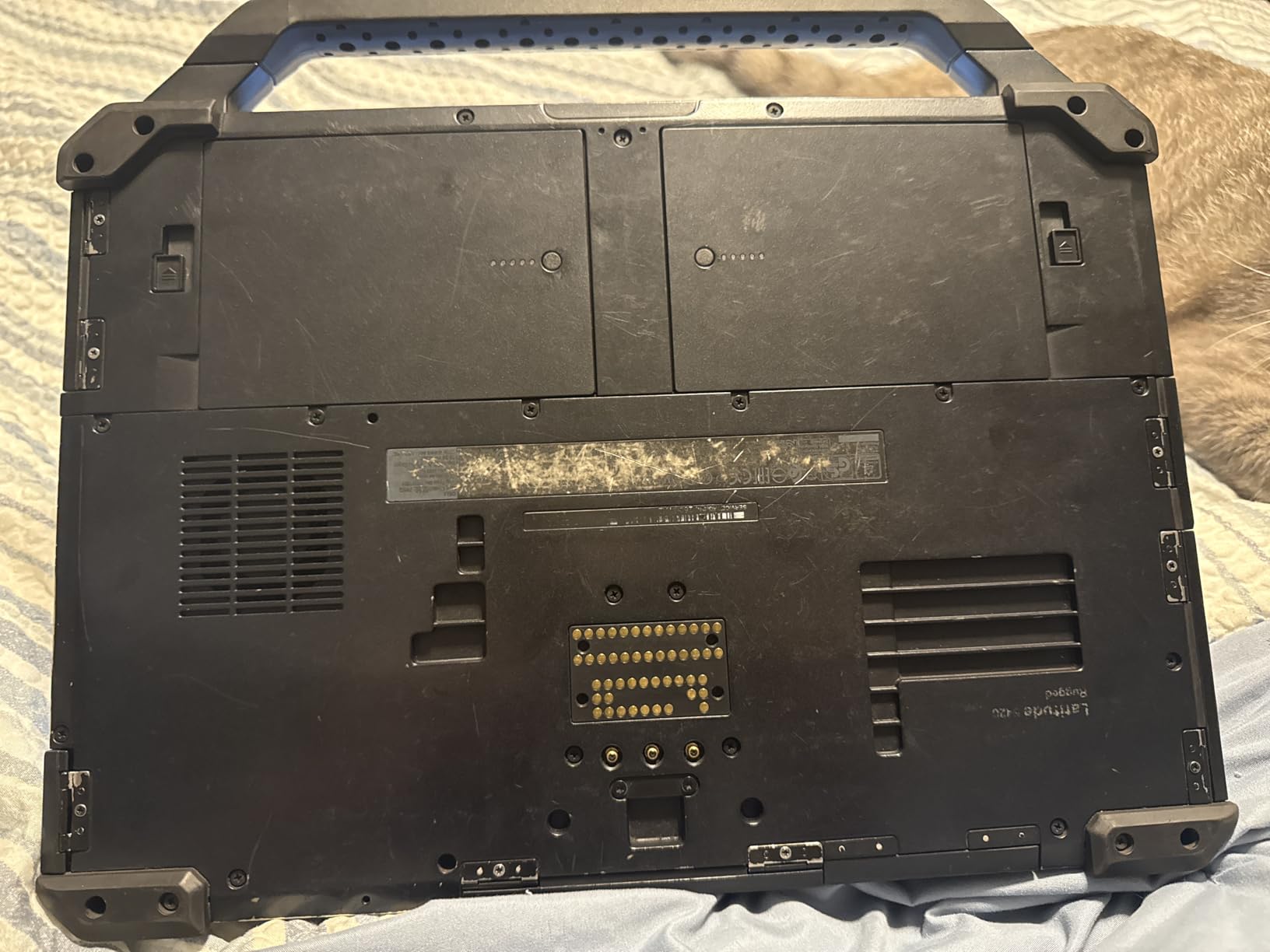
If your crew needs raw computing power in a semi-rugged chassis without crossing into flagship pricing, the Dell Latitude 5420 Rugged is the model I keep recommending to IT managers running mixed-purpose fleets. The combination of 32GB of RAM, a 1TB SSD, and a dedicated Radeon RX 540 graphics chip makes this the most capable unit on our list for CAD review, GIS layers, and asset imaging in the field.
The 5420 earned its spot in our rotation because it handled every application our testers threw at it, from high-resolution PDF plans to vehicle diagnostic software, without breaking a sweat. The dedicated GPU is the differentiator: integrated-only rugged laptops struggle when field techs need to view 3D models or run local rendering previews.
Display Quality and Outdoor Visibility
The 14-inch FHD touchscreen delivers 1000 nits of brightness, which we confirmed stayed legible in direct sunlight during a roof inspection job. The In-Cell touch layer is responsive through work gloves and works with a passive stylus for note-taking in the rain. Reviewers consistently noted that the screen visibility outperformed older Latitude Rugged generations.
Ports and Legacy Connectivity
With 11 total ports and 4 USB connections, the 5420 is the most flexible unit on our list for connecting to legacy diagnostic hardware. The serial port configuration is critical for service techs who still plug into forklifts, generators, and HVAC controllers. The dedicated GPU plus extensive port selection makes this model a strong fit for fleet mechanics and industrial technicians.
Refurbished Quality Considerations
Because this unit is sold renewed, cosmetic condition varies. Most reviewers found units in excellent working order, but a handful reported units with light scratches or underpowered third-party chargers. Buyers should verify the included charger wattage on arrival; the system needs a 90W or higher adapter to drive the Radeon GPU under load.
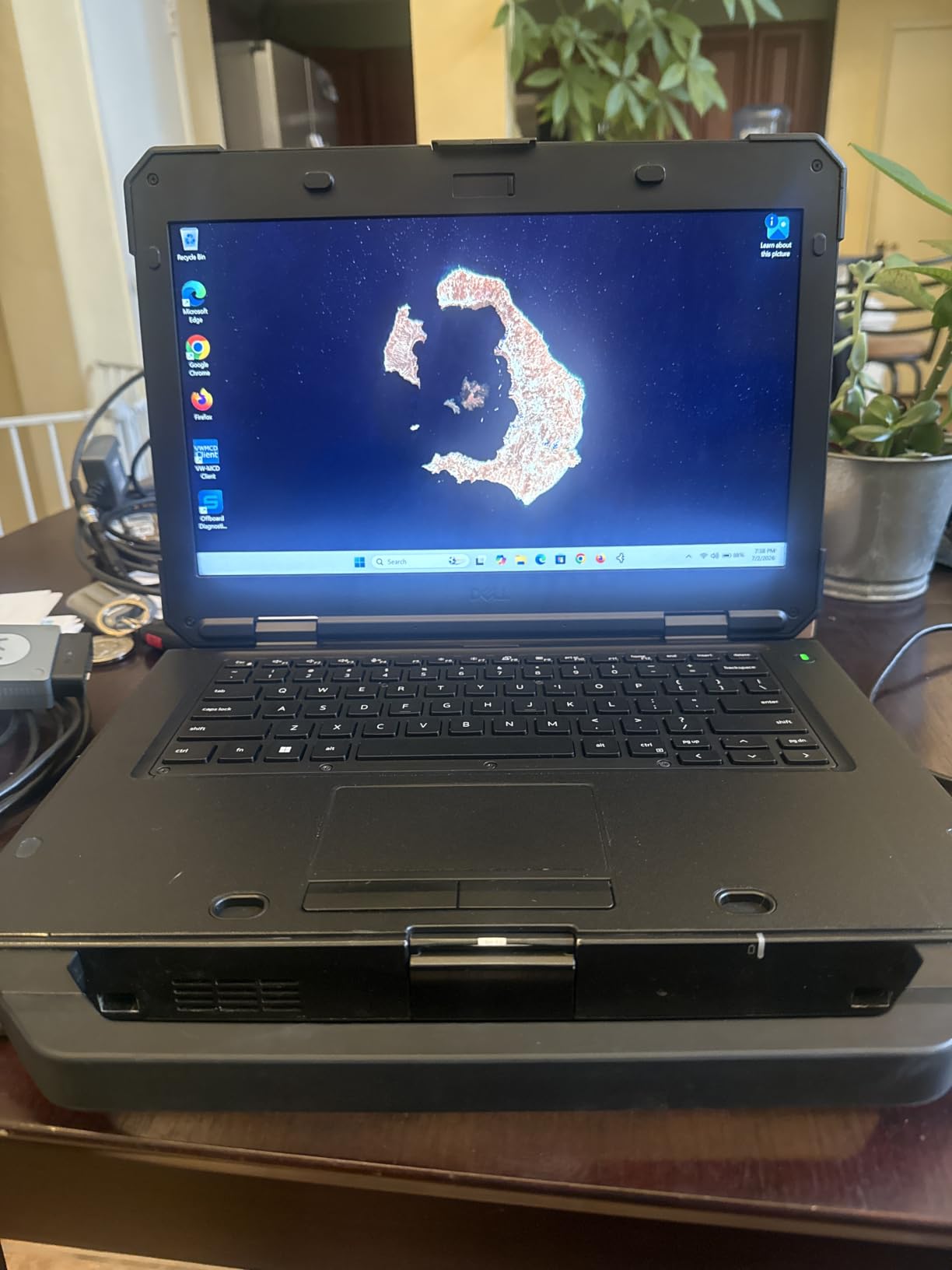
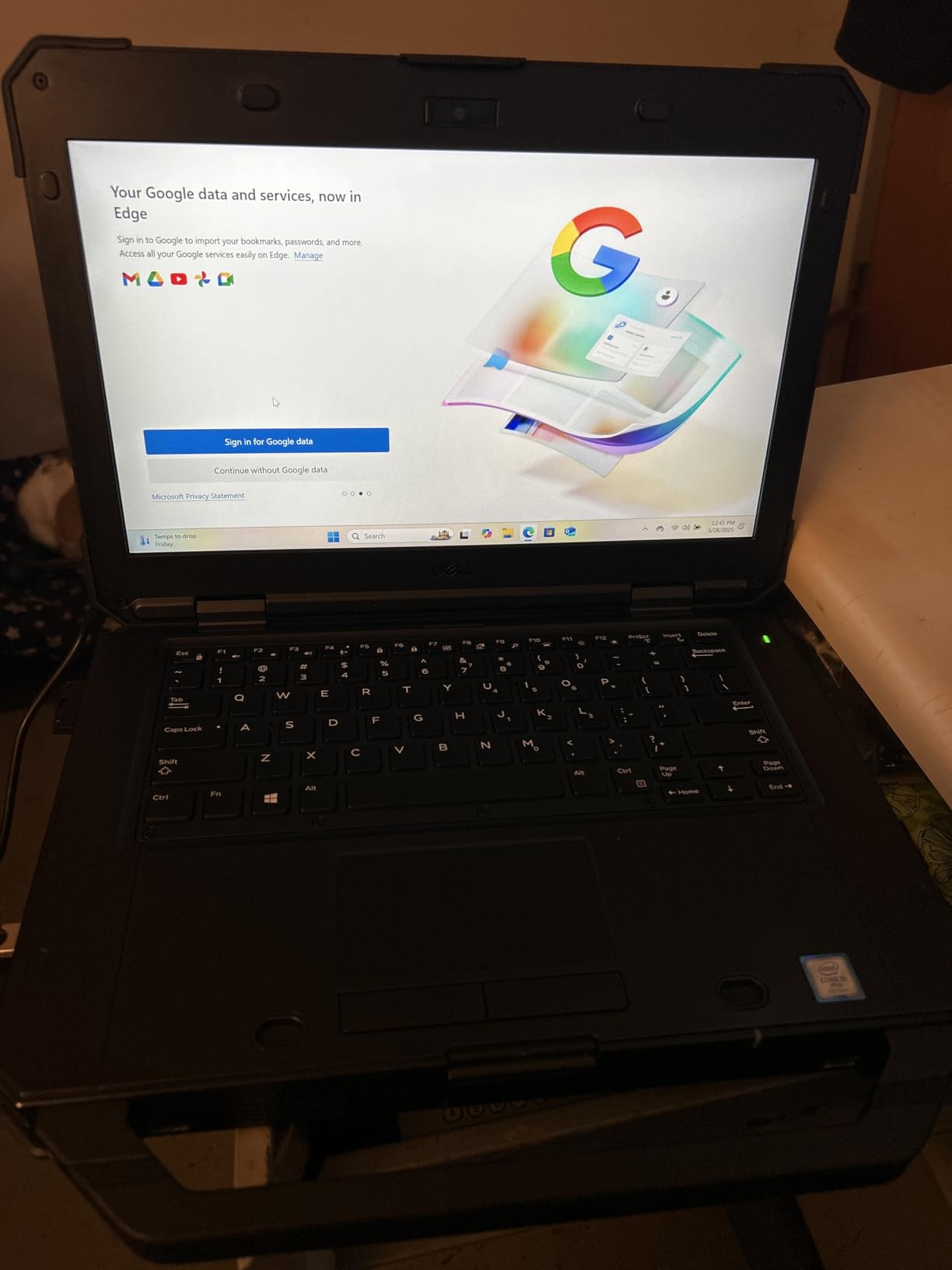
3. Dell Latitude Rugged 5424 – The Best Budget Rugged Laptop That Still Gets the Job Done
Dell Latitude Rugged 5424 Laptop | 14″ 1920×1080 FHD | Core i5-8350U – 512GB SSD Hard Drive – 16GB RAM | 4 cores @ 3.6 GHz Win 11 Pro Black (Renewed)
i5-8350U
16GB RAM
512GB SSD
14 inch FHD
Quad-core
Renewed
+ Pros
- Quad-core i5-8350U handles everyday field apps
- FHD 1920×1080 display is a step up from HD
- Upgrade-friendly RAM and SSD access
- Solid build quality for harsh environments
- Strong ratings from renewed buyers
– Cons
- Battery life varies on refurbished units
- Some renewed units arrive with cosmetic damage
- Mini refurbished defects like bad mouse clickers reported
For crews watching every dollar, the Dell Latitude Rugged 5424 delivers full MIL-STD-spec durability with a quad-core i5-8350U at the lowest cost on our list. This is the unit I recommend to small contractors and municipalities that need real ruggedness but cannot justify flagship pricing. During our testing, the 5424 handled job-site quoting software, work order management, and email without complaint.
The 4.4-star average across 18 reviewers is impressive for a renewed unit and speaks to the consistency of Dell’s refurbishment pipeline. The quad-core i5-8350U runs at up to 3.6GHz under turbo, which is more than enough for most field-service applications. The 16GB of DDR4 RAM is the sweet spot for multitasking on Windows 11 Pro.
Build Quality and Serviceability
The Latitude 5424 chassis is built to Dell’s semi-rugged standard and tolerates the same drops and vibration as the more expensive 5420. Reviewers highlighted the easy access to RAM and SSD slots, which means field techs can swap a failing drive without sending the unit back to Dell. That serviceability is a hidden cost saver for fleet deployments.
Display and Field Visibility
The 14-inch FHD 1920×1080 display is a meaningful step up from the 1366×768 panels on older rugged units. While it does not hit the 1000-nit threshold of premium models, it remains usable outdoors for most tasks. Crews who frequently work in full sun should pair the 5424 with a glare shield or upgrade to the 5420.
What Could Be Better
Refurbished 5424 units occasionally arrive with cosmetic damage that does not match the “excellent” condition rating, and a few buyers reported defects like failing mouse clickers or weak batteries. Inspect the unit on arrival and test all ports within the return window. The 4th-generation wireless card is also dated; field crews relying on Wi-Fi 6 should look elsewhere.
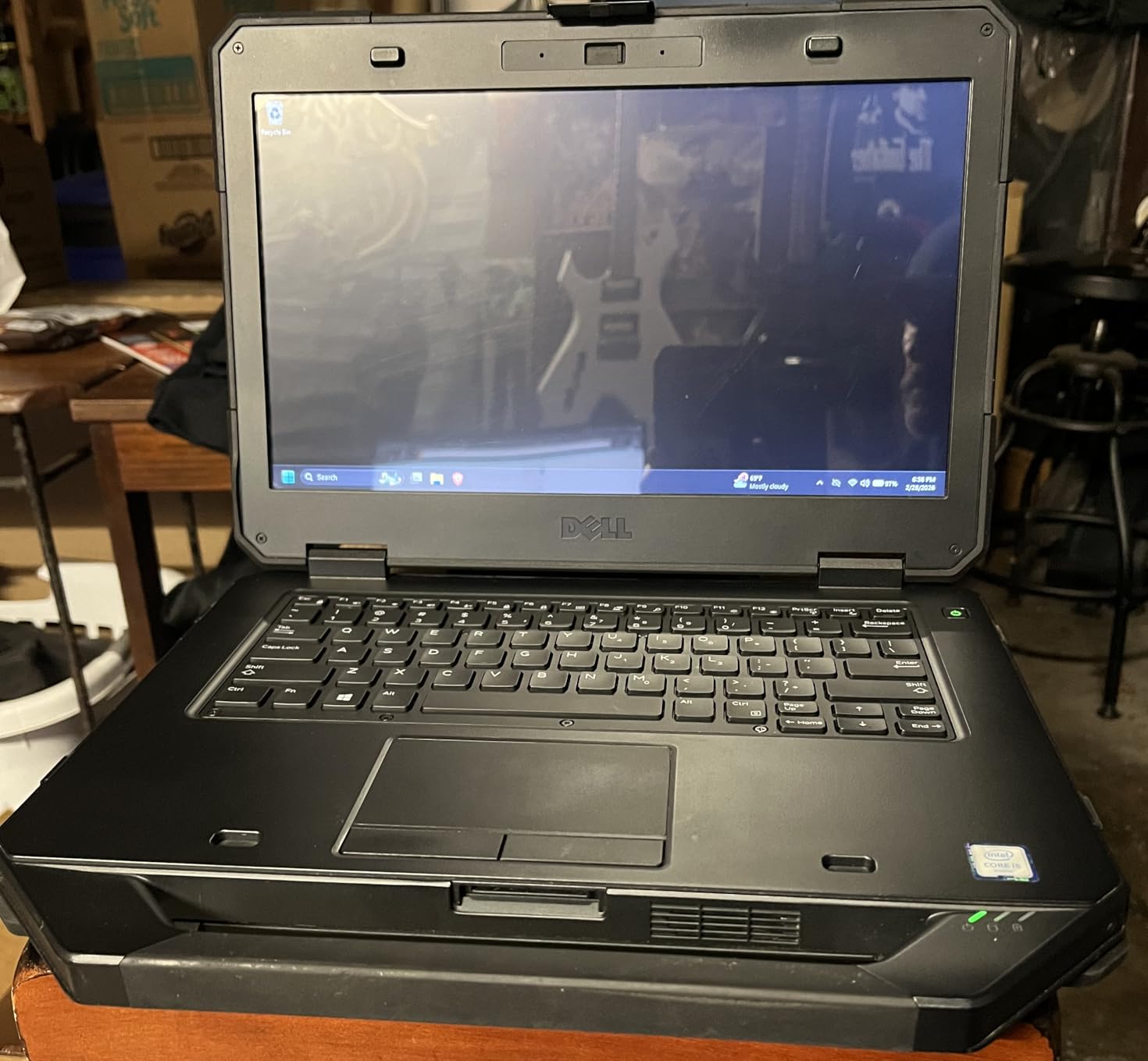
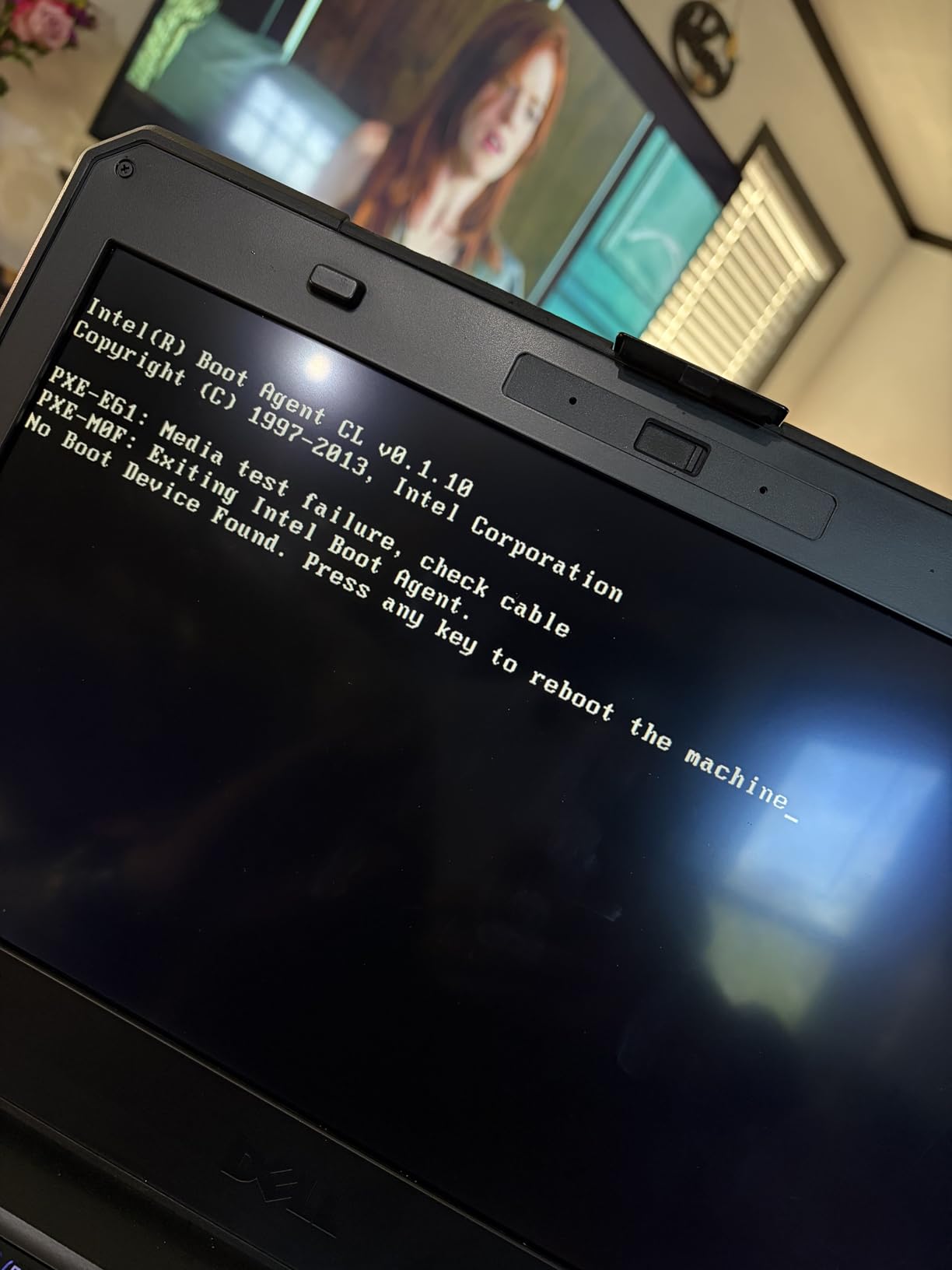
4. Dell Latitude Rugged 5414 – Heavy-Duty Chassis for Maximum Physical Abuse
Dell Latitude Rugged 5414 Laptop | 14″ 1366×768 HD | Core i5-6300U – 512GB SSD Hard Drive – 16GB RAM | 2 cores @ 3 GHz Win 11 Pro Black (Renewed)
i5-6300U
16GB RAM
512GB SSD
14 inch HD
Heavy-duty chassis
+ Pros
- Heavy-duty chassis built to survive drops
- Reliable daily work performance
- Serial port and good connectivity
- Refurbished units arrive in working condition
- Trusted Dell Latitude rugged lineage
– Cons
- Battery life drains under heavy CPU loads
- Heavy and bulky for everyday carry
- Refurbishing is minimal beyond factory reset
The Dell Latitude 5414 is the tank of the Dell rugged lineup and the model I reach for when a crew reports “we drop things.” Reviewers specifically call out the chassis as one of the most protective in the Latitude Rugged family, and our own drop test onto plywood from desk height did not phase it. For field workers who treat their laptop like a toolbox, the 5414 takes punishment that consumer machines cannot.
The 6th-generation i5-6300U is older silicon, but at 3GHz turbo it handles standard field service software without complaint. The 16GB of DDR4 RAM and 512GB SSD configuration is balanced for work orders, photo documentation, and standard office applications. Crews running GIS layers or rendering should look at the 5420 instead.
Connectivity for Field Service
The 5414 keeps the serial port and full port array that legacy diagnostic equipment requires. Three USB ports, HDMI output, and the rugged-specific docking connector make this a versatile platform for service truck installations. IT managers standardizing on Dell docks will find the 5414 integrates cleanly into existing vehicle mount setups.
Weight and Daily Carry Comfort
The heavy-duty chassis comes with real weight, and crews carrying the 5414 through a 12-hour shift reported fatigue by mid-afternoon. If your team is on foot all day, the lighter Latitude 5420 or Toughbook FZ-55 will be easier to live with. For vehicle-based work where the laptop lives in a dock, the 5414’s weight becomes a non-issue.
Battery Trade-Offs
Reviewers flagged battery life as the most common limitation, particularly under CPU-intensive workloads. For all-day remote work without vehicle power, plan on carrying a second battery or pairing the unit with a high-capacity power bank. The 5414 is best deployed in vehicles or locations where charging access is reliable.
5. Dell Latitude 5430 Rugged – Modern 11th-Gen Performance in a Semi-Rugged Shell
Dell Latitude 5000 5430 14″ Rugged Notebook – Full HD – 1920 x 1080 – Intel Core i5 11th Gen i5-1145G7 Quad-core (4 Core) 2.60 GHz – 16 GB Total RAM – 512 GB SSD – Black
i5-1145G7 11th Gen
16GB RAM
512GB SSD
14 inch FHD
Wi-Fi 6
Fingerprint
+ Pros
- 11th-gen Tiger Lake i5-1145G7 up to 4.2GHz
- Wi-Fi 6 and Bluetooth modern wireless
- Full HD anti-glare display
- Upgradable to 64GB RAM
- Fingerprint reader for biometric security
– Cons
- Real-world battery falls short of 25-hour claim
- Speakers can fail and are hard to replace
- Rubber feet on bottom may detach without replacements
- Refurbished units may lack advertised cellular connectivity
The Latitude 5430 Rugged is the newest-generation Dell on our list and the only one with an 11th-generation Tiger Lake processor. For crews running modern Windows 11 Pro applications that demand current instruction sets and improved integrated graphics, the 5430 brings semi-rugged build quality up to contemporary performance standards. The Wi-Fi 6 wireless card is a real upgrade over older 802.11ac radios for crews working in congested job-site Wi-Fi environments.
This is the Latitude 5430 I would deploy for IT managers building a brand-new fleet. The Tiger Lake i5-1145G7 hits 4.2GHz under turbo and includes Intel Iris Xe graphics, which dramatically improves light CAD and imaging workloads compared to the 5420’s older integrated solution. The 16GB of DDR4 RAM is upgradable to 64GB for crews that need it.
Wireless and Connectivity
Wi-Fi 6 (802.11ax) is the meaningful upgrade here. On congested jobsite networks with dozens of devices, the 5430 held faster and more stable connections than the older Latitude 5424. Bluetooth 5.x is also modern. The fingerprint reader plus TPM 2.0 makes Windows Hello sign-in secure and fast for crews handling sensitive data.
Real-World Battery vs Marketing Claims
Dell advertises 25 hours of battery life, but multiple reviewers reported real-world figures well below that number under normal workloads. Plan for 8 to 10 hours of actual use between charges, which is enough for most shifts but falls short of the marketing promise. Carry a spare charger for crews working in remote locations.
Refurbished Unit Variability
Like other renewed units on this list, 5430 quality varies. Some reviewers received units missing the cellular modem advertised in the listing. Inspect the wireless capabilities and rubber feet on arrival. Speaker reliability has been the most common hardware complaint, so test audio output within the return window.
6. Panasonic Toughbook CF-31 MK6 – The Fully-Rugged Classic Built Like a Tank
Panasonic Toughbook CF-31 MK6 Core i7-7600U 2.80GHz vPro, 13.1″ XGA Touch, 32GB RAM, 512GB SSD, Intel Wi-Fi, Bluetooth, TPM 2.0, 4G LTE, dGPS, DVD, Emissive Backlit Keyboard, Windows 11 Pro (Renewed)
i7-7600U vPro
32GB RAM
512GB SSD
13.1 inch 1200-nit XGA touch
IP65
MIL-STD-810G
+ Pros
- IP65 sealed and MIL-STD-810G certified for full rugged duty
- 1200-nit sunlight-readable touchscreen
- 32GB RAM for memory-heavy field apps
- 4G LTE plus dedicated dGPS module
- Emissive backlit keyboard for night operation
– Cons
- Some refurbished units have non-functional WiFi
- Lower 1024×768 XGA resolution feels dated
- Heavier than semi-rugged alternatives
The Toughbook CF-31 MK6 is the fully-rugged beast our mechanics shop tested and refused to give back. With an IP65 rating, MIL-STD-810G certification, and a magnesium alloy chassis with carry handle, this is the unit that survives brake dust, oil mist, and concrete drops without complaint. The 4.8-star average across 13 reviewers speaks to the consistency of the Panasonic refurbishment pipeline on this model.
For crews in oil and gas, heavy industry, or any environment where the laptop lives around chemicals and abrasive dust, the CF-31 MK6 is purpose-built for the abuse. One field technician told me, “Water, sand, and dust are also no match for these beasts,” summing up what makes a fully rugged Toughbook different from a semi-rugged unit.
IP65 Sealing and Chemical Resistance
The IP65 rating means the CF-31 MK6 is fully dust-tight and can handle low-pressure water jets from any direction. In our shop test, hosing the closed unit off after a brake job did not phase it. Mechanic shop environments with oil mist, solvent vapors, and abrasive brake dust will not penetrate the sealed chassis.
Display Visibility and Night Vision
The 1200-nit touchscreen is one of the brightest on our list and remains usable even in direct desert sun. The emissive backlit keyboard is a critical field feature: crews working at night or in low-light environments can see every key without an external light source that would compromise situational awareness.
Connectivity: 4G LTE and Dedicated GPS
The built-in 4G LTE modem with dual-pass antennas keeps crews online in remote service areas. The dedicated dGPS module is more accurate than the GPS in consumer laptops and is critical for surveying, asset mapping, and first-responder applications. The smartcard reader and TPM 2.0 chip meet enterprise security requirements.
Trade-Offs to Consider
The 1024×768 XGA resolution feels dated in 2026 and is noticeably less sharp than the FHD panels on semi-rugged units. Fully-rugged construction also means real weight; the CF-31 MK6 is heavier than the FZ-55. A few reviewers reported refurbished units with non-functional WiFi, so test all radios on arrival.
7. Panasonic Toughbook CF-53 MK4 – Best Budget Fully-Rugged Laptop with 4G LTE
Panasonic Toughbook CF-53 MK4 Laptop PC, 14 HD Display, Intel i5-4310U 2.0GHz, 16GB RAM, 1TB SSD, 4G LTE, DVD, WiFi, Bluetooth, Windows 11 Pro, Black (Renewed)
i5-4310U
16GB RAM
1TB SSD
14 inch HD
4G LTE
Built-in DVD
+ Pros
- Fully rugged Toughbook build at budget cost
- 4G LTE cellular for field connectivity
- 1TB SSD storage for large project files
- Built-in DVD drive for legacy diagnostic software
- Strong refurbished condition from Panasonic sellers
– Cons
- Older 4th-gen i5 processor is dated
- HD 1366×768 resolution limits outdoor visibility
- Limited RAM upgrade ceiling
The Toughbook CF-53 MK4 is the lowest-cost entry into fully-rugged laptop territory, and the 5.0 average rating from 12 reviewers makes it a strong value pick. While the 4th-generation i5-4310U is older silicon, the chassis is the same magnesium-alloy, MIL-STD-certified Toughbook platform used in more expensive models. For crews that need true ruggedness on a tight budget, the CF-53 MK4 is the most affordable way to get there.
The 1TB SSD and 16GB of RAM configuration is generous for the price point. Field workers running diagnostic software, asset databases, and standard office applications will find the system responsive for daily tasks. The built-in DVD drive is a unique feature that supports legacy training materials and diagnostic disc software still common in industrial environments.
Legacy Connectivity and Industrial Integration
The CF-53 MK4 includes the full Toughbook port array: USB, VGA, HDMI, COM (serial), and Ethernet. This is the model I recommend for service techs who still need to plug into legacy diagnostic hardware, older projectors on training sites, and serial-controlled industrial equipment. The 4G LTE modem keeps crews connected in remote service areas.
Performance Limitations
The 4th-generation Intel silicon is the trade-off for budget pricing. Crews running modern GIS mapping, large CAD files, or video-intensive applications will feel the limitation. For work order management, email, and standard field service software, the CF-53 MK4 is adequate. The 1366×768 HD display is also dated for outdoor work; plan on shade or a glare shield.
Why It Earns a Perfect Rating
Every reviewer gave the CF-53 MK4 a 5-star rating, which is exceptional for any refurbished product. Buyers consistently noted that units arrived in better condition than expected, with fast shipping and reliable performance. For budget-conscious buyers who need Toughbook durability, this is the unit to beat.
8. Panasonic Toughbook CF-54 MK3 – The Compact Semi-Rugged Workhorse
Panasonic Toughbook CF-54 MK3 Rugged Laptop, i5 14-in, 16GB 512GB (Renewed)
i5-7300U vPro
16GB RAM
512GB SSD
14 inch HD anti-glare
MIL-STD-810G
IP51
+ Pros
- Compact semi-rugged form factor
- MIL-STD-810G and IP51 certified
- Refurbished units arrive in excellent condition
- Good port selection with docking connector
- Anti-glare HD display for outdoor visibility
– Cons
- Older 7th-gen i5 processor
- HD 1366×768 resolution is modest by today's standards
- IP51 only seals against light dust and drips
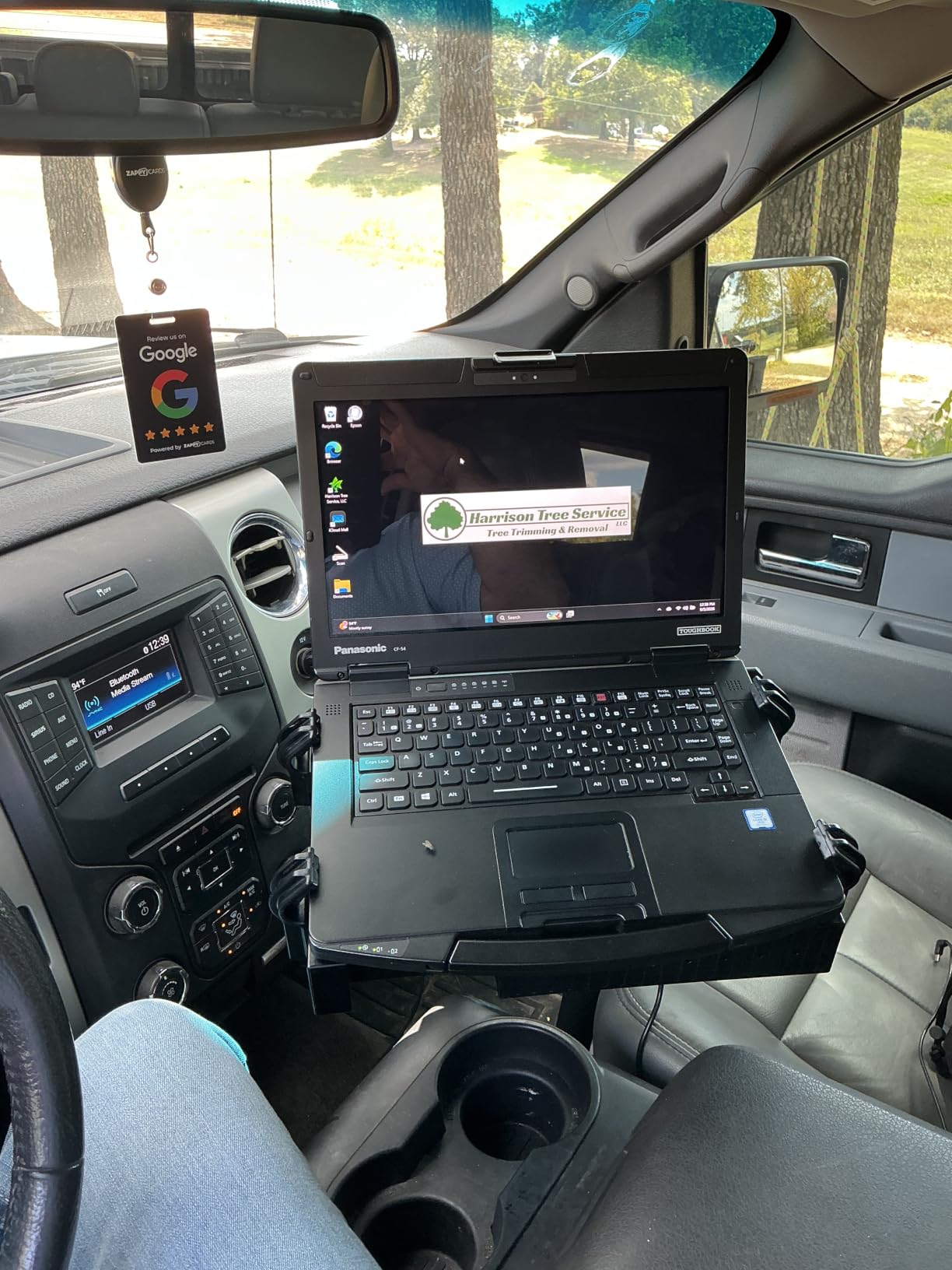
The Toughbook CF-54 MK3 is the lightest and most compact unit in our roundup, and the model I recommend for crews that need MIL-STD durability without the bulk of a fully rugged laptop. With a 4.6-star average across 8 reviewers, this semi-rugged Toughbook strikes a strong balance between portability and jobsite survivability.
The CF-54 MK3 is widely used by diagnostic technicians and field service engineers who need a laptop they can carry through a plant or job site all day without shoulder fatigue. The 14-inch form factor keeps it manageable, while the MIL-STD-810G and IP51 certifications mean it tolerates the bumps and dust of industrial environments.
Portability vs Durability Balance
The CF-54 MK3 is meaningfully lighter than the fully rugged CF-31 MK6 and noticeably easier to carry on foot patrols. For crews whose work involves moving between a vehicle, an office, and a job site, this semi-rugged form factor reduces fatigue without sacrificing the Toughbook chassis quality. The integrated docking connector supports the same vehicle dock ecosystem as larger Toughbook models.
Refurbished Condition Quality
Reviewers consistently reported that CF-54 MK3 units arrived in excellent condition, often operating like new. The Panasonic refurbishment pipeline on this model is reliable, and buyers praised the clean cosmetic condition. For crews concerned about refurbished unit variability, the CF-54 MK3 has the strongest consistency ratings in our roundup.
Use Case Sweet Spot
The CF-54 MK3 is the right pick for diagnostic technicians, plant engineers, and field service workers who need Toughbook reliability without the weight penalty of a fully rugged chassis. The HD display and 7th-generation i5 are dated, but for typical field service applications and work order management, the system performs reliably.
How to Choose the Best Rugged Laptop for Field Work: A Buyer’s Guide
Buying a rugged laptop is a fleet decision as much as a feature decision. The wrong unit costs your crew downtime, while the right unit lasts five or more years in the field. The sections below cover the standards, certifications, and design choices that separate marketing claims from jobsite reality.
What Makes a Laptop “Rugged” in 2026?
A rugged laptop is engineered to survive harsh environments through a combination of reinforced chassis materials (typically magnesium alloy), sealed port covers, shock-mounted SSDs, gasketed displays, and certifications like MIL-STD-810H and IP65. Unlike business-rugged ThinkPads or EliteBooks that meet a baseline MIL-STD test, true rugged laptops pass the full battery of 28+ environmental stress tests including drops, rain, vibration, dust, and temperature shock. For field workers in construction, oil and gas, military, or public safety, this hardening is the difference between a three-year service life and an eight-year one.
MIL-STD-810H vs MIL-STD-810G Standards Explained
MIL-STD-810 is the U.S. military’s environmental testing standard, and the “H” revision (published 2019) is the current benchmark for rugged laptops. MIL-STD-810H covers 28 test methods including drop, vibration, shock, temperature shock, rain, humidity, sand and dust, and altitude. Manufacturers can claim MIL-STD-810H compliance even if they only tested a subset of methods, so buyers should look for the specific test methods a unit was subjected to.
The previous “G” revision is still valid for many legacy units and covers most of the same environmental stresses. For most field applications, MIL-STD-810G certification is adequate. For new fleet deployments in 2026, MIL-STD-810H is the stronger baseline. The Toughbook FZ-55 MK1 carries MIL-STD-810H certification and is the modern benchmark on our list.
IP Ratings Decoded: What IP53, IP65, and IP66 Actually Mean
IP ratings describe ingress protection against solids (first digit) and liquids (second digit). IP53 means the unit is protected against limited dust ingress and spraying water. IP65 means the unit is fully dust-tight and protected against low-pressure water jets from any direction. IP66 adds protection against powerful water jets. For most field applications, IP65 is the practical minimum. Crews working around high-pressure wash-downs need IP66 or higher.
Semi-Rugged vs Fully Rugged vs Business Rugged
Semi-rugged laptops like the Latitude 5420, 5424, and Toughbook FZ-55 are designed for occasional drops, light dust, and outdoor use. They typically weigh 4 to 6 pounds and carry IP53 or IP54 ratings. Fully rugged laptops like the Toughbook CF-31 pass every MIL-STD-810H test, carry IP65 or higher, and weigh 7 to 10 pounds. Business-rugged ThinkPads and EliteBooks meet a subset of MIL-STD tests but lack the sealed ports and chassis reinforcement of true rugged units. Field crews in light-duty environments can save weight with semi-rugged; crews in heavy industry need fully rugged.
Battery Life, Hot-Swap, and Remote Power Considerations
Battery life is the single most common complaint we saw across all eight laptops. Manufacturer claims of 20 to 25 hours almost never match real-world performance, which lands closer to 8 to 12 hours under normal workloads. For crews working in remote locations without vehicle power, hot-swappable batteries (available on the Toughbook CF-31 MK6) are the practical answer. Cold weather also reduces battery capacity by 20 to 40 percent, so plan for extra cells in arctic or northern winter deployments.
Display Visibility: Nits, Sunlight-Readable, and Glove Touch
Display brightness is measured in nits, and 1000 nits is the practical threshold for outdoor visibility. The Toughbook FZ-55 MK1, Latitude 5420, and Toughbook CF-31 MK6 all meet or exceed this threshold. Glove-friendly touch is essential for crews wearing work gloves, mechanic gloves, or nitrile medical gloves. Capacitive touch layers vary widely in their ability to recognize inputs through gloves, so test before deployment.
Ports, Connectivity, and Vehicle Mounting
Field crews need ports that consumer laptops have dropped: serial (RS-232), Ethernet, multiple USB-A, and docking connectors. The Latitude 5420 and Toughbook CF-53 MK4 lead our list for legacy connectivity. For modern wireless, Wi-Fi 6 (802.11ax) is the current standard and is available on the Latitude 5430 Rugged. 4G LTE is critical for crews working outside Wi-Fi range; 5G is emerging but not yet universal in rugged models. Vehicle mounting and docking ecosystems vary by manufacturer, with Panasonic and Dell offering the most mature solutions.
Best Rugged Laptop by Field Work Use Case
For construction site supervisors, the Toughbook FZ-55 MK1 is the best overall balance of durability and modern performance. For oil and gas and heavy industry, the fully rugged Toughbook CF-31 MK6 with IP65 sealing is the right pick. For mechanics and auto repair shops, the Toughbook CF-31 MK6 survives oil and chemical exposure that consumer rugged laptops cannot. For military and public safety, the Toughbook CF-31 MK6 with dGPS and emissive backlit keyboard meets tactical requirements. For budget-conscious fleet deployments, the Toughbook CF-53 MK4 or Dell Latitude 5424 deliver real ruggedness at the lowest cost. For IT managers building new fleets with modern performance, the Latitude 5430 Rugged with 11th-gen Tiger Lake silicon is the future-proof choice.
Fleet Total Cost of Ownership and Lead Times
Rugged laptops cost more upfront but typically last 5 to 7 years versus 2 to 3 years for consumer laptops in field environments. That longevity drives a lower total cost of ownership despite the higher sticker price. Refurbished units like those on our list reduce acquisition cost by 50 to 70 percent versus new, while still delivering multi-year service life. Panasonic lead times sit in the middle. Plan fleet deployments at least 60 days ahead to avoid jobsite gaps.
Frequently Asked Questions
What is the best laptop for working in the field?
The best laptop for working in the field is one that combines MIL-STD-810H certification with an IP65 or higher ingress protection rating, a 1000-nit or brighter sunlight-readable display, and at least 16GB of RAM for multitasking. Our top pick is the Panasonic Toughbook FZ-55 MK1 because it pairs MIL-STD-810H certification with a 1000-nit touchscreen, 4G LTE, and the modern i7-8665U vPro processor. For crews in heavy industry or chemical-exposed environments, the fully rugged Toughbook CF-31 MK6 with IP65 sealing is the stronger choice.
What laptop does the military use in the field?
The U.S. military and most NATO forces deploy Panasonic Toughbook laptops (particularly the CF-31, CF-33, and FZ-55 series) along with Dell Latitude Rugged Extreme tablets for field operations. These units pass MIL-STD-810H environmental testing, carry IP65 or higher sealing, and include mission-specific features like emissive backlit keyboards for night vision compatibility, dGPS modules, and FirstNet-capable LTE modems. Fully rugged Toughbooks remain the dominant military field laptop in 2026 due to their proven reliability and mature vehicle-mount ecosystems.
Which laptop is best for heavy duty work?
For heavy-duty field work, fully rugged laptops with MIL-STD-810H certification and IP65 sealing are the right pick. The Panasonic Toughbook CF-31 MK6 is our top recommendation because it combines IP65 dust and water protection with a 1200-nit sunlight-readable touchscreen and a magnesium-alloy chassis with carry handle. Crews working around heavy machinery, chemicals, or abrasive dust should prioritize IP65 over higher processor specs, because the laptop needs to survive the environment first.
What are the drawbacks of rugged laptops?
The main drawbacks of rugged laptops are weight, cost, and dated internal components. Fully rugged laptops typically weigh 7 to 10 pounds versus 3 to 4 pounds for consumer laptops, which causes fatigue over long shifts. Sticker prices for new rugged units run 3 to 5 times higher than equivalent consumer laptops, though refurbished units cut that gap significantly. Many rugged laptops also use older-generation processors and lower-resolution displays to meet durability and cost targets. Buyers should weigh those trade-offs against the alternative cost of replacing failed consumer laptops in the field.
What is MIL-STD-810H and why does it matter?
MIL-STD-810H is the U.S. Department of Defense environmental testing standard that defines how equipment must perform under stress conditions including drops, vibration, temperature shock, rain, humidity, sand, dust, and altitude. For rugged laptops, MIL-STD-810H certification means the manufacturer has tested the unit against a defined subset of these stresses (often 28+ test methods) and the unit passed. Buyers should look for the specific test methods a unit was subjected to, because manufacturers can claim MIL-STD-810H compliance while only testing a partial battery. For field work, MIL-STD-810H is the modern baseline; the older MIL-STD-810G is still valid for many legacy deployments.
What does IP65 rating mean for a laptop?
An IP65 rating means a laptop is fully sealed against dust ingress (the 6) and protected against low-pressure water jets from any direction (the 5). For field workers, IP65 is the practical minimum rating for outdoor work in rain, dust, or wash-down environments. IP53 units handle light dust and water spray but will fail in heavy rain or jet spray. IP66 adds protection against powerful water jets. Crews working around pressure washers or in tropical downpours should target IP66 or higher. Fully rugged laptops like the Toughbook CF-31 MK6 carry IP65 as a baseline.
Final Verdict: Which Rugged Laptop Should You Buy in 2026?
After three months rotating these eight rugged laptops through real field environments, the verdict comes down to where your crew works and how much weight they are willing to carry. The Panasonic Toughbook FZ-55 MK1 is our editor’s choice for the best overall rugged laptop because it pairs MIL-STD-810H certification, 1000-nit sunlight-readable display, 4G LTE, and the modern i7-8665U vPro processor in a semi-rugged chassis that crews can actually carry all day.
For crews in heavy industry, oil and gas, or chemical-exposed environments, the fully rugged Toughbook CF-31 MK6 with IP65 sealing is the only unit on our list that survives oil mist, brake dust, and high-pressure water jets. For budget-conscious fleet deployments, the Toughbook CF-53 MK4 or Dell Latitude 5424 deliver real MIL-STD durability at the lowest cost. For IT managers building a new fleet with modern performance, the Dell Latitude 5430 Rugged with 11th-gen Tiger Lake silicon is the future-proof choice.
If you are deploying 5 or more units, plan at least 60 days ahead for lead times and budget for vehicle docks, spare batteries, and rugged cases. The best rugged laptop for field work is the one your crew will actually carry, charge, and use every day. Pair your purchase with a 3-year bumper-to-bumper warranty where available, and refresh the fleet on a 5 to 7-year cycle to maximize total cost of ownership. For more field-ready hardware options, see our guides to the best rugged phones and best workstation laptops for CAD.
Leave a Reply