

A welding magnet is a holding fixture that uses a permanent or switchable magnetic field to lock two pieces of ferrous steel at a fixed or adjustable angle while you tack and weld the joint. For a 90-degree corner, it is the fastest way to get a square frame without a second pair of hands. Below are the best welding magnets for corner joints, ranked after six weeks of building square tube frames, brackets and plate corners in our shop.
The core problem with corner joints is that heat pulls metal. A joint that starts square can drift a few degrees by the time you finish, and a crooked frame gets cut out and re-welded. A good magnet locks the angle instantly, speeds up fit-up, and cuts the grinding afterwards.
Two rules before we get into the list. First, magnets only work on ferrous metal, so mild steel, carbon steel and ferritic stainless are fine while 304 or 316 stainless and aluminum will not hold at all. Second, a magnet is a third hand for the first two or three tacks, not a replacement for a square. One fabricator on weldingweb.com put it plainly: always double check with a square, because a good tack will still pull material out of square even when a magnet is holding it.
If you are still working out joint geometry, our guide to the five types of welding joints is worth ten minutes before you shop for a fixture. Are welding magnets worth buying? For anyone welding mild steel more than once a month, yes, they earn their slot in the tool bag in a single afternoon.
Our Top 3 Best Welding Magnets for Corner Joints (October 2026)
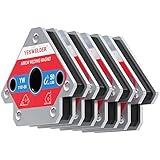
YESWELDER 4-Pc 50 lb Set
- Arrow shape for 45/90/135 degree faces
- 50 lb holding power
- Four magnets lock multiple corners at once


Strong Hand MST327 Twin Pack
- Twin pack holds two corners at once
- Outside hold keeps interior clear
- 30 lb pull force
The YESWELDER four-pack takes the top slot because it holds 45, 90 and 135 degree faces in one body, and four of them let you lock an entire rectangular frame before striking an arc. The Magswitch MagSquare 165 is the strongest single unit here and the only one with a true mechanical on/off release. The Strong Hand MST327 twin pack is the smarter shape for tube and box work because it grips from the outside and leaves the inside of the corner open for your torch.
Comparing 10 Welding Magnets for Corner Joints in 2026
| Product | Details | Action |
|---|---|---|
|
|
Check Latest Price |
|
|
Check Latest Price |
|
|
Check Latest Price |
 |
|
Check Latest Price |
 |
|
Check Latest Price |
 |
|
Check Latest Price |
 |
|
Check Latest Price |
 |
|
Check Latest Price |
 |
|
Check Latest Price |
 |
|
Check Latest Price |
1. YESWELDER 4-Pc 50 lb Welding Magnet Set – The Best All-Round Corner Magnet
YESWELDER 4-Pc Welding Magnet Set, 50 lb Holding Power Welding Accessories
50 lb hold
45, 90 and 135 degrees
4-piece set
Triangular arrow body
+ Pros
- Highest rated in this roundup
- Arrow shape covers 45
- 90 and 135 degrees in one tool
- Four magnets lock several corners simultaneously
- Useful for soldering and pipe fitting too
– Cons
- Fixed triangular faces only work in three orientations
- Some users find the published 50 lb rating optimistic
- 90 degree accuracy reported as slightly off by a few owners
This is the set we reach for first when a rectangular frame comes off the table. Each magnet is a cast arrow with three working faces, so the same body holds a 90 degree tube corner, a 45 degree gusset and a 135 degree brace without swapping tools. Four of them means a whole box can be squared before the first tack.
Fit-up on 1 inch square tube felt immediate. The magnet grabs both members at once, the corner sits where you put it, and your torch hand stays free instead of doing double duty holding the piece.
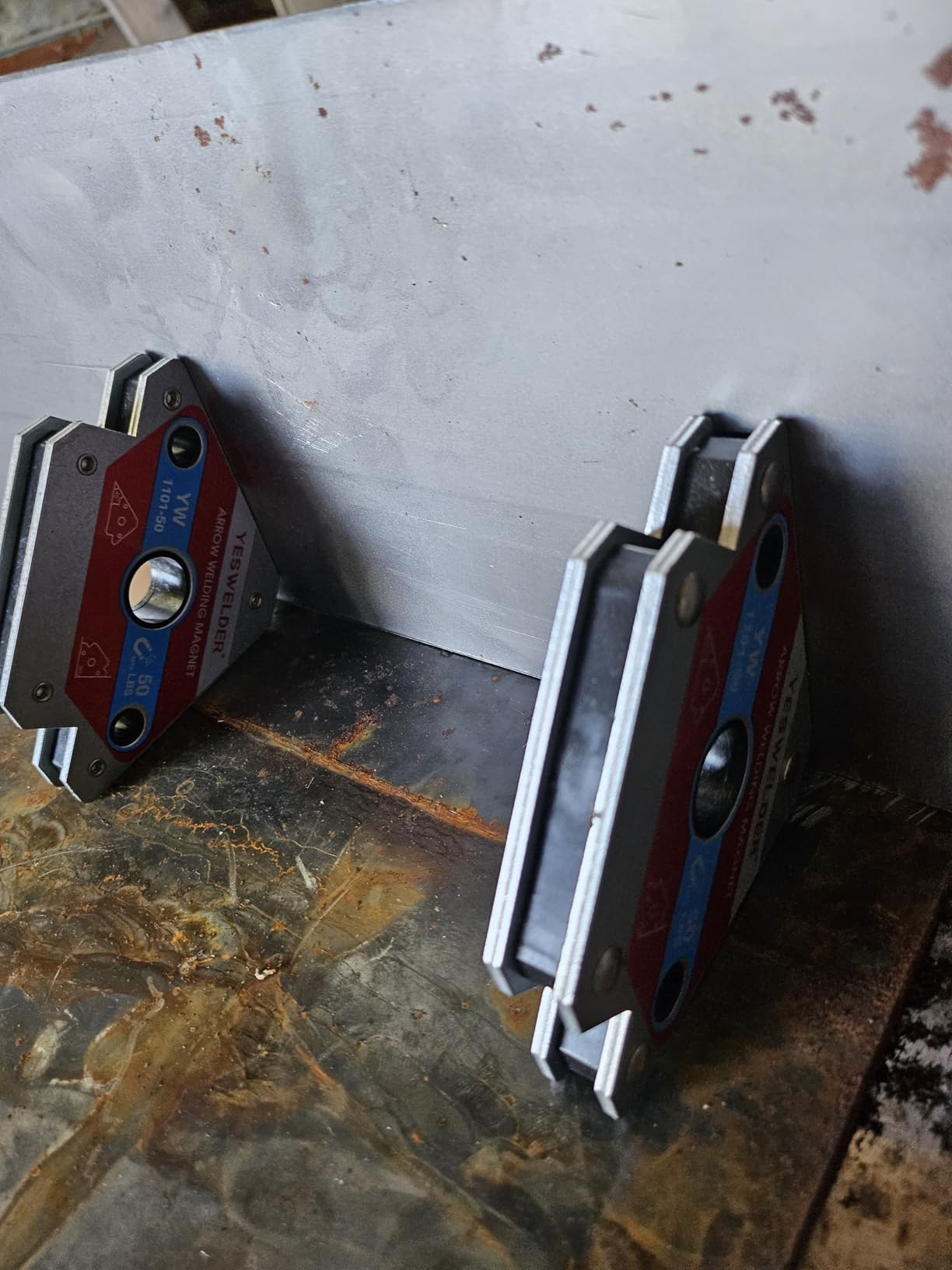
Two caveats come up repeatedly in the reviews. Several owners note the published 50 lb figure feels optimistic in real fit-up, which is normal for magnets because a corner joint loads the faces at an angle rather than straight on. Others mention that the 90 degree face can read a touch off, so we still check with a square after tacking.
What 45, 90 and 135 Degrees Actually Get You
The three-face arrow covers most of what a fabricator needs. The 90 degree face handles square tube frames, the 45 degree face handles mitered trim and gussets, and the 135 degree face handles bracing between a post and a diagonal.
Because the faces are moulded rather than adjustable, you cannot dial in a 76 degree cut. If your project is full of unusual geometry, an adjustable design is the better tool.
How Four Magnets Change a Frame Assembly
We squared a 24 by 18 inch box with all four corners locked at once, then tacked diagonally from corner to corner. Nothing shifted, and the diagonal measurement across both faces came out equal, which is the 3-4-5 check every fabricator already knows.
That diagonal check is the real test of squareness. A magnet can hold a corner perfectly and still let the frame rack into a parallelogram if you only work one corner at a time.
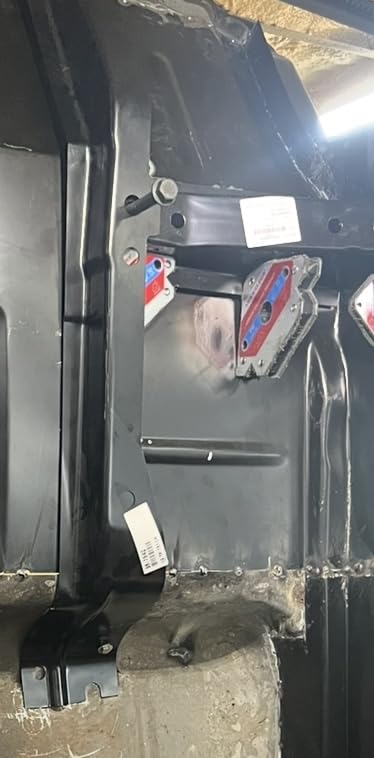
Where It Falls Short
Do not put a magnet directly in the arc path. A strong field close to the puddle can make a TIG arc wander, and the same caution applies to any permanent magnet sitting next to a hot joint.
It is also strictly a ferrous tool. On aluminum or 304 stainless it does nothing, which rules it out for a lot of thin-gauge stainless work.
2. Magswitch MagSquare 165 – Best Switchable Magnet for Heavy and Repeated Work
Magswitch MagSquare 165 Switchable Magnetic Square – 165 lb Hold
150 lb hold
True on/off switch
Five-sided grip
Pre-tapped holes
+ Pros
- True on/off release with no prying
- Sheds chips and swarf when switched off
- Five-sided grip handles flat and round stock
- Pre-tapped holes double it as a fixturing element
– Cons
- Body is small for a 150 lb rating
- Full pull force does not develop on thin sheet or thin-wall tube
- Strong field can affect the arc if placed too near the bead
The MagSquare 165 is the one people name most often when they ask about the best brand of welding magnet, and after living with one for a month we understand why. The mechanical on/off control releases the field completely, so you can slide a part into a tight corner or pull a finished assembly off without wrestling it.
It needs no power source. People assume a switchable magnet is electric, and it is not. The release is a mechanical rotation of internal pole pieces, so it works the same on a job site with no power as it does at the bench.
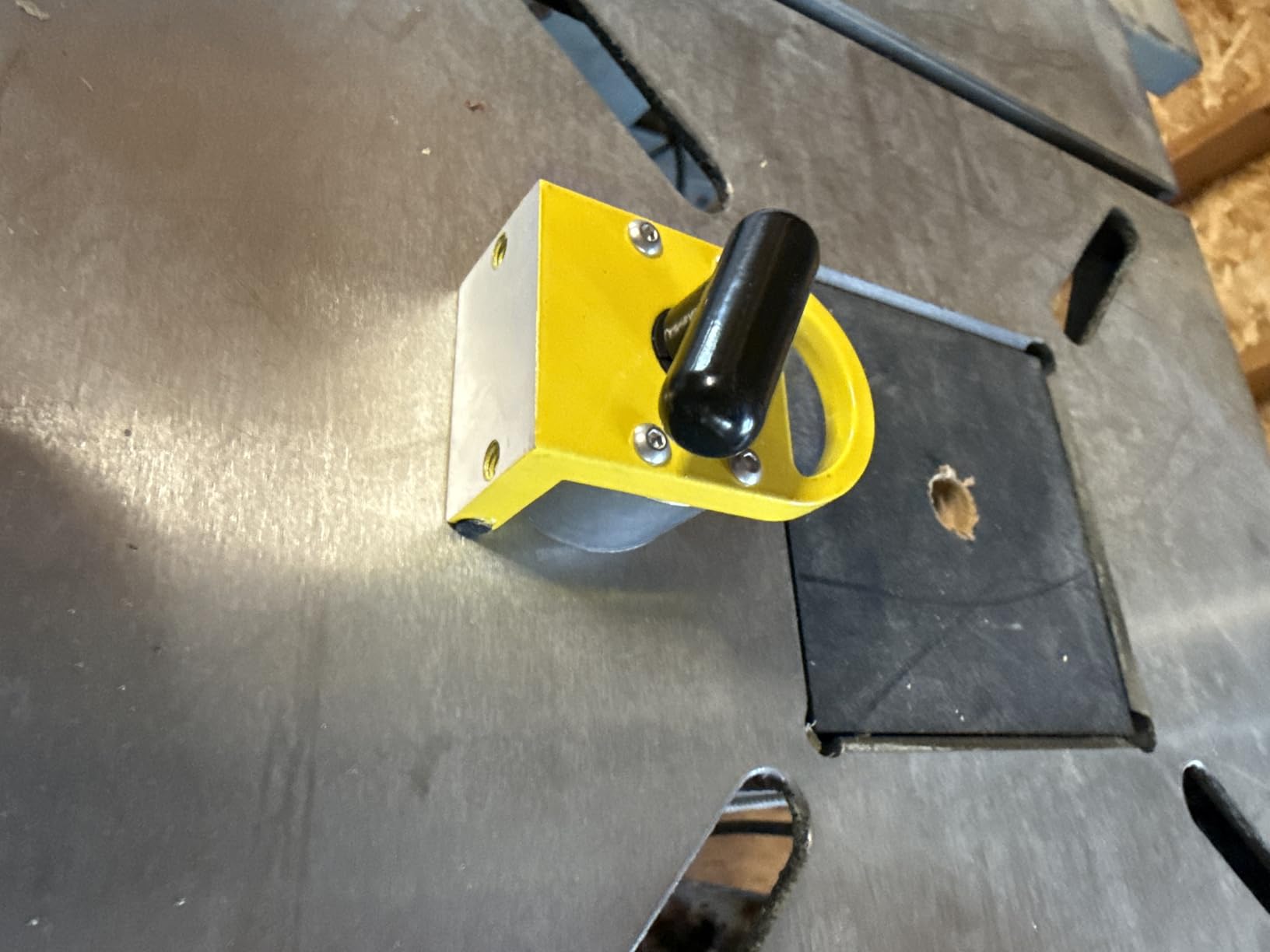
Cleanup is the quiet win. A permanent magnet traps grinding grit, swarf and iron filings against the pole face, and that debris cuts straight through the hold. Switch it off and everything falls away, then wipe the face with a rag.
Where 150 lb of Rated Pull Force Breaks Down
Rated pull is measured on a thick flat plate in a straight line. At a 90 degree corner you load two faces at an angle, and on thin material the pole never fully develops. On 16 gauge sheet or thin-wall tube this unit feels much weaker than its number suggests.
On 1/4 inch plate and solid square tube it behaves as advertised. Match the magnet to the thickness of your material rather than to your ambition.
Five-Sided Grip and Pre-Tapped Holes
The multiplane grip gives you contact on five sides, which lets the same tool hold flat plate, round pipe and an angled member. The pre-tapped holes let you bolt it down as a fixed stop or link it into a light fixture.
Professional fabricators on weldingweb.com describe it as the fastest set-up on a welding table. The positioning speed is real, and on repeat work that adds up quickly.
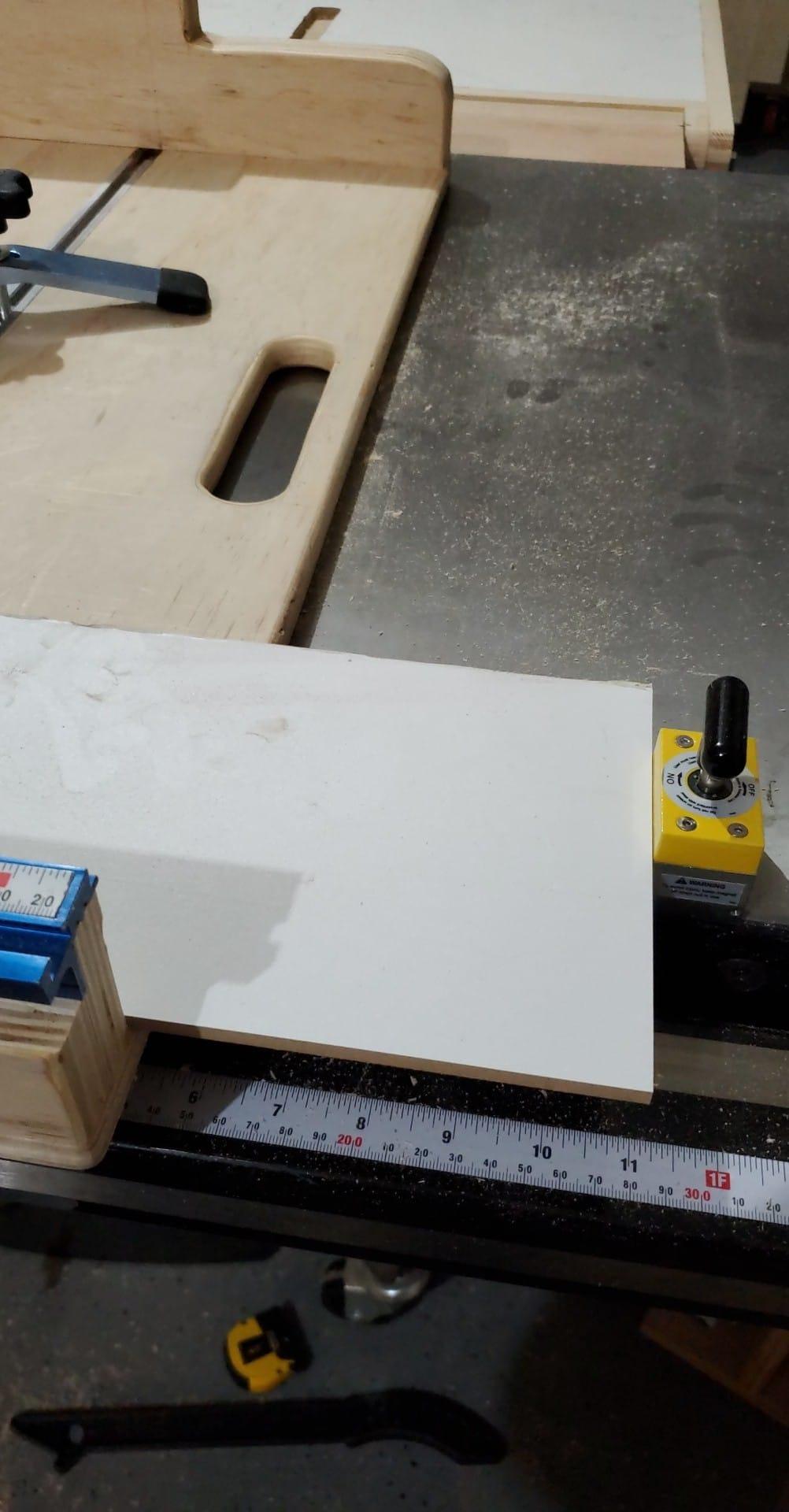
Where It Falls Short
The body is roughly a 1 by 2 inch class, so on heavy plate it can look undersized. Keep it back from the arc anyway, since a strong field near the puddle is what causes wandering on TIG work.
If you want technique for a steadier arc, our TIG welding tips and techniques guide covers heat control on the same kind of joint.
3. Strong Hand MST327 Magnetic Corner Squares Twin Pack – Best for Tube and Box Work
Magnetic Corner Squares, (Twin Pack), 12°, 90° & 60° Angle Setting, Max Pull Force: 30 lbs, Low Profile, 3-1/4 x 3-3/4 x 5/8″, MST327, Strong Hand Tools, Yellow, 3.25-Inch x 3.75-Inch
30 lb pull force
Twin pack
90 and 60 degree faces
3.25 x 3.75 x 0.63 inches
+ Pros
- Twin pack holds both ends of a joint or two corners at once
- Secures from the outside so the inside stays clear for tacking
- Corner relief gives clearance on taller edges
- Outer edges also set 60 degree angles
– Cons
- 30 lb pull force is modest for heavy stock
- Fixed geometry limits it to square corners and 60 degree setups
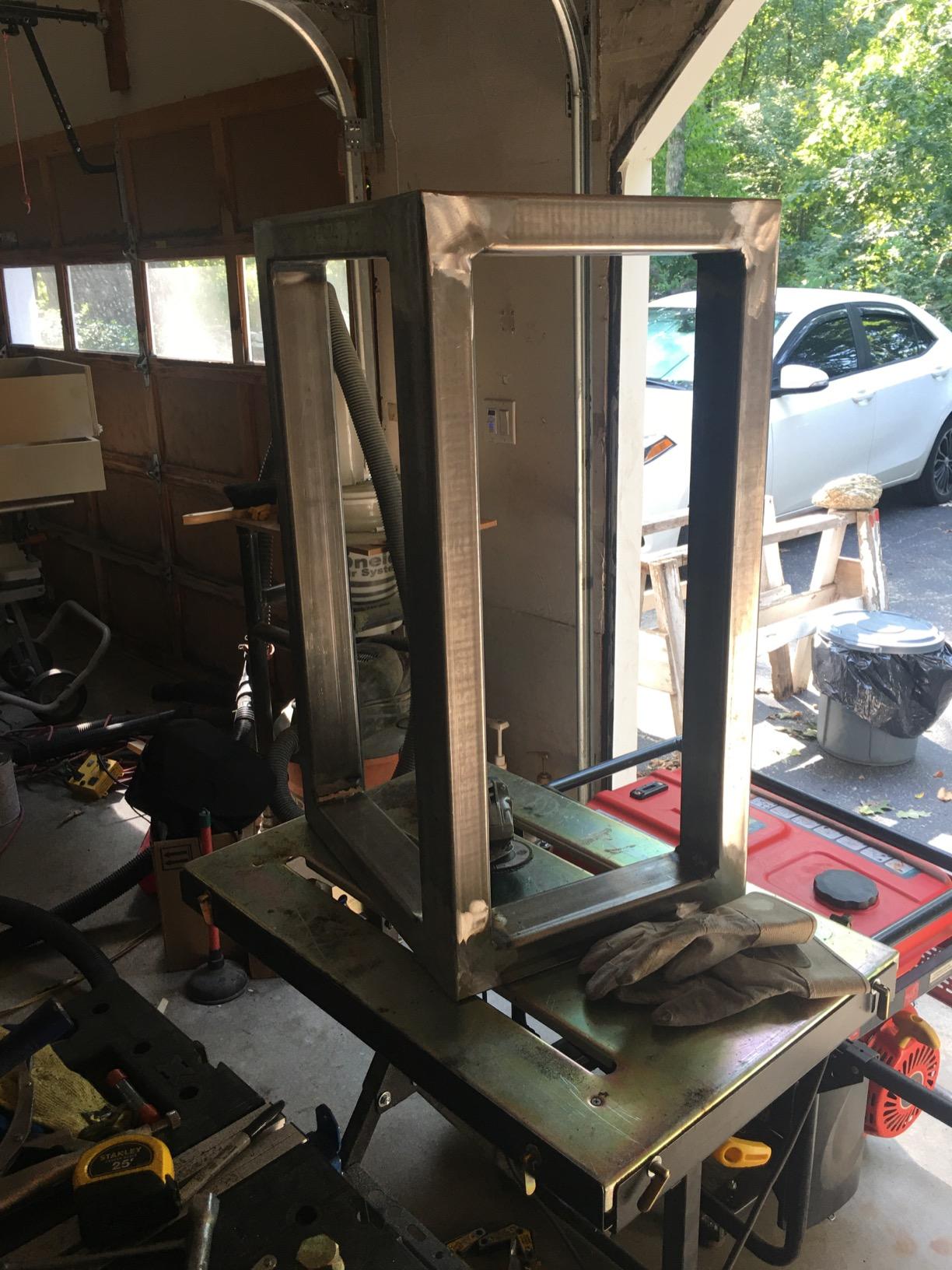
These two magnets shaped the way we actually prefer to build square tube boxes. They clamp onto the outside of the corner, which means the inside face is completely open and you can run your torch along the full length of the joint without hitting a fixture.
The twin pack format is the point. A 20 inch box needs both corners of one side locked, and a rectangular frame needs two magnets on diagonal corners before the structure is stable enough to tack.
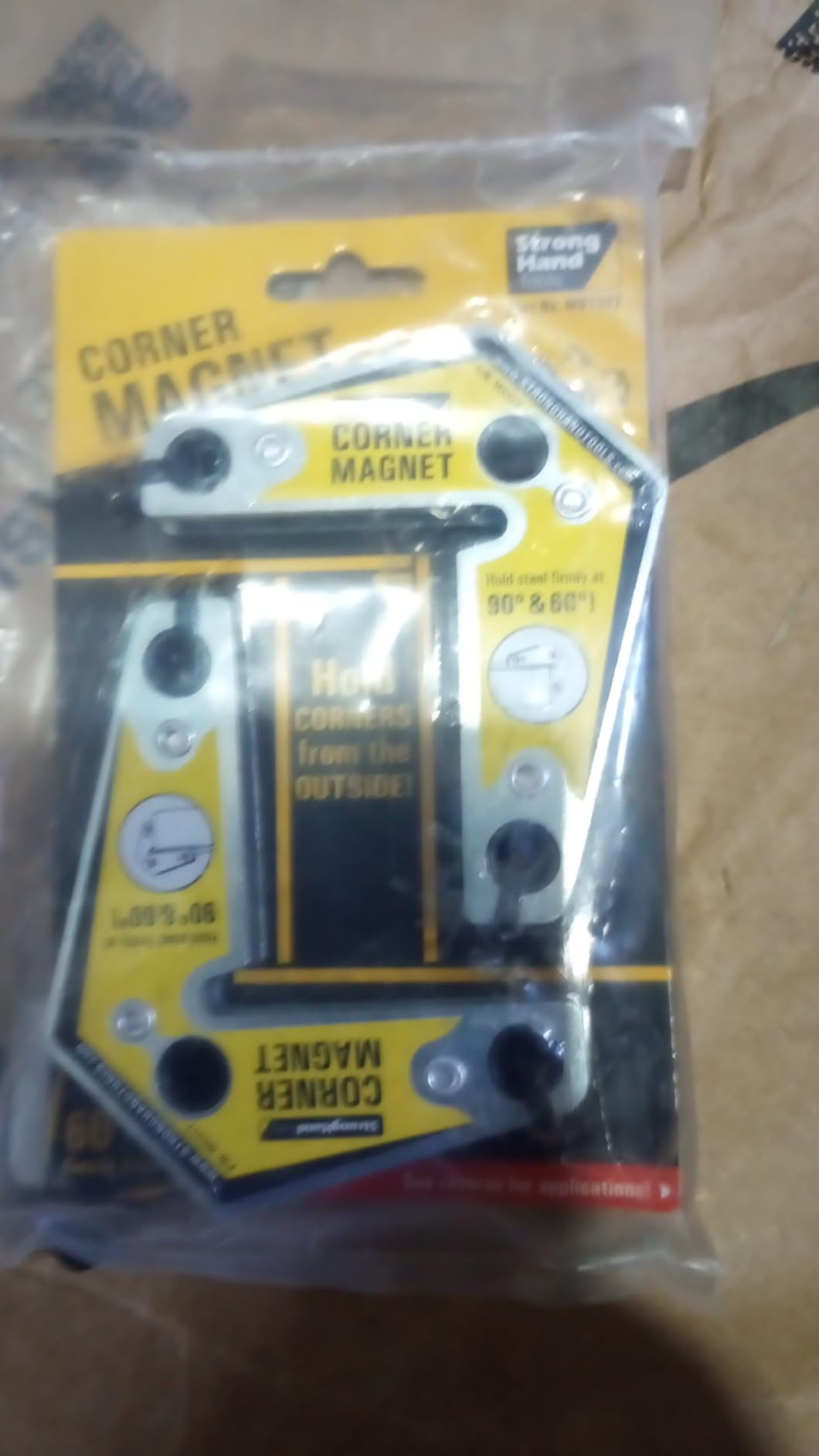
Corner Relief for Taller Edges and Lips
The recessed corner gives you clearance where a taller edge or a formed lip would otherwise prevent the magnet from sitting flat. On a frame with 1 inch tube welded to a 1/2 inch plate, that relief keeps the magnet from riding high and tilting the joint.
It is a small feature that only matters on specific geometry, but on that geometry a full-contact magnet is the difference between a clean fit-up and a gap.
60 Degree Faces on the Outer Edges
Besides the 90 degree face, the outer edges set a 60 degree angle. That covers the triangular gussets and diagonal braces that show up constantly in bracket work, without needing a second tool in your hand.
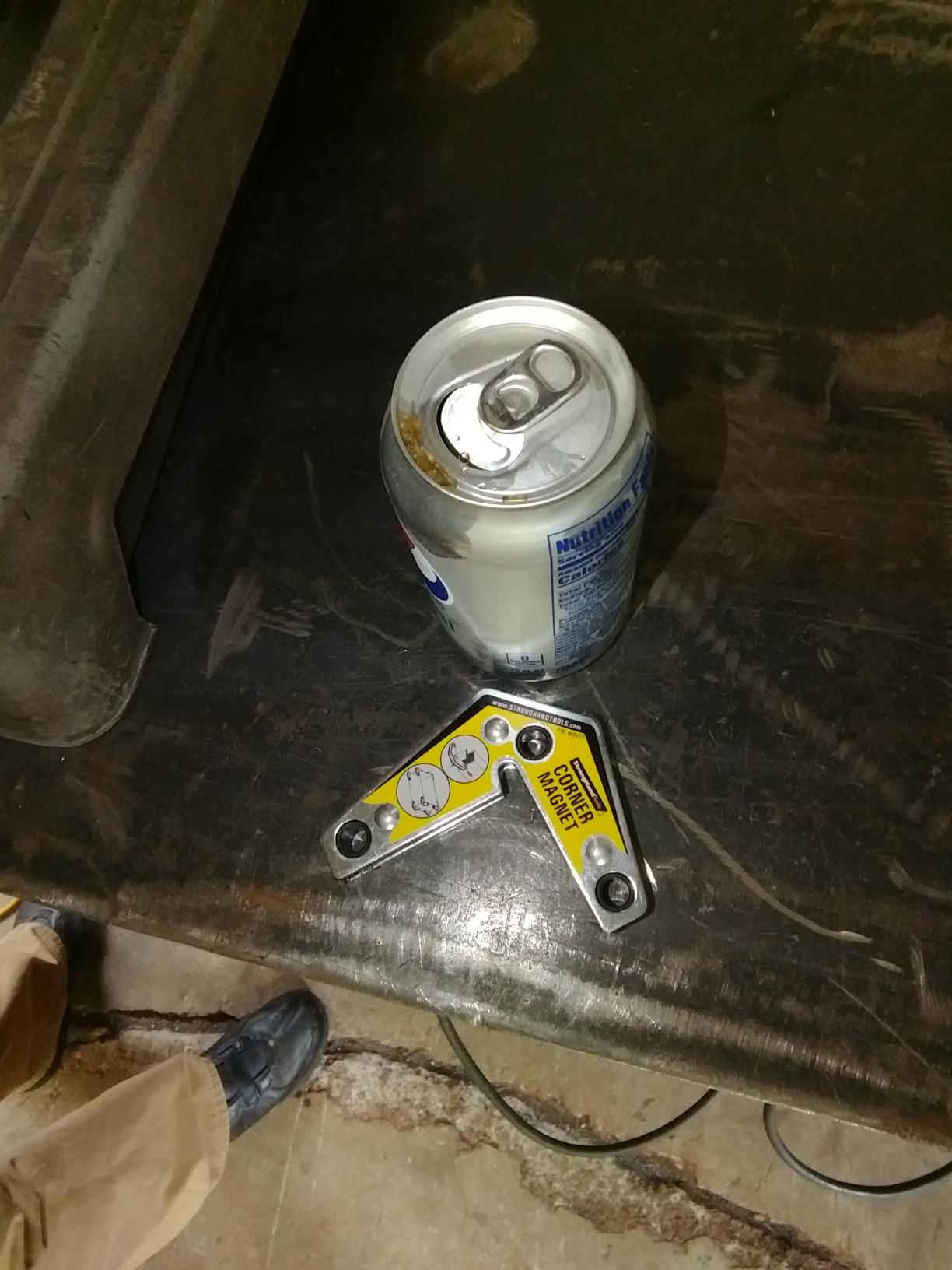
Where It Falls Short
Thirty pounds per magnet is the honest limit. On 1/4 inch plate or long spans the pair will creep, and you will be chasing the corner mid-tack. For heavy plate, step up to a switchable or adjustable unit.
Weld on the inside, then knock the magnet off with a hex key or a plastic chisel. A hammer on a permanent magnet is how you chip a pole face and lose flat contact.
4. Strong Hand MSA46-HD Adjust-O Magnet Square – Best Fixed-Angle Switchable Square
Strong Hand Tools Adjust-O Heavy Duty Magnetic Welding Square, 90 lb Pull Force, On/Off Switch, Double Plate, 30°/60°, 45° & 90° Angles, 4.4 x 3.8 x 1.1 in., MSA46-HD
On/off switches
45 and 90 degree geometry
65 lb pull force
4.38 x 3.75 x 1.13 inches
+ Pros
- On/off switch releases instantly for fast set-up
- Switch off and chips wipe away
- Works with round and square tubing
- Compact heavy-duty body
– Cons
- Fixed 45 and 90 degree geometry only
- Not a clamping square so both hands stay occupied during tack-up
Reviewers single out the on/off switch more than anything else on this square. You turn the magnet off while you position the tube, turn it on when the pieces touch, and the joint locks without a clamp, a vise or a helper.
The 45 and 90 degree faces cover the two angles that make up most corner work. It handles round tubing, square tubing, angle iron and flat stock with the same body.
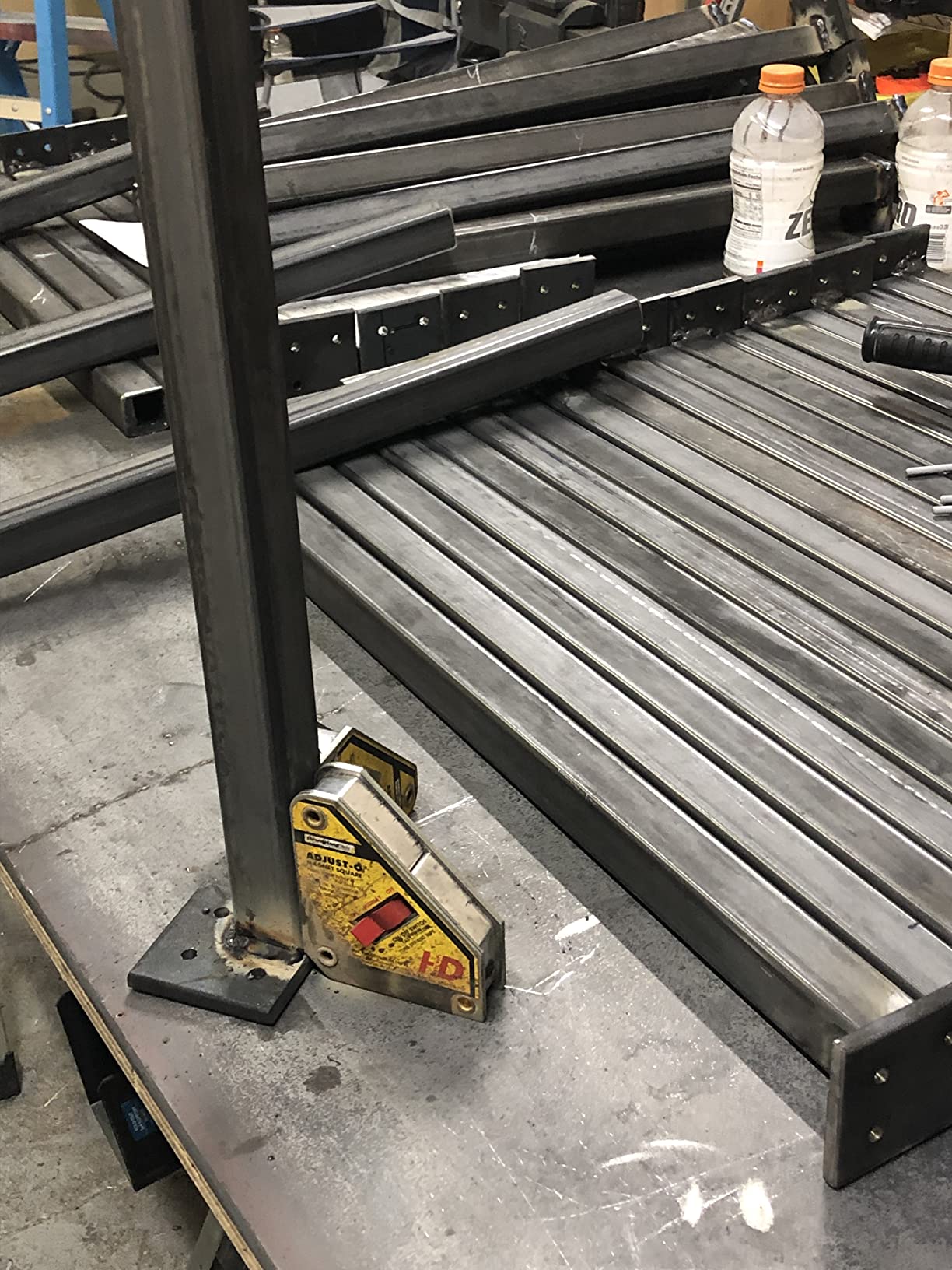
Why the On/Off Switch Changes Set-Up Speed
With a permanent magnet, getting a second part into position means prying against the field and hoping the piece lands right. The switch removes that guesswork entirely, and the difference is obvious within a few joints.
It also makes the magnet survivable in a working shop. Switch it off and wipe the pole faces instead of grinding swarf into them with every cycle.
Compact Body, Honest Limitations
At roughly 4-3/8 by 3-3/4 inches it fits inside a box frame where a larger square will not. The trade-off is that it holds a workpiece rather than squeezing it, so your hands stay on the torch and the filler rod during tack-up.
Reviewers also treat it as a two-handed tool. If you need a third hand that both squeezes and squares, that is a different category of fixture.
Where It Falls Short
There is no fine angle adjustment. Anything other than 45 or 90 degrees is out of scope, so this is a corner-joint tool and nothing more.
Keep it a few inches back from the bead. The field is strong enough to interfere with a nearby arc, which is the single most common complaint we saw about switchable squares used too close to the puddle.
5. Strong Hand MLA600 Adjustable Angle Square – Best for 30 to 270 Degree Work
Strong Hand Tools MLA600 Adjustable Angle Magnetic Welding Square, Inside/Outside Magnets, Angle Setting Pin, Magnetic Pull Force 33 Lbs, Welding Square, 30°-270° Angle, 6″ Size
30 to 270 degrees
33 lb pull force
6 inch size
Two independent magnets
+ Pros
- Two independent magnets give consistent force on inside and outside angles
- Wide 30 to 270 degree range
- Mounting holes let two magnets be linked as fixturing elements
- Hex hole provides breakaway leverage
- Solid metal construction
– Cons
- Fixed 33 lb pull force is modest against switchable squares
- Manual angle-setting pin takes longer to set than fixed faces
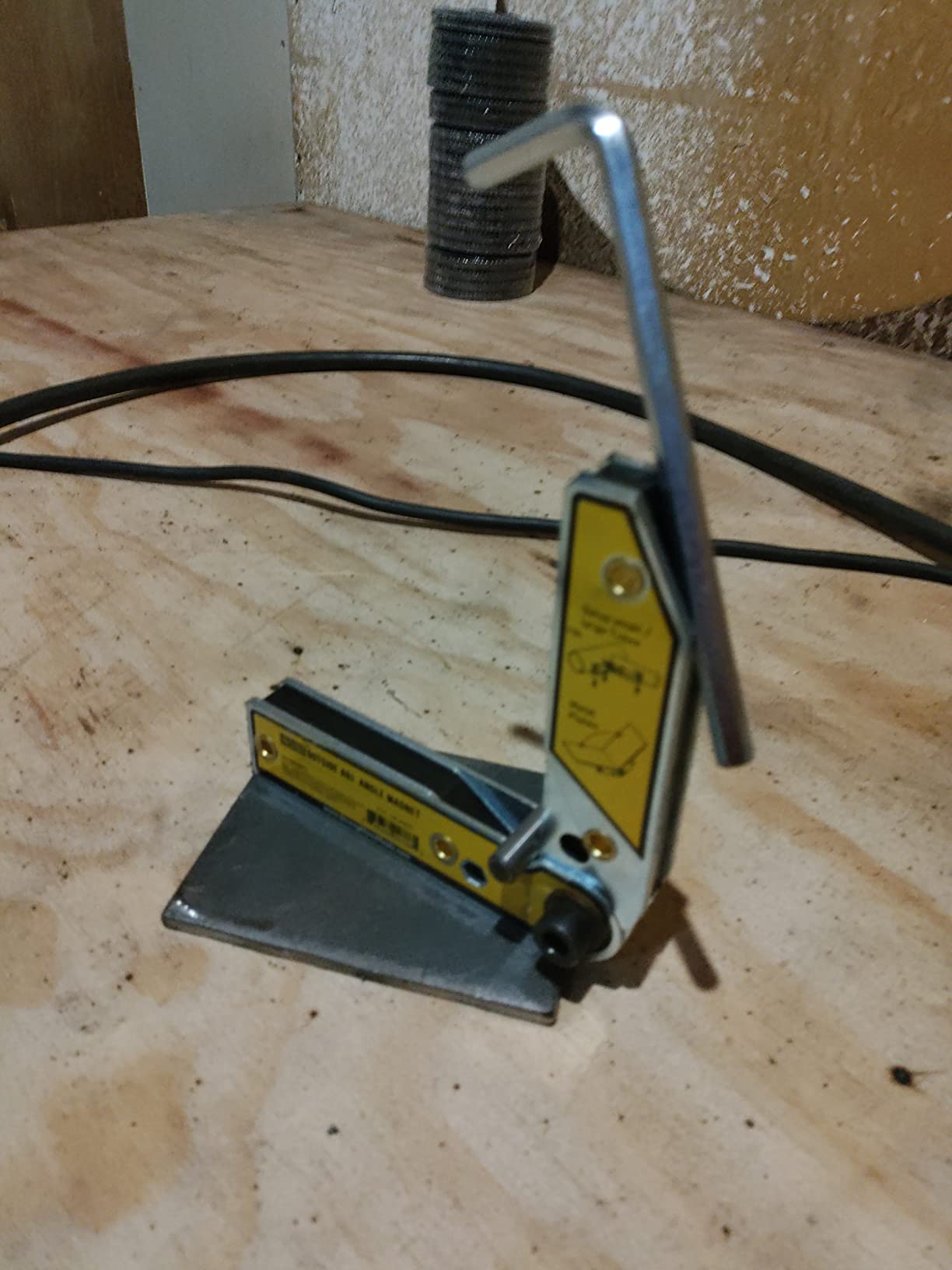
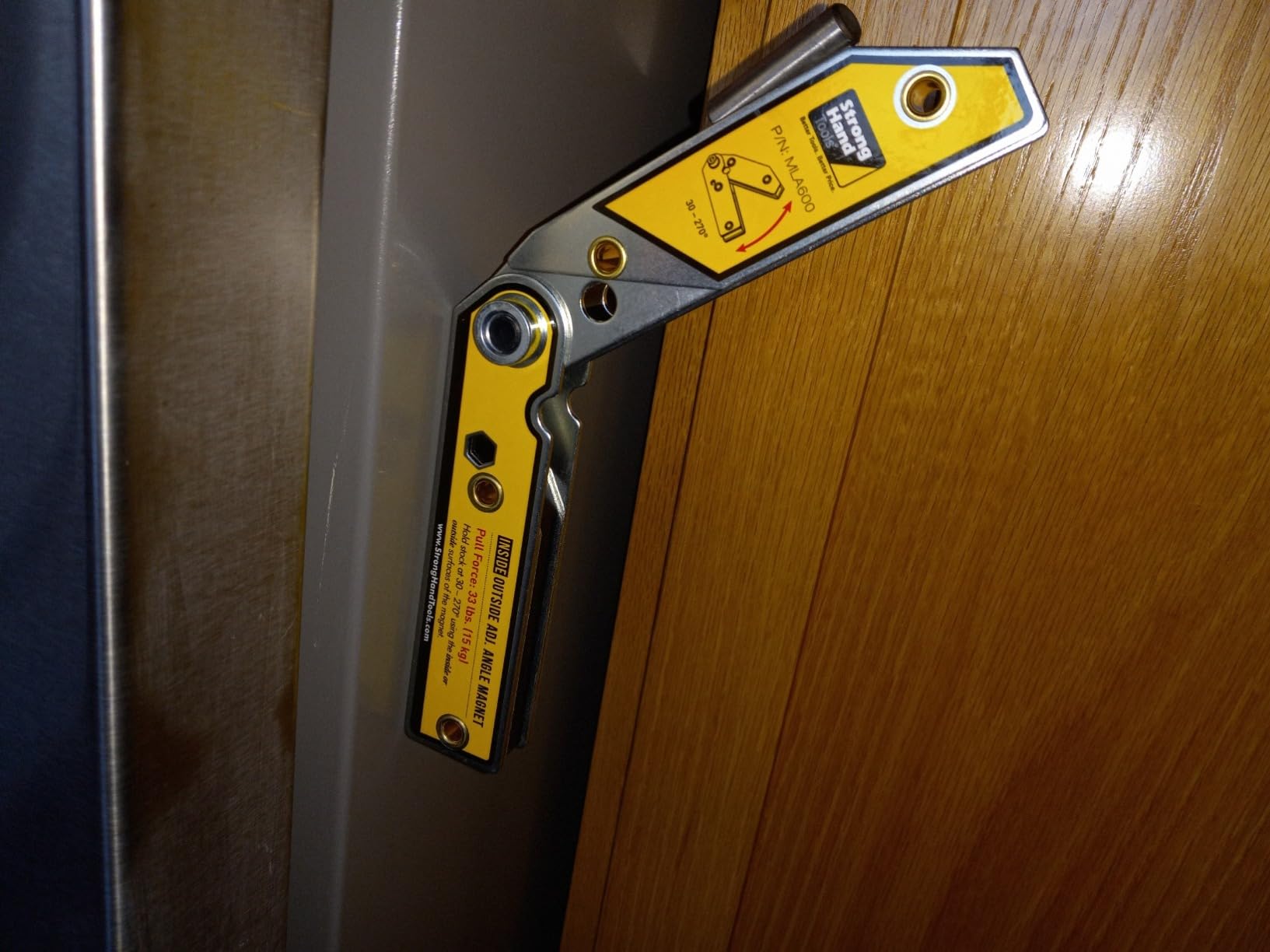
When a project is not made of 45, 90 and 135 degrees, the MLA600 earns its place. It holds anything from 30 to 270 degrees, which covers mitered frames, angled stands and tapered tube work that a fixed-face magnet simply cannot touch.
Two independent magnets sit on the inside and outside corners, and that pairing is what keeps the force even. A single magnet on a corner tends to favor one face, and the joint slowly rotates toward the strong side.
Using the Angle Pin and the Mounting Holes
A setting pin locks the angle once you choose it, which is faster than it sounds and much faster than eyeballing. The trade-off is setup time: a fixed-face arrow magnet snaps into place, while this one needs the pin seated and the body rotated into position.
The mounting holes are the underrated part. Two MLA600 units bolted together become a multi-point fixture for a box or a template for a repeat part, which is a genuine shop use rather than a marketing line.
Where It Falls Short
Thirty-three pounds is real but modest, and on heavy plate or long spans the joint will creep while you tack. Treat it as a tube and sheet metal tool rather than a structural plate tool.
Keep it clear of the arc. Heat plus a strong field is the combination that causes wandering, so leave a few inches of clearance between the magnet and the bead.
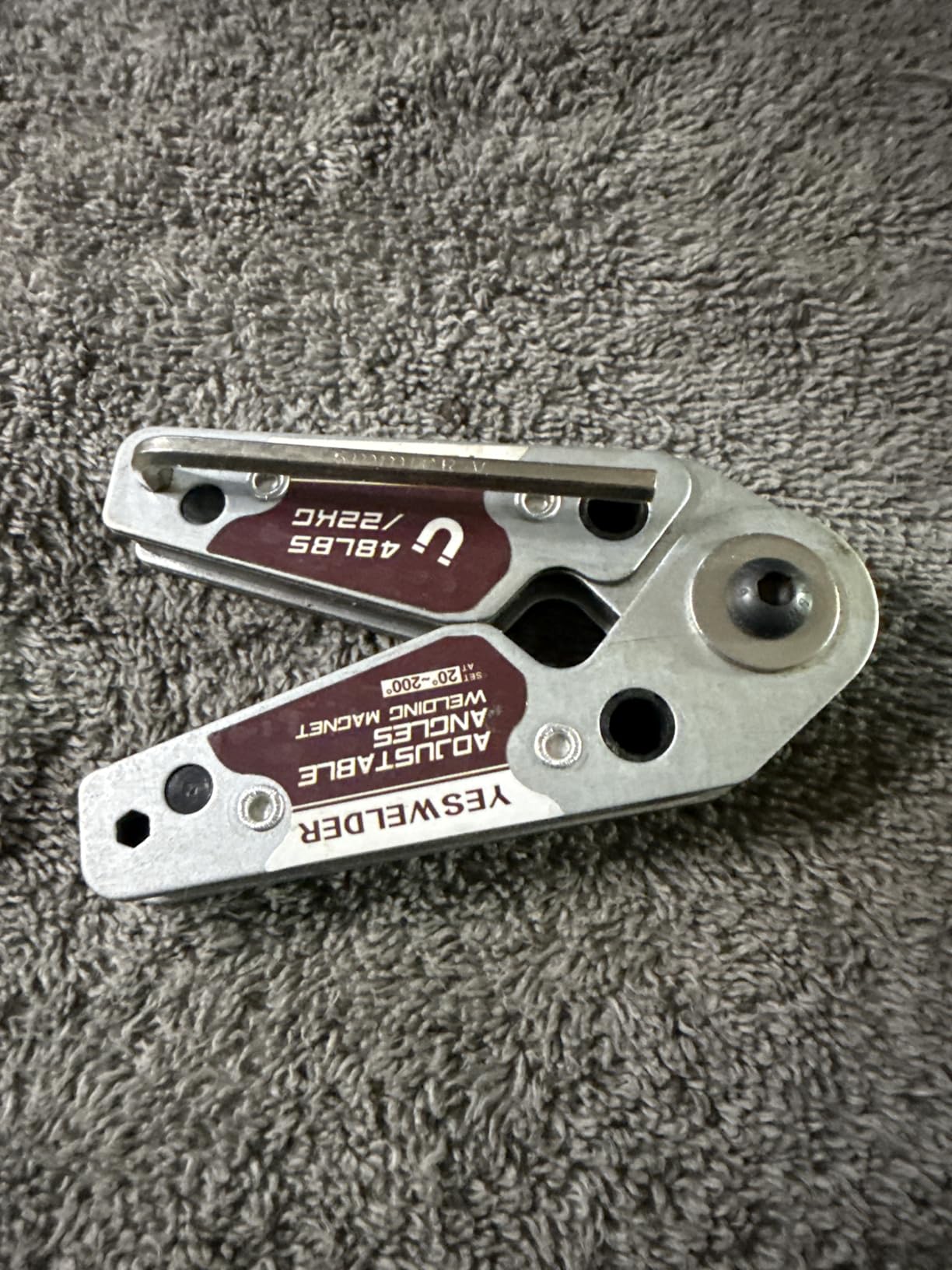
6. YESWELDER Adjustable Angle Magnet 20-200 Degrees, 77 lb – Best for Odd Angles
YESWELDER Adjustable Angle Welding Magnet 20-200° Welding Magnet of 77LBs
20 to 200 degrees
77 lb pull force
15.8 ounces
Scale and hex wrench
+ Pros
- Wide 20 to 200 degree range for non-standard joints
- Clear angle scale and included hex wrench
- Angle locks firmly once tightened
- Compact enough for tight spaces
– Cons
- Angle markings are small under shop lighting
- 77 lb rating reported as overstated on larger stock
- Must be kept clear of the weld arc
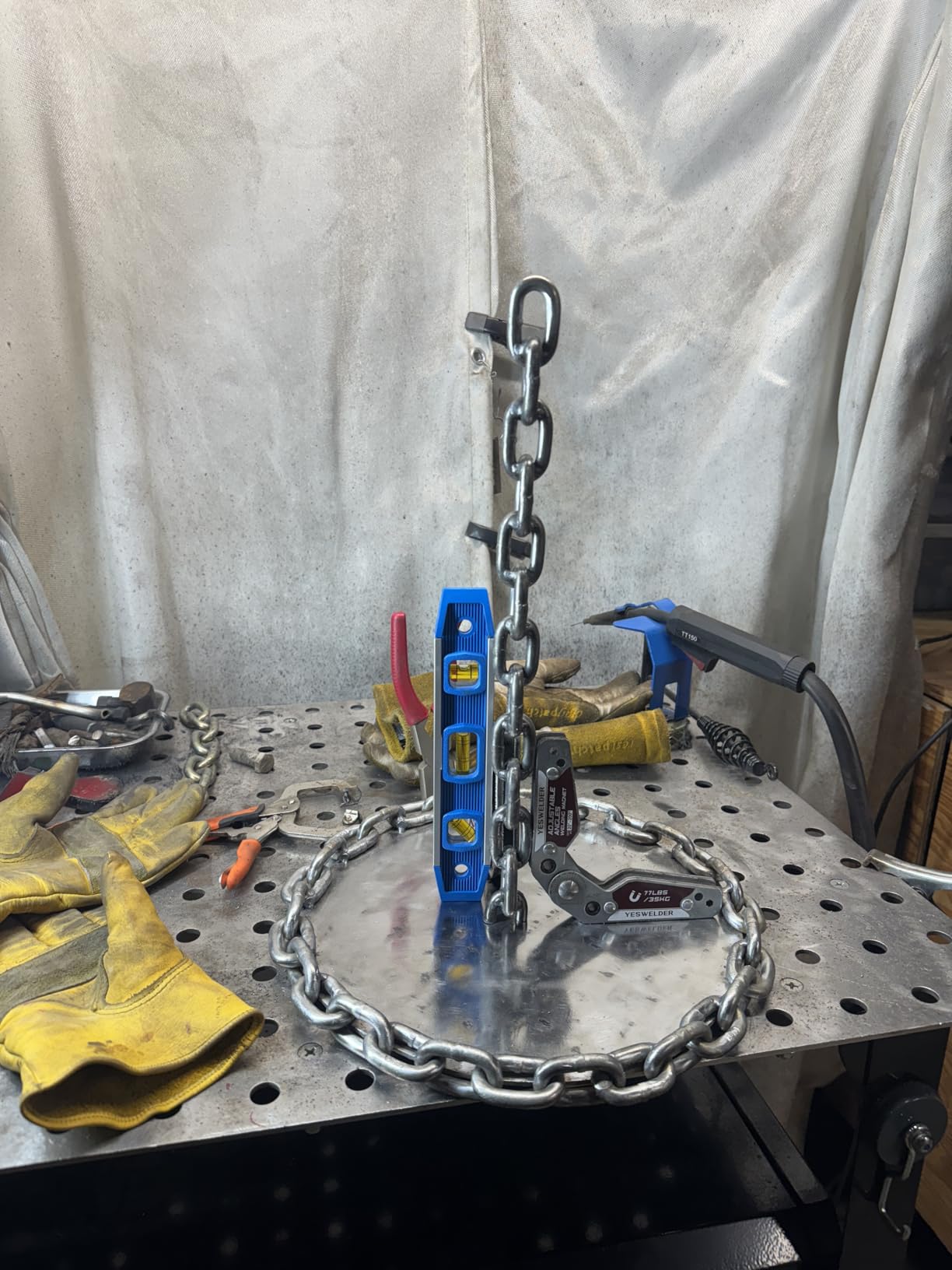
This is the magnet for a project where nothing lands on a round number. A tapered leg, a splayed bracket or a 72 degree miter is easy to set on the 20 to 200 degree scale, and the hex wrench locks the angle without tools.
At 15.8 ounces it is light enough to reposition constantly, which matters when you are dialing in several different angles on the same part.
Scale Readability Under Shop Lighting
The printed scale is the weak point here and on most adjustable magnets. In a bright shop the small numerals wash out, so we set the angle, then verify it with a protractor or a machinist square before tacking.
Verify the first joint and then the magnet stays put for the rest of the run. The setting does not drift once the hex wrench is torqued down.
Which Jobs It Handles Best
Owners consistently place it on small to medium tube rather than heavy stock, which matches the physical size of the body. Thin-wall and standard gauge tube sit in its comfort zone.
If your project is 304 stainless, forget it. The same goes for aluminum, and both need a different fixture entirely.
Where It Falls Short
The 77 lb claim is a per-face figure measured on thick stock, and several users report it falls short on larger material. Buy it for angle flexibility, not for maximum grip.
One more caution that applies across this whole category. The closer a magnet sits to the puddle, the more the arc can wander, especially on TIG. Keep a few inches of clearance.
7. ARCCAPTAIN 25 lb and 55 lb Welding Magnet 4-Piece Set – Best Mixed-Strength Set
ARCCAPTAIN Welding Magnets 25LB & 55LB 4Pcs Welding Magnet Set
2x 25 lb and 2x 55 lb
45, 90 and 135 degrees
Alloy steel
4 pieces
+ Pros
- Mixed strengths let you set light and heavy joints together
- Three fixed angles with quick rotation
- Riveted steel encasement resists welding heat
- Two or three magnets support several workpieces
– Cons
- Fixed-angle design with no fine adjustment
- Heavier gauge steel will not stay held on the 25 lb magnets for long spans
The logic of this set is the reason it stands out. Two 25 lb and two 55 lb magnets in one pack means you can lock a light cross member and a heavy main rail in the same assembly without one of them crushing the fit-up.
The riveted steel encasement is worth noting for heat. Magnet bodies that will not survive a stray pass of the torch are the first thing to go in a busy shop, and this one is built like a fixture rather than a novelty.
Setting Two or Three Magnets at Once
Reviewers describe using two or three of these together to support several workpieces during a single weld. On a three-sided box that is the difference between a rigid frame and one that racks while you tack the last side.
Working around three sides of a frame is where magnets earn their keep, because the more corners you lock before tacking, the less the part moves afterward.
Where It Falls Short
Fixed 45, 90 and 135 degree faces only, so any geometry outside those three needs a different tool. There is no adjustment to dial in.
Use the 55 lb pair for structure and keep the 25 lb pair on lighter members. Heavy gauge steel held by a 25 lb magnet will creep mid-tack, and a creeping joint is harder to fix than one that never started.
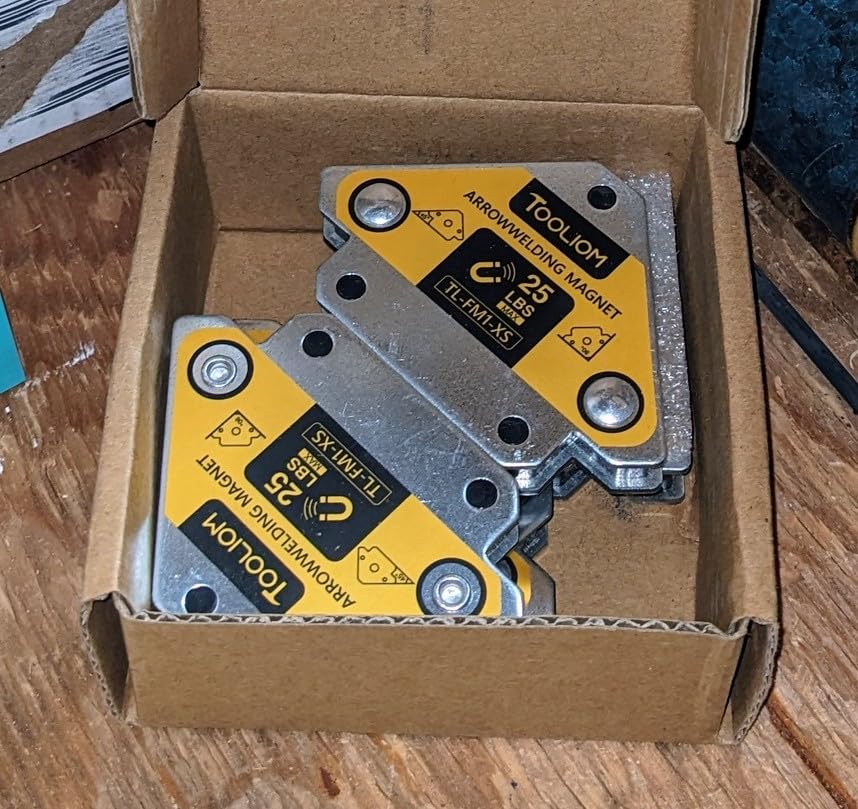
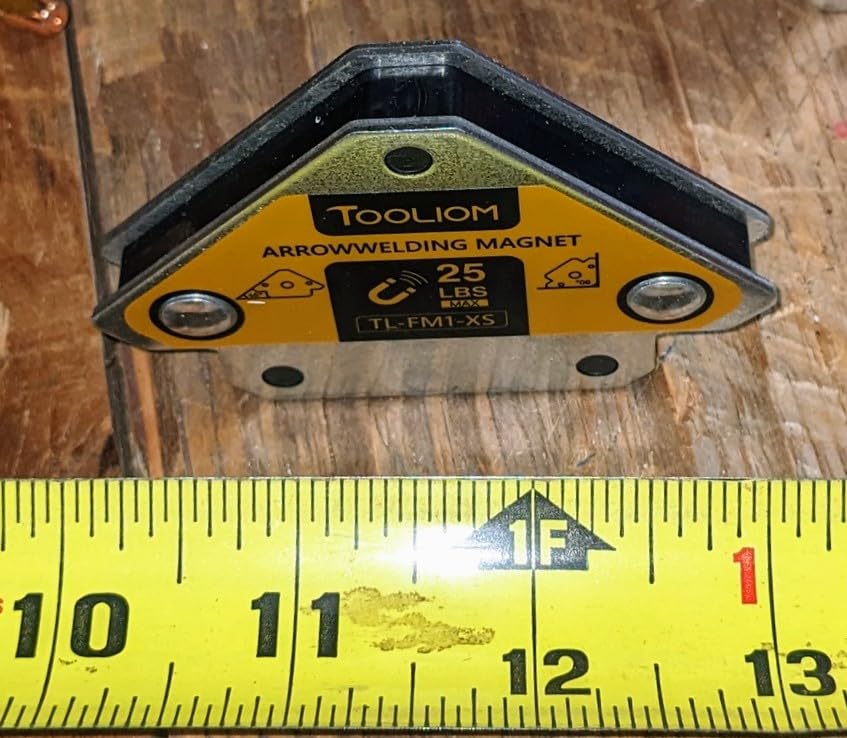
8. TOOLIOM Arrow Welding Magnets 4-Pc, 25 lb – Most Versatile for Small Assemblies
TOOLIOM Arrow Welding Magnets, 4-Pc 25 lb Holding Force Welding Accessories
25 lb pull force
45, 90 and 135 degrees
2.12 x 3.15 x 0.47 inches
4 pieces
+ Pros
- Three working angles in a small arrow body
- Four-piece pack locks multiple joints
- Small footprint frees a hand for the torch
- Also works for soldering and pipe fitting
– Cons
- 25 lb is the lowest pull force in this roundup
- Only holds in the three moulded orientations
- Small footprint limits it to light and medium gauge work
At a couple of inches long, these are the smallest useful corner magnets in the group, and that size is the feature. On a small bracket or a piece of thin-wall tube, a full-size square simply will not fit where you need it.
The four-piece pack is what makes the budget work. One magnet is a convenience, four is a system, and four is what you need to hold a small frame square while you tack it.
Where 25 lb Is Enough and Where It Is Not
Twenty-five pounds comfortably handles light and medium gauge work, and for small parts that is genuinely all you need. The number only becomes a problem when you move to heavier stock or longer spans.
Match the magnet to the joint, not to the ambition of the job. A 25 lb magnet on 1/4 inch plate will hold at first and then walk as the metal heats and the fit-up shifts.
Versatile Beyond Welding
Owners use these for soldering, marking off and pipe installation as much as for arc welding. On a repair where a clamp would be in the way, a small arrow magnet is often the fastest option available.
Where It Falls Short
Only the three moulded orientations work, so this is not a general purpose holder. If a project needs an angle that is not 45, 90 or 135 degrees, it is the wrong purchase.
And keep it away from the arc regardless of size. Small footprint does not mean small field, and arc wander is the most common complaint about any magnet set near the puddle.
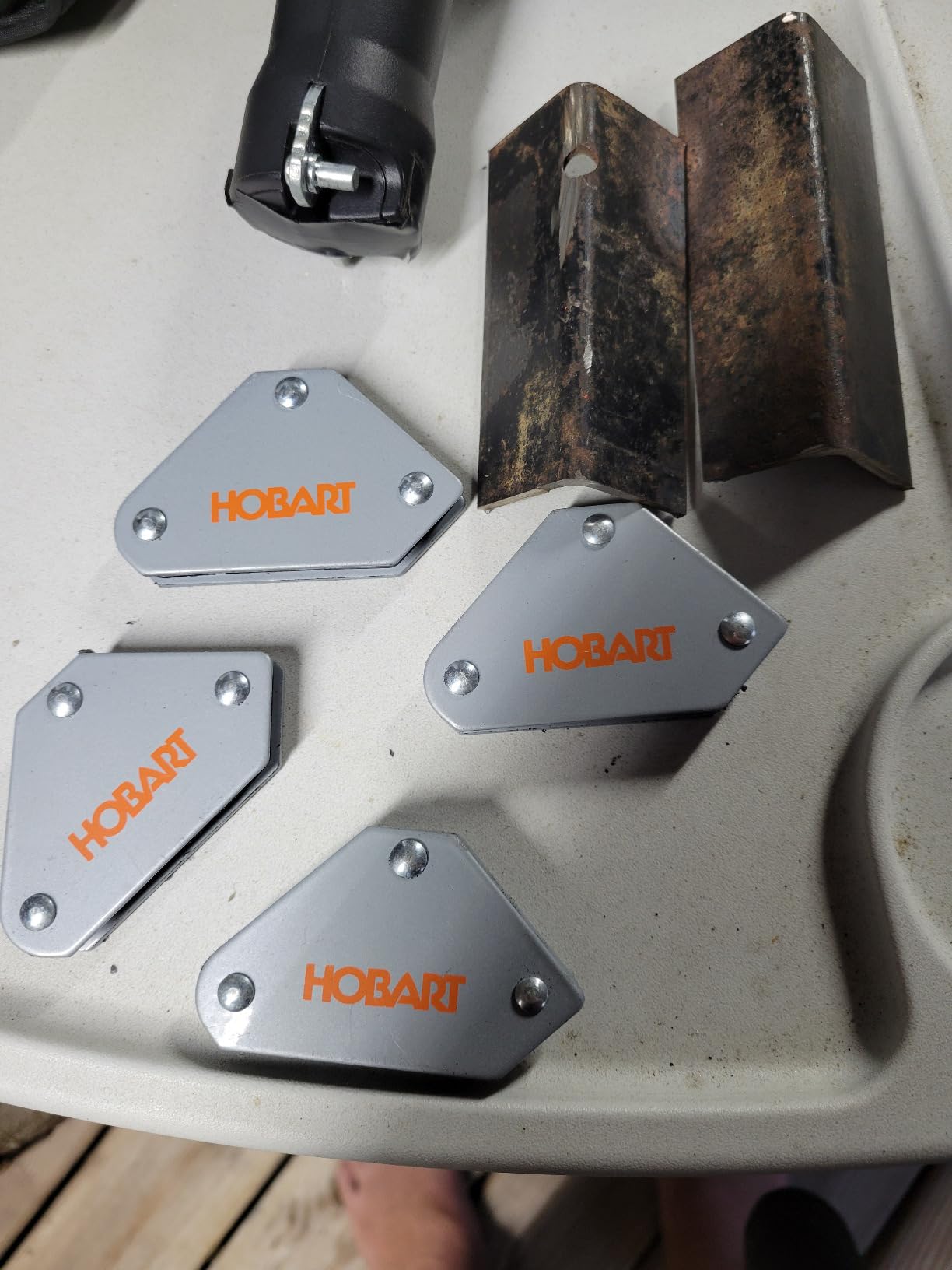
9. Hobart 770662 Mini Magnetic Welding Holder Set – Best for Light Tacks
Hobart 770662 Mini Magnetic Welding Holder Set, 4-Pack
Mini 4-pack
45, 90 and 135 degrees
12.3 ounces package weight
Hobart brand
+ Pros
- Very small format for light tack welds
- Holds steel at 45
- 90 and 135 degrees
- Four per pack covers several joints
- Handy on thin-wall tube
– Cons
- Light-duty strength only and not for heavy plate
- Magnet faces can arrive scratched
- Tolerance between plates can be uneven and affect squareness
The Hobart mini set fills a gap the bigger magnets leave open. On thin-wall tube and small brackets, a full-size square overhangs the work and gets in the way, and these sit on a narrow joint without covering it.
Four per pack is right for a beginner. A single small magnet on a first project teaches the workflow, and the rest let you set a full assembly.
Testing a New Magnet for Squareness
Because these are light duty, the tolerance between the two plates on a single unit can be uneven, and a few owners report a 90 degree face that reads slightly off. That is a cheap-tool issue, not a design flaw, and it is easy to check.
Lay the magnet on a flat steel surface, set a piece of square tube against it, then check the angle with a combination square or a framing square before you tack anything. Ninety seconds now beats a frame that has to come apart later.
Where It Falls Short
Do not ask these to hold 1/4 inch plate or a heavy structural corner. They are light duty by design and they will not hold that load through a full weld.
Some units arrive with scratched faces. Scratches on a pole face reduce flat contact, so wipe them clean and check the magnet against a machinist square before trusting it with a finished part.
10. LISHUAI Adjustable Angle Welding Magnet – Single Adjustable Unit with Strong Hold
LISHUAI New Adjustable Angle(20°~200°) Welding Magnet,Magnetic Welding Holder,Welder Tool Accessories (Medium)
20 to 200 degrees
77 lb per side
Neodymium magnet
14.1 ounces
+ Pros
- Wide 20 to 200 degree range with a clear scale
- Both inside and outside faces are magnetic
- Neodymium build delivers 77 lb per side
- Included hex wrench locks the angle
– Cons
- Printed angle markings are small
- Some users report the graduations are not fully accurate
- Only one magnet is included despite product imagery
The LISHUAI adjustable magnet is built around a neodymium core, and that is how it gets a 77 lb per-side hold out of a body this small. Both the inside and outside faces are magnetic, so you can flip it rather than repositioning the whole fixture.
It is the most compact adjustable option here and a good single-magnet buy for a one-off project rather than a full set.
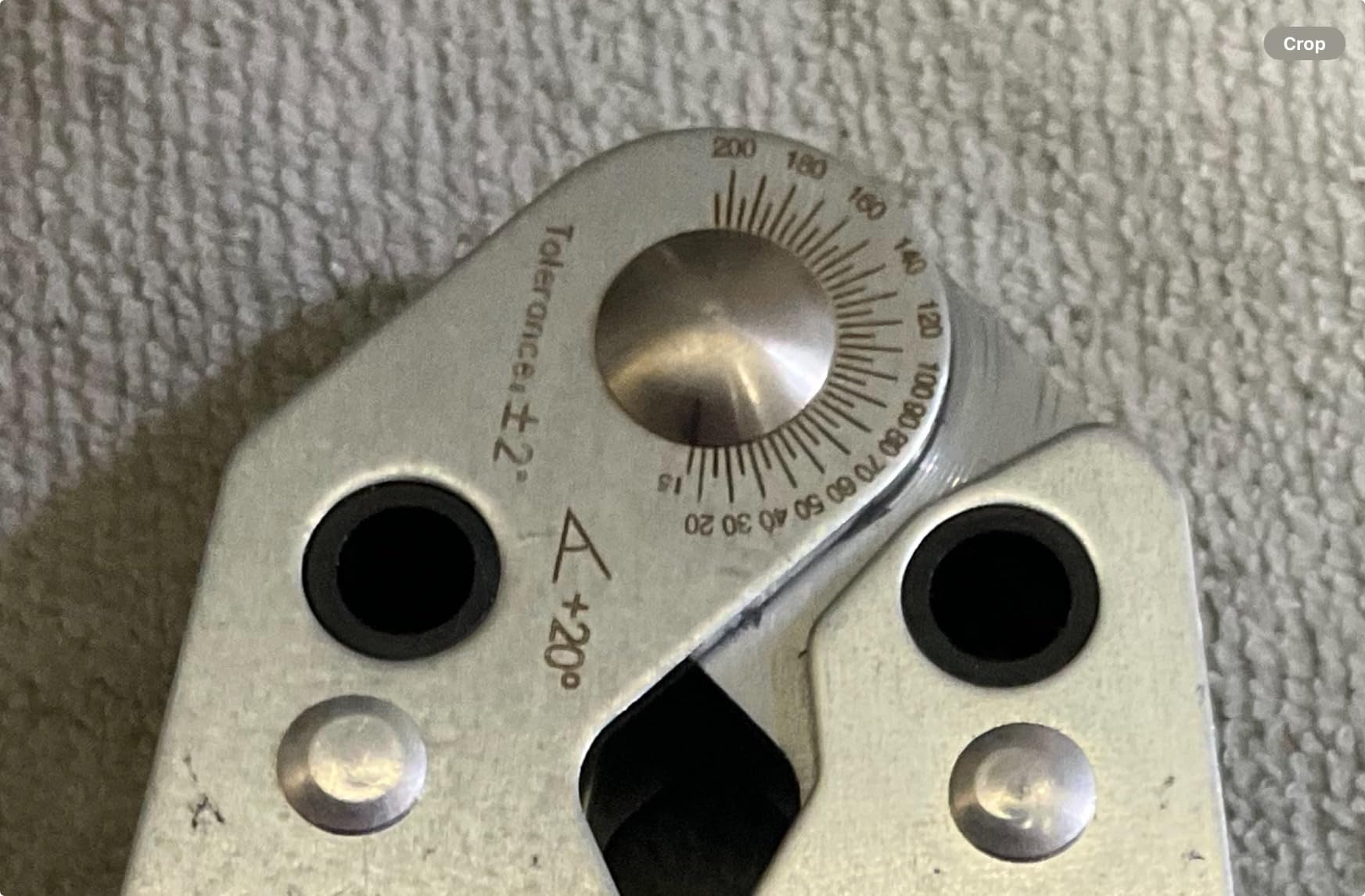
Neodymium Strength and Its Trade-Offs
Neodymium delivers serious force for the size, and that strength is exactly why it needs respect. A strong field near the arc is more likely to affect the puddle, and neodymium is less forgiving about heat exposure than a ferrite magnet.
If you are welding in TIG, keep this one further back from the joint than a lower strength magnet.
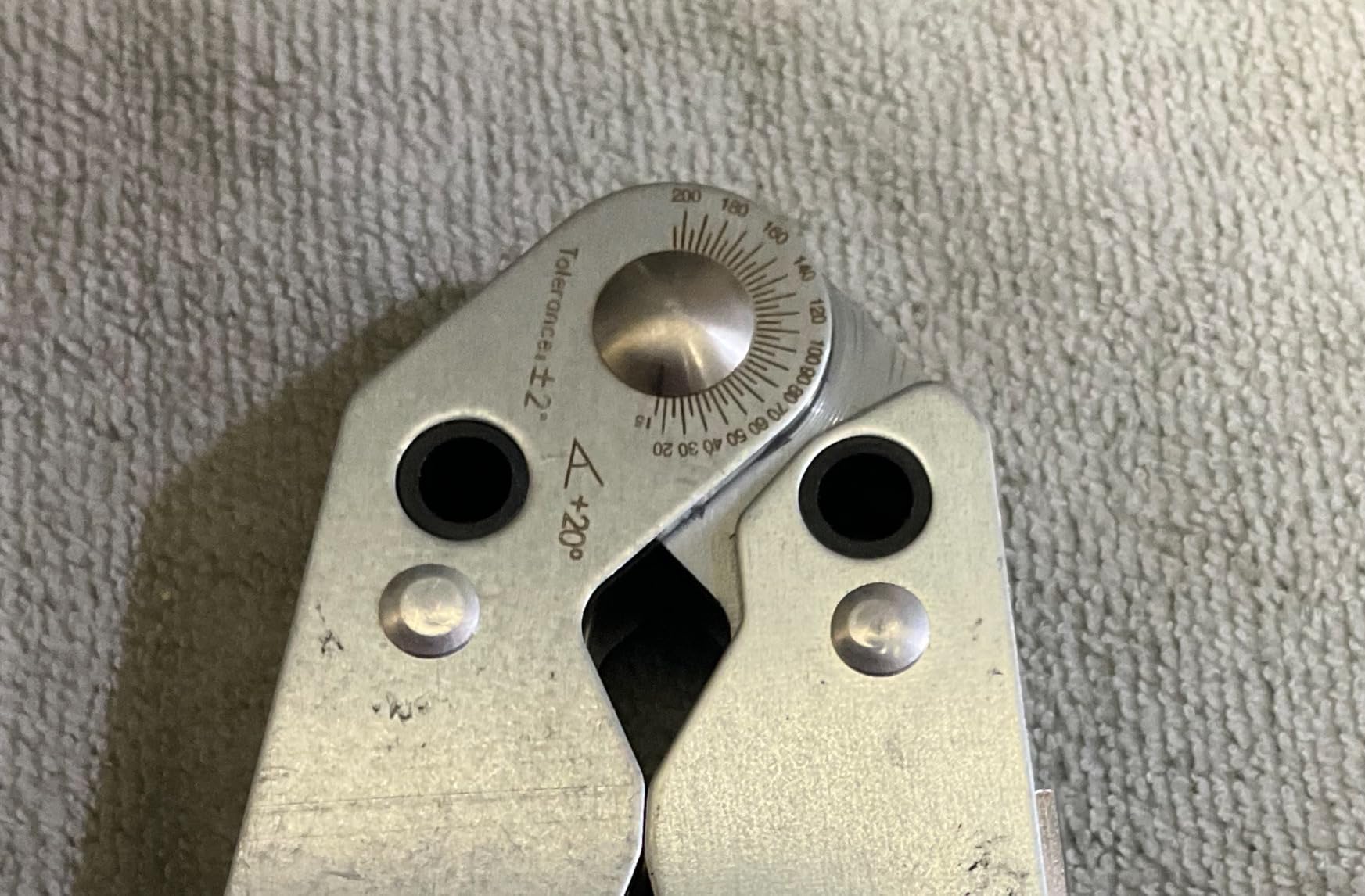
Marking Accuracy and Quantity
The printed graduations are small and some users report they are not fully accurate at the extremes of the range. Verify a 90 degree setting with a real square and you will be fine for anything close to standard geometry.
Only one magnet is included, even though some product imagery suggests more. If your project needs two corners locked, plan on ordering a second or choose a set.
How to Set and Tack a 90-Degree Corner Joint With a Magnet
This is the sequence experienced fabricators describe in every shop forum thread about magnets, and it is the same whether you use a switchable square or a fixed arrow magnet.
Square the stock first. Cut and true both members before the magnet ever touches them. A magnet holds a joint accurately, but it cannot correct a member that is bent or cut out of square.
Clean the pole faces and the steel. Knock off grinding grit, swarf, rust film and paint from both the magnet and the workpiece. Debris on the pole face is the number one reason a good magnet feels weak.
Place the magnet on the outside of the corner. This keeps the inside face open so your torch and filler rod can reach the full length of the joint. Two magnets on one member handle both ends of a side.
Tack it lightly. Small tacks, spaced along the joint, lock the position without distorting the metal. Skip the single big tack, which pulls the joint out of square on its own.
Check with a real square, not the magnet. Measure the diagonal of the assembly, or hold a combination square on the joint. If the diagonals are equal, the frame is square. If the magnet is holding a joint that was never square, only this step catches it.
Correct, add more tacks, then weld out. Knock the joint straight, add tacks at roughly 6 inch intervals, remove the magnet, and weld the seam in short passes so the heat stays under control.
For outside corners specifically, clamp the magnet to the outer face of both members and tack from the inside of the joint. This keeps the fillet area visible and lets you watch the corner as it goes hot.
If you are running a different process on the same geometry, our guides to plasma arc welding and silver brazing cover how fixturing changes with heat input.
What Actually Matters When You Buy a Welding Magnet
Rated Pull Force Is Not What You Get at a Corner
A magnet rated at 50 pounds is rated for a straight pull between two flat surfaces. At a 90 degree corner you load two faces at an angle, and on thin material the poles never fully engage, so the useful figure is closer to a third of the rating. Treat the number as a ceiling, not a promise, and match it to the thickness of your stock.
Switchable Versus Permanent
A switchable on/off magnet lets you release the work instantly and dump the swarf instead of grinding it off. It costs more and it is the better tool when you reposition constantly or work in a shop where fixtures get bashed. A permanent magnet is simpler, cheaper and completely adequate for occasional tacking on light work.
None of them need a power source. A mechanical pole rotation produces the on/off action, which matters on job sites with no power.
Angle Coverage Against Joint Reality
Decide what angles your project actually contains before you buy. A fixed 45, 90 and 135 degree arrow magnet covers the vast majority of corner work. An adjustable model earns its place only when you hit miters, tapered tube or non-standard frames.
Which Metals a Magnet Can Hold
Mild steel, carbon steel and ferritic stainless will hold. 304 and 316 stainless are austenitic and effectively non-magnetic, and aluminum will not hold either. If you weld stainless or aluminum regularly, a magnet is not a fixture you can rely on, and you need clamps, angle irons or a machinist angle plate instead.
How Many Magnets a Four-Corner Frame Needs
Two magnets lock both ends of one side, which is the minimum for a stable start. Four magnets let you lock two diagonal corners at once so the frame cannot rack before it is tacked. A larger frame, or one in 1/4 inch plate, needs more and a stronger magnet than you started with.
Cleaning Grit Is Part of Maintenance
Swarf and grinding grit build up on pole faces, and a dirty face is a weak face. Wipe the magnet after every job, and keep a rag and a wire brush next to the welding table. Switchable magnets make this a one-second job instead of a chore.
Magnets Versus Clamps
Clamps squeeze, and squeezing distorts thin material and burns the paint. Magnets hold without pressure, release instantly, and get out of the way for the welding pass, which makes them faster on small and medium ferrous assemblies. Experienced ship fitters and hobby machinists on weldingweb.com and garagejournal.com still reach for framing squares, combination squares and C-clamps for anything that has to be absolutely true, and that combination is the honest answer: use the magnet to get the part close, then verify with the square.
Frequently Asked Questions
What is the best brand of welding magnet?
Magswitch is the most frequently recommended premium brand for switchable workholding, and Strong Hand Tools builds the widest range of fixed and adjustable squares. For arrow-shaped multi-angle magnets, YESWELDER and ARCCAPTAIN cover the 45, 90 and 135 degree corners most fabricators need. The right brand depends on whether you need a mechanical on/off release, a fixed face set or fine angle adjustment.
How strong are welding magnets?
A magnet rated at 50 pounds is measured in a straight pull between two flat surfaces. At a 90 degree corner the load is applied at an angle to two faces, and on thin material the poles never fully engage, so realistic holding is often around a third of the rated figure. Heavy stock and large plate need a switchable unit, while light and medium gauge work is well within a 25 to 50 lb arrow magnet.
Are welding magnets worth buying?
For anyone welding mild steel more than once a month, yes. A magnet acts as a third hand, holds the angle through tacking, and cuts the grinding and rework that come from a joint drifting out of square. They are not a replacement for a square, since experienced fabricators still check every joint with a framing or combination square before welding out.
How do you position welding magnets on a corner joint?
Place the magnet on the outside of the corner so the inside face stays clear for the torch, tack lightly at short intervals along the joint, then check the joint with a real square or by measuring equal diagonals. Knock the joint straight, add tacks roughly 6 inches apart, remove the magnet and weld out in short passes.
Can you use a welding magnet on stainless steel or aluminum?
Not reliably. 304 and 316 stainless are austenitic and essentially non-magnetic, and aluminum will not hold a magnet at all. Use clamps, angle irons or a machinist angle plate for those materials and reserve welding magnets for mild steel, carbon steel and ferritic stainless.
What is a good grounding magnet for welding?
A grounding magnet is a different product class from a corner-holding magnet. It sits on a steel workpiece and provides an electrical path back to the work clamp, which helps reduce voltage drop and arc wandering on long leads. Corner-holding magnets position the joint, and grounding magnets handle the circuit, so they are bought for different jobs.
Which Welding Magnet Should You Buy?
If you build square tube frames and want one set that covers most corner work, the YESWELDER 4-Pc 50 lb set is the pick. Four magnets, three angles each, and the highest average rating in the group we tested.
If you weld heavy plate, run production work, or want to stop fighting a permanent magnet that has ground a month of swarf into its face, go with the Magswitch MagSquare 165. The mechanical on/off release pays for itself the first time you reposition a part in a tight corner.
If your joints are tube and box work where the inside of the corner has to stay open for the torch, the Strong Hand MST327 twin pack is the smarter shape. For light tack welds on small brackets, the Hobart mini set or the TOOLIOM arrow pack covers it at a size that will not get in your way. For geometry that is not 45, 90 or 135 degrees, the MLA600 or the LISHUAI adjustable unit sets any angle in the range and locks it with a hex wrench.
Whatever you buy, check the joint with a real square after the first tacks. That single habit, repeated on every job, is what separates a square frame from one that has to be cut out and re-welded, and it is the fastest way to get more out of the best welding magnets for corner joints in 2026.
Leave a Reply