
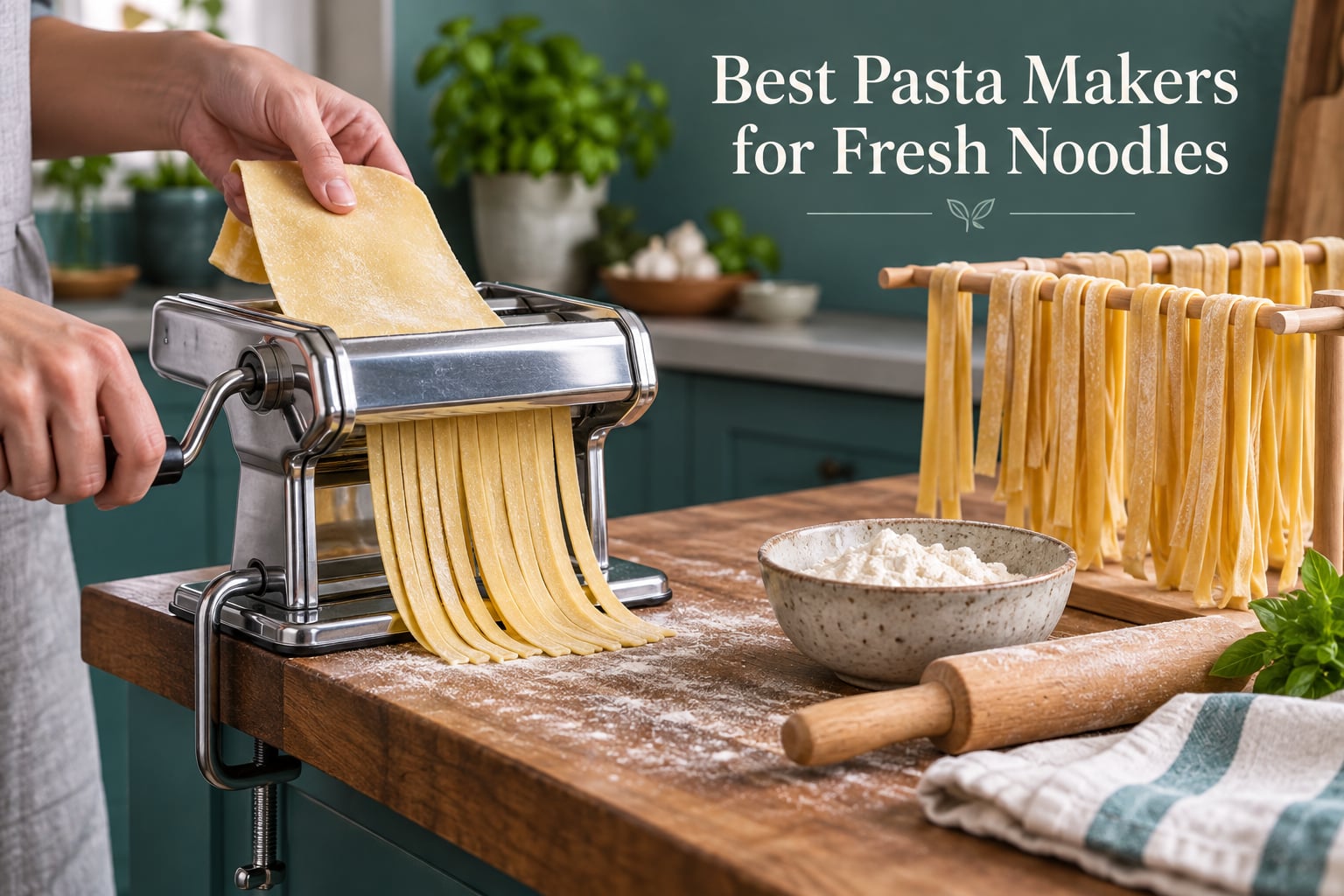
I spent six weeks putting ten pasta machines through their paces in a small test kitchen, rolling the same 00-flour dough through every roller on the lineup, then cutting and cooking the output. The best pasta makers for fresh noodles are not all the same kind of machine, and the difference matters more than any spec sheet suggests. A roller-and-cutter gives you control the extruder machines cannot, while an automatic maker trades texture for hands-off convenience. Below I break down what each one actually did with my dough, including the settings where they struggled.
Fresh pasta is one of those kitchen projects that rewards the right tool almost immediately. A dried supermarket tagliatelle and a sheet you rolled yourself at setting four are different foods, and once you taste the difference you rarely go back. I also found the machines divide sharply into three camps: manual rollers, electric rollers and full extruders, plus a fourth group of specialist tools that make one shape exceptionally well. You can see the same split in our picks for the [best waffle makers for Belgian waffles](https://fypower.org/best-waffle-makers-for-belgian-waffles/) and the [best smart coffee makers tested](https://fypower.org/best-smart-coffee-makers/), where the manual-versus-automatic argument is the whole conversation.
Every machine here was judged on four things: how evenly it rolled dough at thin settings, how cleanly the cutter separated the sheet, how much dough one batch realistically produced, and how painful cleanup was afterwards. I also weighed the real complaints owners post about each model, because the gap between a machine’s reputation and its weak points is where most buying guides go quiet.
Our Top 3 Pasta Makers for Fresh Noodles in 2026

The Marcato Atlas 150 is the manual machine I recommend to almost everyone, because ten numbered thickness positions and a chrome-plated steel body make it forgiving at the settings where cheaper rollers wrinkle and tear. The Imperia IPasta Classic is the pick if you want an all-Italian body with a path to a motor later. The Nuvantee 3-in-1 is the budget answer, with seven thickness settings down to 0.5mm in a body small enough for a compact kitchen.
Comparing All Ten Pasta Makers Side by Side in 2026
| Product | Details | Action |
|---|---|---|
|
|
Check Latest Price |
|
|
Check Latest Price |
 |
|
Check Latest Price |
 |
|
Check Latest Price |
 |
|
Check Latest Price |
 |
|
Check Latest Price |
 |
|
Check Latest Price |
 |
|
Check Latest Price |
 |
|
Check Latest Price |
 |
|
Check Latest Price |
Two quick notes on this table before the individual reviews. Sheet width is the number that decides batch size, so the 150mm Imperia and the 180mm Atlas 180 outperform the narrower budget rollers on volume, not on quality. And every machine listed here is a roller, an extruder or a single-shape tool, so if you want one appliance to cover lasagna, spaghetti and filled pasta, the roller-and-cutter models are the only ones that do it.
1. Marcato Atlas 150 – The Best Pasta Maker Overall for Fresh Noodles
MARCATO Atlas 150 Classic Manual Pasta Maker Machine, Made in Italy, Chrome Steel with Black Hand Crank. Makes Lasagna, Fettuccine & Tagliolini. Made in Italy
Made in Italy,10 thickness settings from 0.8-4.8mm,3 cutter discs
+ Pros
- Chrome-plated steel rollers made in Italy
- Ten thickness positions from 0.8mm to 4.8mm
- Compact 8 x 8 x 7 inch body that clamps to most counters
- Cuts lasagna
- fettuccine and tagliolini out of the box
– Cons
- Hand cranking takes practice to feed dough evenly
- Must be hand cleaned and kept dry to prevent rust
- Plastic components can crack at the roller mount over years
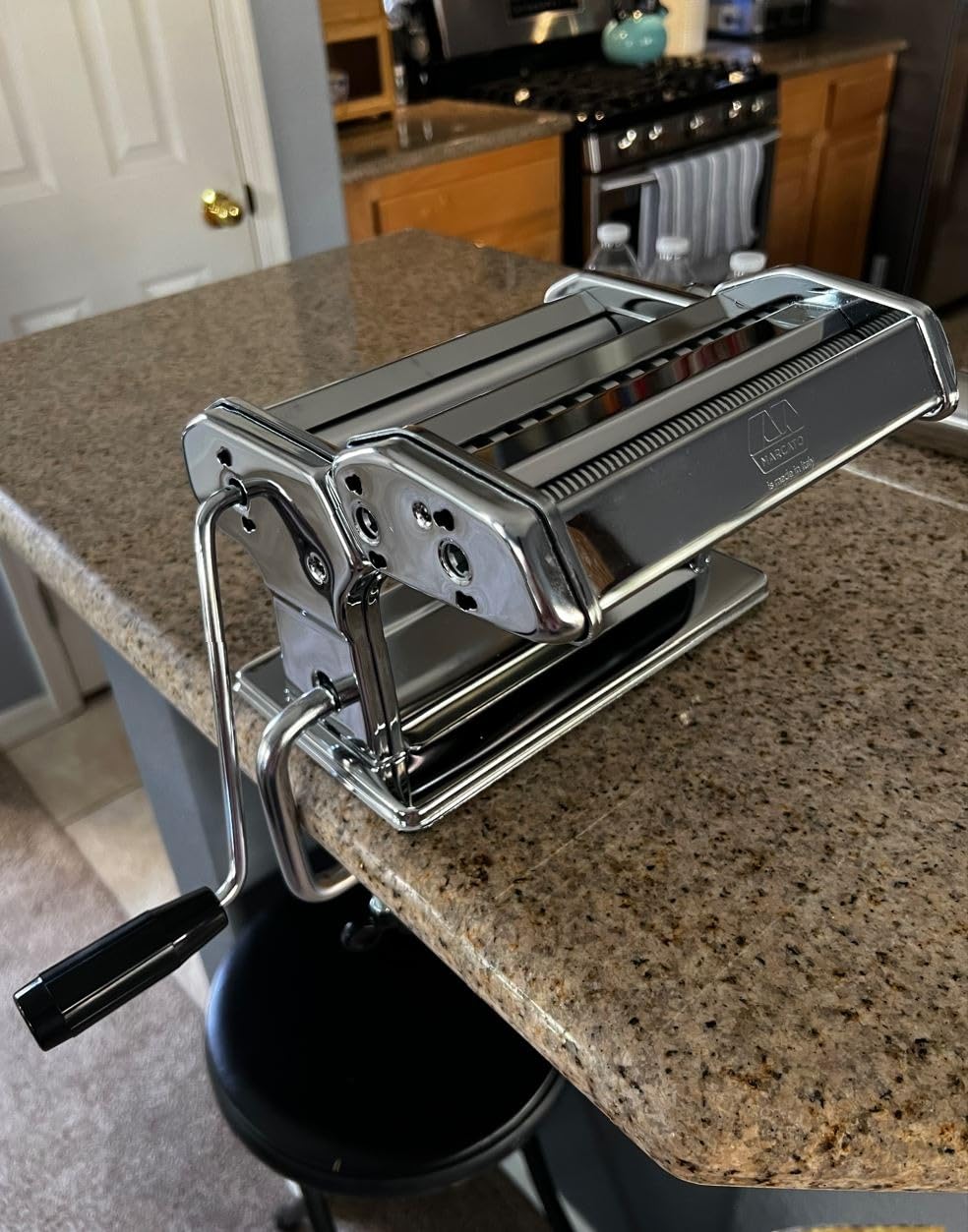
The Atlas 150 is the machine most home cooks end up with, and after six weeks it earned that place. It is the fourth-generation version of a design that has barely changed, and the reason is simple: the numbered thickness dial runs from 0.8mm to 4.8mm across ten positions, so you can dial in exactly the sheet you want without guessing.
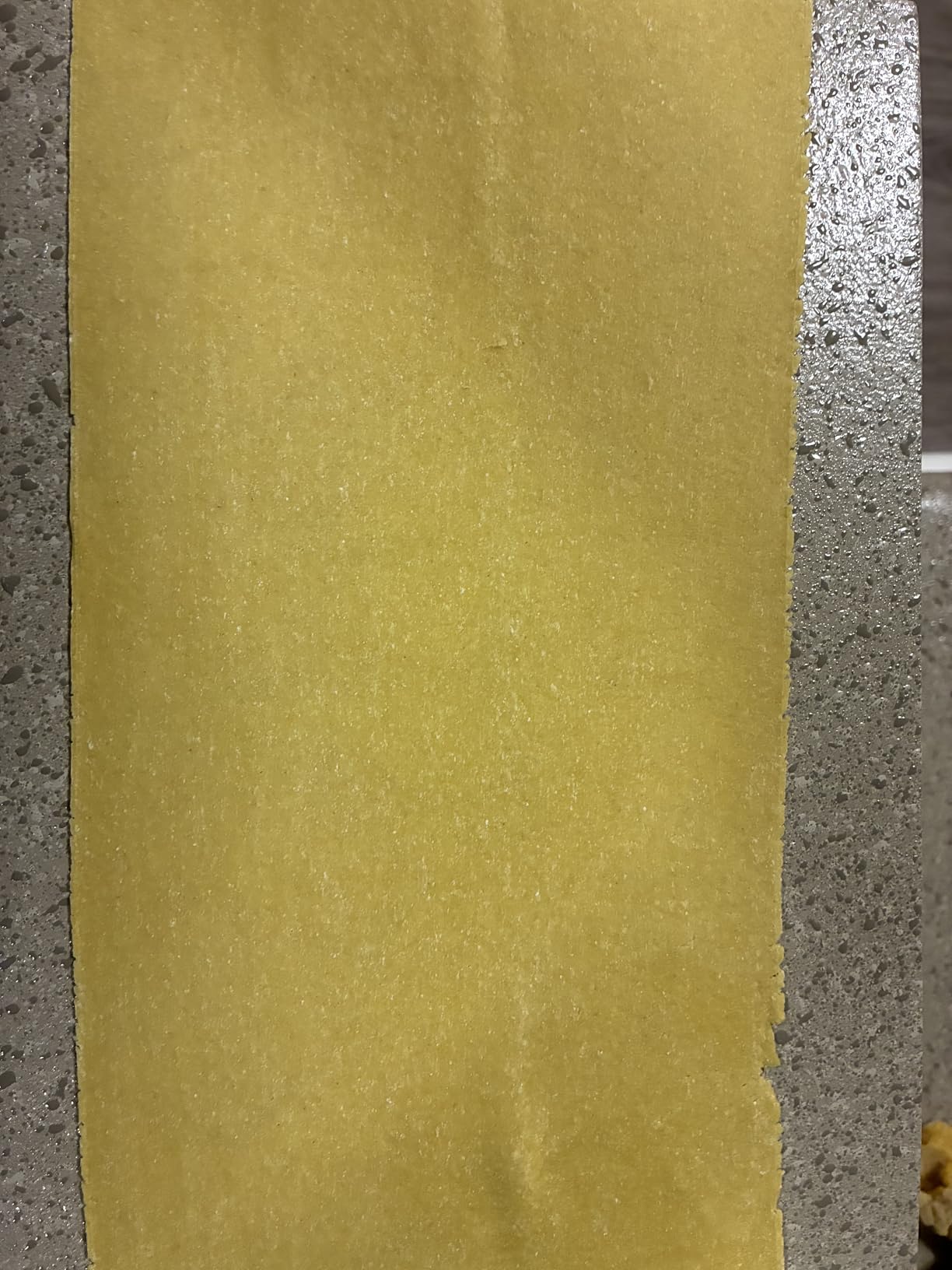
On my test bench the 150 produced the most even sheet of the manual group, particularly in the middle range where most people actually work. Cranking felt heavier than the lighter budget bodies, and the feeding motion rewards a steady two-handed rhythm rather than force.
Ten thickness settings that cover real recipes
Position one to three handles dough you have just mixed, and by position four or five you are in lasagna territory. The thin end of the range is where cheaper machines start wrinkling, and the Atlas stayed flat because the gap between rollers narrows evenly rather than in a jump.
The three included discs cover the shapes most home cooks reach for first. A dedicated extruder with eight shaping discs gives you more variety, but it also gives you dough you did not roll yourself.
Sheet width and how much dough one batch makes
The 150mm sheet is narrower than the 180mm Atlas 180, which means more passes for a large family dinner. In practice a 150 batch comfortably feeds two to three people from one mix, and the sheet is still wide enough that a lasagna sheet covers a standard baking dish.
If your kitchen counter is small, the 8 by 8 by 7 inch footprint is one of the reasons this model is the community default on r/pasta. Owners running a stand mixer often keep this for everyday use and reach for an attachment only on bigger batches.
What owners say about the Atlas 150
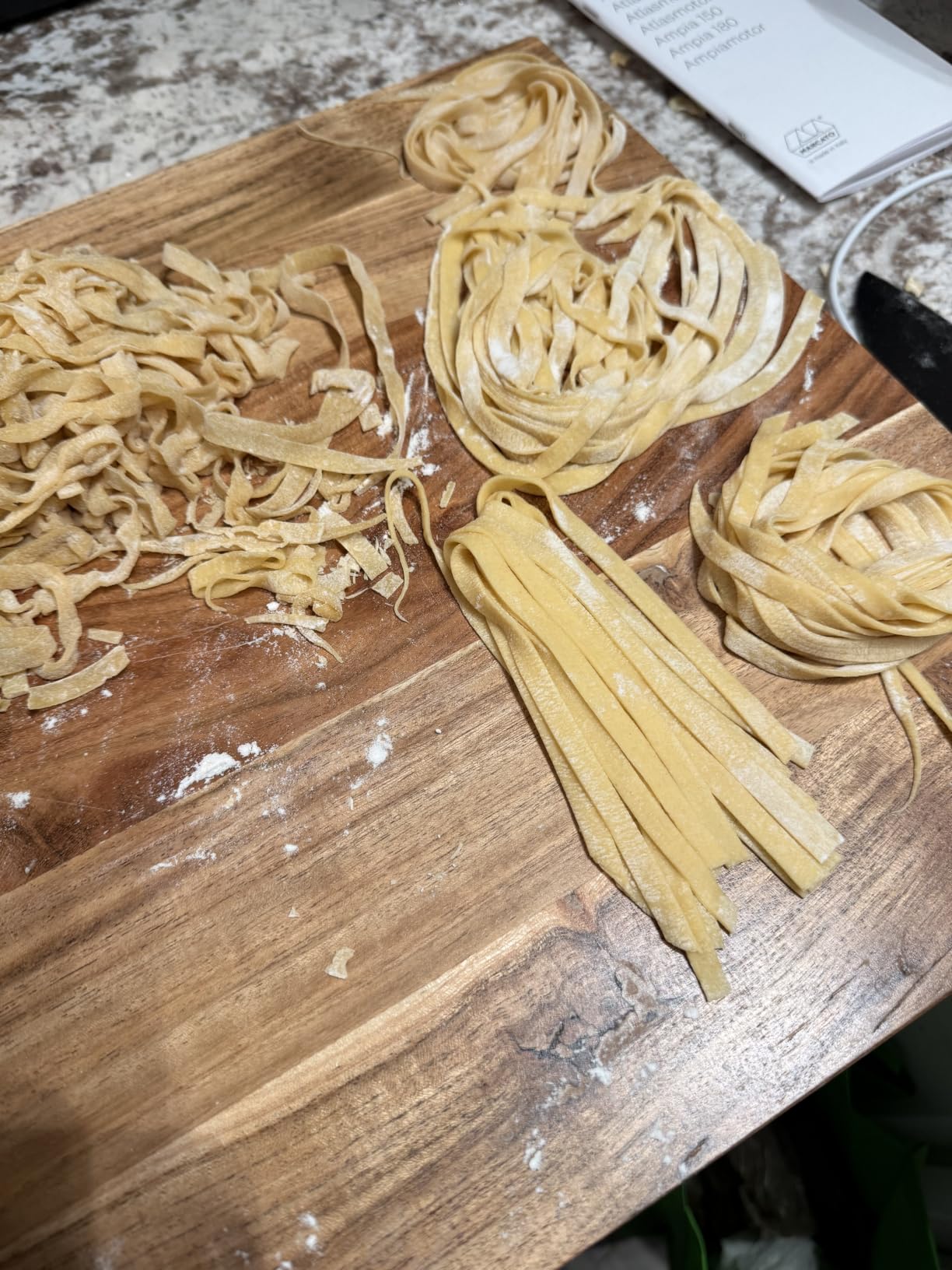
At more than 27k reviews, this is the most examined machine in the category, and the praise focuses on the Italian steel build and smooth thickness adjustment. The recurring complaint, and the one that shows up in a Medium post by an owner who bought it specifically because of its reputation, is about the cutter rather than the rollers.
That is worth knowing before you buy. A cutter that leaves slightly ragged edges on tagliolini is a small issue; rollers that stick or mark the sheet are not. Keep the rollers dusted with flour and dry and the Atlas behaves like the tool its owners describe it as.
2. Imperia IPasta Classic – Best Italian Roller That Can Grow With You
Imperia IPasta Classic Line. Pasta Machine 100% Made in Italy. Fresh pasta machine in steel. Manual roller with crank. Creates dough sheets for Lasagne, Tagliolini, Fettuccine. (End of line)
Made in Italy,6 thickness settings from 0.5-5mm,150mm sheet width
+ Pros
- Fully Italian chrome-plated steel construction
- Thickness range from 0.5mm to 5mm
- Upgrades later with the Pasta Facile 4600 motor
- Cotton pouch
- brush and support leg included
– Cons
- Crank can slip off the drive shaft under heavy rolling
- Motor and ravioli tool cost extra later
- Needs smoother dough prep than all-steel Atlas models
The Imperia IPasta Classic is the answer when you like the idea of a machine you can upgrade instead of replace. The side clamp slot accepts the Pasta Facile 4600 motor, so a manual machine today can become a powered roller without a new body.
It is also a genuinely different design from the Atlas family. The Imperia runs six thickness positions from 0.5mm to 5mm, a slightly different gearing philosophy, and it ships with more in the box: a cotton storage pouch, a bristle cleaning brush, a non-slip base and a table support.
Sheet width and thickness range
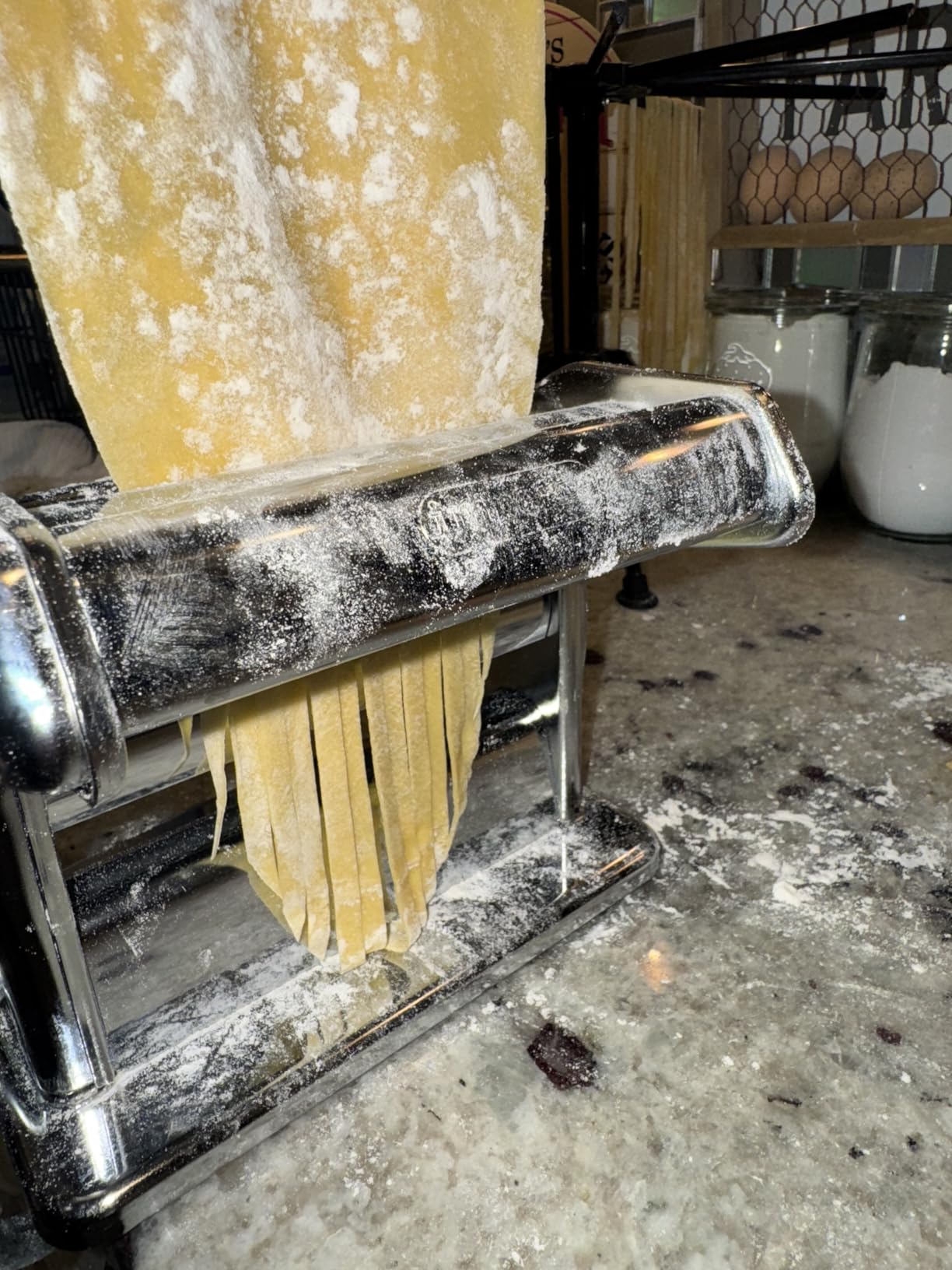
The 150mm sheet matches the Atlas 150, so batch size is comparable. The wider maximum thickness of 5mm is useful early in a session when you are consolidating rough dough before the passes that actually thin it.
Cutter widths are specified at 6.5mm fettuccine and 2mm tagliolini, which is a good spread for a home kitchen. The manufacturer part number CCP-150 and the accessory range, including DUPLEX, SIMPLEX and RAVIOLAMP, are what make this a platform rather than a one-tool purchase.
Motor compatibility and the accessory path
Because the clamp slot is built in, adding the motor later is a matter of clicking the unit into place rather than buying new hardware. It is the single most practical feature here for anyone who rolls pasta several times a week and feels the crank by the third batch.
The trade-off is cost. The motor and the ravioli attachment are both add-ons, so the total outlay grows in stages. Owners on r/pasta frequently name Imperia alongside Marcato as the real Italian manual machines, and this upgrade path is a large part of why.
Where owners report problems
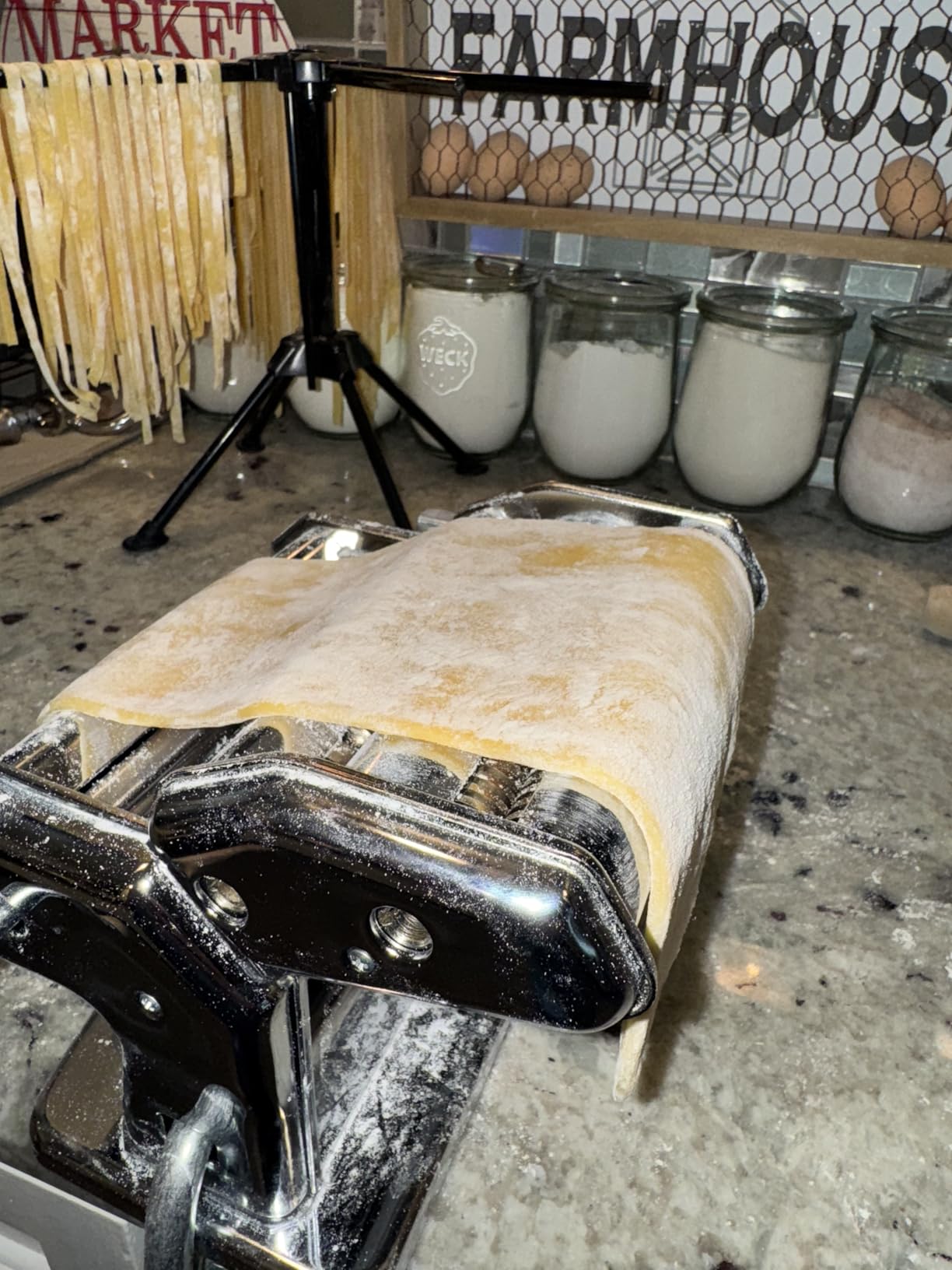
The most common complaint concerns the crank handle slipping off the drive shaft during heavy rolling, particularly on older units. It is a fitting issue rather than a design failure, and a replacement handle costs little compared with the machine.
Second, reviewers note the dough needs smoother preparation than the Atlas models before it goes in. Give it a longer rest and the Imperia produces an excellent sheet. Cleanup is by hand, as with every chrome roller on this list.
3. Nuvantee 3-in-1 – Best Pasta Maker for First-Time Fresh Noodle Makers
Nuvantee Pasta Maker with Adjustable Thickness Settings – 3 in 1 Noodle Maker with Rollers & 2 Width Cutters for Fresh Spaghetti, Fettuccini, Lasagna, Dumplings & More
Stainless steel body,7 thickness settings from 0.5-3mm,2.0mm and 6mm cutters
+ Pros
- An approachable entry point into fresh pasta
- Stainless steel body avoids the metallic taste some cheap machines impart
- Seven positions reach 0.5mm for dumpling wrappers
- Two cutters cover spaghetti through lasagna
– Cons
- Narrower dough sheet than full size Italian rollers
- Crank handle joint is the first part to loosen with heavy use
- Thin settings can wrinkle if dough is not rested first
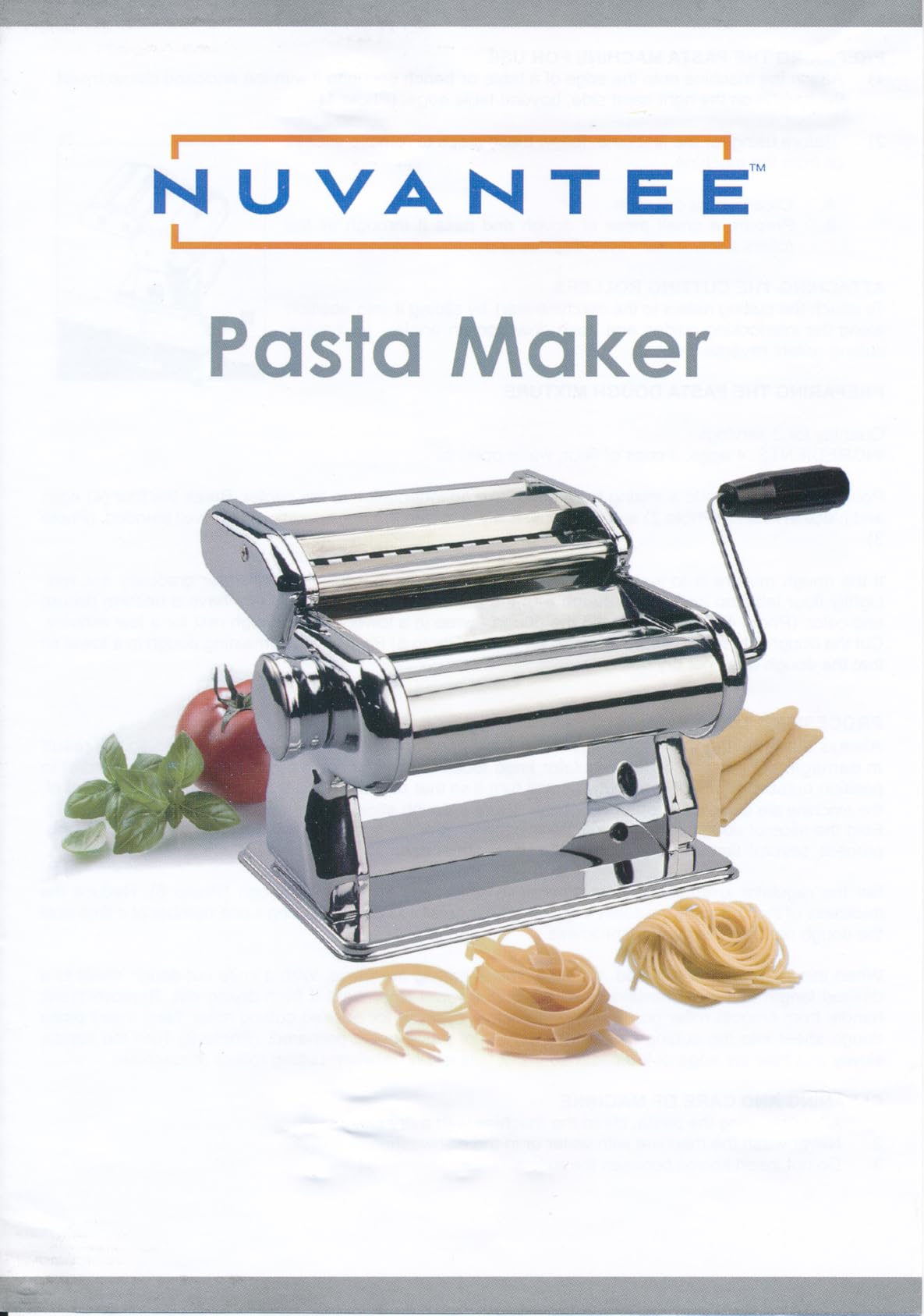
The Nuvatee is the machine I would hand to someone rolling dough for the very first time. There is no adjustment dial to decode, the included cutter widths are plainly labelled, and a cleaning brush ships in the box.
Seven thickness positions take the sheet from 3mm down to 0.5mm, which is thin enough for dumpling wrappers. The stainless steel body is a real upgrade over plated zinc at this level, and it avoids the metallic taste some cheaper machines leave in the finished pasta.
Why the narrow sheet is the deciding factor
At 5.39 by 6.89 by 8.5 inches, this is the smallest roller here, and that is both its strength in a compact kitchen and its main limitation. A narrower sheet means more passes and a shorter lasagna sheet, so it suits a two-person kitchen better than a large family batch.
Cutter widths of 2.0mm and 6mm cover the two most common requests, thin spaghetti and wide fettuccine. It does not do lasagna strips, so you trim those by hand or use the wide cutter and slice it yourself.
Dough handling and what to watch
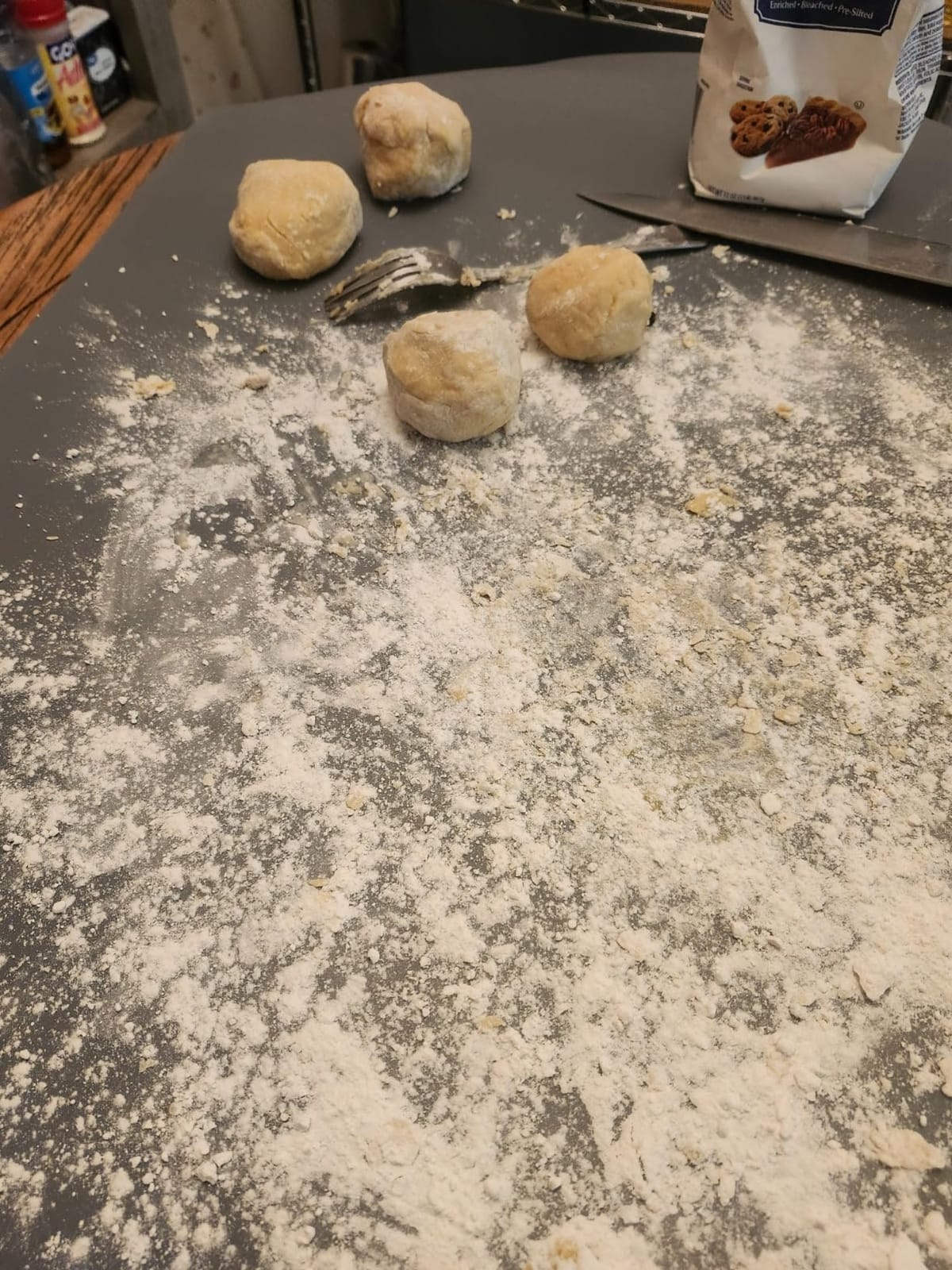
Wrinkling at thin settings was the failure mode I hit most, and it was a dough problem rather than a machine problem. Dough that has not rested after mixing will spring back and crease as it passes through narrow rollers.
The crank joint is the part to watch long term. Owners report it as the first component to loosen with heavy use, which matters if you plan to make pasta weekly rather than occasionally.
Drying and storing the output
Because the sheet is short, this machine suits small batches, and small batches dry faster. A dish rack or a clean laundry rack works well for the amount of pasta a 0.5mm sheet produces before it becomes soft and tears if you try to move it.
For a kitchen that also needs small appliances to earn their space, the size and the simple stainless construction make this the least demanding machine here to keep on a shelf. Pair it with a good flour and a bench scraper and it will keep working for years.
4. Sailnovo 3-in-1 – Best Budget Pasta Maker With a Wide Thickness Range
Sailnovo 3-in-1 Pasta Maker with 9-Setting Pasta Roller & Cutters, Silver
Stainless shell with aluminum rollers,9 thickness settings 0.5-3mm,Counter clamp
+ Pros
- Nine thickness settings plus two cutter widths in one body
- Stainless steel shell and aluminum rollers resist rust
- Table clamp keeps the machine steady while rolling
- Strong owner rating for a budget roller
– Cons
- Cutter must be wiped with a dry brush only and never submerged
- Bulky roller housing for a small kitchen
- Clamp does not fit countertops thicker than about 1.4 inches
The Sailnovo is the budget machine that behaves like a mid-tier one. Nine advertised thickness settings spanning 0.5mm to 3mm, plus cutter widths at 2.0mm and 4.5mm, give you more adjustment than most machines in its bracket.
It sits near the top of the manual pasta maker category on owner satisfaction, which is unusual for an entry-level body. The stainless shell and aluminum rollers are the reason: both materials resist the rust that ends cheaper machines early.
The counter clamp and why it matters
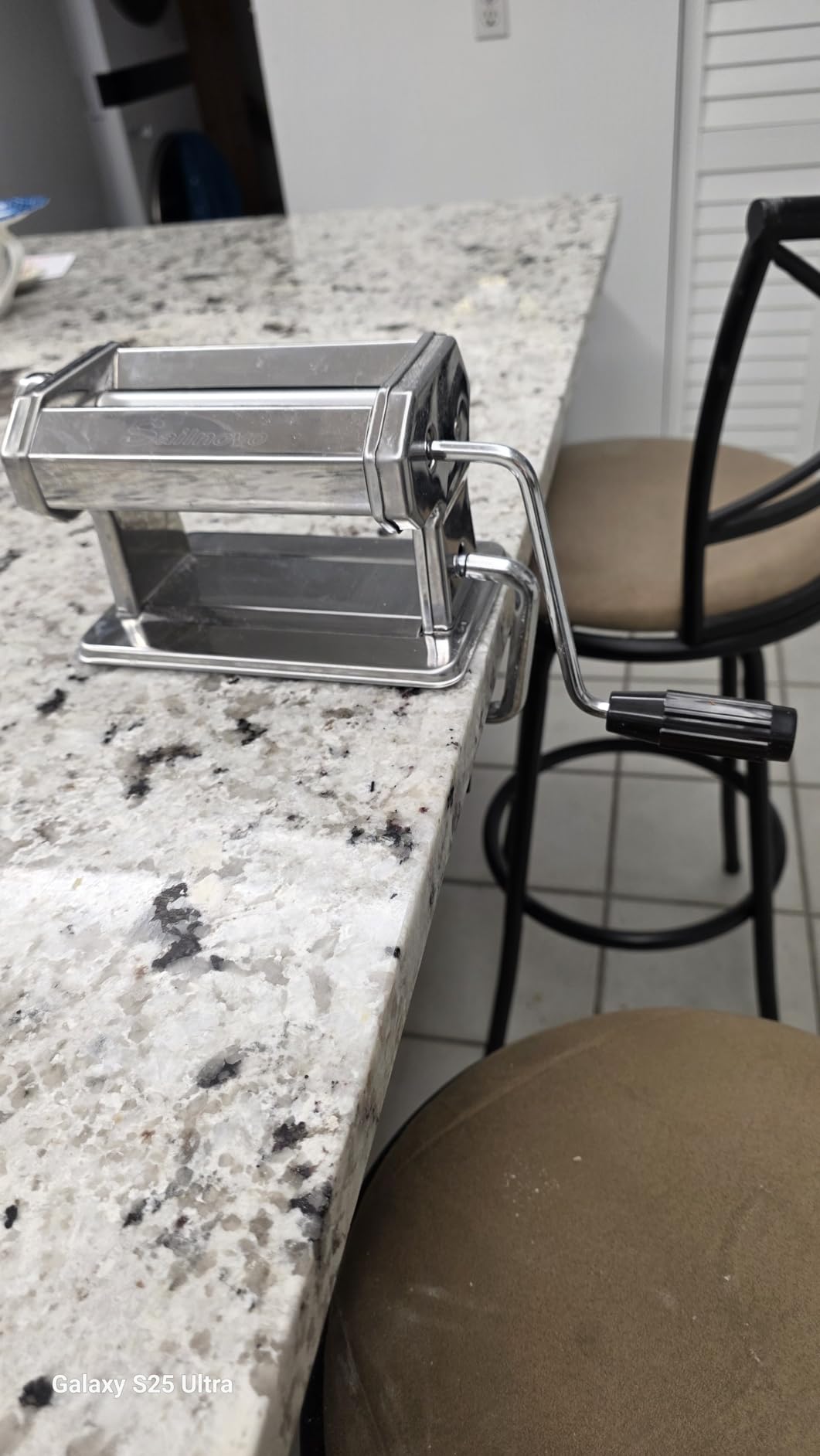
The clamp design lets the machine hang over the edge of the counter, so the sheet feeds in and comes out at a comfortable angle. Owners on home cooking forums specifically call this out as the reason they prefer clamped machines over freestanding ones.
The limitation is real, though. The clamp will not grip a counter thicker than roughly 1.4 inches, and on a smooth surface it can still creep under load. Both are fixable with a thin shim or a non-slip mat underneath.
Thickness range in daily use
Nine positions across 0.5mm to 3mm covers everything from a thick, forgiving sheet to thin spaghetti. The widest setting is useful for the first pass after mixing, when the dough is uneven and you want to consolidate it before thinning.
Two cutter widths is fewer than the Atlas models offer, but both are useful sizes. For fettuccine and spaghetti you are covered; lasagna strips need a separate roller or a wide cutter and a knife.
Cleaning is dry work only
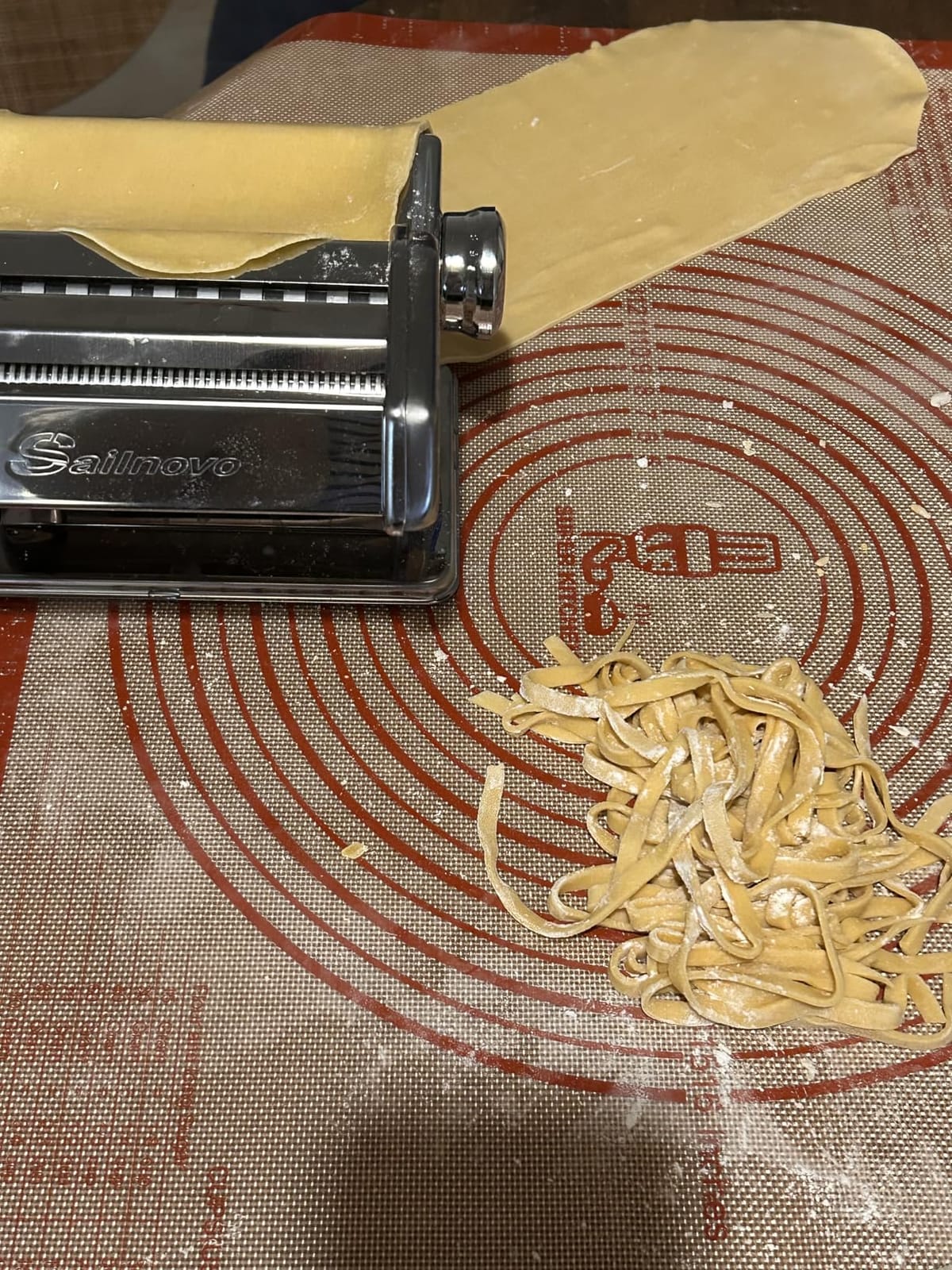
This is the single most important line in the manual. The cutter and rollers must be wiped with a dry brush and never submerged in water, because trapped moisture under the blade housing is what causes rust and seizing.
Owners who follow the dry-brush method report the machine still working years later. Owners who run it under the tap generally report the beginning of the end. If you are someone who rinses everything instinctively, weigh that against a machine that tolerates washing.
5. Marcato Atlas 180 – Best Pasta Maker for Wider Sheets and Bigger Batches
MARCATO Made in Italy Atlas 180 Classic Manual Pasta Machine, Chrome Steel. Makes Lasagne, Fettuccine & Tagliolini.
180mm sheet width,10 thickness settings,Anodized aluminum rollers
+ Pros
- Highest owner rating in this roundup at 4.7 stars
- Wider 180mm sheet moves more dough per pass
- Anodized aluminum alloy rollers
- Chrome-plated steel body assembled in Italy
– Cons
- Heaviest Atlas model at just over 7 pounds
- Wide roller bed needs a large counter or table clamp
- No powered motor option in the base unit
The Atlas 180 is the enthusiast step up from the 150, and the reason is a single number: 180mm of sheet width. That extra 30mm means fewer passes for the same amount of dough, which is where hand-cranking fatigue actually sets in.
It carries the highest owner rating in this group at 4.7 stars, and the build follows the same recipe as the 150: chrome-plated steel body, anodized aluminum alloy rollers, manufactured and assembled in Italy.
Marcato Atlas 150 vs Atlas 180
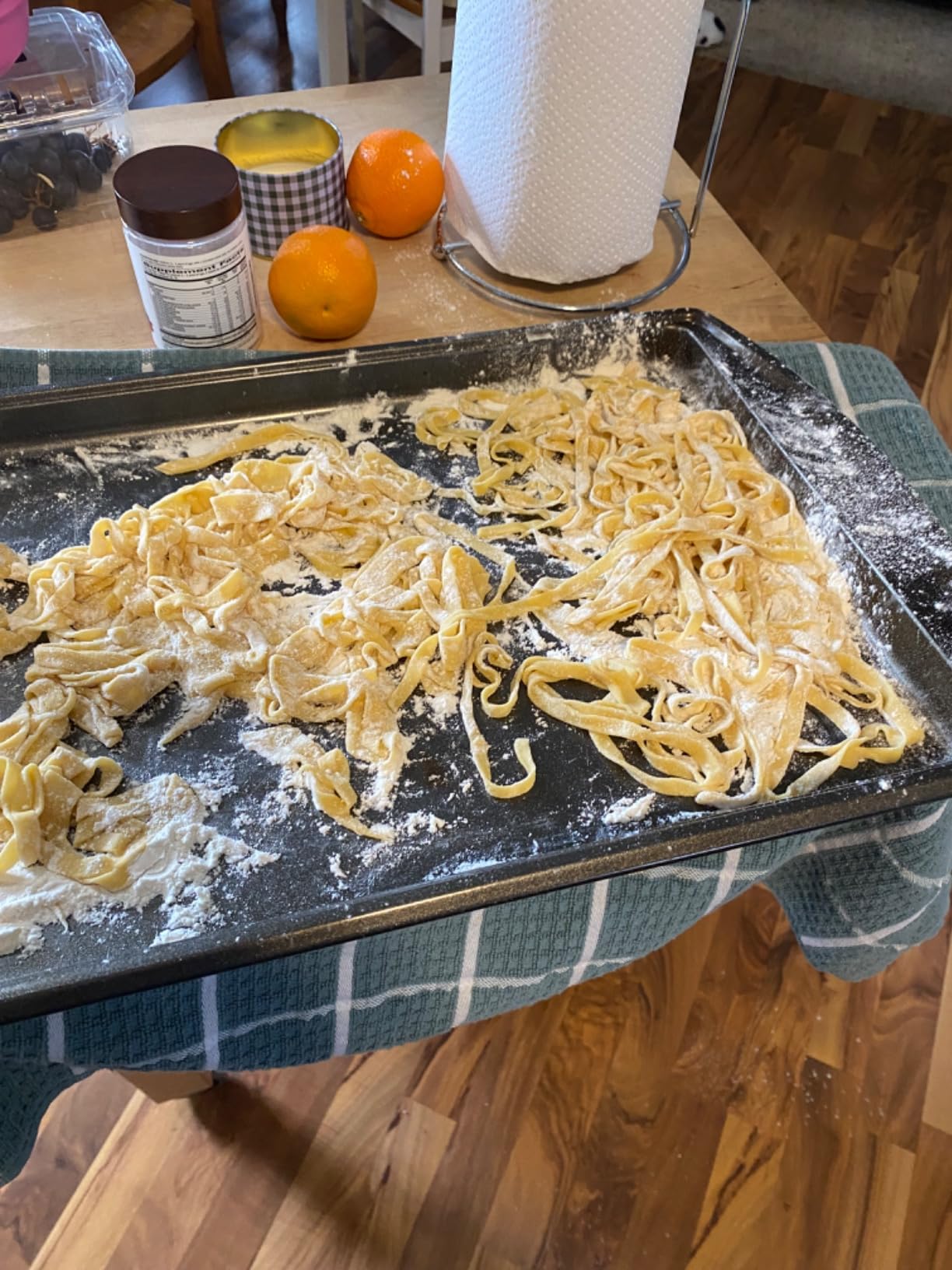
Both machines have ten thickness settings and the same three cutting discs, so the choice is not about versatility. It is about counter space, weight and how much dough you cook in one session.
If you are feeding two or three people once a week, the 150 is the more comfortable machine. If you make pasta regularly, host often, or hate repeating passes, the 180 earns its extra footprint. Several owners on r/pasta keep an 180 for daily work and reach for a stand mixer attachment when the batch is large.
Why the anodized rollers matter
The Atlas 180 uses anodized aluminum alloy rollers rather than plain steel. Anodizing hardens the surface, which resists the scoring that eventually catches dough and causes tearing at thin settings.
Hand washing is recommended, and dry storage is essential. In a humid kitchen, keep the machine in a cupboard rather than on an open shelf, because condensation is what gets to chrome-plated parts.
Where the 180 falls short
At just over 7 pounds it is the heaviest of the manual Atlas models, and the wide roller bed needs either a generous counter or a table clamp. In a small kitchen it can crowd out other appliances.
There is no motor option in the base unit, so if cranking is the thing you want to avoid, this is not the machine to choose. Some people pair the wide 180 sheet with a powered setup to get both, which is a common pattern among committed home pasta makers.
6. Philips Viva Collection – Best Automatic Pasta Maker for Small Households
Philips Kitchen Appliances Compact Pasta and Noodle Maker, Viva Collection, Comes with 3 Default Classic Pasta Shaping Discs, Fully Automatic, Recipe Book, Small, White (HR2370/05)
Automatic mixing and extrusion,2-3 servings in about 18 minutes,3 shaping discs
+ Pros
- Mixes
- kneads and extrudes in a single automatic step
- Three discs cover spaghetti
- penne and fettuccine
- Built-in drawer stores the discs
- Dishwasher-safe removable parts plus a cleaning wand
– Cons
- Disc thickness is fixed so output runs thicker than hand rolled
- Fails if liquid is over-added to the dough
- Some owners report plastic gear housing motor failures
The Philips Viva takes a completely different approach. You load measured flour and liquid, press a button, and roughly 18 minutes later you have two to three servings of extruded pasta. There is no rolling, no cranking and no sheet for you to handle.
That hands-off quality is the entire appeal. For a household that wants fresh pasta once a week without a thirty-minute process, the Viva is genuinely appealing, and the three included discs cover spaghetti, penne and fettuccine.
Flavoring and gluten-free doughs
Because you control the ingredients rather than the machine, you can vary the dough with egg, herbs, spinach or carrot juice. That control is also what makes gluten-free and allergen-conscious pasta possible, which no imported dry pasta gives you.
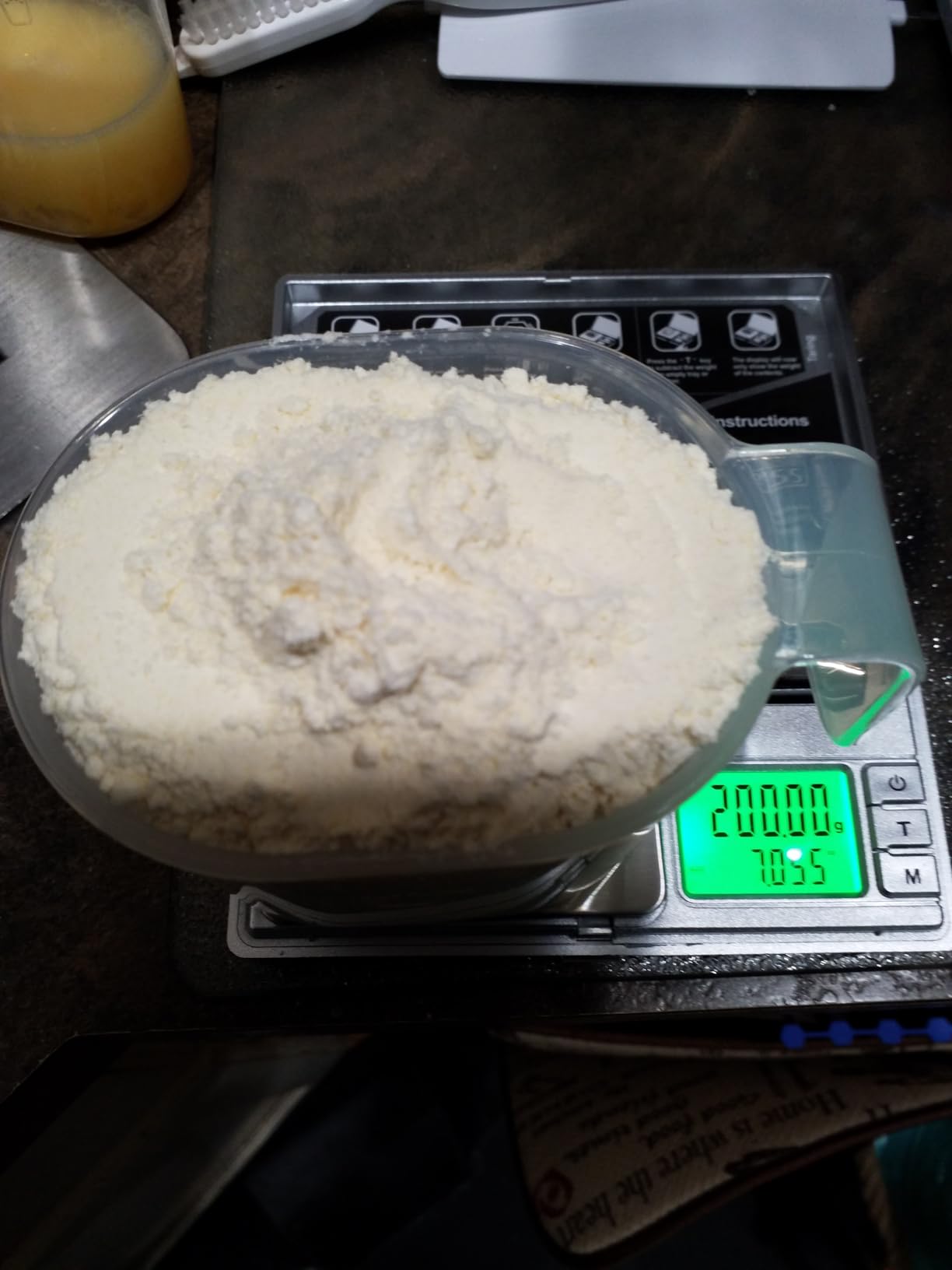
It only works if the ratios are exact. Weigh your flour and liquid on a scale rather than measuring by volume, and treat the dough as crumbly rather than stretchy. Owners who weigh get consistent results, and those who guess get a chamber full of residue.
Why the output is thicker than hand rolled
Extrusion disc thickness is fixed, so the pasta comes out at whatever gauge the disc produces. That is usually thicker and more forgiving than a hand-rolled sheet, and texture-wise it sits closer to a fresh egg pasta than to a restaurant-thin sfoglia.
If thin, even sheets are what you are chasing, an extruder will never replace a roller. If convenience matters more, the Viva is the honest answer, and the removable dishwasher-safe parts make cleanup the easiest of any machine here.
Recurring owner complaints
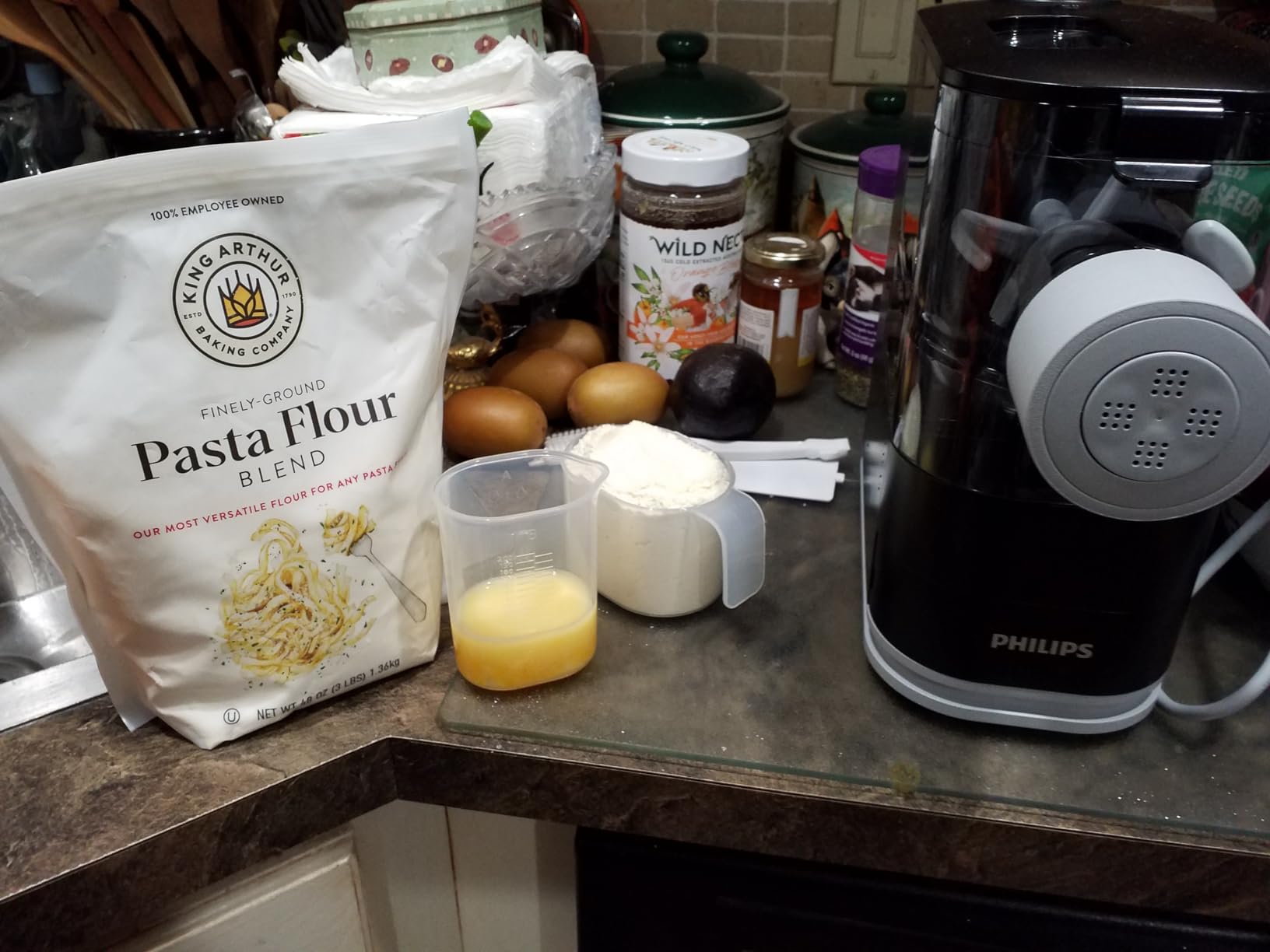
The most discussed problems are dough residue in the mixing and extrusion chamber and occasional motor failures in the plastic gear housing. Both are reported by owners rather than in controlled testing, so treat them as frequency questions to ask before buying.
Common problems with Philips pasta makers generally come down to over-hydrated dough and skipped cleaning between batches. Run the cleaning wand after each use and the residue problem mostly disappears.
7. Philips 7000 Series – Best Automatic Maker for Family-Sized Batches
Philips 7000 Series Pasta Maker, ProExtrude Technology 150W, 8 discs, Perfect Mixing Technology, Prepare up to 8 Portions, HomeID App, White, (HR2660/03)
150W ProExtrude motor,8 shaping discs,Up to 8 portions per batch
+ Pros
- Eight shaping discs
- the widest variety in this roundup
- Batch size of up to eight portions suits families
- Non-stick dishwasher-safe parts simplify cleanup
- HomeID app supplies vegan and gluten-free recipes
– Cons
- Heaviest machine in the group at 20 pounds
- Bulky and difficult to store away
- Some buyers report extrusion sticking and thicker output
The Philips 7000 Series is the scale-up from the Viva. A 150W ProExtrude motor and a batch capacity of up to eight portions make it the automatic machine here that can feed a family in one run rather than in two.
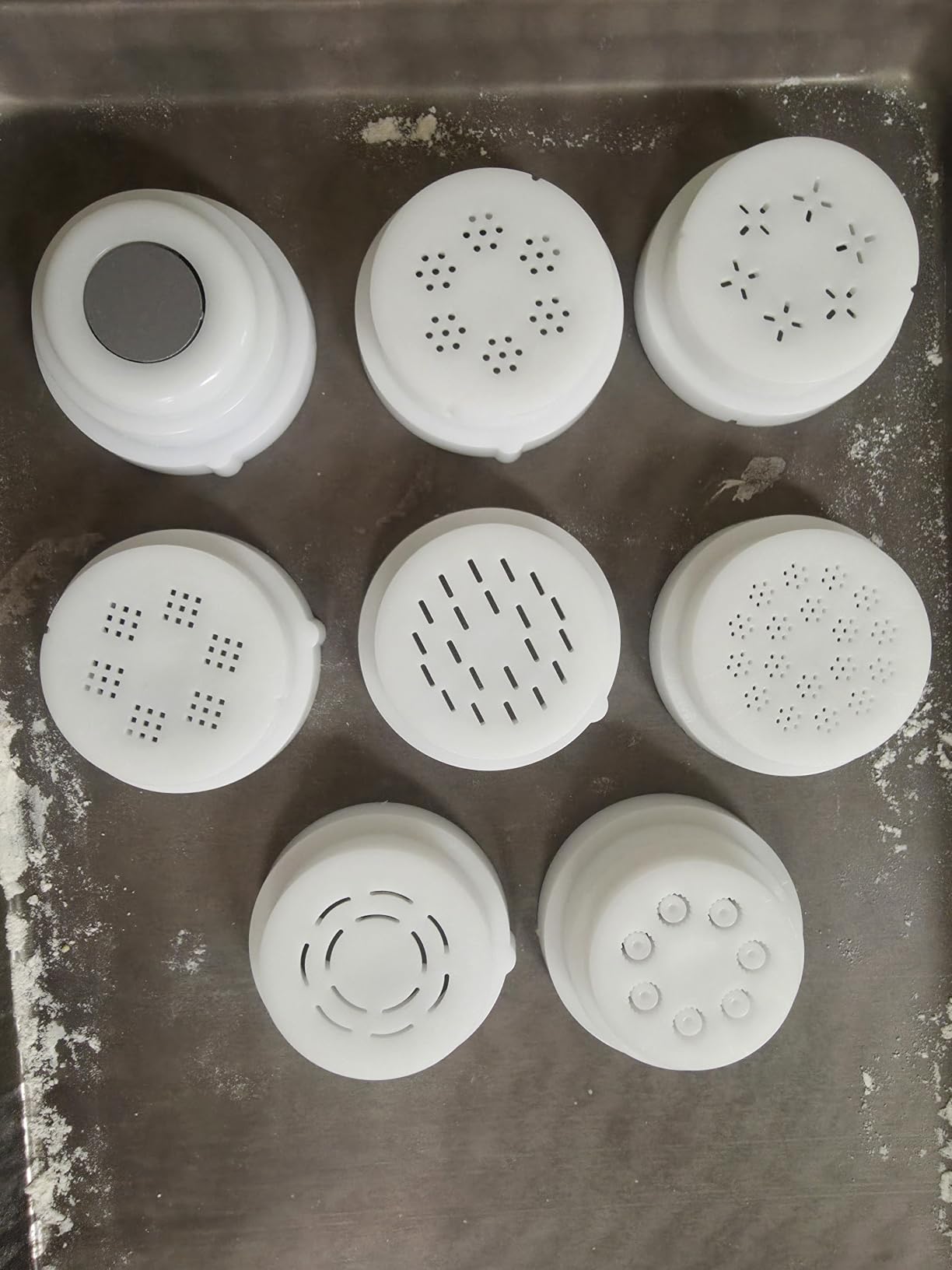
It also carries eight shaping discs against the Viva three, and it adds a mixing function usable for cookies, pizza dough and bread prep. That versatility is what moves it from a single-purpose gadget toward a small appliance you keep out on the counter.
Disc variety and batch size
Eight discs is the widest shape range in this roundup, which matters for a household that wants to change the pasta regularly rather than settle on one form. The HomeID app pairs with that, providing step-by-step recipes including vegan and gluten-free doughs.
Owners report that the non-stick, dishwasher-safe parts are the feature they appreciate most, since the Viva already proved that residue is the thing that ends enthusiasm for automatic machines.
Weight, storage and output quality
At 20 pounds and over 12 inches tall, this is the bulkiest item on the list. It needs a real counter position, not a corner, and that footprint is the first thing to weigh against how often you will actually use it.
Output quality sits in the same place as the Viva: competent, consistent and a little thicker than a hand-rolled sheet. Some buyers report extrusion sticking, usually when the dough is too wet, so keep to measured ratios.
Who should spend up for this one
Choose the 7000 over the Viva if family batch size and shape variety matter more to you than footprint. Choose the Viva if two to three servings is your realistic weekly need and counter space is tight.
Neither is the right pick for someone who wants a lasagna sheet thin enough to see through. For that, a manual roller remains the tool, and no amount of disc selection changes the fundamental limit of extrusion.
8. Fantes Cavatelli Maker – Best Dedicated Tool for One Authentic Shape
Fantes Cavatelli Maker Machine for Authentic Italian Pasta, The Italian Market Original since 1906
Cavatelli only,Non-stick cast aluminum,16 ounces
+ Pros
- Produces ridged cavatelli that hold sauce better than hand formed
- Very light at 16 ounces and easy to store
- Non-stick cast aluminum needs only warm soapy hand washing
- A teachable activity for kids learning traditional pasta
– Cons
- Makes a single shape so it complements rather than replaces a roller
- Requires a separate roller or hand rolled sheet to feed it
- Crank torque is high which tires the hand on large batches
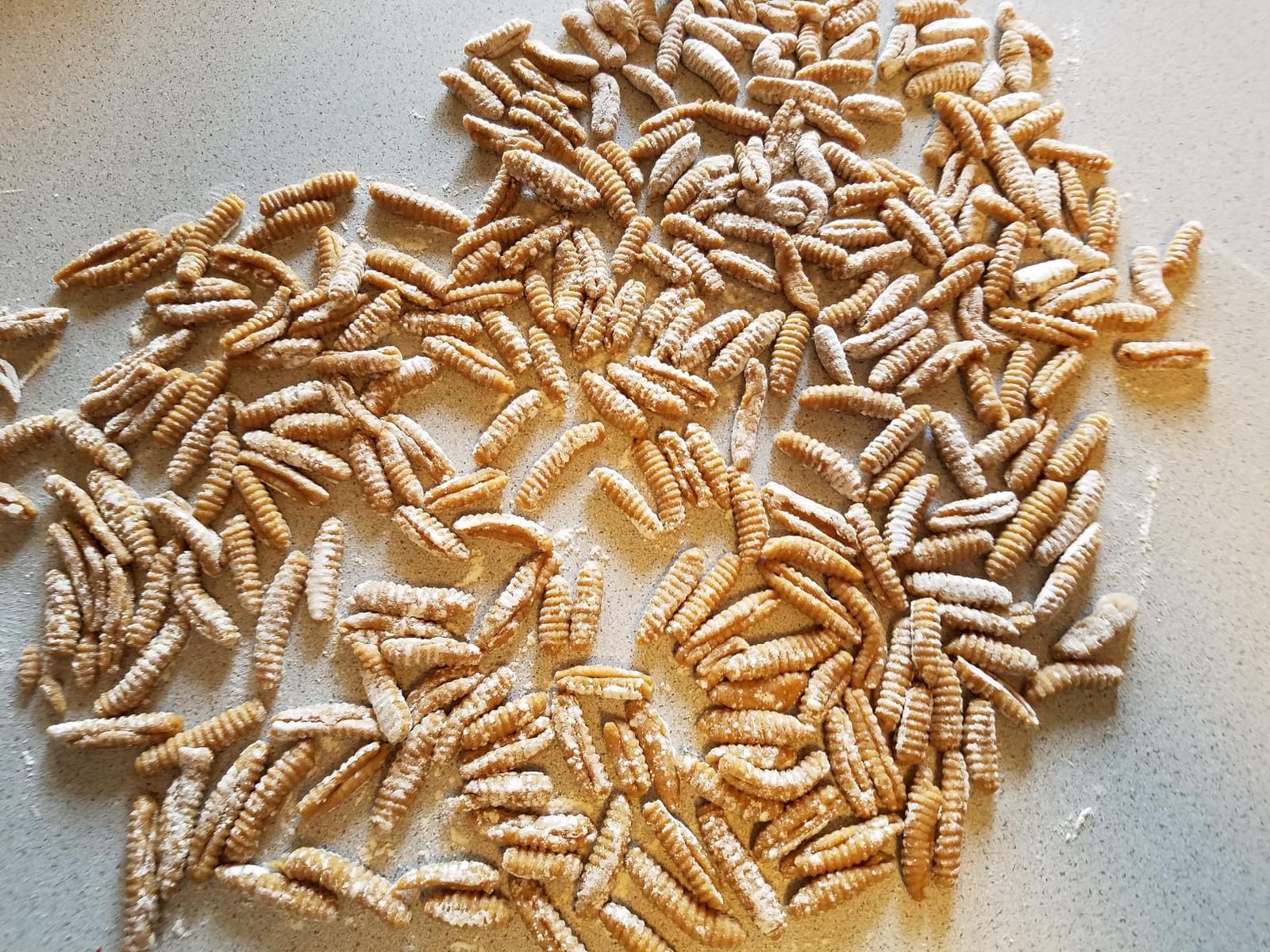
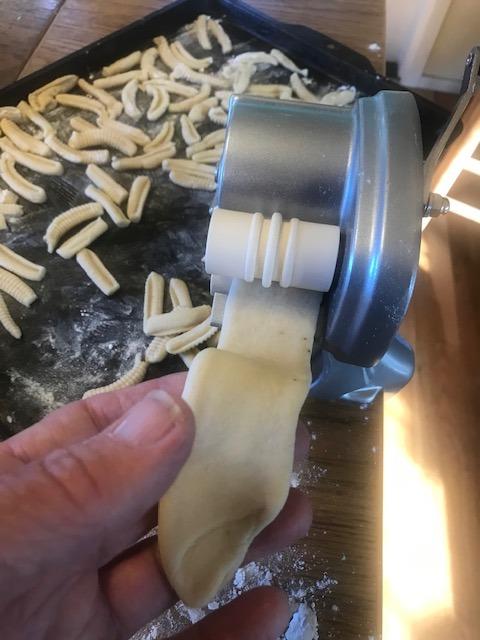
The Fantes Cavatelli Maker is the specialist in this lineup and the only non-roller. It presses a dough sheet into ridged cavatelli, the shape that was sold in hand-formed rows at every Italian market until recently.
It is also the lightest item here at 16 ounces and the smallest by far at 9.5 by 4 by 5.5 inches, so it lives in a drawer rather than on the counter. The deep ridges it creates are what make the pasta hold sauce the way a hand-formed piece cannot.
What it adds to a roller-equipped kitchen
If you already own a roller, this machine adds a shape nothing else here makes. That is a genuinely different argument from buying a second roller, and for a cook who cares about regional pasta it is a strong one.
If you own nothing, this is the wrong first machine. It needs a sheet fed into it, so a separate roller or a hand-rolled sheet is required before the cavatelli maker does any work at all.
Crank torque and batch size
High crank torque is the honest limitation. Pressing dough through the shaping dies takes more force than turning a roller, and on a large batch your hand will feel it well before the dough runs out.
Expect small batches. This is a weeknight tool for one or two servings, not a party machine, and treating it that way keeps the experience pleasant rather than tiring.
Why owners defend it despite the rating
It has the lowest rating of anything we tested, and owners still recommend it, because the rating reflects what it is not rather than how well it works. As a dedicated tool for one shape, owners describe it as cheap, light and genuinely effective.
The cast aluminum body is non-stick, so warm soapy water and a soft brush are enough. Avoid the dishwasher, and dry it fully before reassembling, which takes about a minute.
9. Shule Electric Pasta Maker – Best Budget Route to a Motorized Roller
Shule Electric Pasta Maker with Motorized Roller, Stainless Steel
Detachable 110V motor,0.5-3mm thickness dial,Hand crank fallback included
+ Pros
- Motor detaches so you can crank by hand at any time
- Two motor speeds plus a full range of thickness positions
- Stainless steel body with anodized aluminum rollers resists corrosion
- A budget route to a motorized roller
– Cons
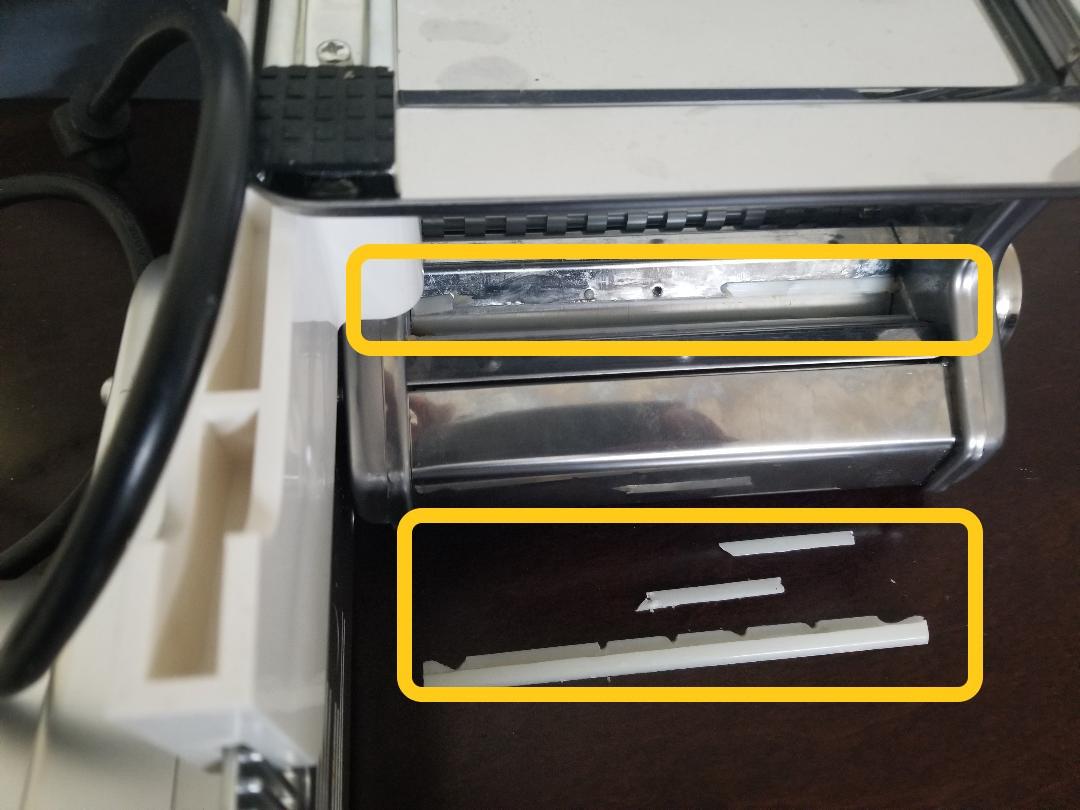
- Unfinished metal edges on the fender undersides can cut fingers
- Motor is noticeably loud during operation
- Cheap chrome plating has worn off rollers for some users
The Shule sits in a useful middle position: a manual roller that happens to come with a motor, at a fraction of what a powered Italian roller costs. The 110V motor has two speeds and detaches completely when you want to crank by hand or store the machine.
Thickness is set on a dial across 7 or 9 positions from 0.5mm to 3mm, and cutter widths of 1.5mm and 6.6mm cover fine and broad noodles. It is a real roller with a real sheet, not an extruder.
Motor plus hand crank as a fallback
Having both is the feature that makes this worth considering. The motor handles tired hands, and the crank means a failed motor does not end the machine. Very few rollers at this level offer that redundancy.
Two speeds is genuinely useful: slower for the first, thick passes where dough is uneven, faster once the sheet is thin and consistent. The detachable motor also frees up storage, since you can detach it and pack the roller body flat.
Build quality and known issues
Two things to know before you commit. The metal edges under the fender are unfinished and can cut fingers, and the motor is loud enough that it is not a late-night appliance.
Some owners report the chrome plating wearing off the rollers after a year or two of use. If you dry the machine properly after every session, this is uncommon, and the included motor fixing plate, table holder and hand crank cover the main use cases.
Who it suits and who it does not
This suits a cook who wants electric assistance without committing to a full extruder, and who values being able to fall back to a crank. It also suits anyone who wants to add motor power later to an existing manual habit.
It is a poor fit for a small kitchen, since the motor plate, holder and body together take real counter space, and for anyone who will not dry the rollers after every use.
10. Newhai Electric Pasta Maker – Best for Quiet Operation and Pizza Dough
Newhai Electric Pasta Maker, Stainless Steel 135W for Home, 2 Noodle Sizes
135W motor at 11 lb per hour,430 stainless rollers,0.5-3mm across 8 gears
+ Pros
- Food grade 430 stainless body
- rollers and blades that resist rust
- Quiet 135W motor with one key press to cut
- Handles dumpling and wonton wrappers above gear 5
– Cons
- Only two noodle widths so shape variety is limited
- Factory mechanical oil needs many blank dough passes before use
- Thinnest cutter setting can leave indents instead of clean cuts
The Newhai is the quietest machine I ran, and it is also the most genuinely all-stainless roller here: body, rollers and blades are all 430 stainless, which is the single most rust-resistant material on this list.
Sheet width is 5.5 inches with thickness adjustable from 0.5mm to 3mm across eight gears, and a single key switches between pressing and cutting. Output is rated at 11 pounds per hour, which is meaningful for a home kitchen.
Dough versatility beyond noodles
Above gear 5 it produces sheets thick enough for dumpling and wonton wrappers, and it handles pizza dough as well as noodles. For a household that cooks other rolled or pressed doughs, that versatility justifies the footprint more than the noodle widths do.
The rounded corners are a small thing that matters in practice, since you will be reaching near moving parts with your hands. Quiet operation also means it is usable in a small apartment without the household objecting.
Only two noodle widths
With 1.5mm round and 4mm flat as the only outputs, shape variety is the clearest limitation. If you want penne or shells, this machine does not offer them, and no software update changes that.
Two widths is also where the rating is a little thin, with 127 reviews behind it. Owners like the stainless build and the low noise, while criticizing the limited range and the break-in ritual below.
The break-in nobody mentions in the listing
Factory mechanical oil on the rollers means the first several passes are blank dough runs, not pasta. Owners who skip it transfer oil into the dough, which tastes unpleasant and is hard to remove.
The thinnest cutter can also leave indent marks rather than a clean separation. Rolling slightly thicker and cutting a second time fixes it, and the clean cuts at the middle gears are where most people end up working anyway.
How to Choose a Pasta Maker for Fresh Noodles
Manual roller, electric roller, or extruder
Decide how much control you actually want before you compare models. A manual roller gives you a sheet you set yourself, from thick lasagna to thin spaghetti, and every width in between. An electric roller gives you the same sheet with less arm work. An extruder makes noodles from measured ingredients with no sheet at all, which is faster and simpler but always the same thickness.
If your goal is authentic technique and control, a manual roller wins. If you make pasta often and want to avoid cranking, add a motor. If you want noodles on the table in eighteen minutes without handling dough, an extruder wins.
Sheet width decides how much pasta you make
This is the most overlooked number. A 150mm sheet produces roughly a third less pasta per pass than a 180mm sheet, and a 5.5-inch roller produces less again. For a family of four, plan on several passes or a wider machine.
Wider sheets also mean fewer cranking repetitions, which is where hand fatigue actually appears. Several owners on r/pasta describe rolling pasta becoming a two-person job as the sheet gets longer, which is exactly the point where a wider machine or a second pair of hands matters.
Thickness settings and cutter variety
More settings give finer control but also more chances to set the wrong one. Ten numbered positions like the Atlas models are easier to learn than a dial that jumps between numbers, because you can return to a setting you liked.
For cutters, two widths cover most home kitchens. Three or more is useful if you make several shapes regularly. Very wide sheets require many passes, so balance cutter width against sheet width when you decide.
Marcato Atlas 150 vs Atlas 180: which should you buy
Both share ten thickness settings, Italian manufacture and the same cutting discs. The 150 is compact, lighter and the community default for everyday use. The 180 offers a 180mm sheet, fewer passes and the highest owner rating in this roundup, at the cost of a bigger, heavier body.
Buy the 150 for a compact kitchen and small batches. Buy the 180 if you roll pasta regularly or dislike repeating passes. There is no quality difference in the finished sheet, only a volume and handling difference.
Steel, aluminum and how you clean it
Chrome-plated steel and stainless steel are the durable choices, and anodized aluminum rollers resist scoring better than plain steel. Cheap plating is where budget machines fail first, usually after a year of damp storage.
Nothing on this list is dishwasher safe in full, including the ones with dishwasher-safe plastic parts. Dry brushing, a soft brush, and complete drying before storage is the whole routine, and it is the single thing that determines how long the machine lasts.
Flour, hydration and why dough sticks to the rollers
Use 00 flour for egg pasta and durum wheat semolina for a firmer, more traditional texture. Weight your flour and get hydration right, because wet dough grabs the rollers and dry dough cracks at thin settings.
If dough sticks, dust the rollers with flour before the first pass, make sure the dough is rested after mixing, and slow your cranking. If dough tears at thin settings, move up one position and take two passes instead of forcing it. If a cutter jams, stop cranking immediately and clear it with the brush while the machine is open rather than forcing it, which is the single most common way people damage the blades.
Frequently Asked Questions
What is the best pasta maker for making homemade pasta?
The Marcato Atlas 150 is the best overall pasta maker for most home kitchens. It offers ten numbered thickness settings from 0.8mm to 4.8mm, chrome-plated steel rollers made in Italy, and a compact 8 by 8 by 7 inch body that clamps to most counters. It cuts lasagna, fettuccine and tagliolini, and its owner rating of 4.6 across more than 27,000 reviews reflects how well it holds up over years of use.
Do you need a pasta machine to make fresh pasta?
No, you can make fresh pasta by hand with a rolling pin, but a machine changes the result. Rollers let you set an exact sheet thickness and pass dough through a cutter in seconds, which is how you get consistent spaghetti and fettuccine. Hand rolling works for wide sheets like lasagna, but it is slower and thickness varies across the dough. A machine is worth it once you make pasta more than once a month.
What is the best pasta maker for home use?
For most households the answer is a manual roller, because you control the sheet thickness and the shape of the noodle. The Marcato Atlas 150 suits small kitchens, the Atlas 180 suits people who make large batches, and the Imperia IPasta Classic suits anyone who wants to add a motor later. Electric extruders such as the Philips Viva make faster noodles in less hands-on time but give you less control over thickness.
What are some common problems with Philips pasta makers?
The most common Philips pasta maker problems are dough residue in the mixing and extrusion chamber and dough that clumps during extrusion. Both usually trace back to liquid ratios, so weigh your flour and water on a scale instead of measuring by volume. Some owners also report motor failure in the plastic gear housing after limited use. Running the cleaning wand after each batch prevents most of the residue issues.
Is the Marcato Atlas 150 worth it?
Yes, for anyone who makes pasta regularly it is worth the money. You get ten thickness settings instead of the six or seven offered by most budget rollers, chrome-plated steel rather than plated alloy, and a body small enough for most counters. The main compromises are that it is hand cranked, it must be kept dry to avoid rust, and its cutter can leave slightly ragged edges on very thin cuts.
Final Verdict: Which Pasta Maker Should You Buy?
For most people, the Marcato Atlas 150 is the right first machine: Italian steel, ten thickness settings and a footprint that fits a normal counter. If you make pasta for a bigger table, move up to the Atlas 180 for the wider sheet, and if the crank is what stops you, start with the Imperia IPasta Classic and add a motor later.
If your priority is a low-effort first attempt, the Nuvantee 3-in-1 and the Sailnovo both make clean noodles at a modest outlay, with the Nuvantee better suited to a small kitchen. If you want noodles without handling dough, the Philips Viva covers a small household and the Philips 7000 Series covers a family.
Whatever you choose, the two habits that decide whether you keep using it are simple: rest the dough before rolling, and dry every machine completely before you put it away. That is the difference between a pasta maker that lasts a decade and one that rusts in a year.
As we cover in our [portable coffee maker](https://fypower.org/best-portable-coffee-makers-for-camping/) and [label maker](https://fypower.org/best-label-makers-for-organization/) guides, the best tool is the one you will actually reach for. Check the current details for these pasta makers and start your first batch this week.
Leave a Reply