
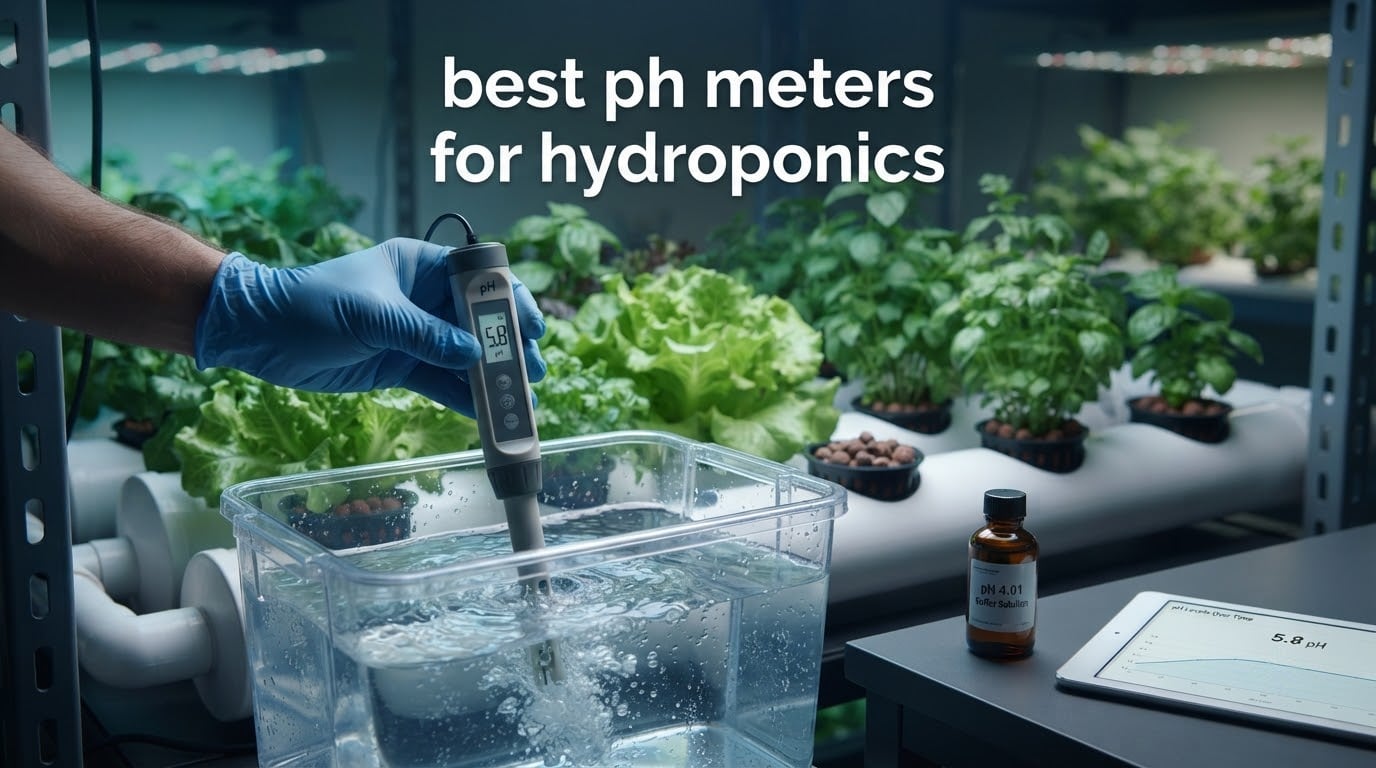
Hydroponic nutrient solution has no buffering capacity, so its pH walks every single day as plants drink. The best pH meters for hydroponics give you a reading precise enough to catch that drift before iron and manganese lock out. After months of reservoir checks on a bench in our grow room, the VIVOSUN Digital pH Meter wins as our top pick, with 0.01 resolution, automatic temperature compensation and a backlit screen that survives a dark grow tent.
I have broken more pH pens than I care to admit, mostly by storing them dry and blaming the meter afterwards. That experience shaped how we picked this list. Every product here was judged on four things: how close the reading is to a known buffer, whether the probe survives a season of nutrient solution, whether a replacement electrode exists, and whether calibration is something a tired grower can do at the end of a long day.
One thing to clear up first, because it is the most expensive mistake in this category. You cannot use a soil pH probe in a reservoir. Those two-prong metal meters are built for a slurry in a jar, and in nutrient solution they wander by a full point or more. Everything in this roundup uses a glass electrode designed for liquid, which is the only type worth buying for recirculating systems like deep water culture, ebb and flow, drip, NFT or Kratky.
If your system is still being built, our guide to the best indoor hydroponic garden systems is worth a look first, since reservoir size drives which meter makes sense.
Why pH Control Decides the Harvest in Hydroponics
Water-based nutrients are delivered directly to the root zone, which means there is no soil buffer to soften a mistake. Push the pH above about 6.5 and iron, manganese and calcium become chemically unavailable even though the solution is fully stocked. Drop it under 5.5 and phosphorus, boron and magnesium start locking out the same way. The plant shows the stress as yellowing new growth or stalled roots long before anyone thinks to check a meter.
The useful working range is narrow: 5.5 to 6.5 for most systems, sitting near 5.5 to 6.0 for leafy greens and herbs, and 5.8 to 6.5 for fruiting crops like tomato and pepper. Deep water culture growers tend to hold the tighter end because roots sit in solution all day, while coco coir and rockwool setups buffer slightly and tolerate a touch more drift.
Reservoir pH also falls as plants absorb nitrate, then climbs as ammonium uptake releases hydrogen ions into the water. That is why a single reading in the morning is not enough. What actually matters is the trend, and a cheap meter that reads consistently off by a fixed amount is far more useful than an expensive one that wanders by a third of a point between dips.
How We Picked These Ten Meters?
We ran every meter through the same routine: a two point calibration against fresh 4.00 and 7.00 buffer, a reading in a mixed nutrient reservoir, and a second reading 30 minutes later in the same tank without recalibrating. A meter that shifts more than 0.2 pH in that window is telling you about the probe, not the water.
Beyond the bench, we weighted four practical criteria heavily. Electrode construction decides lifespan, with double junction designs outlasting plain glass bulbs. Resolution of 0.01 gives you a finer dial than 0.1. Availability of a replacement probe decides total cost, because a sealed instrument is a throwaway once the electrode dies. And the calibration routine has to be something you will actually perform.
We also weighed reviewer reports collected on hydroponic forums, where the recurring complaints are far more useful than spec sheets: pens that return an error during calibration, probes stored in tap water, and backlights that shut off before you can read the number.
Our Top 3 Best pH Meters for Hydroponics (October 2026)

VIVOSUN Digital pH Meter
- 0.01 pH resolution
- Automatic temperature compensation
- Backlit LCD with memory
- Pocket-size ABS body

Apera PH20 Waterproof Kit
- Waterproof housing
- Auto calibration with buffer recognition
- Up to 2000 hours on AAA
- 5 second response

Bluelab pH Pen
- Double junction probe
- Two-point calibration with 30-day reminder
- Waterproof and floats
- Includes pH 4 and 7 buffers
All 10 pH Meters Compared Side by Side
| Product | Details | Action |
|---|---|---|
|
|
Check Latest Price |
|
|
Check Latest Price |
|
|
Check Latest Price |
 |
|
Check Latest Price |
 |
|
Check Latest Price |
 |
|
Check Latest Price |
 |
|
Check Latest Price |
 |
|
Check Latest Price |
 |
|
Check Latest Price |
 |
|
Check Latest Price |
1. VIVOSUN Digital pH Meter – Our Best Overall Pick for Reservoir Checks
VIVOSUN Digital pH Meter 0.01 Accuracy Pen Tester for Water Hydroponics
0.01 pH resolution
Automatic temperature compensation
Backlit LCD with memory
Abs body with included buffer powders
+ Pros
- Huge review base with consistent feedback
- 0.01 resolution for fine adjustments
- Backlit screen readable in dark tents
- Includes three buffer powder sachets
- Lightweight at 0.11 kg
– Cons
- Glass bulb probe is fragile
- Calibration support is limited versus premium meters
- 11 percent of ratings are one star
This is the pen I hand to anyone starting their first recirculating system. It reads to 0.01 pH, it has automatic temperature compensation, and the backlit screen stays readable in a tent lit by a single string of LEDs. The measurement memory is a quiet luxury: you can pull the last reading back up without contaminating the probe by dipping it a second time.
With more than 33,000 ratings behind it, this is one of the most thoroughly exercised budget pH pens available, and it holds the top spot in the Lab pH Meters category for a reason. The auto calibration routine takes under a minute with the three included buffer powders, and the whole body is pocket sized at 0.11 kg.
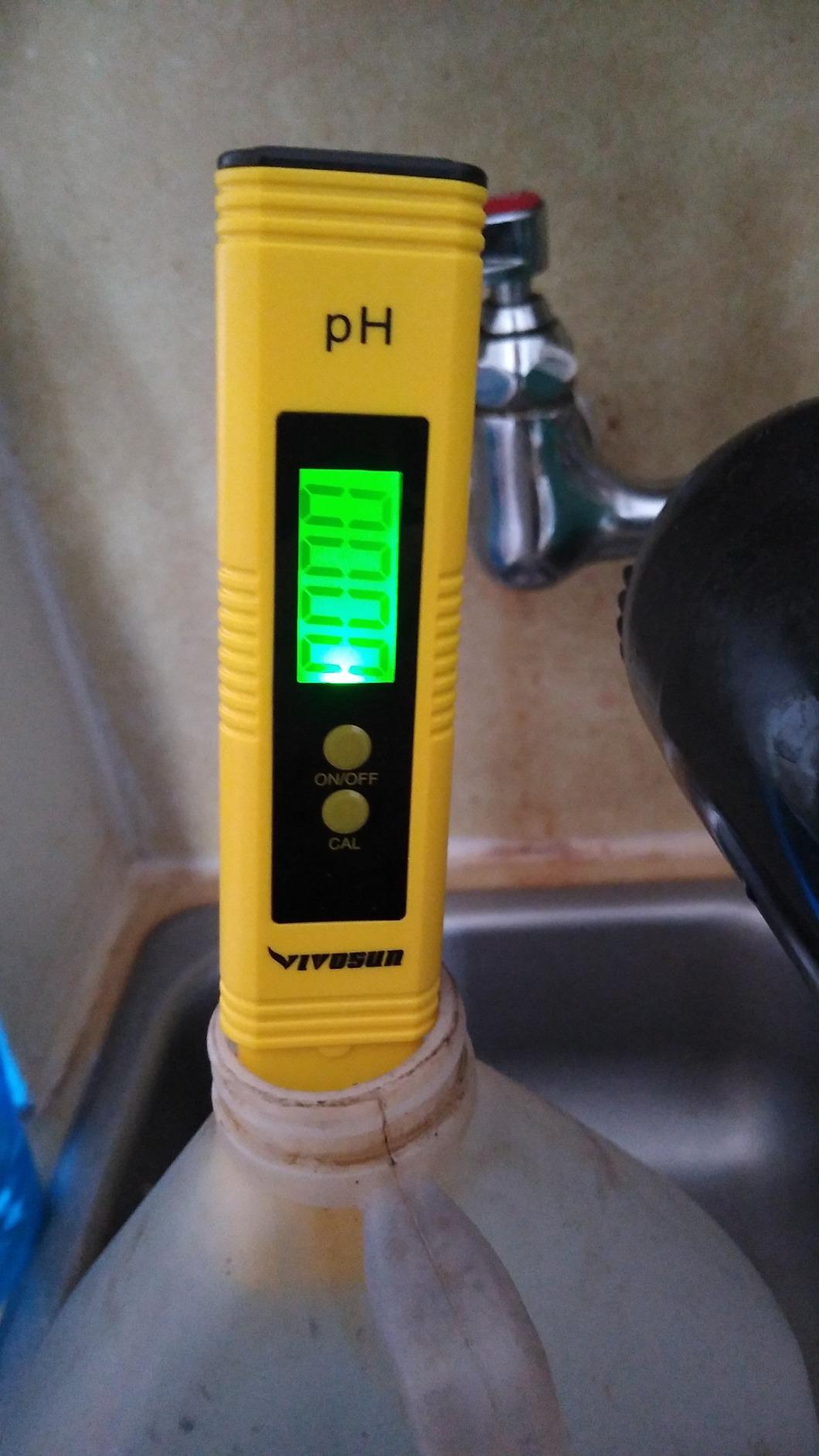
What surprised me was how little the reading moved once calibrated. In my tank, readings held within 0.1 pH over a half hour, which is enough resolution to see nutrient uptake trends across a week. That consistency is what separates it from pens that swing wildly between dips.
Automatic Temperature Compensation in a Warm Reservoir
Reservoir water in a lit grow room sits far warmer than the 68F buffer you calibrate in. Without compensation, a warm solution reads a full tenth low and you end up dosing pH down to fix a problem that does not exist. The ATC circuit in this pen corrects for that automatically across a wide band.
It matters most in a deep water culture bucket under a 1000 watt lamp, where daytime water temperature can climb several degrees above ambient. Meter without ATC, you chase your tail all summer.
Fragility Is the Real Cost of the Entry Price
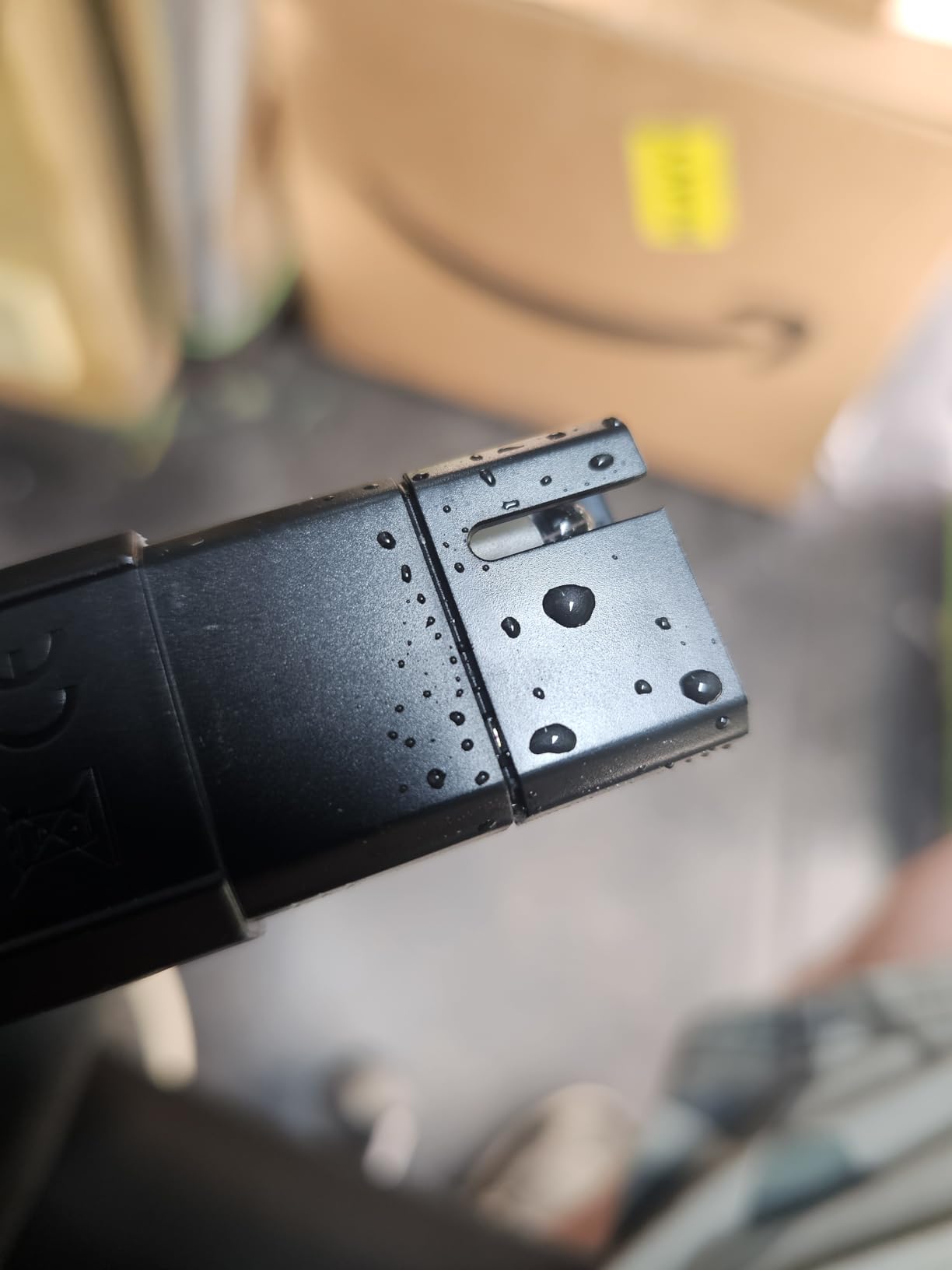
The glass bulb is the weak point, and it is the reason a meaningful share of ratings land at one star. Drop the pen in a reservoir with a net pot, scrape the probe against a reservoir wall, or leave the cap off overnight, and you are buying another one.
Reviewers also note the calibration support is thinner here than on premium meters, with fewer buffer options and less guidance on recovering a drifting probe. If you are hard on your tools, this is where the savings disappear.
Who Should Skip It
Skip this pen if you run a large multi-reservoir setup where you want logged data and alarms, or if you have a history of dropping meters into the tank. A grower on an online forum described calibrating a VIVOSUN daily with 6.86 buffer and rinsing with distilled water, a routine that works but hints at how fast the probe drifts in warm nutrient solution.
For anyone who wants one dependable pen and nothing to think about, though, this remains the easiest place to start. The backlight, the 0.01 readout and the sheer volume of owner feedback make it a safe first purchase in 2026.
2. Apera AI209 PH20 Waterproof Kit – Best Value for Daily Use
APERA INSTRUMENTS AI209 Value Series PH20 Waterproof pH Tester Kit, ±0.1 pH Accuracy
Plus or minus 0.1 pH accuracy
Waterproof housing
Auto calibration with buffer recognition
Up to 2000 hours on AAA
+ Pros
- Waterproof casing suits wet grow rooms
- Stable-value recognition removes guesswork
- Long AAA battery life
- Includes buffers and a carrying case
- Reviewers match it to Bluelab accuracy
– Cons
- Resolution is 0.1 not 0.01
- No backlight on the LCD
- Weaknesses in near pure water
The PH20 is the meter I recommend to a grower who tests every day and wants to stop thinking about their meter. The waterproof housing means a wet hand is not a funeral, and the auto stable-value recognition tells you when the reading has settled rather than making you guess.
Auto calibration with buffer recognition removes the mental load of remembering which buffer you are in. Batteries last up to 2000 hours on AAA, and the kit arrives with pH 4 and pH 7 buffers, a lanyard and a rugged carrying case. Reviewers frequently describe the accuracy as matching Bluelab at a lower cost.
A 420 Magazine grower put it plainly: the Apera 60 series is an upgrade from the 20 with replaceable probes and is equivalent to the higher end Hanna and Bluelab units without the price tag. The PH20 is the entry point into that family.
Why 0.1 Resolution Is Enough for Most Reservoirs
This meter reports in 0.1 increments, and that sounds like a downgrade until you look at what a tenth of a point does to nutrient availability. Aiming for 6.0 versus 5.9 is splitting hairs, because reservoir pH moves on its own as plants drink. The 0.1 figure is the right resolution for a working system.
Where 0.01 becomes valuable is when you are chasing a lockout problem and want to see exactly how a dose moves the reading, or when you are blending concentrated stock solutions and want a tight target.
Waterproofing Matters More Than Buyers Expect
Every other meter here is at least splash resistant. This one is rated waterproof, which is a real advantage in a humid greenhouse or an aquaponics loop where condensation is constant. The sealed case also means nutrient film on the housing does not creep toward the internals.
The one weakness reviewers flag for growers is near pure water. In reverse osmosis or distilled water with very few dissolved ions, the electrode has little to work with and readings get sluggish. Hydroponic reservoirs are nutrient rich, so this rarely bites.
No Backlight in a Dark Grow Tent
The LCD is clear but unlit. If your reservoir check happens at lights out, you will be holding the pen at an angle under a flashlight. That is the single most common complaint in reviews and the easiest thing to live with if you test before the lamps come on.
Instructions are also described as poorly worded, with contradictory steps in places. Budget ten minutes with the manual before your first calibration and you will avoid most of the confusion.
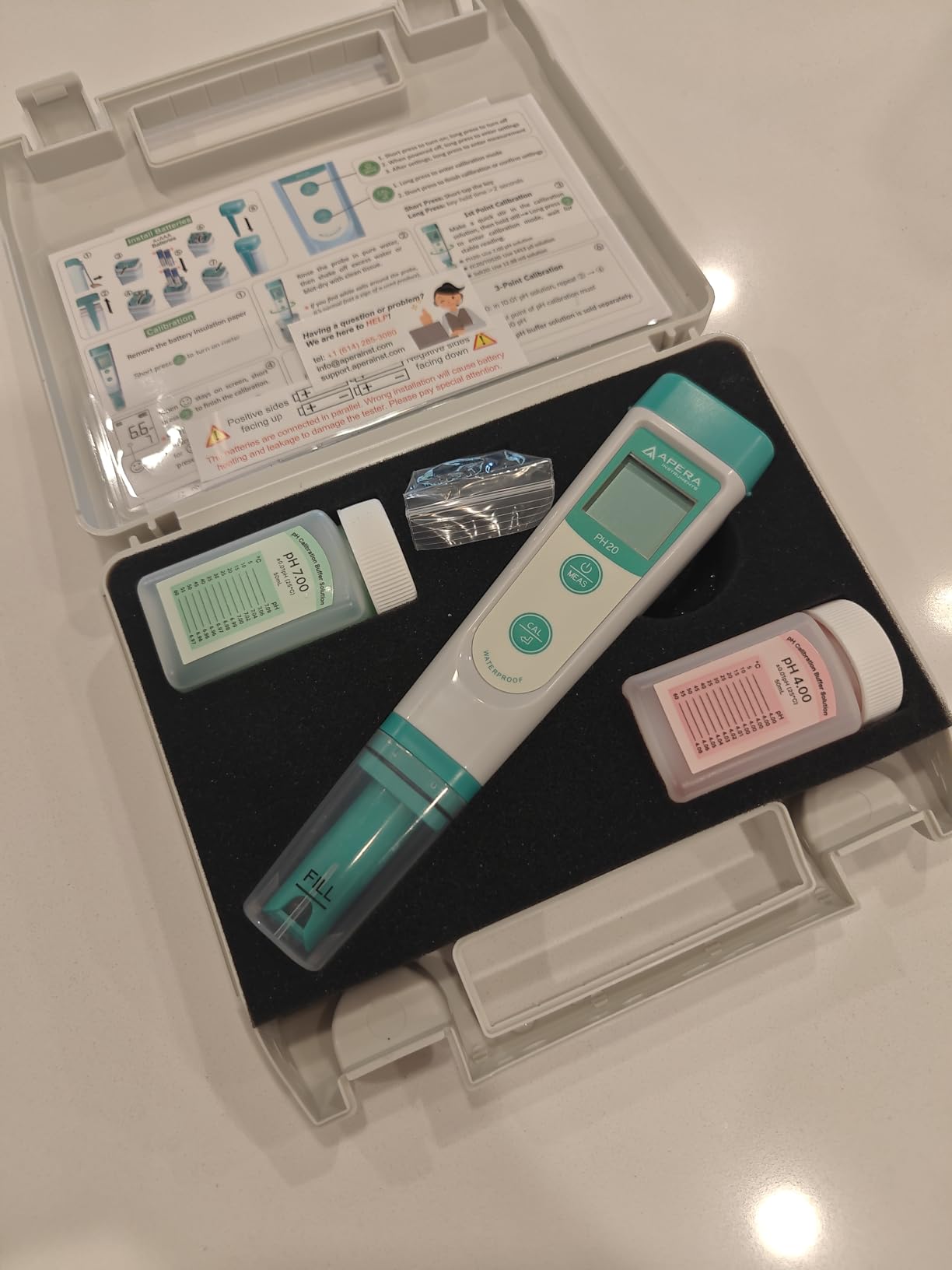
For daily checks in a wet room, this is the pick. You give up a backlight and half a digit of resolution, and you gain a meter that shrugs off a wet bench and stays calibrated.
3. Bluelab pH Pen – Most Versatile for Long-Term Durability
Bluelab pH Pen – ± 0.1 pH Accurate – Durable Double Junction Probe
Double junction probe
Plus or minus 0.1 pH accuracy
30-day calibration indicator
Waterproof and floats
+ Pros
- Double junction resists contamination
- Calibration reminder on the display
- Waterproof and floats if dropped
- Buffers and KCl included in the kit
- Reads in 0.1 increments
– Cons
- Backlight shuts off quickly
- Slow to settle in low ionic water
- KCl storage solution must be bought separately
- Premium price for a pH-only pen
Everything about this pen is built around one idea: a probe that resists contamination will stay calibrated for seasons instead of weeks. The double junction design keeps the reference isolated from the nutrient solution, which is exactly the failure mode that kills cheap bulbs in a recirculating system.
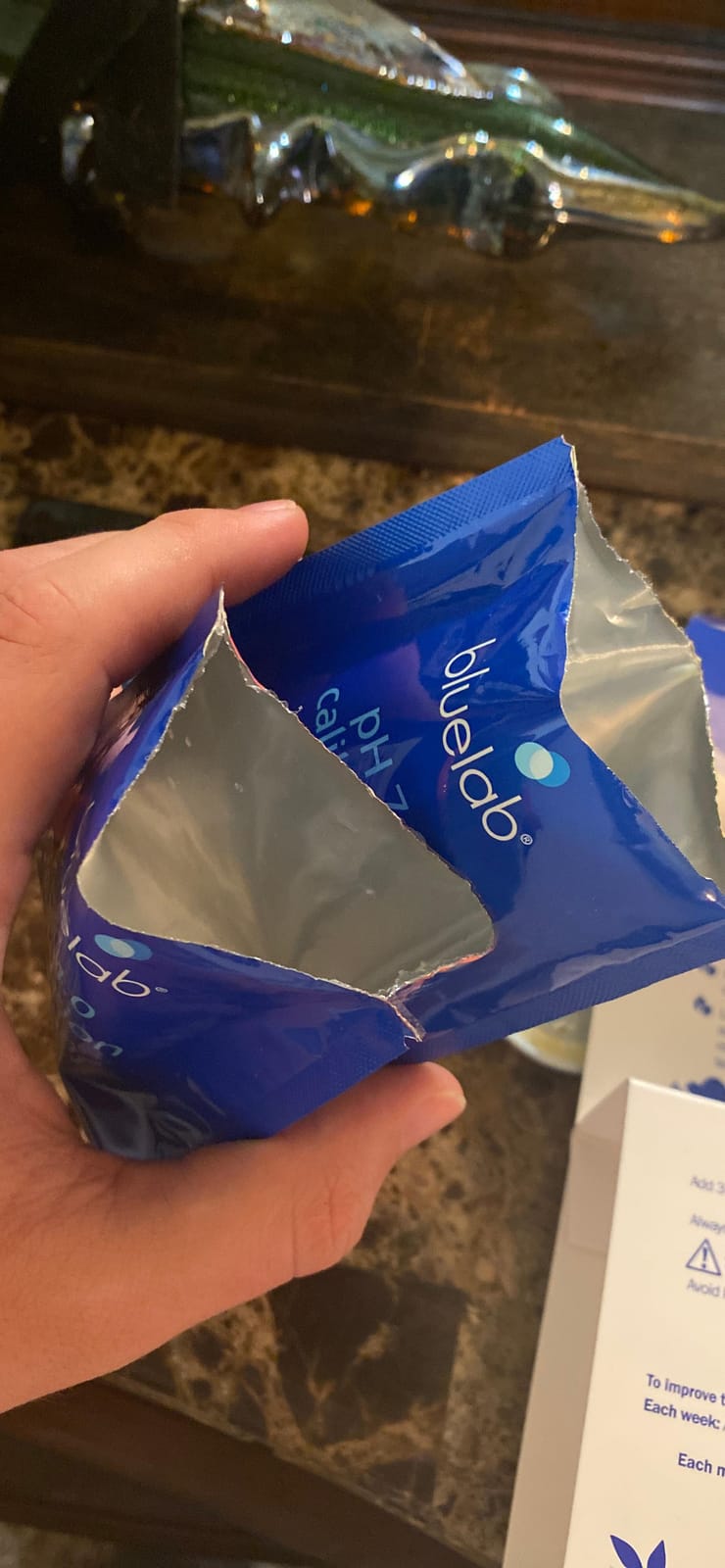
The backlit LCD carries a 30-day calibration indicator, so the meter tells you when it is due rather than relying on your memory. It is waterproof and floats, which sounds trivial until you drop it in a full reservoir. The kit includes 20 ml sachets of pH 7, pH 4 and KCl for calibration and hydration.
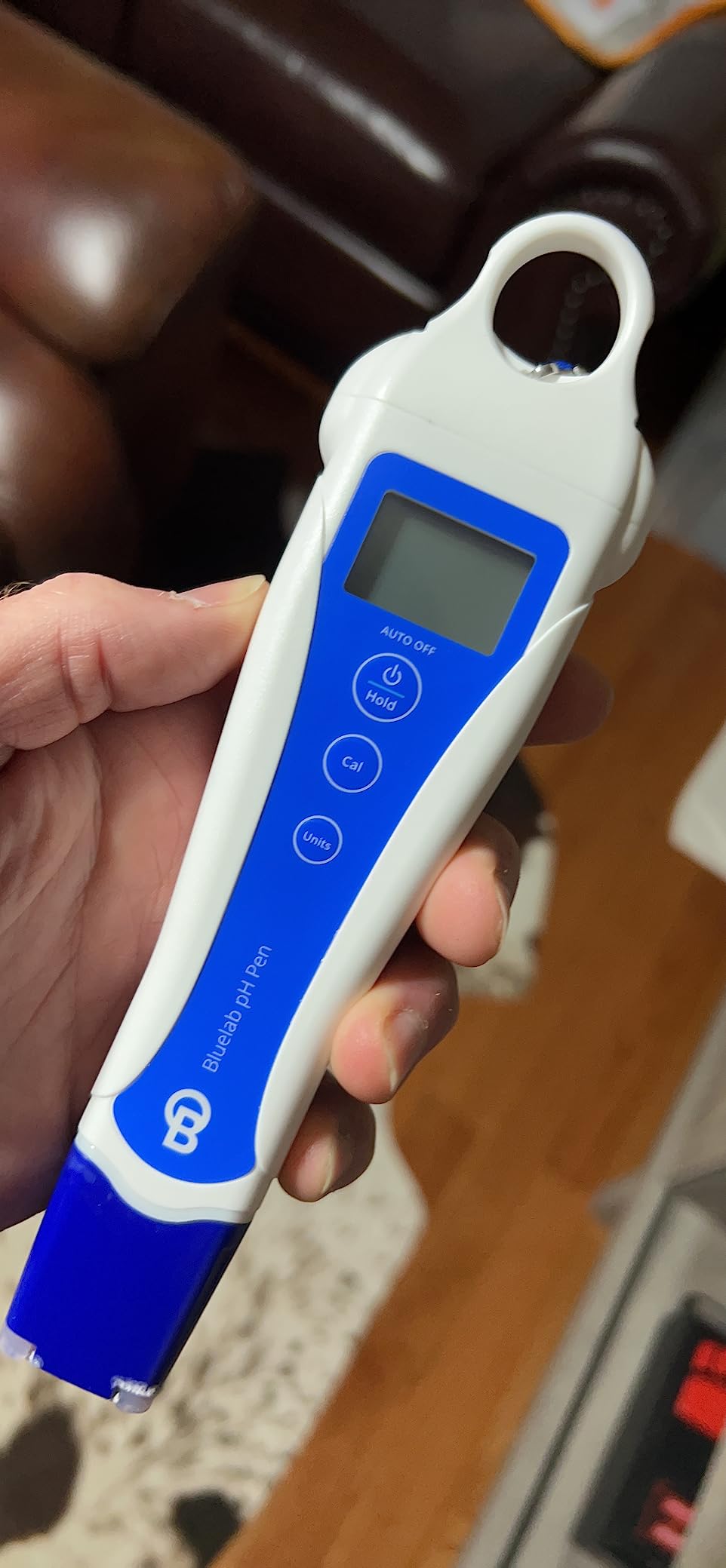
The proof shows up in long-term ownership reports. One reviewer describes a pen that spent a full year outdoors in a shed and still passed calibration afterwards. A commenter on a leading grow forum put the brand hierarchy plainly: Bluelab has the best pH and EC meters for testing, and cheap pens are not in the same conversation.
Double Junction Versus a Plain Glass Bulb
A single junction probe lets the reference electrolyte touch the sample directly. In nutrient solution, salts and organic residue coat that junction, the reference drifts, and the meter starts reading high or low for no visible reason. A double junction interposes a second barrier, extending probe life substantially.
This is the single most important physical difference on the whole list. It is why the Bluelab pen keeps calibration across months while budget bulbs need checking every few weeks, and it is why experienced growers name this brand as the benchmark.
Reading Speed and Low Ionic Water
The honest weakness is settling time. In nutrient solution with good conductivity the reading locks in reasonably fast, but in low ionic water Bluelab itself warns that readings may be slow or unstable because there are too few dissolved ions to work with.
That also means the backlight, which shuts off quickly, is annoying in dim conditions precisely when you are waiting for a slow reading. Read the number, then note it down before the screen blanks.
Consumables Are Part of the Purchase
The sachets in the box are a starter amount. Over a season you will buy pH 4 and pH 7 buffer and KCl storage solution regularly, and the cost of those consumables is the real reason the sticker price feels high. Budget for it and the economics work out over three years of use.
Switching brands later means buying a new set of buffers and a new KCl bottle, so ecosystem lock-in is a genuine factor. Bluelab consumables are easy to find from several suppliers, which partially offsets that.
For a grower who wants one pen to last, this is the one. You are paying for the junction design, and that is the part that decides whether you calibrate weekly or twice a year.
4. Apera AI311 PH60 Pocket Tester – Top Rated for a Replaceable Probe
Apera Instruments AI311 Premium Series PH60 Waterproof pH Pocket Tester Kit, Replaceable Probe, ±0.01 pH Accuracy, Lcd display
0.01 pH accuracy and range to 16.00
Replaceable glass probe
1 to 3 point auto calibration
Color backlit LCD with smiley icon
+ Pros
- Replaceable probe extends instrument life
- Highest average rating in our group
- Color backlit LCD shows temperature too
- Smiley icon signals a stable reading
- Calibration and storage solutions included
– Cons
- Water droplets in the cap confuse first-time users
- Higher cost than entry level pens
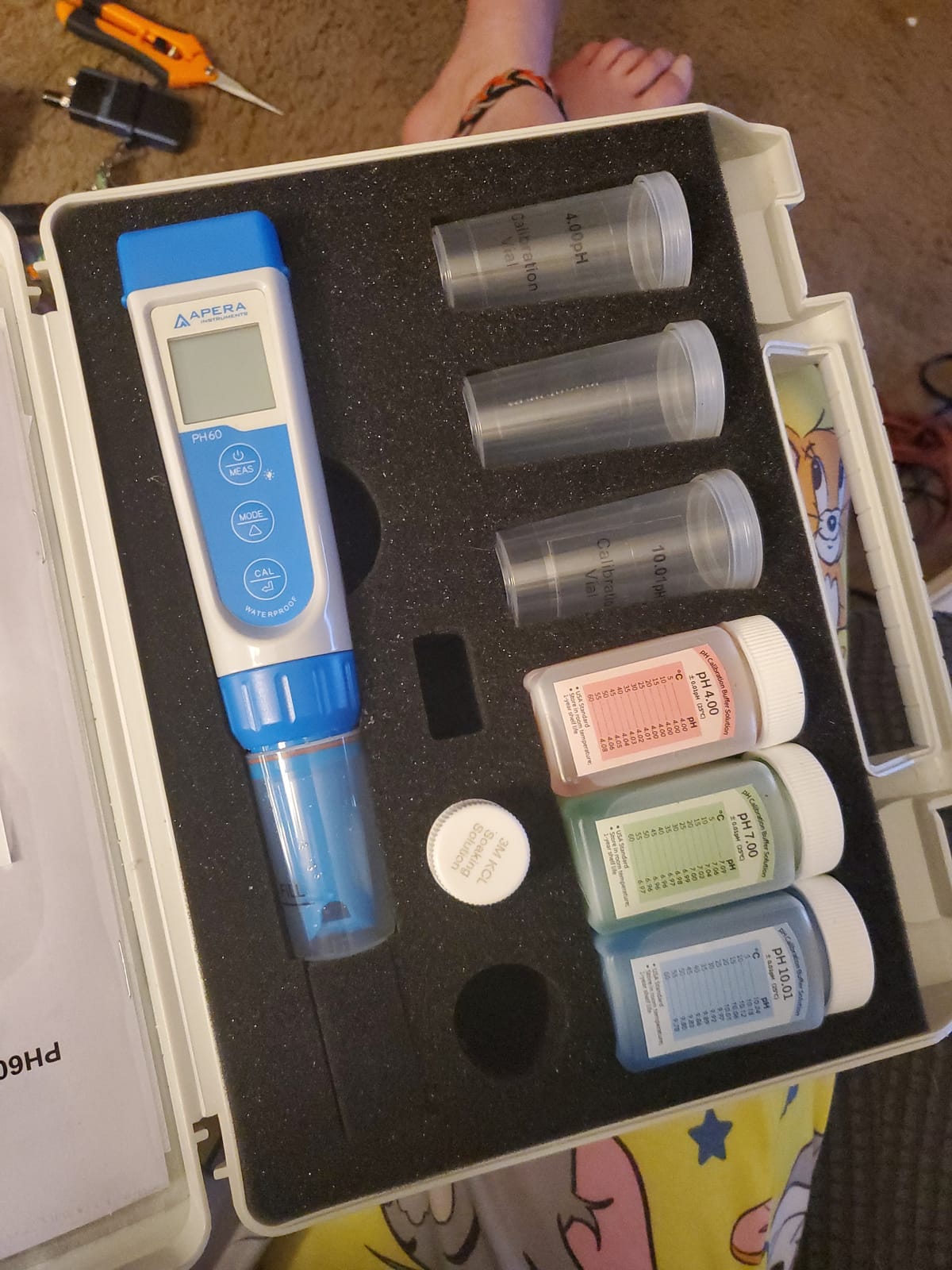
The PH60 is the first pen in this roundup I would call a long-term instrument rather than a tool. The probe is replaceable, so when the glass gives out you swap a probe rather than the whole body, and the 0.01 resolution gives you the finest readout here short of a bench meter.
The large LCD has three backlit colours and shows pH and temperature at the same time. A smiley icon appears once the reading is stable, which ends the single most common error in this category: recording a number that is still moving.
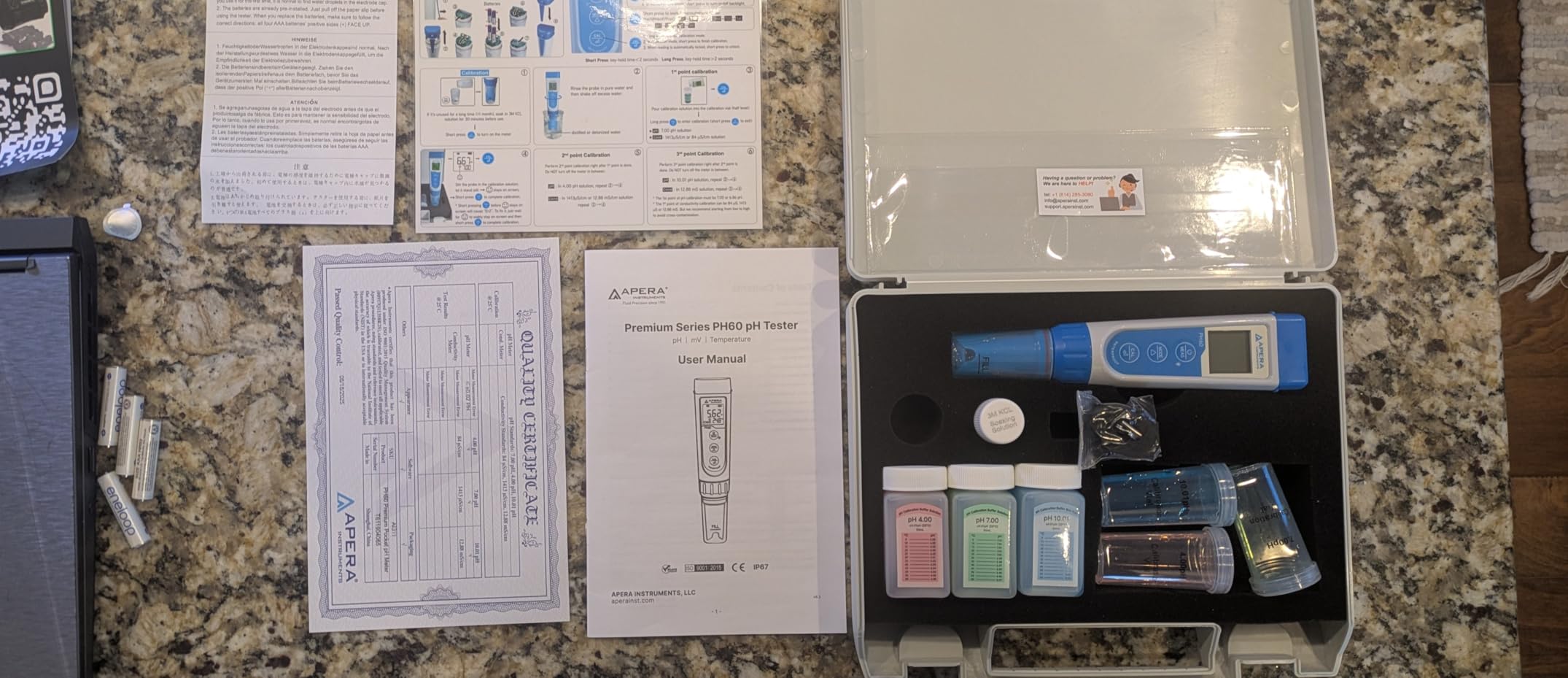
Calibration is one to three point and automatic, recognising five buffer types including 4.00 and 7.00. The kit arrives with ready to use calibration solutions, storage solution, batteries and a rugged case, which removes the most common reason first-time buyers fail to calibrate properly.
Why a Replaceable Probe Changes the Math
With a sealed instrument, the electrode is the whole product. Once it drifts past recovery, the meter is scrap. Here you buy a probe and the instrument body keeps working, so the effective cost per year drops sharply after the first replacement.
That is the argument forum growers make repeatedly. Buyers check whether spare probes exist before they buy, and treat replaceability as a deciding factor rather than a nice to have. It is also why this pen is the pick for anyone running more than one reservoir.
Reading Stability in Nutrient Solution
With a replaceable glass probe and a 0.01 chip, the reading settles into a repeatable figure once you stir the reservoir and give it a few seconds. In a mixed nutrient tank with normal conductivity, it does not exhibit the slow drift that cheaper pens show.
Temperature is displayed continuously and compensation runs from 32F to 122F, so a warm reservoir does not skew the result. The auto power-off after eight minutes is a sensible guard for a grow room you forget about.
The Water Droplet in the Cap Is Not a Defect
The most repeated first-use complaint is finding water in the electrode cap and assuming the product is damaged. It is intentional: those droplets keep the glass membrane sensitive in transit. Emptying the cap before your first calibration is a good habit anyway.
For a grower who wants premium accuracy with a repair path, this is the pick. It costs more than an entry level pen and less than a full combo meter, and the included solutions mean you can verify accuracy on day one.
5. PmoYoKo 3-in-1 pH, TDS and Temperature Tester – Best Budget Multi-Parameter
pH Meter, 3-in-1 TDS Meter Digital Water Tester with 0.01 High Precision
Simultaneous pH TDS and temperature
0.01 high resolution chip
ATC from 32F to 140F
Auto-activated backlight
+ Pros
- Three readings from one device
- Auto-activated backlight is bright
- ATC works across a wide range
- Pocket size at 7.2 inches tall
- Good value for the feature set
– Cons
- pH can take three minutes to settle
- Temperature reads about 2 degrees high
- Backlight times out quickly
- Buffer powders must be mixed by you
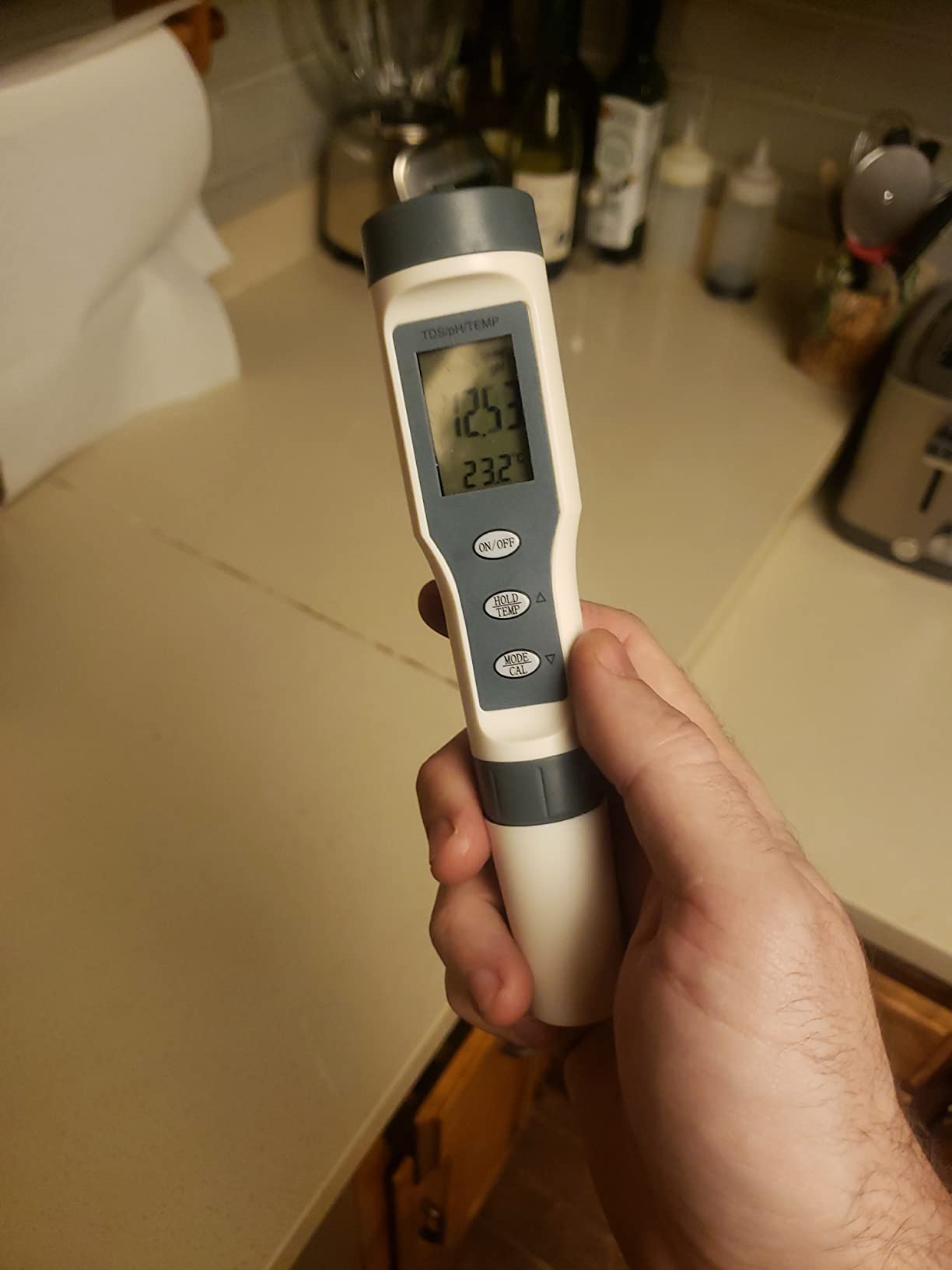
If you want a starting toolkit rather than a single instrument, this does three jobs in one body: pH, TDS and temperature, all shown at once. The auto-activated backlight is genuinely bright, which makes it the easiest meter here to read in a dark tent without holding it at a weird angle.
Automatic temperature compensation runs from 32F to 140F, wider than most pens in the group. The body is 1.5 by 7.2 inches, so it fits in a grow pocket, and a 0.01 resolution chip handles the pH side of the readout.
Stabilisation Time Is the Weak Spot
The most detailed critical review documents pH values jumping several times per second and taking three minutes or more to settle, plus temperature readings roughly two degrees high. That is a real limitation if you are dosing pH down based on a moving number.
Our workaround is straightforward: stir the reservoir, submerge to the marked depth, wait, then record. The manufacturer also advises soaking the meter in clear water for five minutes before the first calibration to condition the electrode.
Buffer Powders Versus Ready-Made Solutions
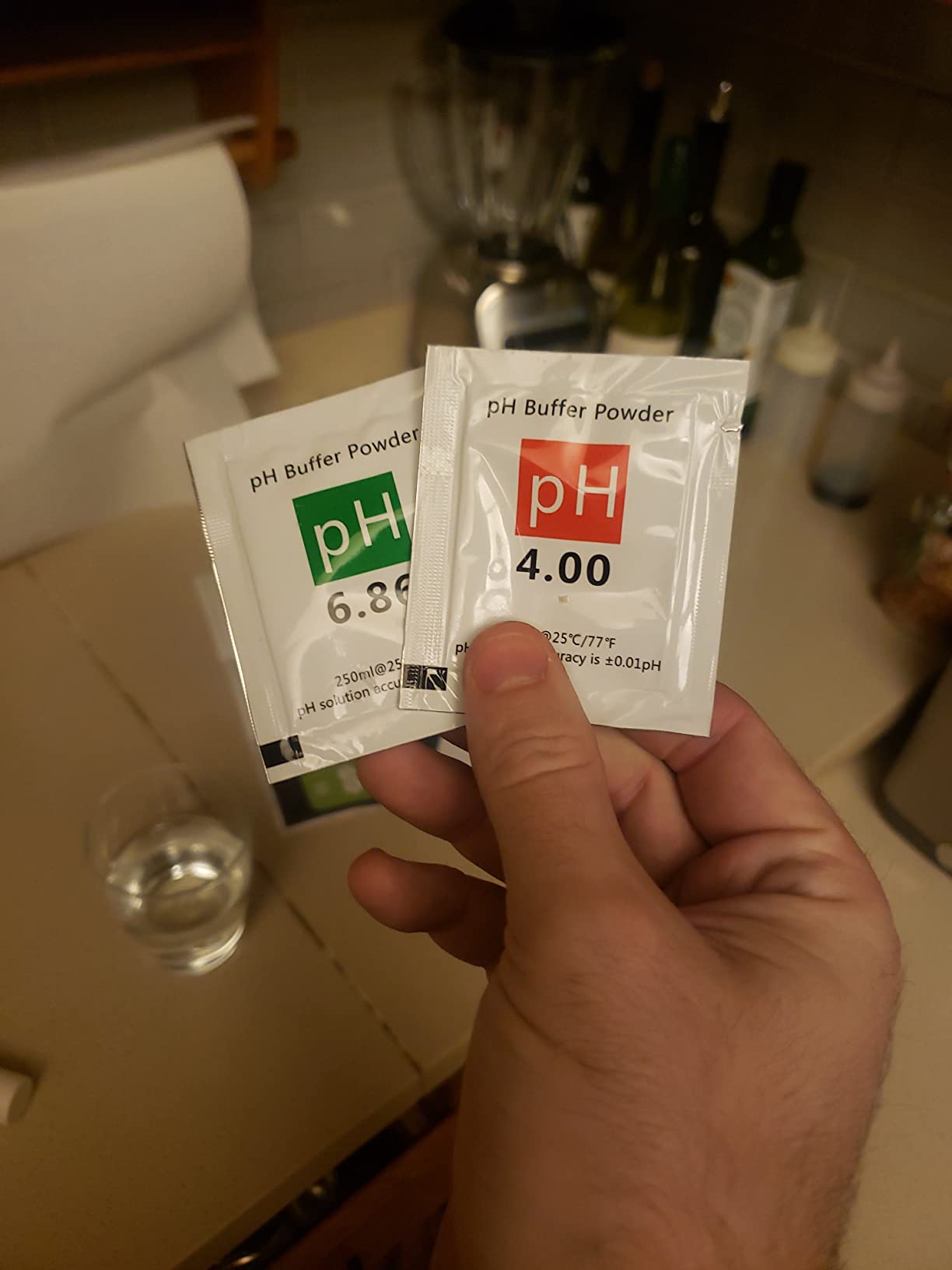
Calibration uses pH 4.00, 6.86 and 9.18 buffer powders that you dissolve yourself, and the box includes three packets. That is fine for occasional checks, but if you calibrate weekly you will be mixing solution more often than you would like, and premade solutions are more convenient.
Several buyers report probe or display failures after weeks or months, with storage mistakes the common thread. Keeping the probe in distilled or tap water rather than KCl shortens its life noticeably.
Who This Suits Best
A grower who is monitoring TDS alongside pH and wants one tool instead of two will find this the most efficient purchase at the entry end. Accuracy is a step up from the cheapest pens, even if it is not a substitute for a double junction probe in a mature system.
Buyers moving up from a very cheap entry pen report a noticeable improvement, though the 13 percent one-star share suggests it is not for anyone who needs laboratory consistency.
6. YINMIK YK-P01 – Best Wide Display with a HOLD Button
YKMINK YK-P01 pH Tester, Digital pH Meter for Water,pH Temp Meter with ATC
Horizontal LCD showing pH and temperature
Stainless steel temperature sensor with ATC
3-point auto calibration
HOLD and TEMP button
+ Pros
- Wide horizontal screen is easy to read
- Shows pH and temperature together
- Backlight for dim working areas
- Three point calibration takes under a minute
- Support replaced a faulty unit
– Cons
- Storage solution not included
- Glass bulb needs wet storage in KCl
- Some newer units read less consistently
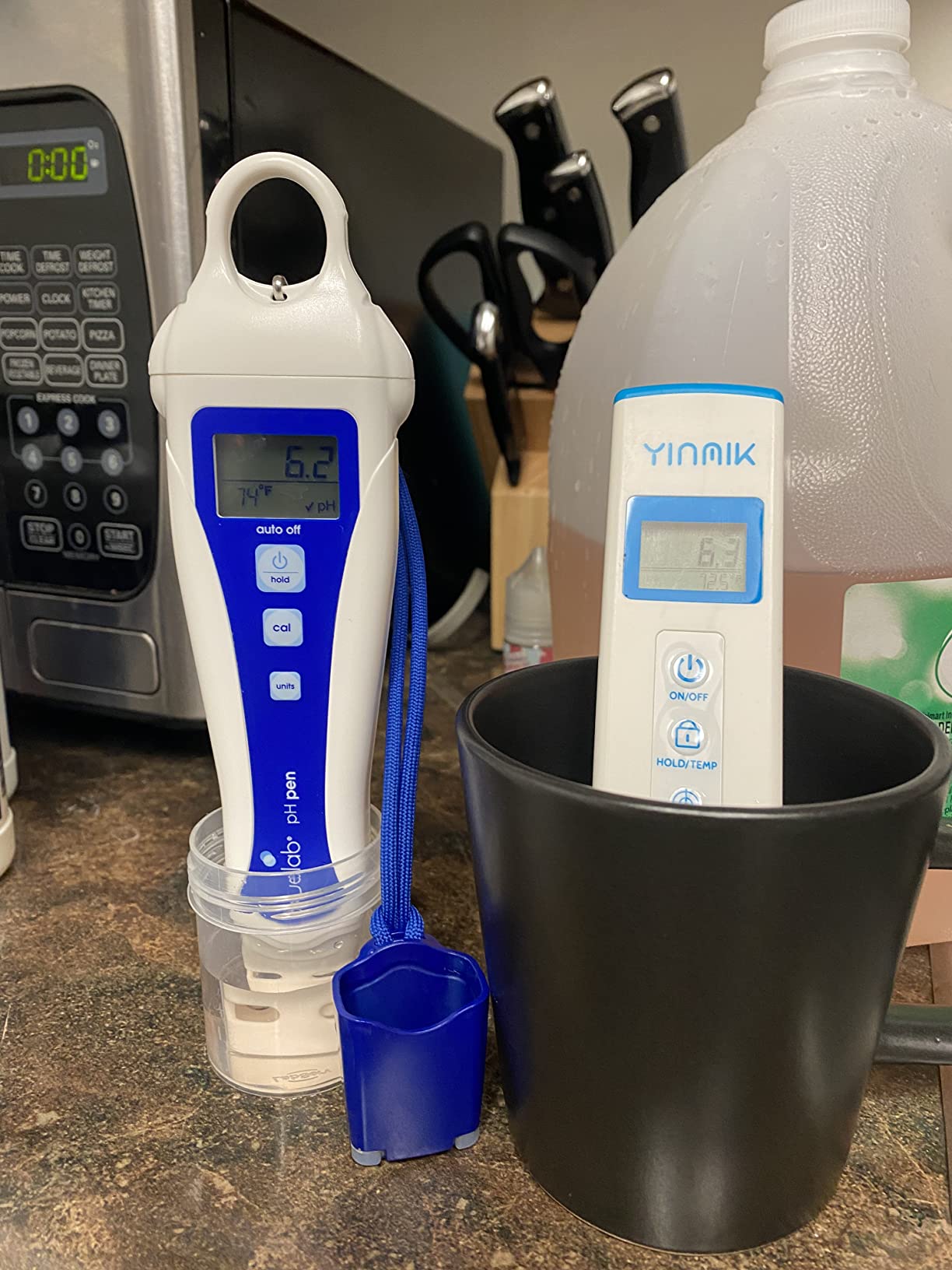
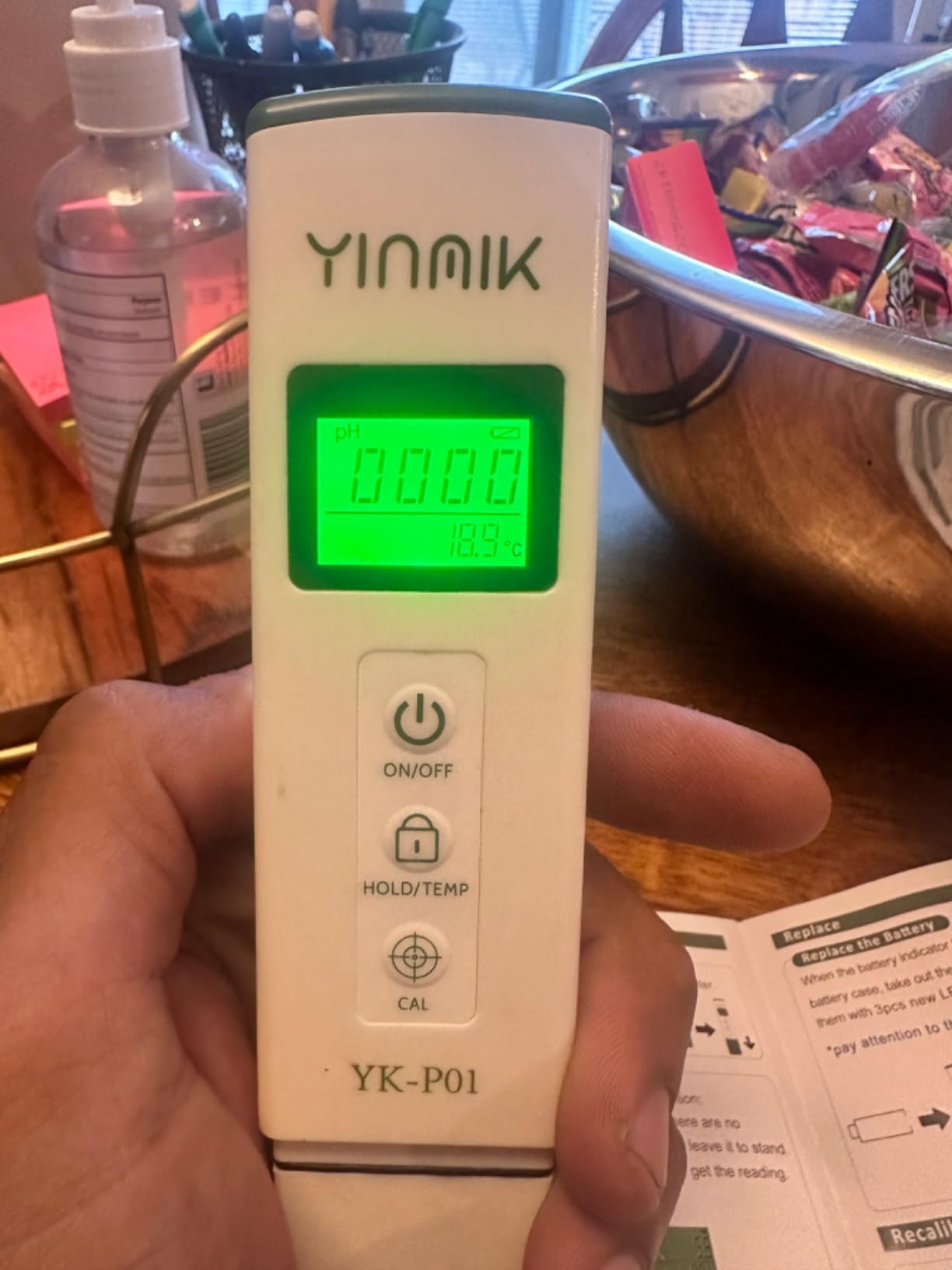
The first thing you notice here is the shape of the screen. Instead of a narrow vertical strip, this meter uses a wide horizontal LCD that shows pH and temperature side by side, which removes the squinting that makes cheap pens annoying in practice.
A stainless steel temperature sensor drives the ATC, and calibration is a three point automatic routine at 4.00, 7.00 and 10.01 using the included powders, each of which makes up to 500 ml of solution. The HOLD button locks the reading after you lift the probe, so you can carry the number to your bench and write it down without dipping again.
Three Point Calibration Without the Hassle
Three points sounds like more work than two, but the automatic routine handles the sequence and the generous powder volume means you are not rationing solution. For growers who prefer calibration at 4.00, 7.00 and 10.01 rather than a single 6.86 point, this is a rare option at this level.
Temperature accuracy is plus or minus 1 degree Celsius, which is a touch looser than the meters that read to half a degree, but pH compensation does the work that matters for dosing decisions.
The Storage Solution Is Not in the Box
KCl storage solution is not included and has to be bought separately, which is the most common criticism in reviews. It is also the single most important accessory, because a glass bulb that dries out will drift and stay drifted.
As with every glass bulb meter on this list, keeping the probe wet in KCl is non-negotiable. Several reviewers independently note that the meter holds up well against units costing many times more, provided that rule is followed.
Two Years With a Long-Term User’s Report
The most detailed review in the set is a two year account from a hydroponic user. They confirm readings stay within about 0.1 pH when maintained properly, praise the responsive support, and warn beginners who let the glass bulb dry out.
Some newer pens report less consistent readings than earlier batches, so if you buy one, verify against a known buffer on arrival. That check takes five minutes and tells you immediately whether you received a good unit.
7. UIUZMAR 4-in-1 Tester – Best for Deep Water Culture Reservoirs
UIUZMAR pH Meter for Water Hydroponics Supplies 4 in 1 pH PPM ECTester
4-in-1 pH EC PPM and temperature
Fast-stabilising blue glass diode
Pre-calibrated with buffer powder
Large backlit display
+ Pros
- Four readings on one screen
- Blue glass diode stabilizes in 1 to 2 seconds
- Arrives pre-calibrated
- Large backlit display reads in daylight
- Side-by-side tests match pricier meters
– Cons
- Calibration can fail on the first attempt
- Only one buffer packet included
- Storage solution sold separately
- Probe thread is easy to damage
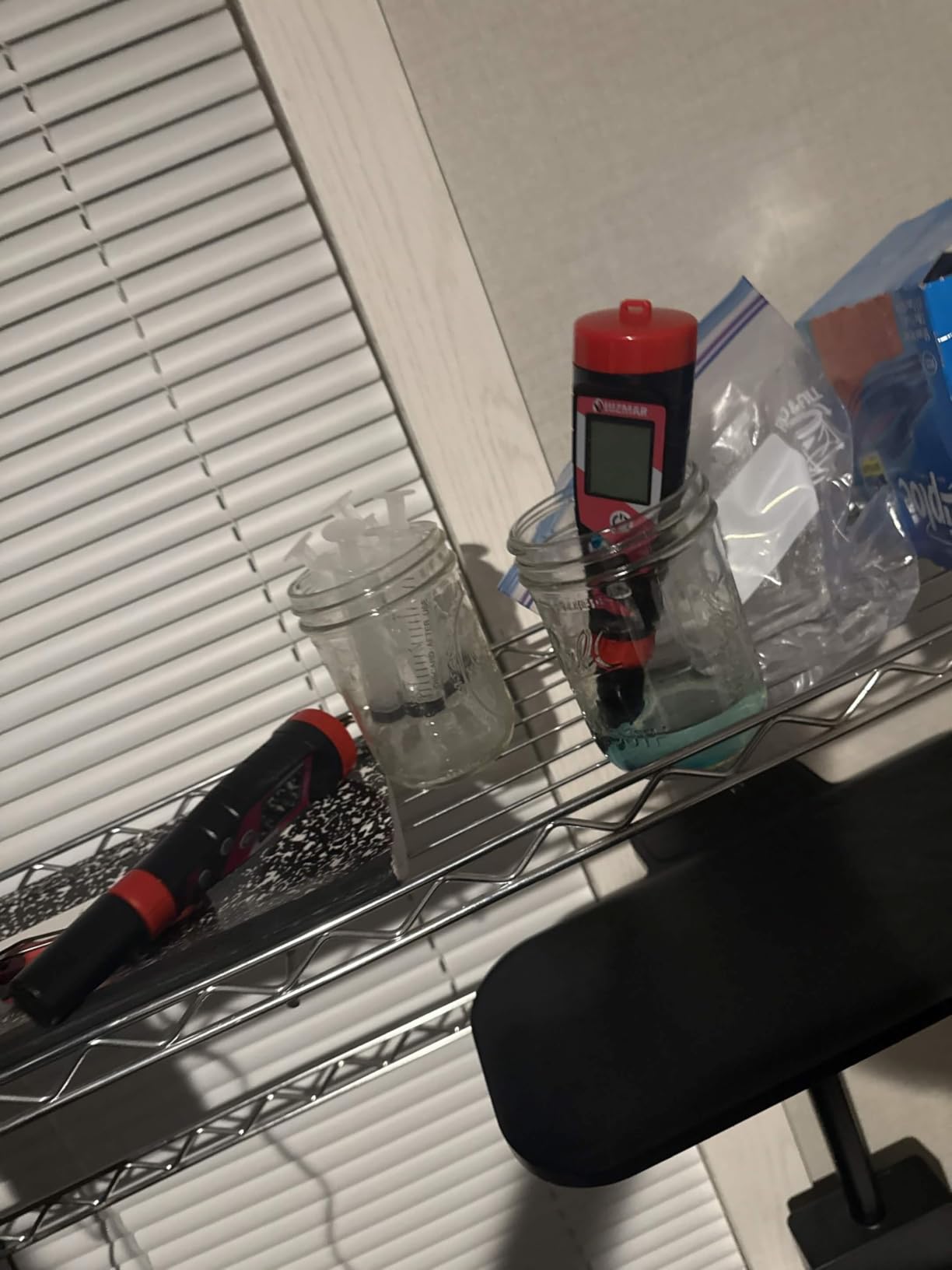
This is the one to look at if you run deep water culture and want pH, EC, PPM and temperature without swapping tools. All four values appear on one large backlit display, and the advanced probe is built for stable readings in nutrient solution rather than clear water.
The blue glass diode is the reason this meter feels quick. It stabilises in one to two seconds, which is far faster than the settling time of most entry pens, and the meter arrives pre-calibrated with buffer powder so you can check it immediately.
Verified Against Bluelab and Hanna
The standout reviewer, who has been measuring pH for 15 to 20 years, tested this against Bluelab, Hanna and Ohaus meters and reports it beating his most expensive meter on speed, stability and value. A second comparison tester put it alongside a much pricier Apera and a premium Bluelab and found all three matched.
That is a strong result for a meter at this level, though a small group of buyers reports inconsistent repeat readings on the same water. Verify against your buffer before you trust it with a dose.
The Probe Thread Is the Fragile Part
The probe screws into the body, and it is easy to damage by gripping it past the thread while rinsing. Treat the connection as you would a lens thread: hold the collar, not the glass.
Calibration can also fail to take on the first attempt, and only one buffer powder packet is included, so plan to buy more solution and a storage bottle soon after unboxing. For DWC growers who already track EC daily, having all four values on one screen is the main payoff.
Where It Fits Against a Dedicated pH Pen
If you only need pH, a dedicated pen with a double junction probe will outlast this over three years. If you also want EC and PPM, this consolidates two tools into one and saves the repeated dipping that wears probes out.
Reviewers consistently validate budget meters against a pool pH test strip, a cross-check worth repeating yourself. Dip both into the same sample and if the numbers diverge by more than a couple of tenths, recalibrate before dosing.
8. Bluelab Soil and Solution Pen – Best for Coco Coir and Rockwool
Bluelab Soil Test Kit Digital pH Meter for Soil/Hydroponic Garden/Coco/Rockwool Easy Calibration Water Resistant Precise Readings 0.1 Accuracy Comes with Probe Cover – PENSOILPH
Measures solution soil coco and rockwool
Lab quality glass probe with ATC
Calibration reminders
Fully waterproof design
+ Pros
- One pen covers solution and substrate
- Lab quality glass probe with ATC
- Reminds you when to recalibrate
- Waterproof for repeated wet use
- More precise than two-prong meters
– Cons
- Consumables sold separately
- Storage cap is awkward to remove
- Probe life around 18 months
- Some units fail within months
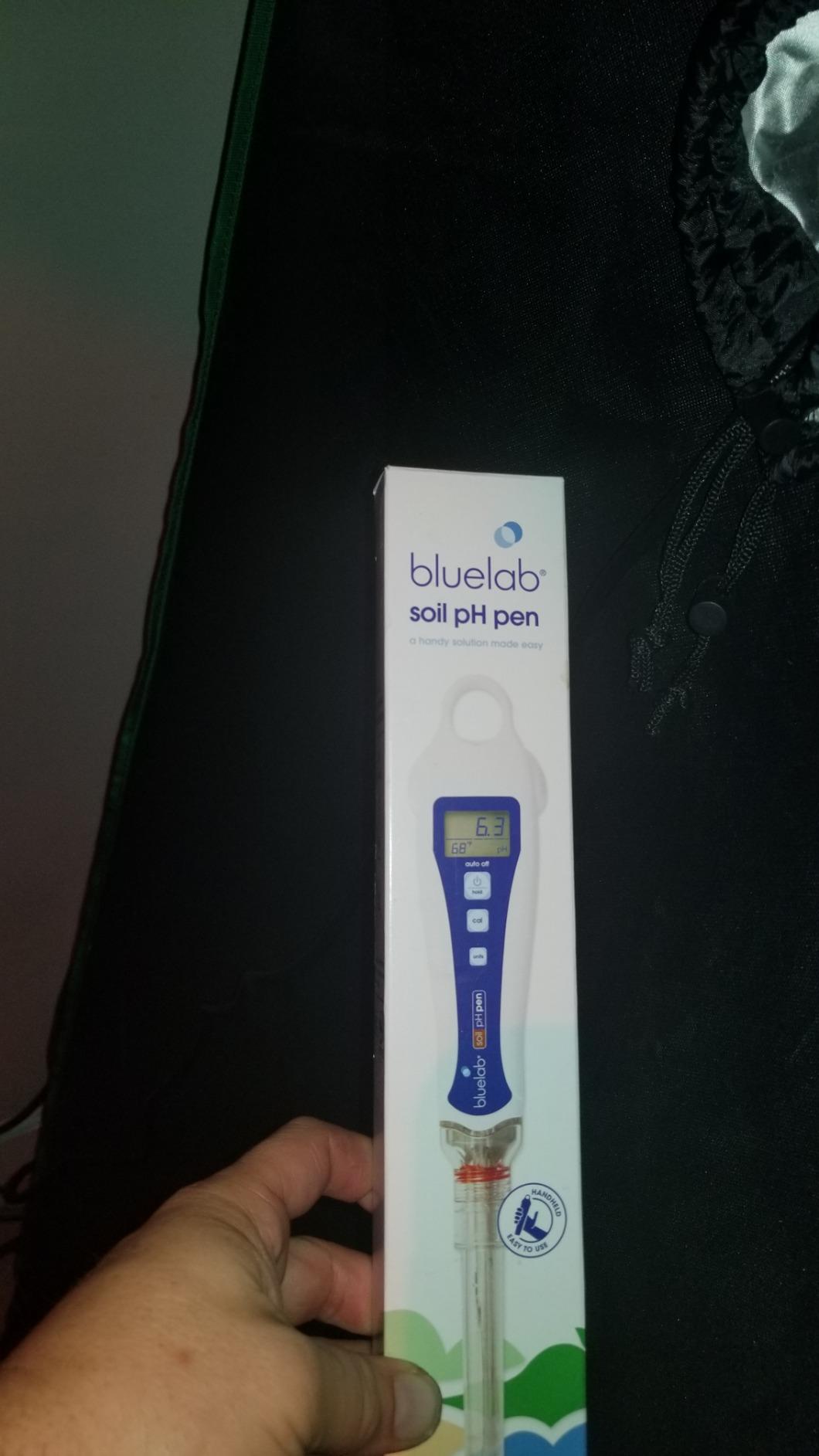
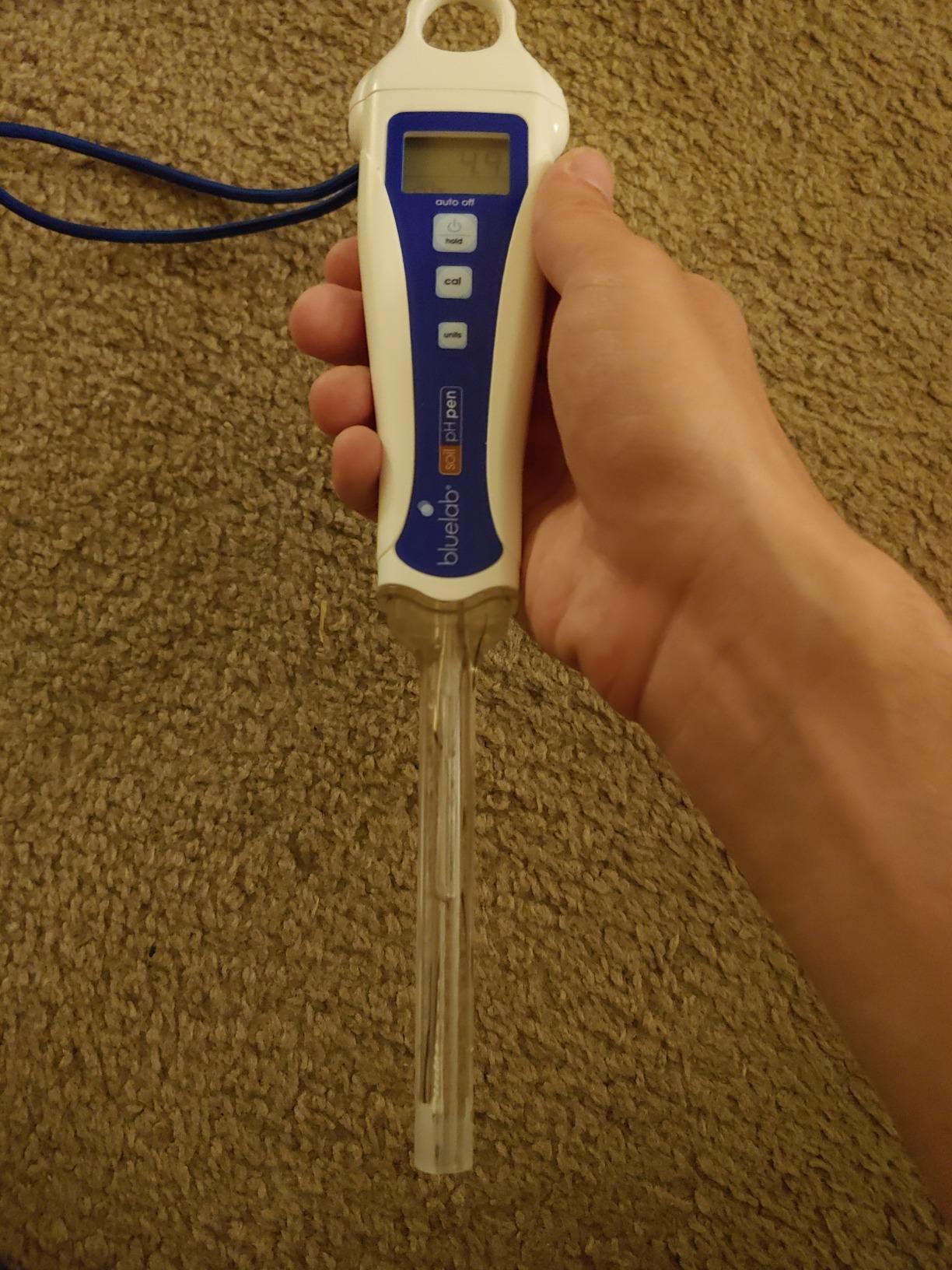
Some growers need to read more than solution. If you grow in coco coir or rockwool, or you run a mixed setup with a DWC reservoir and substrate beds, this pen measures temperature and pH in nutrient solution, soil and other media with a lab quality glass probe.
That makes it the one product here that answers the most common purchasing mistake in the category, which is buying a two-prong analog soil meter and expecting it to work in a tank. Buyers switching from those meters report far more precise substrate readings.
Substrate Readings Need a Different Technique
Solution pH is read straight from the tank. Substrate pH needs a slurry: saturate a measured sample of coir or rockwool with distilled water, let it sit, then read. A pen that does both means one instrument instead of two, and one calibration routine to remember.
The lab quality glass probe and ATC give consistent results as long as you keep the technique the same each time. Change the water to sample ratio and your numbers will move for reasons that have nothing to do with the meter.
Consumables Are Sold Separately
The kit includes an AAA battery and a storage cap. Calibration solution, KCl and the probe care kit are all sold separately, so add them to your first order or you will not be able to calibrate the pen you just bought.
The pointed storage cap is also awkward to set down and hard to remove, which is a genuine problem for growers with limited hand dexterity. Probe life is roughly 18 months before the reference material is exhausted.
Durability Is the Weak Point Here
This Bluelab has the widest rating spread of the group at 4.2, with 11 percent one-star reviews. Some of that is the missing consumables, and some is durability: several buyers report replacing multiple pens within months, and readings varying by up to 0.6 pH across repeat measurements in the same medium.
Other buyers who calibrate as instructed are enthusiastic and report the precision holds up. Treat the first two weeks as a test period, verify against buffer, and keep the receipt.
9. Bluelab Combo Meter – Best for Tracking pH and EC Together
Bluelab Combo Meter for pH, Temperature & Conductivity in Water – Easy Calibration, Digital EC/TDS/PPM Tester for Hydroponics & Indoor Plants (METCOM)
Reads conductivity pH and temperature
Double junction pH probe
Two point calibration with reminder
5 year warranty on the body
+ Pros
- Fast stable readings without settling wait
- Three parameters in one device
- One touch two point calibration
- Conductivity and temperature probes factory calibrated
- Cheaper replacement probes than rivals
– Cons
- Battery door has no rubber seal
- Temperature probe slow and about 3 degrees high
- Probes are floppy with no holster
- Storage solution sold separately
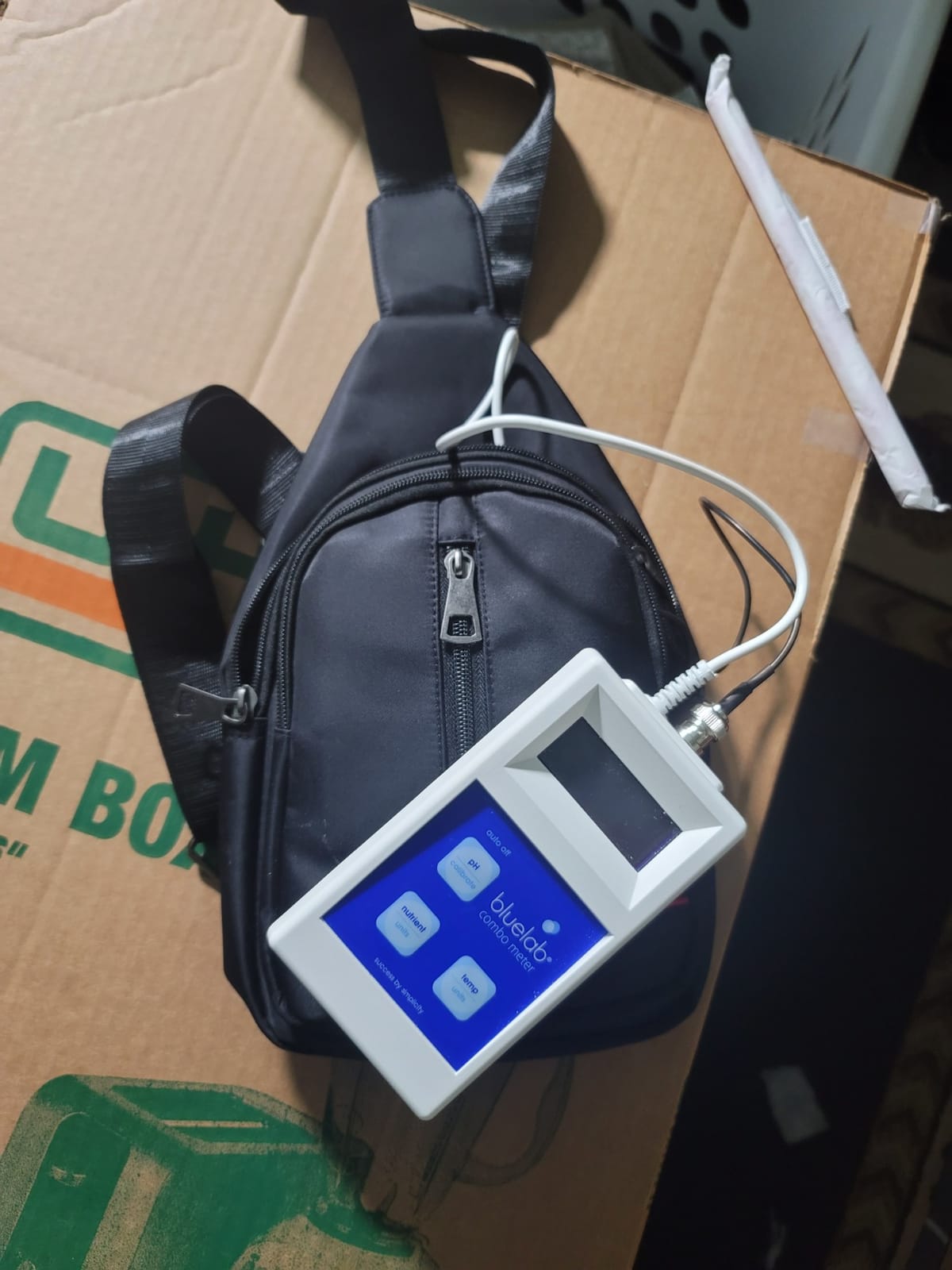
This is the meter that changes your routine. The bench-style body sits next to the reservoir instead of living in a drawer, so you check pH and conductivity without repeatedly dipping and dropping a pen into the tank. That alone cuts probe wear.
It monitors conductivity, pH and temperature with a lab quality glass probe, and the conductivity scales include EC, PPM and CF. The pH side uses a double junction probe with easy two point calibration, and a built-in reminder tells you when to do it. The conductivity and temperature probes arrive factory calibrated.
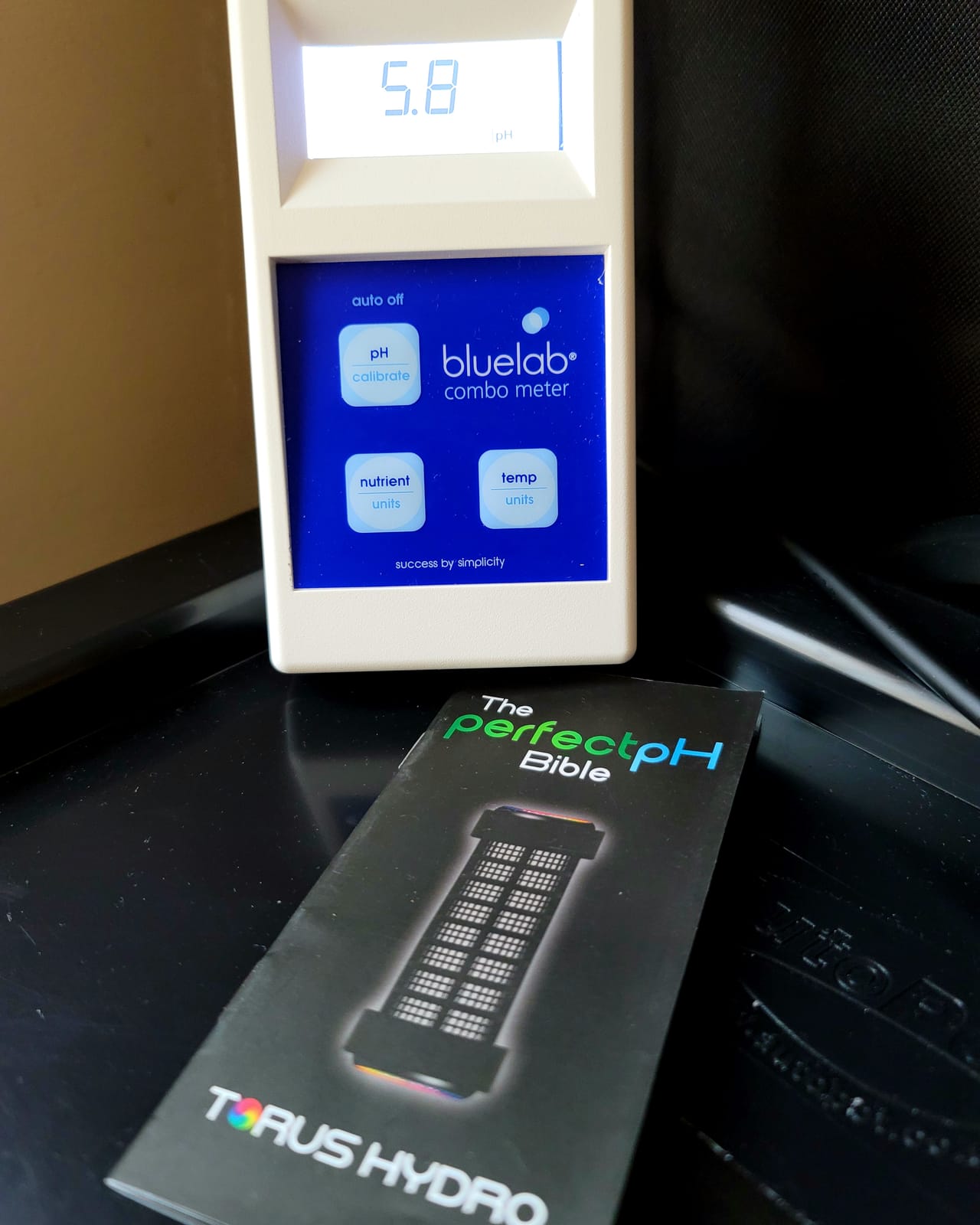
At 4.4 stars with 78 percent five-star ratings, it has the highest five-star share of the Bluelab products here, and users upgrading from pens point to one touch repeatable readings as the reason the daily habit stuck.
Where the Design Falls Short
The battery cover has no rubber seal, so this is not a fully waterproof body despite the general Bluelab ruggedness. Keep it off the wet bench edge. The temperature probe is slow to respond and reads about three degrees high, which matters if you use the temperature reading to decide when to top off a reservoir.
The probes are also floppy with no built-in holster, so the cables need routing to avoid being yanked, and the storage cap can trap air pockets that push solution out of the probe tip. These are small annoyances, but they are the reason the pen format still has a place.
Warranty and Probe Economics
The body carries a five year limited warranty with six months on the pH probe, which tells you exactly where Bluelab expects the failure point. Replacement probes are cheaper than competing combo meters, and detailed reviewers comparing it to a Hanna combo credit Bluelab on probe design and price.
For a grower already tracking EC alongside pH, the tradeoff is worth it. For someone who only needs pH, the pen format is simpler and you are paying for conductivity hardware you will not use.
10. YINMIK YK-T4 Pro 4-in-1 Tester – Best for Immersed Reservoir Use
YINMIK pH Meter for Hydroponics, 4 in 1 PPM EC Meter for Plant Nutrients
4-in-1 pH PPM EC and temperature
Probe can stay immersed for monitoring
Ready to use pH and EC buffer
Stainless steel electrode with ATC
+ Pros
- All four values on one screen
- Includes ready-to-use calibration solution
- EC and TDS factory calibrated
- Probe can stay immersed for monitoring
- Bright LCD readable in low light
– Cons
- Some pens need recalibration within days
- Some pens stop calibrating entirely
- A shade less accurate than Bluelab
- Probe and solutions sold separately
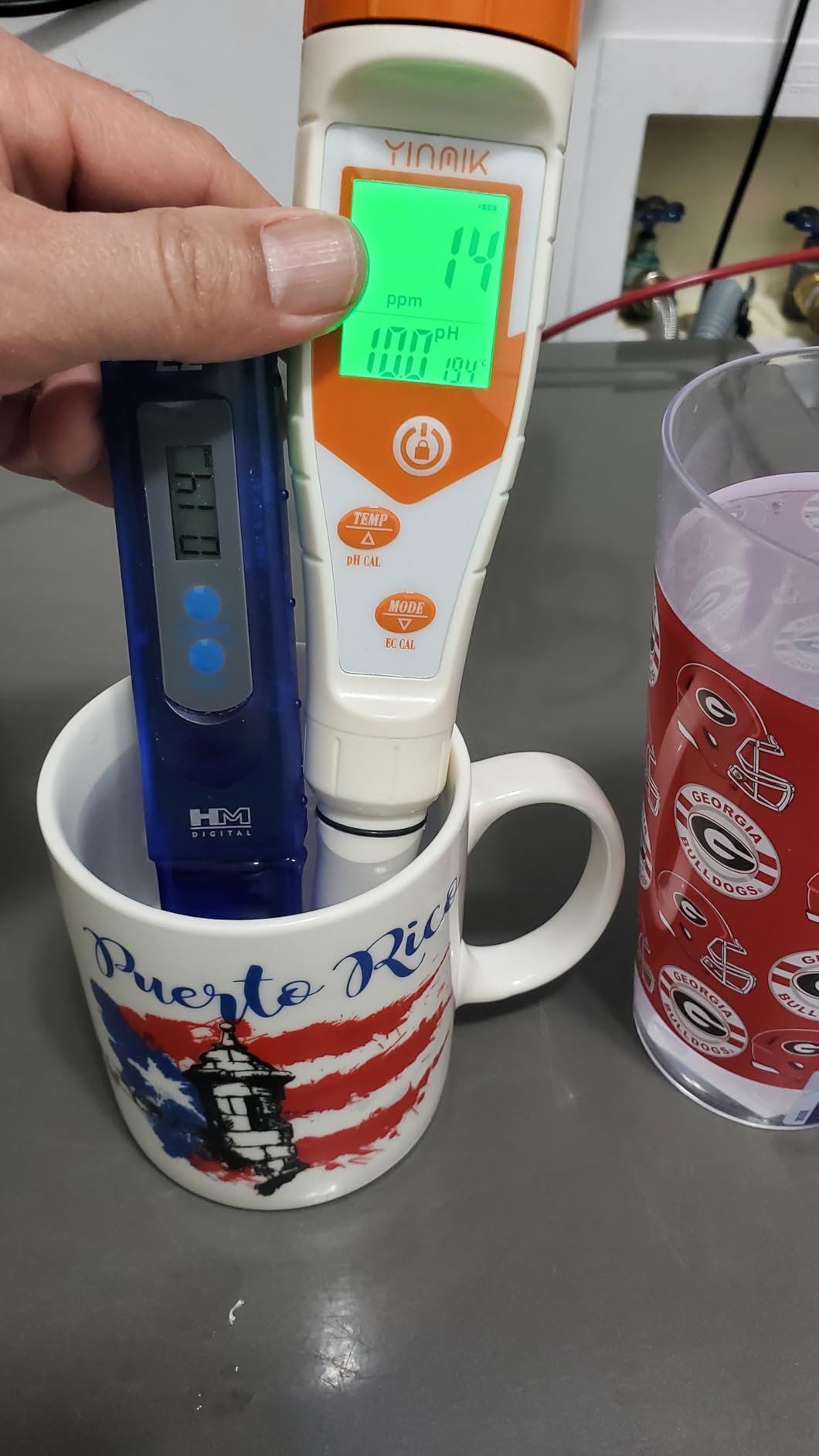
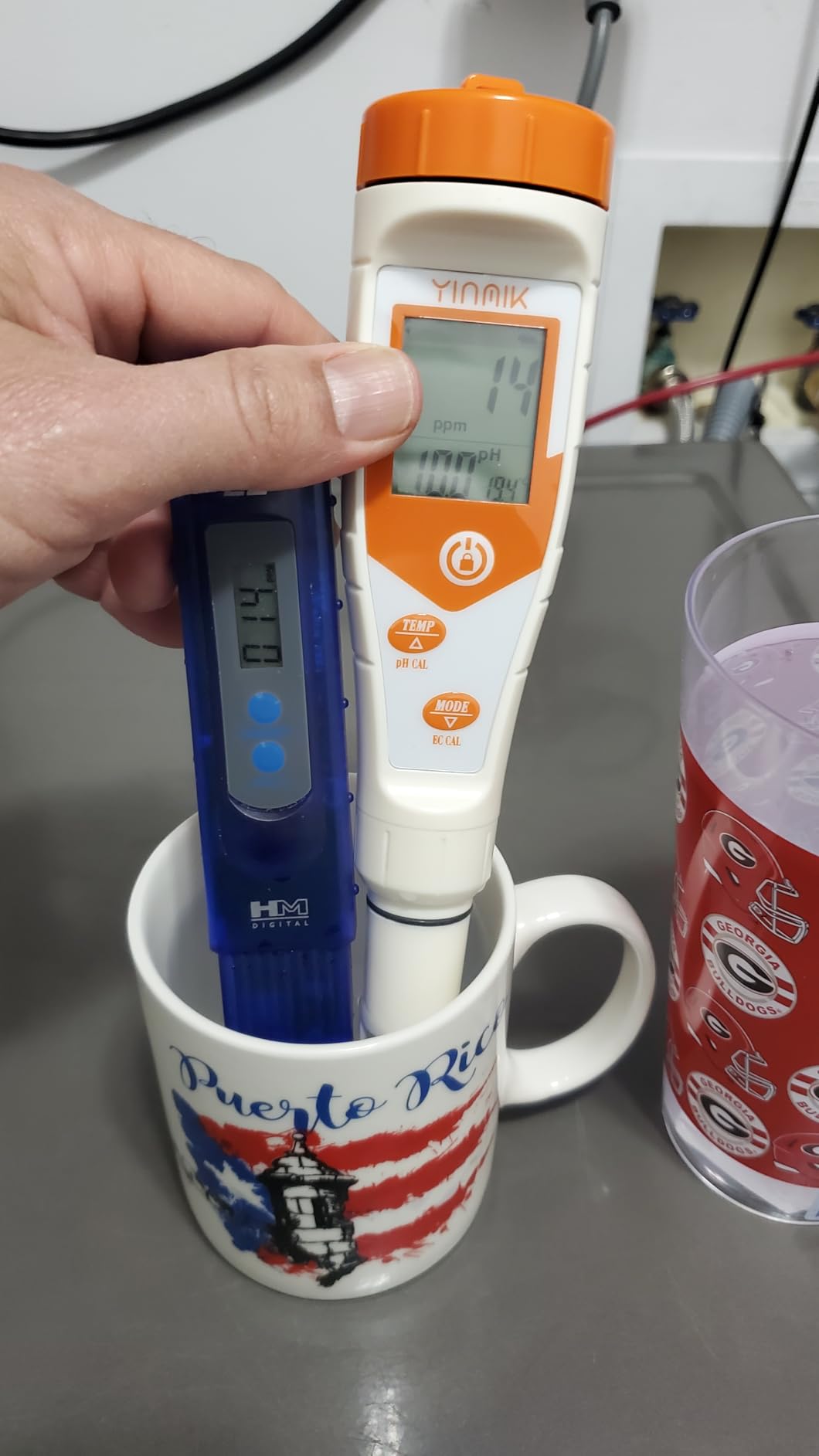
This is the only meter here designed to stay in the water. The upgraded YK-T4 Pro probe can be left immersed in hydroponic equipment or tubing for continuous monitoring, which makes it a small step toward a fixed monitor without the installation work of a dosing controller.
One tap brings up temperature, pH and EC together, with separate modes for a base reservoir in pH and PPM and for nutrient solution in pH and EC. It arrives with 4.00 and 7.00 pH calibration solution and a 1413 uS/cm EC buffer, ready to use, and the EC and TDS side is factory calibrated out of the box.
Immediate Verification Is Possible on Day One
Because the calibration liquid is premixed, you can drop the probe into a known buffer and confirm accuracy before it ever touches your plants. Recent buyers in hydroponic and aquarium setups highlight exactly that, since it removes the most common excuse for skipping calibration.
One reviewer upgraded from a Vivosun meter that drifted badly and nearly cost a crop, and reports fast repeatable readings after the switch. The extended temperature stainless steel electrode handles ATC across the range you will meet in a reservoir.
Where It Falls Behind
The comparison testers are candid: this meter is a shade less accurate than a Bluelab in a direct read, though it reads faster and includes the PPM function that the Bluelab pen does not offer. That is a fair trade for most growers and a real compromise for anyone chasing laboratory precision.
Some pens need recalibration within a few days of use, and a minority of buyers report pens that would no longer calibrate at all. Replacement probes and extra solutions come from the YINMIK store rather than a general supplier, so check availability before committing.
When to Choose This One
Pick it if you want four readings and the option to leave the probe in the reservoir overnight to catch an overnight pH crash. Avoid it as your only pH instrument if your crop is sensitive enough that a tenth of a point matters and you have no cross-check method.
Verify against buffer weekly, and if it will not hold, treat that as the signal to move up to a replaceable-probe model rather than recalibrating harder.
Hydroponic pH Meter Buying Guide: What Actually Decides Accuracy
Resolution Is Not Accuracy
Resolution is how fine the number moves, accuracy is how close it is to truth. Two meters can both display 6.00 while one is genuinely there and the other is off by a quarter of a point, and only buffer tests reveal which is which. Judge every meter you buy against a known solution, not against another cheap pen.
For a working reservoir, 0.1 resolution is genuinely enough. Move up to 0.01 when you are diagnosing a lockout, blending concentrated nutrients, or running a high value crop where the difference between 5.8 and 5.9 changes growth.
Electrode Type Decides Lifespan
A pH meter works because hydrogen ions cross a pH sensitive silicate glass membrane and generate a small voltage. What kills that membrane is not time but storage. A double junction probe adds a second barrier so the reference electrolyte does not contact the sample, which is why it outlasts a plain glass bulb in nutrient solution.
Do not buy an analog soil probe for a reservoir. Those two metal prongs read a slurry through a galvanic reaction, and in nutrient solution they wander by a full point or more. The real purchase trap is buying a cheap soil meter for a water system, so check that the product states a pH range and glass electrode before you order.
Replaceable Probe Beats a Cheaper Body
Sealed pens are cheaper up front and more expensive over three years, because the electrode is not sold separately. A meter with a replaceable probe spreads the instrument cost across several probe purchases and keeps the body in service. When a pen fails to read calibration solution, a replaceable probe often fixes the problem instead of the whole unit.
Do the arithmetic on consumables too: buffer solution and KCl storage are recurring costs on every meter, and they are brand specific. Switching brands later means repurchasing all of it.
Automatic Temperature Compensation Is Not Optional
Reservoir water is warmer than your calibration buffer, and pH is temperature dependent. ATC corrects the reading so 6.0 in a warm tank means what 6.0 means in a cool one. Without it you will chase a phantom drift all summer and over correct with pH down.
A built-in temperature display is a bonus, because it tells you whether a reading change came from the water or the meter.
Digital Meters Versus Strips and Drops
Test strips and liquid pH drops still have a place. Forum consensus is that drops remain the trusted reference method for confirming a meter’s output, and one budget user validated a generic pen against pool strips. What they cannot do is give you a trend you can log.
A digital meter gives you a number you can record daily, which is what turns pH from a guess into data. Strips cost almost nothing per test and tell you only that you are in or out of range.
What to Look for in the Box
Check whether calibration solution, buffer powders and KCl storage are included. Several pens in this roundup arrive without consumables, which is the most common cause of a first calibration that never happens. A backlight, a HOLD function and a memory recall are small features that matter more in a dark grow room than any spec sheet suggests.
Finally, look for a waterproof rating and a readable display at arm’s length, because you will be holding this thing one handed over a bucket in the dark more often than you expect.
Handheld Pen or Continuous Monitor: Which One Your Reservoir Needs
A handheld pen is the right tool for almost every home system. You check once a day, you record the number, you adjust, and the job takes a minute. Pens are cheap, portable, and easy to calibrate on a bench in good light.
A fixed monitor is the right tool when nobody is going to look. Continuous monitors and pH controllers sit in the reservoir, display the reading without being held, and on models with dosing outputs they can trigger a pH up or pH down addition on their own. That is the scenario where a pen fails you, an overnight pH crash in a warm DWC bucket, or a vacation.
The decision rule is simple. If someone checks the reservoir every day, buy the pen and invest the difference in a better probe. If the reservoir is unattended for a full day at a time, or you are running multiple tanks, a fixed monitor earns its place even though you will still want a pen for calibration and cross-checks.
One caution from growers online: continuous monitors draw mixed reviews, with buyers noting that alternatives to the popular Bluelab Guardian exist on Amazon but the feedback is inconsistent. Treat a monitor as a monitoring tool first and a dosing tool second, and keep a handheld pen as your verification instrument.
Calibration and Electrode Care: The Habits That Decide Accuracy
No meter on this list can rescue a neglected probe. The habits below decide more about your accuracy than the price you paid, and they take about five minutes a week.
Never Let the Electrode Dry Out
Store the probe in KCl storage solution with the cap on. Many growers rinse with tap water and store dry, which permanently degrades the glass membrane and is the leading reason meters drift. If a probe has already dried out, soak it in KCl for 24 hours and recalibrate before giving up on it.
Hydroponic growers also keep liquid pH drops on hand as an independent check. Dip both into the same sample and compare before you dose a crop.
How Often to Calibrate
Start with the manufacturer’s interval, which for the Bluelab pen is flagged on the display at 30 days. If you are checking every day, calibrate whenever the reading looks suspicious, and always before a dose you are confident about.
Calibrating daily with a single 6.86 buffer is a common forum habit, and it works, but it can hide a dying probe. A proper two point calibration at 4.00 and 7.00 catches slope and offset errors that a single point misses. Our routine is two point weekly, plus one any time a reading jumps unexpectedly.
The Calibration Routine
Rinse the probe with distilled water, never tap. Submerge it in fresh 4.00 buffer, stir gently, and wait for the reading to settle. Rinse again, then move to 7.00 buffer and repeat. Rinse a final time before returning the probe to the reservoir, and cap it in KCl immediately after.
Pour out old buffer rather than reusing it. Contaminated solution is a common cause of a calibration that will not stick.
Signs Your Meter Is Failing
Four signals mean the probe is on the way out. The meter will not calibrate, or it accepts calibration but the reading drifts within minutes. The number jumps several tenths between identical dips. The display shows an error in buffer that used to work. Or the readings disagree with a drop test by more than about half a point.
Work through the cheap fixes first: fresh buffer, a longer soak, a clean junction, and a fresh calibration. If it still fails, a replaceable probe model is the cheapest repair, which is the argument for choosing one of those from the start.
One more habit worth adding: rinse the probe with clean water between readings when you are sampling multiple reservoirs. Salt film on a glass membrane is the leading cause of the slow drift that growers blame on nutrient lockout.
Frequently Asked Questions
What is the best pH meter for hydroponics?
The VIVOSUN Digital pH Meter is our top pick for most growers because it reads to 0.01 pH, has automatic temperature compensation and a backlit screen, and is backed by more than 33,000 ratings. If you want a waterproof body and steadier readings, choose the Apera PH20. For a probe that stays calibrated across seasons, the Bluelab pH Pen with its double junction design is the durable option, and the Apera PH60 is the choice when you want a replaceable probe.
Which brand is considered the best for pH meters?
Bluelab and Hanna are the two benchmarks most experienced growers name first, because both use double junction probes that resist contamination in nutrient solution. Apera is widely recommended as the value tier, and a 420 Magazine grower described the Apera 60 series as equivalent to higher end Hanna and Bluelab units without the price tag. The practical difference between brands is often the consumable ecosystem rather than the meter itself.
Are cheap pH meters accurate?
Cheap pH pens can be accurate enough for a home reservoir, provided you calibrate them against known 4.00 and 7.00 buffer and keep the glass electrode wet in KCl storage. The real failure mode is not the sensor, it is neglected storage. Unbranded marketplace pens are the ones to avoid, with forum buyers reporting pens that return an error during calibration straight out of the box. Our advice is to buy the cheapest pen with automatic temperature compensation, a backlight and a published review history.
What is the best pH level for hydroponics?
Most hydroponic systems perform best between pH 5.5 and 6.5. Leafy greens and herbs prefer the tighter end at 5.5 to 6.0, while fruiting crops such as tomato and pepper do well from 5.8 to 6.5. Deep water culture growers usually hold slightly lower because roots sit in solution continuously. Outside this range, iron, manganese, calcium, phosphorus and boron become chemically unavailable and the plant suffers lockout even in a fully stocked reservoir.
How often should I calibrate a hydroponic pH meter?
Follow the manufacturer’s interval, which on the Bluelab pen is flagged on the display every 30 days. In practice, calibrate with a two point routine at 4.00 and 7.00 buffer at least weekly if you check daily, and any time a reading looks wrong. Calibrating daily with a single 6.86 buffer is a common habit that works, but it can mask a dying probe that a proper two point calibration would expose.
Do I need a pH meter or a pH controller?
If you check the reservoir every day, a handheld pen is enough and the money is better spent on a better probe. A continuous monitor or controller makes sense when the reservoir is unattended for a full day, when you run multiple tanks, or when an overnight pH crash would cost a crop. Even with a controller, keep a handheld pen for calibration and cross-checking, and expect mixed owner reviews on continuous monitors.
Why is my hydroponic pH meter not reading correctly?
The usual causes are a dried out electrode, a contaminated reference junction from nutrient salts, old or reused buffer solution, and tap water rinses. Soak the probe in KCl for 24 hours, rinse with distilled water only, and recalibrate with fresh 4.00 and 7.00 buffer. If it still will not calibrate, or readings disagree with a liquid drop test by more than half a point, the probe has reached the end of its life and a replaceable probe model is the cheapest fix.
Which pH Meter Should You Buy in 2026
If you want one dependable pen and you are new to recirculating systems, the VIVOSUN Digital pH Meter is the best pH meter for hydroponics on a single purchase, because the 0.01 resolution, temperature compensation and backlit screen cover everything a daily check needs. If you work in a wet room and check twice a day, the waterproof Apera PH20 handles the job with less fuss.
Long-term durability is a different question. The Bluelab pH Pen and the Apera PH60 are the two to consider if you want to stop buying meters every season, since one survives through a double junction design and the other through a replaceable probe. Growers who also track EC should look at the Bluelab Combo Meter for a bench-style setup, or one of the four-in-one testers for a single-screen approach.
Whichever you choose, buy the consumables in the same order: KCl storage solution and two point buffer set. That habit does more for your accuracy over three years than any spec on this list. Our other testing notes, including the method comparison work we do on light meters, are in our light meter guide.
Leave a Reply