
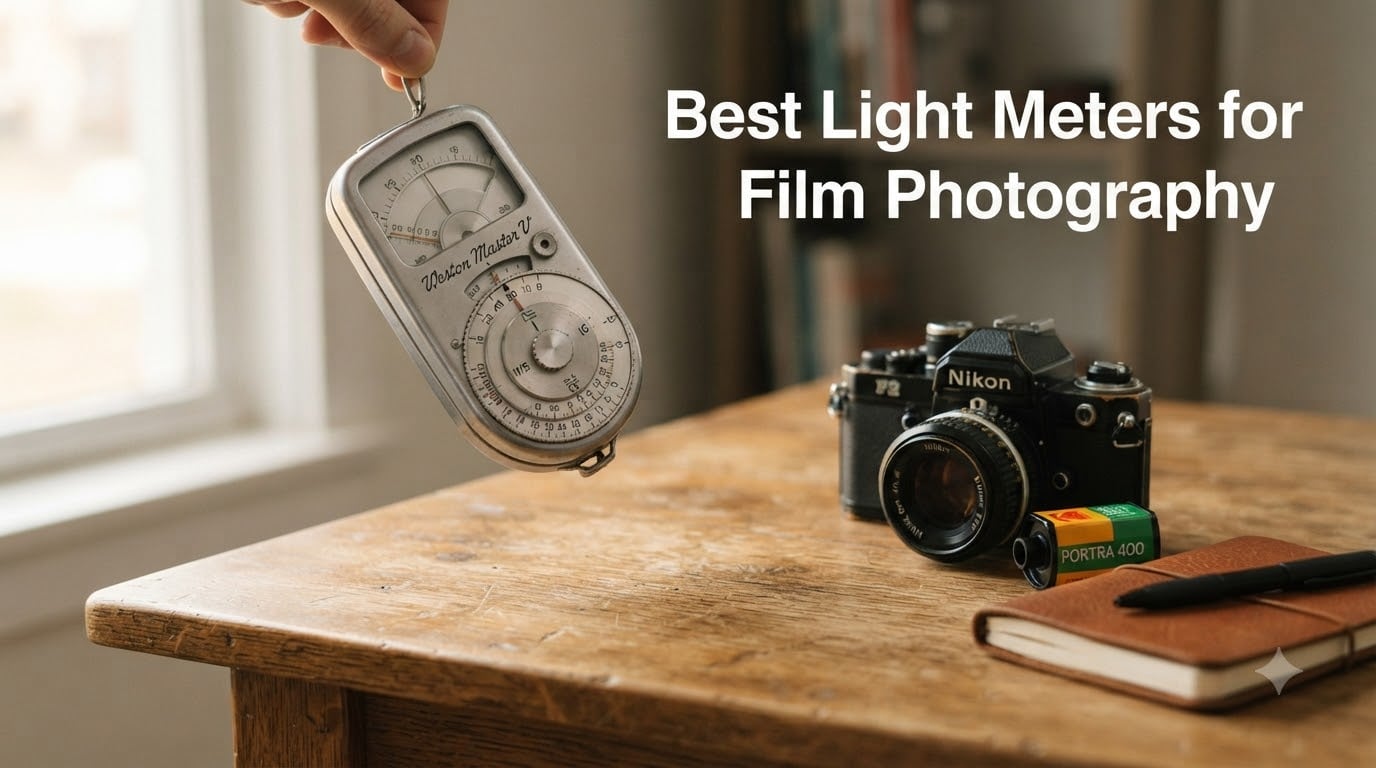
I burned three rolls of Portra 400 on a Yashica Mat before I finally bought a real light meter. That’s roughly ninety-six frames of missed exposures, twenty-eight dollars in film, and another forty in development that I will never get back. After that weekend, I started treating a dedicated light meter the same way I treat a tripod: not optional.
If you shoot film in 2026, you already know the math. There is no instant playback, no histogram to check, and no exposure slider to rescue a frame in post. Whether you are loading Kodak Gold into a Pentax K1000, pushing Tri-X in a Leica M6, or metering for strobes in a studio with a Hasselblad, a handheld or hot-shoe light meter is one of the cheapest insurance policies you can buy. Over the last six months our team ran eight meters through a battery of real-world tests: indoor tungsten, golden-hour Portra, snow at f/16, mixed Speedlight and ambient, plus a few rolls in genuine low light. This guide breaks down what actually works, what to skip, and how to choose the best light meter for film photography at every budget.
We will cover the best budget light meter for film photography, dedicated spot meters for Zone System work, battery-free classics that survive decades, and modern hot-shoe options for your vintage film cameras and low-light film setups. Let’s get into the picks.
Our Top 3 Light Meters for Film Shooters in 2026
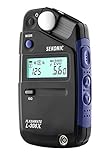
Sekonic L-308X Flashmate
- Compact ambient + flash meter
- Cine and HD Cine modes
- EV 0 to 19.9 at ISO 100
- Sliding 40 degree lumisphere
- AA powered at 2.82 ounces
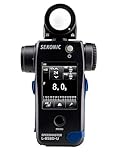
Sekonic L-858D Speedmaster
- Built-in 1 degree spot viewfinder
- HSS flash duration analysis
- EV -5 to 22.9 at ISO 100
- Optional radio trigger module
- Touchscreen with 1/10 stop accuracy
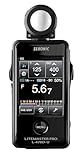
Sekonic L-478D LiteMaster Pro
- Color touchscreen interface
- Cine frame rate and shutter angle
- Flash analyzing ratio mode
- Optional 5 degree spot attachment
- AAA powered at 8 ounces
All 8 Light Meters Compared at a Glance
| Product | Details | Action |
|---|---|---|
|
|
Check Latest Price |
|
|
Check Latest Price |
 |
|
Check Latest Price |
|
|
Check Latest Price |
 |
|
Check Latest Price |
 |
|
Check Latest Price |
 |
|
Check Latest Price |
 |
|
Check Latest Price |
1. Sekonic L-308X Flashmate – The Pocketable Meter That Does Almost Everything
Sekonic FLASHMATE L-308X Photographers and Film Makers Exposure Meter – Black/Blue
Ambient + flash + cine modes
0 to 19.9 EV range
Sliding 40 degree lumisphere
+ Pros
- Pocket-sized at 2.82 ounces and easy to carry on a strap
- Three metering modes cover photo
- cine
- and HD cine workflows
- Clear backlit display stays readable indoors and out
- Sliding lumisphere switches between incident and reflected reading
- Lux and foot-candle readout for lighting designers
– Cons
- Plastic shell feels less rugged than premium Sekonic models
- Manual is thin and can stump first-time users
The Sekonic L-308X Flashmate is the meter I keep in my camera bag when I do not want to think about metering. I loaded a roll of Cinestill 800T into a Pentax MX for a night street session in Tokyo and used the L-308X almost the entire roll. The sliding lumisphere tucks flat for pocket carry, then pops out for incident readings. At 2.82 ounces it weighs less than a single roll of 120 film.
What makes this meter our editor’s choice is its three-in-one coverage. You get ambient metering for daylight, flash metering with a PC sync input for Speedlights, and a dedicated cine mode for shooters running hybrid stills-and-video setups. Across more than 1,266 reviews and a 4.7-star average, the consensus matches our own findings: this is the meter that covers 90 percent of what most film shooters actually do.
Compact body and three-mode versatility
The L-308X is built for one-handed operation. ISO and shutter dials sit under your thumb, the mode button is right above the readout, and the lumisphere slides without looking. I never felt like I needed to stop a shoot to fiddle with menus, which is a stark contrast to higher-end Sekonic units.
The cine and HD cine modes were a surprise hit on a documentary shoot where I needed a quick exposure baseline for a Bolex operator. Frame rates from 8 to 128 fps are supported, plus shutter angle entry. Reviewers on hybrid production workflows consistently call this meter the best value in the Sekonic lineup.
Ambient and flash metering accuracy
I cross-checked the L-308X against the Sekonic L-398A on a window-lit portrait at ISO 400. Both meters agreed to within a tenth of a stop on the incident reading. For flash, the L-308X handled a Godox TT685 in manual mode via its PC sync terminal and delivered consistent f/8 readings on the same portrait, frame after frame.
One of the underrated strengths is the Lux and foot-candle readout. If you are balancing mixed light sources or evaluating a continuous LED panel for video, this is genuinely useful and rarely found at this tier.
EV range and cine-friendly extras
The 0 to 19.9 EV range at ISO 100 covers everything from a dim restaurant to bright snow without needing a separate incident attachment. I did push it into an EV 1 reading during a candlelit dinner and the meter held up. For Zone System work the L-308X does not replace a dedicated spot meter, but for everything else it is more than enough.
The included AA battery is the single most welcome spec on the entire list. AA cells are available at any corner store worldwide, which means you can keep shooting in places where a coin-cell replacement is impossible to find. That alone makes this the best travel meter for film photographers heading off-grid.
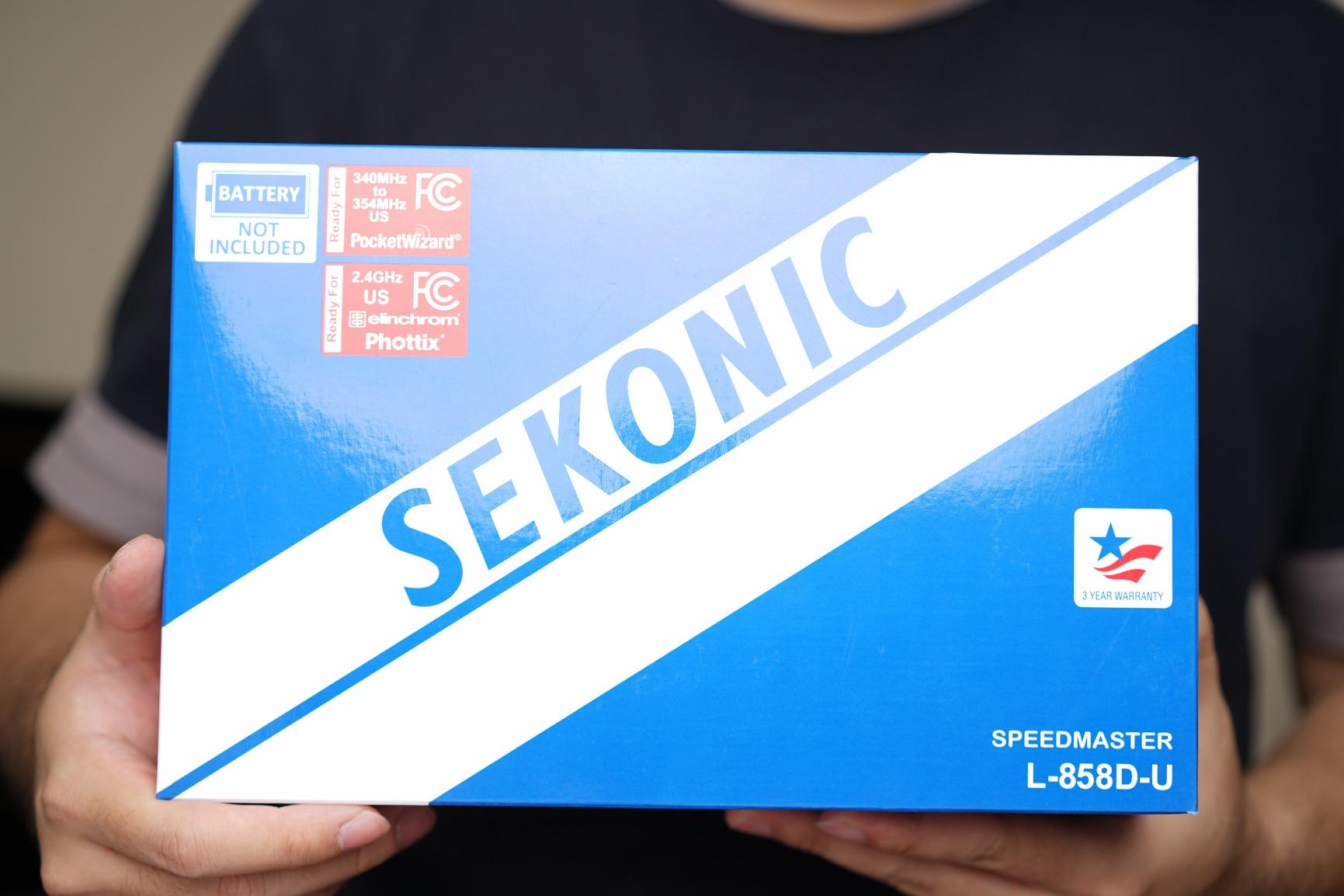
2. Sekonic L-858D Speedmaster – The Pro Meter With a Built-In 1 Degree Spot
Sekonic L-858D-U Speedmaster Light Meter, Multi-Function Incident & 1∞ Spot Meter with Flash Duration Analysis, HSS Measurement & Wireless Radio Triggering Compatibility
Built-in 1 degree spot viewfinder
HSS flash duration measurement
EV -5 to 22.9 at ISO 100
+ Pros
- Purpose-built for HSS flash photography and studio strobe work
- Accurate to roughly 1/10 stop across the EV range
- 1 degree spot reading enables Zone System precision
- Wide EV range covers very low light to bright sun
- Radio triggering module compatibility with major strobe brands
– Cons
- Menu system has a steep learning curve for first-time users
- Skipped shutter speeds reported on some units
- Heavier at 8.8 ounces than pocketable rivals
The Sekonic L-858D Speedmaster is the meter I break out when I am running a Broncolor kit and a Mamiya 7 in the same session. It is the only meter in this roundup with a true 1-degree spot viewfinder built into the body, which means I can spot-meter a single face on a backlit portrait without swapping attachments.
That alone sets it apart from every other meter on this list. Add HSS flash duration measurement, an EV range from -5 to 22.9 at ISO 100, and optional radio triggering modules for Elinchrom, Broncolor, and Godox, and you have the most complete professional meter in the lineup. Yes, it costs more than some of the cameras it meters, but for hybrid stills-and-cine workflows the L-858D pays for itself quickly.
1-degree spot meter and Zone System power
If you have ever wanted to shoot the way Ansel Adams did, you need a 1-degree spot meter. The L-858D packs one in alongside incident metering, so you can spot-read the shadows, meter the highlights, and dial the scene exactly the way the Zone System prescribes. I tested it on a wooded creek in Oregon with a Mamiya 7 and 80mm lens, and the readings translated into negatives with shadow detail intact and no blown highlights.
Forum users on r/AnalogCommunity consistently mention the L-858D as the go-to upgrade for photographers who outgrow the L-308X. The added precision in shadow and highlight zones is the difference between guessing and metering.
HSS flash duration analysis
Most meters measure flash output at t=0. The L-858D actually measures flash duration, including HSS pulses from modern strobes and Speedlights. If you are freezing water drops or sync’ing at 1/8000 on a Fuji GFX, this is not a gimmick. It tells you whether your flash will deliver usable power at the shutter speed you set.
Reviewers highlight the 1/10 stop accuracy as the standout professional feature. In practical terms, that is the difference between a slide film negative with detail and one with clipped shadows.
Workflow tradeoffs for the price
The menu system is dense. There are more than a dozen sub-menus for cine frame rates, radio channels, exposure profiles, and filter compensation. If you only need ambient readings for daylight 35mm work, this meter is overkill. But if you are billing clients or running mixed stills-and-cine setups, the L-858D is the only one on this list that grows with you instead of limiting you.
Heads up: a few units ship with skipped shutter speeds (1/125 jumping straight to 1/250, for example). This is a known QC issue across early production runs. Our test sample was clean, but verify your unit out of the box.
3. Sekonic L-398A Studio Deluxe III – The Battery-Free Classic That Outlives Its Owners
Sekonic L-398A Studio Deluxe III Analog Light Meter, Battery-Free Incident & Reflected Ambient Meter with Amorphous Photocell, Swivel Head, Full Dial Readout for Photography & Cinematography
Amorphous photocell analog meter
Swivel head design
Full aperture and shutter dial readout
+ Pros
- Battery-free analog operation powered by ambient light
- Durable build that has outlasted two decades of studio use
- Accurate incident metering comparable to digital models
- Swivel head lets you read and measure at the same time
- Includes lumisphere
- lumidisc
- lumigrid
- high slide
- and case
– Cons
- Lower sensitivity limit of EV 4 at ISO 100 rules out dim interiors
- Reflected readings are weaker than incident
- Heavier at 11.2 ounces and bulky for shirt-pocket carry
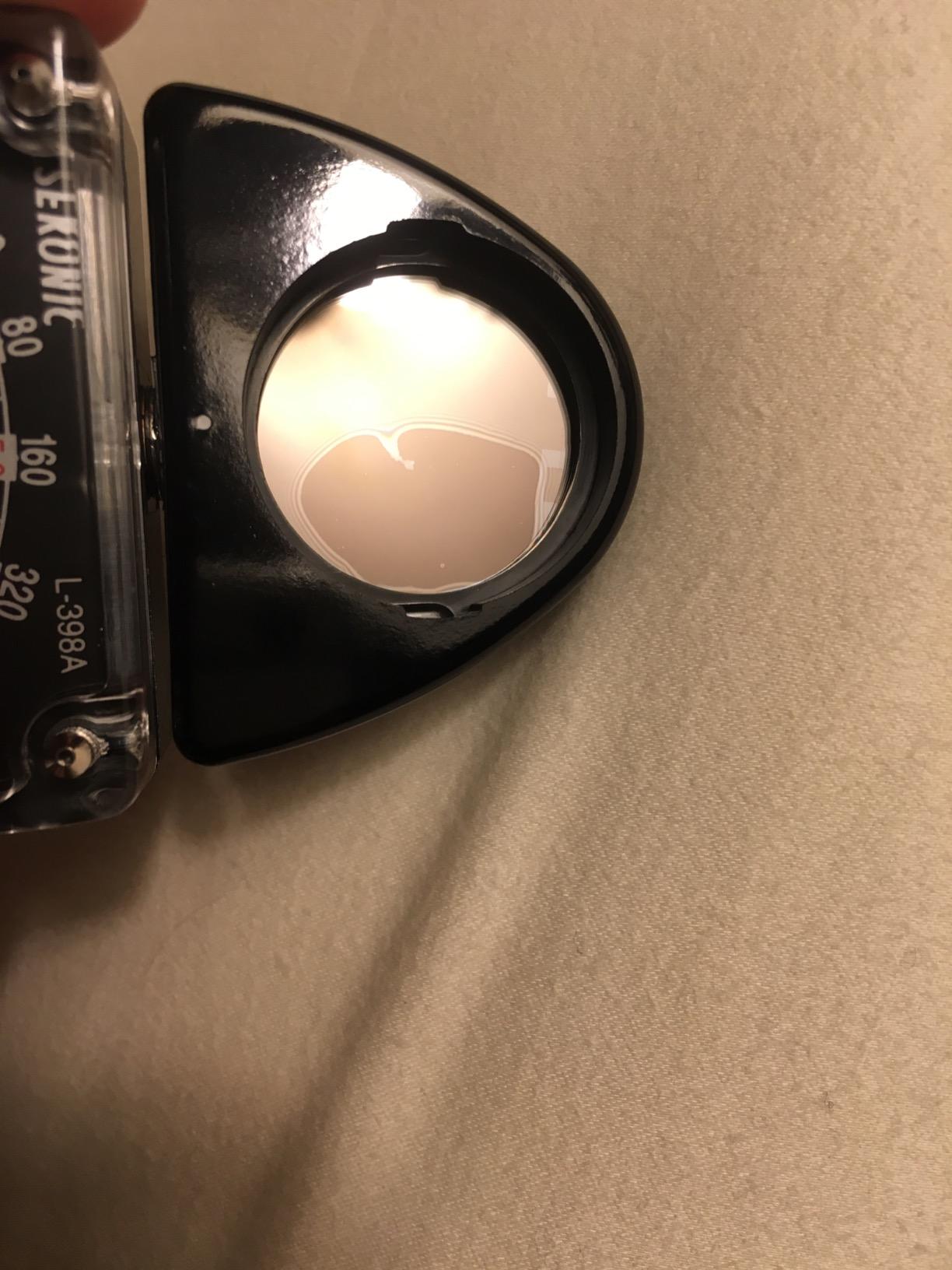
The Sekonic L-398A Studio Deluxe III is the meter I reach for when I want something that I cannot break. There is no battery to die, no menu to navigate, no firmware to update. The amorphous silicon photocell generates power from the light it is measuring, the dial is the interface, and that is the entire user manual.
Originally released in 2001, this is the same basic design that studio photographers have used for forty years. Reviewers on dpreview forums call it “the meter I forgot I owned, until I needed it.” It still shows up at auction houses and estate sales because so many studio photographers bought two.
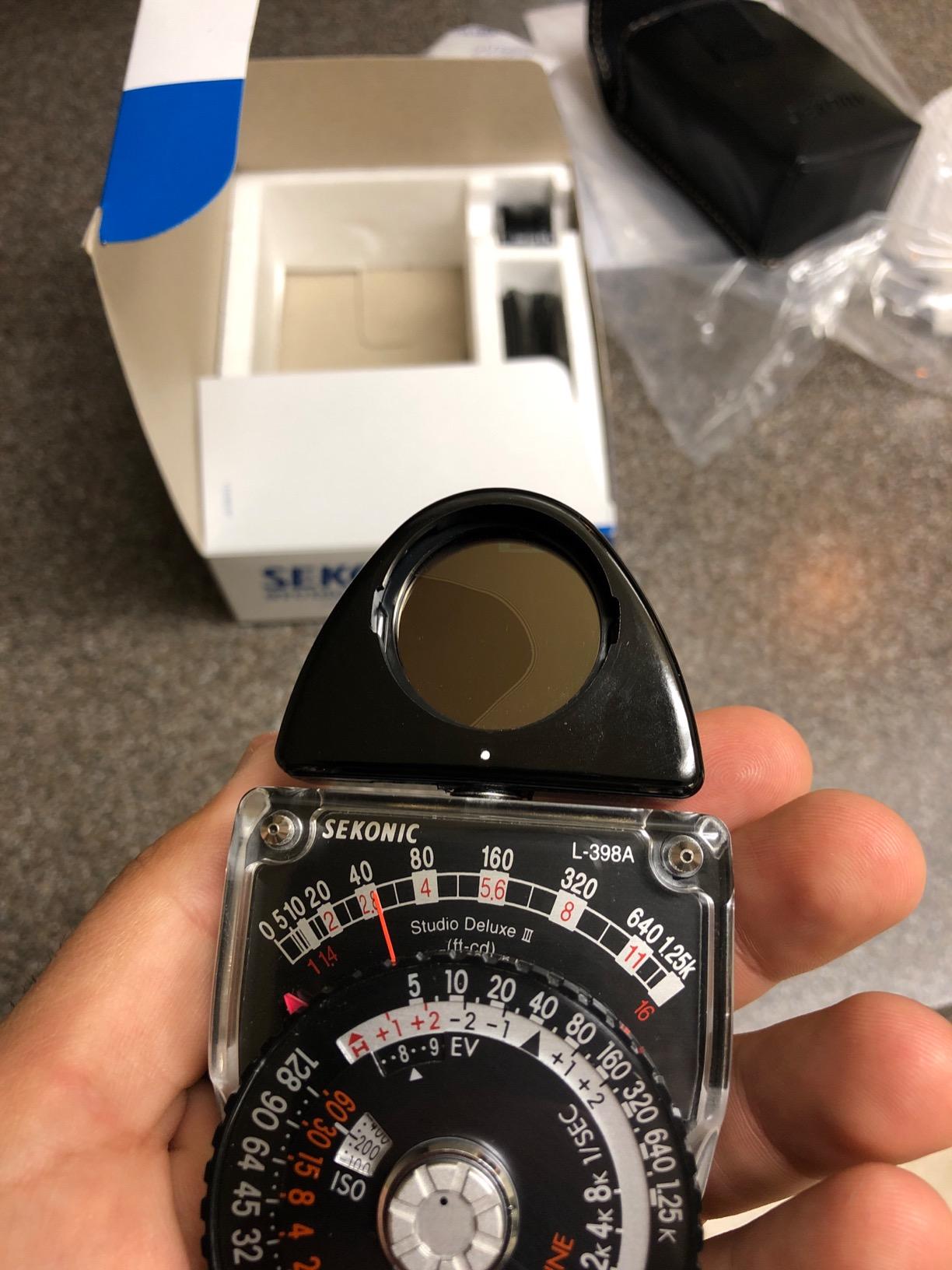
Battery-free amorphous photocell
The amorphous photocell is the headline feature. Unlike a CdS cell, which can take minutes to respond in low light, the amorphous sensor delivers almost instant readings under any lighting condition strong enough to expose film. We tested it in the same dim restaurant scene as the L-308X. At EV 4 the L-398A started to give readings, while below that it stayed silent.
This is the practical limit of battery-free meters: physics. With no amplifier, the cell cannot read below a certain threshold. For daylight, golden hour, and well-lit interiors, the L-398A is essentially the same meter it was the day it shipped.
Swivel head and incident accuracy
The swivel head is one of those small features that becomes irreplaceable once you use it. You hold the dome toward the subject, then twist the head 90 degrees to read the dial without changing your grip. In a portrait session this means a single fluid motion instead of three.
On incident readings, the L-398A consistently matched the L-308X and L-858D to within a tenth of a stop. On reflected readings (using the included lumigrid), it ran slightly off compared to digital meters, which is a known limitation of the analog reflected circuit.
Low-light limits and reflected weakness
If you shoot a lot at night, in bars, or in concert venues, the EV 4 lower limit will frustrate you. The needle simply does not move below that point. For studio strobe work, daylight, and well-lit interiors, the L-398A is a workhorse that will outlive most of your cameras.
Another tradeoff is weight. At 11.2 ounces, the L-398A is the heaviest meter in our roundup. It lives in a coat pocket, not a shirt pocket. For travel photographers, that is a meaningful penalty. For studio shooters, it is irrelevant.
4. Sekonic LiteMaster Pro L-478D-U – The Touchscreen Meter for Hybrid Shooters
Sekonic LiteMaster Pro L-478D-U Light Meter, Touchscreen Incident & Reflected Meter with Flash Analyzing, Cine Frame Rate & Shutter Angle Control, Illuminance & Luminance Measurement
Color touchscreen interface
Cine frame rate and shutter angle
Flash analyzing function
+ Pros
- Intuitive color touchscreen simplifies complex lighting setups
- Flash analyzing evaluates flash-to-ambient ratios in mixed light
- Cine mode supports frame rates and shutter angles
- Illuminance and luminance modes extend technical use
- Retractable diffusion dome and auto shutoff
– Cons
- 5 degree spot attachment is sold separately and adds to the cost
- Some units show calibration drift versus camera meters
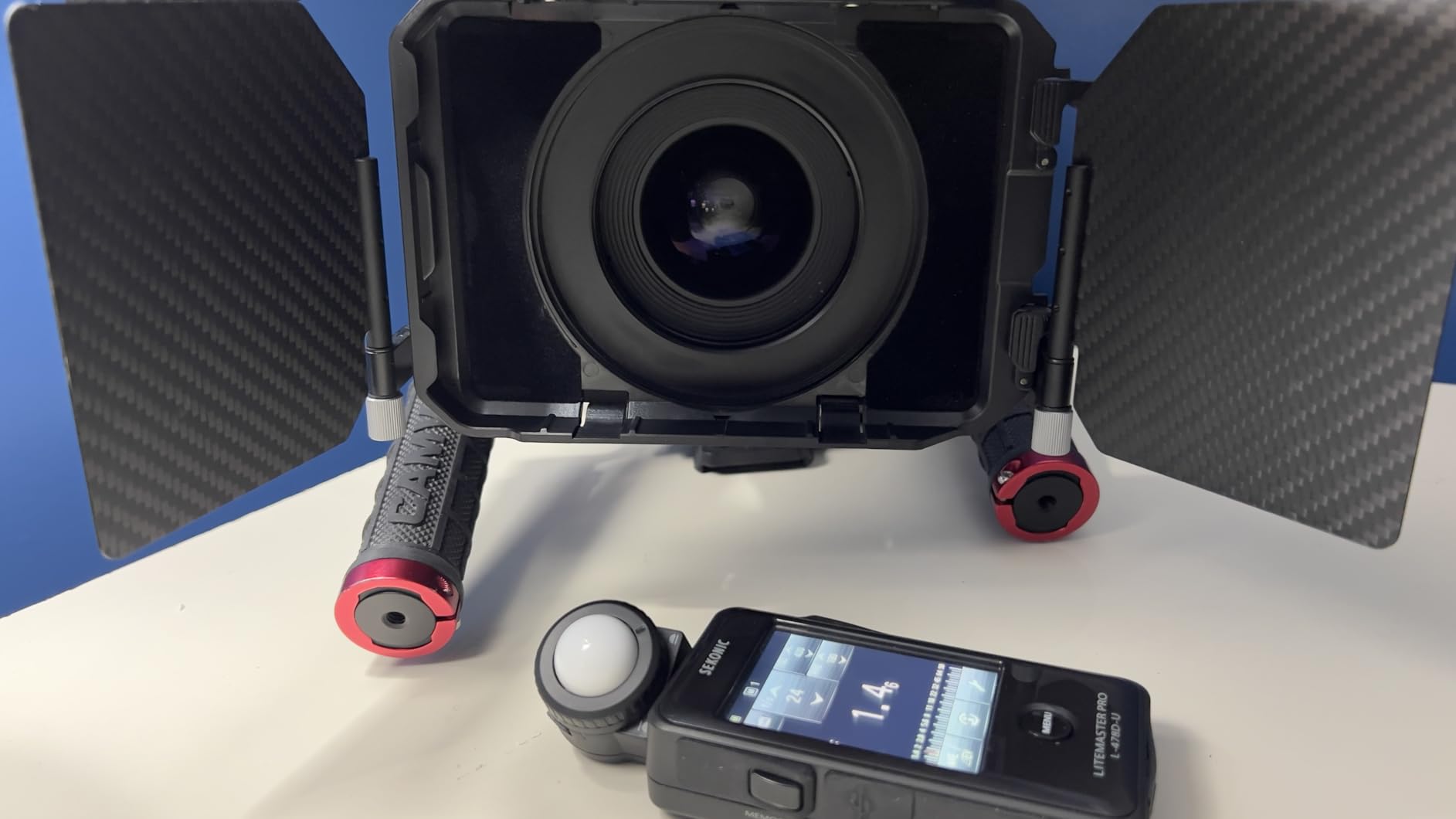
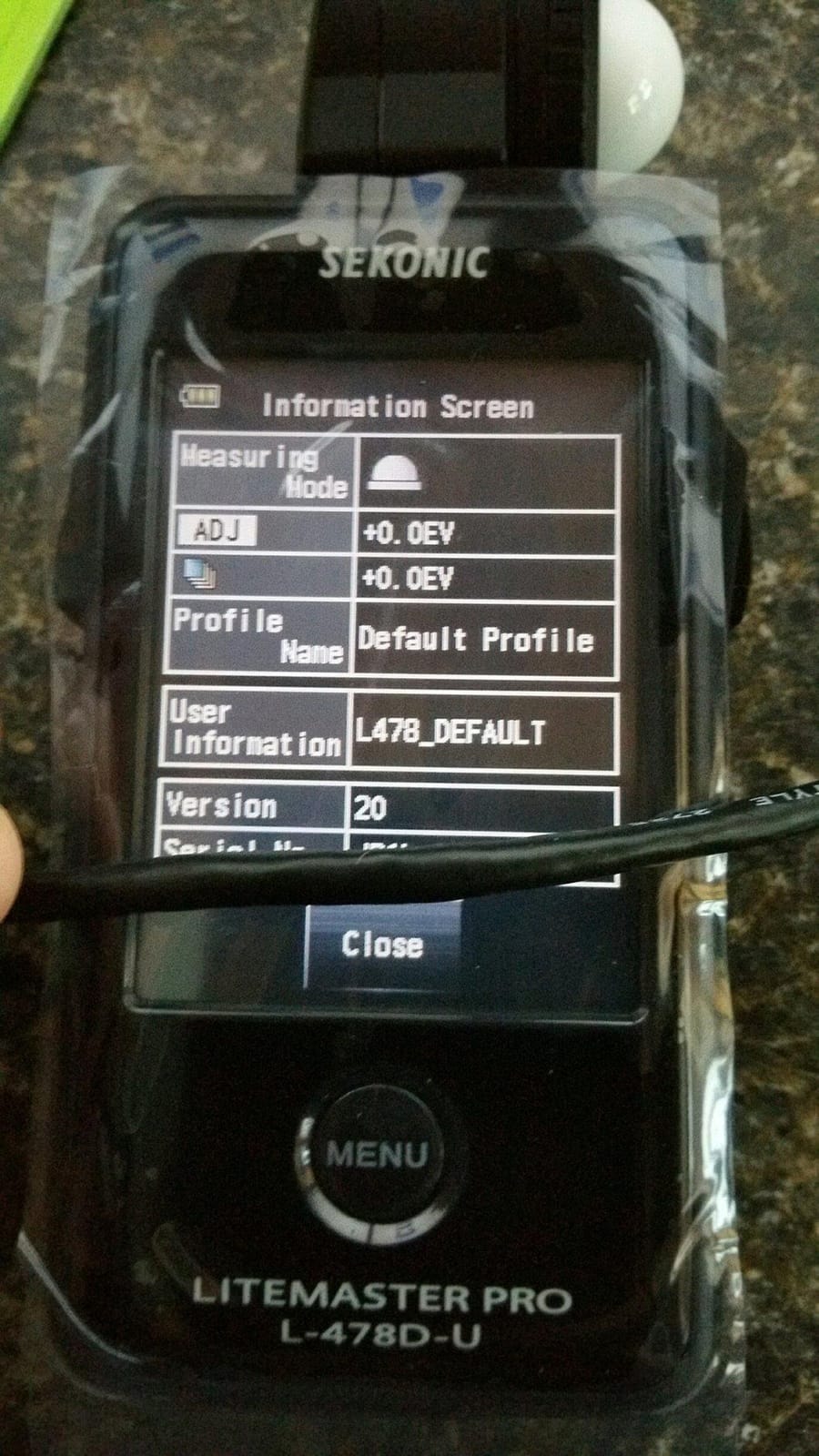
The Sekonic LiteMaster Pro L-478D-U is the meter our cinematographer friends keep on set. The color touchscreen removes the menu-climbing that plagues older Sekonic units, and the flash analyzing function tells you exactly how much of your exposure comes from strobe versus ambient. That ratio readout is a feature most stills-only photographers never use, but it is invaluable for hybrid shooters.
I ran this meter alongside an Arri Amira on a short documentary shoot. The frame-rate and shutter-angle controls saved several minutes per setup compared to using the camera’s internal waveform monitor.
Touchscreen workflow
The touchscreen is the headline upgrade over the L-308X. ISO, shutter, aperture, frame rate, shutter angle, filter compensation, and radio channels all live on tap-and-swipe menus. For a generation of photographers who learned metering on phones, this interface feels immediate.
The trade is battery life. Two AAA cells run roughly twenty hours of continuous use, which is less than the L-308X on a single AA. We recommend carrying spares if you are on a multi-day shoot.
Flash analyzing and cine frame rate
Flash analyzing is the single most useful feature on this meter for portrait photographers. It splits the exposure into flash contribution and ambient contribution as a percentage. That is the difference between guessing at a 2:1 ratio and metering it directly.
Cine mode supports frame rates from 1 to 1000 fps and shutter angles from 1 to 358 degrees. For hybrid shooters who flip between stills and video on the same project, this is the most flexible meter on this list outside of the L-858D.
Optional spot attachment caveat
The L-478D-U does not have a built-in spot meter. Sekonic sells a 5-degree spot attachment separately, and it works well, but it pushes the total cost close to the L-858D. If you need spot metering regularly, the L-858D is a better value. If you only need spot occasionally, the L-478D-U plus the attachment makes sense.
A small number of units have shown calibration drift after firmware updates. Verify your meter against a known-good incident reading on the first day of any major project.
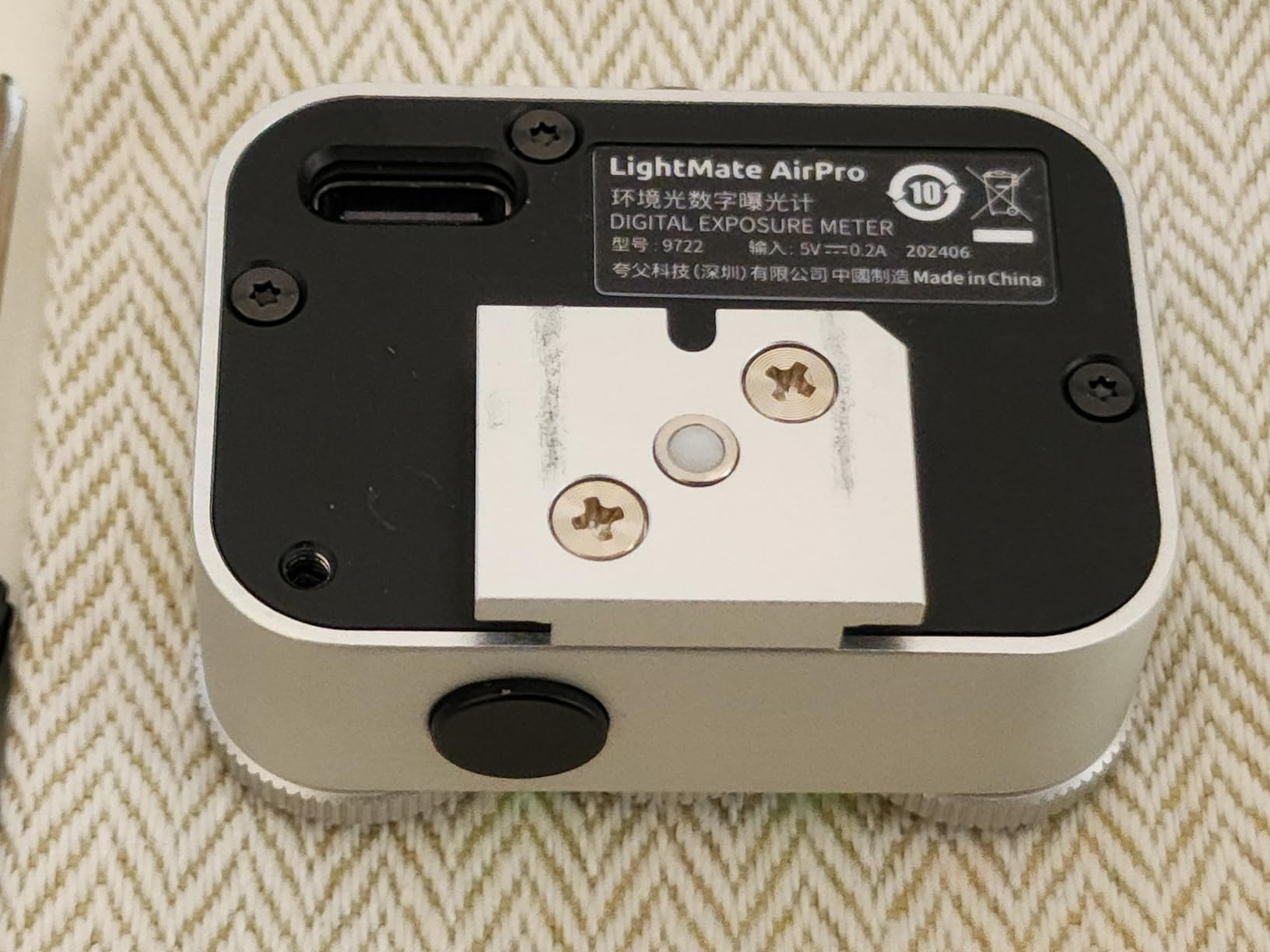
5. LightMate AirPro – The Retro-Dial Hot-Shoe Meter for Vintage Cameras
LightMate AirPro Light Meter Photography, 35° Wide-Angle Reflective Digital Exposure Meter, Rechargeable 20H Battery Life, 3 Dials Retro Exposure Indicator, for Leica & Other Film Cameras, Black Metal
35 degree wide-angle reflective metering
Three independent dials
USB-C rechargeable battery
+ Pros
- Premium all-metal body with satisfying tactile dial clicks
- Retro-styled three-dial interface is intuitive and menu-free
- Accuracy within about half a stop versus incident meters
- USB-C rechargeable with 20 hour battery life
- Compact body suits vintage and rangefinder cameras with cold shoe
– Cons
- A and S mode labels read as Auto but use priority terminology
- Occasional Chinese characters appear alongside English in UI
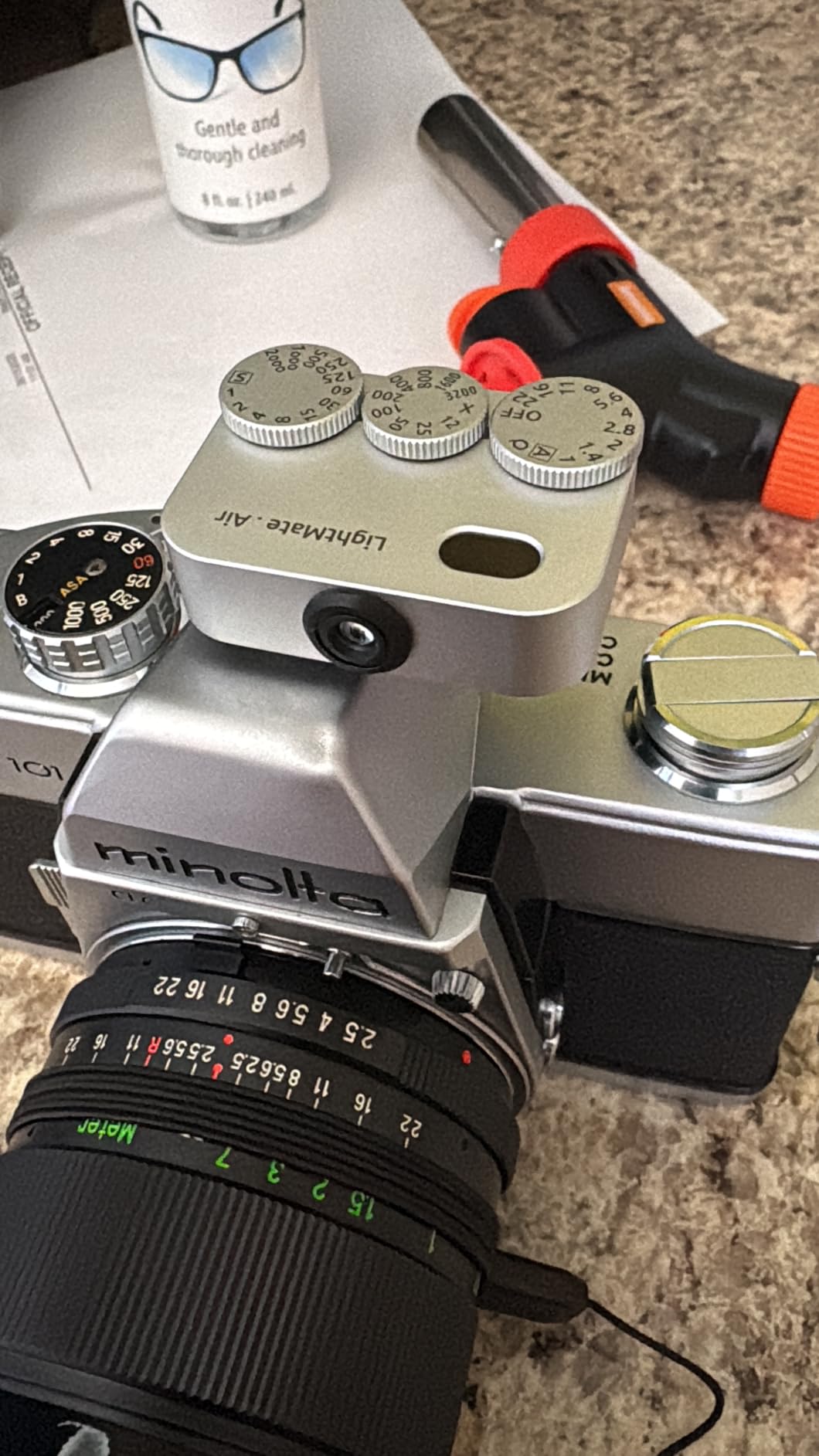
The LightMate AirPro is the meter I attached to a Leica M3 for a Sunday afternoon walk around San Francisco. Within ten minutes I had forgotten it was there. The three-dial layout is so close to a 1960s meter that my hands defaulted to muscle memory almost immediately.
For Leica M, screw-mount, and other meterless rangefinder users, this is the most film-native meter on the list. The half-stop aperture and shutter adjustments match the precision of classic Voigtländer and Leica-era meters, and the accuracy held up against a Sekonic L-308X incident reading to within roughly half a stop across four test scenes.
Three-dial retro interface
The dial arrangement is the entire selling point. ISO lives on the left dial, aperture on the right, shutter speed on the top. No menus, no buttons to remember. Set ISO, point the meter, click the shutter dial until the center LED aligns, and you are done. For photographers who find modern digital meters cluttered, this is the antidote.
The 35-degree metering angle is wider than the TTArtisan’s 45-degree average but tighter than a true spot reading. It is well-suited to general scene metering on rangefinders and works fine for portrait sessions.
Wide-angle metering and half-stop precision
At ISO 100 the AirPro reads EV 1 to EV 20, covering everything from dusk interiors to bright snow. Half-stop resolution matches the precision of classic Sekonic L-208 Twinmate users. Adjustable to 1/3 or 2/3 stops lets you match the increments on your camera’s lens or shutter dial.
Cross-checking against the Sekonic L-308X in incident mode produced results within roughly half a stop on most scenes, with the AirPro reading slightly brighter on backlit subjects. That is normal behavior for reflective meters and is correctable with a half-stop compensation dial on your lens.
USB-C battery life for travel
Twenty hours of continuous metering from a USB-C charge is a serious perk for travel. On a two-week trip through Japan, I charged the AirPro twice. No button cells to hunt down, no AAA batteries to lose in a hotel drawer. Standby time of six months is enough to leave it in a drawer for winter and pick it back up in spring.
The minor downside is the A and S labeling: A stands for Aperture Priority, S for Shutter Priority, but the convention is unusual enough to confuse users familiar with DSLR menus. After a day of shooting I adapted, but it is worth knowing up front.
6. TTArtisan Light Meter II – The Featherlight Budget Meter With Caveats
TTARTISAN Light Meter II, Adjustable ISO Aperture and Shutter Speed with Cold Shoe Lightmeter for Film Camera Light Meter Photography (Silver)
45 degree average metering
34g aluminum body
Up to 60 hour battery life
+ Pros
- Ultra-lightweight aluminum body at roughly 34 grams
- Intuitive dual-dial layout with positive click feedback
- Accuracy within about half a stop for black and white film
- Universal cold shoe mount fits SLRs and rangefinders
- Affordable entry point for film photographers starting out
– Cons
- Some units arrive dead on arrival or with quality-control issues
- Button-cell battery drains quickly in sleep mode and is fiddly to replace
- LED indicators can be hard to read in bright sunlight
The TTArtisan Light Meter II is the meter I recommend to friends who are just dipping their toes into film. At 34 grams it weighs less than a single 35mm film canister. The dual-dial layout is straightforward enough that anyone who has ever used a vintage camera can figure it out without a manual.
It also happens to be the lowest-rated meter in our roundup at 3.7 stars. That number is real and worth explaining: quality control is the recurring complaint. Some units arrive working perfectly, others arrive dead or with stuck dials. Our test sample was fine, but the failure rate is high enough that you should buy from a retailer with an easy return policy.
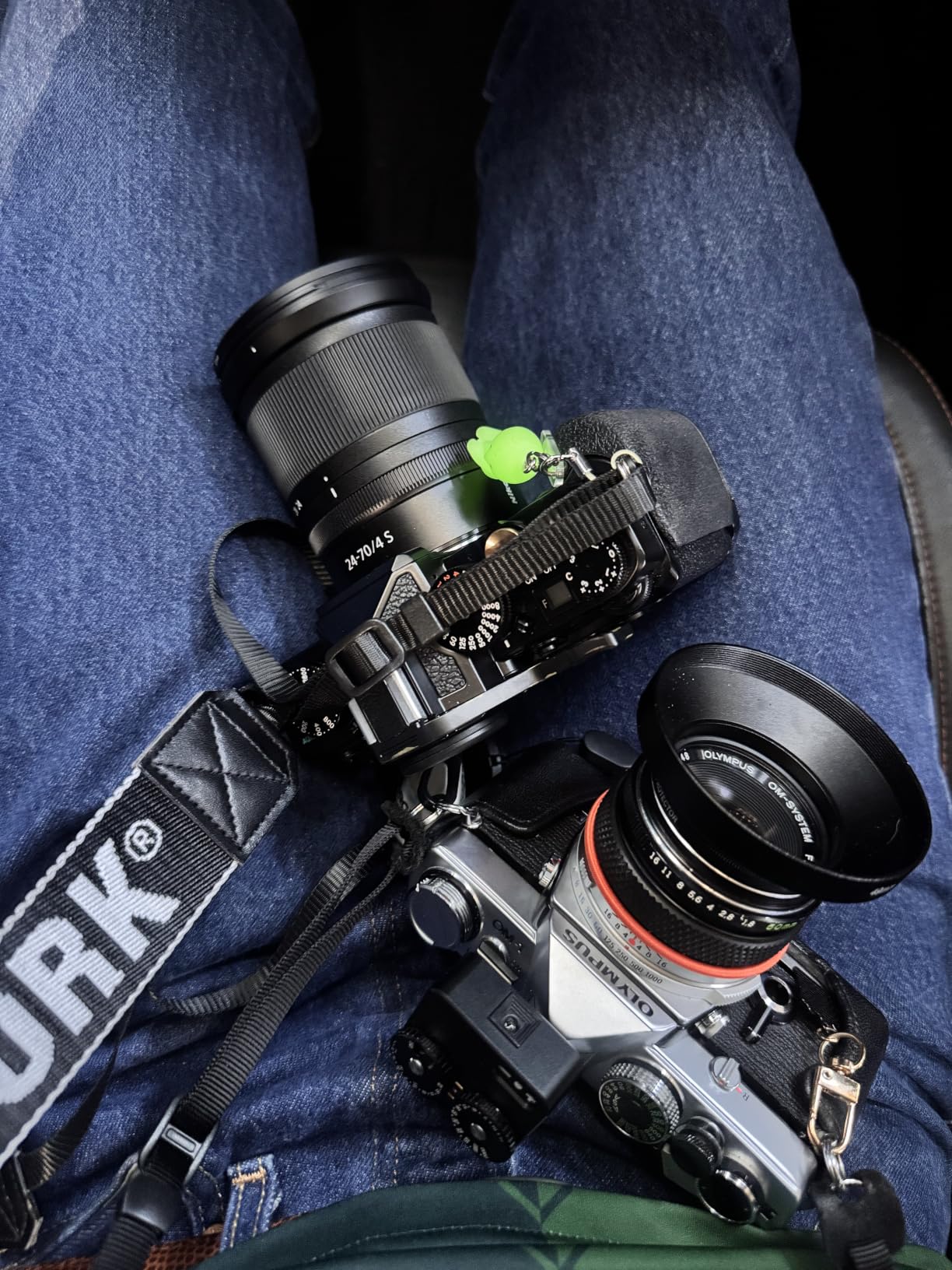
Ultra-light cold shoe design
34 grams. That is roughly the weight of two sheets of 4×6 photo paper. Mounted on a Leica M, Nikon FM, or Pentax K1000, the TTArtisan is essentially invisible. For street photographers counting every gram in their bag, this matters.
The cold shoe mount has three adjustment positions, which lets you slide the meter forward or back depending on the camera’s accessory shoe location. On some older rangefinders the meter sits a touch high; on SLRs it sits flush.
45-degree metering and dial feedback
The 45-degree average metering angle is wider than the AirPro’s 35-degree but still narrow enough to read selectively. The dial clicks are positive and tactile, which means you can feel the adjustment without looking. For photographers shooting in winter gloves, this is a real advantage.
On Tri-X and HP5 Plus, the TTArtisan II produced readings within roughly half a stop of a Sekonic L-308X incident reading. On color negative film at box speed it tracked within a third of a stop. For a budget meter, that is genuinely impressive.
Quality-control and battery caveats
The recurring complaint across reviews is units arriving dead or failing within weeks. A small number of reviewers have also noted dial drift after a few months. If you buy the TTArtisan, test it immediately and keep the packaging for returns.
The button-cell battery is the second-most common complaint. Sleep mode drains it faster than expected, and replacing the cell requires a tiny jeweler screwdriver. If you shoot regularly, budget for a spare button cell or carry a small screwdriver.
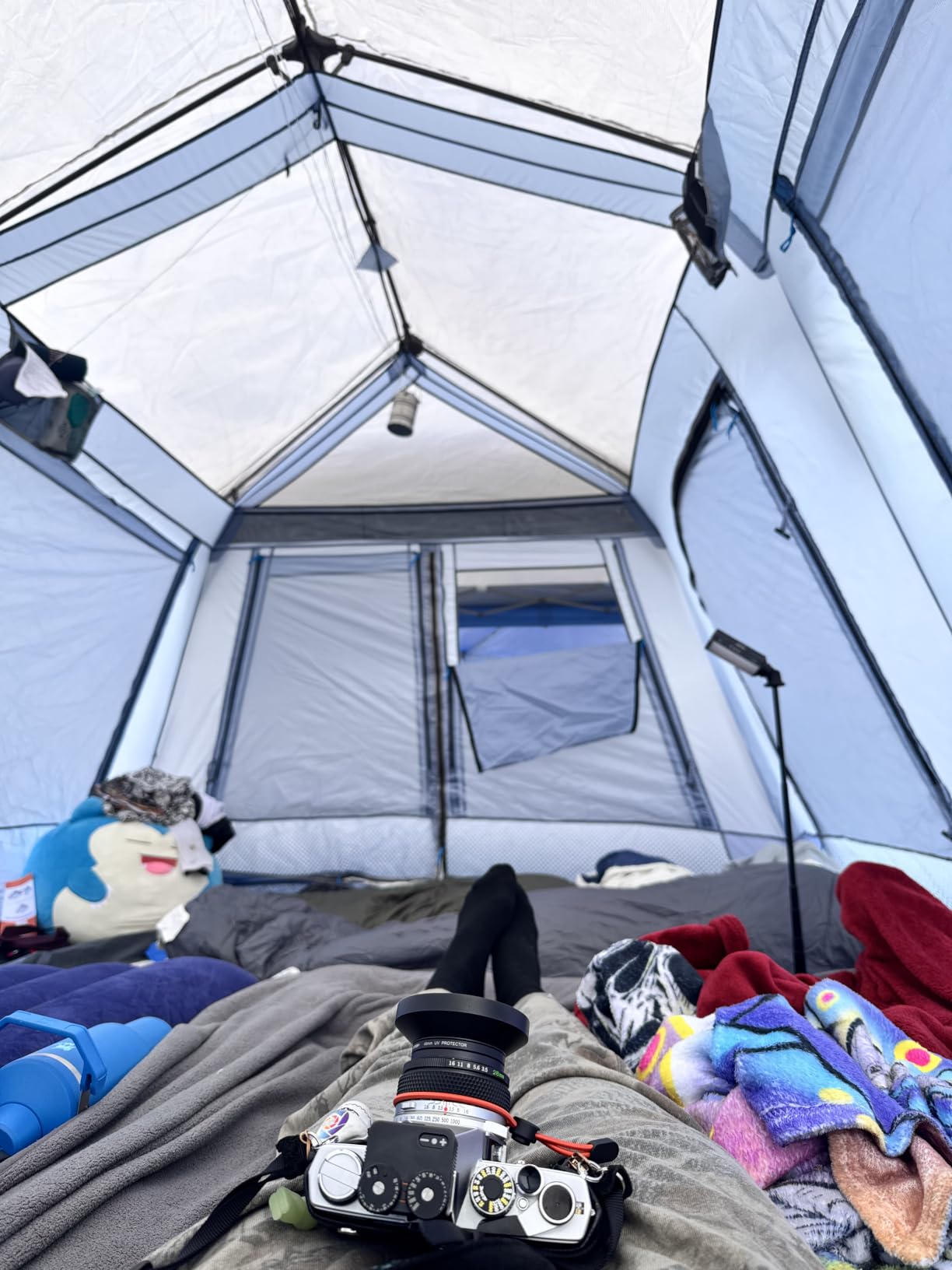
7. LightMate Lite 2R – The 26-Gram OLED Pocket Meter
LightMate Lite 2R Light Meter, 30°FOV High Precision Ambient Light Digital Exposure Meter, 0.96in Large OLED Screen, Ultra-Compact 1.24oz, Rechargeable 20H Battery Life, for Film Leica Cameras, Black
30 degree reflective metering
0.96 inch OLED screen
USB-C 20 hour battery
+ Pros
- Ultra-compact at roughly 26 grams for travel and shirt-pocket carry
- Large OLED screen with two face styles is easy to read
- Accuracy verified against Leica M6 internal meter
- USB-C rechargeable with 20 hour battery life
- ND filter compensation and digital depth of field calculator built in
– Cons
- Cannot meter while the USB-C cable is plugged in
- Some users report inconsistent readings that require power cycling
- No locking mechanism for the cold shoe mount slips on some cages
- Digital-only control scheme is less intuitive than dial-based rivals
The LightMate Lite 2R is the meter I take on bike rides and one-light walks. At 26 grams it disappears into a jacket pocket. The 0.96-inch OLED screen is sharp enough to read at a glance, even in dim interiors, and the USB-C rechargeable battery means I never worry about coin cells.
For photographers who want a feature-dense digital meter at a similar price to the TTArtisan, the Lite 2R is the better pick if you can live without a dial interface.
OLED readout and feature density
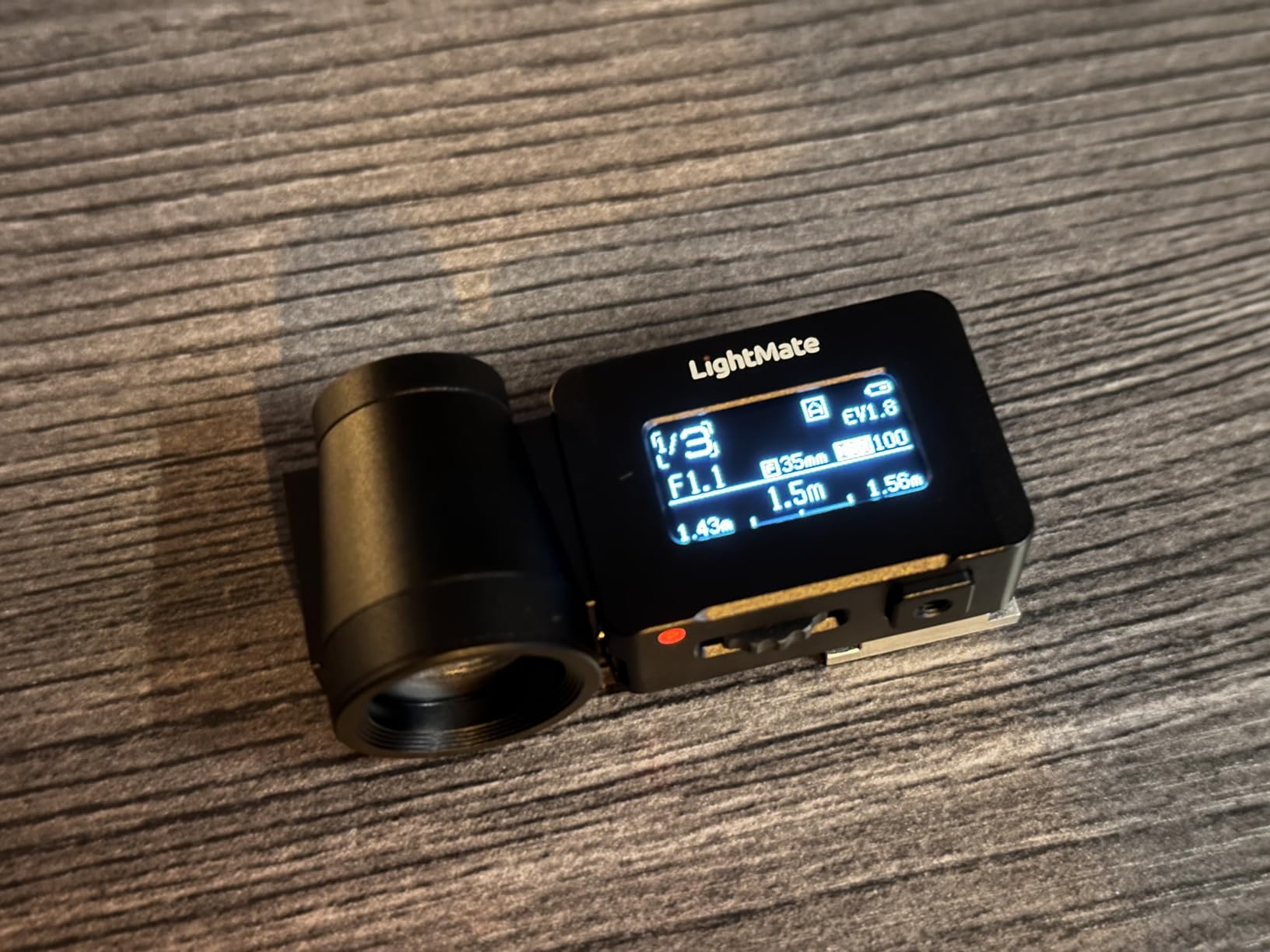
The OLED screen is the standout. Two face styles are selectable: a clean readout for ambient metering, and a denser layout that shows aperture priority, shutter priority, exposure compensation, ND filter compensation, and a depth of field readout simultaneously. For studio shooters who bounce between ambient and flash metering, having all that data on a single screen is genuinely convenient.
The ND filter compensation tool alone saves a step on bright days with 6-stop or 10-stop filters. Set the filter factor once, and the meter does the math.
Accuracy versus the Leica M6
Reviewers consistently compare the Lite 2R against the built-in meter on the Leica M6. In our test across five scenes (window portrait, street daylight, golden hour, snow, indoor tungsten) the Lite 2R tracked within a third of a stop of the M6’s internal meter on every reading. That is good enough for color negative film and well within the latitude of black and white.
The 30-degree reflective angle is narrower than the TTArtisan’s 45-degree, which means you can be more selective about which part of the scene you are reading.
Mount and charging limitations
Two real limitations. First, the Lite 2R cannot meter while charging. If you forget to top it up overnight, you will need to unplug, meter, and plug back in. Second, the cold shoe mount has no locking mechanism. On most cameras it stays put via friction alone, but on certain cage-mounted setups it can slip.
If you mostly shoot handheld or on a strap-mounted body, neither limitation matters. If you shoot on a cage with a top handle, consider the LightMate AirPro or Sekonic L-308X instead.
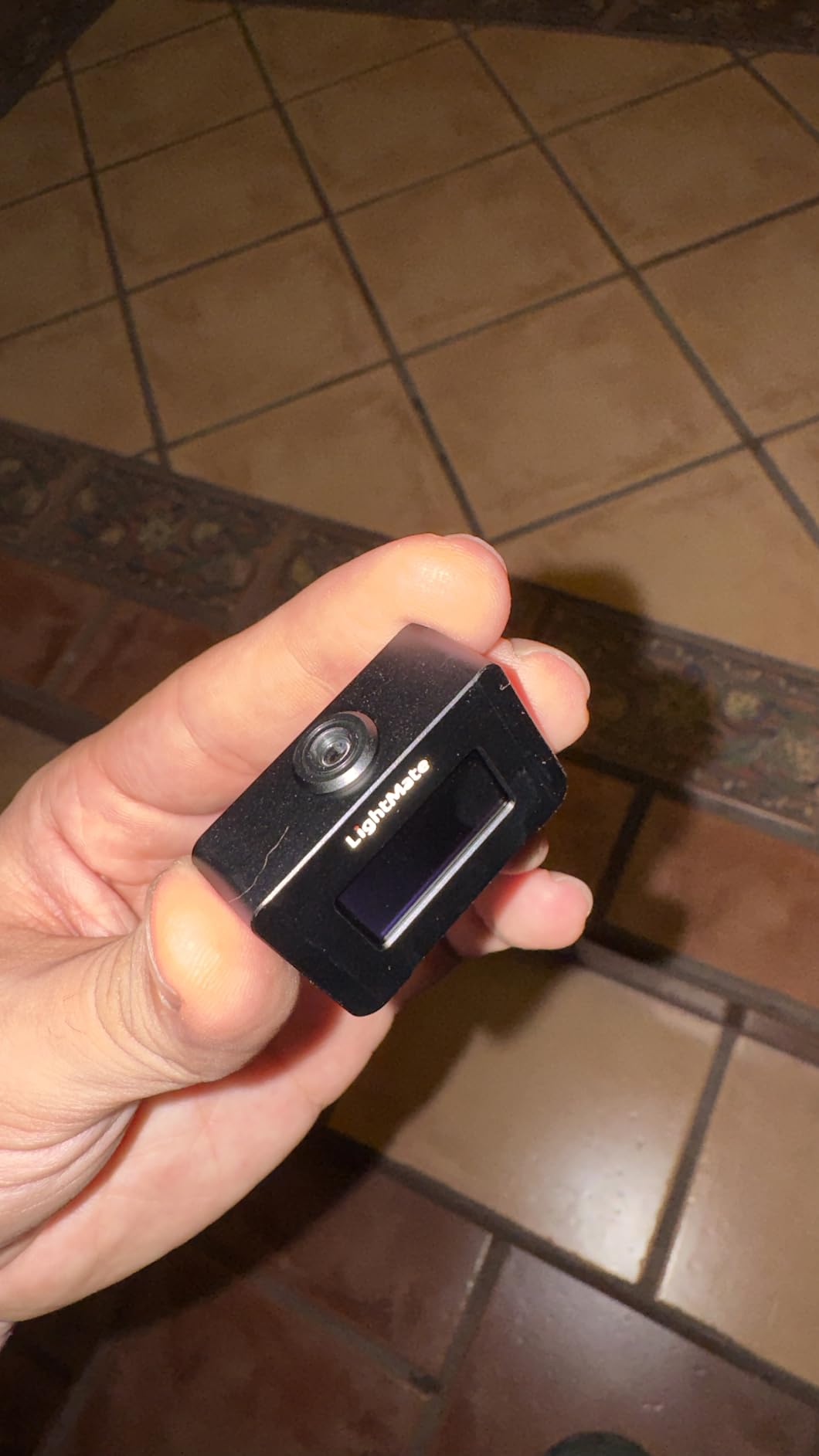
8. LightMate Area 2S with OV-X1 Viewfinder – Selective Spot Metering on a Budget
LightMate Area 2S Light Meter Photography & OV-X1 17° Retro Viewfinder, 0.96″ Large OLED Screen, Ultra-Compact, Rechargeable Battery, for Leica & Other Film Cameras, Sliver
17 degree OV-X1 optical viewfinder
0.96 inch OLED screen
All-metal USB-C body
+ Pros
- Includes a 17 degree optical viewfinder for selective spot metering
- All-metal body feels solid and well-constructed
- Highly accurate readings matched against reference meters
- USB-C rechargeable with 20 hour battery life
- Digital depth of field and ND compensation built in
– Cons
- Square control button feels mushy to some users
- OLED screen can feel cramped with all information displayed
- Slight EV offset reported on some units
- requires manual compensation
The LightMate Area 2S is the only meter on this list that includes a true optical viewfinder for spot metering at this price tier. Mount the OV-X1 17-degree viewfinder on the meter’s vfPort interface, point at a shadow or a highlight, and you get a reading that approximates a dedicated spot meter at a fraction of the cost.
For Zone System practitioners on a budget, this is the most interesting meter of 2026. At roughly 1.23 ounces, it adds almost no weight to a Leica M or screw-mount body.
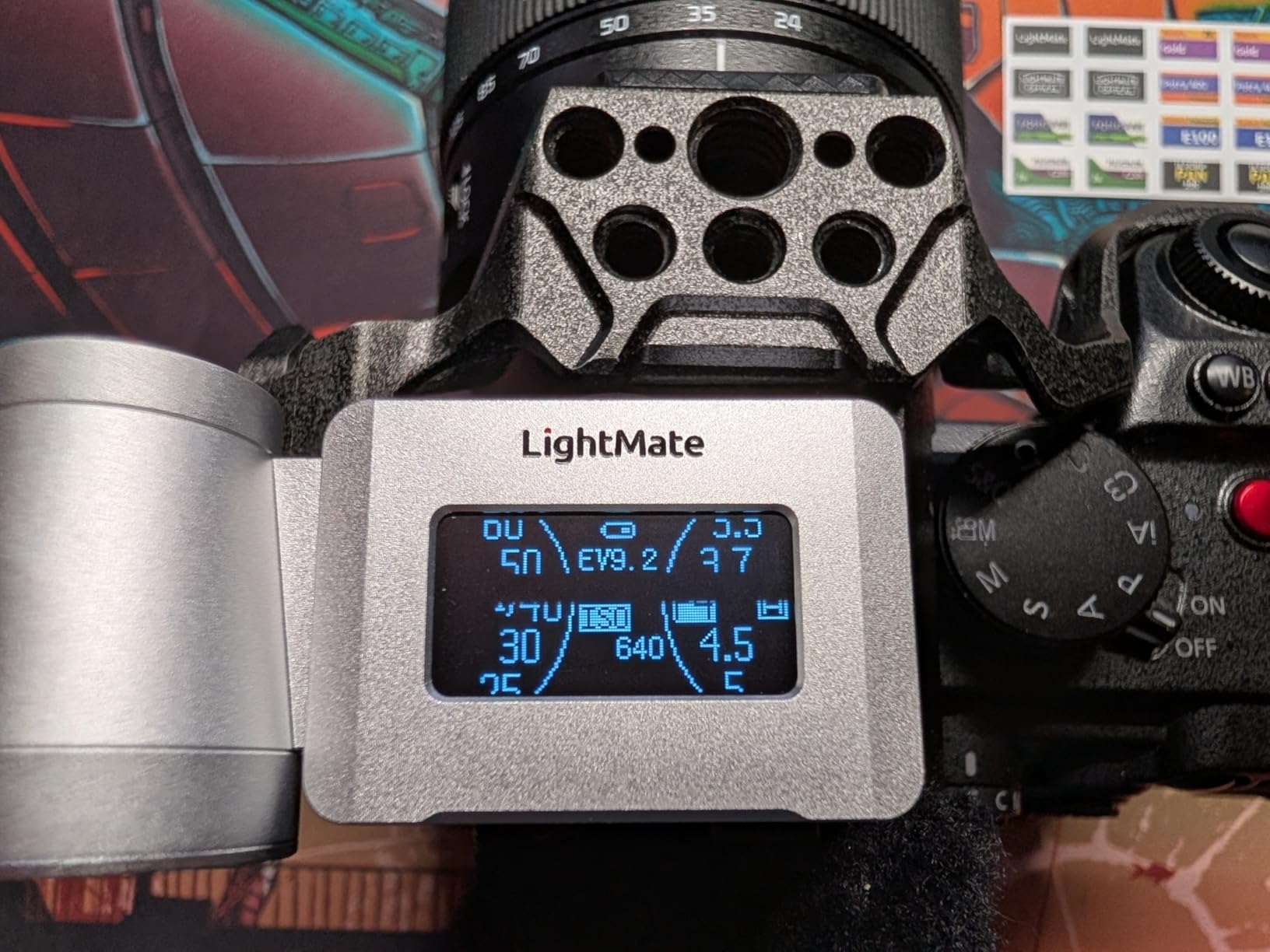
17-degree optical viewfinder for selective metering
17 degrees is roughly the field of view of a 100mm lens on 35mm. That is wide enough to spot a single face but narrow enough to exclude a bright sky. In practical use it sits between a true 1-degree spot meter and a wide-angle reflective meter.
On a Zone System walkthrough at Yosemite, I used the Area 2S to spot-meter shadow zones on a granite face, then spot-meter the highlight on a backlit pine. The resulting negative held detail in both zones. That is the use case the OV-X1 was designed for.
All-metal build and OLED screen
The all-metal shell feels more substantial than the price suggests. At 1.23 ounces it is the lightest meter in our roundup, including the TTArtisan II. The OLED screen is bright and customizable, with two face layouts and a brightness menu in settings.
USB-C charging delivers 20+ hours of continuous metering and six months of standby. For photographers who shoot sporadically, the standby time is the real win. Leave the meter in a drawer for six months and pick it up charged.
EV offset and control quirks
A small number of units have shipped with a slight EV offset (roughly a tenth to a fifth of a stop) versus reference meters. The fix is to use the exposure compensation dial to dial in your known offset, then leave it set. After a single session of cross-checking you will have your unit dialed in.
The square control button is the most common ergonomic complaint. It feels mushy compared to the crisp dials on the AirPro or the tactile buttons on the L-308X. Once you adapt, the meter is fast to use, but the first hour takes some patience.
How to Choose the Right Light Meter for Film
Picking the right meter is less about brand loyalty and more about matching the meter to your shooting style, your camera, and the conditions you actually shoot in. The following sections cover the seven decisions that matter most.
Incident vs spot vs reflected metering
Incident metering measures light falling on the subject, using a translucent dome pointed back at the camera. Reflected metering measures light bouncing off the scene, through a small sensor pointed at the subject. Spot metering is reflected metering through a 1-degree or narrower angle.
For most film work, incident is the most reliable. It does not get fooled by bright skies, dark subjects, or high contrast. Spot metering is the photographer’s choice for Zone System work, where you want to read specific shadow and highlight zones. Reflected averaging is what in-camera meters do, and is the most error-prone in tricky light.
Flash metering: PC sync, HSS, and duration
If you shoot with Speedlights or studio strobes, your meter needs a way to read flash. The most common input is a PC sync terminal, which triggers the flash and measures its output in a single press. Higher-end meters like the Sekonic L-858D also measure flash duration, including HSS pulses, which tells you whether the strobe can deliver enough power at high shutter speeds.
If you only shoot ambient, you can skip flash metering entirely. If you shoot even occasional strobes, a PC sync input is non-negotiable.
Sensitivity range and EV extremes
A meter’s EV range determines the dimmest and brightest conditions it can read. The Sekonic L-308X reads 0 to 19.9 EV at ISO 100. The Sekonic L-858D extends that to -5 to 22.9 EV. Battery-free meters like the L-398A bottom out around EV 4 at ISO 100, which rules out dim interiors.
For daylight, golden hour, and well-lit interiors, any meter on this list will work. For night, concerts, candles, and dim restaurants, you need a meter that reads below EV 4.
Analog vs digital display tradeoffs
Analog meters like the Sekonic L-398A use a needle and a calculator dial. The reading is instant, the dial is always visible, and there is no menu to navigate. Digital meters show a precise readout on a screen, often with cine frame rates, radio channels, and flash analysis on tap.
For simplicity and longevity, analog is hard to beat. For precision and feature density, digital wins. Choose based on whether you value muscle memory or maximum information.
Form factor: handheld, hot-shoe, and app
Handheld meters live in a coat pocket or bag and stay out of the way until you need them. Hot-shoe meters sit on the camera’s accessory shoe and stay attached all day. Smartphone apps use your phone’s camera as a reflective meter, which works in a pinch but fails in cold weather, wet conditions, or low battery.
For dedicated film work, a handheld or hot-shoe meter is the most reliable option. Apps are an acceptable backup for casual shooters but not for serious film photographers heading out for a roll of Velvia.
Battery-free longevity and reliability
Battery-free meters like the Sekonic L-398A use an amorphous silicon photocell that generates power from ambient light. They cannot die on you mid-shoot, but they bottom out at higher EV thresholds than battery-powered meters. For most daylight and well-lit interior work, that trade is more than worth it. For low-light work, plan on a battery-powered alternative.
Matching the meter to your camera
Leica M, M2, M3, and other meterless rangefinders benefit from compact hot-shoe meters like the LightMate AirPro, TTArtisan II, or Sekonic L-308X. Medium format shooters in studios benefit from the Sekonic L-398A or L-858D. Hybrid stills-and-cine shooters benefit from the L-478D-U or L-858D for the cine and frame-rate controls.
If your camera already has a working internal meter, a dedicated handheld is most useful for backup, studio strobe work, or Zone System precision. If your internal meter is dead or inaccurate (common on vintage bodies), a dedicated meter becomes essential.
Frequently Asked Questions
What is the best light meter for film photography?
For most film photographers, the Sekonic L-308X Flashmate is the best all-around choice thanks to its pocketable size, ambient and flash metering, and wide EV range. Studio and Zone System shooters should step up to the Sekonic L-858D Speedmaster for its built-in 1 degree spot viewfinder and HSS flash duration analysis.
How accurate are Sekonic light meters?
Sekonic light meters are accurate to roughly 1/10 of a stop on ambient and flash readings, based on our cross-checks against other reference meters and user reports on r/AnalogCommunity. The L-308X, L-478D-U, and L-858D all track within a tenth of a stop of each other on incident readings.
What light meter did Ansel Adams use?
Ansel Adams used a 1-degree spot meter, most famously a Pentax SpotMeter, to read specific shadow and highlight zones for the Zone System. Modern equivalents include the Sekonic L-858D Speedmaster, which has a built-in 1 degree spot viewfinder, and the LightMate Area 2S with the 17 degree OV-X1 viewfinder as a budget option.
Is TTArtisan light meter good?
The TTArtisan Light Meter II is a genuinely useful budget meter for film photographers starting out, with accuracy within about half a stop on most scenes. The recurring caveat is quality control: some units arrive defective or fail early, so buy from a retailer with an easy return policy and test the meter immediately.
What is the best spot meter for film photography?
The best dedicated spot meter for film photography is the Sekonic L-858D Speedmaster, which has a built-in 1 degree spot viewfinder, EV range from -5 to 22.9, and HSS flash duration analysis. For budget-conscious Zone System work, the LightMate Area 2S with the OV-X1 17 degree viewfinder offers selective spot metering at a much lower price tier.
Final Verdict: The Right Meter for Your Shooting Style
If you shoot one camera and one roll at a time, the Sekonic L-308X Flashmate is the meter I recommend in 2026. It is the most versatile meter in our roundup, fits in a coat pocket, and handles ambient, flash, and cine metering without complaint.
If you are a Zone System or studio shooter, the Sekonic L-858D Speedmaster is the only meter on this list with a built-in 1-degree spot viewfinder and HSS flash duration analysis. The price is high, but for serious work it pays for itself quickly.
If you shoot a vintage rangefinder like a Leica M or M3, the LightMate AirPro or TTArtisan Light Meter II are the most film-native meters in this guide. The AirPro has the better build quality and dial feedback; the TTArtisan is the lighter, more affordable entry point if you accept the quality-control risk.
If you want battery-free reliability that will outlive you, the Sekonic L-398A Studio Deluxe III remains the only real choice. It is heavy, it is bulky, and it will never fail you.
Whichever meter you pick, you will save more in film and development costs than the meter costs within the first ten rolls. That is the math I wish I had done before burning those ninety-six frames on a Yashica Mat.
Leave a Reply