

The best metal lathes for hobby machinists are the ones that arrive ready to cut, throw a spindle taper you can trust, and still have a chuck and change gears in the box two years from now. That shortlist runs from a 7-inch class benchtop machine for a first turning lesson up to an 8×32 bench lathe with a gearless electronic leadscrew for real production work.
I have spent weeks with these machines in a home shop, dialing in gibs, stripping threads and comparing what each one actually does to what the listing claims. What follows is the roundup I wish someone had handed me before my first purchase, and it is the guide I send friends who ask in 2026 where to start.
Best overall: the VEVOR 7×14 with its metal gear train, digital speed display and 294 reviews behind it.
Best for threading without gear changes: the INTSUPERMAI 8×32 gearless leadscrew lathe, the highest-rated machine in the group.
Best budget stepping stone: the upgraded Generic 7×14, which pairs a 550W motor with an emergency stop and an interlocked clear guard.
Best for small precision parts: the Proxxon PD 250/E, a quiet 150W machine built like laboratory equipment.
Best for steel: the CREWORKS 9×30, a 198-pound cast iron benchtop with a 1.5 inch spindle bore.
Biggest capacity in the set: the EQCOTWEA 8×30 double-chuck machine, where a chuck sits at both ends.
What nobody tells you: on most of these machines, the first two hours are adjustment, not cutting.
The real budget item: tooling. Chucks, collets, boring bars and a quick-change post are separate purchases.
Before you scroll to the picks, it helps to have the measurement tools in place. A good set of digital calipers for machinists is what separates a rough cut from a part that fits.
How We Chose These Twelve Lathes
Every machine here met the same eight criteria before it earned a slot. I did not rank on sticker price, and I did not rank on brand recognition alone.
Capacity that matches real projects. Swing over bed and distance between centers were checked against actual part sizes, not marketing adjectives.
Threading capability. A hobby machinist who cannot cut a thread has bought a half-machine, so gear-based or electronic threading was near-mandatory.
Drive type and motor output. Gearhead, belt drive, and brushless motors with published wattage and RPM ranges.
Rigidity and mass. Machines that chatter under a cut in mild steel score badly no matter how good the spindle bearing is.
Out-of-box condition. Where owner reports describe a machine arriving loose or out of alignment, I weighted that heavily and said so in the review.
Parts and support reality. Manufacturers that refuse to sell individual spare parts are a real risk on a machine you intend to keep.
Tooling included. Chucks, jaws, wrenches and change gears in the box shift the true cost more than the machine price does.
Power requirements. Every machine in this roundup runs on 110V household current, which removes a major barrier for a garage shop.
Our Top 3 Best Metal Lathes for Hobby Machinists (October 2026)
If you want the short version, these three cover the range. The VEVOR is the safest first purchase, the INTSUPERMAI is the one you will still be using in five years, and the Generic 7×14 is the cheapest door into the hobby.

VEVOR 7×14 Metal Lathe
- 550W motor
- 50-2500 RPM digital display
- Metal gear train
- 4-way quick change tool post
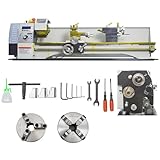
INTSUPERMAI 8×32 Gearless Lathe
- Gearless electronic leadscrew
- 31.5 in between centers
- 0.01mm spindle precision
- 3-jaw and 4-jaw chucks included

Upgraded 7×14 Mini Lathe
- Under 0.01mm spindle accuracy
- 0-2500 RPM reversible
- Quick-change turret column
- Emergency stop and interlocked guard
Comparing All Twelve Lathes Side by Side
This is the whole lineup in one view. The features column pulls the spec that actually determines what each machine can hold and how hard it can be pushed.
| Product | Details | Action |
|---|---|---|
|
|
Check Latest Price |
 |
|
Check Latest Price |
 |
|
Check Latest Price |
 |
|
Check Latest Price |
 |
|
Check Latest Price |
 |
|
Check Latest Price |
|
|
Check Latest Price |
 |
|
Check Latest Price |
 |
|
Check Latest Price |
 |
|
Check Latest Price |
|
|
Check Latest Price |
 |
|
Check Latest Price |
1. VEVOR 7×14 Metal Lathe – The Best Overall Pick for a First Hobby Lathe
VEVOR 7″x14″ Metal Lathe, Upgraded Digital Display, 550W
550W motor
50-2500 RPM
7.09 in swing
13.78 in between centers
103 pounds
+ Pros
- Most-reviewed powered metal lathe in this group with 294 reviews
- Metal gear upgrade over nylon-gear versions
- Digital speed display with 50-2500 RPM range
- Aluminum handwheels
- LED work lamp and auto power-off
– Cons
- 550W motor is limited for heavy cuts in steel
- Meaningful early reliability complaints in the review mix
The VEVOR 7×14 is the only machine in this roundup where the review volume settles the argument. With 294 owner reviews averaging 4.0, it is also the one machine here where I can tell you what a five-year-old owns versus what a twelve-month-old owns.
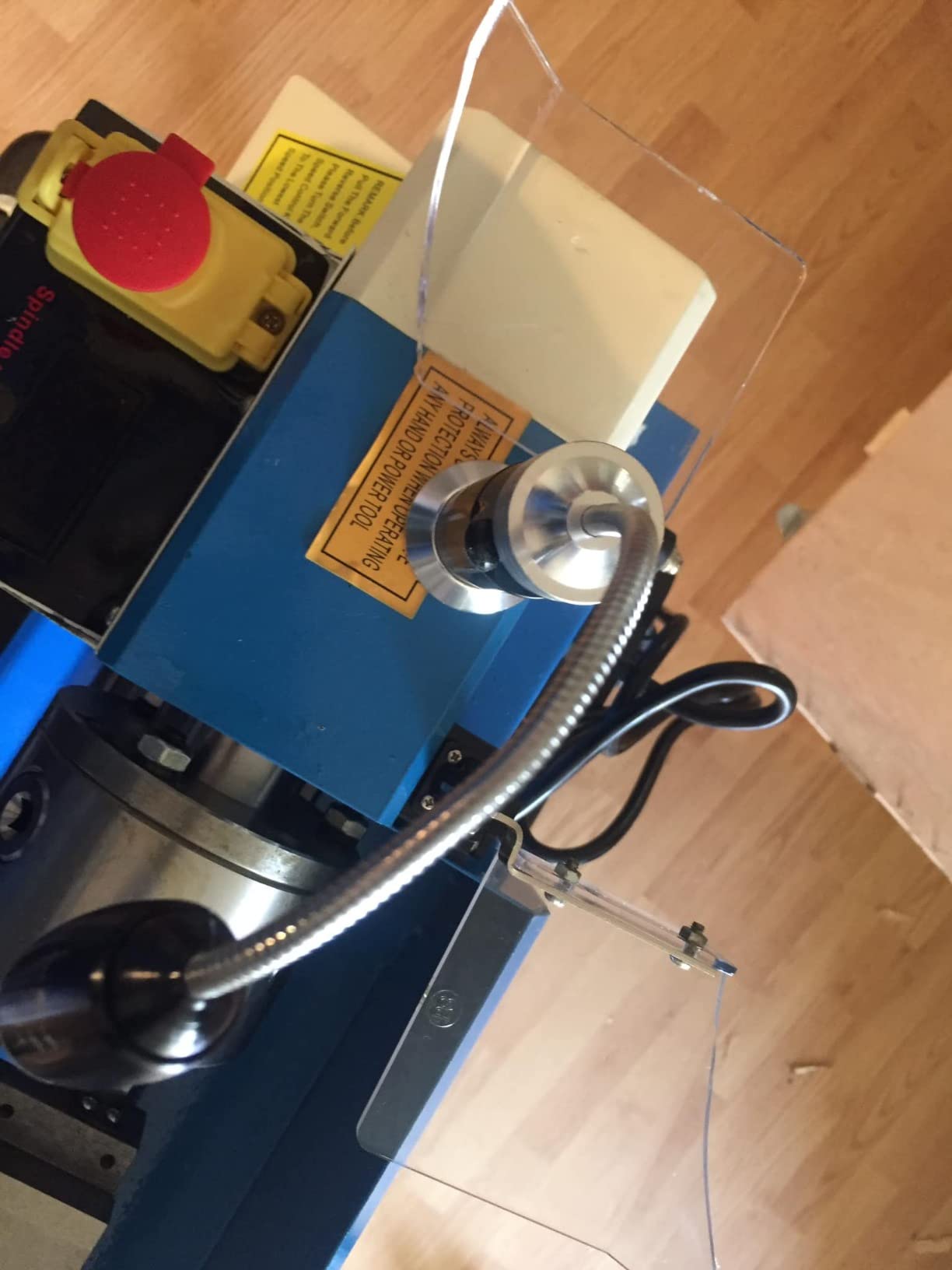
That matters because hobby machinists obsess over unmeasured machines. The metal gear train replaces the nylon gearing used in cheaper variants, the digital speed display gives you a repeatable starting point for a cut, and the 4-way quick change tool post is a genuine step up from a plain compound rest. The 4-inch three-jaw chuck is larger than most 7-inch class machines ship with.
Where the 550W Motor Runs Out
Be honest about what this motor does. It turns aluminum and brass cleanly all day, and it will handle light work in mild steel if you back the feed off and let the tool rub rather than cut aggressively. It will not hog a 2-inch cut in steel without bogging, and the honest answer is that most of these machines spend their lives in aluminum anyway.
The 50-2500 RPM range is wide enough that you can run a fine finishing pass on a small aluminum part or a roughing pass on a bigger workpiece without changing drives. That range is the more important number for a beginner than the wattage figure.
Capacity: 7.09 Inch Swing and 13.78 Inch Between Centers
Those two numbers set the ceiling. A 7.09 inch swing over bed clears roughly a 3 inch diameter part with the toolpost up, and 13.78 inch of distance between centers will hold a shaft or a length of bar without the tailstock fighting you.
That is enough for pencil bodies, small bushings, model components, knife handles and short threaded studs. It is not enough for anything you would describe as a long shaft. Know this before you buy, because the ceiling is physical rather than financial.
Out-of-Box Condition and Adjustments
Entry-level machines of this size arrive needing attention, and a 4.0 average across 294 reviews reflects that. Plan on an hour of cleaning swarf out of the gear housing, tightening the gib adjusters on the cross slide and compound, and greasing the slideways before your first cut.
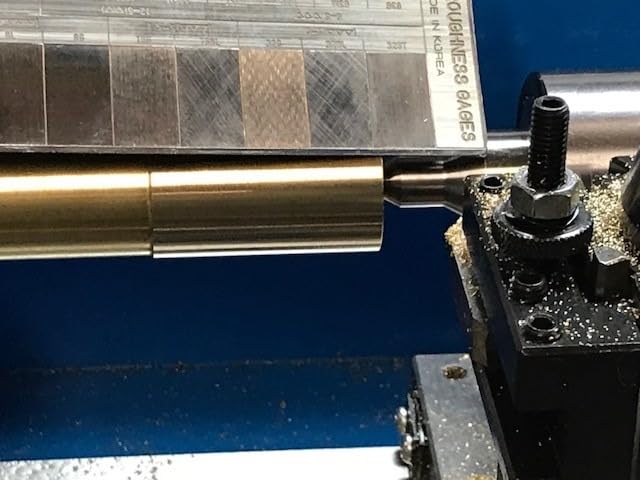
The 103-pound weight is the other thing to appreciate. It is heavy enough to not walk across the bench during a cut and light enough for one person to reposition.
Who It Suits and Where It Falls Short
This suits a beginner who wants a working lathe this weekend, a hobbyist making small aluminum and brass parts, and anyone who wants a machine that will not fold under light steel work. If your first project list includes long shafts, large diameter discs or serious steel production, this is a stepping stone rather than a destination.
2. Proxxon 34002 PD 250/E – Quiet Precision for Small Parts and Model Work
Proxxon 34002 Metal Turning Precision Lathe PD 250/E
150W at 115V
34.3 pounds
Automatic feed
Metric system
24.8 in long
+ Pros
- Very solid dense construction with smooth controls
- Quiet and vibration-free running
- Compact and slim without sacrificing performance
- Automatic feed included
- High quality precision tools
– Cons
- Motor is not smooth or powerful and runs loud with some rattle
- Cannot cut coarse threads
- Small turning capacity versus benchtop lathes
The Proxxon is the odd one out in this lineup, and that is exactly why it belongs here. At 34.3 pounds with a 150W motor, it will not cut steel and it does not pretend to. What it does is turn very small parts very quietly, which is precisely what model makers and instrument builders need.
The 4.8 rating across six reviews is a small sample, so treat it as directional. What the owners consistently describe is a machine that feels dense and precise, with controls that move smoothly rather than with the gritty backlash common in entry-level imports.
Automatic Feed as a Learning Aid
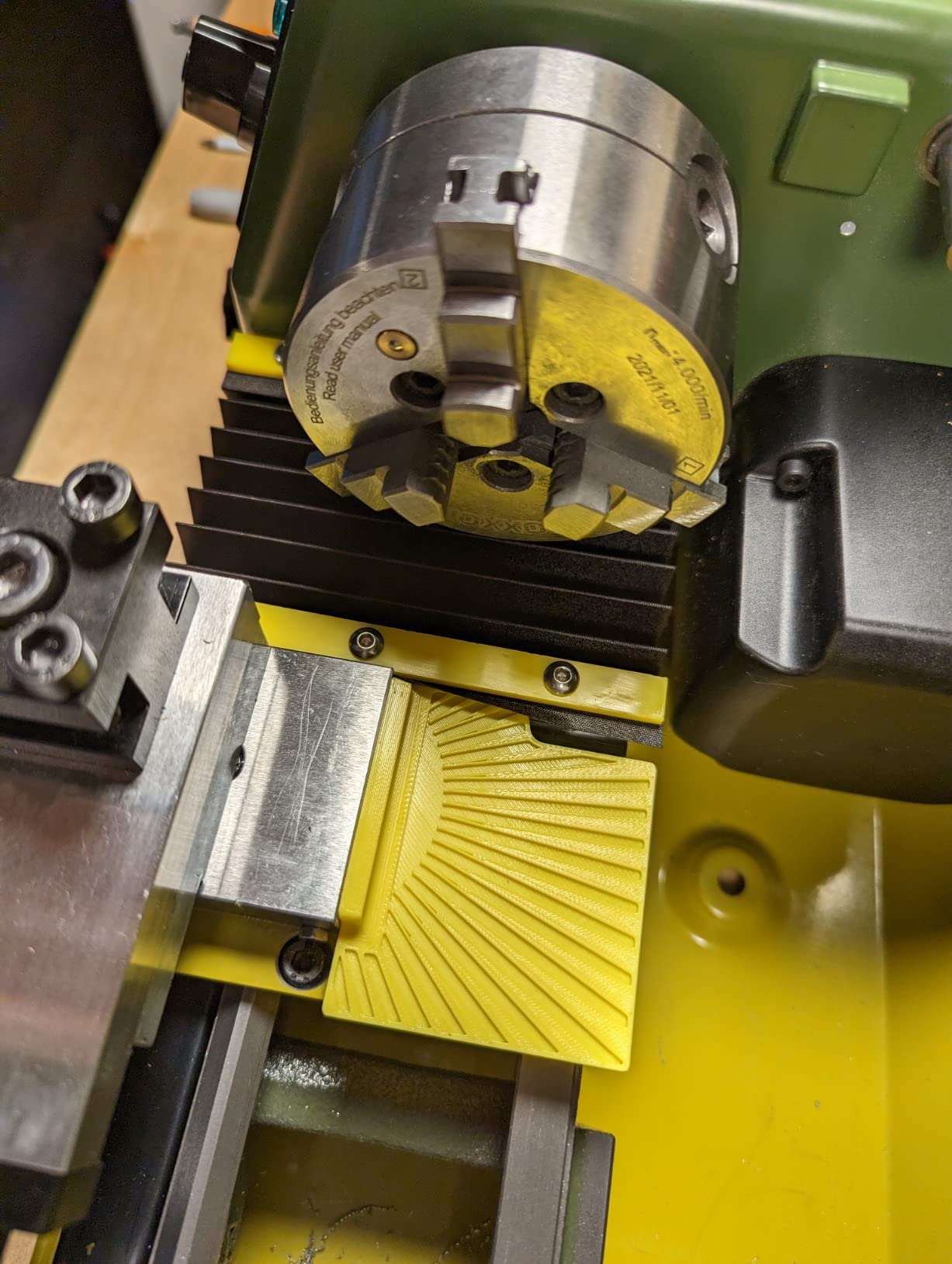
The included automatic feed is the standout feature for a first lathe. Newcomers struggle most with consistent hand feed, and a powered carriage feed lets you watch the cut develop at a steady rate while you learn what a good chip looks like.
It also makes facing and simple shoulder cuts repeatable, which is the difference between a part that fits and a part that is close enough.
Where the Motor Falls Short
Owners report a motor that is not smooth, is loud, and carries some rattle. At 150W there is no meaningful torque for anything harder than aluminum or brass, and no amount of technique changes that.
There is also no coarse thread cutting despite product imagery that suggests otherwise. If threads are on your list, the Proxxon is the wrong tool.
Small Capacity, Real Precision
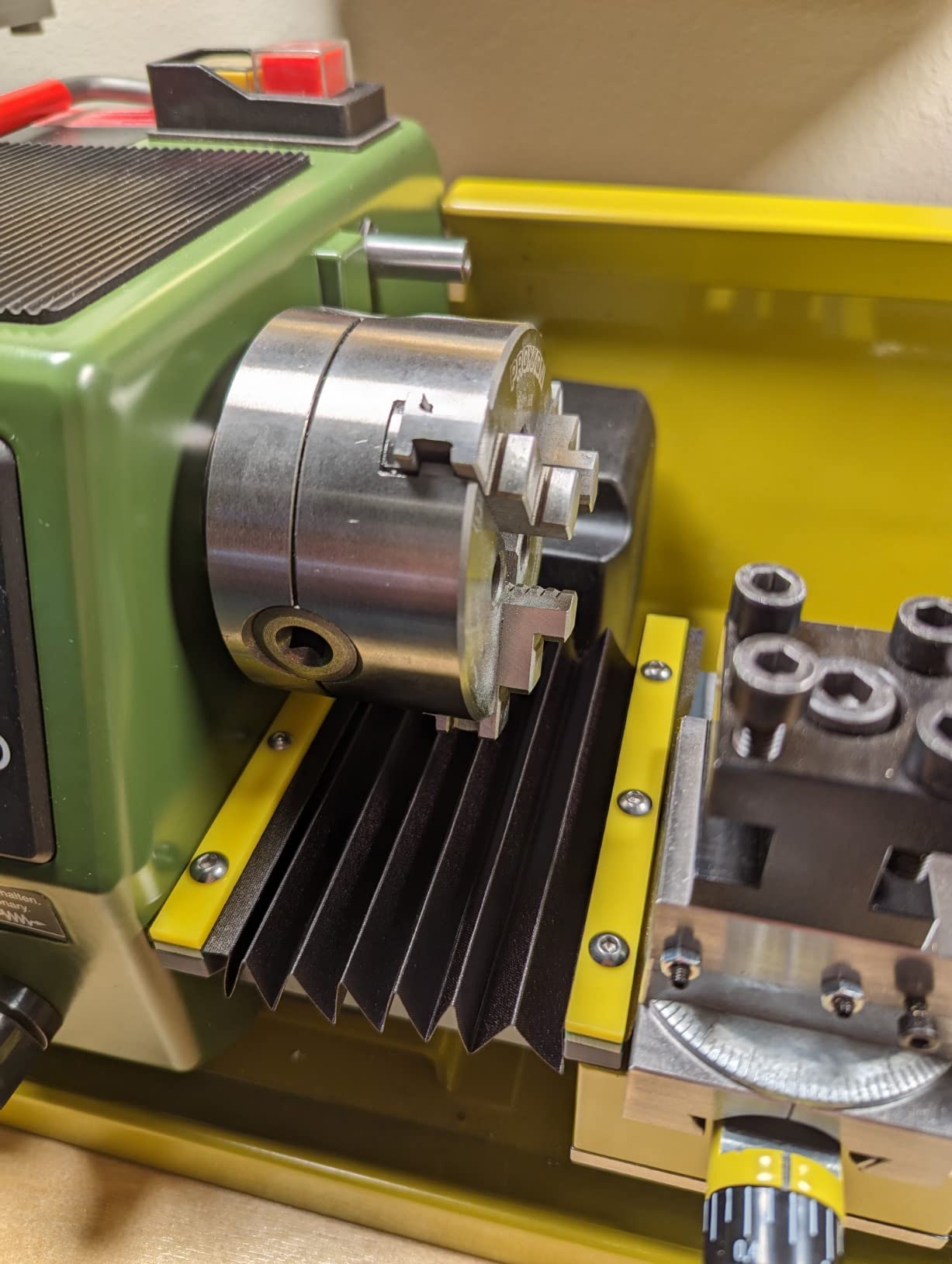
The machine is metric-system and physically compact at 24.8 by 15.16 by 10.24 inches. That size makes it easy to move and to dedicate a whole bench to a single purpose, which matters more in a small garage shop than raw capacity.
Who It Suits and Where It Falls Short
Pick this for luthier hardware, model engineering, pen work, small instrument parts and anyone who values a quiet machine in a shared workspace. Skip it if you want to learn threading, cut steel, or turn parts longer than a few inches.
3. TECHTONGDA 1100W Brushless Lathe – Electronic Thread Switching Without Manual Gears
TECHTONGDA 1100W Brushless Metal Lathe Automatic Thread Benchtop Lathe
1100W brushless motor
50-2500 RPM stepless
8×16 in size
Emergency stop and overload protection
160 pounds
+ Pros
- Electronic gear shift switches metric and imperial without manual gear changes
- 1100W brushless motor needs no carbon brush replacement
- Stepless 50-2500 RPM with forward and reverse
- All-metal gear train with taper roller bearing support
- Dual safety protection
– Cons
- Only a couple of customer reviews so long-term reliability is unproven
- Heavy 160-pound machine that needs a solid bench
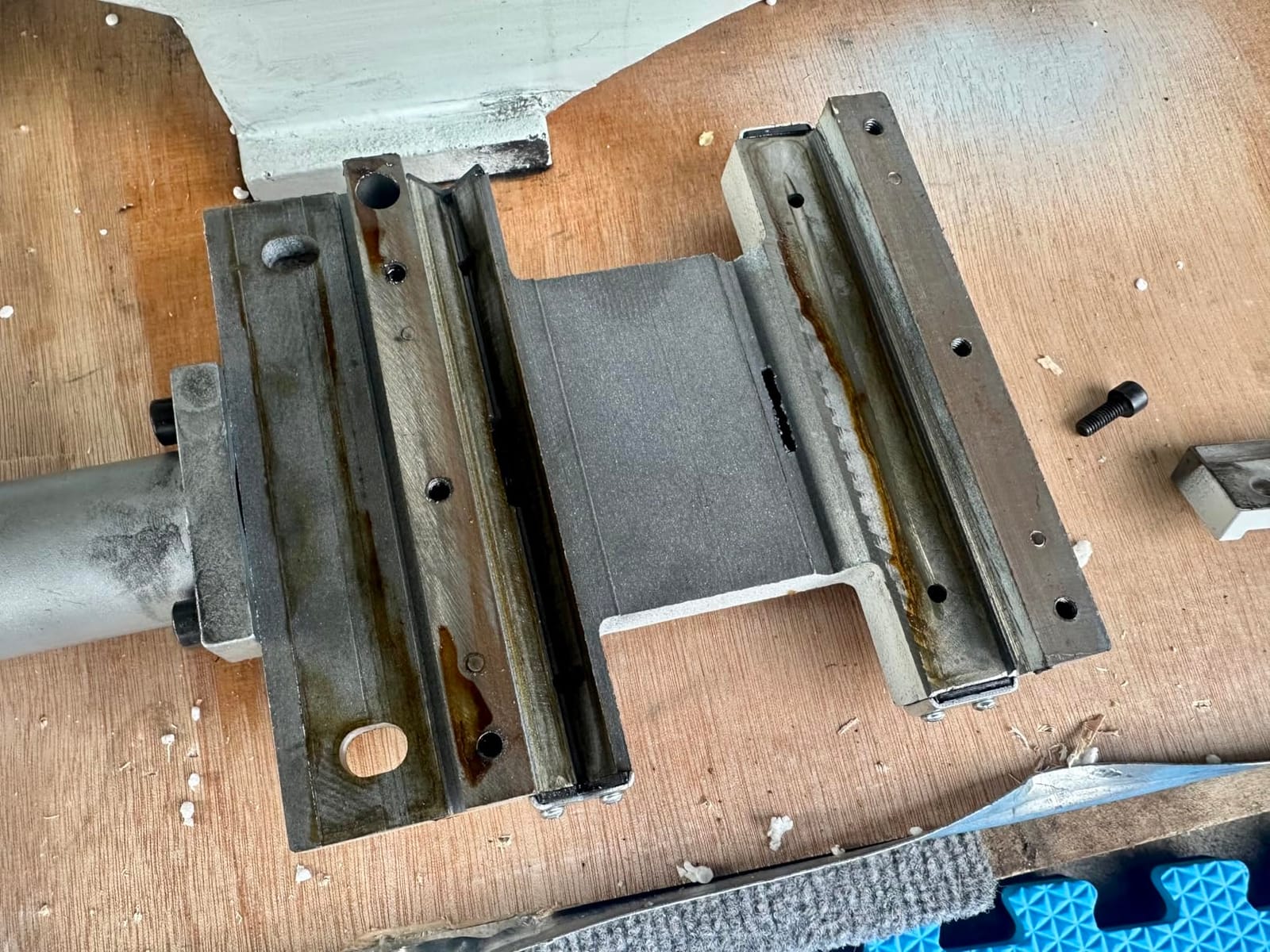
The TECHTONGDA is a different machine from the two before it: bigger, heavier, and built around an 1100W brushless motor. The electronic gear shift is the reason to look at it seriously, because it changes between metric and imperial threads from the panel rather than from a stack of change gears.
The control panel carries a display, parameter memory, reciprocating turning, thread cutting and one-click tool indexing. That is a feature list closer to a machining center control than to a hobby benchtop.
Why the Brushless Motor Matters Long Term
A brushless motor has no carbon brushes to replace and no commutator to wear. On a hobby machine you will use a few hours a week, that removes an entire category of scheduled maintenance and the sudden failures that follow burned brush holders.
The all-metal transmission gears and taper roller bearing spindle support point the same way. This is a machine designed to be disassembled and rebuilt, not one designed to be replaced when a plastic gear cracks.
Stepless Speed and Direction Control
Stepless 50-2500 RPM with forward and reverse means you can approach the work at exactly the surface speed the material needs. Reverse is what makes right-hand threading practical without disengaging the half nut mid-pass.
The emergency stop switch and overload protection are both worth noting. Overload protection matters when a beginner gets the feed wrong with a larger tool than the machine wants.
Size Variants and the 160-Pound Question
This configuration is an 8×16, and the line also includes 8×23 and 8×31 automatic thread versions. That range lets you step up in capacity without changing platforms.
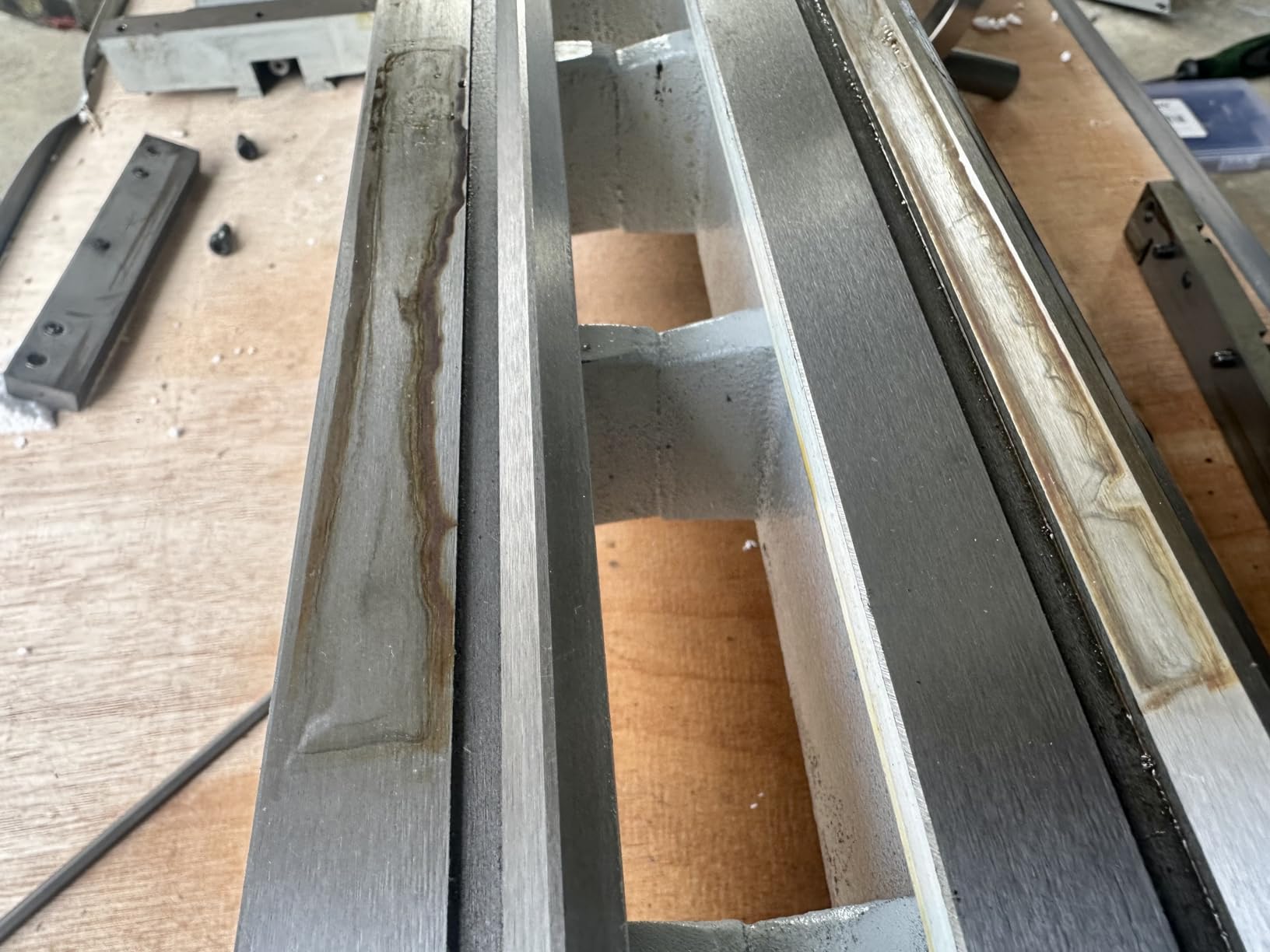
At 160 pounds the machine will not move casually, and the bench has to be rated for it. Plan the stand before the machine arrives.
Who It Suits and Where It Falls Short
This suits a hobbyist who wants electronic thread switching and a strong motor in a mid-size package. The weakness is honest and simple: with only two customer reviews, there is not enough long-term data to promise how it will behave after several hundred hours.
4. INTBUYING 8×24 Benchtop Lathe – Metric Thread Work with a 1.5 Inch Bore
INTBUYING 8″x24″ Benchtop Metal Lathe 1100W Brushless Motor 50-2500RPM Precision Mini Lathe Machine for Metal/Woodworking Industrial & Hobby Use with Metric Thread WM210V 110V
1100W at 110V
8×24 in size
1.50 in spindle bore
23.6 in between centers
161 pounds
+ Pros
- 1100W brushless motor with 8×24 in capacity and 23.6 in between centers
- Reverse three-jaw chuck with precise dials on saddle and tailstock
- Digital display shows rotation speed in real time
- Four change gears
- forward/reverse and emergency stop
– Cons
- Only three customer reviews so field reliability data is thin
- Metric-thread lead screw limits imperial work without extra gearing
The INTBUYING 8×24 pairs a 1.50 inch spindle bore with a 1100W brushless motor, and that combination is the story. A 1.5 inch bore means you can put 1.25 inch square stock straight into the chuck, which most machines in this class cannot do.
The 23.6 inch center distance and 210mm swing over bed put it in the middle of the field, comfortably larger than a 7-inch mini lathe and smaller than the 8×32 machines further down this list.
Four Change Gears and the Metric Lead Screw
Threading works through four change gears supplied in 40, 50, 60 and 72 tooth sizes, covering a 0.5 to 3mm metric thread range. That is a workable set for metric hardware, and the MT2 tailstock taper with MT5 spindle taper is a common pairing with readily available centers.
The limitation is direct. The lead screw is metric, so imperial thread work requires additional gearing and a different leadscrew, and that is the one real constraint on this machine.
Instrumentation and Included Tooling
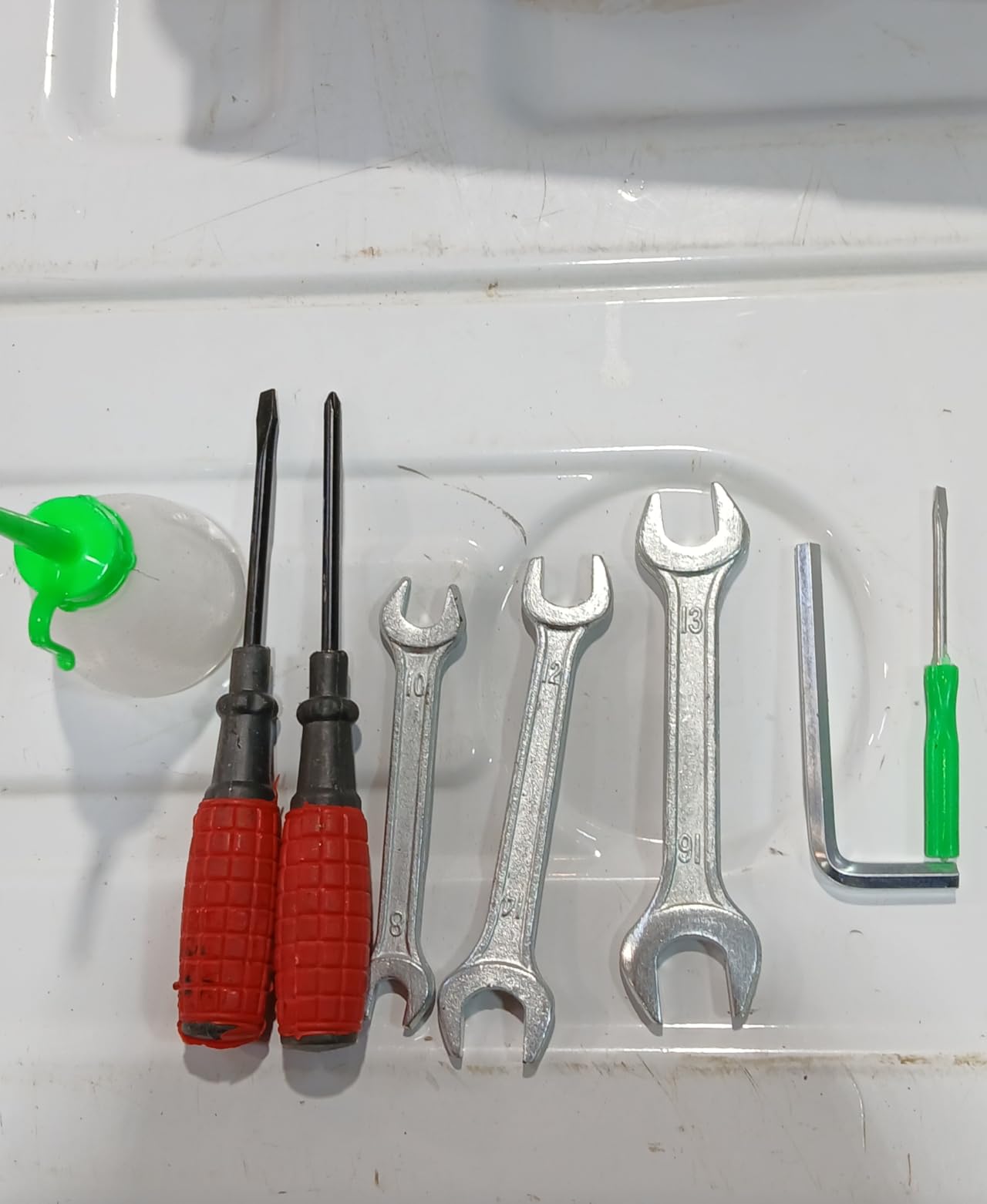
The digital speed display shows rotation speed in real time, which lets you change speed while the machine runs and dial in a finish rather than guessing. The four-way tool post is adjustable, and the chuck jaws, spanners, oil can and hex wrenches all come in the box.
Measurement accuracy is quoted at 0.01mm, and the reverse three-jaw chuck clamps to 4.92 inch, which is larger than the swing on some machines in this group.
Who It Suits and Where It Falls Short
Choose this if you run metric fasteners, work with bar stock up to an inch and a quarter, and want a brushless motor in a mid-size benchtop. Be cautious if imperial threading is central to your work, or if you need a large published review base to feel confident in long-term reliability.
5. EQCOTWEA 8×30 Double-Chuck Lathe – Chucks at Both Ends for Large Diameters
EQCOTWEA Double-Chuck Metal Lathe 8″x30″ Precision Bench Lathe Machine With Grating Ruler 50-2500RPM Variable Speed MT3 0.02mm Accuracy for DIY, Workshops & Industrial Machining Inch Thread 1100W 110V
1100W brushless at 1.5 HP
50-2500 RPM variable
8.27 in swing
0.02mm spindle precision
220 pounds
+ Pros
- Dual-chuck design handles larger workpiece diameters than single-chuck lathes
- 0.02mm spindle precision and 0.03-0.05mm concentricity
- 1100W brushless motor with 1.5 HP torque and smooth 50-2500 RPM
- Metric 0.5-3mm and inch 8-44 TPI threads
- Quenched bed and hardened gears
– Cons
- Only two reviews so long-term wear data is not available
- Very heavy at 220 pounds requiring a sturdy dedicated stand
The double-chuck layout is the defining idea here, and it is unusual. A 3.94 inch chuck on the left and a 4.92 inch chuck on the right means a workpiece can be supported at both ends, which is how you machine a long part without a tailstock carrying the whole load.
At 220 pounds this is the heaviest machine in the roundup by a wide margin. It is not a benchtop daisy you can shift to clear a workbench; it is a dedicated piece of shop equipment.
Precision Claims Worth Checking
Quoted spindle precision is 0.02mm with concentricity of 0.03 to 0.05mm, supported by a quenched bed and hardened gears. One owner who reviewed this machine reported it ran true out of the box, which is not a given for this category.
The honest caveat is that with two reviews, those figures come from the manufacturer plus a single detailed report rather than a broad sample.
Threading in Both Standards
This machine cuts metric 0.5 to 3mm threads and inch threads from 8 to 44 TPI from the same machine, using four supplied metal gears in 40, 50, 60 and 80 tooth sizes. Having both standards available without buying a second leadscrew removes a genuine frustration.
The 26.77 inch bottom plate stroke gives plenty of carriage travel for long work, with a graduated four-station knife rest across the top.
The Included Kit and the Weight Problem
The package includes two lathes tools, a chuck jaw set, drill chuck set, fixed and rotating centers, a twist drill set and seven hex wrenches. That is the most complete tooling bundle in this roundup, which materially reduces what you need to buy separately.
Both owners rated it 5 stars, and the concern is structural rather than mechanical: build a stand rated for 220 pounds before the delivery arrives, because a bench that flexes defeats the rigidity the specs are promising.
Who It Suits and Where It Falls Short
Pick this for a dedicated shop machine where long parts need support at both ends and imperial and metric threading are both on the agenda. Skip it if floor space or bench load is tight, or if you need an established parts supply.
6. CREWORKS 9×30 Benchtop Lathe – Cast Iron That Handles Steel
CREWORKS Mini Metal Lathe 9″ x 30″ Benchtop Metal Lathe with 3 Jaw Chuck and 3000rpm Max. Spindle Speed, 1100W Metalworking Machine with LCD Display, Metal Lathe Machine for Threading Turning Drilling
1100W motor
0-3000 RPM with display
8.7 in swing over bed
1.5 in spindle bore
198 pounds
+ Pros
- Good value for a 9×30 in lathe with a 1100W motor and 3000 RPM top speed
- Cast iron construction resists corrosion
- Variable speed works well with adequate power for hobby work
- Handles steel noticeably better than a smaller Harbor Freight lathe
- Replacement tailstock sent immediately after transit damage
– Cons
- Arrives needing cleaning
- stoning and adjustment before use
- Tailstock does not line up accurately out of the box
- Bed length falls short of the advertised 30 in between centers
- Replacement parts and service reportedly unavailable
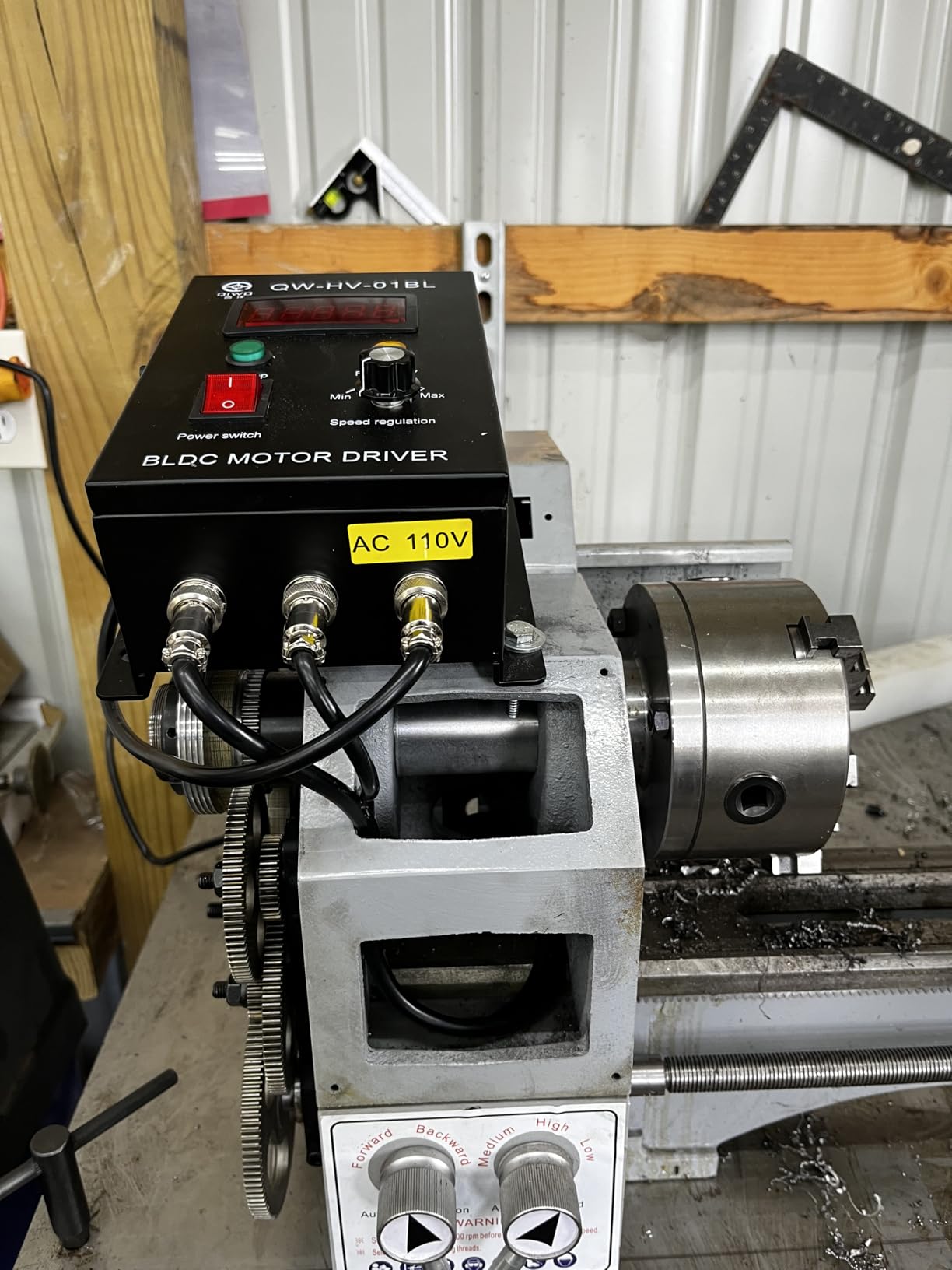
The CREWORKS 9×30 is the largest machine here that still fits the idea of a benchtop lathe, and at 198 pounds it feels like it. The cast iron bed and 1100W motor are the reason owners report it handling steel noticeably better than smaller machines.
The 3000 RPM top speed is the highest in this roundup, and combined with the real-time digital display it gives good control on small diameter work.
Honest Numbers: 8.7 Inch Swing and 27 Inch Between Centers
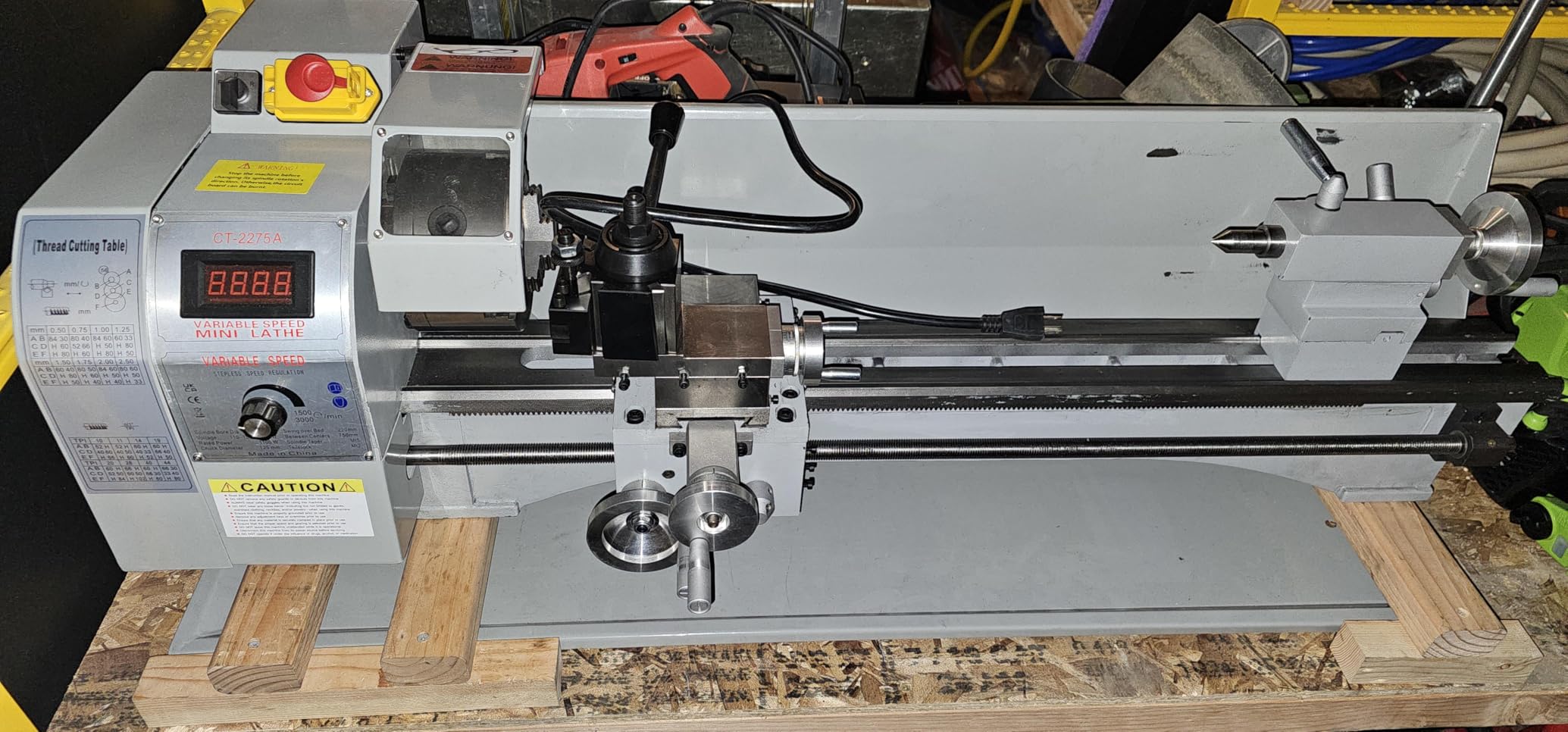
Here is where the specs and the reality diverge. The listing describes a 30-inch capacity, and owners report the usable bed length falling short of that figure. Plan on measuring the bed yourself before committing to a project that needs the full length.
The 43.7 by 16.9 inch footprint is genuinely compact for the capacity, which is the reason this machine is worth the setup effort.
The Tool Post Almost Everyone Replaces
Owners mill the compound and cross slide to fit a quick-change tool post because the standard post is awkward with 1/4 to 1/2 inch tools. That modification is common and straightforward, but it is real bench work that the machine does not do for you.
Headstock bearings that cannot be lubricated, combined with reported unavailability of replacement parts and service, are the significant long-term risk. Customer service was responsive when a damaged tailstock was replaced, but that is not the same as a supported parts catalog.
Who It Suits and Where It Falls Short
Buy this if steel work is the goal and you enjoy commissioning machines. Stay away if you want something that runs correctly from the crate with a guaranteed parts supply for the next decade.
7. Upgraded 7×14 Mini Lathe – The Cheapest Credible Door Into Metal Turning
Mini Metal Lathe,Upgraded 7″x 14″ Metal Lathe Machine, High Precision Mini Benchtop Lathe with LED Screen, 2500 RPM,for Metal Threading Turning Drilling
550W motor
0-2500 RPM reversible
7.09 in swing
14 in horizontal slide
Cast iron body
+ Pros
- Under 0.01mm spindle accuracy with a 4 inch self-centering chuck
- Reversible 0-2500 RPM with clear digital display and auto feed
- Quick-change turret tool holder in aluminum alloy
- Emergency stop and interlocked clear safety cover
- Customer support reported responsive and helpful
– Cons
- Limited torque and struggles to cut steel at larger diameters
- Tailstock arrived misaligned and needed shimming
- Shipping crate was insecure and allowed the machine to shift
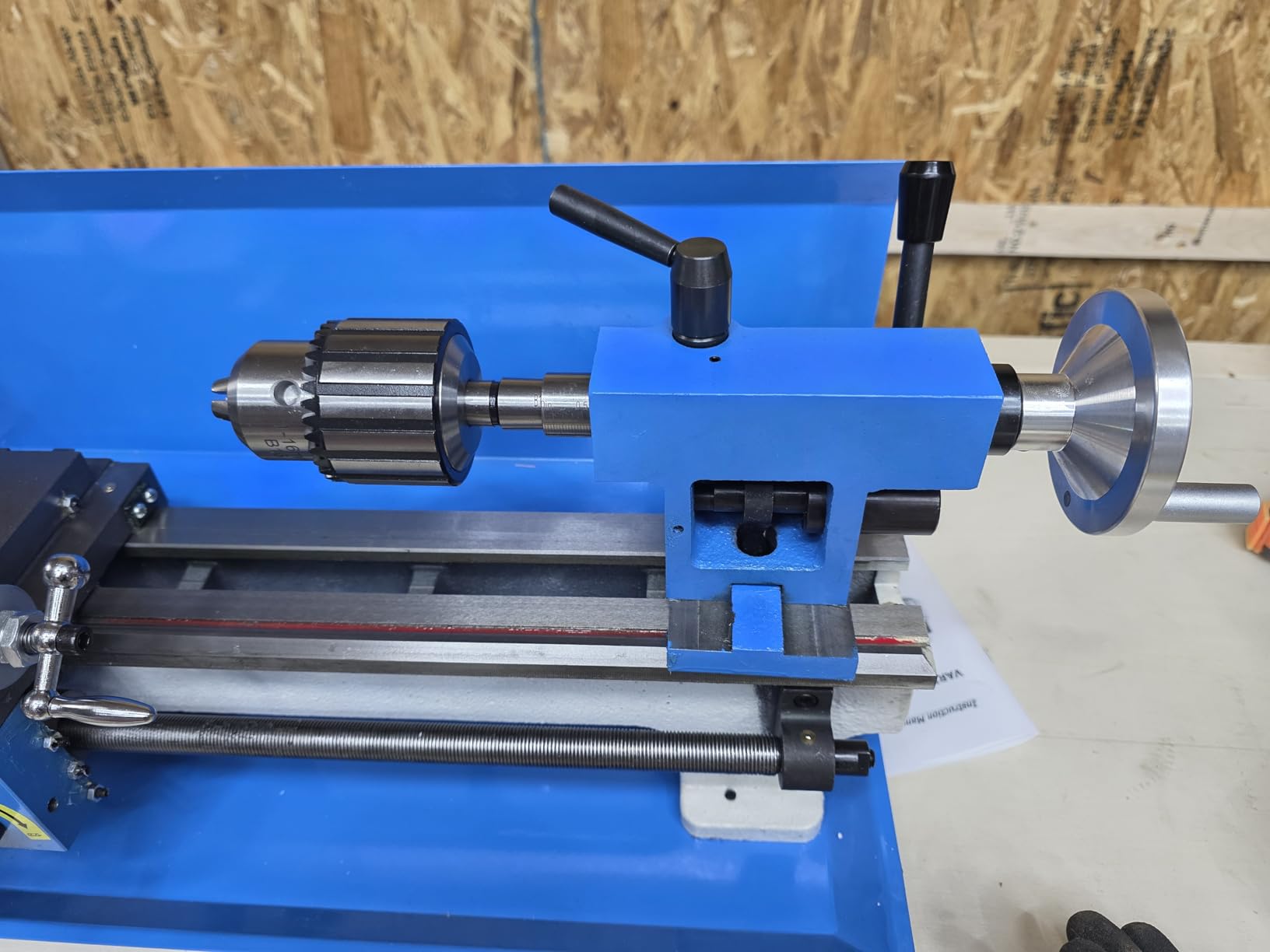
This 7×14 is the cheapest way onto the hobby that still has features you would want to grow into. The 0-2500 RPM reversible spindle, the quick-change turret tool holder in aluminum alloy and the emergency stop with interlocked cover put it ahead of bare-bones kits.
Owners also compare it favorably against similar machines from Harbor Freight, and the customer support is reported as responsive and helpful, which is not a given in this corner of the market.
Spindle Accuracy and Chuck Sizing
Quoted spindle accuracy is under 0.01mm with a 4 inch three-jaw self-centering chuck, and the reversible spindle covers 0-2500 RPM with a digital speed display. Both manual and automatic feed are available, so you can power through a facing cut and hand-feed a finishing pass.
One practical note from owners: any chuck or live center you buy separately must be MT2 to match the tailstock, which is a cheap mistake to make and an annoying one to discover late.
Torque: Where It Stops Being a Metal Lathe
The 550W motor is the limiting factor. Owners describe limited torque and difficulty cutting steel at larger diameters, with the machine better suited to aluminum and plastic. That is a normal and acceptable ceiling for a first machine, as long as you know it in advance.
The cast iron body and aluminum alloy hand wheels are the right materials for the job, and the 7.09 inch swing with 14 inch horizontal slide matches the best capacity in the 7-inch class.
Packaging and First Adjustments
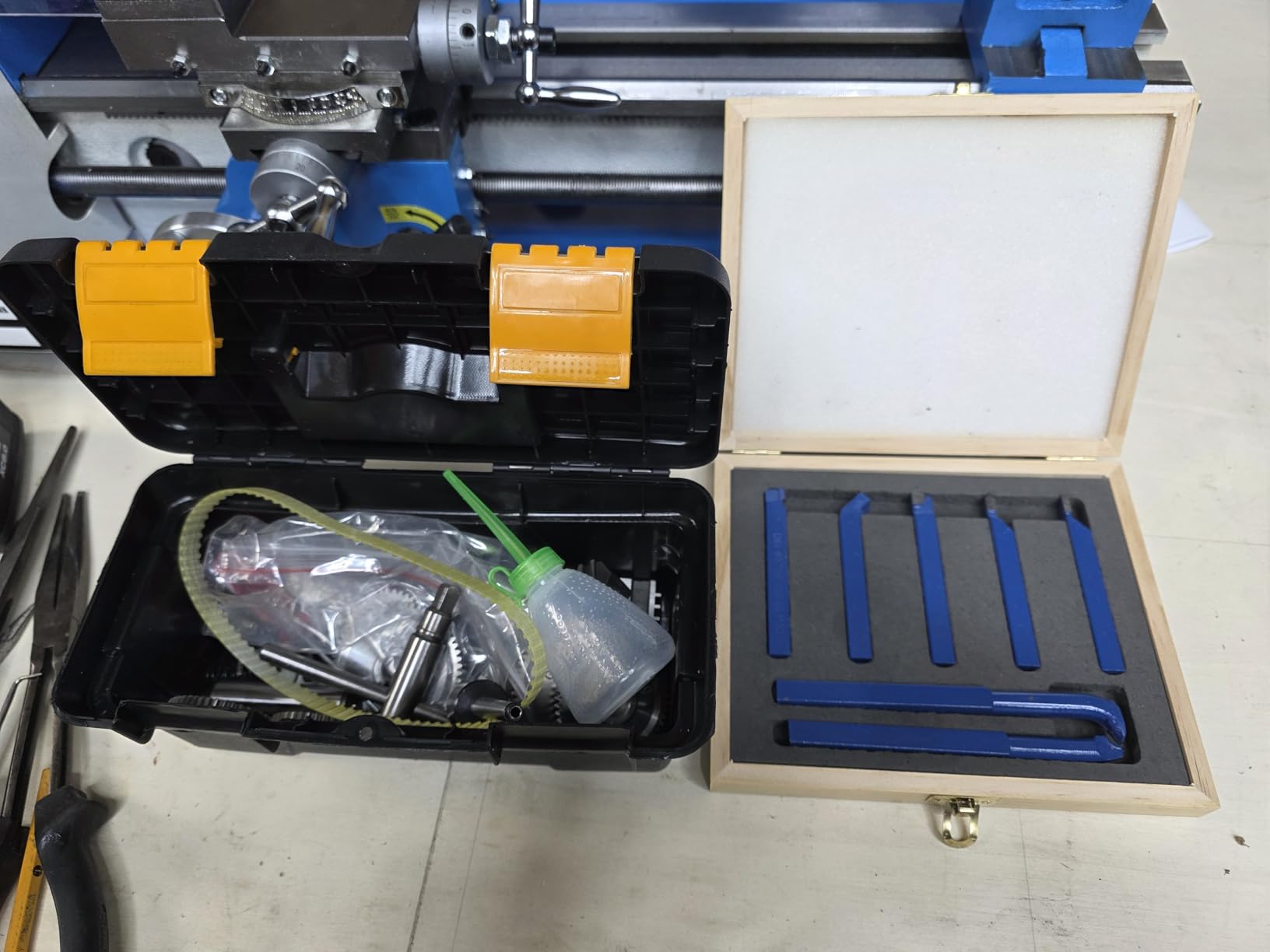
One owner arrived with a damaged chip pan and toolbox from the machine shifting in the crate, so inspect the machine before you sign for it.
The tailstock needed shimming to align with the chuck on arrival, which is a fifteen-minute fix with basic tools and worth doing before your first cut.
Who It Suits and Where It Falls Short
This is the right pick for someone certain they will stay with the hobby but not yet certain they will cut steel. It suits plastics, aluminum, brass and small wooden work. It is not the machine to buy if steel is already on your project list.
8. VEVOR Mini Lathe 8×14 – A Project Machine Once the Gibs Are Set
VEVOR Mini Metal Lathe 8″x14″ Compact Lathe Machine 2250 PRM Variable Speed
650W motor
50-2250 RPM variable
8.3 in swing
0.8 in spindle bore
MT2 tailstock taper
+ Pros
- All-metal gear train and direct drive to the spindle
- Digital variable speed instead of belt-and-pulley gear changes
- Several owners machine steel successfully once set up
- Solid headstock with a good locking mechanism
- Strong value for the size and feature set
– Cons
- Arrives loose with gibs
- ways and screws needing tightening
- Carriage power feed cannot be switched off and its knob is inaccessible
- Noisy carriage rack
- motor and gear train with slop in the tailstock knob
- Manufacturer reportedly will not sell individual repair parts
The VEVOR 8×14 is the machine experienced hobby machinists describe as a project. It ships loose, and the difference between a disappointed buyer and a satisfied one is whether you were expecting that.
The compensation is a genuinely good specification sheet: a 650W motor, an all-metal gear train, direct drive to the spindle and digital variable speed, which is unusual at this size and price.
The Always-On Power Feed Problem
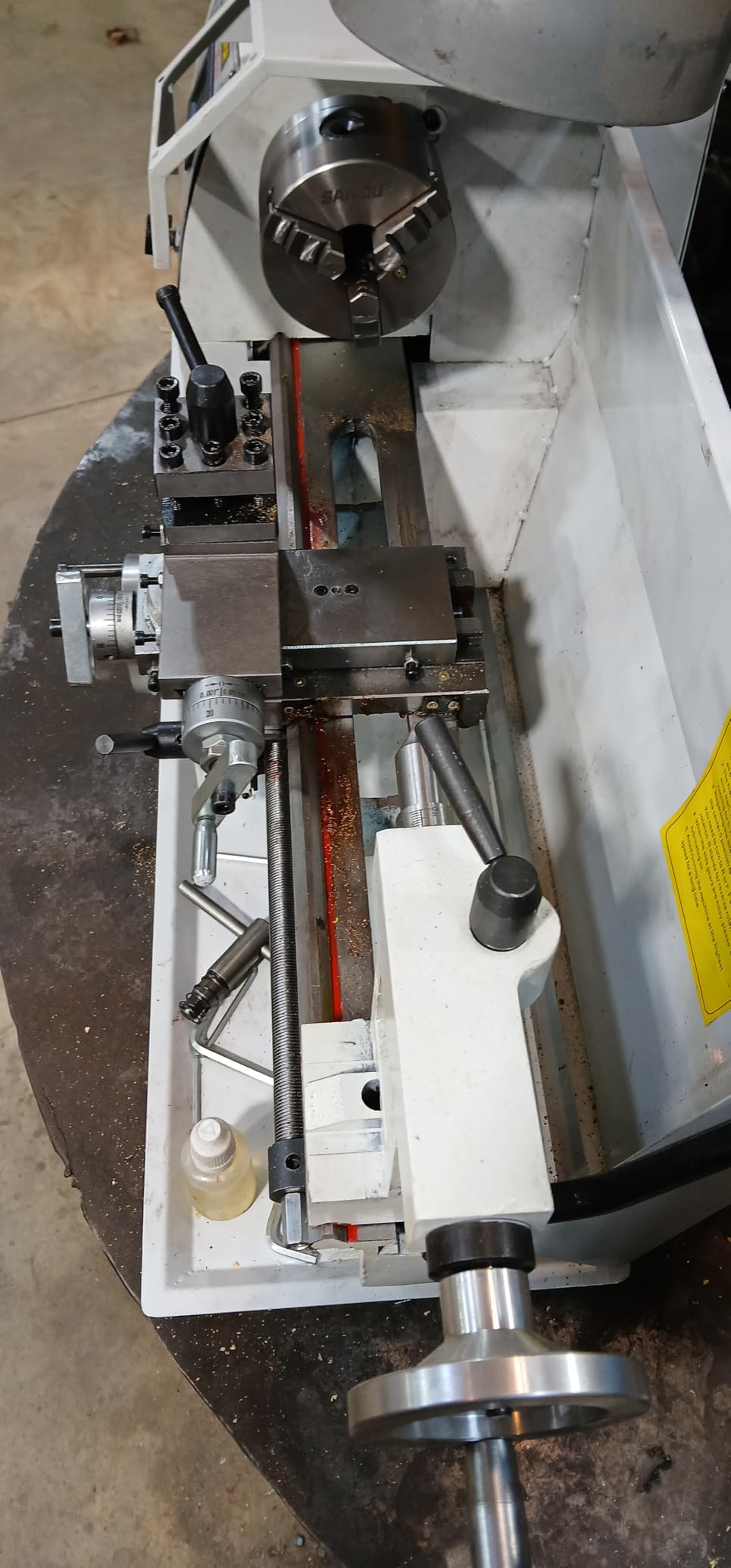
This is the single most cited complaint and it is worth knowing before purchase. The carriage power feed cannot be switched off, and its control knob is inaccessible without removing the gear cover. On a machine where you are still learning feed control, that is a real limitation rather than a minor irritation.
The fix, if you own it, is mechanical: disconnect or bypass the feed drive once you are comfortable hand-feeding. Several owners do exactly that.
Gear Train and Service Policy
The all-metal gear train and direct spindle drive are the reasons this machine outlasts nylon-geared kits. The catch is the support policy: VEVOR is reported to refuse to sell individual repair parts and to deal in complete units only.
That matters more than it sounds. A lathe that cannot be repaired is a consumable, and forum machinists consistently treat parts availability as a dealbreaker for exactly this reason.
Turning and Threading Capability
The 8.3 inch swing over bed, 13.8 inch swing over cross slide and 0.8 inch spindle bore with a 3.9 inch three-jaw chuck cover small work well. The adjustable MT2 tailstock with four set screws is a thoughtful detail that makes taper work possible, which is rare in this class.
Once gibs are tightened, ways greased and burrs filed, owners report machining steel accurately. The turret tool post and emergency stop button are both present and both functional.
Who It Suits and Where It Falls Short
Buy this if you enjoy a commissioning weekend and want to learn how a lathe is actually put together. It suits anyone who will fit a quick-change post and carbide tooling after delivery. It is the wrong first machine for someone who wants to plug it in and cut on day one.
9. Vevor Metal Lathe 7 x 12 – Solid Hardware That Needs a Weekend of Adjustment
Vevor Metal Lathe 7 x 12 Inch, Precision Mini Metal Lathe 2250 RPM 550W Variable Speed, Mini Lathe Precision Bench Top Metal Working Lathe for Various Types of Metal Turning : Tools & Home Improvement
550W motor
50-2250 RPM variable
0.01mm spindle accuracy
100 pounds
Iron bed
+ Pros
- Full-length splashguard and emergency stop for safe operation
- Hardened and ground slideways with spindle accuracy within 0.01mm
- Compound rest and quick change tool post give three cutting positions
- Capable of cutting everything from plastic to stainless after adjustment
– Cons
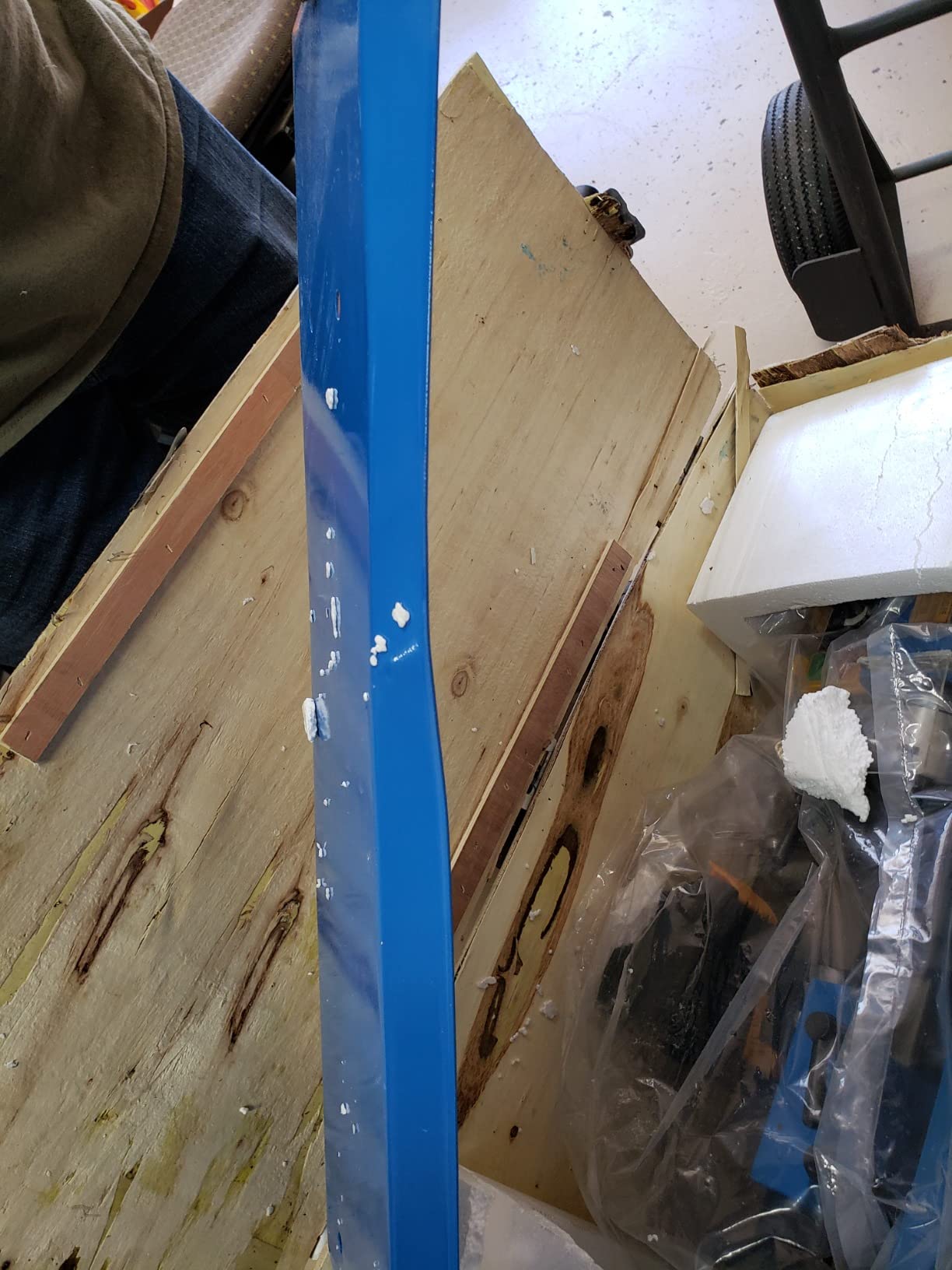
- Arrives untightened and out of square needing extensive adjusting
- Tailstock repeatedly loses alignment
- Stock plastic tool post parts and gears break with no replacement supply
- Reported motor and control box failures within minutes of use
This 7×12 is a good starter when you price in a weekend of setup. The hardened and ground slideways and the 0.01mm spindle accuracy are better than the spec sheets of most machines at this level, and the 550W motor covers aluminum through stainless after adjustment.
At 100 pounds and 33 by 14 by 18 inches, it is also the easiest machine in the roundup to move, which matters in a shared garage.
The Nylon Gear and Plastic Parts Problem
This machine uses nylon gears, and owners report the stock plastic tool post parts and gears breaking. It is the reason forum buyers treat plastic gearing as a dealbreaker on a machine marketed for metal work, and the reason to set aside a small parts budget for consumables.
That is the real cost of this machine. You are buying a good slideway and spindle and accepting that the drivetrain is consumable.
Tailstock Alignment: The Repeat Complaint
The tailstock repeatedly loses alignment and must be re-centered before use. On any lathe, tailstock alignment is what determines whether a part runs true, and a tailstock that will not hold position turns every precision job into a re-setup.
Budget time for this, and check it at the start of every session rather than assuming it held overnight.
Safety and Speed Range
The full-length splashguard and emergency stop button are real safety features that many cheaper kits omit, and they matter because swarf from a 7×12 mini lathe reaches further than buyers expect.
Speed is 50-2250 RPM infinitely variable with forward and reverse at all speeds, and the compound rest plus quick change tool post give you three cutting positions for facing, beveling and internal work.
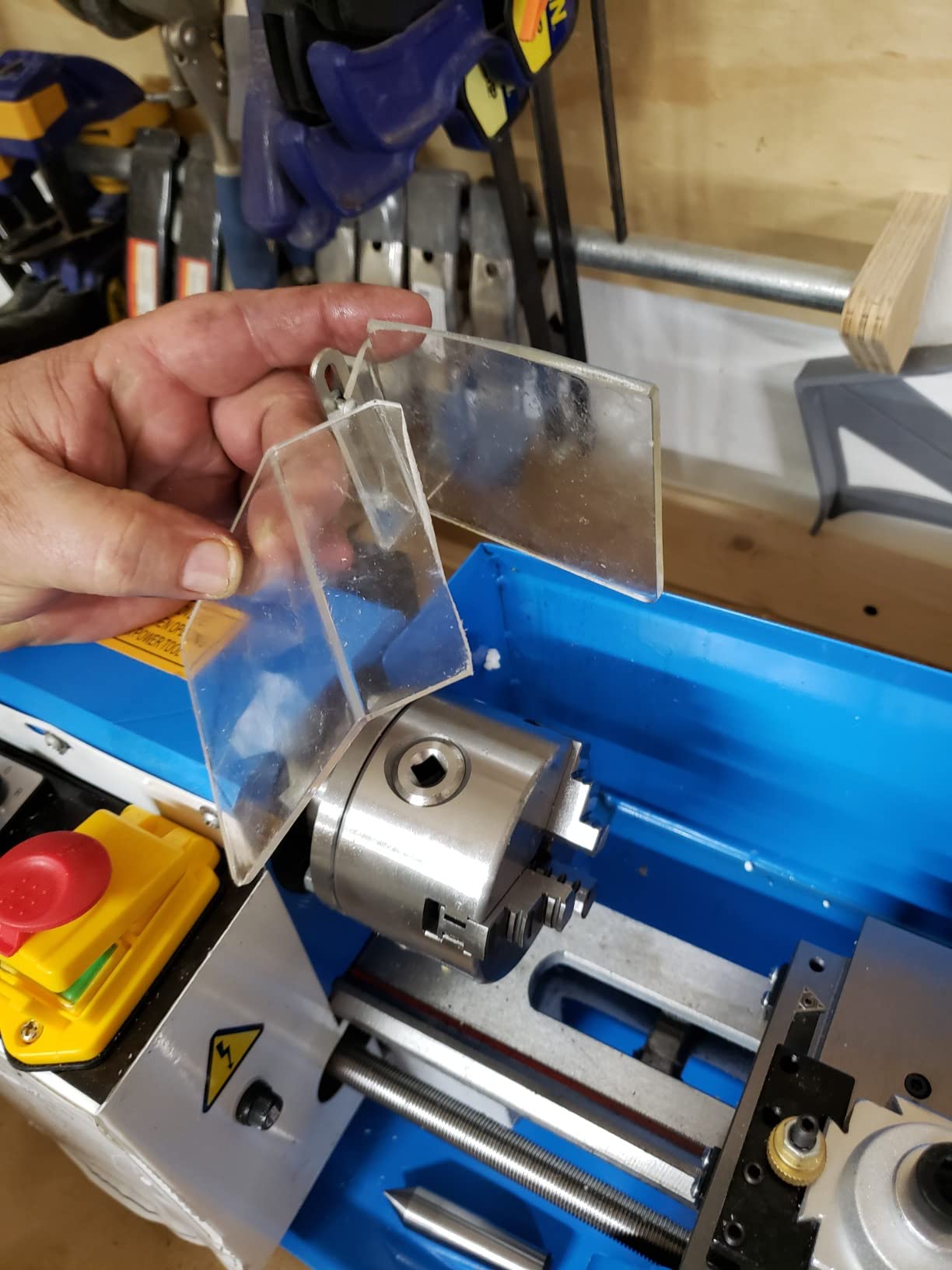
Who It Suits and Where It Falls Short
Choose this for a patient beginner on a tight budget who will machine plastic through stainless once it is set up. Be prepared for early failures: some owners report motor or control box problems within minutes of first use, so keep the packaging and check the return terms.
10. WEN ML712 7 x 12 Benchtop Lathe – The Only One With a Warranty and a Threading Dial
WEN 7-by 12-Inch Benchtop Metal Lathe, Variable Speed, Two Direction (ML712)
Two speed ranges 100-2500 RPM
12-52 TPI threading dial
MT3 spindle taper
MT2 tailstock taper
114.4 pounds
+ Pros
- Two full variable speed ranges from 100 to 2500 RPM in either direction
- Threading dial indicator covering 18 thread sizes from 12 to 52 TPI
- Handles aluminum
- steel and brass up to 12 in long or 7 in diameter
- Backed by a two-year warranty from an established US tool brand
– Cons
- Only about a dozen reviews so the rating is not statistically meaningful
- Some machines arrive with problems based on the one-star share
The WEN is the odd choice in this roundup because of the warranty rather than the metal. A two-year warranty from an established US tool brand is worth real money on a machine where owner reviews suggest quality control is inconsistent.
The threading dial is the other differentiator, covering 18 thread sizes from 12 to 52 TPI. Most machines in this class either have no dial at all or make you work through change gears blind.
Two Speed Ranges and What They Buy You
Two full variable speed ranges covering 100 to 2500 RPM in either direction is a wider useful envelope than a single range. The low end matters for large diameter work on aluminum and the high end matters for finishing small parts.
Manual operation or adjustable auto feed gives you both options, and the 3-jaw chuck with a 5/16 inch capacity tool post is adequate for light work in the 7-inch class.
Spindle and Tailstock Tapers
The MT3 spindle taper with an MT2 tailstock taper is a specific and useful combination. MT3 centers and collets are widely available, which is a real advantage when a machine lacks a documented taper standard.
One buyer note worth acting on: purchase collets and centers in the correct taper before you need them, because a wrong-taper accessory cannot be made to fit.
Reading a Small Rating Honestly
Eleven reviews is too small a sample to draw conclusions from, and the 3.7 average with a 13 percent one-star share tells you quality control is a genuine concern. What it does not tell you is whether that reflects a bad machine or a bad sample.
The warranty is the hedge. If the machine has a problem in the first two years, you have a route that most machines in this roundup do not offer.
Who It Suits and Where It Falls Short
Buy this if warranty backing and a threading dial matter more than proven long-term reliability, and if you mostly work in aluminum, brass and light steel. Skip it if you need a large volume of owner feedback to feel confident.
11. INTSUPERMAI 8×32 Gearless Lathe – The Most Accurate Machine in the Set
INTSUPERMAI 8″× 32″ Metal Lathe Precision Benchtop Metal Lathe Electronic Leadscrew Gearless Hobby DIY Metal Lathe 50-2500rpm Variable Speed with 4 Jaw/3 Jaw Chuck 110V
1100W brushless motor
50-2500 RPM
31.5 in between centers
0.01mm spindle precision
205 pounds
+ Pros
- Gearless electronic leadscrew switches imperial and metric from the panel with no gear changes
- Very low noise because there are no threading gears to mesh
- Out-of-box runout measured at about 0.5 thousandths with 3 thousandths accuracy over a 20 inch bed
- 1100W brushless motor takes fairly deep passes in steel
- Lead screws have minimal backlash with auto-turning stop
– Cons
- Documentation is poor with no real operation
- service or parts manual
- A 5 mm extension on the cross slide blocks most quick-change tool posts until milled off
- Needs truing up before precision work
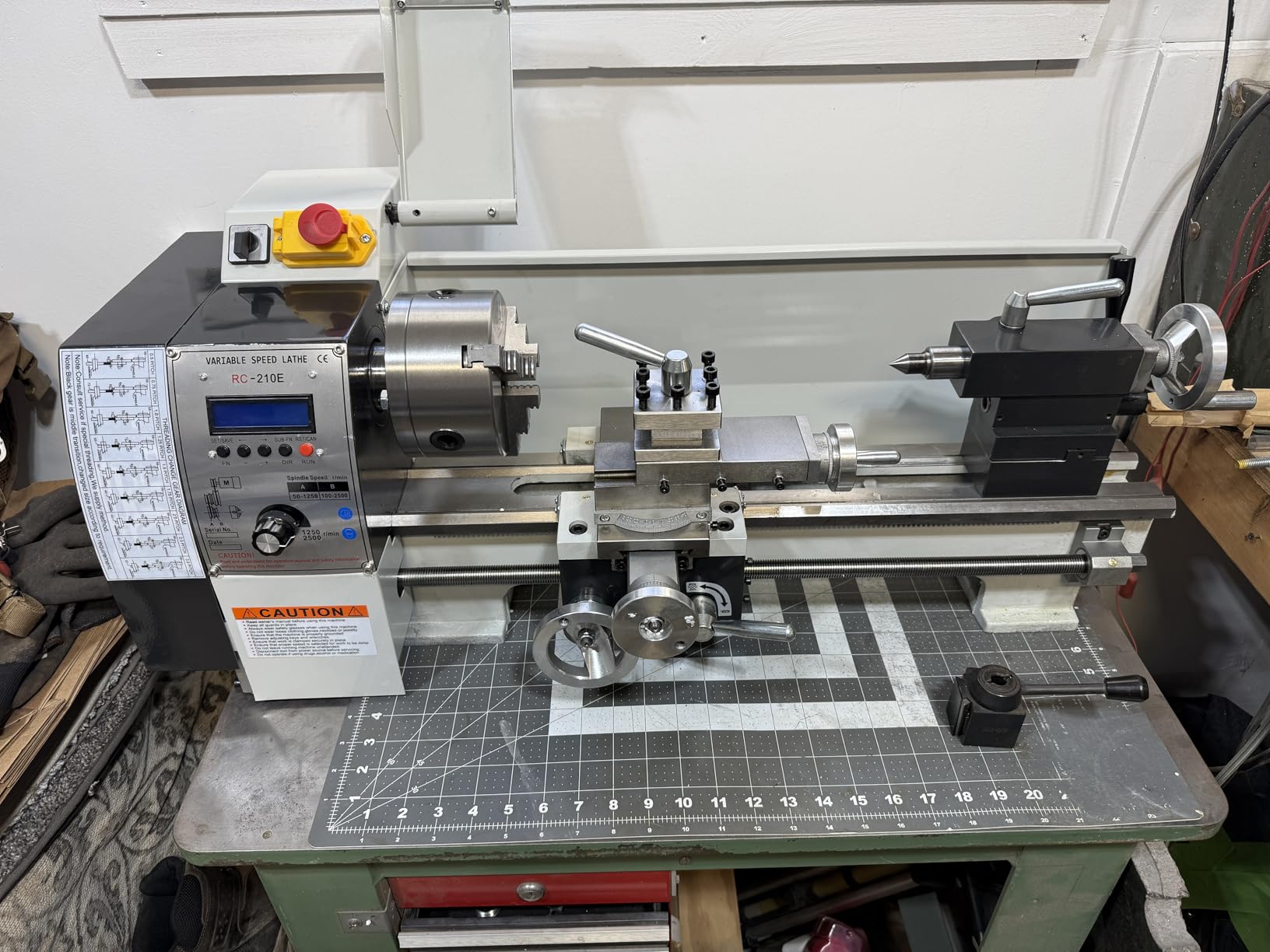
The INTSUPERMAI 8×32 carries a 4.9 average across thirteen reviews, and more importantly it is the one where owners publish their own measurements. Reported out-of-box spindle runout of about 0.5 thousandths and 3 thousandths accuracy over a 20 inch bed is shop-grade performance, not marketing copy.
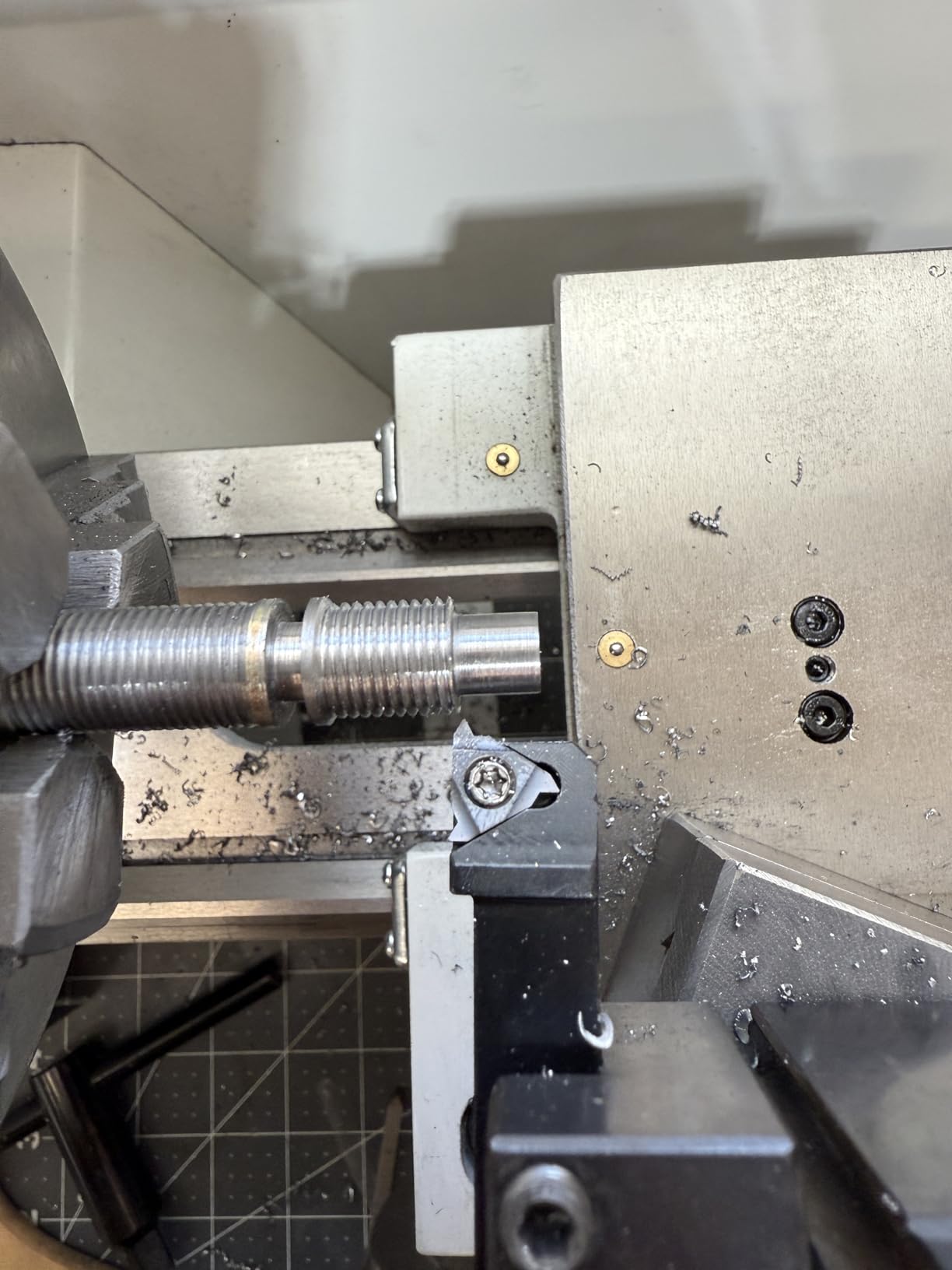
What makes that possible is a gearless electronic leadscrew. There is no gear train to mesh, so there is no gear backlash and no gear noise, and imperial and metric switching happens from the control panel.
What Gearless Threading Changes
On a conventional lathe, cutting a thread means setting change gears, engaging the half nut and trusting the threading dial to avoid a malformed thread. Here, you select the pitch on the panel and go. That removes the single most common beginner mistake in threading entirely.
The 1100W brushless motor handles fairly deep passes in steel, and the 0.01mm spindle precision rating is backed up by the owner measurements rather than standing alone.
Capacity: 31.5 Inch Between Centers
This is the largest center distance in the roundup at 31.5 inches, with 8.27 inch swing over bed and a 5.51 inch tool rest swing. That capacity suits long shafts, and it is why this machine is the natural choice if you intend to grow into gunsmithing-scale work.
Both a 3-jaw and a 4-jaw chuck are included at 4.92 inch diameter, along with wrenches, a chuck spanner, an oil can and a chip pan. The reciprocating turning function and telescopic sets with graduated scales round out a well-equipped package.
The Two Real Problems
Documentation is the first. Owners report no real operation, service or parts manual and untranslated panel headings, which means you are learning this machine from community knowledge rather than a manual. Plan for that.
The second is the 5 mm extension on the cross slide that blocks most quick-change tool posts until it is milled off. Budget a milling operation before you fit a quick-change post, and check that your post design suits the cross slide before ordering.
Who It Suits and Where It Falls Short
This suits the hobbyist who wants measured accuracy, hates manual gear changes, and is willing to truing the machine and figure out the controls. It is the top pick if your projects involve long workpieces or precision shafts. The two caveats are documentation and the cross slide modification.
12. Shop Fox M1015 – Compact Steel-Cutting Capability at the Smallest Capacity
Shop Fox 6 in. x 10 in. Mini Metal Lathe M1015
6 x 10 in capacity
71 pounds
Metal construction
Expandable with Shop Fox accessories
+ Pros
- Compact and strong enough to turn steel with a small benchtop footprint
- Cheap entry into metal turning and better than comparable micro lathes
- Expandable with Shop Fox accessories such as a steady rest and vertical milling slide
- Accurate enough for luthier and small-shop work with quality cutting tools
– Cons
- Very small 6×10 in capacity limiting acceptable work
- Some machines arrived with a drive belt that failed after about five months
- Reports of a crooked spindle
- a broken clutch dial and a missing 16TPI lead screw
- Speed control and brushed DC motor underpowered at low speed
The Shop Fox M1015 is the smallest machine here and the lowest rated, and it still earns a place because of one specific strength: it turns steel in a 71 pound package that fits almost anywhere.
For luthiers, this is genuinely useful. Turning guitar and instrument hardware is small-diameter work, which is exactly what a 6 by 10 inch capacity handles well, and the ability to add a Shop Fox steady rest and vertical milling slide extends it further.
Quality Control Is the Real Problem
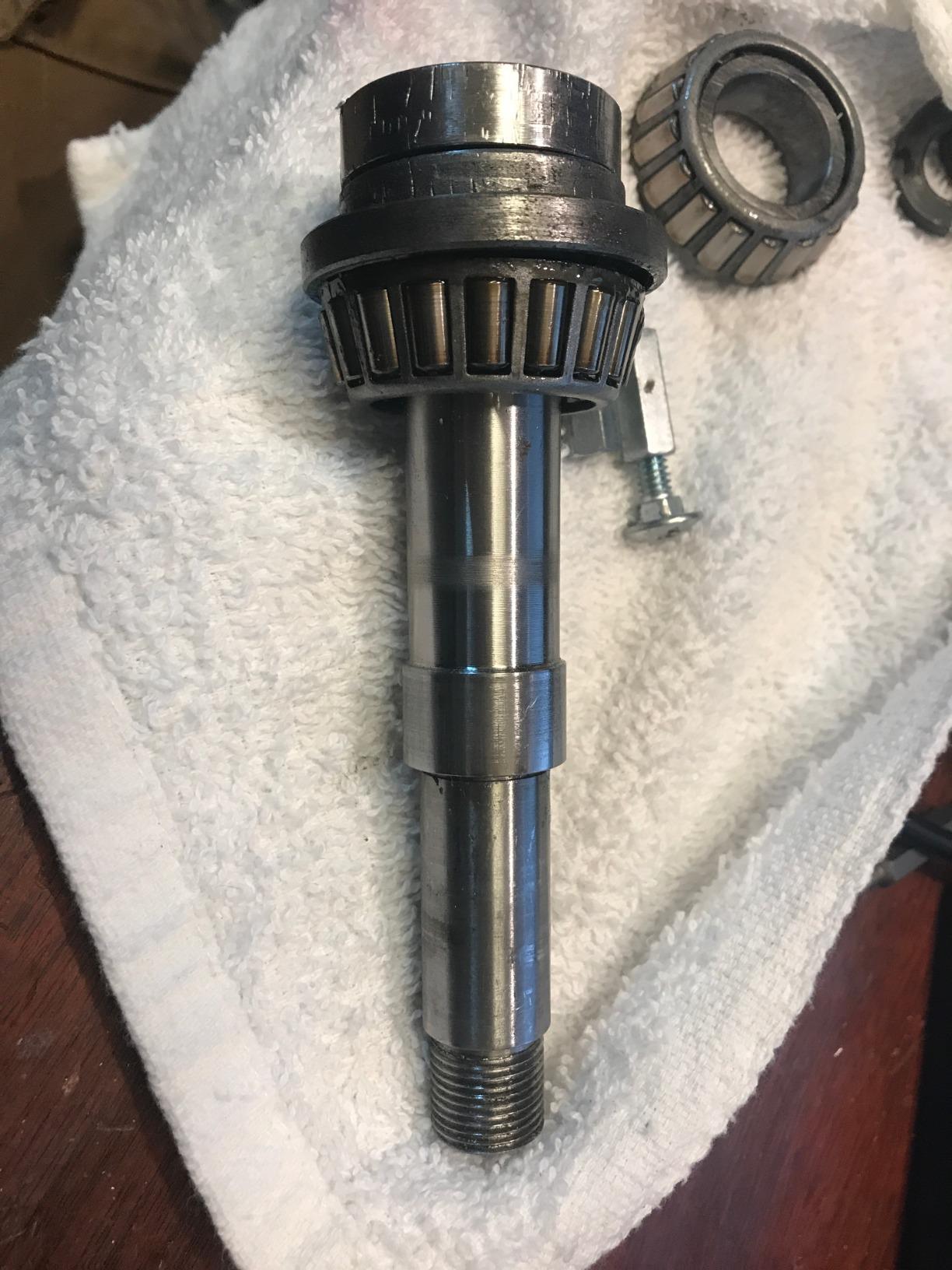
With a 3.4 average and a 19 percent one-star share, this is the weakest machine in the roundup on owner satisfaction. The complaints cluster: a drive belt that failed after about five months, a crooked spindle that damaged its bearings, a clutch dial broken on delivery, and machines arriving without the advertised 16TPI lead screw.
None of these are fatal on their own. All of them are the kind of thing that makes a first machine frustrating rather than educational.
Why It Is Still Worth Considering
The case for it is narrow and specific. If your work is small, precise, and mostly in steel or brass, a 6×10 capacity is not a compromise but a match. The accessory ecosystem matters here too, and Shop Fox accessories extend the machine into steady rest and milling work.
Owners who pair it with quality cutting tools report accuracy sufficient for luthier and small-shop work, which is the highest praise in this group.
Speed Control and Travel Limits
The brushed DC motor and speed control are described as underpowered and awkward at low speed, which is a problem for large-diameter work where you need low RPM with torque.
The tailstock and cross slide run out of travel quickly, so the tool post has to be repositioned for every tool change. That is a workflow tax that adds up over a long session and is worth factoring into your expectations.
Who It Suits and Where It Falls Short
Buy this for luthier work, instrument hardware and small steel or brass parts in a very tight space. Look elsewhere if you want a beginner-friendly first machine, a large capacity, or a manufacturer with a strong quality control record.
The First-Hour Acceptance Test: Run These Before You Cut Metal
Almost every machine in this roundup arrives needing adjustment, and several arrive misaligned. Running a fixed acceptance test on delivery day is the single most useful thing a new owner can do, and almost nobody does it.
Check spindle runout. Mount a test bar or the chuck in the 3-jaw, touch an indicator to the bar near the chuck and again at the free end. Under 0.0005 inch total indicator reading at the free end is the target for a machine you intend to use for precision work.
Test backlash on the cross slide. Lock the indicator against the slide, rock the handwheel and read the reversal. Under 0.005 inch is workable for hobby metal; more than that means gib adjustment before any precision cut.
Check tailstock alignment. Drill a hole, mount a known-good center and run an indicator along the center. This is the single most common arrival defect in this category, and the fix is shimming or re-centering rather than a return.
Verify the gib adjusters. Every cross slide, compound and saddle should tighten smoothly. If an adjuster bottoms out before the slide stops moving, the gib is stripped and needs replacing.
Run the threading dial. Before cutting a thread, check that the dial returns to zero at the end of the spindle revolution at the speed you will cut at. If it does not, the half nut is not disengaging properly.
Check the bed for straightness. Straight edge plus feeler gauge along the bed ways. Excessive variation means the machine was stored badly or shipped badly.
Free the emergency stop. Confirm the stop cuts power to the motor in under a second and that the chuck guard interlock, where fitted, actually prevents operation.
If you fail on runout or tailstock alignment on a new machine, contact the seller before you cut anything. The adjustment is usually within your rights to request, and it takes minutes while the machine is still uncut.
Buying Guide: The Specs That Actually Decide Your Machine
Most buying guides list features. These are the numbers that determine whether a machine can do the work you have planned, in the order they matter.
1. Swing Over Bed, Cross Slide and Gap
Swing over bed is the largest diameter you can turn with the toolpost in place, so it is the number that caps your maximum part diameter. Swing over cross slide is larger and matters when you use a steady rest or when you need clearance for a large workpiece. Swing over gap is the diameter you can machine in the gap between the tailstock and the chuck, which is what lets you turn a long part in sections without removing it.
The practical rule is to buy for the largest part you can imagine making, plus ten percent. A lathe sized perfectly for today’s projects will be undersized within a year.
2. Distance Between Centers
DBC is the maximum length of work between the chuck and the tailstock centers. It is the number that decides whether you can turn a 30 inch shaft in one pass or whether you need a steady rest and patience. Mini lathes in the 7-inch class give you roughly 12 to 14 inches; the machines in the middle of this roundup give you 23 to 32 inches.
This is also where forum consensus on used machines comes from. Hobby Machinist users generally describe a 12×36 as a great size for most hobby work, noting that a 13 or 14 inch swing would be better but most people do not need it.
3. Spindle Bore and Bar Stock
The spindle bore is the largest round bar that will pass through the spindle. Size your bore to the stock you intend to run, with clearance. A 0.8 inch bore on a compact lathe handles small aluminum bar; the 1.5 inch bore machines on the CREWORKS and INTBUYING open up square stock and larger hex.
Buying a lathe with a 0.8 inch bore when you plan to run 1 inch round stock means buying a new machine or a steady rest. Check this number before anything else.
4. Spindle Nose and Chuck Compatibility
This is where beginners lose money, because the spindle nose standard determines which chucks, collets and adapters you can buy for years to come. A tapered spindle with a Morse taper takes collets. A camlock or short-cone nose takes independent chucks that will outlast the machine. Threaded or A-type noses exist too, and the tooling ecosystem for each is different in price and availability.
MT2, MT3 and MT4 are the common taper sizes on the machines here. A Practical Machinist user with two decades of vintage lathe ownership makes the related point plainly: tailstocks are hard to find at reasonable prices, and a machine missing its tailstock can cost more to complete than the machine cost to buy. Confirm the taper before you buy accessories, not after.
5. Threading Capability
Threading is where entry machines diverge most sharply. A machine with a quick-change gearbox and a threading dial lets you cut a thread in minutes. A machine that needs change gears and a half-nut takes practice and patience. An electronic leadscrew removes the guesswork entirely.
One rocketry forum user described the dividing head on an 8×16-class lathe this way: it handles turning and boring fine, but it will be a long time before you can cut threads. That is the honest framing of a machine that technically threads but practically does not encourage it.
6. Drive Type: Gearhead, Belt Drive and Brushless
Gearhead and belt drive lathes get their speed steps from a gearbox or a stepped pulley, which is robust and repairable. Electronic variable speed with a brushless motor gives continuous 50 to 2500 RPM control with fewer parts to wear, at the cost of an electronics module that is harder to repair yourself.
A Practical Machinist user who owns several vintage lathes puts variable speed at the top of his list: variable speed is really nice on these lathes. If you are buying used, prefer three-phase motors and add a VFD, which is also the standard answer to the three-phase power problem in a home garage.
7. Rigidity, Weight and Bench Load
Mass is a proxy for rigidity, and rigidity is what stops chatter. The machines in this roundup run from 34.3 pounds for the Proxxon to 220 pounds for the EQCOTWEA, and that range is a proxy for how much steel you can cut before the part starts to sing.
Match the weight to the bench. A 220 pound machine on an undersupported table will flex, and flex defeats the precision the specifications promise. If you are building a dedicated stand, our midi lathe comparison covers the frame and footprint side of that decision.
8. Parts Availability and Support
This is the criterion hobby machinists rank first and retailers rank last, and it is the reason several otherwise good machines in this roundup carry explicit warnings. A manufacturer that will not sell individual repair parts turns a broken lever or gear into a dead machine.
Parts availability is also why vintage iron holds its value. A Practical Machinist user with twenty years of lathe ownership reports that South Bend parts are less expensive than any other lathe he has purchased parts for, and that a couple of parts for a 13 inch Colchester cost more than the most expensive used South Bend 13 he owned. That is a statement about a parts ecosystem, not about a machine.
New Machine or Used Heavy Iron?
New machines in this roundup are all 110V benchtop machines under about 8×32 capacity. The other half of the hobby market is used 12×36 and 13×36 iron from South Bend, Monarch, Colchester, Hendey and Logan, and for a lot of hobbyists that is the better buy.
The forum consensus is that a 12×36 is the sweet spot for most hobby work. The advantages are cast iron mass, a real spindle bore, a quick-change post ecosystem and parts that will still exist in twenty years. The disadvantages are three-phase power, a transport job and a condition assessment you must be able to perform.
Reject a used machine with seized ways and hardened grease in the slides, a corroded spindle taper, brittle belts, or a missing tailstock. A Practical Machinist user also notes that 16 inch lathes are often cheaper than 13 inch machines because demand is lower, which is a genuine buying opportunity for someone who knows what to look for.
If you buy used, replace the original rocker-style tool post with an aftermarket Dorian or Aloris quick-change post. The same user describes the original South Bend post as much worse than the aftermarket alternative, and this is one upgrade that pays for itself immediately.
What Else You Need to Buy
Tooling is where first lathe budgets quietly double. Practical Machinist beginners consistently get the same advice: look for something already tooled up with chucks, collets, turning tools and boring bars, because the accessory list is not optional.
A second chuck. A 4-jaw independent chuck is the first thing to add, because it holds non-round work and broken stock that a 3-jaw cannot.
Collets in the correct taper. MT2, MT3 or MT4 to match your spindle. This is the mistake that wastes the most money.
A quick-change tool post. Several machines in this roundup need the compound and cross slide milled to accept one, so confirm compatibility before ordering.
Turning tools and boring bars. A carbide 3/8 inch turning tool, a parting blade and a small boring bar cover most first projects.
Measurement. A good set of digital calipers, a dial test indicator for runout checks, and a micrometer if you are holding tolerances.
Coolant and way oil. Way oil keeps the slideways moving smoothly, and cutting fluid extends tool life on aluminum and steel.
Safety gear. Safety glasses, a face shield for long cuts and hearing protection. Every machine here produces swarf at eye level.
If you plan to weld fixtures or brackets to hold work for the lathe, our white metal welding guide covers the filler and technique side of that. For non-ferrous identification when you sort scrap stock, the metal identification basics is a useful companion.
Frequently Asked Questions
What is the best metal lathe for a beginner?
The VEVOR 7×14 is the best metal lathe for a beginner in most cases. It has 294 owner reviews averaging 4.0, a metal gear train instead of nylon, a digital speed display covering 50-2500 RPM, and a 4-way quick change tool post. Its 7.09 inch swing and 13.78 inch between centers suit aluminum and brass work, and it is light enough at 103 pounds to move alone. Budget an hour of gib adjustment and cleaning before your first cut.
What size lathe should a hobby machinist buy first?
A 9×20 to 10×24 class benchtop lathe is the most common first step, offering roughly 8 to 10 inch swing over bed and 20 to 24 inch distance between centers. A 7-inch mini lathe is cheaper and fine for learning facing and turning in aluminum, but its small spindle bore and short center distance become limiting quickly. Forum consensus on used machines points to a 12×36 as the ideal size for most hobby work if your budget and space allow.
Is a cheap imported mini lathe worth buying?
A cheap imported mini lathe is worth buying as a learning machine, provided you treat it as a project. Machines like the VEVOR 8×14 and 7×12 arrive with loose gibs, a misaligned tailstock and, in some cases, nylon gears and plastic tool post parts. Owners who tighten everything, grease the ways, fit a quick-change post and accept the consumable gearing report machining steel accurately. Expect a setup weekend before any real cutting.
What is the difference between a mini lathe and a 9×20 lathe?
A mini lathe typically has about 7 inch swing over bed, 10 to 14 inch between centers and a spindle bore under one inch, so it works in aluminum, brass and plastics with light steel possible after setup. A 9×20 class lathe has roughly 9 inch swing, 20 inch between centers and a larger bore around 1.5 inch. The larger machine turns longer parts, runs bigger bar stock and takes deeper cuts without the walls deflecting.
What threading capability does a hobby lathe need?
At minimum you want a half-nut lead screw so threads can be cut, plus either a threading dial or a quick-change gearbox. Without a dial you re-engage the half nut on every pass, which causes uneven threads. A threading dial, like the one covering 18 sizes from 12 to 52 TPI on the WEN ML712, lets you cut a thread accurately on the first attempt. Electronic leadscrews such as the one in the INTSUPERMAI remove the guesswork entirely.
How much horsepower does a hobby lathe need?
For aluminum, brass and plastic, a 550W motor is adequate and is what most 7-inch mini lathes ship with. For mild steel work you want around 1100W, which is what the 8×24, 8×30 and 9×30 machines in this roundup use. The more useful number is available torque at low RPM, because heavy cuts happen at low speed. Check the published RPM range as well as wattage, since 50-2500 RPM is a working range while a top-speed-only figure tells you little.
Conclusion: Which Lathe Should You Actually Buy
If you prioritize the widest support base and the most proven reliability, the VEVOR 7×14 is the choice, and it is our pick for the best metal lathes for hobby machinists because 294 reviews is a real sample rather than a marketing claim. If you prioritize threading accuracy and long workpieces, the INTSUPERMAI 8×32 is the machine you will still be using in a decade, provided you mill the cross slide and accept undocumented controls.
If you are starting with plastics, aluminum and brass and want the cheapest credible entry, the upgraded Generic 7×14 gets you turning this week with a safety guard and a proper tool holder. If you want steel capability in a compact package, the CREWORKS 9×30 is the strongest cast iron option that still fits on a bench, and you should plan to replace its tool post.
Whatever you choose, run the acceptance test before the first cut, buy the tooling at the same time as the machine, and pick a brand whose spare parts will still exist when you need them. That last point is the one experienced machinists raise first and beginners raise last, and in 2026 it is still the one that decides whether a hobby lathe stays a hobby.
Check the current listing for the machines above, and get the accessory list in the same order.
Leave a Reply