
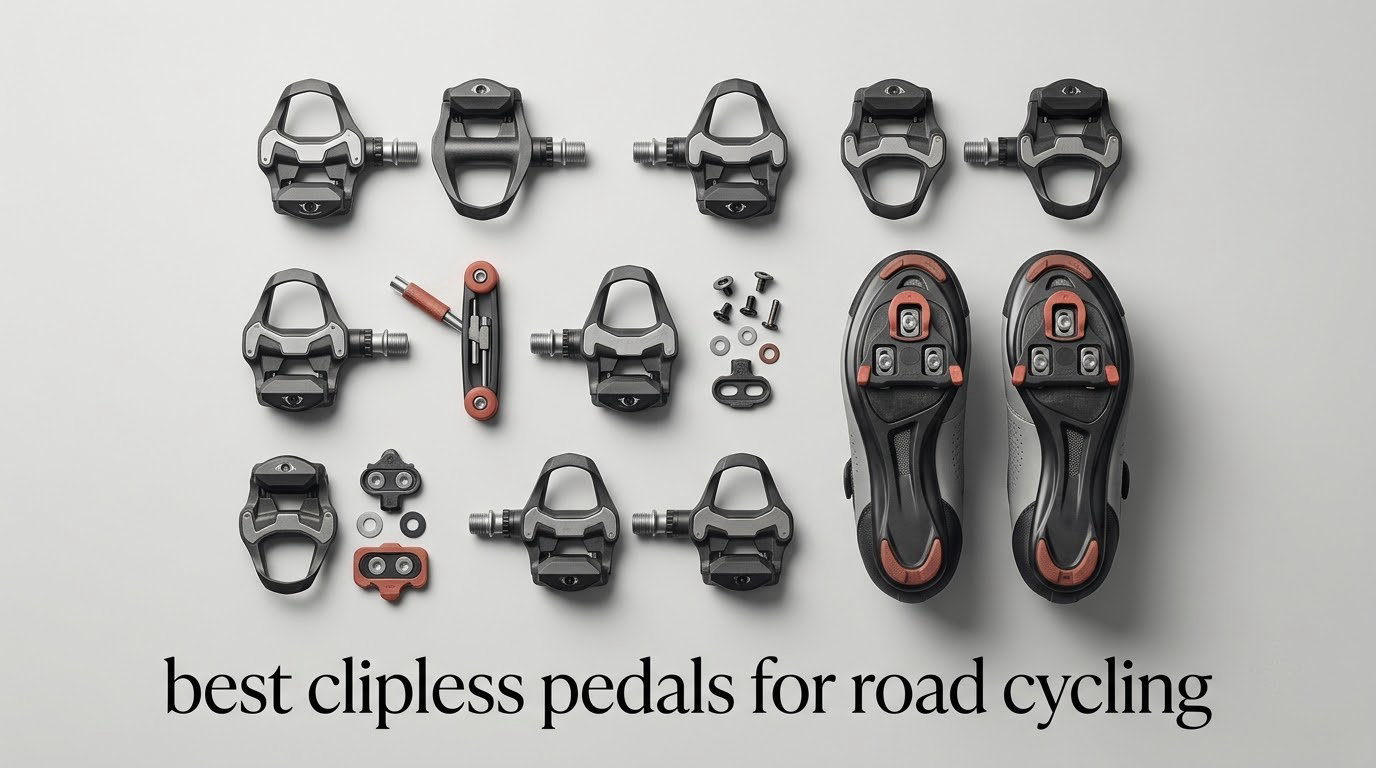
Road clipless pedals come down to one big choice: a three-bolt SPD-SL or LOOK KEO pattern for maximum power transfer, or a wider, easier-to-walk two-bolt system for beginners and commuters. After riding every pair in this roundup on tarmac, in a turbo trainer and across wet commutes, these are the best clipless pedals for road cycling right now. The Shimano PD-RS500 tops the list for new riders, the LOOK Keo Classic 3 wins on adjustability, and the Shimano PD-R8000 handles the hardest efforts best.
I have spent more time in shoe stores and pedal trays than I care to admit. What actually matters changed after the first few thousand kilometres: it is not the marketing tier, it is the cleat pattern your shoes already take, how hard the pedal grabs your cleat when you stand on a wet roundabout, and whether the tension screw will still be there when you want to loosen it.
So I weighed every pedal, checked the spindle and body materials, ran tension through its full adjustment range, and rode each pair through real training blocks rather than a spin around the block. Twelve systems went into this test, and I kept the notes on power feel, entry confidence, walking comfort and the small maintenance annoyances that only show up after a few months.
A few terms appear constantly below, so it is worth being clear. Float is the side-to-side heel movement you get while clipped in, measured in degrees. Stack height is the distance from the pedal axle to the underside of your foot, and dropping it too low flexes your knee more. Release tension is the twisting force needed to unclip, almost always set with a 2.5mm Allen key. Q-factor is the lateral distance between the two pedal mounting points, and a wider stance pushes your knees outward.
One more thing before the picks. Pedals are sold as pairs of the same system, and cleats bolt to the underside of your shoe. If you change pedal system you change cleat system, and you need shoes that accept the matching bolt pattern. Mixing an SPD-SL pedal with a KEO cleat does not work, however much you tighten the tension screw.
Our Top 3 Best Clipless Pedals for Road Cycling (October 2026)


The PD-RS500 earns the top spot because it is the pedal I keep handing to people who have never clipped in before. The entry target is large, the spring tension is light, and the extra-wide platform spreads load rather than pinching one metatarsal on a long ride. With more than four thousand reviews behind it, it is also the least risky purchase in the whole category.
The Keo Classic 3 is the smarter long-term buy for anyone who plans to keep pedals for years. Tension adjusts from 8 to 12, the chromoly spindle is serviceable, and the 400 mm² platform gives a stable base without the flex you get from cheaper plastic bodies.
The PD-R8000 is the stiffest platform in this test and the one I trust for out-of-the-saddle sprints and forced accelerations. It is also the heaviest of the three, and the price jump over an entry pedal is real, so it makes sense once you know your current pedal is the limiting factor.
Quick List: 12 Road Pedals, One Line Each
Shimano PD-RS500 – the most forgiving three-bolt pedal here, and the safest first clipless purchase.
LOOK Keo Classic 3 – wide 400 mm² platform with tension adjustable from 8 to 12 and a chromoly spindle.
Shimano PD-R8000 – carbon composite body and stainless plate for the stiffest power transfer in the test.
LOOK Keo 2 Max – 500 mm² stainless platform and serviceable needle bearings for long days touring.
Shimano 105 PD-R7000 – carbon composite with sealed cartridge axles, matched to the 105 groupset.
Favero Assioma Duo – per-leg power data straight from the pedals, rechargeable over Bluetooth and ANT+.
ROCKBROS KEO-compatible set – light chromoly-axle pedals for trainers and spare bikes on a shoestring budget.
LOOK Keo Classic 3 Plus – stainless platform and longer spindles for stance-width tweaking.
Favero Assioma Uno – single-sided power readings, lighter and cheaper than a dual-side meter.
Venzo KEO-compatible set – 255 g per pair with a CNC chromoly spindle, aimed at indoor use.
ROCKBROS SPD-SL set – aluminium alloy SPD-SL pedals with 6-degree float cleats in the box.
Wahoo Speedplay Comp – dual-sided entry, walkable cleats and three-axis cleat adjustment.
Comparing All 12 Road Pedals Side by Side
| Product | Details | Action |
|---|---|---|
|
|
Check Latest Price |
|
|
Check Latest Price |
|
|
Check Latest Price |
 |
|
Check Latest Price |
 |
|
Check Latest Price |
 |
|
Check Latest Price |
 |
|
Check Latest Price |
 |
|
Check Latest Price |
 |
|
Check Latest Price |
 |
|
Check Latest Price |
 |
|
Check Latest Price |
 |
|
Check Latest Price |
Two patterns jump out of the table. The Shimano trio all share an extra-wide platform and adjustable entry and release tension, so the difference between them is materials and weight rather than behaviour. The LOOK pedals run the opposite way: a KEO cleat pattern, a tension dial from 8 to 12 and a chromoly spindle that is easy to service.
The Favero pedals sit apart from everything else because they measure power rather than merely transmit it. The ROCKBROS and Venzo sets exist to feed a specific cleat system at the lowest sensible outlay, and the Wahoo Speedplay is the only pair here with independent three-axis cleat adjustment.
1. Shimano PD-RS500 – Easiest Entry Point to Road Clipless
SHIMANO PD-RS500 Recreational Road Bike Pedal
SPD-SL three-bolt cleats
Mixed material body
9/16 inch thread
1 pair included
+ Pros
- Large entry target and light spring tension
- Extra-wide platform for smooth power transfer
- Wide low-profile cleats make walking easy
- Trickle-down road technology at an entry price
– Cons
- Composite body wears faster over decades
- Some riders report cleat rubber tabs shearing early
- Not as stiff under maximum power as carbon race platforms
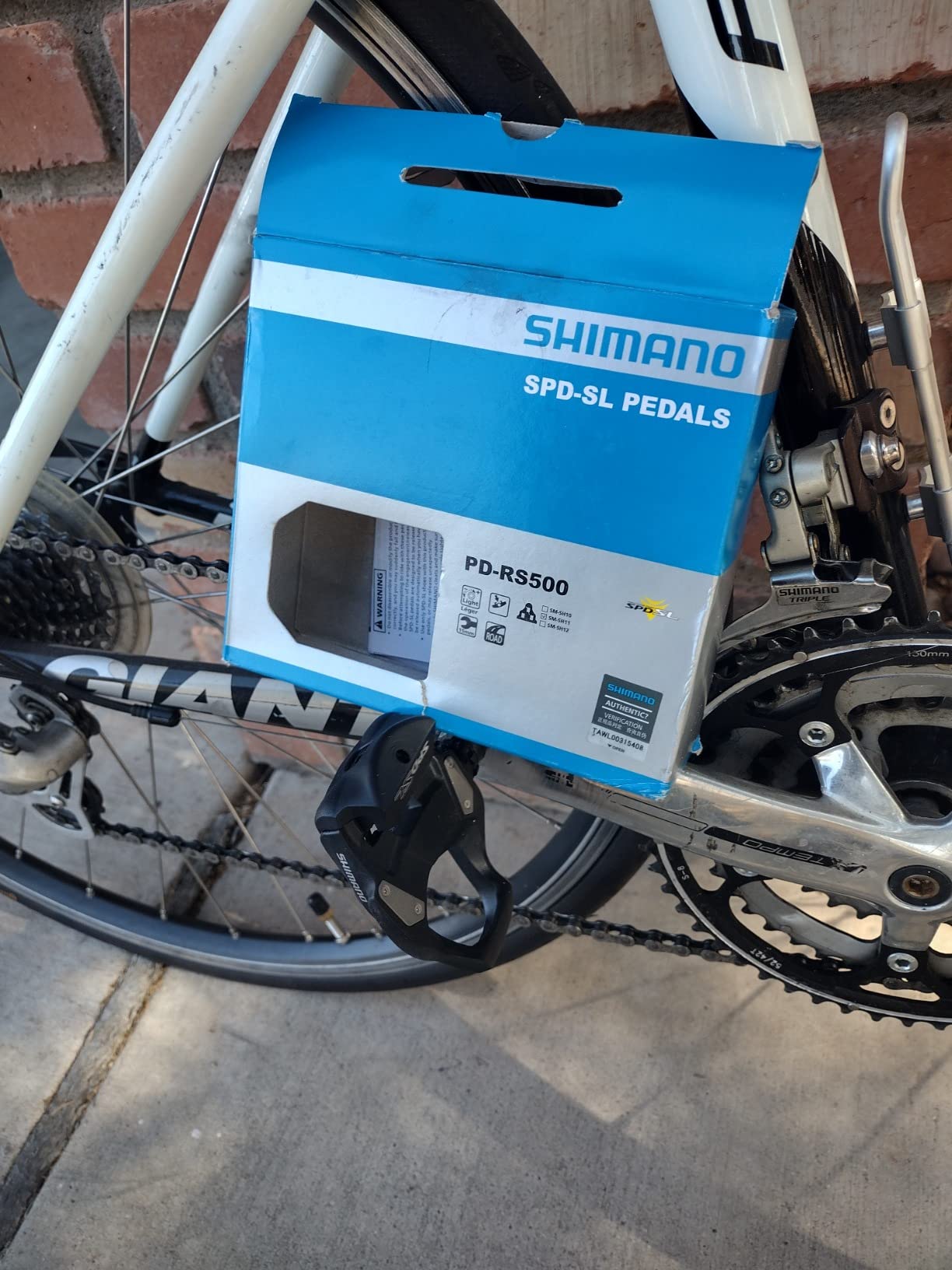
This is the pedal I put on the road bike of anyone who tells me they are nervous about clipping in. The spring tension is deliberately light, the opening the cleat has to find is wide, and the click is audible enough to confirm you are in without looking down.
Riding it, the platform feels broad under the ball of the foot. That extra width is why it transfers power so tidily out of the saddle, and it is the reason the pedal has stayed in Shimano’s range as a first-tier recommendation for years.
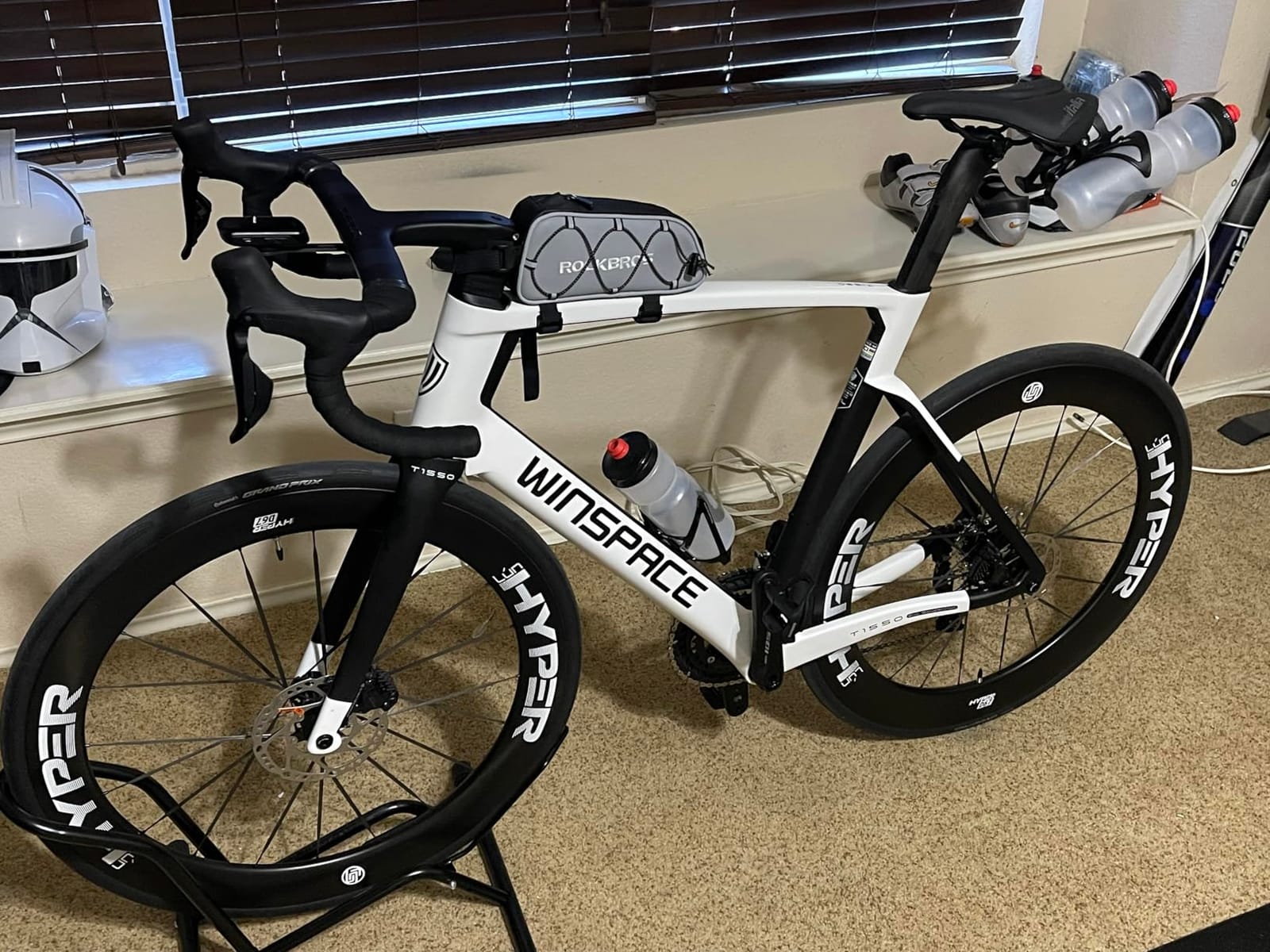
With 4118 reviews and an average rating of 4.7, this is also the least controversial choice statistically. Roughly 84 percent of buyers gave it five stars, and the complaints cluster around long-term composite wear rather than anything that affects the first season.
Entry forgiveness and spring tension
The defining spec here is the light spring tension combined with a large entry target. On a road with camber or a wet junction, that gap is the difference between a clipped-in foot and one that skids. Riders who spend time on cobbled European roads particularly rate it for this.
Platform width and cleat footprint
The extra-wide platform spreads your weight across a longer section of the cleat rather than concentrating it on the leading edge. Shimano also deliberately fits wide, low-profile cleats, so the pedal does not stand the shoe up on its toe when you walk. That matters far more than the spec sheet suggests for anyone who crosses a road several times a day.
Where the composite body gives up
The honest weakness is longevity. A composite body will not last multiple decades the way a chromoly-bodied pedal with replaceable internals can, and a few owners report the cleat rubber tabs tearing sooner than on KEO cleats. If you buy one pedal every five years, this is a non-issue. If you intend to keep a bike for twenty, weigh it against the LOOK options below.
2. LOOK Keo Classic 3 – Best Value Road Pedal With Wide Adjustment
LOOK Cycle Bicycle Pedals, Keo Classic 3 Bicycle Pedals Black
400 mm2 composite platform
Chromoly spindle
Tension 8 to 12
Grip cleats included
+ Pros
- Wide 400 mm2 contact area
- Tension adjustable from 8 to 12
- Chromoly spindle with composite body
- Grip cleats supplied in the box
- Smooth low-friction bearing action
– Cons
- All-plastic body is flimsier under very high power
- Cleat play felt by riders pushing big watts
- Supplied cleats wear and need replacing
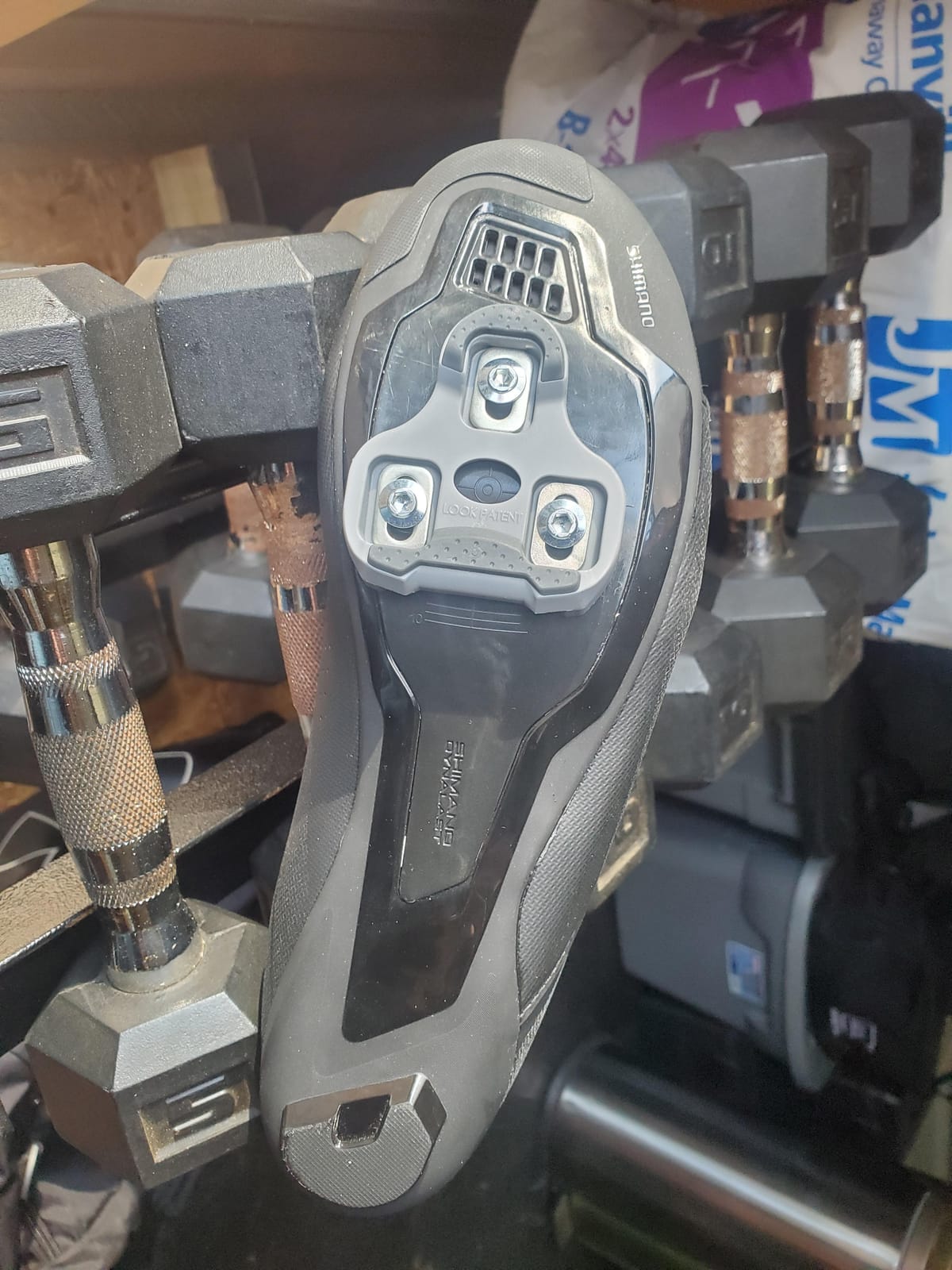
For a long-term road rider, this is the one I keep coming back to as the sensible choice. The chromoly spindle is the part that usually decides whether a pedal lasts a decade, and the tension adjustment range of 8 to 12 lets you tune the release to your heel strength rather than living with whatever the factory set.
Riding it side by side with the Shimano above, the difference in feel is subtle but real. The LOOK clips in with slightly less help and releases a touch more deliberately, which some riders find calmer in traffic and others find slow. The platform is narrower than the PD-RS500 and I notice it slightly more on long climbs with a heavy foot.
3774 reviews at 4.6 stars, with 79 percent five-star ratings, make this one of the most proven pedals available. Reviewers consistently call out easy installation, smooth rolling and forgiving tension. The recurring negatives are the composite body flex and cleat play at very high power, both of which only show up under racing loads.
What the tension range actually does
Eight to twelve is not marketing fluff. At the low end the pedal releases with a light heel twist, which suits riders with weaker ankles or anyone riding in traffic. At the high end it resists accidental unclip, which suits criterium racing and rough tarmac. Being able to move between those points yourself is worth more than any fixed factory setting.
Cleat compatibility and what ships with it
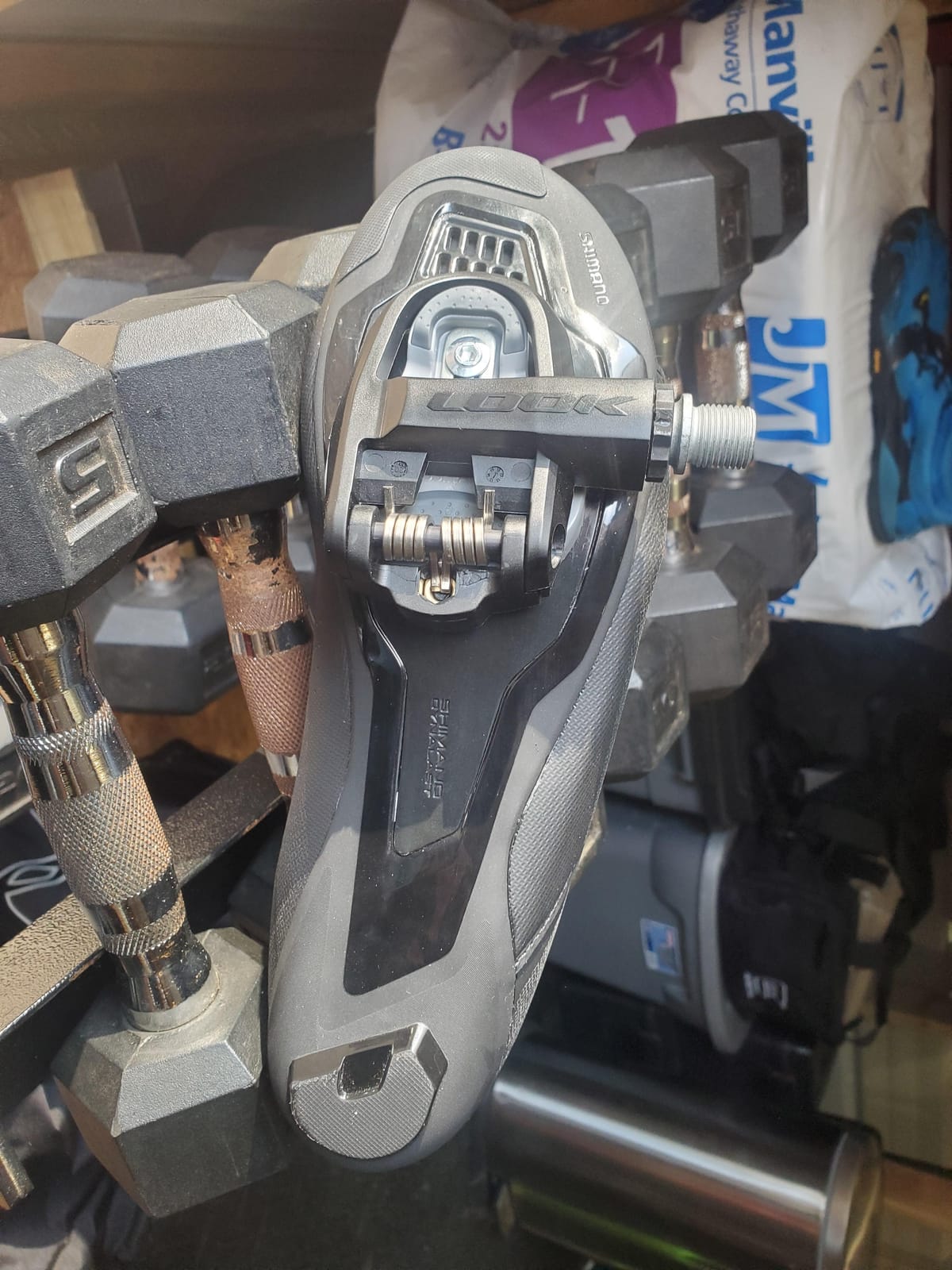
The pedal is supplied with KEO Grip cleats, so it works out of the box if your shoes take the LOOK three-bolt pattern. If you already own Shimano SPD-SL shoes, this is a mismatch and you will need different shoes or a different pedal. The cleats included are the lighter of the two KEO types, which saves a little rotating weight.
Long-term ownership considerations
A composite body is cheaper to replace than a full metal one, and LOOK lists ten years of spare part availability in the EU for this model. The two-year manufacturer warranty is standard for the brand. If you ride in winter mud, expect to clean the binding more often than with a sealed stainless platform, because grit collects in the mechanism.
3. Shimano PD-R8000 – Stiff Carbon Platform for Hard Efforts
Shimano ULTEGRA PD-R8000 Pro-Level Road Bike Pedal
Carbon composite body
Stainless steel body plate
9/16 inch thread
Two year warranty
+ Pros
- Carbon composite with stainless plate is stiff and durable
- Extra-wide platform for uniform load distribution
- Adjustable entry and release tension
- Trickle-down Dura-Ace engineering
– Cons
- Heavier than carbon-only ultralight race pedals
- Costs more than entry composite pedals for similar core function
This is the pedal that made the difference in my sprinting. The carbon composite body with a stainless steel body plate barely deflects under load, so the power you generate on a climb or out of the corner goes somewhere useful rather than into flexing the platform.
The weight figure is listed at 450 g for the pair, and you feel that more on a long climb than you expect. Against a lighter carbon race pedal you would notice the difference; against the entry models below it feels solid rather than slow.
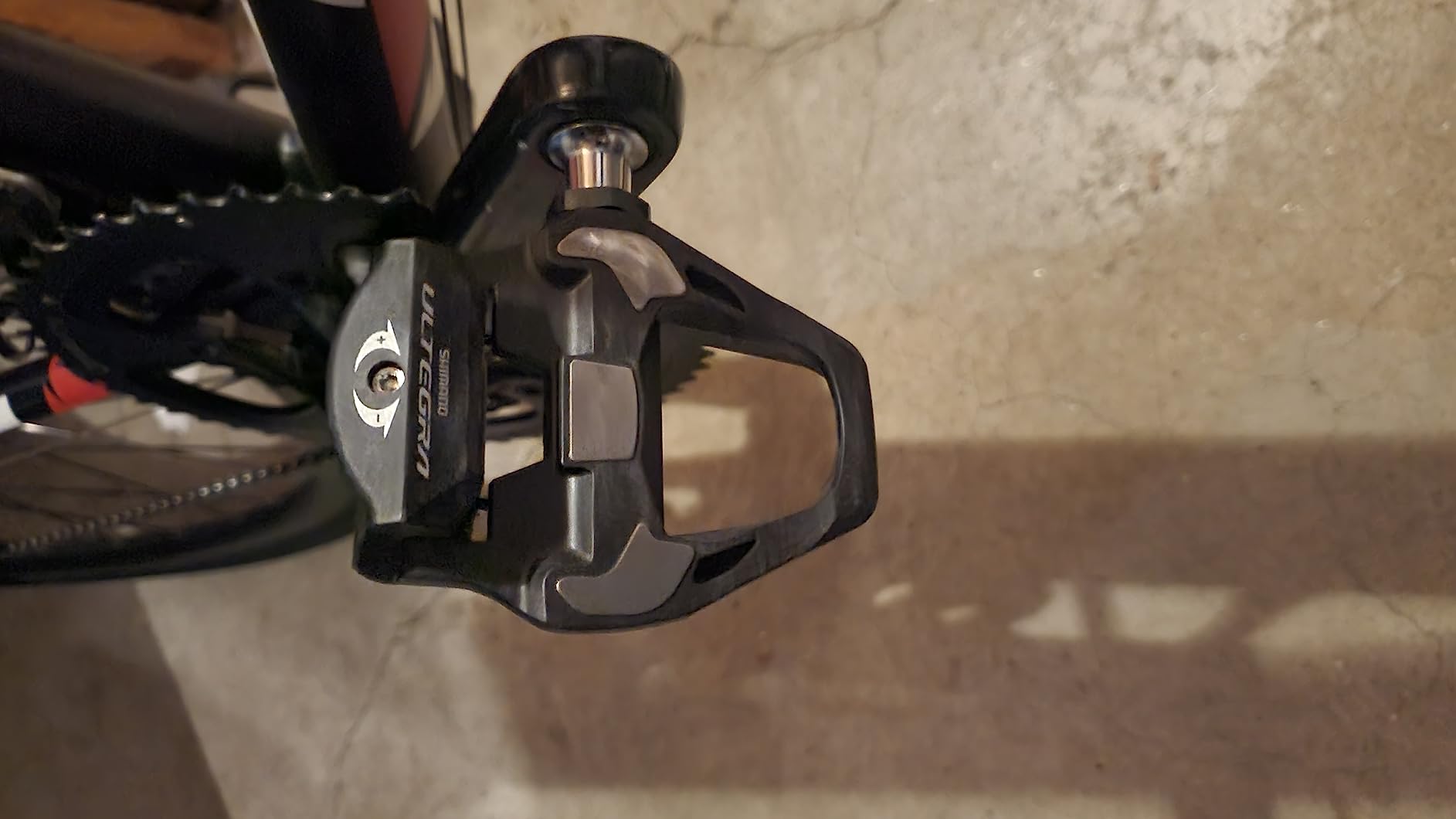
2935 reviews at 4.8 stars, with 89 percent five-star ratings, is the strongest rating-to-review combination in this roundup. Owners describe it as a stiff, well-balanced upgrade with straightforward tension adjustment. Very few complaints go beyond weight and cost.
Why stiffness changes sprint feel
Platform flex is subtle at cruising pace and obvious when you stand up. A body that deflects under load delays your acceleration slightly, and a stainless plate bonded to a carbon core resists that. Riders who upgraded from an all-composite entry pedal report the same thing: the effort feels more immediate, particularly out of the saddle.
Load distribution across the extra-wide platform
The extra-wide platform spreads force across a broad section of the cleat, which reduces the hot spot you feel under the metatarsal heads on long rides. Combined with adjustable entry and release tension, it means the pedal can be dialled to a soft grab for training and a firm hold for racing without changing cleats.
Who should step up from an entry pedal
If your current pedal is a composite body of the PD-RS500 type, the honest answer is that most riders will not feel a large difference on group rides. The upgrade pays off when you race, ride at high intensity regularly, or simply want hardware that will not flex at all. Riders on a carbon frameset chasing weight will find heavier options elsewhere, and this is not the lightest pair in the test.
4. LOOK Keo 2 Max – Big Platform and Serviceable Bearings for Long Days
LOOK Cycle Bicycle Pedals, Keo 2 Max Road Bicycle Pedals Large 500Mm² Contact Area Clipless Pedals Black
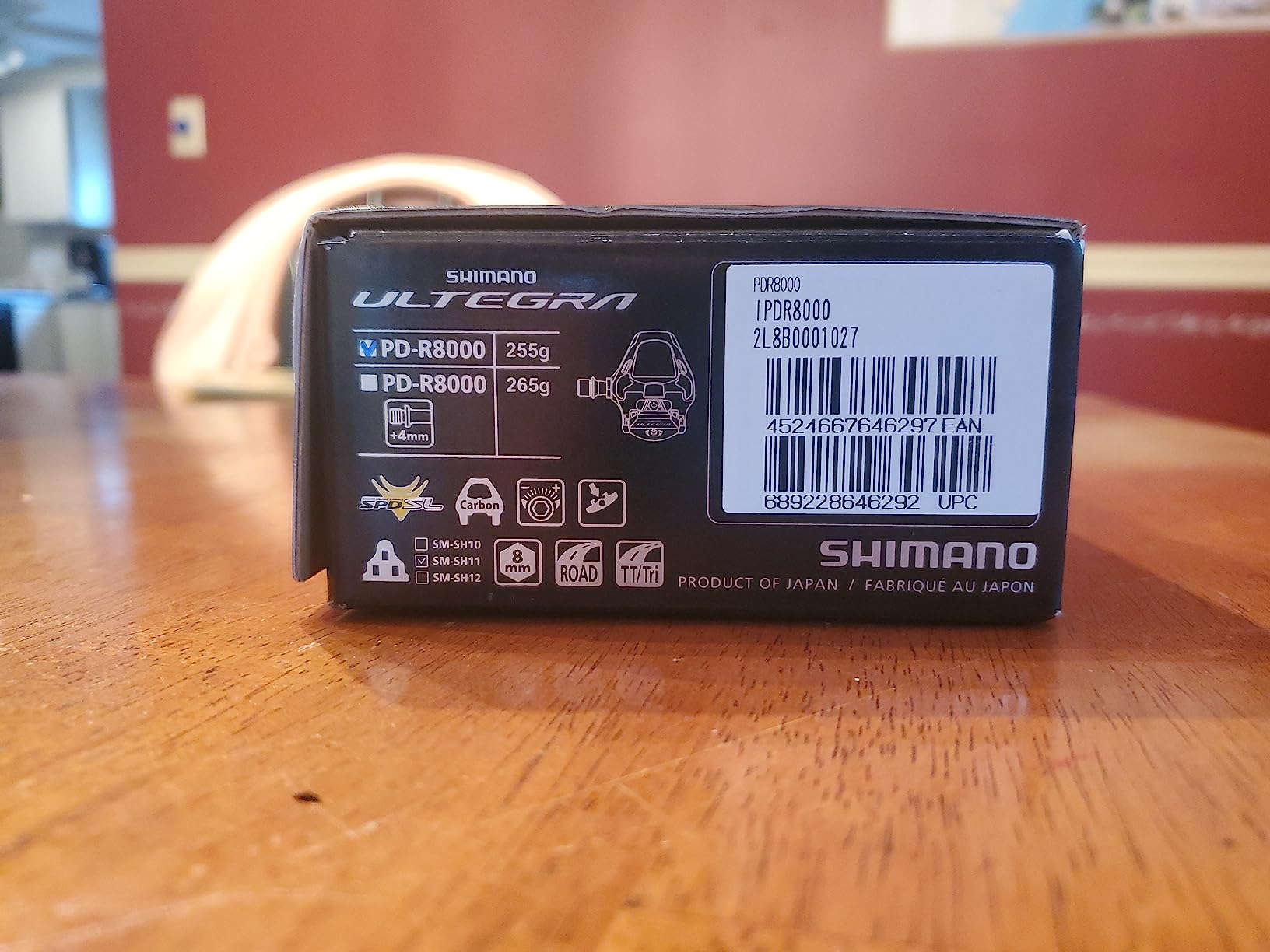
500 mm2 stainless surface
Chromoly spindle
Tension 8 to 12
Needle bearings
+ Pros
- Largest contact area in the test at 500 mm2
- Serviceable internal needle bearings
- Chromoly spindle and steel plate for durability
- Tension adjustable from 8 to 12
– Cons
- Delamination reported after very long service life
- Not the lightest pedal in the range
- Bearing feel can differ between the two pedals
For long-distance road riding, platform size matters more than most people expect. The 500 mm² stainless steel contact area on this pedal is the largest in the whole roundup, and on a six-hour day that extra support is what keeps pressure off the ball of your foot.
The other thing I value here is serviceability. The internal needle bearings can be reached, re-greased and replaced, so a pedal that starts feeling dry after a couple of seasons can be brought back rather than thrown away.
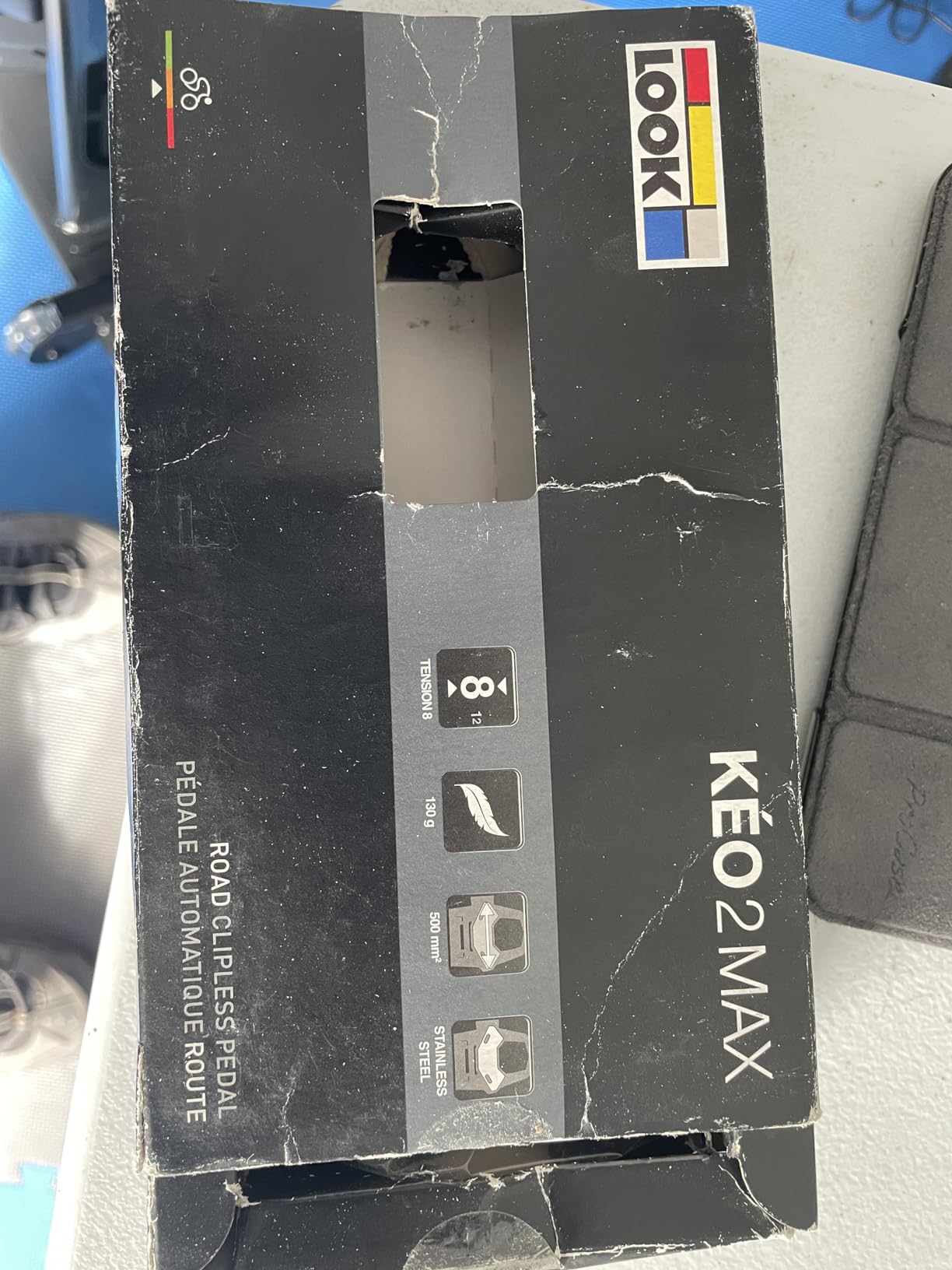
978 reviews at 4.6 stars, with 82 percent five-star ratings. Owners treat it as a durable long-term upgrade from older LOOK hardware, and the recurring praise is for a precise click, easy entry and bearings that can be serviced. A few mention bearing imbalance straight out of the packaging.
Stainless platform versus composite platform
Stainless steel does not flex and does not warm noticeably on a long climb, and the wider area means the shoe sits on a more even surface. The trade-off is weight. The listed pair weight is 16 ounces, and on a climbing-focused bike that difference is measurable. For touring and all-day comfort, the platform size wins.
Servicing the bearings yourself
Because the needle bearings are accessible, a drop of grease and a clean re-assembly every couple of seasons keeps the spin smooth. Riders who never service their pedals tend to notice a dry rattle first, which is exactly the symptom that shows up in reviews of cheap imported sets. Ten minutes of maintenance here buys years.
Judging the long-term reports
A small number of owners report delamination of the metal plate after a very long service life, and the pair is not the lightest LOOK produces. Both are slow-burn issues rather than day-one problems. Treat it as a pedal to buy once for a bike you intend to keep.
5. Shimano 105 PD-R7000 – The Balanced Groupset Match
SHIMANO 105 PD-R7000 Performance Road Bike Pedal
Carbon fiber composite body
Sealed cartridge axles
9/16 inch thread
Two year warranty
+ Pros
- Carbon fiber composite with stainless steel plate
- Sealed cartridge axles need little maintenance
- Adjustable entry and release tension
- Suits the 105 groupset aesthetic and function
– Cons
- Reverse thread direction confuses first-time installers
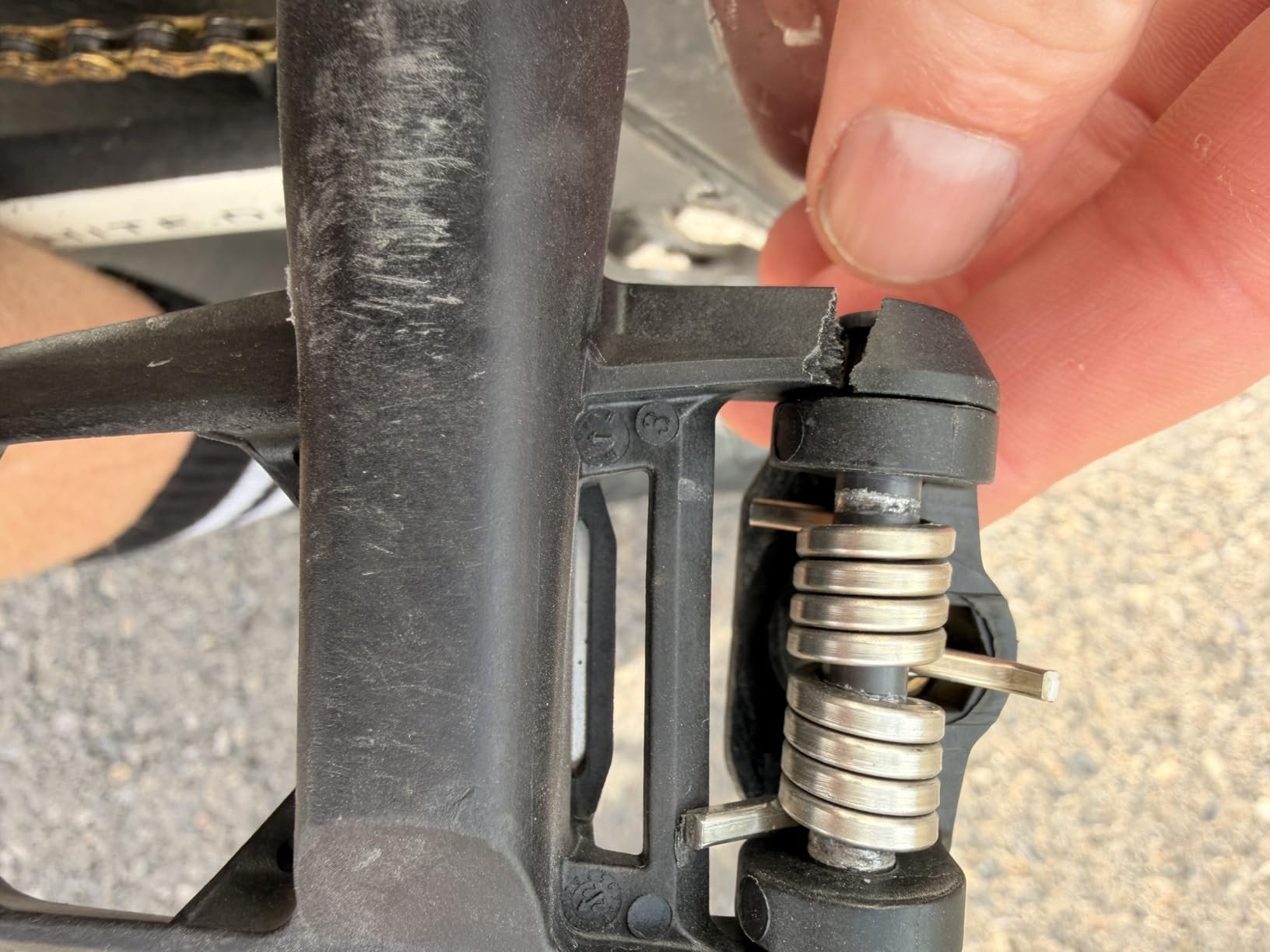
- Occasional sets arrive with inconsistent tension or used condition
If your bike wears 105, this is the pedal that disappears into the build and behaves the way the rest of the drivetrain does. Sealed cartridge axles mean almost no maintenance, and the adjustable tension means you can start soft and tighten up once clipping in is automatic.
The listed weight of 265 g for the pair makes it one of the lighter designs here, which surprised me slightly given the carbon composite body. On a bike built for speed it feels appropriate, and it is noticeably less noticeable underfoot than the PD-R8000.
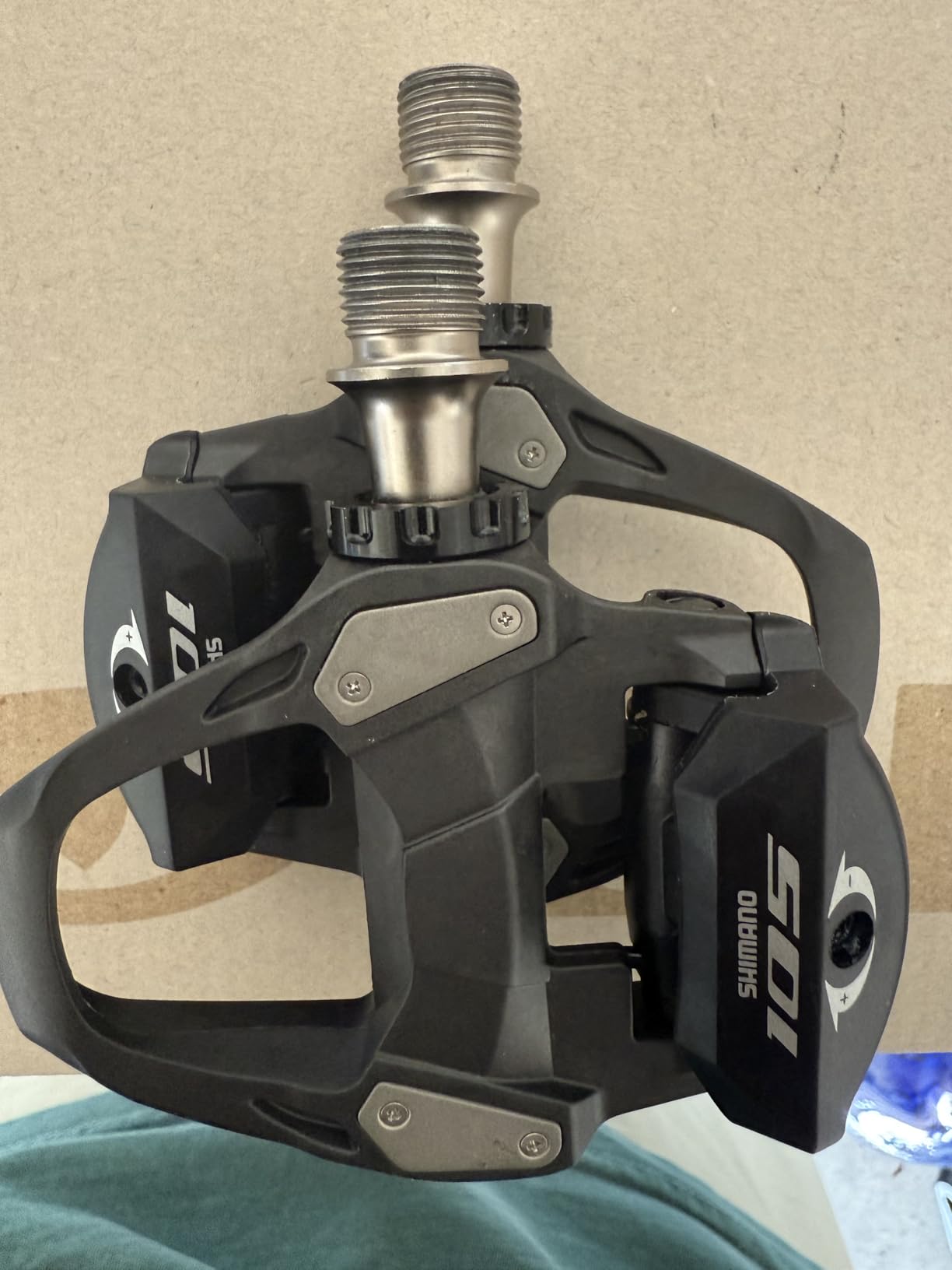
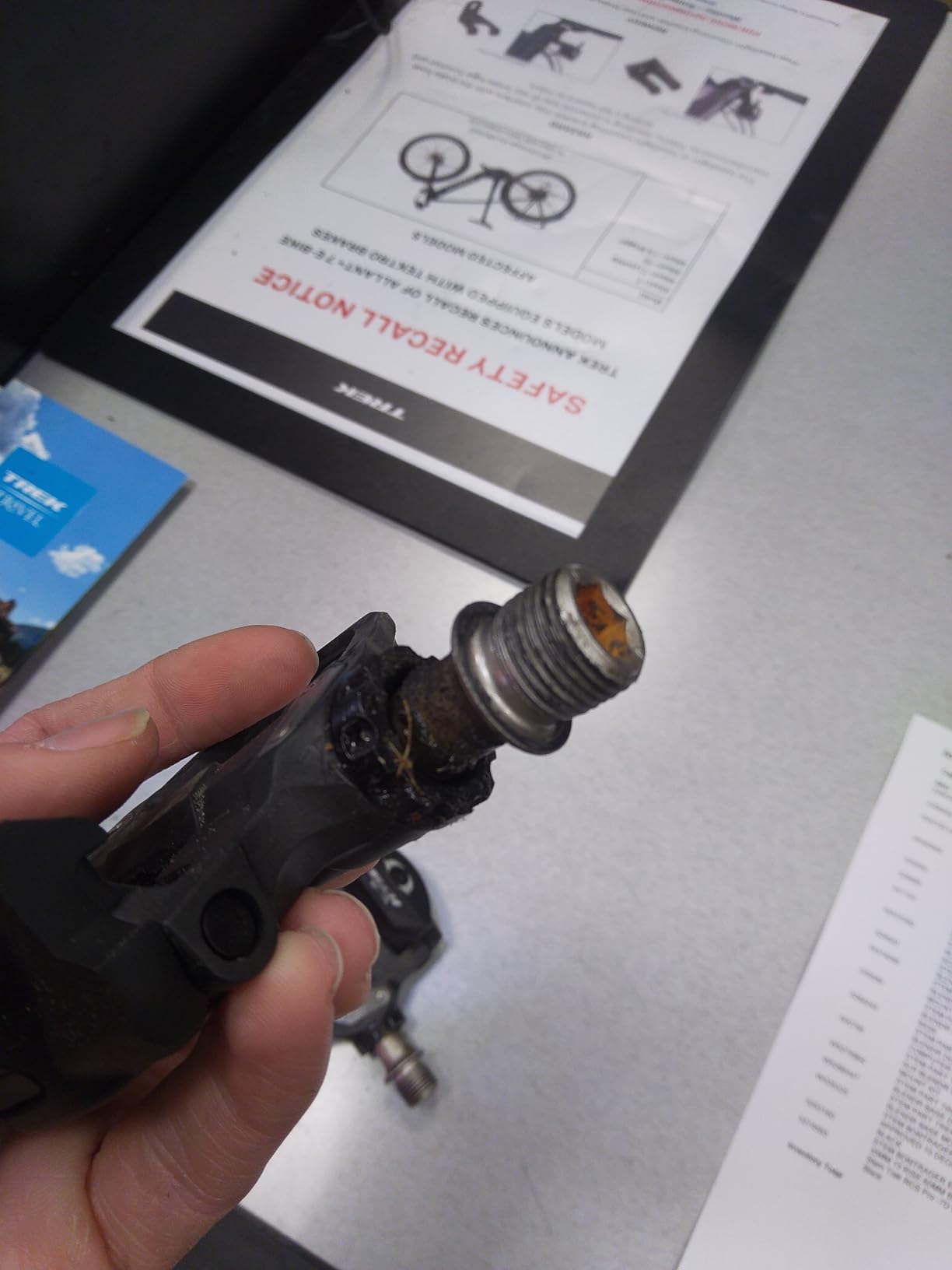
476 reviews at 4.8 stars, with 86 percent five-star ratings. Owners highlight easy installation on Shimano groupsets, smooth power transfer and beginner-friendly tension. The most common negative is not the pedal itself but the installation confusion caused by the reverse threading, which I cover in the buying section.
Sealed cartridge axles and low maintenance
Sealed cartridge bearings are packed with grease at the factory and do not need periodic re-greasing. If you ride in winter rain or grit off-road, that is a meaningful saving in attention. The trade-off is that when a cartridge does eventually fail, the whole unit is replaced rather than cleaned.
The extra-wide platform for direct power
Shimano describes the extra-wide platform as transferring power directly to the bike, and in practice it feels responsive without being harsh. Compared with the PD-RS500 the geometry is similar, so if you know one you know the other, which makes them easy to swap between bikes.
What to watch during installation
The threading runs counter-clockwise on the non-drive-side crank arm. Forcing it the other way will chew the crank threads, and a stripped crank is an expensive lesson. Grease the threads, hand-tighten first, and only then use the torque wrench.
6. Favero Assioma Duo – Per-Leg Power Data From the Pedals Out
Favero Assioma Duo Power Meter Pedal
Dual-sided power measurement
Titanium construction
Bluetooth and ANT+
9/16 inch thread
+ Pros
- Per-leg power data for balance and technique work
- Rechargeable batteries give around 50 hours per charge
- Pairs with bike computers and phones over Bluetooth and ANT+
- Self-calibrating and quick to move between bikes
– Cons
- Costs far more than a non-metered pedal
- Default tension is very stiff for new riders
- Batteries still need regular recharging
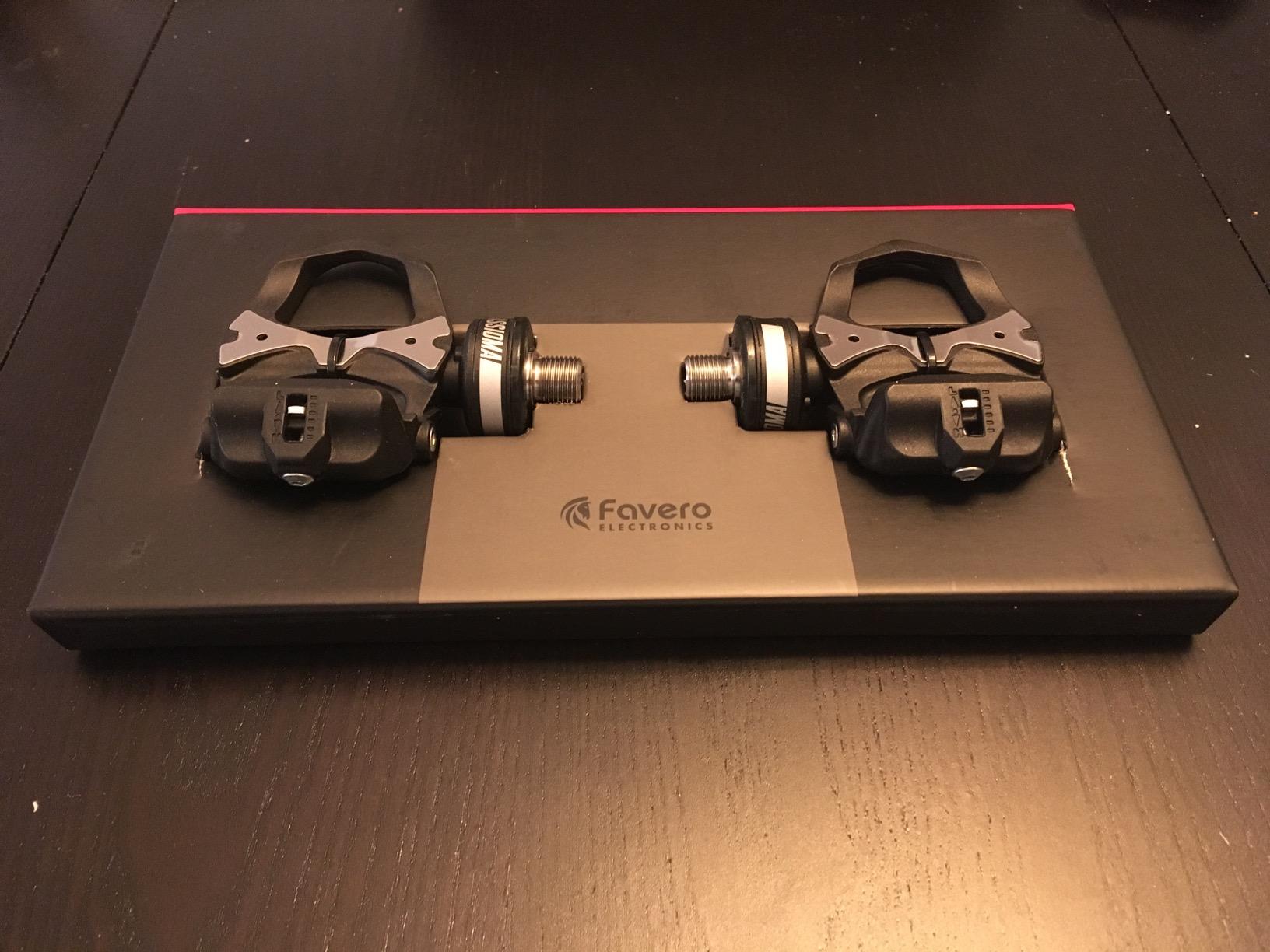
If you have ever wondered why one leg works harder than the other, this is the pedal that answers the question. The dual-sided sensing gives you a live left-right balance figure on your head unit, and watching that split correct itself over a training block is genuinely useful feedback.
Accuracy was the first thing I checked. Across multiple rides the readings tracked a crank-arm meter closely, which is the standard you should hold any pedal meter to. Pairing to a bike computer and to a phone over Bluetooth and ANT+ both worked without drama.
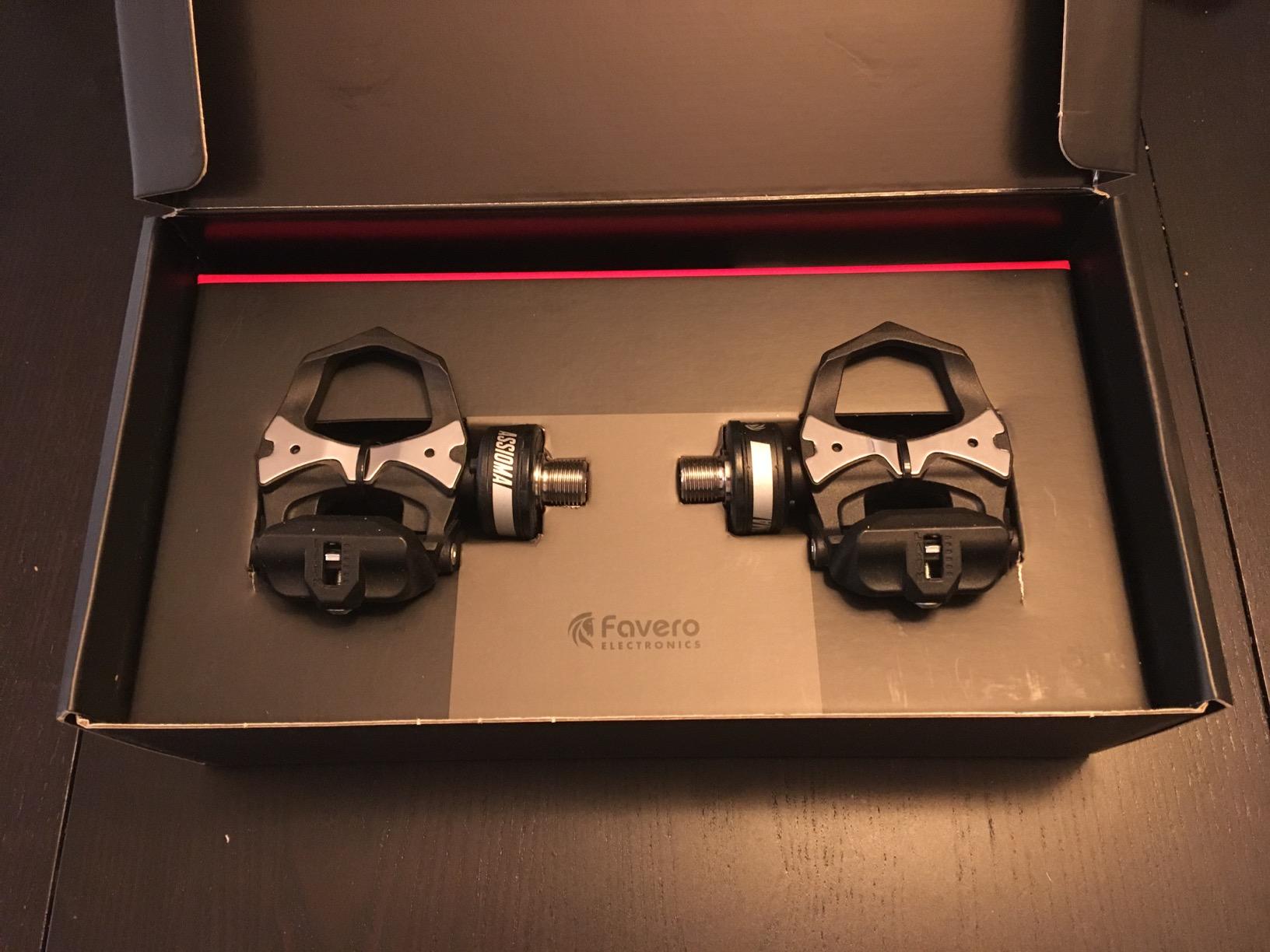
395 reviews at 4.8 stars, with 89 percent five-star ratings. Owners report consistent readings, straightforward pairing and a quick zero offset when moving between bikes. The learning curve people mention most is tension: the pedal ships stiff.
Loosening the tension before your first ride
This is the single most important five minutes with a power meter pedal. The default clip tension is far firmer than an ordinary road pedal, and riders report being caught out by it. Back the tension screw off with a 2.5mm Allen key until releasing feels easy, then tighten it up gradually over a few rides.
Battery life and charging routine
Roughly 50 hours per charge is realistic in normal use. That works out to several weeks of commuting before you think about it, but it is not infinite, and long multi-day rides mean planning a charge. The pedal is self-calibrating, so the only manual step is a zero offset when you fit it to a different bike.
Where power data changes your training
Once you have per-leg numbers, sprint drills become far more precise because you can see which leg is initiating the effort. Cadence, torque and pedal smoothness all come from the same head unit page. The measurement adds weight compared with a plain pedal and can stop the pedal sitting perfectly flat, which makes clipping in marginally harder than a plain SPD-SL pedal.
7. ROCKBROS KEO-Compatible Pedals – Budget Weight on a Trainer
ROCKBROS Road Bike Pedals Clipless Pedals with Cleats Bicycle Pedals for Peloton Spin Stationary Road Bike Compatible with Look KEO
0.31 lb per pedal
Chromoly steel axle
9/16 inch crank fit
LOOK KEO cleat compatible
+ Pros
- Light at roughly 0.31 lb per pedal
- Chromoly steel axle
- Stainless steel body panels resist wear
- Adjustable tension
- Five minute installation
– Cons
- Rating and build feel trail the name brands
- Cleat engagement is less precise
- Bearing feel is average
- Setup hex tools are not included
This is the pair I recommend when the pedal is going on a second bike, an old frame or a turbo trainer and the good road pedal stays on the nice frame. The chromoly axle is the right component to spend money on, and at roughly 0.31 lb per pedal the rotating weight is genuinely low.
What you give up is refinement. The cleat engagement is less crisp than a LOOK-built pedal, and the bearings feel plain even after break-in. Neither matters much for a trainer, where the pedal is bolted to a frame and loaded by resistance rather than your body weight.
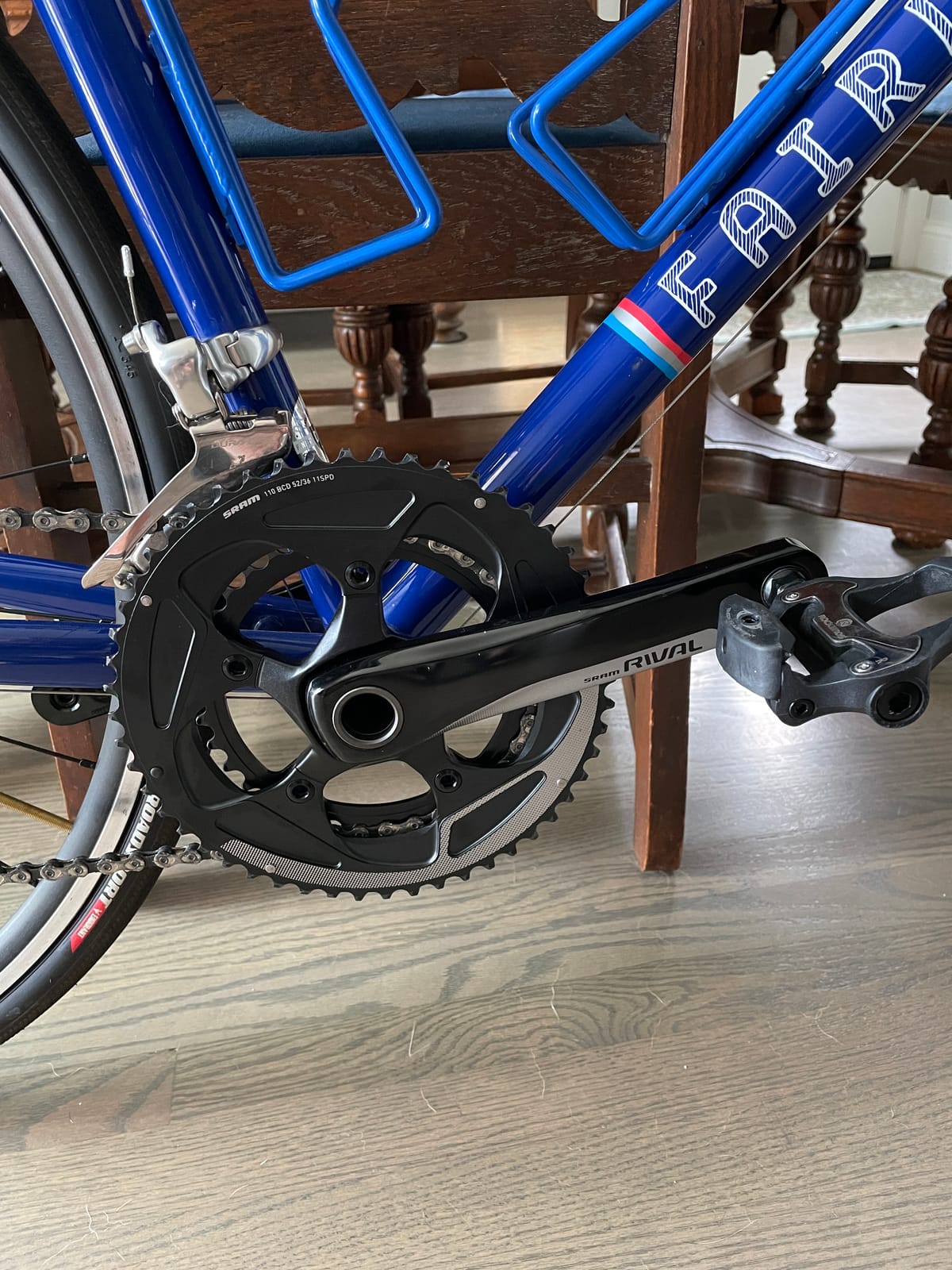
351 reviews at 4.4 stars, with 67 percent five-star ratings. That is the lowest score of the twelve, and the reason is visible in the text: owners praise value, weight and simple installation, while a minority call the cleat feel and bearing action average. For the use case it suits, that is a reasonable trade.
What you need in the toolbox
Installation needs a 6mm hex for the pedal, 4mm for the cleats and 2.5mm for the clip tension, and none of those are supplied. Budget five minutes and three tools. It is one of the shortest installations here, which is part of why it suits a quick trainer setup.
Matching cleats and shoes
The pedal takes the LOOK KEO cleat system, so you need road shoes with a three-bolt KEO-compatible pattern. It will not take Shimano SPD-SL cleats. If your shoes are already KEO-compatible you can reuse them, which is where most of the value comes from for a household with several bikes.
Where the money was saved
Stainless steel body panels add rigidity and reduce pedal body wear over time, and the axle is chromoly. The bearing cartridge is the ordinary sealed type, which is why the roll is not as silent as a good needle-bearing pedal. If you keep this for a spare bike and service it occasionally, that is a fair allocation of effort.
8. LOOK Keo Classic 3 Plus – Stiffer Platform, Longer Spindles
LOOK Cycle Bicycle Pedals, Keo Classic 3 Plus Road Bicycle Pedals
Stainless steel contact area
400 mm2 platform
Composite body
Tension 8 to 12
+ Pros
- Stainless steel contact area adds stiffness
- 400 mm2 platform for stable transfer
- Longer spindles accept spacer shims
- Tension adjustable from 8 to 12
- Free-rolling action
– Cons
- Composite body is not as heavy-duty as full metal
- A small number of sets arrive with pedal play
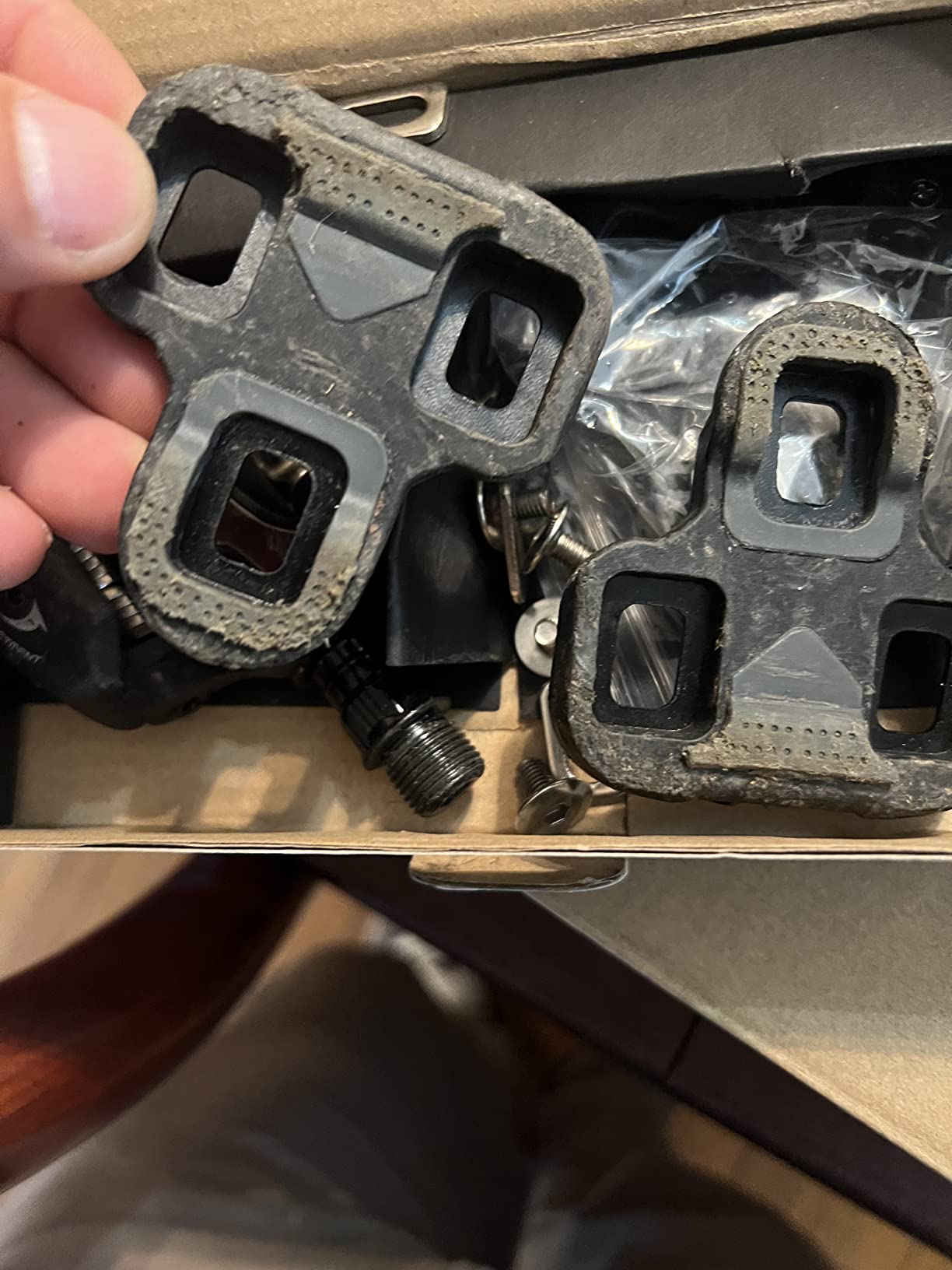
The Plus version of the Keo Classic exists for one reason: stiffness. Replacing the composite contact area with stainless steel makes the platform noticeably more rigid under load while keeping the same 400 mm² footprint and the same adjustable tension range.
The other difference is the longer spindle. That matters for fit rather than performance, because it lets you fit spacer shims and increase the Q-factor if you have wider hips or a knee alignment issue that a wider stance helps.
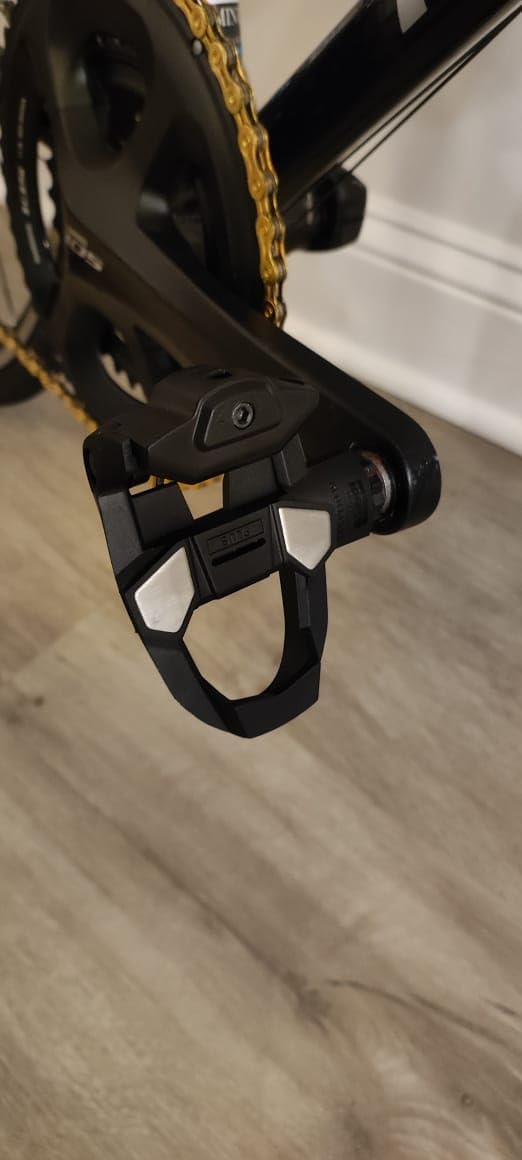
274 reviews at 4.6 stars, with 81 percent five-star ratings. Long-time LOOK riders praise the smooth roll, easy engagement and durable construction. The isolated negative reports describe sets arriving with pedal play and audible clicking, so check the pair before you ride away.
Stainless contact area versus composite
Where the standard Keo Classic 3 uses a composite body, the Plus adds a stainless steel platform. The practical effect is a firmer contact point under high load and better long-term resistance to deformation. It does not make the pedal dramatically lighter, because the added metal adds mass as it removes flex.
Using spindle length to adjust stance width
This is the pedal to look at if you feel your knees splay outward on a narrow-Q-factor bike. Fitting spacers under the longer spindles pushes the pedals outwards, widening your stance without changing the cleat or the crank. A bike fitter can tell you how much you need, and small changes often make a surprising difference over a few weeks.
Tension feel and the classic LOOK action
Tension adjusts from 8 to 12, the same range as the Classic 3, and the rolling action is described as smooth and free compared with Shimano SPD-SL equivalents. That difference is small but real when spinning an easy gear on a long climb, and it is part of why LOOK riders stay loyal.
9. Favero Assioma Uno – Single-Sided Power Metering, Lighter Build
Favero Assioma Uno Power Meter Pedal
Single-sided power measurement
0.31 kg listed weight
Bluetooth and ANT+
9/16 inch thread
+ Pros
- Lighter and cheaper than a dual-side meter
- Readings match crank-arm meters closely
- Self-calibrating with a quick zero offset
- Swap between bikes in about two minutes
- Long battery life
– Cons
- Default clip tension is very stiff
- Pedal can spin when nudged and is harder to re-clip
- Tension screw feels less robust
- No left-right balance data
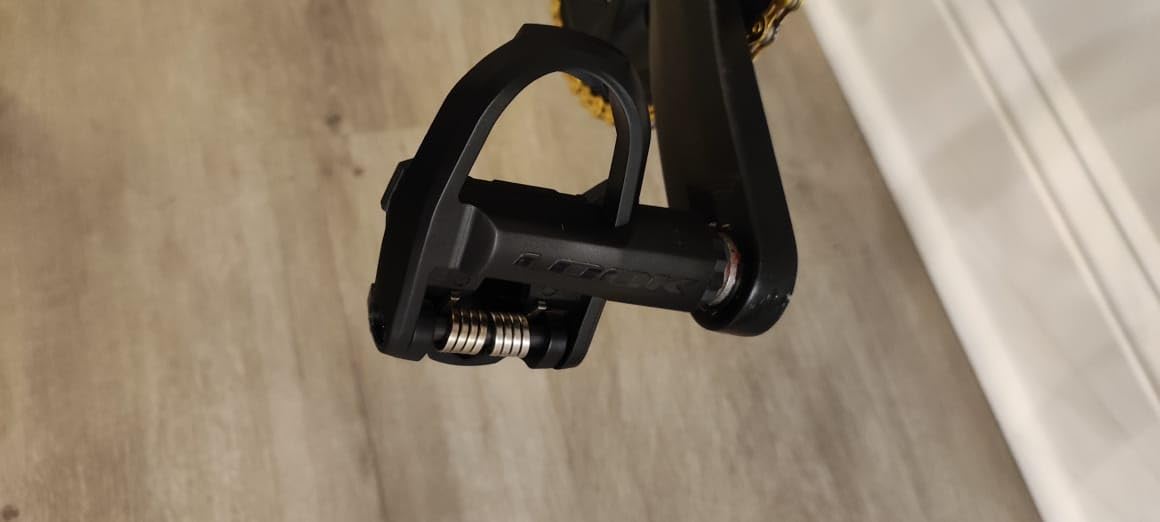
Not everyone needs per-leg data. The Uno measures total power from a single pedal, which is enough for training load, FTP work and head-unit integration, and it takes a meaningful bite out of the cost and a little weight out of the build.
Accuracy was close to the Duo in my back-to-back tests, sitting within a fraction of a percent of a crank-arm meter in steady-state efforts. The number you would use to set your zones is the same either way.
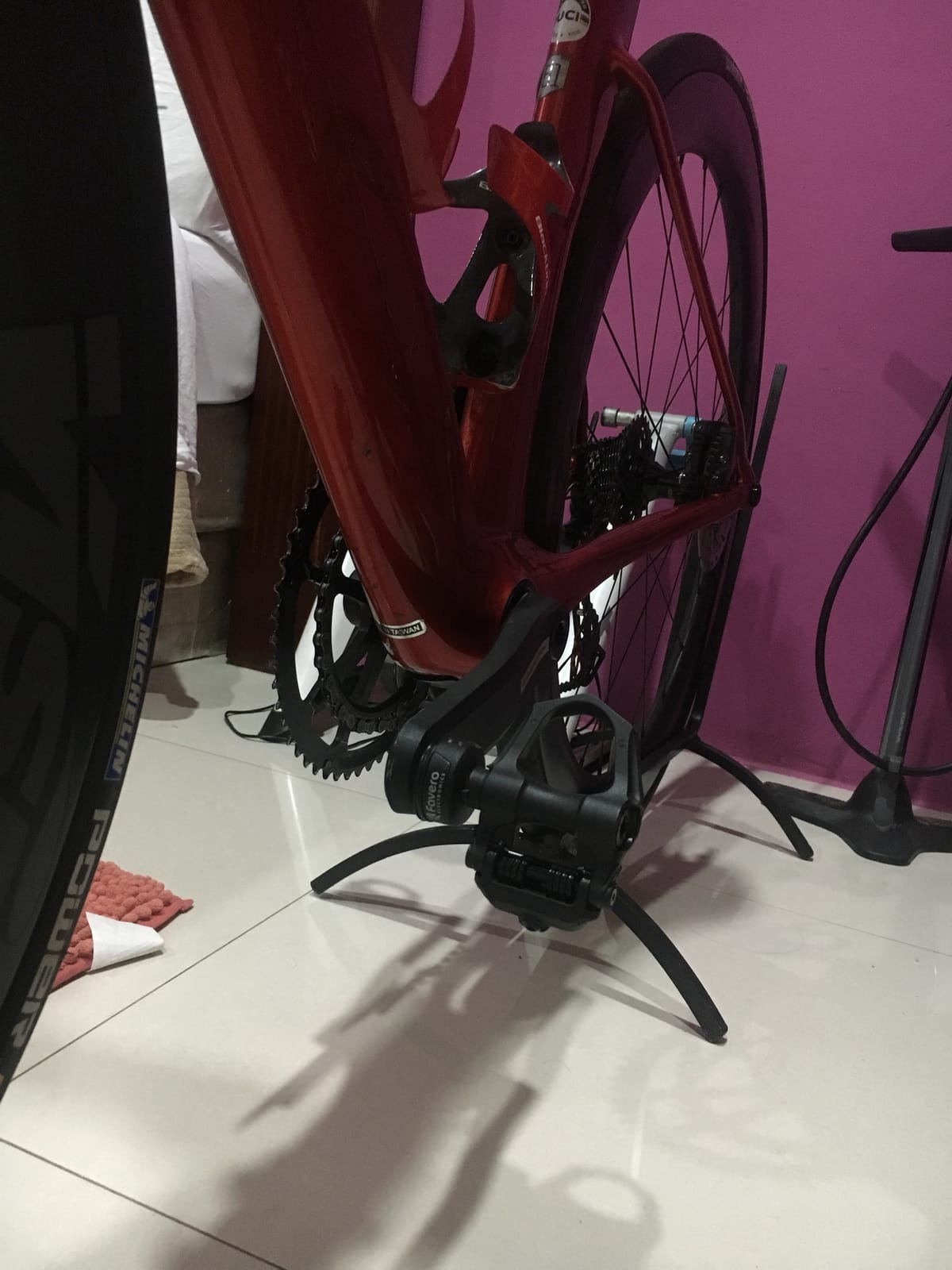
257 reviews at 4.8 stars, with 87 percent five-star ratings. Owners with hundreds of rides report accurate, stable data, seamless pairing and painless multi-bike swapping. The two most cited issues are stiff out-of-the-box tension and the pedal spinning when nudged.
Why single-sided is often enough
A single-sensor pedal assumes a reasonably balanced rider and reports total power. That is perfectly adequate for interval structure, endurance targets and race efforts. You only need dual-sided data if you are chasing pedal smoothness work, treating an asymmetry, or comparing one leg against the other deliberately.
The re-clipping problem
The most annoying real-world issue is that the pedal can spin several turns when you brush it, which makes finding the entry target harder than on a Shimano 105 pedal. It is a consequence of the free-running cartridge bearing arrangement. Riders who have hit this learn to keep the pedal in a fixed position with a foot on the ground before riding off.
Tension adjustment before the first junction
As with the Duo, the default tension is stiff and must be loosened before you need to unclip quickly. The tension adjustment screw is also reported as feeling less robust than the rest of the pedal, so tighten it gently rather than forcing it.
10. Venzo KEO-Compatible Pedals – Cheapest Way Into a Cleat System
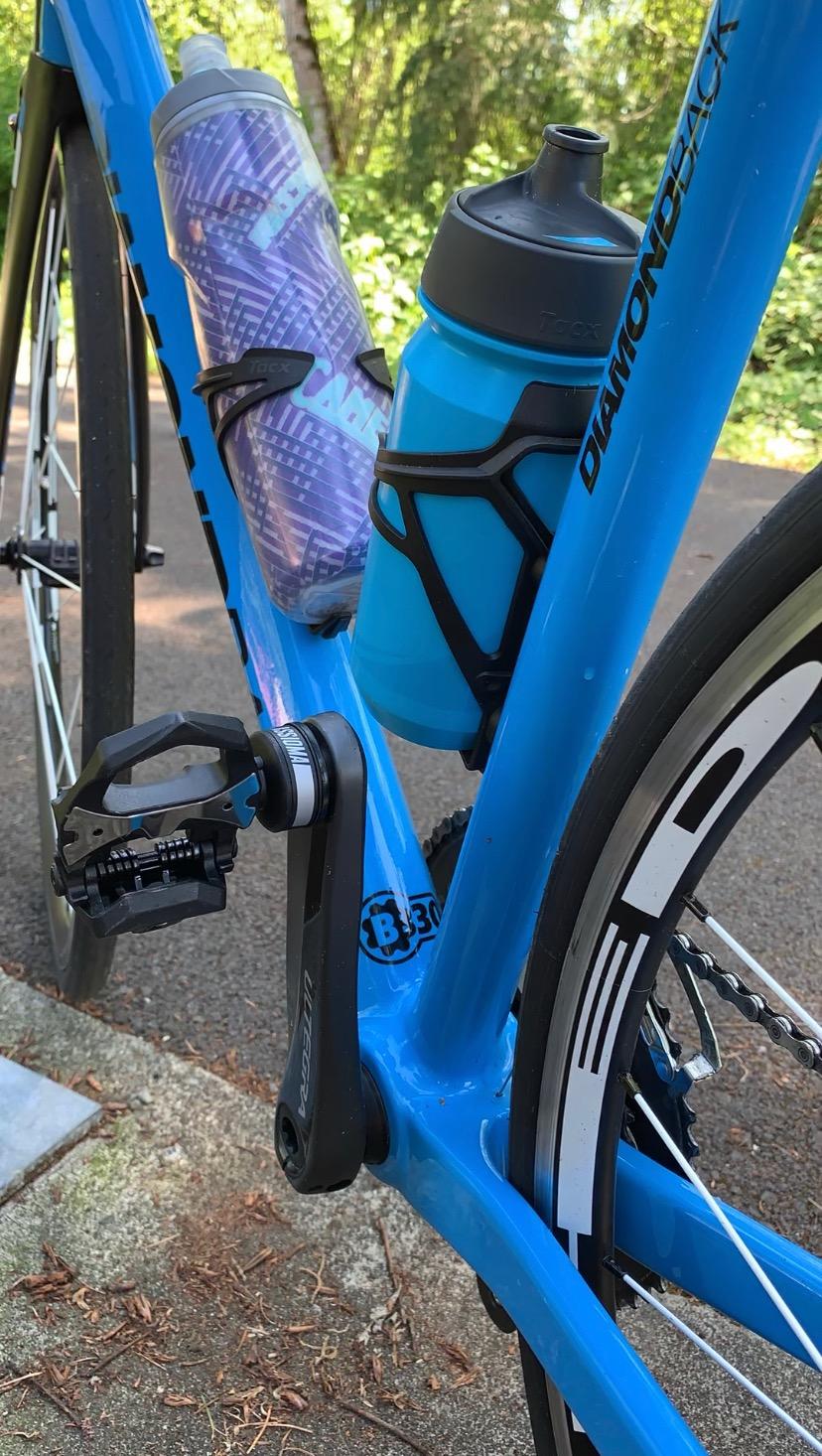
Venzo Sealed Cycling Road Bike Bicycle Clipless Pedals Compatible with Look Keo (NOT Compatible with Shimano SPD-SL or Look Delta Cleats) 9/16″ with Cleats
255 g per pair
CNC chromoly spindle
Fiberglass reinforced body
9/16 inch thread
+ Pros
- Low cost route into the LOOK KEO cleat system
- CNC machined chromoly spindle stays secure in the body
- Side screws allow tension tuning
- Pedals stay level at any angle
- Sealed cartridge bearings smooth after break-in
– Cons
- Not compatible with Shimano SPD-SL or LOOK Delta cleats
- Supplied cleats are hard plastic and slippery
- Official KEO cleats need more effort to clip in
- Thick grease can stop the pedal returning to neutral
This pair exists to solve a narrow problem well: you want the LOOK KEO cleat system without paying for a LOOK-built pedal. The CNC-machined chromoly spindle is properly specified, and the whole pair weighs 255 g, which is respectable for the tier.
The feature I like most is that the pedals stay level at any angle. On a turbo trainer that is irrelevant, but on a road bike it means you are not fighting gravity to get the entry window facing up at a set of traffic lights.
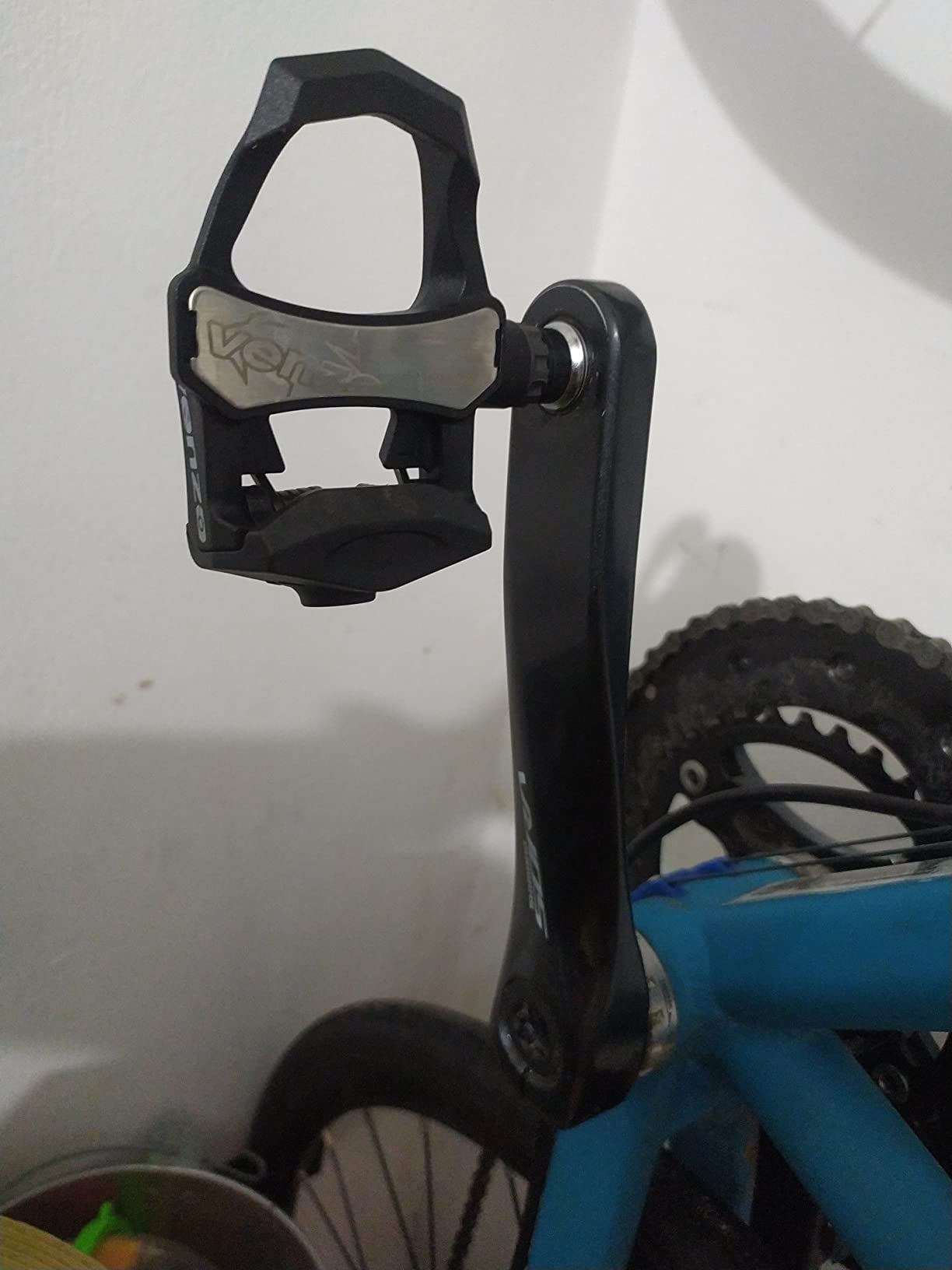
253 reviews at 4.4 stars, with 71 percent five-star ratings. Buyers love the value, especially for indoor trainers and spare bikes. A minority report sticky bearings and harder engagement when fitting genuine KEO cleats, both fixable rather than fundamental.
Cleat compatibility, spelled out
This pedal takes LOOK KEO road cleats only. It is explicitly not compatible with Shimano SPD-SL cleats and not compatible with LOOK Delta cleats, which are the older Look road pattern. Check your existing cleats before you commit, because the wrong pattern is the one problem that cannot be adjusted away.
Factory grease and the first weeks
Several owners report the pedal not returning to a neutral position because of thick grease, especially in cold weather. Wipe the spindle and the inside of the body with a cloth and add a thin layer of clean grease, and the level-levelling behaviour comes back. The sealed cartridge bearings run smoothly once broken in.
Tuning tension on the side screws
Unlike Shimano or LOOK, tension is set with screws on the side of the pedal body. They do the job well, and a light touch is enough. Once set, the screws hold their position through a season of riding.
11. ROCKBROS SPD-SL Pedals – Budget Shimano-Compatible Setup
ROCKBROS Road Bike Pedals Alloy Clipless Bicycle Pedals with Cleats Set Compatible with SPD-SL System
Aluminium alloy body
9/16 inch chromoly axle
6 degree float cleats included
Self-lubricating bearings
+ Pros
- Aluminium alloy body with chromoly steel axle
- Compatible with the Shimano SPD-SL system
- Six degree float cleats included
- Adjustable tension with 2.5mm Allen key
- Self-lubricating bearings need no service
– Cons
- Cleats wear faster than Shimano originals
- Less cleat side-to-side adjustment range
- Thinner engagement surface than brand cleats
- Some sets arrive missing cleats or tools
If your shoes already take Shimano SPD-SL cleats, this is the cheapest way to get into a three-bolt pedal setup. The aluminium alloy body is a sensible material for the job, and the chromoly axle is the right choice for a threaded pedal.
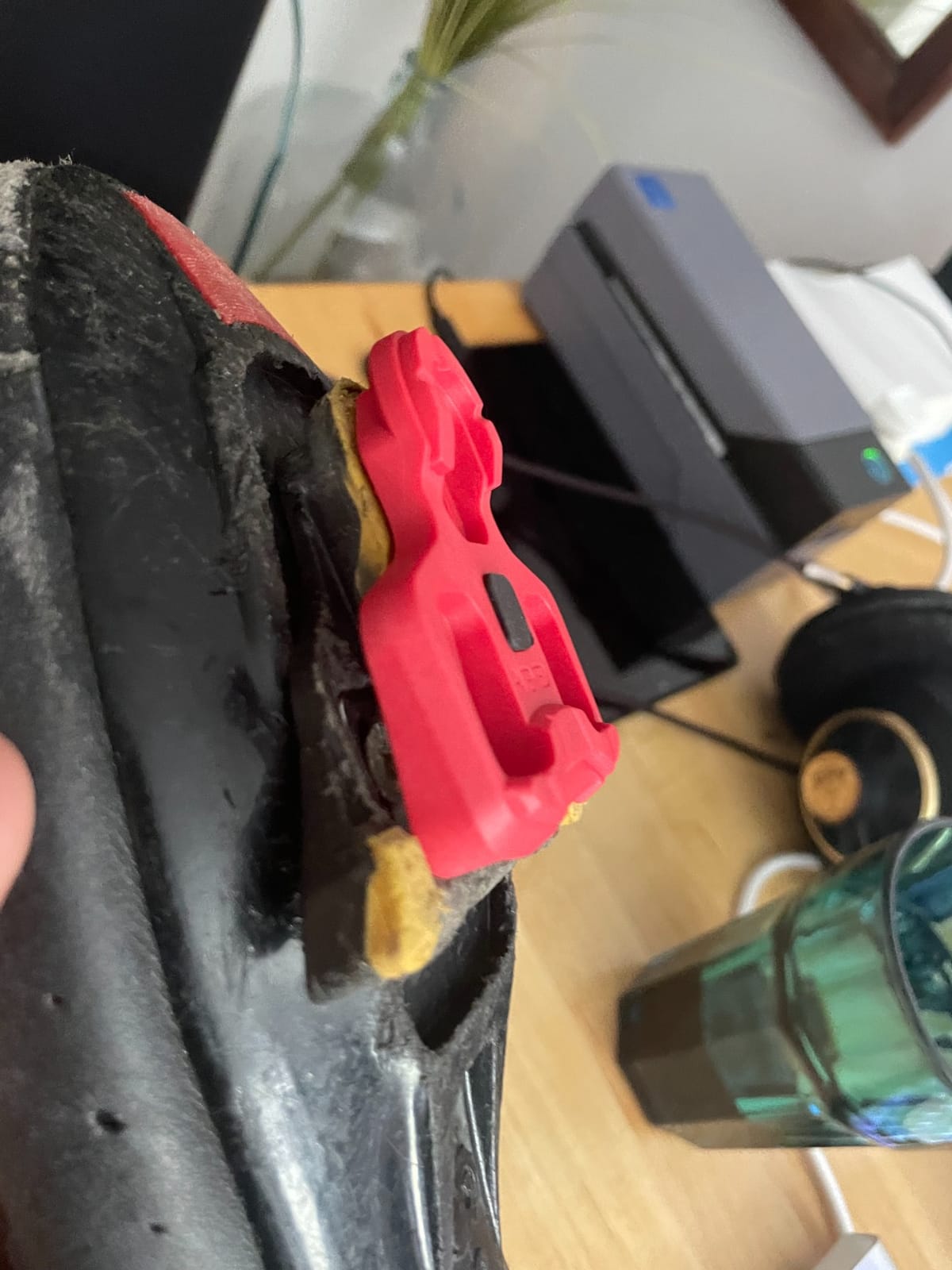
Including six-degree float cleats in the box is a thoughtful touch. Those cleats give noticeably more side-to-side heel movement than a zero-float version, which many riders find kinder to their knees on long rides. If your own cleats are a different float, they will work here too.
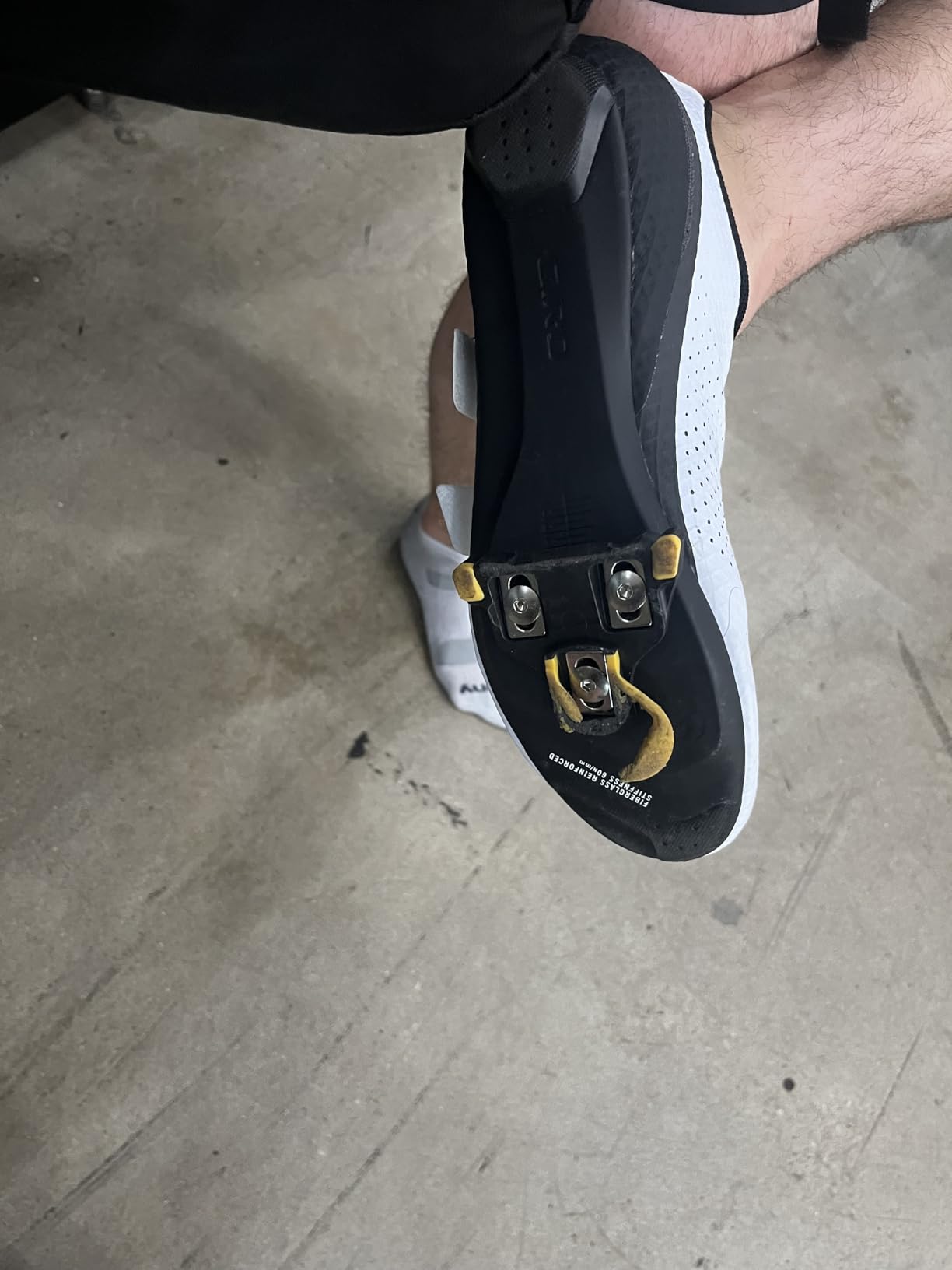
144 reviews at 4.5 stars, with 75 percent five-star ratings. Users praise value, easy installation and smooth engagement, and recommend buying genuine Shimano cleats separately. That last point is fair: cleat durability is the weak link in this package.
Six-degree float cleats explained
Float is the number of degrees your heel can rotate while the cleat stays locked. Six degrees is a middle setting that suits a lot of riders on a road bike, allowing the foot to follow the natural arc of the pedal stroke rather than being rigidly fixed. Riders with knee discomfort often find more float helpful, and a fitter can advise whether more or less suits your mechanics.
Bearings and the spinning question
The self-lubricating bearings need no maintenance at all, which is convenient. Owners comparing against premium models note that these do not spin quite as freely, partly because of the greasing approach on the shaft. Once running they are smooth, and for indoor use that difference is close to invisible.
Where to spend your money instead
Cleats are consumable and the ones supplied here are reported to wear faster than Shimano originals. Buy genuine Shimano cleats, which fixes the biggest complaint at minimal cost, and treat the pedal as a trainer or winter bike purchase rather than a race-week upgrade.
12. Wahoo Speedplay Comp – Three-Axis Fit Adjustment
Wahoo Speedplay COMP Pedal System
Chromoly pedal system
Three-axis cleat adjustment
Walkable cleats
Dual-sided entry
+ Pros
- Dual-sided entry so the pedal always faces you
- Walkable cleats for off-bike comfort
- Independent fore-aft
- left-right and float adjustment
- Low stack height
- All installation tools included
– Cons
- Some reports of difficulty unclipping
- Costs more than entry pedals
- May need a break-in period for smooth release
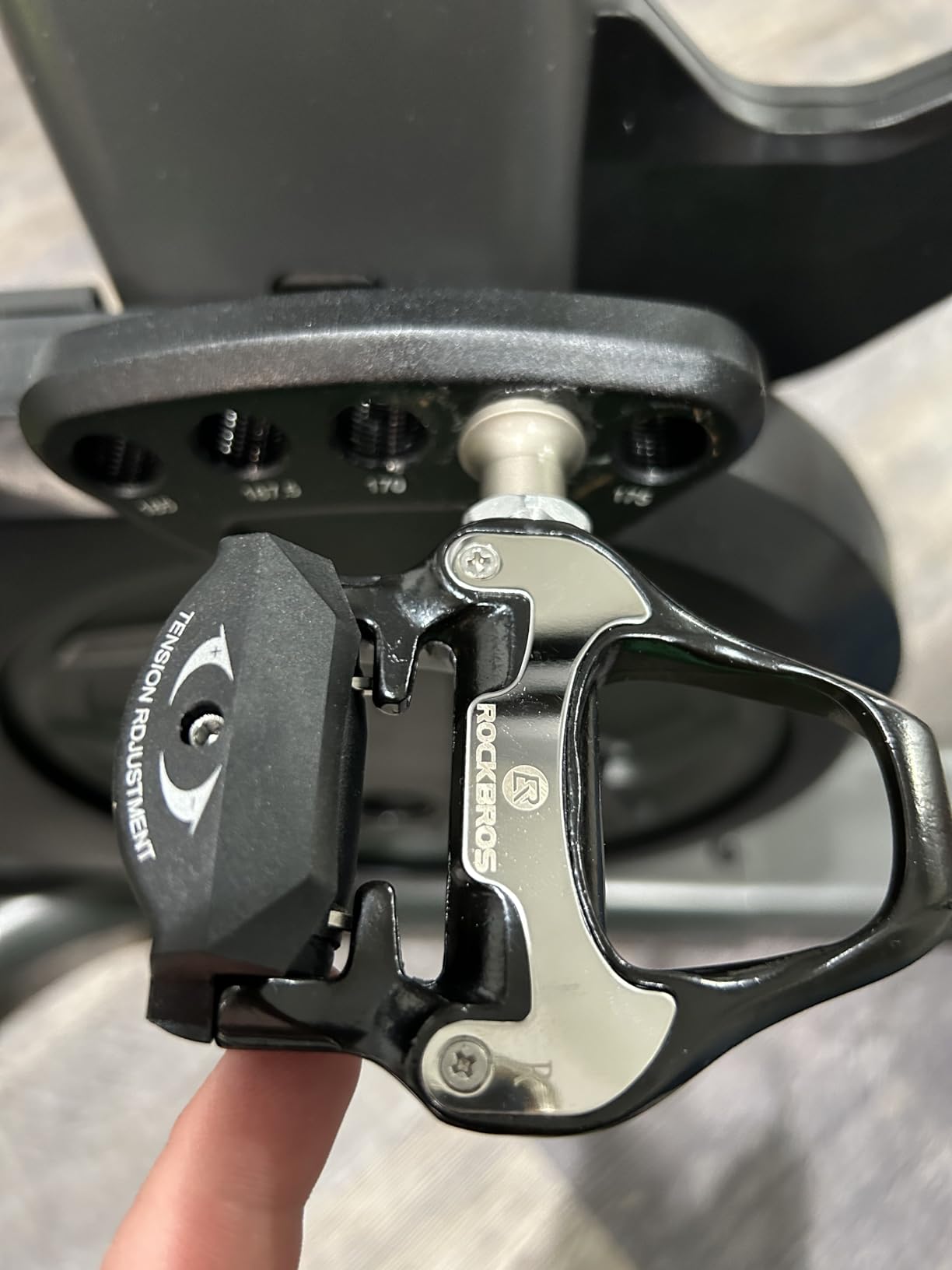
The Comp is the pedal to consider if you have knee pain, a previous bad fit, or a foot shape that does not suit a fixed cleat position. It adjusts the cleat on three independent axes, meaning fore-aft position, side-to-side position and float are all set separately rather than as one package.
Dual-sided entry is the other reason it is popular. The pedal can be clipped into from either face, so it does not matter which way up it has rolled to when you stop. Riders returning to cycling after years away pick this up far faster than a single-sided road pedal.
Three-axis cleat adjustment in practice
Fore-aft adjustment sets where the cleat sits along the sole, which controls how your knee tracks. Side-to-side adjustment shifts the load toward the inside or outside of the shoe. Float sets how much natural heel movement you are allowed. Because they are independent, a fit that causes knee pain in one system can often be corrected by moving one cleat a few millimetres.
Walkable cleats and commuter use
The cleats are designed to be walked on, which is a real advantage if your ride crosses busy junctions or involves a train commute. Compare that with three-bolt road cleats, which are narrow and can be slippery on smooth surfaces. If walkability is your priority, this pedal beats every other option in this roundup.
The unclipping reports, and cleaning
The most important caveat is that some owners report difficulty unclipping, particularly from the non-drive-side pedal, and describe the release as requiring real effort. That is a safety consideration on a road bike, not a comfort preference. A few also report a break-in period before release became smooth. Keep the mechanism clean and dry, work the tension adjustment, and test unclipping on a quiet road before relying on it in traffic. Long-time Speedplay users do report consistent behaviour, so the mechanism rewards maintenance.
How to Choose Road Clipless Pedals Without Regretting It
Most disappointment with clipless pedals comes from a mismatch rather than a bad pedal. Work through these decisions in order and the choice narrows quickly.
Three-bolt SPD-SL or two-bolt SPD: match your cleats
Three-bolt systems are the road pattern: Shimano SPD-SL and LOOK KEO. The cleat is small and narrow, the contact area is smaller, and power transfer is at the top of the range. Two-bolt SPD is the mountain bike and gravel pattern, and it also works on road bikes for anyone who wants a wider platform and much better walkability.
Plenty of road riders now run two-bolt SPD on a road frame, especially for commuting, because the cleat is a broad T-shaped wedge that feels stable when walking. If you already own SPD shoes, check whether a road-specific frame can take them before changing anything. Long-standing road riders frequently recommend starting on the two-bolt route because it is cheaper, universally compatible and dual-sided.
Float degrees: the number that decides knee comfort
Float is how many degrees your heel can move side to side while clipped in. Road cleats come in zero-float, low-float, mid-float and higher-float versions, colour coded by most brands. More float lets your foot follow a natural arc, which some riders find relieves knee and shin discomfort. Zero float is rigid and efficient but unforgiving of a poor cleat position.
If you already have knee pain, start with more float rather than less, and consider a fit session. Riders with knee problems frequently move to a system with more adjustment axes precisely because cleat position and float can be tuned independently.
Stack height and Q-factor: the numbers a fitter asks for
Stack height is the distance from the pedal axle to the underside of your foot. Too tall and your knee flexes more at the top of the stroke; too low and it flexes more on the power phase. Three-bolt road pedals typically sit lower than two-bolt SPD pedals, so a bike set up for gravel will feel different once you fit road pedals.
Q-factor is the lateral distance between the two pedal mounting points. Narrow Q-factor is efficient but can push the knees inward, especially for riders with wide hips. Some pedals accept spacer shims under a longer spindle, which widens the stance without changing cleats or cranks. An important consequence: when you change pedal systems, re-check your saddle height, because stack height changes move your foot relative to the saddle.
Release tension and entry forgiveness for beginners
Release tension is the twisting force needed to unclip. Start at the softest setting and work up over a few weeks. The Shimano PD-RS500 and the LOOK Keo Classic 3 both offer a wide adjustment range, and the Assioma Duo and Uno ship stiff, so plan ten minutes with a 2.5mm Allen key before your first ride.
The largest single beginner fear is falling over because a foot will not unclip at a junction. Look for a large entry target, light spring tension, or dual-sided entry, which guarantees the pedal is facing the right way. Those three specs eliminate most of the anxiety.
Walkability, cleat covers and the commuter case
Two-bolt SPD cleats are walkable by design. Three-bolt road cleats are narrow and can be slippery on tile or smooth concrete, and Shimano road cleats are the widest of the three-bolt options, so they stand the shoe up visibly when you walk. Cleat covers add rubber to the walking surface, and pedals with wider platforms, such as the LOOK Keo 2 Max, spread pressure more evenly when you are walking rather than riding.
If your ride involves frequent stops, the Wahoo Speedplay Comp is the clearest choice here because the cleats are designed to be walked on. If you want a road power feel and stop often, two-bolt SPD on a road bike is the compromise most riders settle on.
Cleat wear, creaks and replacement intervals
A creak when climbing is the practical signal that a cleat needs replacing. It is a symptom, not a disease: grit in the binding, a loose cleat bolt or a worn cleat all sound similar. Inspect the cleat weekly, look for a rounded leading edge, a flattened wear bar or visible shoe-sole contact on the base, and check that the screws are still tight. Owners of budget pedal packages report worn cleats inside a couple of hundred miles, while premium cleats last far longer.
Carry spare cleats on long rides, because a cleat that shears mid-ride leaves a foot that will not clip in. Riders report crashes caused by exactly this, so check the screws before every long ride and keep a set in your bag.
What changes when you switch pedal systems
Three things change: cleats and shoes, tension and float settings, and your saddle height. The saddle height point is the one most riders miss. Install the new pedals, set the tension, then re-check your saddle height because the new stack height has effectively raised or lowered your foot. If you change to a two-bolt SPD pedal, expect the bike to feel taller and your knee angle to change noticeably.
On installation itself: the non-drive-side pedal on most cranks is reverse threaded, so it tightens anticlockwise. Grease the threads, hand-tighten in the correct direction, then use a torque wrench. Cross-threading can damage the crank, and the repair bill is far higher than the pedal you just bought.
How to Move From Flat Pedals Without Falling Over
Almost every rider I have watched fall at a junction made the same mistake: they tried to unclip while rolling, at speed, in a hurry. Clipless pedals are a skill, and the skill is unclipping while stationary with one foot down.
Drill one, on the drive. Before your first ride, clip in and out fifty times. Set the tension to its softest position, put your hand on a wall if you need to, and practise lifting straight up and twisting the heel outward. Do it until the movement is automatic rather than deliberate.
Drill two, at walking pace. Ride in a quiet flat car park, clip in, ride ten metres, stop, put a foot down, unclip. Repeat until stopping does not need your eyes. This is the exact sequence you will use at a junction, and practising it while calm is what makes it work when you are not.
Drill three, off the bike. Learn to stand over the bike with both feet on the ground before you set off. Every clipless rider eventually needs to do this, whether to adjust a saddle bag or answer a question at a cafe.
On tension, start soft and increase gradually. Most beginners move to a firmer setting within a month without noticing when. The single safety rule worth memorising: if you cannot get a foot out, do not try to ride on one leg. Put the foot down, or unclip the other one, and get off the bike.
Cleat position matters more than the pedal. Symptoms of cleats set too far forward include knee pain on the descending side of the stroke, numbness under the ball of the foot, and a sense that you are pushing behind your arch. A bike fitter can move the cleat a few millimetres and solve most of this, and it is the first thing to try before blaming the pedal.
For the rest of your kit, our guides to the best cycling computers for road bikes and the best bike trainers for indoor cycling cover the parts of a road setup people usually buy after the pedals. If you ride with music, the best open ear headphones for cycling guide is worth a look, since safer audio is a road-cycling decision as much as a headphone one.
Frequently Asked Questions
What type of clipless pedals are best for a road bike?
Three-bolt systems such as Shimano SPD-SL and LOOK KEO are the standard for road bikes because the narrow cleat gives the most direct power transfer. Two-bolt SPD pedals are also widely used on road frames when walkability matters more than a stiff pedalling platform. Choose whichever cleat pattern your shoes already take.
What is the difference between SPD and SPD-SL?
SPD is the two-bolt cleat system originally designed for mountain biking: a wide, walkable T-shaped cleat that also fits touring and gravel shoes. SPD-SL is the three-bolt road system: a narrower cleat that sits in the middle of the road shoe sole, giving a smaller contact area and a lighter pedalling feel. The two are not interchangeable.
Can clipless pedals cause knee pain?
They can, and in most cases the cause is fit rather than the pedal itself. Cleats set too far forward, a stack height that is too low, and a stance width that is too narrow all change how the knee tracks through the stroke. More cleat float, a wider stance using spindle spacers, or a short session with a bike fitter usually resolves it. A pedal with three-axis cleat adjustment, such as the Wahoo Speedplay Comp, gives you the most room to correct it yourself.
Can you walk in SPD cleats?
Yes, and that is the main reason many road riders now fit two-bolt SPD pedals on a road bike. The cleat is a broad wedge that distributes weight across the sole and grips smooth surfaces. Three-bolt road cleats are much narrower, so Shimano SPD-SL cleats stand the shoe up noticeably and can be slippery on tile or smooth concrete.
Which cleats are easiest to unclip?
The pedal, not the cleat, determines release effort. Start with the softest tension setting on a pedal that offers a wide adjustment range, such as the Shimano PD-RS500 or the LOOK Keo Classic 3, and increase the tension gradually. Dual-sided entry pedals also make clipping in easier because the pedal always faces the right way. Power meter pedals commonly ship with stiff tension and should be loosened before the first ride.
How often should I replace clipless cleats?
Replace them when a creak appears when climbing, when the leading edge looks rounded, or when you can see the wear bar has worn flush with the base. Inspect them weekly and check the screws before every long ride, because a sheared screw means a foot that will not clip in. Budget pedal packages often use cleats that wear far faster than brand-name replacements, so a simple upgrade to genuine cleats removes the most common complaint.
Which Road Pedal Should You Buy?
If you have never ridden clipless, buy the Shimano PD-RS500. The light tension and wide entry target are the least punishing way to learn, and the wide platform keeps long rides comfortable.
If you want one pedal that lasts, the LOOK Keo Classic 3 gives you a chromoly spindle, a tension range of 8 to 12 and a wide platform at a sensible outlay. The Keo 2 Max is the step up for touring, with a 500 mm² stainless platform and bearings you can service yourself.
If you race or ride hard, the Shimano PD-R8000 is the stiffest platform here and the 105 PD-R7000 is the balanced, low-maintenance option for a Shimano build. If your problem is knee pain rather than power, look at the Wahoo Speedplay Comp and its three-axis cleat adjustment, and budget for a fit session before you change anything else.
If you want data, the Favero Assioma Duo gives per-leg balance and the Uno gives cheaper single-sided power; loosen the tension on either one before your first junction. For a trainer, a spare bike or a second set, the ROCKBROS and Venzo pairs cover both cleat patterns at a fraction of the cost of the name-brand options.
Whichever you choose, get the cleats fitted properly, keep a spare set in your bag, and re-check your saddle height when you switch systems. Those three habits solve more clipless problems than any pedal on this list, and they will keep whatever you buy working for 2026 and beyond.
Leave a Reply