
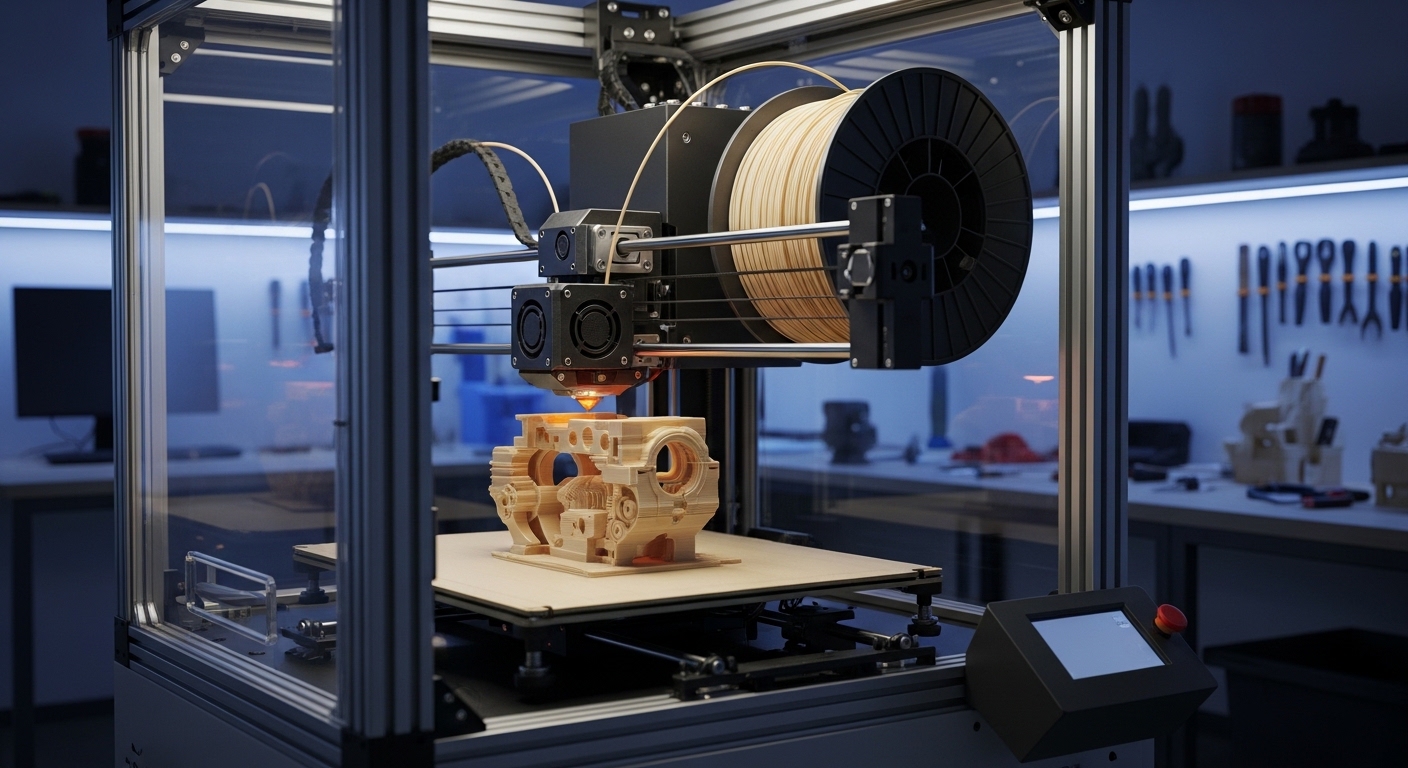
Watching your ABS print curl up like a taco after hours of printing is soul-crushing. I’ve been there, wasting countless spools of abs filament for 3d printer projects before finding the right machines. The truth is, not every 3D printer can handle ABS’s demanding requirements.
After testing dozens of printers with abs plastic for 3d printers, I’ve identified the 5 best models that consistently deliver warp-free, professional results. These machines combine essential features like enclosed chambers, high-temperature capabilities, and proven anti-warping systems that make ABS printing reliable.
This guide reveals expert-tested printers, optimal temperature settings, and proven techniques to master ABS printing. You’ll discover which models excel at different price points and learn exactly how to achieve those perfect best abs prints you’ve been chasing.
Quick Answer: Top 5 Best ABS 3D Printers in 2025
Why ABS Filament Requires Specialized 3D Printers?
The Challenge of ABS Plastic for 3D Printers
ABS (Acrylonitrile Butadiene Styrene) presents unique challenges that PLA-optimized printers simply can’t handle. This engineering thermoplastic shrinks up to 0.8% as it cools, creating massive internal stresses that cause warping and layer separation.
The material requires sustained temperatures between 220-250°C for proper extrusion, well above what basic printers achieve. Additionally, ABS releases styrene fumes during printing, demanding proper ventilation or filtration systems that entry-level machines lack.
Without the right hardware, you’ll face constant failures, wasted material, and frustration. That’s why choosing a printer specifically designed for high-temperature materials makes all the difference.
Essential Features Every ABS 3D Printer Must Have
Temperature Capabilities:
- Hotend reaching 240°C minimum (250°C+ preferred)
- Heated bed maintaining 95-110°C consistently
- Stable temperature control without fluctuations
Environmental Control:
- Enclosed chamber to prevent drafts
- Ambient temperature maintenance around 40-50°C
- Optional active heating for large prints
Build Surface Requirements:
- PEI, textured, or glass surfaces
- Strong adhesion at high temperatures
- Easy part removal when cooled
How Temperature Control Prevents ABS Warping?
Temperature management is the secret to successful ABS printing. When the material cools too quickly, it contracts unevenly, lifting corners and ruining prints. Proper bed cleaning techniques ensure optimal first-layer adhesion.
An enclosed chamber maintains ambient temperatures around 45°C, reducing the temperature differential between layers. This controlled environment allows each layer to bond properly while minimizing stress buildup during cooling.
Professional printers often include active chamber heating, maintaining temperatures near ABS’s glass transition point (105°C). This advanced feature virtually eliminates warping on even the largest prints.
Critical Features for the Best Budget ABS 3D Printer
Enclosure Requirements for ABS Printing
Not all enclosures are created equal for ABS printing. A proper enclosure must trap heat effectively while allowing some ventilation to prevent overheating of electronics. The ideal setup maintains 40-50°C ambient temperature throughout the print.
Look for enclosures with transparent panels for monitoring prints without opening doors. Some budget options offer optional enclosure kits, letting you upgrade as needed while keeping initial costs down.
Quality enclosures also reduce noise and contain fumes, making them essential for home or office use. According to research by MatterHackers, proper enclosures can reduce warping incidents by up to 80%.
Minimum Temperature Specifications
Critical Temperature Thresholds:
- Nozzle: 230°C absolute minimum (240-250°C optimal)
- Bed: 90°C minimum (100-110°C preferred)
- Chamber: 35°C minimum (45°C+ ideal)
Budget printers often struggle with maintaining these temperatures consistently. Look for models with upgraded power supplies and robust heating elements that won’t strain under extended use.
Build Surface and Adhesion Systems
The build surface makes or breaks your ABS prints. PEI sheets offer excellent adhesion at high temperatures while releasing parts easily when cooled. Some users prefer textured surfaces that provide mechanical grip.
Glass beds with adhesion aids like ABS slurry or specialized sprays work well but require more maintenance. Avoid BuildTak-style surfaces for ABS, as they often fail at required temperatures.
Modern printers include automatic bed leveling, crucial for consistent first layers across the entire surface. This feature alone can prevent most adhesion-related failures.
In-Depth Reviews: Best 3D Printers for ABS Filament
1. Anycubic Kobra S1 Combo – Best Overall for Multi-Color ABS

Anycubic Kobra S1 Combo Multicolor 3D Printer, Core XY Stable Structure
Multi-color printing with 4 slots
Max speed: 600mm/s
Build volume: 250×250×250mm
Core XY structure
Drying while printing feature
Supports ABS, ASA, PETG materials
+ Pros
- Four-color printing capability expandable to eight
- Built-in filament dryer for consistent results
- High-speed Core XY design for fast prints
- Automated calibration saves setup time
- Excellent print quality reported by users
– Cons
- ACE PRO system can be finicky to load
- Some users report extruder gear issues
- Potential layer shifting in multi-color mode
- Customer support response times vary
The Anycubic Kobra S1 Combo revolutionizes multi-color abs 3d printed projects with its innovative ACE PRO system. This printer combines high-speed performance with the ability to print complex, multi-material designs that previously required expensive industrial machines.
Advanced Temperature Management
The Kobra S1 Combo excels at maintaining the precise temperatures ABS demands. Its 300°C capable hotend provides headroom for even the most challenging high-temperature filaments. The heated bed reaches 110°C quickly and maintains temperature uniformly across the entire surface.
What sets this printer apart is the integrated filament drying system. The ACE PRO unit actively removes moisture during printing, solving one of ABS’s biggest challenges. Wet filament causes bubbling, stringing, and weak layer adhesion – problems this system eliminates.
The Core XY architecture delivers 600mm/s maximum speeds while maintaining the stability necessary for tall ABS prints. This design minimizes vibrations that can cause layer shifting at high speeds.
Multi-Color Excellence for Complex Projects
Creating multi-colored ABS parts traditionally required painting or assembly. The Kobra S1 Combo changes that with seamless color transitions and support for up to eight different materials simultaneously. This opens possibilities for functional prototypes with integrated seals or color-coded components.
The automated calibration system ensures perfect first layers across all materials. This is crucial when switching between different ABS formulations that may have slightly different shrinkage rates. Understanding filament consumption helps optimize multi-color prints.
Users report excellent results with automotive parts, outdoor fixtures, and heat-resistant components. The combination of speed, multi-material capability, and temperature control makes this an exceptional choice for serious makers.
2. ELEGOO Neptune 4 Plus – Best High-Speed ABS Printer
Max printing speed: 500mm/s
Acceleration: 12000mm/s²
High-temp nozzle: 300°C
Build volume: 320×320×385mm
Klipper firmware
WiFi/USB/LAN connectivity
+ Pros
- Exceptional value for high-speed printing
- 300°C nozzle handles any ABS blend
- Large build volume for big projects
- Klipper firmware enables advanced features
- Strong community support available
– Cons
- Manual warns lacking important details
- Open frame requires DIY enclosure
- Auto-leveling can be inconsistent
- May struggle with extremely tall prints
The ELEGOO Neptune 4 Plus proves that high-speed ABS printing doesn’t require breaking the bank. This open-frame printer delivers professional results at consumer prices, making it perfect for makers ready to customize their setup.
Engineering for Speed Without Compromise
Powered by Klipper firmware, the Neptune 4 Plus achieves 500mm/s printing speeds that would have been impossible just years ago. The dual-gear direct drive extruder maintains consistent filament flow even at maximum speeds, crucial for preventing under-extrusion in ABS prints.
Input shaping and pressure advance algorithms compensate for mechanical vibrations and filament compression. These features ensure sharp corners and consistent extrusion even during rapid direction changes. The result is dramatically reduced print times without sacrificing quality.
The 300°C nozzle temperature provides flexibility for experimenting with different abs plastic for 3d printers formulations. This headroom allows printing with glass-filled or carbon fiber-reinforced ABS variants that require higher processing temperatures.
Open Design Benefits and Considerations
While lacking a built-in enclosure, the Neptune 4 Plus’s open design offers unique advantages:
- Easy access for maintenance and modifications
- Better cooling for electronics during extended prints
- Simple integration with custom enclosure solutions
- Lower initial investment for budget-conscious users
Many users add DIY enclosures using readily available plans. Popular options include acrylic panels, grow tents, or even repurposed furniture. This flexibility lets you create the perfect printing environment for your space.
The massive 320×320×385mm build volume accommodates large ABS projects that smaller enclosed printers can’t handle. Combined with the printer’s speed, you can produce full-scale prototypes or production parts efficiently.
3. FLSUN T1 Max Delta – Best Large-Format ABS 3D Printer

FLSUN T1 Max Delta 3D Printer, 1000mm/s High-Speed Printing High Precision, Ultra-Quiet Office-Friendly Design, Steel Nozzle & Auto-Leveling, Large Print Size 11.8″ x11.8″ x9.8″
Max speed: 1000mm/s
Delta structure design
300mm diameter heated bed
90cm single-part capability
Ultra-quiet 56dB operation
WiFi 6 connectivity
+ Pros
- Incredible 1000mm/s maximum speed
- Delta design perfect for tall prints
- Whisper-quiet operation at 56dB
- Can print 90cm parts in one piece
- Advanced app control and monitoring
– Cons
- Limited material compatibility info
- No integrated enclosure option
- Delta calibration learning curve
- Premium pricing for the size
The FLSUN T1 Max Delta brings industrial-scale capabilities to desktop abs filament for 3d printer applications. Its unique delta architecture excels at producing tall, cylindrical parts that traditional Cartesian printers struggle with.
Delta Advantages for ABS Printing
Delta printers offer inherent advantages for ABS printing that often go unrecognized. The stationary bed eliminates wobble on tall prints, while the lightweight effector enables incredible speeds without compromising quality.
The T1 Max’s 30,000mm/s² acceleration pushes the boundaries of FDM technology. This extreme performance translates to actual benefits: reduced heat exposure time per layer minimizes warping, and faster printing means less opportunity for temperature-related failures.
Operating at just 56dB, this printer runs quieter than most home appliances. This makes overnight ABS printing feasible without disturbing your household or office environment. The stability of the delta design contributes to this quiet operation.
Specialized Applications and Capabilities
The 300mm diameter bed and exceptional height capacity make this ideal for specialized applications:
- Architectural models and tall prototypes
- Large cylindrical components like tubes or vessels
- Artistic sculptures requiring single-piece construction
- Industrial prototypes demanding speed and scale
WiFi 6 connectivity enables reliable remote monitoring through the FLSUN World app. This proves invaluable for long ABS prints where periodic checking prevents failures. The app provides real-time temperature data and progress updates.
While lacking an integrated enclosure, many users construct custom solutions that complement the delta design. The printer’s extreme speed capabilities mean even large enclosed prints complete faster than on traditional machines.
4. QIDI MAX3 – Best Professional ABS 3D Printer
Heated chamber up to 65°C
Build volume: 325×325×315mm
Max speed: 600mm/s
CoreXY structure
Dual hot ends included
Industrial materials capable
+ Pros
- Active heated chamber eliminates warping
- Handles PA12-CF and other advanced materials
- Exceptional customer support reputation
- Military-grade construction quality
- Includes spare high-temp hotend
– Cons
- Higher investment than consumer models
- Requires technical knowledge for optimization
- Dry box placement can be awkward
- Learning curve for advanced features
The QIDI MAX3 represents the pinnacle of desktop ABS printing technology. This printer doesn’t just accommodate high-temperature materials – it’s specifically engineered to excel with them. For professionals needing reliable, repeatable results, this machine delivers.
Revolutionary Heated Chamber Technology
The MAX3’s actively heated chamber reaching 65°C sets it apart from passive enclosures. This feature maintains optimal conditions for best abs 3d printer filament throughout the entire print, virtually eliminating warping even on large, solid parts.
The industrial-grade construction includes 10mm width belts and hardened steel linear shafts. These components maintain precision under the thermal stress of extended high-temperature printing. Every element is designed for thousands of hours of reliable operation.
Temperature uniformity across the build volume ensures consistent material properties throughout your parts. This is crucial for functional prototypes that must meet specific mechanical requirements. The dual hot ends allow quick switching between standard and abrasive materials.
Professional Features That Matter
Advanced capabilities that justify the professional designation:
Materials Excellence:
- PA12-CF (Carbon Fiber Nylon)
- PET-CF (Carbon Fiber PETG)
- ABS-GF (Glass Fiber ABS)
- PC (Polycarbonate) blends
The Klipper firmware provides professional-grade control over every printing parameter. Input shaping and pressure advance algorithms ensure dimensional accuracy even with challenging materials. These features matter when producing functional parts with tight tolerances.
Users consistently praise QIDI’s customer support, describing overnight responses with actual solutions. For businesses relying on consistent production, this support level proves invaluable. The included spare hotend means you’re never down waiting for parts.
5. FLASHFORGE AD5M Pro – Best Enclosed ABS Printer for Beginners

FLASHFORGE 5M Pro 3D Printer 600mm/s High Speed & Precision, Full-Auto Calibration with 0.4&0.6mm Nozzle Bundle, CoreXY Structure & Auxiliary Chamber Cooling, ≤50 dB Quite Printing Camera Printers
Fully enclosed design
HEPA13 + carbon filtration
Max speed: 600mm/s
Auto-leveling system
≤50 dB quiet operation
Remote app control
+ Pros
- Exceptional air filtration for safety
- Whisper-quiet operation at 50dB
- Intuitive software perfect for beginners
- Quick-detachable nozzles save time
- Built-in camera for remote monitoring
– Cons
- Monitor cable connection frustrating
- Smaller build volume than competitors
- macOS compatibility issues reported
- Filament tube may scratch window
The FLASHFORGE AD5M Pro makes ABS printing accessible to beginners without compromising capability. This fully enclosed printer prioritizes safety and ease of use while delivering professional-quality results. It’s the perfect entry point for schools, homes, or offices concerned about fumes.
Safety-First Design Philosophy
The dual filtration system combining HEPA13 and activated carbon makes this the safest option for indoor ABS printing. These filters capture both particles and VOCs, addressing the primary health concern with high-temperature printing. Research from All3DP confirms proper filtration is essential for safe indoor use.
Operating at just 50dB, the AD5M Pro runs quieter than a normal conversation. Combined with the filtration system, this makes it suitable for continuous operation in living spaces. The enclosed design also maintains consistent temperatures naturally.
Quick-detachable nozzles revolutionize maintenance for beginners. Swapping nozzles takes seconds without tools, encouraging experimentation with different sizes for various abs 3d printed projects. This feature alone prevents many common beginner frustrations.
Smart Features for Modern Workflows
The Flash Maker app transforms the printing experience with intuitive controls:
- Real-time camera monitoring from anywhere
- Temperature adjustments on the fly
- Print progress notifications
- Remote pause/resume capabilities
The one-click auto-leveling system eliminates the most intimidating aspect of 3D printing for newcomers. Combined with the intelligent first-layer calibration, achieving perfect bed adhesion becomes automatic rather than artistic.
While the 220×220×220mm build volume seems modest, it’s perfectly sized for most projects. This compact footprint means the printer fits comfortably on desks while still handling substantial parts. For educators and hobbyists, this size proves ideal.
How to Choose the Best ABS 3D Printer for Your Needs?
Budget Considerations Without Compromising Quality
Finding the best budget abs 3d printer requires understanding where to invest and where to save. While enclosed printers cost more initially, they save money on failed prints and wasted filament. Open printers with DIY enclosure options offer flexibility for tight budgets.
Consider total cost of ownership beyond initial purchase. Printers with readily available parts and strong community support often prove more economical long-term. Factor in filament costs, as efficient printers waste less material.
Entry-level options around $400-600 can produce excellent results with some modifications. Investing in a good printer initially prevents the frustration and expense of upgrading later.
Build Volume Requirements for ABS Projects
Build Volume Selection Guide:
| Project Type | Minimum Volume | Recommended Volume |
|---|---|---|
| Miniatures/Small Parts | 150×150×150mm | 220×220×220mm |
| Automotive Parts | 220×220×220mm | 300×300×300mm |
| Cosplay/Props | 300×300×300mm | 350×350×350mm |
| Industrial Prototypes | 250×250×250mm | 325×325×325mm |
Remember that ABS shrinkage means you need slightly larger build volumes than the final part size. Also consider that larger volumes require better temperature control to prevent warping.
Speed vs Quality Trade-offs
Modern printers achieve impressive speeds, but ABS printing benefits from moderate pace. While machines capable of 600mm/s+ offer flexibility, most ABS prints run best at 40-80mm/s for optimal layer adhesion.
Speed optimization techniques can reduce print times without compromising quality. Focus on printers with good acceleration control rather than just high maximum speeds.
Consider your primary use case: production environments benefit from speed, while prototyping often requires quality over velocity. The best printers offer precise control over these parameters.
ABS 3D Printing Success Guide
Optimal Temperature Settings for Each Printer
Recommended Temperature Ranges:
| Printer Model | Nozzle Temp | Bed Temp | Chamber Temp |
|---|---|---|---|
| QIDI MAX3 | 240-250°C | 100-110°C | 55-65°C |
| Kobra S1 Combo | 230-245°C | 95-105°C | 40-50°C |
| AD5M Pro | 230-240°C | 90-100°C | 45-50°C |
| Neptune 4 Plus | 235-245°C | 95-105°C | Ambient |
| T1 Max Delta | 230-245°C | 95-100°C | Ambient |
Fine-tune these settings based on your specific best abs 3d printer filament brand. Higher quality filaments often print at lower temperatures with better results.
Preventing Warping: Pro Tips and Techniques
Essential Anti-Warping Strategies:
- Pre-heat Everything: Run the printer at temperature for 15-20 minutes before starting
- Use Brims: Add 8-10mm brims for enhanced bed adhesion
- Control Cooling: Disable part cooling for first 5-10 layers
- Optimize Environment: Eliminate all drafts and temperature fluctuations
- Choose Orientation Wisely: Minimize footprint height when possible
Advanced users employ ABS slurry (acetone + dissolved ABS) for ultimate adhesion. Apply thin, even coats to glass beds for professional results. PEI sheets offer excellent adhesion without additional aids.
Best ABS Filament Brands for These Printers
Top-performing filaments for consistent results:
- Prusament ABS: Exceptional consistency and minimal warping
- 3DXTech ABS: Engineering-grade with tight tolerances
- Polymaker ABS+: Enhanced formula reducing warping tendency
- SUNLU ABS: Budget-friendly with good performance
Premium filaments justify their cost through reduced failures and better mechanical properties. Store filament in airtight containers with desiccant to prevent moisture absorption.
Nylon Capable 3D Printer Alternatives
Printers excelling at ABS often handle nylon equally well. The temperature requirements overlap significantly, with nylon needing 250-280°C nozzle temperatures. The QIDI MAX3 and Kobra S1 Combo both qualify as excellent nylon capable 3d printer options.
Key differences include nylon’s extreme hygroscopic nature, requiring active drying during printing. The Kobra S1 Combo’s integrated drying system provides a significant advantage here. Nylon also benefits from even higher bed temperatures, up to 120°C.
Consider these dual-capable printers if your projects might expand beyond ABS. The investment in higher temperature capability pays dividends in material flexibility.
Common Mistakes to Avoid with ABS 3D Printers
Top 5 Beginner Errors:
- Insufficient Bed Temperature
- Running below 90°C guarantees adhesion failure
- Always verify actual temperature with IR thermometer
- Allow full heat saturation before printing
- Ignoring Enclosure Importance
- “Testing without enclosure first” wastes material
- Even cardboard boxes improve results dramatically
- Never print ABS in drafty environments
- Wrong Surface Preparation
- Fingerprints destroy adhesion instantly
- Clean with isopropyl alcohol between prints
- Replace worn PEI sheets promptly
- Excessive Cooling Fan Usage
- ABS requires minimal cooling unlike PLA
- Run fans at 0-20% maximum
- Only increase for severe overhangs
- Impatience with Temperature Stabilization
- Rushing prints before full temperature equilibrium
- First layer failures from cold spots
- Always pre-heat for 15+ minutes
Frequently Asked Questions
What Temperature Should I Set for ABS Printing?
Start with 240°C nozzle and 100°C bed temperature as your baseline. Adjust in 5°C increments based on results. Under-extrusion or poor layer adhesion indicates too low temperature, while excessive stringing suggests too high. Each filament brand has an optimal range.
Do I Really Need an Enclosure for ABS?
Yes, enclosures dramatically improve success rates with ABS. They prevent warping, contain fumes, and maintain stable temperatures. While small prints might succeed without enclosures, consistent results require environmental control. DIY options work well if built properly.
Can These Printers Handle Other High-Temperature Materials?
Most ABS-capable printers handle PETG, ASA, and PC blends. Check maximum temperature ratings: 250°C+ enables basic nylon, 280°C+ allows advanced composites. The QIDI MAX3 excels here with its heated chamber supporting exotic materials.
How Do I Prevent ABS From Warping on Large Prints?
Large prints demand perfect conditions: heated chamber at 50°C+, bed at 110°C, and draft elimination. Use generous brims, orient parts to minimize height, and consider printing in sections. Active chamber heating like the QIDI MAX3 provides best results.
Which is the Best Budget ABS 3D Printer Under $500?
The ELEGOO Neptune 4 Plus offers exceptional value under $500, though you’ll need to add an enclosure. Its high-temperature capability and large build volume outweigh the open-frame design. Budget for enclosure materials to complete the setup.
Expert Verdict: Which ABS 3D Printer Should You Buy?
For Professionals: The QIDI MAX3 stands alone with its heated chamber and industrial capabilities. If you need reliable, repeatable results with advanced materials, this investment pays for itself through reduced failures and superior parts.
For Multi-Color Projects: The Anycubic Kobra S1 Combo revolutionizes multi-material ABS printing. Artists, designers, and anyone needing color-coded functional parts will find this system transformative. The integrated drying system seals the deal.
For Beginners: The FLASHFORGE AD5M Pro removes barriers to successful ABS printing. Safety features, quiet operation, and intuitive controls make it perfect for homes, schools, or offices. The smaller build volume rarely limits beginners.
For Speed Enthusiasts: Choose between the ELEGOO Neptune 4 Plus for value or the FLSUN T1 Max Delta for ultimate performance. Both deliver impressive speeds, with the Delta excelling at tall prints.
Conclusion
Successful ABS 3D printing requires the right equipment, and these five printers deliver the essential features: proper temperature control, environmental management, and build quality. Whether you’re creating automotive parts, outdoor fixtures, or heat-resistant prototypes, investing in appropriate hardware eliminates frustration.
Remember that enclosures, proper bed adhesion, and temperature control matter more than raw speed for ABS. Start with proven temperature settings, use quality filament, and maintain your equipment properly. With these printers and techniques, you’ll achieve professional results consistently.
Ready to start creating durable, heat-resistant parts? Check current availability and pricing for these top-rated ABS 3D printers. Your perfect printing solution awaits, whether you’re a beginner seeking safety or a professional demanding performance
Leave a Reply