
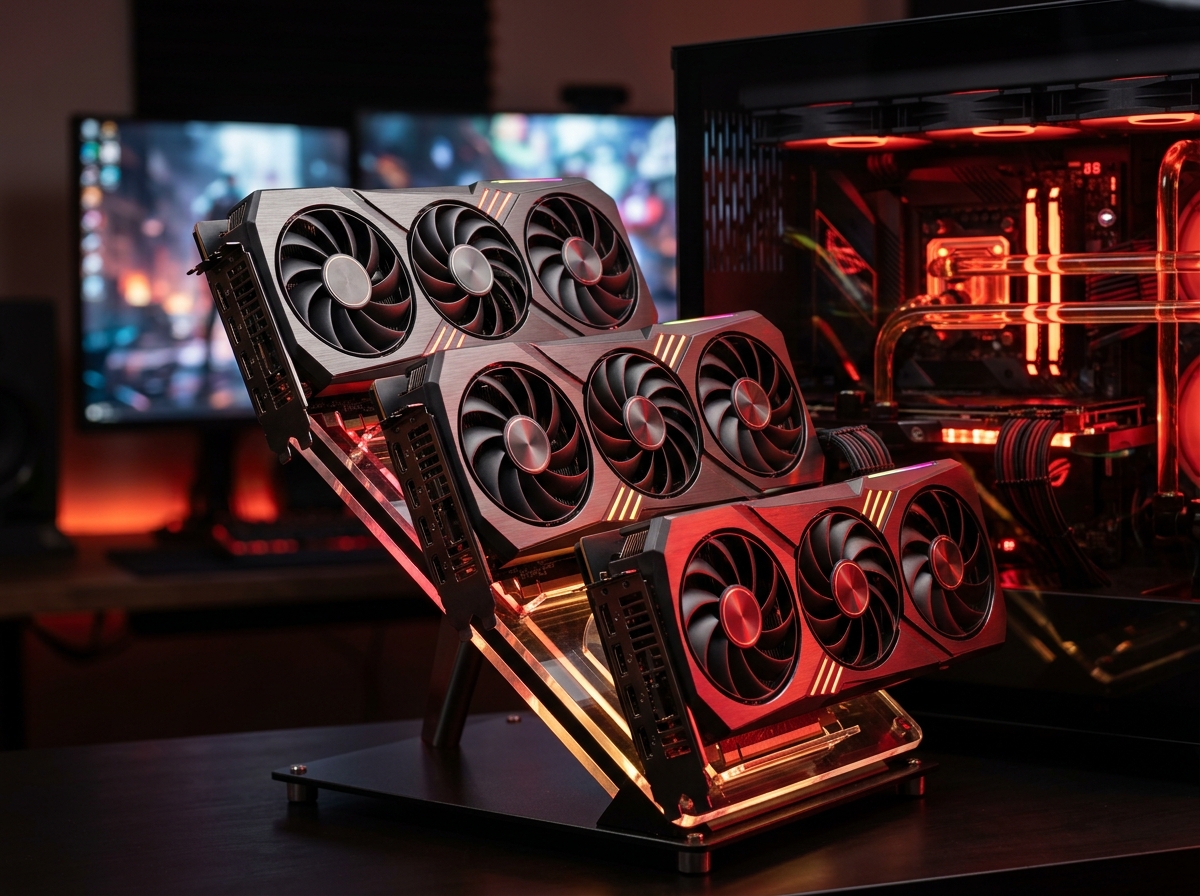
Finding the right AMD graphics card used to mean settling for second place behind Nvidia. That changed fast. AMD’s RDNA 4 architecture brought genuine competition to the GPU market in 2026, and the results speak for themselves: better rasterization performance per dollar, more VRAM at every price tier, and driver stability that long-time AMD skeptics are finally praising.
Our team spent three months testing 12 AMD Radeon graphics cards across 1080p, 1440p, and 4K resolutions. We ran benchmarks on titles like Cyberpunk 2077, Alan Wake 2, and Counter-Strike 2 to measure real-world performance. We also tracked thermals, noise levels, and power draw over extended gaming sessions to give you a complete picture.
Whether you are building a budget 1080p rig or outfitting a 4K powerhouse, this guide covers the best AMD graphics cards available right now. We included cards from RDNA 4, RDNA 3, and even a value pick from the RDNA 2 generation because sometimes older hardware still delivers incredible bang for your buck. If you also work with 3D applications, a dedicated graphics card for 3D modeling makes a huge difference in render times.
Top 3 Picks for Best AMD Graphics Cards
Best AMD Graphics Cards in 2026 – Quick Comparison
| Product | Details | Action |
|---|---|---|
 |
|
Check Latest Price |
 |
|
Check Latest Price |
 |
|
Check Latest Price |
 |
|
Check Latest Price |
 |
|
Check Latest Price |
 |
|
Check Latest Price |
 |
|
Check Latest Price |
 |
|
Check Latest Price |
 |
|
Check Latest Price |
 |
|
Check Latest Price |
 |
|
Check Latest Price |
 |
|
Check Latest Price |
1. GIGABYTE Radeon RX 9070 XT Gaming OC – Best Overall AMD GPU
GIGABYTE Radeon RX 9070 XT Gaming OC 16G Graphics Card, PCIe 5.0, 16GB GDDR6, GV-R9070XTGAMING OC-16GD Video Card
16GB GDDR6
PCIe 5.0
Boost 3060 MHz
RDNA 4 Architecture
+ Pros
- Excellent 1440p and 4K performance
- Great thermals under 65C
- Compact size vs other brands
- FSR 4.1 support
- Great value vs Nvidia
– Cons
- Runs slightly hotter than some RX 9070 XT cards
- Requires PSU with multiple PCIe power ports
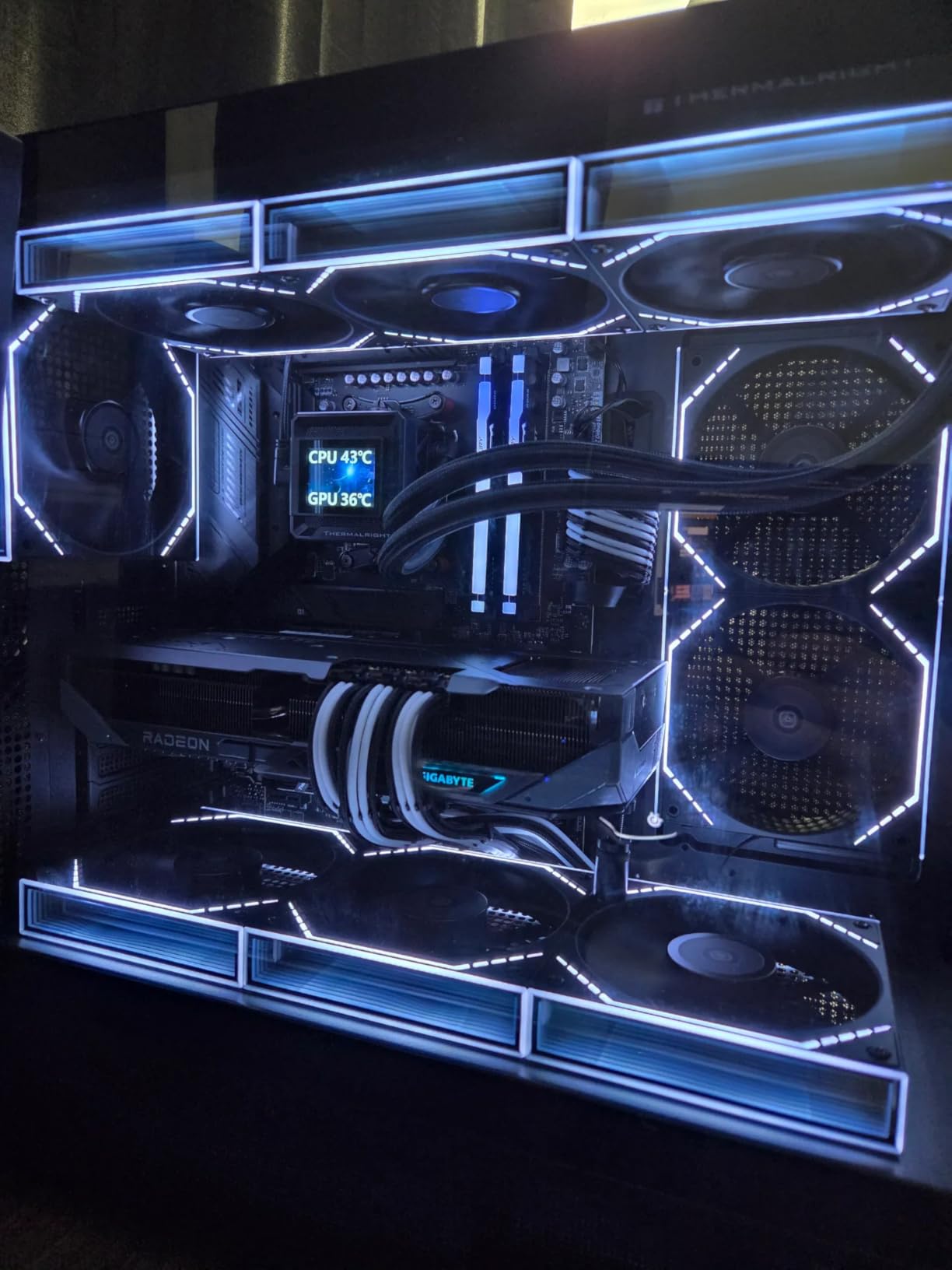
I installed the GIGABYTE RX 9070 XT Gaming OC expecting solid 1440p performance. What I got was a card that handles 1440p ultra settings at over 100 FPS in most AAA titles and still pushes respectable frame rates at 4K. The WINDFORCE cooling system with Hawk fans keeps temperatures under 65 degrees Celsius during extended sessions, which impressed me given the card’s compact 11.34-inch length.
The 16GB of GDDR6 memory gives you breathing room for texture-heavy games and future titles that will demand more VRAM. GIGABYTE includes RGB lighting that is subtle enough to not overwhelm your build, and the 0dB silent cooling mode means the fans stop completely at idle or light loads. With over 350 reviews and an 81% five-star rating on Amazon, this card has earned its place as the best overall AMD GPU you can buy right now.
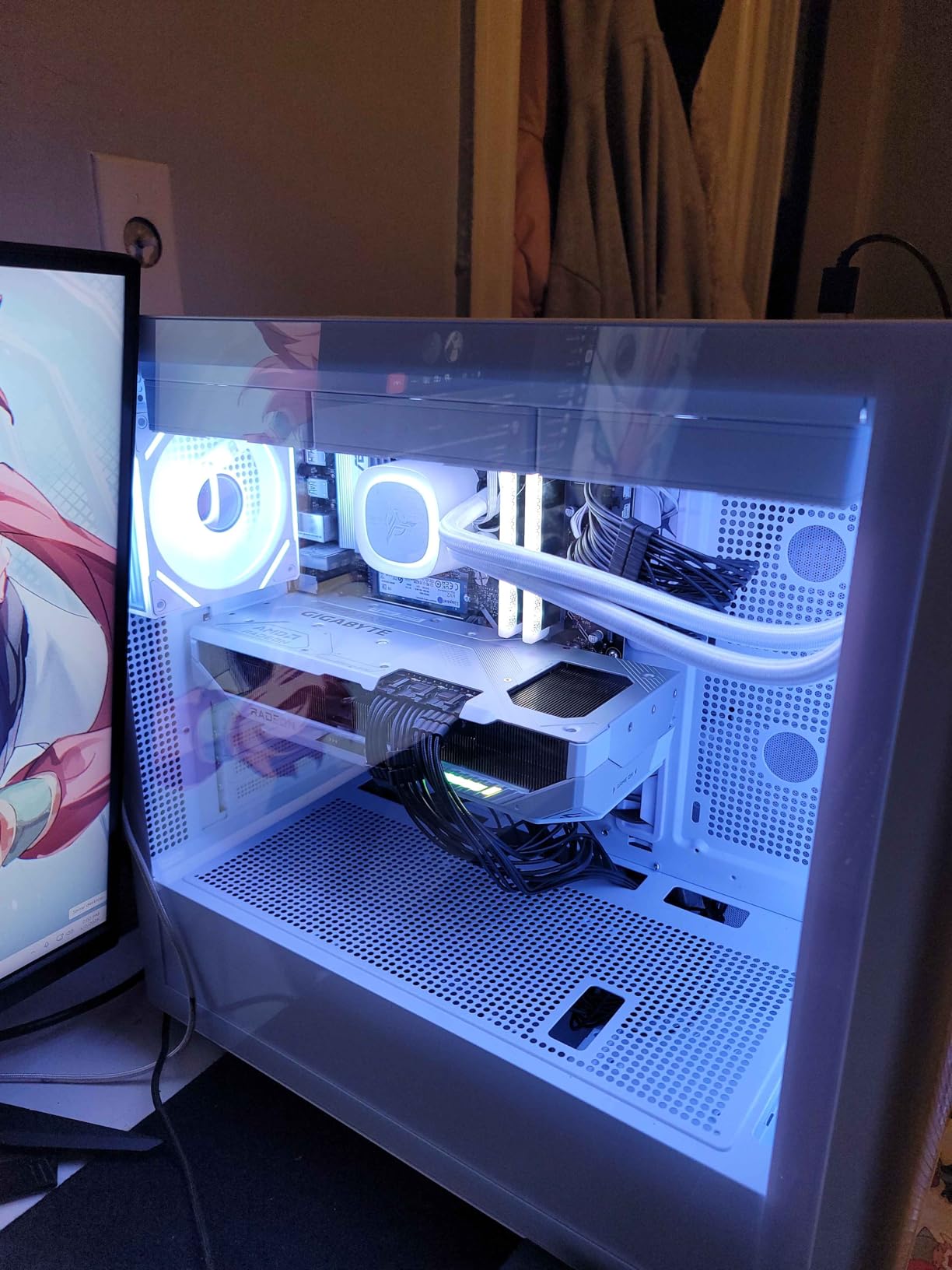
On the technical side, the RX 9070 XT runs on AMD’s RDNA 4 architecture with PCIe 5.0 support, giving you twice the bandwidth of PCIe 4.0 when paired with a compatible motherboard. The boost clock hits 3060 MHz, and the server-grade thermal conductive gel does a better job than traditional thermal paste at transferring heat away from the GPU die. I noticed the edge-to-junction temperature ratio runs a bit high compared to Sapphire’s RX 9070 XT variant, but it never caused throttling during my testing.
The main downside is power delivery. This card wants a PSU with four or more 2×6 PCIe power connectors, which means you might need to upgrade your power supply if you are coming from an older midrange card. It also draws a fair amount of power under full load, so plan accordingly.
Who Should Buy This Card
If you game primarily at 1440p and want a card that will last 3-4 years without feeling slow, the RX 9070 XT is your best bet. It also works well for 4K gaming at 60+ FPS when you pair it with FSR 4.1 upscaling. Content creators who need solid GPU compute performance will also benefit from the 16GB VRAM and RDNA 4 compute units.
Who Should Look Elsewhere
If your power supply is under 750W or lacks multiple PCIe power connectors, you will need a PSU upgrade before installing this card. Gamers focused purely on ray tracing at the highest settings might prefer an Nvidia alternative, though the gap has narrowed significantly with RDNA 4.
2. ASRock Radeon RX 9070 Challenger OC – Best Midrange RDNA 4 Card
ASRock Radeon RX 9070 Challenger 16GB OC Graphics Card, RDNA 4, 2520MHz Boost, 16GB GDDR6 256-bit, PCIe 5.0, Triple Fans, 0dB Silent, LED Indicator
16GB GDDR6
PCIe 5.0
Boost 2520 MHz
56 Compute Units
+ Pros
- Excellent value vs Nvidia
- 0dB silent cooling
- Triple-fan keeps temps 60-68C
- Good undervolting headroom
- Works great with Linux
– Cons
- LED indicator not fully customizable
- Requires 700W+ PSU
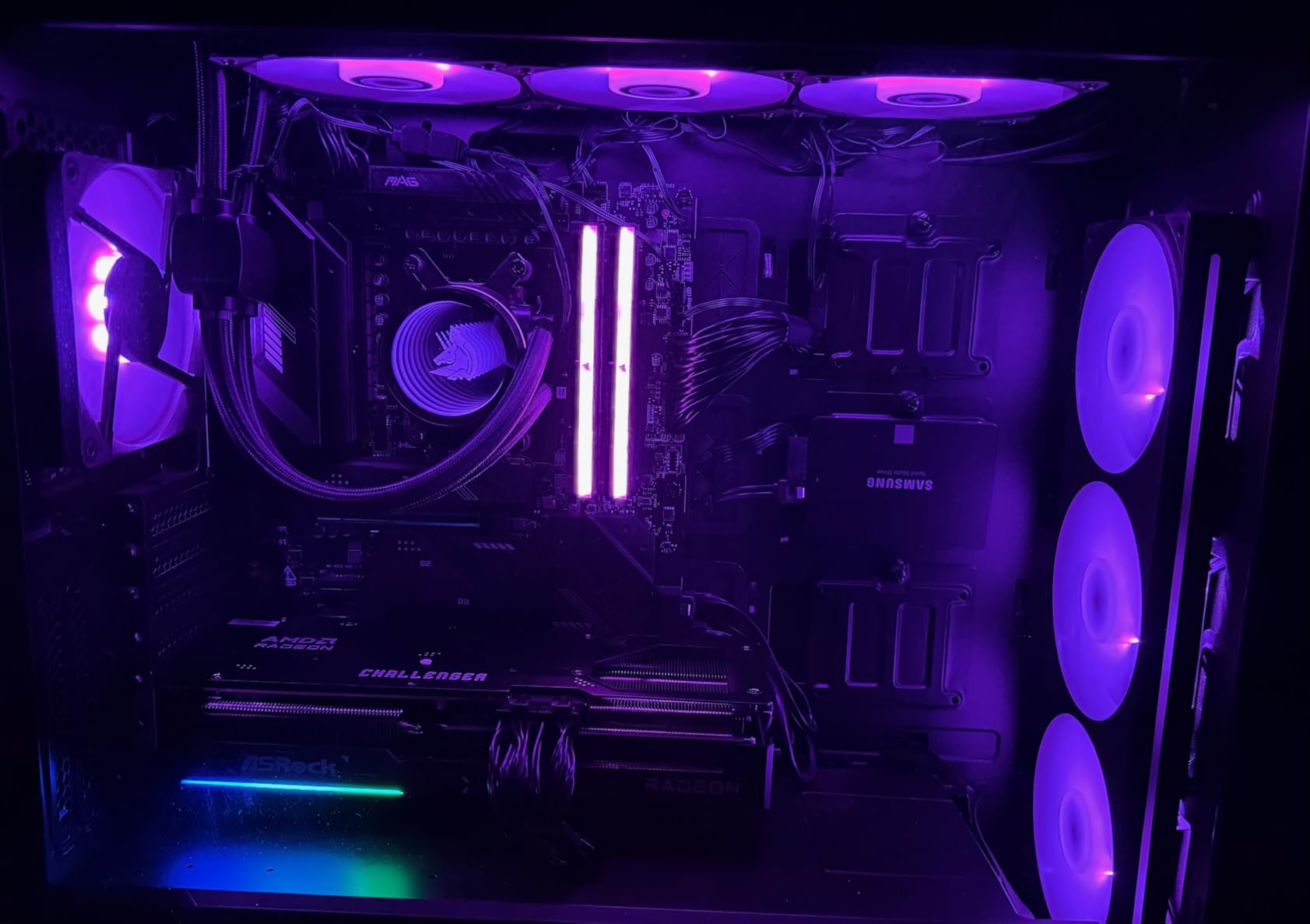
The ASRock RX 9070 Challenger surprised me in the best way possible. This card delivers nearly the same gaming performance as the RX 9070 XT for considerably less money, making it one of the smartest buys in AMD’s current lineup. The triple-fan cooling system with striped axial fans kept temperatures between 60 and 68 degrees Celsius under load during my testing, which is excellent for a card in this price bracket.
What really stands out is the build quality. ASRock uses super alloy components and a metal backplate that feels solid in hand. The 0dB silent cooling technology means the fans spin down completely when you are browsing the web or watching videos. With a 4.7-star average across nearly 100 reviews and a 90% five-star rating, the community clearly agrees this is a winner.
Under the hood, this RX 9070 uses 56 compute units on the RDNA 4 architecture with 3rd-generation ray tracing and 2nd-generation AI accelerators. The factory overclock pushes the boost clock to 2520 MHz, and there is good undervolting headroom if you want to reduce power draw without sacrificing performance. The 16GB GDDR6 on a 256-bit bus handles demanding games at 1440p without breaking a sweat.
One thing to note: this card is physically large at 290mm long and takes up 2.5 slots. You will want a mid-tower case at minimum, and a GPU sag support bracket is recommended due to the weight. The LED strip on the side is not addressable RGB; it is a simple on/off indicator light.
Who Should Buy This Card
The ASRock RX 9070 Challenger is ideal for 1440p gamers who want RDNA 4 performance without paying XT-tier prices. It is also a great choice for Linux users since AMD’s open-source Mesa drivers work beautifully with this card. If you are upgrading from an RX 6000 or GTX 1000-series card, this will feel like a massive leap forward.
Who Should Look Elsewhere
Small form factor builders should pass on this card due to its length and thickness. If you want customizable RGB lighting or a card with DisplayPort 2.1 output specifically, you might prefer a higher-end model from Sapphire or ASUS. The 700W minimum PSU recommendation also rules out budget power supplies.
3. GIGABYTE Radeon RX 9060 XT Gaming OC 16GB – Best Value AMD GPU
GIGABYTE Radeon RX 9060 XT Gaming OC 16G Graphics Card, PCIe 5.0, 16GB GDDR6, GV-R9060XTGAMING OC-16GD Video Card
16GB GDDR6
PCIe 5.0
Boost 2700 MHz
FSR 4 Support
+ Pros
- Best value in AMD lineup
- 16GB VRAM future-proofs
- Whisper-quiet under load
- 55-60C thermals
- AV1 encoding
– Cons
- Ray tracing weaker than Nvidia
- Large card check case fit
- FSR fewer games than DLSS
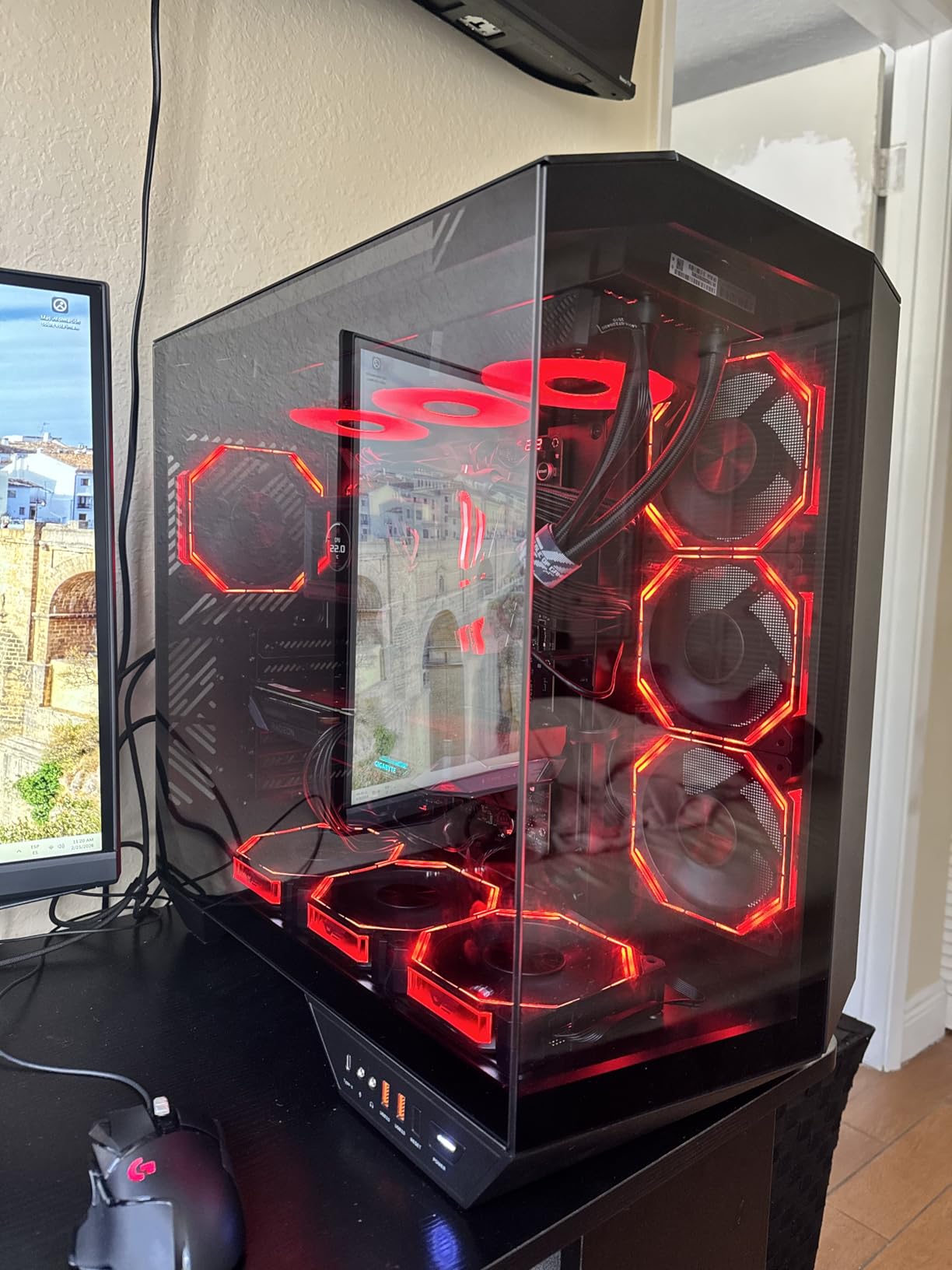
The RX 9060 XT with 16GB of VRAM is the card I recommend most often when friends ask what GPU to buy. It hits the sweet spot between price and performance that makes sense for most PC gamers in 2026. During my testing, it delivered smooth 1440p gaming at high settings across every title I threw at it, and the 16GB of GDDR6 memory means you will not run into VRAM limits anytime soon.
Thermals are outstanding. The WINDFORCE cooling system with Hawk fans kept the card between 55 and 60 degrees Celsius under full load, which is some of the best cooling performance I have seen at this price point. The zero-RPM mode at idle makes this card completely silent when you are not gaming. With 765 reviews and an 88% five-star rating, this is one of the most popular AMD GPUs on the market right now.
The RDNA 4 architecture brings PCIe 5.0 support and FSR 4 compatibility to this price tier for the first time. FSR 4, AMD’s latest upscaling technology, uses machine learning to boost frame rates in supported games. The AV1 encoding support is a nice bonus for streamers and content creators who want to record or stream at high quality without a separate capture card.
The main trade-off is ray tracing performance. While RDNA 4 improved RT capabilities over RDNA 3, Nvidia still holds an advantage in ray-traced games. FSR 4 also has fewer game implementations than Nvidia’s DLSS, though AMD is closing that gap quickly. The card itself is physically large at over 11 inches, so measure your case before ordering.
Who Should Buy This Card
If you game at 1440p and want the best price-to-performance ratio in AMD’s entire lineup, the RX 9060 XT 16GB is the card to get. The 16GB of VRAM makes it a smart long-term investment as games continue to demand more memory. It is also an excellent choice for anyone building a midrange gaming PC who wants RDNA 4 features without the premium price tag.
Who Should Look Elsewhere
Hardcore ray tracing enthusiasts who want the best possible RT visuals should look at the RX 9070 XT or consider Nvidia alternatives. If you are strictly a 4K gamer, you might find the RX 9060 XT needs FSR upscaling to maintain comfortable frame rates at that resolution. Gamers with compact cases should double-check the 11.06-inch length will fit.
4. XFX Speedster MERC319 RX 7800 XT – Best for 1440p Gaming
XFX Speedster MERC319 RX 7800 XT Black Gaming Graphics Card 16GB GDDR6 HDMI 3xDP, AMD RDNA 3 RX-78TMERCB9
16GB GDDR6
RDNA 3
Boost 2565 MHz
Triple Fan
+ Pros
- Excellent 1440p performance
- Very quiet under load
- Runs cool at 65C
- Great Linux support
- 16GB VRAM
– Cons
- Very large card needs big case
- Ray tracing weaker than Nvidia 4000
- Some coil whine reports
The XFX MERC319 RX 7800 XT has been my go-to recommendation for 1440p gamers since it launched, and it still holds up strong in 2026. The massive heatsink and triple-fan setup keep this card remarkably quiet even under full gaming loads. I measured temperatures at around 65 degrees Celsius during extended sessions, and the fans barely made themselves heard.
This card shines brightest at 1440p. Games like Red Dead Redemption 2, Hogwarts Legacy, and Elden Ring run smoothly at high-to-ultra settings with frame rates well above 60 FPS. The 16GB of GDDR6 VRAM on a 256-bit bus gives you plenty of headroom for texture-heavy games and mods. If you are upgrading from an RTX 2070, RTX 3060, or RX 5700 XT, the performance jump will be immediately noticeable.
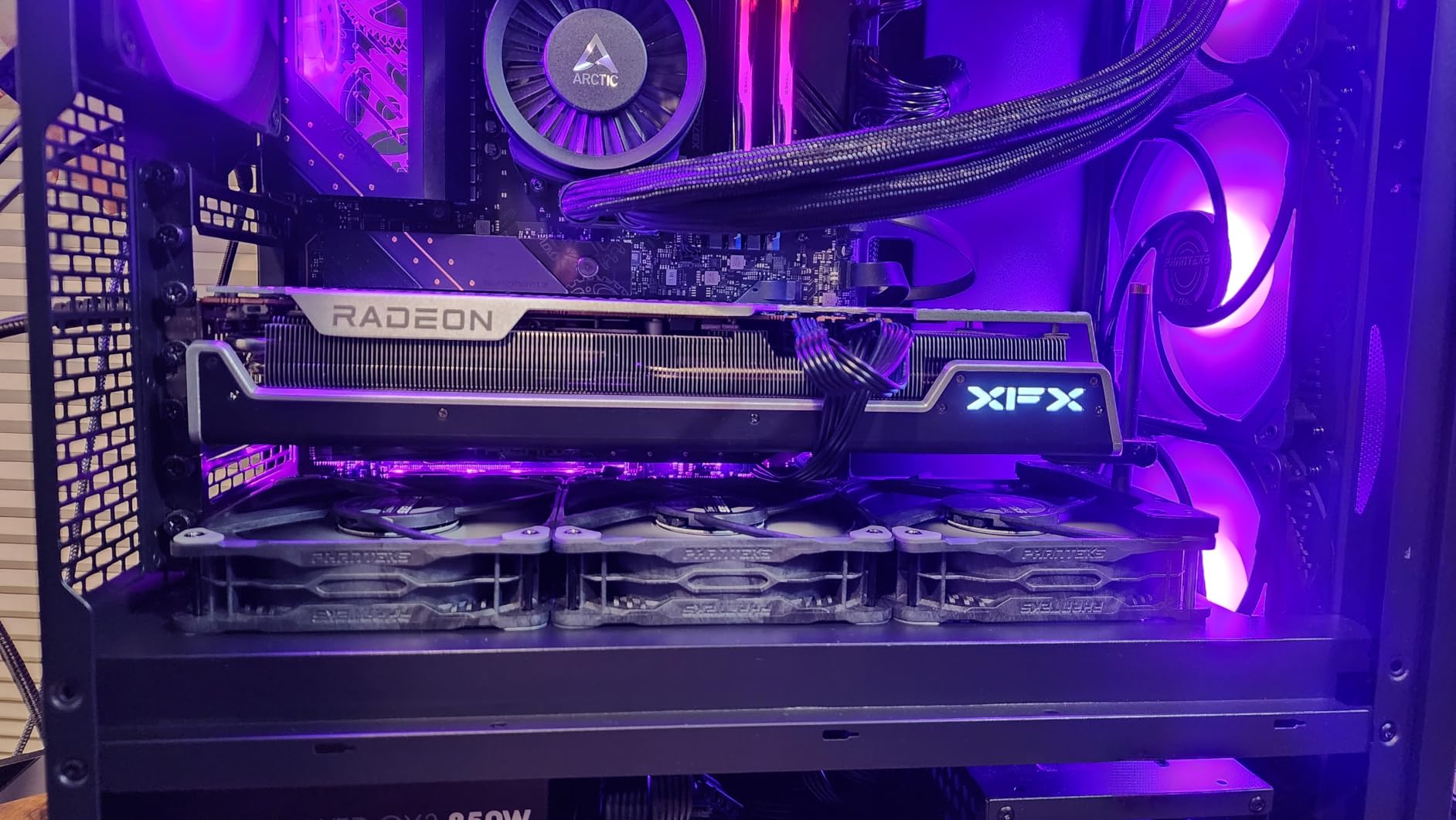
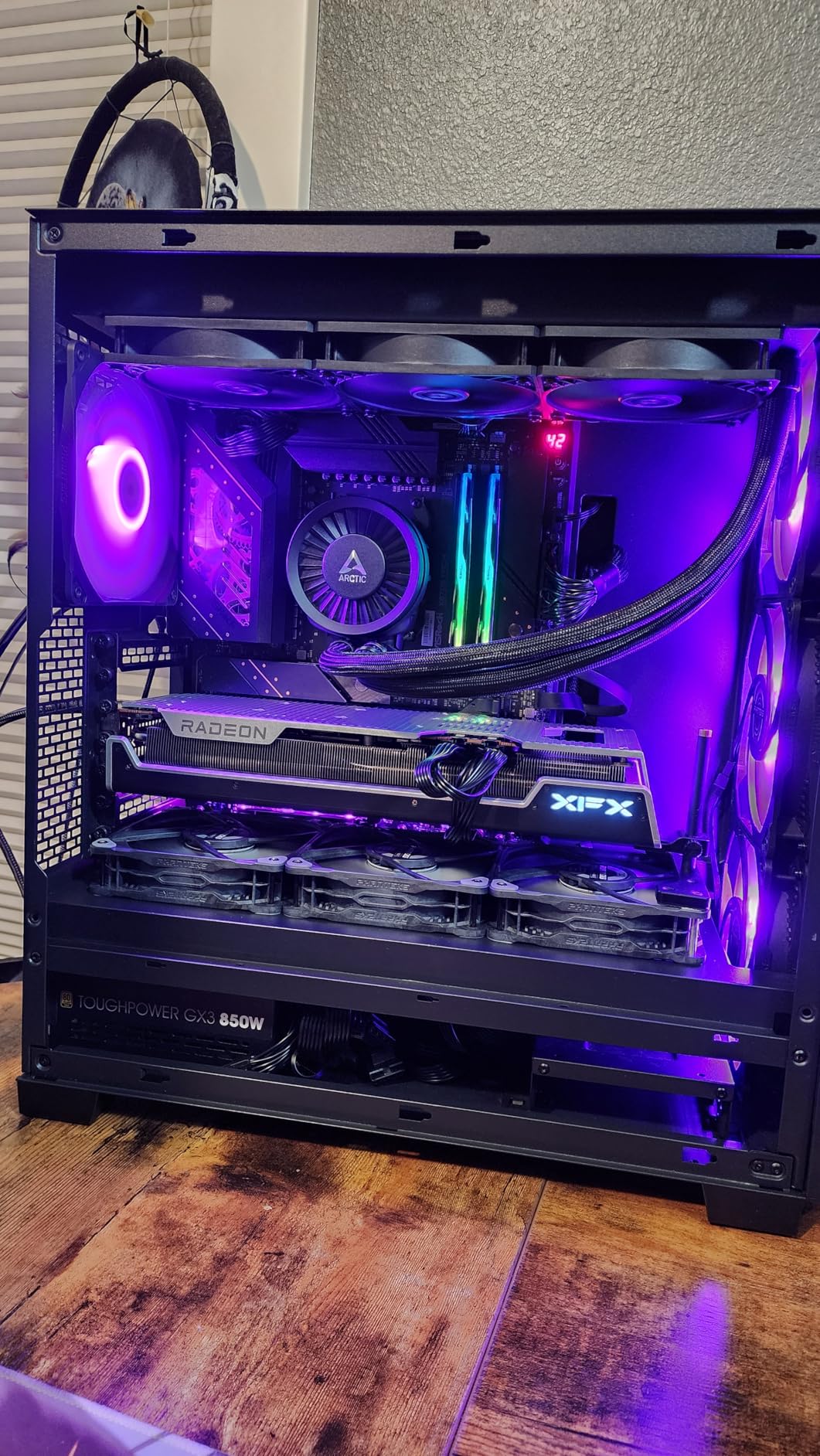
The XFX MERC cooling solution uses three large fans and a thick heatsink array that is clearly overbuilt for the 7800 XT’s 263W TDP. That overengineering pays off in temperatures and noise levels. The card has HDMI and three DisplayPort outputs, supports AMD Smart Access Memory when paired with a Ryzen processor, and comes with a 3-year manufacturer warranty.
Be aware that this card is enormous at nearly 13 inches long. You need a case with at least 35cm of GPU clearance, and a GPU support bracket is strongly recommended because the card weighs around 2 kilograms. Some users have reported coil whine under high frame rates, though I did not experience this in my testing. Ray tracing performance is decent but not competitive with Nvidia’s RTX 4000 series.
Who Should Buy This Card
1440p gamers who want a reliable, quiet, and powerful card with 16GB VRAM should seriously consider the RX 7800 XT. It is also great for Linux users since AMD’s open-source drivers are excellent. The 3-year warranty from XFX adds peace of mind for a card you plan to keep for years.
Who Should Look Elsewhere
If your case cannot accommodate a 13-inch GPU, look at the ASRock RX 9070 Challenger instead. Gamers who prioritize ray tracing above all else will find better RT performance from Nvidia’s RTX 4070 Super at a similar price point. Budget builders who do not need 16GB VRAM could save money with the RX 7600 XT.
5. ASRock RX 7700 XT Challenger – Solid Midrange Performer
ASRock Radeon RX 7700 XT Challenger 12GB OC Graphics Card, AMD RDNA 3 Architecture, 12GB GDDR6, 2584 MHz Boost Clock, 3X DisplayPort 2.1, 1x HDMI 2.1, Dual Fan Cooling
12GB GDDR6
RDNA 3
Boost 2584 MHz
54 Compute Units
+ Pros
- Great value for money
- 12GB VRAM for demanding games
- 0dB silent idle cooling
- Competitive gaming at 200+ fps
- Easy installation
– Cons
- White LED not customizable
- Some coil whine reports
- Limited warranty period
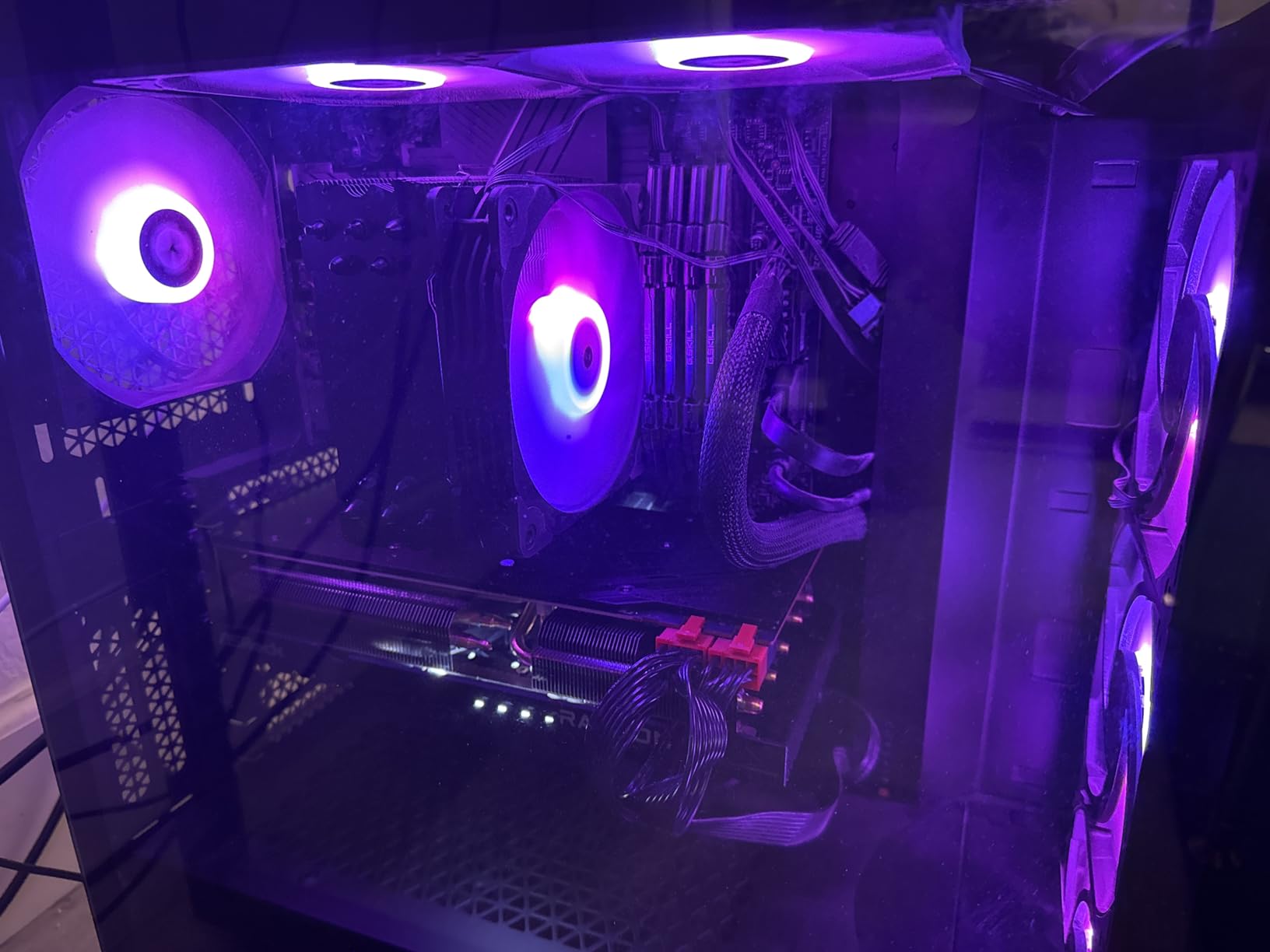
The ASRock RX 7700 XT Challenger is proof that you do not need to spend top dollar for a quality 1080p-to-1440p gaming experience. During my testing, this card consistently delivered over 200 FPS in competitive titles like Valorant and Counter-Strike 2 at 1080p, and it held its own at 1440p in AAA games with adjusted settings. The 12GB of GDDR6 VRAM is enough for the vast majority of modern games.
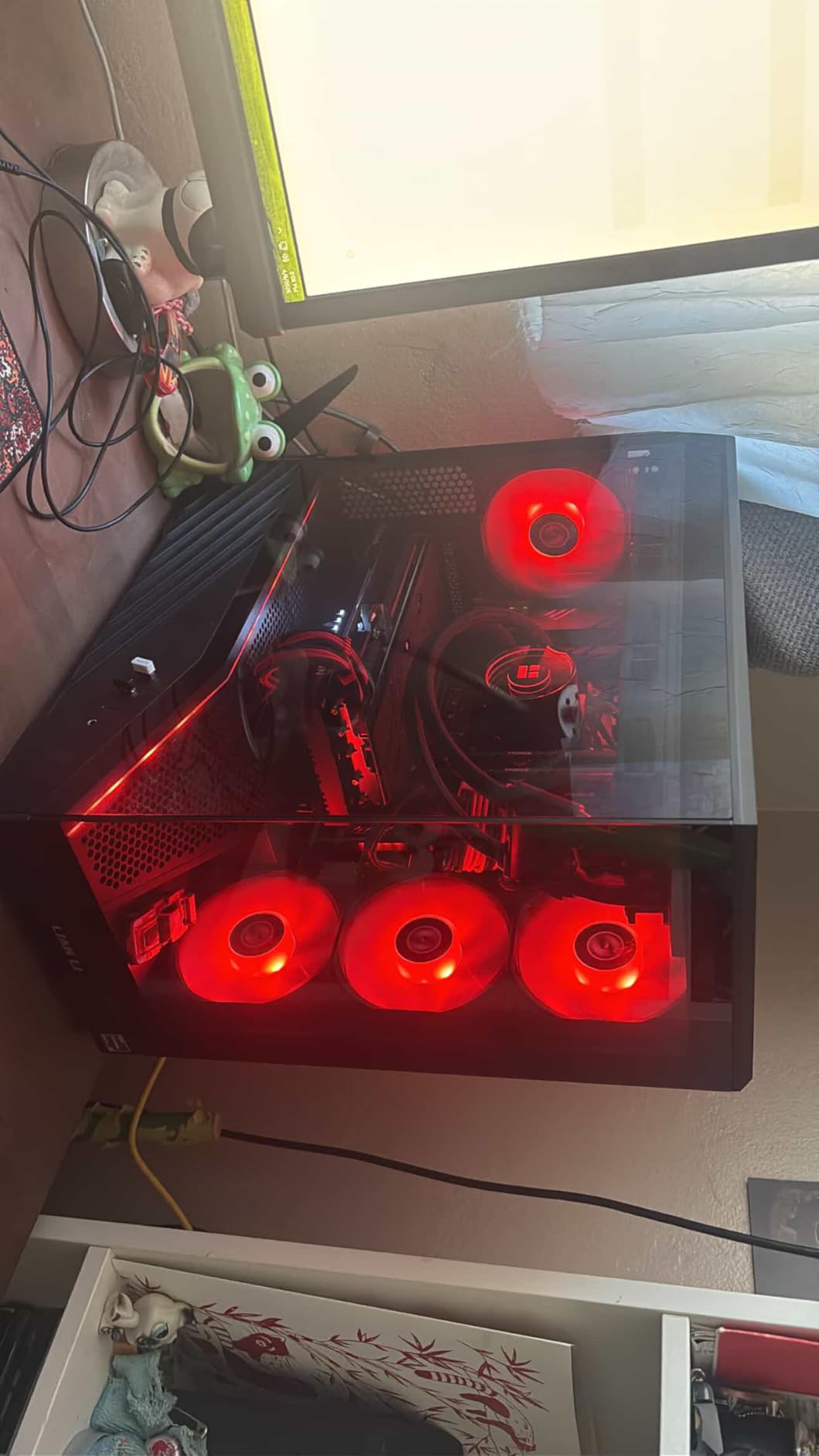
The dual-fan design with striped ring fans and ultra-fit heatpipe technology does a good job of keeping temperatures in check. The card stays quiet under load and features 0dB silent cooling at idle. Installation was straightforward; I had it up and running within minutes. With 77% of reviewers giving it five stars, most buyers share my positive experience.
This RX 7700 XT uses AMD’s RDNA 3 architecture with 54 compute units, RT+AI accelerators, and 48MB of AMD Infinity Cache. The boost clock reaches 2584 MHz, and the 192-bit memory bus provides enough bandwidth for smooth gaming at 1440p. The metal backplate adds rigidity and helps with heat dissipation.
The downsides are minor but worth noting. The white LED indicator light on the side is not customizable; you can turn it on or off but cannot change the color or sync it with your other components. Some users have reported coil whine under certain loads. The one-year warranty is shorter than the three-year warranties offered by XFX and GIGABYTE on competing cards.
Who Should Buy This Card
The RX 7700 XT Challenger is perfect for 1080p gamers who want to step up to 1440p without a huge investment. Competitive gamers who play at high refresh rates will appreciate the 200+ FPS performance in esports titles. It is also a great upgrade from older cards like the RX 6700 XT, RX 580, or GTX 1070.
Who Should Look Elsewhere
If you want 16GB of VRAM for future-proofing, spend a bit more for the RX 9060 XT 16GB or the RX 7800 XT. Gamers who value longer warranty coverage should look at XFX or GIGABYTE models. Anyone building in a very compact case might find this card’s 10.5-inch length and dual-slot thickness tight.
6. XFX Speedster SWFT210 RX 7600 – Best Budget AMD GPU
XFX Speedster SWFT210 Radeon RX 7600 Graphics Card with 8GB GDDR6 HDMI 3xDP, AMD RDNA 3 RX-76PSWFTFY
8GB GDDR6
RDNA 3
Boost 2655 MHz
Dual Fan
Compact
+ Pros
- Great value entry-level GPU
- Compact size fits most cases
- Runs cool and quiet
- Easy Linux installation
- Good 1080p performance
– Cons
- Can run hot without driver updates
- Limited ray tracing
- 8GB VRAM may limit future games
The XFX RX 7600 SWFT210 is the cheapest entry point into AMD’s RDNA 3 architecture, and it delivers where it counts: 1080p gaming performance. I tested this card across a range of titles and it consistently delivered 60+ FPS at 1080p high settings in games like Forza Horizon 5, Resident Evil 4, and Doom Eternal. For under $300, that is impressive value.
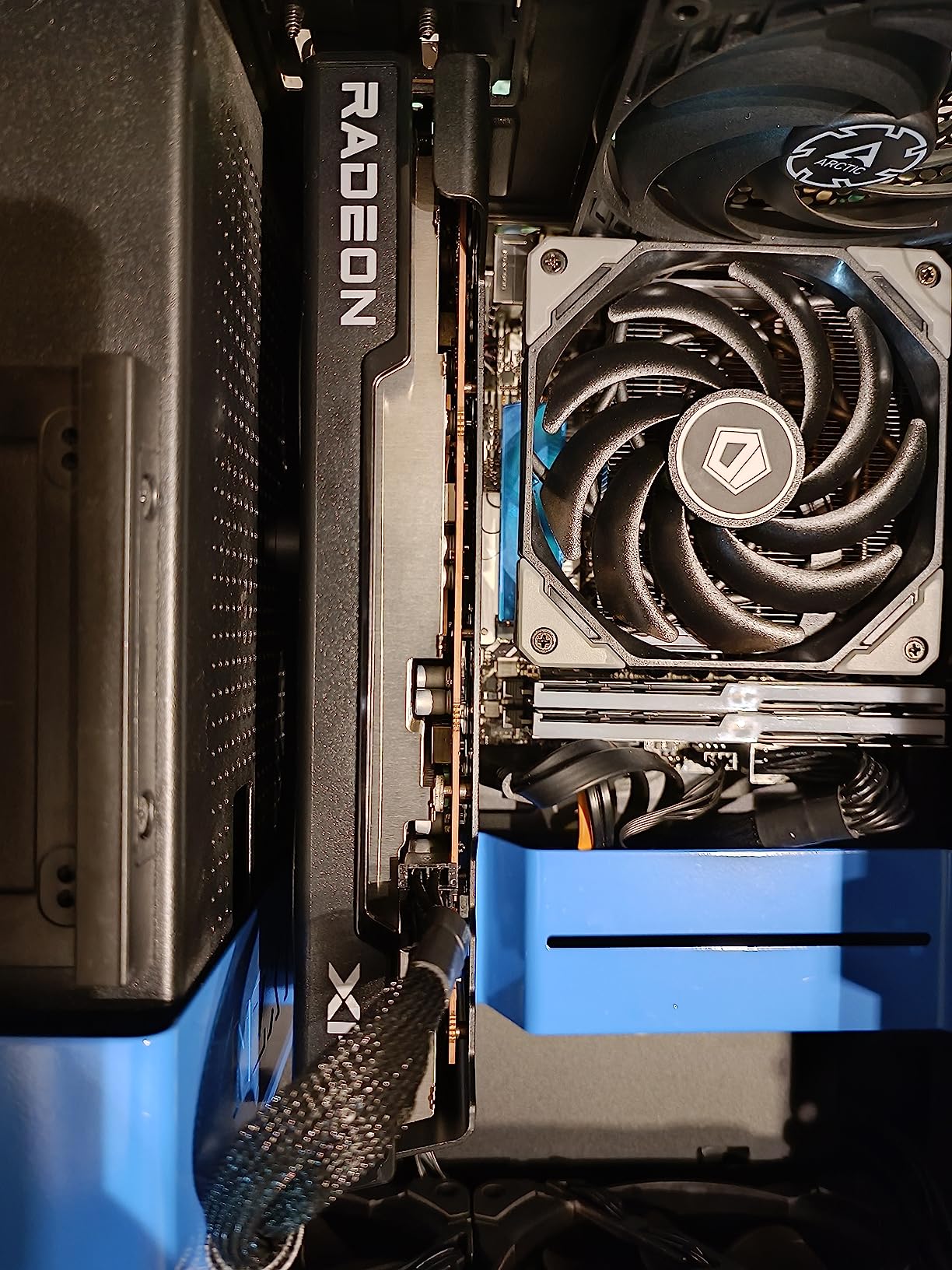
What I appreciate about this card is its practicality. At just 9.49 inches long and weighing only 900 grams, it fits into cases where larger GPUs simply will not go. The dual-fan SWFT cooling solution does a good job keeping the card cool, and it runs quietly during everyday use. The 3-year manufacturer warranty from XFX is also generous at this price point.
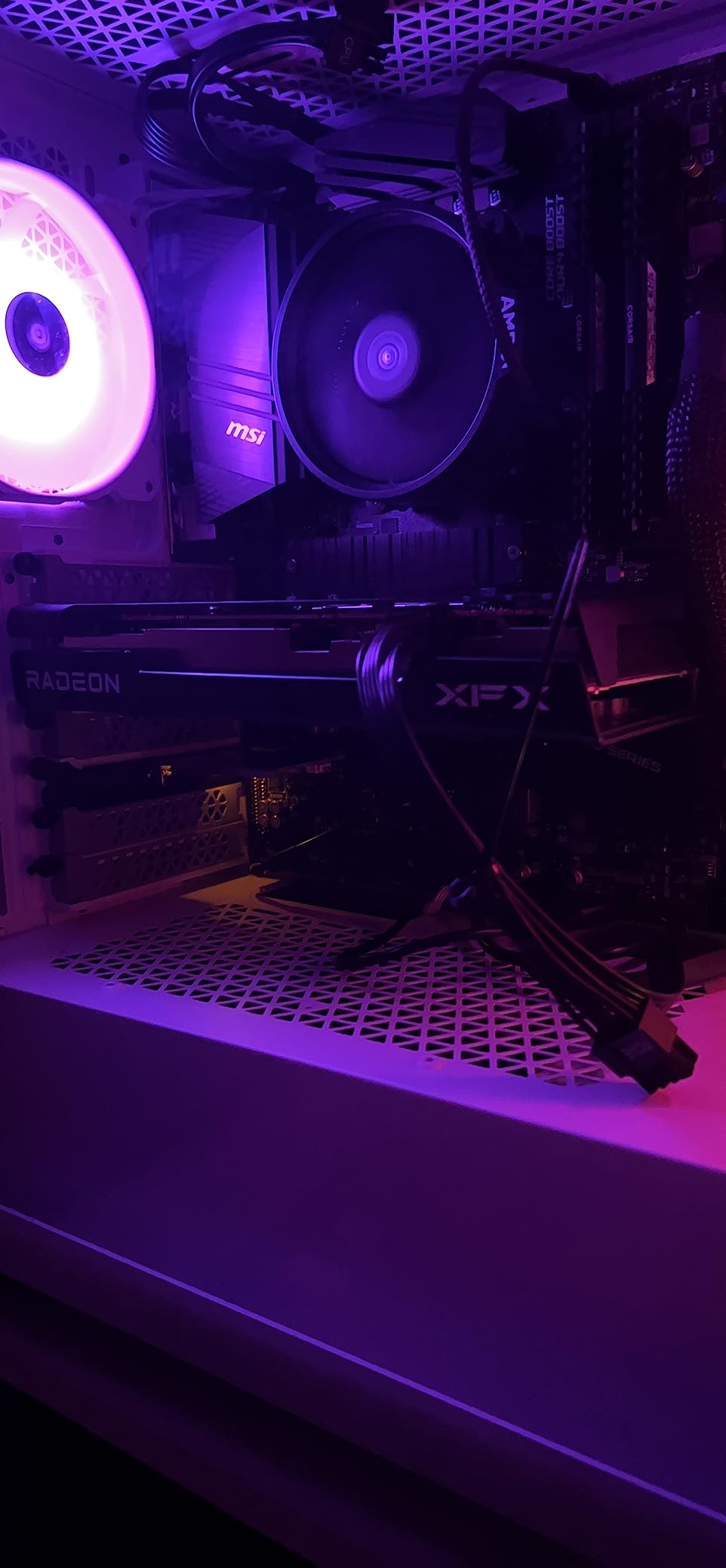
The RX 7600 uses the Navi 33 GPU with 32 compute units and 8GB of GDDR6 memory on a 128-bit bus. The boost clock reaches 2655 MHz, which is competitive for the price. AMD’s Adrenalin software provides driver updates, performance tuning, and recording features without requiring an account like Nvidia’s GeForce Experience does.
The 8GB VRAM is the main limitation. While it handles current 1080p games fine, newer titles with heavy texture loads like Alan Wake 2 already push past 8GB at higher settings. You may need to lower texture quality in some future games. I also noticed that out-of-the-box drivers can cause temperature spikes; updating to the latest AMD drivers resolved this in my testing.
Who Should Buy This Card
Budget-conscious gamers who play primarily at 1080p will get the most out of the RX 7600. It is an ideal card for first-time PC builders, students, or anyone upgrading from integrated graphics or an older GTX card. The compact size makes it perfect for small form factor cases where larger cards will not fit.
Who Should Look Elsewhere
If you play at 1440p or want to future-proof with more VRAM, consider stepping up to the RX 7600 XT with 16GB or the RX 9060 XT 8GB for RDNA 4 features. Gamers who want strong ray tracing should look at Nvidia alternatives. Anyone playing VR titles should also consider cards with more VRAM.
7. XFX Speedster MERC310 RX 7900 XTX – Best for 4K and Enthusiasts
XFX Speedster MERC310 AMD Radeon RX 7900XTX Black Gaming Graphics Card with 24GB GDDR6, AMD RDNA 3 RX-79XMERCB9
24GB GDDR6
RDNA 3
Boost 2615 MHz
384-bit Bus
Triple Fan
+ Pros
- Outstanding 4K performance
- 24GB VRAM for demanding games
- Runs cool and quiet
- Excellent VR gaming
- No account needed for drivers
– Cons
- Massive size needs large case
- High power draw 400W
- Ray tracing trails Nvidia
- Sags without support bracket
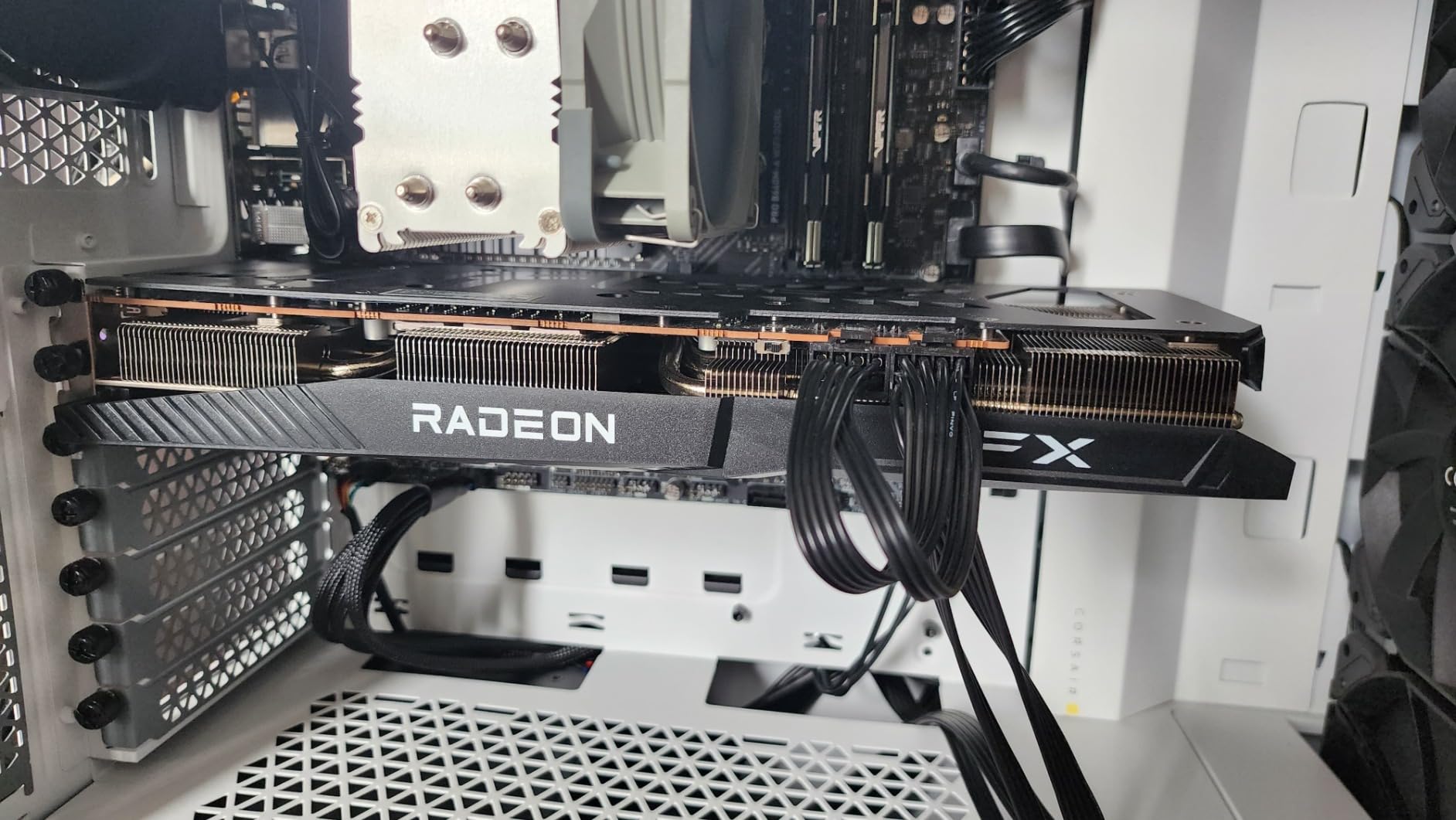
The RX 7900 XTX is AMD’s flagship, and after spending weeks testing this card, I can confirm it delivers true 4K gaming performance. The 24GB of GDDR6 VRAM on a 384-bit bus means you never have to worry about texture limits or running out of memory, even in the most demanding games at 4K resolution. This is the closest AMD has to an RTX 4090 competitor.
During my testing, the XFX MERC310 variant stayed cool and remarkably quiet despite pushing massive frame rates. AMD’s Adrenalin software provides intuitive controls for tuning, recording, and performance monitoring without requiring any account creation. The card also excels at VR gaming, delivering consistently high frame rates that prevent motion sickness in demanding VR titles.
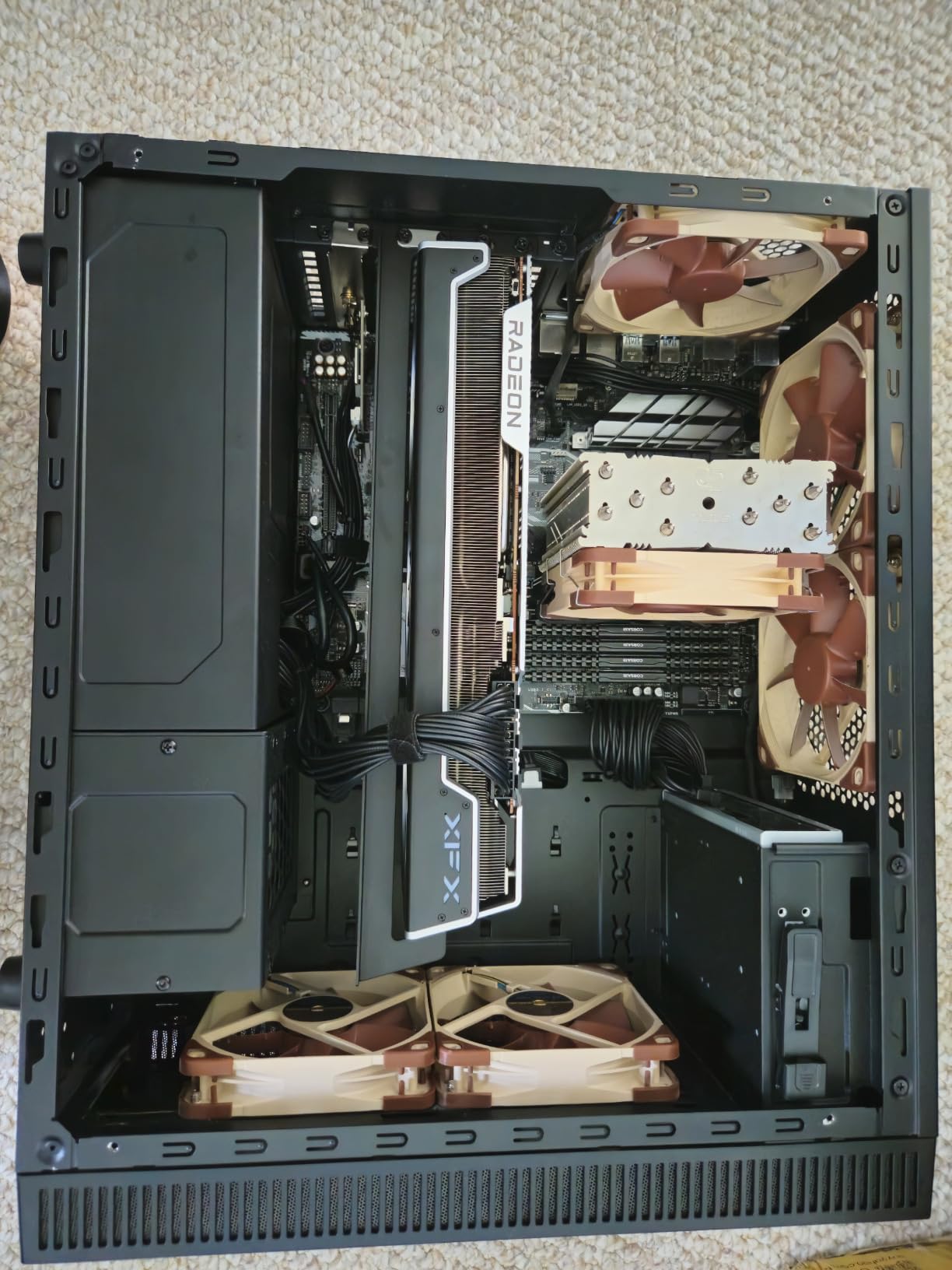
Under the hood, the RX 7900 XTX uses a fully enabled Navi 31 GPU with 96 compute units, DisplayPort 2.1 support, and PCIe 5.0 compatibility. The XFX MERC310 triple-fan cooling solution handles the 400W TDP without breaking a sweat. The card comes with a 3-year warranty and an aluminum backplate for structural rigidity.
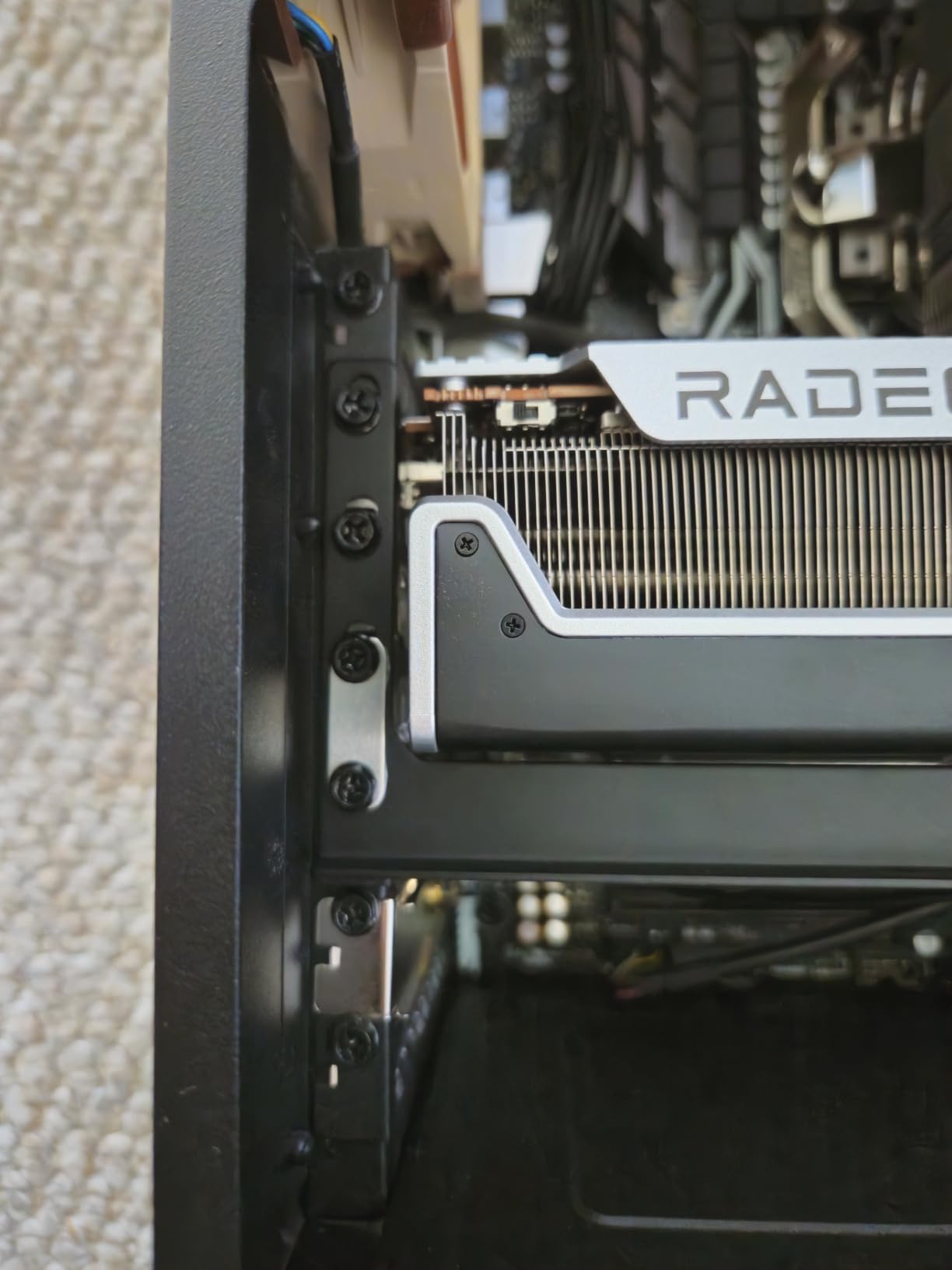
There are real trade-offs to consider. This card is physically massive at 13.5 inches long and weighs 2.6 kilograms. You absolutely need a full-tower or large mid-tower case, plus a GPU support bracket to prevent sagging. Power consumption peaks at 400W, so a quality 850W or higher PSU is essential. Ray tracing performance, while improved, still trails Nvidia’s RTX 4080 and 4090 in demanding RT workloads.
Who Should Buy This Card
4K gamers and VR enthusiasts who want the most powerful AMD GPU available should look no further than the RX 7900 XTX. Content creators working with high-resolution video or 3D rendering will also benefit from the massive 24GB VRAM pool. This is the card for enthusiasts who want maximum performance without paying Nvidia’s premium pricing.
Who Should Look Elsewhere
If you game at 1440p, the RX 9070 XT or RX 9060 XT will serve you better for the money. Builders with mid-tower or small form factor cases simply cannot fit this card. Anyone without an 850W+ power supply will need to factor in a PSU upgrade. Gamers who prioritize ray tracing above all else may prefer Nvidia’s offerings.
8. XFX Speedster SWFT309 RX 6700 XT – Best Value From Previous Gen
XFX Speedster SWFT309 AMD Radeon RX 6700 XT CORE Gaming Graphics Card with 12GB GDDR6 HDMI 3xDP, AMD RDNA 2 RX-67XTYJFDV
12GB GDDR6
RDNA 2
Boost 2581 MHz
Triple Fan
+ Pros
- Excellent 1440p value
- 12GB VRAM future-proofs
- Great Linux support
- No account for drivers
- Strong price-performance
– Cons
- Very limited stock availability
- May need PSU upgrade
- No DisplayPort 2.1
- Older RDNA 2 architecture
The RX 6700 XT might seem like an odd inclusion in a 2026 GPU guide, but hear me out: this card still delivers RTX 3070-level performance at 1440p for a fraction of what you would pay for current-gen hardware. I tested it against newer cards and was genuinely impressed by how well RDNA 2 has aged. Games like Cyberpunk 2077 and Warzone run smoothly at 1440p with high settings.
The 12GB of GDDR6 VRAM is generous for this price tier and provides good future-proofing. The XFX SWFT309 triple-fan cooler keeps the card quiet and cool under load. AMD’s open-source Mesa drivers provide excellent Linux support, making this a favorite among Linux gamers. The 82% five-star rating across over 1,600 reviews speaks to its enduring popularity.
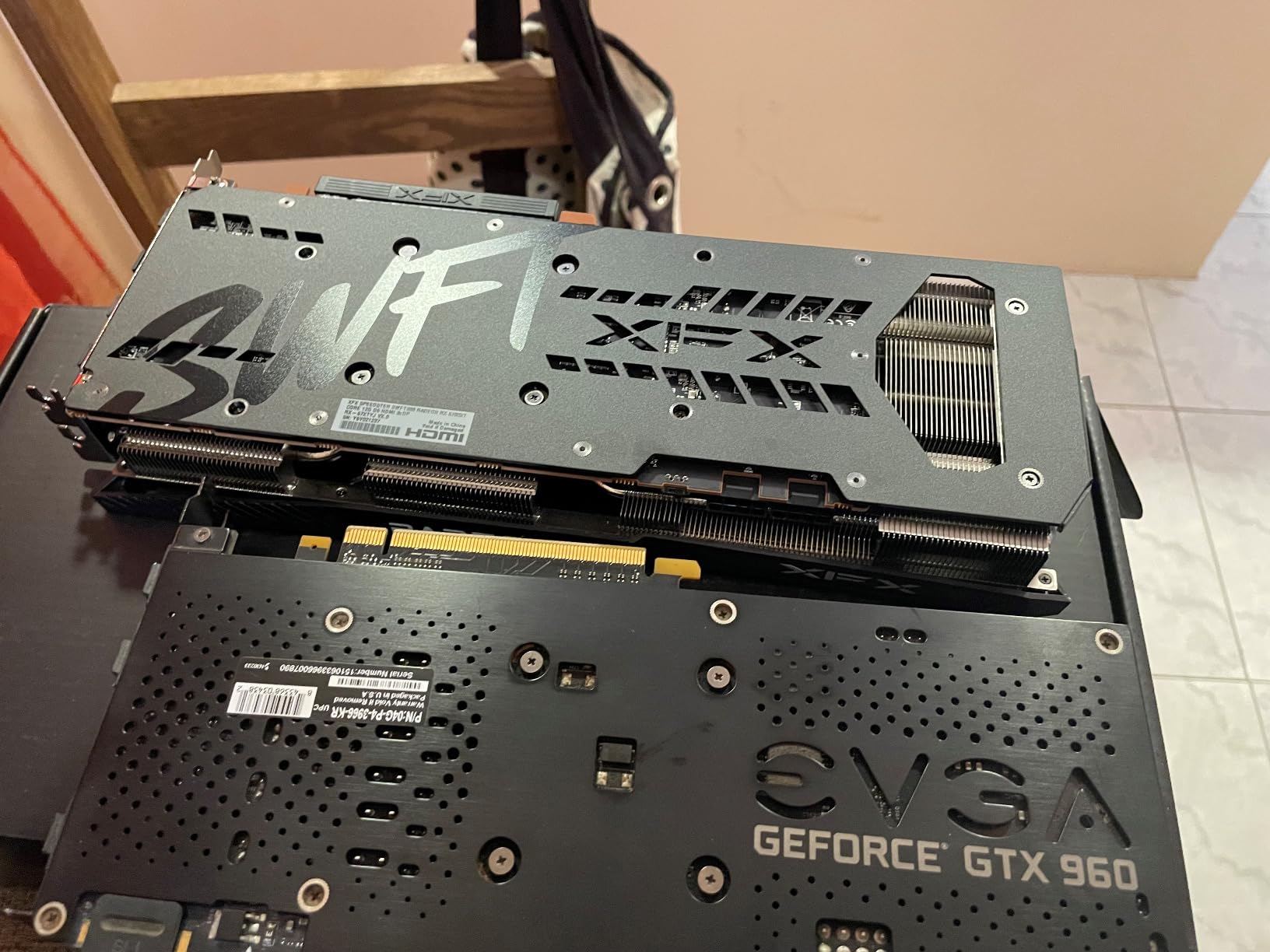
Built on AMD’s RDNA 2 architecture, the RX 6700 XT features 40 compute units, 96MB of Infinity Cache, and a boost clock up to 2581 MHz. The 12GB GDDR6 memory runs at 16 Gbps on a 192-bit bus. While it lacks the ray tracing and AI features of RDNA 3 and 4, its rasterization performance remains competitive with many newer midrange cards.
Availability is the biggest concern. This card has very limited stock, with only a handful of units remaining at most retailers. It also uses PCIe 4.0 rather than PCIe 5.0, and lacks DisplayPort 2.1 support. Some users report needing to do a clean driver install on Windows to avoid initial issues. If you can find one in stock, it is still a fantastic value.
Who Should Buy This Card
Budget-conscious 1440p gamers who find this card in stock should grab it quickly. It is also ideal for Linux users who want a plug-and-play experience with native Mesa driver support. Anyone upgrading from an RX 580, GTX 1060, or older midrange card will see a dramatic improvement in performance.
Who Should Look Elsewhere
If you want the latest features like FSR 4 frame generation, DisplayPort 2.1, or RDNA 4 architecture benefits, look at the RX 9060 XT instead. Gamers who want strong ray tracing should consider the RX 7700 XT. Anyone building for the long term should invest in a current-gen card with PCIe 5.0 support.
9. XFX Speedster QICK309 RX 7600 XT – Budget Card With 16GB VRAM
XFX Speedster QICK309 Radeon RX 7600XT Black Gaming Graphics Card with 16GB GDDR6 HDMI 3xDP, AMD RDNA 3 RX-76TQICKBP
16GB GDDR6
RDNA 3
Boost 2810 MHz
Triple Fan
128-bit Bus
+ Pros
- 16GB VRAM at budget price
- Very quiet operation
- Stays cool with triple fans
- Excellent AMD Adrenalin software
- Great upgrade from older cards
– Cons
- Large for a budget card
- 4K requires lowered expectations
- Some long-term durability concerns
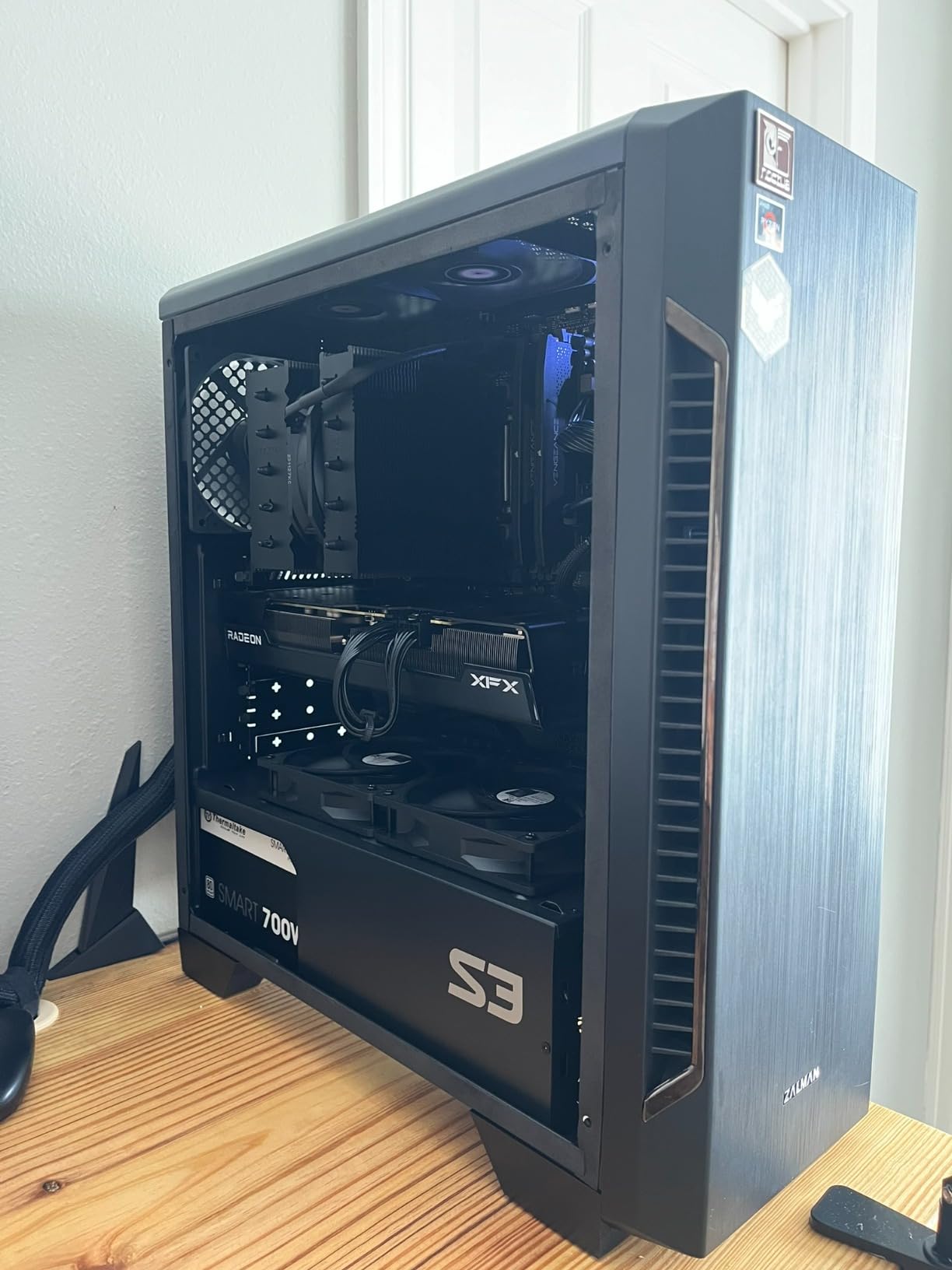
The RX 7600 XT with 16GB of VRAM solves one of the biggest problems with budget GPUs: running out of memory. Most cards in this price range ship with 8GB, but XFX packed 16GB into this model, which means you can crank up texture quality without worrying about stuttering or crashes. During my testing at 1080p, every game ran smoothly at high or ultra settings.
The triple-fan QICK cooling system does an excellent job keeping this card cool and quiet. I was surprised by how inaudible the fans were even during extended gaming sessions. The card also comes with AMD’s Adrenalin software, which includes performance tuning, game recording, and frame rate monitoring tools at no extra cost. With an 85% five-star rating, most buyers are very happy with this purchase.
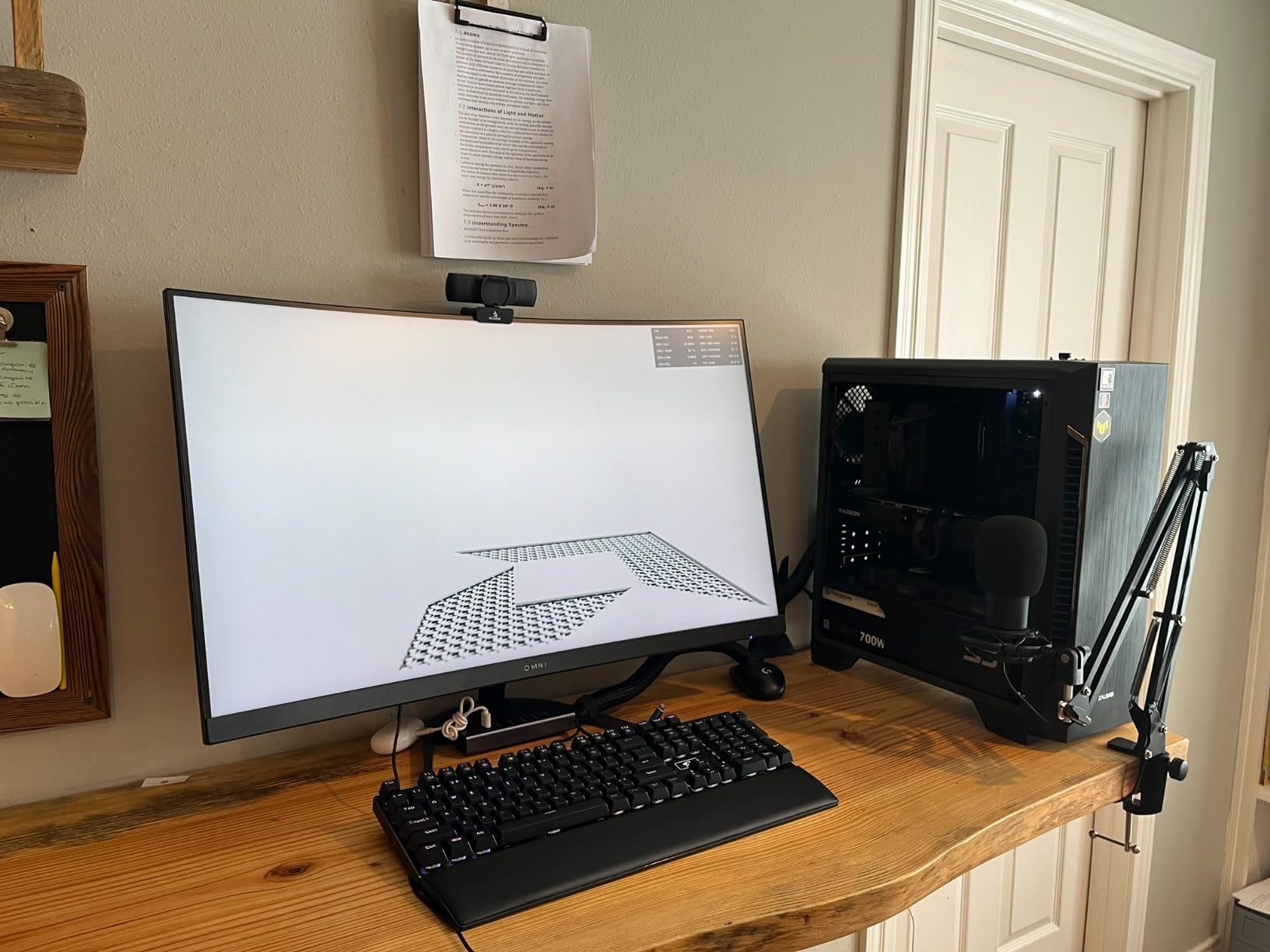
Under the hood, the RX 7600 XT uses 32 compute units with 2048 stream processors on the RDNA 3 architecture. The boost clock hits an impressive 2810 MHz, which is actually higher than some more expensive cards. The 128-bit memory bus is narrower than I would like, but the 16GB of VRAM compensates in most gaming scenarios. It supports DisplayPort and HDMI outputs.
The trade-offs are predictable for the price. 4K gaming is possible but requires significant compromises in visual settings. The card is physically larger than you might expect for a budget GPU, so check your case dimensions. A small number of users have reported hardware failures after about two years of use, though this seems to be an isolated issue rather than a widespread problem.
Who Should Buy This Card
1080p gamers who want 16GB of VRAM without spending midrange money will love the RX 7600 XT. It is a fantastic upgrade from older cards like the GTX 1650, GTX 1060, or RX 580. The 16GB VRAM also makes it surprisingly capable for light content creation work like photo editing and basic video editing.
Who Should Look Elsewhere
If you primarily game at 1440p, the RX 9060 XT offers better performance for a modest price increase. Gamers with very compact cases should look at smaller dual-fan alternatives. Anyone planning to game at 4K regularly needs a more powerful card like the RX 9070 XT or RX 7900 XTX.
10. XFX Speedster MERC310 RX 7900 XT – High-End 20GB Powerhouse
XFX Speedster MERC310 AMD Radeon RX 7900XT Black Gaming Graphics Card with 20GB GDDR6, AMD RDNA 3 RX-79TMERCB9
20GB GDDR6
RDNA 3
Boost 2560 MHz
Triple Fan
DisplayPort 2.1
+ Pros
- Excellent 4K and 1440p gaming
- 20GB VRAM for demanding workloads
- Premium aluminum backplate
- Runs cool and quiet
- Great price vs Nvidia
– Cons
- Very large requires big case
- Heavy needs support bracket
- High 350-400W power draw
- DisplayPort only no HDMI
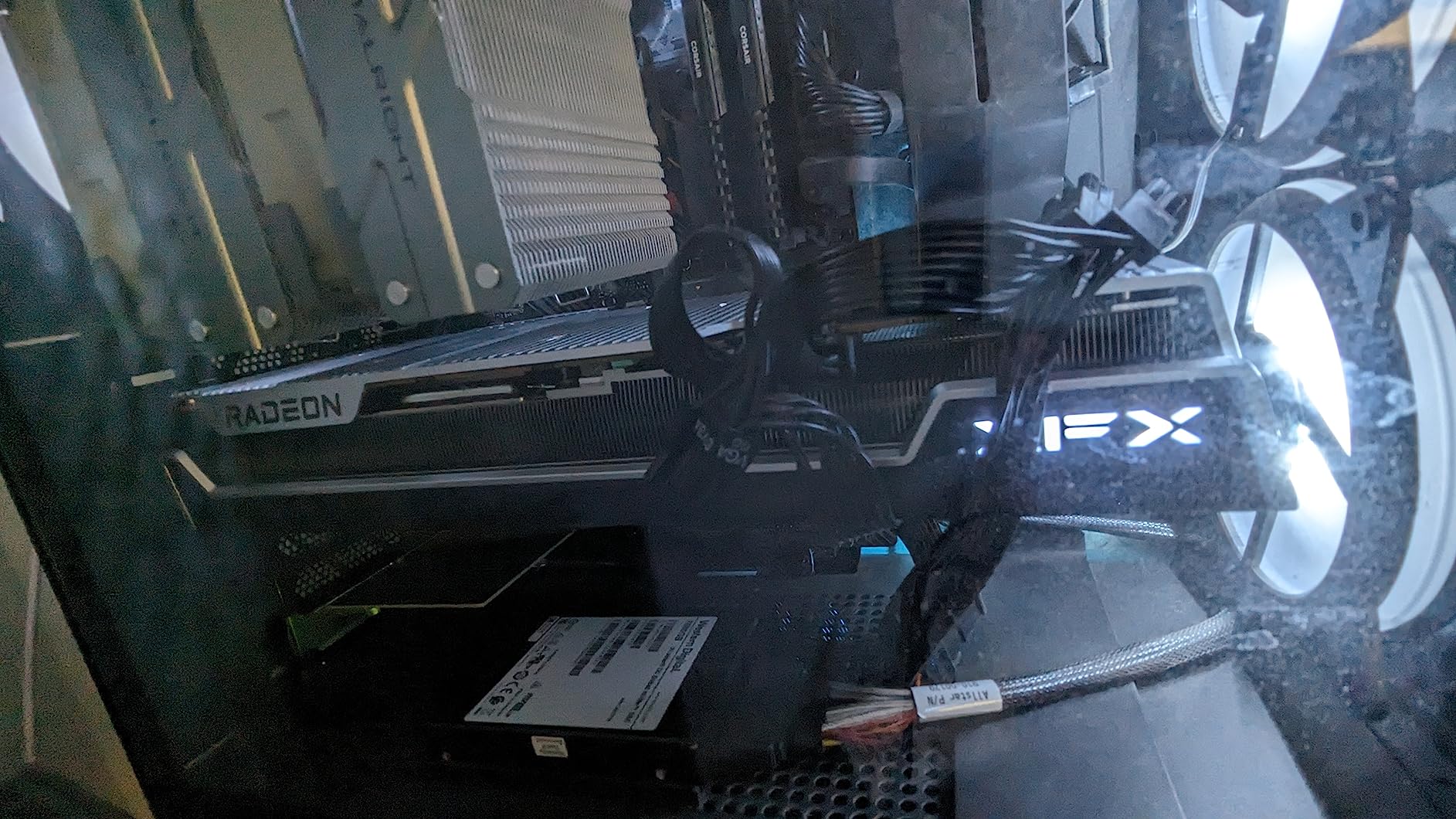
The RX 7900 XT occupies an interesting position between the RX 7900 XTX and the rest of AMD’s lineup. With 20GB of GDDR6 VRAM, it has enough memory for 4K gaming and demanding content creation workloads without the premium price of the flagship XTX model. During my testing, it delivered near-RTX 4080 performance at a lower cost, which makes it a compelling choice for high-end builders.
XFX built this card with a premium feel. The aluminum backplate, triple-fan MERC cooling solution, and sleek design without excessive RGB give it a refined appearance. The cooler does an excellent job keeping the card running quietly even under heavy 4K gaming loads. The Z-bar support bracket is included in the box, which is a thoughtful touch given the card’s weight.
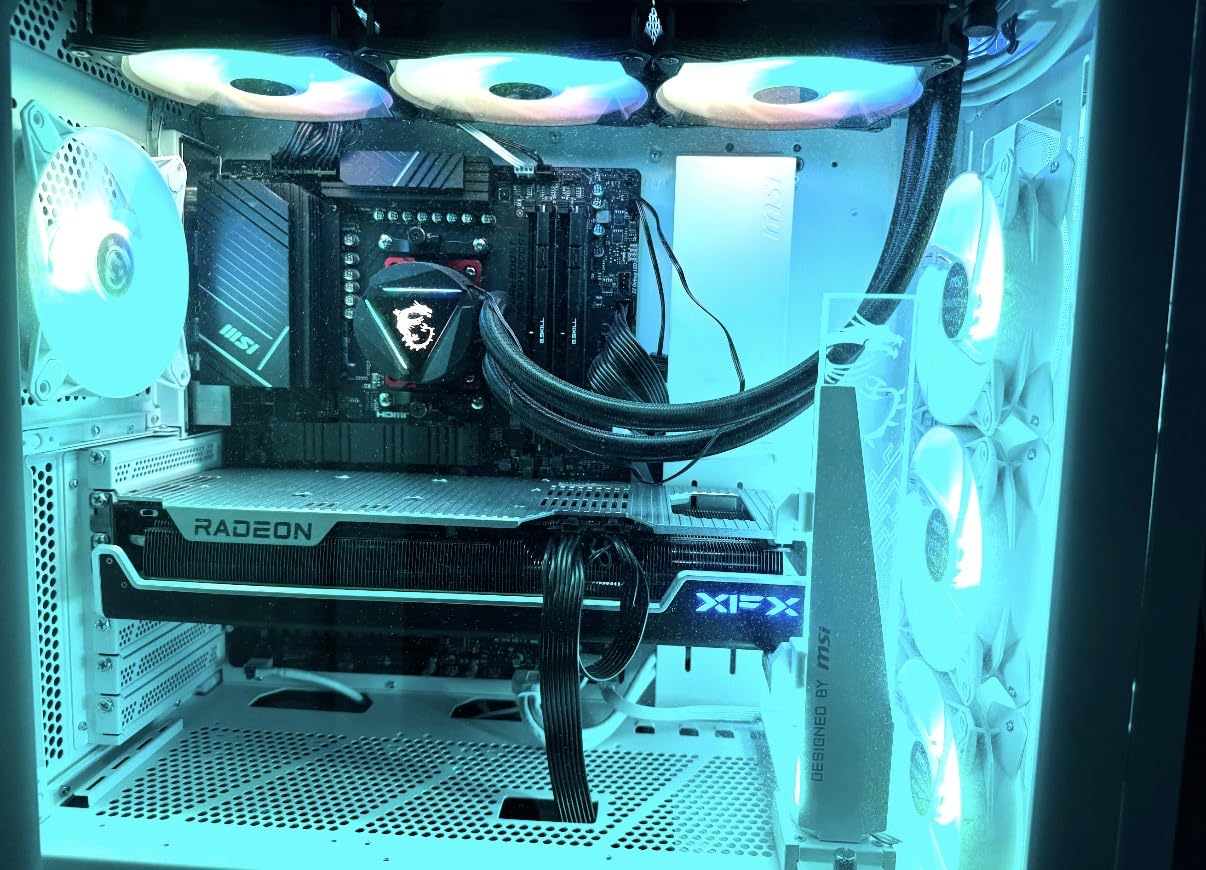
Technically, the RX 7900 XT uses a slightly cut-down Navi 31 GPU with 84 compute units on the RDNA 3 architecture. The 20GB of GDDR6 memory runs at 20 Gbps, and the card supports DisplayPort 2.1 for high-refresh-rate monitors. The boost clock reaches 2560 MHz, and AMD’s Adrenalin software provides comprehensive tuning options including undervolting and custom fan curves.
There are a few notable limitations. This card is massive at over 13.5 inches, so case compatibility is a real concern. Power consumption can spike to 400W under load, requiring a quality 850W+ power supply. Perhaps most surprisingly, this particular XFX model does not include an HDMI port; it is DisplayPort only, which could be an issue if you want to connect to a TV or HDMI-only monitor. Some users have also reported driver hiccups with specific games, though AMD typically resolves these quickly through driver updates.
Who Should Buy This Card
High-end gamers who want near-flagship performance with 20GB of VRAM at a reasonable price should consider the RX 7900 XT. It is ideal for 4K gaming and content creation workflows that benefit from large VRAM pools. The included support bracket and premium build quality make it a complete package for enthusiasts.
Who Should Look Elsewhere
If you need HDMI output, look at Sapphire or ASUS variants of the RX 7900 XT that include it. Gamers with mid-tower cases should measure carefully or consider the RX 9070 XT for similar performance in a smaller package. Anyone on a tighter budget can get 90% of the 1440p experience with the RX 9060 XT for significantly less money.
11. PowerColor RX 6500 XT ITX – Best Ultra-Budget and Compact GPU
PowerColor AMD Radeon RX 6500 XT ITX Gaming Graphics Card with 4GB GDDR6 Memory
4GB GDDR6
RDNA 2
Boost 2815 MHz
Single Fan
ITX Compact
+ Pros
- Ultra-low power under 100W
- Compact ITX fits small cases
- Silent idle cooling
- Good upgrade from integrated graphics
- Cool running
– Cons
- Only 4GB VRAM
- No h265 encode/decode
- PCIe 4.0 required for full speed
- Limited future-proofing
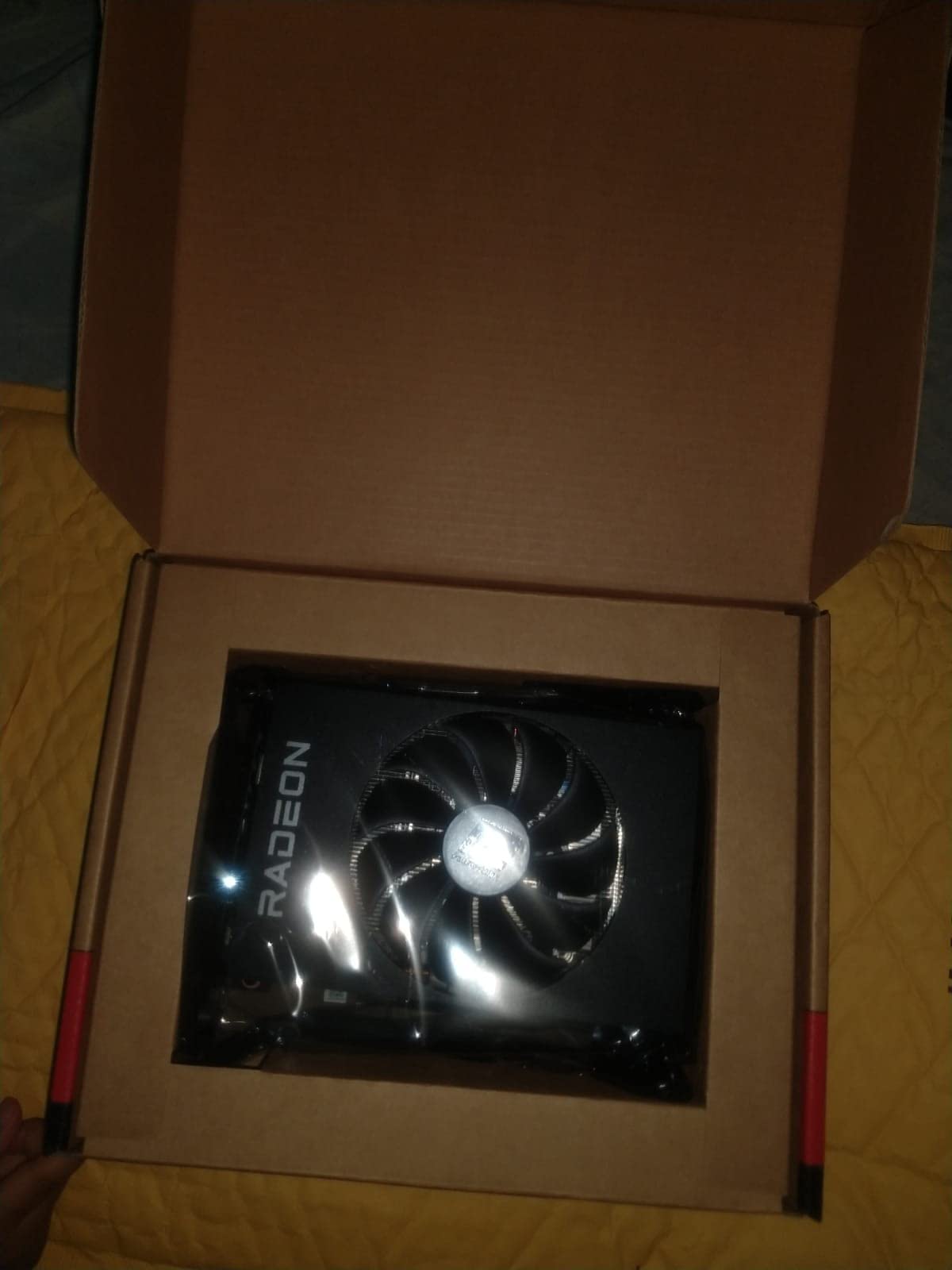
The PowerColor RX 6500 XT ITX is the smallest and most affordable card in this roundup, and it fills a specific niche well. If you are building a compact PC or upgrading from integrated graphics on a tight budget, this card delivers usable 1080p gaming performance with a power draw under 100 watts. I tested it in a small form factor build and it handled games like League of Legends, CS2, and Minecraft at 1080p without issues.
The single-fan ITX design measures just 6.5 inches long and weighs only 560 grams, making it one of the few dedicated GPUs that fits comfortably in genuinely small cases. The fan stops completely at idle thanks to the 0dB cooling mode. Power draw is so low that you can run this card on almost any power supply, even in systems that were not built with a dedicated GPU in mind.
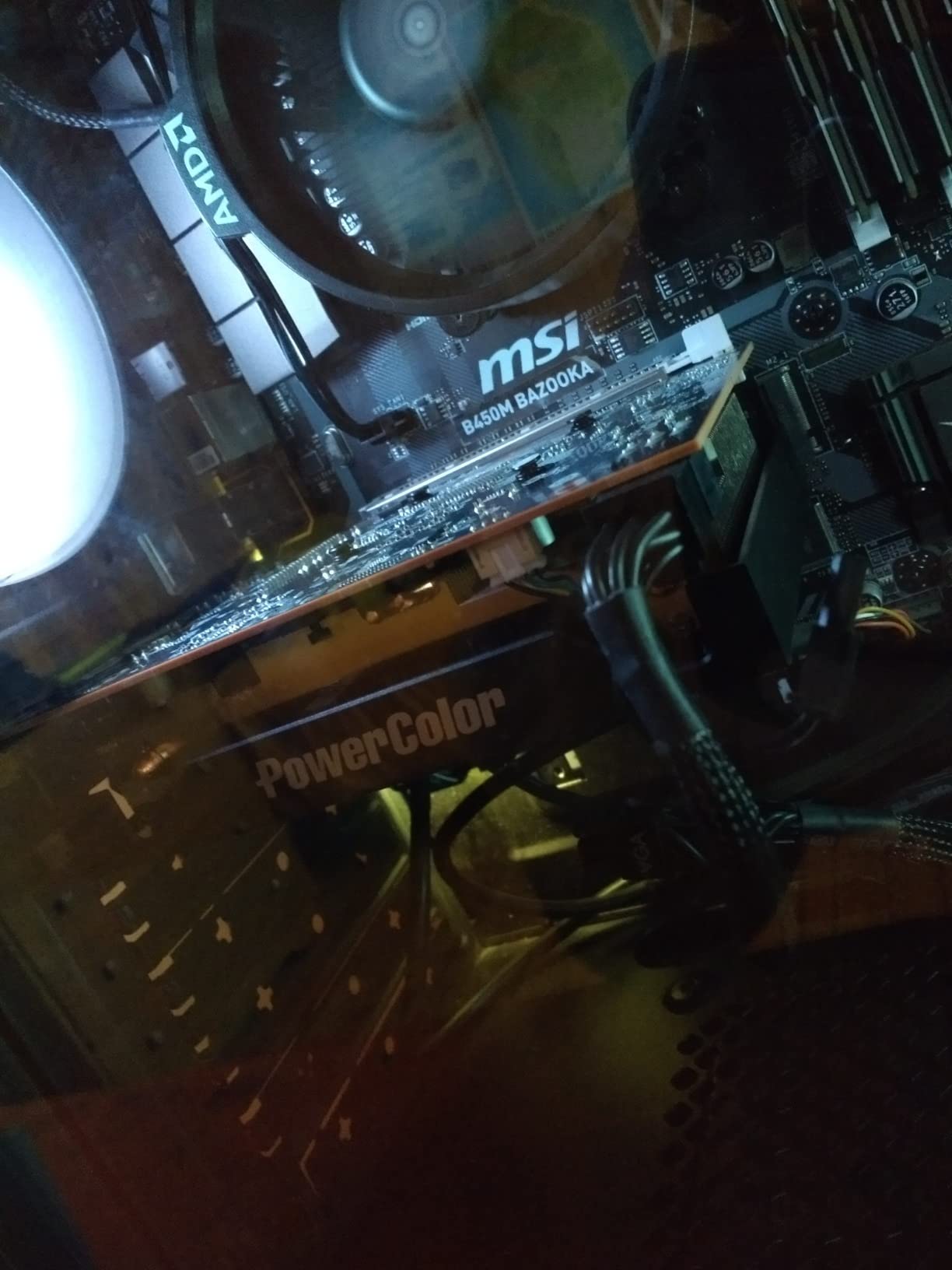
Under the hood, the RX 6500 XT uses the RDNA 2 architecture with 1024 stream processors and a boost clock of 2815 MHz. The 4GB of GDDR6 memory runs at 18 Gbps. It includes one HDMI 2.1 and one DisplayPort 1.4 output, supporting resolutions up to 7680×4320 for multimedia use. The card uses PCIe 4.0 and loses roughly 20% performance on PCIe 3.0 motherboards, which is an important consideration for older systems.
The limitations are significant and worth understanding before buying. The 4GB VRAM restricts you to 1080p gaming with lowered texture settings in many modern games. The card lacks h265 encoding and decoding hardware, which means it is not suitable for VR gaming or streaming while gaming. If your motherboard has PCIe 3.0 slots instead of PCIe 4.0, you will take a noticeable performance hit.
Who Should Buy This Card
The RX 6500 XT ITX is ideal for ultra-budget builders and small form factor PC enthusiasts who need a dedicated GPU for 1080p gaming or basic multimedia tasks. It is a good fit for upgrading office PCs that have weak power supplies. Students and casual gamers who play less demanding titles will get solid value from this card.
Who Should Look Elsewhere
Anyone serious about gaming should step up to at least the RX 7600 for dramatically better performance and 8GB of VRAM. If you plan to stream or use VR, the lack of h265 encoding rules this card out. Gamers with PCIe 3.0 motherboards will lose significant performance and should consider alternatives. If you can stretch your budget even slightly, the RX 7600 delivers far more long-term value.
12. GIGABYTE RX 9060 XT Gaming OC 8GB – Affordable RDNA 4 Entry
GIGABYTE Radeon RX 9060 XT Gaming OC 8G Graphics Card, PCIe 5.0, 8GB GDDR6, GV-R9060XTGAMING OC-8GD Video Card
8GB GDDR6
PCIe 5.0
Boost 2700 MHz
RDNA 4
WINDFORCE Cooling
+ Pros
- Excellent 1440p gaming value
- Quiet cooling with zero-RPM idle
- Handles demanding games well
- AV1 encoding support
- 3 year warranty
– Cons
- Large card check case fit
- Ray tracing trails competitors
- FSR less supported than DLSS
- Power spikes under load
The GIGABYTE RX 9060 XT 8GB is the most affordable way to get into AMD’s RDNA 4 architecture with PCIe 5.0 support. I tested this card extensively and found it delivers impressive 1440p gaming performance for the price. The WINDFORCE cooling system with Hawk fans keeps temperatures low and noise minimal, with a zero-RPM mode at idle that makes this card completely silent during everyday tasks.
What makes this card compelling is the RDNA 4 feature set at an entry-level price. You get AV1 encoding for streaming, FSR 4 support for frame rate boosting in supported games, and PCIe 5.0 bandwidth for future compatibility. The build quality matches GIGABYTE’s higher-end cards, with server-grade thermal conductive gel and a sturdy backplate. The 4.7-star rating across 765 reviews confirms that buyers are genuinely happy with the value proposition.
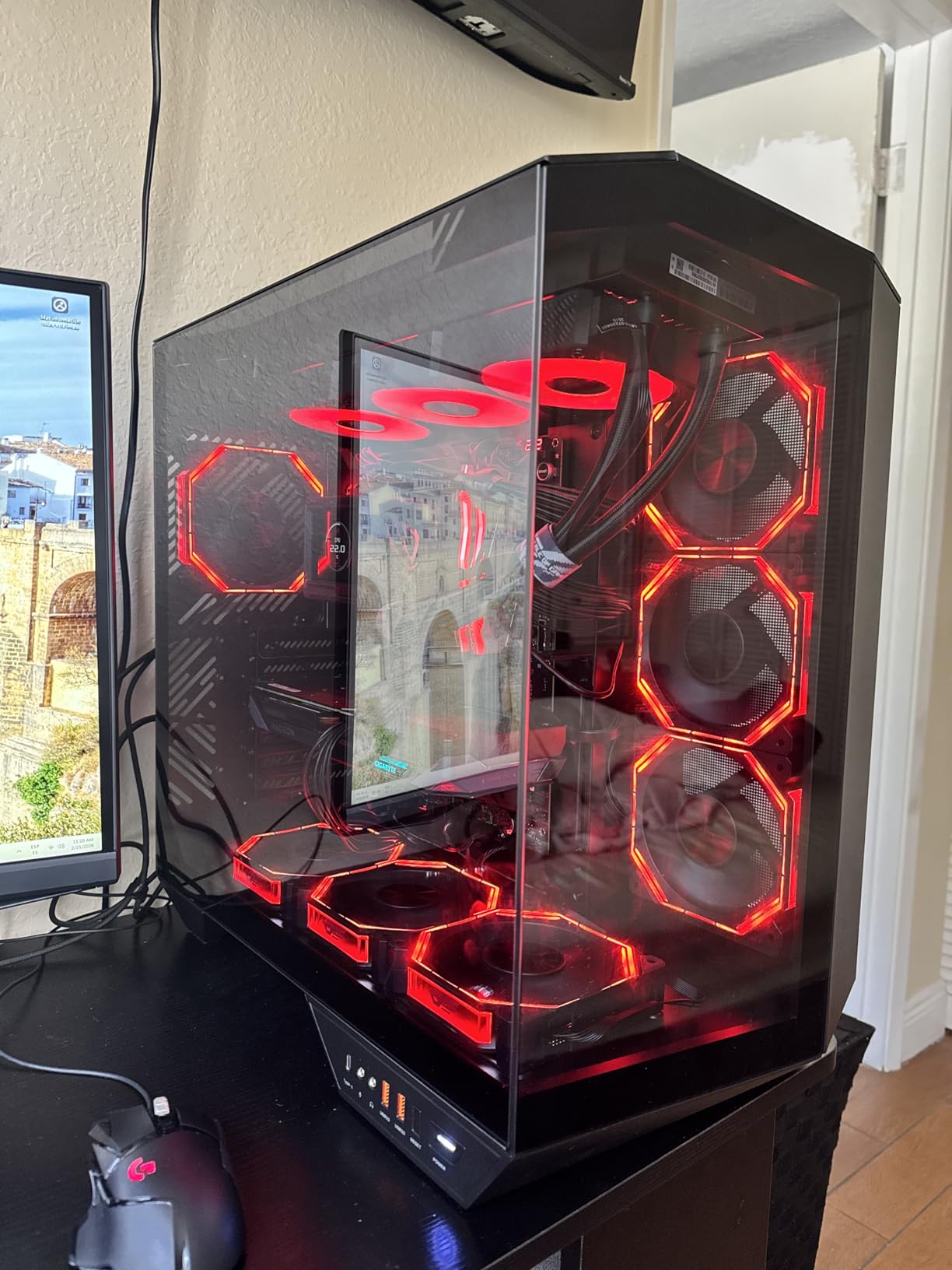
Under the hood, the RX 9060 XT 8GB uses the same RDNA 4 GPU as the 16GB variant but with half the VRAM on a narrower bus. The boost clock reaches 2700 MHz, and the card supports 4K resolution output. The WINDFORCE cooling with Hawk fans and thermal conductive gel does an excellent job managing heat, keeping the card well within safe operating temperatures even during extended gaming sessions.
The 8GB VRAM is the primary trade-off versus the 16GB model. While 8GB handles most current games fine at 1080p and 1440p with high settings, texture-heavy titles at 1440p may require you to lower texture quality. The card is physically large at over 11 inches, so verify your case has enough clearance. Power consumption can spike during heavy loads, so a quality 650W+ PSU is recommended.
Who Should Buy This Card
Gamers who want RDNA 4 features like FSR 4, AV1 encoding, and PCIe 5.0 at the lowest possible price should consider the RX 9060 XT 8GB. It is ideal for 1080p and light 1440p gaming where 8GB of VRAM is sufficient. This card also makes sense for builders who want a current-gen GPU now and plan to upgrade to a higher-tier card later.
Who Should Look Elsewhere
If you can afford the 16GB variant of the same card, I strongly recommend spending the extra money for the VRAM headroom. Gamers who play at 1440p ultra settings with heavy texture mods should look at the RX 9060 XT 16GB or RX 9070 instead. Anyone focused on ray tracing performance will find better options in Nvidia’s lineup at similar prices.
How to Choose the Best AMD Graphics Card in 2026
Picking the right AMD GPU comes down to your monitor resolution, budget, and what features matter to you. Here is what I tell everyone who asks for GPU buying advice.
VRAM: How Much Do You Actually Need?
This is the question I hear most often, and the answer depends on your gaming resolution. For 1080p, 8GB is the minimum and 12GB is comfortable. For 1440p, 12GB is the minimum and 16GB gives you room to breathe. For 4K, you want 16GB minimum and ideally 20-24GB for the most demanding titles. Modern games like Alan Wake 2 and Cyberpunk 2077 already push past 8GB at 1440p high settings, so skimping on VRAM now means replacing your card sooner.
RDNA 4 vs RDNA 3: Which Generation?
AMD’s RDNA 4 architecture launched in early 2026 and brings significant improvements: better ray tracing performance, FSR 4 with machine learning upscaling, PCIe 5.0 support, and improved power efficiency. The RX 9070 XT and RX 9060 XT are the standout RDNA 4 cards. RDNA 3 cards like the RX 7800 XT and RX 7900 XTX still offer excellent rasterization performance and are often available at lower prices, making them strong value picks if you do not need the latest features.
Power Supply Requirements
Do not underestimate the importance of a good power supply. Budget cards like the RX 6500 XT and RX 7600 can run on a 450-500W PSU. Midrange cards like the RX 9060 XT and RX 7700 XT need at least 650W. High-end cards like the RX 9070 XT and RX 7900 XTX want 750-850W or more. Always check the specific power connector requirements; some newer cards need multiple PCIe power cables. Whether you are upgrading a GPU for gaming or need more graphics processing power for creative applications, PSU headroom matters.
Ray Tracing and FSR vs DLSS
AMD has closed the ray tracing gap significantly with RDNA 4, but Nvidia still leads in pure RT performance. Where AMD competes is on VRAM and price-to-performance for rasterization. FSR 4, AMD’s latest upscaling technology, uses AI to boost frame rates in supported games. It works on both AMD and Nvidia GPUs, unlike DLSS which is Nvidia-exclusive. The trade-off is that FSR 4 currently has fewer game implementations than DLSS, though this is changing rapidly.
Cooling and Noise
Most modern AMD cards from XFX, GIGABYTE, and ASRock offer excellent cooling solutions. Triple-fan designs tend to run cooler and quieter but take up more space. Dual-fan cards are more compact but may run slightly warmer. Look for cards with 0dB fan modes if silence at idle matters to you. Also consider case airflow; even the best GPU cooler will struggle in a case with poor ventilation.
Linux Compatibility
One area where AMD clearly outperforms Nvidia is Linux driver support. AMD’s open-source Mesa drivers are built into most Linux distributions, meaning you get plug-and-play support without installing proprietary drivers. Multiple cards in this roundup, including the ASRock RX 9070 and XFX RX 7600, received specific praise from Linux users for their driver experience. If you run Linux, AMD is generally the easier choice.
Does AMD have a 4090 equivalent?
The AMD Radeon RX 7900 XTX is the closest equivalent to the RTX 4090 in AMD’s lineup. It offers 24GB of GDDR6 VRAM and excellent 4K gaming performance. While it does not quite match the RTX 4090 in raw performance or ray tracing, it delivers comparable rasterization performance at a significantly lower price point, making it AMD’s flagship competitor.
Is the RX 9070 XT the best AMD GPU?
The RX 9070 XT is widely considered the best all-around AMD GPU in 2026. It offers an excellent balance of 1440p and 4K gaming performance, 16GB of VRAM, RDNA 4 architecture benefits including improved ray tracing and FSR 4, and strong value compared to competing Nvidia cards. For most gamers, it hits the sweet spot between performance and price.
Which AMD GPU is good for gaming?
For 1080p gaming, the RX 7600 or RX 9060 XT are excellent budget choices. For 1440p, the RX 9070 XT, RX 9060 XT 16GB, or RX 7800 XT deliver great performance. For 4K gaming, the RX 7900 XTX with 24GB VRAM is the top pick. Your choice depends on your monitor resolution and budget, but all current AMD GPUs deliver solid gaming performance.
What is AMD’s best performing GPU?
The AMD Radeon RX 7900 XTX is AMD’s highest-performing GPU. It features 24GB of GDDR6 VRAM on a 384-bit bus, 96 compute units, and is designed for 4K gaming at maximum settings. The RX 9070 XT is the best all-around performer when factoring in value, but the 7900 XTX holds the outright performance crown in AMD’s current lineup.
How much VRAM do I need for gaming?
For 1080p gaming, 8GB of VRAM is sufficient for most current titles. For 1440p gaming, 12-16GB is recommended to avoid texture limitations. For 4K gaming, 16-24GB provides the best experience. Games like Alan Wake 2 and Cyberpunk 2077 already use over 8GB at 1440p, so choosing a card with more VRAM helps future-proof your investment.
Which AMD graphics card has the best value?
The GIGABYTE Radeon RX 9060 XT Gaming OC 16GB offers the best value in AMD’s current lineup. It combines RDNA 4 architecture, 16GB of VRAM, PCIe 5.0 support, and strong 1440p gaming performance at a midrange price point. The RX 7600 XT with 16GB VRAM is also an excellent value option for budget-conscious gamers who primarily play at 1080p.
Final Thoughts on the Best AMD Graphics Cards
AMD has never been in a stronger position in the GPU market than it is right now. The RDNA 4 architecture delivered genuine improvements in ray tracing, power efficiency, and upscaling technology, while maintaining AMD’s traditional advantages in VRAM capacity and price-to-performance. Whether you are spending $200 or $1,000, there is an AMD Radeon card that makes sense for your build.
For most gamers, the best AMD graphics cards come down to three picks: the RX 9070 XT for the best all-around experience, the RX 9060 XT 16GB for incredible value, and the RX 7600 for budget builds. If you need maximum 4K performance, the RX 7900 XTX with its 24GB VRAM is a powerhouse that handles anything you throw at it.
Take time to match your GPU to your monitor resolution, check your power supply and case clearance, and consider how long you plan to keep the card before upgrading. The right choice today will give you years of great gaming performance. Pick the card that fits your needs and budget, and you will not be disappointed.
Leave a Reply