
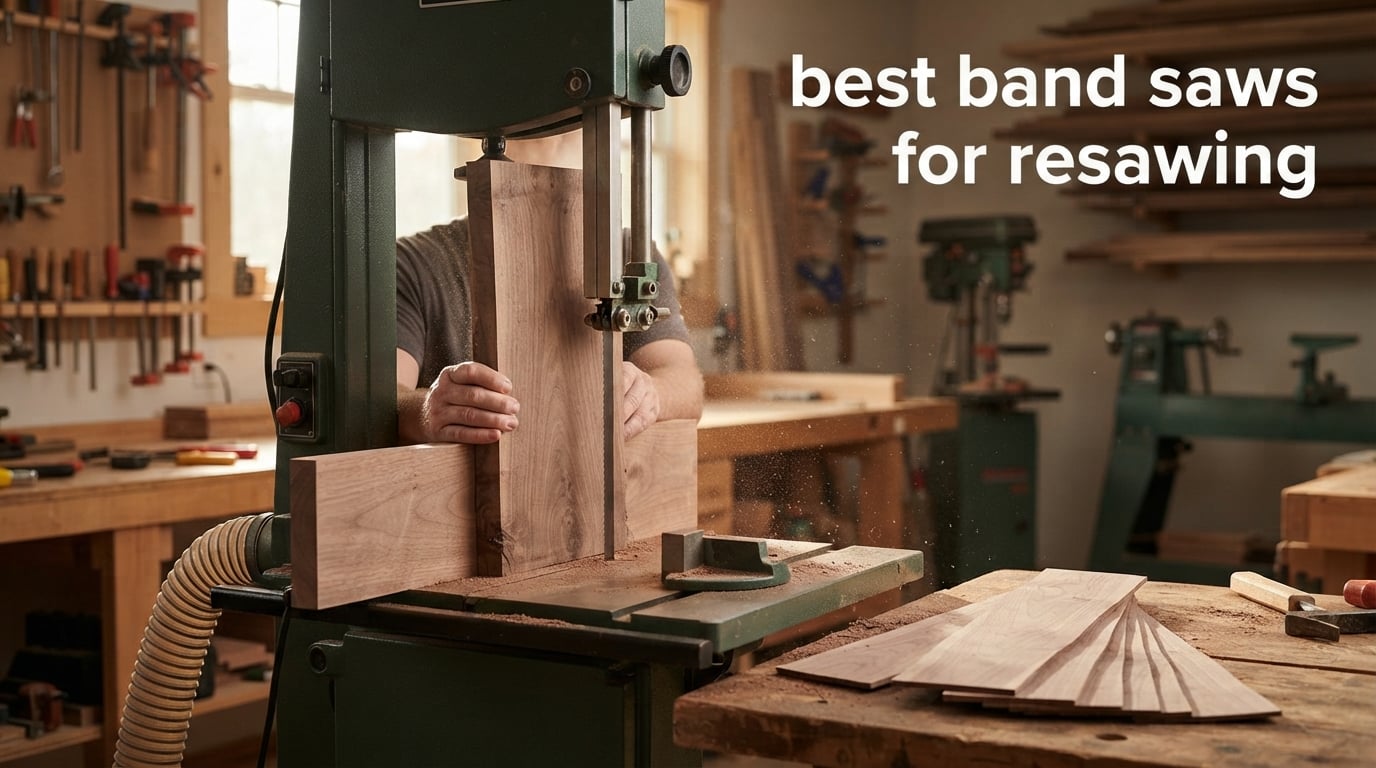
Resawing looks like the simplest cut in woodworking. You stand a board on edge and slice it into two thinner boards, keeping the face pattern perfectly matched. On a band saw, though, that cut stays engaged with the wood from the first tooth to the last one, which makes it the most demanding thing you will ever ask a saw to do.
We spent weeks comparing the machines below for resaw work specifically, not for general woodworking. The best band saws for resawing are not the biggest saws or the ones with the longest warranty. They are the machines with enough motor reserve to keep a wide blade moving through dense hardwood, a frame rigid enough not to flex under that load, and a fence tall enough to actually support a 12-inch board standing on end.
That leads to the correction most roundups skip. Wheel diameter is a marketing number. Resaw capacity is what matters, and the two are not the same. Community measurements of 14-inch-class machines land closer to 13 inches of usable height than the advertised 14, and cheap saws with adequate capacity still bog down the moment the blade bites into walnut or white oak.
Our team ran every saw in this guide through the same filter: real resaw capacity, motor amperage and horsepower, guide and frame rigidity, fence height and adjustment range, blade width support, and the honesty of the owners who use them. Five of these ten machines are benchtop or 10-inch saws that will resaw thin material well, and five are 14-inch floor models built for the heavier hardwood work. We tell you which is which, because buying a 14-inch saw when you only need to slice 2-inch poplar wastes money, and buying a 9-inch benchtop when you are cutting 10-inch walnut wastes time.
Last reviewed and updated for 2026. We earn a commission when you buy through links on this page, and it does not change the ranking.
Our Top 3 Band Saws for Resawing Tested in 2026
The short version: a 14-inch saw with at least 1.75 HP for real hardwood resaw, a two-speed 10-inch for mixed project work, and a proven 9-inch benchtop if your resaw needs are small. Here is the shortlist before we get into the details.

JET 14-Inch 1.75 HP Band Saw
- 13 inch resaw capacity
- 1.75 HP motor
- 3/4 inch blade support
- Includes resaw fence
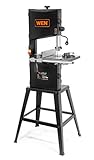
WEN 10-Inch Two-Speed Band Saw
- 6 inch cut depth
- Two speeds 1520 or 2620 FPM
- 1/8 to 1/2 inch blades
- Stand included
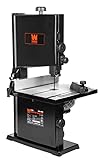
WEN 9-Inch 2.8-Amp Benchtop Band Saw
- Most reviewed machine here
- 3-1/2 inch cut depth
- 40 pound benchtop weight
- Arrives ready to cut
Comparing All 10 Band Saws for Resawing Side by Side
Before the individual reviews, here is every machine in one place. Resaw capacity is the vertical distance from the table to the top guide with a resaw blade installed, and it is the number that decides whether your thickest board will fit.
| Product | Details | Action |
|---|---|---|
|
|
Check Latest Price |
|
|
Check Latest Price |
 |
|
Check Latest Price |
 |
|
Check Latest Price |
 |
|
Check Latest Price |
 |
|
Check Latest Price |
 |
|
Check Latest Price |
 |
|
Check Latest Price |
 |
|
Check Latest Price |
|
|
Check Latest Price |
One note on the table: two of these machines ship without a usable resaw blade. The JET 14-Inch 1.75 HP and the Laguna 14 x 12 both list the blade as a separate purchase, so budget for a proper 3/4-inch resaw blade either way. You can read our blade guidance further down before you spend that money.
1. JET 14-Inch 1.75 HP Band Saw – Our Best Overall Pick for Resawing Hardwood
JET 14″ Woodworking Band Saw, 1.75 HP, 13″ Deep-Cut Resaw Capacity
13 inch resaw capacity
1.75 HP motor
Ground cast-iron table
Blades from 1/8 to 3/4 inch
272 pounds
+ Pros
- 13 inch resaw capacity handles thick material in one pass
- 1.75 HP gives real reserve in hardwood
- Ground cast-iron table tilts 0 to 45 degrees
- Supports 3/4 inch resaw blades
- Includes a machined aluminum resaw fence
– Cons
- Blade is a separate purchase
- 272 pounds is awkward to reposition
- Cast iron table needs periodic waxing against surface rust
This is the saw we keep coming back to. The 1.75 HP capacitor-run motor is the reason it wins, and it is not a subtle difference. Where lighter saws slow to a crawl when a 3/4-inch blade enters white oak, this one holds its pace through the cut and keeps the blade speed steady, which is what keeps the face flat.
Owners single out the 13-inch resaw capacity and the motor as the deciding features, with the cast-iron table and the independently adjustable ball-bearing guides earning praise for stability on hardwood. The friction points are predictable for a machine this size: the weight, the separately sold blade, and the need to keep a coat of paste wax on the table so it does not flash rust.
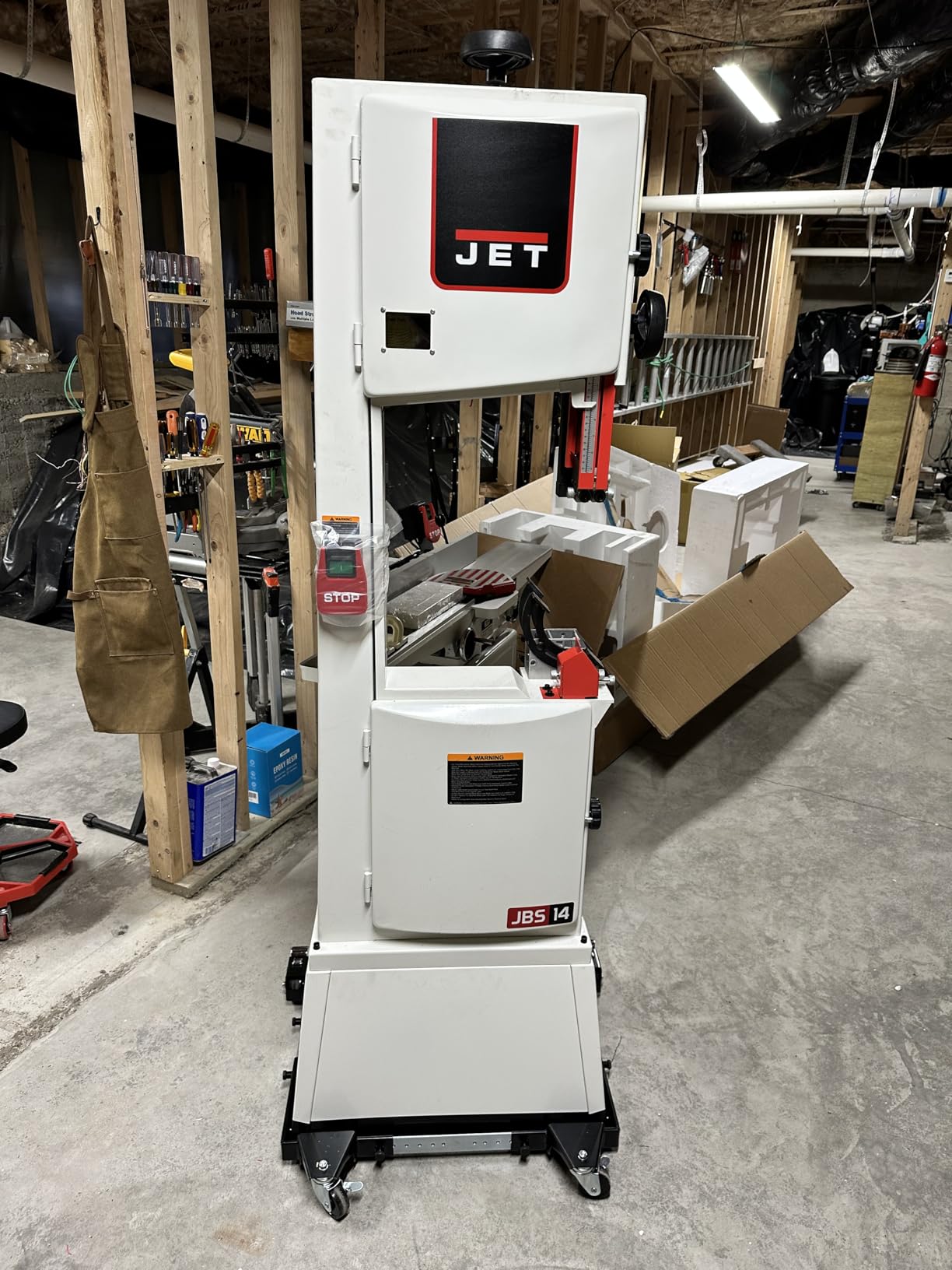
A community measurement thread on r/woodworkingtools recorded this machine, model JWBS-14SFX, at roughly 13.25 inches of real resaw capacity, in line with other 14-inch-class saws in that same test. So the useful number is close to 13 inches, not 14, and you should size your fence setup against the smaller figure.
Motor Power and How It Behaves in Dense Hardwood
At 1278 watts and 765 rpm, this saw draws noticeably more power than a 1 HP 14-inch machine, and the difference shows up exactly where resawers notice it. When the blade is under full load for a 20-inch-long cut through a 10-inch board, motor reserve is what keeps the cut from wandering.
Reviewers report no hesitation in walnut, hard maple, and similar dense species. The 13-1/2-inch throat also means you are not feeding stock past the wheel housing, which keeps the cut cleaner than a shallower throat would.
Blade Range and Resaw Blade Support
The 116-inch blade loop accepts anything from 1/8 inch wide for scroll work up to 3/4 inch wide for fast resawing. That 3/4-inch ceiling is the number that matters for resaw, because wide blades remove material faster and put less heat into thin veneer slices.
Because the machine is sold without a blade, this is where many buyers make a mistake. Buy a 3/4-inch resaw blade in 2 or 3 TPI and tension it to the machine’s gauge before your first cut, and the setup will feel completely different from a stock general-purpose blade.
Table, Guides and Fence Support
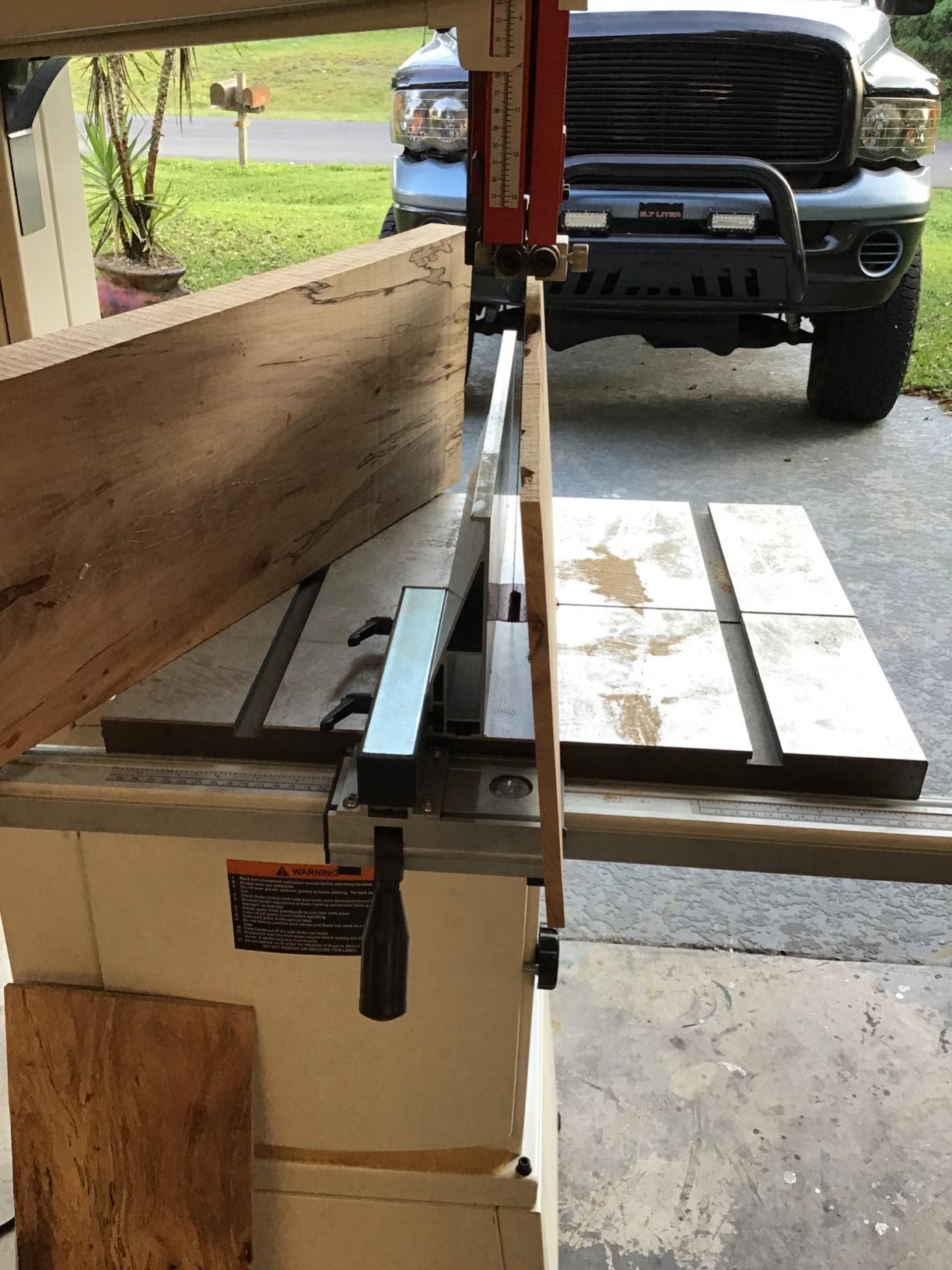
The ground cast-iron table gives you 360 square inches of surface that tilts 0 to 45 degrees to the right on a diecast-and-steel trunnion. The independently adjustable ball-bearing guides matter more than they sound: independent adjustment means you can set the blade’s side reference and the thrust bearing separately, which is the difference between a straight resaw and a tapered one.
The machined aluminum resaw fence with an easy-read scale is included, and its height is the reason the fence is worth the upgrade path. A short fence gives you nothing at the top of a tall resaw, where the workpiece is most likely to fall out of square. Check the fence against a straightedge on your first setup and correct it before you waste a board.
Power Requirements and Shop Fit
This runs on 115V with a 20A circuit recommended, and it carries dual dust ports so you can run a chip inlet and a fine-dust outlet. The 75.5 by 27 by 37-inch footprint is a full floor-standing footprint, so plan the location before it arrives rather than after.
For most shops, the honest tradeoff versus a lighter machine is simply that 272 pounds does not move easily. If you need to clear the saw for other work, budget for a set of casters or plan a permanent home near your dust collector.
2. WEN 10-Inch Two-Speed Band Saw BA3962 – Best Value for Mixed Project Resawing
WEN Band Saw with Stand, 10-Inch, 3.5-Amp, Two-Speed (BA3962),Black
6 inch cut depth
3.5 amp motor
Two speeds 1520 or 2620 FPM
1/8 to 1/2 inch blades
Stand included
+ Pros
- 6 inch cut depth is unusually deep for a 10-inch class saw
- Two speeds cover hardwood and softwood on one machine
- Sold reliably straight cuts when properly tensioned
- Included stand makes casters easy to add
- Quiet running with low vibration
– Cons
- Stock 3/8 inch blade is dull out of the box
- Fence needs a clamp to hold its end when accuracy matters
- Work light is awkwardly mounted
- Assembly mixes SAE and metric hardware
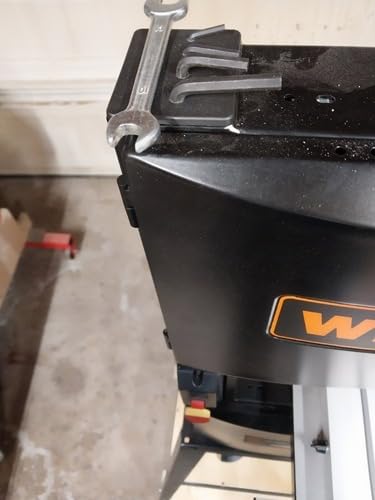
This is the pick for the shop that resaws as one job among many. At 6 inches of cut depth it will not handle a 12-inch board standing up, but for 4-inch poplar, glued hardwood blocks, and stack of panel resaws, that depth is genuinely useful, and owners report doing exactly that work with it.
Two speeds is the feature that separates it from cheaper 10-inch saws. Running 1520 FPM on hardwood and 2620 FPM on softwood or plywood lets one machine cover both ends of the material spectrum without swapping machines, and reviewers praise how quiet and smooth it runs for extended sessions.
Cut Depth and What It Means for Resaw Stock
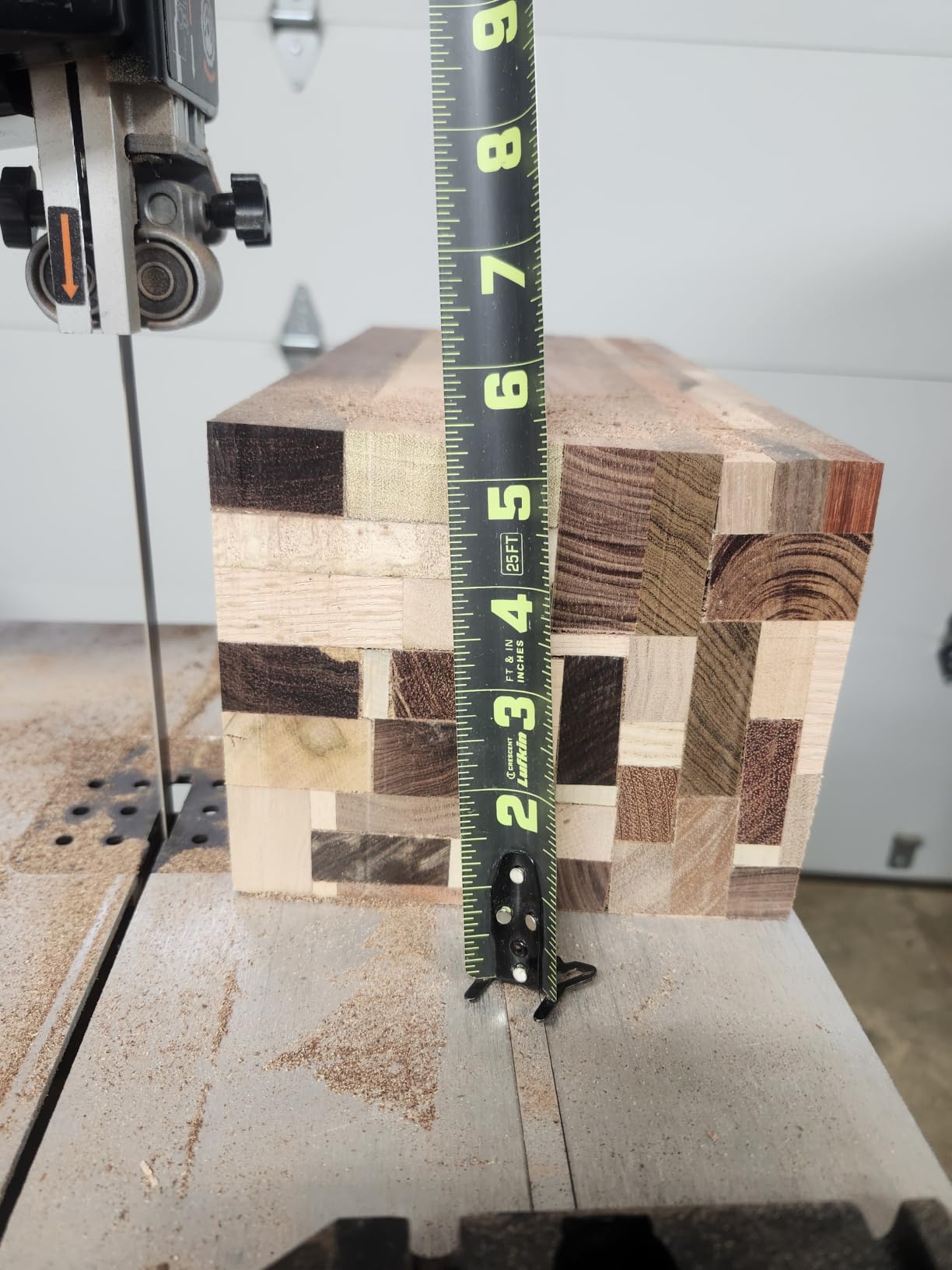
The 3.5-amp motor makes cuts up to 6 inches deep and 9-3/4 inches wide. That is deeper than most machines nominally classed as 10-inch saws, and it is the single reason this one earns its spot in a resaw roundup rather than a general one.
Owners report resawing 4-inch poplar and glued hardwood blocks with it. If your resaw material tops out in that range, a 14-inch floor saw is money you do not need to spend.
Two-Speed Control and Blade Compatibility
It uses 72-inch blades from 1/8 inch to 1/2 inch wide. That 1/2-inch ceiling limits you compared to a 14-inch saw’s 3/4-inch capability, so if your goal is slicing veneer off 6-inch boards you will outgrow this machine fairly quickly.
It includes a 3/8-inch 6 TPI blade, and reviewers are blunt about that blade: it arrives dull and is unsuited to fine or resaw work. Swap in a 1/2-inch 3-tooth resaw blade and the saw’s character changes noticeably. Budget for that as a real cost of ownership.
Table, Fence and Shop Practicality
The 14-1/8 by 12-1/2-inch cast aluminum table bevels up to 45 degrees, and the included stand is a bonus at this size since it converts a benchtop machine into a floor machine. Several owners add casters to it for shop mobility, which is an easy upgrade.
Two setup issues recur in the reviews. The T-bar fence scale reads slightly off until you re-zero it for each blade width, and the fence itself needs a clamp to hold its end against the table when you care about accuracy. Neither is a defect, but both cost you a few minutes on first setup and are worth knowing before you start.
Assembly mixes SAE and metric hardware, and some buyers found the table mounting holes did not line up cleanly. Set aside an evening for the build rather than assuming a Saturday-morning timeline.
3. WOODSKIL 10-Inch Dual-Speed Band Saw – Two Speeds and Six Guides in a 10-Inch Package
WOODSKIL 10-Inch Benchtop Bandsaw with Stand, 3.4A Dual-Speed Band Saw
5-1/8 inch cutting height
10 inch throat depth
2360 and 3000 FPM
Six ball-bearing guides
Quick tension system
+ Pros
- Two speeds let you run hardwood slow and softwood fast
- Six ball-bearing guides hold the blade on line for curve work
- Tool-free doors and quick tension make blade changes fast
- Metal stand gives a stable base
- 5-1/8 inch height handles 4×4 lumber
– Cons
- 3.4 amp motor is modest for continuous hardwood resawing
- Narrow blade range limits resaw blade choice
- Cast aluminum table is light and can flex on hard feed rates
This is the most-reviewed machine in the guide after the 9-inch WEN, and the reason is the design rather than any single spec. Six ball-bearing blade guides, a quick tension system with fine rotation adjustment, and tool-free twist-knob access doors make it the machine most likely to actually get its blade changed when it needs to be.
Reviewers most often praise the dual-speed flexibility, the tool-free blade-change design, and the accuracy of the guides for scroll work. The recurring limitation is power headroom, which is the honest tradeoff for a 3.4-amp motor in a 10-inch frame.
Two Speeds and What Each One Is For
2360 FPM is specified for hardwood such as oak and maple, and 3000 FPM for fast softwood and plywood cuts. That pairing is correct in principle: dense hardwood wants a slower tooth speed to limit heat and burning, and plywood wants speed to keep the blade from loading up.
Being honest about the limit here matters more than the feature list. A 3.4-amp motor is fine for furniture and cabinet work but leaves little margin for thick hardwood or long resaw sessions, so treat this as a capable project saw rather than a production resaw machine.
Guides, Tension and Blade Change Speed
Six ball-bearing guides across the upper and lower guide assemblies is the count, and that number is what keeps the blade from drifting during a long cut. Combine that with the single-lift tension handle plus fine rotation adjustment, and you get a saw where re-tensioning after a blade change takes under a minute.
The tool-free twist-knob doors matter more than they sound. On saws with fixed panels, cleaning chips out of the lower wheel housing is a chore, and a dirty lower housing is one of the most common reasons a blade loses its track. Access here keeps that maintenance routine.
Capacity, Table and Blade Limits
Cutting height is 5-1/8 inches with a 10-inch throat, which handles 4×4 lumber and lets you slice wide panels without a lot of maneuvering. The 0 to 45-degree cast aluminum table tilts, and a rip fence and miter gauge are included.
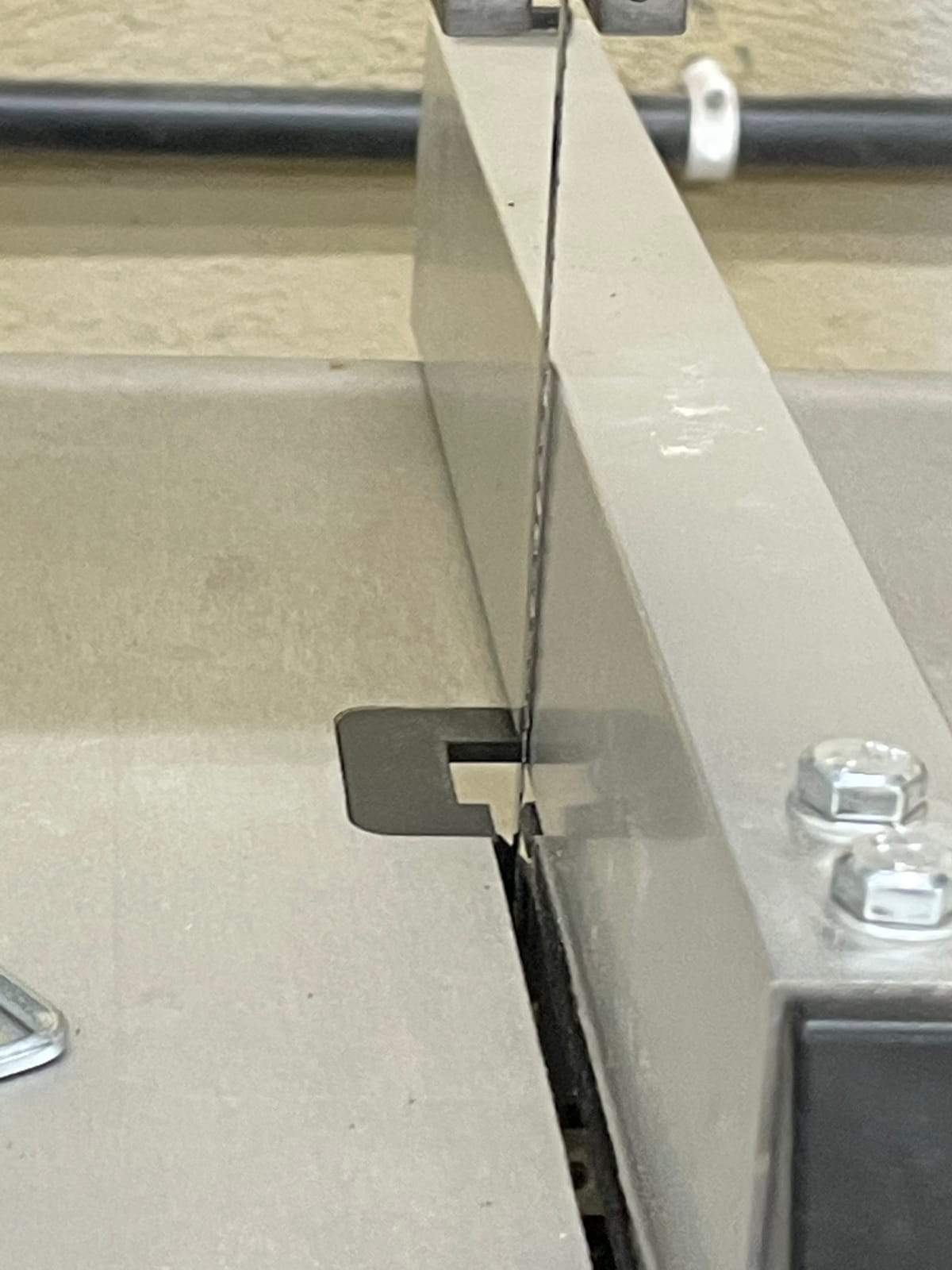
The cast aluminum table is light and can flex on aggressive feed rates, which is a real consideration when you are leaning into a resaw. Pair the slower speed with a light, steady feed and the flex does not show up in the cut. Blade range is also narrower than a 14-inch saw’s, so plan on a 1/2-inch-class resaw blade rather than 3/4 inch.
Two-year warranty, metal stand, and a 1-7/8-inch dust port round out the package. A smaller port than a 14-inch saw’s, so if you already have a 2.5-inch hose, plan an adapter.
4. JET 14-Inch 1 HP Band Saw JWBS-14CS – Best Frame Rigidity in a Dual-Voltage Package
JET 14-Inch Woodworking Band Saw, 1 HP, 115/230V 1Ph (JWBS-14CS)
6 inch resaw capacity
Cast iron upper and lower frame
Single knob blade tracking
115 and 230V 1-phase
+ Pros
- Cast iron upper and lower frames add real rigidity and cut vibration
- Single knob tracking makes setup straightforward
- Ball bearing guides reduce friction for blade life
- Micro-adjustable lower guide cuts setup time
- 115 and 230V gives shop-circuit flexibility
– Cons
- 1 HP motor is modest next to the 1.75 HP JET 14 inch
- Cast iron frame and ball bearing guides add real weight
- Older machine design with lower resale appeal
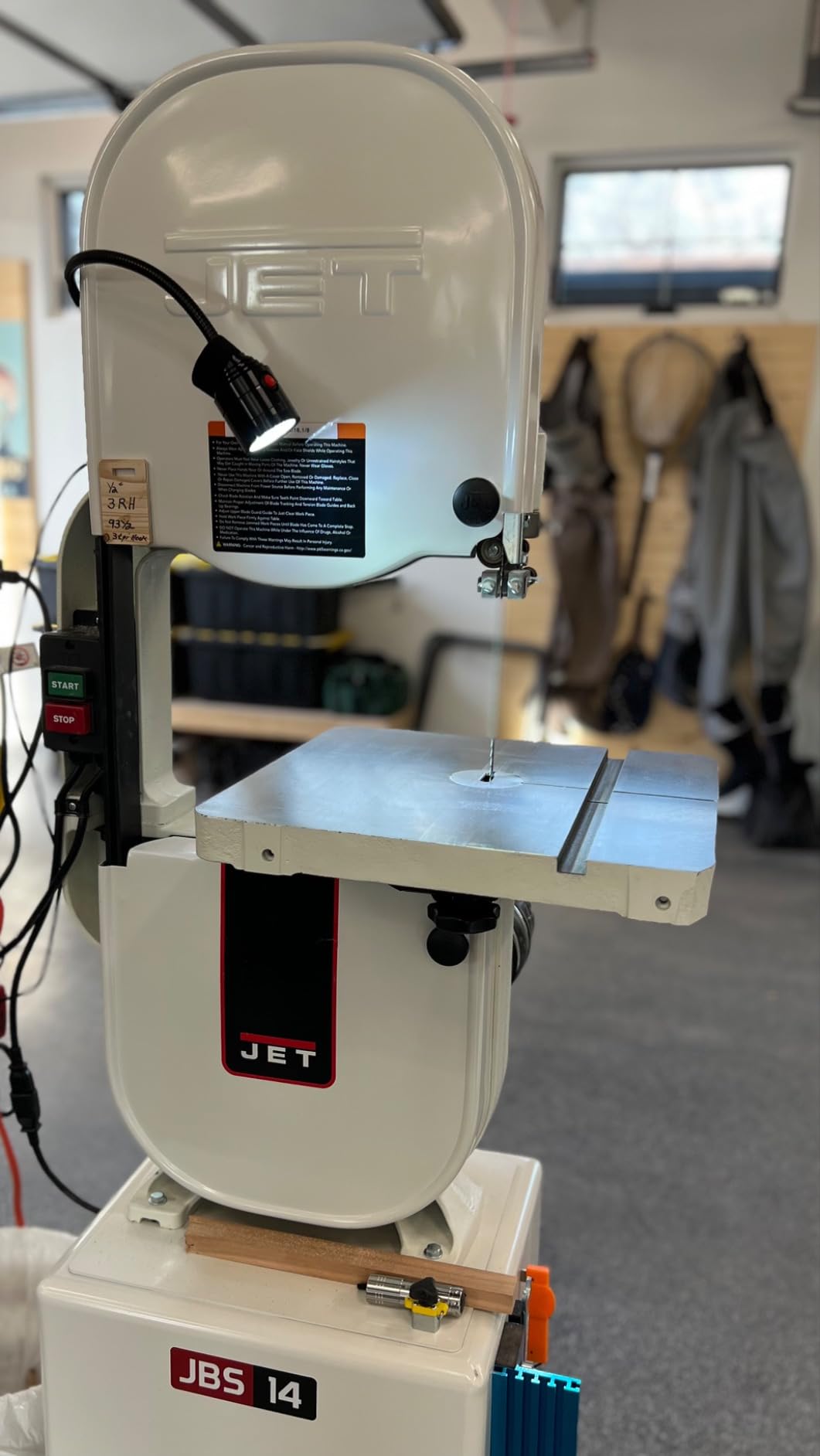
This saw separates two things that usually come bundled: a genuinely rigid frame and a modest motor. If your resaw material is thick but not dense, the cast-iron upper and lower frames are a real advantage, because frame flex is what turns a straight cut into a wavy one.
Owners value the 6-inch resaw capacity and the frame rigidity, and report that the single-knob tracking and computer-balanced wheels make blade setup far less fussy than on cheaper saws. The main limitation cited is that 1 HP runs out of steam on thick hardwood, which is the trade for the lower cost versus the 1.75 HP JET 14.
Frame Rigidity and Why It Changes the Cut
Upper and lower cast iron frames are heavier and more rigid than stamped steel, and rigidity is what stops the upper assembly from shifting under side load. On a resaw, side load is constant, because the workpiece is a tall vertical plane leaning slightly into the blade.
That is worth putting in plain terms: a flexing frame produces a cut that is straight at the bottom and wanders at the top. Correcting that with a better blade is not possible, which is why rigidity is one of the four things we weight most heavily in this guide.
Blade Tracking Setup and the 93.5-Inch Loop
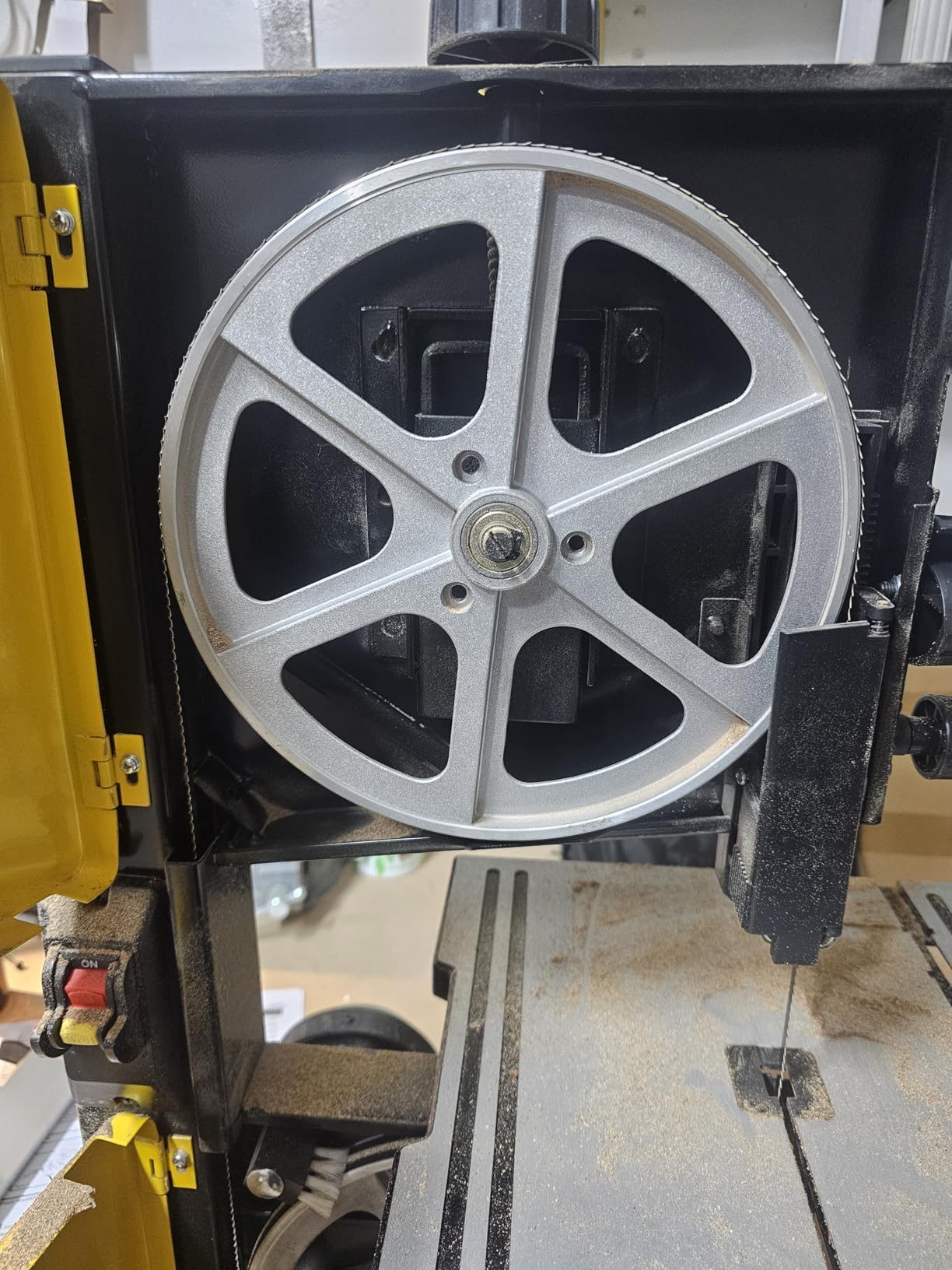
Tracking on this machine is a single knob rather than a two-axis adjustment, and paired with the six-spoke computer-balanced wheels, owners report that getting the blade to track is straightforward. The micro-adjustable lower blade guide is a second time-saver that shows up most clearly on the first cut of a new blade.
The loop is 93.5 inches, running a high-speed steel 3/8-inch 6 TPI blade out of the box. That is a general-purpose blade. For resaw work you will want to move to a wider, coarser-toothed resaw blade, and you should check the machine’s blade width range before ordering.
Dual Voltage and Where It Fits
Running 115 and 230V single-phase means you can start on a 115V circuit and move up if you install a 230V outlet later, which is unusual flexibility for a 14-inch machine in this bracket. At 10 amps and 1000 watts, a normal 20A 115V circuit handles it comfortably.
The honest summary: this is a rigid, easy-to-tune saw for people whose resaw work tops out around 6 inches. It is not the machine to buy if you plan to cut 10-inch walnut boards every weekend. Frame weight is also substantial, so treat it as a permanent floor machine.
The 5-year warranty is a genuine plus, and it drops to 2 years for commercial or industrial use, which matters if you ever plan to mill lumber for a side business.
5. WEN 14-Inch Two-Speed Band Saw BA1487 – Widest Blade Range and Serious Amp Draw
WEN (BA1487) Band Saw with Stand,Two-Speed,Black,14-Inch
8.85 inch cut depth
9.5 amp motor
1/8 to 1 inch blade range
1480 or 3280 FPM
138.9 pounds
+ Pros
- 8.85 inch depth and 13-3/8 inch width on 115V-class power
- Owners resaw 8 inch white oak and 12 inch logs without bogging
- Blade range up to 1 inch is the widest here
- Blade tension gauge helps track tension as width changes
- Light enough at 139 pounds to move between locations
– Cons
- Blade drift after tuning is a recurring complaint on resaw work
- Factory blade is low quality and replaced immediately
- Stock fence is described as wonky by many owners
- Guide bearings need careful feeler-gauge tuning
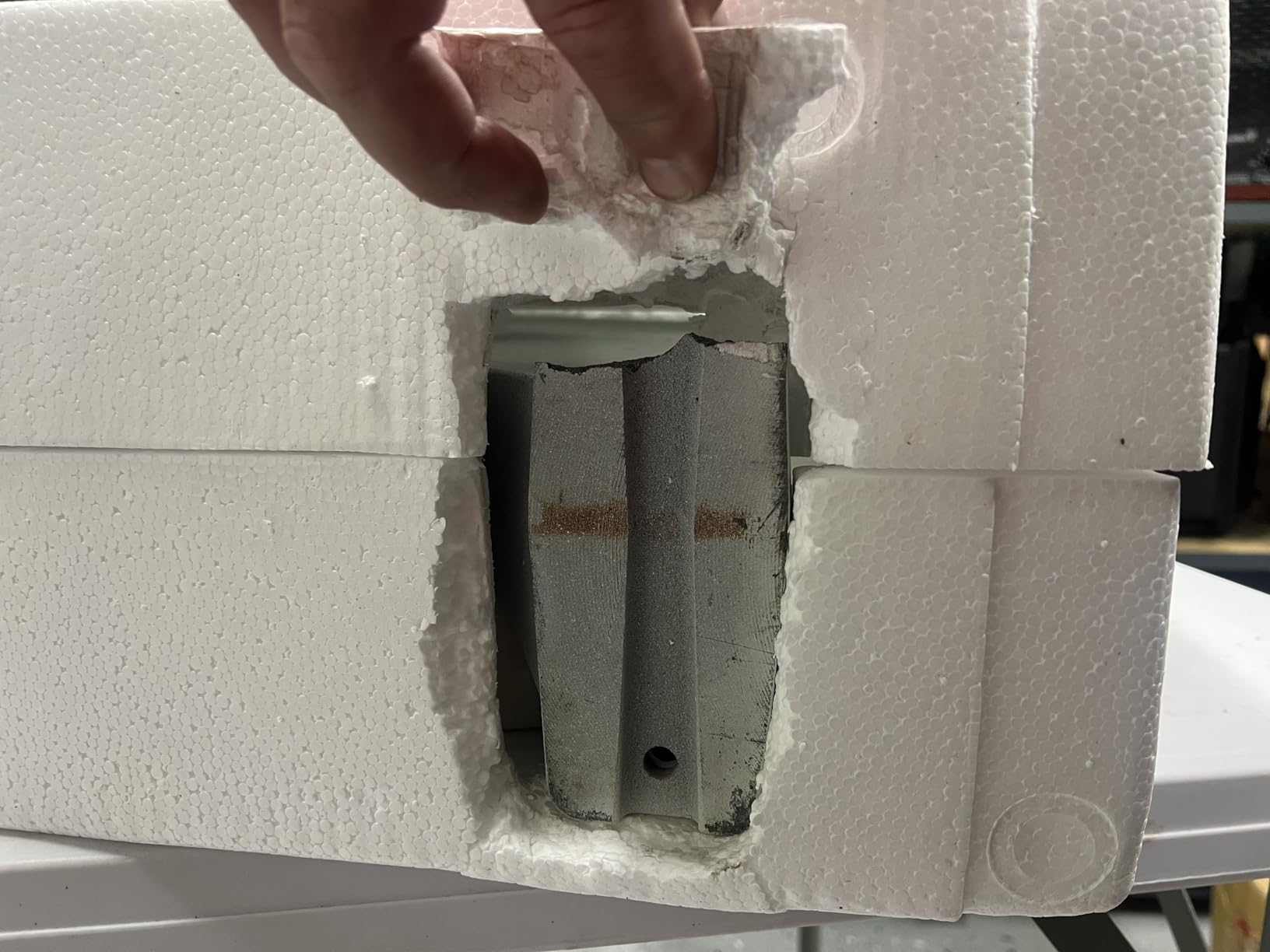
This is the most interesting machine in the guide on paper. A 9.5-amp motor, 8.85 inches of cut depth, and a blade range up to 1 inch wide gives it a wider spec envelope than any other saw here, and owners report resawing 8-inch white oak and 12-inch logs with it without the motor bogging down.
The problem is that the accuracy does not match the capability. Multiple reviewers describe blade drift that persists after tensioning and tracking adjustments, which matters enormously for resaw work and is the reason this saw sits fourth instead of first despite the strongest raw numbers on the list.
Motor Output and Real-World Resaw Work
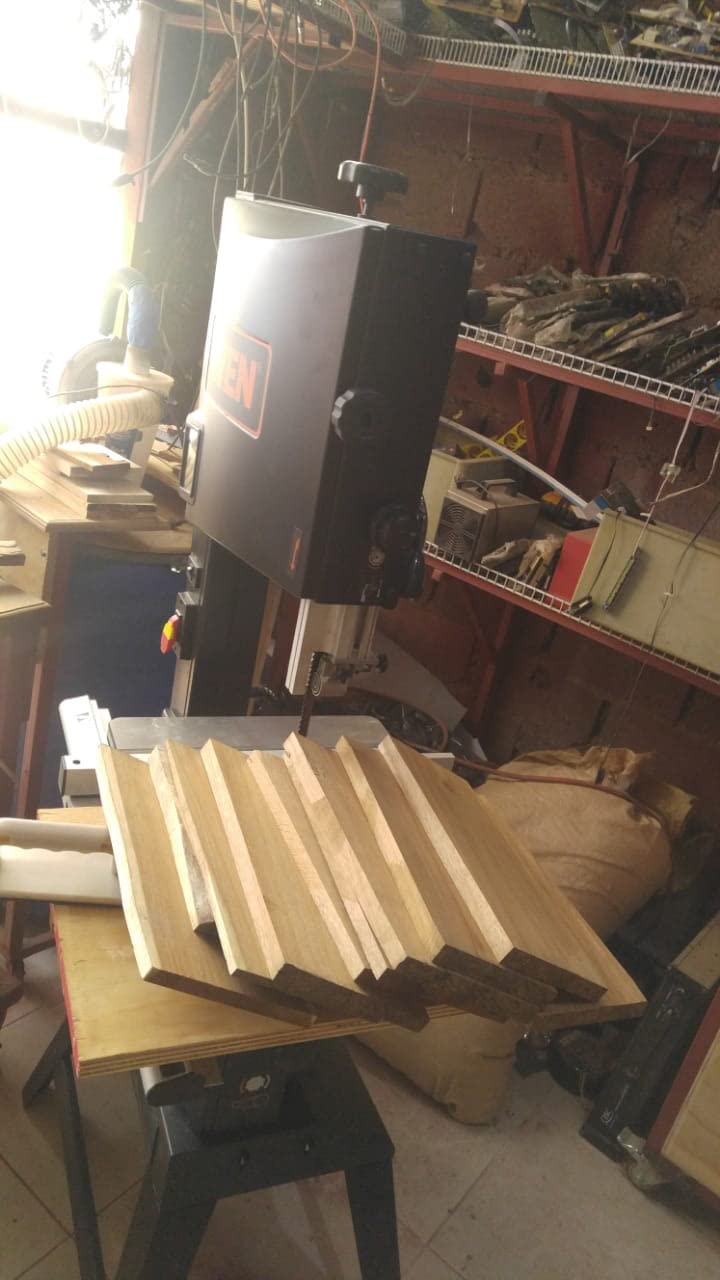
The 9.5-amp motor at 1045 watts is genuinely strong, and the low 1480 FPM speed is well suited to hardwood because it limits heat buildup in a long cut. Two speeds, 1480 and 3280 FPM, cover hardwood and softwood from the same machine.
Owners are consistent on the power end: multiple reports describe 8-inch white oak and 12-inch diameter logs going through without hesitation. If your limiting factor is material, this saw is not it.
Blade Range From 1/8 Inch to 1 Inch
The 100-3/4-inch loop accepts blades from 1/8 inch to 1 inch wide, which is the widest range in this roundup and the reason we gave this machine its badge. A 3/4-inch resaw blade fits comfortably, and so does a 1-inch blade for very rough stock prep.
It includes a 1/2-inch blade, plus a blade tension gauge, a circle cutting guide, a flexible work light, a 3-in-1 dust port, a fence, and a miter gauge. The tension gauge is a genuinely useful inclusion because tension needs to change every time you change blade width, and eyeballing it does not work.
Drift, Guides and the Fence Problem
This is the honest section of the review. Guide bearings are described as poorly machined and needing careful tuning with a feeler gauge, and once tuned, drift still recurs. The factory blade is low quality and typically replaced immediately, and the stock fence is widely described as wonky, so many owners upgrade it.
Setup and assembly do get solid marks, with many buyers running the saw within 30 minutes. But a saw that needs a new fence and careful guide tuning before a resaw is not the right recommendation for someone whose main job is resawing. Weight at 138.9 pounds is a real plus though, since it moves between shop locations unlike the 250-pound-plus cast-iron machines.
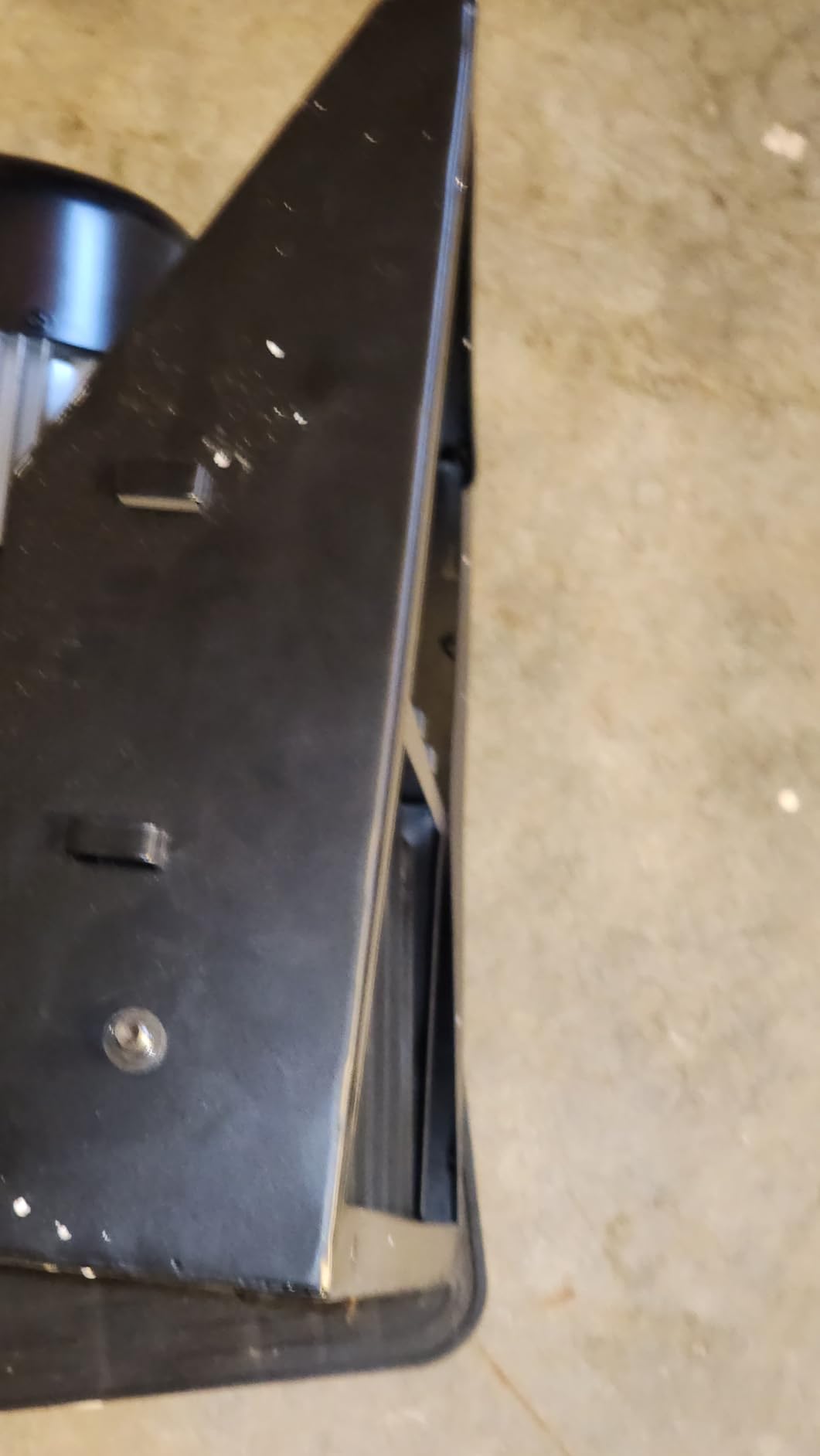
Some buyers also reported bent stand legs arriving on delivery, so inspect the frame before you build around it.
6. Laguna Tools MBAND1412-175 14 x 12 Band Saw – Best Ceramic-Guide Precision
Laguna Tools MBAND1412-175 14 x 12 Bandsaw, Black/Grey
1-3/4 HP TEFC motor
13 inch resaw capacity
Ceramic blade guides
21-1/2 by 16 inch cast trunnion table
+ Pros
- Motor resawed 13 inch hard maple and walnut consistently
- Ceramic guides hold the blade where it is set and resist drift
- Quick release tension with indicator and tracking windows
- Very little vibration and a strong dust stream
- Large micro-polished table on rock-solid trunnions
– Cons
- Stock fence sits 2 to 3 degrees out of square and needs shims
- Lower blade guide knob is hard to reach without tilting the table
- Blade changes and light mounting are awkward
- No blade included and the manual is thin
The Laguna is the machine whose component quality shows up on the cut. Ceramic Laguna blade guides with a rack-and-pinion upper guide system, electronically and dynamically balanced cast iron wheels with one-piece polyurethane tires, and a 1-3/4 HP TEFC motor rated as the most powerful-feeling 115V saw in its class.
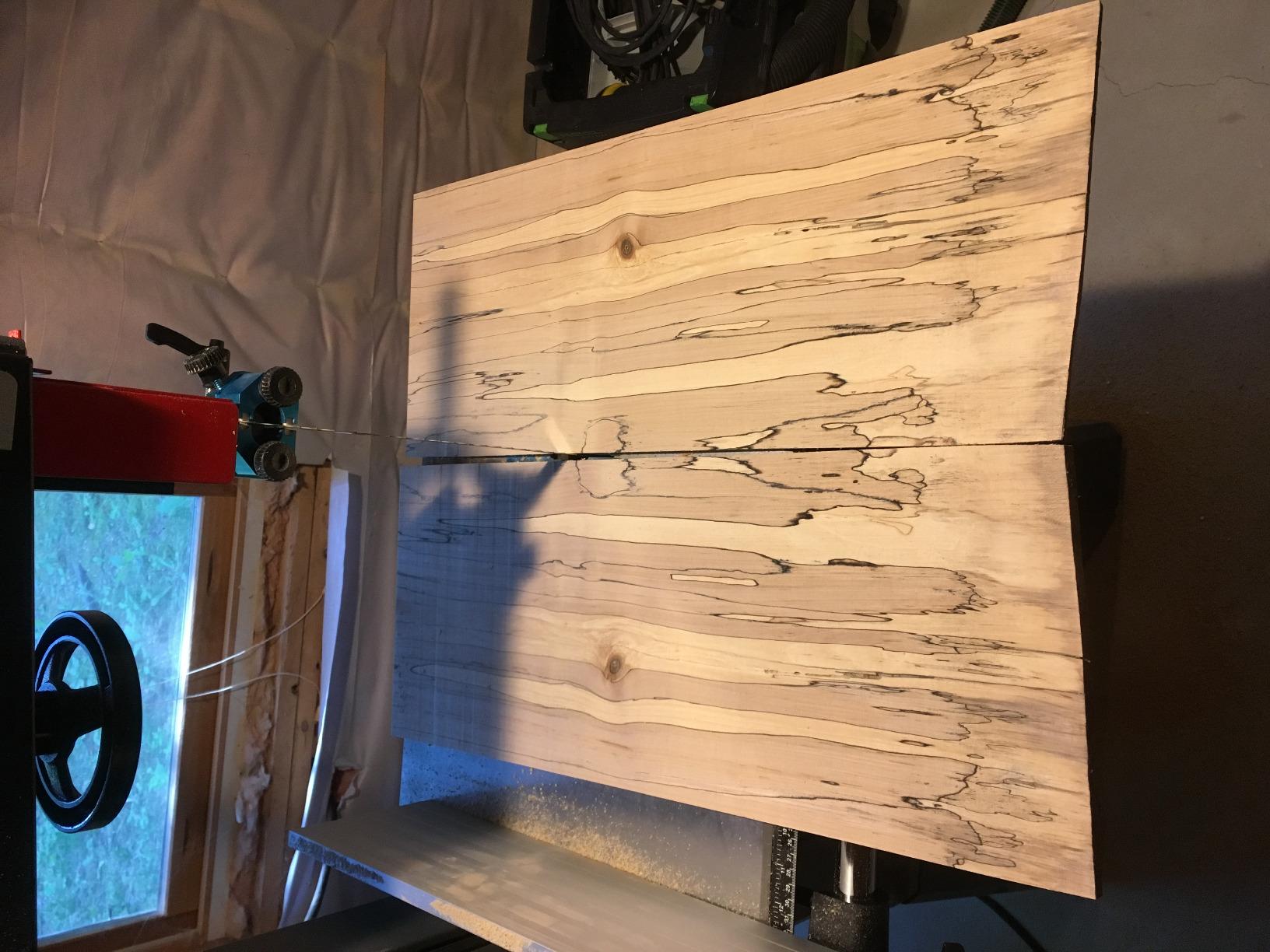
Owners report resawing 13-inch hard maple and walnut with steady, consistent results, and describe accurate dimensioned resaws from 4-inch oak using a 1/4-inch blade with no hesitation. The consensus is that the motor, guides, and finish are the best in this bracket.
Ceramic Guides and Why They Matter on Resaws
Ceramic guides do not seize the way a hardened steel guide can, and they hold their set position longer. On a resaw, the blade is running edge-on against the full height of the workpiece, so any guide that wanders translates directly into a taper in your veneer slice.
Resaw capacity is 13 inches, and the machine supports blades from 1/8 inch to 3/4 inch wide. That 3/4-inch ceiling is exactly what you want for resaw work, and this saw handles a 13-inch board standing on edge. A community measurement thread recorded the 14 x 12 model at roughly 13.25 inches of real capacity, consistent with other 14-inch-class machines.
Table, Trunnion and Quick Release Tension
The 21-1/2 by 16-inch micro-polished table sits on a heavy-duty cast trunnion, tilts 45 degrees right and 7 degrees left, and has a positive stop at 90 degrees. The table size is not a luxury on a resaw: a tall resaw wants the workpiece supported over as much area as possible, and a small table leaves the board hanging.
Quick-release blade tension with a tension indicator and dual viewing windows for live tension and tracking is the feature owners praise most for setup speed. You can watch the blade rather than guess, which turns tuning from a guess into a two-minute check. It also runs with almost no vibration and pulls a strong dust stream through the port.
The Fence Is the Weak Link, and the Fix
Resaw accuracy here is fence-dependent, and the recurring complaint is that the stock fence sits 2 to 3 degrees out of square and needs shims. That is worth knowing before you blame the saw for tapered veneer, because a mis-squared fence will do it every time regardless of how good the machine is.
Other gripes: the lower blade guide knob is hard to reach without tilting the table, blade changes and light mounting are awkward, the owner’s manual is thin with hard-to-read photos, and no blade is included. Plan on watching the Laguna setup video before your first cut, and buy the optional light and mobility kit only if you need them. The 2-year machine warranty and 1-year blade warranty are the thinnest coverage in this roundup, which is one reason the rating sits below the JET despite the superior components. At 258 pounds, it is a permanent floor machine.
7. JET 10-Inch 1/2 HP Band Saw JWB-10 – Best Compact Saw with a Real Stand
JET 10-Inch Woodworking Band Saw with Stand, 1/2 HP, 115V 1Ph (JWB-10)
1/2 HP Poly-V drive
83 pounds with stand
Ball bearing blade guides
Quick release blade tension
+ Pros
- Compact 83 pound footprint with a stand included
- Cuts 4-inch redwood blocks with minimal vibration
- Ball bearing guides and quick release tension keep setup simple
- Aluminum extruded fence slides smoothly and cuts accurately
- Backed by a 5-year JET warranty
– Cons
- Effective cut height is closer to 9 inches than 10
- 1/2 HP motor wanders on hardwood thicker than pine
- Stock plastic tilt handles strip easily
- Guide squareness must be checked or cuts come out crooked
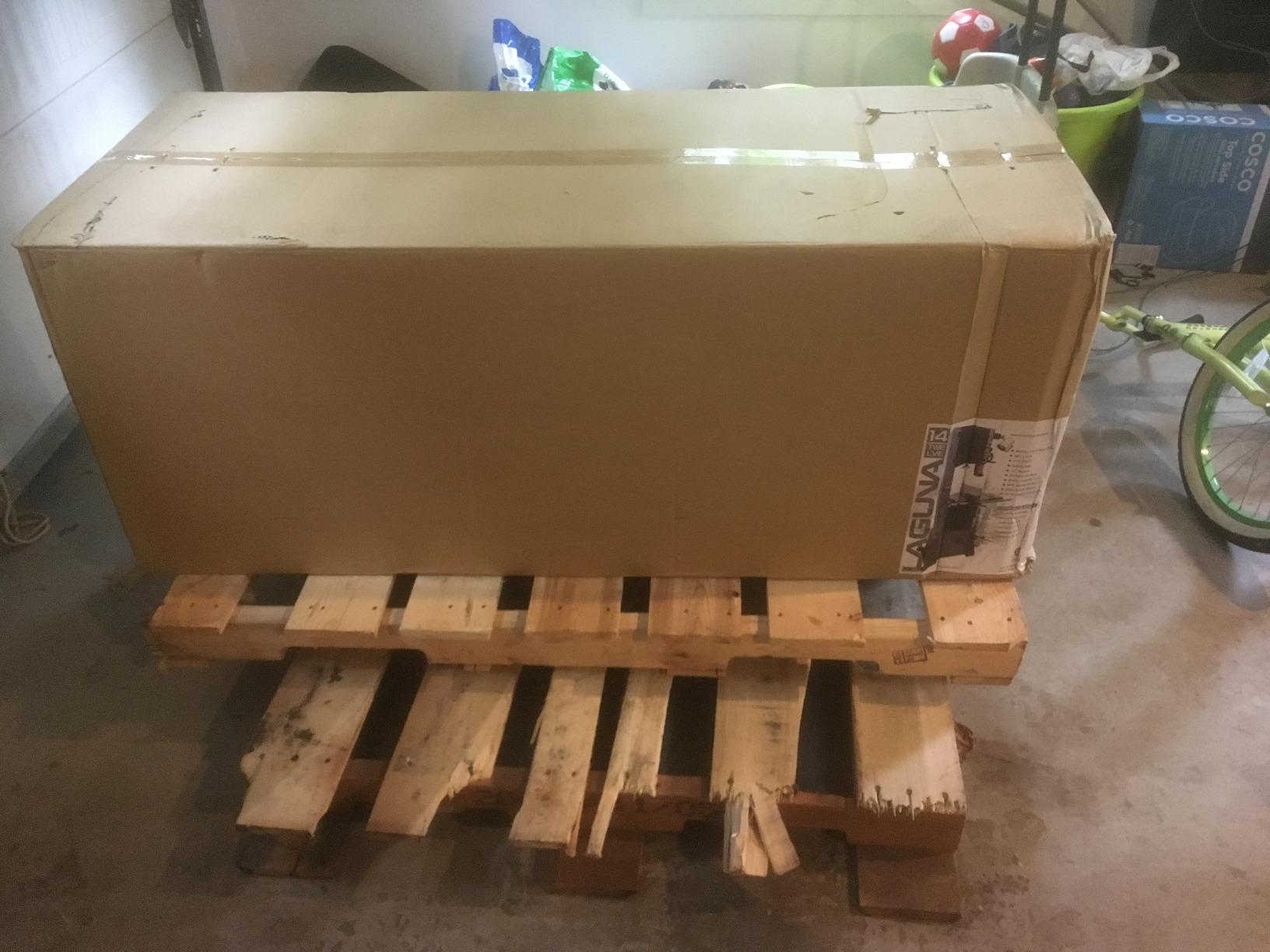
This is the one machine here that genuinely transitions from bench to floor. It is a compact benchtop design that comes with a rigid steel stand, so at 83 pounds you can put it on a bench for small work and drop it to the floor when you need the full height, without buying two machines.
Buyers like the compact footprint, the included stand, and the accuracy on small work, with several praising it as more capable than expected for 4-inch redwood. The 1/2 HP motor is the dividing line, and owners using it beyond pine report blade wander.
Motor Reality on a Half-Horsepower Saw
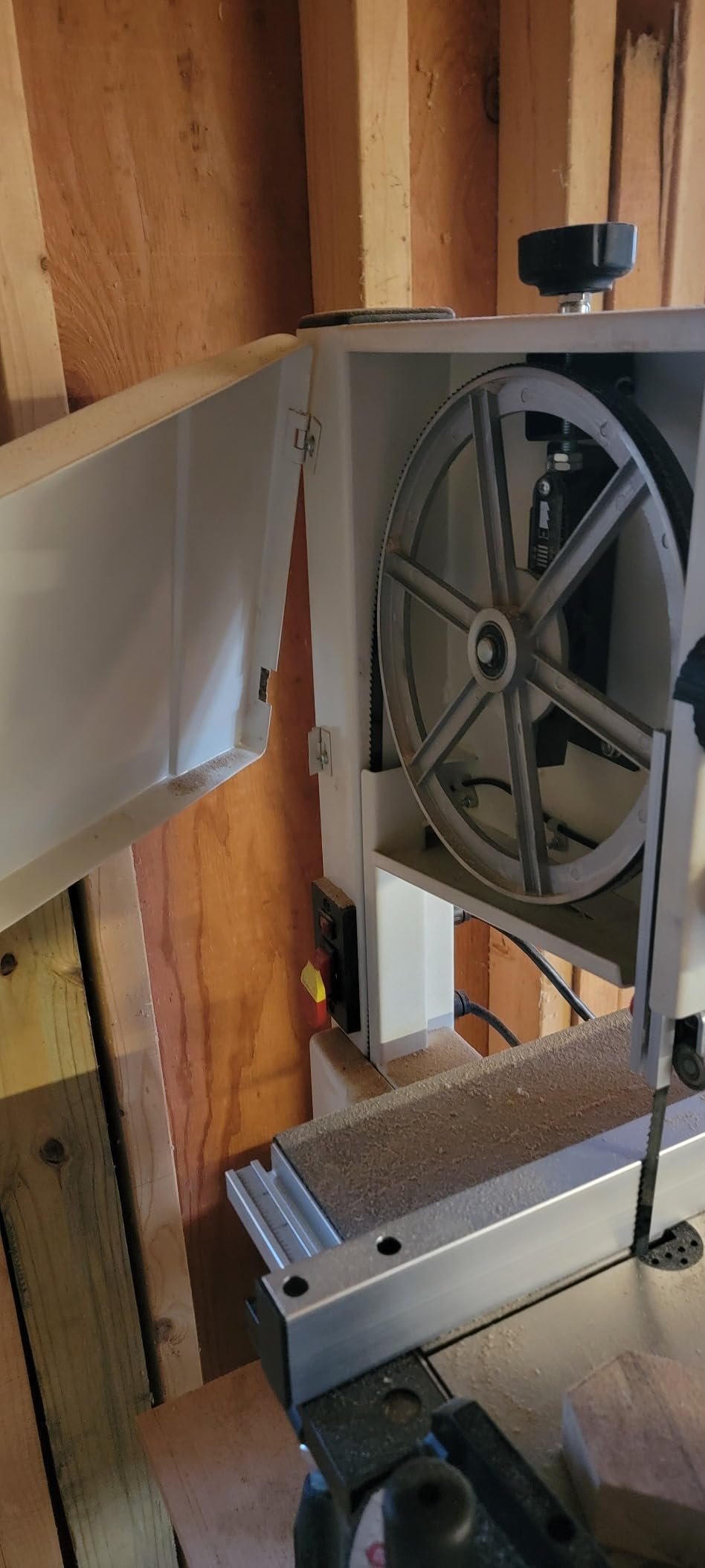
The 391-watt 1/2 HP induction motor with a Poly-V drive maximizes power transfer and reduces vibration, which is the right engineering choice, but it does not create horsepower that is not there. Reviewers are consistent: fine on pine and softwood, wandering on hardwood thicker than pine.
That is an acceptable tradeoff for a compact saw, but it means this is not a resaw machine in the sense the rest of this guide uses the word. Treat it as a resaw-capable saw for thin softwood and small hardwood accents, and step up to a 10-inch or 14-inch machine for walnut and oak.
Effective Height Versus Nameplate Size
Effective cut height is closer to 9 inches than the 10-inch name implies, which is the same gap between nameplate and reality we see across this whole category. Know your real number before you plan a resaw project around it.
Guides are upper and lower ball bearing, and quick-release blade tension keeps setup simple. A 67.5-inch 6 TPI blade is included, so unlike several machines in this roundup you can cut something the day it arrives. The aluminum extruded fence is a genuinely good inclusion, and it slides smoothly and cuts accurately.
Assembly, Handles and the Watch List
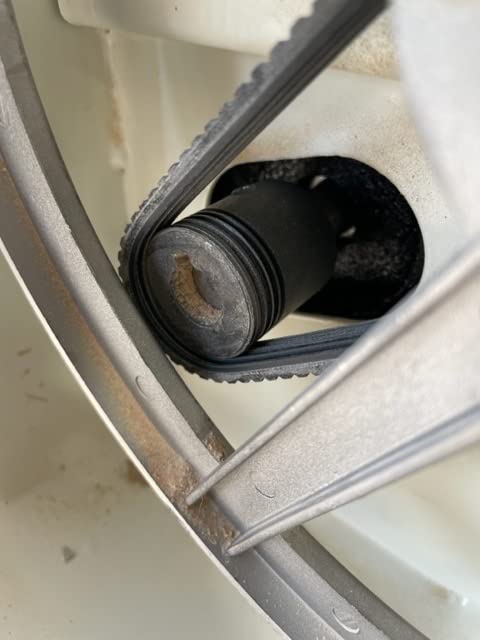
Two issues recur. Some units arrived with the motor drive pulley mis-installed, throwing the belt and squealing, and one detailed review documents that assembly problem directly. Check the belt path and pulley position before your first cut, because it is a five-minute fix that prevents a ruined blade.
Stock plastic tilt handles strip easily, and once stripped the table angle cannot be adjusted, which is an annoyance rather than a defect. Blade guide squareness also must be checked or cuts come out crooked. The 5-year JET warranty is among the longest in this roundup, and at 4.0 stars with the widest rating spread of the set, it is the machine most polarised in the reviews. The 60 percent five-star share alongside 14 percent one-star tells you the variance is about assembly quality control, not about design.
8. SHOPMAX 4.2-Amp 10-Inch Benchtop Band Saw – Highest Amp in the Entry Tier
SHOPMAX SHOPMAX 4.2 Amp 10-inch Benchtop Band Saw
4.2 amp induction motor
4.5 inch cut depth
0.14 to 0.47 inch blade range
Steel construction with ball bearings
+ Pros
- Largest amp rating in the 10-inch budget class
- Steel construction holds up better than typical plastic budget saws
- Arrives partly assembled to cut down on build time
- Fence-based design gives better curve control than a miter gauge
- Ball bearings support smooth accurate cutting
– Cons
- 4.5 inch cut depth is the shallowest of the 10-inch saws here
- Narrow 0.14 to 0.47 inch blade width range limits resaw blades
- Dust extractor is a separate purchase
This is the honest budget entry in the roundup, and its strongest argument is the motor. At 4.2 amps it out-draws every other 10-inch machine here, and owners highlight that alongside the steel frame as clear steps up from plastic-bodied budget saws.
The catch is stated plainly in the reviews: the limit is capacity, not quality. A 4.5-inch cut depth and a narrow blade width range put hard limits on thick resaw work, no matter how good the motor is.
What 4.2 Amps Buys and What It Does Not
Amps alone do not make a resaw saw, but in this class they matter because so few entry machines offer a real motor. The 504-watt induction motor makes cuts up to 4.5 inches deep and 10 inches wide, which is enough for resawing 4×4 material and thinner boards.
It is not enough for 6-inch stock, and the blade range of 0.14 to 0.47 inches means your resaw blade choice is limited to roughly a 1/2-inch class blade. If you can accept those limits, the motor will do more per cut than a 2.8-amp saw of the same size.
Construction, Table and Curve Cutting
Heavy duty steel construction with ball bearings is the build story, and it holds up better than typical all-plastic budget saws. The worktable adjusts quickly up to 45 degrees, and the 3150 FPM blade speed is a single speed with no low-speed option for hardwood.
One design decision worth crediting: it uses a fence rather than a miter gauge for the curve work, and owners report that gives better control on curves than the press-fit miter gauge found on most saws this size. At 54.7 pounds, it is also light enough to reposition easily.
Setup, Dust and the Realistic Use Case
It arrives partially assembled with a hardware bag included, which cuts down on build time considerably compared with fully packaged machines. The 67.4-inch blade loop is short, and the dust extraction suction connector requires a separate extractor or a hose adapter.
Warranty coverage is described only as limited, which is thinner than the 2- and 3-year terms elsewhere in this roundup. With 42 reviews, it is also the least-proven machine here. If your resaw work is occasional and your material is softwood or thin hardwood, it is a reasonable first purchase. If you are resawing walnut regularly, the 3.5-amp WEN above costs a modest step up and gives you nearly twice the cut depth.
9. SKIL 2.8-Amp 9-Inch Two-Speed Band Saw – Tool-Free Blade Setup on a Benchtop
SKIL 2.8 Amp 9 In. 2-Speed Benchtop Band Saw for Woodworking – BW9501-00
2.8 amp induction motor
Two-speed drive
2-1/2 inch dust port
Blade tracking sight window
+ Pros
- Two speeds and tool-free belt tensioning make blade changes fast
- Blade tracking sight window helps dial in accuracy
- Rack and pinion table adjustment is quick and repeatable
- Steel base adds stability over lighter competitors
- 3-year limited warranty is longer than most in this class
– Cons
- 2.8 amp motor is light for hardwood or thick resaw material
- 9-inch class limits cut height and resaw capacity
- Miter gauge is a basic press-fit style with limited adjustment
The SKIL’s argument is that setup should not be a barrier. A blade-tracking sight window, tool-free belt tensioning, and rack-and-pinion table adjustment remove most of the guesswork, and reviewers consistently point to those three features as what separates it from other 9-inch benchtop saws in the same bracket.
With 301 reviews, it is one of the better-proven machines here. The limitation owners note is power: 2.8 amps suits small workpieces rather than thick material.
Setup Features That Actually Save Time
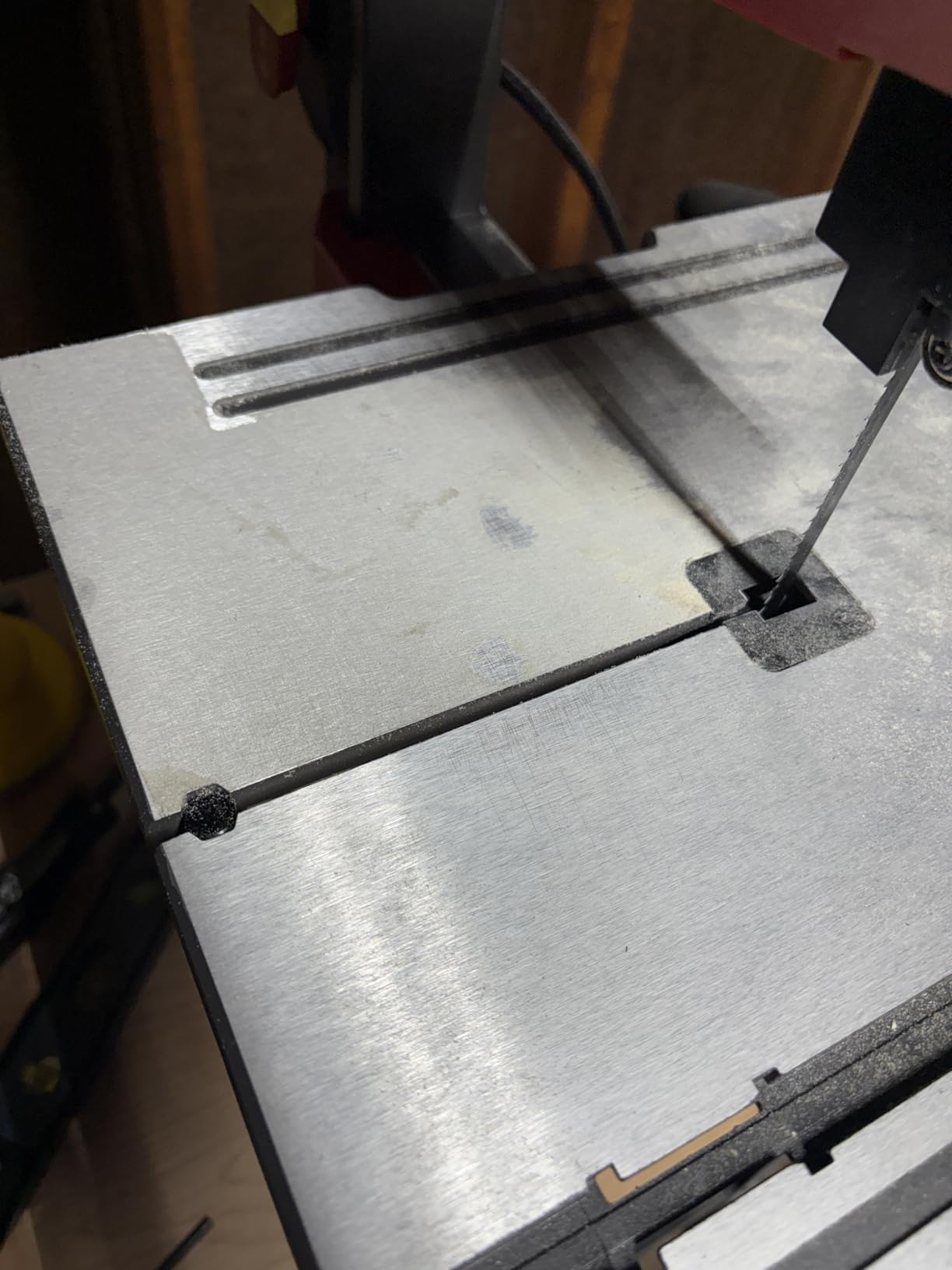
The blade-tracking sight window lets you watch the blade from the front of the machine instead of putting a scrap board against it. On a saw where you will change blades often, that is a bigger quality-of-life gain than any spec on the list.
Tool-free belt tensioning and quick blade tension setting mean the whole process is lift, turn, and go. The rack and pinion table adjustment makes angle changes repeatable, which matters when you are dialing in a consistent resaw setup across several cuts. The 336-watt motor runs at two speeds through a 2-speed drive system.
Capacity and the Honest Power Ceiling
At 9 inches, this saw’s class limits both cut height and resaw capacity, and 2.8 amps is light for hardwood or thick resaw material. Between the size and the motor, this is a saw for small parts, thin stock, and curve work rather than a hardwood resaw machine.
If your resaw needs are genuinely light, that is completely fine. Resawing a 2-inch strip of walnut for a box side is a different job from slicing a 10-inch board, and buying a floor saw to do the first one is how people end up with expensive machines they do not use.
Structure and Accessories
Precision ball bearing and lower blade guides support consistent tracking, and a steel base keeps the saw solid compared with lighter plastic-bodied competitors. The dust port accepts standard 2-1/2-inch vacuum hoses, which is convenient if you already own a shop vacuum and hose.
The miter gauge is a basic press-fit style with limited adjustment, so buy a proper fence if you plan to do resaw work here. A 3-year limited warranty is longer than most machines in this class, which is a meaningful advantage for a benchtop saw. If you want the same size with more proven history, the 9-inch WEN further down has a far larger review base and a similar power ceiling.
10. WEN 9-Inch 2.8-Amp Benchtop Band Saw BA3959 – Most Proven First Band Saw
WEN 9-Inch Band Saw, 2.8-Amp Benchtop (BA3959)
2.8 amp motor to 2500 FPM
3-1/2 inch cut depth
59-1/2 inch blade range
40 pounds
+ Pros
- Best-reviewed machine here by volume and the most proven entry point
- Clean smooth cuts on curves in 2-inch hardwood with no burning
- Blade arrives pre-installed pre-tensioned and centered
- Geared upper blade guide holds position when loosened
- Light 40 pound weight moves easily on and off a bench
– Cons
- 3-1/2 inch cut depth is shallow
- Not enough power for thick hardwood or production work
- Stock 1/4 inch blade benefits from an upgrade
- Table takes effort to level and square
With 1382 reviews, this is the most proven machine in the guide by a wide margin, and owners frame it as the ideal first band saw. It arrives ready to cut, is quiet, light, and accurate on small work, and several report competent resawing of roughly 2-inch material with an upgraded blade.
The consensus ceiling is power and capacity. At 3-1/2 inches of depth and 2.8 amps, this is a hobby and small-project tool, and owners are clear about that. That honesty is why we still recommend it, because for the reader resawing 2-inch strips, it is the right machine.

Why Review Volume Matters Here
Thousands of owners on one machine is a form of data that no spec sheet provides. When 1382 reviews converge on clean curve cuts in 2-inch hardwood with no burning, and on the blade arriving pre-installed, pre-tensioned, and centered with a table that needed no adjustment, that tells you something a spec list cannot.
It also means parts, tips, and troubleshooting knowledge are abundant. For a first band saw, that matters as much as the machine itself. If you are also planning out your general shop cutting setup, our table saw roundup covers the ripping and crosscutting half of the workflow that a band saw does not handle.
Capacity Limits and the Right Blade Upgrade
Cuts go up to 3-1/2 inches deep and 9 inches wide, using 59-1/2-inch blades from 1/8 inch to 3/8 inch wide. That shallow depth is why it belongs at the end of a resaw roundup, and why it should be chosen for a specific job rather than as a general answer.
The included 1/4-inch blade benefits from an upgrade for cleaner work. Note the 3/8-inch ceiling on blade width, which means this saw cannot take the wide resaw blades that make the 14-inch machines so effective on veneer.
Design Details That Reduce Setup
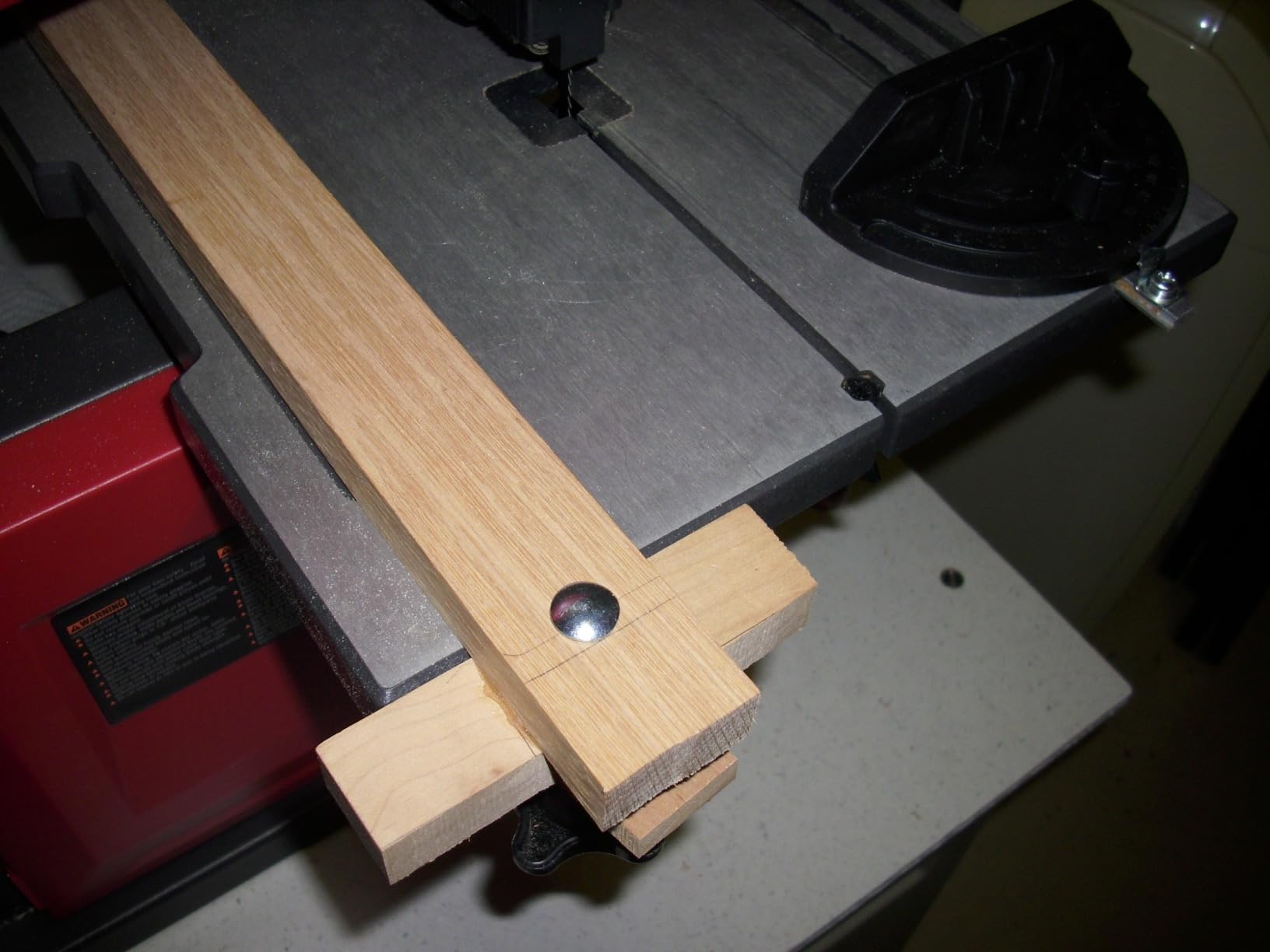
The geared upper blade guide holds its position when its set screw is loosened, which is a small thing that prevents an annoying one. The adjustable blade guard with ball-bearing supports keeps the blade supported, and the 12-1/4 by 11-7/8-inch table tilts to 45 degrees.
Two caveats. The table takes real effort to level and square to the blade, so budget an hour for first setup if you have never done it. The 2-1/2-inch dust port is a tight fit for some hoses. Service support is limited to the US and Canada, and the 2-year warranty is the shortest here. At 40 pounds, moving it on and off a workbench is trivial, which is the whole point of a benchtop saw. Owners report successfully resawing 2-1/8-inch slabs from a 2×4 with an upgraded blade, and for that task this machine is hard to argue with.
How to Choose a Band Saw for Resawing in 2026
Resaw capacity, horsepower, blade guide quality, and fence height are the four numbers that decide whether a saw is right for you. Everything else in this section is a supporting decision, and getting these four right solves most of the frustration people report with resaw machines.
Match Capacity to the Thickest Material You Actually Own
Start by measuring the thickest board you plan to resaw, not the thickest board you imagine owning. A 10-inch saw with 6 inches of cut depth handles most furniture work, a 14-inch saw with 12 to 13 inches of real capacity handles slabs and cabinet parts, and anything above that pushes you into a different machine class entirely.
Print a wheel size and subtract about an inch. That is closer to the usable figure, and community measurements of 14-inch-class saws including the Laguna 14 x 12 and the JET JWBS-14SFX both landed near 13.25 inches in a measurement thread on r/woodworkingtools. Size your fence setup and your workholding around the smaller number, not the marketing one.
If you want to go heavier than 14 inches, step up to a 17-inch class saw. We did not include one here, and we would rather say so than pad the list. That tier exists for production resaw work and thick slab work, and it is a different investment conversation.
Motor Horsepower and the 110V Versus 220V Question
For hardwood resaw, look for at least 1.75 HP on a 14-inch machine. Below that, you will hear the motor bog as the blade loads up, and a bogging motor is the leading cause of blade wander and burnt cut faces. More horsepower does not fix a flexible frame, but inadequate horsepower always causes a problem.
On voltage, the practical answer is simpler than the debate suggests. Almost every capable 14-inch saw runs acceptably on a 115V circuit, including our top pick at 1278 watts. A 230V dedicated circuit buys you headroom and lets you run the saw alongside dust collection without nuisance trips, but it is not required to resaw well. If your shop has a 20A 115V circuit free, you can start there and step up later if you buy a dual-voltage machine.
Check the motor’s current rating before you commit. The 9.5-amp machine in this roundup is the most current-hungry, and a 15A branch circuit leaves you less room for anything else on the same run.
Blade Guides, Frame Rigidity and Fence Support
Ball-bearing or ceramic guides are the standard to aim for, because they hold the blade’s position instead of letting it wander. Ball-bearing guides reduce friction and extend blade life, and ceramic guides hold their set even longer at the cost of price.
Frame rigidity comes down to cast iron or heavy steel against stamped steel, and a rigid frame is what stops a cut from being straight at the bottom and curved at the top. There is honest disagreement in the woodworking community about how much trunnion material matters, with some experienced owners reporting no noticeable difference between steel and cast-iron trunnions. We weight it moderately rather than treating it as decisive.
Fence height is the specification buyers ignore most. A 2-inch fence on a 10-inch benchtop saw supports nothing at the top of a tall resaw, and the workpiece falls out of square. Look for a fence that is tall enough to support most of your resaw height, and expect to add an auxiliary fence on cheaper saws. Square-cut accuracy on the other half of your shop workflow is a separate problem, and our miter saw guide covers it from that direction.
Blade Width and TPI for Resaw Cuts
Blade width is the first decision, and the answer is simple: for resaw, run the widest blade your saw supports, up to 3/4 inch. A wider blade cuts faster, removes more material per pass, and leaves more room for heat to escape, which means cleaner slices and less burn.
TPI is the second decision. Two or 3 TPI is the resaw range, and a 3-tooth skip-tooth pattern clears chips fast and resists blade clogging, which is the main failure mode when resawing long runs of hardwood. Three to 6 TPI general-purpose blades work fine for shorter cuts and thinner stock. Check your saw’s supported blade range before ordering, because the 9-inch benchtop saws here top out at 3/8 inch or so while the 14-inch machines reach 3/4 inch and beyond.
Material matters for blade material. Carbon steel is fine for occasional resaw work in softer hardwood. Bimetal is the right call for repeated hardwood resaw because it holds an edge far longer through resinous woods like walnut. Carbide is a specialist answer for very long production runs, not something a small shop needs.
One last free improvement: always check the weld. A raised weld bump on a resaw blade catches the workpiece and leaves a witness line on the face you were trying to make perfect.
Set Up for a Straight Resaw and Fix Wavy Faces
Start with tension. Set blade tension to the machine’s specification, not by feel. Then check tracking with a scrap block or the tracking window, if your saw has one. The side guides sit behind the gullets, never touching the tooth tips, and the thrust bearing goes close to the blade without touching it.
Next comes fence alignment, and this is the step that solves most wavy faces. Make a test cut in scrap wood, then look at the face. If the cut is tapered rather than parallel, angle the fence very slightly to match the blade’s natural drift, which is normal in every band saw. Re-cut in scrap until the test slice reads parallel at both ends, then start on real material.
Feed rate matters more than most people expect. Push steadily and let the blade do the work, and on a tall resaw use a push block with your hands on the workpiece itself rather than gripping near the blade. If the cut wanders near the bottom of the board, the usual causes are a fence out of square, a blade that needs retensioning, or guides that are not set to the blade’s plane. If the face burns, the causes are a blunt blade, too fast a feed, or a speed that is too high for the material. If the blade stops tracking after striking a knot, a resaw blade has likely been deflected, and it needs replacement rather than more adjustment.
Dust collection is not optional for resaw work. Chips packed into the lower wheel housing will destroy blade tracking, and a 2.5-inch port is smaller than a 4-inch port on the 14-inch machines. If your saw has a small port, use an adapter and keep the hose short and supported so the port does not pull sideways.
When a Band Saw Is the Wrong Tool
If you only need a handful of thin resaw cuts a year, a Japanese pull saw makes more sense. As discussed on woodworking forums, a double-edged Ryoba or a single-edged kataba produces a much thinner kerf than a band saw, wastes far less material on small workpieces, and costs a fraction of a floor model. For a one-off job, that is the honest answer.
If you need to resaw a few wide walnut or oak boards, a mill-and-slab service will do the work for less than a 14-inch saw costs, and they will slab it on a horizontal resaw saw while you do something else. A carbide horizontal resaw saw is the production tool for that work, and a band saw is not a substitute for one.
Where a band saw genuinely earns its cost is repeat hardwood resaw work: book-matched panels, veneer, bowl and instrument blanks, and bent-lamination strips. If that is your list, buy the saw.
One more sizing note. If you also need to break down lumber, the accuracy requirements of a miter saw are a different problem entirely, and our miter saw guide covers square crosscuts properly.
Frequently Asked Questions
What size bandsaw blade is best for resawing?
Run the widest blade your saw supports, ideally 3/4 inch for hardwood. A wider blade cuts faster, removes more material per pass, and gives heat more room to escape, which produces cleaner slices with less burn. Most 14-inch saws here accept blades from 1/8 inch up to 3/4 inch, while 9-inch benchtop saws often top out around 3/8 inch.
What TPI is best for resawing wood?
Two or 3 teeth per inch is the resaw range, and a 3-tooth skip-tooth pattern is the most common resaw setup because the wide gullets clear chips before they clog the blade. Three to 6 TPI general-purpose blades work for shorter cuts and thinner stock. Blades 4 TPI and finer are for curved work, not resawing.
Can you resaw with a 14-inch band saw?
Yes, and 14-inch saws are the standard choice for hardwood resaw. Expect 12 to 13 inches of real capacity rather than the advertised 14, since community measurements of 14-inch-class machines including the Laguna 14 x 12 and the JET JWBS-14SFX both landed near 13.25 inches.
What is the resaw capacity of a 14-inch band saw?
Roughly 12 to 13 inches of usable height. Resaw capacity is the distance from the table to the upper blade guide, and the usable figure is lower than the wheel nameplate because the guide assembly and blade have to clear the workpiece. Our top pick lists 13 inches officially, and measured results on similar machines cluster just above that.
What is the best bandsaw for resawing?
For hardwood resaw, the JET 14-Inch with a 1.75 HP motor is our overall pick, because motor reserve on a wide blade is what keeps a cut straight in dense wood. It offers 13 inches of resaw capacity and accepts blades up to 3/4 inch. For lighter resaw work, the WOODSKIL 10-Inch dual-speed saw gives the best balance of capability and size.
Which Band Saw for Resawing Should You Buy in 2026?
If hardwood resaw is a regular job, buy the JET 14-Inch with the 1.75 HP motor. Its 13 inches of capacity, 3/4-inch blade support, and motor reserve are the combination that keeps cuts straight in walnut and oak, and it ships with the resaw fence you need. The Laguna 14 x 12 is the alternative if you value ceramic guide precision and plan to tune the machine yourself, with the understanding that its fence needs shimming and its blade is a separate purchase.
If your resaw work stays under 4 inches and you cut softwood and hardwood in the same week, the WOODSKIL 10-Inch dual-speed saw is the smarter buy. Two speeds, six ball-bearing guides, and tool-free blade access cover most project work without a floor machine footprint.
If you are resawing thin strips and small parts, the WEN 9-Inch benchtop saw is the proven first step, with the largest review base in this guide and a 40-pound weight that moves anywhere. If you want the most capability per dollar and can live with alignment work, the WEN 14-Inch BA1487 has the strongest motor and the widest blade range, but its recurring drift complaints make it a second resaw saw rather than your only one.
Spend your next dollars in this order: a proper 3/4-inch 2 or 3 TPI resaw blade, then a resaw fence tall enough for your actual resaw height, then a blade tension gauge, then dust collection with a supported hose. Those four items will improve your resaw results more than any step up in saw size, and every one of them costs less than the machine.
Check the current price and full specification list on any of these machines before you order, and pick the one whose capacity matches the thickest material already sitting in your shop.
Leave a Reply