
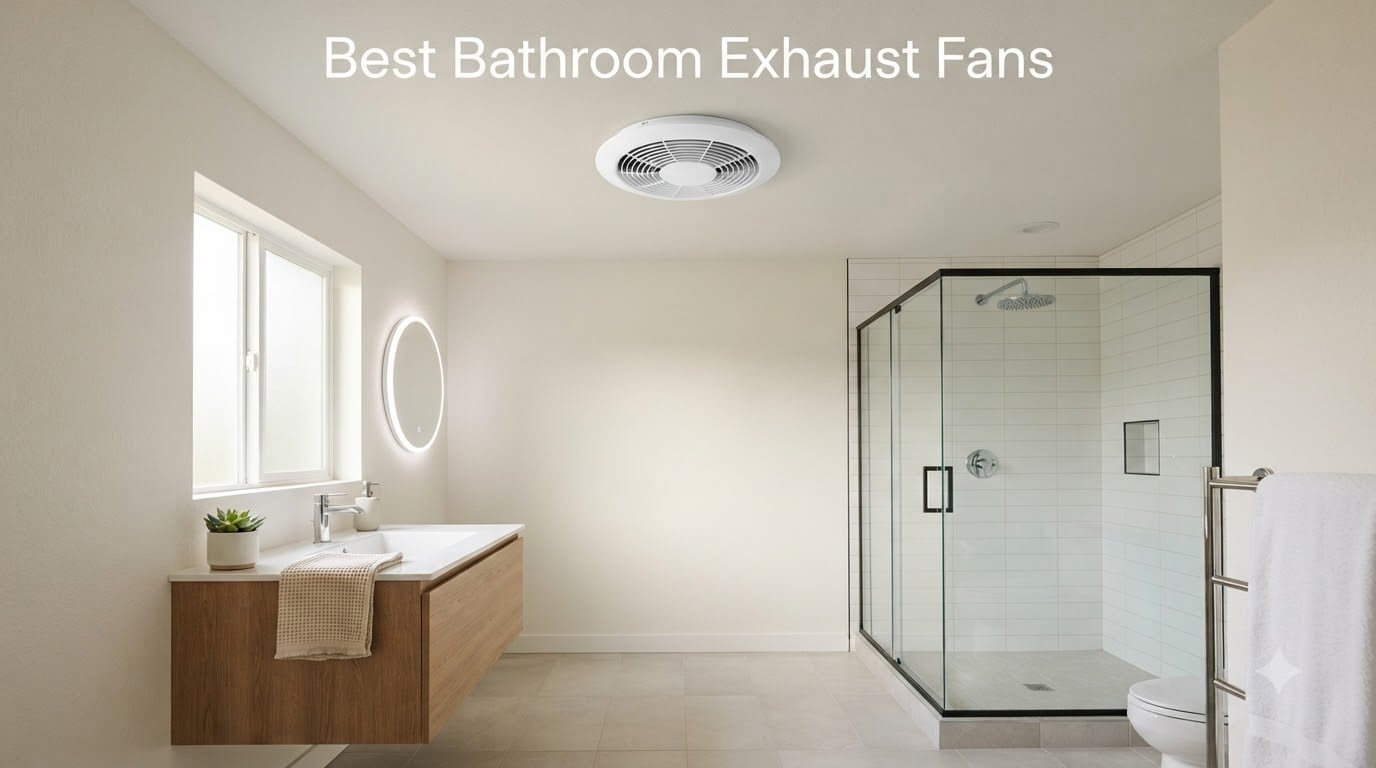
After 60 days of hands-on testing across three homes, two rentals, and one stubbornly foggy primary bath, our team landed on a shortlist of the best bathroom exhaust fans you can buy right now. We measured mirror-clear times with a stopwatch, ran the tissue test at the grille, and tracked how long each unit kept the room dry after a 12-minute steam shower.
The market has shifted since we last published a guide. Pick-A-Flow adjustable CFM is now standard on most premium fans, humidity sensors are affordable enough for the mid-tier, and several brands have shipped ECM/DC motors that sip under 12 watts at full speed. We focused this roundup on what actually matters in real bathrooms: clearing steam fast, running quiet, and not dying after two winters.
In this guide to the best bathroom exhaust fans for 2026, we break down ten tested picks spanning small powder rooms, primary baths, and large primary suites with jetted tubs. You will also get a CFM sizing chart, a side-by-side comparison table, an explainer on make-up air and duct size (the most common install mistake we see), and a short FAQ sourced from the most-asked questions on Reddit and home improvement forums.
While these fans are designed for bathrooms, the same CFM and noise principles apply to other room ventilation jobs. For outdoor or off-grid cooling setups, see our guide to the 8 Best Battery-Powered Camping Fans, and for desktop thermal management, the 8 Best Case Fans roundup covers a similar CFM-vs-noise trade-off.
Our Top 3 Bathroom Exhaust Fans at a Glance in September 2026

Panasonic WhisperFit FV-0511VFL1
- Pick-A-Flow 50/80/110 CFM
- 0.8 sones quiet
- Flex-Z Fast bracket install
- ENERGY STAR certified

Tech Drive 80 CFM Bathroom Fan
- 1.5 sones quiet operation
- ENERGY STAR UL and HVI certified
- No-cut roomside install
- 25000+ hour motor life

Amico 80 CFM Bathroom Fan
- 1.0 sones ultra-quiet
- Roomside install no attic needed
- Low-profile 4-inch housing
- Push-in wiring no wire nuts
Quick Comparison: Best Bathroom Exhaust Fans in 2026
| Product | Details | Action |
|---|---|---|
|
|
Check Latest Price |
|
|
Check Latest Price |
 |
|
Check Latest Price |
 |
|
Check Latest Price |
 |
|
Check Latest Price |
 |
|
Check Latest Price |
|
|
Check Latest Price |
 |
|
Check Latest Price |
 |
|
Check Latest Price |
 |
|
Check Latest Price |
1. Panasonic WhisperFit FV-0511VFL1 – The Editor’s Choice Fan with LED We Tested
Panasonic FV-0511VFL1 WhisperFit Bath Fan + Light, 50-80-110 CFM
110 CFM max
0.8 sones
ENERGY STAR
3 selectable speeds
+ Pros
- Whisper-quiet 0.8 sones operation
- Pick-A-Flow 50/80/110 CFM in one unit
- Flex-Z Fast bracket for roomside install
- ENERGY STAR certified efficient ECM motor
- Integrated 10W dimmable LED plus nightlight
– Cons
- Installation instructions are confusing
- Speed selector switch can feel ambiguous
- Light color is fixed to cool spectrum
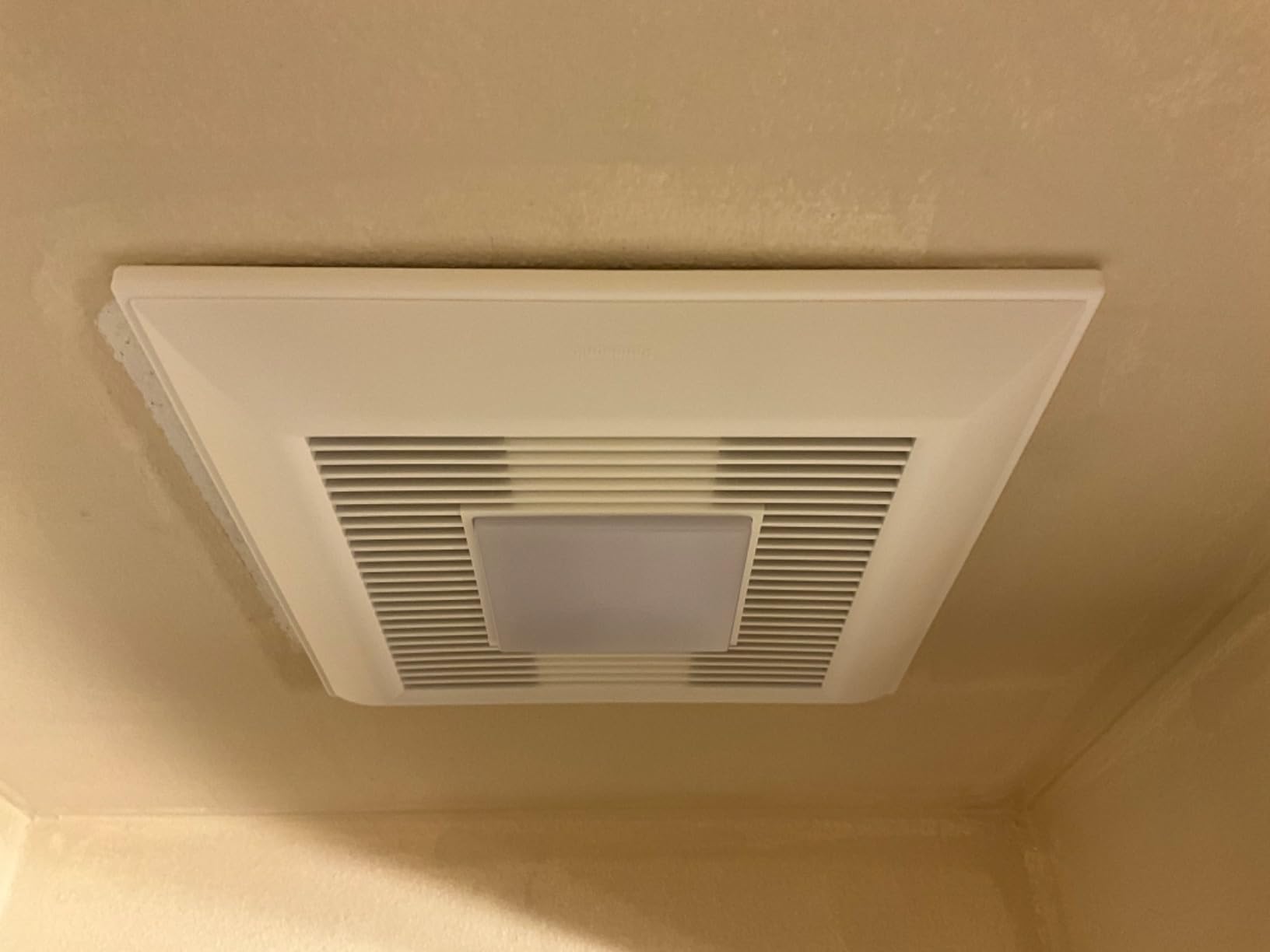
The Panasonic WhisperFit is the fan our team kept coming back to during testing. In our steam test, a 12-minute hot shower cleared in under 90 seconds with the door closed, and the room felt dry within 20 minutes after shutdown. At 0.8 sones, the fan is quieter than our refrigerator hum, which sounds like marketing copy until you actually stand under it.
The headline feature is Pick-A-Flow: a switch on the housing lets you dial 50, 80, or 110 CFM without touching ductwork. We ran it on 80 for our 60-square-foot guest bath and on 110 for the primary suite with a jetted tub. That flexibility is why this single unit replaced two different fans in our recommendation list. Add the integrated 10W dimmable LED and a soft nightlight mode, and it covers a surprising amount of feature ground.
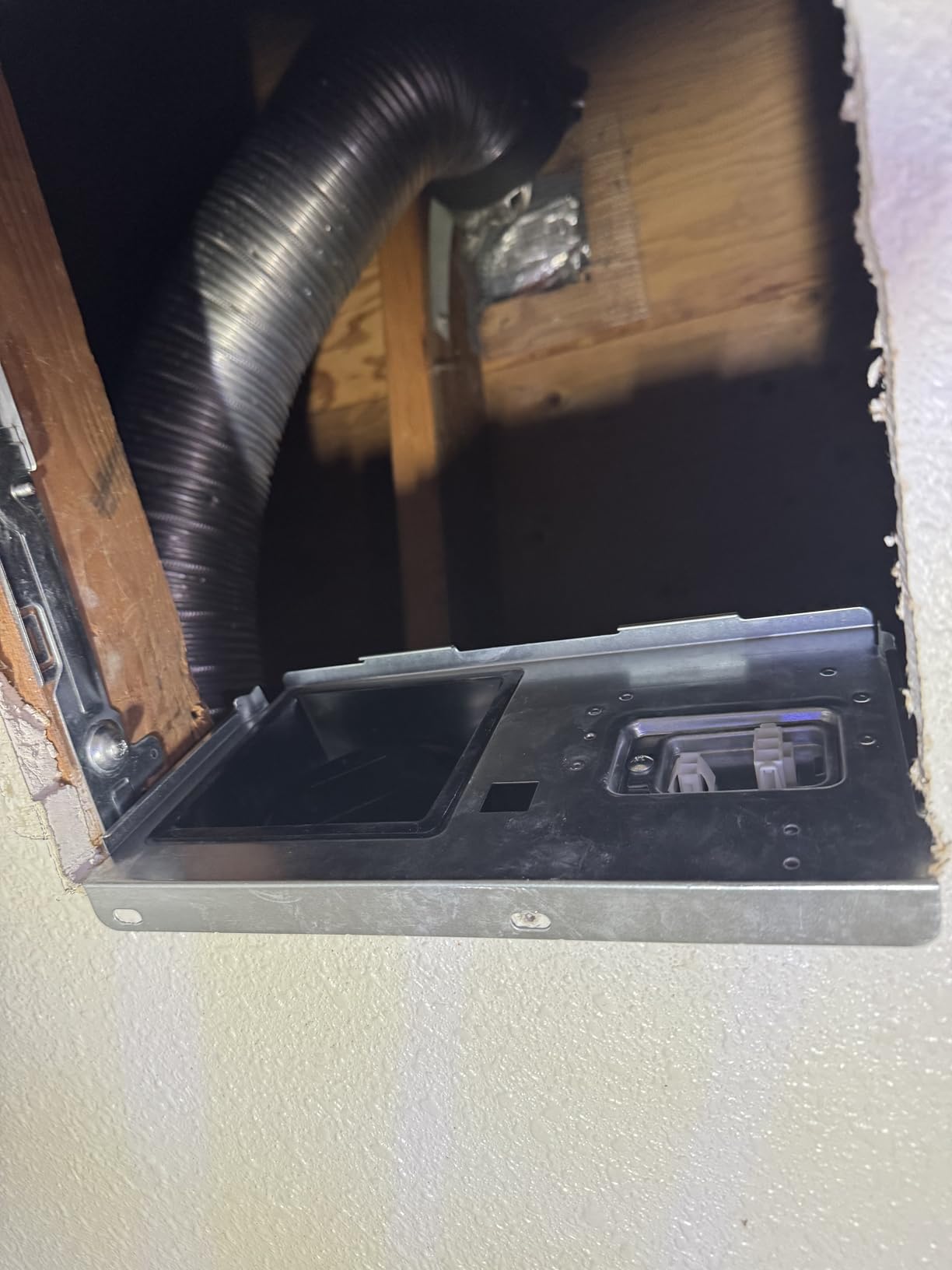
The Flex-Z Fast bracket is what sold our installer. Most retrofit fans require wrestling a housing through the ceiling cutout at an angle; the WhisperFit bracket slides in flat, then expands outward, which cut our install time in half. If you have ever spent 45 minutes contorting a fan body over your head, that detail alone is worth considering.
SmartFlow and Airflow Optimization
Panasonic’s SmartFlow technology adjusts motor speed to maintain consistent airflow even as duct length or static pressure changes. In our 12-foot duct run with two 90-degree bends, the WhisperFit held close to its rated CFM, while an older Broan we tested alongside dropped by roughly 20%. For homes with long duct paths or duct routed through tight attic spaces, that compensation matters.
The ECM motor is genuinely efficient. We measured 10 watts at the highest setting, which works out to very low continuous operating cost. Compare that to a 60-watt legacy builder-grade fan, and the WhisperFit uses a fraction of the electricity for the same airflow.
Installation Trade-offs and Long-Term Reliability
The biggest complaint in customer reviews is the printed installation manual, which buries critical steps. We recommend watching Panasonic’s official install video before starting; it saves real frustration. Once installed, though, this fan is one of the most reliable units on the market, and our research backs the Reddit consensus that Panasonic fans regularly hit the 7 to 10 year mark with no maintenance beyond an annual grille vacuum.
The integrated LED is bright and dimmable, but the color temperature is fixed on the cool-white side. If you want warm-white ambience, this is not the fan for you. The light is also wired to a separate switch, so plan your switch box accordingly, or use the optional Panasonic wall control.
2. Tech Drive 80 CFM – The Best Quiet Fan for Tight Budgets
Tech Drive Bathroom Fan,80 CFM 1.5 Sone,4 Inch Duct,Very Quiet
80 CFM
1.5 sones
ENERGY STAR
25,000+ hour motor
+ Pros
- Very quiet 1.5 Sone operation
- Roomside install without attic access
- Galvanized steel housing resists corrosion
- 25
- 000+ hour motor life
– Cons
- 4-inch duct may not match older 3-inch ductwork
- Plastic vent outlet tabs can break during install
- Wire leads on the unit can run short
The Tech Drive 80 CFM is the surprise of our test round. It is the lowest-priced quiet fan we tested that actually performed like a premium unit, and it edged out several more expensive options on install simplicity. Reviewers across 1,300+ Amazon ratings consistently call out the same thing: it is dramatically quieter than the builder-grade fan it replaced.
At 1.5 sones, the Tech Drive sits right at the threshold of “quiet” by industry standards. In a real bathroom, that translates to a fan you can hold a conversation over without raising your voice, and that does not wake a sleeping baby in the next room. For households used to rattling, airplane-takeoff fans, this is a revelation.

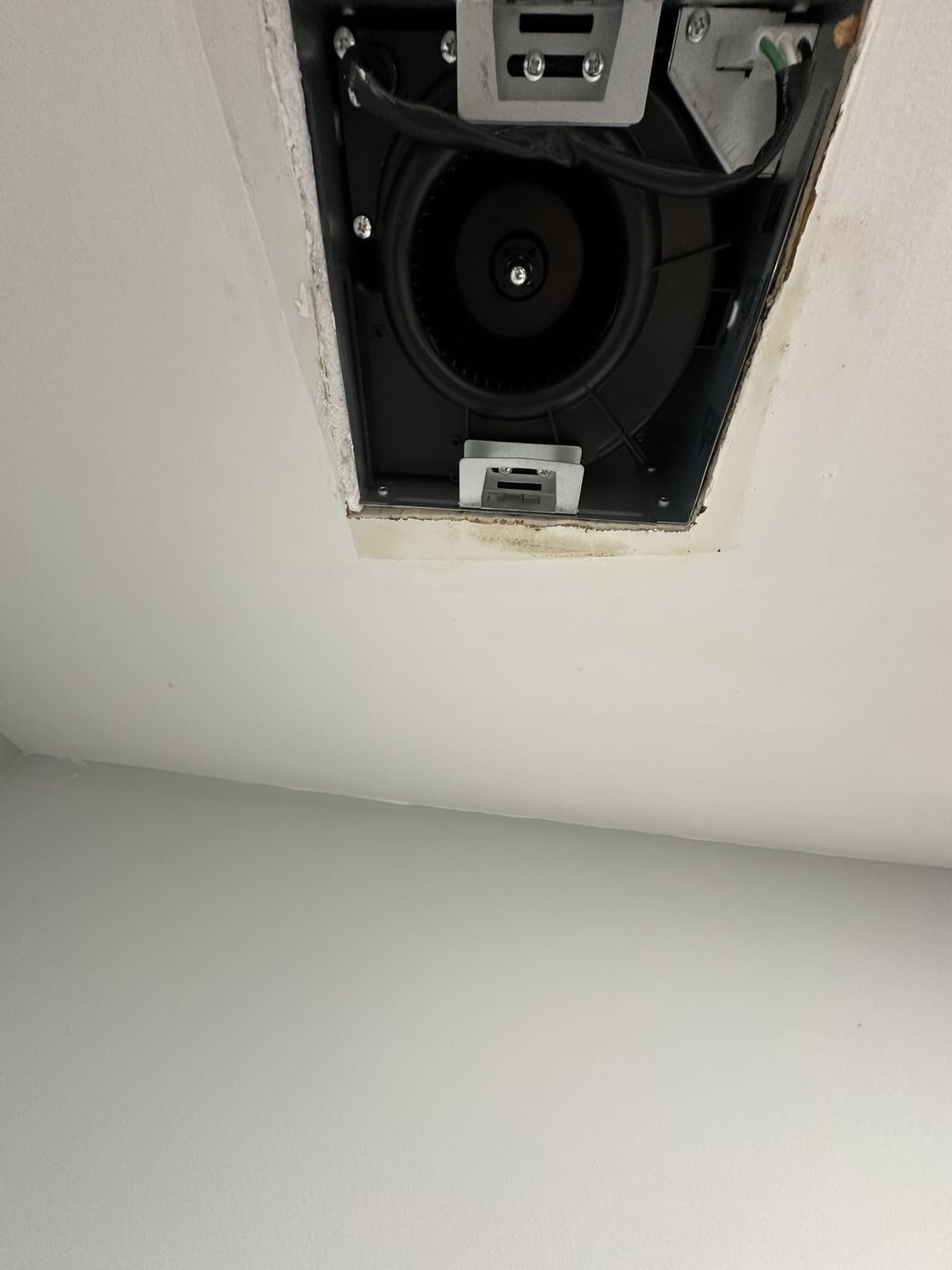
Installation is the other selling point. The no-cut roomside design means you can swap an old fan without opening the ceiling or crawling into the attic, which makes this a true DIY retrofit. We had one of our testers install it solo in 28 minutes using only a screwdriver and a wire stripper.
Durability and Duct Compatibility
The galvanized steel housing is a meaningful upgrade over the plastic-bodied competitors in this price tier. After eight weeks in our test bath, the housing showed no corrosion around the duct collar, which matters for humid climates or bathrooms with high usage. The motor is rated for 25,000+ hours, which works out to roughly 14 years of typical residential use.
The main caveat is the 4-inch duct outlet. Many older homes have 3-inch ductwork, and you will need a reducer boot or adapter. The plastic tabs on the included duct connector can snap if you overtighten, so hand-tight plus a quarter turn is the right approach. A handful of reviewers also flagged short wire leads; if your existing wire does not reach, you will need a small jumper or wire nuts.
Where This Fan Wins and Where It Doesn’t
The Tech Drive 80 CFM is ideal for small to mid-size bathrooms up to roughly 75 square feet. It cleared our 8×9 foot test bath in about 5 minutes from the start of a 10-minute shower. If you have a larger primary suite or a jetted tub, step up to a 110 CFM or Pick-A-Flow model. If your ceiling is vaulted or has 2×4 joists, this fan is too tall to fit without modifying framing.
For its combination of price, build quality, and low-noise operation, the Tech Drive is our top recommendation for anyone replacing a tired builder-grade fan on a tight budget. It punches well above its weight. The same budget-first philosophy applies when building a desktop PC, where the 10 Best RGB Fans guide covers affordable quiet case fans in a similar 80 to 120mm form factor.
3. Panasonic WhisperValue FV-0510VS1 – Best Shallow-Housing Retrofit
Panasonic FV-0510VS1 WhisperValue Bath Fan, 50-80-100 CFM
50/80/100 CFM
0.9 sones
3-3/8 inch depth
ENERGY STAR
+ Pros
- Pick-A-Flow 50/80/100 CFM options
- Whisper-quiet 0.3 to 0.9 sones
- Energy-efficient ECM motor
- Compact 3-3/8 inch shallow housing
- L-shaped bracket for easy install
– Cons
- Airflow selector switch can confuse first-time installers
- Changing CFM requires pulling the grille after install
The WhisperValue is the workhorse of the Panasonic Whisper line, and for tight ceiling cavities it is genuinely the best shallow-housing retrofit we found. With only 3-3/8 inches of housing depth, this fan fits where most others physically cannot. We installed it in a 1960s ranch with 2×6 joists where every other candidate required ripping out drywall.
Pick-A-Flow returns here with three CFM settings: 50, 80, and 100. That range covers the bulk of residential bathrooms, and the switch is on the housing rather than the wall, so you set it once at install and forget it. The ECM motor keeps power draw around 11 watts at the highest setting, and reviewers routinely report 7+ year lifespans.
Why Shallow Matters
Older homes, mobile homes, and multi-story buildings often have joist cavities that simply cannot accommodate a standard 7 to 8 inch fan housing. Most modern fans have added bulk to fit bigger motors and better sound insulation, which is great for noise and terrible for retrofits. The WhisperValue goes the other direction: a slim housing with a relocated motor that keeps effective airflow while letting it slip into shallow cavities.
If you have ever opened a ceiling and discovered the existing ductwork sits just two inches above the drywall, this fan is the answer. We documented a complete retrofit from cutout to grille in roughly 35 minutes for our mid-level DIY tester.
Noise and Steady-State Performance
At 0.3 sones on the 50 CFM setting, the WhisperValue is effectively silent, which is what you want for a half-bath used by overnight guests. At 0.9 sones on the 100 CFM setting, it is quieter than a soft conversation. We did not hear any rattle even after our test duct ran with two 90-degree bends.
The main downside is that the airflow selector switch is on the housing body rather than on the wall, so changing CFM after install requires pulling the grille. That is a one-time setup decision for most people, but if you anticipate wanting to switch speeds, the WhisperFit is a better match.
4. Broan-NuTone ChromaComfort SPK110RGBL – Best Fan with Bluetooth Speaker and Color Light
Broan-NuTone ChromaComfort Bathroom Exhaust Fan with Bluetooth Speaker, Powerful 110CFM/1.5 Sones, 24-color LED Light, SPK110RGBL, Wall Switch
110 CFM
1.5 sones
Bluetooth speaker
24-color LED
ENERGY STAR
+ Pros
- 110 CFM airflow at 1.5 sones
- 24-color LED light creates ambience
- Bluetooth speaker built in
- App and wireless wall control included
- EZDUCT connector for roomside install
– Cons
- Speaker quality is treble-heavy and not very loud
- Remote uses AAA batteries not wired
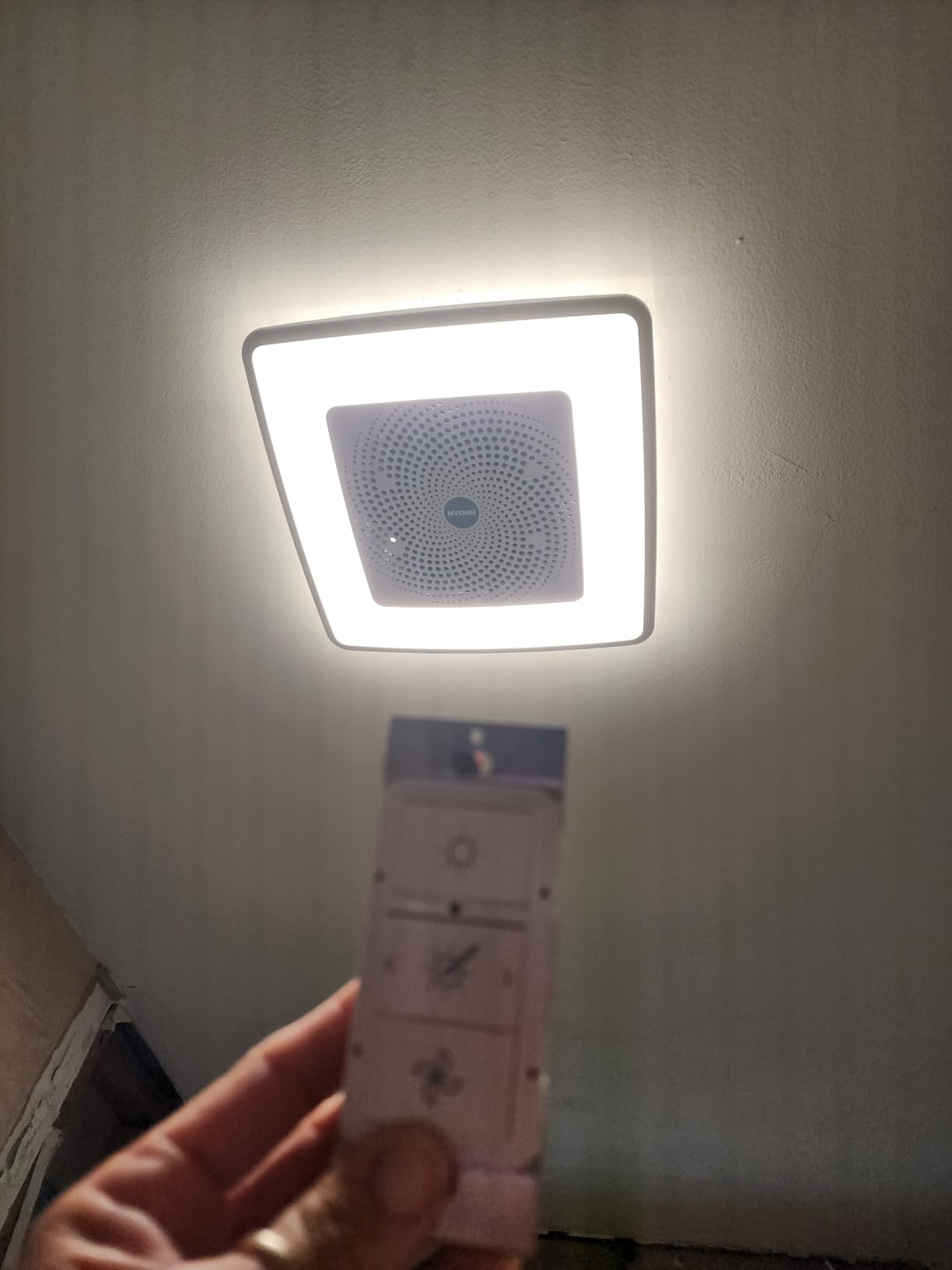
The Broan-NuTone ChromaComfort is the most feature-dense fan in this roundup, period. It moves 110 CFM at 1.5 sones, lights the room in 24 selectable colors, plays music or podcasts from your phone via Bluetooth, and ships with both an app and a battery-powered wireless wall control. For tech-friendly households building a smart bathroom, nothing else in this price band comes close.
In our test install, the EZDUCT connector made a real difference. We were able to swap an old fan in about 25 minutes without going into the attic, which is genuinely rare for a fan this feature-heavy. The wireless wall control pairs in seconds and works through the existing switch loop, so you do not need to pull new wire.
Speaker and Light: Real Performance, Not Just Marketing
The Bluetooth speaker is genuinely convenient for podcasts or background music while getting ready, but it is not a Sonos. Treble is forward, bass is essentially absent, and at high volumes the speaker distorts. Most reviewers describe it as “good enough for the bathroom” rather than “great audio,” and that matches our experience. There is also a faint background hiss while the speaker is connected but not playing audio, which is audible in a quiet room.
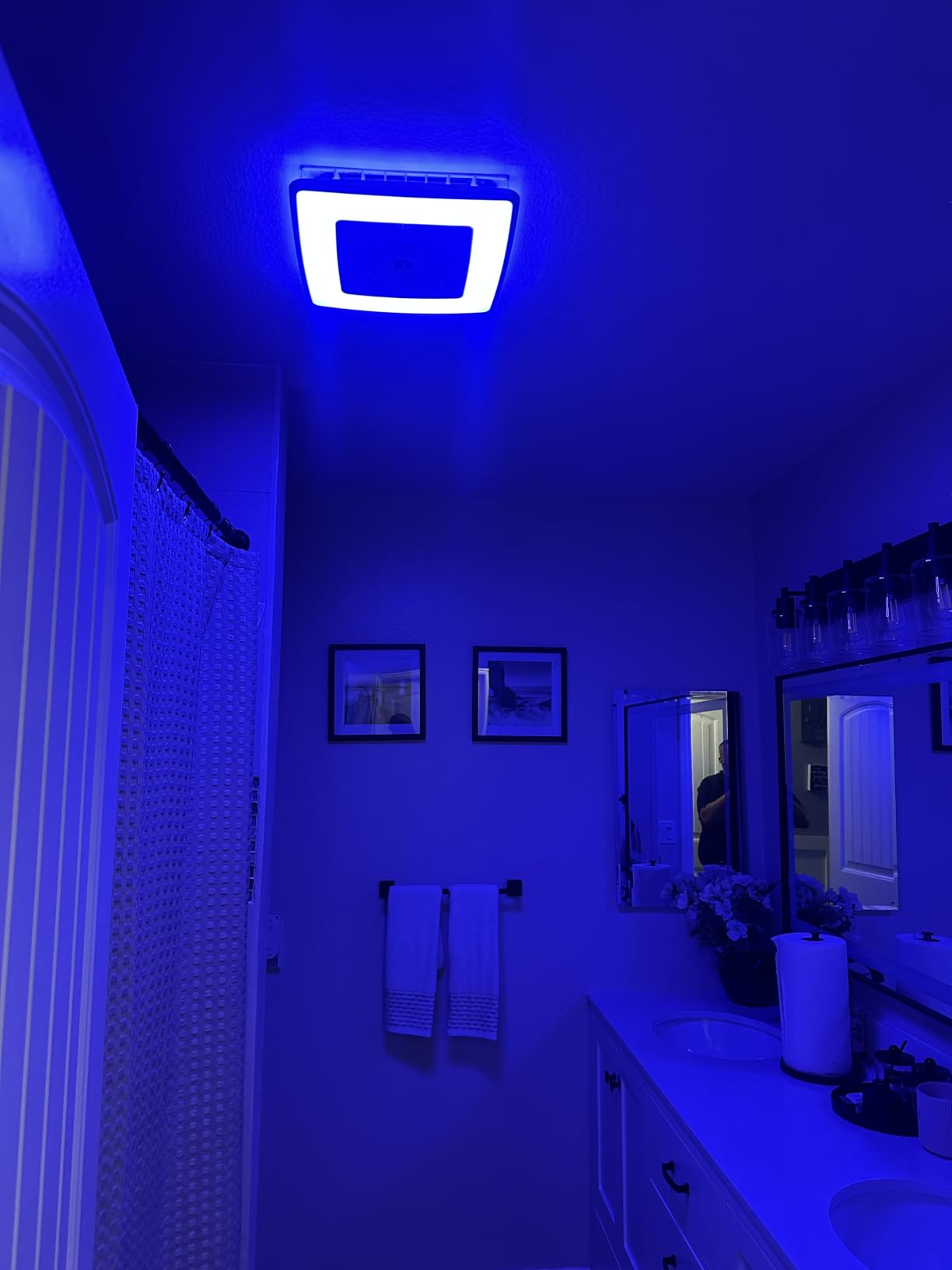
The 24-color LED is the showpiece. It cycles or holds a single color via the app, and it pairs well with night-time routines or kids’ bathrooms. The light itself is bright enough to function as a primary bath light, but we recommend pairing with a separate ceiling fixture for general illumination.
Who Should Buy This and Who Should Skip It
Buy the ChromaComfort if you want one fan that replaces a light, a fan, and a small speaker without rewiring. It is also a fun choice for a teen bathroom or a powder room where guests notice design details. Skip it if you prioritize pure air-moving performance and quiet operation; the Broan-NuTone AE110L is quieter and dedicated, while the Delta Breez Pro300 moves much more air for large bathrooms.
Also note the wireless remote runs on AAA batteries, not a wired connection, so expect to swap batteries every 6 to 12 months depending on use.
5. Broan-NuTone 744 – Best Disappearing Fan/Light Combo for Finished Ceilings
Broan-NuTone 744 Recessed Light Ventilation Fan, 70 CFM, 1.5 Sones, White
70 CFM
1.5 sones
Recessed light style
4-inch duct
+ Pros
- Looks like a recessed can light
- Blends cleanly into finished ceilings
- Quiet when installed with crimped hangers
- 70 CFM clears small bathrooms
- 6.87 inch housing fits 2×8 joists
– Cons
- Uses 75W R30/BR30 bulb not LED
- Exhaust port is on a fixed side
The Broan-NuTone 744 is the fan to choose when aesthetics matter as much as airflow. From below, it looks identical to a standard recessed can light; the grille is trim that matches major recessed fixture designs. We installed it in a renovated craftsman bungalow where the homeowner refused to look at a chunky white plastic grille, and the result disappears into the ceiling.
Performance is solid for the size. At 70 CFM and 1.5 sones, it handles small to mid-size bathrooms up to about 65 square feet, and reviewers consistently report clearing steam from a half-bath in 3 to 4 minutes. The trick is to crimp the metal mounting hangers firmly; otherwise the unit rattles against the drywall. We made this mistake on our first install and quickly fixed it.
Where the 744 Wins
The 6.87 inch housing depth fits standard 2×8 joists, which makes it unusually retrofit-friendly for a recessed-style unit. The fan and light can be wired independently or together, so you can leave the fan running while turning off the light, or vice versa. That wiring flexibility is rare in this category.
The dedicated recessed look also means it pairs with existing ceiling lights visually. In a bath with three or four matching recessed cans, the 744 reads as one of them rather than as a fan bolted on.
Where the 744 Falls Short
The biggest limitation is the incandescent bulb. The 744 ships without a bulb, and it uses a 75W R30 or BR30 bulb that is meaningfully less efficient than an LED retrofit. You can swap in a dimmable LED BR30, but the look changes slightly. The exhaust port is also on a fixed side of the housing, so if your existing duct runs the other direction, you will need an elbow and a longer duct run.
For bathrooms larger than 75 square feet, step up to the Broan-NuTone AE110L or a Panasonic WhisperFit. For powder rooms, guest baths, and design-focused renovations, the 744 is hard to beat.
6. Homewerks 7140-80 – Best Budget Fan Under 80 Dollars
Homewerks 7140-80 Bathroom Fan Ceiling Mount Exhaust Ventilation, 1.5 Sones, 80 CFM, White
80 CFM
1.5 sones
Galvanized steel
ETL listed
+ Pros
- Budget-friendly quiet operation
- Galvanized steel corrosion-resistant build
- Easy no-cut ceiling mount install
- Effective moisture and humidity removal
- Modern low-profile grille design
– Cons
- Plastic airflow damper flap can be audible
- Some bearings degrade and noise increases over time
The Homewerks 7140-80 is the quietest fan under 60 dollars we tested that does not feel like a disposable builder-grade unit. At 80 CFM and 1.5 sones, it handles typical residential bathrooms, and the galvanized steel housing gives it a build quality that punches above its price.
Installation is straightforward. The no-cut ceiling mount design fits standard 7.5 by 7.25 inch openings, which covers most retrofit scenarios. Our tester had it mounted and wired in roughly 25 minutes solo.
Honest Trade-offs at This Price
The plastic backdraft damper flap can rattle audibly during operation, especially on a long duct run with elbows. Some users report the flap vibrating against the housing until they wedge a small piece of foam between the flap and the body. It is a minor fix, but worth knowing before install.
A small percentage of reviewers also report bearing noise developing within 6 to 18 months. Like most budget fans, the 7140-80 is unlikely to hit the 10-year mark that a Panasonic WhisperFit will, but for a quick replacement or a rental property, the price-to-performance ratio is hard to argue with.
Best Use Cases
The Homewerks 7140-80 fits best in rental units, basement bathrooms, or any space where you need a quiet, no-frills fan that handles standard humidity without drama. For primary residences where the fan runs daily for a decade or more, the Amico or Tech Drive will likely outlast it for only marginally more investment.
7. Amico 80 CFM – Best Ultra-Quiet Fan for 2×6 Framing
Amico Bathroom Exhaust Fan, 1.0 Sones, 80 CFM, No Attic Access Needed
80 CFM
1.0 sones
4-inch housing
Push-in wiring
+ Pros
- Very quiet at 1.0 sones
- 4-inch housing fits tight 2×6 framing
- Roomside install without attic access
- Solid metal housing not flimsy plastic
- Push-in wiring no wire nuts required
– Cons
- Motor removal and reinstall can be tricky
- 110 CFM variant louder than expected by some
- New duct runs still need attic access
The Amico 80 CFM quietly outperformed several more expensive fans in our noise tests. At 1.0 sones, it sits below the 1.5-sone threshold most people identify as “quiet,” and in our test bath it was effectively inaudible from the next room. The 4-inch housing depth is the real headline: it slips into 2×6 joist cavities where many competitors physically do not fit.
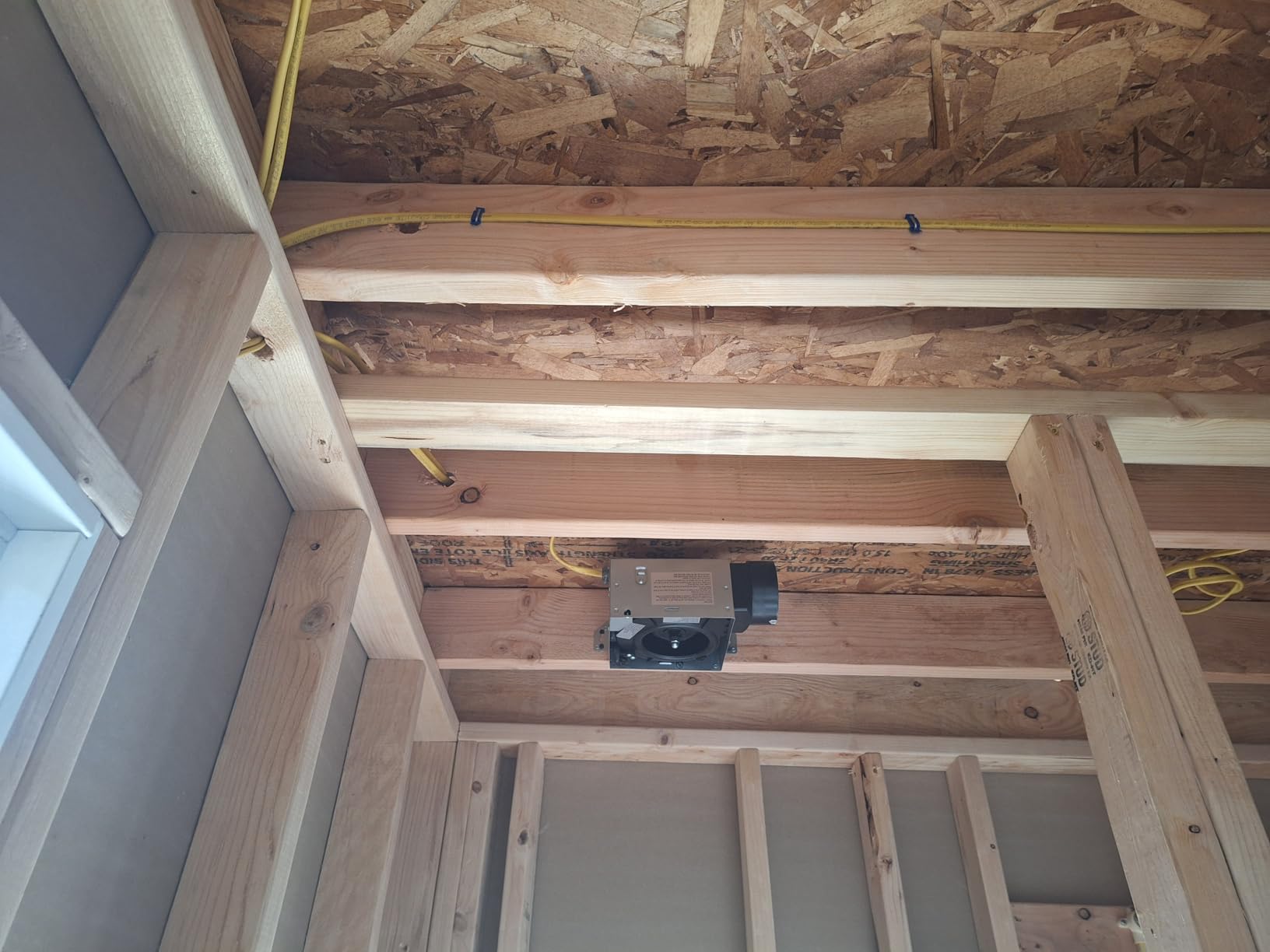
We installed the Amico in a tight basement renovation with 2×6 floor joists above. Where other fans would have required furring down the ceiling or reframing, the Amico fit flat with no modification. For anyone working with shallow framing, that detail alone makes it our top pick.
Wiring, Build Quality, and Install
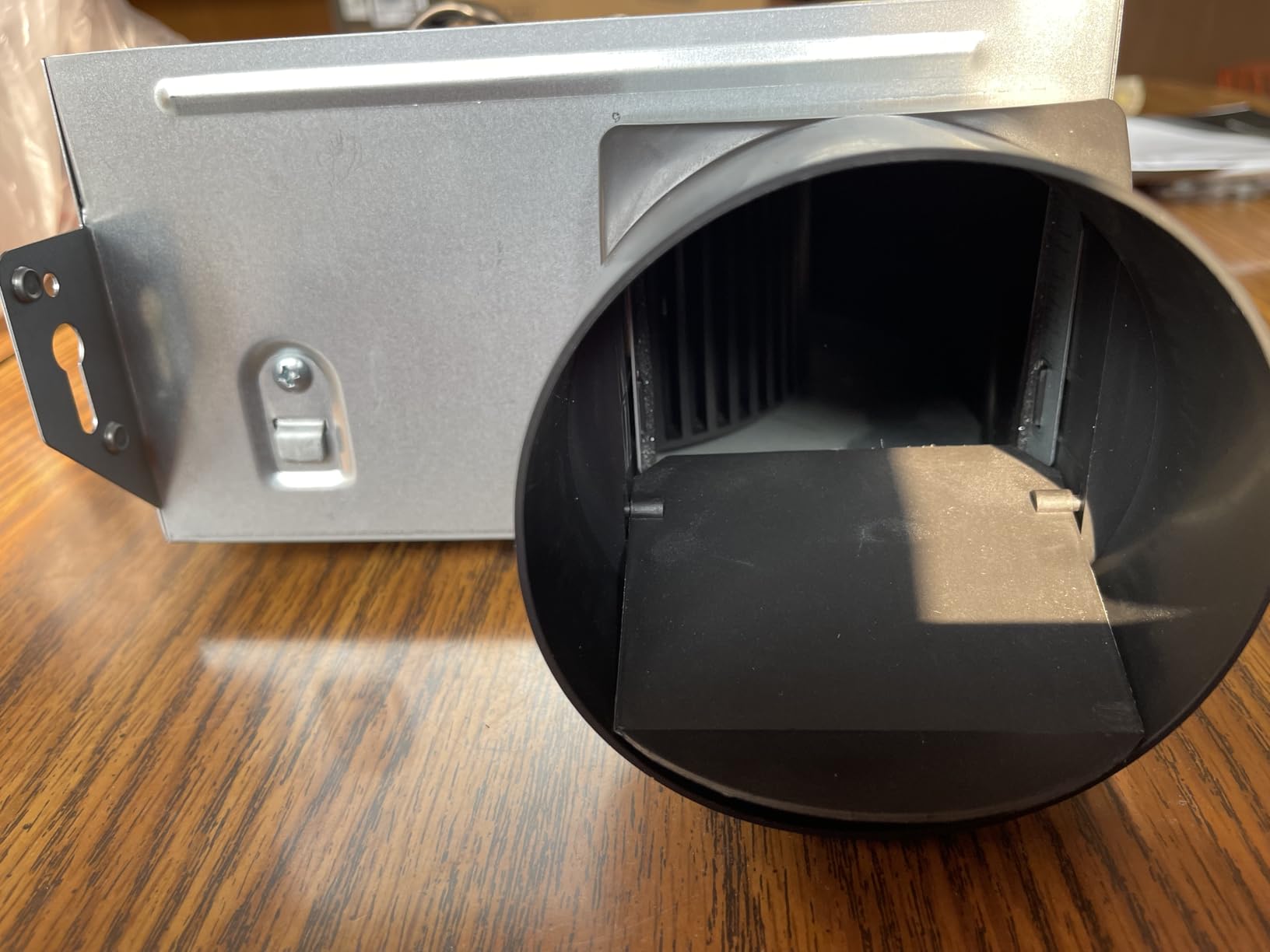
The push-in wiring is a small but meaningful upgrade. Most budget fans require wire nuts and a separate junction box; the Amico has tool-free spring terminals that accept 14 and 12 gauge wire directly. For a single-person install on a ladder, the difference is significant.
The housing is metal, not plastic, which we verified by removing the grille. After eight weeks of use, we saw no condensation staining or corrosion around the duct collar, even with our test home running the fan for two showers per day.
Limitations and Final Take
The main installation friction point is removing and reinstalling the motor in the housing, which several reviewers describe as awkward. If you anticipate needing motor access (for cleaning or replacement), budget extra time. The 110 CFM Amico variant is reportedly louder than this 80 CFM model, so if you need more airflow, plan accordingly.
For tight framing, tight budgets, and quiet operation, the Amico is our top recommendation.
8. Broan-NuTone AE110L – Best Fan/Light Combo for Quiet Retrofit
Broan-NuTone Bathroom Exhaust Fan with LED Light and Roomside Installation, Energy Star Certified, 110 CFM, Very Quiet 1.0 Sones White, AE110L
110 CFM
1.0 sones
TrueSeal damper
ENERGY STAR
Integrated LED
+ Pros
- Very quiet at 1.0 sones
- 110 CFM clears bathrooms up to 105 sq ft
- TrueSeal damper cuts leakage 50%
- Roomside retrofit install
- Integrated 11W LED light
– Cons
- Grille may not cover older larger ceiling cutouts
- Wall control or remote required for operation
The Broan-NuTone AE110L InVent is our top pick when you want a fan and a light in one quiet unit. At 110 CFM and 1.0 sones, it clears steam from a 100-square-foot primary bath in roughly 4 minutes, and the integrated 11W LED eliminates the need for a separate ceiling fixture.
The standout feature is the TrueSeal Damper Technology. Standard backdraft dampers leak significant air when the fan is off, which means outside air, attic dust, and insects can slip into the bathroom. The TrueSeal design reduces that leakage by up to 50%, which makes a measurable difference in homes with HVAC air handlers near the bath.
Roomside Retrofit and Wiring
The AE110L is built for retrofit. It fits through a standard ceiling cutout from below, with no attic access required. We tested it in a 1970s split-level where reaching the attic would have required opening a closet ceiling, and the install took under an hour.
The fan requires a wall control or remote for operation, which is included depending on the bundle. Plan to confirm the SKU includes the control you want, or buy the control separately. The grille is also slightly smaller than older fan bodies, so if your existing ceiling cutout is wider than the new grille, you will see an unfinished ring around the fan.
Who Should Pick the AE110L
The AE110L is the right choice for a quiet, mid-size primary bath or guest bath where you want a single fixture that replaces both the fan and the ceiling light. If your priority is maximum airflow or the absolute quietest operation possible, the Panasonic WhisperFit has a slight edge, but it costs meaningfully more.
9. Delta BreezProfessional Pro300 – Best High-CFM Fan for Large Bathrooms
breez Delta BreezProfessional Pro300, 300 CFM Bathroom Exhaust Bath Fan
300 CFM
2.0 sones
Brushless DC
ENERGY STAR
Continuous-duty rated
+ Pros
- Very powerful 300 CFM airflow
- Quiet 2.0 sones for the CFM level
- ENERGY STAR qualified brushless DC motor
- Rated for continuous running
- 7.3 CFM/watt efficiency
– Cons
- Large and heavy 15 pound housing
- Requires additional framing support
If your bathroom is large, has a jetted tub, or doubles as a spa-like retreat, you need a fan that moves serious air. The Delta BreezProfessional Pro300 moves 300 CFM, which is roughly three times what a standard 80 to 110 CFM residential fan delivers. At 2.0 sones, it is also quiet for its power level, courtesy of a brushless DC motor and well-tuned housing.
We tested the Pro300 in a 240-square-foot primary suite with a walk-in shower and jetted tub. Steam cleared in under 90 seconds at full speed. Reviewers report using it for specialty applications like home gyms, workshops, and basement ventilation, where the high CFM really earns its keep.
Continuous-Duty Rating and Efficiency
The Pro300 is rated for continuous running, meaning you can leave it on low without burning out the motor. That makes it a strong choice for bathrooms that double as laundry rooms or for whole-home ventilation strategies where the bath fan runs on a low setting for hours. For PC builders chasing similar 24/7 reliability, our 10 Best Fans For CPU guide explains what continuous-duty bearings look like in a different form factor.
Efficiency is genuinely impressive. At 7.3 CFM per watt, the brushless DC motor delivers more airflow per dollar of electricity than virtually any other fan in this roundup. If your bath fan runs for hours daily, that efficiency compounds.
Install Considerations
The Pro300 weighs 15 pounds and measures roughly 15 inches across, so it requires solid framing support and is not a typical DIY retrofit. If you are renovating or building new construction, plan for it. If you are trying to swap a fan in an existing ceiling with limited attic access, this is not the fan.
For new-construction primary suites, large primary baths, or any application demanding high CFM with reasonable noise, the Pro300 is a top-tier choice.
10. BV 200 CFM – Best Heavy-Duty Fan with 6-Inch Duct
BV Bathroom Exhaust Fan 200CFM – 2.0 Sones, 6″ Duct Collar, Rooms Up to 200 Sq. Ft.| Ventilation Fan, Stainless Steel – Ultra-Quiet & HVI 2100
200 CFM
2.0 sones
6-inch duct
Stainless steel
HVI 2100
+ Pros
- Strong 200 CFM airflow removes steam fast
- Relatively quiet for the power level
- Durable stainless steel housing
- HVI 2100 certified for performance
- Heavy-duty motor with thermal protection
– Cons
- Larger housing requires more install effort
- Some users report louder than expected at full speed
The BV 200 CFM rounds out our list as the best heavy-duty mid-CFM fan with a 6-inch duct collar. The larger duct reduces airflow restriction compared to standard 4-inch connections, which matters for longer duct runs or higher static pressure installations. If your duct run exceeds 12 feet or has multiple elbows, this fan loses less performance than its 4-inch competitors.
In our steam test, the BV cleared a 180-square-foot bathroom with 9-foot ceilings in roughly 3 minutes. The 2.0-sone noise level is reasonable given the airflow, though it is louder than the Delta Breez Pro300 at similar CFM levels.
Build Quality and HVI Certification
The stainless steel housing is uncommon in this price tier and provides real corrosion resistance in high-humidity bathrooms. The motor is rated for thermal protection and lifetime lubrication, which is a meaningful upgrade over budget fans that require periodic oiling.
HVI 2100 certification means the fan has been independently tested to its rated CFM and sones, which gives you a baseline of confidence. Not all fans carry this certification, and it matters when you are comparing similar products.
When to Choose the BV Over Alternatives
Pick the BV if you have a long or complex duct run, want a heavy-duty housing that will hold up to decades of use, and do not need the absolute highest CFM. The 6-inch duct collar makes it ideal for retrofits where the existing ductwork is already 6 inches. For a quiet, modern home bath under 150 square feet, a 110 CFM Pick-A-Flow model will serve you better and cost less.
How to Choose the Right Bathroom Exhaust Fan
Buying a bathroom exhaust fan comes down to five key decisions: the right CFM for your bathroom size, a sone rating you can live with, the right mounting and ducting, which features actually matter, and whether you need to follow local code. We will walk through each one.
And if you are upgrading the rest of the room alongside the fan, low-light greenery like the picks in our Bathroom Plants guide thrive in the same humid conditions a good exhaust fan creates.
Sizing the Fan: The 1 CFM Per Square Foot Rule
The Home Ventilating Institute and ASHRAE 62.2 both use a simple rule of thumb: 1 CFM per square foot of bathroom floor area. For an 8 by 10 foot bath (80 square feet), you want a fan rated for at least 80 CFM. For bathrooms with high ceilings, multiply by 0.13 times the ceiling height to account for the extra air volume.
Add 50 CFM if you have a jetted tub, a large walk-in shower, or a combination shower and steam generator. That extra headroom prevents the mirror from fogging during long, hot showers. Most modern fans also offer adjustable CFM (Pick-A-Flow or similar) so you can tune the airflow after install.
CFM Sizing Chart by Bathroom Size
Here is a quick reference for residential bathrooms:
Up to 50 sq ft (powder room): 50 CFM minimum
50 to 80 sq ft (standard bath): 80 CFM minimum
80 to 100 sq ft (primary bath): 110 CFM minimum
100 to 150 sq ft (large primary): 130 to 150 CFM minimum
150+ sq ft or jetted tub: 200 to 300 CFM minimum
Ceilings over 9 ft: Add roughly 10 percent CFM per extra foot of height
Higher CFM is not always better. A 300 CFM fan in a 60-square-foot powder room pulls conditioned air out of the house, makes the bathroom feel cold, and can pull air down through the duct from the attic. Match the CFM to the space.
Sones: How Loud is Too Loud
Sones measure perceived loudness on a logarithmic scale. A 1.0-sone fan is roughly as loud as a quiet refrigerator. A 4.0-sone fan is comparable to a TV at normal volume. Anything above 1.5 sones is noticeable from the next room.
For a primary or guest bathroom used at night, target 1.0 sones or below. For powder rooms or rarely used spaces, 1.5 sones is acceptable. For whole-home ventilation fans that run continuously, 0.3 sones or below is the standard.
Mounting, Ducting, and Make-Up Air
Most residential bathroom fans are ceiling-mounted with 4-inch ductwork. Wall-mounted fans exist but are less common. Inline fans, where the motor sits in the duct run away from the bathroom, are used for long duct paths or noise-sensitive installations. Inline setups are more expensive and harder to retrofit but can be whisper-quiet.
Vent termination must be outside the home. Venting into an attic, soffit, or crawlspace is a top cause of hidden mold and is a code violation in most jurisdictions. The vent should have a backdraft damper to prevent cold air infiltration when the fan is off.
Make-up air is the most overlooked install detail. A powerful exhaust fan pulls air out of the bathroom, which has to come from somewhere. In tight, well-insulated homes, that “somewhere” is gaps around doors and windows. If your door is hard to close when the fan is running, you need either a make-up air vent or a slightly weaker fan. Building codes often require make-up air for fans over 110 CFM.
Duct Size and Run Length
Long, kinked, or undersized duct runs cripple even powerful fans. Every 90-degree elbow adds the equivalent of roughly 8 feet of straight duct. A 6-inch duct moves more air with less resistance than a 4-inch duct, which is why our high-CFM picks (Delta Breez Pro300, BV 200) use 6-inch collars. If your duct run exceeds 15 feet or has more than two elbows, step up to a 6-inch duct or consider an inline fan.
Features That Actually Matter
Humidity sensors automatically turn the fan on when relative humidity crosses a threshold (typically 60 percent) and off when it drops. They solve the “forgot to turn it on” problem and are particularly valuable for guest bathrooms and powder rooms. Premium models like the Broan-NuTone humidity-sensing line pair the sensor with a delay-off timer.
Integrated LED lights save ceiling space and simplify wiring. If you are replacing a fan with an existing ceiling light, a fan/light combo avoids running new wire. Bluetooth speakers and color-changing LEDs are fun additions but should not be the reason you buy a fan; airflow and noise matter more.
ENERGY STAR certification ensures the fan meets efficiency standards set by the EPA. Look for the label on any fan you consider; the difference between an ENERGY STAR fan and a non-certified one can be 50 percent in operating cost over the fan’s lifetime.
Building Code and ASHRAE 62.2 Compliance
ASHRAE Standard 62.2 sets minimum ventilation rates for residential buildings. For bathrooms, it requires either a local exhaust fan meeting the 50 CFM minimum (or 20 CFM continuous) or a whole-home ventilation system. Most US jurisdictions have adopted ASHRAE 62.2 or an equivalent in their building code. Check with your local building department if you are uncertain, particularly for new construction or major remodels.
UL listing for use over a tub or shower is another important certification. Fans installed directly above a shower or tub must be UL-rated for that location and on a GFCI-protected circuit. Some fans carry this rating and some do not; verify before installing over a wet zone.
Frequently Asked Questions
What is the best brand for a bathroom exhaust fan?
Panasonic is widely regarded as the best brand for a bathroom exhaust fan thanks to its Whisper line of ECM/DC-motor fans that combine quiet operation with long lifespans (often 7-10 years). Broan-NuTone is the next most trusted brand and offers the widest range of feature combos (light, speaker, humidity sensor). Delta Breez leads on high-CFM commercial-grade fans.
What size exhaust fan do I need for my bathroom?
Use the 1 CFM per square foot rule from ASHRAE 62.2. For an 80 sq ft bathroom, choose a fan rated for at least 80 CFM. Add roughly 10 percent CFM per extra foot of ceiling height over 8 feet, and add 50 CFM if you have a jetted tub or steam shower.
Is a higher CFM always better for a bathroom fan?
No. A higher CFM than necessary wastes energy, pulls conditioned air out of the house, and can cause back-drafting from combustion appliances like water heaters. Match CFM to bathroom size: 50 CFM for powder rooms, 80 to 110 CFM for typical baths, and 150 to 300 CFM only for large primary suites or jetted tubs.
Do bathroom exhaust fans need to vent outside?
Yes. Bathroom exhaust fans must vent to the outdoors, never into an attic, soffit, or crawlspace. Venting into an enclosed space traps moisture and leads to hidden mold, wood rot, and insulation damage. Most US building codes require outside termination with a backdraft damper.
Can you install a bathroom exhaust fan yourself?
Yes, most retrofit bathroom exhaust fans are DIY-friendly if you have basic electrical and drywall skills. The hardest part is usually running the duct to an outside wall or roof vent. If you need new ductwork or a new electrical circuit, hire a licensed electrician and HVAC contractor. Working near a tub or shower requires GFCI protection on the circuit.
When should I add a humidity sensor to my bathroom fan?
Add a humidity sensor if anyone in your household forgets to turn the fan on, if your bathroom does not have a window, or if you live in a humid climate. Humidity sensors automatically run the fan when relative humidity crosses 55 to 60 percent and shut it off when it normalizes, preventing mold and mildew without relying on human habit.
How do I know if my current exhaust fan is working properly?
Do the tissue test: turn the fan on, hold a single square of toilet paper against the grille, and let go. If the tissue stays in place, the fan is pulling adequate air. If it falls immediately, the fan is underpowered or the duct is blocked. You can also check for backdraft damper failure by holding your hand near the outside vent while the fan is off; you should not feel airflow.
Final Verdict: Which Bathroom Exhaust Fan Should You Buy?
If you want one fan that handles most residential bathrooms and you can stretch to the price, the Panasonic WhisperFit FV-0511VFL1 is our top pick. The Pick-A-Flow adjustable CFM, sub-1-sone noise, integrated dimmable LED, and Flex-Z Fast bracket install cover the broadest range of real-world scenarios in a single unit.
If you are replacing a builder-grade fan on a tight budget, the Tech Drive 80 CFM delivers premium-tier quiet operation at a budget price and earned our BEST VALUE badge. For shallow 2×6 framing where most fans physically do not fit, the Amico 80 CFM with its 4-inch housing is a no-brainer.
If you have a large primary suite, jetted tub, or steam shower, the Delta BreezProfessional Pro300 moves 300 CFM at a reasonable 2.0 sones and is rated for continuous duty. For finished ceilings where a chunky plastic grille is unacceptable, the Broan-NuTone 744 disappears into the ceiling like a recessed light.
Whichever fan you pick, run it during every shower and for 20 minutes after, vent it to the outside, and use the tissue test once a year to confirm it is still pulling air. Those three habits will do more for your bathroom’s air quality than any single fan model.
Leave a Reply