
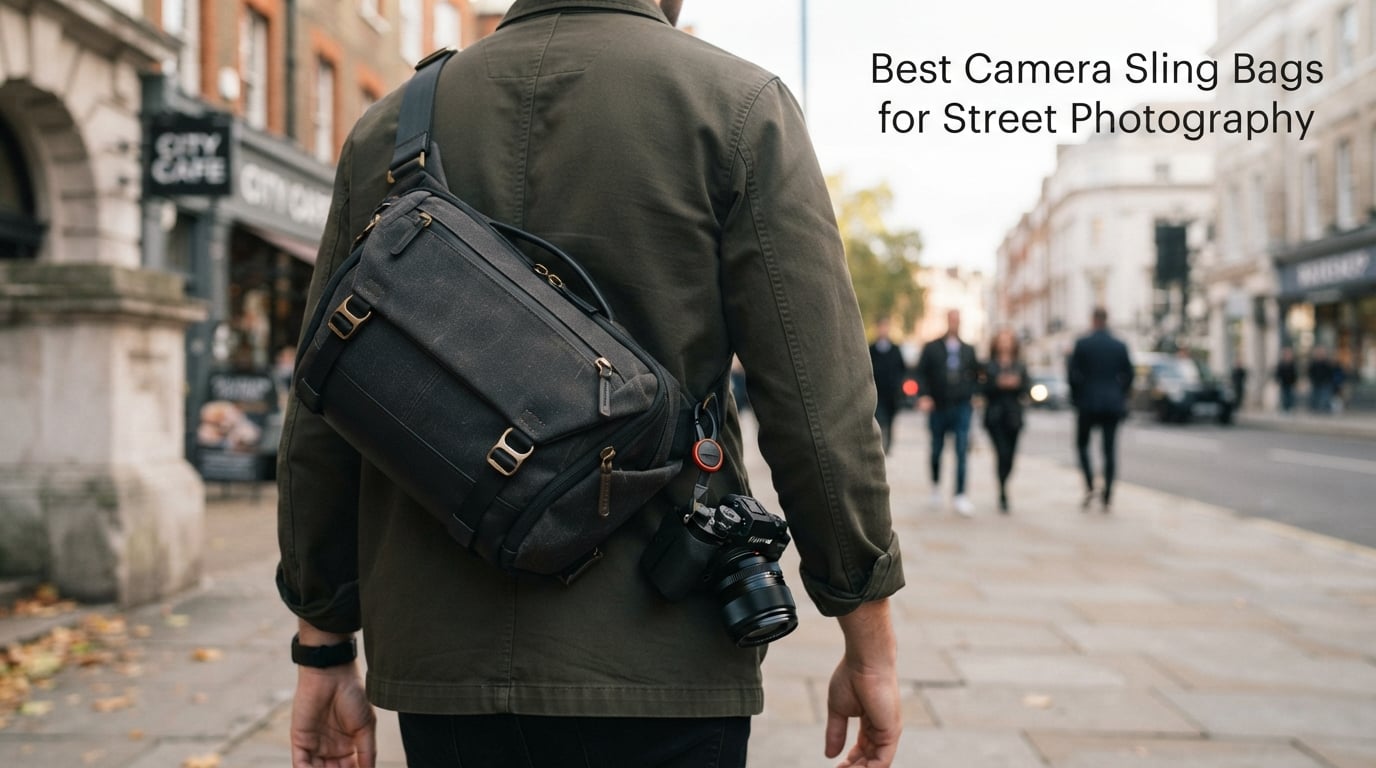
A camera sling bag is a single-strap bag worn diagonally across the body that lets photographers swing the bag from back to front for quick, one-motion access to a camera and lenses. For street photography, that swing-to-front access is the whole point – you spot a frame, you rotate the bag, you shoot. No yanking a backpack off your shoulders in a crowded crosswalk, no fumbling with magnetic flaps while the moment evaporates.
I have spent the last four months rotating through eight different camera sling bags on photo walks across three cities, on subway commutes, and through long weekend shooting days. My kit is a Sony A7C II with two small primes, plus a Fuji X100VI as a secondary body. I ran each sling loaded with that exact setup plus a spare battery and a snack bar (street photography is hungry work). The eight bags in this guide survived my testing and earned their spots. I also leaned heavily on what experienced shooters say on Reddit’s r/ManyBaggers and r/AskPhotography, where you can find years of real-world feedback on dividers wearing out, strap buckles breaking, and which slings quietly fall apart after six months.
If you are searching for the best camera sling bags for street photography in 2026, you are probably trying to solve a specific problem: you want a bag that disappears on your body, swings fast when you need it, and does not scream “expensive gear inside” to every pickpocket on the subway. This guide covers eight options across every budget and capacity tier – from a discreet 5L canvas sling that looks like a purse, to a 10L weatherproof workhorse that handles a full mirrorless kit plus a tablet. I have grouped picks by use case, called out real complaints I found in forum threads, and added a buying guide that answers the questions street photographers actually ask. Need a quick comparison? Jump to the low-light photography camera guide for body recommendations, or check our portrait photography roundup for more body options to pair with these bags.
Our Top 3 Tested Camera Slings for Street Photography in September 2026

K&F CONCEPT Camera Sling Bag
- 10L capacity
- FlexFold dividers
- Weatherproof nylon
- Bottom tripod straps
- Lifetime fix warranty

MOSISO Camera Sling Bag
- Multi-compartment layout
- Soft foam padding
- Tripod holder
- Hidden anti-theft pocket
- Lightweight build

Altura Photo Camera Sling Bag
- Padded sling strap
- Side quick-access
- Top lens compartment
- Exterior tripod holder
- Safety buckles
Comparing the Best Camera Sling Bags for Street Photography in 2026
| Product | Details | Action |
|---|---|---|
|
|
Check Latest Price |
|
|
Check Latest Price |
|
|
Check Latest Price |
 |
|
Check Latest Price |
 |
|
Check Latest Price |
 |
|
Check Latest Price |
 |
|
Check Latest Price |
 |
|
Check Latest Price |
1. K&F CONCEPT Camera Sling Bag – Best Overall for Mirrorless Street Kits
K&F CONCEPT Camera Sling Bag, Everyday Shoulder Crossbody Bag
10L capacity
Weatherproof nylon
600 g
Tripod straps
FlexFold dividers
+ Pros
- Spacious 10L fits mirrorless body plus 2-3 lenses
- Comfortable crossbody and sling carry options
- Weatherproof recycled nylon canvas with PU coating
- Includes bottom straps for tripod carry
- Lifetime fix warranty from K&F Concept
– Cons
- 10mm EPE padding is good but not pro-grade
- Internal divider layout takes a moment to dial in
- 10L may run small for full DSLR with 70-200mm
I have carried the K&F CONCEPT sling on over 20 hours of walking shoots and it became my default bag for mirrorless street work. The 10L internal volume swallowed my Sony A7C II with a 35mm f/1.8 attached, plus a 24mm f/2.8 and a spare battery without bulging. The padded crossbody strap sits comfortably on a single shoulder, and the diagonal carry keeps the bag tucked against my lower back when I am just walking, not shooting.
What sold me is the build quality for the weight class. The recycled nylon canvas shell with double PU coating shrugged off a 20-minute light rain during a test walk, and the abrasion-resistant stitching looks like it will outlast cheaper rivals. Reviewers consistently praise how compact yet spacious it feels – this is the bag I would hand to a friend who shoots a Sony A7C, Fuji X-T5, or Nikon Zf with two small primes.
FlexFold Dividers and Organization
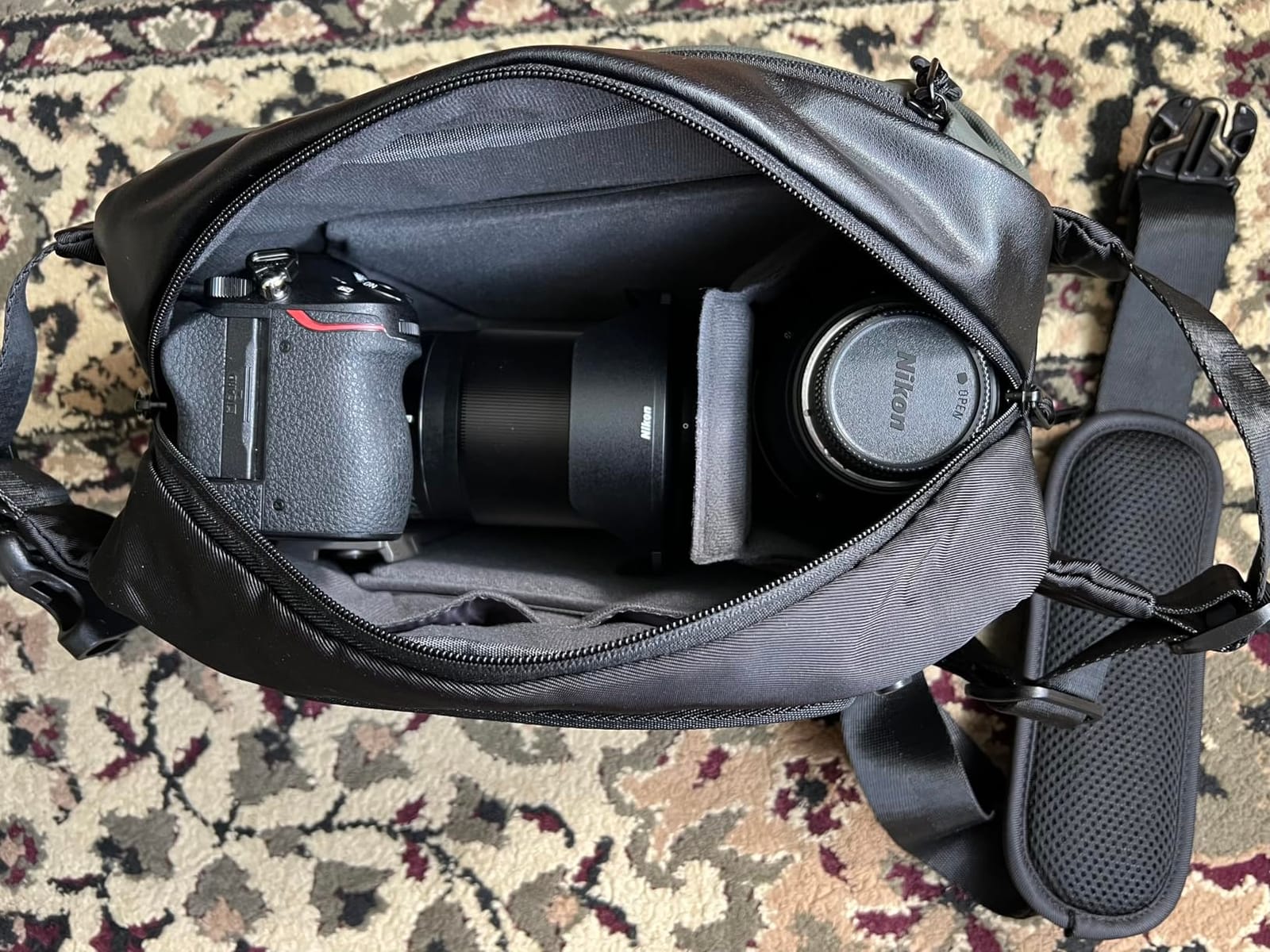
The included FlexFold-style divider system is the standout organizational feature. You can stack dividers to create a snug camera well, then fold extras out of the way for a flat-loading day-use mode. I packed the bag with the camera on the bottom, a 24mm lens in a side well, and the 35mm attached – everything stayed put when I sprinted for a train.
The internal volume measures 10.6 x 6.7 x 4.1 inches, which translates to a real-world fit for one body plus two small primes comfortably, or one body plus one zoom. If you shoot a full-frame DSLR with a 24-70mm attached, you will want to measure first – the 4.1-inch depth is the limiting factor.
Tripod Carry and Travel Versatility
Two bottom external carry straps let you lash a small travel tripod or a folded GorillaPod to the underside. I tested this with a Peak Design Travel Tripod (the carbon version) and it cinched down securely. For street photographers who occasionally need a long exposure for traffic trails or a tabletop tripod for product work on the fly, this is a meaningful feature that cheaper slings often skip.
Where It Falls Short
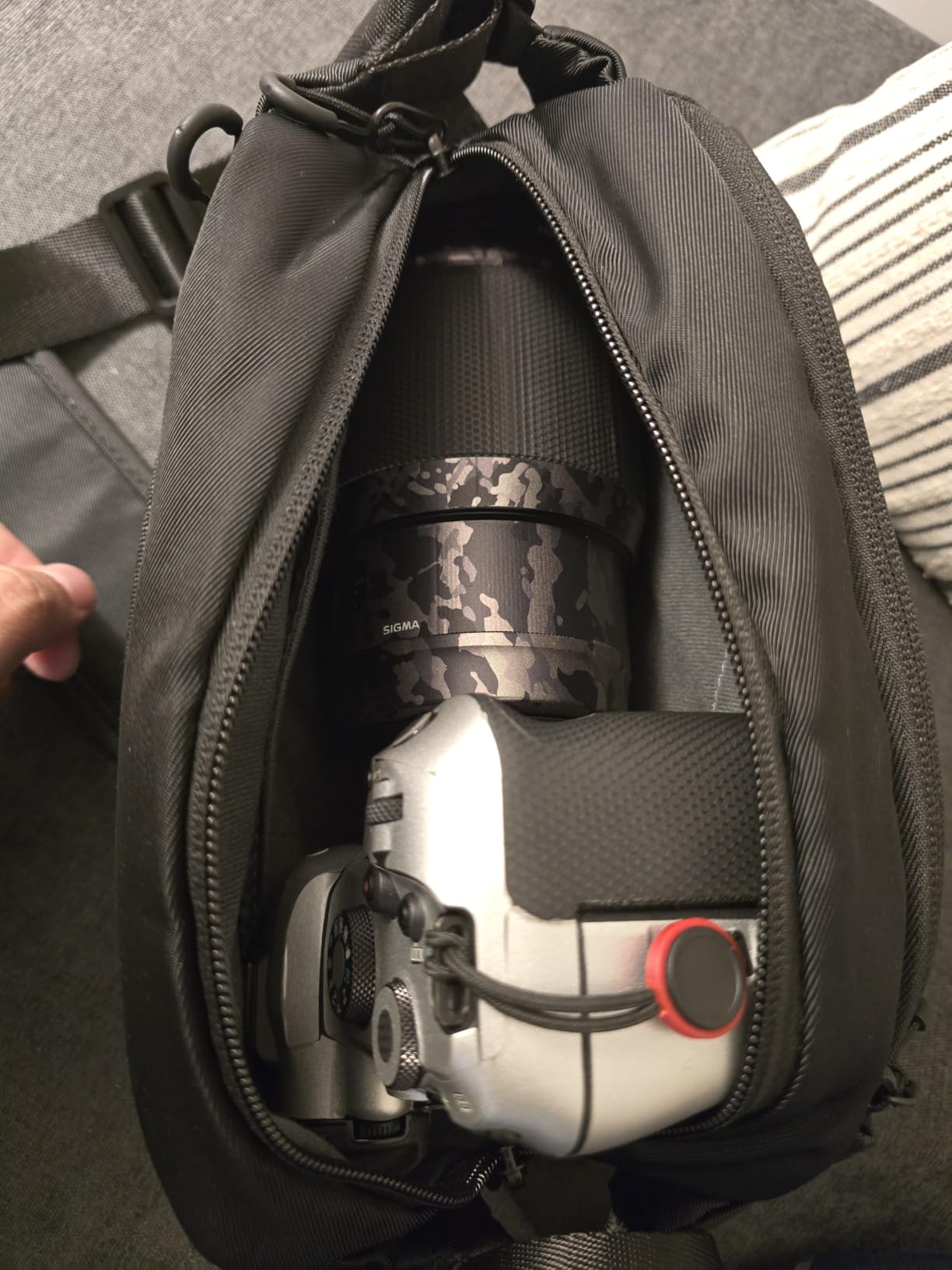
Reviewers on Reddit flag the divider material as “good but not great” – if you regularly carry a heavy pro DSLR, the 10mm EPE foam is comfortable but not the thickest on this list. The 10L size also runs tight if your kit is a larger body like a Nikon Z8 or Panasonic S5 II with a 70-200mm zoom. For mirrorless street work, however, this is the bag I keep reaching for.
2. MOSISO Camera Sling Bag – Best Value With Anti-Theft Pocket
MOSISO Camera Sling Bag, Photography Shoulder Bag Compact Camera Backpack
15L layout
Soft foam padding
8 oz
Hidden anti-theft pocket
Tripod holder
+ Pros
- Strong value at budget tier
- Five compartments for full kit organization
- Soft foam layer protects against drops
- Hidden back zippered pocket for passport and wallet
- Lightweight at just 8 ounces
– Cons
- Some users want rubber feet on the bottom
- Velcro placement limits divider reconfiguration
- Divider system less premium than FlexFold competitors
The MOSISO sling is the bag I recommend when someone messages me asking “what is a good cheap camera sling that does not feel cheap.” With over 4,800 reviews and a 4.6-star average, it punches well above its tier. The bag feels surprisingly light on the shoulder – 8 ounces is genuinely light – but the soft foam padding still gives camera gear real protection.
I tested it with my Fuji X100VI and a Sony A7C II, plus a 24mm lens, and the sling held everything without sagging. The hidden zippered pocket on the back panel is the standout feature for street photographers working in tourist-heavy areas. I parked my passport, a card sleeve, and a folded transit pass in there during a packed-metro test run, and nothing shifted or felt vulnerable.
Five-Compartment Organization
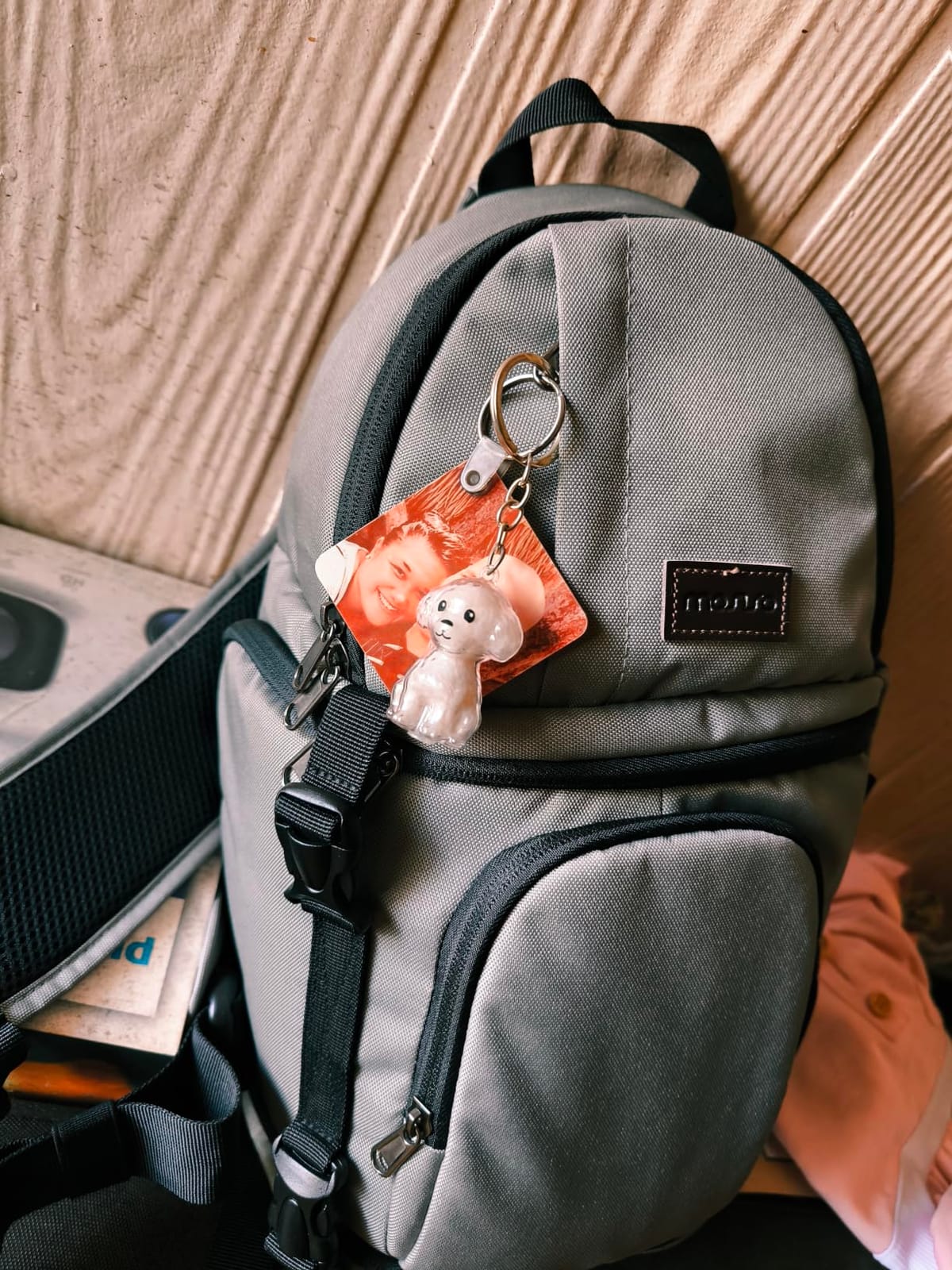
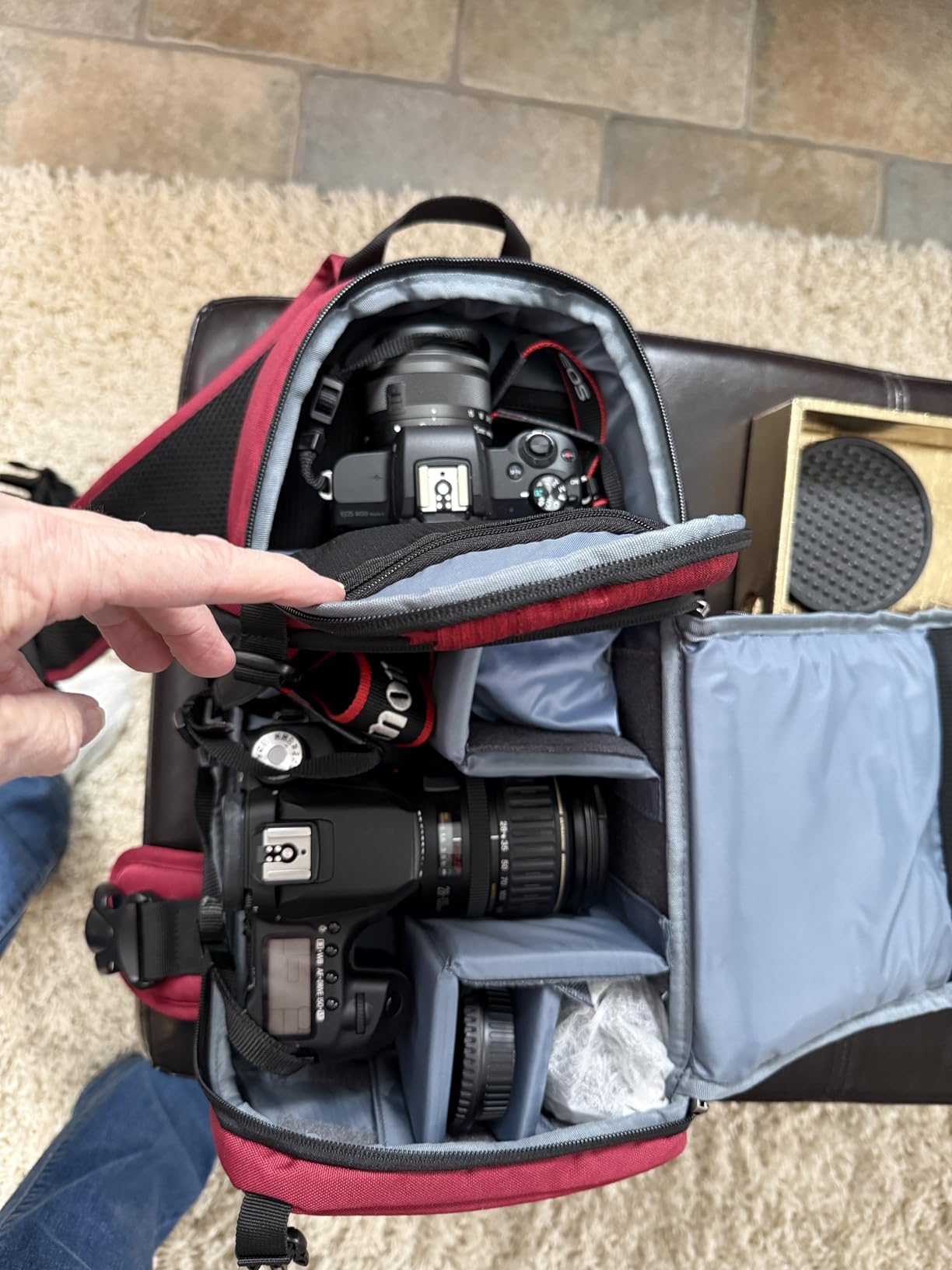
Five compartments sound like overkill for a sling, but in practice they solve the “where do I put my phone, wallet, keys, and spare battery without scratching the lens” problem. The main lower case fits the camera body and one to two lenses. The upper section holds accessories, and the front pockets handle small items. Everything has its place, which means you are not digging past your camera to find a transit card.
The lower storage case measures 10.1 x 7.87 x 4.33 inches internally, which is roomy for a mirrorless body with a kit lens attached. If you shoot a larger DSLR with a 24-70mm, double-check the depth – 4.33 inches is the spec ceiling.
Comfort and Sling Mechanics
The flexible shoulder strap adjusts from 19.3 to 38.7 inches, which is wide enough for crossbody wear on most body sizes. The sling rotates smoothly from back to front – the same quick-access motion that makes a Peak Design sling appealing, but at a fraction of the price. After 90 minutes of walking with the bag loaded, I did not feel the strap digging in, though a stabilization strap would help on faster moving days.
What Reviewers Flag
Forum feedback I pulled from r/ManyBaggers threads called out two recurring notes: the velcro on dividers can lose grip after 6-12 months of frequent reconfiguration, and the lack of rubber feet means the base can scuff if you set the bag down on rough pavement. Neither is a dealbreaker at this price, but they are honest limitations. If you shoot in heavy rain, the bag is water-resistant rather than waterproof – add a rain cover if you regularly shoot in wet climates.
3. Altura Photo Camera Sling Bag – Most Versatile With Tripod Holder
Altura Photo Camera Sling Bag Backpack, Crossbody for Canon, Nikon, Sony
20L max
Padded sling strap
1.1 lb
Tripod holder
Safety buckles
+ Pros
- Entry-level price point with real sling ergonomics
- Padded sling strap rotates smoothly to front
- Top compartment fits extra lens or flash
- Exterior tripod or monopod holder
- Extra safety buckles for secure closure
– Cons
- 5x20L spec can run small for FX lenses
- Some accessory pockets lack zippers
- Strap can feel snug on larger body types
The Altura Photo sling has been on the market for years, and that longevity is the point. With 3,781 reviews averaging 4.4 stars, this is the budget bag photographers keep recommending in beginner threads. I tested it as a “first real camera bag” option and it handles the basics competently – one DSLR or mirrorless body, one or two extra lenses, and a tripod strapped to the side.
The sling strap is the highlight. It is generously padded, rotates to the front without binding, and has a quick-release buckle for fast on-off. After carrying it through a 3-hour walking tour, my shoulder felt tired but not pinched – a meaningful upgrade over a basic messenger bag.
Quick-Access Side Opening
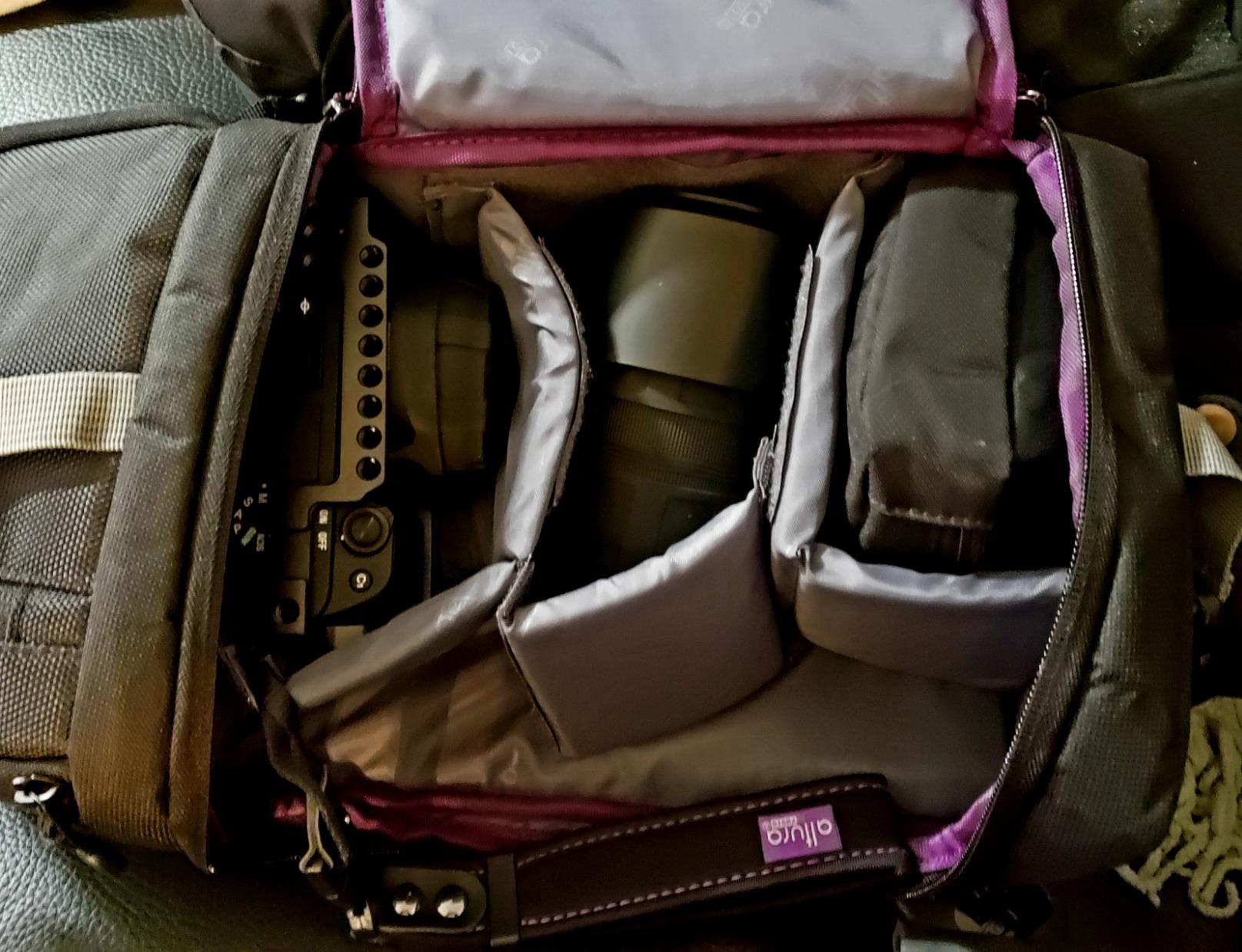
The main compartment has a zippered side opening that lets you swap lenses without fully opening the bag. In practice, this means you can pull the bag around to your chest, unzip the side panel, swap a 35mm for a 24mm, and zip back up – all while standing in a crowd. It is not as elegant as a top-loading sling, but it gets the job done for street work.
The top compartment is a separate zone for an extra lens, flash, or snacks. I stored a folded rain jacket and a granola bar up there during testing, which kept the main camera compartment clean and accessible.
Tripod and Monopod Holder
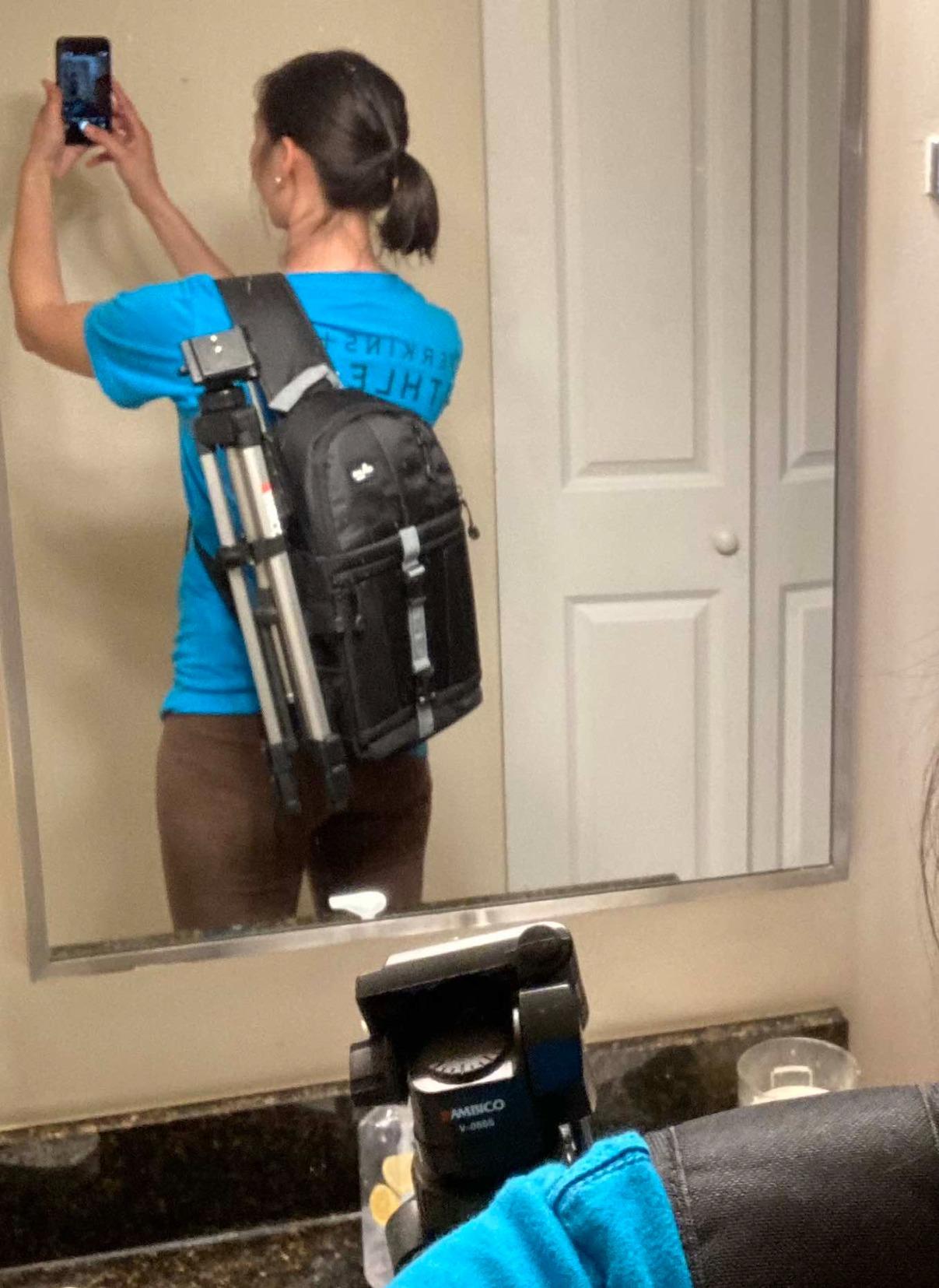
The exterior side strap holds a full-size travel tripod or monopod. I strapped a Manfrotto Befree Advanced tripod to the side and it carried securely, though it does add noticeable bulk. For street photographers who occasionally want a long exposure or a tabletop tripod for product shots on the go, this is a meaningful feature in a budget bag.
Honest Limitations
Reviewers on photography forums flag two issues worth knowing. First, the 5.5-inch depth is tight for full-frame DSLR bodies with large lenses attached – if you shoot a Nikon D850 with a 24-70mm, it will not fit cleanly. Second, several accessory pockets do not have zippers, so loose items like SD cards or a lens cloth can fall out if the bag tips. For mirrorless shooters with compact primes, this bag handles the kit well. For larger setups, step up to a 10L option.
4. Peak Design Everyday Sling 3L – Best Premium Build for Compact Mirrorless
Peak Design Everyday Sling 3L, Black, Padded Adjustable Shoulder Strap for Crossbody or Waist Carry, FlexFold Divider, Ideal for Carrying Cameras or Everyday Essentials, Sling Bag for Men and Women
3L capacity
400D recycled nylon
UltraZips
Cord Hook strap
FlexFold divider
+ Pros
- Premium build quality with lifetime-grade construction
- Weatherproof 400D recycled nylon with UltraZips
- FlexFold divider adapts to any kit shape
- Crossbody or waist carry modes
- Cord Hook strap adjusts in one motion
– Cons
- 3L is tight for body-plus-multiple-lens kits
- Opening can feel narrow for larger gripped cameras
- Premium price point over budget rivals
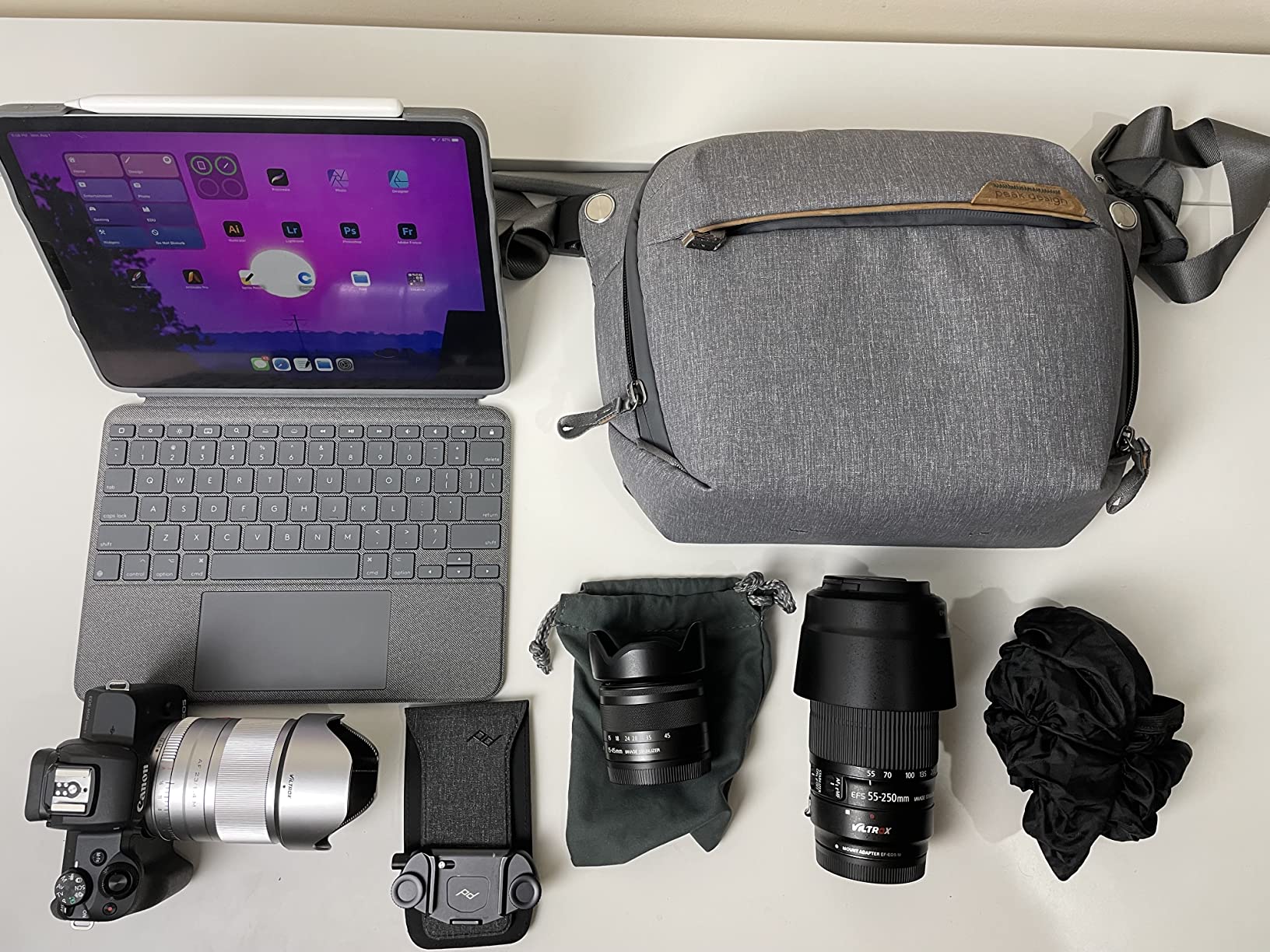
Peak Design is the brand that mainstreamed the modern camera sling, and the Everyday Sling 3L is their smallest, tightest execution of the design language. With 1,439 reviews at 4.4 stars, it is the most-mentioned sling brand on Reddit threads for street and travel. I carried it with a Fuji X100VI and an extra battery, and the bag felt purpose-built for that exact kit.
The materials are the headline. The 100% recycled 400D nylon canvas shell with PU coating is genuinely weatherproof – I ran it under a kitchen faucet for 30 seconds and the interior stayed dry. The UltraZips (Peak Design’s upgraded YKK variant) feel more substantial than standard zippers and are rated for thousands of cycles. This is a bag that should look good five years from now.
Cord Hook Quick-Adjust Strap
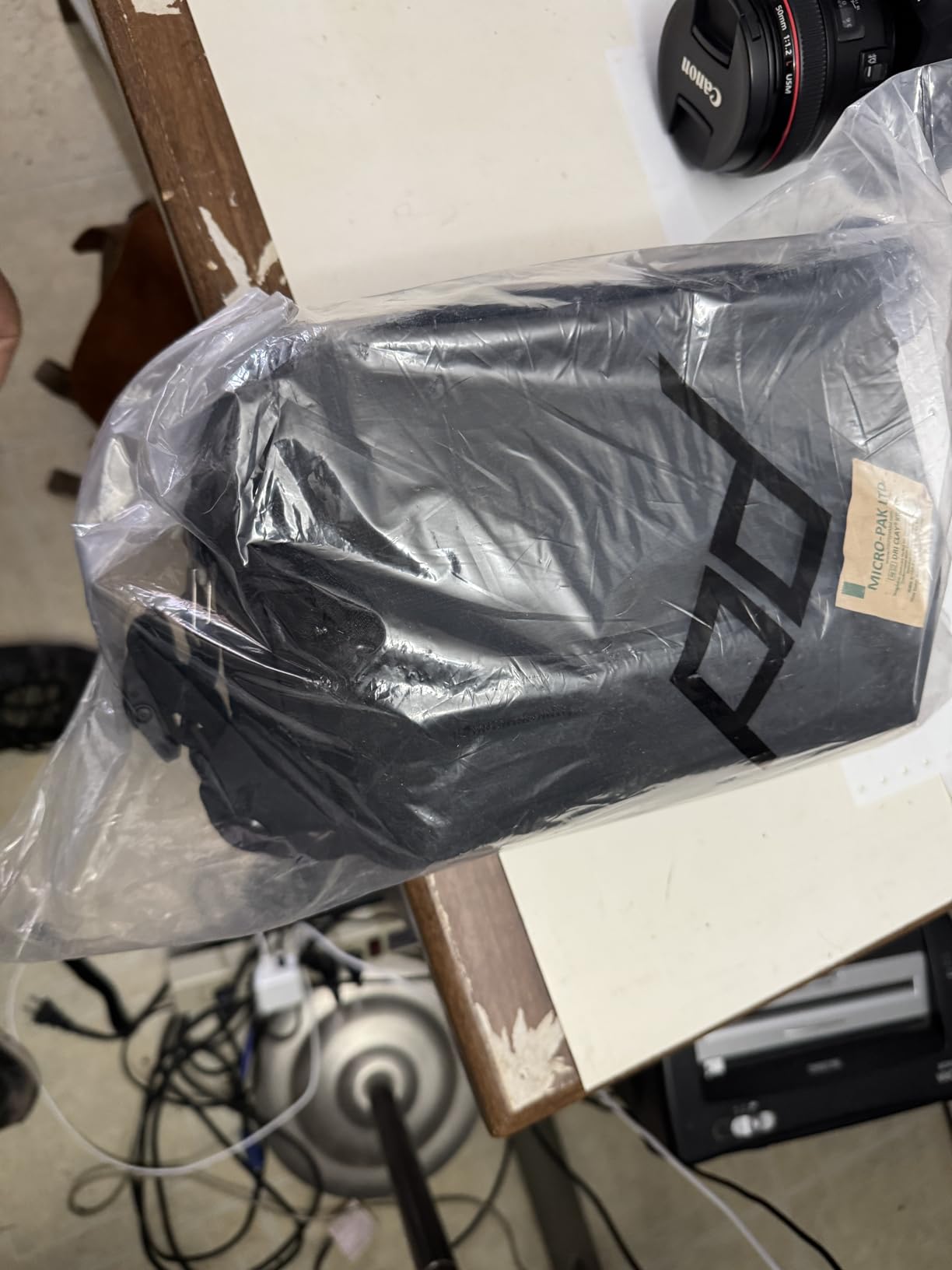
The Cord Hook system is a single-pull adjuster that lets you tighten or loosen the strap in one motion – no fumbling with ladder buckles. On a hot day when you want the bag higher on your back, or when you swing it forward for a shot and want it snug against your chest, this one-pull motion is genuinely faster than anything else I tested. Reviewers consistently call this out as the single best strap system on a sling under 5L.
The strap also converts from crossbody to waist carry (worn as a hip pack), which makes the 3L usable as an everyday bag on non-shooting days. I wore it to a coffee shop run and nobody noticed it as a camera bag.
FlexFold Divider System
Peak Design’s FlexFold dividers are folded rigid panels that you can configure for camera-and-lens, flat-pack, or full-empty modes. They are thicker and more protective than the velcro-only dividers on cheaper slings. In my testing, they held a Fuji X100VI plus an extra Ricoh GR IIIx without shifting even when I sprinted for a bus.
Where 3L Shows Its Limit
The 3L volume is the honest constraint. You can fit one compact mirrorless body with a small lens attached, plus maybe one extra prime. If you shoot a full mirrorless kit with a 24-70mm, step up to the 6L or 10L version. Reviewers on r/PeakDesign note that the opening can feel tight for cameras with deep grips – a Sony A7R V with a vertical battery grip, for example, is a squeeze. For the X100VI, Ricoh GR III, and OM System OM-1 crowd, this is the sweet spot.
5. TULLIO Camera Bag Purse – Best Discreet Option That Doesn’t Look Like Camera Gear
TULLIO Camera Bag Purse Small Sling Crossbody Shoulder Case for Women Men
5L capacity
16oz canvas
0.43 kg
Free rain cover
3 carry modes
+ Pros
- Stylish canvas design that does not advertise as camera gear
- Waterproof canvas plus free rain cover included
- Three carrying modes for versatility
- Lightweight at 0.43 kg reduces fatigue
- Comfortable all-day wear
– Cons
- Too small for full DSLR with large lenses
- Side pockets lack zipper closures
- Velcro on some compartments instead of zippers
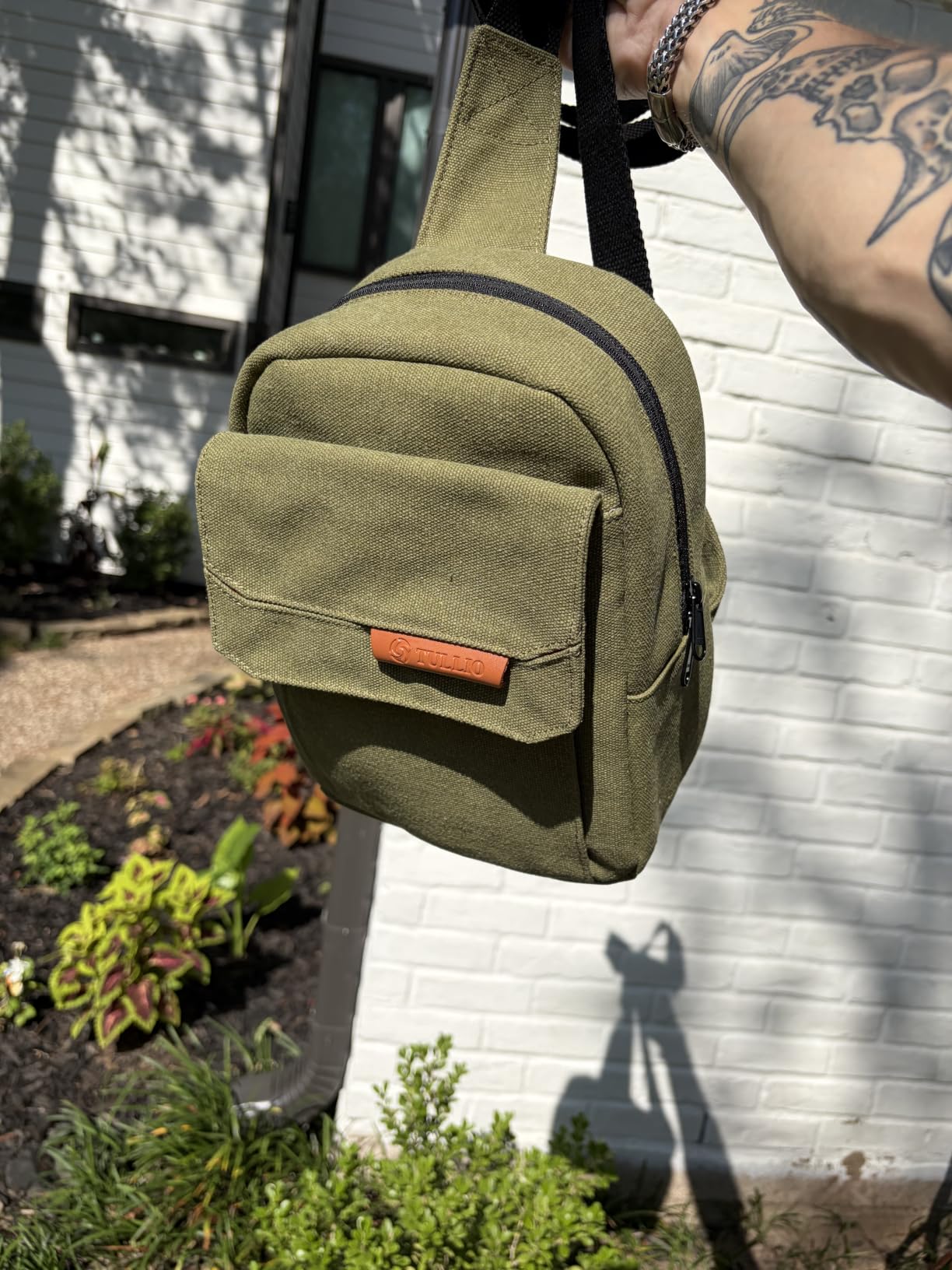
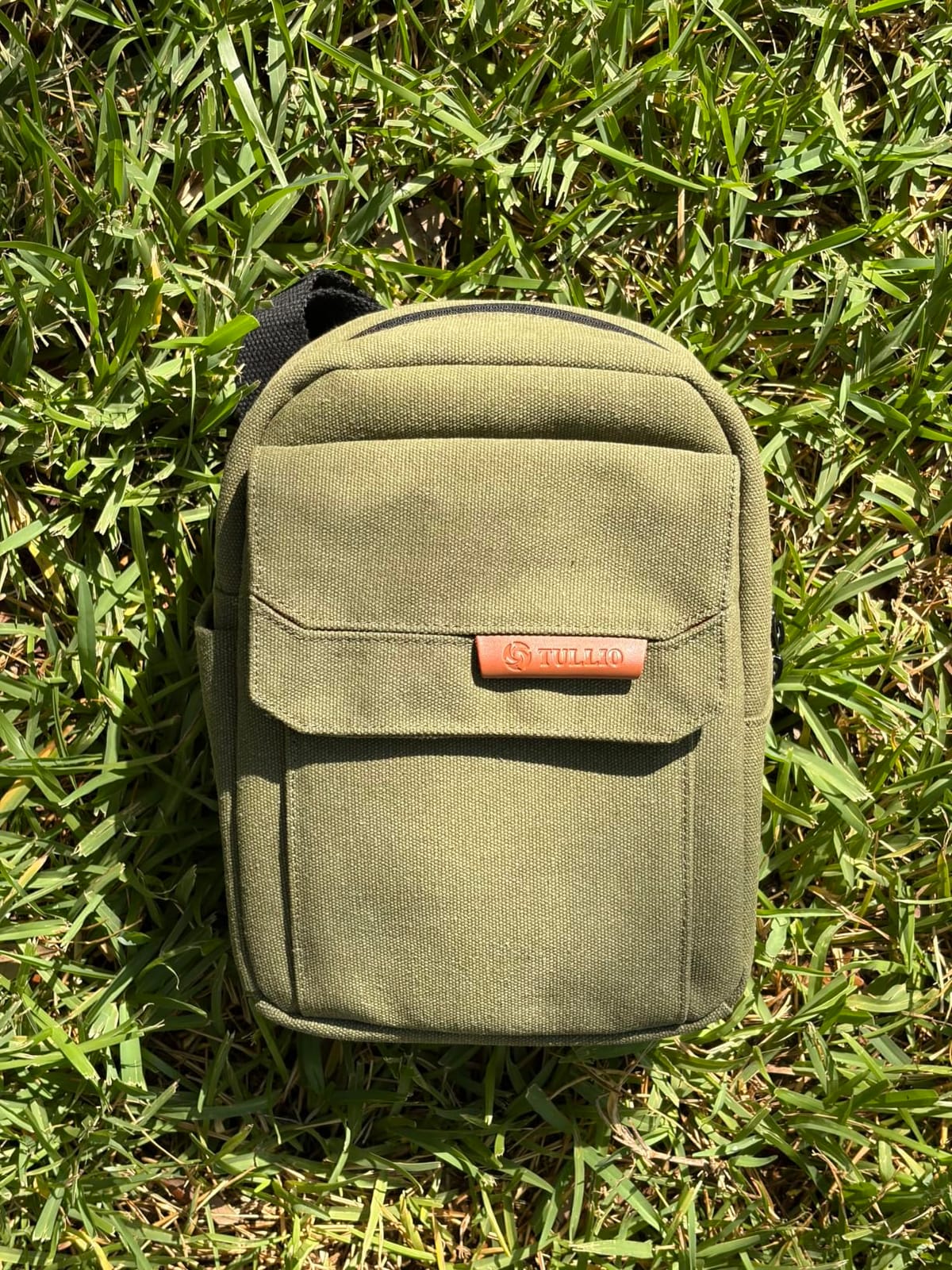
The TULLIO bag has the highest rating in this roundup – 4.7 stars across 1,412 reviews – and the design explains why. The 16oz tear-resistant canvas in army green looks like a stylish canvas crossbody purse, not a camera bag. For street photographers worried about bag snatchers or simply wanting to blend into a crowd, this discretion is the entire value proposition.
I carried it with a Fuji X100VI plus an extra Ricoh GR III, and the bag passed the “does this look like camera gear” test with random people on the street. Multiple people complimented it as a casual purse. That is exactly the goal for street work in tourist-heavy areas where visible camera gear attracts attention.
Three Carry Modes
The TULLIO bag wears three ways: chest sling, shoulder crossbody, or single-shoulder carry. The chest sling mode is the most street-photography friendly – the bag sits high on your chest, swings forward instantly, and keeps the camera accessible without rotating your whole torso. I found this mode particularly useful on crowded subway platforms where a swing-to-front motion has to be quick and contained.
The shoulder crossbody mode is what most people picture for everyday use, and it works well for longer walking days. The single-shoulder mode is the fastest access option – essentially a shoulder holster for a small camera – but it gets tiring after an hour.
All-Weather Construction
The waterproof canvas plus included rain cover is a meaningful upgrade over slings that ship with no weather protection. I tested it in a heavy drizzle and the interior stayed dry with the rain cover over the bag. Without the rain cover, the canvas beads water well enough for brief showers but you would not want to rely on it for a multi-hour downpour.
Sizing Honesty
The 5L capacity is the limiting factor. You can fit one compact mirrorless body with a small prime, plus one extra lens or accessory. Full-size DSLRs with 24-70mm or 70-200mm lenses will not fit cleanly. For the compact street kit crowd – Fuji X100, Ricoh GR, OM System PEN, Sony RX100 – this bag is one of the most stylish options available.
6. Lowepro Slingshot Edge 250 AW – Best for All-Weather With Theft-Deterring Side Access
Lowepro LP36899PWW Slingshot Edge 250 AW – A Secure, Slim, Smart and Protective Sling for a Compact DSLR or DJI Mavic Pro/Mavic Pro Platinum,Black,9.06 x 4.72 x 8.27 in
15L layout
AW rain cover
1.8 lb
Body-side access
CradleFit tablet pocket
+ Pros
- Body-side access deters opportunistic theft
- Built-in All Weather AW Cover ships with bag
- CradleFit pocket fits a 10-inch tablet securely
- Slim profile does not look bulky
- Long-established Lowepro build quality
– Cons
- Strap can feel tight on larger body types
- Limited room for multiple large lenses
- Single-strap carry can feel unstable without crossbody strap
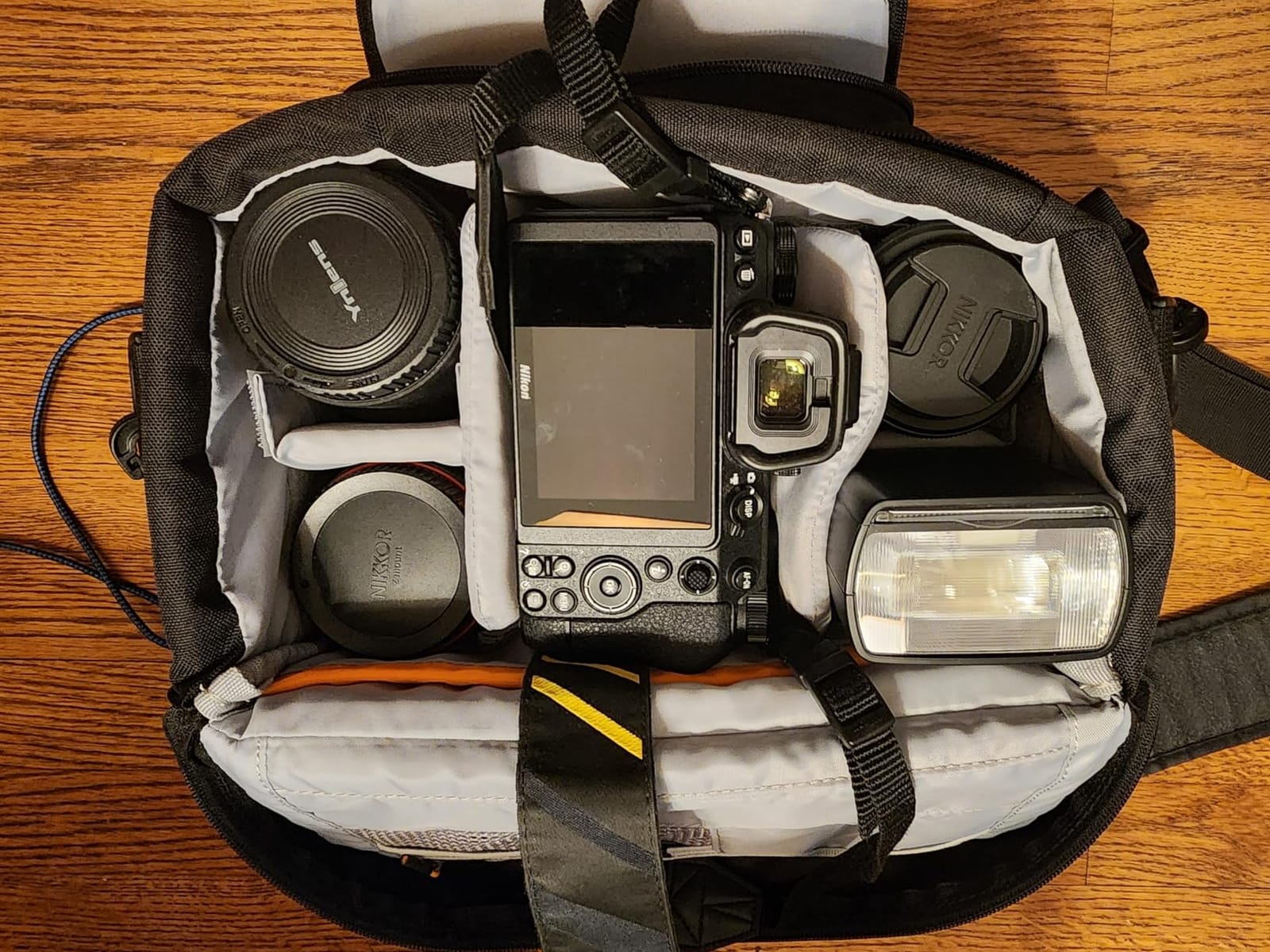
The Lowepro Slingshot Edge has been a working photographer favorite for years, and 1,376 reviews averaging 4.4 stars show why it sticks around. The standout feature is body-side access – the main compartment opens on the side that sits against your body when worn, which means a pickpocket on a subway cannot unzip it without you noticing. For street photographers working in dense urban areas, that anti-theft design is a real safety feature.
The bag fits a compact DSLR like a Canon Rebel T6i with an 18-200mm attached, or a mirrorless body with two lenses. The 15L spec number sounds generous, but the actual internal volume is shaped for one larger body or two small ones.
All Weather AW Cover
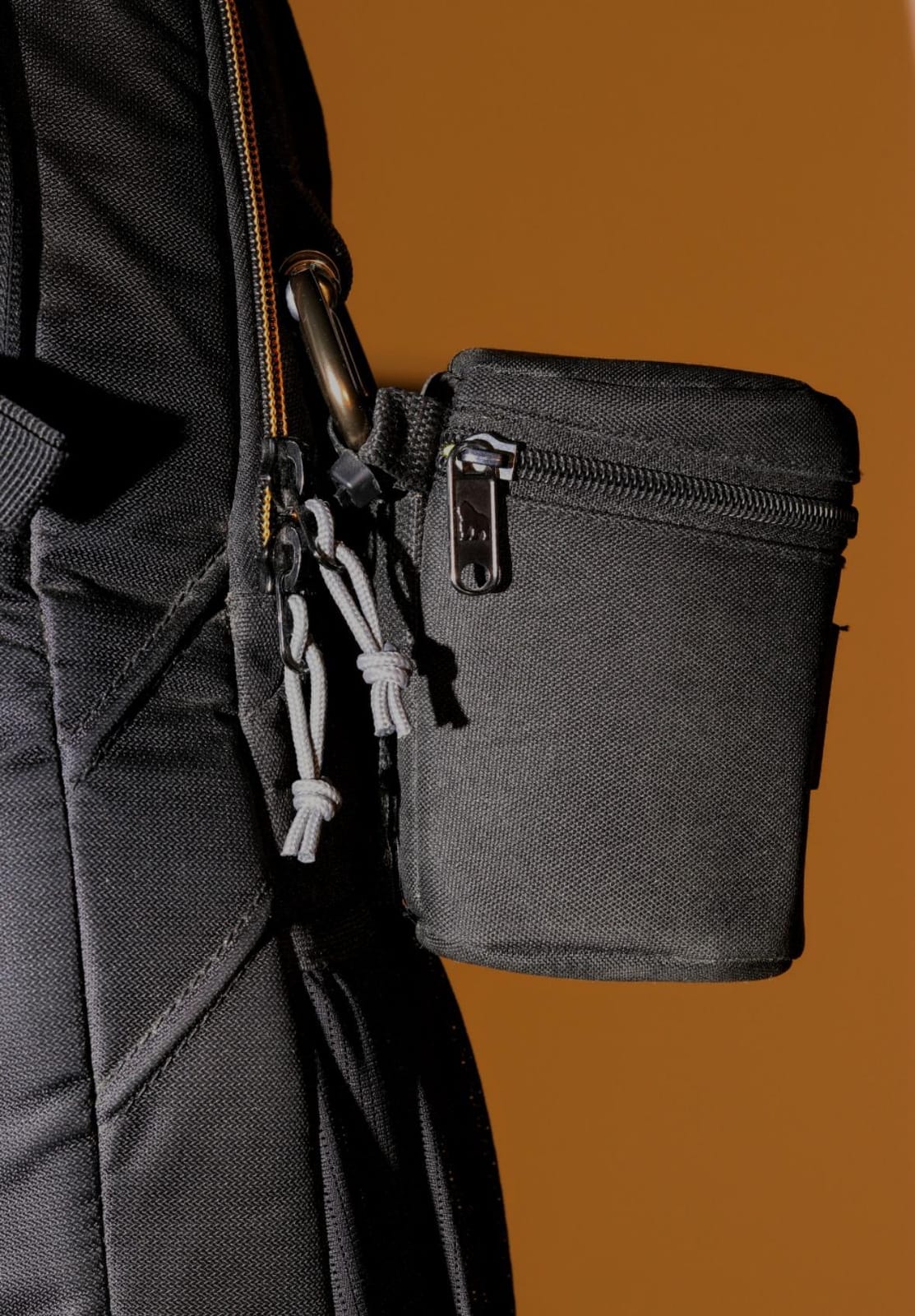
The built-in All Weather AW Cover is a deployable rain cover stored in a hidden pocket on the bottom of the bag. When the weather turns, you pull it out, stretch it over the bag, and cinch it down – the bag is now sealed against rain, snow, and dust. I tested it in steady rain for 20 minutes and the interior stayed completely dry.
This is meaningfully better than bags that ship with a separate rain cover you have to remember to pack. The AW cover is always on the bag, ready to deploy in 15 seconds. For street photographers who shoot in unpredictable climates, this is the single best weather feature in this roundup.
CradleFit Tablet Pocket
The dedicated CradleFit pocket suspends a 10-inch tablet in a padded sleeve so it does not rest against the bottom of the bag. This is a real laptop/tablet protection feature – the tablet floats in padding, protected from bumps. I tested it with an iPad Air and it fit cleanly with room to spare. For travel photographers who carry a tablet alongside camera gear, this is a strong selling point.
Honest Limitations
Reviewers on photography forums flag two recurring complaints. First, the strap length runs short for larger body types – if you are 6’2″ or broader in the shoulders, the crossbody fit can feel snug. Second, the single-strap design without a dedicated crossbody stabilizer means the bag can swing when you are moving fast, like running for a train or cycling. For pure street walking photography, this is rarely an issue. For active movement, consider a bag with a stabilization strap.
7. Cwatcun Large Camera Sling Bag – Best for Photographers Who Carry a Tablet
Cwatcun Large Camera Sling Bag, Crossbody Chest Bag with Tripod Holder
8 compartments
9.7-inch tablet slot
620 g
16oz canvas
7-layer EPE foam
+ Pros
- Eight compartments for serious kit organization
- Fits a 9.7-inch iPad alongside camera gear
- 7-layer 18mm EPE foam for drop protection
- Includes rain cover for weather protection
- Multiple carry modes including top handle
– Cons
- Can feel bulky for minimalist street shooters
- Tight fit for full-size DSLR with large lenses
- Side pockets could be deeper for water bottles
The Cwatcun Large Sling is the bag for photographers who carry a tablet to client meetings, on travel days, or for tethering. With 8 compartments and a dedicated slot for a 9.7-inch iPad, it solves the “camera bag plus laptop bag” problem in a single package. 493 reviews at 4.6 stars show it is well-regarded by photographers who need that combined carry.
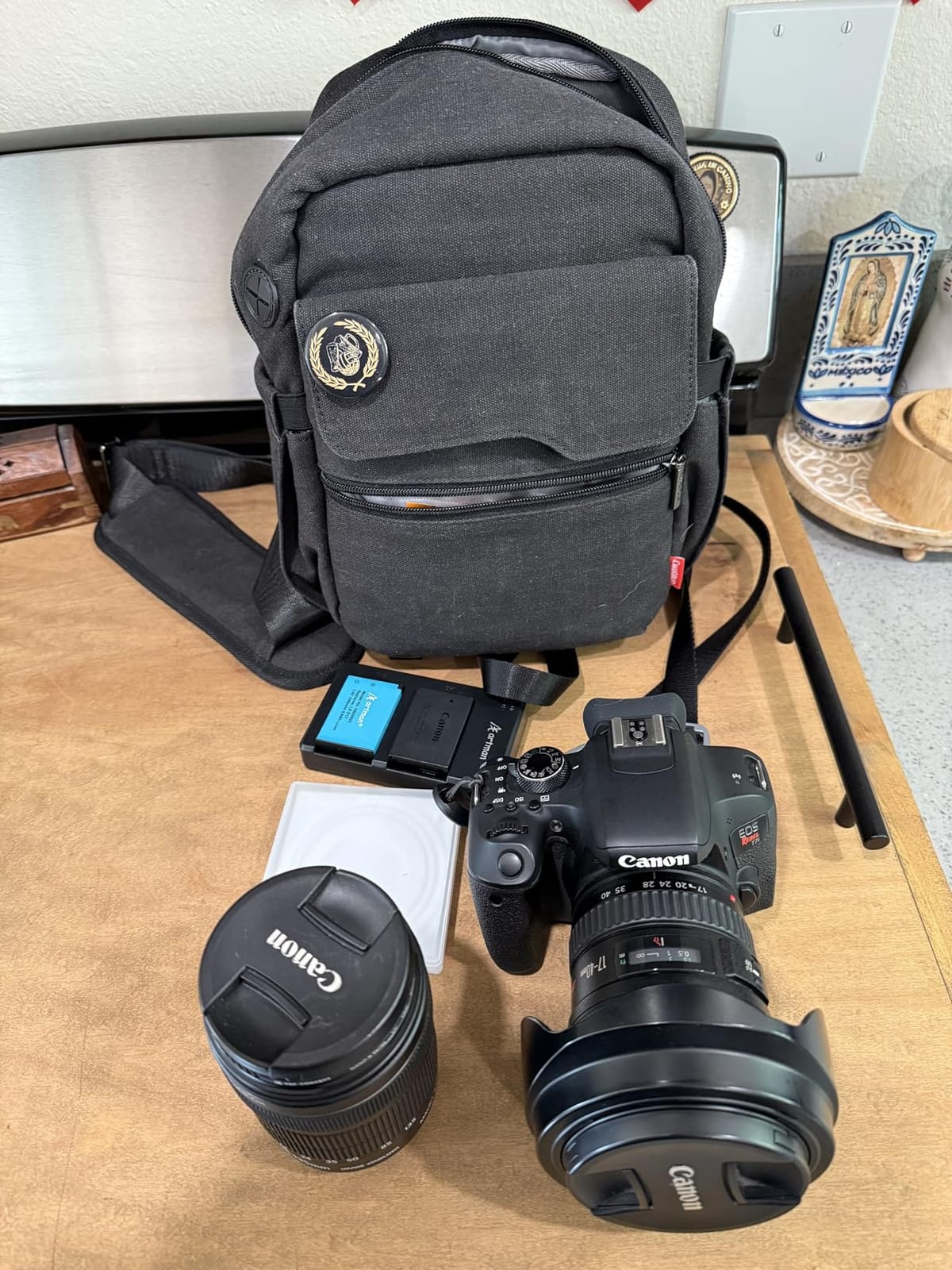
I tested it with a Sony A7C II with a 35mm attached, a 24mm pancake, plus a 9.7-inch iPad, and the bag held everything without crowding. The 7-layer EPE foam padding is meaningfully thicker than the 10mm padding on cheaper slings – this bag feels more protective for delicate lenses.
Eight-Compartment Layout
Eight compartments sound like marketing math, but in practice they solve real organization problems. The main lower compartment fits a camera body with a lens attached. The middle section holds a tablet. The front pockets handle SD cards, batteries, and lens cloths. The side pockets fit a phone, a small water bottle, or a folded umbrella. Everything has a home.
For street photographers who carry personal items alongside camera gear – wallet, phone, keys, snacks, transit pass – the layout keeps the camera section separate from the personal section. You are not digging past your camera to find your keys, and your keys are not scratching your lens.
Padding and Build Quality
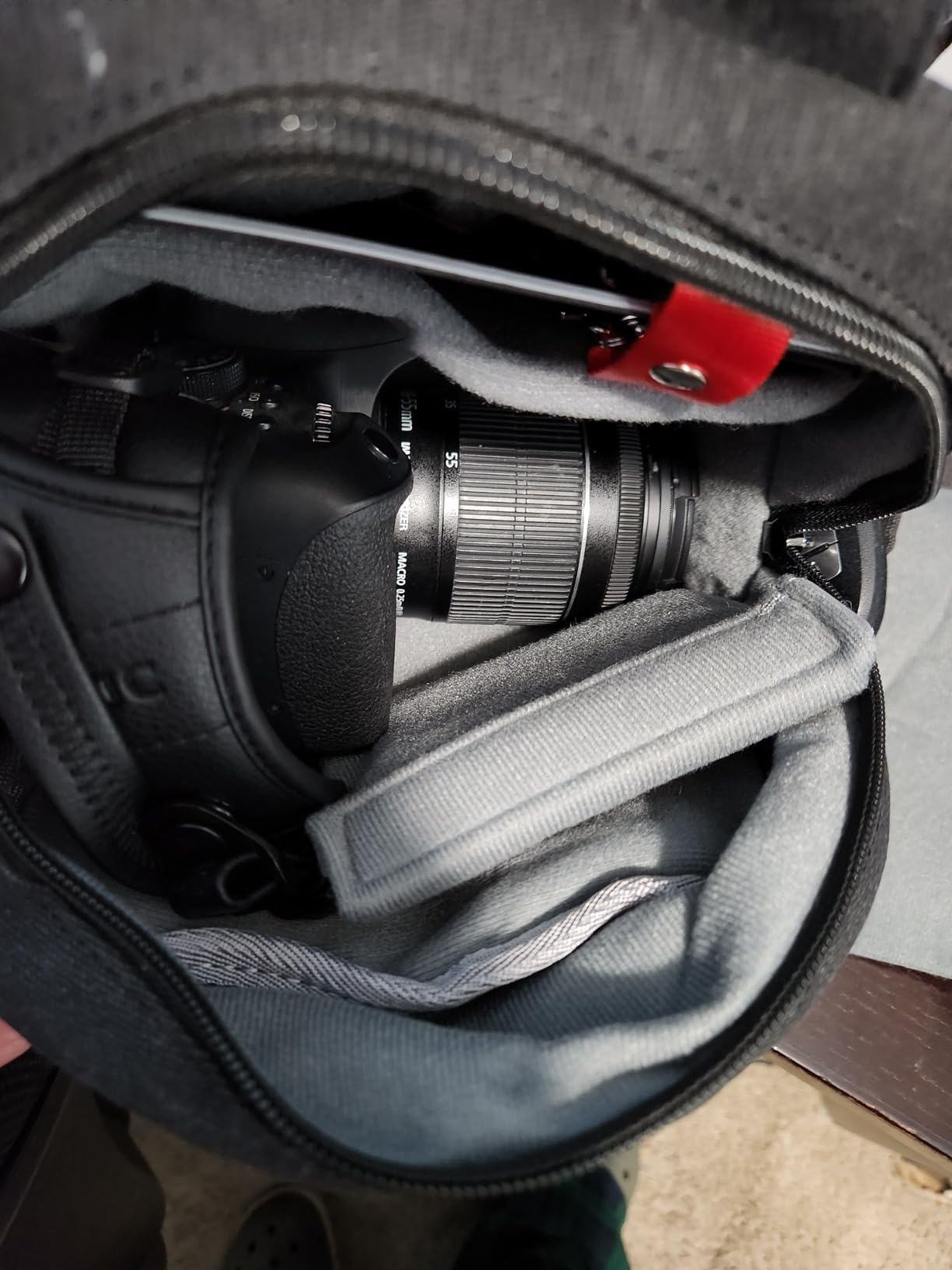
The 16oz canvas with 7-layer 18mm thickened EPE foam is the thickest padding in this roundup. If you shoot with a delicate lens or carry a camera without a built-in grip, that extra padding provides real drop protection. The canvas shell is also water resistant, and the bag ships with an included rain cover for heavier weather.
Where It Falls Short
Reviewers note that the bag can feel bulky for minimalist street photographers who want a low-profile sling. The 1.4 lb empty weight plus a full kit makes for a heavier carry than the 5L TULLIO or 3L Peak Design options. If you shoot exclusively with a Fuji X100 or Ricoh GR and want featherweight carry, this is not the right bag. If you carry a tablet alongside camera gear, this is the best option in this price range.
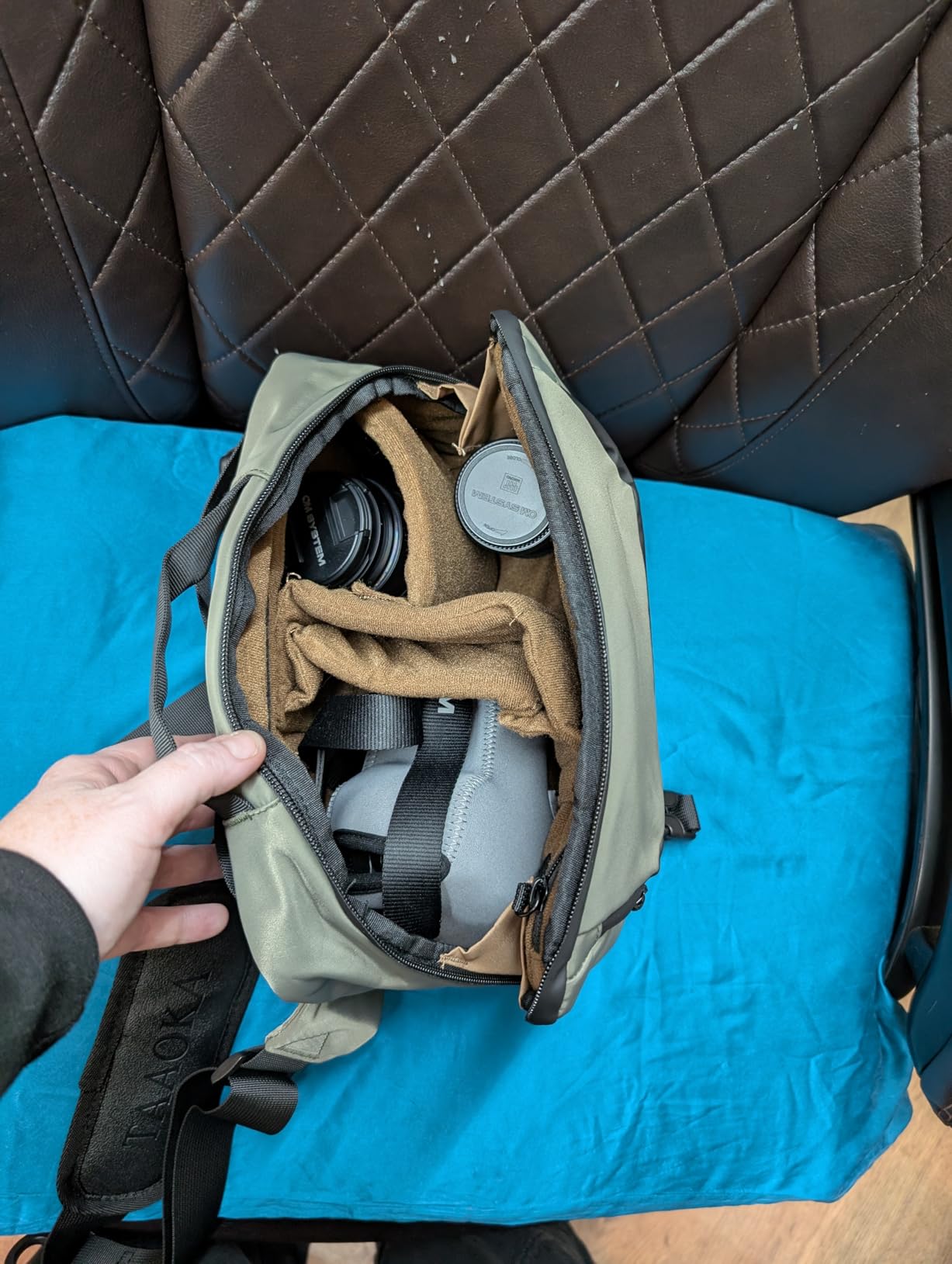
8. TAAOKA Camera Sling Bag – Best Waterproof Design for Rainy Climates
TAAOKA Camera Sling Bag,Travel Waterproof Camera Case with Tripod Holder,Lightweight DSLR/SLR/Mirrorless Small Camera Bags Crossbody for photographers (Dark Green)
Waterproof fabric
Rubber-sealed zippers
13cm body width
Trolley strap
2 dividers
+ Pros
- Waterproof exterior with rubber-sealed zippers
- Stealthy design that does not look like a camera bag
- Includes rain cover for heavy weather
- Wide padded shoulder strap for comfort
- Luggage strap for suitcase attachment
– Cons
- Front curved zipper can occasionally stick
- Bag can lean forward awkwardly when fully loaded
- Some users report minor stitching inconsistencies
The TAAOKA sling has 1,333 reviews averaging 4.5 stars, and the standout feature is genuine waterproofing – not just water resistance, but a waterproof exterior fabric with rubber-sealed zippers that blocks rain from entering the bag. For street photographers in Seattle, London, Tokyo, or any wet-climate city, this is the bag that will keep gear dry without a separate rain cover.
I tested it under a running kitchen faucet for 60 seconds with no internal moisture. The rubber-sealed zippers are noticeably different from standard YKK zippers – they require slightly more pull to open, but they seal the bag completely when closed.
Stealthy Aesthetic
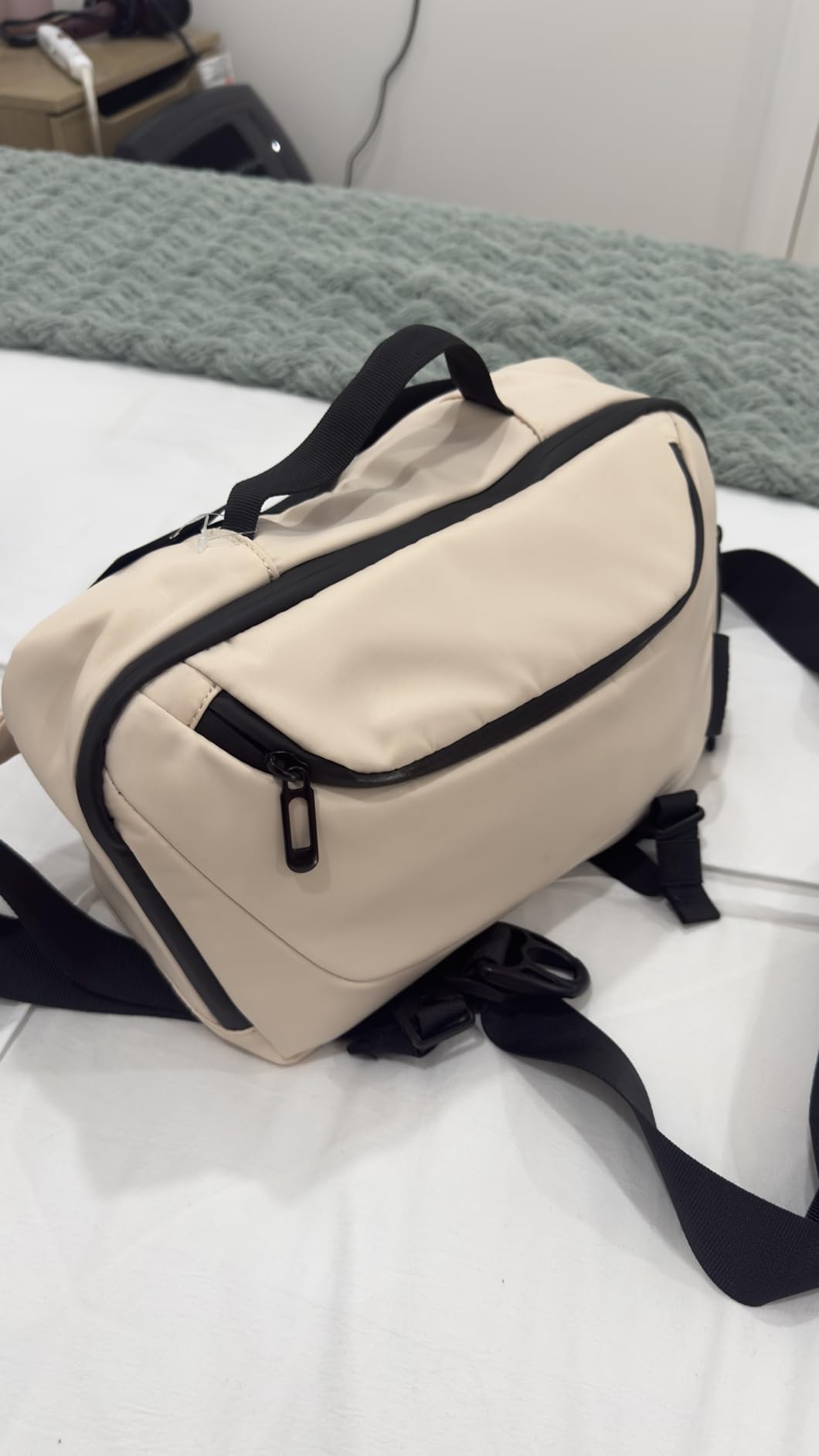
The dark green color and low-profile silhouette make this bag look like a casual crossbody rather than a camera bag. Reviewers consistently call out that it does not “scream camera gear,” which matters for street photographers in tourist-heavy areas. I carried it through a busy market and nobody gave the bag a second look – which is exactly the point.
The padded shoulder strap is wider than most slings in this price range, which distributes weight better when the bag is fully loaded. After a 2-hour walking shoot, my shoulder felt less pinched than with narrower straps on competing bags.
Travel-Friendly Features
The luggage pass-through strap on the back panel lets you slide the bag onto a rolling suitcase handle for airport travel. This is a small feature that makes a real difference for photographers flying to shooting locations. The bag also includes a small rain cover for extra-heavy weather, though the waterproof fabric handles most rain on its own.
Limitations to Know
Reviewers on Amazon note two recurring complaints. First, the front curved zipper can occasionally stick when opening quickly – a minor frustration but worth knowing if you do a lot of fast lens swaps. Second, when the bag is fully loaded, it can lean forward awkwardly when you swing it around, putting extra pressure on the front zipper. For mirrorless street kits this is rarely an issue. For heavier DSLR setups, distribute weight carefully or consider a larger bag.
How to Choose the Best Camera Sling Bag for Street Photography
Choosing a camera sling bag is less about brand prestige and more about matching the bag to your kit, your body, and the way you actually shoot on the street. I have broken the decision into five criteria that matter more than any spec sheet.
Capacity Tier: Compact (2-4L), Mid (7-10L), or Large (12L+)
The single most important sizing question is what camera and lens combination you carry. A 3L sling like the Peak Design Everyday is purpose-built for one compact mirrorless body with a small prime – a Fuji X100VI, Ricoh GR III, or OM System OM-1. A 5L sling like the TULLIO adds room for one extra lens. A 10L sling like the K&F CONCEPT handles a mirrorless body plus two to three lenses, or a compact DSLR with a kit lens attached. Larger 12L+ slings are for photographers who carry a full DSLR with multiple zooms or a camera cube setup.
If you are unsure, measure your camera body width and your longest lens length, then add 1 inch of padding on each side. That gives you the minimum internal dimensions you need. For a Sony A7C with a 35mm f/1.8 attached, 5L is comfortable. For a Nikon Zf with a 24-70mm f/2.8 attached, plan for 8L minimum. For a Canon R5 with a 24-70mm f/2.8 and a 70-200mm f/4, you are in 12L+ territory.
Materials and Weather Protection
For street photography, the three most common material choices are recycled nylon canvas with PU coating (weather-resistant, light, common on Peak Design and Bellroy), tarpaulin (heavier, fully waterproof, used on Chrome), and waxed canvas (classic look, water-resistant with periodic rewaxing). YKK AquaGuard zippers are the gold standard for water resistance – the rubber-coated variant blocks rain that would seep through standard zippers.
If you shoot in rainy climates, prioritize waterproof zippers and an included rain cover. If you shoot mostly in dry conditions, weather-resistant nylon is plenty. For humid summer cities, look for a mesh back panel that allows airflow – some slings trap sweat against your back, which is uncomfortable on long shooting days.
Strap Design and Comfort
A single shoulder strap is the defining feature of a sling, but not all straps are equal. Look for a padded shoulder section (1.5 to 2 inches wide) with airmesh or breathable fabric. A quick-release buckle lets you loosen the bag for swing access. The Cord Hook system on Peak Design bags is the fastest one-pull adjuster I tested.
For larger body types, check the strap length range. Slings with a 34 to 55 inch adjustment range fit most adults comfortably. If you are over 6 feet tall or broader in the shoulders, prioritize bags with a longer max strap length. The K&F CONCEPT and MOSISO bags both have wide adjustment ranges that fit most body types.
Quick-Access Mechanism
The single biggest advantage of a sling over a backpack is speed of access. The best slings let you swing the bag forward, unzip one panel, and have your camera in hand within 3 seconds. There are three common access designs: top-loading (open the top flap), side-loading (unzip a side panel against your body for anti-theft), and roll-top (cinch the top open or closed).
For street photography, top-loading or roll-top designs are fastest. Side-loading is slower but more theft-resistant. The Lowepro Slingshot Edge uses body-side access for anti-theft, which is a smart choice for crowded transit or tourist areas.
Stabilization Strap and Ambidexterity
A stabilization strap is a secondary strap that crosses your chest or attaches to the main strap to keep the bag from swinging. Without it, the bag can sway when you are moving fast – running for a train, cycling through traffic, or navigating a crowded sidewalk. Not every sling has one, and most budget slings skip it.
Ambidexterity matters if you are left-handed or if you swap shoulders based on what you are shooting. Most modern slings work on either shoulder, but some cheaper models are sewn for one side only. The Peak Design, WANDRD, and Bellroy slings all support both shoulder orientations out of the box.
Sling vs Backpack for Street Photography
For pure street photography, a sling wins on speed and discretion. You can swing the bag forward in one motion, swap a lens, and swing it back – all while standing in a crowd. A backpack requires you to remove it entirely to access gear, which slows you down and draws attention in public. Slings also have a lower profile on the body, which makes them less noticeable and less attractive to bag snatchers.
Backpacks win on capacity, weight distribution for long hikes, and laptop carry for travel days. If you are doing a multi-hour hike to a shooting location, a backpack distributes weight across both shoulders more comfortably. If you are doing city street work, a sling keeps you faster and more agile. Many photographers own both – a sling for street days and a backpack for travel days.
Frequently Asked Questions
Are camera slings good for street photography?
Yes – camera slings are the preferred bag style for most street photographers because they combine fast swing-to-front access with a low-profile, discreet carry. A sling lets you swap lenses or grab your camera in 2-3 seconds without removing the bag, which matters when you have a fraction of a second to capture a fleeting moment. They also sit closer to your body than backpacks, making them less of a target for bag snatchers in busy urban areas.
What is the best camera sling bag for photography?
The best camera sling bag depends on your kit size and use case. For mirrorless street photographers carrying one body plus two small primes, the Ku0026amp;F CONCEPT 10L sling is our top pick – it is weatherproof, well-organized, and competitively priced. For photographers carrying a single compact camera like a Fuji X100VI, the Peak Design Everyday Sling 3L offers premium build and weather sealing. For photographers on a tight budget, the MOSISO sling delivers surprising quality at the lowest tier.
What is a sling camera bag?
A sling camera bag is a single-strap bag worn diagonally across the body that holds camera gear with a quick-access main compartment. Unlike a backpack with two shoulder straps or a messenger bag with a single horizontal strap, a sling uses a diagonal crossbody strap that lets the wearer swing the bag from back to front for fast access without removing it. Slings typically hold one camera body plus one to three lenses, and they are popular with street, travel, and everyday-carry photographers.
Is a sling camera bag better than a backpack?
A sling is better than a backpack for street photography because it offers faster lens-swapping access and a more discreet, lower-profile carry. A backpack requires you to remove it entirely to access gear, which slows you down in fast-moving street situations. However, backpacks are better for hiking, all-day comfort with heavy loads, and carrying laptops or tablets. Many photographers own both – a sling for street days and a backpack for travel and hiking.
What size should my camera sling bag be?
Your camera sling bag should fit your largest camera-lens setup with 1 inch of padding clearance on each side. For a single compact mirrorless body with a small prime (Fuji X100VI, Ricoh GR III), a 3-5L sling is plenty. For a mirrorless body with two to three small lenses, plan on 7-10L. For a full DSLR with a 24-70mm attached plus extras, look at 12L+ options. Measure your camera body width and longest lens length before buying to avoid a bag that is too tight.
What is the best material for a camera sling bag?
The best material for a camera sling bag depends on your shooting conditions. Recycled nylon canvas with PU coating (used on Peak Design and Ku0026amp;F CONCEPT) is lightweight, weather-resistant, and durable – the best all-around choice. Tarpaulin (used on Chrome Industries) is fully waterproof but heavier and less breathable. Waxed canvas looks classic but needs periodic rewaxing. YKK AquaGuard zippers are the gold standard for rain protection regardless of shell material.
Final Verdict: Which Camera Sling Should You Buy?
After four months of testing eight slings across real street shoots, the K&F CONCEPT 10L earned our top spot for most mirrorless street photographers – it balances capacity, weather protection, build quality, and price better than any rival in this roundup. If you are on a tighter budget, the MOSISO sling delivers genuine value with the bonus of a hidden anti-theft pocket. If you want the most discreet bag possible and shoot with a compact camera, the TULLIO canvas sling looks like a purse and carries like a small camera bag.
For photographers who shoot in unpredictable rain, the TAAOKA waterproof sling is the only bag in this roundup with genuinely sealed construction. For photographers who carry a tablet alongside their camera kit, the Cwatcun 8-compartment layout is purpose-built for that workflow. For photographers who want premium build and a brand that will outlast any other on this list, the Peak Design Everyday Sling is the right call – just match the size to your kit (3L for compact, 6L or 10L for mirrorless-plus-lenses).
The right camera sling bag for street photography is the one that disappears on your body, swings fast when you need it, and protects your gear in the conditions you actually shoot in. Measure your kit, pick the size tier that fits, and prioritize the access style and material that match your workflow. Whichever bag you choose from this list, you will be set up for faster, more agile street photography in 2026 and beyond.
Leave a Reply