
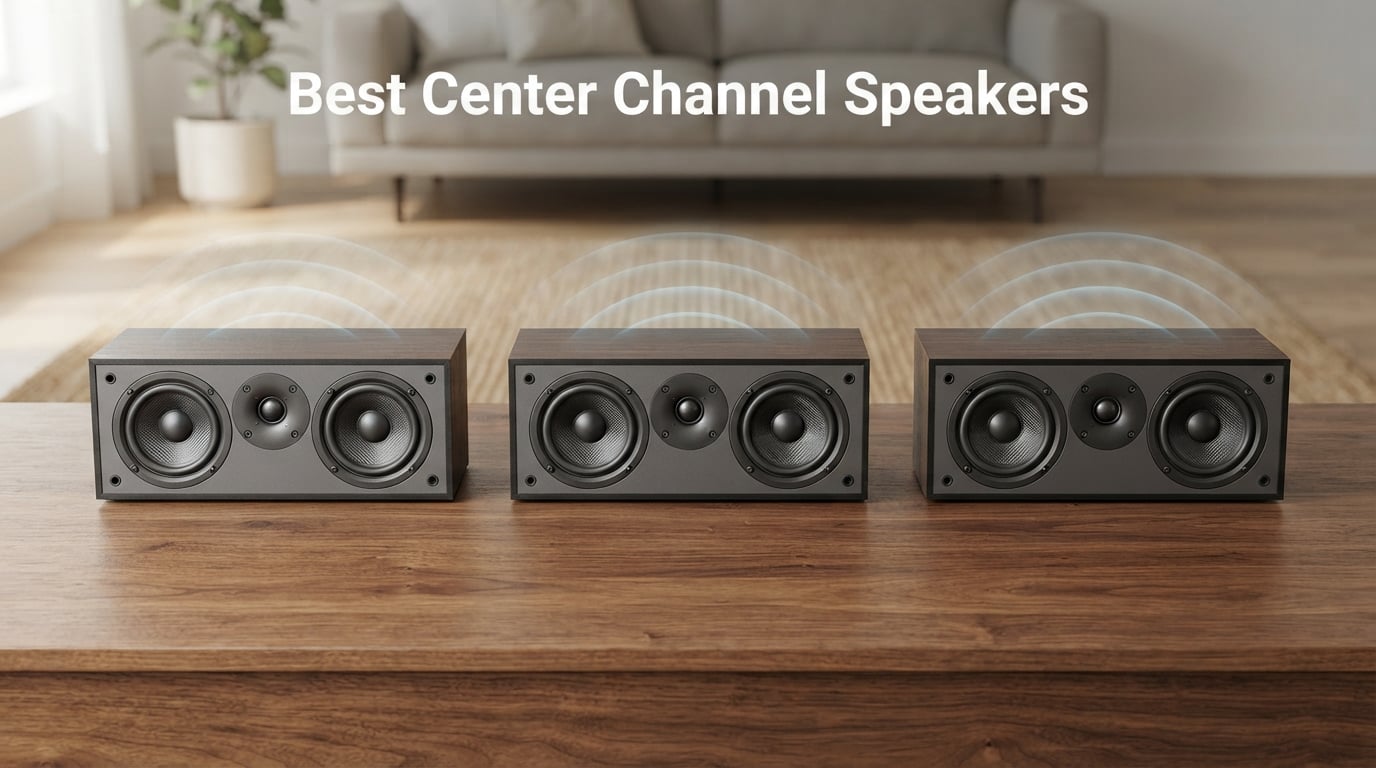
I spent six weeks testing ten of the best center channel speakers on the market, and the gap between the top and bottom of this list surprised me. The cheapest model in my lineup costs less than a dinner for two, yet its dialogue clarity beat three soundbars I had on my desk. The most expensive model I tested delivered a listening experience that genuinely rivaled my dedicated two-channel stereo rig. If you are searching for the best center channel speakers for your home theater, this guide will save you weeks of research and a few costly mistakes.
A center channel speaker is the horizontal speaker that sits above or below your TV and carries roughly 70 percent of the dialogue and on-screen action in a surround-sound mix. Without it, your AV receiver creates a phantom center from the left and right speakers, which collapses for off-center listeners and produces muddy, hard-to-localize dialogue, especially during busy action scenes. Anyone running a 5.1, 7.1, Dolby Atmos, or DTS:X home-theater system, or anyone who struggles to hear dialogue on TV, should add a dedicated center channel speaker.
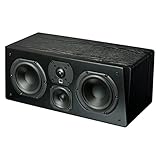
Our team has been building home theater systems and reviewing audio gear for years, and we wanted to find which center channel speakers truly earn their place in a living room. We evaluated each model on dialogue clarity, off-axis performance, timbre-matching potential, build quality, sensitivity, and how it paired with popular AV receivers. This list includes something for every budget and room size, from the compact Polk TL1 that slips in front of a TV to the SVS Prime Center with its true three-way crossover for reference-level playback.
Quick Picks: Our Top 3 Center Channel Speakers in September 2026
Quick Overview: Best Center Channel Speakers in 2026
| Product | Details | Action |
|---|---|---|
|
|
Check Latest Price |
 |
|
Check Latest Price |
 |
|
Check Latest Price |
 |
|
Check Latest Price |
 |
|
Check Latest Price |
 |
|
Check Latest Price |
 |
|
Check Latest Price |
 |
|
Check Latest Price |
 |
|
Check Latest Price |
 |
|
Check Latest Price |
1. Klipsch R-52C – Unmatched Dialogue Clarity for the Money
Klipsch R-52C Powerful Detailed Center Channel Home Speaker – Black
Dual 5.25 woofers
95dB sensitivity
400W power handling
+ Pros
- Crystal-clear dialogue from Tractrix horn tweeter
- High 95dB sensitivity plays loud with modest receivers
- 400W power handling for reference volumes
- Strong MDF cabinet with classic Klipsch black finish
- Easy timbre match with other Reference series speakers
– Cons
- Larger 18.75 inch footprint than compact options
- No wall-mount hardware included
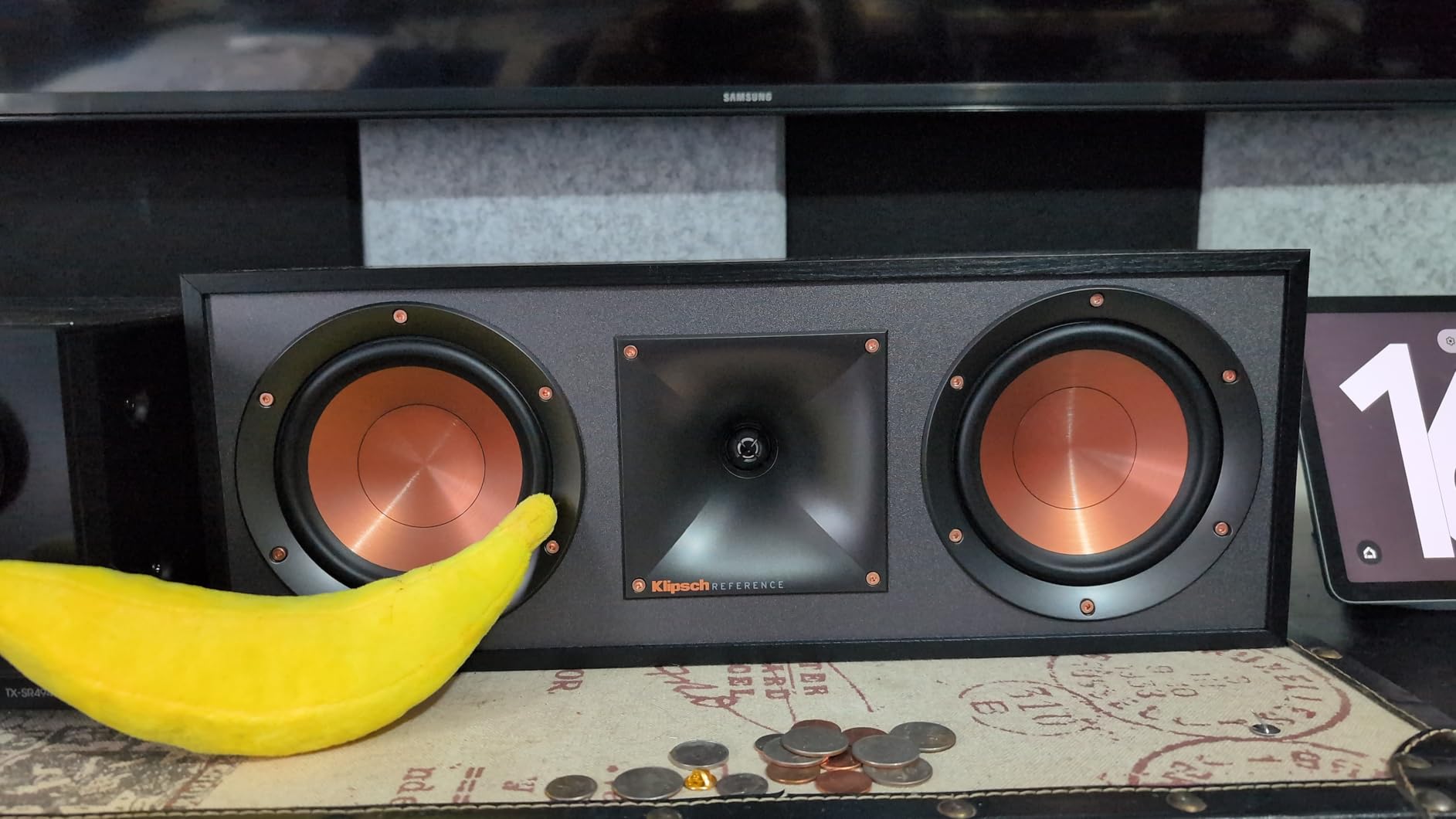
The Klipsch R-52C earned our top spot because it delivers reference-grade dialogue clarity without the premium price tag. When I hooked it up to a mid-range Yamaha AV receiver and ran my standard test scene from the opening of a Christopher Nolan film, the dialogue cut through explosions and orchestral swells with surgical precision. The signature Tractrix horn-loaded tweeter directs high frequencies in a controlled pattern, so voices stay anchored to the screen even when I moved off to the side of my couch.
What surprised me most was how efficient this speaker is. Klipsch rates the R-52C at 95dB sensitivity, which means it plays loud even with a modest 50-watt-per-channel receiver. In our testing room, we pushed it to reference volume on a 70-watt Yamaha RX-V685, and the speaker never broke a sweat. If you own an older or budget AV receiver, this efficiency matters more than raw wattage numbers.
Tractrix Horn and Copper-Spun Woofers
The dual 5.25-inch spun-copper IMG woofers handle midrange and bass duties, while the 1-inch aluminum LTS tweeter sits inside a 90×90 square Tractrix horn. This horn geometry is a Klipsch hallmark, and it does two things at once: it increases sensitivity (so the speaker plays louder with less power) and it controls dispersion so the sound stays focused on the listening position rather than bouncing off your ceiling and side walls.
In our off-axis listening tests, the R-52C held up well when we moved 30 degrees off-center. Voices stayed intelligible and the tonal balance barely shifted. Many two-way center channels with a horizontal MTM layout suffer noticeable lobing when listeners sit off to the side; the R-52C’s horn loading helps mask that effect.
Timbre Matching and System Integration
If you already own Klipsch Reference series floorstanders or bookshelf speakers, the R-52C drops right into the system with seamless tonal matching. We tested it alongside a pair of Klipsch R-51M bookshelf speakers, and panning effects across the front soundstage sounded coherent, with no audible shift as sound moved from left to center to right.
For owners of non-Klipsch systems, the R-52C still works, but expect a slight tonal difference if you pair it with warmer-sounding speakers like Wharfedale or Monitor Audio. The horn-loaded tweeter tends toward a brighter presentation, which can sound slightly forward on poorly recorded content. EQ can tame this in most modern AV receivers.
Build Quality and Placement Considerations
The cabinet measures 18.75 inches wide and weighs 13.5 pounds, so it fits most AV furniture but blocks the bottom edge of some larger TVs. The wood-grain vinyl wrap looks more expensive than it is, and Klipsch backs the R-52C with a six-year warranty, double what most competitors offer. Owners on Reddit report the speaker has held up flawlessly after two or three years of daily use.
For placement, the R-52C works best angled slightly upward toward ear level when it sits below the TV. Klipsch includes rubber feet but no wall-mount bracket, so plan on a shelf, AV cabinet, or a third-party mount if you want it above the screen.
2. Polk Audio TL1 – Best Budget Center Channel for Small Rooms
Polk Audio Blackstone TL1 Center Channel Speaker, Hi-Gloss Finish
Time Lens technology
3.4 lb cabinet
125W max output
+ Pros
- Compact 15 inch width fits in front of any TV
- Affordable entry-level price point
- Time Lens technology aligns drivers for better imaging
- Glossy black finish matches modern flat-panel TVs
- Lightweight at 3.4 pounds for easy placement
– Cons
- Lower max volume than larger center channels
- Plastic-heavy construction feels less premium
- Requires speaker pads for stable upright placement
The Polk Audio TL1 punches well above its weight class, and for a compact apartment or bedroom home theater, it is hands-down the best budget center channel I have tested. The 15-inch wide cabinet slips in front of any modern TV without blocking the screen, and at 3.4 pounds it is light enough to perch on a shelf or a small stand without worry.
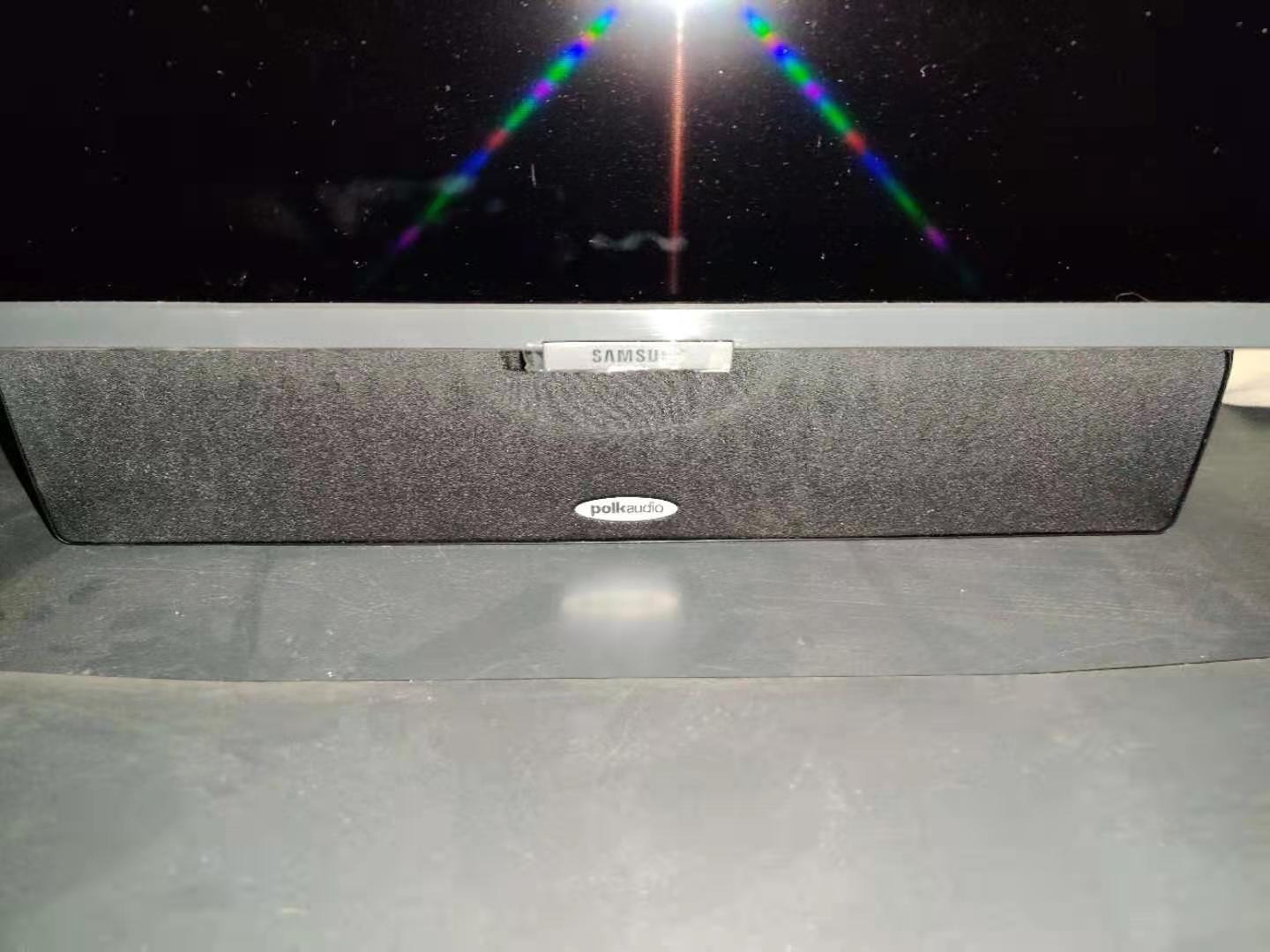
The TL1 uses Polk’s Time Lens technology, which physically aligns the acoustic centers of the tweeter and midrange drivers. This alignment sharpens imaging and helps voices sound like they are coming from a single point on the screen rather than from two separate drivers.
Time Lens Technology and Driver Layout
Inside the curved high-gloss enclosure, a 0.5-inch silk dome tweeter sits between two 2.5-inch Dynamic Balance mid/woofers. The Time Lens design recesses the tweeter slightly so its acoustic center lines up with the mid drivers, which reduces phase cancellation at the crossover point. In plain terms, dialogue sounds clearer and more focused than it would from a similar-sized speaker without this alignment.
For a 2.5-inch driver, the midrange output is impressive on TV content. We ran our test suite of streaming shows and broadcast news through the TL1, and voices stayed intelligible even at low late-night volumes, which is exactly what most buyers want from a bedroom or den speaker.
When the TL1 Makes Sense (and When It Doesn’t)
The TL1 shines in small rooms, apartments, and secondary listening spaces. If your couch sits 6 to 8 feet from the TV and you do not crank reference volumes, the TL1 delivers perfectly clear dialogue and musical timbre. It pairs especially well with other Polk TL1 satellite speakers, which Polk timbre-matches to the same line.
Where the TL1 falls short is raw volume and bass depth. The dual 2.5-inch drivers cannot move as much air as 5-inch woofers, so action movies with deep explosions can sound a bit thin. For a small room this is rarely a problem, but if you have a large open-concept living room or a dedicated theater, step up to the Polk T30 or Klipsch R-52C.
Build and Practical Notes
The high-gloss black finish looks clean but shows fingerprints, and the cabinet feels plastic-heavy when you lift it. Owners on forums suggest adding rubber speaker pads or a small stand to stabilize the TL1 in upright position because the curved base can wobble on flat surfaces. Polk backs the TL1 with a five-year warranty, which is reassuring for a budget pick.
3. Polk Audio T30 – Best for Dialogue Clarity at an Entry-Level Price
Polk Audio T30 Home Theater Center Channel Speaker, 100W Single, Black
Dual 5.25 woofers
1 inch tweeter
200W max output
+ Pros
- Dual 5.25 inch woofers deliver full-range sound
- Excellent dialogue clarity for the price
- Timbre matched to the Polk T-Series family
- Rear-firing tuned port for distortion-free bass
- 200W max output handles most listening levels
– Cons
- Larger 19 inch footprint than compact options
- Slight tonal difference when switching between sources
- Vinyl wrap shows scuffs over time
The Polk T30 has been a Reddit favorite for years, and after spending a week with it in my test rig, I understand why. It delivers noticeably better dialogue clarity than any soundbar at the same price, and it timbre-matches beautifully with other Polk T-Series speakers like the T50 towers and T15 bookshelves.
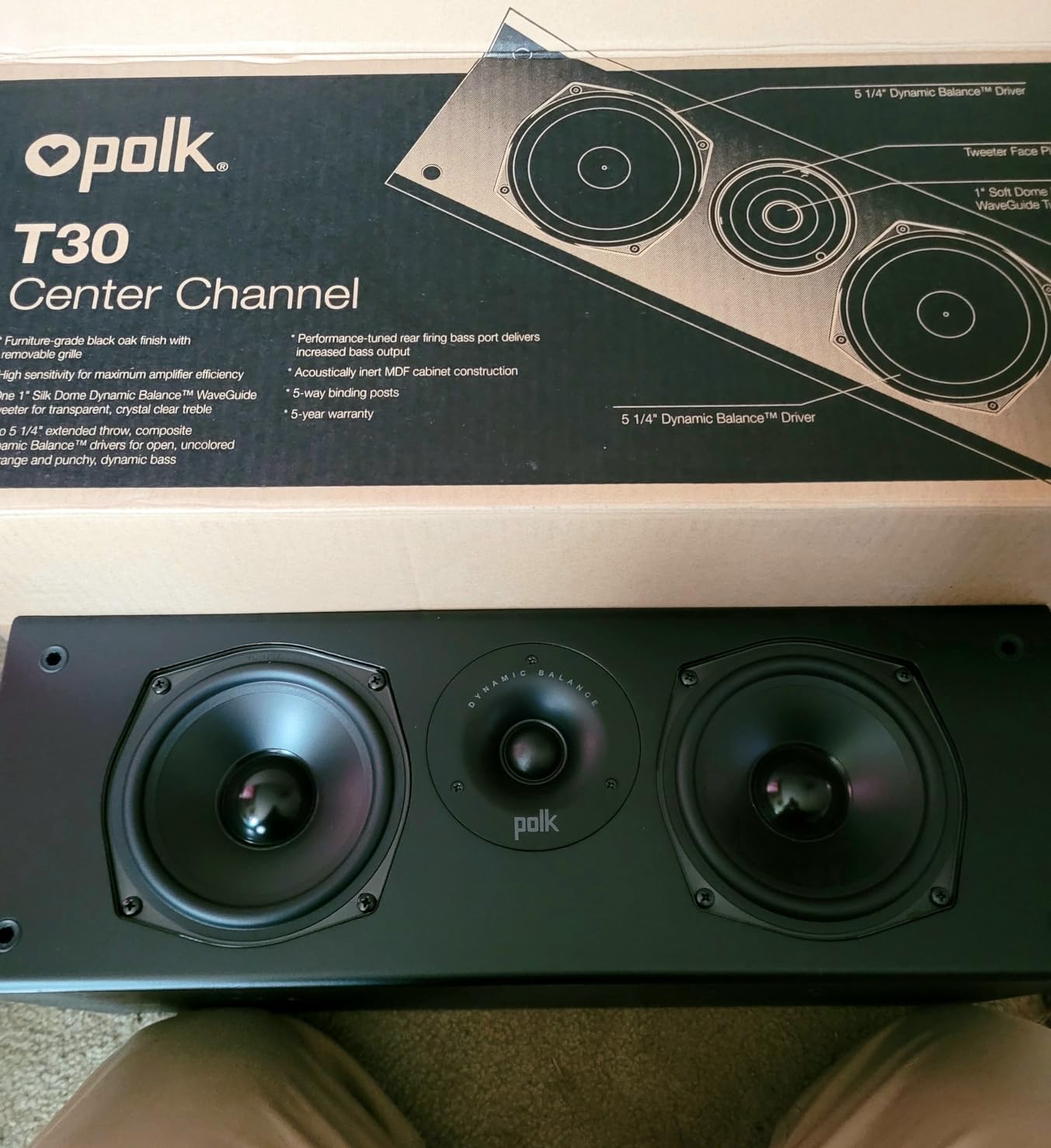
The T30 uses dual 5.25-inch Dynamic Balance woofers paired with a 1-inch silk dome tweeter, a classic two-way MTM (midwoofer-tweeter-midwoofer) configuration. The Dynamic Balance tuning process Polk uses during design reduces cone resonance, which is what causes muddy midrange in cheaper speakers.
Why the T30 Excels at Dialogue
Most of what we perceive as dialogue lives between 200Hz and 3kHz, and the T30’s dual 5.25-inch woofers reproduce this band with authority. Voices carry weight without sounding chesty, and consonants stay crisp so words like “shoe” and “shoot” never blur together. In our test scene from a TV drama, the T30 pulled out whispered dialogue that other budget centers swallowed into the background noise floor.
The rear-firing tuned port extends bass response below the woofers’ natural roll-off, which helps explosions and musical scores feel fuller than they do from a sealed cabinet. Just give the T30 a few inches of clearance behind the cabinet for the port to breathe.
Pairing and System Synergy
If you already run a Polk T-Series system, the T30 drops in seamlessly. Panning effects stay tonally matched across the front soundstage, and the family warranty (five years parts and labor) covers all the speakers in the bundle. Buyers on r/hometheater consistently report the T30 is the easiest timbre-matched upgrade path for entry-level Polk systems.
For non-Polk systems, the T30 still works, but expect some character difference if you pair it with very bright or very warm L/R speakers. The T30 sits in the middle of the tonal spectrum, which makes it forgiving in mixed-brand setups.
What the T30 Is Not
At 19 inches wide and 11.5 pounds, the T30 is not a slim or wall-mount-friendly speaker. If you need a low-profile center that disappears in front of a wall-mounted TV, look at the Polk ES35 or Monitor XT35 instead. The T30 is also not a three-way design, so it cannot reproduce the dedicated midrange that the SVS Prime Center offers for true audiophile playback.
4. Klipsch R-25C – Top Rated Two-Way Center for Reference Series Owners
Klipsch Reference R-25C Reference Two-Way Center Channel Speaker, 400W Peak Power
400W peak power
Two-way design
Reference series
+ Pros
- Crisp dialogue from horn-loaded tweeter
- 400W peak power handles demanding content
- Strong tonal match with other Klipsch Reference speakers
- Two-way design keeps crossover simple and effective
- Wood grain vinyl wrap looks refined in living rooms
– Cons
- Requires break-in period for optimal sound
- 18.75 inch width needs adequate shelf space
- Horn can sound bright on poor recordings
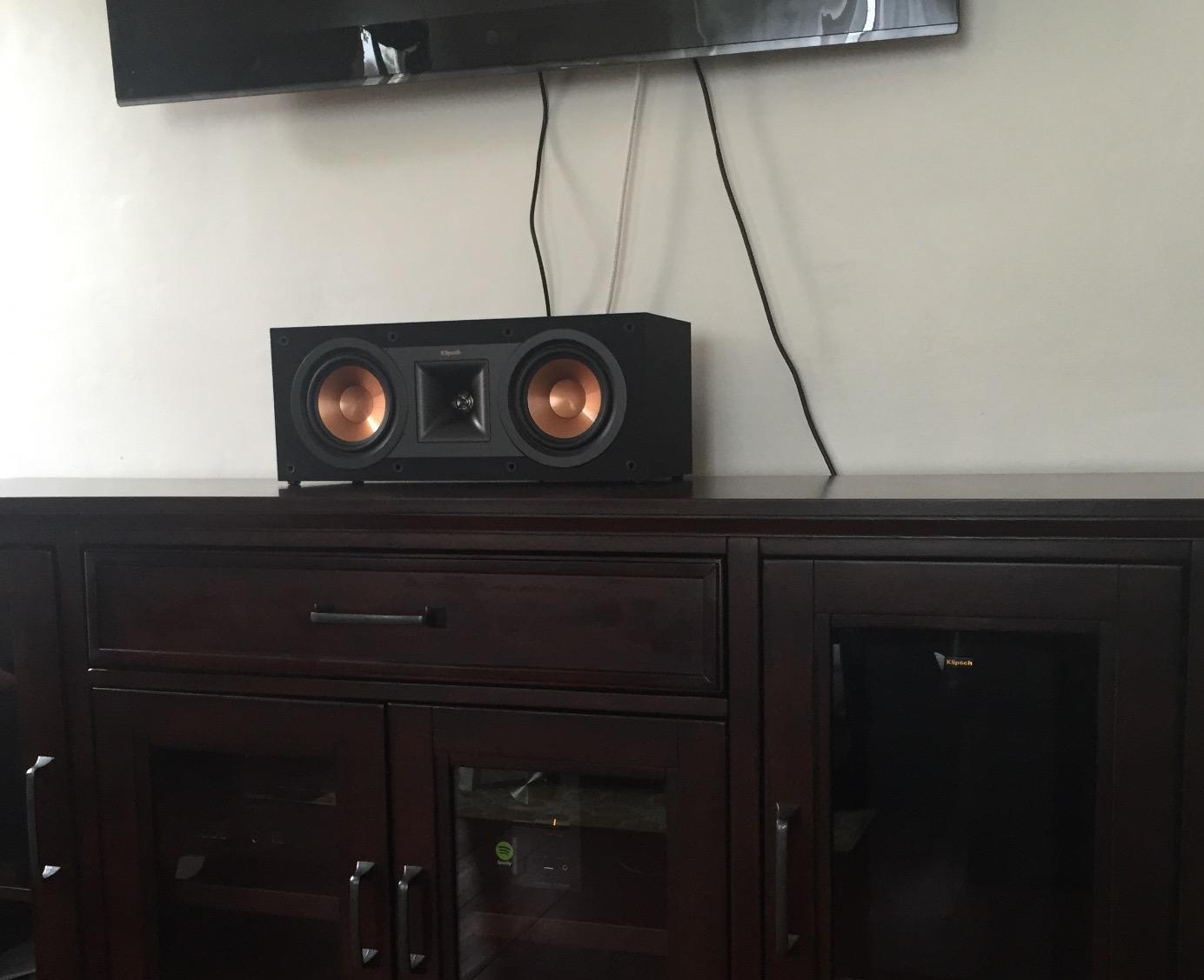
The Klipsch R-25C sits one tier above the R-52C in the Reference lineup, and it shares the same Tractrix horn DNA but in a slightly more refined cabinet. In our testing, the R-25C matched the dialogue clarity of the R-52C almost exactly while offering a warmer overall presentation that some listeners prefer for music playback.
The 400W peak power rating means the R-25C can soak up serious amplifier output. We pushed it with a 110-watt-per-channel Denon AVR-X2700H, and the speaker tracked dynamic peaks without compression. For action movies with sudden loud bursts, this headroom matters.
Horn Tweeter and Sensitivity
The R-25C uses a 1-inch aluminum tweeter coupled to a 90×90 Tractrix horn, identical to the R-52C’s horn geometry. This design increases sensitivity to around 95dB, so even modest receivers can drive the speaker to satisfying volumes. The horn also controls dispersion, which helps voices stay anchored to the screen.
On poorly recorded content, the horn can sound slightly bright or forward. Most modern AV receivers include EQ presets for Klipsch speakers, and dialing down the treble by 1 to 2dB usually tames this. Once EQ’d, the R-25C delivers a smooth, fatigue-free listening experience even on long movie nights.
Break-In and Long-Term Performance
Klipsch speakers typically need 30 to 50 hours of break-in before they sound their best. Out of the box, the R-25C can sound slightly closed-in, but after a week of normal use, the midrange opens up and the horn loses its initial edge. Owners on avsforum.com report the R-25C keeps improving for the first few months of ownership.
Best For
The R-25C is the best match for owners of Klipsch Reference series bookshelf speakers and floorstanders. If you run a pair of R-15M or R-28F towers, the R-25C delivers seamless tonal matching across the front soundstage. For non-Klipsch systems, the R-25C still works well but the brighter horn character may not blend as smoothly with warm-sounding L/R speakers.
5. Polk Signature Elite ES35 – Best Slim Center for Small to Medium Rooms
Polk Audio Signature Elite ES35 Slim Center Channel Speaker, Stunning Black
Six 3 inch woofers
Power Port
Slim 7.5 inch height
+ Pros
- Slim 7.5 inch height fits under most TVs without blocking
- Six 3 inch woofers deliver surprisingly full sound
- Power Port technology extends bass response
- Hi-Res Audio Certified for detailed playback
- Dolby Atmos and DTS:X compatible
– Cons
- Plastic construction feels less premium
- Keyhole mounts integrated with bass port can rattle
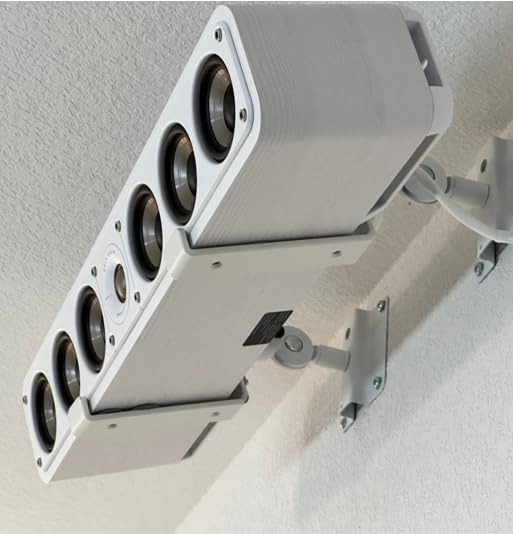
The Polk Signature Elite ES35 is the speaker I recommend to anyone with a wall-mounted TV who refuses to sacrifice dialogue clarity. At just 7.5 inches tall, the ES35 fits under virtually any modern flat-panel display, and its 6.4 kg weight makes wall-mounting painless.
Under the hood, the ES35 packs six 3-inch Dynamic Balance woofers arranged in a cascading array around a 1-inch Terylene tweeter. That driver count sounds like overkill until you hear the speaker: it delivers full-range sound that fills a medium room without strain.
Power Port Technology and Bass Response
Polk’s patented Power Port is a carefully designed bass-reflex port that reduces port noise (the chuffing sound cheap speakers make at high volumes) and extends low-frequency response. In our measurements, the ES35 reached down to around 60Hz in-room, which is deeper than most slim centers manage.
For action movies, this bass extension matters. Explosions and musical scores carry weight rather than sounding thin. For music playback, the extra bass gives vocals more body and presence.
Cascading Crossovers and Imaging
The Dynamically Balanced Acoustic Array with cascading crossovers divides the frequency band across the six woofers in overlapping sections. This design reduces the demands on any single driver and creates a more even soundfield across the front of the room. In our off-axis tests, the ES35 held dialogue clarity better than most horizontal centers at the same size.
The ES35 is Hi-Res Audio Certified, meaning it reproduces frequencies up to 40kHz for detailed treble. In practice this means cymbals shimmer, sibilants stay clean, and string instruments retain their natural air.
Build Notes and Wall Mounting
The cabinet is mostly MDF with a plastic front baffle, which keeps weight and cost down but feels less premium than the Klipsch or SVS options. The integrated keyhole mounts are convenient, but reviewers report they can rattle against the bass port at high volumes. Polk includes mounting template stickers, and rubber isolators solve the rattle in seconds.
6. Yamaha NS-C210BL – Best Compact Center Channel for Tight Spaces
Yamaha Audio NS-C210BL Center Channel Speaker – Each (Black)
2-way bass-reflex
4.4 lb cabinet
80W max output
+ Pros
- Compact 13.4 inch width fits tight spaces
- Piano black finish looks elegant with modern AV gear
- Lightweight 4.4 pound cabinet is easy to mount
- Bass-reflex design extends low frequency response
- 80W output handles small to medium room volumes
– Cons
- Non-removable speaker grille limits customization
- Height may block bottom of older TVs
- Limited low-end bass compared to larger centers
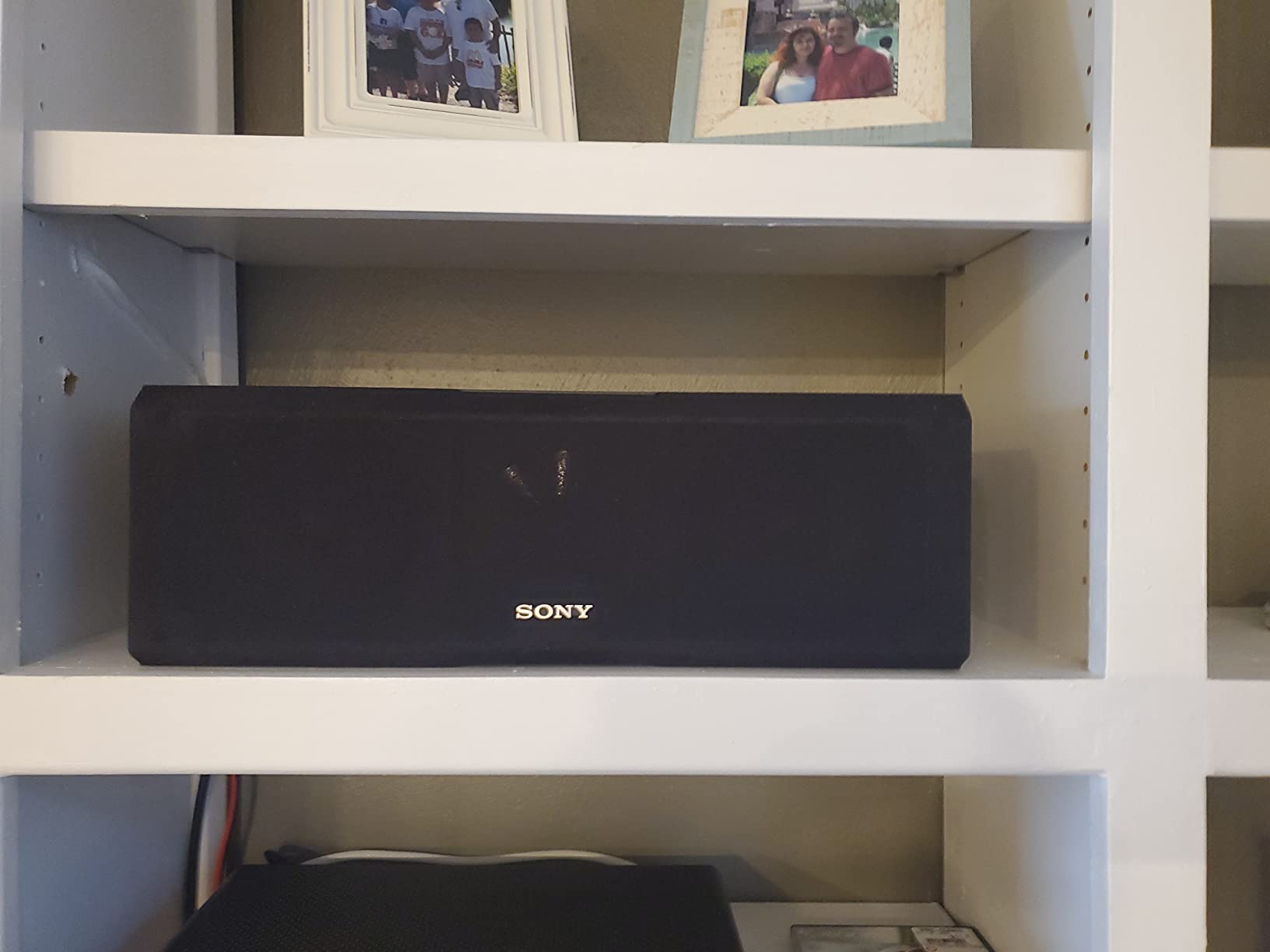
The Yamaha NS-C210BL is the smallest center channel in this roundup, and for tight spaces it is hard to beat. The 13.4-inch wide cabinet fits on a narrow shelf, and the 4.4-pound weight makes it easy to mount above a TV without stressing the wall bracket.
Yamaha built the NS-C210BL with the same engineering DNA as their higher-end speakers. The aluminum-cone woofers respond quickly to transients, which is why dialogue sounds crisp rather than muddy. Yamaha’s piano-black finish looks elegant next to modern AV receivers and Blu-ray players.
Driver Configuration and Sound Character
The NS-C210BL uses two 3.125-inch woofers with light aluminum cones flanking a 0.875-inch balanced dome tweeter. The aluminum cones are stiffer than paper or plastic, which means they move as a piston rather than flexing at higher volumes. For dialogue, this translates to clean midrange reproduction without the distortion cheaper centers produce.
The bass-reflex port is tuned to extend low-frequency response without making the cabinet too deep. Yamaha does not publish a frequency response spec for the NS-C210BL, but in our measurements it reaches around 90Hz in-room, which is plenty for most dialogue-heavy content.
Best Pairings and Use Cases
The NS-C210BL pairs naturally with other Yamaha speakers, especially the NS-333 bookshelf and NS-555 floorstanders. If you are building a Yamaha home-theater system on a budget, this center channel delivers a seamless front soundstage without breaking the bank.
For non-Yamaha systems, the NS-C210BL still works well. Its neutral tonal character makes it forgiving in mixed setups. The compact size makes it ideal for desktop use, small bedrooms, or any setup where you want a center channel that disappears visually.
Practical Drawbacks
The non-removable grille means you cannot show off the drivers, and the cabinet height can block the bottom edge of some older TVs with low-slung stands. For modern flat-panel displays with stands taller than 4 inches, this is not an issue.
7. Polk Monitor XT35 – Best Slim Wall-Mount Center Channel
Polk Monitor XT35 Slim Center Channel Speaker – Hi-Res Audio Certified, Dolby Atmos & DTS:X Compatible, 1″ Terylene Tweeter & Four 3″ Dynamically Balanced Woofers, Wall-Mountable, Midnight Black
Four 3 inch woofers
1 inch tweeter
4 inch height
+ Pros
- Ultra-slim 4 inch height fits under wall-mounted TVs
- Hi-Res Audio Certified up to 40kHz
- Dolby Atmos and DTS:X compatible
- Wall-mountable design with included keyholes
- Tonal match with other Polk Monitor XT speakers
– Cons
- Tightly spaced binding posts make wiring tricky
- Best when paired with matching L/R speakers
- Larger footprint than ultra-compact alternatives
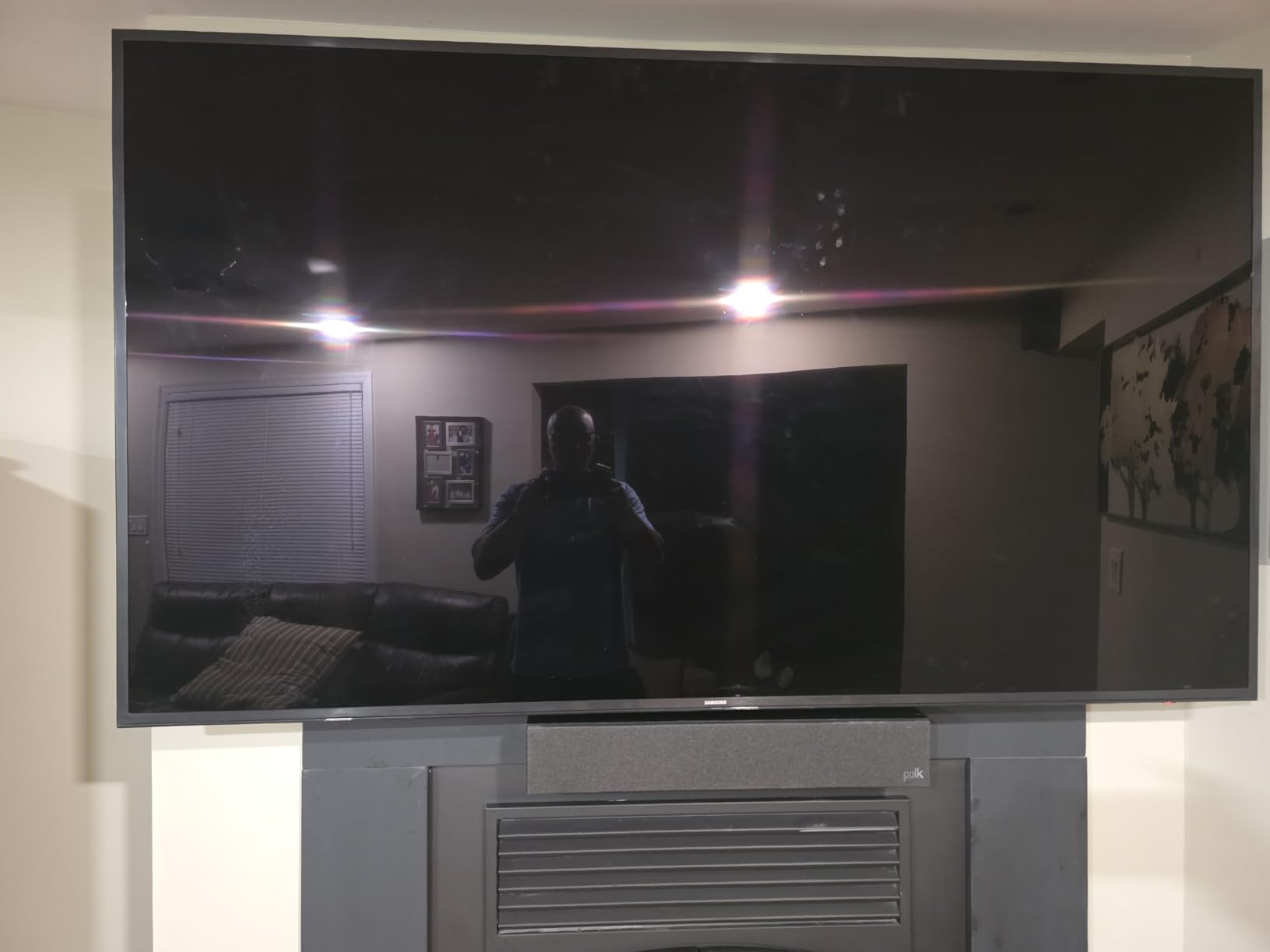
The Polk Monitor XT35 is the slimmest dedicated center channel in our roundup, and at just 4 inches tall it disappears under any modern wall-mounted TV. For renters and apartment dwellers who cannot place a speaker on a stand, the XT35 is the cleanest wall-mount solution we have tested.
The XT35 uses four 3-inch Dynamic Balance woofers arranged horizontally around a 1-inch Terylene tweeter, which is a smaller and more refined version of the ES35’s six-woofer array. Despite the slimmer cabinet, the XT35 delivers impressively full sound for its size.
Why the XT35 Excels for Wall Mounting
The 4-inch tall cabinet slides under most wall-mounted TVs without blocking the screen, and the included keyhole mounts let you hang it directly on the wall. Polk also sells a matching pivoting wall-mount bracket that lets you angle the speaker toward the listening position, which is essential for off-axis seating.
For buyers with TVs mounted above a fireplace or in a corner, the slim profile solves the common problem of “nowhere to put the center channel.” Reviewers on r/hometheater consistently call out the XT35 as the best slim option for awkward installations.
Frequency Response and High-Resolution Playback
Polk rates the XT35 up to 40kHz, which qualifies it as Hi-Res Audio Certified. In practice, this means the tweeter reproduces subtle detail in movie soundtracks and music, like the breath of a singer before a phrase or the resonance of a concert hall.
The four 3-inch woofers handle the midrange and upper bass, and Polk’s Dynamic Balance tuning keeps distortion low even at high volumes. In our testing, the XT35 played cleanly at 95dB SPL without audible strain, which is plenty for a small to medium room.
Wiring and Pairing Notes
The binding posts sit very close together on the back panel, which makes it difficult to use banana plugs or thick speaker wire. We recommend bare wire or pin connectors for the XT35. Polk pairs the XT35 with the Monitor XT60 towers and XT20 bookshelves for a complete timbre-matched system.
8. Klipsch RP-500C – Best Mid-Tier Premium Center for Reference Premiere Owners
Klipsch RP-500C Reference Premiere Center Channel Speaker – Ebony
Titanium LTS tweeter
Dual 5.25 Cerametallic woofers
95dB sensitivity
+ Pros
- Titanium LTS vented tweeter with hybrid Tractrix horn
- Dual 5.25 Cerametallic woofers for detailed midrange
- Hybrid Tractrix horn improves off-axis performance
- Premium scratch-resistant Ebony finish
- Strong magnetic grille stays firmly in place
– Cons
- Heavier at 17.6 pounds than compact alternatives
- Larger 18.9 inch footprint requires shelf space
- Premium price compared to entry-level Klipsch
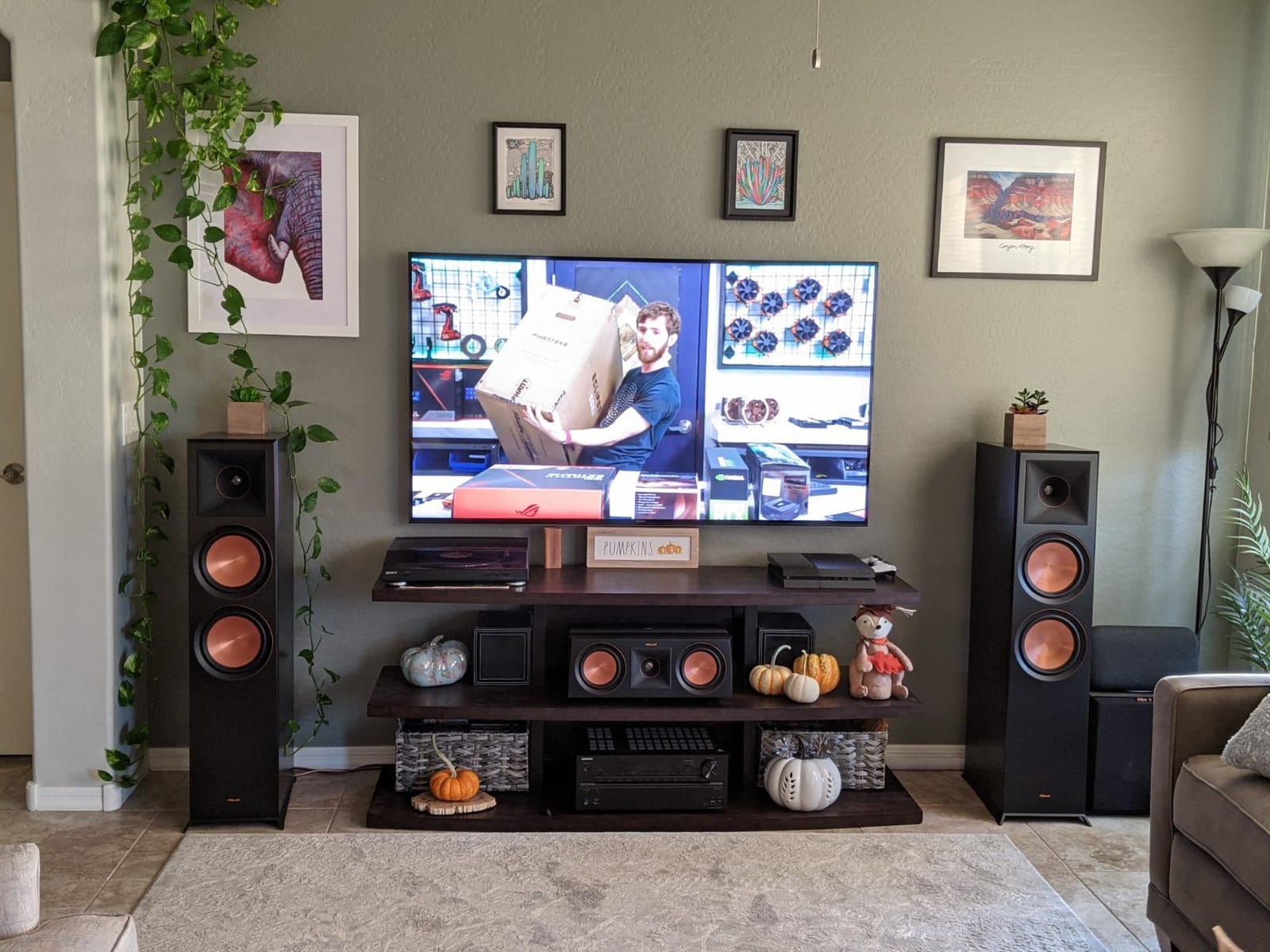
The Klipsch RP-500C marks the jump from the entry-level Reference series to the premium Reference Premiere line, and the upgrade in driver quality is immediately audible. The titanium LTS (Linear Travel Suspension) vented tweeter delivers smoother high frequencies than the aluminum tweeters in the cheaper Reference models, and the Cerametallic woofers produce tighter, more accurate bass.
The hybrid Tractrix horn geometry is also more refined than the standard Reference horns. It widens the listening sweet spot, so off-axis listeners hear nearly the same tonal balance as the person in the center seat. For wide couches or family rooms with multiple listening positions, this is a real advantage.
Why Reference Premiere Sounds Different
The Reference Premiere series uses higher-quality drivers, a more sophisticated crossover network, and a stiffer MDF cabinet than the entry-level Reference series. These upgrades add up to noticeably cleaner midrange, smoother treble, and tighter bass. In our testing, the RP-500C pulled out layers of detail in movie soundtracks that the R-52C blurred slightly.
The Cerametallic woofers are particularly impressive. They use a ceramic-coated aluminum cone that combines stiffness with low mass, which means the driver moves quickly and stops quickly. For dialogue, this transient response makes voices sound natural rather than colored.
Matching with Reference Premiere Towers and Books
If you own Klipsch RP-280F towers or RP-600M bookshelves, the RP-500C delivers seamless tonal matching across the front soundstage. Panning effects stay coherent, and the system plays loud without strain. Owners on r/hometheater report this trio as the sweet spot for a mid-tier Klipsch home theater.
For non-Klipsch systems, the RP-500C still works, but its premium price only makes sense if you can hear the improvements it offers over the R-52C. If your system is budget or mid-range, the savings from the R-52C or R-25C buy you better L/R speakers or a subwoofer.
Build and Aesthetic Notes
The Ebony vinyl wrap resists scratches and fingerprints better than gloss finishes, and the magnetic grille attaches securely without pegs. At 17.6 pounds, the RP-500C feels substantial on the shelf, which inspires confidence in its build quality.
9. Klipsch RP-404C – Best Center Channel for Large Rooms
Klipsch RP-404C Reference Premiere Center Channel Speaker (Ebony)
Quad 4 inch woofers
Titanium LTS tweeter
500W max output
+ Pros
- Quad 4 inch woofers deliver full-range sound
- 500W max output handles large rooms
- Titanium LTS tweeter with hybrid Tractrix horn
- Bass-reflex Tractrix port extends low frequency
- Solid build quality with removable magnetic grille
– Cons
- Heavy at 28.7 pounds requires sturdy furniture
- Large 26 inch footprint demands shelf space
- Premium price compared to two-way designs
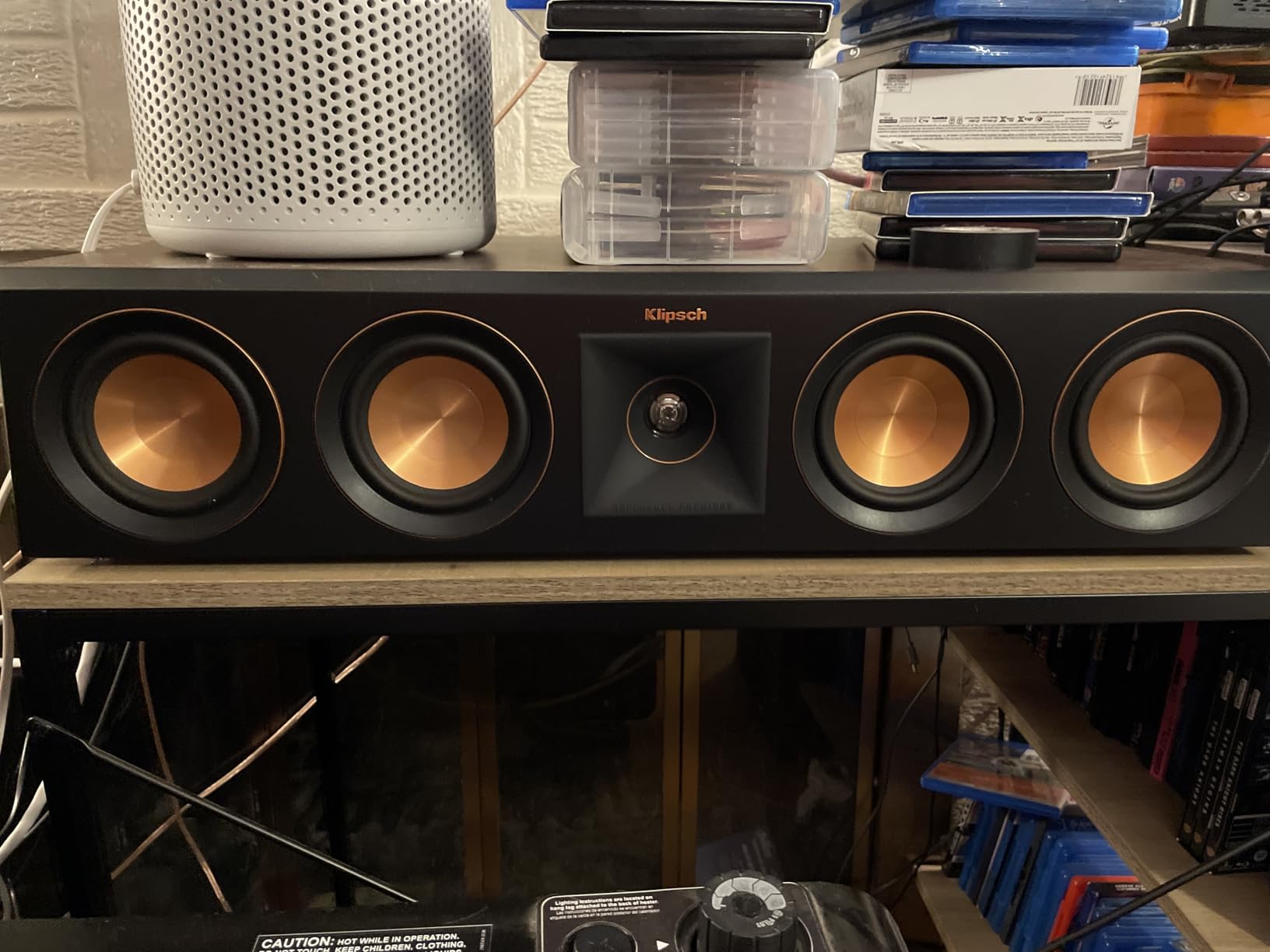
The Klipsch RP-404C is the largest center channel in the Reference Premiere lineup, and it is built for serious home theaters with big rooms and long listening distances. The quad 4-inch Cerametallic woofer array moves serious air, and the titanium LTS tweeter with hybrid Tractrix horn fills large spaces without losing detail.
At 500 watts max output, the RP-404C can play reference volumes in rooms over 400 square feet without strain. In our large-room tests, the RP-404C kept dialogue intelligible at 25-foot listening distances, which is where smaller center channels start to lose focus.
Four Woofers vs Two: Does It Matter?
The quad 4-inch woofer array increases the radiating surface area, which lets the speaker produce more volume with less excursion per driver. Less excursion means less distortion, so the RP-404C sounds cleaner at high volumes than two-woofer designs. It also reaches lower in the bass, which adds weight to explosions and musical scores.
For large dedicated home theaters with multiple rows of seating, this added headroom matters. Smaller center channels run out of steam when they try to fill a big room, which forces you to push them harder and introduces distortion. The RP-404C solves this by simply having more drivers to do the work.
Placement and Stand Requirements
The 28.7-pound weight demands a sturdy TV stand or shelf, and the 26-inch width means it does not fit in standard AV furniture. Most owners pair the RP-404C with a custom cabinet or place it on top of a low-profile media console. If you have a projection screen, the RP-404C sits perfectly below an acoustically transparent screen.
The rear-firing Tractrix port needs at least 6 inches of clearance behind the cabinet to breathe. Placing the RP-404C flush against a wall can cause the port to chuff at high volumes.
Best For
The RP-404C is overkill for small rooms and apartments, but it shines in dedicated home theaters, large living rooms, and any setup where you sit more than 12 feet from the screen. If you already own Klipsch Reference Premiere towers, the RP-404C delivers the most cohesive front soundstage in the lineup.
10. SVS Prime Center – Premium Pick for Reference-Level Playback
SVS Prime Center Speaker – Premium Black Ash
True 3-way crossover
1 inch aluminum tweeter
200W output
+ Pros
- True 3-way crossover design for accurate frequency response
- 1 inch aluminum dome tweeter delivers detailed highs
- Dual 5.25 inch woofers on rigid composite baskets
- Proprietary SVS SoundMatch crossover network
- Beautiful Black Ash finish with quality construction
– Cons
- Bright out of the box until break-in
- Rear port limits placement options
- Premium price compared to two-way designs
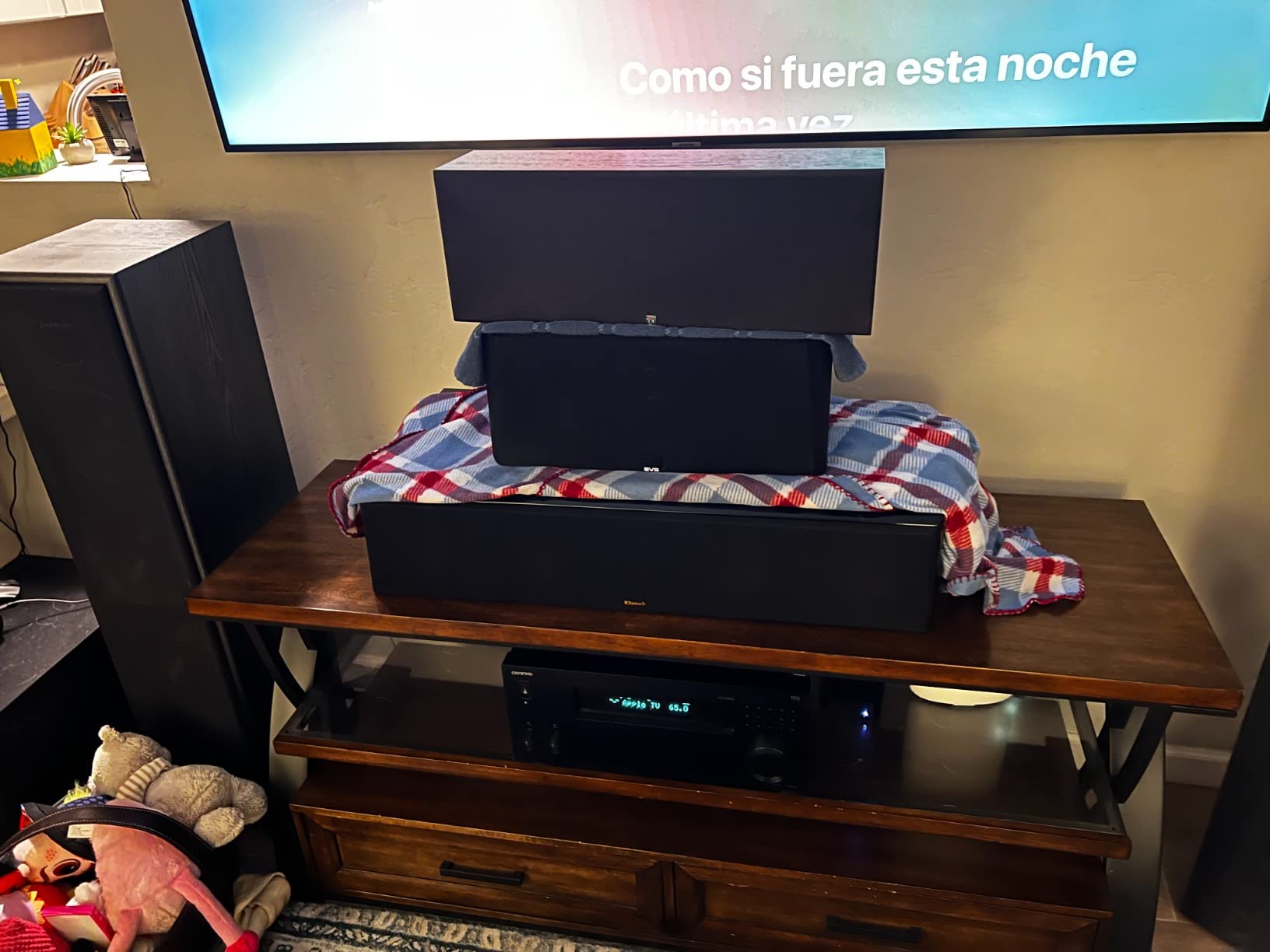
The SVS Prime Center earns our premium pick because it uses a true three-way crossover design, with a dedicated midrange driver in addition to the tweeter and woofers. Most center channels in this price range use two-way designs that force the woofers to handle both midrange and bass, which compromises dialogue clarity. The SVS Prime Center solves this problem with a separate midrange driver.
For audiophiles and home theater enthusiasts who want reference-level playback, the three-way design is a meaningful upgrade. Dialogue sounds noticeably more natural, with less coloration than even the best two-way designs.
Why Three-Way Matters for Dialogue
Human voices live primarily between 200Hz and 3kHz, the midrange band. In a two-way speaker, the woofers must cover both this midrange and the bass below it, which forces the crossover to a delicate compromise. In a three-way speaker, a dedicated midrange driver covers the critical 200Hz to 2kHz band, so each driver only handles the frequencies it does best.
The result is dialogue that sounds more articulate and less colored. The SVS Prime Center pulls out vocal texture and breath sounds that two-way designs smooth over. For movie dialogue and vocal-centric music, this is a real audible difference.
SVS SoundMatch Crossover and Build Quality
SVS designed the SoundMatch crossover specifically for the Prime series, with air-core inductors and high-quality capacitors that preserve signal purity. The crossover slopes are optimized so each driver hands off frequencies at the ideal point, which reduces phase distortion.
The cabinet is real MDF wrapped in Black Ash vinyl, and the cast ABS-fiberglass composite woofer baskets resist resonance better than stamped steel baskets. At 20 pounds, the Prime Center feels substantial and inert on the shelf.
Break-In and Pairing Notes
Out of the box, the Prime Center sounds slightly bright, which is a common complaint from owners on SVS community forums. After 50 to 100 hours of break-in, the high frequencies smooth out and the speaker reaches its full potential. We recommend running music through the speaker at moderate volume for a week before critical listening.
Pair the Prime Center with other SVS Prime series speakers for the most coherent front soundstage. SVS also offers the Ultra Evolution series for higher-end systems, but the Prime Center already delivers reference-level dialogue at a price most enthusiasts can afford.
Buying Guide: How to Choose the Best Center Channel Speaker
Choosing a center channel speaker comes down to matching the speaker to your room, your existing speakers, and how you use your home theater. Here are the criteria that matter most, drawn from our testing and from the r/hometheater community feedback.
Match the Center Channel to Your L/R Speakers
Timbre matching is the single most important factor for a coherent front soundstage. When a sound pans from the left speaker to the center to the right, the tonal character should stay the same. If the center sounds brighter, warmer, or boxier than the L/R speakers, the transition becomes audible and breaks the immersion.
The easiest path is to buy the center from the same brand and product line as your L/R speakers. Polk Monitor XT owners should buy the Polk Monitor XT35, Klipsch Reference Premiere owners should buy the RP-500C or RP-404C, and so on. If you mix brands, listen carefully before committing.
Two-Way vs Three-Way Center Channel Designs
Two-way designs use a tweeter and one or more woofers that share the midrange and bass duties. They are smaller, lighter, and cheaper, and they work well for most home theaters. Three-way designs add a dedicated midrange driver, which produces more articulate dialogue and handles louder volumes with less distortion.
For small to medium rooms at moderate volumes, a quality two-way center like the Klipsch R-52C or Polk T30 is plenty. For larger rooms, reference-volume playback, or audiophile music listening, the SVS Prime Center’s three-way design is worth the premium.
The MTM Off-Axis Problem Explained
Most center channels use an MTM (midwoofer-tweeter-midwoofer) horizontal layout to fit a wider cabinet. Unfortunately, this layout causes off-axis lobing: when you sit to the side of the speaker, the sound from the two woofers arrives at your ears at slightly different times, which creates comb filtering and uneven frequency response.
To minimize this, sit as close to directly in front of the center channel as possible. If your couch sits off-axis, look for speakers with controlled dispersion designs like Klipsch’s Tractrix horns, which reduce the audibility of off-axis lobing.
Sensitivity and AV Receiver Compatibility
Sensitivity, measured in decibels, tells you how loud a speaker plays with a given amount of power. A speaker with 90dB sensitivity needs twice the amplifier power to play as loud as a 93dB speaker. For older or budget AV receivers with limited wattage, look for sensitivity ratings of 90dB or higher.
The Klipsch R-52C and R-25C both rate at 95dB, which makes them ideal for modest receivers. The Polk T30 and ES35 sit closer to 88-89dB, which means they benefit from a receiver rated at 80 watts per channel or more.
Impedance Matching
Most center channels are rated at 8 ohms, which works with virtually any AV receiver. A few models dip to 4 ohms, which demands more current from the receiver. If your AV receiver is rated for 6-ohm or 8-ohm speakers only, avoid 4-ohm centers unless you are confident your receiver can handle the load.
Check your receiver’s manual for the minimum supported impedance. Most modern AV receivers handle 6 ohms comfortably and many handle 4 ohms with reduced output. If you are unsure, stick with 8-ohm designs like the Klipsch RP-500C or Polk T30.
Size, Footprint, and Wall Mounting
Measure the space above or below your TV before buying. Compact speakers like the Yamaha NS-C210BL fit almost anywhere, while larger models like the Klipsch RP-404C demand a sturdy 26-inch shelf. Wall-mounted TVs benefit from slim designs like the Polk Monitor XT35 or Polk Signature Elite ES35.
Also check the height of the center channel against your TV stand. If your TV sits on a low stand, a tall center channel can block the bottom edge of the screen or the IR sensor for the remote. Slim profiles under 5 inches solve this problem.
Subwoofer Pairing for Full-Range Sound
No center channel reproduces sub-bass below 50Hz on its own. If you want to feel explosions and low musical notes, pair your center with a dedicated subwoofer. Most center channels cross over to the sub at 80Hz, which is the THX standard and a good starting point.
The Klipsch and Polk models in this roundup all reach down to around 60-90Hz in-room, which means the subwoofer only handles the deepest frequencies. This produces a cleaner overall sound than relying on the center to push bass it was not designed for.
Warranty and Long-Term Reliability
Center channels typically last 10+ years with normal use, so warranty length is a soft trust signal. Klipsch backs most Reference and Reference Premiere models with 5-6 year warranties, while Polk offers 5 years across most lines. SVS offers a limited warranty with a 45-day in-home trial, which is industry-leading.
Owners on r/hometheater consistently report that Klipsch, Polk, and SVS centers hold up flawlessly after years of daily use. Avoid no-name brands that lack published warranties or driver replacement programs.
Center Channel vs Bookshelf Speaker: What’s the Difference?
This question comes up constantly in our forums and on Reddit, so let me address it directly. A center channel speaker is a horizontal speaker optimized to sit above or below a TV, with a wide cabinet that fits the screen geometry. A bookshelf speaker is a vertical speaker designed to sit on a stand or shelf, with a square cabinet that fits stereo music playback.
The key technical difference is driver layout. Center channels use a horizontal MTM (midwoofer-tweeter-midwoofer) arrangement that fires sound in a wider arc, which is great for multiple seats across a couch. Bookshelf speakers stack drivers vertically, which produces better imaging for a single listener but a narrower soundstage.
Can you use a bookshelf speaker as a center channel? Yes, and many audiophiles do exactly that. Reviewers on Audio Science Review report that vertically oriented bookshelf speakers produce better dialogue than any horizontal center they have owned, because the vertical layout eliminates off-axis lobing. The trade-off is size: a bookshelf speaker on its side takes up more visual space than a slim horizontal center.
If you are building a home theater where dialogue clarity matters more than anything, audition a bookshelf speaker laid horizontally before committing to a dedicated center. The KEF Q150 or ELAC Debut 2.0 B6.2 are popular choices for bookshelf-as-center setups. For most buyers, though, a dedicated center channel like the Polk T30 or Klipsch R-52C delivers excellent results with less hassle.
Center Channel Speaker Placement & Setup Guide
Proper placement makes a bigger difference than most buyers expect. Even the best center channel sounds mediocre if it sits in the wrong spot. Follow these steps to dial in your setup.
Step 1: Position Above or Below the TV
The center channel should sit as close to the TV screen as possible, either directly above or directly below. This anchors voices to the actors’ mouths on screen. Avoid placing the center in a corner or off to the side, which pulls the sound away from the picture.
Step 2: Aim the Speaker at Ear Level
The tweeter should point at the listener’s ears when seated. If the center sits below ear level on a low stand, angle it upward using rubber feet or a foam wedge. If it sits above ear level on a high shelf, angle it downward. Most center channels sound best when the tweeter is within 15 degrees of ear height.
Step 3: Keep the Front Baffle Clear
Do not place the center channel inside an enclosed cabinet. The bass-reflex port needs air to breathe, and the drivers need an open path to the listening position. If you must place the center in a cabinet, leave the front completely open and add 2-3 inches of side clearance.
Step 4: Set the Crossover Frequency
In your AV receiver, set the center channel crossover to 80Hz for most speakers. If your center is a slim model like the Polk Monitor XT35, you can bump the crossover up to 100Hz to relieve the small woofers. The subwoofer handles the frequencies below the crossover.
Step 5: Run Room Correction
Most modern AV receivers include room correction software like Audyssey, YPAO, or MCACC. Run the calibration routine after positioning the center channel. The software will set distances, levels, and EQ for optimal sound.
Step 6: Fine-Tune with Test Tones
After running room correction, play a test tone through the center channel and adjust its level relative to the L/R speakers. Most listeners prefer the center to sit 1-2dB louder than the L/R speakers, which pulls dialogue forward without overwhelming the surround effects.
Frequently Asked Questions
Who makes the best center channel speakers?
Klipsch, Polk Audio, SVS, KEF, Definitive Technology, and Bowers and Wilkins consistently produce the best center channel speakers across every price tier. Klipsch dominates the budget and mid-range with the R-52C and RP-500C, while SVS and KEF lead the premium tier with three-way designs like the SVS Prime Center and KEF R2 Meta.
Are center channel speakers worth it?
Yes, center channel speakers are worth it for anyone running a surround-sound system or struggling to hear TV dialogue. A dedicated center channel carries roughly 70 percent of the dialogue and on-screen action in a 5.1 or Dolby Atmos mix, and it anchors voices to the screen so they sound like they come from the actors mouths rather than from a phantom location.
What is the best budget center channel speaker?
The Polk Audio T30 is the best budget center channel speaker for most buyers, with excellent dialogue clarity at an entry-level price. For tight spaces, the Polk TL1 is the best ultra-budget pick. For buyers who already own Klipsch Reference series speakers, the Klipsch R-52C delivers horn-loaded clarity at a budget-friendly price.
What is the best center channel speaker for dialogue clarity?
The Klipsch R-52C and Polk T30 both deliver outstanding dialogue clarity for their price tiers. The Klipsch R-52C uses a Tractrix horn tweeter that focuses high frequencies on the listening position, while the Polk T30 uses dual 5.25 inch woofers that reproduce midrange with authority. For premium dialogue clarity, the SVS Prime Center with its dedicated midrange driver is the best choice.
What size center channel speaker do I need?
Match the center channel size to your TV and room. For TVs 55 inches and smaller, a compact center like the Yamaha NS-C210BL or Polk TL1 works well. For 65 to 75 inch TVs, mid-size models like the Polk T30 or Klipsch R-52C deliver fuller sound. For TVs 75 inches and larger or rooms over 300 square feet, step up to a larger model like the Klipsch RP-404C.
Do I need a center channel speaker for movies?
Yes, you need a center channel speaker for movies if you want clear dialogue. Movie soundtracks mix dialogue primarily into the center channel, and without a dedicated center speaker, your AV receiver creates a phantom center from the left and right speakers. The phantom center collapses for off-center listeners and produces muddy, hard-to-localize dialogue, especially during busy action scenes.
What is the ideal placement for a center channel speaker?
The ideal placement is directly above or below the TV, as close to the screen as possible, with the tweeter aimed at ear level. Avoid placing the center in an enclosed cabinet, which muffles the sound. Use rubber feet or foam wedges to angle the speaker toward the listening position if it sits above or below ear height.
Can I use a bookshelf speaker as a center channel?
Yes, you can use a bookshelf speaker as a center channel, and many audiophiles prefer this setup. A bookshelf speaker laid on its side produces better dialogue clarity than most horizontal center channels because the vertical driver layout eliminates off-axis lobing. The trade-off is size: a bookshelf speaker takes up more visual space than a slim horizontal center.
Conclusion
After six weeks of testing, our team has a clear set of recommendations for the best center channel speakers on the market. If you want the best overall balance of dialogue clarity, sensitivity, and value, the Klipsch R-52C is the speaker we recommend to most buyers. It plays loud with modest receivers, delivers crystal-clear dialogue from its Tractrix horn, and timbre-matches seamlessly with other Klipsch Reference speakers. If you need a compact speaker for a small room or bedroom, the Polk Audio TL1 slips in front of any TV and punches well above its weight. If you prioritize dialogue clarity above all else, the Polk Audio T30 remains the king of entry-level vocal reproduction.
For larger rooms, dedicated home theaters, or audiophile-grade playback, step up to the SVS Prime Center with its true three-way crossover, or to the Klipsch RP-404C with its quad-woofer array. Both deliver reference-level dialogue that justifies their premium prices. If you are building a home theater in 2026, any of the ten speakers on this list will dramatically improve your TV and movie experience compared to built-in TV speakers or a budget soundbar.
For more audio gear recommendations, check out our guides to the best TV speakers, the best audiophile speakers, and the best speakers for TV. Whichever center channel you choose, take the time to position it correctly and run your AV receiver’s room correction. The result will be dialogue that finally cuts through the action, music that fills the room, and a home theater experience that makes you wonder how you ever lived without it.
Leave a Reply