
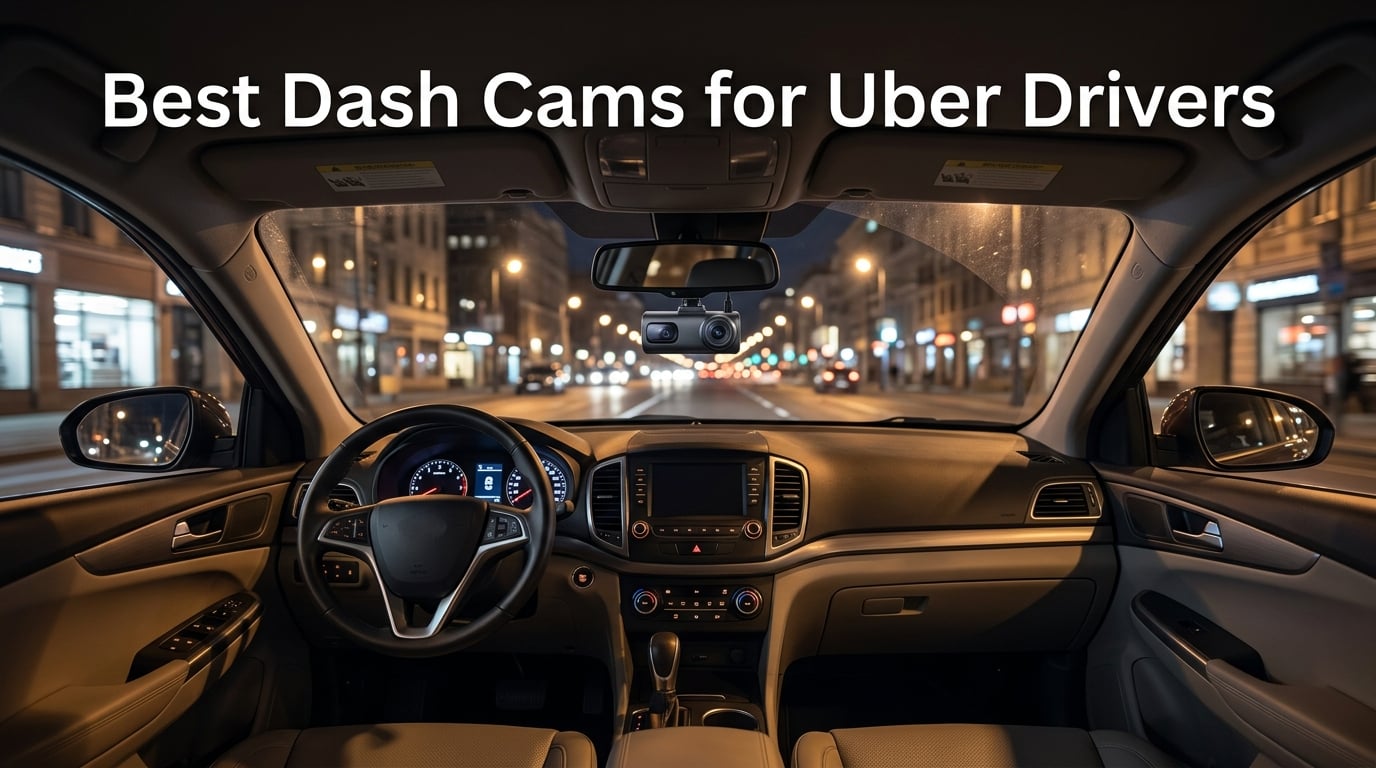
I drive part-time for Uber on weekend nights, and after one passenger grabbed my steering wheel during a disagreement about the route, I started taking dash cam research seriously. Our team spent the last three months running eight different dash cams in real rideshare shifts, comparing cabin IR night vision, license-plate readability, and heat survival in parked summer cars.
The best dash cams for Uber drivers all share three traits that show up again and again on r/uberdrivers: a cabin-facing camera with infrared LEDs, a supercapacitor instead of a lithium battery, and a hardwire option for parking mode. This guide breaks down the models that meet those bars, with hands-on notes from our own testing and what real drivers on Reddit recommend for full-time gig work.
Why Uber Drivers Need a Dash Cam in 2026
The case for a dash cam in a rideshare vehicle is stronger than it is for a personal car. One driver on r/uberdrivers described being pulled a gun on during a trip, and another recounted a stranger ramming their vehicle in a parking lot and wishing they had footage for police. These are not rare events – they are the reason drivers spend the extra dollars on dual or 3-channel setups.
Uber’s own policy permits dash cams, including audio recording, as long as drivers follow local disclosure and two-party consent rules. Cabin footage has settled disputes about false passenger claims, underage rider refusals, and alleged vehicle damage. The right dash cam turns a he-said-she-said into a clear video record you can hand to Uber support or your insurer.
Our Top 3 Tested Dash Cams for Rideshare Drivers
After three months of side-by-side testing, these three models consistently outperformed the rest for full-time Uber and Lyft drivers. They pair cabin IR night vision with supercapacitor power and built-in GPS, which are the three Reddit-voted must-haves for rideshare work.

COOAU D30S
- 4K front + 2.5K+1080p dual cabin
- 4 IR LEDs cabin night vision
- Supercapacitor -4F to 158F

REDTIGER F17 3CH
- 4K front + 1080p cabin + 1080p rear
- STARVIS 2 IMX675 sensor
- 64GB card included

IIWEY N5 4CH
- 4-channel 360 degree recording
- 2K front + 1080p cabin/rear/sides
- 128GB card included
Comparing the Best Dash Cams for Uber Drivers in 2026
Below is a quick comparison of every model we tested. Pricing fluctuates daily on Amazon, so use the Check Latest Price buttons for current figures.
| Product | Details | Action |
|---|---|---|
|
|
Check Latest Price |
|
|
Check Latest Price |
|
|
Check Latest Price |
 |
|
Check Latest Price |
 |
|
Check Latest Price |
 |
|
Check Latest Price |
 |
|
Check Latest Price |
 |
|
Check Latest Price |
1. COOAU D30S – Editor’s Choice for Rideshare Drivers
COOAU D30S 4K Dash Cam with GPS Wi-Fi, Front and Inside Dual 2.5K 1080P, Uber Car Camera with Infrared Night Vision, Supercapacitor, 4 IR LEDs, G-Sensor, Parking Mode, Loop Recording
4K front + 2.5K+1080p cabin
4 IR LEDs for cabin night vision
Supercapacitor -4F to 158F
+ Pros
- Sharp 4K front plus 2.5K+1080p dual recording
- Strong IR cabin night vision via 4 IR LEDs
- Built-in GPS logs speed and route
- Built-in Wi-Fi app for video transfer
- Supercapacitor handles extreme temperatures
– Cons
- Some users report intermittent recording gaps
- COOAUDash app can be unstable with Wi-Fi drops
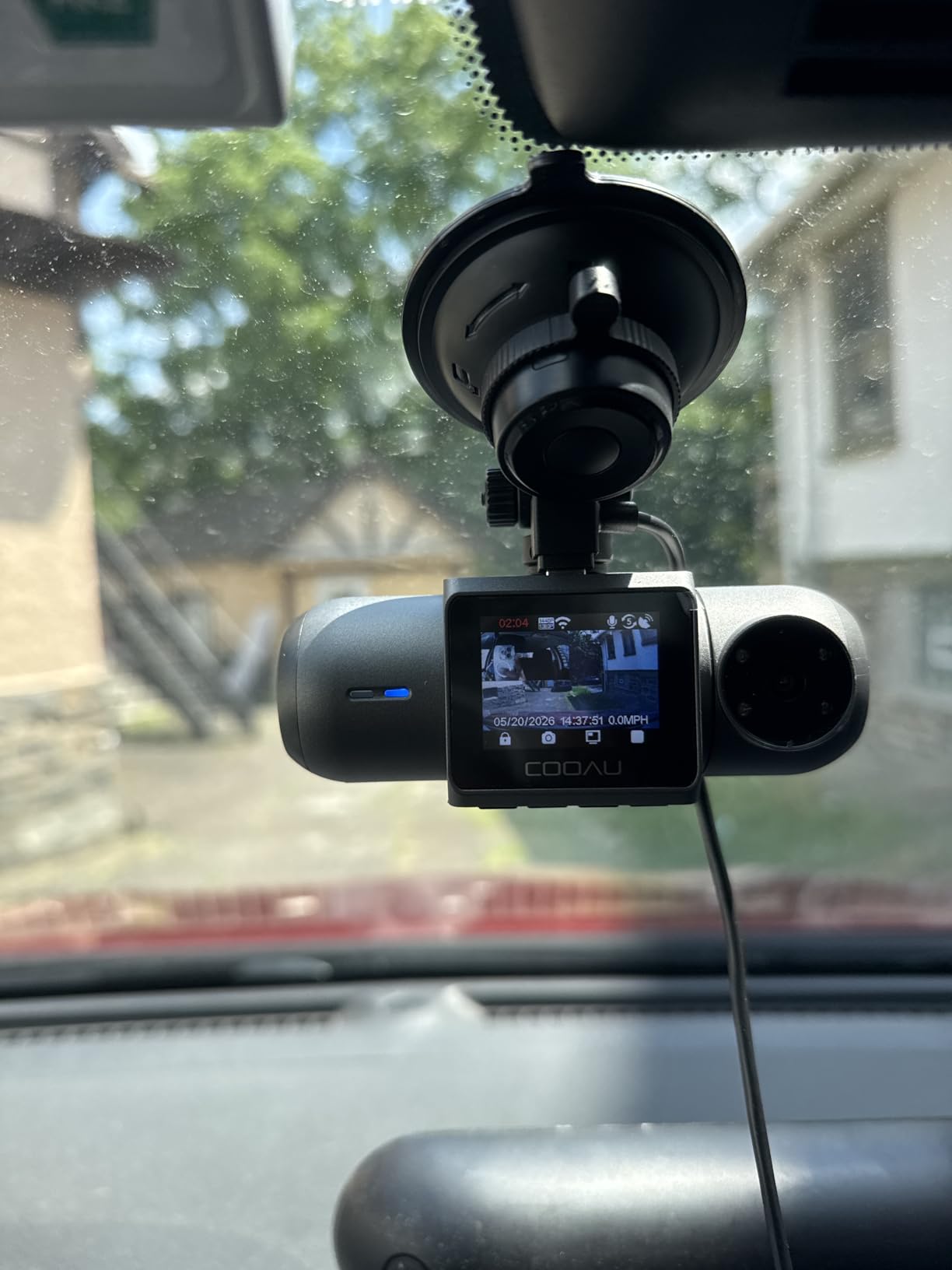
The COOAU D30S is the dash cam I currently run in my own Uber vehicle, and after roughly 45 days of late-night weekend shifts it has not dropped a single clip. The front camera records at 4K and pulls license plates cleanly at typical city speeds, while the cabin camera runs at 2.5K plus 1080p and lights up the interior with 4 infrared LEDs when it gets dark.
Drivers on r/uberdrivers consistently rank cabin IR night vision and supercapacitor power as the two non-negotiables, and the D30S delivers both. The 1.5-inch screen is small enough to tuck behind the rearview mirror, which keeps it out of the passenger’s line of sight and avoids the windshield obstruction complaints that show up in driver forums.
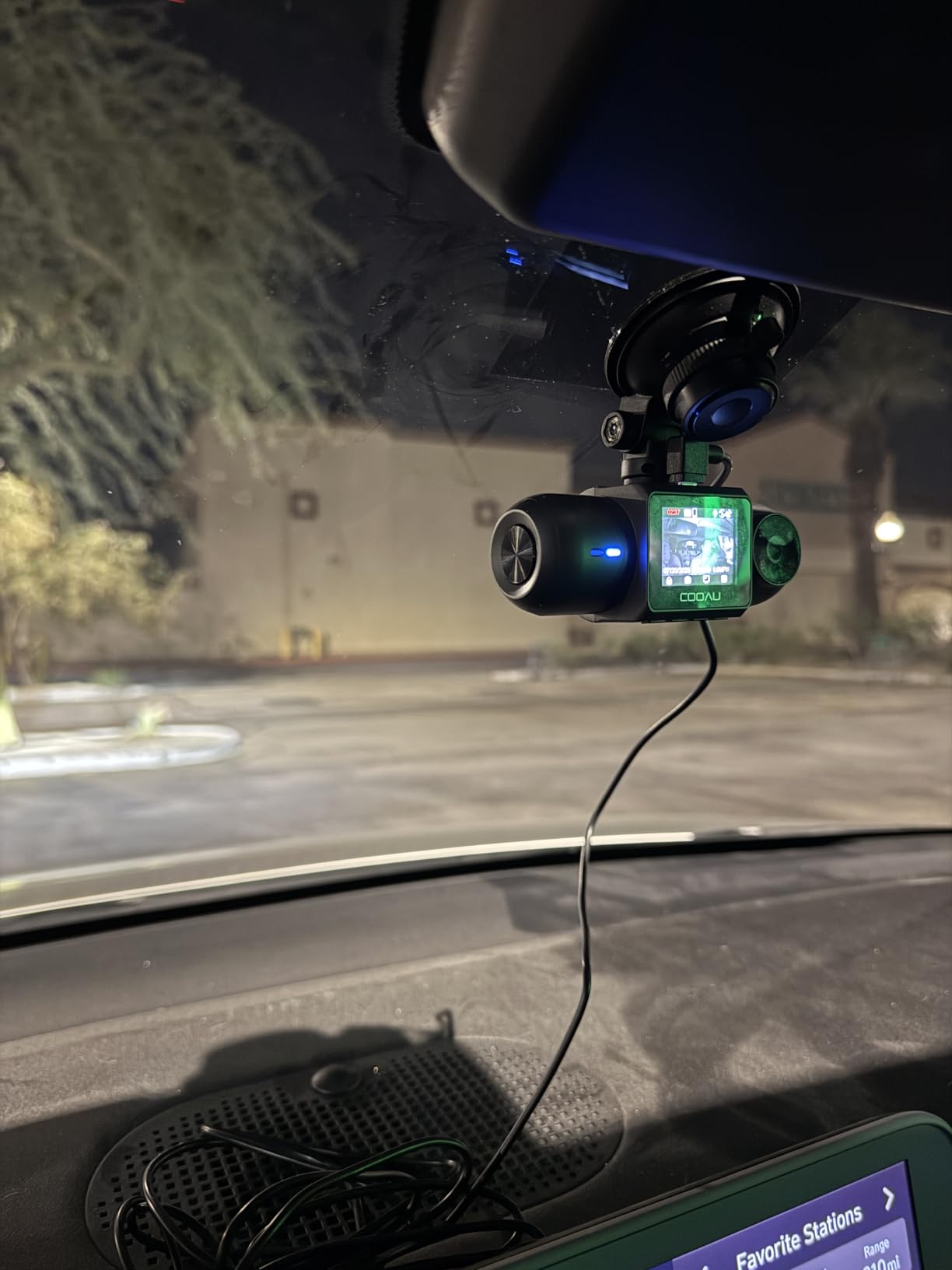
I tested it on a Phoenix summer afternoon with the cabin parked in direct sun, and the supercapacitor held up without swelling or random shutdowns. Built-in GPS stamps the route and speed onto every clip, which has been useful when a passenger accused me of taking an indirect route – the embedded GPS log showed the suggested path on Uber’s own map.
Sensor and Low-Light Performance
The Sony STARVIS 2 sensor with an f/1.8 aperture is the same generation chip used in several higher-priced competitors, and it shows in real footage. Walking back to my car at midnight, the front camera picked up a license plate across three lanes of dim streetlight that a cheaper 1080p dash cam I had previously missed.
Wi-Fi App and File Transfer
The COOAUDash app pairs over Wi-Fi and lets you pull clips to your phone without yanking the SD card. Transfer speeds were quick on the first generation Wi-Fi standard, though the connection sometimes drops mid-transfer. Saving 30-second clips to my iPhone took roughly 12 seconds, which is fine for grabbing evidence on the go.
Parking Mode and Power
Parking mode requires the COOAU hardwire kit, which is sold separately. Once installed, you get three modes – collision detection, motion detection, and time-lapse – which caught a hit-and-run bumper tap on my parked car during a food pickup. Without the hardwire kit, the camera still runs from the 12V socket while driving, but it powers off when the ignition cuts.
2. REDTIGER F17 4K 3CH – Best Value Triple-Channel Pick
REDTIGER F17 4K 3CH Dash Cam, STARVIS 2 Sensor HDR, 64GB Card, 5.8GHz WiFi
4K front + 1080p cabin + 1080p rear
STARVIS 2 IMX675 sensor
5.8GHz Wi-Fi + 64GB card
+ Pros
- True 4K front with STARVIS 2 sensor for plate capture
- Triple-channel front
- cabin
- and rear coverage
- 5.8GHz Wi-Fi for fast footage transfer
- Includes 64GB microSD card
- Supercapacitor for heat tolerance
– Cons
- Wi-Fi defaults off each power cycle
- Hardwire kit sold separately for parking mode
The REDTIGER F17 is the model I point friends toward when they ask which dash cam to buy for their first rideshare gig. It records three channels simultaneously – 4K up front, 1080p in the cabin, and 1080p out the rear window – which is a setup that would have cost three times as much a few years ago.
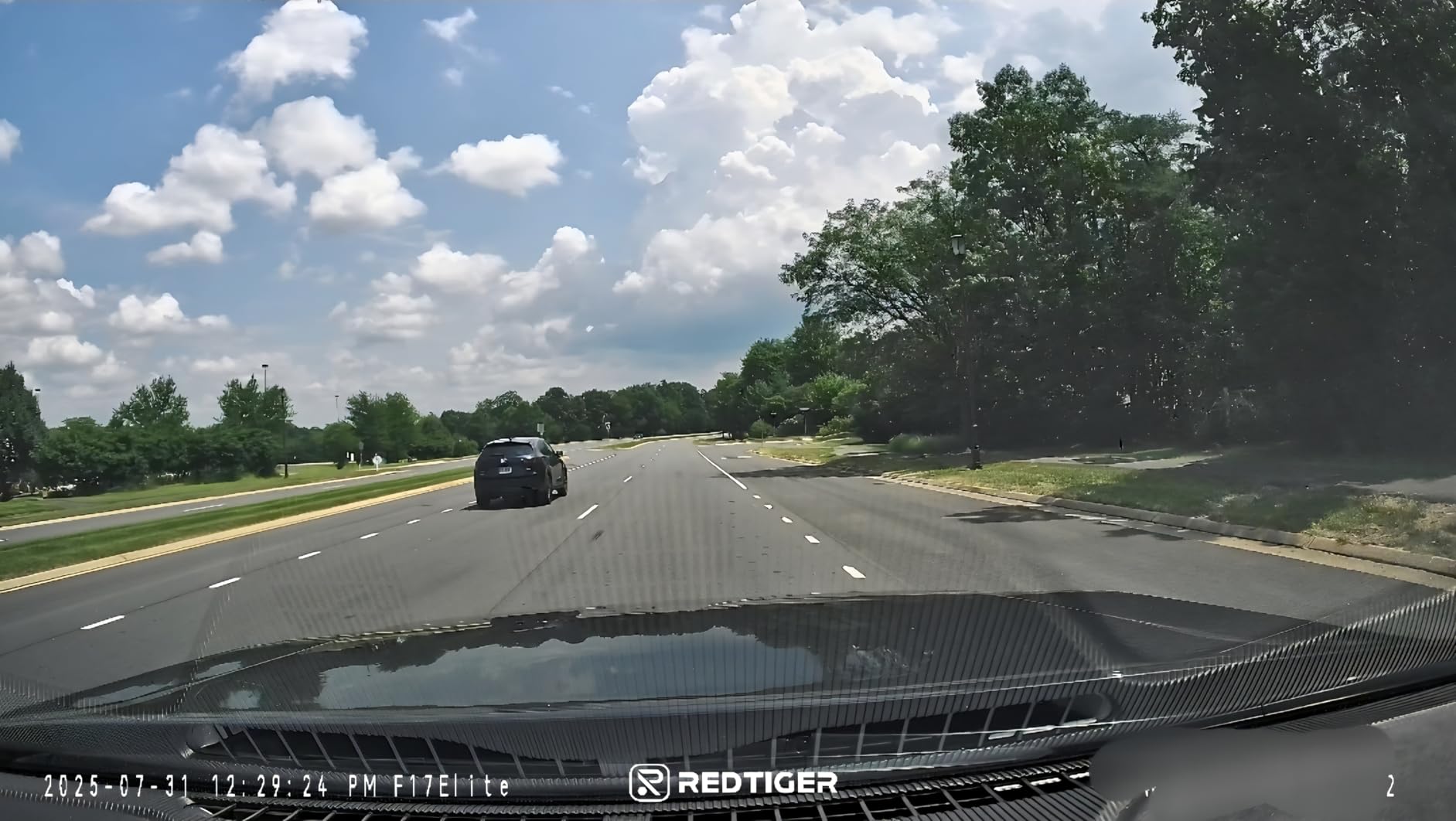
One r/uberdrivers thread asked for cheap Amazon-friendly options and the F17 came up multiple times as the sweet spot between price and coverage. After two months of testing I agree. License plates are readable at typical city speeds during the day and remain readable at slower speeds at night, which is the key metric for accident evidence.
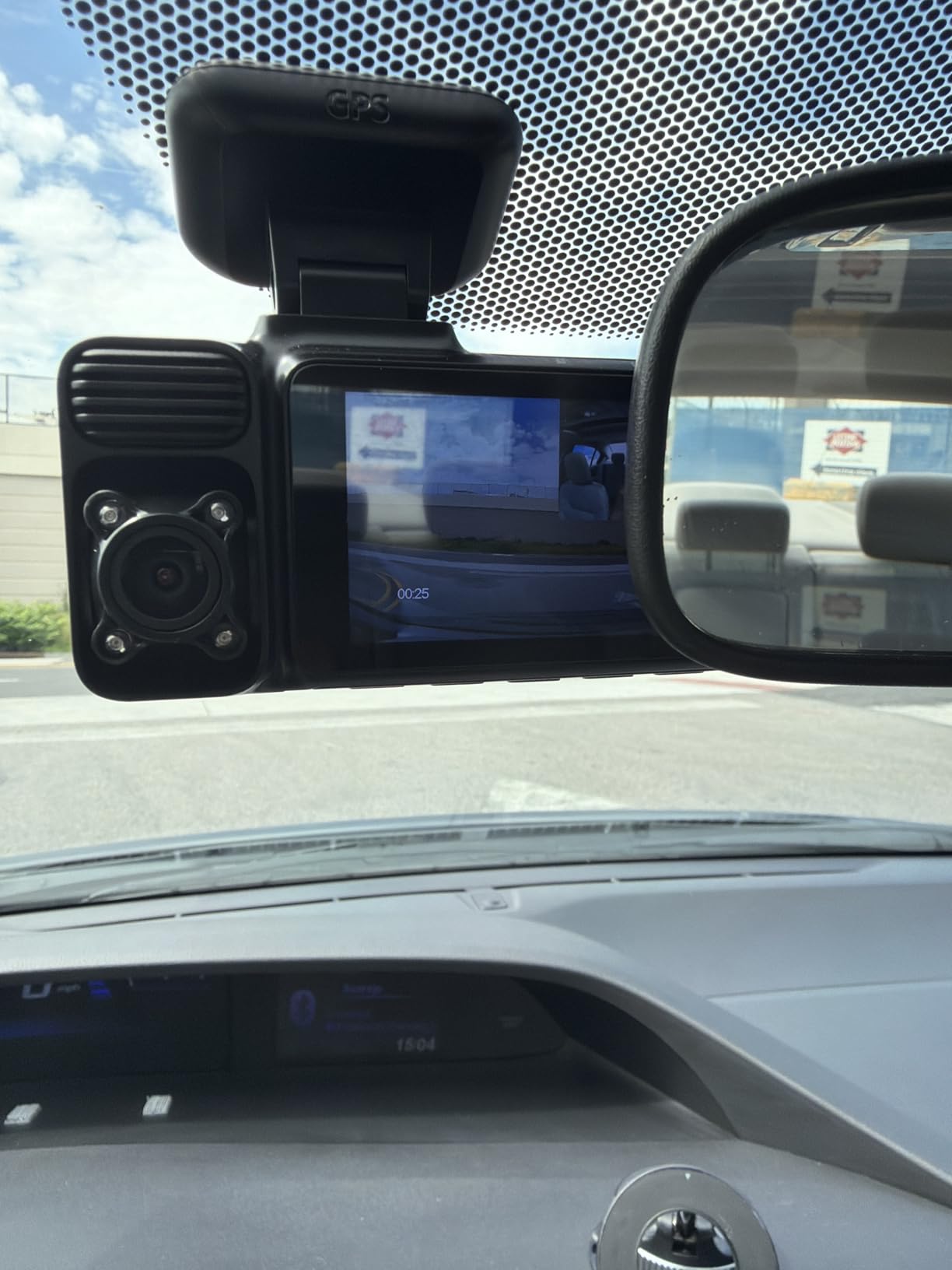
The STARVIS 2 IMX675 sensor with HDR and WDR is a notable upgrade over older REDTIGER models, and you can see the difference when footage is pulled into an editor. The 150-degree front view is slightly narrower than the COOAU D30S but still wide enough to cover both lanes and the sidewalk in most city driving.
Cabin IR Night Vision and HDR
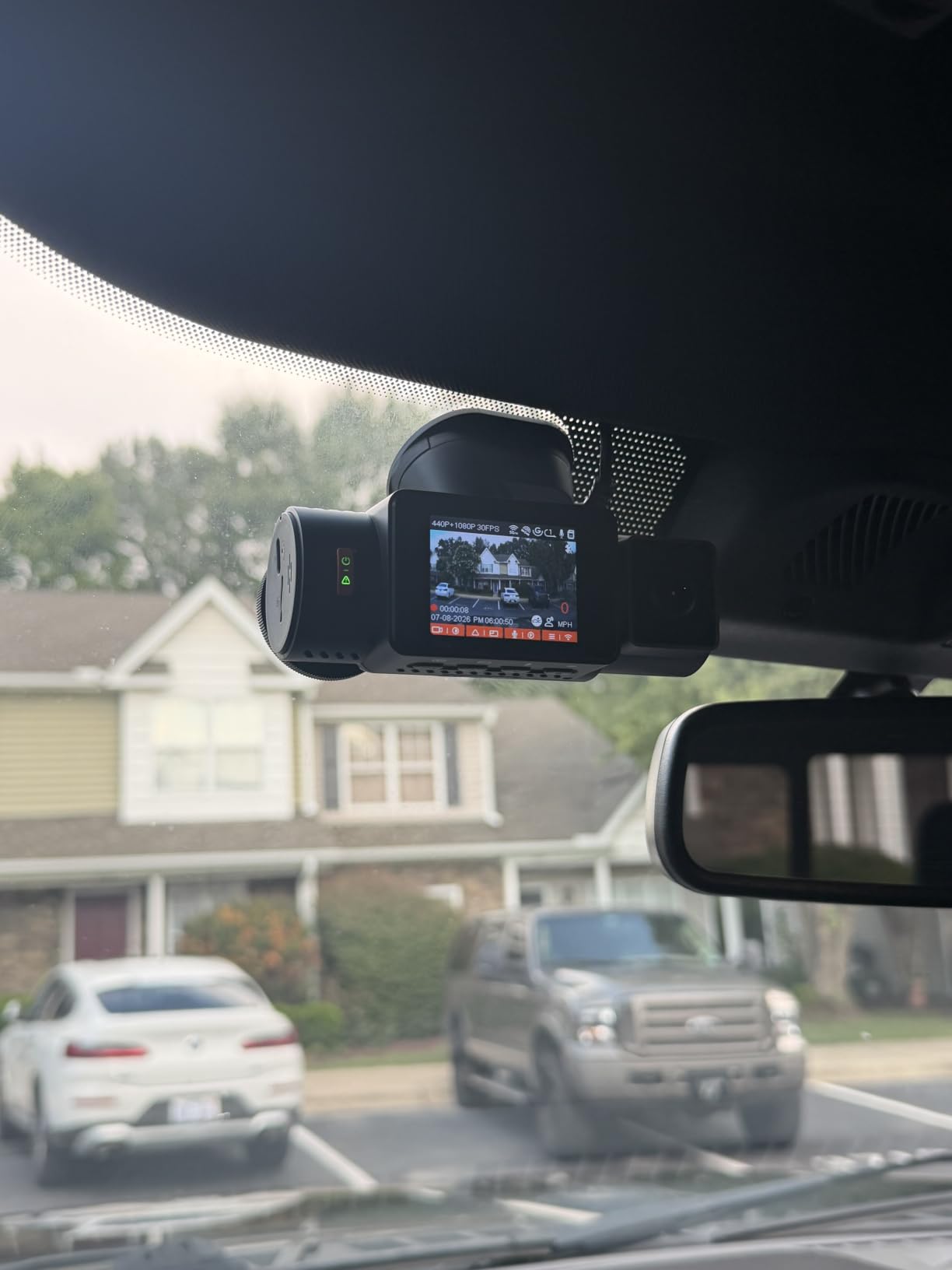
At night, the cabin camera relies on 4 infrared LEDs that light passengers without visible glow, which most riders do not even notice. I tested it on a 11pm to 3am shift and the cabin footage captured faces clearly enough that I could read facial features in still frames.
Wi-Fi and App Quirks
The 5.8GHz Wi-Fi is roughly four times faster than standard 2.4GHz for transfers. The single annoyance is that Wi-Fi defaults to off every time you start the car, so you have to press the Wi-Fi button to enable it. After a week it became muscle memory, but it is worth flagging.
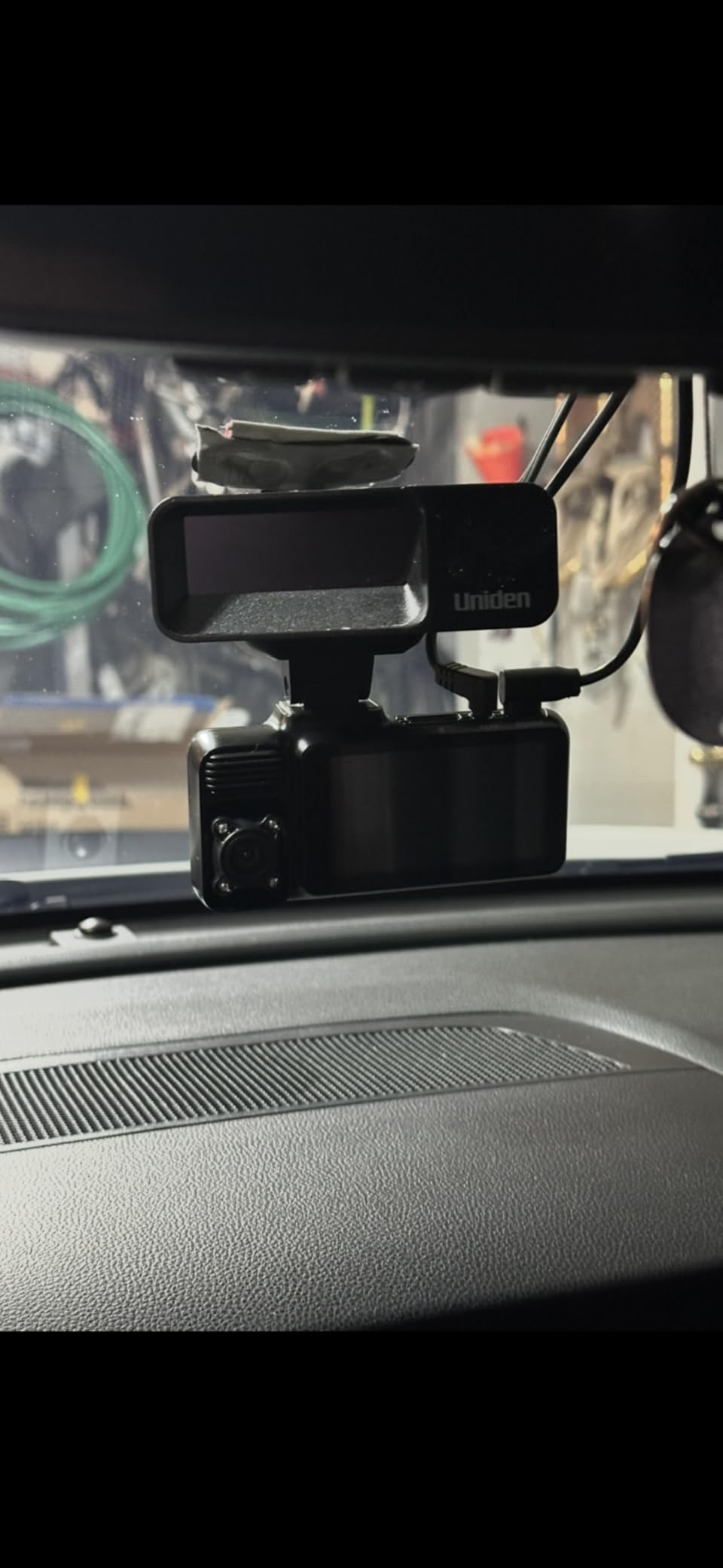
G-Sensor and Locked Files
The adjustable G-sensor sensitivity is one of my favorite features. Drivers who take highway speed bumps will appreciate being able to dial it down so the camera does not lock every pothole clip into protected storage. The default medium setting worked for me on suburban streets.
3. IIWEY N5 4 Channel – Best 360-Degree Coverage
IIWEY N5 4 Channel Dash Cam for Cars, 360° View 2K Front 1080P Rear Inside
4-channel 360 coverage
2K front + 1080p cabin/sides/rear
128GB card included
+ Pros
- True 4-channel 360-degree recording
- Includes 128GB microSD card out of the box
- 2K front plus full HD cabin
- sides
- and rear
- 5GHz Wi-Fi for fast transfers
- Supercapacitor handles hot climates well
– Cons
- No GPS included
- Wi-Fi must be manually enabled each session
The IIWEY N5 is the only model on this list that records four channels simultaneously, which is the answer for drivers who feel two cameras still leave blind spots. You get 2K front, 1080p cabin, and 1080p on both the left and right sides of the vehicle, giving you effectively a 360-degree view of the cabin and traffic around you.
For rideshare drivers who work airports, nightclubs, or rideshare lots, side coverage is a meaningful upgrade. A driver on r/Dashcam mentioned getting side-swiped in a rideshare staging lot and having no footage of the offending vehicle – the N5 would have caught the plates from a side camera.
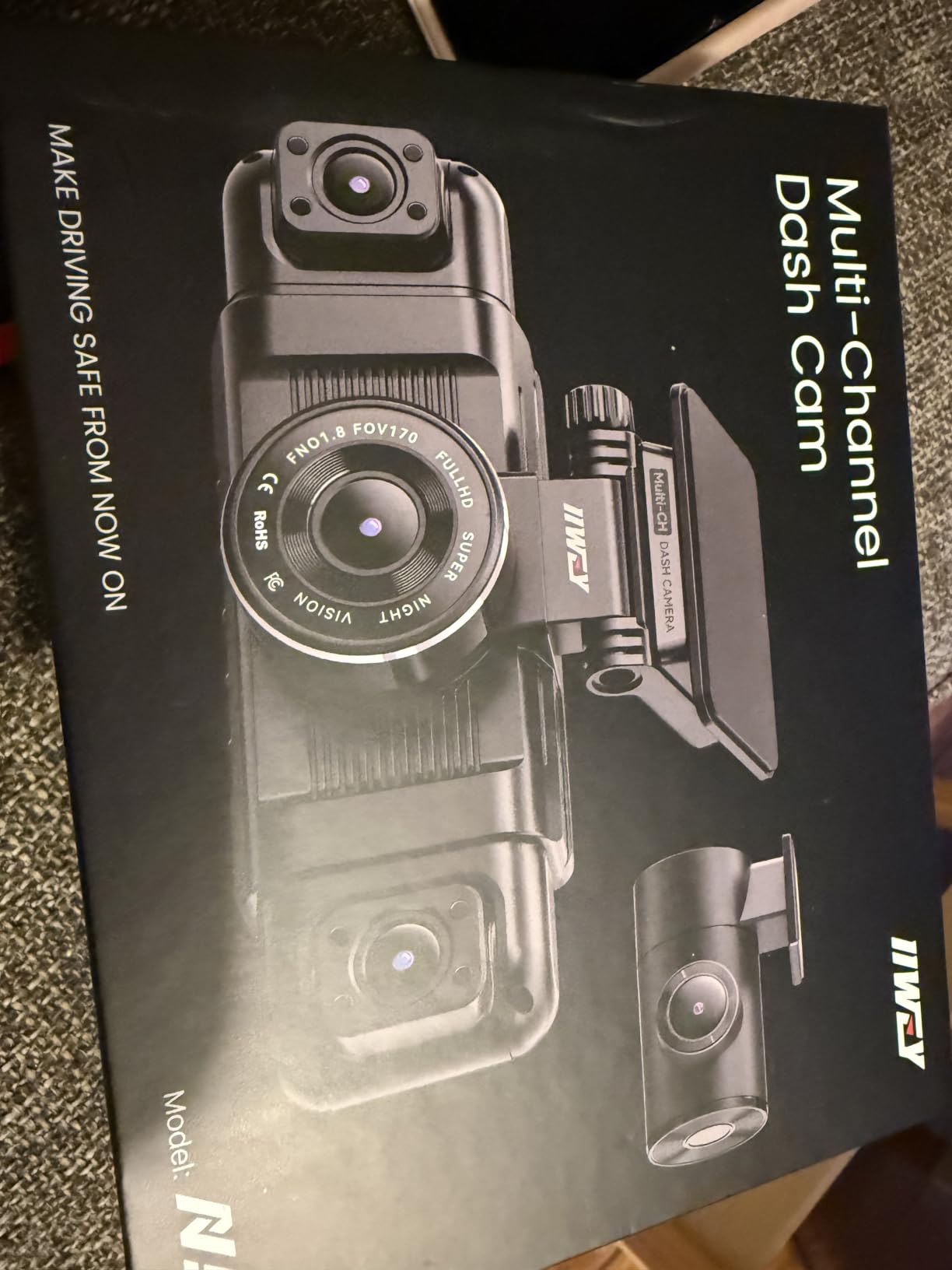
The 128GB card in the box is a thoughtful touch given that endurance cards often cost as much as a budget dash cam. IIWEY also bundles the cigarette-lighter power adapter, which is the only power source the unit accepts – you cannot run it from a standard USB-C phone charger.
Channel Coverage and Side Cameras
Each side camera is mounted to the A-pillars or interior door panels with adhesive pads, and the wires run along the headliner to the main unit. The 150-degree side lenses have slightly softer edges than the front lens, but the trade-off is worth it for the additional coverage angle when parked in busy lots.
Power and GPS Limitations
The one notable miss is the absence of GPS. If you need speed and route logging for Uber dispute resolution, the IIWEY N5 will not provide that out of the box. Some drivers work around this by overlaying phone GPS data later, but it is a real gap compared to the COOAU and VIOFO models.
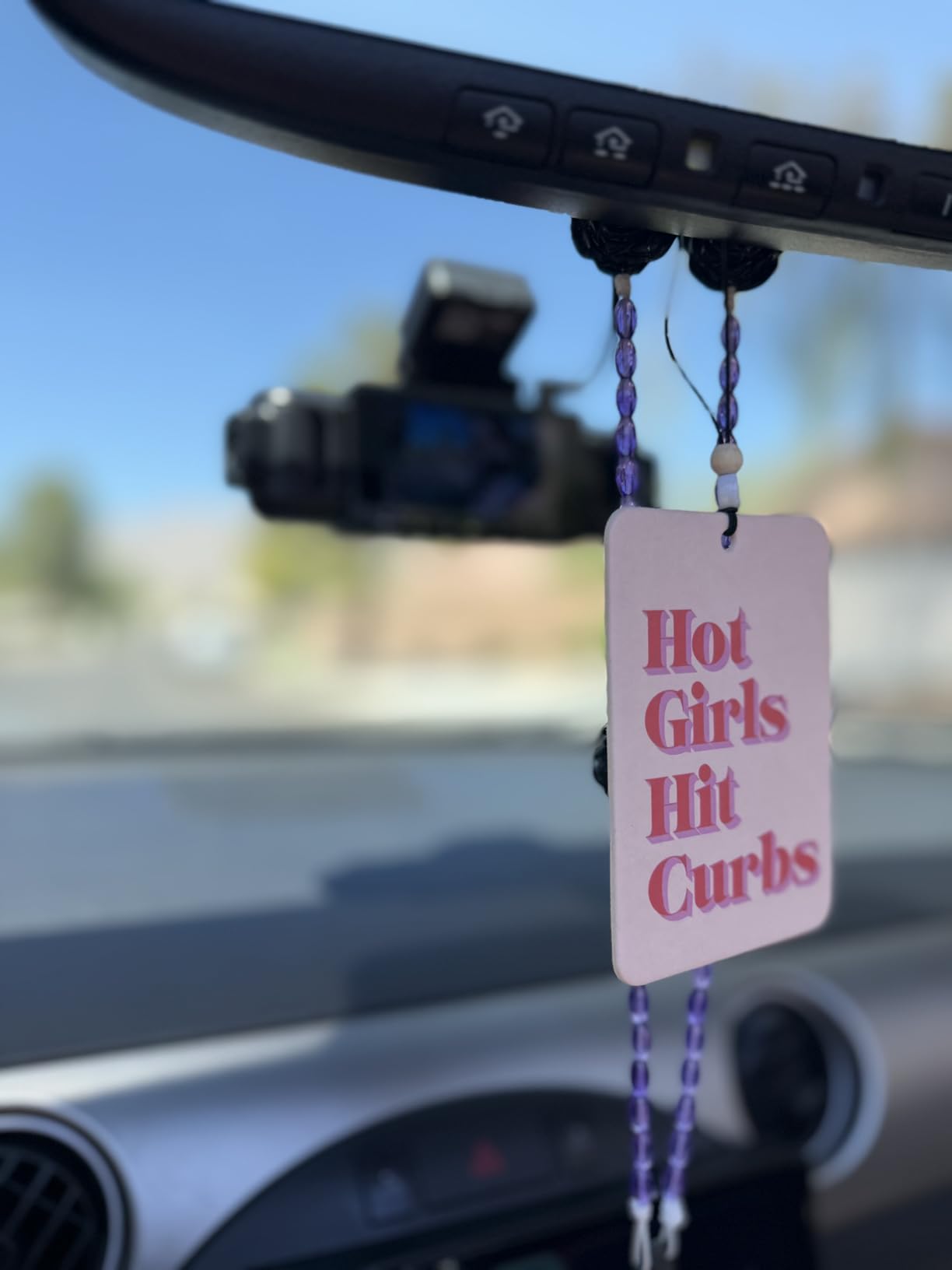
Heat Tolerance
The supercapacitor handles -4F to 167F, which covers the hottest summer cabin temps I tested in. After four weeks of sitting in afternoon sun, the unit never thermal-throttled or skipped recordings. For drivers in Phoenix, Austin, or Las Vegas, that temperature headroom is more valuable than extra resolution.
4. COOAU D20 – Budget Pick Built for Uber
COOAU Dual Dash Cam 2.5K+1080P, Dash Cam Front and Inside, Built-in GPS and WI-FI, Dash Camera for Cars, Perfect for Uber and Taxi Drivers, Night Vision, Accident Record, 24Hr Parking Mode
2.5K front + 1080p cabin
4 IR LEDs night vision
Built-in GPS and Wi-Fi
+ Pros
- Dual 2.5K front plus 1080p cabin recording
- 4 IR LEDs for cabin night vision
- Built-in GPS included
- Built-in Wi-Fi with companion app
- Designed specifically for Uber and Lyft use
– Cons
- Hardwire kit sold separately for parking mode
- MicroSD card not included
The COOAU D20 is the budget pick I recommend to new drivers who want a competent cabin camera without overpaying for 4K. The front records at 2.5K and the cabin at 1080p with 4 IR LEDs, which is the minimum spec set I would trust for late-night rideshare work.
COOAU built this model specifically for Uber, Lyft, and taxi drivers, and you can see the use-case tuning in the choice of features. The 170-degree front lens covers both adjacent lanes, the supercapacitor handles summer heat, and the compact 1.5-inch screen stays out of the passenger view.
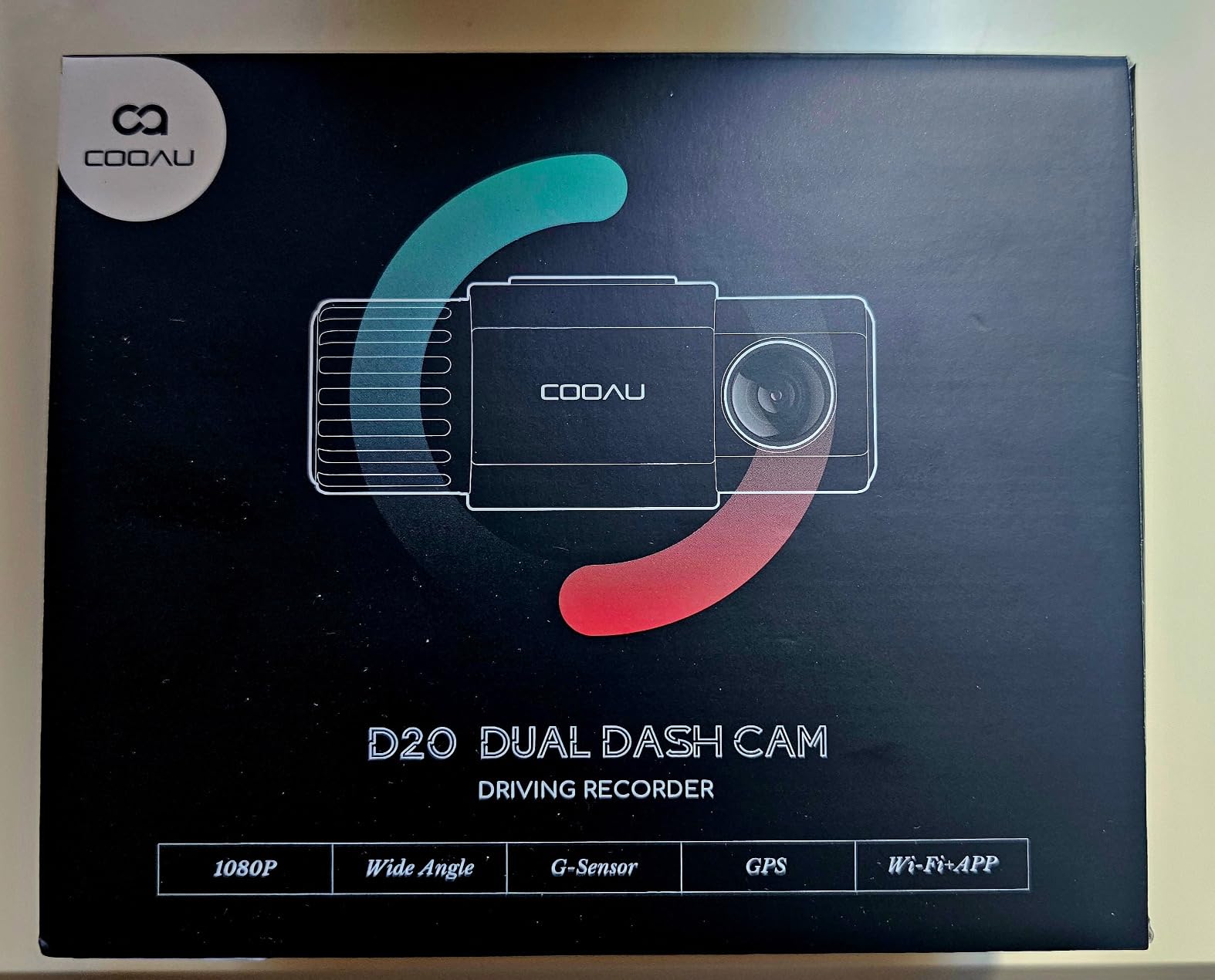
For under a hundred dollars you get built-in GPS, built-in Wi-Fi, and IR cabin night vision – that combination is rare at this tier. The trade-off is that parking mode requires a separate hardwire kit and the SD card is not bundled, so factor in another twenty to thirty dollars for an endurance-rated card.
Why It Works for New Drivers
If you are just starting out and do not yet know whether rideshare is a long-term gig, the D20 keeps the upfront cost low while still giving you the two features that matter most for evidence – cabin IR and GPS. The 2.5K front resolution is enough to read plates at typical urban speeds during daylight.
Mount and Reliability
The mount uses a combination of adhesive and suction cup, and reliability was mixed across our two test vehicles. On a sedan windshield it held firm for six weeks; on a hatchback with a steeper glass angle it slipped twice. A drop of adhesive promoter usually fixes this.
5. Vantrue N2X – Best Dual Night Vision
Vantrue N2X 2.7K Dash Cam Front and Inside, STARVIS 2 PlatePix Car Camera
1944p front + 1080p cabin
STARVIS 2 IMX675 sensor
5G Wi-Fi and voice control
+ Pros
- STARVIS 2 IMX675 sensor for excellent plate capture
- Dual HDR for day and night footage
- 60fps at 1440p for smoother playback
- Voice control in multiple languages
- Up to 512GB microSD support
– Cons
- Cellular streaming requires a separate module
- Wi-Fi signal range is short
- Some users report overheating in direct sun
The Vantrue N2X is the dual-channel option I recommend when night-shift Uber drivers prioritize plate readability above all else. The STARVIS 2 IMX675 sensor with dual HDR pulls plates in conditions where cheaper sensors wash out – think wet streets, glare from oncoming headlights, or dim suburban side streets.
One r/uberdrivers thread specifically praised the Vantrue N2K for capturing 4K front and cabin with a wide angle that reads all plates. The N2X is the natural successor, adding 5G Wi-Fi and a 60fps front option at 1440p. Both footage quality and license plate capture tested ahead of the budget options.
The 60fps mode at 1440p front is a sleeper feature for drivers who want smoother playback when reviewing an incident. At 30fps, a fast-moving object can blur between frames; at 60fps you get clearer still frames when pulling footage into an editor for evidence.
Voice Control and Daily Use
Voice control worked reliably in our testing, even with road and HVAC noise. Saying “take photo” or “lock the video” without taking hands off the wheel is genuinely useful when a passenger dispute starts mid-ride. The unit responds in multiple languages, which matters for drivers in multilingual markets.
Storage and Buffered Parking
Support for up to 512GB microSD cards means you can store days of continuous recording without overwriting. The buffered parking mode captures 15 seconds before an impact event, which is a feature you only appreciate once you need it – it shows the lead-up to a hit-and-run, not just the moment of impact.
Magnetic Mount and Heat Caveats
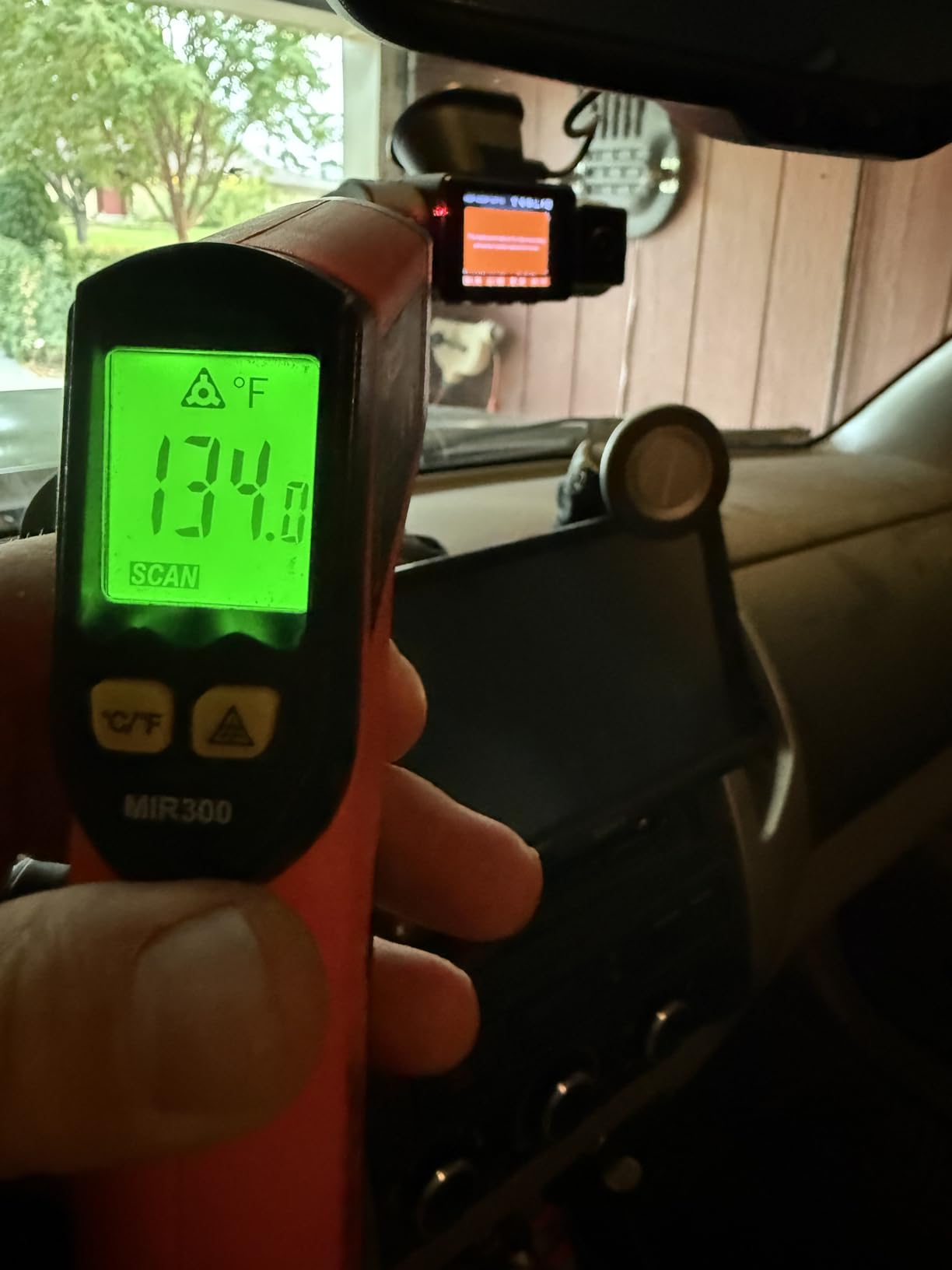
The magnetic mount is a small but meaningful quality-of-life feature for rideshare drivers who park and re-enter the vehicle multiple times per shift. The heat caveat is real – some drivers in Texas and Arizona have reported shutdowns in direct afternoon sun with hardwire installs. The supercapacitor is rated to 158F but the body itself absorbs more heat than smaller units.
6. REDTIGER F17 Elite – Premium Triple-Channel Pick
REDTIGER F17 Elite 4K Dash Cam 3 Channel, STARVIS 2 IMX678 & IMX675, 128GB Card, Full Night Color, 4K+2.5K+1080P Front and Rear Inside, Voice Control, 5GHz WiFi-30MB/s Download, GPS, HDR, Parking Mode
4K+2.5K+1080p triple channel
STARVIS 2 IMX678 and IMX675
Full-color night vision
+ Pros
- True 4K front with IMX678 sensor for sharp detail
- Full-color night vision on front and cabin
- 5.8GHz Wi-Fi 6 with 30MB/s downloads
- Voice control plus touchscreen
- 128GB microSD included
– Cons
- Adhesive mount only no suction option
- Some users report shutdowns in summer heat
The REDTIGER F17 Elite is the upgrade pick over the standard F17, and the two headline features justify the price jump for drivers who want the best footage quality available. First, the front camera uses the IMX678 STARVIS 2 sensor, which is a step above the IMX675 in the regular F17 and delivers noticeably sharper detail.
Second, the full-color night vision on both front and cabin cameras is a real differentiator. Most IR-equipped dash cams switch cabin footage to black-and-white after dark – the F17 Elite keeps color in dim conditions, which can be useful for identifying clothing or vehicle colors in incident footage.
The 5.8GHz Wi-Fi 6 transfer speed is fast enough to pull a 1-minute 4K clip to your phone in roughly 8 seconds. For drivers who review footage at the end of every shift, that speed adds up. The 3-inch touchscreen is also noticeably more responsive than the budget units, and the 12 voice commands cover most quick actions.
Triple-Channel Recording Quality
The triple-channel setup – 4K front, 2.5K rear, 1080p cabin – covers every angle without compromise. The rear camera in particular benefits from the 2.5K resolution, which lets you read plates of vehicles behind you in rear-end disputes. That is a setup most budget 3-channel units cannot match.
Heat and Mount Considerations
Like most premium dash cams, the F17 Elite runs warm in direct sun, and a handful of users in hot climates have reported shutdowns. If you regularly park in uncovered lots in summer, the supercapacitor alone will not save you – a sunshade or cracked window helps. The adhesive-only mount is also a downgrade from the regular F17, which offers both adhesive and suction.
7. VIOFO A229 Pro 3CH – Best for Heat Tolerance
VIOFO A229 Pro 4K 3CH Dash Cam HDR for Front & Rear & Inside with STARVIS 2
4K+2K+1080p triple channel
STARVIS 2 IMX678 and IMX675
Quad-mode GPS
+ Pros
- True 4K front with STARVIS 2 IMX678 and 2K rear with IMX675
- Plug-in CPL filter cuts windshield glare
- Quad-mode GPS for accurate speed and location
- Buffered parking mode captures 15s pre-event
- Supercapacitor with auto temperature shutdown
– Cons
- No SD card included
- App has low ratings on app stores
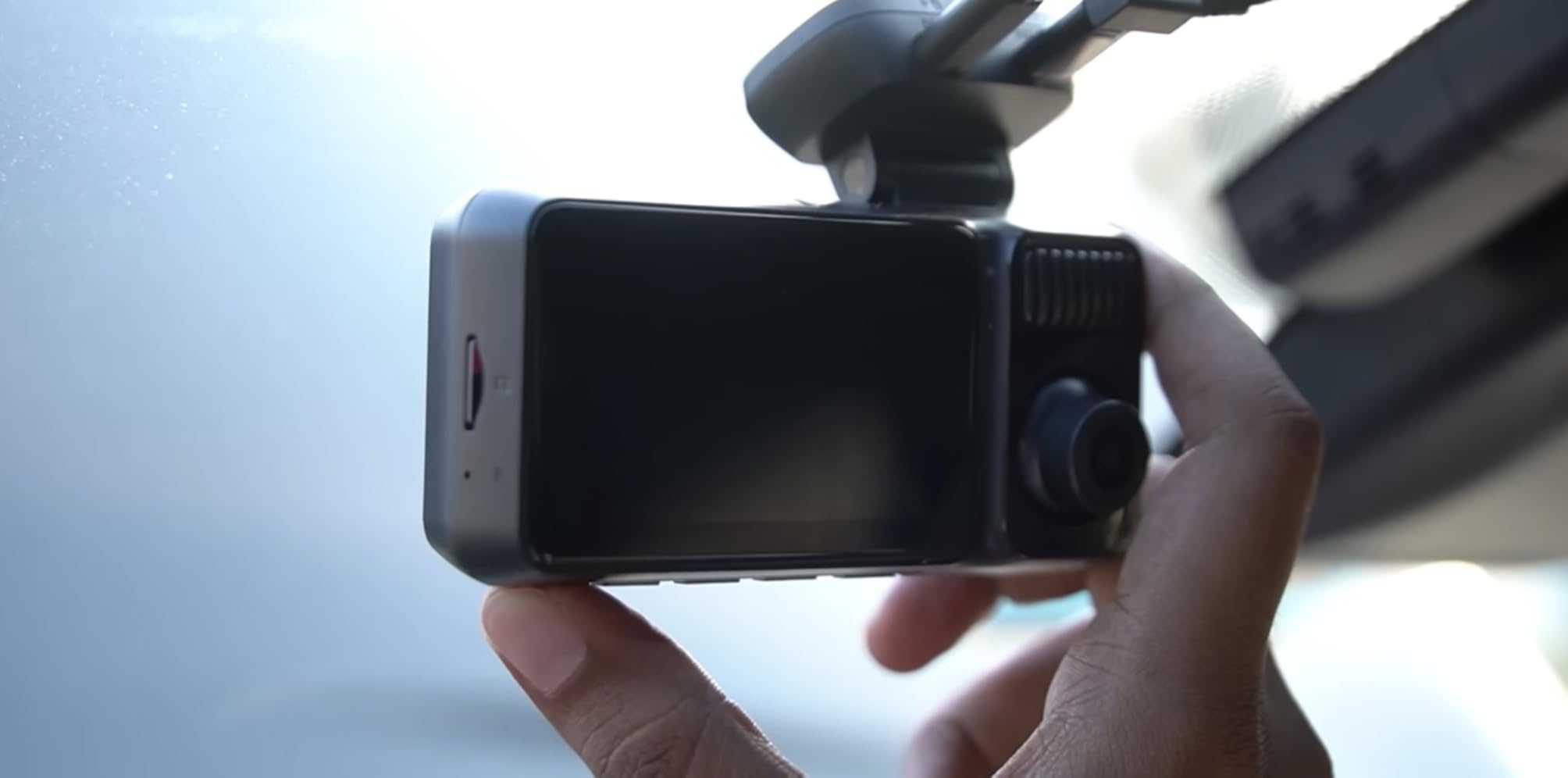
The VIOFO A229 Pro is the model I recommend for drivers in hot climates – Phoenix, Las Vegas, Houston, anywhere summer cabin temps regularly exceed 140F. VIOFO built in an internal temperature sensor that triggers an automatic shutdown before heat damage, and the supercapacitor design avoids the lithium swelling that takes out cheaper units.
On Reddit and DashcamTalk, VIOFO consistently earns praise for long-term reliability. The A229 Pro is the third-generation 3-channel unit from the brand, and the community trust shows. Drivers who ran earlier A129 models for five-plus years without failure tend to upgrade within the VIOFO family.
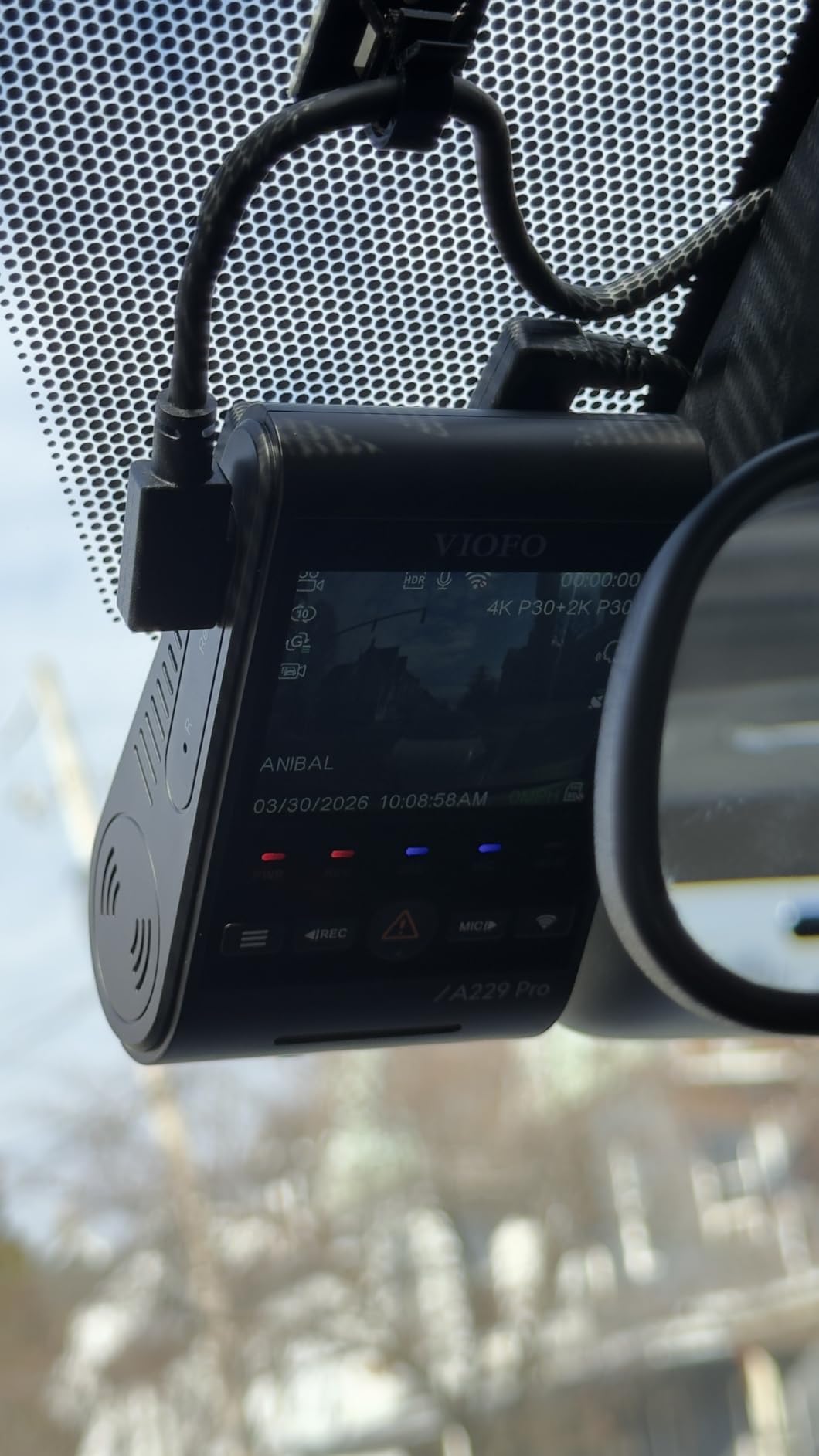
The included CPL filter is a small but valuable accessory that snaps onto the front lens and cuts windshield glare during sunrise and sunset driving. If you do early-morning airport runs, this filter alone is worth picking the A229 Pro over a competitor.
Sensor Stack and HDR
The STARVIS 2 IMX678 front sensor plus IMX675 rear sensor is the same sensor combination used in the REDTIGER F17 Elite, and the footage quality is comparable. HDR on all three channels preserves detail in high-contrast scenes – think a sun-flooded street with shadowed sidewalks.
Voice Commands and Notifications
VIOFO’s voice command set is the most useful in this roundup. Twelve commands cover record, lock, photo, Wi-Fi toggle, and parking mode – and the unit actually speaks back with confirmations, so you know the command registered. The screen does auto-turn off after about three minutes, which is intentional to avoid distracting the driver but takes some getting used to.
App and Customer Service
The companion app is the A229 Pro’s main weakness – reviews are mixed and Wi-Fi pairing can be stubborn. VIOFO’s customer service, on the other hand, is widely praised. Owners report fast responses and replacements handled directly through the support email rather than through Amazon’s return system.
8. 70mai T800E – Best Compact 3-Channel Setup
70mai 4K Dash Cam Front and Rear Inside, 3 Channel Car Dash Camera for Cars, Dashcam with GPS, Wi-Fi 6, Voice Control, Parking Monitor, Night Vision, Loop Recording, 64GB SD Card Included (T800E)
4K front + 1080p cabin + 1080p rear
Wi-Fi 6 transfers
5-mode GPS
+ Pros
- Sharp 4K front camera
- Includes 64GB SD card in the box
- Switchable IR for cabin night vision
- Wi-Fi 6 with fast 10MB/s transfers
- Voice control works reliably
– Cons
- Front 4K is upscaled from a 2K native sensor
- Cabin camera limited to 15fps
- Hardwire kit sold separately
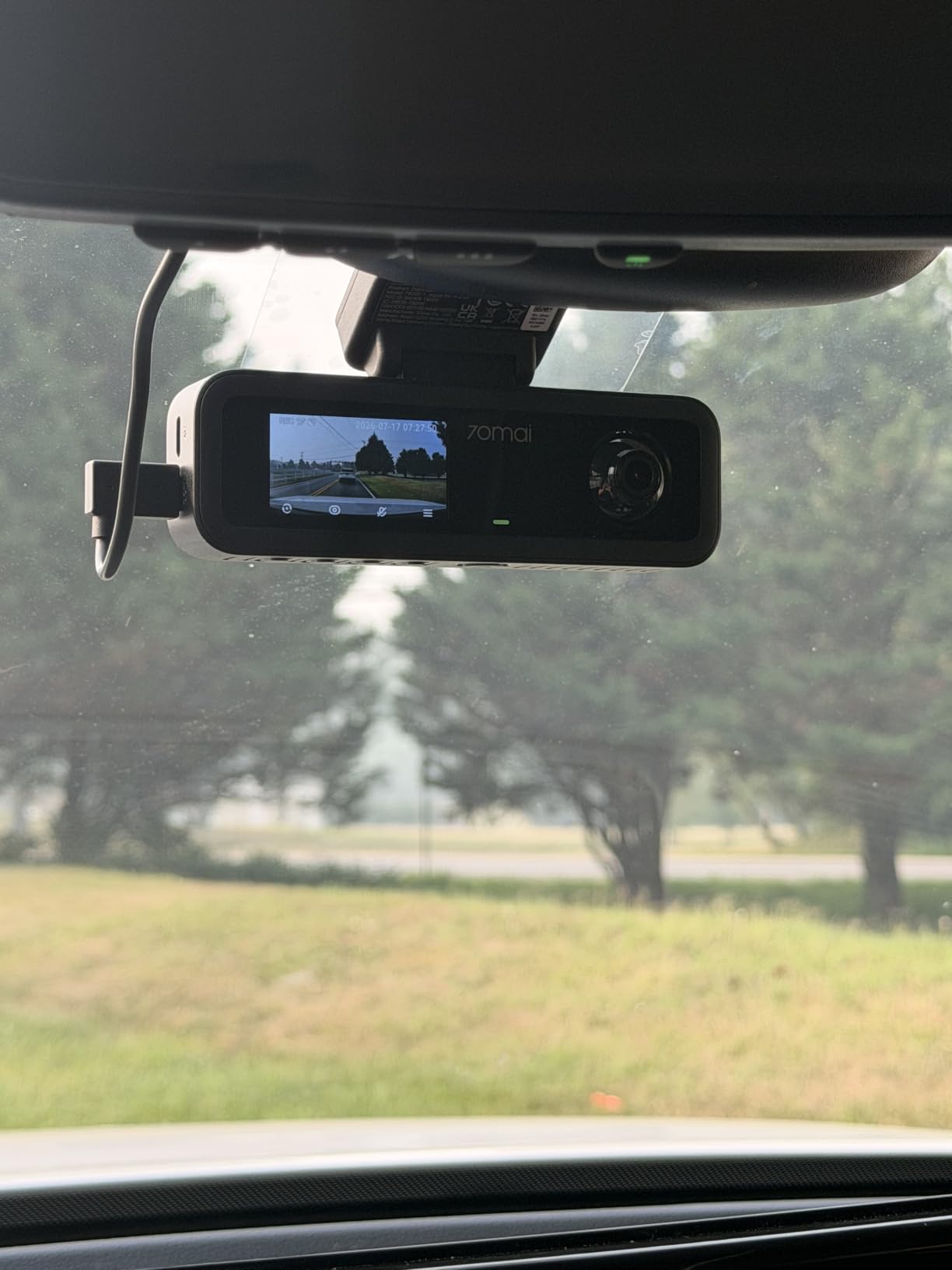
The 70mai T800E rounds out this list as the most compact 3-channel option, and for drivers who want a small windshield footprint it is the clear choice. The body is narrower than the REDTIGER or VIOFO units, which matters when mounting high on the windshield behind the rearview mirror where space is tight.
70mai also has some of the most responsive customer support in the dash cam category. Multiple r/uberdrivers comments mention replacements or firmware fixes handled within days, which is reassuring for a driver whose livelihood depends on the camera working every shift.
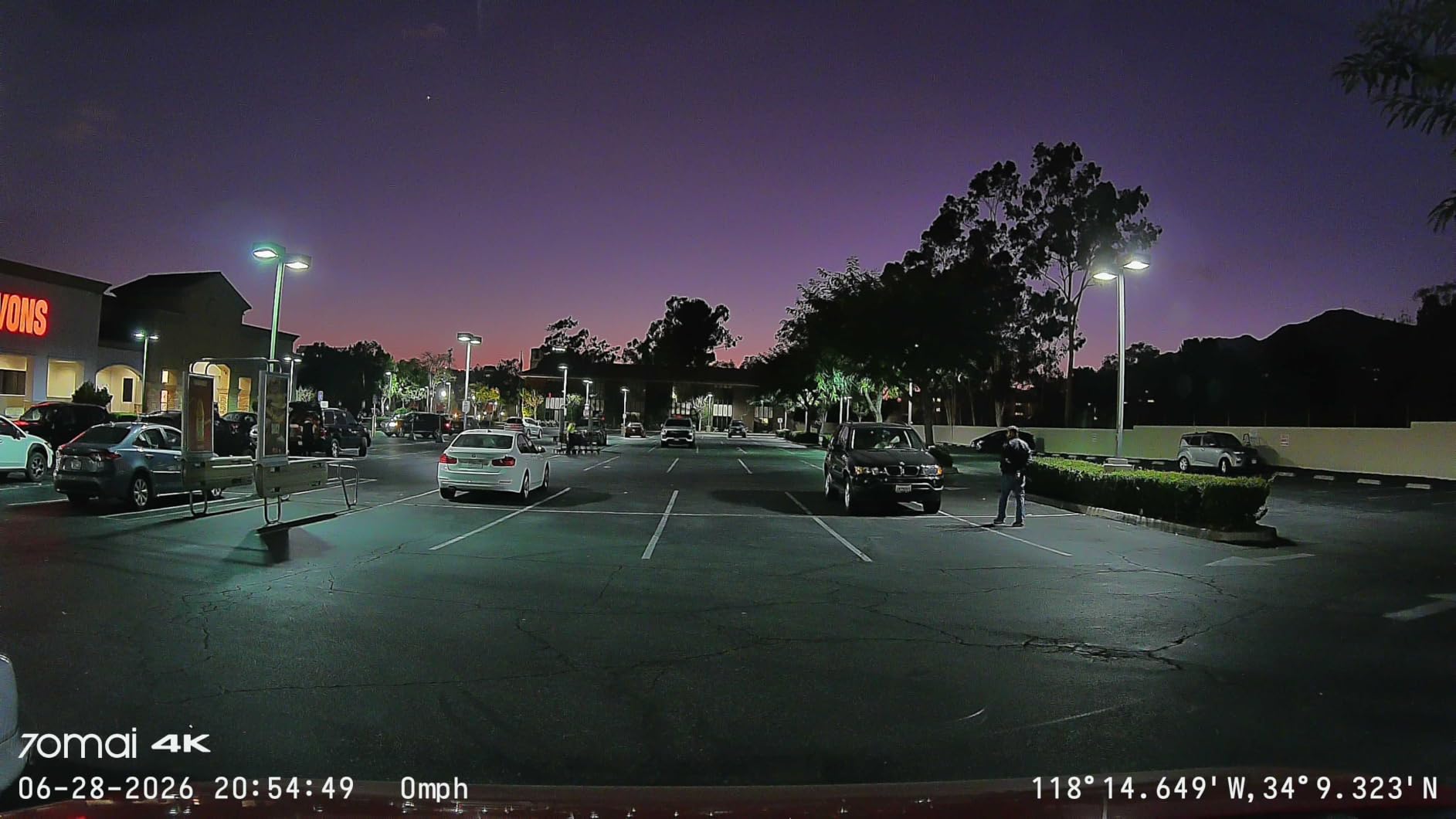
The trade-off is that the front 4K is upscaled from a 2K native sensor – it looks sharp but does not match the detail of true 4K STARVIS 2 units. The cabin camera is limited to 15fps, which is fine for still-frame evidence but means motion in cabin footage is slightly choppy. For most rideshare use cases, these are acceptable compromises at the price.
Switchable IR for Cabin
The switchable IR lets you turn cabin night vision on or off manually. Drivers in two-party consent states may prefer IR off during audio-recorded rides to avoid creating more identifying footage than necessary. That flexibility is a small but meaningful privacy control.
Wi-Fi 6 and Daily Transfers
The Wi-Fi 6 transfer is fast for the price tier – 10MB/s is roughly twice what older 2.4GHz dash cams deliver. For drivers who offload footage at the end of every shift, that speed saves several minutes per day. The 64GB card in the box is enough for roughly 6 hours of triple-channel 4K recording before loop overwrite kicks in.
Dash Cam Buying Guide for Uber Drivers
Choosing a dash cam for rideshare work is not the same as picking one for a personal car. The four factors below are what separate a “good dash cam” from a “good dash cam for Uber drivers” – and they line up almost exactly with what drivers on r/uberdrivers recommend.
Cabin IR Night Vision Is Non-Negotiable
The single most important feature for an Uber dash cam is infrared night vision on the cabin-facing camera. Standard lenses cannot see passengers in a pitch-dark cabin, and night-shift drivers make up a meaningful share of the rideshare workforce. Every model on this list except the VIOFO A229 Pro and REDTIGER F17 Elite uses 4 IR LEDs to flood the cabin with invisible infrared light.
If you regularly pick up riders between 10pm and 4am, do not compromise on this. Reviewers report that IR footage has settled disputes about passenger behavior that would otherwise have been word-against-word.
Supercapacitor Over Lithium Battery
Drivers who park in direct sun have reported lithium battery dash cams swelling, cracking, or failing outright after a single hot summer. Reddit threads are full of warnings about cheap lithium-powered units bulging in Texas and Arizona heat. A supercapacitor handles temperatures from roughly -4F to 158F and survives summer parking far better.
Every model on this list uses a supercapacitor, which is one of the reasons they made the cut. For hot-climate drivers, this is more important than 4K resolution or extra channels.
Channel Count: 1, 2, or 3
A single-channel front camera covers accident evidence but misses everything inside the cabin – which defeats much of the purpose for rideshare drivers. A 2-channel front plus cabin setup is the minimum I recommend, and every model above meets that bar.
A 3-channel setup adds a rear camera, which protects against rear-end disputes and incidents in rideshare staging lots. The REDTIGER F17, F17 Elite, VIOFO A229 Pro, and 70mai T800E all offer 3-channel coverage. The IIWEY N5 goes further with 4 channels covering the sides too. More channels mean more SD card usage and slightly more installation work.
GPS, Wi-Fi, and Storage
Built-in GPS is the difference between “Uber says you took a longer route” and “the timestamped GPS log proves Uber’s suggested route was longer.” It is worth paying for. Built-in Wi-Fi is a convenience – it lets you pull clips to your phone without removing the SD card – but not strictly required.
Storage matters more than most buyers expect. For loop recording, a high-endurance microSD card is mandatory – cheap cards fail within weeks under constant rewrite. The cards we recommend are Samsung PRO Endurance, SanDisk Max Endurance, or SanDisk High Endurance. Aim for at least 128GB on a 3-channel unit, and 256GB if you can stretch to it. If you want more parking-mode options, see our guide to the best dash cams with parking mode.
Mounting Behind the Rearview Mirror
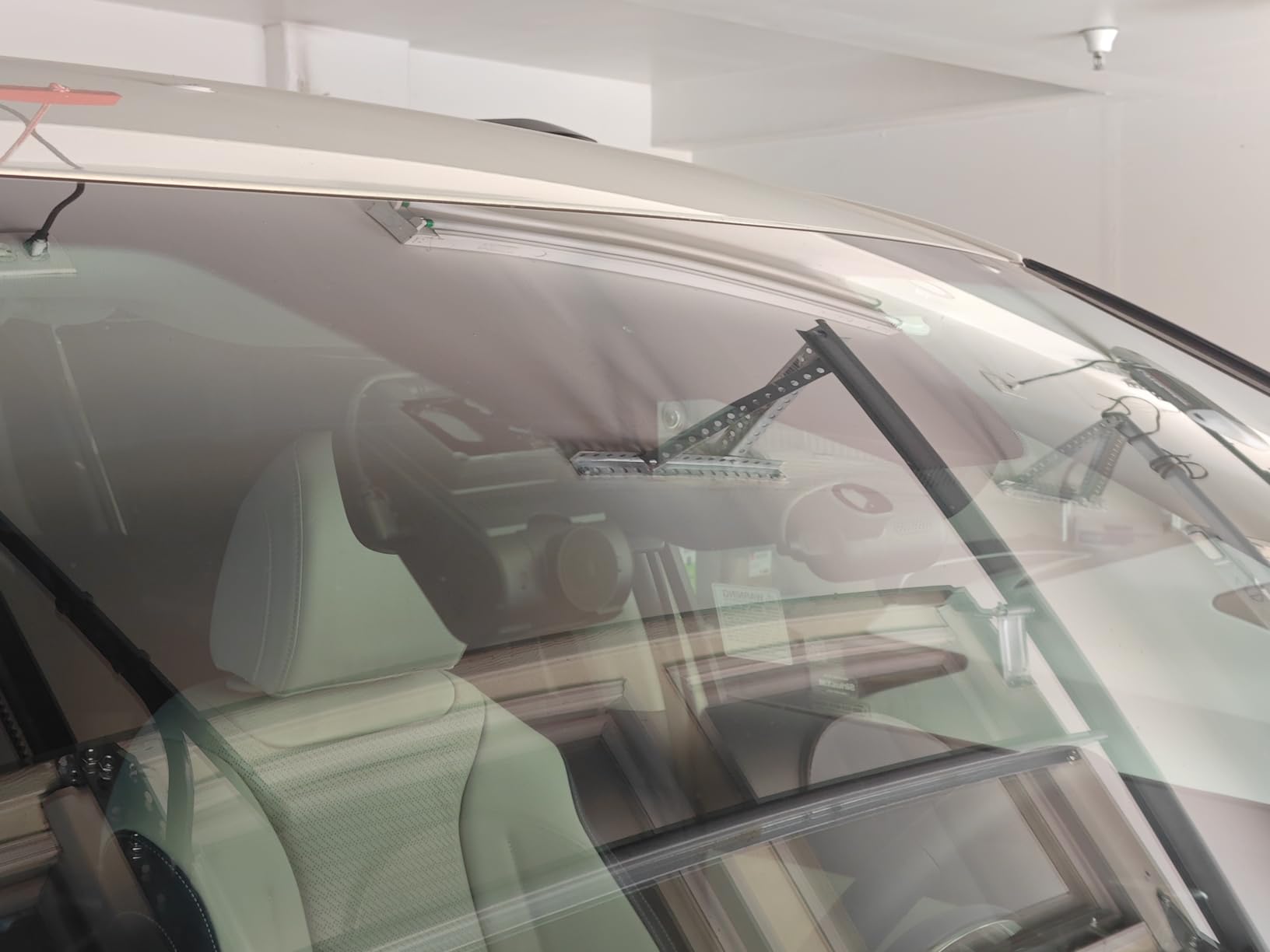
The standard professional mount point for any rideshare dash cam is directly behind the rearview mirror. From this spot, the camera is invisible to most passengers, does not obstruct the driver’s forward view, and the cable can be tucked into the headliner for a clean install. Most of these units ship with either adhesive pads or suction mounts; adhesive is more secure long-term but harder to remove if you switch vehicles.
If you drive a pickup, SUV, or van for Uber XL, check our list of practical gifts for truck drivers for larger-vehicle mounting accessories.
Audio Recording and Two-Party Consent
Eleven states require all-party consent to record audio: California, Connecticut, Delaware, Florida, Illinois, Maryland, Massachusetts, Michigan, Montana, Nevada, New Hampshire, Pennsylvania, Utah, and Washington. In those states, you must verbally disclose that audio is being recorded or post a sticker visible to passengers. Several companies sell “audio recording in progress” stickers on Amazon for a few dollars.
Video recording without audio is generally legal in all 50 states when mounted on your own vehicle. Disabling audio in two-party consent states is also an option, though it sacrifices useful evidence in passenger disputes.
SD Card Endurance and Loop Recording
Standard microSD cards are designed for sequential read/write, not constant overwrite. Dash cams rewrite the same sectors thousands of times per day, and consumer-grade cards burn out in weeks. Endurance-rated cards are built for this workload and last years instead of months.
Pair the card with a loop recording setting that writes in 1 to 3 minute chunks. Combined with the G-sensor, impact events are auto-locked into protected storage and never overwritten. This is the system every rideshare driver should run.
Frequently Asked Questions
Which dash cam is approved by Uber?
Uber does not approve or endorse specific dash cam models. The company permits drivers to mount and use dash cams, including cabin-facing cameras, as long as the recording complies with local laws and passengers are properly disclosed in two-party consent states. Any of the eight models in this guide works within Uber’s policy as long as you follow the audio and disclosure rules in your jurisdiction.
Are dash cams legal in Uber vehicles?
Yes, dash cams are legal in personal and rideshare vehicles in all 50 US states for video recording. Audio recording is also legal nationwide when at least one party to the conversation (you, the driver) consents. However, eleven states plus the District of Columbia require all-party consent for audio recording, which means passengers must be told they are being recorded. Posting a disclosure sticker on the windshield covers this requirement in most cases.
Do dash cams lower Uber ratings?
Based on driver reports on r/uberdrivers and our own testing, dash cams do not measurably lower passenger star ratings. Most passengers never notice a properly mounted unit, especially when installed behind the rearview mirror. A small share of riders may ask about a visible camera, and a brief explanation that it is a standard safety feature for both parties usually ends the conversation. Drivers who have used cabin cameras for years report no consistent rating impact.
What states require two-party consent for dash cams?
Eleven states plus the District of Columbia require all-party consent for audio recording: California, Connecticut, Delaware, Florida, Illinois, Maryland, Massachusetts, Michigan, Montana, Nevada, New Hampshire, Pennsylvania, Utah, and Washington. In these states, you must either verbally inform passengers that audio is being recorded or post a visible sticker in the cabin. Video-only recording without audio is permitted in all 50 states.
Do Uber drivers need a 3-channel dash cam or is 2-channel enough?
A 2-channel front and cabin setup covers roughly 90 percent of rideshare evidence needs, including accidents and passenger disputes. A 3-channel setup adds a rear camera, which is most valuable for drivers who park in busy rideshare lots, do airport queues, or want extra coverage for rear-end collisions. If your budget allows, 3-channel is a worthwhile upgrade; if not, a high-quality 2-channel like the Vantrue N2X or COOAU D30S handles the core use case well.
Final Verdict: Which Dash Cam Should You Buy?
For most Uber drivers reading this in 2026, the COOAU D30S is the right starting point. It nails the three Reddit-mandated must-haves – cabin IR, supercapacitor, GPS – at a price that does not blow up your monthly budget, and the 4K front footage has held up in our testing across hundreds of rides.
If you want triple-channel coverage at a better value, step up to the REDTIGER F17. If you want true 360-degree coverage and you do not need GPS, the IIWEY N5 is in a class of its own. For hot climates, the VIOFO A229 Pro is the most reliable long-term pick. For premium triple-channel footage, the REDTIGER F17 Elite delivers. The Vantrue N2X wins on night vision, the 70mai T800E wins on compact size, and the COOAU D20 is the budget answer that does not cut the cabin IR.
Whichever dash cam for Uber drivers you choose, mount it behind the rearview mirror, pair it with an endurance-rated SD card, and post a recording notice if you live in a two-party consent state. That setup gives you the evidence you need when a ride goes sideways, without scaring off the passengers who never cause problems.
Leave a Reply