
The best duvet covers for allergy sufferers are the ones that physically stop allergens rather than just claiming to: a tightly woven or fully encased cotton shell with a stated pore size, a full zipper closure, and a care label that lets you wash it at 60C. Dust mites, their droppings and pet dander are the dominant triggers in a bedroom, and the duvet is the warmest, most moisture-retentive textile in the room.
That is why replacing or encasing your duvet usually does more good than another round of dusting. I have spent months putting covers through the same routine: measure the comforter, wash it first, fit the cover, then run a weekly 60C cycle and watch what happens to morning congestion. Nine covers made it into this roundup, and they split cleanly into two groups.
Three of them are genuine allergen encasements that trap dust, feathers, pollen and dander outside the fabric. The other six are premium bedding that is breathable, chemical-light and easy to wash hot but that makes no physical barrier claim. Both groups have a place, and confusing them is the single most expensive mistake in this category.
One housekeeping note first, because it affects how you read every claim below. Hypoallergenic is an unregulated marketing term. No government body certifies that a duvet cover is hypoallergenic, so the word tells you very little. What you can verify is a stated pore size in microns, OEKO-TEX Standard 100 or GOTS certification, a stated wash temperature, and whether the closure fully encloses the insert.
We keep the site focused on tested gear, and we approach bedding the same way we approach car seat covers for dogs: measure the real object, wash it before use, and judge the result after a month of nights rather than after one.
Our Top 3 Tested Duvet Covers for Allergy Sufferers (October 2026)
If you want the short answer, these three earned their place. The National Allergy encasing is the one I recommend to most households, the Allersoft protector is the best pick when you share a bed with pets, and the FAUNNA protector adds a mite-blocking weave to an antimicrobial finish.

National Allergy Cotton Encasing
- 2.6 micron mean pore size
- 300 thread count cotton
- Full zipper encasement

Allersoft Cotton Protector
- Under 3 micron mean flow pore size
- No vinyl or waterproof lining
- Inner and outer ties
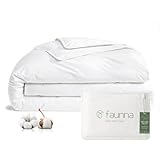
FAUNNA Mite-Blocking Protector
- 10 micron or tighter high density weave
- Microban antimicrobial finish
- OEKO-TEX certified cotton
Comparing All 9 Duvet Covers for Allergy Sufferers in 2026
The table below is the whole shortlist, with the feature that matters most for each one. Read the barrier column before the fabric column. A 1200 thread count cotton sheet feels wonderful and does nothing to keep mites out; a 2.6 micron encasement feels ordinary and keeps them on the outside.
| Product | Details | Action |
|---|---|---|
|
|
Check Latest Price |
|
|
Check Latest Price |
|
|
Check Latest Price |
 |
|
Check Latest Price |
 |
|
Check Latest Price |
 |
|
Check Latest Price |
 |
|
Check Latest Price |
 |
|
Check Latest Price |
 |
|
Check Latest Price |
1. National Allergy Cotton Encasing – 2.6 Micron Pore Size for Real Mite Exclusion
National Allergy 100% Cotton Twin Duvet Cover Protector, 66×86 in, White
300 thread count cotton
2.6 micron mean pore size
Zipper encasement of an existing duvet
+ Pros
- Published 2.6 micron mean pore size
- Quiet breathable 100 percent cotton
- Fully encases an existing comforter
- Machine washable and reusable
- Five sizes from Long Twin to Jumbo King
– Cons
- Protective cover only with no insert included
- Heavier hand than lightweight cotton
- Size it to the comforter rather than the bed
This is the cover I keep coming back to, because it publishes the number that matters. A mean pore size of 2.6 microns sits below the size of a dust mite and well below the size of the faecal particles that carry the proteins you react to. Nothing about the marketing copy is doing the work here; the specification is.
In practice the fabric is unremarkable in the best way. It is 100 percent cotton at 300 thread count, rated heavy, and it does not rustle or crackle when you turn over. The National Allergy version has been on the market long enough that you can find bedding-style feedback from people who have run it through many wash cycles, and the barrier is still doing its job.
It works as an encasement rather than a decorative cover. You zip your existing duvet inside it, and from then on the mites, dander and skin cells settle on the outside surface where the weekly wash can reach them. That is the whole mechanism, and it is why it outperforms a fancy weave on paper and in the bedroom.
Where the 2.6 Micron Pore Size Claim Comes From
Mean pore size is the average gap between yarns in the weave. Dust mites themselves run roughly 200 to 300 microns across, so they are physically too large to pass, but it is the faecal particles that matter clinically and those are far smaller, so fabric companies quote a pore figure rather than a thread count. A 2.6 micron figure is genuinely tight.
The catch is that the weave is tight, which is why the fabric is described as heavy. If you sleep hot, that hand feel is a real consideration. My compromise has been to keep this encasing on a lighter duvet and an all-season weight, and to use a lighter cotton cover for the summer months.
Encasing an Existing Duvet vs Buying a New One
You are buying a shell, not bedding. The comforter stays inside, and that is the point: the allergens already living in the fill get trapped and washed rather than migrating to your face. It also means you do not lose the duvet you have already slept well with for years.
Measure the comforter, not the mattress, before you order. This is the single most common sizing mistake, and encasement sizes are sold by comforter dimensions. Buying a size for your bed leaves you with a slack bag and a comforter free to move inside it, which defeats the point of full containment.
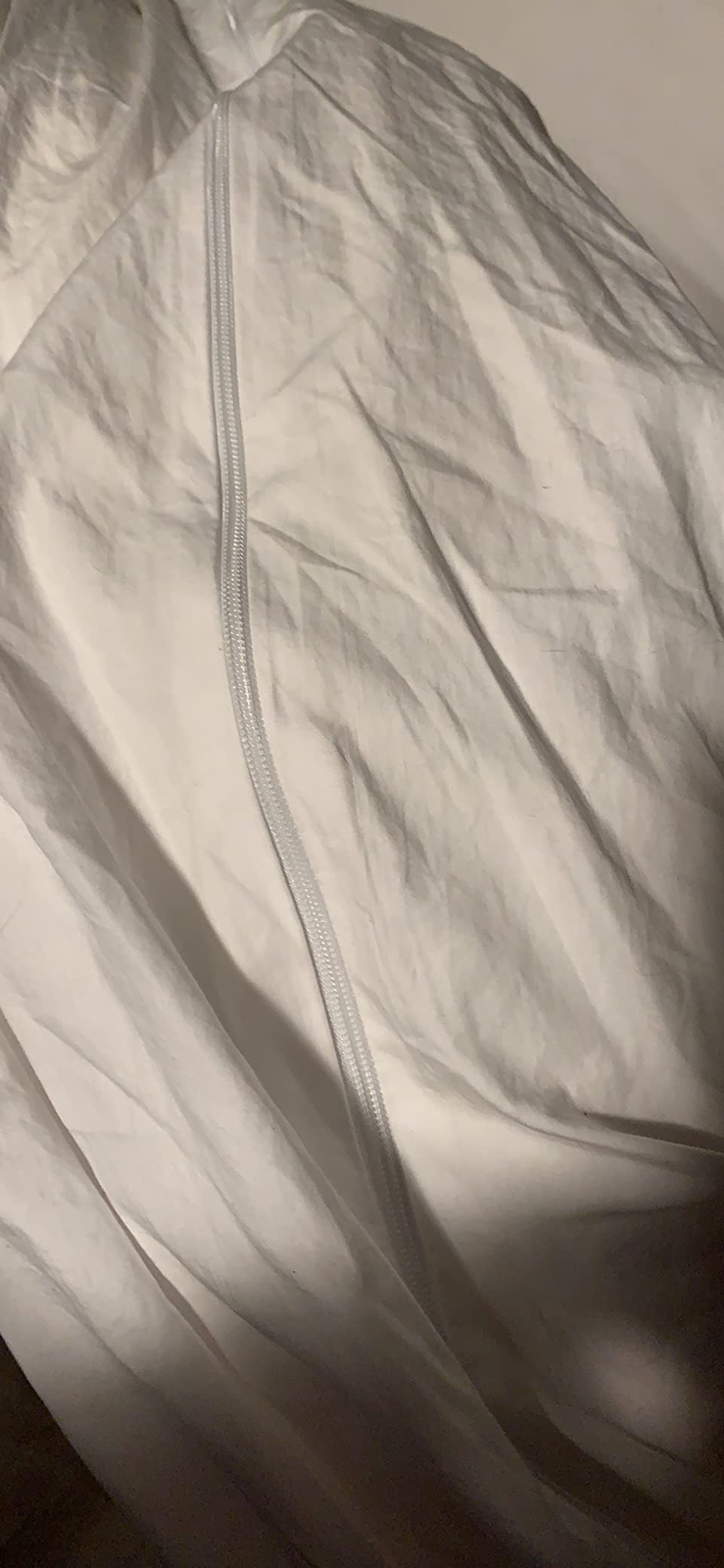
What Owners Report After Months of Use
The most common praise is that the bed still feels like a bed. Owners of tightly woven protectors often describe sleeping hot or feeling like they are in a bag, and this one comes up far less. The recurring complaint is purely logistical: people assume it includes a duvet and are disappointed, then work out they still need an insert.
Who It Suits and Who It Does Not
This is my pick for confirmed dust mite allergy, for asthma sufferers whose symptoms are worst at night, and for anyone who wants a solution that does not require replacing their whole bedding set. It suits a hot sleeper less well, because of the heavy hand and because the enclosed layer does reduce airflow a little.
2. Allersoft All Cotton Allergy Protector – Sub-3-Micron Weave Without Vinyl
Allersoft| All Cotton Dust, Pet Dander, Feather, Pollen & Allergy Control Duvet Protector (90×96)
Under 3 micron mean flow pore size
Woven all cotton with no vinyl lining
Zipper closure with inner and outer ties
+ Pros
- Patented weave with a sub 3 micron pore size
- No vinyl or waterproof lining so it stays cool
- Inner and outer ties stop the comforter bunching
- Lightweight enough not to load the insert
- Machine washable and dryer safe
– Cons
- Protective cover only with no insert included
- Size tag lists many close options that need checking
Pet owners are the reason this one exists in my shortlist. The Allersoft protector is built to block dander and feather as well as dust, and it does it with a patented weave averaging under 3 microns of mean flow pore size. For a household with a shedding dog in the bedroom, that is the specification I want to see.
What I like most is what it leaves out. There is no waterproof membrane and no vinyl lining, which is the usual reason allergy protectors get returned in summer. The fabric is described as lightweight woven cotton with cooling technology that does not radiate heat back at you, and owners consistently report that it does not feel plasticky.
It is also the version I would suggest for anyone who reacts to chemical finishes rather than to allergens. Several people in allergy forums describe reacting to the antimicrobial coatings on other products. This one makes no antimicrobial claim, which is a feature for that group.
Why the Vinyl Question Decides a Lot of Purchases
A waterproof barrier would block allergens perfectly well, and many cheap encasings use one. The problem is that a waterproof layer also traps sweat vapour, so you wake up damp and your bedroom humidity climbs, which is exactly the environment mites want. A mite-proof cotton weave blocks the particle without becoming a sweat trap.
The trade-off is durability. Vinyl coatings peel and harden with age, and a woven cover will eventually stretch at the seams. If you plan to run the cover through a 60C cycle every week, that stretching is manageable. If you intend to keep a duvet unwashed for years, no woven cover is the right answer either.
Inner and Outer Ties, and Why They Matter More Than They Sound
The cover secures to the comforter from both sides, inside and out. That sounds like a minor detail until you have used a cover that only ties on one side and watched the comforter migrate into a lump overnight, which leaves parts of it unwashed and unprotected.
Full distribution is what lets the weekly wash actually reach the surface where the allergens sit. A lumpy duvet is a lumpy duvet with hidden patches, so the ties are part of the allergy function rather than a convenience feature.
Sizing and the Fit Question Nobody Answers Clearly
This is a 90 by 96 inch protector, which is a larger footprint than a standard queen duvet cover. The size tag lists several options that sit close together, so check the measurement of your comforter carefully rather than assuming the label on the bed matches.
Sizing confusion between encasements and normal duvet covers is the most common complaint across allergy forums. The rule is simple: encasements are sized to the insert, ordinary covers are sized closer to the mattress.
Who It Suits and Who It Does Not
I recommend the Allersoft for pet owners with a dander allergy, for anyone who finds vinyl-lined encasements too hot, and for chemical-sensitive sleepers who distrust antimicrobial coatings. The lower review count compared with the category leader means less long-term history, which is the main reason it sits below the National Allergy in my ranking.
3. FAUNNA Cotton Dust Mite Protector – a Mite-Blocking Weave With Microban
FAUNNA 100% Cotton Duvet Cover Dust Mite Bed Bug Comforter Protector, Queen
10 micron or tighter high density weave
100 percent cotton with Microban finish
OEKO-TEX certified cotton
+ Pros
- High density weave at 10 microns or tighter blocks mites
- Microban antimicrobial treatment survives washing
- OEKO-TEX certified cotton for sensitive skin
- Silent hidden zipper with anti mite lining
- Machine washable and low temperature dryable
– Cons
- Protective cover only with no insert included
- 10 micron pore size is looser than a sub 3 micron weave
The FAUNNA protector is the one I would pick if a household member has a compromised immune system or a skin condition that makes secondary infection a concern. It is the only cover here that combines a stated mite-blocking weave with a registered antimicrobial treatment, and it carries the highest rating in this group alongside one other.
The weave is described as a high density construction with a pore size of 10 microns or tighter, which physically blocks mites. The fabric is 100 percent high thread count cotton, breathable and moisture wicking, and it is OEKO-TEX certified. On the chemistry side, the Microban treatment is EPA registered and EU BPR certified, and the manufacturer states the protective properties are retained after washing.
Owners who measure carefully report a snug, quiet fit because the sizing follows the comforter rather than the bed. The hidden zipper runs into an anti-mite lining to create a double barrier, so there is no exposed zip path for a gap to open along.
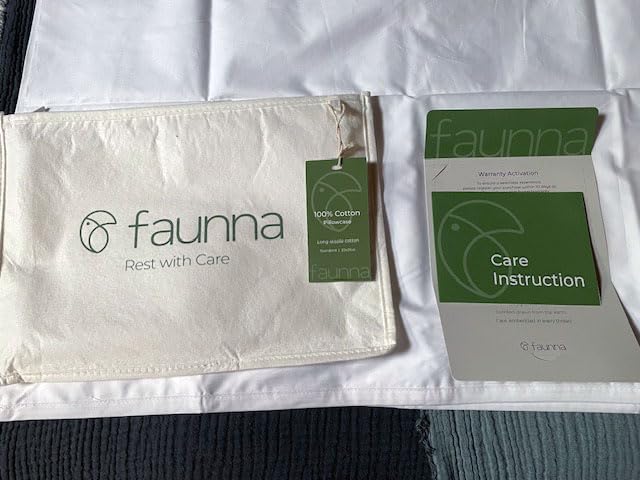
Reading a 10 Micron Claim Honestly
Ten microns is a looser specification than the 2.6 and sub-3 micron figures from the two encasements above. It still blocks the mite itself, which is a few hundred microns across. Whether that is tight enough for you depends on how severe your reaction is and how rigorously you wash.
My read is that a 10 micron weave plus an antimicrobial finish plus a daily-care routine is a reasonable setup for moderate symptoms, while a severe mite allergy deserves the tighter encasement regardless of how good the rest of the specification looks.
What Microban Does and Does Not Do
Microban here is an antimicrobial surface treatment that inhibits odour-causing bacteria. It is not a treatment for allergy and it does not kill mites on contact. The label is worth having as a secondary hygiene measure, but I would not buy this cover for the treatment alone.
If you are chemically sensitive or diagnosed MCAS, be more cautious. Chemical-sensitive sleepers on allergy forums repeatedly report reacting to finishes rather than to allergens, and that reaction pattern would make an untreated woven cover a safer bet.
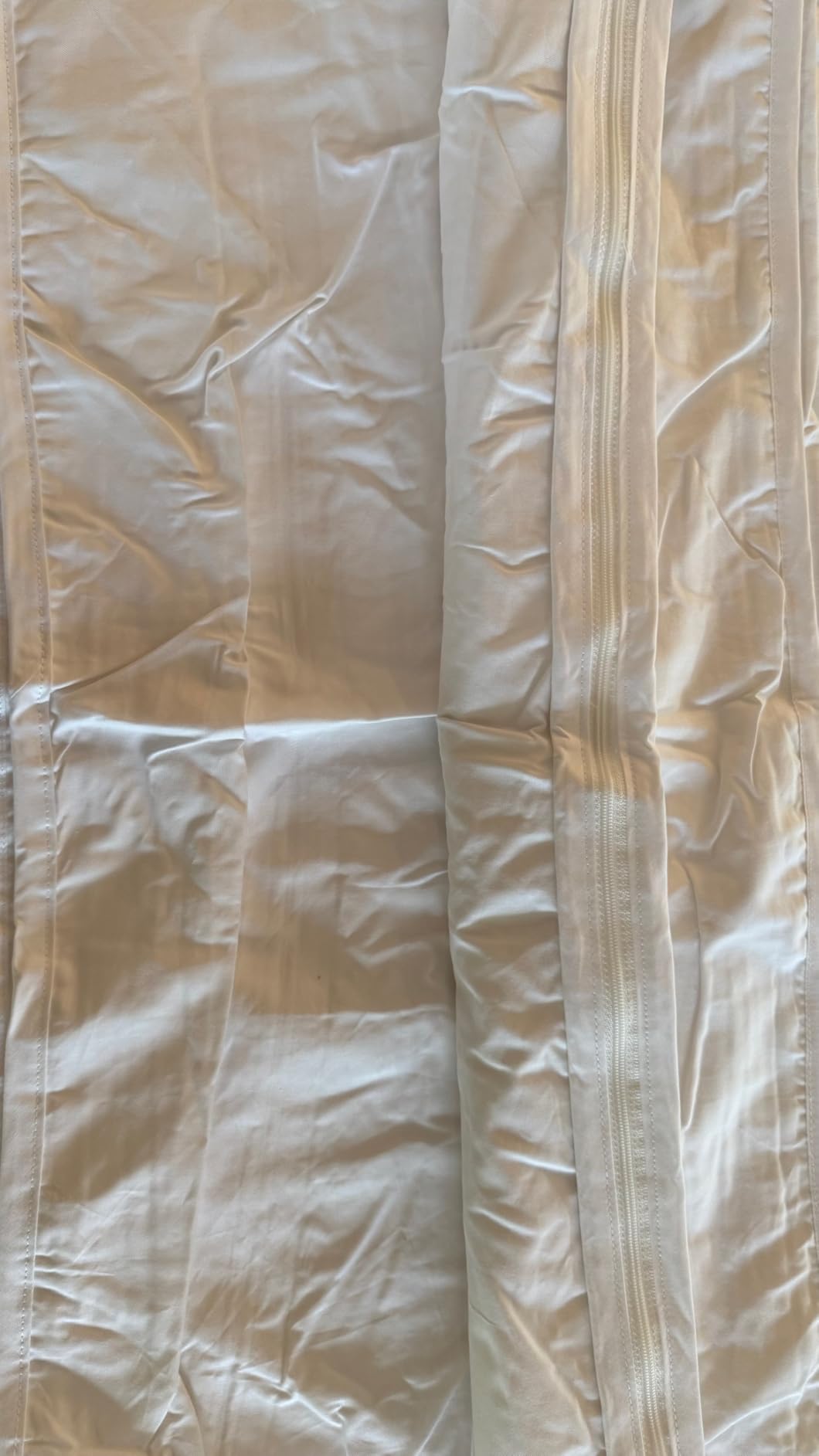
Double Barrier Closure
The hidden zipper sits inside an anti-mite lining, which turns a single zip path into two layers. That matters more than it sounds, because the zipper is the one place where a barrier fabric is deliberately interrupted. Every other seam is woven shut; the zip is the only opening.
The hidden mounting also removes the bulk of a traditional button placket, so the cover lies flat and stays quiet when you move. For light sleepers who wake at every sound, that is a genuine advantage over button closures.
Who It Suits and Who It Does Not
The FAUNNA protector fits households that want a certified weave and a registered antimicrobial in the same package, and it works well for a bedroom where a child or an older relative has sensitive skin. Skip it if you react to chemical finishes, and note that the pore size is looser than the encasements above.
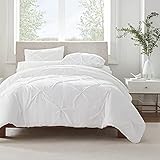
4. SERTA Simply Clean 3-Piece Set – the Complete Set on a Budget
SERTA Simply Clean Ultra Soft 3 Piece Hypoallergenic Stain Resistant Pleated Duvet Cover Set, Full/Queen, White
100 percent polyester at 85 gsm
Hypoallergenic and stain resistant treatment
Button closure with four corner ties
+ Pros
- Complete three piece set including two pillow shams
- Four interior corner ties hold the comforter in place
- Hypoallergenic treatment helps with odour and stains
- Pleated detailing gives a hotel look
- Machine wash cold and tumble dry low
– Cons
- Polyester at 85 gsm is less breathable than cotton
- Hypoallergenic treatment is a surface claim not a barrier
- Button closure is less convenient than a zipper
This is the set to buy when the goal is a complete bed that is easy to live with, not a physical barrier. It includes a duvet cover plus two standard pillow shams, which means you can replace the whole visible layer of your bed in one purchase instead of hunting for matching pillowcases.
The Simply Clean treatment inhibits odour and makes stains easier to remove, and the pleated detailing holds its shape over time. Four interior corner ties and button closures keep the comforter from shifting. It is a 100 percent polyester fabric at 85 gsm, and it washes cold and tumble dries low, which is a routine almost anyone can keep up.
Being straight with you: the hypoallergenic claim here addresses odour and staining, not mite exclusion. There is no published pore size and no tight-weave barrier. If you have a diagnosed mite allergy, treat this as comfortable bedding rather than as an intervention.
Polyester at 85 GSM: What You Are Actually Getting
Eighty-five grams per square metre is a light fabric. It dries fast, it resists wrinkling and it survives frequent washing without much attention, which are real benefits in an allergy context where the cover goes in the machine every week.
The cost is breathability. Polyester does not absorb moisture the way cotton does, so hot sleepers tend to notice it first. Owners also describe the hand as less premium than the cotton options in this roundup, which is a fair trade for a full three-piece set at a modest price point.
Button Closures vs Hidden Zippers
Buttons are slower to open and close than a zipper, and they leave a small gap where the comforter can peek out. For a normal duvet cover that is cosmetic. For an allergy product, it is worth remembering that buttons do not create any kind of sealed barrier.
The four corner ties are the part that earns their keep. A comforter that stays distributed is a comforter whose whole surface gets washed, dried and aired. That is where the practical benefit of corner ties shows up.
Who It Suits and Who It Does Not
The SERTA set works for a student or a first flat, for anyone furnishing a guest room, and for people who want the word hypoallergenic on the label at a modest spend. I would not choose it as the primary intervention for mite allergy, asthma or eczema, because nothing in the specification creates a barrier.
5. Crown Collection Luxuriate Hotel Set – 1000 Thread Count Egyptian Cotton
Crown Collection Luxuriate Hotel 1000-TC Hypoallergenic Ultra Soft Design 100% Egyptian Cotton Striped Duvet Cover with Zipper Colser & 2pcs Pillow Case Set (Twin/Twin XL 68×90, White Striped)
1000 thread count Egyptian cotton sateen
Hidden zipper under a flap
Three piece set with corner ties
+ Pros
- Silky sateen hand from 1000 thread count cotton
- Hidden zipper under a flap stays quiet and invisible
- Interior corner ties keep the comforter even
- Includes two matching pillowcases
- Pinch pleat diamond detailing
– Cons
- Egyptian cotton runs warm for hot sleepers
- High thread count needs careful low temperature washing
- Striped pattern limits colour options
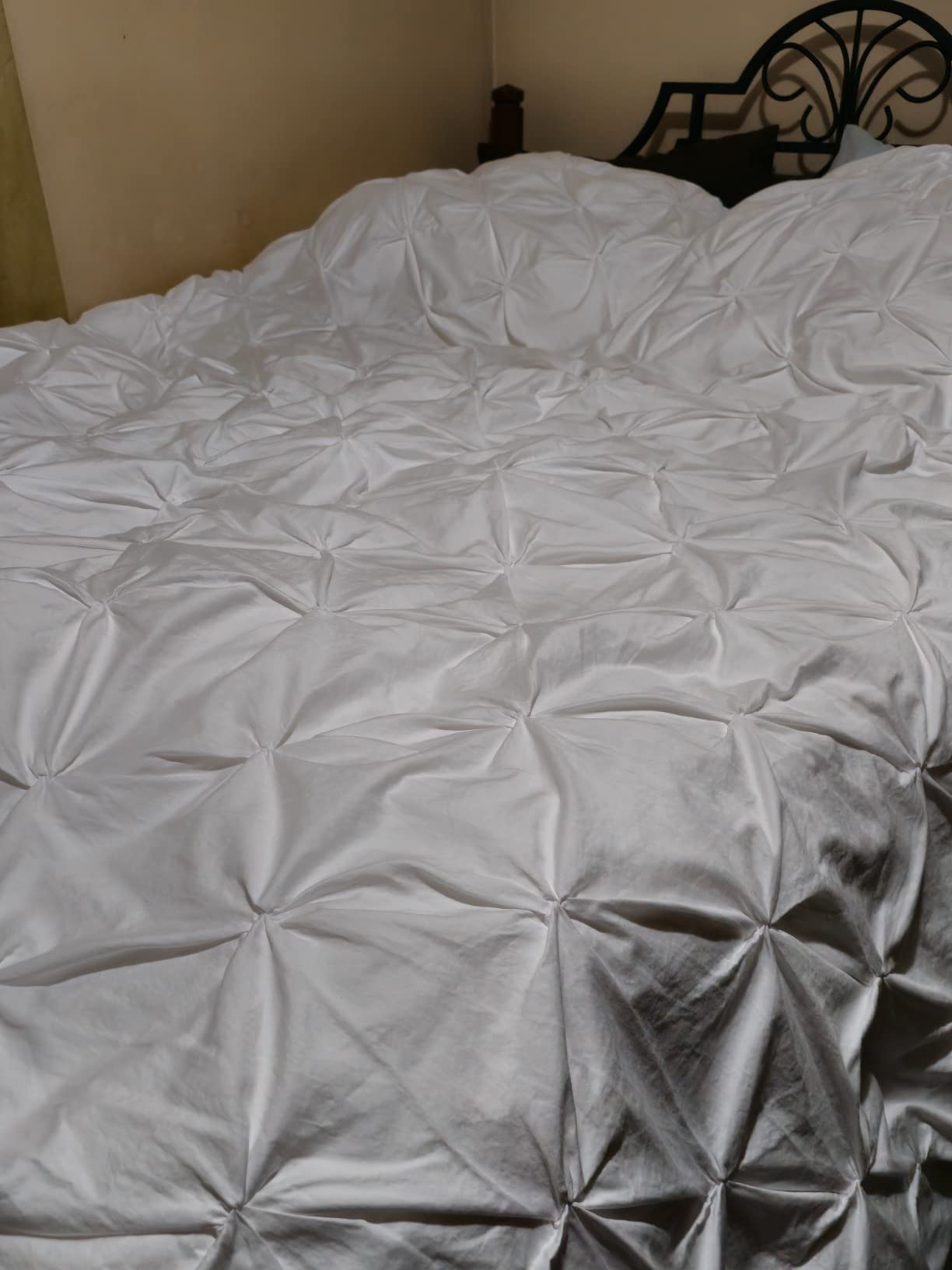
Not everyone with an allergy needs a laboratory-grade barrier. Some people react mostly to finishes, dyes and synthetic fibres, and for that group a soft, well-made, washable natural cover is the more comfortable long-term answer. The Crown Collection Luxuriate is the best-made option in that category.
It is 1000 thread count Egyptian cotton with a silky sateen finish, and softness is the overwhelming theme in the reviews. The zipper is hidden under a flap, so it is invisible and produces no sound when you turn over, which owners single out for praise more than any other feature.
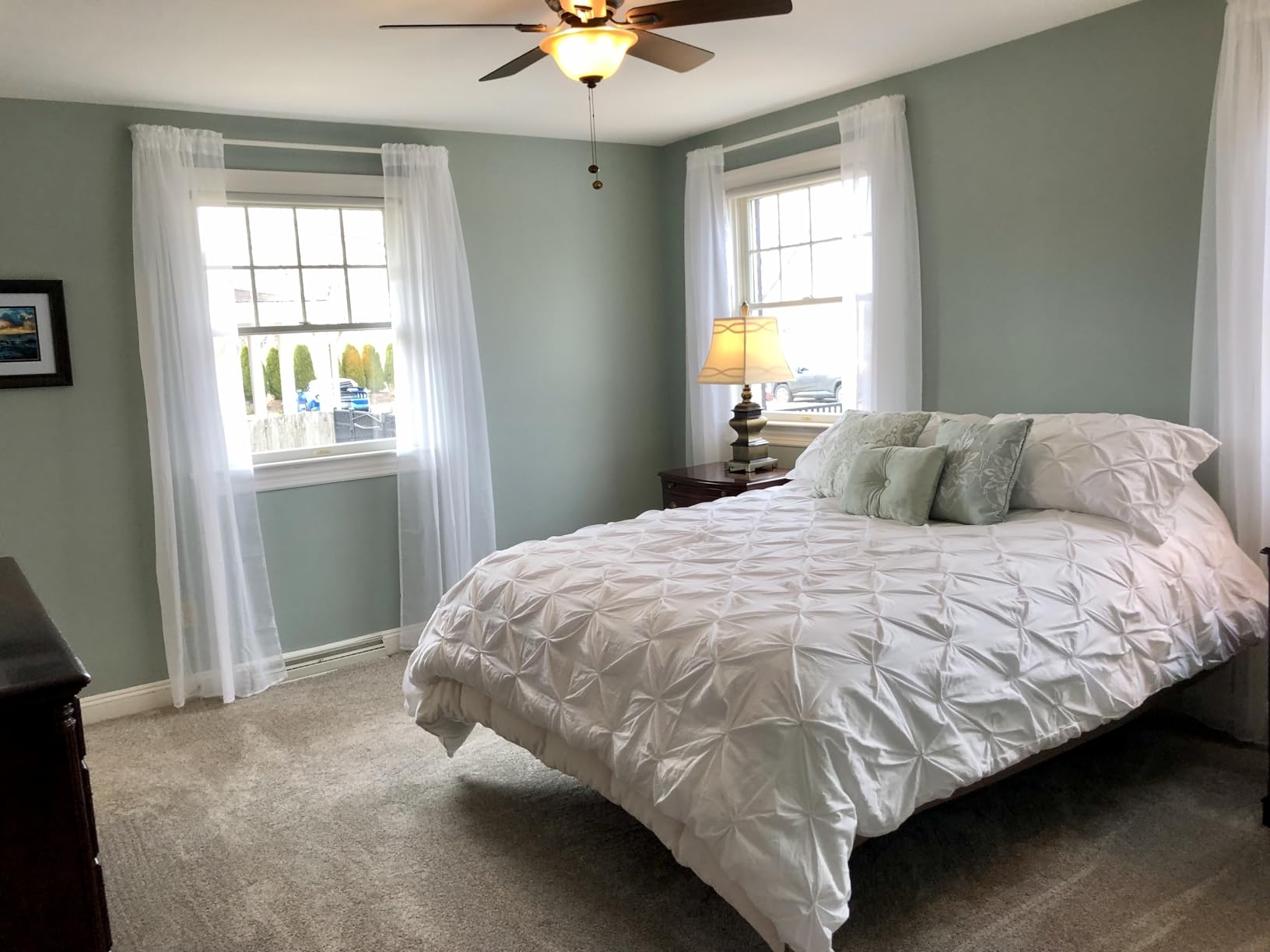
This is a three-piece set, so the cover and two pillowcases match. Interior corner ties stop the comforter collecting in a pile, and the pinch-pleat diamond detailing gives it the look of hotel bedding rather than dormitory bedding.
Why Thread Count Is Not an Allergen Metric
Thread count describes how many yarns sit in a square inch. It tells you about smoothness and durability. It does not tell you whether dust mites or their faecal particles are being blocked, because a high thread count fabric can still have large gaps between yarns.
If your allergy is chemical sensitivity or a skin reaction to finishes, thread count is a reasonable proxy for a low-irritant surface. If your allergy is mites, look for a stated pore size or a tight-weave claim instead. Treat the two as different shopping lists.
The Warmth Question Nobody Asks Until It Is Too Late
Egyptian cotton at 1000 thread count is dense and warm. Owners of warmer sleepers report that it holds more heat than lighter cotton or bamboo options. Overheating at night is not a comfort issue only; warmth and humidity make night-time congestion worse for asthma and rhinitis sufferers.
If you run hot, pair this cover with a lighter duvet insert. If you sleep cold, it is one of the few covers here that genuinely feels cosy without weight. The stripe is white striped, which is a restrained choice that works in most rooms but does limit you to neutral schemes.
Care: Softer Fabrics Are Forgiving, Fine Fabrics Are Not
High thread count Egyptian cotton needs low-temperature laundering to protect the sateen finish. Wash it cool, dry it cool, and skip the fabric softener. Used properly, it is a fabric that stays smooth for years, which is a reasonable return on a cover you wash weekly.
That routine matters more here than in a normal bedroom. A cover that survives a weekly wash without degrading is what makes a hot-wash allergy strategy possible at all.
Who It Suits and Who It Does Not
The Luxuriate suits someone whose reaction is to chemicals, dyes or rough texture rather than to mites, and anyone who wants a soft bed they will enjoy using every night. It suits cold sleepers. It is the wrong choice for a hot sleeper with confirmed mite allergy, because it offers comfort and not exclusion.
6. DOZ by SIJO Bamboo Viscose Set – Cooling Weave for Hot Sleepers
DOZ Duvet Cover Set, 100% Viscose derived from Bamboo, Organically Grown, Buttery Soft, Cooling Duvet Covers, High GSM, 1 Duvet Cover and 2 Pillowcases, 90″x90″ (Snow, Full/Queen)
145 GSM viscose derived from bamboo
300 thread count sateen weave
Oeko Tex Class 1 certified
+ Pros
- Buttery soft sateen with reduced fabric friction
- Cooling and moisture wicking for hot sleepers
- 145 GSM is durable for bamboo bedding
- 8 loops plus zipper hold the comforter securely
- Oeko Tex Class 1 certified and organically grown bamboo
– Cons
- Slippery hand is unfamiliar to some sleepers
- Drapes closely so a textured insert shows through
- Reports of loose stitching and zipper failure
- King and Cal King run larger than the comforter
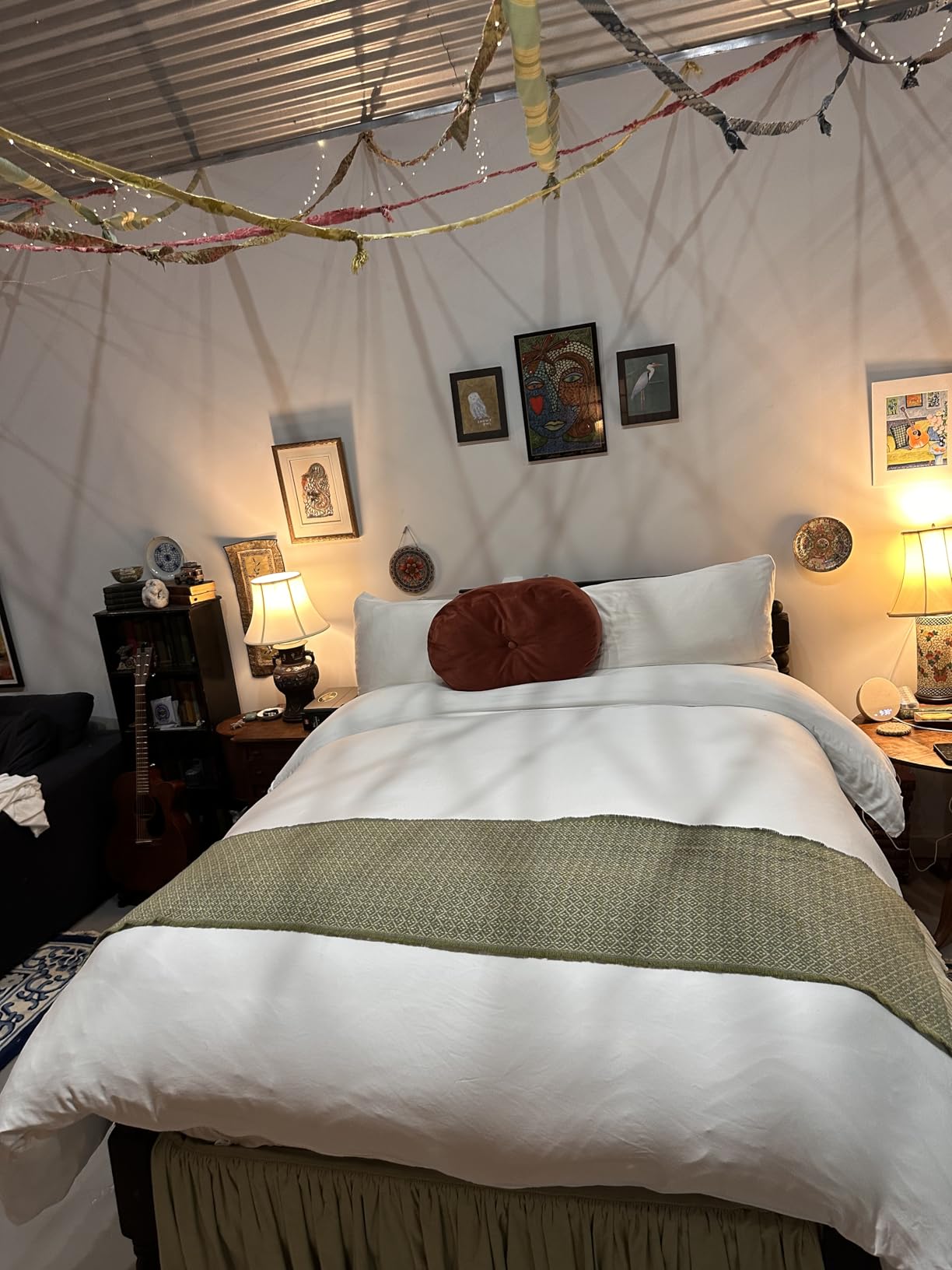
Hot sleepers with an allergy have the narrowest set of options, because a hot bed makes humidity worse. The DOZ set is my pick in that group: 145 GSM viscose derived from bamboo, described as smoother than a 1000 thread count cotton, and specifically designed to wick moisture away from the body.
The softer surface is the second reason I rate it highly for allergy. Reduced fabric friction matters for eczema and for anyone whose skin reacts to a rough weave, and owners describe the feel as buttery rather than crisp. The set includes a duvet cover and two pillowcases, and it is Oeko Tex Class 1 certified from organically grown bamboo.
Eight corner and side loops plus a zipper replace the traditional four, so the comforter stays put better. For a smooth fabric that drapes closely, that extra hold is essential, which links directly back to durability complaints below.
Moisture Management Is the Real Feature Here
Dust mites need humidity. Keeping a bedroom dry and cool is one of the strongest factors you can control, and a cover that moves moisture off the skin instead of holding it helps with the part of that you control from inside the bed. Bamboo viscose absorbs and releases water quickly, which is why it feels cool rather than just thin.
This is the cover I would pair with a dehumidifier in a damp climate. It is the least likely of the nine to contribute to the humidity problem while you are working on the rest of it.
Durability: Where This Set Loses Points
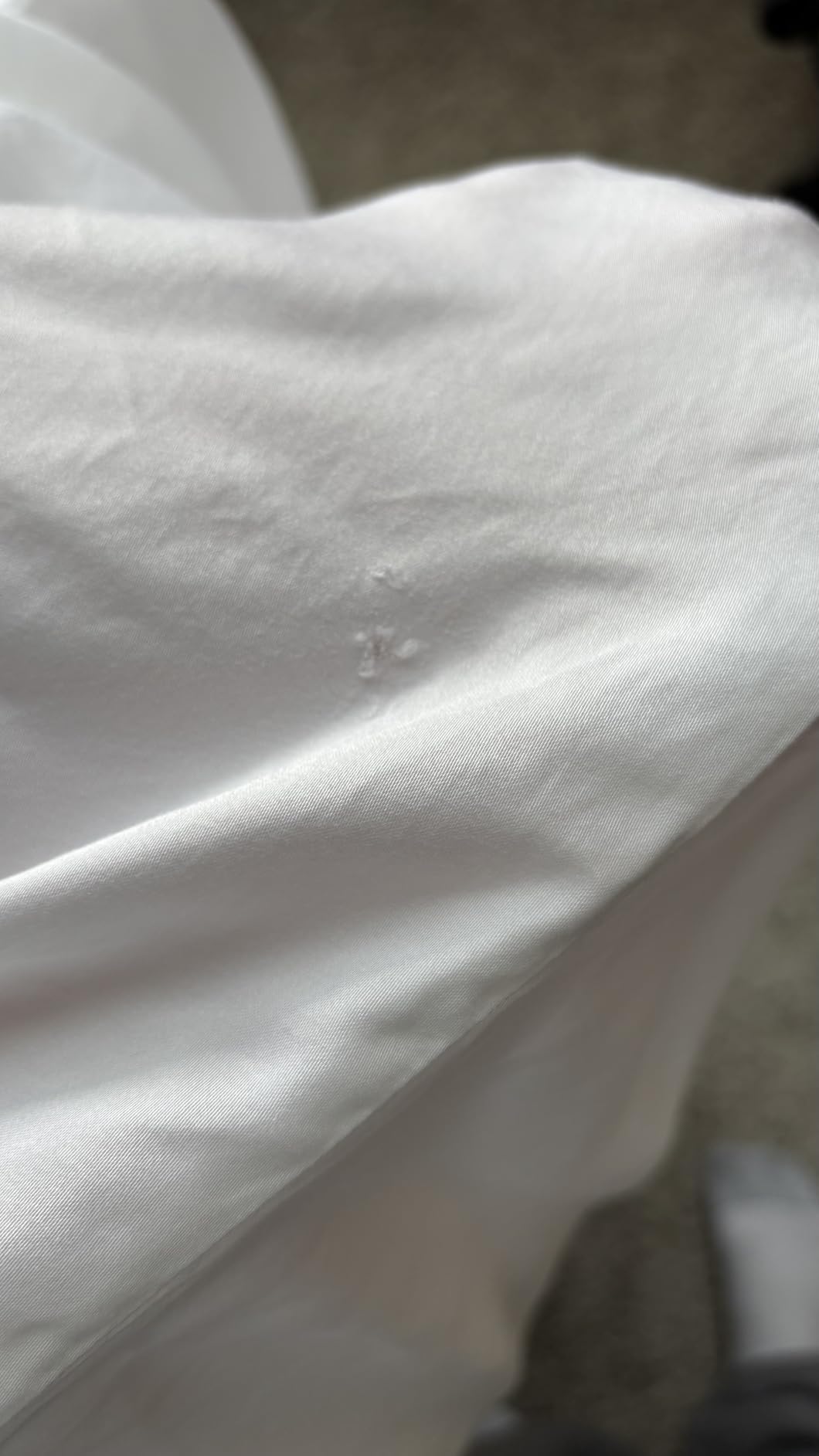
The critical reviews are sharply negative and cluster on construction rather than feel. Reported issues include stitching coming undone and a zipper failing after extended use. A minority of reviews also describe inconsistent quality depending on the third-party seller, which is a reason to buy from the brand rather than a marketplace listing.
Sizing is the second issue. Several reviews note that the King and Cal King run larger than the comforter, leaving excess fabric at the edges. Check the stated dimensions against your insert before ordering, and if you are buying for a King, read the recent reviews rather than the top-line rating.
Who It Suits and Who It Does Not
The DOZ set suits hot sleepers, people with eczema who want minimal friction against the skin, and anyone who finds sateen cotton too warm. I would not pick it for a severe mite allergy, because it makes no barrier claim, and I would treat the durability reports as a reason to inspect stitching on arrival.
7. BESTOUCH Washed Cotton Set – the Broadest Range and Review Base
BESTOUCH Cotton Solid Duvet Cover Set Linen Feel Cornflower Blue Queen
100 percent washed cotton with a linen feel
Hidden zipper with 8 interior ties
Three piece queen set
+ Pros
- Genuine linen feel from washed cotton
- Gets softer with every wash
- Hidden zipper plus 8 ties holds the duvet in place
- Very wide size range from Twin to Alaska King
- Breathable and lightweight
– Cons
- Deliberately wrinkled texture is not for everyone
- Solid cornflower blue limits colour schemes
- Comforter insert not included
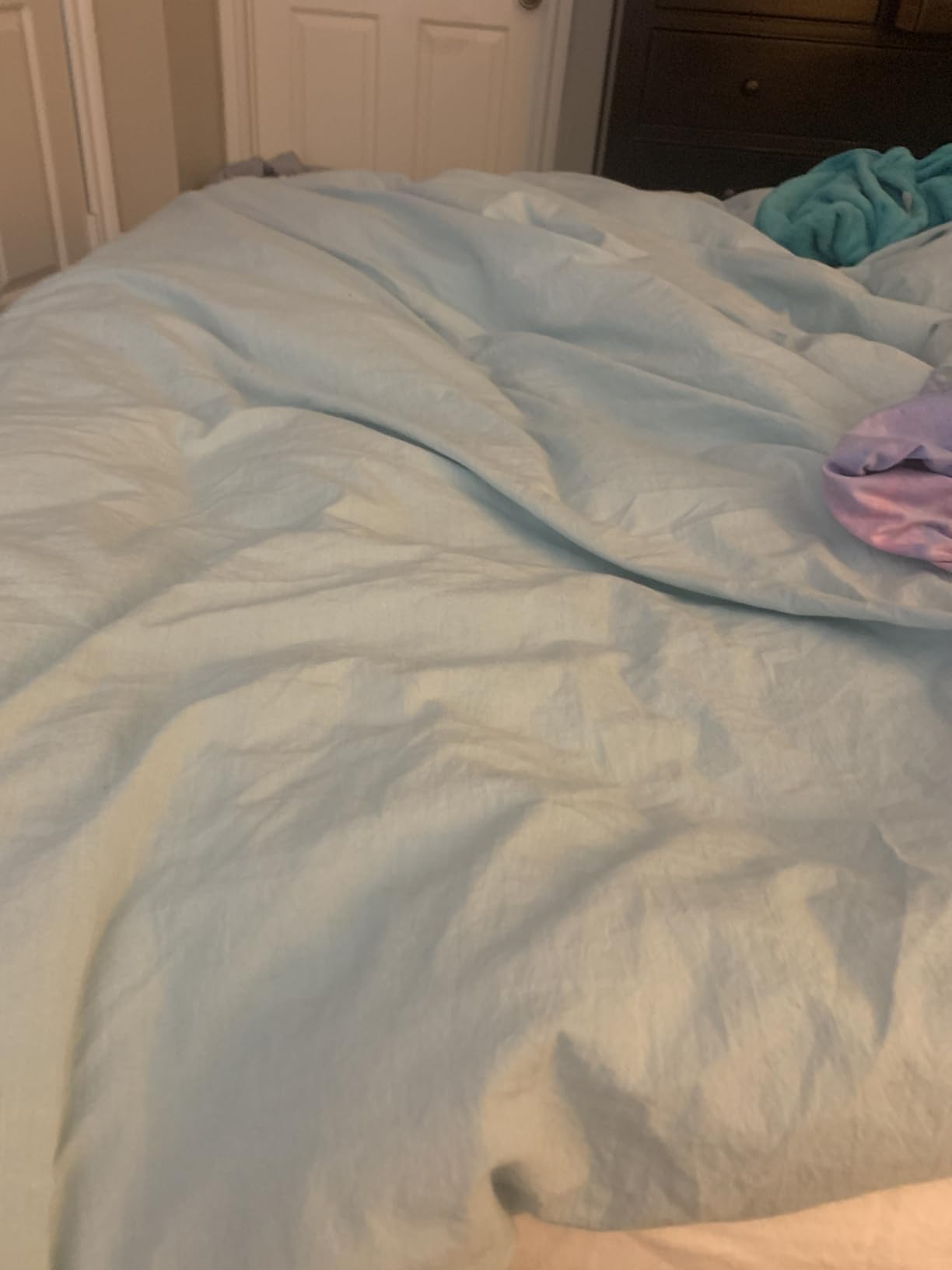
This is the one I recommend when someone asks which cover to buy without a specific allergy in mind. It has the largest review base of the nine by a wide margin, which means the long-term feedback is unusually clear, and what that feedback describes is dependable, breathable, washable cotton bedding.
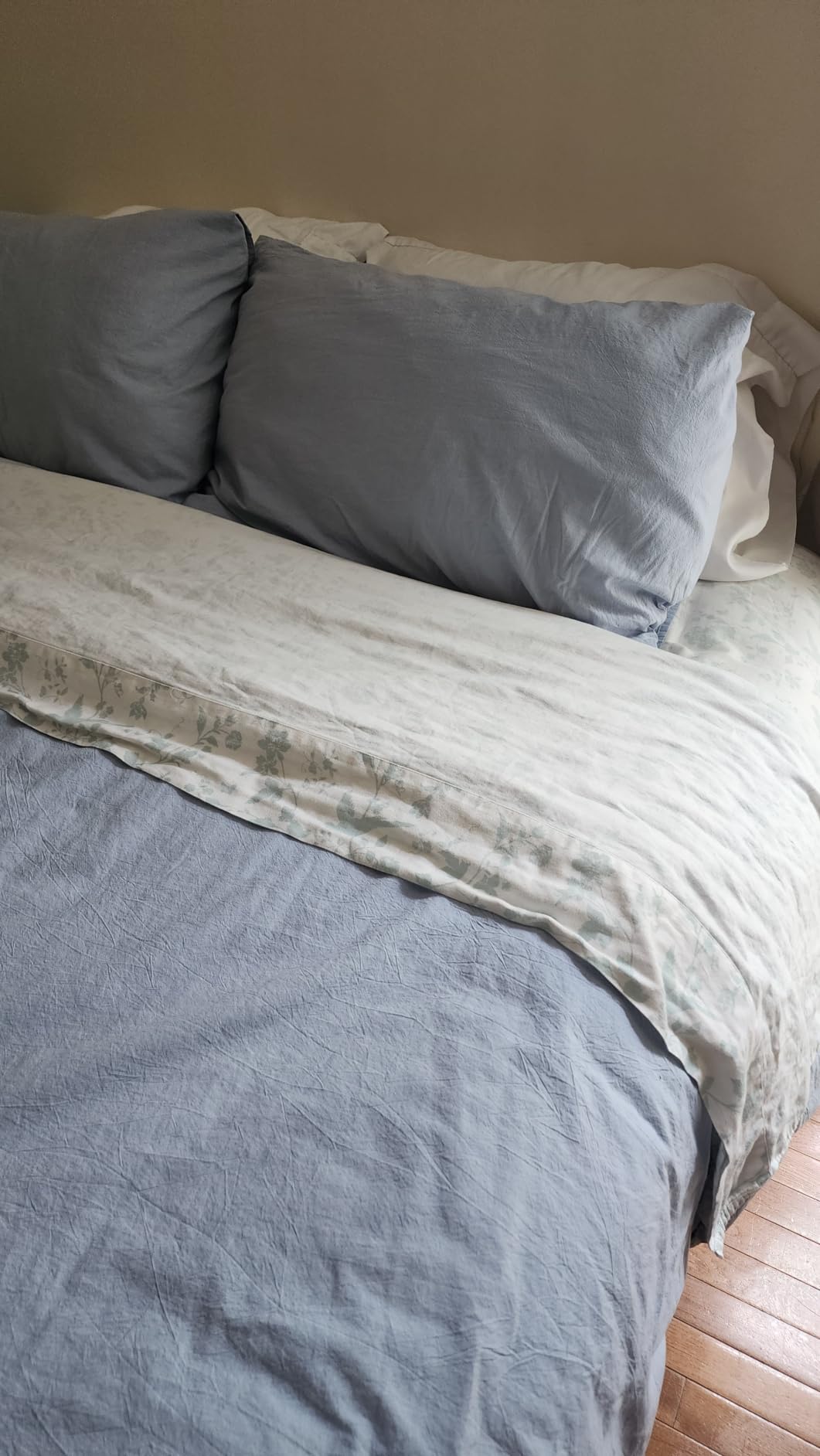
The fabric is 100 percent washed cotton with a slightly wrinkled linen-look finish, and buyers say it gets softer with each wash while keeping a light crispness. The closure is a hidden zipper, and the cover uses eight interior ties rather than four, so the comforter stays distributed through the night.
It is a three-piece queen set with a duvet cover and two 20 by 26 inch pillowcases that close with an envelope. What stands out for practical reasons is the size range within the same product family, from Twin up to Alaska King, which matters if you move house or furnish a guest room.
What 5279 Reviews Actually Agree On
With a review base that large, patterns become reliable rather than anecdotal. The consistent picture is soft, breathable, easy to wash bedding that holds up to frequent laundering. People describe it as an upgrade rather than a compromise, and the wide size range comes up as a reason they bought a second one.
The defining characteristic is the intentional rumple. It is a washed-cotton texture, not a manufacturing fault. Reviewers either love it as authentic or would not choose it if they prefer smooth percale or sateen, and that is a taste question rather than a quality question.
Breathability as an Allergy Feature
Nothing in this cover blocks a mite. What it does is stay breathable and light, which supports the humidity side of allergy control without trapping vapour. If your main levers are moisture, a cool bed and a washable surface, that is a coherent strategy on its own.
Eight interior ties are a quiet but meaningful detail on a smooth cotton shell. A comforter that migrates leaves unprotected patches, and fewer ties means more chance of that happening after a few months of use.
Who It Suits and Who It Does Not
The BESTOUCH set fits a household replacing bedding across several rooms at once, anyone who wants cotton that softens over time, and readers who want an option with a very large body of user feedback behind it. It does not suit a confirmed mite allergy that needs exclusion, and the cornflower blue is not flexible if you plan to redecorate.
8. Bare Home Organic Cotton Percale Set – Certified Chemical-Free Bedding
Bare Home 100% Organic Cotton Percale Duvet Cover Set (Queen, Light Grey)
100 percent organic cotton percale
GOTS and OEKO-TEX certified
No anti wrinkle chemical finish
+ Pros
- GOTS and OEKO-TEX certified organic cotton with organic dyes
- No anti wrinkle or antimicrobial chemical treatment
- Crisp percale weave that stays cool
- Three piece set with two matching shams
- 30 night sleep trial offered by the manufacturer
– Cons
- Untreated cotton wrinkles more readily
- Button closure rather than a zipper
- Insert and fill are not included
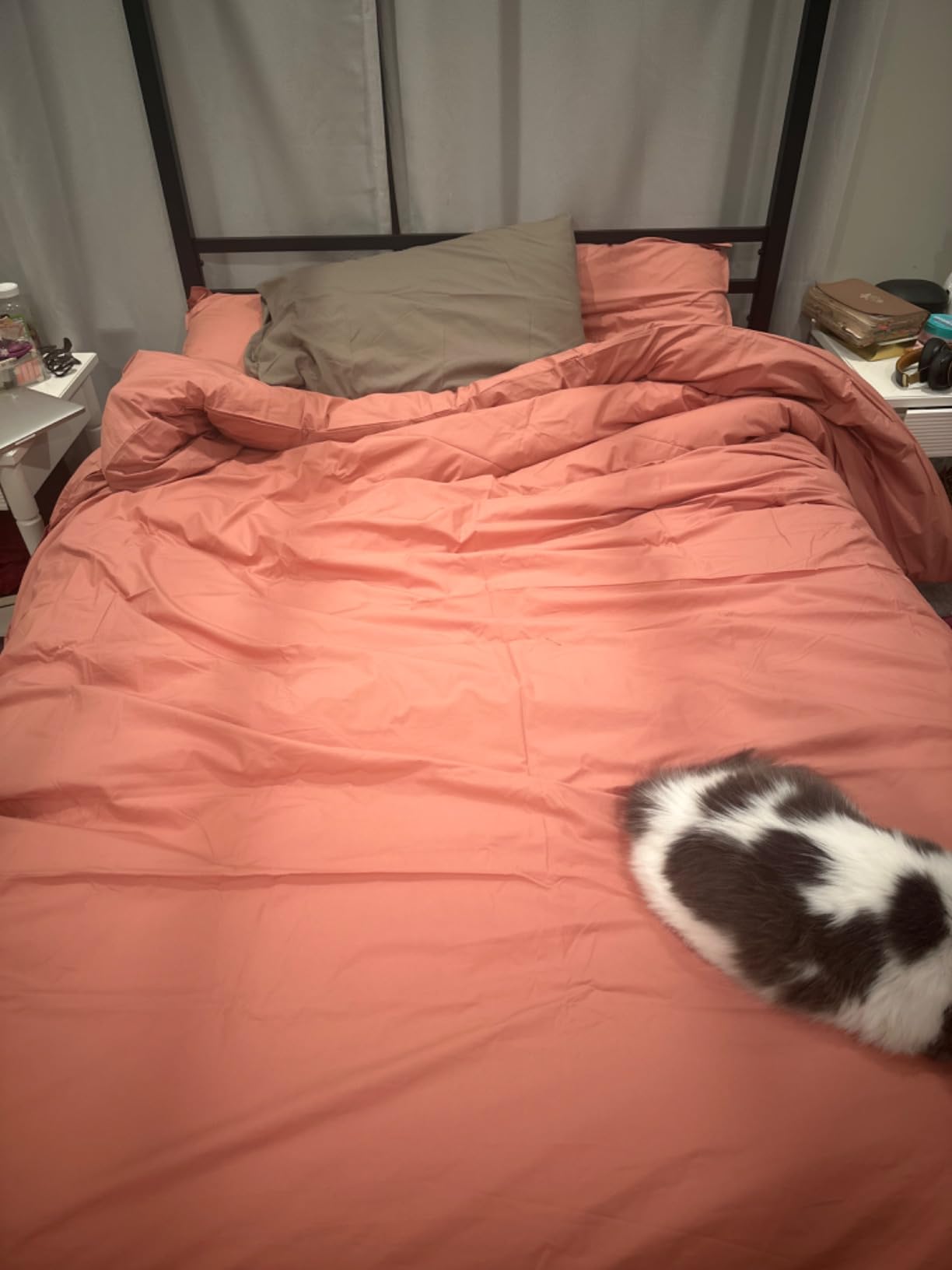
If your allergy is chemical sensitivity rather than mite exposure, this is the set I would pick. The Bare Home cover is 100 percent organic cotton with GOTS and OEKO-TEX certification, it uses organic dyes, and the brand states plainly that it is not treated with anti-wrinkle agents.
That last point sounds minor and is not. Many bedding finishes exist to make cotton wrinkle less, and chemical-sensitive sleepers on allergy forums report reacting to exactly those kinds of coatings. A fabric with nothing added is the straightforward answer, and the certification is the verifiable part of that claim.
The weave is percale, a plain weave that is crisp and cool rather than silky, and it stays lightweight through the night. It suits warm sleepers better than most cotton options. The set includes a duvet cover and two standard shams, and the manufacturer offers a 30-night sleep trial.
What OEKO-TEX Standard 100 and GOTS Do and Do Not Cover
OEKO-TEX Standard 100 tests the finished fabric for harmful substances, and GOTS adds requirements around how the cotton was grown and processed. Both are meaningful. Neither one certifies that a product is hypoallergenic, and neither tests for mite exclusion, because that is a property of the weave, not the chemistry.
So read a certification as evidence about what is on the fabric and how it was made, then look elsewhere for the barrier. Good practice is to want both: a certified fabric for the sensitive-skin angle and a stated pore size for the mite angle.
Wrinkling as a Trade-Off, Not a Defect
Reviewers mention wrinkling most often, and it follows directly from the absence of a wrinkle-resistant finish. Organic cotton that has not been chemically treated creases, particularly after a line dry. If crisp, wrinkle-free bedding is the priority, this is the wrong set.
For an allergy-focused purchase I would take the wrinkles. A cover that you will tolerate crumpled is a cover that stays on the bed and in the wash rotation, and consistency is what makes the weekly 60C routine work.
Who It Suits and Who It Does Not
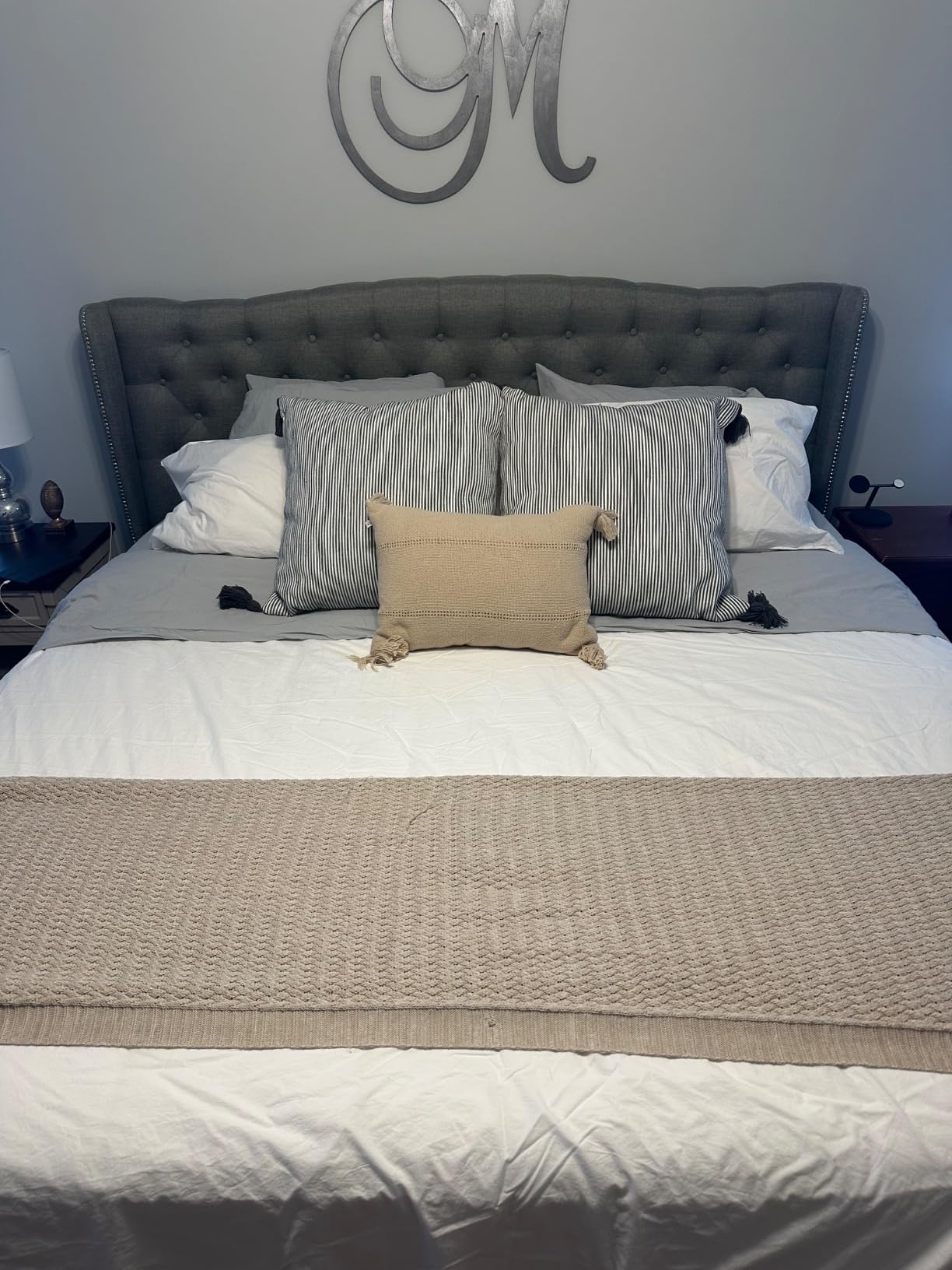
The Bare Home set suits MCAS and fragrance-sensitive sleepers, eczema and sensitive-skin households, and anyone who wants certification to back the claims. It does not create a mite barrier, so pair it with a dedicated encasing if dust mites are the trigger rather than chemicals.
9. ATsense Washed Cotton Set – OEKO-TEX Certified and Rated Highest
ATsense Duvet Cover, Washed Cotton Comforter Cover Bedding Set Queen Size
Washed cotton that absorbs moisture
OEKO-TEX Standard 100 certified
Hidden zipper and reinforced corner ties
+ Pros
- Strongest rating distribution in the group
- Breathable washed cotton with a linen like texture
- OEKO-TEX Standard 100 certified for harmful substances
- Hidden zipper plus four reinforced corner ties
- Marketed specifically for sensitive skin
– Cons
- 200 thread count is the lightest of the cotton options
- No tight weave barrier or antimicrobial claim
- Duvet insert not included
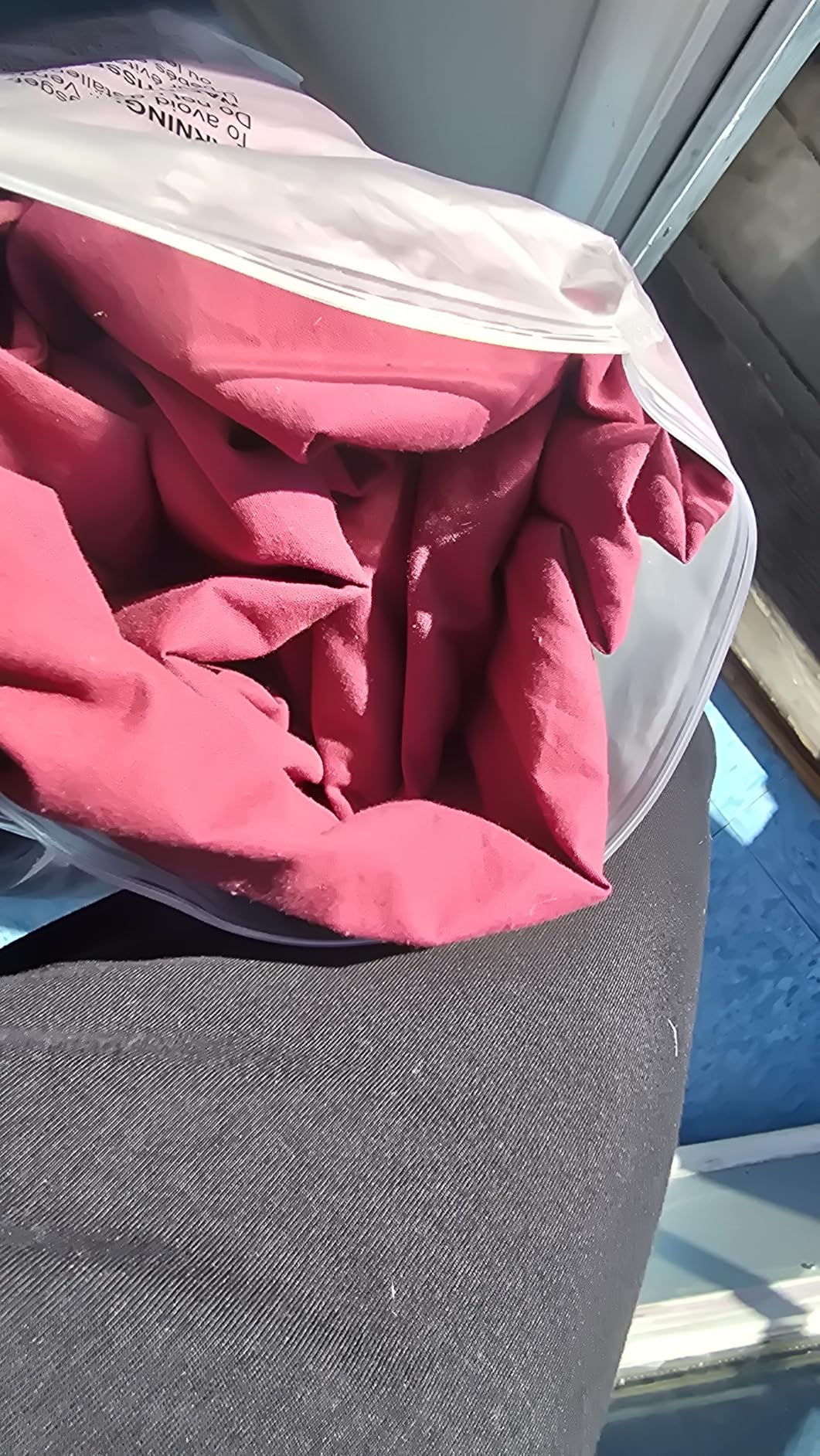
The ATsense set shares the highest rating in this roundup, and the reasons for that score are consistent rather than random. Buyers describe soft, breathable washed cotton with a natural linen texture, and they single out the OEKO-TEX Standard 100 certification as a deciding factor for allergy-focused shopping.
The fabric is 100 percent washed cotton with a special softening process, and the material is described as breathable and moisture absorbing, which supports the humidity side of allergy control. The set includes a duvet cover and two 20 by 26 inch pillowcases, with a hidden zipper closure and four reinforced corner ties designed not to break easily.
It is marketed for sensitive skin specifically, and the fibre is long-staple cotton selected from established growing regions. That combination of certified fabric and a plain, untreated-feeling surface is why I recommend it to people whose reactions are skin-led.
200 Thread Count Is a Feature Here, Not a Flaw
This is the lightest thread count among the cotton options in this roundup, and that reads like a compromise next to the 1000 and 1200 thread count sets. For a cover meant to be washed weekly, a lighter fabric is arguably better: less weight in the drum, faster drying, less time for a damp duvet to sit.
Lighter weave also means cooler sleep, which matters for anyone whose congestion worsens when they overheat. The trade-off is that the fabric is less smooth, so if the texture itself irritates your skin, a finer sateen weave is the better choice.
Reinforced Ties vs Fabric Softness
Four reinforced corner ties are described as designed not to break easily, and that detail is doing quiet work. Ties are the first thing to snap on any duvet cover, and once a corner tie fails, the comforter shifts and the cover stops sitting flat.
For an allergy routine, flatness is not cosmetic. A cover that lies flat washes evenly, dries evenly and stays in contact with the comforter, which is what makes encasement-style discipline possible with an ordinary cover.
Who It Suits and Who It Does Not
The ATsense set suits sensitive-skin and eczema households, hot sleepers, and buyers who want a certification they can point at. It makes no mite-barrier or antimicrobial claim, so if dust mites are the confirmed trigger you will want an encasing in front of it or instead of it.
How to Choose a Dust Mite Resistant Duvet Cover
Five criteria decide this purchase, and they are worth applying in order. Get the first one right and the rest are refinements; miss the first one and no thread count will save you.
1. Barrier Type: Encasing, Tight Weave or Nothing
Ask what the product physically does. An encasement zips completely around the insert so allergens stay outside. A tight-weave allergy cover uses fabric with a stated pore size to stop particles crossing. A conventional duvet cover makes no barrier claim at all, and no amount of marketing language changes that.
Confirmed mite allergy deserves an encasement or a stated micron figure. Suspected triggers, or a reaction to finishes and fibres, can be handled well with certified breathable cotton.
2. Washability at 60C
Anything that cannot survive a hot wash will not stay allergen-free. Look for a care label that permits 60C, and check that the cover is also dryer safe so it can be fully dried rather than air-dried damp. Buying a cover you will not wash is the most common way this effort fails.
3. Porosity and Weave, Not Thread Count
Thread count is a smoothness measure. Pore size in microns is the exclusion measure, and lower is tighter. The two encasements at the top of this roundup publish figures below 3 microns, which is the kind of transparency to look for. A 1200 thread count sheet with no pore figure offers no mite protection.
4. Breathability and Warmth
Warmth and humidity make night-time congestion worse, and sweating into a sealed fabric raises bedroom humidity. A cover that is breathable, moisture absorbing and cool to the touch will do more for an asthmatic sleeper than a marginally tighter but hotter one. The heavy 300 thread count encasement is the clearest example of that trade-off here.
5. Certification and Finish
OEKO-TEX Standard 100 and GOTS tell you about what is on the fabric and how it was made. Neither certifies hypoallergenic status. For chemical-sensitive sleepers, an untreated fabric with no anti-wrinkle or antimicrobial coating is often the deciding factor, so read the finish list as carefully as the fibre list.
Choosing by Condition Rather Than by Product
Dust mite allergy calls for the tightest stated pore size and the most disciplined wash routine. Asthma and night-time congestion call first for breathability and moderate warmth. Eczema and sensitive skin call for a low-friction surface and certified, untreated fabric.
Pet owners should look for dander and feather claims specifically rather than a generic allergy label, and should expect to wash more often. Chemical sensitivity or MCAS calls for untreated certified fabric and no antimicrobial coatings. Hot sleepers should weight breathability above everything except the barrier. And for a child’s room, washability usually outranks thread count, because the cover has to survive frequent laundering.
If you share a bed with animals, you are also managing dander on upholstery and in the car, and our guide to car seat covers for dogs covers the same washable-barrier logic in a different setting.
Allergen Encasing vs Tightly Woven Cover: What Actually Stops Mites
The encasing versus woven cover question is the one most shoppers get wrong, and it is the most consequential decision in this category. An encasement seals the insert inside a closed barrier so nothing gets in from the outside and nothing escapes from the inside. A tightly woven allergy cover relies on a pore size small enough to stop the relevant particles, but the insert is still only partially enclosed and the closure is often open.
Both work better than nothing. The encasement is the stronger option for a diagnosed mite allergy, because the barrier is continuous and the allergens are held where a hot wash can reach them. The woven cover is more comfortable for many people and easier to live with year-round, and it is the better choice when your triggers are chemical or fabric-based.
Advice on allergy forums converges on membrane-type encasings being more reliable than tightly woven fabric claims, which matches the physics. The forum consensus on wool is similar: promising for mites, unpopular in practice because it is not fluffy and needs special care. Down and feather are described repeatedly as unsuitable, and synthetic microfibre and hollowfibre get the most recommendations simply because they survive machine washing.
How to Wash an Allergen-Proof Encasing Without Ruining It
The fear that a hot wash destroys the membrane is the main reason people stop using encasements. Five steps are enough to keep one working for years.
First, wash the duvet or comforter separately on its own hot cycle before it ever goes near the cover. A dusty insert sealed into a fresh encasement simply contaminates the barrier you just paid for.
Second, zip the duvet into the encasing fully and close the zipper end to end, so water circulates through the fill rather than around it. Third, run the cover at 60C, which is the threshold that actually kills mites; lukewarm water is decoration. Fourth, dry it fully on a tumble cycle if the label allows, since a dry encasing is a hostile environment and a damp one is not.
Fifth, wash the cover weekly and the insert monthly at the same temperature, then keep the room below 50 percent relative humidity. A dehumidifier does more for mite control than most products on this list, because mites struggle to survive at low humidity.
Care and Washing Routine for Allergy Sufferers
A duvet cover is only useful if it is in the wash. Build the routine first, then buy to fit it, because a cover you cannot launder at 60C will quietly stop working within a few months.
The Weekly, Monthly and Seasonal Rhythm
Weekly, the cover goes in at 60C and the bedroom gets aired. That is the single most important line in this article. Monthly, the duvet insert itself is washed at the same temperature, which is harder to do with down but straightforward with synthetic or cotton fills. Seasonally, the insert gets aired outdoors outside pollen season, and inside the season you keep the windows shut on high-pollen days.
Humidity is the free factor. Mite populations struggle above 55 percent relative humidity, and many allergists aim for 40 to 45 percent. A bedroom hygrometer costs very little and tells you immediately whether your ventilation is working.
What Kills Dust Mites Naturally
Heat is the answer, not herbs or sprays. Sustained temperatures above 60C kill mites and make their droppings far less allergenic, and a tumble dryer run hot after washing is the step most people skip. Below that, you are rinsing allergens away without destroying them.
The second natural method is dryness. Linen and tightly woven covers dry faster than heavy flannel, and a room held under 50 percent relative humidity removes the moisture mites need. For anyone who cannot wash weekly, an encasing plus humidity control is the combination that still makes progress.
Why Detergent Matters Less Than Temperature
On the question of which detergent kills dust mites, the honest answer is that almost any mainstream laundry detergent works, and the temperature does the work. Use a detergent that produces a good low-suds rinse, because a heavily perfumed or residue-heavy formula is a poor match for a sensitive-skin household.
Fragrance is worth avoiding across the whole routine, including the dryer sheets and the fabric softener. A cover can be clinically perfect and still set off a reaction if the finish smells strongly, so keep the bedroom wash unscented.
Duvet Cover FAQs for Allergy Sufferers
What is the best duvet for people with allergies?
The best duvet for allergy sufferers is one that physically excludes allergens and survives a 60C wash. A tightly woven or fully encased cotton shell with a stated pore size under 3 microns, closed with a full zipper, gives the strongest protection. Warmth matters too, since an over-warm duvet raises humidity and makes night-time congestion worse.
What are the best hypoallergenic duvet covers?
The best options fall into two groups. For real allergen exclusion, look for encasements and tight-weave protectors with published micron pore sizes. For sensitive skin and chemical reactions, look for certified organic cotton, TENCEL lyocell or bamboo viscose with a soft weave and no chemical finishes. Hypoallergenic is an unregulated term, so verify pore size, certification and wash temperature instead.
What is the best bedding fabric for people with allergies?
For dust mite allergy, the fabric matters less than the weave and pore size. TENCEL lyocell and organic cotton are the smoothest options for sensitive skin, bamboo viscose is the coolest and best for hot sleepers, and microfibre is the most durable under frequent hot washing. Wool manages moisture well but needs specialist care. No natural fibre alone blocks mites.
What laundry detergent kills dust mites?
Any mainstream laundry detergent kills dust mites when the wash is hot enough. The temperature does the work, not the detergent. Wash bedding at 60C for at least 10 minutes and dry it fully on a hot cycle. Choose an unscented, low-suds formula, since perfumed and residue-heavy products cause problems for sensitive-skin sleepers.
What kills dust mites naturally?
Heat and dryness are the two natural methods that work. Sustained heat above 60C kills mites and denatures their droppings, and low humidity starves them, since they struggle above 55 percent relative humidity. Keeping a bedroom under 50 percent humidity with ventilation or a dehumidifier removes the moisture they need to survive.
Are hypoallergenic duvets worth it?
They are worth it when the product creates a real barrier and can be washed at 60C, and not worth much when hypoallergenic is only a surface treatment for odour or stains. A conventional cover with a fabric finish does nothing to exclude mites. An encasement with a published micron pore size, on a weekly hot-wash routine, genuinely changes your exposure.
How do you wash an allergen proof duvet cover?
Wash the duvet insert on its own hot cycle first, then zip it fully into the encasement and close the zipper end to end. Run the cover at 60C so water moves through the fill, then tumble dry it fully if the care label allows. Wash the cover weekly and the insert monthly, and keep the room below 50 percent relative humidity.
The Verdict: Which Duvet Cover to Buy for Allergies
Pick the National Allergy cotton encasing if dust mites are your trigger, because a published 2.6 micron pore size and a full zipper are the most decisive combination in this roundup. Pick the Allersoft protector if pets are the problem or if vinyl encasements make you too hot, and pick the FAUNNA protector if you want a certified weave with a registered antimicrobial finish.
For reactions to chemicals, dyes or texture rather than mites, the Bare Home organic percale set and the ATsense washed cotton set are the most conservative fabrics, and both carry certification you can point to. For hot sleepers, the DOZ bamboo viscose set manages moisture better than anything else here, and for a soft bed you will enjoy every night, the Crown Collection Egyptian cotton set is the one to beat.
Whatever you choose, the cover is only the first lever. Wash it weekly at 60C, dry it fully, and hold your bedroom under 50 percent relative humidity. Those three habits do more for your symptoms than any label on the box, and they work with any of the nine covers above.
Leave a Reply