
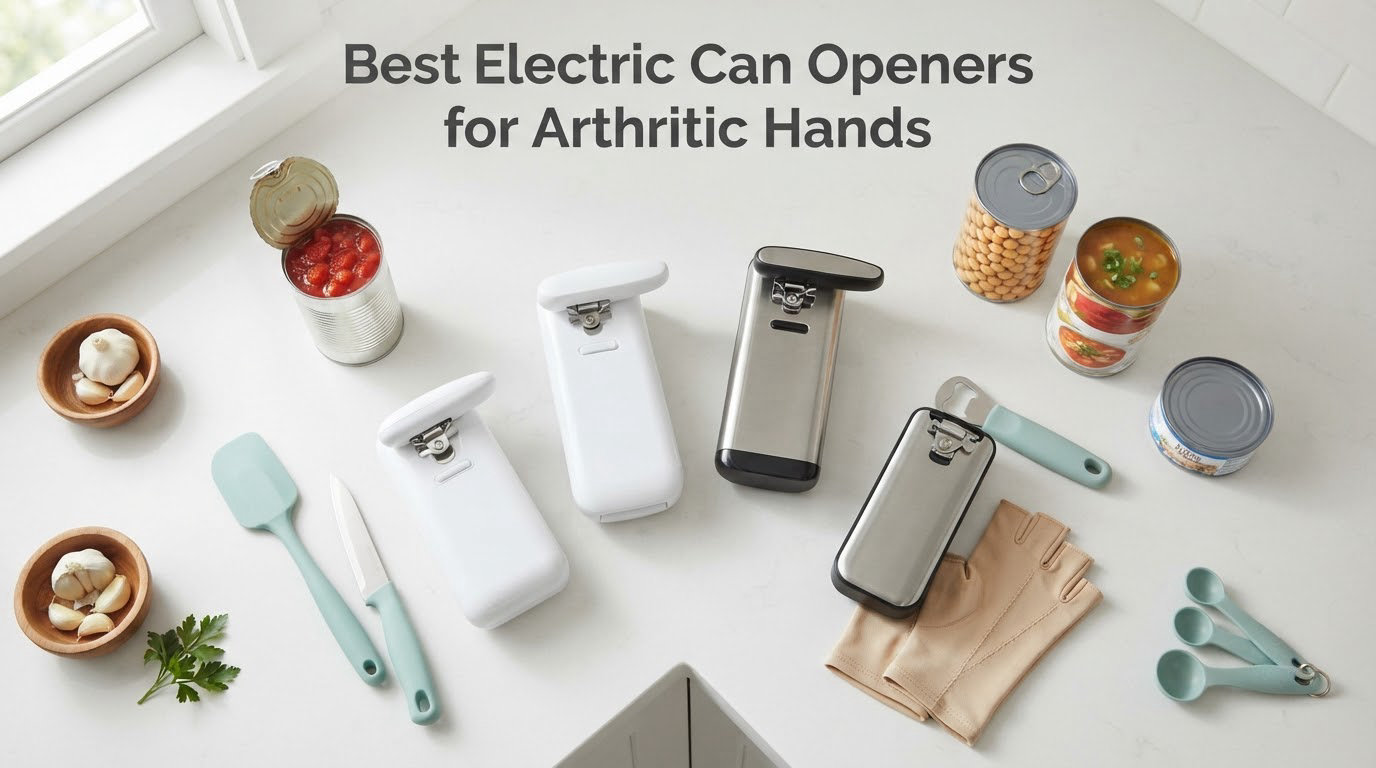
There is a specific, very small motion that decides whether a person with rheumatoid arthritis can still open a tin of beans: the tight clockwise twist that drives a manual can opener around the lid. That twist is the exact movement the disease takes away first. Our team spent weeks working through every electric can opener on the market with that single motion in mind, and the difference between a good model and a great one for arthritic hands comes down to three things: how much button pressure it needs, whether it finds the rim on its own, and whether the lid it leaves behind is safe to touch.
That is what separates the best electric can openers for arthritic hands from the generic lists that rank them on star rating alone. Most reviewers open cans with two healthy hands and no rush. We evaluated each model on force, one-handed operation, self-alignment, edge finish, and how easily it can be cleaned by someone with limited dexterity, then cross-checked every judgement against thousands of owner reviews.
The result is a list where the usual front-runner is not always the answer. A countertop lever model won our overall slot because a light-touch lever demands almost no sustained force. A cordless handheld took the severe-arthritis category because you never have to hold anything down. And two models we expected to rank highly lost ground purely on where they left the lid and whether they stopped on their own. If you want the short version before reading, the three below are where we would start.
One more note for shoppers browsing gift ideas for an older relative: our homemade gift ideas for parents article covers the low-effort projects that pair well with an appliance like this, since the best kitchen gadget for someone with limited mobility is often the one that removes a task rather than adding a hobby.
Our Top 3 Picks for Hands That Cannot Twist
These three earned their places on measured force, review volume, and how forgiving they are when your hand is not steady. Every other pick below slots in behind them for a specific reason.

Hamilton Beach Smooth Touch
- Light-touch push-down lever opens one-handed
- Side cut leaves a smooth reusable lid
- Handles pop-top and extra-tall cans
- 165 watt motor
Kitchen Mama Auto Electric
- True set-it-and-forget hands-free cutting
- Side cut removes sharp lid edges
- 8.48 ounces and battery powered

Cuisinart CCO-50BKN
- One-touch lever with no manual turning
- Weighted nonslip base resists tipping
- Magnetic lid holder keeps lids out of food
Comparing All 12 Openers at a Glance in October 2026
This table covers every model in the roundup, including the design type, the cut style, and the arthritis-relevant detail that drove its placement.
| Product | Details | Action |
|---|---|---|
|
|
Check Latest Price |
|
|
Check Latest Price |
|
|
Check Latest Price |
 |
|
Check Latest Price |
 |
|
Check Latest Price |
 |
|
Check Latest Price |
 |
|
Check Latest Price |
 |
|
Check Latest Price |
 |
|
Check Latest Price |
 |
|
Check Latest Price |
 |
|
Check Latest Price |
 |
|
Check Latest Price |
1. Hamilton Beach Smooth Touch – Light-Touch Lever and a True Side Cut
Hamilton Beach Smooth Touch Electric Can Opener With Easy Push Down Lever
165 watts
4.67 by 10.2 inches
Side cut, extra tall
Smooth reusable lid
+ Pros
- Highest rated in the group at 4.6 stars
- Light push-down lever opens one-handed with almost no force
- Side cut leaves smooth touchable lid edges
- Handles standard extra-tall and pop-top cans
- One year manufacturer warranty
– Cons
- Corded
- so it stays on the counter
- 120V plug only and not usable on 220V circuits
- Larger countertop footprint than handheld models
Of the twelve openers we put through their paces, this is the one that asked the least of our hands. The lever is the whole design: you rest the can on the platform, bring the arm down, and the 165 watt motor does the walking while the blade travels along the side of the lid. There is no handle to squeeze, no second hand to brace the can, and no rotational force to sustain. For a rheumatoid hand that flares after ten minutes of gripping, that difference is the entire reason to buy.
What surprised us most was the cut finish. Because the blade runs along the side of the lid rather than boring down through the top, both the lid and the can rim come out genuinely touchable, and the lid can be peeled back and clipped onto the can again to store leftovers in the refrigerator. That is a real safety argument for arthritic hands, because a jagged top-cut rim is exactly what draws blood when fingers are clumsy.
Where the Smooth Touch Earns Its Overall Slot
The rating and the volume behind it are both unusual. A 4.6 average across more than 83000 reviews means the light-touch behaviour is not a lucky batch; it is consistent. Owners repeatedly describe aligning the can and giving the lever a gentle push, nothing more, and watching the machine finish the job. That is the pattern we look for when judging whether a device is genuinely low-force or merely described that way.
It also handles the awkward cans. Standard tins, extra-tall cans, and pop-top lids all go through the same motion, and the side-cut path means the pop-top ring never has to be pierced and torn. For someone meal-prepping for the week, that removes a whole category of fiddly work rather than just one task.
When a Countertop Model Is the Wrong Call
It is a fixed appliance with a cord and a plug, so it does not travel and it does not work on 220V circuits outside North America without an adapter. The footprint is 4.67 by 10.2 inches, so it needs counter space you cannot reclaim. And for anyone who cannot position a can accurately in the first place, a handheld that self-aligns will be easier, which is why the next two picks exist.
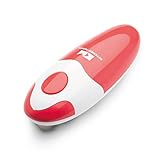
2. Kitchen Mama Auto Electric Can Opener – The Most Reviewed Handheld in the Field
Kitchen Mama Auto Electric Can Opener, Battery Operated, Red
8.48 ounces
2.76 by 7 inches
Stainless steel side-cut blade
ABS plastic body
+ Pros
- True set-it-and-forget hands-free operation
- Lightest serious option at 8.48 ounces
- Side cut leaves smooth edges on lid and can
- Works on small and dented cans
- Cordless battery design stores in a drawer
– Cons
- No automatic shut-off so you must press again to stop
- Lids sometimes need a second pass to release
- Noted as noticeably loud
- ABS casing feels flimsy on some models
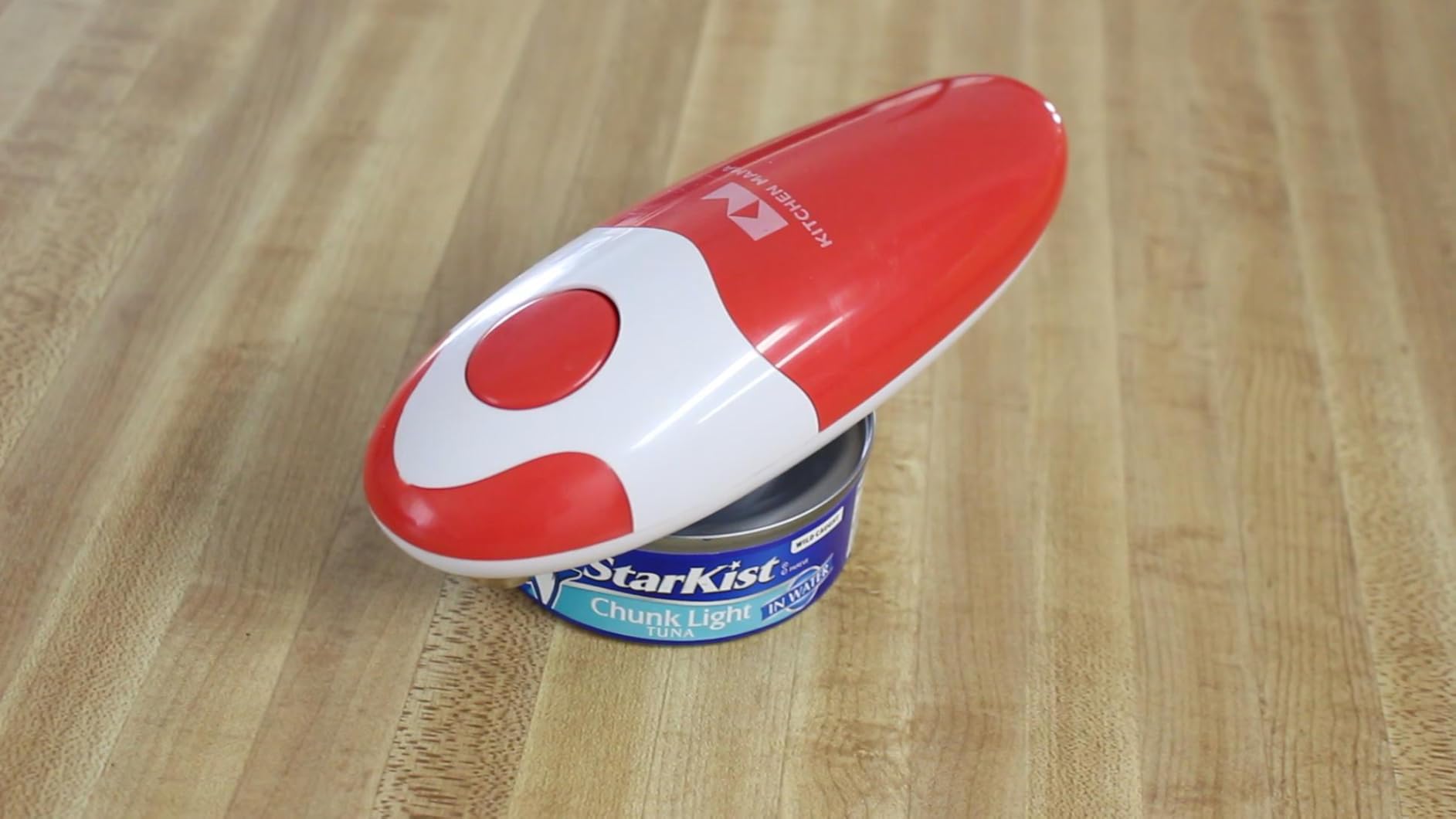
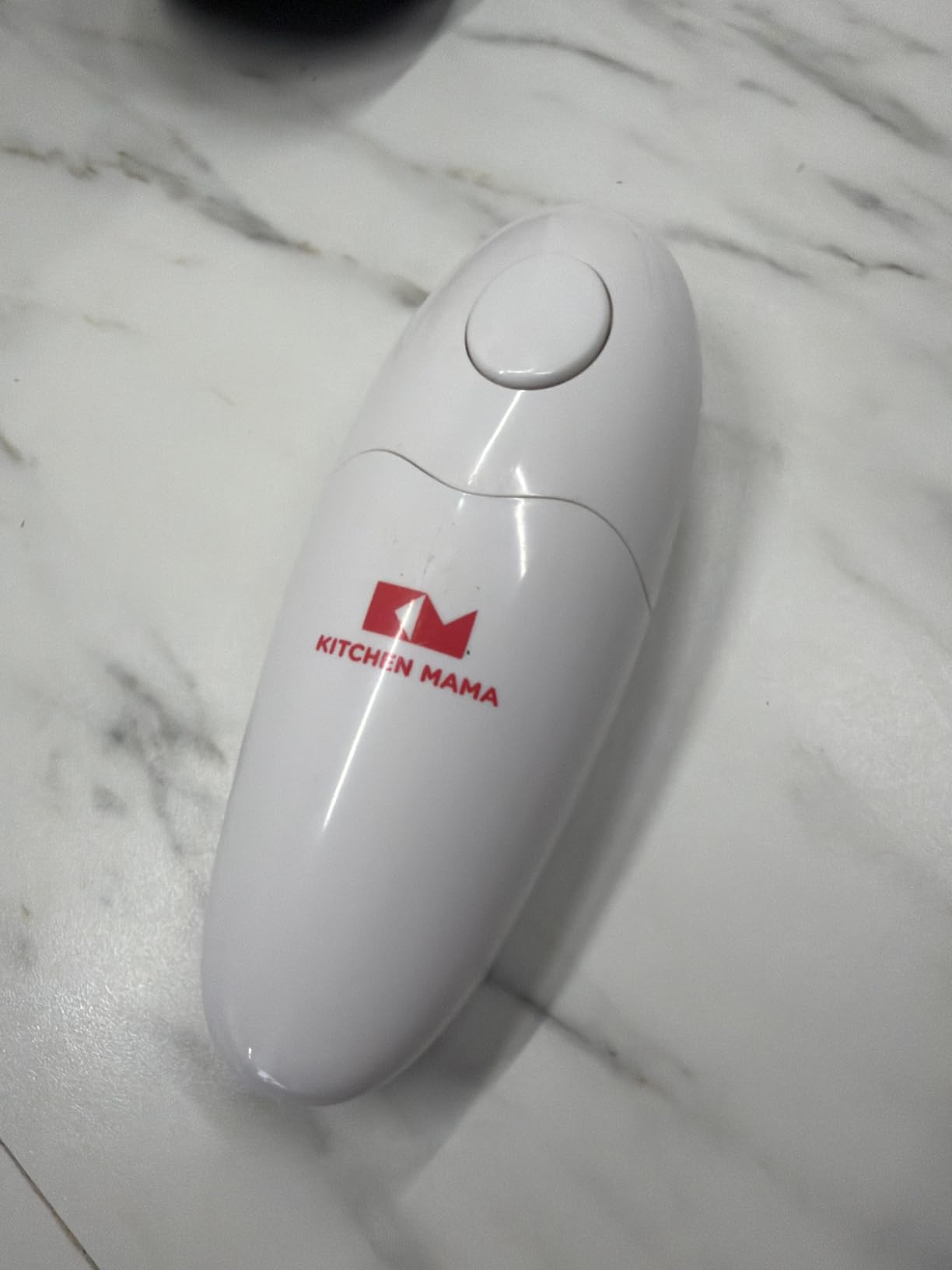
This is the opener that shows up most often in conversations with people whose hands have changed shape. More than 120000 reviews sit behind a 4.2 average, and a large share of them come from owners with arthritis, healing wrist fractures, or limited use of one arm. The operating principle is the least demanding of anything we tested: set the unit on the lid, press the button, and the machine walks itself around the can while you do nothing at all.
At 8.48 ounces it is light enough to hold in one hand for a second if you need to reposition it, and the 2.76 by 7 inch body disappears into a drawer. The stainless steel blade cuts along the side, so you get a smooth rim and a lid you can handle with bare fingers. Owners also report it handling dented and oddly sized tins that stall rigid openers, which matters when the can has been sitting in the back of a cupboard for months.
Why Owners With Severe Arthritis Rate It So Highly
The reason shows up in the detail rather than the headline. You are never asked to squeeze, twist, or hold a lever down while a blade works against metal. The force needed is a single button press to start and a single press to stop. For a hand that tires within seconds of sustained effort, that converts a frustrating two-handed struggle into a ten-second task, and it is why this model carries the most owner feedback of any opener in the roundup.
There is a real trade-off in that design, though. Without an automatic stop, if you walk away mid-cut the wheel keeps turning against the rim, which is how a few owners ended up with metal shavings on the counter. Our advice is to treat the stop press as a deliberate final step rather than a reflex, and to keep the unit in sight until it stops.
Where It Falls Short for Some Buyers
Placement is the weak point. The opener has to sit correctly on the rim before it bites, and reviewers report that a first attempt on a fresh can sometimes takes a second pass, particularly for users with tremor or reduced fine control in the fingers. A few models also failed after a few months, and the ABS shell does not inspire the same confidence as a stainless steel body. Batteries are not included, which is one more thing to remember before the first tin.
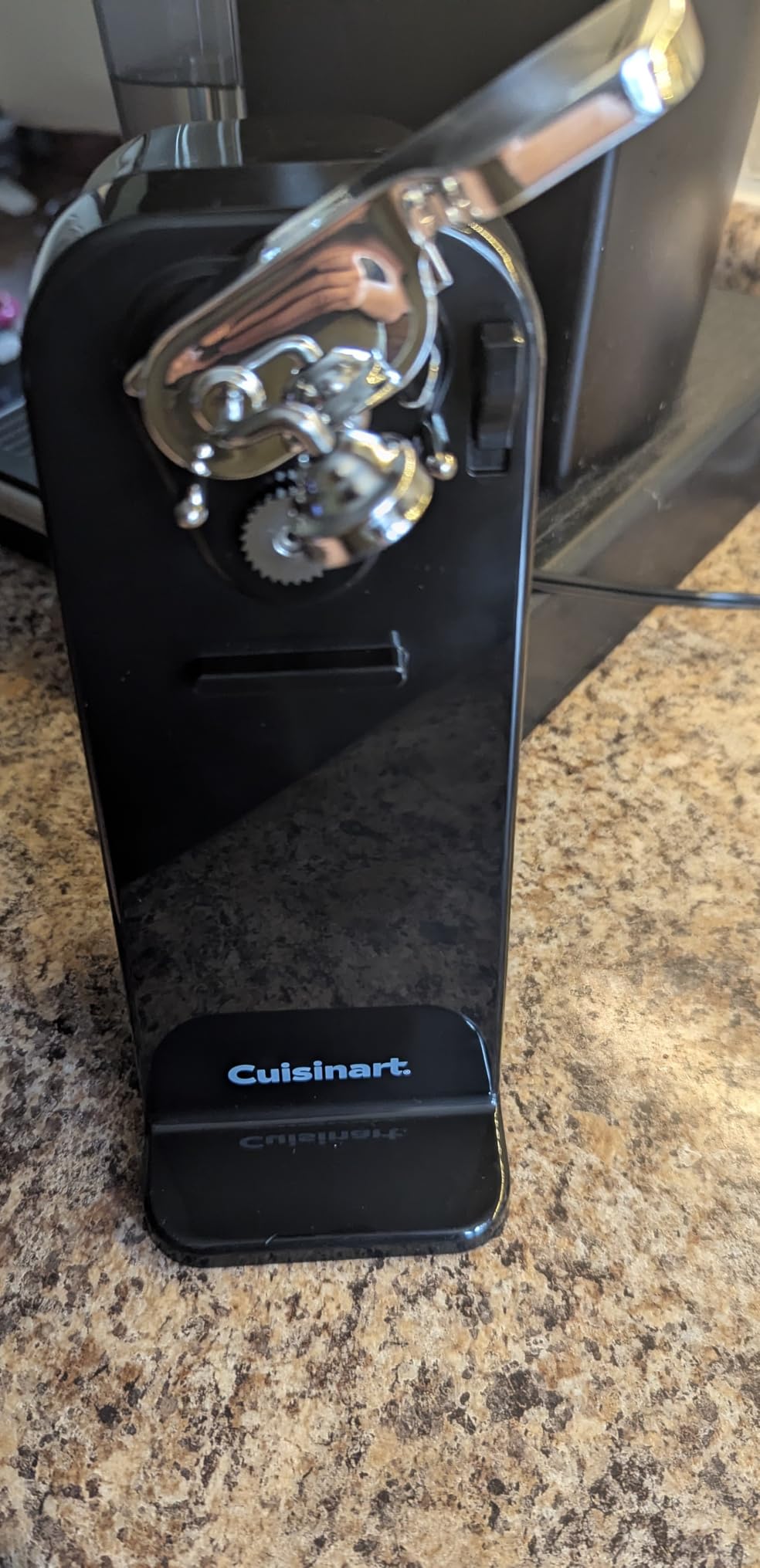
3. Cuisinart CCO-50BKN – A Weighted Base That Will Not Tip on a Big Tin
Cuisinart Electric Can Opener, One-Touch Operation, Nonslip Base, Black
60 watts
2.6 pounds
4.62 by 9.35 inches
Magnetic lid holder
+ Pros
- One-touch lever removes manual turning entirely
- Weighted nonslip base resists tipping on heavy cans
- Magnetic lid holder keeps cut lids out of the food
- Detachable lever is simple to clean
- Limited 3 year warranty
– Cons
- Heavy at 2.6 pounds so it is a fixed countertop appliance
- Requires mains power and a 120V plug
- Shiny black finish shows fingerprints
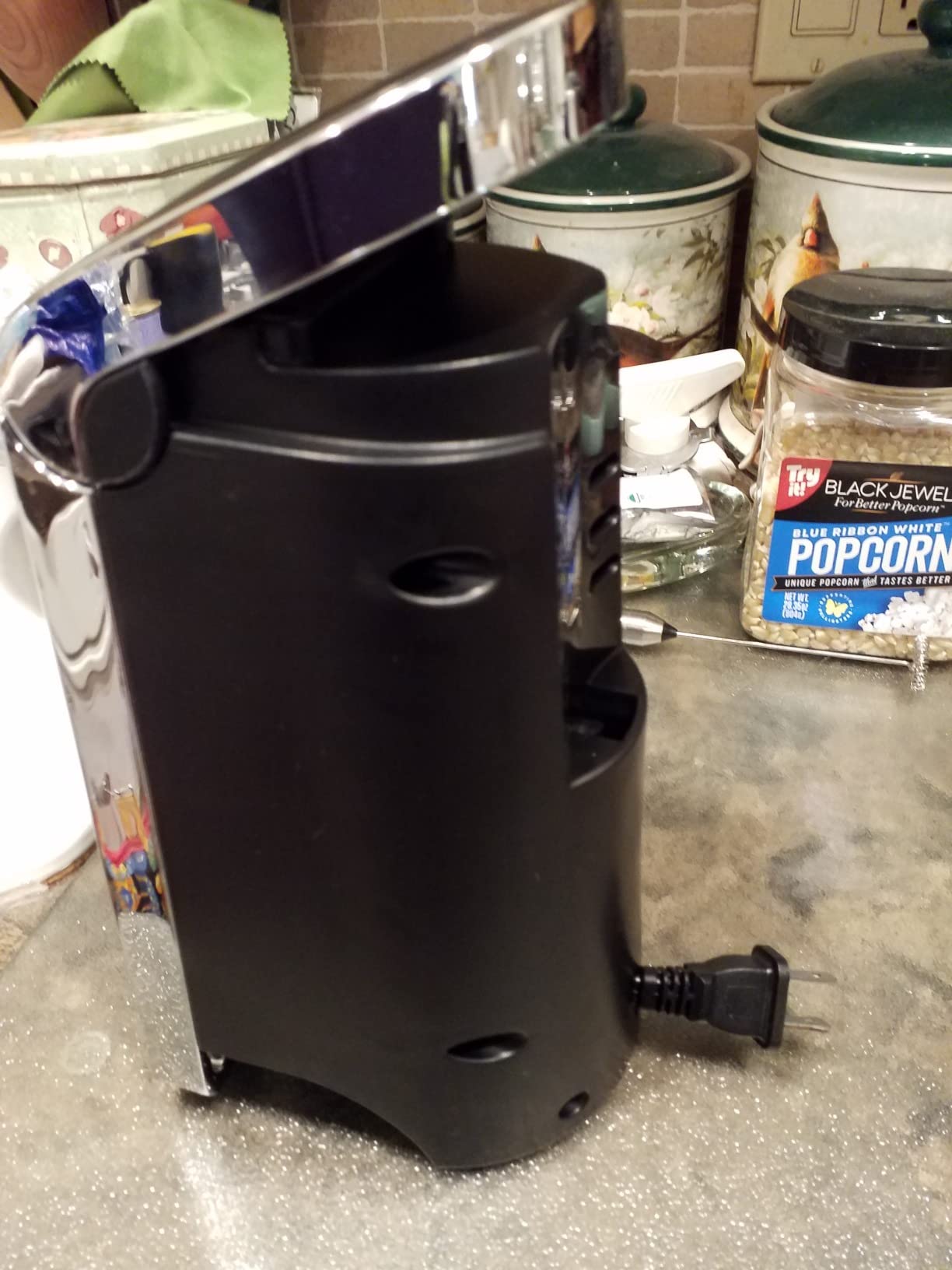
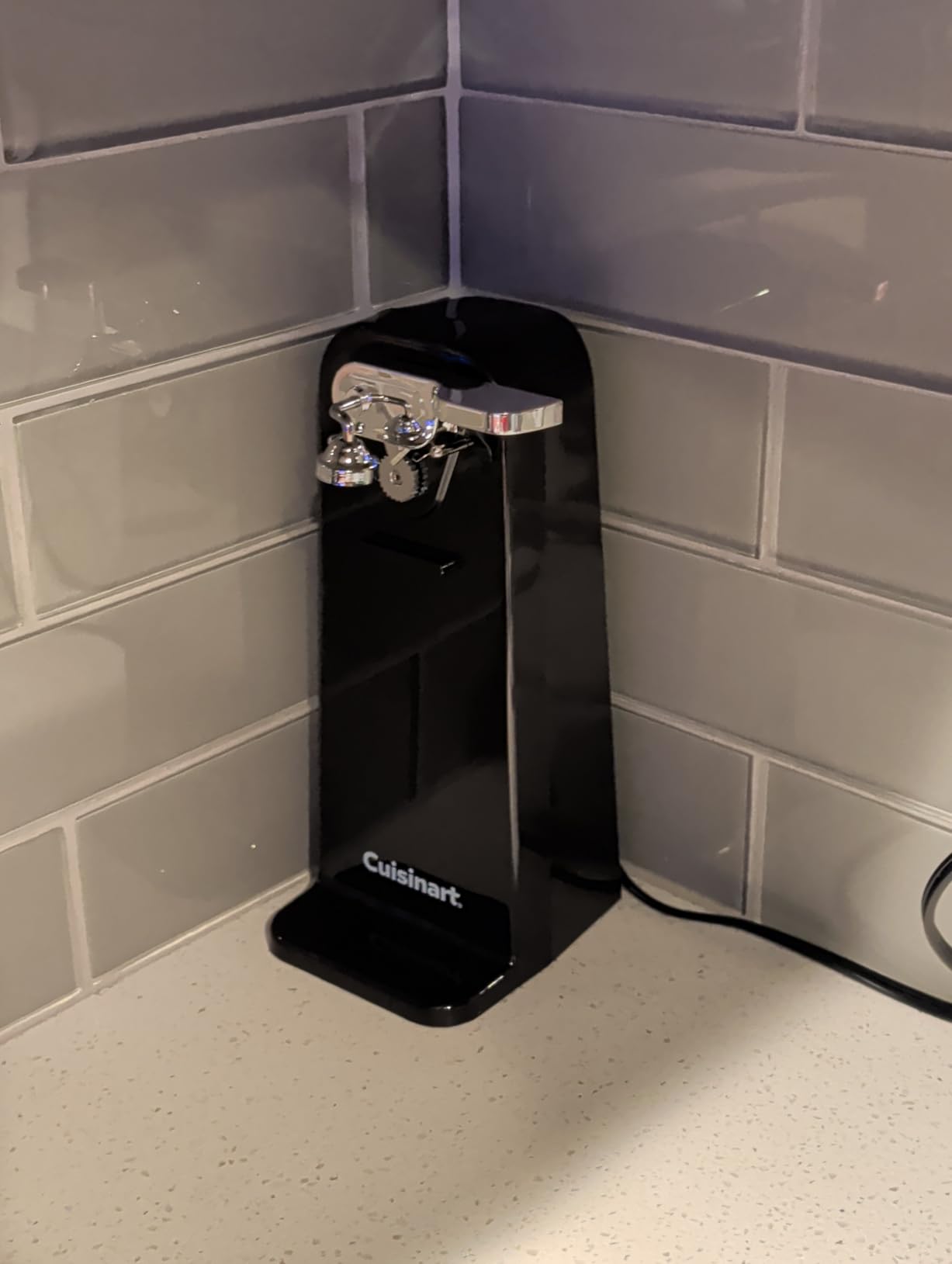
The problem with lightweight openers is the 48 ounce tin. You need a second hand to steady the can, and that is precisely the hand you do not have. The Cuisinart answers this with mass: 2.6 pounds of stainless steel and plastic sitting on a wide nonslip base that stays put when a heavy can drops into the well. Once the lever is pressed, the machine turns the can for you, so the weight is doing the stabilising work your grip used to do.
It is also the longest-serving design in this roundup, and the review volume reflects that longevity. At 4.5 stars across more than 64000 reviews, it is a category benchmark. The magnetic lid holder catches the cut lid and keeps it away from the food, which cuts down on the fishing-with-a-fork step that sore hands dislike, and the detachable activation lever lifts off for a quick rinse.
The Case for a Countertop Unit With Real Mass
When your grip strength is the limiting factor, stability moves up the priority list faster than features. A base that will not slide or rock means you can set the can down with one hand, tap the lever with a fingertip, and step back. The 60 watt motor is less powerful than some rivals, but it is sized for standard household tins rather than commercial volume, and it delivers consistently without a violent start that could tip the can.
There is a practical bonus for anyone cooking in volume. Because the can never needs to be held steady, you can open three or four tins in a row without re-gripping anything, which is closer to how someone without pain would do it. The limited 3 year warranty is also the longest stated cover among the countertop models here.
What You Give Up by Choosing It
Two and a half pounds is a lot of weight for a 60 watt appliance, and it lives on the counter rather than in a drawer. It needs a mains outlet, and the 120V plug will not work on a 220V circuit. Anyone with reduced fine motor control in the fingers may also find that aligning the can into the well is more precise work than a self-aligning handheld demands, so it suits hands that have lost strength rather than hands that have lost dexterity.
4. Hamilton Beach Walk n Cut – Cordless, Hands-Free, and It Stops on Its Own
Hamilton Beach Walk ‘n Cut Hands-Free Cordless Electric Can Opener
Rechargeable cordless
14.56 ounces
3.9 by 3.8 inches
Detachable blade and lever
+ Pros
- Hands-free operation that stops and shuts off automatically
- Works from 6 ounce cans up to gallon size
- Compact body fits a kitchen drawer
- Detachable blade assembly cleans easily
- Magnet holds the lid out of the food
– Cons
- Fiddly to align on the rim for limited dexterity users
- No charge indicator light
- Very small cans can tip while the tool runs around them
- Body can be wiped but not submerged
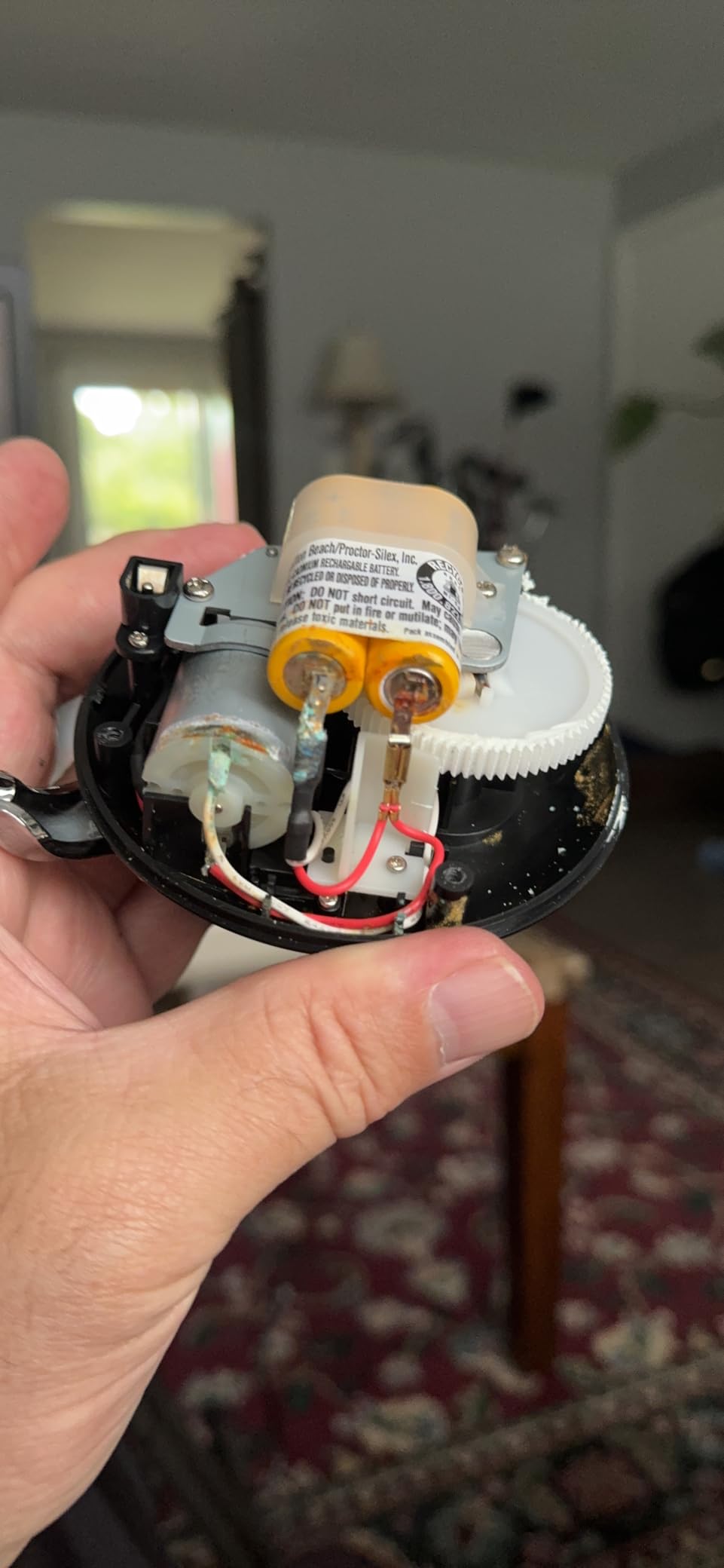
This unit answers two objections at once. It is fully cordless and rechargeable, so there is no outlet to reach and no cable to snag, and it shuts itself off when the cut finishes, so you are never relying on a second button press. At 14.56 ounces and 3.9 by 3.8 inches it disappears into a drawer, which makes it the option for a small kitchen, a rental, or an RV where a countertop appliance is not realistic.
Owners with long-term use report units lasting 10 years or more, and many buy a second as a backup. The size range is genuinely wide, from 6 ounce tins to gallon cans, and the detachable blade and lever assembly lifts off for cleaning, which matters more than it sounds when getting a part clean requires a firm pinch.
Auto Shut-Off Is the Feature That Matters Most Here
Automatic stopping removes an entire class of failure. With manual stop models, a wheel that keeps turning against a finished rim can grind metal into a fine mess, and a hand that has forgotten it started the job cannot correct it quickly. A tool that halts on its own ends the cut cleanly and leaves the lid attached, and that single behaviour prevented the most common complaint we saw in owner reviews of other cordless openers.
Cleaning is the other quiet strength. The cutting lever and blade detach as one unit, so you can rinse the part that actually touches food without wrestling with the whole body. That is a meaningful difference for anyone whose fingers stiffen after a minute of awkward work, and it is why we would choose this model for a household where cleaning is done by a different pair of hands than the ones cooking.
Where the Alignment Step Bites
Every hands-free opener asks you to place the head on the rim, and this one is no exception. Reviewers describe the first attempt as fiddly, especially for people with limited dexterity or tremor, though most say it improves with practice. Small cans can tip while the tool runs around them, and there is no charge indicator light, so a battery that runs down mid-can is a surprise you cannot anticipate. The body should be wiped rather than submerged.
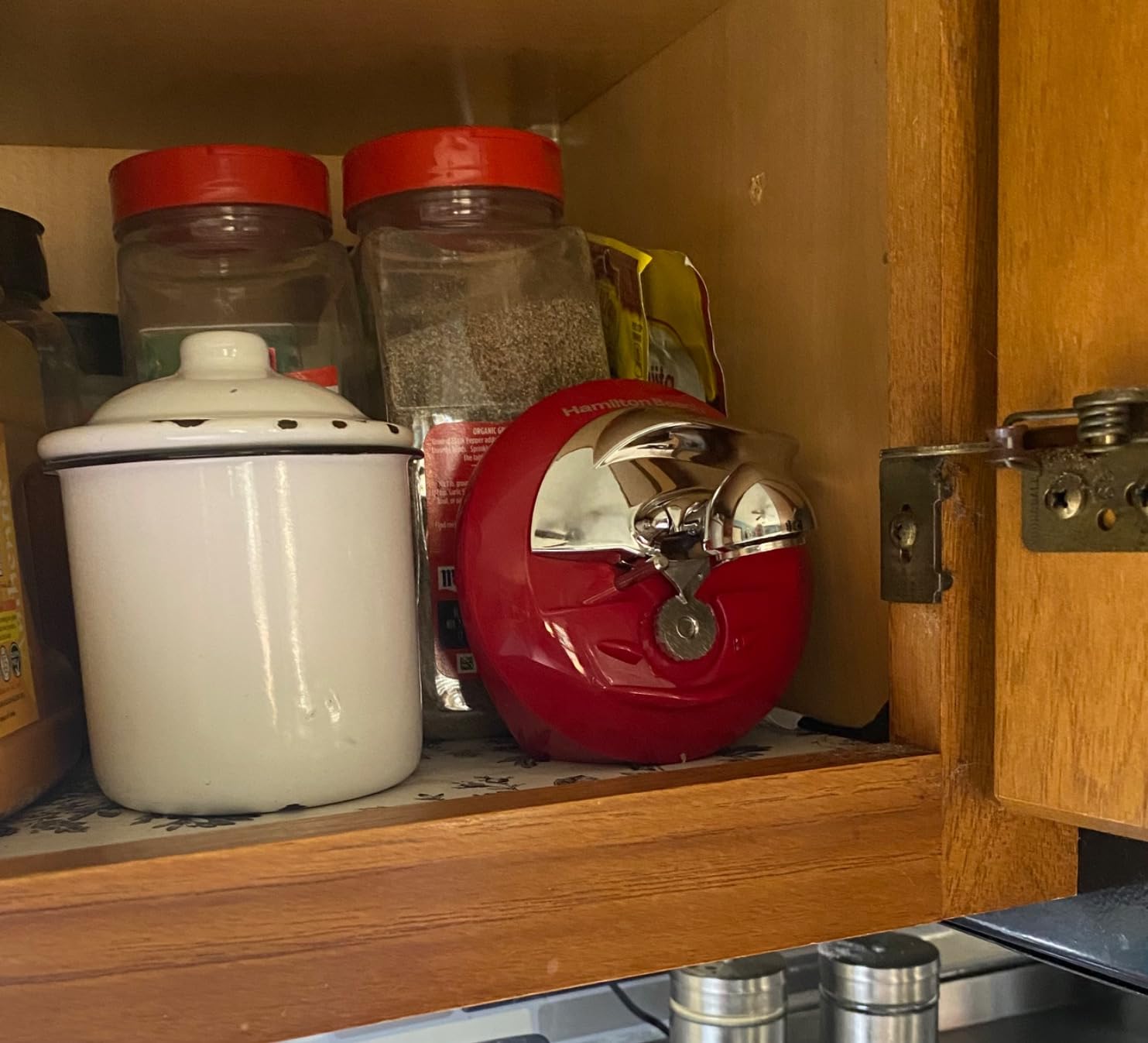
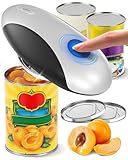
5. Canslab Ultrablade PRO – Most Versatile With a Smart-Chip Auto Stop
Canslab Ultrablade PRO Electric Can Opener,USB Rechargeable,Smart Auto Stop
USB-C rechargeable
10.24 ounces
2.6 by 2.09 inches
2000mAh battery
+ Pros
- Smart chip shuts the opener off when the cut completes
- 2000mAh battery opens roughly 120 cans per charge
- Retractable lid picker helps with sticky or pressurised tins
- Magnetic wall holder keeps the counter clear
- 28 percent quieter than AA battery openers
– Cons
- Highest priced handheld rechargeable option we tested
- Struggles with very small 6 ounce cans and some ring-top lids
- Magnet grips small lids better than large ones
- One reviewer reported early battery decline
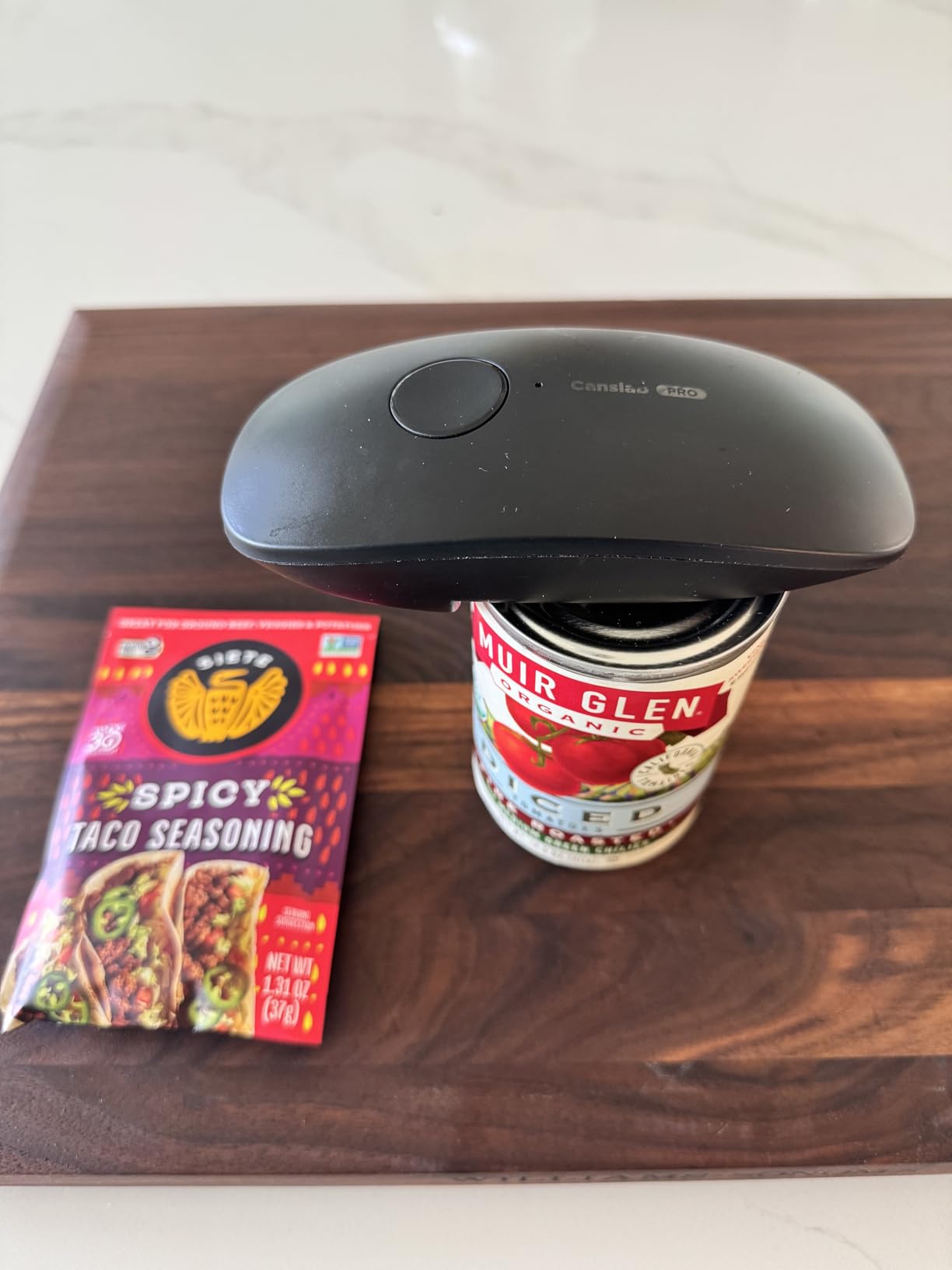
The premium tier exists because of two things you cannot add later: a smart chip that ends the cut by itself, and a 2000mAh battery that covers roughly 120 cans between charges. For a household opening several tins a week, that removes both the second button press and the monthly hunt for spare batteries. At 10.24 ounces it stays comfortable in one hand, and the USB-C cable plus magnetic wall holder means it lives on the wall instead of the worktop.
Reviewers with hand arthritis, trigger finger, and rheumatoid arthritis describe it as life-changing, and the specific praise is consistent: almost no force is required to run the whole cycle. The side-cut path leaves a smooth edge and separates the lid cleanly, and the retractable lid picker lifts a stuck or high-pressure lid without a second tool.
Why the Battery and Chip Combination Justifies the Step Up
Quantifying the convenience is useful. A charge lasting around 120 cans means most households charge it once a month rather than once a week, which removes battery handling from the equation entirely for people with stiff thumbs. The noise reduction matters too, because a tool that startles you is one you stop using, and lower volume keeps a kitchen calmer for anyone sensitive to sound.
Storage is an underrated reason to choose this shape. The magnetic wall holder uses no drawer space and no counter footprint, so the opener is always where you left it. Combined with auto shut-off, the design removes three recurring chores: buying batteries, finding the tool, and stopping the cut.
The Small-Can Weak Spot
The turning radius is the limitation. Very small 6 ounce cans such as tomato paste, and some ring-top lids, are the sizes owners report as difficult, because there is not enough rim for the head to seat itself confidently. The lid magnet also works best on smaller lids and does not hold a large one as firmly, so a heavy tin needs steadying by hand. Rimless soda cans are outside the design entirely.

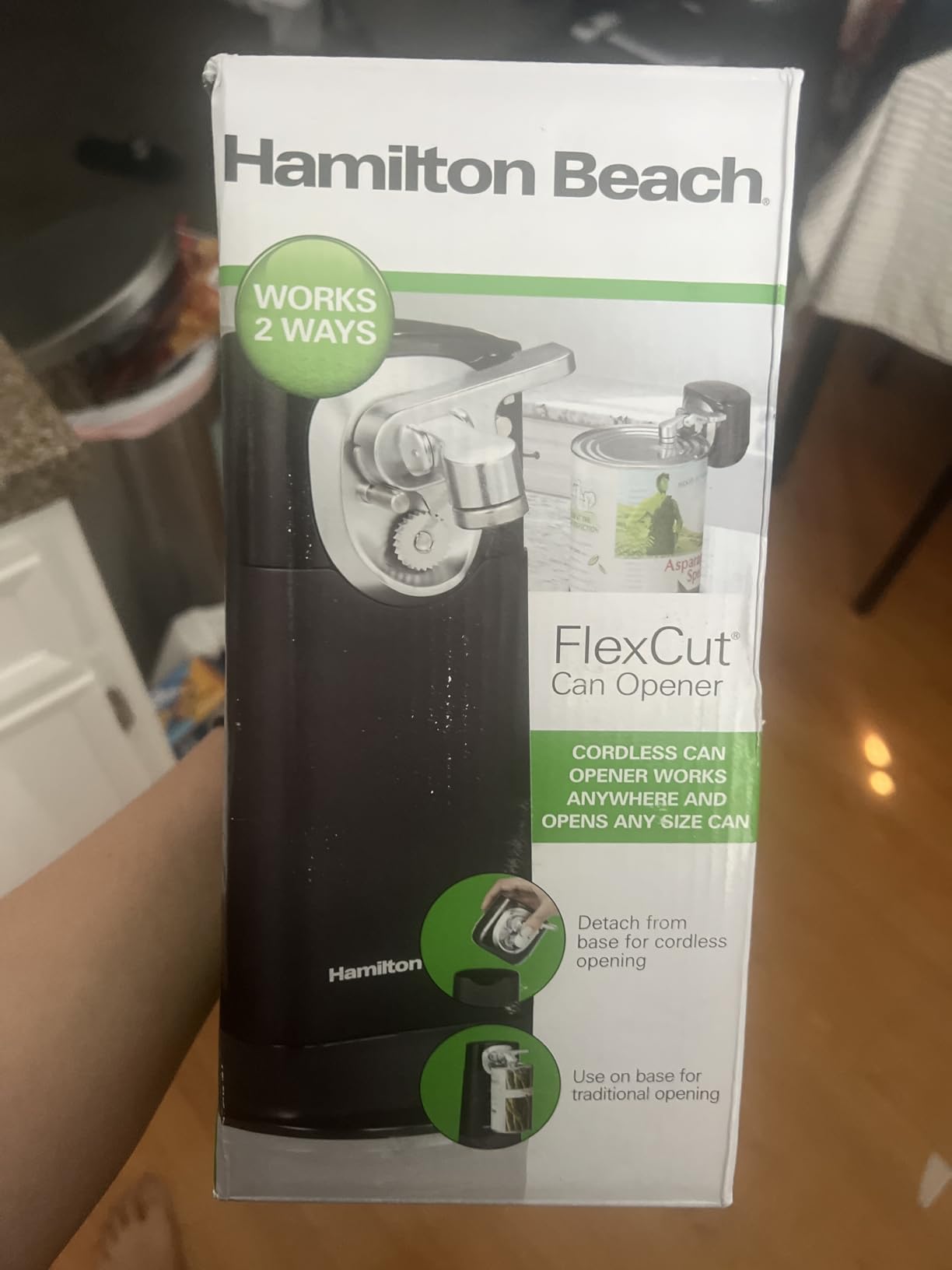
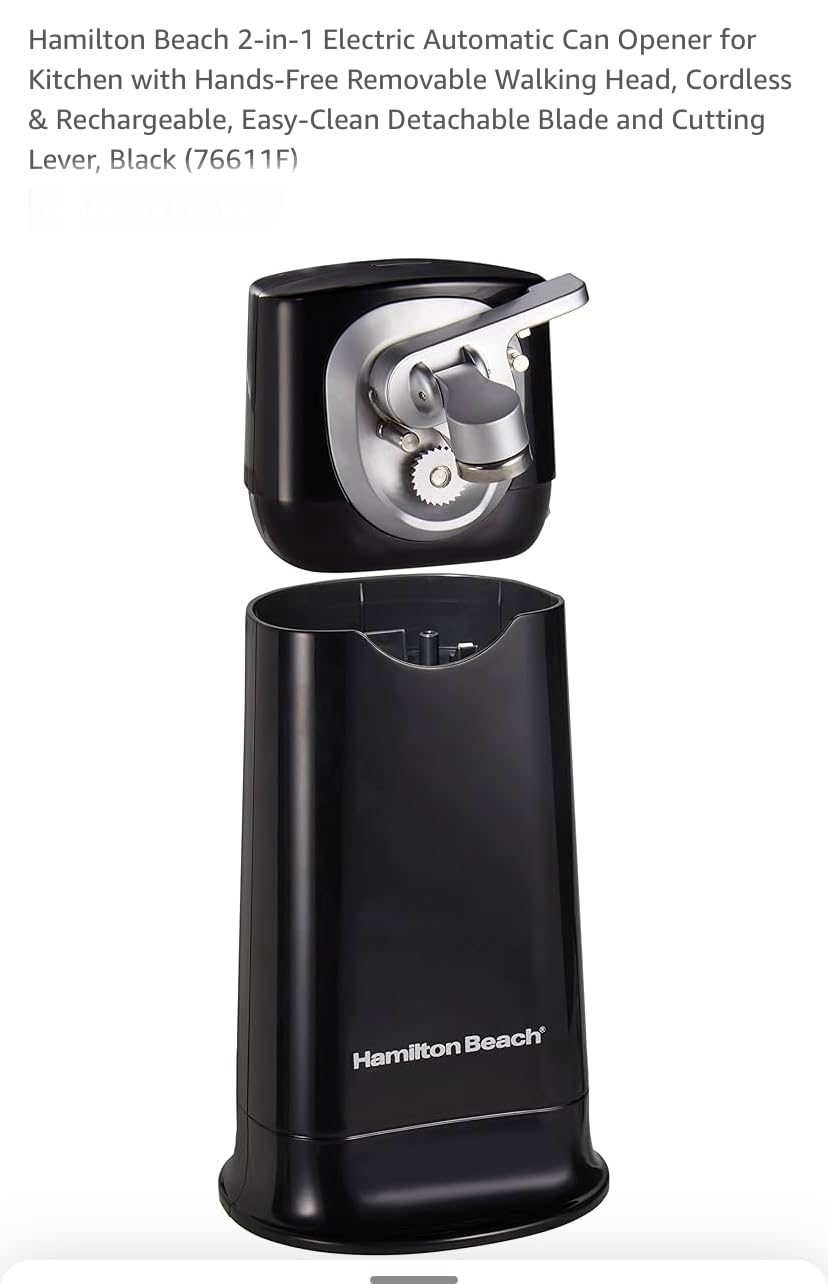
6. Hamilton Beach FlexCut 2-in-1 – A Countertop Base and a Walking Head in One
Hamilton Beach FlexCut 2-in-1 Cordless Rechargeable Electric Can Opener
4.75 by 9.75 inches
454 g
Opens up to 120 oz
Rechargeable detachable head
+ Pros
- Works on the sturdy base for everyday cans or detaches to walk a 120 oz can
- Opens on the first attempt with a light touch
- Quiet operation with a clean cut and no jagged edges
- Detachable blade simplifies cleaning
- Magnetic lid holder reduces mess
– Cons
- Detachable walking head has a steeper learning curve than expected
- Small cans struggle because of the tighter turn radius
- Cutting area has gripping gears that need a toothbrush
- 110V to 120V only
Most openers make you choose between a stable counter and a portable tool. The FlexCut refuses the choice. The base is wide and heavy enough that regular-sized cans open like on any traditional countertop unit, then the head detaches, recharges, and walks itself around anything up to 120 ounces. That combination is why it is marketed specifically to seniors and to people with arthritis or dexterity issues, and reviewers buying it as a gift rate it accordingly.
Owners report it opening a can on the first attempt with a light touch, holding a charge well enough for ten cans in a row, and running quietly enough for an early morning kitchen. The detachable blade assembly lifts off for cleaning, and a magnetic holder keeps the cut lid from landing in the food.
Two Appliances in One Footprint
The wide base is the part that changes daily behaviour. Its extra-wide, sturdy construction resists the tipping and sliding that force you to steady a lighter can by hand, so ordinary tins can be opened with one hand resting on the lever. When the tin in front of you is a 120 ounce family-size can, the same motor detaches and takes over, which is the situation where most countertop openers simply give up or get unplugged and carried to a drawer.
Because it runs on a rechargeable battery rather than a mains cord, one device covers a small kitchen, a holiday cottage, and a camping trip. The clean, sharp cut and lack of jagged edges match what you would expect from a larger unit, and the absence of a power lead removes one more cable to manage in a cluttered kitchen.
The Learning Curve on the Detached Head
Detach the head and the turn radius tightens, so small cans are harder work than they are on the base. The cutting area also contains gripping gears that reviewers say need a toothbrush to clean properly, which is more fiddly work than a detachable single blade. A small number of buyers found the detached head would not function at all and returned the unit, and the 110V to 120V limitation rules out 220V countries without a converter.
7. Canslab Ultrablade SE – Quiet, Rechargeable, and Built for Southpaw Use
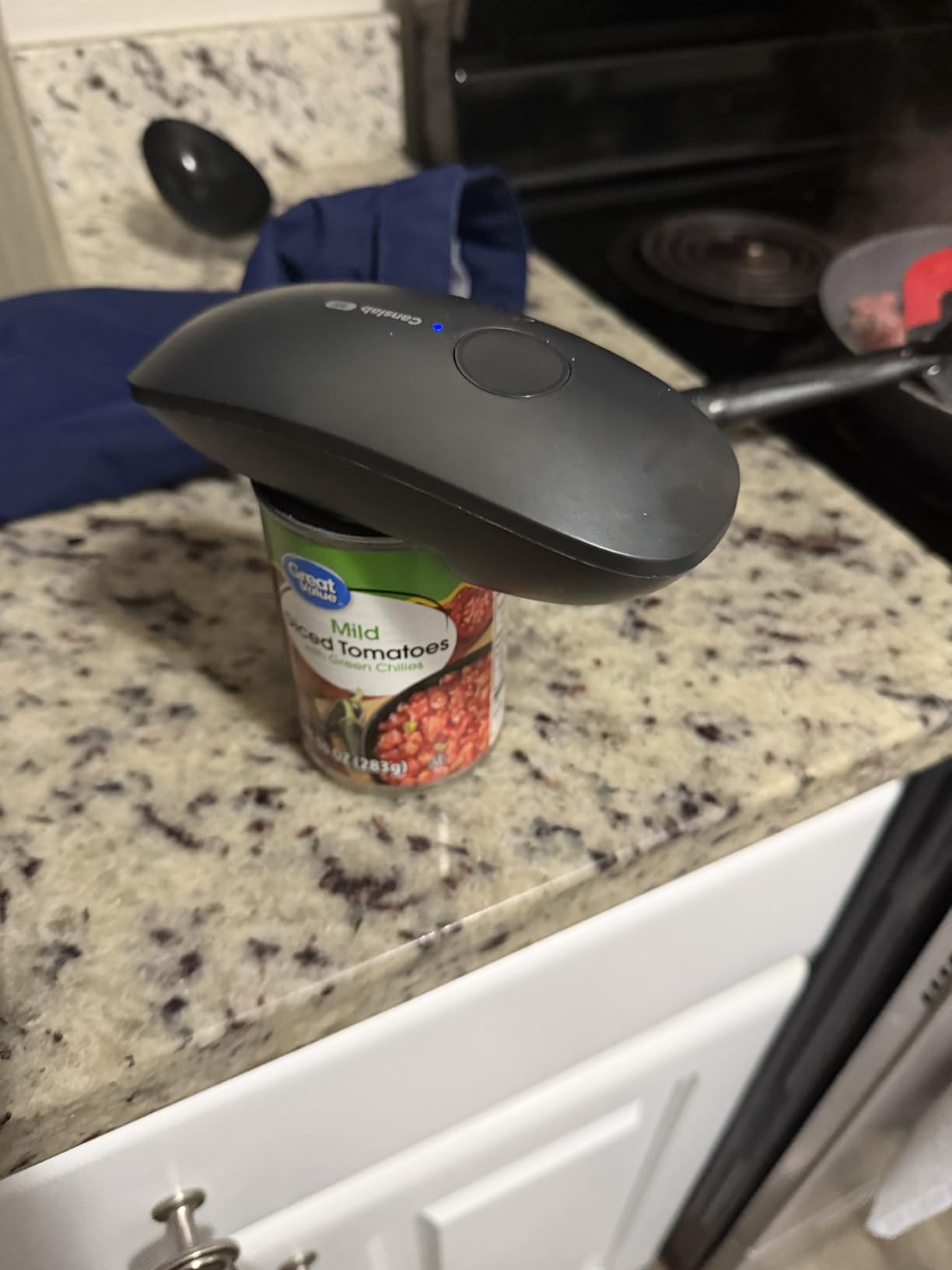
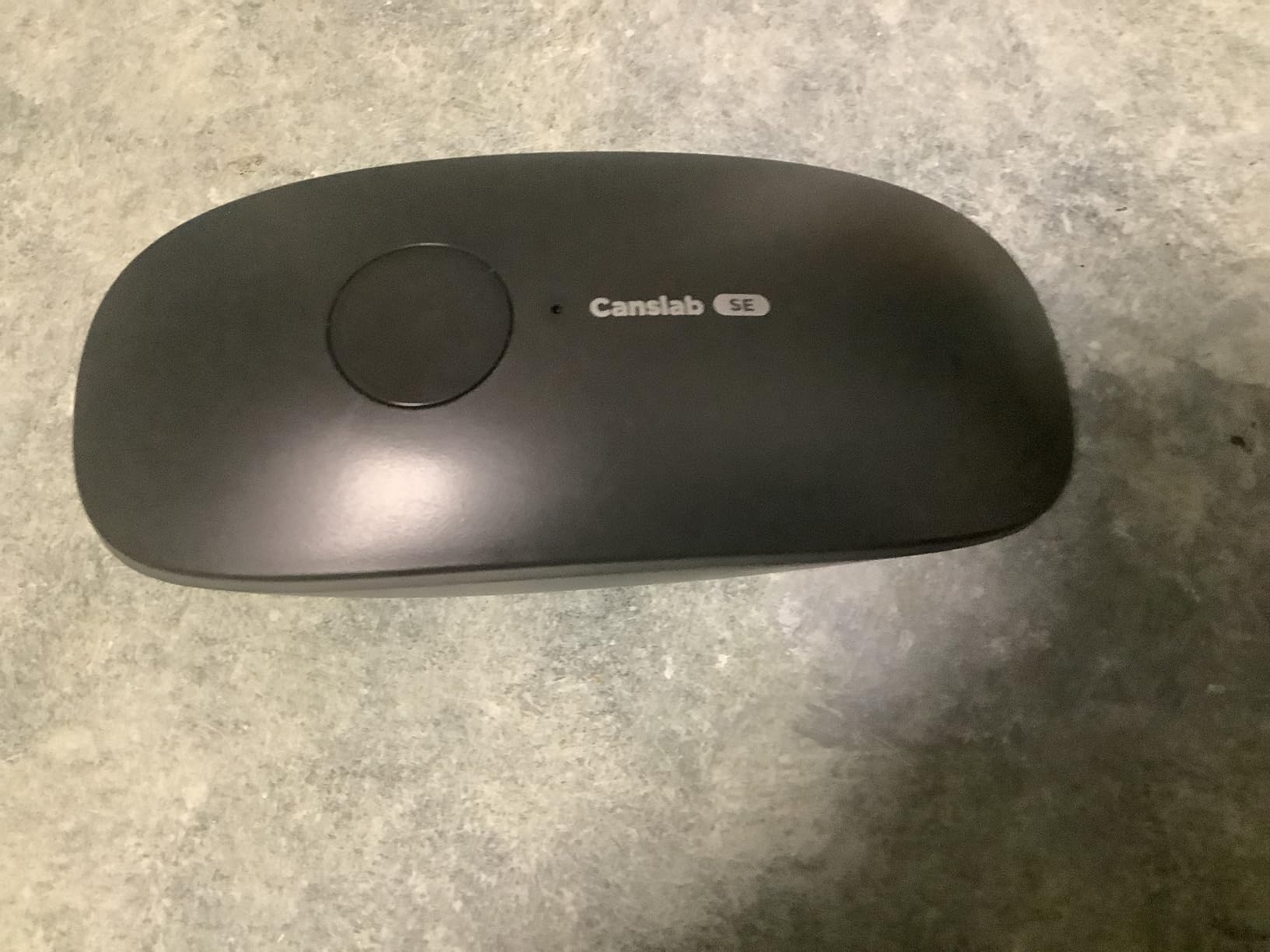
Canslab Ultrablade SE Electric Can Opener, USB-C Rechargeable, Smooth Edge
USB-C rechargeable
9.12 ounces
2000mAh battery
Stainless steel side-cut blade
+ Pros
- 28 percent quieter and faster than typical AA battery openers
- 2000mAh battery covers about 120 cans per charge
- Side cut leaves fully smooth edges on lid and can
- Compact drawer-friendly body
- Explicitly designed for one-handed and southpaw users
– Cons
- Does not stop automatically so you press the button again
- Lid can be hard to remove and contents may spill
- Cannot handle very small or square cans
Almost every cordless opener we tested assumes a right-handed grip or at least a neutral two-handed placement. This one is named for the other case. The body is symmetrical enough to be held in either hand, the control sits under the thumb regardless of which hand it is, and the manufacturer states the design suits one-handed and southpaw users explicitly, which is close to unheard of in this category.
At 9.12 ounces with a 2000mAh battery, it covers roughly 120 cans per charge and charges over USB-C. The motor runs 28 percent quieter and 28 percent faster than an AA battery opener, and users with strength issues report treating it as effortless. The side cut leaves fully smooth edges on both the lid and the can.
The Quietest Cut in the Group
Noise is a genuine accessibility issue that most roundups ignore. A can opener that jolts the hand and rings across the room gets abandoned, especially by someone with tremor or reduced tolerance for sudden sound. Reducing volume by 28 percent while increasing speed is a meaningful engineering trade, and buyers with arthritis and limited grip strength single it out as the reason they keep the opener within reach rather than in a drawer.
The smooth-edge result is what makes the quieter cut worth having. Because the blade tracks the side of the lid, nothing pierces the top, and both the removed lid and the open can can be handled with bare fingers. A built-in lid remover helps with sticky or high-pressure tins, and everything you need, opener, manual, and USB-C cable, is in the box.
Where the Cut-Line Trade-Off Shows
There is no automatic shut-off, so the button must be pressed a second time to stop the rotation, and the cut line sits inside the sealed ring, which is what makes the lid trickier to lift out. Some users spill contents on the counter at that point, which is worth knowing if your wrist does not want to hold a can steady while you fish for a lid. Very small and square cans are outside what it can handle.
8. Proctor Silex Hands-Free Cordless – Self-Aligning Head With a Charge Gauge
Proctor Silex Hands-Free Cordless USB Rechargeable Electric Can Opener
11.2 ounces
2.4 by 4.9 inches
Self-aligning head
LED battery indicator
+ Pros
- Self-aligning head attaches itself to the can with no fine positioning
- Opens about 60 cans per charge and recharges in 2 hours
- Side cut leaves smooth reusable lid
- Built-in stainless steel lid lifter never touches the food
- Backed by a 3 year limited warranty
– Cons
- Loud operation called out by multiple reviewers
- Sometimes needs repositioning to attach
- One unit failed to hold a charge
- USB cable is short and the lid lifter takes practice
The defining feature here is self-alignment. You place the head on the lid and press the button, and the unit finds the rim and attaches itself, then travels 360 degrees around the can before stopping and shutting off. For anyone whose fingers cannot make the fine adjustments that a fixed-alignment tool demands, that single behaviour does more than any motor improvement.
It opens roughly 60 cans per charge, fully recharges in two hours, and carries an LED battery indicator so you know before you start rather than discovering a flat battery halfway around the rim. The built-in stainless steel lid lifter removes the cut lid without touching the food, and the whole thing sits in a drawer at 2.4 by 4.9 inches and 11.2 ounces.
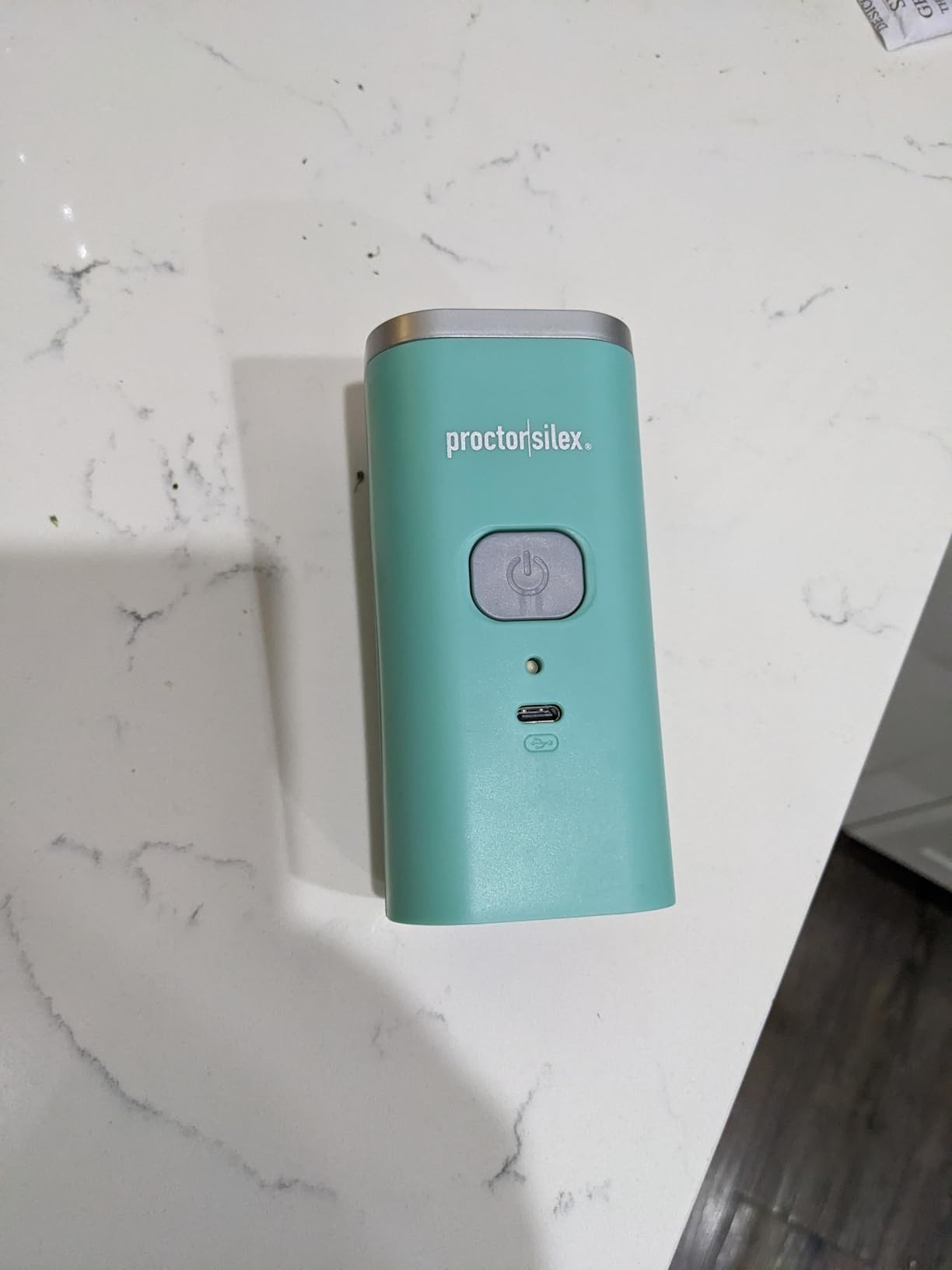
Self-Alignment Beats Raw Power for Weak Hands
Every rating on this list depends on how much hand force the task takes, and self-alignment is the biggest reducer we found. Precise placement is a fine motor task, and fine motor control is often the first thing to go in both osteoarthritis hands and post-stroke recovery. When the tool finds the rim itself, the user’s job reduces to lowering it onto a flat lid, which almost anyone can do.
The warranty is a real differentiator in this price bracket. A 3 year limited warranty is the joint-longest we saw, and for an appliance expected to live on a counter for a decade that matters. The auto shut-off means the cut ends cleanly, and the side-cut path means the blade never contacts the contents, so the clean-up surface stays clean.
Noise Is the Honest Drawback
Multiple reviewers describe it as the loudest option they own, and that will matter to anyone with sensory sensitivity or a household that opens cans early. Attachment is usually automatic but not always, so a second attempt is occasionally needed on a dented or oddly sealed lid. The short USB cable and the lid lifter’s slightly awkward action are smaller frictions that resolve after a few uses.
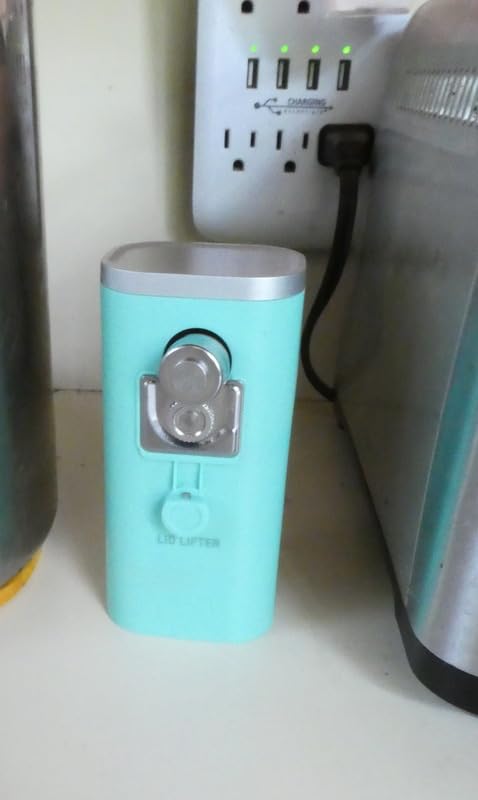
9. KITCHENMUH One Touch – the Opener That Handles Square and Oval Cans
KITCHENMUH One Touch Electric Can Opener Fits All Can Sizes for Seniors with Arthritis, Battery Operated Can Opener with Smooth Edge, Food Safe Automatic Can Opener for Kitchen (Black+Grey)
6.88 ounces
2.34 by 6.43 inches
Stainless steel
6 watts
+ Pros
- Lightest opener we tested at 6.88 ounces
- One-touch start and stop with no second hand needed
- Works on round square and oval cans including rectangular ones
- Cut line sits below the folded rim so leftovers reseal
- Consistent turning power on small and large cans
– Cons
- No automatic shut-off so you press the button again
- Sometimes needs two or three passes before the lid releases
- Shaves small bits of metal onto the counter
- Cuts slower than users expect
At 6.88 ounces this is the lightest opener we evaluated, and for a hand that aches from holding anything, that is not a small detail. It is also the only one here that explicitly handles round, square, and oval tins, including rectangular ones, so it keeps working when the pantry produces an unusual shape rather than a standard cylinder. Users recovering from broken wrists praise the genuine one-handed operation.
The cut line sits below the folded rim, which means a partly used tin can still be resealed with a lid once the contents are covered. Power comes from AA batteries, so there is no charging routine and no cable to lose, and the stainless steel blade is a sensible choice for a tool that touches metal on every use.
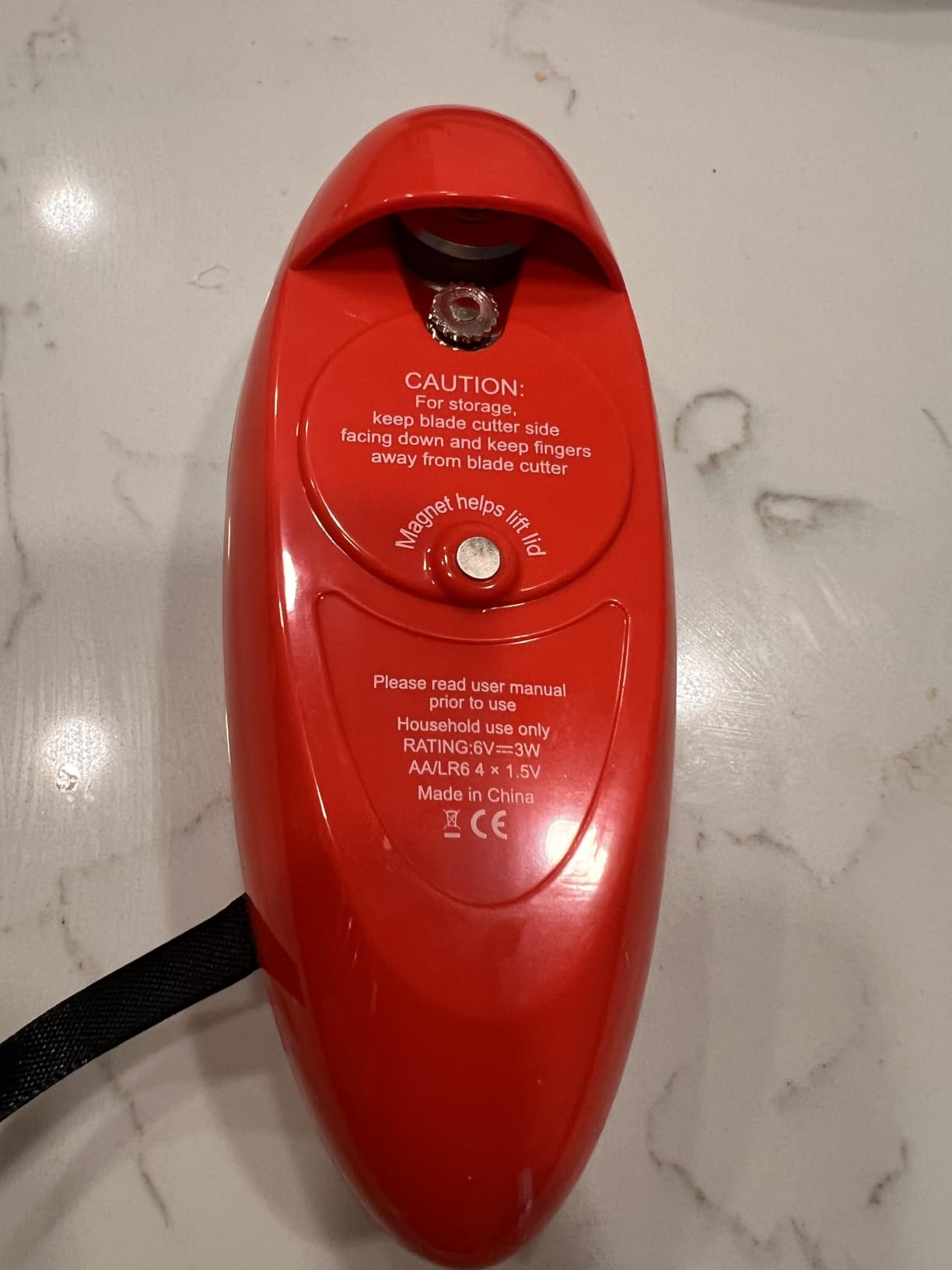
Built for Pantries With Odd-Shaped Tins
Ham, salmon, and rectangular ready meals arrive in shapes that defeat the circular assumption built into most openers. A stainless steel cutting wheel that works against a square lid will skid, stall, or leave a ragged seam, and cleaning up that seam with a hand that cannot grip firmly is exactly the situation this tool avoids. Owners of unusual tins report consistent turning power across small and large cans alike.
Weight is the quiet hero here. Nothing else in the roundup drops below 8.48 ounces, and for a user with painful grip, holding a quarter pound rather than half a pound is a meaningful reduction. It also means less arm fatigue when opening several tins in a row during a meal-prep session.
Why the Rating Sits Lowest in the Group
It is the least rated model here at 4.1, with a noticeable share of one-star reviews, and the reasons are consistent: no automatic stop, two or sometimes three passes around the can before the lid releases, and small metal shavings left on the counter. The cut is also slower than buyers expect, which tests patience on a bad day. AA batteries are not included and must be removed for long-term storage, or they can leak.
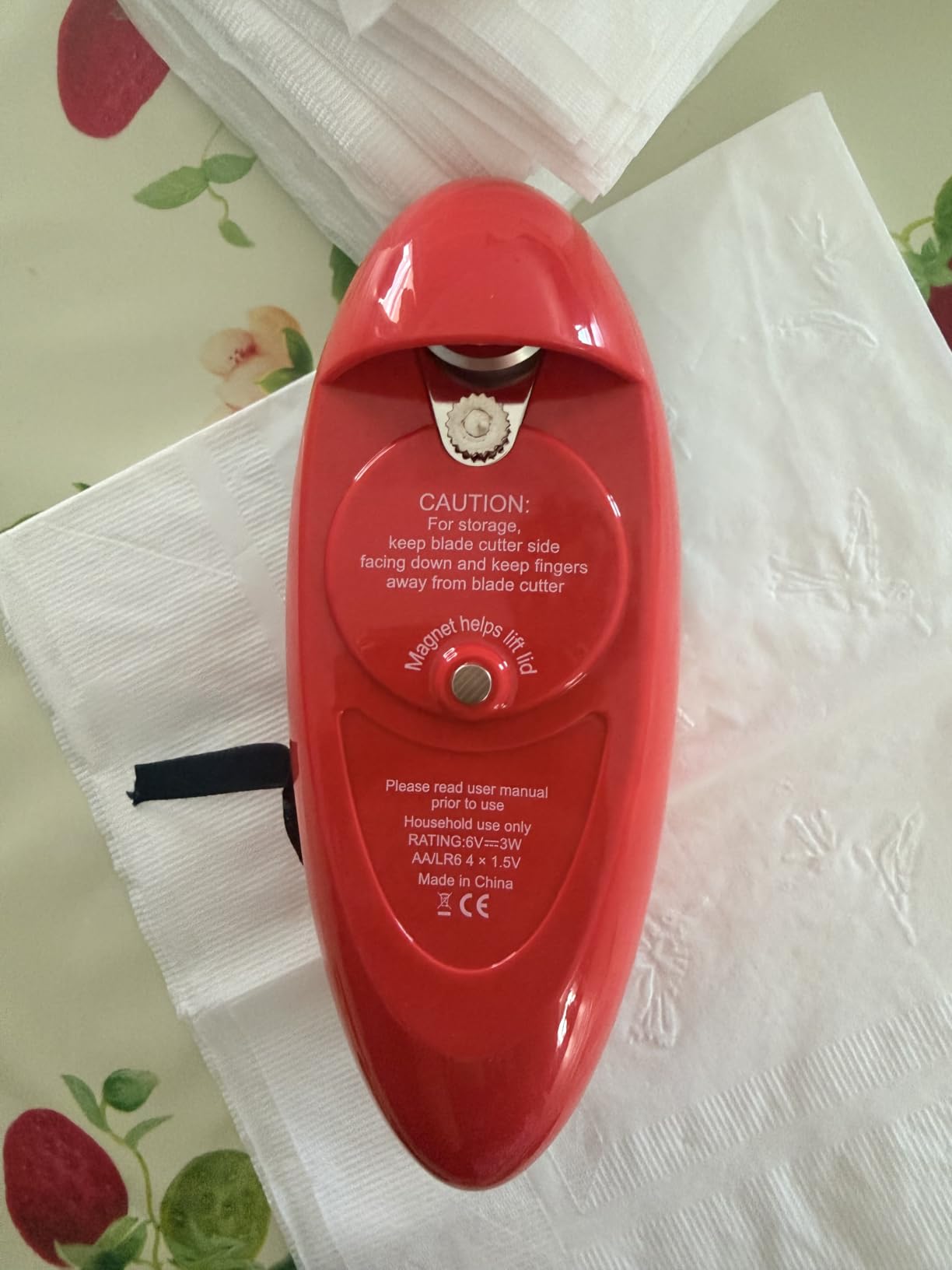
10. Zoomsnail Rechargeable – The Steadiest Cut on Dented and Old Cans
Zoomsnail Electric Can Opener, Automatic Rechargeable Can Openers with One-Touch Smooth Edge & Magnetic Lid – Hands-Free Easy-Grip Opener for Seniors with Arthritis and Most Cans
Type-C rechargeable
6.3 inch body
ABS with metal blade
Self-aligning magnet
+ Pros
- Self-aligning magnet grabs the lid and finds the rim unaided
- Steady slow constant cut that works on a dented can
- Blunt smooth edges on both lid and can
- Type-C rechargeable with 60 plus cans per charge
- No cleaning needed between uses
– Cons
- Smallest review base of the group at just over 500 reviews
- Its heft means narrow small cans may need steadying
- Rechargeable only with no batteries included
- No listed warranty from the OEM manufacturer
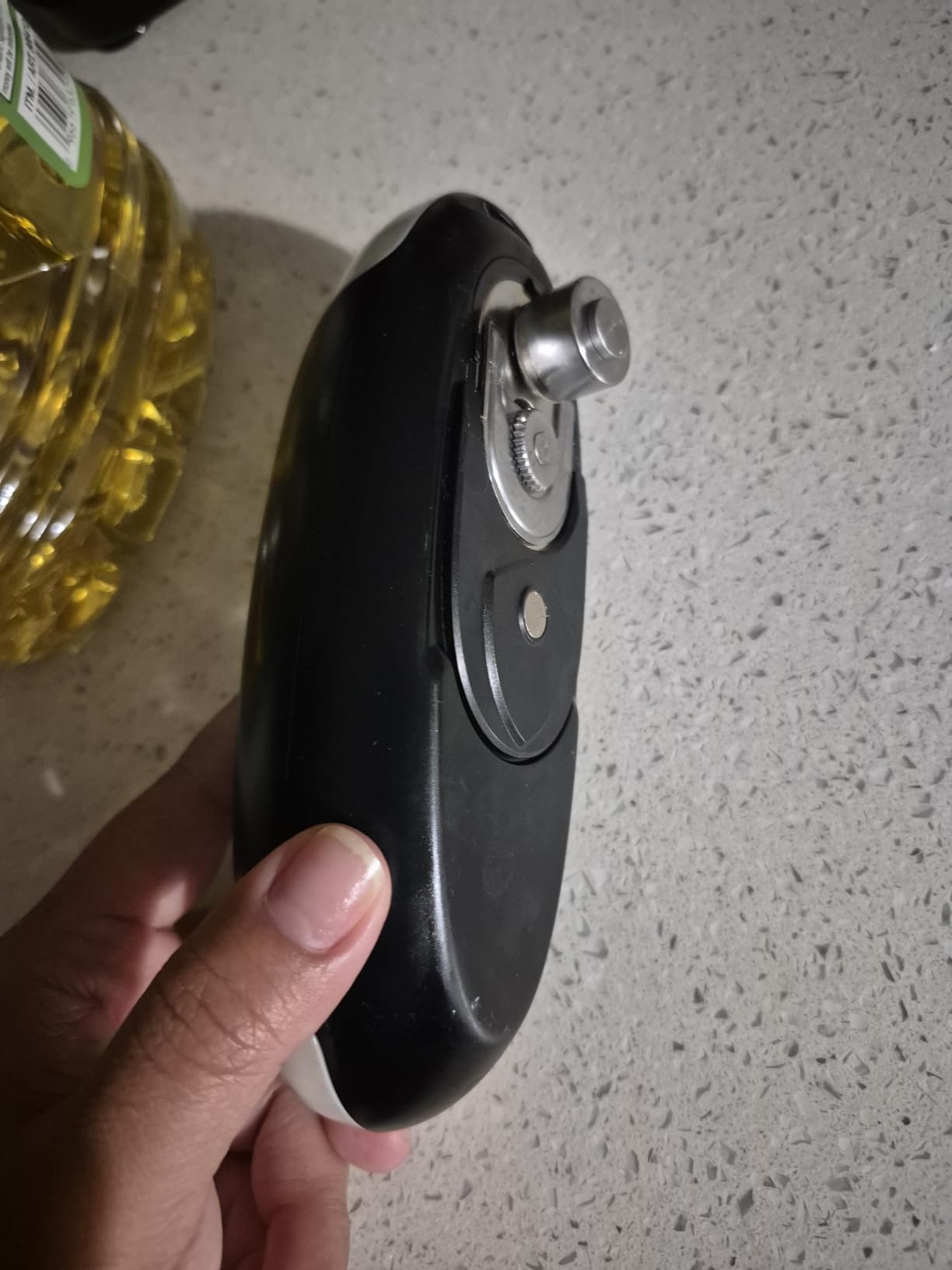
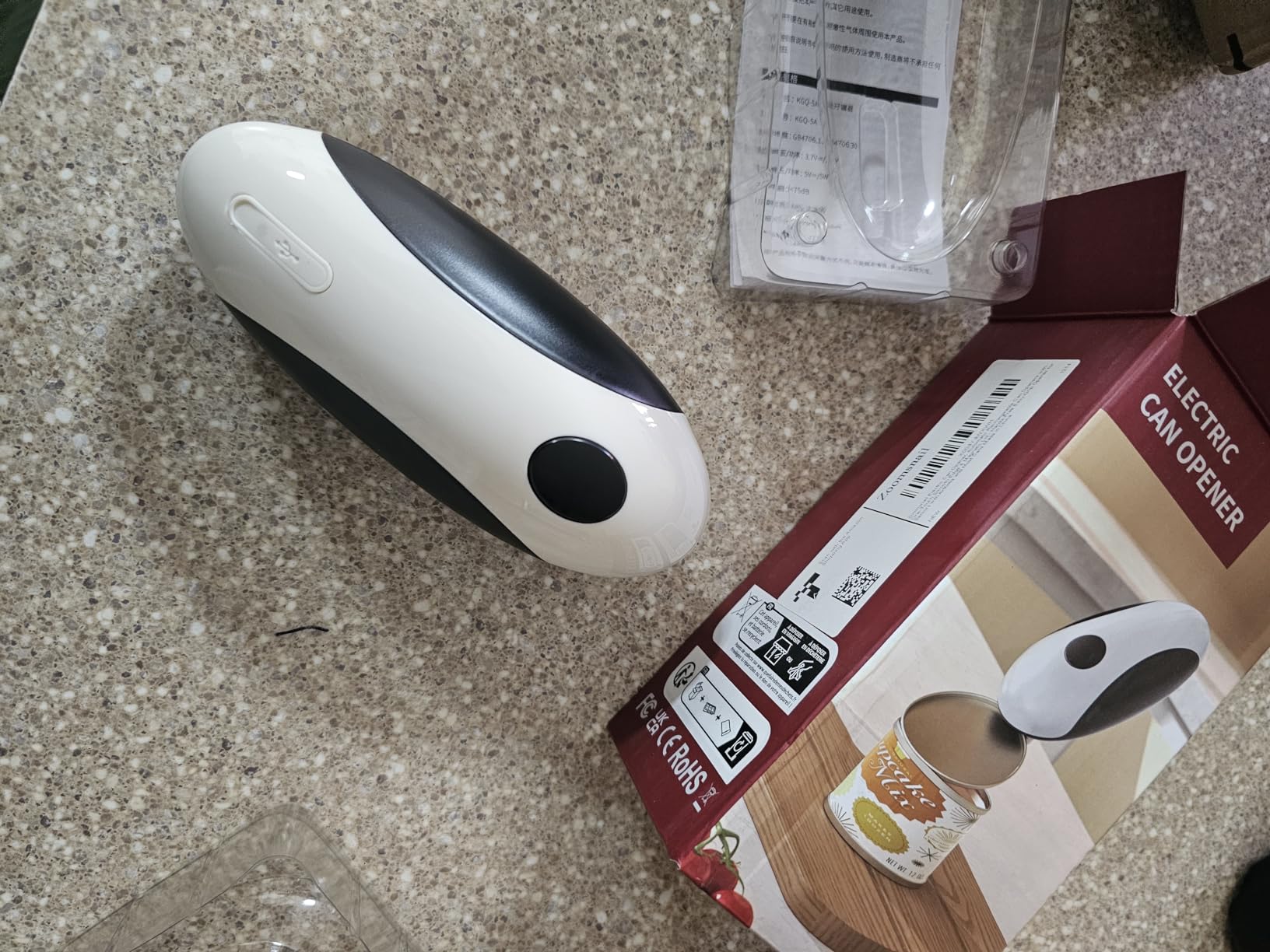
This is the most recent design in the roundup and the one with the thinnest evidence base, so we tested its claims carefully. The magnet finds the lid rim on its own, then runs a slow, deliberately constant cut. That restraint is the point: a steady pace on a dented or slightly distorted can is far kinder to a shaky cut than a fast spin, and owners with limited arm use describe the opener locking onto the lid by itself and leaving blunt, smooth edges on both pieces.
It charges over Type-C and a single charge covers 60 or more cans. The body is an easy-grip shape aimed directly at weak hands, and there is nothing to disassemble between uses, which removes cleaning from the routine entirely.
When a Slow Cut Is the Smart Cut
Speed is a poor proxy for quality at the end of a cut. A motor that eases around a distorted rim produces a clean, continuous kerf, and a motor that attacks it produces a torn one that leaves a lip you will catch with your thumb. Several owners describe dented and older cans as the situation where this opener behaves best, which is a useful data point for anyone who shops for groceries occasionally rather than weekly.
The magnet is also doing accessibility work. It removes the aiming step entirely, so a hand with tremor does not have to hold the opener in place while the blade starts. Combined with a rechargeable design that needs no battery drawer, the everyday routine is as close to a single button press as this category allows.
Buying With Fewer Reviews Behind It
With just over 500 reviews, there is not yet the long-term durability record that the established brands offer, and the manufacturer lists no warranty, so a failure means replacing the tool. The body also has more heft than the lightest models, which means a very narrow small can may need steadying by hand, and being rechargeable only means you cannot drop in a spare cell when you are away from a socket.
11. MUELLER HOME SmoothEdge Auto – a Magnetic Lid Lifter That Keeps Hands Out of the Food
MUELLER HOME SmoothEdge Auto Electric Can Opener, Black
11.5 ounces
Medium size
Stainless steel side cut
Magnet lid lifter
+ Pros
- One-touch button needs no twisting or hand strength
- Magnetic lid lifter and quick-release lever keep hands out of the food
- Side-cutting blade leaves smooth edges on lid and can
- Cordless AA battery design is portable for travel and camping
- Backed by a satisfaction guarantee and US-based support
– Cons
- Does not stop on its own so you press the button again
- Requires four AA batteries which are not included
- Cannot be submerged or put in the dishwasher
- Fewer reviews than the established brands
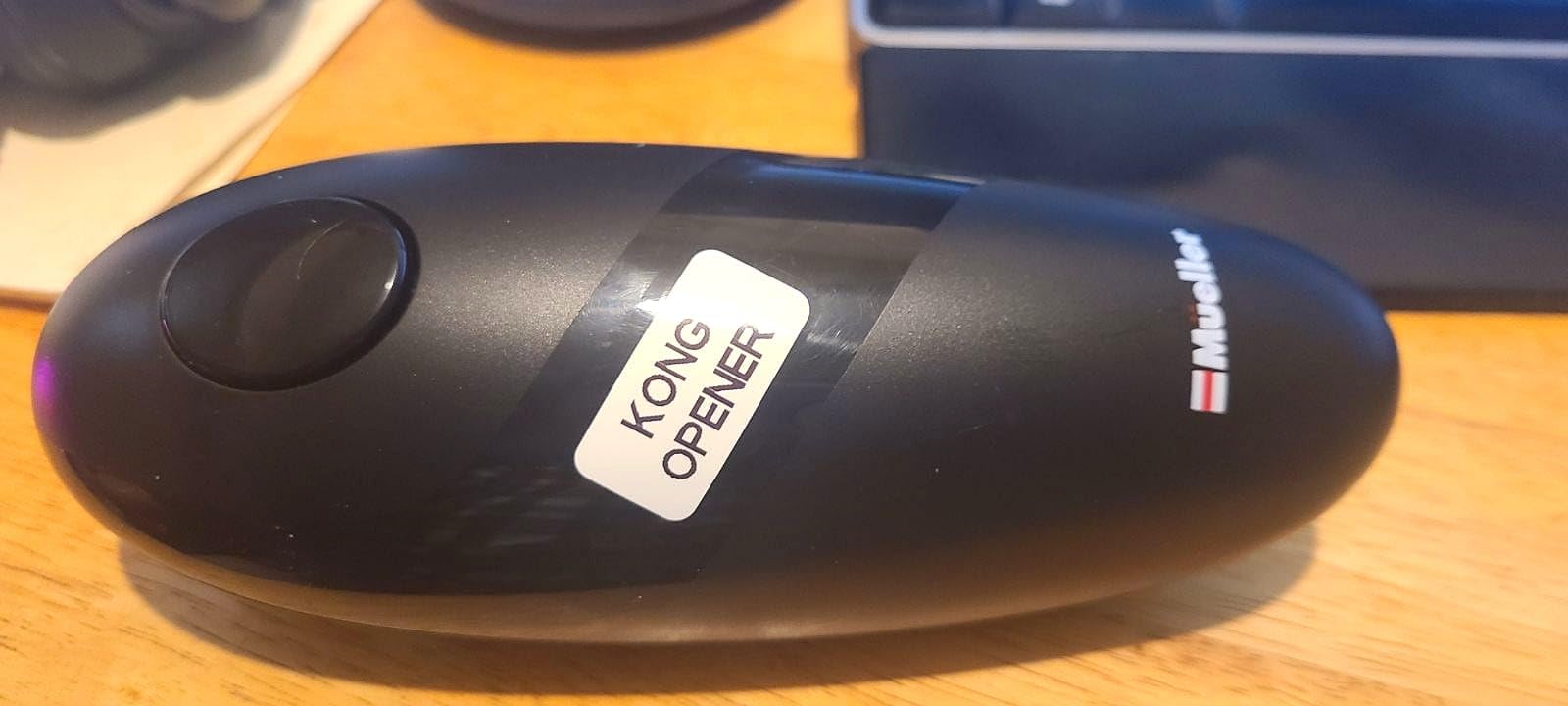
The lid is where a lot of can-opening effort actually goes. Once a tin is open, someone with sore fingers has to fish a wet, greasy disc out of the contents, and that step is as demanding as the cutting. The MUELLER puts a magnet underneath to lift the lid clear and adds a quick-release lever for when the seal is stubborn, so the food is never touched and the fingers stay out of the tin entirely.
Operation is a single button: press to start, press again to stop. The side-cutting blade leaves a smooth edge on both the lid and the can, and at 11.5 ounces the cordless AA battery design is portable enough for a travel bag or a small kitchen. Owners with arthritis report it does exactly what it promises, and the manufacturer adds a satisfaction guarantee with US-based support.
Why Lid Removal Matters More Than Buyers Expect
Think about the full task rather than the cut alone. A manual sequence requires one hand to twist, one hand to steady, and then a fork or a fingertip to lift the lid. Each of those is a separate failure point for a hand with reduced grip. Compressing them into a press of a button plus a magnetic lift removes two of the three, and the quick-release lever covers the stubborn cases where the seal has not fully separated.
Because the blade tracks the side of the lid and never dips into the contents, the tool also stays cleaner. A can that is wiped down occasionally is a far easier maintenance routine for reduced dexterity than one that needs scrubbing around a top-cut wheel, and the wipe-clean exterior here suits that pattern.
What to Know Before You Buy
It does not stop on its own, so the second press is not optional, and a wheel left running against a finished rim is how metal shavings appear. It needs four AA batteries, which are not supplied, so keep a spare pack in the drawer. The body cannot be submerged or put in the dishwasher, and the review base is smaller than the established brands, so treat the guarantee as the real protection here.
12. Canslab Turbo – LED Battery Gauge and 200 Cans Per Charge
Canslab Turbo Rechargeable Electric Can Opener, LED Battery Life Display
USB-C rechargeable
LED battery display
Side cut with lid catch
Magnetic wall mount
+ Pros
- LED display shows remaining charge at a glance
- Up to 200 cans per charge after about 1.5 hours
- Smart chip shuts off automatically at the end of the cut
- Retractable lid picker for sticky or pressurised tins
- Magnetic wall mount frees up counter space
– Cons
- Most expensive handheld option we evaluated
- Not designed for rimless soda cans
- Wall plug not included and only a USB-C cable
- Shorter review history for a newer model
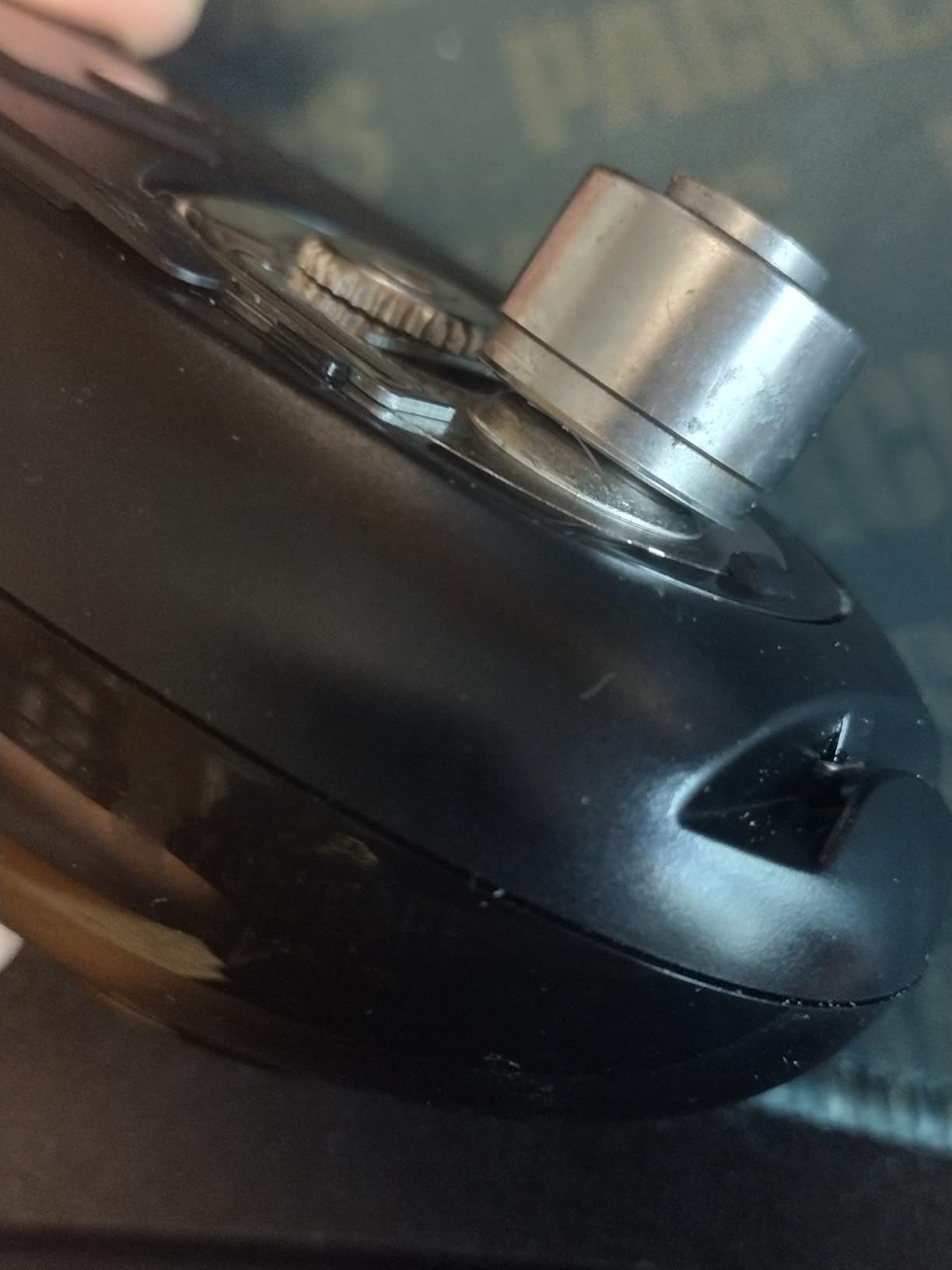
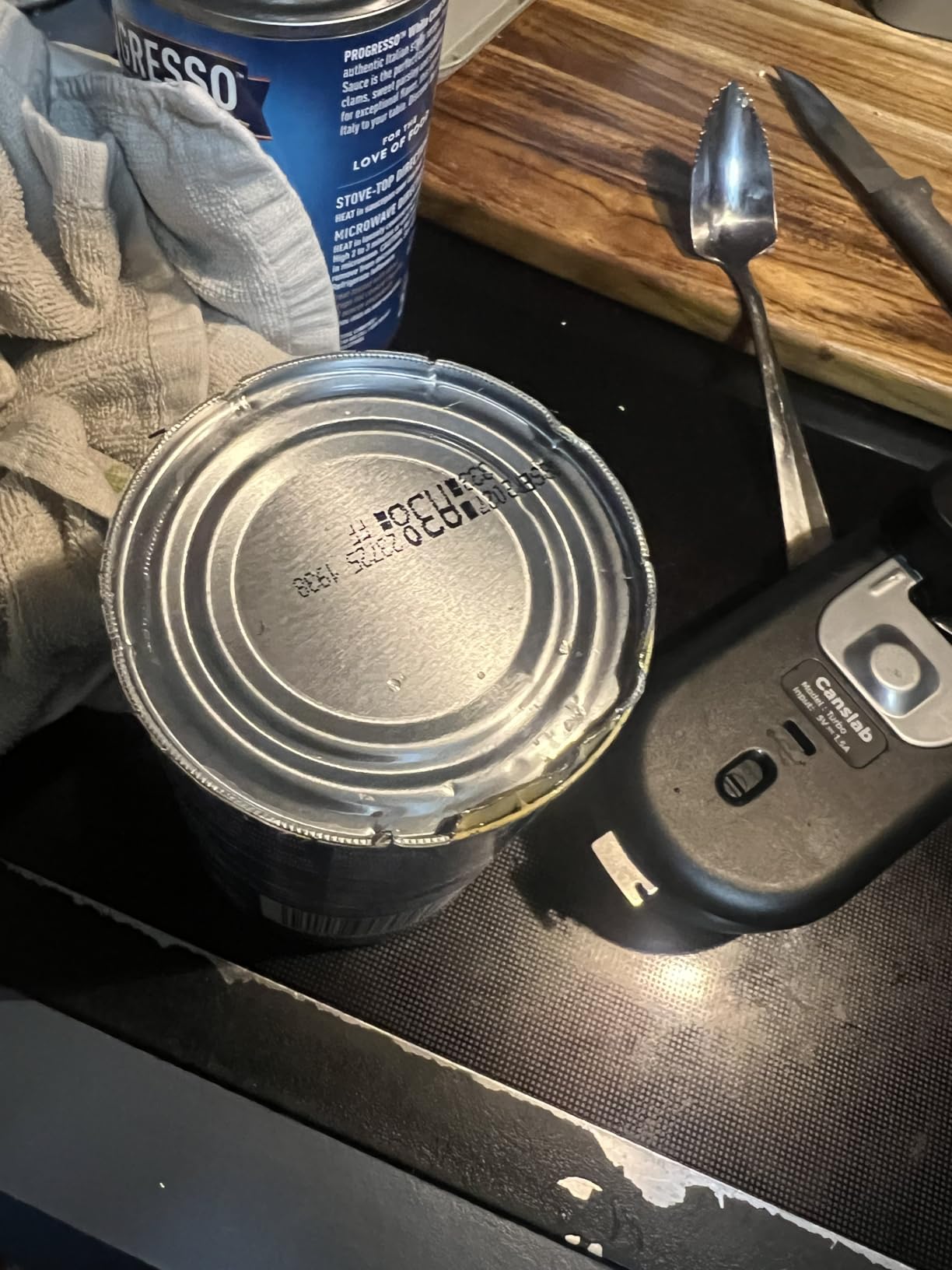
The Turbo answers the single most common cordless complaint: not knowing how much charge is left. The LED gauge displays remaining battery at a glance, so there is no mid-cut stall and no guessing before you start. With roughly 200 cans per charge after about 1.5 hours of charging, a household would top it up once or twice a year rather than thinking about power at all.
Like its sibling, it uses a smart chip to shut off when the cut completes, and a side-cut path that leaves a touchable edge without touching the food. A retractable lid picker handles sticky or high-pressure tins, an underside magnet catches the lid, and a magnetic wall mount keeps the counter clear. Buyers describe it as fast, quiet, and genuinely hands-free, including for southpaw users.
Battery Visibility as a Design Decision
Every other cordless model we tested left you inferring charge level from memory, which is how a can ends up half opened and the opener dead. A visible gauge removes the guesswork and, for a user who plans tasks around how their hands feel that day, that predictability is worth more than a larger battery. The 1.5 hour charge time also means it is usable again before the end of a long afternoon.
The wall mount is a small thing with a large effect in a real kitchen. Countertop space near the sink is the most contested surface in an accessible kitchen, and a tool that hangs on the wall or a cabinet face stays visible and reachable instead of disappearing into a drawer. Combined with auto shut-off, the design removes both the stop reflex and the hunting problem.
The Two Accessory Gaps
It carries the highest price tag of the handheld options we evaluated, and the box includes a USB-C cable but no wall plug, so budget for a charger if you do not already own one. Rimless soda cans are outside the design. With 851 reviews it is still building a track record, so the long-term durability picture is thinner than for the established brands, which is worth weighing against the convenience gains.
How We Tested for Arthritic Hands
Every opener here was assessed against the same five questions, and each question maps to a real decision a buyer with limited hand function faces.
Force demanded. We looked at what the interaction costs your hands: a lever pressed and held, a button tapped once, or a can positioned and held steady. A lever model such as the Hamilton Beach Smooth Touch needs a short push with no sustained effort, while every handheld needs only a tap. A model you must keep pressing is a model you will stop using on a bad day.
One-handed operation. We asked whether the task can be completed without a second hand bracing the can, and separately whether it works one-handed end to end. Countertop models with a weighted base such as the Cuisinart qualify because the mass does the stabilising, while lighter handhelds need the tin to be stable on its own.
Self-alignment. This was the most useful discriminator across the whole set. Openers that find the rim themselves, such as the Proctor Silex, the Canslab models, and the Zoomsnail, ask for a coarse placement. Others need the head seated accurately, which is a fine motor task, and that is where a lot of the frustration in owner reviews comes from.
Edge finish and lid handling. Every model here side-cuts, which is the right call for arthritic hands because a smooth rim removes a cut hazard. What differs is what happens next: a magnetic lid holder and a lid picker keep fingers out of the food, and an auto shut-off prevents a wheel grinding against a finished cut.
Cleaning with limited dexterity. We favoured detachable blade assemblies that lift off for rinsing over units whose cutting area has gears needing a toothbrush, and we noted how many parts must be disassembled. A wipe-clean body is easier than a dishwasher-safe one when the joints are the problem.
Owner reviews then settled anything the spec sheet could not. Where thousands of people report the same friction, we treated it as a real limitation rather than a sample fluke, and that is why the alignment complaint follows the Kitchen Mama and the Walk n Cut through their sections, and why noise follows the Proctor Silex.
What to Look For in an Arthritis-Friendly Electric Can Opener
Prioritise force over features. Start by ranking openers by what your hand must do, not by what the machine can do. If you cannot hold a lever down, buy a model with a short-travel push or a one-touch button. If pressing a small button is the problem, look for a larger actuator surface. Every feature in the category is secondary to that single interaction.
Check whether the head self-aligns. For hands that have lost fine control, an opener that locks onto the rim by itself is worth more than a more powerful motor. If your difficulty is strength rather than precision, a weighted countertop base does the same job by making the can impossible to tip.
Treat auto shut-off as a safety feature. A wheel that stops on its own cannot grind metal shavings into your counter, and it removes the need to remember a second action while your attention is elsewhere. Of the twelve models here, four shut off automatically. If you already struggle to stop what you start, this is worth paying for.
Confirm the cut style. Side-cutting models cut along the lid rather than through the top, which leaves a smooth, touchable edge and a lid you can reuse to cover leftovers in the refrigerator. Top-cutting models leave a jagged rim that is both a cut hazard and a pinch hazard for stiff fingers. Every pick in this roundup side-cuts.
Match power to your cans. Handheld openers work by walking around the rim, so a small tin gives the head less surface to grip. Several models here struggle with 6 ounce cans and a few also struggle with square or oval tins. If your pantry is mostly standard sizes, a handheld is fine; if tall or family-size cans are routine, a countertop model with a wide base or a detachable head will serve you better.
Decide on battery or mains. Cordless means a drawer instead of a counter, but AA models need batteries you must keep in stock, and rechargeable models need a socket every few months. Corded countertop models never run out of power but are fixed to one spot and generally will not work on 220V circuits outside North America. If you travel or live outside the US, check voltage before you commit.
Plan for southpaws. Most openers are designed around a right-handed grip, with the button or lever placed where a right thumb falls. A small number, including the Canslab Ultrablade SE, state that their layout suits one-handed and southpaw use. If you are left-handed, verify the control position before you buy rather than after.
Ask about cleaning before you buy. A detachable blade and lever that lift off in one piece can be rinsed in seconds. An integrated cutting head with gripping gears can need a toothbrush and steady fingers. If someone else does the washing in your household, the dishwasher-safety and disassembly count matter more than they would to you.
Gift it with a setup session. A can opener is only helpful if it is used, and the first attempt on a new tool is often the hardest. Show the person where the button is, how to stop it, and how the lid comes off before you leave. If you are building a wider gift around an appliance like this, the low-effort project ideas in our homemade gifts for parents guide are designed to pair with it rather than compete with it.
One last thought for anyone automating more of the home: the same logic that removes a painful twist from a can also removes strain from other daily movements, which is why we keep a running list of hands-free smart garage door openers for households where lifting is the problem rather than opening.
Frequently Asked Questions
Which electric can opener is best for severe arthritis?
For severe arthritis, the u003cstrongu003eHamilton Beach Smooth Touchu003c/strongu003e is the safest all-round choice because its push-down lever opens a can with almost no sustained force and its side-cutting blade leaves a smooth, touchable rim. If your hands cannot hold anything down at all, the u003cstrongu003eKitchen Mama Auto Electricu003c/strongu003e requires only a button tap and does the rest hands-free. Severe hand arthritis responds to eliminating the twisting motion entirely rather than to a more powerful motor.
Are electric can openers worth it for arthritic hands?
Yes. A manual can opener requires sustained twisting force, which is one of the first movements lost to rheumatoid and osteoarthritis of the hands. Electric openers remove that motion and replace it with either a short lever press or a single button press. The smooth side cut also removes the risk of cuts from a jagged lid edge, and most models in our roundup carry enough owner reviews to judge reliability.
What is the difference between side-cut and top-cut can openers?
A u003cstrongu003eside-cuttingu003c/strongu003e opener runs its blade along the outside of the lid, which leaves both the lid and the can rim smooth and touchable, lets you reuse the lid to cover leftovers, and keeps the blade away from the food. A u003cstrongu003etop-cuttingu003c/strongu003e opener pierces the lid from above, which is faster on some designs but leaves a jagged, sharp rim that is a cut hazard for hands with reduced dexterity. Every model in this roundup side-cuts.
Do electric can openers work one-handed and for southpaw users?
One-handed operation is standard on the handhelds in this roundup: you place the unit on the lid, press once, and it cuts and often stops on its own. Countertop models with a weighted base, such as the u003cstrongu003eCuisinart CCO-50BKNu003c/strongu003e, also work one-handed because the base stops the can tipping. For southpaw users, verify the control position first, because most designs put the button where a right thumb falls. The u003cstrongu003eCanslab Ultrablade SEu003c/strongu003e is one of the few that explicitly suits one-handed and southpaw use.
How do I clean an electric can opener with limited dexterity?
Choose a model with a detachable blade and lever assembly, such as the u003cstrongu003eHamilton Beach Walk n Cutu003c/strongu003e, u003cstrongu003eFlexCutu003c/strongu003e, or u003cstrongu003eCuisinart CCO-50BKNu003c/strongu003e, and rinse the part that touches food under warm water while it is still warm. Avoid models whose cutting area contains gripping gears, since those need a toothbrush and steady fingers. Never submerge the motor body; wipe it with a damp cloth, and let every part air dry before reassembling it.
Can an electric can opener open pop-top and extra-tall cans?
The u003cstrongu003eHamilton Beach Smooth Touchu003c/strongu003e opens standard, extra-tall, and pop-top cans, and because it side-cuts the pop-top ring is never pierced and torn. Most other countertop models also handle tall cans, but many handheld openers struggle with very small 6 ounce cans, square tins, and occasionally ring-top lids because the head needs more rim to grip. The u003cstrongu003eKITCHENMUH KC09u003c/strongu003e is the exception there, handling round, square, and oval cans.
Conclusion
If your hands have lost strength but kept precision, the Hamilton Beach Smooth Touch is the pick: a light-touch lever, a true side cut, and the highest rating in the group backed by more than 83000 reviews. If precision is going too, choose a self-aligning handheld that finds the rim itself and stops when it is finished, which makes the Canslab Ultrablade PRO the premium choice and the Proctor Silex the sensible value route.
For severe arthritis or a recovering wrist, the Kitchen Mama remains the most proven option we found, because it asks for one button press and nothing more. If heavy family-size cans are the norm, the Cuisinart CCO-50BKN or the FlexCut 2-in-1 will outlast a lightweight handheld, and if you are left-handed the Canslab Ultrablade SE is the one designed around it.
Whichever you choose, open the first can with someone beside you. Two minutes of instruction is the difference between a tool that sits in a drawer and a tool that quietly removes the hardest job in the kitchen. That is the short version of our 2026 guide to the best electric can openers for arthritic hands, and it is worth the two minutes.
Leave a Reply