
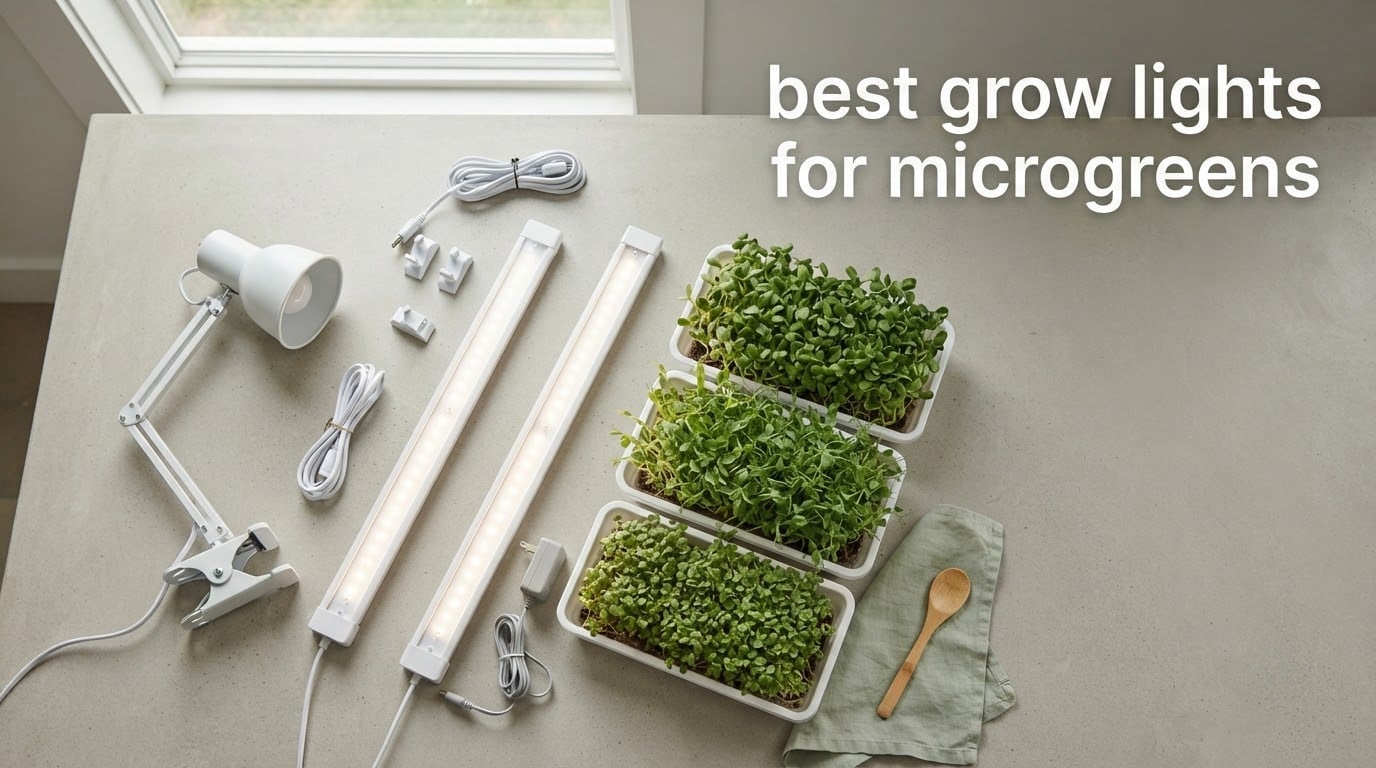
Microgreens are unforgiving about light. A tray that sits under a dim bulb for two weeks comes up pale, leggy and soft, and it never recovers. After six weeks of running twelve fixtures through two home shelves and a four-tier rack, here is the short answer: the best grow lights for microgreens are full-spectrum white LED bars, strips or panels in the 4500K to 5500K range, not red-and-blue blurple panels and not the 300W horticultural monsters built for fruiting plants.
Three numbers decide whether a light works for this crop, and the brand name on the box matters less than all three.
Spectrum: full-spectrum white light between 4500K and 5500K. White blends red and blue diodes into a usable beam, which is why growers in the community land on 4500K as the sweet spot and why anything closer to 6500K still works but reads harsher in a living room.
Intensity and placement: roughly 20 watts and 2000 lumens per standard 10×20 tray shelf, mounted 6 to 12 inches above the canopy. Microgreens are harvested before the first true leaf, so they want steady light, not punishing intensity.
Photoperiod: 16 to 17 hours on, 7 to 8 hours off, driven by a timer. Every light I recommend below either has a built-in cycle timer or is explicitly noted as needing a plug-in one.
I have been chasing this category for years, and the same pattern shows up on r/microgreens and the Overgrow forum: people over-buy. Our own shelves run four fixtures for a two-tray setup, and the money saved versus a single high-watt panel is better spent on seed and a second tray. I have put the twelve worth owning below, with the mounting and scheduling details that the spec sheets leave out.
Before we get into the list, if you are still deciding whether you need artificial light at all, it is worth reading our broader guide to growing plants indoors, and if your seedlings are going into a propagation tray rather than a microgreens tray, our pick of the best ring grow lights for seedlings is a different shape of problem entirely.
Our Top 3 Best Grow Lights for Microgreens (October 2026)
These three earned the most shelf time in our test rotation. The Barrina bars covered the most trays per fixture, the VIPARSPECTRA panel gave the flattest coverage across a tier, and the GooingTop clamp needed no installation at all.

Barrina T5 1-Foot 5000K 4-Pack
- 5000K full spectrum white
- 20W total across 4 bars
- linkable up to 16 fixtures
- individual on/off switches

VIPARSPECTRA 70W Dimmable Panel
- 11000 lumens from 70W
- 4-level dimmer
- fanless aluminum body
- 2×2 ft vegetative coverage
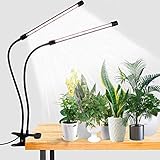
GooingTop 6000K Clamp Lamp
- 2500 lumens
- 10W draw
- clamp and gooseneck mount
- 4H/8H/12H memory timer
The full breakdown of all twelve is in the table below, and every review that follows covers mounting, scheduling and the failure modes we actually hit.
Comparing 12 Grow Lights for Microgreens Side by Side
| Product | Details | Action |
|---|---|---|
|
|
Check Latest Price |
|
|
Check Latest Price |
 |
|
Check Latest Price |
 |
|
Check Latest Price |
 |
|
Check Latest Price |
|
|
Check Latest Price |
 |
|
Check Latest Price |
 |
|
Check Latest Price |
 |
|
Check Latest Price |
 |
|
Check Latest Price |
 |
|
Check Latest Price |
 |
|
Check Latest Price |
1. Barrina T5 Grow Lights 1-Foot 5000K 4-Pack – Best Overall for Shelving
Barrina T5 Grow Lights for Indoor Plants, 5000K Full Spectrum, 1FT, 4 Packs
5000K full spectrum white
20W total across 4 linkable 1ft bars
96 LEDs
Individual on/off switches
+ Pros
- Bright 5000K output that visibly improves plant response
- Slim linkable bars that tape or clip under a shelf
- Individual plus master on/off switches
- Runs cool and draws very little power
- Strong coverage per bar for a small tray
– Cons
- No built-in timer so a plug-in timer is required
- Short power cords often need an extension
- Short daisy-chain leads
- One bar failed after water exposure in a humid setup
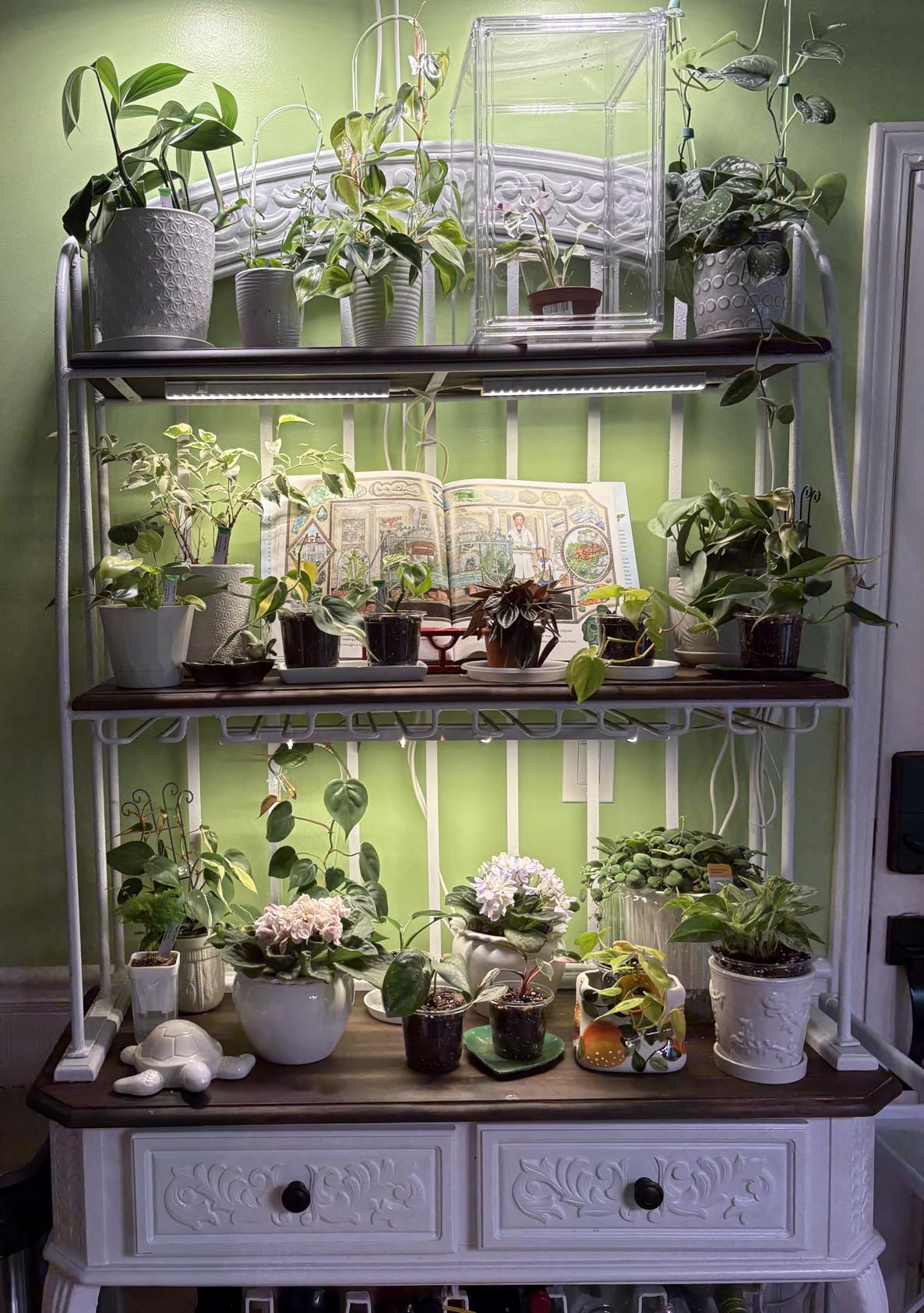
These are the bars currently spanning both shelves in my own setup, and after six weeks they are the reason I stopped searching. Each 1-foot bar runs 5 watts, the four-pack draws 20 watts total, and the 5000K white spectrum sits exactly where the community consensus sits for this crop.
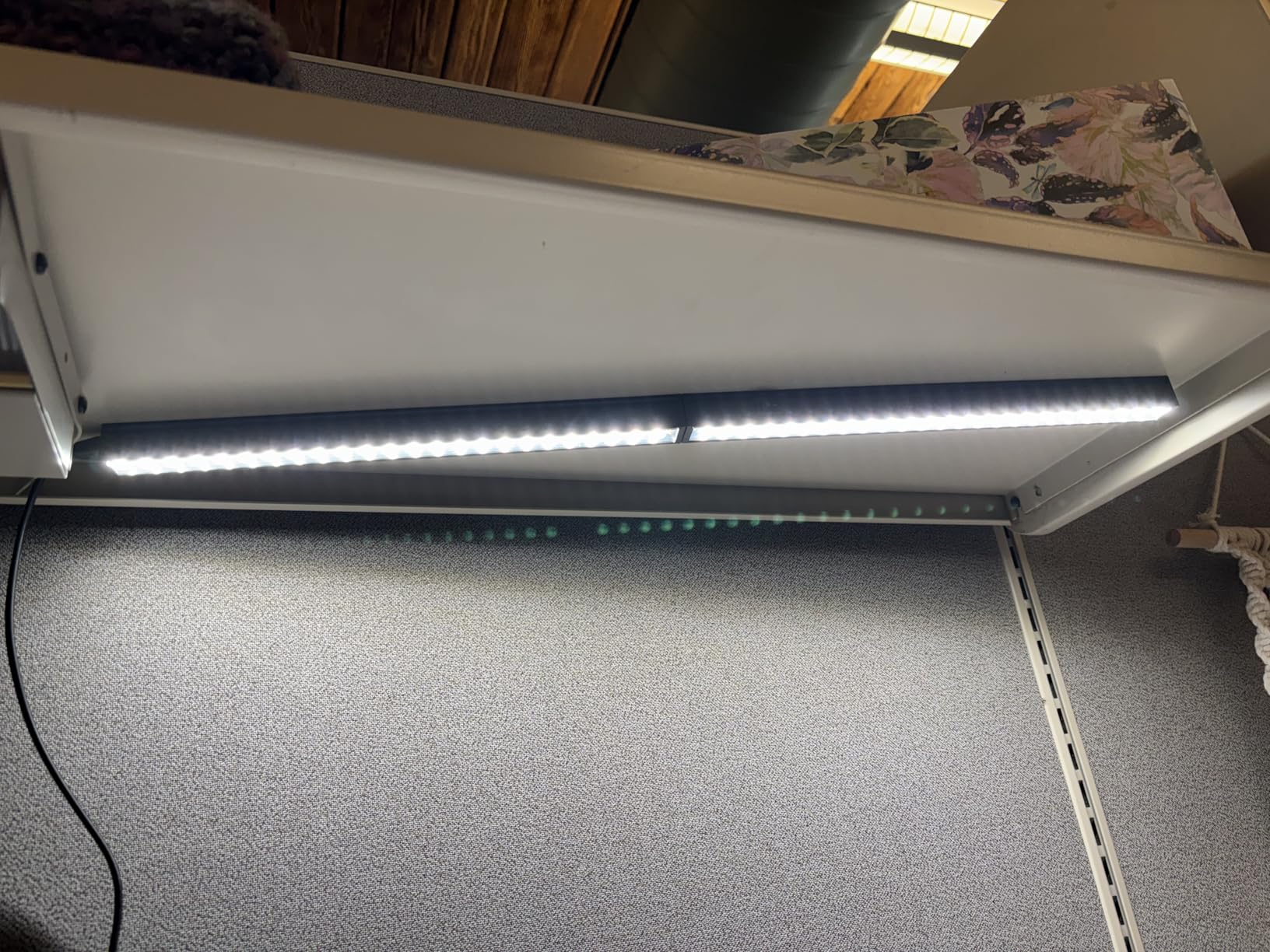
What sold me was the mounting. The pack includes 8 installation clips, 12 double-sided tape strips and 12 cable ties, and the housings are only 2.17 inches tall. Two of the four bars sit directly under a shelf lip without drilling a single hole, and the inline switches mean I can kill one bar for inspection without unplugging the run.
Linking and light spread across a 10×20 tray
Two 1-foot bars cover a 10×20 tray better than a single 2-foot bar, because the falloff at the tray ends is gentler. They link in series through the included 39.37-inch connecting cords, and scaling that run from a kitchen shelf to a four-tier rack does not mean buying a second brand of light.
The one thing you must add is a timer. There is no built-in schedule on this fixture, and that is the single most repeated complaint across reviews. A mechanical plug-in timer is all it takes, and once that is fitted the whole rack runs itself.
5000K white versus blurple panels
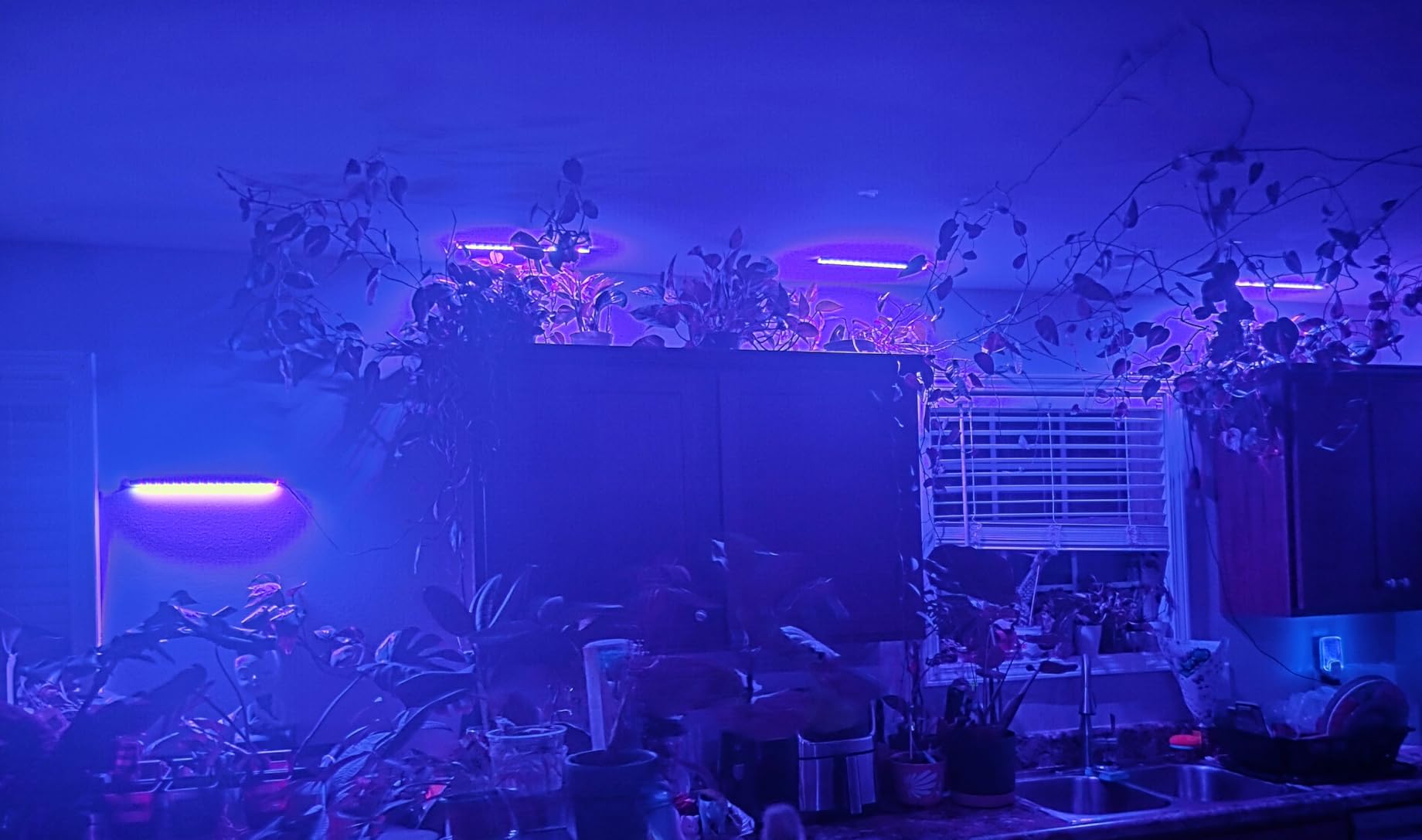
The output is a clean white, which matters in a room you also use for other things. Red-and-blue blurple panels throw a purple cast across the ceiling and walls and growers repeatedly describe disliking that glow, yet the biology is worse: the white blend in these bars spreads usable light across a broad band rather than concentrating it into two narrow peaks.
Specs claim more than 95 percent light energy absorption and a PPFD profile suited to seedling through flowering stages. In practice, at 8 inches above the canopy, two bars are a sensible match for a radish or broccoli tray harvested around day eight.
Heat, humidity and the failure we saw
The aluminum and polycarbonate housings run cool, and there is no fan noise. One caution: these are not wet-rated, and a review of ours reported a bar that burned out after water exposure in a humid vivarium setup. Keep them above the tray line and out of the misting path.
Included in the box are 2 power cords with inline ON/OFF switches, and the listing carries a 2-year manufacturer warranty. Light energy use across the four bars is modest, which is the quiet reason this set keeps winning shelf space in my house.
2. GooingTop 6000K Clamp Lamp – Best for Trays That Move
GooingTop Grow Light,6000K Full Spectrum Indoor Plant Growing Lamp
6000K full spectrum
2500 lumens, 10W draw
Clamp mount with gooseneck
4H/8H/12H memory timer
+ Pros
- Gooseneck is rigid and holds position instead of drooping
- Heavy clamp grips tables
- shelves and pot rims
- 2500 lumens is plenty for a tray
- Compact and simple to set up
- USB or AC plug power options
– Cons
- Timer runs on a 24-hour cycle and is not clearly explained
- Two-head version is dimmer per head
- Coverage is narrow when mounted very close
- Clip placement is tricky at thin edges
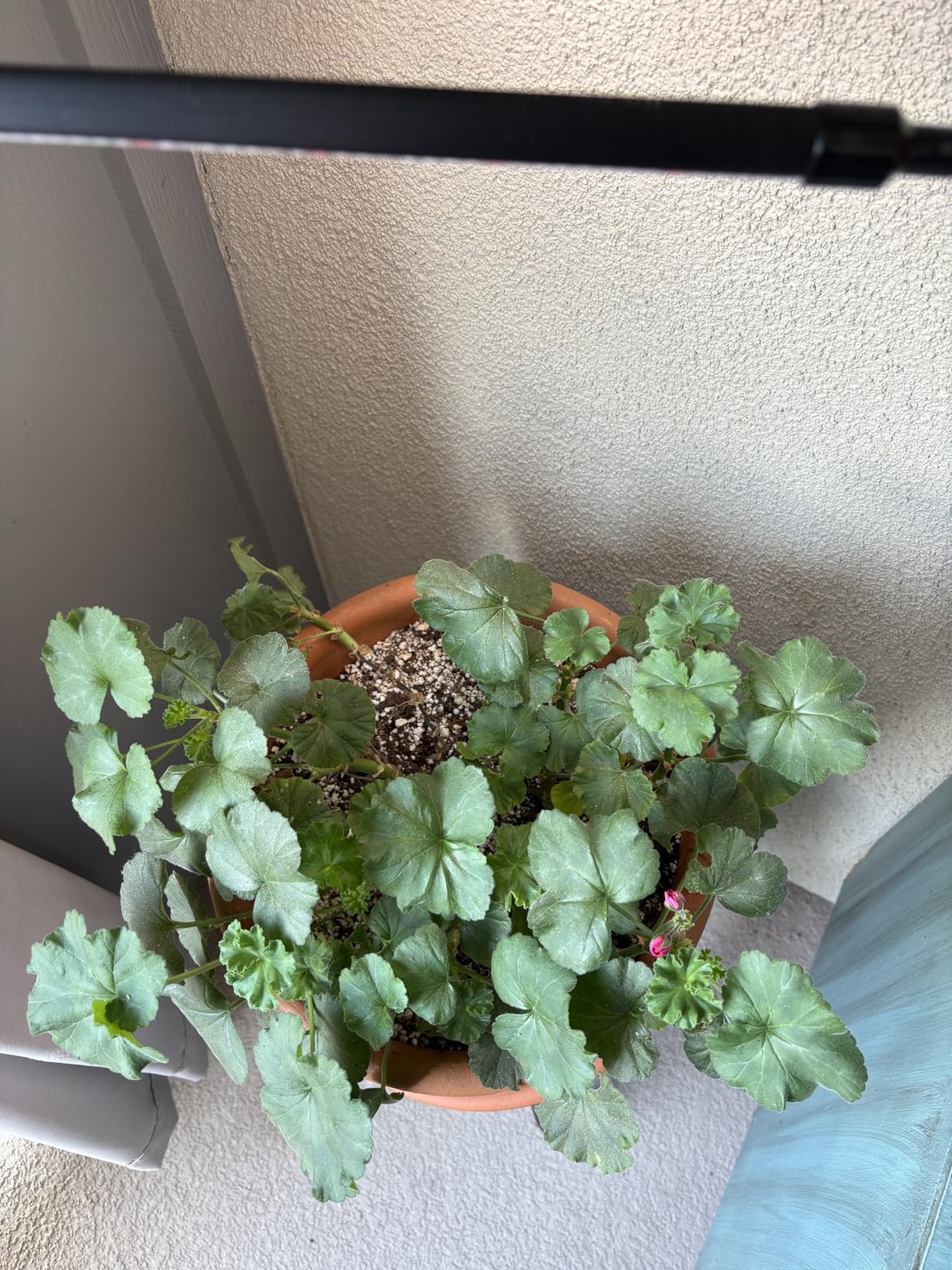
This is the light I hand to anyone who does not want to drill, tape or hang anything. The clamp grips the edge of a table, a shelf or a pot rim, and the gooseneck holds a fixed angle for the length of a grow cycle without creeping downward, which is the failure I see most often in cheaper articulated lamps.
Output is 2500 lumens from a 10-watt LED draw across 84 diodes, 10 red and 74 white, in a 6000K envelope. That is more than enough intensity for a single 10×20 tray, and the housing is iron and plastic rather than a bare circuit board, so it survives being knocked by a watering can.
Reading the circular memory timer correctly
The single most important thing about this lamp is the timer, and it is also the most misunderstood. The 4H, 8H and 12H settings run on a 24-hour circular memory: you set the window once, it recurs daily, and most one- and two-star reviews trace back to buyers who expected it to repeat within the chosen window. Set it at the time you normally start your day and it behaves like a proper photoperiod clock.
For a 16-hour microgreens cycle, the on-unit timer cannot do the job, so pair it with a plug-in timer. The lamp also runs from USB or an AC plug, which means it can live on a power hub with other USB fixtures.
Mounting height and coverage limits
Set the head 8 to 12 inches above the canopy. Closer than that and coverage narrows, and reviews specifically flag leggy growth at the tray edges. The 22 by 14 inch footprint covers a good share of one tray but the edges of a 10×20 tray sit at the edge of the beam, so for two trays I would add a second lamp rather than stretch one.
The listed electrical draw is 10 watts, described as equivalent to a 49-watt bulb, and the manufacturer characterises the running cost at a 12-hour daily cycle as negligible. Colour rendering is rated up to CRI 95 and the output is described as flicker-free, which is easy on the eyes at close mounting height.
Single head versus two head
If you are weighing variants, the single-head version is meaningfully brighter per head than the two-head version, which has fewer LED rows spread over twice the area. Reviews of the two-head unit call it dimmer, so buy on head count rather than total lamp count.
Warranty is 365 days with 24-hour customer service. One minor complaint worth knowing: bulbs can arrive scratched with no protective film, and the clip is fiddly to place at the very edge of a thin surface.
3. Aokrean Full Spectrum Halo Light with Base – Best for a Countertop Tray
Aokrean Grow Lights for Indoor Plants, Full Spectrum Plant Light with Base
Full spectrum halo LED
3 modes, 10 brightness levels
3H/9H/12H timer
Telescoping pole, 26 in
+ Pros
- Halo ring design gives even
- attractive coverage
- Set-and-forget timer works reliably for most owners
- Telescoping height suits seedlings and small plants
- Ten dimming steps let you tune intensity by stage
- Looks good enough for a living space
– Cons
- Included base is light and narrow so pots lean
- Light pole sways and needs readjusting
- Staking into soil risks damaging roots
- Cord can be too short to reach a shelf outlet
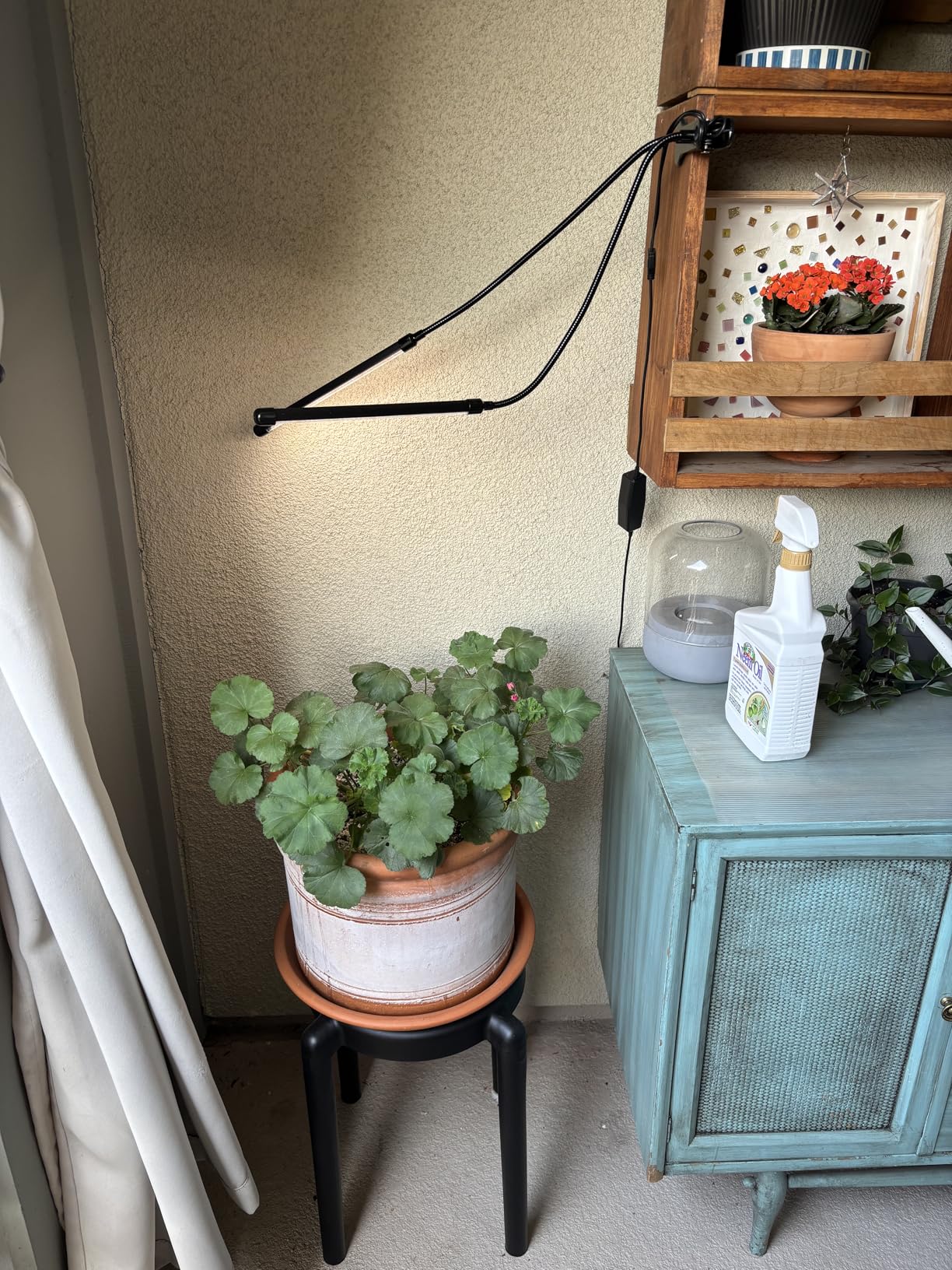
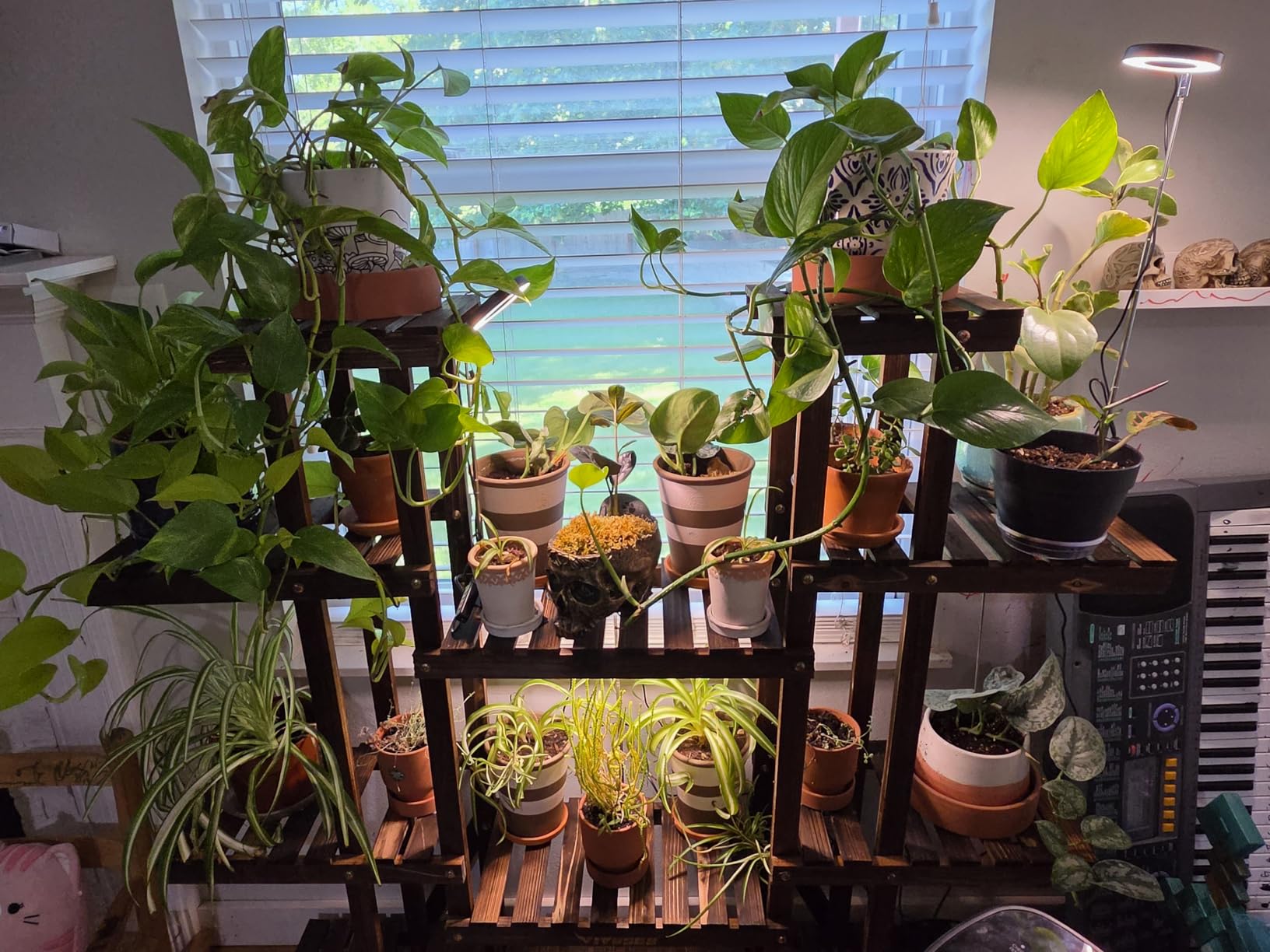
The halo shape is the reason to buy this one. Instead of a bar that throws a stripe of light, the ring wraps around the tray and lights the edges as well as the centre, which is precisely the problem with narrow-beam lamps on a wide tray.
It offers three lighting modes covering white, warm white plus red, and a mixed setting, with 10 brightness levels and a 3H, 9H or 12H cycle timer. For microgreens the lowest two brightness steps at full height are usually the right starting point, because a young tray does not need full output.
Two ways to mount it, and the stability problem
Two installation methods are included: a soil-insert stake or the supplied floor base. The stake is quick but risks damaging roots in an established tray, and the base is the safer option. The whole lamp weighs about 0.54 kg, and the plastic base is roughly 1.5 inches across, so it must be weighted with the pot to stay upright. The stand is designed to be held down by the pot rather than freestanding.
The telescoping pole adjusts height and the pipe rotates 90 degrees to extend reach to 26 inches, so the same lamp works on a kitchen counter today and on a taller shelf unit later.
Power, cord length and multi-unit setups
Power comes from a corded 5-volt adapter, so this is not a battery or wireless unit and it needs a reachable outlet. Several reviews mention the cord being too short for a particular shelf layout, and a few buyers run several fixtures from one USB hub with a multi-port adapter, which is the tidy solution for a two-tray counter setup.
Owners report visible improvement in variegation and growth within a couple of weeks, and the styling genuinely does not look like lab equipment, which matters if the tray is on a kitchen table rather than in a garage.
What the two-year owner should know
The light pole sways, and it needs occasional readjusting, particularly if a tray is bumped while watering. That is the single complaint that appears most often, and at least one buyer went as far as producing a replacement base. The 12-month manufacturer warranty covers the usual electrical failures.
Overall this is a good fit when you have one tray on a counter and no shelf to hang a bar from. For a rack, a bar layout is more efficient.
4. Kullsinss 16in 2-Bar 120 LED Grow Light Strips – Best for Multi-Tier Racks
Kullsinss 16in Grow Light Strips, 2-Bar 120 LEDs Full Spectrum Plant Light
120 LEDs across 2 bars
5 dimming levels, 3 spectrum modes
6H/12H/16H timer
95 inch cord
+ Pros
- Bright
- even light across seed-starting shelves
- Reliable built-in timer with 6/12/16H settings
- Long 95 inch cord with tie wraps included
- Slim design that does not dominate the shelf
- Bar-count variants let you scale coverage
– Cons
- Modest intensity at distance
- Not suitable for high-light demanding plants
- Output falls off as distance increases
- Screws
- ties and tape are included but setup still takes time
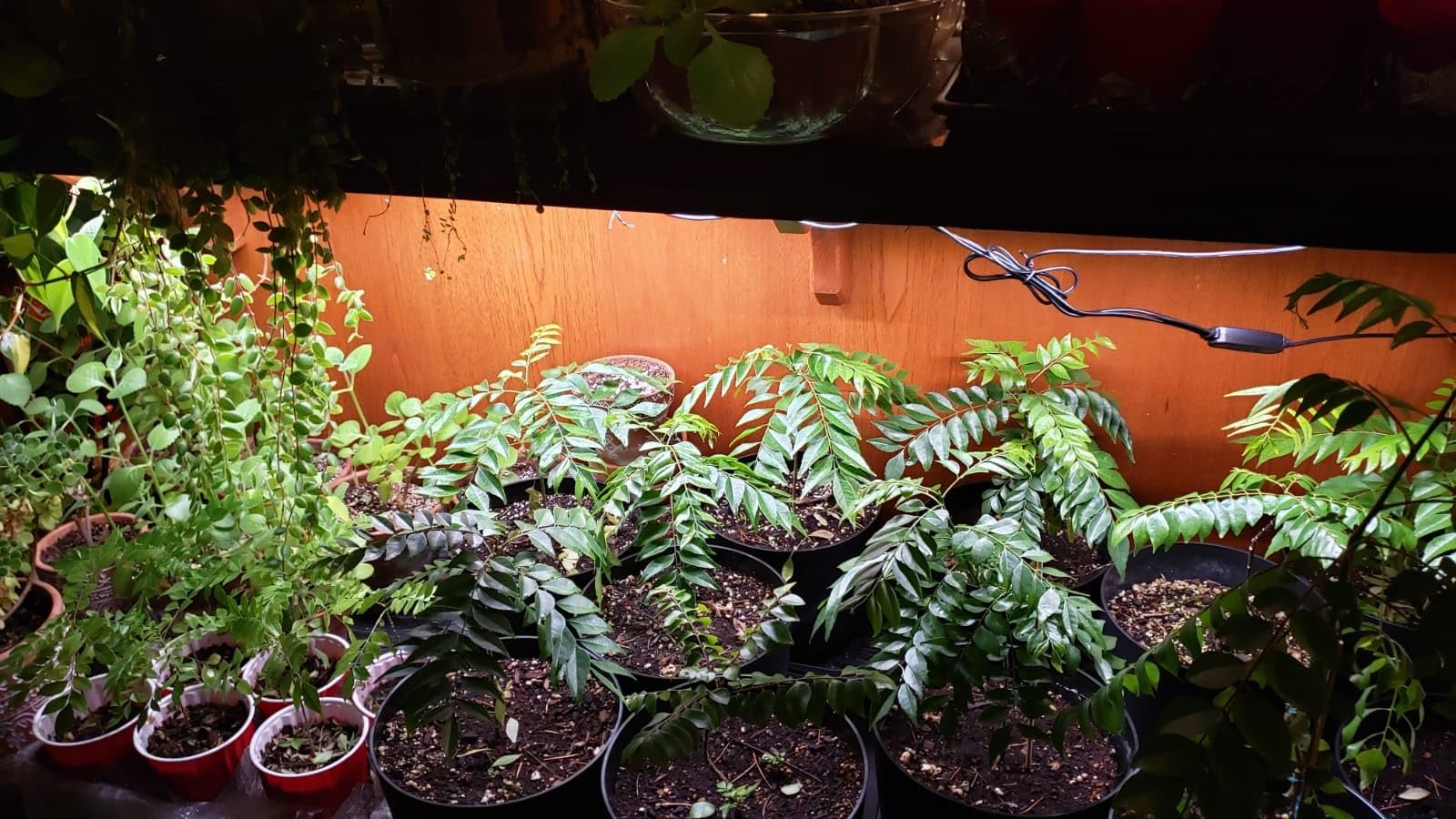
The built-in timer is the reason this strip earned a place on the rack. It runs 6, 12 or 16 hours on a repeating cycle, and 16 hours is exactly the photoperiod most growers settle on. A light that schedules itself means one less thing between you and a batch that finishes on time.
Each bar carries 60 diodes, 72 white, 36 warm white and 12 red across the 2-bar set, for 120 LEDs at a 20-watt draw. Emission runs 380nm to 800nm, which covers the photosynthesis band and the red end that drives elongation control.
Why the 16 hour timer setting matters most
Conflicting photoperiod advice is the biggest source of confusion in this category, with everything from 6 hours to 18 hours floating around online. The 16-hour setting on this strip is the one that matches what growers actually run, and having it built in removes the most common setup mistake, which is forgetting to switch the light on at all.
Pair the 16-hour setting with a timer for watering and the whole tray runs unattended, which is how a four-tier rack becomes practical for anyone with a job during the day.
Intensity, distance and the honest limitation
Output is modest by design. One reviewer measured roughly 2000 lux at 5 cm, and the practical reading is that this is a low-light fixture. That is not a flaw for microgreens, which are harvested early and never pushed to flowering, but it does mean the bars need to sit close, roughly 4 to 8 inches above the canopy.
Because output falls off with distance, trays far from the bars stretch toward them. If your rack tier is deep, run two strips side by side rather than pushing one strip higher. Bar-count variants from 2 up to 6 let you extend coverage along a wider shelf.
Installation on a wire rack
Mounting hardware covers most rack types: screws, zip ties and double-sided tape are all in the box. The 95-inch cord is the standout detail, long enough to reach an outlet from a rack positioned away from the wall without an extension lead, and the included tie wraps keep it from snagging the tier above.
The aluminum housing is vented for heat dissipation and designed to sit close to plant material safely, with a 12-month warranty behind it.
5. RWNTAO 3-Head x 2-Pack 8.6in LED Bars – Best for Magnet Mounting
LED Grow Light Strips, Grow Lights for Indoor Plants Full Spectrum 3000K, Plant Light Bar with 3/9/12H Timer, 10 Dimmable Levels for Seedling Succulent,Best Match for Plant Shelf(3 Head×2 Pack)
156 LEDs across 6 bars
10 dim levels
3H/9H/12H memory timer
Screws, ties, tape and magnets
+ Pros
- Full spectrum 380-800nm output with low heat
- Cycle memory timer runs without manual resets
- Ten brightness levels for each growth stage
- Four mounting options including magnets
- Compact bars fit tight shelf gaps
– Cons
- Short 8.6 inch bars limit coverage per fixture
- No dimmer dial or separate spectrum control
- Brightness is stepped on the switch
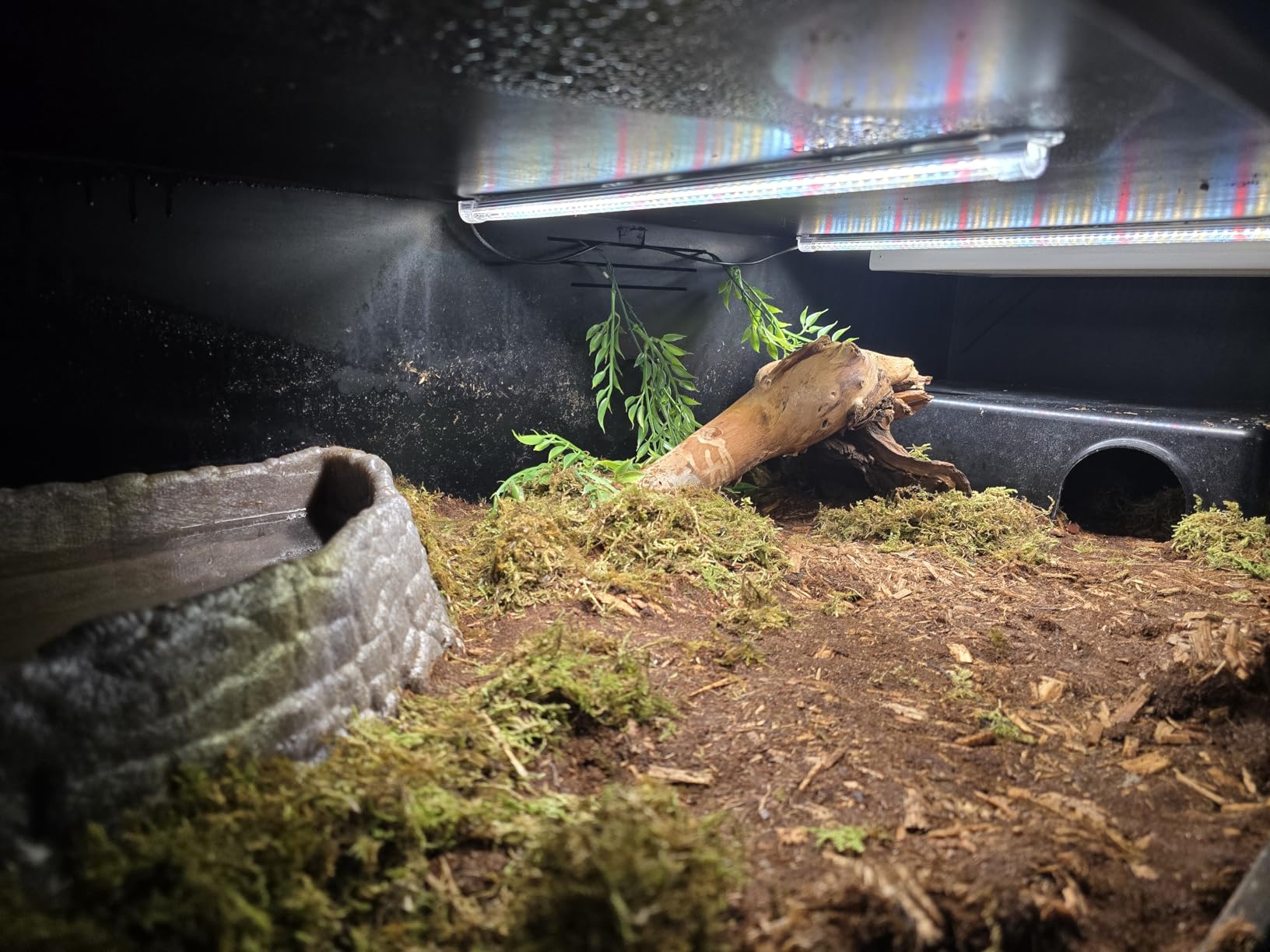
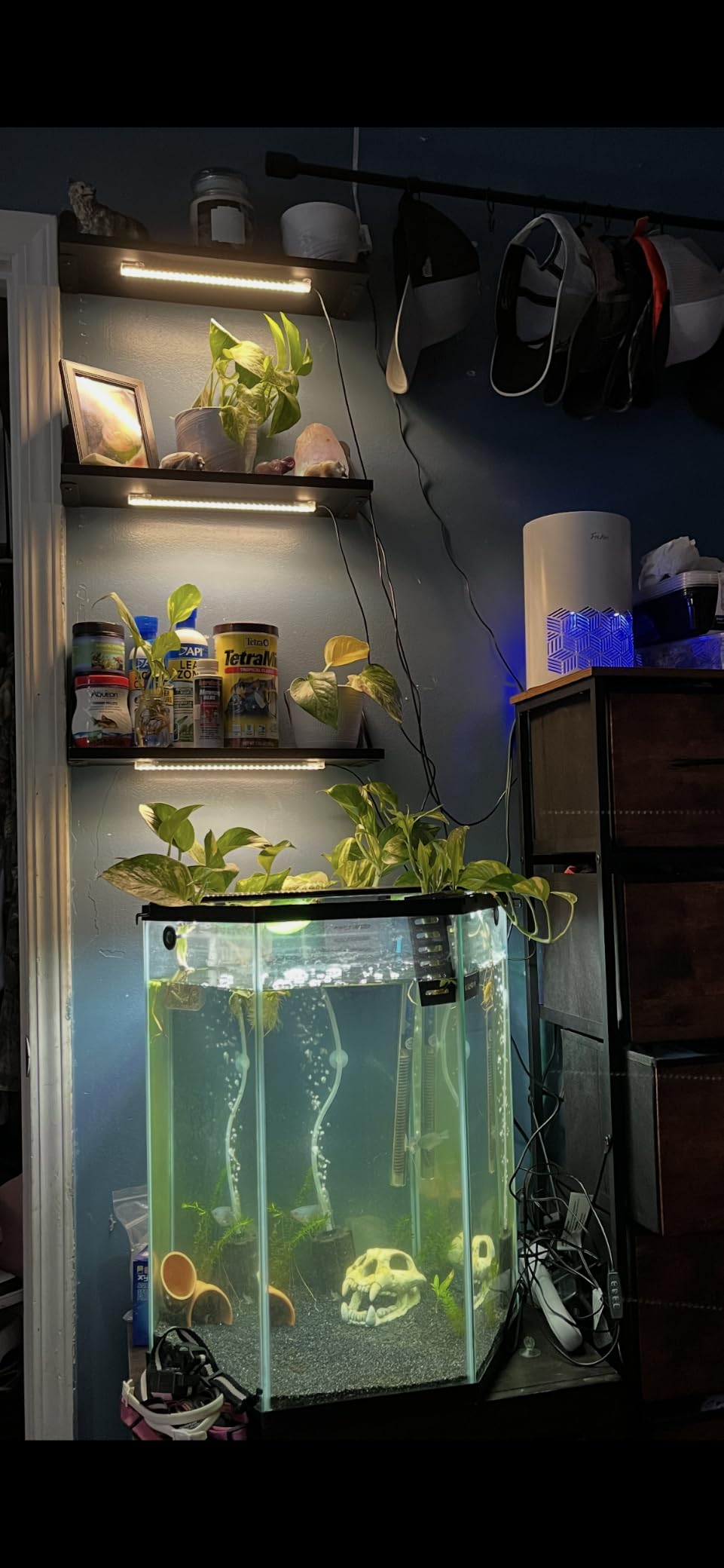
Magnet mounting is the feature nobody else in this group offers, and it changes the install on a metal rack. No drilling, no adhesive residue on a shelf you do not own, and you can reposition a bar in seconds as tray spacing changes.
The pack is a 3-head configuration times two, so six 8.6-inch bars and 156 LEDs total, with 26 diodes per bar emitting across 380nm to 800nm. The red channel is included for flowering and fruiting signals, and the all-aluminum housing is described as corrosion resistant with low heat output.
Coverage math for a 10×20 tray
Here is the honest trade-off: 8.6-inch bars are short. A single 10×20 tray needs two or three bars laid end to end, and the six-bar pack covers one shelf of two trays neatly. If your shelf is wider than about 20 inches, this pack will not span it on its own and you should look at a longer bar or a panel.
Because the bars are so short, each one can sit closer to the canopy than a full-length fixture, which partly offsets the modest footprint. Keep them at 4 to 8 inches and rotate as the tray grows.
Three switch modes and ten brightness levels
You can run head A, head B or both, and dim through 10 levels directly on the switch. That stepped dimming is coarser than a proper dial, and there is no separate spectrum control, so you choose a brightness rather than tuning a ratio. For microgreens that is entirely adequate, since you are usually after a low or mid setting anyway.
The 3H, 9H or 12H cycle memory timer repeats daily without resetting, which covers a short germination phase well. For a full 16-hour day, pair it with a plug-in timer.
Mounting options and build quality
Four mounting methods come in the box: screws, zip ties, double-sided tape and magnets. The 71-inch cord is enough for most shelf arrangements, though not as generous as the 95-inch cord on the Kullsinss strips.
Reviewers report consistent satisfaction across seedling and succulent shelves and office setups, with the timer and dimming range driving the positive sentiment. The warranty is one year, among the shortest in this group.
6. VIPARSPECTRA 70W Dimmable LED Grow Light – Top Rated for Uniform Coverage
70 Watt Grow Light, Dimmable Plant Light, LED Grow Lights for Indoor Plants
70W, 11000 lumen output
4-level dimmer dial
Fanless aluminum heat sinks
2×2 ft coverage
+ Pros
- Highest lumen output in this group
- Coverage matches the advertised footprint more closely than most
- 4-level dimmer tunes output by growth stage
- Runs silently with no fan
- Sturdy aluminum build with coated LED board
– Cons
- Very bright even at the lowest setting
- Noticeable heat output with no hood
- Power switch and plug sit on top of the fixture
- No built-in timer
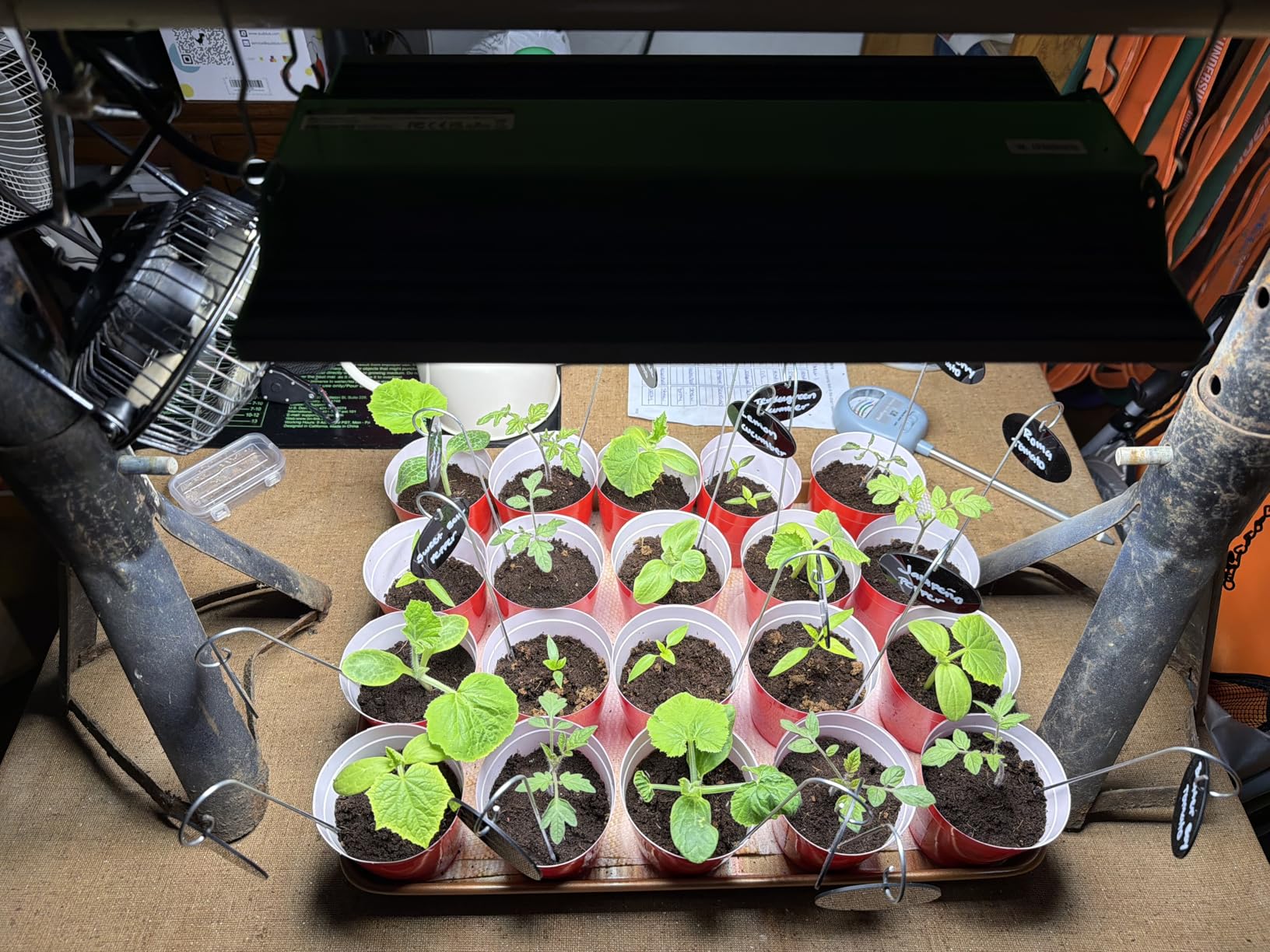
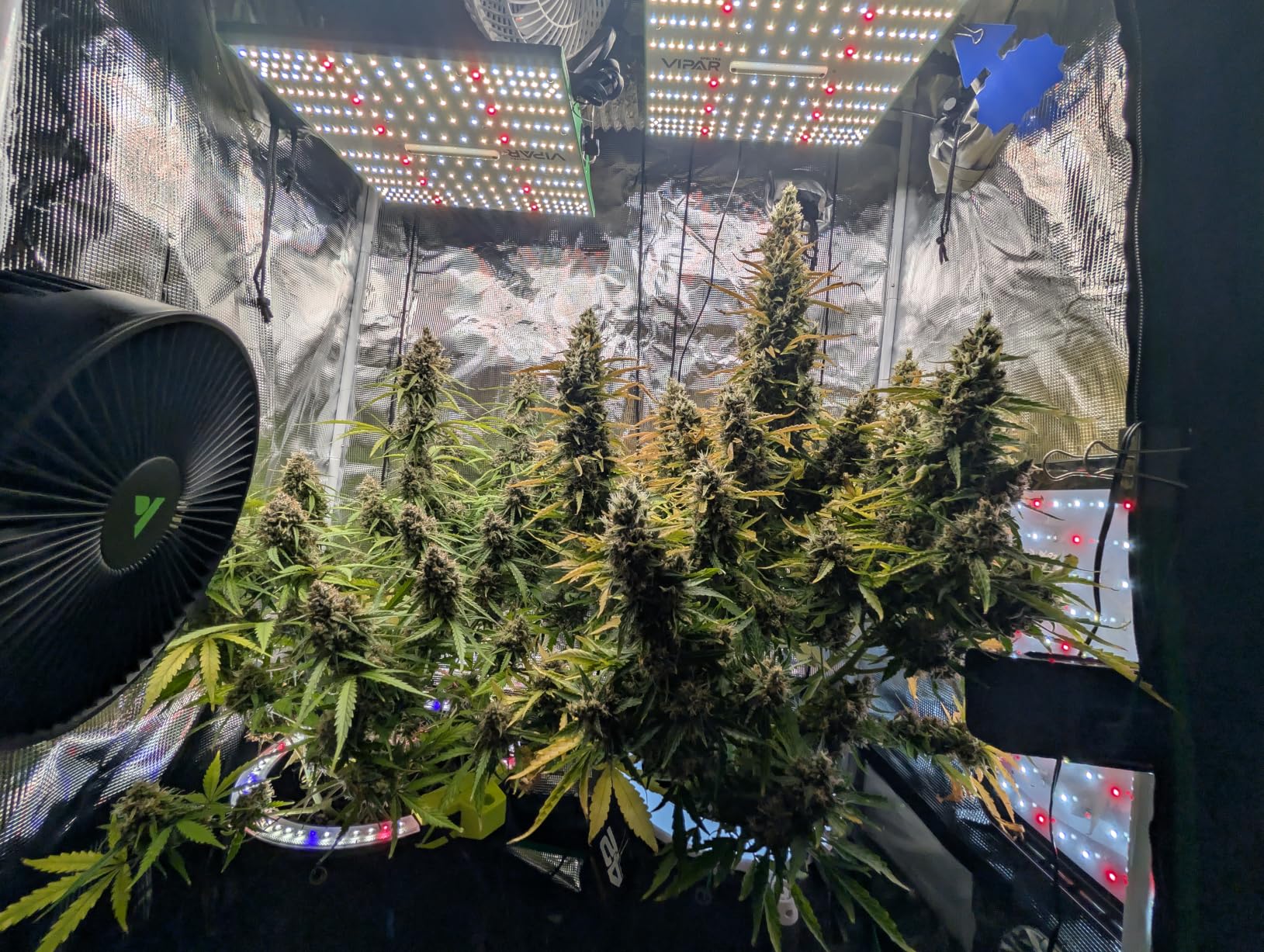
This panel carries the highest rating of the twelve at 4.7 across more than 5300 reviews, and in our test it gave the most even canopy of anything we ran. Eleven thousand lumens from a 70-watt draw is a lot of light for a crop that is cut before it flowers, which is exactly why the dimmer matters here.
Owners using PAR meters find themselves dimming to roughly 50 to 75 percent depending on mounting height, and that dial on the end of the fixture is the reason this panel works at microgreens scale despite its headline wattage.
Dimming, glare and where it sits in your setup
The 4-level dimmer is the single most useful control on any light in this roundup. It lets you start a fresh sow at low output and raise intensity as the tray fills in, which reduces the pale, washed-out look that comes from blasting a two-day-old tray at full power.
The persistent complaint is that even the lowest setting is bright, which is a problem in eye line. There is no reflector or hood to soften the side view, so position it at the front or back of a shelf rather than beside your monitor, and expect to add a small fan for airflow since reviewers report noticeable heat with no built-in cooling.
Spectrum balance and coverage area
The diode layout pairs 660nm red with 3000K and 5000K white, a balance that reads slightly warmer than the pure 5000K bars but works just as well for a short-cycle crop. The manufacturer rates it for a 2 by 2 foot vegetative area, which covers two 10×20 trays side by side with room to spare.
The design is fanless, using large aluminum heat sinks for passive dissipation, so there is no motor noise in a room you work in. It is rated as equivalent to a 150W HPS or metal halide fixture while drawing 70W, which is the comparison that matters for anyone switching from a legacy setup.
Wiring, mounting and durability
Stainless steel hanging hooks are included and a 9-foot cord reaches most shelf positions. The fixture also works with external timers and daisy-chains through the included controller jack, which is how you would scale this to a rack, though a 70W panel per tier is far more light than most microgreens growers actually want.
One practical irritation: the power switch and plug are mounted on the top of the housing, which is awkward when the fixture is tucked under a shelf. There is no built-in timer, so budget for a plug-in one. The warranty is three years limited, among the longest in this group.
7. DYMOND BoostGro 2-Foot 5000K Linkable Bar – Best Linkable Per-Lumen Value
DYMOND BoostGro LED Grow Light Full Spectrum Linkable 5000K Daylight + 660nm Red Indoor Plant Lighting Fixture (2 FT, Black)
5000K daylight plus 660nm red
16W, 1900 lumens
28.8 umol/s PPF
Link up to 4 fixtures
+ Pros
- Bright output that keeps seedlings compact rather than leggy
- Runs cool with tubing that never gets hot
- Quick clip-on hanging installation
- Linkable design scales without extra wiring
- Inline on/off switch at the fixture
– Cons
- No built-in timer so a plug-in timer is needed
- Linking capped at 4 fixtures per power circuit
- Short mounting cable
- 1900 lumens suits small trays rather than dense canopies
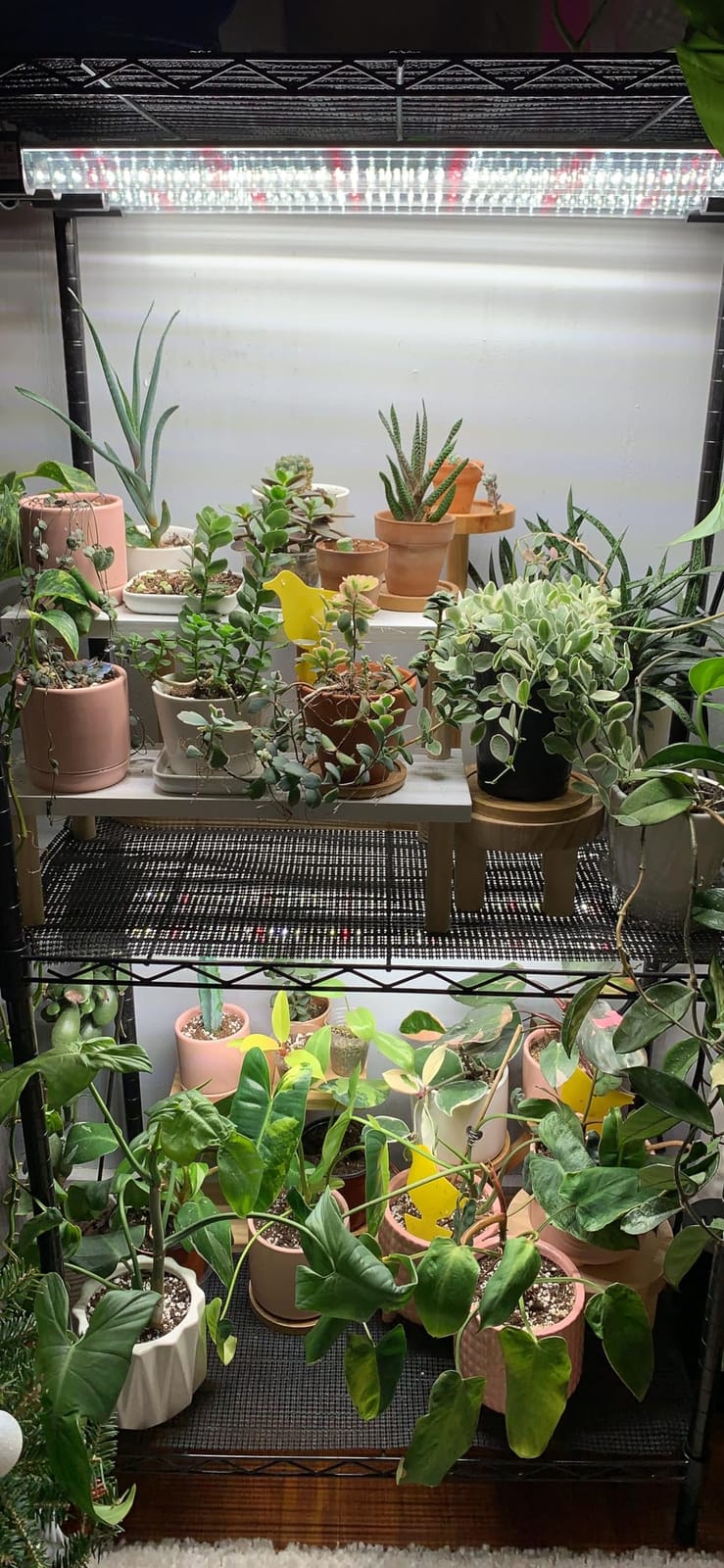
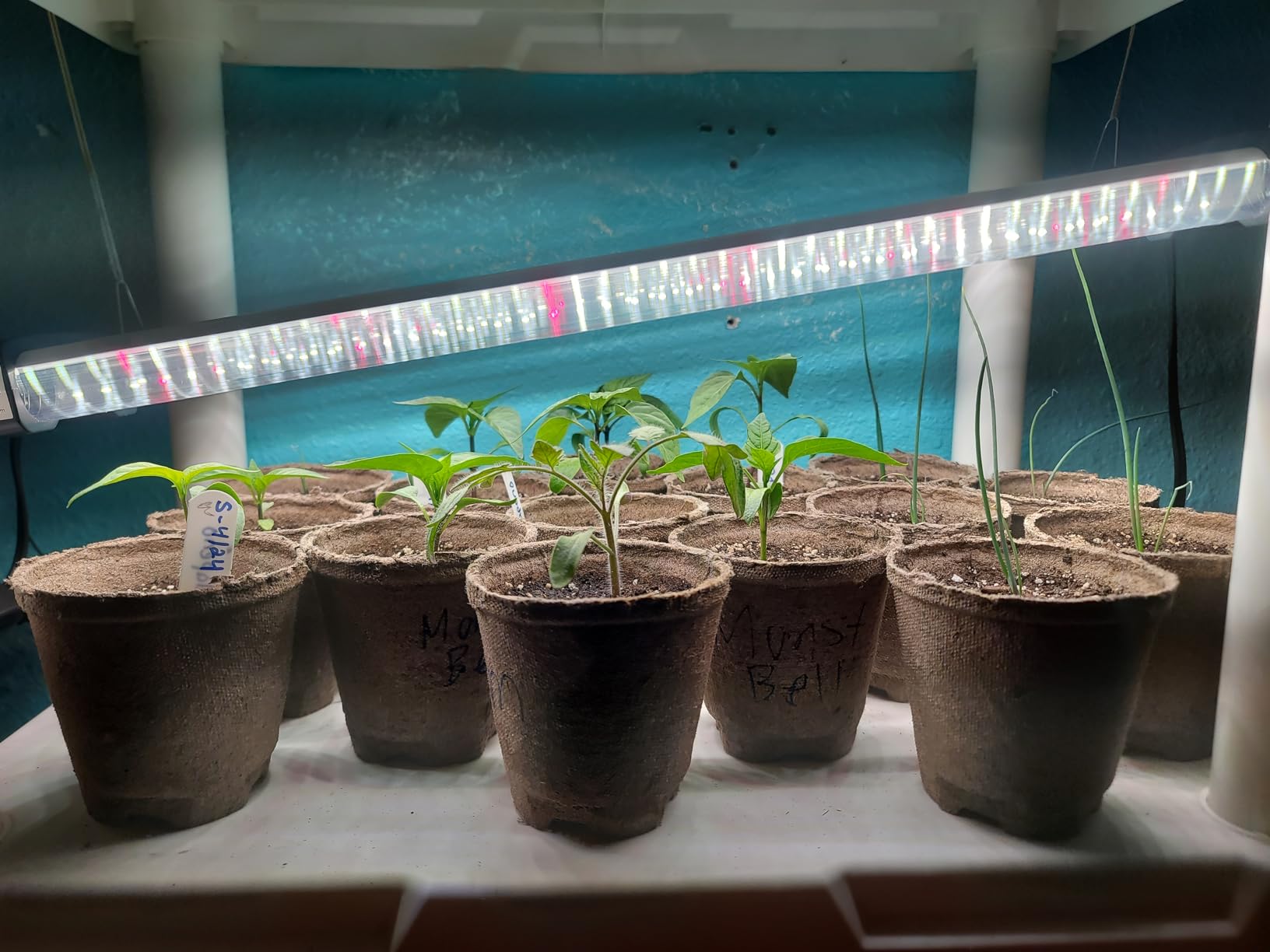
This fixture is small and light, at 22 inches long, 3.54 inches wide, 1.42 inches tall and 13.28 ounces. On a shelf with a tight lip you will appreciate how little room it takes up, and the two-clip hanging install took us under a minute per fixture.
Output is 1900 lumens at 16 watts with a stated 28.8 umol/s PPF, and the spectrum is 5000K daylight with 660nm red diodes added for sprouting and later stages. That figure is unusually specific for a fixture at this level, and it is the number that maps most directly to what a microgreens tray needs.
How many bars a shelf actually needs
One 2-foot fixture covers a single 10×20 tray with a bit of overhang, and the community rule of thumb is two or three fixtures per 10×20 shelf for even coverage. Two per tray, one over each half, is where the leggy centre-edge problem disappears.
The linkable design chains up to 4 fixtures per power circuit, which is a real constraint when you scale. Four fixtures cover a two-tray setup, and beyond that you need additional circuits rather than a longer chain.
Heat, mounting and cable length
Owners consistently report that the tubing does not get hot to the touch, which is a genuine advantage directly over a tray that gets watered daily. Inline on/off switches are convenient at the fixture, though as with the other bar-style lights there is no built-in schedule.
The included 2-foot hanging cable and mounting hardware are enough for a shelf with a modest overhang. Where the rack sits away from the wall, several buyers pair the fixture with an extension cord, which is a fair trade for how little space it takes up.
What growers use it for
Seed starting is the dominant use in reviews, with side lighting for fruiting plants and tomato results also mentioned. For microgreens the pattern is consistent: compact growth rather than stretched seedlings, and enough light to keep colour deep through an eight-day cycle.
The fixture is FCC certified and carries a 3-year limited warranty, matching the VIPARSPECTRA panel at the longer end of the cover in this group.
8. LBW Desk Grow Light with 214 LEDs – Best for Even Coverage Over One Tray
LBW Desk Grow Light, 214 LEDs Full Spectrum Plant Light for Indoor Plants
214 LEDs on an 11 by 4.7 inch panel
25W draw
10 to 26 inch height adjustment
3/6/12H timer
+ Pros
- Bright
- uniform panel output improves plant colour
- Height adjustment and gooseneck cover a wide area
- Works on the base or hangs with included wire hooks
- Minimal heat over long on-times
- Straightforward screw-together assembly
– Cons
- Metal base is light and tippy on multi-head versions
- 26 inch maximum height will not clear tall upright plants
- One adapter failed after about two months
- A missing bolt required an exchange
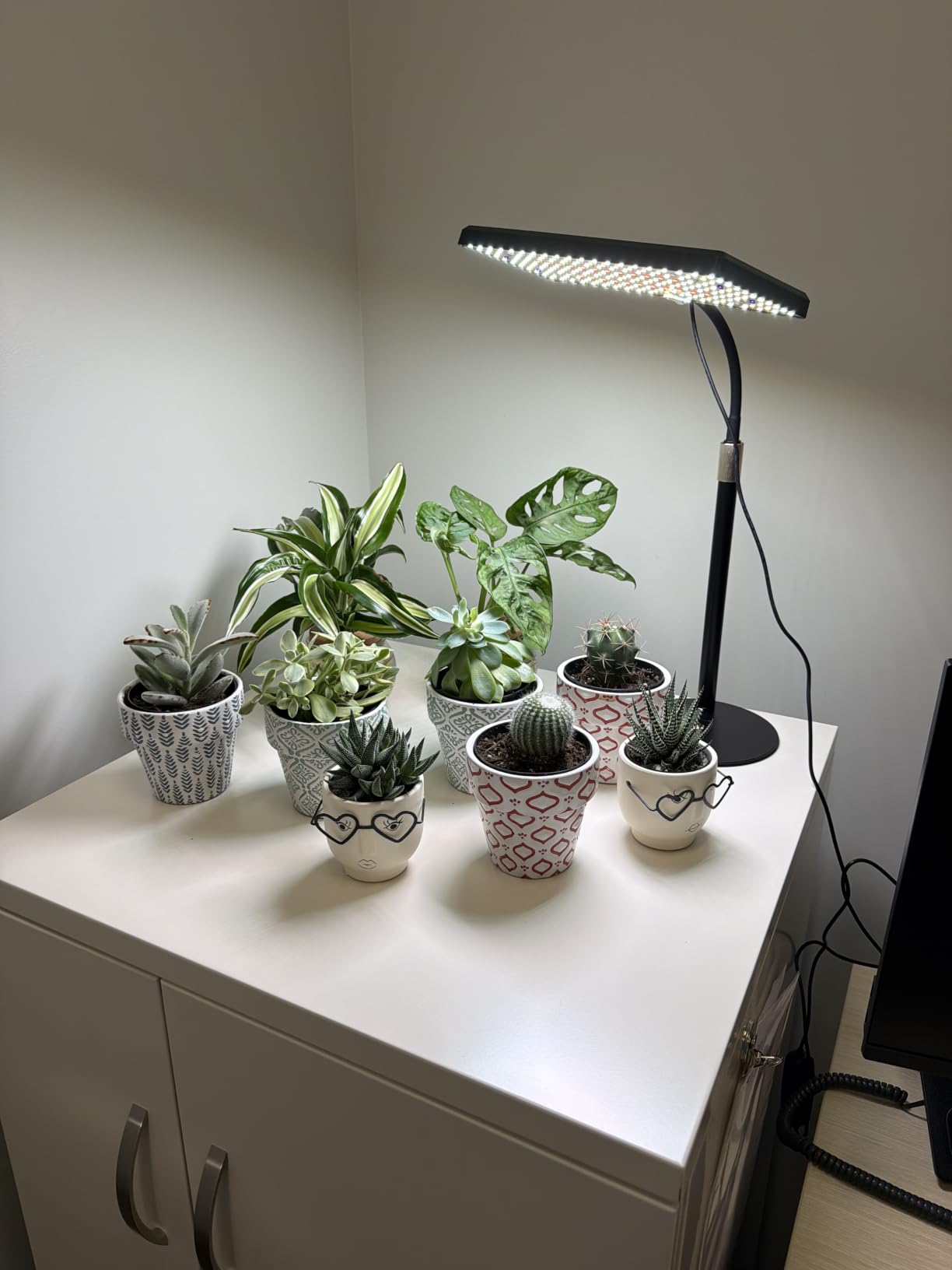
A wide flat panel is the opposite approach to a bar, and for a single tray it works well. The 11 by 4.7 inch head spreads light across the whole surface rather than concentrating it in a stripe, and owners of colour-varied plants report visible improvement in new leaf colour within weeks.
At 25 watts with 214 LEDs emitting 380nm to 780nm, this is one of the heavier draws in the group, but the vented back panel with heat-dissipating holes keeps it cool enough for close mounting, and owners report minimal heat over long on-times.
Height range and gooseneck positioning
Height adjusts from 10 to 26 inches with a flexible gooseneck, which is enough clearance for a microgreens tray from germination through a full cycle. It will not clear a tall upright plant, and that is the limit worth knowing before you buy for a mixed shelf.
For microgreens specifically, sit the panel at the low end of the range for the first few days and raise it as the tray grows. Six dimmable brightness levels give you a second axis of control that matters more than raw wattage at this crop stage.
Three ways to mount it
This fixture works three ways: standing on the metal base, hanging with the included wire hooks under a shelf, or fixed with double-sided tape. The hanging option is the one to use on a rack, and it takes the base stability problem out of the picture entirely.
The base is 5.9 inches in diameter with an anti-slip sponge pad, which sounds substantial until you compare it to the multi-head variants that several owners report as tippy, knocking over pots during watering. Weighting the base fixes it, or hang the light instead.
Timer settings and what to watch
The automatic timer offers 3, 6 or 12 hour settings with memory, and it works reliably according to most reviews. As elsewhere in this group, none of those settings reach the 16-hour photoperiod most growers run, so a plug-in timer is still the right call for a full cycle.
Quality control is the main reported weakness: one unit’s power adapter failed after about two months and had to be replaced separately, and one unit arrived with a missing bottom bolt. The warranty is 12 months.
9. SDOVUERC 4-Pack 5000K Full Spectrum Panels – Best Timer Memory in the Group
SDOVUERC Full Spectrum Panel Grow Lights for Indoor Plants and Shelves.
768 LEDs, 4 panels, 36W total
6-setting memory timer to 24H
Daisy chain panels
Vented aluminum
+ Pros
- Even brightness across a long daisy-chained run
- Memory timer keeps its schedule after a power loss
- Widest timer range here up to a continuous cycle
- Effective heat venting for long service life
- Mounts under cabinets
- on shelves
- walls or racks
– Cons
- Not dimmable so height is your only control
- Shorter panels than full-length tube fixtures
- Panels need wiring between them
- Lower review count means less long-term feedback
The reason this set is here is the timer. It offers six settings including 16 hours and 20 hours, and it retains the schedule after a power loss, which is unusual at this level and removes the single most common failure in a rack setup, which is a light switching itself off after a plug hiccup and staying off.
Four panels each measure about 11.8 by 3.7 inches and carry 768 LEDs in total at 36 watts, with a 4000-lumen maximum output figure. The spectrum blends 3000K warm white, 5000K cool white and 660nm deep red.
Linking a long panel run without losing brightness
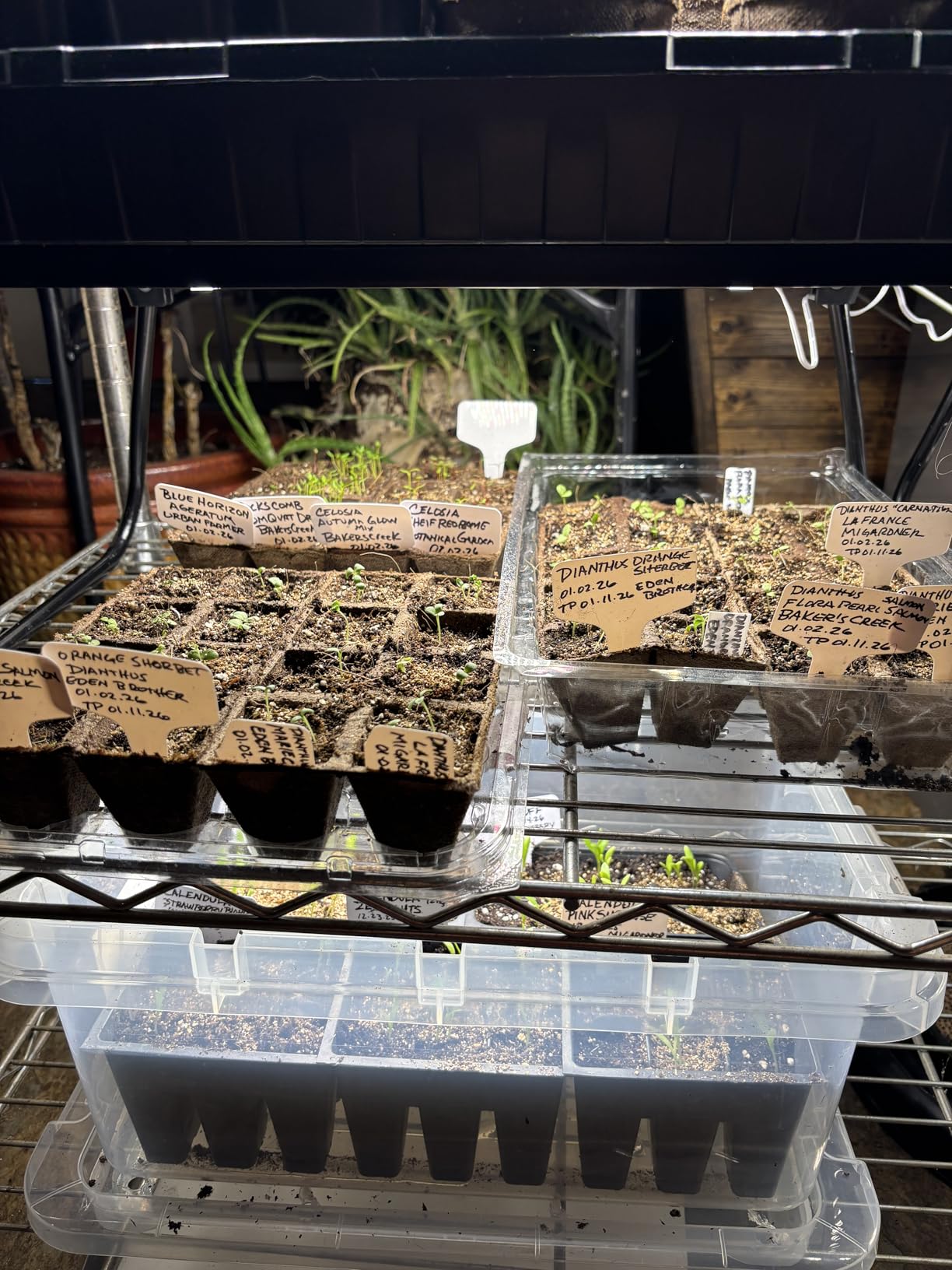
Panels daisy chain in series or parallel so you can extend a run, and the design is intended to hold even brightness across that run. That is the property that matters on a two-tray shelf, where a strip fixture often leaves the far corners dimmer than the centre.
Included are 16 zip ties and 16 double-sided adhesive pads, so a run can be mounted under a cabinet, along a shelf or vertically on a rack frame. An 8.2-foot power cord and 3.28-foot connecting wires come in the box.
No dimming means placement is your control
There is no dimming on this fixture, so brightness is fixed and distance becomes the only adjustment. Mount at 8 to 12 inches above the canopy and lower it as the tray fills, which is straightforward but demands that you actually check the height every few days.
That lack of dimming is the main functional limitation buyers cite. The counterargument is that fixed output removes one more variable from a small setup, and for a crop harvested in under two weeks the range you lose is small.
Heat, ratings and how much feedback exists
The vented aluminum design dissipates heat effectively, which reviewers credit with a long service life. Compliance marks include CE, FCC and RoHS, with 12 months of support and a 30-day return window.
Honest caveat: at 425 reviews the sample is the smallest in this roundup, so there is less long-term evidence behind it than behind the mainstream options. It holds a 4.6 average with 78 percent five-star ratings, and pack counts from 2 to 10 let you scale the run if the four-panel set proves out.
10. Bonviee Seed Starter Trays with 12-LED Grow Lights – Best All-in-One Starter Kit
Bonviee Seed Starter Trays with 12-LED Grow Lights, Clear, 5 Pack
5 trays, 12 LEDs each
Vented humidity cover
60 cells with drainage
USB powered
+ Pros
- Fast germination with sprouts visible in as little as 4 days
- Clear dome and trays make root growth easy to watch
- Vented cover traps moisture early and vents later
- Works with rockwool and paper towel methods
- Reusable across several seed cycles
– Cons
- Domes are thinner and flimsier than the trays
- No timer and no power adapter included
- No printed instructions for vent settings
- Lids do not seal fully
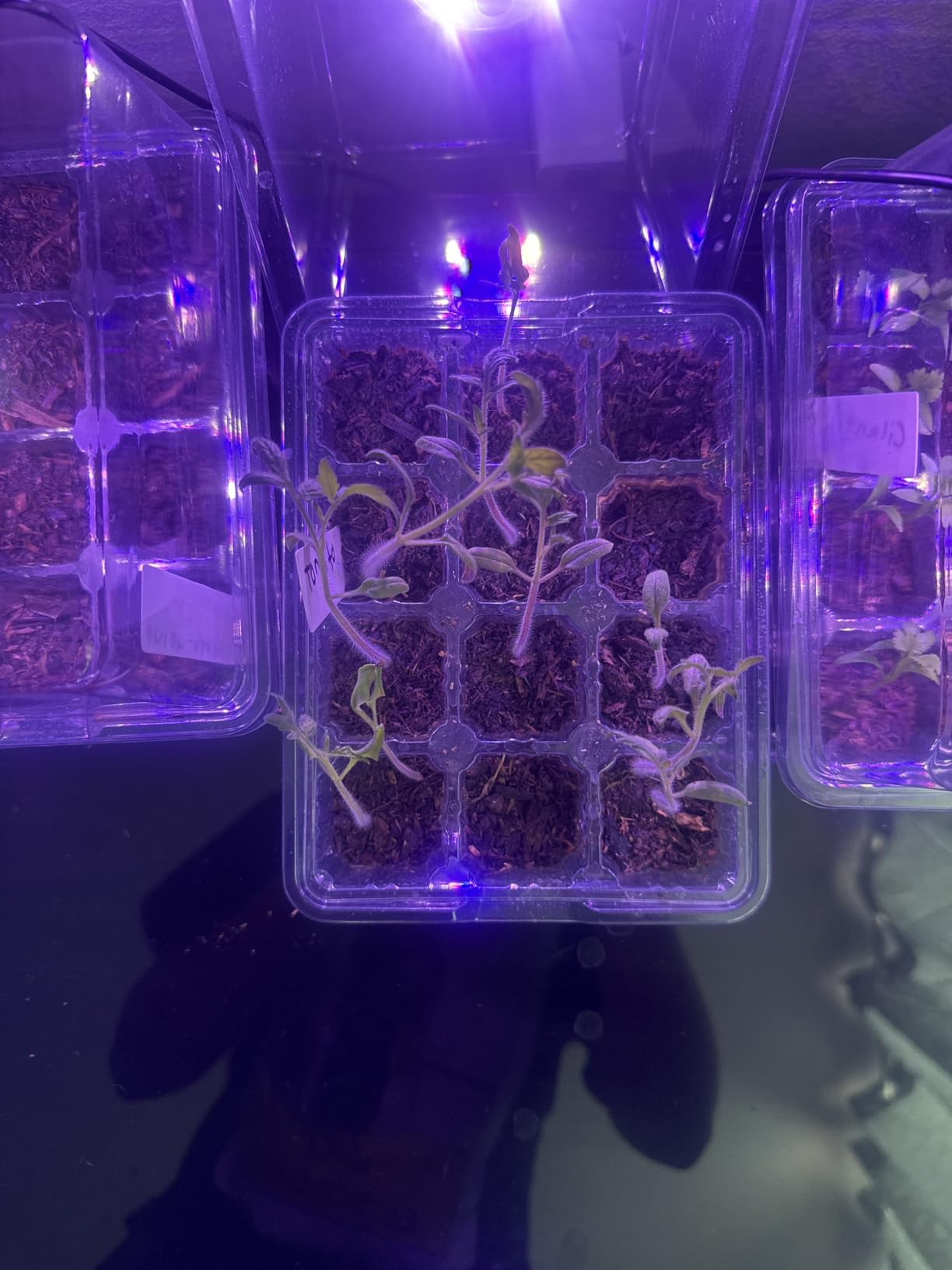
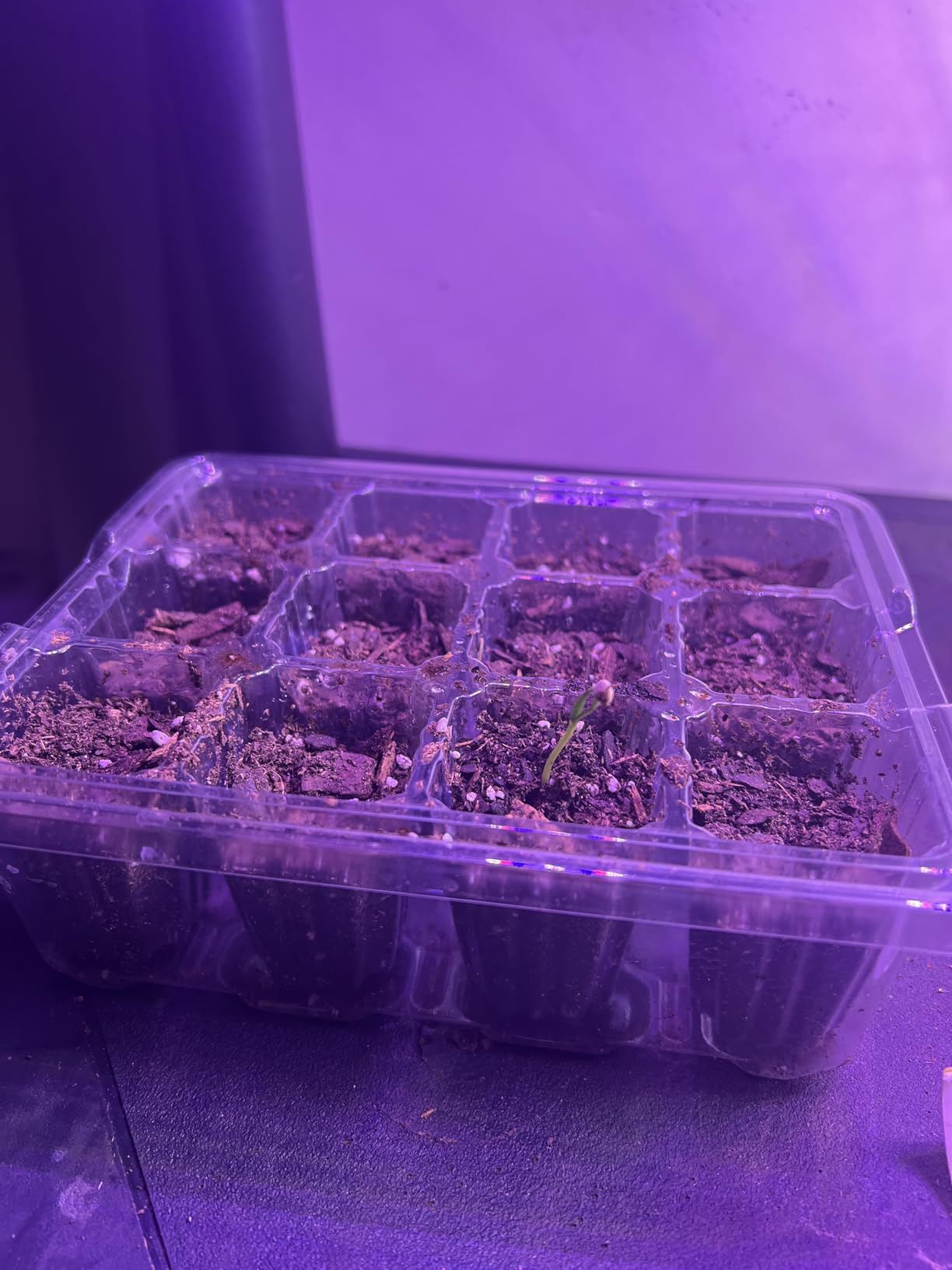
This is not a grow light in the shelf-fixture sense, and I want to be clear about that. It is a five-tray seed starting kit where each tray has a 12-LED grow light built into a vented humidity cover, and for a first microgreens tray it removes almost every decision from the equation.
Each tray is a clear 12-cell insert with drainage holes feeding into a clear base, giving 60 planting cells across the set, with an elevated dome on top. The lights are 12 LED beads per tray, 60 in total, and the whole thing runs from one included 1-to-5 USB cable.
Light level and where it fits in a microgreens workflow
A 12-LED bead array over a 12-cell tray is a supplemental light, not a shelf fixture. It is enough to get a tray through germination and early colour development, and plenty of owners report sprouts in as little as 4 days. It is not enough to sustain a dense canopy at full stretch, so serious growers treat this kit as a propagation step and move trays under a proper bar afterwards.
The clear design is genuinely useful here, because you can see moisture and root development in the medium without lifting a dome and disturbing the seedlings.
Humidity control through the vented cover
The dome doubles as humidity control, which is the part that matters for microgreens specifically. Retain moisture during the blackout and germination phase, then gradually open the vent as seedlings emerge to reduce the damping-off and mould risk that a closed dome creates.
Drainage holes move excess water into the clear bases, so bottom watering works cleanly, and the kit is compatible with seedling heat mats. That combination makes it a good fit for anyone who wants a repeatable first attempt.
What the package does not include
Two things are missing and both matter. There is no built-in timer, so you need a plug-in timer or a smart plug for a 16-hour cycle. And no power adapter is included, so you must supply a 5V 2A USB source, which trips people up on the first setup.
There is also no printed guidance on vent settings per growth stage, the domes are thinner and flimsier than the bases, and the lids do not fully seal. The kit is indoor only and is not built to last years, though most owners get several seed cycles out of it. Review sentiment is overwhelmingly positive on germination results and value, and it ranks in the top ten in Plant Germination Kits.
11. FOXGARDEN Grow Light Stand – Best for No-Tool Setup
FOXGARDEN Grow Light Stand, Advanced LED Plant Growth Lighting with 4/8/12H Timer, 6 Dimming Options, and Adjustable Height – Optimal for Indoor Plants in Seedlings, Vegetative, and Flowering Phases
108 LED full spectrum board
22W draw
4/8/12H auto timer
Height adjustable 11 to 21.65 inches
+ Pros
- 108 LEDs mixing cool white
- warm white and red
- Built-in 4/8/12H auto timer removes manual switching
- Six dimming levels for early seedling stages
- Adjustable height lets you raise the light as plants grow
- Tool-free install in a few minutes
– Cons
- Single 22W source covers a limited footprint
- 22W draw is higher than dedicated microgreen strips
- Height range is short for tall vegetative plants
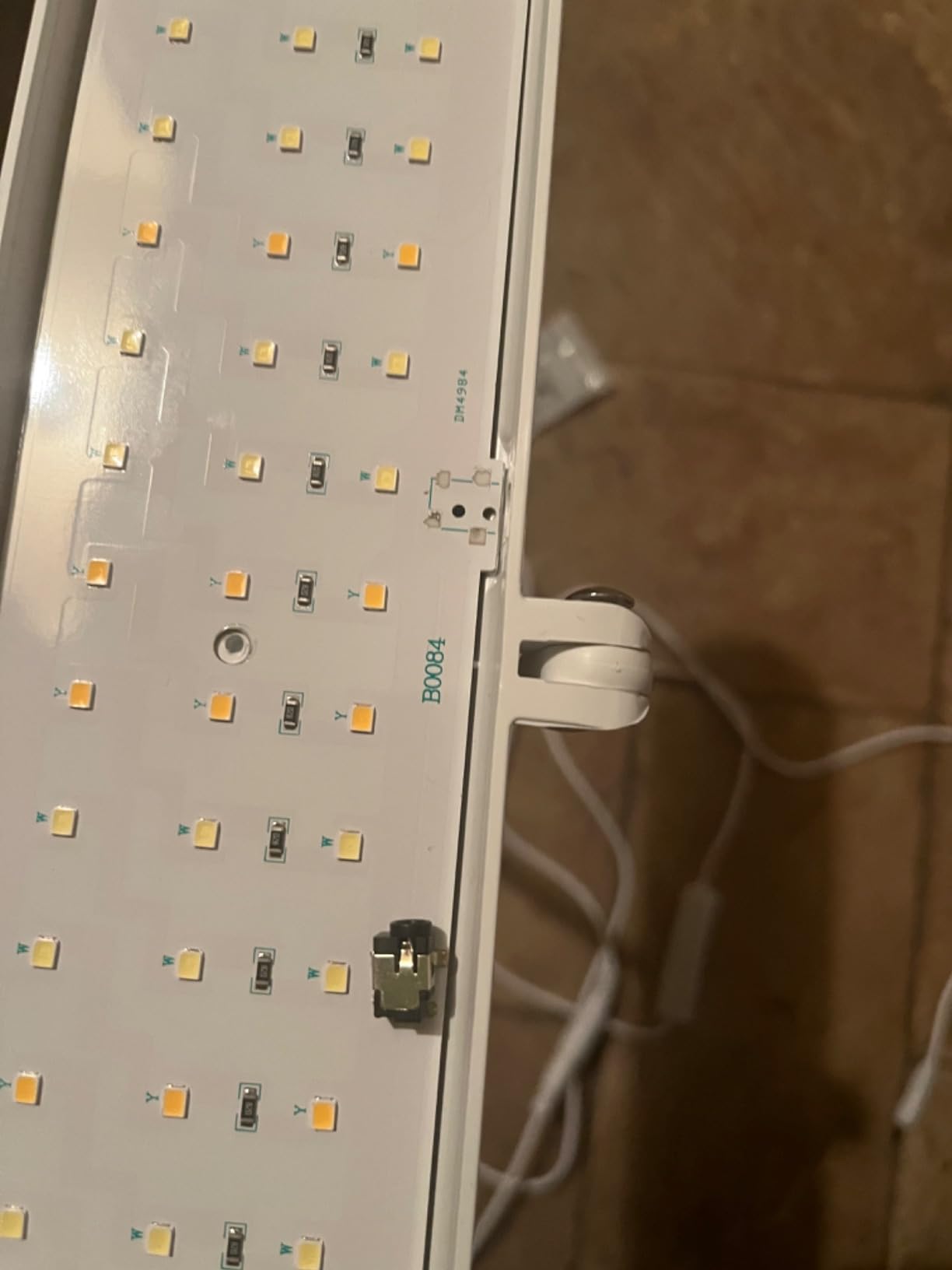
The reflector and telescopic stand combination is what makes this one feel like a proper piece of equipment rather than an accessory. A single board with a reflector throws more usable light downward and extends coverage without adding diodes, which is a smarter way to gain intensity than buying a bigger panel.
Output is 108 LED beads split across 60 cool white, 32 warm white and 16 red, running at 22 watts on 120 volts. The board is iron with an iron and metal shade, on a stable metal base with a desktop sponge pad to protect the surface underneath.
Height adjustment for a short crop cycle
Height runs from 11.02 to 21.65 inches, which is more than a microgreens tray needs for its entire life. Start near the bottom at one of the lower dimming levels for a two-day-old tray, then walk it up as the canopy fills.
The six dimming levels are the useful control here. Because a 22-watt board over a small tray is easily too intense at full power, dimming is what makes this fixture appropriate for microgreens rather than only for larger houseplants.
Timer range and the plug-in gap
The built-in timer offers 4, 8 or 12 hours on a repeating cycle, which is again short of the 16-hour photoperiod most growers run. It handles a short daily cycle well; for a full production schedule, fit a plug-in timer on the same outlet.
Installation is tool-free and takes a few minutes, with the grow light, telescopic rod, adapter, wrench, base, nut and timer all in the box. The included wrench suggests some assembly is required, though the manufacturer describes it as simple and quick.
Where the footprint limit bites
The board measures 23.8 inches across, which sounds generous until you account for the reflector concentrating that output. In practice this is a one-tray or small-cluster fixture, and the limited footprint is the limitation reviewers cite most often.
It also draws more power than dedicated microgreen strips for less total coverage, so if you are covering two or more trays, bars or panels are the more efficient route. The warranty is 12 months with a 90-day return window.
12. Rocoking 40W Ultra-Thin Panel Grow Lights – Best for Under-Shelf Coverage
Grow Light,40W Ultra-Thin Panel Grow Lights for Indoor Plants,316LEDs Full Spectrum Grow Lights for Under Cabinet Plant, Grow Lamp with 3/9/12H Timer,10 Dimmable Levels for Plants Growing (4pcs)
316 LEDs across 4 ultra-thin panels
40W total
6500K CRI 90
10 dimming levels, 3 modes
+ Pros
- Four thin panels arrange to match any shelf or cabinet run
- 316 LEDs at 40W with low heat from the aluminum back
- 3/9/12H cycle timer runs without resets
- Ten dimming levels plus three lighting modes
- Zip ties and tape included for under-cabinet installs
– Cons
- Controls sit on the shared controller not each panel
- Panels need the included 12V adapters
- Flat stick panels spread light less evenly than a hooded fixture
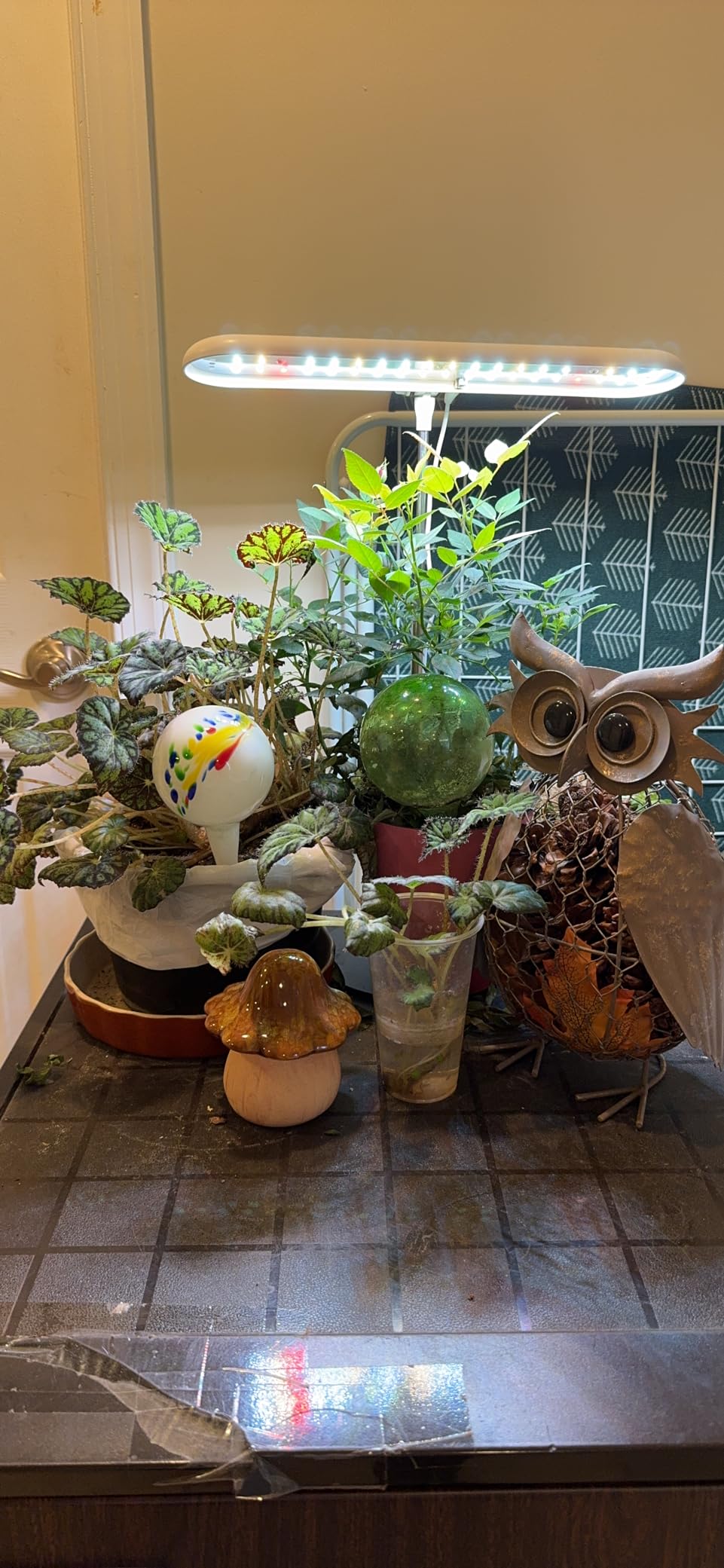
At 0.04 inches thick, these panels are the least noticeable lights in the roundup. Tuck one under a cabinet lip or behind a shelf face and it disappears, which matters if the growing area is a kitchen rather than a utility space.
Four panels measure 11.81 by 3.14 inches each and carry 316 LEDs at 40 watts total, with 6500K output at CRI 90 across 380nm to 780nm. Colour rendering at 90 means you can judge leaf colour and spotting accurately, which is useful when you are checking for mould.
Arranging four panels across a shelf
The flexibility is the point. Four slim panels can be laid end to end along a 20-inch shelf, split into two rows, or arranged vertically on a rack frame, and the manufacturer designs them to be laid out in different lengths or widths to match the run. Zip ties and double-sided adhesive pads are included for both hanging and concealed installs.
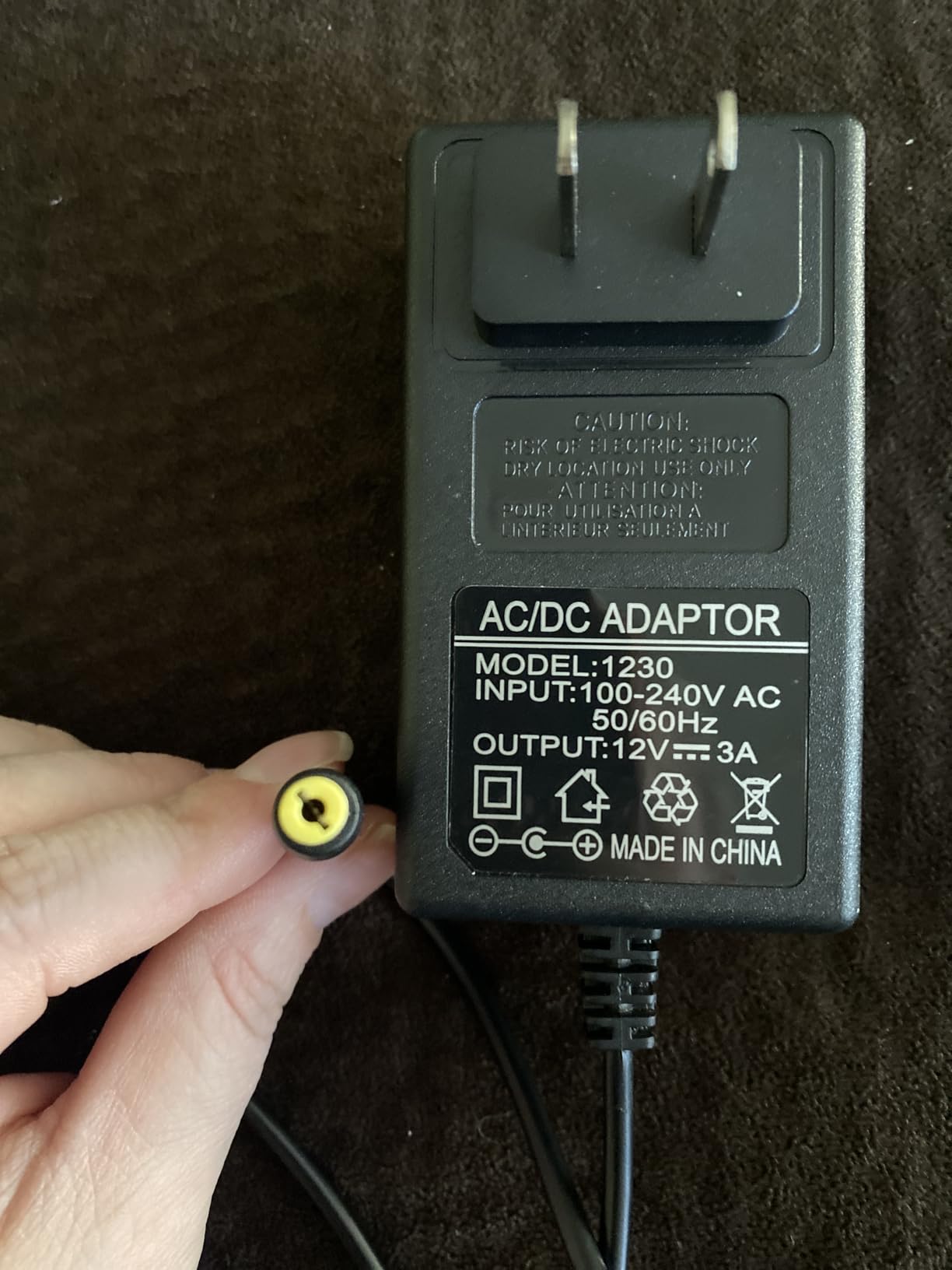
Because they run on 12 volts DC through the included adapters, they cannot be plugged into a wall directly. That is also why the controls sit on a shared controller rather than on each panel, so a single timer and dimmer setting governs all four.
Dimming, modes and the timer
Ten brightness levels from 10 to 100 percent combined with three lighting modes give a reasonable amount of control for a panel this size, and the 3, 9 or 12 hour cycle timer repeats daily without resetting, which keeps a consistent photoperiod running even while you travel.
As with most in this group, none of the timer settings reach 16 hours, so a plug-in timer handles the full cycle. The dimming range compensates by letting you run a short on-window at high output instead of a long one at low output.
Where it falls behind bar fixtures
Flat stick panels distribute light less evenly than a hooded or bar-style fixture over a deep tray, and that shows up as dimmer tray edges. At 4.2 average this is the lowest-rated light here, though 68 percent of buyers still give it five stars and 2105 reviews is a substantial sample.
The aluminum back plate keeps heat generation low and the listing claims savings of up to 50 percent versus other recessed LED lights. Variants exist in 2-piece, 4-piece, 4-piece pro and 6-piece configurations, so you can size the run to your shelf.
How to Choose a Grow Light for Microgreens
Every product above will grow a tray. The difference between a good result and a disappointing one comes down to five decisions, and you can make all of them before you spend anything.
Pick a white light in the 4500K to 5500K band and skip blurple
Red-and-blue panels, often called blurple, are the most common wrong purchase in this category and they cost growers twice: money and time. Growers describe disliking the purple glow, and the biology is unfavourable too, because two narrow spectral peaks deliver light less evenly across the photosynthesis band than a white blend does.
Community consensus splits slightly, with Overgrow favouring 4500K as the balance point and other growers pushing toward 6500K as closer to natural light. The honest answer is that anything from 4000K to 5500K works for this crop, and 5000K is the easiest place to land because several fixtures in this roundup sit exactly there. Our best grow lights for indoor plants guide covers the wider category if you are lighting houseplants as well as trays.
Budget about 20 watts and 2000 lumens per 10×20 shelf
This is the number most guides give and the one our own shelves confirm. Two to three 20-watt fixtures per 10×20 tray shelf, or equivalently one high-output panel dimmed down, covers the area. Mounting 6 to 12 inches above the canopy completes the intensity picture.
Where you see 300W to 1000W panels marketed for microgreens, the wattage is aimed at fruiting plants. Microgreens are harvested 7 to 14 days after sowing, before the first true leaf, so they need steady light rather than intense light, and a bigger fixture only creates heat and glare problems near an open tray.
Match the form factor to your shelf geometry
Work out the tray count and shelf width before you pick a fixture. A 20-inch shelf across from a two-tray width needs either two 2-foot bars, four 1-foot bars, or a linked panel run. Narrow metal racks suit short magnet-mounted bars, wide wire shelves suit full-length tubes, and a bare countertop with no shelf above it needs a clamp or a stand.
Daisy-chaining matters here more than most spec sheets suggest. A linkable design means one power circuit covers a whole tier, and on a four-tier rack the difference between chained and unchained fixtures is the difference between a tidy install and a nest of extension cords.
Always use a timer, and check heat near the tray
Several lights here have no built-in schedule at all, and the ones that do rarely reach 16 hours. A mechanical plug-in timer costs almost nothing and removes the most common cause of a failed crop, which is a light that was off for two days while you were busy. Fit one per circuit, not one per fixture, and check that the total draw on any power strip stays within its rating.
On heat, LEDs run far cooler than the HPS and metal halide fixtures they replaced, but a 70W panel directly above an open tray still gets warm enough that owners add a fan. Mounting height is the simplest fix, and keeping fixtures clear of the misting path matters because none of these are wet-rated.
Decide whether you need dimming, linking or a wet rating
Dimming is the feature people notice they need two weeks in. A young tray at full output can look washed out, and a dimmer lets you match intensity to growth stage across a cycle. Linking is the feature you notice when you expand past two trays. A wet rating is something you only need if you mist directly under the fixture, which is a rare setup in a microgreens room.
What you do not need at this scale is an app, a spectrum selector with eight channels, or a fixture rated for a flowering canopy. Those features are real and they are excellent, they just solve problems a two-week crop never has.
How Many Hours of Light Do Microgreens Need?
Run your lights 16 to 17 hours a day and give the crop 7 to 8 hours of darkness. This is where the conflicting advice online comes from: extension services quote 6 to 8 hours for low-intensity establishment, some retailers suggest 15 hours, and experienced growers settled on 16 to 17 because that is what a tray under a proper light actually produces.
The darkness is not optional. Photoperiod stress and the responses it triggers need a real dark period to express properly, and shortening it produces paler colour and stretched stems. A timer is the only reliable way to hold the cycle, which is why I rank timer memory so highly in the reviews above.
Seed timing also matters. Most growers withhold light for roughly the first day to two after sowing so seeds make contact with the medium, then switch to the full cycle for the rest of the ten to fourteen days until harvest.
What Experienced Microgreen Growers Actually Use
Community consensus is remarkably consistent once you read enough threads, and it does not match what retailers push.
Hardware store LED shop lights. The single most repeated recommendation on r/microgreens comes from a Canadian grower who uses shop lights bought at a hardware store, specifically because they daisy chain together and are lightweight enough to hang easily.
Full-spectrum shoplight fixtures over tray medium. A Houzz thread describes a grower running microgreens in Promix trays under full-spectrum shoplight fixtures and calling it very easy, which is the reaction most people have at this crop stage.
4500K to 5000K white, never blurple. Overgrow forum consensus settles on 4500K as the best balance with 4000K acceptable, and squarefoot growers push the same argument from the other end, that closer to 6500K natural light is better.
Regular household LED bulbs at microgreens scale. Multiple plant groups report that ordinary LEDs perform about as well as cheap dedicated grow lights for a short-cycle tray, which is the most useful permission in this entire article: a first tray does not need a specialist fixture.
Two or three 20W fixtures per 10×20 shelf. That is the geometry rule that shows up in every detailed guide, and it is why bars and strips dominate the recommendations above.
If you want the wider picture on running lights for a mixed indoor setup, our guide to the best grow lights for indoor plants covers the fixtures that need to handle mature foliage as well as seedlings.
Common Grow Light Mistakes and How to Fix Them
1. Leggy, stretched seedlings. Almost always light intensity or height. Move the fixture down to 4 to 8 inches above the canopy, or raise the brightness level. If a tray is stretching toward a bar while the centre stays compact, the problem is coverage, not power, so add a second fixture rather than a brighter one.
2. Pale, washed-out colour. The tray is receiving too much light too early, or a red-heavy spectrum is dominating. Drop to a lower dimming setting for the first three days and confirm your light is white and not blurple.
3. Trays drying out under the lights. Direct radiant heat from a high-watt fixture sitting close to an open tray accelerates evaporation. Raise the light, switch to a lower setting, and bottom water instead of misting so the medium rehydrates evenly.
4. Mould and algae in the tray. Low airflow combined with constant moisture. A small fan across the shelf surface fixes more cases than any light change, and opening the humidity dome earlier in the cycle helps on covered trays.
5. Lights switching off mid-cycle. A fixture without a timer, or a light that reset after a power interruption. Fit a plug-in timer per circuit, and prefer a fixture with memory-timer behaviour if your rack has known power flakiness.
6. Water and electricity in the same zone. Keep fixtures above the tray line, out of the misting path, and never run a damp extension lead into a power strip on a wet shelf. Extension services consistently flag this on multi-tier racks, and it is the one mistake here with real consequences.
Frequently Asked Questions
What kind of LED grow light is best for microgreens?
A full-spectrum white LED bar, strip or panel in the 4500K to 5500K range is the best choice for microgreens. Aim for roughly 20 watts and 2000 lumens per 10×20 tray shelf, mounted 6 to 12 inches above the canopy, and avoid red-and-blue blurple panels because white light spreads more evenly across the photosynthesis band.
Do you need a grow light for microgreens?
You need one if you do not have a bright, south-facing window or you are growing more than a couple of trays. Microgreens are harvested 7 to 14 days after sowing, and insufficient light produces leggy stems, pale colour and lower nutritional density. In a sunny windowsill a first tray can succeed on daylight alone, but results become inconsistent year-round.
How long should grow lights be on for microgreens?
Run lights 16 to 17 hours on and 7 to 8 hours off each day. The dark period is required, and cutting it short gives paler colour and stretched growth. Most growers also withhold light for the first day or two after sowing so seeds make contact with the growing medium, then run the full cycle until harvest.
What lights do professional growers use?
Professional and experienced community growers mostly use white full-spectrum LED shop lights rather than horticultural panels, because the crop is harvested before flowering. The most repeated recommendation is hardware store LED shop lights chosen for the way they daisy chain together and how light they are to hang, often two or three 20W fixtures per 10×20 shelf.
Do blurple grow lights work for microgreens?
Blurple lights will grow microgreens, but they are a poor fit for this crop. The red and blue peaks deliver light less evenly than a white blend, growers consistently dislike the purple room glow, and the wasted energy shows up as heat. A 4500K to 5500K full-spectrum white light produces better colour, sturdier stems and more consistent results.
Which Grow Light Fits Your Setup
If you are lighting a shelf and want the least hassle, the Barrina 1-foot 5000K 4-pack is the pick. It is our EDITOR’S CHOICE, the fixtures link in a long series, and adding a plug-in timer makes the whole rack self-running.
If you want maximum control over intensity and are not afraid of glare, the VIPARSPECTRA 70W panel is the highest-rated light here and the 4-level dimmer lets you match a two-day-old tray and a full canopy with the same fixture. If your trays move around a lot, the GooingTop clamp lamp needs no installation at all.
If you are covering a four-tier rack, linkable bars and panels win because one power circuit handles a whole tier. If you only have a kitchen counter, a halo or stand fixture is faster than anything you have to hang. And if you are on your very first tray, a seed starter kit with built-in lights gets you a result before you invest in a shelf setup.
Whichever you choose, the rules that decide the outcome are simple: white full-spectrum light around 5000K, about 20 watts and 2000 lumens per 10×20 shelf, a timer holding a 16-hour cycle, and the fixture 6 to 12 inches above the canopy. Get those four right in 2026 and the crop takes care of itself.
Once you are harvesting, our guides to growing herbs outdoors and bucket garden ideas cover what to do with the space and the time after the microgreens come out.
Leave a Reply