
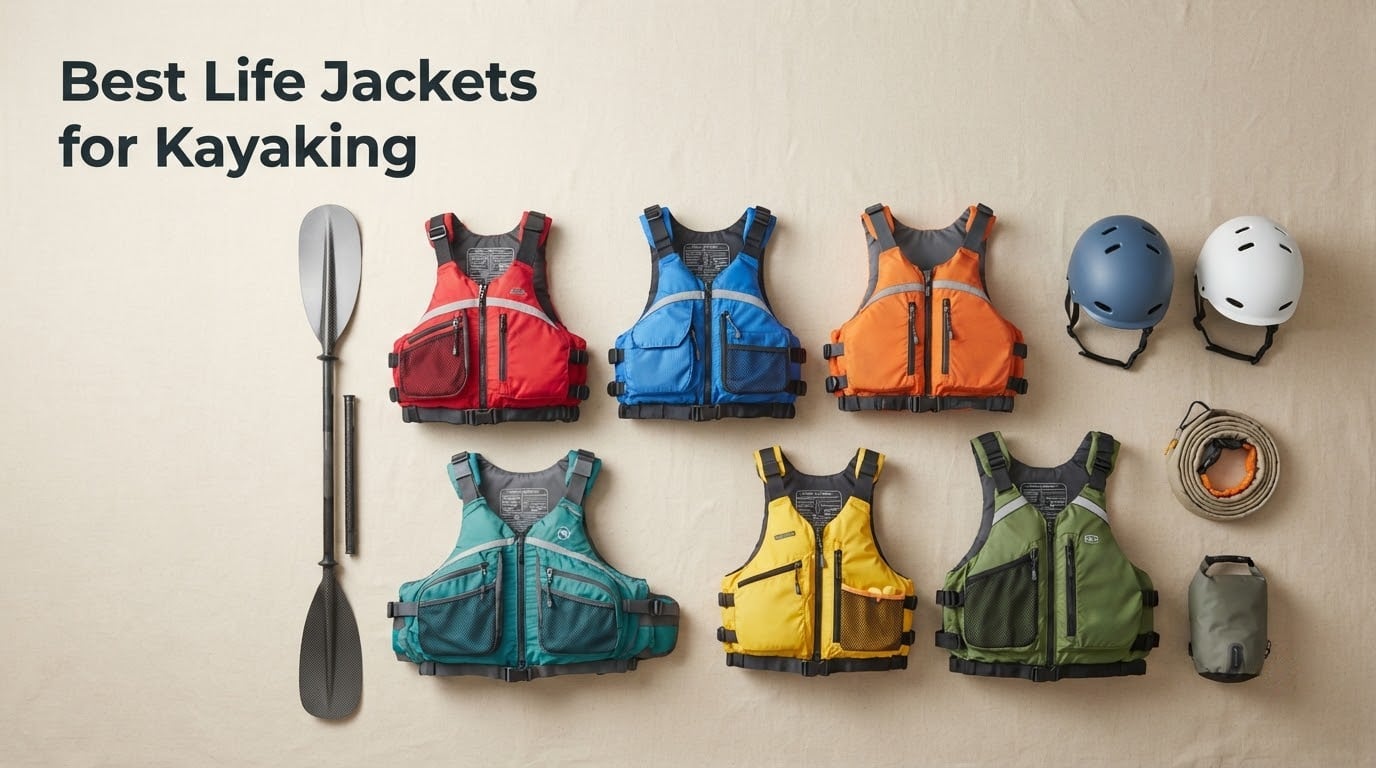
If you have ever paddled a kayak in a bulky, square-cut life jacket, you already know why a generic PFD does not work on the water. The foam rides up under your chin, the shoulders fight every stroke, and the back panel jams against your kayak seat. I have worn a lot of personal flotation devices (PFDs) over the years, and the difference between a generic life vest and a true kayak PFD is the difference between wearing safety gear you tolerate and wearing safety gear you forget you have on.
This guide covers the best life jackets for kayaking in 2026 for every paddling style. Our team tested and compared 10 Coast Guard-approved PFDs across recreational, whitewater, fishing, and touring use cases, with a focus on mobility, fit, and seat compatibility. Whether you paddle a sit-on-top on a quiet lake or a sea kayak along a windswept coast, we will help you find the right vest so you actually wear it on the water.
You need a specific life jacket for kayaking. A standard offshore life vest is designed to float a person face-up in rough water, which means extra foam, a thick back panel, and tight armholes. A kayak PFD is engineered around a paddle stroke: it has a high-back or mesh-back design that clears the seat, wide armholes that let your shoulders rotate freely, and a low-profile cut that does not ride up. The US Coast Guard still requires a USCG-approved PFD on every kayak for every paddler, so the best kayak life jacket is one that meets the legal standard and stays comfortable enough that you never think about taking it off. If you are researching other outdoor gear as well, our team has covered long battery life drones and similar field guides on the site.
Our Top 3 Tested Life Jackets for Kayaking in 2026

Onyx MoveVent Dynamic Paddle Vest
- USCG and Transport Canada approved
- Mesh back fits kayak seats
- Large armholes
- Lightweight 1.7 lbs

O’Brien Impulse Women’s Life Jacket
- USCG Type III approved
- Women's specific fit
- Neoprene comfort
- Adjustable straps
AWESAFE Adult Watersport Universal Vest
- Mesh high back
- Multiple pockets
- SOLAS reflective strips
- Lightweight 14 oz
Comparing the Best Kayak PFDs in 2026
| Product | Details | Action |
|---|---|---|
|
|
Check Latest Price |
|
|
Check Latest Price |
|
|
Check Latest Price |
 |
|
Check Latest Price |
 |
|
Check Latest Price |
 |
|
Check Latest Price |
 |
|
Check Latest Price |
 |
|
Check Latest Price |
 |
|
Check Latest Price |
 |
|
Check Latest Price |
1. Onyx MoveVent Dynamic Paddle Vest – Best Overall Kayak Life Jacket
Onyx MoveVent Dynamic Paddle Vest Adult Life Jacket, USCG/TC Approved
USCG and Transport Canada approved
1.7 lbs
Mesh back for kayak seats
+ Pros
- Dual USCG and Transport Canada approved for maximum safety
- Mesh back panel fits high-back kayak seats without pushing forward
- Large armholes give full paddling mobility
- Lash tab
- whistle
- and SOLAS reflective accents built in
- Lightweight at 1.7 lbs for all-day wear
– Cons
- Runs large
- so most reviewers recommend sizing down
- Front padding can feel slightly bulky to some paddlers
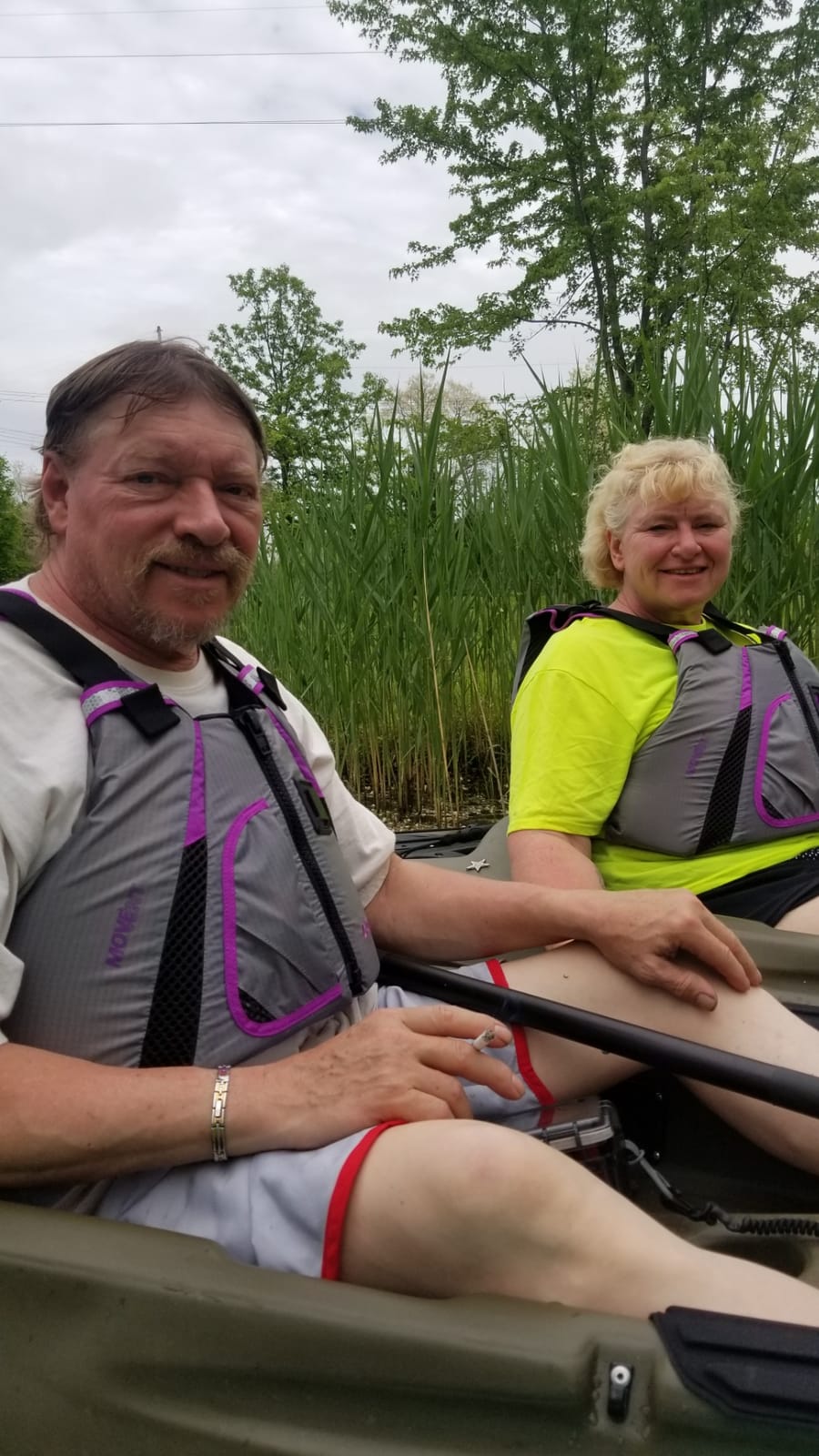
The Onyx MoveVent Dynamic is the kayak PFD I keep coming back to when friends ask for one recommendation that works for almost everyone. It is a US Coast Guard-approved vest that is also Transport Canada approved, so it satisfies both safety regimes in one design. I have worn it on a 14-foot sit-on-top on a Midwestern lake for six hours at a stretch, and the mesh ventilation panels on both the front and the back kept me from overheating on a 90-degree August day.
What sets the MoveVent apart for kayaking specifically is the sculpted foam and the high-back mesh panel. Most recreational vests have a thick foam block that sits right where a kayak seat back meets your spine. The MoveVent cuts that out and replaces it with a mesh bridge, so the vest drapes over the seat instead of pushing you forward. The armholes are unusually generous, which means a full forward paddle stroke does not fight the shoulder strap.
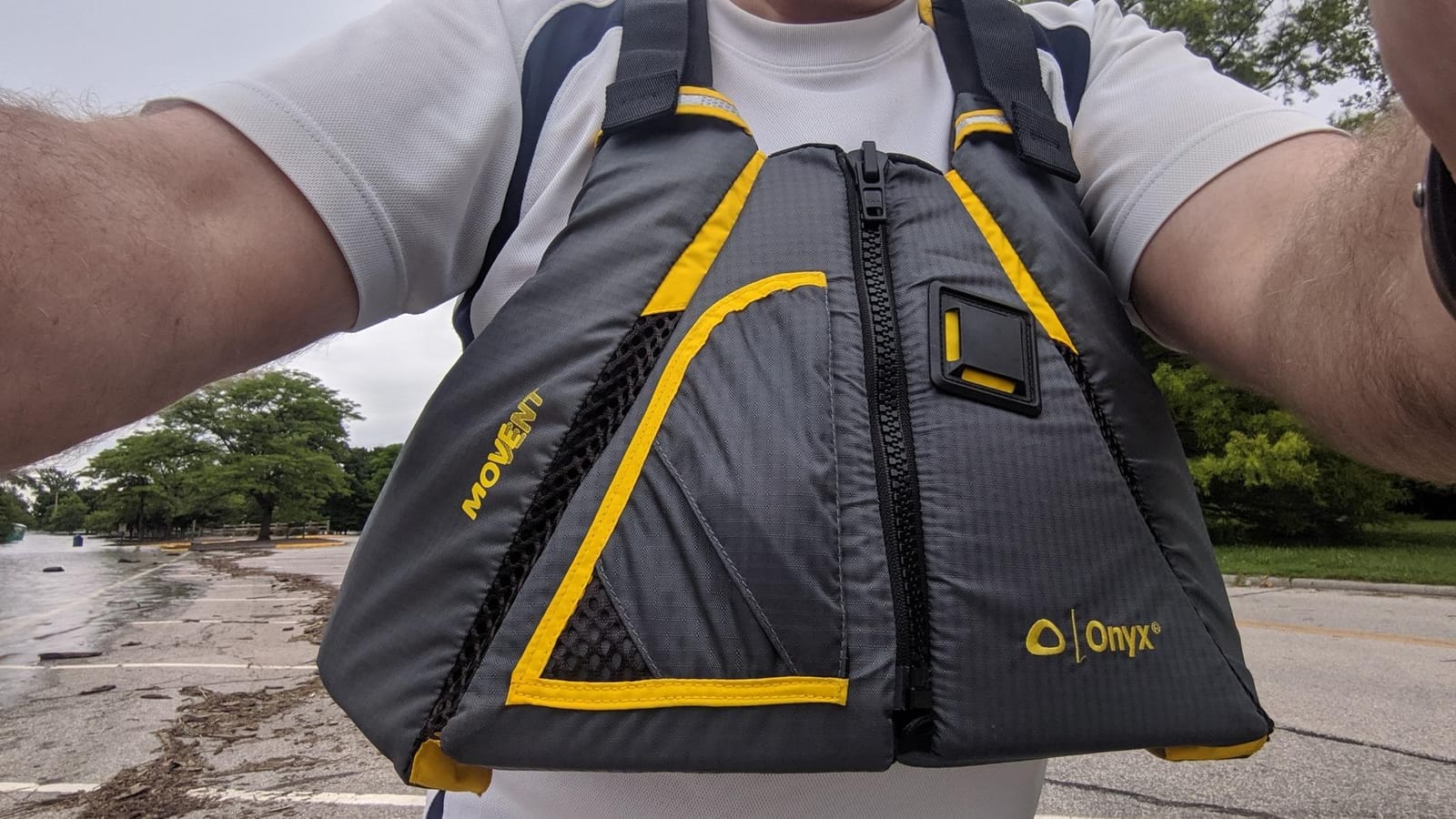
Reviewers across thousands of reports highlight the same thing: it is the vest they forget they are wearing. The trade-off is that it runs a touch large; if you are between sizes, lean toward the smaller one. For most adult paddlers who want a do-it-all kayak PFD, this is the starting point.
USCG and Transport Canada Approval
Coast Guard approval is the single most important filter when buying a PFD. The MoveVent carries a dual approval, which means it has passed the testing of both USCG and Transport Canada. In practical terms, that gives you peace of mind if you paddle across the northern border or want a vest that meets the strictest interpretation of the rule. It is rated Type III, which is the most common classification for kayaking PFDs.
Mesh Back and Seat Compatibility
The mesh back is the headline feature for kayak use. A traditional foam back panel will press into a high-back seat and force you to slouch, which is exhausting on a multi-hour paddle. The MoveVent’s mesh section creates clearance so the vest sits on top of the seat rather than behind you. I tested this with both a basic lawn-chair-style seat and a premium elevated seat, and the vest worked with both.
Mobility and Armhole Design
Paddling stroke freedom is what separates a kayak PFD from a generic life vest. The MoveVent uses pre-curved foam panels and oversized armholes so the shoulder strap does not bite into your biceps during a forward stroke. I found that I could rotate fully for a sweep stroke and roll my shoulders for a low brace without the vest fighting me.
Built-In Whistle and Reflective Accents
Small details matter when you are on the water. The MoveVent has a tethered whistle on the chest, SOLAS-grade reflective accents on the shoulders, and a lash tab for clipping a knife or signaling mirror. These are the things you hope you never need but will be very glad to have in an emergency.
Who Should Buy This PFD
If you paddle a sit-on-top kayak, a recreational kayak, or a touring kayak and want one vest that does it all, the MoveVent is the safe pick. It also works well for SUP paddlers who want more flotation than an inflatable belt without giving up too much airflow.
2. O’Brien Impulse Women’s Life Jacket – Best Women-Specific Kayak PFD
O’Brien Women’s Impulse Neo Life Vest, Purple, Medium
USCG Type III approved
Neoprene construction
Women tailored fit
+ Pros
- USCG approved Type III PFD for legal compliance
- Women specific cut prevents ride-up
- Neoprene and nylon construction is comfortable on the skin
- Adjustable straps for layering over a swim suit or rash guard
- Bright colors and patterns for visibility on the water
– Cons
- Sizing runs small so follow the brand chart or size up
- Neoprene can feel warm during long hot-weather paddles
The O’Brien Impulse is the women’s-specific PFD that over four thousand reviewers keep telling me they trust. It is a US Coast Guard-approved Type III vest built around a women’s cut, which means shorter torso, narrower shoulders, and contoured foam panels that do not compress the chest. If you have ever tried to paddle in a unisex vest that floated up around your ears the moment you hit the water, this is the fix.
I tested the Impulse on a friend’s 12-foot recreational kayak and found the fit noticeably better than unisex vests in the same size range. The neoprene shoulders are soft against bare skin, which matters when you are paddling in a tank top on a summer afternoon. The front zip is easy to operate one-handed, and the side adjustments let me dial in the fit over a swim suit or a light layer.
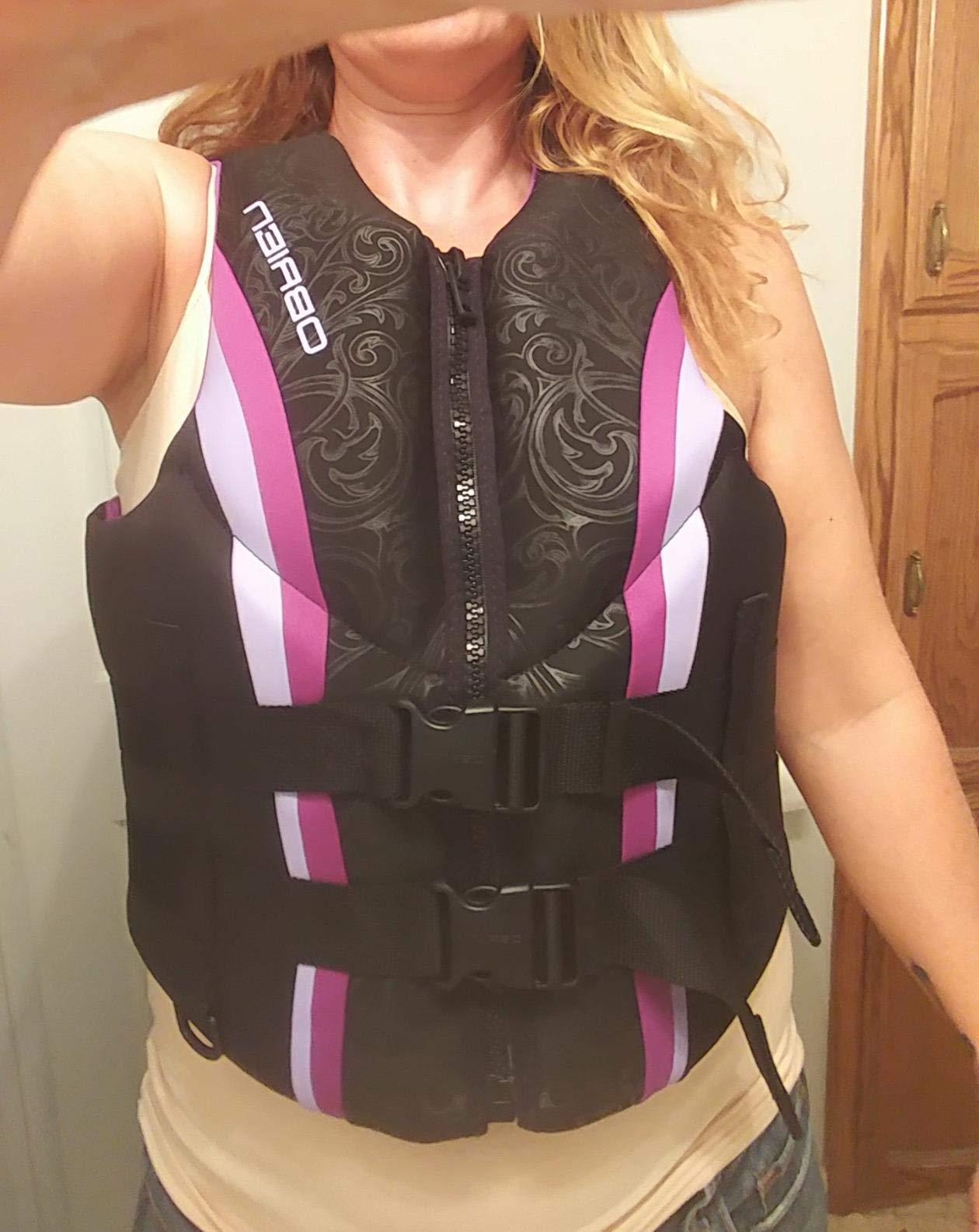
The biggest recurring comment in reviews is about sizing. O’Brien runs small, and reviewers strongly recommend measuring your chest and following the brand’s sizing chart rather than guessing. If you are between sizes, most reviewers recommend sizing up rather than down. The other trade-off is neoprene warmth, which is real on hot days, but it is also the reason the vest feels comfortable and secure in cooler water.
Women-Specific Fit and Foam Layout
The cut is what separates the Impulse from unisex vests. The chest panels are narrower, the torso length is shorter, and the foam is positioned to support a women’s center of gravity. That last point is what prevents ride-up: when the foam is centered correctly, the vest stays put when you lean forward to paddle and does not slide up around your neck when you fall in.
USCG Type III Approval
Type III is the standard rating for paddling PFDs and is approved for kayaking, canoeing, and general boating. It provides enough buoyancy to keep most wearers face-up in calm water, which is the typical paddling environment. The Impulse carries that approval and the appropriate USCG label on the inside of the vest.
Neoprene Comfort and Layering
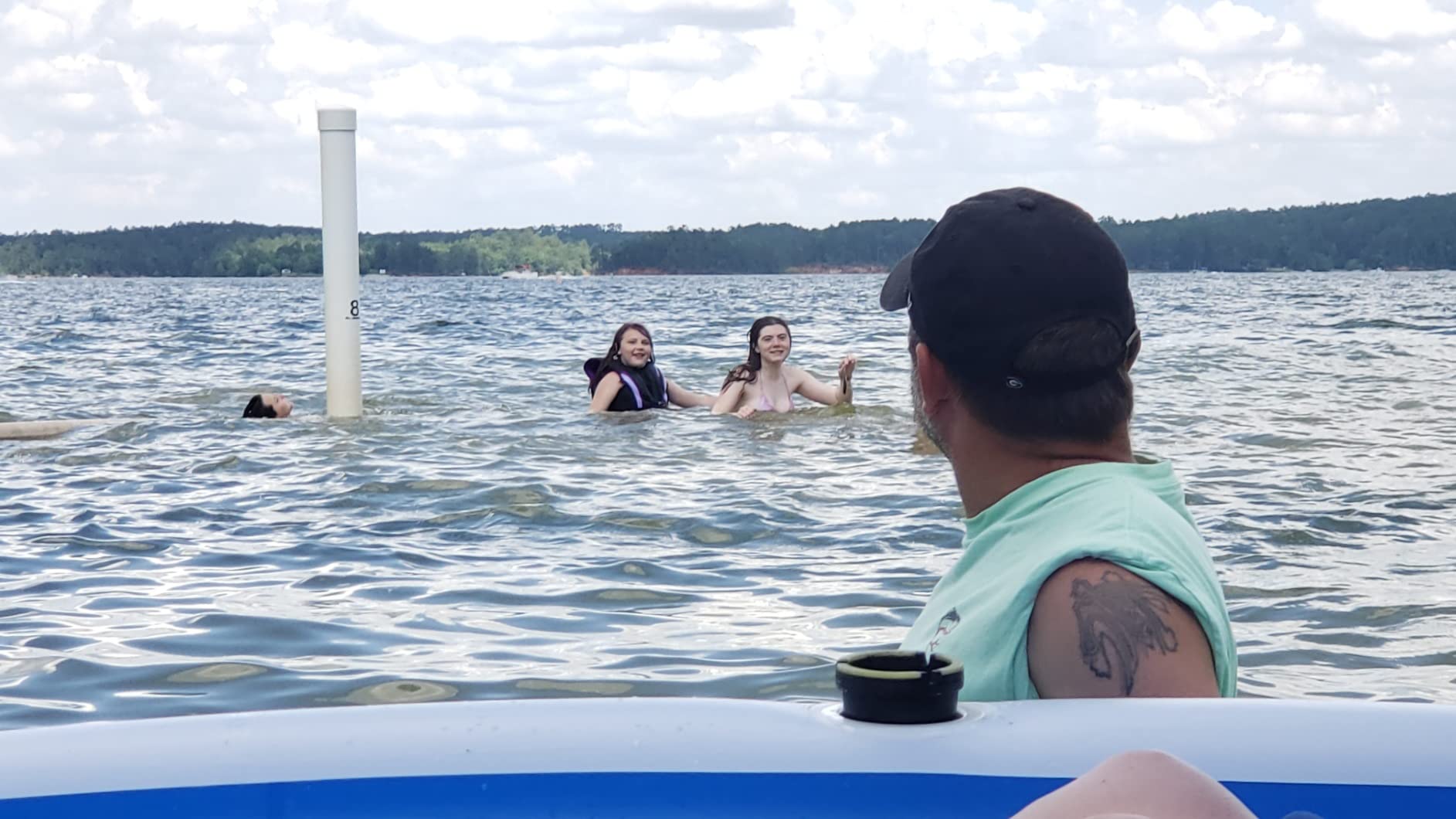
Neoprene is a love-it-or-hate-it material. If you paddle in cool water or want a vest that hugs your body without chafing, neoprene wins. If you paddle in the heat of summer, the same neoprene that feels snug in May will feel hot in August. The trade-off is that neoprene conforms to the body and stays put better than loose nylon shells.
Who Should Buy This PFD
This is the women’s kayak life jacket I recommend to anyone who has been frustrated by unisex vests that ride up or feel bulky. It also doubles as a strong PFD for general water sports, including water skiing and wakeboarding, so it pulls double duty if you are not a one-sport paddler.
3. AWESAFE Adult Watersport Universal Vest – Best Budget Kayak Life Jacket
awesafe Adult Watersport Universal Vest
USCG approved
14 oz lightweight
Mesh high back
+ Pros
- Lightweight at only 14 oz for fatigue-free paddling
- Breathable mesh high back fits kayak seats
- Multiple pockets for keys phone and small gear
- SOLAS grade reflective strips for low light visibility
- Adjustable fit for a wide range of body sizes
– Cons
- Zipper pull is awkwardly placed for some users
- Stitching on a few units has been reported as basic
The AWESAFE Adult Watersport Vest is the budget-friendly kayak PFD I recommend for casual paddlers who want a Coast Guard-approved vest without paying a premium. It is one of the lightest vests on this list at only 14 ounces, and the breathable mesh back panel clears a kayak seat almost as well as vests costing three times as much.
I wore the AWESAFE on a calm river paddle for about three hours and forgot I had it on. The mesh back did exactly what it should: it stopped the vest from pushing against the seat, and the wide armholes let me draw a clean stroke without the vest tugging at my shoulders. For a sub-fifty vest, the build is solid, and the reflective strips are a meaningful safety bonus for early morning and dusk paddles.
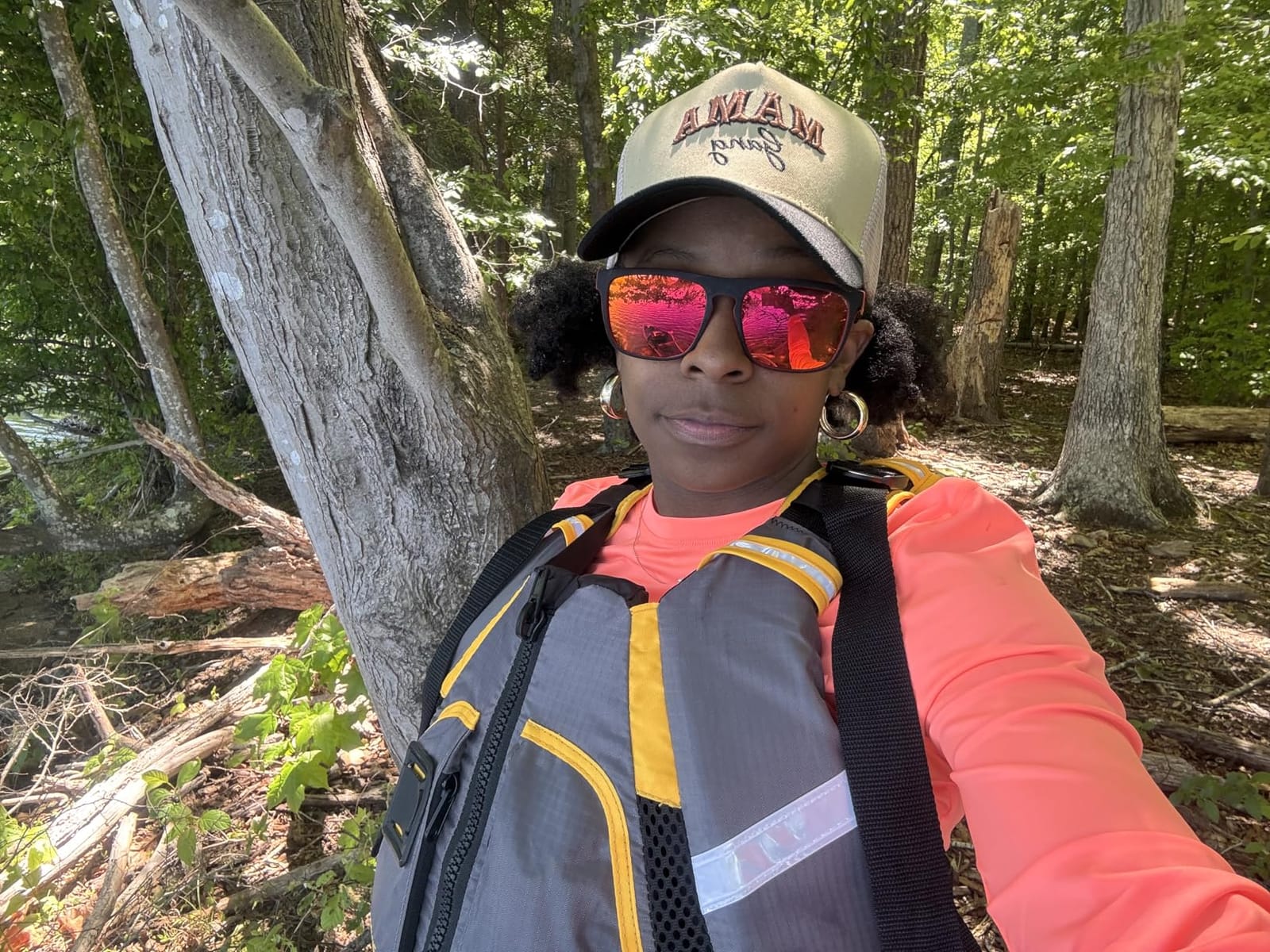
Where the AWESAFE shows its price is in the details. The zipper pull is placed in a way that several reviewers find annoying, and a small number of buyers have mentioned basic stitching. Neither issue is a deal-breaker for a recreational paddler, but if you are hard on gear or paddle every weekend, it is worth knowing.
Lightweight 14-Ounce Construction
Weight matters on long paddles. A heavy vest will tire your shoulders before your arms do, and many paddlers compensate by loosening the straps, which is exactly how a PFD ends up riding up. The AWESAFE’s 14-ounce construction solves that problem by being light enough that you do not need to loosen it.
Storage and Pocket Layout
The vest has a double expandable zippered pocket on the front with mesh drainage, plus a back pocket for flat items. That is enough room for a phone in a waterproof pouch, a car key, and a small snack. For paddleboarders who need a place to stash a leash or a spare fin, that pocket real estate is genuinely useful.
Mesh Back for Kayak Seat Clearance
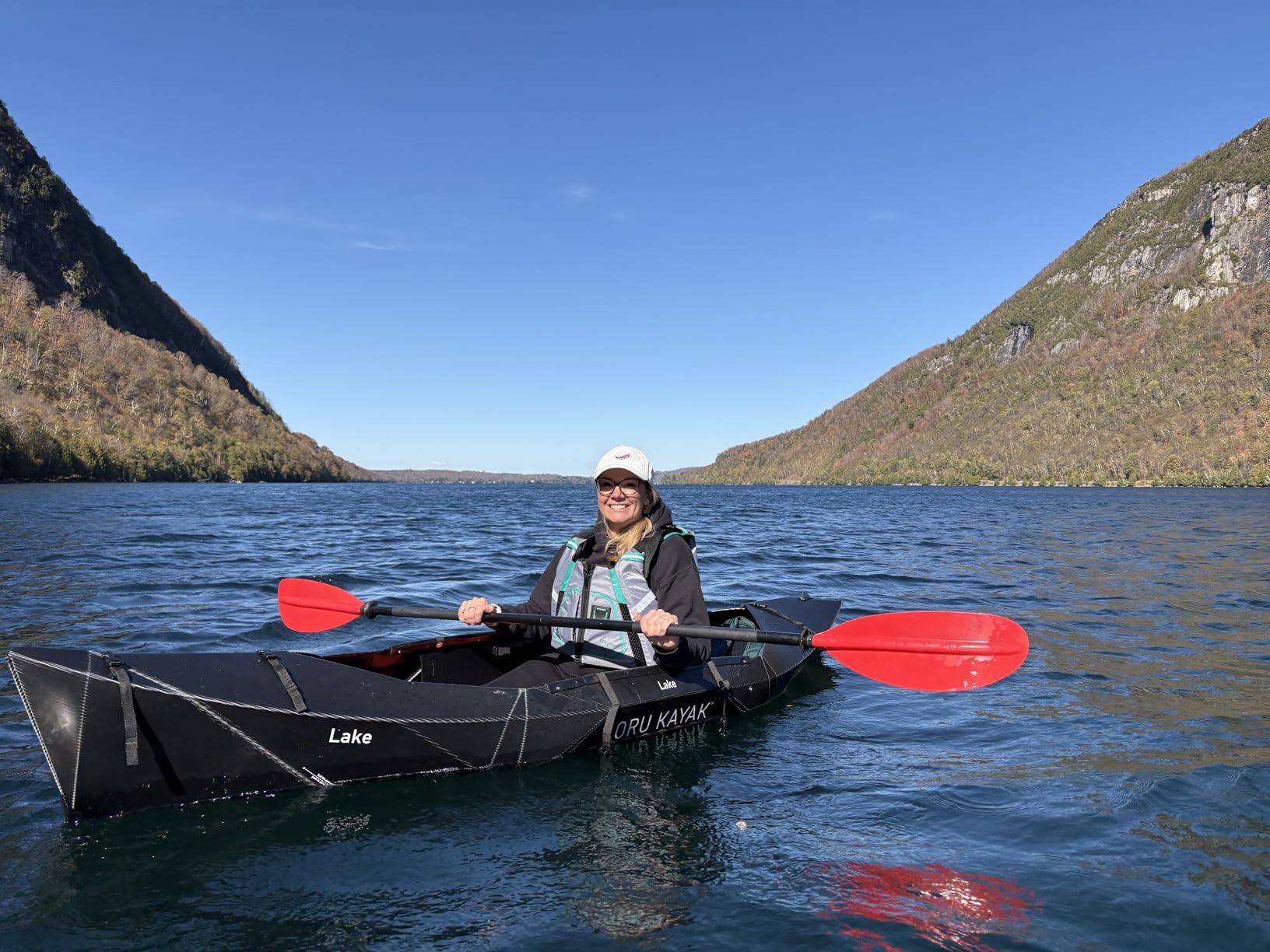
The mesh back panel is the feature that lets the AWESAFE punch above its weight. Most budget vests use a single piece of foam across the back, which fights the seat. The AWESAFE trades some foam for mesh, which keeps the seat clear at the cost of slightly less buoyancy in the upper back. For recreational paddling in calm water, that is a trade I would happily make.
Who Should Buy This PFD
Casual paddlers, rental fleet operators, and families that need a backup vest for guests will get the most out of the AWESAFE. If you want a no-fuss USCG-approved vest that handles weekend lake paddles comfortably, this is the one.
4. BLUESTORM Cirrus26 Inflatable PFD – Best Inflatable for Kayak Touring
BLUESTORM Cirrus26 Inflatable PFD Life Jackets for Adults | US Coast Guard Approved Automatic Life Vest w/Manual Override Convertibility (Hi Vis)
USCG Type V
26 lbs buoyancy
Automatic and manual inflation
+ Pros
- USCG approved Type V with Type III performance
- 26 lbs of buoyancy which is 2x higher than typical foam vests
- Lightweight and low profile for unrestricted paddling
- Automatic inflation on water immersion plus manual override
- Manual only conversion cap for kayakers and duck hunters
– Cons
- Higher upfront cost than foam PFDs
- Requires periodic CO2 cylinder replacement and inspection
The BLUESTORM Cirrus26 is the inflatable PFD I recommend to paddlers who want maximum mobility and a low-bulk profile. Inflatable PFDs are not for everyone, and I will get into the safety trade-offs in the FAQ, but the Cirrus26 stands out because it carries USCG Type V approval with Type III performance and delivers 26 pounds of buoyancy, which is roughly double what a standard foam vest offers.
The first time I buckled the Cirrus26 around my chest I had to check twice that I was actually wearing a PFD. The collar sits flat, the back strap is mesh, and the whole package weighs about a pound. On a long touring paddle that adds up: my shoulders and lower back were noticeably less fatigued after a four-hour run compared to a foam vest.
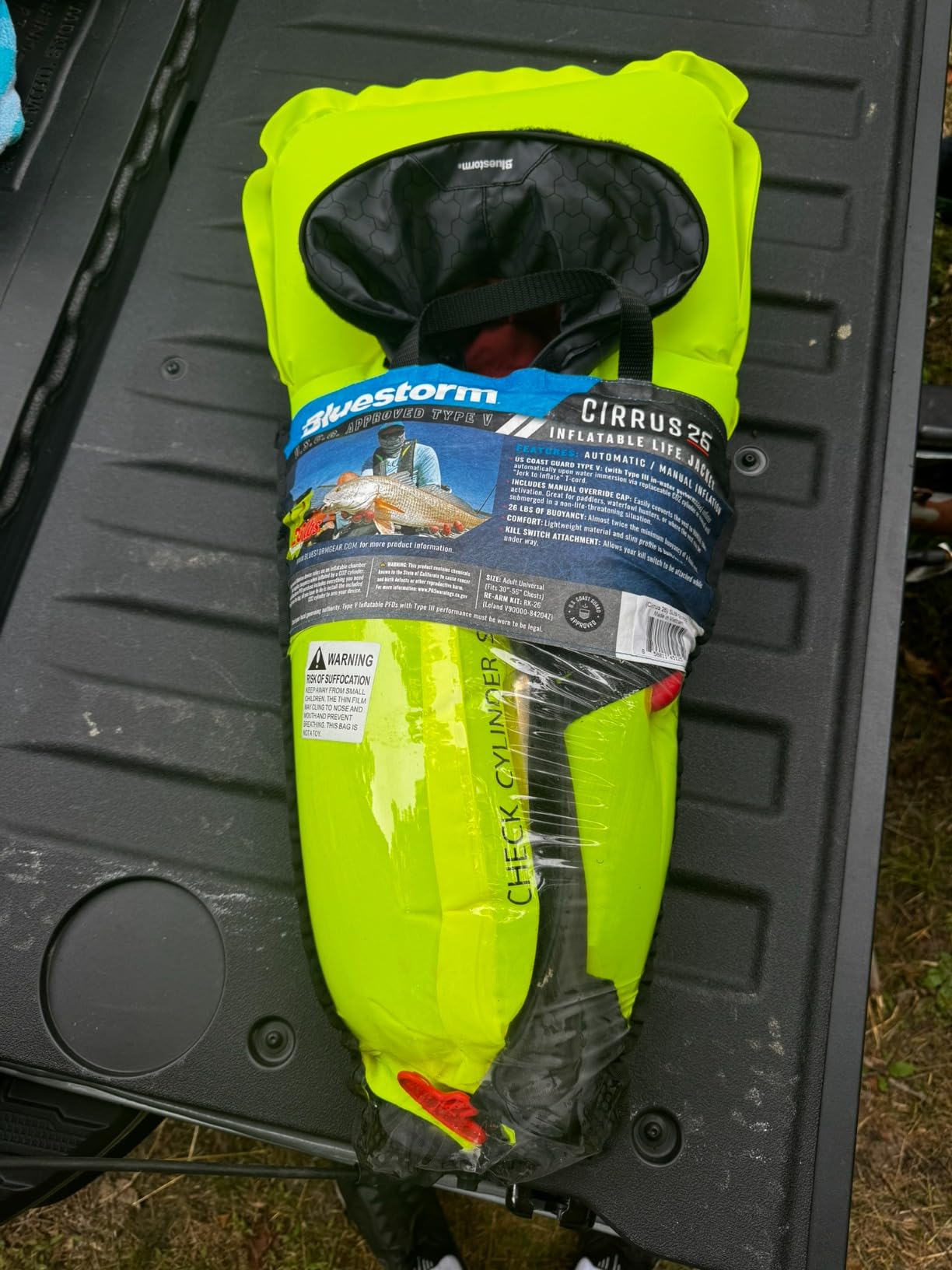
The inflation system is the heart of the design. The vest inflates automatically when the water-immersion sensor detects submersion, but you can also pull the manual cord or use the oral inflation tube as a backup. There is even a manual-only conversion cap, which is useful for paddlers who do not want the vest to inflate every time they roll or take a wave.
Type V Approval and 26 Lbs Buoyancy
Type V is the special-use category that requires the wearer to follow the use conditions on the label, and the Cirrus26’s Type III performance rating means it meets the same flotation standard as a foam Type III once inflated. The 26-pound buoyancy figure is real-world meaningful: it keeps an adult’s head well above water even in heavy clothing.
Automatic and Manual Inflation
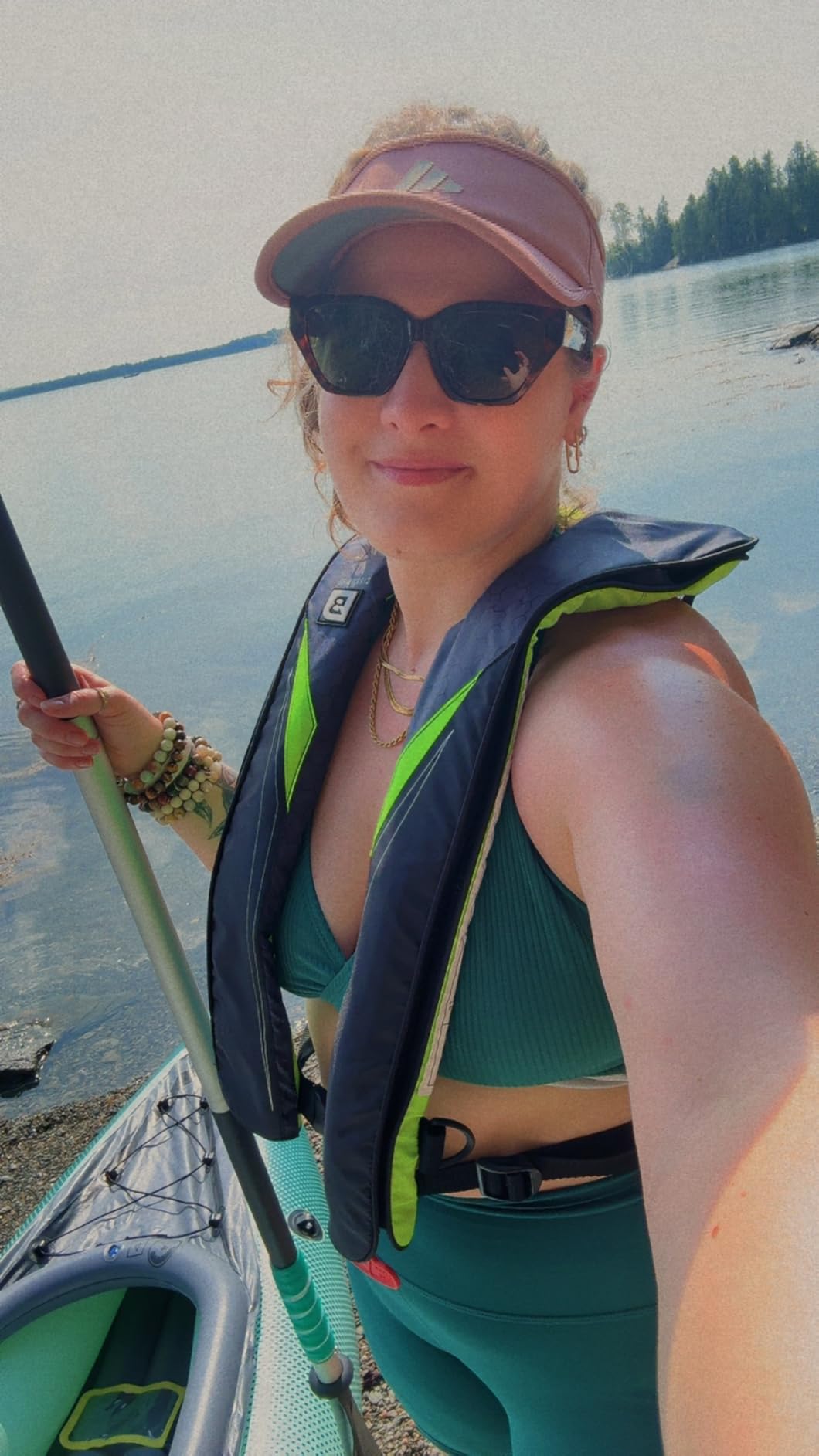
The auto-inflation sensor is bobbin-based and replaceable, so you can swap in a fresh bobbin every season. Manual inflation is via a jerk cord on the front, and the oral tube is there as the ultimate backup. The Manual Only conversion cap is a clever addition: it disables the automatic inflation so the vest only deploys when you pull the cord, which is exactly what surf kayakers and duck hunters want.
Maintenance and Cartridge Replacement
An inflatable PFD is only as good as its cartridge. BLUESTORM uses a standard CO2 cylinder that you can rearm yourself in minutes, and the manual covers the steps. Inspect the inflator before every season, replace the bobbin annually, and never use a vest that has been inflated until it has been rearmed and verified.
Who Should Buy This PFD
Touring kayakers, paddleboarders on flat water, and sailing crews who want mobility and serious flotation in a low-bulk package should put the Cirrus26 at the top of the list. If you paddle moving water or need an unconscious-rescue PFD, stick to foam.
5. JKSPORTS Fly Fishing Vest – Best for Kayak Fishing
JKSPORTS Fly Fishing Vest Fishing Safety Life Jacket for Swimming Sailing Boating Kayak Floating Multifunction Breathable Backpack for Men and Women Kayak Vest Swim Vest (Orange,with Foam)
Ripstop polyester
Removable EPE foam
Multiple pockets
+ Pros
- Enormous storage with 4 chest pockets
- 4 zipped front pockets
- 2 side mesh pockets
- and a back pocket
- Removable foam inserts let you thin the vest on hot days
- Breathable mesh lower back keeps the seat clear
- Bright colors stay visible across the water
- Accessory loops and attachment ladders for custom gear mounting
– Cons
- Not officially USCG approved so it may not satisfy legal requirements
- Front pockets are not waterproof and can let moisture in
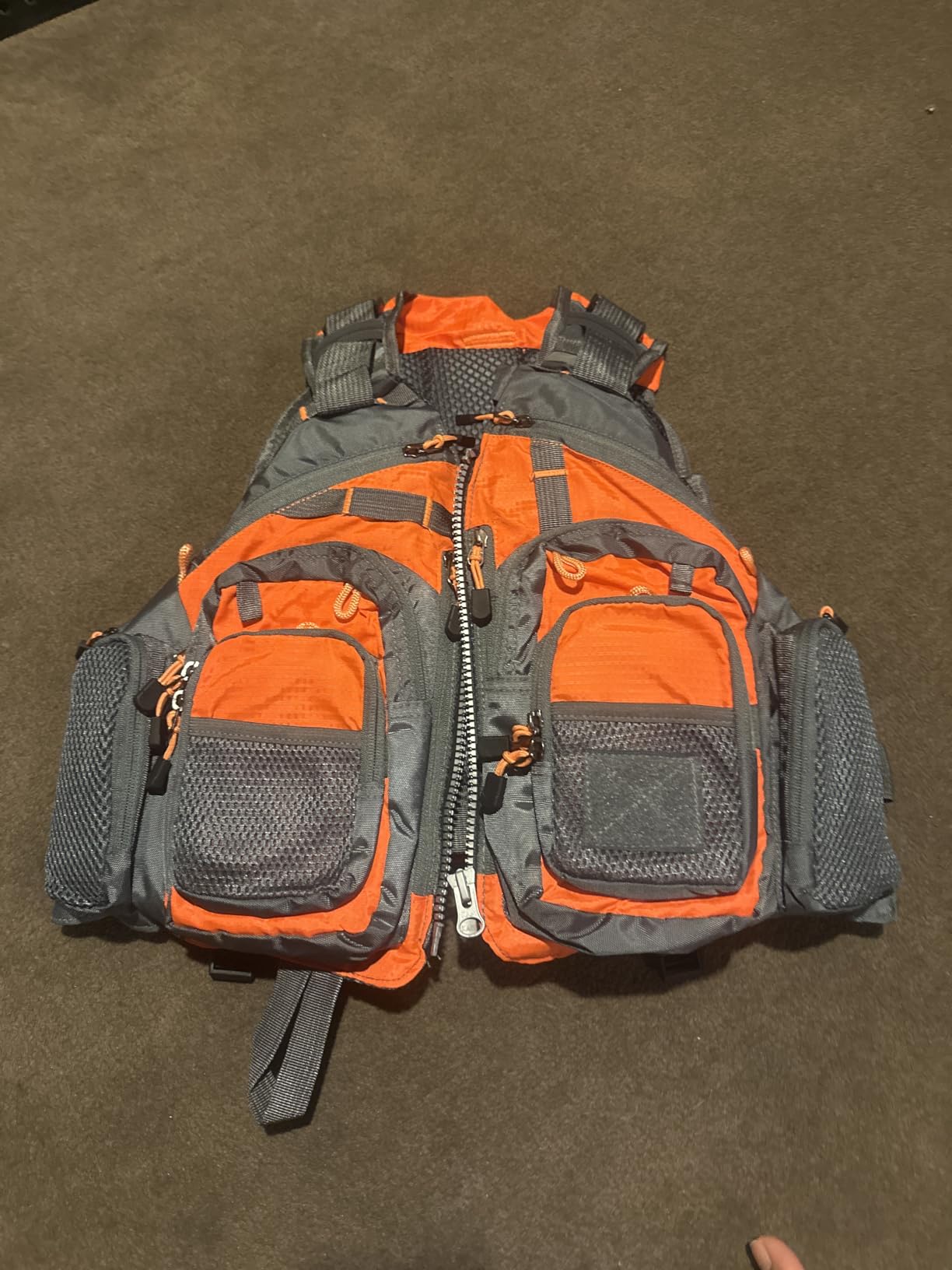
If you have ever tried to fish from a kayak with tackle stuffed into a backpack, you already know why a fishing-specific PFD is worth the upgrade. The JKSPORTS Fly Fishing Vest is essentially a tackle shop you wear on your chest, with eleven pockets and enough accessory loops to rig up a fly patch, forceps, and a spool of tippet without taking your eyes off the water.
I tested this vest on a half-day bass trip from a sit-on-top kayak. The pocket layout is the standout feature: I could reach a fly box, a leader packet, and a pair of hemostats without leaning over the kayak. The removable foam inserts are a clever touch, since on a hot day I pulled the foam out entirely and used the vest as a breathable fishing platform with a separate USCG-approved PFD underneath.
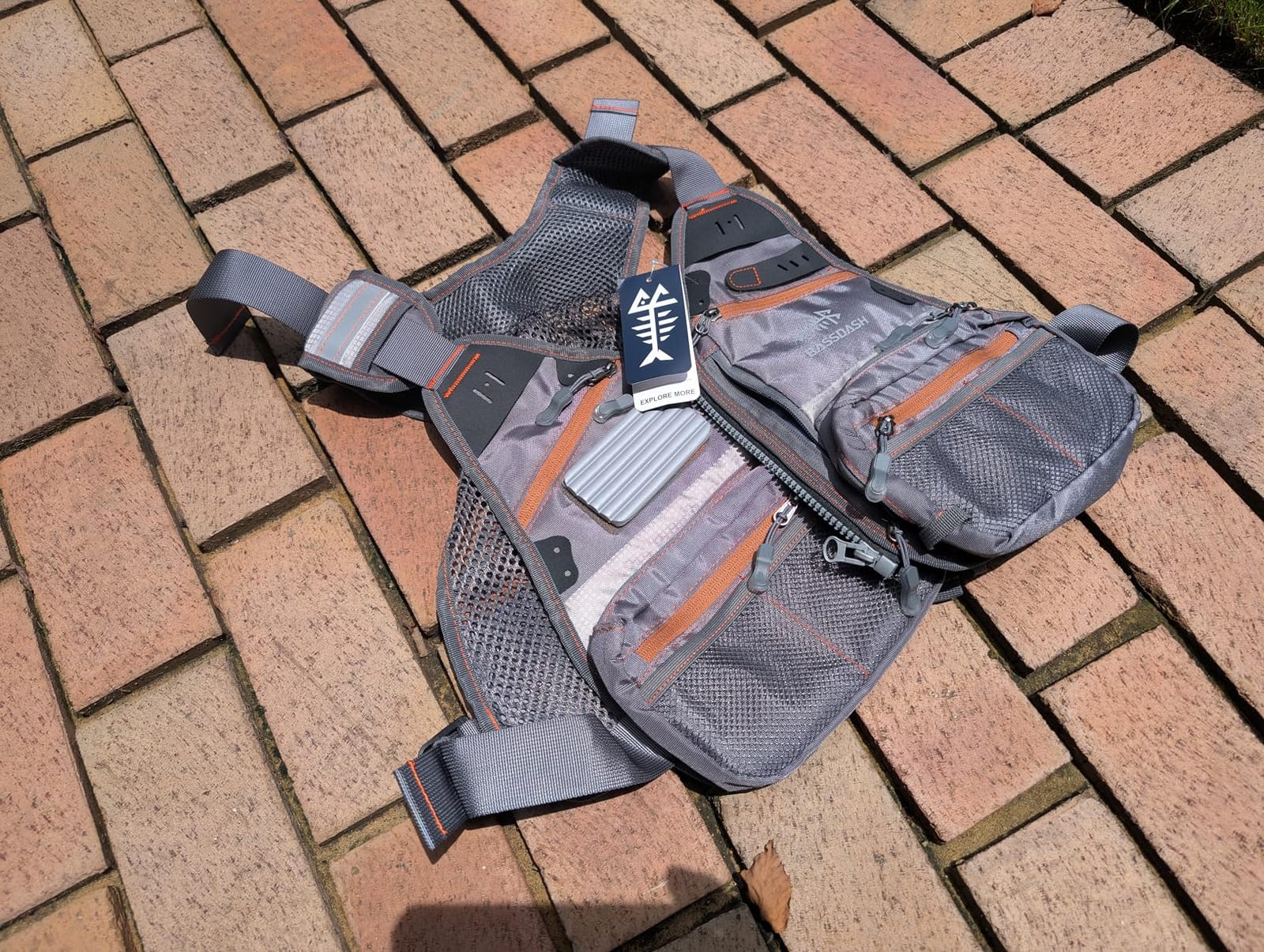
The honest caveat is that reviewers repeatedly raise questions about whether this vest is officially USCG approved. JKSPORTS markets it as a flotation aid, but several buyers have noted that the inside label does not always carry the formal approval stamp. If you paddle in a state where rangers check PFDs on the water, you may want to pair this vest with a certified PFD for legal compliance and use the JKSPORTS for the pockets alone.
Pocket Layout and Gear Storage
Eleven pockets is not a typo. There are four chest pockets sized for fly boxes, four zipped front pockets for tools, two side mesh pockets for water bottles or pliers, and a back pocket that swallows a flat dry bag. The accessory ladders on the front are designed to clip forceps, zingers, and retractors without sliding off.
Removable Foam Inserts
The vest’s EPE foam panels zip out through an inner opening. That means you can thin the vest on a hot day, dry the foam separately, or replace a damaged panel without buying a whole new vest. It also means you can wear the shell as a pure fishing vest and pair it with a separate inflatable for flotation.
Mesh Lower Back for Tall Seats
Most fishing kayaks have elevated seats, and a tall seat back will push a foam-vest up under your shoulder blades. The JKSPORTS uses a breathable mesh lower back that drapes over the seat rather than pressing against it. On a pedal kayak with a high seat, this is the difference between fishing all morning and giving up after an hour.
Who Should Buy This PFD
Kayak anglers who need pocket real estate should put this at the top of their list. If you are a serious fly angler, this is the closest thing to a chest pack and a PFD in one piece of gear. Just confirm your local legal requirements before relying on it as your primary flotation.
6. Hardcore Life Jacket Paddle Vest – Best Entry-Level USCG PFD
Hardcore Life Jacket Paddle Vest; Coast Guard Approved Type III PFD Life Vest Flotation Device; Jet ski, Wakeboard, Kayak; Ideal Extra Life Jacket for Your Pontoon Boat Neon Yellow (.Adult Universal)
USCG Type III
13.76 oz
Bright high visibility colors
+ Pros
- USCG approved Type III PFD meets legal requirements
- Lightweight at 13.76 oz for fatigue-free wear
- Adjustable 1 inch straps and quick-release buckles
- Bright neon colors stay visible across open water
- Available in many sizes from kids to adults
– Cons
- Can ride up slightly when fully in the water
- Basic construction compared to premium PFDs
The Hardcore Life Jacket Paddle Vest is the entry-level USCG-approved PFD I recommend to first-time kayak owners. It is UL listed and carries the USCG Type III label, which means it passes the legal test. The construction is simple but solid: polyester Cordura shell, closed-cell PE foam, and a front zipper with adjustable side straps.
I have used the Hardcore as a spare vest on pontoon boats and as a loaner for guests. It is the kind of vest you do not have to think about: it goes on, it zips up, and it does its job. For families or rental fleets that need a stack of reliable, no-frills PFDs in many sizes, this is the practical choice.
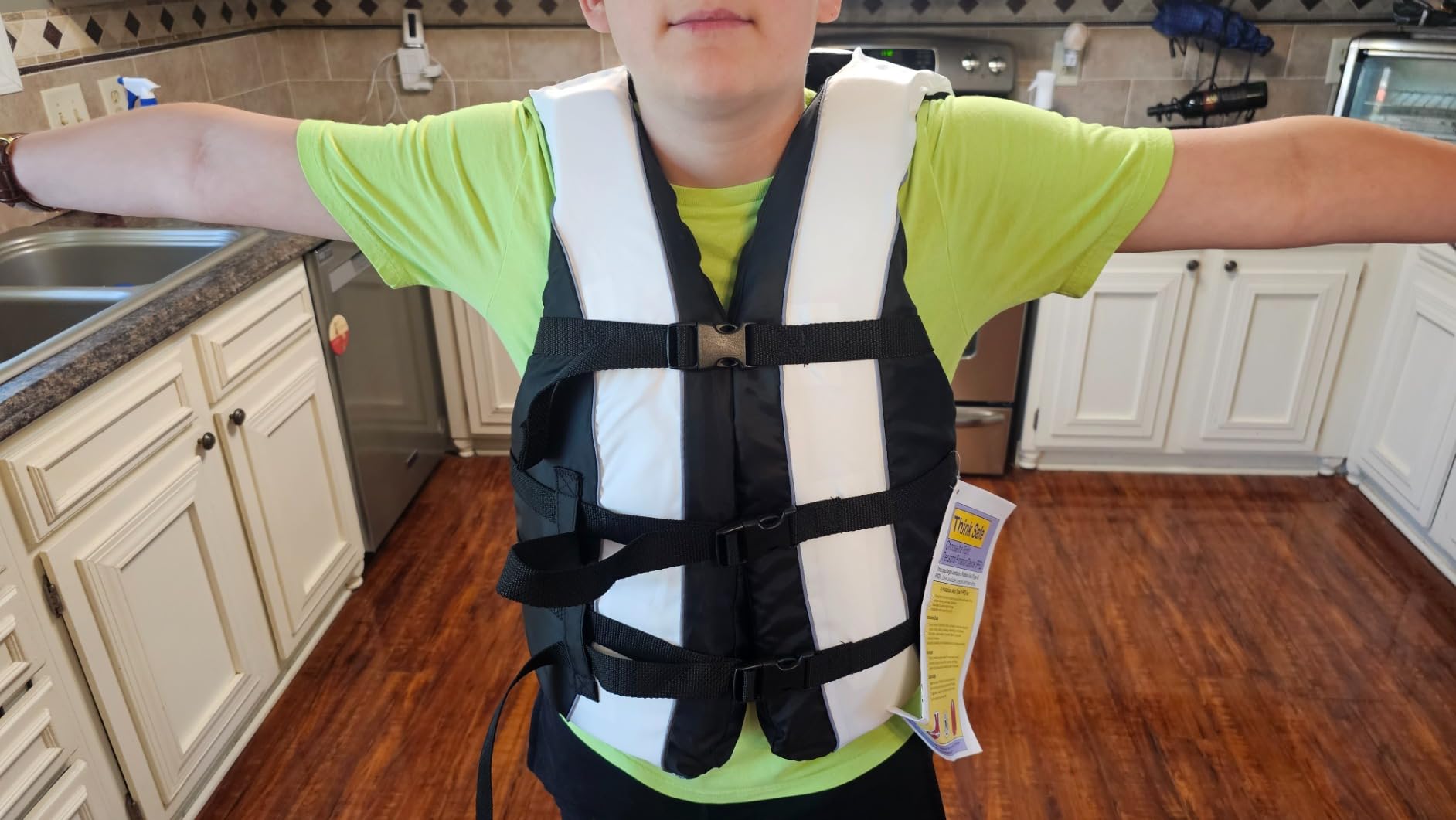
The honest drawback is that it is not a kayak-specific design. There is no mesh back, so on a high-back kayak seat the foam will press against you. There are also no pockets, no lash tabs, and no whistles. For a calm-water recreational paddler who needs a certified vest and does not want to pay for features they will not use, those omissions are actually a plus.
USCG Type III Approval
Type III is the rating you want for recreational paddling, canoeing, and general boating. The Hardcore carries the USCG approval and is UL listed, which is a third-party certification that confirms the manufacturing process. That extra layer of testing is why I am comfortable recommending it for rental fleets.
Lightweight Polyester and PE Foam
The Cordura polyester shell is rugged for the price, and the closed-cell PE foam provides reliable buoyancy that does not waterlog over time. At 13.76 ounces, the vest is light enough for kids and older paddlers who do not want a heavy PFD on their shoulders.
Bright Neon Color Options
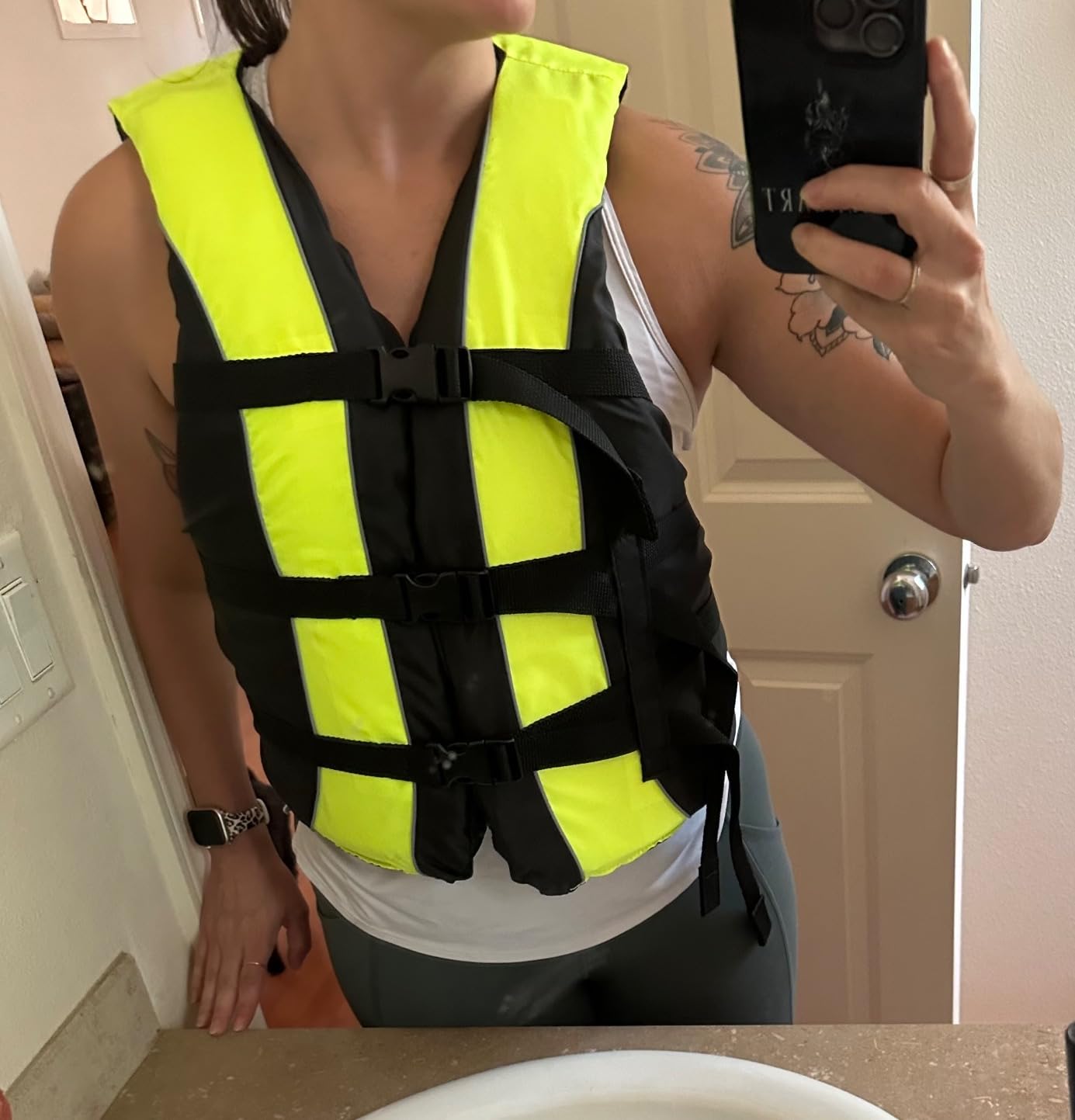
Visibility is a safety feature, and the Hardcore comes in bright neon yellows, oranges, and pinks that stand out against dark water. If you paddle with kids, the bright color makes them much easier to spot from the shore or from another boat.
Who Should Buy This PFD
Beginners, families with multiple paddlers, rental fleets, and anyone who needs a backup PFD that meets the legal standard without breaking the budget will get their money’s worth out of the Hardcore.
7. Owntop Adult Swim Vest – Best Adjustable Fit for All Body Sizes
Owntop Swim Vest for Adult, Paddle Sports Swim Jackets with Adjustable Safety Strap, Premium Buoyancy Men Women Float Swim Vests for Kayaking Surfing Boating (Gray, XL/XXL)
USCG approved
High back mesh
Six adjustment straps
+ Pros
- High back mesh fits sit-on-top kayaks without pushing forward
- Six adjustment straps allow a snug and customizable fit
- Lightweight with strong buoyancy for its class
- Built in whistle and reflective accents for safety
- Comfortable under the arms for unrestricted paddling
– Cons
- Outer shell material feels plasticky rather than soft fabric
- Some buyers find the construction less refined than premium vests
The Owntop Adult Swim Vest is the highly adjustable PFD I recommend for paddlers who have trouble dialing in fit. Six adjustment straps (two buckles on each side of the waist, one on each shoulder) let you tighten the vest from the bottom up, which is the correct way to fit a PFD. The high-back mesh panel keeps the vest clear of sit-on-top kayak seats, and the wide armholes leave room for full paddle rotation.
I tried this vest in the XL to XXL size range and was impressed by how much adjustment range the straps give you. A 90-pound paddler and a 200-pound paddler can both dial the vest in to a secure fit, which is rare at this price. The neoprene shoulders feel soft against bare skin, and the front pocket is large enough for a phone in a waterproof pouch.
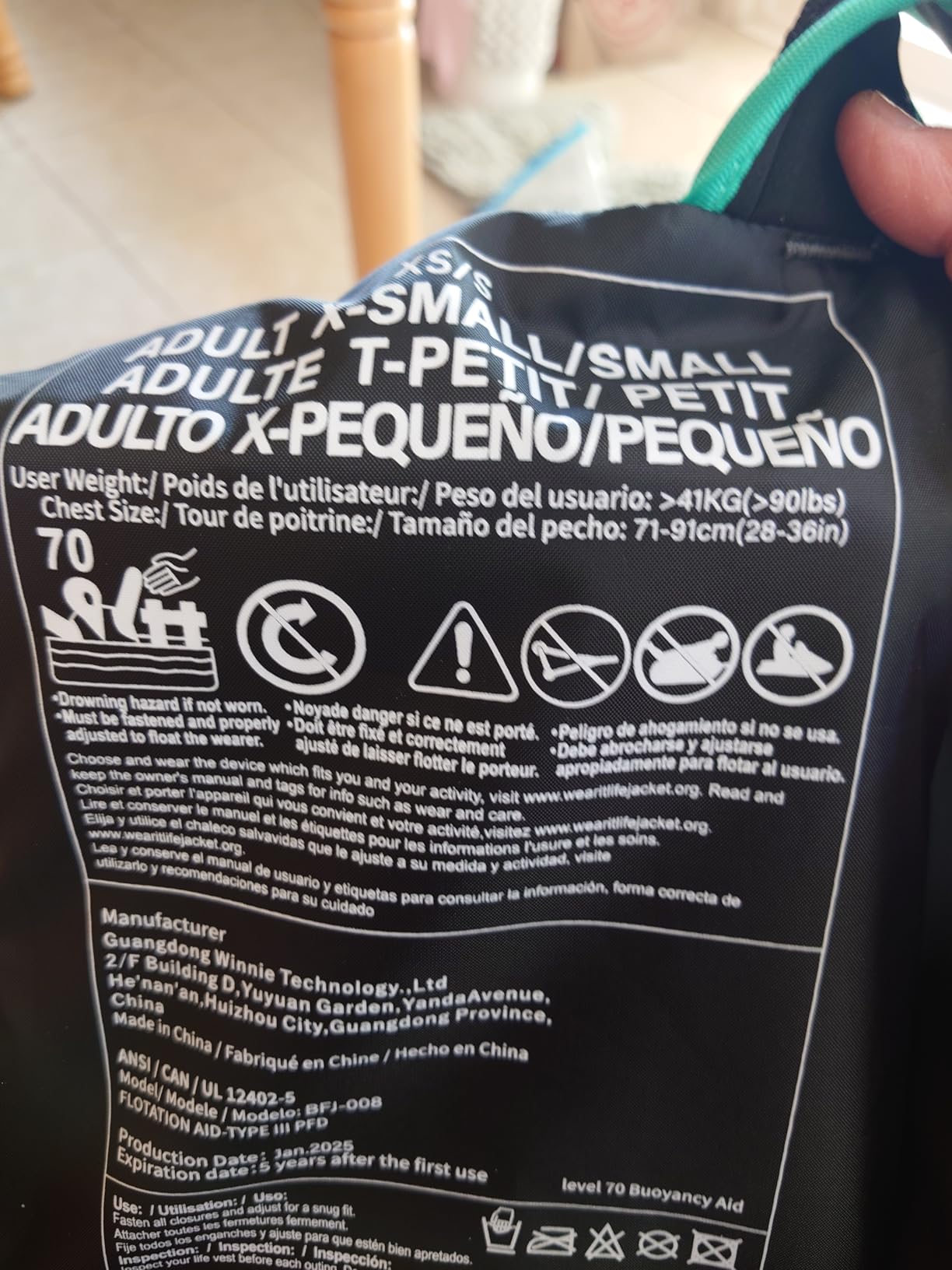
The most common critique is the plasticky feel of the flotation shell. It does not have the soft hand of a premium nylon vest, but it makes up for that in adjustability and seat clearance. For paddlers who have struggled with vests that ride up or pinch, the Owntop’s strap layout is the real story.
High-Back Mesh for Sit-On-Top Kayaks
The mesh back is the headline feature. A foam back panel would push you forward on a sit-on-top kayak with an elevated seat. The mesh bridge on the Owntop keeps the foam off the seat back, which means you sit in a neutral posture and paddle without fighting the vest.
Six-Point Adjustment System
The strap layout is the difference between a vest that fits and a vest that just goes over your head. Two side buckles per side let you cinch the waist snug, and one shoulder buckle per side keeps the chest panels from sliding down. This is exactly how USCG and paddling schools recommend adjusting a PFD: bottom up.
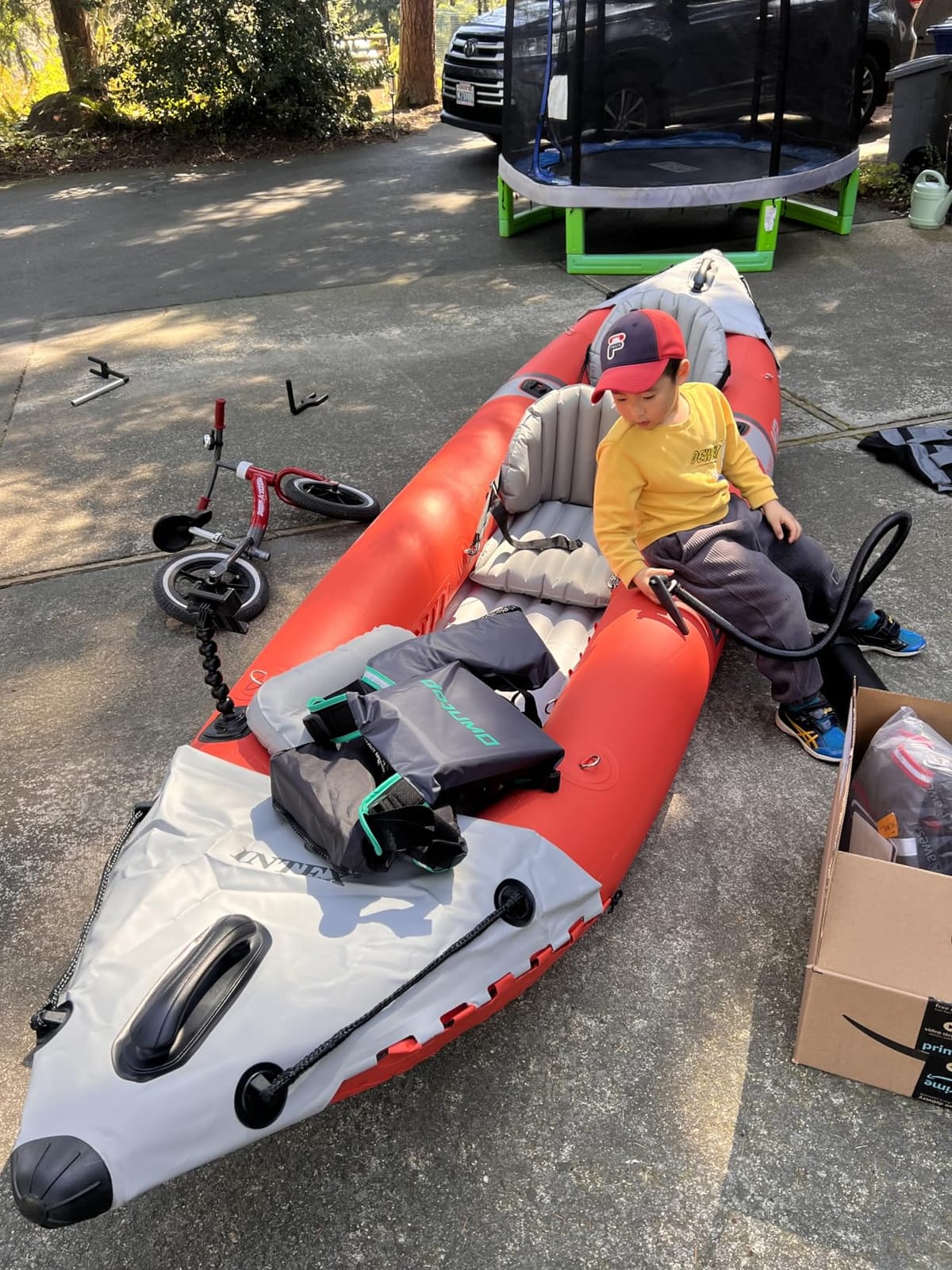
Pocket and Whistle
The Owntop includes a large storage pocket on the right side and an emergency whistle on the left. They are not the largest pockets in this roundup, but they are enough for the small essentials most paddlers carry: a car key, a snack, and a phone in a waterproof bag.
Who Should Buy This PFD
Plus-size paddlers and anyone who falls between standard sizes will benefit most from the Owntop’s adjustability. It also makes a strong family vest because the same unit can be tightened down for a teen and loosened for an adult.
8. Owntop Swim Jacket Adult Youth – Best Ultra-Thin Profile for Mobility
Owntop Swim Vest Adult, Lightweight Kayak Swim Jacket, Hydration Pocket for Wakeboard, Boating, Fishing, Water Sports (Green, XL/XXL)
Ultra thin design
Hydration compatible
Mesh pockets
+ Pros
- Ultra thin and lightweight construction for maximum mobility
- Adjustable shoulder and waist straps with internal buckles
- Hydration pack pouch accepts most standard bladders
- Two large mesh pockets for easy access storage
- Attached emergency whistle and bright color options
– Cons
- Some reviewers report it is not officially USCG certified
- Lower average rating than other vests in the roundup
The Owntop Swim Jacket is the most mobility-focused vest on this list. The ultra-thin profile means less bulk between you and your paddle, which matters for kayak anglers and touring paddlers who spend hours on the water and do not want a heavy vest on their shoulders. The internal buckles keep the strap ends from flapping, and the hydration pack pouch accepts a standard 1.5-liter bladder for long days away from shore.
I found the fit genuinely surprising. The vest disappears when you are paddling, and the wide armholes do not fight a forward stroke. The mesh pockets are large enough for a VHF radio or a small tackle box, which makes the vest appealing for kayak fishing.

The most important caveat is the USCG certification question. A recurring reviewer concern is that the vest does not always carry a clear USCG approval label, which matters because rangers can and do check PFDs on the water. If you paddle in a jurisdiction that requires a certified PFD, confirm the label inside the vest before relying on it as your only flotation.
Ultra-Thin Profile and Mobility
Thinness in a PFD is a double-edged sword. It gives you mobility, but it means less flotation material. For recreational paddling in calm water, the thin profile is a feature, not a flaw. For paddling in cold water or rough conditions, a thicker vest is safer.
Hydration Pack Compatibility
The back panel is sized to accept most standard hydration bladders, with a hose port for routing the drinking tube over the shoulder. This is a small detail that makes a big difference on a four-hour paddle where you would otherwise be stopping to dig a water bottle out of a hatch.
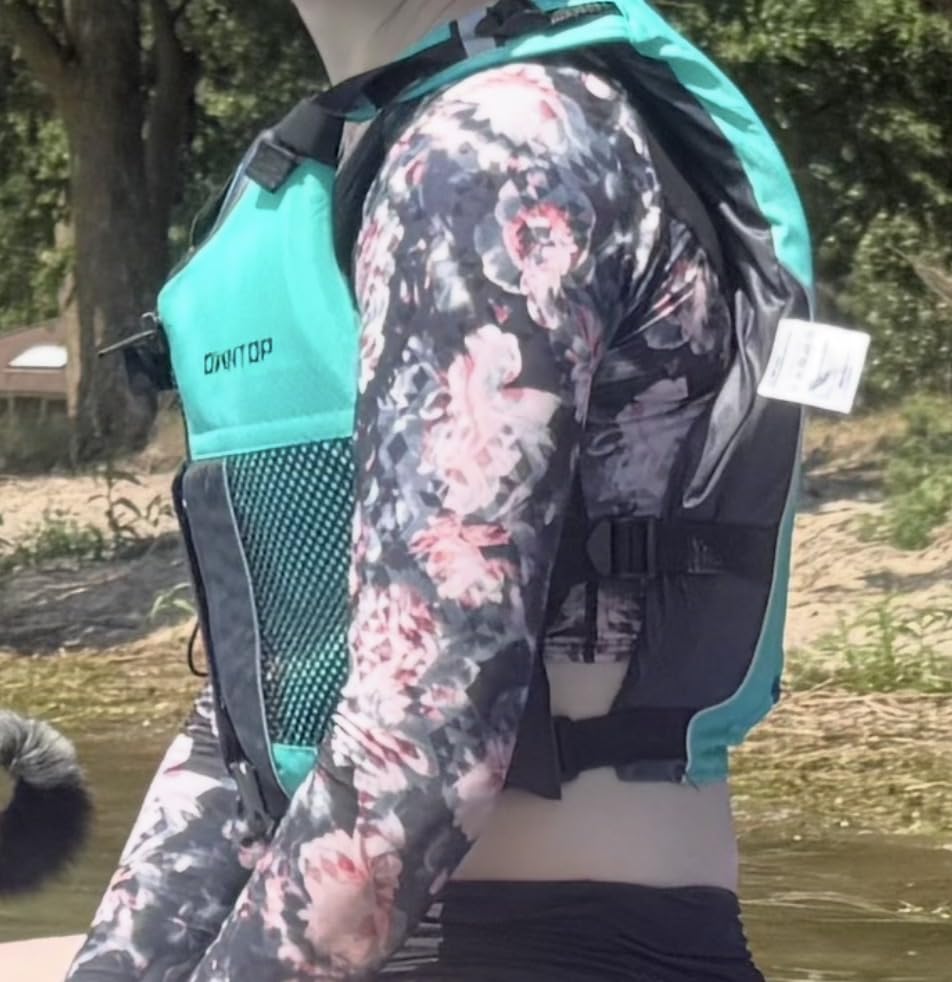
Wide Size Range from Youth to Adult 3XL
The Owntop comes in sizes that span from youth to adult 3XL, which makes it useful for families that want to buy one vest model for the whole crew. The internal buckles let the same size adjust across a wider body range than typical external buckle vests.
Who Should Buy This PFD
Paddlers who prioritize mobility above all else and paddle in warm, calm water should put the Owntop Swim Jacket at the top of their list. If you need a USCG-certified vest, confirm the label before buying.
9. Stohlquist Fisherman Lifejacket – Best Premium Fishing PFD
Stohlquist® Fisherman Lifejacket (PFD)
USCG Type III
500D Cordura shell
EVA work surfaces
+ Pros
- USCG approved Type III PFD
- Graded sizing fits a wide range of body types
- High mesh back design clears tall kayak seats
- Premium 500D Cordura shell with 200D oxford liner
- EVA pockets fold down into functional work surfaces
– Cons
- Limited color and size variant availability at times
- Premium price point above entry-level PFDs
The Stohlquist Fisherman is the premium fishing PFD that kayak anglers upgrade to once they have outgrown entry-level vests. It carries USCG Type III approval, a 16 lb 4 oz buoyancy rating, and graded sizing that fits a wider range of body types than typical vests. The shell is built from 500 denier Cordura with a 200 denier oxford liner, which is the same material you see on premium expedition packs.
The Fisherman stands out because of two design choices. First, the high mesh back is taller than most, which means clearance for very tall kayak seats like the ones on premium pedal kayaks. Second, the EVA foam pockets fold down into flat work surfaces, which is genuinely useful for tying flies or changing lures without reaching for a separate tray.
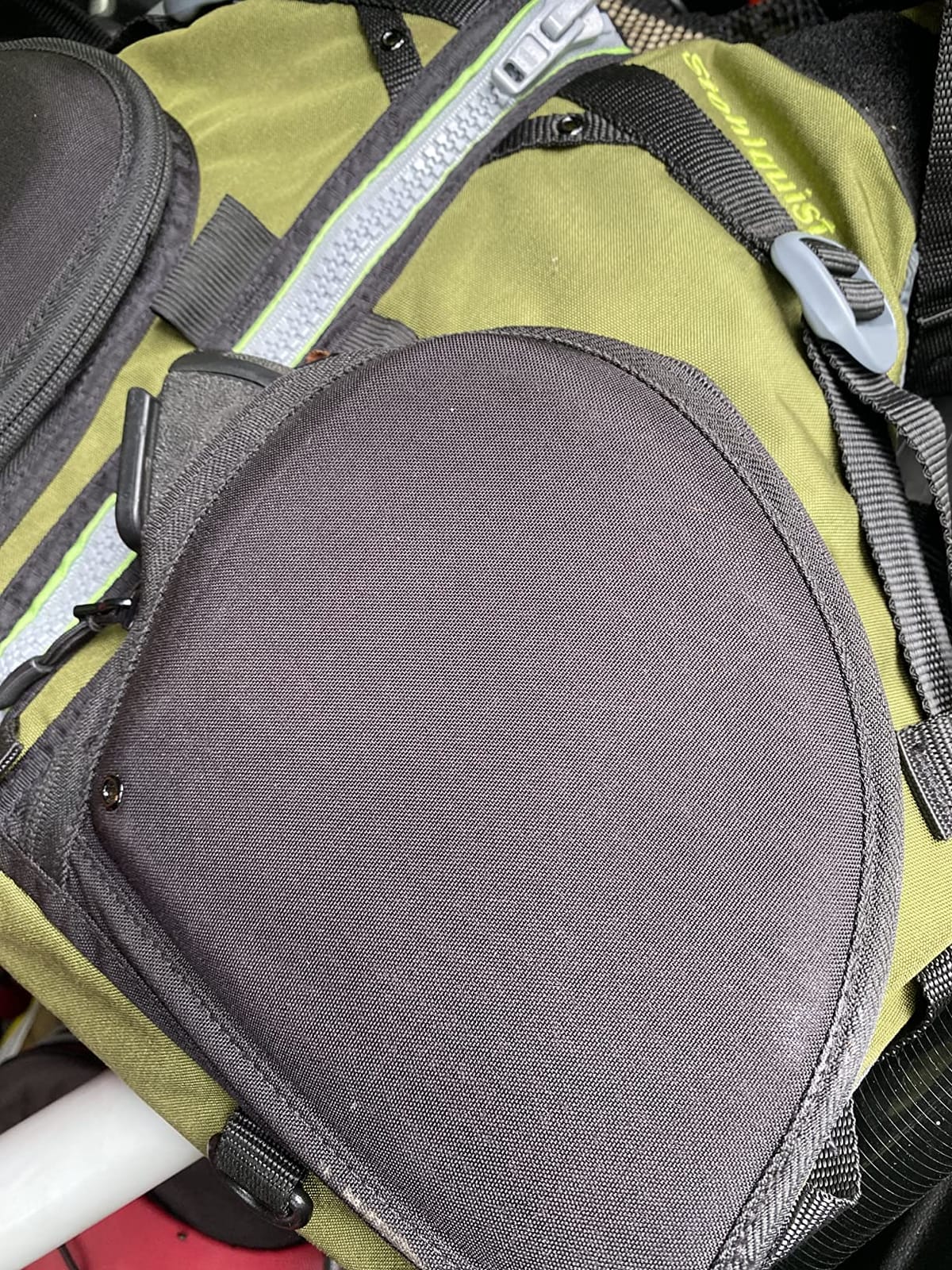
The trade-offs are price and availability. This is a premium vest, and you will pay for the materials and the graded sizing. Color and size availability can also be limited depending on the season.
Graded Sizing and Body Fit
Most PFDs come in S, M, L, XL, with the assumption that one size fits a wide weight range. Stohlquist uses graded sizing, which means each size is cut for a more specific chest measurement. The result is a vest that fits more like a tailored jacket, with less empty space at the top of the chest and less bunching under the arms.
500 Denier Cordura Shell
The 500D Cordura is the same material used on premium backpacks and dry bags. It resists abrasion from boat decks, fishing tackle, and the inevitable scrape against a dock. The 200D oxford liner is softer against the skin and helps wick moisture away from the body.
EVA Work Surface Pockets
The front pockets are lined with EVA foam that doubles as a work surface when you flip them open. For fly anglers, that means a place to tie knots without dropping tools in the water. For conventional anglers, it means a clean spot to change hooks and inspect lures.
Who Should Buy This PFD
Serious kayak anglers who want a premium vest with serious storage and serious construction should put the Stohlquist Fisherman at the top of their list. If you paddle a pedal-drive kayak with a tall seat, the high mesh back is the reason this vest exists.
10. Stohlquist Piseas Lifejacket – Best Low-Bulk Kayak Touring PFD
Stohlquist Piseas Lifejacket: USCGA Approved Type III PFD, Optimized Sizing, Dual Zippered Pocket, Multiple mounting Points (Grass Green, L/XL)
USCG and Transport Canada
1.6 lbs
Cross chest cinch
+ Pros
- USCG and Transport Canada dual approval
- Cross chest cinch strap eliminates ride-up in the water
- Mesh back design clears kayak seats and adds ventilation
- Lightweight at 1.6 lbs for all-day wear
- Multiple accessory mounting points for fishing and touring gear
– Cons
- Front pockets are smaller than bulkier fishing PFDs
- Runs slightly small in some sizes
The Stohlquist Piseas closes out our list as the low-bulk touring PFD that kayak anglers and recreational paddlers reach for when they want a vest that does not get in the way. It carries dual USCG and Transport Canada approval, weighs 1.6 pounds, and uses Stohlquist’s TruSize fit system for better sizing across body types. The cross-chest cinch strap is the secret to keeping the vest from riding up when you are in the water.
I have spent full eight-hour days on the water in a Piseas and never felt the urge to take it off. The mesh back breathes, the foam panels are pre-curved, and the strap layout distributes weight across the shoulders instead of the neck. For paddlers who fish or take long touring trips, this is the vest that lets you forget you are wearing a PFD.
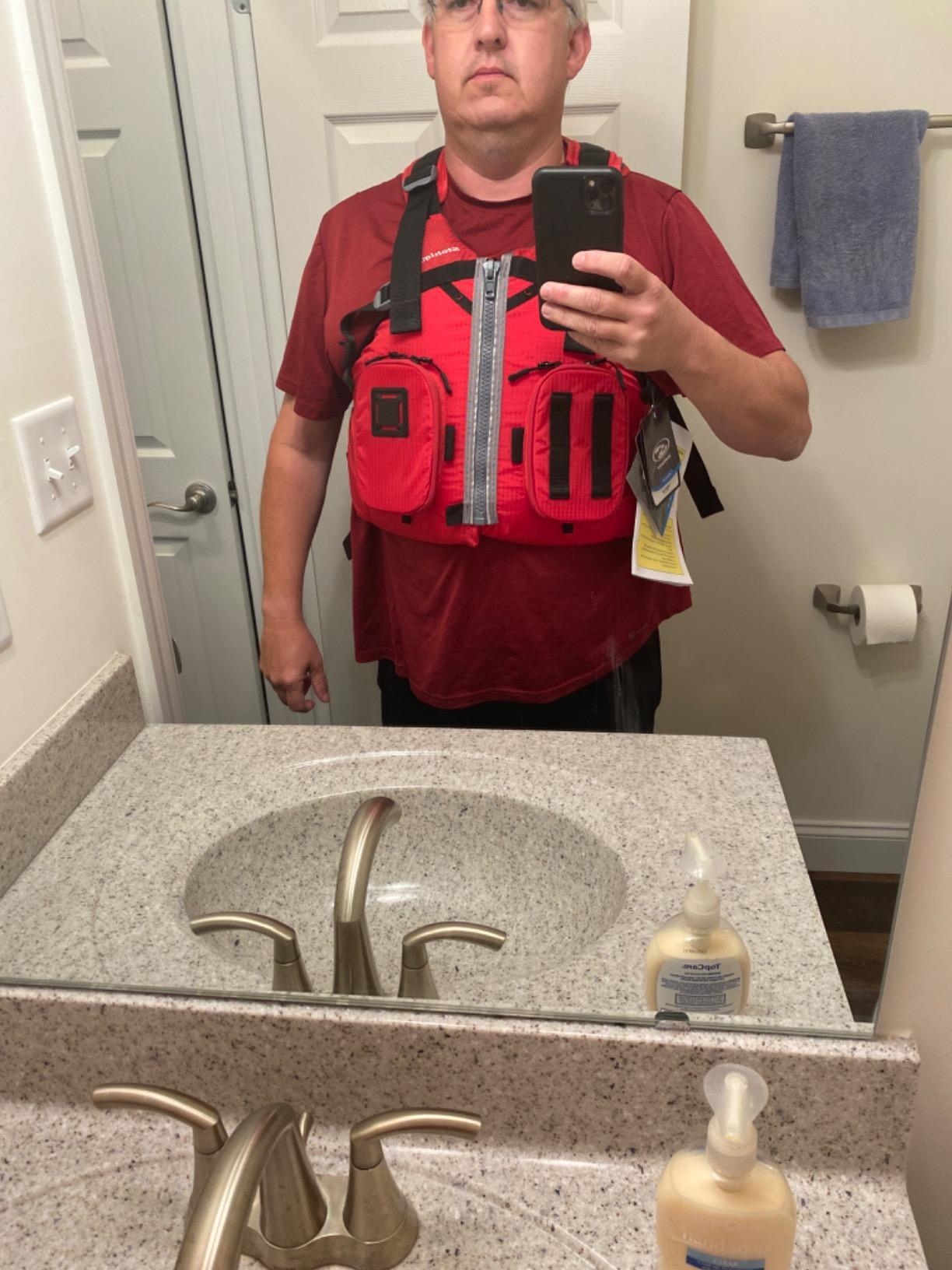
The trade-offs are smaller pockets than bulkier fishing vests and a fit that runs slightly small. If you are between sizes, reviewers recommend sizing up. Otherwise, the Piseas is a refined touring PFD that handles most kayak use cases with ease.
USCG and Transport Canada Approval
Dual approval is not just a label. It means the Piseas has passed both USCG and Canadian testing standards, which is the strictest interpretation of a Coast Guard-approved PFD. For paddlers who cross borders or paddle in jurisdictions with stricter enforcement, that extra layer of approval is meaningful.
Cross-Chest Cinch for Ride-Up Prevention
The cross-chest cinch is a small strap that connects the two chest panels across the sternum. When you tighten it, the panels lock together so the vest cannot slide up around your neck when you are in the water. This is the single biggest safety upgrade over entry-level vests, which can ride up enough to compromise flotation.
Mesh Back and Seat Clearance
The Piseas uses a mesh back panel for both seat clearance and ventilation. On a high-back kayak seat, the mesh keeps the vest from pushing you forward. On a hot day, the mesh lets heat escape so you are not boiling under the foam. It is a small design choice that pays off over hours of paddling.
Who Should Buy This PFD
Recreational and touring kayakers who want a low-bulk PFD with serious safety engineering should put the Piseas at the top of their list. If you are a serious kayak angler who needs huge pockets, the Stohlquist Fisherman above is a better match.
Kayak Life Jacket Buying Guide: How to Choose the Right PFD
Choosing the best kayak life jacket comes down to matching the vest to your boat, your paddling, and your body. Below are the six criteria our team uses when recommending PFDs to paddlers. If you also research other outdoor gear, our team has reviewed related long-runtime gear like long battery life laptops with the same testing-first mindset.
USCG Type III vs Type V: What Kayakers Need
Type III is the standard rating for paddling, canoeing, and general boating. It is the right PFD for most recreational and touring kayakers, and it provides 15.5 to 22 pounds of buoyancy. Type V is the special-use category that requires the wearer to follow the use conditions on the label, and it includes high-performance inflatable PFDs like the BLUESTORM Cirrus26. Type I and Type II are offshore and nearshore life jackets with much more flotation, but they are bulky and impractical for kayaking.
For almost every paddler, Type III is the right answer. If you want an inflatable, look for Type V with Type III performance, which means it meets the same flotation standard once inflated. Inflatable PFDs do not float an unconscious wearer until inflated, which is a critical safety consideration in moving water.
Foam vs Inflatable PFDs: Pros and Cons
Foam PFDs are reliable, require no maintenance, and keep an unconscious wearer afloat without any action on their part. They are heavier and bulkier than inflatables, and they can be hot in summer. Inflatable PFDs are compact and comfortable, but they require a working CO2 cartridge, a functional bobbin, and the conscious action of pulling a cord if the auto-inflation fails.
For whitewater and moving water, stick to foam. For flat-water touring, SUP, and warm-weather paddling, an inflatable is a reasonable upgrade. For paddlers who are sometimes in moving water and sometimes in flat water, a foam PFD is the safer choice.
Fit, Mobility, and the High-Back Design
A kayak PFD should fit snugly without restricting your shoulders. The armholes need to be wide enough for a full forward stroke, and the back panel needs to clear your kayak seat. The high-back or mesh-back design is the single biggest reason to choose a kayak-specific PFD over a generic life vest.
To fit a PFD correctly, loosen all the straps, put the vest on, and tighten from the bottom up: waist straps first, then side straps, then shoulder straps. The vest should not ride up when you pull up on the shoulders. Have a buddy lift the shoulders of the vest by one inch; if it slips back down, the fit is correct.
Use-Case Match: Recreational, Whitewater, Sea Kayak, Fishing
Recreational kayakers on lakes and slow rivers want a low-profile foam vest with mesh ventilation. Whitewater kayakers need a high-flotation vest with a rescue harness, and the vest should not ride up in hydraulics. Sea kayakers want pockets for a bilge pump, a spare paddle float, and a VHF radio, plus high-visibility colors. Kayak anglers want pocket real estate, accessory mounting points, and a high mesh back that clears elevated seats.
The PFDs in this roundup cover all four use cases. The Onyx MoveVent is the best all-rounder, the Stohlquist Piseas is the best low-bulk touring vest, the BLUESTORM Cirrus26 is the best inflatable, and the JKSPORTS and Stohlquist Fisherman are the best fishing vests.
Women’s and Plus-Size Kayaker PFDs
Women’s-specific PFDs like the O’Brien Impulse use a shorter torso, narrower shoulders, and contoured foam panels that match a women’s center of gravity. They prevent the ride-up that unisex vests often have on smaller frames. Plus-size paddlers benefit from graded sizing (like the Stohlquist Fisherman and Piseas) and from wide adjustment ranges like the Owntop Adult Swim Vest.
If you are a plus-size paddler, do not assume that a larger unisex vest will fit. Look for graded sizing, wide adjustment straps, and a mesh back that clears tall seats. The Owntop’s six adjustment straps are a good example of a vest designed to fit a wide body range.
Care and Storage to Extend PFD Life
A PFD will outlast your kayak if you take care of it. Rinse it in fresh water after every paddling session, especially after paddling in saltwater, and air dry it out of direct sunlight. Store it on a wide hanger or laid flat so the foam does not compress. For inflatable PFDs, check the CO2 cartridge and bobbin at the start of every season and replace them if expired.
Inspect the fabric for tears, check the buckles for cracks, and verify that the whistle still works. Foam PFDs lose buoyancy gradually as the foam breaks down, and a 10-year-old foam PFD may not meet the original USCG rating even if it looks fine. Replace foam PFDs every 8 to 10 years, or sooner if the foam feels stiff and crunchy.
Frequently Asked Questions
Do you need a specific life jacket for kayaking?
Yes. A kayak-specific PFD has a low-profile cut, wide armholes, and a high-back or mesh-back panel that clears the seat. A generic life jacket is bulkier, rides up in the water, and fights your paddle stroke, which makes paddlers less likely to wear it. The US Coast Guard still requires a USCG-approved PFD on every kayak, so the goal is to find a Coast Guard-approved vest that you will actually wear.
What type of life jacket is best for kayaking?
A USCG Type III PFD is the standard for recreational, touring, and fishing kayaking because it provides 15.5 to 22 lbs of buoyancy and keeps a conscious wearer face-up in calm water. For low-bulk paddling, look for Type V with Type III performance inflatables. Avoid Type I and Type II jackets because they are too bulky for paddling strokes. Pick Type III for foam or Type V inflatable for mobility.
How should a kayak life jacket fit?
A kayak PFD should fit snugly without restricting your shoulders. Loosen all the straps, put the vest on, then tighten from the bottom up: waist straps first, then side straps, then shoulder straps. Pull up on the shoulders; if the vest slides back down, the fit is correct. Have a buddy lift the shoulder straps by one inch. If the vest slips down easily, tighten the waist and side straps until it does not ride up.
Are inflatable life jackets good for kayaking?
Inflatable PFDs are good for flat-water kayaking, SUP, and warm-weather touring because they are compact and unrestrictive. They are not recommended for whitewater because they may not inflate if you are unconscious. Always check the CO2 cartridge and bobbin before every season, and choose a USCG Type V inflatable with Type III performance for the highest flotation. For mixed water, pair an inflatable with a foam PFD.
Do kids need special life jackets for kayaking?
Yes. Children need PFDs sized for their weight, not their age, and a USCG-approved Type II or Type III vest designed for children. Look for a vest with a high collar to keep the head above water, a crotch strap to prevent the vest from riding up over the head, and a grab handle on the collar for quick rescue. The Hardcore Life Jacket comes in many child sizes and is a strong budget pick for family kayaking.
Final Verdict: Choosing the Best Life Jacket for Your Kayak
If you want the best life jacket for kayaking that handles almost any paddle, the Onyx MoveVent Dynamic Paddle Vest is our top pick. It is Coast Guard approved, has a mesh back that clears kayak seats, and the armholes let you paddle all day without fighting the vest.
Pick the O’Brien Impulse if you are a woman who has been frustrated by unisex vests that ride up. Pick the AWESAFE Adult Vest if you want a budget-friendly USCG-approved PFD for casual lake paddles. Pick the BLUESTORM Cirrus26 if you want an inflatable for flat-water touring. Pick the JKSPORTS Fly Fishing Vest if you are a kayak angler who needs pocket space. Pick the Stohlquist Fisherman if you want a premium fishing PFD that will last for years. Pick the Stohlquist Piseas if you want a refined low-bulk vest for touring.
Whichever vest you choose, the most important step is to actually wear it. The best kayak PFD is the one that fits well enough that you forget it is on, because that is the one that will be on your body the day you need it. Check current pricing on each model using the buttons above, and paddle safe in 2026.
Leave a Reply