
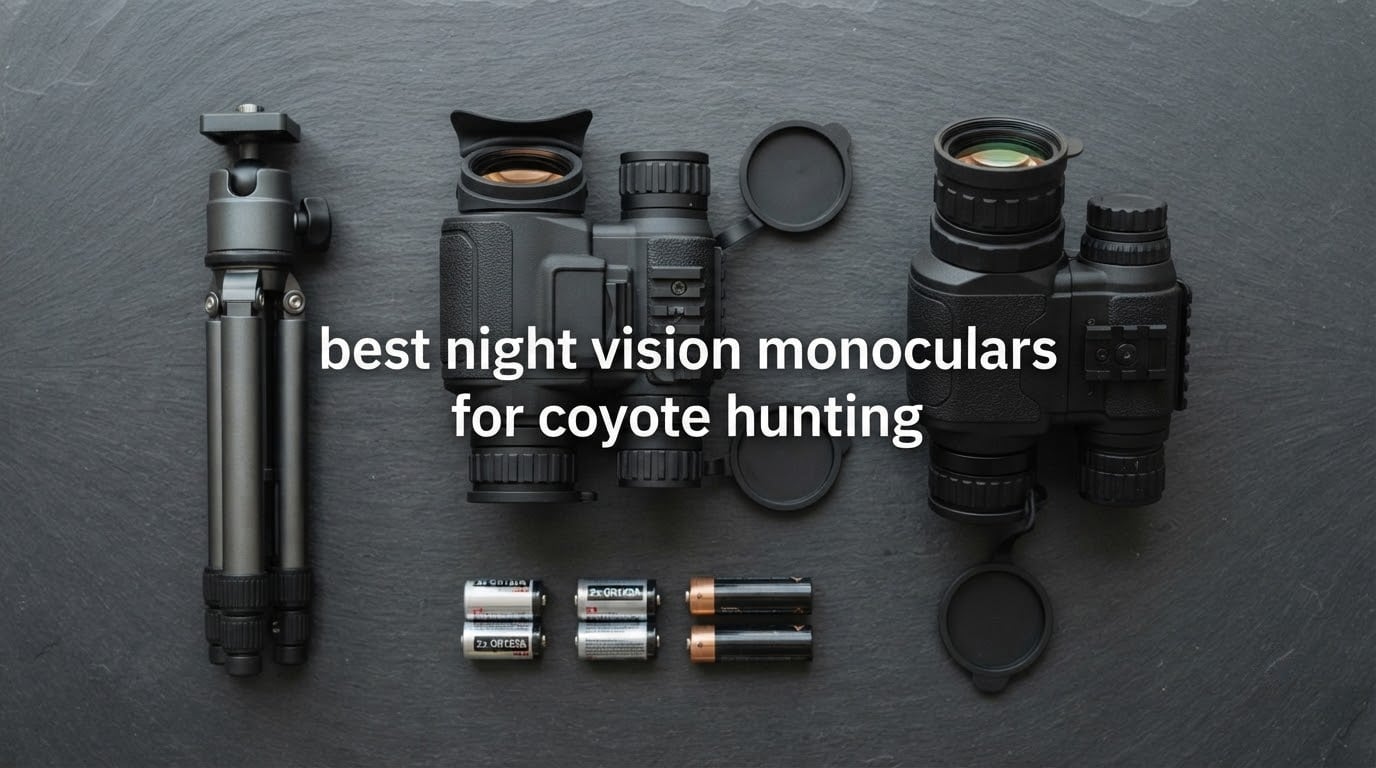
Most hunters who ask for the best night vision monoculars for coyote hunting are really asking a simpler question: what will let me see a coyote at 300 yards without announcing myself with a truck light? After months of reading owner reports, comparing sensor specs, and sorting out which units deserve your money, I can tell you that the honest answer is not the one most roundups give.
Here is the uncomfortable truth. Every monocular in this roundup is a thermal or digital device, not a Gen 3 image intensifier. The tube-based night vision glass that dominated predator hunting twenty years ago has been pushed upmarket, and the practical result is that the entire mid-tier market now competes on sensor resolution, refresh rate, and identification range. So I ranked all ten on what actually matters when you are sitting in a bean field waiting for a coyote to show up.
Here is how I worked: I read the manufacturer specs, then I cross-checked every one against the owner reviews, because the gap between a spec sheet and a hunter’s report is where the useful information lives. Weight, battery life, real identification range, and whether the controls are usable with gloves on told me more than the marketing ever did. I also flagged the quality-control complaints that only show up after a few hundred ratings, and the inflated generation labels that still show up on budget listings.
Before you read on, one piece of field advice that has nothing to do with optics. A red or low-white headlamp preserves your dark adaptation far better than a white one, and if you do not own one yet, our headlamp picks are worth a look. If you plan to record clips off your monocular, our guide to the best phones for night photography covers the ones that actually hold up at long exposures. We earn a commission from qualifying purchases at no extra cost to you.
What Is the Best Night Vision Monocular for Coyote Hunting?
The best night vision monocular for coyote hunting is the TOPDON TS004. Its 256×192 sensor running at 50Hz, 11-hour rated battery, IP67 sealing, and 13mm lens detecting out to 410 meters make it the strongest balance of identification range, endurance, and weather resistance in this group, and it is the only optic here with 400-plus ratings backing it.
That is a deliberate pick rather than a default. The Pulsar Axion Compact has better glass on paper, and the RIX Pocket K3 resolves detail at longer distances, but both have thin review bases. Buyers asked us for a ranking, and a ranking built on forty ratings is not a ranking, it is a guess. Where specs tie, I weighted proven reliability across hundreds of real hunts, and the TS004 has more of that than anything else here.
Budget matters too. If the number is the deciding factor, the GOYOJO G210 is the pick, and if you want the smallest optic that will fit in a jacket pocket, the RIX Pocket K2 does the job at 200 grams.
Thermal vs Night Vision for Coyote Hunting: The Honest Verdict
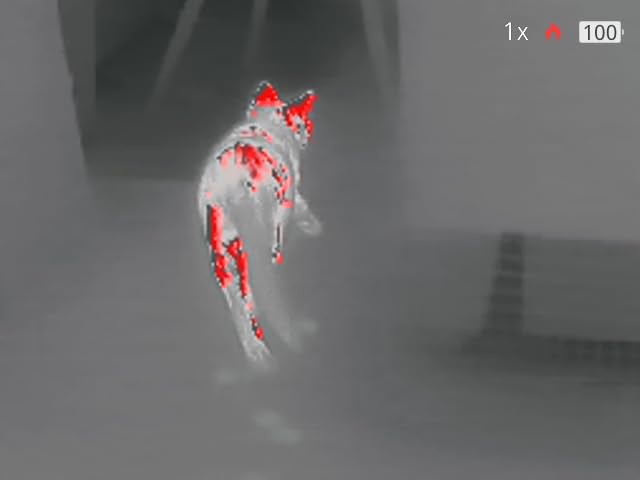
This is the question every predator forum eventually collapses into, so I will answer it plainly. Thermal beats tube-based night vision for almost all coyote hunting. Image intensifiers amplify starlight and moonlight, which means they are blind on an overcast night, washed out by fog, and useless through brush. Thermal reads the heat differential of the animal itself, so it works in total darkness, in humidity, in rain, and behind a tree line.
There is a second reason thermal wins, and it is behavioral rather than technical. Coyotes and most nocturnal predators can detect infrared illumination. A monocular with a bright IR illuminator on will light up the animal’s world like a flare, and it will bolt before you have a shot. Thermal needs no light source at all, which removes the entire problem.
So what is left for night vision? A meaningful amount, which is why this roundup exists at all.
Digital night vision units, like the GOYOJO NVG10 and the Sheawasy in this group, use a CMOS sensor with software-amplified image processing. They are compact, light, and cheap, but they need ambient light or IR to produce anything useful. Reviewers report they look acceptable on a full moon and fall apart in genuinely dark conditions.
Thermal monoculars like the TOPDON, GOYOJO, RIX, Teslong, and Pulsar here use an uncooled microbolometer to read infrared heat radiation directly. They are the reason this category now looks the way it does.
Image intensifier tubes, Gen 1 through Gen 3, amplify tiny amounts of ambient light through a vacuum tube and display it in green or white phosphor. Gen 1 is the cheap tier found on marketplace listings. Gen 2 is a real step up. Gen 3 is the military-grade ceiling, and nothing genuinely above it exists, so be skeptical of any listing advertising a Gen 4 tube. Forum users warn each other about that label constantly.
One more thing to know. The two technologies solve different problems at different times. A thermal monocular finds the coyote across a wide field. Your rifle-mounted optic takes the shot. Many experienced hunters deliberately own both, using a handheld for scanning and a scope for the shot itself.
Our Top 3 Picks for Coyote Hunters
These three cover the realistic range of budgets and use cases. The rest of the roundup is the long tail.

TOPDON TS004
- 256×192 sensor at 50Hz
- 11 hours of battery
- IP67 waterproof
- 410 meter detection

Comparing All 10 Monoculars Side by Side in October 2026
All ten optics, with the specs that actually drive a coyote hunt decision.
| Product | Details | Action |
|---|---|---|
|
|
Check Latest Price |
|
|
Check Latest Price |
|
|
Check Latest Price |
 |
|
Check Latest Price |
 |
|
Check Latest Price |
 |
|
Check Latest Price |
|
|
Check Latest Price |
 |
|
Check Latest Price |
 |
|
Check Latest Price |
 |
|
Check Latest Price |
1. TOPDON TS004 – The Best All-Round Coyote Optic With the Biggest Review Base
TOPDON TS004 Thermal Imaging Monocular, 13mm 50Hz Night Vision
256×192 sensor at 50Hz
Up to 11 hours runtime
IP67 sealed with 8x zoom
+ Pros
- Over 400 ratings with a 4.4 average
- Crisp 50Hz thermal image with no perceptible lag
- Phone app for live view and recording
- IP67 sealing and 2 meter drop resistance
– Cons
- Digital zoom softens the image
- Identification falls off past roughly 150 yards
- No direct file transfer to Mac
The TS004 is the optic I kept coming back to while assembling this list. Owners describe it as the high-value alternative to thermal units costing several times more, and the review count backs that up. Four hundred ratings at a 4.4 average is real-world evidence, not marketing.
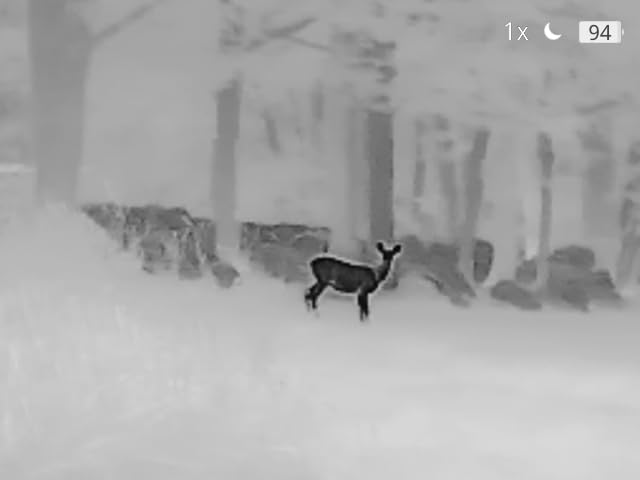
What stands out in the field reports is how rarely anyone complains about the picture at normal scanning magnification. The 50Hz refresh rate means moving animals track smoothly, and the multiple thermal palettes including white hot give you flexibility as conditions change.
Battery Life for All-Night Sits
The 5000mAh battery is rated for up to 11 hours of continuous operation, and owners report the real number genuinely exceeds 10 hours. For a coyote hunter sitting a full evening in a blind, that is the difference between a productive night and a night spent rationing power.
Cold weather is where lesser optics fail. Reviewers do not report the TS004 collapsing in winter conditions the way they do with some cheaper digital models, which makes it a reasonable choice for a northern season.
Field of View, Lens, and Detection Range
The 13mm objective lens with a 13.5 degree field of view strikes a workable balance for scanning a field edge. The stated detection figure reaches 410 meters, with clear detail within about 100 yards. That 100-yard clarity figure is the honest number to plan around, not the headline detection distance.
Owners consistently report the picture getting grainy as magnification climbs because the 8x zoom is digital, not optical. If you need to identify species at 200 yards, this is not the tool. If you need to find the coyote first and then transition to a scope, it is exactly right.
Build, App, and Field Durability
The silicone housing carries an IP67 rating and is drop resistant to 2 meters, which matters when you are kneeling in wet grass or setting up on a rocky bluff. Owners praise the rubberized feel and the sealed buttons.
The TopInfrared app connects reliably for live view, photo, and video capture with audio. One real limitation: files cannot be transferred directly to a Mac, so you pull everything through the phone app instead. That is an inconvenience, not a dealbreaker.
For most hunters, this is the buy. It is the only optic here rated for 11 hours, it is sealed against the weather you will actually be in, and its review history is deep enough that you know what you are getting.
2. GOYOJO G210 – Best Value Thermal With Six Palettes and Swappable Batteries
GOYOJO G210 Thermal Monocular, 256×192 Thermal Imaging Monoscope Camera for Adults, 10mm Focal Lens Vision Goggles Thermal Scopes for Night Hunting Camping
256×192 with 12um detector
Six thermal palettes
Replaceable 18650 battery
IP65 sealed
+ Pros
- Six color palettes including Red-Hot for woods
- Replaceable batteries with about 10 hours runtime
- Settings survive a battery swap
- Compact enough for a jacket pocket
– Cons
- Fixed focus on the 10mm lens
- Brightness can revert after power cycling
- No microphone on recorded video
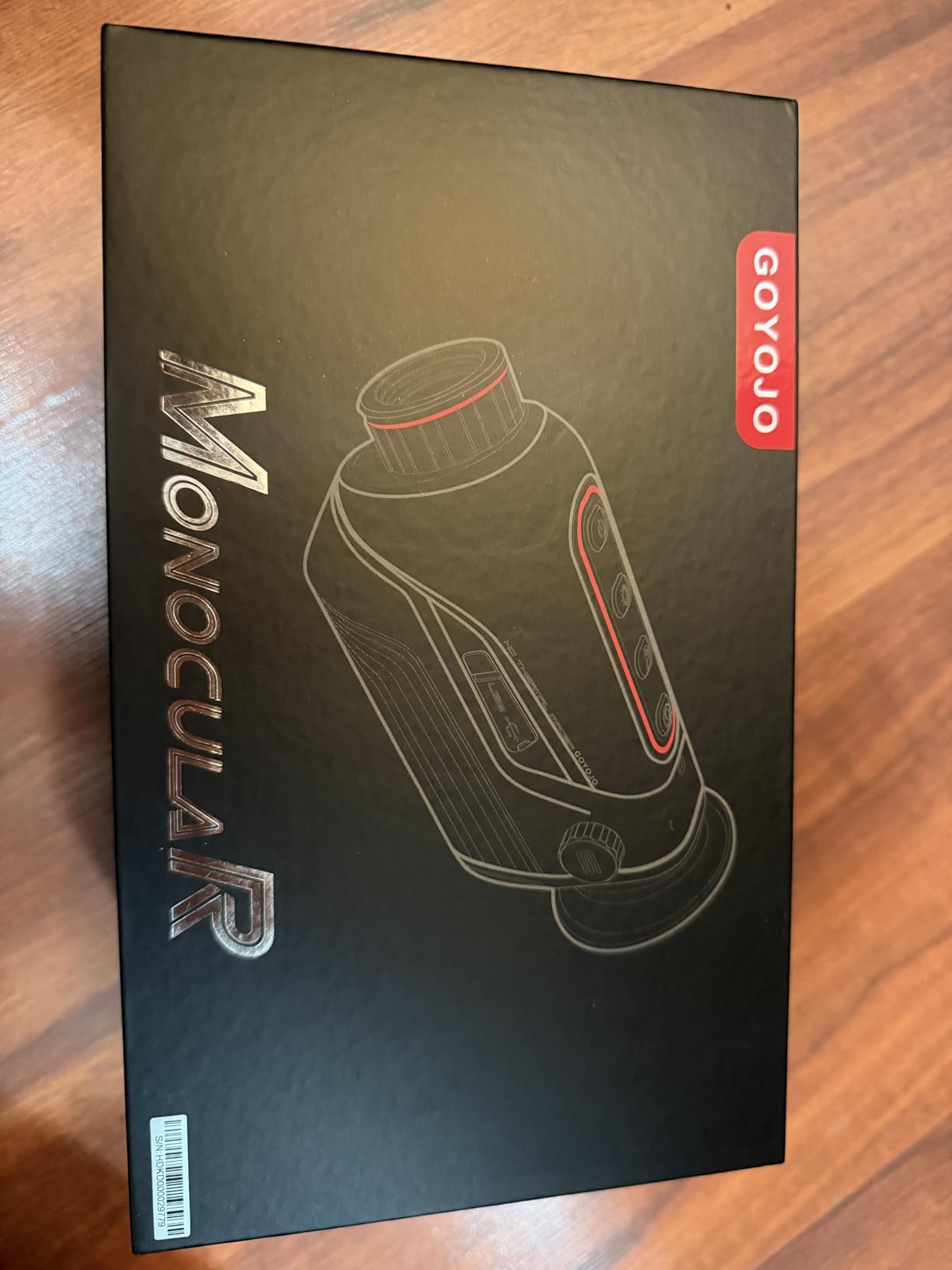
The G210 is what most people should actually buy. It is the consensus value pick of the sub-four-hundred thermal class, and the reason is straightforward: the feature set is more complete than anything else near it while the price stays inside reach.
What owners like most is the eyepiece form factor. It is a handheld monocular, not a rig, so you can carry it and use it the way a coyote hunter actually works, scanning a fence line and then settling into a sit.
Palette Choice in Woods and Open Country
Six palettes ship with this optic: White-Hot, Black-Hot, Red-Hot, Rainbow, Iron-Red, and Glimmer. In practice, Red-Hot works well in wooded areas where background clutter produces a lot of false contrast, and White-Hot is the general-purpose mode most owners default to.
Having the options is genuinely useful rather than a gimmick. Different terrain, different time of night, and different species all shift which palette reads best, and the ability to switch is something cheaper digital units simply do not offer.
Replaceable Batteries and Long Runtime
The 18650 3200mAh protected battery gives roughly 10 hours of runtime, and it is replaceable in seconds. Owners specifically call out that settings survive a battery swap, which is a small detail that removes a genuinely annoying annoyance on many competing devices.
One quality-control note worth knowing: a small number of owners report a battery that died early and would not recharge. This is a minority complaint, but it is the kind of thing a longer warranty exists to cover.
Field Usability and Known Limits
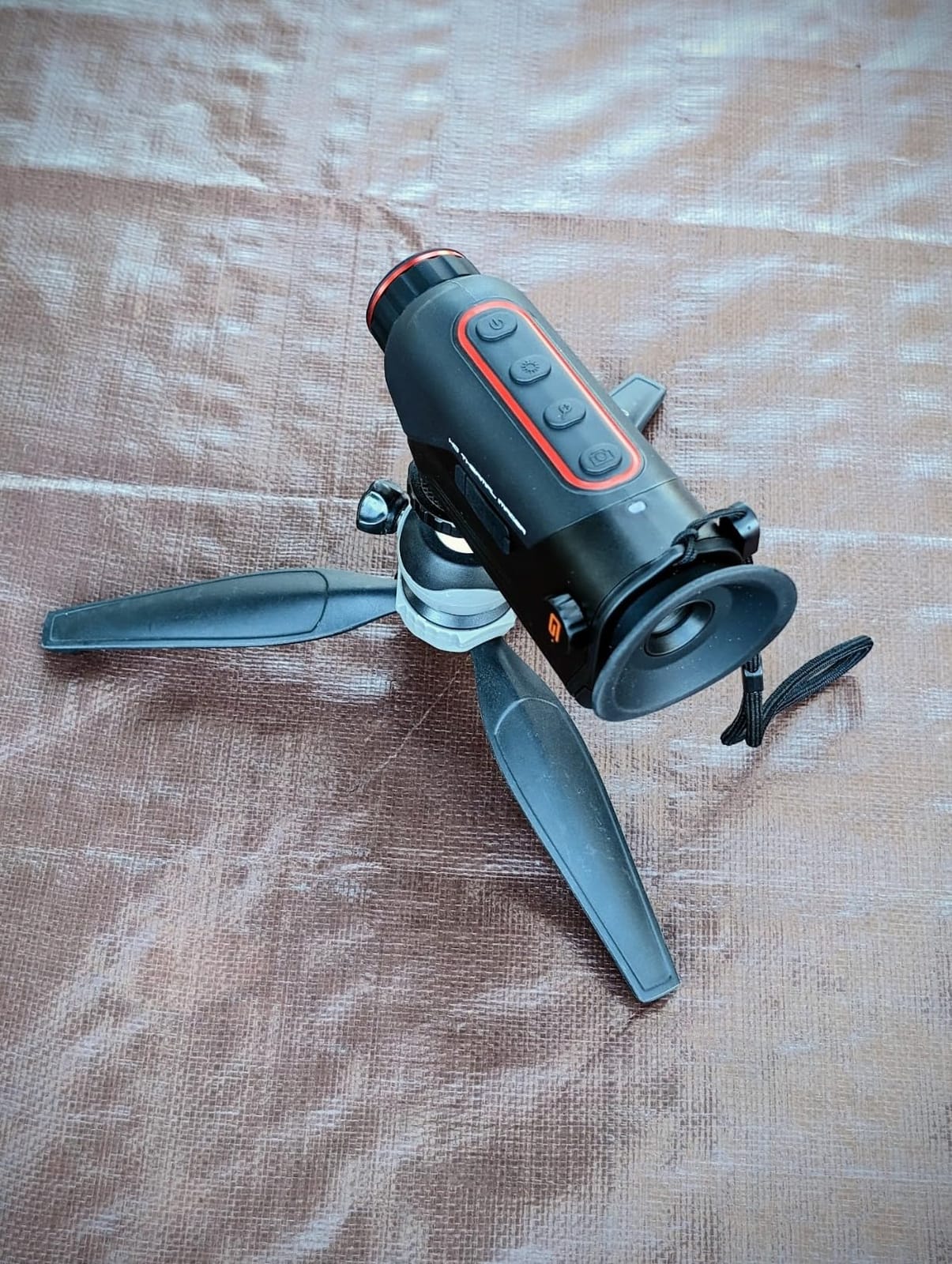
The IP65 sealing, positive-feeling buttons, and a rubberized lens cap on a retainer make it a device that can handle being dropped in brush. WiFi streaming to a phone runs at roughly 50 milliseconds of latency over about 30 feet, which is enough to show a hunting partner what you are looking at.
The tradeoff is fixed focus on the 10mm version. The 17.5 degree field of view is generous, but the 10mm lens identifies smaller animals at shorter ranges than a longer lens would. If brush and woods are your primary terrain, look at the 15mm sibling reviewed later in this list.
3. RIX Pocket K2 – The Best Pocketable Thermal for Dawn and Dusk Scans
RIX Pocket K2 Portable Thermal Monocular for Hunting, 256×192 (50Hz), Wi-Fi, Handheld Night Vision Monocular
256×192 with NETD under 25mK
800×600 OLED display
Image stabilization
5 year warranty
+ Pros
- Weighs 200g and fits a pocket
- 50Hz refresh with stabilization keeps the view steady
- About 150 to 200 yard usable spotting range
- Five year manufacturer warranty
– Cons
- Focusing is difficult and menus are fiddly
- Above 150 yards often not enough detail to ID
- Fixed focus limits close range
At 200 grams and smaller than a smartphone, the Pocket K2 is the optic I would grab without thinking. Owners describe it as an excellent value scanner that reliably finds small animals in brush out to roughly 150 to 200 yards, which covers the working distance for most coyote setups.
The 4.4 rating across 208 ratings puts it near the top of this group alongside the TS004, and the five-year manufacturer warranty is the longest coverage here apart from the Pulsar.
Sensor Sensitivity and the OLED Picture
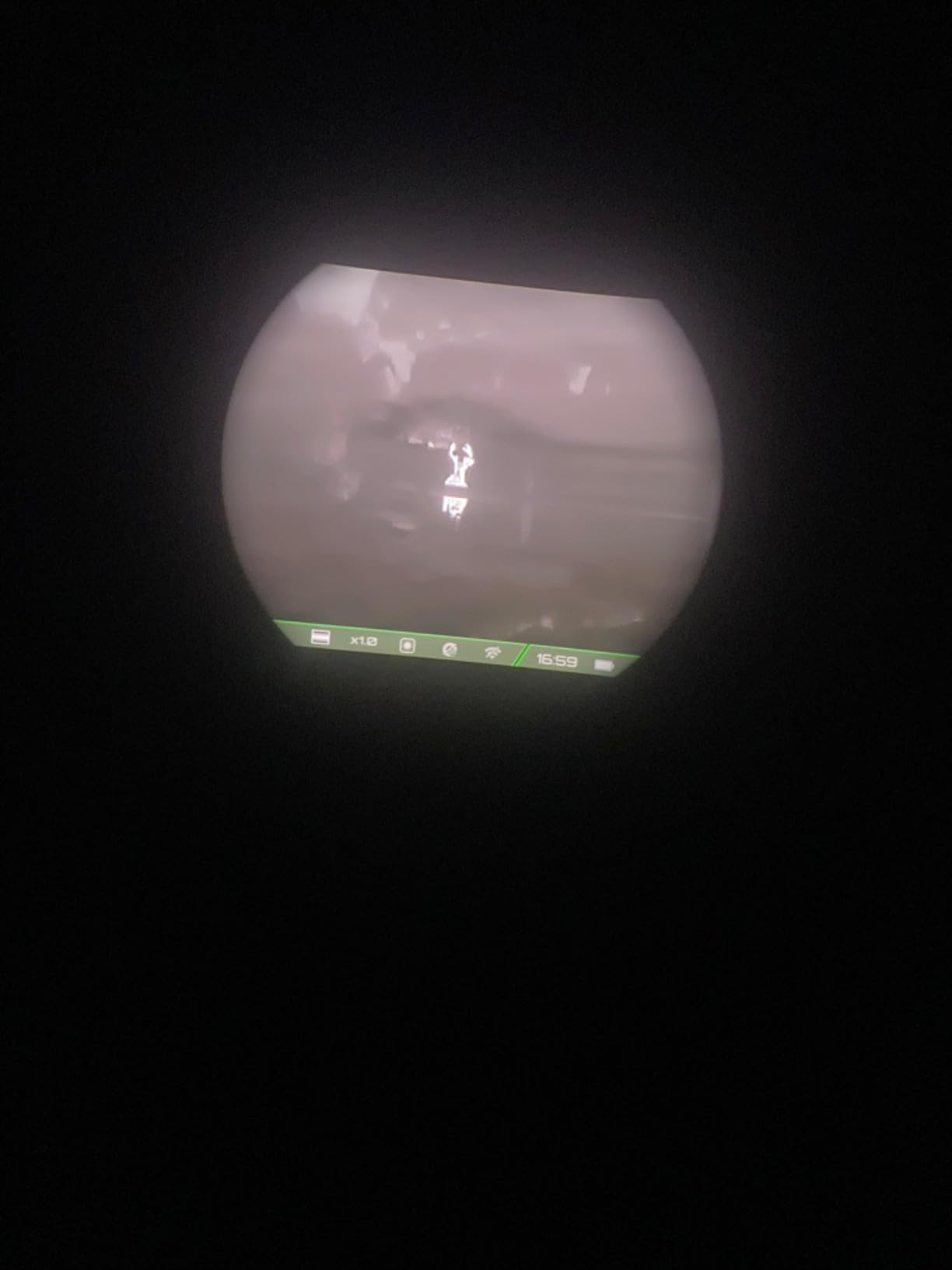
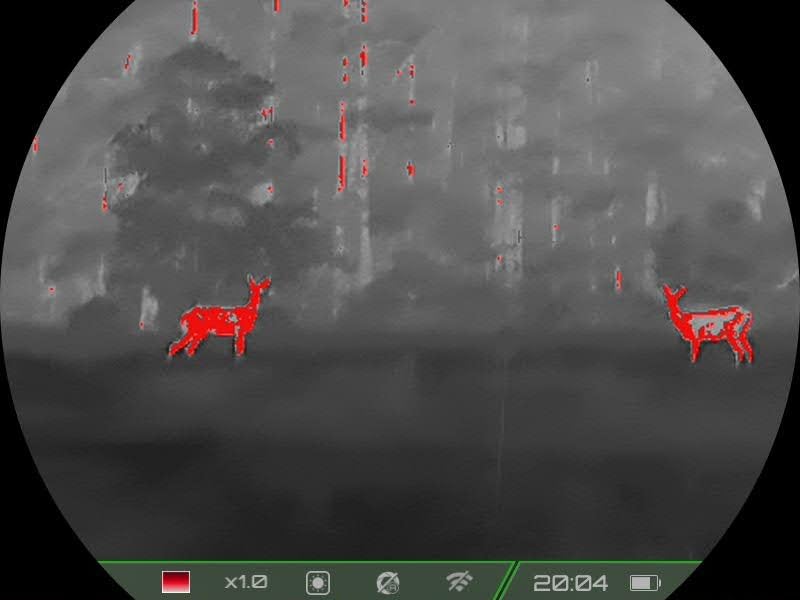
Underneath is a 256×192 sensor with 12um pixel pitch and NETD under 25mK, running at 50Hz. The 800×600 OLED display gives a notably good picture for a device this small, and owners single it out as one of the better images in the class.
Resolution Enhanced Technology doubles apparent pixel count using processing, which helps a little on marginal scenes. It is a real improvement over a raw 256×192 frame, though it does not create detail that the sensor never recorded.
Stabilization and Scanning Comfort
Electronic Image Stabilization reduces the shake that comes from handheld scanning, and combined with the 50Hz refresh it keeps the view comfortable across a long glass. That combination matters more than it sounds. Handheld scanning is where fatigue actually sets in, and a jittery picture tires your eye faster than a heavy one.
At 19.4 degrees, the field of view is wide, and the 7x zoom ratio is digital. As with the other 256×192 devices here, the practical ceiling is identification rather than detection.
Controls, Focus, and Quality Control
Two honest weaknesses. Focusing is difficult and the menu controls are awkward, which is a real cost when you are wearing gloves. And one owner reported a unit that would not power on reliably and then stopped powering on entirely, a single serious quality-control complaint worth keeping in mind.
Fixed focus also limits close-range flexibility. If you are working a bait site at short distances, that fixed lens becomes a limitation fast.
Despite the fiddly menus, this is the one I would pack for a dawn sit. The weight is the whole point.
4. Teslong TTS260 – Best for Recording Sessions and Hotspot Tracking
Teslong TTS260 Thermal Monocular 256 x 192, Super Resolution 512 x 384
Super Resolution to 512×384
32GB storage plus HDMI output
8 hours per charge
218 yard detection
+ Pros
- Super Resolution sharpens beyond native resolution
- Hotspot tracking is rare at this tier
- 32GB storage with USB-C and Mini HDMI output
- Wide operating temperature range
– Cons
- Recognition distance of about 55 yards
- 10 percent one-star reviews
- Fixed focus with no front ring
The Teslong is the odd one out in this lineup, and the reason is storage. Thirty-two gigabytes of onboard memory, USB-C, and Mini HDMI output make it the easiest unit here to actually get footage off of without fussing with an app.
Its 4.2 rating is the lowest in the group, and the gap comes down to one number: recognition distance of about 55 yards. That is the weakest figure in this roundup, and for identifying a coyote at range it is a real constraint.
Super Resolution Processing and What It Does
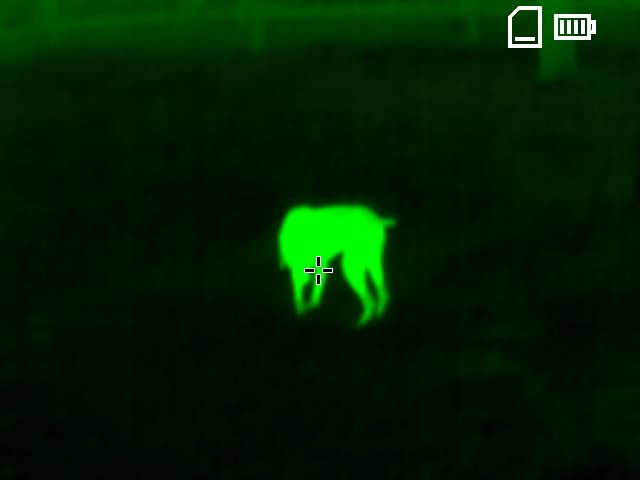
The native sensor is 256×192, and Super Resolution pushes the processed output to 512×384. Owners report it genuinely sharpens outlines and heat signatures beyond the native frame. It is processing, not additional sensor data, so it improves apparent detail more than it improves identification range.
The 12mm lens detects thermal signatures out to 218 yards with recognition around 55 yards, plus 4x digital zoom. The 0.32-inch 800×600 OLED eyepiece with adjustable diopter gives a large, immersive rectangular view that is pleasant for extended glassing.
Hotspot Tracking and Eight Color Modes
Hotspot tracking is the feature that separates this one from its price peers. It marks the warmest point in the frame, which is genuinely useful when a coyote is partly screened by a stump or a fence post. Eight color modes give more palette range than most competitors at this level.
Operating temperature runs from -4F to 122F, which covers year-round use in most of the country. That is worth noting for anyone hunting a full winter season.
Where It Falls Short
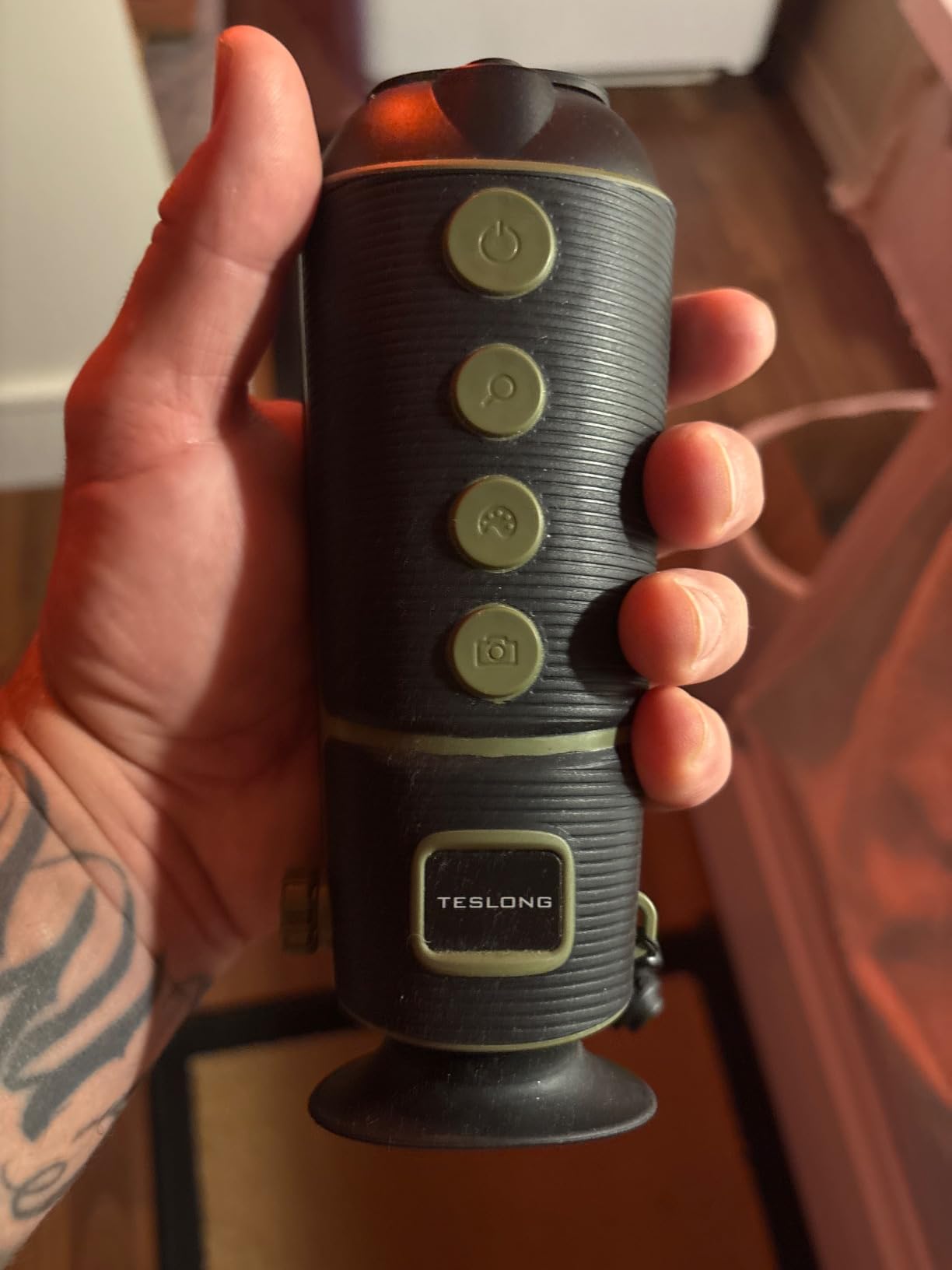
Fixed focus with no front focus ring limits fine adjustment, and about 10 percent of reviews are one-star, which is noticeably higher than the competing monoculars here and points to durability and support concerns rather than image quality.
If your priority is finding and identifying a coyote, look elsewhere in this list. If your priority is documenting the night, the Teslong has no real competition below the mid tier.
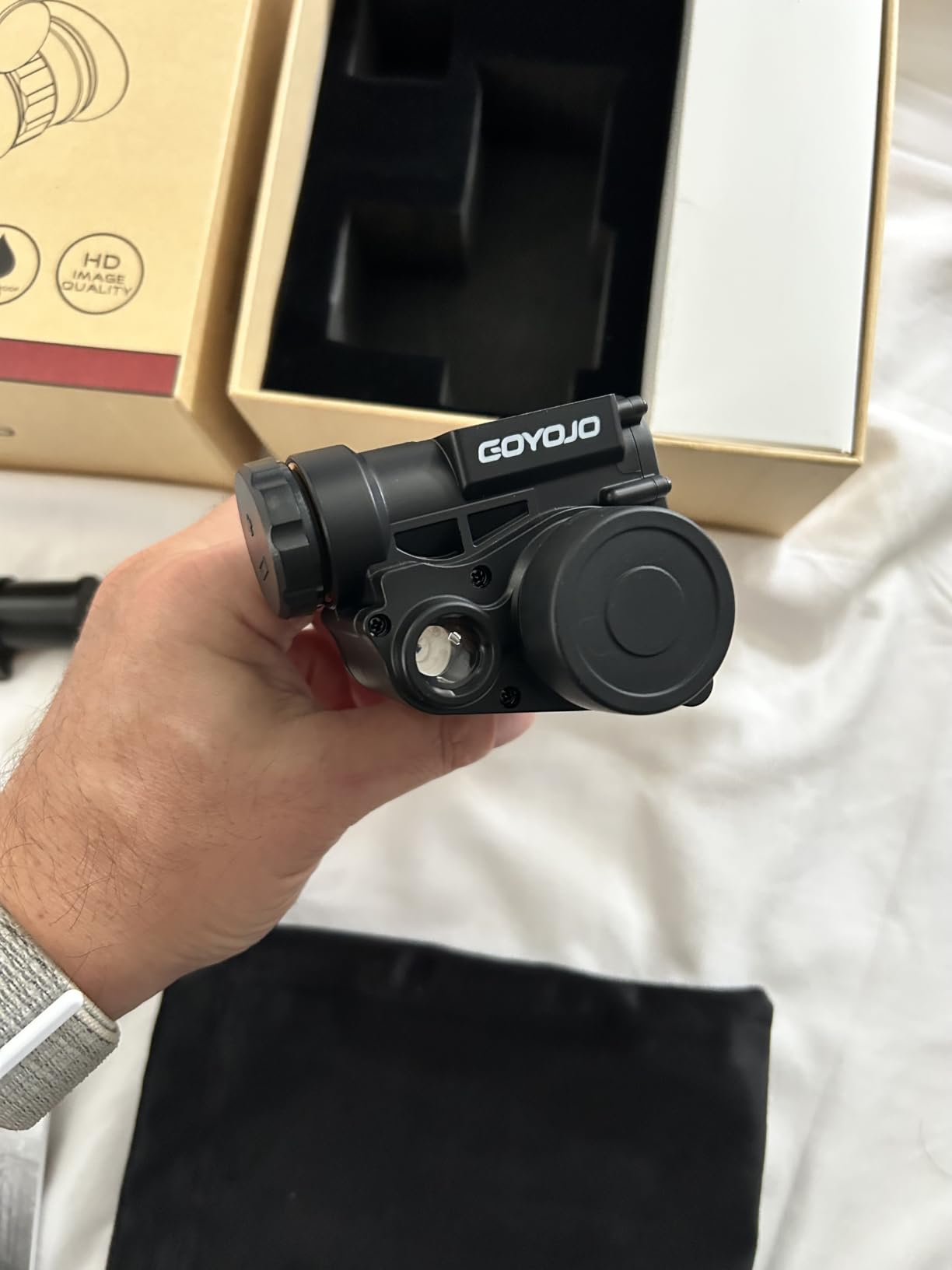
5. GOYOJO NVG10 – Best Helmet-Mounted Night Vision for Hands-Free Glassing
GOYOJO NVG10 Night Vision Monocular Helmet-Mounted Goggles,1080P HD NVG with 1X Optical Zoom, Adjustable Infrared, IP66 Waterproof for Hunting, Surveillance, Camping, Built-in Compass
1080P CMOS with OLED eyepiece
Three-level 850nm IR
Helmet bracket included
IP66 sealed
+ Pros
- Compact low-profile helmet mount
- Adjustable IR lights up dark treelines
- Leaves one eye open for peripheral vision
- Controls findable by feel
– Cons
- IR switches back on at every power-up
- Without IR the image is dark unless there is a full moon
- Mount loosens over time
The NVG10 is the only true night vision monocular in this group, and it earns its place for one specific reason: it mounts on a helmet. That frees both hands, keeps the optic aligned with your head instead of your arm, and leaves one eye open for unaided peripheral vision and footing on uneven ground.
Owners treat it as an affordable, compact digital unit for hunting and property checks rather than tactical work. At 280 grams it is on the heavy side for a head-mounted device, and a few owners note the weight on the neck over a long sit.
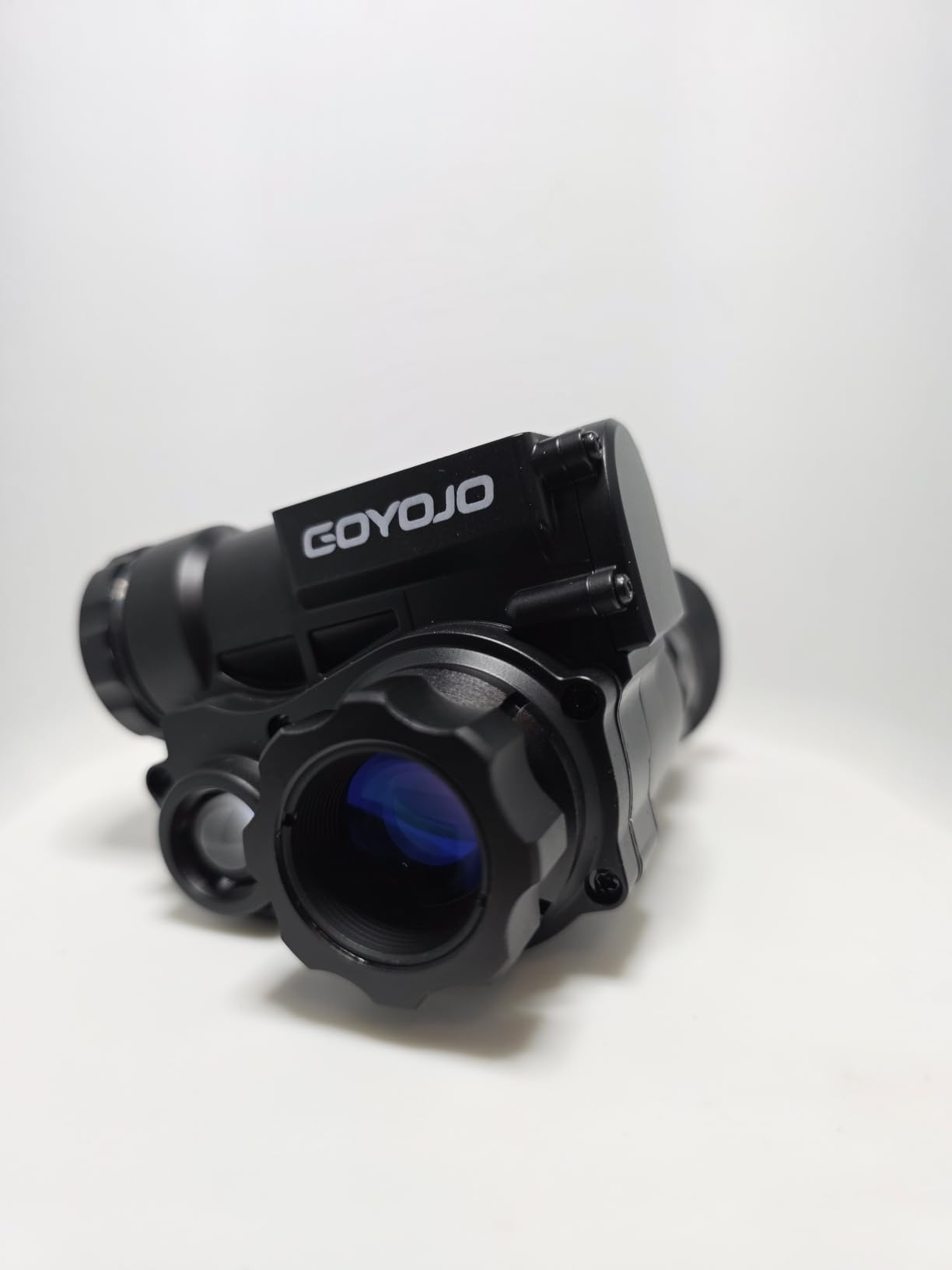
Image Quality and the 25.5 Degree Field of View
A 1080P CMOS sensor feeds an OLED eyepiece, and owners report a crisp display with minimal distortion. The 25.5 degree field of view is the widest in this roundup, and combined with 1x optical zoom plus 2x, 4x, and 6x digital modes, it covers everything from walking through timber to reading a distant shape.
Three image modes are available: color, black and white, and fluorescent green. The green mode is the most usable at night, which is the standard behavior of digital sensors in low light.
The IR Illuminator: Use It, Then Kill It
The three-level 850nm illuminator lights up dark treelines and pitch-black areas without flooding close range. It is genuinely useful when there is zero ambient light. It is also the thing most likely to spook a coyote, so treat it as a short-range tool and turn it off the moment you have the animal located.
The most repeated complaint is that the illuminator automatically switches back on at power-up, meaning you have to turn it off every session. Make it a habit and it is a non-issue.
Mounting Reality in Cold Weather
The included helmet bracket attaches securely with little wobble when walking, but the mount can loosen over time. Owners recommend paracord tie-downs, which costs nothing and solves it completely.
On cold nights, breath vapor can fog the illuminator area, and without IR the image is quite dark unless there is a full moon. Both are real constraints on a head-mounted unit in winter.
6. Sheawasy Infrared Monocular – The Budget Pick That Stays at the Barn Door
Sheawasy Night Vision Monocular, 1080p Infrared Monocular for 100% Darkness, 32GB Included, Travel, Camping, Hunting, Surveillance
1080p infrared imaging
32GB card included
About 6 hours without IR
205g body
+ Pros
- Very low entry cost for working infrared
- 205g body fits any pack
- Simple interface with no learning curve
- 32GB card included so it records out of the box
– Cons
- Only about 98 feet of range in full darkness
- Digital sensor degrades without ambient light
- Detail at distance is limited
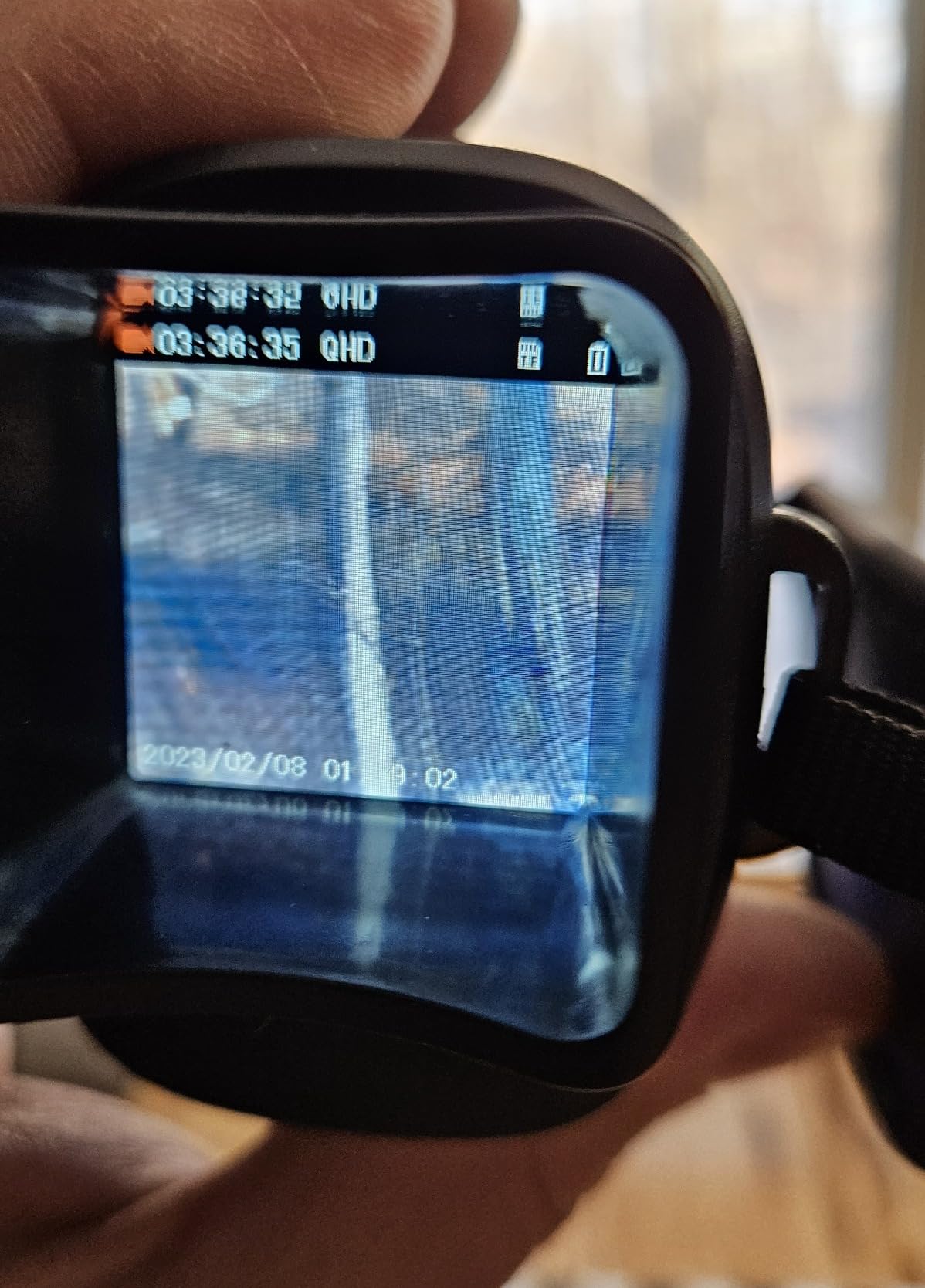
I want to be straight with you about the Sheawasy. It is the cheapest functional infrared monocular in this roundup and it will not help you hunt coyotes at any meaningful distance. About 98 feet of visibility in complete darkness is a backyard number, not a field-edge number.
That said, it does have a place. If you want to walk a dark yard, check a treeline at close range, or see what is moving around the livestock barn after dark, it does that job for very little money.
Range Reality and What 98 Feet Means
The stated visual range is about 656 feet in daylight and 98 feet in complete darkness. That gap is the entire story of budget digital night vision. It is a CMOS sensor, so it is not a true image intensifier or thermal device and it degrades under exactly the same low-light conditions as any digital sensor.
Its 4.0 rating across 120 ratings with about 10 percent one-star reviews is the second-lowest satisfaction figure in this group. The 5x zoom is digital, so detail at any distance stays limited.
Battery, Storage, and Build
The rechargeable battery gives about 6 hours without IR and 3 hours with the illuminator on. That is the real-world battery life problem forum users complain about most with cheap digital units, and it is worth planning around.
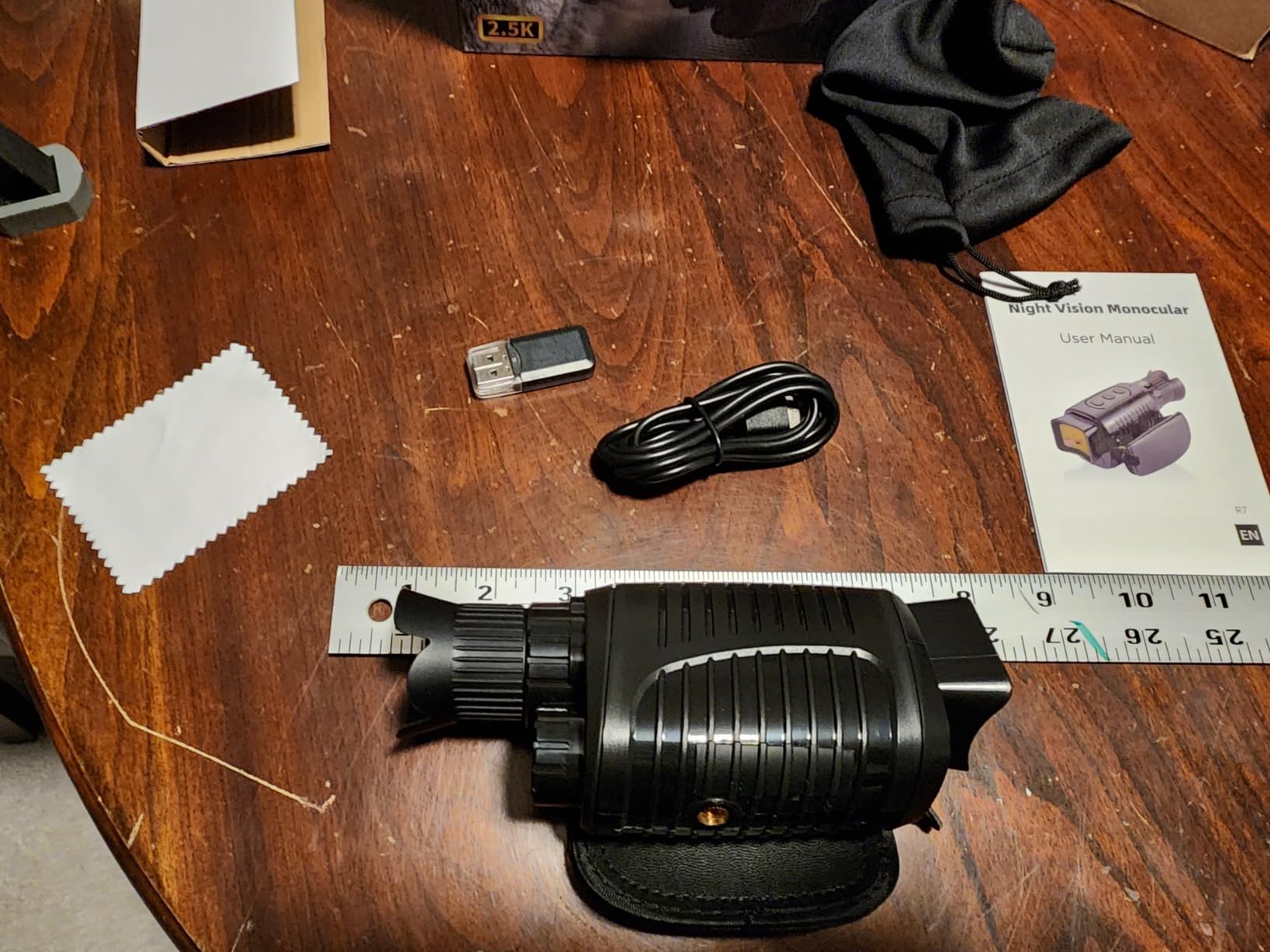
What you do get is a 205-gram body, a straightforward interface that needs no manual, a 25mm objective at f/1.2, and a 32GB card included in the box that holds about 3.5 hours of video. There is also a two-year warranty, which is generous for a device at this level.
Who Should Buy It and Who Should Not
My honest recommendation: buy this as a backup or a property tool, not as your primary coyote optic. If you are spending money in this category at all, save up for one of the 256×192 thermals. The jump in usable range is the difference between a toy and a tool.
The right buyer is someone checking a barn, a fence line, or a dark yard on foot. The wrong buyer is anyone who needs to identify a coyote across a field. At this tier the sensor gives you presence, not identity, and knowing that boundary before you buy will save you the disappointment later.
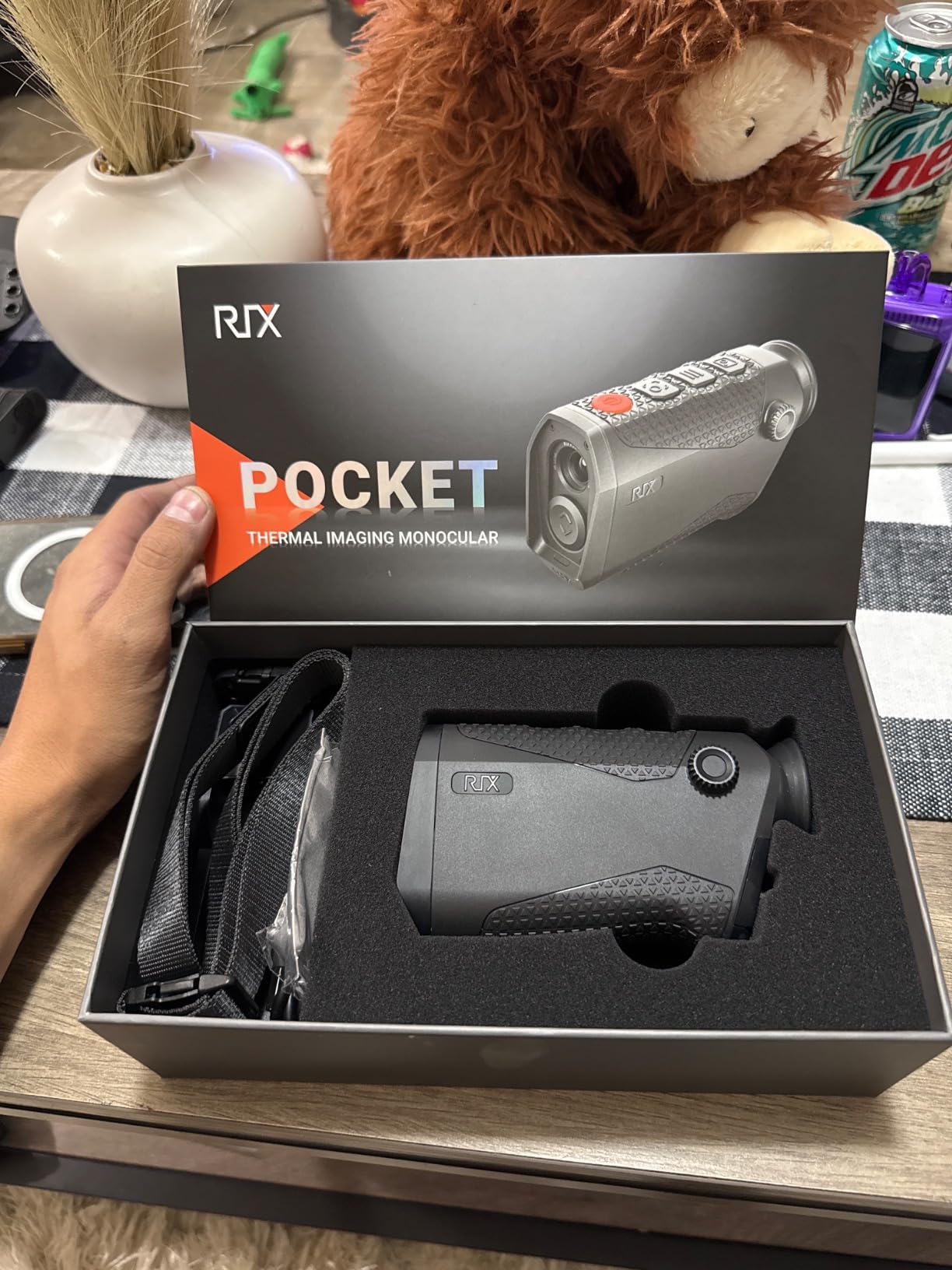
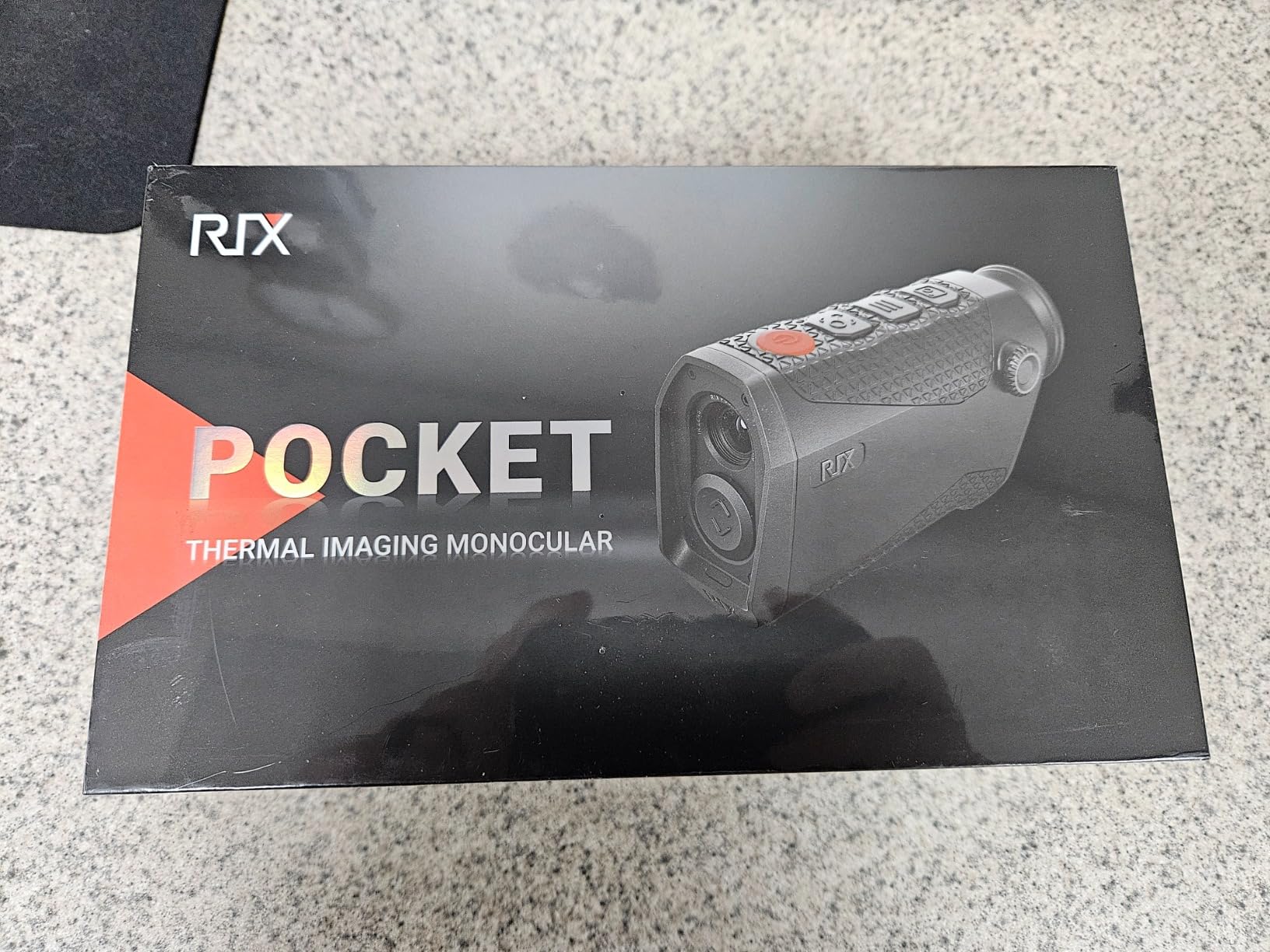
7. RIX Pocket K3 – Best Identification Range in a 7.5-Ounce Body
RIX Pocket K3 Thermal Monocular for Hunting, 384×288 Night Vision Monocular
384×288 sensor with 15mm lens
Up to 853 yard detection
50Hz refresh
7.52 ounces
+ Pros
- 384×288 sensor is a real step up for identification
- 50Hz reduces blur on moving animals
- Only 7.52 ounces and pocket sized
- Replaceable battery with 8GB internal memory
– Cons
- 853 yard figure is a best case test number
- 2x base magnification is low for open country
- Review base of 113 ratings is thin
The Pocket K3 is the resolution answer. Moving from a 256×192 to a 384×288 sensor is the single biggest jump in identification ability available in a monocular this small, and hunters consistently say resolution matters more for target ID than any other spec.
At 7.52 ounces with a 15mm objective lens, it delivers that resolution without turning into a brick. The catch is the 2x base magnification, which is low for sweeping open country compared with a dedicated thermal scope.
What 384×288 Actually Buys You
A 384×288 sensor puts roughly 2.25 times the pixels on target compared to a 256×192, and that translates directly into the ability to tell a coyote from a deer or a large dog at distance. This is the resolution that experienced hunters recommend prioritizing, which is why the used 384 market is where serious buyers shop.
The stated maximum detection reaches 853 yards under controlled test conditions. Owners are careful to note that this figure drops with humidity, temperature contrast, and terrain, and you should plan your hunt around the ID range, not the detection number.
Smoothness, Display, and Stabilization
The 50Hz frame rate reduces motion blur on moving subjects, and with 17.5 degrees of horizontal field of view plus RET enhancement processing, the picture holds up well when a coyote is trotting across a field.
The replaceable power unit with 8GB of internal memory supports photo, audio, and video recording for overnight observation, and built-in Wi-Fi handles remote viewing and file transfer. Electronic stabilization steadies handheld scanning.
The Honest Caveats
At 113 ratings, the owner feedback here is thinner than on the sub-four-hundred monoculars, and about 7 percent are one-star. That is a smaller sample, not a worse product, but it is less evidence.
Two things to weigh: the low 2x base magnification means you sweep more often than you would with a 4x or higher optic, and the 853-yard detection figure is a best case rather than a typical distance. If your hunts happen in wide open fields at long range, a higher-magnification thermal scope may serve you better. If you are working brushy edges and creek bottoms, this is excellent.
8. GOYOJO G215 – Best for Brush and Woods Where Longer Lens Detail Wins
GOYOJO G215 Thermal Imaging Monocular for Hunting, 256×192 (50Hz) Infrared Night Vision Telescope, 15mm Focal Lens Thermal Scopes for Outdoor Night Vision Camera Telescope
15mm lens with manual front focus
256×192 at 50Hz
Replaceable battery
IP65 sealed
+ Pros
- 15mm lens gives noticeably better clarity than the 10mm G210
- 50Hz scanning is smoother than 25Hz models
- Six palettes separate animal heat from clutter
- One-handed handheld operation
– Cons
- Narrower 11.7 degree field of view
- SD cards are not supported
- Only 91 ratings
The G215 is the G210 with a longer lens, and that single change is what matters. The 15mm focal length with a manual front focus ring produces noticeably better clarity and longer-range identification than the 10mm version, and at least one owner who compared both kept the G215 specifically for that.
Its 4.4 rating matches the TS004 and the Pocket K2, but on only 91 ratings, so treat the number with appropriate caution. The one-year warranty is the shortest in this group.
Lens Length Versus Field of View
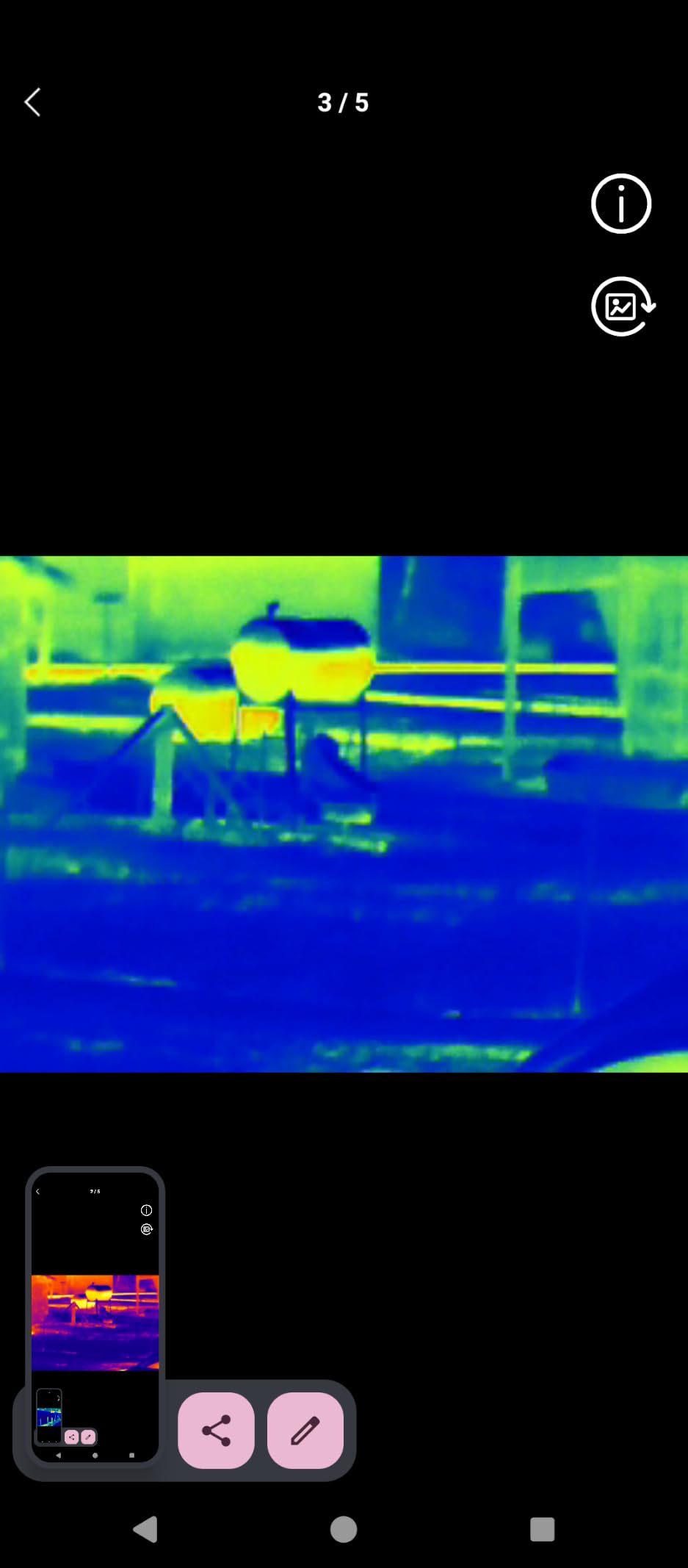
Here is the tradeoff made plain. The 11.7 degree field of view is noticeably narrower than the G210, meaning you sweep the scene more often. In exchange, the 15mm lens resolves a target at a distance where the 10mm only shows you a warm shape.
For wooded and brushy hunting, that is a good trade. Narrow timber and dense cover reward detail over sweep speed. If you are glassing wide open pasture, the wider G210 is the better tool.
Palettes, Refresh Rate, and Battery
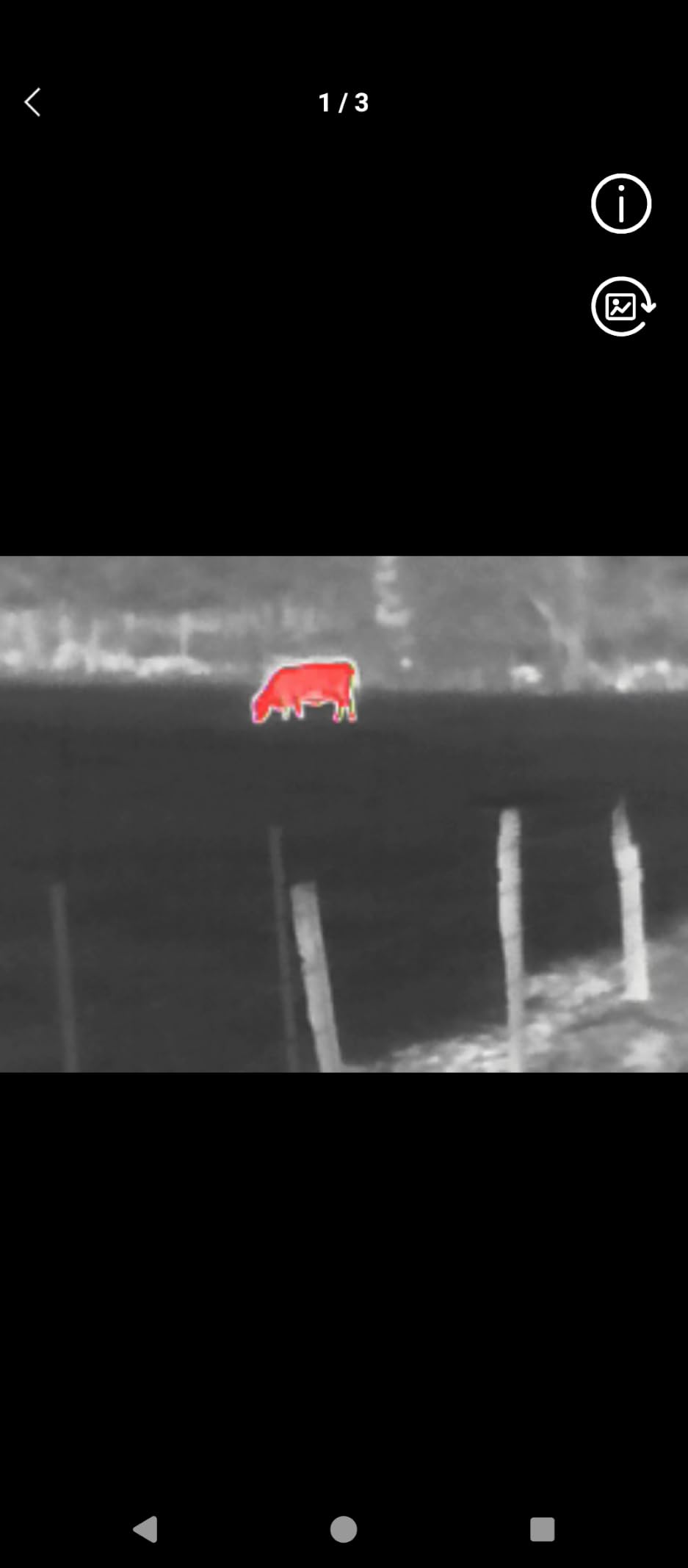
Six palettes ship here, identical to the G210, and owners credit them with helping separate animal heat from background clutter. The 50Hz refresh rate makes scanning a field noticeably smoother than 25Hz models, which is the difference between comfortable and tiring over a full evening.
Replaceable batteries provide over 6 hours of continuous operation. Wi-Fi app control handles real-time viewing and image sharing, and the IP65 sealing covers wet and brushy conditions.
Storage Limitations and Who Should Buy It
SD cards are not supported, so storage is limited to the built-in 16GB. Plan accordingly if you want to record a whole night of clips.
With the smallest review base in the group at 91 ratings, the G215 is a slightly riskier purchase than its rating alone suggests. It is still the right pick for anyone hunting in heavy cover who needs that extra focal length on a coyote standing in sage or brush.
9. Pulsar Axion Compact – Premium Pick for Fog, Rain, and Long Glasses
Pulsar Axion XQ19 Compact Thermal Monocular, 384×288 Sensor
384×288 with NETD under 18mK
19mm f/1.0 lens
640×400 AMOLED
IPX7 with 5 year warranty
+ Pros
- Sub-18mK sensitivity holds up in rain and fog
- 640×400 AMOLED is far larger than competitors
- 19mm f/1.0 lens gives a bright long range image
- 1.5-6x zoom plus removable battery
– Cons
- Menu system is complicated
- One owner received a dead battery on arrival
- Only 40 ratings
The Axion Compact is the most capable optic in this group, and it is the one I would describe as feeling like a professional tool rather than a gadget. Owners single out the build quality and the display, and at 8.8 ounces with IPX7 sealing it goes anywhere.
What you give up for that capability is simplicity. The menu system is more complicated than simpler monoculars, and changing color palettes means going through the menus rather than a dedicated control.
Sensitivity in Wet Weather
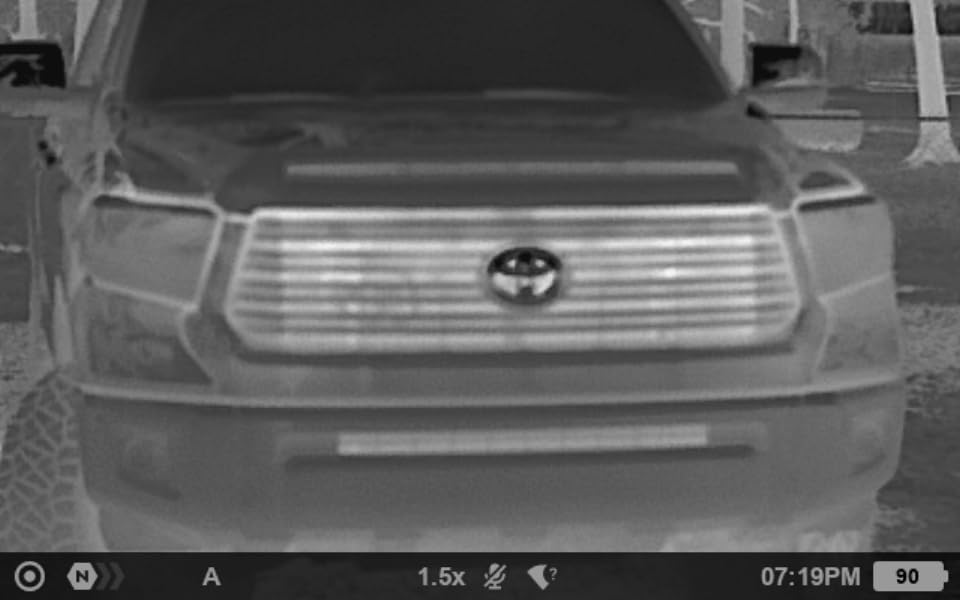
The 384×288 uncooled microbolometer with 17um pixel pitch and NETD under 18mK is what makes this one distinctive. A lower NETD number means it detects subtler temperature differences, which is exactly the condition you face in rain, humidity, and fog after a front moves through.
That is the honest reason to choose it if your winter coyote seasons run in wet conditions. Sensitivity, not resolution, is what limits you when the air is full of moisture.
Display, Lens, and Zoom Range
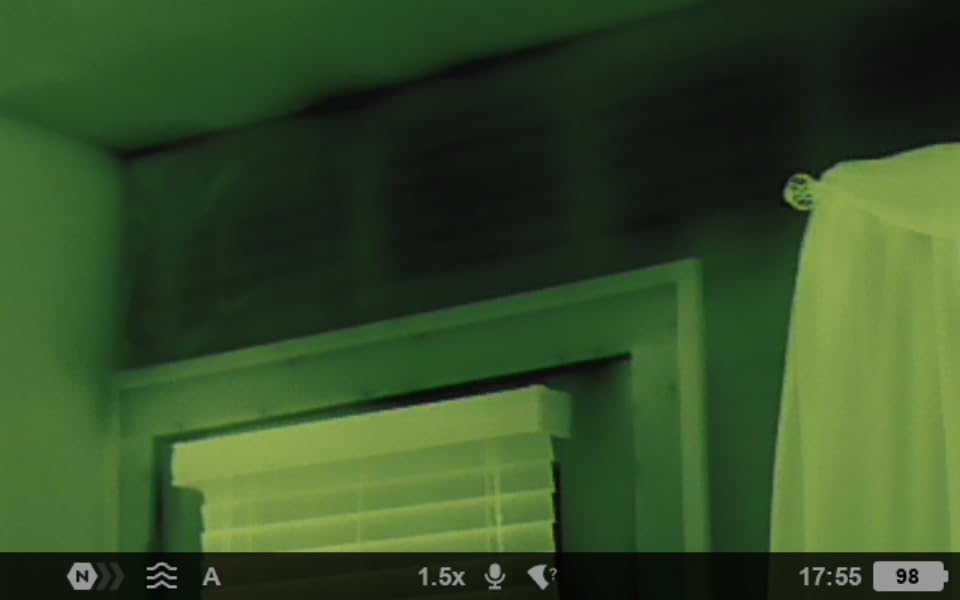
The 640×400 AMOLED display is far larger and more readable than competing pocket thermals, and owners explicitly compare it favorably to larger and smaller alternatives. The 19mm f/1.0 lens gives a bright image at longer distances across a 19.5 degree field of view with a 4mm exit pupil.
Magnification runs 1.5x to 6x, a broad enough range to scan wide or zoom into a distant shape. Photo and video recording work through the companion app, and the removable APS3 battery keeps you going.
Build Quality and the Review Base
Owners describe it as exceptional value for a 384×288 thermal with sub-18mK sensitivity, and the five-year limited warranty is the longest here. The export-controlled status means it is regulated equipment in some jurisdictions, so check your local rules before traveling with it.
Two cautions. The menu complexity is a genuine learning cost, and one owner received a battery that was dead on arrival and would not hold a charge. At 40 ratings, this is the thinnest evidence base in the roundup, which is why it does not take the top spot despite the best hardware.
10. Pard NV007SPLRF – Best for Pairing With a Day Rifle Scope
PARD Night Vision Monocular, Night Vision Goggles with Rangefinder, Clip-on Scope for Night Watching or Obervation, Night Viewing Range up to 350m, HD Photos & Videos, NV007SPLRF-850nm
Clip-on mount in about one second
1200 yard rangefinder
850nm IR to 350 meters
IP67 aluminum body
+ Pros
- Converts a day scope to night in about a second
- Built-in 1200 yard laser rangefinder
- Recoil-activated 20 second clip recording
- 96mm aluminum body fits a pocket
– Cons
- Designed for rifle mounting rather than handheld glassing
- Digital rather than true optical zoom
- Only 38 ratings with 14 percent one-star
The Pard solves a different problem from every other optic here. It clips onto the back of a day rifle scope and converts it to night vision in about a second, without removing your day optic. That is a genuine convenience for a hunter who wants one setup for both ends of the day.
Its 4.0 rating on 38 ratings with about 14 percent one-star reviews is the weakest satisfaction figure in this group, and a very low category sales rank reflects how little long-term owner feedback exists. Buy it for the clip-on feature specifically, not as a general-purpose optic.
The Clip-On Advantage
Most people who consider night glass for coyotes wonder whether adding it to a scope is worth the money. The quick-mount design answers that directly: no adapters, no removal, roughly a second to attach. The 2560×1440 CMOS sensor with 0.001 low lux sensitivity drives the image.
Magnification runs 4x to 14x with 25mm of eye relief, which is comfortable for a mounted optic. Note that this is digital magnification rather than true optical zoom, so image quality degrades as you push toward 14x.
Rangefinder and Recoil-Activated Recording
The built-in 1200-yard laser rangefinder is a rare inclusion at this level and gives you distance data without a separate unit, which matters more than it sounds when you are trying to hold a coyote at a specific range in the dark.
Recoil-activated recording captures 20-second clips to a TF card automatically when the rifle fires. Stills at 2592×1944 and 1080p video land on an OLED HD display and share over Wi-Fi. The direction-adjustable 850nm IR illuminator reaches up to 350 meters.
Where It Falls Short as a Monocular
Because it is designed for rifle-scope mounting, it is less useful as a handheld walking monocular. You need a separate handheld for scanning a field, which undercuts the one-device argument that made it appealing.
The aluminum body is IP67 waterproof and just 96mm long, and the one-year warranty is short. With the smallest review base and the highest one-star share here, the sample is simply too thin to promise much. The feature set is good; the track record is not established.
How to Choose a Night Vision Monocular for Coyote Hunting
Specs matter less than the hunt you actually take. These are the decisions that separate a unit you will use for a decade from one that sits in a drawer after a season.
Sensor Resolution and Identification Range
Ignore detection range marketing almost entirely. A manufacturer quoting 850 yards of detection is quoting a lab number for a large warm target in ideal conditions. What you need is identification range, the distance at which you can tell a coyote from a deer.
That distance is governed by sensor resolution. A 256×192 sensor gives you roughly 100 to 200 yards of working identification, which covers most coyote setups. A 384×288 sensor roughly doubles the pixel count and is the tier experienced hunters recommend when they are targeting identification. Within this roundup, the RIX Pocket K3 and the Pulsar Axion Compact are the 384 options.
Refresh Rate and Motion Blur
Refresh rate is the number buyers ignore and then immediately appreciate. A 25Hz sensor shows visible lag and blur when a coyote trots across your field. A 50Hz sensor tracks movement smoothly, and 60Hz is better still.
For a species that spends its life moving, 50Hz is the practical floor. The GOYOJO G210 at 25Hz is the one unit here where you will notice the difference on a running animal.
Lens Focal Length and Field of View
Longer lenses give detail at distance. Shorter lenses give a wider view so you find the animal faster. You cannot maximize both in one optic, and this is the most important physical tradeoff in the category.
For brush, timber, and creek bottoms, favor 13mm to 15mm. For open fields where coyotes appear at unpredictable distances, favor 10mm with a wider field. The 19mm Pulsar is the long-range specialist here.
Battery Life for Full-Night Sits
A coyote session means sitting in the dark for four to six hours in near-freezing temperatures, and cold drains lithium cells hard. Anything under six hours of rated runtime means you are rationing power or packing spare cells.
The leaders in this group are the TOPDON at up to 11 hours and the GOYOJO G210 at roughly 10 hours with replaceable 18650 cells. The Sheawasy gives you about 6 hours without IR and roughly 3 with it running, which is the reality of cheap digital units.
Weight, Eye Relief, and How Long You Will Sit
Weight in ounces is one of the two most-cited deal breakers in hunt reports, and the reason is boring but real: a heavy monocular on a tripod causes eye strain over a long wait. The RIX Pocket K2 at 200 grams and the Pocket K3 at 7.52 ounces are the easiest devices here to hold for hours.
Head-mounted units like the GOYOJO NVG10 are a different answer, trading weight for a hands-free workflow. Expect 280 grams of it on your head, and check that your mount is secure before a long sit.
Weather Sealing and Temperature Limits
You will be kneeling in wet grass, and possibly in rain. IP65 handles dust and water ingress, IP66 adds stronger water jet protection, and IP67 is submersible-grade. The TOPDON, RIX Pocket K2, RIX Pocket K3, and Pard carry IP67. The GOYOJO units carry IP65 or IP66.
For cold-season hunting, check the operating temperature range too. The Teslong is rated from -4F to 122F, which is the widest figure published in this group.
Illumination, Spooking, and the Used Tube Market
Any optic that needs an IR illuminator creates a spooking risk, because coyotes can detect infrared light. Keep the illuminator off once you have a location, and treat it as a short-range tool rather than a permanent light source. Thermal optics sidestep this entirely, which is the core reason they perform better on predators.
Experienced hunters often shop the used market, and for a good reason: a used Gen 3 tube is a fraction of the new cost. Inspect before buying. Look for uniform gain across the whole frame, no dark spots or blemishes in the phosphor, no bright pixels that will not fade, and confirm whether the tube is auto-gated, which determines how it handles bright light near treelines. Check that the vendor offers a return window, because a tube that fails in month eight is a common used-market loss.
The Spot-Then-Shoot Field Workflow and the Rules You Need to Know
How you use the optic matters as much as which one you buy. Most experienced hunters work the same sequence.
Glass wide, then narrow. Scan the field edge with the widest setting you have to locate the animal. Once you have it, zoom in to confirm it is a coyote before you do anything else. Owners on hunting forums repeatedly warn about people shooting non-targets, including house cats and raccoons, with high magnification they cannot identify. Confirm first.
Spot with the monocular, shoot with the scope. The handheld is for finding and identifying. The rifle-mounted optic is for the shot. Moving from a tripod glass to a mounted scope in a smooth motion, rather than trying to identify a coyote and fire from a handheld position, is the workflow experienced hunters describe.
Use the right support. A tripod for long sits, handheld for walking, and a helmet mount if you need both hands free. Eye dominance matters more than people expect: use your dominant eye to the optic and accept a blurry unaided eye behind it, rather than fighting it.
Kill your light. Once the animal is located, kill the illuminator. Give your eyes two to three minutes to adapt when you first bring the optic up.
Know the rules. Spotlighting and artificial light use while hunting is regulated differently in every state, and several states restrict it outright, particularly near roads and in residential areas. Baiting near public roads is restricted in many places as well. Check your state wildlife agency regulations before you set up, and do not assume another state’s rules apply to your hunt. This is a compliance matter, not a style question.
Frequently Asked Questions
What is the best night vision monocular for coyote hunting?
The TOPDON TS004 is the best all-round choice. Its 256×192 sensor at 50Hz, 11-hour battery, IP67 sealing, and 13mm lens with 410 meter detection give the strongest balance of range, endurance, and weather resistance here, backed by more than 400 ratings at a 4.4 average.
Is thermal better than night vision for coyote hunting?
Yes, for almost all coyote hunting. Thermal reads the animal’s heat signature directly, so it works in total darkness, fog, and brush, and it needs no illuminator. Image intensifier night vision depends on moonlight or starlight and is blind on overcast nights. Coyotes can also detect IR illumination, which can spook them.
Can coyotes see night vision?
Coyotes cannot see the amplified image, but they can detect infrared illumination from an IR illuminator, and it will spook them at close range. The practical rule is to keep the illuminator off as soon as you have the animal located and use it only to acquire. Thermal optics avoid the problem entirely because they emit no light.
Is it illegal to spotlight coyotes at night?
It depends entirely on your state. Many states restrict or prohibit artificial light use while hunting, and rules are often stricter near public roads and in residential areas. Baiting near roads is also regulated in many places. Check your state wildlife agency regulations before hunting, since spotlighting rules are rarely uniform nationwide.
What is the best budget monocular with night vision?
The GOYOJO G210 is the best value in this roundup, with a 256×192 sensor at 25Hz, six thermal palettes, replaceable 18650 batteries giving roughly 10 hours, and IP65 sealing. Below that, the Sheawasy works as a close-range property tool but its roughly 98 foot darkness range is not enough for field-edge coyote scouting.
Is digital night vision better?
No. Digital night vision is more compact, lighter, and cheaper than thermal, but it depends on ambient light or an IR illuminator and degrades in truly dark conditions. Thermal works without any light source. Digital units like the GOYOJO NVG10 earn their place for helmet mounting and hands-free use, not for detection range.
Which night vision monocular has the highest rating?
The TOPDON TS004, the RIX Pocket K2, the GOYOJO G215, and the Pulsar Axion Compact all carry a 4.4 rating. The TS004 leads on evidence rather than score, with more than 400 ratings against 40 for the Pulsar. Highest rating with the thinnest review base is not the same as the most proven optic.
Bottom Line: Which Monocular Should You Buy in 2026?
If you want the single best night vision monocular for coyote hunting, the TOPDON TS004 is the pick. It has the largest review base in the group, the longest rated battery, IP67 sealing, and a detection range that covers realistic field setups.
Match the optic to the terrain. Working wide open country, take the GOYOJO G210 for its wider field of view and replaceable batteries. Working brush and timber, take the GOYOJO G215 for its 15mm lens. Prioritizing identification at range, take the RIX Pocket K3 or the Pulsar Axion Compact, with the Pulsar ahead on sensitivity in wet weather. Needing both hands free, take the GOYOJO NVG10 on a helmet mount. Clipping night vision onto a day scope, the Pard does that job and nothing else. Staying on a tight budget for close-range work, the Sheawasy is honest about its limits.
Whichever you choose, glass wide, confirm the species before you commit, keep the illuminator off once you have a location, and check your state regulations on artificial light before you set up in 2026.
For more night gear, our picks for the best book lights and motion sensor night lights cover the rest of the after-dark setup.
Leave a Reply