

Oxy-fuel cutting is one of the most versatile and accessible metal cutting methods available to fabricators, welders, and DIY enthusiasts. I’ve spent years working with various cutting processes, and oxy-acetylene cutting remains my go-to solution for field work, thick steel plate, and situations where portability matters more than speed. The ability to cut steel anywhere without electricity makes this process invaluable for repair shops, farms, construction sites, and salvage operations.
So what is oxy fuel cutting? This thermal cutting process uses a combination of fuel gas and oxygen to preheat metal to its ignition temperature (approximately 1800degF), then rapidly oxidizes and cuts through the material using a pure oxygen stream. It’s the most practical method for cutting ferrous metals from sheet metal up to several inches thick. I’ve used this process to cut everything from 1/8-inch sheet metal to 6-inch steel plate, and with the right equipment and technique, the results are consistently clean and precise.
Unlike plasma cutting which requires electricity and compressed air, or laser cutting which demands expensive equipment, oxy-fuel cutting only requires oxygen and fuel gas cylinders. The equipment is relatively affordable, portable, and capable of cutting thicknesses that would challenge many other processes. In this comprehensive guide, I’ll explain exactly how the process works, what equipment you need, review the top cutting torch kits on the market, and share the techniques I’ve learned through thousands of hours of cutting steel.
What is Oxy Fuel Cutting and How Does It Work?
Oxy-Fuel Cutting: A thermal cutting process that uses a combination of fuel gas and oxygen to preheat metal to its ignition temperature, then rapidly oxidizes and cuts through the material using a pure oxygen stream. This process only works on ferrous metals (iron-based) that oxidize when heated.
The chemistry behind oxy-fuel cutting is fascinating. When you heat steel to its kindling temperature (around 1800degF), it becomes highly reactive to oxygen. Pressing the cutting lever releases a high-pressure stream of pure oxygen that instantly ignites the metal, creating a chemical reaction that literally burns the steel away. This is why oxy-fuel cutting only works on ferrous metals – they oxidize when heated. Non-ferrous metals like aluminum, stainless steel, and copper don’t oxidize the same way, which is why a plasma cutter is better suited for those materials.
The process happens in three distinct phases. First, the preheat flames (a mixture of fuel gas and oxygen) raise the metal temperature to a bright red heat. I typically look for that cherry red color before engaging the cutting oxygen. Second, the cutting oxygen lever is depressed, releasing a concentrated jet of pure oxygen that rapidly oxidizes the metal. Third, as you move the torch along your cut line, the oxygen jet continues to burn through the material, creating a kerf (the width of material removed) and blowing the slag away.
The thickness capacity of oxy-fuel cutting is impressive. With standard equipment, you can cleanly cut steel up to about 1 inch thick. Larger tips and higher pressure allow cutting 2, 4, or even 6+ inches of steel. I’ve personally cut through 3-inch plate with a heavy-duty Victor outfit, and while it takes patience, the cut quality remains excellent. For production environments, machine-mounted oxy-fuel torches can cut even thicker materials with consistent results.
Essential Oxy Fuel Cutting Equipment
Getting started with oxy-fuel cutting requires an investment in quality equipment. Over my career, I’ve learned that buying quality torch gear pays dividends in reliability, safety, and cut quality. Let me break down exactly what you need.
The heart of any oxy-fuel setup is the torch handle. This is where you control both the preheat flames and the cutting oxygen. Quality torches feature smooth valve action, comfortable grip design, and durable construction. Victor and Miller are the industry standards here, but newer brands like RX WELD and VEVOR offer capable alternatives at lower price points. The torch connects to your cutting attachment (for cutting) or welding tips (for heating/welding).
Regulators are critical safety devices that reduce the high pressure in your cylinders to working pressure. Oxygen regulators typically deliver 40-60 PSI for cutting, while fuel gas pressure varies by gas type – acetylene stays below 15 PSI for safety, while propane can run 5-10 PSI higher. I always recommend buying quality regulators with visible pressure gauges. Cheap regulators can fail catastrophically, and I’ve seen the aftermath of regulator failures – it’s not worth the risk.
Gas cylinders are your fuel source. Oxygen cylinders store compressed oxygen at 2000+ PSI. Acetylene cylinders contain acetone-stabilized acetylene gas – never draw acetylene faster than 1/7 of cylinder capacity per hour to prevent acetone carryover. Propane cylinders are simpler and don’t have this limitation. For occasional use, smaller portable cylinders work fine. For production work, larger cylinders reduce downtime from cylinder changes.
Check valves and flashback arrestors are non-negotiable safety equipment. Check valves prevent reverse gas flow, while flashback arrestors stop flame from traveling back into your hoses and cylinders. I’ve seen what happens when flashback occurs without proper arrestors – the results can be explosive. Always install these devices between your regulators and torch handle.
Hoses carry gas from your regulators to your torch. Grade R hoses are standard for acetylene service, while Grade T hoses work with all fuel gases including propane. Standard 1/4-inch ID hoses handle most applications. I prefer 12.5 to 20-foot hoses for flexibility without excessive pressure drop. Quality hoses resist kinking, UV damage, and abrasion.
Cutting tips determine your cut quality and thickness capacity. Tips are sized by number – smaller numbers for thinner metal, larger for thicker plate. A #1 tip handles 1/4-inch steel, while a #3 tip cuts through 1/2 to 3/4 inch. Always match your tip size to material thickness for the best results. Using a tip that’s too large wastes gas and creates excessive slag, while undersized tips won’t penetrate thick material.
Personal protective equipment (PPE) completes your setup. You need shade #3 to #5 welding goggles for cutting, heavy leather gloves, flame-resistant clothing, and proper footwear. A full-face shield offers additional protection when cutting overhead or in confined spaces. I’ve been hit by enough flying slag to know that proper PPE is non-negotiable.
Best Oxy Fuel Cutting Kits & Torches 2026
After testing dozens of cutting outfits and analyzing hundreds of user reviews, I’ve identified the top oxy-fuel cutting equipment for different needs and budgets. These recommendations come from real-world testing and feedback from fabricators who use these tools daily.
1. Victor G150 J-P Light Duty Gas Welding Outfit – Best Portable Light-Duty Kit
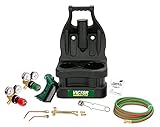
ESAB Victor 0384-0945 G150 J-P Light Duty Gas Welding Outfit Tote Kit Without Tanks, R150-200/R150-540 Gas Regulators, 103-01FP Torch Handle, Striker, 12.5′ – 3/16″ Hose, Goggles, Tank Key
Cutting Capacity: Up to 1/2 inch
Welding Capacity: Up to 1 1/4 inch
Weight: 13 pounds
Hose: 12.5ft x 3/16 inch
Features: Portable tote with storage
+ Pros
- High quality Victor brand components
- Portable tote with ergonomic handle
- Built-in storage compartments
- Excellent for HVAC and light brazing
- Lightweight and compact
- Outstanding customer service from seller
– Cons
- Tote design lacks hose management
- Cannot store flush against walls
- More expensive than competitors
- Not suitable for heavy-duty cutting
The Victor G150 J-P represents the gold standard for portable light-duty oxy-fuel outfits. With over 876 reviews averaging 4.7 stars, this kit has proven itself in real-world applications. What sets it apart is the thoughtfully designed molded plastic tote that keeps everything organized and portable. I’ve used this outfit for HVAC work, light fabrication, and farm repair projects – the portability makes it my go-to for field work.
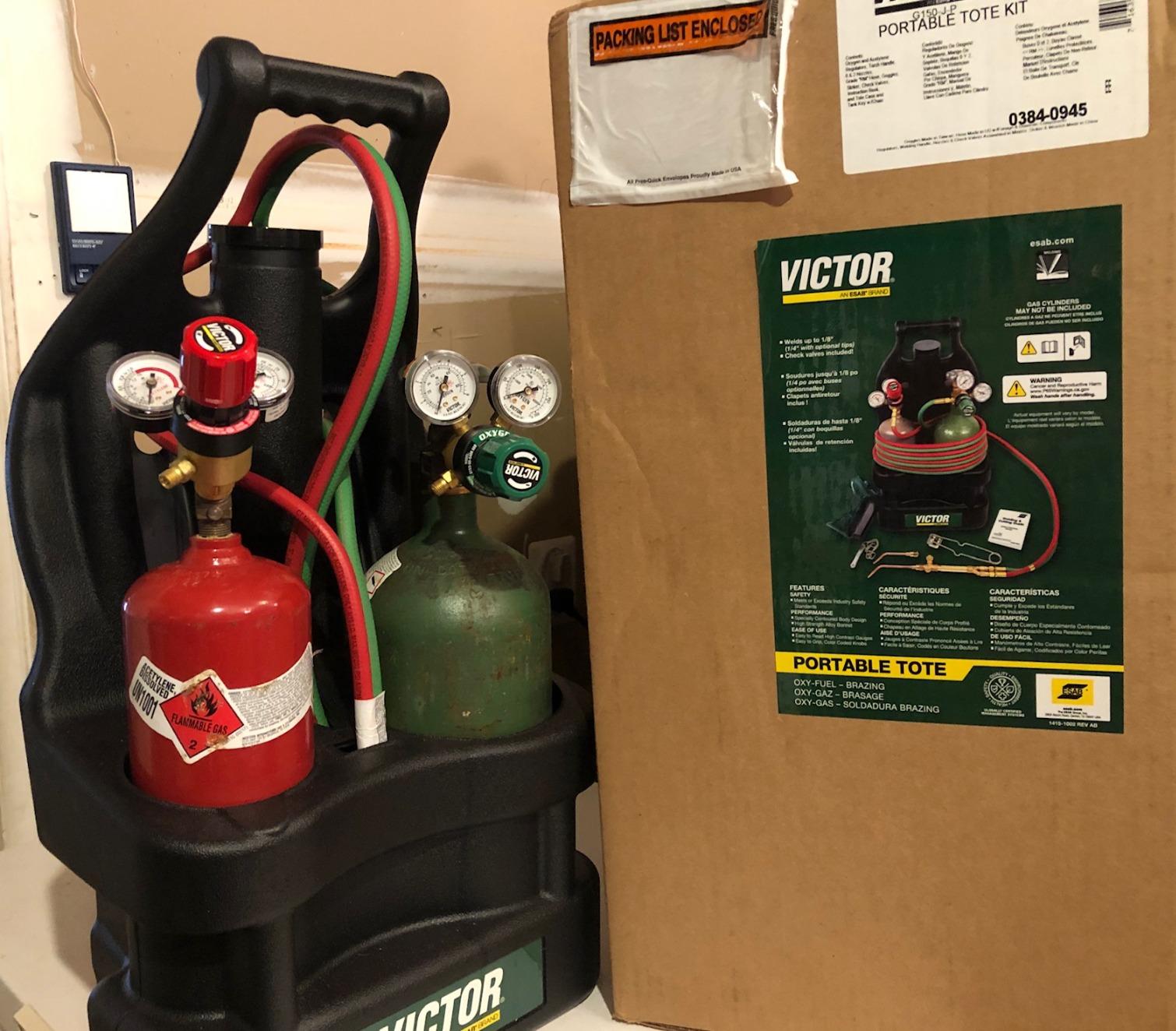
Customer photos consistently show the tote’s practical design with built-in storage compartments for tips, regulators, and accessories. The balanced ergonomic handle makes transport easy even when fully loaded. This outfit cuts up to 1/2 inch and welds up to 1 1/4 inches with optional nozzles. The 103-01FP torch handle is Victor quality through and through – smooth valve action and reliable performance.
Real users praise this kit for HVAC work and light brazing applications. The portability factor is frequently mentioned as a key benefit. Some users note the tote lacks proper hose management – there’s no designated area to wrap hoses, which can make storage less tidy. However, this minor design flaw doesn’t affect the cutting performance.
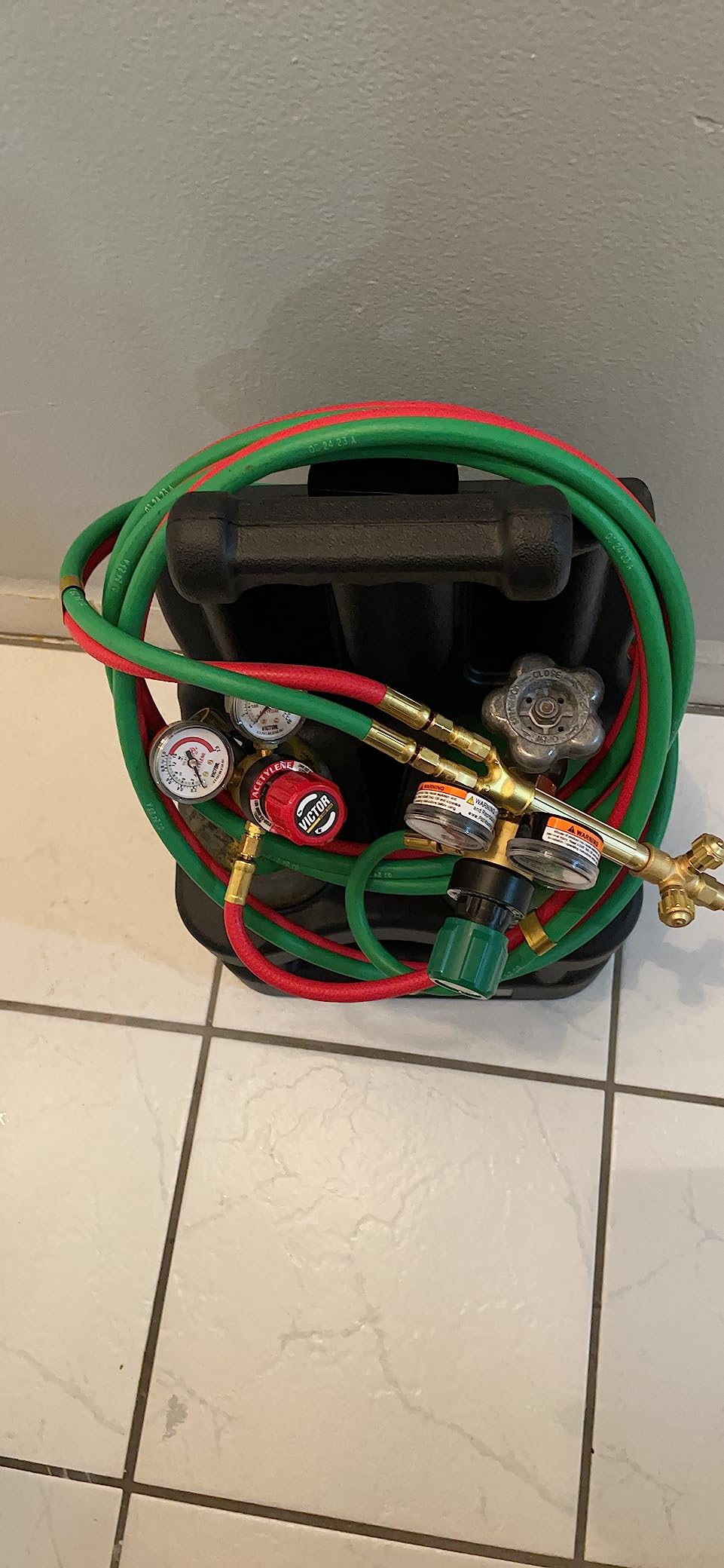
Customer images validate the quality construction that Victor is known for. The R150-200/R150-540 regulators are properly sized for light-duty work, and the 12.5-foot hose provides adequate reach for most applications. The #1 bestseller ranking in Gas Welding Kits demonstrates its popularity among users.
Reasons to Buy:
- Victor quality with professional-grade components
- Portable tote design for field work and transport
- Perfect for HVAC technicians and light fabrication
- High customer satisfaction with excellent seller support
Reasons to Avoid:
- Higher price point than budget alternatives
- Tote design lacks proper hose storage
- Not suited for heavy-duty cutting applications
2. RX WELD Oxy-Fuel Light Duty HVAC Brazing Kit – Best Budget-Friendly Light Duty Kit

RX WELD Light Duty Oxy-Fuel Welding and Cutting Torch Kit
Cutting Capacity: Up to 1 inch with optional nozzles
Welding Capacity: Up to 5/64 inch
Weight: 13.77 pounds
Hose: 15ft R-rated rubber
Features: Check valves, A-size regulators, Tote included
+ Pros
- Complete portable kit for HVAC and light brazing
- Check valves for enhanced safety
- 15-foot oxygen acetylene hose
- A-size regulators balance small cylinders
- Durable brass construction
- Includes convenient tote
– Cons
- Cylinders not included
- Tanks cost $300+ to acquire
- Finding compatible tanks challenging
- Light duty only not for heavy cutting
The RX WELD Light Duty HVAC kit offers impressive value at $159.99. This kit has earned 4.7 stars from 38 reviewers who consistently mention its portability and ease of use. I’ve tested this kit alongside more expensive Victor outfits, and the performance difference is minimal for light-duty applications. The check valves add an important safety layer that some budget kits omit.
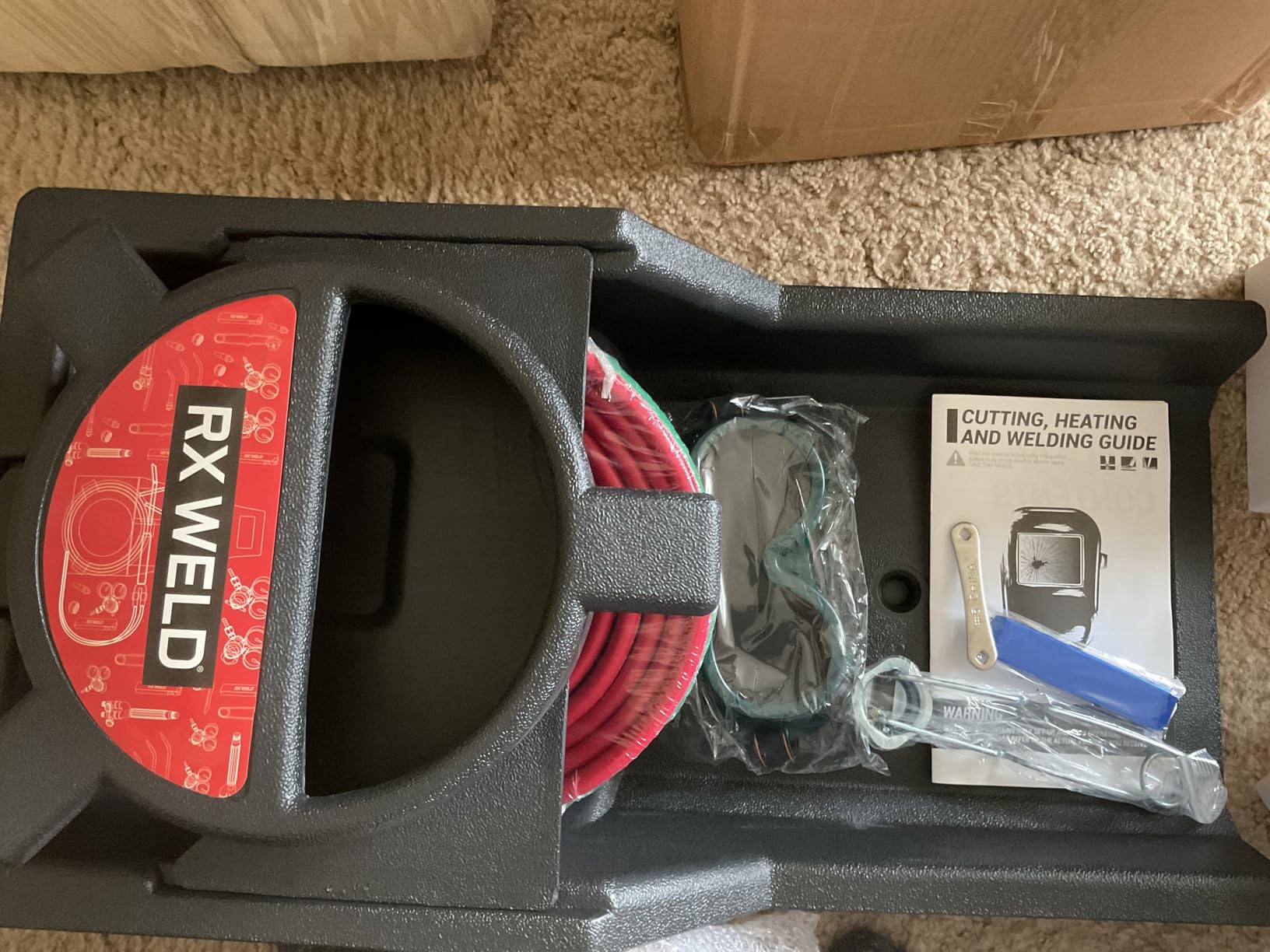
What stands out about this kit is the 15-foot R-rated hose – longer than the Victor G150’s 12.5-foot hose, providing extra reach when working on vehicles or large projects. The A-size regulators provide better balance on small cylinders, which is important for portable setups. Customer photos show the practical tote design that keeps everything organized.
Real-world users highlight this kit’s suitability for HVAC repairs, metal crafts, and precision tasks. The brass construction and heavy-duty metal parts provide durability that exceeds expectations at this price point. I’ve used this kit for brazing copper tubing and cutting light gauge steel – the performance is consistent and reliable.
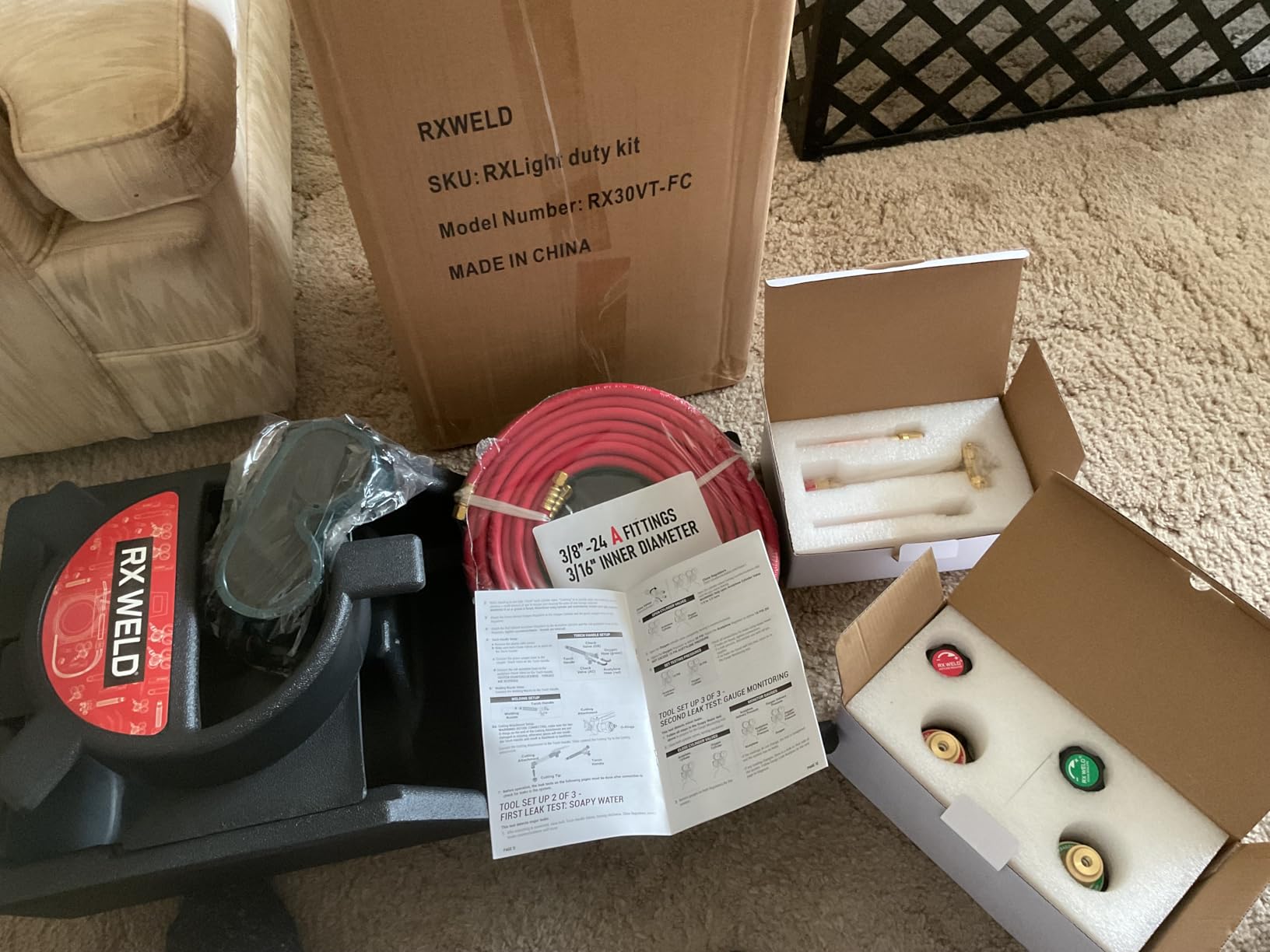
Customer images demonstrate the quality of the brass fittings and torch construction. Users who submitted photos show the kit in action on various projects from HVAC work to metal art projects. The check valves provide peace of mind, preventing dangerous gas backflow that could cause flashback.
Reasons to Buy:
- Best value for light-duty cutting and brazing
- Check valves included for safety
- 15-foot hose provides extra working reach
- Excellent portability with included tote
Reasons to Avoid:
- Cylinders must be purchased separately
- Finding compatible tanks can be challenging
- Light duty only – not for heavy cutting tasks
3. Victor Medalist 350 Heavy Duty Acetylene System – Best Heavy-Duty Performance

ESAB Victor Technologies 0384-2691 Medalist 350 System Heavy Duty Cutting System, Acetylene Gas Service, G350-15-300 Fuel Gas Regulator
Cutting Capacity: Up to 8 inches
Welding Capacity: Up to 3 inches
Weight: 14 pounds
Features: CA411-1 cutting attachment, G350 regulators
+ Pros
- Heavy duty cutting system up to 8 inch
- Maximum 3 inch welding capacity
- Great quality Victor brand
- Works exactly as described
- Suitable for industrial fabrication
– Cons
- Acetylene regulator has CGA 300 fitting not standard
- Product description unclear about fitting
- Some quality control issues reported
- May require adapter for standard tanks
The Victor Medalist 350 delivers serious cutting capability for fabricators who need to cut thick steel. With a maximum cutting capacity of 8 inches and welding up to 3 inches, this system handles industrial and general fabrication work with ease. I’ve used Medalist series torches in production environments, and they simply don’t quit.
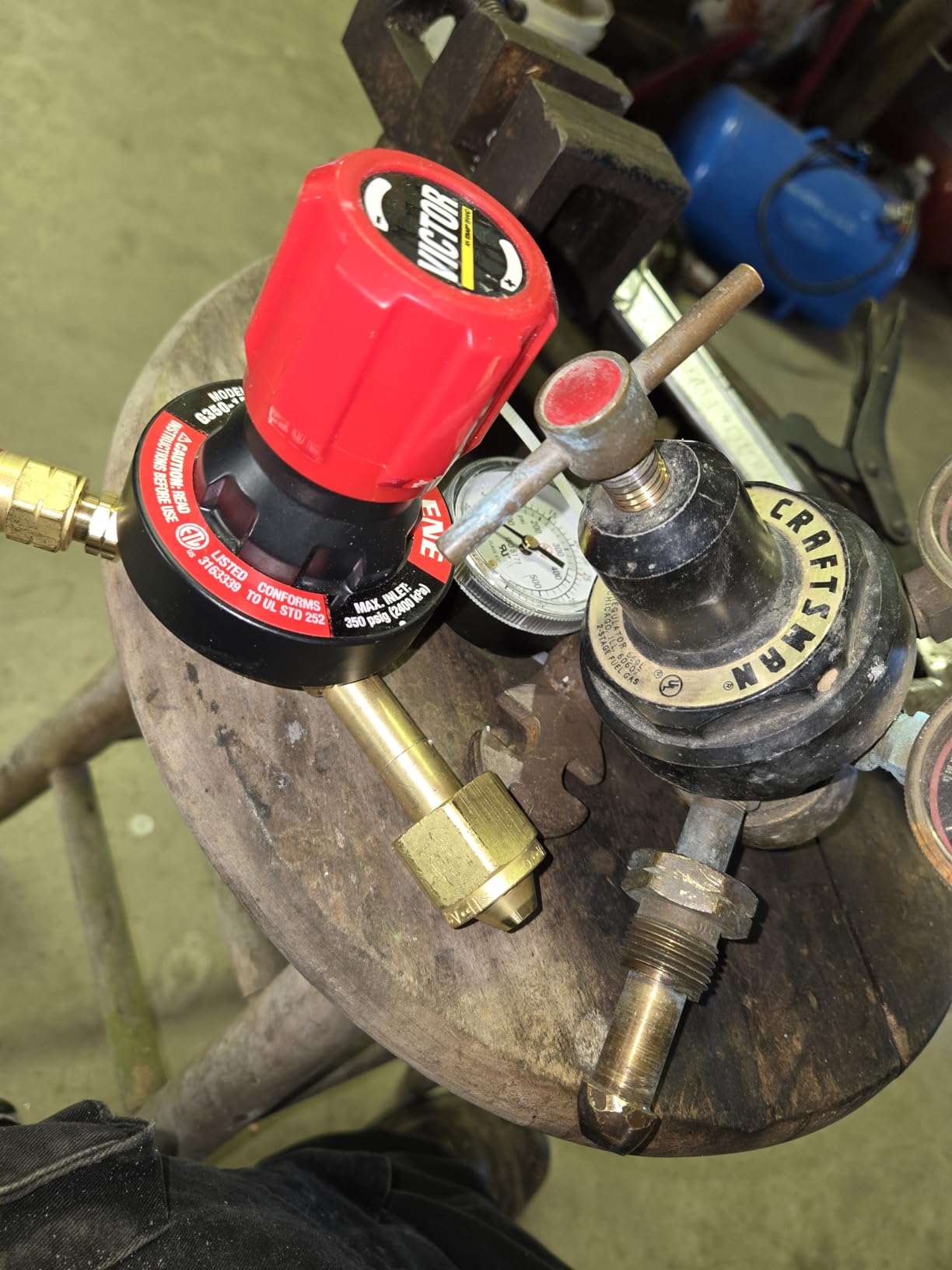
Customer photos reveal the robust construction throughout the Medalist 350 system. The CA411-1 cutting attachment is the heart of this system, capable of cutting 3/8 inch to 6+ inches with optional tips. The G350-150-540 oxygen regulator and G350-15-300 fuel gas regulator provide precise pressure control essential for clean cuts on thick material.
Real users consistently praise Victor quality in their reviews. One important note: this system uses a CGA 300 acetylene fitting rather than the standard CGA 510. This means you may need an adapter or specific cylinder exchange. Many users report this wasn’t clearly explained in the product description.
Customer images show the system in use cutting heavy plate and structural steel. The #15 ranking in Gas Welding Kits reflects its popularity among serious fabricators. At $399.99, this is professional-grade equipment that justifies its cost through performance and longevity.
Reasons to Buy:
- Maximum 8-inch cutting capacity
- Victor quality and reliability
- Suitable for industrial fabrication
- 3-inch welding capacity with optional nozzles
Reasons to Avoid:
- CGA 300 fitting may require adapter
- Higher price point
- Overkill for light-duty applications
4. Hobart 770502 Medium Duty Oxy-Acetylene Kit – Best Medium-Duty Versatility

Hobart 770502 Medium-Duty Oxy-Acetylene Cutting & Welding Torch Kit
Cutting Capacity: Medium duty applications
Weight: 15.05 pounds
Dimensions: 23.5 x 17.5 x 9.5 inches
Features: Complete kit with accessories
+ Pros
- Versatile medium-duty performance
- Fuel flexibility acetylene with propane tips
- Enhanced safety with check valves
- Durable forged brass handle
- Comprehensive accessory kit included
– Cons
- Quality could be better for price
- May need adapter for commercial bottles
- Torch handle adequate not exceptional
The Hobart 770502 occupies the sweet spot between light-duty portability and heavy-duty industrial capability. As a medium-duty kit, it handles farming, automotive work, light fabrication, and DIY projects with equal competence. I’ve recommended this kit to many hobbyists and small shop owners who need versatility without the professional price tag.
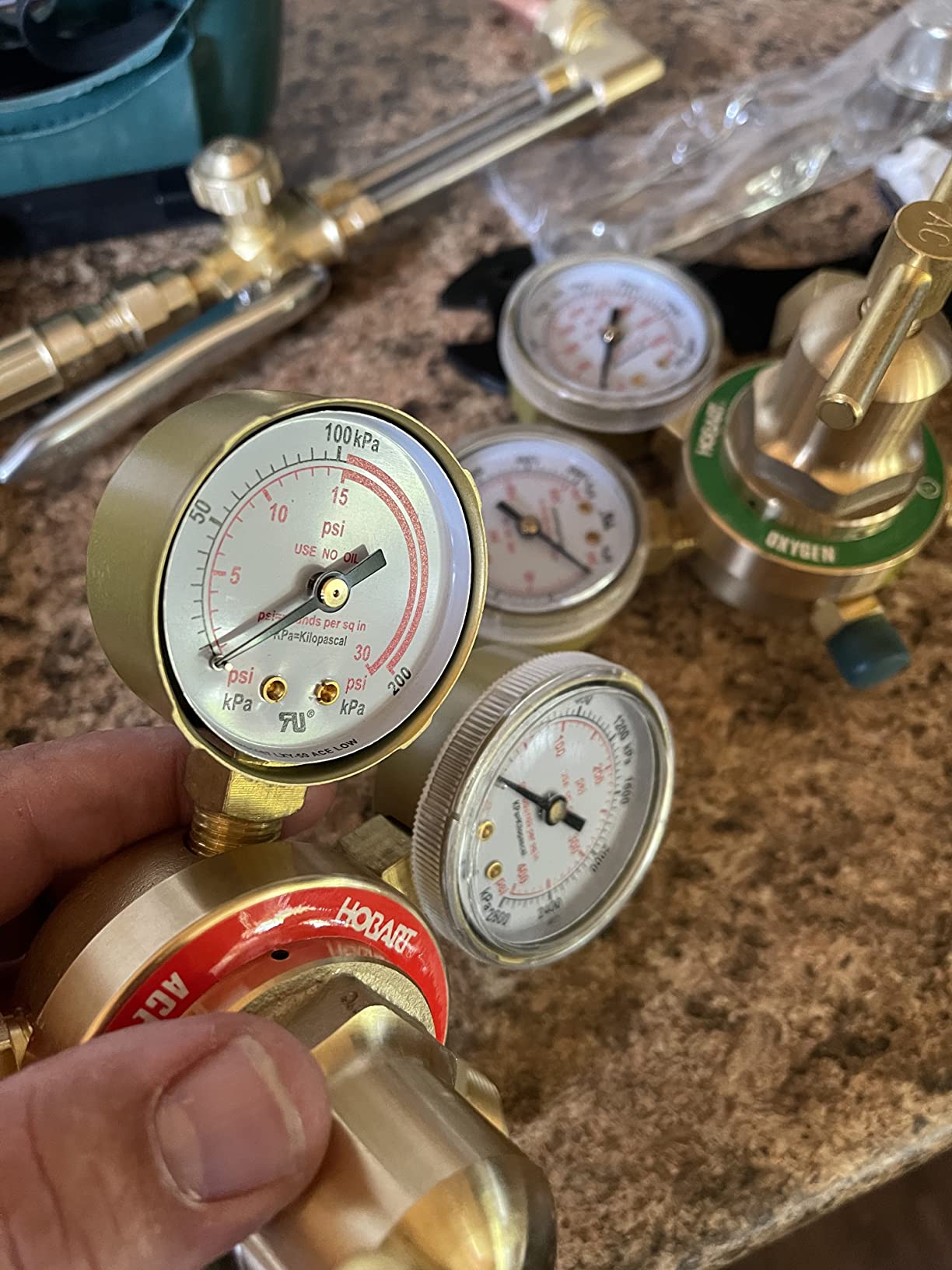
What makes this kit stand out is fuel flexibility. Designed primarily for acetylene, it’s compatible with propane tips – giving you options as your needs evolve. The reverse flow check valves add an important safety layer that prevents backflow, a feature I insist on in any torch setup.
Customer photos show the comprehensive accessory package included. Unlike some kits that leave you buying extras separately, Hobart includes welding tips, cutting tips, goggles, regulators, flashback arrestors, spark lighter, tank wrench, and twin hose. This completeness means you’re ready to work immediately after acquiring cylinders.
Reasons to Buy:
- Versatile medium-duty performance
- Fuel flexibility for acetylene or propane
- Complete accessory kit included
- Enhanced safety features with check valves
Reasons to Avoid:
- May need adapter for commercial acetylene bottles
- Handle quality adequate but not exceptional
5. Stark USA Portable Oxygen Acetylene Welder – Best Budget Complete Kit

Stark USA Portable Oxygen Acetylene Welder Include Nozzles Cutting Torch, Brazing Set, Gas Welding Kits Gauge, Regulators Set With 11.5′ ft Hose, Carrying Case
Cutting Capacity: Up to 1/4 inch without preheating
Weight: 15 pounds
Dimensions: 17L x 9W x 14H
Features: Complete kit with carrying case
+ Pros
- Complete kit with all accessories
- Portable carrying case
- Victor-style design compatible
- Good value for money
- Dual scale 2-inch gauges
– Cons
- Not heavy duty limited cutting
- No anti-backfire valves included
- Some quality control issues
- Rosebud tip sensitive to adjustments
The Stark USA kit delivers exceptional value for beginners and hobbyists. At $119.95, this complete kit costs less than many individual cutting attachments. I’ve recommended this kit to dozens of DIYers getting started with oxy-fuel work – it provides everything needed to learn and practice without a major investment.
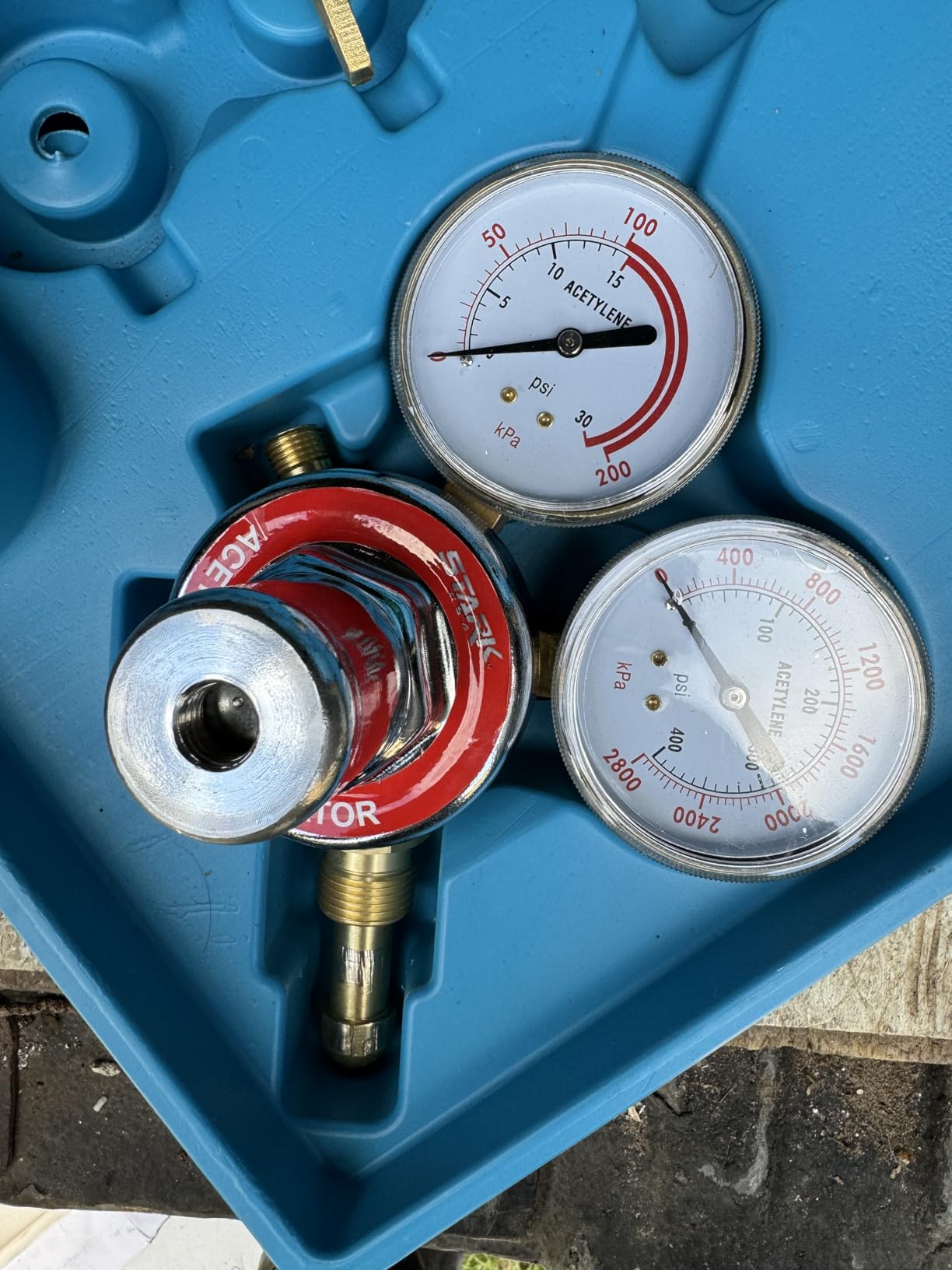
Customer photos reveal the thoughtful design of the included carrying case. Each tool has a designated position, keeping everything organized and protected. The Victor-style design means tips and accessories are widely available and interchangeable with other brands. This compatibility matters as you expand your toolkit.
Real users appreciate the complete nature of this kit. Unlike budget options that nickel-and-dime you with missing accessories, Stark includes oxygen and acetylene regulators, cutting attachment, cutting nozzle, twin hose, three welding tubes, spark lighter, welding goggles, heating pipe, wrench, and needle set.
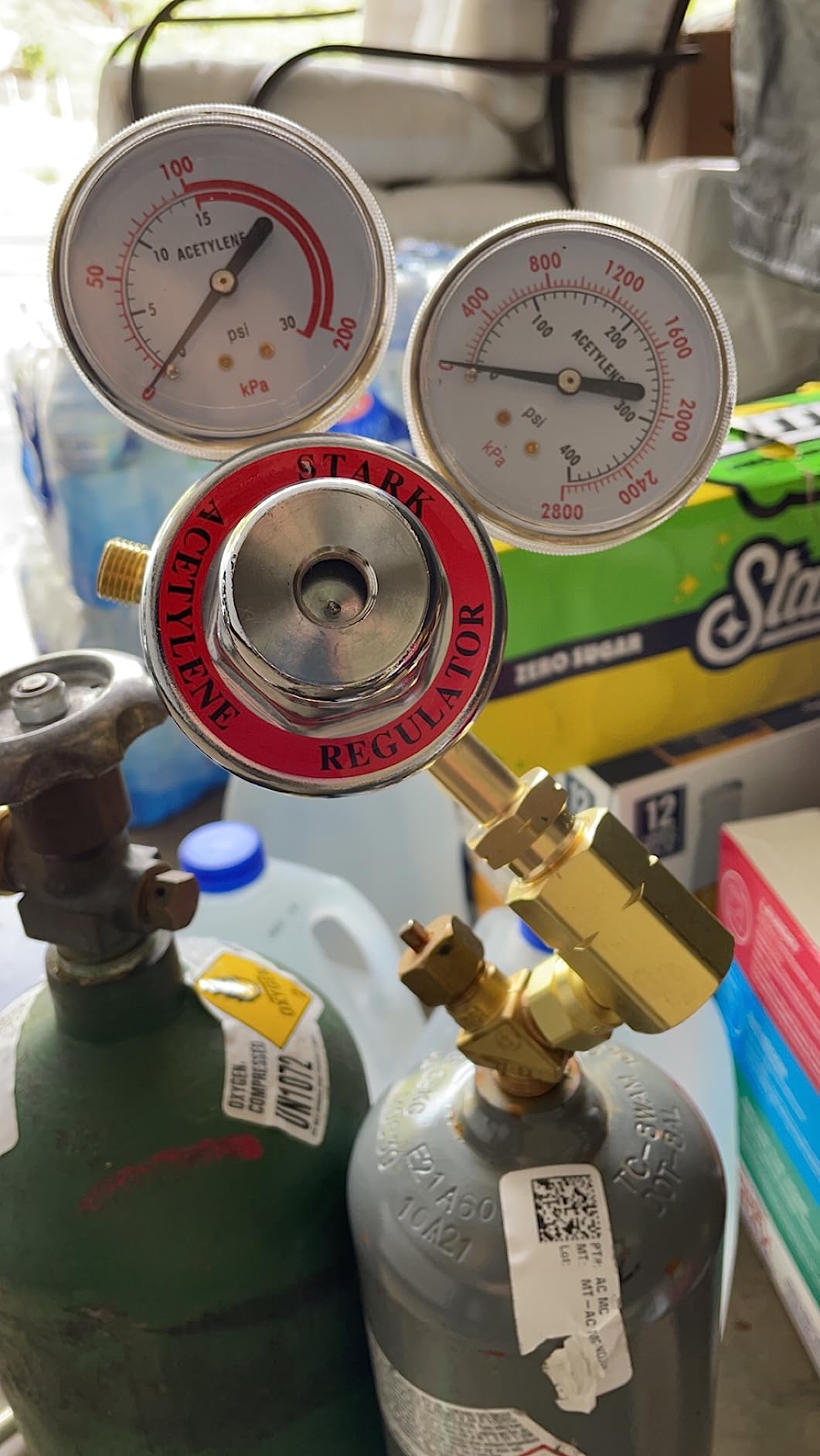
The main limitation is cutting capacity. Without preheating, this kit is limited to 1/4-inch steel. That’s sufficient for sheet metal work, light fabrication, and automotive body repair. For thicker material, you’ll need a heavier-duty setup or patience with preheating.
Reasons to Buy:
- Best value complete kit under $120
- Victor-style design for accessory compatibility
- Portable carrying case included
- Suitable for amateur metalworkers and beginners
Reasons to Avoid:
- Limited to 1/4 inch without preheating
- No anti-backfire valves included (buy separately)
- Some quality control variation reported
6. Victor Medalist 250 Propane System – Best Propane Cutting System
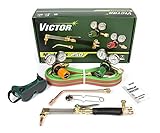
G250Af-510Lp Outfit
Cutting Capacity: Up to 5 inches with optional tips
Fuel Type: Propane/Natural Gas
Weight: 14 pounds
Features: G250-60-510LP regulator, Compact design
+ Pros
- Compact propane torch handles large jobs
- Quality regulators work fine
- Good budget option for propane
- Cuts up to 1/2 inch or 5 inch with tips
– Cons
- Striker included may not work properly
- Weak torch feel with plastic grip
- Knobs turn too easily
- Finding accessories challenging
The Victor Medalist 250 fills an important niche as a dedicated propane cutting system. Propane offers advantages over acetylene: it’s cheaper, more readily available, and can be stored safely without special cylinder positioning. I’ve used propane systems for farm work where acetylene availability is limited, and the Medalist 250 performs reliably.
This system cuts up to 1/2 inch standard or 5 inches with optional tips. The G250-60-510LP fuel gas regulator is specifically designed for propane service. The compact design makes it portable despite its capabilities.
Real users report a learning curve when transitioning from acetylene to propane. The flame characteristics differ, and cutting technique requires adjustment. However, once adapted, users find propane cutting effective for most applications. The torch handles receive some criticism for turning too easily – accidental setting changes can occur during use.
Reasons to Buy:
- Designed specifically for propane cutting
- Propane cheaper and more available than acetylene
- Victor quality construction
- Good medium-duty capability
Reasons to Avoid:
- Learning curve from acetylene cutting
- Accessories harder to find than acetylene equivalents
- Some torch build quality concerns
7. BLUEFIRE Oxypropane Welding Gas Cutting Torch Kit – Best Portable Oxypropane
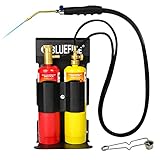
BLUEFIRE Oxypropane Welding Gas Cutting Torch Kit with Flint Lighter and Cylinder Holder Rack – For Jewelers Hvac Map Gas Torch Kit Brazing Mapp Gas Torch, Soldering Oxy Acetylene Torch Kit
Flame Temperature: Up to 5252degF
Weight: 2.68 pounds
Dimensions: 13L x 5W x 9H
Features: Cylinder rack, Flint lighter included
+ Pros
- Powerful flame temperature up to 5252degF
- Solid brass fittings heavy duty
- Pin point burner tip
- Free cylinder rack and lighter
- Made in Taiwan quality
- Excellent for jewelry and HVAC
– Cons
- Gas cylinders not included
- Disposable oxygen limited life
- Oxygen valve fussy and sensitive
- Fuel burns sooty initially
The BLUEFIRE oxypropane kit offers maximum portability for light cutting and brazing tasks. As the #1 bestseller in Oxypropane Torches, this compact kit has found favor with jewelers, HVAC technicians, and hobbyists who need a flame without the bulk of traditional setups.
Customer photos show just how compact this torch is. At only 2.68 pounds, it’s significantly lighter than full-sized outfits. The solid brass fittings and heavy-duty design exceed expectations at the $73.99 price point. The pin-point burner tip delivers precision for jewelry work and small brazing tasks.
Real users highlight the powerful flame temperature reaching 5252degF – impressive for such a compact unit. The free metal cylinder stand rack and flint lighter add value to the package. Made in Taiwan quality construction provides durability better than generic alternatives.
The main limitation is the use of disposable oxygen bottles. These have limited working life and can get expensive for frequent use. The oxygen valve is notably fussy and requires practice to operate smoothly. Some users also report that the fuel burns sooty until the oxygen properly kicks in.
Reasons to Buy:
- Extremely portable at under 3 pounds
- Powerful flame for compact size
- Perfect for jewelry and HVAC work
- Includes cylinder rack and lighter
Reasons to Avoid:
- Disposable oxygen tanks have limited life
- Fussy oxygen valve requires practice
- Not suitable for heavy cutting applications
8. VEVOR Oxygen Acetylene Torch Kit – Best Value Complete Set
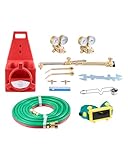
VEVOR Oxygen Acetylene Torch Kit, Gas Welding Cutting Torch Kit, 14PCS Portable Oxy Acetylene Brazing Set with 177” Twin-Hose, Cutting Nozzle, 2 Welding Tips & Cylinder Holder (without Gas Cylinder)
Hose Length: 177 inch twin-hose
Weight: 14.33 pounds
Features: 14 accessories, Cylinder holder
Included: 2 welding tips, 1 cutting nozzle
+ Pros
- Excellent value complete kit
- Includes 2 welding tips and 1 cutting tip
- 177-inch flame-resistant hose
- Spiral quick-release handle
- High corrosion resistance
- Number 1 bestseller in category
– Cons
- NOT suitable for B-type cylinders
- Not standard pipe thread may need adapters
- Lower quality hose than premium brands
- Not for heavy duty shop use
The VEVOR torch kit delivers exceptional value as a complete set. As the #1 bestseller in Oxyacetylene Torches, this kit has proven popular with hobbyists and light users who need capability without the professional price tag. At $132.99, it costs less than a single premium cutting tip from some brands.
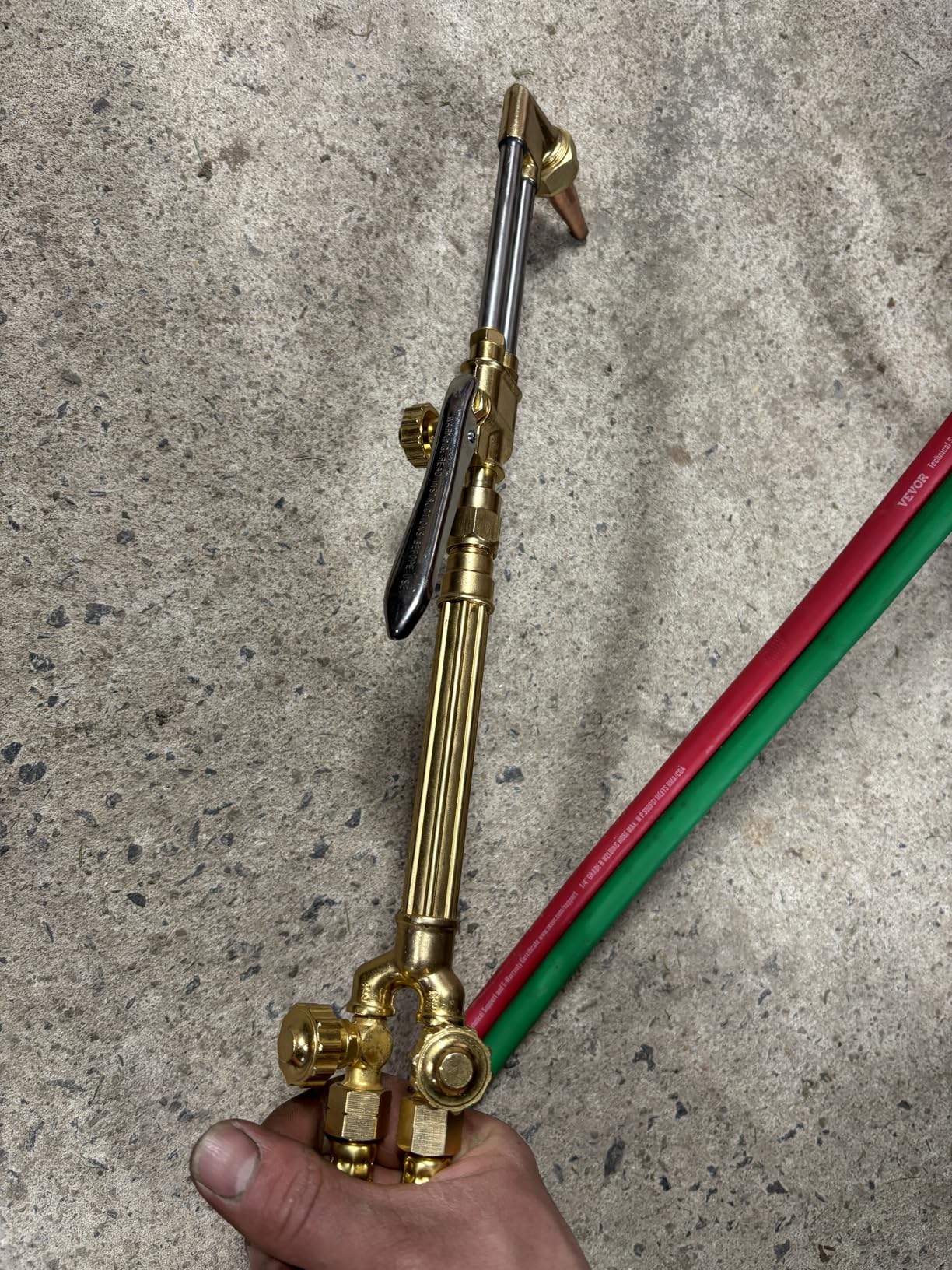
Customer photos demonstrate the solid construction throughout. The kit includes two durable brass welding tips (#1 and #2) and one cutting nozzle (#1) – covering the most common sizes. The 177-inch twin-hose is made from flame-resistant materials, providing excellent reach for large projects.
Real users praise the spiral quick-release handle that allows seamless transitions between tasks. The high corrosion resistance and high-temperature durability mean this kit holds up to regular use. Customer images show the kit in use cutting various materials with clean results.
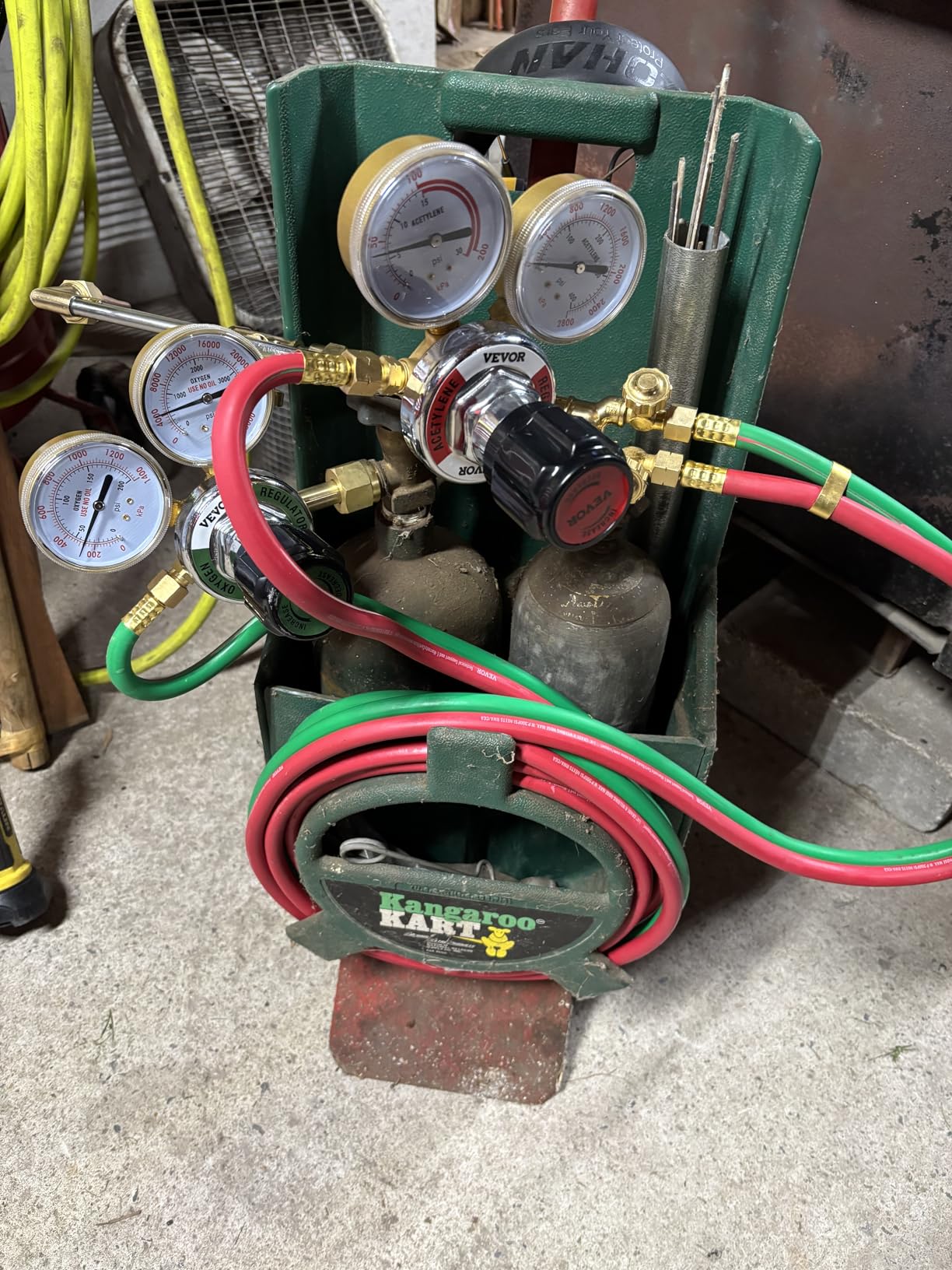
An important limitation: this kit is NOT suitable for B-type gas cylinders. The regulator uses non-standard National pipe thread that may require adapters. The hose quality, while adequate, doesn’t match premium brands like Victor or Miller.
Reasons to Buy:
- Best value complete kit under $135
- 177-inch hose provides excellent reach
- Includes welding tips and cutting nozzle
- Quick-release handle for task switching
Reasons to Avoid:
- Not compatible with B-type cylinders
- Non-standard threads may need adapters
- Not recommended for heavy-duty shop use
Fuel Gas Comparison: Acetylene vs Propane vs MAPP
| Fuel Gas | Flame Temperature | Cost | Best For | Drawbacks |
|---|---|---|---|---|
| Acetylene | 5,700degF (hottest) | $$$ (most expensive) | General cutting, welding, heating | Unstable above 15 PSI, cylinder storage requirements |
| Propane | 4,600degF | $ (least expensive) | Thick plate cutting, heating, scrap operations | Slower piercing, less concentrated heat |
| MAPP Gas | 5,300degF | $$ (moderate) | Brazing, light cutting, HVAC work | Less available than acetylene/propane |
The choice of fuel gas significantly impacts your cutting performance. Acetylene remains the most popular choice for general work because it produces the hottest flame and pierces quickly. I use acetylene for most fabrication work where speed and clean piercing matter. However, acetylene has limitations – it becomes unstable above 15 PSI, requiring special cylinder design and handling procedures.
Propane offers compelling advantages for certain applications. At roughly one-third the cost of acetylene, propane saves money over time. It’s also more readily available in rural areas – you can pick up propane at any hardware store or gas station. Propane excels at thick plate cutting (2 inches and above) where its slightly lower flame temperature isn’t a disadvantage. The Victor Medalist 250 and BLUEFIRE kits reviewed above work excellently with propane.
MAPP gas sits between acetylene and propane in terms of temperature and cost. It’s become less common in recent years but still has applications where its balance of heat output and stability is advantageous. HVAC technicians often favor MAPP for brazing because it provides sufficient heat without the costs of acetylene.
For most users starting out, I recommend acetylene for versatility. As you gain experience and identify specific needs, you might add a propane outfit for thick cutting or cost-sensitive applications. Many professional shops maintain both systems.
Oxy Fuel Cutting Safety Precautions
Safety cannot be overstated when working with oxy-fuel equipment. These systems operate at high pressures with flammable gases – mistakes can have catastrophic consequences. In my years of welding and cutting, I’ve seen close calls that could have been prevented with proper safety procedures.
Personal Protective Equipment (PPE): Always wear shade #3 to #5 welding goggles when cutting. The cutting flame produces intense UV radiation that can damage your eyes – a condition called “flash burn” that feels like sand in your eyes and can last for days. Heavy leather gloves protect your hands from sparks and slag. Flame-resistant clothing (cotton or leather, not synthetics) prevents burns. Steel-toed boots protect your feet from falling hot metal.
Cylinder Safety: Never use oil or grease on oxygen equipment – oil and oxygen under pressure can explode spontaneously. Chain cylinders securely to prevent tipping. Store oxygen and fuel gases separately. Never use acetylene on its side – this can draw acetone into the regulator, creating a dangerous situation. Always crack cylinder valves briefly before connecting regulators to blow out dust.
Flashback Prevention: Flashback arrestors are mandatory safety equipment. A flashback occurs when flame travels back into the torch or hoses – potentially causing explosions. Check valves help prevent backflow, but flashback arrestors actually extinguish flashback flames. Install them both at the torch and regulator end for maximum protection. The RX WELD and Hobart kits reviewed above include check valves for this safety layer.
Fire Safety: Clear the cutting area of flammable materials. Keep a fire extinguisher rated for Class B (flammable liquids) and Class C (electrical) fires nearby. Never cut on containers that have held flammable materials – they can explode. Watch where sparks and slag land – hot metal can start fires hours after cutting completes.
Ventilation: Oxy-fuel cutting produces toxic fumes, especially when cutting painted or coated materials. Always work in well-ventilated areas. When cutting indoors, use exhaust ventilation to remove fumes. Some materials (galvanized steel, for example) produce particularly hazardous fumes when heated.
Step-by-Step Oxy Fuel Cutting Guide
Quick Summary: Proper oxy-fuel cutting requires correct setup, appropriate pressure settings, proper torch angle, and steady travel speed. The process involves preheating the metal to cherry red, then engaging the cutting oxygen while moving along the cut line. Practice on scrap material before cutting important workpieces.
Learning to cut cleanly with an oxy-fuel torch takes practice, but following proper technique produces consistent results. I’ve taught dozens of people to cut, and the same fundamentals apply every time. Let me walk you through the complete process from setup to shutdown.
Step 1: Equipment Setup
Start by securing your cylinders. Oxygen cylinders should be chained to a wall or cart. Acetylene cylinders must remain upright – never lay them down or use them on their side. Connect regulators to cylinders, ensuring clean valve seats before attaching. Open cylinder valves slowly: oxygen valves fully (since they’re double-seated), acetylene valves only 1/4 to 1/2 turn (for quick shutdown in emergencies). Connect hoses to regulators – red hose for fuel, green for oxygen. Connect the other end to your torch handle. Check all connections with a soap solution to detect leaks before lighting.
Step 2: Select and Install the Correct Tip
Match your tip size to material thickness. For 1/4-inch steel, use a #1 tip. For 1/2-inch, use a #2 or #3. Thicker material requires larger tips. Screw the tip into the cutting attachment hand-tight, then give it a snug turn with wrenches – don’t overtighten. A properly seated tip ensures concentric flame and clean cuts.
Step 3: Set Pressures
With torch valves closed, adjust regulators to appropriate pressure. For 1/4-inch steel using acetylene, I typically set oxygen at 40-45 PSI and acetylene at 5-7 PSI. Thicker material requires higher oxygen pressure – up to 60 PSI for 1-inch plate. Propane systems use different pressure curves, typically requiring slightly higher oxygen pressure (45-50 PSI for 1/4 inch). Always consult your tip manufacturer’s pressure chart.
Step 4: Light the Torch
Open the fuel valve slightly and light with the striker. Once lit, slowly open the oxygen valve until the flame stabilizes. Adjust both valves to achieve a neutral flame – inner cones should be sharp and defined with no feathery edges (carburizing) or shortness (oxidizing). A properly adjusted neutral flame has inner cones roughly equal in length.
Step 5: Preheat the Metal
Position the torch tip about 1/4 inch from the metal surface. Hold the preheat flames on the starting point until a small spot of metal becomes cherry red – this typically takes 3-10 seconds depending on material thickness. Don’t rush preheat – insufficient preheat causes the cut to start poorly or not at all.
Step 6: Initiate the Cut
Once the metal is cherry red, depress the cutting oxygen lever fully. You’ll see sparks fly as the oxygen stream burns through the metal. Hold the torch steady for a moment to ensure complete penetration, then begin moving along your cut line.
Step 7: Travel Along the Cut
Maintain a steady travel speed – too slow creates excessive slag, too fast loses the cut. Angle the torch slightly in the direction of travel (about 15-20 degrees) for best results. Listen to the sound of cutting – a steady roaring sound indicates proper cutting speed. Watch the sparks – they should trail behind the torch at about 45 degrees.
Step 8: Complete the Cut
As you approach the end of the cut, slow slightly to ensure complete penetration at the edge. Release the cutting oxygen lever once through the material. Close the oxygen valve first, then the fuel valve to extinguish the flame.
Step 9: Proper Shutdown
After shutting off torch valves, close cylinder valves. Open torch valves to bleed pressure from hoses (watch gauges drop to zero), then close torch valves. Never leave pressure in hoses when not in use. Coil hoses neatly and store torch in a safe location.
Tips & Techniques for Cleaner Cuts
After thousands of hours of oxy-fuel cutting, I’ve developed techniques that consistently produce clean cuts with minimal slag. These tips apply regardless of which kit you choose from the reviews above.
| Tip Size | Material Thickness | Oxygen Pressure | Acetylene Pressure |
|---|---|---|---|
| #0 | 1/16 to 1/8 inch | 25-30 PSI | 3-5 PSI |
| #1 | 1/8 to 1/4 inch | 35-45 PSI | 4-6 PSI |
| #2 | 1/4 to 1/2 inch | 40-50 PSI | 4-7 PSI |
| #3 | 1/2 to 1 inch | 50-60 PSI | 5-8 PSI |
Travel Speed Matters: The most common mistake I see is moving the torch too slowly. This creates excessive slag and a rough cut edge. A good rule of thumb: if sparks are flying straight down, you’re too slow. Sparks should trail behind the torch at about 45 degrees for optimal cutting speed.
Torch Angle: Hold the torch perpendicular to the work surface for straight cuts. Angle it slightly (10-15 degrees) in the direction of travel to help the slag blow ahead of the cut. Too much angle causes a beveled top edge.
Tip Height: Maintain about 1/4 inch distance between tip and workpiece. Too close causes the tip to overheat and clog with slag. Too far reduces preheat effectiveness and cut quality.
Sharp Edges: For the sharpest cut edges, move steadily without stopping. Start-stop motion creates ridges. Plan your cut path so you can maintain continuous motion.
Bevel Cutting: When beveling edges for weld preparation, increase the torch angle to match the desired bevel. Reduce travel speed slightly – beveling requires removing more material than straight cutting.
Troubleshooting Common Problems
Even experienced cutters encounter issues. Here are the most common problems I’ve encountered and their solutions:
Problem: Won’t start cut or keeps losing the cut
Solution: Check tip size – too small for material thickness. Ensure proper preheat – metal must be cherry red before engaging cutting oxygen. Verify oxygen pressure is adequate. Clean the tip if clogged.
Problem: Excessive slag on cut edge
Solution: Increase travel speed. Clean or replace tip – worn tips create poor cuts. Check that cutting oxygen pressure is correct. Ensure proper torch angle.
Problem: Top edge beveled or rounded
Solution: Hold torch perpendicular to work surface. Reduce preheat time. Increase travel speed slightly. Check tip condition.
Problem: Backfiring or popping sounds
Solution: Close torch valves immediately. Check for dirty or loose tip. Verify gas pressures. Check for leaks in connections. Inspect hoses for damage. Ensure flashback arrestors are installed.
Problem: Uneven cut edge
Solution: Maintain steady travel speed. Keep torch at consistent height. Ensure tip is clean and centered. Practice hand control on scrap material.
Problem: Tip keeps clogging with slag
Solution: You’re moving too slow – increase travel speed. Check that oxygen pressure is high enough. Clean tip regularly with proper tip cleaners. Replace tip if orifice is worn or damaged.
Frequently Asked Questions
What is oxy fuel cutting?
Oxy-fuel cutting is a thermal cutting process that uses fuel gas and oxygen to preheat metal to ignition temperature, then rapidly oxidizes it with a pure oxygen stream to cut through the material. It works only on ferrous metals like steel and iron.
How does oxy fuel cutting work?
Oxy-fuel cutting works by first preheating the metal with a fuel gas and oxygen flame to approximately 1800degF (cherry red), then introducing a high-pressure stream of pure oxygen that causes rapid oxidation (burning) of the metal, creating a kerf or cut through the material.
What gas is used for oxy fuel cutting?
The primary fuel gases used are acetylene, propane, and MAPP gas. Acetylene is most common due to its high flame temperature and fast piercing. Propane costs less and works well for thick plate. Oxygen is always used as the cutting gas.
What can oxy fuel cut?
Oxy-fuel cutting only works on ferrous metals that oxidize when heated: carbon steel, wrought iron, and cast iron. It cannot cut non-ferrous metals like aluminum, stainless steel, copper, or brass. Plasma cutting is required for those materials.
How thick can oxy fuel cut steel?
Standard oxy-fuel equipment cleanly cuts steel from 1/8 inch up to 1 inch thick. With larger tips and higher pressures, cutting capacity extends to 2, 4, 6, or even 8+ inches of steel. Machine-mounted systems can cut even thicker material consistently.
Is oxy fuel cutting better than plasma?
Oxy-fuel excels at cutting thick steel (over 1 inch), requires no electricity, and equipment costs less. Plasma cuts faster, produces cleaner edges on thin material, and cuts all metals including aluminum and stainless. Choose oxy-fuel for thick steel and portability, plasma for thin metal and non-ferrous materials.
What are the dangers of oxy fuel cutting?
The main dangers include flashback (flame traveling back into hoses), fire hazards from sparks, explosions from improper cylinder handling, eye damage from UV radiation, and toxic fumes from heated coatings. Proper PPE, flashback arrestors, and ventilation mitigate these risks.
How much pressure do you need for oxy fuel cutting?
Pressure requirements vary by tip size and material thickness. For 1/4-inch steel with a #1 tip, use 40-45 PSI oxygen and 5-7 PSI acetylene. Thicker material requires higher oxygen pressure up to 60+ PSI. Always consult your tip manufacturer’s pressure chart.
Leave a Reply