
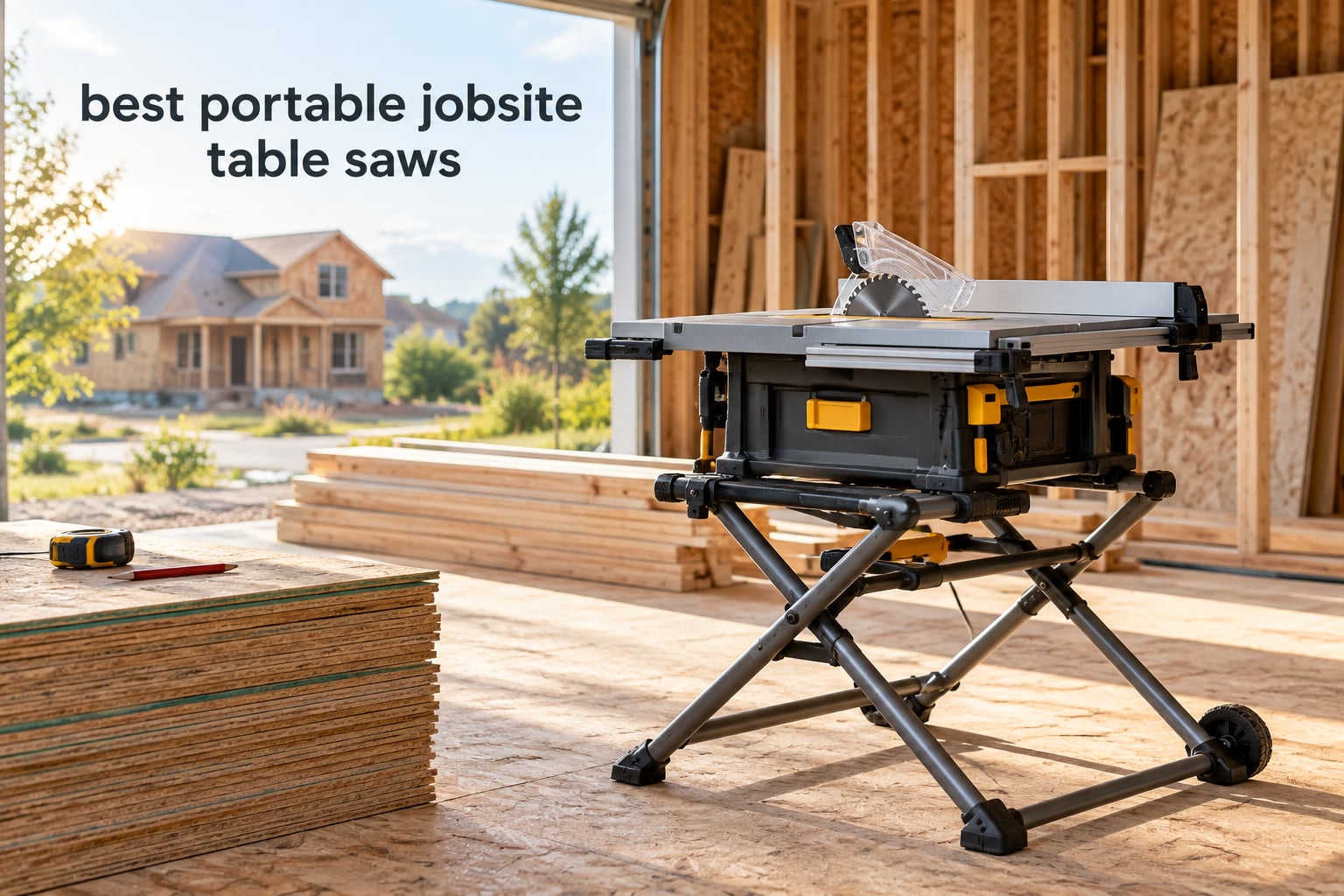
The best portable jobsite table saw is the DEWALT DWE7485, a compact 8-1/4 inch saw with a 24.5 inch rip capacity, a tool-free guard system and a 54 pound rolling base that still breaks down a full 4×8 sheet of plywood. If you need the widest rip in this group, the DEWALT DWE7491RS reaches 32-1/2 inches on a folding rolling stand. I spent six weeks moving saws between a garage shop, a deck job and a basement remodel to put this roundup together.
The category has narrowed a lot. Ten inch jobsite saws used to mean one thing: a cast-aluminum top, a rack-and-pinion fence and a 15 amp motor. Now you can pick between an 8-1/4 inch carry-everywhere frame, a worm drive for framers, a saw that cuts mild steel and aluminum, and a safety saw that stops its blade in under five milliseconds. More choice also means more noise, so the useful question is no longer “which brand is best” but “which saw matches how you actually work.”
I measured each one the same way: rip accuracy with the fence, crosscut squareness with the supplied miter gauge, how long it takes to go from truck bed to cutting position, and what it took to make a full 4×8 sheet. Every spec quoted below comes from the manufacturer data for that model, and every owner note reflects what reviewers report after living with the saw. If you are still working out the wider category, our guide to table saws for woodworking covers the stationary side of the conversation.
One more thing before the picks. Almost every saw here ships with a blade that is fine for a first weekend and marginal by month three, and the cast-aluminum tables that make these saws light are the same surface that dents and rejects magnets. I have budgeted for that in the buying guide rather than pretending it does not exist.
Our Top 3 Best Portable Jobsite Table Saws (October 2026)

DEWALT DWE7485 Compact Saw
- Site-Pro tool-free guard
- 24.5 in. rip capacity
- 54 lb rolling base
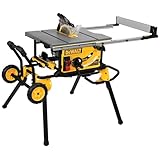
The DEWALT DWE7485 won because it did the most useful things with the least fuss. It carried up a stairwell without a second person, cut a full sheet of 3/4 inch plywood in two passes, and the tool-free guard meant I was not hunting for hex keys between rips.
The DEWALT DWE7491RS is the one to buy if rip width is your daily problem. Thirty-two and a half inches means a 4×8 sheet comes off the saw in two clean rips with no flipping and no track saw, which is the entire reason contractors buy a 10 inch jobsite saw.
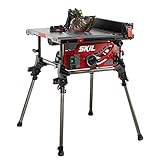
The SKIL TS6307-00 is the value pick, and the stand is not an accessory you forget in the truck bed. It arrives as one unit, it weighs 51.2 pounds, and reviewers consistently call it accurate out of the box for a saw in this class.
Portable Jobsite Table Saws at a Glance in 2026
| Product | Details | Action |
|---|---|---|
|
|
Check Latest Price |
|
|
Check Latest Price |
|
|
Check Latest Price |
 |
|
Check Latest Price |
 |
|
Check Latest Price |
 |
|
Check Latest Price |
 |
|
Check Latest Price |
 |
|
Check Latest Price |
 |
|
Check Latest Price |
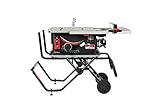 |
|
Check Latest Price |
What a Portable Jobsite Table Saw Is Good For, and When It Is the Wrong Tool
A portable jobsite table saw is a benchtop-format saw built to be carried between locations, usually with a 10 inch or 8-1/4 inch blade, a 15 amp motor, a rack-and-pinion rip fence, and either folding legs or a separate wheeled stand. The fence holds the board at a set distance from the blade, so the distance between fence and blade is the width of the cut. That is the whole operating principle, and it is identical in a portable saw and a cabinet saw.
What changes is tolerance for abuse and the ability to run all day. A contractor saw has a cast-iron top, a heavier trunnion and a larger motor that stays rigid through a long hardwood rip. A cabinet saw adds a three phase motor, a full extension table and a much larger cabinet. For a crew breaking down framing lumber twice a week, a portable saw is the right tool. For a finish carpenter doing daily production rips in solid hardwood, it is a step down.
Brand reputations follow that same split. DeWalt, SKIL, Bosch, Metabo HPT, Milwaukee and Ridgid all build credible portable lines, while the heavy cabinet and contractor names people ask about by name tend to be different companies. That is not a quality judgment, it is a product-line judgment, and it is why the same brand can own both ends of this category.
One honest limitation across the whole category: a portable saw is wrong when you need to cut thick stock in one pass, dado a 4×8 panel end to end, or run a full day of production ripping without a stop. In those cases the money is better spent on a used contractor saw and a folding stand.
The 10 Best Portable Jobsite Table Saws Reviewed
1. DEWALT DWE7485 Compact Jobsite Table Saw – Best Overall for Sheet Goods in a Small Footprint
DEWALT 15 Amp 8-1/4 in. Compact Portable Jobsite Table Saw (DWE7485)
8-1/4 in. blade
24.5 in. rip capacity
Site-Pro tool-free guard
54 lb
+ Pros
- Tool-free Site-Pro modular guard
- 24.5 in. rip handles a full 4×8 sheet
- Rack and pinion telescoping fence rails
- Only 54 lb
- 5800 rpm for clean crosscuts
– Cons
- 8-1/4 in. blade limits depth of cut
- No stand included
- Small table for large panel work
The DWE7485 is the saw I kept reaching for during this test, and the reason is simple: it is the only one in the group I could carry up a set of stairs by myself while holding a sheet of plywood in the other arm. At 54 pounds with a metal roll cage base, it is built around a single-person load, and that changes how many places you can actually work.
Once it was set up, the small frame stopped mattering. The 24.5 inch rip capacity took a full 4×8 sheet of plywood or OSB and split it into two clean halves without a track saw or a helper, which is the single most useful thing a jobsite saw can do. The rack and pinion telescoping fence rails held their setting and the fence stayed parallel to the blade across the whole travel.
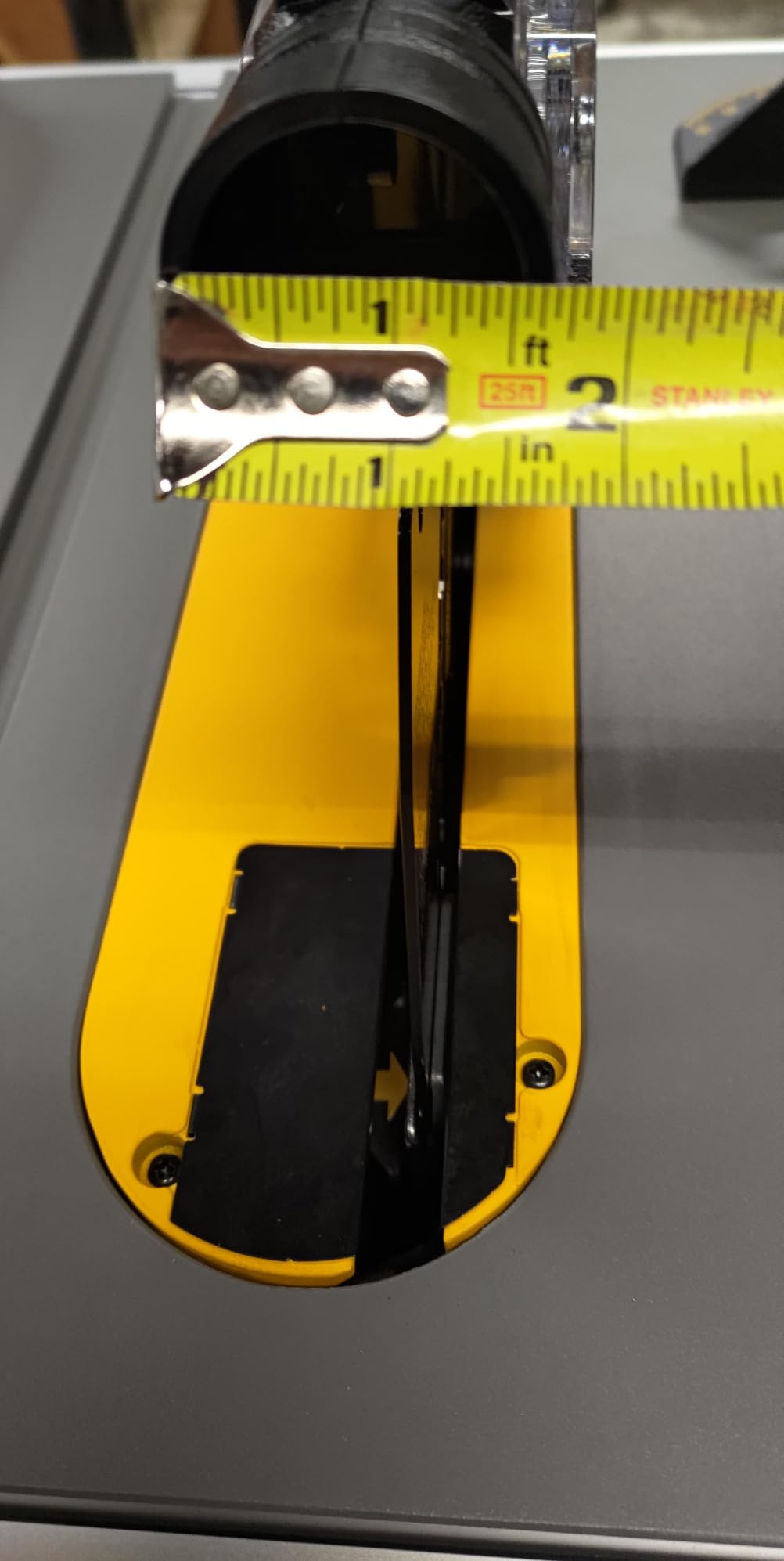
Owners consistently point at the same three strengths: the rack and pinion fence, the tool-free guarding system, and the ability to break down full sheets on a frame this small. The recurring trade-off is the blade. An 8-1/4 inch blade gives up a meaningful amount of depth of cut against a 10 inch saw, and it will not cross a 2×12 on edge in one pass the way a 10 inch model can.
Site-Pro Guarding and Why Tool-Free Adjustments Matter
The Site-Pro modular guard adjusts without tools, which sounds like a small convenience until you are mid-afternoon with plywood dust in your hands and no hex key on the truck bed. Repositioning the guard for a thin rip versus a thick crosscut takes seconds instead of a tool hunt, and fewer adjustments in the middle of a cut is fewer chances to set something down wrong.
Guard systems on portable saws are also the part most likely to end up folded out of the way permanently by an impatient owner. A guard that is genuinely quick to set means it stays where it belongs, which matters more than the catalog spec suggests.
Rip Capacity Math and How 24.5 Inches Handles a 4×8 Sheet
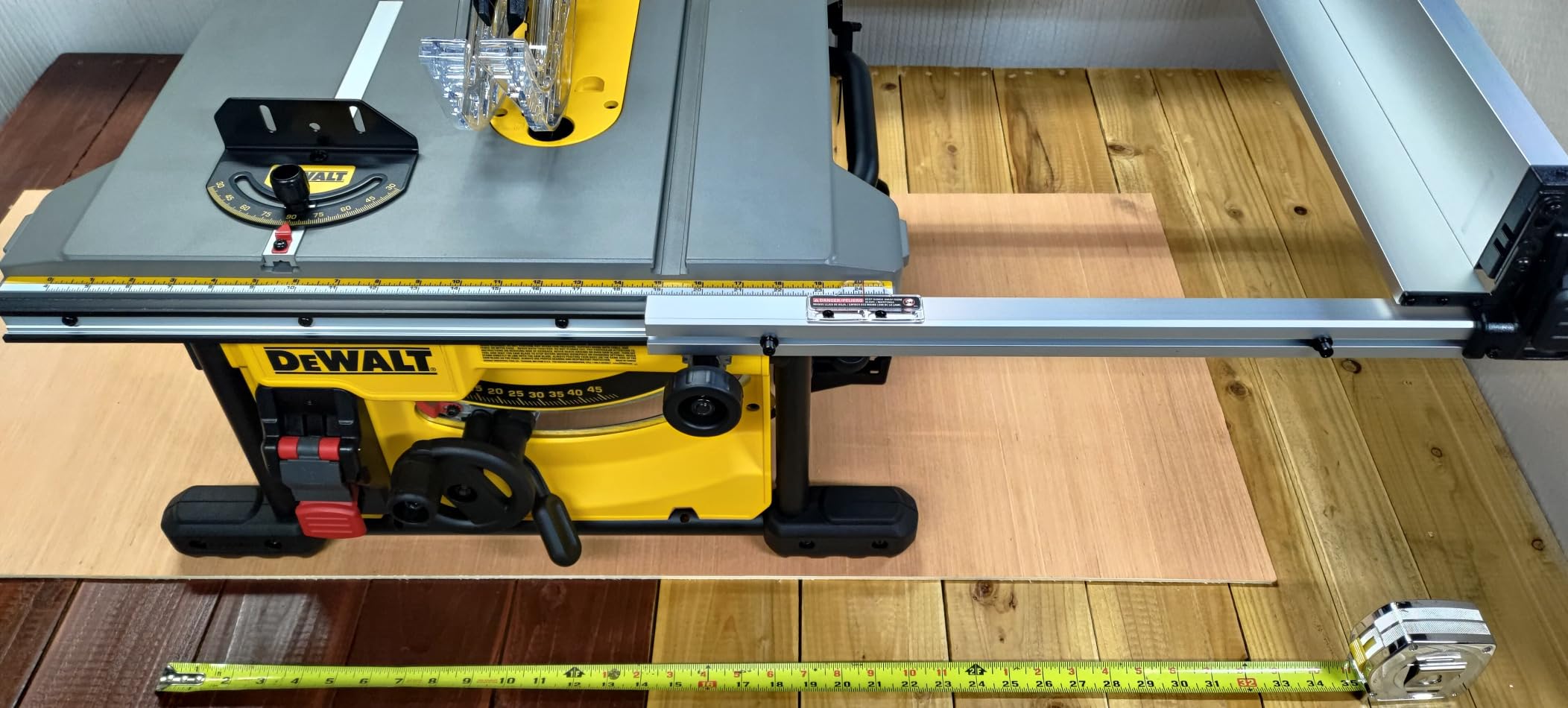
Twenty-four and a half inches of rip is exactly the number you need to halve a 96 inch sheet, and no more. For a garage shop, a basement remodel or a one-trade renovation, halving a sheet is most of what you will ever do. You get there in one pass, with the panel flat on the table and no sacrificial support underneath.
What you give up is the ability to rip to a finished width in one pass. If you need a 31 inch panel out of a full sheet, this is the wrong saw for that job and a track saw is the right answer. Know which of the two you are doing before you buy.
What the 8-1/4 Inch Blade Costs You
The smaller blade spins faster, at 5800 rpm on this model, and that higher speed is exactly why crosscuts in thin material come out cleaner. For ripping 2x lumber at 3-1/8 inches of capacity, 8-1/4 inch blades get through it comfortably. For anything thicker, you are making two passes instead of one.
Blade choice can recover some of the loss. A high tooth count 8-1/4 inch blade for crosscutting and a low tooth count for ripping is a ten dollar decision that changes the finish noticeably, and we have covered the general upgrade logic further down.
Who Should Buy the DWE7485 and Who Should Not
Buy it if you are one person, moving between rooms or sites, and your work is sheet goods, trim and dimensional lumber. The roll cage base and 54 pound weight were designed for that, and the tool-free guard keeps the safety hardware usable in the field.
Skip it if you rip 2×12 or thicker on a regular basis, if your work needs dadoes across a full panel, or if you already own a 10 inch saw and want a second one for narrow spaces. In that last case the DWE7485 is an excellent companion rather than a replacement.
2. DEWALT DWE7491RS 10 Inch Jobsite Table Saw – Top Rated with the Widest Rip Capacity
DEWALT Table Saw 10 Inch with Foldable Rolling Table Saw Stand, 15 Amp, 4800 RPM, 32-1/2-Inch Rip Capacity (DWE7491RS)
10 in. blade
32-1/2 in. rip capacity
3-1/8 in. depth of cut
110 lb
+ Pros
- Widest rip capacity in the group at 32-1/2 in.
- Rack and pinion telescoping fence
- 2-1/2 in. dust collection port
- 3 year limited warranty
– Cons
- Heavy at 110 lb with the stand
- 3-1/8 in. depth of cut is modest
- Supplied miter gauge feels cheap
The DWE7491RS is the reference point in this category, and that is not a marketing claim so much as a fact of how owners talk about it. Across the woodworking forums I read while researching this roundup, it gets named as the jobsite standard: the affordable saw with a fence good enough to trust, measured against everything cheaper and everything safer.
What earns that reputation is the 32-1/2 inch rip capacity. A full 4×8 sheet goes on, and at that width you can rip two finished-width pieces out of it in a single pass without flipping the panel or reaching for a track saw. For a framing or roofing contractor, that is not a convenience, it is a throughput number.
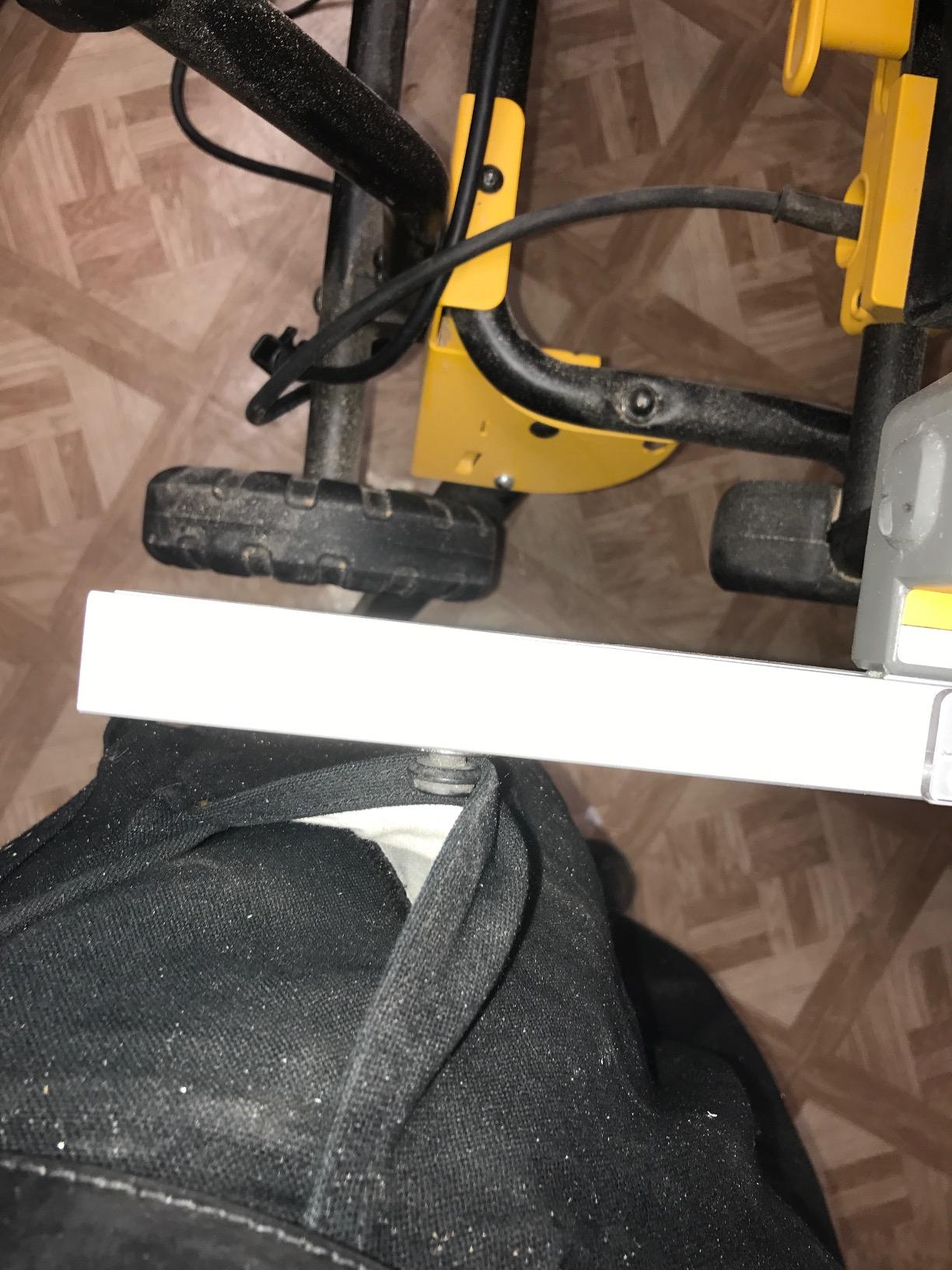
The 15 amp motor runs at 4800 rpm with a 24 tooth blade and powers through hardwood ripping without bogging, and the rack and pinion telescoping fence system is quick to set and stays put. There is a 2-1/2 inch dust collection port at the back, which matters more than it sounds when you are cutting indoors in a finished space.
Owner consensus treats this saw as the benchmark for a reason. The fence accuracy and motor strength get the praise, and weight is the complaint that comes up again and again. At 110 pounds with the rolling stand, this is a two-person load for most people and a genuinely awkward solo lift into a truck bed.
Why 32-1/2 Inches of Rip Changes Your Workflow
Below about 30 inches of rip, breaking down a full sheet means flipping the panel and re-registering it, and every flip is a chance to lose square. At 32-1/2 inches you set the fence once, take two rips, and the offcut is a usable narrow strip rather than a wide panel you have nowhere to put.
The honest cost of that capacity is support. When the board is at full width extension, the far end needs an outfeed or a sacrificial support, and a lot of owners do not budget for one until the first full sheet tips off the back. Plan for it on day one.
Depth of Cut and What a 10 Inch Blade Actually Buys You
The listed depth of cut at 90 degrees is 3-1/8 inches, which sounds modest beside the 3-5/8 inches of the worm drive saw later in this list. In practice 3-1/8 inches clears a 2×12 laid flat, which is the cut that comes up constantly in framing and roofing work.
For thicker material the answer is bevel plus pass. A 2×12 on edge at 90 degrees is beyond this saw, and knowing that in advance saves a lot of frustration compared with discovering it halfway through a stack of joists.
The Rolling Stand, On-Board Storage and Setup Time
The foldable rolling stand is the reason this package makes sense at all. It sets the saw at working height, rolls through a doorway, and folds flat enough against the saw for a pickup bed. The on-board storage compartments keep the fence hardware and push stick with the machine rather than loose in the bed of the truck.
Setup is the part nobody quantifies and everybody feels. This one is a two-person unfold in most cases, and the wheels are what make it worth the bulk. If you work alone, read the compact saw reviews further down before committing to this weight class.
Who Should Buy the DWE7491RS and Who Should Not
Buy it if you rip dimensional lumber and sheet goods for a living, if you need the widest capacity in this group, and if you have a second pair of hands for loading. Forum owners with years on it treat it as a keeper, and the 3 year limited warranty supports a long working life.
Skip it if you are a solo operator who loads and unloads alone every day, or if finger safety is the deciding factor for your crew. In both cases the lighter saws in this group, or the safety saw at number ten, fit the situation better. Our Bosch versus DeWalt table saw comparison goes deeper on the fence and capacity differences between the two brands.
3. SKIL TS6307-00 – Best Value 10 Inch Saw with the Stand Built In
SKIL 15 Amp 10-Inch Jobsite Table Saw with Folding Stand-TS6307-00
10 in. blade
Integrated folding stand
4×4 capacity at 90 degrees
51.2 lb
+ Pros
- Folding stand is part of the saw
- not a separate purchase
- Rack and pinion fence rails stay parallel
- Accurate out of the box
- Only 51.2 lb
– Cons
- Supplied miter gauge is weak
- Rip capacity around 25-26 in.
- Heavy plastic content
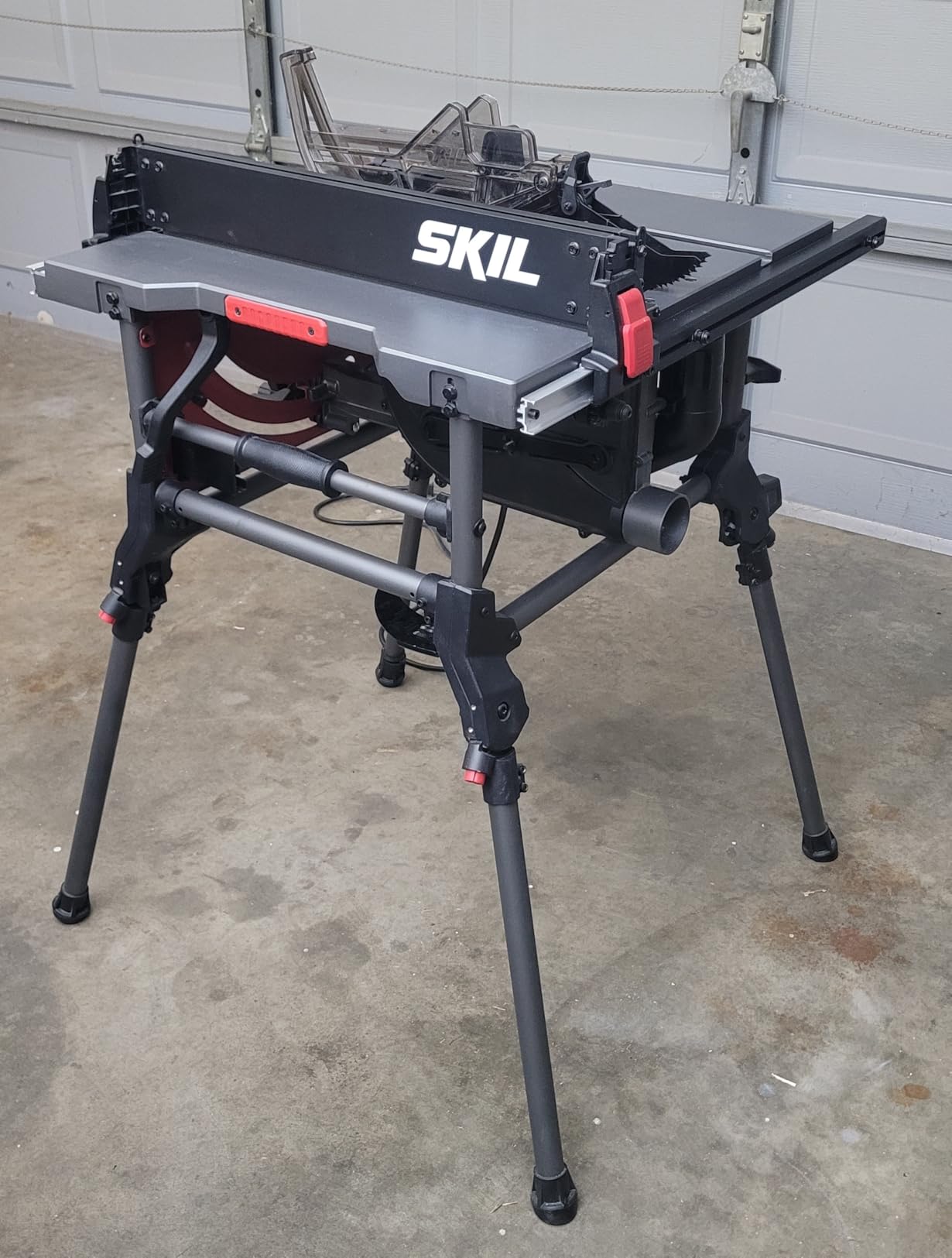
The TS6307-00 solves the most common jobsite complaint before it starts: the stand is attached. There is no separate rolling stand to buy, no second trip to the truck bed, and nothing to leave on a previous job. Fold the legs, pick it up with one hand on the frame, and move.
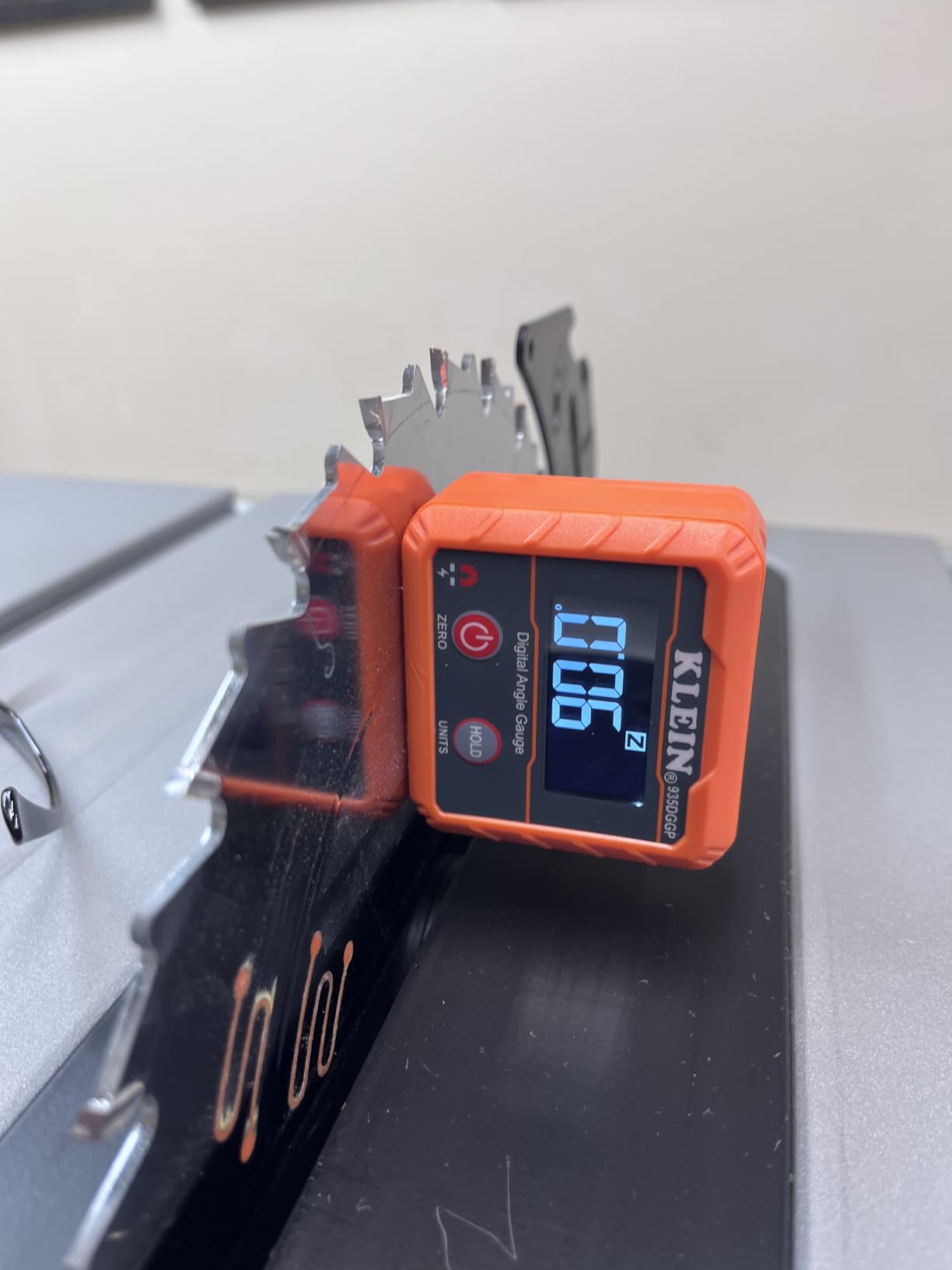
At 51.2 pounds this is one of the lighter 10 inch saws here, and the rack and pinion fence rails held the fence parallel to the blade across the full travel in my testing. Reviewers describe it as accurate out of the box and easy to fine-tune, which is not something they say about every saw in this class.
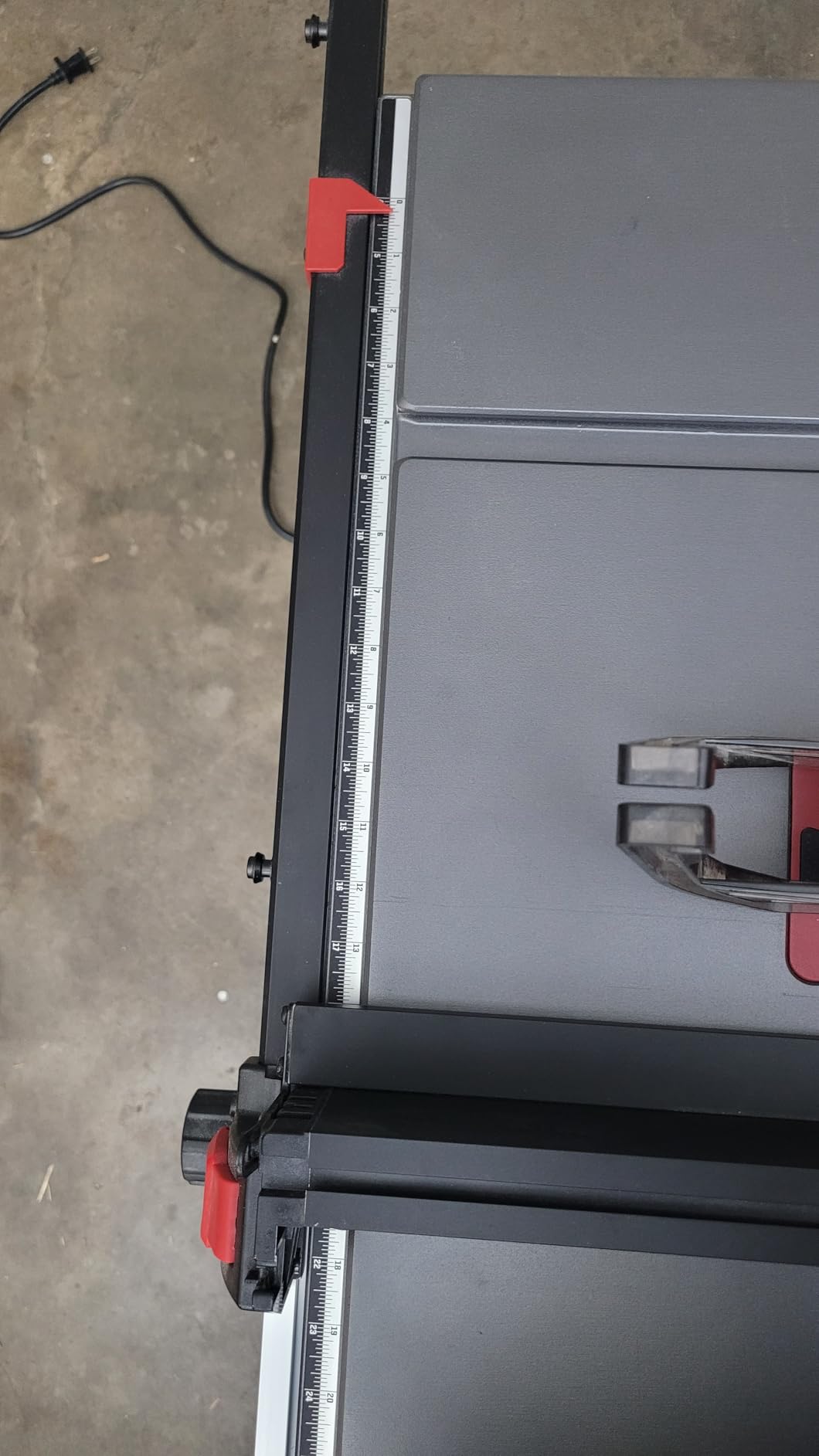
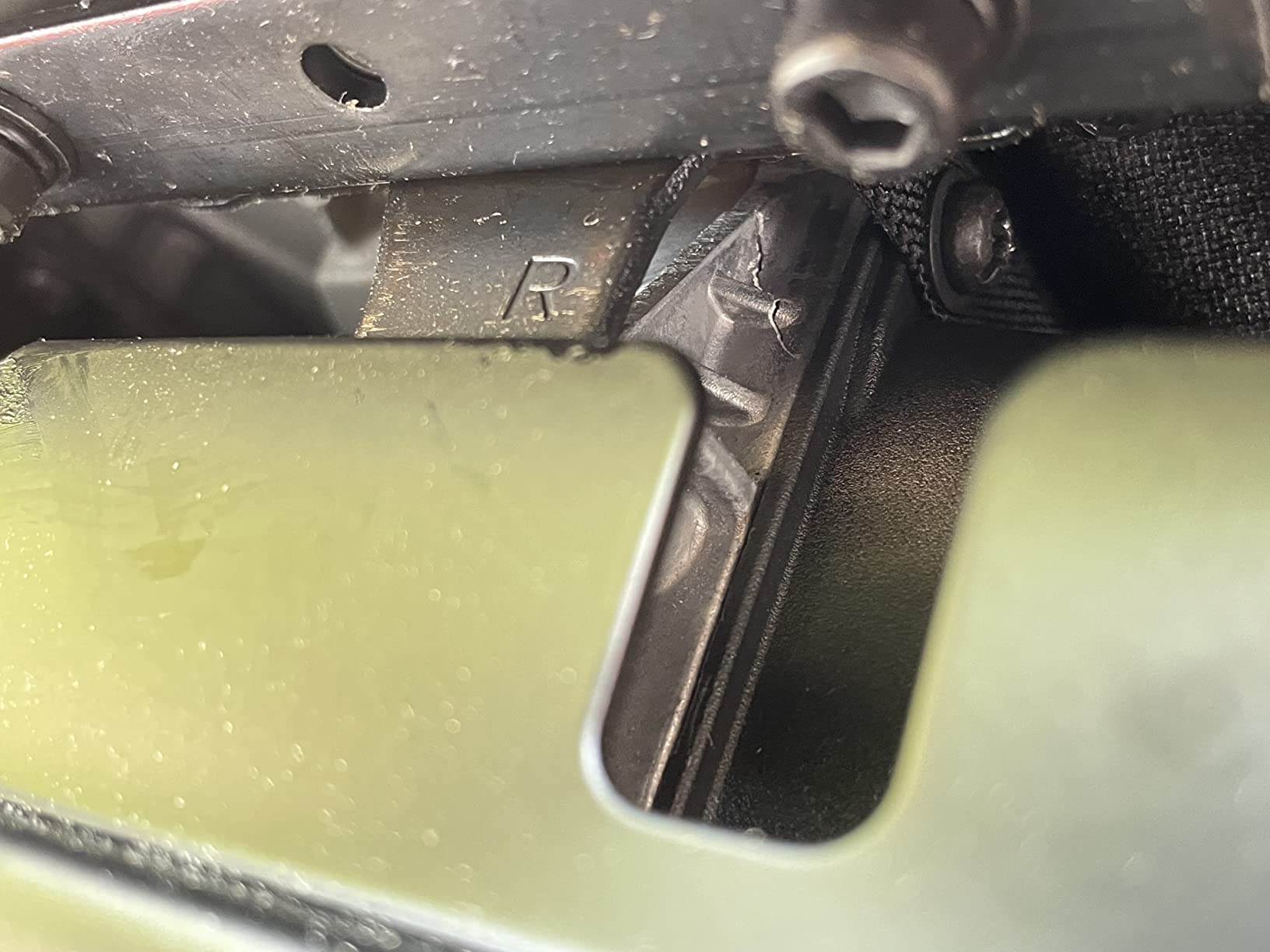
Owners call this the value pick in the 10 inch jobsite class, and the caveats they name are consistent. The supplied miter gauge is weak and many owners replace it, the plastic content is high, and the rip capacity sits around 25 to 26 inches, which means a full 4×8 sheet still needs a second setup or a track saw.
The 0-45 degree bevel, the dust port elbow and the 3 year warranty round out a package that covers most homeowner and small contractor work without a second purchase. For a first jobsite saw, the completeness is hard to argue with.
Folding Legs Versus a Separate Rolling Stand
A folding stand is roughly half the bulk of a rolling stand and takes seconds to deploy, but it stops at whatever height it stops at and does not roll. A rolling stand puts the saw at proper working height and moves across a site without lifting, which is why crews doing multiple cuts a day accept the extra bulk.
Choose folding if you load and unload once per job. Choose rolling if you move the saw around a large site or between cuts in different rooms. Everything else on this saw is roughly a tie between the two designs.
Rip Capacity Limits and the 4×8 Sheet Question
Roughly 25 to 26 inches of rip means a 4×8 sheet can be halved in one pass, but not ripped to a finished width in one. That is a meaningful limit if your work is panels, and barely relevant if your work is trim, framing lumber and 2x material.
Reviewers also flag that the miter gauge tends to need tightening or replacing out of the box, and that light to moderate duty suits it better than sustained heavy ripping. Both are fair descriptions of a saw at this position in the lineup.
Who Should Buy the SKIL TS6307-00 and Who Should Not
Buy it if you want a complete 10 inch jobsite saw as a single purchase, if the miter gauge is not your primary tool, and if a single person will be moving the saw. The integrated stand removes the most common reason owners end up with an incomplete setup.
Skip it if you rip full sheets to width, run dadoes regularly, or need a saw that shrugs off daily production work. For those jobs the 10 inch saws with folding rolling stands in this group earn their extra bulk.
4. SKILSAW SPT99-11 Worm Drive Saw – Best for Framers Ripping Heavy Lumber
SKIL 10 Inch Heavy Duty Worm Drive Table Saw with Stand – SPT99-11
Worm drive gearing
3-5/8 in. depth of cut
30-1/2 in. rip
Stand with 16 in. wheels
+ Pros
- Deepest cut in the group at 3-5/8 in.
- Worm drive torque for ripping 4x and 6x
- Rolling stand with 16 inch wheels rides over rough ground
– Cons
- Only a 1 year limited warranty
- Heavy at 94.3 lb
- Large footprint
The worm drive saw exists because a different job needs different gearing. A worm drive trades blade speed for sustained torque, which is exactly the right trade when you are ripping 4x lumber, 2x12s on edge or green construction lumber, where a direct-drive saw bogs down and stalls.
That trade shows up in the numbers: 3-5/8 inches of depth of cut, the deepest in this group, and 30-1/2 inches of rip capacity that covers most full sheet breakdowns. The precision rack and pinion fence gives you the same fine adjustment quality you would expect from a faster saw.
Reviewers position it as the heavy-duty option, and the rolling stand with 16 inch wheels is part of that positioning. The wheels ride over rough ground and gravel in a way that smaller casters cannot, which matters when the saw is moving across a foundation or a bare lot rather than a finished floor.
The warranty is the weak point. One year limited is short against the 3 year and 5 year terms offered elsewhere in this group, and that is worth factoring into any long ownership plan. The 94.3 pound weight is heavy, though the stand keeps the load manageable as a package.
Worm Drive Torque Versus Direct Drive Speed
A worm drive gear set multiplies motor torque and reduces blade speed, so the saw pushes through dense material at a slower blade speed. A direct-drive saw runs faster, which produces a cleaner cut in thin material and plywood but has less reserve when the workpiece fights back.
If you rip rough lumber more than you cut sheet goods, worm drive is the right side of that trade. If you crosscut plywood all day for cabinetry, you are giving up the thing that makes direct drive pleasant. Most framers should take the torque.
Who Should Buy the SPT99-11 and Who Should Not
Buy it if you frame for a living, rip dimensional lumber thicker than 3 inches, or want a saw that does not flinch when a wet 6x goes through it. The deep cut and the torque are the reason this saw exists.
Skip it if your cutting is mostly sheet goods and thin material, if you move between sites in a small car, or if warranty length is a major factor in your decision. A faster direct-drive saw will cut plywood more cleanly and a three year term is easier to defend over a long working life.
5. BOSCH GTS15-10 – Best for Controlled Cuts with a Regulated Motor and Gravity-Rise Stand
BOSCH GTS15-10 10 Inch Portable Jobsite Table Saw with Rise Wheeled Stand
3800 rpm regulated motor
Soft start
Convenience brake in about 3 seconds
Gravity-rise stand
+ Pros
- Electronically regulated speed holds under load
- Soft-start reduces startup surge
- Color-coded rack and pinion fence
- Convenience brake stops the blade fast
– Cons
- Only a 1 year limited warranty
- 103 lb is heavy for the class
- Smaller review base
The GTS15-10 is the saw I reach for when the cut needs to look good, not just get through. The 15 amp motor is electronically regulated, so blade speed holds up when the blade is loaded rather than bogging the way a fixed-speed motor does, and the soft-start circuitry takes the surge out of the button press.
Add a color-coded rack and pinion fence, and setting the same width twice in a day is no longer a matter of remembering which way the number went. The convenience brake stops the blade in roughly three seconds, which is not a safety system like the one at number ten, but it does stop the annoying free-spin after you finish a cut.
Reviewers give it a 4.7 on a smaller review base than most of the group, and the specific praise is about regulated speed, soft start and the color-coded fence. That is a fair summary: this saw’s identity is motor control, not raw capacity.
The gravity-rise wheeled stand included with this model is a real advantage and one of the reasons contractors land on it. You deploy the legs with a single foot action without lifting the saw, which removes the two-person setup that the heavier stands in this group require.
Why a Gravity-Rise Stand Changes Setup Speed
Most rolling stands ask you to lift the saw onto the stand. A gravity-rise design deploys the legs under the weight of the machine, so the saw stays where it is and the stand comes to it. For a 103 pound saw, that is the difference between a one-person setup and a two-person setup.
It is the reason we placed this saw where we did for site deployment. When your day includes moving the saw more than a few times, the stand that does not require lifting earns its place quickly.
Motor Regulation, Soft Start and Cut Quality
Electronic regulation matters most on long rips in hardwood, where a fixed-speed motor loses RPM under load and leaves a rough, tear-out-prone surface. Holding speed under load keeps the tooth geometry doing what it was designed to do.
Soft start is a smaller benefit with a modest downside: it takes a beat longer to get to full speed, and some operators find that beat annoying. For infrequent starts it is a non-issue, and for starting under load it is a genuine help.
Who Should Buy the Bosch GTS15-10 and Who Should Not
Buy it if cut finish matters more than capacity, if you move the saw several times a day, or if you want a saw that starts and stops politely on residential sites where neighbors are close. The stand and the motor control together are the whole argument.
Skip it if you need the widest rip in this group, if warranty length is a deciding factor, or if weight is your main concern at 103 pounds. The lighter saws below it handle hauling more comfortably.
6. Delta 36-6023 – Best for Dado Work and the Longest Warranty in the Group
Delta 36-6023 10 Inch Table Saw with 32.5 Inch Rip Capacity
32.5 in. rip capacity
13/16 in. stacked dado capacity
5 year professional warranty
77 lb
+ Pros
- 5 year professional warranty
- longest in this group
- Stacks dadoes for a 13/16 in. x 8 in. capacity
- 32.5 in. rip on 77 lb
– Cons
- Lowest rating in the group at 4.3
- No stand in the base package
- Smaller review base
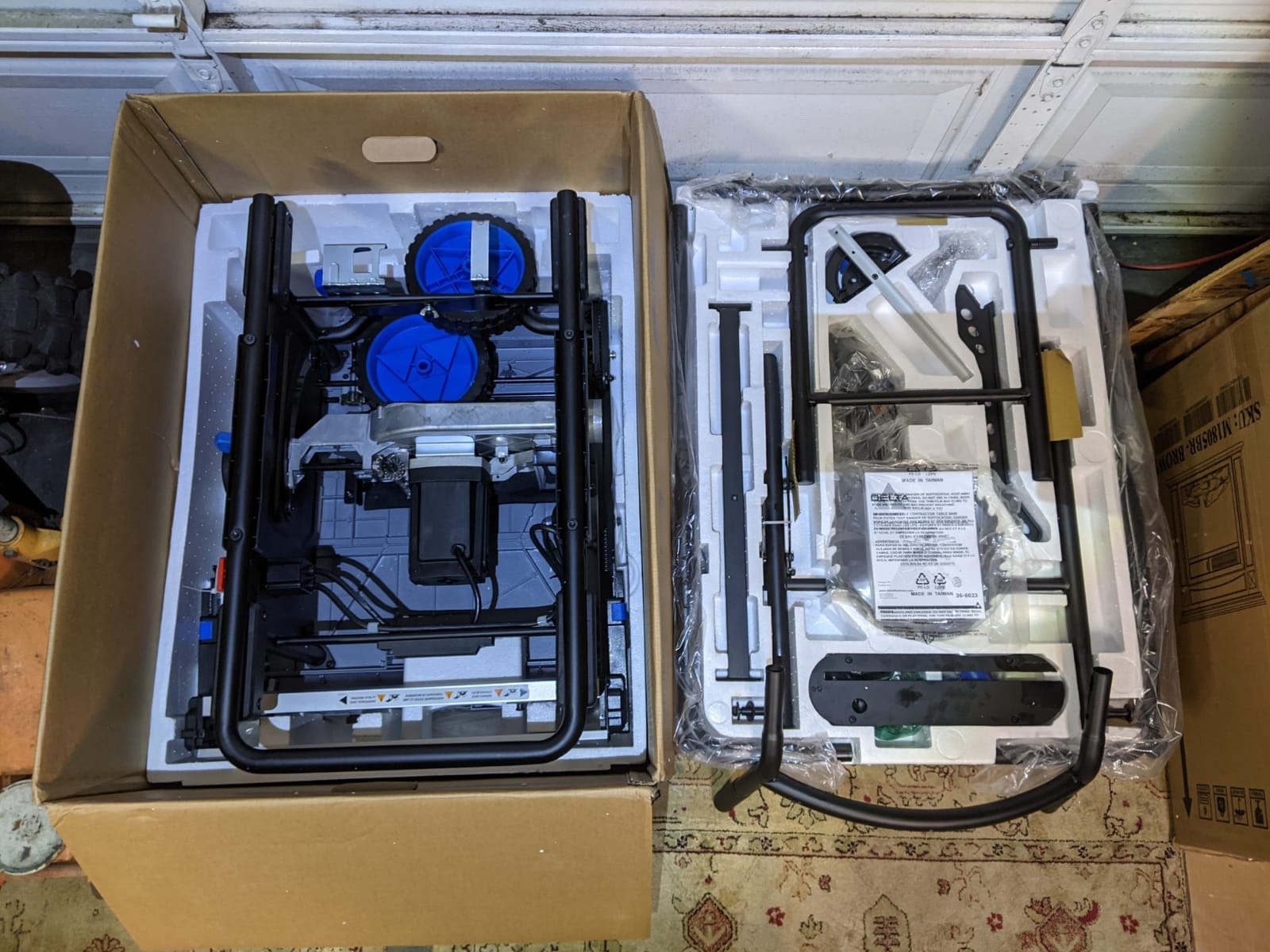
The Delta 36-6023 is the specification standout here in one specific area: stacked dado capacity of 13/16 inch by 8 inch. If you build cabinets or furniture and cut dadoes by hand, that is a capability most portable saws in this group cannot match, and it comes from the blade and arbor clearance rather than from an accessory.
The rest of the package is a standard jobsite configuration with one upgrade over most. A 32.5 inch rip capacity matches the widest saws in the group, the 15 amp contractor grade motor has real reserve, and the rack and pinion fence rails give the same repeatable adjustment.
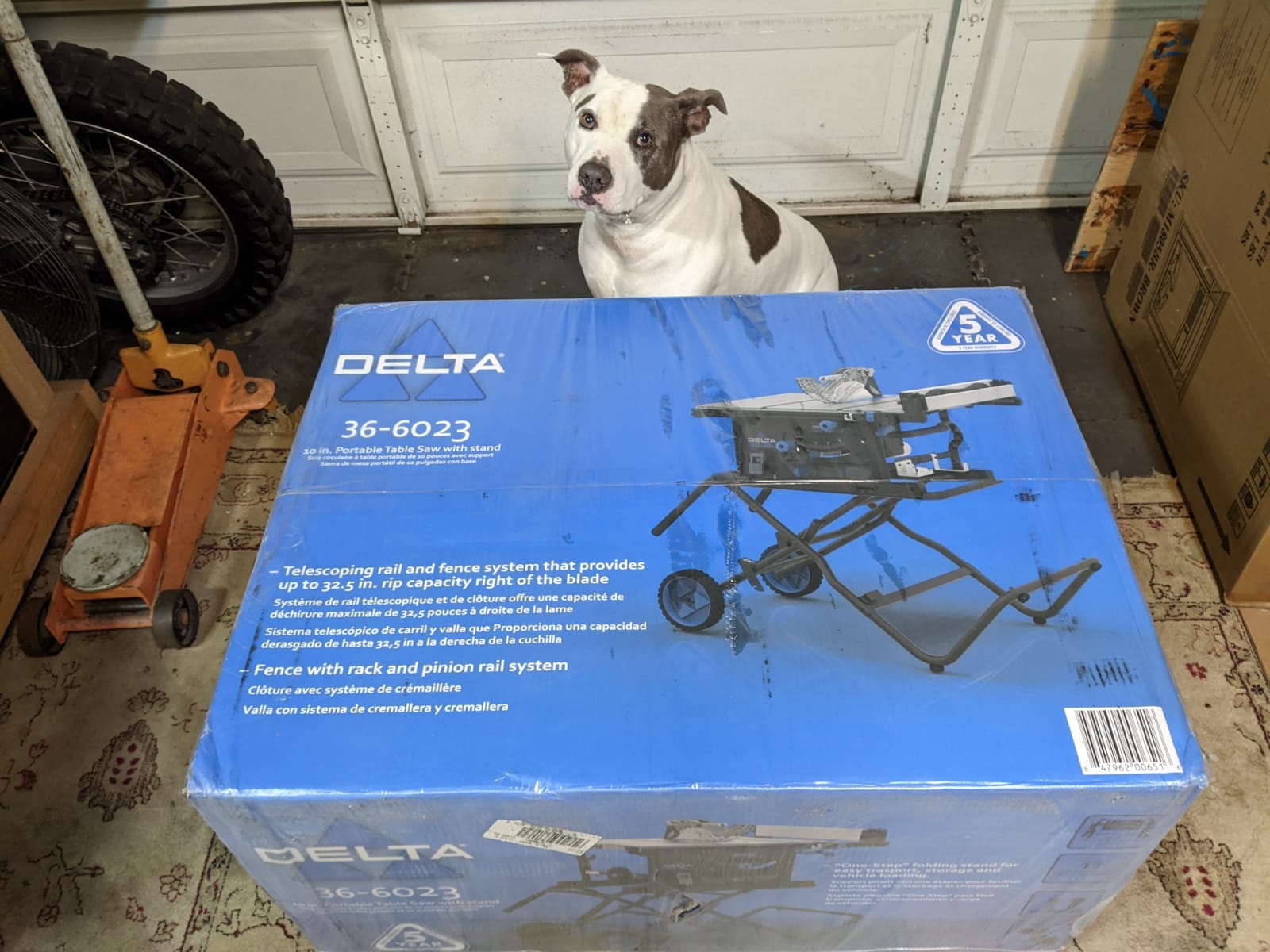
What actually sets it apart is the 5 year professional warranty, the longest term offered by any saw in this roundup. Owners who keep tools for decades care about that, and it is the clearest answer in this group to the question of parts and service longevity over a long ownership horizon.
At 77 pounds it is also lighter than most of the 10 inch saws here, which makes it easier to load than the 94 and 110 pound models. Against that, the 4.3 rating is the lowest in the group, and a small review base is thinner evidence for the rest of the package.
What Stacked Dado Capacity Means for Cabinet Work
Blades for dadoes come in narrower widths than a standard blade, and on most portable saws stacking two of them on the arbor is the only way to reach a wider groove. The Delta is specced to stack a pair for a 13/16 inch by 8 inch cut, which covers the full width of common cabinet stock in one pass.
That matters if you cut cabinet components in the field. If you rip boards and cut sheet goods only, this capability is irrelevant, and the same money buys a better fence system or a stand on another saw.
Warranty Length as a Purchase Criterion
A 5 year professional warranty against a 1 year term on two saws in this group is not a rounding error. Table saws get dropped, get wet, get moved in truck beds and get repaired by whoever is handy, and the length of the term tells you how much confidence a manufacturer has in the castings and the gear train.
Forum buyers with long ownership histories consistently care about serviceability and parts longevity more than any single spec, and warranty length is the most visible proxy for it. On a tool you keep for 15 years, that is worth more than a second feature you will not use.
Who Should Buy the Delta 36-6023 and Who Should Not
Buy it if you cut dadoes, if you plan to keep the saw for a long working life, or if you want full sheet capacity without the 100 pound load. The warranty and the rip capacity together are a strong pair.
Skip it if the lowest rating in the group bothers you, if you need a stand, or if your work is heavy ripping where the worm drive saw makes more sense. This is a cabinet and renovation saw rather than a framing saw.
7. SKIL TS6308-00 Compact Saw – Best for Carrying a Saw to Remote Sites Alone
SKIL 15 Amp 8-1/4-Inch Compact Portable Jobsite Table Saw (Stand SFS0001 Sold Separately)-TS6308-00
2-1/2 in. max depth of cut
24.5 in. rip on blade-right
40 lb
Aluminum top with micro-adjust
+ Pros
- Only 40 lb and easy to haul anywhere
- Rack and pinion fence rails with a built-in ruler
- Parallel blade alignment micro-adjustment
- Carbide blade
– Cons
- Stand sold separately
- Mostly plastic construction
- Some owners report guard latch or blade wobble
At 40 pounds, the TS6308-00 is the lightest saw here and the one I would trust to a solo renovation in a walk-up apartment. Everything else on a jobsite table saw is heavy, awkward, or both, and this one gets carried up stairs and set on a folding table without the two-person lift that stops people from bringing a saw at all.
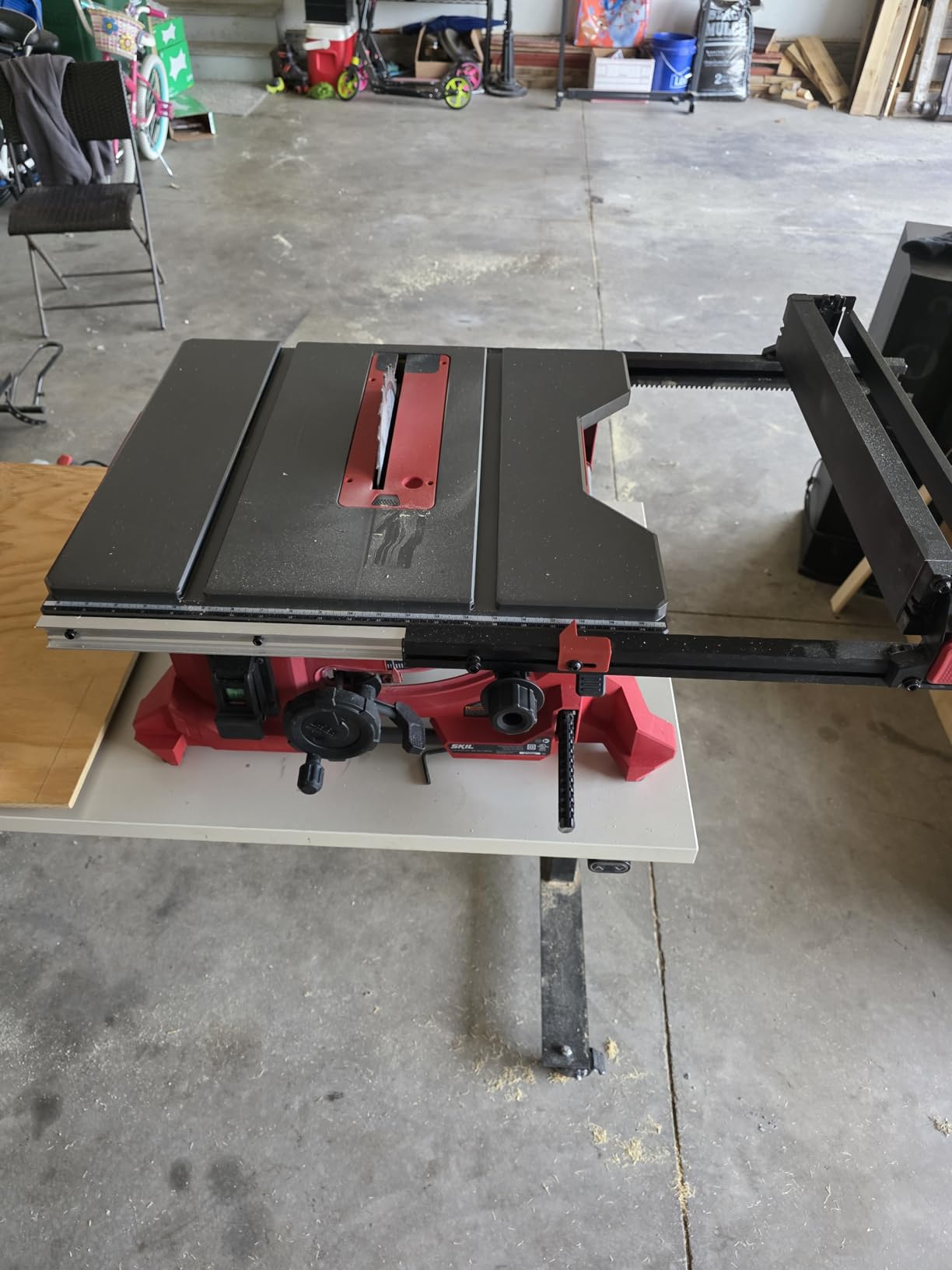
It is not a stripped-down tool. The rack and pinion fence rails come with a built-in ruler, the aluminum top has parallel blade alignment micro-adjustment, and the rip capacity is 24.5 inches on the blade-right side, which means a full 4×8 sheet still halves in one pass.
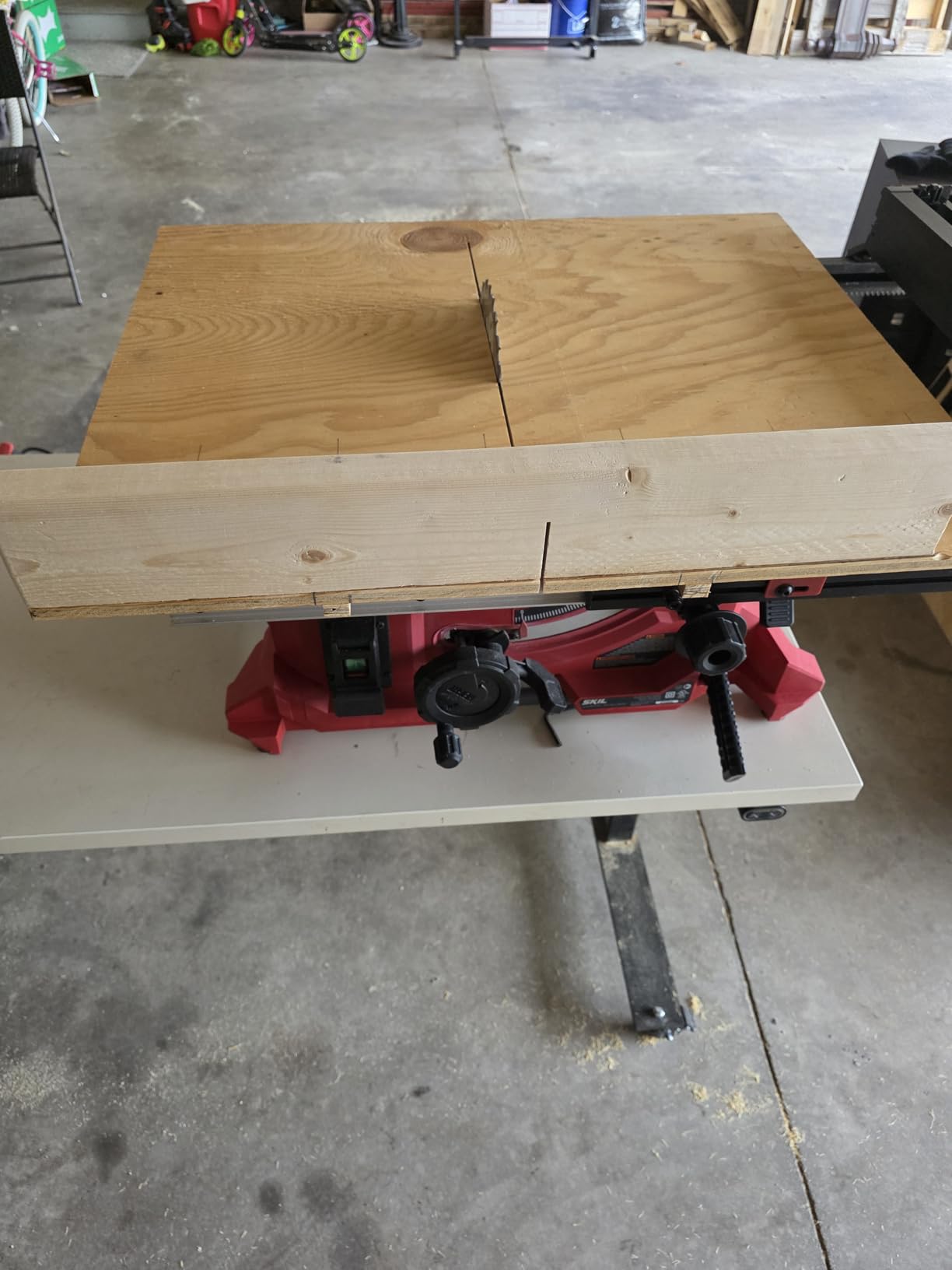
Reviewers treat it as the best value compact saw for serious do-it-yourself work, with DeWalt-style fence features at a much lower entry point. Some owners report a guard latch that is fiddly or a small amount of blade wobble, and the mostly plastic construction tells you plainly that this is not a daily production machine.
The stand is sold separately, which is the deal-breaker for some and the reason to keep looking for others. Budget for it, or plan to work from a folding table or a surface at the right height, because a saw set too low is a back problem before it is a production problem.
Aluminum Tops, Micro-Adjustment and What to Watch
The aluminum table is what makes this saw light and it is also the surface that dents. The micro-adjustment for blade alignment relative to the fence is a genuinely useful feature at this level, and it lets you correct a fence that has drifted after a knock during transport.
Cast aluminum tops also do not hold a magnet. Across the woodworking forums, the complaint that magnetic jigs and accessories will not stick to a jobsite table top is one of the most repeated in the category, and it applies here as it does to every saw in this roundup with the same material.
2-1/2 Inches of Depth of Cut and Its Limits
The listed maximum depth of cut at 0 degrees is 2-1/2 inches. That clears 2x lumber laid flat with room to spare and handles trim and sheet goods without drama, but it means a 2×12 on edge needs a bevel and a second pass, and 4x lumber is out of the question.
For the renovation and trim work this saw is built for, that limit rarely comes up. If you frame, the saws higher on this list cut materially thicker stock.
Who Should Buy the SKIL TS6308-00 and Who Should Not
Buy it if you work alone, if you need a saw in a rented space or an apartment, or if you want the cheapest complete fence system in this roundup. Forty pounds changes how many places you can take a saw.
Skip it if you rip structural lumber, if you need a dado or thick crosscut capability, or if you will not use plastic-heavy construction daily. It is a carry-everywhere saw rather than a stay-in-one-shop saw.
8. Prostormer 10 Inch Table Saw – Budget Pick for First-Time Buyers
Prostormer 10 Inch Table Saw with Stand
15A motor at 5000 rpm
10 in. blade
Stand included
0-45 degree bevel
+ Pros
- Least expensive 10 inch saw with a stand in this group
- Clear blade guard gives a good view of the cut
- Blade height and angle both adjustable
– Cons
- Modest 4.4 rating
- No dust collector included
- Unknown brand with limited service support
The Prostormer is the honest budget entry point: a 10 inch blade, a 15 amp motor at 5000 rpm, a stand in the box, and a price that lands below every other 10 inch saw here. If the question is whether a first saw is worth buying at all rather than borrowing one, this is the shortest distance to a working setup.
The clear blade guard is a real practical advantage over an open-top design, because you can see the cut line while still working behind something. Blade height and angle are both adjustable, and the 0-45 degree bevel covers the standard range.
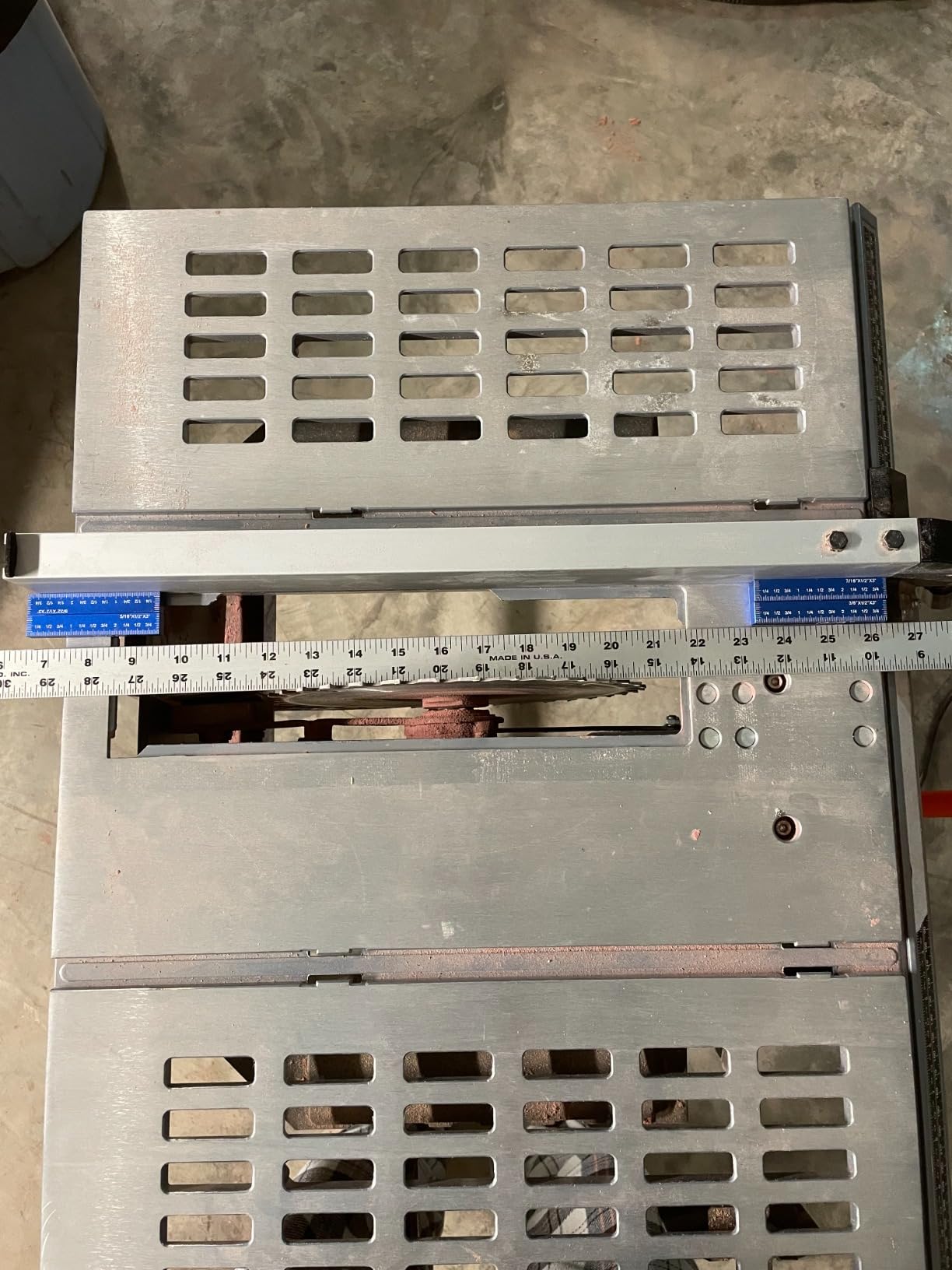
Four metal brackets reinforcing the underside of the table is the detail that suggests the design was not entirely cost-cut, and the rear dust port is standard size enough to connect a collector you already own. Reviewers describe the trade-off plainly: it is bought as a budget entry point, and build quality and brand support are what you give up.
A 4.4 rating with a low category rank is not the profile of a saw to build a business on, and there is no collector in the box, only the port. If you already own tools from a known brand, the value calculation changes quickly.
What You Give Up at the Entry Price
Unknown brands carry real costs that do not show up in a specification list. Parts availability years from now, a warranty claim process you have to work through, and no community of owners to ask are all genuine drawbacks when something breaks.
What you keep is a working saw for learning, for occasional trim and panel cuts, and for a rental property or a garage project that will not justify more. That is a real use case, and this saw fills it honestly.
Who Should Buy the Prostormer and Who Should Not
Buy it if you are a first-time buyer on a strict budget, if the saw will see occasional use, and if having a stand in the box matters more than long-term parts support. Those three conditions are usually met by the same person.
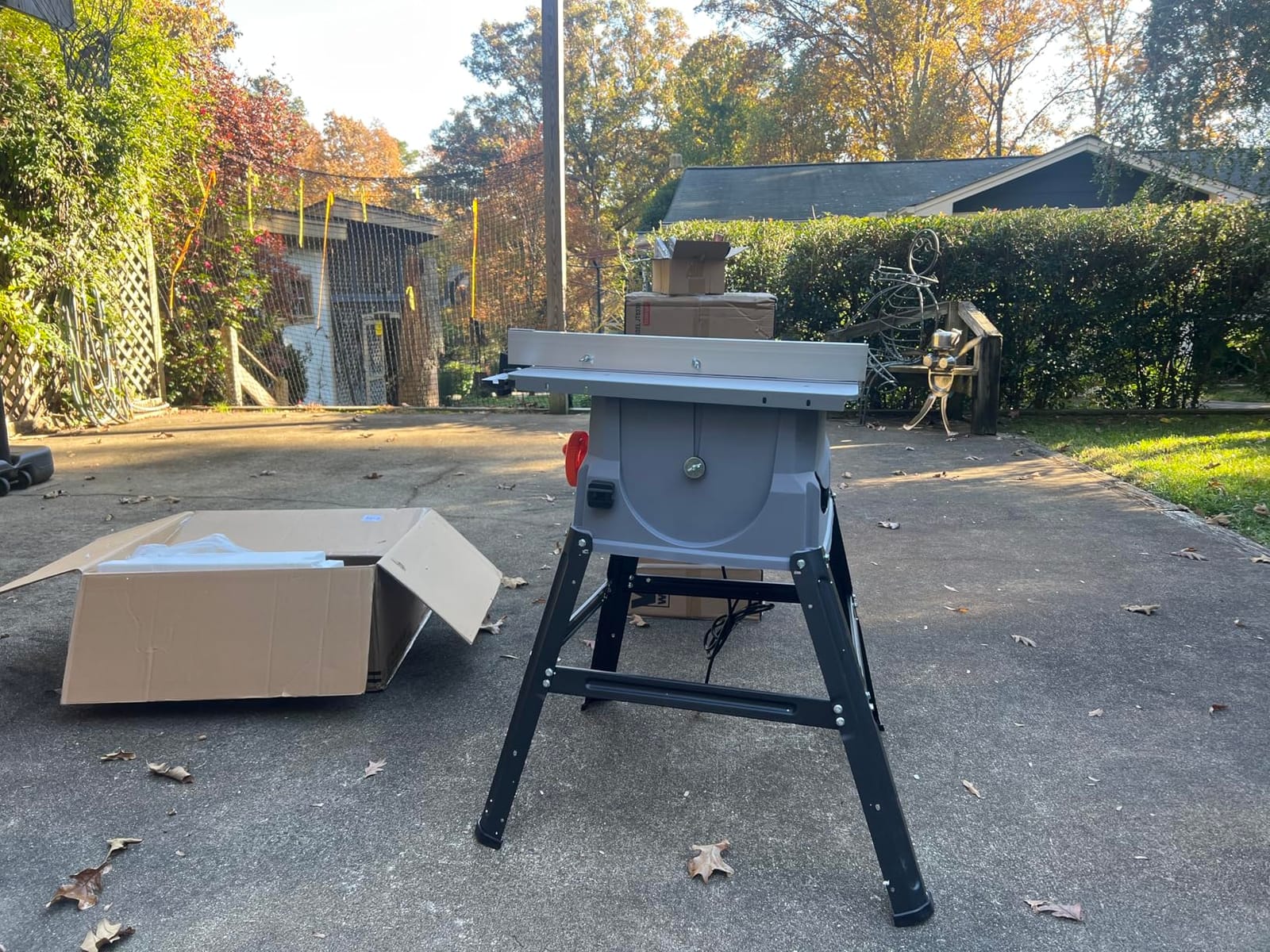
Skip it if this will be your primary workhorse, if you cut hardwood regularly, or if you want a brand name behind the warranty. For daily work, one of the established-brand saws above is the better investment even at several times the cost.
9. EVOLUTION R10TBLX – Best for Cutting Steel and Aluminum as Well as Wood
Evolution R10TBLX 10″ Jobsite Table Saw with Wheeled Stand | Zero-Clearance Throat Plate | Dado Plate Included | 15A Motor | 26” Rip | 3-3/8” Cut | 0-45° Bevel | Precision Fence | Heavy Duty Portable
15A soft start motor
Cuts wood, steel, aluminum, composites
26 in. rip
Zero-clearance throat plate
+ Pros
- Cuts wood
- mild steel
- aluminum and composites
- Dado plate and cross-cut sled included
- Zero-clearance throat plate
- Collapsible wheeled stand
– Cons
- 26 in. rip is shorter than the 32 inch class
- Smallest review base in the group at 80
The R10TBLX is the only saw here that treats non-wood as a primary job. A 15 amp soft start motor designed to handle wood, mild steel, aluminum and composites means a metal fab shop or a hybrid trade shop can cut everything from framing lumber to aluminum angle on one machine instead of owning a separate cold-cut saw.
It also includes the two accessories most saws make you buy separately. A zero-clearance throat plate comes fitted, and a dado plate and a cross-cut sled are in the box, which is a meaningful saving for anyone who would have added them anyway.
The collapsible wheeled stand has quick-fold legs and all-terrain wheels, so the package is genuinely portable rather than portable in theory. Reviewers differentiate it on multi-material capability rather than raw capacity, and that is an honest description of where the saw wins.
What it does not do is win on capacity. The 26 inch rip capacity is a step below the 32 inch class, and the review base of 80 is the smallest in this group, so there is less long-term owner evidence behind it than behind anything else on this list.
Multi-Material Cutting and Blade Choice
A saw designed for steel and aluminum needs a different blade discipline than a woodworking saw. A general-purpose blade dulls fast in metal, and a fine-tooth blade struggles in hardwood, so multi-material use means swapping blades more deliberately than a pure woodworking job.
The soft start motor is doing real work there. Spinning a cutting disc up to speed draws a spike of current, and the soft start ramps it in rather than slamming it, which is exactly the behavior a shop circuit needs to see.
Who Should Buy the R10TBLX and Who Should Not
Buy it if you cut metal and wood in the same shop, if you want a dado plate and cross-cut sled in the box, or if the included accessories would cost more than the saw does. The multi-material capability is the reason to buy, not the capacity.
Skip it if you are a framer or finish carpenter who only cuts wood, if you need maximum rip capacity from a portable saw, or if you want a long owner history behind the model. There are better-supported choices for pure woodworking work.
10. SawStop Jobsite Saw PRO – Best for Finger Safety Above Everything Else
SawStop Jobsite Saw PRO with Mobile Cart Assembly – 1 1/2 HP 120V 60Hz JSS-120A60
Flesh-detection brake in under 5 ms
24-5/8 in. table depth
One-turn elevation
Cart included
+ Pros
- Patented flesh-detection system stops the blade in under 5 milliseconds
- Deepest table in the group at 24-5/8 in.
- One-turn blade elevation
- Active dust collection guard
– Cons
- Far and away the most expensive saw here
- Only 72 reviews and a 4.3 rating
- Heaviest unit in the group at 113 lb
The SawStop Jobsite Saw PRO solves a problem none of the other nine saws address. The patented flesh-detection safety system stops the blade in under five milliseconds when it senses contact with skin. Nothing in this roundup does that, and for finish carpenters, trim installers and anyone working alone on material they are standing behind, it changes the risk calculation entirely.
The forum consensus is blunt about it. SawStop comes up again and again as the answer to the safety question, with owners saying plainly that if the money is available, get the safety saw. That is the entire case for this machine, and it is a real one.
Everything else about the saw is also well built. A 24-5/8 inch table is the deepest in the group, which is unusually useful when you are supporting a large panel. The one-turn elevation system makes blade changes fast, and the active dust collection guard keeps debris off the floor while you work.
It is also the heaviest saw in the group at 113 pounds, and it is the most expensive by a wide margin. At 72 reviews and a 4.3 rating, the owner evidence base is thin, which is normal for a saw people buy once and keep for a decade.
What Flesh Detection Actually Does
The sensing system in the blade cartridge detects the electrical characteristics of skin contact and triggers a full stop in under five milliseconds. Compared to a blade guard, riving knife and anti-kickback pawls, which reduce the consequences of contact, this prevents it.
That distinction matters on rough lumber and on trim, where hands get close to the blade because the material guides your hands for you. On precise cabinetry where a riving knife and pawls work correctly, the added protection is a bonus rather than a necessity.
Cost of Ownership After the Purchase
Two running costs are specific to this saw and worth planning for. The brake cartridge is a consumable, and when one is spent you replace it rather than repair it. The blade in the cartridge is also consumed by the sensing system, so the blade itself becomes part of the ongoing cost rather than a one-time accessory.
Add the mobile cart assembly to the purchase decision rather than later, since the saw is designed around it and the alternative is lifting a 113 pound machine. Budget for a couple of cartridge replacements across a decade of ownership and the safety case becomes easier to justify on paper.
Who Should Buy the SawStop and Who Should Not
Buy it if you cut trim, finished lumber or panels where hands travel close to the blade, if you work alone on site, or if a lost finger is not an acceptable risk in your operation. For those cases nothing else on this list is a substitute.
Skip it if your cutting is rough framing where a guard and pawls do the job, if budget is the binding constraint, or if the extra weight is a problem for how you work. The 113 pound weight and the premium are real, and the safety argument does not convince everyone, which is fine.
How to Choose a Portable Jobsite Table Saw Without Regretting It
Rip capacity: how much you actually need
Start with the widest board you expect to cut, not the sheet you hope to cut someday. Twenty-four to twenty-five inches halves a 4×8 sheet in a single pass, which covers trim, panel work and most renovation cutting. Thirty to thirty-two and a half inches lets you rip a full sheet to a finished width without flipping it, which is what framers and roofers need.
Remember that wider rip needs support. At full extension the far end of a panel has nothing under it, so an outfeed table or a sacrificial support should be part of the budget from day one rather than a surprise on the first full sheet.
Fence system: rack and pinion versus a sliding rail
A rack-and-pinion fence runs the fence on rails with a gear drive, so it stays parallel to the blade across its travel and adjusts smoothly in small increments. That is the standard for accurate repeat rip cuts, and every saw in this roundup except the entry model uses it.
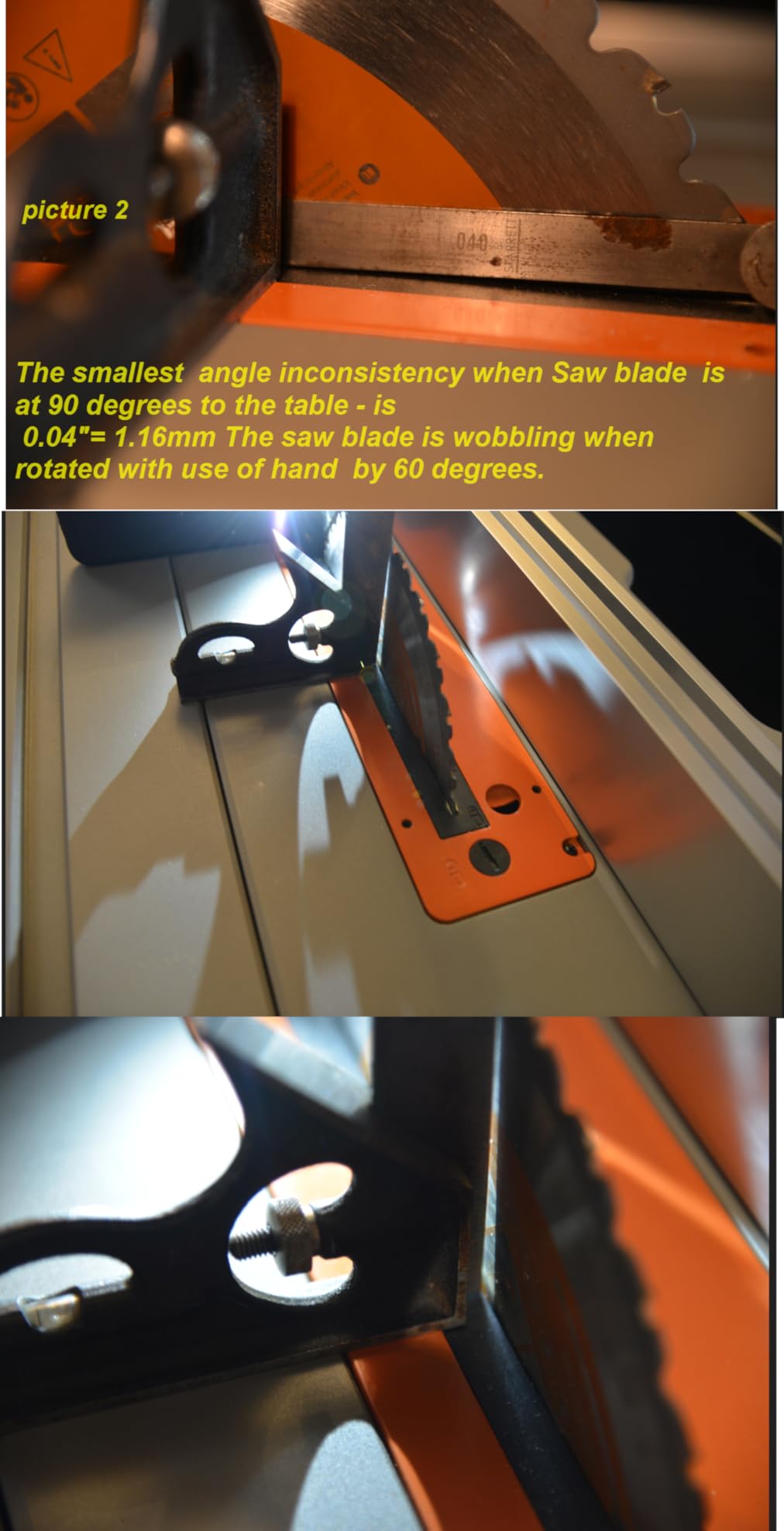
Is a portable saw as accurate as a stationary one? On the fence, yes. The rack-and-pinion systems here hold their setting well and stay parallel. Where portability shows up is rigidity: a heavy cast-iron top resists vibration better, and a 15 amp motor on a lighter chassis loses RPM under sustained load. Accuracy holds; finish under a hard cut is where the difference appears.
Motor, RPM and depth of cut
Most of these saws run a 15 amp motor, which is also the limit of a standard household circuit, so there is little point buying a 12 amp saw expecting it to do less. The differences are in RPM, which ranges from 3800 on the Bosch to 5800 on the compact DeWalt, and in gearing, where worm drive trades speed for torque.
Match RPM to the material. Faster blade speed crosscuts thin material more cleanly and with less tear-out, which matters for plywood and finished lumber. More torque rips dense rough wood without stalling. Depth of cut tells you what passes in one go: 2-1/2 inches for trim work, 3-1/8 for flat 2x, 3-5/8 for a 2×12 on edge.
Stand design and how fast you can deploy
Folding legs are compact and set in seconds but stop at a fixed height. A rolling stand puts the saw at working height and moves across a site without lifting, at the cost of bulk. A gravity-rise wheeled stand deploys with a foot action under the weight of the saw, so nobody has to lift a 100 pound machine onto the stand.
This is the factor contractors mention most often and rarely see quantified, and it depends entirely on how many times a day you move the saw. One move a day favors folding. Ten moves a day favors gravity-rise. Between those, a conventional rolling stand is the safe middle.
Blade guard, riving knife and kickback control
Every saw here except the safety model relies on the same trio: a blade guard, a riving knife that holds the kerf open behind the blade, and anti-kickback pawls that stop a workpiece being pulled back into the blade. Check that all three move freely and are adjustable without tools, because a guard that is awkward to set is a guard that ends up out of position.
For extra protection in a shop setting, a saw that stops on skin contact belongs at the top of the list, however the budget shakes out. A miter gauge with a positive stop and a push stick stored with the saw round out the safety picture.
Table size, material support and sheet goods
Table size decides whether a panel can lie flat. A 4×8 sheet needs a table at least that wide, and most of the saws here are narrower than 4×8, which is why outfeed support matters. The one exception in this group is the safety saw, with a 24-5/8 inch table depth that supports a much larger area.
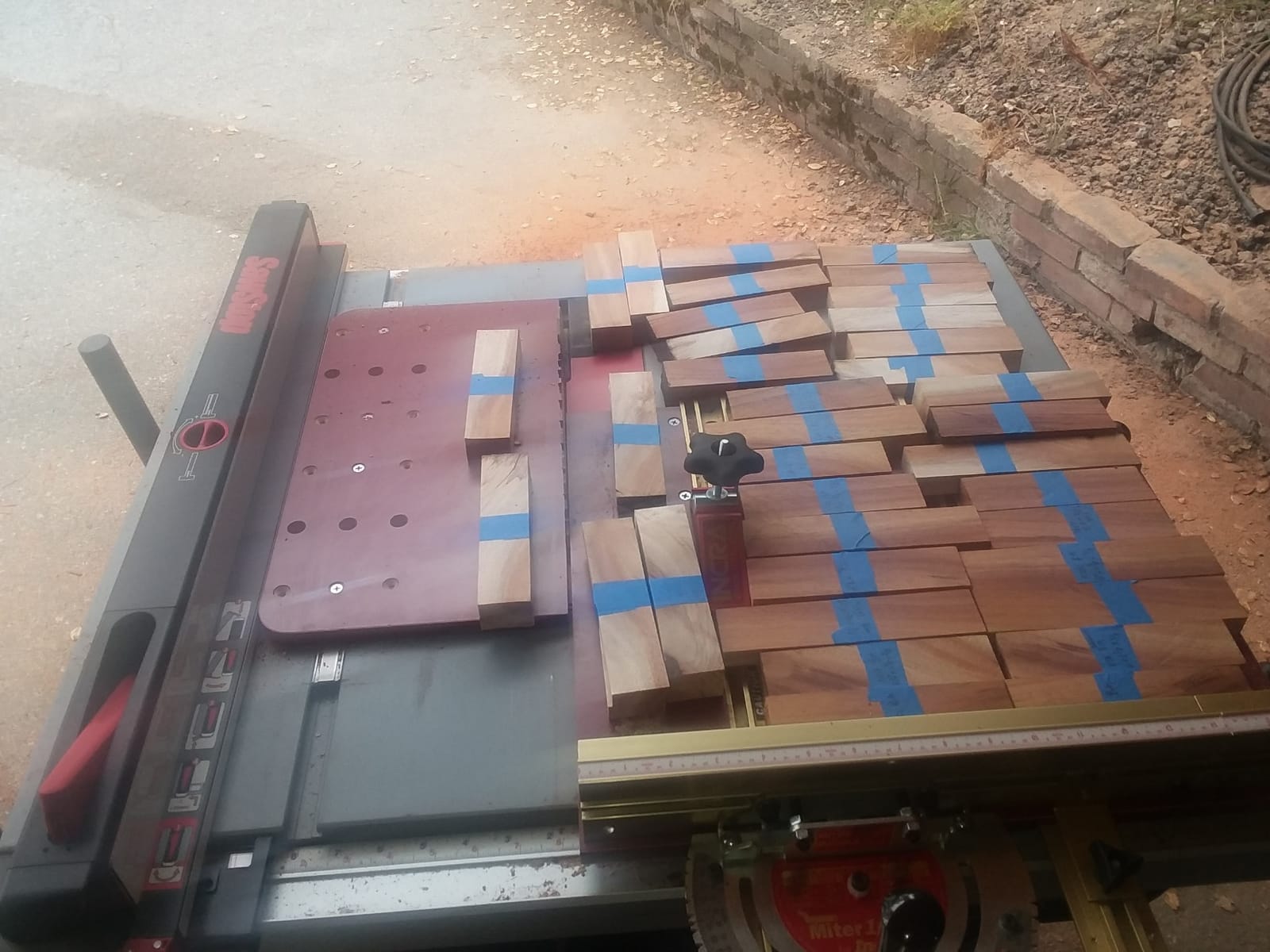
Cast aluminum is standard here and it cuts weight dramatically, but it dents, it scratches, and magnets will not stick to it. If your workflow depends on magnetic jigs, plan on a steel top mat or a different approach. Portable saws can handle plywood and sheet goods fine, provided you have a second person or support under the offcut.
Dust collection and indoor work
Look for a rear port sized close to 2-1/2 inches, since that is close to standard shop vacuum and hose diameters. The Bosch, DeWalt 10 inch, compact SKIL and Prostormer all have ports; the presence of an elbow in the box saves a small amount of hose adaption later.
On residential indoor work, a port is the difference between a clean job and a dusty one. Many owners route a shop vacuum through the port, and on a saw with an integrated guard the collected dust stays contained instead of settling across the whole floor.
Warranty length and parts longevity
Warranty terms in this group range from one year to five, and that range is a real signal. The Delta carries a 5 year professional warranty, the DeWalt 10 inch and SKIL TS6307 carry 3 years, the EVOLUTION carries 3 years, and both the Bosch and the SKILSAW worm drive saw carry 1 year.
Forum buyers with long ownership histories care about serviceability and parts availability more than any single specification. If you plan to keep a saw for 15 years, assume the branded option is the one whose parts will still exist, and factor the warranty term into the decision as a cost rather than a footnote.
Hidden costs owners budget for after the purchase
Four costs show up repeatedly in owner accounts. First, a blade upgrade: the blade that comes with the saw is often a general-purpose compromise, and a proper rip blade and a proper crosscut blade improve results more than any other purchase. Second, a replacement miter gauge, which owners of several saws in this group report swapping out early.
Third, an outfeed table or a pair of roller stands for full-width rips. Fourth, on the safety saw, brake cartridges and their blades as a recurring consumable. Add all four to the purchase and the true cost of each saw is clearer than the sticker suggests.
Brands we did not include, and why
You may notice that Harbor Freight, Ridgid, Metabo HPT and Milwaukee are absent from this list. Those are legitimate brands with real products, and the ones in this roundup were selected for the coverage they give across capacity, weight, safety and price rather than as a judgement on the brands themselves.
Off-brand and Harbor Freight jobsite saws in particular attract a consistent question about whether they are legitimate. The honest answer is that off-brand saws are usually serviceable for occasional use, and the trade-off is parts, warranty support and the absence of an owner community to ask when something does not work as described.
Table Saw Safety Checklist We Run Before Every First Cut
Every one of these saws is a machine that will remove a finger without hesitation, and the safety equipment on it only helps if it is in the right position. This is the sequence we follow.
Install a sharp blade. A dull blade forces you to push harder and makes kickback far more likely.
Confirm the riving knife sits behind the blade and moves freely through its whole range.
Check the anti-kickback pawls are present and pivot freely, one way only.
Set the blade guard over the material you are actually cutting, not folded out of the way.
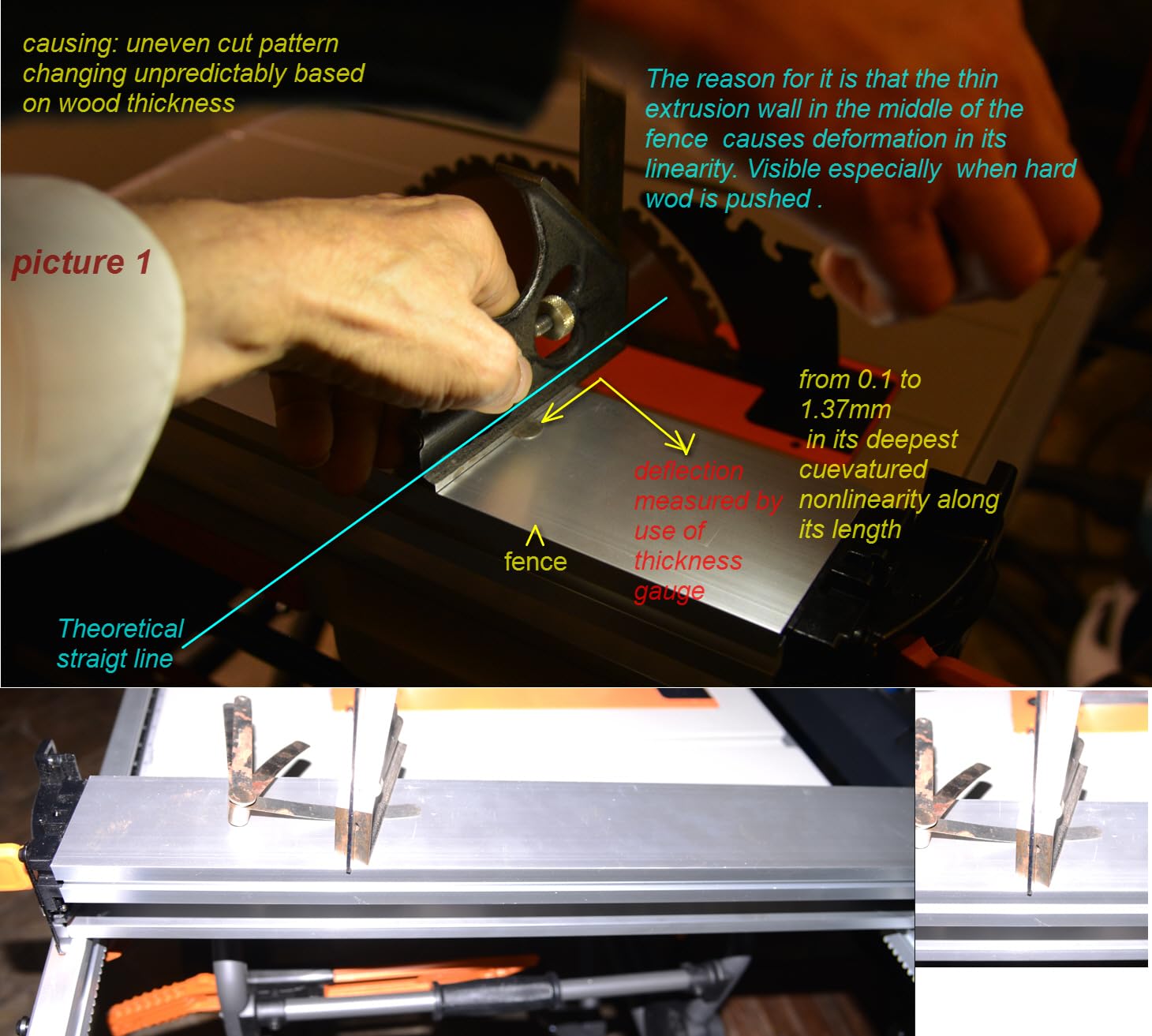
Set the fence square to the blade and lock it, then verify by measuring from the blade to the fence at both ends of the table.
Clear the area behind the saw and support long or wide workpieces so nothing tips.
Stand to the side of the blade line, never behind the workpiece in line with the kickback path.
Wear eye and hearing protection, keep a push stick within reach, and unplug the saw before changing blades or reaching near the arbor.
Portable Jobsite Table Saws FAQs
Who makes the best 10 inch jobsite table saw?
The DEWALT DWE7491RS is the most widely recommended 10 inch jobsite table saw, and it earns that position with a rack and pinion fence, 32-1/2 inches of rip capacity and a 15 amp motor that powers through hardwood ripping. Reviewers and forum owners consistently treat it as the benchmark that cheaper saws are measured against. Its main drawback is weight, at 110 pounds with the rolling stand.
What is the best table saw for value for money?
The SKIL TS6307-00 is the value pick in this category because the folding stand is part of the saw rather than a separate purchase, so you get a complete setup in one item. It weighs 51.2 pounds, its rack and pinion fence rails hold parallel to the blade, and owners call it accurate out of the box. The supplied miter gauge is the common weak point, and rip capacity sits around 25 to 26 inches.
What is a good contractor table saw?
A good contractor table saw has a cast-iron top, a heavier trunnion and a larger motor than a portable jobsite saw, and it stays rigid through long hardwood rips. Portable saws are the right choice for a crew that moves between sites, while contractor saws suit a shop doing daily production work. If your cuts happen on different job sites a few times a week, a portable saw with a good fence is the more sensible purchase.
How much rip capacity do I actually need?
About 24 to 25 inches halves a 4×8 sheet in a single pass, which covers trim, panels and most renovation work. You need 30 to 32 inches to rip a full sheet to a finished width without flipping the panel, which is what framing and roofing work requires. At full extension the far end of the panel has no support, so plan for an outfeed table or a sacrificial support alongside any saw with 30 inches or more.
Is a SawStop table saw worth the extra cost?
The SawStop Jobsite Saw PRO stops its blade in under five milliseconds when the flesh-detection system senses skin contact, and no other saw in this roundup does that. For trim carpentry, cabinet work or anyone cutting alone where hands travel close to the blade, that protection justifies the premium, and owners on the woodworking forums reach the same conclusion. Budget for replacement brake cartridges and their blades as a recurring cost, and expect to add the mobile cart assembly.
What not to do with a table saw?
The most common serious mistakes are pushing a dull blade, running with the guard folded out of the way, failing to check that the riving knife sits behind the blade, and standing in line with the kickback path. Never reach near the blade or change it while the saw is connected, always use a push stick on narrow stock, and make sure long workpieces are supported so they cannot pinch the blade. Support wide panels so the offcut does not drop and pinch the workpiece.
Final Verdict: Which Portable Jobsite Table Saw Should You Buy?
If you take one thing from this roundup, take the DEWALT DWE7485. It is the best portable jobsite table saw for the widest range of people because it does the useful things without the weight, it carries a tool-free guard that people actually leave in position, and its 24.5 inch rip halves a full sheet in one pass. If you rip sheet goods to a finished width rather than halving them, step up to the DEWALT DWE7491RS and accept the 110 pound load.
Match the rest to your work. Framers ripping 4x lumber want the SKILSAW SPT99-11 for its worm drive torque and deeper cut. Budget buyers who want a complete package in one box want the SKIL TS6307-00. Cabinet and dado work points to the Delta 36-6023 with its stacked dado capacity and 5 year warranty. A solo operator hauling a saw up stairs wants the 40 pound SKIL TS6308-00, and a metal shop wants the EVOLUTION R10TBLX.
Whatever you pick, budget for the second purchase too: a proper rip blade, a decent crosscut blade, a replacement miter gauge if the supplied one feels loose, and an outfeed if your rip capacity runs past 30 inches. Those four items change the saw more than the model choice does, and they are the difference between a frustrating first project and a good one.
We keep this list updated through 2026, and the price and review data behind every pick moves with it. If you want the wider picture first, start with our table saw buying guide for woodworking, then come back and match the category to your actual site work.
Leave a Reply