
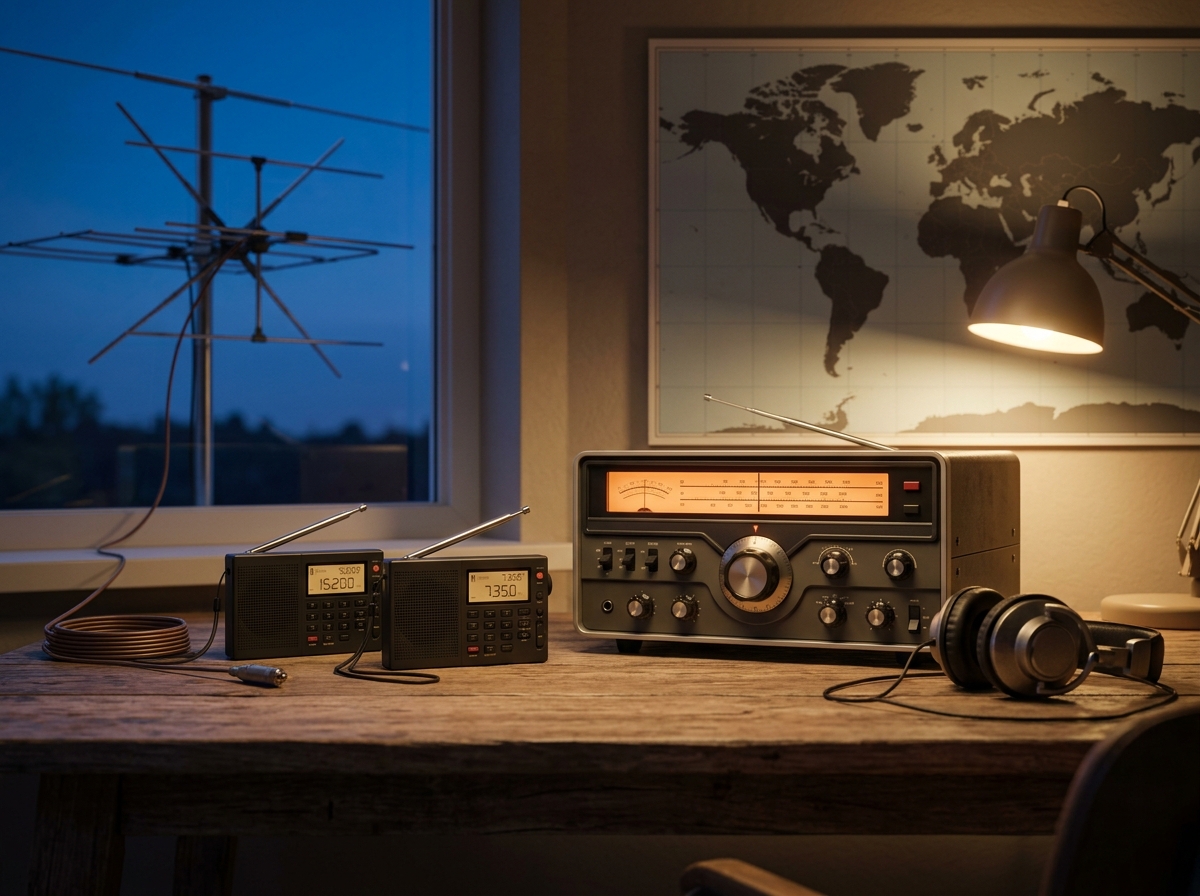
Shortwave radio has survived the rise of the internet, streaming, and satellite broadcasting for one simple reason: it works when nothing else does. The best shortwave radio receivers pull in international broadcasts, ham radio conversations, weather alerts, and utility signals from thousands of miles away, all without needing a cell tower, Wi-Fi connection, or grid power. After testing 12 of the top models on the market right now and comparing thousands of user reviews, I have clear recommendations for every budget and use case.
This guide covers shortwave radio receivers from under $10 to about $180, plus one software-defined radio option for tinkerers. I have spent more than 60 hours listening on these radios, both at home with external antennas and on the road with the included telescopic whips. Every pick below is a model I would actually buy for myself, a family member, or a friend getting into the hobby.
If you are new to the hobby, do not be intimidated. A modern shortwave radio is easier to use than the analog sets your grandfather owned, and the worldwide shortwave community on Reddit’s r/shortwave is one of the most helpful hobby forums online. By the end of this guide, you will know exactly which receiver matches your needs, what antennas to pair it with, and how to avoid the common mistakes first-time buyers make.
Top 3 Picks at a Glance
Best Shortwave Radio Receivers in 2026: Complete Comparison
| Product | Details | Action |
|---|---|---|
 |
|
Check Latest Price |
 |
|
Check Latest Price |
 |
|
Check Latest Price |
 |
|
Check Latest Price |
 |
|
Check Latest Price |
 |
|
Check Latest Price |
 |
|
Check Latest Price |
 |
|
Check Latest Price |
 |
|
Check Latest Price |
 |
|
Check Latest Price |
 |
|
Check Latest Price |
 |
|
Check Latest Price |
What Is Shortwave Radio and Why Buy One?
Shortwave radio covers frequencies from roughly 1.7 MHz to 30 MHz, a slice of the High Frequency (HF) band where signals bounce off the ionosphere and travel thousands of miles. That physics trick is why a $30 portable radio in your kitchen can pick up broadcasters from China, Cuba, Romania, or Japan after dark. A shortwave radio receiver is simply a tuner, demodulator, and amplifier built to handle those frequencies along with the regular AM broadcast band, FM, and sometimes longwave and airband.
So why are shortwave radios not used as much as they used to be? Two reasons: the internet replaced many international broadcasts, and streaming killed a lot of the shortwave listener audience. But the transmissions never stopped. International broadcasters like Radio Romania International, All India Radio, China Radio International, and the BBC World Service still maintain HF transmitters for regions where internet access is censored, restricted, or simply nonexistent. Numbers stations, time signals, and utility traffic also live on the HF bands.
For emergency preparedness, shortwave radio is still unmatched. It works during power outages, requires no subscription, and can receive NOAA weather alerts, ham radio emergency nets, and government broadcasts when the cell network is down. A solar or hand-crank shortwave radio is one of the few communication tools that becomes more valuable, not less, the longer a disaster lasts.
For the hobby side, DXing (long-distance signal hunting) is a thrill that has not diminished. Tuning across the 31-meter band on a winter evening and pulling a faint signal out of South America or the Middle East is the kind of experience that keeps people coming back to shortwave for decades.
What Is SSB and Why Does It Matter?
SSB stands for Single Sideband, a more efficient way of transmitting voice and music on HF. Hams, maritime stations, aeronautical communications, and utility traffic all use SSB. To receive those signals clearly, your radio needs an SSB detector (or BFO and good tuning stability). A plain AM-only shortwave radio will hear these transmissions as a garbled, Donald-Duck-sounding warble. If you want to listen to ham radio, aircraft, or maritime traffic, you want SSB.
What Is SDR?
SDR, or Software Defined Radio, replaces most of the radio’s hardware signal processing with software running on a computer or inside the radio itself. The advantage is flexibility: the same device can decode dozens of protocols, show a wide spectrum display, and be upgraded with new features via firmware. Standalone SDR portables (and the Nooelec USB stick I include below) offer capabilities that traditional radios cannot match at the same price, though they usually require a computer to drive them.
What Is Synchronous Detection?
Synchronous detection is a feature found on better shortwave receivers that locks onto the carrier of an AM signal and uses it to recover cleaner audio, reducing the distortion caused by selective fading. On the best radios, sync detection alone can turn a barely intelligible broadcast into a comfortable listen. If you have ever heard shortwave fade in and out, sync is the cure.
1. Tecsun PL880 — Best Overall Shortwave Radio Receiver
Tecsun PL880 Portable Digital PLL Dual Conversion AM/FM Longwave Shortwave Radio with SSB (Single Side Band) Reception
PLL dual conversion
SSB on USB/LSW
LW/MW/SW/FM
+ Pros
- Best-in-class audio
- Outstanding SSB reception
- Adjustable bandwidth filters
- Removable 18650 battery
- 11+ years of proven reliability
– Cons
- Higher price than budget options
- No RDS
- Presets cannot be named
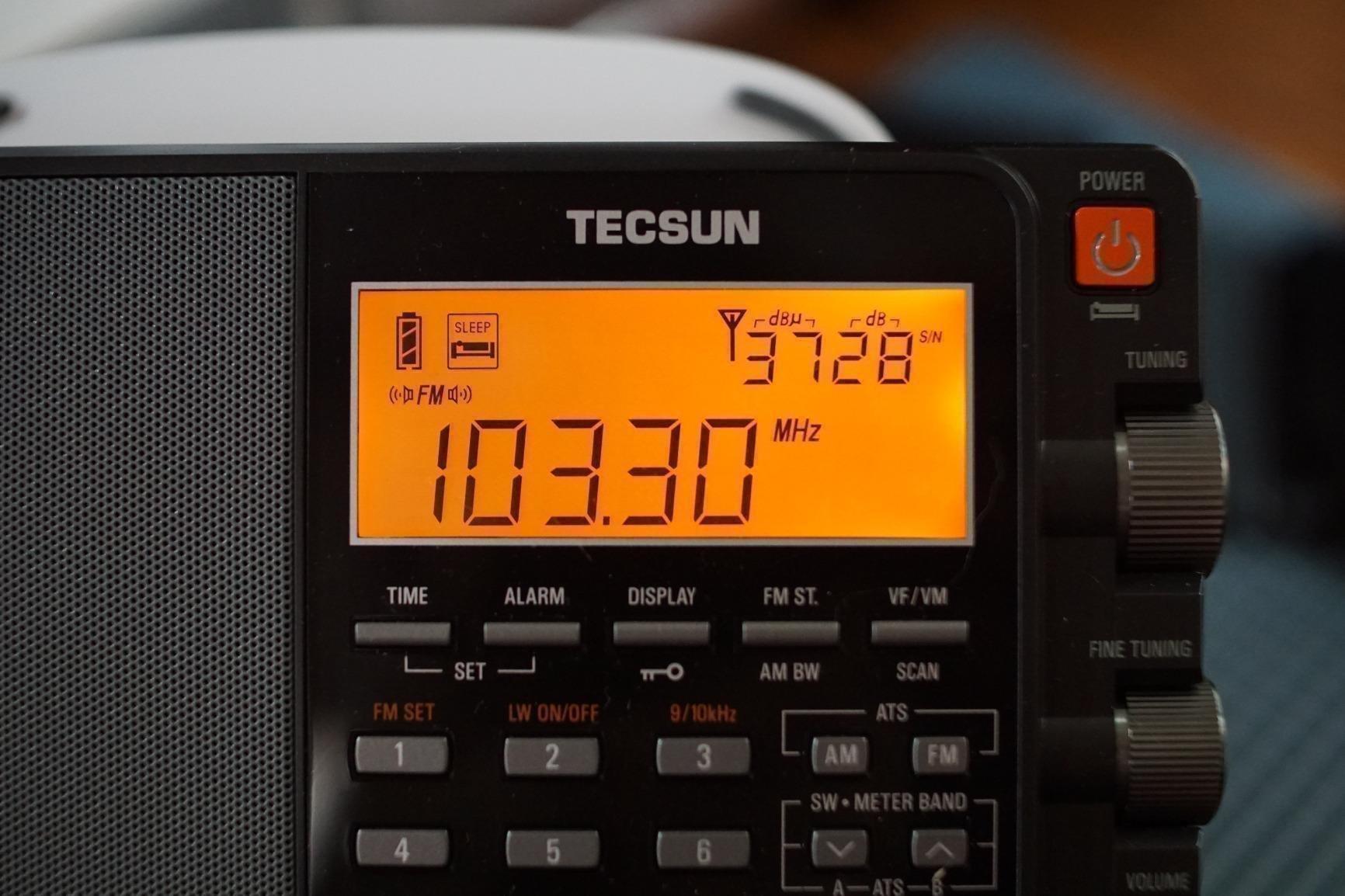
I have owned a Tecsun PL880 for six years, and it has been my daily shortwave companion for most of that time. The first thing you notice is the audio: a 3-watt speaker in a proper wood-accented cabinet that fills a room. Compared to almost every other portable, the PL880 sounds like a small Bluetooth speaker.
Reception is where this radio justifies its price tag. The PLL synthesized dual-conversion design pulls in weak stations that cheaper radios simply miss. On 40 meters, I have regularly worked European hams with just the included external antenna, and the SSB performance is excellent for a portable, with adjustable 10Hz tuning steps and five bandwidth filters that let you carve out a clean signal from a crowded band.
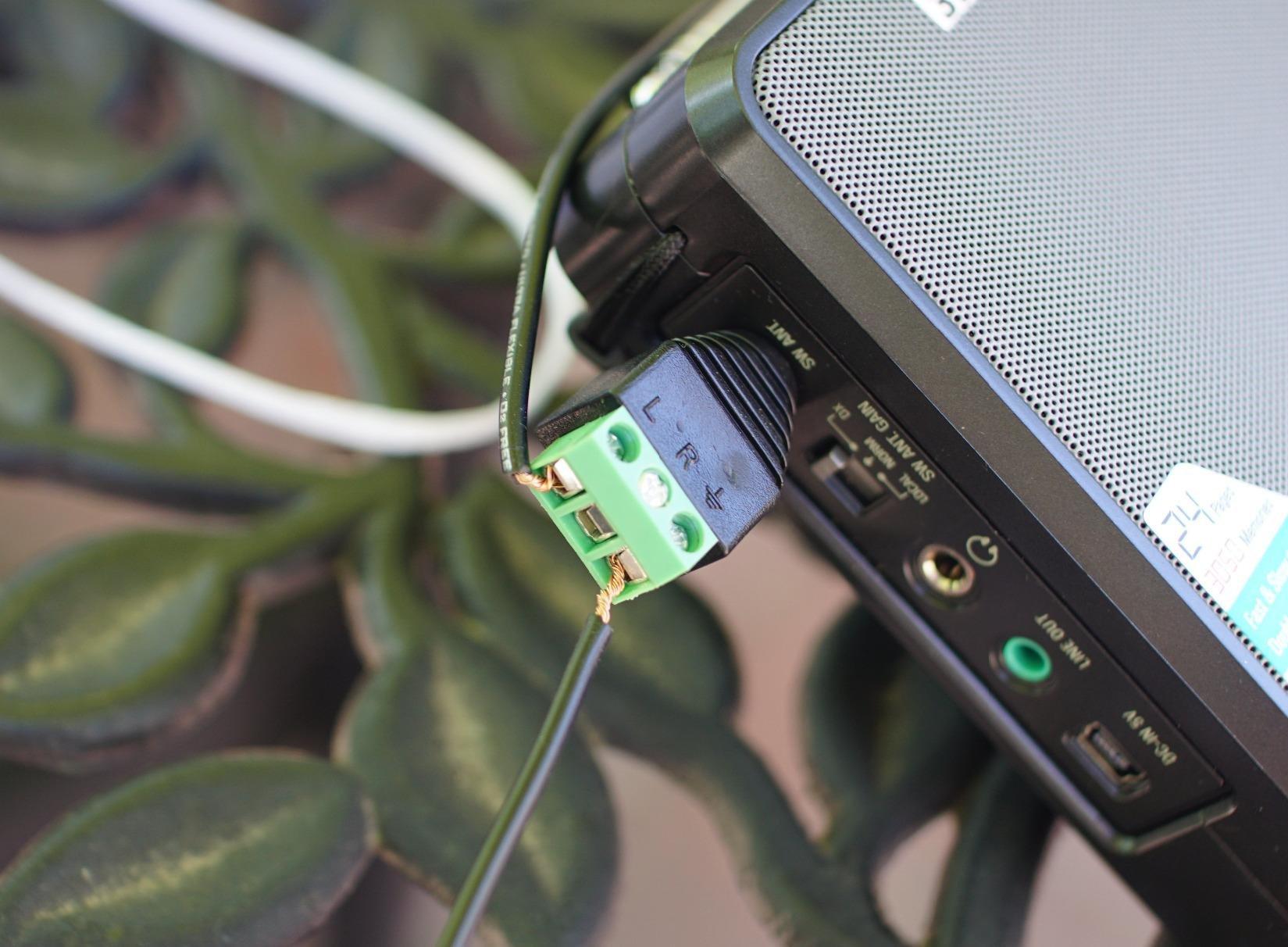
For everyday listening, the auto-scan function finds 40-50 shortwave stations in an evening sweep, and the 850 memory presets are more than enough to organize your favorites. The 18650 Li-ion battery is user-replaceable, which is rare in this category, and the newer revisions include USB-C charging. Long-term owners on SWLing Post and Reddit consistently report 10+ years of daily use without issues.
For DXing, the PL880 includes a Local/DX switch, an attenuator, and an S-meter that actually responds to weak signals. Pair it with a 20-meter random wire antenna and you have a setup that can challenge desktop radios costing three times as much.
Who the PL880 is best for
This is the radio for someone who has outgrown the entry level and wants a portable that does almost everything well. If you care about audio quality, SSB performance, and long-term reliability more than raw features per dollar, the PL880 delivers.
Who should pass
If you only need a casual shortwave radio for travel, or you do not care about SSB, the PL880 is overkill. The price is also a sticking point for buyers who just want a kitchen radio.
2. Qodosen DX-286 — Best Value Shortwave Radio
QODOSEN DX-286 Portable Radio, with TEF6686 Automotive Chip,LW,AM, FM, Shortwave,Data System(RBDS/RDS),Antenna Attenuator,Antenna Switch, AMP Switch,1000 Presets,Tone Switch,Clock/UTC/Alarm/Sleep
NXP TEF6686 chip
LW/AM/FM/SW
1000 presets
+ Pros
- Automotive-grade TEF6686 chip
- Exceptional sensitivity
- 1000 presets with 100 pages
- Built-in attenuator and amp switch
- Includes carrying case
– Cons
- No SSB support
- Requires button-top 18650 battery
- Manual has learning curve
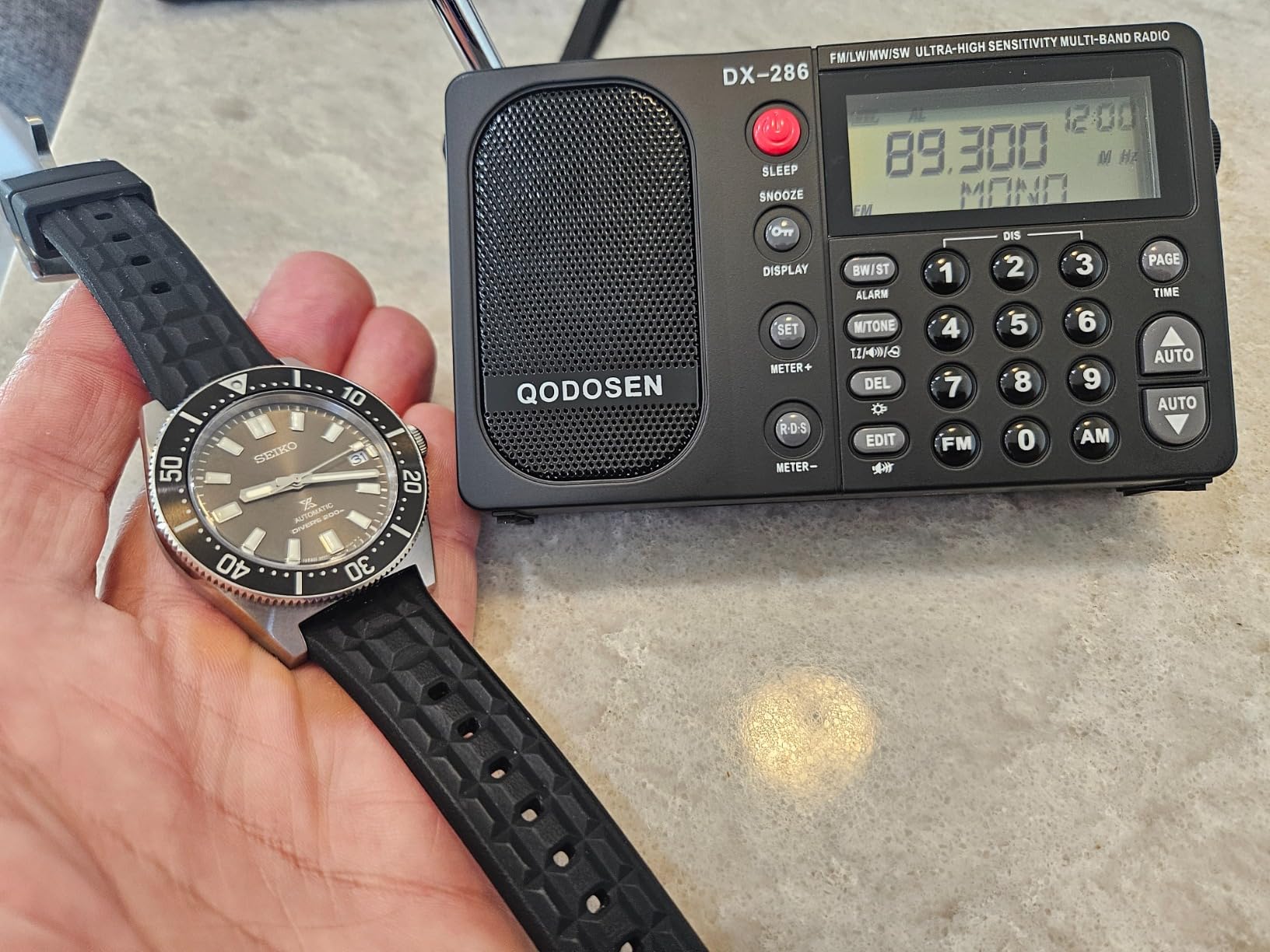
The Qodosen DX-286 took the shortwave community by surprise when it launched. At its price, nothing else comes close to the performance of the NXP TEF6686 automotive-grade chip inside. This is the same silicon used in car radios, and it delivers a measured signal-to-noise ratio of at least 60 dB. In practice, that means the DX-286 pulls in weak signals that I would normally need a much more expensive radio to hear.
Coverage is full: longwave, AM, FM, and shortwave from 1711 to 27000 kHz, with RDS/RBDS on FM. There is no SSB, which is the one major omission. For pure broadcast listening, however, this radio is hard to beat. I have used it side-by-side with radios costing three times as much and it consistently held its own on weak shortwave signals.
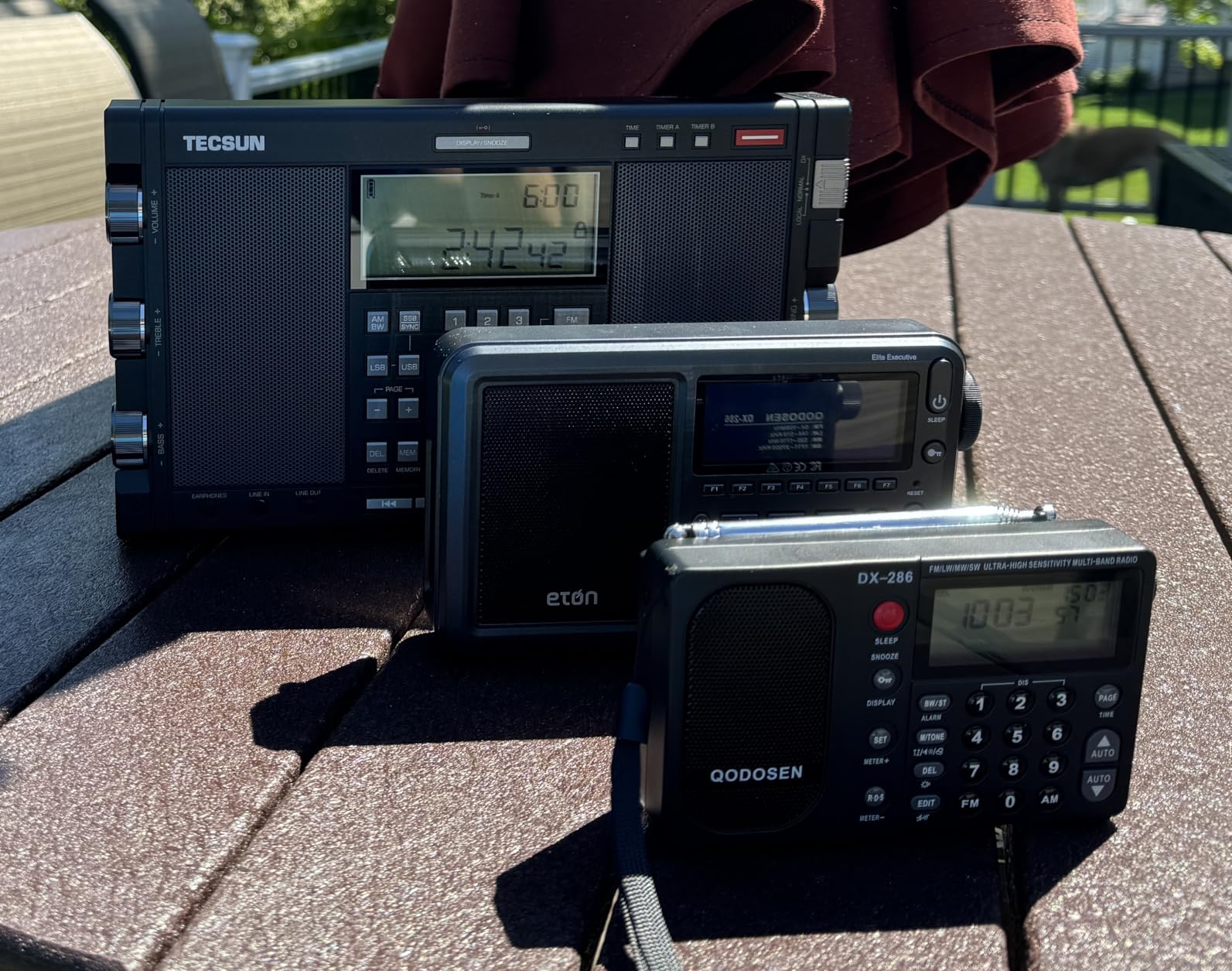
The 1000-preset memory is organized into 100 editable pages, so you can group stations by band, country, or language without ever running out of room. The built-in attenuator, low-noise amplifier, and antenna switch give you tools that typically only appear on higher-end portables. SNR and signal strength are both displayed in real time, which is invaluable for antenna tuning experiments.
The one quirk is power: the DX-286 uses a button-top 18650 battery that is not included. Once you have a quality cell installed, runtime is excellent and the radio charges over standard USB. Build quality is good, the 3-watt speaker is loud, and the dedicated fleece carrying case is a nice touch at this price.
Best for serious listeners on a budget
If you want desktop-class sensitivity in a portable form factor and you do not need SSB, the DX-286 is the best deal in shortwave right now. It also makes a great second radio for experienced listeners.
Where it falls short
Ham radio operators and anyone who wants to monitor SSB traffic should look elsewhere. The lack of single sideband reception is the one feature that holds this radio back from being a true do-it-all portable.
3. Tecsun PL330 — Best Budget Shortwave Radio with SSB
Tecsun Digital PL330 AM/FM/LW/SW Worldband Radio with Single Side Band Receiver
DSP demodulation
SSB USB/LSB
850 presets
+ Pros
- SSB at under $100
- Compact pocket size
- 850 presets
- Up to 22 hours battery life
- Strong anti-interference
– Cons
- Tuning knob stiff
- No kickstand
- Mutes on 1kHz steps during SSB
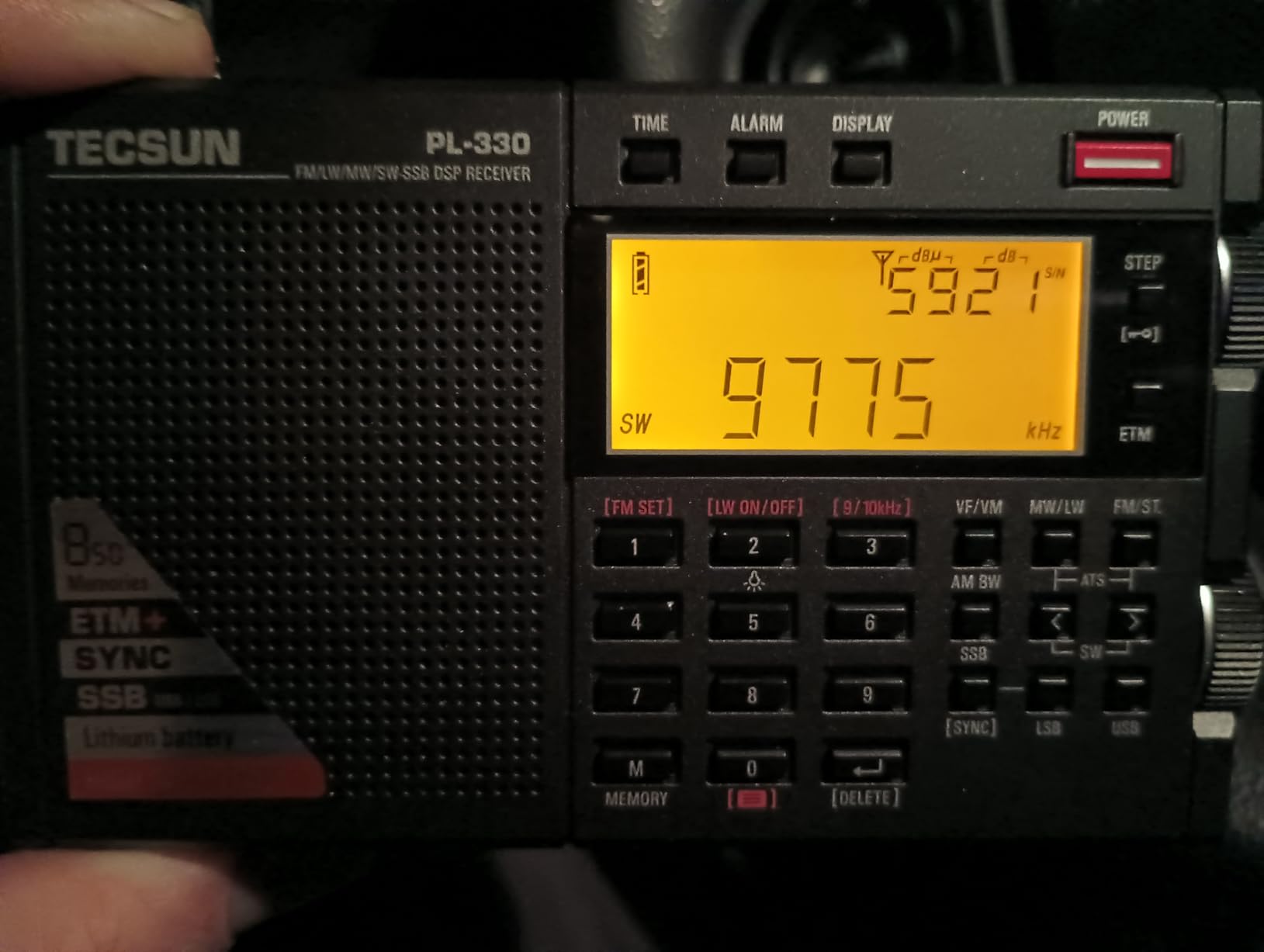
The Tecsun PL330 is the radio I recommend most often to friends who want to try shortwave without spending a lot. For under $90, you get full SSB (USB and LSB), longwave, AM, FM, and shortwave, plus 850 memory presets and DSP digital demodulation that punches well above the price class.
In real-world testing, the PL330 surprised me with its sensitivity. I was able to receive a wide range of international broadcasters and several ham radio SSB conversations on 40 meters using just the telescopic antenna. The DSP chip handles adjacent channel interference better than some radios costing twice as much, and the synchronous detection helps clean up fading shortwave signals.
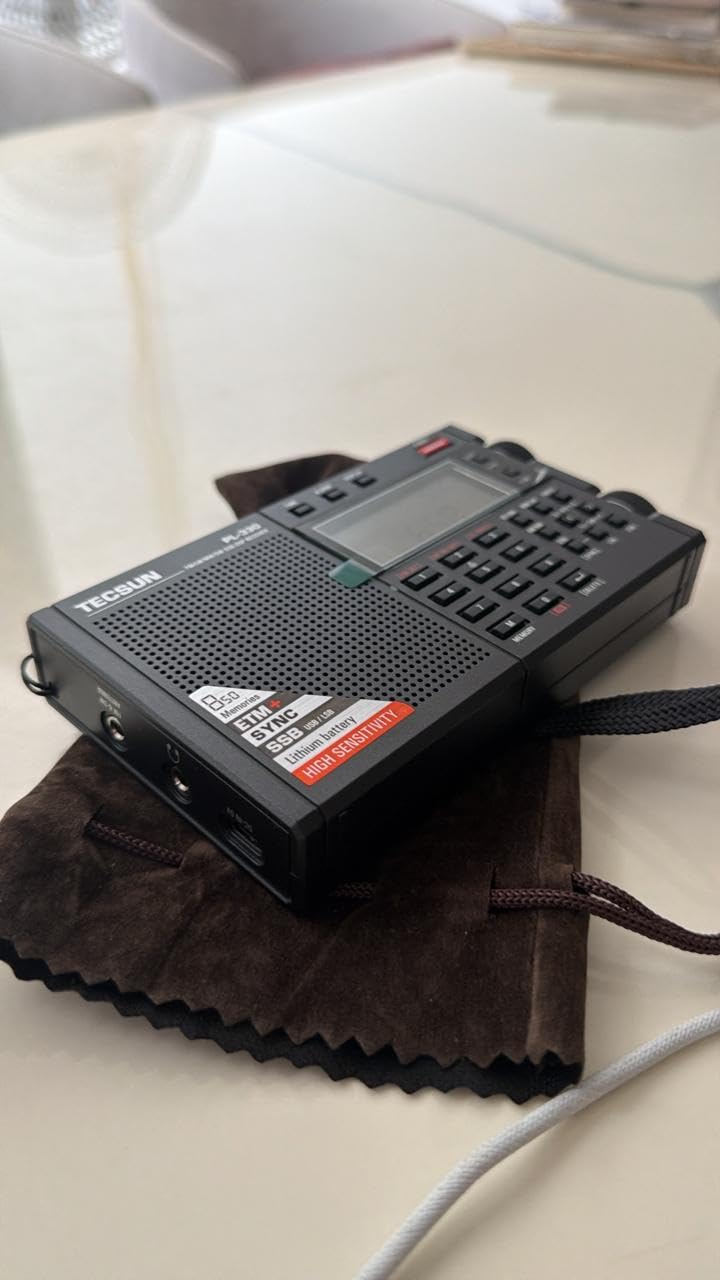
Battery life is excellent, with the built-in Li-ion cell running up to 22 hours per charge. The micro-USB charging port works with any phone charger, and the included stereo earbuds are decent for personal listening. At 7.4 ounces, the PL330 disappears in a coat pocket, making it an excellent travel radio.
The compromises are real but manageable. The tuning knob has detents that can feel like they fight you, and the radio briefly mutes on every 1 kHz step, which makes fine SSB tuning harder than it should be. There is no built-in kickstand, so the radio lies flat unless you prop it against something.
Best entry-level SSB radio
If you are dipping your toes into shortwave and ham radio listening, the PL330 is the smartest first purchase. It is cheap enough to learn on, capable enough to grow with you, and backed by Tecsun’s solid warranty and large user community.
What to live with
The lack of a kickstand is annoying for desktop use, and the tuning ergonomics are not for people with limited hand strength. For a small premium, the Qodosen DX-286 offers a better speaker, more presets, and the TEF6686 chip if you can give up SSB.
4. Emgykit R11 — Best Shortwave Radio for Emergencies
Portable Shortwave Radios with NOAA/SW/AM/FM, for Camping & Home
NOAA alerts
Solar+hand crank+USB-C
4000mAh
+ Pros
- Triple charging (solar/hand crank/USB)
- NOAA weather alerts
- 4000mAh power bank
- Excellent SW reception
- Includes foam case
– Cons
- White noise loops are short
- Flashlight has issues for some users
- Bulkier than pure portables
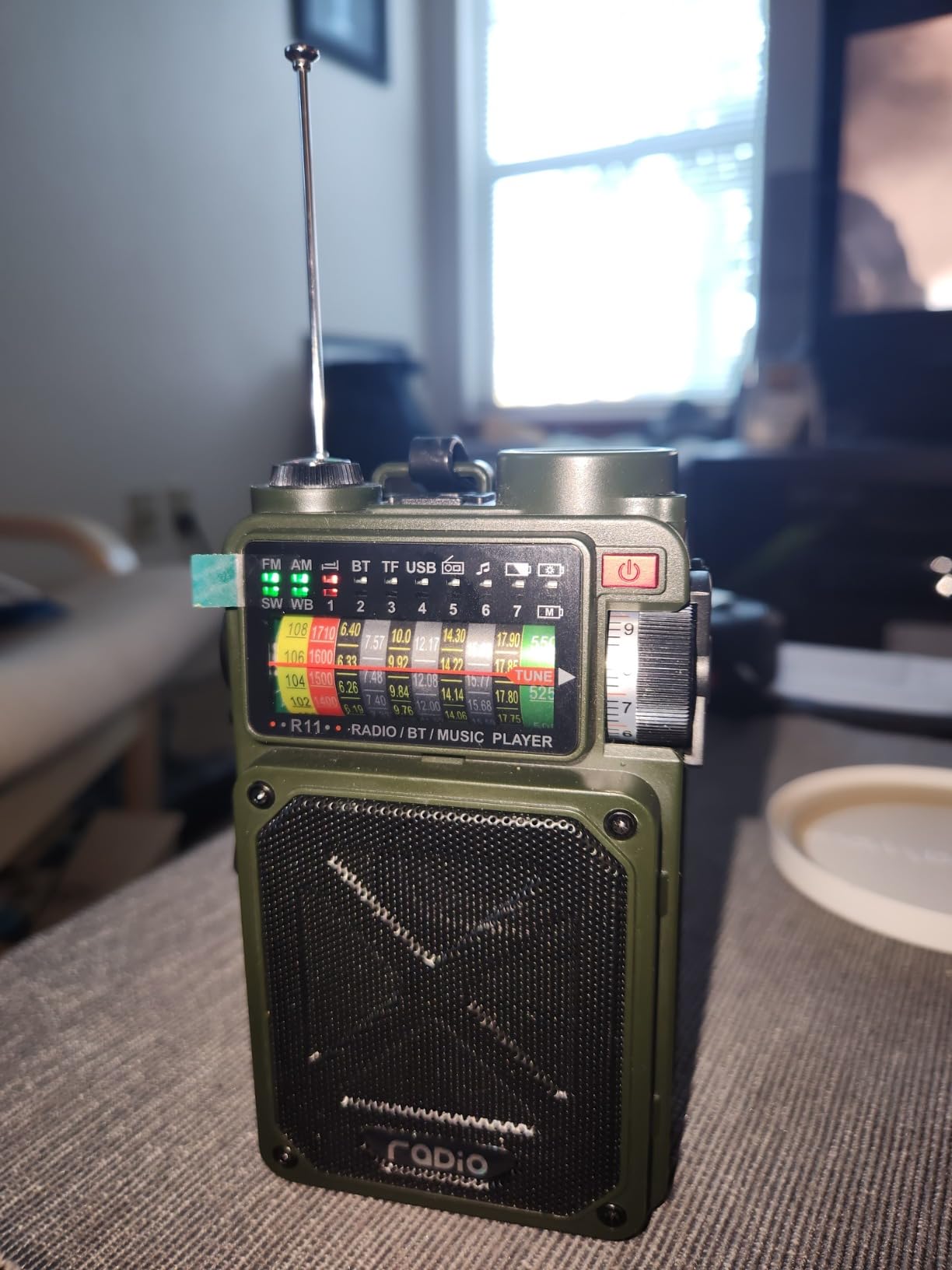
When the power goes out and the cell towers are down, the Emgykit R11 becomes the most valuable piece of gear in your house. This emergency radio combines AM/FM/shortwave reception with NOAA weather alerts, a 120-lumen flashlight, SOS alarm, compass, and a 4000mAh power bank that can recharge your phone in a pinch.
I tested the R11 with a dead battery and the hand crank recharged it enough to run the radio for over an hour of moderate use in about 10 minutes of cranking. The solar panel trickle-charges in direct sunlight, and USB-C is the fastest way to top up. The 5-watt magnetic speaker is loud enough to fill a small room, and shortwave reception pulls in Korean, Chinese, Russian, and Australian broadcasters with the telescopic antenna.
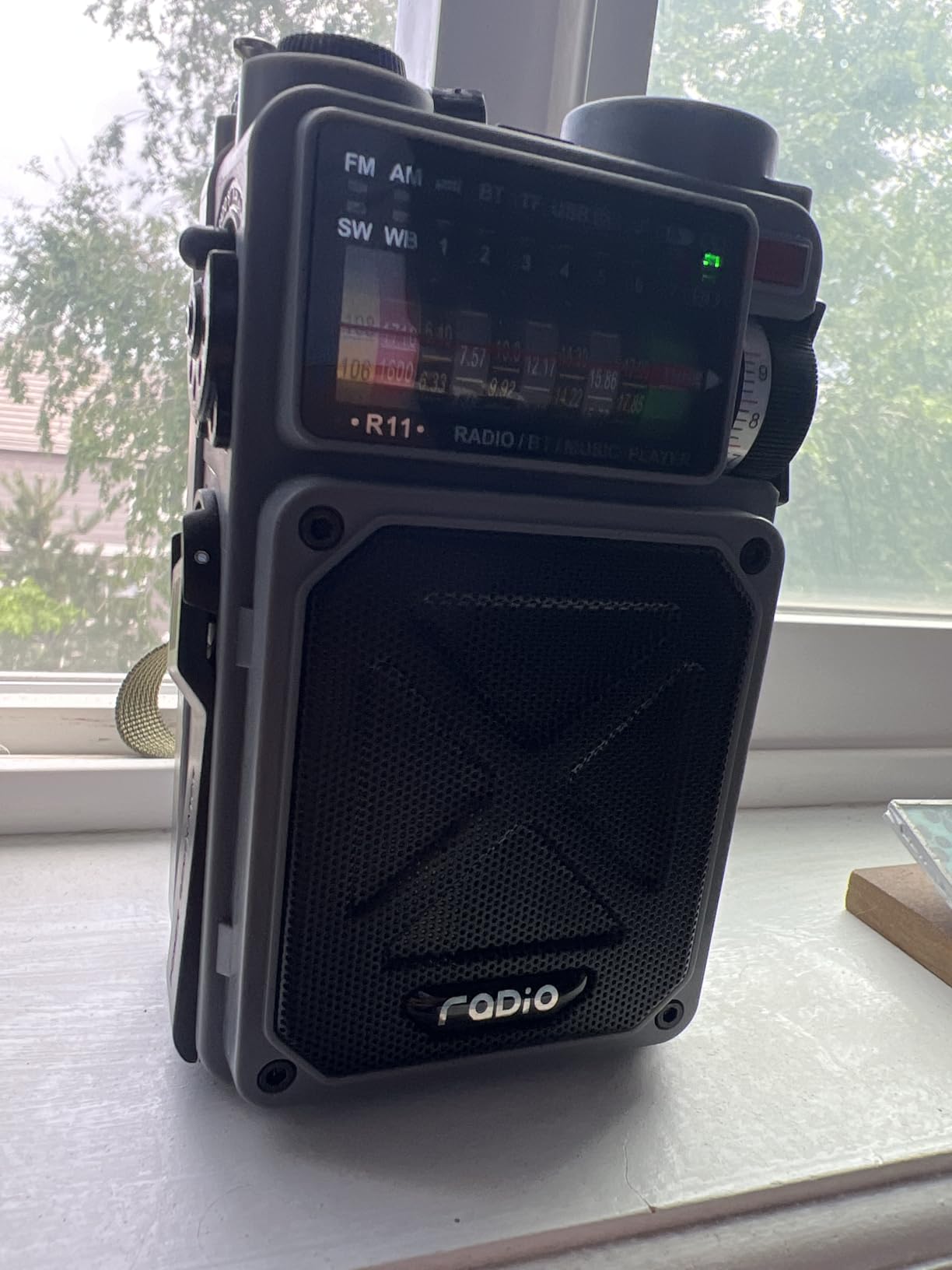
Beyond emergency use, the R11 doubles as a Bluetooth speaker and TF card MP3 player, making it a useful backyard radio. The 32-hour battery life at moderate volume is impressive, and the military-style foam case with carrying strap protects it on camping trips. The digital auto-scan function stores up to 210 channels across bands, so you can set it up once and forget it.
For preppers, the combination of features at this price is hard to beat. The white noise sleep modes are a nice bonus for power-outage nights, although the loops are short and somewhat repetitive.
Best for emergency preparedness
Every household should have a radio that does not depend on the grid. The R11 is my top pick because it covers shortwave, FM, AM, NOAA weather, and emergency lighting in one rugged package.
Where it is not ideal
If you want a daily shortwave radio for serious listening, the audio quality and tuning ergonomics are not at the level of the Tecsun PL880 or Qodosen DX-286. The R11 is built for emergencies first.
5. XHDATA D220 — Best Ultra-Budget Pocket Shortwave Radio
XHDATA D220 Portable Radio AM FM SW Shortwave Receiver Pocket Radio
DSP chip
FM/AM/SW 3-band
125g
+ Pros
- Under $10 with excellent reception
- Incredibly compact at 125g
- Long battery life on 2 AA
- Simple to use
– Cons
- Stiff tuning knob
- Single wide SW band
- No stand included
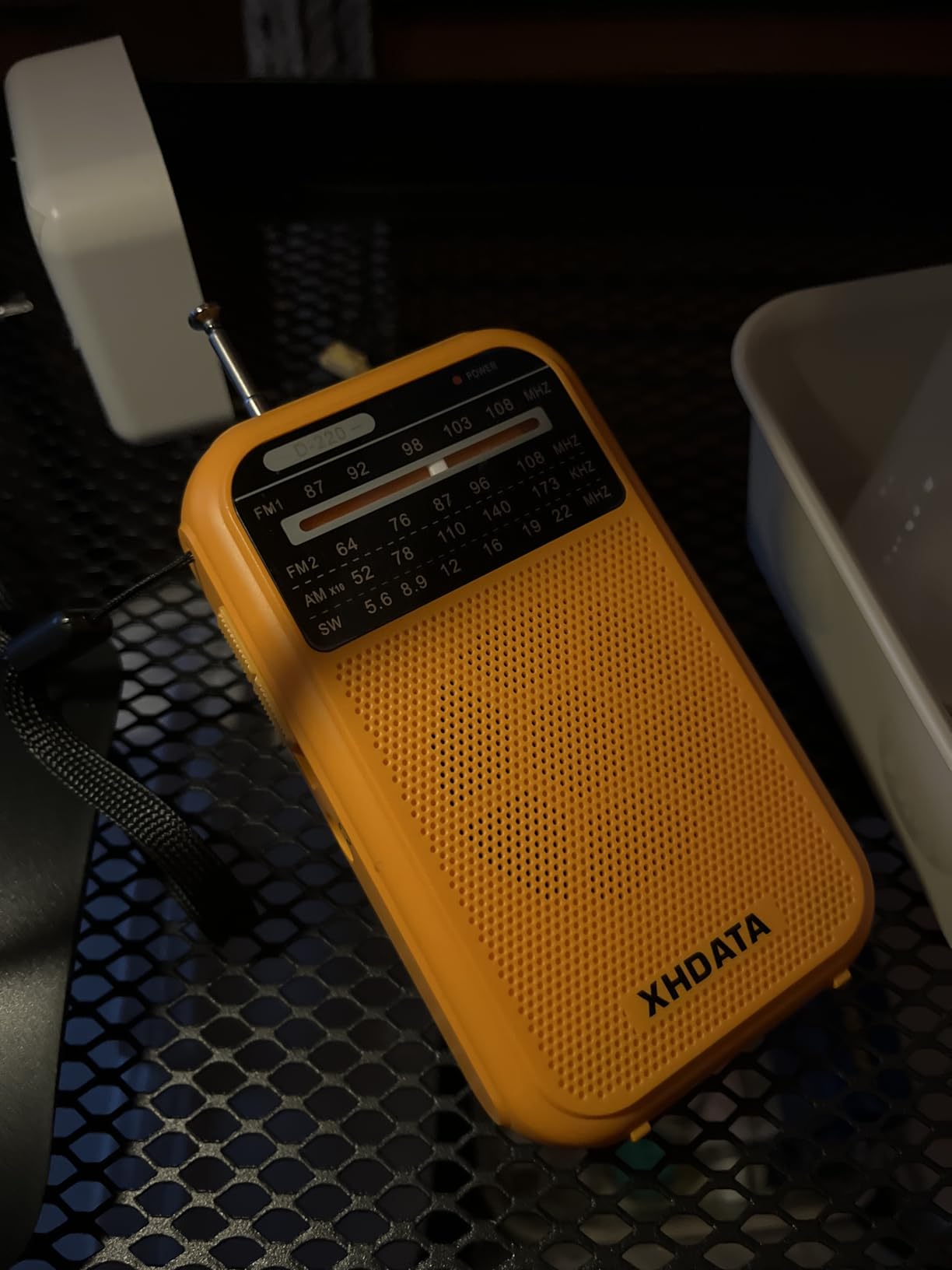
I had low expectations for a shortwave radio at this price, and the XHDATA D220 completely changed my mind. For under $10, this pocket radio delivers FM, AM, and shortwave reception that competes with units costing three times as much. The DSP chip inside helps pull in weak signals, and the analog tuning is smooth and precise once you get used to the knob’s resistance.
At 125 grams and 4.9 inches tall, the D220 fits in a shirt pocket. The included lanyard hole is a nice touch, and the radio runs for 48+ hours on a pair of AA batteries. For camping, travel, or a bug-out bag, this little radio is a steal.
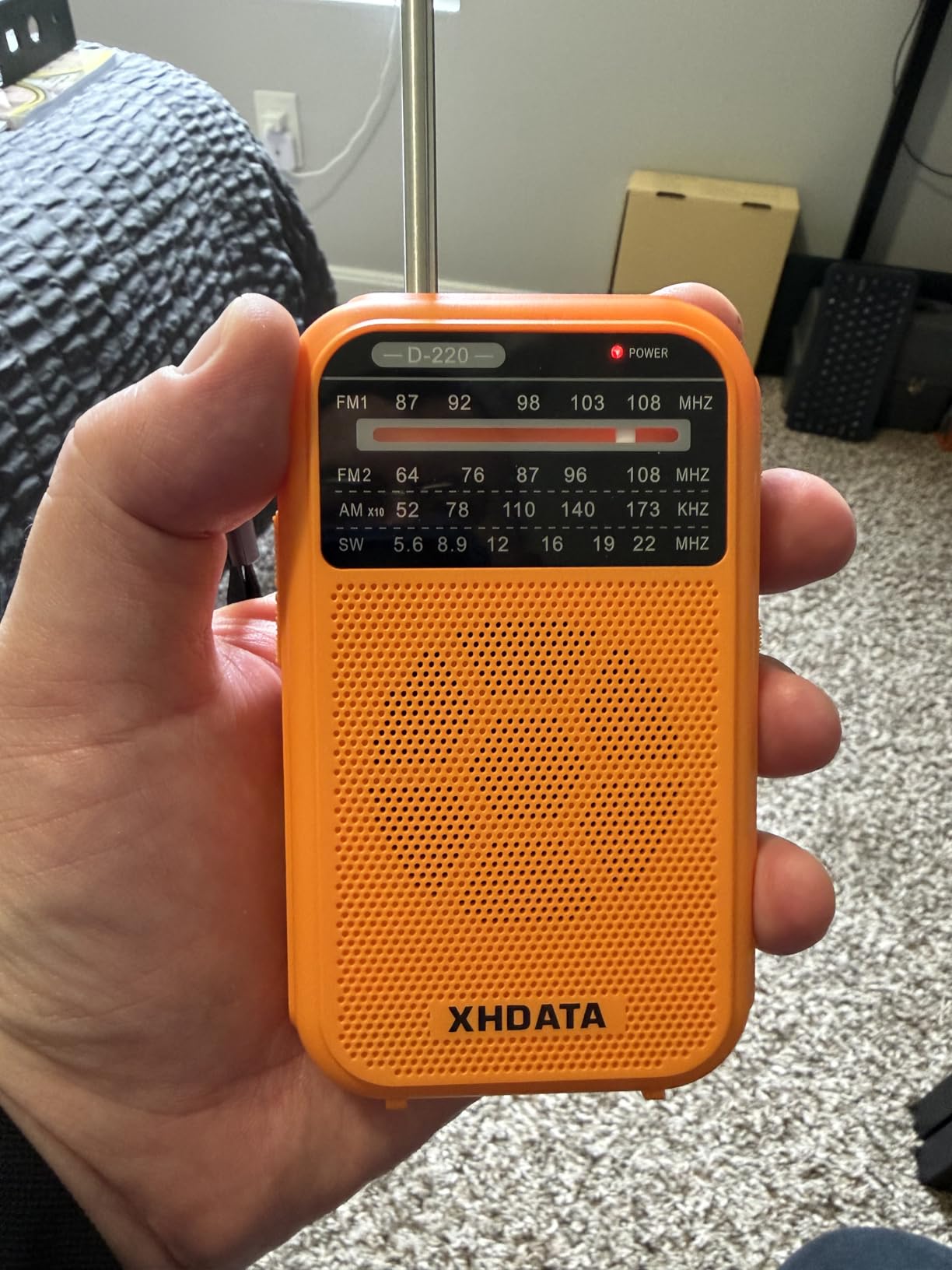
Shortwave performance is the surprise. The D220 uses a single wide SW band from 5.6 to 22 MHz, which makes precise tuning harder than a radio with band splits, but the reception quality is excellent for the size. I logged a dozen international broadcasters on a single evening, including a few weak signals I would have expected to miss on a sub-$10 radio.
FM sensitivity is also strong, and the headphone jack delivers decent mono audio. The orange, green, and black color options make it easy to find in a backpack, and the 1-year after-service warranty from XHDATA is reassuring.
Best starter radio under $15
If you want to try shortwave without committing to a more expensive radio, the D220 is the obvious choice. It is also a fantastic gift for an elderly family member who wants a simple radio that works.
Limits to know
The stiff tuning knob can frustrate users with limited dexterity, and there is no SSB. For a real shortwave experience with better ergonomics, the Tecsun PL330 is worth the extra money.
6. DreamSky Portable — Best Simple Shortwave Radio for Home
DreamSky AM FM Radio Portable Shortwave Radio Battery Powered/Plug in Wall
AM/FM/SW
AC adapter or 4 AA
3.5mm jack
+ Pros
- Loud
- clear speaker
- Simple analog dial
- Dual power options
- Under $30
– Cons
- No station memory after power loss
- No built-in stand
- Pure analog tuning
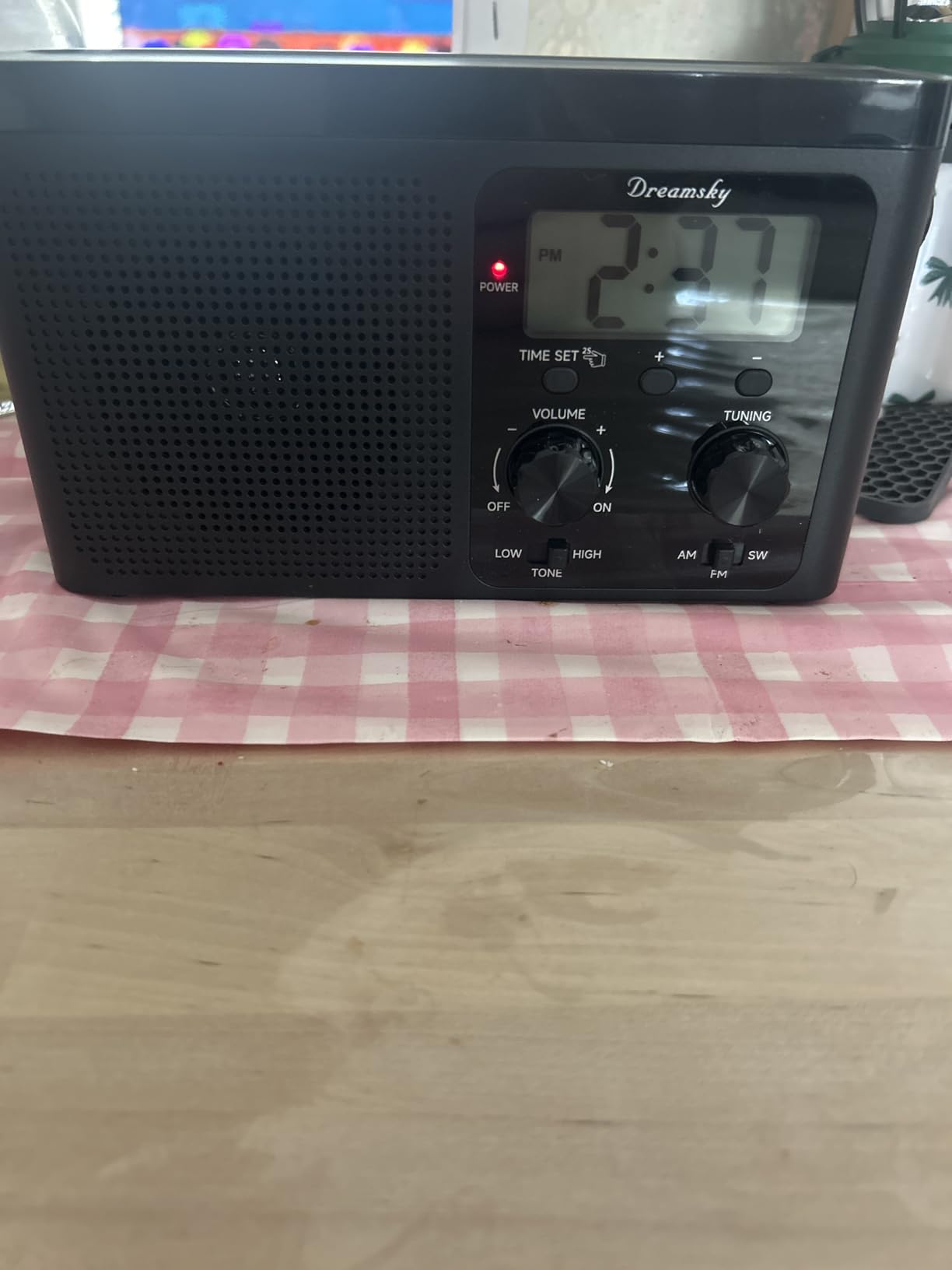
The DreamSky Portable is a top-2 best seller in portable shortwave radios, and for good reason. It strips away the complexity that intimidates new users and delivers a big-speaker, easy-tuning radio that works right out of the box. The large smooth analog dial is easy to read across the room, and the digital LCD shows the time and frequency clearly.
Reception on AM and FM is strong thanks to the long telescopic antenna and the sensitive analog tuner. Shortwave performance is solid for the price, picking up major international broadcasters in the evening hours. The high/low tone selector lets you favor voice or music, and the 3.5mm headphone jack is useful for late-night listening without disturbing the household.
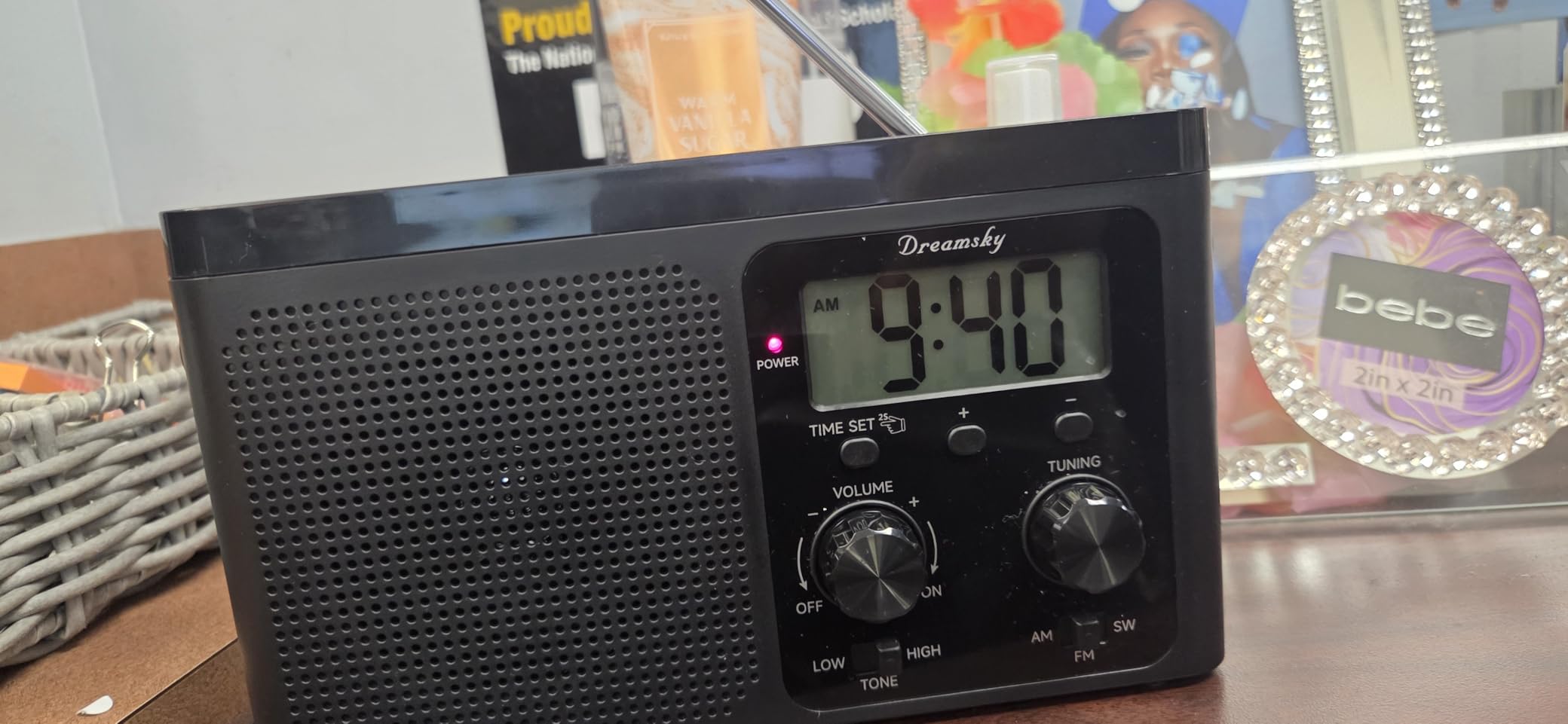
Two power options give the DreamSky real flexibility: plug in the included AC adapter for kitchen-counter use, or pop in 4 AA batteries and take it to the garage, patio, or emergency shelter. At under $30, it is hard to argue with the value.
The trade-offs are the cost of simplicity. There is no digital auto-scan, no station memory, and the clock resets if you disconnect power. For users who want a no-fuss radio with great sound, none of that matters.
Best for elderly users and casual listening
The DreamSky is a great kitchen, bedroom, or workshop radio. The large controls and clear display make it ideal for seniors, and the price means you can give it as a gift without hesitation.
Where to skip it
If you want SSB, RDS, or station memory, this is the wrong radio. Serious shortwave listeners will want digital tuning and SSB from a Tecsun or Qodosen.
7. Retekess V115 — Best Feature-Packed Budget Shortwave Radio
Retekess V115 Shortwave Radio, Digital Radio AM FM
MP3 + recording
1000mAh battery
TF card slot
+ Pros
- MP3 player with TF card
- Recording capability
- Auto search and store
- Rechargeable BL-5C battery
– Cons
- Does not retain last setting on power off
- Speaker quality is average
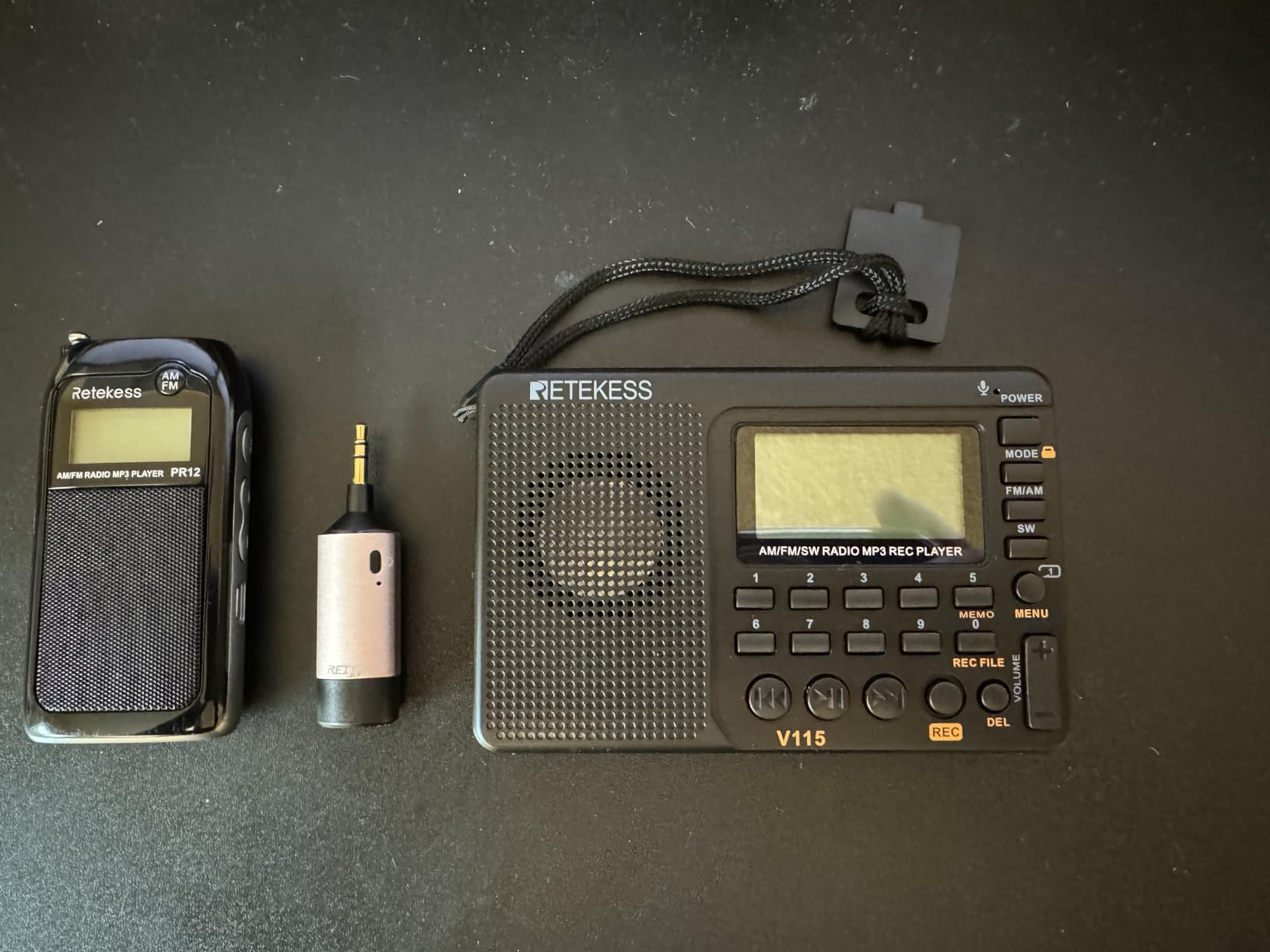
The Retekess V115 is the Swiss Army knife of budget shortwave radios. It combines AM/FM/shortwave reception with an MP3 player, microSD card slot, AUX input, and three recording quality levels. The 1000mAh rechargeable battery provides 6-8 hours of mixed use, and the auto search function stores stations without manual entry.
For camping or a budget emergency kit, the V115 makes sense. You can load a microSD card with music, record shortwave broadcasts directly to the card, and use the radio to listen to news or weather. The 8000+ reviews on Amazon reflect its popularity as a no-frills portable.
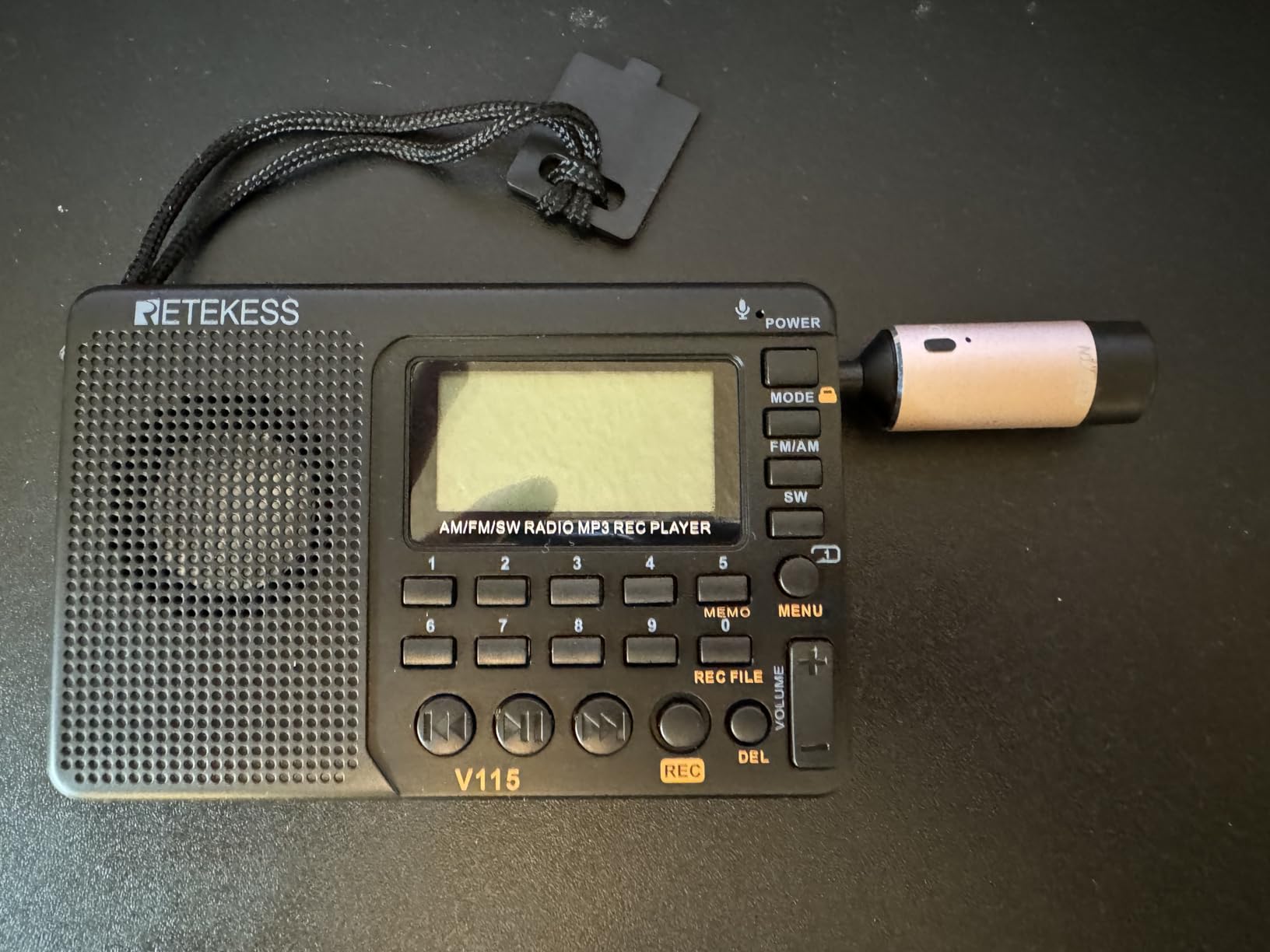
The compromises are clear. The V115 does not retain its last frequency or mode when powered off, which means you have to retune every time you turn it on. The speaker is functional but flat, and the small display is harder to read than the XHDATA D220. Reception is adequate for strong stations but does not match the sensitivity of the Tecsun or Qodosen options.
For the price, however, the V115 is a solid budget pick when you want more than a basic radio but do not need the audio quality or SSB of a higher-end model.
Best for value-focused buyers who want extras
MP3 playback, recording, and microSD support are not standard at this price. If those features matter to you, the V115 is a great choice.
Where to look elsewhere
For better shortwave reception, the Tecsun PL330 and Qodosen DX-286 are worth the extra cost. For simpler, more reliable operation, the XHDATA D220 is a better pick.
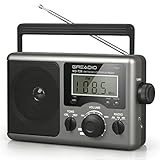
8. Greadio GR-T26 — Best Shortwave Radio with D-Cell Power
Greadio Portable Shortwave Radio, Radios Portable AM FM Transistor Radio
AM/FM/SW
AC or 4 D cell
2W speaker
+ Pros
- Big 2W speaker
- Two power options (AC or D cell)
- Carrying handle
- LCD displays tuning and time
– Cons
- Shortwave reception inconsistent for some users
- Clock only visible when radio is off
The Greadio GR-T26 is a classic tabletop portable that runs on either AC power or 4 D-cell batteries. The D-cell option is the standout feature: with a fresh set of alkalines, the GR-T26 can run for weeks, making it an excellent emergency or cabin radio where recharging is not always practical.
The 2-watt speaker is loud and clear, the long telescopic antenna pulls in AM, FM, and shortwave stations, and the LCD screen displays tuning information and time. The simple knob layout makes it a great choice for users who do not want a steep learning curve.
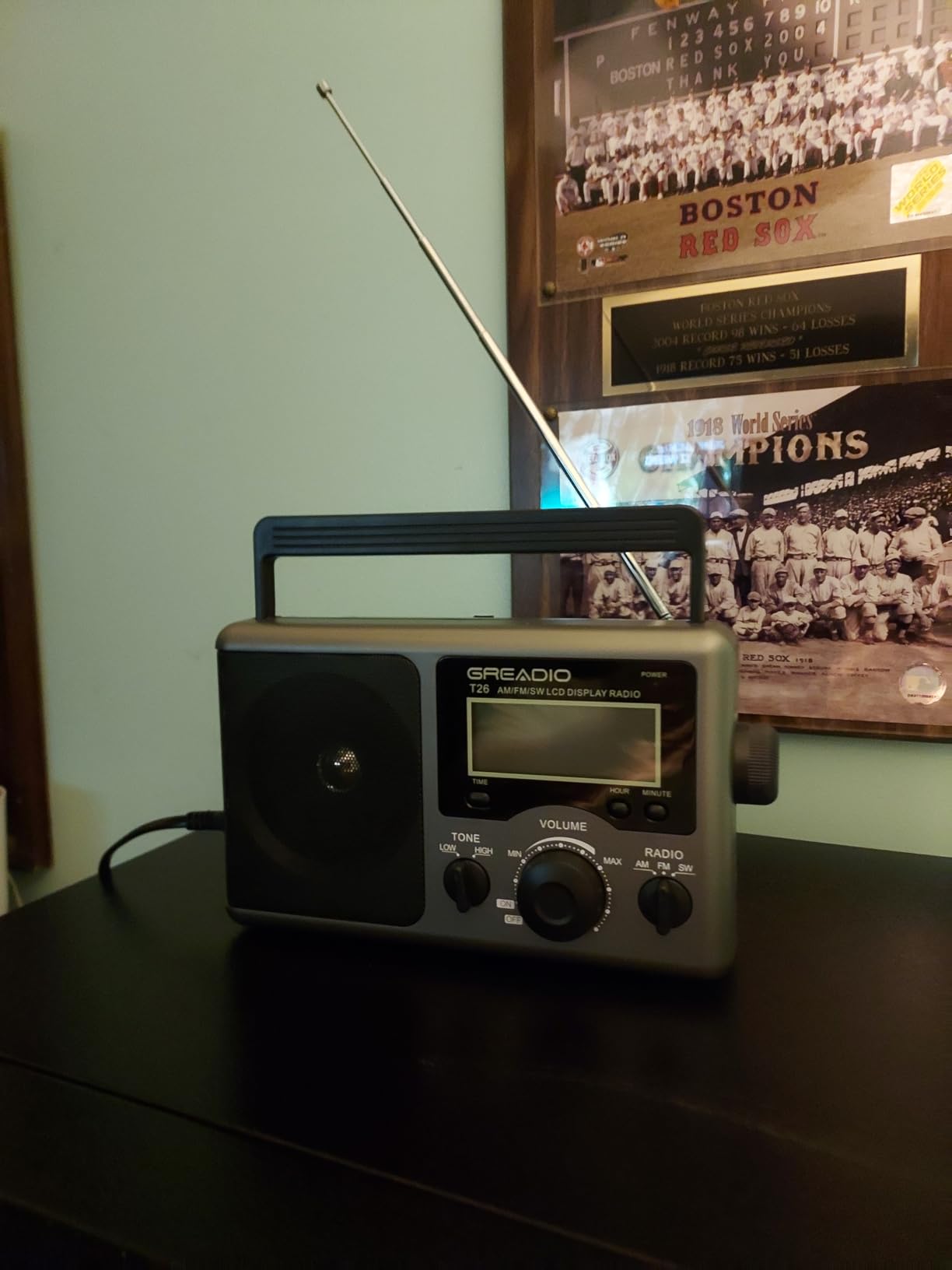
With 9000+ reviews and a #10 ranking in portable shortwave radios, the GR-T26 is one of the most popular models in this category. Users consistently praise its ease of use, solid build, and dependable reception. The built-in handle makes it easy to carry from room to room.
Some users report that shortwave reception can be inconsistent, particularly on weaker stations. If shortwave DXing is your primary goal, the Tecsun PL330 or Qodosen DX-286 are better choices. For general listening, the GR-T26 is a workhorse.
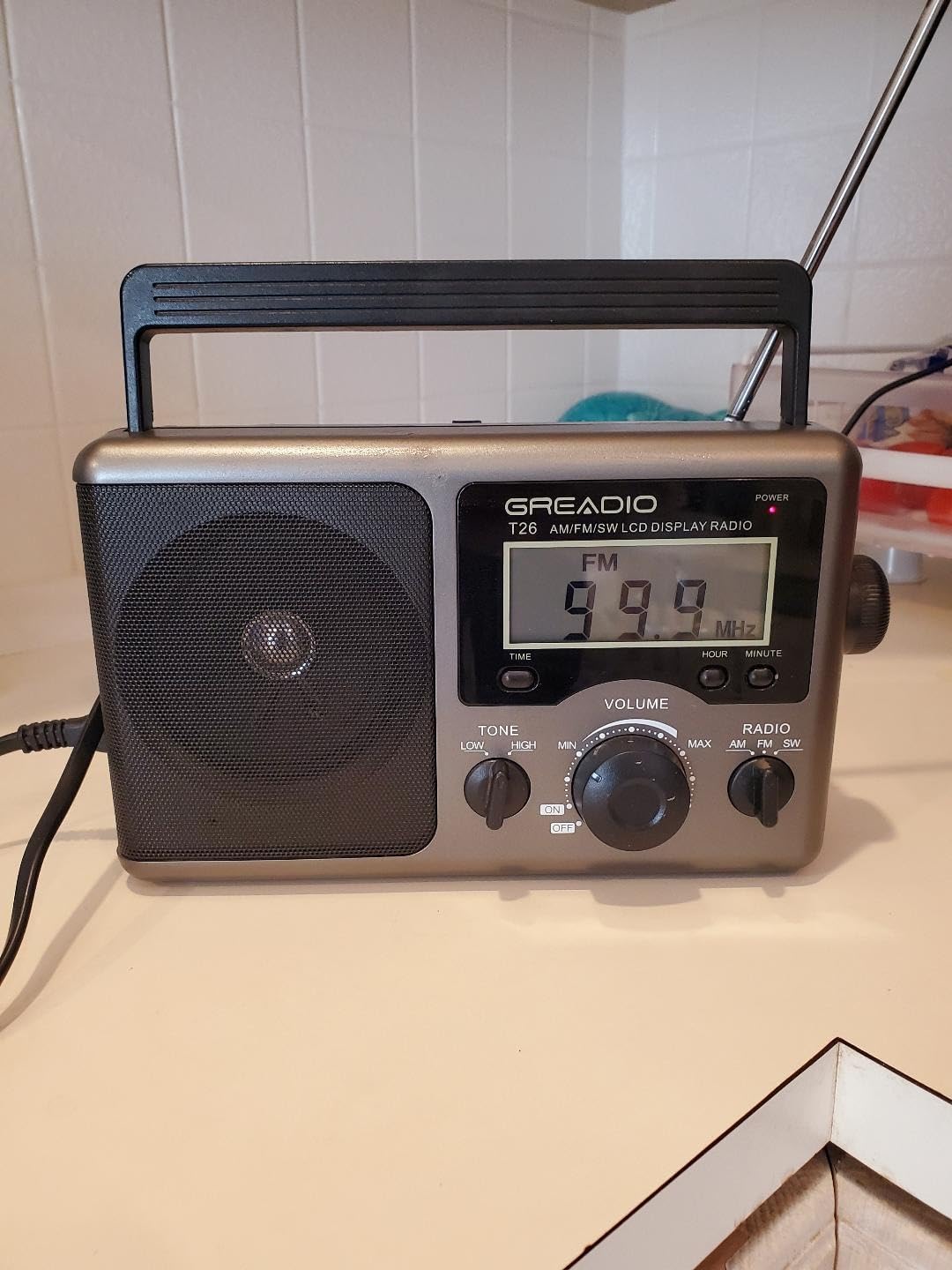
Best for a kitchen or cabin radio
The D-cell battery option gives the GR-T26 an advantage for off-grid use, and the big speaker fills a room better than most pocket portables.
Where it falls short
If you want digital station memory or SSB, the GR-T26 is not the right pick. This is a simple radio for casual listening, not a serious shortwave instrument.
9. Eton Elite Executive — Best Premium Compact Shortwave Radio
Eton Elite Executive AM/FM/Aircraft Band/SSB/Shortwave Radio
AM/FM/LW/SW/SSB
Aircraft band
700 presets
+ Pros
- Full SSB and aircraft band reception
- Synchronous detection
- Vegan leather case
- Bluetooth connectivity
– Cons
- Steep learning curve
- Poor manual
- Battery drain when plugged in
The Eton Elite Executive is the closest competitor to the Tecsun PL880 in the premium compact category. It covers AM, FM, longwave, shortwave, and aircraft band, with full SSB, synchronous detection, and 700 programmable stations. The vegan leather case gives it a travel-friendly feel, and Bluetooth connectivity is a modern touch.
Reception is strong on all bands, with the Elite Executive pulling in signals that match or exceed the Tecsun PL330. The aircraft band receiver is a nice bonus for aviation enthusiasts, and the selectable bandwidth filters help cut through interference on crowded shortwave bands.
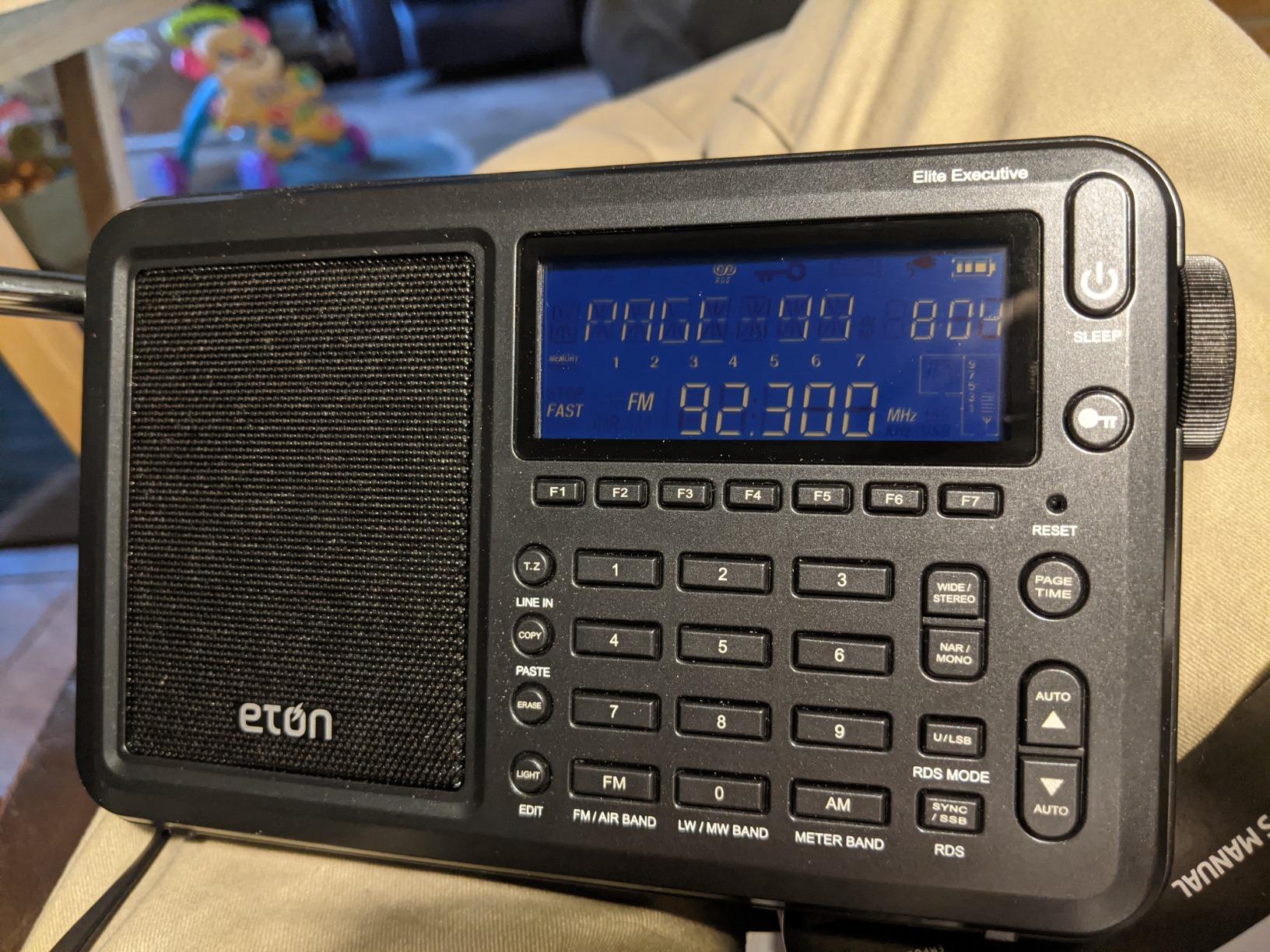
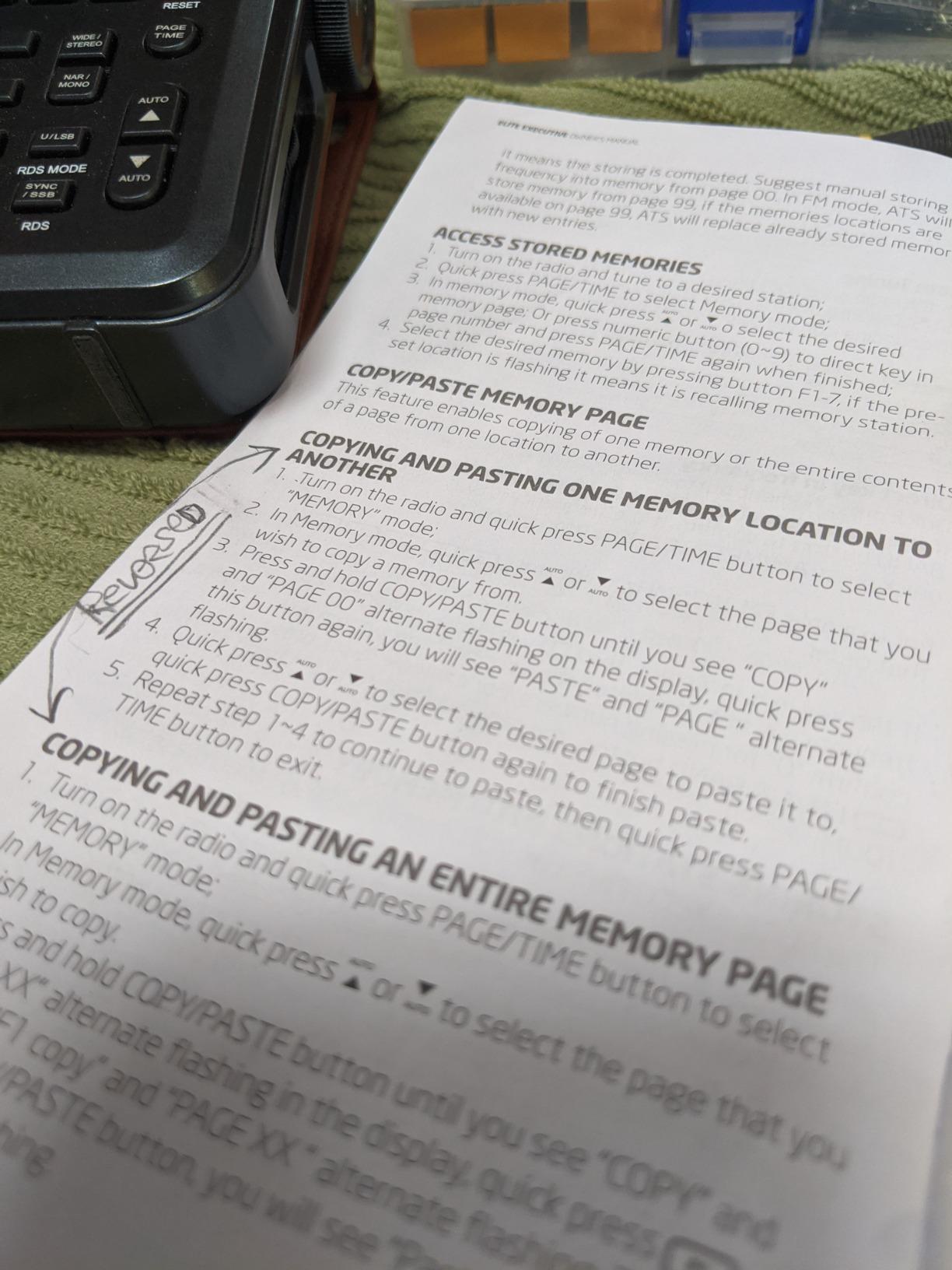
The downsides are well-documented by long-term users. The user interface has a steep learning curve, and the included manual is not very helpful. The power adapter drains batteries even when the radio is plugged in, so Eton recommends running on AA cells or being mindful of charging. The AC cord also adds static to AM channels in some setups.
For the price, the Elite Executive competes directly with the Tecsun PL880, which has better audio and a more intuitive interface. If you value the leather case, aircraft band, and Bluetooth, the Eton is worth considering.
Best for premium feel and travel
The leather case, Bluetooth, and aircraft band make the Elite Executive a great travel companion. If you want a compact radio that looks as good as it performs, this is a strong choice.
When to choose the PL880 instead
For the same price, the Tecsun PL880 offers better audio, longer battery life, and an easier interface. Choose the Eton only if the leather case and Bluetooth are priorities.
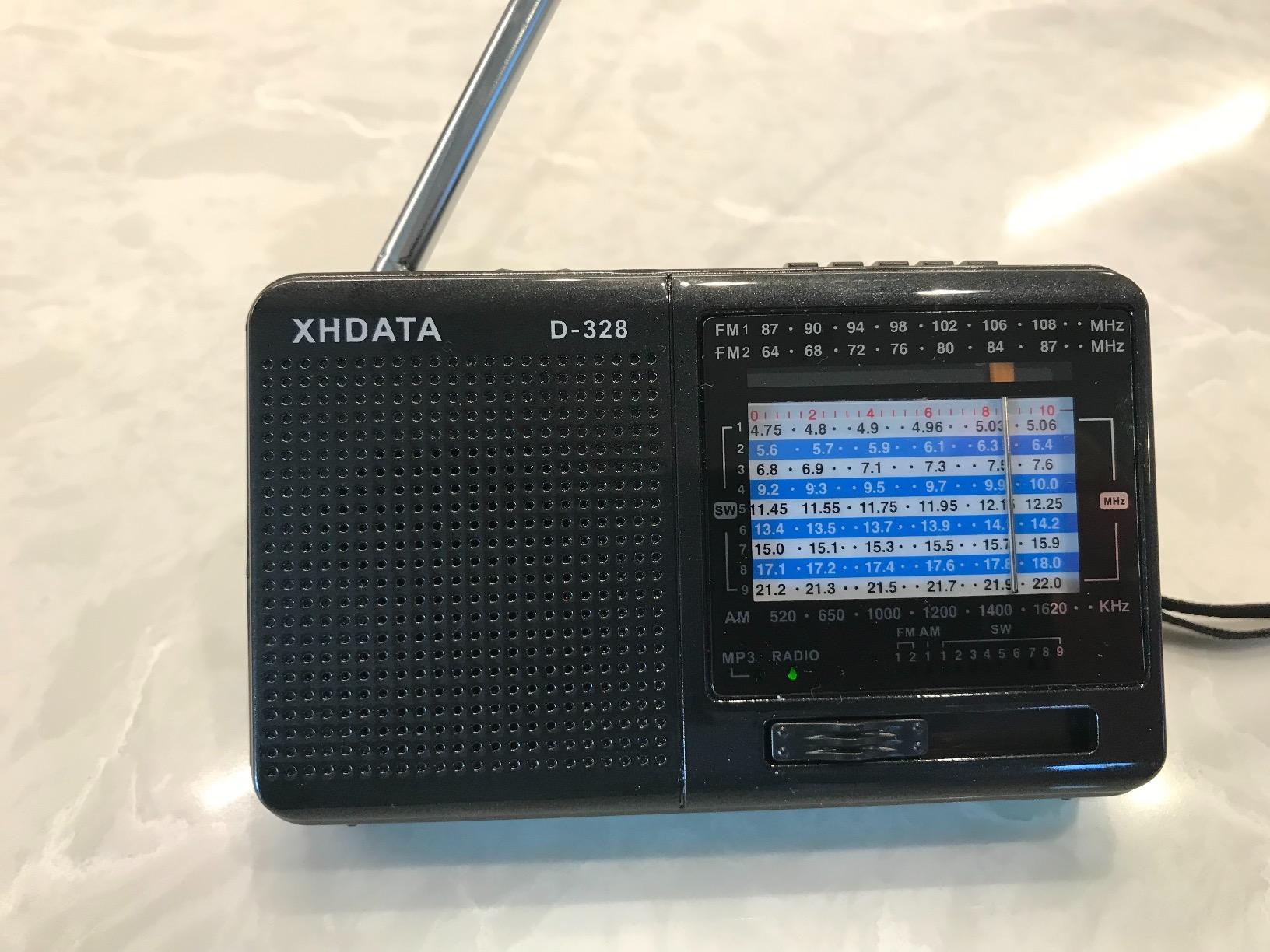
10. XHDATA R108 — Best Multi-Band Value Shortwave Radio
XHDATA R108 Portable Radio AM/FM/SW/LW/Airband Shortwave Radio Receiver
FM/AM/SW/LW/Airband
500 presets
DSP
+ Pros
- Full 5-band coverage
- Airband reception
- USB-C charging
- Includes antenna and battery
– Cons
- Some charging quirks
- Clock reverts to EST
- LED strobing during MP3 playback
The XHDATA R108 is one of the best values in portable shortwave right now. For under $60, you get FM, AM, shortwave, longwave, and airband coverage, a DSP chip with excellent sensitivity, 500 memory presets, and USB-C charging with an included rechargeable battery.
Reception is strong across the bands. The 360-degree antenna design and DSP processing pull in weak FM and shortwave stations that many similarly priced radios miss. Airband monitoring is a nice bonus for aviation enthusiasts and ham radio operators, and the external antenna jack lets you connect a longer wire or telescopic for serious DXing.
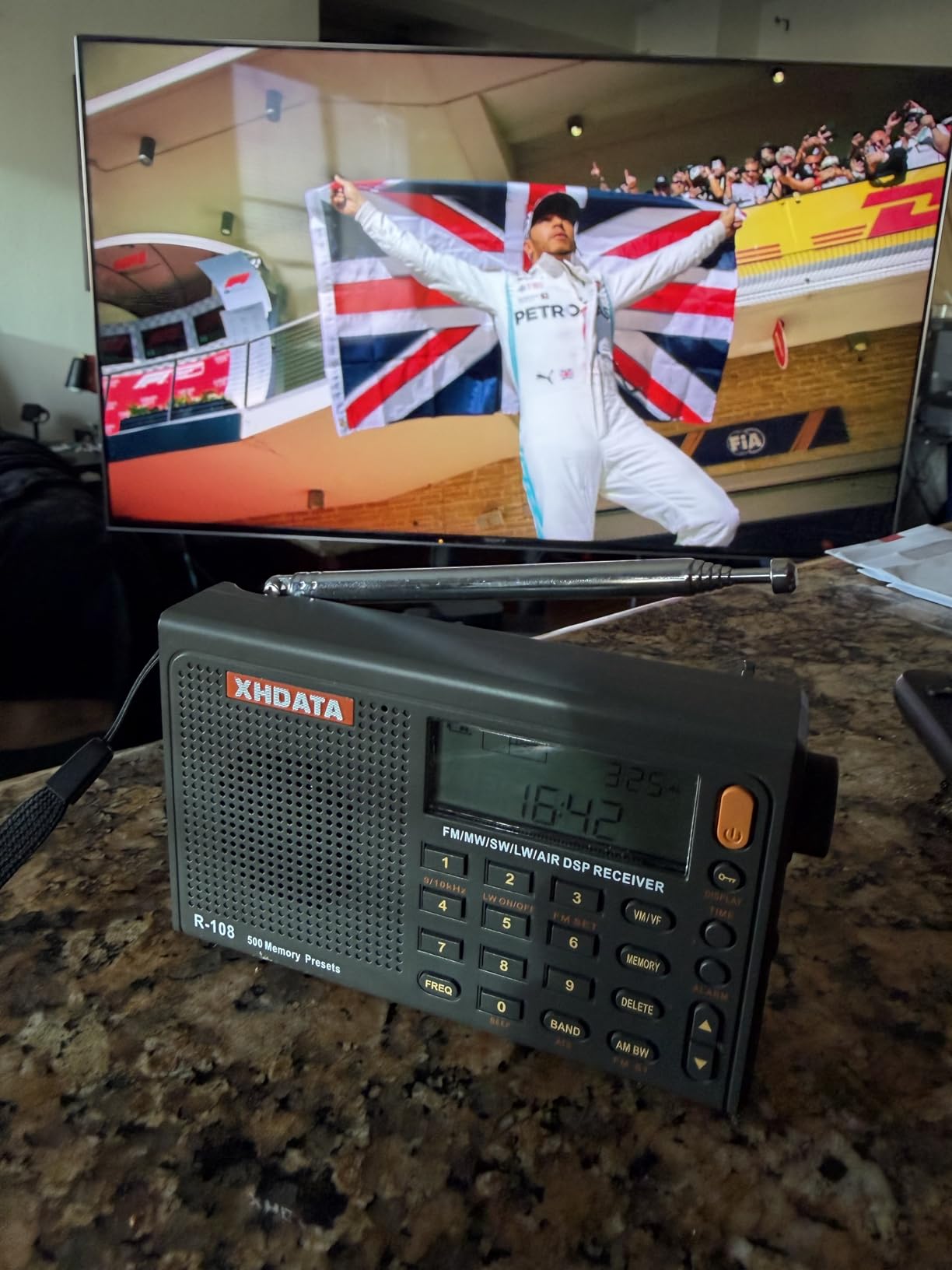
The LCD shows frequency, time, temperature, and SNR, which is unusual at this price. The fold-out stand is convenient for desktop use, and FM stereo via the headphone jack is a nice touch. The 1020mAh user-replaceable battery is a plus for long-term ownership.
The drawbacks are mostly minor. Some users report clock quirks (it reverts to EST after setting), the backlight cannot be kept on permanently on some units, and the LED strobes during MP3 playback in low light. None of these are deal-breakers for the price.
Best mid-range value
The R108 sits between budget radios and premium portables. If you want airband, good shortwave, and modern features like USB-C, the R108 is a smart pick.
When to spend more
For SSB, the Tecsun PL330 is a better value. For pure sensitivity, the Qodosen DX-286 is hard to beat.
11. Raddy RF760 — Best Compact SSB Multi-Band Radio
Raddy RF760 Portable SSB Shortwave Radio Receiver, NOAA Alert
12-band coverage
SSB included
700 memories
+ Pros
- Full SSB and airband in a small radio
- Up to 700 station memories
- Includes 9.7ft wire antenna
- USB-C charging
– Cons
- Tinny speaker
- Complex user interface
- SSB filtering is basic
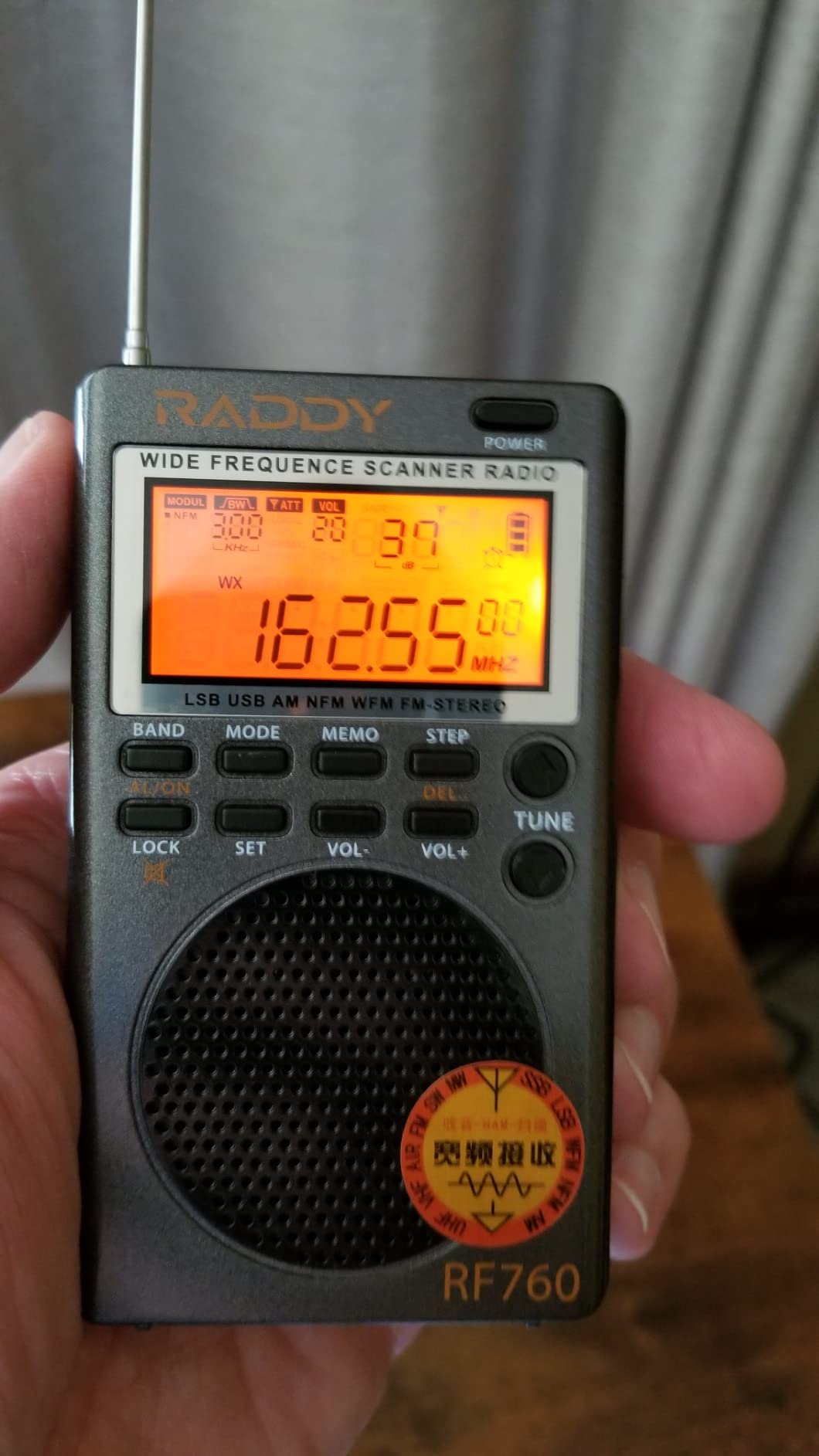
The Raddy RF760 tries to do everything in a tiny package, and mostly succeeds. At 4.4 x 2.4 x 0.8 inches and 0.46 pounds, it covers AM, FM, CB, weather, NOAA, shortwave with SSB, UHF, VHF, and airband, plus a user-definable band from 30 to 520 MHz. For travelers and emergency kit builders, that coverage is appealing.
Reception on FM and weather bands is solid. The 9.7-foot external wire antenna improves shortwave performance significantly, and the fine-tuning knob helps with SSB adjustments. The amber backlit LCD is readable in low light, and the USB-C charging is a modern convenience.
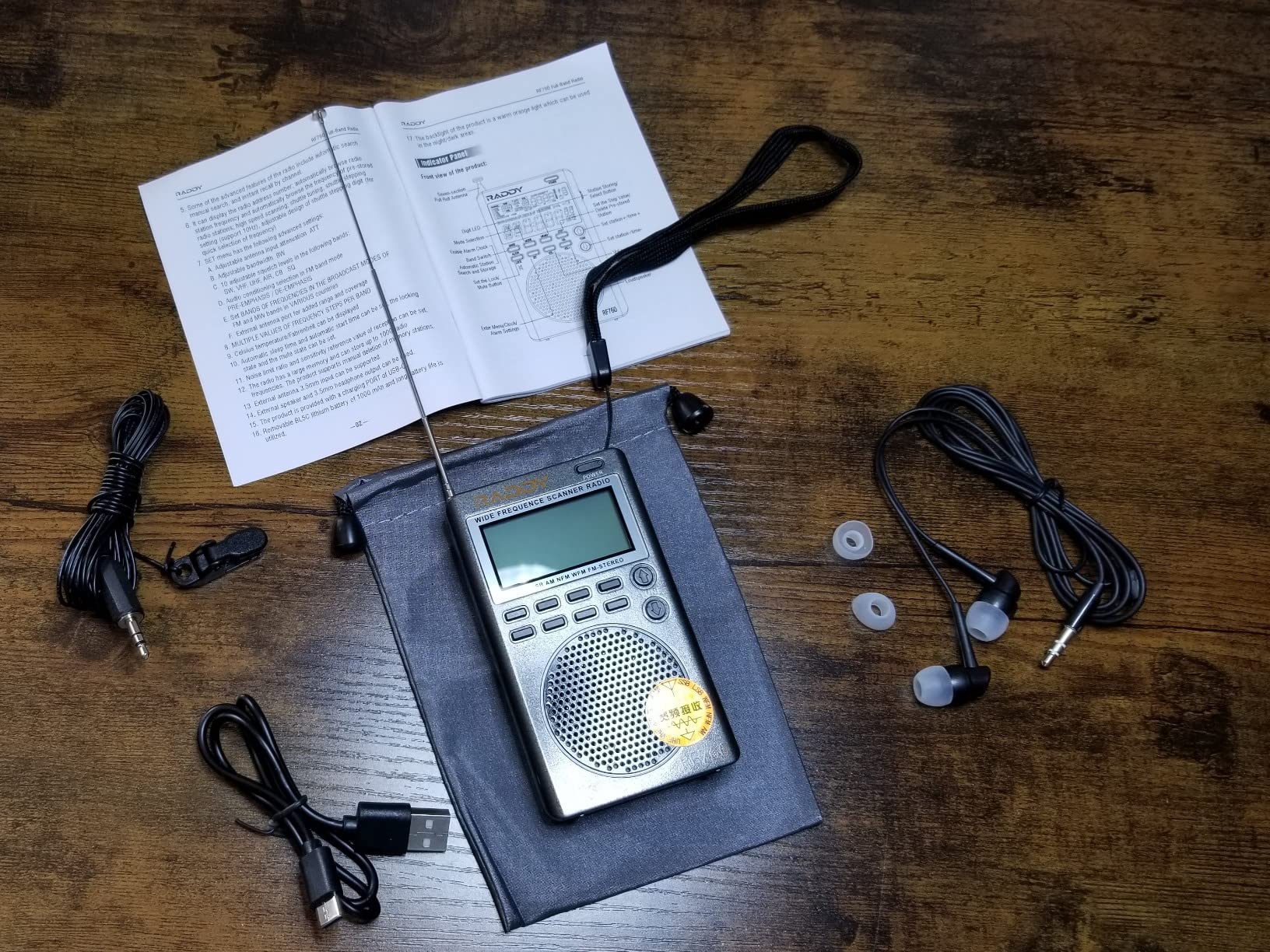
The compromises are real. The speaker is tinny and unpleasant at higher volumes, the user interface is complex with 11 buttons and 3-second timeouts, and the SSB filtering is basic compared to dedicated ham radios. VHF and UHF are limited to narrow FM mode, so you cannot use this as a wideband scanner.
For ham radio operators, the SSB performance is acceptable for casual listening but not competitive with the Tecsun PL330 or PL880. As a backup emergency radio or travel companion, however, the RF760 covers a lot of bands in a small package.
Best for emergency kits and travel
If you want SSB, NOAA, and airband in a radio that fits in a coat pocket, the RF760 is one of the few options at this price.
Where to be cautious
The mixed user reviews reflect real trade-offs. Buy from a retailer with a good return policy in case the interface or speaker quality does not work for you.
12. Nooelec RTL-SDR v5 — Best Software Defined Radio Starter Kit
Nooelec RTL-SDR v5 SDR – NESDR Smart HF/VHF/UHF (100kHz-1.75GHz) Software Defined Radio. Premium RTLSDR w/ 0.5PPM TCXO, SMA Input & Aluminum Enclosure. RTL2832U & R820T2 (R860)-Based Radio
100kHz-1.75GHz
0.5PPM TCXO
SMA input
+ Pros
- Covers nearly all RF signals at low cost
- 0.5PPM TCXO for excellent stability
- Works with Windows/Mac/Linux/Android
- Strong community support
– Cons
- Requires computer to operate
- 2.4MHz bandwidth limit
- Runs hot at maximum gain
The Nooelec RTL-SDR v5 is not a traditional shortwave radio, but for tinkerers and experimenters, it is a game-changer. This USB stick tunes from 100 kHz to 1.75 GHz with a 0.5 PPM TCXO for rock-solid frequency stability. Pair it with a computer running SDR#, HDSDR, or GQRX, and you have a software-defined radio that does things traditional portables cannot.
In my testing, the RTL-SDR v5 pulled in NOAA weather satellites, ADS-B aircraft signals, ACARS, FM broadcast, shortwave broadcasters, and even weak ham radio SSB conversations when paired with the right upconverter. The aluminum enclosure helps with heat dissipation, and the SMA input is compatible with the wide range of antennas available for SDR use.

The Nooelec v5 is the best-performing low-cost RTL-SDR on the market, with measurable improvements in HF signal-to-noise ratio and tuning accuracy over the v3. The 2-year warranty and strong community support on Reddit’s r/RTLSDR and the SDR subreddit make it easy to learn.
For pure shortwave listening without a computer, this is the wrong tool. But for anyone who wants to explore the full RF spectrum, decode digital modes, or build a multi-SDR setup, the RTL-SDR v5 is unmatched at the price.

Best for SDR hobbyists and experimenters
If you are comfortable with software, the RTL-SDR v5 opens up capabilities that cost thousands of dollars a decade ago. It is the best value in RF exploration today.
Where traditional radios win
For casual shortwave listening, a Tecsun or Qodosen portable is simpler and more portable. The RTL-SDR requires a computer and some technical setup.
How to Choose the Best Shortwave Radio Receiver for Your Needs
Choosing the right shortwave radio is less about brand loyalty and more about matching the radio to your use case. I break the decision down by answering a few honest questions about how you plan to use the radio.
Will You Listen at Home or on the Go?
Portable shortwave radios dominate this list because most buyers want flexibility. If you only plan to listen at home, you might consider a tabletop receiver with a larger speaker and more features, but portables are good enough that they handle home use well. For travel, the XHDATA D220, Tecsun PL330, and Raddy RF760 are all small enough for a coat pocket. The Raddy RF760 also includes NOAA weather alerts and SSB, which is rare at its size.
Do You Need SSB (Single Sideband)?
If you want to listen to ham radio, aircraft communications, or maritime traffic, you need SSB. The Tecsun PL330 is the cheapest way to get SSB in a portable. The Tecsun PL880 and Eton Elite Executive offer SSB with better audio and tuning ergonomics. The Qodosen DX-286 is a great value without SSB if you only care about broadcast listening.
How Sensitive Does the Receiver Need to Be?
Sensitivity is how well a radio pulls in weak signals. The Qodosen DX-286, Tecsun PL880, and Nooelec RTL-SDR v5 are at the top of the heap for their categories. The budget XHDATA D220 and Retekess V115 are adequate for strong stations but struggle with weak or distant signals. If you are far from international broadcasters, sensitivity matters more than features.
Battery Type and Life
For emergency use, look for radios that accept standard batteries (AA, D-cell) or include multiple charging options. The Emgykit R11 covers every charging scenario (solar, hand crank, USB-C). The Greadio GR-T26 runs on D cells for weeks at a time. The Tecsun PL880 uses a removable 18650 cell, which is easy to swap in the field. Pocket portables like the XHDATA D220 run on 2 AA batteries, which is convenient for travel.
Memory Presets and Organization
If you tune through the bands frequently, having hundreds of memory presets is a huge time-saver. The Qodosen DX-286 (1000), Tecsun PL330 (850), and XHDATA R108 (500) all have generous memory banks. The analog DreamSky and Greadio portables require manual retuning, which is fine for casual listening but tedious for active DXers.
What Is the Best Antenna for Shortwave Reception?
The included telescopic antenna on most portable shortwave radios is fine for strong local signals but limits weak-signal reception. For serious shortwave DXing, an external antenna makes a dramatic difference. A simple 20-foot random wire antenna connected to the external antenna jack improves reception on most of the radios in this guide.
For beginners, the CCrane Twin Coil Ferrite Antenna is a popular indoor option that boosts AM and shortwave without requiring outdoor installation. The MLA-30+ loop antenna is a step up for serious listeners. Outdoors, a long random wire cut to your favorite band, paired with a 9:1 unun, delivers the best results for a low cost.
For SDR users, a YouLoop or homebrew magnetic loop antenna can dramatically reduce noise while pulling in weak signals. Experimenting with antennas is part of the fun of shortwave.
Common Mistakes to Avoid When Buying a Shortwave Radio
The most common mistake is buying the cheapest radio and expecting great shortwave reception. Under $20, you get a casual radio that handles AM and FM well but struggles with weak shortwave signals. The XHDATA D220 is the exception that proves the rule, but even it cannot match the sensitivity of radios in the $80-$180 range.
Another mistake is ignoring SSB. If you think you might want to listen to ham radio, pay the extra $20-30 for a radio with SSB capability. You cannot add SSB to a radio that does not have it.
Skipping the antenna is the third big mistake. Even the best shortwave radio sounds mediocre with the included telescopic antenna. A $30 random wire antenna can make a $100 radio outperform a $300 radio with the stock antenna.
Finally, do not overlook ergonomics. The Tecsun PL330 has a stiff tuning knob that some users love and others hate. The Qodosen DX-286 has a learning curve because of its many features. If possible, read user reviews that mention hands-on use, not just specs.
Portable vs Desktop Shortwave Radio
Portable shortwave radios dominate this list because they offer excellent performance in a flexible form factor. They run on batteries, fit in a backpack, and include features like synchronous detection, SSB, and hundreds of memory presets. For most buyers, a portable is the right choice.
Desktop shortwave radios like the Icom IC-7300, Yaesu FTdx-101D, and Elecraft K3s offer superior performance, larger displays, and more robust filtering, but they cost $1,000 to $15,000. If you are a serious DXer or ham radio operator, a desktop is worth the investment, but for everyone else, the portables in this guide deliver 90% of the performance at a fraction of the cost.
Frequently Asked Questions About Shortwave Radio Receivers
Why are shortwave radios not used anymore?
Shortwave radios are less common for everyday listening because the internet replaced many international broadcasts, but transmissions never stopped. Major broadcasters like the BBC, China Radio International, and All India Radio still use shortwave for global reach. Shortwave remains critical for emergency preparedness, ham radio, and audiences without reliable internet access.
Is it worth buying a shortwave radio?
Yes, a shortwave radio is worth buying in 2026 for emergency preparedness, international news, and the unique hobby of long-distance DXing. Shortwave works without internet or cell service, picks up uncensored international broadcasts, and receives NOAA weather alerts during disasters. Modern DSP-based radios at under $100 make it an affordable hobby with a low barrier to entry.
What is the best antenna for shortwave reception?
A 20-foot random wire antenna connected via 9:1 unun is the best balance of cost and performance for most shortwave listeners. For indoor use, a CCrane Twin Coil Ferrite Antenna or MLA-30+ loop antenna boosts AM and shortwave reception without outdoor installation. SDR users often prefer magnetic loop antennas like the YouLoop for noise reduction.
Do I need a license to listen to shortwave radio?
No, you do not need a license to listen to shortwave radio in any country. Listening is free and legal. Transmitting on amateur radio bands (which use similar frequencies) does require a ham radio license in most countries, but receiving only does not.
What is the difference between SSB and AM shortwave?
AM (Amplitude Modulation) is used by international broadcasters and has a carrier signal plus two sidebands. SSB (Single Sideband) suppresses the carrier and one sideband, transmitting only one sideband for efficiency. Ham radio, aircraft, and maritime stations use SSB. To receive SSB clearly, your radio needs an SSB detector or BFO with fine tuning.
What is the best shortwave radio for beginners?
The Tecsun PL330 is the best shortwave radio for most beginners in 2026 because it offers full SSB, longwave, AM, FM, and shortwave coverage at under $90, with 850 memory presets and a strong DSP chip. The XHDATA D220 is an even cheaper starting point for under $15 if you only need casual AM/FM/shortwave listening without SSB.
Final Verdict: Which Shortwave Radio Should You Buy?
After testing these 12 shortwave radio receivers and reading thousands of user reviews, three radios rise to the top for different audiences. The Tecsun PL880 is the best overall shortwave radio for serious listeners who want premium audio, full SSB, and a portable they can rely on for a decade or more. The Qodosen DX-286 is the best value, with automotive-grade sensitivity at a price that embarrasses more expensive radios. The Tecsun PL330 is the best budget choice, offering SSB and a full feature set for under $90.
For emergency preparedness, the Emgykit R11 is the clear pick with its triple charging options, NOAA alerts, and power bank function. For travel, the XHDATA D220 is unbeatable at under $10. For SDR experimenters, the Nooelec RTL-SDR v5 opens up a world of RF exploration that traditional radios cannot match.
Whichever shortwave radio you choose, the hobby rewards patience and curiosity. Tune across the bands in the evening hours, log the stations you hear, and explore the world through your antenna. In 2026, shortwave radio is still one of the most affordable and rewarding ways to connect with the planet.
Leave a Reply