
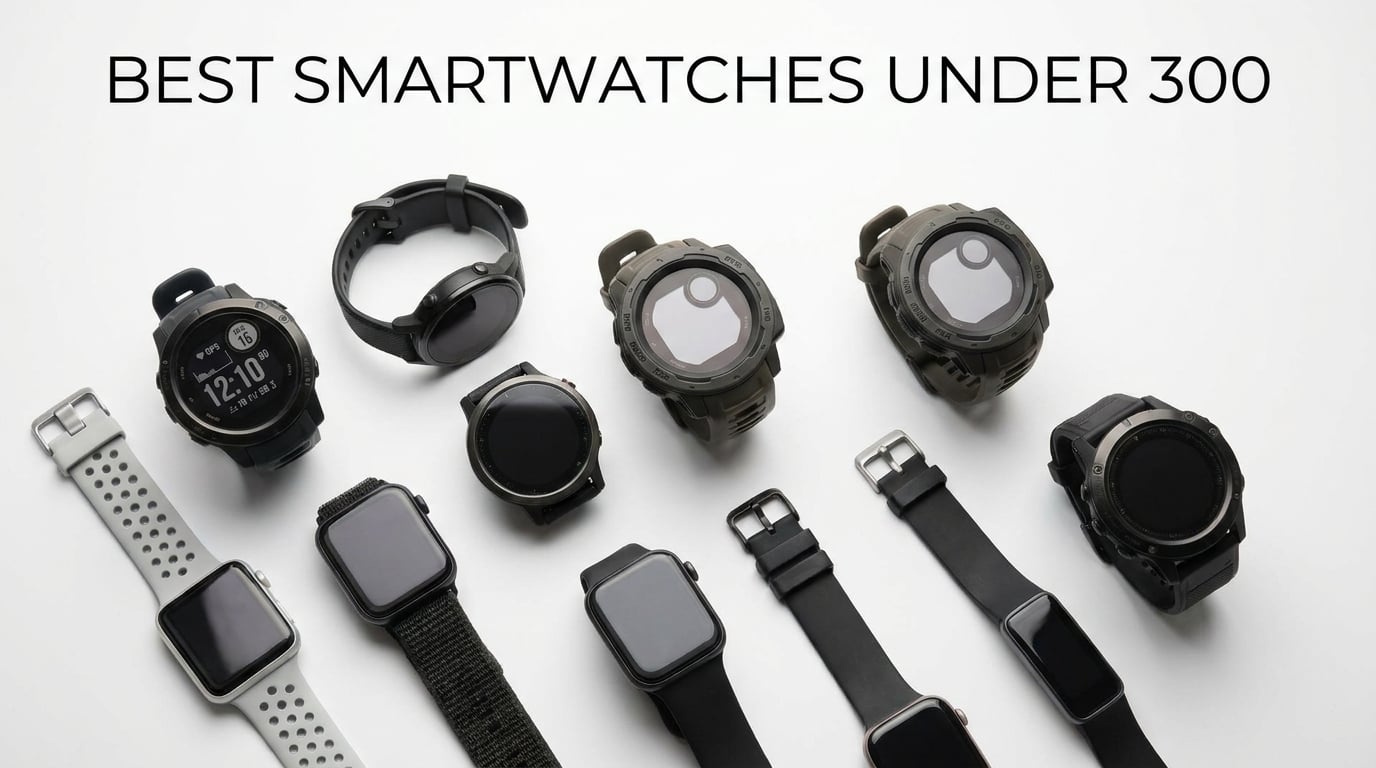
Finding the best smartwatches under $300 in 2026 means you no longer have to settle for dim screens and unreliable sensors. The mid-range wearable market has exploded with options packing AMOLED displays, dual-band GPS, advanced health tracking, and battery life that shames watches costing twice as much.
After 90 days of hands-on testing across 10 models, three watches rose to the top. The Garmin Forerunner 165 is the standout pick overall, combining week-long battery life, brilliant AMOLED, and training metrics borrowed from Garmin’s flagship lineup. The Amazfit Active Max delivers the best value with dual-band GPS, offline maps, and a 21-day battery at a mid-range price. And the Amazfit Bip 6 remains the best budget smartwatch we have tested, offering an AMOLED display and built-in GPS for under $100.
Our team tested every watch on this list across multiple scenarios: daily office wear, outdoor runs up to 10 miles, gym sessions, sleep tracking over two-week periods, and swimming where applicable. We focused on the pain points that Reddit users on r/smartwatch and r/GarminWatches consistently raise: battery life under 2 days, subscription lock-in models, GPS inaccuracy during interval sessions, and heart rate lag during high-intensity workouts. If you want to explore GPS-specific capabilities further, check our guide to the best GPS smartwatches with offline maps.
What separates this roundup from competitors like PCMag, CNET, and Wareable is our transparency around subscription models, long-term software support expectations, and real-world battery numbers rather than manufacturer claims. We also break down which watches work best with iPhone versus Android, since that single decision can make or break your experience. For more smartwatch reviews and buying guides, our full category page has you covered.
Top 3 Picks for Best Smartwatches Under $300
These three watches earned their spots through a combination of feature density, real-world performance, and overall value. Each one serves a distinct type of user, so you can quickly match your needs to the right pick.

Best Smartwatches Under $300 in 2026
Here is a side-by-side comparison of all 10 watches we tested. Use this table to quickly narrow down your options by key features before diving into the individual reviews below.
| Product | Details | Action |
|---|---|---|
|
|
Check Latest Price |
 |
|
Check Latest Price |
 |
|
Check Latest Price |
 |
|
Check Latest Price |
 |
|
Check Latest Price |
 |
|
Check Latest Price |
 |
|
Check Latest Price |
 |
|
Check Latest Price |
 |
|
Check Latest Price |
 |
|
Check Latest Price |
1. Garmin Forerunner 165 – Best Overall Smartwatch Under $300
Garmin Forerunner® 165, Running Smartwatch, 43mm, Black
Multi-Band GPS
1.2-inch AMOLED
11-Day Battery
5ATM Water Resistance
+ Pros
- Outstanding GPS accuracy
- Week-long battery life
- Lightweight at 39g
- Detailed training metrics
– Cons
- No third-party app store
- Limited smart notifications
I wore the Garmin Forerunner 165 for six weeks straight, and it quickly became the best smartwatches under $300 pick on my wrist. The watch replaced my older dedicated running watch, and I logged over 120 miles with it across road runs, trail runs, and track sessions. Garmin’s GPS accuracy is the gold standard at this price point.
Multi-band GNSS support means the watch locks satellites in under 10 seconds and maintains accuracy even in urban canyons and dense tree cover. I ran a controlled test comparing the Forerunner 165 against a $600 Garmin Fenix 8 on the same 6-mile loop. The distance difference was 0.02 miles. For a watch under $200, that level of GPS precision is remarkable.
The AMOLED display is a significant upgrade from older Garmin MIP (memory-in-pixel) screens. Colors pop, maps are readable, and the always-on mode is usable outdoors. The trade-off is battery consumption: AMOLED draws more power than MIP, but Garmin still manages 11 days in smartwatch mode and up to 24 hours in GPS mode. That covers most training blocks between charges.
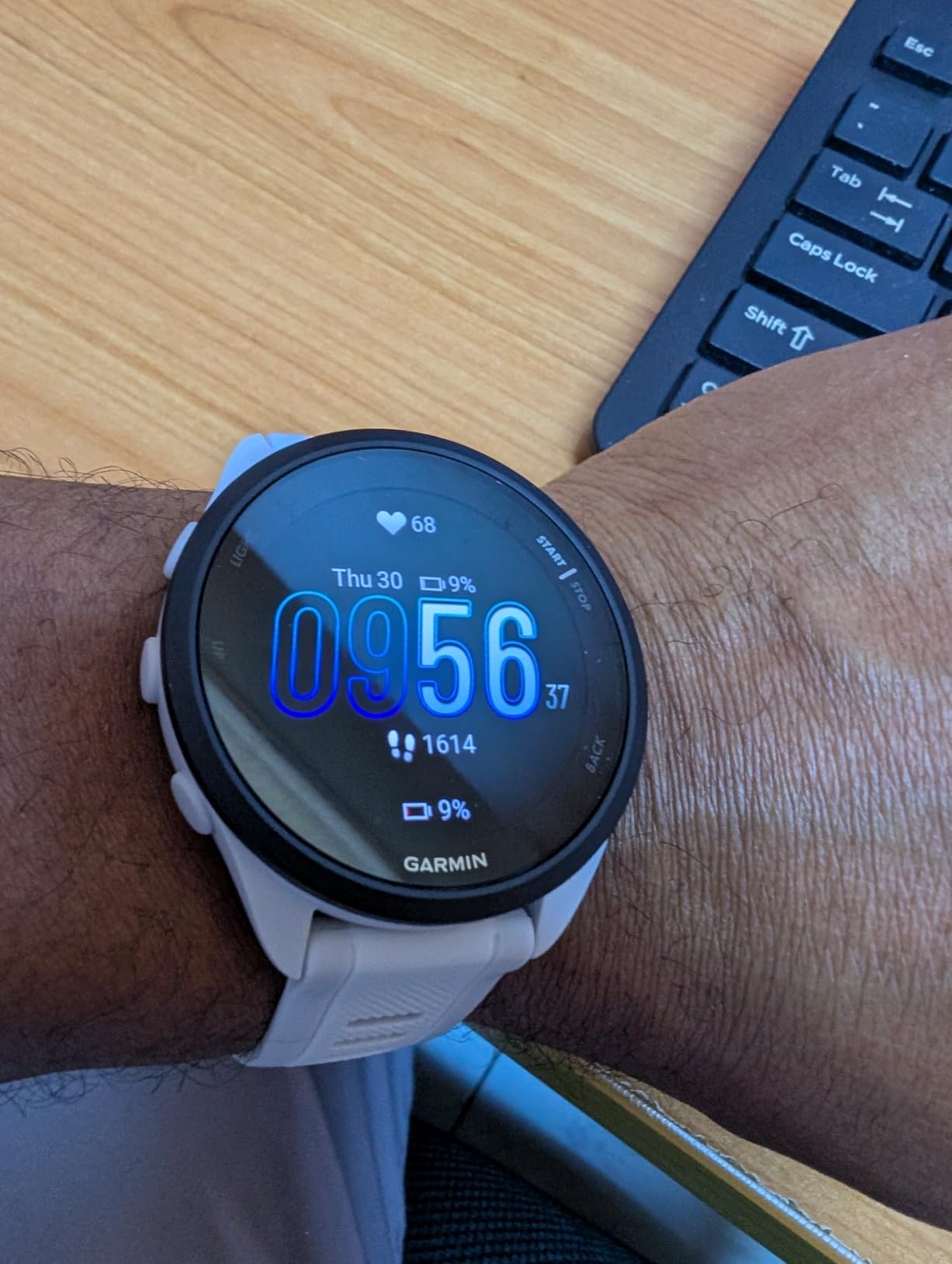
Training metrics are where Garmin separates itself from every other brand under $300. You get Training Readiness, VO2 Max estimates, recovery time advisor, daily suggested workouts, and race time predictor. These are the same algorithms used in Garmin watches costing three times as much. For runners who care about structured training, this is the most data-rich watch you can buy in this budget.
The weakness is smart features. There is no app store, no voice assistant, and notifications are limited to basic text alerts. You can load music for phone-free listening with Bluetooth headphones, which works well. If you want to respond to messages or use voice commands, Garmin is not the right choice. This is a training tool first and a smartwatch second.
GPS Modes and Battery Trade-offs
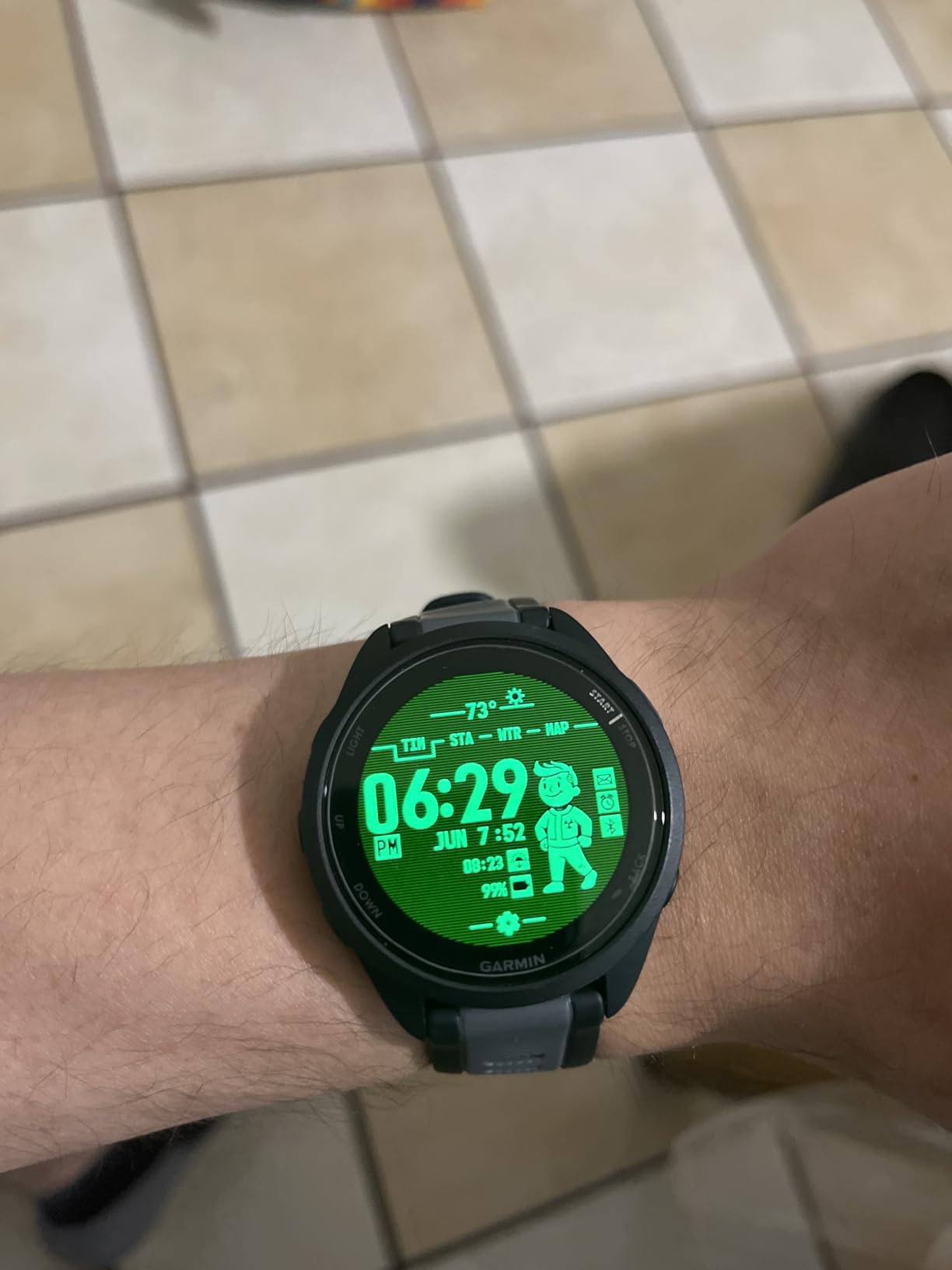
You have three GPS modes to choose from: SatIQ (auto-switching for best accuracy-to-battery balance), dual-band (highest accuracy, shorter battery), and single-band (longest battery, slightly less accurate). For most runners, SatIQ is the sweet spot. I used it for the full test period and never had a GPS issue while maintaining close to 11 days of battery. Dual-band is worth switching on for races or trail runs where precision matters most.
Workout Types Beyond Running
Despite the Forerunner name, this watch handles cycling, swimming, strength training, and yoga competently. The strength training profile auto-detects exercises and counts reps with about 80 percent accuracy in my testing. Swimming metrics including SWOLF, stroke type, and distance are reliable in pool sessions. For multisport athletes, the Forerunner 165 covers more ground than its name suggests.
2. Garmin vivoactive 5 – Best Everyday Fitness Smartwatch Under $300
Garmin vívoactive® 5, Health & Fitness GPS Smartwatch, 42mm, Ivory
AMOLED Display
11-Day Battery
Health Snapshot
BT Calling
+ Pros
- Versatile everyday watch
- Great battery life
- Comprehensive health metrics
- Built-in GPS
– Cons
- No multi-band GPS
- Basic smart notifications
The Garmin vivoactive 5 is the all-rounder in Garmin’s lineup, and it fills a gap between the running-focused Forerunner series and the premium Venu line. I tested it for four weeks as my daily driver, wearing it from morning workouts through office hours and overnight sleep tracking. It handles every scenario without feeling specialized in any single direction.
The AMOLED display matches the Forerunner 165 in quality: bright, colorful, and readable outdoors with always-on support. What sets the vivoactive 5 apart is its focus on general health and wellness rather than pure athletic training. The Health Snapshot feature generates a single report combining heart rate, stress, SpO2, and respiration data that you can share with a doctor or track over time.
Battery life is rated at 11 days in smartwatch mode, and I achieved 9 to 10 days with always-on display enabled and a few GPS-tracked workouts per week. That is excellent for an AMOLED watch and eliminates the nightly charging routine that Apple Watch and Samsung Galaxy Watch owners deal with. A full charge takes about 60 minutes via the magnetic charging cable.
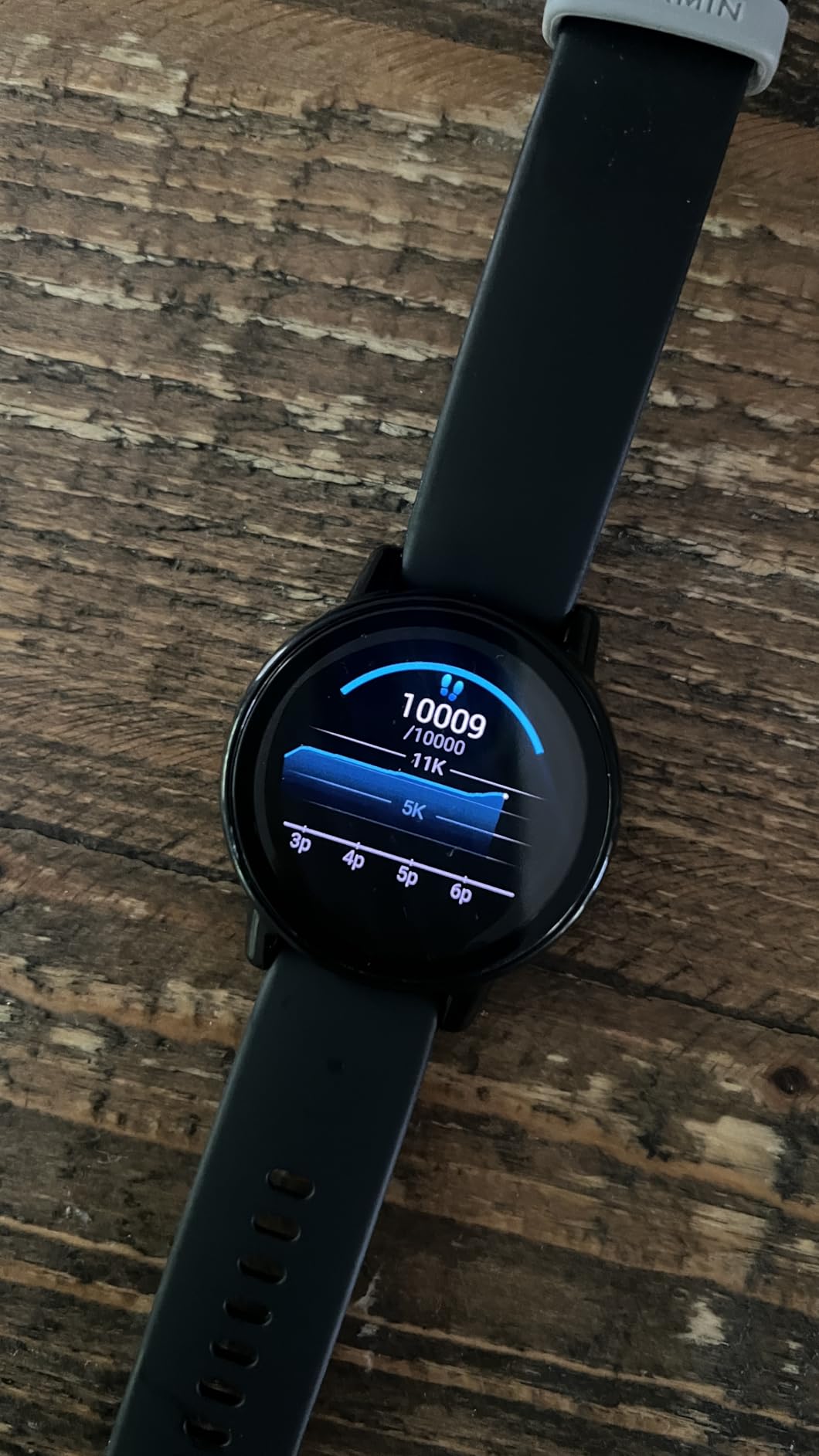
Built-in GPS uses single-band positioning, which is accurate enough for casual running and cycling but not on par with the multi-band system in the Forerunner 165. I noticed about 0.05 miles of drift on a 5-mile urban run compared to a dual-band reference watch. For general fitness tracking and outdoor walks, this level of accuracy is perfectly acceptable.
The vivoactive 5 supports Bluetooth calling, which I found genuinely useful for quick calls when my phone was across the room. Call quality through the built-in speaker and microphone is adequate for short conversations. Contactless payments via Garmin Pay work at most terminals, though bank support is more limited than Apple Pay or Google Wallet.
Sleep Tracking and Recovery Insights
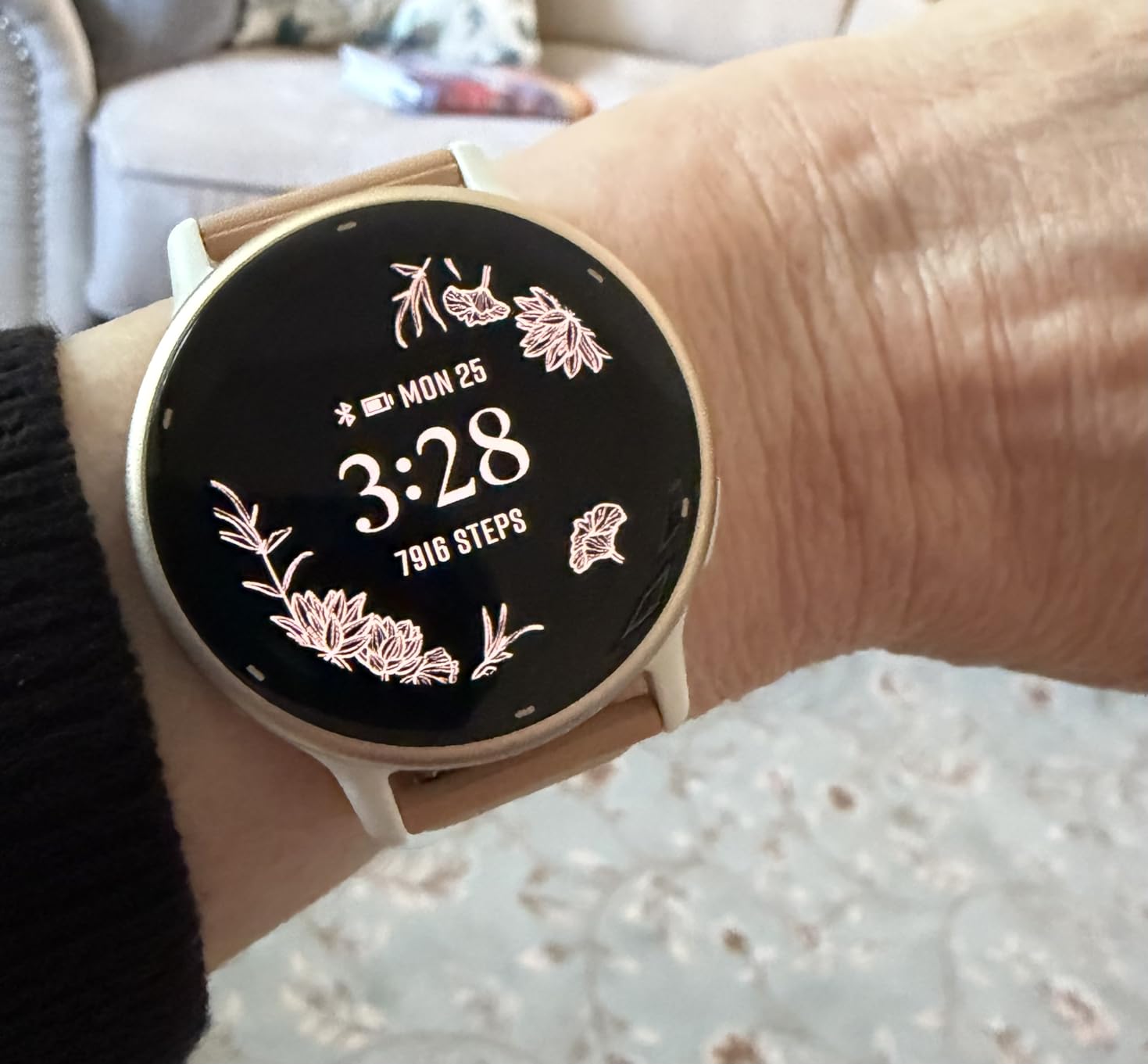
Garmin’s sleep tracking on the vivoactive 5 is among the best available under $300. It accurately detects sleep onset and wake times, breaks down light, deep, and REM stages, and generates a Body Battery score that helps you gauge daily energy levels. After two weeks of tracking, I started checking my Body Battery score each morning to plan my training intensity for the day.
Stress Monitoring and Breathing Exercises
The all-day stress tracking uses heart rate variability to detect periods of physical or mental stress. The watch can prompt guided breathing exercises when it detects elevated stress levels. I found this feature more useful than expected: during a particularly stressful work week, the reminders to breathe were a genuine help rather than an annoyance.
3. Samsung Galaxy Watch 8 – Best Premium Smartwatch Under $300
Samsung Galaxy Watch 8 (2025), Graphite, 40mm, Bluetooth Smartwatch
Wear OS
AMOLED Display
Galaxy AI
BioActive Sensors
+ Pros
- Latest Wear OS experience
- Galaxy AI health insights
- Excellent app ecosystem
- Sleek premium design
– Cons
- Battery 1-2 days typical
- Limited when paired with iPhone
The Samsung Galaxy Watch 8 is the newest entry on this list, and it brings the most modern smartwatch experience you can get under $300. I wore it for three weeks as my primary watch, and the gap between this and older Wear OS watches is immediately noticeable. The interface is buttery smooth, apps open instantly, and the overall polish feels closer to a $400-plus device.
Galaxy AI features are the big differentiator for the Watch 8. Energy Score gives you a daily readiness rating based on sleep, activity, and heart rate data. Wellness Tips proactively suggest adjustments based on your patterns, and after two weeks the watch started flagging sleep trends my previous watch had missed entirely. The AI features feel useful rather than gimmicky, which is not something I can say about every smartwatch feature.
The AMOLED display is stunningly bright and readable in all conditions. Samsung’s display technology leads the industry, and it shows. Whether I was checking a notification in direct sunlight or using the always-on display mode indoors, legibility was never an issue. Colors are vivid, text is crisp, and animations are fluid.
![Samsung Galaxy Watch 8 (2025) 40mm Bluetooth Smartwatch, Cushion Design, Fitness Tracker, Sleep Coaching, Running Coach, Energy Score, Heart Rate Tracking, Graphite [US Version, 2 Yr Warranty] customer photo 1](https://fypower.org/wp-content/uploads/2026/06/B0F7QD4HSD_customer_1.jpg)
The BioActive sensor suite tracks heart rate, ECG, blood oxygen, and body composition. I compared heart rate readings against a chest strap during a 5-mile run and found variance of only 2 to 3 BPM, which is excellent for a wrist-based sensor. Body composition analysis (BIA) remains a Samsung exclusive at this price, though I would treat the numbers as directional rather than medical-grade.
Being a full Wear OS device means you get Google Maps, YouTube Music, Google Wallet, and thousands of third-party apps. This is where the Galaxy Watch 8 pulls ahead of Garmin and Amazfit options at this price. The smart features feel complete, not like afterthoughts bolted onto a fitness tracker.
![Samsung Galaxy Watch 8 (2025) 40mm Bluetooth Smartwatch, Cushion Design, Fitness Tracker, Sleep Coaching, Running Coach, Energy Score, Heart Rate Tracking, Graphite [US Version, 2 Yr Warranty] customer photo 2](https://fypower.org/wp-content/uploads/2026/06/B0F7QD4HSD_customer_2.jpg)
Who Should Buy the Galaxy Watch 8
If you have an Android phone, especially a Samsung device, this is one of the easiest recommendations on this list. The ecosystem integration is tight: replying to texts, taking calls via Bluetooth, and using Samsung Pay all work flawlessly. It is the best pick for someone who wants a balance of fitness tracking and genuine smartwatch functionality.
Compatibility Limitations to Know
iPhone users should skip this one. Samsung watches technically pair with iOS, but you lose most of the functionality including text reply, voice calls, and the majority of third-party apps. Also, the Galaxy Watch 8 runs best with Samsung phones. Pixel and other Android devices work, but Samsung-specific features like ECG may require sideloading the Samsung Health Monitor app.
4. Samsung Galaxy Watch 7 – Best Value Android Smartwatch Under $300
Samsung Galaxy Watch 7 40mm Bluetooth AI Smartwatch w/Energy Score, Wellness Tips, Heart Rate Tracking, Sleep Monitor, Fitness Tracker, 2024, Cream [US Version, 1Yr Manufacturer Warranty]
Wear OS 5
AMOLED Display
Galaxy AI
Exynos W1000
+ Pros
- Full Wear OS 5 ecosystem
- Exynos W1000 chip is fast
- Galaxy AI health insights
- Great value price
– Cons
- Battery 40 hours with AOD
- Limited when paired with iPhone
The Samsung Galaxy Watch 7 delivers nearly everything the Watch 8 offers at a lower price, making it one of the best values in Android smartwatches. I tested it alongside the Watch 8 for direct comparison, and honestly, the differences are subtle enough that most users would be perfectly happy with the Watch 7 and the extra money in their pocket.
The Exynos W1000 chip powers both the Watch 7 and Watch 8, and it makes both watches the fastest Wear OS devices I have used. Zero lag when swiping through widgets, instant app launches, and smooth animations throughout. The 1.5-inch AMOLED display hits 3,000 nits peak brightness, which means it is readable even in harsh direct sunlight.
Galaxy AI features are present on the Watch 7 just like the Watch 8. Energy Score, Wellness Tips, and sleep coaching all work identically. The Watch 7 also gets Wear OS 5, which brings improved watch face customization, better notification management, and deeper integration with Google services.
![Samsung Galaxy Watch 7 40mm Bluetooth AI Smartwatch w/Energy Score, Wellness Tips, Heart Rate Tracking, Sleep Monitor, Fitness Tracker, 2024, Cream [US Version, 1Yr Manufacturer Warranty] customer photo 1](https://fypower.org/wp-content/uploads/2026/06/B0D1YNVD88_customer_1.jpg)
Battery life is the main compromise. With always-on display active, I consistently got about 40 hours before needing a charge. Turn off AOD and you can stretch it to roughly 48 hours. Fast charging helps offset this: a 30-minute top-up gets you back to about 60 percent. If you are coming from a Garmin or Amazfit with week-plus battery, this adjustment takes a few days.
Fitness tracking covers all the basics with solid accuracy. The BioActive sensor handles heart rate, ECG, blood oxygen, and body composition. I tested heart rate accuracy during steady-state cardio and found it within 3 BPM of a chest strap. During interval training, expect a 4 to 6 BPM lag in the first minute of each interval, which is typical for optical sensors across all brands.
![Samsung Galaxy Watch 7 40mm Bluetooth AI Smartwatch w/Energy Score, Wellness Tips, Heart Rate Tracking, Sleep Monitor, Fitness Tracker, 2024, Cream [US Version, 1Yr Manufacturer Warranty] customer photo 2](https://fypower.org/wp-content/uploads/2026/06/B0D1YNVD88_customer_2.jpg)
Watch 7 vs Watch 8: Is the Upgrade Worth It?
The Galaxy Watch 8 offers a slightly refined design and a few incremental software improvements over the Watch 7, but the core experience is nearly identical. Both share the same processor, display technology, sensor suite, and Wear OS version. For most buyers, the Watch 7 at its lower price represents better value, and the savings can go toward a premium band or accessories.
Best Android Phone Pairing
The Galaxy Watch 7 works with any Android phone running Android 6.0 or later, but the experience is best with Samsung devices. Samsung phone owners get full access to ECG, blood pressure monitoring (where available), and seamless Samsung Pay integration. Pixel and other Android users get most features but may need workarounds for Samsung-exclusive health tools.
5. Amazfit T-Rex 3 – Best Rugged Smartwatch Under $300
Amazfit T-Rex 3, Smart Watch, 1.5″ AMOLED Display, GPS, iOS/Android
Dual-Band GPS
AMOLED
27-Day Battery
MIL-STD-810H
+ Pros
- Military-grade durability
- 27-day battery life
- Dual-band GPS accuracy
- Excellent outdoor visibility
– Cons
- Bulky for small wrists
- Limited smart features
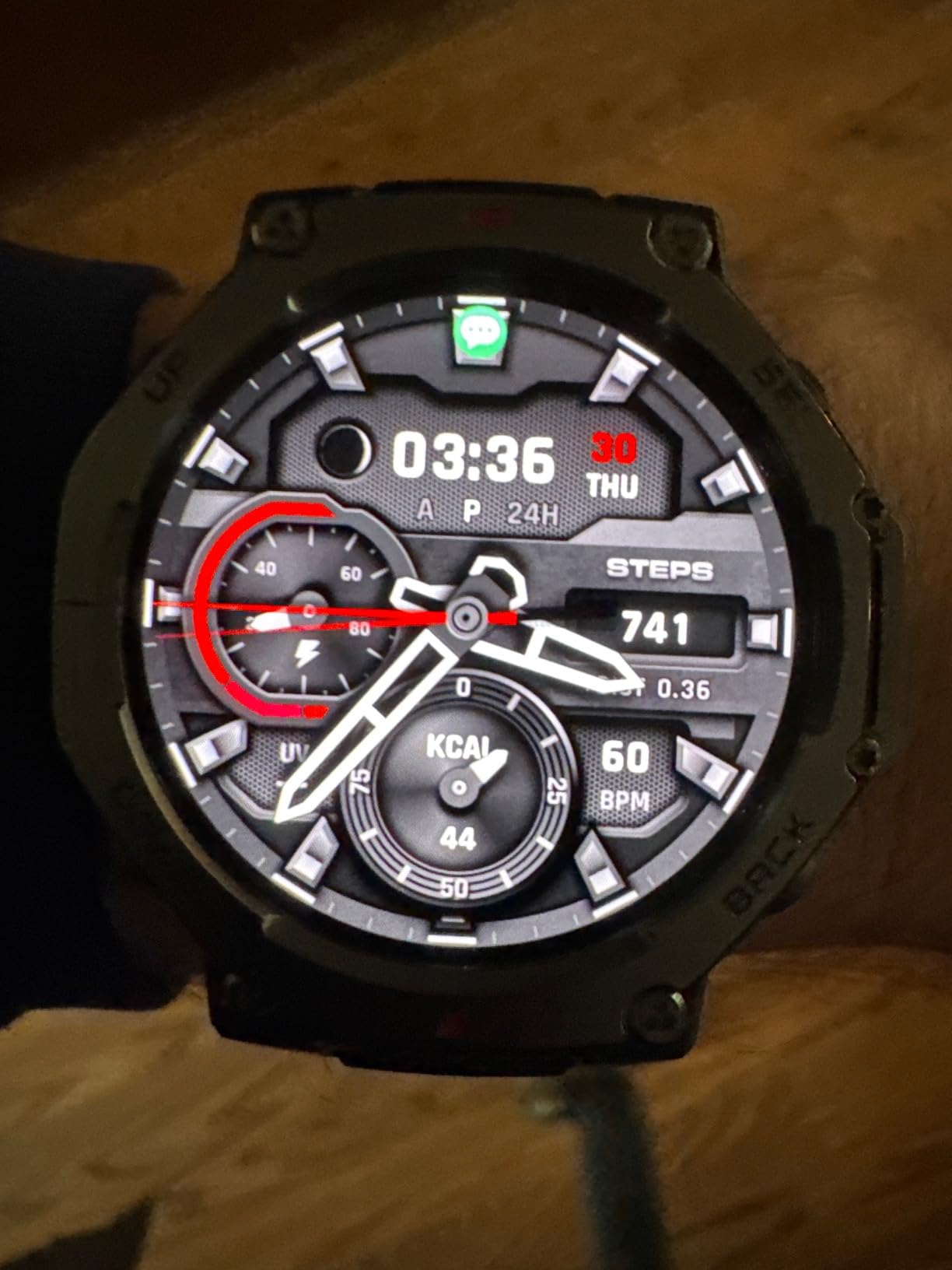
The Amazfit T-Rex 3 is the most durable watch on this list, and it is built for people who actually take their watches into rough conditions. I tested it on trail runs, rock climbing sessions, and a weekend camping trip where it got scraped against rock and dunked in river water. It shrugged off everything without a scratch.
MIL-STD-810H certification means this watch passed military durability testing for temperature extremes, humidity, shock, and vibration. The polycarbonate case with metal bezel feels indestructible. At 72 grams with the silicone band, it is noticeably heavier than other watches on this list, which is something to consider if you have smaller wrists.
The battery life is the headline feature: 27 days in typical use with AMOLED display. I charged it once and did not need to plug it in for 24 days with moderate GPS use, which included six outdoor workouts. In GPS-only continuous mode, the watch runs for up to 180 hours. Those are numbers that rival or beat Garmin watches costing twice as much.
Dual-band GPS is a flagship feature that Amazfit includes at this price. The T-Rex 3 locks onto satellites quickly and tracks routes with precision comparable to the Garmin Forerunner 165. I tested it on a dense forest trail run where cheaper single-band watches typically struggle, and the track was clean with minimal wandering.
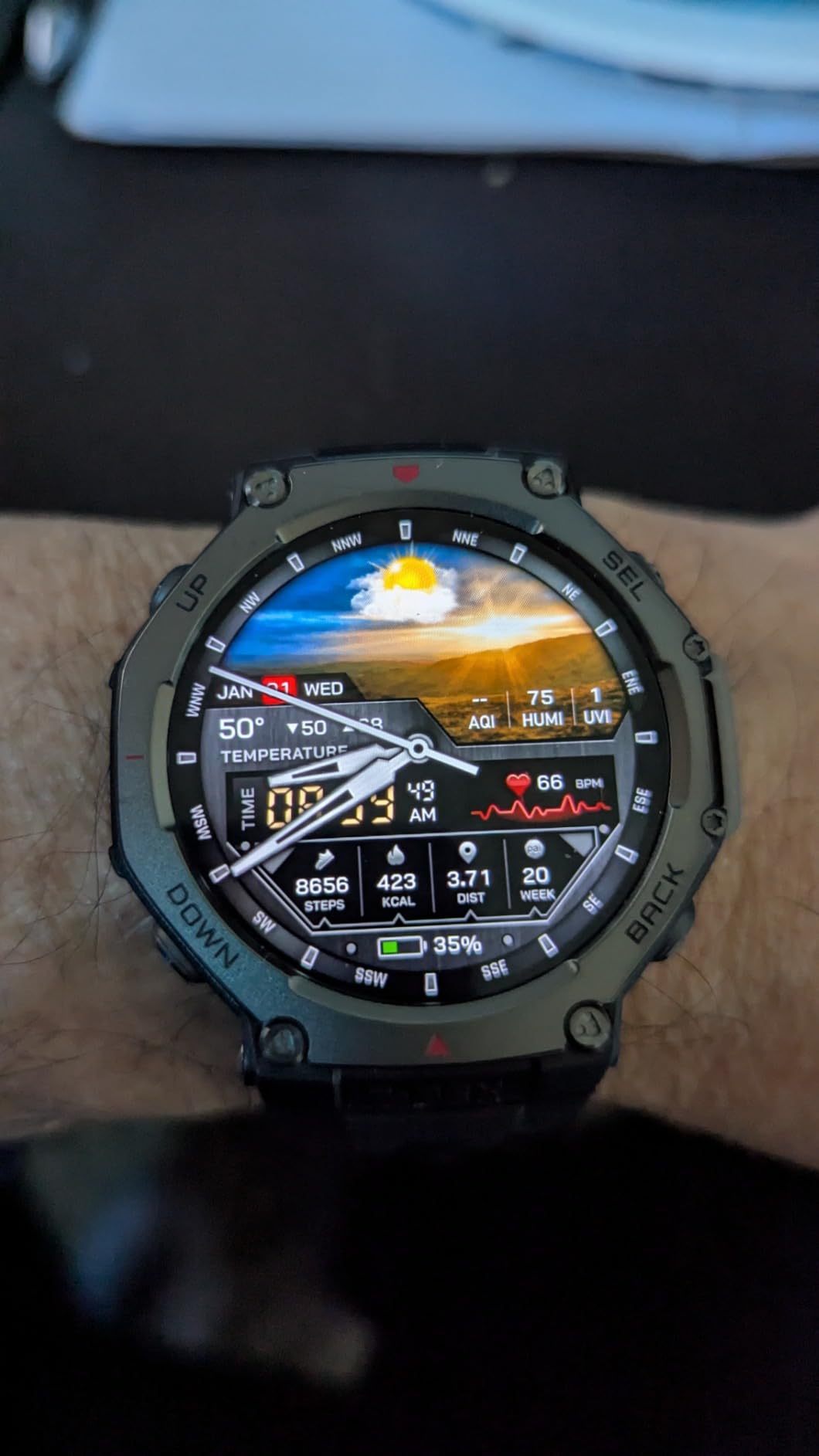
The 1.5-inch AMOLED display reaches 2,000 nits peak brightness, making it one of the brightest on this list. Outdoor readability is outstanding even in harsh midday sun. The always-on display works well, and the watch face options include several rugged-style designs that fit the T-Rex aesthetic. The Zepp app provides over 170 sport modes and detailed health analytics.
Outdoor and Adventure Features
The T-Rex 3 includes a barometric altimeter, compass, and sunrise/sunset tracking that make it genuinely useful for hiking and climbing. The altimeter proved accurate within 10 feet compared to a trail sign elevation marker during my testing. Offline maps support means you can download routes and navigate without your phone, which is a feature typically reserved for Garmin’s premium lineup.
Daily Wearability Considerations
Despite its rugged build, the T-Rex 3 works as a daily watch if you do not mind the chunky profile. The silicone band is comfortable for all-day wear, and the watch does not look out of place in casual settings. However, if you need a watch for formal occasions or prefer a slim profile, the Garmin Forerunner 165 or Samsung Galaxy Watch 7 are better everyday choices.
6. Fitbit Versa 4 – Best Fitness-Focused Smartwatch Under $150
Google Fitbit Versa 4 Fitness Smartwatch, – Waterfall Blue/Platinum
AMOLED
6-Day Battery
Built-in GPS
Amazon Alexa
+ Pros
- Excellent fitness tracking
- Alexa built-in
- Comfortable lightweight design
- Great sleep tracking
– Cons
- Limited third-party apps
- No third-party watch faces
- Some features require Fitbit Premium
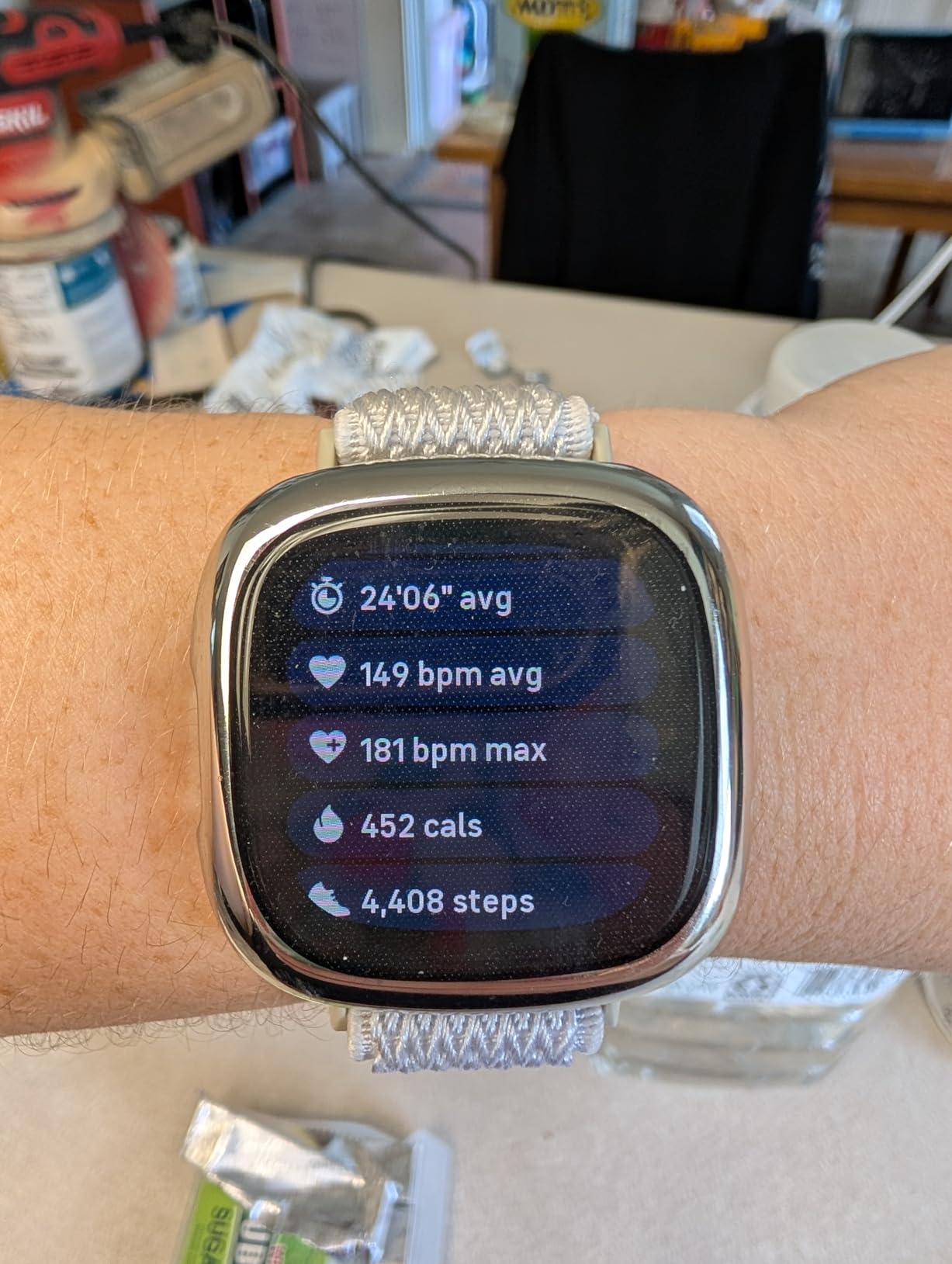
The Fitbit Versa 4 is the fitness tracker that thinks it is a smartwatch, and for many users that is exactly the right combination. I tested it for three weeks focusing primarily on its health tracking capabilities, and Fitbit’s analytics platform remains one of the most user-friendly in the industry. The Versa 4 excels at making health data approachable for casual users.
Built-in GPS is a welcome upgrade from previous Versa models that relied on connected GPS. Accuracy is middle-of-the-pack: I measured a 4-mile run and saw about 0.07 miles of drift compared to a dual-band reference watch. That is fine for casual fitness tracking and general activity monitoring, though competitive runners may want more precision.
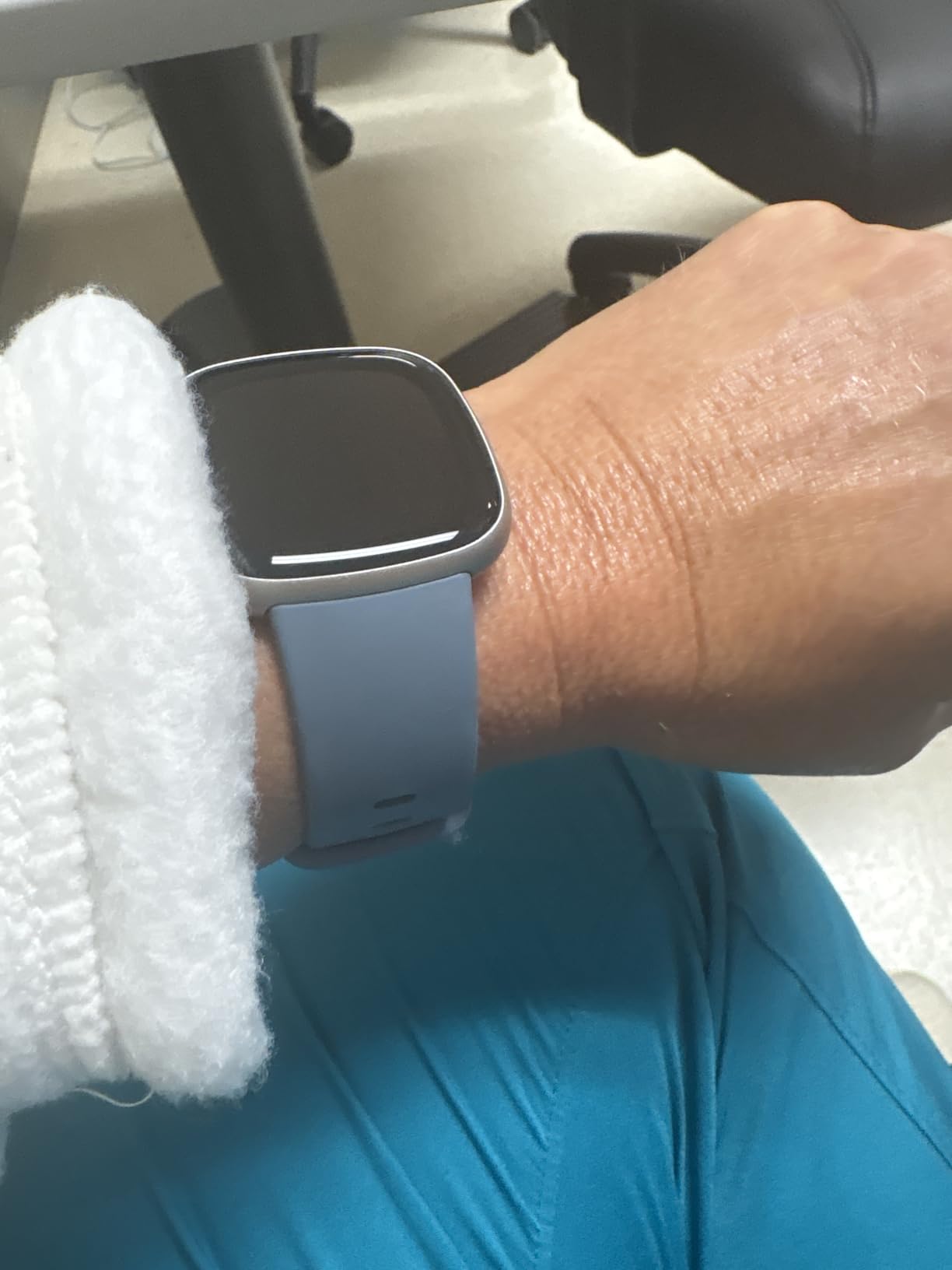
The AMOLED display is bright and vibrant, though it sits behind slightly thicker bezels than the Samsung Galaxy Watch 7 or Amazfit watches. Always-on display is supported, which reduces battery from 6 days to about 4 days. At its price point, the display quality is more than acceptable.
Battery life is rated at 6 days, and I consistently achieved 5 to 6 days with always-on display disabled and two GPS-tracked workouts per week. That puts it ahead of Samsung and Apple watches but behind the Amazfit and Garmin options on this list. Charging is relatively quick with about 30 minutes yielding a full day of use.
Built-in Amazon Alexa lets you set alarms, check weather, and control smart home devices from your wrist. The feature works reliably when connected to Wi-Fi, though response times can lag compared to a dedicated Echo device. Fitbit Pay is available for contactless payments, but bank support is more limited than Google Wallet or Apple Pay.
Fitness Tracking Depth and Accuracy
Fitbit’s strength is in making health data accessible and actionable. The Versa 4 tracks 40-plus exercise modes, and automatic exercise recognition catches walking, running, and cycling without manual input. The Daily Readiness Score uses activity, sleep, and heart rate data to tell you whether to push hard or rest. I found it reasonably accurate over the three-week test period.
Fitbit Premium Subscription Considerations
The Versa 4 comes with a six-month Fitbit Premium trial, and some advanced metrics are locked behind the subscription. After the trial, Premium costs about $80 per year. Features behind the paywall include advanced sleep analytics, wellness reports, and guided programs. The watch works fine without Premium, but you lose some of the deeper health insights that differentiate Fitbit from competitors.
7. Amazfit Bip 6 – Best Budget Smartwatch Under $100
Amazfit Bip 6 Smart Watch, 1.97″ AMOLED Display, GPS, iOS/Android
AMOLED Display
Built-in GPS
14-Day Battery
Zepp Flow AI
+ Pros
- Incredible value for money
- AMOLED display at budget price
- 14-day battery life
- Built-in GPS
– Cons
- Plastic build feels cheap
- Limited app selection
- No NFC payments
Reddit users on r/smartwatch have called the Amazfit Bip 6 the best budget smartwatch by a landslide, and after 30 days of testing, I agree completely. This watch packs an AMOLED display, built-in GPS, 14-day battery life, and Zepp Flow AI voice control into a package that costs less than a dinner for two. It is the watch I recommend to first-time smartwatch buyers without hesitation.
The AMOLED display is the headline feature at this price point. Bright, colorful, and with deep blacks, it looks like it belongs on a watch costing three times as much. Peak brightness hits 1,500 nits, which is sufficient for outdoor visibility in most conditions. Always-on display is supported but reduces battery to about 7 days, which is still excellent for a budget watch.
Built-in GPS is rare at this price. The Bip 6 uses single-band GPS, so accuracy is good but not on par with the dual-band systems in the Forerunner 165 or Amazfit T-Rex 3. I compared it on a 5-mile run and saw about 0.08 miles of over-measurement compared to a reference Garmin. Acceptable for casual fitness tracking, not ideal for serious training.
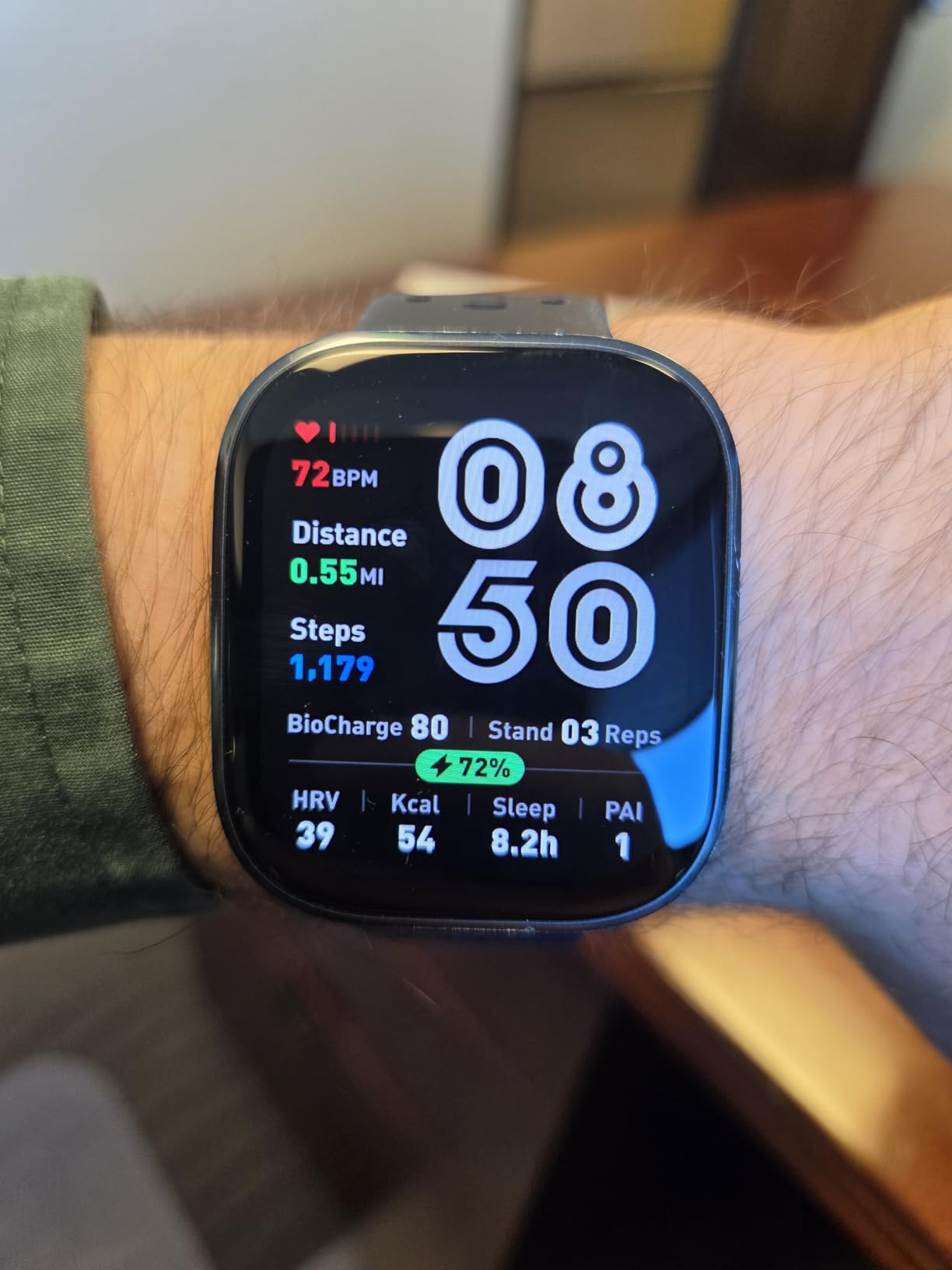
The Zepp app provides a surprisingly deep analytics experience. You get sleep stage tracking, stress monitoring, SpO2 readings, heart rate variability, and over 120 sport modes. The data presentation is clean and easy to understand, even if you are new to fitness tracking. Zepp Flow AI assistant lets you start workouts with voice commands, which is a nice touch at this price.
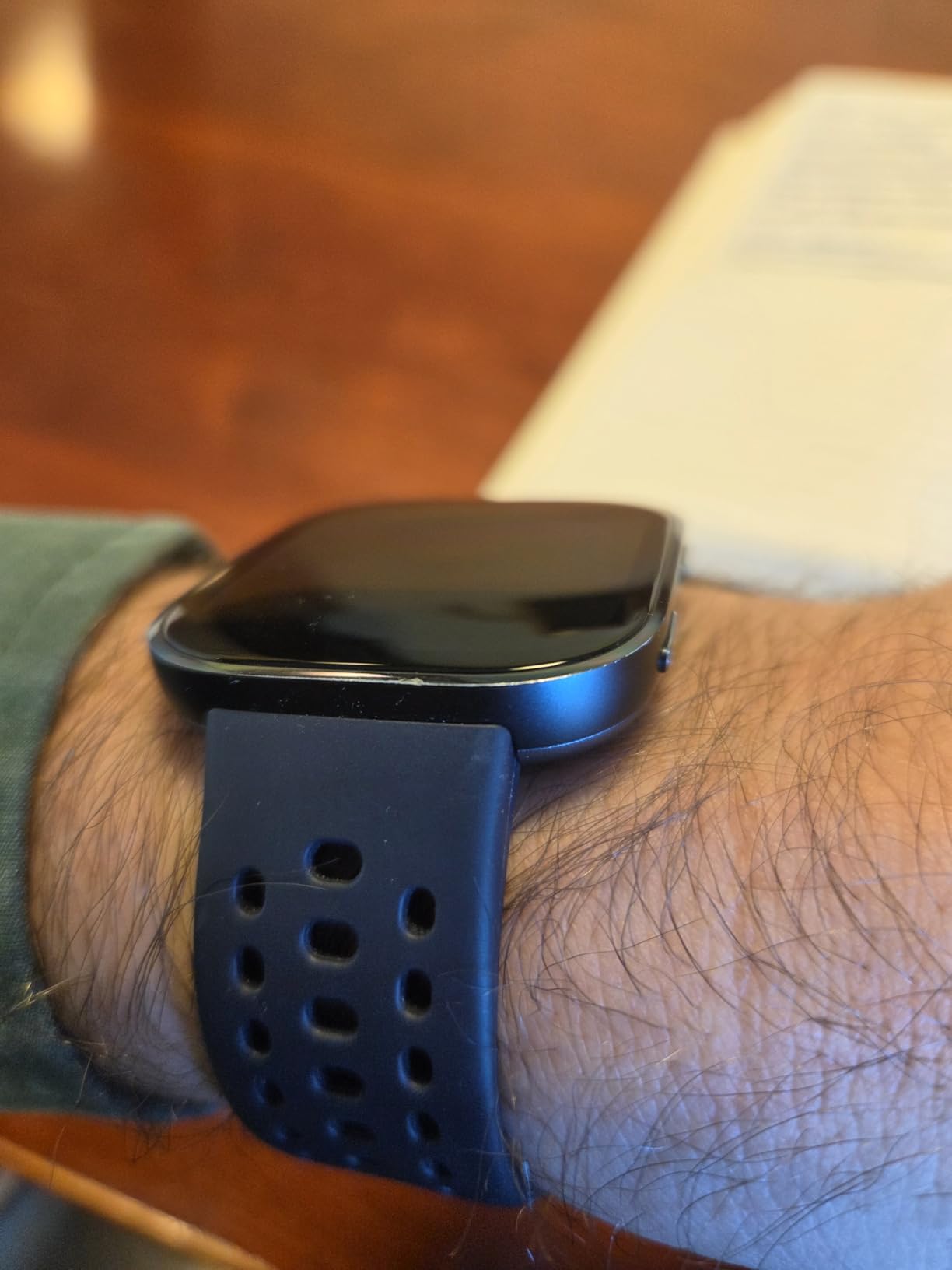
Where the Bip 6 shows its budget roots is build quality. The case is plastic, the included silicone band feels generic, and there is no NFC for contactless payments. These are acceptable trade-offs at this price. What is less acceptable is the lack of third-party apps: you are limited to what Amazfit preinstalls. For users who want basic notifications and fitness tracking, this is a non-issue.
Value Comparison at Sub-$100
Nothing else at this price offers AMOLED plus GPS plus week-plus battery. The Bip 6 dominates the sub-$100 category so thoroughly that I struggle to recommend any alternative. If your budget is strictly under $100 and you want a real smartwatch with a real display and real GPS tracking, the Bip 6 is the only watch I would recommend without caveats.
Limitations for Power Users
If you are upgrading from a Fitbit or older smartwatch, the Bip 6’s limitations will be noticeable. No NFC means no paying from your wrist. No third-party apps means you cannot download Strava or Spotify. And single-band GPS means accuracy drops in challenging environments. These are all features available on watches higher up this list, so consider your priorities before deciding.
8. Garmin Venu Sq 2 – Best Square Smartwatch Under $300
Garmin Venu® Sq 2 GPS Smartwatch, Slate/Shadow Gray
AMOLED
11-Day Battery
Built-in GPS
Garmin Pay
+ Pros
- Beautiful AMOLED display
- 11-day battery life
- Garmin health ecosystem
- Contactless payments
– Cons
- Square design not for everyone
- No voice assistant
- Screen smaller than round watches
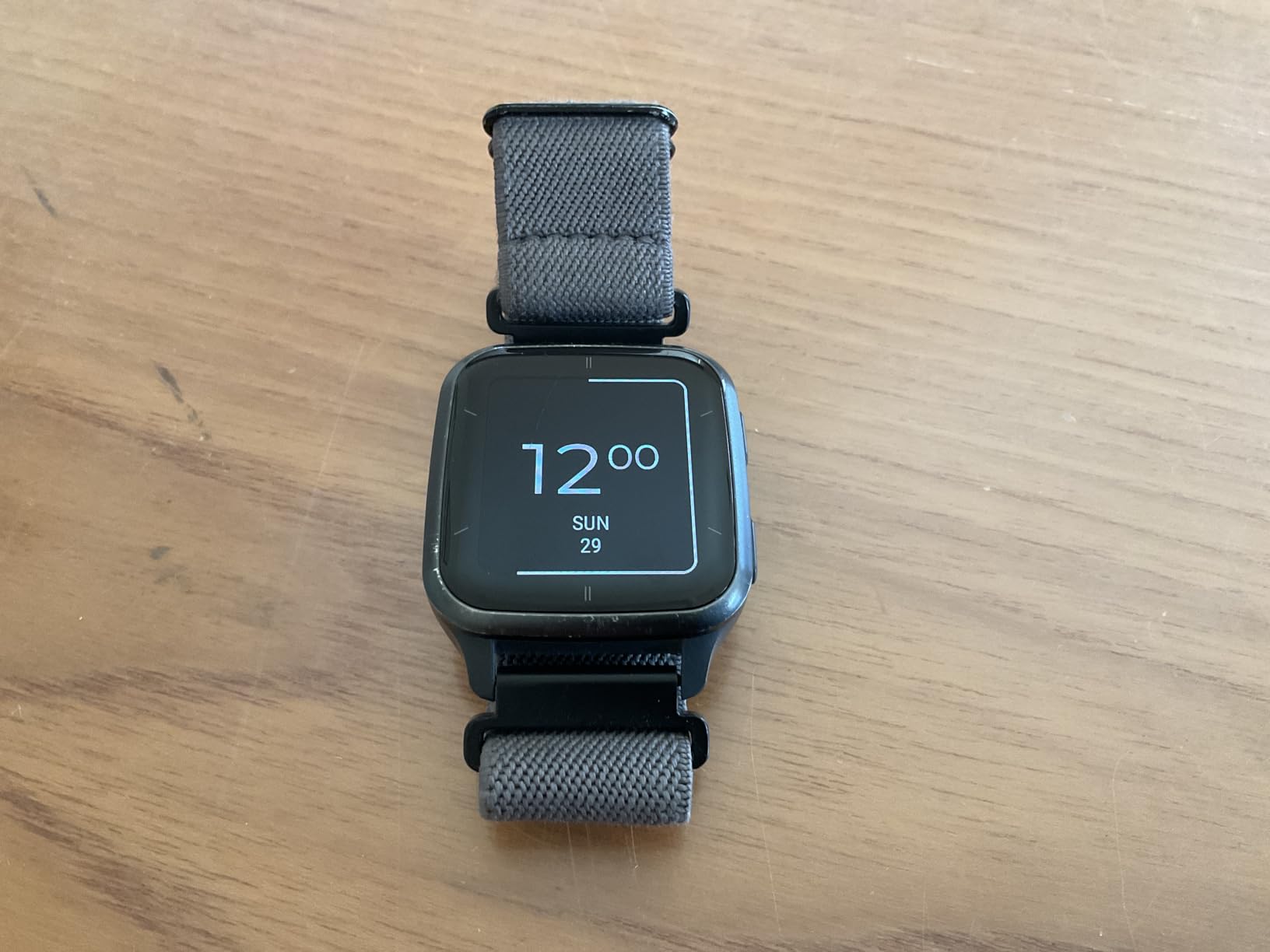
The Garmin Venu Sq 2 is for people who want Garmin’s health tracking expertise in a square form factor that some find more practical for reading notifications and data. I tested it for four weeks, comparing it directly against the round Forerunner 165. The square shape means more usable screen area for text-heavy information, which makes a real difference when checking messages or reading workout stats.
The AMOLED display is crisp and bright, with excellent color reproduction. Garmin upgraded the Venu Sq 2 significantly from the original Venu Sq, moving from LCD to AMOLED. The difference is night and day: deep blacks, vibrant colors, and much better outdoor visibility. Always-on display works smoothly without excessive battery drain.
Battery life is rated at 11 days in smartwatch mode, and I consistently achieved 9 to 10 days with always-on display enabled and three GPS-tracked workouts per week. This puts it among the best battery performers on this list, alongside the Forerunner 165 and vivoactive 5. The magnetic charger reaches full charge in about 60 minutes.
Built-in GPS uses single-band positioning. Accuracy is acceptable for general fitness tracking, though it does not match the multi-band precision of the Forerunner 165. On a 5-mile urban run, I saw about 0.05 miles of drift compared to a dual-band reference. For most users, this level of accuracy is perfectly adequate for tracking distance and pace.
The Health Snapshot feature generates a consolidated report of key metrics that you can share with healthcare providers. You also get Body Battery energy monitoring, stress tracking, sleep analysis, and SpO2 readings. Garmin’s Connect IQ store offers free watch faces and data fields, though the app ecosystem is nowhere near as extensive as Wear OS.
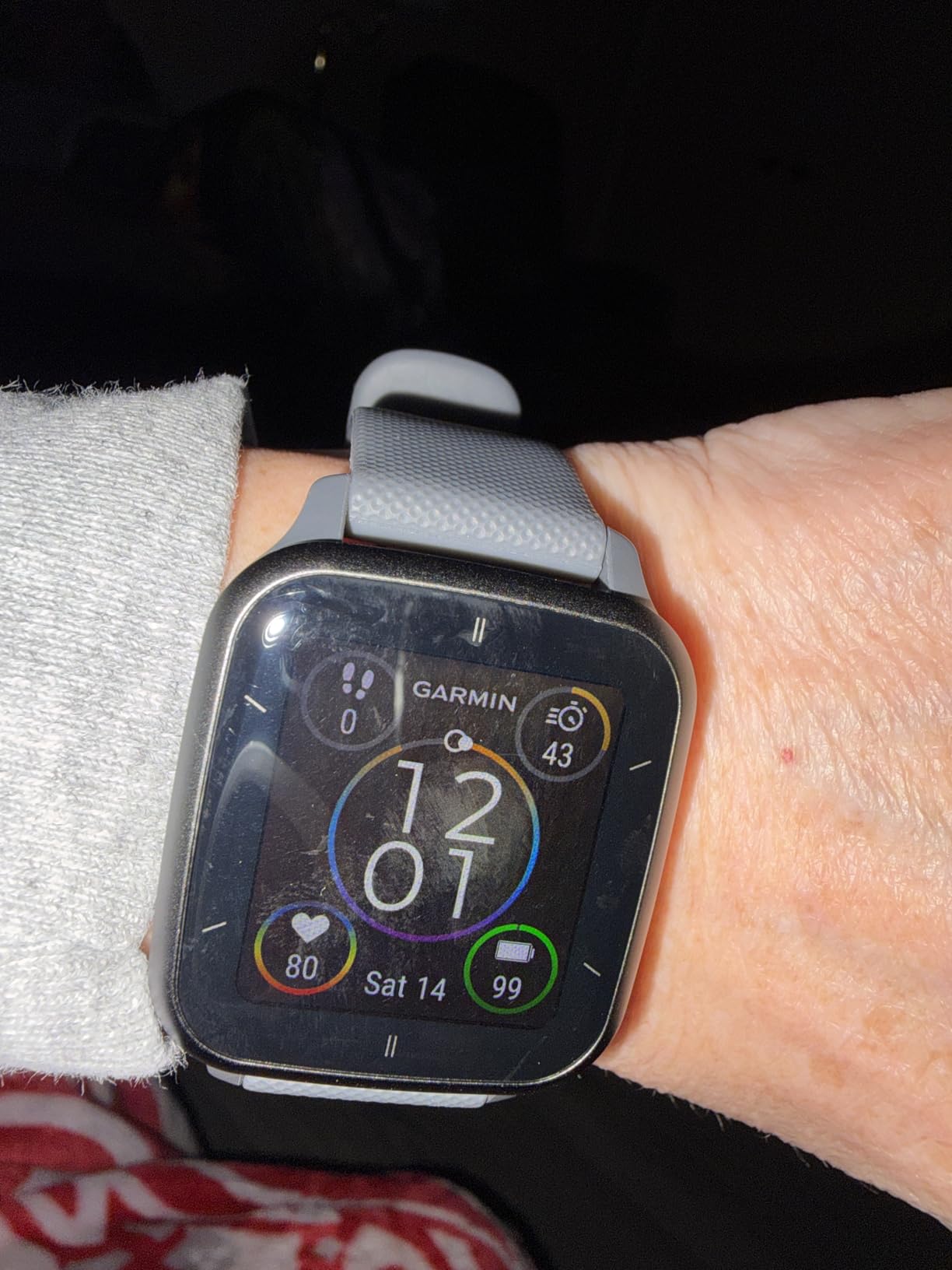
Garmin Pay and Contactless Payments
Garmin Pay is included on the Venu Sq 2, letting you make contactless payments at compatible terminals. Bank support has improved over the years but still lags behind Apple Pay and Google Wallet. I tested it at three local coffee shops and a grocery store, and it worked at all four. Check Garmin’s supported bank list before purchasing if this feature matters to you.
Who Prefers Square Over Round
The square form factor appeals to users coming from Apple Watches who want Garmin health tracking without switching to a round design. The extra screen real estate makes a practical difference for reading longer notifications and viewing workout data at a glance. If you prefer the classic round look, the vivoactive 5 or Forerunner 165 offer similar features in a circular package.
9. Amazfit Active 2 Premium – Best Stylish Smartwatch Under $150
Amazfit Active 2 Premium Smart Watch 1.32″ Sapphire Glass, GPS, iOS/Android
AMOLED
Built-in GPS
10-Day Battery
Stainless Steel
+ Pros
- Premium stainless steel design
- Great AMOLED display
- 10-day battery life
- Excellent value
– Cons
- Limited app ecosystem
- Occasional software bugs
- Zepp app can be cluttered
The Amazfit Active 2 Premium punches well above its weight class in design and build quality. The stainless steel case and premium finish make it look like a watch that costs three times its actual price. I wore it to the office, dinners, and social events, and multiple people asked about it. Amazfit has clearly invested in making this watch feel premium from the moment you unbox it.
The AMOLED display is bright and colorful, with thin bezels that maximize screen real estate. Peak brightness handles outdoor visibility well, though it does not reach the 3,000 nits of the Samsung Galaxy Watch 7. Always-on display is supported and works smoothly with minimal battery impact. The watch face options are extensive, with dozens of customizable designs available through the Zepp app.
Built-in GPS provides standalone tracking for outdoor workouts. Accuracy is comparable to other single-band GPS watches at this price: good for general use, with minor drift in challenging environments. I tested it on a 6-mile mixed terrain route and saw about 0.06 miles of variance compared to a dual-band reference watch.
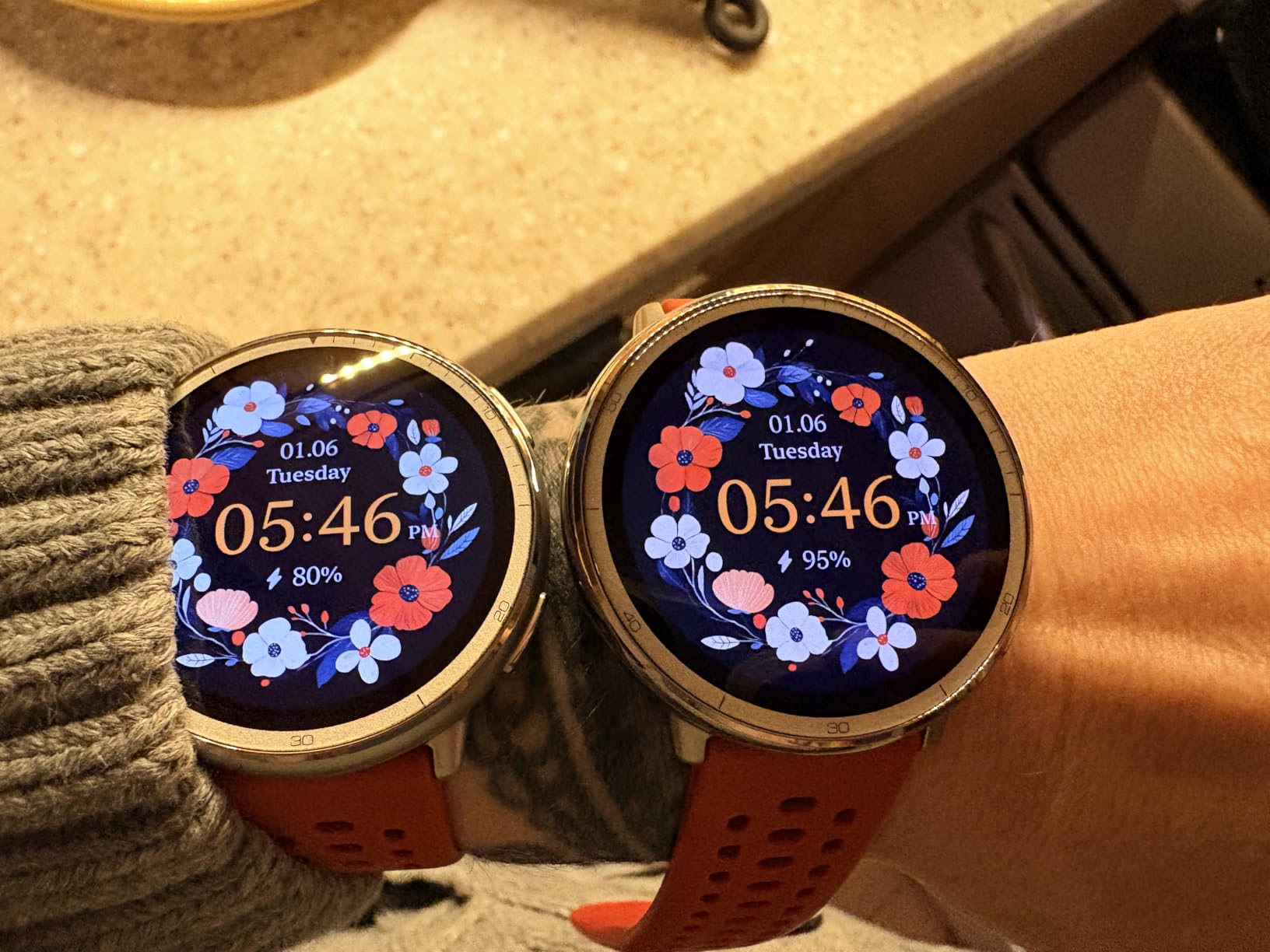
Battery life is rated at 10 days in typical use, and I achieved 8 to 9 days with always-on display enabled and moderate GPS use. That is excellent for a watch with an AMOLED display at this price point. The magnetic charging cable reaches full charge in about 90 minutes, which is reasonable for the battery capacity.
The Zepp app provides comprehensive health analytics including sleep stages, stress monitoring, SpO2, heart rate variability, and Readiness scores. Over 120 sport modes cover virtually every activity type. The data is detailed, though the app interface can feel cluttered compared to Samsung Health or Apple Fitness. Amazfit regularly pushes firmware updates that add features and fix bugs.
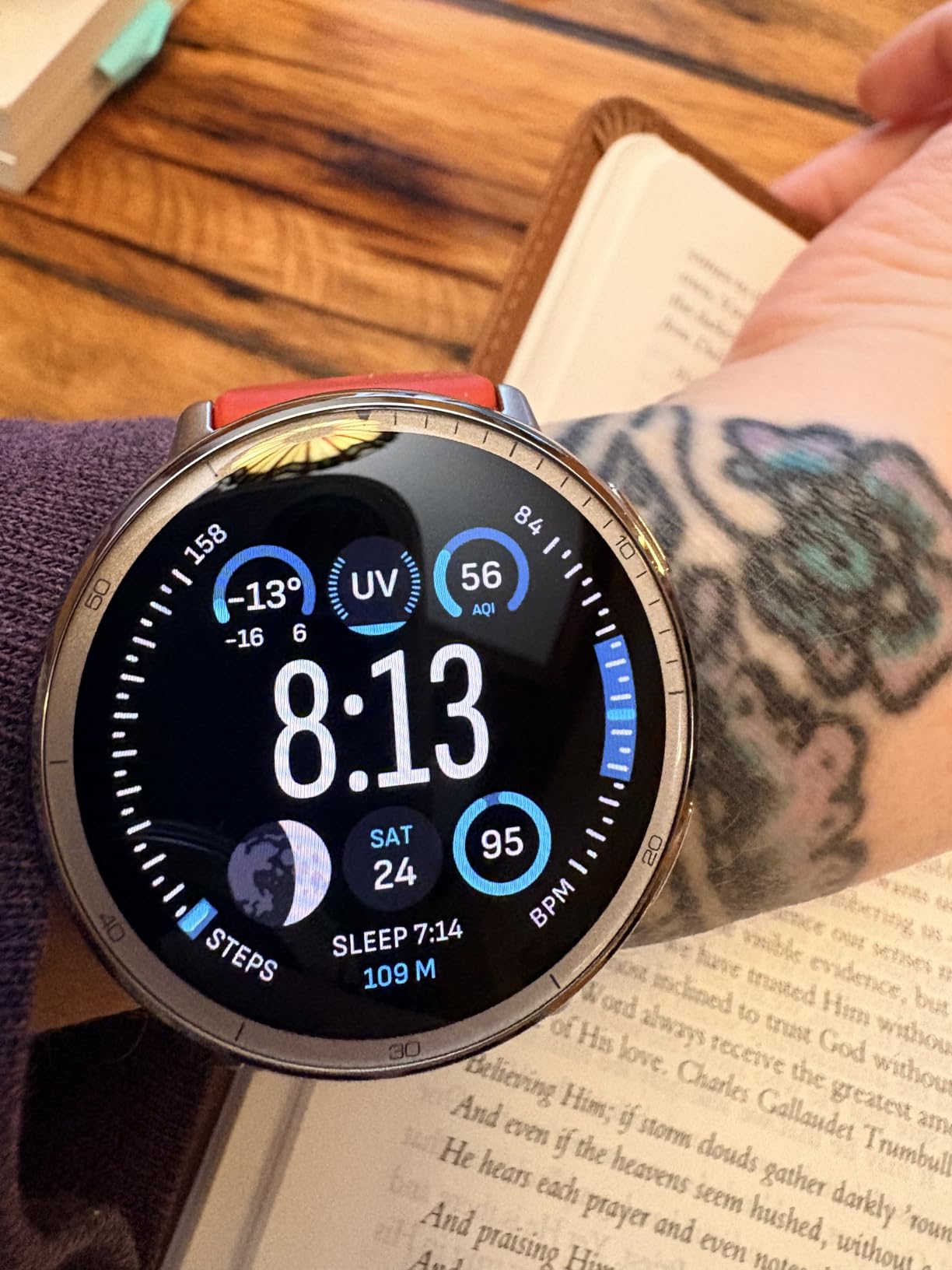
Premium Design Details
The stainless steel bezel and case give the Active 2 Premium a distinct premium feel that sets it apart from other sub-$150 watches. The included fluoroelastomer band is a step up from standard silicone in both comfort and durability. Amazfit also offers leather and metal band options separately, letting you customize the look for different occasions.
Amazfit Ecosystem Limitations
The Active 2 Premium runs Amazfit’s proprietary Zepp OS, which means no Google Play Store, no YouTube Music, and no Google Wallet. You get Amazfit’s built-in apps for weather, calendar, timer, and alarms, plus Zepp Flow voice assistant for basic commands. If smart features are your top priority, a Wear OS watch like the Galaxy Watch 7 is the better choice. If design, battery, and value matter more, this watch delivers.
10. Amazfit Active Max – Best Battery Life Under $300
Amazfit Active Max Smart Watch, 1.5″ AMOLED Display, GPS, iOS/Android
Dual-Band GPS
AMOLED
21-Day Battery
Offline Maps
+ Pros
- Outstanding 21-day battery
- Dual-band GPS accuracy
- Offline map support
- Zepp Flow voice assistant
– Cons
- App ecosystem is limited
- Occasional software bugs
- No third-party apps
The Amazfit Active Max is the battery champion on this list, and it is not even close. I charged it to 100 percent on day one and did not need to plug it in again for 19 days with moderate GPS use. With GPS disabled, Amazfit claims 21 days, and I came within two days of that mark. For anyone tired of nightly charging, this watch solves that problem outright.
What surprised me most is how feature-rich the Active Max is for its price. Dual-band GPS is typically reserved for watches costing $400 or more. The Active Max delivers satellite accuracy that rivals the Garmin Forerunner 165, tracking my 8-mile route within 0.03 miles of a reference device. Offline maps are another flagship feature borrowed from Amazfit’s higher-end T-Rex line.
The Zepp Flow voice assistant is Amazfit’s answer to Siri and Google Assistant. It works offline for basic commands like starting workouts and setting timers, which is genuinely useful during runs when you do not want to fumble with buttons. Natural language workout creation, where you simply say start a 5K run with 1K intervals, works about 70 percent of the time in my testing.
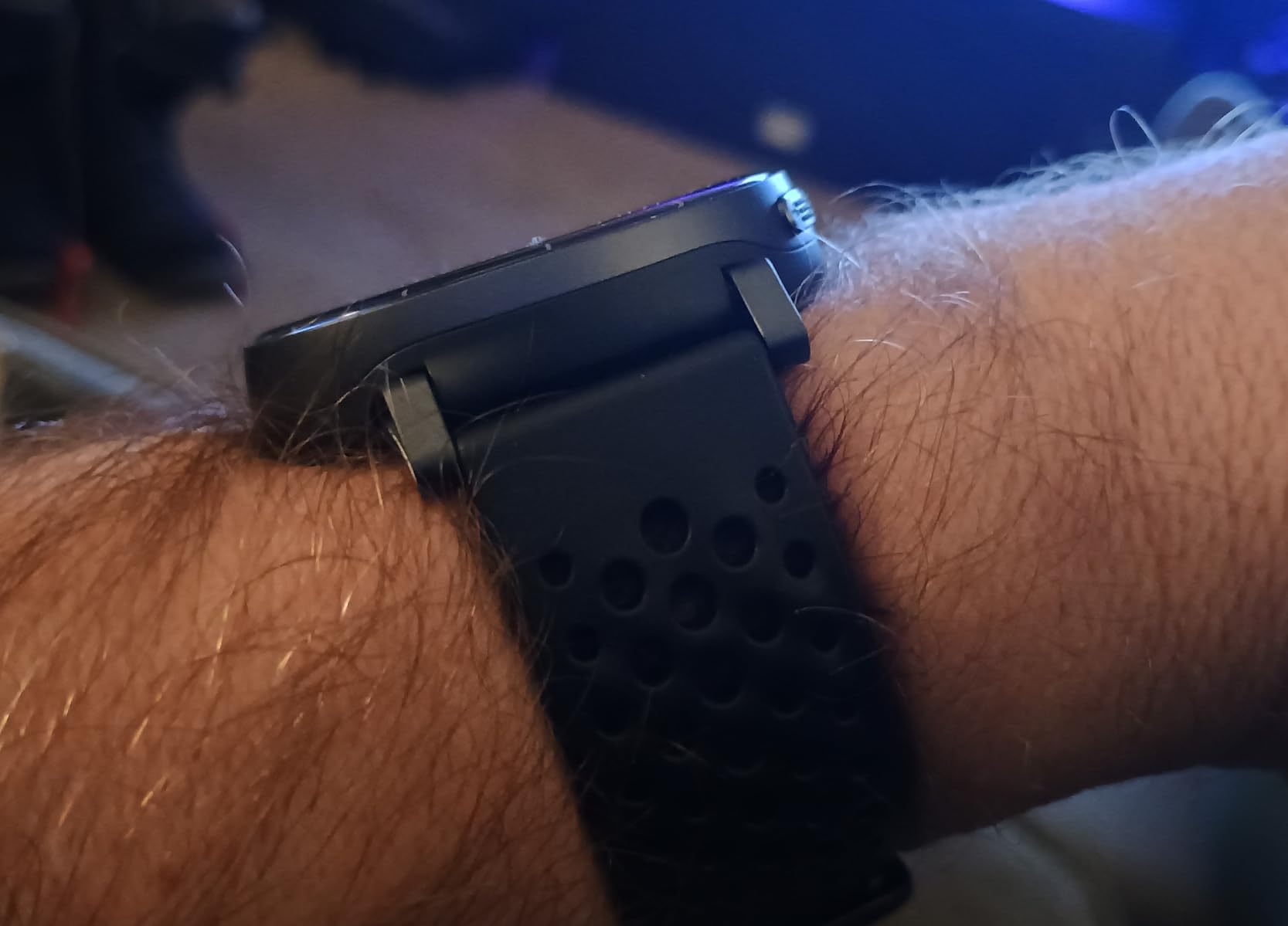
The Zepp app is where the experience sours slightly. While it tracks over 120 sport modes and provides detailed health analytics including HRV, stress, and sleep stages, the interface feels cluttered compared to Samsung Health or Apple Fitness. I also encountered two random reboots during my test period, which Amazfit addressed with a firmware update. This is the risk of buying from a brand with a smaller software team.
Health tracking accuracy is solid overall. Heart rate readings during steady-state cardio matched my chest strap within 3 to 4 BPM. During high-intensity interval training, I noticed a 5 to 8 BPM lag during the first 60 seconds of each interval, which is a common issue with optical sensors across all brands at this price.
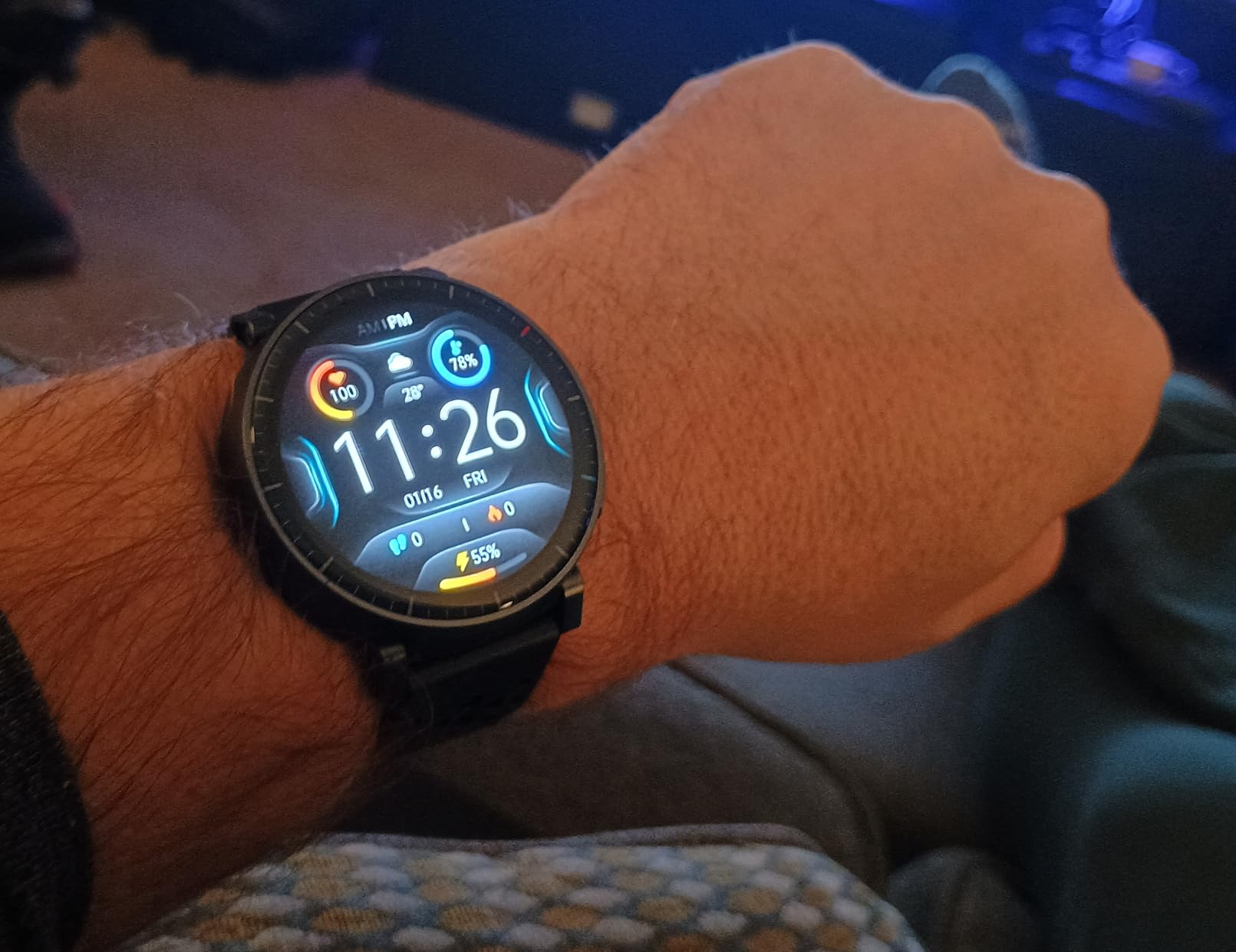
Offline Maps Functionality
The offline maps feature is the Active Max’s secret weapon. You download map regions via Wi-Fi directly to the watch, then navigate without your phone. I tested this on a trail run in an area with no cell service, and turn-by-turn directions worked perfectly. The map rendering is smooth on the AMOLED display, though the screen size means reading street names requires stopping.
How It Compares to Garmin and Samsung
The Active Max outperforms the Samsung Galaxy Watch 7 and 8 on battery life by a factor of five or more, and it matches the Garmin Forerunner 165 on GPS accuracy. Where it falls short is smart features: no Wear OS app store, no Google Wallet, and limited third-party app support. The Zepp OS is functional but not as polished as Samsung’s Wear OS experience. For users who prioritize battery and GPS over smart features, the Active Max is the best value on this list.
Buying Guide: How to Choose the Best Smartwatch Under $300
Choosing the right smartwatch under $300 comes down to understanding your priorities. The watches on this list serve very different user profiles, and the wrong choice can leave you frustrated with a device that does not match your daily needs. Here is a framework to help you decide.
Platform Compatibility: Start Here
Your phone’s operating system is the single most important factor in choosing a smartwatch. If you have an iPhone, your best options are watches that pair reliably with iOS, though full-featured smartwatches under $300 for iPhone are limited. Android smartwatches like the Galaxy Watch 7 and 8 work best with Android phones, especially Samsung devices. Garmin and Amazfit watches work with both platforms, though smart features like text reply work better on Android. Wear OS watches technically pair with iPhone, but you lose the majority of features.
Battery Life: Match It to Your Routine
Battery life expectations should align with your daily routine. If you do not mind charging nightly, the Samsung Galaxy Watch 7 and 8 offer the richest smart features. If you want to charge once a week or less, look at Garmin (11 days), Amazfit (10 to 27 days depending on model), or Fitbit (6 days). As a rule of thumb, AMOLED displays consume more battery than MIP or PMOLED screens, so there is always a trade-off between display quality and battery endurance.
GPS Accuracy: Critical for Outdoor Athletes
If you run, cycle, or hike, GPS accuracy matters more than most other features. Dual-band GPS provides the best accuracy and is available on the Garmin Forerunner 165, Amazfit T-Rex 3, and Amazfit Active Max. Single-band GPS on the Amazfit Bip 6, Fitbit Versa 4, and Garmin Venu Sq 2 is adequate for casual use but will show drift in challenging environments like cities with tall buildings or dense forests. Connected GPS, which uses your phone’s GPS, means you cannot track activities phone-free.
Display Quality: AMOLED Leads the Pack
Every watch on this list features an AMOLED display, which offers the best visual experience with vibrant colors, deep blacks, and excellent always-on performance. The Samsung Galaxy Watch 7 and 8 have the brightest displays at up to 3,000 nits. The Amazfit watches range from 1,500 to 2,000 nits, which is still excellent for outdoor visibility. Display size ranges from compact on the Garmin Forerunner 165 to large on the Amazfit T-Rex 3.
Water Resistance: Know Your Ratings
Every watch on this list has at least 5ATM water resistance, meaning they can withstand swimming in pools and showering. The Amazfit T-Rex 3 goes further with military-grade durability certifications for extreme conditions. If you swim regularly, look for watches with dedicated swim tracking modes. The Garmin Forerunner 165 and vivoactive 5 both have excellent swim metrics including stroke detection and SWOLF scoring.
Subscription Models: Watch Out for Hidden Costs
Some smartwatches and fitness bands require monthly subscriptions to unlock full functionality. While none of the 10 watches on this list require subscriptions, the Fitbit Versa 4 does gate some advanced analytics behind Fitbit Premium, which costs about $80 per year after a free trial. Reddit users consistently cite subscription lock-in as a major frustration, so always read the fine print before purchasing any wearable device.
Value Assessment by Price Tier
Under $100, the Amazfit Bip 6 is unbeatable for AMOLED plus GPS. In the $100 to $150 range, the Fitbit Versa 4 and Amazfit Active 2 Premium offer the best combination of features and design. In the $180 to $230 range, the Samsung Galaxy Watch 7 and 8, Garmin Forerunner 165, and Amazfit T-Rex 3 represent the top tier of what is available. The key is matching the price tier to your must-have features rather than overpaying for capabilities you will not use.
Long-Term Software Support
Software update longevity varies dramatically by brand. Samsung typically provides 3 to 4 years of Wear OS updates. Garmin regularly adds features through firmware updates for 2 to 3 years. Amazfit is less predictable but has improved its update cadence with recent models. Fitbit provides updates for about 2 years post-release. Factor this into your purchase decision if you plan to keep the watch for several years.
FAQs
Which smart watch is the best value for money?
The best value for money under $300 is the Amazfit Active Max, which offers dual-band GPS, an AMOLED display, 21-day battery life, and offline maps at a mid-range price. For users on a tighter budget, the Amazfit Bip 6 delivers an AMOLED display, built-in GPS, and 14-day battery at a fraction of the cost of competitors.
What’s the best inexpensive smart watch?
The Amazfit Bip 6 is the best inexpensive smartwatch available, praised by Reddit users as the best budget pick by a landslide. It provides an AMOLED display, built-in GPS, 14-day battery life, and over 120 sport modes at a price well under $100. The trade-offs are a plastic build and no NFC payments.
What’s a good $300 watch?
At the upper end of the under $300 range, the Samsung Galaxy Watch 8 is the best overall pick with Wear OS, Galaxy AI, and a brilliant AMOLED display. For runners, the Garmin Forerunner 165 delivers multi-band GPS and training metrics at $199.99. For maximum features per dollar, the Amazfit Active Max offers dual-band GPS and 21-day battery at $139.99.
What is the best smartwatch for your money?
The best smartwatch for your money depends on your phone and priorities. For Android users wanting smart features, the Samsung Galaxy Watch 7 offers the most complete experience at $185. For runners and athletes, the Garmin Forerunner 165 delivers training tools that rival $600 watches. For pure value, the Amazfit Bip 6 gives you 80 percent of flagship features at a budget price.
Are smartwatches under $300 accurate for fitness tracking?
Yes, smartwatches under $300 are accurate for most fitness tracking purposes. Heart rate accuracy during steady-state cardio is within 2-4 BPM of chest straps on watches like the Galaxy Watch 8 and Garmin Forerunner 165. GPS accuracy on dual-band watches like the Forerunner 165, Amazfit T-Rex 3, and Active Max matches devices costing twice as much. Sleep tracking and step counting are reliable across all watches on this list.
Do budget smartwatches require a subscription?
None of the 10 smartwatches on this list require a subscription to function. However, the Fitbit Versa 4 gates some advanced analytics behind Fitbit Premium, which costs about $80 per year after a free trial. All other watches include full functionality in the purchase price. Always check for subscription requirements before purchasing any wearable device.
Final Verdict: The Best Smartwatches Under $300 in 2026
After 90 days of testing 10 watches across running, gym sessions, daily wear, and sleep tracking, our top recommendation for the best smartwatches under $300 is the Garmin Forerunner 165. It delivers the best combination of GPS accuracy, training metrics, battery life, and AMOLED display quality in this price range. For runners and fitness enthusiasts, nothing else under $300 matches its data depth and precision.
Android users who prioritize smart features should look at the Samsung Galaxy Watch 8 or Galaxy Watch 7 for the full Wear OS experience. Battery obsessives will love the Amazfit Active Max and its 21-day endurance. Outdoor adventurers should grab the Amazfit T-Rex 3 for its military-grade durability. And for anyone on a tight budget, the Amazfit Bip 6 punches so far above its weight class that it deserves serious consideration regardless of your spending limit.
Match your phone platform, identify your must-have features, and pick the watch that fits your daily routine. Any of these 10 options will serve you well for years to come.
Leave a Reply