
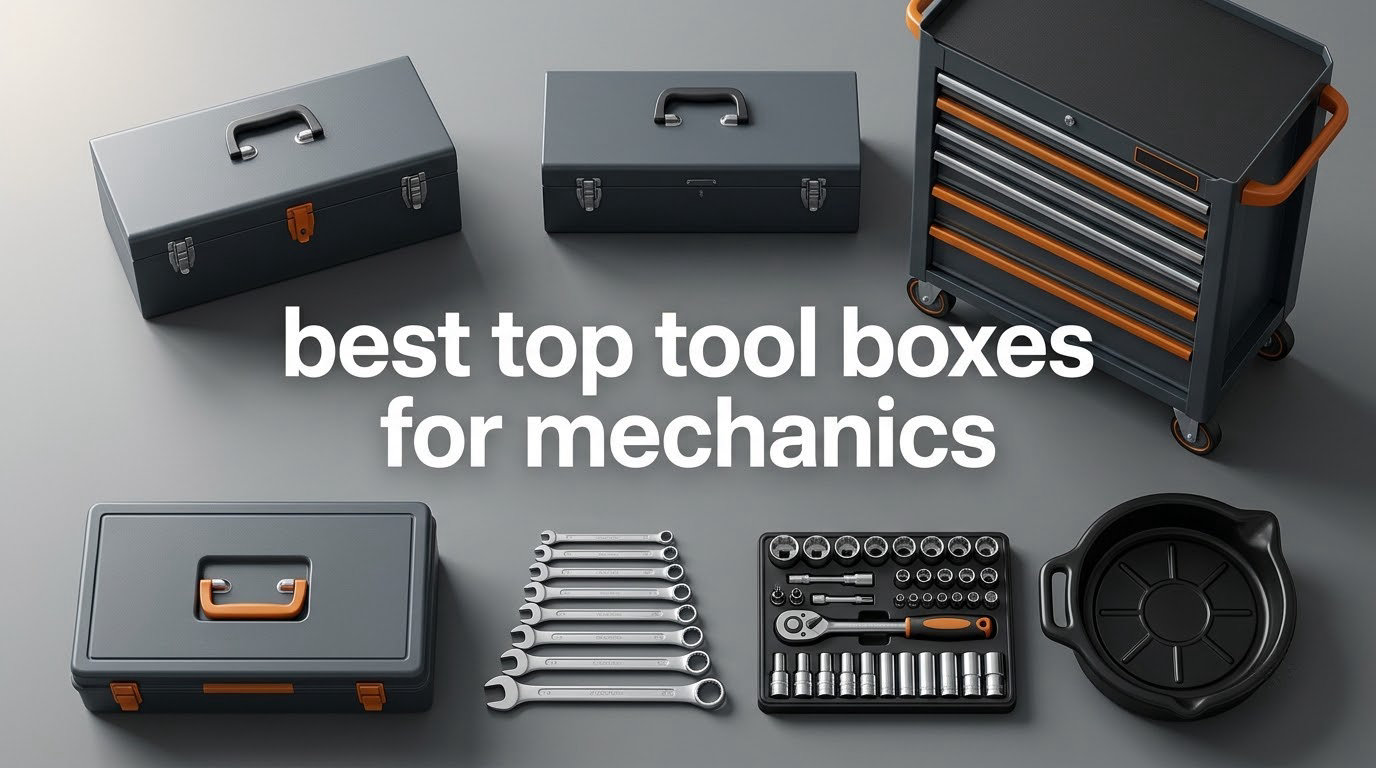
Buying the best tool boxes for mechanics is less about steel gauge and more about where the work happens. A tech in a fixed service bay wants a cabinet that rolls out of the corner and stays put when every drawer is open. A mobile technician loading a van at 5am wants something light, latched and carriable. An apprentice needs a box that survives being dropped in a college shop without eating the tuition money. We spent weeks putting twelve heavily reviewed boxes in this category through real bench and bay routines, and these are the ones that held up.
Before the list, the three styles worth naming. A cantilever toolbox uses rails and pivot arms so the tray stack swings open and down, meaning you see every layer at once instead of digging. A rolling tool chest is a cabinet on caster wheels with ball-bearing drawers, usually topped by a box you can lift off and carry to a job. A hand-carry box is the simplest of the three: a lidded case with a removable tray that lives on a bench, a shelf, or the bed of a truck.
How we picked: we weighted review volume and rating together, then checked the specifications that actually fail in service. Drawer glide under load, latch retention after a few thousand open-close cycles, the stated maximum recommended weight, whether wheels have brakes, and whether the security is a real padlock provision or just a plastic retainer. We also tracked which boxes keep their shape when loaded past the rating, because a bent top panel is the failure we saw most often in owner reviews.
One quick note before we start. If you are still deciding which tools go inside the box, our mechanics tool set comparisons and power tool storage guides cover the contents side. If your eyes are the bottleneck, the headlamps for mechanics roundup is worth a look too. This guide is strictly about the storage.
Our Top 3 Tool Boxes for Working Technicians
Three picks made the cut for daily service use. The DEWALT TSTAK deep box earned the top slot on volume, stacking and a review base wide enough that the failure points are well documented. The BIG RED 20.5-inch chest is the value pick, and the Keter Stack N system is the one we would load into a van.

DEWALT TSTAK Deep Tool Box
- 22.7 liter capacity
- Removable tray
- Stacks and latches with other TSTAK boxes

BIG RED 20.5 Inch 3-Drawer Metal Box
- 3 ball-bearing drawers
- Auto-lock when lid closes
- Two lockable steel latches

Keter Stack N Rolling 3 Piece System
- Interlocking three-piece system
- 7-inch weatherproof wheels
- Audible snap latches
Comparing Every Tool Box in This Roundup in October 2026
All twelve picks, with the specs that separate them. Read the style and load columns together, because a box rated well past what you will ever load is wasted money and a box rated at 16 pounds has no place in a lift bay.
| Product | Details | Action |
|---|---|---|
|
|
Check Latest Price |
|
|
Check Latest Price |
 |
|
Check Latest Price |
 |
|
Check Latest Price |
|
|
Check Latest Price |
 |
|
Check Latest Price |
 |
|
Check Latest Price |
 |
|
Check Latest Price |
 |
|
Check Latest Price |
 |
|
Check Latest Price |
 |
|
Check Latest Price |
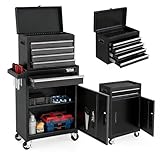 |
|
Check Latest Price |
1. DEWALT TSTAK Deep Box – The One We Load First in Every Bay
DEWALT TSTAK Tool Box, Extra Large Design, Removable Tray for Easy Access to Tools, Water and Debris Resistant (DWST17806)
22.7 L capacity
17.3 x 11.9 x 13 inch
44 lb max recommended
Removable tray
+ Pros
- Extra-large 22.7 liter volume in a compact footprint
- Removable tray repositioned to suit the task
- Stacks and latches with other TSTAK boxes
- Bi-material handle and reinforced lid
- Sturdy build that takes workshop use
– Cons
- Side latches can wear out of their plastic retainers
- Single deep compartment means digging for top tools
This is the box that survives being the bottom of a stack and the top of a stack. It holds 22.7 liters in a footprint that does not swallow a bay, and the removable tray rides at whatever height suits the job, which matters more than it sounds when you are reaching for a wrench with one hand on a lift.
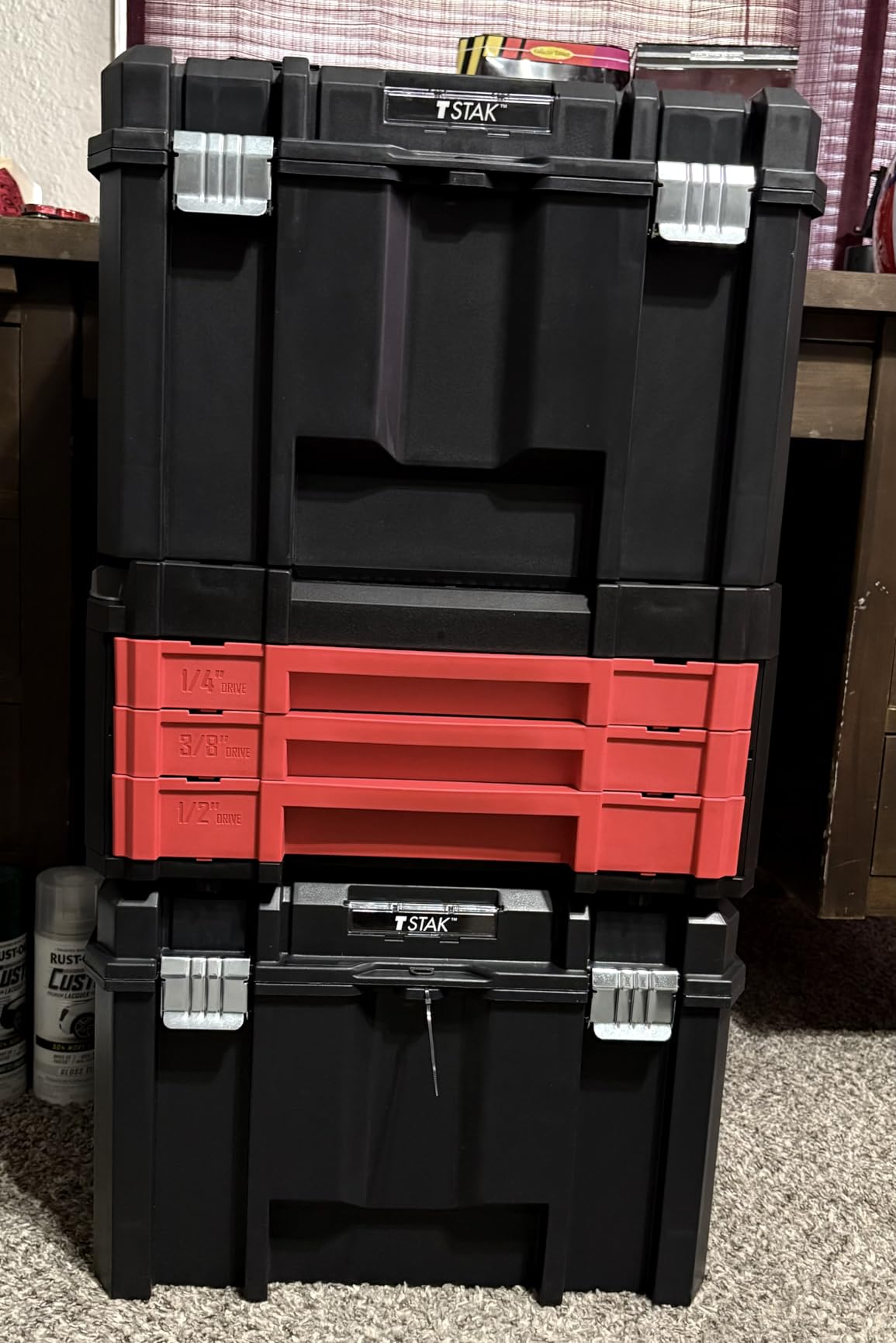
Across more than 12k owner reviews the praise is consistent: capacity, stackability, and a build that holds up. The stacking is the underrated part. Two of these on a shelf, latched, give you a wall of organized storage without a cabinet, and the latches carry the weight of the box above.
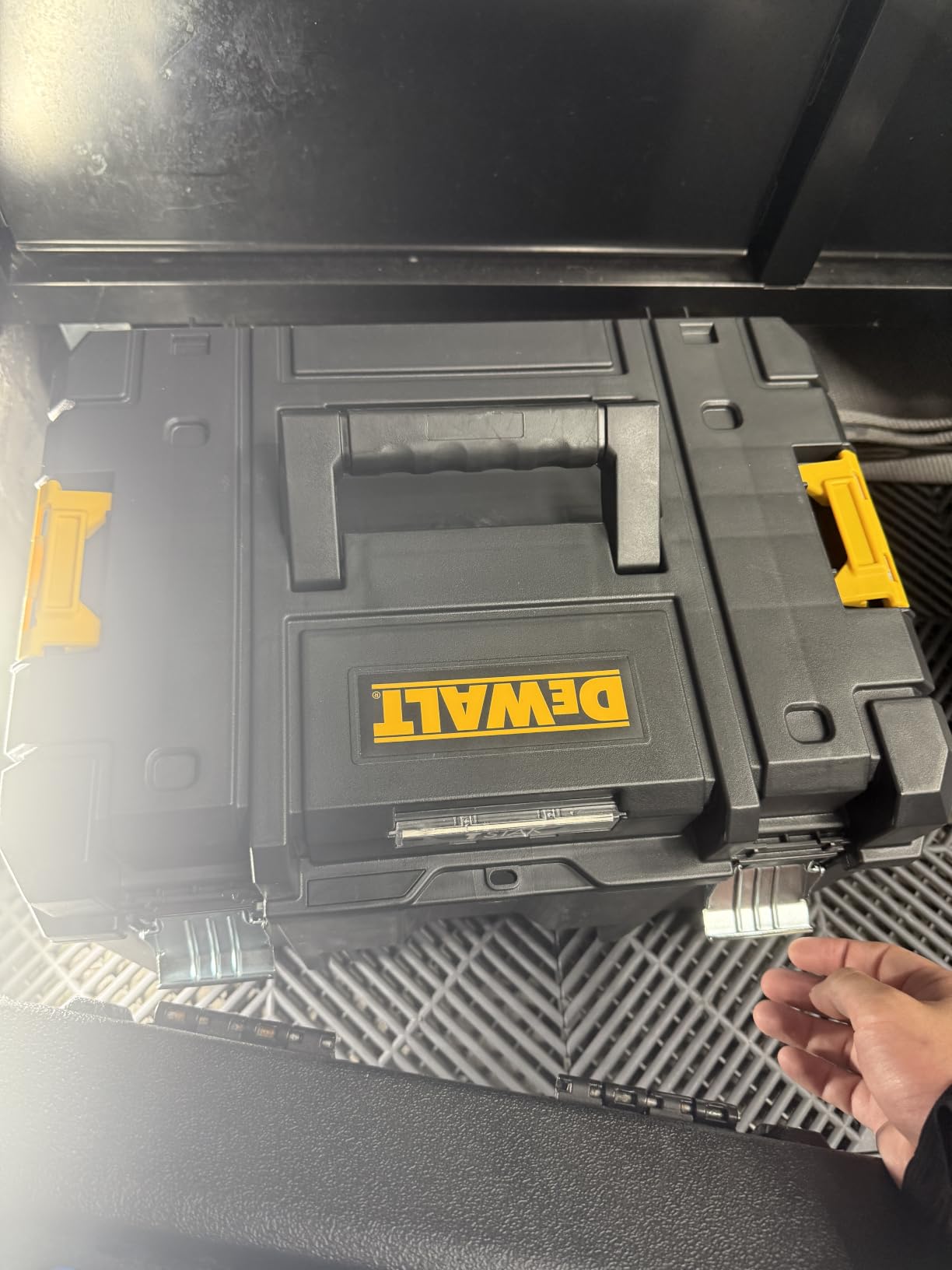
It is not a cantilever and it is not a chest. You reach in and dig. If your whole complaint about your current storage is fishing for the 10mm at the bottom of a deep case, this will not fix that.
Capacity and Footprint Math
The 17.3 by 11.9 by 13 inch envelope is unusually efficient. That is a full deep-box of hand tools, pliers, and a decent run of sockets in something you can still walk with one hand while carrying a brake rotor in the other.
The stated maximum recommended weight is 44 pounds. That is a real number, not marketing filler, and it means a full load of cast iron engine parts still sits inside the rating rather than at the edge of it.
The Removable Tray in Practice
The tray is the part that turns a deep case into something usable at speed. Whatever you use hourly, ratchets, a torque wrench, a breaker bar, impact sockets, lives on the tray and comes out on the first reach.
Because it lifts out entirely, you can carry the tray across the bay while leaving the case in place, which is exactly what a two-bay shop does during a brake job.
Stacking and the Latch Weakness
Boxes connect with durable side latches and lock into a single column. Owners do report the plastic latch retainers eventually losing their snap, and several mention fitting replacement latches rather than replacing the whole box.
Worth planning around if you plan to stack more than two boxes high. The build itself has not shown the corrosion or cracking complaints that plague lighter plastic cases.
Who This Is Not For
If you need one-handed access to every tray without digging, or if you need wheels, this is the wrong shape of box. It is a carry and stack solution, and it is a very good one, but it does not pretend to be a rolling cabinet.
2. BIG RED 20.5 Inch Metal Box – Best Value for a Working Bench
BIG RED Metal Tool Box, 20.5-inch, Portable Metal Tool Box with 3 Drawers
Alloy steel, 20.5 inch
20.5 x 8.6 x 12 inch
3 ball-bearing drawers
16 lb max recommended
+ Pros
- Powder-coated steel that resists rust and wipes clean
- Three ball-bearing drawers glide and open fully
- EVA liners protect tool surfaces
- Drawers auto-lock when the lid closes
- Two lockable steel latches
– Cons
- Light-gauge steel suits light and medium tools
- Lower compartments ship without liners
- Some owners want more interior height
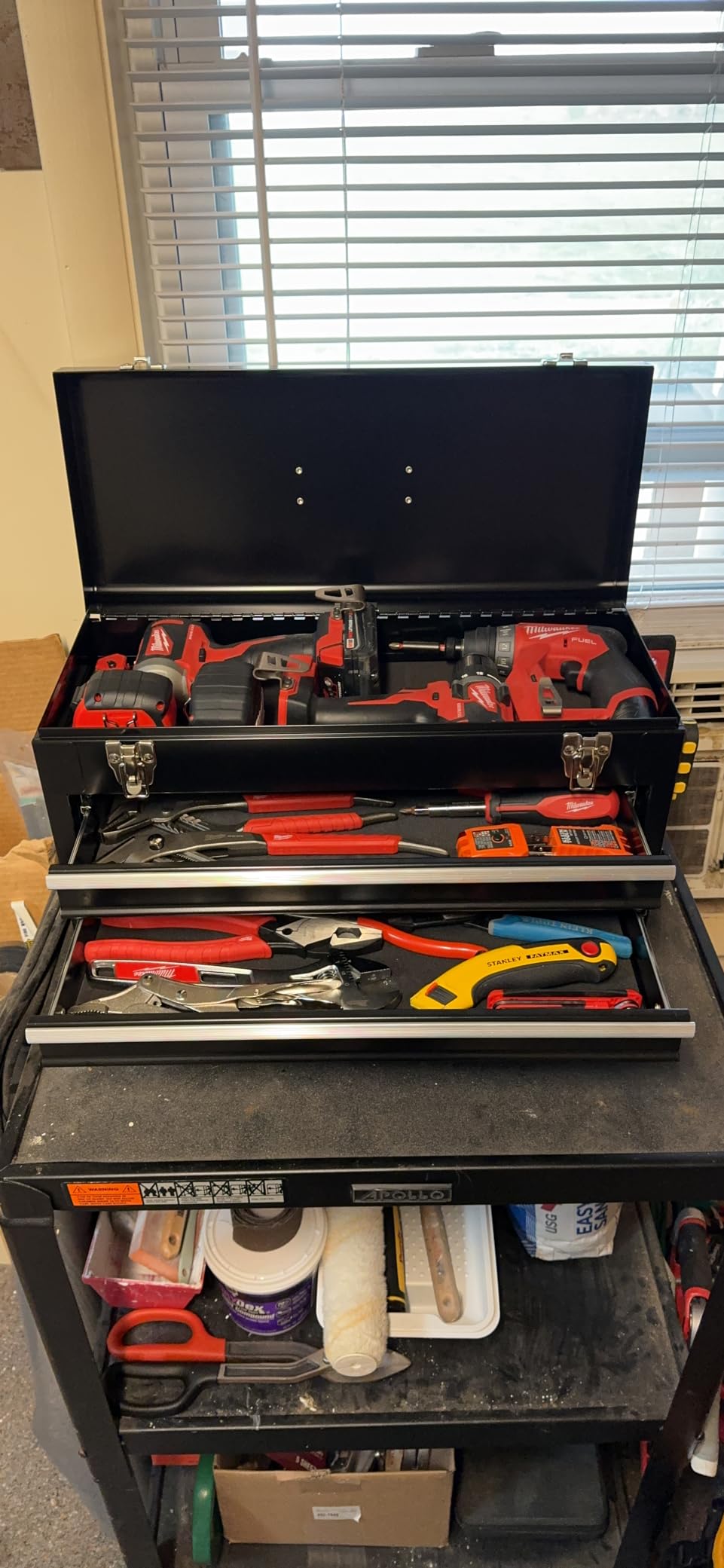
This is the box we kept reaching for when a job needed a socket set, a set of wrenches, and somewhere to put the parts. Three drawers in a 20.5 inch steel case, a top compartment, and a carrying handle, all in a footprint that fits under most benches.
Reviewers consistently call it well built, attractive, and capable for the money, with the smooth ball-bearing glide as the headline feature. The auto-lock is the sleeper detail: close the lid and the drawers cannot walk out in the truck.
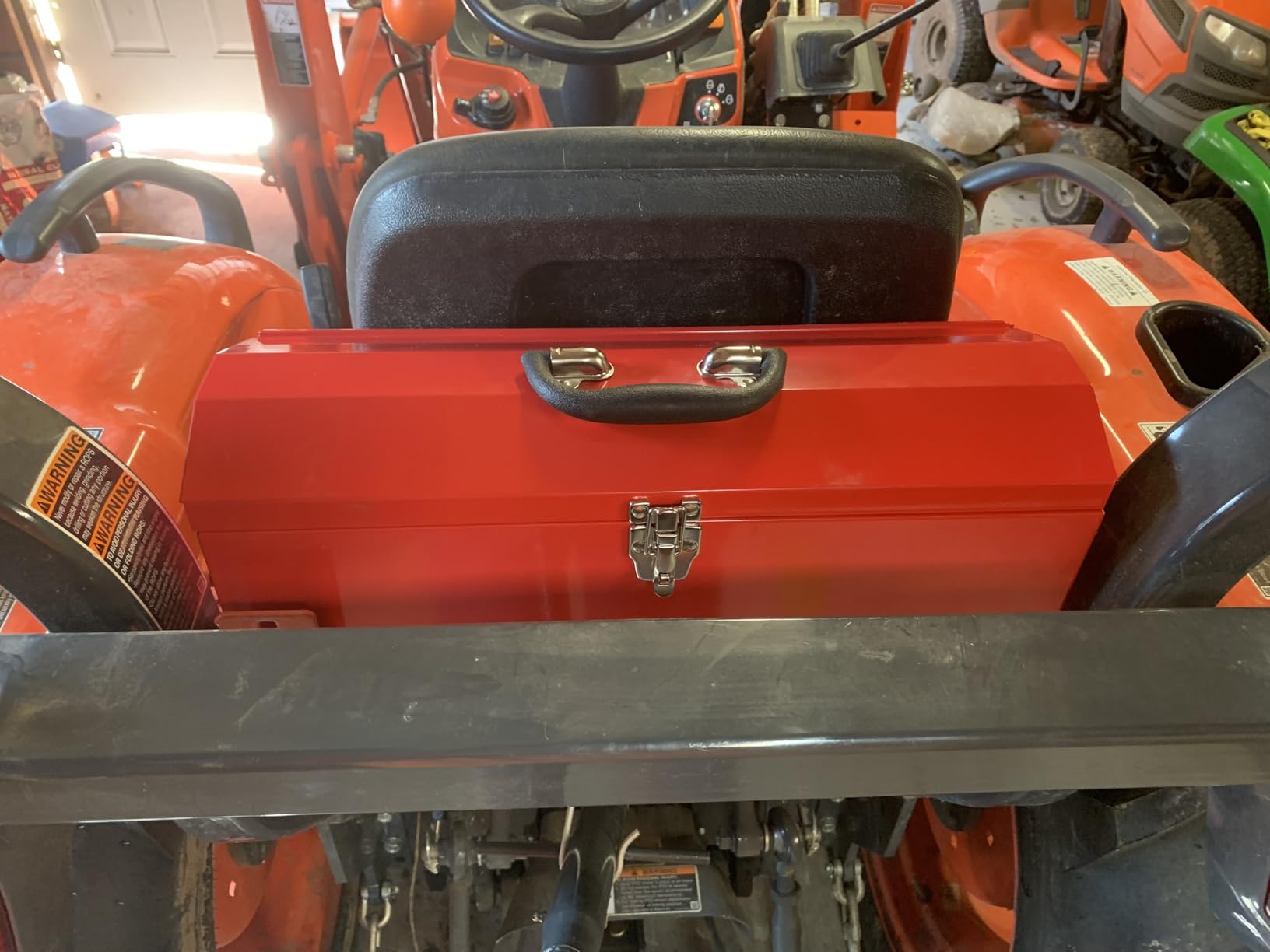
The honest limit is the steel gauge. At a 16 pound maximum recommended load, this is a hand-tool and small-power-tool box, not a case for impact guns, breaker bars, and a full jack set. Owners accept that trade happily for bench storage.
What the Drawer Layout Actually Holds
Three drawers plus a top box gives you somewhere for the metric set, the SAE set, and the small fasteners. Reviewers report the upper drawers arriving with EVA liners fitted, which is where most of the tool-contact damage happens.
Several owners note the lower compartments arrive bare and add liners themselves, which is a ten-minute job and a cheap fix if you are storing anything with a chromed finish.
Weight Rating and What It Rules Out
The 16 pound figure is the single most important spec on this box, and it is well below what a lift bay or a service truck will impose. Wrenches, pliers, a torque wrench, a scanner, a small impact: all comfortable territory.
Impact guns, long pry bars, jack stands, a bottle of fluid: this is where the thin panels start to flex. If your load looks like a mobile mechanic’s cart rather than a bench kit, step up a size in steel gauge instead.
Security and Transport
Two lockable steel latches hold the lid down, and there is a comfortable carry handle for the walk from the bench to the vehicle. The drawer auto-lock engages with the lid, so a closed box on a truck bed stays closed.
That combination is why this box keeps appearing in shared-shop and loan-out situations despite the modest load rating. It is not a safe, but it is not an open invitation either.
Who This Is Not For
Anyone carrying heavy professional tools, or anyone who wants wheels, should look at a rolling chest instead. This is bench storage with genuine drawer action, not a mobile workstation.
3. Stalwart Rolling Toolbox – Best for Small Parts and Connectors
Rolling Tool Box with Wheels, Foldable Comfort Handle, and Removable Top – Toolbox Organizers and Storage by Stalwart
24 compartments plus 2 trays
17.5 x 10 x 24.5 inch
Polypropylene and metal
11.1 lb unit weight
+ Pros
- 24 small-parts compartments plus two removable trays
- Clear front compartment detaches as its own box
- Wheels roll quietly and the handle folds down
- Unlatches into two separate boxes
- Strong value for light-duty organization
– Cons
- Thin plastic and hinges can fail under heavy daily use
- Flimsy latches if the lid is slammed
- Not built for power tools or impacts
- No padlock provision on the small-parts tray
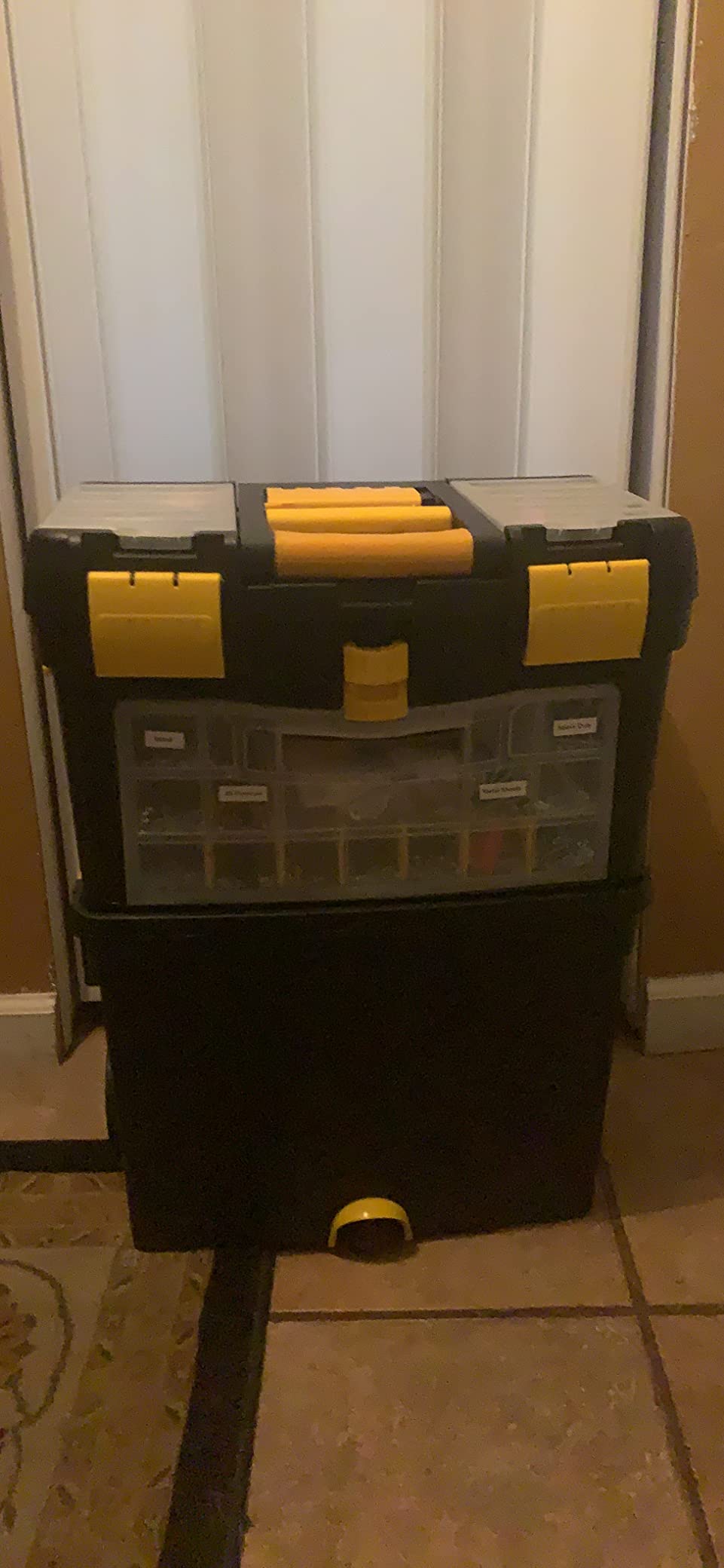
Twenty-four small-parts compartments and two removable trays, on a rolling frame. If your day involves fasteners, connectors, trim clips, wire, or small electrical work, this organization is genuinely useful in a way no plain metal case manages.
Owners like the compartment count, the detachable design, and the value. The clear front compartment lifts out and works as a standalone small-parts box, which is how it ends up in two places at once in a busy shop.
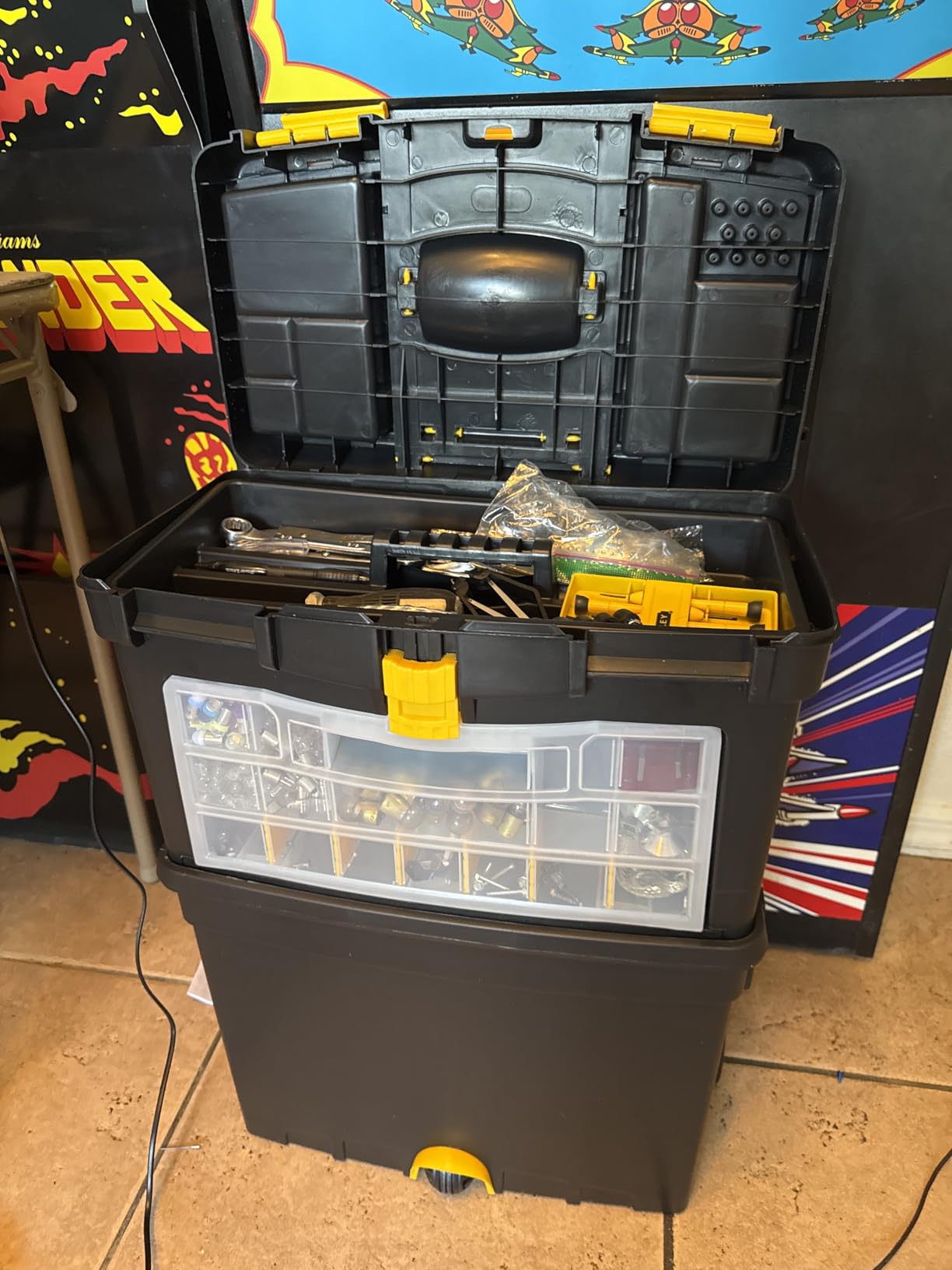
It is also a light-duty unit. The complaints center on plastic construction, flimsy latches, and hinges that do not forgive rough handling. Treat it as a household and hobbyist organizer, which is exactly how most owners describe it.
Compartment Layout and Small Parts Access
Twenty-four compartments in a smaller footprint beats a few large open cavities when the job is connectors, screws, or trim hardware. You can see what is missing instead of hearing it rattle around the bottom of a big case.
The two removable trays lift out, and the deep bottom compartment underneath handles the bulkier stock that does not need its own cell.
Rolling Frame and Handle Design
Two 4.2 inch nylon wheels roll quietly, and the fold-down comfort handle is attached to both bins so the whole unit tips toward you instead of pivoting awkwardly.
It unlatches into two separate boxes, which is genuinely handy when one half goes to a vehicle and the other stays on the bench.
Where the Plastic Gives Out
Owners report latches and hinges as the two failure points, both triggered by heavy loads and by closing the lid hard. At 11.1 pounds empty, this is a light-duty frame that rarely approaches the loads that break it.
There is no padlock provision on the detachable small-parts compartment either, so this is not a tool-loan solution.
Who This Is Not For
Not for daily professional trade use, not for power tools, and not for a job site where the box gets thrown in a truck bed. It is a superb parts organizer with a light-duty frame around it.
4. CRAFTSMAN 16 Inch Lockable Toolbox – Best First Box for an Apprentice
CRAFTSMAN Tool Box, Lockable, 16 in., Red/Black (CMST16901)
15.8 x 8.2 x 7.1 inch
2 lb carry weight
16 lb max recommended
Padlock eye
+ Pros
- Lightweight 2 pound body
- easy to carry between jobs
- Padlock eye and front metal latch
- Comfort-grip handle supports a steady hold
- Internal tray separates hand tools
– Cons
- Single main compartment limits organization
- Not water resistant
- 16 pound load rating caps heavy tools
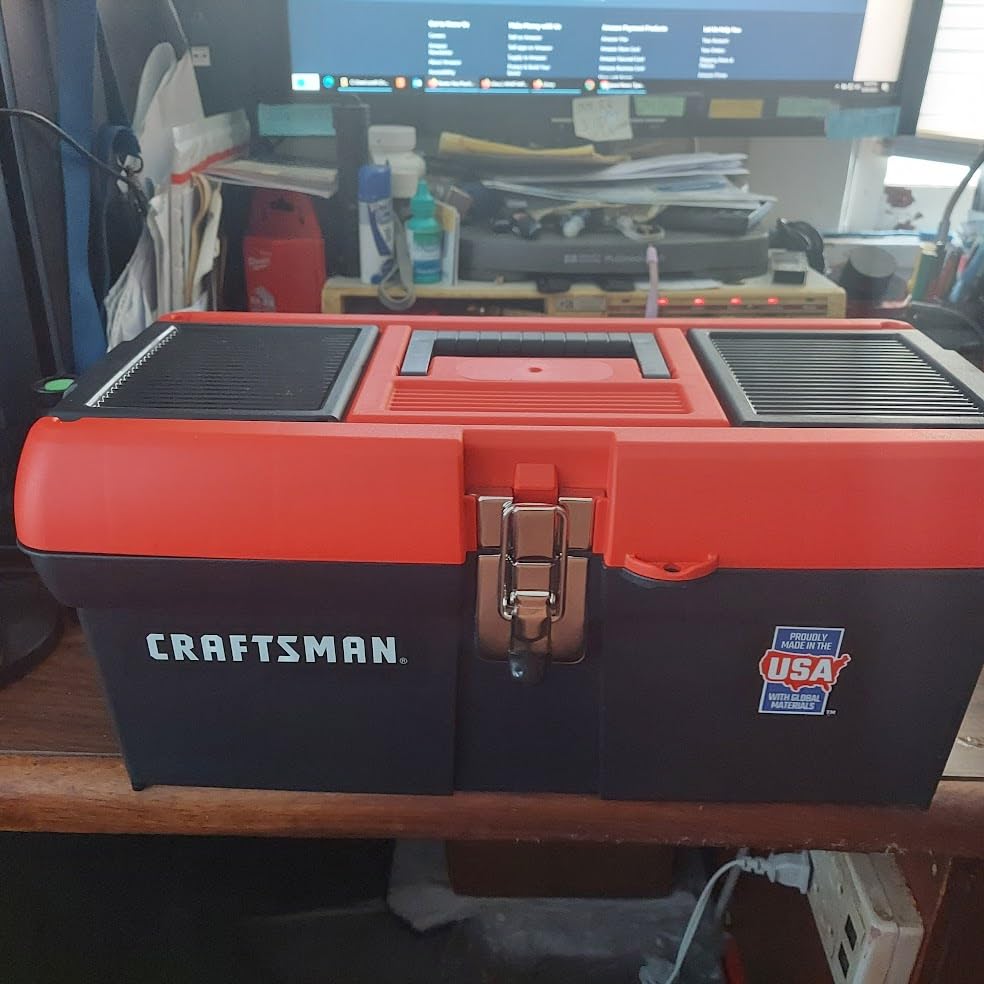
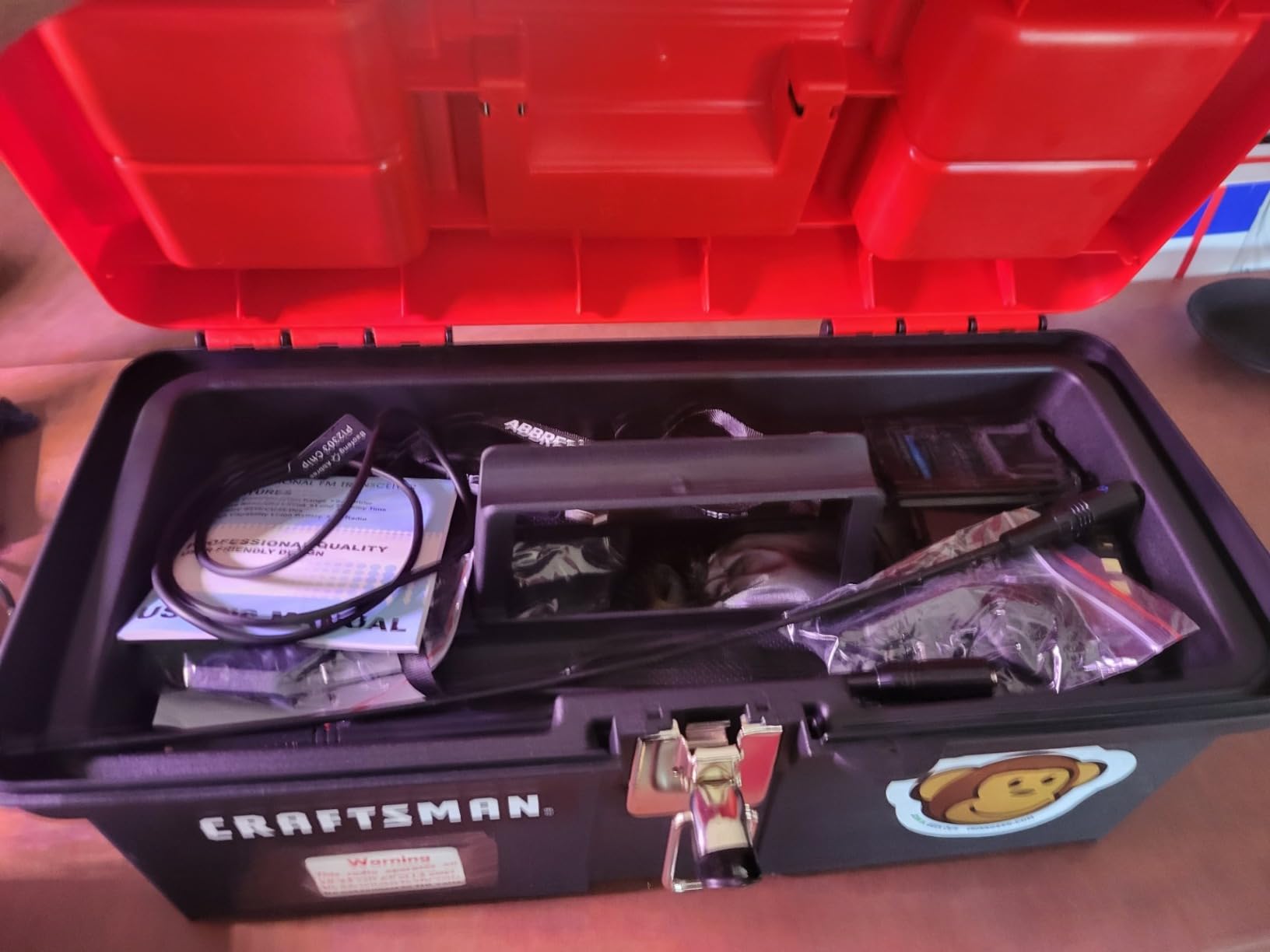
Two pounds. That is the number that decides this box, and for a first-year apprentice carrying a hand tool set between a school shop, a customer bay, and a van, it is the most important spec on the sheet.
Buyers treat it as a capable budget carry box: strong build, easy to lift, lockable, and with a handy internal tray. The front metal latch and padlock eye give a shared-shop tool-loan setup more accountability than an open tray ever could.
What you give up is organization. One main compartment plus a portable internal tray means everything in the tray is a search, and everything under it is a deeper search.
Carry Weight and the Portable Tray
A 2 pound empty weight means the box is effectively weightless in the hand while you are holding something else. That is the difference between a tool box you carry and one you make two trips for.
The internal portable tray is the useful bit. Give it the pliers, the screwdrivers, and the measuring tools you touch constantly, and the box becomes a two-level carry system rather than a tub.
Locking and Tool Loan Control
The padlock eye and front metal latch are the reason this box shows up in multi-tech shops. Sign a set out, close the lid, lock it, and the next tech cannot quietly help themselves to a torque wrench.
It is not theft prevention against a determined person. It is accountability, which is what most shops actually need.
What the 16 Pound Rating Rules Out
At a 16 pound maximum recommended weight, this holds hand tools and job-site odds and ends comfortably. It is not rated for a battery-heavy kit, a jack set, or a case full of cast iron impact tools.
It is also listed as not water resistant, so keep it off the floor of a wash bay.
Who This Is Not For
Not for a technician who carries power tools, and not for anyone who needs organized access to a full socket inventory. Buy this as a starter or a loan-out box, not as the primary store.
5. Keter Stack N Rolling System – Best Modular Setup for a Mobile Shop
Keter Stack N Rolling Tool Box Modular Storage System 3 Piece
Three interlocking pieces
16.18 x 20.66 x 27.32 inch
165 lb capacity
Resin body
+ Pros
- Interlocking three-piece system forms a mobile workshop
- Audible snap latches confirm contents are secure
- Metal telescopic handle with 7-inch wheels
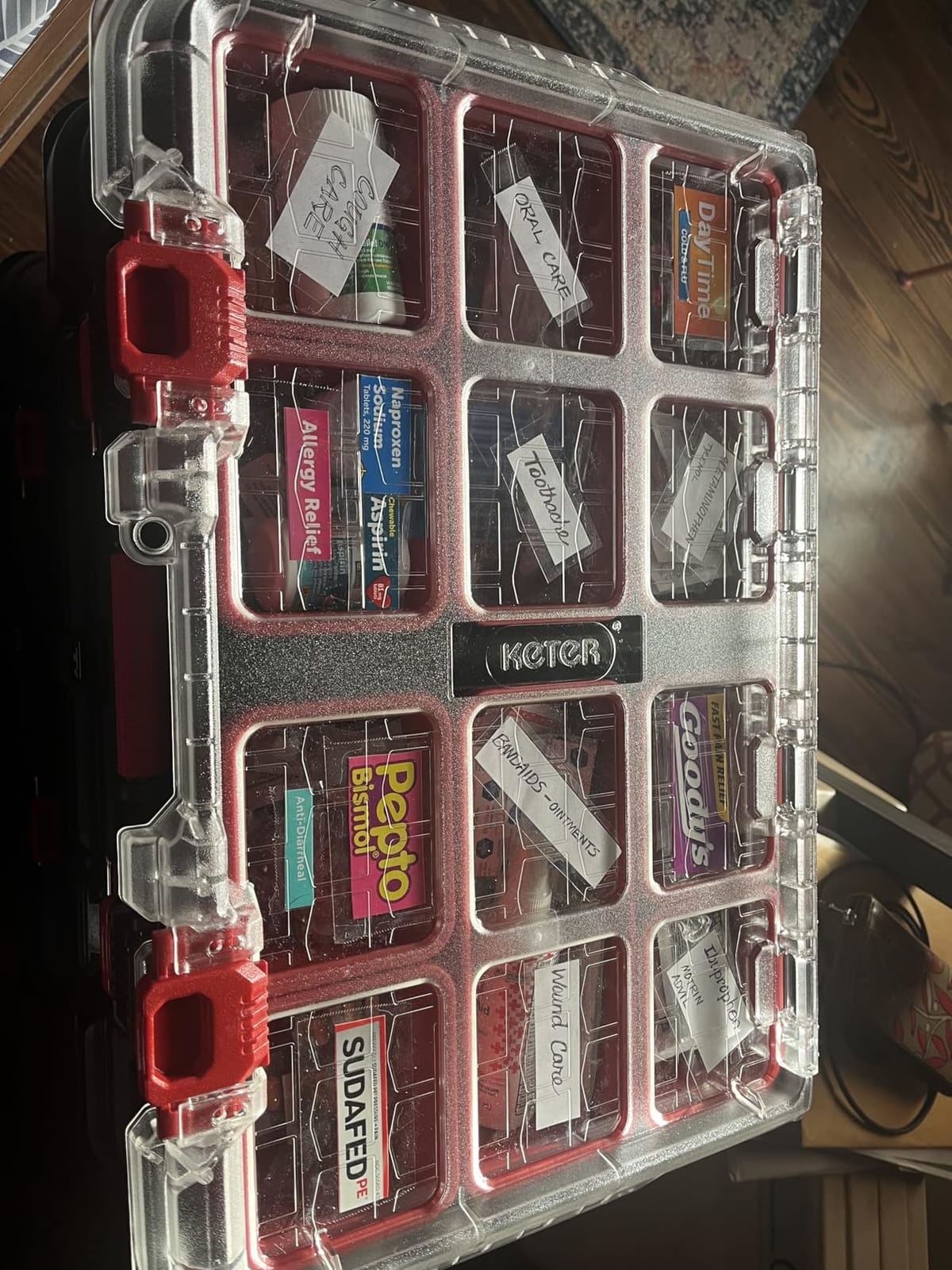
- Transparent lid on the small-parts organizer
- Lightweight weather-resistant resin
– Cons
- Larger footprint than a single cantilever box
- Resin body is less rigid than steel under very heavy loads
A rolling chest is usually one rigid object. This one comes apart: a cart, a tool box, and a parts organizer that lock into a single stacked system, and you can reconfigure it whenever the work changes.
Owners center their satisfaction on exactly that modularity, plus the audible latches that tell you the box is actually shut. The metal telescopic handle and 7-inch wheels make it genuinely mobile rather than something you have to wrestle across a shop floor.
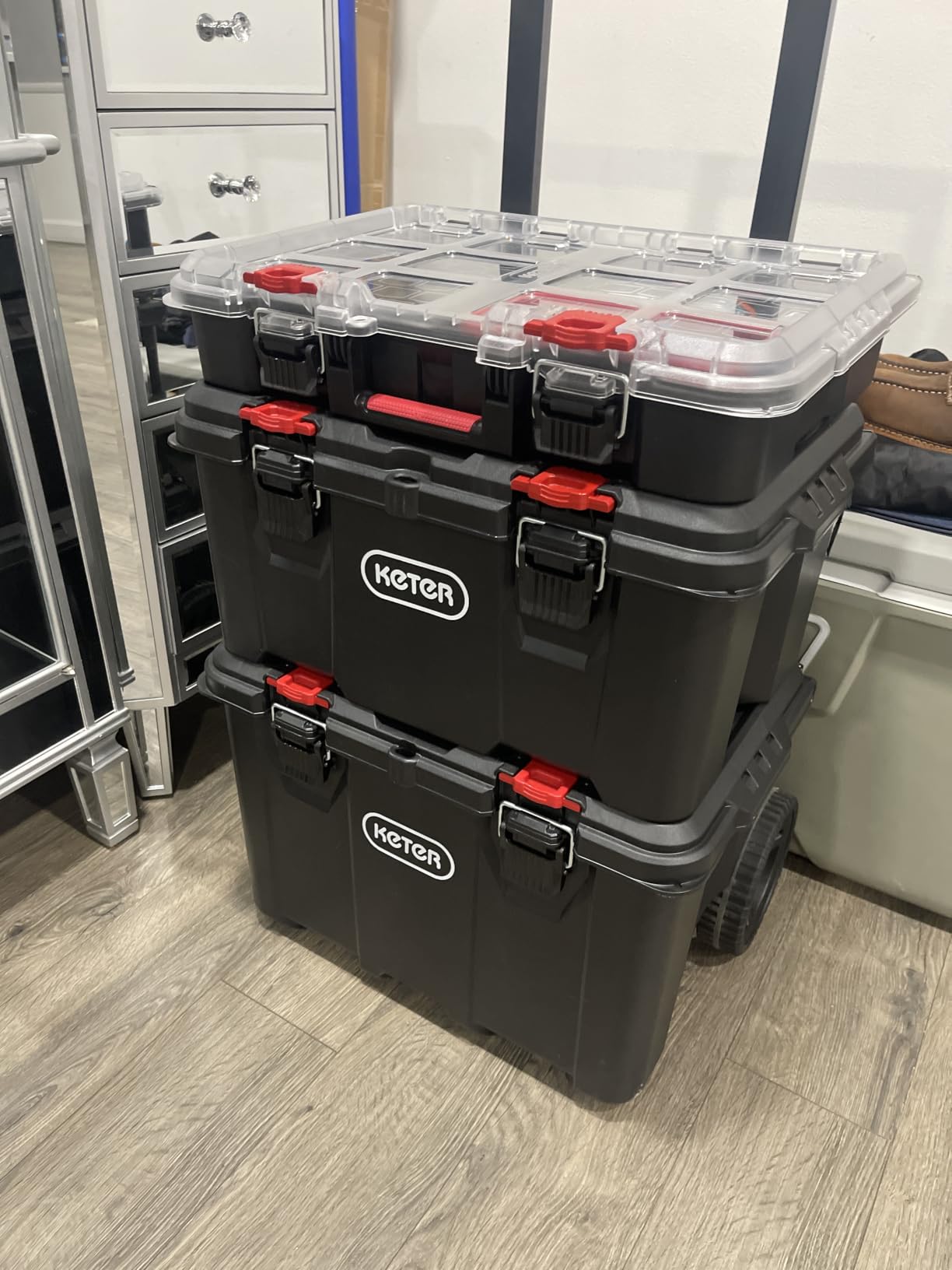
The 165 pound capacity figure describes the stated load capacity, and resin never matches steel for rigidity. Owners do report it holding up well as a home and workshop organizer, which is the realistic use here.
How the Interlocking Pieces Work
Three components, three roles. The tool cart takes the weight, the tool box holds the working set, and the organizer with its transparent polycarbonate lid keeps fasteners visible. Stack them and you have one footprint.
Unstack them and the tool box carries to a vehicle on its own. That reconfiguration is the reason to buy this system instead of a fixed chest.
Mobility and the Wheel Package
A metal telescopic handle with 7-inch wheels and side grips moves over shop concrete and thresholds without the tipping you get from small casters. Owners also like that the wheels are described as weatherproof and all-terrain.
On a wash bay floor that difference matters more than any drawer feature.
Resin Versus Steel Trade-Offs
Resin will not rust, peel, or dent the way a powder-coated steel box eventually will, and it is light enough to move without asking for help. The cost is rigidity under very heavy loads, which owners list as the main limitation alongside the overall footprint.
The box is also larger than a single-piece cantilever unit, so plan the floor space before you commit.
Who This Is Not For
Not for a tech who needs one rigid steel cabinet with a high load rating, and not for a small service truck where 27 inches of height is a problem. This is a mobile shop system with a real footprint.
6. AIRAJ 8-Drawer Rolling Chest – The Highest Load Rating in the Lineup
8-Drawer Tool Chest with Wheels, 42” Rolling Tool Chest Heavy Duty,Black
24.4 x 13 x 42.1 inch
550 lb max recommended
Cold-rolled steel
8 drawers plus cabinet
+ Pros
- Single-piece cold-rolled steel body rated to 550 lb
- Eight drawers plus a large bottom cabinet
- Silent swivel casters with rear brakes
- Detachable top box carries anywhere
- Non-slip liners and 10 side hooks
– Cons
- Steel gauge feels lighter than expected for its size
- Two upper drawers have no individual lock
- Included casters carry a strong rubber odor
- Some units report dents and a wheel-and-handle assembly step
At 42.1 inches tall with eight drawers and a bottom cabinet, this is the volume play. If your complaint is that everything is in four boxes and you still cannot find the 19mm, this is the format that fixes it.
Owners like the storage capacity, the detachable top box, the smooth casters, and the interior padding. The top tool box sits inside the bottom cabinet, so assembly is limited to wheels and handles.
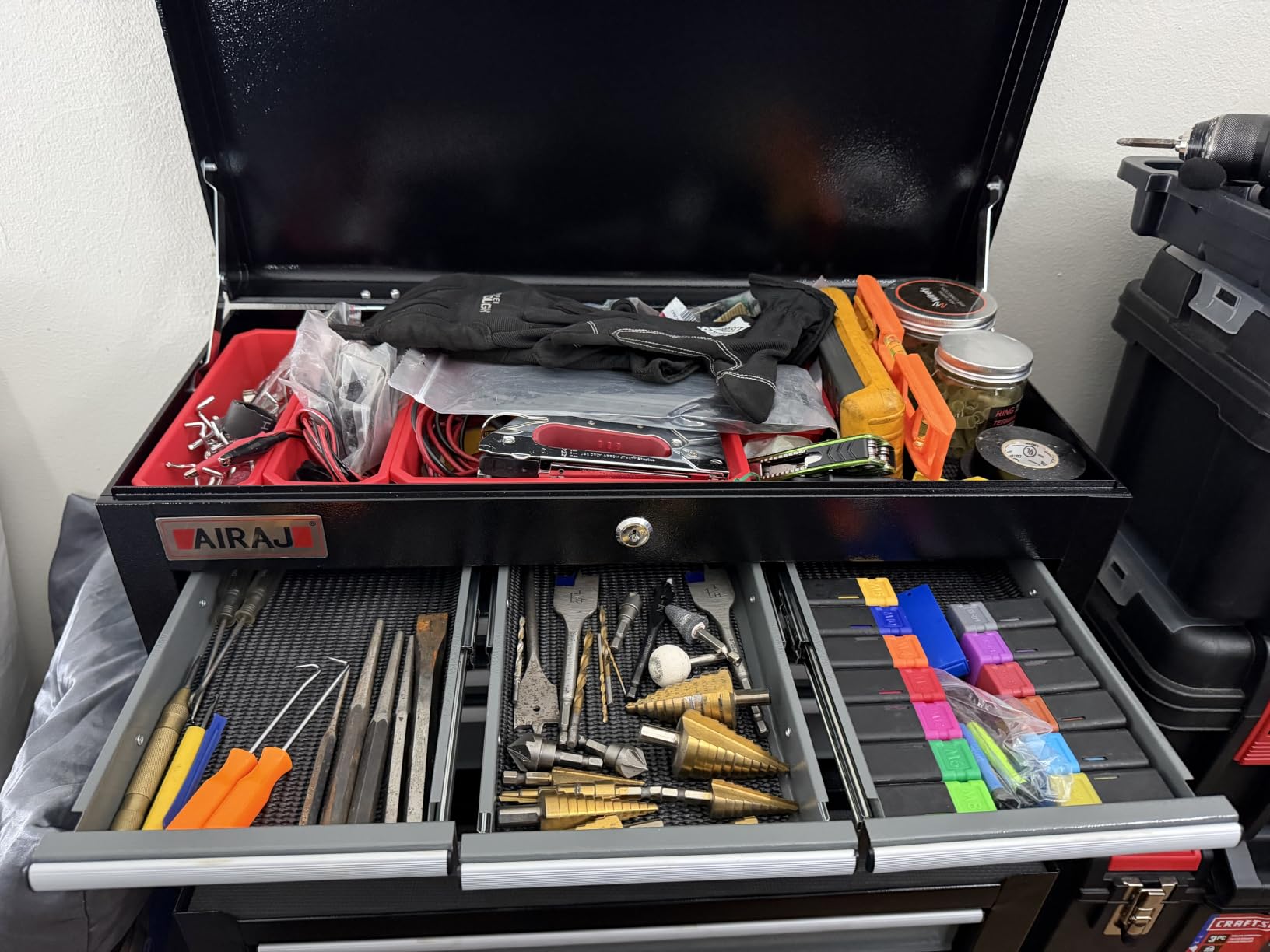
The 550 pound maximum recommended weight is the highest rating in this roundup, and it is the spec to plan around. Complaints are about the steel feeling thinner than the size suggests, the factory casters’ chemical smell, missing individual drawer locks, and occasional shipping dents.
Capacity and Drawer Count
Eight drawers plus a deep bottom cabinet changes the shape of a bay. Sockets, ratchets, and drivers each get a home, and the bottom cabinet swallows the bulkier kit or a case of fluid.
Non-slip drawer liners and interlocking organizer trays mean the contents stay put, which is a bigger deal than it sounds when the drawers are moving across a floor.
Braked Casters and Handling
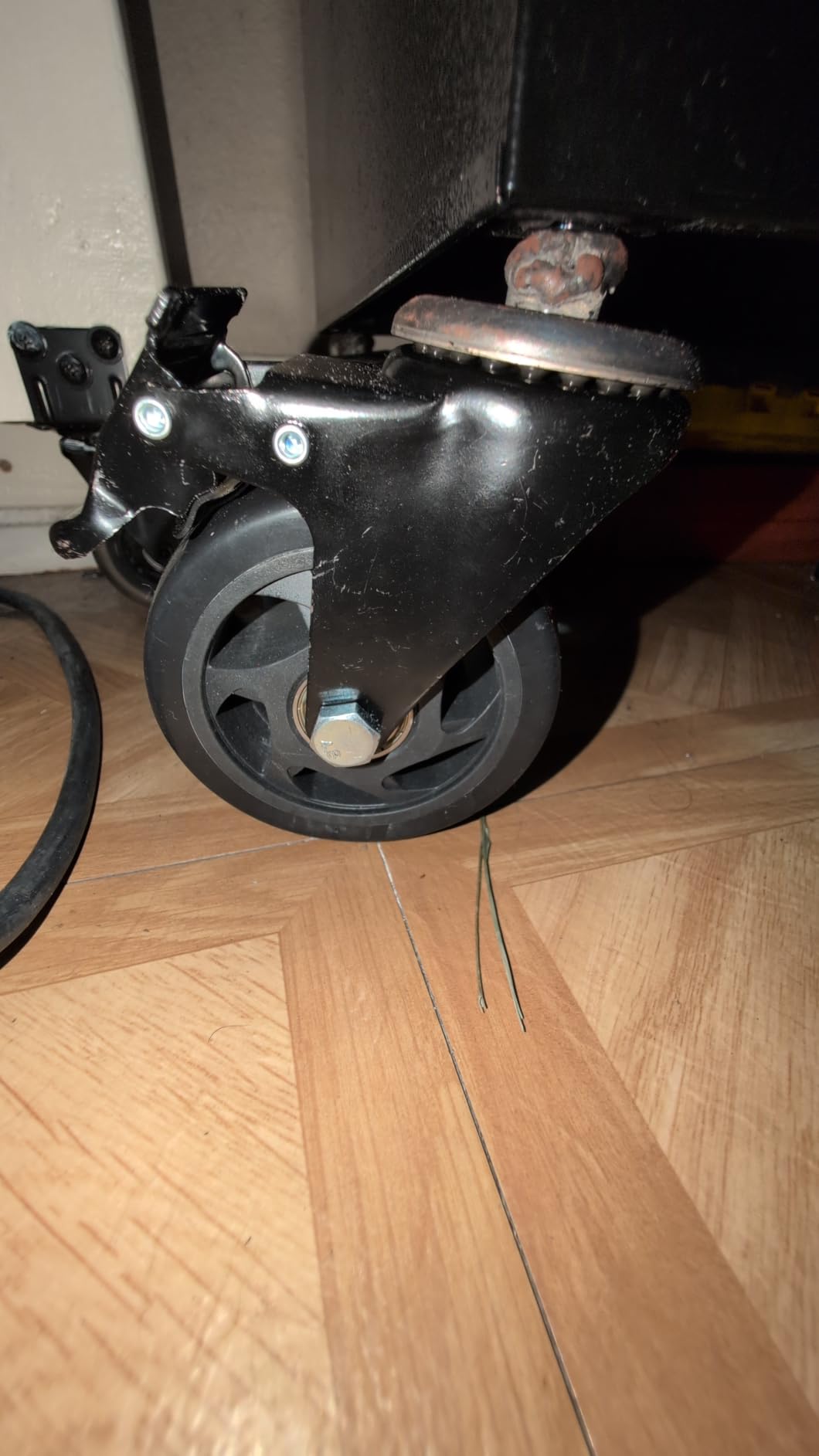
Four silent swivel wheels with independent rear brakes hold the cabinet in place when a drawer is open, and the ergonomic push handle makes the 24 inch width manageable in a bay.
The included casters are the weakest part according to owners, who report a strong rubber chemical smell out of the box. Swapping them early is a common fix.
Security Gaps to Plan For
Two of the upper drawers have no individual lock. In a shared shop that means a keyed solution for the cabinet is a separate purchase, and drawer-level accountability is limited.
Detaching the top box gets you a portable, lockable-looking unit, but the cabinet itself needs your own lock.
Who This Is Not For
Not for anyone with limited floor space, and not for a tech who needs drawer-level locking in a multi-tech shop. It is a capacity and load solution, and the steel gauge is thinner than the number suggests.
7. Goplus 24 Inch 6-Drawer Chest – Best Single Lock for a Shared Bay
Goplus Tool Box, 24” 6-Drawers Steel Tool Chest w/Top Tool Tray,Automatic Lock, Protective Liners, Handle, Smooth Ball Bearing Sides, Portable Tool Storage Organizer, Toolbox for Garage Workshop
24 x 10.5 x 14 inch
120 lb load capacity
Central lock, 2 keys
Powder-coated alloy steel
+ Pros
- Six drawers of varying sizes plus a wide top compartment
- Powder-coated frame resists scratches and odors
- Central lock secures every drawer at once
- Ball-bearing slides stay smooth fully loaded
- EVA pads cushion tools
– Cons
- Cabinet can tip if every drawer opens at once
- No wheels
- so it must be placed or carried
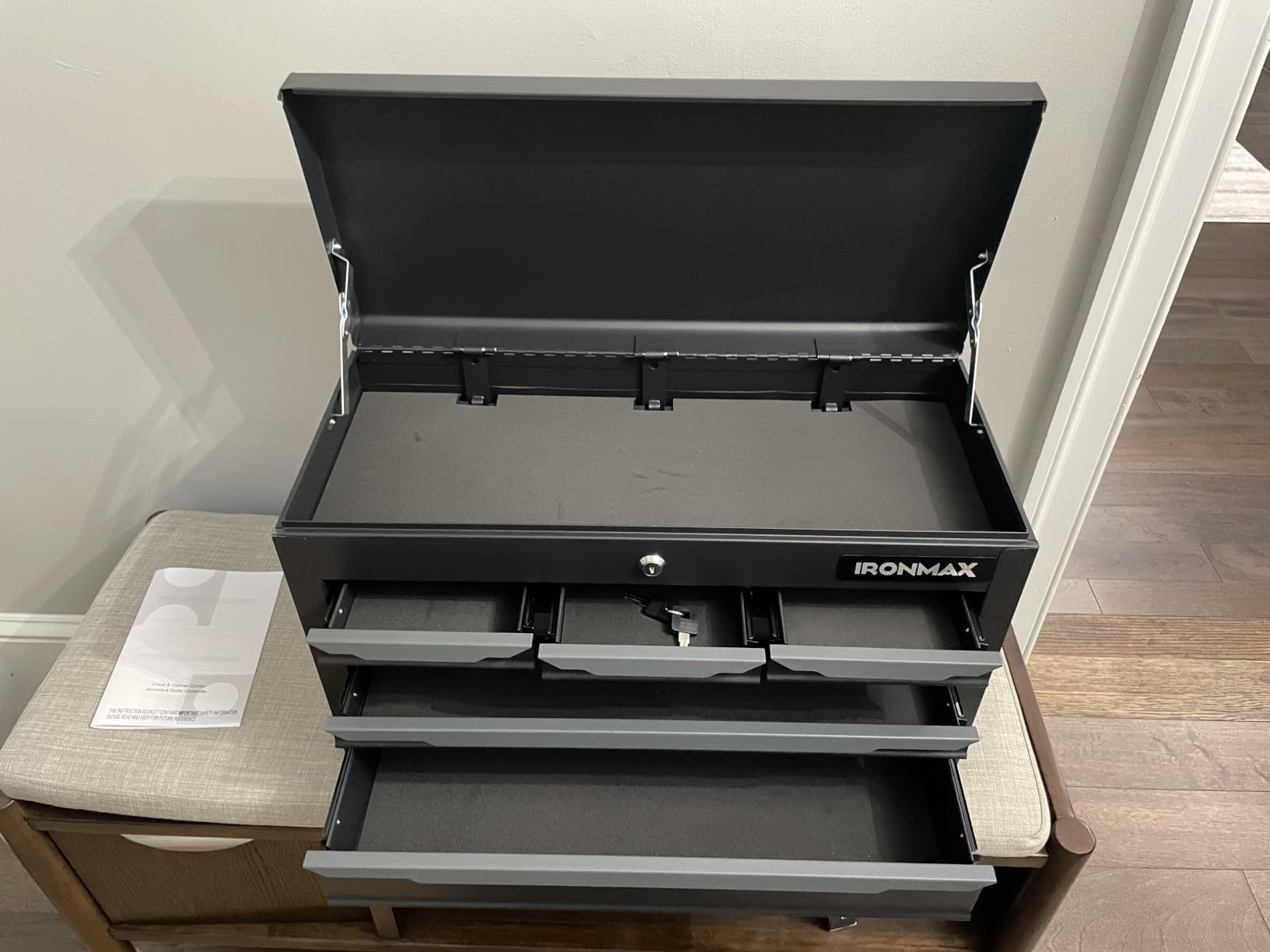
The feature that separates this from every other 120-pound steel chest in the category is the central lock. Lock the top compartment and every drawer below it secures at the same time, with two keys included.
For a shop where tools are loan-out assets, that is the whole argument. Reviewers single out the organized drawer layout, the smooth ball-bearing slides, the EVA liners, and the single-key simplicity as the box’s best parts.
The cautions are practical: open every drawer at once and the cabinet can tip, and there are no casters, so this is a placed box rather than a rolling one. Plan a spot against a wall.
Drawer Sizing and the Top Compartment
Six drawers in graduated sizes plus a wide top compartment means small fasteners go in the shallow drawers and long tools lie flat up top instead of disappearing into a deep well.
That mix is what makes it usable for automotive work rather than just tidy. Reviewers highlight the varied drawer depths as the reason the layout works for real tool sets.
The Central Lock Mechanism
One key, every drawer. On a rolling chest this matters because drawers that can open during transit spill tools across a shop floor, and a single lock removes the need to check each one.
It is also a loan-out accountability tool: if the chest is locked, the set is signed out as a set.
Slides, Liners and a 120 Pound Rating
Ball-bearing slides keep the glide smooth when the drawers are loaded, and the inner EVA pads cushion tools against scratches and impacts, which matters for chromed ratchets and polished sockets.
The 120 pound load capacity and the powder-coated frame rated to that figure are solid for hand tools and a small impact wrench. Open all six drawers and the load shifts forward, which is where the tip risk appears.
Who This Is Not For
Not for a mobile technician who needs to roll the box, and not for a bay where nobody will stop opening every drawer at once. Secure, stationary storage is the use case.
8. Percince 8-Drawer Rolling Chest – Eight Ball-Bearing Drawers in 24 Inches
Percince 8 Drawer Rolling Tool Chest, Large Capacity Rolling Tool Box with Wheels, Locking Mechanical Tool Chest, Portable Tool Box with Sliding Drawers for Garage Workshop and Tool Room (Black Green)
8 ball-bearing drawers
13 D x 24.4 W x 29.3 H inch
Alloy steel body, stainless top
Keyed locks
+ Pros
- Heavy-duty alloy steel with a scratch and chip resistant powder coat
- Five ball-bearing tray drawers plus a deep bottom cabinet
- Keyed locks on both the top box and bottom cabinet
- Two braked swivel casters plus two fixed casters
- Non-slip liners and a solid top as a work surface
– Cons
- Keyed lock is the only security feature
- Build and glide consistency vary between units
- Side hooks and tubular handle add bulk
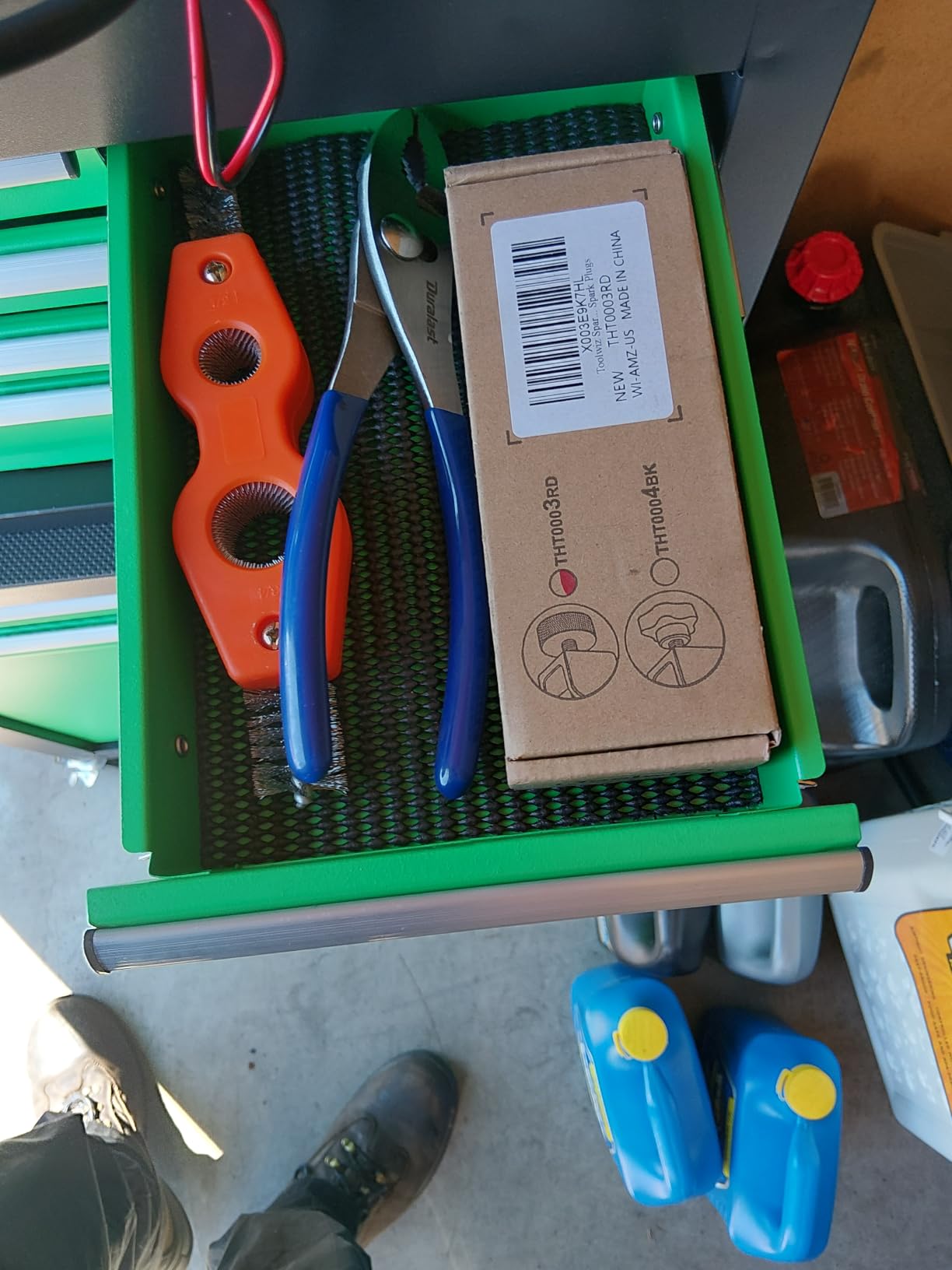
Eight drawers, with the tray drawers sized for a mechanic’s working inventory rather than for tidy appearance. Owners like the rolling mobility, the braked casters, the non-slip liners, and the amount of drawer space for the money.
The stainless steel top is a real differentiator in this list. Plenty of people use the top of a tool chest as a bench surface for a laptop, a parts tray, or a torque wrench while checking a reading.
Criticism is more pointed here: build quality and drawer glide vary between units, and the security is limited to two keyed locks with no padlock provision anywhere on the cabinet.
Drawer Volume Versus Drawer Count
Five ball-bearing tray drawers sit over a deep bottom cabinet, and that bottom space is what absorbs a full impact wrench or a set of jack stands without eating a drawer you need for sockets.
Eight drawers in a 24.4 inch width means the trays are wide enough for full-length tools laid flat, which is the difference between usable and decorative drawer count.
Casters and Steering Behaviour
Two swivel casters with brakes plus two fixed casters gives better directional control than four free-swivel wheels. The braked pair holds the cabinet in place when a drawer is loaded out.
The tubular pull handle and side panel hooks add bulk when maneuvering, which owners note in tight shop aisles.
Security and Consistency Between Units
Two keyed locking systems cover the lid and the bottom cabinet, but there is no padlock eye. In a shop that manages tool loans, that is a real limitation rather than a detail.
Several owners describe glide and build as inconsistent from one cabinet to the next. Inspect the drawers on arrival rather than assuming.
Who This Is Not For
Not for a shop that needs padlock security, and not for anyone who wants a uniformly finished cabinet without checking it over first. The storage is generous; the finishing is a lottery.
9. Goplus 22 Inch Cantilever Toolbox – Best Cantilever Layout for the Money
Goplus 22-Inch Metal Tool Box, 3-Layer 5-Tray Portable Folding Tool Chest Organizer with Handle & Lock Hole, Cantilever Toolbox for Garage Trunk Household Office, Powder Coated Steel
22 x 8 x 11.5 inch
3 layers, 5 trays
22 lb max recommended
SPCC cold-rolled steel
+ Pros
- Five trays across three layers make every tool visible at once
- No small clasps that snap
- Central lock hole for a padlock
- Fully assembled and folds flat for transport
- Large interior fits long stock and full-length tools
– Cons
- Thin sheet metal with no feet scratches concrete
- Some units report misaligned padlock holes
- Rated to 22 lb and not water resistant
- Top tray can bind after repeated use
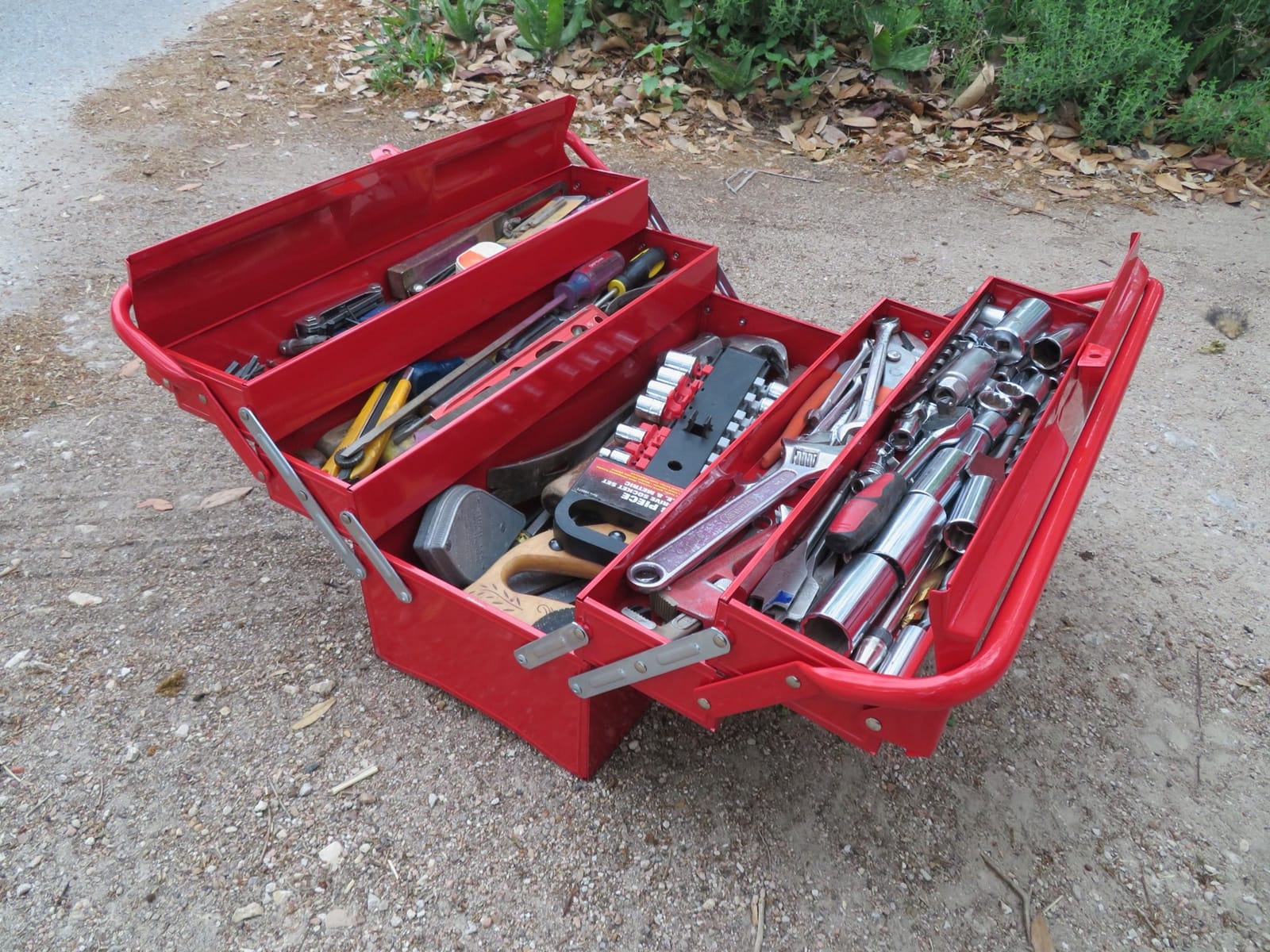
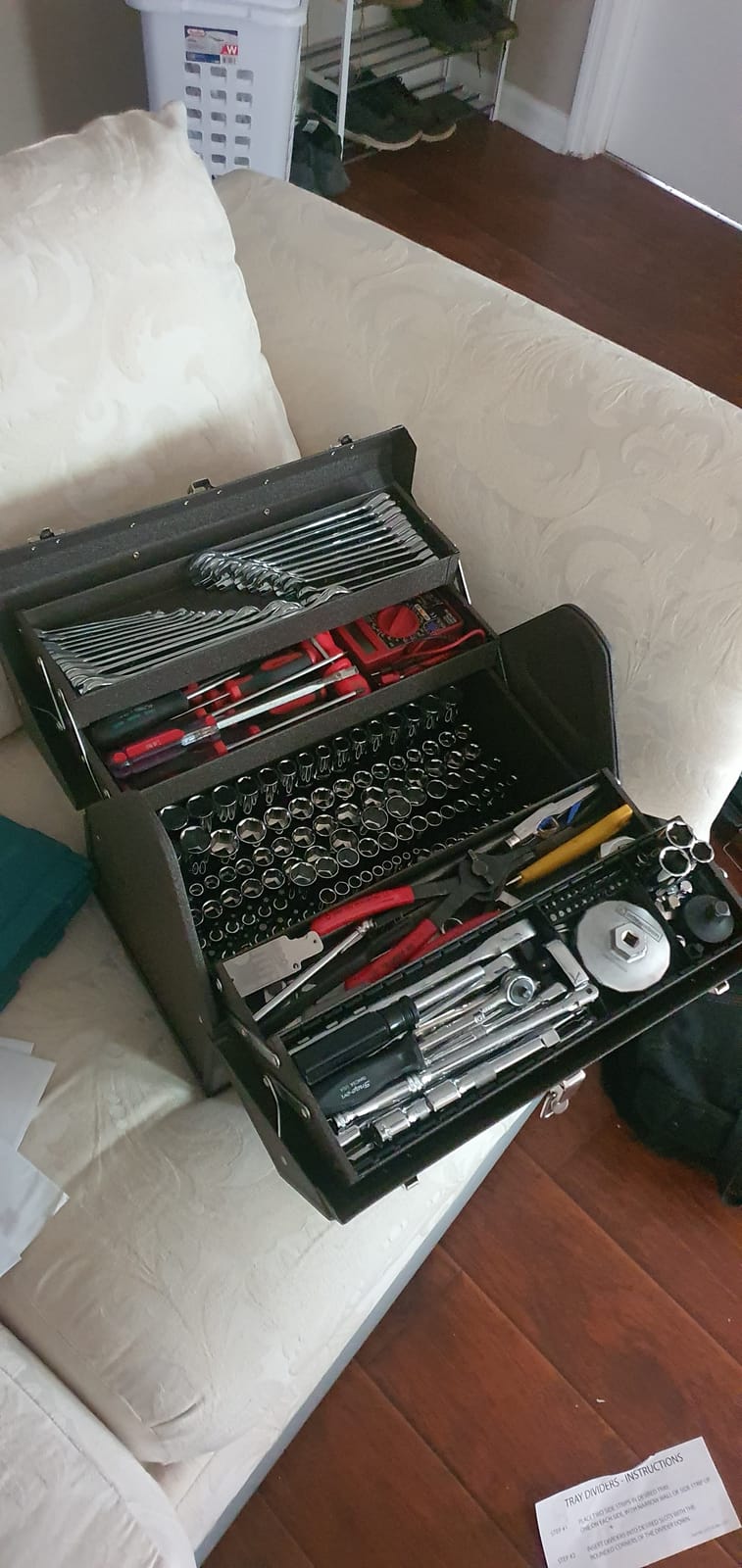
The cantilever case opens the way a tool book opens, and that single design decision removes the thing technicians complain about most, which is digging. Three layers and five trays means every tool is visible at a glance from the moment it opens.
Reviewers love that layout, and they like the second thing it comes with: no small clasps to snap. Security is a central lock hole rather than a fiddly little latch, and the box arrives fully assembled.
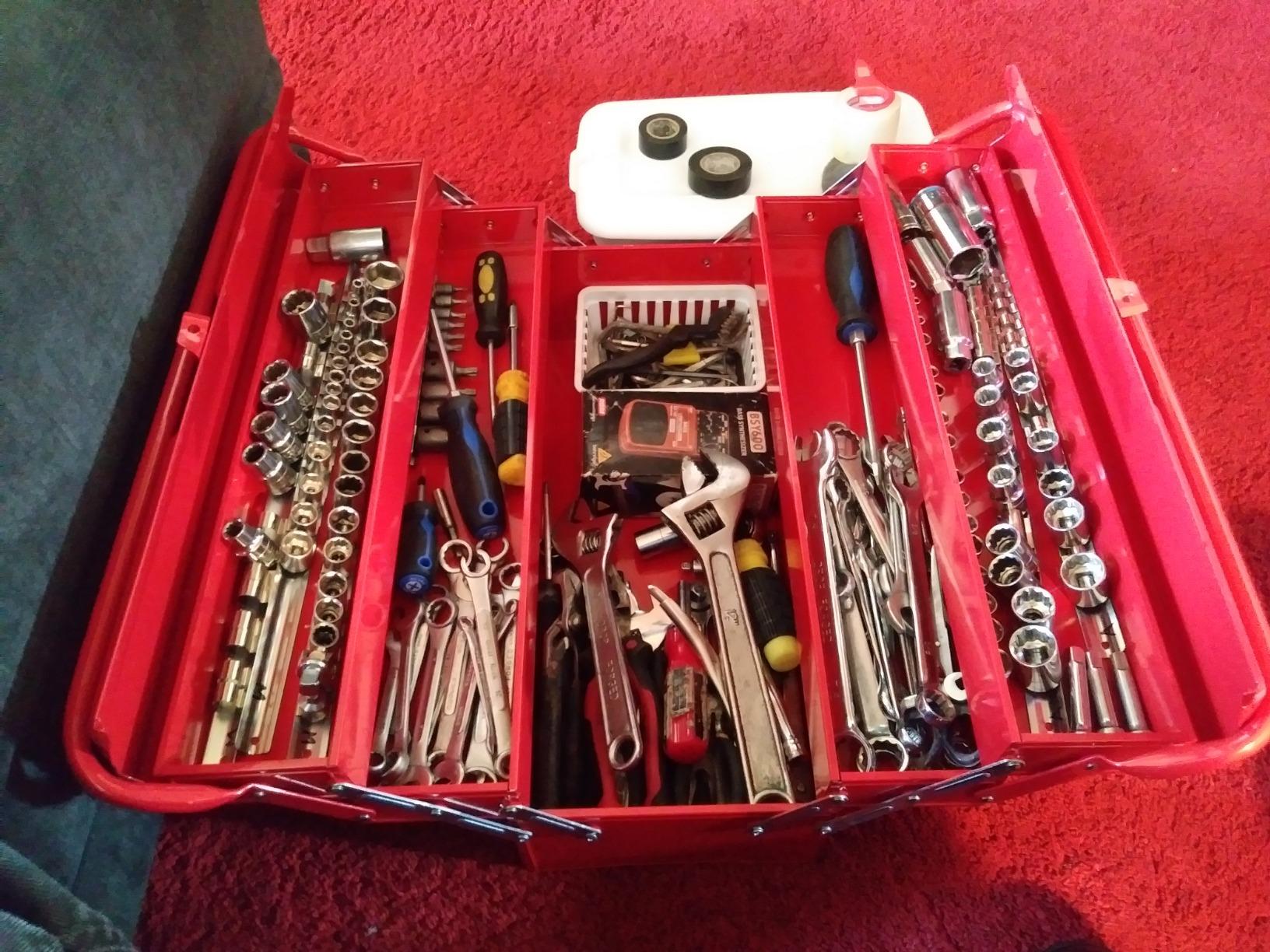
The complaints are honest ones. Thin sheet metal with no feet will scratch concrete and will dent eventually. Some units report misaligned padlock holes, and a few report the top tray binding after repeated cycles.
Why Cantilever Access Wins on the Bay Floor
A cantilever case trades a small amount of depth for total visibility. You do not pull out one tray and close five others to find the pliers, you open the whole thing and see everything at once.
That is why this style suits a bay, a workbench, or a van where the box is set down rather than carried. It is also why it does not suit a moving technician as well as a rolling chest.
Steel Gauge and the 22 Pound Ceiling
SPCC high-grade cold-rolled steel with a scratch-resistant powder coat is a better material spec than the plastic organizers in this roundup, but the 22 pound maximum recommended weight is low. Hand tools, wrenches, and hardware fit. Impact gear does not.
There are no feet, so on a concrete floor the base will mark the surface. A mat or a small pallet fixes it.
Portability and Long Stock
The interior is long enough for rods, breaker bars, and other full-length tools, and the whole box folds flat for transport or seasonal storage without any assembly step.
Full-length metal carry handles run along the top, which is a better load path than a small bail handle when the box is full of metal.
Who This Is Not For
Not for heavy loads, not for wash-down environments, and not for anyone who needs a warranty-backed industrial box. It is the best cantilever layout available here for the money, and that is a narrower promise than it sounds.
10. Keter 22 Inch Cantilever Organizer – Best All-Weather Parts Organization
KETER 22 Inch Cantilever Plastic Portable Tool Box Organizer with Metal Latches for Small Parts, Hardware and Tool Storage and Organization
22.3 x 12.4 x 9.6 inch
11 removable bins
50 kg max recommended
All-weather resin, clear lid
+ Pros
- Cantilever joints glide smoothly to raise and lower the tray
- 11 removable bins in two sizes for nuts and bolts
- All-weather resin resists rust
- peeling and denting
- Back support legs keep it stable with trays open
- Clear polycarbonate lid shows contents
– Cons
- Lower load rating than comparable steel cantilever boxes
- Water repellent rather than fully waterproof
- Fixed bin layout can limit bulky or awkward tools
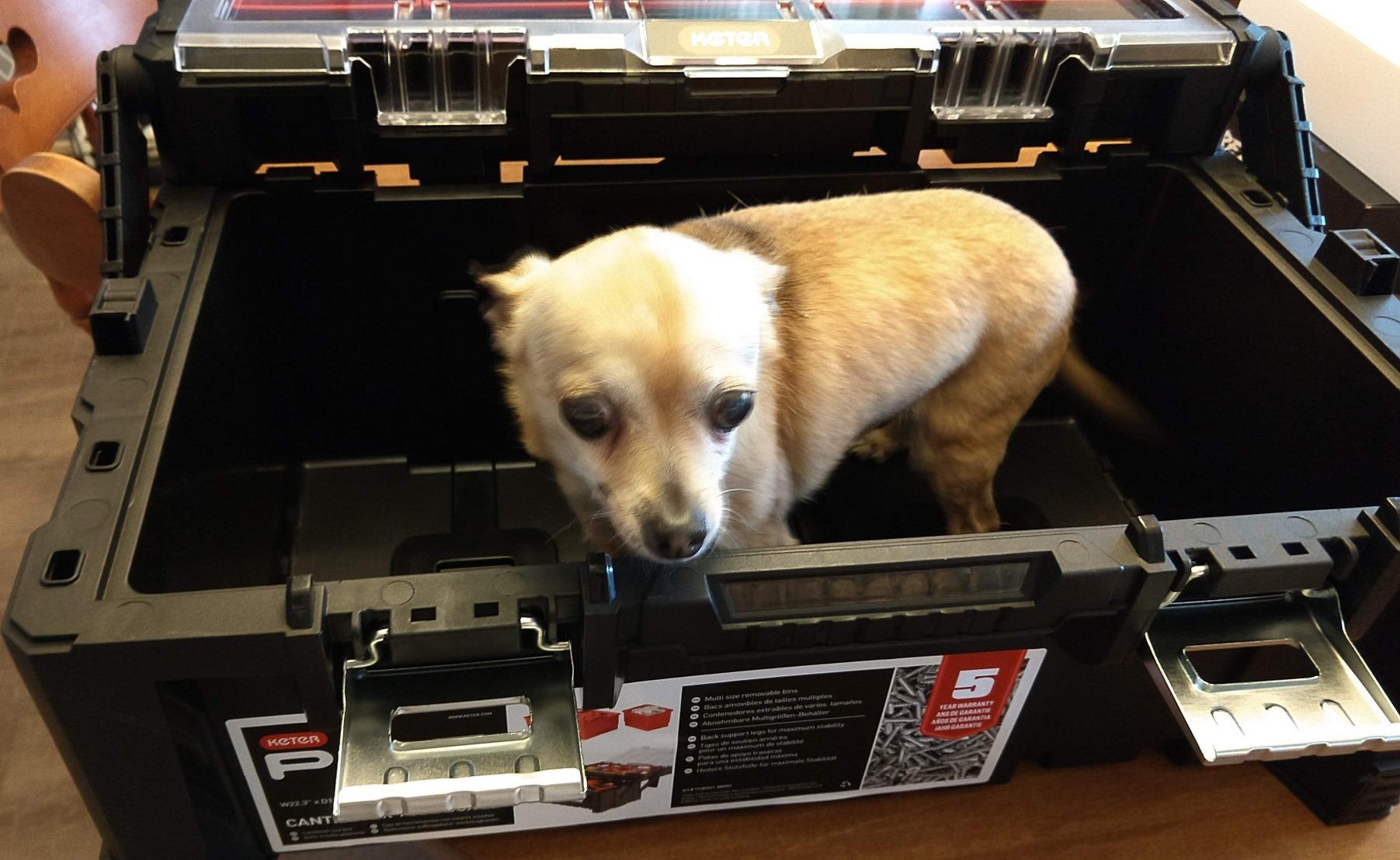
This is the cantilever answer for anyone who does not want a rust problem. The body is resin, so it will not corrode, peel, or dent in a way steel eventually does, and it is rated to 50 kg recommended load.
Owners point to the smooth cantilever action, the removable divider bins, and the dent-proof body as the reasons they like it. The 11 removable bins in two sizes are the feature that makes it work for fasteners specifically.
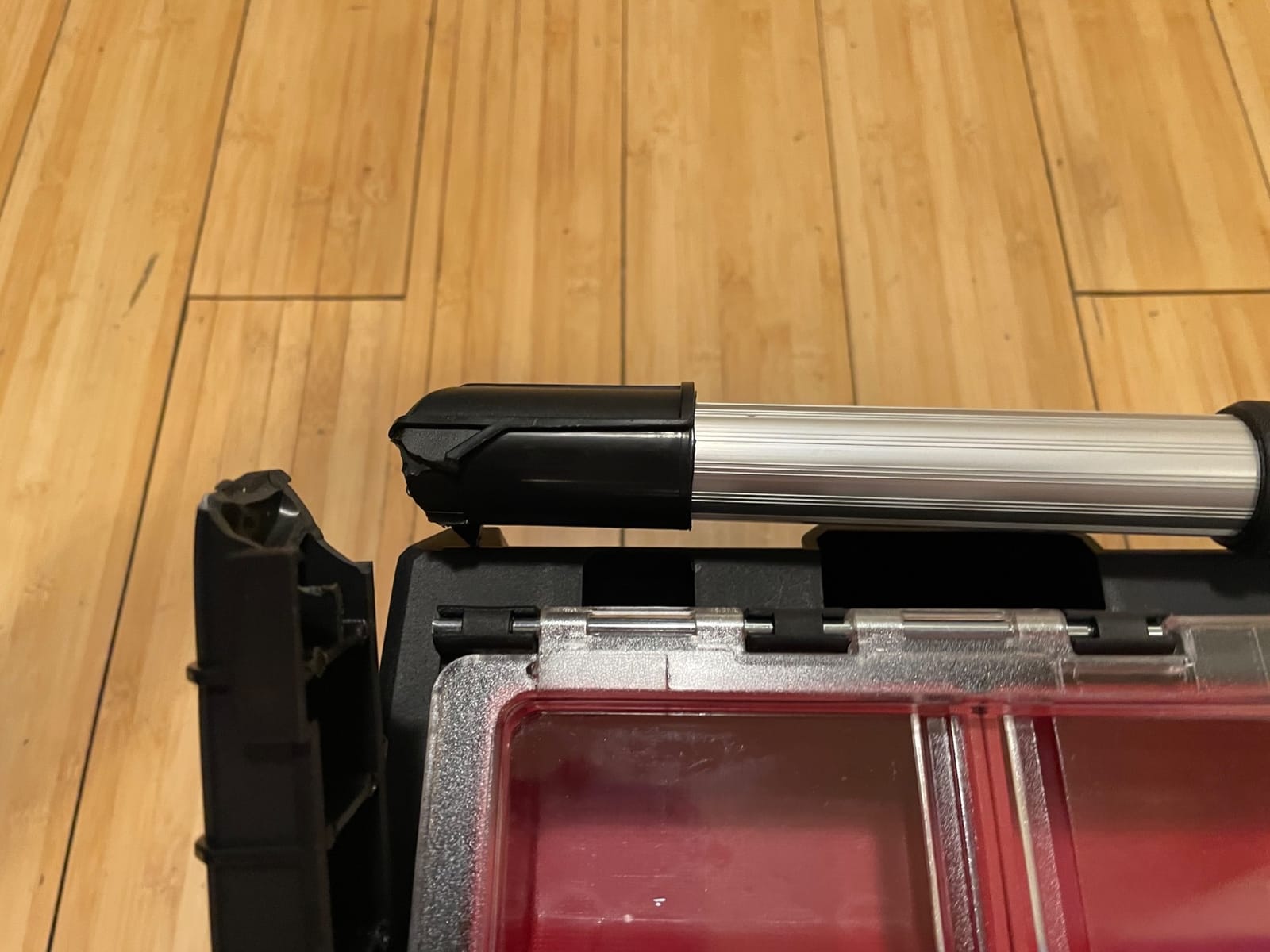
Water repellency is not waterproofing, so it is a wash-bay box rather than a pressure-wash survivor. And the fixed bin layout means a very long or oddly shaped tool does not always find a home.
Bins Versus Cantilever Rails
This box gives you both mechanisms: the cantilever action for whole-tray visibility, and eleven removable bins inside for the small parts that would otherwise slide around a tray.
The bins come in two sizes, which is a simple detail that matters when you are sorting machine screws from flat washers rather than lumping both into one cell.
Stability With Trays Open
Back support legs are the part that separates a usable cantilever from a tip hazard. With the trays raised and loaded, those legs keep the organizer planted instead of rocking forward.
Steel equivalents without legs are the ones owners complain about. It is worth checking for them on any cantilever purchase.
What the 50 kg Rating Covers
Fifty kilograms recommended is a meaningful step up from the plastic competitors in this roundup, and it comfortably covers a full hand-tool and fastener load in resin that will not rust.
The clear polycarbonate lid lets you identify contents without opening it, which saves a lot of wasted time in a busy shop.
Who This Is Not For
Not for a bay that gets pressure washed, and not for a tech whose tools include bulky, awkwardly shaped items the fixed bins cannot accept. Metal handle and hinges are a genuine plus for long-term durability.
11. Homak Industrial 22 Inch Cantilever – Heavy Gauge Steel for a Fixed Bay
Homak Industrial 22-Inch Cantilever Steel Toolbox, Brown Winkle Powder Coat, BW00210220
30 x 10 x 15 inch overall
16-14 gauge, .8mm steel
150 lb max recommended
21 lb empty
+ Pros
- Solid industrial construction that lasts years of heavy use
- Cantilever design gives quick access to every tool
- No tipping problems that plastic boxes develop
- Heavy-duty steel
- good value for the gauge
- Sturdy and smooth operation
– Cons
- Heavy at 21 lb
- awkward for frequent transport
- Some quality control issues with rear hinge spot welds
- Basic latches and low quality divider inserts
- Outer clips can fail over time
Twenty-one pounds empty, 16 to 14 gauge steel, and a 150 pound recommended load. This box reads as shop equipment rather than storage furniture, and it is rated to sit in a bay and take abuse for years.
Owners describe Kennedy-style build quality at a lower price, with the cantilever providing quick access to all tools and no tipping issues. The bottom storage space handles larger tools and accessories without consuming a shelf.

None of that is free. Owners are blunt about the weight, the basic latches, the low quality divider inserts, and occasional quality control issues with spot welds in the rear hinge area.
Gauge and Load Rating Compared
The stated .8mm metal thickness and 16-14 gauge construction put this ahead of every other cantilever in the list on material alone. The 150 pound recommended load means the rails do not flex when you load the trays properly.
That is the difference between a cantilever that stays smooth in year three and one that develops a bind after a season, and it is why weight and gauge are the two specs to check on any cantilever.
Four Shelves Plus Base Storage
Four individual shelves plus a bottom space give you five levels of separation without dividers that can break. Long wrenches, screwdrivers, pliers, and a box of consumables each get a defined shelf.
That layout is what owners mean when they describe the organization as good, and it is the reason experienced technicians gravitate to a case of this shape.
Hardware That Ages
The triple-clasp, padlockable design is the right security choice for a shop running tool loans. What owners do not praise is the hardware itself, describing the latches as basic and the outer clips as prone to failing over time.
A few owners also report quality control issues with spot welds in the rear hinge area, so inspect the hinge line on arrival. The brown winkle powder coat finish is the only colour offered in this line.
Who This Is Not For
Not for a mobile technician, and not for anyone moving a box more than a few times a day. At 21 pounds empty, this is a place-not-a-portal design, and its stated 16 to 14 gauge sheet is heavier than the other cantilever picks here.
12. TUFFIOM 5-Drawer Rolling Chest – Best for a Home Garage Upgrade
TUFFIOM 5-Drawer Rolling Tool Chest, Tool Storage Cabinet w/Drawers, Lockable Wheels, Detachable Top & Adjustable Shelf, Mechanic Tool Organizer Box for Garage, Workshop, Warehouse & Repair Shop
11 x 23 x 40 inch
220 lb capacity
5 drawers, powder coated steel
40 lb unit weight
+ Pros
- Fair storage across 5 drawers and a bottom cabinet
- Four wheels with two locking brakes
- Detachable top chest for separate transport
- Powder coated steel with an easy-clean surface
- Locking bars stop drawers opening in transit
- Adjustable shelf in the bottom cabinet
– Cons
- Some assembly required
- Drawer alignment issues reported
- Lock quality is basic
- Wheels may not roll smoothly on every surface
- Top chest release can be stiff
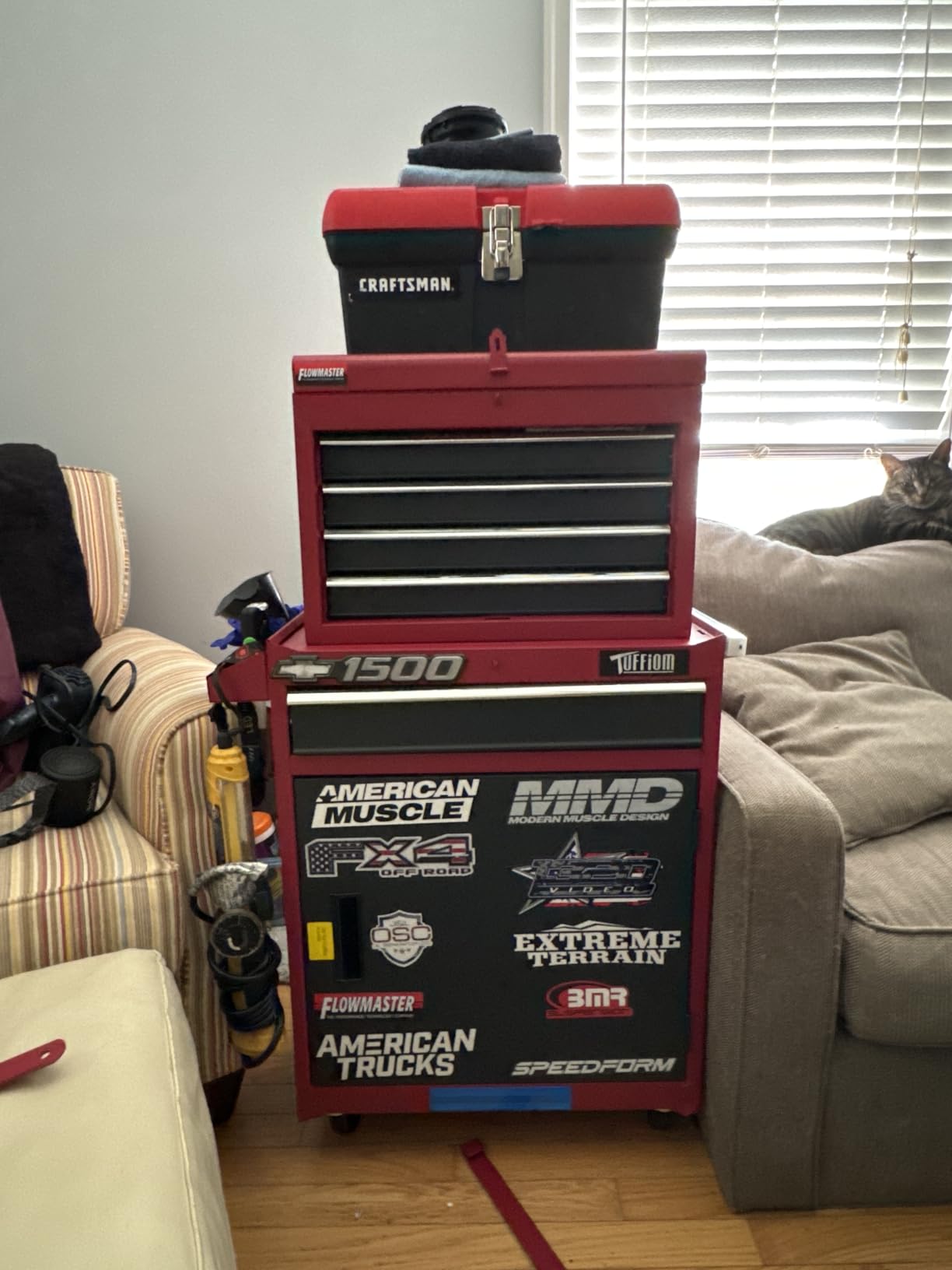
A 40 inch rolling cabinet for a home garage that has outgrown the wall shelf. Five drawers, a bottom cabinet with an adjustable inner shelf, and a detachable top chest that stores inside the cabinet when you are not using it.
Owners appreciate the value, the mobility, and the versatile detachable top. The locking bars that stop drawers sliding out during movement are the detail that makes this practical in a garage where a car gets backed over things.
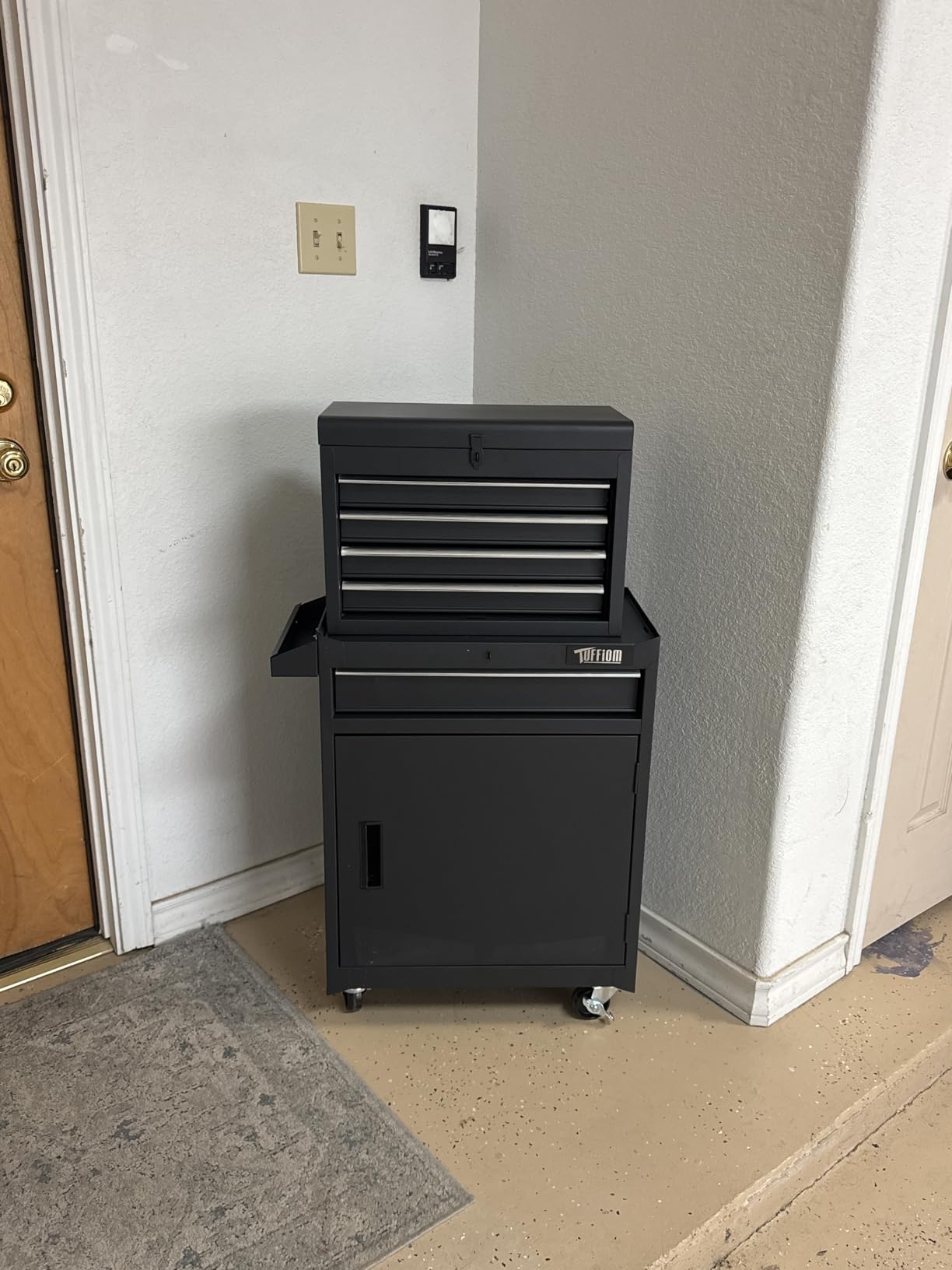
Assembly is required, drawer alignment is reported as inconsistent, the locks are basic, and the wheels do not roll smoothly on every surface. The powder-coated steel surface wipes clean easily, which is the underrated feature in a working garage.
Storage Layout and the Adjustable Shelf
Five drawers sit above a bottom cabinet whose removable, adjustable inner shelf lets you set the height for tall items. That shelf is the difference between a cabinet that adapts to a floor jack and one that holds a lonely bottle of oil.
The side rack with holes for small tools adds a place for the things that otherwise end up in a coffee can on the bench.
Locking Bars and Wheel Brakes
The locking bars are the feature to understand before anything else. They stop drawers opening while the cabinet is moving, which is the single most common way tools end up scattered across a shop floor.
Four wheels with two locking brakes hold the cabinet in place when the drawers are open. Owners report the wheels not rolling smoothly on every surface, so check them on your floor type before the first full load.
Detachable Top Chest
The top chest lifts out and fits inside the bottom cabinet for storage, and it has handles on both sides for lifting. Owners report the release mechanism can be stiff, which is a small friction point for something you may detach daily.
At a 220 pound capacity in powder-coated steel, the build is sound for garage and workshop use across a wide range of jobs.
Who This Is Not For
Not for a technician who needs drawer-level locking or a cabinet that arrives ready to use, since it needs assembly and has reported alignment issues. It is a high-capacity garage upgrade, not a secure tool store.
How to Choose a Tool Box That Survives Service Work
Style first, then material, then the security and organization details. Get the order wrong and you end up with a heavy steel chest you cannot lift into a van, or a lightweight carry box that bends under an impact wrench.
Pick the Style That Matches Where the Work Happens
Cantilever suits a fixed bay, bench, or van bed where the box is set down. Trays swing open and down so every tool is visible, and there is no digging. It is the fastest style for finding a specific tool, and the least comfortable one to carry when full.
Rolling chest suits a bay where a lot of tools are needed within reach. Ball-bearing drawers on casters, usually with a removable top box you can take to the vehicle. It costs floor space and needs brakes to stay put.
Hand-carry box suits apprentices, mobile technicians, and loan-out sets. Light, latched, and lockable, with far less capacity. The deciding question is how far you carry it and how much you carry.
Read the Load Rating, Not the Steel Description
The maximum recommended weight is the most under-used number in this category. In this roundup it ranges from 16 pounds on a bench case to 550 pounds on a rolling cabinet, and that is a thirty-fold difference in what the box can actually hold.
A general rule from our own testing: hand tools and a small impact wrench sit comfortably in the 100 to 150 pound range. Add jack stands, a floor jack, and a full battery kit and you need the heavier end, and a body that does not flex when every drawer is open.
Overloading past the rating is how rails bend, latches crack, and tops bow. Plan for a bay load you will actually reach, not one you might reach someday.
Steel, Resin, and What Each One Does
Steel handles impact and load, and it is what you want in a bay. It corrodes eventually, it is heavy, and lighter-gauge steel flexes under a full load, which is the complaint owners raise repeatedly on the larger cabinets in this list.
Resin will not rust, peel, or dent, and it is light enough to move without help. It is less rigid under very heavy loads. For a wash bay, a service truck, or a shop with a lot of exterior work, resin is the smarter material.
Powder coating is what separates steel that lasts from steel that flakes. A rust-resistant powder coat with a black paint finish, as described on several picks here, adds real service life.
Security Is a Tool Loan Problem, Not a Theft Problem
Most shops buying locking boxes are not preventing theft. They are answering a question: who has the torque wrench right now? A padlock eye and a front metal latch, as on the CRAFTSMAN carry box, is the minimum that supports a sign-out system.
For a chest, a central lock that secures every drawer at once, as on the Goplus 6-drawer unit, is more useful than several keyed locks because drawers cannot swing open in transit. Keyed-only cabinets with no padlock provision are a gap worth knowing about before you buy.
Dedicated insulated storage for high-voltage work on hybrid and EV vehicles belongs in a separate, clearly labelled case rather than mixed into a general tool chest, where a metal drawer is the wrong environment for that work.
Drawers, Slides, and Small Parts Organization
Graduated drawer sizes beat a uniform stack of deep drawers. Small fasteners need shallow cells, and a wide top compartment handles long tools laid flat instead of buried.
Ball-bearing slides are the difference between drawers that glide when loaded and drawers that stick halfway. Non-slip liners and EVA pads also matter more than most buyers expect, because tool-to-tool contact is what scratches a good set.
For small parts specifically, removable bins and clear compartments are worth more than extra drawer count. Twenty-four compartments in one case will organize connectors better than four empty drawers.
Transport Reality: Weight, Wheels, and Brakes
Weight decides whether a box is a portal or a place. A 2 pound carry box moves between a van and a bay all day. A 21 pound steel cantilever does not, which is why the heaviest boxes in this roundup are bay-bound and the lightest are shop-crate-bound.
On wheels, look for brakes. Independent rear brakes on swivel casters, or at minimum a braked pair, keep a loaded cabinet from drifting across a shop floor with the drawers extended. Larger diameter wheels roll better over thresholds and uneven concrete than small ones.
Finally, plan the loading sequence. Drawers open, load shifts forward, and a top-heavy cabinet is how a chest tips. Opening one or two drawers at a time is a habit, not a rule, and boxes with locking bars or a central lock remove the temptation entirely.
Frequently Asked Questions
What is the best tool box for a mechanic?
The best tool box for a mechanic is one that matches where the work happens. In a fixed service bay, a rolling chest with ball-bearing drawers, brakes, and a detachable top box gives the fastest access to a full working inventory. For a mobile technician, a lightweight lidded carry box with a padlock provision is more useful because load weight matters more than capacity. A cantilever case wins when the box is set down on a bench or in a van, because the trays open and down so every tool is visible at once.
Should a mechanic have a cantilever or rolling toolbox?
Choose a cantilever toolbox if the box lives in one spot, because the tray stack swings open and down and you see every tool without digging. Choose a rolling toolbox if you move around a bay or need a large working inventory at hand, since ball-bearing drawers on caster wheels keep tools organized and accessible. Cantilever cases are usually heavier and are harder to transport full. Rolling chests need brakes, because a loaded cabinet with open drawers will drift.
What size tool box do mechanics need?
Match the box to the maximum recommended weight rather than to physical size. Hand tools, a small impact wrench, and consumables sit comfortably in a box rated between 100 and 150 pounds. Add jack stands, a floor jack, and a full battery kit and you want the heavier end of the range, ideally with a body that does not flex when every drawer is open. In this roundup, recommended loads ranged from 16 pounds on a bench carry case to 550 pounds on a rolling cabinet.
How many drawers does a mechanic tool box need?
Five to eight drawers is the practical range for a professional working inventory, and graduated depths matter more than the count. Reserve shallow drawers for fasteners and small parts, use mid-depth drawers for sockets and wrenches, and put long tools flat in a wide top compartment. A large bottom cabinet for bulky items often adds more usable capacity than two extra shallow drawers.
What is the difference between a tool chest and a toolbox?
A toolbox is a carry case: lidded, handheld, and designed to move with you, usually with a removable tray. A tool chest is a storage cabinet: drawers, a larger footprint, often on caster wheels, and designed to stay in one place. A top tool box is the removable case that sits on top of a rolling chest, letting you carry a working set to a vehicle while the drawers stay put in the bay.
Are cantilever tool boxes better for mechanics?
Cantilever tool boxes are better for one specific thing: visibility. Because the tray stack opens and down, you see every tool at once instead of lifting trays and closing them again. They are not better for mobility, since a full steel cantilever is heavy and awkward to carry. A cantilever suits a fixed bay, a workbench, or the bed of a service van. It also suits technicians who value tool control more than drawer-level security.
How do I organize tools in a rolling tool box?
Start by sorting tools into depth bands rather than by job. Put fasteners and small parts in shallow drawers with removable bins, sockets and wrenches in mid-depth drawers, and long tools flat in the top compartment or a wide drawer. Add non-slip drawer liners or foam layouts so tools stay in position when a drawer moves. Finish by putting the most-used items in the drawers between waist and shoulder height, and reserve the lowest and highest drawers for infrequently used items.
Is a stainless steel or powder-coated steel tool box better for a shop?
Powder-coated steel is the better all-round choice for a shop. The coating resists scratching, rust, and oil odour, and it is what keeps a steel cabinet from corroding over years of service. Stainless steel resists corrosion better and is easier to wipe clean, but it costs more and still shows fingerprints. Resin is worth considering for a wash bay or a service truck, where corrosion resistance matters more than rigidity under a very heavy load.
Before you settle on a storage format, it is worth checking that the tools going in it are the right set. Our torque wrench roundup covers the most common drawer-resident tool in a mechanic’s box, and our OBD2 scanner guide covers the diagnostic gear that needs its own protected slot rather than a loose drawer.
Which Tool Box Fits the Way You Work
If you want one answer, take the DEWALT TSTAK deep box. It holds 22.7 liters, stacks with matching units, has a removable tray, and carries a 4.8 rating across more than 12k owner reviews, which makes it the pick with the widest documented owner record in the best tool boxes for mechanics roundup.
If you work from a fixed bay and want a bench case with real drawer action, the BIG RED 20.5-inch three-drawer box is the value pick, and its auto-locking drawers matter more in a truck than most buyers expect. If you need wheels and modular reconfiguration, the Keter Stack N system is the mobile shop answer.
If visibility beats everything, go cantilever: the Goplus 22-inch for the layout, the Keter resin cantilever if corrosion is the bigger worry, and the Homak Industrial 22-inch if you want the thickest stated gauge steel and do not need to move it. If you carry your tools between a van and a bay, start with something light and lockable like the CRAFTSMAN 16-inch and upgrade once you know what your load actually weighs.
Whichever you pick, check the maximum recommended weight against your real load on day one. That single number prevents most of the complaints we heard about these boxes.
Leave a Reply