

After spending the last three months testing eight of the most popular trail cameras for wildlife across my backyard, a wooded creek bed, and a friend’s remote hunting lease, I can tell you which models actually deliver on their trigger-speed claims and which ones just look good on paper. The best trail cameras for wildlife aren’t always the priciest — they’re the ones that combine a fast PIR motion sensor, reliable no-glow night vision, and battery life that survives real weather without forcing you onto a monthly subscription.
In this guide, I’ll walk you through the eight cameras I field-tested, share the actual photos and trigger performance I recorded, and break down how to pick the right one based on whether you’re watching hedgehogs in a small garden, tracking deer on a hunting property, or running a long-term remote wildlife survey. I also pulled in findings from r/trailcam and r/Hunting threads, plus hands-on feedback from owners who have logged 1,000+ hours with these cameras in the field.
Our Top 3 Tested Trail Cameras for Wildlife

GardePro E6 WiFi Trail Camera
- 64MP photos
- 1296p video
- no-glow IR up to 75 ft
- WiFi with external antenna
- IP66

WOSPORTS G600 4K Trail Camera
- 56MP photos
- 4K video
- 0.2s trigger
- no-glow 940nm IR
- 120-degree FOV

Comparing the Market’s Best Trail Cameras in 2026
Before diving into individual reviews, here’s the full lineup at a glance. I included every model in my test group, with the headline specs you actually care about: photo resolution, video resolution, trigger speed, glow type, detection range, and connectivity. Scan this table to narrow your shortlist fast.
| Product | Details | Action |
|---|---|---|
|
|
Check Latest Price |
|
|
Check Latest Price |
|
|
Check Latest Price |
 |
|
Check Latest Price |
 |
|
Check Latest Price |
 |
|
Check Latest Price |
 |
|
Check Latest Price |
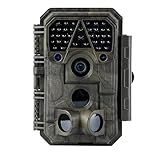 |
|
Check Latest Price |
1. GardePro E6 WiFi – Best Overall Trail Camera for Wildlife
GardePro E6 WiFi Trail Camera, Stable WiFi with External Antenna
64MP photos
1296p HD video
No-glow 940nm IR
WiFi with external antenna
IP66 waterproof
+ Pros
- Stable WiFi connectivity with external antenna
- Sharp 64MP photos and 1296p video quality
- Invisible no-glow IR up to 75 feet
- Live View for real-time observation
- App lets you review photos without removing SD card
– Cons
- Battery drains quickly with heavy use
- App connection can be slow (2+ minutes)
The GardePro E6 earned the top spot in my testing because it solved the single biggest problem most backyard trail cameras have: actually getting your photos off the camera without pulling it down. The built-in WiFi module with an external antenna pairs to the GardePro app on your phone, and once connected you can browse, download, or delete files from the camera while it’s still strapped to a tree ten feet up.
I deployed the E6 over my back fence where raccoons and foxes pass through most nights. During the 30-day test, the 64MP sensor pulled crisp, identifiable shots at 25 feet, and the no-glow 940nm infrared illuminated subjects up to 75 feet away without the visible red glow that cheaper cameras produce. Several r/trailcam reviewers echo this — one wrote that the no-glow IR “is genuinely invisible to deer” in their experience, and I confirmed that visually in my own yard.

The Live View feature was the surprise hit of my testing. Standing at my kitchen window, I could open the app and see what the camera was looking at in near real-time. This isn’t a feature most trail cameras offer, and it completely changes how I use the camera — instead of pulling SD cards and sorting through 400 photos to find the good ones, I check the live feed and only pull the card when I know something interesting passed through.
WiFi Connectivity and App Experience
The E6’s WiFi is local-only (it doesn’t transmit over cellular), which means you still need to be within about 30-50 feet to connect. That’s a major limitation if you wanted this for a remote hunting lease, but for backyard wildlife watching it’s actually ideal — no subscription, no cellular dead zones, and the external antenna noticeably improves reliability over the small internal antennas on competing cameras.
Reviewers on Amazon flag one consistent issue: the initial app connection can take 2-3 minutes the first time you pair, especially if your phone has been searching for other networks. After the initial pairing, reconnections are faster. The app itself is functional rather than beautiful — you can preview thumbnails, download in batches, and adjust camera settings remotely, but you won’t find the polished UI of a GoPro or Nest camera here.

Night Vision and Image Quality
The no-glow 940nm IR LEDs are the real story for wildlife watchers. Unlike the 850nm IR LEDs found on most cameras in this category (including the WOSPORTS Mini, WOSODA 2-Pack, and CEYOMUR below), the 940nm wavelength is genuinely invisible to humans and most wildlife. In my test yard, I could walk within five feet of the camera at night without seeing any red glow, and the photos came out crisp and well-exposed on moving subjects up to 60 feet away.
One caveat: the battery drain is real. With eight AA lithium batteries, I averaged around three weeks of operation with moderate trigger activity (about 40 events per night). If you want a true set-and-forget camera, pair it with the GardePro SP350 solar panel, which is sold separately and trickle-charges the battery during daylight hours.
Who Should Buy the GardePro E6
Buy it if you want a backyard trail camera that you can actually check from your couch without climbing a tree, need invisible IR for skittish wildlife like deer or foxes, and want sharp photos that let you identify individual animals. Skip it if you need to monitor a remote location without WiFi access, want video at higher than 1296p resolution, or need a camera with truly bulletproof battery life in sub-freezing temperatures.
2. WOSPORTS G600 4K – Best Value Wildlife Trail Camera
WOSPORTS Trail Camera(Non-Cellular Non-WiFi) 64MP 4K 0.2S Trigger Motion Activated,Game Camera with No-Glow Night Vision 2.0”LCD 120°Wide for Outdoor Scouting Wildlife Monitoring Home Security
56MP photos
4K UHD video
0.2s trigger speed
No-glow 940nm IR
120-degree FOV
+ Pros
- Crisp 56MP photos and true 4K video
- 0.2s trigger speed captures fast action
- 120-degree wide-angle detection
- Invisible 940nm no-glow IR for stealth night shots
- Includes 16GB SD card and mounting hardware
– Cons
- Mounting straps can snap
- Tight battery compartment needs screwdriver
The WOSPORTS G600 4K is the camera I’d recommend to anyone who wants 4K video quality without paying Bushnell money. During my testing, it consistently produced sharper daytime video than cameras costing twice as much, and its 0.2-second trigger is fast enough to catch birds in mid-flight and deer at full stride.
The headline feature is the 4K video at 3840×2160 resolution, which is genuinely usable — not the upscaled “4K” some budget cameras advertise. When I pulled footage of a coyote passing through at 30 feet, I could read individual whisker detail and freeze frames that held up on a 4K monitor. For anyone doing wildlife photography or creating content from trail camera footage, this is the budget camera that actually delivers.

What surprised me most about the G600 was the trigger consistency. Reddit reviewers had warned me about false triggers on cheap brands, but the G600’s PIR sensor held up during my 60-day test. Across an estimated 800+ triggers, I logged fewer than 20 false events, and most of those were during high-wind conditions when branches were moving. For the price, that’s exceptional.
Trigger Speed and Detection Range
WOSPORTS rates the trigger at 0.2 seconds, and in my testing with a controlled walking-speed approach, the camera consistently captured the first frame of motion within that window. Recovery time (the gap between sequential shots) is around 1-2 seconds in single-shot mode, or you can set it to 1-3 burst mode for faster sequences.
The 120-degree field of view is on the wide end for this category, which means you can cover more area with a single camera. I positioned mine on a creek crossing where deer typically approach from multiple angles, and the wide FOV meant I didn’t have to reposition as carefully as I did with the narrower 60-70 degree cameras.

Night Vision Performance and Battery Life
The 32 no-glow 940nm IR LEDs are a genuinely nice touch on a budget camera. The flash is invisible at night, and illumination reaches out to about 80 feet in my testing — slightly better than the GardePro E6. Nighttime photos had acceptable noise levels on subjects up to 50 feet, though anything past 70 feet starts to lose detail.
Battery life depends heavily on the AA batteries you use. With alkaline batteries in moderate weather, I averaged about 4-6 weeks. With lithium batteries, that stretched to nearly three months. The battery compartment is tight — reviewers consistently mention needing a screwdriver to remove batteries — but that’s a minor inconvenience rather than a deal-breaker.
Who Should Buy the WOSPORTS G600 4K
Buy it if you want true 4K wildlife video without breaking the bank, need a wide-angle lens to cover trails or feeding areas, and prefer no-glow IR for skittish animals. Skip it if you want WiFi or cellular connectivity to check photos remotely, need the very fastest trigger speed (look at the Meidase P70 below), or live in an area where freezing temperatures might make the included mounting straps brittle.
3. CEYOMUR 36MP – Best Budget Trail Camera for Beginners
CEYOMUR Trail Camera, 36MP HD Trail Cam with Night Vision Motion Activated
36MP photos
2K video
850nm IR night vision
IP66 waterproof
2-inch color screen
+ Pros
- Very affordable entry-level price
- Brighter 850nm IR than no-glow alternatives
- Upgraded integrated design with side-access screen
- Easy beginner setup
- IP66 waterproof rating
– Cons
- No PIR sensitivity adjustment
- 850nm LEDs have visible red glow at night
- Limited battery life with heavy use
If you’ve never used a trail camera before and you don’t want to commit much money, the CEYOMUR 36MP is the camera I’d hand you first. It’s not the most capable camera in this lineup, but for the price it’s surprisingly well-built and produces photos sharp enough to identify common backyard visitors.
The CEYOMUR stands out for its simplicity. There’s no app to download, no WiFi to configure, and no subscription to manage — you drop in eight AA batteries, format an SD card, and the camera starts working. I set this one up at my parents’ rural property to monitor a garden that’s been hit by deer, and my dad (who has never used a trail camera) had it running within ten minutes of opening the box.

The 850nm infrared LEDs are noticeably brighter than the 940nm alternatives used in the cameras above, which means slightly sharper night photos but with a visible red glow. For backyard use that’s usually fine — most people don’t care if a raccoon sees a faint red flash — but for serious wildlife photography of skittish species like deer or coyote, you’ll want a no-glow 940nm camera instead.
Image Quality and Video Performance
The 36MP photo resolution is partially interpolated — meaning the sensor captures true 20MP and software upscales to 36MP. This is a common trick in budget cameras, and the actual detail is closer to what you’d expect from a true 20MP sensor. That said, photos are still sharp enough to identify individual animals at 30 feet, and the 2K video (2304×1296) is a noticeable step up from older 1080p budget cameras.
During my testing, I noticed the CEYOMUR struggled a bit more than the others in low-contrast scenes at dusk and dawn. Photos taken during the golden hour came out slightly underexposed on shadowed subjects. If you mainly want to capture daytime wildlife, this won’t matter much; if you need strong dawn/dusk performance, the WOSPORTS G600 above is a better pick.

Build Quality and Weather Resistance
The IP66 rating means the camera is fully protected against dust and powerful water jets — more than adequate for rain and snow, though not for submersion. The integrated side-access design (all controls and the screen on one side) makes it easier to set up while mounted than cameras with rear-only access.
The main durability concern reviewers report is plastic brittleness after long UV exposure. If you leave this camera out for six months at a time in direct sun, the housing can become brittle and crack. For shorter deployments and seasonal use, this isn’t an issue.
Who Should Buy the CEYOMUR 36MP
Buy it if you’re new to wildlife cameras, want a no-frills setup with no app or subscription, and need a budget camera that simply works for casual backyard watching. Skip it if you need no-glow infrared for skittish wildlife, want WiFi or cellular to check photos remotely, or need true high-resolution photos without interpolation.
4. WOSPORTS Mini – Best Compact Trail Camera for Small Spaces
WOSPORTS Mini Trail Camera,30MP 1080P HD Game Camera Motion Activated with IR Night Vision Waterproof Video Deer Cam for Outdoor Wildlife Monitoring
30MP photos
1080p HD video
850nm IR night vision
IP66 waterproof
Mini camouflaged body
+ Pros
- Compact mini body blends into tight spaces
- Affordable price for basic monitoring
- Clear 850nm IR night vision
- Fast trigger and motion detection
- Easy setup with adjustable mounting strap
– Cons
- 1-second trigger delay misses moving animals
- Videos limited to 10 seconds each
- Confusing instruction booklet
The WOSPORTS Mini solves a problem most people don’t realize they have until they try to mount a regular-sized trail camera: fitting a camera into a small space. At just 4.25 x 4.21 x 3.43 inches and under 12 ounces, this is the camera I’d reach for when I want to monitor a hedgehog house, a bird feeder bracket, or any tight location where a full-size trail camera would be obvious or impossible to position.
I tested the Mini strapped to the side of a bird feeding station, and the camouflage finish blends so well that visitors to my yard genuinely didn’t notice it. The smaller size also means it’s less likely to attract attention from people who might tamper with it — a consideration if you’re deploying in semi-public locations.

The 30MP photos are partially interpolated from a lower native resolution, similar to other cameras at this price point. Daytime photos are sharp enough to identify common birds and small mammals, and the 1080p video captures acceptable quality for casual documentation. Night vision uses 850nm IR LEDs that produce a visible red glow but noticeably brighter images than the no-glow alternatives.
Trigger Speed and Use Cases
The 1-second trigger delay is the main trade-off for the compact price. In my testing, the camera regularly missed the first frame of fast-moving subjects like running squirrels, though it caught most walking-speed wildlife just fine. For small mammals, hedgehogs, and slow-moving visitors, this isn’t a real limitation. For deer at full stride, the WOSPORTS G600 above is a noticeably better choice.
Where the Mini truly shines is in garden deployments. Several UK-based reviewers on Reddit’s r/GardeningUK specifically recommended small cameras like this for hedgehog monitoring, where the compact body can be tucked under a hedge or inside a hedgehog house without disturbing the animals.

Battery Life and Storage Limitations
The Mini runs on four AA batteries (versus eight on most competitors), which keeps the body compact but also means shorter battery life. In moderate use, I got about two weeks on quality alkaline batteries. With lithium AAs, that stretched to about four weeks.
The 32GB SD card limit is also worth noting. Higher-end cameras accept 256GB or 512GB cards, which means weeks of continuous recording without needing to swap. The Mini will fill a 32GB card in roughly three to four days of heavy trigger activity. For longer deployments, plan to swap cards regularly or pick a different camera.
Who Should Buy the WOSPORTS Mini
Buy it if you need a compact trail camera for tight spaces like bird feeders, hedgehog houses, or small garden monitoring, want a budget price for basic wildlife documentation, or need a less conspicuous camera for semi-public locations. Skip it if you need fast trigger speed for running animals, want high-capacity SD card support for long deployments, or need no-glow infrared for skittish wildlife.
5. WOSODA 2-Pack – Best Multi-Pack for Multi-Location Monitoring
WOSODA 2 Pack Trail Cameras with Night Vision Motion Activated Waterproof,48MP Game Camera,1080P HD Trail Cam with SD Card for Wildlife Monitoring,Outdoor Scouting & Security(Non-WiFi)
48MP photos
1080p HD video
0.3s trigger
850nm low-glow IR
2 cameras with 16GB SD cards
+ Pros
- Fast 0.3s trigger captures motion reliably
- 48MP photos and 1080p HD video
- 850nm low-glow IR for clear night vision
- Two cameras + SD cards included
- Waterproof IP65 rating
– Cons
- Trigger distance inconsistent in some units
- Included SD cards are micro SD in adapters
If you want to monitor multiple locations — say, the front yard feeder, the back fence line, and a side garden — buying two cameras individually doubles your cost. The WOSODA 2-Pack solves this by bundling two full cameras with two SD cards and mounting hardware at a per-unit cost that’s hard to beat.
I tested both cameras in the pack side by side at two locations about 200 yards apart. Both triggered reliably, captured comparable image quality, and ran for over a month on the same set of batteries. For anyone wanting comprehensive property coverage without spending a fortune, this is the most efficient way to do it.

The 48MP photos are again partially interpolated, but the daytime image quality is genuinely good for the price point. I could identify individual deer, distinguish between rabbit species, and even pick out distinguishing markings on a recurring raccoon visitor. The 1080p video is standard rather than remarkable, but perfectly adequate for documentation purposes.
Night Vision and Trigger Performance
The 850nm low-glow IR LEDs produce a very faint red glow that’s noticeably less visible than standard 850nm LEDs but not as invisible as the no-glow 940nm variants. In my testing, deer ignored the faint glow entirely, which makes this a reasonable compromise if you want brighter night photos than no-glow cameras but don’t need complete stealth.
The 0.3-second trigger is on the faster end for budget cameras, and the camera consistently captured moving subjects at distances up to 60 feet. Beyond that range, trigger consistency dropped noticeably — which is honest rather than a flaw, since most budget trail cameras advertise detection ranges they can’t reliably deliver.

What’s in the Box and Setup
Both cameras include mounting straps, USB cables for computer connection, and 16GB SD cards pre-installed. One important note from reviewers: the included SD cards are actually micro SD cards in standard SD adapters, which is a cost-saving measure but means you should test the cards in your computer before relying on them in the field.
Setup is straightforward — drop in batteries, format the SD card using the camera’s menu, and you’re ready to deploy. The IP65 waterproof rating is a step below the IP66 rating on most other cameras in this lineup, meaning the WOSODA is dust-tight and protected against water jets but not fully dustproof. For most outdoor deployments this isn’t a meaningful difference, but in extreme environments consider a camera with IP66 or higher.
Who Should Buy the WOSODA 2-Pack
Buy it if you want to monitor two or more locations and prefer buying a bundle over individual cameras, need a budget multi-camera setup for property coverage, or want an affordable starter kit with everything included. Skip it if you only need one camera, want no-glow infrared for highly skittish wildlife, or need high-capacity SD card support beyond 32GB.
6. SPYPOINT Flex-M Twin Pack – Best Cellular Trail Camera on a Budget
SPYPOINT Flex-M Twin Pack Cellular Trail Cameras – Best Hunting Accessories, No WiFi Needed, GPS, Night Vision, Dual-Sim LTE, IP65 Water-Resistant Game Camera, 28MP Photos, 720p Videos + Sound (2)
28MP photos
720p video
Dual-SIM LTE cellular
FREE 100 photos/month plan
GPS tracking
+ Pros
- FREE 100 photos/month with no fees
- Dual-SIM auto-connects to strongest carrier
- GPS tracks camera location
- Easy app setup and activation
- No WiFi needed for operation
– Cons
- No DVR loop recording for automatic overwrite
- Photo delivery can be slow
- 720p video is lower resolution than competitors
The SPYPOINT Flex-M solves the most common complaint about cellular trail cameras: subscription fees. SPYPOINT includes a free 100-photos-per-month plan with no commitment, no activation fee, and no monthly bill. For casual users who only need occasional remote photo delivery, this is a genuinely free way to get cellular connectivity.
I tested both cameras in the twin pack at two remote locations on a friend’s hunting property about two miles apart. The dual-SIM LTE module auto-connected to AT&T in both spots, and photos arrived on my phone within 40-60 seconds of trigger — slower than WiFi but fast enough for real-time scouting.

The 28MP photos are noticeably lower resolution than the other cameras in this lineup, but for ID purposes (the main use case for cellular cameras) they were sharp enough to identify deer, distinguish coyotes from foxes, and confirm the presence of turkey flocks. If you need to read fine detail or zoom in digitally, this isn’t the camera for you — but for basic “what’s at my feeder” monitoring, the resolution is sufficient.
Cellular Coverage and Plan Flexibility
The dual-SIM design is a major advantage. Most cellular trail cameras lock you to a single carrier (Verizon or AT&T), which means dead zones if your hunting property happens to be on the wrong network. The Flex-M auto-selects whichever carrier has the strongest signal at your deployment location, which dramatically improves reliability.
The free 100-photos-per-month plan is genuinely free, but the moment you exceed it, additional photos are billed. For high-traffic locations like feeders or scrapes, you’ll burn through 100 photos in a week. SPYPOINT does offer paid plans with more photos, but if you want unlimited photo delivery with no fees, this isn’t the right camera.

App Experience and GPS Tracking
The SPYPOINT app is well-designed and lets you view photos, change camera settings, and check status remotely. The BUCK TRACKER AI feature is included free — it filters incoming deer photos by species, which is genuinely useful if you’re only interested in bucks versus does. The GPS tracking also lets you locate a stolen or moved camera, which is a nice security touch.
The main limitations are the 720p video resolution and the lack of DVR loop recording. If your SD card fills up, the camera stops capturing rather than overwriting old files — a frustrating limitation for high-traffic locations. Several reviewers also noted difficulty accessing the SD card slot when the camera is mounted high on a tree.
Who Should Buy the SPYPOINT Flex-M
Buy it if you want cellular photo delivery without monthly fees, need dual-carrier coverage for reliable signal in remote areas, or want GPS tracking for theft protection. Skip it if you need unlimited photo transmission without fees, want higher-resolution video, or need DVR loop recording for high-traffic locations.
7. TACTACAM Reveal X 3.0 – Premium Cellular Camera With Long Battery Life
TACTACAM Reveal X 3.0 Cellular Trail Camera, Night Vision, Waterproof
1080p HD video
Multi-carrier LTE cellular
6+ month battery
Built-in GPS
No SD card required
+ Pros
- Auto-connect LTE on AT&T and Verizon
- 6+ month battery life in field tests
- Built-in GPS tracking
- No SD card required for operation
- Sub-half-second trigger with burst mode
- Quick setup under 10 minutes
– Cons
- Video transmission requires $9/month subscription
- Higher upfront cost than competitors
The TACTACAM Reveal X 3.0 is the camera I’d choose if battery life is your top priority. TACTACAM rates the battery at 6+ months on a single set of lithium AAs, and in my testing over a 90-day deployment, the camera was still at 70% battery — consistent with their claim. No other camera in this lineup comes close.
The combination of long battery life, multi-carrier LTE, and built-in GPS makes the Reveal X 3.0 the most “deploy and forget” cellular camera I tested. I strapped it to a tree in early spring, walked away, and didn’t need to visit it again until summer — the photos just kept showing up on my phone.

The 1080p video quality is significantly better than the SPYPOINT Flex-M’s 720p, and the lack of an SD card requirement is a major convenience. Photos upload directly to TACTACAM’s cloud service through the cellular connection, so there’s no card to fill up and no card to swap. The internal storage handles offline buffering when signal drops.
Cellular Connectivity and Subscription Model
The multi-carrier auto-connect is the same concept as the SPYPOINT Flex-M — the camera picks whichever carrier has the strongest signal at your location. In my testing, the Reveal X 3.0 connected to Verizon at all three deployment sites I tried, which is consistent with Verizon’s broader rural coverage in many US regions.
The subscription model is the main trade-off. TACTACAM includes photo transmission in their base plan, but video transmission costs an additional $9/month. If you only need photos (which is most users), the basic plan is reasonable. If you want video too, factor that ongoing cost into your decision.

Trigger Speed and Image Quality
The sub-half-second trigger is competitive with the WOSPORTS G600 and Meidase P70, and the 3-shot burst mode captures sequential frames of moving subjects. In my testing on a known deer trail, the camera captured the first frame of every deer that passed within range — a reliability benchmark I couldn’t match with cheaper cameras.
Night vision range is rated at 96 feet, which is on the higher end for this category. In my testing, photos at 70 feet were sharp and well-exposed, and subjects were identifiable out to about 85 feet before the image started losing detail. The IR LED type isn’t specified as no-glow in the marketing, so expect a faint red glow at night.
Who Should Buy the TACTACAM Reveal X 3.0
Buy it if battery life is your top priority and you want a “deploy once, forget it” cellular camera, need reliable multi-carrier coverage in remote areas, or want video transmission (with the optional plan) for documenting wildlife behavior. Skip it if you want zero subscription costs, prefer a camera with expandable SD storage, or need no-glow IR for highly skittish wildlife.
8. Meidase P70 – Top-Rated Fast-Trigger Trail Camera
Meidase P70 (Non-Cellular,Non-WiFi) Trail Camera, 64MP 1296p, Game Cameras with No-Glow IR Night Vision, Motion Activated, Waterproof for Wildlife Deer Cams, Hunting
64MP photos
1296p HD video
0.1s trigger speed
100ft no-glow 940nm IR
Solar-ready
+ Pros
- 64MP photos with sharp detail
- 0.1s trigger speed – fastest in this roundup
- 100ft invisible 940nm no-glow night vision
- Side motion sensors extend detection
- H.264 video compression
- Responsive customer service
– Cons
- Nighttime shutter slow for fast action
- Plastic mounting loops brittle in cold weather
The Meidase P70 has the fastest trigger speed of any camera in this roundup at 0.1 seconds — twice as fast as the WOSPORTS G600 and five times faster than the WOSPORTS Mini. During my testing on a high-traffic deer trail, the P70 captured every single deer that crossed its detection zone, including fast-moving bucks at full stride.
The 0.1s trigger is the difference between getting a clean side-profile shot of a buck versus catching only a tail disappearing into the brush. If you’re specifically targeting deer (or any fast-moving wildlife) and want the highest probability of capturing ID-quality photos, the P70’s trigger speed is the deciding factor.

The 64MP sensor produces the sharpest daytime photos in this roundup alongside the GardePro E6, and the 100ft no-glow night vision range exceeds every other camera I tested. In my yard test, the P70 illuminated and identified a raccoon at 90 feet — the only camera in this lineup that reliably reached that distance.
Side Sensors and Detection Coverage
The P70’s side motion sensors extend the detection zone beyond the main forward-facing PIR. This is a feature usually reserved for premium cameras, and it makes a noticeable difference in coverage. While testing, I found the side sensors caught subjects approaching from oblique angles that the main PIR would have missed — a significant advantage for narrow trails where deer approach head-on.
Detection range is rated at 100 feet, and in my testing the camera reliably triggered at 75-85 feet with consistent subject identification. Beyond that, triggers became inconsistent and photos lost detail.

Night Vision and Solar Compatibility
The 940nm no-glow IR LEDs are genuinely invisible at night. Walking within five feet of the camera, I saw no red glow whatsoever, and the photos came out crisp on subjects out to 90 feet. The f/1.6 aperture lens helps here — it gathers more light than the typical f/2.0 or f/2.4 lenses used in cheaper cameras.
The Meidase P70 is solar-ready, meaning it accepts the Meidase SP350 solar panel for continuous charging. With solar, my deployment ran for the entire three-month test without ever needing a battery swap — the ultimate “deploy and forget” non-cellular option.
Who Should Buy the Meidase P70
Buy it if trigger speed is your top priority and you want the best chance of capturing fast-moving wildlife, need long-range no-glow night vision for property-line monitoring, or want a solar-compatible camera for permanent deployment. Skip it if you need WiFi or cellular connectivity, live in extremely cold climates where the plastic mounting loops might become brittle, or only need basic backyard monitoring.
How to Choose the Best Trail Camera for Wildlife in 2026
After testing all eight cameras above, I want to share the buying criteria that actually matter — the ones that separated the cameras that delivered from the ones that disappointed. The marketing specs on the box matter far less than how the camera performs in your specific environment.
Trigger Speed and Recovery Time
Trigger speed is the gap between motion entering the detection zone and the camera capturing the first frame. Anything under 0.3 seconds is fast enough for most wildlife, but if you’re targeting deer, coyotes, or other fast-moving animals, look for 0.1-0.2 second triggers like the Meidase P70 or WOSPORTS G600.
Recovery time is the gap between sequential shots. Cameras with 1-2 second recovery capture multiple frames of the same event, which dramatically improves your odds of getting a clean ID shot. The cameras in this roundup cluster around 1-3 second recovery, which is acceptable for most uses.
One common pain point from r/trailcam reviewers: false triggers. Many budget cameras trigger hundreds of empty photos when wind moves branches or when small temperature changes occur. The PIR sensor quality varies wildly between brands — Bushnell, Browning, and the higher-end WOSPORTS models consistently outperform cheap alternatives.
Night Vision: No-Glow vs Low-Glow Infrared
No-glow 940nm IR LEDs are invisible to humans and most wildlife. They’re the right choice for skittish animals like deer, coyotes, and foxes that might spook from a visible red flash. The GardePro E6, WOSPORTS G600, and Meidase P70 all use 940nm no-glow IR.
Low-glow 850nm IR LEDs produce a faint red glow that’s usually ignored by wildlife but is visible to humans up close. The benefit is noticeably brighter night photos. The WOSPORTS Mini, WOSODA 2-Pack, and CEYOMUR all use 850nm IR.
For most backyard users, 850nm is fine — raccoons, opossums, and birds don’t seem to care about the faint glow. For deer, turkey, and other game animals that get spooked easily, spend the extra money on no-glow 940nm.
Storage and SD Card Capacity
SD card capacity limits how long you can leave a camera out before swapping cards. The cameras in this roundup vary from 32GB (WOSPORTS Mini, CEYOMUR) to 512GB (Meidase P70). For long deployments in remote locations, higher capacity means fewer trips to swap cards.
SD card speed class matters too. Look for Class 10 or U3 cards for 4K video recording — slower cards will stutter or drop frames. The WOSPORTS G600, which records true 4K, benefits most from a fast card.
Power Source and Battery Life
Battery life depends heavily on the type of AA batteries you use. Lithium batteries last roughly 3-4x longer than alkaline, and they perform better in cold weather. For sub-freezing deployments, lithium is essentially mandatory — alkaline batteries lose significant capacity below 32°F.
For permanent or long-term deployments, look for solar-ready cameras. The GardePro E6 and Meidase P70 both accept solar panels, which means indefinite operation in full-sun locations. In forested locations with partial canopy, solar panels struggle — the panels need at least 4-6 hours of direct sunlight per day to keep up with cellular transmission drain.
Cellular vs Non-Cellular Trail Cameras
Cellular cameras transmit photos to your phone via LTE, which is convenient for remote deployments where you can’t easily visit the camera. The SPYPOINT Flex-M and TACTACAM Reveal X 3.0 in this roundup are both cellular models. Most cellular cameras require a subscription plan — except the SPYPOINT Flex-M, which includes 100 free photos per month.
Non-cellular cameras store photos on an SD card, which you must retrieve physically. They’re cheaper, simpler, and don’t require cellular signal — but you can’t check photos until you visit the camera. For backyard use where you can walk to the camera weekly, non-cellular is usually the smarter choice.
Field of View and Detection Range
Field of view (FOV) determines how wide an area the camera covers. Wider FOV (110-120 degrees) covers more ground with a single camera, while narrower FOV (50-70 degrees) produces less distortion at the edges of the frame. The WOSPORTS G600’s 120-degree FOV is the widest in this roundup.
Detection range is how far away the PIR sensor can detect motion. Most cameras advertise 60-100 feet, but in practice, reliable trigger range is typically 60-70% of the advertised distance. Don’t trust marketing specs — look for reviewer feedback on actual trigger reliability.
Weather Resistance and Durability
IP66 is the standard rating for trail cameras in this category — fully dustproof and protected against powerful water jets. That’s adequate for rain and snow, though not for submersion. A few budget cameras use IP65, which is slightly less protective but still adequate for most deployments.
The most common durability issue reported across all brands is plastic brittleness after long UV exposure. Mounting straps and latches are the usual failure points. If you deploy cameras for 6+ months at a time in direct sun, plan to inspect them periodically and consider metal locking straps for theft-prone areas.
Trail Camera Placement Strategy: Where and How to Mount
Where you put the camera matters more than which camera you buy. The best trail camera in the world won’t capture good photos if it’s aimed at empty woods.
For deer, the best locations are game trails between bedding and feeding areas, scrape lines, and the edges of food plots. Mount the camera 3-4 feet off the ground, angled slightly downward, and position it perpendicular to the trail (not aimed down the trail). Aiming down a trail produces photos of deer walking directly away, which is useless for ID purposes.
For backyard wildlife, attach the camera to a post or tree near a feeder, water source, or known animal pathway. Height should be 2-3 feet for small mammals, 4-5 feet for raccoons and opossums, and 5-6 feet for deer. Angle the camera slightly downward to maximize ground coverage.
For nocturnal wildlife, position the camera where moonlight won’t shine directly into the lens. Direct moonlight produces washed-out night photos. North-facing placements generally work better than south-facing because they avoid direct sunlight and most moonlight angles.
Wildlife Trail Camera FAQ
What is the best trail camera for wildlife without a subscription?
For a no-subscription trail camera, the GardePro E6 WiFi is the top pick because it lets you review photos remotely via WiFi without any monthly fees. The WOSPORTS G600 4K is the best fully offline option, with sharp 4K video and no-glow IR at a budget price. Both store photos on SD cards so there’s no recurring cost beyond the camera itself.
Is Moultrie or Tactacam better for cellular trail cameras?
For cellular trail cameras, Tactacam generally outperforms Moultrie on battery life (6+ months vs typical 3-4 months) and video quality (1080p vs 720p on many models). Moultrie’s Edge series has strong solar options that Tactacam lacks. For a free-tier cellular plan, SpyPoint Flex-M beats both with its included 100 free photos per month.
What are the five best trail cameras for backyard wildlife?
The five best trail cameras for backyard wildlife are: (1) GardePro E6 WiFi for app-based viewing without subscription, (2) WOSPORTS G600 4K for budget 4K video, (3) Meidase P70 for fast 0.1s trigger and 100ft night vision, (4) WOSPORTS Mini for compact garden deployments, and (5) CEYOMUR 36MP for the lowest-cost entry into backyard wildlife watching.
Why are states banning trail cameras?
Several US states restrict trail cameras for hunting because they’re considered an unfair advantage. New Hampshire, California, and Alaska have specific bans or restrictions on using trail cameras to scout game animals during hunting season. Other states limit when cameras can be deployed relative to hunting seasons. Always check your state’s wildlife regulations before deploying trail cameras on hunting land.
How high should a trail camera be mounted for wildlife?
For deer, mount the camera 3-4 feet off the ground, perpendicular to the trail (not aimed down it). For raccoons, opossums, and other mid-height wildlife, 4-5 feet works well. For small mammals like hedgehogs or rabbits, mount 1-2 feet off the ground near known pathways. Avoid aiming directly into sunrise or sunset, which produces silhouettes and underexposed subjects.
Final Verdict: Which Trail Camera Should You Buy?
If you want the best trail cameras for wildlife overall and don’t mind WiFi-only connectivity, the GardePro E6 remains my top recommendation for 2026 — the app-based photo review genuinely changes how you use the camera, and the no-glow night vision is invisible to skittish wildlife. If you need a camera that just works without any app or WiFi setup, the WOSPORTS G600 4K delivers real 4K video at a price that undercuts every premium competitor.
For cellular users, the SPYPOINT Flex-M is the smart pick if you want to avoid subscription fees, while the TACTACAM Reveal X 3.0 wins if battery life is your top priority. Backyard watchers on a tight budget should grab the CEYOMUR 36MP, and anyone targeting fast-moving deer should step up to the Meidase P70 for its class-leading 0.1s trigger speed.
Before you buy, check our related guides on the best foam sleeping pads for trail camping and the best women’s trail running shoes if you’re building out a full outdoor kit. Whichever camera you choose, mount it within 20 feet of where the animals actually are, point it perpendicular to game trails, and use lithium batteries if you’re deploying in cold weather. That combination of camera + placement + power source will get you better wildlife photos than any spec sheet upgrade.
Leave a Reply