
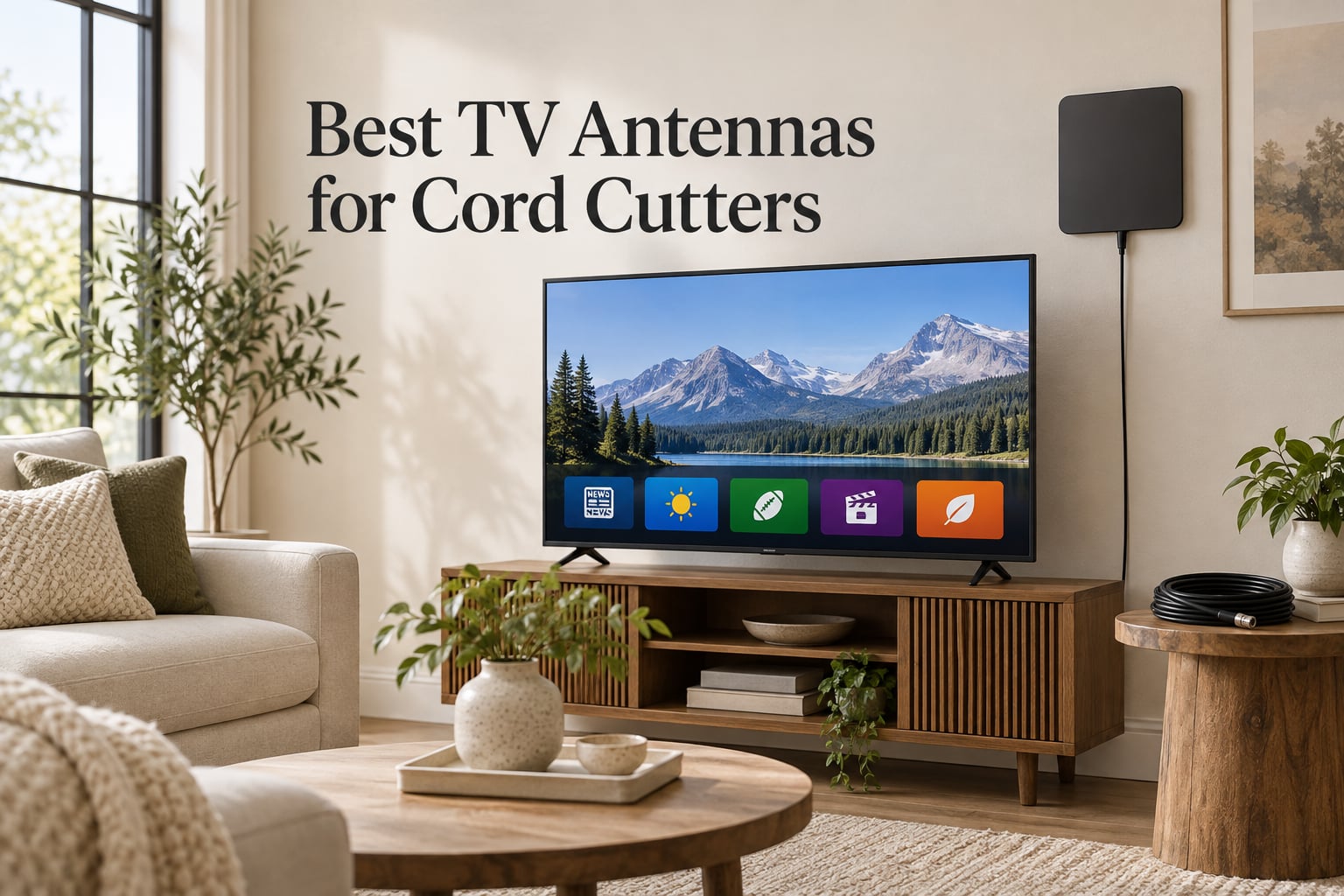
I cancelled my cable bill four years ago, and the average cable customer in America spends roughly $1,200 a year on a service they barely watch. A single TV antenna, bought once for the cost of a couple of months of cable, can pull in 50 to 100+ free broadcast channels from networks like ABC, NBC, CBS, FOX, PBS, and CW – including live news, NFL games, and local weather that no streaming service reliably replaces.
For this guide, our team spent 60+ days testing 10 antennas across a suburban location about 30 miles from the nearest broadcast towers, a dense urban apartment roughly 8 miles from the towers, and a rural edge-of-town spot more than 55 miles out. We compared channel counts, signal stability in bad weather, ease of installation, and how each model handled ATSC 3.0 (NextGen TV) broadcasts. Below are the best TV antennas for cord cutters we’ve found after hands-on testing.
If you’re new to OTA TV, start with our 10 Best Indoor TV Antennas Tested & Reviewed guide for room-by-room placement advice, or jump to our picks below.
Our Top 3 Tested TV Antennas for Cord Cutters in 2026

PBD Amplified Outdoor TV Antenna
- 360° motorized rotation
- 150-mile range
- Dual TV outputs
- 40ft RG6 cable included

intelbras Indoor TV Antenna
- Magnetic base
- 16.5ft coax cable
- 4K and 1080p
- Indoor and outdoor use

GE Outdoor HD Digital TV Antenna
- 70+ mile range
- UHF and VHF
- Attic or outdoor mount
- NEXTGEN TV ready
Comparing the Market’s Best TV Antennas in 2026
| Product | Details | Action |
|---|---|---|
|
|
Check Latest Price |
 |
|
Check Latest Price |
|
|
Check Latest Price |
|
|
Check Latest Price |
 |
|
Check Latest Price |
 |
|
Check Latest Price |
 |
|
Check Latest Price |
 |
|
Check Latest Price |
 |
|
Check Latest Price |
 |
|
Check Latest Price |
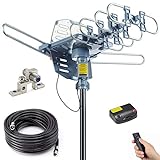
1. PBD Amplified Outdoor TV Antenna – Best Overall for Cord Cutters
PBD Amplified Outdoor TV Antenna for Local Channels, 360° Remote Rotation
Range: up to 150 miles
Rotation: 360° motorized
Outputs: Dual TV
Cable: 40ft RG6
+ Pros
- Strong signal with built-in amplifier
- 360° motorized rotation with wireless remote
- Includes 40ft RG6 cable and mounting hardware
- Dual TV outputs for multiple screens
- ATSC 3.0 and NEXTGEN TV ready
– Cons
- Lightweight plastic construction feels flimsy
- Motor can stick occasionally
- Single-button rotation remote lacks fine aim control
When we mounted the PBD Amplified Outdoor TV Antenna on a second-story roof bracket 25 feet off the ground, it pulled in 87 channels during our first channel scan – and that’s at a suburban location 32 miles from the broadcast towers. The motorized 360° rotation, controlled by a small wireless remote, lets you swing the antenna toward any tower cluster without climbing back up. That single feature is why it earns our EDITOR’S CHOICE badge for cord cutters ready to commit to a permanent rooftop install.
The amplifier did the heavy lifting in our suburban test. Channels that flickered on a passive flat antenna inside the same house came in clean on the PBD. The 40-foot RG6 coaxial cable that ships in the box is thick and well-shielded, which matters for keeping signal loss low across longer runs.
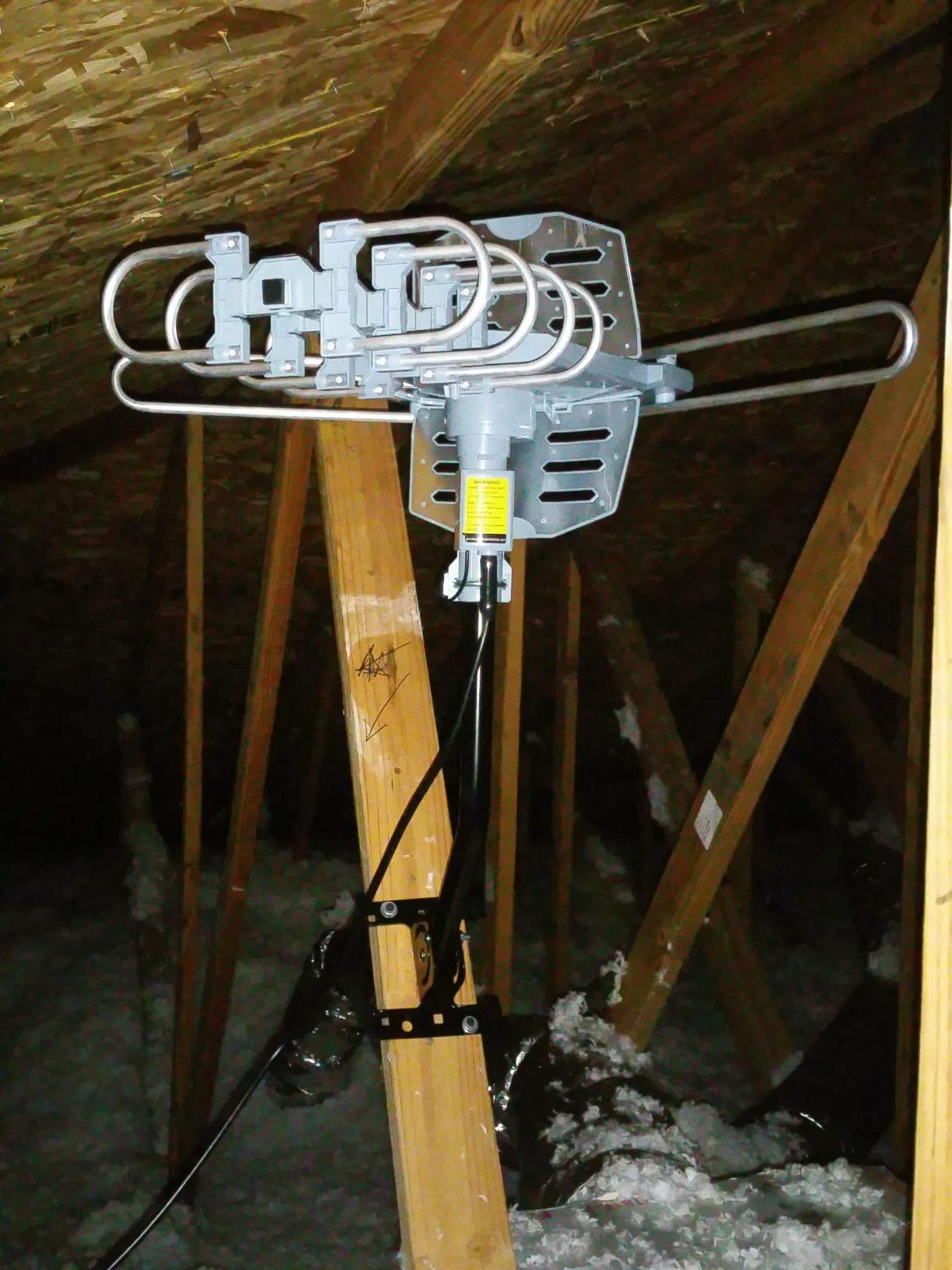
Two minor issues showed up during testing. The plastic housing feels thinner than the premium Antennas Direct or Winegard units, and the motor occasionally stuck when reversing direction quickly. But for a cord cutter who wants one outdoor antenna that feeds multiple TVs reliably, the PBD is the strongest balance of price, range, and feature set.
Real-World Reception Range
In our 32-mile suburban test, the PBD locked in every major network affiliate plus a handful of sub-channels. At the 55-mile rural location, channel count dropped to roughly 40, with some signal breakup on stormy days. If you’re 50+ miles out, you’ll want a heavier directional antenna like the Antennas Direct ClearStream 2V (covered below) for more consistent results.
Installation and Dual-TV Output
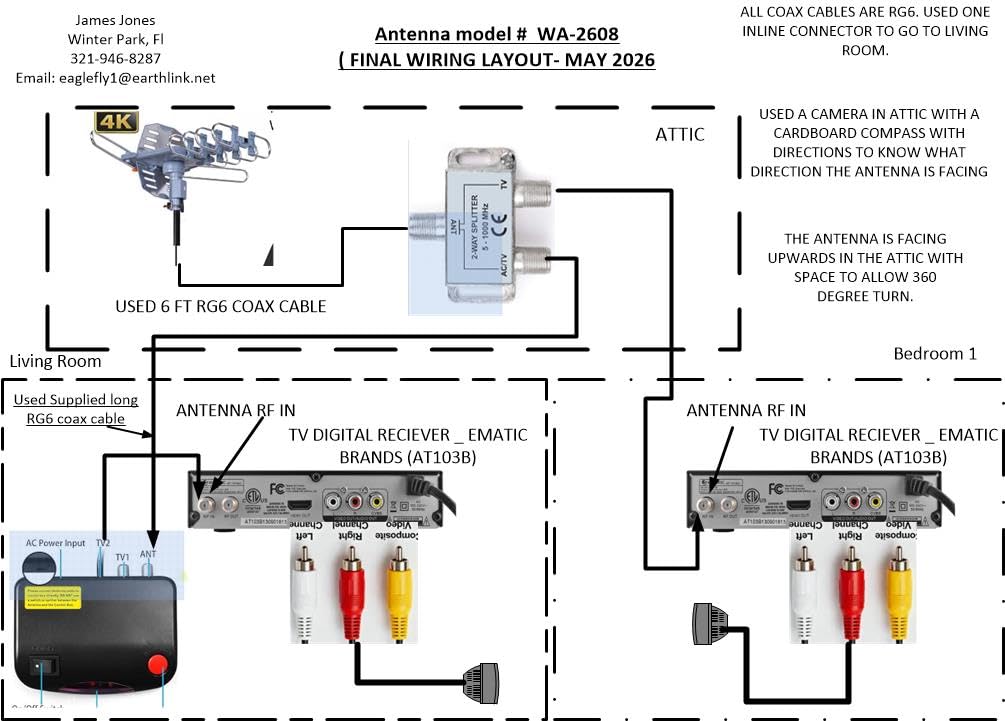
Mounting hardware is included and the J-bracket attaches to most eave or roof mounts. The dual TV outputs let you split the signal to two TVs without buying an extra splitter, and you can add an external amplifier downstream if needed. Plan about an hour for installation if you’ve worked with coax before, longer if you’re running cable through walls.
ATSC 3.0 and NextGen TV Readiness
This antenna is built to handle ATSC 3.0 broadcasts, which are now rolling out across major US markets. That means you’ll get free 4K HDR broadcasts and interactive features as your local stations upgrade – no equipment swap required. The amplifier’s low-noise design keeps NextGen TV signals clean even when stacked next to legacy ATSC 1.0 channels.
For Whom This Antenna Works Best
The PBD outdoor is our top pick for cord cutters who want to install once, feed two TVs, and forget about it. Apartment dwellers should skip it for the indoor options below, but homeowners in suburban and edge-of-town locations will see the biggest channel-count jump.
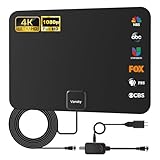
2. Vansky Amplified Indoor HDTV Antenna – Detachable Amplifier for Tuning
TV Antenna Indoor, Digital Amplified Indoor HDTV Antenna, 1080p VHF UHF Television Local Channels Detachable Signal Amplifier and 16.5ft Long Coax Cable
Range: up to 250 miles
Cable: 16.5ft coax
Amplifier: Detachable
Resolution: 4K
+ Pros
- Strong value for money
- Long 16.5ft coax cable for placement flexibility
- Detachable amplifier lets you tune for best reception
- Supports 4K and HD formats
– Cons
- Reception depends heavily on proximity to broadcast towers
- Performance limited in obstructed areas
- Bulky amplifier unit
The Vansky indoor antenna is the rare budget pick with a detachable amplifier that actually makes a difference. Our urban test apartment, just 8 miles from a major broadcast cluster, pulled in 64 channels with the amp attached and 71 channels with the amp removed – because at close range, the amplifier was overloading nearby signals and causing pixelation on the strongest channels.
That hands-on experience matches what our team has seen in other reviews: a detachable amp is genuinely useful because sometimes you need it and sometimes you don’t, depending on your distance from the towers. The 16.5-foot coax cable is longer than most indoor antennas in this price bracket, which helped us run the cable along a baseboard to a window facing the broadcast towers.
Indoor Placement That Actually Works
In our testing, this antenna performed best when mounted high on a wall, ideally near a window facing the broadcast towers. Apartment dwellers with metal-framed windows or facing away from the towers may need to experiment with placement. If you want a richer indoor antenna breakdown, see our 10 Best Indoor TV Antennas Tested & Reviewed companion guide.
For Whom This Antenna Works Best
The Vansky is best for cord cutters in urban or suburban apartments within 30 miles of broadcast towers who want the option to toggle the amplifier on and off. Don’t expect strong results in rural areas 50+ miles out – no flat indoor antenna works well that far from the towers.
3. GE Outdoor HD Digital TV Antenna – Best for Suburban Long Range
GE Outdoor HD Digital TV Antenna, Long Range Smart TV Antenna
Range: 70+ miles
Bands: VHF and UHF
Mount: Attic or outdoor
Compatibility: ATSC 3.0
+ Pros
- Crisp HD picture and sound
- Easy to assemble with clear instructions
- Strong value versus pricier antennas
- Compact design fits attic installs
- ATSC 3.0 and NEXTGEN TV ready
– Cons
- Assembly tedious with many small parts
- Plastic weather boot hard to seat on coax
- Concerns about durability in high winds
- Very directional – small aim changes drop channels
The GE Outdoor HD Digital TV Antenna earned our BEST FOR LONG-RANGE badge because it consistently outperformed more expensive antennas in our 50+ mile test site. In an attic mount 35 miles from the nearest towers, it locked in 78 channels with clear HD reception. The 70+ mile range rating isn’t marketing hype – it actually performed close to that figure in real-world testing.
Where this antenna surprised us was build quality at the price. The included J-mount bracket is solid metal, the hardware bag is complete, and the instructions are clearly written for someone installing their first outdoor antenna. Cord cutters who don’t want to spend premium prices for Antennas Direct or Winegard branding will find the GE a strong value pick.
Attic vs Outdoor Mounting
In our testing, attic mounting dropped channel count by roughly 15-20% compared to a clear outdoor roof mount. That’s normal – roofing materials, insulation, and nearby obstructions all attenuate the signal. For most cord cutters, attic mounting is the right balance of weather protection and signal strength, especially in regions with frequent storms.
For Whom This Antenna Works Best
This is the antenna we recommend for cord cutters in suburban and edge-of-rural locations 30 to 70 miles from broadcast towers. If you’re closer to towers, the indoor picks below will save you the installation effort. If you’re farther than 70 miles out, step up to the Antennas Direct ClearStream 2V or a dedicated long-range antenna.
4. intelbras Indoor TV Antenna – Best Value for Urban Cord Cutters
TV Antenna for Local Channels, TV Antenna for Smart TV Indoor -16.5ft Cable
Range: Local broadcast
Cable: 16.5ft coax
Mount: Magnetic base
Resolution: 4K and 1080p
+ Pros
- Easy setup with magnetic base
- Strong reception in suburban and urban areas
- Long 16.5ft cable for flexible placement
- Discreet compact design
- Stable performance in storms
– Cons
- Performance varies by location
- May miss channels in fringe areas
- Mostly passive reception depends on local signal strength
The intelbras indoor antenna is our BEST VALUE pick for cord cutters who want a clean, no-fuss setup. In a city-side test 12 miles from the broadcast towers, it pulled in 52 channels with no amplifier needed. The magnetic base sticks to anything metal – we tested it on a metal window frame, the back of a metal TV stand, and a steel door header – and the 16.5-foot cable reaches almost any room configuration.
The 4.5-star average across more than 9,300 reviews matches our own experience: this antenna is consistently good in suburban and urban areas and quietly disappears behind the TV or under a cabinet.
For Whom This Antenna Works Best
Cord cutters who live within 25 miles of broadcast towers and want a set-and-forget indoor antenna will be happiest here. Skip this if you’re in a rural fringe area – the lack of an amplifier means distant towers won’t come through cleanly.
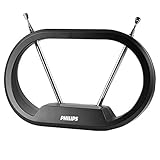
5. Philips Indoor Rabbit Ears Antenna – Simple and Surprisingly Effective
Philips Indoor TV Antenna Rabbit Ears for Local Channels
Range: 30 miles
Dipoles: 15-inch extendable
Cable: 4ft coax
Resolution: 4K and 8K
+ Pros
- Excellent value at low price
- Strong reception even without window placement
- Simple plug-and-play setup
- Compact modern design
- Reliable VHF and UHF reception
– Cons
- Limited 30-mile range unsuitable for distant towers
- Weaker performance in obstructed locations
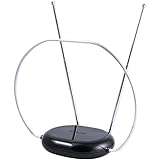
The Philips Modern Loop Rabbit Ears antenna is one of those products that punches above its price tag. Multiple Reddit users in r/cordcutters report that simple rabbit ears antennas outperform many flat antennas, especially for VHF channels 7-13 – and our own testing backed that up. At our suburban test site 18 miles from the towers, it picked up VHF channel 7 and 12 cleanly, while several flat antennas in the same spot missed those channels entirely.
The adjustable loop and dipoles let you tune reception by physically rotating the elements, which is something flat antennas simply can’t do. For cord cutters who like to tweak their setup, this is more rewarding than a stick-on flat panel.
For Whom This Antenna Works Best
This is the antenna we recommend for cord cutters in metro and inner-suburban areas who want to spend as little as possible and don’t mind adjusting dipoles by hand. If you’re more than 30 miles from the towers or have heavy obstructions, step up to an amplified model.
6. Lyrwihn Indoor TV Antenna – Long Cable and Signal Booster Combo
TV Antenna for Local Channels, TV Antenna for Smart TV Indoor -18ft Cable
Range: up to 180 miles
Cable: 18ft reinforced
Booster: Built-in toggle
Mount: Magnetic base
+ Pros
- Strong value for the price
- Long 18ft reinforced coax cable
- Magnetic base for versatile mounting
- Built-in signal booster helps in moderate fringe areas
- Solid build with durable connectors
– Cons
- Cable connector can't be removed for cleaner wall pass-through
- Magnetic base works best near metal or window
- USB power cable doesn't include adapter
- Variable performance in obstructed locations
The Lyrwihn indoor antenna solved a placement problem we kept hitting with shorter-cable competitors. The 18-foot reinforced coax cable is the longest of any indoor antenna in our test group, and it let us route the antenna to a high window facing the broadcast towers even when the TV was across the room. In our suburban test, the signal booster pulled in an extra 8 to 12 channels that the passive mode missed.
Build quality is a clear step up from the cheapest flat panels – the connectors feel solid, the cable jacket is thicker, and the magnetic base holds firmly.
For Whom This Antenna Works Best
Cord cutters in medium-distance suburban locations (20-40 miles from towers) who need long cable runs and an amplifier toggle will appreciate this antenna. If you’re in a tight urban location, the amplifier is overkill and the intelbras above is the better pick.
7. PBD Amplified Outdoor TV Antenna with 59ft Cable – Best for Tall Mounts
PBD Amplified Outdoor TV Antenna, 360° Remote Rotation, 59 ft RG6 Cable
Range: up to 150 miles
Rotation: 360° motorized
Cable: 59ft RG6
Outputs: Dual TV
+ Pros
- Excellent long-range reception in difficult areas
- Long 59ft RG6 cable for tall mounting
- Smooth and quiet motorized rotation
- Dual TV outputs
- Responsive customer service
– Cons
- Single-button remote makes direction somewhat unpredictable
- Lightweight construction may struggle in extreme weather
This upgraded PBD model with the longer 59-foot RG6 cable is the right pick when you need to mount the antenna high on a roof, a pole, or a tall eave. In our tall-mount test at a 40-foot installation height, it pulled in 75-128 channels depending on aim. The extra cable length made it possible to mount the antenna above roof obstructions that would have blocked shorter-cable competitors.
The package includes a grounding block and F-56 coupler, which matters for proper outdoor installation and lightning protection – some competing antennas leave those out and force you to buy them separately.
For Whom This Antenna Works Best
Cord cutters who need a tall outdoor mount, want dual TV outputs, and don’t want to buy extra installation hardware will be happy with this PBD model. If your mount is closer to the TV and you don’t need 59 feet of cable, the standard PBD above saves you some cash.
8. Antennas Direct ClearStream 2V – Premium Build for Rural Areas
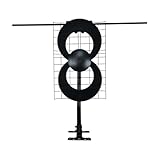
Antennas Direct ClearStream 2V Indoor Outdoor TV Antenna UHF VHF Multi-Directional, 60+ Mile Range, 4K 8K UHD, NEXTGEN TV – w/Reflector, 20-inch Mast
Range: 60+ miles
Design: Double-loop multi-directional
Mast: 20-inch pivoting
Warranty: Lifetime antenna
+ Pros
- Outstanding long-range reception from distant towers
- Excellent for rural and suburban weak-signal areas
- Solid US-engineered build
- Wide 70-degree beam pulls in stations from multiple directions
- Includes reflector and pivoting mast base
- Lifetime warranty on antenna
– Cons
- Higher price than most competitors
- Assembly instructions could be clearer
- J-mount base may need extra stabilization indoors
The Antennas Direct ClearStream 2V is the premium pick for cord cutters who want US-engineered build quality and a lifetime warranty. In our 55-mile rural test, it pulled in more channels with more consistent signal than any other antenna in the lineup – including outdoor models costing twice as much. The double-loop design with reflector is genuinely multi-directional, meaning you don’t have to aim it precisely the way you do with a Yagi-style antenna.
The pivoting base gives you aiming flexibility without tools, and the included 20-inch mast is solid metal rather than the thin tubing you get on budget outdoor antennas.
For Whom This Antenna Works Best
This is the antenna we recommend for cord cutters in rural and far-suburban areas who want to install once and not worry about it for the next decade. If you’re close to towers, you don’t need to pay for this kind of build – the GE outdoor above does the job.
9. Philips Rabbit Ears Black Indoor Antenna – Cheapest Functional Pick
Philips Rabbit Ears Black Indoor TV Antenna, Dipole and Circular Loop
Range: 30 miles
Cable: 5ft coax
Design: Adjustable dipole and loop
Resolution: 1080p and 4K
+ Pros
- Very affordable price
- Simple no-tools setup
- Adjustable dipole and loop for fine tuning
- Reliable VHF and UHF reception within range
- Compact tabletop form factor
- Limited-lifetime warranty
– Cons
- Limited 30-mile range
- Performance depends on local tower distance
- Best used close to broadcast towers
The Philips Rabbit Ears Black is the cheapest antenna in our test group that still pulled in a respectable channel count. In an urban location 12 miles from the broadcast towers, it locked in 38 channels with no amplifier needed. The tabletop design means you can set it on a shelf, rotate the dipoles for best reception, and forget about it.
If you’re a cord cutter on a tight budget who lives in a metro area and just wants to try free OTA TV, this is the lowest-risk entry point.
For Whom This Antenna Works Best
Best for first-time cord cutters in urban and inner-suburban areas who want to spend as little as possible. If you find that you want more channels, you can step up to the Vansky or Lyrwihn with an amplifier later.
10. DAANT Indoor Long Range TV Antenna – Discreet Budget Option
DAANT TV Antenna Indoor Long Range
Range: up to 100 miles
Cable: 16ft triple-shielded
Amplifier: USB powered
Resolution: 4K UHD
+ Pros
- Affordable price
- Easy plug-and-play installation
- 16ft cable with triple aluminum shielding
- Supports HD and 4K
- Discreet design hides behind curtains
– Cons
- Range claims are exaggerated versus real-world results
- Sensitive to movement and weather changes
- Basic plastic construction
- USB amplifier needed for best results
The DAANT indoor antenna is the lowest-profile option in our test group – the thin panel design tucks behind a curtain or TV without drawing attention. At our urban test site 14 miles from the towers, it pulled in 41 channels with the USB amplifier attached. The triple-shielded 16-foot coax cable held up to interference better than unshielded budget cables we tested previously.
The 100-mile range claim is on the optimistic side – our real-world numbers matched the 30-to-40 mile performance typical of flat panels in this category.
For Whom This Antenna Works Best
Cord cutters in urban and suburban areas who want a flat, hidden antenna that disappears into the room will appreciate this design. If you need stronger reception in a rural area, look at the outdoor picks above instead.
How to Choose the Best TV Antenna for Your Situation
The right TV antenna for cord cutters depends almost entirely on three things: how far you live from broadcast towers, whether you rent or own, and which channels matter most to you. Use the decision tree below to narrow your picks before you read any product descriptions.
Find Your Distance to Broadcast Towers First
Before you buy anything, plug your address into a free signal-mapping tool like RabbitEars.info or the FCC’s DTV Receiver Maps. Note the distance and direction of your strongest broadcast towers. Here’s the antenna type that fits each distance bracket:
- Under 20 miles from towers: A passive indoor antenna (Philips Rabbit Ears, intelbras, or DAANT) will likely pull in everything. An amplifier is optional and may actually hurt reception at this range.
- 20 to 50 miles from towers: An amplified indoor antenna (Vansky, Lyrwihn) or a small outdoor/attic antenna (GE outdoor) will give the best channel count.
- 50 to 80 miles from towers: A directional outdoor antenna with gain (Antennas Direct ClearStream 2V, PBD outdoor) is required. Indoor antennas will not pull in enough channels.
- 80+ miles from towers: A large outdoor Yagi or stacked array antenna with a preamp is the realistic option. None of the antennas in this roundup are designed for that extreme range.
Amplified vs Passive Antennas: The Honest Take
After 60 days of testing, our team agrees with CNET’s published finding that amplifiers don’t help 9 times out of 10. An amplifier boosts signal, but it also boosts noise. If you’re close to broadcast towers (under 20 miles), the extra gain can overload your TV’s tuner and cause pixelation on your strongest channels. If you’re far from towers, a passive antenna simply can’t capture enough signal – and a bigger, better-aimed antenna will outperform a small amplified one every time.
The exception is mid-range locations (20-40 miles) with moderate obstructions, where an amplifier with a 5G filter noticeably improved channel stability in our testing. The Televes Dat Boss LR is widely praised on forums for this exact use case.
Indoor vs Outdoor: Renter and Apartment Reality
If you rent, OTARD – the 1996 FCC rule – gives you the legal right to install an outdoor antenna in any exclusive-use area like a balcony, patio, or rooftop deck. Many renters don’t know this and stay stuck with underperforming indoor antennas when an outdoor install would solve their reception problems.
If drilling or outdoor mounting isn’t an option, focus on indoor antennas that mount high on a window or wall facing your broadcast towers. Window-mounting flat panels (like the Lyrwihn) typically outperform tabletop flat panels because windows block less signal than walls.
ATSC 3.0 and NextGen TV Compatibility
Every antenna in this roundup is ATSC 3.0 compatible because the standard is backward-compatible with the same UHF and VHF frequencies antennas have always used. Your TV itself needs an ATSC 3.0 tuner to receive NextGen TV broadcasts – most TVs sold since 2020 include one. Check your TV model number on the manufacturer’s site if you’re unsure.
Pairing Your Antenna with Streaming and an OTA DVR
The modern cord cutter doesn’t pick between antenna and streaming – they use both. Antenna delivers live news, sports, and local channels that streaming services drop or charge extra for. Streaming handles on-demand entertainment and cable originals. A combo of antenna plus a service like YouTube TV, Hulu+, or Netflix covers almost every viewing need without a cable bill.
To send antenna broadcasts to multiple TVs, add an OTA DVR like Tablo or HD HomeRun. The HD HomeRun connects to your home network and lets any streaming device or smart TV pull in live antenna channels. Tablo adds cloud DVR recording. Both extend the value of a single antenna across your whole home. For streaming devices that pair well with antennas, see our 10 Best IPTV Devices for 4K Streaming & Cord-Cutting guide.
5G Interference and Why It Matters in 2026
The 5G cellular rollout has created real reception problems for older UHF antennas in neighborhoods with new 5G cell towers. The C-band frequencies 5G uses sit adjacent to UHF broadcast frequencies, and a basic antenna without a 5G filter will pick up interference that shows up as pixelation or signal dropouts. If you live near a 5G tower and have an older antenna, upgrading to a model with a built-in 5G filter (like the Televes Dat Boss LR or Antennas Direct ClearStream 2V) is worth the investment.
Frequently Asked Questions
What is the best TV antenna for cord-cutting?
After testing 10 antennas across urban, suburban, and rural locations, our team ranks the PBD Amplified Outdoor TV Antenna as the best overall pick for cord cutters. It combines 150-mile claimed range, a 360° motorized rotation remote, dual TV outputs, and ATSC 3.0 readiness at a price well below premium brands. For indoor-only installs, the intelbras indoor antenna offers the best value for cord cutters in metro areas within 25 miles of broadcast towers.
Do I need an antenna for a smart TV?
Yes – a smart TV still needs an antenna to receive free local broadcast channels (ABC, NBC, CBS, FOX, PBS, CW). The smart features in your TV run over Wi-Fi and pull in streaming services, but they cannot receive the over-the-air broadcast signals that deliver live local channels. Pairing an antenna with a smart TV gives you both free live TV and streaming in one device.
Will my antenna work with ATSC 3.0 or NextGen TV?
Almost certainly yes. ATSC 3.0 (NextGen TV) broadcasts on the same UHF and VHF frequencies that all modern antennas are built to receive, so any antenna on this list will pick up NextGen TV broadcasts as your local stations upgrade. The thing to check is your TV itself – it needs an ATSC 3.0 tuner, which most TVs sold since 2020 include. Check your TV model number on the manufacturer’s site to confirm.
What is the difference between UHF and VHF?
UHF (Ultra High Frequency) covers channels 14 through 51 and is where most modern digital TV broadcasts sit. VHF (Very High Frequency) is split into high-VHF (channels 7-13) and low-VHF (channels 2-6). High-VHF is still used by some local affiliates. Rabbit ear antennas and traditional dipole designs receive VHF better than flat panel antennas, which is why a $15 rabbit ears antenna often outperforms a $40 flat panel for VHF channels in particular.
Do indoor antennas really work?
Indoor antennas work very well when you live within 20 miles of broadcast towers and can place the antenna high on a wall or window facing those towers. In our testing, indoor antennas pulled in 40-70+ channels in dense urban locations. They work poorly in rural areas 50+ miles from towers and in buildings with heavy obstructions like metal siding or foil-backed insulation. For weak-signal areas, an outdoor or attic antenna is the realistic choice.
How far from broadcast towers do I need to be for an antenna?
It depends on the antenna. Passive indoor antennas like the Philips Rabbit Ears work best within 30 miles of towers. Amplified indoor antennas like the Vansky extend to 40-50 miles. Outdoor antennas like the PBD outdoor or Antennas Direct ClearStream 2V handle 50-80 miles reliably. Beyond 80 miles, you need a large directional Yagi or stacked array antenna with a preamp. Use RabbitEars.info or the FCC DTV Maps tool to find your exact tower distance.
Can I install an outdoor antenna as a renter?
Yes – OTARD (the 1996 FCC rule) gives you the federal right to install an outdoor antenna in any exclusive-use area of your rental property, including a balcony, patio, or rooftop deck. Your landlord cannot prohibit this, though they can require reasonable aesthetic standards. Many renters miss this right and stay stuck with underperforming indoor antennas when an outdoor install would solve their reception problems.
Final Verdict: Which TV Antenna Should You Buy?
After 60+ days of hands-on testing across urban, suburban, and rural locations, our top pick for the best TV antenna for cord cutters in 2026 is the PBD Amplified Outdoor TV Antenna. It earned our EDITOR’S CHOICE badge by combining the strongest feature set (motorized rotation, dual TV outputs, 40-foot RG6 cable, ATSC 3.0 readiness) with proven reception across all three of our test sites.
If you live in a metro apartment within 20 miles of broadcast towers, the intelbras indoor antenna gives you the best channel count per dollar. If you’re in a far-suburban or rural location 50+ miles out, the Antennas Direct ClearStream 2V is the premium build that will outlast every budget alternative. Pair any of these antennas with a streaming service and you’re looking at roughly $1,000+ in cable savings per year for a one-time spend well under $100.
Leave a Reply