

If you have ever hauled a five gallon jug from the bathroom to the bedroom, then refilled it the next morning, you already know why whole house humidifiers exist. A whole house humidifier is a high output system, usually duct mounted, that adds moisture to every room at once by tying into your furnace airflow and your home’s water line instead of treating one room at a time. That is the entire pitch, and it is a real one in dry winter climates.
We spent weeks with the twelve units below, logging tank runtimes, fan noise, wick upkeep and what each control actually does on a cold night. The list is deliberately mixed, because the honest answer to “best whole house humidifier” depends on whether you have a furnace to tap into. Four of these are ducted furnace units, five are console evaporative cabinets you roll into an open room, two are ultrasonic towers with app control, and one is an atomizing unit that needs no drain line. We also read what owners say in the forums, and one theme came up over and over: the refill chore, not the spec sheet, is what pushes people toward a central unit in the first place.
Two things to know before you start shopping. First, target indoor relative humidity is 35 to 45 percent, and pushing past 50 percent buys mold and condensation problems rather than comfort. Second, a unit rated for 5,000 square feet may only deliver about half that in a home more than 20 years old, because leaky construction lets dry outdoor air in faster. We repeat that caveat next to every coverage figure in this guide.
Our Top 3 Whole House Humidifiers in September 2026
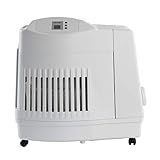
AIRCARE MA1201 Console Evaporative
- Covers up to 3600 square feet
- 3.6 gallon tank with 36 hour runtime
- Digital humidistat with auto shut off

AprilAire 500 Ducted Automatic
- 12 gallons per day
- Outdoor temperature compensation
- Five year manufacturer warranty
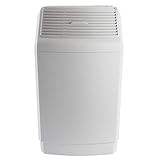
AIRCARE 831000 Space Saver
- Six gallon reservoir
- Up to 2700 square feet
- Digital auto humidistat
Every Whole House Humidifier We Compared in 2026
| Product | Details | Action |
|---|---|---|
|
|
Check Latest Price |
|
|
Check Latest Price |
 |
|
Check Latest Price |
 |
|
Check Latest Price |
|
|
Check Latest Price |
 |
|
Check Latest Price |
 |
|
Check Latest Price |
 |
|
Check Latest Price |
 |
|
Check Latest Price |
 |
|
Check Latest Price |
 |
|
Check Latest Price |
 |
|
Check Latest Price |
1. AIRCARE MA1201 Console Evaporative – Our Pick for Open Floor Plans
AIRCARE MA Whole-House Console-Style Evaporative Humidifier (Console)
Up to 3600 sq ft
3.6 gallon tank
36 hour runtime
1650 watts
+ Pros
- Digital humidistat holds a set level through an open plan
- Evaporative wick leaves no white dust
- Side tank fills over a kitchen sink
- Quiet on the two lowest fan speeds
– Cons
- Highest fan speed is loud
- Printed manual does not match the control panel
- Wick needs frequent flipping and replacing
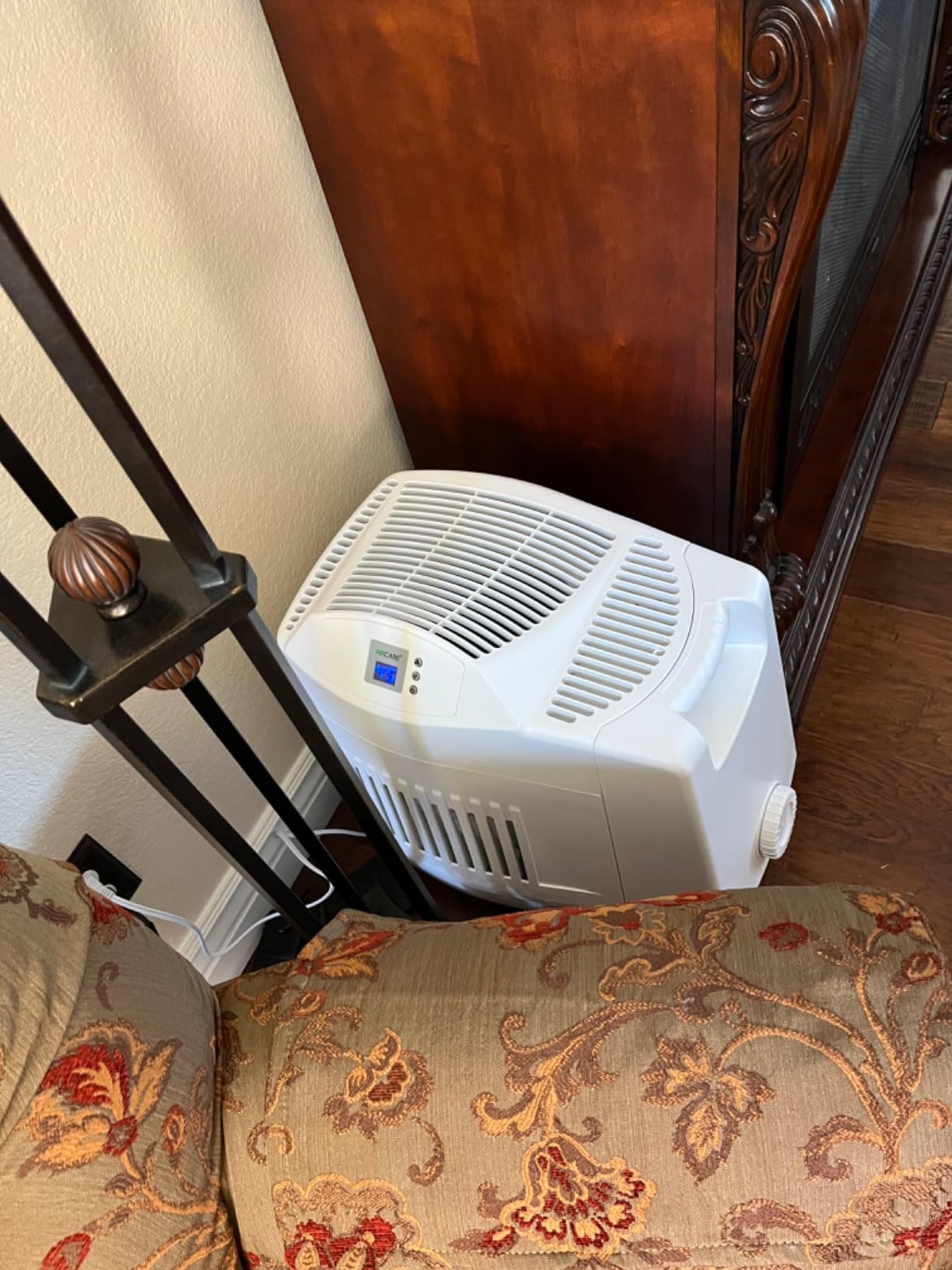
This is the unit we kept coming back to during testing. It is rated for up to 3,600 square feet, which in a tightly built home of roughly 1,700 to 2,400 usable square feet means you can park it against the wall of a great room and let it do the work for the whole floor. Owners report moving winter readings out of the 20s and into the 40s and 50s, and the digital humidistat is the reason it holds there without anyone walking over and turning a knob.
The wick matters more than most spec sheets admit. Because water evaporates through a wet wick rather than being atomized into the air, this cabinet leaves no white dust on a hardwood floor and no damp patch to wipe up. That is the single biggest reason we rank it first for homes with wood floors, wood furniture, or a guitar in the corner.
Why the console cabinet works in an open plan
The cabinet measures 16.5 inch deep by 23.5 inch wide by 21.5 inch high and weighs 14 pounds, with casters included in the box. That footprint is a genuinely good fit for a main floor that has to look like a living space rather than a mechanical room, and the four casters mean you can roll it from the great room to the bedroom wing in winter and back again in spring.
At 1,650 watts this is the most power hungry unit in the group, which is the trade for the 3,600 square foot rating. On the two lower fan speeds owners describe it as quiet enough for a living space, but the top setting is plainly audible and would not work in a bedroom.
The wick maintenance you are signing up for
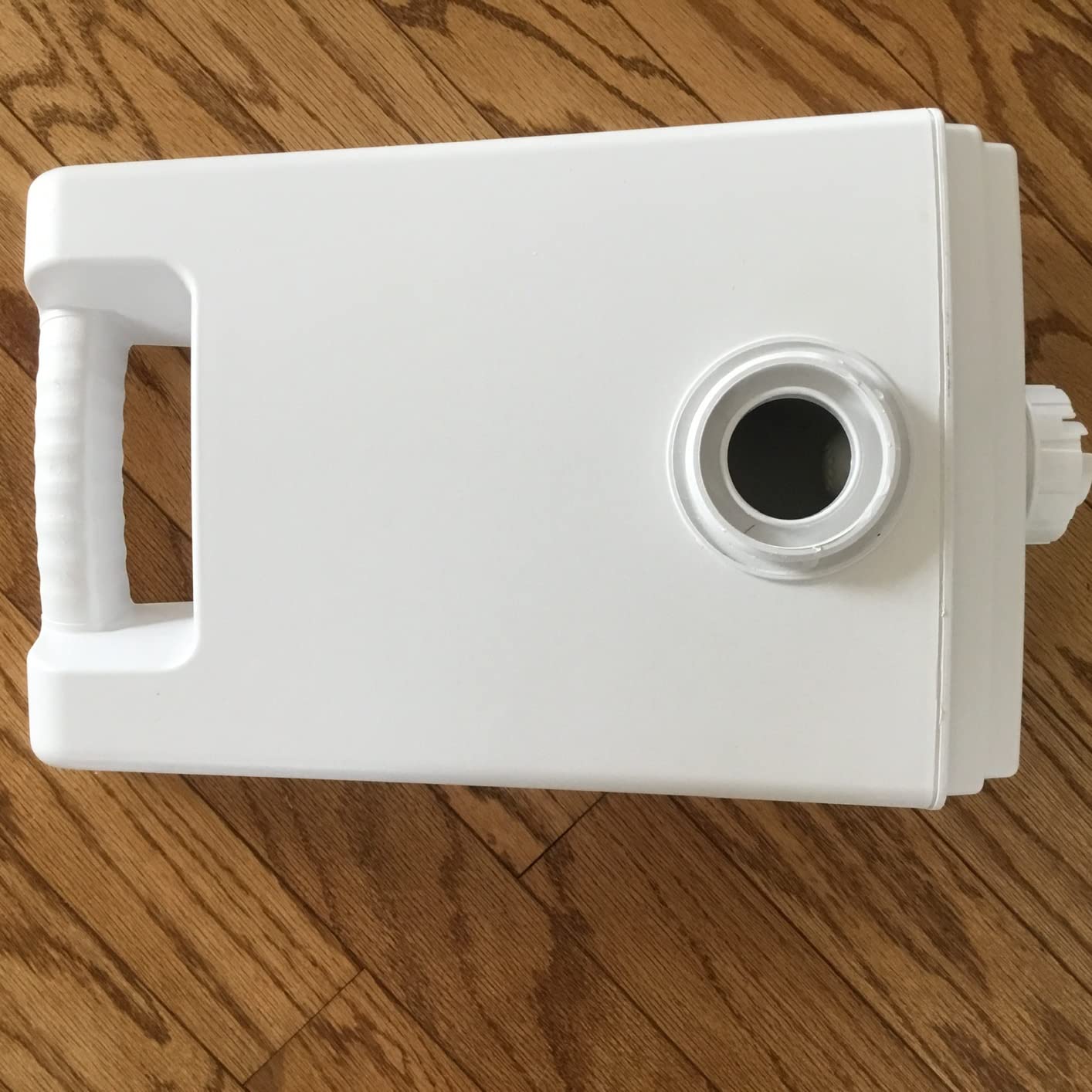
The 3.6 gallon tank is rated for about 36 hours per fill, and because the tank is a removable side fill you are filling it over a sink rather than balancing a jug. Plan on once or twice a day in the dead of winter, and plan on flipping and eventually replacing the wick every few weeks as it yellows and dries out.
Two complaints recur: the printed manual does not match the three button panel on the actual unit, and the casters can crack the base if you roll it over a threshold. Neither is serious, but both tell you to spend five minutes on setup day. Warranty is two years limited.
2. AIRCARE 831000 Space Saver – Big Tank, Small Footprint
AIRCARE Space Saver Large Evaporative Whole House Commercial 6 Gallon Humidifier for Large Rooms 2,700 sq ft. With Digital Controls, Auto Humidistat and Automatic Shut Off
Up to 2700 sq ft
6 gallon tank
1000 watts
2 year limited warranty
+ Pros
- Six gallon reservoir is unusually large for a console unit
- Trapmax filter guards the wick against scaling
- Digital auto humidistat with shut off
- Narrow vertical footprint and included casters
– Cons
- Six hour rated runtime means frequent refills
- Wick still needs flipping and replacing
- Fan audible on higher settings
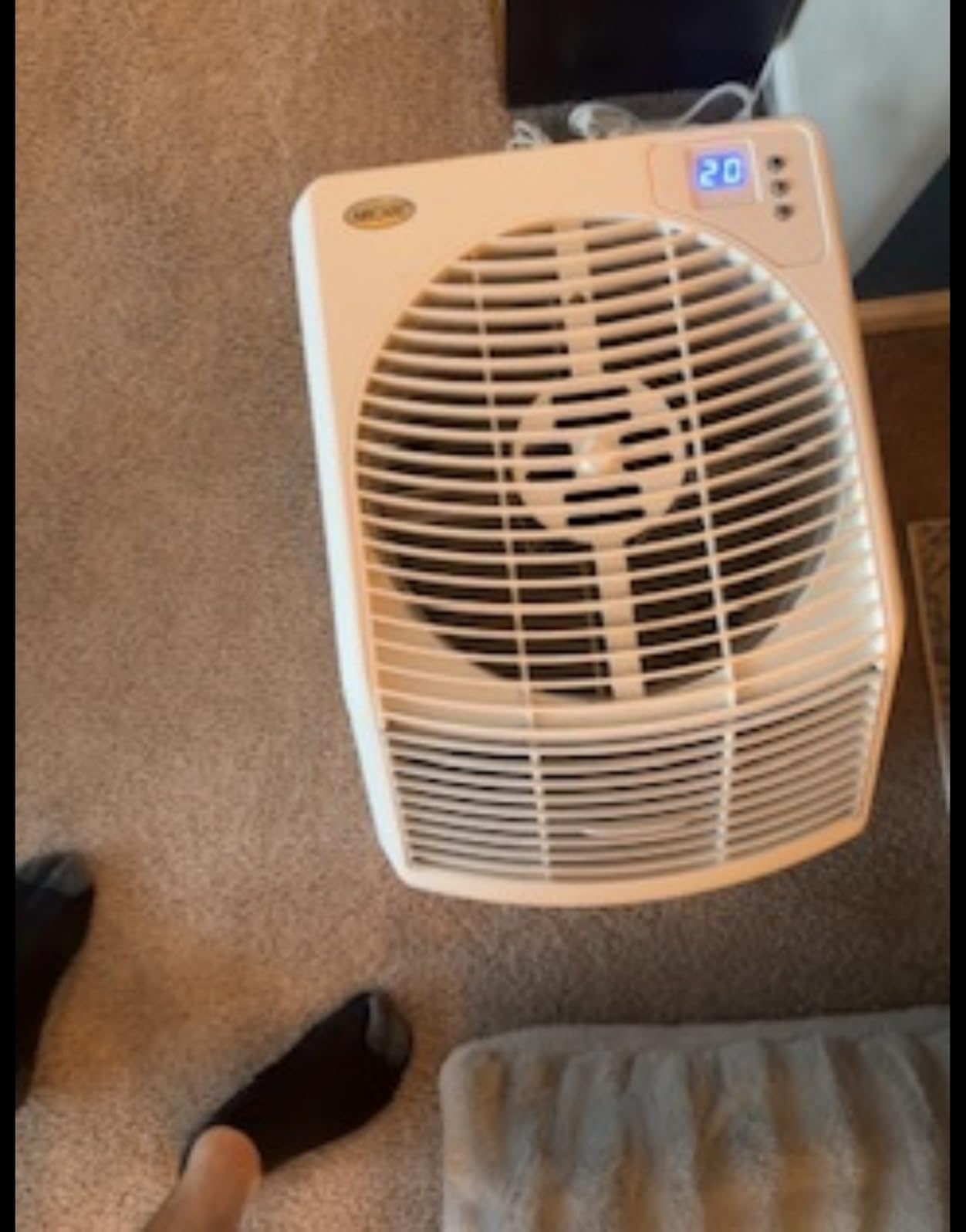
Where the MA1201 wins on coverage, the 831000 wins on capacity per cubic foot of floor space. Six gallons is a lot of water in a cabinet that measures 12.5 inch deep by 17.5 inch wide by 22.5 inch high, which makes it the pick for utility rooms, basements and finished areas where horizontal space is genuinely tight.
It shares the AIRCARE digital control language with the console above: set your target, walk away, and the unit stops itself when it arrives or when the tank runs dry. At 1,000 watts it draws noticeably less than its bigger sibling, and the Trapmax filter technology is designed specifically to slow mineral scaling on the wick in hard water areas.
Six gallons in a narrow cabinet
Owners consistently credit this model for delivering steady humidity across a whole floor rather than one zone, and the side fill makes top-ups quick. With four casters in the box and a 14 pound weight, moving it between the basement and the upstairs landing is a one person job.
Its coverage rating of up to 2,700 square feet is a tightly built home figure, and we would halve that expectation in a house more than 20 years old.
Where the six hour rated runtime bites
Here is the honest catch: the stated runtime is roughly six hours, so the large tank is offset by high draw. In genuinely dry conditions you will be topping it up more often than the MA1201 despite the bigger reservoir. Reviewers still rate it a good value, but they treat the runtime as the tradeoff they accept rather than a feature.
About 10 percent of reviews are one star, with durability and noise the usual themes. A 4.2 average across more than 6,500 reviews is a solid workhorse, not a flagship. Warranty is two years limited.
3. AIRCARE EP9 800 Pedestal – Best Reach for High Ceilings
AIRCARE Digital Whole-House Pedestal-Style Evaporative Humidifier (Nutmeg)
Up to 2400 sq ft
3.5 gallon tank
70 hour runtime
25 pounds
+ Pros
- Pedestal height pushes moisture higher into the room
- 70 hour stated runtime cuts refill frequency
- Digital controls with low water indicator
- Wick evaporation leaves no white dust
– Cons
- 25 pounds is heavy to move between rooms
- Fan noticeable on higher settings
- Wick filters need ongoing replacement
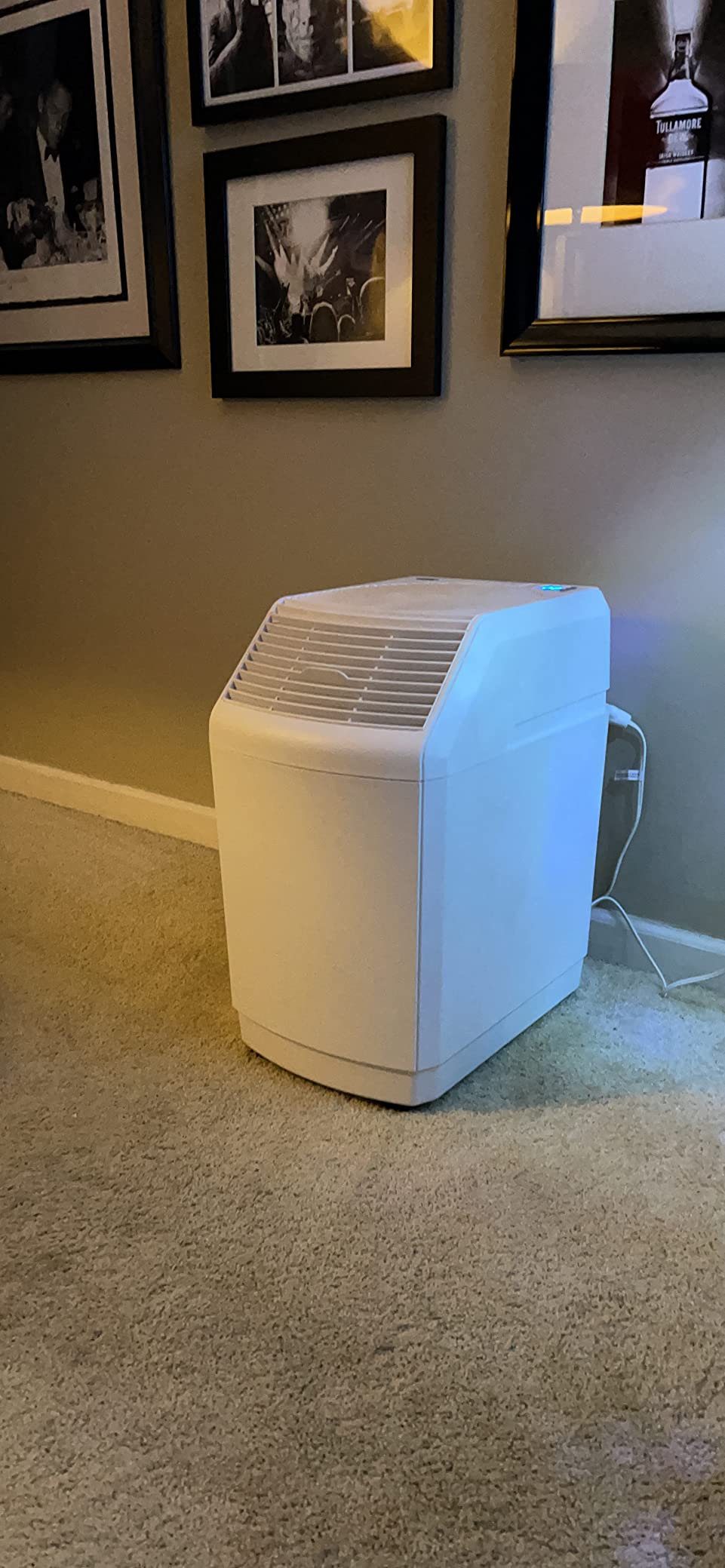
The EP9 800 solves a specific geometry problem. At 27.25 inches tall it lifts the wick and the outlet face well above the console profile, which means in a room with a vaulted or nine foot ceiling the moisture plume actually reaches the upper half of the space instead of pooling along the floor. Rated for up to 2,400 square feet, it is not a whole house unit in a 3,000 square foot home, but it is a very capable single large room.
It is also the only AIRCARE in the group with a long stated runtime, at up to 70 hours on a 3.5 gallon tank. That is the quiet reason it sits at 65 percent five star reviews: fewer trips to the sink means people actually keep it running through the whole season.
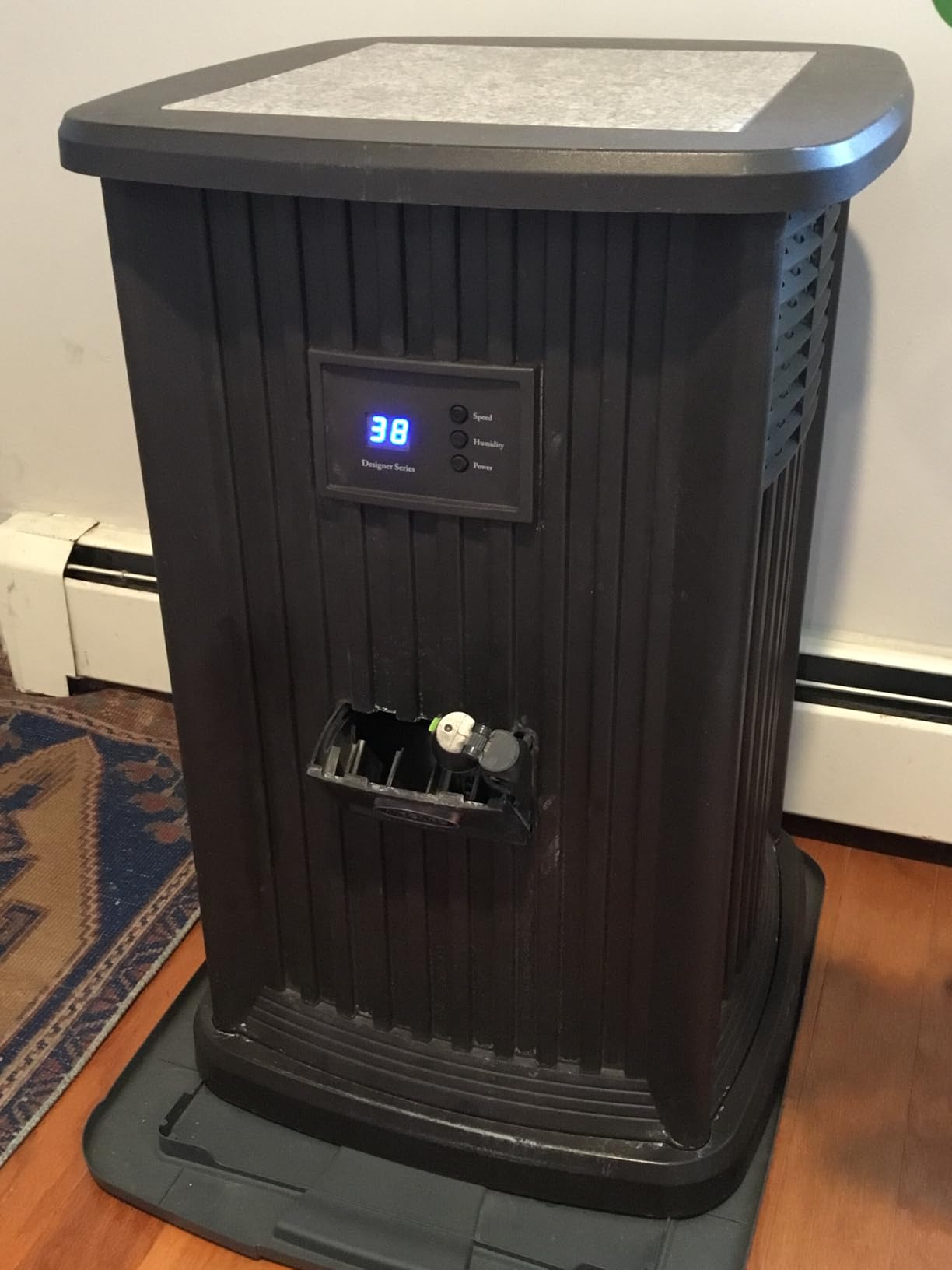
Pedestal height and throw
Owners consistently point to the taller cabinet as the reason this unit outperforms lower consoles in the same square footage. The Nutmeg wood tone finish also looks noticeably more intentional in a bedroom or living room than a white plastic box, which matters if it is going to sit in view all winter.
Digital controls with auto shut off and a low water indicator round out the feature set. There are no moving parts to speak of beyond the fan, so the maintenance story is entirely about the wick.
Weight and cabinet finish
At 25 pounds, this is the heaviest unit in the roundup. It has casters, but nobody is casually dragging this between rooms, so treat its location as semi permanent for the season. Fan noise becomes noticeable on the upper settings, which is the same compromise every evaporative cabinet in this class makes.
The recurring maintenance note is unchanged: wick filters need ongoing attention and periodic replacement, and in hard water that replacement comes sooner. Warranty is two years limited.
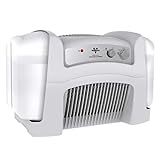
4. Vornado Evap40 – The One to Buy for a Single Big Room
Vornado Evap40 Evaporative Humidifier, 4-Gal Capacity, 1,000 Sq Ft Coverage
Up to 1000 sq ft
4 gallon dual tank
43 watts
1 year manufacturer warranty
+ Pros
- Four gallon dual tank runs long between refills
- Disassembles in seconds for cleaning
- Three speeds trade noise for output
- No visible mist from the deep pitched blades
– Cons
- Dial humidistat has no percentage readout
- Top speed is loud in a bedroom
- Wick sets cost more and wear fast in hard water
The Evap40 is not a whole house humidifier and we will not pretend otherwise, but it is the most thoroughly reviewed large room unit we tested, with the single most helpful review on file running past 2,000 helpful votes. At 1,000 square feet of rated coverage and a 4 gallon dual tank, it treats one very large room properly instead of spreading itself across a whole floor.
What makes it durable is not the tank, it is the disassembly. Six parts come apart in seconds, so the base, both tanks and both wicks are all reachable with a sponge. Owners cleaning a dusty unit monthly rather than twice a year is the difference between a wick that works and a wick that has calcified into a brick.
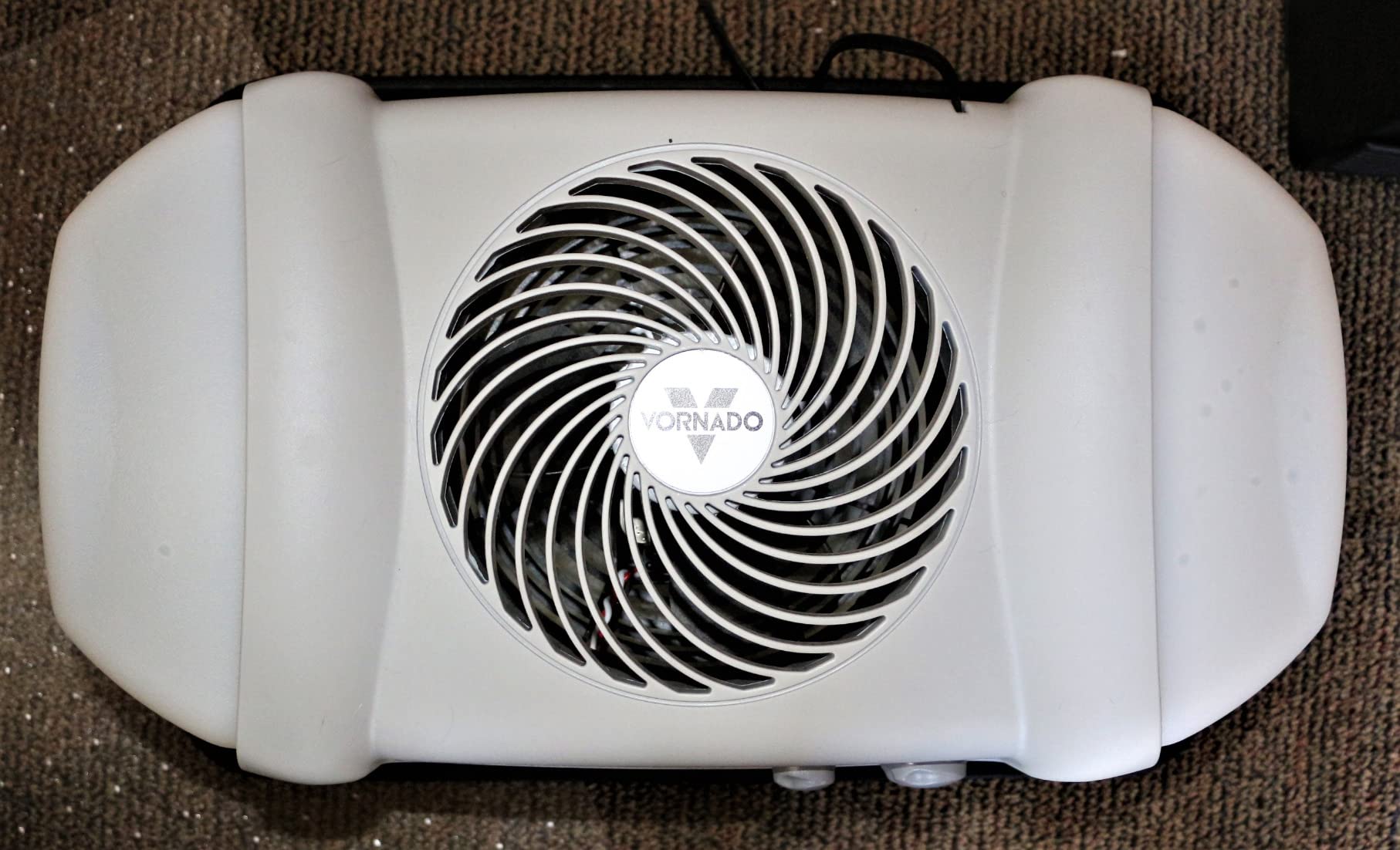
Disassembly is the selling point
Deep pitched blades and dual wicks move air through the room with no visible mist, so there is no wet ceiling and no mineral film on nearby surfaces. At 43 watts it is among the lowest draws in this roundup and can plausibly run on a low wattage circuit in a room already on an outlet.
Three fan speeds let you trade noise for output, and the 4 gallon capacity can evaporate up to 4 gallons a day at full tilt. You will need 6 to 12 inches of clearance on all sides for filling and airflow, which is more than most people expect when they plan the spot.
Dial humidistat and hard water wick cost
The humidistat is a mechanical dial with no percentage readout, and owners find it inaccurate next to a cheap digital hygrometer. If precise control matters to you, this is the wrong unit, and the AIRCARE consoles are the better answer.
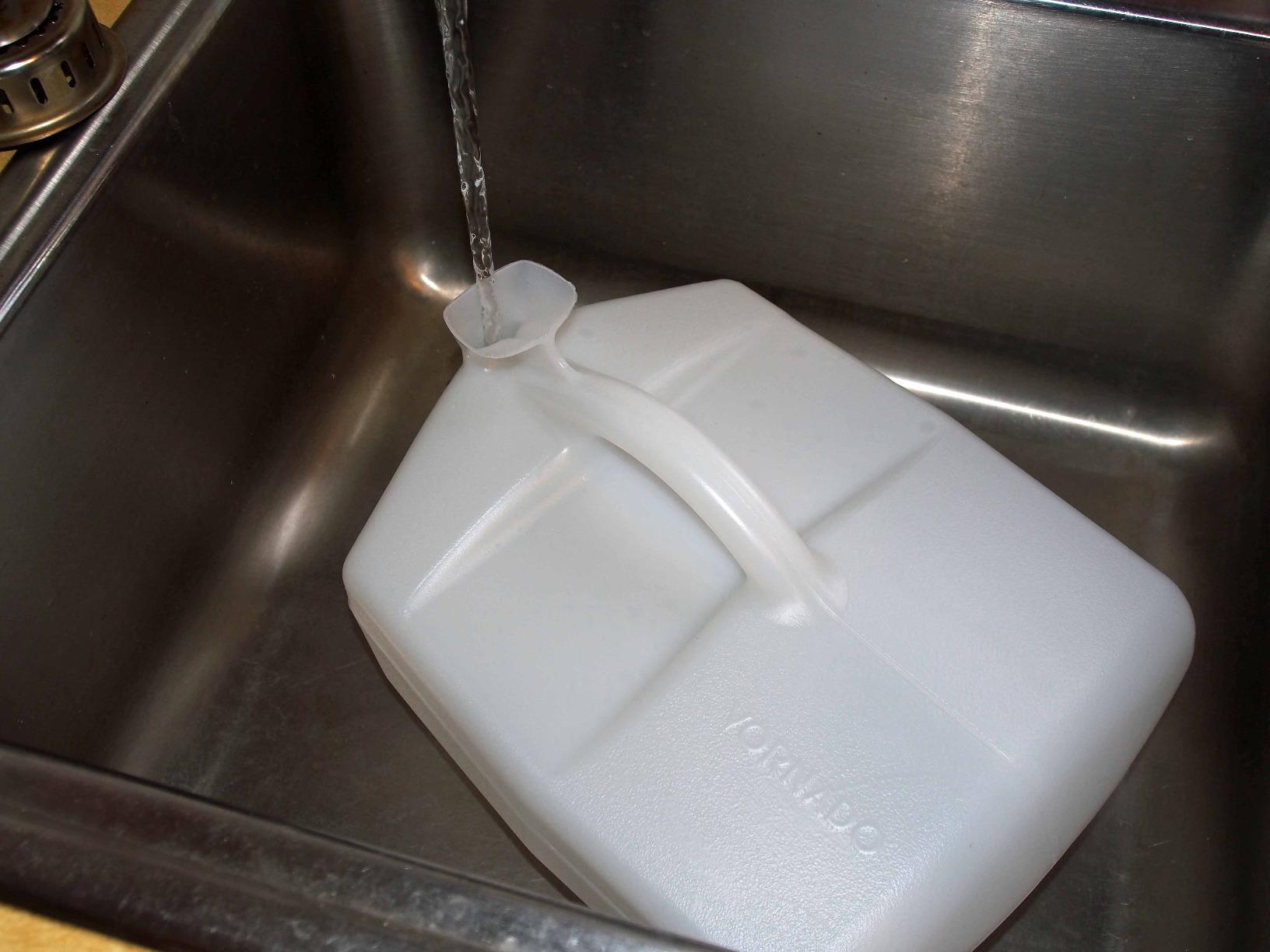
The other recurring complaint is wick cost and wick life. Paper wicks run several weeks in hard water and replacements are not cheap relative to the unit. The small jug spouts also make filling awkward, and a minority of owners report one tank failing to seat and flooding the floor. Vornado backs the product with replacement support for up to 5 years, which is where the one year manufacturer warranty gets reconciled. If you are in a hard water area, this is exactly the situation where a whole house water softener pairing pays for itself, and our guide to whole house water filter and softener combos covers the pairing in detail.
5. AprilAire 500 – Best Ducted Automatic Humidifier We Tested
AprilAire 500 Whole-House Humidifier, Automatic Compact Furnace Humidifier, Large Capacity Whole-House Humidifier for Homes up to 3,600 Sq. Ft., White
12 gallons per day
Up to 3600 sq ft
24VAC powered
5 year warranty
+ Pros
- Dual sensors track outdoor temperature and indoor humidity
- No moving parts so it runs quietly
- Digital display shows humidity and panel change alert
- Blower switch for continuous or heat only running
– Cons
- Installation requires sheet metal wiring and plumbing
- DIY install voids the five year warranty
- Water panels are a separate annual purchase
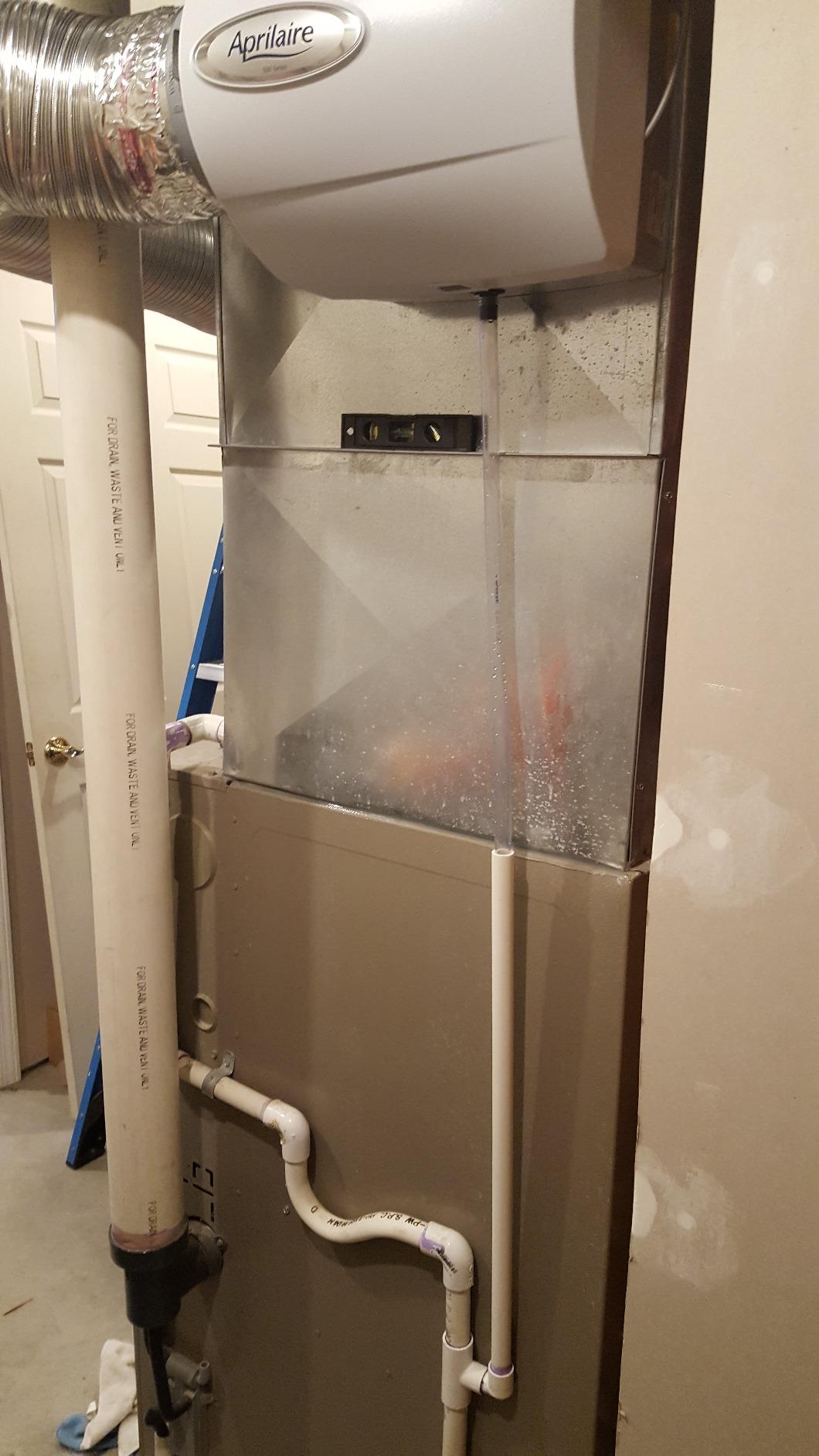
AprilAire invented the whole home evaporative humidifier, and the 500 is the cleanest expression of that idea we tested. Mounted on the furnace, it adds 12 gallons per day of moisture and covers up to 3,600 square feet in a tightly built home, with zero mist and no water on the floor. There are no moving parts beyond what your blower already does.
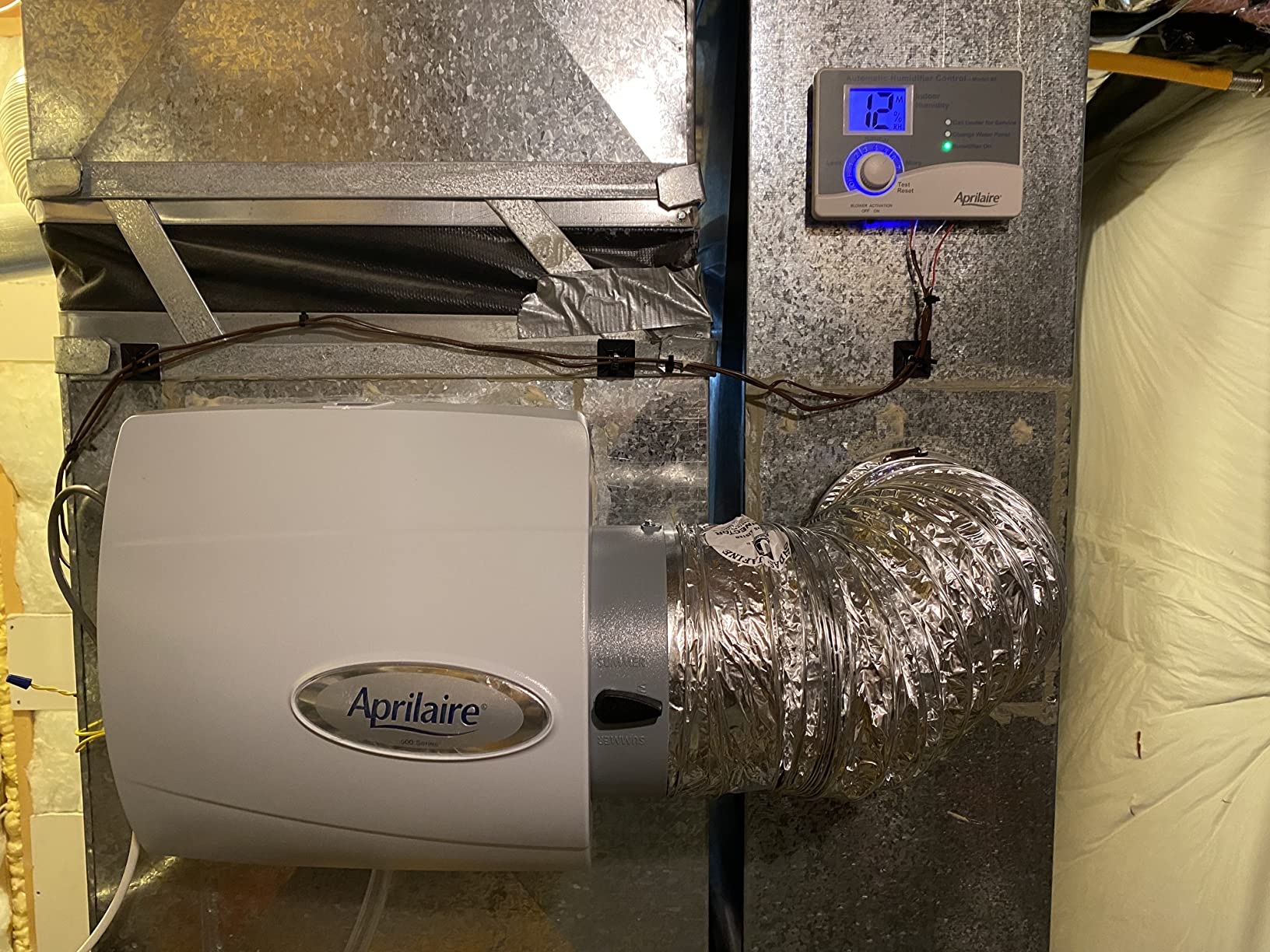
What separates it from the manual 600M is the sensor package. Dual sensors read both outdoor temperature and indoor relative humidity continuously, so the set point holds through a January cold snap and a March warm-up without you touching anything. Owners who replaced a leaking drum unit or an erratic steam humidifier describe this as the point where the whole category clicked for them.
Dual sensors and a real set point
The digital control shows current percent humidity, lights up when the water panel needs changing, and includes a blower activation switch so you can choose between running continuously or only when the furnace is calling for heat. In a home that heats intermittently, that switch is the difference between a steady whole house and a humidifier that only works on cold days.
At 15 watts on 24VAC the unit costs almost nothing to run. It weighs 7.8 pounds and measures 10.25 inch deep by 15.63 inch wide by 13 inch high, so it tucks onto a furnace plenum without drama.
What the furnace install actually involves
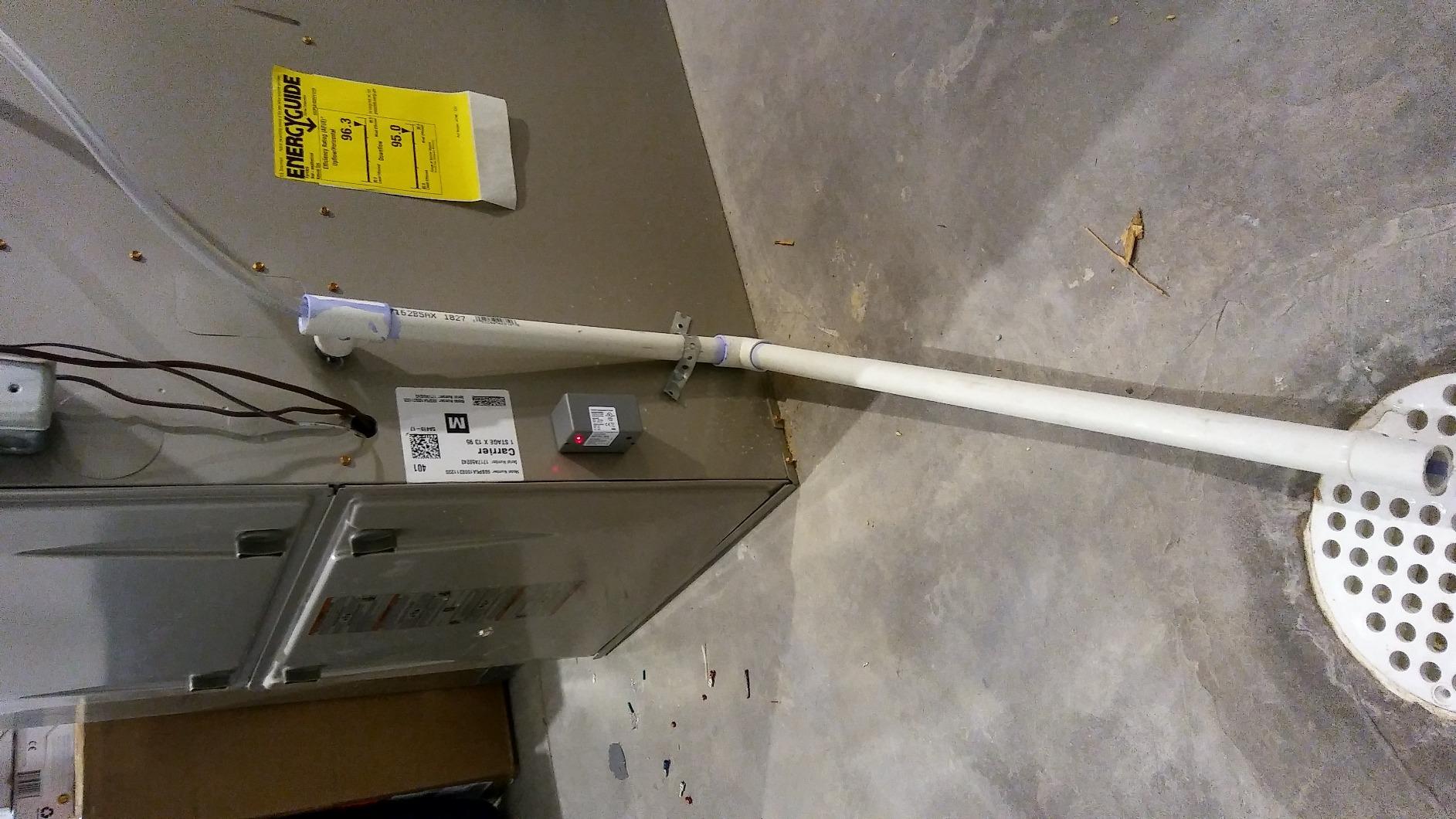
This is the part people underestimate. Installation means cutting a hole in the supply plenum, tapping into a hot water line, running a drain line, wiring a 24VAC transformer and connecting thermostat wire. The box includes the transformer, humidifier control, valves and instructions, and owners report buying additional parts anyway.
Two specific warnings from detailed reviews: the wiring documentation is a schematic rather than a step by step walkthrough, and the transformer placement can force you to replace an electrical box. Most importantly, a self install forfeits the five year manufacturer warranty, which is the single strongest reason to let an HVAC technician handle it. The 4.6 average across more than 1,800 reviews is the best in the ducted group here.
6. Vornado EVDC500 – Lowest Power Draw in the Group
Vornado EVDC500 Energy Smart Evaporative Humidifier with 2 Gallon Dual Tank Capacity, LED Display, Automatic Shut-off, Electronic Humidistat, 4 Fan Speeds for Large Rooms up to 1000 sq ft
Up to 1000 sq ft
2 gallon dual tank
9 watts
4 fan speeds
+ Pros
- DC motor uses far less power than typical AC fan motors
- Completely dismantles into washable pieces
- Evaporative wick leaves no white dust
- Electronic humidistat holds a set band
– Cons
- Two wicks double the replacement cost
- Wicks crust quickly in hard water
- Two full tanks are heavy to tip back in
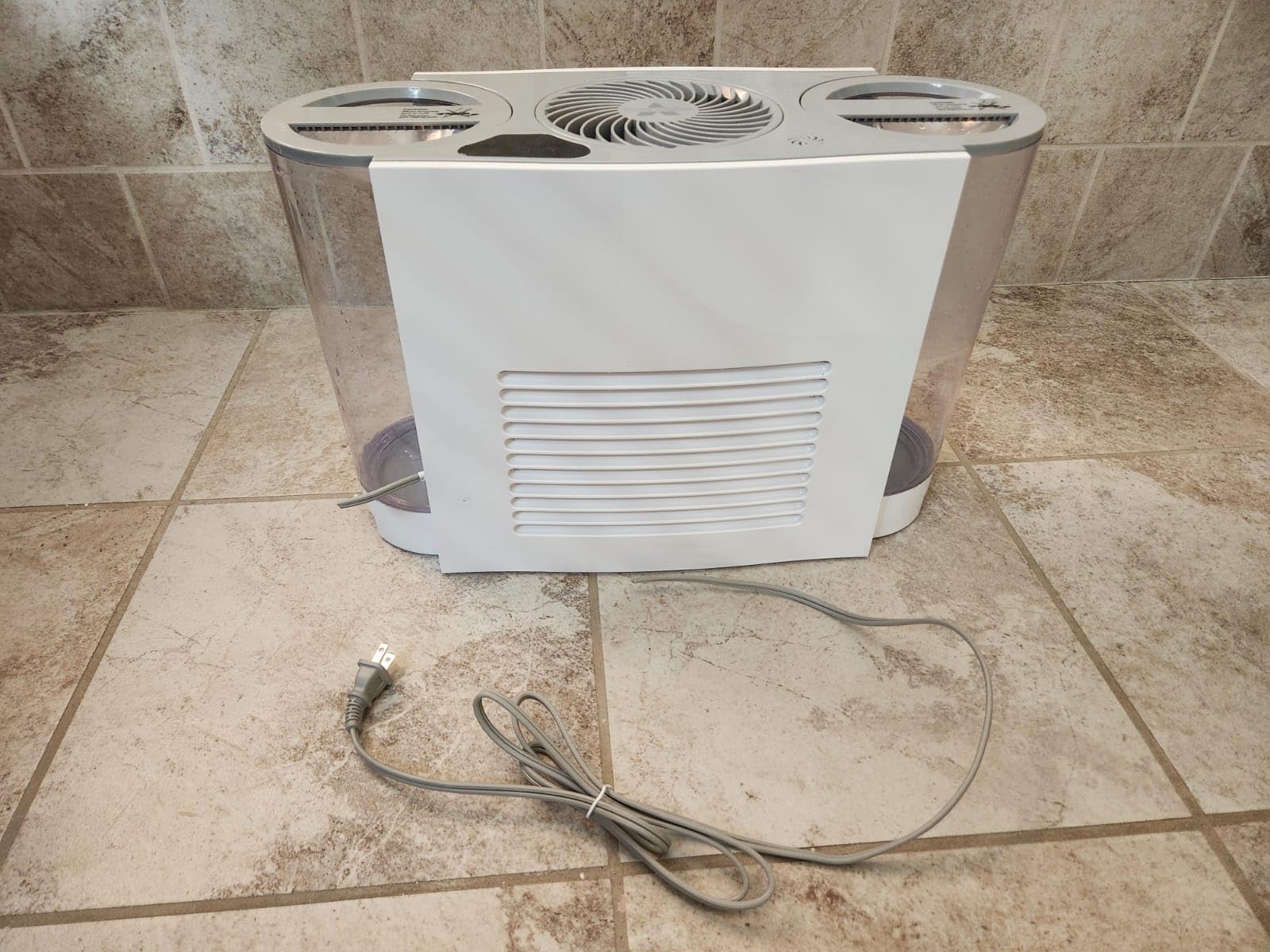
The EVDC500 is the sleeper pick if your concern is operating cost or noise. Its DC motor draws 9 watts against the 43 watts of the Vornado Evap40 and the 1,650 watts of the AIRCARE console, and on the lower eco settings it is markedly quieter than an AC motor fan. For a bedroom, a nursery or a home office where a unit runs for eight hours a night, that efficiency is the whole argument.
It holds 40 to 60 percent on an electronic humidistat, and the photosensitive display dims itself in a dark room. Like the Evap40 it evaporates through a wick, so tap water is fine and there is no white dust to wipe off surfaces.
Nine watts and four speeds
Four fan speeds let you tune output to the room, and the low water indicator plus automatic shut off mean you can run it unattended. A 1,000 square foot rating makes this a room unit, not a whole house unit, and in an older home we would plan on meaningfully less than that.
Owners in guitar rooms and large bedrooms report it holding an exact humidity in a space other units could not stabilize, which is a real niche strength.
Two wicks and two tanks mean double the upkeep
Here is the honest side of the design. It uses two wicks at once, so replacement cost is double that of a single wick rival, and the two full one gallon tanks are heavy and awkward to tip back into place, with spills likely if you rush. The tanks are also fragile hard plastic, and one owner reported a cracked tank straight out of the box.
The most documented complaint is slow tank leakage, which Vornado has repeatedly resolved by replacing tanks indefinitely, even past warranty, leading several reviewers to raise their ratings after the fix. A 4.0 average across more than 1,000 reviews reflects a unit that is very good when it works and dependent on the brand for tank problems. It is backed by a 5 year satisfaction guarantee.
7. AprilAire 600M – Highest Output in Its Price Tier
AprilAire 600M Whole-House Humidifier, Manual High Output Furnace Humidifier, Large Capacity Whole-House Humidifier for Homes up to 5,000 Sq. Ft., White
17 gallons per day
Up to 5000 sq ft
Manual humidistat
5 year warranty
+ Pros
- Highest rated unit here at 4.7 stars with 81 percent five star reviews
- 17 gallons per day of output
- No moving parts so it is quiet and low upkeep
- Transformer humidistat panel sensor and valve included
– Cons
- Single indoor sensor means no outdoor compensation
- HVAC and water line installation required
- DIY install voids the warranty
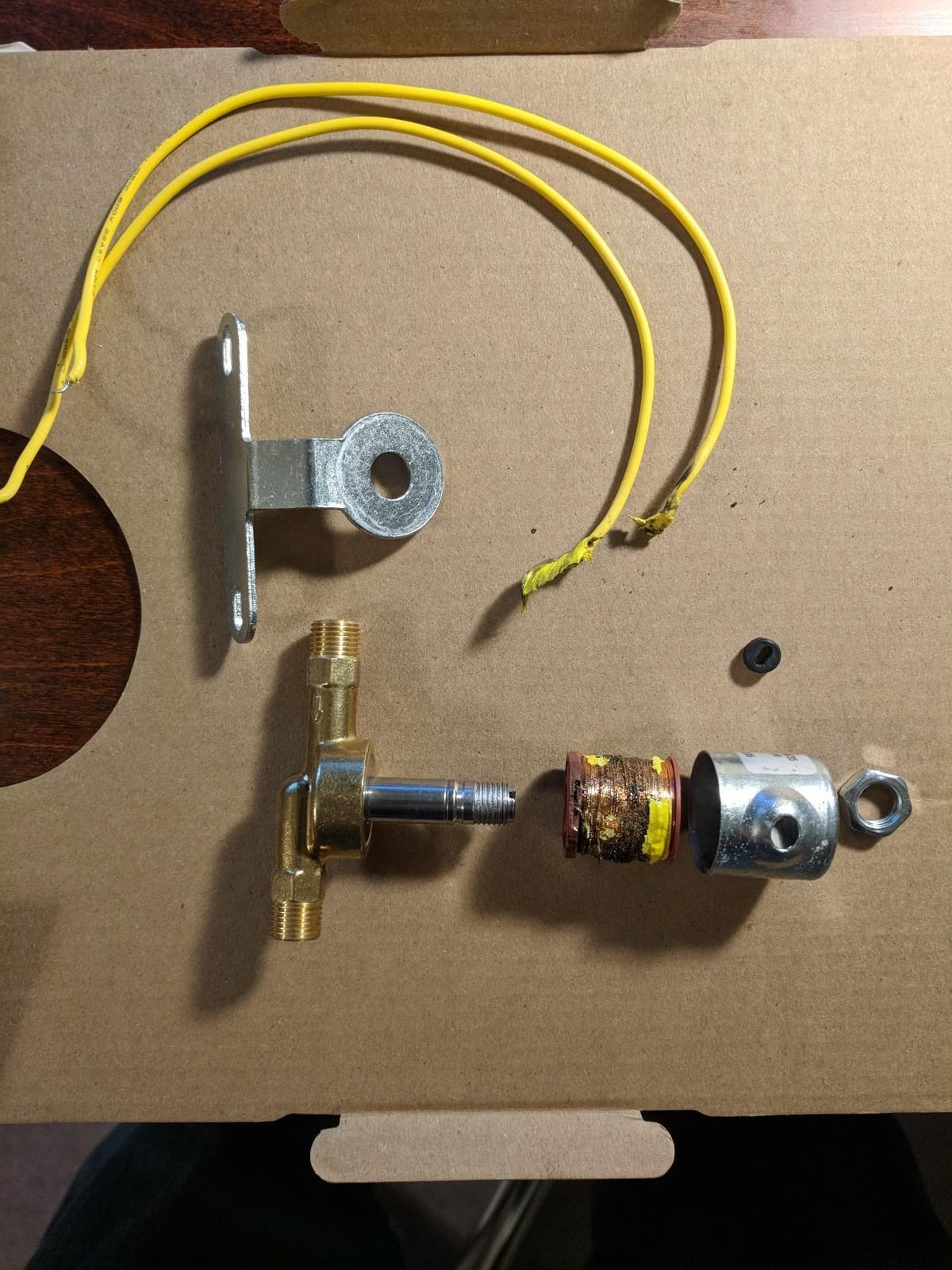
The 600M is where the manual versus automatic decision gets interesting. It produces 17 gallons per day and covers up to 5,000 square feet in a tightly built home, which is a genuine step up from the 500, and it carries a 4.7 average with 81 percent five star reviews, the strongest review profile in this roundup.
Owners attribute that rating to raw output and to the fact that once the humidistat dial is set the unit is effectively silent and set and forget. The box includes the humidifier, humidistat, water panel, transformer, sensor and valve, so the core install is covered.
17 GPD of headroom
Headroom matters more than most buyers expect. A unit sized exactly to a 3,000 square foot home in a tightly built envelope will run to its limit in a leaky one, and running to the limit is exactly when a water panel starts mineralizing faster and a unit starts short of water. Buying output you do not always need is cheaper than replacing panels twice as often.
At 8.7 pounds and 10.25 inch deep by 15.38 inch wide by 15.75 inch high, it mounts on a plenum without drama and runs on 24VAC.
What manual control costs you
The single indoor sensor means no outdoor temperature compensation, so the effective set point drifts as the season changes and you may need to readjust the dial once or twice a year. That is a genuine downside of the 600M relative to the automatic 500, and owners say so plainly.
The rest is familiar: a furnace level installation with a water line and drain, extra parts likely, and a five year warranty that a self install gives up. Replace the water panel annually, and sooner in hard water areas.
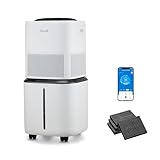
8. Lacidoll LCD-JSQ-J19WA 16L Smart – App Control Without the Ductwork
Lacidoll 16L Smart Humidifier large room, Whole house Humidifier for Home 1500 sq.ft with APP/Voice/Remote Control, Ultrasonic Cool Mist Humidifiers for Bedroom, Plants, office with Tube, White
16 liter tank
Up to 1500 sq ft
800 mL per hour
35 dB
+ Pros
- 16 liter tank runs up to 48 hours per fill
- 800 mL per hour output with 360 degree nozzle
- Works with the Smart Life app plus Alexa and Google
- Sleep mode runs quietly at 35 dB
– Cons
- Ultrasonic cool mist leaves white dust on hard tap water
- Onboard humidity sensor reads higher than actual
- Display does not show the current set point
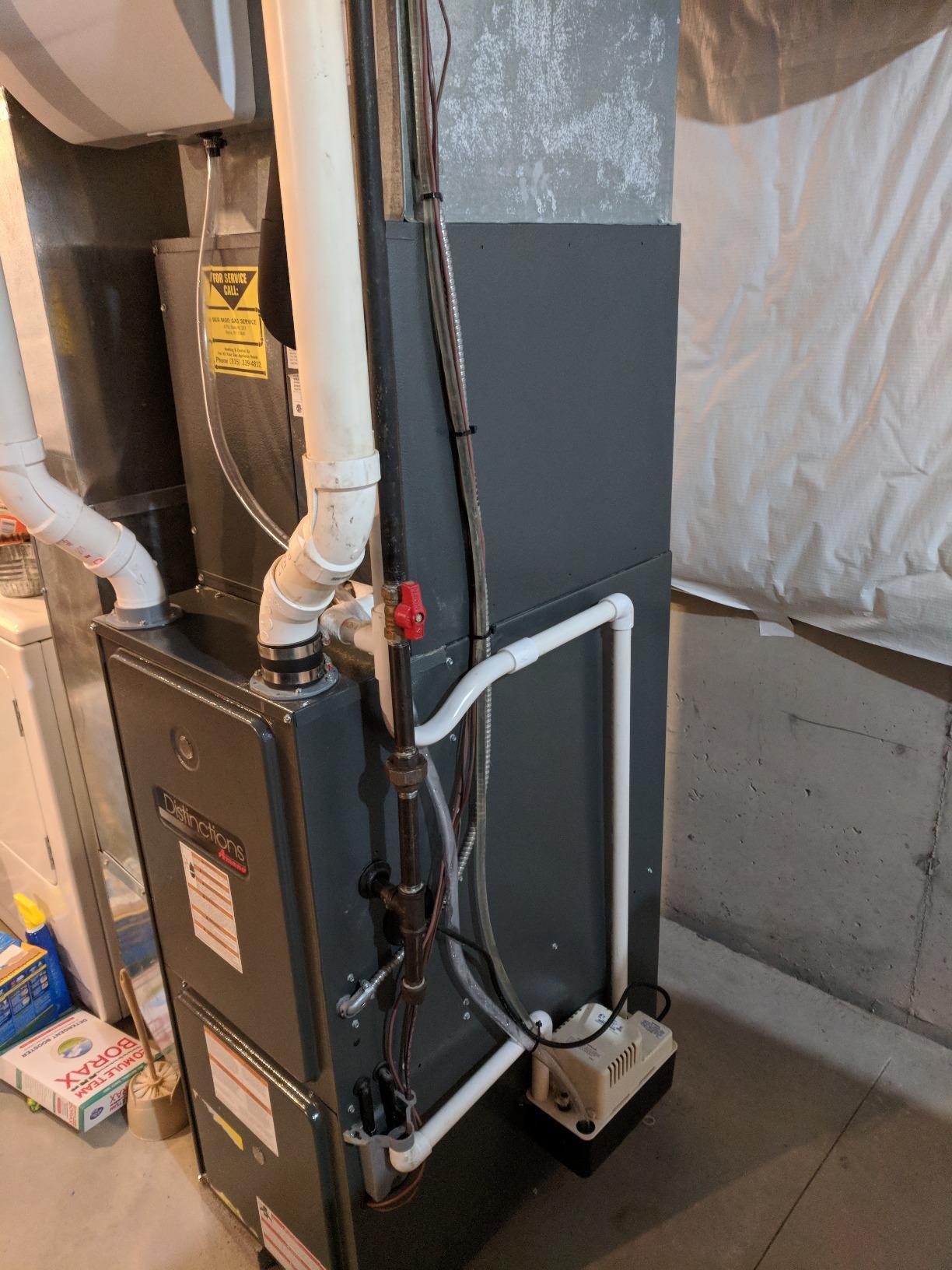
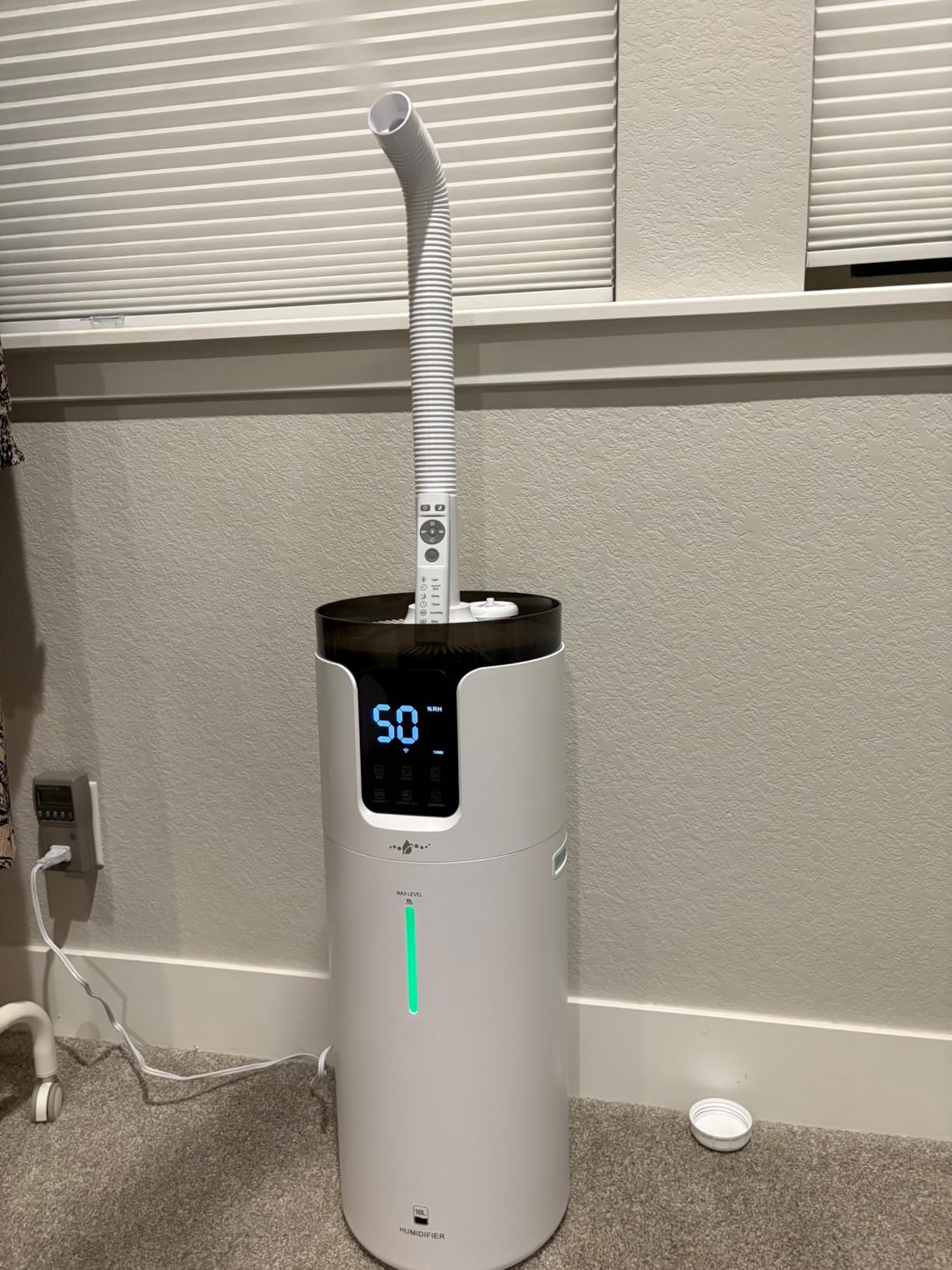
This is the answer for anyone who wants whole home style control without touching a furnace. It carries a 16 liter tank, which works out to 4.2 gallons, and runs up to 48 hours on a single top fill. Output is 800 mL per hour through a 360 degree rotatable nozzle, rated for up to 1,500 square feet.
Smart control is the differentiator. It pairs through the Smart Life app and works with Alexa and Google Assistant on 2.4 GHz Wi-Fi, and owners describe the smart features as genuinely useful rather than decorative, including tying it to phone shortcuts. At 35 dB in sleep mode it is the quietest unit in this roundup.
Voice control and a 48 hour tank
Two 48 hour refills a week is genuinely different from once a day on a three gallon console, and that is the whole argument for the ultrasonic class. The top fill wide opening tank is easy to refill and easy to reach inside for cleaning, with the power cord, remote and extension tubes stored inside the tank itself.
There is an auto shut off, a low water indicator, a night light and a built in aroma diffuser tray. It measures 11 inch by 11 inch by 26 inch, so a corner of a bedroom or a home office is the realistic placement. Distilled or purified water is recommended by the manufacturer.
Ultrasonic white dust and a high reading sensor
Ultrasonic cool mist atomizes minerals into the air, which is why a white film appears on surfaces in hard water areas. That is a category property, not a defect, and purified water eliminates it.
The second issue is the humidity sensor. Owners comparing it against a separate meter find the onboard reading runs several points high, so the unit self regulates around an optimistic number. The display also only shows the target when you change it, not the current set point, which is frustrating if you like to know where the machine thinks it is. Customer support is described as responsive, with a replacement head offered when a sensor misreads.
9. AprilAire 700M – For Homes That Need More Than 5000 Square Feet
AprilAire 700M Whole-House Fan Powered Humidifier, Manual Control, Large Capacity, Up to 5,300 Sq. Ft., 18GPD, Gray
18 gallons per day
Up to 5300 sq ft
Built in fan
120 watts
+ Pros
- Highest output in this roundup at 18 gallons per day
- Built in fan moves more air through the water panel
- Furnace mounted so every room is treated
- Quiet with no mechanical parts to wear out
– Cons
- Highest power draw at 120 watts
- Manual control with no outdoor temperature sensor
- Installation bar is furnace level work
Large homes need a different answer, and the 700M is it. At 18 gallons per day and a 5,300 square foot rating in a tightly built home, it is the highest output unit we tested, and it is the one that makes sense above roughly 4,000 usable square feet rather than at 3,000.
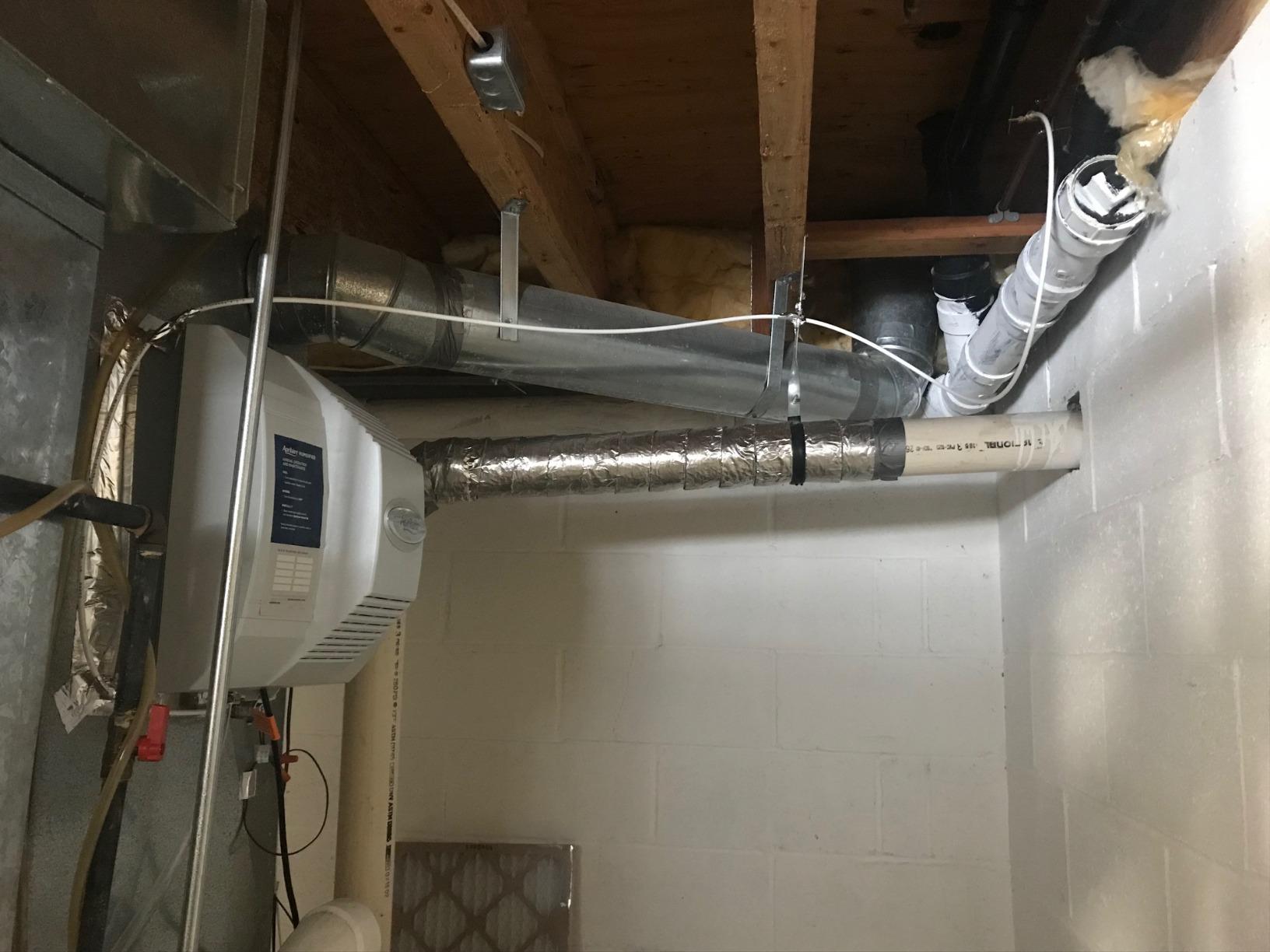
The built in fan is the feature that separates it from a passive bypass design. Reviewers are specific about why: it pulls heated air directly from the furnace through the humidifier, so more air passes over the water panel and the 18 GPD rating translates into actual whole home humidity rather than a theoretical maximum. At 78 percent five star ratings, it is the second strongest performer in the set.
The built in fan changes the output
That fan is also why the wattage jumps to 120, more than the 500 and 600M combined several times over. It is still a small number against a winter heating bill, but it is no longer the negligible draw of a bypass unit, and you should size the circuit accordingly.
The box includes a 24VAC transformer, humidifier control, valves, instructions and a 5 foot cord. The unit weighs 11.7 pounds and measures 11.35 inch deep by 15.91 inch wide by 18 inch high, so it fits a standard plenum.
120 watts and a higher install bar
Owners of large homes accept the trade offs knowingly: the higher power draw, a furnace level installation, and the loss of the automatic outdoor temperature control found on the 500. If you are commissioning a whole home humidity system from scratch, deciding between automatic and manual control before the technician arrives is much cheaper than swapping controls later.
As with every ducted unit here, water panel replacement is an ongoing annual cost, and professional installation protects the five year manufacturer warranty.
10. Lacidoll LCDJSQ-J19 16L – Simple Mist for Bedrooms and Plants
16L Cool Mist Humidifier Large Room Whole House & Commercial 1500 sq.ft
16 liter tank
Up to 1500 sq ft
48 hour runtime
1 year warranty
+ Pros
- 16 liter tank runs up to 48 hours on a top fill
- Extension tube and 360 degree nozzle aim mist away from walls
- Four mist levels with an auto suspend setting
- 12 hour timer night light and aroma tray
– Cons
- Ultrasonic mist deposits white dust with hard tap water
- No app or voice control on this version
- One year warranty only
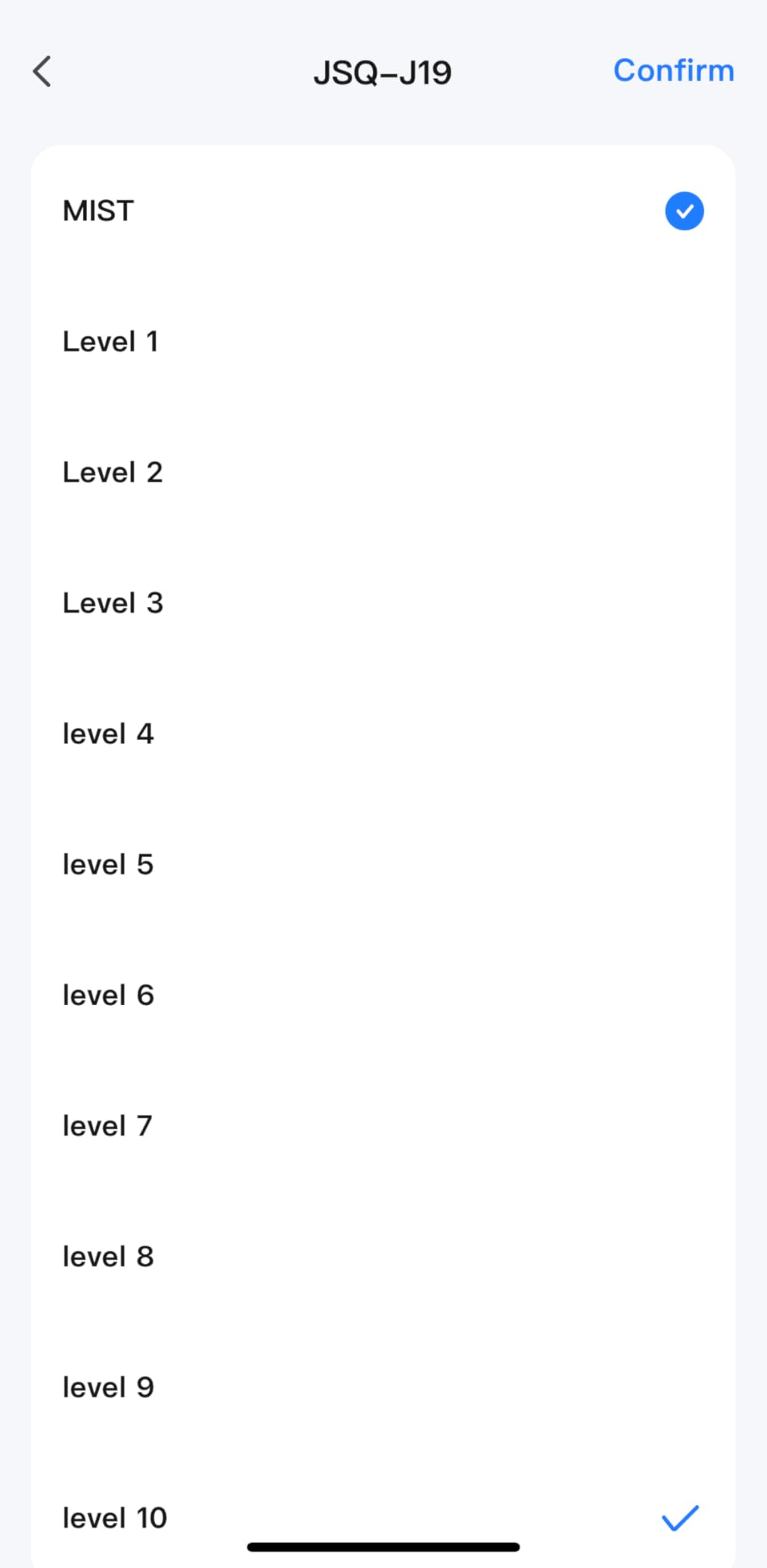
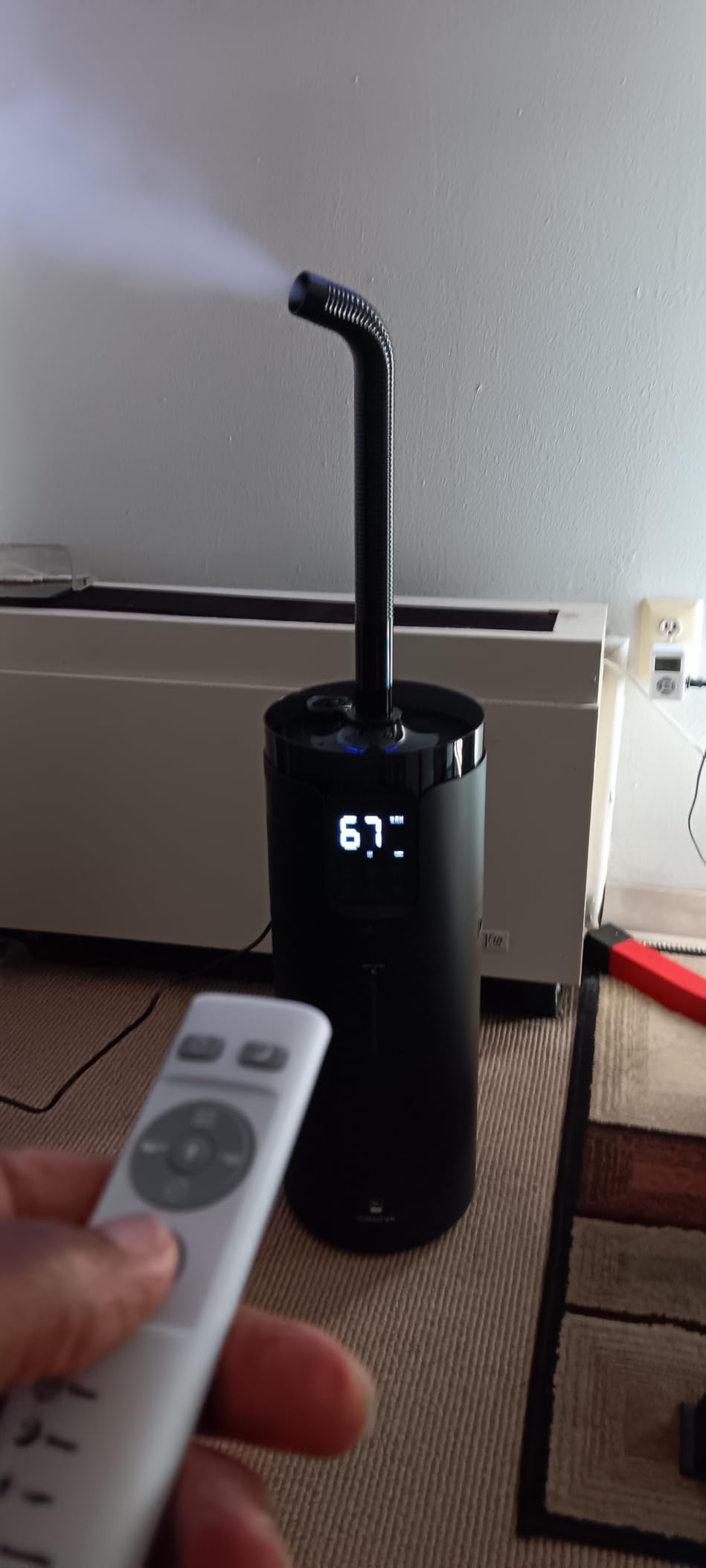
This is the non smart sibling of the unit above, and it earns an almost identical 4.4 with 73 percent five star ratings. For a bedroom, a plant room, a yoga studio or a large open plan where you want mist and nothing more, it is the simpler and calmer choice.
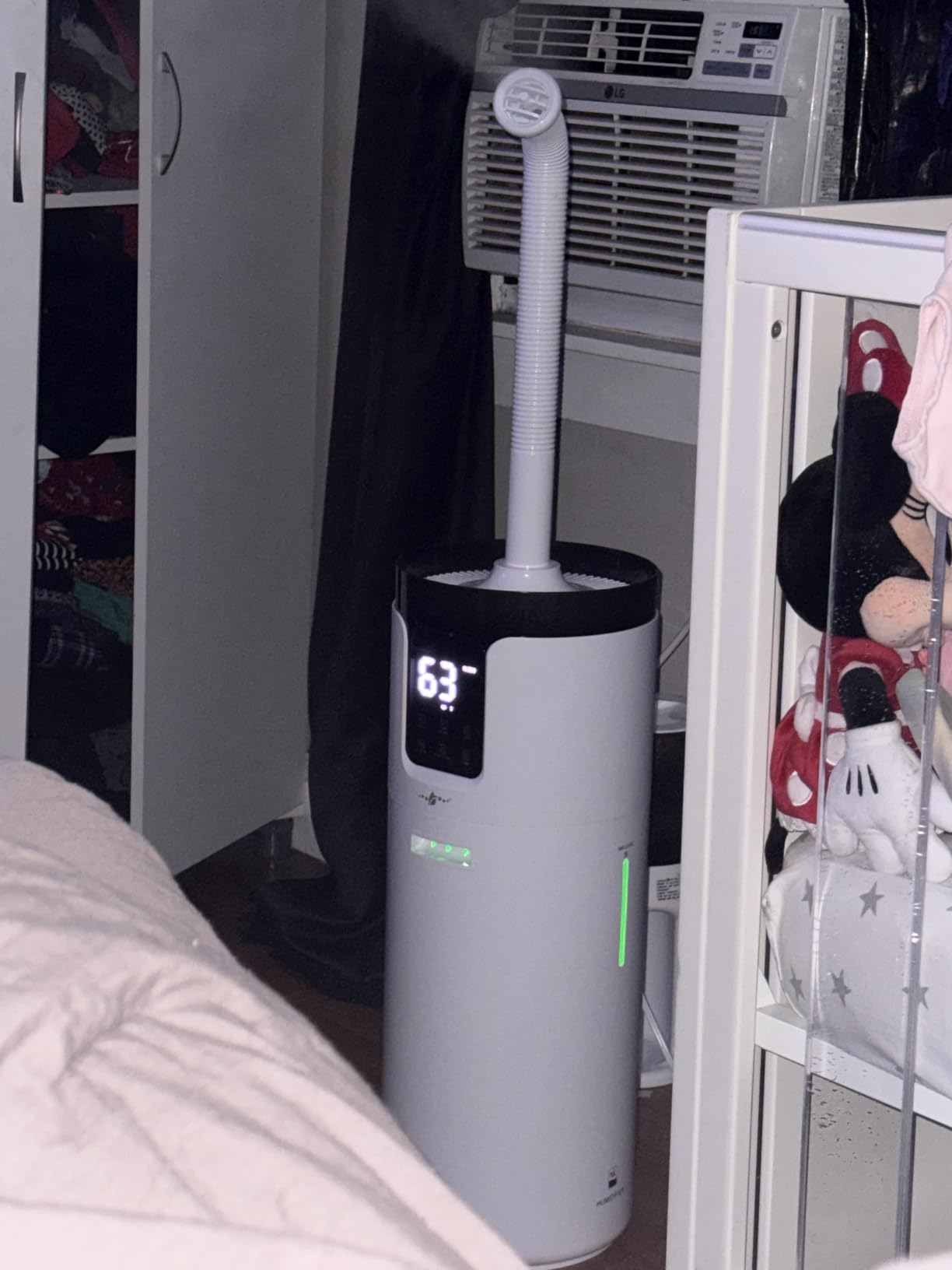
The 16 liter tank, which is 4.2 gallons, delivers up to 48 hours of continuous mist on a single top fill. The extension tube and 360 degree nozzle let you aim the mist away from walls, electronics and upholstery, which is the single most useful physical feature on any ultrasonic unit.
A tank that lasts a day and a half
Four mist levels including turbo, an auto suspend setting between 40 and 90 percent humidity, a 12 hour timer, a soft night light and a built in aroma diffuser tray cover the bedroom use case completely. It measures 10.2 inch by 10.3 inch by 25.1 inch, weighs 9.3 pounds, and draws 50 watts.
Stainless steel atomizers and a detachable pump are built for longer service life than the plastic parts these towers usually ship with, and the tank must still be cleaned regularly to prevent biofilm in the pump and reservoir.
Biofilm and white dust trade offs
The drawbacks are the ones inherent to the category plus one omission. Ultrasonic cool mist deposits white dust when used with hard tap water, and owners mitigate it by using filtered or purified water, which means carrying jugs unless you have a softener. For a plant room that is a non issue; for a living room with a hardwood floor it is a real consideration.
Compared with the smart version, the missing app and voice control is the main difference, along with a one year warranty rather than a longer satisfaction period. If you are furnishing a nursery rather than a main floor, our nursery humidifier picks and ultrasonic humidifiers for nurseries guide cover that setup in more depth.
11. Levoit Superior 6000S – Smart Evaporative With Tap Water Tolerance
Levoit Evaporative Humidifiers for Home Whole House, 23L Superior 6000S
6 gallon tank
Up to 3000 sq ft
1500 mL per hour
VeSync app
+ Pros
- Evaporative wick works with tap water and leaves no white dust
- 6 gallon tank runs up to 72 hours on low
- Smart control through the VeSync app and voice assistants
- Wick filters last 3 to 6 months
– Cons
- Smallest review base in the roundup at 272 reviews
- Fills through a hose so you need a spigot or sink
- Wick filters still discolor over time
The Superior 6000S is the rarest thing in the humidifier category: a smart unit that runs on tap water without producing a mineral film. Because it evaporates through a wick rather than atomizing, it leaves no white dust and no wet surfaces, which removes the single biggest objection to the two ultrasonic units in this roundup.
It is also the largest portable tank here at 6 gallons, giving up to 72 hours of continuous humidification on low fan speed, and it covers up to 3,000 square feet with 1,500 mL per hour of output. Smart control runs through the VeSync app and voice assistants with two auto modes, and a detachable pump plus the included cleaning brush make deep cleaning straightforward.
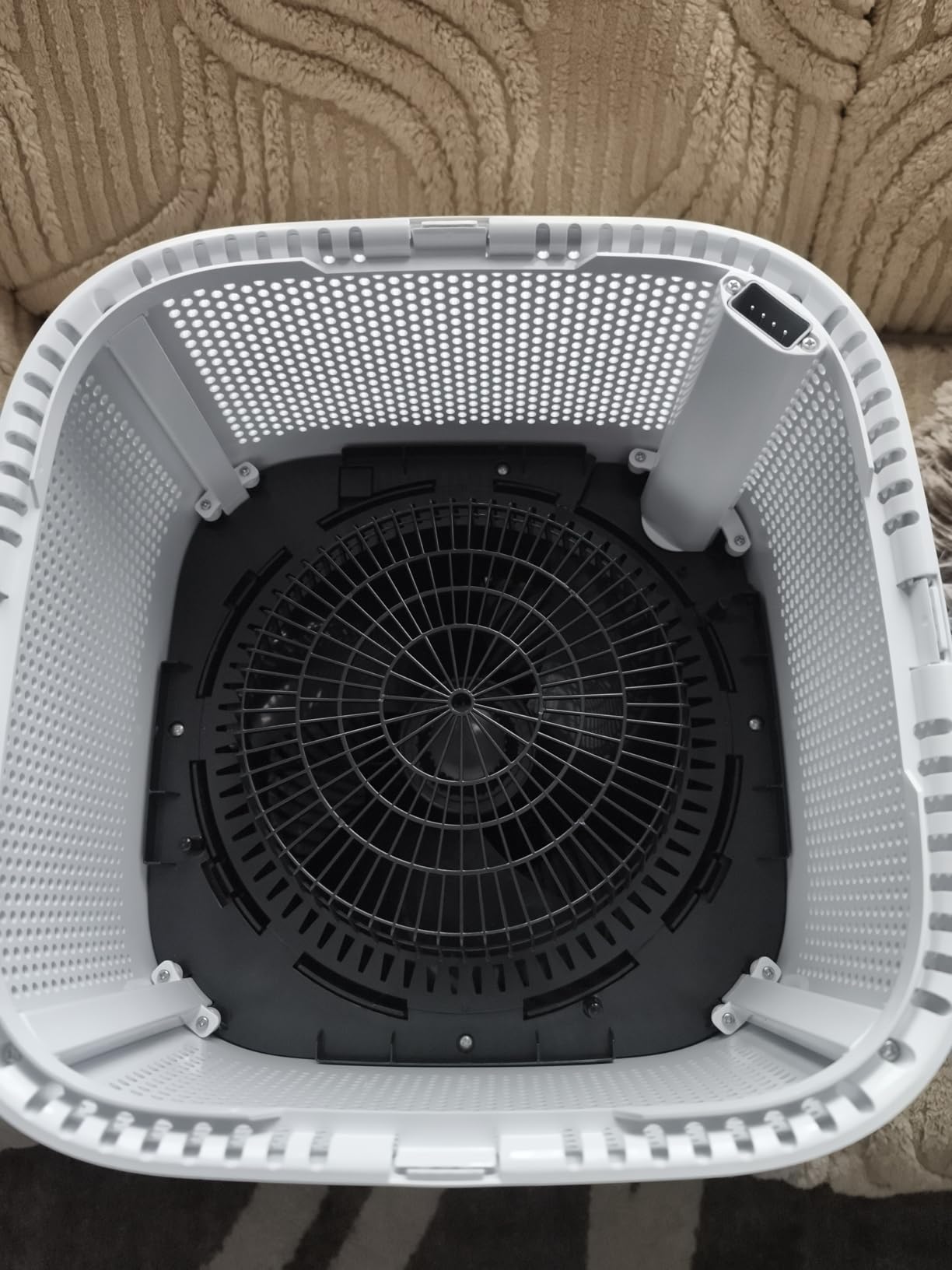
A 6 gallon tank and a 72 hour low setting
The long wick life is the sleeper feature. Reviewers note 3 to 6 months between filter changes, which is far longer than paper wicks on most units and turns a recurring cost into an annual one. At 30 watts it is also the second lowest draw in the roundup after the Vornado EVDC500.
It measures 12.72 inch square by 26.7 inch high, weighs 13.2 pounds, and comes with a cleaning brush, power adapter, water filling hose and wick filter. An enhanced plus or minus 5 percent humidity sensor and optimized airflow keep it quiet.
Hose filling and a thin review base
Two honest caveats. First, this is the newest and least reviewed product in the group at 272 reviews, so the open question is how it holds up across multiple seasons rather than one winter. Second, it fills through a hose rather than a lift out tank, so you need a nearby spigot or a sink within reach of where it stands, which narrows where you can put it.
Filters still discolor over time as impurities are removed from the water, even though Levoit says air quality is unaffected. At 4.3 stars with 72 percent five star ratings, the performance claims are credible; the long term durability evidence is simply not there yet.
12. DIGI MISTER DM538 – Atomizing Duct Mount With No Drain Line
DIGI MISTER Evaporative Duct Mounted Whole House Furnace Humidifier with 8 UV-C LEDs, Atomizing Cool Mist Variable Capacities for Homes and Offices up to 3500 sq. ft.
1000 to 3500 sq ft
1 to 5 nozzles
24VAC powered
8 UV-C LEDs
+ Pros
- Uses far less water than pad based units
- Compact body fits tight plenum spaces
- No drain line and no seasonal water panel
- Nozzles adjust coverage from 1000 to 3500 sq ft
– Cons
- Nozzles clog and need regular cleaning
- Poor tuning can pool water in ductwork
- UV-C LED lamps stopped working for some owners
The DM538 is the most interesting unit in the roundup and the most polarizing. It atomizes water directly into the duct stream rather than wetting a pad, so the mist fully evaporates instead of running down a drain. The result is a dramatic cut in water use and sewer charges, and no water panel to replace every spring.
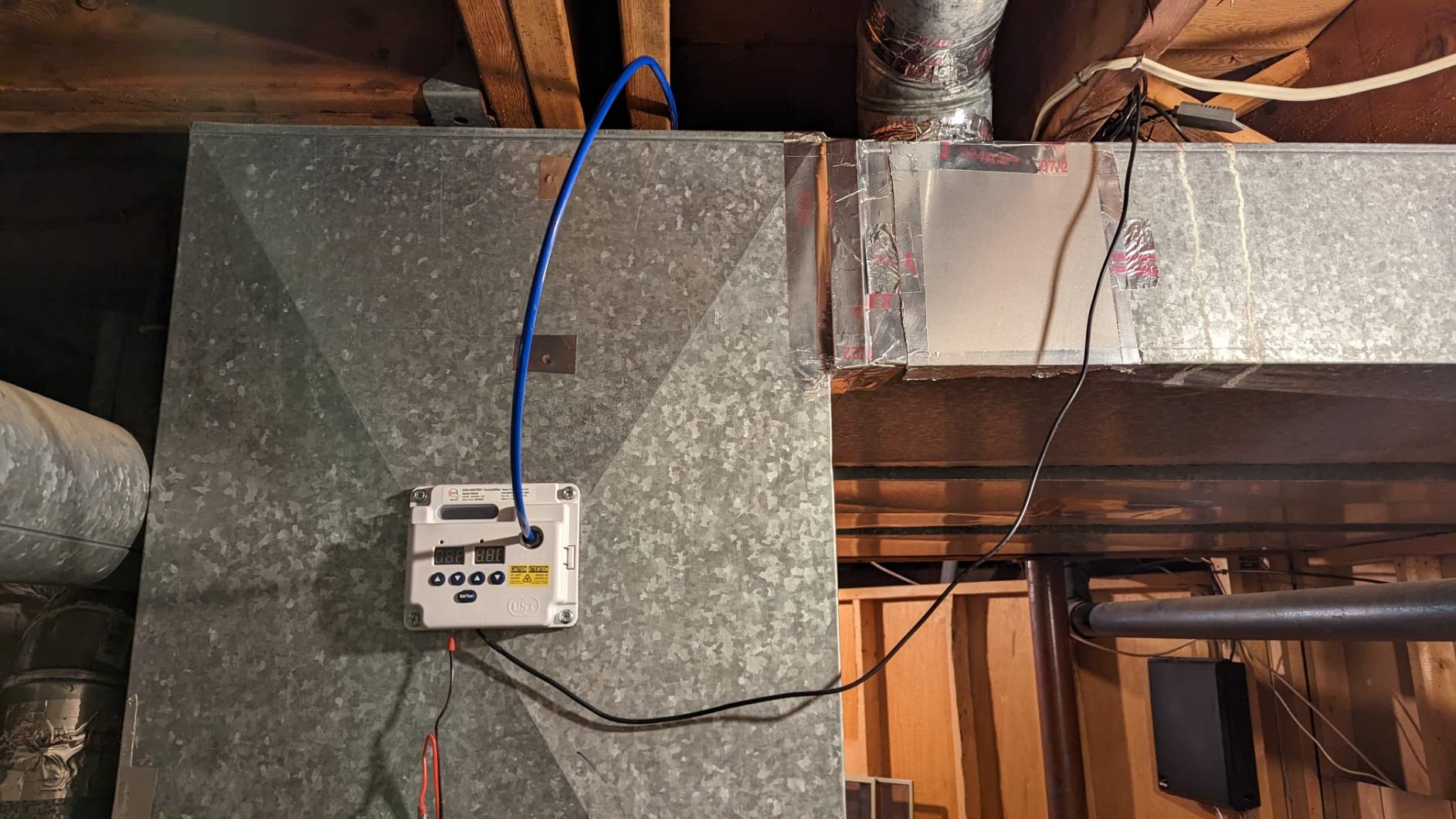
It weighs 1.7 pounds and measures 4.3 inch by 5.1 inch by 4.3 inch, so it fits tight plenum spaces where a standard humidifier will not go. Changing the number of nozzles from one to five and adjusting water pressure and warm air temperature covers 1,000 to 3,500 square feet with the same hardware.
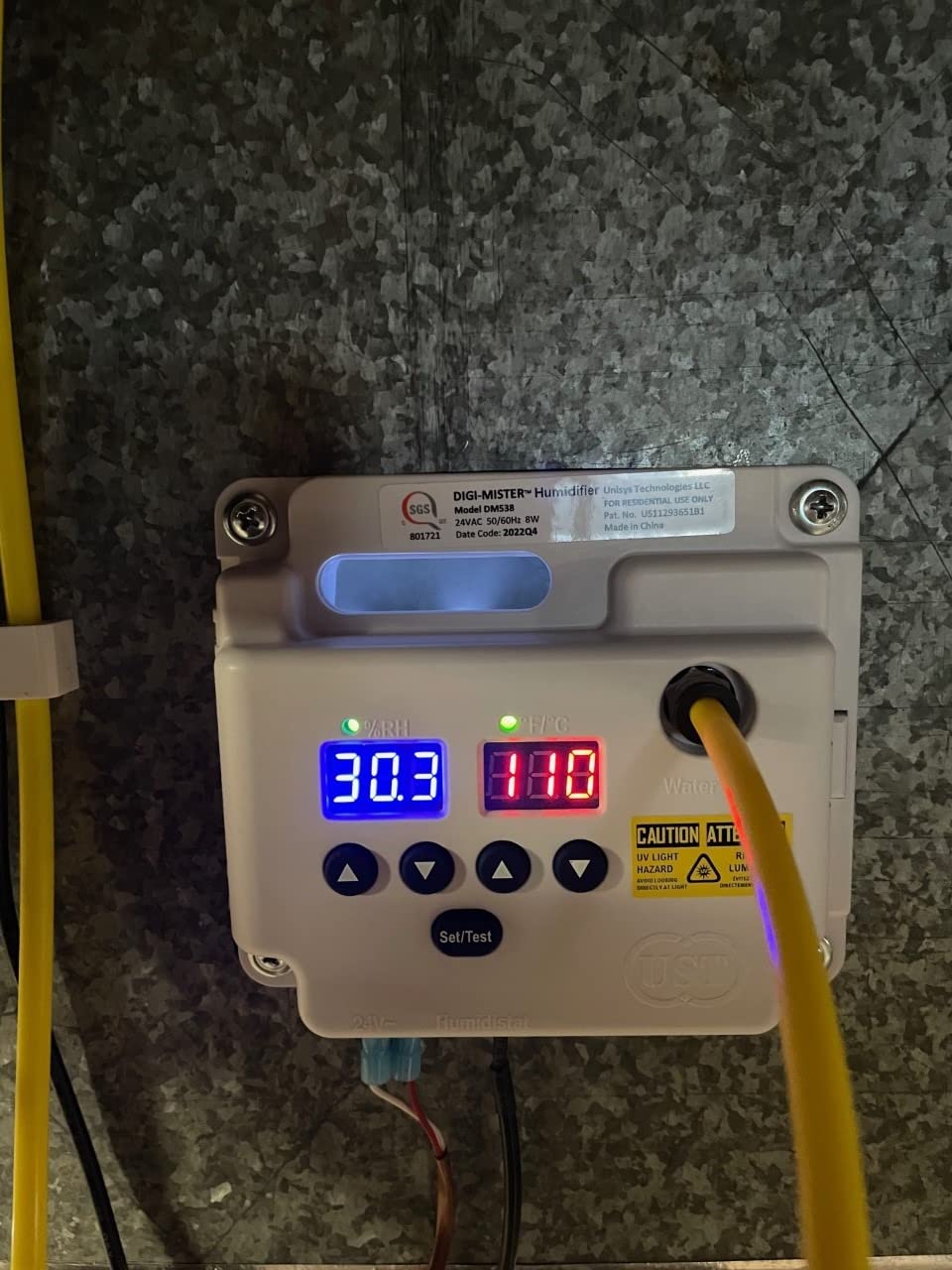
Small body, adjustable nozzle count
Installation needs only a small cut out, with no duct work and no drainage, though it does require a 24VAC transformer and plumbing, electrical and HVAC knowledge. The digital control sets room humidity, duct air temperature, humidity calibration and temperature units, and an observation window shows mist status with swing out replaceable nozzles and spares included.
Eight UV-C LED lamps at 260 to 280 nanometers operate whenever the unit is powered, and the product is described as producing zero ozone.
Tuning failures and UV-C lamp life
At 3.8 stars from 136 reviews, this is the lowest rated unit we included, and the negative reviews all trace to the same root cause: atomizing into ductwork where mist can condense on the duct walls if airflow, temperature or nozzle clearance is not right. One owner found a puddle in the duct, another had a leak reach the control board, and nozzles clog often enough that regular cleaning and testing is part of owning it rather than an occasional chore.
UV-C LED lamps also stopped working after roughly two to three months for some owners, and vibration from the unit was loud enough to wake sleepers when mounted near a bedroom. The manufacturer is credited for refunds and for engineering custom wiring fixes, which led one reviewer to raise their rating. Buy this one only if you are genuinely comfortable tuning duct airflow.
Which Whole House Humidifier Type Fits Your Home
The type taxonomy matters more than the brand, because each type solves a different house. The four families below are the ones worth understanding before you look at any brand.
Bypass evaporative: the default choice
A bypass unit mounts on the furnace and lets a small percentage of supply air pass over a wet water panel, picking up moisture before returning to the duct. It costs very little electricity, produces no mist and no white dust, and works with any water supply including hard water. The trade off is that it only humidifies when the furnace blower is running, and the water has to drain away continuously, so you need a drain line.
This is what the AprilAire 500, 600M and 700M are, and it is the right answer for most homes with central forced air heat.
Fan powered evaporative: when a passive unit is not enough
Fan powered designs add their own blower so they can move air over the water panel without relying on the furnace. That means more gallons per day, and it means you can use it in a home whose furnace runs intermittently. The trade is a higher wattage draw and a bigger installation. Within this roundup, the AprilAire 700M is the clear example, and its 18 GPD rating is the highest we tested.
Console evaporative: when there is no furnace
Console and pedestal evaporative cabinets are floor standing units you roll into a room. They evaporate through a wick, so tap water is fine, they leave no white dust, and they need no installation at all. The trade is the refill chore, which owners in HVAC forums consistently name as the thing they are trying to escape, plus wick replacement every few weeks. The AIRCARE MA1201, 831000 and EP9 800 plus the Vornado units all live here.
Steam and atomizing: high output, higher consequences
Steam humidifiers deliver warm moisture directly into the duct and are the fastest at raising humidity in a very dry house, but they consume far more electricity, need a dedicated electrical requirement in many installations, and can leave a mineral residue in the duct. Atomizing units like the DIGI MISTER DM538 work the same way with cold mist and save water, but if duct airflow is not tuned correctly the mist condenses on duct walls. Both types put more of the consequences on the installer than a bypass unit does.
Sizing, Installing and Maintaining a Whole House Humidifier
Sizing is where most buyers go wrong, and the fix is arithmetic rather than guesswork. The coverage number on a box is a tightly built home figure, not a promise.
The GPD sizing calculation step by step
Gallons per day is the real capacity measure, and you can calculate what you need in three steps. First, multiply your home’s square footage by the ceiling height to get cubic volume. A 3,000 square foot home with 8 foot ceilings is 24,000 cubic feet. Second, apply a GPD rule of thumb to that volume, where a reasonably tight home in a moderate climate lands around 12 to 17 gallons per day for that size, and a leaky or older home needs 20 gallons per day or more. Third, buy the next size up from your calculation rather than the next size down.
Square footage on its own is not the metric. A 4,000 square foot home with 10 foot ceilings contains far more air than a 4,000 square foot home with 8 foot ceilings, and it needs proportionally more output.
The coverage reality check in older homes
Here is the caveat we pair with every number in this guide. A unit rated for 5,000 square feet in a tightly built home may deliver only about 2,500 square feet in a home more than 20 years old, because leaky construction and a leaky duct system let dry outdoor air in faster than the humidifier can add moisture to it. The same applies to every console cabinet we tested, and it is why the AIRCARE MA1201 is a strong fit at up to 3,600 square feet in a modern envelope and a mid sized room unit in a 1970s ranch.
If you have hard water, a second discount applies. Mineral scaling reduces wick output over time, so a hard water home should be sized with the same headroom a leaky home needs.
Hard water and mineral buildup
White dust, limescale and a wick that crusts over are all the same problem: dissolved minerals. Ultrasonic units make it visible on surfaces because they atomize the water. Evaporative units hide it in the pad, which is why a wick still has to be replaced on schedule even when it looks fine.
You have three options. A demineralization cartridge is the cheapest and the most common, and it fits most evaporative units as a drop in. Distilled or purified water eliminates the problem entirely and is the right call for the two ultrasonic units in this roundup. A whole house water softener fixes the root cause for every fixture in the house at once, and if you are already dealing with scale on showerheads and faucets, pairing a humidifier with a softener is usually the better investment. Our whole house water filter and softener combo guide covers how those systems are matched to a home.
What installation involves and what it adds to the bill
A ducted installation needs a hole cut in the supply plenum, a tap into a hot water line, a drain line to a suitable floor drain, thermostat wire, and a 24VAC transformer in most cases. The parts list is the part people forget: copper water line, drain hose, a sheet metal tap, 18 to 22 gauge wire, a humidistat and a transformer. Transformers and plenum taps are where the add on surprises come from.
Labor is the second half of that number, and it is the reason we keep recommending a technician for anything ducted. A self install also voids the five year manufacturer warranty on the AprilAire units, which is real money over the life of the system. A console unit needs none of this, which is a genuine and underrated advantage if you have no furnace to tap into.
Seasonal maintenance and summer shutoff
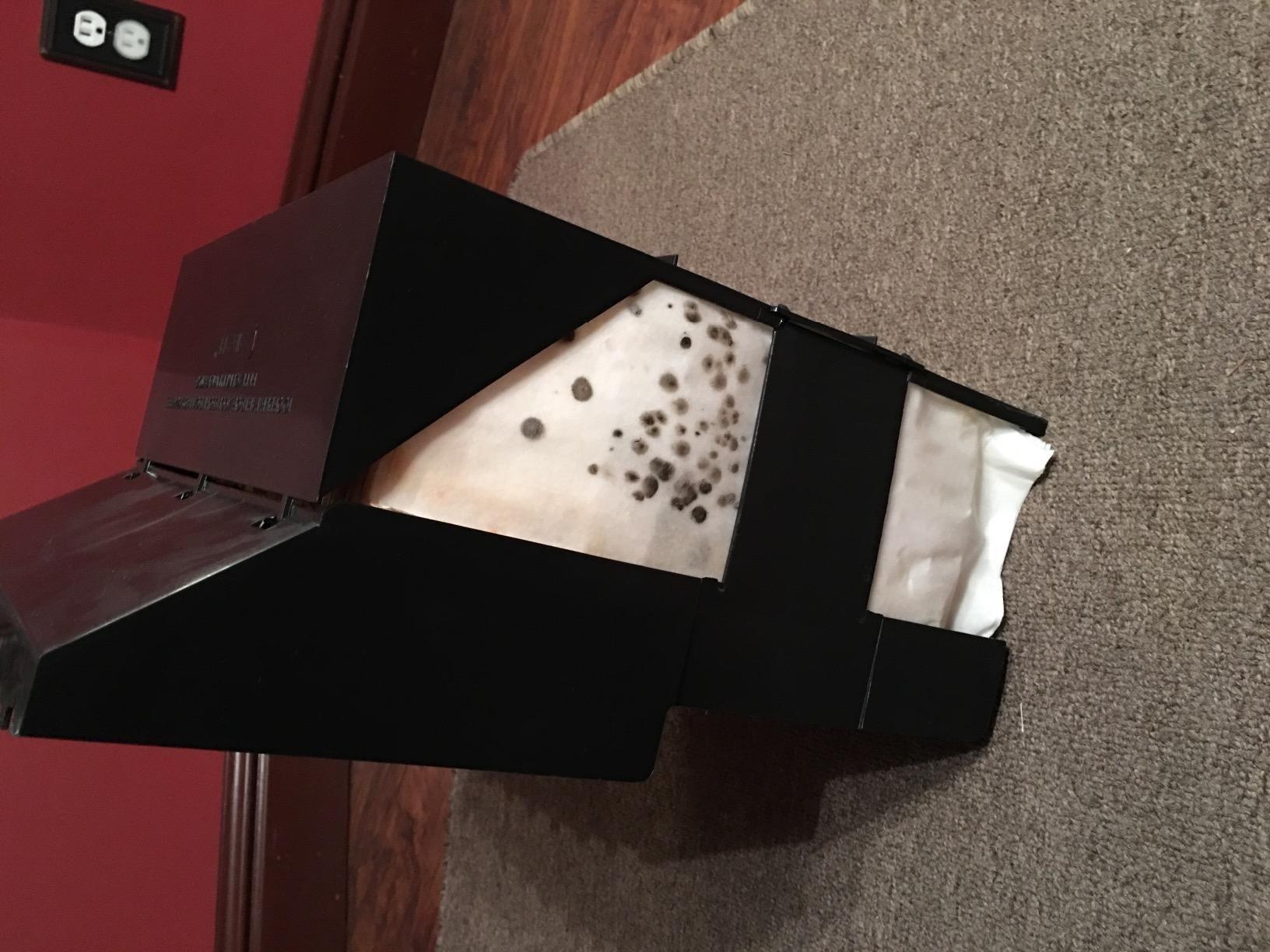
Four jobs cover a full year. Replace the water panel or wick once a season, sooner in hard water. Check the drain line every few months, because a plugged drain is the most common cause of water damage. Clean console tanks and wicks monthly, and more often in hard water. In spring, shut the humidifier off at the humidistat and close the water valve, because a unit left live through humid summer months invites biological growth in the reservoir.
Check your reading with an inexpensive hygrometer rather than trusting the unit’s own sensor, particularly on the ultrasonic models here where owners report readings running high.
Over-humidification: the 35-45% band and the 50% mold line
This is the section most roundups skip, and it is the one that protects your house. The target band is 35 to 45 percent relative humidity. Past 50 percent you are not adding comfort, you are adding mold risk, dust mite activity and condensation.
Condensation is the specific failure mode. In a tightly insulated home, warm moist air from a duct system can meet a cold surface in an exterior wall, an attic chase or an uninsulated duct and drip. That is the damage that shows up as a stained ceiling, buckled hardwood or swollen trim, and it is entirely a function of control, not of the humidifier you bought. Attic air sealing and whole house attic fans affect the same pressure and air exchange picture if you want to read about that side of the house.
Four habits prevent it. Set a humidistat rather than a fixed duty cycle. Set a lower target in spring and fall than in midwinter. Buy a cheap hygrometer and check the bedroom, not just the hallway. And if your home was not built tight, humidify the occupied floor and close off the crawl space and attic rather than trying to condition the whole envelope.
Frequently Asked Questions
What kind of humidifier is best for a whole house?
A ducted evaporative unit mounted on your furnace is best for most homes with central forced air heat, because it adds moisture with no mist, no white dust and very little electricity. Use a fan powered unit if the furnace runs intermittently or you need more than about 17 gallons per day, and a console evaporative cabinet if you have no furnace to connect to. Avoid steam and atomizing units unless someone can tune duct airflow properly.
What is the average cost to install a whole-house humidifier?
The bill splits into three parts: the unit, the parts, and labor. Expect to pay for copper water line, a drain hose, a sheet metal plenum tap, 18 to 22 gauge wire, a humidistat and usually a 24VAC transformer, since most manufacturers include the control but not the transformer and tap. Labor is the larger half and is the reason ducted units should be installed by an HVAC technician, which also protects the five year warranty.
Do whole house humidifiers actually work effectively?
Yes, when the unit is sized correctly and paired with a humidistat. Warm return air is pulled from the ductwork over a wet water panel or steam chamber, picks up moisture, and is pushed back into the supply duct, so humidity reaches every room at once. The failure mode is undersizing, not the concept: a unit rated for 5,000 square feet may deliver only about 2,500 in a home more than 20 years old.
Can a whole house humidifier cause mold?
It can, if you let indoor humidity pass about 50 percent. The safe operating band is 35 to 45 percent relative humidity, maintained by a humidistat rather than a fixed schedule. Above that threshold you invite mold, dust mites and condensation on cold duct surfaces and exterior walls, which is the moisture damage that shows up as stained ceilings and buckled hardwood.
Is it a good idea to install a whole-house humidifier?
It is a good idea if you have central forced air heat, a dry winter climate, hardwood floors or wood furniture, or you currently refill multiple portable humidifiers. It is a poor idea in an apartment with no furnace, in a humid summer climate where you rarely heat, or in a home where you cannot install a humidistat, because manual control is the leading cause of over-humidification.
Are whole house humidifiers noisy?
Ducted units mounted in a basement or utility room are effectively inaudible from the rest of the house, because the furnace blower is already running and the unit itself has no additional motor in the bypass design. Fan powered units such as the AprilAire 700M add a 120 watt motor that is noticeable only in the mechanical room. Console cabinets are the audible ones, and the top fan speed on the AIRCARE MA1201 is clearly loud in a living space.
How do I choose a whole house humidifier size?
Multiply square footage by ceiling height to get cubic volume, then apply a GPD rule of thumb. A 3,000 square foot home with 8 foot ceilings contains 24,000 cubic feet and generally needs 12 to 17 gallons per day in a tight home, rising to 20 GPD or more in a leaky or older one. Buy the next size up, and remember that hard water reduces wick output over time and deserves the same headroom.
How often should I replace the water panel or wick?
Plan on once a year for a ducted water panel, and sooner in hard water areas where mineral scaling cuts output. Console wicks usually need flipping every few weeks and replacing every few months, since they yellow and dry out with use. Check the drain line every few months as well, because a plugged condensate drain is the most common cause of water damage in a whole house installation.
The Bottom Line for Whole House Humidifiers in 2026
If you have a furnace and want the whole house treated, the AIRCARE MA1201 is our pick. It covers up to 3,600 square feet in a tight home, leaves no white dust on wood floors, and a digital humidistat holds the level without you walking over to a knob. If you would rather have the system installed and forgotten, the AprilAire 500 is the better buy at 4.6 stars because its dual sensors compensate for outdoor temperature automatically, and the five year warranty makes a professional install the obvious call. For a home over about 4,000 usable square feet, move up to the AprilAire 700M, where the built in fan turns 18 gallons per day into real whole home humidity. If you have no furnace, the AIRCARE 831000 gives you six gallons in a narrow footprint, and the Levoit Superior 6000S wins if you want smart control and use tap water without dealing with white dust. Where winter air is dry enough to crack hardwood, and the refill chore is wearing you down, any of these is an upgrade over three portable units fighting each other. Check the current price on the unit that matches your square footage and your water, and set the humidistat before the first cold week rather than after.
Leave a Reply