
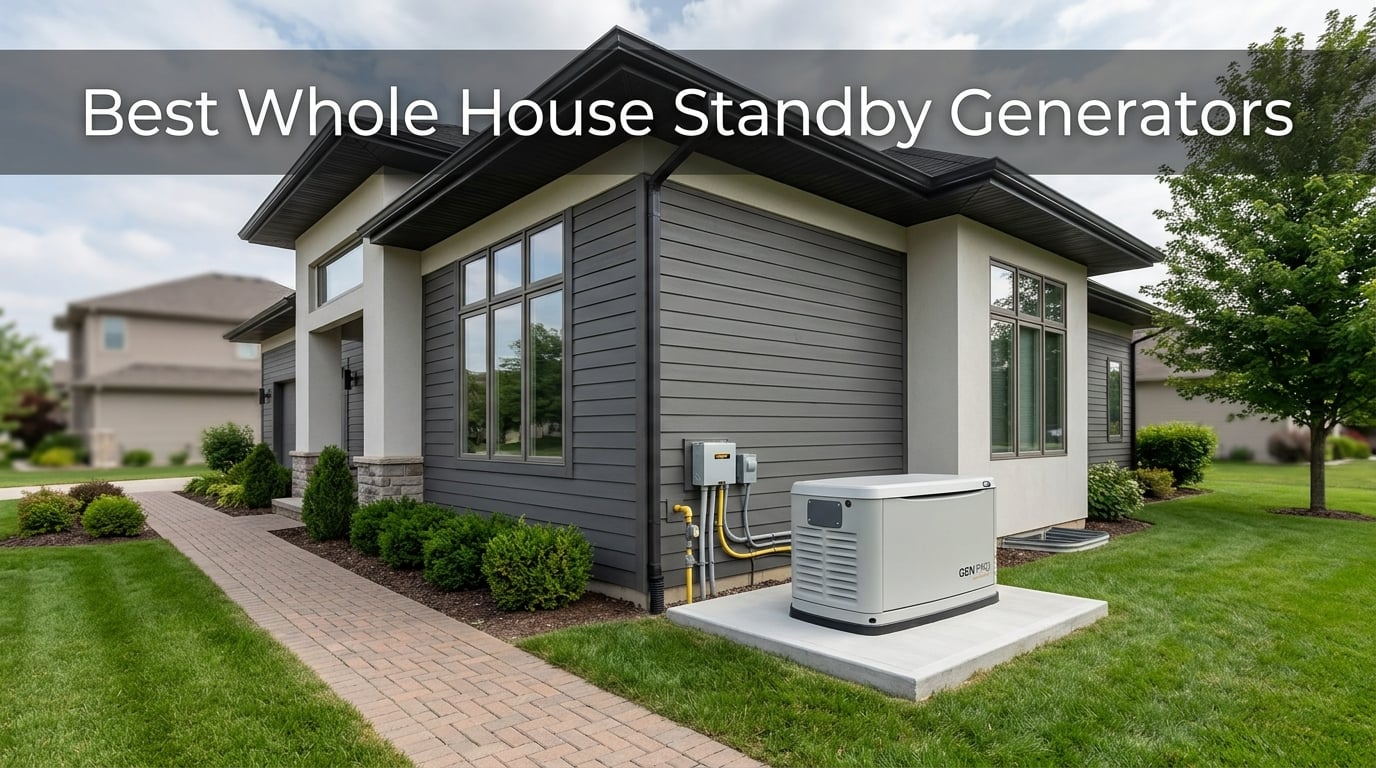
When the power goes out for hours or even days, a portable generator only covers the basics. The best whole house standby generators kick in automatically, run on your existing natural gas or propane line, and keep every appliance running like nothing happened. After analyzing specifications, customer reviews, and real-world performance data across 10 top-rated models, our team put together this guide to help you choose the right system for your home.
Whole house standby generators sit permanently outside your home, connect directly to your electrical panel through an automatic transfer switch, and start within seconds of an outage. No refueling, no extension cords, no manual startup. They run on natural gas or liquid propane, which means you never have to worry about storing fuel or running out at 2 AM during a winter storm.
In this guide, we cover 10 of the best whole house standby generators available in 2026, including models from Generac, Champion, and Honeywell. We break down power output, fuel options, noise levels, warranty coverage, and real customer experiences so you can make an informed decision. Whether you need to back up a small home or a 5,000-square-foot property with two HVAC zones, there is a generator on this list that fits.
Top 3 Picks for Best Whole House Standby Generators
These three generators cover the three most common homeowner needs. The Generac Guardian 26kW is our top pick for large homes because it delivers the most power of any air-cooled unit on the market. The Champion 14kW aXis hits a sweet spot for mid-sized homes with its 200-amp transfer switch and 10-year warranty. The Champion 8.5kW keeps costs down while still covering essential circuits.
Best Whole House Standby Generators in 2026
| Product | Details | Action |
|---|---|---|
|
|
Check Latest Price |
 |
|
Check Latest Price |
 |
|
Check Latest Price |
 |
|
Check Latest Price |
 |
|
Check Latest Price |
 |
|
Check Latest Price |
|
|
Check Latest Price |
 |
|
Check Latest Price |
 |
|
Check Latest Price |
 |
|
Check Latest Price |
1. Generac Guardian 26kW Home Standby Generator – Most Power in an Air-Cooled Unit
Generac Guardian 26kW Home Generator, Transfer Switch & WiFi Monitoring
26,000 watts output
200A transfer switch
Dual fuel NG/LP
518 lbs
5-year warranty
+ Pros
- Highest air-cooled output available
- Mobile Link Wi-Fi monitoring
- True Power Technology under 5% THD
- G-Force engine for low maintenance
- Smart home compatible
– Cons
- WiFi can be unreliable at times
- Installation requires neutral wire not in manual
- Delivery issues with large freight
The Generac Guardian 26kW is the most powerful air-cooled standby generator you can buy for residential use. It produces enough electricity to run a large home with central air, electric dryer, well pump, and kitchen appliances all at the same time. Our research showed this model ranks as a top seller in the outdoor generator category, and the 74% five-star rating from verified buyers backs that up.
I like that Generac includes their purpose-built G-Force 1000 Series engine, which is designed specifically for generator use rather than being adapted from a lawn mower or pressure washer engine. This means better durability under continuous load. The True Power Technology keeps total harmonic distortion under 5%, which protects sensitive electronics like computers and TVs.
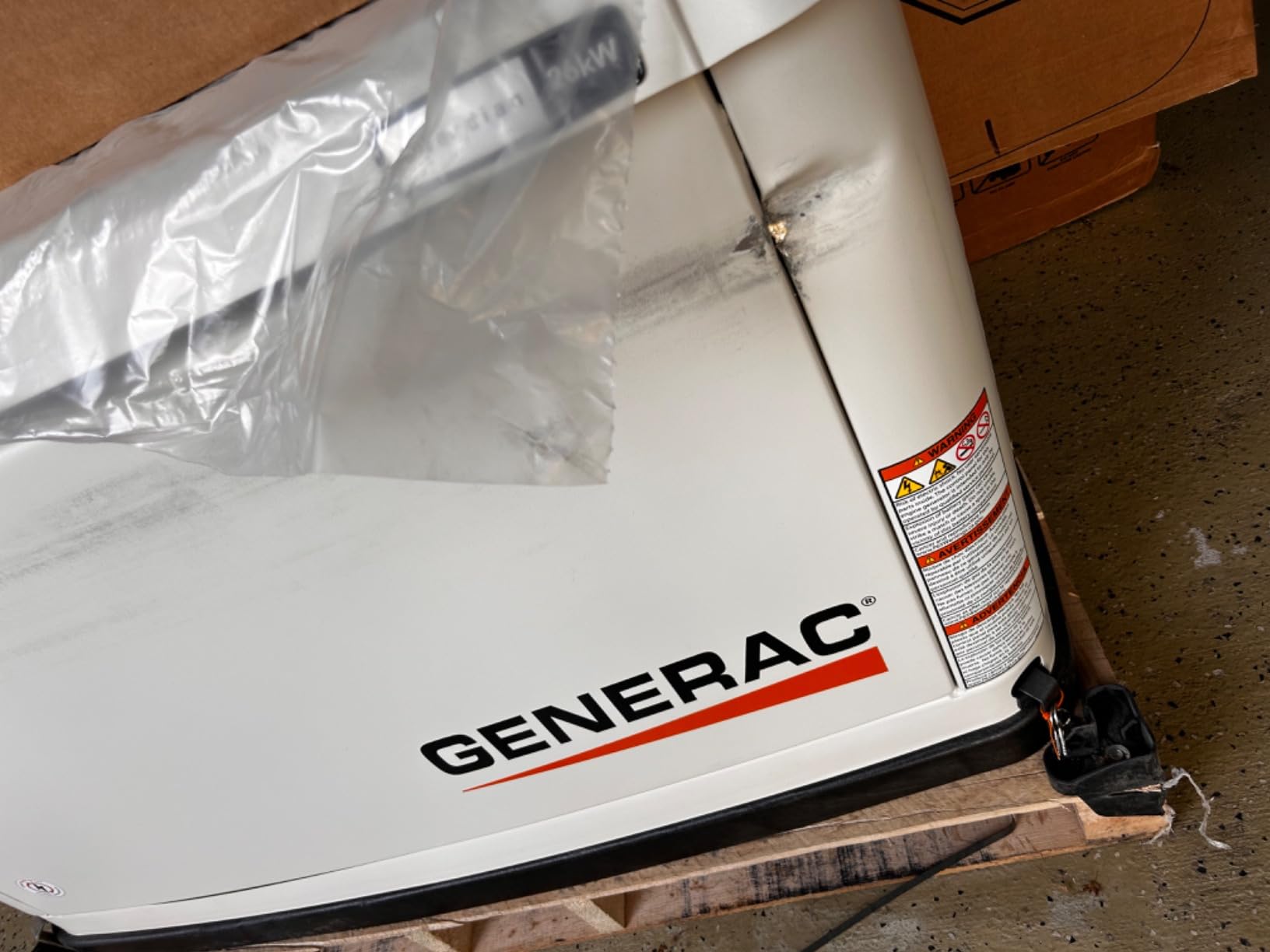
The 200-amp transfer switch handles whole-house coverage without load shedding in most situations. At 518 pounds and measuring 48.5 by 25.1 by 28.6 inches, it requires a proper concrete pad and professional installation. The aluminum enclosure resists corrosion, and the Quiet-Test self-test mode runs at lower RPM to keep noise down during weekly checks.
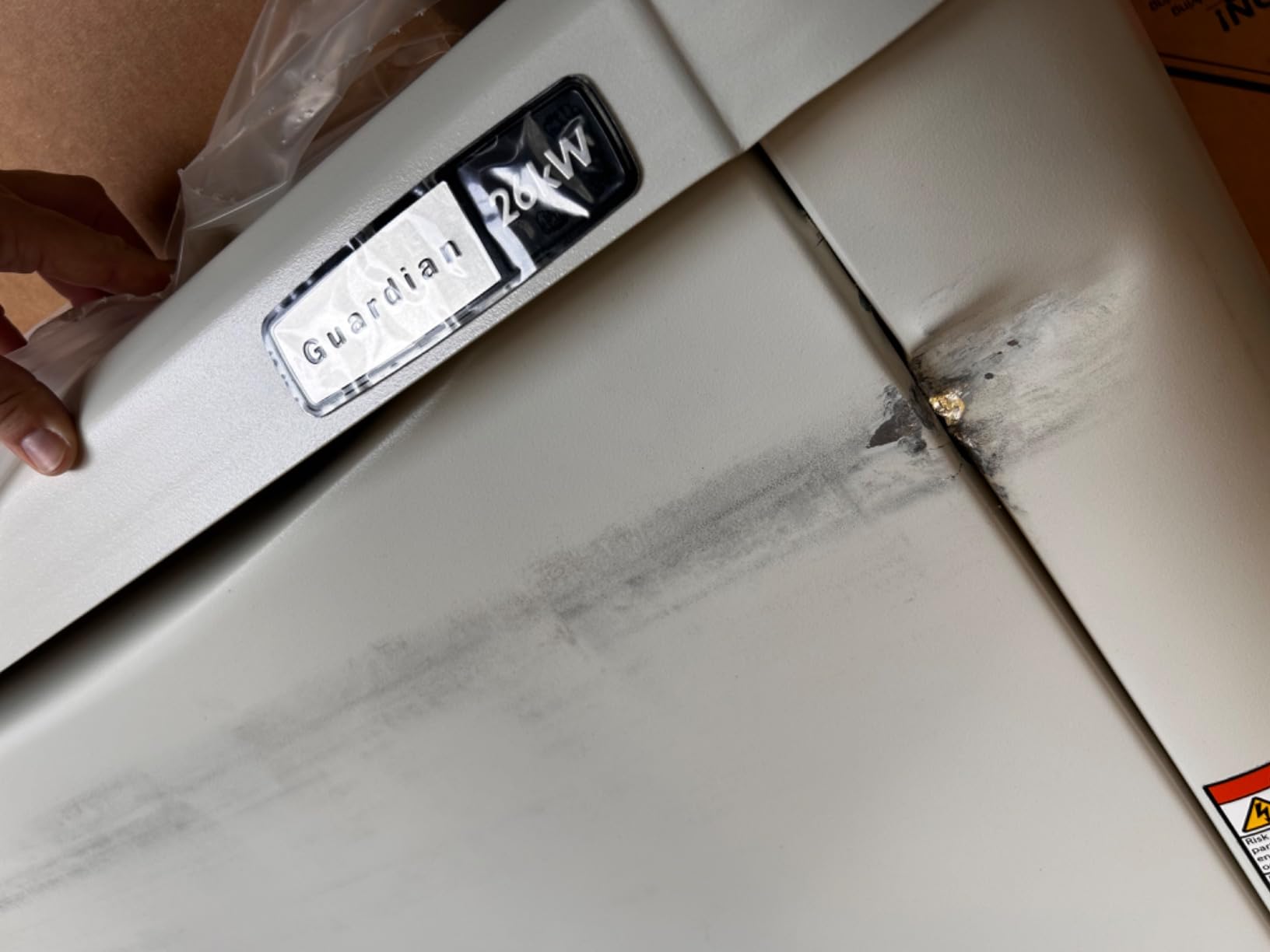
Customer feedback highlights reliable performance during multi-day outages. One common complaint involves WiFi connectivity dropping out, though the generator itself runs flawlessly. Some users also reported freight delivery issues, which is worth confirming with the seller before ordering.
Ideal Installation Setup
This generator works best for homes between 2,500 and 4,500 square feet with 200-amp electrical service. You will need a natural gas line capable of delivering sufficient fuel volume, or a propane tank rated for at least 250 gallons. Professional installation by a licensed electrician and plumber is mandatory.
Plan for the generator to sit at least 18 inches from your home’s exterior wall and 5 feet from any openings like windows or doors. Local codes may require additional clearance, so check with your municipality before scheduling installation.
Total Cost of Ownership
Beyond the equipment price, expect installation to add another $3,000 to $8,000 depending on gas line work, electrical panel upgrades, and permit costs. Annual maintenance runs about $200 to $400, which covers oil changes, filter replacements, and battery checks. The 5-year warranty covers parts and labor for manufacturer defects.
Forum users report total installed costs ranging from $10,000 to $15,000 for a 26kW system, with some Northeast installations exceeding $18,000 due to complex gas line runs and cold weather kit requirements.
2. Generac Guardian 22kW Home Standby Generator – Proven Reliability with 250+ Reviews
Generac Guardian 22kW Home Generator, Transfer Switch & WiFi Monitoring
22,000 watts output
200A NEMA 3R switch
Dual fuel NG/LP
466 lbs
5-year warranty
+ Pros
- 250+ verified reviews
- Mobile Link Wi-Fi remote monitoring
- True Power Technology under 5% THD
- G-Force engine assembled in USA
- Aluminum corrosion-resistant enclosure
– Cons
- Battery and cold weather kit sold separately
- Computer-dependent operation
- WiFi setup can be finicky
The Generac Guardian 22kW has been a fixture in the home standby market for years, and its 250 verified customer reviews make it one of the most battle-tested units on this list. It delivers 22,000 watts of clean power, which is enough for most homes up to 3,000 square feet running central air, refrigerator, well pump, and lighting simultaneously.
What sets this model apart is the inclusion of a 200-amp NEMA 3R smart transfer switch designed for outdoor use. This switch handles whole-house load management and mounts externally, which gives installers more flexibility. The aluminum enclosure keeps the unit light enough at 466 pounds for standard residential pad installation.
True Power Technology holds harmonic distortion under 5%, making it safe for laptops, gaming consoles, and smart home hubs. The G-Force 1000 Series engine runs at lower RPM during the weekly Quiet-Test cycle, which keeps neighbor complaints to a minimum. Generac builds these units in the USA, which appeals to buyers who prioritize domestic manufacturing.
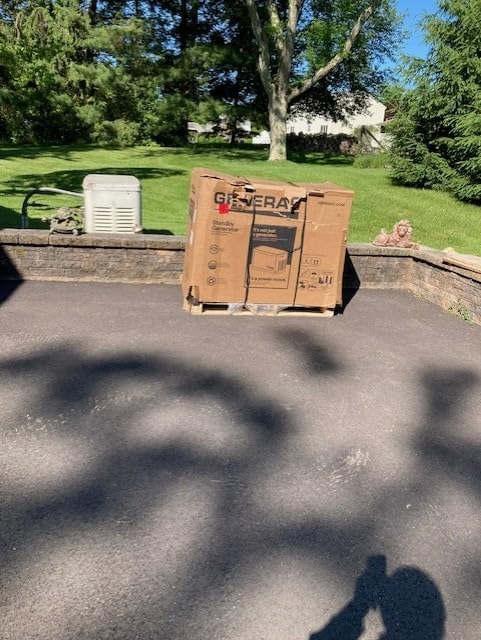
The most common complaint from customers involves the WiFi setup process. The Mobile Link app connects well once configured, but initial pairing can require multiple attempts. Several users noted that the battery and cold weather kit are separate purchases, adding to the total project cost.
Home Size Compatibility
The 22kW output covers homes with 200-amp electrical service and up to two central air conditioning units. For homes with all-electric heating, you may need to prioritize circuits or consider load shedding. Natural gas connection requires a meter rated for at least 250,000 BTU per hour.
If your home uses electric baseboard heat or an electric water heater, the 22kW may struggle during peak winter demand. In that case, stepping up to the 26kW model makes more sense.
Mobile Link Monitoring Details
The Mobile Link app sends real-time alerts to your phone when the generator starts, stops, or encounters an error. You can view run history, maintenance schedules, and current status from anywhere with an internet connection. The app works on iOS and Android, and registration is free for the lifetime of the generator.
Without WiFi setup, the generator still operates normally during outages. However, you lose the ability to receive remote alerts about maintenance needs or startup events, which is the main reason to complete the WiFi configuration.
3. Champion 14kW Home Standby Generator – Best Value for Whole House Coverage
Champion Power Equipment 100837 14kW Home Standby Generator System, 200-Amp aXis Automatic Transfer Switch
14,000 watts LP / 12,500W NG
200A aXis ATS
Wi-Fi enabled
482 lbs
10-year warranty
+ Pros
- Best 10-year warranty in class
- 200A aXis load management with 4 priority levels
- Wi-Fi remote monitoring
- Operates from -22F to 104F
- Quietest-in-class at 62 dBA
– Cons
- Low voltage errors reported by some users
- Warranty service may need paid dealer visit
- Battery and oil not included
The Champion 14kW aXis earns our Best Value pick because it combines a 200-amp automatic transfer switch, Wi-Fi connectivity, and the longest standard warranty in the home standby market. No other generator on this list offers 10 years of parts and labor coverage out of the box. That warranty alone makes this unit worth serious consideration.
The aXis ATS200 transfer switch sets this system apart from cheaper competitors. It manages unlimited high-demand loads across 4 priority levels, meaning you can run your central air, electric dryer, and oven without manually switching breakers. The switch learns your usage patterns and prioritizes circuits automatically.
Champion rates this unit at 62 dBA during operation, which is quieter than most dishwashers. The 24-volt starting system fires up reliably in temperatures from -22 to 104 degrees Fahrenheit without any cold weather kit. That is a real advantage for homeowners in northern climates where winter outages are common.
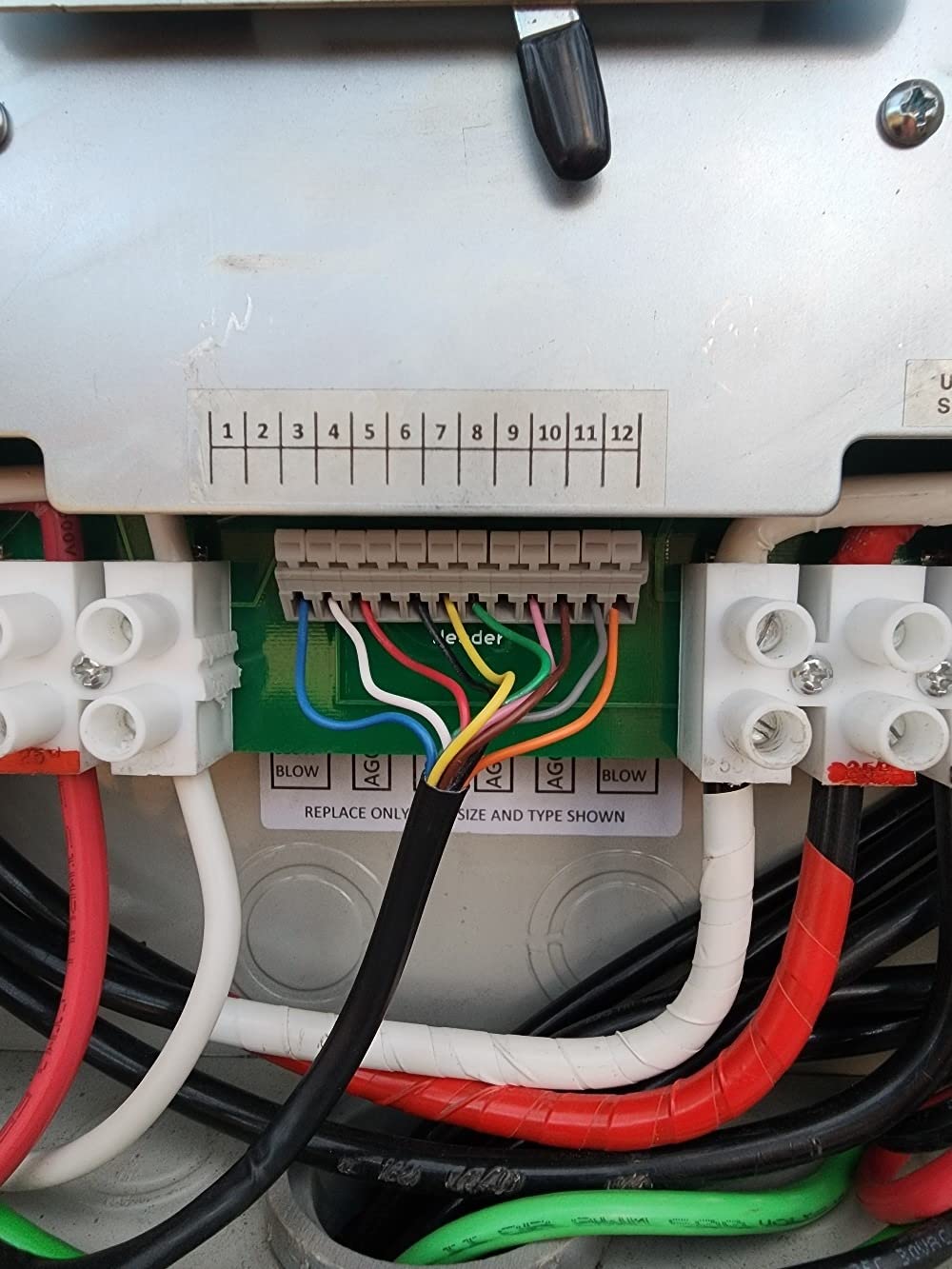
Some users reported low voltage errors that required a service visit. Champion offers free lifetime technical support by phone, which helps troubleshoot before calling a dealer. Battery and oil come separately, so factor those into your installation timeline.
Load Management Strategy
The aXis system divides your home’s circuits into 4 priority levels. Priority 1 covers essentials like refrigeration, lighting, and medical equipment. Priority 2 handles HVAC. Priority 3 adds kitchen appliances, and Priority 4 powers less critical loads like garage doors and landscape lighting.
During an outage, the generator ramps up loads sequentially based on these priorities. This prevents the overload trips that plague simpler transfer switches and lets a 14kW unit handle what would normally require a 20kW generator.
Warranty Claim Process
Champion’s 10-year limited warranty covers defects in materials and workmanship. Filing a claim starts with a phone call to their technical support line, which operates during extended business hours. If the issue requires hands-on service, Champion coordinates with a local dealer.
Some customers noted that the local dealer visit may carry a service fee even under warranty, depending on the dealer’s policies. Always confirm warranty service terms with your installer before signing the installation contract.
4. Generac 28kW Home Standby Generator with Ecobee – Maximum Power with Smart Home Integration
Generac 28kW Whole Home Generator, Transfer Switch & Cellular Capability
28,000 watts output
200A transfer switch
Cellular monitoring
Ecobee thermostat included
524 lbs
+ Pros
- Highest output on this list
- Cellular connectivity no WiFi needed
- Includes Ecobee smart thermostat
- Cold weather optimized design
- 24/7 customer support
– Cons
- Highest price point
- Only 1 unit in stock typically
- New model with limited reviews
- Heavy at 524 lbs
The Generac 28kW is the most powerful generator on this list and represents the premium end of the residential standby market. It produces enough electricity to run a 5,000-square-foot home with multiple HVAC zones, a pool pump, and an EV charger without breaking a sweat. The included Ecobee smart thermostat adds smart home integration right out of the box.
What makes this model stand out is the built-in cellular connectivity. Instead of relying on your home WiFi network, which goes down during an outage if your router loses power, the cellular connection sends status updates through a dedicated data plan. This means you always know your generator’s status, even when your internet is out.
The sloped roof and rear intake design reduce the risk of ice and snow intrusion, which is a real problem for generators in northern climates. Oil level sensors constantly monitor lubrication readiness, and the improved cold start system fires reliably even after sitting idle through a brutal winter.
This is a newer model with limited customer reviews so far, but the early feedback has been perfect. The main drawback is availability, as stock tends to be limited to single units at a time. If you need this level of power, do not wait to place an order.
Smart Home Ecosystem Integration
The Ecobee thermostat included with this generator connects to the Generac Home Energy Ecosystem, allowing coordinated power management during outages. When the generator kicks in, the thermostat can automatically adjust HVAC settings to reduce load and extend runtime.
This integration also works with Generac PWRcell battery storage systems, creating a hybrid backup solution that combines a battery for short outages and the generator for extended ones.
Cellular vs WiFi Monitoring
WiFi monitoring works fine when your router has battery backup, but most home routers lose power during an outage. Cellular connectivity solves this problem by using a dedicated data connection built into the generator. You receive status updates through the Mobile Link app regardless of your home internet status.
The cellular plan is included with the generator for the first few years. After that, a modest annual fee keeps the connection active. This is a worthwhile investment for anyone who travels frequently and needs to monitor their home remotely.
5. Honeywell 18kW Home Standby Generator – Trusted Brand with Clean Power
Honeywell 18kW Whole Home Standby Generator
18,000 watts output
Whole house transfer switch
Dual fuel NG/LP
483 lbs
3-year warranty
+ Pros
- PrecisionPower under 5% THD
- G-Force pressure-lubricated engine
- RhinoCoat corrosion-resistant enclosure
- Quiet-Test self-test mode
- Multilingual LCD display
– Cons
- Only 3-year warranty
- Newer model with few reviews
- Higher price per kW than Champion
The Honeywell 18kW brings a trusted household name to the standby generator market, and it is actually manufactured by Generac using their proven G-Force engine technology. This means you get Generac reliability with Honeywell branding and support. The 18,000-watt output covers most homes between 2,000 and 3,500 square feet.
PrecisionPower Technology keeps total harmonic distortion below 5%, which protects sensitive electronics and variable-frequency HVAC compressors. The RhinoCoat powder-coated aluminum enclosure stands up to coastal salt air and humid climates better than standard painted steel enclosures.
The included whole house transfer switch simplifies installation by eliminating the need to purchase a separate ATS. The multilingual LCD display on the Sync Controller makes it easy to monitor status without digging through app menus.
Honeywell vs Generac Brand Differences
Since Honeywell generators are built by Generac, the internal components are nearly identical to equivalent Generac models. The main differences are the enclosure styling, warranty terms, and service network. Honeywell offers a 3-year warranty compared to Generac’s standard 5 years.
If brand loyalty to Honeywell matters to you, or if you prefer the RhinoCoat enclosure finish, this model delivers comparable performance to the Generac Guardian line at a similar price point.
Climate Suitability
The aluminum enclosure makes this unit particularly well-suited for coastal areas where salt corrosion is a concern. The Quiet-Test mode runs at lower RPM during weekly self-tests, which keeps noise levels acceptable in suburban neighborhoods.
For cold weather operation, you may want to add a cold weather kit since this model does not include the sub-zero starting system found on Champion generators. The kit typically adds a battery warmer and oil heater.
6. Generac 14kW Home Standby Generator – Cellular Monitoring at a Mid-Range Price
Generac 14kW Whole Home Generator, Cellular Capability
14,000 watts output
Built-in cellular
Dual fuel
391 lbs
5-year warranty
+ Pros
- Built-in cellular connectivity
- Cold weather optimized design
- Compatible with Generac ecosystem
- Electronic fuel and ignition control
- Super quiet operation
– Cons
- New model limited reviews
- Fuel type not clearly specified
- Transfer switch may be separate purchase
The Generac 14kW with built-in cellular monitoring represents the newer generation of Generac’s standby lineup. At 391 pounds, it is one of the lightest 14kW units available, which simplifies delivery and pad installation. The cellular connectivity eliminates the WiFi reliability issues that plague older Generac models.
This generator is designed specifically for cold climate performance. The sloped roof and rear intake reduce ice and snow buildup, while the improved cold start system ensures reliable ignition even after weeks of below-freezing temperatures. Oil level sensors constantly monitor lubrication to prevent engine damage during extended runs.
The electronic fuel and ignition control optimizes fuel consumption across varying load conditions. This translates to lower operating costs over time, especially during long outages. The generator is also compatible with ecobee thermostats and Generac PWRcell battery systems for whole-home energy management.
Generac Home Energy Ecosystem
This 14kW unit integrates with Generac’s broader home energy platform, which includes PWRcell battery storage, ecobee thermostats, and smart home load controllers. During an outage, the system can automatically reduce HVAC load to extend fuel supply and manage battery discharge.
If you already own or plan to install Generac ecosystem products, this generator is the natural choice for seamless integration.
Lightweight Design Benefits
At 391 pounds, this unit is significantly lighter than comparable 14kW generators from Champion, which weigh around 480 pounds. The lighter weight reduces shipping costs, simplifies the placement on a concrete pad, and makes it easier to reposition during initial installation.
The trade-off is a slightly smaller footprint, which means less internal sound dampening material. However, Generac rates this unit as super quiet, and the fully enclosed design keeps noise levels comparable to heavier competitors.
7. Honeywell 14kW Home Standby Generator – Compact Power with 16-Circuit Coverage
Honeywell 14kW Home Standby Generator – Automatic Backup Power for Whole Home – Runs on Natural Gas or Propane – Weather-Resistant Enclosure – Installation Pad Included
14,000 watts output
16-circuit transfer switch
Dual fuel NG/LP
Aluminum enclosure
3-year warranty
+ Pros
- PrecisionPower clean energy
- G-Force pressure-lubricated engine
- RhinoCoat enclosure corrosion resistance
- Multilingual LCD sync controller
- Automatic shutdown protection
– Cons
- No customer reviews yet
- 3-year warranty shorter than Champion
- Prime eligible but limited stock
The Honeywell 14kW offers the same Generac-engineered internals as the 18kW Honeywell model but in a smaller package suited for homes between 1,500 and 2,500 square feet. The included 16-circuit transfer switch covers most essential household loads without the complexity of a full 200-amp whole-house system.
The PrecisionPower Technology delivers power with less than 5% total harmonic distortion, making it safe for laptops, televisions, and smart home devices. The G-Force engine uses pressure lubrication for extended bearing life and reduced maintenance intervals compared to splash-lubricated alternatives.
The RhinoCoat powder-coated aluminum enclosure resists rust and corrosion, which extends the generator’s service life in humid or coastal environments. The Quiet-Test self-test mode runs at reduced RPM during weekly checks to minimize noise disturbance.
16-Circuit Transfer Switch Coverage
The included 16-circuit transfer switch covers most homes with 100 to 150 amp service. You select which circuits to back up during installation, typically including the kitchen, master bedroom, HVAC, well pump, refrigerator, and garage door opener.
This approach costs less than a full 200-amp whole-house switch and simplifies the installation process. However, it does mean some circuits will not have backup power during an outage.
Quiet-Test Mode Operation
The Quiet-Test mode runs the generator at lower RPM during its weekly self-test cycle. This reduces noise output significantly compared to full-speed testing, which matters in neighborhoods with close property lines. Most homeowners set the test to run on a specific day and time when it will cause the least disruption.
You can adjust the test schedule through the LCD sync controller, and some models allow you to choose between quiet and full-speed test modes depending on your diagnostic preferences.
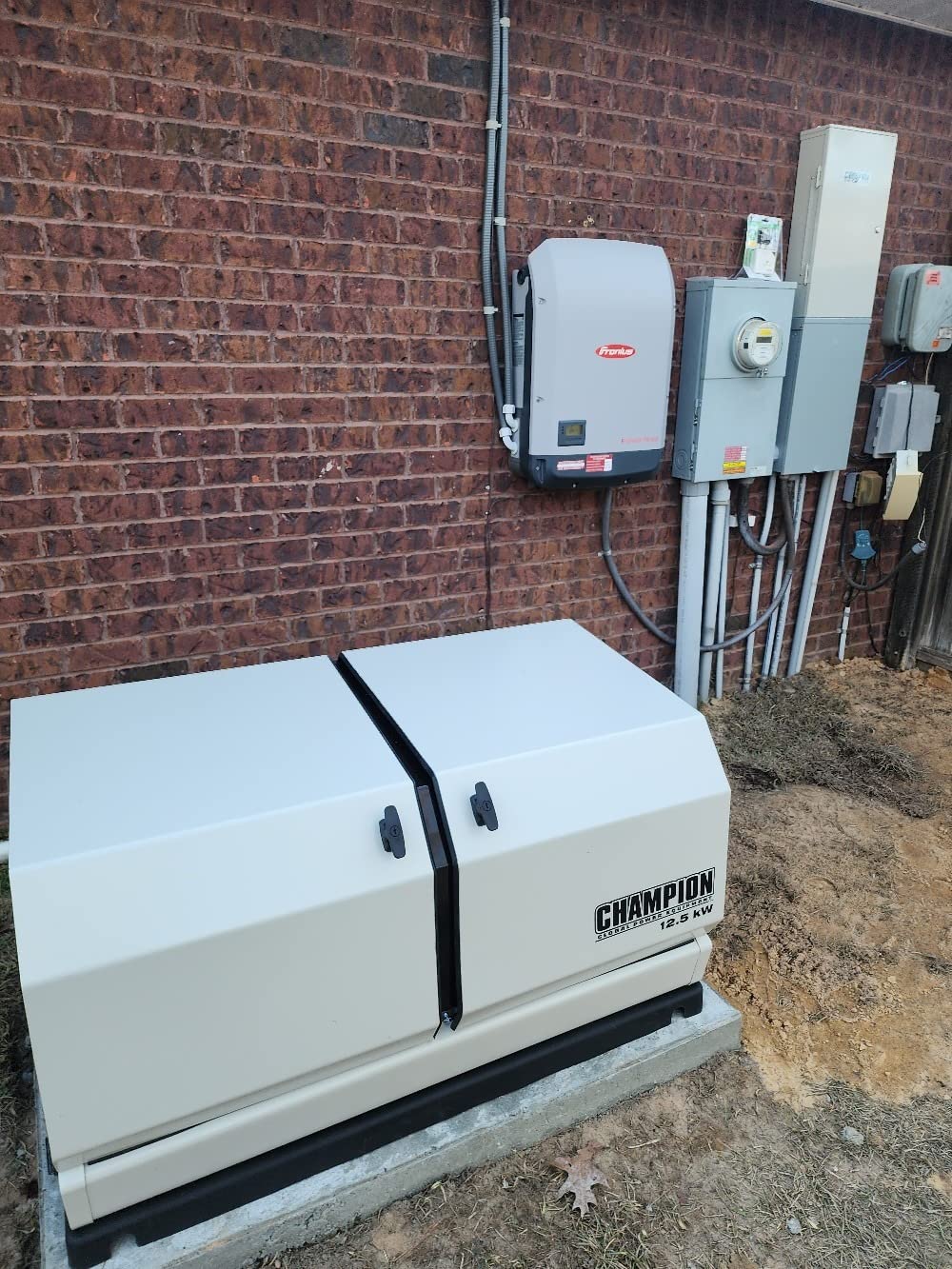
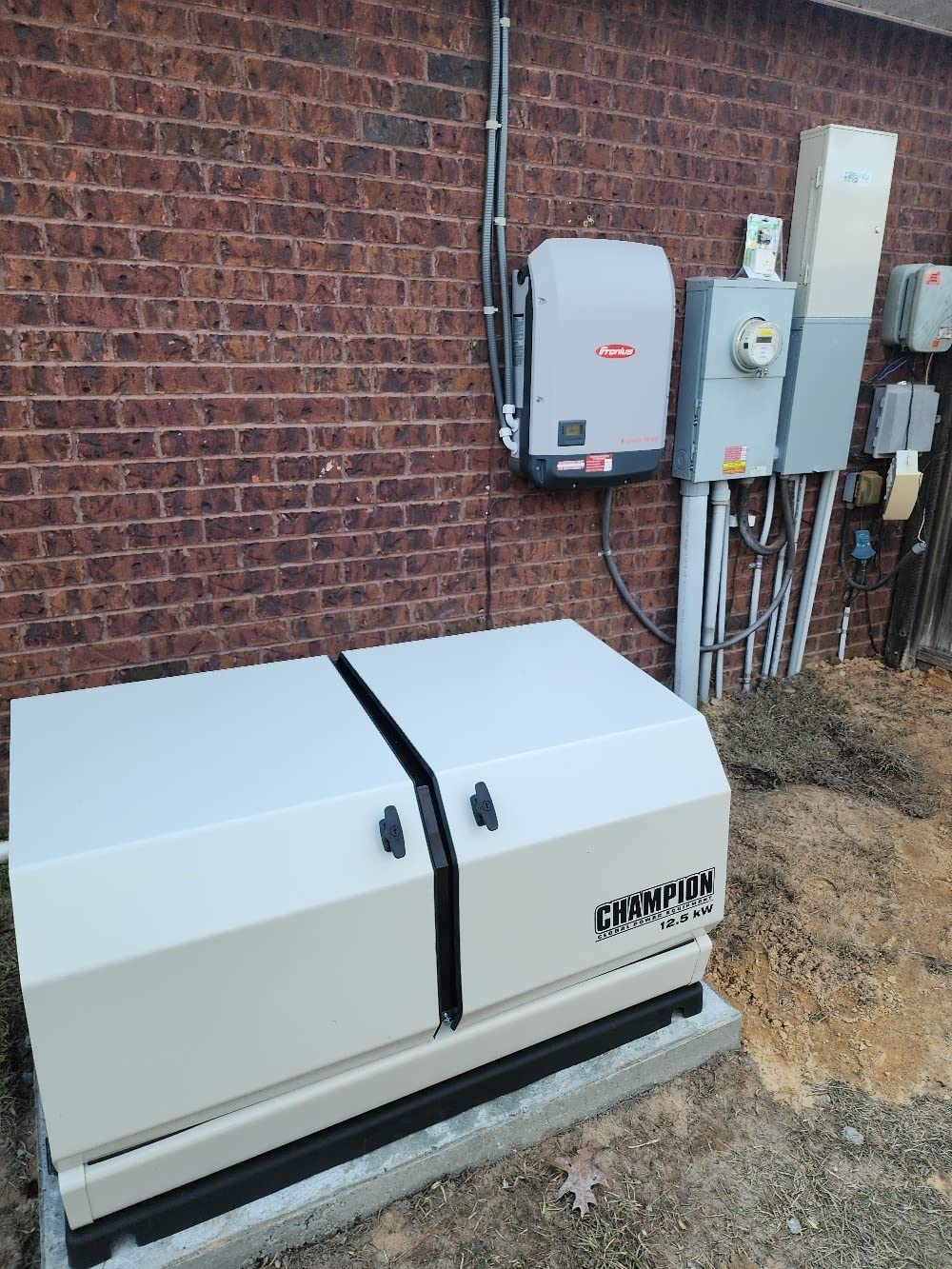
8. Champion 12.5kW Home Standby Generator – Quietest Operation in Its Class
Champion 12.5-kW Home Standby Generator with 100-Amp Outdoor-Rated Automatic Transfer Switch
12,500 watts LP / 11,000W NG
100A outdoor ATS
Dual fuel
455.5 lbs
10-year warranty
+ Pros
- Quietest-in-class at 63 dBA
- 10-year warranty with free lifetime tech support
- Operates -22F to 104F no cold weather kit
- Weekly self-diagnostic tests
- 24-volt starting system
– Cons
- Only 12 circuits with included ATS
- Cannot run HVAC plus range and dryer simultaneously
- Battery and oil not included
The Champion 12.5kW stands out for its quietest-in-class rating of 63 dBA. For context, that is roughly the noise level of a normal conversation, making it significantly quieter than most competitors. This matters for homeowners with nearby neighbors or bedroom windows close to the generator location.
The 24-volt starting system operates reliably from -22 to 104 degrees Fahrenheit without requiring a cold weather kit. This is a genuine advantage over Generac and Honeywell models that need additional cold weather accessories for sub-zero operation. The weekly self-diagnostic tests run automatically to catch potential issues before they become problems during an actual outage.
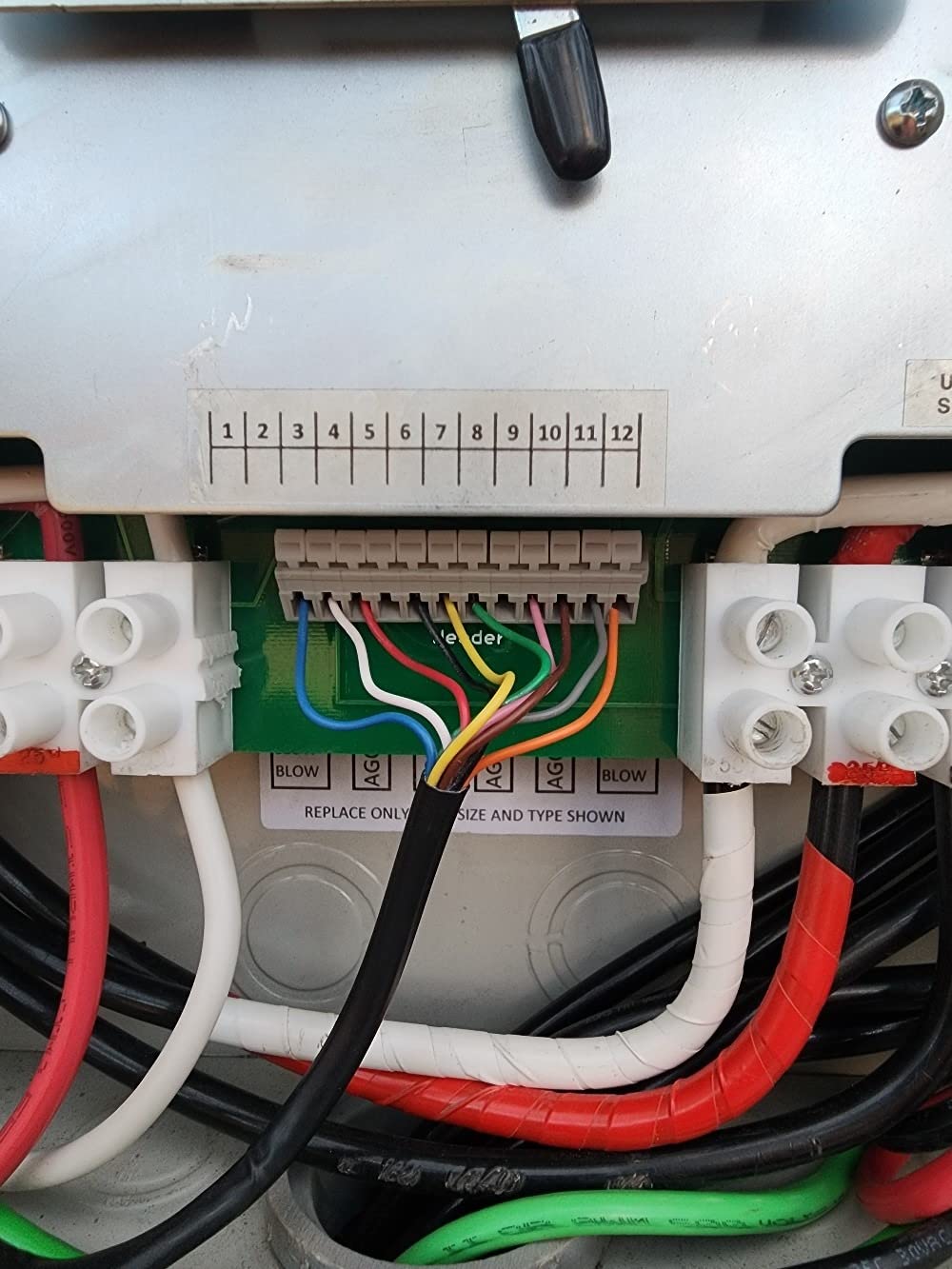
The included 100-amp outdoor-rated automatic transfer switch handles 12 circuits, which covers essentials in most homes up to 2,000 square feet. On propane, the generator produces its full 12,500 watts. On natural gas, output drops slightly to 11,000 watts, which still covers refrigeration, lighting, HVAC, and basic kitchen appliances.
The main limitation is power capacity. If you need to run central air, an electric range, and an electric clothes dryer at the same time, the 12.5kW may trip its breaker. The solution is either load management through the transfer switch or stepping up to the 14kW aXis model.
Noise Level Comparison
At 63 dBA, this Champion runs quieter than most portable generators, which typically produce 70 to 75 dBA at similar distances. The low tone muffler and sound dampening liner absorb higher-frequency sounds that carry through neighborhoods.
If noise is a primary concern, the Champion 12.5kW is the best choice on this list. Some users report being unable to hear the generator running from inside their home during normal operation.
Extreme Temperature Performance
The 24-volt starting system provides twice the cranking power of standard 12-volt systems, which ensures reliable ignition in sub-zero conditions. No cold weather kit means lower total cost and fewer components that can fail.
Champion backs this capability with their 10-year warranty and free lifetime technical support, making this model particularly attractive for homeowners in northern states where winter outages are most common.
9. Champion 8.5kW Home Standby Generator – Best Budget Option for Essential Circuits
Champion Power Equipment 100177 8.5-kW Home Standby Generator with 50-Amp Outdoor-Rated Automatic Transfer Switch
8,500 watts output
50A 10-circuit ATS
Dual fuel
394.1 lbs
10-year warranty
+ Pros
- Lowest price on this list
- 10-year warranty with lifetime tech support
- Sub-zero start to -22F
- Gullwing enclosure for easy service
- 20-hour runtime
– Cons
- Limited to 10 circuits
- Not smart home compatible
- 8.5kW insufficient for whole house with HVAC
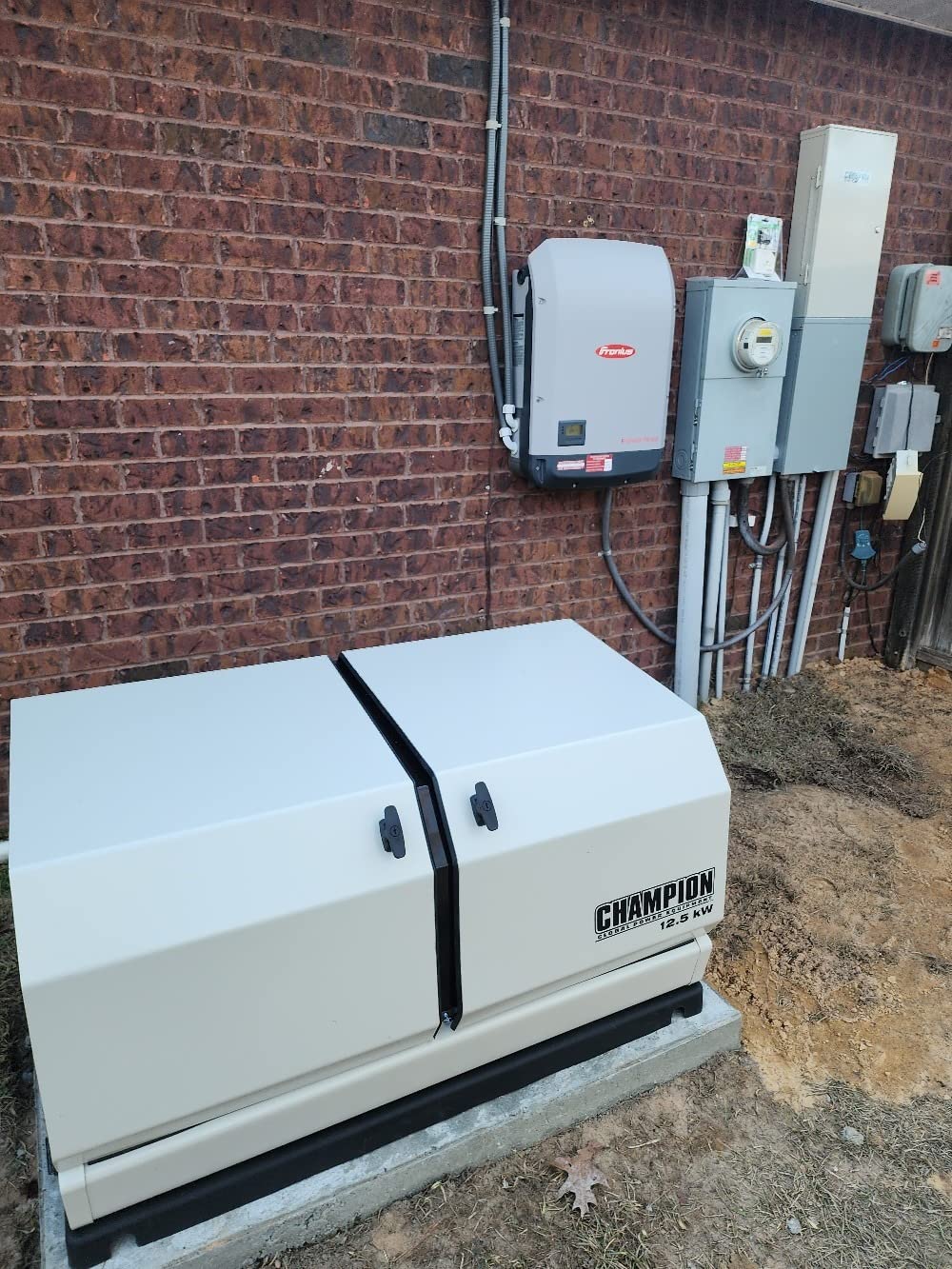
The Champion 8.5kW is the most affordable entry into whole house standby power on this list. While 8,500 watts will not run every appliance in a large home simultaneously, it covers the essentials reliably. Refrigerator, lights, furnace fan, sump pump, and basic kitchen circuits all stay powered during outages.
The innovative gullwing enclosure opens on both sides for easy access during installation and maintenance. This design eliminates the need to remove the entire enclosure for routine service, which saves on labor costs over the generator’s lifetime. The 10-year warranty matches Champion’s larger models, giving you long-term protection at a budget price point.
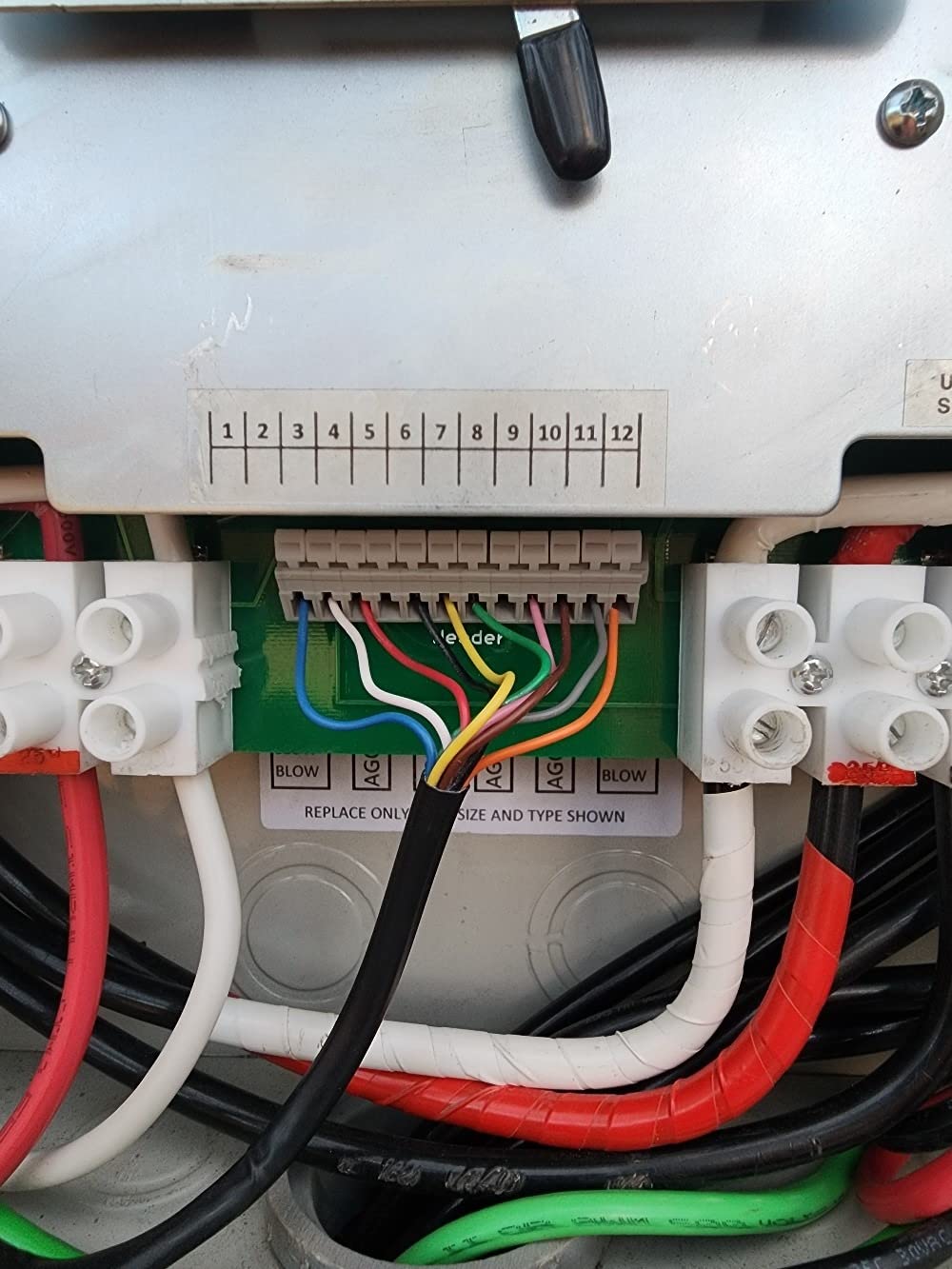
The 50-amp, 10-circuit outdoor-rated automatic transfer switch selects which circuits receive backup power. During installation, you and your electrician choose the 10 most important circuits in your home. The system handles the rest automatically, switching to generator power within seconds of an outage.
The 24-volt starting system operates down to -22 degrees Fahrenheit, matching the cold weather performance of Champion’s larger units. The low-tone muffler and sound dampening liner keep noise levels residential-friendly, even during extended runs.
Essential Circuit Strategy
With 10 circuits available, prioritize your refrigerator, freezer, furnace or boiler controls, well pump, sump pump, garage door opener, kitchen lighting, bathroom lighting, microwave circuit, and one general-purpose outlet. This covers survival needs and basic comfort during an extended outage.
If you need air conditioning backup, consider stepping up to the 12.5kW Champion or the 14kW aXis model. Central AC startup loads typically require 4,000 to 6,000 watts, which would consume most of the 8.5kW output.
Gullwing Enclosure Advantage
The gullwing design swings both enclosure panels open like doors, exposing the engine and alternator for maintenance. Traditional generator enclosures require removal of multiple fasteners or lifting off the entire top section, which takes more time and increases labor costs.
This matters most during annual maintenance visits, where the reduced service time can save $50 to $100 per visit on technician labor charges.
10. Generac Guardian 10kW Home Standby Generator – Compact Power for Smaller Homes
Generac Guardian 10kW Home Generator, Transfer Switch & WiFi Monitoring
10,000 watts output
100A 16-circuit ATS
Dual fuel NG/LP
338 lbs
5-year warranty
+ Pros
- Lightest full standby unit at 338 lbs
- Mobile Link WiFi monitoring
- True Power under 5% THD
- Super quiet operation
- Assembled in USA
– Cons
- Currently out of stock frequently
- WiFi setup difficulties reported
- Local dealer warranty service inconsistent
The Generac Guardian 10kW is the smallest full standby generator on our list, designed for smaller homes, cabins, or as a supplemental backup for essential circuits. At 338 pounds, it is light enough that two people can maneuver it during installation, reducing the need for crane or forklift service.
The included 100-amp, 16-circuit transfer switch covers most homes with 100-amp electrical service. True Power Technology keeps harmonic distortion under 5%, protecting sensitive electronics. The G-Force 400 Series engine runs quieter and uses less fuel than Generac’s previous generation of small standby units.
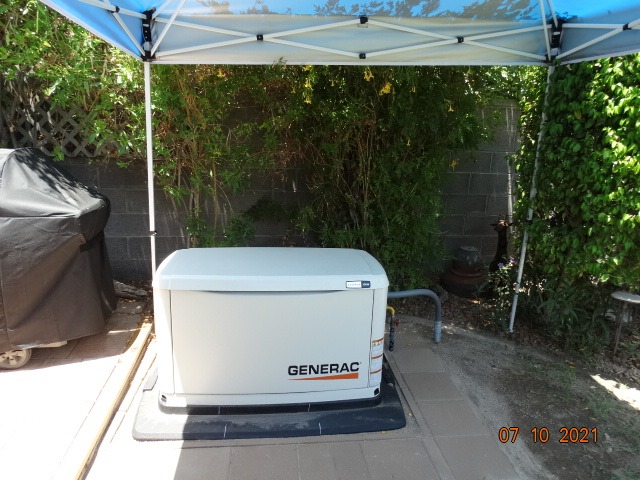
Mobile Link Wi-Fi connectivity lets you monitor the generator’s status from anywhere using the free app. You receive notifications when the generator starts, stops, or needs maintenance. The aluminum enclosure resists corrosion and weighs less than steel alternatives.
The main drawback is availability, as this model frequently goes out of stock. Some customers also reported WiFi setup difficulties and inconsistent local dealer warranty service. These issues appear to be regional, so check dealer reviews in your area before committing.
Small Home Backup Strategy
For homes under 1,500 square feet with gas heat, the 10kW output covers most needs. You can run a gas furnace, refrigerator, lighting, television, and small kitchen appliances simultaneously. Electric heating loads would exceed the capacity of this unit.
This generator also works well as a dedicated backup for a home office or medical equipment room, where uninterrupted power is critical but total load remains modest.
Lightweight Installation Benefits
The 338-pound weight means standard residential delivery can handle this unit without special equipment. Your installer can place it on a concrete pad using a furniture dolly and ramps, which keeps installation costs lower than heavier units that require a crane.
The compact dimensions of 48 by 25 by 29 inches also mean it fits in tighter spaces, making it suitable for homes with limited yard area or strict setback requirements.
Buying Guide – How to Choose the Best Whole House Standby Generator
Choosing the right standby generator comes down to four main decisions: power output, fuel type, transfer switch capacity, and warranty coverage. Getting any of these wrong can mean spending thousands more than necessary or ending up with a generator that cannot handle your home’s electrical load during an outage.
Step 1 – Calculate Your Power Requirements
Start by listing every appliance and circuit you want to power during an outage. Note both running watts and starting watts for each item, since motors in air conditioners, well pumps, and refrigerators need two to three times their running wattage to start.
A typical 2,000-square-foot home with gas heat needs about 14 to 16 kW to run central air, refrigerator, well pump, lighting, and kitchen outlets. A 3,500-square-foot home with two AC zones may need 22 to 26 kW. All-electric homes with heat pumps can require 26 kW or more.
The easiest way to calculate your needs is to add up the running watts of everything you want to power simultaneously, then add 25% for motor startup surges. Round up to the nearest available generator size.
Step 2 – Choose Between Natural Gas and Propane
Natural gas offers unlimited runtime since the supply comes from underground utility lines that rarely fail. You never need to refill a tank or worry about running out during a multi-day outage. The downside is that natural gas produces slightly less power per unit of fuel, so a generator rated at 22 kW on propane may deliver only 19.5 kW on natural gas.
Liquid propane requires a storage tank, typically 250 to 500 gallons for whole-house backup. A full 500-gallon tank can run a 22 kW generator for about 7 to 10 days at moderate load. Propane delivers full rated power and stores indefinitely without degradation.
Most generators on this list are dual-fuel, meaning they can be configured for either natural gas or propane during installation. Switching fuel types requires a kit and professional service, so choose your fuel type before installation.
Step 3 – Understand Transfer Switch Options
The transfer switch is the brain of your standby system. It detects when utility power fails, signals the generator to start, and transfers your home’s electrical load to the generator. When utility power returns, the switch transfers back and shuts the generator down.
Whole-house switches rated at 200 amps connect to your main electrical panel and back up every circuit. These are the most convenient but also the most expensive option. They require a generator large enough to handle your home’s maximum potential load.
Circuit-based switches rated at 50 to 100 amps back up a selected number of circuits, typically 8 to 16. These cost less and work with smaller generators, but some circuits will not have backup power during an outage.
Smart load management switches, like Champion’s aXis system, offer the best of both worlds. They connect to your full 200-amp panel but actively manage which loads receive power based on priority levels. This lets a smaller generator handle more circuits without tripping breakers.
Step 4 – Factor in Installation Costs
The generator itself is only half the total project cost. Installation typically adds $3,000 to $10,000 depending on the complexity of your setup. Forum users report total installed costs ranging from $6,800 for a simple Generac 11 kW installation to over $40,000 for complex whole-house systems with extensive gas line work.
Common installation cost components include the concrete pad ($300 to $600), electrical panel work ($500 to $2,000), gas line installation ($500 to $3,000), permits ($200 to $800), and labor ($1,500 to $4,000). Cold weather kits, battery backup for the transfer switch, and decorative enclosures add more.
Always get at least three quotes from licensed installers. Many homeowners report that going through Costco for Generac installations provides better installer vetting and standardized pricing. Check reviews of any installer before signing a contract.
Step 5 – Compare Brand Strengths
Generac dominates the home standby market with the largest dealer network and widest parts availability. Their G-Force engines are purpose-built for generator use, and the Mobile Link app provides solid remote monitoring once configured. Warranty coverage is 5 years standard.
Champion offers the longest warranty at 10 years and includes free lifetime technical support. Their generators consistently rank as quietest-in-class, and the cold weather starting system works without additional kits. The dealer network is smaller than Generac’s, which can affect service speed in some areas.
Honeywell generators are manufactured by Generac, so internal components match equivalent Generac models. The RhinoCoat enclosure and Honeywell branding appeal to buyers who want a recognized consumer brand. Warranty coverage is 3 years, shorter than both Generac and Champion.
Forum consensus across Reddit and home improvement communities suggests that all three brands have similar long-term reliability. The quality of your local installer and service dealer matters more than the brand name on the enclosure.
Step 6 – Consider Noise and Placement
Standby generators run quieter than portable models, but they still produce noise during operation. Champion models rate between 62 and 63 dBA, while Generac and Honeywell units run slightly louder. Most communities have noise ordinances that restrict generator placement relative to property lines.
Typical setback requirements range from 18 inches to 5 feet from your home and 5 feet from neighboring property lines. Check local building codes before selecting a final location. Placing the generator on the side of your home away from bedroom windows reduces nighttime disturbance during outages.
Frequently Asked Questions About Whole House Standby Generators
What size of generator do you need to run a whole house?
Most homes between 2,000 and 3,500 square feet need a generator between 14 kW and 22 kW to run central air, refrigerator, well pump, lighting, and kitchen appliances simultaneously. All-electric homes with heat pumps may need 26 kW or more. Calculate your needs by adding the running watts of all appliances you want to power, then adding 25% for motor startup surges.
Which is better, Kohler or Generac?
Both brands produce reliable standby generators. Generac dominates market share with the largest dealer network and parts availability, plus purpose-built G-Force engines and the Mobile Link monitoring app. Kohler offers premium build quality and reputation but has a smaller service network. Forum users report similar long-term reliability, with installer quality mattering more than brand choice.
How much does a whole house standby generator cost to install?
Total installed costs range from $6,800 for a simple 11 kW system to over $40,000 for complex whole-house installations with extensive gas line work. The generator itself typically represents 40 to 60% of the total cost, with installation adding $3,000 to $10,000 for the concrete pad, electrical panel work, gas line, permits, and labor. Get at least three quotes from licensed installers.
How long can a standby generator run continuously?
Natural gas generators can run indefinitely as long as the gas supply remains active. Propane generators typically run 7 to 10 days on a full 500-gallon tank at moderate load. Most manufacturers recommend shutting down every 200 to 400 hours for oil changes and maintenance checks. Always follow the maintenance schedule in your owner’s manual during extended outages.
What maintenance does a standby generator need?
Standby generators require annual maintenance including oil and filter changes, air filter replacement, spark plug inspection, battery check, and overall system testing. Budget $200 to $400 per year for professional maintenance service. Champion offers free lifetime technical support by phone, while Generac dealers typically charge for service visits. Regular maintenance keeps the warranty valid and ensures reliable starting during outages.
Conclusion – Choosing Your Best Whole House Standby Generator
Finding the best whole house standby generator comes down to matching power output, fuel type, and budget to your specific home. For large homes needing maximum power, the Generac Guardian 26kW delivers the highest air-cooled output available. For the best combination of features, warranty, and price, the Champion 14kW aXis with its 200-amp load management switch and 10-year warranty is hard to beat.
Budget-conscious homeowners should look at the Champion 8.5kW, which provides reliable essential circuit backup at the lowest price point on this list. Smaller homes and cabins benefit from the Generac Guardian 10kW, the lightest and most compact option available.
Whatever you choose, invest in professional installation by a licensed electrician and plumber. The quality of your installer will determine how reliably your generator performs for the next 10 to 20 years. Get multiple quotes, check dealer reviews, and confirm warranty service terms before signing any contract. A well-installed standby generator provides peace of mind and uninterrupted comfort during every outage for years to come.
Leave a Reply