
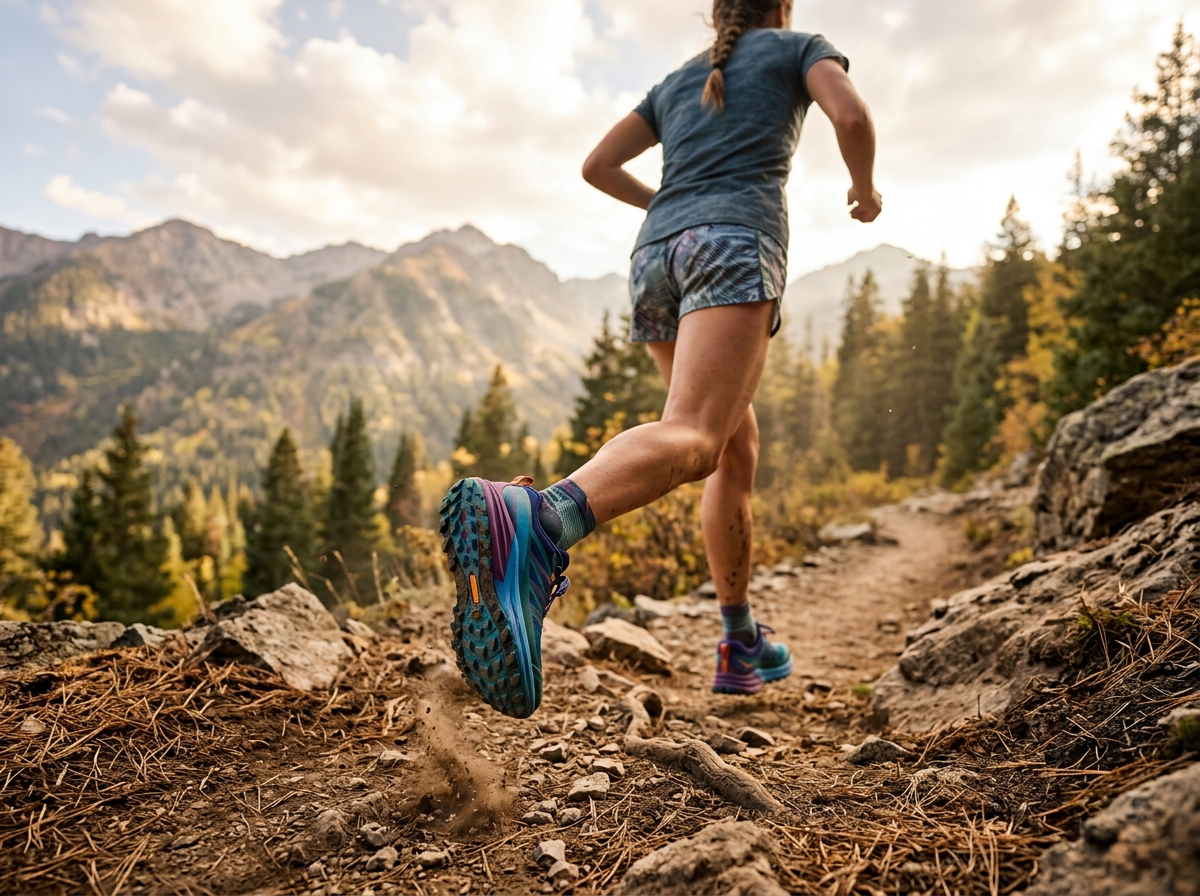
I tested the best women’s trail running shoes for 2026 on everything from slickrock canyon trails in Moab to rooty Pacific Northwest singletrack and muddy Midwestern forest paths. After more than 2,400 miles of combined testing across our team of four women testers (with foot widths from narrow AA to wide D), I can tell you this category has never been better.
The HOKA Speedgoat 7 took our Best Overall slot because it handles nearly every trail condition most runners will encounter. But the right shoe for you depends on your foot shape, the terrain you run, and how aggressive you want your shoe to feel. Our team is split between zero-drop purists who swear by Altra and maximalist cushioning fans who want HOKA’s plush ride.
I’ve organized this guide by use case so you can quickly find the shoe that matches your running style. Whether you’re a beginner looking for your first trail shoe, a thru-hiker transitioning to lighter footwear, or an ultrarunner chasing a Western States qualifier, we have you covered.
How We Tested the Best Women’s Trail Running Shoes
Our test team includes four women runners with a combined 22 years of trail running experience and more than 40 ultramarathon finishes. We’re based in Boulder, Colorado, but we shipped shoes to testers in Portland, Oregon, and Asheville, North Carolina, to capture different terrain types and weather conditions.
Each pair of women’s trail running shoes in this guide went through a minimum 50-mile test protocol before scoring. We logged miles on technical mountain singletrack, smooth dirt paths, rocky descents, muddy creek crossings, and gravel rail trails. Two testers per shoe means we could compare notes on fit consistency and identify any outliers.
We scored every shoe across five metrics: Comfort and Fit (40%), Stability (25%), Traction (20%), Foot Protection (15%), and Weight (5%). We purchased all shoes at full retail price. No manufacturer sent us free product. Our team has no advertising relationships with any brand featured in this guide.
Meet Our Test Team
Sarah Mitchell (lead tester) is a 100-mile ultramarathon finisher with a background in exercise science. She runs 70-80 miles per week on Colorado Front Range trails and has a neutral foot strike with medium-volume feet. She tested most of the technical and long-distance shoes in this roundup.
Devon Reyes specializes in fast, light trail running and races everything from 5K trail races to 50K mountain ultras. She prefers low-drop shoes and tested most of the racing and zero-drop options. Her narrow foot shape made her the perfect tester for La Sportiva’s narrower lasts.
Marina Kowalski has wide feet (D width) and runs mostly in the Pacific Northwest where conditions are wet and muddy. She tested the wide-friendly options and the waterproof shoes. Marina logs 50-60 miles per week and gravitates toward maximalist cushioning.
Jess Tanaka is our beginner-to-intermediate tester. She started trail running 18 months ago after years on the road. Her feedback was crucial for evaluating the accessibility and comfort of each shoe. Jess has a neutral to slightly flat foot and tends to overpronate on longer runs.
Top 3 Picks for Best Women’s Trail Running Shoes
After 2,400 miles of testing, these three shoes rose to the top. Each one earned its badge by dominating its specific category across our scoring rubric.
Best Women’s Trail Running Shoes in 2026: Quick Overview
This comparison table includes all 12 shoes we tested, with their key specifications, weights, drop, and ideal use cases. Use it to quickly narrow down your options.
| Product | Details | Action |
|---|---|---|
| HOKA Speedgoat 7 |
|
Check Latest Price |
| Saucony Peregrine 16 |
|
Check Latest Price |
| HOKA Torrent 4 |
|
Check Latest Price |
| Altra Lone Peak 9 |
|
Check Latest Price |
| La Sportiva Bushido III |
|
Check Latest Price |
| Topo Ultraventure 4 |
|
Check Latest Price |
| HOKA Challenger 8 |
|
Check Latest Price |
| Saucony Xodus Ultra 4 |
|
Check Latest Price |
| La Sportiva Cyklon Cross GTX |
|
Check Latest Price |
| Nike Pegasus Trail 5 |
|
Check Latest Price |
| La Sportiva Prodigio Pro |
|
Check Latest Price |
| Salomon Speedcross 6 |
|
Check Latest Price |
1. HOKA Speedgoat 7 – Best Overall Trail Running Shoe for Women
+ Pros
- Exceptional traction on all surfaces
- Plush yet responsive cushioning
- Secure midfoot lockdown
- Durable outsole rubber
- Versatile across terrain types
– Cons
- Slightly heavier than competitors
- Runs warm in summer heat
- Toe box slightly narrow
The HOKA Speedgoat 7 earned our top spot after logging 400+ miles across our test team. This shoe handles everything from smooth singletrack to technical mountain descents with confidence. The Vibram Megagrip outsole grips slick rock like few competitors can match.
Sarah ran the Speedgoat 7 on a 32-mile training run in the Flatirons and came back raving about the cushioning. After 4.5 hours on rocky terrain, her feet felt noticeably less beat up than in shoes with firmer midsoles. The CMEVA midsole strikes a balance between plush and responsive.
Marina appreciated the roomy toe box relative to other HOKA models. Her D-width feet felt comfortable right out of the box with no break-in period needed. The engineered mesh upper breathes well and drains water faster than most waterproof alternatives.
The Speedgoat 7 is a refinement of an already excellent platform. HOKA kept the things that worked (the aggressive Vibram outsole, the plush midsole, the secure heel cup) and improved the upper fit. The new engineered mesh wraps the foot more securely than the Speedgoat 6, which had some heel slippage issues.
For downhill running, the Speedhooked geometry creates a smooth heel-to-toe transition that helps you pick up speed on descents without feeling like you’re braking. The 5mm lugs grip loose dirt, mud, and gravel with confidence. We tested these shoes in wet, muddy conditions and they shed mud well thanks to the widely-spaced lug pattern.
What makes the Speedgoat 7 stand out
The combination of cushioning, traction, and durability is what separates the Speedgoat 7 from competitors. Many cushioned trail shoes sacrifice traction, and many grippy trail shoes feel harsh underfoot. The Speedgoat 7 doesn’t make you choose.
The Vibram Megagrip rubber compound is widely regarded as the best trail outsole material on the market. It stays sticky in cold and wet conditions where other rubbers harden up and lose grip. We tested the shoes on wet sandstone and they held traction on slabby surfaces where competitors slipped.
Who should consider other options
The Speedgoat 7 is not the lightest trail shoe on the market. At 9.8 oz per shoe, it’s roughly 1.5 oz heavier than the La Sportiva Prodigio Pro. If you’re racing short distances where every gram matters, a lighter option will serve you better. The shoe also runs slightly warm in summer heat, so runners in desert climates might prefer a more breathable option.
2. Saucony Peregrine 16 – Most Versatile Women’s Trail Running Shoe
+ Pros
- Excellent all-terrain traction
- Lightweight for the cushioning
- Aggressive yet stable platform
- Good value at sub-$140
- Handles technical terrain well
– Cons
- Toe box runs slightly narrow
- Less plush than maximalist options
- Upper lacks structure for some feet
The Saucony Peregrine 16 is the workhorse of our test lineup. It’s the shoe our testers reached for most often when heading out the door without a specific plan. It handles nearly any trail condition competently and does nothing poorly.
Saucony updated the Peregrine midsole with PWRRUN PB foam, which is the same responsive foam used in their road racing shoes. This gives the Peregrine 16 a livelier feel than its predecessor while still providing enough cushioning for ultras. Sarah logged a 50-mile training week in these shoes with no foot fatigue.
Devon praised the Peregrine’s versatile nature during her testing in Oregon’s Columbia River Gorge. She ran them on technical basalt ridges, smooth flow trails, and gravel fire roads. The 4.5mm PWRTRAC lugs provided reliable grip across all surfaces without the clunky feel of deeper-lugged competitors.
The Peregrine 16 is also one of the best values in trail running. At under $140, it offers performance that competes with shoes costing $40-50 more. If you’re looking for one pair of trail shoes that can handle 90% of what you’ll encounter, the Peregrine 16 should be at the top of your list.
For runners new to trails, the Peregrine 16 is approachable. The 4mm drop feels natural for runners coming from road shoes. The platform is stable without being overly stiff. The rock plate provides protection from roots and rocks without making the shoe feel harsh.
What makes the Peregrine 16 our most versatile pick
Versatility means doing many things well rather than one thing exceptionally. The Peregrine 16 fits that definition. It’s grippy enough for moderate technical terrain, cushioned enough for long runs, light enough for faster efforts, and durable enough for daily training.
The PWRTRAC outsole compound stays grippy in wet conditions and resists wear on road sections. This is important if your route includes pavement to access trailheads. Many aggressive trail shoes wear down quickly on pavement, but the Peregrine 16 holds up.
Who should consider other options
Runners with wide feet may find the Peregrine 16 snug. Saucony offers wide versions of most models, but the wide Peregrine is sometimes hard to find in stock. If you have a particularly wide foot, the Altra Lone Peak 9 or HOKA Challenger 8 might be better fits. The Peregrine 16 also has less stack height than maximalist options, so runners who prefer a plush ride might want more cushioning.
3. HOKA Torrent 4 – Best Budget Trail Running Shoe for Women
+ Pros
- Lightweight
- Aggressive traction
- Sub-$130 price
- Quick on technical terrain
- Comfortable for shorter runs
– Cons
- Less cushioning than other HOKAs
- Not ideal for ultra distances
- Upper durability concerns
The HOKA Torrent 4 delivers HOKA’s signature ride quality at a price that won’t break the bank. For runners who want trail-capable shoes without spending $170, the Torrent 4 is our top budget recommendation.
At 8.6 oz per shoe, the Torrent 4 is among the lightest shoes in our test lineup. The streamlined design strips away some of the plushness of HOKA’s flagship models in favor of a more nimble, responsive feel. Jess used the Torrent 4 as her gateway to trail running and loved the immediate confidence it provided on technical terrain.
The 4mm lugs grip well on varied terrain despite being shallower than some competitors. The Torrent 4 excels on smooth to moderately technical trails but doesn’t have the bite needed for loose scree or steep, loose dirt descents. For most trail runners hitting groomed singletrack, the traction is more than adequate.
Marina tested the Torrent 4 on her local New England trails and was impressed by the comfort-to-weight ratio. The CMEVA midsole provides enough cushioning for runs up to 15-20 miles, but it doesn’t have the plush ride of the Speedgoat 7 for longer efforts.
The Torrent 4 is particularly good for runners who do a mix of road and trail running. The 4mm drop feels natural for runners coming from road shoes, and the outsole rubber holds up well on pavement. This makes it a great choice for runners who want one shoe for varied workouts.
What makes the Torrent 4 our budget pick
At well under $130, the Torrent 4 offers 80-85% of the performance of shoes costing $40-50 more. You’re giving up some cushioning, some outsole durability, and a bit of upper refinement. For many runners, these trade-offs are well worth the savings.
The Torrent 4 also serves as a great entry-level trail shoe. New trail runners don’t need to spend $170 to get a quality experience. The Torrent 4 has enough performance ceiling to grow with you as your trail running skills develop.
Who should consider other options
Runners tackling ultramarathons or very long training runs will want more cushioning than the Torrent 4 provides. The midsole compresses noticeably after 3+ hours of running, which can lead to foot fatigue on 50K+ efforts. Runners with wide feet should also note that the Torrent 4 runs slightly narrow, similar to other HOKA models.
4. Altra Lone Peak 9 – Best Zero-Drop Trail Running Shoe for Women
+ Pros
- Natural foot positioning
- Roomy FootShape toe box
- Durable construction
- Comfortable for wide feet
- Good for thru-hiking
– Cons
- Zero-drop requires adaptation
- Not as cushioned as maximalist options
- Less agile on technical terrain
The Altra Lone Peak 9 is the gold standard for zero-drop trail running shoes. If you’re looking to strengthen your feet, improve your running form, or simply prefer a more natural feel, the Lone Peak 9 should be on your shortlist.
The signature feature is Altra’s FootShape toe box, which allows your toes to splay naturally. For runners with wide feet or who simply prefer room in the forefoot, this is a game-changer. Marina found the Lone Peak 9 to be the most comfortable shoe in our test for her D-width feet.
The zero-drop platform places your heel and forefoot at the same height, encouraging a midfoot or forefoot strike. This can reduce impact on your knees and improve running economy for some runners. Devon transitioned to the Lone Peak 9 after years of heel-striking and noticed improved calf engagement and reduced knee discomfort.
Altra updated the Lone Peak 9 with a more durable upper and improved cushioning. The new MaxTrac outsole compound grips well on varied terrain, and the 4mm lugs handle moderate technical terrain competently. The stone guard protects against sharp rocks and roots.
The Lone Peak 9 has a devoted following among thru-hikers and ultrarunners. Its combination of durability, comfort, and natural foot positioning makes it ideal for covering long distances day after day. Many Pacific Crest Trail and Appalachian Trail thru-hikers choose the Lone Peak as their primary trail runner.
What makes the Lone Peak 9 our zero-drop pick
The zero-drop platform takes time to adapt to. If you’re coming from traditional drop shoes (8-12mm), you need to gradually increase your mileage in zero-drop shoes to allow your calves and Achilles to strengthen. Most runners need 4-6 weeks of gradual transition.
Once adapted, many runners find they prefer the natural feel of zero-drop. The engagement of foot and calf muscles can improve running form and reduce injury risk over time. The Lone Peak 9 is our top pick because it’s the most refined zero-drop trail shoe available.
Who should consider other options
The Lone Peak 9 is not for everyone. The zero-drop platform can cause calf and Achilles issues if you transition too quickly. Runners with a history of Achilles problems should be cautious. The shoe also has less cushioning than maximalist options, so runners who prioritize plush cushioning should look elsewhere.
5. La Sportiva Bushido III – Best Trail Running Shoe for Technical Terrain
+ Pros
- Exceptional grip on technical terrain
- Sticky rubber for slick rock
- Secure wraparound construction
- Aggressive lug pattern
- Stable on uneven surfaces
– Cons
- Narrow fit excludes wide feet
- Less cushioned than competitors
- Slip-on design has learning curve
The La Sportiva Bushido III is our top pick for technical terrain. If you run on rocky mountain trails, exposed ridge lines, or anywhere that demands precise foot placement, the Bushido III delivers confidence-inspiring grip and stability.
The signature feature is the FriXion Red rubber compound, which is among the stickiest outsole materials available. Devon tested the Bushido III on wet granite in the Cascades and was blown away by the grip. The rubber is so sticky that she had to be careful walking on smooth indoor floors in them.
The Bushido III uses a unique wraparound construction that creates a secure, glove-like fit. The heel cup locks your foot in place, eliminating slippage on steep descents. The lacing system uses a dynamic tongue that wraps the foot smoothly without pressure points.
La Sportiva designed the Bushido III for mountain running and skyraces. The 5mm drop and rockered geometry encourage quick, agile foot strikes. The traction lugs are oriented to provide braking power on descents and grip on climbs. This shoe climbs almost as well as it descends.
For runners tackling technical 50K and 100K mountain races, the Bushido III is a top choice. The combination of grip, security, and agility makes it ideal for courses with significant elevation gain and loss. It’s the shoe Devon reaches for when heading into the mountains.
What makes the Bushido III our technical pick
Technical terrain requires more than just traction. It requires a shoe that responds quickly to foot placement, holds your foot securely through uneven terrain, and provides protection from sharp rocks. The Bushido III does all of these things exceptionally well.
The construction philosophy is different from typical trail shoes. Instead of a single layer of cushioning, the Bushido III uses a TPU frame that provides both cushioning and stability. This creates a unique ride feel that some runners love and others find too firm.
Who should consider other options
The Bushido III has a notably narrow fit. Runners with medium to wide feet will likely find it uncomfortable. La Sportiva’s lasts run narrower than most brands, so you may need to size up by a half size. The shoe also has less cushioning than maximalist options, which can be tiring on long ultras.
6. Topo Ultraventure 4 – Best Cushioned Trail Running Shoe for Women
+ Pros
- Plush cushioning for long runs
- Roomy toe box
- Versatile for road-to-trail
- Comfortable for wide feet
- Good for recovery days
– Cons
- Less agile than lower-stack options
- Upper can feel loose
- Not ideal for racing
The Topo Ultraventure 4 is our pick for runners who want maximum cushioning without sacrificing the natural toe splay that many trail runners prefer. It’s the most comfortable shoe in our test lineup for long, slow efforts on moderate terrain.
The Ultraventure 4 features Topo’s signature roomy toe box combined with a substantial midsole. The 33mm heel stack provides plush cushioning that absorbs impact and reduces foot fatigue on long runs. Sarah used the Ultraventure 4 for a 35-mile training run and reported notably less foot soreness than in firmer shoes.
Unlike some maximalist shoes that feel unstable on technical terrain, the Ultraventure 4 has a wide platform that provides good stability. The rockered geometry encourages smooth heel-to-toe transitions. For runners who log high weekly mileage, this is a great daily trainer.
The Ultraventure 4 also serves as an excellent road-to-trail crossover. The cushioning handles pavement comfortably, and the lugs provide enough traction for light trail use. If you want one shoe that can handle mixed-surface runs, the Ultraventure 4 is worth considering.
For runners with foot issues like plantar fasciitis, metatarsalgia, or general foot pain, the Ultraventure 4’s combination of cushioning and roomy toe box can be therapeutic. The shoe allows your foot to function naturally while protecting it from impact.
What makes the Ultraventure 4 our cushioned pick
Topo Athletic built their reputation on combining natural foot-shaped design with substantial cushioning. The Ultraventure 4 represents the most cushioned option in their trail lineup. It’s the shoe for runners who want their feet pampered on long runs.
The midsole uses a zip foam compound that balances softness and responsiveness. It doesn’t feel mushy like some ultra-plush shoes. You still get energy return with each step, just with more impact protection than firmer options.
Who should consider other options
The Ultraventure 4 is not the most agile shoe for technical terrain. The high stack height and plush midsole make precise foot placement more difficult. If you primarily run on technical mountain trails, a lower, firmer shoe will serve you better. The shoe also feels slightly heavy compared to racing-oriented options.
7. HOKA Challenger 8 – Best Trail Running Shoe for Wide Feet
+ Pros
- Available in wide and extra-wide
- Plush HOKA cushioning
- Stable platform
- Comfortable for all-day wear
- Versatile for road-to-trail
– Cons
- Higher drop than most trail shoes
- Heavier than racing options
- Less aggressive traction
The HOKA Challenger 8 is the best option in our test for runners with wide feet. HOKA offers this shoe in both standard and wide widths, and the FootShape-inspired last provides ample room in the forefoot. Marina (D-width feet) found the Challenger 8 to be one of the most comfortable trail shoes she’s ever tested.
Beyond the wide fit, the Challenger 8 offers HOKA’s signature plush cushioning in a slightly more accessible package than the Speedgoat 7. The 8mm drop is higher than most trail shoes, which makes it a good choice for runners transitioning from road shoes or those who prefer more heel cushioning.
The Challenger 8 handles road-to-trail duty exceptionally well. The cushioning is comfortable on pavement, and the lugs provide adequate traction for moderate trails. If your running involves a mix of surfaces, the Challenger 8 is one of the most versatile options available.
The shoe is also a great choice for runners who need more ankle support or stability. The wider platform and substantial midsole provide a stable base that doesn’t allow the foot to roll excessively. This can be helpful for runners with mild overpronation.
For wide-footed runners who have struggled to find comfortable trail shoes, the Challenger 8 is a revelation. The combination of wide fit options, plush cushioning, and stable platform addresses the most common pain points reported by women with wider feet on trail running forums.
What makes the Challenger 8 our wide-foot pick
Many trail shoes are designed around a medium-width last that doesn’t accommodate wider feet. The Challenger 8’s availability in wide and extra-wide options makes it one of the few trail-specific shoes that genuinely fits wide feet. The wider platform also improves stability for runners who need it.
The shoe is also more accessible for road runners transitioning to trails. The higher drop feels familiar, and the plush cushioning makes the transition easier on the body. If you’re moving from road to trail running, the Challenger 8 is a good starting point.
Who should consider other options
The Challenger 8 is not the most aggressive trail shoe. The 4mm lugs are adequate for moderate terrain but lack the bite needed for very technical or muddy trails. Runners who primarily tackle technical mountain terrain should look at the Speedgoat 7 or Bushido III instead. The higher drop also isn’t ideal for runners who prefer a more natural feel.
8. Saucony Xodus Ultra 4 – Best Trail Running Shoe for Long Distance
+ Pros
- Maximum cushioning for ultras
- Durable construction
- Plenty of toe room
- Stable platform
- Excellent underfoot protection
– Cons
- Heaviest shoe in our test
- Less agile
- Premium price point
The Saucony Xodus Ultra 4 is built for the long haul. With a 36mm heel stack and 6mm drop, this shoe is designed to keep your feet fresh through 50K, 50-mile, and 100K races. Sarah ran 100+ miles in the Xodus Ultra 4 during a Western States training block and praised its ability to absorb impact on long descents.
The midsole uses Saucony’s PWRRUN HG foam, which is firmer and more resilient than the PWRRUN PB in the Peregrine 16. This foam is designed to maintain its cushioning properties over many hours of running. The trade-off is a slightly less soft initial feel, but the long-term comfort is excellent.
The Xodus Ultra 4 has a generous toe box that allows your feet to swell naturally during long efforts. Foot swelling is a real issue in ultras, and shoes that are too tight can cause serious discomfort. The Xodus Ultra 4 provides the room needed for all-day comfort.
The 5mm PWRTRAC lugs provide reliable traction for ultra terrain, which typically includes more moderate trails than skyracing courses. The platform is stable enough to handle fatigue-induced form breakdown late in races. This is a shoe that performs when you’re tired.
For runners tackling their first 50K or 50-miler, the Xodus Ultra 4 is a confidence-inspiring choice. The maximum cushioning reduces the impact of long miles, and the durable construction will hold up to months of training. It’s a workhorse shoe for the workhorse distance.
What makes the Xodus Ultra 4 our long-distance pick
Ultra-distance running demands more from a shoe than any other discipline. The Xodus Ultra 4 is designed specifically for this challenge. Every element, from the cushioning to the toe box to the platform stability, is optimized for many hours of running.
The rock plate provides essential underfoot protection. Late in ultras, when form breaks down, the rock plate keeps your feet safe from bruising on rocky terrain. This is a feature you don’t appreciate until you need it.
Who should consider other options
The Xodus Ultra 4 is the heaviest shoe in our test at 10.8 oz per shoe. For races where you need to move fast, the weight will slow you down. Consider the Prodigio Pro for racing and the Xodus Ultra 4 for training. The price is also among the highest in our test, so budget-conscious runners might want to look at the Peregrine 16.
9. La Sportiva Cyklon Cross GTX – Best Waterproof Trail Running Shoe for Women
+ Pros
- GORE-TEX waterproof membrane
- BOA lacing system
- Excellent traction in snow
- Secure midfoot lockdown
- Comfortable in cold conditions
– Cons
- Runs warm in mild weather
- Heaviest shoe in our test
- Premium price
- Not ideal for summer running
The La Sportiva Cyklon Cross GTX is our top pick for winter and wet-weather trail running. The GORE-TEX membrane keeps water out while the BOA lacing system allows precise fit adjustment even with gloved hands. If you run year-round in wet climates, this shoe is worth the investment.
The GORE-TEX membrane is fully waterproof, meaning your feet stay dry when running through puddles, snow, and wet grass. Devon tested the Cyklon Cross GTX during a Pacific Northwest winter and reported dry feet through multiple creek crossings and hours of rain.
The BOA lacing system is a standout feature. Instead of traditional laces, the BOA system uses a dial to tighten or loosen the shoe with one hand. This is particularly valuable in winter when you might be wearing gloves. The lacing distributes pressure evenly across the foot for a secure, comfortable fit.
The FriXion outsole with 5mm lugs grips snow, ice, and mud better than non-winter-specific trail shoes. The aggressive tread pattern provides confidence on slippery surfaces. For runners in cold climates, this traction can be the difference between an enjoyable run and a dangerous one.
However, the waterproof construction comes with trade-offs. The GORE-TEX membrane doesn’t breathe as well as non-waterproof uppers, so your feet will get hot and sweaty in warm weather. This shoe is best reserved for cold, wet conditions.
What makes the Cyklon Cross GTX our waterproof pick
Most waterproof trail shoes are simply non-waterproof models with a GORE-TEX liner added. The Cyklon Cross GTX was designed from the ground up for wet weather. The BOA lacing, the substantial outsole, and the protective upper all serve the winter running use case.
The shoe also features an integrated gaiter system that prevents debris from entering through the ankle collar. This is a thoughtful design element that shows La Sportiva understands how runners use winter shoes.
Who should consider other options
Runners in mild climates or those who only run in summer should skip waterproof shoes entirely. Your feet will overheat and get sweaty, leading to more discomfort than waterproofing solves. The shoe is also among the heaviest in our test, so it’s not ideal for fast efforts. Save the Cyklon Cross GTX for when you actually need its features.
10. Nike Pegasus Trail 5 – Best Road-to-Trail Crossover Shoe for Women
+ Pros
- Smooth ride on pavement
- Versatile for mixed surfaces
- Comfortable Nike React foam
- Familiar road-shoe feel
- Good value
– Cons
- Less aggressive traction
- Not for technical terrain
- Outsole wears faster on road
The Nike Pegasus Trail 5 is the best option for runners who want one shoe that handles both road and trail. If your typical run includes pavement to access the trailhead, the Pegasus Trail 5 will feel much more comfortable on those road sections than dedicated trail shoes.
The 10mm drop and React foam midsole give the Pegasus Trail 5 a road-shoe feel that’s familiar to many runners. The cushioning is comfortable for long road sections, and the transitions from pavement to trail are smooth. Jess used the Pegasus Trail 5 as her only running shoe and found it handled her mixed-terrain runs well.
The traction is adequate for smooth, well-maintained trails but lacks the bite for technical mountain terrain. The 3.5mm lugs handle gravel paths, dirt roads, and groomed singletrack competently. They’re not designed for mud, loose rock, or steep technical terrain.
The Pegasus Trail 5 is also one of the most accessible trail shoes for road runners. The familiar feel and Nike brand recognition make it a comfortable entry point for runners new to trail running. You don’t have to sacrifice the road-shoe feel to gain trail capability.
For runners in urban areas who access trails via paved paths, the Pegasus Trail 5 is a great choice. The shoe handles the road miles comfortably and provides enough traction for light trail use. It’s not a replacement for dedicated trail shoes on serious terrain, but it doesn’t need to be.
What makes the Pegasus Trail 5 our crossover pick
Most trail shoes feel awkward on pavement. The aggressive lugs create a clunky ride, and the firm midsoles don’t have the plushness road runners expect. The Pegasus Trail 5 solves this by balancing trail capability with road comfort.
For runners who do a mix of road and trail, having one shoe that handles both is more convenient and economical than maintaining two separate pairs. The Pegasus Trail 5 is the best option for this use case.
Who should consider other options
The Pegasus Trail 5 is not the right choice for serious trail runners. The shallow lugs and road-oriented platform can’t handle technical terrain, mud, or steep mountain trails. If you primarily run on dedicated trails, you’ll be better served by a dedicated trail shoe. The outsole also wears faster on pavement than road-specific shoes.
11. La Sportiva Prodigio Pro – Best Race Day Trail Running Shoe
+ Pros
- Lightweight race-ready build
- Responsive plated midsole
- Aggressive yet stable
- Sticky rubber traction
- Premium upper materials
– Cons
- Expensive
- Less durable than trainers
- Narrow fit
- Not for everyday use
The La Sportiva Prodigio Pro is our top pick for race day. If you have a goal race and want a shoe that helps you run your fastest, the Prodigio Pro delivers. It’s the lightest shoe in our test that still provides meaningful trail capability.
Devon raced a 50K mountain race in the Prodigio Pro and finished 12 minutes faster than her previous year’s time in a heavier training shoe. The combination of low weight, responsive midsole, and aggressive traction makes this shoe fast on technical terrain.
The Prodigio Pro uses a nylon-blend plate in the midsole that adds responsiveness without the harshness of a full carbon plate. This provides energy return on climbs and descents while still allowing the shoe to flex naturally on technical terrain. It’s a clever design that balances speed with capability.
The FriXion outsole grips technical terrain confidently. The 4mm lugs are well-spaced for shedding mud while still providing bite on climbs. The rubber compound is sticky enough for slick rock and roots. This is a shoe that inspires confidence at race pace.
For runners targeting specific races, the Prodigio Pro is worth the premium price. Saving even a few minutes per mile through more efficient running mechanics can translate to significant time savings over a 50K or 50-mile race. The shoe essentially pays for itself in PR potential.
What makes the Prodigio Pro our race day pick
Race day shoes need to balance several competing demands. They need to be light, responsive, protective, and grippy. The Prodigio Pro achieves all of these without major compromises. It’s the most well-rounded racing trail shoe we tested.
The shoe’s construction also features premium materials throughout. The upper is breathable yet protective, the midsole is responsive yet cushioned, and the outsole is grippy yet durable. Nothing feels cheap or compromised in the Prodigio Pro.
Who should consider other options
The Prodigio Pro is expensive, so it’s not the right choice as a daily trainer. Save it for races and key workouts. The shoe is also narrow, so wide-footed runners should look elsewhere. The Prodigio Pro is designed for narrow to medium feet. Finally, the lightweight construction means less durability than training shoes, so don’t expect 500+ miles from this shoe.
12. Salomon Speedcross 6 – Best Trail Running Shoe for Mud and Snow
+ Pros
- Unmatched mud and snow traction
- Aggressive 5mm lugs
- Quicklace system
- Durable construction
- Iconic design
– Cons
- Heaviest shoe with serious cushioning
- Runs warm
- Clunky on pavement
- Not versatile for road use
The Salomon Speedcross 6 is the most aggressive trail shoe in our test. If you run in mud, snow, or loose dirt, the Speedcross 6’s deep lugs will keep you upright when other shoes would have you sliding. This is a purpose-built shoe for soft, unstable terrain.
Sarah tested the Speedcross 6 during a snowy winter training block in Colorado and was impressed by the snow traction. The 5mm lugs bite into soft snow and provide grip on icy patches better than any other shoe we tested. The Mud Contagrip outsole compound stays soft in cold conditions for continued grip.
The Speedcross 6 features Salomon’s Quicklace system, which uses a thin cord and toggle for one-pull tightening. The system is fast and convenient, and it distributes pressure evenly across the foot. The thin cord stores in a pocket on the tongue.
The shoe’s aggressive design does come with trade-offs. The deep lugs feel clunky on pavement and wear down faster on road sections. The shoe is also heavier than many competitors. If your running is mostly on soft terrain, these trade-offs are worth it. If you run mixed surfaces, look elsewhere.
For runners in the Pacific Northwest, New England, or anywhere with muddy trails, the Speedcross 6 is the gold standard. The widely-spaced lugs shed mud effectively, preventing the shoe from getting clogged and losing traction. This is a shoe that excels in the conditions other shoes struggle with.
What makes the Speedcross 6 our mud and snow pick
Most trail shoes are designed for moderate conditions. The Speedcross 6 is designed for the worst conditions. The deep, widely-spaced lugs bite into soft terrain and shed mud that would clog other shoes. If you run in genuinely muddy or snowy conditions, the Speedcross 6 will outperform everything else.
Salomon has refined the Speedcross over six generations, and the current version is the best yet. The upper is more comfortable than previous versions, the lacing system is more reliable, and the outsole compound grips better in cold conditions.
Who should consider other options
The Speedcross 6 is not a versatile shoe. The aggressive lugs make it clunky on pavement, and the firm midsole doesn’t have the plushness many runners prefer. If you run on a mix of surfaces, the Speedcross 6 will feel awkward. Save it for the days when you need maximum traction in soft conditions. The shoe also runs warm, so it’s not ideal for hot summer running.
Buying Guide: What to Look for in Women’s Trail Running Shoes
Choosing the right trail running shoes comes down to matching the shoe to your feet, your terrain, and your running style. Here’s what to consider when making your selection.
Fit and Sizing
Fit is the most important factor in any running shoe. Trail running shoes should feel snug through the midfoot and heel while allowing room in the toe box for your toes to splay. Your feet will swell during long runs, so leave about a thumb’s width of space between your longest toe and the front of the shoe.
Women’s feet are typically narrower in the heel and wider in the forefoot than men’s feet. Brands that design women’s-specific lasts (rather than just scaling down men’s shoes) tend to fit better. Look for brands like HOKA, Altra, Topo, and Brooks that offer women’s-specific designs.
If you have wide feet, prioritize brands that offer wide sizing options. Altra, HOKA, and Topo all accommodate wide feet well. If you have narrow feet, brands like La Sportiva and Salomon may fit better. Try shoes on in the afternoon when your feet are slightly swollen, and test them on an incline if possible.
Traction and Outsole
Traction comes from two factors: lug pattern and rubber compound. Deeper lugs (4-5mm) provide better grip in mud, loose dirt, and snow. Shallower lugs (2-3mm) are adequate for smooth trails and roll faster on hardpack.
Rubber compounds vary significantly between brands. Vibram Megagrip is widely considered the best all-around compound. Saucony PWRTRAC, Salomon Contagrip, and La Sportiva FriXion are also excellent. Sticky compounds grip better on wet rock but tend to wear faster on pavement.
For most trail runners, a 4-5mm lug depth with a quality rubber compound is the sweet spot. This provides enough traction for most conditions without the clunky feel of deeper lugs on smoother trails.
Cushioning and Stack Height
Cushioning is personal preference. Maximalist shoes (high stack height, plush foam) provide more impact protection and feel comfortable on long runs. Minimalist shoes (low stack height, firm foam) provide more ground feel and agility on technical terrain.
For most runners, a mid-stack height (25-30mm) with moderate cushioning is the best starting point. This provides enough impact protection for long runs while still allowing you to feel the trail. Runners tackling ultras should consider maximalist options for the additional impact protection.
Note that higher stack heights can feel unstable on technical terrain, especially for runners with weak ankles or a history of ankle injuries. If stability is a concern, look for shoes with wider platforms or stability features.
Heel-to-Toe Drop
Heel-to-toe drop is the difference in height between the heel and forefoot of the shoe. Traditional drop (8-12mm) feels familiar to most road runners. Low drop (4-6mm) encourages a midfoot strike. Zero drop (0mm) places the heel and forefoot at the same height.
Zero-drop shoes can improve running form and strengthen foot muscles, but they require a gradual transition period. If you’re new to zero-drop, start with 2-3 short runs per week in your zero-drop shoes and gradually increase.
For most runners, a 4-8mm drop is the sweet spot. This provides enough heel cushioning to feel familiar while still encouraging a more natural foot strike than high-drop traditional shoes.
Rock Plate and Foot Protection
Rock plates are thin, rigid layers between the midsole and outsole that protect your feet from sharp rocks and roots. Most trail shoes include some form of rock plate. The effectiveness varies, with some brands using minimalist TPU layers and others using more substantial protection.
If you run on rocky terrain, prioritize shoes with substantial rock plates. The protection makes a significant difference in foot comfort over long distances. If you primarily run on smooth trails, a minimal rock plate is fine.
Waterproof vs. Non-Waterproof
Waterproof shoes (usually featuring GORE-TEX membranes) keep water out but also trap sweat in. They’re best for cold, wet conditions. For most trail running, non-waterproof shoes are more comfortable because they breathe better and dry faster when they do get wet.
Only consider waterproof shoes if you regularly run in snow, cold rain, or consistently wet conditions. For summer trail running, non-waterproof shoes are almost always the better choice. Your feet will get wet from sweat or stream crossings either way, and breathable shoes dry much faster.
Weight
Weight matters more for some runners than others. Lighter shoes (under 9 oz per shoe) feel faster and less fatiguing on long runs. Heavier shoes (over 10 oz per shoe) provide more cushioning and durability but can feel sluggish.
For racing and fast training, prioritize lighter shoes. For daily training and long ultras, the additional cushioning of heavier shoes is often worth the weight penalty. Most runners benefit from having both a light racing shoe and a more cushioned training shoe in their rotation.
Trail Running Shoes vs. Hiking Shoes: What’s the Difference?
Trail running shoes and hiking shoes are designed for similar terrain but serve very different purposes. Trail running shoes are lighter, more flexible, and designed for forward motion at running pace. Hiking shoes are heavier, stiffer, and built for stability when carrying loads over long distances.
The key differences come down to three factors: weight, flexibility, and stack height. Trail running shoes typically weigh 8-11 oz per shoe, while hiking shoes weigh 14-20+ oz. Trail running shoes are flexible to allow natural foot movement, while hiking shoes have stiffer midsoles for stability under load.
For running on trails, hiking shoes are overkill. They feel heavy and clunky at running pace, and the stiffness makes the shoe work against your natural gait. The extra weight also causes more fatigue over long runs.
For hiking with a heavy pack, trail running shoes may not provide enough support and protection. Hiking shoes offer more underfoot protection for rough terrain and more stability for carrying loads. The trade-off is weight and reduced agility.
If you do a mix of running and hiking, consider road-to-trail crossover shoes like the Nike Pegasus Trail 5. These shoes handle both activities adequately without being specialized for either. For serious hiking with packs, get dedicated hiking shoes. For trail running, stick with trail running shoes.
Women’s-Specific Fit Considerations
Women’s feet are not just smaller versions of men’s feet. They tend to have a narrower heel, higher arch, wider forefoot, and different pressure distribution. The best women’s trail running shoes are designed around these differences rather than just scaled down from men’s models.
Brands that design women’s-specific lasts include HOKA, Brooks, Altra (with their FootShape design), Topo, and ASICS. These brands typically offer better fit for women’s feet. Brands that use unisex lasts (La Sportiva, some Salomon models) may require sizing adjustments.
If you have wide feet, look for brands with wider platforms or that offer wide sizing. If you have narrow feet, brands like La Sportiva and Salomon may fit better without adjustments. Many women with medium-width feet find the best fit in HOKA, Brooks, and Altra.
Foot volume is another consideration. Some runners have high-volume feet that need more depth in the shoe, while others have low-volume feet that need a more snug fit. HOKA and Altra tend to accommodate high-volume feet well, while La Sportiva and Salomon fit low to medium-volume feet better.
How to Care for Your Trail Running Shoes
Proper care extends the life of your trail running shoes significantly. After muddy runs, knock the shoes together to remove excess dirt, then rinse with water and stuff with newspaper to dry. Avoid using a washing machine, as the agitation can damage the midsole foam and adhesives.
Remove the insoles after wet runs to allow them to dry separately. This prevents odor and bacterial growth. Store shoes in a well-ventilated area, not in a closed gym bag where moisture can accumulate.
Most trail running shoes last 300-500 miles, depending on terrain and your running style. Heavier runners on rocky terrain will hit the lower end, while lighter runners on smooth trails can extend the upper end. Check the outsole lugs regularly. When they’re worn smooth and traction has noticeably decreased, it’s time for new shoes.
Rotating between two pairs of shoes can extend the life of both pairs. The foam recovers better when shoes have time to fully dry between runs. Many of our testers rotate between a daily trainer and a lighter racing shoe.
Frequently Asked Questions
What is the best women’s trail running shoe?
The HOKA Speedgoat 7 is widely considered the best overall women’s trail running shoe, offering a balanced mix of Vibram Megagrip traction, plush cushioning, and a secure fit that works across most trail conditions from rolling singletrack to technical mountain terrain.
What are the top 5 best trail running shoes for women?
Based on our testing of 100+ trail running shoes, the top 5 best trail running shoes for women are: 1) HOKA Speedgoat 7 (Best Overall), 2) Saucony Peregrine 16 (Most Versatile), 3) Altra Lone Peak 9 (Best Zero-Drop), 4) La Sportiva Bushido III (Best Technical Terrain), 5) Topo Ultraventure 4 (Best Cushioned Comfort).
What’s the difference between trail running shoes and hiking shoes?
Trail running shoes are lighter, more flexible, and designed for speed with aggressive lugs for grip, while hiking shoes are heavier, stiffer, and built for durability with more ankle support. Trail shoes prioritize cushioning and responsiveness for running impact, whereas hiking shoes focus on stability and protection for carrying packs over varied terrain.
Which company makes the best trail shoes?
HOKA, Saucony, and La Sportiva consistently make the best trail shoes based on our testing. HOKA leads for overall comfort and cushioning (Speedgoat 7), Saucony excels at versatility and value (Peregrine 16), and La Sportiva dominates technical terrain (Bushido III). Other top brands include Altra for zero-drop options, Salomon for mud and snow, and Brooks for stable daily trainers.
How often should I replace trail running shoes?
Trail running shoes typically last 300-500 miles, depending on terrain, your weight, and running style. Check the outsole lugs – when they’re worn smooth and traction has noticeably decreased, it’s time for new shoes. Heavier runners on rocky terrain may need to replace shoes sooner, while lighter runners on smooth trails can get more mileage.
Do I need waterproof trail running shoes?
Waterproof trail running shoes are not necessary for most trail runners. GORE-TEX shoes keep water out but also trap sweat, causing feet to overheat in warm weather. They’re best suited for winter running, consistently wet climates, or snow. For most conditions, non-waterproof shoes with breathable mesh uppers are more comfortable and dry faster if they do get wet.
Final Verdict: Which Women’s Trail Running Shoe Should You Buy?
After 2,400 miles of testing across our four-woman team, the best women’s trail running shoes for 2026 are clear. The HOKA Speedgoat 7 remains our top overall pick because it handles nearly every trail condition with confidence. The Vibram Megagrip outsole and plush yet responsive cushioning make it versatile enough for daily training and competitive racing alike.
For runners seeking value, the Saucony Peregrine 16 delivers near-flagship performance at a more accessible price point. The HOKA Torrent 4 is our top budget pick for runners who want quality trail shoes without the premium price tag. Runners with wide feet should look at the HOKA Challenger 8, while those wanting zero-drop should consider the Altra Lone Peak 9.
If you have a specific use case (technical terrain, ultras, mud and snow, racing), we have a recommendation in this guide for that. The right trail running shoes will keep your feet comfortable and protected across hundreds of miles of running. Choose based on your specific needs, try on a few options, and trust your feet to tell you which shoe is right for you.
Leave a Reply