If you have searched for “smart contact lenses” lately, you have probably run into the same wall I did at first. The headline-grabbing version – an AR display sitting on your eye, projecting directions, translating signs, or streaming notifications – is still in prototype. Mojo Vision pivoted away from consumer lenses in 2023, and XPANCEO’s MWC 2026 demos are impressive engineering demos, not products you can click “Buy Now” on. The Sensimed Triggerfish and Acuvue Theravision with Ketotifen, the two most-cited FDA-cleared smart lenses, are real, but they are dispensed through eye doctors, not Amazon.
That is the honest landscape for 2026, and it is what I am going to walk you through in this guide. There is a buyable category here, just not the one most clickbait headlines promise. What you can actually purchase today are smart specialty lens-care devices – FDA-cleared cleaners, LED-guided insertion tools, and buffered saline kits built for the specialty lens ecosystem that supports conditions like keratoconus, dry eye, and post-surgical recovery. Some of these products use real electrophoresis, micro-controller “smart modes,” or medical-grade sensors. They are the closest legitimate answer to “smart contact lenses” that ships in a box.
Below I cover the five products worth your money right now, explain which ones are FDA-cleared versus just “smart” in a marketing sense, and add a clear “Coming Soon” note on AR prototypes. If you want the headlines, jump to the Top 3 Picks section. If you want the full breakdown of what each device does, who it is for, and what it actually costs, keep scrolling to the individual reviews and the buying guide.
Smart contact lenses are wearable eye devices that combine miniaturized sensors, micro-controllers, and in some cases tiny displays with traditional lens materials to monitor health, deliver drugs, or project digital overlays. In 2026, the buyable versions focus on medical monitoring and specialty lens care; consumer AR overlays remain in prototype.
Top 3 Picks for Smart Contact Lenses in 2026


Smart Contact Lenses and Specialty Lens Care in 2026
| Product | Details | Action |
|---|---|---|
|
|
Check Latest Price |
 |
|
Check Latest Price |
|
|
Check Latest Price |
|
|
Check Latest Price |
 |
|
Check Latest Price |
1. ReO2 Gen6 Soft Contact Lens Cleaner – Best FDA-Cleared Lens Care Device
ReO2 Gen6 Soft Contact Lens Cleaner for Moisture Retention, Advanced Cleaning Solution with Electrophoresis Technology, Deep Clean and Rehydrate in 10 Min, with Mirror and Tweezer (White)
FDA 510(k) cleared
Electrophoresis tech
94.7% deposit removal
+ Pros
- Only FDA 510(k) cleared lens-care device on Amazon
- Genuinely extends soft contact lens life
- No mechanical scrubbing means no risk of scratching lenses
– Cons
- OLED readout is tiny once lenses are loaded
- Deep-clean cycle runs roughly four hours
- Premium pricing versus bottled solutions
The ReO2 Gen6 is the most legitimately “smart” item in this roundup. It is an FDA 510(k) cleared medical device, meaning it has been reviewed and classified as a regulated medical product rather than just a consumer accessory. The core technology is an electrophoresis field that pulls protein and lipid deposits off soft contact lenses without any scrubbing, vibration, or mechanical action. Manufacturer testing claims it removes up to 94.7 percent of protein buildup and restores about 94 percent of a lens’s oxygen transmissibility.
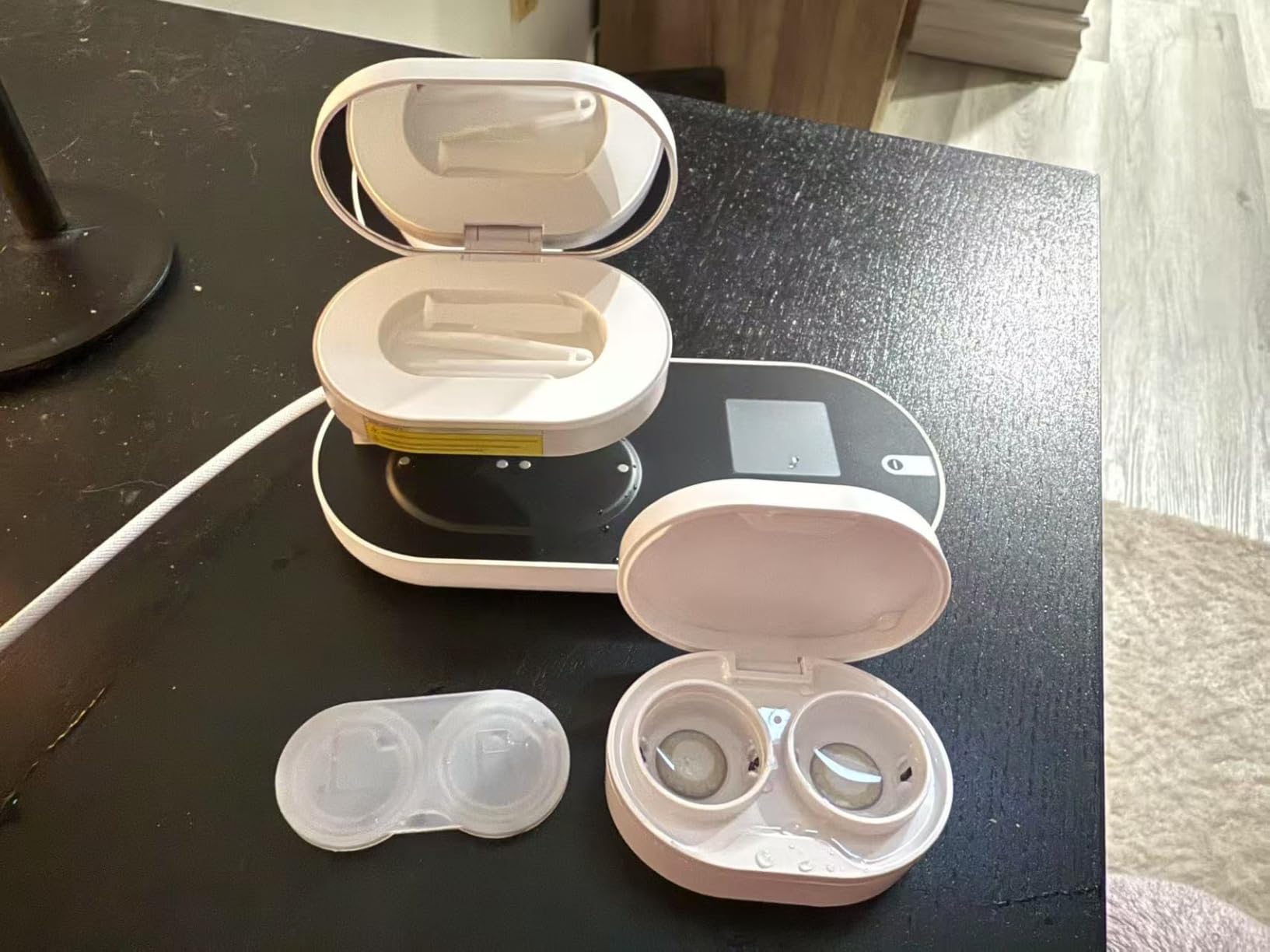
In daily use, the workflow feels close to a tiny science lab. You load a pair of soft lenses into the capsule, fill it with normal saline or a multi-purpose solution, snap it onto the base, and pick a quick or deep cycle. The quick mode takes about 25 minutes and works well after a long day; the deep mode runs roughly four hours and is the one I would trust after a dusty hike or a pollen-heavy week. There is also a built-in mirror, a small tweezer kit, and a care light, which makes the device travel-friendly.
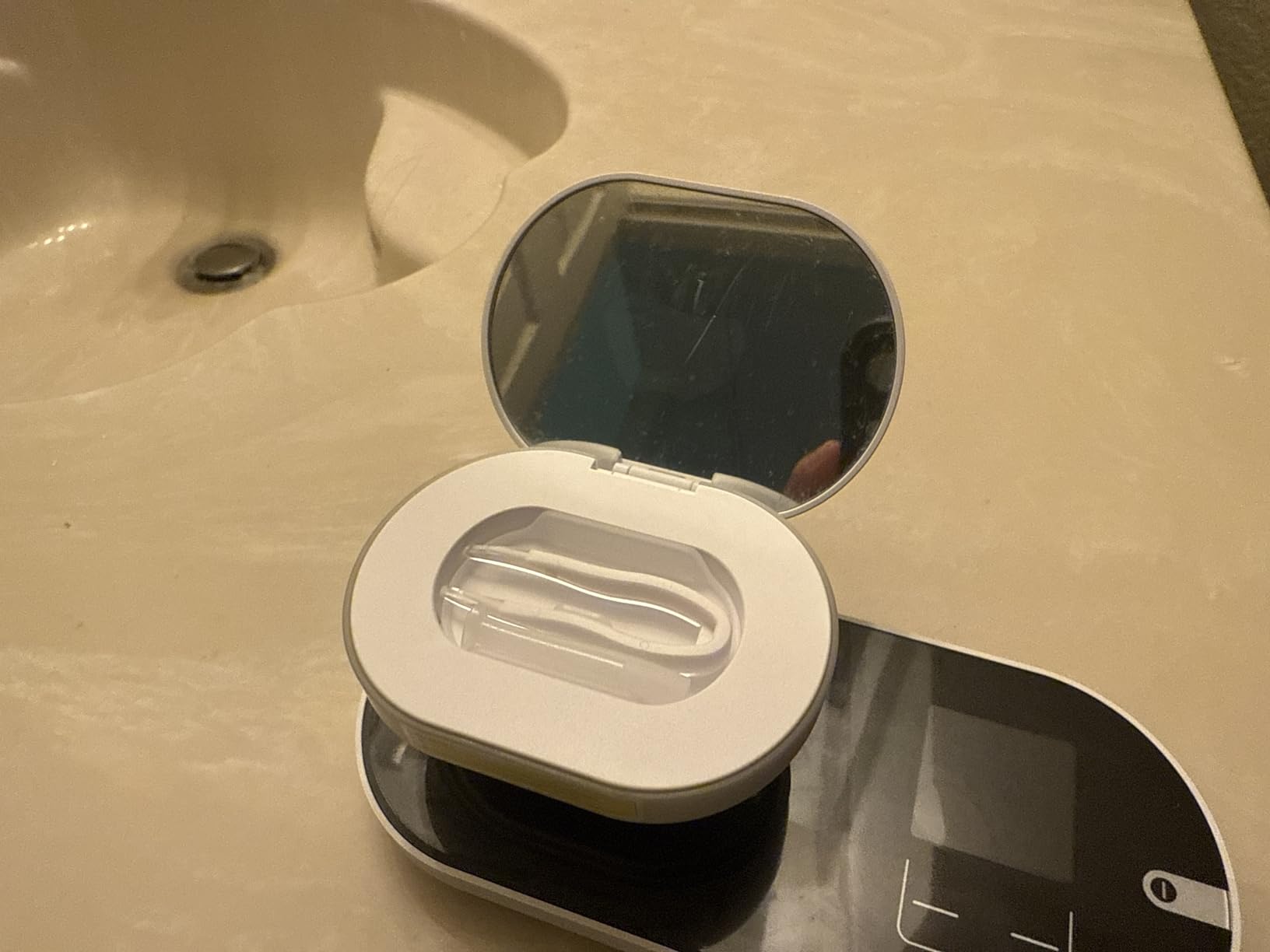
Where the ReO2 Gen6 disappointed me was the OLED screen. Once the lens capsule is closed, the display sits underneath it and becomes nearly impossible to read without lifting the unit up to eye level. It is a small ergonomic miss on what is otherwise a thoughtfully designed device. The other trade-off is the price: at roughly $80, it costs more than a year of bottled multipurpose solution, so it really pays off for daily soft-lens wearers who already spend heavily on replacements.
What I appreciate most is what the device does not do. It does not vibrate your lenses like ultrasonic cleaners, so there is no risk of micro-cracks forming on the surface. It does not use hydrogen peroxide, so there is no neutralization step. And because the capsule is replaceable (manufacturer recommends every six months), the long-term cost is predictable rather than disposable.
What the electrophoresis actually does
Electrophoresis uses a low electrical field to drive charged protein and lipid particles off the lens surface and into the surrounding saline. It is the same principle used in laboratory protein purification, scaled down to a bedside device. The result is a cleaning action that gets into the micropores of silicone hydrogel lenses where manual rubbing rarely reaches.
Who should buy it
Daily or two-week soft contact lens wearers who notice their lenses getting cloudy or uncomfortable late in the cycle will see the biggest payoff. Heavy digital-screen users, people who live in dry climates, and anyone with a dusty or allergy-prone environment will benefit from the deep-clean mode. If you only wear contacts occasionally, the price probably does not justify itself.
2. Pro 3.0 Ultrasonic Contact Lens Cleaner – Best Budget Smart Cleaner
Pro 3.0 Ultrasonic Contact Lens Cleaner – 99% Brightness【Rechargeable】
50KHz German motor
3 smart modes
USB rechargeable
+ Pros
- Sub-$25 price for genuine smart-chip cleaning
- Three programmable cleaning modes with countdown
- Rechargeable with multiple cases included
– Cons
- Not a medical-grade or FDA-cleared device
- Some quality-control complaints on charging port
- Less effective than electrophoresis on heavy deposits
The Pro 3.0 is the most budget-friendly way to add a “smart” cleaning cycle to your lens routine. The headline feature is a 50KHz ultrasonic motor built by a German manufacturer, which is roughly twice the frequency of cheap ultrasonic cleaners. Higher frequency means smaller cavitation bubbles and a gentler, more thorough clean. The vendor reports about 98 percent cleaning efficiency on typical daily debris.
What makes it feel genuinely “smart” is the onboard chip and three preset modes. There is a 3-minute first-aid mode for quick refreshes, a 5-minute daily mode I run most evenings, and a 10-minute deep clean for weekly maintenance. A 60-second countdown on the display tells you how much time is left, which is a small touch that cheap ultrasonic cleaners usually skip. You also get a lighted makeup mirror built into the lid, three replaceable lens cases, and a rechargeable battery that lasts about a week of daily cycles.
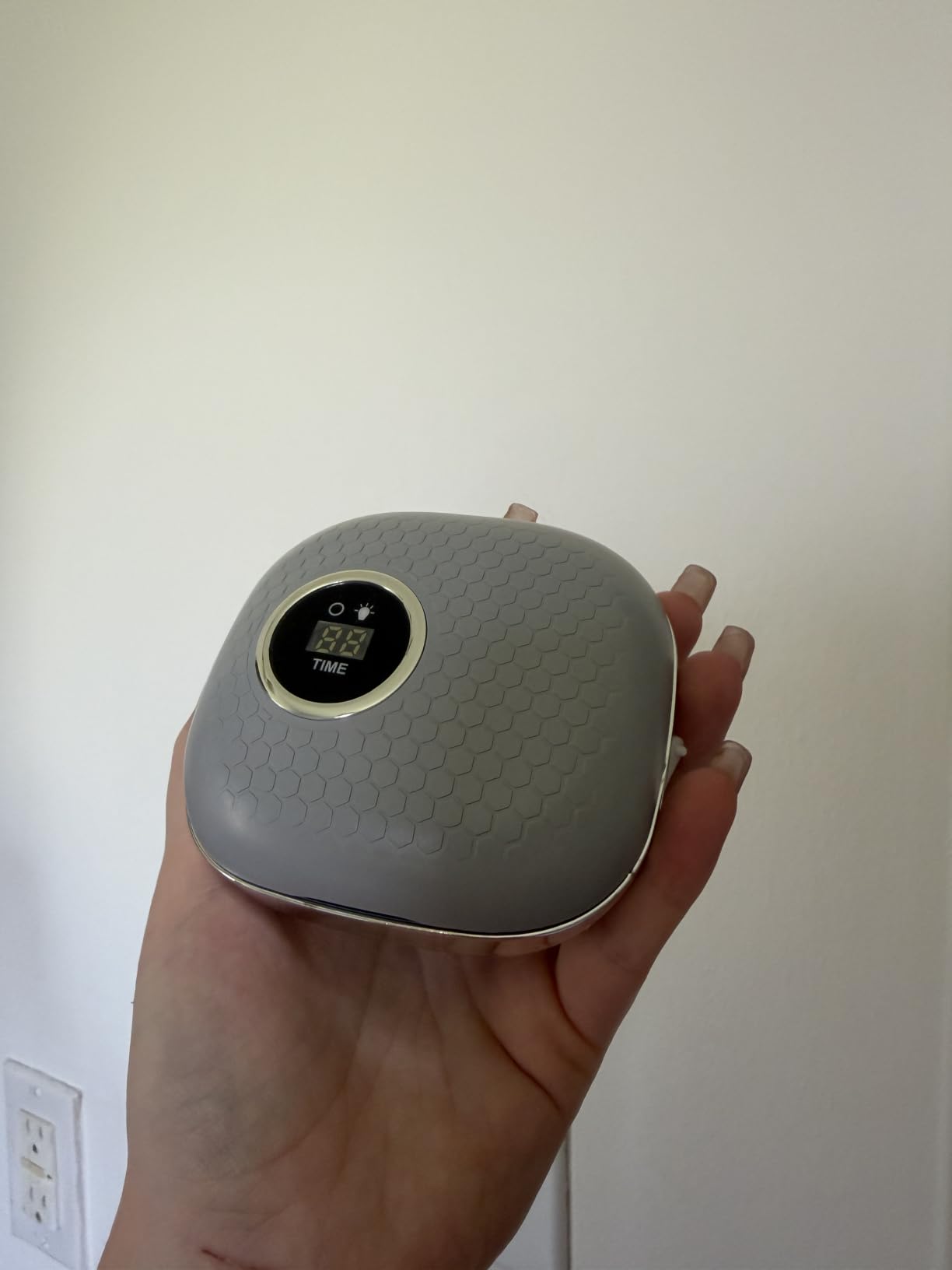
The honest trade-offs are worth knowing. The Pro 3.0 is not FDA-cleared as a medical device, so think of it as a high-quality consumer accessory rather than a clinical tool. A handful of reviewers have reported quality-control issues, including embedded debris in the cases and a flaky USB-C port. And on heavy protein buildup, ultrasonic cleaning simply cannot match the deep-pore reach of an electrophoresis field, which is why serious daily wearers often pair this kind of device with a periodic manual rub.
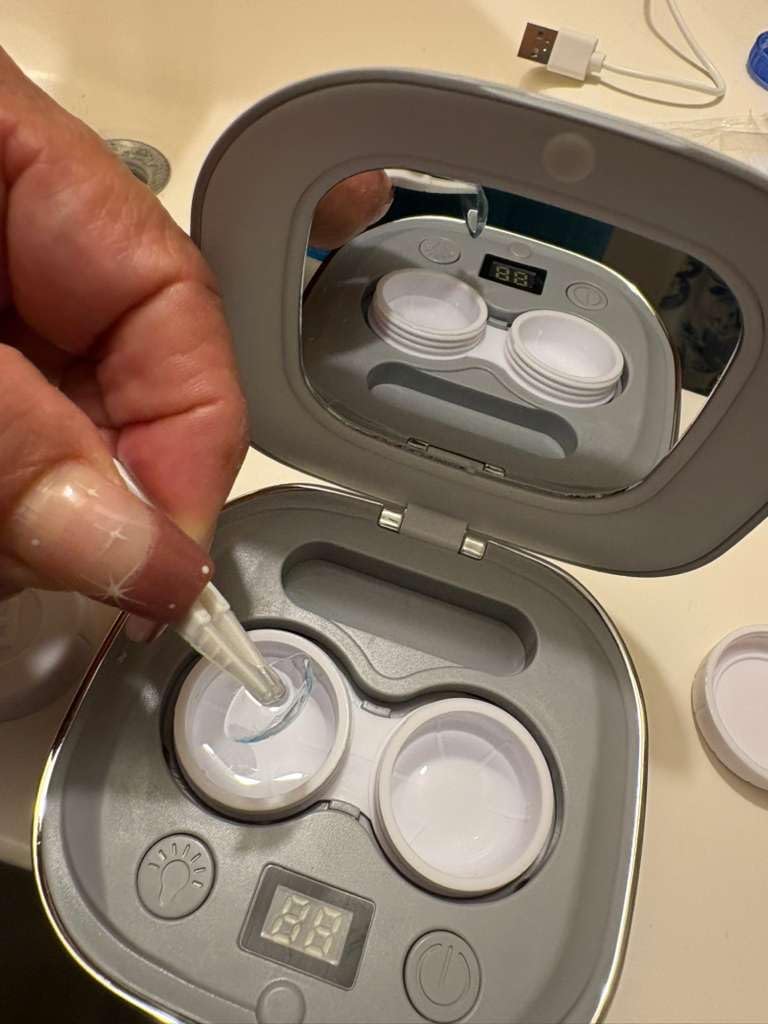
Why ultrasonic at 50KHz matters
Most low-cost cleaners run at 40KHz, which is fine for jewelry but a little coarse for soft lens polymers. The 50KHz frequency used here generates smaller cavitation bubbles that lift debris without stressing the lens surface. It is not a huge difference on paper, but reviewers who switched from older 40KHz units consistently mention fewer micro-scratches and longer lens life.
Who should buy it
Anyone who wears two-week or monthly soft lenses and wants a low-friction upgrade over manual rubbing will like the Pro 3.0. It is especially good for travelers thanks to the rechargeable battery and three included cases. If you wear daily disposables, you can probably skip it – the lenses are cheap enough to replace rather than clean.
3. S5 Mini LED Scleral & Hybrid Lens Inserter – Best Specialty Insertion Tech
S5 Mini™: for Easy and Accurate Scleral & Hybrid Lens Insertion – Perfectly Align Your Eye with The Center of The Lens and Use 2 Hands to Hold Your Eyelids Open
98% insertion success
LED alignment
Unlimited 1-on-1 training
+ Pros
- 98% insertion success rate for scleral and hybrid lenses
- Built-in LED alignment target is closest thing to AR-assisted insertion
- Unlimited lifetime training via FaceTime and Zoom
– Cons
- Premium $299 price point
- Steeper learning curve than a handheld plunger
- It is an assistive device
- not the lens itself
The S5 Mini is the highest-rated device in this roundup, and the only one that approaches what people actually mean when they say “smart contact lens.” It is a hands-free insertion platform with a built-in LED alignment target, designed specifically for scleral and hybrid specialty lenses. The numbers are striking: the manufacturer reports a 98 percent insertion success rate, which is meaningful if you have ever watched someone with keratoconus or an irregular cornea try to land a 22mm scleral lens without spilling saline all over the bathroom mirror.
The way it works is simple once you see it. You dock the lens on the illuminated stand, lean in, and the LED beam acts as a centering guide while the hands-free stabilizer holds the lens steady. That frees both your hands to keep your eyelids open, which is the moment most scleral insertions fail. The device was developed by Dr. Fayiz Mahgoub after years of watching patients struggle with traditional plunger tools, and that origin story shows up in the small details: the soft edge that prevents lens flex, the broad base that resists tipping, and the angle that matches a natural eye-to-mirror line of sight.
What sets the S5 Mini apart from a cheaper inserter is the training package. Every purchase includes unlimited one-on-one insertion and removal coaching via FaceTime or Zoom, 365 days a year. For first-time scleral wearers, that is arguably more valuable than the hardware. The 90-day full money-back guarantee means you can return it if your eyes, anatomy, or routine do not click with the device.
Who it works best for
Scleral and hybrid lens wearers with keratoconus, post-LASIK ectasia, severe dry eye, or post-surgical corneas will get the most out of this. Parents inserting lenses for children, caregivers helping elderly relatives, and anyone whose hands shake or whose eyelids reflexively snap shut will also benefit. If you only wear standard soft lenses, this device is overkill – a $10 plunger does the job.
What it will not do
It will not project AR overlays, monitor glucose, or measure intraocular pressure. The S5 Mini is assistive hardware for an existing specialty lens, not an embedded-electronics lens in the XPANCEO sense. Treat it as the closest currently-shippable analog to a “smart” specialty-lens ecosystem rather than a true smart lens.
4. Bausch + Lomb ScleralFil Saline – Best Buffered Saline for Specialty Lenses
ScleralFil Preservative Free Saline Solution for Scleral Lenses, Buffered Isotonic Rinsing & Insertion Solution for Soft and Rigid Gas Permeable Contacts, Single-Use Vials, 30 Count
Buffered isotonic
Single-use 10mL vials
FDA-cleared
+ Pros
- FDA-cleared buffered isotonic saline
- Single-use preservative-free vials reduce contamination risk
- pH-balanced to match natural tear film
– Cons
- Higher per-use cost than bottled saline
- Generates more plastic waste than refill bottles
- Not a disinfectant – must be paired with a cleaning system
ScleralFil is the saline you reach for once you understand what specialty lenses actually need. It is a sterile, buffered isotonic saline that matches the pH of natural tear film, which matters enormously when you are filling a 22mm scleral lens and dunking it onto an eye for 12 to 16 hours a day. Standard saline from a drugstore is not buffered the same way and can sting or cause foggy midday vision. ScleralFil is purpose-built for that use case.
The packaging is one of its underrated strengths. Each box contains 30 single-use 10mL vials that twist off, stand upright on a counter, and travel easily in a carry-on. Preservative-free is the key phrase: with a scleral lens reservoir sitting against the cornea all day, you do not want preservative chemistry touching that surface. Bausch + Lomb is also a 150-year-old eye-care brand, which matters when you are putting a medical-grade fluid in your eye every morning.
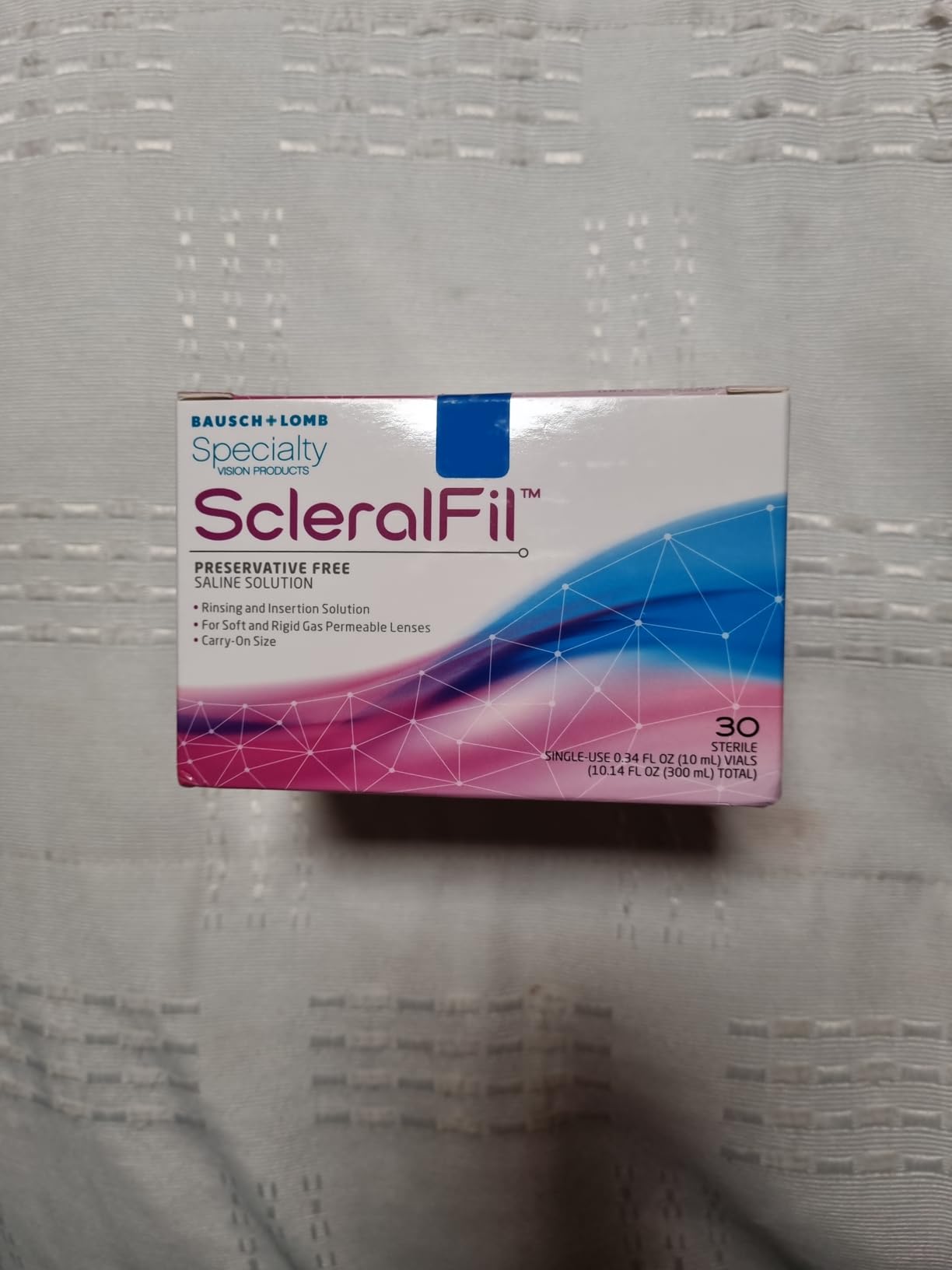
Where ScleralFil annoys some users is the per-use cost. At roughly $0.70 per vial, a heavy wearer can easily spend more on saline per month than on a bottle of generic saline. The plastic-waste footprint is also higher than refill bottles, which is a fair trade-off to make for safety but worth noting. And because it is a saline and not a disinfectant, you still need a separate cleaning or conditioning system for the lens itself.
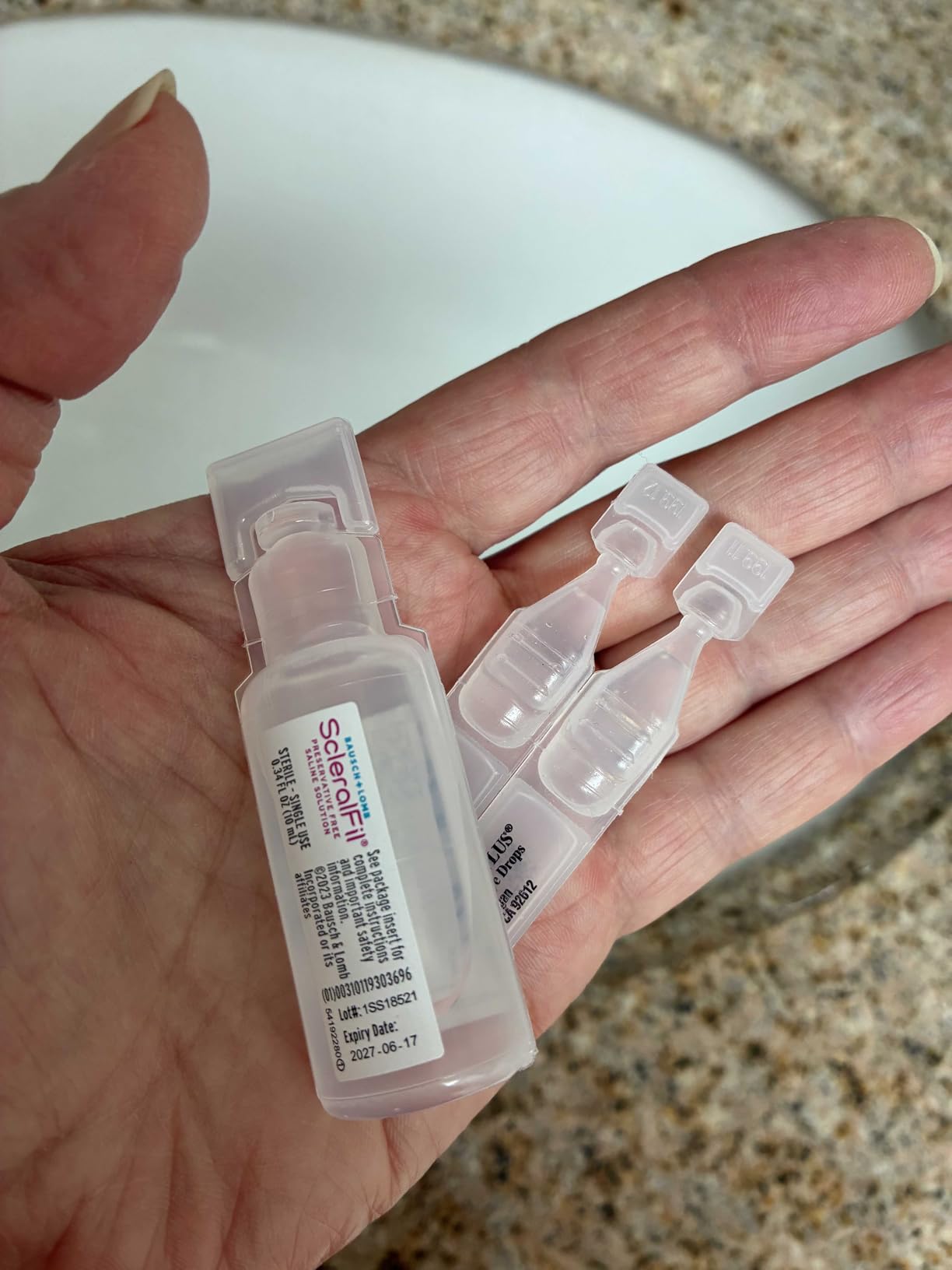
Why buffered saline matters for scleral lenses
Scleral lenses vault over the cornea and land on the sclera, creating a fluid reservoir that bathes the eye all day. If that fluid is too acidic or too basic, the eye registers it as irritation and produces foggy midday vision, often called “midday fog.” A buffered saline keeps the pH stable in the reservoir and reduces that fog significantly. Non-buffered saline drifts in pH the moment it contacts the eye.
Who should buy it
Anyone wearing scleral, RGP, or hybrid lenses should use a buffered, preservative-free saline like ScleralFil for lens filling. It is also a smart choice for sensitive-eye soft lens wearers who react to multipurpose solutions. If you wear standard daily disposables, regular saline is fine and this product is overkill.
5. Rechargeable LED Scleral & RGP Inserter Kit – Best Smart Specialty Inserter
Rechargeable LED Scleral & RGP Contact Lens Inserter Kit – Hands-Free Lighted Stand with 2 Interchangeable Tubes & 6 Vented Scleral Sticks, USB Charging, BPA-Free Lens Application Tool
LED alignment stand
6 vented sticks
USB rechargeable
+ Pros
- Built-in ultra-bright LED solves a real-world alignment problem
- Includes six BPA-free vented sticks plus two tube lengths
- Rechargeable battery with USB-C
– Cons
- Generic brand with no eyecare-company pedigree
- Steeper learning curve than passive plunger tools
- At $44 it costs more than basic inserters
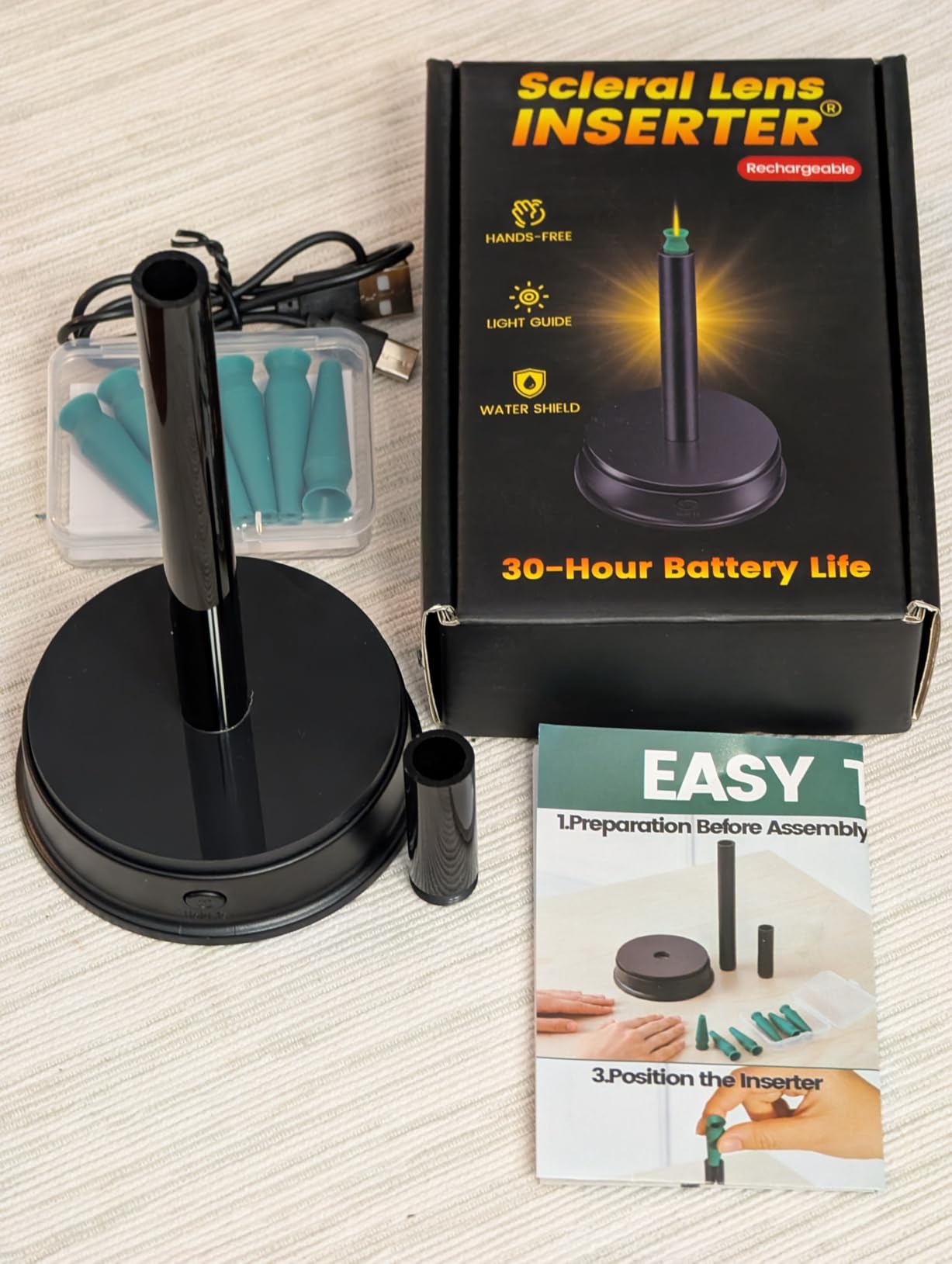
The Rechargeable LED Scleral & RGP Inserter Kit is a more affordable cousin to the S5 Mini, and a better fit if you do not need the lifetime training package. The core idea is the same: a stable base, an ultra-bright LED centering light, and a hands-free holder that stops the lens from wobbling while you lean in. What it adds over a $10 plunger is the visibility and the reusable, rechargeable hardware.
The kit ships with two interchangeable polycarbonate tubes (5.32 inches and 1.58 inches) so it works for different hand sizes and insertion styles, plus six BPA-free vented scleral sticks that reduce suction and fogging. The vented sticks are a small but meaningful upgrade over solid plungers – they let air escape during insertion, which is a major cause of bubble formation under the lens. The rechargeable lithium battery charges over USB, and the whole thing weighs less than a coffee mug.
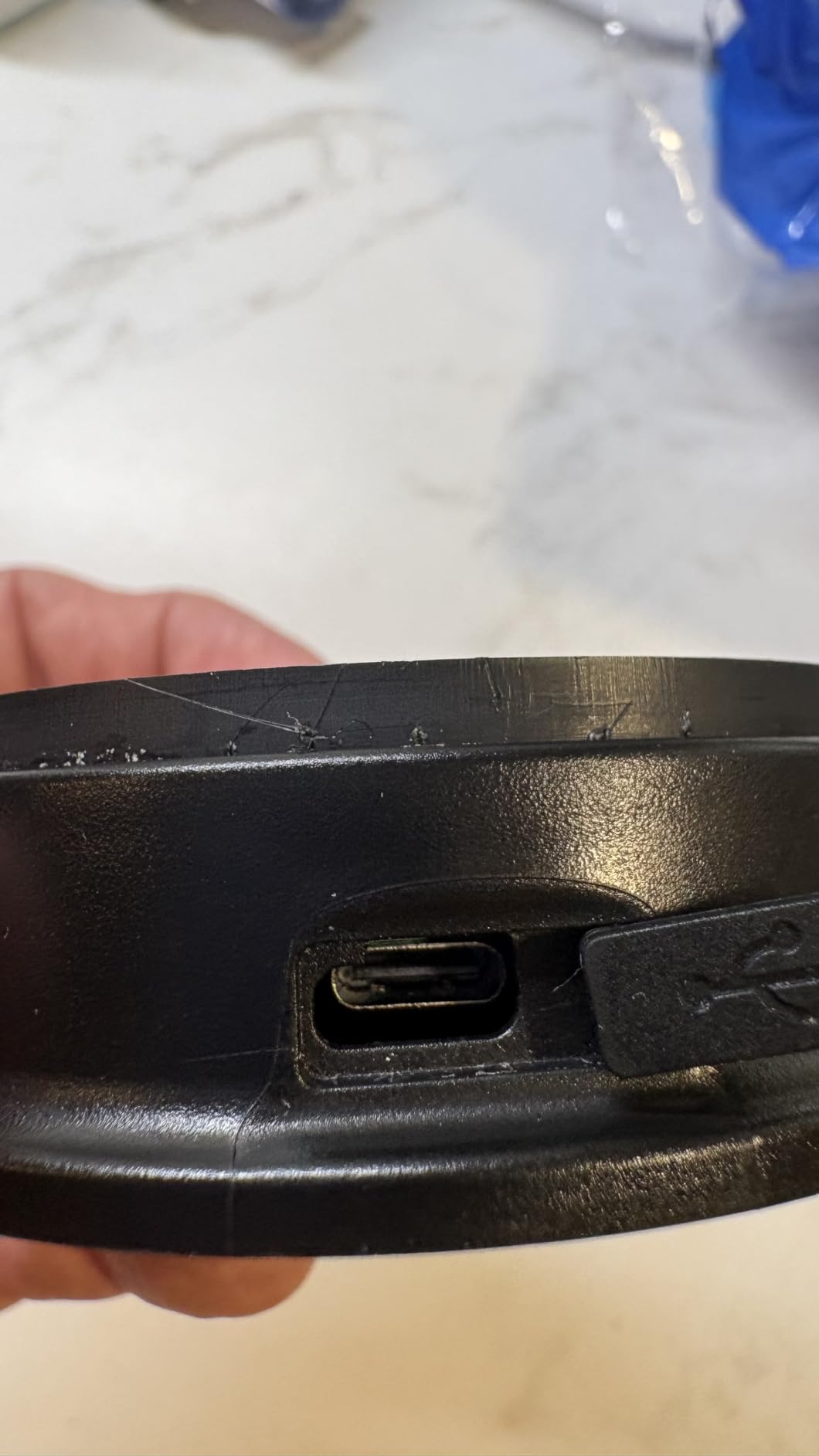
Real-user reports from mid-2026 skew positive, especially from first-time scleral wearers who had been failing with manual plungers. A few veterans of manual insertion find the hands-free design harder than expected at first – that is a real learning curve, not a deal-breaker. The brand is listed as Generic on Amazon, which means no eyecare-company backing, and one verified buyer reported a damaged-looking unit on arrival, so check the packaging on delivery.
How the LED alignment actually helps
Most insertion failures come down to the lens landing off-center or at the wrong angle. The LED on this kit produces a tight beam that you align with your pupil before insertion. That single visual cue replaces the awkward mirror dance that scleral wearers usually perform, and it is especially helpful for patients with low vision or limited dexterity.
Who should buy it
Scleral, RGP, hybrid, and prosthetic lens wearers who want a smart-ish alignment aid without paying $300 for the S5 Mini. Keratoconus patients, seniors new to specialty lenses, and anyone who has struggled with manual plungers are the natural buyers. If you only wear soft lenses, skip this one.
Coming Soon: AR Smart Contact Lenses & Prototypes
It is worth being explicit about what is not in this roundup, because the gap between marketing and reality is enormous in this category. True AR smart contact lenses with microLED displays, eye tracking, and wireless data overlays do not yet ship to consumers. The most credible prototype right now comes from XPANCEO, a Dubai-based deep-tech company that demonstrated an Interactive Smart Contact Lens for AR Vision at MWC 2026 and a space-ready holographic prototype in late 2025.
XPANCEO’s reported roadmap points to consumer availability around 2030, with early pricing expected near $2,000 per lens. Mojo Vision, the other name you will hear, raised more than $200 million before pivoting away from consumer AR lenses in 2023; the company now sells microLED displays to other industries. Medical-grade electronic lenses like the Sensimed Triggerfish (for 24-hour intraocular pressure monitoring in glaucoma patients) and the Acuvue Theravision with Ketotifen (a daily disposable that releases an antihistamine for allergy relief) are real FDA-cleared products, but they are dispensed through ophthalmologists rather than sold on Amazon.
If you want to track the AR category as it develops, follow XPANCEO’s newsroom, MWC announcements, and major optometry conferences. Expect developer kits and limited pilot releases before any consumer launch. For more on adjacent wearable tech, see our coverage in the wearable technology and smart glasses categories.
Buying Guide: How to Choose a Smart Contact Lens Product
Because the category is genuinely split between medical devices, smart consumer accessories, and prototypes, the right choice depends almost entirely on what problem you are actually trying to solve. Below is the framework I use when readers ask me which product to buy.
Match the device to your lens type
If you wear standard soft contact lenses (daily, two-week, or monthly), your best buys are smart cleaning devices. The ReO2 Gen6 is the FDA-cleared premium option; the Pro 3.0 ultrasonic is the budget pick. If you wear scleral, RGP, or hybrid specialty lenses, your priorities flip: a buffered preservative-free saline like ScleralFil becomes non-negotiable, and an LED-guided inserter like the S5 Mini or the Rechargeable LED Kit is worth serious consideration.
Check FDA clearance versus marketing claims
The phrase “smart” gets used loosely. The ReO2 Gen6 is genuinely FDA 510(k) cleared as a medical device. The ScleralFil saline is FDA-cleared for scleral and RGP use. The Pro 3.0 ultrasonic is a high-quality consumer accessory without medical-device classification. The S5 Mini comes out of a clinical-development pipeline with published success rates. Read the fine print before assuming a “smart” label means clinical validation.
Factor in consumables and long-term cost
The ReO2 Gen6 capsule is replaceable every six months; the Pro 3.0 ships with three lens cases; the ScleralFil vials are single-use. Over a year, those consumables matter more than the upfront price. Budget buyers should pencil in roughly $20 to $60 per year in replacement parts on top of the device cost.
Think about your insertion routine
If insertion is a daily struggle – whether because of shaky hands, a strong blink reflex, or an irregular cornea – an LED-guided inserter pays for itself in saved frustration. If insertion is already routine, a basic plunger is fine and the $300 S5 Mini is unnecessary. The Rechargeable LED Kit at $44 is a sensible middle ground.
Frequently Asked Questions
Can you buy smart contact lenses today?
Yes, but the buyable category is medical and specialty lens care, not consumer AR. On Amazon you can buy FDA-cleared smart cleaners like the ReO2 Gen6, FDA-cleared buffered saline like Bausch + Lomb ScleralFil, and LED-guided insertion devices like the S5 Mini. FDA-cleared electronic smart lenses (Sensimed Triggerfish for glaucoma monitoring) require an ophthalmologist prescription. True AR smart contact lenses with microLED displays are still in prototype and not yet sold to consumers.
Do smart contact lenses exist?
Smart contact lenses exist in three forms today. Medical monitoring lenses: the Sensimed Triggerfish continuously measures intraocular pressure for glaucoma management. Drug-delivery lenses: Johnson u0026amp; Johnson’s Acuvue Theravision with Ketotifen releases an antihistamine for allergy relief. Specialty lens-care devices: FDA-cleared cleaners, buffered saline, and LED-guided inserters are available on Amazon. Consumer AR display lenses are still in prototype phase with companies like XPANCEO targeting a 2030 release.
Can you get AI contact lenses?
No, AI-powered contact lenses are not yet available to consumers. AI integration is the long-term vision for smart lenses – real-time tear analysis, predictive health alerts, and AR overlays with on-lens inference – but the current prototypes from XPANCEO and others rely on external processors or smartphones for the AI workload. Expect AI features to arrive first in medical-grade diagnostic lenses, then in AR consumer models as on-lens processors shrink and battery life improves.
Are smart contact lenses FDA approved?
Some smart contact lenses are FDA cleared for specific medical uses. The Sensimed Triggerfish has FDA clearance for 24-hour intraocular pressure monitoring in glaucoma patients. The Acuvue Theravision with Ketotifen is FDA approved as a drug-delivering daily disposable lens. The ReO2 Gen6 contact lens cleaner is FDA 510(k) cleared as a medical device. No smart contact lens with an electronic AR display has received FDA approval for consumer use as of 2026.
When will smart contact lenses be available?
Smart contact lenses are available today for medical and specialty use through ophthalmologists and on Amazon for lens-care devices. Consumer AR smart contact lenses are expected around 2030 based on XPANCEO’s roadmap, with early pricing near $2,000 per lens. Limited developer and pilot releases may arrive a year or two ahead of broad consumer availability. Until then, the buyable products in this roundup are the most legitimate smart-lens items you can purchase.
The Bottom Line on Smart Contact Lenses in 2026
The honest answer to “what are the best smart contact lenses” in 2026 is two-part. If you mean a heads-up display on your eye, the answer is not yet – XPANCEO’s MWC 2026 demos are prototypes, Mojo Vision pivoted away in 2023, and the broad consumer AR launch is most likely a 2030 story at roughly $2,000 per lens. If you mean the smartest lens-related products you can actually click “Buy Now” on, the five devices above are the legitimate answer: the ReO2 Gen6 for FDA-cleared cleaning, the Pro 3.0 for budget-friendly ultrasonic care, the S5 Mini for specialty-lens insertion, ScleralFil for buffered saline, and the Rechargeable LED Kit for a more affordable smart inserter.
What excites me most about this space is the medical angle. Continuous intraocular pressure monitoring, drug delivery through a contact lens, and AI-assisted tear analysis are real engineering paths with real patients. The pieces are coming together – FDA clearances, MWC demos, working prototypes, and a growing specialty-lens ecosystem. Until consumer AR lenses ship, the products in this guide are the smartest, most legitimate options the smart contact lens category actually offers in 2026.