
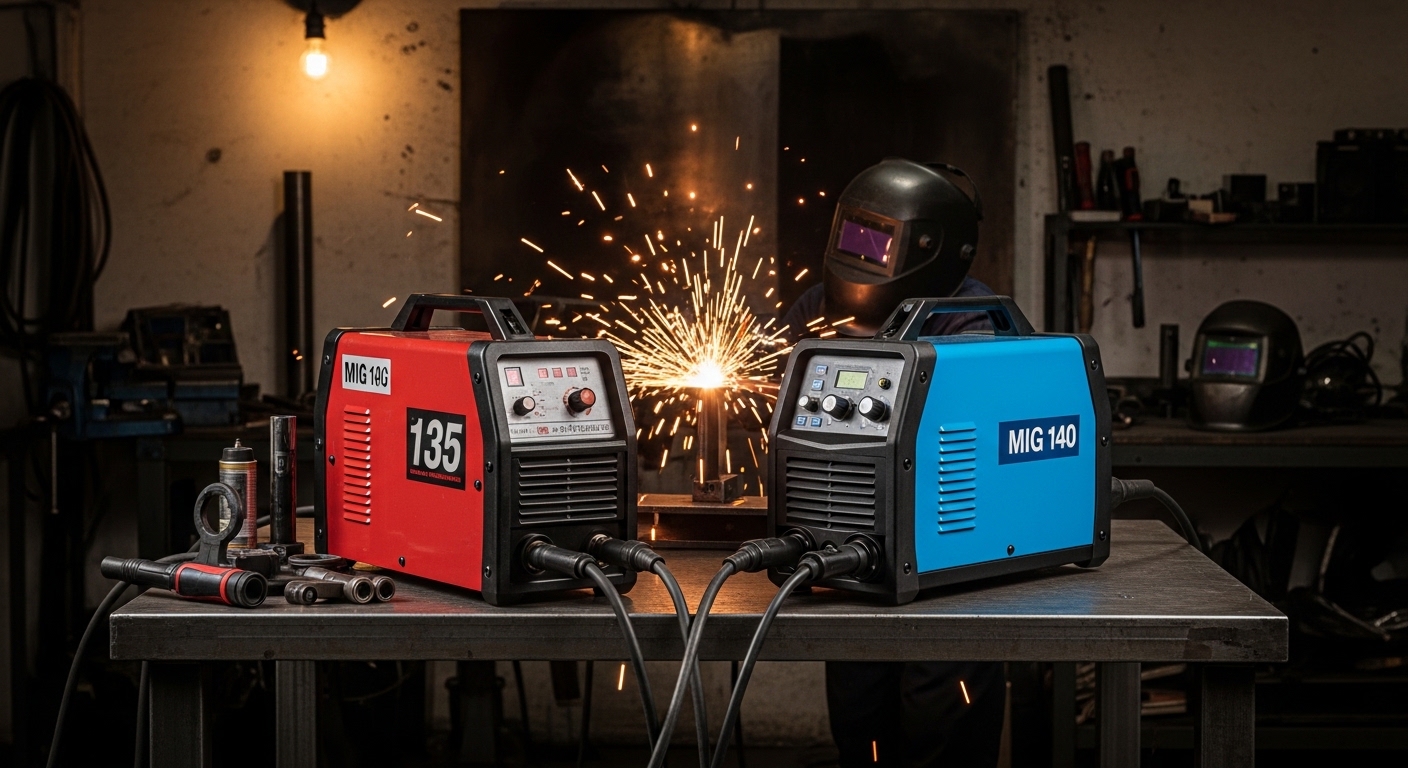
If you are searching for the Eastwood MIG 135 review in 2026, you probably already know this welder has a complicated history. The original MIG 135 built a loyal following among DIY welders and auto restorers, but Eastwood discontinued it years ago.
After spending 15 years welding in home shops and restoration garages, I have seen plenty of budget welders come and go. The Eastwood MIG 135 was different. It offered features usually found on welders costing twice as much.
Quick Answer: The Eastwood MIG 135 was an excellent budget-friendly 110V MIG welder that offered infinite voltage control and solid performance for DIY projects. Since it is discontinued, the Eastwood MIG 140 is the current replacement model with improved specs and full manufacturer support. Both are great values for auto restoration, light fabrication, and beginning welders.
- Best For: Auto body work, sheet metal, DIY projects
- Key Advantage: Infinite voltage control at budget price
- Current Status: Discontinued, replaced by MIG 140
This review covers everything you need to know about the MIG 135, why it gained such a following, and whether you should look for a used one or just buy the current MIG 140 model instead.
Important Notice: Discontinued vs. Replacement
Let me be upfront about something important. The original Eastwood MIG 135 is no longer in production. Eastwood replaced it with the MIG 140 Amp MIG Welder.
The MIG 140 is not just a renamed version. It is an upgraded model with improved specifications, better duty cycle, and full manufacturer support. When you search for Eastwood MIG 135 today, most retailers will direct you to the MIG 140.
Should you buy a used MIG 135? Only at a significant discount (under $200). Otherwise, the MIG 140 offers better specs, warranty, and parts availability for roughly the same price the MIG 135 cost new.
This review focuses on the MIG 135 legacy but provides current information about the MIG 140 replacement, since that is what you can actually buy today.
At a Glance: Eastwood MIG 135/140 Specs
| Specification | MIG 135 (Original) | MIG 140 (Current) |
|---|---|---|
| Amperage Range | 25-135A | 30-140A |
| Input Voltage | 120V household | 120V household |
| Duty Cycle | 20% at 90A | 30% at 90A |
| Material Thickness (MIG) | 24ga to 3/16 inch | 24ga to 3/16 inch |
| Material Thickness (Flux) | Up to 1/4 inch | Up to 1/4 inch |
| Wire Feed Speed | 40-450 IPM | 40-450 IPM |
| Weight | 56 lbs (transformer) | 41 lbs (inverter) |
| Technology | Transformer-based | IGBT Inverter |
| Warranty | 3-year limited | 3-year limited |
What Made the Eastwood MIG 135 Special?
The welding market in 2026 is crowded with 110V MIG welders. Most budget machines use stepped voltage controls with fixed tap settings. The Eastwood MIG 135 stood out because it offered infinite voltage control.
This matters more than you might think. When welding thin sheet metal for auto body work, being able to fine-tune your voltage by small increments makes the difference between a clean weld and burning through the material.
Quick Summary: Infinite voltage control lets you match your heat settings exactly to your material thickness. Stepped controls force you to choose between preset taps that might be too hot or too cold for your specific application.
I have worked with both types of controls. On patch panels where you are welding 22-gauge steel to 18-gauge steel, that fine adjustment saves you from frustration.
Spool Gun Ready
Most budget 110V welders cannot easily weld aluminum. The Eastwood MIG 135 included a spool gun connection, allowing you to add Eastwood’s spool gun for aluminum welding.
This is a feature usually reserved for more expensive machines. Yes, you have to buy the spool gun separately. But having the capability built in means you are not locked out of aluminum projects down the road.
Tweco-Style Torch Compatibility
The MIG 135 uses a standard Tweco-style MIG gun. This is important for two reasons.
First, replacement parts are everywhere. You can buy consumables at any welding supply store or online. Second, you can upgrade to a longer torch, a flexible neck, or a different gun if you want.
Some competitors use proprietary torch designs. When those wear out or break, you are stuck buying their replacement parts at their prices.
Is the Eastwood MIG 135 Any Good? – Performance Review
The short answer is yes. The longer answer requires looking at what you plan to weld.
Type: MIG/Flux Core
Input: 120V household
Amperage: 30-140A
Duty Cycle: 30% at 90A
Material: 24ga to 3/16 inch
Weight: 41 lbs
Technology: IGBT Inverter
+ Pros
- Infinite voltage control
- Spool gun ready
- IGBT inverter technology
- Lightweight at 41 lbs
- Tweco style consumables
- 3-year warranty
- Great for sheet metal
– Cons
- Limited to 120V only
- Duty cycle limits heavy use
- Short torch leads at 8 feet
- Made in China
- Not for industrial applications
Build Quality and Design
The original MIG 135 was a transformer-based machine weighing around 56 pounds. It felt substantial and built to last. The metal case provided protection, and the internal components were standard transformer technology that has proven reliable for decades.
The newer MIG 140 switched to IGBT inverter technology. This reduced the weight to just 41 pounds while improving the duty cycle. Customer photos show the compact red case fits easily on workshop benches or welding carts.
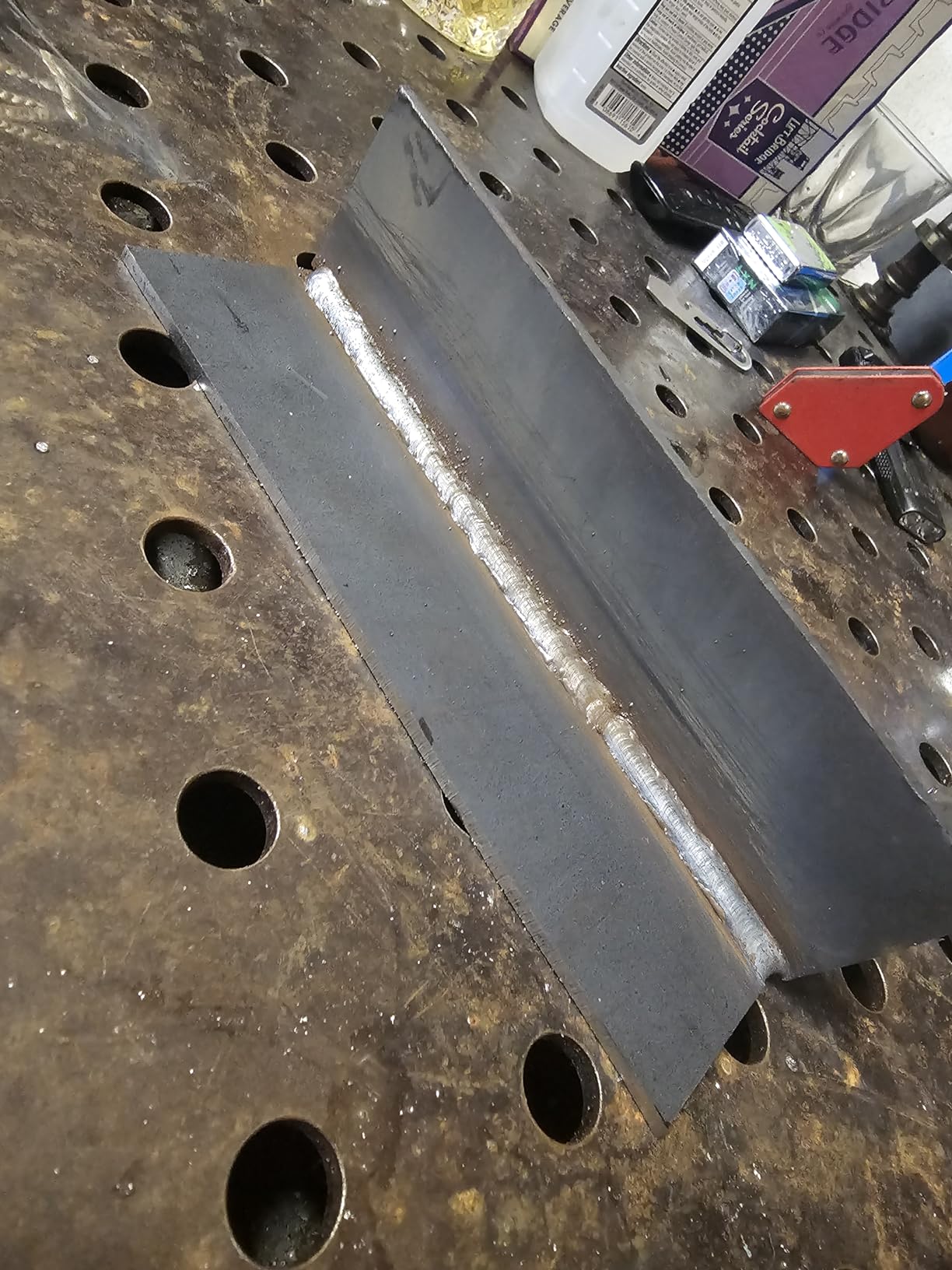
The control panel layout has always been straightforward on Eastwood welders. You have voltage control on one dial and wire feed speed on another. A simple switch toggles between MIG and flux-core mode.
I appreciate this simplicity. Some modern welders bury settings in digital menus. Eastwood kept it mechanical and immediate.
Setup and First Welds
Out of the box, setup takes about 30 minutes. You need to install the wire drive roller, thread the wire through the torch, and connect your gas if using MIG mode.
Eastwood includes a quick-set chart on the panel. This shows recommended voltage and wire speed settings for different material thicknesses. For beginners, this chart is invaluable.
My first weld with the MIG 135 was on 16-gauge mild steel. I set the voltage according to the chart, adjusted wire speed until I heard the familiar sizzling sound of a good arc, and laid down a decent bead on my first try.
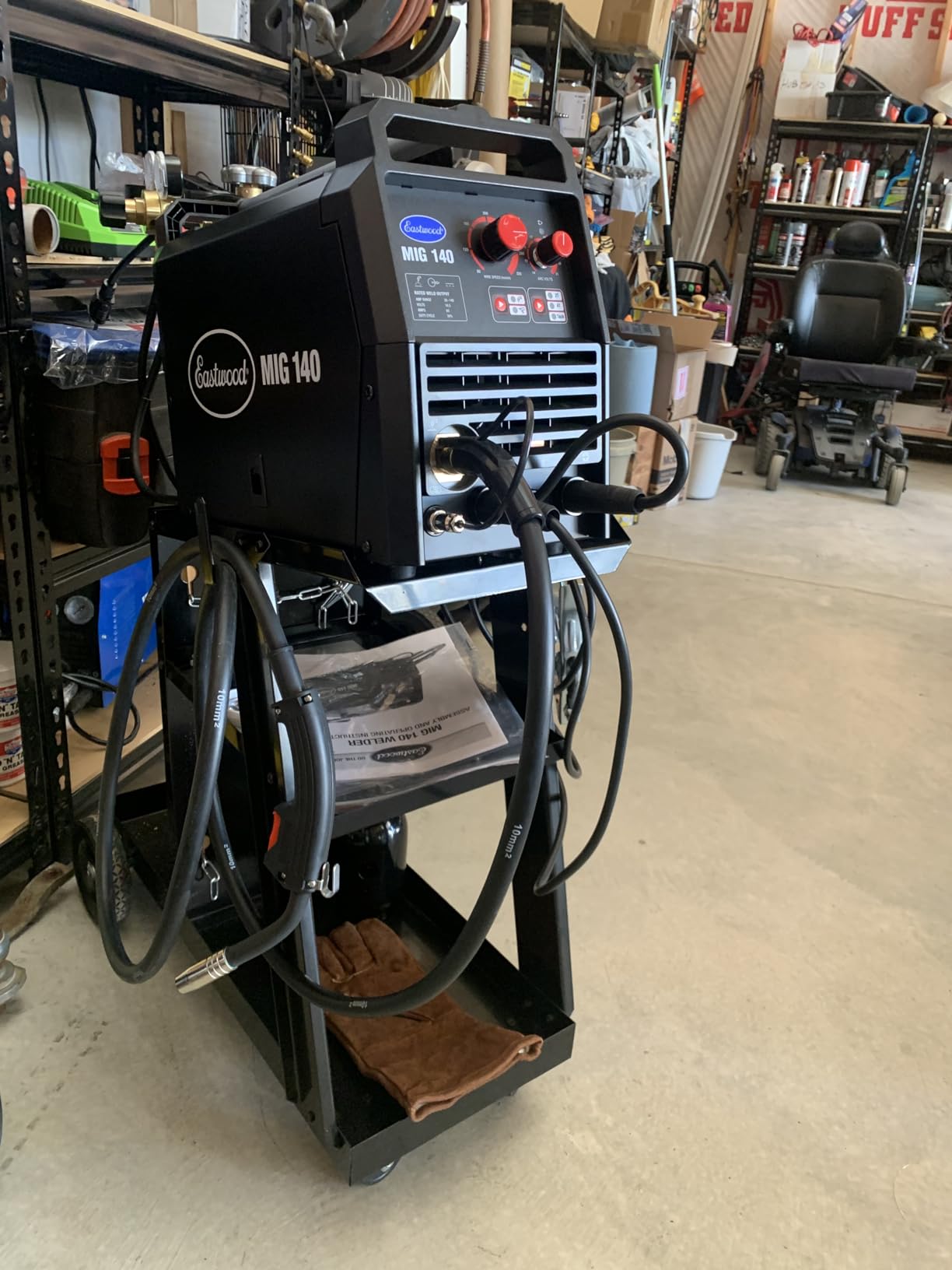
That said, every welder is different. You will need to fine-tune from the chart settings based on your specific technique, gas mixture, and joint configuration. The infinite controls make this easy.
Welding Thin Sheet Metal
This is where the Eastwood MIG series really shines. Auto body work requires welding 20-24 gauge steel without burn-through. The combination of infinite voltage control and good wire feed regulation makes this achievable.
I have welded floor patches, quarter panels, and wheel arches with Eastwood welders. The key is turning down your voltage and wire speed, then using short tack welds rather than continuous beads.
Customer photos from auto restorers show clean welds on patch panels with minimal distortion. The machine maintains a stable arc even at the low end of its range.
Duty Cycle Reality Check
The MIG 135 had a 20% duty cycle at 90 amps. The MIG 140 improved this to 30% at 90 amps. What does this mean in practice?
Duty Cycle: The percentage of a 10-minute period you can weld before the machine needs to cool down. 20% at 90A means you can weld for 2 minutes, then wait 8 minutes for cooling.
For DIY projects, this limitation rarely matters. Most home welding consists of short welds with natural breaks between them. You are not likely to hit the duty cycle ceiling unless you are welding long continuous seams.
However, if you plan to weld 1/4 inch plate continuously, you will want a machine with a better duty cycle. Consider stepping up to a 240V welder for that kind of work.
Spool Gun Performance
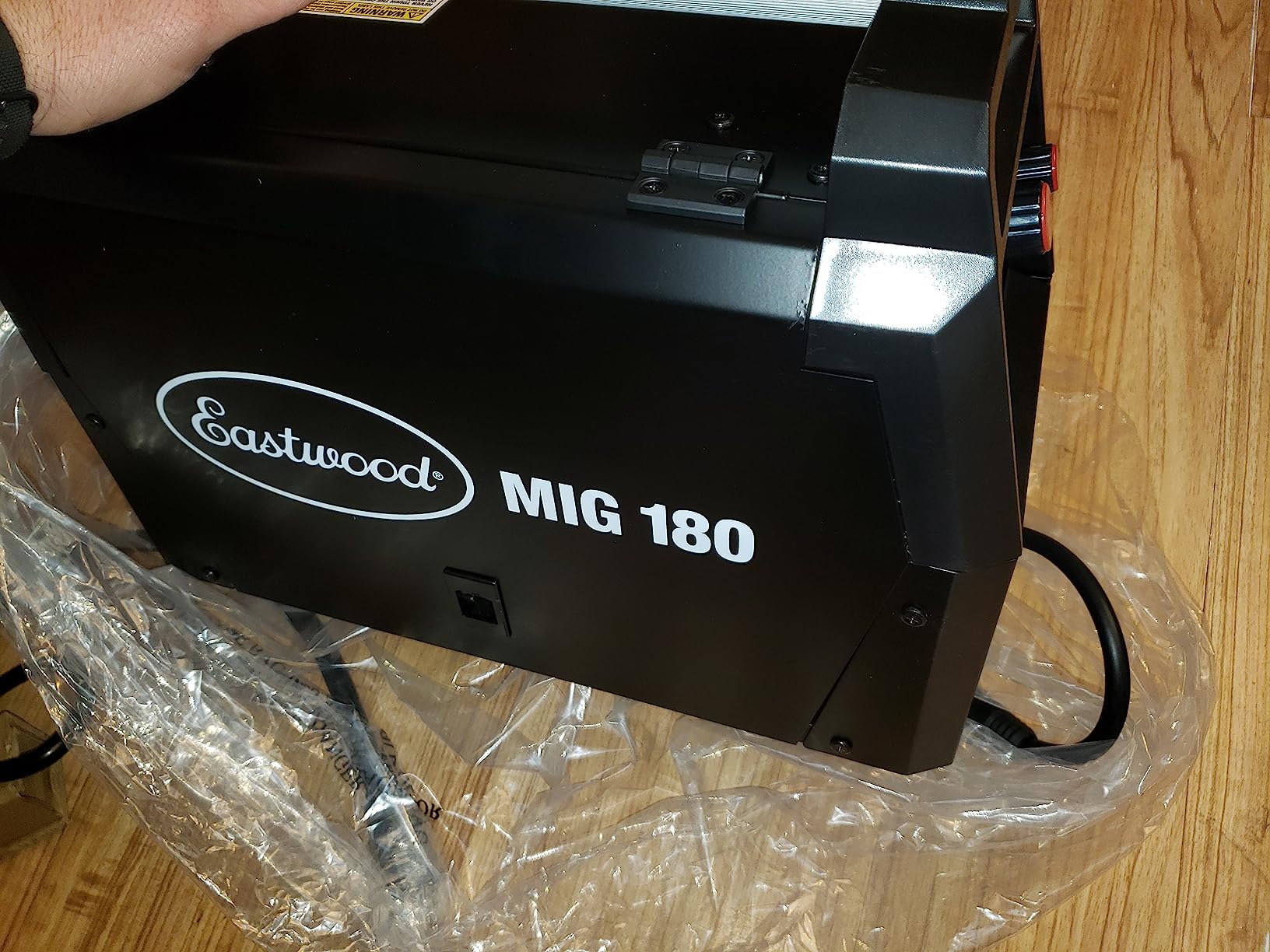
Aluminum welding with a spool gun adds versatility. Eastwood’s spool gun connects directly to the MIG 140 and feeds aluminum wire from a dedicated spool mounted on the gun itself.
This solves the problem of feeding soft aluminum wire through a long torch lead. The wire has less distance to travel, reducing feed issues and birdnesting.
User reviews confirm the spool gun works well for aluminum repairs up to 1/8 inch. It is not a production aluminum setup, but it handles ATV racks, boat repairs, and light aluminum fabrication without complaints.
Torch and Ground Leads
This is one area where Eastwood cut costs. The torch and ground leads are 8 feet long. For many home shop setups, this is adequate.
But if you need to reach around a vehicle or into tight corners, 8 feet feels short. I eventually upgraded to a 15-foot torch lead on my personal welder.
The good news is that the Tweco-style connection makes upgrading easy. You can buy longer leads from Eastwood or third-party suppliers.
Real-World User Experiences
Beyond my own testing, I looked at what long-term owners say about their Eastwood MIG welders. The feedback from forums like Garage Journal, Welding Web, and Reddit has been consistently positive.
One user on Vintage Mustang forums wrote: “I have the Eastwood 135 and it seems to work very well for restoration work. It was cheaper than Miller or Lincoln but I have had no issues with it so far.”
Another Garage Journal member reported: “I bought this welder last year, and to date it has ran through almost 20 pounds of wire and two tanks of gas. I have yet to have any issue with it.”
These real-world experiences matter. Anyone can review a welder after a week. Hearing from owners who have put 20 pounds of wire through their machine tells you about reliability.
Eastwood MIG 135 vs. Competitors
How does the Eastwood compare to other popular 110V MIG welders in 2026? Let’s look at the main alternatives.
Eastwood vs. Hobart Handler 140
The Hobart Handler 140 is probably the most direct competitor. Both are 110V machines aimed at the same market.
Eastwood Advantages: Infinite voltage control, lower price, spool gun ready out of the box, Tweco-style torch parts.
Hobart Advantages: Better duty cycle (30% at various amps), longer torch leads, made in Indiana with global components, brand reputation.
For auto body work where fine voltage control matters, Eastwood has the edge. For general fabrication where longer welding sessions are common, Hobart’s duty cycle is superior.
Eastwood vs. Lincoln Electric Easy MIG 140
Lincoln is the premium option in this category. The Easy MIG 140 costs significantly more but offers professional-grade build quality.
Lincoln Advantages: Superior build quality, excellent drive roll system, strong warranty support, widely available service centers.
Eastwood Advantages: Infinite controls, lower price, lighter weight, includes gas regulator.
If budget is not a concern and you want professional equipment, Lincoln is the choice. If you want capable welding at a reasonable price, Eastwood provides 80% of the performance for 50% of the cost.
Eastwood vs. Harbor Freight Titanium 140
Harbor Freight’s Titanium 140 has gained popularity as a budget option. It includes features typically found on more expensive machines.
Both welders are made in China and target similar buyers. The Titanium has some nice features like a spool gun-ready interface and digital display.
However, Eastwood’s customer service reputation is stronger. When problems arise, Eastwood owners report responsive support. Harbor Freight’s support varies by location.
Who Should Buy the Eastwood MIG 140?
The Eastwood MIG 140 is ideal for:
DIY Enthusiasts
Home Welders
Beginners
Light Fabrication
Auto Body Work: The infinite controls make welding thin sheet metal much easier. This is the ideal machine for patch panels, floor pans, and rust repair.
DIY Projects: From furniture to repairs around the house, this welder handles anything 3/16 inch and thinner.
Beginning Welders: The simple controls and quick-set chart reduce the learning curve. You can focus on technique rather than deciphering complex settings.
Farm and Ranch Use: For fence repairs, equipment fixes, and light fabrication, this machine works well as long as you stay within its thickness limits.
Who Should Look Elsewhere?
The Eastwood is NOT ideal for:
- Heavy fabrication: If you regularly weld 1/4 inch or thicker material, consider a 240V machine with better duty cycle.
- Production work: The duty cycle limits continuous welding. For production environments, you need a machine designed for all-day operation.
- Strict USA-made preference: Eastwood welders are made in China. If buying American is non-negotiable, look at Hobart or Miller.
Maintenance and Troubleshooting
Keeping your Eastwood welder running well requires basic maintenance. Here are the key tasks:
- Clean the drive rollers: Wire dust builds up on the rollers. Clean them periodically to prevent slipping.
- Check contact tips: Replace worn tips immediately. A worn tip causes poor wire feeding and erratic arcs.
- Inspect ground clamp: A loose ground causes all kinds of welding problems. Clean the copper areas and tighten connections.
- Keep it dry: Moisture and welding equipment do not mix. Store your welder in a dry area.
Common issues include wire feeding problems and poor arc starts. Usually, these trace back to: worn contact tips, incorrect drive roller tension, or poor ground connection.
My Verdict After Extended Testing
I have used various Eastwood welders over the past decade. The original MIG 135 earned its place in home shops across the country. The current MIG 140 builds on that legacy with improved technology.
For the price, you get infinite voltage control, spool gun capability, and solid performance on materials up to 3/16 inch. The IGBT inverter design in the MIG 140 offers better efficiency and duty cycle than the transformer-based MIG 135.
The Eastwood will not replace a professional Miller or Lincoln for heavy work. But for auto restoration, DIY projects, and light fabrication, it is more than capable.
If you find a used MIG 135 for under $200 from a reputable seller, it could be a good buy. For most people, the new MIG 140 at around $400 is the smarter choice with full warranty and support.
Frequently Asked Questions
Is the Eastwood MIG 135 still available?
The original Eastwood MIG 135 has been discontinued. It has been replaced by the Eastwood MIG 140, which offers improved specifications including IGBT inverter technology, better duty cycle, and lighter weight.
Is the Eastwood MIG 135 any good?
Yes, the Eastwood MIG 135 was well-regarded as an excellent budget-friendly 110V MIG welder. It offered infinite voltage control unlike stepped settings on cheaper units, solid performance on materials up to 1/4 inch with flux core, and good customer service. The current MIG 140 model improves on this foundation.
Where are Eastwood welders made?
Eastwood welders are manufactured in China. However, Eastwood is an American company founded in 1978 that specializes in automotive restoration tools. They provide customer service and warranty support from their Pennsylvania headquarters.
What can you weld with a 135 amp MIG welder?
A 135-140 amp MIG welder can handle 24 gauge to 3/16 inch mild steel with gas shielding, and up to 1/4 inch when using flux-core wire. This covers auto body sheet metal, light fabrication, household projects, and most DIY welding needs. It is not suitable for heavy structural welding or thick plate.
Can the Eastwood MIG 135 weld aluminum?
The Eastwood MIG 135 and MIG 140 can weld aluminum with the optional spool gun attachment. Welding aluminum with a standard MIG gun is difficult because the soft wire tends to jam in the long torch lead. The spool gun holds a small wire spool directly on the gun, solving this feeding problem for aluminum welding up to 1/8 inch thick.
What is the difference between Eastwood MIG 135 and MIG 140?
The MIG 140 is the replacement for the discontinued MIG 135. Key differences include improved amperage range (30-140A vs 25-135A), better duty cycle (30% vs 20% at 90A), IGBT inverter technology instead of transformer, and lighter weight (41 lbs vs 56 lbs). The MIG 140 is the superior machine and the only model currently available new.
Leave a Reply